Archive

Tag Archives: music recordings

Buddhism has its Noble Eightfold Path, and I have my list of Seven Noble Violin Concertos.

There are two basic varieties of concerto in the Western tradition. In one, the purpose is to be pleasing, either through beautiful and graceful melody or by entertaining the audience with the soloist’s virtuosity. 

But the other path — what I’m calling the “noble concerto” is more symphonic in conception, where an estimable composer uses the concerto form to express some deep or profound feelings and the solo instrument is just a means to do so. 

This is not to disparage the first type of concerto. Two of the greatest and most popular violin concertos fall into this group: the Mendelssohn concerto (certainly one of the most beautiful ever and perhaps the only one that could be called “perfect.”) and the Tchaikovsky, which, although it is difficult for the performer, cannot be said to plumb the emotional depths. Doesn’t mean it isn’t a great concerto, but its emotional qualities tend to be melodramatic rather than profound. 

The concertos of Paganini are tuneful, also, but mainly exist to show off his digital gymnastics. The concertos of Vieuxtemps, Viotti, and Wieniawski are all adequate but shallow works. Don’t get me started on Ludwig Spohr. Even Mozart’s concertos for violin are more pleasing than profound. It’s all they were ever meant to be, and we shouldn’t ask for them to be more. 

Some of these concertos are among my favorites. Beyond the Mendelssohn and Tchaikovsky, I adore the Korngold, the Barber, both Prokofievs and the Stravinsky. I even love both Philip Glass goes at the genre (has he written a third while I wasn’t looking?) I listen to all of them over and over, with great pleasure and satisfaction. So I am not writing them off simply because they don’t make my list of noble concertos. 

The noble concerto doesn’t seek to ingratiate itself. It is not written with the audience in mind, but rather to express the thoughts and emotions common to humanity. They bear a seriousness of purpose. They may seem more austere, less immediately appealing, but in the long run, they reward a lifetime of listening, and in multiple interpretations. You learn about yourself by listening to them. 
I am not including concertos earlier than Beethoven, which means, no Bach, no Vivaldi, Tartini, Locatelli or Corelli. In their day, “noble” simply meant a spot in the social hierarchy, a position of privilege unearned but born into. Beethoven changed that, claiming a place for an earned nobility of purpose and ability.

“Prince,” he told his patron, Prince Lichnowsky, “what you are, you are through chance and birth; what I am, I am through my own labor. There are many princes and there will continue to be thousands more, but there is only one Beethoven.” Which would sound like boasting, if he didn’t have the walk to back up the talk. 

Nobility of the kind Beethoven meant was defined in Samuel Johnson’s dictionary as, “a scorn of meanness,” or low intention and an embrace of moral and ethical excellence and personal integrity. 

I call these seven concertos “noble,” but that is a word well out of fashion these days, when anything elevated, whether nobility or heroism or honor, is suspect. The facile use of such words by fascists and totalitarians  have made them stink to the mind. Yet, the truths of them are still there, and can be found in words, actions, art and literature. And in these seven concertos. 

It’s not that I want to listen to these seven to the exclusion of the others. They each have their place, their purpose and their virtues. But these seven are just more, what — serious. They make more demands on the listener, and provide greater rewards for the effort. A seriousness of purpose. 

—Let’s take them in historical order, beginning with the obvious first choice, the Beethoven Violin Concerto in D, op. 61, from 1806. 

At one time, I owned more than 40 recordings of the Beethoven concerto, which I listened to and studied with the score, and so, I am quite familiar with most of these CDs. I got rid of almost all of them when I moved from Arizona to North Carolina, along with three-quarters of all my classical music collection (now, I’m reduced to little more than 2500 CDs. Weep for me.) 

There have been more than a hundred notable recordings of the Beethoven concerto, from the time of acoustic recording to our streaming present. 

I  count five distinct ages of recorded music. The first from the era of the 78 rpm record, where concertos and symphonies had to be spread out onto many discs, with odd breaks in between. This was an age of giants, of Fritz Kreisler, Mischa Elman, of Bronislaw Huberman, Albert Sammons, Efrem Zimbalist, Adolf Busch, and, crossing over eras, Jascha Heifetz. 

The second era was that of the LP, both mono and stereo. This was the golden age of classical music recordings, where established stars of an earlier age got to show off their stuff in hi-fidelity, and newer star performers made their names. 

This was followed by the digital era, beginning in the 1980s, with the introduction of CDs. A few conductors and orchestras dominated the market — Herbert von Karajan re-recorded everything he had previously done in 78s and on LPs, and not always to the better. 
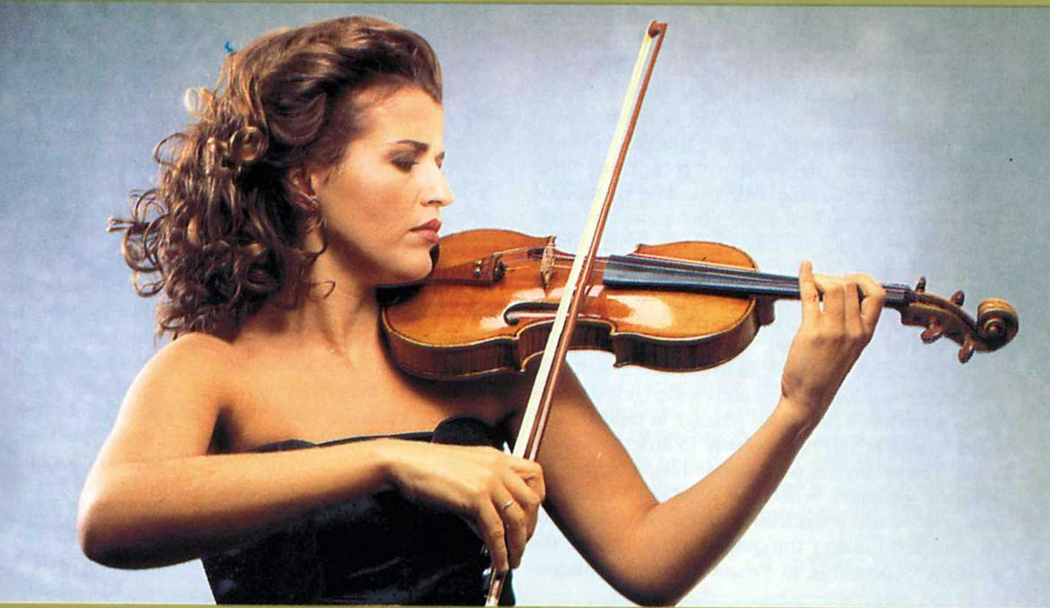
The new century has been marked by an entire new generation of soloists, better trained and technically more perfectly accomplished than most of the great old names, and they have made some astonishing recordings. What I sometimes suspect is that they lack the understanding and commitment to what the music means, intellectually. Facile and beautiful and technically perfect, but not always as deep. 

And now, we live in an age that overlaps that, of historically informed performance, in which everything is played lighter, faster and punchier — and all the nobility is squeezed out as suspect and as fogeyism. 
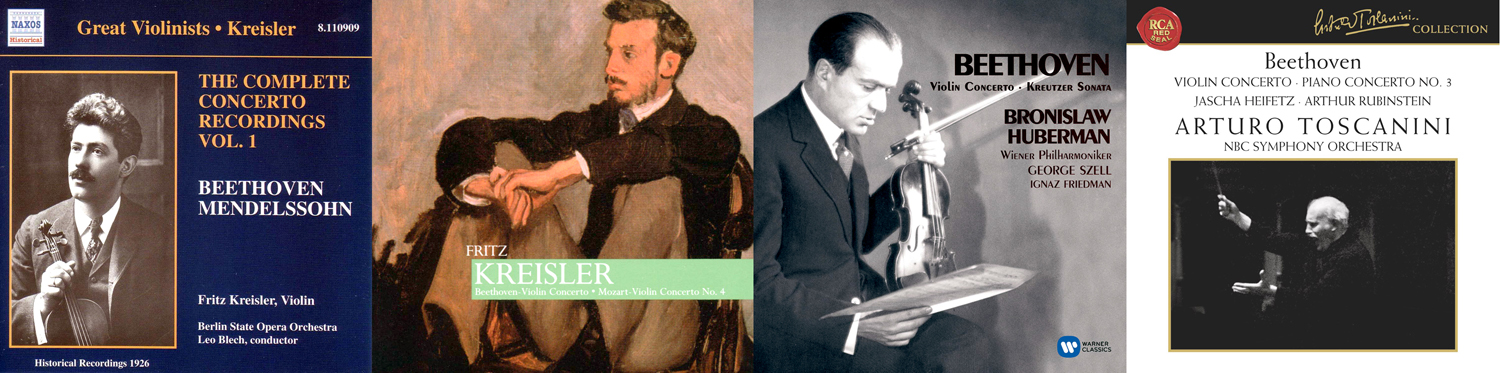
From the first era, we have two recordings by Kreisler, from 1926 with Leo Blech conducting and a second from 1936 under the baton of John Barbirolli. You might think the later recording was in better sound, but they are pretty equal in that way. Clearly they are old scratchy recordings, but the brilliance of Kreisler shines through anyway. In many ways, these are my favorite recordings of all. Kreisler has a warmth, a beauty of phrasing and a nobility that is exceptional. 

There is also the Bronislaw Huberman with George Szell from 1934 in surprisingly good sound, and by Jascha Heifetz with Arturo Toscanini from 1940 that some prefer over his later LP one with Charles Munch. 
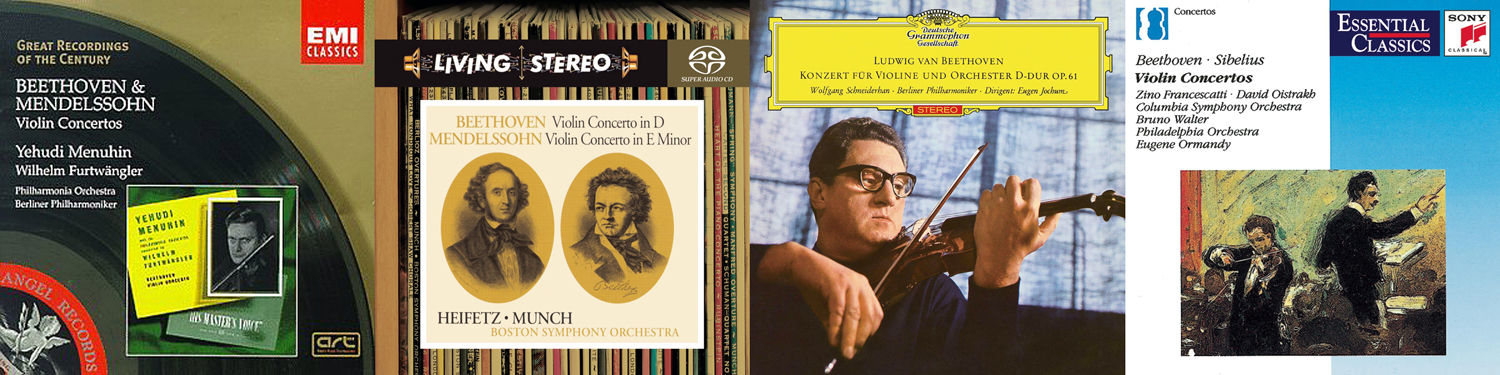
From the second era, there were many great performances. Four I would never do without are my favorite in good sound, Yehudi Menuhin and Wilhelm Furtwangler from 1953; the second Heifetz recording, from 1955 with Munch; the one that is a consensus reference recording, Wolfgang Schneiderhan with Eugen Jochum, from 1962; and for utter beauty of tone, Zino Francescatti with Bruno Walter, from 1961. 

Also, later in the LP era, some big names with some big sounds: Isaac Stern with Leonard Bernstein (1959); Itzhak Perlman with Carlo Maria Giulini (1981); Pinchas Zuckerman with Daniel Barenboim (1977); and Anne-Sophie Mutter with Karajan in her first recording of the work (1979). Any of these is a first rank performance in good sound, and define what the Beethoven Violin Concerto should be.
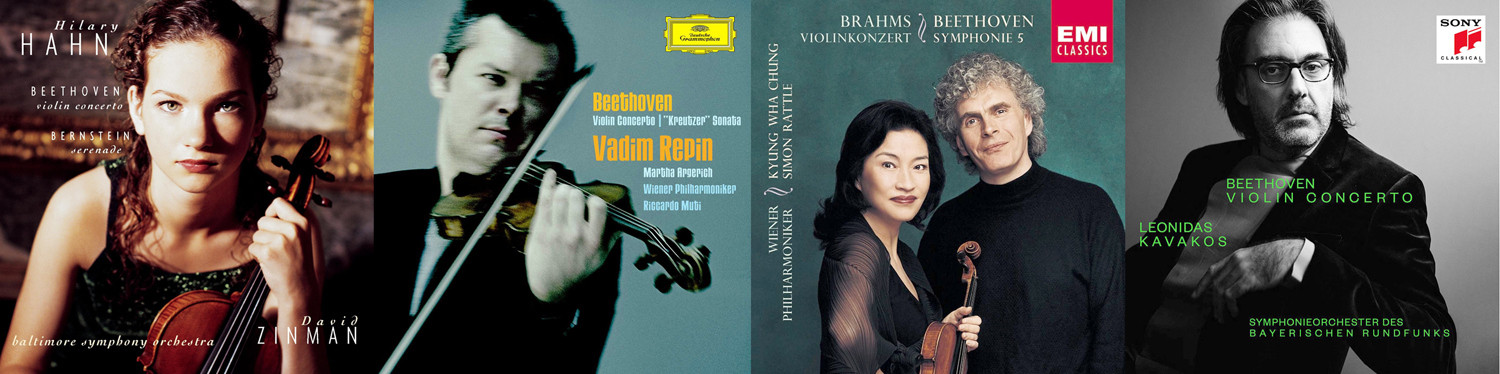
Among the younger violinists, there is plenty of good playing, but fewer deep dives. You still find the old grandeur with Hilary Hahn and David Zinman; and clean musicianship with Vadim Repin and Riccardo Muti; and Kyung Wha Chung and Simon Rattle; and Leonidas Kavakos conducting and playing. 

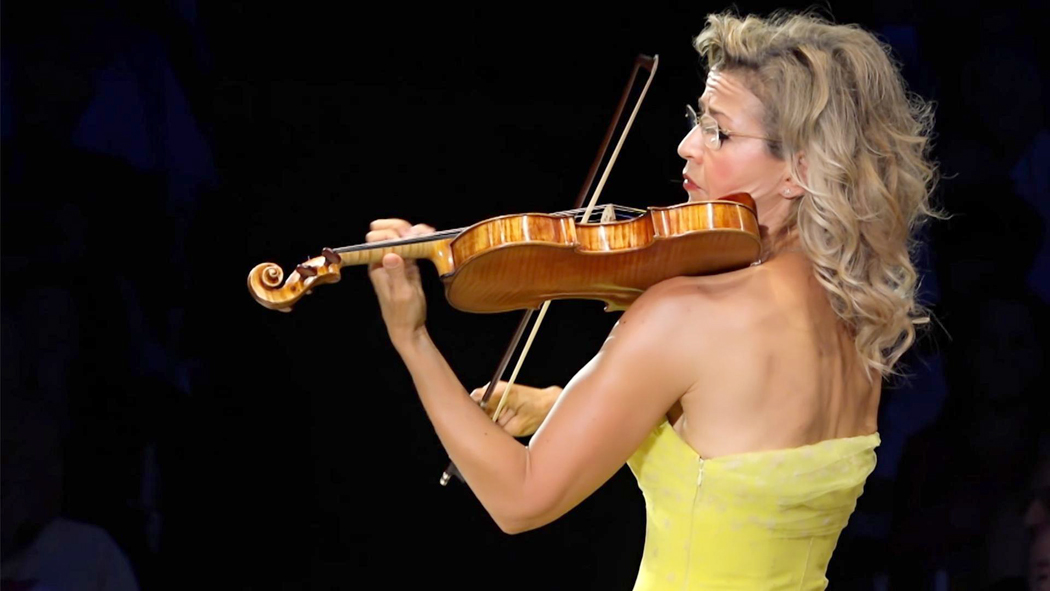
All the famous fiddlers of the golden age made multiple recordings of the concerto, the Oistrakhs, the Milsteins, the Sterns, the Perlmans and Grumiauxs and Szeryngs. And mostly, they were consistent across performances, with different orchestras and conductors. But Anne-Sophie Mutter re-recorded the concerto with very different results. In 2002, she played it with Kurt Masur and the New York Philharmonic and gave us a complete re-interpretation of the concerto. Some loved it; some hated it; few were indifferent. I love it. 

It is one of several outliers among interpretations. You can always count on Niklaus Harnoncourt (aka “the Wild Man of Borneo”) to be wayward, and his recording with Gidon Kremer is peculiar by including a piano in the first-movement cadenza. Why? Beethoven didn’t write a cadenza for his violin concerto, but he did write one for his piano transcription of the work, and Kremer used the piano version to reverse-engineer a version for violin, but left in a supporting piano (and tympani part). That still doesn’t answer a “why.” 

Christian Tezlaff recorded a version with Zinman and the Tonhalle Orchestra Zurich that, while on modern instruments, comes highly inflected by the original instrument ethos. It is beautiful in its way, but it is fast and zippy.

I also include a personal favorite with little circulation: A budget-label recording by the Hungarian violinist Miklos Szenthelyi. I saw him live and I’ve never seen anyone with such perfect posture or so fine a tone. I can’t recommend it for everyone (and it probably isn’t available anymore, anyway), but I have a soft spot in my heart for it.

—The next big concerto comes some seven decades later with Brahms Violin Concerto in D, op. 77 from 1878. Brahms was clearly modeling his concerto and its mood on Beethoven’s. He wrote it for his friend, Joseph Joachim, who was also the violinist who popularized Beethoven’s concerto after years of neglect. 

The Brahms concerto is more genial and has always been popular with audiences. There are as many recordings of it as there are of its predecessor, including a version by Fritz Kreisler that is still worth listening to, through the scratches and clicks of a recording made in 1936. 

Of all of them, these are my favorites, that I listen to over and over, and from all the different eras of recording. 

The Heifetz is quick, dead-on, energetic and exciting. He is sometimes thought of as cool and unemotional, but I think instead that it is white-hot. The Szeryng recording is the one I’ve had the longest and listen to the most — it’s my go-to recording, but that may just be that I’m so used to it, it has imprinted on my mind. The polar opposite of Heifetz is Oistrakh, which is rich and warm, with Szell providing the secure setting for the jewel violin. Of more recent recordings, Hilary Hahn is utterly gorgeous. It gives lie to the myth that only “historical” recordings are great.

—Chronologically, the next in line is Sibelius’ Violin Concerto in D-minor, op. 47 from 1905. If ever music required the ice of Heifetz, it is Sibelius’ concerto, which sounds like a blast from the Arctic. His recording, from 1959 is riveting. But so is the warmer version with Isaac Stern and Eugene Ormandy and the Philadelphia Orchestra from 1969. We may forget what a stunning and brilliant violinist Stern was, if we only knew him from his later years, when his intonation went south. In Sibelius, he is one of the great ones.
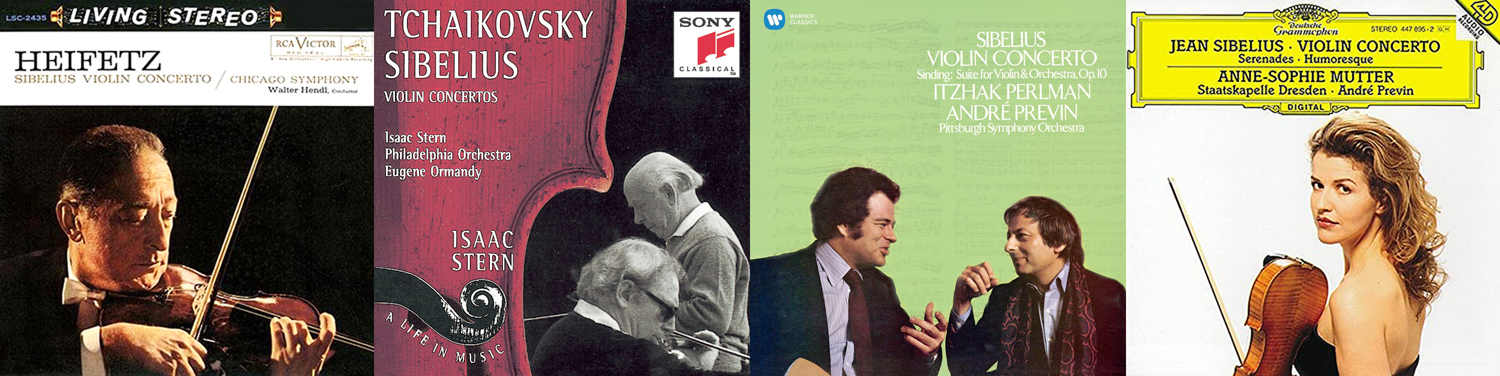
Of the modern era, Perlman with Andre Previn, from 1979, has all of Perlman’s grand personality and character, with technical perfection. But the one I listen to most, and with total love, is by Anne-Sophie Mutter, also with Previn, from 1995. 

I need to note, somewhere in this rundown, that the list of dependable fiddle stars are just that — dependable. If Mutter is my favorite here, that doesn’t mean that you aren’t getting the goods from Oistrakh, Vengerov, Hahn, Mullova, Bell, Chang, or Zuckerman. Whether it is Beethoven or Bartok, you will not likely be disappointed. I am here listing just my own favorites. My own taste. 

—And my own taste runs strongly to the Elgar Violin Concerto in B-minor, op. 61 from 1910. This is a testament to my own growth and change. There was a time when I wouldn’t touch Elgar with a 10-foot phonograph stylus. I found him stuffy and boring. But that was because I hadn’t really heard much of his music. Then, I heard Steven Moeckel play it with the Phoenix Symphony and was swept away. I discussed the concerto with Moeckel and he advocated for it with devotion — indeed, it was his insistence that the the Phoenix Symphony tackle it that made the performance happen. (Moeckel also has a CD out with the Elgar violin sonata that makes a case for it, too.)

This is the longest concerto on my list, but also one that I have to listen to with complete attention from beginning to end. It speaks to me with a directness that I recognize. It is rich to overflowing and absolutely tears my heart out. 
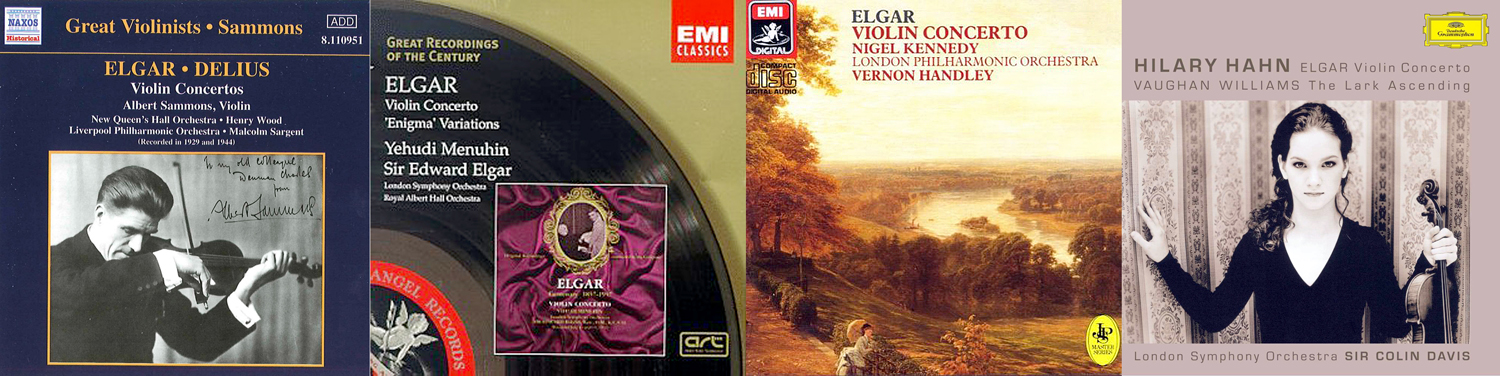
My go-to recording is also the oldest, by English violinist Alfred Sammons, made in 1929 with Henry Wood conducting. It has the greatest breadth and depth of any I have heard, in sound that is not as bad as its birth year would imply. A famous early recording was made with Yehudi Menuhin under the baton of the composer, that should show us how the composer meant it to go — if only Elgar were a better conductor. 

The concerto kind of disappeared after that, until the young fiddler Kennedy (he went by only one name back then) came out with a best-selling version in 1984 with Vernon Handley and the London Phil. It is still Kennedy’s best recording (he went pop soon after). 

But my favorite remains Hilary Hahn and the London Symphony with Colin Davis. Rich, warm, and in truly modern sound, it breaks my heart every time. 

—Speaking of broken hearts, there is no more personal utterance than Alban Berg’s Violin Concerto from 1935. Subtitled, “To the memory of an angel,” it commemorates the death of 18-year-old Manon Gropius, daughter of Alma Mahler and Walter Gropius. It is also the most listener-friendly piece of 12-tone music ever written, as Berg managed to cross atonality with tonal music in a way so clever that doctoral dissertations are still being written about it. 

In two movements, it is blood-curdling in parts, and soul-soothing in others. Every emotion in it seems authentic, and not conventional. It is one of those piece of music you cannot ever just put on in the background — you have to listen and you have to invest yourself in it completely.
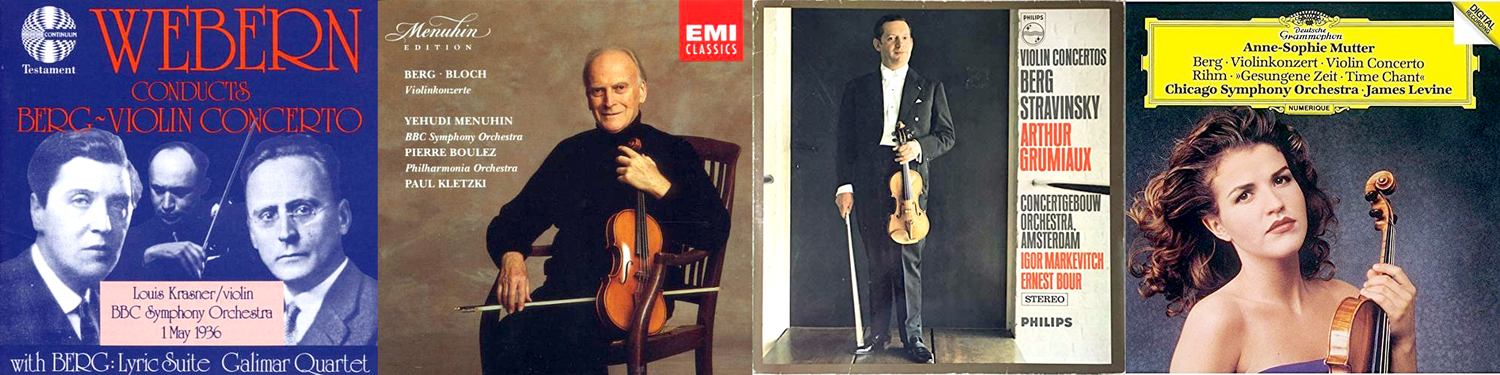
It was commissioned by violinist Louis Krasner and we have a performance by him conducted by Berg’s colleague Anton Webern, from 1936, which should demonstrate the most bona fides, despite the poor sound quality. 

I first learned the piece listening to Arthur Grumiaux and it is still one of my favorites. Yehudi Menuhin played it with Pierre Boulez, who brings his own authority to Second Vienna School music.

But the one I listen to now, over and over, is Mutter, with James Levine and the Chicago Symphony. This is serious music for the serious listener.

—At roughly the same time, Bela Bartok wrote his Violin Concerto No. 2, from 1938. In three movements, it was commissioned by Zoltan Szekely and first recorded by him with Willem Mengelberg and the Concertgebouw Orchestra. It is a recording of the world premiere and has authority for that reason alone, other than that it’s a great performance, although hampered by horrible sound.

Much better sounding, and one of the great recordings, is by Menuhin and Wilhelm Furtwangler and the Philharmonia, from 1954. It has always been my reference recording. Good sound for the era and great performance. 

Isaac Stern is also great, with Bernstein, and his performance is usually paired with Bartok’s lesser-known and seldom-performed first concerto, which is youthful and unashamedly beautiful. 

And I wouldn’t be without Mutter’s version, with Seiji Ozawa and the Boston Symphony. 

—It would be hard to choose which is Dimitri Shostakovich’s best work, but my vote goes for his Violin Concerto No. 1, in A-minor, op. 99 from 1948, coincidentally, the year I was born. As personal as the Berg concerto, but with a powerful overlay of the political, and written under the oppression of Stalin, this is the most monumental violin concerto, probably, since Beethoven. When well-played (and it is difficult), it drains you of all the psychic energy you can muster. 

It is the bottom line on all seven of these concertos that we are meant to listen to them with the same beginning-to-end concentration that we would spend on poetry or defusing a bomb. They are not “put it on while I do the dishes” music, but life-and-death music. 
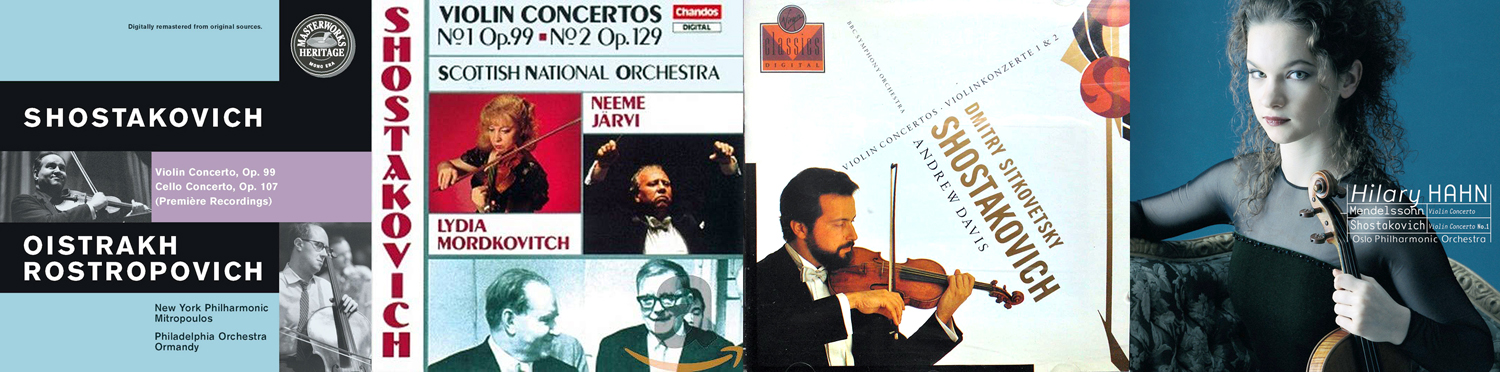
And that is what you get with David Oistrakh, who was the originator of the concerto and a friend of Shostakovich. He recorded it multiple times, but the first, with Dimitri Mitropoulos and the New York Phil, from 1956 is still the greatest one, the most committed. It is the one I listen to when I want to really dive deeply into what the music means, and come away shattered with the realization of all the horror of the 20th century. 

Performances by Lydia Mordkovitch and Dmitry Sitkovetsky are in modern sound and also brilliant. Hahn is especially well-recorded, with Marek Janowski and the Oslo Philharmonic. 

But the Oistrakh. If the concerto was personal to the composer, it was to the violinist, too. They both had known it all, seen it all, suffered it all. 

And so, these seven concertos — seven sisters — seem a notch above the rest, in terms of seriousness and execution. You should have all of them in performances that express all the humanity that is packed into them. These are my suggestions; you may have your own. 

Click on any image to enlarge
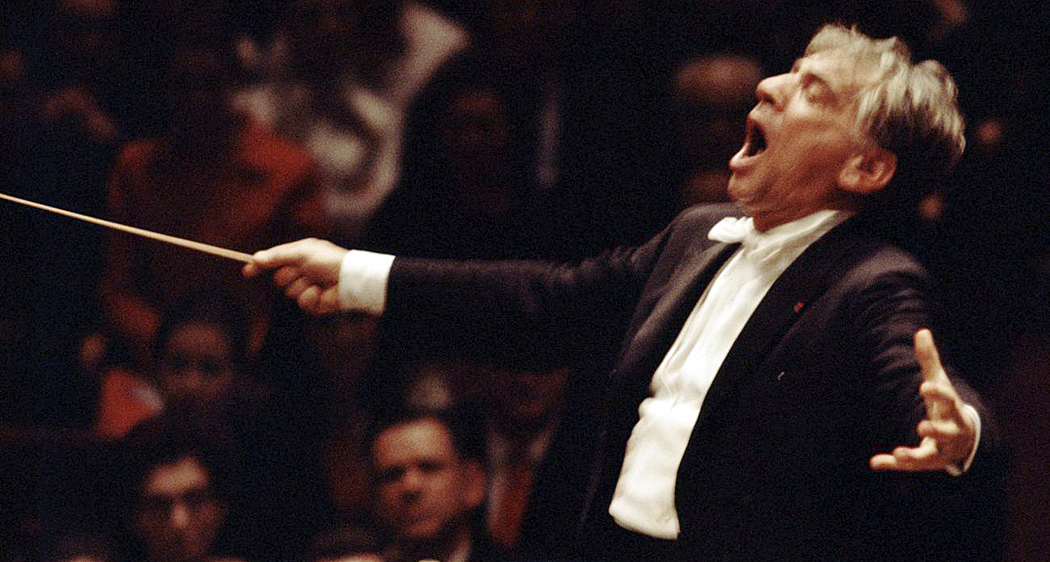
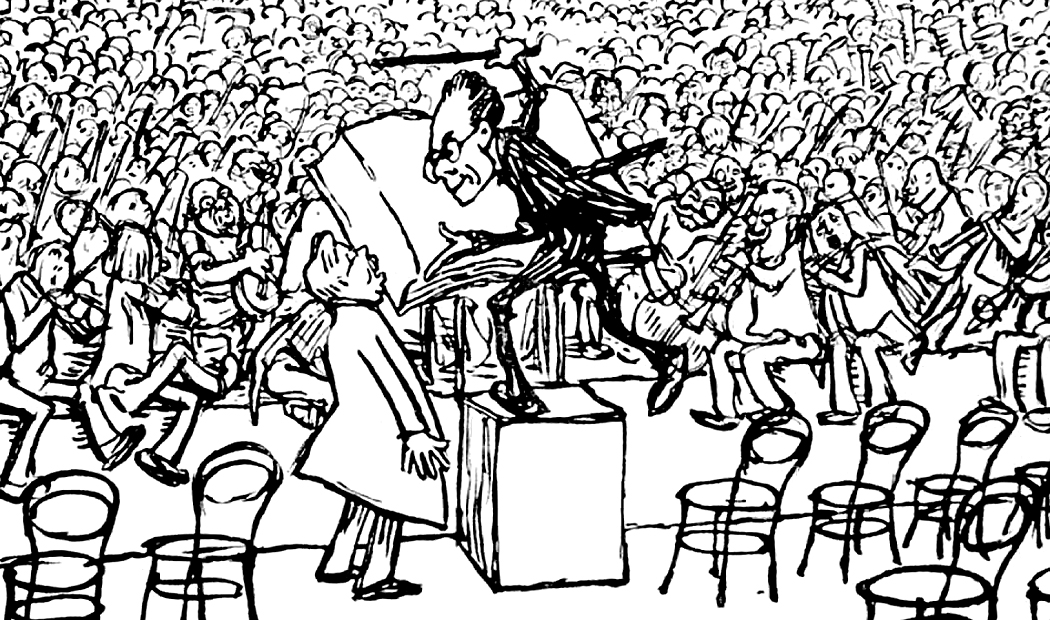
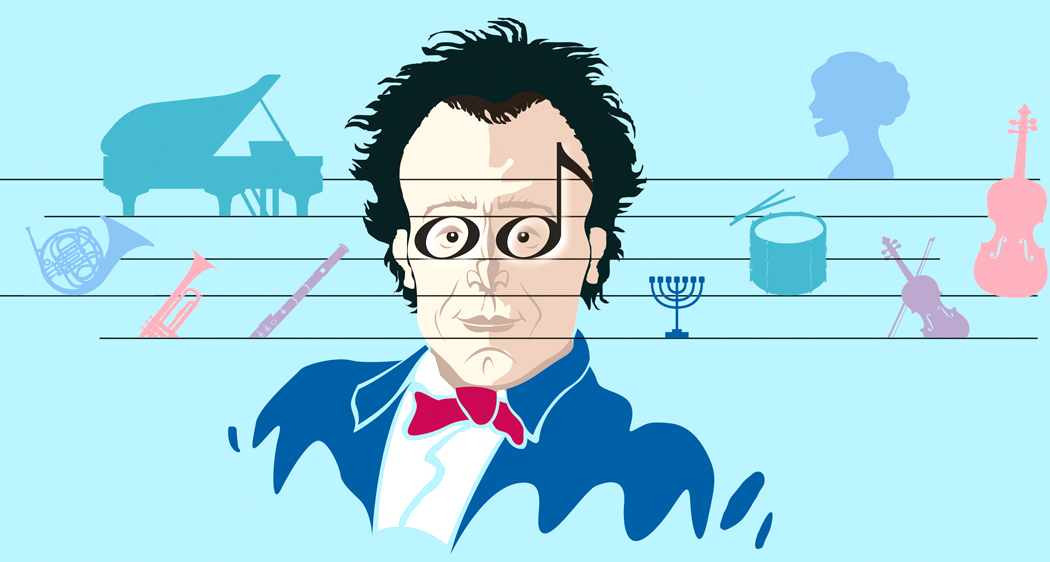
There is Mahler before Bernstein, and Mahler after him. This is not to say that Lenny is the summum bonum of these nine-plus symphonies, but that before his 1960’s advocacy, Mahler was one of those niche composers that a few people knew about and appreciated, and afterwards, no right-thinking conductor could fail to offer a complete cycle — Mahler joined Beethoven, Brahms and Tchaikovsky and one of those whose works would be recorded by the yard. A Mahler program now draws a paying audience like almost no other. 

But there is Mahler and there is Mahler. When everyone gets into the act, the quality level evens out — It’s hard to find a really bad recording anymore, and it is also hard to stand out with something exceptional. Yet, both ends do still exist. 

I have not heard every release; no one could, not even David Hurwitz, who is as close to nuts as anyone I know of. But I have experienced a whole raft of Mahler recordings and I have my favorites, and a few excrescences that I have to keep as “party records” to share with commiserating friends. 

My bona fides include more than a half-century of listening to classical music, reading scores, and being a retired classical music critic on a major daily newspaper. I have owned at least 15 complete Mahler cycles and uncounted individual CDs and LPs — going back to the 1960s. I did disgorge about two-thirds of my collection of CDs when I retired eight years ago, but even since, I have added more Mahler (among others) and currently sit with 10 full sets and two shelves of individual recordings. Am I as nuts as Hurwitz? I leave that to the jury. (It isn’t only Mahler: I once owned 25 complete sets of Beethoven piano sonatas and 45 recordings of the Beethoven Violin Concerto). 

Yes, I listen to a boatload of music. I cannot imagine my life without music. 

And I have my Top 10 list of Mahler recordings. Really, a Top 11 — one for each of the nine completed symphonies, and add-ons for the incomplete 10th, for Das Lied von der Erde, and the song cycles, so it’s really like a Top 15 or so. And there are a few bombs I want to include, just for fun. Let’s take them in order. 

Symphony No. 1 in D

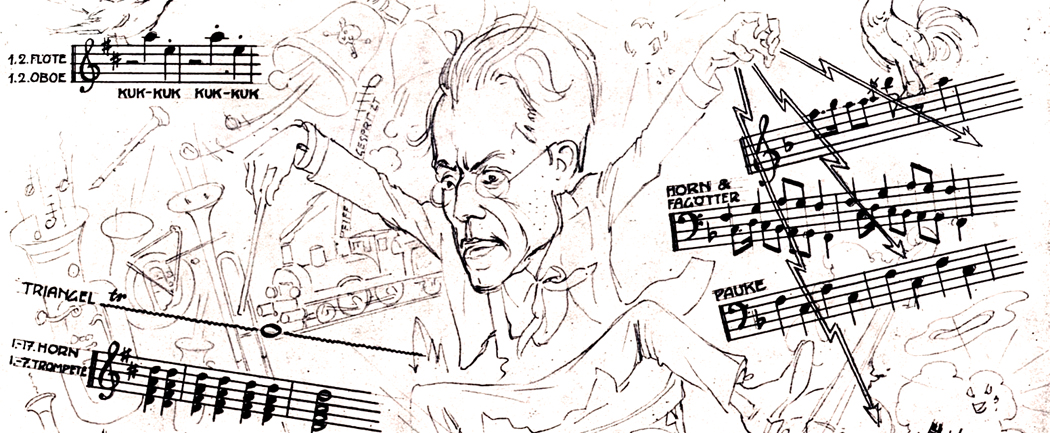
The symphony begins with an ethereal A, barely audible and transforms into a cuckoo call, evincing nature, the woods and eternity, but then opens up into the fields and streams borrowed from Ging heut’ Morgen über’s Feld in his song cycle Lieder eines fahrenden Gesellen.  The first four Mahler symphonies all borrow from his songs. The third movement is a grotesquerie built from a minor-key version of Frere Jacques played first by a solo double bass; it is an ironic funeral march, interrupted by klezmer music and a bit of gypsy wedding. It is one of the most peculiar movement from anyone’s symphonies.

Then it all burst out in a tormented and blazing fourth movement with horns wailing out over all, and comes to an abrupt conclusion with an orchestral hiccup. 

The symphony is qualitatively different from the ones that follow, but it is easier for most first-time listeners to comprehend. It is a great place to start a Mahler journey. 

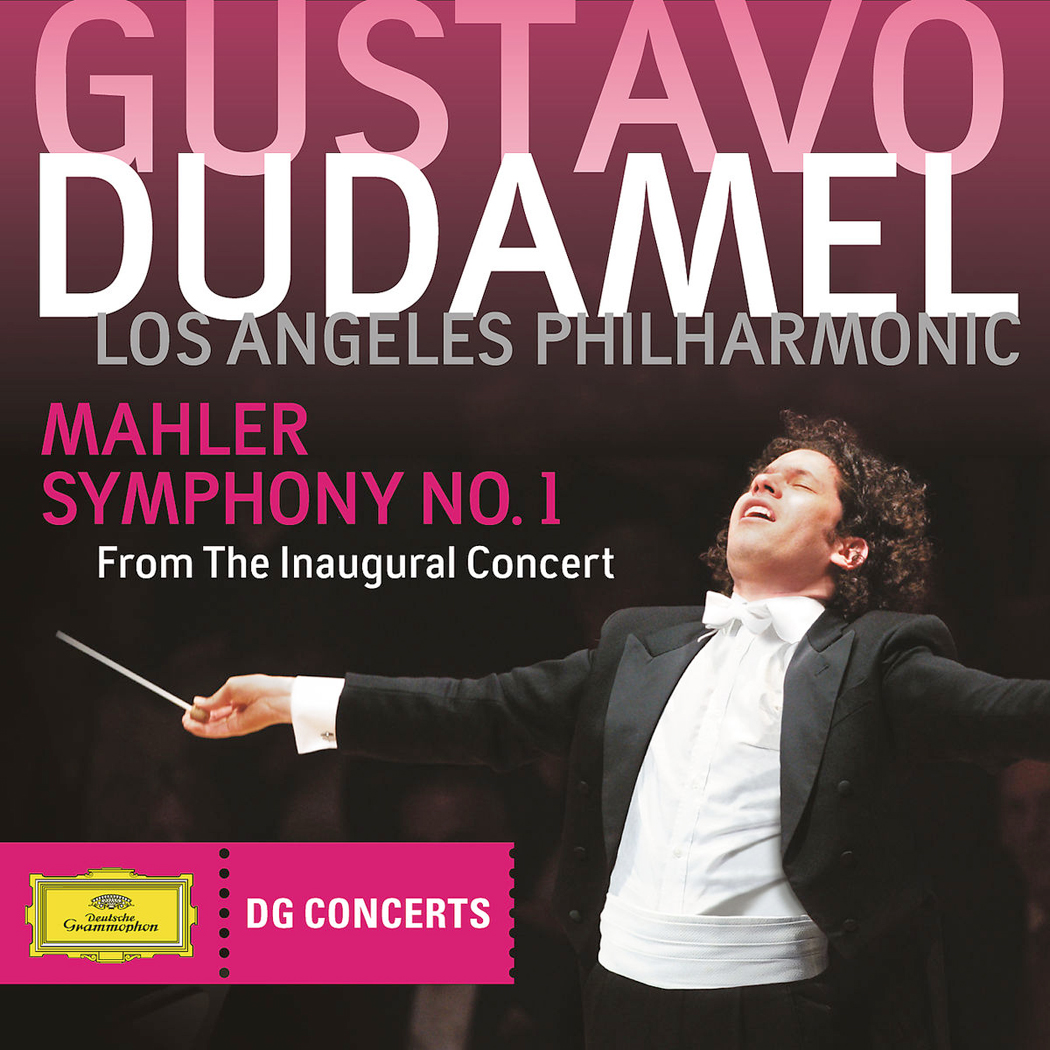
The greatest version I ever heard live was Gustavo Dudamel and the Los Angeles Philharmonic; it blew me away. There is a live recording, from the young maestro’s debut concert in LA. It is hard to get the same effect from a recording, but this is my sentimental favorite. But there are some other great ones. 

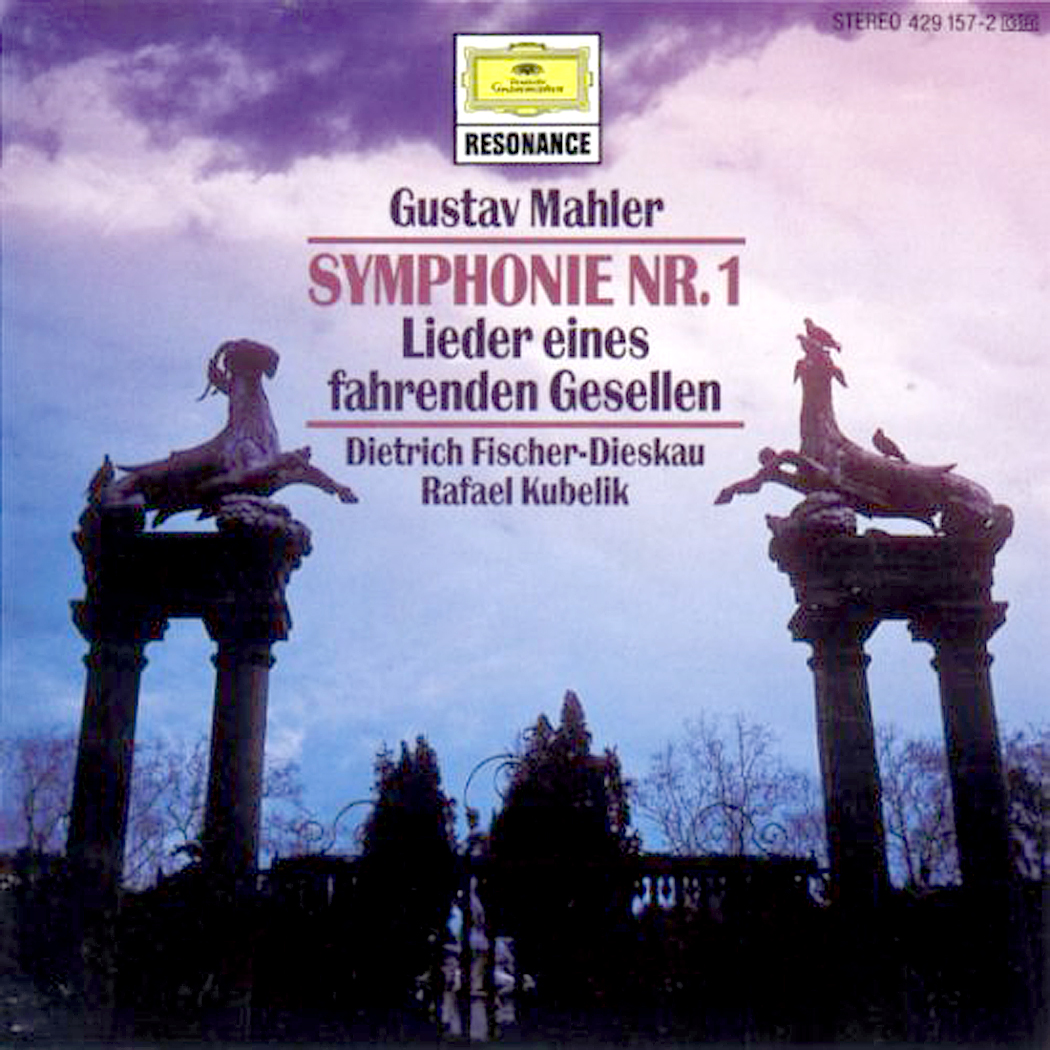
The consensus (but not universal) favorite is Raphael Kubelik and the Bavarian Radio Symphony Orchestra from 1968. It includes the Lieder eines fahrended Gesellen and Dietrich Fischer-Deiskau. 

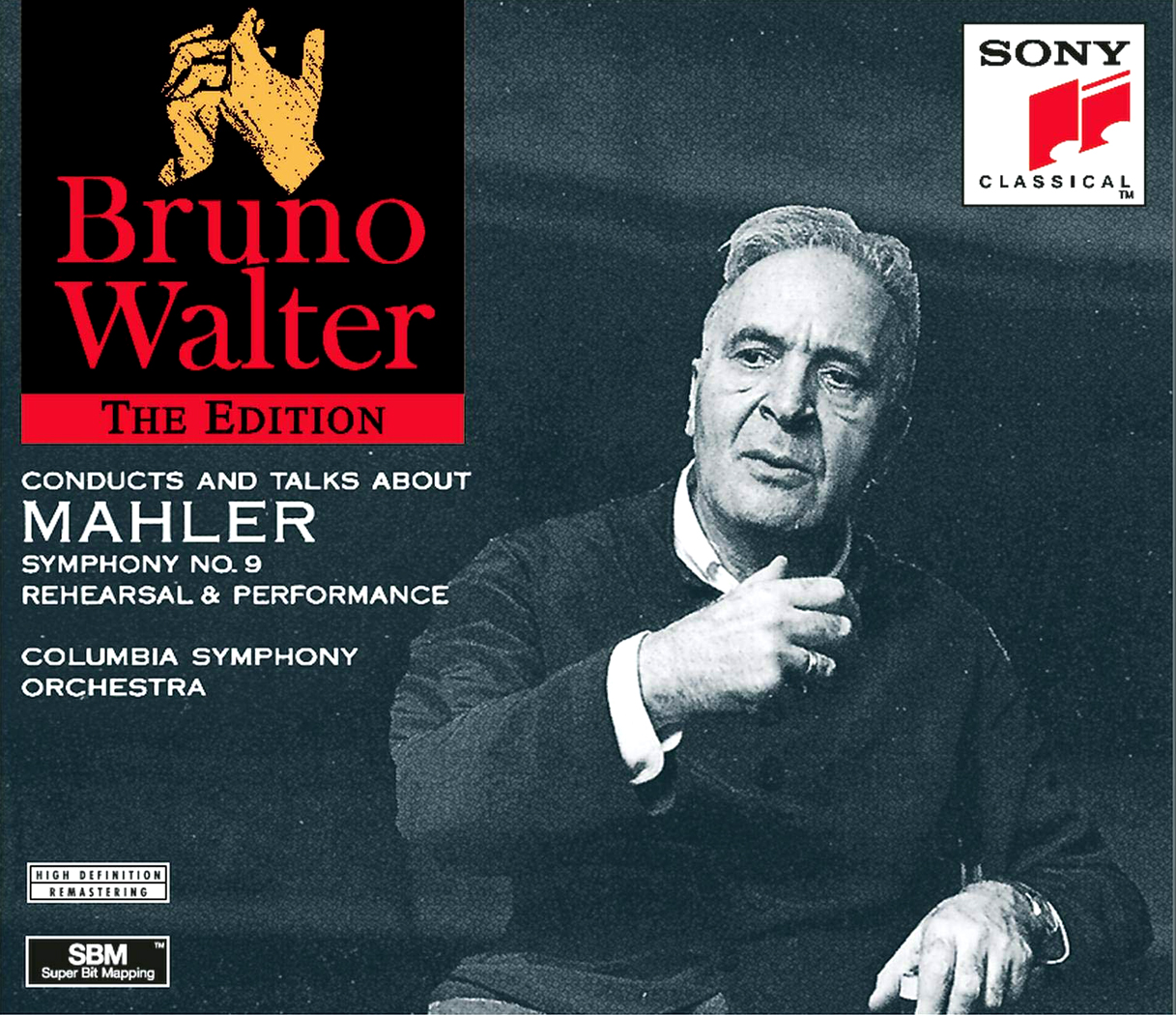
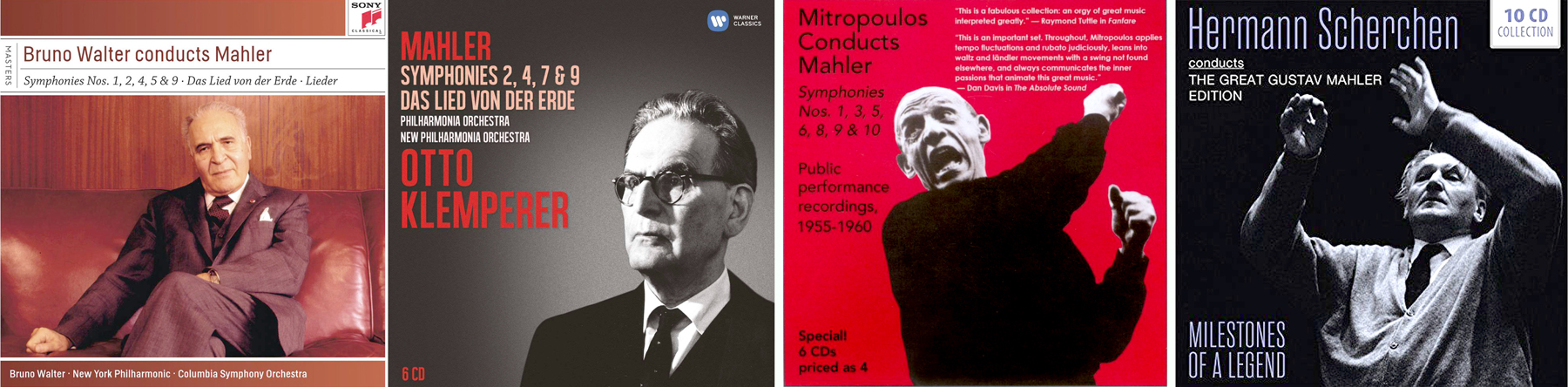
The version I first learned from, a billion years ago in another galaxy, and on vinyl, was Bruno Walter’s with the Columbia Symphony Orchestra. Walter knew Mahler and premiered his Ninth Symphony. The sonics are not always great, but there is tremendous authority in Walter’s Mahler. 

Symphony No. 2 in C-minor (“Resurrection”)

Many people hold the “Resurrection Symphony” as their nearest and dearest, with its uplifting finale of rebirth and optimism. But I have always found the end a touch forced and insincere, as if Mahler really, really wanted to believe in a renewed life after death, but couldn’t, and could only mouth the words. “Words without thoughts never to heaven go.” 

Yet, its music is still magnificent, especially the first movement funeral march, which comes to a climax so disturbing and dissonant, he never matched it until the orphan adagio of his 10th symphony. The inner movements are some of the most beautiful he ever wrote and the alto solo, Urlicht, is transcendental. 

Everyone, it seems, has taken a crack at the “Resurrection”, including businessman Gilbert Kaplan, who learned to conduct only to lead this symphony and never conducted anything else. (OK, he did make a stab at the Adagietto from the Mahler Fifth, but that hardly counts.)

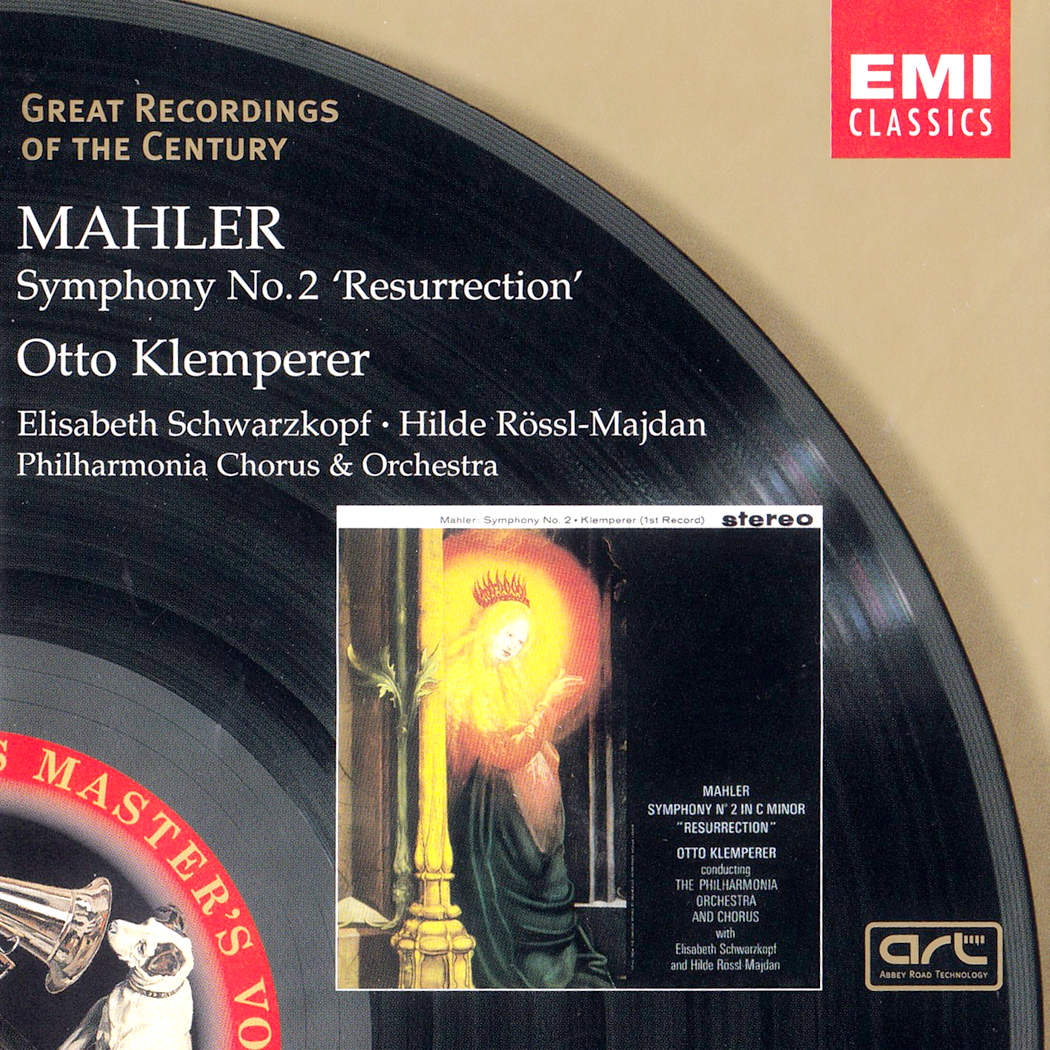
My favorite is Otto Klemperer with the Philharmonia Orchestra and Chorus. Klemperer always makes the music feel as important as it needs to be; he seems to believe in what it says, not merely to play the notes.

Symphony No. 3 in D-minor

There are some music you cannot listen to very often. Beethoven’s Ninth, for instance, or the Bach Matthew Passion. They are too big, too meaningful, too overwhelming, that to maintain the sense of occasion, you can only pull them out at special moments. You have to be ready to accept what they have to offer. It is almost a religious experience. 

The Mahler Third last an hour and a half. It is almost an opera without words, except there are singers. It is a full evening by itself. But if you are not in the right frame of mind, it can just seem endless. The first movement alone lasts longer than any Haydn symphony.

Mahler explained his ideas for the symphony, though he later recanted. The words are not what the symphony says, but they give an approximation. The first movement is “Pan awakes; summer marches in,” and pits a relentless and ruthless nature, “red in tooth and claw,” against the riotous optimism of the season of growth, in an overwhelming march of joy and hedonism. 

The second movement is “What the flowers of the meadow tell me.” The third is “What the animals of the forest tell me.” In the fourth, an alto sings “What man tells me,” in a doleful lament that “Die Welt ist tief,” “The world is deep.” Following that comes “What the angels tell me,” with a choir and bells telling of “himmlische Freude” — heavenly joy. 

But all of this, for an hour, is really prolog to the final movement Adagio, “What love tells me.” It is built on a theme taken from Beethoven’s final quartet and its “Muss es sein? Es muss sein.” (“Must it be; it must be”).  It is a 22-minute-long meditation, rising to ecstasy. 

When the premiere was given in 1902, Swiss critic William Ritter wrote this finale was “Perhaps the greatest adagio written since Beethoven.” If you can come away without collapsing into a puddle of weeping, you’re a better person than I am. 

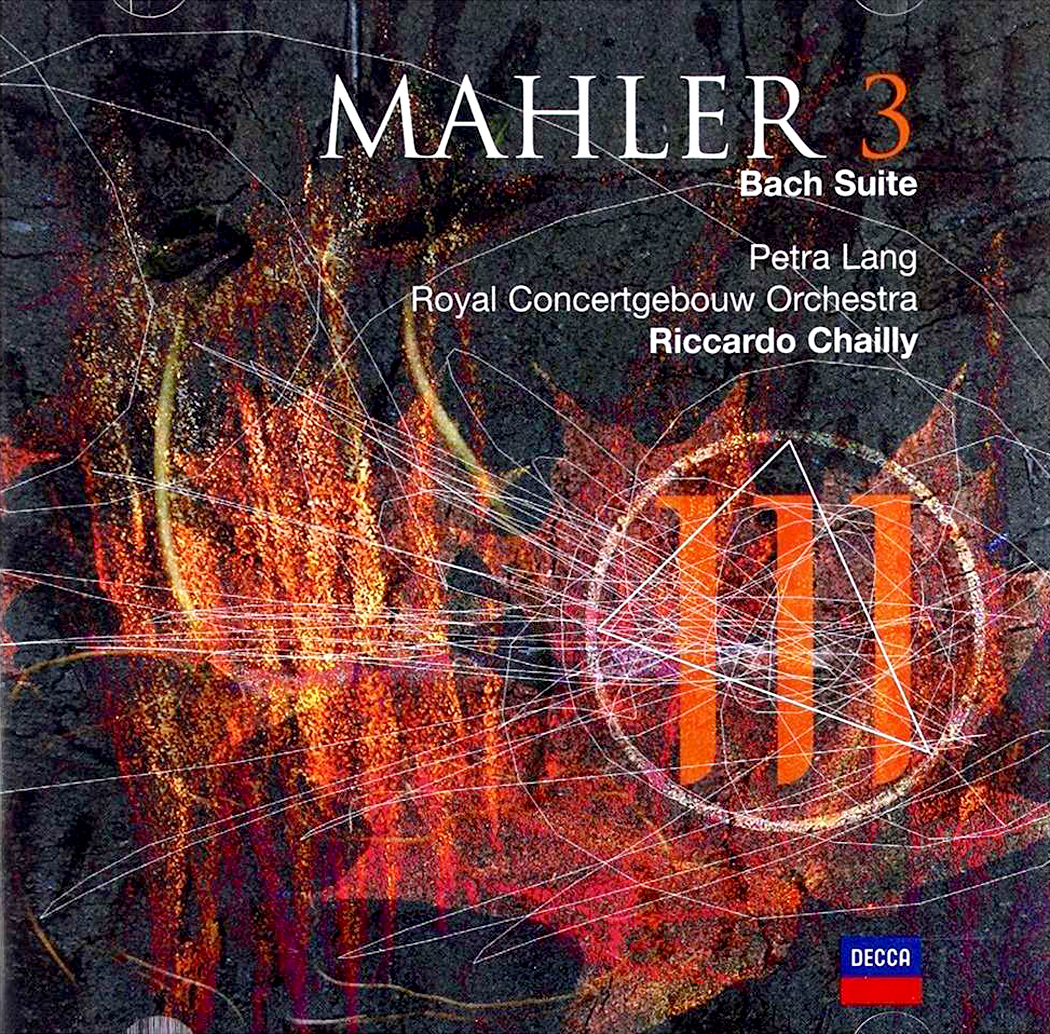
The recording that overwhelms me more than any other, not only because of the performance, but because of its engineering and immediacy of sound quality is Riccardo Chailly and the Royal Concertgebouw. 

A nearly equal second, in slightly less perfect sound, is Leonard Bernstein’s 1961 recording with the New York Philharmonic. It is the gold standard for the finale. 

Symphony No. 4 in G

On the opposite end of the emotional scale — and what a relief — comes the Fourth Symphony, with its sleigh bells and Kinderhimmel. It is, without doubt, Mahler’s happiest symphony. It is also his shortest. Coincidence? 

But I’ve got a problem picking a best, because there are three performances I cannot do without, each highlighting a different aspect of the work. 

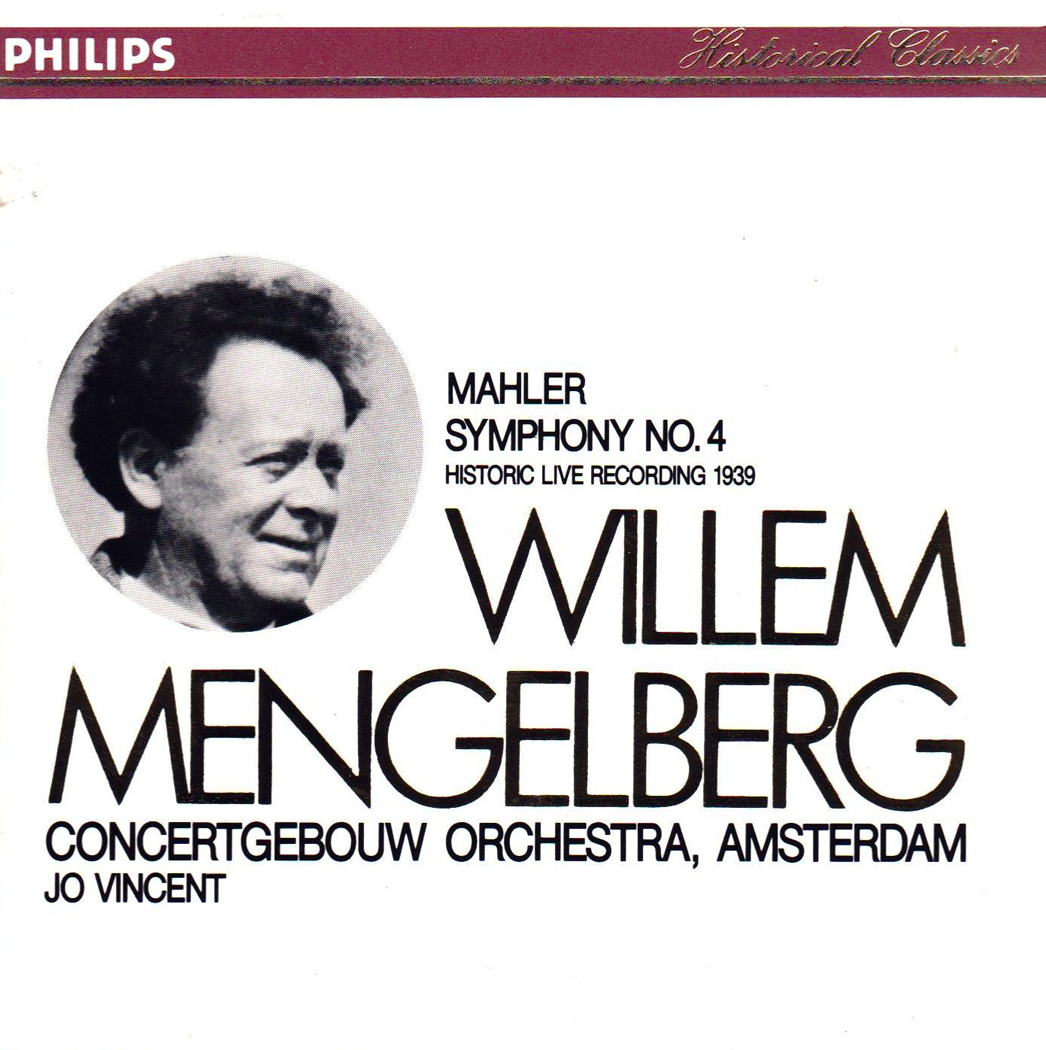
First, there is Willem Mengelberg and the Concertgebouw  Orchestra, recorded in November, 1939. Mengelberg knew Mahler, and we have evidence that Mahler endorsed Mengelberg’s interpretation of the symphony, although that endorsement came for earlier performances. Mahler died in 1912 and this recording is from 27 years later. Still, it is the best evidence we have for the way Mahler probably intended his work to sound. And, compared to the way it is played nowadays, it is ripe with violent tempo changes and swooping portamentos. 

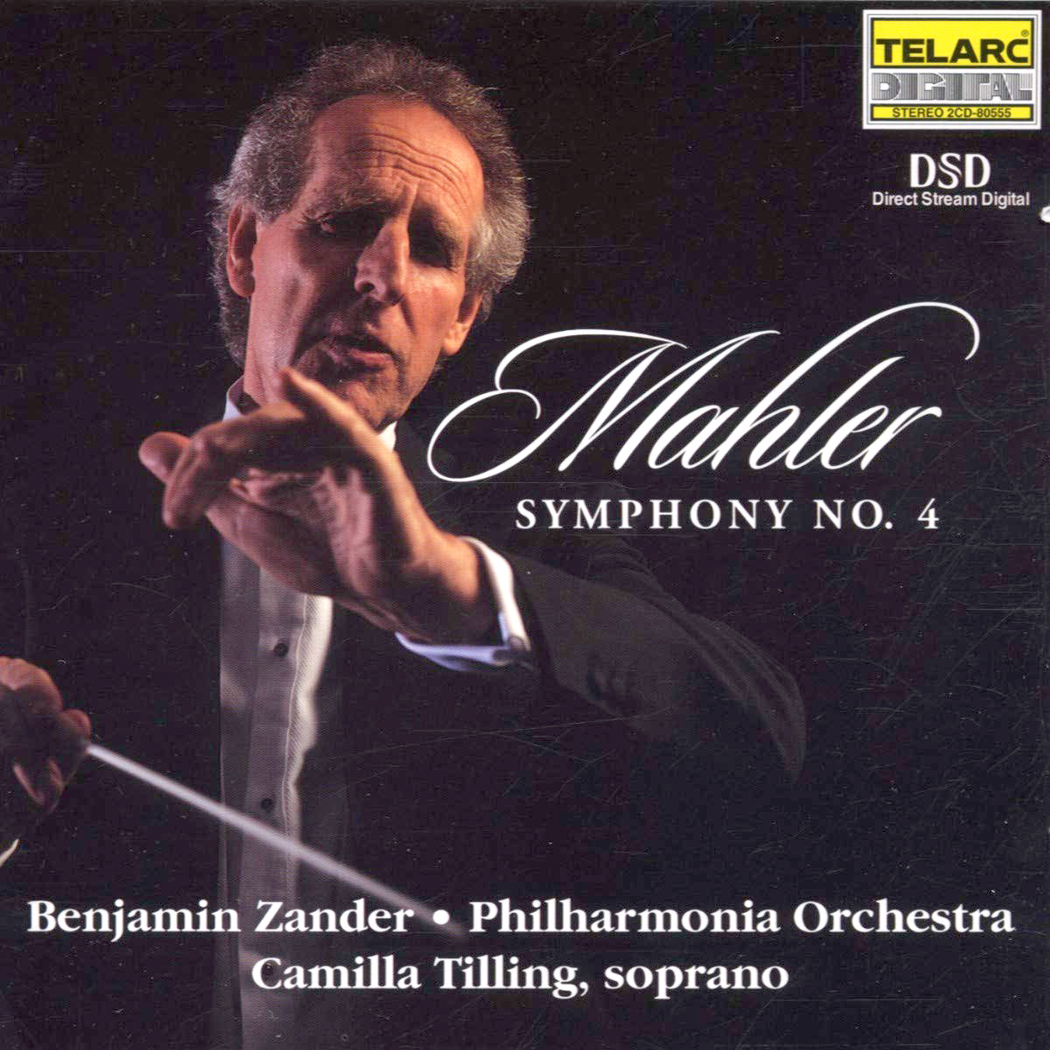
Second, there is Benjamin Zander, with the Philharmonia. In the hour-long discussion disc packaged with the performance, Zander makes the case that Mahler wanted the violin soloist in the second movement to play like a country fiddler, not a trained violinist. A “Geige,” not a “Violine.” He has the violinist retune his fiddle a full tone sharp to play the Totentanz — he is to be Freund Hein, or “Friend Hank,” a nickname for the Grim Reaper. Zander is the only conductor to really take the composer at his word; most recordings, the soloist can’t bring himself to make the ugly sounds Mahler wanted, and smooths the part’s rough edges. It should sound like the Devil’s fiddle in Stravinsky’s L’Histoire du Soldat, with that edge. 

In all his Mahler recordings, Zander is scrupulous in following the anal retentive storm of written instructions Mahler included in his scores. If this means the long-haul structure of the work is sometimes disrupted for the spotlit detail, well, that’s the nature of Romanticism over Classicism. Those details were put there for a reason; we should hear them. 

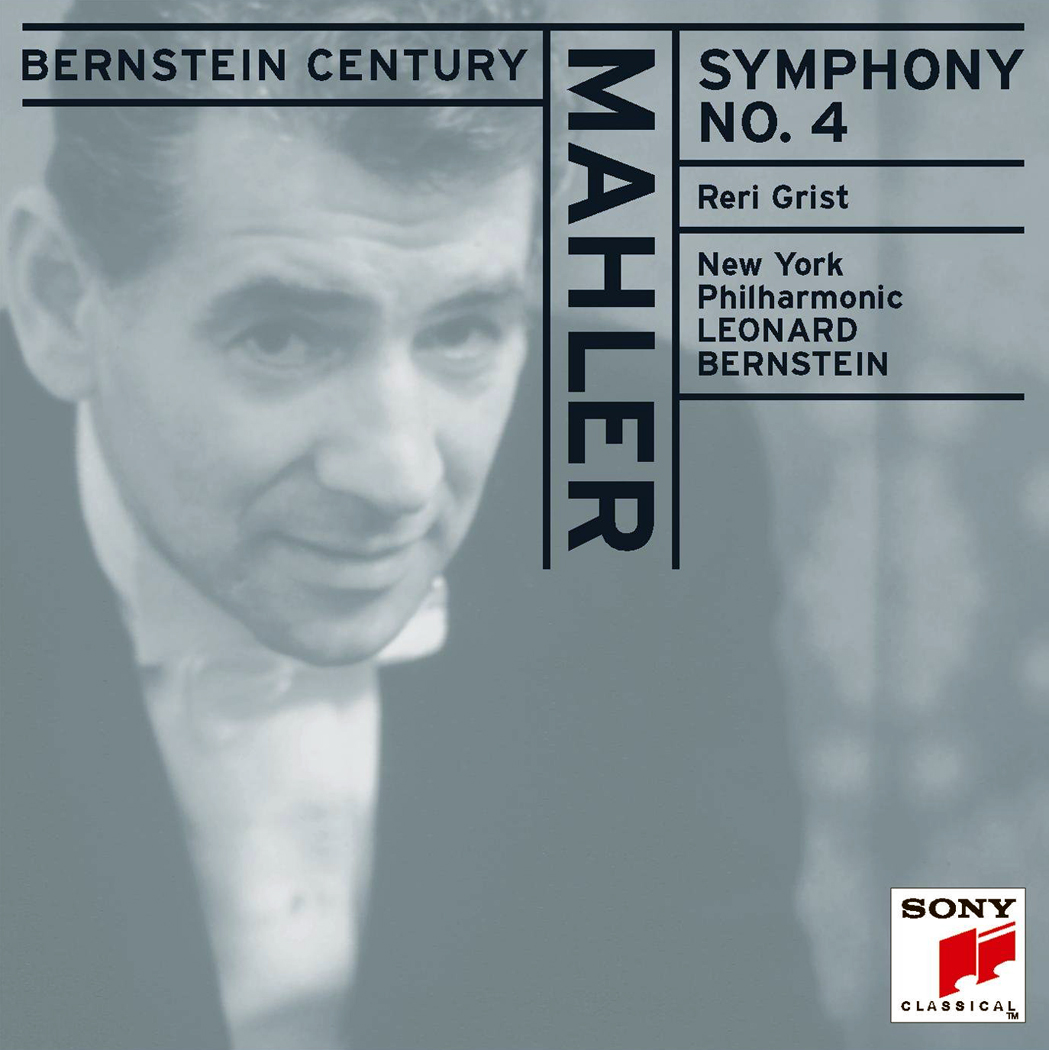
The third recording is Bernstein’s first version, with the New York Philharmonic and soprano Reri Grist. Bernstein’s Mahler is always good, but sometimes, it is the best, and this is one of those times. Grist has a fresh voice that is perfect for the innocent text of the finale, which is a child’s vision of what heaven will be like (“Good apples, good pears, good grapes … St. Martha must be the cook.”) 

Symphony No. 5

Wagner has his “bleeding chunks,” and Mahler has his Adagietto. Everyone knows the Adagietto, from movies and TV commercials. But the whole symphony, the first one since the First Symphony not to have voices, is a great rumbustious tussle, from its funeral march start to its manic contrapuntal finale, where he takes five melodic fragments, stated at the outset, and combines and recombines them like a Braumeister. 

The Adagietto fourth movement was, per Mahler, intended as a love letter to his wife, Alma, but is so elegiac that it has become the aural metaphor for loss and grief. Considering Alma’s serial infidelities, perhaps it is only fitting that the movement has morphed in its cultural meaning. (One critic calls Mahler “a composer with a dodgy heart who married a trollop.” “Alma, tell us: All modern women are jealous. You should have a statue in bronze, for bagging Gustav and Walter and Franz.”)

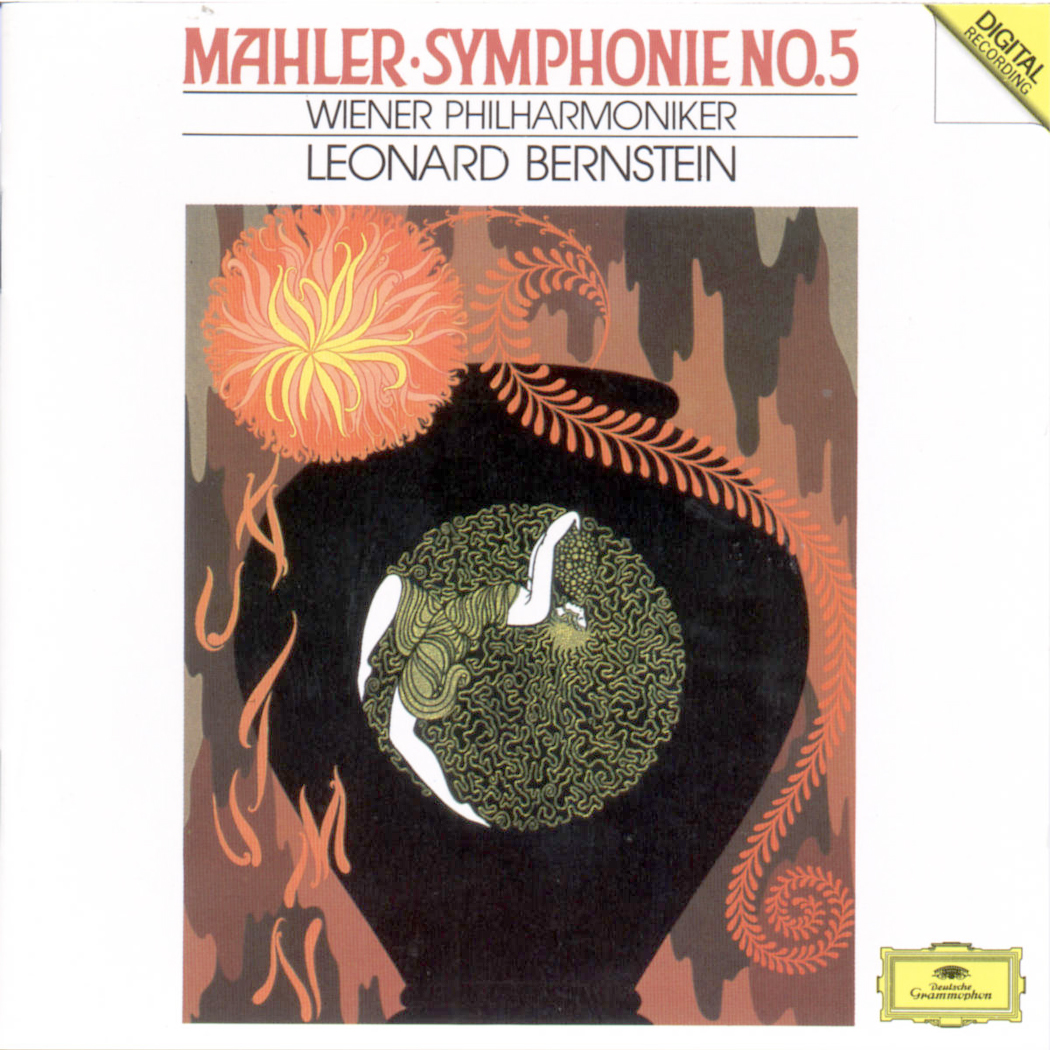
The recording to have is Bernstein’s second recording, with the Vienna Philharmonic. It has beautiful playing from one of the world’s best orchestras, and all the energy and commitment that emanates from Lenny’s spiritual leadership. 

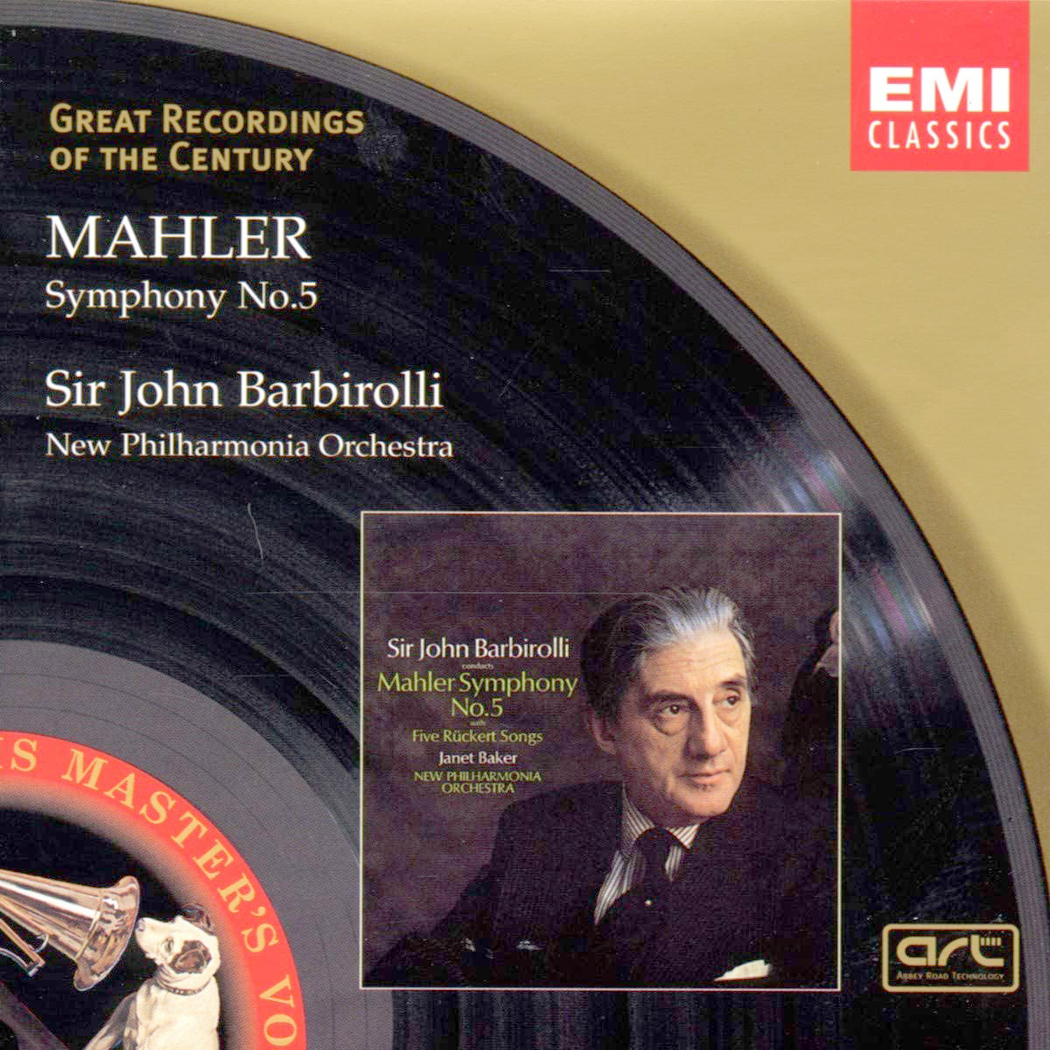
Another legendary performance is John Barbirolli’s with the New Philharmonia. If you think Bernstein’s fever is suspect, then reach for a cold bottle of Sir John.

Symphony No. 6 (“Tragic”)

Labeling any of Mahler’s symphonies as “Tragic” may seem redundant, but this is clearly his gloomiest, opening with a relentless stomp, stomp, stomp of a marche fatale and leading to the crushing hammer blows of destiny in the finale. 

Nevertheless, it has what I think is an even more persuasive love letter to Alma in the slow movement, which has to be one of the most tender and lovely in all of the canon. 

But Mahler never quite figured out if it should be the second or third movement, so nowadays, you find it both ways in performance, and find angry and assertive essays by critics proving once and for all it simply has to be the way they see it. Me, I like the adagio second to separate the angry first movement from the angry scherzo, which shares its rhythm with the first. Play them back to back before the adagio and it can seem like too much of the same thing. But then, that’s my opinion; you are free to have yours. 

Then, in the finale, Mahler never quite resolved whether there should be three hammer blows or only two. He was a seriously superstitious man and feared that a third hammer blow might prefigure his own death, and took it out of the score. But hammer blows come in threes in life — at least in Mahler’s — and I prefer all three to be there. Nor did he ever quite specify what he meant by hammer blows; they are written into the score, but how should they be produced? Each orchestra is left to come up with its own solution. Some have used hammer and anvil, others have built large resonant wooden boxes hit with great wooden mallets. There’s a lot of room for interpretation. 

Ben Zander comes to the rescue: His recording includes both the duple and triple hammer blows. You get to choose which finale you want to hear. As usual, Zander is perfect for following Mahler’s precise instructions in the score: a sforzando here, a ritardando there, a subito piano or a purposeful mix-mash of rhythms there. Now make the clarinet sound like a dying cat, now let the violins swoop with a portamento. Zander obeys where most other conductors smooth it all out to make pretty. This should not be a pretty symphony. 

Symphony No. 7

Guess what? Whether two or three hammer blows, Mahler didn’t die after the Sixth Symphony, which may explain why the Seventh is so giddy. All the other symphonies are programmatic in some way, with funeral marches, or heroic deaths, but the Seventh is just music. Mahlerian music, which means fantastic orchestrations and effects. But no overt meaning. 

It has five movements. The inner three are a scherzo sandwiched between two nostalgic sweetnesses he called “Nachtmusik,” or “night music.” In them, he uses rustic cowbells to symbolize — cowbells — and adds a mandolin and guitar. They couldn’t be lovelier. Between them is a vicious scherzo. 

But then, there’s the finale, which really makes no sense at all. It’s a complete hodge-podge, starting with a manic tympani solo and rushing off like a Turkish Pasha into what sounds like Ottoman grandiosity. But you have to remember the advice of the Talking Heads: “Stop Making Sense.” Just enjoy the effervescent joy of it all, up to the penultimate C-augmented horn chord before the final tonic C. One of the oddest endings before Sibelius’s Fifth. 

 The Third and the Ninth are certainly deeper and more profoundly moving, but the Seventh is my favorite for when I just want to hear Mahler without having to weep and sob and contemplate the Weltschmerz of it all. 

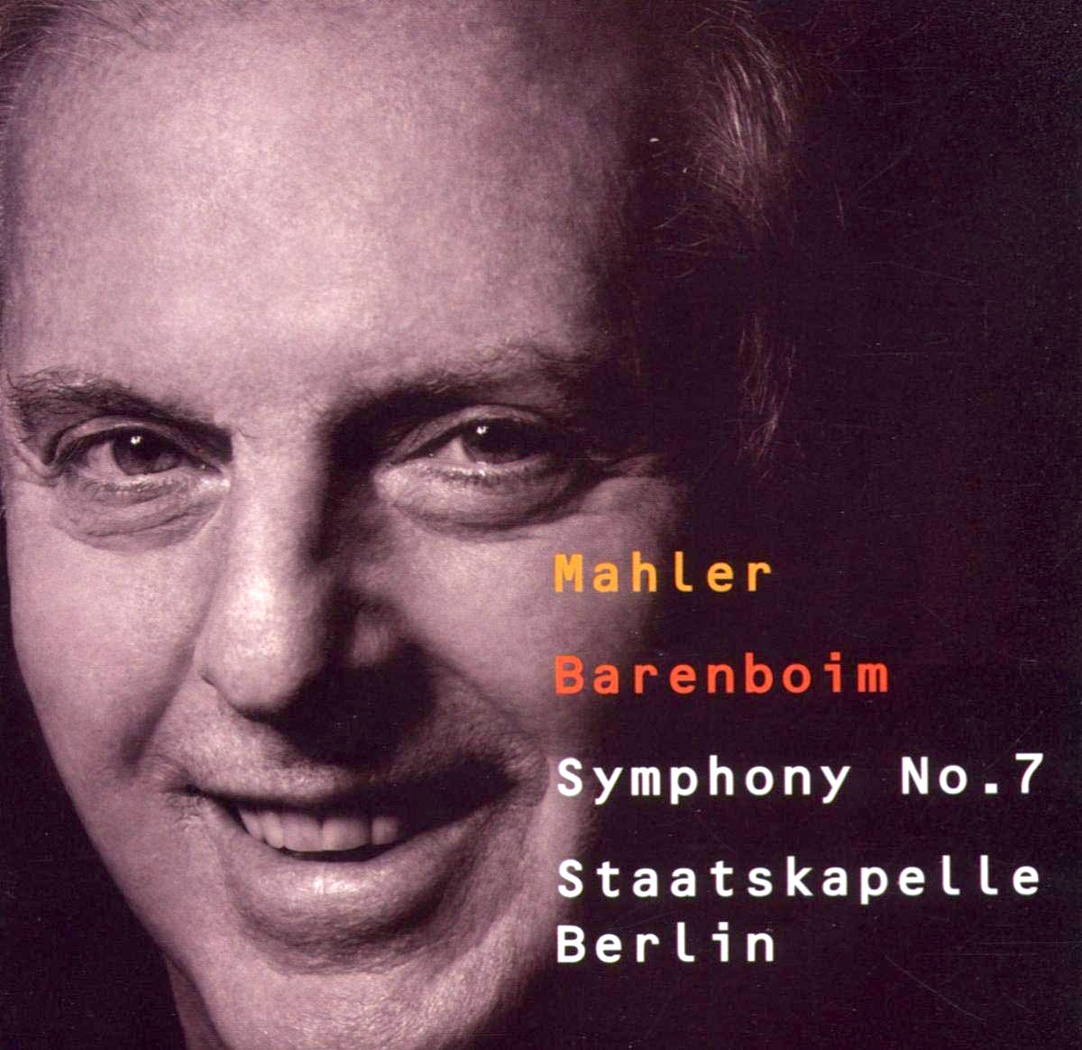
My go-to recording is a sleeper. Daniel Barenboim is not known as a great Mahler conductor, but his recent Mahler Seventh, with Staatskapelle Berlin on Warner Classics is brilliant and one of the best engineered recordings I’ve heard, so you get not only a perfect performance, but a recording that sounds more like an orchestra playing live in your room than any other. He hits the crazed finale with the perfect get-on-the-roller-coaster attitude. 

I’ve been choosing great performances to recommend, but really bad ones can be fun, too. There is a Mahler Seven that is so unbelievably bad, you just have to hear it. Otto Klemperer is — let’s be honest — a really great Mahler conductor. Many of his recordings rank at the top of the list. But his Seventh is a real dog. What was he thinking? Barenboim comes in at 74 minutes. Klemp’s Seventh goes on for an hour and 40 minutes. Cheez Louise. It’s like Glenn Gould’s Appassionata, playing it like they were sight-reading it for the first time. 

Symphony No. 8 (“Symphony of a Thousand”)

I’m afraid I have never warmed up to the Eight Symphony. Its first movement is outright hysterical — I don’t mean it’s funny, but rather the manic half of a bipolar cycle; and its second movement is an opera manque built on Goethe’s Faust that just seems to wander without getting anywhere. Maybe I just need to listen to it another 20 times or so to get it into my head. It was Mahler’s biggest popular success during his life, but it has not worn well with me. 

It is a choral symphony with an alleged 1000 performers taking part, including eight solo voices, two different choruses and an organ, which blares at the beginning when it all explodes open in a “Veni creator spiritus” — “Come, Creator Spirit” — like one of those tweets typed in all caps. 

It has its fans. I am happy for them. George Solti and the Chicago Symphony is a consensus recommendation and zips through it all in under 80 minutes, which is shorter than almost all other performances, and therefore qualifies it as the greatest.

Symphony No. 9

Mahler had a congenital heart defect and he put its irregular rhythm into the beginning of his Ninth Symphony, an off-kilter beat that is the first thing we hear as the orchestra begins. Over that we hear the harp and muted trumpet. Added to that comes a little shiver in the strings followed by a two-note descending theme. These layers form the basis of the entire symphony, the way dot-dot-dot-dash forms the genesis of Beethoven’s Fifth. 

There follows an earthy Ländler as a second movement and a scurrilous Rondo Burlesque for the third. The final adagio is a kind of culmination of Mahler’s death music. Instead of a funeral march or a heroic death, the music dwindles to a quiet and inevitable cessation of its heartbeat. It trails off in a morendo so still and hushed that in a good performance, you can never quite tell when the orchestra stops playing. It just dies away. The effect can be overwhelming. In some famous performances, the audience refrains from applauding for as long as five whole minutes before exhaling in bravos and cheers. It is music that strikes deep. 

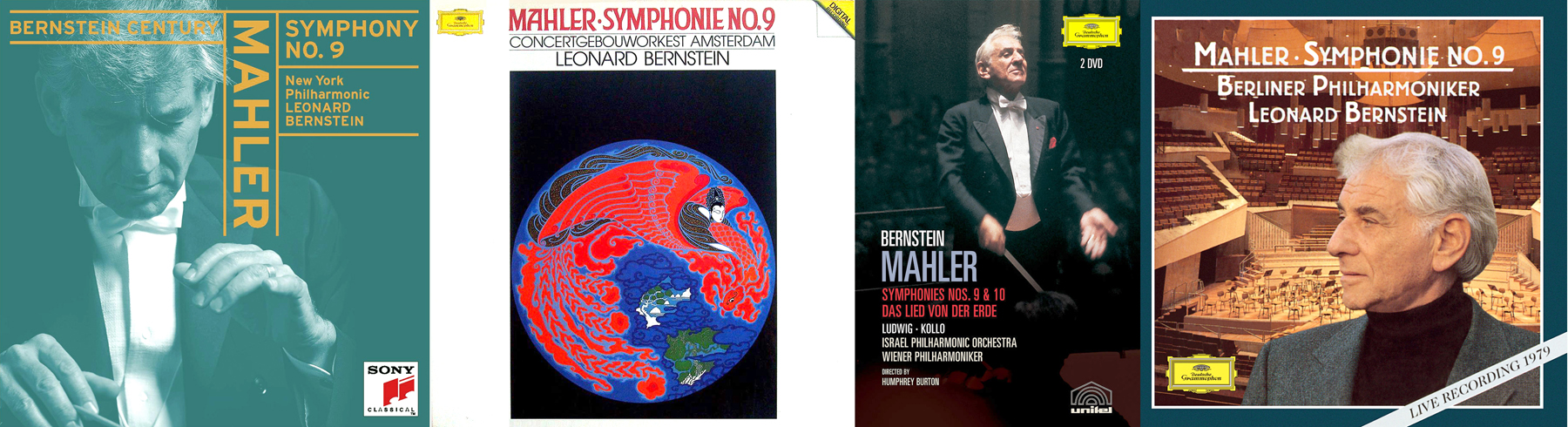
Bernstein made a meal of this symphony and recorded it four times, not counting a few live performances caught on tape outside the Bernstein canon. In the only time he ever performed with the Berlin Philharmonic, he recorded the Mahler Ninth. It is held in reverence by many, despite a glaring lapse by the trombone section in the finale (reputedly, an audience member sitting behind the section had a heart attack and died and the trombonists were understandably distracted). Even so, it is a powerfully emotional recording. But then, all of Lenny’s Ninths carry that wallop. 

If you wish to escape the Bernstein reality distortion field, there are other tremendous Ninths. Barbirolli’s with the Berlin Philharmonic, from 1964, is a clear and unsentimental, but still emotional performance. Bruno Walter premiered the work in 1912, a year after Mahler’s death, with the Vienna Philharmonic. He made a stereo recording with the Columbia Symphony exactly 50 years later; that recording is a benchmark for many. 

It has been recorded by almost every conductor out there, up to Bernard Haitink and the Royal Concertgebouw just last year. 

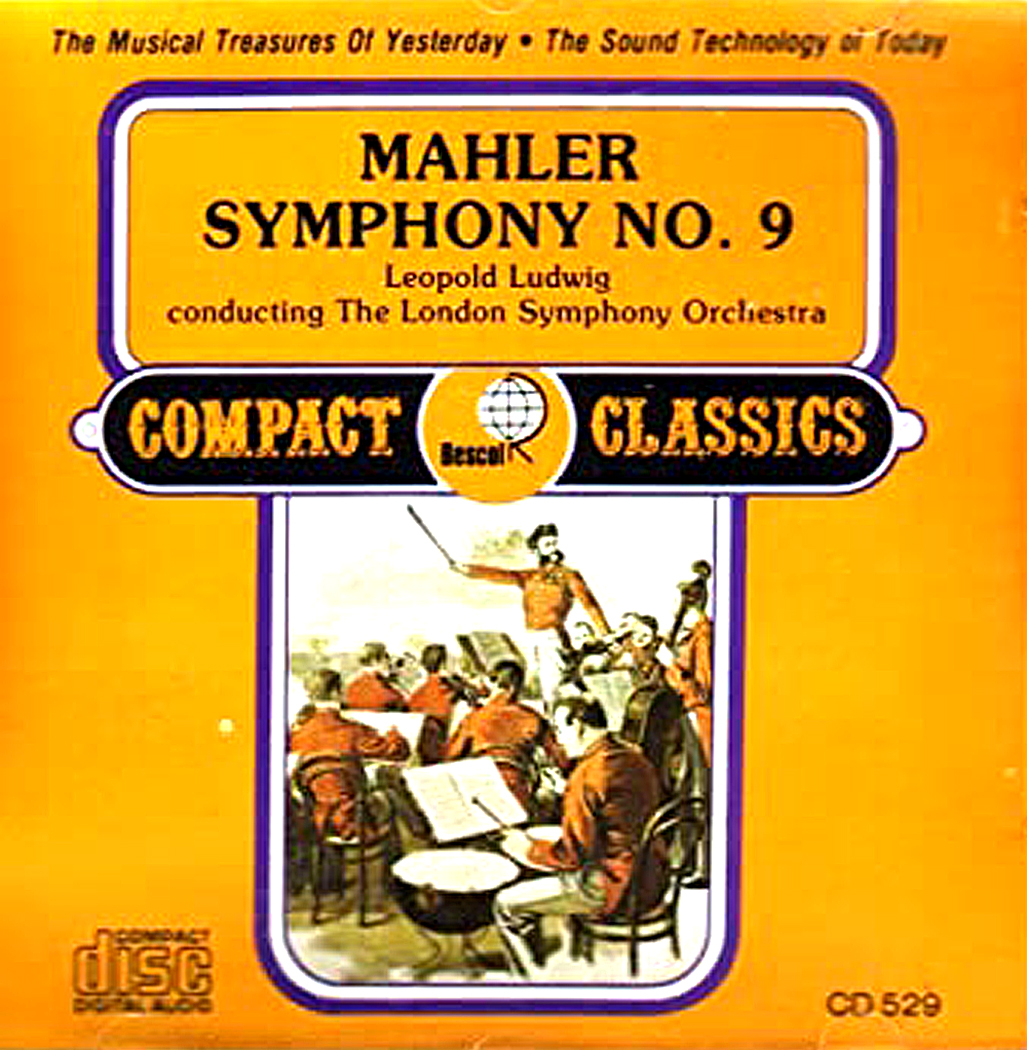
The version I learned on was a surprisingly good version by Leopold Ludwig and the London Symphony, from 1960, on the old Everest label. I still enjoy his Ländler above most.   

Symphony No. 10

Mahler never finished his Tenth Symphony, but left it in tantalizing form as piano short score. He did orchestrate the opening adagio, and until recently, the adagio was performed as a stand-alone. That piano sketch has been orchestrated since, essentially by committee, and there are now many full recordings out there. 

I have never been convinced by the attempted realizations of the whole, but the adagio is absolutely scarifying. It slowly builds up to a climax that is so frightening that in a good performance, your fight-or-flight hormones should get nightmares, the hair on the back of your neck should prickle and you should feel as if the gates of hell have opened and disgorged its contents. It is a scream of pain, an Edvard Munch level scream: “Ich fühlte das grosse Geschrei durch die Natur” (“I felt the great scream in nature.”)

Mahler had found out about Alma’s infidelity and he scribbled in his score several pained comments about it. He was devastated and the music shows it. At one point, nearly all twelve chromatic notes are played in a single harrowing dissonance, distributed across the orchestra in a way to make a musical chord rather than simply noise, and then a screaming trumpet breaks through the din to make things even more unbearable. After that moment, things go quiet and the movement continues to its distressed end. 

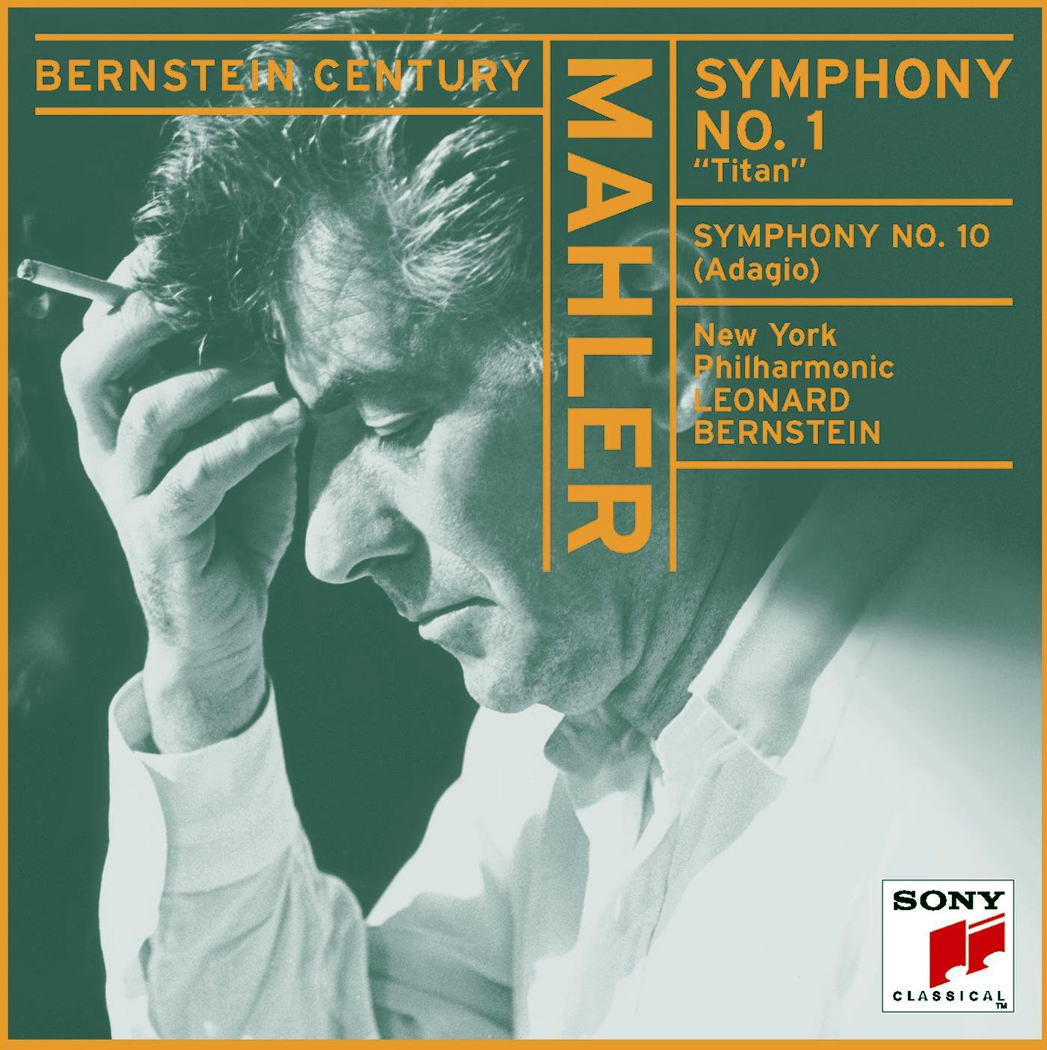
If you want to hear all five movements, there are many good performances, including Simon Rattle with the Berlin Philharmonic. But I will cling to the adagio alone and the first version I knew — Bernstein’s first with the New York Philharmonic. Any time the emotion is more to the point than the music, Bernstein conducts the emotion. This is Mahler at his most Mahlerian, and Lenny at his most Bernsteinian. 

Das Lied von der Erde

After all that, if I were forced to accept having only a single work of Gustav Mahler, it would be Das Lied von der Erde (“The Song of the Earth”), a six-song cycle-symphony. Mahler had planned to publish it as his ninth symphony, but, superstitious about ninth symphonies (the final symphonies of so many composers), he refused to give it the title. When he then came to publish his next, he could name it the Ninth, knowing that fate would understand it was really his tenth.

But aside from that biographical titbit, Das Lied is an overwhelming and emotional work, even among an oeuvre that practically set the parameters for overwhelming and emotional. 

Mahler’s output falls into three large groups. The first four symphonies are called his “Wunderhorn” symphonies, because they make use of his settings of songs from a book of poetry called Des knaben Wunderhorn (“A Boy’s Magic Horn”). The second group are his purely orchestral symphonies, numbers 4 through 7. The Eighth is sui generis and doesn’t count (see above). But the final three works, the Ninth Symphony, the trunk of the Tenth and Das Lied von der Erde are profoundly inward. You get the feeling that Mahler didn’t write them so much for audiences, but as a way to question his own existence. 
The songs of this symphony are taken from a book of Chinese poetry, translated into German (or invented) called “The Chinese Flute.” The texts investigate beauty, isolation, nature and death, and where all these intersect. “Dunkel ist das Leben, ist der Tod.” 

The sixth and final song — Der Abschied (“The Farewell”) — lasts as long as the first five and features some of the most ethereal orchestral writing Mahler ever penned, and a text that Mahler supplemented with several lines of his own. 

“I seek peace for my lonely heart,” the contralto sings. And ends, “The dear Earth everywhere/ blooms in spring and grows green anew./ Everywhere and forever blue is the horizon./ Forever … Forever.” 

That last word — “ewig” in German — repeats and repeats ever more silent, until it completely evaporates. It is impossible to hear it without sobbing. 

The symphony was premiered by Bruno Walter in 1911, six months after Mahler’s death, and Walter recorded it at least three times, in 1936, 1952 and 1960, the last in stereo. Either of the last two can be considered the one to have: Each has its champions and both are magnificent and echt Mahler. 

But the one you cannot do without is by Otto Klemperer, released in 1967, with Fritz Wunderlich and Christa Ludwig. It has better sound than any of the Walters and magnificent singing. This is music right in Klemp’s wheelhouse. 

Complete sets

Warning at the outset: No single set of complete recordings is great in all of the symphonies. But having a complete set gives you a consistent vision of what the work is all about. 

Bernstein recorded them all three times. The first for Columbia (now Sony), mostly with the New York Philharmonic. The second for Deutsche Grammophon, mostly with the Vienna Philharmonic. And finally, a video set, on DVD, for Unitel, mostly with the Vienna Phil. The first two are canonic, and while each cycle has its proponents, you really should have both. 

Pierre Boulez is kind of the anti-Bernstein, cool and analytical, precise and controlled. For Boulez, Mahler is a 20th century composer — or at least a prefiguring, and the source of the Second Viennese School. You can hear every instrument with clarity

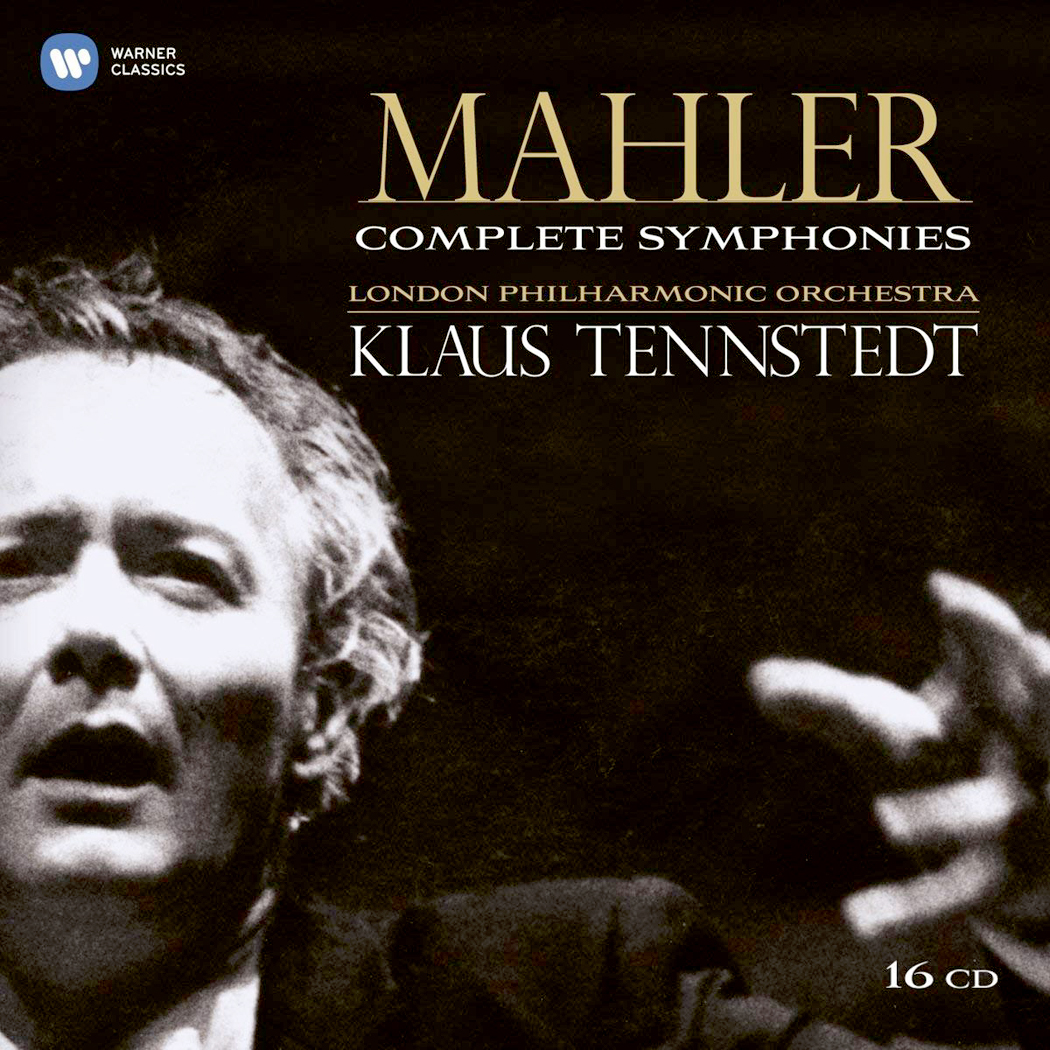
But is Mahler Mahler without going over the top emotionally? Klaus Tennstedt has many devotees, and falls more into the Bernsteinian camp. He recorded them with the London Philharmonic. It is a great set. I gave mine away, not because I didn’t like them, but because I gave them to my best friend; he deserved them. 

A sleeper among sets is David Zinman with the Tonhalle Orchestra Zurich. It is the best engineered set I have heard and with beautiful playing by the orchestra. 

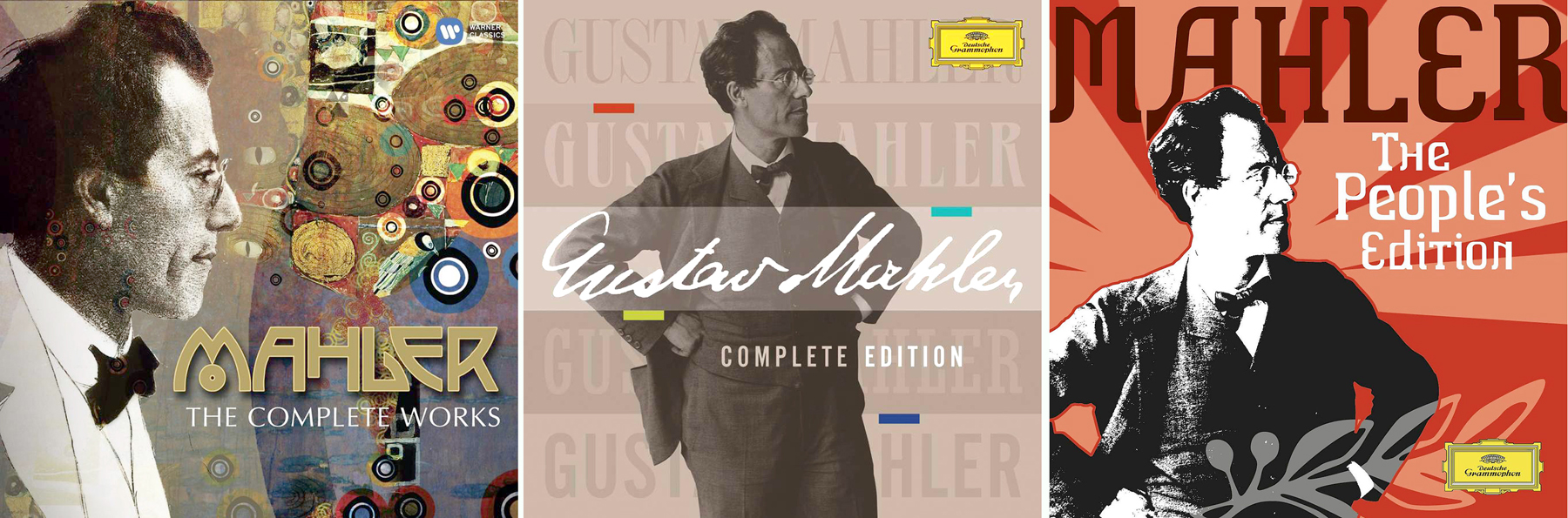
There have been sets that mixed and matched conductors and orchestras. Both DG and Warners have great sets. Another, called the “People’s Edition” had a promotional vote to choose which recordings to include. The fact that each set chooses from their proprietary recordings means that there is no agreement on what are the best recordings. Everyone, after all, has their opinion. In Mahler-World, opinions are strong. 

Other conductors have less-than-complete boxes out there. Klemperer only recorded Symphonies 2, 4, 7, 9 and Das Lied von der Erde. His No. 2 and Das Lied are consensus choices for best ever. The Seventh is just awful, but you should hear it anyway. 

Hermann Scherchen has a box with all but the Fourth and no Das Lied. He recorded with second-rate orchestras, for the most part, and is often so wayward his interpretations have been called “Variations on Themes by Mahler.” The sound engineering is highly variable. This one is for specialists only. 

In the BB list (“Before Bernstein”), you get to hear all nine symphonies with Ernest Ansermet and the Utah Symphony and hear what they sound like before the current Mahler Tradition was assembled (largely by Lenny). They are surprisingly good, and you get a different slant on the music (less peculiar than Scherchen’s). 

Benjamin Zander and the Philharmonia has not yet recorded the Seventh or Eighth, but the rest are among my favorites and I listen to them often. More than any other conductor, Zander follows Mahler printed directions accurately, and brings out expressive details glossed over in other recordings. There are those who disparage Zander for this detail orientation, but for me, it is the heart of a Romantic interpretation. This is the way they were played under Mahler, I am convinced. I love them all. And each comes with an hour-long lecture, explaining many of the details. He is a great speaker as well as conductor. 
There are others: Chailly, Bertini, Gielen, Sinopoli, Rattle. And all have their merits. 

The sets just keep coming. Everyone gets into the act. I have not been anywhere near complete. 

But these are the ones I have come to love. And, of course, there are many individual recordings, not part of sets. And many of these are among the greatest. 

And I have not even mentioned the other song cycles. Maybe another time.