Archive

Tag Archives: music

AS pingpong

No major composer suffers from worse press than Arnold Schoenberg.  His music is vilified, blamed for being ugly and for destroying classical music. But how many of those who think they hate Schoenberg’s music have actually listened — and listened with an open mind and open ear — to what he actually wrote?

The problem is that one’s expectations of the music so color its perception, it can be difficult to actually hear it. Ideas about the music clog the ears.

Schoenberg and his 2nd wife in a photobooth

Schoenberg and his 2nd wife in a photobooth

(A parallel case, though less debilitating, is the myth that J.S. Bach’s music is somehow “mathematical,” when the truth is, as a high Baroque composer, his music is often wildly irrational and excessive — the Baroque is, after all, a Romantic phase of cultural history in the eternal pendulum swing between the classical and romantic sensibilities. Listen to the C-minor Prelude and Fugue from the Well-Tempered Clavier, for instance, which starts out as a repeated pattern of shifting harmonies, but then breaks into a series of appended and unrelated cadenzas. Bach tends to pile it on, not work out formulae.)

So, it is the myths about Schoenberg’s music that are the problem, not the music itself, which, given a fair hearing, is instantly communicative.

It is, however, different and unfamiliar.

“I feel air from another planet.”

These are the words the soprano sings in Schoenberg’s second string quartet (1908). Yes, a singer in the string quartet. Makes you reconsider what a string quartet is.

Although he’s one of the major composers of the German tradition, he also wrote music that dispensed with the familiar keys of, say, C-major or d-minor and developed a system for using all 12 notes — both the black and the white keys on the piano — of the octave, arranged in a series, instead of a melody. This atonal music still sounds strange to the ear, as if it came from another planet.

Hence the charge that his music is ugly; that he destroyed music; that it’s not music, it’s mathematics.

None of these canards is true, but they are persistent myths.

Myth 1: Schoenberg is all head and no heart.

If you look at the totality of his output, it becomes clear that Schoenberg is among the last great Romantics. The music is powerfully emotional.

Perhaps because Schoenberg became such an important subject for music theorists that this myth began. They analyzed the music without ever discussing the emotional content of the music. That’s not the composer’s fault: You need to listen to his music — all music — with not only open ears, but an open heart.

Those theorists looked at the basic features of Schoenberg’s theory of 12-tone music and discussed them as if they were the point of the music. AS smiling

That’s like discussing a person’s DNA but not the person’s character. No wonder it seemed to them mathematical and brain-oriented.

In fact, it may be that what really puts some people off is just how emotional it is: deeply and profoundly so, but its emotions are often painful ones rather than simple and happy ones. There is angst, pain and suffering as well as brilliant moments of transcendence, as in his early Transfigured Night. These are emotions particularly appropriate for the violent, chaotic 20th century.

He is more Bergman than Fellini.

Myth 2: Schoenberg destroyed tonality.

The problems with tonality occurred before Schoenberg. Western classical music had become so harmonically complex that often it was difficult to tell what, if any, key a piece was really written in.

Wagner’s Tristan und Isolde, for instance, sometimes wanders into the far reaches of tonal ambiguity. Debussy’s Prelude to the Afternoon of a Faun is structured around the tritone, of all things. Rather than trying to destroy tonality, Schoenberg was trying to find a solution to a problem that already existed.

Schoenberg saw what he thought was a directional arrow in musical progress, with each generation from Bach through Wagner more tonally complex and equivocal. He decided it was his duty to take music to the next step: atonality.

But he never destroyed tonality.

“There’s plenty of good music still to be written in C-major,” he once famously said, and much of his later music went back to tonal writing.

Myth 3: Schoenberg was an elitist.

The idea that the composer was an egghead has more to do with his bald pate than his actual demeanor.

He had an interest in many things, including playing ping-pong with Harpo Marx and tennis with George Gershwin. Gershwin painted Schoenberg’s portrait. When Gershwin died, Schoenberg wrote the eulogy.

George Gershwin with his portrait of Schoenberg

George Gershwin with his portrait of Schoenberg

He designed toys for his children and made them peanut-butter sandwiches cut in the shapes of animals. He enjoyed going to amusement parks, and he enjoyed jazz and socialized with Artie Shaw.

Schoenberg with Charlie Chaplin

Schoenberg with Charlie Chaplin

For his Society of Private Music Performances, which he and his colleagues arranged in Vienna before the Nazis drove them to flee, he arranged Strauss waltzes and songs from operettas.

It is silly to think he had nothing to do with the lowbrow.

He didn’t even have a high-school diploma, and when he was in school, he was an indifferent student.

It’s true that he believed music should always be the best it could be, but how elitist could it be if one of his ambitions was to score films? Although it never came to pass, he was considered for scoring the 1937 Paul Muni film, The Good Earth. Hardly an art film.

Myth 4: Schoenberg’s music is ugly.

Certainly beauty is in the ear of the listener, and some of Schoenberg’s music can be challenging, even to a seasoned audience. But there is little in music as ravishingly beautiful — in a perfectly traditional sense — than his Gurrelieder symphonic song cycle, which out-Wagners Wagner.

And even in the later, atonal and 12-tone music, there is great beauty to those who can get past their initial shock: The piano concerto at times sounds almost like Rachmaninov.

Listen to Hillary Hahn play the violin concerto: Ravishing.

In part, it is a matter of letting our ears become acclimated to the air from another planet. For some listeners, it may take years, but at some point, you wake up one day and say, “Gee, I’d like to hear Schoenberg’s string trio.” And it will give deep pleasure.

Myth 5: Schoenberg killed classical music.

Poet T.S. Eliot once complained that Milton had ruined English poetry for 250 years. Milton’s powerful voice left its imprint on all who came after.

Ironically, Eliot’s distinctive voice has been likewise imitated by everyone, especially by the bad grad-student poets in academic programs everywhere.

But you can’t blame Milton or Eliot for being good and therefore influential.

Schoenberg by Egon Schiele

Schoenberg by Egon Schiele

And it’s true that a generation of American college music programs were miserably stunted by the hegemony of 12-tone theorists in the postwar era. It is not Schoenberg, but rather that academic music that is mathematical and not emotional. That’s the music that really is ugly.

But Schoenberg himself would have been horrified at what has been done in his name since his death at 77 in 1951.

At the end of his life, when his disciples once told him that there were now more and more composers writing 12-tone works, he asked, “But, are they also coming up with music?”

Scholars will discuss the minutiae of dodecaphonic theory, but anyone willing to take the chance will learn that the real Schoenberg is one of the great composers of the tradition, whose work is moving, beautiful and — most surprisingly given the myths — deeply and profoundly beautiful.

vanloo sextet

In the 1970s, a few crackpot music directors attempted to play early classical music — primarily Baroque music — on the instruments that were available 250 years ago: valveless trumpets and horns, keyless oboes and violins with gut strings. Those early attempts today are hard to listen to, with scratchy fiddles and sour brass, all terribly out of tune.

Things have gotten a lot better since then.

But those pioneers were the vanguard of a burgeoning movement in the classical music world, and in the intervening years have wielded such power, they are now the mainstream of the art, even when they aren’t there.

That is, even standard symphony orchestras now attempt to play what they call “historically informed performance practice,” or HIPP. Even if they use modern instruments, they have been infected with the dogma of the original instrument cadre. It has not been to the advantage of Bach, Mozart or Beethoven.

As the HIPP movement extends its tentacles into the 19th century repertoire, it has been more than unkind to that century’s composers, it has mangled and misrepresented them.

Because, in fact, the historical performance movement is less about historical accuracy in performance technique, and more about making classical music become like the popular music of our own time: There is a decided de-emphasis on harmonic movement and structure, and a peculiar emphasis on forward movement and the beat. Always the inflexible beat. It is so relentlessly percussive, might as well be rock and roll.

I don’t know how its proponents can be so blind to their own propaganda. If you want to know what’s going on in Bach’s music, look at it. Don’t worry about a lot of dogma. How can Baroque specialists so completely misread Bach’s music? How can they break up those long, flowing lines into short choppy phrases and not understand they are butchering the score.

“Baroque music is all based on the dance,” they say. It is dance music. So, they say, it should be bouncy and rhythmic. Well, maybe. But the allemandes and courantes of Bach are only as close to their original dances as Chopin’s Polonaise-Fantasie is to the original Polish court dance, which is to say, very distantly. They are no longer dance music, they are musical essays on the dance. To turn them into jiggy-boom-boom is to do violence to the profound thought and imagination that have transformed them.

It’s like the way an undergrad grabs onto some small and obvious insight and thinks he has found the key to unlock the universe.

This isn’t to say that the HIPP movement hasn’t helped us hear once more a good deal of pre-Bach music that had been previously ignored or misunderstood. Certainly Handel has benefited from the rethinking of his music. We cannot now hear a Furtwangler performance of a Handel concerto grosso without feeling it is soggy and underwater. The new brightness and fleetness helps.

But that doesn’t make HIPP a kind of syrup we pour over the entire history of music.

My biggest gripe, after the loss of the Bach long line, is the enfeeblement of Beethoven.

One can see how the century has moved in this direction. An ironic 20th century didn’t know quite what to do with a 19th century that believed in such things as nobility, heroism, providence, fate and triumph. After even the First World War, these concepts seemed iffy at best. After the Second World War, they seemed downright dangerous.

So, nobility and heroism are out the window. One can understand why, but without them, Beethoven no longer seems important. He might as well be dinner music.

This ties in with Modernism’s faith in the abstract form, and so, music lost its belief in narrative, in the possibility of carrying philosophical thought.

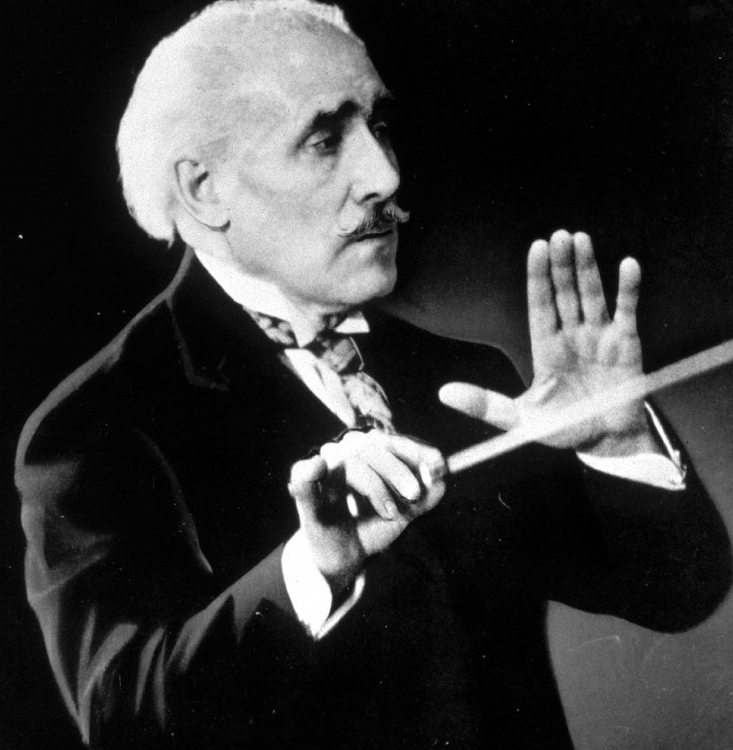
“To some, the Eroica is about heroism,” said conductor Arturo Toscanini. “To me it is just allegro con brio.”

Arturo Toscanini

Arturo Toscanini

Or, as Igor Stravinsky put it, “Music can express nothing.”

It was a provincialism of the 20th century. It could not possibly understand what was going on in Beethoven’s most difficult music.

(I understand that the 19th century didn’t make things easy for us, by going overboard on “programs” for symphonies, and tying specific narratives to otherwise abstract music. Perhaps if those programs hadn’t been so universally mawkish and sentimental, they wouldn’t have caused such a backlash in the century that followed).

But Beethoven himself said as clearly as could be, that he put those extra-musical ideas into his music. They are meant to be there. Excising them in a kind of battlefield surgery: an amputation that only leaves the music disfigured or dead.

If you want to hear the difference, you should listen first to a modern recording of Beethoven’s Fifth Symphony. One could stack the deck and try the recording by Gunther Schuller and a studio orchestra, made in 1995 as a companion to his book, The Compleat Conductor. His argument: That a conductor should not “interpret” the music, but just present what there in the score.

Gunther Schuller

Gunther Schuller

That means, an inflexible beat, a speed based on questionable metronome markings left by the composer years after having written the music, and a complete lack of expressivity.

Or, try recordings by David Zinmann or John Eliot Gardiner, both fine conductors as far as it goes. But they both have been influenced by HIPP, and therefore play the music too fast, too metronomically and purposely suck the philosophical subtext out of the music. They simply don’t believe in it.

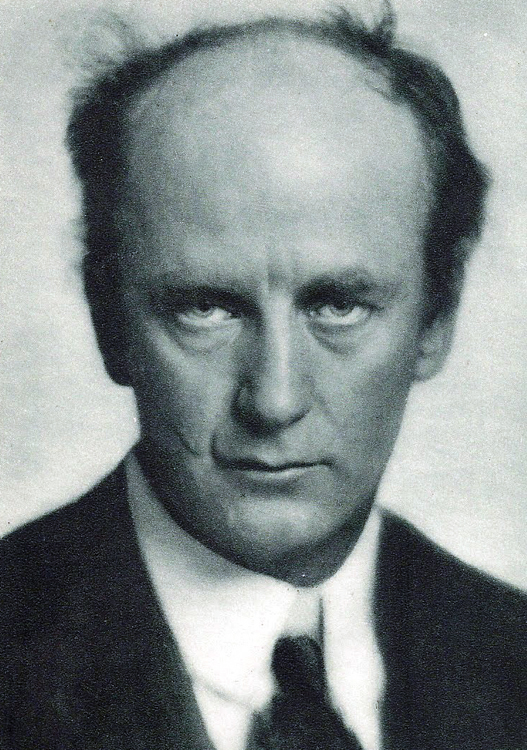
Compare any of those with the wartime recording by Wilhelm Furtwangler, in which the weight of the world is felt in the music, and the hope of transcendence burns brightly in the finale. It is an emotional experience that will leave you breathless and sweaty. Beethoven’s struggle is your own struggle.

Wilhelm Furtwangler

Wilhelm Furtwangler

Many listeners today prefer the modern performances, and find the Furtwangler version overwrought. I can do nothing for them; they should listen to pop music outright and not look for a “classier” simulacrum. But they are missing the overwhelming experience classical music can give them. What they get instead is background music.

The musicians are not robots, reproducing some Platonic ideal; they are rather deeply feeling artists who use the score to express their own inner selves. To complain that Bernstein’s Beethoven is more Lenny than Ludwig is to miss the point entirely. He was doing his job, bringing the music alive from the cage of the music staff, freeing it into life. Gardiner’s Beethoven is likewise more John Eliot than Ludwig, too, but no one seems to notice.

This isn’t just a question of rubato. It is a question of how the rhetoric of performance can communicate the essence of the music. There are some conductors who speed up and slow down irrationally; that doesn’t help the music. But a great conductor will change speeds when it makes his point.

Heck, even Toscanini changes tempo constantly, although by such a small amount, some people don’t even notice it.

One problem is that the tradition has been broken.

Toscanini famously said, “Tradition is nothing but the last bad performance,” but he was wrong. Nowadays, we could turn that on its head: “HIPP is nothing but the last bad performance.”

Tradition is essential. It is the way all classical art forms, whether Indian classical music, Japanese Noh theater or Russian ballet. They are handed down elder to student over generations. Classical music is no different, except that there is a notation to help guide us. We are fooled if we think the one is a substitute for the other.

The 20th century piety is that the score is everything and faithfulness to the score is somehow a measure of the success of a performance. On the contrary, the score is only a guide. It has some information; it is a blueprint, not an edifice. But much is also missing; that missing part comes from a teacher handing down a tradition to the student. Without that tradition learned in the bone from an early age, there can be no early second beat in a Viennese waltz, no paring of dotted notes from fourths to thirds in jazz. Learning the tradition, getting it in your blood, is why American orchestras do Copland and Ives better than a German orchestra, and why, if you want to hear the Blue Danube played right, you have to go to Vienna, or hear musicians trained in the Viennese tradition.

HIPP is instant tradition, like instant tea. It is tradition not learned from elders but picked up from books and research. Book learning ain’t music.

I’ve sat in a number of master classes, taught by some of the greatest musicians of the first half, and middle of the 20th century. They learned from the old masters, and they handed over the wisdom they had learned — the musicianship — from their elders. It is a glorious thing to see: the lumpen student plays the notes, and then the teacher plays the music.

Faithfulness to the score is such a canard. Completely beside the point. All the great conductors of the past jimmied the orchestrations around when they felt it necessary to make the music communicate more directly. Even Toscanini, the poster child for the “objective” conductor, altered the scores, adding brass to the coda of the Eroica where they knew Beethoven’s valveless instrument couldn’t play the notes it was clear he would have had them play if they could.

Mahler re-orchestrated Schumann. Even Mozart re-wrote Handel’s Messiah. There is plenty of precedent for using the score as a starting point, not a prison. What you’re looking for is music, not a museum exhibit.

All of the arguments I have heard in favor of HIPP fail to persuade me. We cannot listen to 18th century music with 18th century ears. It’s an impossibility. To pretend that if we play Bach on recorders and harpsichords, with short-neck gut-string violins, we are somehow more “faithful” to the composer’s intentions is simple-minded. As someone once said, “The loudest sound Bach heard was a door slamming. If you wanted to give our listeners the experience that Bach had, you’d have to create a world without the last two centuries of history.”

Our ears are more assaulted every day. The context for an “authentic” performance cannot be had, making the performance inauthentic.

I admit to enjoying a performance or two of Mozart or Bach played on the original instruments, but it is only as an experiment, or as an approximation, for historical understanding. I no more want to hear only HIPP any more than I want to read text printed with the long “S” and ligatures. They look quaint, but they get in the way of reading.

Unexamined through all this is the basic premise that music should reflect the composer’s intent. It’s taken as an axiom. But few people are asking why.

We don’t insist that Shakespeare be performed outdoors, with boys playing the women’s parts and with the rhetorical delivery of Elizabethan actors. We don’t blanch at Richard Burton playing Hamlet in suit and tie. So why do we argue over whether Bach’s musicians played with a vibrato or not?

The music, after all, no longer belongs to Bach. It belongs to us.

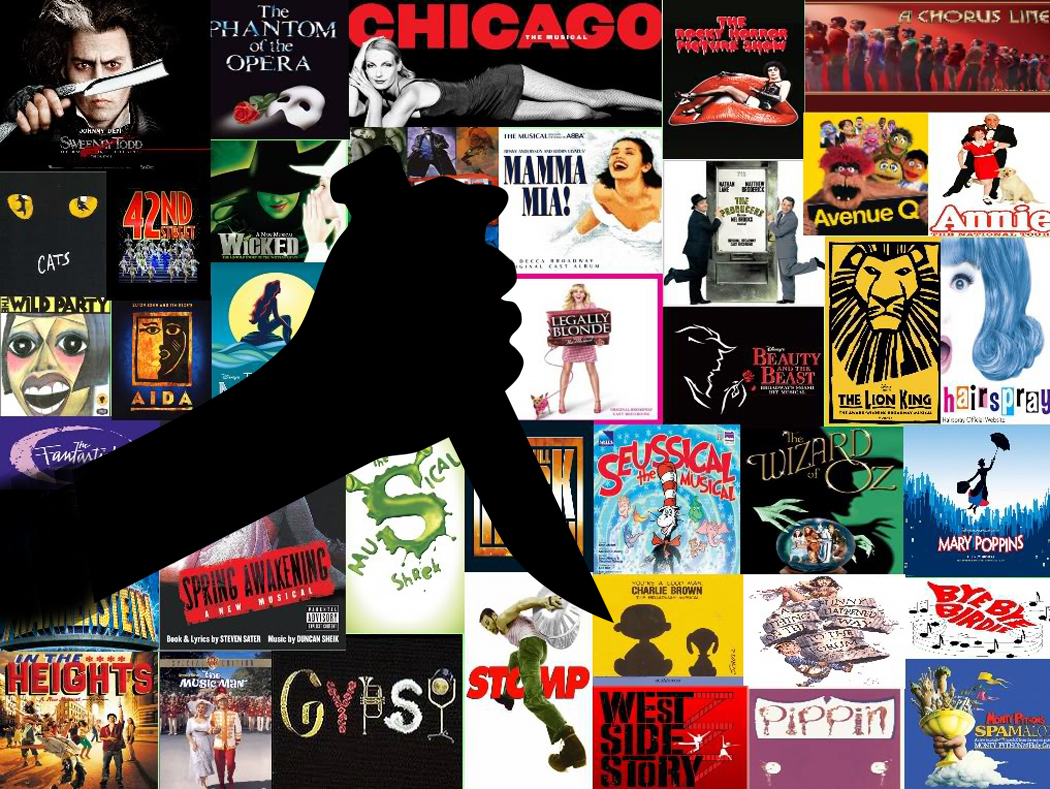
Musicals collage with knife

Musical theater is said to be the backbone of the American theater experience. Certainly, in this century, from the creaky story lines of George M. Cohan to the creaky tunes of Andrew Lloyd Webber, musicals have raked in the big bucks while “legitimate” theater plays to smaller, sober audiences.

Yet, are musicals more than merely feel-good entertainment? Can they claim to be real theater?

Let me begin by stating in the clearest possible terms, I hate musicals. I mean, I really hate musicals. They make my skin crawl. They give me the heebie-jeebies. I reach for my revolver.

And I don’t mean just the recent, cat-screeching extravaganzas with their central ponderous ballad. No thinking person can possible defend Les Miz, which was the single worst experience I have ever had in a theater, and that counts once when I was young and spent a night with Brecht after eating some bad clams.

Less miserable? No! I couldn’t have been more miserable.

Les Miz and Phantom are beneath contempt. Pretention amplified by lack of musical talent.

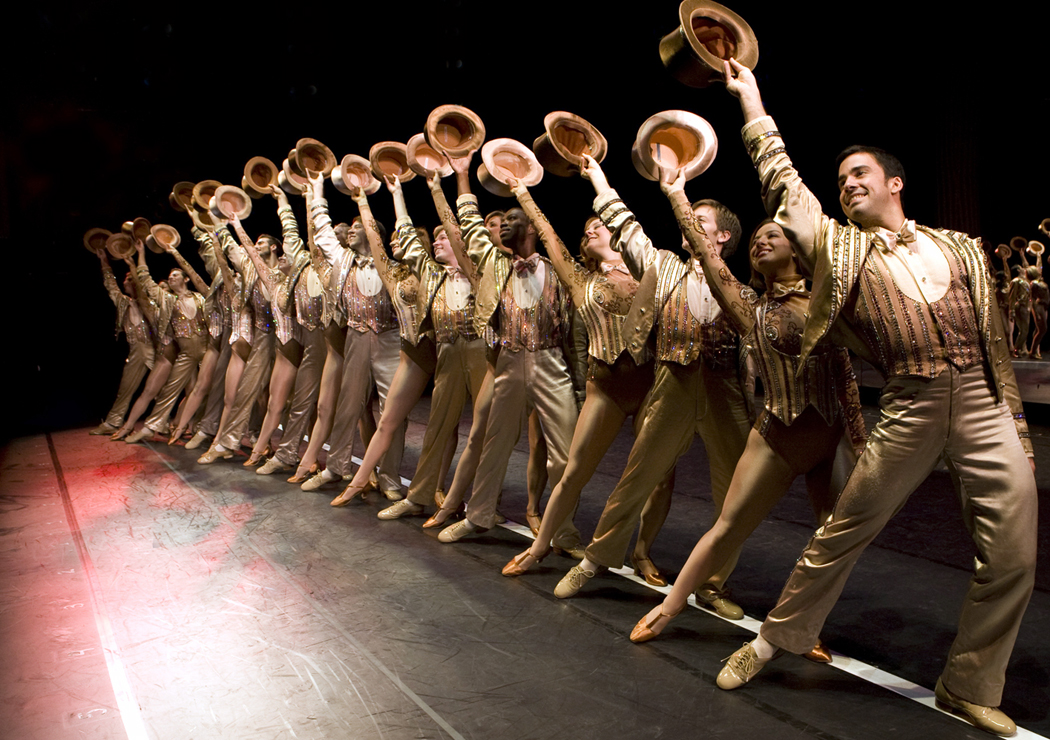
They’re bad enough, and they have taken over Broadway. But what I am talking about, what really makes my flesh turn livery and my eyes spongy, are the bright-faced, cheery musicals of the past, those dynamos of pop standards, with their boy-gets-girl plots and their sparkly chorus numbers. I despise them. I have hated them since I was a kid and watched their corny production numbers on the Ed Sullivan Show.

a chorus line

My face turned in embarrassment for them. And I still suffer occasional tinnitus from having heard Ethel Merman sing once.

From Oklahoma! and On the Town in the 1940s to Assassins and Rent in the 1990s, I hate them all. With a few notable exceptions, they foist off on the public a distorted, happy-face world view. Even Rent ultimately has a chamber-of-commerce take on misery.

It is at best a miserly and partial vision of existence that musicals afford us, running the gamut of emotions from wistful to plucky.

And the thing I have the hardest time with: their arrogant naivete. They are at rock bottom, unsalvageably corny: “To siiiiiing the unbearable soooooong!”

At least the old Rodgers and Hart or Rodgers and Hammerstein shows had some memorable tunes, and extracted from their treacly context, I can enjoy them. But nowadays, the music is aimless harmonic wandering reaching a high-held note cynically plotted to stop the show. “Memories?” Only memories of the kind of tunes Leonard Bernstein could write for Candide. That musical, one of the few I can bear to touch my skin, is pleasantly acid, whereas most musicals are unpleasantly optimistic. I don’t believe in that optimism. It is a lie.

You can point out a Carousel here or a Candide there. Or a whole canon of work by Sondheim, which fails for another reason — tunes no one can remember.

But the form is inherently sentimental, and the actors who sing the tunes in their breathy, oh-so-earnest manner only accentuate the mawkishness of them.

This is different from opera, where the subject matter is usually tragic, and the music is so much richer, more subtle and wider of emotional range, to say nothing of harmonic complexity and drive.

Give me Wozzeck over Brigadoon any day.

I hate musical theater button


rackhambookcovervalkyrie

We live two lives. Everyone does, although we seldom acknowledge it.

The first is the life we know daily, the ordinary life filled with people and things. It is the life of work and fast foods, traffic and journalism. It is a loud, swarming stage, with 7 billion competing egos jostling for their air.

In such a life, it is easy to become submerged, easy to lose our way. The demands of survival and success blind us to the larger, more important issues.

Which is why that second life is so very important. That is the life we recognize when we are alone at night under the starry sky. In this second life, the 7 billion disappear, and we are conscious of only two players: ourselves and the universe — the single, moving, conscious point on the infinite ground.

We become aware in a way we cannot during busier times, that the universe we live in is intensely beautiful and awesome and is driven by a power we cannot conceive of — and what is more, we are a part of it and have been given the chance to participate.

In the first life, we are never more than an extra in a crowd scene, but in the second life, we are each the protagonist in our own autobiography.

Or more exactly, we are each the hero of our own existence.

It is this second life that animates one of the most extraordinary works of art ever conceived, one so huge, multifarious, demanding and overwhelming, that only a few people are willing to invest themselves in it. Those who do, tend to become unbearable to those who have not. They become Wagnerites.

In one way of looking at it, the history of art is a vast pendulum that swings back and forth between works created out of the friction between peoples, on a personal, familial, tribal or national level. The individual and his place among human society. The other extreme is art that examines the individual and his place in nature and the universe. We move from Alexander Pope to William Wordsworth, from The Marriage of Figaro to the Symphonie Fantastique. One shouldn’t have to choose, but the fact is, one’s Zeitgeist chooses for you which paradigm will be most valued during your lifetime.

It is this second life that animates Richard Wagner’s 15-hour quartet of music dramas, The Ring of the Nibelungs. The massive theater-and-music work tells the story of the creation and death of the universe, and the human actions that animate it. If you are looking for a concise story with a coherent plot, turn instead to Bizet or Puccini; Wagner focuses directly on that inner life that pivots under the constellations.

That is why so many people love his music, and why just as many hate it. The Ring is populated with gods and heroes. La Boheme is populated with people. La Boheme is — on the surface, at least — about the first life; The Ring is unapologetically about the second.

There is, in some cultures, the idea of ”The Long Man,” that is, the individual seen as the summation of history: ontogeny recapitulates phylogeny — the one life contains all life.

So that Wagner’s retelling of all of history is also the birth and death of each individual consciousness.

Das Rheingold, the first of the four operas, begins with Eden, a perfect paradise in which the creatures who inhabit it are perpetually in touch with the radiance of nature. The beginning of the opera — and of the cycle — is unprecedented in music history.

alberichandrhinemaidens

It begins with the watery creation of the world, and the composer wrote it in the key of E-flat. The opening of the first of the Ring operas is one of the most astonishing stretches of music in all of history. Wagner holds onto a single E-flat major chord for a full four-and-a-half minutes — 136 bars, longer than some Mozart symphony movements. That is an eternity in music without a change.

It begins in the basses with a deep fundamental note, which breaks slowly into a rising arpeggio on the E-flat chord and slowly speeds up to a crescendo of runs and arpeggios — an immense pile of busy-ness, but without any of the forward sense of motion that harmonic progression provides.

In this, Wagner has provided a musical metaphor of the Hindu concept of maya, or illusion. He had been reading Indian philosophy — albeit in the very German version of Schopenhauer — and his illustration of the idea is perhaps the clearest in art.

Before consciousness, it is said, the mind is like a placid lake reflecting the sky perfectly. But such a state is impossible, for a breeze is inevitable, and it breaks up the surface into ripples and waves, and the sky — eternity — is then reflected individually in every wavelet. Such is creation in Hindu philosophy, where we are all fragmented into individuals by the accident of the animating wind. But the fragmentation is an illusion — maya. The busy play of the world is just a trick; eternity itself is unchanged.

So Wagner shows the indestructible and unmoving E-flat spinning out into a busy surge of notes, building the world into existence.

The idea came to Wagner while he was drowsing, dreaming he had fallen into a rushing stream of water.

”The rushing sound formed itself in my brain into a musical sound, the chord of E-flat major, which continually re-echoed in broken forms,” he wrote. ”These broken chords seemed to be melodic passages of increasing motion, yet the pure triad of E-flat never changed, but seemed by its continuance to impart infinite significance to the element in which I was sinking.

”I awoke in sudden terror from my doze, feeling as though the waves were rushing high above my head. I at once recognized that the orchestral overture to the Rheingold, which must long have lain latent within me, though it had been unable to find definite form, had at last been revealed to me. I then quickly realized my own nature; the stream of life was not to flow to me from without, but from within.”

“Within” — That’s the second life.

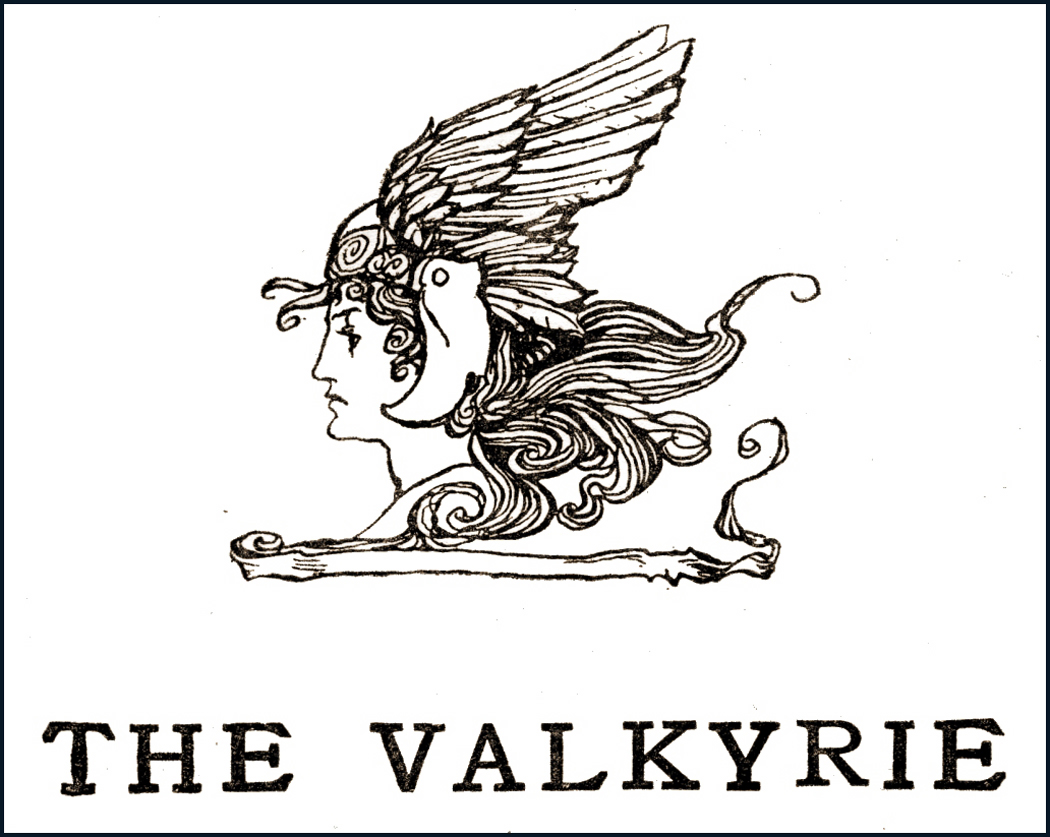
rackhamvalkyrieglyph

In one of the most prodigious imaginative feats in history, Wagner then managed to create most of the remaining 15 hours of music in his Ring from the initial 4 1/2 minutes of arpeggio — fragmenting it further, turning it upside down and inside out, to generate most of the melodic ideas in his epic.

So that, just as all scales and harmony in Western music are generated through overtones of the fundamental bass note, so all of Wagner’s universe likewise grows from that one, deep vibration.

That “radiance of nature” is also the gold at the bottom of the Rhine river. The three nixies who ”guard” the gold sing its glories.


rackhamrhinemaidens and ring

It is the ”visionary gleam” of childhood that Wordsworth elegized in his Intimations ode.

It is Nature, unsullied by greed and striving, which is the philosophical ground of The Ring. And it is Nature that is disturbed by the theft of the gold by a dwarf, who gives up any hope of love in order to possess the treasure and its power.

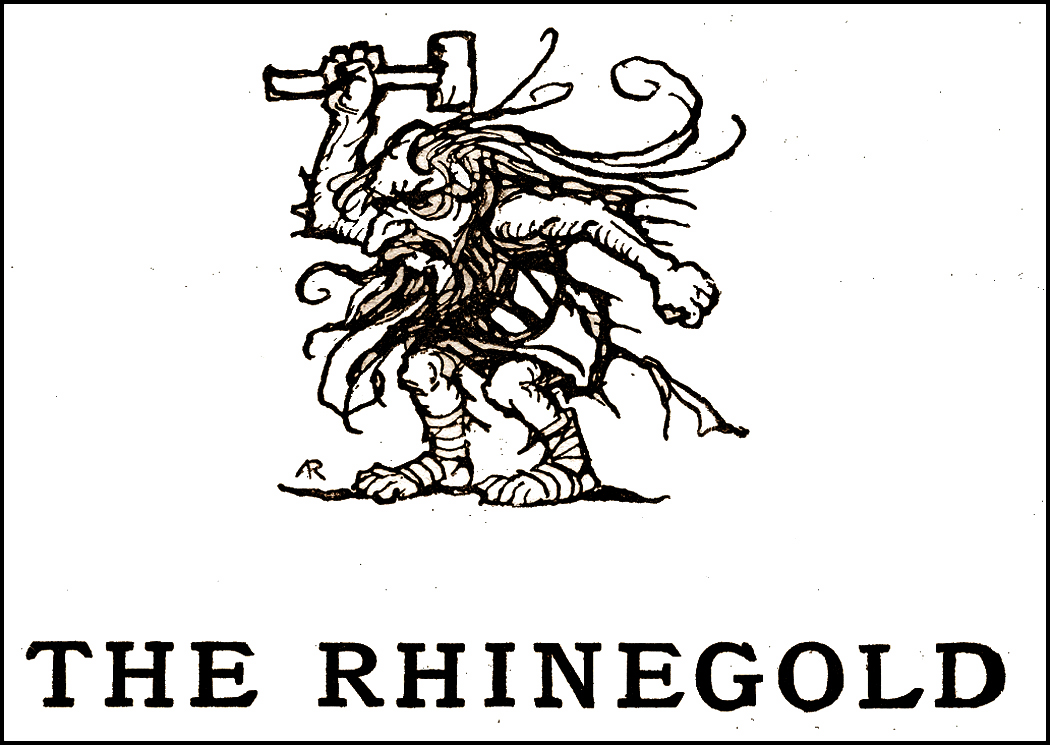
rackham rhinegolddwarf

So, love and power are the two poles of the moral universe in The Ring, and they play out against each other for the remaining three operas.

And in the end, the gods die and the world is engulfed in fire and flood. All that survives, at the final notes of the fourth opera, Goetterdaemerung, is the high, hanging violin melody that we have come, in all those hours of music, to associate with the redemptive power of love. It is the final word on life, history and the cosmos, and just as the world is destroyed it provides the hope of the next creation, just as our children provide a hope against our own deaths.

This is more than an entertainment: Wagner is trying to say something genuine about existence and to the extent we are open to his music and ideas, we will value them.

In the second life we all lead, the same two forces play out: career versus family, law versus justice, greed versus generosity, selfishness versus universal love. In each case, the first binds us in pain and frustration and the second redeems us through a connection to the transcendent.

Such an ambitious aim in art is held in great suspicion these days, where too easy a transcendence turns quickly into sentimentality. And a great deal of what followed Wagner is mawkish. We are much more comfortable now with a skeptical irony. After all, Wagner’s grandiosity fed into the rise of Nazism in Germany. Wagner was, after all, Hitler’s favorite composer.

wagnerphoto

(Wagner, himself, was an awful man. A ridiculous anti-Semite, a ruthless user of women and patrons, and more than comfortable living the high life on other peoples’ money. Take my word, you wouldn’t have liked him.)

But Hitler looked for the Germanness in The Ring and ignored the humanness. The narrowness of his ideology is the very thing Wotan, the chief god in the operas, comes slowly to understand is the cause of human misery.

We are all, if we are truly sentient beings, on something like Wotan’s learning curve.

There is a great deal in The Ring. It is the single most compendious work of art in European history. Wagner manages to take on rapacious capitalism, national identity, Schopenhauer, Hinduism, mythology and the role of the artist, among other things. There are as many interpretations of The Ring as there are hearers. And that is as it should be.

There are Freudian interpretations, Jungian ones, Marxist readings and neo-Feminist glosses.

Yet, it all comes down, in the end, to an awakened awareness of our second life.

The Ring has its faults; it is not a perfect work of art. It is sometimes dull for stretches as bits of plot are rehashed. Like Rossini said, there are some great moments and some tedious quarter-hours.

And in some sense, it is quite silly to take all this seriously. With its dragons and horn-helmeted Valkyries, its gods and dwarfs — to say nothing of its 200-pound sopranos — it can be hard to see past the adult fairy tale aspect. To some, it is as tedious as a musical version of Tolkien.

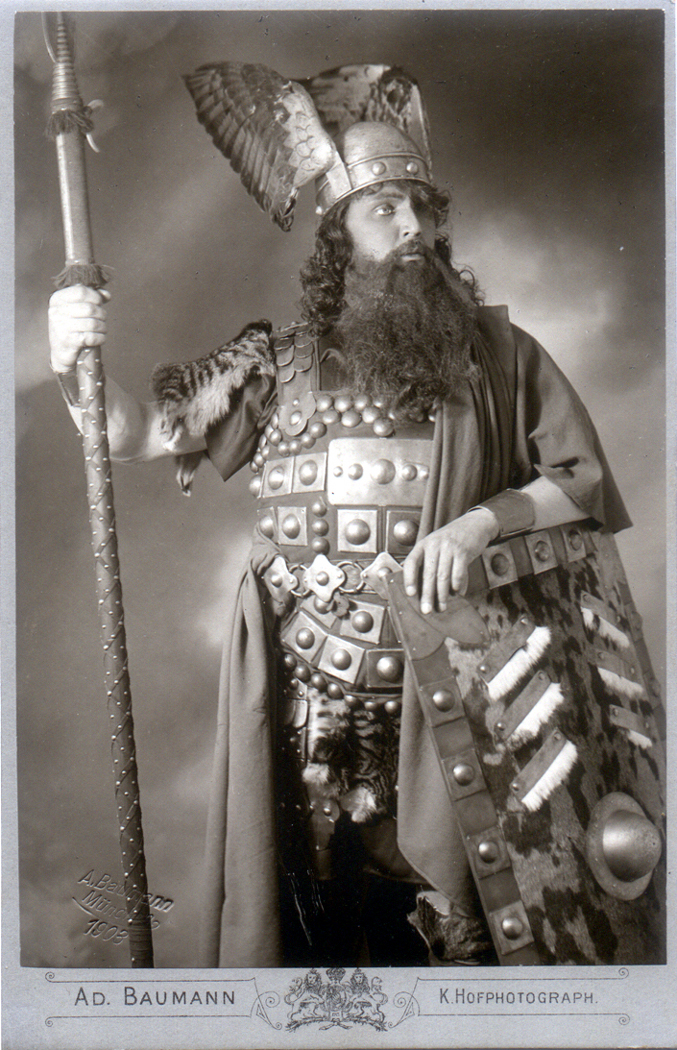
Fritz Feinhals Wotan

Yet, the music itself, underlying and amplifying the experience of The Ring, reawakens in us our awareness of our second life, which is ultimately the source of all that is good in life for ourselves and those we love.

Finally, as the critic Longinus says, all great works of art are flawed and we should always prefer flawed greatness to perfect mediocrity.

And make no mistake, The Ring is truly great.

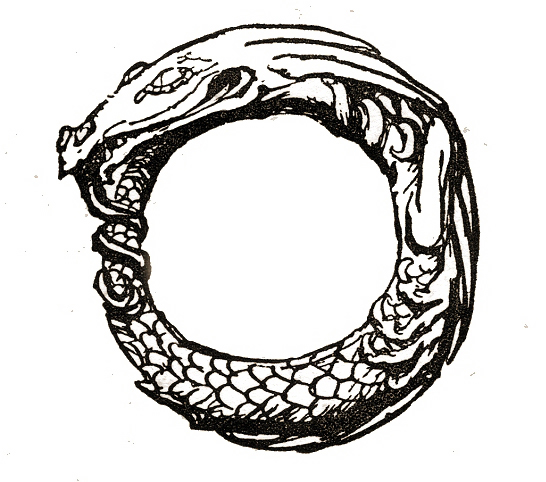
rackham ring circle

A SHORT RETELLING OF THE RING — SO FAR

Richard Wagner’s Der Ring des Nibelungen is a four-opera monument to myth, history and psychology. First performed in 1876, The Ring was designed to be played on consecutive days as a single, 15-hour unit, broken up into these four operas, or ”music dramas” as Wagner called them:

rheingoldalbum

Das Rheingold — In this prelude to the main story, Wotan, the chief of the Viking gods, gains and loses the gold stolen from the Rhine River. The gold confers power on its possessor; unfortunately, it has been cursed and it also confers death. To retrieve the gold for himself, Wotan concocts an elaborate scheme, which plays out in the subsequent operas.

walkurealbum

Die Walkuere — Because he is bound by his own laws not to get the gold himself, Wotan fathers a hero, Siegmund, to do it for him. Siegmund falls in love with his own sister, Sieglinde, and Wotan, again bound by law, is forced to kill Siegmund, but Wotan’s daughter, Brunnhilde — who is a Valkyrie, or divine warrior maiden — saves Sieglinde and her unborn child. For her disobedience, Wotan puts Brunnhilde to sleep on a mountain surrounded by fire.

siegfriedalbum

Siegfried — Sieglinde’s child, Siegfried, is raised in the forest by a dwarf. The hero kills the dragon that guards the gold and climbs the mountain and awakens Brunnhilde. Wotan’s plan seems to be working, except that Siegfried isn’t really interested in the gold.

gotterdammerungalbum2

Goetterdaemmerung — The title translates as ”The Twilight of the Gods” and shows the sad end of Wotan’s plan. Siegfried is drugged by the evil half-dwarf Hagen — who also wants the gold — so that he forgets Brunnhilde and plans to marry Hagen’s sister. Brunnhilde feels betrayed and joins with Hagen to kill Siegfried. When she realizes that Siegfried had been tricked, she sings one of the most difficult 20 minutes in opera, and in remorse for her part in the murder, rides her horse into the hero’s funeral pyre, igniting the final conflagration that destroys both the world and the gods. Wotan’s plan has failed, but Wotan has achieved something more valuable than the gold: Wisdom. As the opera closes, hints of the redemptive power of love suggest that the world can start over again with a fresh beginning.

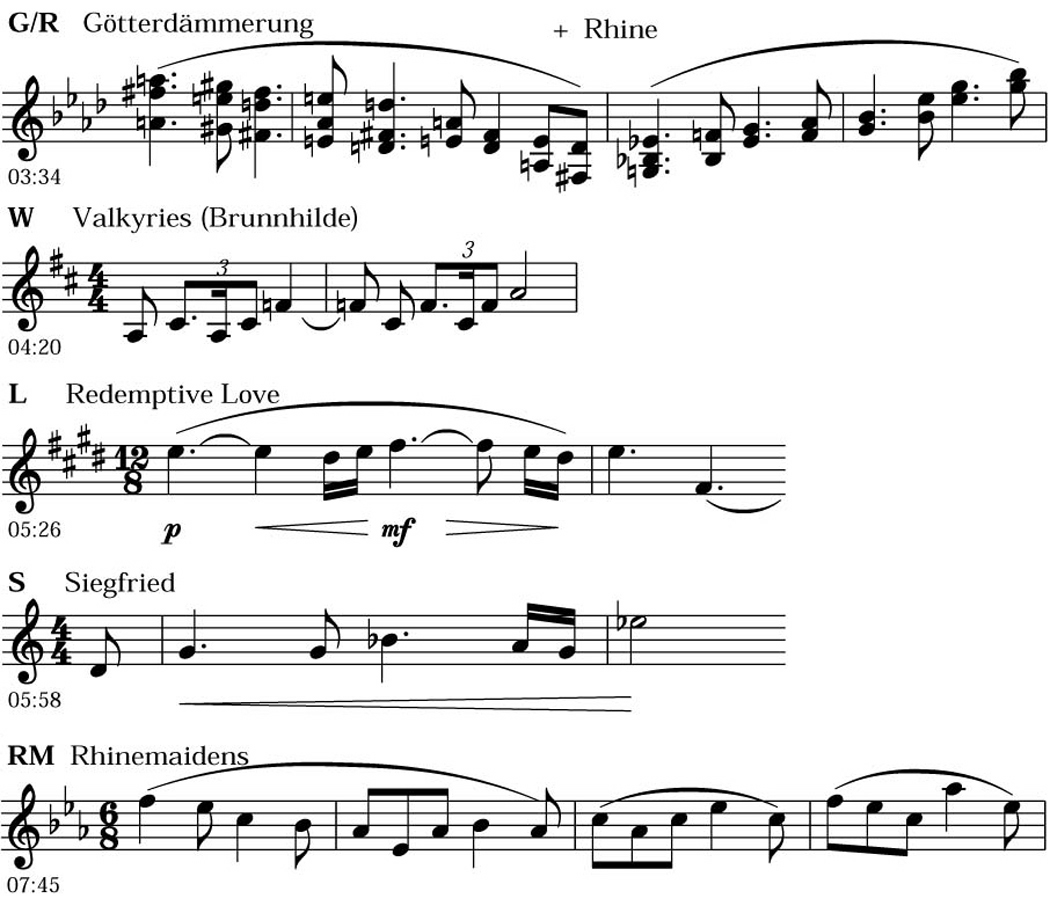
leitmotifs

To unify the sprawling story, Wagner used repeated musical phrases — called leitmotivs, or leading musical ideas — and developed them symphonically over the 15 hours. The music expresses the emotions and thoughts of the characters — sometimes hidden — and the music changes as the characters grow and the plot thickens, helping the audience keep track of what is happening.

rackhambookcoverdragon

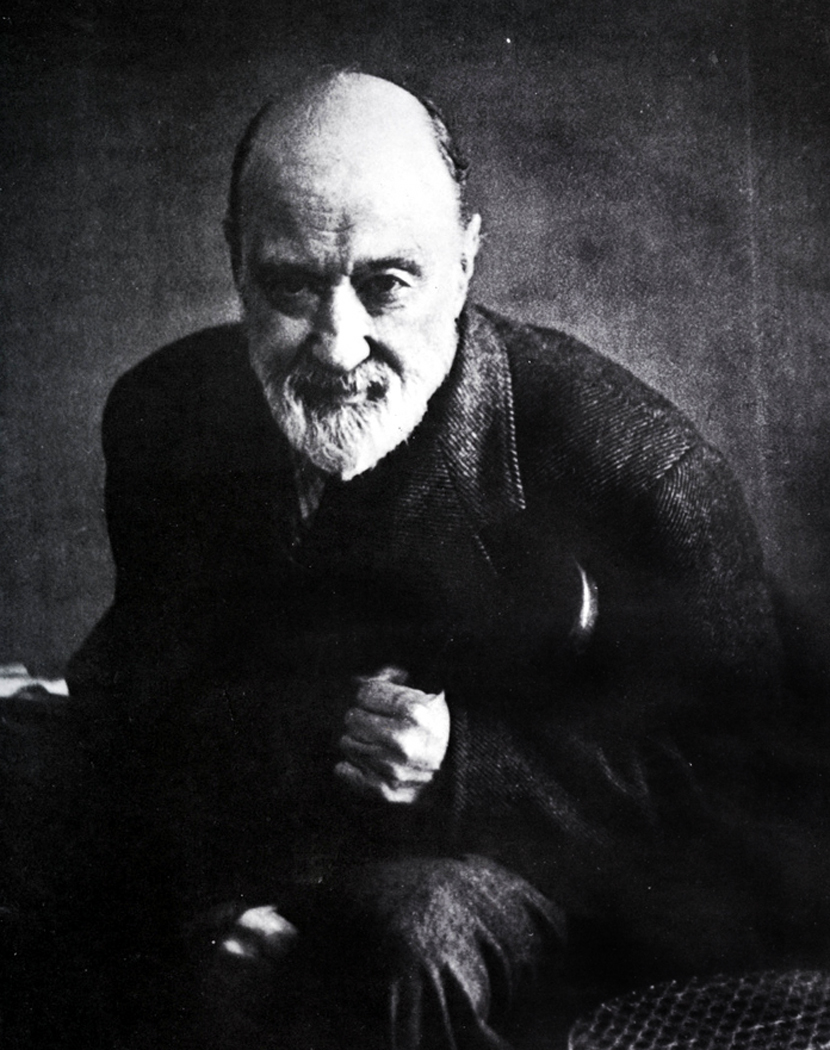
Ives portrait

The music of Charles Ives has been thought gnarly and noisy, difficult and dissonant. And it is, for sure. But it is also profoundly nostalgic and deeply American.

Instead of avoiding his music because it is so “modern,” you should let the music steep inside your consciousness and let it dredge up all your most inkept feelings of loss and childhood. Ultimately, his music is not so much avant-garde as it is heartbreaking. Fireworks, parades, summer vacations, church picnics — it’s all there in the music. And all the more potent for its evocation of the New England that Ives grew up in.

For Ives, New England was America. He was born from the soil of New England and finally was returned 79 years later to that same soil. He inherited the culture of Emerson, Thoreau and Hawthorne and turned it into sound.

His piano sonata Concord, Mass. 1840-1860, his Holidays Symphony and his Third Symphony (Camp Meeting) all grow from his New England roots, full of the marching-band tunes, patriotic airs and revival-meeting hymns he heard as a boy.

But one piece above all sums up his New England experience, and it is one of his easiest to digest and, therefore, most popular. It is Three Places in New England, and it describes in music three very precise landscapes.

Sometimes called the “New England Symphony,” it was written by Ives between 1903 and 1911. It contains three movements that are unforgettable impressions of the land and people.

Landscape plays a big part in the history of painting and hardly less in literature. We can visit the very square foot of land in Canada where painter Frederic Edwin Church stood to paint his monumental Niagara Falls or we can tour the Lake District that inspired William Wordsworth and Samuel Taylor Coleridge.

But it is not often that landscape inspires music. There is the occasional Moldau or La Mer, but scene-painting in sound is not often as precise as a painting. Smetana takes in the whole river, not a single view, and Debussy’s ocean is any ocean.

Yet Ives gave us in his Three Places three distinct sites that can be visited and enjoyed and compared with the sound portraits.

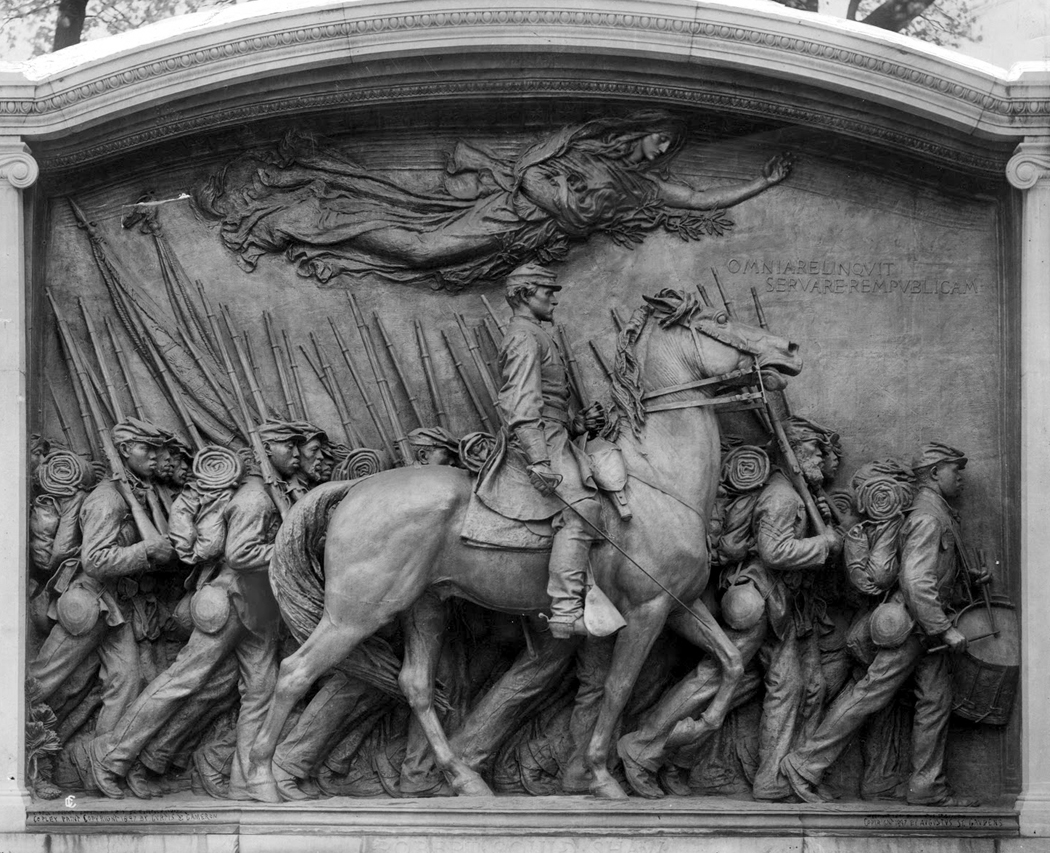
Shaw Memorial, Boston

Shaw Memorial, Boston

The SHAW MEMORIAL, Boston

The first section in Ives’ music is titled ”The St. Gaudens in Boston Common” and is subtitled ”Col. Shaw and his Colored Regiment.”

The St. Gaudens is a Civil War monument, considered by some people to be the best American example of memorial sculpture. It was created by Augustus Saint-Gaudens and unveiled in 1897 at the northeast end of Boston Common, across the street from the Massachusetts Statehouse.

The deep-relief sculpture commemorates the 54th Massachusetts Volunteer Infantry Regiment and its commander, Col. Robert Gould Shaw, who died in the Civil War.

The 54th was unusual at the time because its enlisted ranks were composed entirely of African-Americans. On May 28, 1863, the largest crowd in Boston’s history came out to see the 54th march off. They saw the thousand Black soldiers marching, accompanied by their White officers on horseback.

A souvenir of the day quoted Byron: ”Who would be free, themselves must strike the blow.”

Two months later, Shaw and a third of his command were dead, killed in the attack on South Carolina’s Fort Wagner in Charleston Harbor. Their charge had failed, but the soldiers had fought so well that they legitimized what had been considered a questionable idea: African-Americans in combat.

Shaw initially was buried in a common combat grave with his dead troops, and after the war, when plans were made to exhume the gallant young officer and give him an official ceremony in a Massachusetts cemetery, his parents refused, writing that they could hope for ”no holier place” for him than ”surrounded by his brave and devoted soldiers.”

Saint-Gaudens, America’s premier sculptor at the time, was commissioned in 1883 to monumentalize Shaw, and briefly considered a standard equestrian statue, but finally decided that the Black troops deserved the memorial as much as Shaw and devised plans to include them.

He wanted to represent the soldiers accurately; some were as young as 16, others were bearded grandfathers. So he hired African-Americans to pose for him and made 40 heads as studies. Sixteen went into the final bronze.

So Shaw rides his horse in front of a rhythmical line of marching soldiers, their heads, sleeping packs and rifles creating a visual drumbeat.

Ives’ 8-minute portrait of the monument is a diffuse, dissonant wash, as though not only the images of the Civil War but also its very idea were obscured in the haze of memory and history.

”Moving — marching — faces of souls! Marked with the generations of pain, Part-freers of a destiny, slowly, restlessly swaying us on with you towards other freedom!” Ives wrote in his score.

The monument was only a few years old when Ives began writing about it, and the layers of time show through in the music: the war, the remembrance of war, the causes and unfinished business of the war in a conflicting mass of sound.

Often, in the welter, you can make out a familiar tune: Marching Through Georgia or Battle Hymn of the Republic.

Then it all fades away into the nostalgic past.

Today, the sculpture is nearly black in its patina. It sits on its granite plinth looking vaguely like a plaque on a headstone. The tour buses stop, and the tourists pour out with their cameras. Some shoot the gold-domed statehouse, others shoot the St. Gaudens.

One bus unloads two dozen Japanese tourists. They also point their cameras. The amplified sound of a tour guide overpowers the street noise — but in Japanese — and I cannot possibly know what she is saying or what the Japanese tourists can make of the racial complexity involved in the war, the monument and American history.

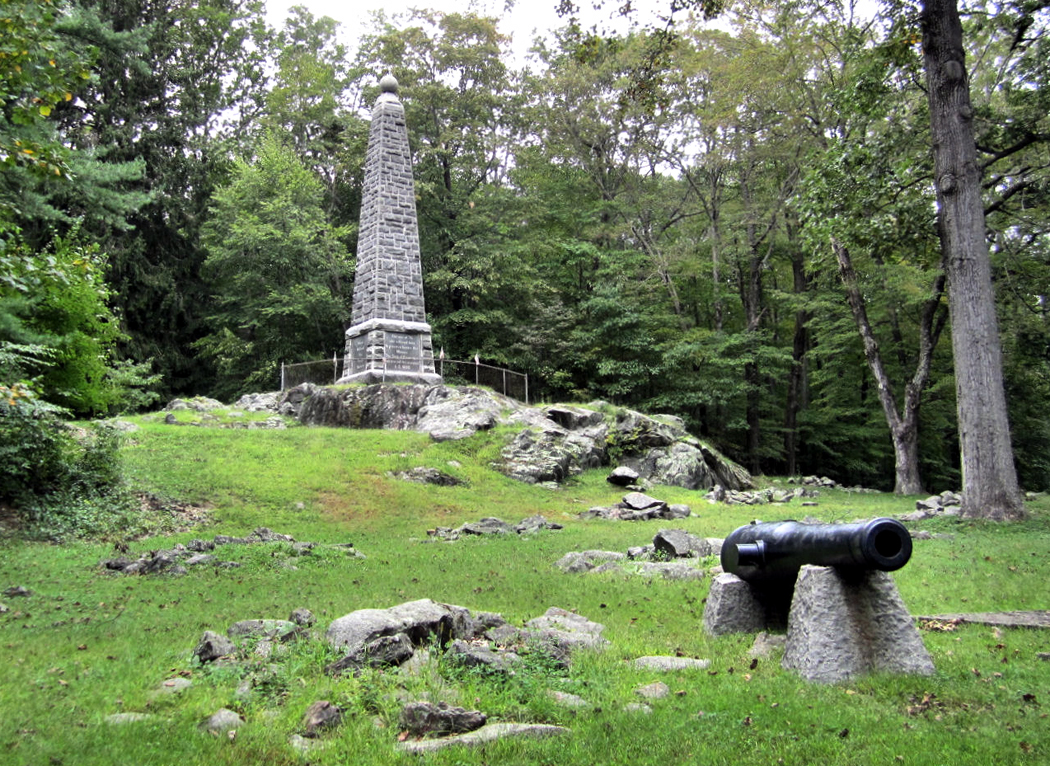
Putnam's Camp, Redding, Connecticut

Putnam’s Camp, Redding, Connecticut

PUTNAM’S CAMP

The second movement is called ”Putnam’s Camp, Redding, Connecticut.”

Gen. Israel Putnam, like most American generals in the Revolutionary War, was better known for strategic and tactical retreats than for victories. Charged with holding the Hudson Highlands in 1777, he lost Fort Monroe and Fort Clinton while backing up into Connecticut.

He and his troops wintered near Redding, Conn., in 1778, undergoing much of the same privation and hardship Washington endured at Valley Forge.

But Ives isn’t remembering the Revolutionary War in his music. Rather, he is remembering his childhood, when he used to visit the site of Putnam’s Camp and fantasize what it must have been like in the winter of 1778-79.

He also recalls the patriotic Fourth of July picnics he attended there and the brass bands that played.

”Long rows of stone campfire-places still remain to stir a child’s imagination,” Ives wrote.

What he hears is a grand cacophony of marching bands, playing different tunes at the same time. It is loud, bouncy and ear-blasting, getting louder and louder, with strains of The British Grenadiers and other songs, and ending in a misquoted bar and a half of reveille.

It is all a jolly 6-minute joke but the kind of music Ives loved best. ”Pretty sounds are for pretty ears,” he said, deriding those who wanted pleasant melodies from his orchestra.

Once, upset over the hoots and boos of an audience listening to some modern music, Ives got out of his seat and exhorted the unappreciative crowd to ”Stand up and take your music like a man!”

Putnam’s Camp is today a state park, half on the east side of Connecticut 58, half on the west. It is the eastern half that is most visited; it has a lake, a parking lot and picnic tables, and many of the people who come there probably give little thought to the Colonial army that once wintered there.

On the other side of the road, there is a path through the woods that passes the lines of camp hearths and a hilltop cemetery full of the unmarked graves of those who died fighting for American independence.

At the lake, a man — who looks like he’s playing hooky from work — casts his fishing line into the water. The fall remnants of waterlily leaves are curled and brown on the water, and a few Canada geese honk on the lawn.

The sky is overcast, and the woods are brown as tweed, with neither shadows nor highlights. And the old-fashioned New England Fourth of July patriotic and religious picnic is as much a part of the past as Putnam’s war.

Housatonic River, Stockbridge, Massachusetts

Housatonic River, Stockbridge, Massachusetts

HOUSATONIC at STOCKBRIDGE

The last section of Three Places in New England is perhaps the most moving. It is ”The Housatonic at Stockbridge.”

That is, the Housatonic River at Stockbridge, Mass.

The Housatonic is one of those alternating lazy and cascading streams that run from north to south, along which New England’s factories were built in the early years of the Industrial Revolution.

It begins at a small pond in Washington, Mass., and wends its way 149 miles to Long Island Sound at Stratford, Conn.

Along its banks are both towns and woods. Ives honeymooned in the Berkshires in 1908 with his new wife, Harmony, and one Sunday morning, they strolled near Stockbridge and the river.

”We walked in the meadows along the river,” he wrote many years later, ”and heard the distant singing from the church across the river. The mist had not entirely left the riverbed and the colors, the running water, the banks and the trees were something that one would always remember.”

The 4-minute movement that Ives wrote captures the quiet and the mist: It is ambiguous tonally and melodically, like a remembered dream, builds to a climax that evaporates abruptly, uncovering the quiet chords playing on the orchestral strings as if they had been sounding all along, but drowned out by the noise.

Like the strings in Ives’ Unanswered Question, which are drowned out by chattering woodwinds, the final quiet strings in Three Places are the eternal harmonies of nature.

Ives liked his piece well enough that he turned it into a song later, with words by poet Robert Underwood Johnson:

”Contented river! In thy dreamy realm — the cloudy willow and the plumy elm.”

It is an elegy to nostalgia.

Stockbridge has changed since the Iveses visited. It is now a prime tourist destination, full of gift shops and art galleries, with frozen yogurt. It is also the home of the Norman Rockwell Museum. Rockwell made his home there and used Stockbridge natives as models for his magazine-cover paintings.

The river eases in and out of town, crossed by four or five small bridges. The Housatonic is an average of only 35 yards across in Stockbridge, hardly more than a brook.

On a cloudy day in October, it also is hidden by the grayness. I have visited every spot along the river in town and enjoyed its quiet but missed its beauty.

Until late that afternoon when I stand on the hill by the Rockwell Museum looking over the river out at Pleasant Hill and a chink in the clouds widens, throwing a spotlight on the meadow across the water. The bare winter sycamores along its banks suddenly stand out like neon, and the band of sunlight sweeps from left to right, finally in its passing leaving the scene in gray once more.

And the riverbed and the colors, the running water, the banks and the trees were something that one would always remember.

DEEP TIME 

The search for Ives’ three places has turned into a pile of time on time, present on past, past on deeper past, all wound up in a single point of geography.

It is as if the Indians, who were in New England before the Pilgrims came, had a deeper understanding of reality. When something happens, they believed, it is always happening. Time is not a straight line but a basket full of harvest, all piled in together.

So that I cannot see this single piece of real estate, the Housatonic, the Yankee military camp or the St. Gaudens statue, without thinking of history, memory, my past and my nation’s past, all balled up into a single, complex thing.

All happening at once and all happening in my eye, looking at the past.

And I know it is not just true for these three places, caught in Ives’ web of meaningful noise, but for all places and all times.

Charles and Harmony Ives

Charles and Harmony Ives

CHARLES IVES

Charles Ives is the father of American music.

Before him, what American composers wrote for the concert hall was a dim reflection of European — and especially German — art music, with its sonatas and symphonies. After him, it was possible to feel truly American.

You can see his influence in the folk tunes that show up in Aaron Copland, the spare orchestrations and open harmonies of Roy Harris and the avant-garde fun John Cage has with noise.

Ives was a funny duck. Born in 1874, he studied composition at Yale, but instead of becoming a poverty-stricken composer, he became a wealthy insurance executive. Ives and his partner, Julian Myrick, founded a successful agency that pioneered much of the industry’s modern practice. Myrick had the business sense, Ives brought the creativity.

Together they prospered, ultimately becoming the largest insurance agency in America. In 1929, the firm sold $49 million worth of insurance.

But he was also a genius in music, taking little stock of what he learned from his stuffy college professors and feeding large on the oddball music education he received from his father, George Ives, who was bandmaster for the small Connecticut town of Danbury.

George Ives loved to experiment with sound, playing with microtones, out-of-tune instruments, polytonality and organized noise. That enthusiasm for experiment, which in George was a variety of practical Yankee inventiveness, became for his son a creed and a muse.

Yet although Charles Ives’ music was more modern than Stravinsky’s and more dissonant than Bartok’s, he really was not concerned with fitting into the long history of European art music. It is obvious in the music; Ives was not writing about modern things.

For although the music is filled with ear-splitting dissonances, it is unabashedly nostalgic. Ives felt a powerful nostalgia for the past — his past — and his music drips with bits of the music he heard when he was a boy: old hymn tunes and marching-band music.

No matter how loud and incoherent Ives sounds at first, at long last, it settles into Bringing in the Sheaves and Columbia the Gem of the Ocean — not whole but in snippets, as if half-remembered.

Ives wrote the bulk of his music in the first years of this century. His business and his ailments — he suffered from a poor heart muscle — kept him from concentrating on composition after 1918.

Or perhaps, as Ives’ early biographers, Henry and Sidney Cowell, suggested, ”The war was a shock of the first magnitude to a man whose life was based on his confidence in human progress.”

He lived on until 1954, becoming for many American composers a kind of father figure and rallying point.

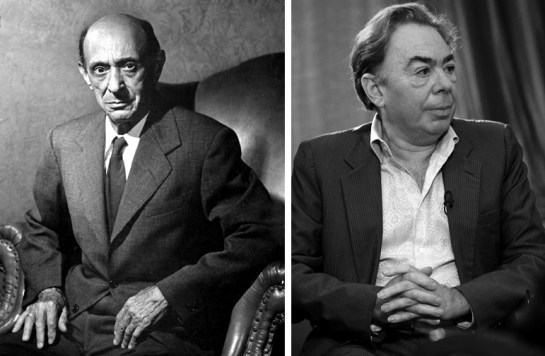
bipolarportrait

I’m going to make an argument here that will perturb any normal classical music lover: The atonal music of Arnold Schoenberg is not atonal.

Schoenberg is a whipping boy for all those who hate, just hate what happened to music in the 20th century. He is held to be the archdeacon of unlistenable cacophony. But whether you like his music, the way you might like the music of Mozart, or not, a good deal of the disapprobation that has been visited upon him is undeserved and derives from a complete misunderstanding of his music, and I would argue a misunderstanding of what is called classical music, in general. 

Some background: Arnold Schoenberg was born in Vienna in 1874, when Richard Wagner and Johannes Brahms were still alive, and the two ruled the German music world, as two poles of artistic radicalism and conservatism. Schoenberg was 8 when Wagner’s final opera, Parsifal, premiered in 1882. He was 23 when Brahms died (when Schoenberg was born, Brahms had not even written his first symphony). 

He became a composer, writing first in the arch-Romantic style that borrowed a good deal from Wagner’s chromaticism and Brahms’ idiosyncratic rhythmic complexity. He came of age in a Vienna dominated by the musical will of Gustav Mahler.

As a composer, he believed he was moving on the logical path set forward by Wagner, Brahms and Mahler, among others, a path that moved historically from diatonic to chromatic music, and then to music of indistinct tonality — which has sometimes been called atonal. His final move was to a structured composing method he felt would reimpose order in the making of music. In this, he was one of the two primary sources of Modernism in music, along with his “archenemy,” Igor Stravinsky.

(That “method” was, of course, the 12-tone, or dodecaphonic system, also called “serial” music — more of that later). 

To those ears used to hearing music with tonic and dominant harmonies in major and minor modes, Schoenberg’s later music seemed hopelessly aimless, and worse, ungrounded in traditional harmony. To them, it seemed like noise rather than music.

Setting aside questions of taste: For some of us, Schoenberg’s music is unutterably beautiful, while others may never see (or hear) past the dissonances. But as I said at the beginning, there is a serious misunderstanding of Schoenberg’s aim. 

By my definition, Schoenberg’s music — even his later 12-tone music — is not actually atonal. If I want atonal music, I must look to Andrew Lloyd Webber.

What! You say? How can that be?

I’m not being facetious: I’m making a central point about classical music.

For the sake of argument, we should say that what we call music is often broken down into three primary components: melody, rhythm and harmony. It is admittedly simplistic to make this generalization, but it has a kernel of truth to it: If we divide the world’s music up, it can be said that Asian music is given over to the primacy of melody and can consist of melodies of incredible complexity; African music respectively finds enormous complexity and expressiveness in rhythm. Yes, there is melody, harmony and rhythm in all these musics, but there is a special place given to melody in the often drone-harmonied Asian music, and a special place to rhythmic complexity on sub-Saharan African music.

But European music has placed its money on harmony. Since the Renaissance, harmony has been the most expressive, and certainly the most complex element of European music. By the 18th century, this had evolved into a system of keys and key relationships.

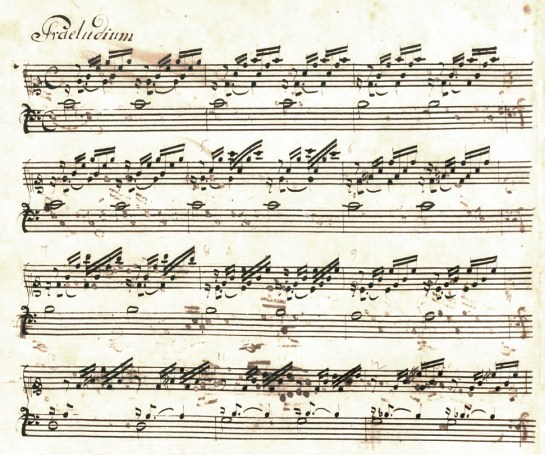
If you want a demonstration of what I mean by harmony being the central element, consider something as simple as Bach’s Prelude in C-major from the first book of the Well-Tempered Clavier. In it a simple eight-note rhythmic figure is repeated, over and over, twice to a bar, unchanged for 32 bars. That is 64 identical iterations. It serves as both melody and rhythm. The only thing that changes is the harmony, constantly shifting: It is beautifully expressive in its simplicity. 

BachPrelude

Or take a Schubert song. It would appear that the melody is what makes Schubert so can’t-get-out-of-your-head, but in fact, it is the often-wild and inventive harmonies he has underpinned them with. Try re-harmonizing any of his songs and the magic evaporates. 

Reharmonize Andrew Lloyd Webber and it hardly matters; in fact, his music is commonly reharmonized with each new arrangement, so indifferent is the harmonic underpinning. In a good deal of contemporary music (mostly pop) the harmonies are merely ornaments to the beat and tune, and can be interchanged with impunity. The “chords” are just called “changes,” and little thought is given to them, or to their interrelationships. 

This is what I consider atonal music. It may be consonant and it may all sound very pleasant, but it does nothing expressive with its harmonies and there is no coherence to key relationships. 

All music also depends on the setting up of expectations and then satisfying them or deflecting them. This is true of the changing rhythms of African drums or the melisma of the Arabian oud. 

Tension and resolution. 

In Western music, this creation of expectation and its subsequent completion falls primarily to harmony. 

The primary engine of this tension is dissonance and the primary resolution is found in the subsequent consonance. But that is only in the short term. To make a piece of art that lasts longer, requires a more sophisticated pattern: how to delay the final resolution until it comes to us like a dawn sun after a dark night. 

Consider the slow tread to C-major in Beethoven’s Fifth Symphony, where the tonal resolution comes after many short glimpses, but not in full till the finale. Or even more extreme: the way Bruckner withholds the genuine tonal resolution until the very last B-flat chord of his Fifth Symphony. 

Wagner depends on holding off that longed-for resolution; it’s what gives the Liebestod its unendurable sense of longing.

The history of Western music is the history of what Leonard Bernstein once called “newer and better ambiguities” in tonality. The thumping tonic-dominant structure of Beethoven turns eventually to the sliding chromaticism of Wagner, and later, the battering tone clusters of Stravinsky. 

You can hear the way tonality gives direction to music in something as simple as the blues. The chord changes in the blues, although they are sometimes given a little kick by adding sixths or sevenths to the basic chords, is a very simple set of chord progressions. Tonic, tonic; subdominant, tonic; dominant, tonic. Over and over. You can feel the movement at each chord change.

Classical music does that to, albeit in a more complex, subtle and varied manner. You need to feel the chords — the harmonies, change under your feet.

Listen to the second movement of Beethoven’s Seventh Symphony, one the most memorable and moving in his oeuvre. The melody is hardly more than a single repeated note in a repeated “Dum-ditty-dum-dum” rhythm. But the harmony changes constantly and meaningfully: It moves from A-minor and into C-major and on to B-major and B-minor before noodling back through the dominant E to the home A-minor at the end of the phrase. Beethoven keeps it alive and fresh; he keeps it interesting. 

Beethoven7

You should not only notice, you should feel the harmony. It is meant to convey emotion.

The best way to do this is to listen more to the bass line than the soprano. You’ll get the tune whether you listen especially to it or not, but listen to the bass, and you’ll hear where the music is going.

Brahms always used to cover up everything but the bass staff in a score when looking at the printed version of a new piece of music. He claimed it was the best way to tell whether the music had any lasting value. 

Of course, music isn’t just the triads on parade: It is the non-harmonic tones that give it spice. 

Dissonance is everywhere in music. You cannot have music without it. If you think Schoenberg is dissonant, you should consider Johann Sebastian Bach. He is probably the most dissonant composer of all time. Of course, there is this central distinction between his dissonance and that of Schoenberg: Bach always resolves his dissonance.

If you were to take a simple choral tune, say, “Ein feste Burg,” (“A Mighty Fortress is our God”) and play only the off beats, you would hear something as modern and dissonant as Schoenberg himself. All those passing tones, all those appoggiaturas, all those mordants and nachschlags. Most of the vertical harmony (harmony at any given moment, seen from highest note to lowest bass) in Bach is clangorous , but always resolved immediately and given a place in the key structure of the melody. 

When we are comfortable in C major or G minor, we feel comfortable also to take minor departures, in full expectation of the resurrection of harmonic order. All is right in Bach’s universe.

Schoenberg lived in a different time from Bach, a time when all was not right. It was the early 20th century, and wars, ethnic cleansing, fascism, colonialism’s evils and even the death of God made life seem less secure. For Schoenberg, tension was the order of the day, not resolution. And so, in his so-called atonal music, each cluster of tones, although the equal of any tone cluster in Bach, is not fit into a hierarchy of key, and does not anticipate its own resolution into something emotionally satisfying. 

If Wagner attempted to keep resolution at bay for minutes and quarter-hours at a time, Schoenberg keeps it at bay for entire pieces of music.

Each cluster twists in a matrix of implied tonal structure, but moves from one to the next in such an eel-like manner that no tonal structure is ever settled or constructed. We are never in D minor, although it may seem at certain instants that we are headed there.

The meaning of Schoenberg’s music, thus, depends on our ears expectation of tonality, and its meaning depends on the denial of the same. In this sense, Schoenberg’s music is still tonal, even when it avoids any key center. Even at its most radical, his music relies on our own ear’s sense of the harmonic universe in which it exists to provide “Luft von anderem Planeten:” “air from another planet.”

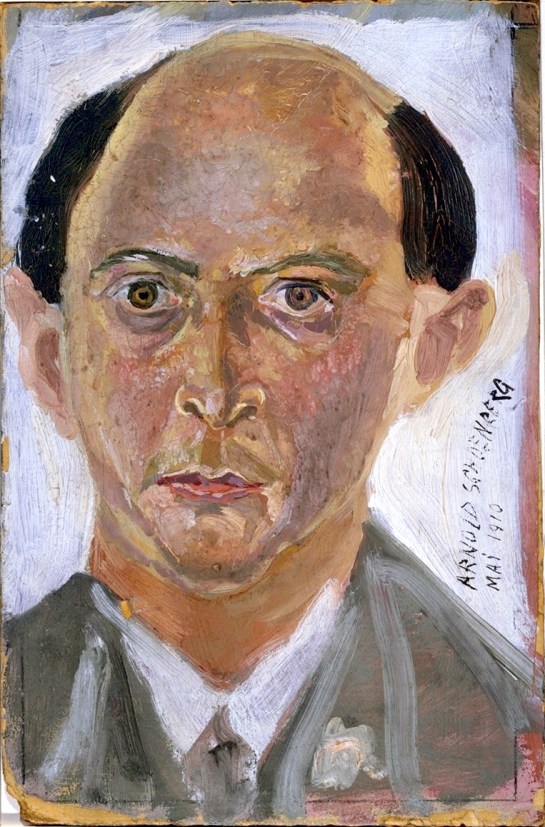
Schoenbergselfportrait

That is true even of the serial music he wrote. It’s emotional resonance depends on our placing it in an endlessly shifting tonal universe, a ball of mercury that cannot be pinned down. 

In this sense, Andrew Lloyd Webber’s music, although it is written in a key, does not depend on tonality the way Western music from Bach to Debussy did. Its tonality is mere happenstance, something unconsidered because merely habitual, something virtually unseen, or unheard by its creator. 

And hence, I claim that Schoenberg’s music is tonal, and Webber’s music is not.

There are two pieces of music that never fail to set off the waterworks in me.

I’m sure we all have some signature tune that turns us into maudlin fools crying into our beer.

Lots of music can have that effect, when you’re in the right mood. Mozart is full of such tunes. No one ever wrote about the forgiveness of human foibles like Mozart. It isn’t only in his “forgiveness arias,” but the same tone of music turns up in piano concertos and wind sextets. He had some tap into divine understanding.

When I’m in the right mood, Mozart wells up in my throat. But heck, if I’m really depressed, Stars and Stripes Forever can set me off.

But I’m talking about something that doesn’t require the right mood to work.

Anyone playing Shenandoah, for instance. I don’t care what the arrangement. You can play it on a chorus of kazoos and trombones. You can play it calypso style on steel drums — the moment I’m transported “across the wide Missouri,” I’m reduced to a blubbering mass.

Clearly, I’m responding to some sort of deep seated nostalgia, some trauma of childhood or failed romance. But strike up the tune and I’m like some drunk in a bar yelling “Play Melancholy Baby.”

Actually, I know what it is with Shenandoah: I know the Shenandoah River and the great valley it troughs through in northern Virginia, heading north to join the Potomac at Harper’s Ferry.

It is an especially beautiful river, and only more so on a cool autumn morning when a low fog hangs over the water and the sycamore trees along its banks seem to grow out of white nothing.

The Shenandoah Valley separates the Blue Ridge in the east from the great ridges of iron- and coal-laden mountains to the west. The river rises in twin forks, one on either side of Massanutten Mountain, which rises like a long, low bread loaf in the middle of the valley.

I used to live in the Blue Ridge; I have just moved back. It was the most beautiful place I ever knew. I missed it.

And when the song says, “I long to see your smiling valley,” I knew just what it meant. “Tis seven long years since I last saw thee,” the song continues. It was 25 years since my wife and I lived in the Appalachians.

We lived in Arizona, which has a beauty all its own, but is different from the Blue Ridge. And when the song reaches its climax, “across the wide Missouri,” I knew that I was on the wrong side of the Missouri, too, in a kind of self-imposed Babylonian captivity.

“By the waters of the Rio Salado, there we sat down, yea, we wept.”

The song speaks to me — as it does to so many other people — of that lost Eden we know we can never regain.

And so, I blubber.

But that second tune that sets me off is something different.

It is Christoph Willibald Gluck’s Dance of the Blessed Spirits.

Gluck was a Czech-born composer of the 18th century who rebelled against the ornate and conventional opera of the time. His opera, Orfeo ed Euridice, tells a simple myth in simple music. Almost too simple.

Two set pieces from that opera still are widely known. The Dance of the Furies was used behind the chase scene in almost every Hopalong Cassidy movie ever made. In those “B” Westerns, budgets didn’t allow new music, so they played old classics behind the action. The music was loud and furious.

But Dance of the Blessed Spirits was something else: quiet, almost  static, and with the grace only utter simplicity can convey.

Two flutes play the song-like melody over the accompaniment of strings. Chords change slowly and never stray from simple diatonic harmonies.

And when the tune’s first phrase reaches conclusion, it stretches out in a feminine ending, a slow suspension off the beat. Nothing is insistent in the music, but rather, like the Grecian maiden on Keats’ urn, it seems suspended in time, permanently in a state of grace.

I melt when I hear it.

But its power comes from the same kind of emotion that drives Shenandoah: a sense of loss and a sense that somewhere there is an Eden where spirits are blessed.

Yet the tunes are very different, too. My reaction to Shenandoah is personal, very personal. Its power — for me — comes from my biography. I don’t expect everyone will react the same way.

The Gluck, though, has a more ritualized, formal power. It comes from its stylization.

For Gluck was aiming not for biography, but for the universal.

Art’s emotional wallop often comes not from its literal portrayal of raw feelings, but from the Apollonian distancing and formalization of those feelings. By understatement, it draws up a skeleton that we flesh out with our own experience.

The so-called Romantic artist often fails to exactly the extent he overplays his hand. Such an artist wants us to feel his feelings.

The Classic speaks not of his personal emotion, but of human emotion. Hence, they are our emotions.

In other words, when I hear Shenandoah, I feel the turns my life has taken; when I hear the Gluck I weep for the inescapable lot of humankind. The one traps me in my ego, the other frees me from it.

This is the power one feels in Homer, in Joyce, in Flaubert. It is the reason Haydn is still played along with the more personal Berlioz.

And it is the power at the end of Beethoven’s immense Diabelli Variations, those 32 monumental changes on the “cobbler’s patch” waltz sent to Beethoven by music publisher Anton Diabelli, who asked the great composer for a variation he might publish.

Through those variations, Beethoven dives deep into some of the most personal music he ever wrote, with adagios of desolation and pathos, culminating in a clattering, raging fugue that is as hard to listen to as to play.

But he winds up in Arcadia, just like Gluck: His final overwhelming variation is a dignified minuet, which takes all the terror and anger, all the humor and misery of the previous 31 variations and sublimates all that personal angst into an Olympian, stylized dance.

It is this ritualization of the overwhelming emotions that make those emotions important: The personal is mere autobiography. The ritual dispenses grace: the freedom from ego.

It is why our most important thoughts and feelings are turned into meter and rhyme, why our bodies move to the numbers of choreography, why the novel is the “bright book of life.”

And why art matters.

Image

Vulgarity is everywhere these days, from T-shirts to dinner conversation. This is a vulgar society we live in, one that supports a Howard Stern and a Rush Limbaugh: vulgar brothers under the skin, although the one has more skin than the other.

But conversely, vulgarity is also undervalued.

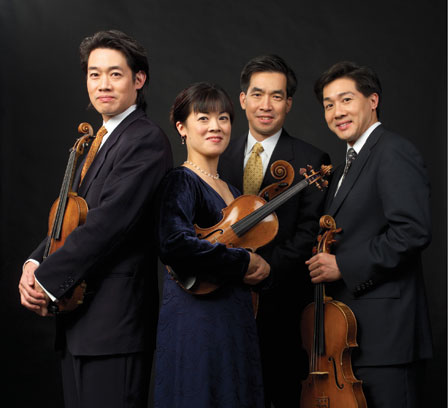
I recognized that at a concert recently, listening to the wonderful Ying String Quartet, which played Mozart, Bartok and Debussy with taste and refinement. But I knew that, as good as they were, they lacked that last touch of vulgarity that all really great art has access to.

I have heard the Guarneri and the Budapest quartets and they were both capable of making vulgar sounds — the buzzing tone of playing by the bridge, the taffy-pull of tempo, sudden shift from aggressive to sweet. It gave life to the music.

There are those who hold that the fine arts are supposed to be a safe haven from the vulgarity of daily life, that they should offer only the highest, finest and most elevated thoughts and emotions. To them, it is a way of insulating us from the barbarians we see on television each night.

But I’m afraid that is the very definition of snobbery, and misunderstands the nature of art.

Yes, fine art is more elevated than Two and a Half Men, yet it also embraces the possibility of such slapstick: Art is large, it contains multitudes.

First, what is vulgarity?

It is the awareness of the animal side of humanity — the body processes and appetites; and it is the trivial in an otherwise important context. It is the introduction of the quotidian into the ceremonial; it is farting in church.

It is also the reaquaintance of mind with body and it is vitality giving breath to the spirit.

It is found in all the greatest, most profound and elevated works of art.

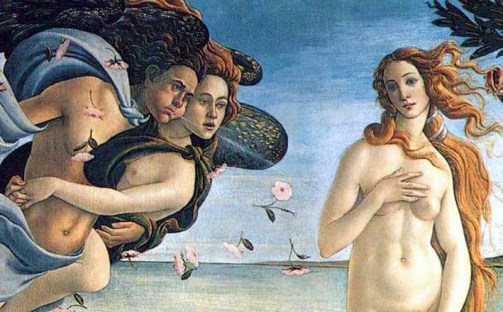
Think of Botticelli’s Birth of Venus, for instance. What could be less vulgar? Yet, there is that cherub with his cheeks pooched out, like Dizzy Gillespie, blowing the sea wind that animates Venus’ hair. His expression is close to grotesque.

And, more subtly, although her nudity is certainly not vulgar, the goddess’ attempts to cover that nudity is. It is bourgeois propriety.

Or, at the height of Beethoven’s Ninth Symphony, a hymn to universal love and brotherhood, the music stops for the belch of a double bassoon and a Hogan’s Heroes march.

Don’t misunderstand me: I am not saying that vulgarity is fine art, but that the greatest art of our culture does not ignore vulgarity, but includes it in the mix.

It is the bumptious Minuet in the Classical symphony, the seemingly-naive tone-painting in a Schubert song accompaniment, the exaggerated muscles in a Michelangelo nude.

It is the Miller’s Tale in Chaucer, the porter’s scene in Macbeth, it is the cacophany of marching bands in Charles Ives and the Jewish wedding in Mahler.

Even Josquin, that most angelic of Renaissance voices, whose music for the Catholic Mass defined for centuries what religious music should be — at other times, he can also have his singers chirp like crickets.

Sometimes vulgarity is expressed by choice, sometimes by miscalculation, as when Keats writes, “She heaved her precious dainties meant to still an infant’s cry.” But no first-rank artist has any fear of the vulgar.

It is Ray Nanton’s growling trombone in Duke Ellington’s impressionism.

It is Pablo Neruda calling for the impure in poetry.

It is the ornament reaquainted with architecture in Postmodernism, a reaction to the dull inhuman “purity” of the International style.

And when you think of the greatest musicians, you recognize Horowitz, Kreisler, Casals, each capable of the most obvious vulgarity — the gauche portamento, the foot-stomping downbeat. Compare Leonard Rose with Mstislav Rostropovich and you will understand why the Russian is considered the greater cellist: He is unafraid of the peasant in him.

Art is not about being bloodless and noble, but about being human.

Hence the Hungarian peasant dances in Bartok’s Modernism, the Austrian folksongs and dancing bears in Haydn.

“Nothing that is human is alien to me,” said Cicero.

And being human begins — although it doesn’t end — with the body.

That is why Ezra Pound said that poetry atrophies the further it gets from music, and that music atrophies removed from dance. Dance is the body in motion, the foot — bunions and all — hitting the floor. (Someone once defined a ballerina as “a beautiful woman with ugly feet”).

There is a separation in Western culture between body and spirit. Art can reconnect them. And the pinch of vulgarity thrown into the mix act as an anchor, firmly keeping the more ethereal impulses in art from floating away on the ether of their own enthusiasms.

That art is greatest, not that hits the greatest heights alone, but that has the greatest reach: Homer, Michelangelo, Cervantes.

They reacquaint me with my own life and make it possible to aspire, not by setting the stars beyond human grasp, but by teaching me my connection with them: The dirt I stand on and the constellations over my head are of a piece.