
We live two lives. Everyone does, although we seldom acknowledge it.
The first is the life we know daily, the ordinary life filled with people and things. It is the life of work and fast foods, traffic and journalism. It is a loud, swarming stage, with 7 billion competing egos jostling for their air.
In such a life, it is easy to become submerged, easy to lose our way. The demands of survival and success blind us to the larger, more important issues.
Which is why that second life is so very important. That is the life we recognize when we are alone at night under the starry sky. In this second life, the 7 billion disappear, and we are conscious of only two players: ourselves and the universe — the single, moving, conscious point on the infinite ground.
We become aware in a way we cannot during busier times, that the universe we live in is intensely beautiful and awesome and is driven by a power we cannot conceive of — and what is more, we are a part of it and have been given the chance to participate.
In the first life, we are never more than an extra in a crowd scene, but in the second life, we are each the protagonist in our own autobiography.
Or more exactly, we are each the hero of our own existence.
It is this second life that animates one of the most extraordinary works of art ever conceived, one so huge, multifarious, demanding and overwhelming, that only a few people are willing to invest themselves in it. Those who do, tend to become unbearable to those who have not. They become Wagnerites.
In one way of looking at it, the history of art is a vast pendulum that swings back and forth between works created out of the friction between peoples, on a personal, familial, tribal or national level. The individual and his place among human society. The other extreme is art that examines the individual and his place in nature and the universe. We move from Alexander Pope to William Wordsworth, from The Marriage of Figaro to the Symphonie Fantastique. One shouldn’t have to choose, but the fact is, one’s Zeitgeist chooses for you which paradigm will be most valued during your lifetime.
It is this second life that animates Richard Wagner’s 15-hour quartet of music dramas, The Ring of the Nibelungs. The massive theater-and-music work tells the story of the creation and death of the universe, and the human actions that animate it. If you are looking for a concise story with a coherent plot, turn instead to Bizet or Puccini; Wagner focuses directly on that inner life that pivots under the constellations.
That is why so many people love his music, and why just as many hate it. The Ring is populated with gods and heroes. La Boheme is populated with people. La Boheme is — on the surface, at least — about the first life; The Ring is unapologetically about the second.
There is, in some cultures, the idea of ”The Long Man,” that is, the individual seen as the summation of history: ontogeny recapitulates phylogeny — the one life contains all life.
So that Wagner’s retelling of all of history is also the birth and death of each individual consciousness.
Das Rheingold, the first of the four operas, begins with Eden, a perfect paradise in which the creatures who inhabit it are perpetually in touch with the radiance of nature. The beginning of the opera — and of the cycle — is unprecedented in music history.

It begins with the watery creation of the world, and the composer wrote it in the key of E-flat. The opening of the first of the Ring operas is one of the most astonishing stretches of music in all of history. Wagner holds onto a single E-flat major chord for a full four-and-a-half minutes — 136 bars, longer than some Mozart symphony movements. That is an eternity in music without a change.
It begins in the basses with a deep fundamental note, which breaks slowly into a rising arpeggio on the E-flat chord and slowly speeds up to a crescendo of runs and arpeggios — an immense pile of busy-ness, but without any of the forward sense of motion that harmonic progression provides.
In this, Wagner has provided a musical metaphor of the Hindu concept of maya, or illusion. He had been reading Indian philosophy — albeit in the very German version of Schopenhauer — and his illustration of the idea is perhaps the clearest in art.
Before consciousness, it is said, the mind is like a placid lake reflecting the sky perfectly. But such a state is impossible, for a breeze is inevitable, and it breaks up the surface into ripples and waves, and the sky — eternity — is then reflected individually in every wavelet. Such is creation in Hindu philosophy, where we are all fragmented into individuals by the accident of the animating wind. But the fragmentation is an illusion — maya. The busy play of the world is just a trick; eternity itself is unchanged.
So Wagner shows the indestructible and unmoving E-flat spinning out into a busy surge of notes, building the world into existence.
The idea came to Wagner while he was drowsing, dreaming he had fallen into a rushing stream of water.
”The rushing sound formed itself in my brain into a musical sound, the chord of E-flat major, which continually re-echoed in broken forms,” he wrote. ”These broken chords seemed to be melodic passages of increasing motion, yet the pure triad of E-flat never changed, but seemed by its continuance to impart infinite significance to the element in which I was sinking.
”I awoke in sudden terror from my doze, feeling as though the waves were rushing high above my head. I at once recognized that the orchestral overture to the Rheingold, which must long have lain latent within me, though it had been unable to find definite form, had at last been revealed to me. I then quickly realized my own nature; the stream of life was not to flow to me from without, but from within.”
“Within” — That’s the second life.
In one of the most prodigious imaginative feats in history, Wagner then managed to create most of the remaining 15 hours of music in his Ring from the initial 4 1/2 minutes of arpeggio — fragmenting it further, turning it upside down and inside out, to generate most of the melodic ideas in his epic.
So that, just as all scales and harmony in Western music are generated through overtones of the fundamental bass note, so all of Wagner’s universe likewise grows from that one, deep vibration.
That “radiance of nature” is also the gold at the bottom of the Rhine river. The three nixies who ”guard” the gold sing its glories.

It is the ”visionary gleam” of childhood that Wordsworth elegized in his Intimations ode.
It is Nature, unsullied by greed and striving, which is the philosophical ground of The Ring. And it is Nature that is disturbed by the theft of the gold by a dwarf, who gives up any hope of love in order to possess the treasure and its power.
So, love and power are the two poles of the moral universe in The Ring, and they play out against each other for the remaining three operas.
And in the end, the gods die and the world is engulfed in fire and flood. All that survives, at the final notes of the fourth opera, Goetterdaemerung, is the high, hanging violin melody that we have come, in all those hours of music, to associate with the redemptive power of love. It is the final word on life, history and the cosmos, and just as the world is destroyed it provides the hope of the next creation, just as our children provide a hope against our own deaths.
This is more than an entertainment: Wagner is trying to say something genuine about existence and to the extent we are open to his music and ideas, we will value them.
In the second life we all lead, the same two forces play out: career versus family, law versus justice, greed versus generosity, selfishness versus universal love. In each case, the first binds us in pain and frustration and the second redeems us through a connection to the transcendent.
Such an ambitious aim in art is held in great suspicion these days, where too easy a transcendence turns quickly into sentimentality. And a great deal of what followed Wagner is mawkish. We are much more comfortable now with a skeptical irony. After all, Wagner’s grandiosity fed into the rise of Nazism in Germany. Wagner was, after all, Hitler’s favorite composer.

(Wagner, himself, was an awful man. A ridiculous anti-Semite, a ruthless user of women and patrons, and more than comfortable living the high life on other peoples’ money. Take my word, you wouldn’t have liked him.)
But Hitler looked for the Germanness in The Ring and ignored the humanness. The narrowness of his ideology is the very thing Wotan, the chief god in the operas, comes slowly to understand is the cause of human misery.
We are all, if we are truly sentient beings, on something like Wotan’s learning curve.
There is a great deal in The Ring. It is the single most compendious work of art in European history. Wagner manages to take on rapacious capitalism, national identity, Schopenhauer, Hinduism, mythology and the role of the artist, among other things. There are as many interpretations of The Ring as there are hearers. And that is as it should be.
There are Freudian interpretations, Jungian ones, Marxist readings and neo-Feminist glosses.
Yet, it all comes down, in the end, to an awakened awareness of our second life.
The Ring has its faults; it is not a perfect work of art. It is sometimes dull for stretches as bits of plot are rehashed. Like Rossini said, there are some great moments and some tedious quarter-hours.
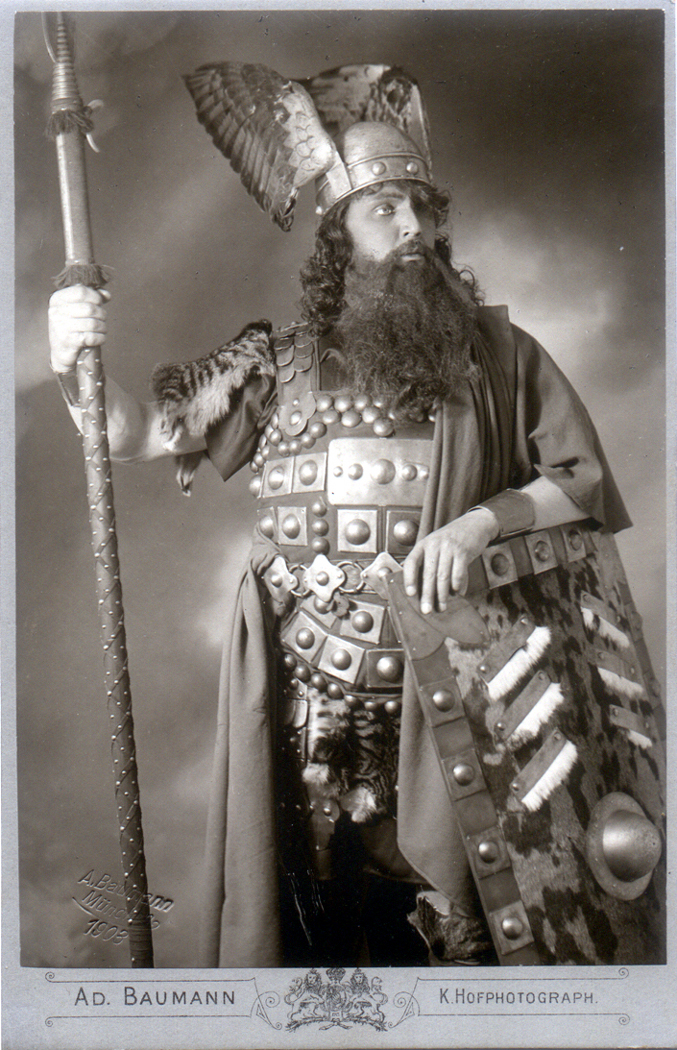
And in some sense, it is quite silly to take all this seriously. With its dragons and horn-helmeted Valkyries, its gods and dwarfs — to say nothing of its 200-pound sopranos — it can be hard to see past the adult fairy tale aspect. To some, it is as tedious as a musical version of Tolkien.
Yet, the music itself, underlying and amplifying the experience of The Ring, reawakens in us our awareness of our second life, which is ultimately the source of all that is good in life for ourselves and those we love.
Finally, as the critic Longinus says, all great works of art are flawed and we should always prefer flawed greatness to perfect mediocrity.
And make no mistake, The Ring is truly great.
A SHORT RETELLING OF THE RING — SO FAR
Richard Wagner’s Der Ring des Nibelungen is a four-opera monument to myth, history and psychology. First performed in 1876, The Ring was designed to be played on consecutive days as a single, 15-hour unit, broken up into these four operas, or ”music dramas” as Wagner called them:
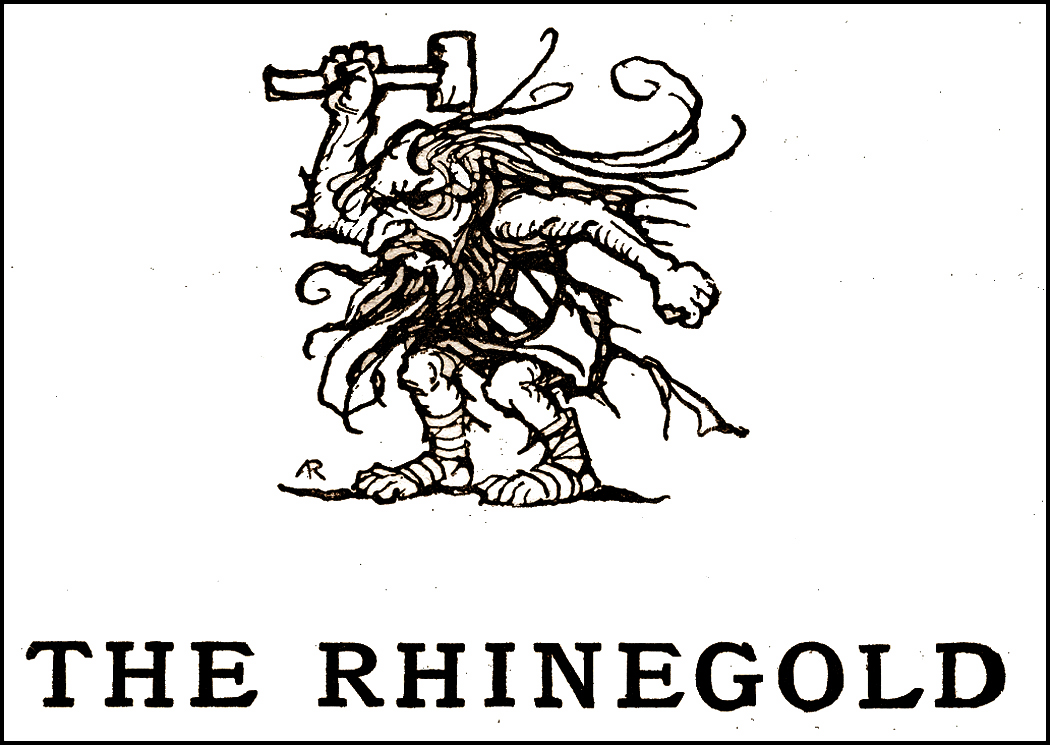
Das Rheingold — In this prelude to the main story, Wotan, the chief of the Viking gods, gains and loses the gold stolen from the Rhine River. The gold confers power on its possessor; unfortunately, it has been cursed and it also confers death. To retrieve the gold for himself, Wotan concocts an elaborate scheme, which plays out in the subsequent operas.
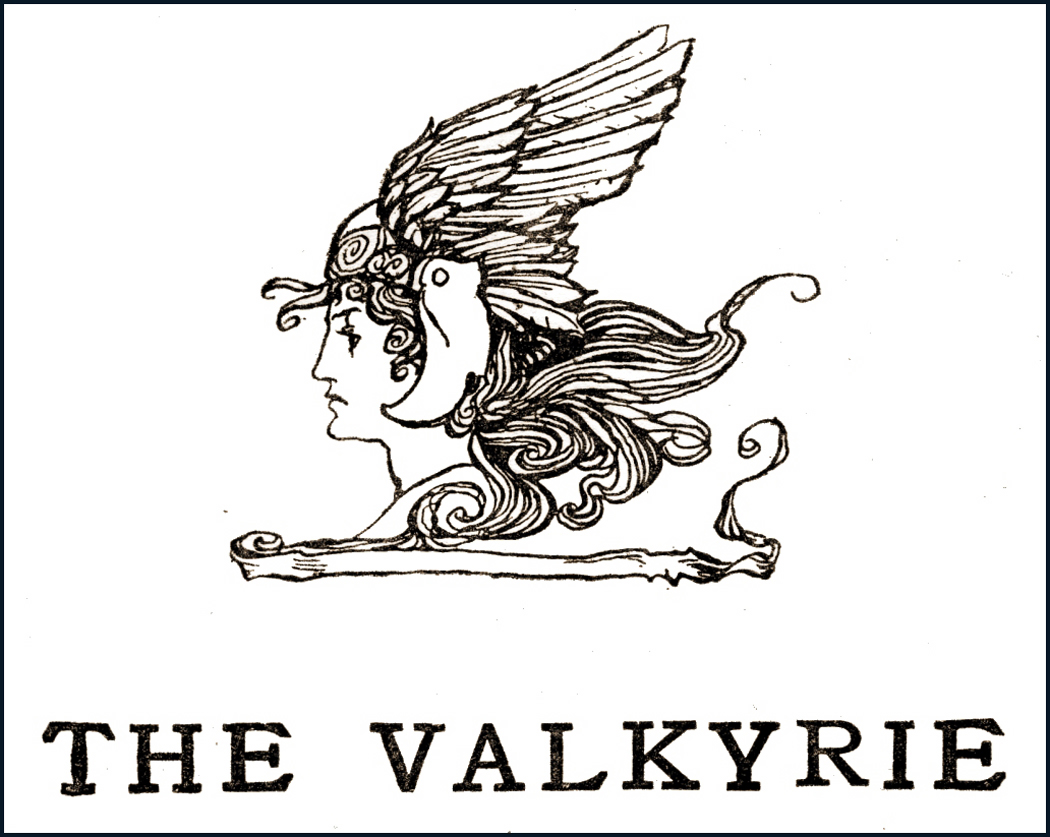
Die Walkuere — Because he is bound by his own laws not to get the gold himself, Wotan fathers a hero, Siegmund, to do it for him. Siegmund falls in love with his own sister, Sieglinde, and Wotan, again bound by law, is forced to kill Siegmund, but Wotan’s daughter, Brunnhilde — who is a Valkyrie, or divine warrior maiden — saves Sieglinde and her unborn child. For her disobedience, Wotan puts Brunnhilde to sleep on a mountain surrounded by fire.

Siegfried — Sieglinde’s child, Siegfried, is raised in the forest by a dwarf. The hero kills the dragon that guards the gold and climbs the mountain and awakens Brunnhilde. Wotan’s plan seems to be working, except that Siegfried isn’t really interested in the gold.

Goetterdaemmerung — The title translates as ”The Twilight of the Gods” and shows the sad end of Wotan’s plan. Siegfried is drugged by the evil half-dwarf Hagen — who also wants the gold — so that he forgets Brunnhilde and plans to marry Hagen’s sister. Brunnhilde feels betrayed and joins with Hagen to kill Siegfried. When she realizes that Siegfried had been tricked, she sings one of the most difficult 20 minutes in opera, and in remorse for her part in the murder, rides her horse into the hero’s funeral pyre, igniting the final conflagration that destroys both the world and the gods. Wotan’s plan has failed, but Wotan has achieved something more valuable than the gold: Wisdom. As the opera closes, hints of the redemptive power of love suggest that the world can start over again with a fresh beginning.
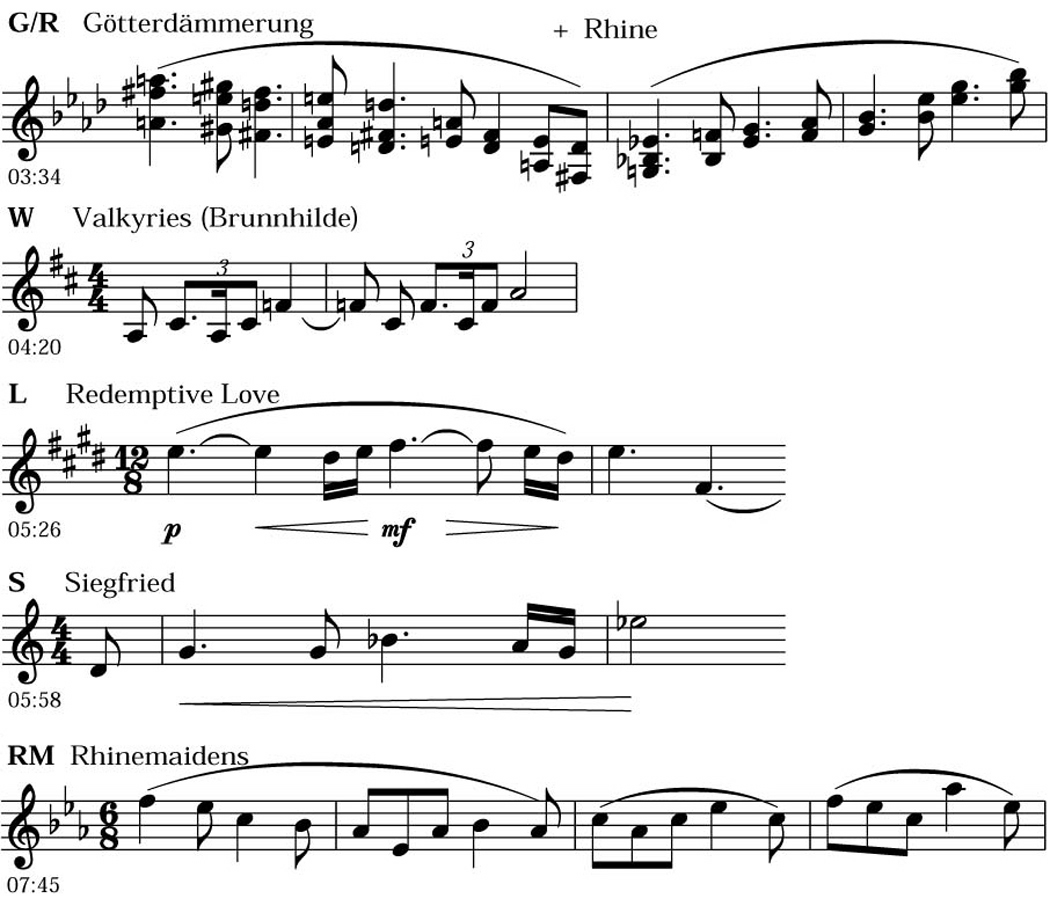
To unify the sprawling story, Wagner used repeated musical phrases — called leitmotivs, or leading musical ideas — and developed them symphonically over the 15 hours. The music expresses the emotions and thoughts of the characters — sometimes hidden — and the music changes as the characters grow and the plot thickens, helping the audience keep track of what is happening.







 Richard Nilsen