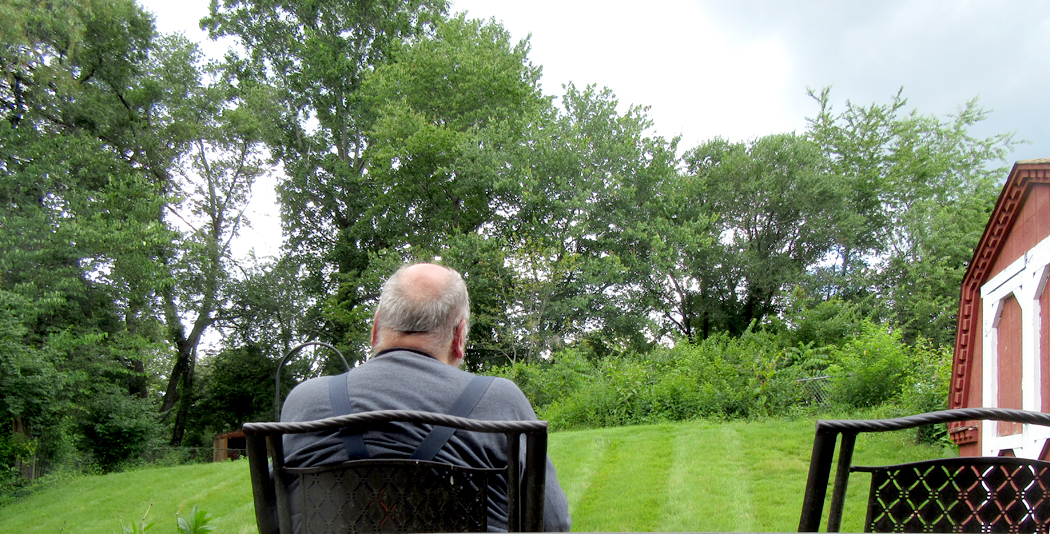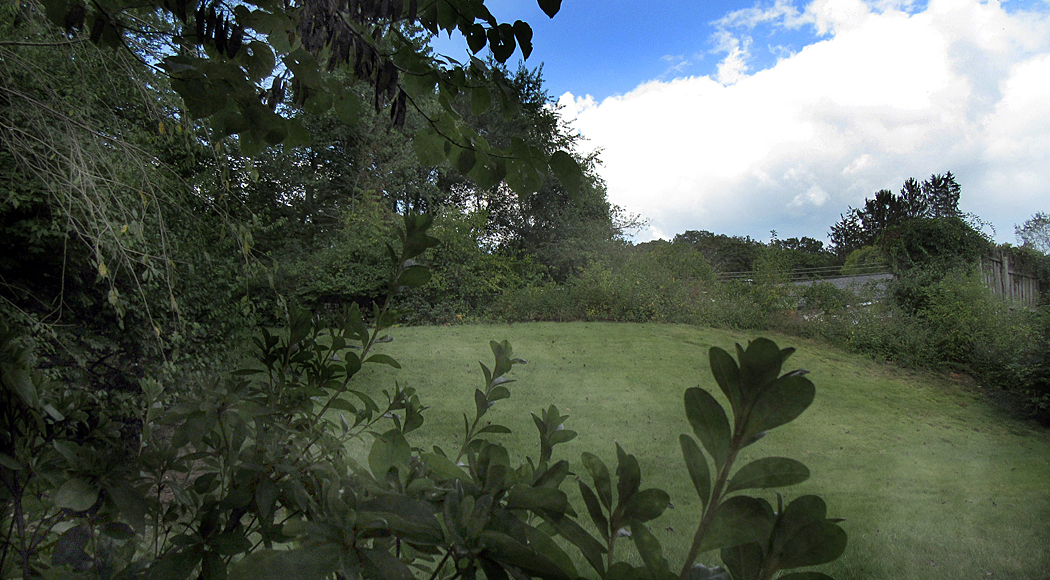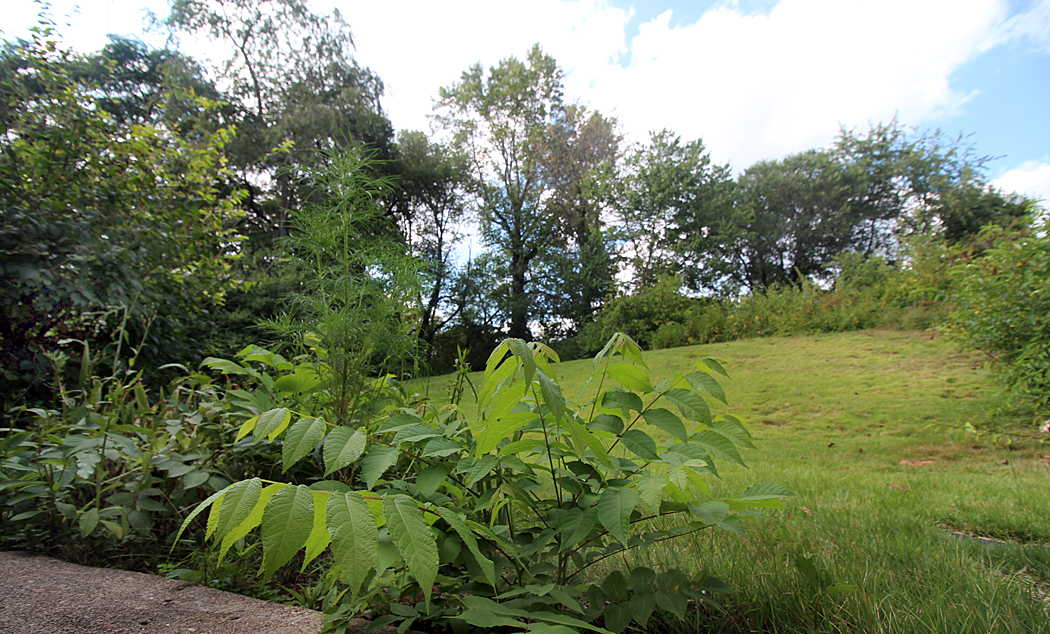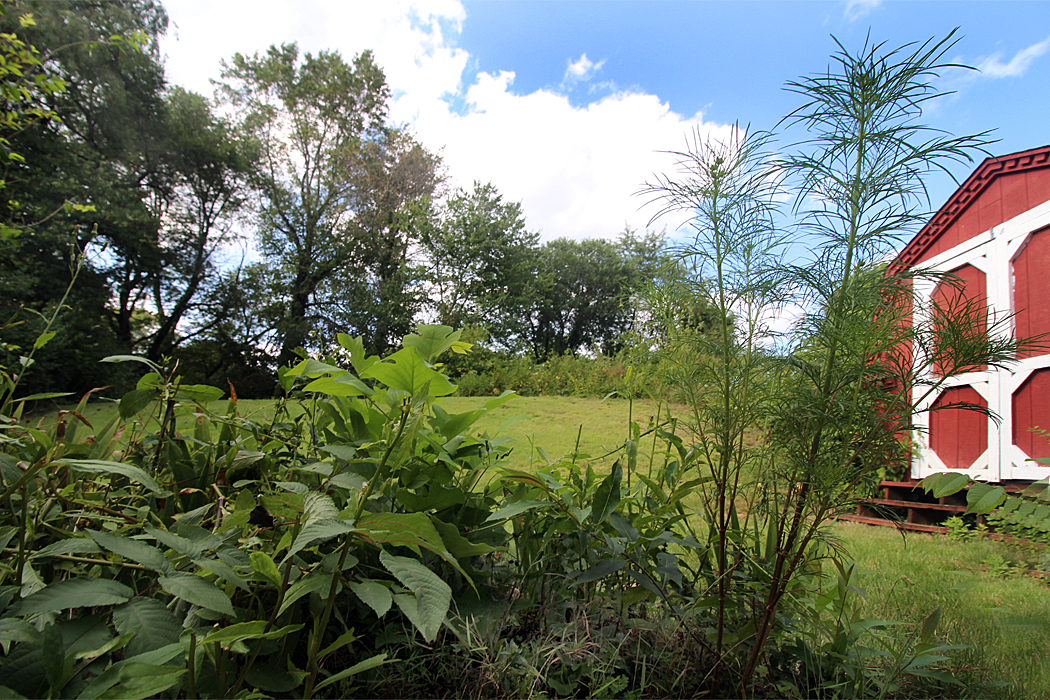
I was sitting on the backyard patio this morning, soaking up sunlight, when a squirrel skittered across the lawn, back and forth like a pinball. Eventually, he came to within 10 feet of me. I sat stock still, and he stared, twitching his nose, standing on hind legs like a deacon. After about a minute — which can feel like quite a long time — I must have blinked, because he jumped, startled, and took off running away.
I often sit in the back yard, to hear the birds and watch the clouds. It feels like an unmediated soak in existence. I sit trying to notice everything, the birds singing, the clouds moving, the wind making the trees wiggle in random motion, and until recently, the incessant noise of the cicadas, sounding like the A Train rushing through the 81st Street subway station. I felt the breeze in my hair, saw the bluish greens of the iris plants and the yellower green of the grass, I enjoyed the warm concrete on the soles of my bare feet and the incipient sunburn on the backs of my hands.
Bill Moyers once asked Joseph Campbell about the search for meaning, but Campbell switched focus: “People say that what we’re all seeking is a meaning for life. I don’t think that’s what we’re really seeking. I think that what we’re seeking is an experience of being alive, so that our life experiences on the purely physical plane will have resonances with our own innermost being and reality, so that we actually feel the rapture of being alive.”
And so, I sit watching my back yard, the trees that line it and the sky above it. I can feel myself breathing, wiggling my toes and being alive, and what is more, recognizing the world being alive around me. For a moment, there is no boundary between my existence and the sea of being in which I swim.
A wren flits down and sits on the steps to the shed and moves from one position to another with no apparent intervening motion, as if it were a jump-cut in a movie. A really bossy mockingbird runs through his repertoire of bird calls, claiming this patch as his own. A cardinal flies from my left to land on a bush to the right. A white butterfly bounces on the air waves to disappear behind the bushes.
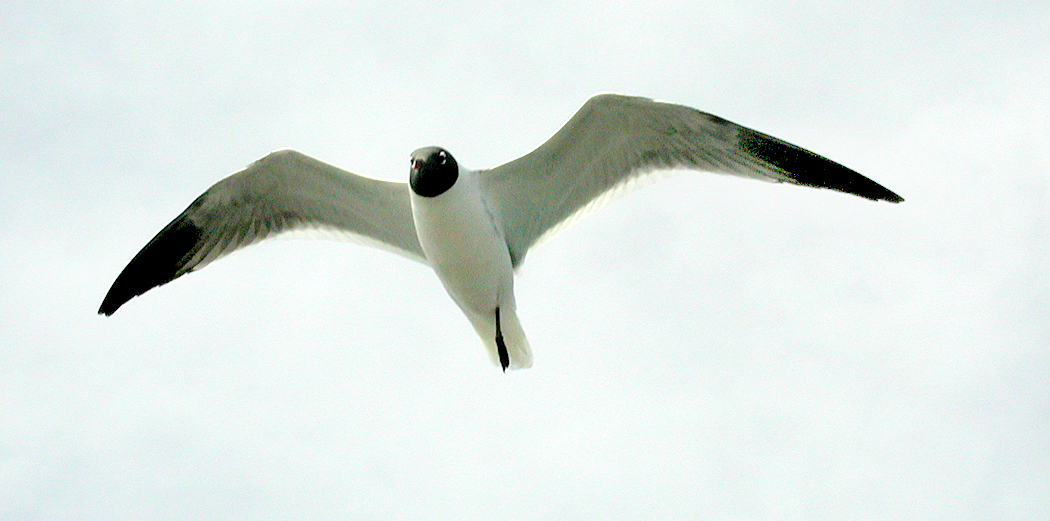
I’ve seen so much life in this tiny patch of ground, it sometimes astounds me. I cannot count the birds. Crows, even a raven. Way up in the sky, I’ve seen up to a dozen buzzards at a time circle as they catch the updraft coming from the river and up the bluff to this house.
There have been cottontails and many squirrels. Two years ago, coming home from a trip to Maine, as I pulled into the driveway, two bear cubs were climbing up a tree at the back of the property. We watched them having their fun, and then mama bear climbed up behind them to encourage them to come back down. A dog barked aggressively from somewhere down the neighborhood and the bears all dropped to the ground and ran off. I’ve seen bears waddling through the streets here, and long ago learned not to put the trash out until garbage delivery day.
A groundhog has crossed the back yard so often, he has left a permanent trace in the lawn. I have seen him multiple times harrumphing his way along. If he spots me sitting, he will take a moment to stare and consider his next move, but then run faster than you think he can move, back where he came from.
Then, there are the bumble bees, the honey bees, the wasps and the ant lions — their little sandy funnels in the dirt of the front garden. Big black butterflies, and their yellow and orange doubles light on the hedges and weeds. Ants build their nests in the cracks of the driveway, leaving tiny ridges of dirt where they have dug down.
Yesterday, as I was headed out the back door to have my daily sit-down on the patio, before opening the door, I saw the groundhog plopped down right by my chair, butt-flat on the concrete and motionless as a garden gnome, while an angry mockingbird jumped in a half-circle around him aiming “Cht-Cht — Cht Cht” at him. They continued this performance for a good two minutes until I must have made a noise and the great, heaving woodchuck became disturbed, turned its head my way and waddled off to hide under the shed and the bird, having had its way, flew up to a tree and quieted down.
When I was little and visited the Bronx Zoo, I was impatient to see the animals, who sometimes hid in the shade at the back of their enclosure, or sat behind some rocks, and if I did not have my interest piqued in the first five seconds, I moved on to the next animal. But my father told me to wait. Just watch. Eventually something would happen. I didn’t understand that then; I do now. I find myself in my yard patiently waiting for the next miracle.
(Many years later, I worked at the Woodland Park Zoo in Seattle, and saw crowds of impatient kids moving from exhibit to exhibit. And it is only worse now, in an era of cell phones and digital immediacy.)
Writing in the Fourth Century, the Christian poet Prudentius identified in his Psychomachia (“Battle of the Souls”) his version of the Seven Deadly Sins, and the corresponding Seven Virtues, at war with those sins, and among the virtues was Patience.
I don’t know if I learned it from my father, or inherited it from his DNA, but, like him, I have become rather patient. Or maybe I’m just sluggish. But, I believe it served both of us well. The old man was slow to judge, slow to anger, and would never think to get outraged at traffic. Being raised that way, I, too, am willing to wait, when waiting seems either inevitable or purposeful. In fact, I can sit quietly in a chair neither talking or thinking for ages at a time. When I’m being philosophical about it, I call it meditation.
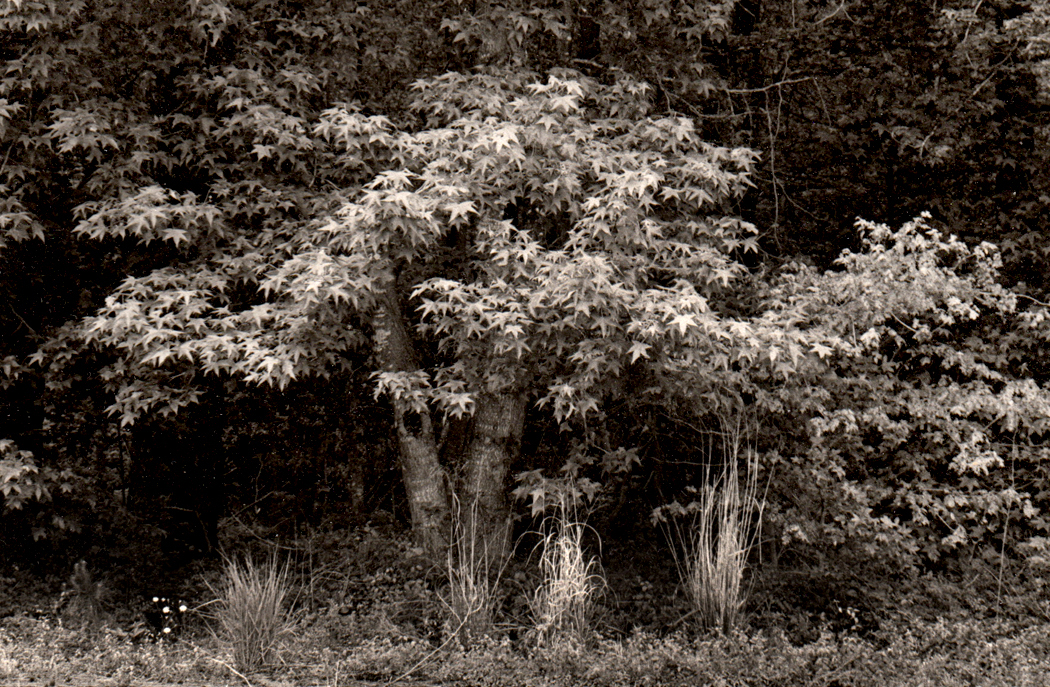
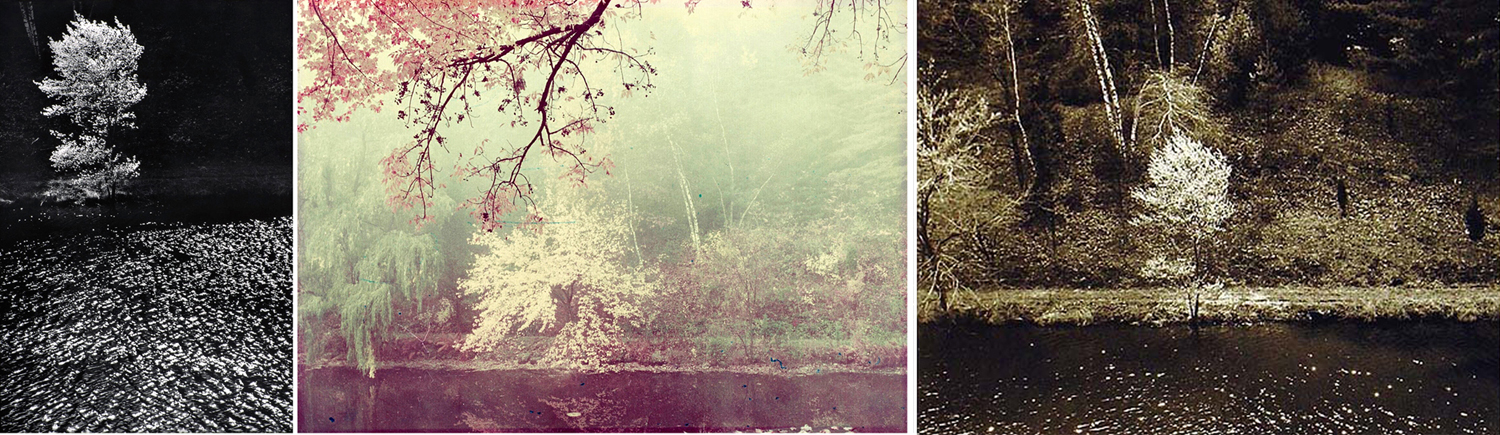
In the 1950s, the aging photographer Edward Steichen rarely left his home in West Redding, Connecticut, and began photographing a serviceberry tree (he called it a shadblow tree) through his window. He watched the seasons shift across the face of the pond and the tree and pictured them in all seasons and hours of the day, under varied weather, and made a case you could spend an infinite amount of time in a single place with a single subject and discover everything. As Yogi Berra once famously said, “You can observe a lot by just watching.”
And it is the little things, carefully watched, that won’t happen again. The flow of the world is that it won’t happen again, all in constant forward motion and I sit to watch it move past me, and take me with it.
I just want to sit and soak, to sense the universe around me without thinking. We tend to glorify rationality, and the power of our brains to think meaningful thoughts, and we diminish the value of pure sensation, the sensuous awareness of colors, shapes, earthforms, clouds, birds, song, rhythm, touch, smells, and tastes. But these things are primal and exist before thought. Sensation is primary; making sense is an afterthought.
And so I sit, trying to lose myself in the larger pattern.
But, damn it, I can’t help being a writer and so I need to belittle what I enjoy, turning it all into words, into capsules of meaning that when read by others will be turned into ideas about sensations. Words not experience. And so, I can’t stop myself from writing this, hoping you share some of that delight when you step outdoors on the right day, with the right breeze, and the right mockingbird and crow squawking, and can see the trees dancing and the sun moving slowly across the sky blotted with whatever variety of cloud you have that moment.
French composer Camille Saint-Saens was smarting from a concert tour in Germany that didn’t go over well, and so, in 1886, he withdrew to small Austrian village and wrote a short piece about music critics, which he called Personnages à longue oreilles, or “Characters with long ears,” in which the critics bray in imitation of asses — “hee-haw.” It is barely 45 seconds long, but it seems to have given him a bigger idea.
And so, he wrote thirteen accompanying short, mostly comic, compositions, each describing another animal, and had them played privately as La Carnaval des Animaux, or “The Carnival of Animals.” He wrote his publisher in Paris that he knew he should be working seriously on his Third Symphony, but that instead, he was having “such fun.”
Yet, fun wasn’t what he wanted to be remembered for. He was to be a serious and honored composer of five symphonies, many concertos and 12 operas. And so, he refused to allow the Carnival of Animals to be published until after his death.
The irony is that, along with his Danse Macabre and the Bacchanale from his opera Samson et Dalila, what he is best remembered for, and most loved, is this 25-minute-long musical menagerie. In fact, his best-known piece is undoubtedly The Swan, for cello and piano, the second-to-last section of the Carnival.
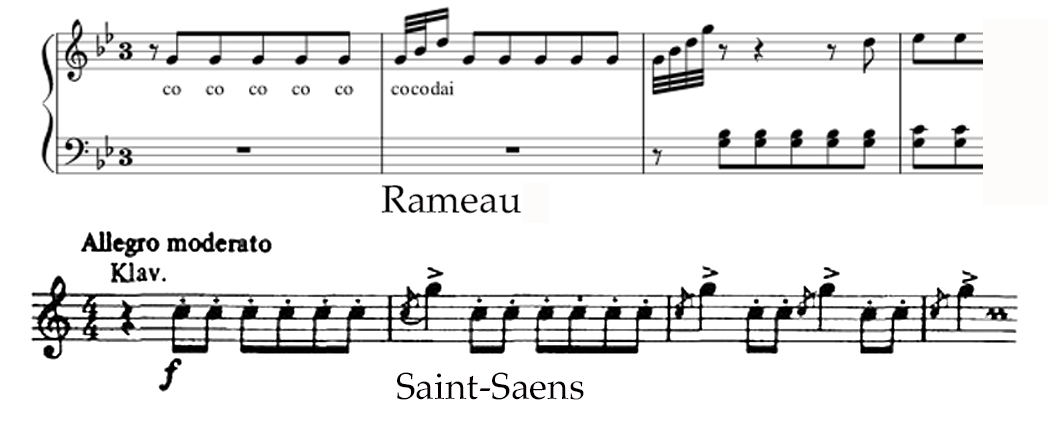
Many of the pieces parody famous music by other composers and popular songs, but I want to pick out, in particular, the second section, Poules et Coqs (“Hens and Roosters”), which gets its main theme from a 1726 piece for harpsichord by Jean-Philippe Rameau, called La Poule (“the Hen”), from his Suite in G from his Nouvelles Suites de Pièces de Clavecin.
You can see the similarity, even in these few bars.
But that set me off on a search for other music about or imitating animals. It’s not just “Old MacDonald” and his “oink, oink, here and an oink, oink there,” but in fact, a long history of musical animals. Some famous, some obscure.
Of course, such animal imitations go back to prehistory, if we believe the musicologists, who tell us that they often feature in folk songs, from all around the world. “Old MacDonald” is only one of them in English. But there are Chinese songs, Turkish songs, Swahili songs, all with animal noises as part of their lyrics.
But I was most interested in Western art music, after the invention of musical notation and printing, where the music could be tracked down and maybe even listened to (on YouTube when available).
The earliest I found was from the middle of the 13th century, a ditty called Sumer is icumin in, with its lyrics “lhude sing cucu,” which have been set to various tunes, most of those I have heard include a melodic line that imitates the falling third of the cuckoo birdcall.
No doubt because the cuckoo’s call is so distinct and so clearly a falling third, it is about the most frequently used birdsong in classical music, as we will see (followed by the trilling of the nightingale).
Indeed, the next entry is Par Maintes Foy, by 14th century composer Jean Vaillant, which not only has the singers call out the cuckoo and the nightingale, but also the goldfinch, starling and quail. “Lire, lire, lirelon,” Toowee, toowee, toowee.”
But it isn’t all birds. In 1505, Josquin de Prez, perhaps the most famous of all early composers, published his El Grillo, which has its singers imitate the sound of a cricket.
Clement Jannequin (11485-1558) wrote Le Chant des Oiseaux (“Song of the Birds”) with a blackbird singing “Ti-ti, pi-ti;” the nightingale trilling on “Frian, frian;” and the cuckoo again doing his “Cu cu, cu cu.”
Pierre Passereau (1503-1553) wrote Il est Belle et Bon, in which a wife praises her husband for being so compliant and even feeding the chickens, which she then imitates “co co co co da.”
In his Book of Ayres with a Triplicitie of Musicke, from 1606, John Bartlett published a madrigal called Of All the Birds That I Do Know, in which words get repeated in a way that clearly evokes the chatter of birds. “Of all the birds that I do know, Philip my sparrow hath no peer … Philip will cry still, ‘yet, yet, yet, yet, yet, yet.’”
As we leave the vocal Renaissance and enter the more instrumental Baroque age, we begin having fiddles and hautboys imitating various birds and beasts.
Sonata Representativa (1669) by Heinrich Biber dedicates a movement each to imitations of nightingales, cuckoos, frogs, hens and roosters, quails and cats. Written for violin and continuo, it alternates short interludes with sections depicting animal sounds. After a Preludio, a Nightingale on the violin sings four eighth notes repeated and a long trill over a pedal; a Cuckoo hits repeated fast eighth notes making the usual cuckoo sound; then come Frogs with an appoggiatura of dissonant seconds, sounded together, and resolved upward, over and over to make croak; Hens cluck with upward portamento; quail have a repeated dotted rhythm “dah, da-dah;” a Cat comes mewing portamenti in nursery-rhyme-like tune; then all is rounded off with a march.
Georg Phillip Telemann wrote his Alster Overture, with a fourth movement imitating “Concertizing Frogs and Crows.” There is also a swan in another movement.
Of course, the most famous and familiar sounds come from Antonio Vivaldi’s Four Seasons. In the opening movement of the four concertos, we hear the squawking of birds. In the second movement, he has dogs barking, and in Summer, the slow movement has the strings buzzing around as a swarm of flies.
But it wasn’t only the Seasons: In his Flute Concerto, op. 10, no. 3, “Il Gardellino,” he has the flute imitate a goldfinch.
The keyboard is well represented, too. In addition to Rameau’s La Poule, there is Louis-Claude Daquin’s The Cuckoo and Francois Couperin’s Le Moucheron (“The Gnats”), to say nothing of Domenico Scarlatti’s Sonata No. 30 in E-flat, known as the “Cat Fugue,” with a tune that imitates a cat walking distractedly up a harpsichord keyboard (an early version, I guess, of Zez Confrey’s Kitten on the Keys).
Then, there’s Georg Friedrich Händel’s Organ Concerto No. 13, known as “The Cuckoo and the Nightingale,” from 1739, with birdsong in the second movement.
There’s no counting the birds, beasts and bugs in the music of Franz Joseph Haydn. He loved a good joke, and among his 104 symphonies and 68 string quartets (to say nothing of his 41 piano trios, 52 piano sonatas, and 126 baryton trios — not counting the additional 36 baryton works for that obsolete instrument with other pairings) you can find Symphony No. 82, “The Bear;” Symphony No. 83, “The Hen;” String Quartet op. 33, no. 3, “The Bird;” Quartet op. 50, no. 6, “The Frog;” Quartet op. 64, no. 5, “The Lark.”
And in his magnum opus, The Creation, in Part 2, describing Days 5 and 6 of the biblical creation, he has the orchestra imitate multiple birds and animals, including an eagle, a whale, a stag, lowing cattle, and even a worm.
As we move into the Romantic 19th century, the animals are truly fruitful and multiply, beginning with the slow movement of Beethoven’s Pastoral Symphony, which ends with a cadenza that quote quail, nightingale and cuckoo.
So, let’s make a quick list — as quick as it can be with such a long zoo parade. There is Schubert’s song, The Trout; Robert Schumann’s Papillon and the Prophet Bird; the braying donkey in Mendelssohn’s Overture to A Midsummer Night’s Dream; Chopin’s Etude, op. 25, no. 9, known as “The Butterfly Etude.” Not forgetting that it was said that Chopin’s “Minute Waltz” was inspired by the composer watching his dog, named Marquis, chasing its tail.
Cats screech over and over in the Cat Duet, attributed to Gioacchino Rossini (jury’s out on the authorship).
To continue: There are birdsongs in the woodwinds in Bedrich Smetana’s Bohemian Woods and Fields; The Flight of the Bumble Bee, from the opera Tsar Saltan by Rimsky-Korsakov; The Lark by Mikhail Glinka; the Ballad of the Unhatched Chicks from Mussorgsky’s Pictures at an Exhibition; the “Dying Swan” and the “Dance of the Cygnets” from Tchaikovsky’s Swan Lake; and The Swans of Tuonela by Jean Sibelius.
In Scandanavia also, we have, but Edvard Grieg: The Butterly; Little Bird; The Pig; The Horsefly and the Fly; and Cow Call. And from his contemporary Norwegian composer The Hare and the Fox by Harald Saeverud.
Serge Rachmaninoff’s Etude Tableau, op. 39, no. 2 for piano is called “The Sea and the Gulls.” Enrique Granados wrote The Maiden and the Nightingale. And Richard Strauss caused some grumpiness and consternation in his staid German audience when, in the middle of his tone poem Don Quixote, he has the orchestra imitate a herd of sheep. But Strauss was no stranger to vulgarity: It is one of his strong points.
Which brings us up to date with Saint-Saens’ Carnival of the Animals, which gives us, in order: a lion; hens and roosters; wild asses; tortoises, the elephant, kangaroos, fish in an aquarium, personnages a longue oreilles; a cuckoo in the woods; birds in the air (aviary); pianists practicing scales; fossils; the swan; and a finale that brings back many of the menagerie.
But it’s not over yet. As we move into the 20th century (and the winding-up of the 19th), there are some very beautiful evocations of nature and the animals in it. Such as: Delius’s On Hearing the First Cuckoo in Spring. Or the fourth movement of his North Country Sketches, called “The March of Spring: Woodlands, Meadows and Silent Moors.”
Ralph Vaughn Williams gave us one of the most beautiful violin show-off pieces in his The Lark Ascending. He also put some swarm sounds in the overture to his ballet The Wasps. Edward Elgar wrote for voices a very peculiar piece called Owls: An Epitaph. Pianist Leopold Godowsky gave us, in his Java Suite, a movement called “Chattering Monkeys.”
Claude Debussy wrote Poissons d’Or (“Goldfish”) in his Images, Book 2, no. 3; and his counter-Impressionist Maurice Ravel wrote Oiseaux Triste (“Sad Birds”) in his Miroirs. Paraguayan guitar virtuoso Agustin Barrios wrote Las Abejas (“The Bees”).
Ottorino Respighi took music from early composers and reworked and orchestrated it in his Gli Ucelli (“the Birds”), with movements called “The Dove,” “The Hen,” “The Nightingale,” and “The Cuckoo.” But he goes one better in his Pines of Rome, by including an actual sound recording of a real nightingale. (Tape recorded animal sounds return later in the century.)
Whole chapters might be given over to Gustav Mahler, who began his very first symphony with cuckoo calls, and inserted all sorts of animals, birds, and natural sounds into his music, including cow bells in his Sixth Symphony and a donkey braying in his Third, so say nothing of the sleigh bells in the Fourth, fish in his song Saint Anthony of Padua Preaches to the Fishes. They show up again in his Second Symphony. Nature is never far from the surface in Mahler’s music.
But more than in Mahler, bird song is everywhere in the music of Olivier Messiaen. The man was obsessed with bird sounds. He used them often as the source of his thematic material (I hesitate to call them tunes), not simply transcribed, but often lowered in pitch, slowed down radically, or even played upside down or backwards.
His 1958 Catalogue d’Oiseaux (“Catalog of Birds”) is a collection of 13 pieces for piano, each of which is based on the call of a different bird, running from the Alpine chough, the Eurasian golden oriole, the blue rock thrush and the tawny owl, through the woodlark, Cetti’s warbler, the common buzzard and the Eurasian curlew. The whole catalog takes just short of three hours to perform.
Then, there is the Petites Esquisses d’Oiseaux (“Small Sketches of Birds”) from 1985, six short piano pieces, about 2 minutes each, that picture blackbird, skylark, thrush and robin. The L’Abîme d’Oiseaux (“Abyss of Birds”) is one movement from the Quartet for the End of Time. Le Merele Noire (“Blackbird”) is from Le Reveil des Oiseaux (“Dawn Chorus”), La Fauvette des Jardins (“Garden Warbler”) — on and on through his works, the birds are the foundation of his music. A devout Catholic, Messiaen saw birds and their song as emblematic of the beauty of God’s creation.
Although, to be honest, it is usually hard to hear the music as bird calls, since they are so transformed by the composer. You kind of have to take his word for it.
It’s hard to keep up with Bela Bartok, also. He wrote many short piano pieces, some of which bear the names of animals. But there’s The Diary of a Fly (Mikrokosmos vol. 6, no. 42), and the famous Bear Dance from his Ten Easy Pieces.
But he is best known for the several “Night Music” pieces, from his Out of Doors suite for piano; the slow movement of his Music for Strings, Percussion and Celesta; and the middle of his Piano Concerto No. 3. Wikipedia lists some 20 compositions where Bartok employs his Night Music, which imitates the sounds of a Hungarian summer evening, with insects chirping, birds singing and frogs croaking. The effect can be miraculous.
(Duke Ellington wrote his own versions of night music in his Queen’s Suite, with movements called “Sunset and the Mockingbird,” “Lightning Bugs and Frogs,” and “Apes and Peacocks.” I mention it here because, really, Ellington is classical music.)
Igor Stravinsky has elephants dancing in his Circus Polka, and nightingales warbling in his Chant du Rossignol. It has been reported that his Rite of Spring contains quotations from Russian folk songs about animals. I’m taking the musicologists’ word for that.
Sergei Prokofiev has his own menagerie in Peter and the Wolf, and Malcolm Arnold attempted to add animals to Saint-Saens’ zoo with his own Carnival of the Animals, written for the comic Hoffnung Festival in 1960. His additions are: The Giraffe; Sheep; Cows; Mice; Jumbo; and Chiroptera (Bats) — the last of which is a joke, since the musicians “play” so high in frequency that “only bats can hear it.” The audience hears silence until a final tinkling on a bell.
Several 20th century animal-musics were created as humor or jokes, including The Monk and His Cat from Hermit Songs, op. 29, no. 8, by Samuel Barber; The Cat and the Mouse by Aaron Copland; the Promenade (Walking the Dog), written by George Gershwin for the Fred Astaire film, Shall We Dance, and The Procession of the Cats on Solstice Night by Bohuslav Martinu.
Then, there’s Ferde Grofe’s On the Trail from the Grand Canyon Suite, with its clopping hooves and braying donkey.
The Critics
Francis Poulenc took on the grasshopper, bear, lion and roosters for his Les Animaux Modèles, a ballet from 1942 based on the fables of La Fontaine.
I mentioned earlier Respighi’s recorded nightingales in The Pines of Rome. Alan Hovaness famously used recordings of the humpback and bowhead whales in his And God Created Great Whales. (George Crumb’s Vox Balaenae does not include actual whale songs, but uses electric flute, electric cello and amplified piano to imitate both whale songs and seagulls.)
And in 1972, Finnish composer Einojuhani Rautavaara wrote his Cantus Arcticus, subtitled Concerto for Birds and Orchestra, which uses recorded sounds of birds from northern Finland against a symphony orchestra.
This list does not exhaust the trove of animal-inspired concert music, but it is what I could dig up without spending two years on a doctoral dissertation. It is a tradition that continues, both in a simple vein, as with Sally Beamish’s Songs from Hafez, which reference the nightingale, the peacock and the hoopoe, and the more avant-garde work, such as Chris Hughes’ piece for cello and bird recording, Slow Motion Blackbird, which repeats the blackbird call for six minutes, slowing down each bar of music 5 percent (without changing pitch) until it is a slow, almost unfollowable adagio.
Most of this music is easily available, either on commercial recordings or through a YouTube video. Chirp chirp.
I remember, as a child, going to the zoo and being impatient if I couldn’t see the animal immediately. The lion was off in the shade at the back? Move to the next animal. Children often have short attention spans, and I was no different.
As I’ve aged, I’ve been surprised to discover how much more I can concentrate, how much more patient I’ve become. I can look long and hard until I see the lion, and wait to see what it will do next. Perhaps lick its paw; perhaps roll over and snooze. Oddly, with less time left on this earth, the amount of time I’m willing to wait has become inversely proportional.
I am now an old man, with a powerful sense of how few years I will be able to enjoy this existence. People I knew and loved have left before me, giving me an imminent sense of what to expect.
Maybe I am just growing soft in the head, or is it simply old age and the recognition that annihilation isn’t that far off, or some other cause, but I am almost daily having moments of utter beauty that remind me what I love about being. Moments that James Joyce might have called “epiphanies.”
I have been going out and sitting on the back patio pretty much every day, usually for a half-hour at a time, sometimes longer, and saying to myself — or is it to the universe — “Show me something.” And every day, if I wait long enough and be patient enough, something will happen.
Yesterday, a hummingbird flew not more than a couple of feet from my face to hover in front of a basil flower and then buzz back past me as he left. Another time, it was two cottontail rabbits hopping across the back yard, first one and as I watched it, a second one caught up.
Once, I watched 15 vultures soar and climb in the air currents, one eventually so far up it was no bigger than a period at the end of a sentence in a book held at arm’s length. Yet again, a mockingbird sat on the roof of the shed beside the patio and sang his medley over and over, like I wasn’t there. Squirrels run around with acorn in their tiny front arms. A towhee landed on the steps of the shed. A rise of cumulus clouds was so white against the sky blue it nearly blinded.
It never seems to fail. Each day, it is something new to delight me, and to remind me of the tremendous animation of the cosmos, and how minor fluctuations pile on top of one another to make it all new.
A bright red cardinal flew directly at me, just a few feet above the grass, and turned away at the last minute to fly to my right and up over the roof behind me.
A groundhog poked out from the brush and glanced at me and then, apparently deciding I was no threat, waddled across the full stretch of the back lawn to disappear in the brush at the other side. Not a lot happens over the course of an hour sitting there, but every time I go out, there is something for me, as if the cosmos knew I was paying attention and wished to reward my efforts.
Recently, I heard a crow caw, looked up and watched as he flew in a great “S” curve, coming from behind me on my right, flying past me to the left no more than 20 feet away, then looped back to the right, circled away and looping back to the left and eventually behind the stand of trees, uttering caws the whole way. The curve was so graceful, I felt it in my esthetic sense. “As the crow flies?” Not a straight line.
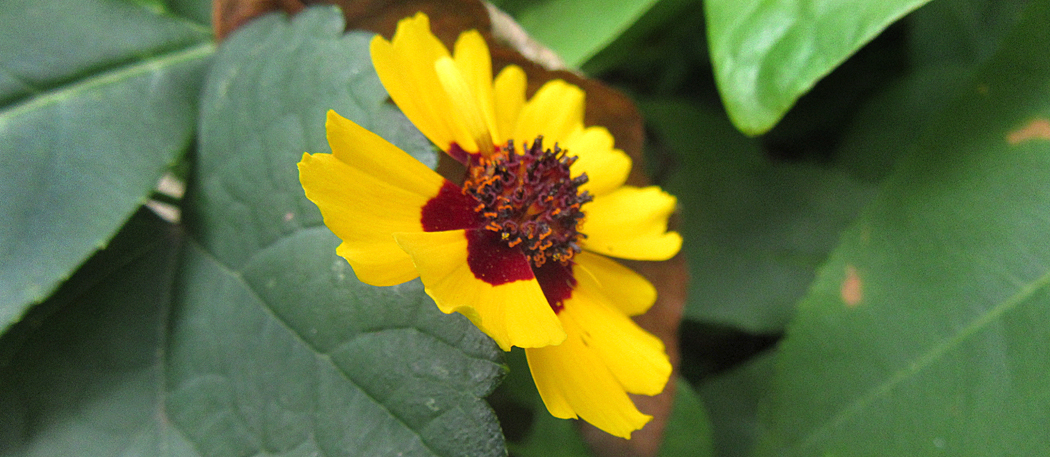
And so, every day, I sit and wait for the moment that the butterfly will land on the flowers at the edge of the patio, or the wasp will pause on the bluish florets of the mint. Or I will notice a small yellow flower that wasn’t there the day before.
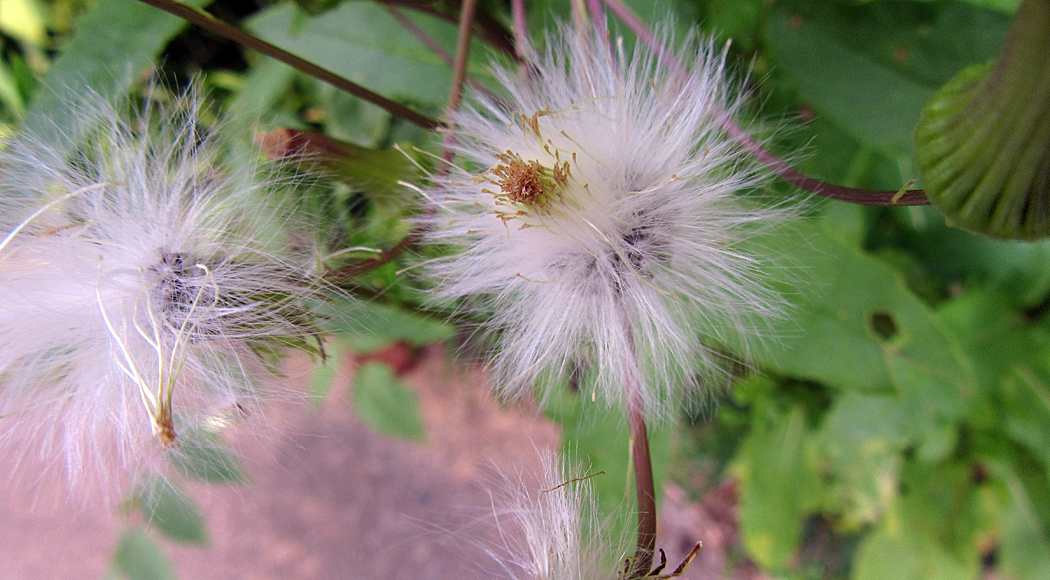
It is fall, and one of those flower seeds with its wisp of fibers landed on my shirt. I held it up in the light to see its tiny hard black seed and it reminded me of Carl Sagan’s “spaceship of the imagination.”
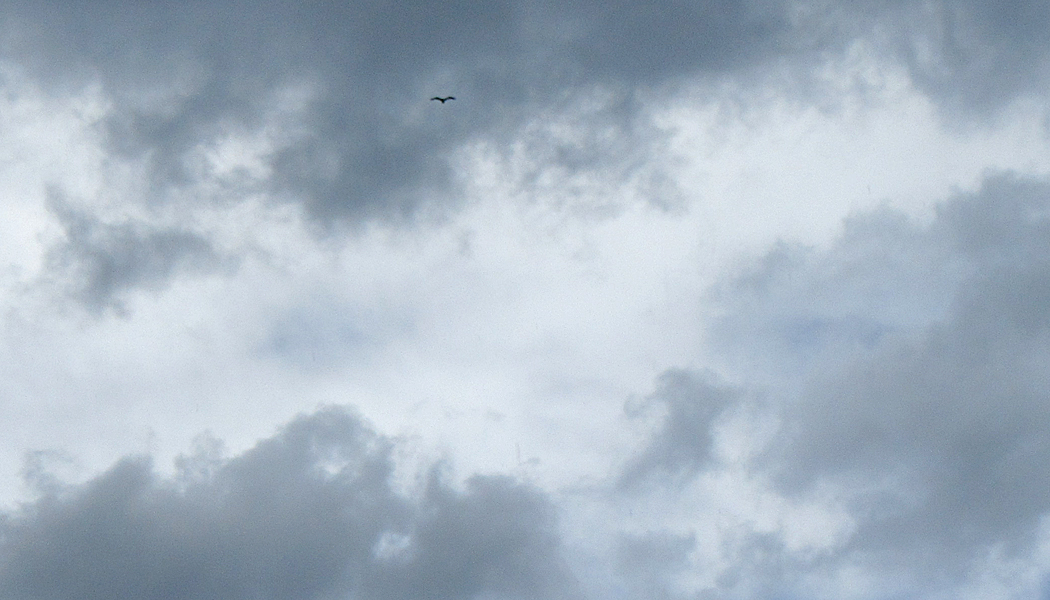
Today, it looks like rain. Dark clouds are everywhere, with the occasional white brightness poking through. And I sat in my silent seat when the wind came up, as it often does just before a rain, and all of a sudden, from the tall oak tree at the top of the hill in the back yard, a hundred leaves let go to flutter down, but, since the wind was blowing toward me, the leaves did not drop straight down, but all floated toward me, up in the air, like a hundred butterflies, or snow in the wind, or bubbles bobbing around in the currents. And so, from a hundred feet up at the top of the tree at the top of the hill, the tumbling leaves filled the sky from edge to edge of my vision, dancing in the air, each showing shadow and light as it twisted, making a glitter in the sky. It was so ungodly beautiful, I began weeping.
This is the beauty I don’t want to leave. It fills me up. I know I will have to leave, and sooner rather than at some indistinct time in a future that once was only imaginary, but now is palpable in muscle and bone.
So, perhaps I am going soft in the head. Should I be so moved by such pedestrian events? I am more aware now than when I was young and had other goals in mind, of the complex connectedness of all of the sensate world, and how that makes an organism too immense to take it all in or understand it. Little things we may understand and describe, but the wholeness of it all can only be apprehended as beauty.
And so I feel gratitude for the world and what it is willing to show me. I do not want ever to leave it, though I know I must.
And when the final curtain drops on the final scene, I can say “NO” to the end, and “YES” with the same conviction.
“What do humans sound like?” That was a question that my late wife, Carole, used to ask. She meant something quite specific by it. Carole was the smartest person I ever knew, but her intelligence was not contained within the usual structures of thought. Not so much that she thought “outside the box,” as that there was no box to begin with.
She used to ask if it were possible to “fall into blue.” When she was a little girl, she used to bend over to see the world behind her, upside down, as she looked at it through her legs. “I wanted to see what it really looked like, and not just what I had grown to know it looked like,” she said. She wondered, as a girl, if the night’s darkness could leak into her bedroom from under the window sill. She was awake to all the input the world offered.
When she asked about the sound of the human voice, she meant, what it sounds like aside from its meaning. We know what a dog sounds like, for instance, or a bird or a cat. But what is the pitch, rhythm, tempo and tune of a person speaking? We know a bird’s song in part because we don’t know what the song means, only its music — but not even music is the right comparison, since music comes with a syntax and structure of its own. We know the raw sound of the birdcall, but we cannot normally know the same for human speech because our brains process the language instantly into content. We bypass the awareness of the sound for the sense.
I got some inkling of the sound this morning while sitting in my back yard. Normally, I hear birds and maybe the chatter of squirrels. But there is a house just beyond the trees that border my yard where the family runs a little day-care operation. And I can hear the children talking and yelling, but not well enough to hear what they are saying. I hear only the pitch and rhythm, the overlap, the space left between utterances, the rise in volume with excitement. I hear the adult voices, too, and their pitch and rhythm, all without knowing what they are saying. I am hearing the sound that humans make.
Yes, I know it is being filtered through the English language. I’m sure if I heard little Mexican children playing, their rhythm would be a variant, or French kids behind the walls of their school in Paris (which I once heard and listened to). French has a less percussive sound. Spanish has a rapid-fire rattle to it. And Chinese comes with a melody that imparts its own meaning. But the basic sound was there.
And so, I hear, in my back yard, the combined sounds of distant dogs barking, the “kweet… kweet” of a towhee, the “shshsh” of the breeze rustling the tree leaves, and the vocalizations of those dozen or so children. And it is all of a piece. It is an experience of the world before knowing.
One of the problems is that the human mind is a pattern-recognition machine. It seeks and spots them, even without our willing to do so. Understanding speech is an example. The sounds become words involuntarily and the words get in the way of hearing the sounds as sounds. Of course, the words are the point of speech and the desire to hear the sounds without the words is a peculiarity of mind that Carole had. For most of us, the actual sounds are irrelevant, as long as our brains recognize them as phonemes, morphemes, words, phrases, sentences and thoughts.
Yet, the patterns we recognize — not just in speech, but throughout our lives and culture — are, in some sense, second hand, a gloss on the primary experience. They are a colored glass through which we see the world. The patterns, like so many mullions in a large window, force us to see, hear, taste, smell, the world in the patterns that our brains force on it.

A frame separates the subject of a picture and points it out to us, but it also cuts away everything not in the picture — the wider context.
You might laugh, because functioning in the world requires us to make sense of it and our brains do that. But that pattern-making and pattern-finding aspect of our consciousness can also prevent us from experiencing existence directly. Really, only artists, visionaries and crazy people get to lift that veil. Artists want to; visionaries get to; and the insane have no choice.
Some of those patterns are the cultural baggage we carry. We have the expectation of a certain pattern for governments, for marriages, for friendships, for gender, for tribal affinities. These patterns may merely be inherited habits, but they are buried deeply in us. An attempt to escape them is one of the things that artists do. Entrenched interests often become agitated by the art and fight back. Eventually, the art becomes classic and everyone more or less agrees that the artists had it right in the first place. But by then, the art has become the pattern and is itself entrenched.
Trying to escape not only the patterns, but the incessant pattern-finding and pattern-making of the brain is difficult. Sometimes that brain outweighs the rest of our bodies. Getting rid of the “middle man” and experiencing things directly can be a revelation.
It is, I believe, what Walt Whitman was getting at in his Song of Myself: “The atmosphere is not a perfume, it has no taste of the distillation, it is odorless,/ It is for my mouth forever, I am in love with it,/ I will go to the bank by the wood and become undisguised and naked,/ I am mad for it to be in contact with me.”
To smell the new-mown grass without knowing it is new-mown grass; to feel the radiant heat on your skin and not know it is caused by the summer sun; to taste the sweetness of spring water without knowing what you are drinking; to hear the sound of children playing without hearing mere words; to feel the earth under your toes and the air against your skin and never parse their meanings.
“You shall no longer take things at second or third hand, nor/ look through the eyes of the dead, nor feed on the spectres in books,/ You shall not look through my eyes either, nor take things from me,/ You shall listen to all sides and filter them from your self.”
I’m not recommending that we all turn into gibbering idiots; our minds’ ability to forge sense of it all makes life possible. We couldn’t give that up even if we wanted to. What I am trying to do is supplement its meaning-making drive with the ability to let that go for the sake of pure experience, non-judging, non-deciding experience. It would be a kind of return to roots, before all the layering of culture and idea, where we might discover some of those ideas have no foundation.
Meaning is important, and we all want meaning in our lives. But perhaps we are missing something more primary, more direct.
A wise person once said, “What we seek is not the meaning of life, but the experience of life.” The experience has precedence. We can hardly make meaning without it.
Sometimes, while driving through a neighborhood, I will see an old person, a retiree, sitting in a chair on the front porch, or in the driveway, just watching the traffic go by. It’s become a meme, much like the “Get off my lawn,” thing that shows up in single-panel cartoons.
I have to admit, I am of that age, although I don’t find traffic that interesting.
But after several years of being partially house-bound by the Covid virus, and at times suffering from cabin fever — to say nothing of the fatigue that comes with hours staring into an iPad screen checking out the news or watching cat videos — I have discovered the pleasures of sitting quietly in my back yard. It gets me out of the house and it reacquaints me with what I jokingly call “reality.” That is, the sense that there is a world without electromagnetic signals commandeering my attention, a world that has been there always, before my greatest-grandparent was born, and will be there when all the power grids in the world are rusting back into the soil.
I can sit there for half-an-hour at a time, maybe 40 minutes, without thinking about anything and just watching this tiny bit of the world as it moves in the breeze, as the cardinals and mockingbirds swoop across it into the low tree branches, as a white butterfly flits over the irises and a rabbit lopes across the bit of lawn.
Occasionally, there is a groundhog who will waddle into the yard, get about halfway across before noticing me sitting there; stare at me for two or three seconds before turning back and returning to where he came from.
This morning a bumble-bee dive-bombed me briefly. I don’t think he was attacking me; more likely he didn’t even recognize I was there.
After a morning of staring at a computer screen, or watching an iPad, it is important to move to somewhere so my eyes can refocus at a distance, perhaps to infinity. I watch the clouds and notice which direction they travel. I listen to the birds nattering, or hear the neighbor on the next block mowing the lawn. An airplane may cut across the blankness leaving a contrail, and dropping a rumbling jet sound that always seems to be coming from some distance behind where you see the plane.
It may seem to some, in the rush of civilization, that nothing is happening, that sitting quietly and watching is the very definition of boring. But for me, it is not. Something is always happening. It may be subtle, but it is happening. The leaves wiggle, the sky shifts from sunlight to shadow as the clouds pass, a mockingbird lights on the top of the shed and repeats his mantra over and over; he seems to notice that I’m there, but perhaps I am no different to him from the patio furniture.
But I have noticed, over the weeks I have been doing this, at least three psychological states I have found myself in.
First, if I am distracted by other thoughts, or if I am not really paying attention, my relationship with the yard is that I am looking at nature, almost as if I was still staring at my computer screen. I may notice things, may enjoy what I see, but it is quite separate from me and is, as I look, clearly something in front of me.
There is nothing wrong with this, but it isn’t why I go out each day and sit there. I consider it a failure when I can’t get to the second state.
That second state is when I feel not that I am looking at nature, but rather I am in nature. That is, it is all around me, and what is more it exists behind as well as in front. It extends into the air and to the clouds; I become aware of the soil under me, the weeds to the right and the undergrowth beneath the tree branches.
To be in Nature is to be taken away from the self and redeposited into the wider world. I can easily lose myself in this state and that is when the watching becomes something more. I can feel the space around me expanding to the rest of the earth and sky and my bit in it, however tiny, is plugged in. I feel alive in a live world.
These two states of mind depend primarily on my mood. If I am tired or distracted, I cannot reach the higher state; it just doesn’t come. But when I can silence my brain for a bit, it is like the coupling of a locomotive to a train. There is a click and it all becomes connected.
It is the same state you enter when you are absorbed in a book and the room you are in disappears because you are so focused.
But I said there is a third state, and that comes only with something like grace. It is when I neither look at nature nor feel in nature, but rather am nature.
The barriers between me and the rest of the world, even the universe, vanish and I realize that I am part of it all. No. I don’t realize it. It just is. The very idea of realizing, or thinking, ceases to have meaning. If I look at the rabbit, I know he looks at me, too. No, again. It isn’t a question of knowing. We look at each other. A recognition. The metabolism that takes place in the cells of my meat is the same as that in the green iris leaf. The motion of the clouds across the blue is the motion of my blood through my arteries and veins. “For every atom belonging to me as good belongs to you.”
I disappear, except that I don’t. In fact, I am more present. It becomes one thing, and it is not that I am a part of the one thing, but that it is just one thing.
That is, of course, a truism. Even Miss America might say the same thing through a Pepsodent smile. But just saying, or knowing it is not what I’m talking about. It is not knowledge I mean; it is the experience. I sit there in the back yard and it just is.
This cannot happen every time I sit in the back yard. And it isn’t necessary to have a back yard. It is just, as I say, a kind of state of grace, psychologically.
What is required is receptivity, an openness without expectation. Paying attention.
As I get closer and closer to the point when every atom belonging to me will belong again to the soil, I remember the lines in Thomas, that “it will not come by expectation, but it is all around us and we do not see it.”
But once in a while, the veil is lifted and we can see. It is not what we see but that we see.
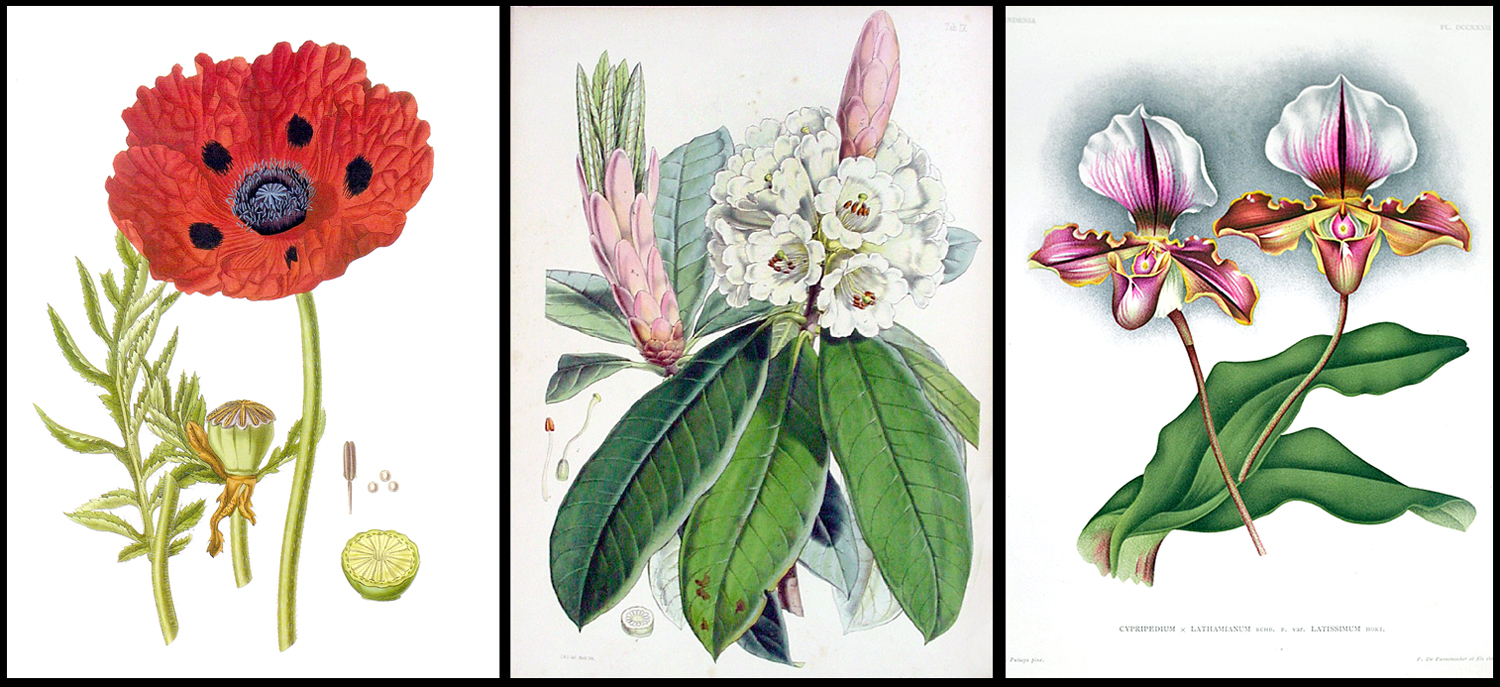
Recently I posted a piece about the history of naturalist illustration. It was a subject so huge — and with so many gorgeous images, that I could not begin to include some of my favorite things from the thousands of images I collected.
For instance, I had to rule out all of the non-Western art, and some of my favorite non-scientific animal art. And so, I felt I should write a follow-up piece for a few of the leftovers.
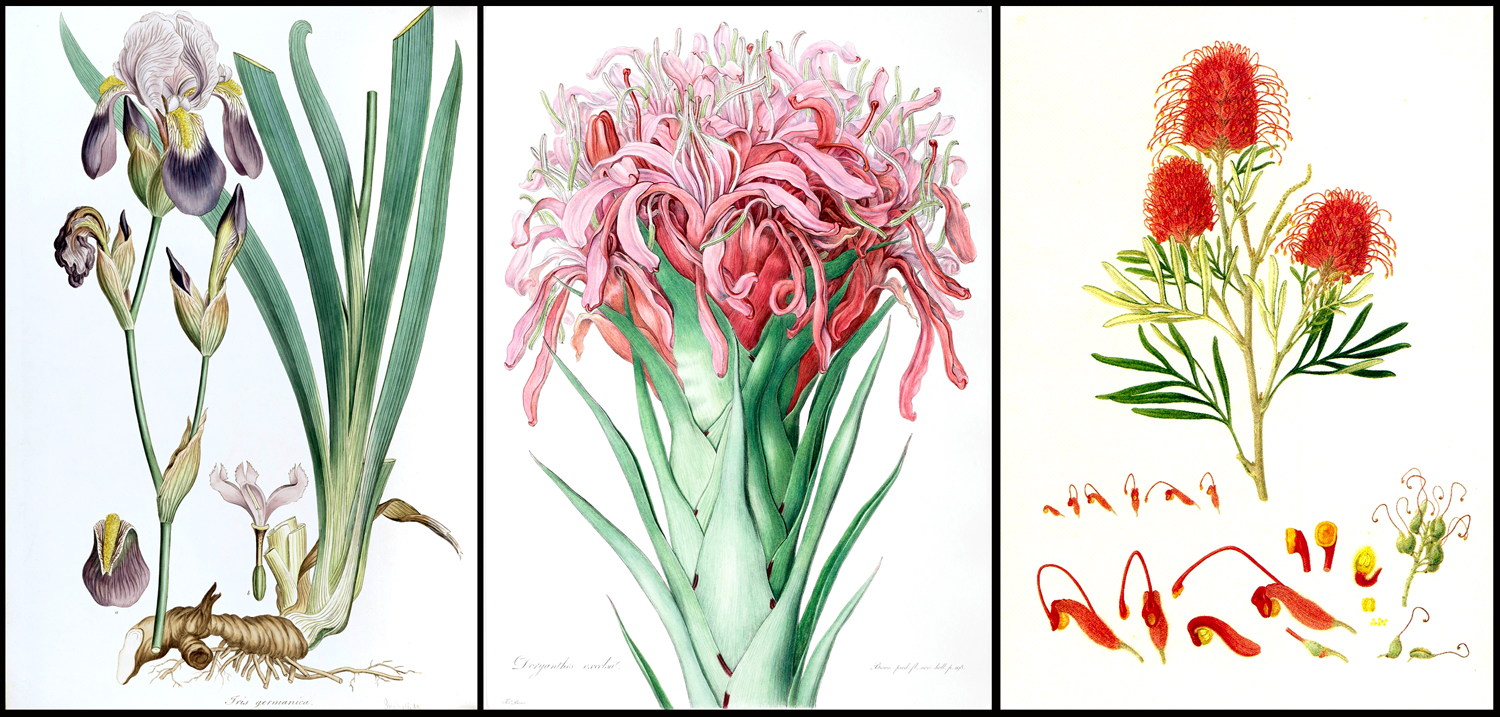
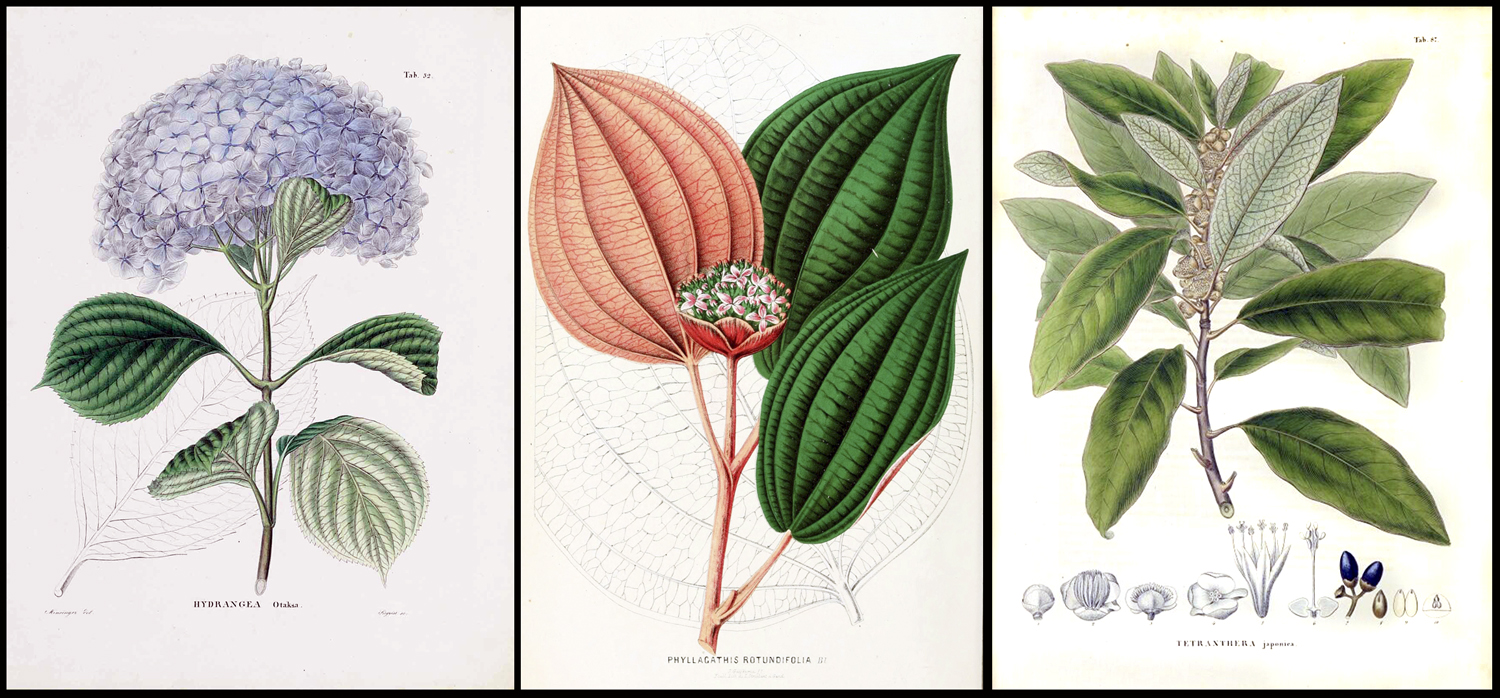
Most of the art I covered was meant to illustrate botanical collections in an era when new plants were constantly being added to the list of recognized species, and were meant to accompany scientific books written by specialists.
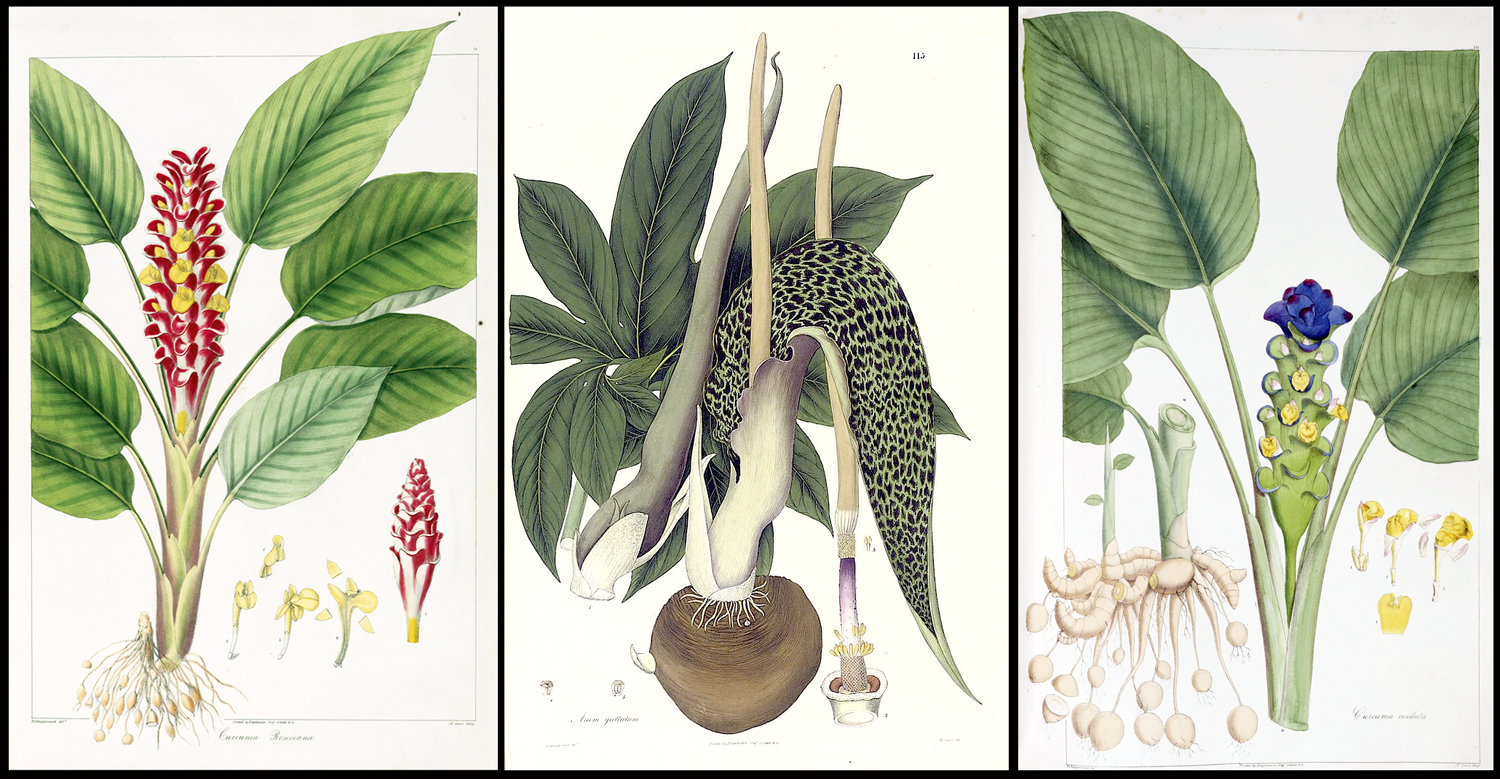
From “Plantae Asiaticae Rariores” of Nathaniel Wallich
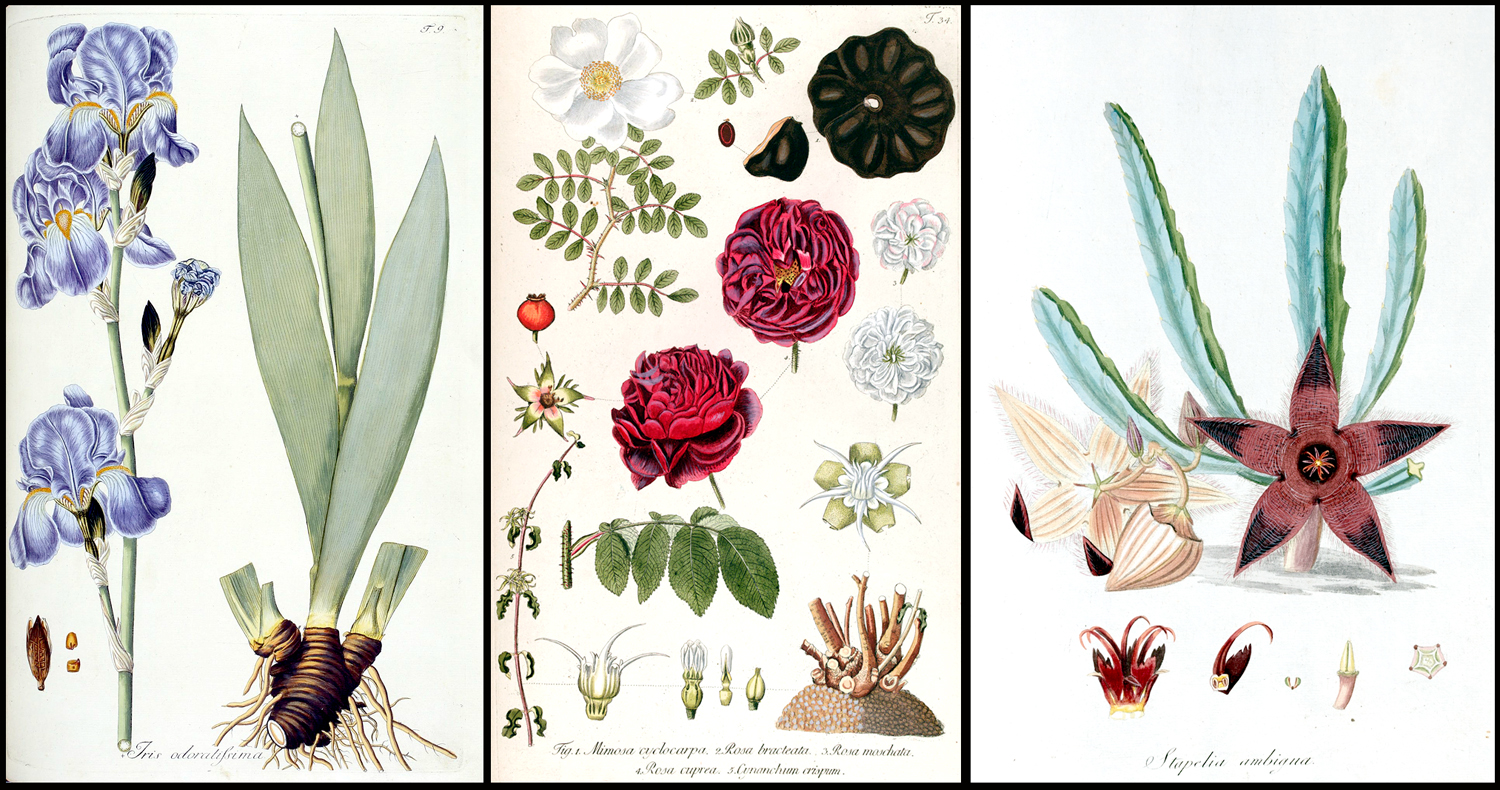
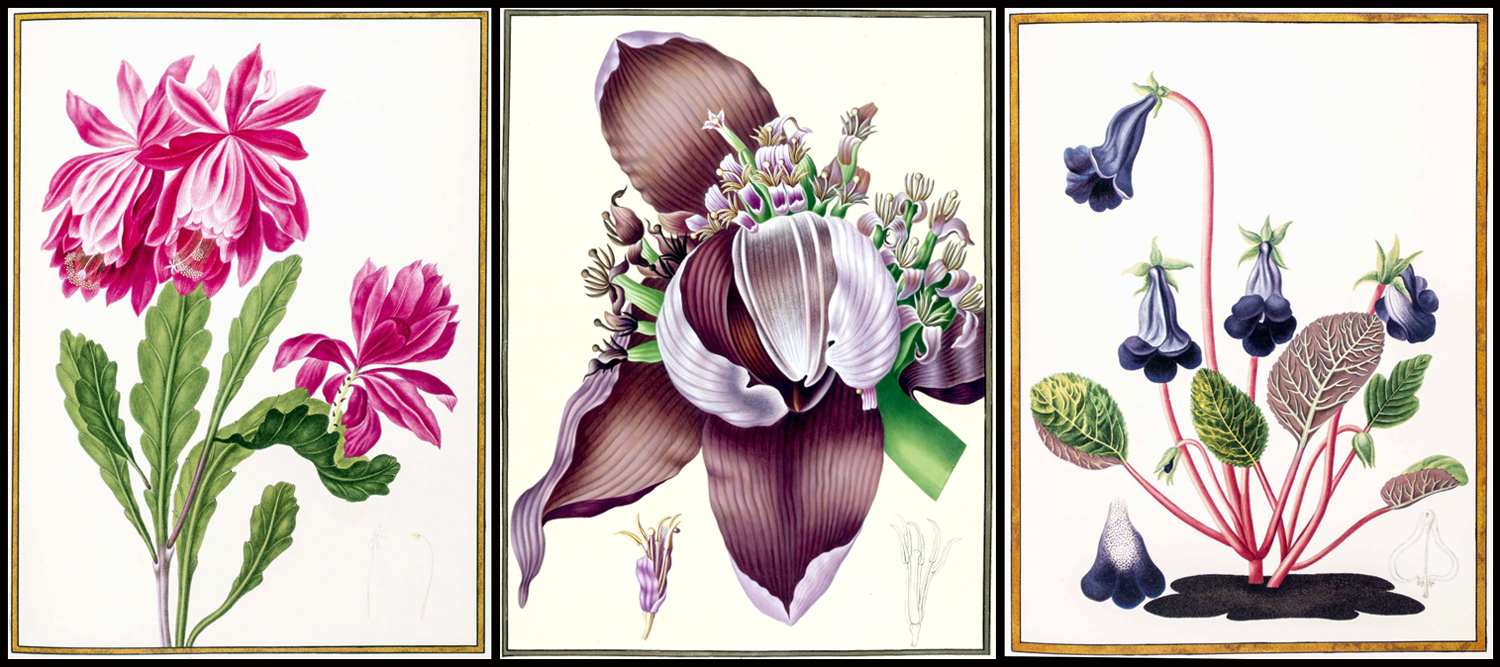
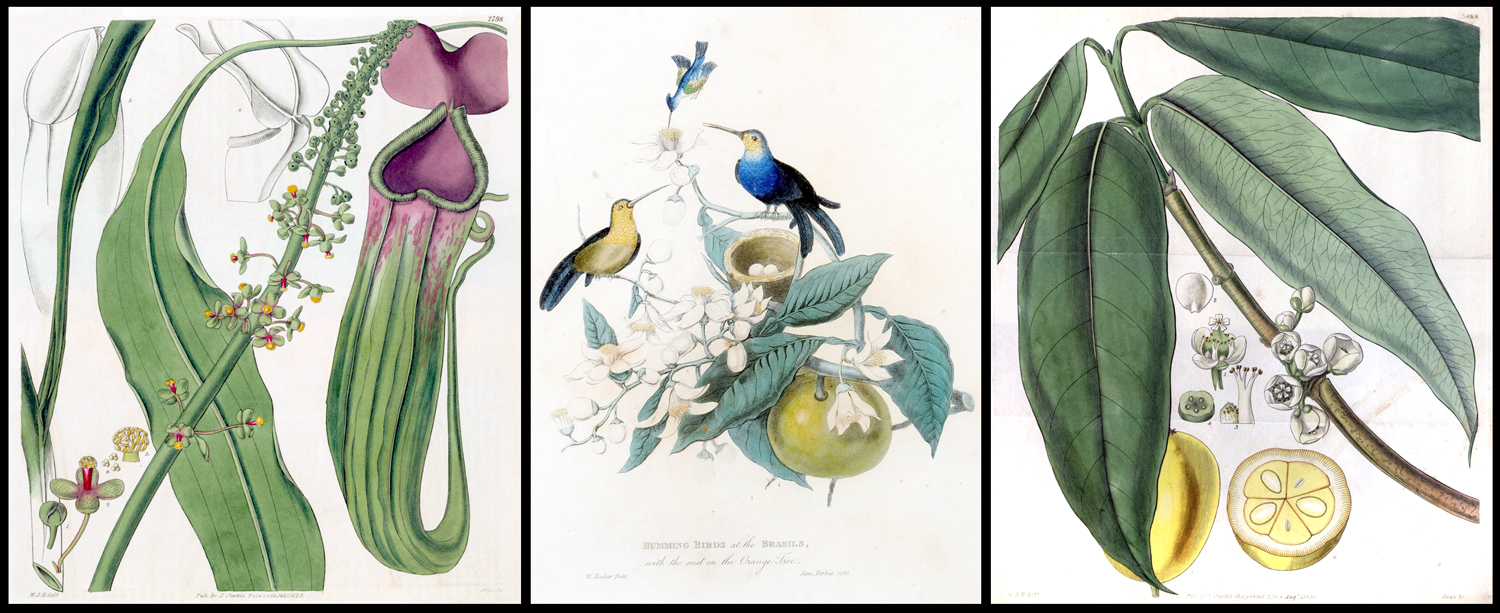
For instance, there was Nathaniel Wallich, the Danish-born botanist who collected plants in India and published his Plantae Asiaticae Rariores in three volumes from 1830 to 1833, with illustrations by a half-dozen artists, both Indian and European.
From “Treasury of Nature,” Albertus Seba
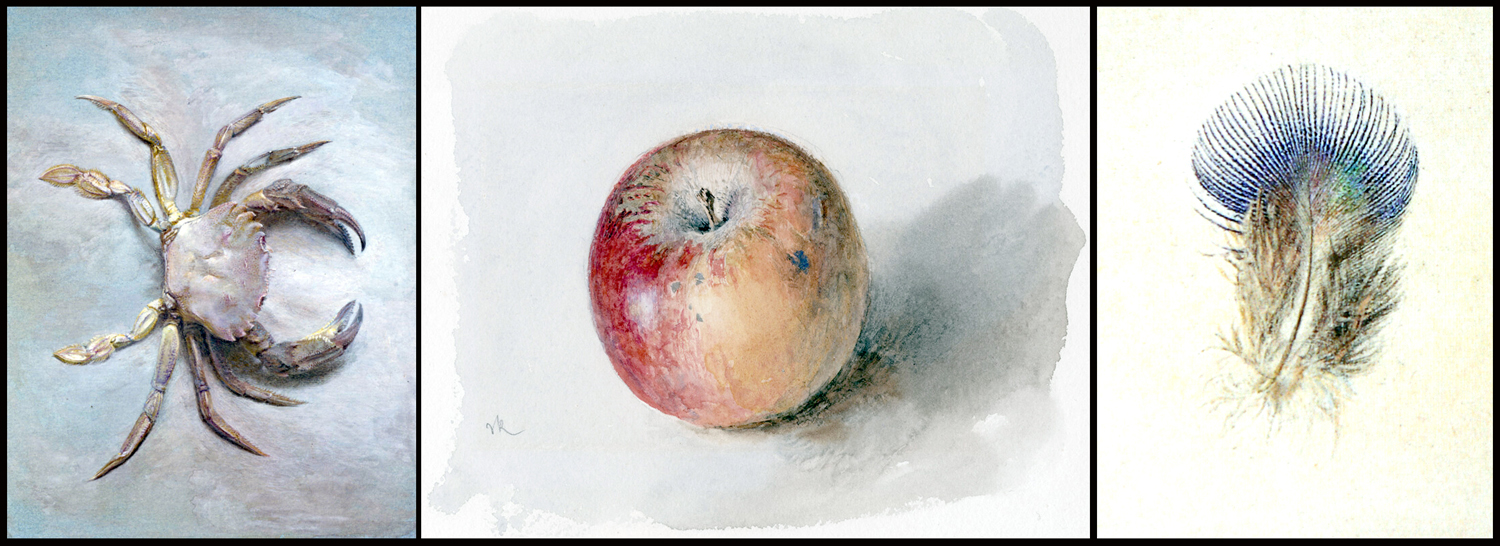
The collection I missed most in the earlier essay was Albertus Seba (1665-1736). His interest was less scientific and more one of abject curiosity. He collected tons of oddities from around the world in his “curiosity cabinet,” and in 1734 published his Locupletissimi Rerum Naturalium Thesauri Accurata Descriptio et Iconibus Artificiosissimus Expressio per Universam Physices Historiam (“A Careful Description and Exceedingly Artistic Expression in Pictures of the Exceedingly Rich Treasury of Nature Throughout the Entire History of Natural Science,” illustrated from beginning to end with engraved plates.
Crab from Albertus Seba
The original 4-volume publication included 445 illustrations and Seba’s collecting helped Carl von Linne in his binomial classification system.
But, there are tons of bird, plant, and animal pictures meant for the general public, mostly throughout the 19th century.
Wood engravings of plants
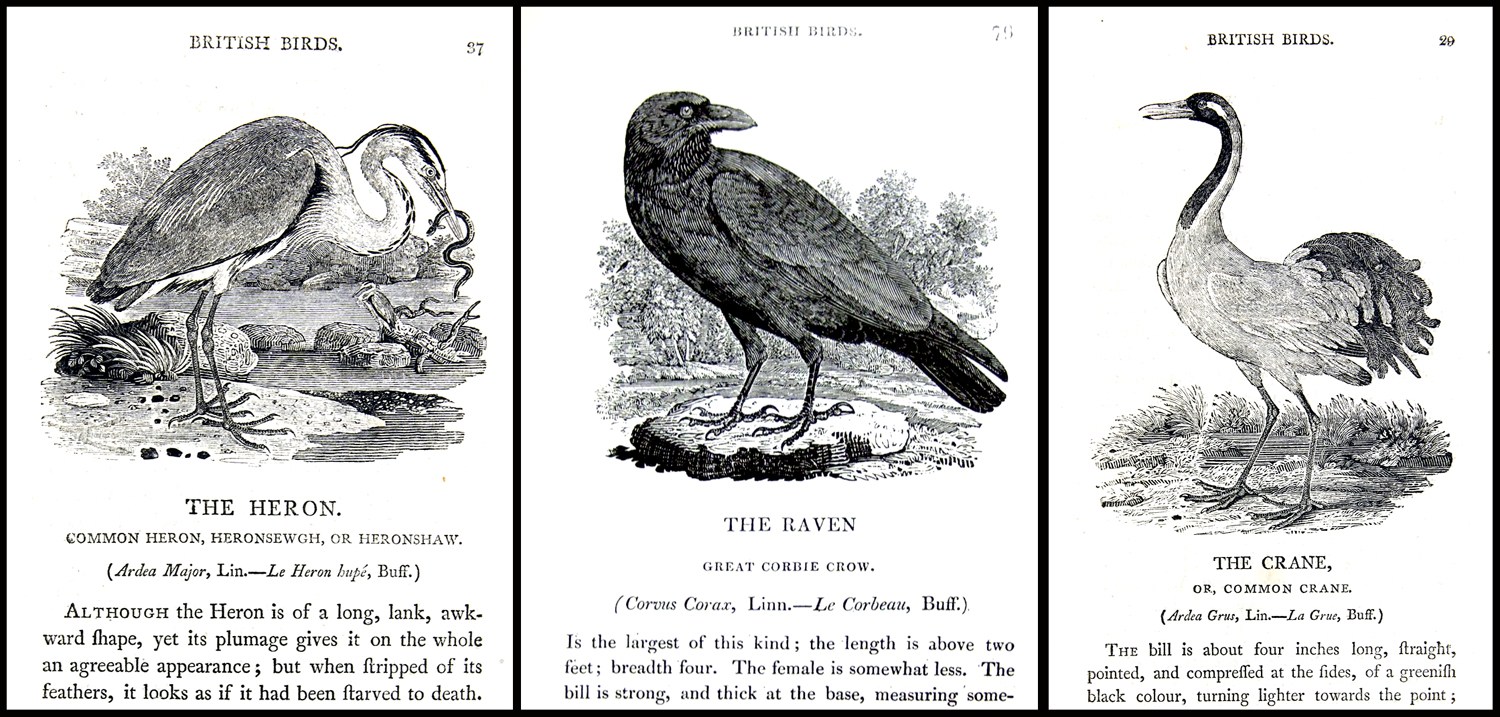
Unfortunately, most of those artists worked anonymously, pumping out pictures for books, magazines and posters. Animals, especially those of exotic locales, were always popular pictures with the public. And most of those were made in the process called wood engraving — a bit like woodcuts, but made with a burin on the end-grain of dense hardwoods and printed very like a copper plate engraving.
Wood engravings of animals
The best-known wood engravings were probably the book illustrations of Gustave Doré. But the technique was nearly ubiquitous in the Victorian era.
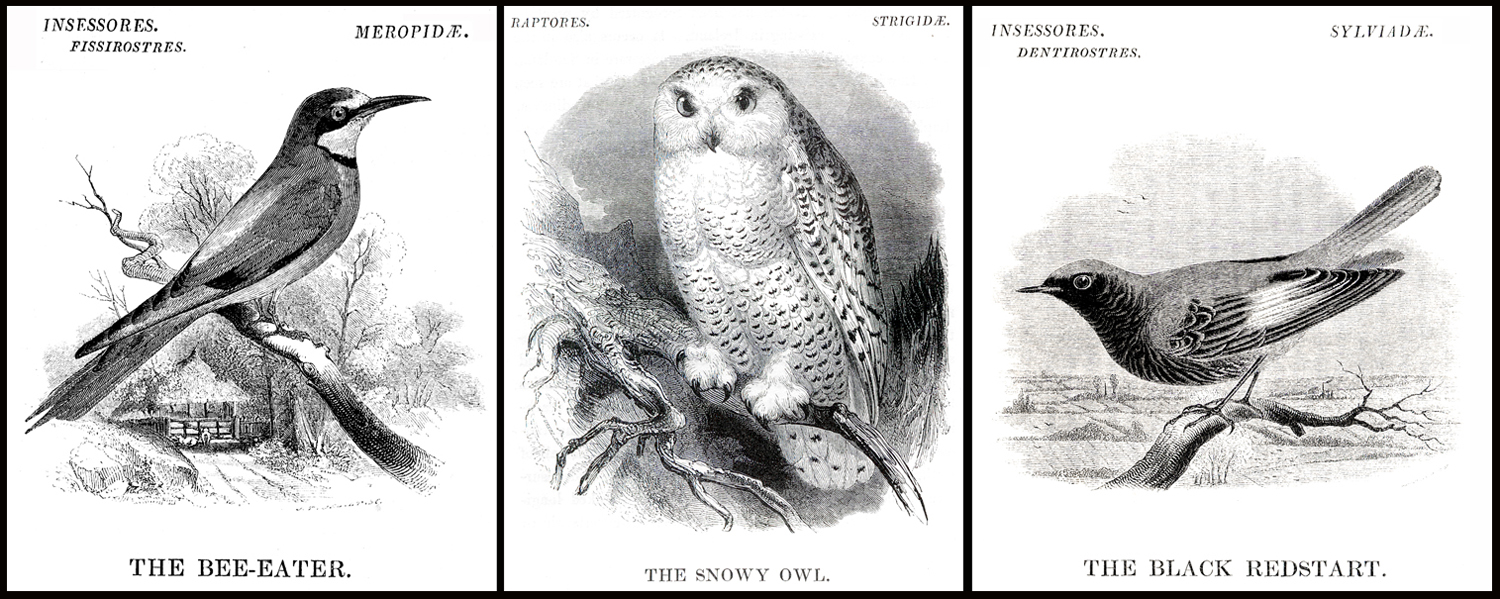
From “A History of British Birds” by William Yarrell
Wood engravings occasionally accompanied serious scientific work, also, such as those in A History of British Birds, published in 1843 by William Yarrell (1784-1856). Its wood-engraving illustrations were carried out by two artists, Alexander Fussell and John Thompson.
Such art is meant primarily to identify plants and animals, but sometimes an artist’s intent is merely to look closely at and study his subject. And, as with the botanical illustration, to separate the subject from its context to better see it on its own.
Drawings by Leonardo da Vinci
Artists have always done this, often in sketches, sometimes as studies for larger, more serious and integrated paintings, sometimes purely for its own sake. Leonardo drew lots of them.
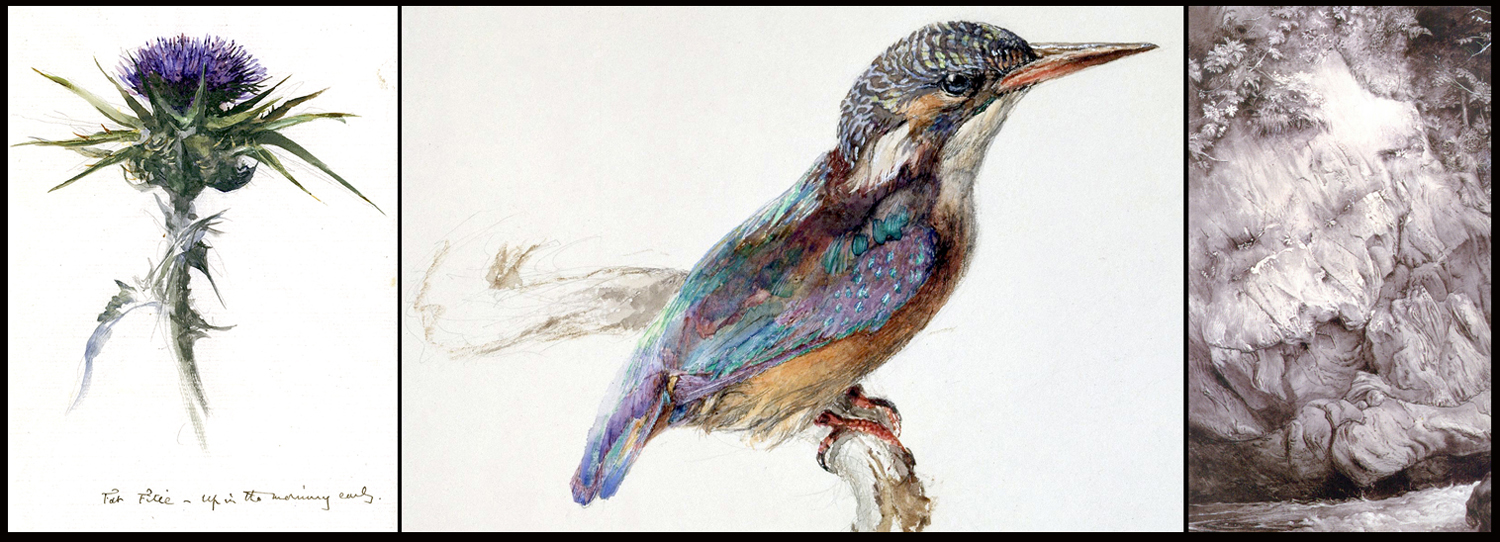
Drawings by John Ruskin
And it was the very point that critic John Ruskin made in Victorian times for the art of drawing: He felt that sketching forced close observation and that essence was found in detail. He aimed his eye at plants, birds, even rock formations, to come to know them better.
Drawings by Ruskin
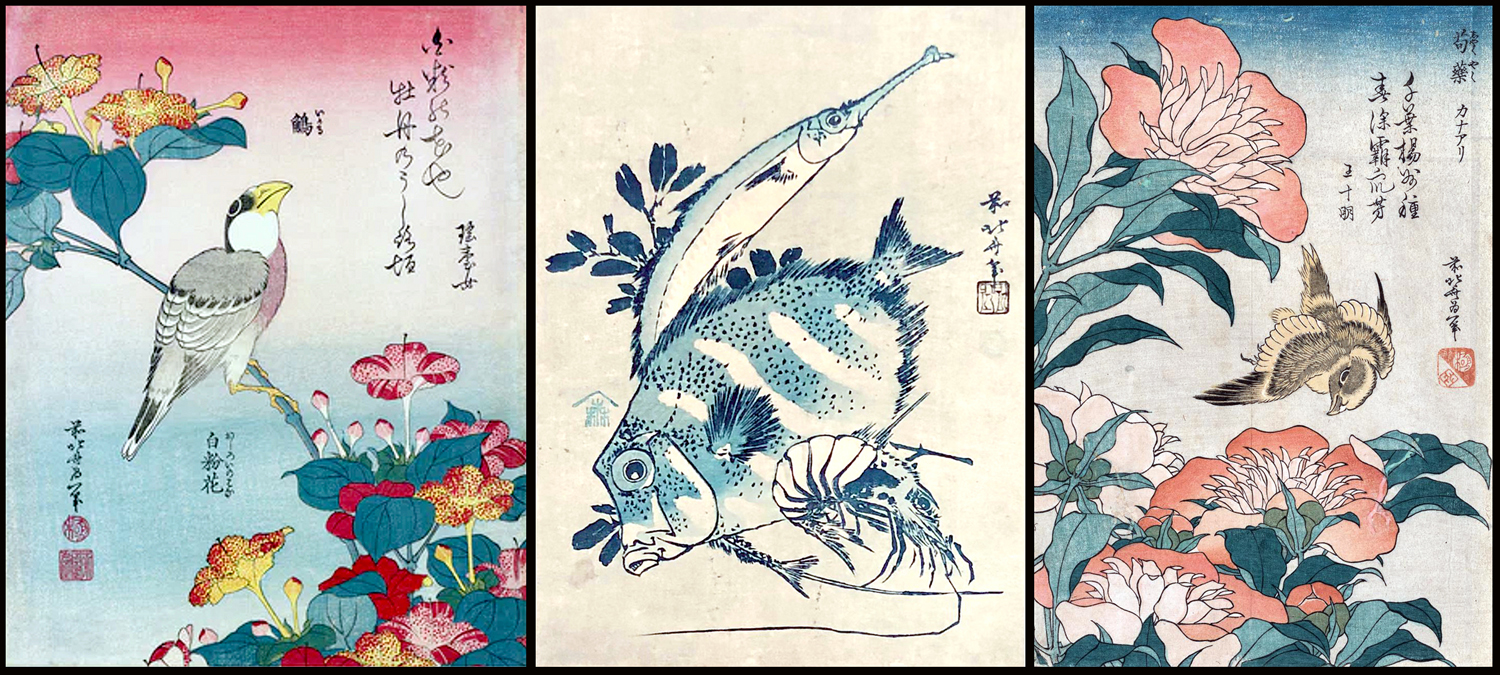
The most significant class of nature art left out of my original essay are the many kachō-e prints and paintings by Japanese artists, ranging from the 17th century to the 20th. I was sorry to leave them out.
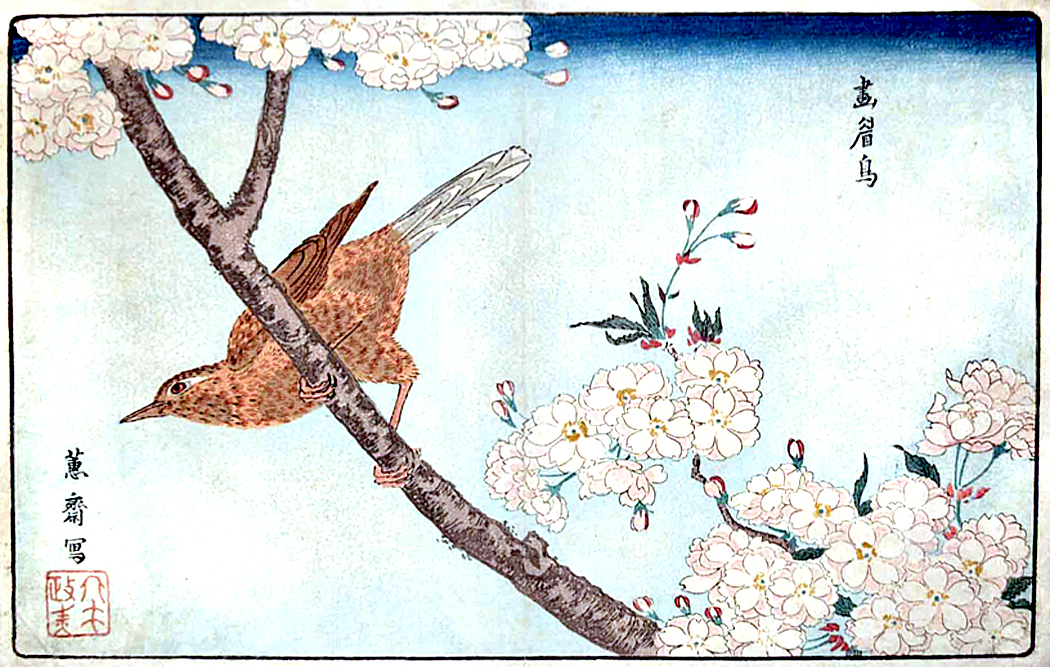
Masayoshi, “Gray Thrush”
Kachō-e are so-called “bird and flower” pictures, although the subjects include fish and insects, too. Their ancestry runs back to huaniaochua (“bird and flower” paintings) popular in Chinese beginning in the Tang dynasty (AD 618-907).
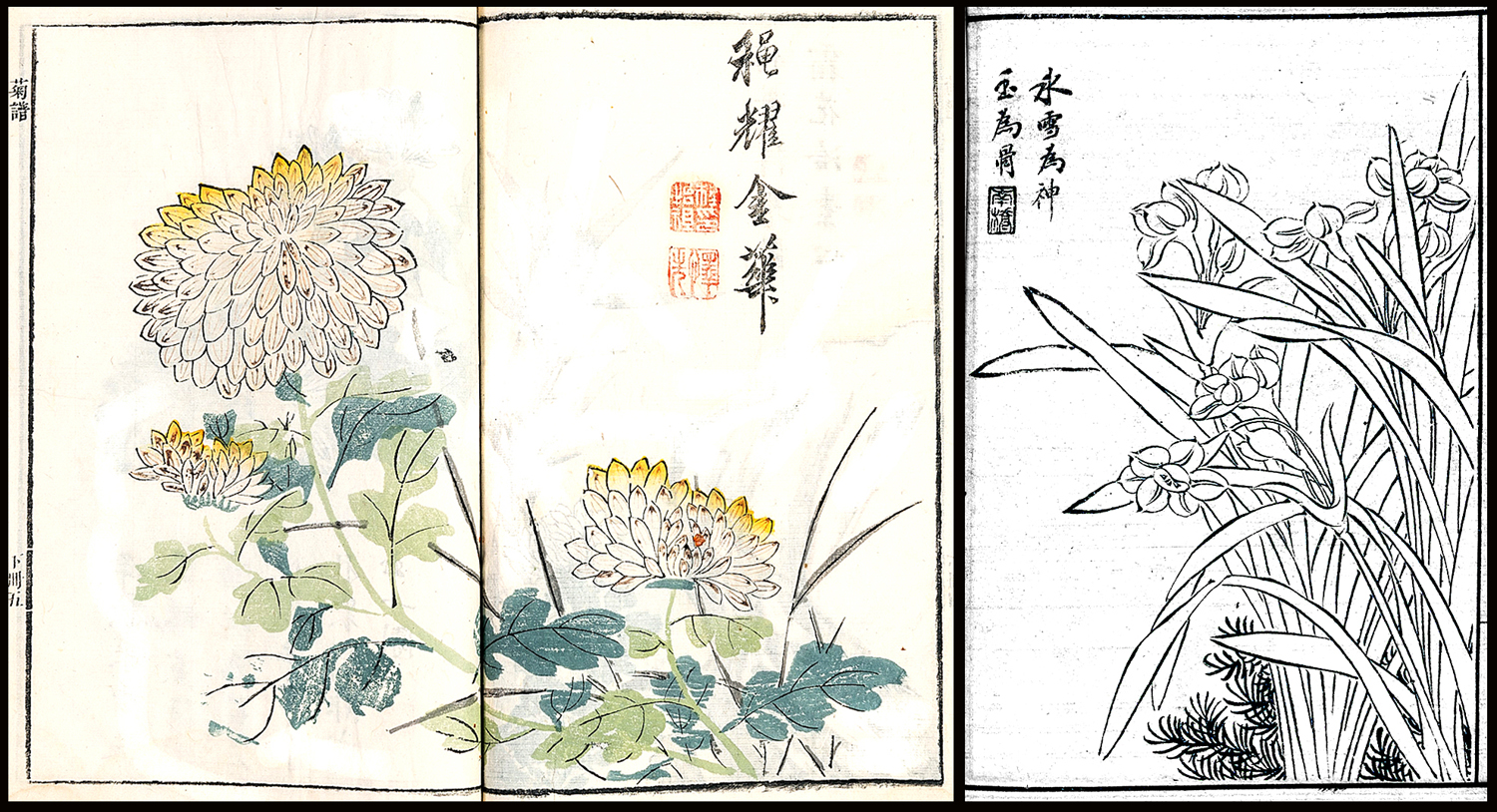
The work influenced much of art throughout Asia, and came to Japan, popularized by translations of the Chinese classic instruction book, Manual of the Mustard Seed Garden, published in parts from 1679 to 1701. The final chapters instruct how to best paint huaniaochua-style art.
Pages from “Manual of the Mustard Seed Garden”
The Chinese influence was felt all through the continent, not only in Japan and Korea, but as far west as Persia, where it inspired the golomorgh (“Bird and Tree”) paintings popular in the Safavid period (1501-1736).
Golomorgh art
In Islamic art, the paintings take on an allegorical bent, with the birds (sometimes butterflies) standing in for the lover and the flower for the beloved.
But by far the biggest influence was in Japanese art, and the popular ukiyo-e style, mostly woodblock prints made from the 18th through the early 20th century. Ukiyo-e (“Pictures of the floating world”) were popular images of famous actors, courtesans, historical figures, landscapes, genre scenes — and nature. The nature genre was called kachō-e, or “bird and flower pictures.”
One of the early masters of the form was Kitagawa Utamaro (1753-1806). He published a Book of Birds ca. 1790 (the dating is often uncertain, as records were not always kept, and popular books were published and republished, often with new plates, or new cuttings of old designs — precise dating can be guesswork).
Each image was matched to poetry, written in elegant calligraphy on the empty parts of the image. For this one, named for the mejiro, or Japanese White-Eye (on the left) and the enaga or Long-Tailed Tit (on the right) has two poems. The first: “Pushed out of his honey-filled nest following a fight, the white-eyes bird seems not to mind at all,” while the other says “Come and let yourself be mine; For us the nights will be as long as the tit’s tail.”
Utamaro followed with a Picture Book of Selected Insects, about the same time, which showed dragonflies, beetles, bees, grasshoppers and other buggy life on beautifully drawn leaves and flowers. When Viking Press published a beautiful facsimile edition of the book in 1984, they must have worried about the title, so they renamed it Songs of the Garden. Much more attractive.
In the west, the two most famous ukiyo-e artists are Hokusai and Hiroshige, near contemporaries. They both made kachō-e prints.
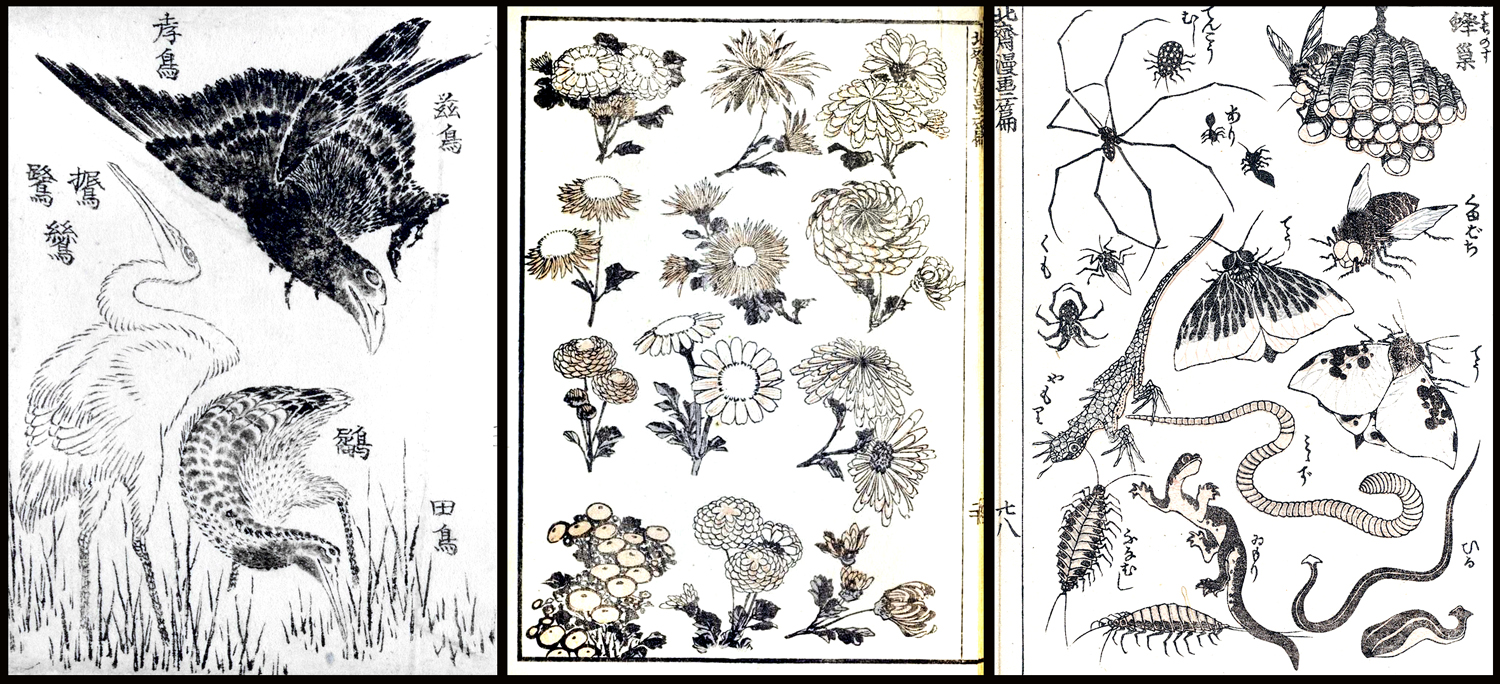
Katsushika Hokusai (1760-1849) called himself “Old Man Mad with Painting,” and worked in every conceivable genre. He was a one-man image factory. His curiosity spanned everything he could come in contact with. He even experimented with linear perspective after coming in contact with European art.
Hokusai manga
In his sketchbook, or manga, he made pictures of everything he saw. The black-and-white drawings were made into woodblock prints. He tried just about everything. (Most famous, of course, for his “Great Wave off Kanagawa,” which has been reproduced endlessly.)
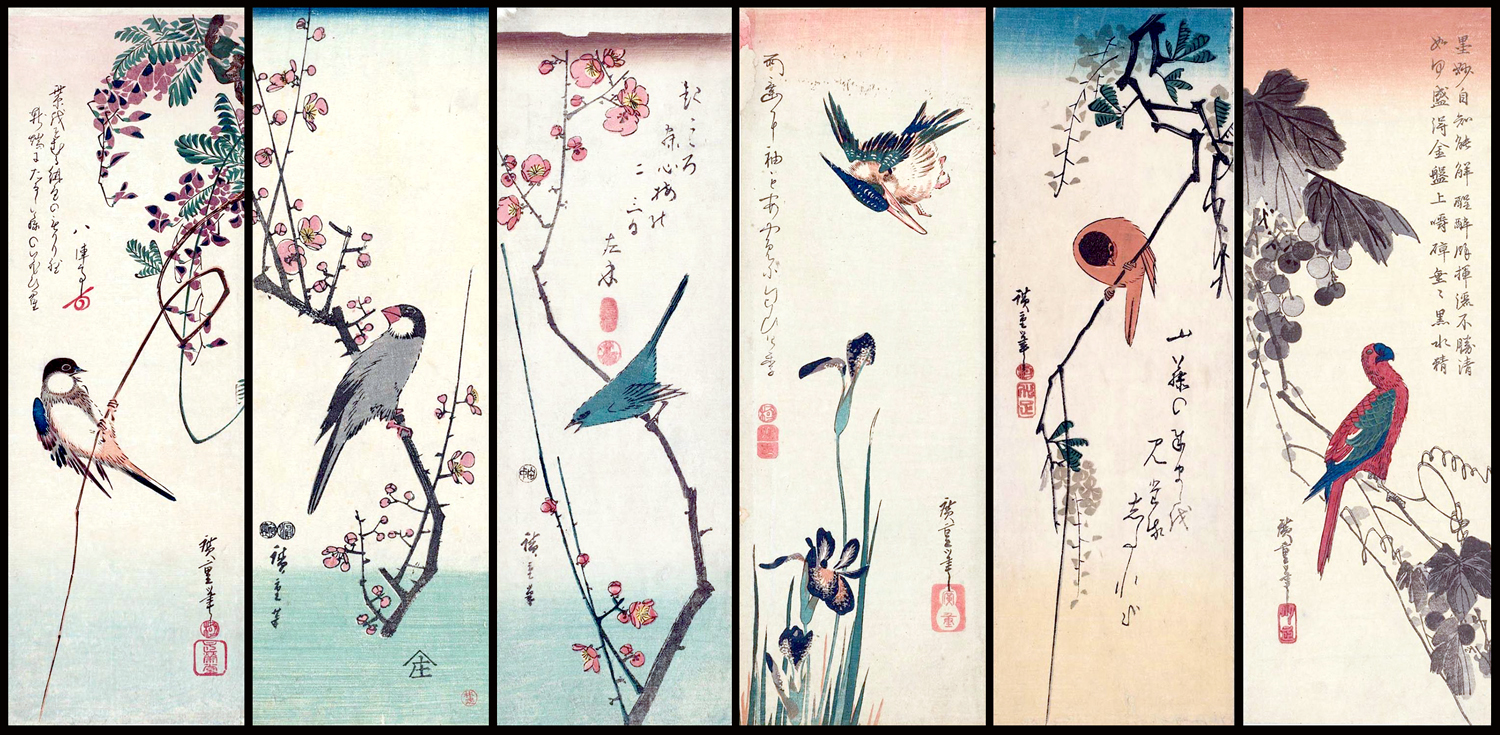
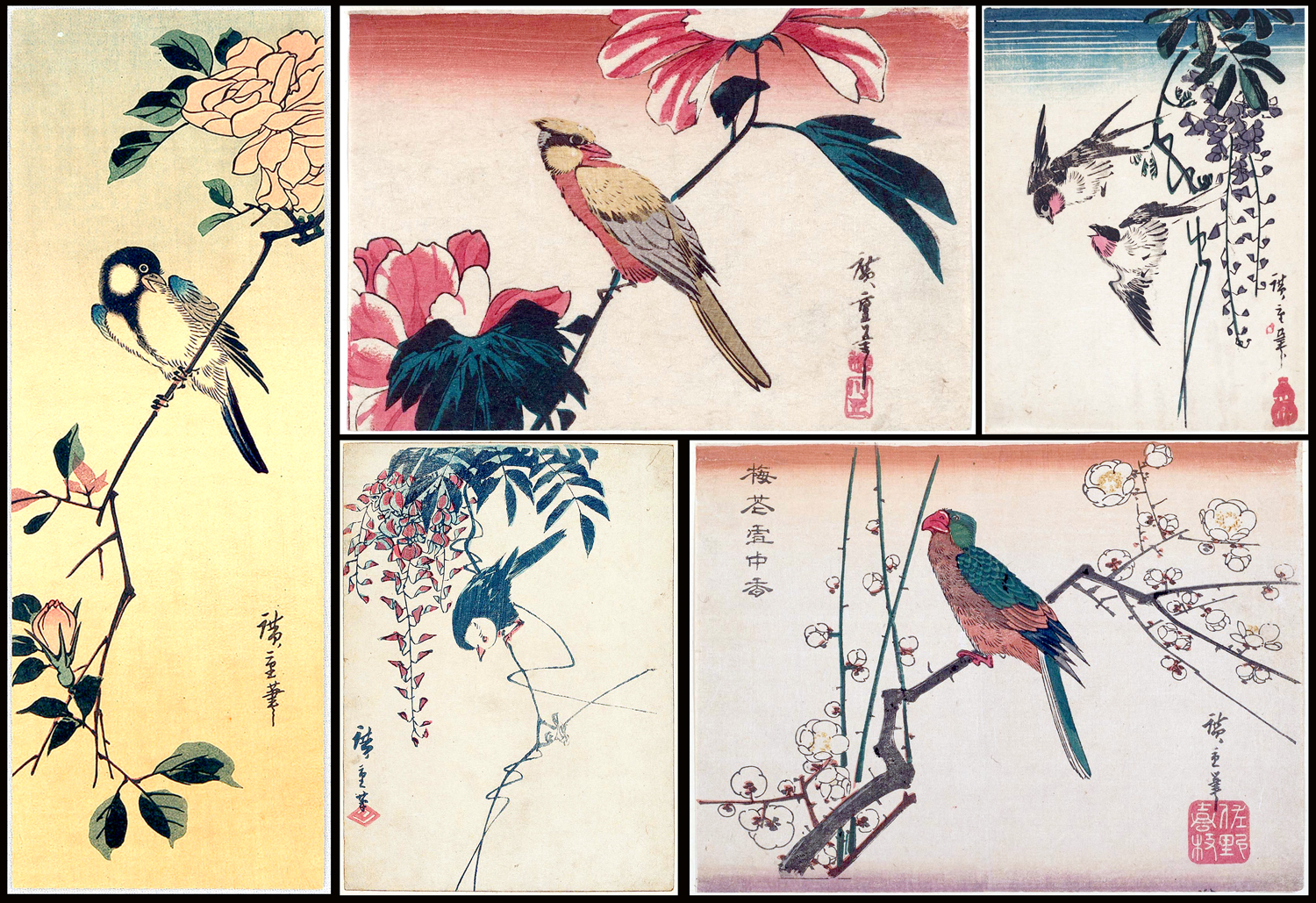
There is a proverbial saying in Japan: “Hokusai is the greater artist, but I love Hiroshige more.” It is hard not to be entranced by the atmospheric and almost Impressionistic work of Utagawa Hiroshige (1797-1858). Known for his landscape images, he also made a pile of bird-and-flower prints. Most often in the elongated vertical format known as hosoban.
There are so many of them, it is hard to choose just a few examples.
But he also published several books of fish and sea creatures, a “small” book of fish and a “large” book, each titled as such. I cannot help but post as many of Hiroshige’s images as I can. They are so seductive and beautiful.
It is usually said — by snooty connoisseurs — that ukiyo-e standards began to decline in the 19th century and the genre ended by the 20th. But instead, I believe it simply changed with the exposure of Japanese artists to the rest of the world with the Meiji Restoration (1868). Where once Japan’s culture was insulated from the outside, it now opened its arms to new influences.
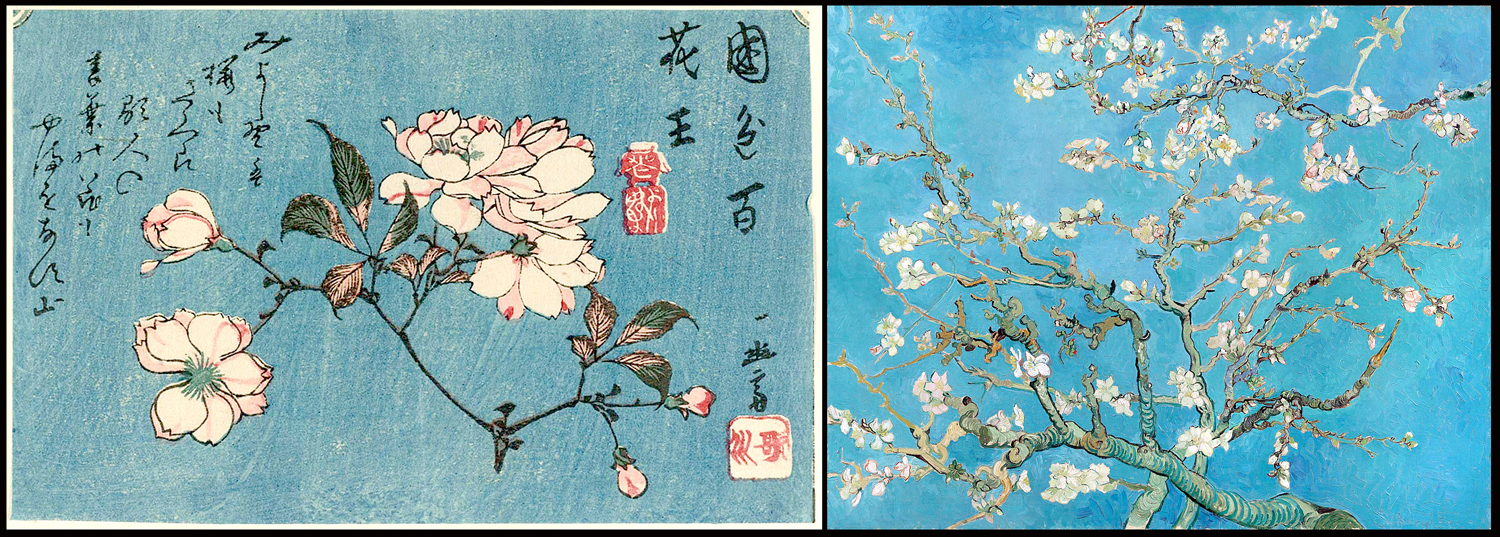
Hiroshige and Van Gogh
(The artistic fertilization went in both directions, as ukiyo-e art began arriving in Europe and artists such as Van Gogh were blown away by the freshness and style of the Japanese prints.)
And kachō-e changed from a popular and demotic art form to one created by new designers who saw themselves less as craftsmen and more as western-style “artists.” The esthetic, called shinsaku-hanga, became more refined, if less adventurous. It was a retrospective art, honoring the masters and styles of the past.
Birds by Kono Bairei
And artists such as Kono Bairei (1844-1895) continued the birds-and-flowers tradition, but with a turn to more naturalistic drawing, albeit in a stylized setting.
Bairei fish
He also took on fish.
The work of Imao Kainen (1845-1924) maintains that almost-western realism in highly decorative compositions.
By Imao Kainen
The most famous of the shinsaku-hanga artists was probably Ohara Koson (1877-1945). He was a teacher at the Tokyo School of Fine Arts, and met American scholar Ernest Fenollosa, who encouraged him to export his bird prints to America. His work now sits in most American art museum collections.
By Ohara Koson
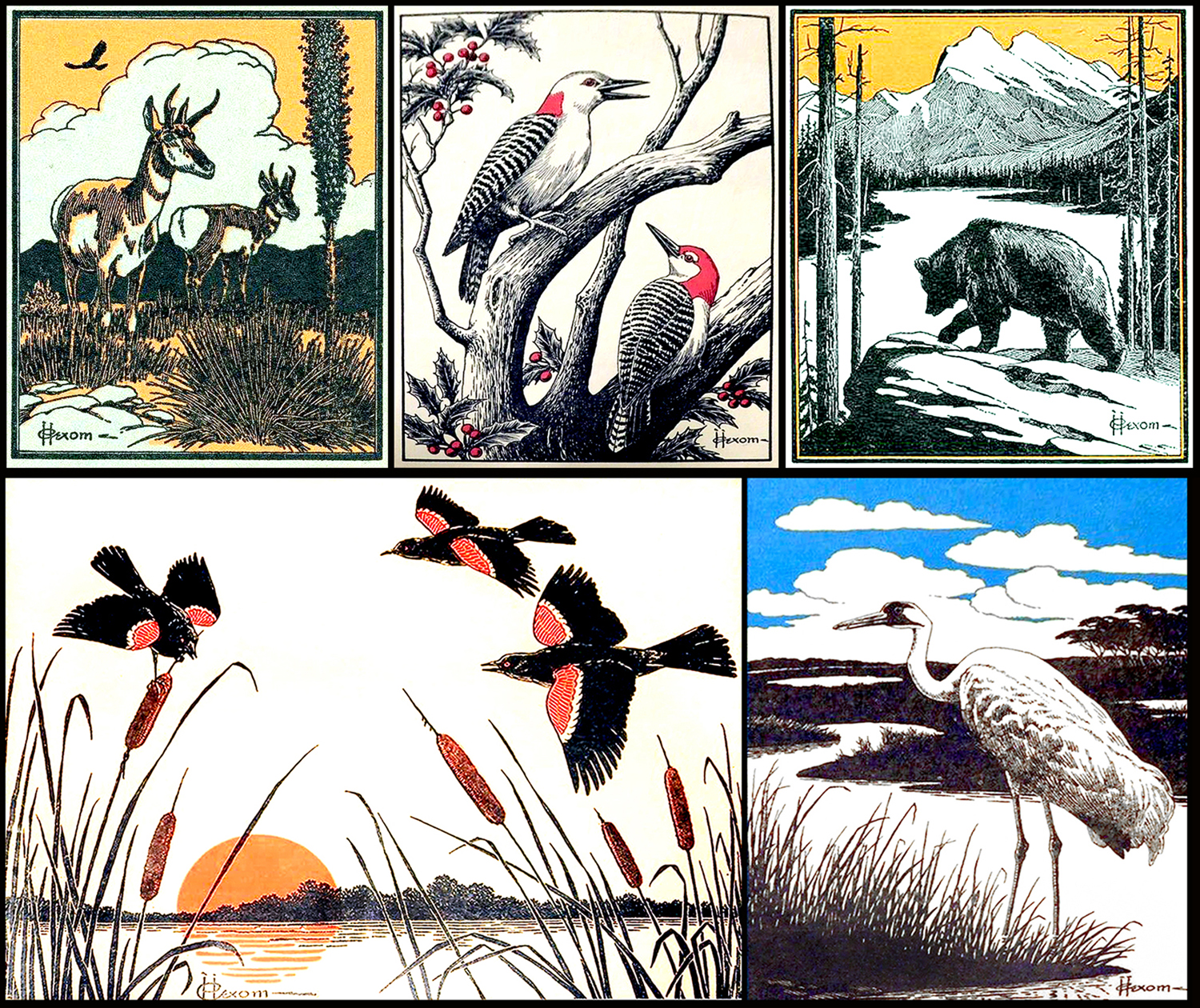
It wasn’t only Van Gogh who responded to the Japanese style. One of my favorite and largely unknown illustrators of natural history was Charles Philip Hexom (1884-1959). He was a teacher at Luther College in Dacorah, Iowa, and made many cover illustrations for Nature Magazine from the 1920s into the early ’50s.
The use of flat outlining and spot-color were common to both ukiyo-e and Hexom’s covers.
I don’t know why the work of Charles Hexom hasn’t been collected and published in a book. He seems to have been forgotten. He deserves to be remembered.
Beatrix Potter watercolors
Nature art may be a sub-genre in the world of fine art, but it is a fertile one. One finds captivating and beautiful illustration everywhere. Beatrix Potter (1866-1943) before she became a children’s author, used her drawing talent to study nature. She became an expert on mushrooms and fungi. One of her admirers was the Pre-Raphaelite artist Sir John Everett Millais, who told her: “Plenty of people can draw, but you have observation.”
Again, I have left out so much. So, just as a little P.S. to this tiny essay, I want to mention the early paintings of my brother-in-law Mel Steele, who could paint rings around anyone even as a boy and moved on to bigger things and a long career.
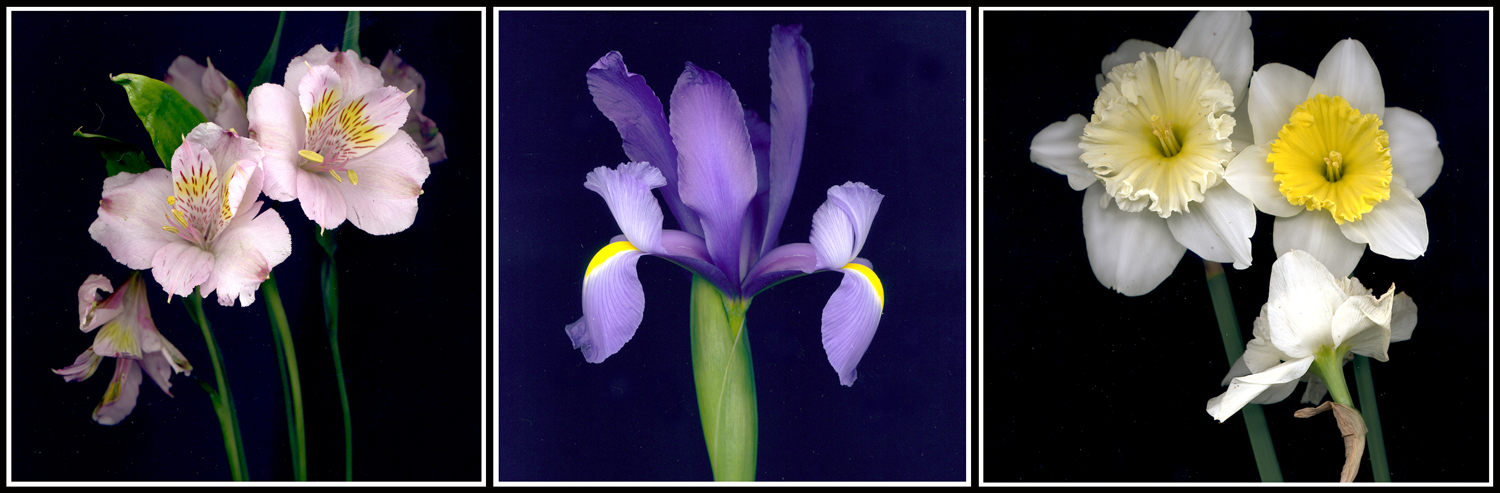
And my own minor essay into the field as a photographer. I found that I could put live flowers on my flatbed scanner and get beautiful prints that could be reproduced in fine detail at almost any size.
Friesia, iris and daffodils
I have made many photographs of flowers, birds and insects, not so much to create art as to focus my attention on the world around me. Paying attention is, I believe, the prime directive for life.
Nature is messy. I mean that in a good way. But it is all over the place, hugger-mugger, one thing on top of another and with the edges of one thing blending into that of the next.
And humans have tried their best to regularize and organize all that mess since the beginning of time, naming plants and animals, setting up categories, deciding which bits might be edible, which poisonous, which to take when you have aches or fevers.
One of the primary means of accomplishing this is visual. Certainly the main method is verbal: the naming and sorting. But a mere word description of a plant can be so convoluted as to be confusing on its own. Take this description of the black oak, from E. Lawrence Palmer’s Fieldbook of Natural History:
“Quercus velutina: Tree to height of 125 ft; trunk diameter, 4.5 feet. Upper branches ascending, lower, horizontal. Bark dark, deep-fissured between thick ridges that are cross-fissured. Inner bark yellow, bitter. Twigs stout, angular with sharp-tipped angled buds with dirty-white to yellow fuzz. Leaves to 6 in. long and 4 in. wide, highly variable, thick. Flowers staminate, in hairy catkins, to 6 in. long. Pistillate, on short, hairy stalks. Fruit and acorn maturing in second season.” Etc. And even that is written in simplified language for the lay person. The scientific literature is close to unreadable. And would this help you find a black oak in the woods?
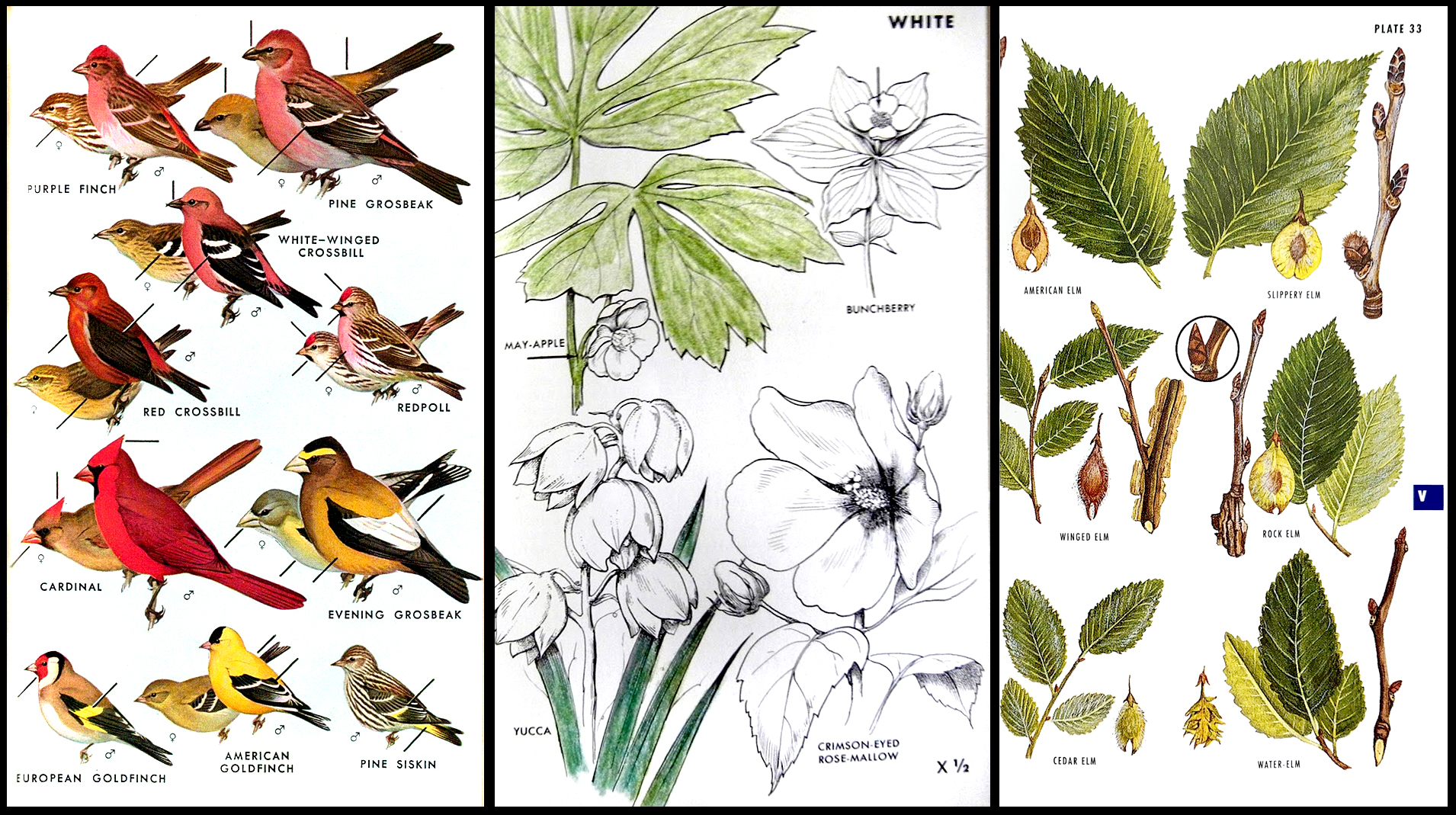
Wouldn’t it be easier, quicker, better, just to have a picture? Roger Tory Peterson thought so when he came up with the idea for his now-ubiquitous field guides. “There are at least 60 ways to say that a plant is not smooth, that it has fuzz, hair, prickles or roughness of some sorts,” he wrote in the introduction to his Field Guide to Wildflowers. And he lists them, including such arcane words as bullate, canescent, coriacious, echinate, flocculent, glanduliferous, hispidulous, lepidote, verrucose, and villosulous. It takes a lexicographer rather than a botanist to navigate such things.
“That is why the best of keys often fail. … But, I am afraid, most of us belong to the picture-matching school.” Peterson began in 1934 with his A Field Guide to the Birds of Eastern and Central North America, which he updated with new editions — and new illustrations — until his death in 1996. The book has been immensely popular and remains so. Peterson branched out with a series of such field guides, covering wildflowers, trees, seashells, insects, fish, mammals — now more than 50 such guides, most written by specialists, while Peterson remained general editor until his death in 1996.
Each book relies on drawings of the animals or plants in question.
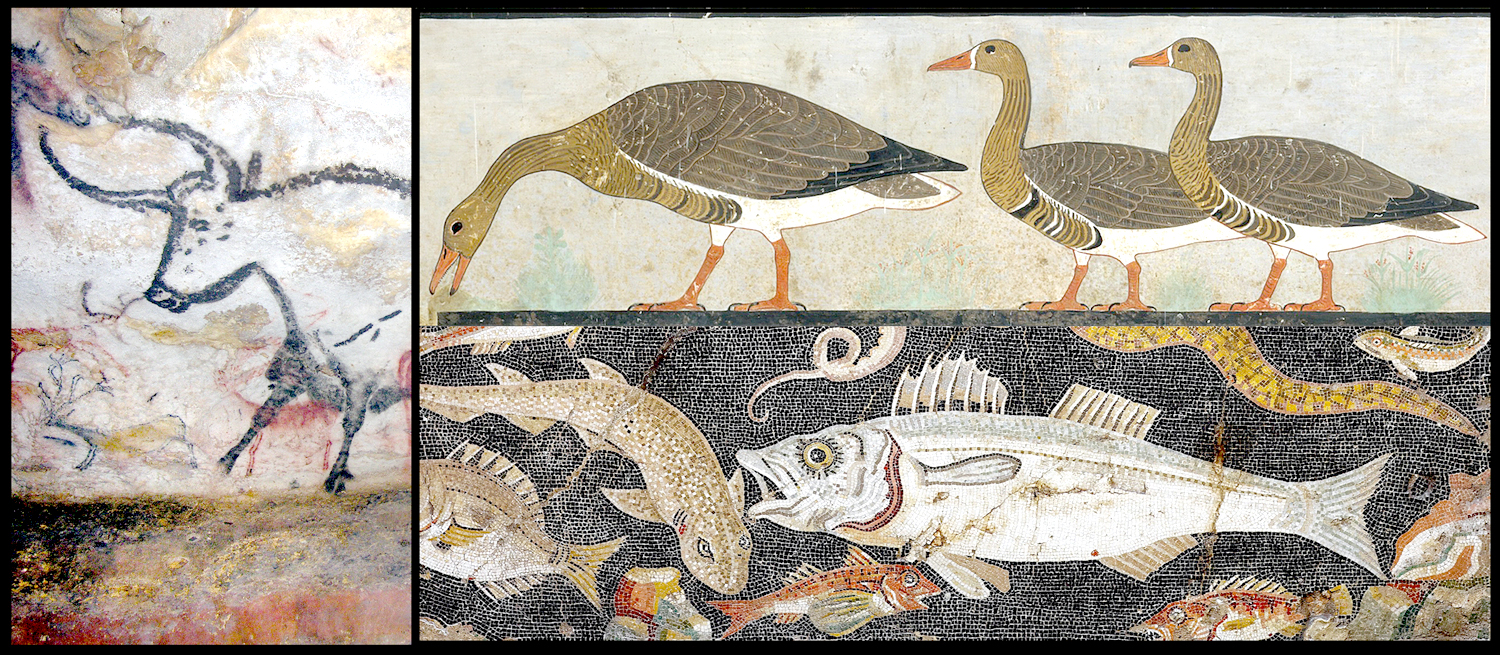
Of course, humans have been making pictures of the natural world since the beginning. The animals drawn the the caves of Lascaux date back something like 30,000 years. Egyptians painted notably realistic animals, such as the famous geese from the Chapel of Itet at Meidum from about 2590 B.C. Romans were fond of animal mosaic floors in the villas, and some are so accurate you can identify species.
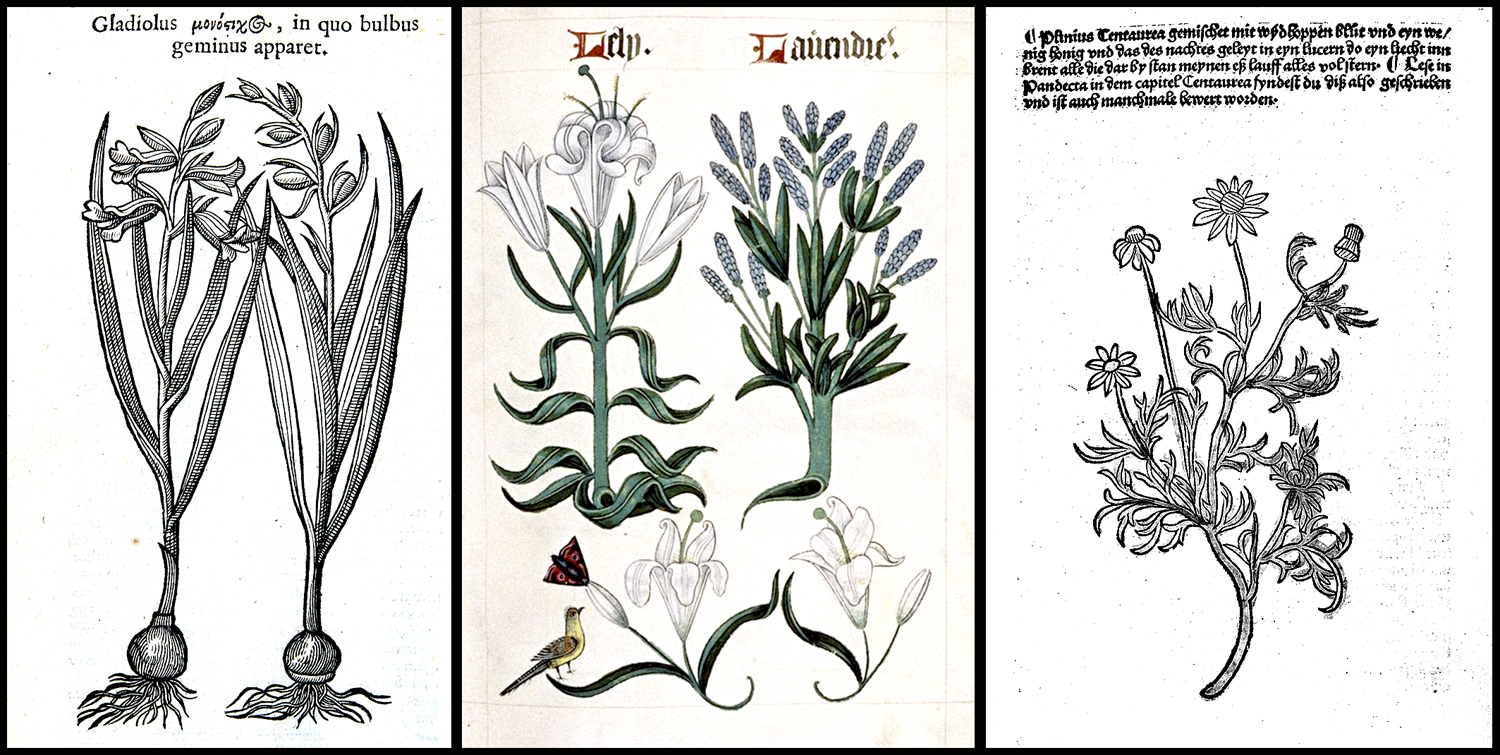
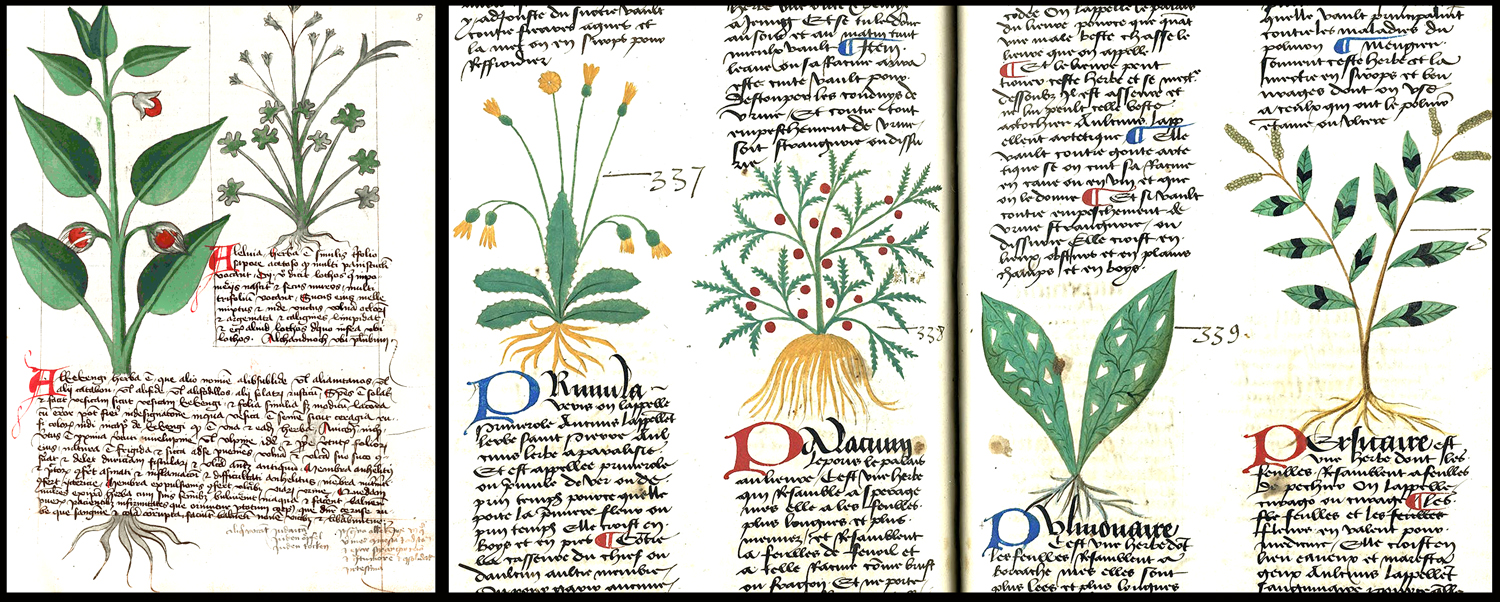
But the use of drawings for identifying plants or animals reached a new level of importance in the Middle Ages, when plants were used medicinally and books of drawings helped physicians identify the proper plant for the proper malady.
Originally, these were manuscript books. But after Gutenberg, many were printed in quantity, offering advice on the best plants for the worst illnesses.
Often these herbals or “medicinals” were at best diagrammatic. There purpose was simply to sort out which plants would be useful. But as the Renaissance flowered, and a more realistic style of image-making took over, many artists were attracted to the natural world, looking with ever sharper detail at the plants and animals around them. There are drawings and paintings by Leonardo, Raphael and others. But it would be hard to best the small naturalistic pictures by German artist Albrecht Dürer.
But Dürer’s paintings are one-offs. As the 17th century progressed, a more systematic approach took hold, wherein artists as botanists attempted to catalog the plant life around them.
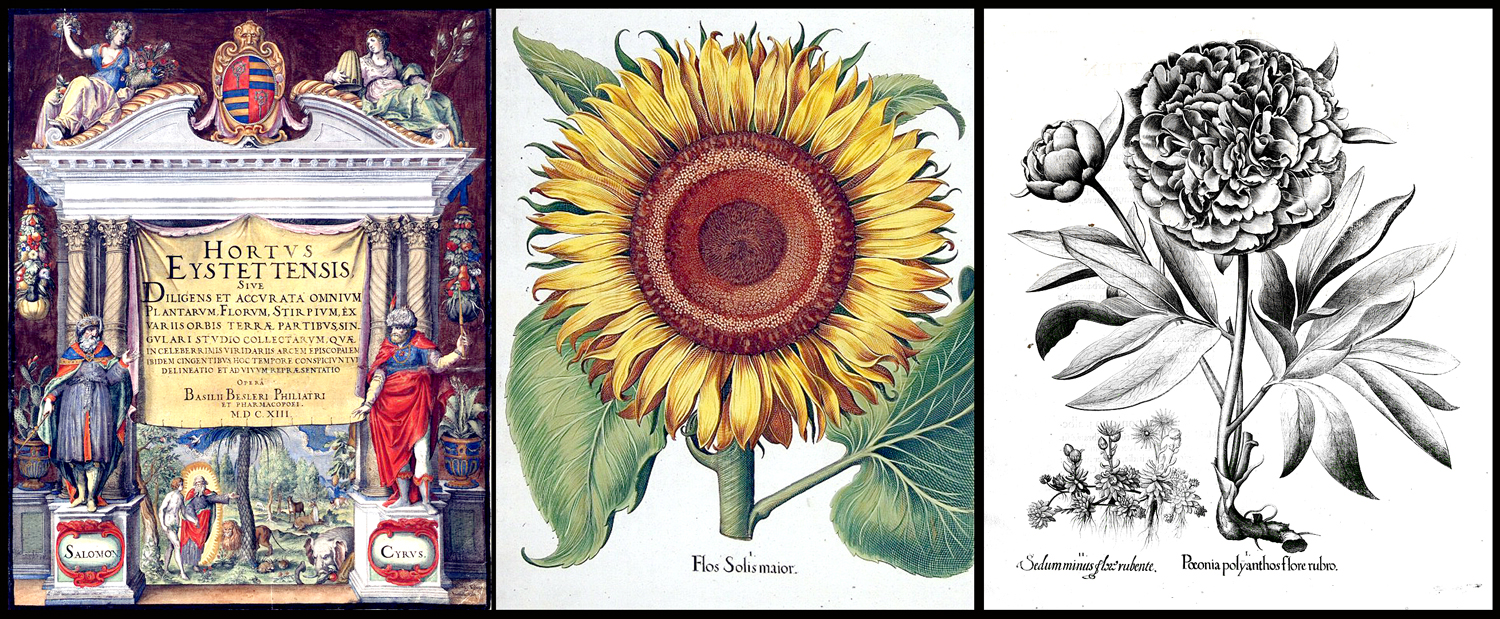
One of the first such attempts was the Hortus Eystettensis, edited by Basilius Besler (1561-1629) beginning in 1613 and spread over several years. It was a collection of copper-plate engravings of the plants collected by the prince-bishop of Eichstätt in Bavaria for his palace garden, which contained examples of all the shrubs and flowering plants known at the time, from around the world.
The book contained images of 1,084 species, divided into 357 plates. A cheaper black and white version was supplemented by a luxury edition in which the images where hand-colored. The book changed botanical illustration overnight. What had been crude and diagrammatic became works of art.
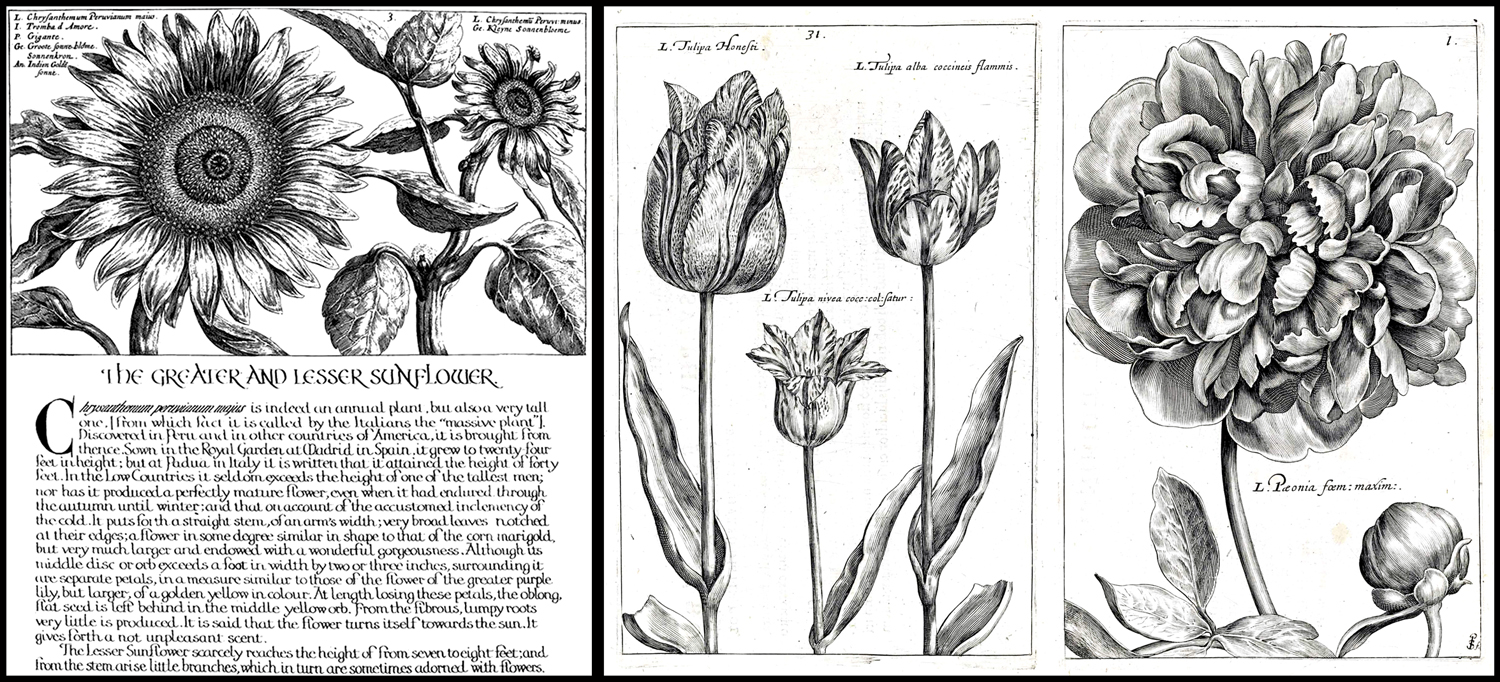
Soon in its heals came Hortus Floridus, a collection of 160 engravings of flowering plants published in 1616, which became so popular its Latin text was soon translated into Dutch, French, and English editions. The book, in modern editions is still available today. It was created by Dutch engraver Crispijn van de Passe the Younger (1595-1670), a popular and prolific engraver of the Dutch Golden Age.
Such books of engravings, colored or not, appeared throughout the century, with Louis XIV’s official painter, Nicolas Robert (1614-1685), producing illustrations in 1640, 1660, and entries in the giant compendium Recueil des Plantes published in 1676.
His drawings and paintings, as well as the engravings made, were of a new freshness and delicacy and presaged a surge in flower pictures made not simply for identification purposes, but as esthetic objects — as art.
As the 18th century began, these two strains of botanical illustration developed. On one hand, there was a rise in scientific exploration, with botanists traveling the world collecting new species of plant and animal previously unknown to European science. On the other, there was a growing market for books and images of pretty flowers. The two traditions flourished side by side, but also cross-pollenated.
That market for flower pictures was given a jump start by the Dutch tulip craze of the 1630s, when speculation in the market for rare tulips created a financial bubble that burst in 1637. But the Dutch economy was expansive and a growing middle class had money to spend on luxury items such as art. The actual tulip mania was confined to a small but important few speculators, the public at large wanted their part and so prompted the production of pictures of the fanciest tulips. If you couldn’t afford a tulip bulb that cost as much as a house, you could afford a colored engraving of the same flower. And so, pictures of flowers became a thing.
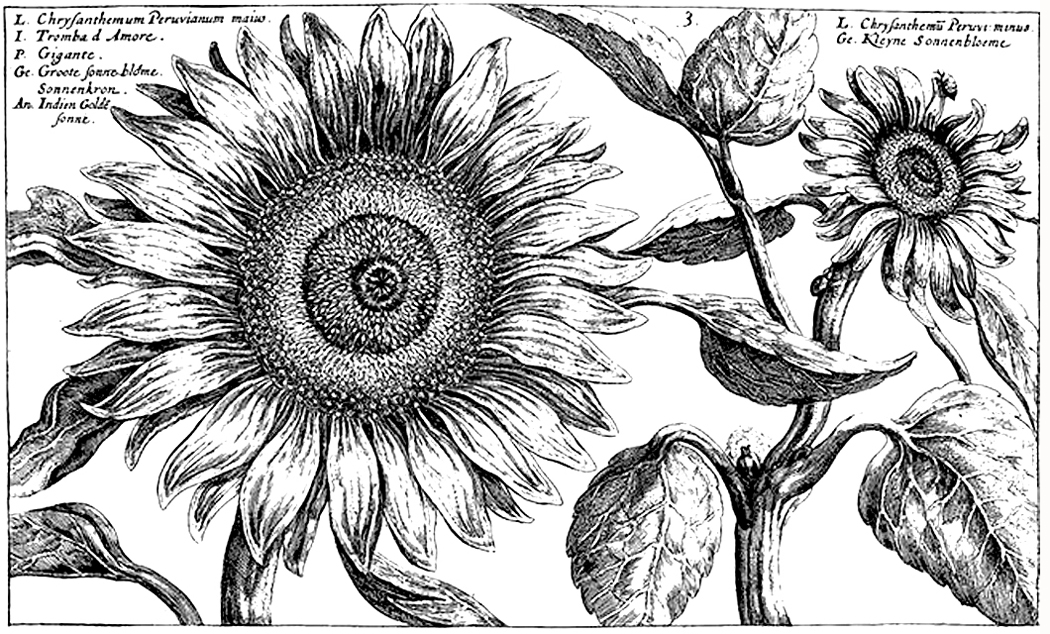
There had always been still-life paintings: pictures of flowers in vases; even kitchen scenes with food on the table and game hanging above. But what I am interested in here are those images of singular plants, birds, or animals, usually devoid of background context, meant to show off the specimen to best advantage. Where still life is meant to elicit warm feelings of comfort and beauty, the botanical illustration is meant to focus attention on a particular item, to see it for itself alone.
The 17th and 18th centuries were the great era of cataloguing the world, and it led to a plethora of illustration of new and exotic species as scientists accompanied military explorers around the globe, gathering natural history data and both collecting specimens and illustrating them, usually in books.
Dutch-born Nikolaus Joseph von Jacquin (1727-1817), for instance, travelled to the West Indies, Central and South America, publishing prolifically throughout the 18th century.
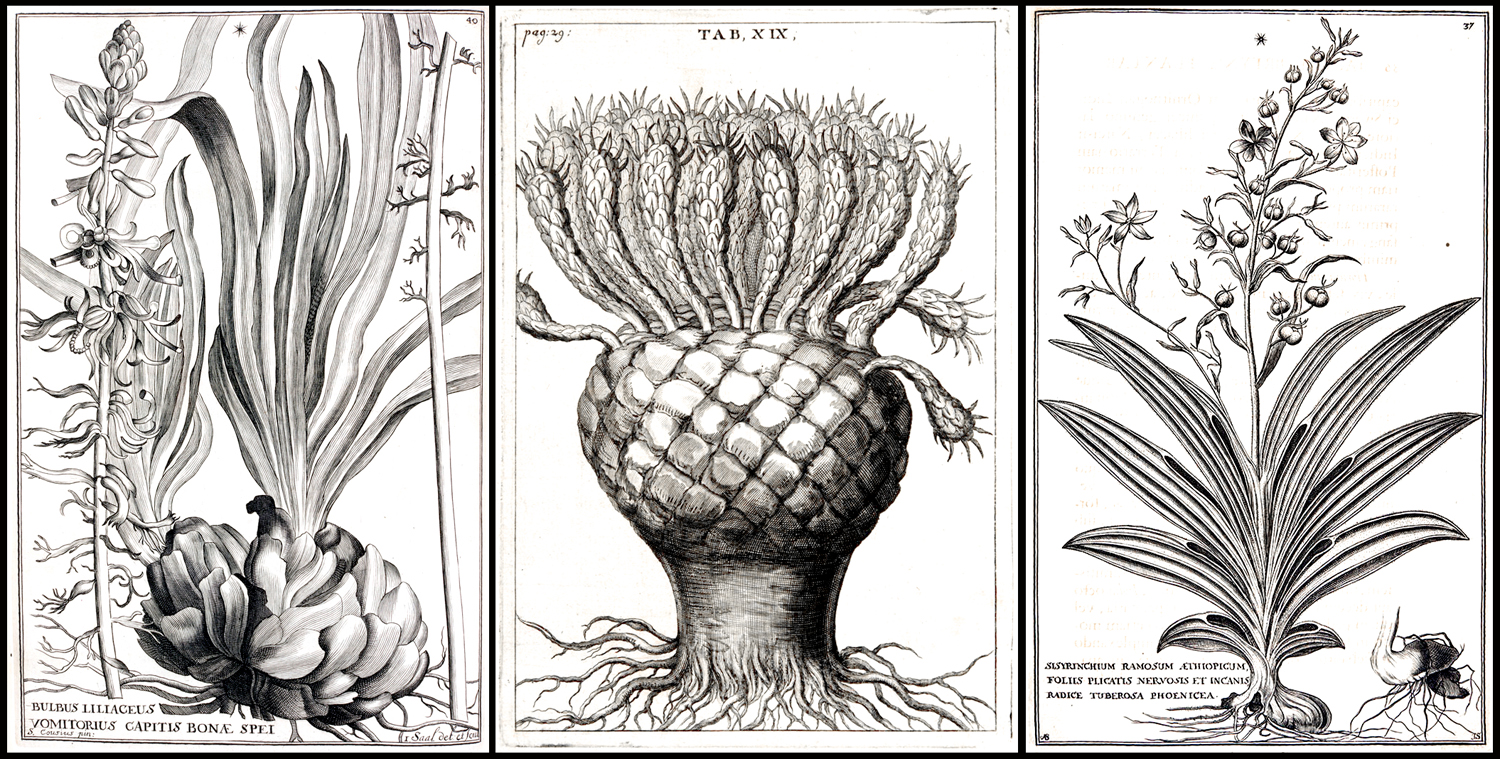
Sometimes, they went on their own, like the Polish Jacob Breyne (1637-1697), who travelled to South Africa and catalogued plants.
Austrian Franz Bauer (1760-1826) went to Australia, collecting and painting what he found.
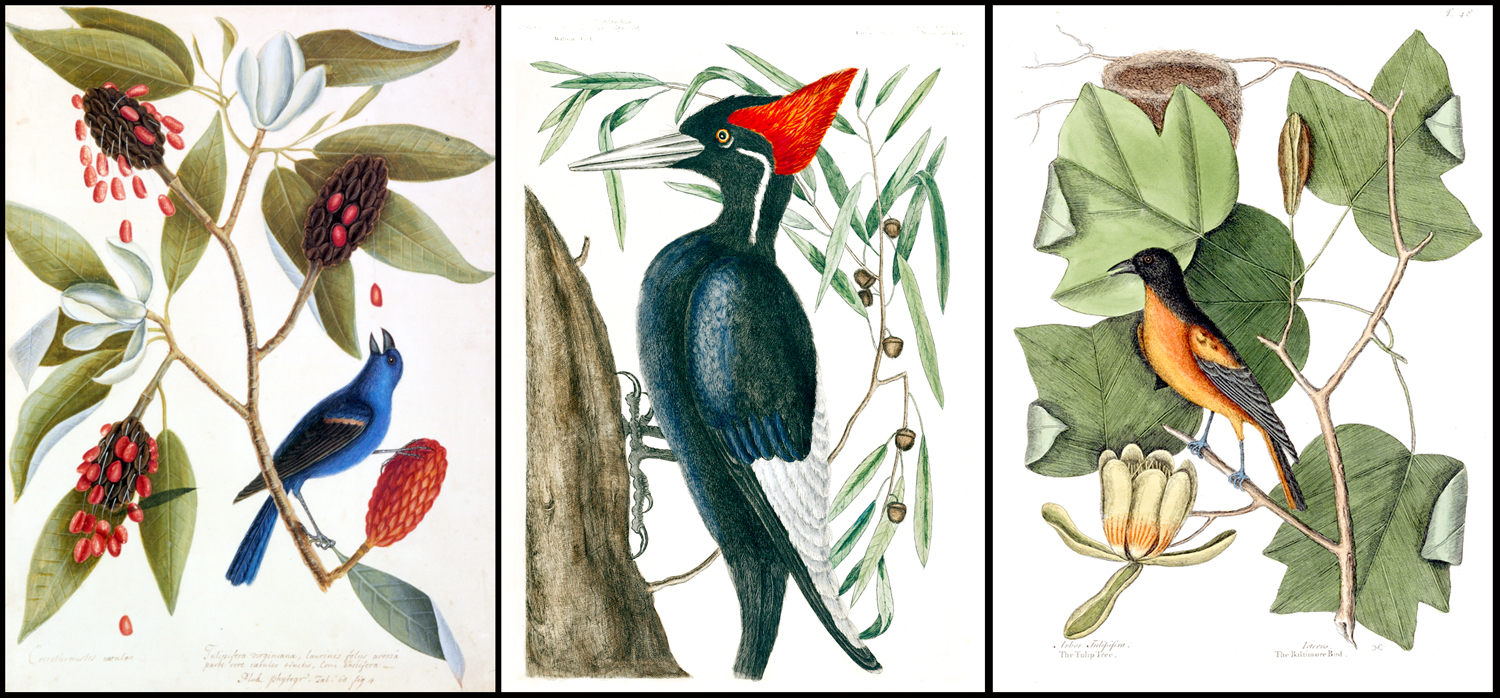
Englishman Mark Catesby (1683-1749) sailed to the New World, publishing his Natural History of Carolina, Florida and the Bahama Islands in volumes between 1729 and 1747.
Henri-Lois Duhamel de Monceau (1700-1782) was a French Encyclopedist, writing on many subjects, but catalogued the flora of his native France over his long lifetime, including his 1768 Treatise on Trees and Shrubs.
Likewise, Englishman Thomas Bewick (1753-1828) stayed at home and made wood engravings of his native animals and birds.
Grub Street writer Oliver Goldsmith neither drew nor painted, but his enormously popular Natural History of the Earth and Animated Nature, first published in 8 volumes in 1774, went through many subsequent editions, each time copiously illustrated by an army of anonymous engravers.
As the 18th crossed over into the 19th century, two men characterized the two thrusts of botanical illustration.
William Bartram (1739-1823) traveled through the New World exploring for flora and fauna. His book, Travels through North and South Carolina, Georgia, East and West Florida, the Cherokee Country (1791), is still in print, usually known just as “Bartram’s Travels,” and covers his travels through Georgia, Florida and western North Carolina and is a readable a travel book as it is important as a naturalist survey.
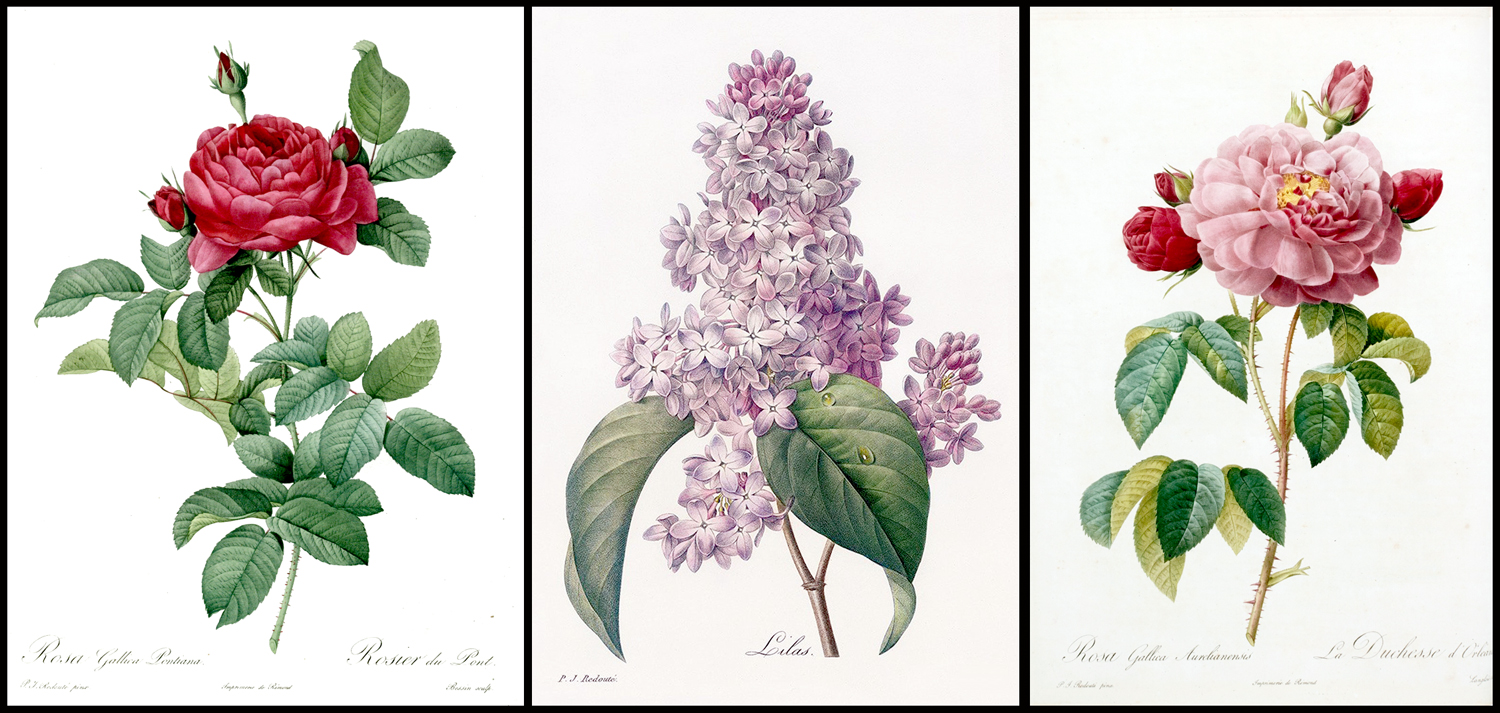
The other impulse for botanical illustration is the creation of art for the beauty of it. And no one did more for that than Pierre-Joseph Redouté, whose images of roses and lilies are still popular in framed prints to hang in tasteful middle class homes. As Wikipedia puts it: “Reproductions of his prints are available from virtually all print and poster shops.”
Redoute’s life was fascinating. He was official illustrator to Queen Marie Antoinette, and somehow survived with his head after the French Revolution and the Terror, despite his aristocratic credentials, and lived to become official artist for Empress Joséphine de Beauharnais and then survived her divorce from Napoleon Bonaparte, only later to be made Chevalier de Legion d’Honeur, France’s highest honor, and his work bought by Charles X.
His early work was watercolor, but later in life, much of his art was engraved and hand-colored or turned into chromolithographs. And now, there are boatloads of books featuring Redouté’s art.
Two developments affected the publication of prints of the natural world as the 19th century overtook the 18th. One was the mainstreaming of colonialism, and the number of biologists and artists who traveled to the new lands to catalog the flora and fauna.
In the 18th century, much of the exploration was just to find out what was out there, to discover new Pacific islands or what was going on in the polar regions. But in the next century, the drive was to exploit what the colonies offered, and to do that meant to catalog all the new things these colonial toyboxes had to offer.
And so, scientists such as Philipp Frans van Siebold (1796-1855) went to Japan; Nathaniel Wallich (1786-1854) went to India; Johann Joseph Peyritsch (1835-1889) went to Sudan. They collected specimens and wrote books illustrated by a host of artists who made illustrations from the specimens they brought back.
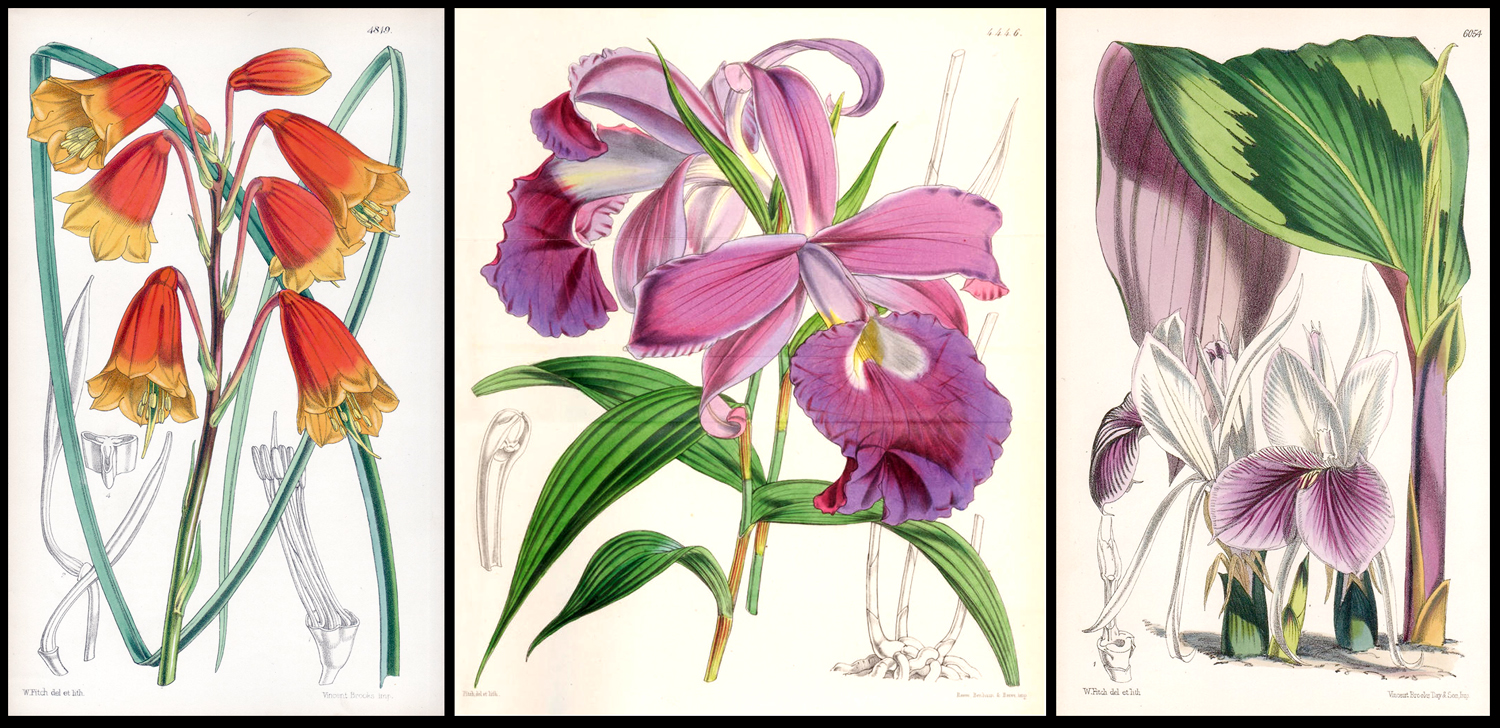
One of the artists employed by the botanists was Walter Hood Fitch (1813-1892). Fitch supplied many of the illustrations for John Dalton Hooker’s 1855 Flora Indica, a survey of plants of India and the Himalaya mountains.
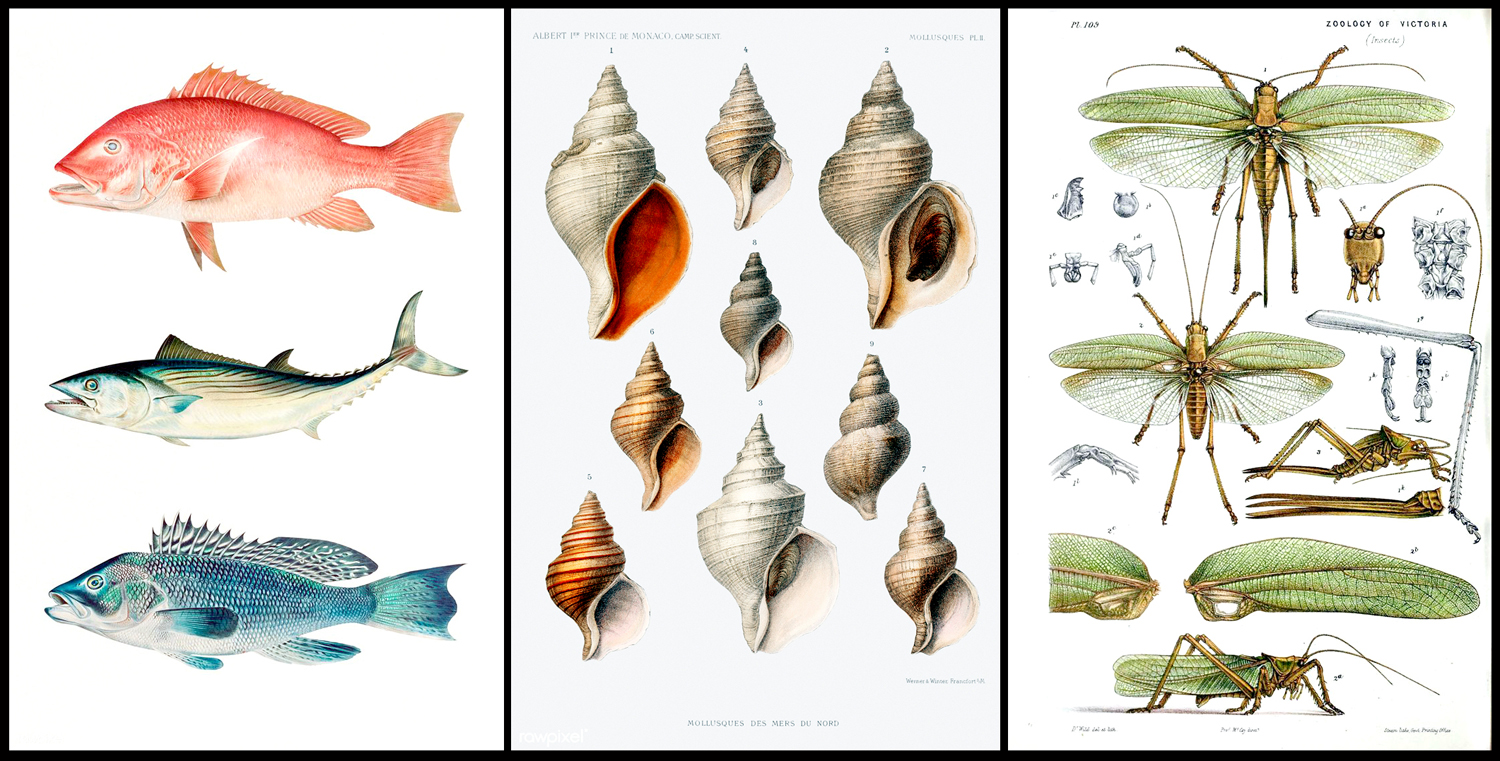
While botanical illustration comprised maybe 80 percent of all natural history artwork, much was done with animals, too, and even such things as seashells, rock types, and landforms.
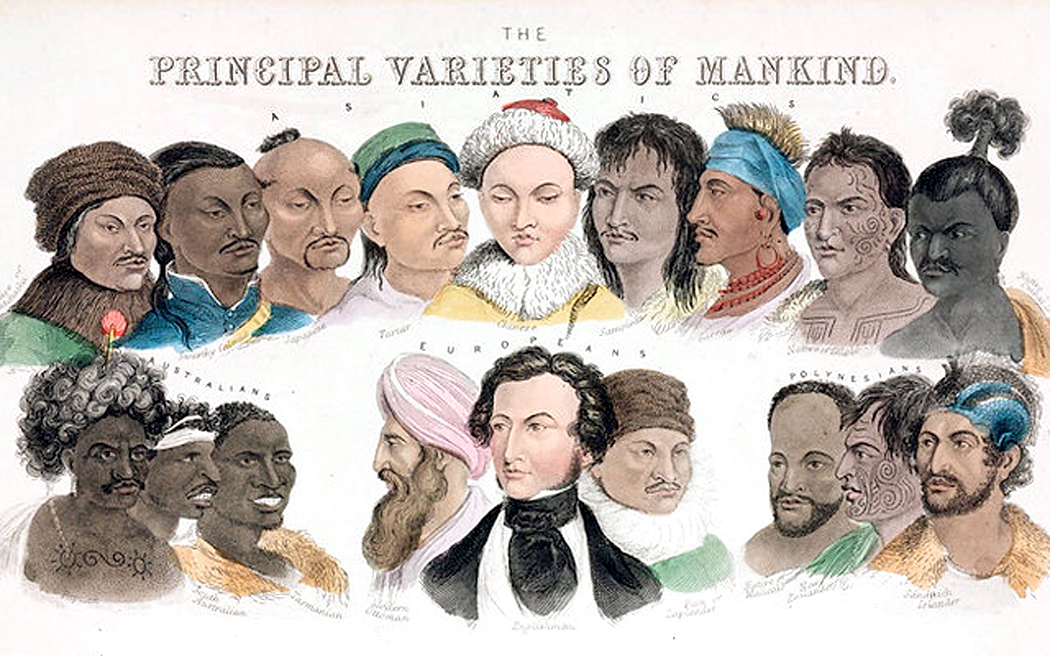
Colonialism brought in an infection called “scientific racism,” and natural history illustration looked not only at flora and fauna, but at human beings, typing them just as they did genus and species of orchid.
There was almost a mania to classify and name everything.
The second development was the invention of lithography, in 1796, which gave both scientists and artists a better means of mass producing images.
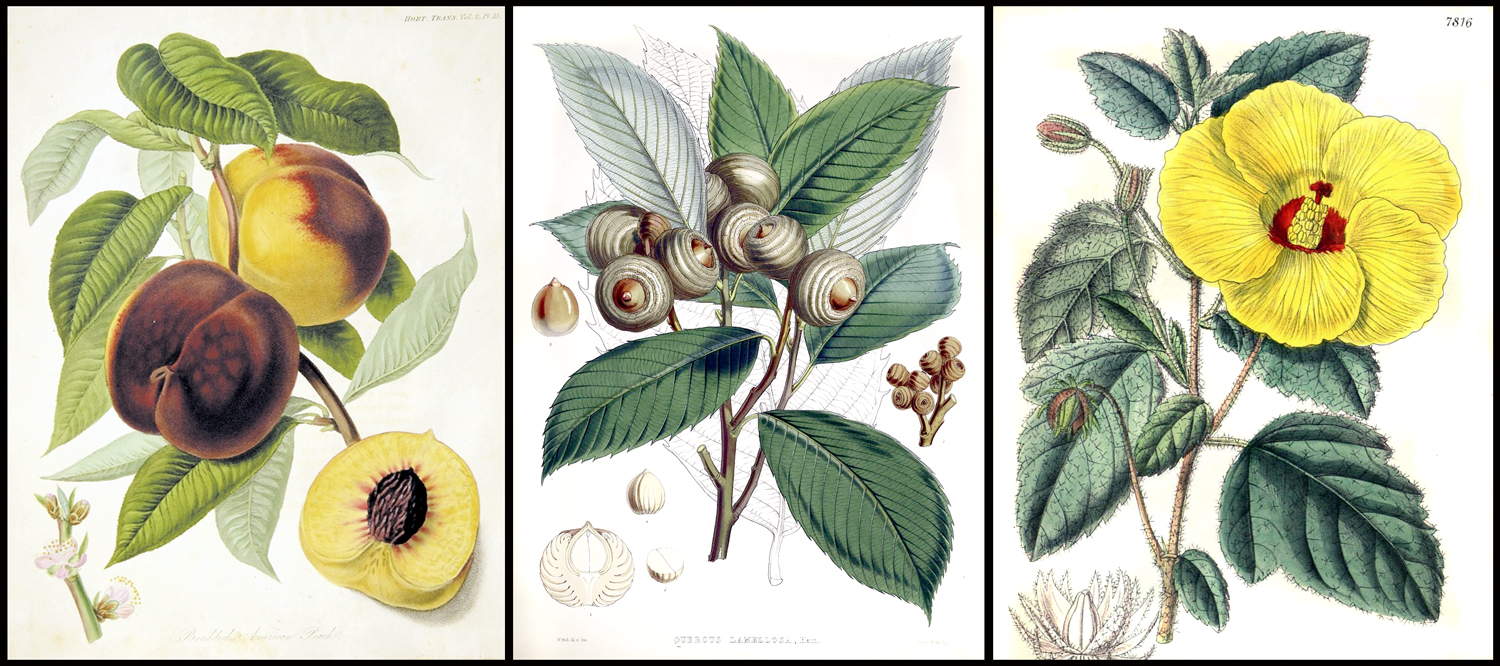
The first botanical illustrations were either drawings or paintings, and the first reproductions were by woodcut. But copper-plate engraving supplanted the coarse woodcut and those engravings were often hand-colored, an expensive and time-consuming process for publication.
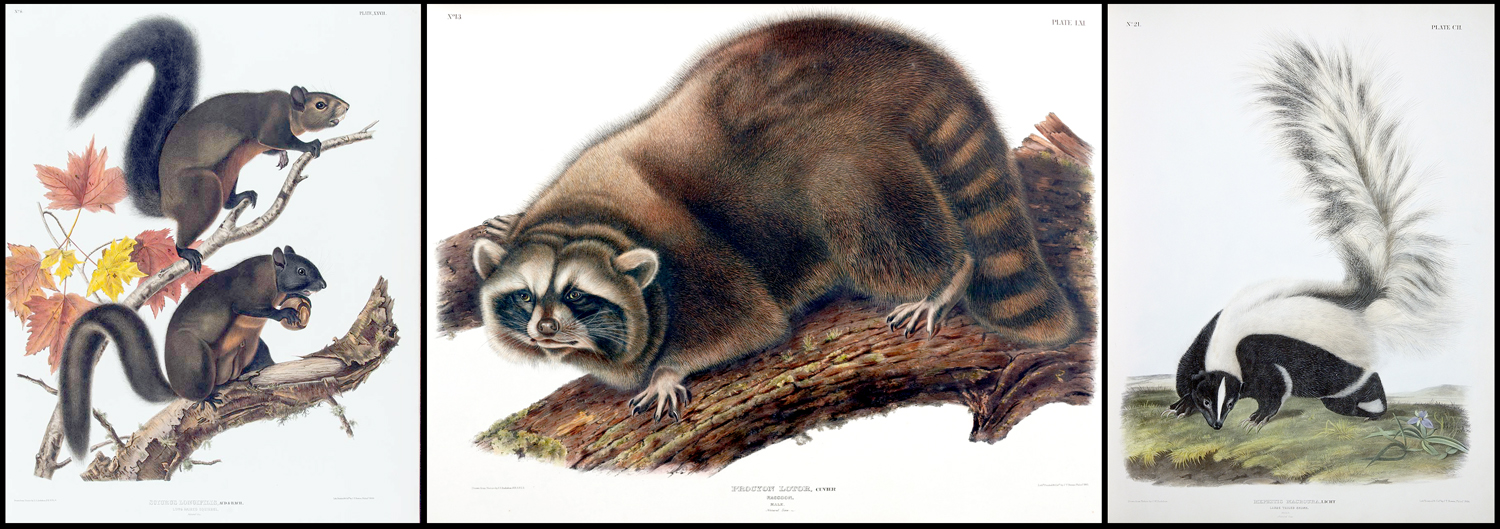
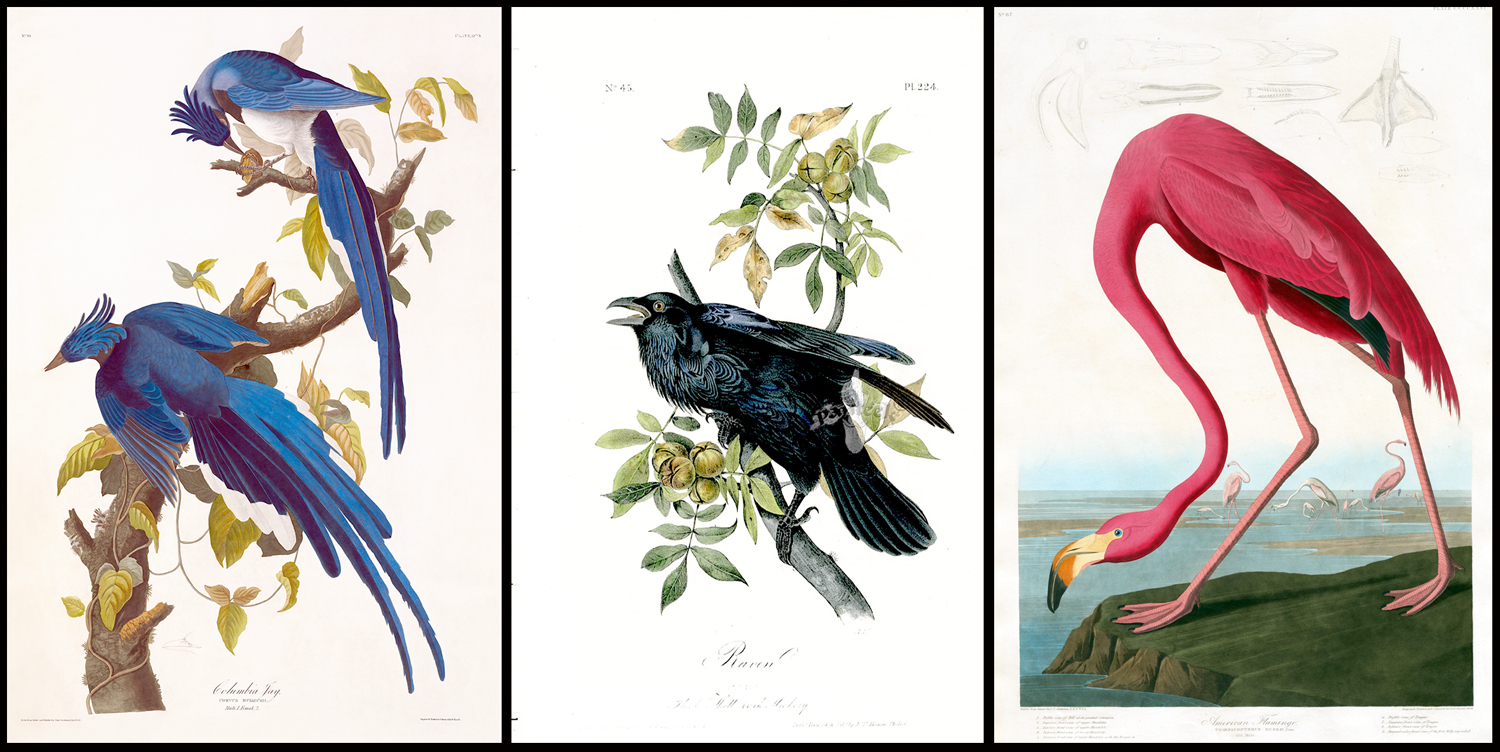
For instance, when John James Audubon (1785-1851) published his original edition of Birds of America in England, in sets from 1827 to 1838, at least 50 colorists were employed and no more than about 200 full sets were printed.
But lithography, and later chromolithography, allowed much larger editions of prints and mass production of images. The later work of Redouté was made with the new process. And when Audubon came to work on his later Viviparous Quadrupeds of North America (published in 1851, after his death) the images were lithographs.
Of course, the most famous natural history art has to be Audubon’s Birds of America. He initially produced 435 large-scale plates, each with life-size images of the birds he drew and painted in his travels through America. The plates were engraved and etched and hand colored. The pages were called “double elephant” size — roughly 28 inches by 40 inches — and you can see he had to contort some of the larger birds, such as the flamingo, to fit those pages and still have them life size.
Later editions came in smaller pages.
The market for natural history imagery was immense during Victorian times and the number of artists working in the field from the late 18th- through the 19th-century was to great for me to cover them all. But I wanted to show off a few of them.
Such as Matthias Schmutzer (1752-1824), who produced 1433 plates for Das Florilegium Kaiser Franz I, a compendium of plants from the garden of Emperor Francis I, the final emperor of the Holy Roman Empire and first of the Austrian Empire.
And I should mention the father-son pair of William Jackson Hooker (1785-1865), a botanist and illustrator and first director of Kew Garden in London. Hooker published more than 20 major botanical works over a period of 50 years.
His son, Joseph Dalton Hooker (1817-1911), who succeeded his father as director of Kew, and was Charles Darwin’s friend. He joined expeditions to the Antarctic, Palestine, Morocco, the Himalayas, and the western United States, collecting specimens along the way, and publishing books on what he found, illustrated by many familiar botanical illustrators of the time, including Fitch.
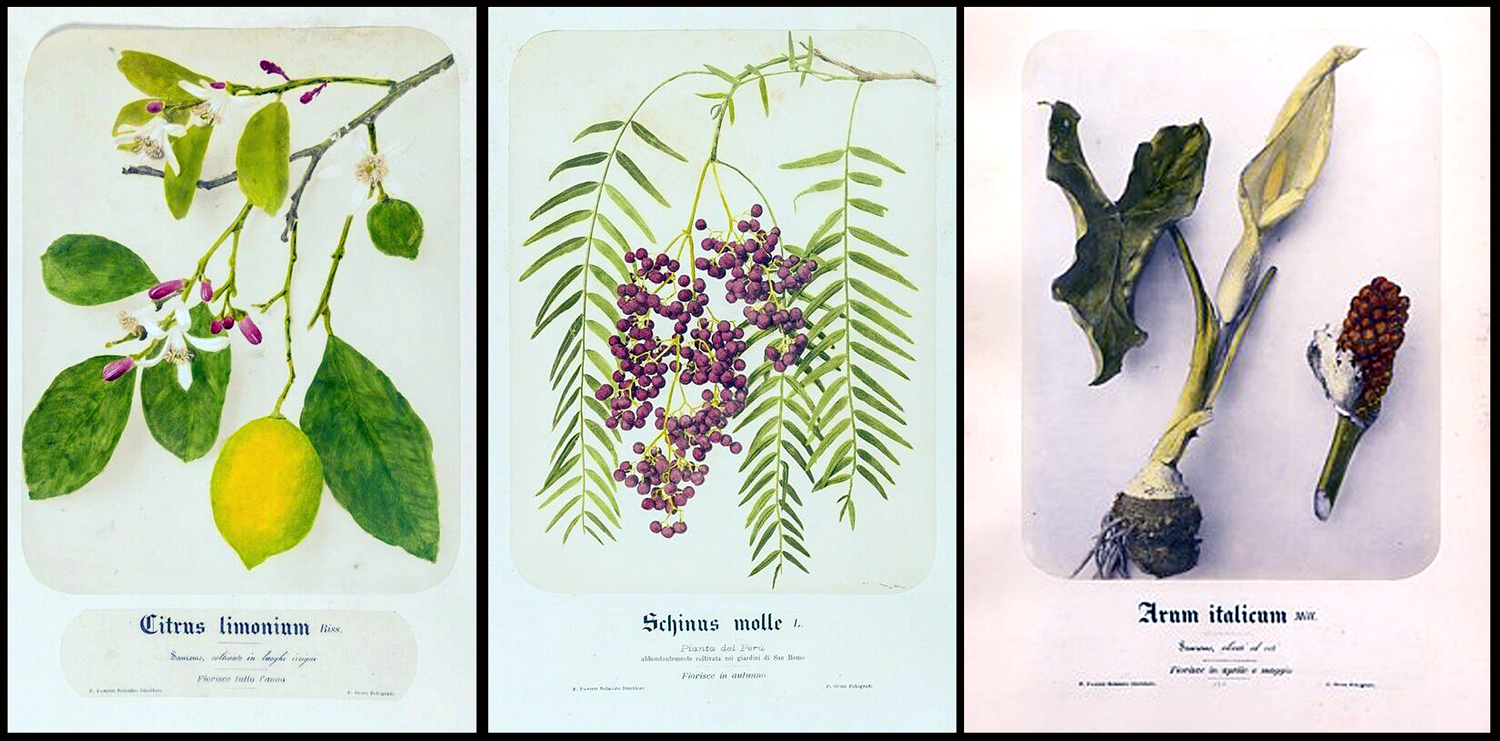
By the late 19th century, photography began to take over. The earliest I can find is an 1879 set of botanical photographs by Pietro Guidi. The black and white images still had to be hand-colored, just as the old engravings had to be.
And by the fin-de-siecle, as art nouveau gathered steam, the link between nature and art became important. Nature motifs played out in furniture, architecture, book design and painting. Several artists and scientists became immersed in the subject.
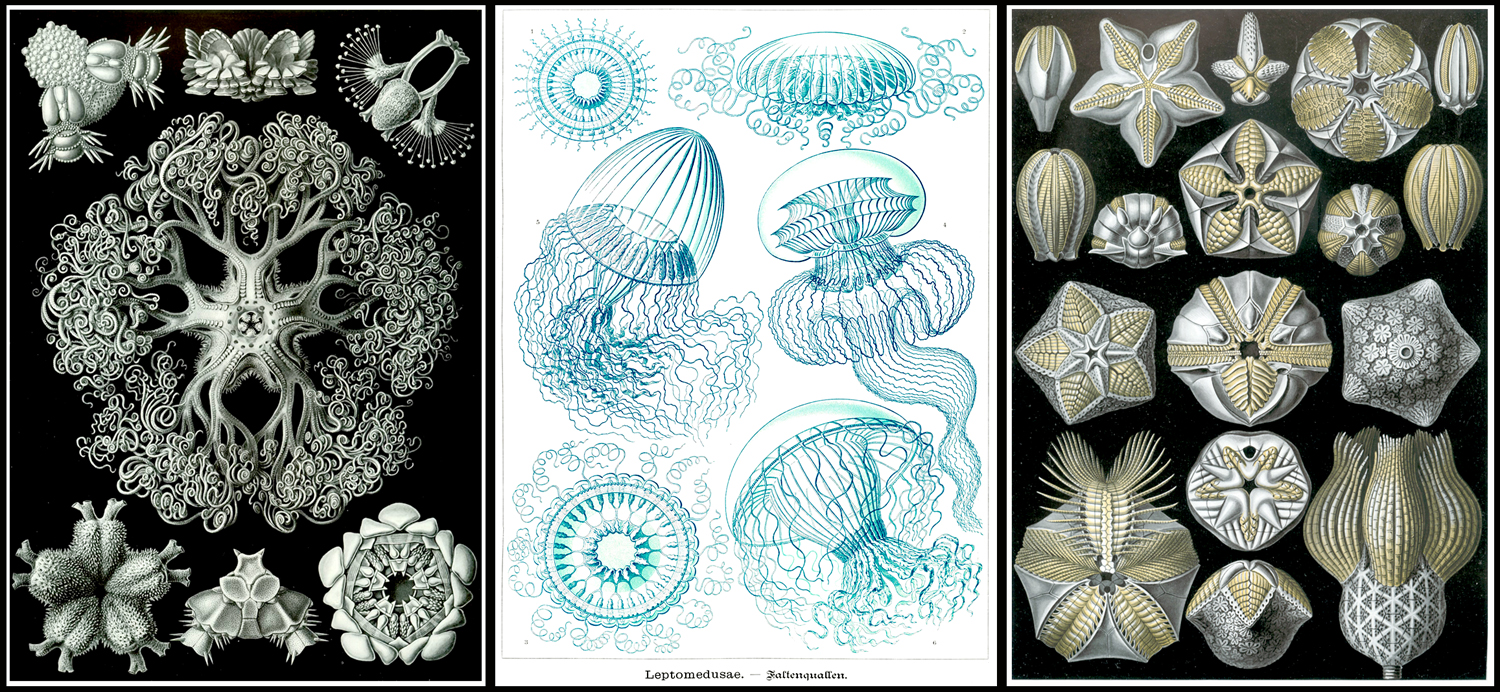
Ernst Haeckel (1834-1919) was a biologist obsessed with Darwin and symmetry. His Kunstformen der Natur (“Art Forms in Nature”), published in 1904. It consists of 100 prints of various organisms, many of which were first described by Haeckel himself. Haeckel’s intricate drawings were transferred to print by lithographer Adolf Giltsch.
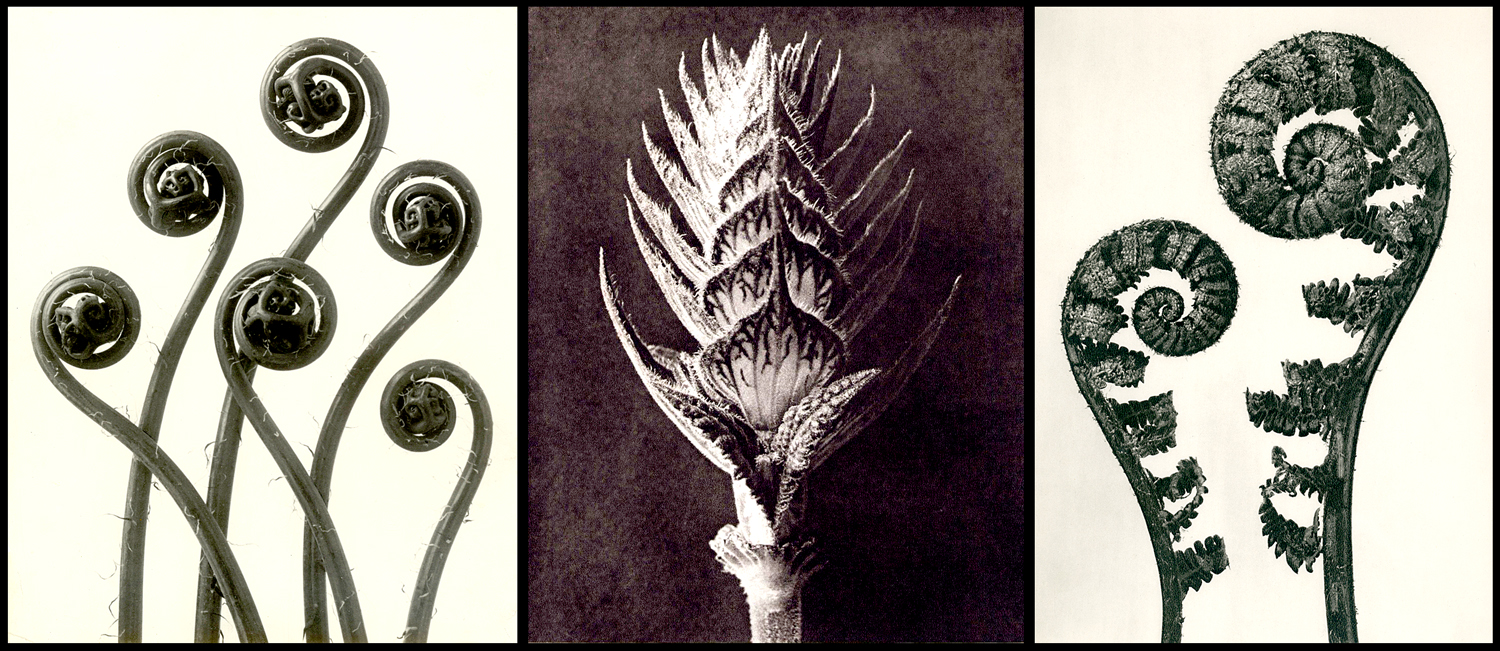
In 1929, professor Karl Blossfeldt (1865-1932) used photography to express the relationship between nature and modern art in his Urformen der Kunst (“Original forms in Art” or “Art Forms in Nature”). His purpose was pedagogical, teaching his art students to seek for inspiration in natural forms.
This cataloguing and regularizing tendency in German art extended beyond botany and zoology. In the 1920s and ’30s, photographer August Sander attempted to photograph all the jobs and professions in Weimar Germany, and later, Bernd and Hilla Becher made multiple images of German water towers, mining tipples, cooling towers, grain elevators, coke ovens, and blast furnaces, among other things. Those images, made mostly from the 1960s through the 1990s were part of a movement dubbed the “New Objectivity.”
But back to nature: It is hard to overemphasize the attractiveness and popularity of natural images, especially birds and flowers.
Charles Philip Hexom (1884-1959) executed a series of covers for Nature Magazine in the 1930s and ’40s. I have collected several of these. They are simple but elegant.
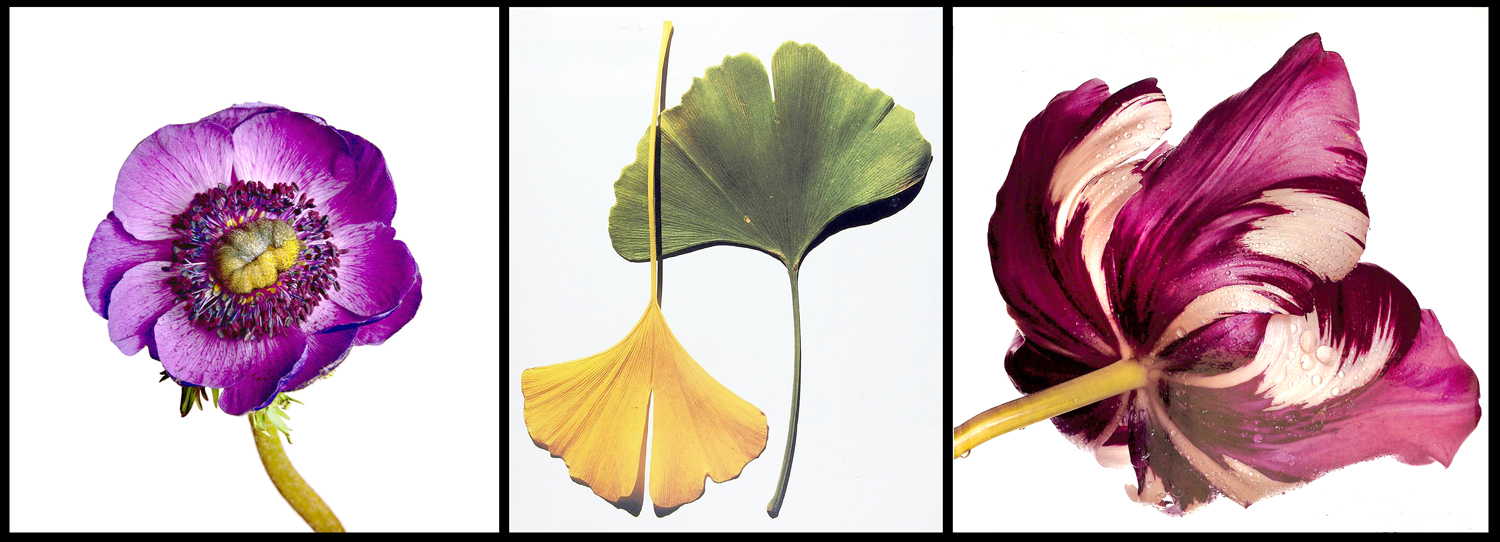
Irving Penn (1917-2009) published Flowers in 1980 and the perfection and simplicity of the photographs remind one of Redouté.
And finally, for our purposes, Robert Mapplethorpe photographed flowers over his whole career, with his book, Flowers, coming out posthumously in 1990.
This has been a short, embarrassingly incomplete survey of botanical and natural history illustrations from the late Roman Empire until the Post-Modern age. Whole books have been written on the subject and more will likely be published in the future.
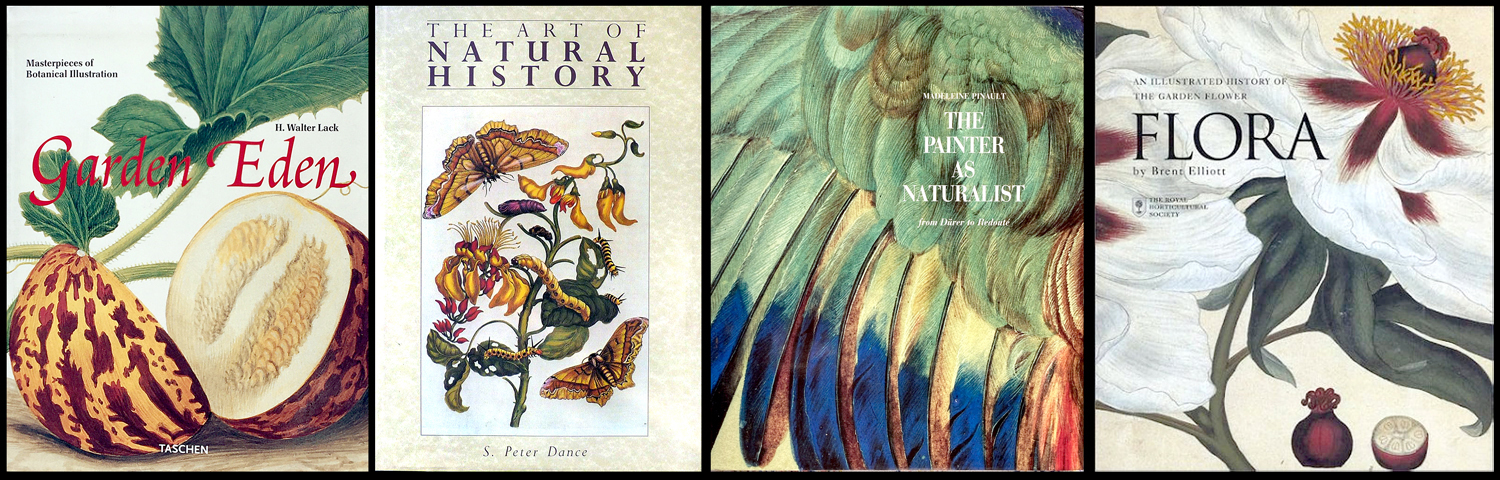
I consulted about 20 books for this essay, among them are: The Art of Natural History by S. Peter Dance; The Painter as Naturalist: from Dürer to Redouté, by Madeleine Pinault; Un Jardin d’Eden by H. Walter Lack; and Flora: An Illustrated History of the Garden Flower, by Brent Elliott.
Now that it is well into spring, I like to sit in the back yard and just soak up the experience. On a chair on the patio, I can sit for a half-hour or so and just listen to what is going on around me. Often, I just close my eyes and enjoy the bird calls, the distant lawnmower, the occasional and distant roar of a passing jet high in the air. It is my form of meditation.
It affords me great pleasure to hear all the sounds, and more, to hear them all at once, piled up in counterpoint, like so many voices in a Bach fugue. Indeed, I try with the same effort to be able to hear all the parts simultaneously. It is great training to hear the more traditional music of the concert hall.
For, in any decent music, there are many things going on at the same time. Not only in dense Baroque counterpoint, but in all music. There is melody, harmony, rhythm, timbre, texture — to say nothing about a bass line. If you listen only for the tune, you miss so much else.
And so, in the concert hall, I often close my eyes and concentrate on taking in all the bits. It takes some practice, but it is possible to hear multiple lines of melody at the same time. At the very basic, to hear the tune on top and the bass line at the bottom playing off one another.
In my back yard, I enjoy the stereo effects of a cardinal squawking to my right, while a chickadee yawps to the left, while the mower sounds two blocks away and a dog barks somewhere behind me, down the hill. There is always traffic on the main road, about a quarter-mile up the hill, and the breeze shuffles the leaves on the trees that ring my yard in an aleatory rhythm that serves as bass line to the rest. The mockingbird has his repetitive medley of greatest hits. You can’t fool me. I know it is you.
Listening to it all tells me the world is alive. It is animated and bustling, and it sings an earthy chant.
I am reminded of John Cage’s infamous 4’33’’ — the piece where the pianist sits in front of his keyboard for that amount of time and plays nothing at all. Often seen as a hoax by those unwilling to take Cage at his word, and feeling they are being cheated, such a listener misses the point. The composer intends for his audience to actually hear the sounds of the hall — the rustling of programs, the passing truck outside, the AC unit clicking on, the throat clearing and feet shuffling — and appreciate them as a kind of music of their own.
It is one of the primary functions of art, and music included, to wake you up to the world, to see what is usually ignored, to hear what surrounds you, to feel what is churning inside. It all boils down to paying attention.
The world is full of miraculous sound. I remember Kathy Elks, from eastern North Carolina, telling us of when she was an infant, just after World War II, and would hear the propeller sounds of an airplane too high in the sky to see, and how she always thought that buzz was “just the sound the sky makes.”
Or Emily Dickinson’s “I heard a fly buzz when I died.” Or the “good grey poet,” Walt Whitman: “Now I will do nothing but listen,/ To accrue what I hear into this song, to let sounds contribute toward it./ I hear bravuras of birds, bustle of growing wheat, gossip of flames, clack of sticks cooking my meals…”
Samuel Taylor Coleridge, in the Ancient Mariner: “A noise like of a hidden brook/ In the leafy month of June,/ That to the sleeping woods all night/ Singeth a quiet tune.”
“Listen to them. Children of the night. What myoosik they make,” says Bela Lugosi in Dracula (1931).
Beethoven included a quail, nightingale and cuckoo in the slow movement of his Pastoral symphony. Messiaen wrote whole symphonies built from transcribed birdcalls. Charles Ives built the sounds of his Connecticut village into his music. Rautavaara’s Concerto for birdsong and orchestra. Vivaldi imitates birds in his Spring concerto. Alan Hovhaness And God Created Great Whales, with its whalesong sounds buried in orchestral texture.
Gustav Mahler said the symphony must embrace the world, and he included cowbells, hammer blows, distant military bands, bird calls, the memory of the postillion’s watery horn call, and even begins his first symphony with seven-octaves of unison A-naturals, almost a tinnitus of the universe — the music of the spheres — interrupted by a cuckoo in the woods. His own defective heartbeat was the opening of his final completed symphony.
Bedrich Smetana wrote his tinnitus into his first string quartet, “From My Life,” in the form of a long-held high “E.”
The same world of sound that fills all this music waits outside my back door, waiting to be organized into coherence. The first step is paying attention. Engagement is the secret to unlocking the world. The ear is a gate to paradise.
Some years ago, when I was still regularly penning verse, I wrote about this:
“Nature’s first green is gold, her hardest hue to hold.”
I am seeing my seventy-sixth spring. The first, I don’t remember, because I was only four months old. And most of the rest tend to blur into clumps — the springs of my New Jersey childhood; the springs of my adolescence; those from my college years; those from just after — each clump has its own resonance and emotion.
Now that I am 75, the spring is more poignant for the fact I have so few left to experience.
When I was a child, springs were so far separated from each other, they were wholly new each time. They augured the end of the school year and the beginning of an eternal summer vacation. Now, they come thrusting upon each other like jostling ticket-holders in a queue, pushing toward the head of the line. Through that door, though, is an end.
Through my twenties and into my thirties, I was living in North Carolina, and spring brought what was called “mud season,” when the ground thawed and turned into muck, which caught your shoes as you walked. The air was still crisp and the trees just budding, but it was clear winter was over and daffodils were already yellow. Next step, the redbuds and then the dogwoods. I’m afraid winters just aren’t as cold anymore, and the ground never really freezes. Climate change is obvious for anyone with enough years to remember.
It is often said that spring is a rebirth, as the seasons circle around and the grey and brown of naked winter trees turn first yellow-green (nature’s “first gold”) and then leaf subsides to leaf, darkening to the deep forest green that augurs summer. Animals rise from burrows; bees begin circling gardens; birds squawk and chatter; the sun rises higher in the sky each day.
But that is not spring for me. Instead, at my age, the changing seasons are like mile-markers on a highway, and each passing one means there are fewer in front of me. It is a straight line rather than a cycle.
As the years are squeezed, so the pressure increases to take it all in, to pay attention to each small detail, to garner pleasure from the tiniest bits. What once was simple pleasure is now joy — an increase in appreciation for what I am going to have to leave behind.
I sit on the deck behind the house I’m visiting in the North Carolina Piedmont, in the scant shade that the freshest, newest leafs make before fully fledging their trees, and listen to the wrens and nuthatch, the rattle of the woodpecker. I feel the warming air and look up to the clouds shifting against the blue.
It is a sensuous recognition of the variety the planet holds. The many greens of the newest foliage. The varied textures of the leaves, smooth, dentate, glabrous or slick.
The fullness in my chest as I take all this in, is a form of love. I watch the new spring. It is now Earth Day once again. The world is ticking on. This blue planet — this green planet — and the parent will outlive its child.
One of these springs, perhaps even this one, will be my last. My hand is always at my lips bidding adieu.
When I was a young man, each loss, however devastating, was temporary, an emptied pool to be refilled by a gushing spring. But now that has changed, and I know that the final loss will bring only oblivion. I hold on to what I love with tighter grasp. A bumble bee hovers; the cat yawns; a breeze teases the upper tree branches; a cardinal yawps.
Anne says, “There must be a word in German for it.” There probably is, but I don’t know it.
But it is something I have begun feeling, often, now that I am three-quarters of a century old — or in another way of looking at it, at a point where the fraction of life I’ve lived has a numerator quickly rising to equal the denominator.
I frequently go out my front door to watch the treetops wave in the breeze, to see the birds wheel in a sky filled with brilliant white cumulus clouds, bees and butterflies dip from flower to flower, the palette of multiple greens in the garden leaves leave almost a taste in my mouth, and I think it is all beautiful. Unutterably beautiful. I feel in love with the things of this world.
But I know, as my body tells me every morning, that I am coming to my own end, that even if I live a long life, there is still only the tail end of it remaining, and I feel a confusing sense both that I will miss all this so dearly when I am gone, and that when I’m gone, I won’t be around to miss anything.
And so, I am having a kind of premature sense of loss for what I have not yet lost, but know I will lose — and yet, know I will not miss it when I do, because I will be annihilated and will not exist to miss what I already know I must miss.
Do you get the paradox of all this? And this is what there must be some German compound-word for: the sadness of loss you know you would suffer if you could, but know you will not be able to. As Keats has it, “Joy, whose hand is ever at his lips bidding adieu.”
Perhaps Vorausschauendsehnsucht is the word I’m looking for. It is long, impressive and German. Whether it is or not, and whether it even exists outside my construction of it from parts, the emotion is very real for me.
It is said that humans are distinct from other animals in that they know they will die. And this awareness must make everything in our lives seem both fleeting and dear. For me, the closer I get to the great blackening halt, the dearer it all gets, and the faster it flies.
And so, I walk out the front door with no other purpose than to watch the treetops wave in the breeze, to see the birds wheel in a sky filled with brilliant white cumulus clouds, bees and butterflies dip from flower to flower, and enjoy the palette of multiple greens in the garden that leave almost a taste in my mouth. And I think it is all unutterably beautiful.