Archive

Tag Archives: news

This is a repeat posting of a piece I wrote in 2017, during the first Trump administration. But I believe it may still be apposite, although the stakes are even higher this time around.
I avoid writing about current politics for several reasons. Firstly, because the situation so quickly changes, nothing you write today may hold for tomorrow. Secondly, because it is so touchy a subject, you risk alienating your reader for minor offenses that can be taken as index markers for major disagreements. Thirdly, because politics is such a minor part of what makes a difference in our individual lives; so many other things are more important and more interesting.

Nevertheless, the chaos of the current American situation calls for some small clarification. Arguments muddy when thinking is unclear.

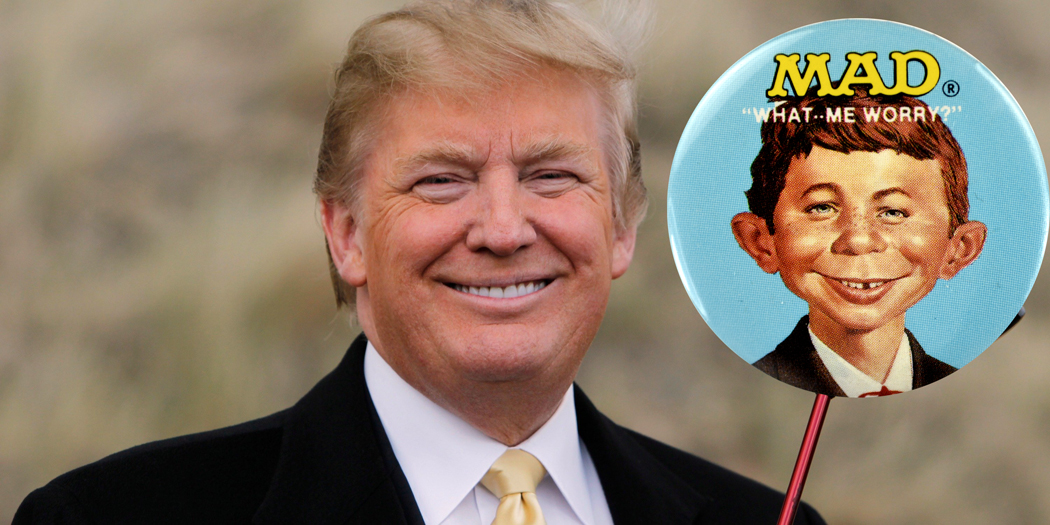
To begin, there is the issue of Donald Trump, which is a great squirt of squid juice, obscuring more lasting problems. It is easy to make fun of the Great Pumpkin, he practically satirizes himself. While he has fervent supporters, it is hard to know exactly what he stands for, because his words are so vague in application, no matter how blunt in expression. It is always possible to assume he is your ally, because you only listen to those words that honk your horn. Is he conservative? Conservatives value free trade. Is he pro-business? Business has told him they need an immigrant workforce. What does he stand for besides ignorance?

He is an obfuscation on the surface, a chaos beyond that because, of course, he has no ideology, other than Trumpism. It is not his supposed conservatism that I object to; there have been many thoughtful conservatives. Trump is not one of them; he isn’t even a conservative at all. What scares the bejeezus out of me about him is that he is so clearly unbalanced mentally. The word Andrew Sullivan has used is “bonkers,” and that can hardly be improved for accuracy. The constant wheezing about his vote count, poll numbers, inauguration crowd, all spouted against obvious and visual evidence, is a clear indication that he is unmoored from reality.

Then, there are the speeches, barely in English. They are really just sentence fragments thrown together with unattached adjectives. Yuge, sad, unbelievable, disgusting. They, as Philip Roth has counted them, are constructed from a vocabulary of a mere 77 words, reused and rearranged ad hoc. They jump around from topic to topic with little or no segue. And then, they are filled with things that are demonstrably untrue. One watches over an over when Trump says he never said this or that, followed by the videotape of him saying exactly what he now says he never said. Does he not know that his words have been recorded?

It cannot be easily said that Trump is a liar, because a liar knows what he is saying is untrue. Others manipulate statistics to make their arguments; Trump just pulls stuff out of his ass. Evidence is irrelevant.

Further, he uses these exanus pronouncements to support his chaotic policy pronouncements, which tend to be simple-minded in the extreme. Problems are usually complex and systemic; his solutions are simple-minded and blunt as a cudgel. He shows contempt for subtlety. If the problem is illegal immigration, his solution is not to consider the cause of the immigration, but to build a wall, despite the fact that the majority of the illegal immigration does not cross the desert border, but flies into our airports. My favorite joke about the wall: “Wall — cost: $12 billion; ladder — cost: $35.”

But this is not meant to be a jab at Trump, who is clearly unhinged, not very bright, not at all subtle, and basically a bully at heart. It is too easy to target him; he is a joke. A dangerous joke, who may very well destroy the world at the push of a button, but a joke nonetheless.

No, what I want to point out is that there is, beyond Trump, a basic misunderstanding of the political divisions in the country.

The divisions are very real. Between urban and rural, between liberal and conservative, between Republican and Democrat. But I want to point out that these may overlap, like Venn diagrams, the dipoles are not identical. We too often confuse conservative with Republican and liberal with Democrat. There may be overlap, but more important, their goals are different.

There is a clear difference between liberal and conservative. As they are defined nowadays (very different from when they originated and when conservatism favored a strong central government), the conservative now seeks a smaller central government and the liberal, an activist government working for the betterment of its citizens. The one favors the individual, the other, the community. The one is exclusionary, the other inclusive. And it is clear that as the political scene is currently deployed, Republicans tend to favor conservatism and Democrats tend to the liberal, although Republicans are more extremely weighted to the far-end of conservatism than the Democrats are to the left wing.

But, such thoughts of political philosophy are largely irrelevant to the actualities of politics. One should never conflate Republican with conservative, nor Democrat with liberal. The aims of ideology are to promote a world view and an action plan to enforce that world view. But that is not the aim of the Republican party. Certainly, it will use conservative ideas to further its ends when it can, but its primary driving aim is the accrual and preservation of power. This is central and should never be forgotten: Republicans will do whatever they need to to gain and keep power. Democrats have a similar, but weaker drive. Many Democrats join the party because they think they can make the world a better place. Some Republicans do that, too, but the aim of the party on the whole is not the improvement of society, but the exercise of power. It is King of the Hill on a hemispheric playing field.

This is not to say that most Republicans don’t believe, by and large, that conservative policies would help the nation, but that whether or not they do is secondary to the accretion of political power. Hence, the contorted, serpentine Congressional districts, gerrymandered into silliness in order to ensure Republican supremacy. (Yes, Democrats have done the same — in fact, they invented the procedure in the 19th century — but they were pikers compared to the modern attempt to engineer a “permanent Republican majority.”) Hence, the bald-faced hypocrisy of choosing sides on an issue solely on the basis of whether a Republican or Democrat is offering it for a vote (as with the Republican-designed Affordable Care Act, which became an unswallowable “disaster” when recycled by the Obama administration. Hence, the use of arcane Senate or House rules, or the threat of the “nuclear option,” when it favors them, and outrage when used against them.

And it is why Republicans were gulled into supporting Trump when it looked like he might win the White House back for the party, despite the problem of Trump espousing ideas contrary to longstanding Republican policies. Trump is, after all, not a Republican, except in name, and not a conservative, as it is usually defined. He is sui generis, a propounder of Trump now, Trump tomorrow, Trump forever.

One area in which Trump and Republican world views agree is that the primary lens through which to view policy is economic. Money is the gravity that holds that world together. Whether it’s tax cuts, deregulation or fear of unions and a raise in minimum wage, the heart and soul of the conservative world view is money. The very idea of “running government like a business” is a consequence of this Weltanschauung. But across the world, this idea is changing. Governments are not businesses.

There is a historical storyline here. In the feudal past, with the king at the top of the pile, government was essentially a protection racket, with each level of vassalage “wetting its beak” in the next level down, and everyone feeding on the peasants. The general welfare of the populace was not even an empty platitude. As nation states developed from the Medieval sense of monarchal real estate, the idea of decent governance took hold. Since the New Deal in the U.S., and post-war in the better part of the rest of the world, governments have assumed the duty of protecting the welfare of its populace. All through Europe, governments guarantee health care, safety, minimum living wages, shorter work weeks and longer vacations. The U.S. has resisted such things. For Republicans (distinct from conservatives, who also have many social issues) and Trump see the world through dollar-tinted glasses. It is a reversion to the Medieval model, where all wealth floats upward like a bubble in the champagne. And it is power that guarantees the income. The goal of the Republican party is not so much the institution of conservative ideas, rather it is the use of conservative ideas to protect and increase individual wealth.

The problem is, that while money can make life easier to navigate, money cannot make life worth living. For that, you need the other aspects of life that Democrats — and most of the rest of the world — embrace. Freedom from oppression, sufficient means for living, cooperative communities, aid for the less fortunate, an even playing field for all. Among the things that make life worth living are family, love, art, religion, good health, and shared interests and shared mythology.

For Trump and the Republican party both, the world they see is transactional. It is also a zero-sum game, and the winning is all. We need to recall that when we let ourselves be gulled into arguing over conservative and liberal. Those labels are merely the masks worn in the more brutal fight over who will be the alpha dog.

Originally published Feb. 17, 2017

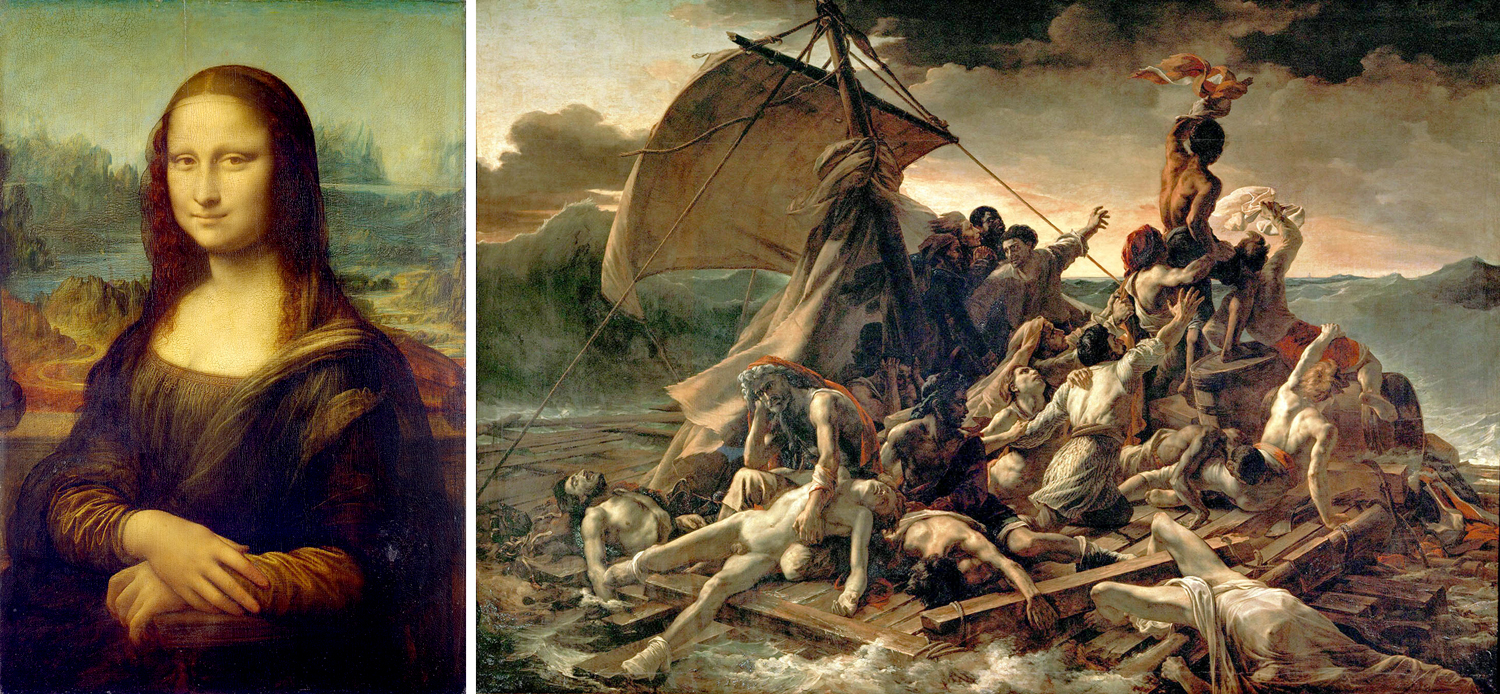
Take two of the most famous paintings in the Louvre. Most of us first experienced them in pictures in a book, perhaps Janson’s History of Art in an art history class. Or, projected onto a screen in the darkened classroom while the teacher pointed out details of the iconography. But these are images, not paintings. 

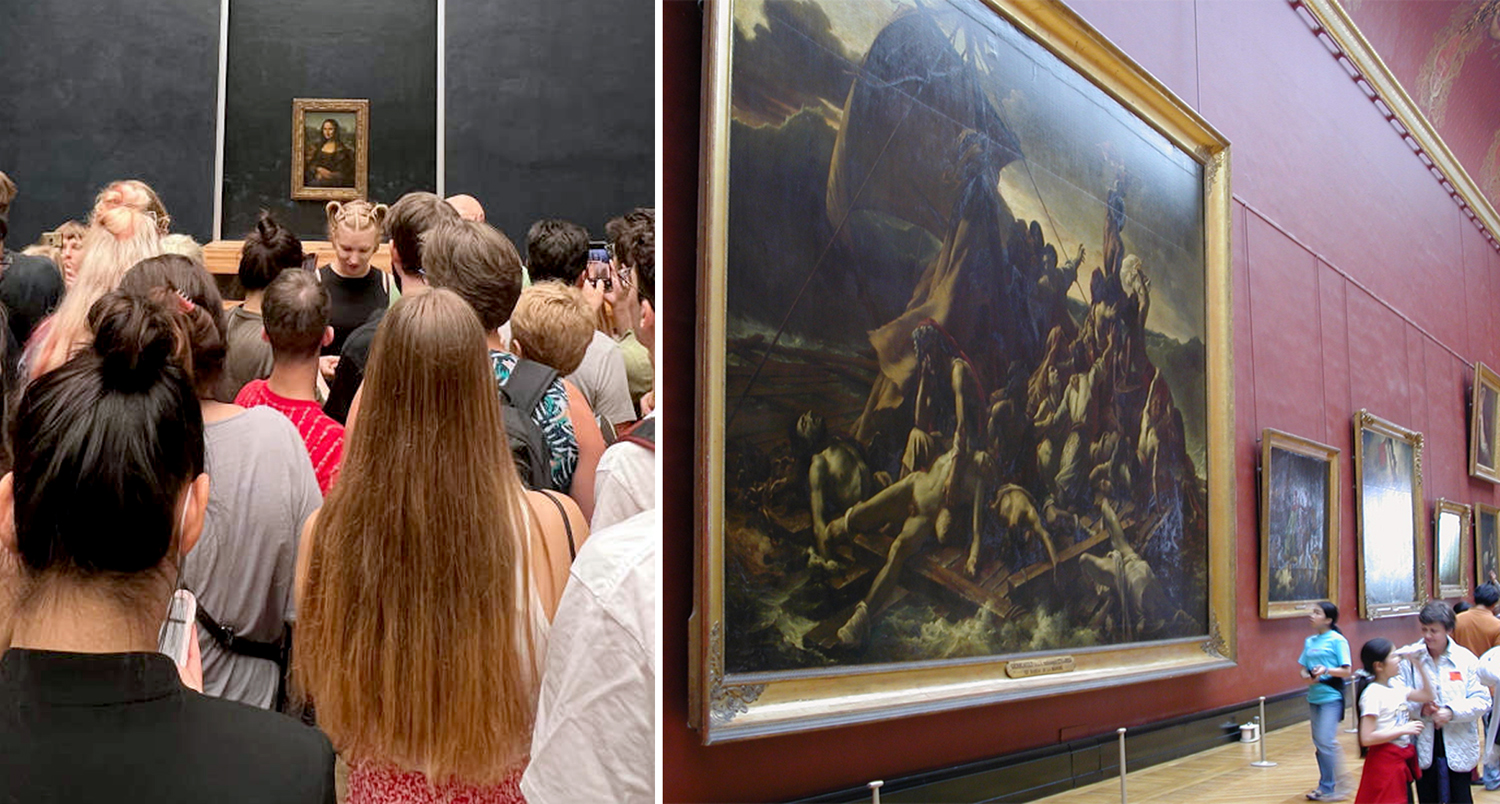
Often, today, we confuse the two, seeing pixels on a cellphone or iPad, and can easily believe we know the art because we can recognize the familiar shapes and colors. That is why so many people remark, on visiting the museum in Paris, about how “small” the Mona Lisa is. 

It’s not that small, of course. It’s a fairly normal size for a Renaissance portrait, but the fact is that separated out, as it is, for display, it takes up precious little wall space. Really, most people hadn’t given any thought to the actual size of the painting when seeing the reproduction in a book. It’s just an image, an icon, familiar not only in its regular shape, but also parodied to death in comic take-offs. 

You could look at the caption next to the printed image in your book, and see that there is a bunch of information in parenthesis beyond the identification of artist and title. It will often give you the date, in which museum collection it resides, and the size of the painting. In the case of the Mona Lisa, 21-by-30 inches. 

But then, perhaps you wander into the gallery with Théodore Géricault’s The Raft of the Medusa. You’ve seen it in your Janson and think you know it. You don’t. It is 16-by-23 feet — the size of a billboard. 

You see them as images, and they are adjusted to the size of the page and you can have no sense of their relative sizes.

But walk through the Louvre and it is quite different.

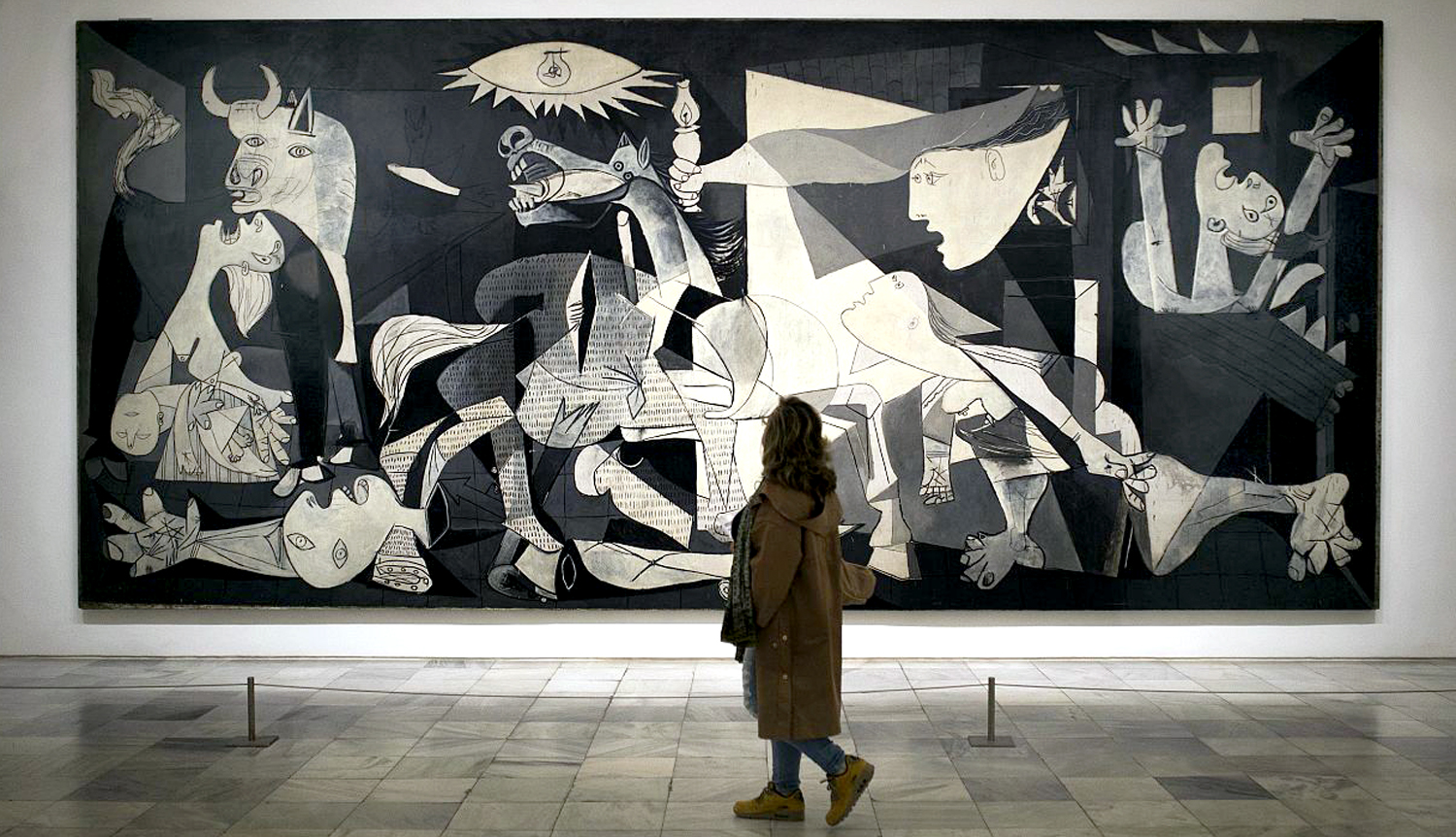
I remember when I was a teenager and going to the Museum of Modern Art in Manhattan and seeing Picasso’s Guernica, which stretched out across its own wall. You could see it from afar, stepping out of the elevator and looking to your right, several galleries away. Just under 12 feet high and 26 feet across, it was more than a painting and more than an image. It was a presence. 

And that was part of its meaning. It was made in outrage over the 1937 German bombing of the Basque down in Spain and if it had been made to display comfortably on a gallery wall, it would have been just another painting for sale. But at size, it forces you to consider the suffering and death. Its size means you cannot just look away. 

The world we live in is increasingly a virtual one. The TV screen, the computer screen, the cellphone screen, the tablet and even the wristwatch screen have become so normal to our daily lives it has become easy to mistake what we see there as real. It is not. 

You cannot have the personal experience of Guernica from a photographic reproduction or a pixel image. You can memorize its iconography and discuss its provenance and the biography of its creator, but you will not have the gut-level experience of it I had visiting it at MoMA. 

And it isn’t just the size. Seeing art in person means you can see the pigments used, the brushstrokes, the opacity or transparency of the paint, whether it is on panel or canvas — a whole range of physical properties not apparent in a reproduction, and all of it — in addition to its physical dimensions — are essential to its meaning. 

And by meaning, I don’t refer to its symbology. That is language. I mean the experience of it. Vermilion or ultramarine are experiences not conveyed in ink or pixel, and that experience is meaning. 

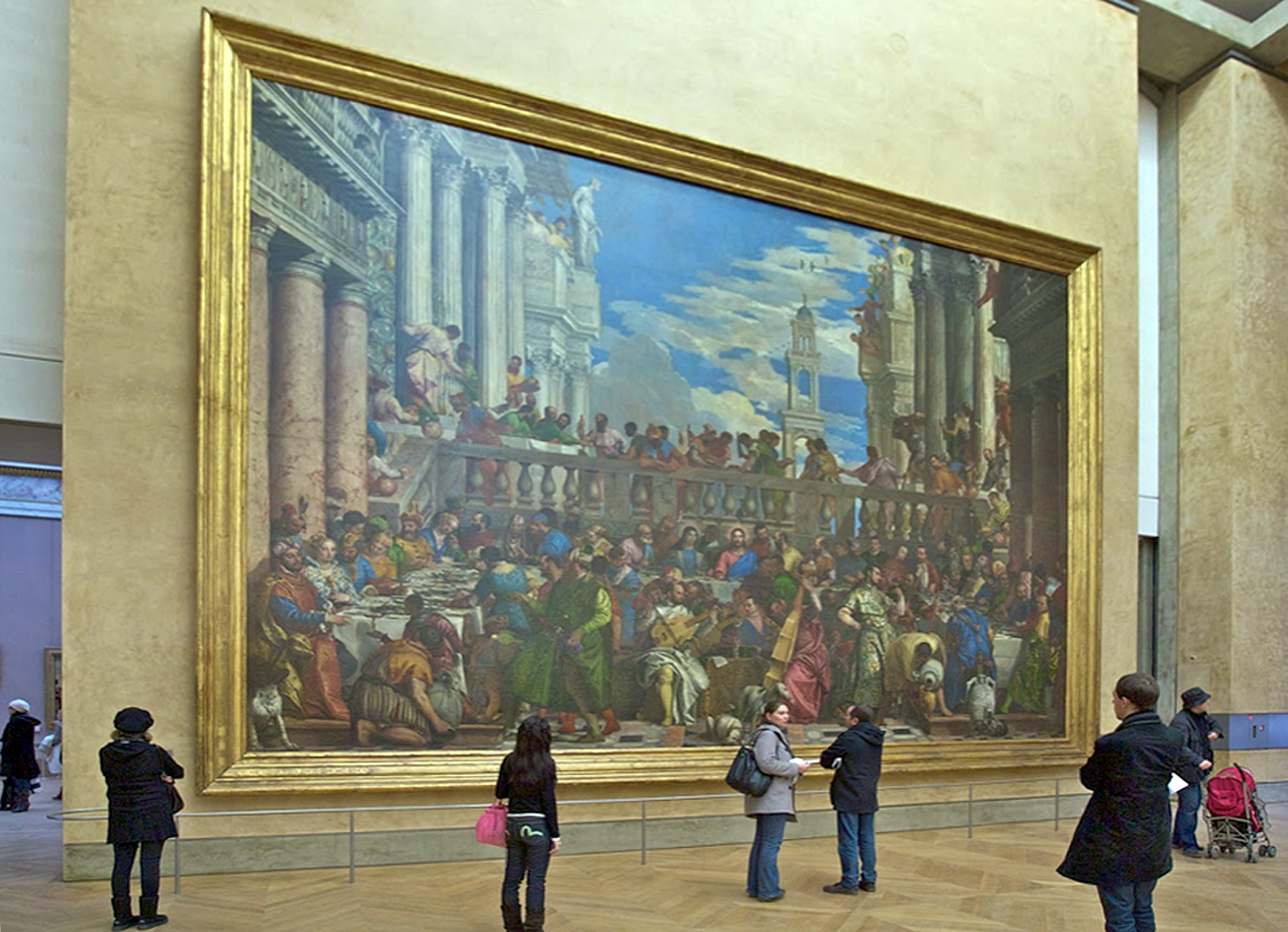
If you walk through the Louvre, another famous art history painting you find will be Veronese’s The Wedding at Cana. Another wallop in the gut. It is 22 feet high and 33 feet from side to side. 

If you think of it as a biblical subject, and believe you are “getting” the painting by naming the people pictured, you have missed the central experience of the work. 

Even more ordinary size paintings depend, in part, on their dimensions and how you relate to them. A life-size portrait can mimic meeting the person himself. In the Renaissance, one ideal was that a painting should be like a window through which you are looking, and so a window-size canvas was part of the experience. 

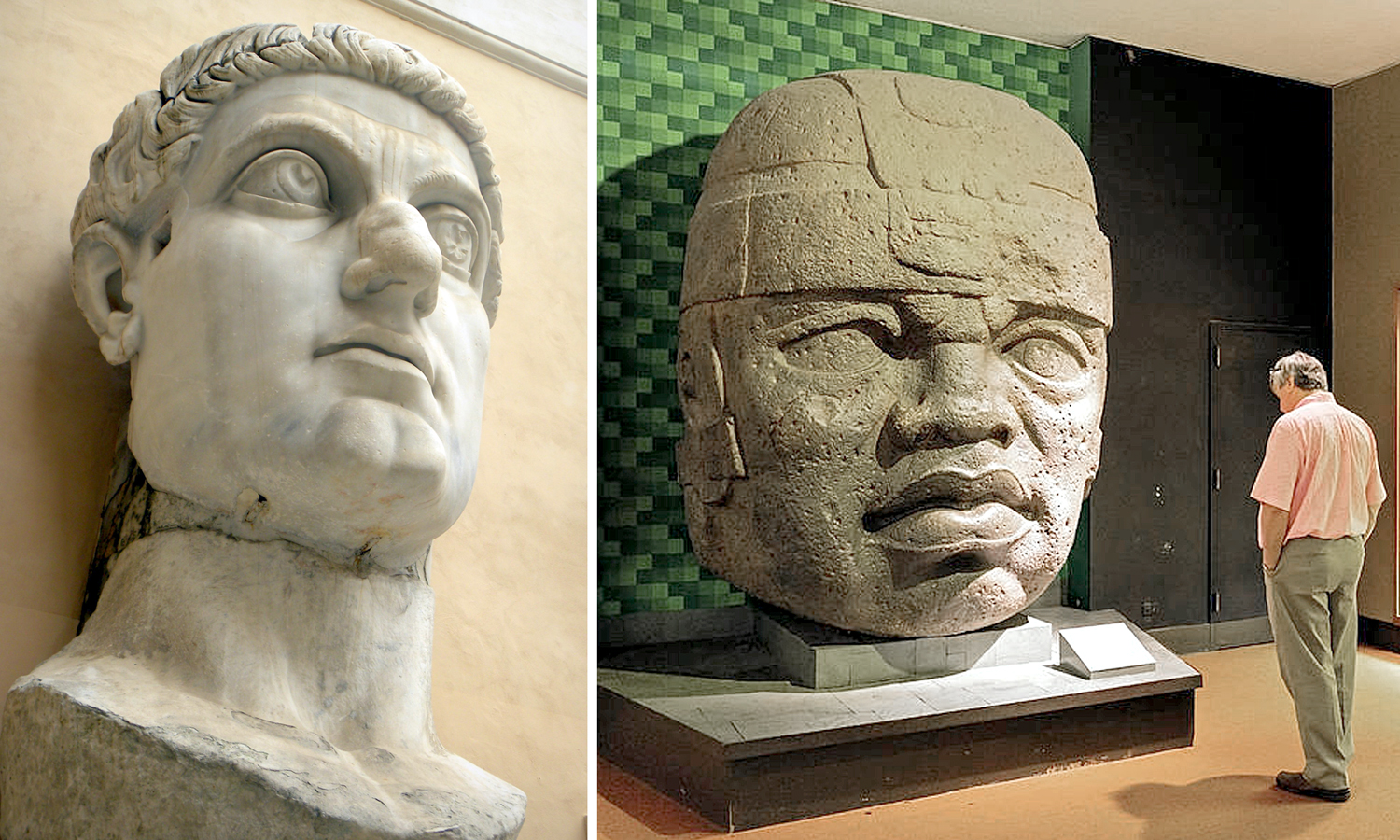
A giant head is another thing altogether, like the famous head of Emperor Constantine or one of the Olmec colossal stone heads from Mexico. Their size makes you take notice. The same shape, but the size of a cantaloupe, would hardly carry the power of these monuments. I remember the first time, as a boy, I saw the Olmec head at the American Museum of Natural History in New York; the memory of it stuck to my psyche for decades after. Still does. 

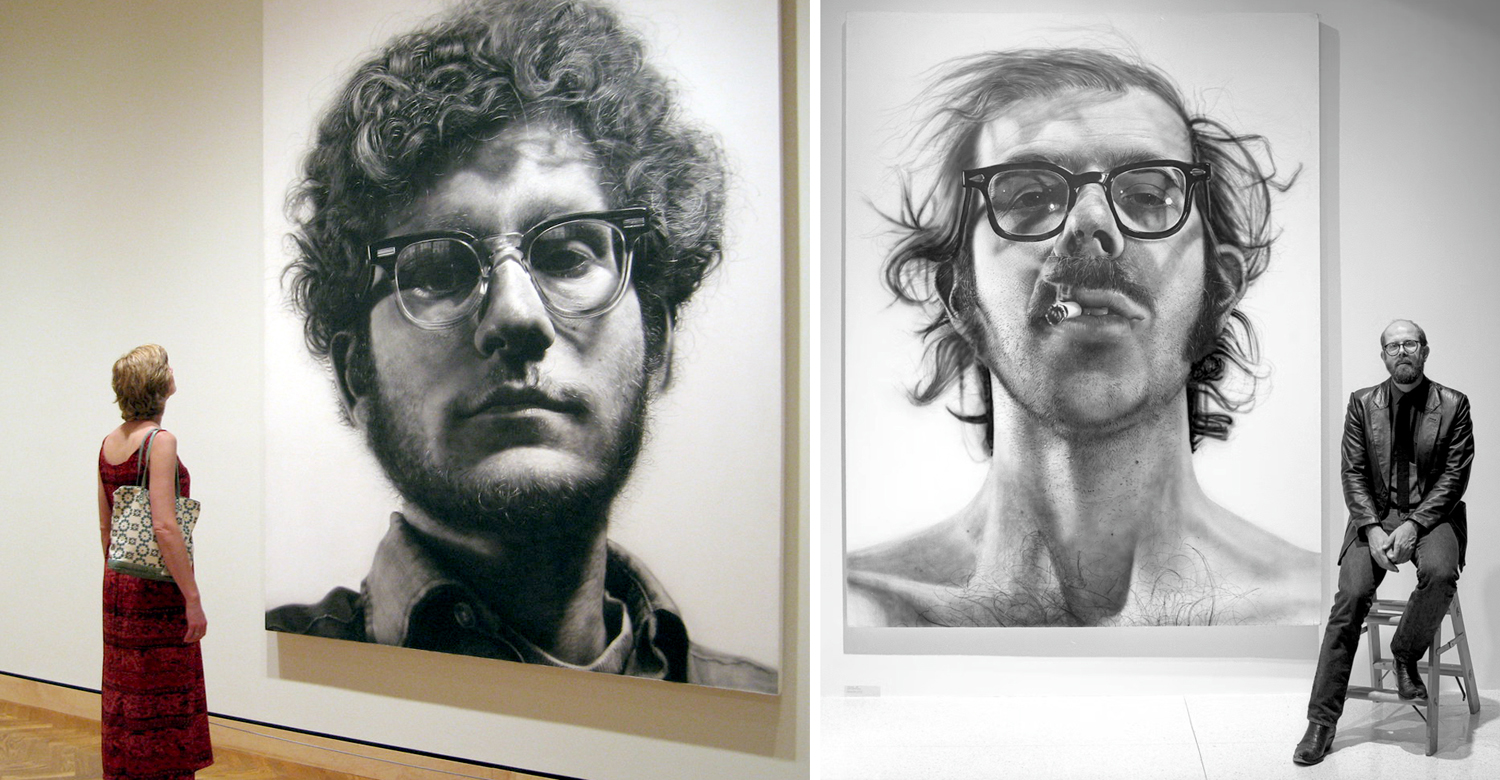
The same for the huge portrait heads of Chuck Close. 

The word often used to describe such larger-than-life art is “heroic.” They have an effect very like that of Achilles in the Iliad or Ahab in Moby Dick. It is a word often used to describe the large paintings of the Abstract Expressionists of the late 1940s and through the 1950s. These were painters of utter seriousness of intent. The last gasp of a non-ironic age, after which came the deluge of meta. 

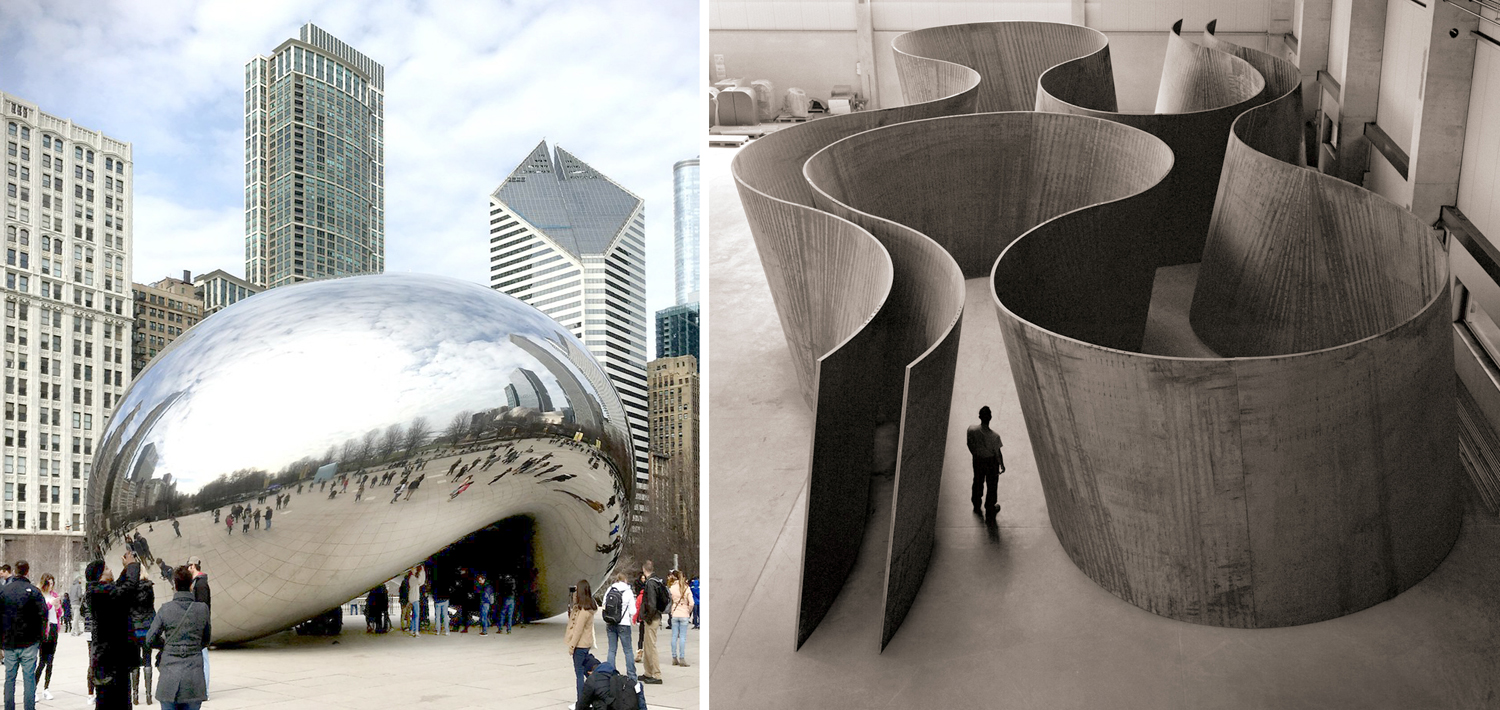
There are artists who use mere size to impart meaning to their work, Anish Kapoor, for instance, in his huge shiny bean called Cloudgate, or the rusted steel curtains by Richard Serra that are best experienced by walking through. But notice that the giant bean is also ironic. It’s a bean, after all, raised to heroic proportions. 

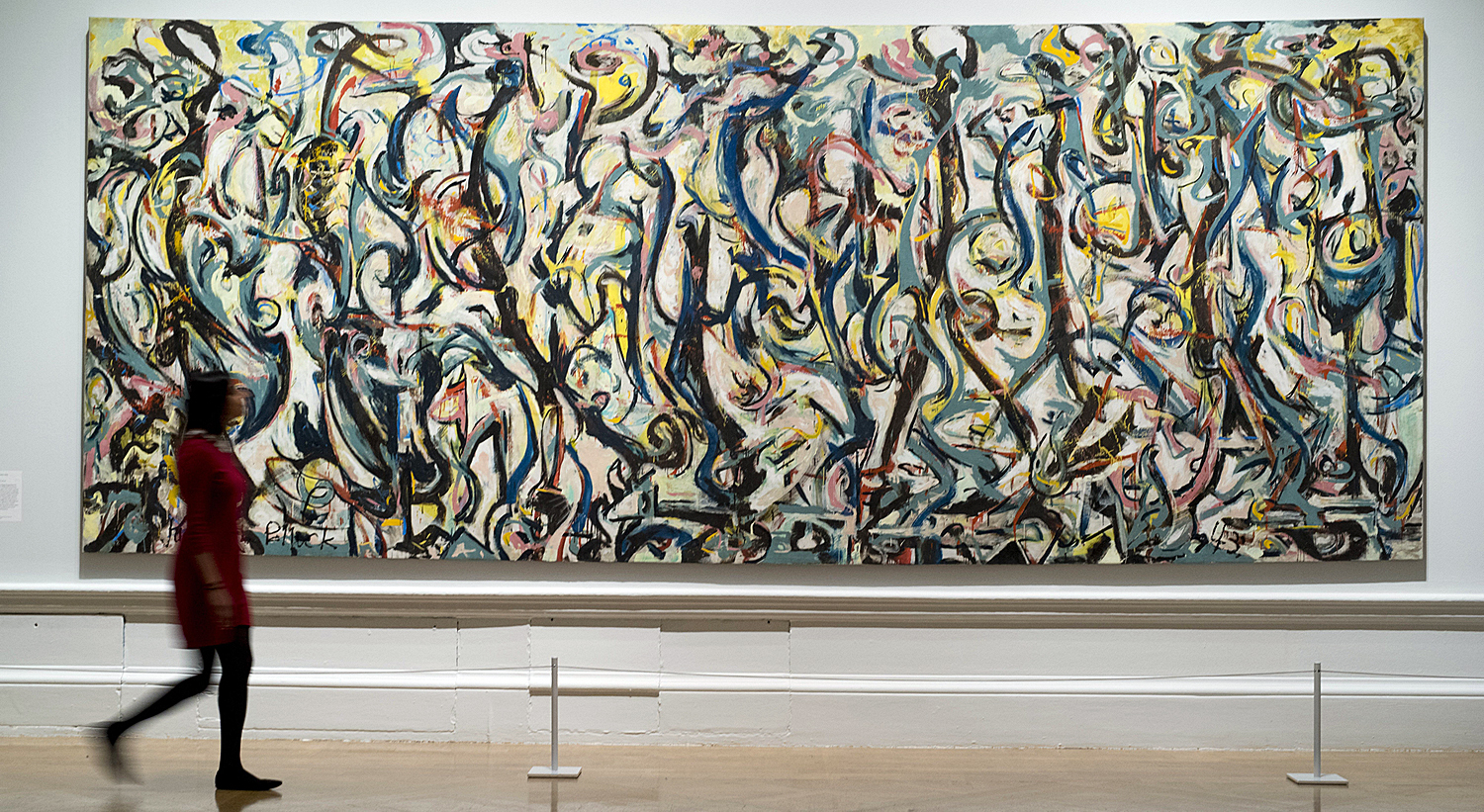
But those cigarette-smoking, heavy-drinking and blue-collar wearing guys at mid-century were dead serious. Jackson Pollock painted his first large painting, called Mural, in the mid-’40s. It is 8 feet by 20 feet and meant to be installed in the apartment of Peggy Guggenheim. It led to the later drip paintings that made Pollock famous — in 1949, Life magazine asked “Is he the greatest living painter in the United States?” 

Pollock made paintings in various sizes, but it is his large canvases that hold the emotional power that still resonates today. I visited the huge Pollock retrospective at MoMA in 1998 and was blown away by the variety of the paintings, and got a chance, finally, to see Blue Poles, a large 1952 canvas sold to a gallery in Australia in 1973 and unavailable to American audiences since then. It was given pride of place in the exhibition and deserved it, in the center of the room, on a wall of its own. It was lit like a jewel, but a jewel 16 feet across. 

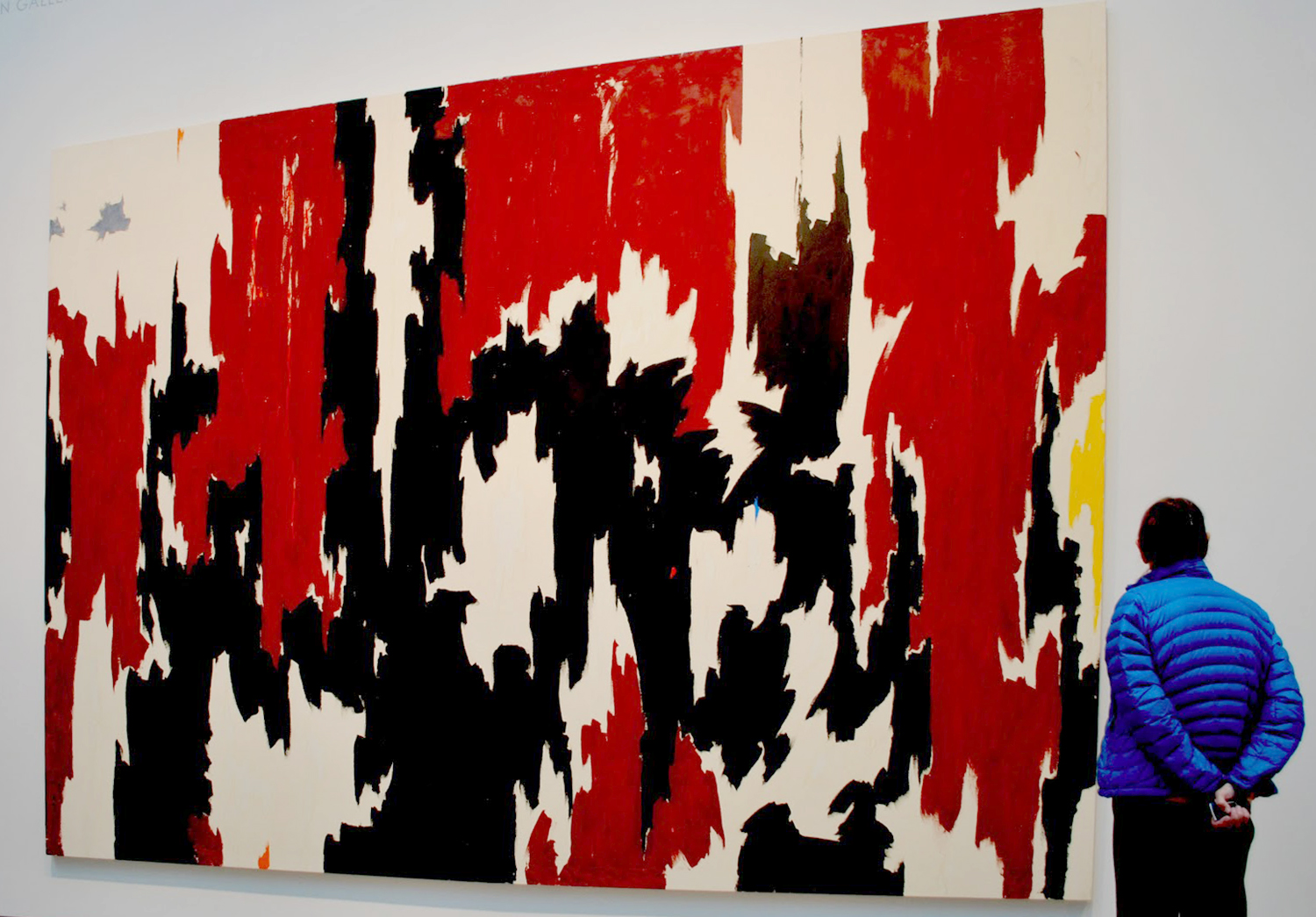
Most of the Abstract Expressionist gang trafficked in scale. Franz Kline, Mark Rothko, Robert Motherwell, Barnett Newman, Willem de Kooning, Clyfford Still — all found now in museums taking up whole walls by themselves. 

In the 1970s, I wandered through commercial galleries in New York and came across a back room storage of Newman paintings, being arranged for a show, and a group of them were almost two stories tall — monumental. These men (and they were almost all men) took their heroic calling seriously. 

After them, the deluge. Even Motherwell turned to irony; the self-importance of the first generation could not be sustained, or even taken seriously anymore. And although Robert Rauschenberg is sometimes classed among the Abstract Expressionists, his work always played with irony. 

All that was left after that was Andy Warhol and Jeff Koons. Art took a different turn.

When the Getty Center opened in Los Angeles in 1997, I was an art critic in Phoenix, Ariz., and given the assignment of covering the event. I met with Robert Irwin, who designed the landscaping for the Getty, and had a concurrent museum show at the Museum of Contemporary Art in LA. In a hallway, away from the main work in the exhibit, were a series of early paintings he made. Irwin was a thoughtful artist and his eyes glistened as he discussed those small, early canvases. 

“I was thinking about the heroic nature of those Abstract Expressionist paintings,” he said. “And I wondered if they could still work if they were small.” And so, he painted a line of tiny canvases, usually no more than a foot square, with similar abstract imagery on them. Did they work? Were they still heroic? Do you have to ask? 

Click on any image to enlarge

I don’t often write about politics in this blog. My own beliefs are rather mainstream and inoffensive, on the whole. I tend to like politics as the negotiation of competing interests through compromise. But sometimes, there is something that just needs saying.

It has slowly dawned on me that we have been mistaking Donald Trump for quite some time now. I don’t know how many articles I’ve read or videos I’ve seen coming up with explanations of what Trump is really trying to do. Is he intent on creating a dictatorship? Is it world domination? Is it some clever means of manipulating the market to make himself even more rich? There are a dozen explanations put forward. Even his MAGA people don’t have a single explanation, and choose a Trump that fits their wishes. 

But I have come to the conclusion that seems to be the only one truly possible: Donald Trump is clinically insane. 

I know, we have all been saying he’s crazy for at least the past 10 years, but when we said that we didn’t really mean it. We were using a metaphor to explain the counterintuitive and counterproductive policy decisions he’s made, and the vomitation of lies that spew from his tongue. But I now mean that I think Trump is actually a madman. Spitgargling, foaming at the mouth crazy. The kind of crazy that would normally require a straitjacket  and padded room. That to attempt to understand why he does this or that is a fruitless task. There is nothing to understand. There is no secret meaning behind his policies. He is just insane, like Col Bat Guano in Dr. Strangelove. Stark, raving out of his mind. 

The scariest part of it all is the Republican congressmen and senators who line up behind him for their own craven reasons, often racist, or more often thinking they need to back up the crazy man in order to be re-elected. They repeat Trump’s crazy talk and attempt to explain “what he really means,” or, more often, just run away from town-hall meetings to avoid reasonable questions. 

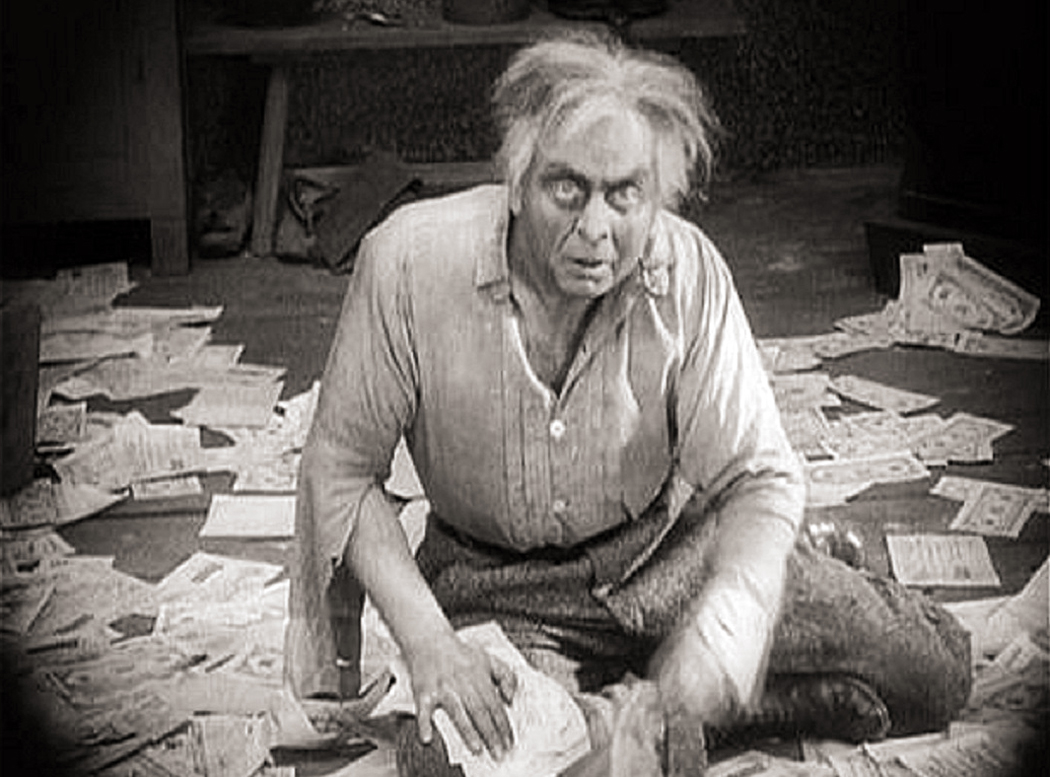
It really hit me when I remembered Fritz Lang’s 1933 German film The Testament of Dr. Mabuse, in which the famous master criminal, Dr. Mabuse (he’d been the subject of two earlier silent films by Lang) had been caught and declared insane and put in an asylum, where he wrote compulsively these scribbled nonsense notes that were smuggled out to his followers, who then used them to commit robberies, arsons, sabotage, etc. The images of Mabuse in his cell scribbling away with hysterical focus seem so much like Trump and his tweets. Both their utterances make little coherent sense. 

At one point, the police captain in the film talks about “Mabuse the criminal,” his ardent follower shoots back, “No, Mabuse the genius!” and describes admiringly how the “crimes” of the “brilliant” Mabuse will destroy a corrupt world. 

The film was banned by Joseph Goebbels, who proclaimed that The Testament of Dr. Mabuse was a menace to public health and safety and “showed that an extremely dedicated group of people are perfectly capable of overthrowing any state with violence.” Which, of course, is exactly what his boss, Herr Hitler, had already done.

Lang himself explained, “The film was made as an allegory to show Hitler’s processes of terrorism. Slogans and doctrines of the Third Reich have been put into the mouths of criminals in the film. Thus I hoped to expose the masked Nazi theory of the necessity to deliberately destroy everything which is precious to a people. … Then, when everything collapsed and they were thrown into utter despair, they would try to find help in the ‘New order’.”

Sound familiar? 

And so, I am now of the mind that Trump has no grand scheme, cryptic plan, overall policy design, but rather is a lunatic spouting inanities and non-sequiturs and a portion of the electorate suffering what they see as grievance follow him, hoping for relief, and far worse, a cadre of lawmakers who use the ravings to further their own careers. 

I hope by posting this, and having others make similar observations, we may finally reach a tipping point where the obvious insanity no longer goes normalized, and the tide shifts.

Still, it all makes me even more depressed about what is to come. 

I remember the Before Times. It’s different now. 

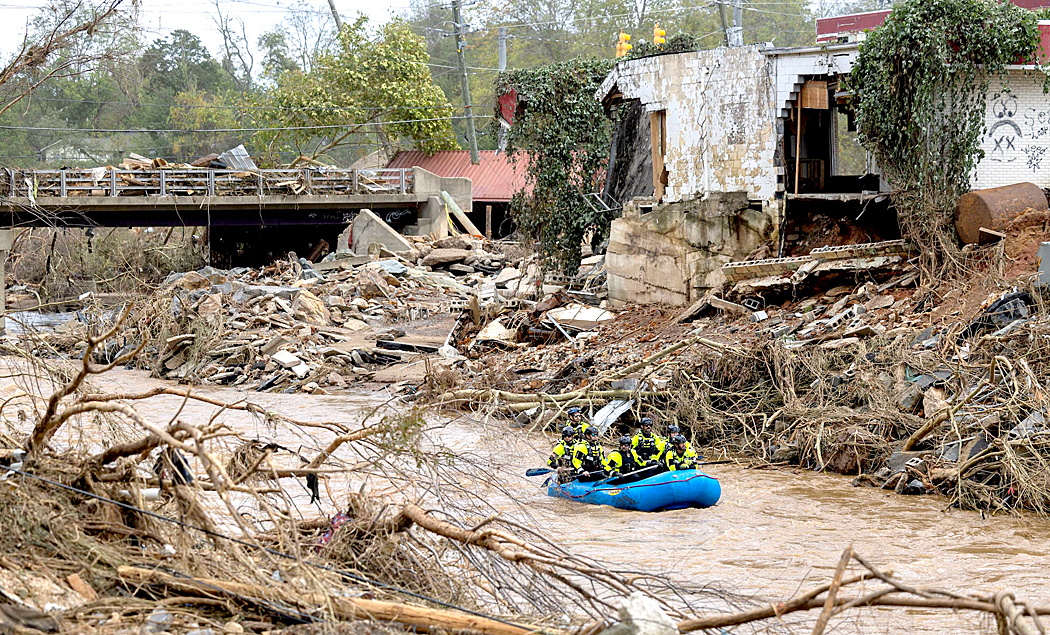
On September 27 the remnants of Hurricane Helene turned Asheville, N.C., into a post-apocalyptic landscape. Fallen trees blocked streets and roads were turned into creek beds. Power lines were downed everywhere and the two rivers of the region carried whole houses downstream. Bridges are gone. City water lines destroyed. The buildings that remain in the lower areas of Buncombe County are larded with a foot-deep layer of toxic mud. People died. 

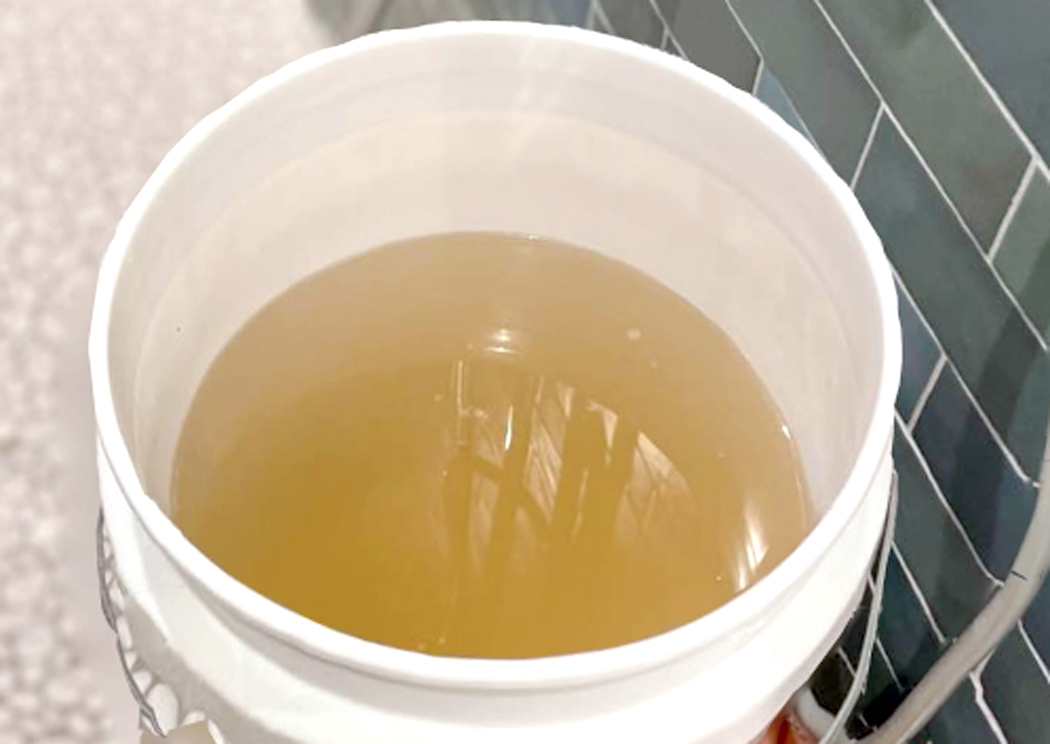
It has been a month since the storm and there are still many roads closed, homes without power, and the city water is unfit to drink. We have to boil it even to wash dishes. And what comes out of the tap is a cloudy, rust-colored fluid. 

It has been so bad, left so many people stranded or homeless, that Jose Andres’ World Central Kitchen has come to feed those in need. 

At our house, we were otherwise lucky. Our neighborhood had fewer fallen trees than others and we were high enough in elevation that we avoided the flooding. Outside our little neighborhood, though, it looked very, very much like the devastation of Katrina. 

Damage in Swannanoa

The first week after the storm was hellacious. No power; no water; no phone; no wifi; no cable; no AC. Dark at 7 and no lights anywhere. The fridge and freezer silent. On the fourth day, we had to throw out all the food in both and scrub the interiors with bleach to kill the faint smell of mold. 

With no water, we could not flush the toilets and, being unable to stop the physiology of the human body, we had to go somewhere. The commodes were becoming rank. 

This was a problem that everyone shared, and so, by the second full day, neighbors had pulled together and set up a tent on the street corner where we could go, share stories, rumors and advice, and by the third day, they had food and bottled water to hand out to those who needed it. One neighbor had a swimming pool, and if you had a bucket, you could dip it in the pool for water to flush toilets. 

Across the street from us, Dorothy, a retiree like us, and her grown son, Anthony, brought us a bucket so we could go down the street and dip it in the pool. Because we are old and five gallons of water is heavy, Anthony carried the water himself. That afforded us one flush a day. By the fourth day, Anthony had found a children’s wagon and was delivering flush water around the neighborhood. It was still once-a-day, though. 

Neighbors helped neighbors. Some went house to house to check on them. Two fresh-faced young women knocked on our door. They had weak cell-phone coverage and had received a text message from my granddaughter in New York, a former schoolmate, asking them to check on grandpa. They sent a text back to her telling her that we were OK. 

The street-corner tent set up a message-board where people could ask for supplies they needed, or to offer what they had. Our next-door neighbor, who had just moved in, had no food and we collected a few non-perishables and brought them over. Others came to us and gave us boxes of cereal or, in one case, an entire box of cellophane-wrapped brownies. 

But it seemed as if we survived that first week eating little but apples and Fritos. I had a case of bottled water and some soft drinks. 

“This is how are ancestors must have lived,” Anne said. “Except, they had water.” Dark all night, light for reading in the daytime. We read an average of a book a day during that first week, with little else to do but sit and wait. At night, we had candles burning on the piano — but not like Liberace: They were squat votive candles. And we would continue to read in the dark with flashlights. 

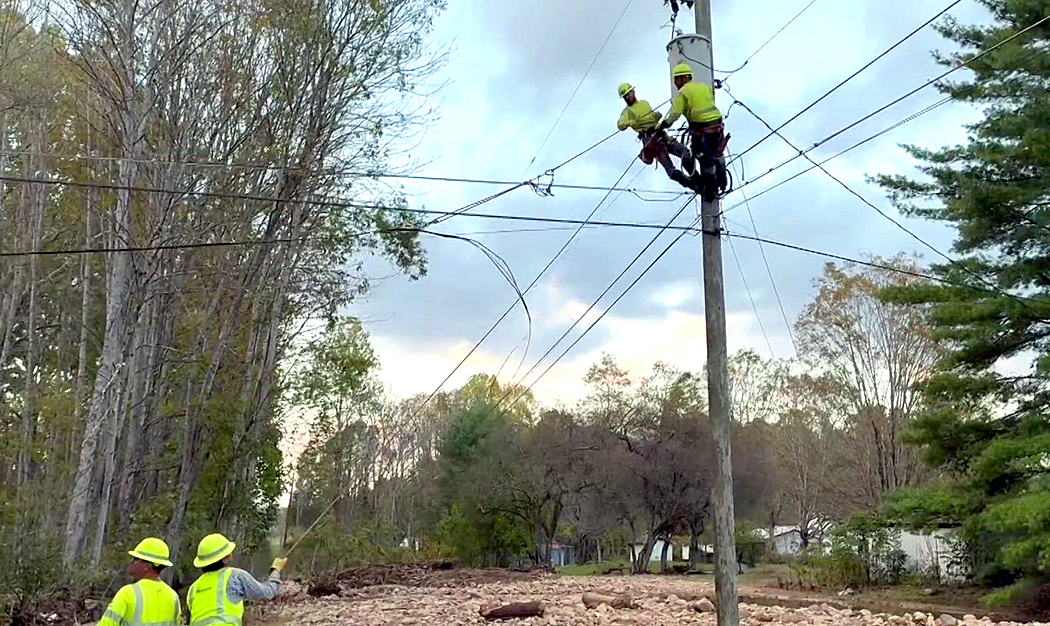
There was a constant whirr and buzz, even through the night, of workmen chainsawing fallen trees and power crews trying to reattach downed lines. We saw trucks from out of state driving in caravans through the neighborhood, cleaning up and repairing 24 hours a day. Overhead there were helicopters and airplanes; hardly 10 minutes would go by before another one — or two at a time — skitted across the sky. It reminded me of film from Vietnam, except there were also drones. 

And it was a huge military operation. National Guard and Marines, search-and-rescue operations looking for people cut off from roads or stranded on roofs, or dog teams looking for bodies in the debris. I have since heard ignorant people spout conspiracy theories about the failures of FEMA or the government in general, but those trolls weren’t there. I have never been so impressed at the seriousness and effectiveness of everyone, government or civilian working to recover. The lies being spouted are reprehensible. Actually, evil. 

The Asheville airport was covered with military planes and scores of copters. The only way into the area for the first days was by air. I-40, the main highway, was cut off on both ends by landslides. The bridges along I-26 were washed out. All roads in and out of Buncombe County were blocked and closed. If we had wanted to leave, we couldn’t. 

By Day 6, the mudslides blocking I-40 East had been provisionally cleared and road traffic could be resumed, and trucks with relief provisions could climb up the Blue Ridge into Asheville. Power had come back to our neighborhood (although many others remained dark). There was still no running water and all of our food had been ruined, except for those canned goods. We hadn’t had a shower in a week. 

The problem for us was that the car had almost no gas left and no gas stations were open. But on Day 6, we got word from Anthony that a station in Fairmont — about six miles away — had reopened. We drove and miraculously, there was no line. We tanked up. We could leave. 

Our first thought was to take a few days’ clothes and head to a motel in the flatlands, where the storm damage was less, and spend a couple of days getting cleaned and eating some hot food. We drove to Hickory, about a hour away, but found the motels were full. Outside of Hickory, we found one that had a single opening — the Presidential Suite for $180 a night — and we took it. The motels were not full of tourists; they were full of construction crews and aid workers: wiry, grizzled men with hard hats and leather-tanned faces who were commuting to Asheville to restore power or dig out debris. Their trucks filled the parking lot. 

But we did get a hot shower and across the street there was a Mexican restaurant where we got a hot meal. 

For the next two and a half weeks, we stayed with my brother- and sister-in-law in Reidsville, N.C., where they fed us and caught us up on all the events of the outside world we had missed. It would have felt like a vacation except for the hollow knot of anxiety in my gut. We drove home on Monday to find the house had not burned down, been burglarized or taken over by raccoons. 

But there was still the problem of water. We are under a boil-water notice, which mandates — not suggests — that we boil the tap water for 1 minute before using it. It is still so cloudy that even after disinfecting it is not drinkable. 

Blue Ridge Parkway damage

The storm was prodigious. Official reports note that 2,300 structures were destroyed completely or made uninhabitable. That’s homes, stores, and other businesses. The Blue Ridge Parkway was closed for its entire length in North Carolina and its director said that some 10,000 trees had fallen into the roadway. Parts of the Parkway were covered in landslide mud and other parts had their pavement washed away entirely. In several places the North Fork Swannanoa River has carved new courses, leaving at least one bridge over dry land and the water a hundred yards to the west. 

Official death count for Western North Carolina totaled 96 (subject to revision as new data arrives), with 42 of them in Buncombe County alone. The NC total was nearly half of all deaths from Helene in the U.S. 

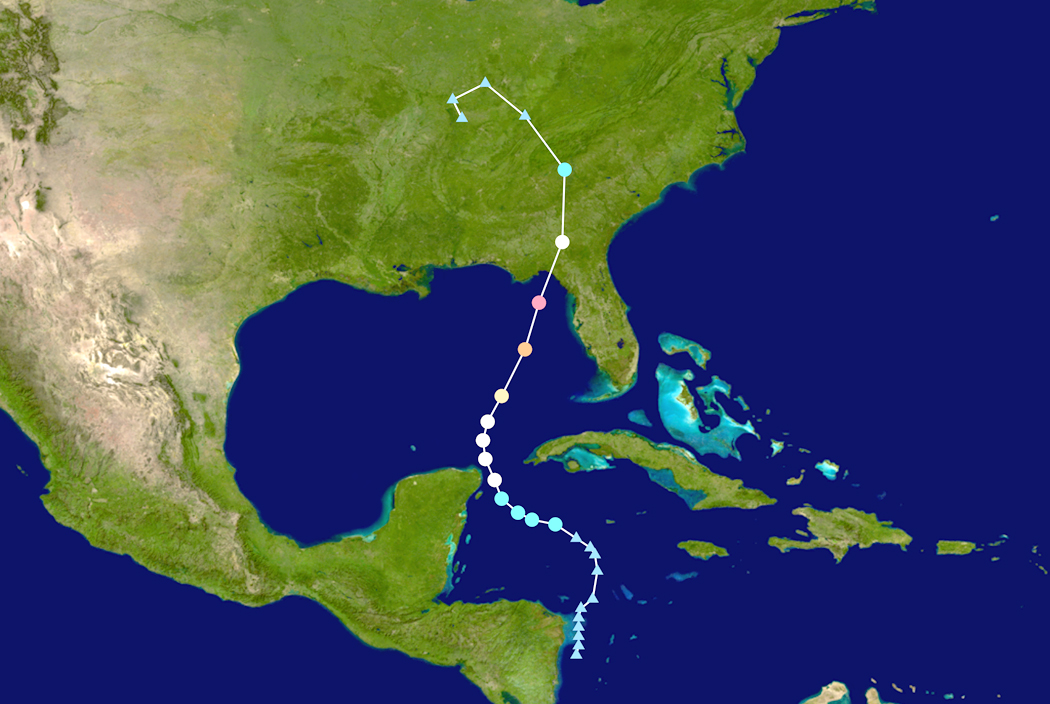
There are reasons Western North Carolina was so hard hit. While the storm made landfall in Florida, and traveled north across Georgia and South Carolina before tailing out in Tennessee, those states suffered from hurricane and tropical storm damage alone — bad enough. But in Western North Carolina, the meteorological and geological circumstances doubled down on the effects. 

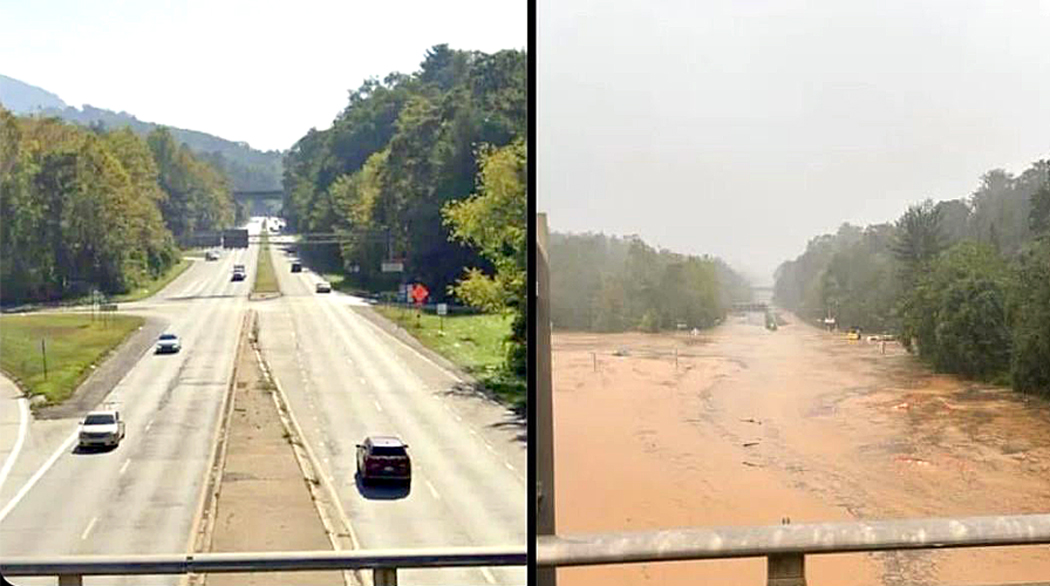
I-40 Before and after

 First, the area had already had days of rain soaking the ground before Helene. Second, the storm brought an enormous amount of water vapor — twice as much as the previous record from the 2004 double whammy of hurricanes Frances and Ivan. Third, the counterclockwise spin of the storm meant that its high winds struck the Blue Ridge escarpment head on, forcing the water-soaked air upwards, with both the Venturi effect speeding up the winds, and the adiabatic cooling that squeezed all that water out of the clouds, with Mt. Mitchell recording 24 inches and the Asheville airport getting 20 inches. One Forest Service weather station measured 31.33 inches of rain from September 25 to 27, piling Ossa on Pelion. 

That’s bad enough. In flatter terrain, that would account for two feet of water over a wide landscape. But in the mountains, all that water gets funneled down into the valleys, where it collects in raging torrents, wiping away whole towns. Consider, say, five square miles of land, hit with two feet of water and condensing that water into a hundred-yard wide channel. 

River Arts District, Asheville

That’s what happened along the Swannanoa River in the community of Swannanoa, along U.S. 70, where mountains both north and south dumped their drainage. Or along the French Broad River south of downtown Asheville, where the old industrial district, turned River Arts District, was wiped out. Or the narrow 14-mile Hickory Nut Gorge, which drops about 1,800 feet between the town of Gerton and Lake Lure, where much of the road is now reduced to a rocky creek bed. 

There used to be a road here, Hickory Nut Creek

Estimates for the damage are currently set at $53 billion, although that is subject to revision. That is a North Carolina record. 

I have concentrated on Asheville and Buncombe County because that is where I live. And I can see the destruction first-hand as I drive around. But it is much of Western North Carolina that shares the calamity. 

French Broad River, Asheville

There is no guess as to when this part of the country will return to normal — although that will be a new normal, not the old one. Probably a year, at least. But people are all working hard to get there, individuals, civic officials, volunteer help and federal government. Some things have come back sooner than expected.

But so far, we are eating on paper plates and drinking from disposable cups and eating frozen Stouffer dinners and hoping with crossed fingers that our tap water will at sometime run clear again. 

There’s a lot of cynicism creeping around currently. And a good deal of it is earned. Politicians, especially, seem to lie with faces so bald an eel could slide across them. I mean, hypocrisy used to be something to be ashamed of, now it is simply coin of the realm. Yes, there has always been lying, but that doesn’t mean it isn’t especially galling now. After all, they used to pretend they were telling the truth, while now, they don’t care how obvious it is. They will lie about the the sentence they have just spoken, denying they ever said it — even while it is there on the videotape. Truth used to be paid lip service, now, among a Trump-infested lot, there is a pretense that truth is whatever has just been said. 

So, I get it. Ever since Lyndon Johnson lied about Vietnam and Robert McNamara cooked the numbers for him, and even since Richard Nixon proved that “I am not a crook” was “no longer an operable statement,” national faith in institutions has dwindled. So, as I say, the cynicism has its share of being earned. No wonder faith in government and institutions has never been lower.

And yet. And yet, all that runs counter to my actual experience. After all, when I have come in contact with government, I deal with the day-to-day bureaucrat, the ordinary working Joe or Joan. I’ve never actually dealt with a cabinet secretary or a senator. And when I’ve gone to my local Social Security office, the person on the other side of the desk has invariably been solicitous and helpful, if harried (even if I’ve had to wait half a day to get to the desk — I don’t blame the SS worker for that). 

Critics complain about “faceless bureaucrats,” but that’s only because they’ve never faced them.

My experience with government — the part I actually deal with, rather than the part I yell at the TV screen over on the nightly news — is that the poor schlub is earnest, hard working and serious about the job. The government I actually have to face is the postal worker behind the desk selling me Forever stamps and talking about the weather, or the Social Security clerk, or the cashier I joked with when paying a traffic fine. Regular people doing their jobs. 

I first came to realize how seriously people took their civic duty when on jury duty. I’ve served on six juries in my life so far and in every single one of them each juror approached the responsibility with utter sincerity and a sense of the importance of getting it right. And that was true for all the cases, from a simple traffic case to a multiple murder case. Each time I came away with a pride in my fellow citizens, who didn’t complain or blow off the task. 

And, of course, I used to be a journalist. Boy, how people love to hate on journalists. Now, I wasn’t a regular reporter, I was an art critic and I had my own, minor, forms of abuse to suffer, from artists and their mothers. But occasionally I was pulled in to the bigger newsroom. 

I remember the day Congresswoman Gabrielle Giffords was shot in Tucson, Ariz., and our newsroom in Phoenix went into high gear. The entire staff was pulled in and I was assigned to rewrite — taking phone calls from our reporters in Tucson and turning their notes into coherent stories. The place was frenetic with reporters and editors, tracking down information, interviewing witnesses, checking out leads. 

For those who don’t remember: On January 8, 2011, U.S. Representative Gabby Giffords and 18 others were shot during a constituent meeting held in a supermarket parking lot in Casas Adobes, Ariz., in the Tucson metropolitan area. Six people were killed, including federal District Court Chief Judge John Roll; Gabe Zimmerman, one of Giffords’s staffers; and a 9-year-old girl, Christina-Taylor Green. The scene of the shooting at the time, as you might guess, was chaos. 

Those who know nothing and cheerlead the complaining can not fathom just how seriously all the journalists took their jobs and the need to get everything right. Even the spelling of a “Smith” had to be checked and double checked. When the shift was over, I felt a genuine sense of pride in my profession. Not in my tiny role, which, rightly, could have been filled by a well-trained chimpanzee, but in the rigor, honesty, earnestness and work that the entire newsroom put in. Get it right. We didn’t know if she were dead or alive, how many shooters there were, how many in the crowd, if anyone else had been shot, or if the police were on the scene or if the shooter were caught, alive or dead. All that had to be determined, and had to be gotten right. No speculation; just facts. 

I burn with anger at those who believe journalists are dishonest. I don’t speak here for TV pundits, or for the editorial boards, who are hired for their opinions, but for reporters. It may be true that journalists, personally, tend to be liberal (And, as it is often said, reality has a liberal bias). But they also go out of their way to avoid letting their personal beliefs color their reporting. Facts first, then think about them. The first draft of history has to be as accurate as humans can make it. 

It is easy, maybe required, to complain about Washington, but the fact is that little that happens there actually affects our daily lives. Most of our lives happen in our communities and even more, in our homes. Those decisions, by mayors, councils, police, neighbors, spouses and children, make up 98 percent of what we deal with. It may be that in the long run, tax credits or tariffs make a dent in our lives, and that we should worry about refugee camp devastation and cops killing unarmed black men, and we should do what we can to ameliorate these outrages. But when it comes to cynicism, all the screaming at the TV is energy wasted on what accounts for little. Cynicism will fix nothing.

There are terrible things in the world, and terrible people. I’ve met a small share of them. And I don’t mean to downplay the immensity of the horrors that so many face in the world. But for most Americans, they have little effect on daily life.  

And in the little things that matter, I am again and again reminded that most people, most of the time, are decent.