Archive

Tag Archives: newspapers

The venerable writer John McPhee wrote a short, episodic memoir for the May 20, 2024 edition of The New Yorker, and in it he discussed proofreading. The piece hit home with me. 

I began my career at The Arizona Republic as a copy editor, which is not exactly the same thing as a proofreader, but many of the duties overlap, and many of the headaches are the same. 

 A proofreader, by and large, works for a book publisher and will double check the galley proofs of a work for typos and grammatical errors. The work has already been typeset and a version has been printed, which is what the proofreader goes over. 

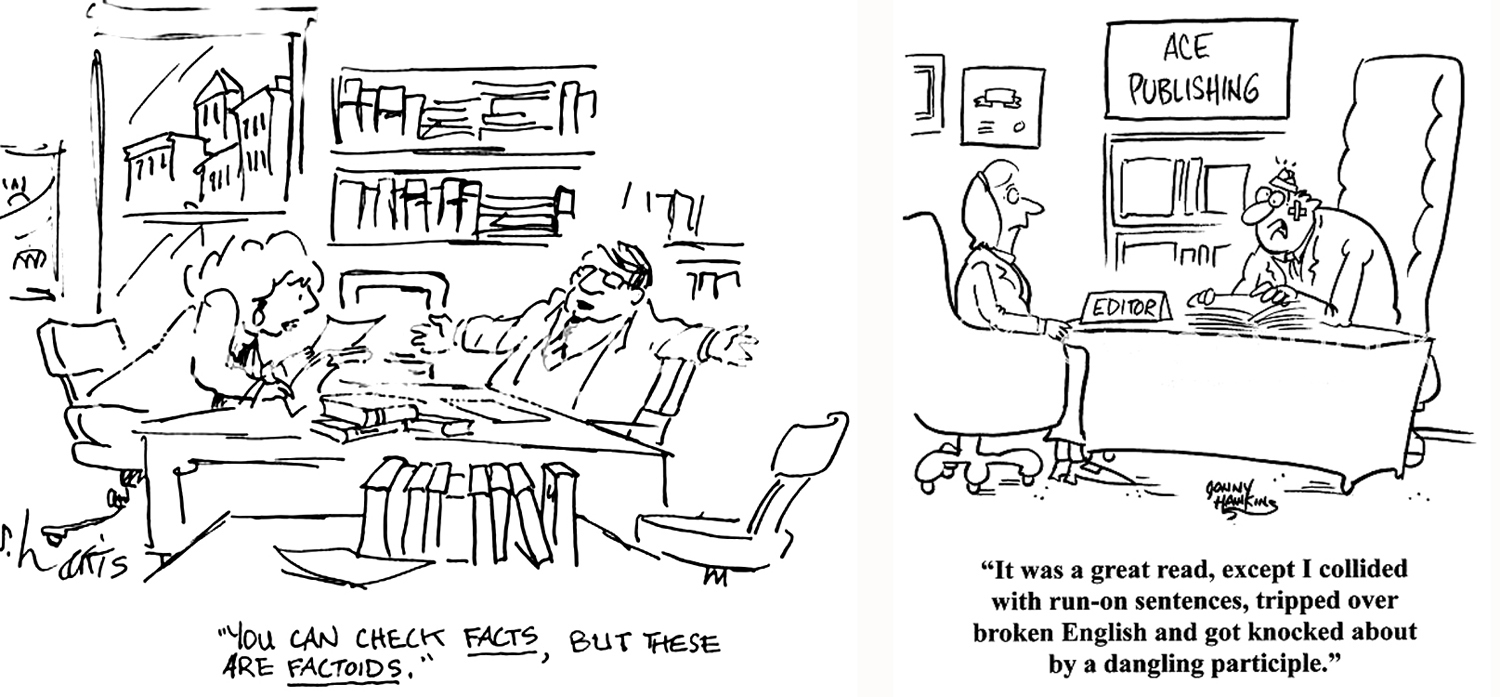
A copy editor works for a magazine or newspaper and is usually one of a team of such editors, who read stories before they are typeset and check not only spelling and grammar, but factual material and legal issues, to say nothing of that great bugbear, the math. English majors are not generally the greatest when dealing with statistics, percentages, fractions — or for that matter, addition or subtraction. 
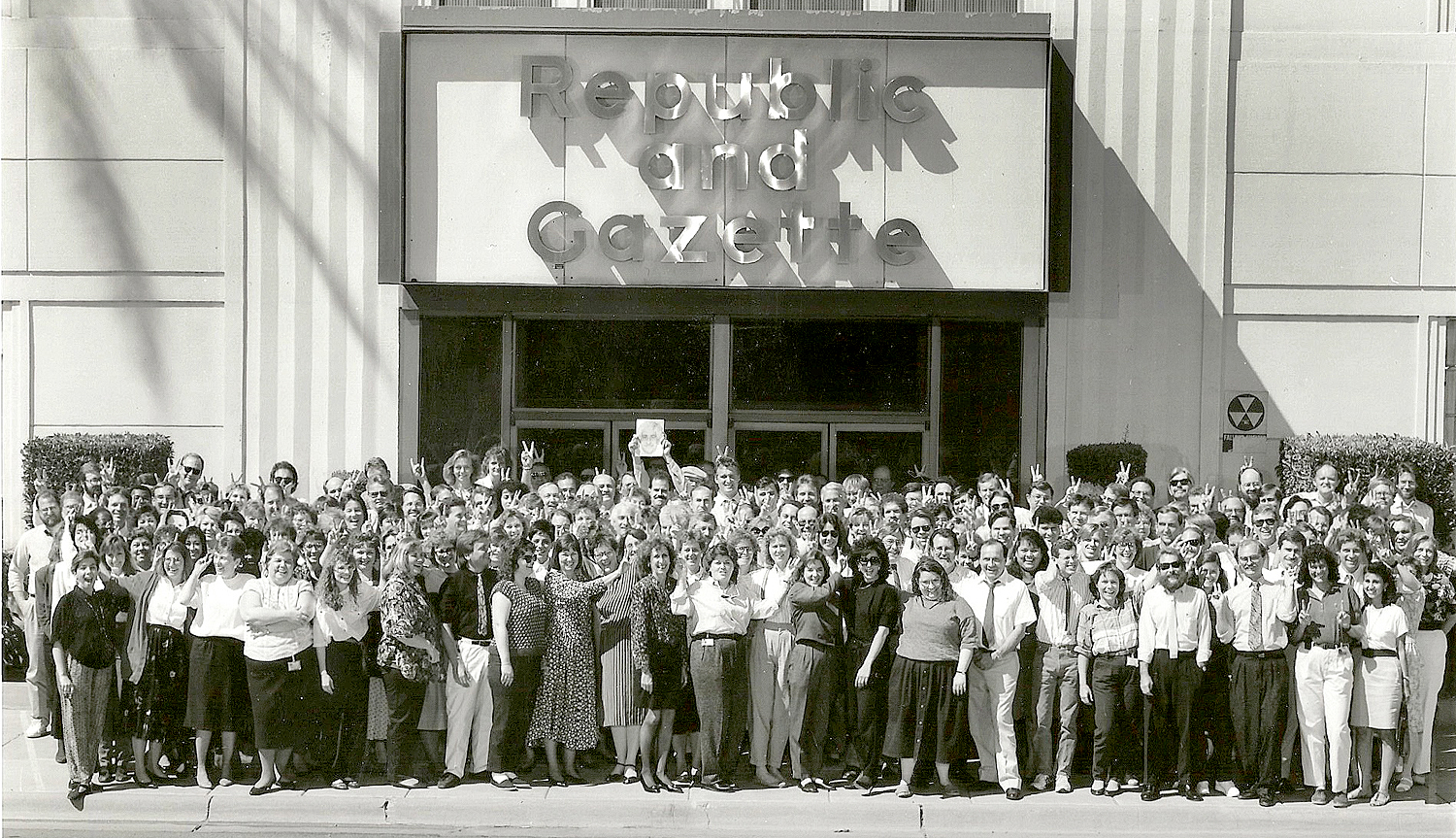
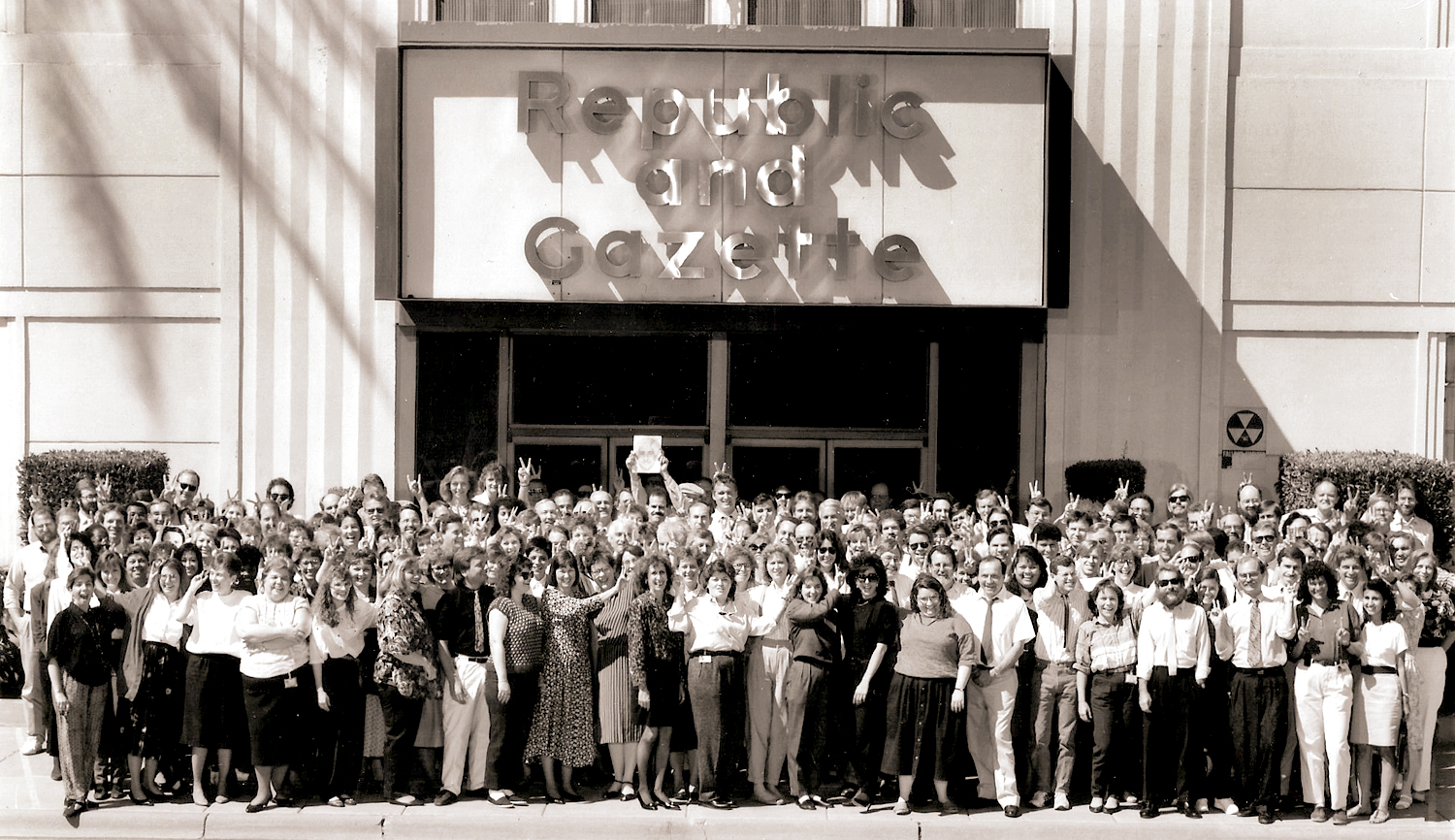
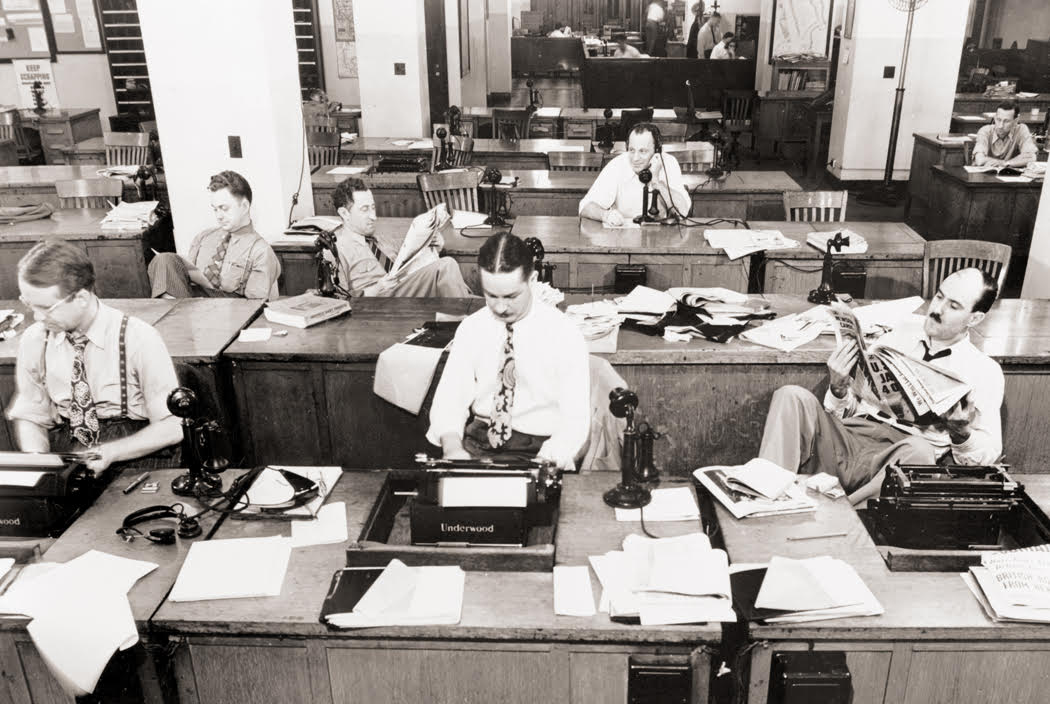
Arizona Republic staff, ca. 1990

In a newspaper the size of The Republic, a reporter turns in a story (usually assigned by the section editor) and that editor then reads it through to make sure all the necessary parts are included, and that the presentation flows in a sensible manner. Section editors are very busy people, dealing with personnel issues (reporters can be quite prissy); planning issues (what will we write about on July 4 this year); remembering what has been covered in the past, so we don’t duplicate what has been done; dealing with upper management (most of whom have never actually worked as reporters) and who have “ideas” that are often goofy and unworkable; and, god help them, they attend meetings. They cannot waste their time over tiny details. Bigger fish to fry. 

Once the section editor has OKed a piece it goes on to the copy editors, those troglodyte minions hunched over their desks, who then nitpick the story, not only for spelling and style — the Associated Press stylebook can be quite idiosyncratic and counterintuitive — but also for missing bits or mis-used vocabulary, and double-checking names and addresses. A copy editor is a rare beast, expected to know not only how to spell “accommodate,” but also who succeeded Charles V in the Holy Roman Empire (Ferdinand I, by the way). 

The copy editor then hands the story over to the Slot. (I love the more arcane features of any specialized vocation). The Slot is the boss of the copy desk. In the old days, before computers, copy editors traditionally sat around the edge of a circular or oblong desk with a “slot” in the center where the head copy editor sat, collecting the stories from the ring of hobbits surrounding him. He gave the stories a final read-through, catching anything the previous readers may have missed. Later the story would be given a headline by a copy editor and that headline given a final OK by the Slot. Only then would the story be typeset. 

That means a typical newspaper story is read at least four times before it is printed. Nevertheless, there will always be mistakes. Consider The New York Times. Every typo that gets through generates angry letters-to-the-editor demanding “Don’t you people have proof-readers?” Well, we have copy editors. And why don’t you try to publish a newspaper every day with more words in it than the Bible and see how “perfect” you are? Typos happen. “The best laid schemes o’ Mice an’ Men Gang aft agley.” 

When I was first hired as a troglodyte minion, I had no experience in journalism (or very little, having spent time in the trenches of a weekly Black newspaper in Greensboro, N.C., which was a very different experience from a big-city daily) and didn’t fully understand what my job entailed. I thought I was supposed to make a reporter’s writing better, and so I habitually re-wrote stories, often shifting paragraphs around wholesale, altering words and word order, and cutting superfluous verbiage. That I wasn’t caught earlier and corrected tells me I must have been making the stories better. 

There was one particular movie critic who had some serious difficulty with her mother tongue and wrote long, run-on sentences, some of which may have been missing verbs in them, or full of unsupported claims easily debunked. (I hear an echo of her style in the speeches of Donald Trump). I regularly rewrote her movie reviews from top to bottom, attempting to make English out of them. 

One day, I was a bit fed up, and e-messaged the section editor that the critic’s review was gibberish and I included the phrase, “typewriters of the gods.” Unfortunately the reviewer was standing over the desk of the section editor and saw my sarcastic description and became outraged. I had to apologize to the movie critic and stop rewriting her work. 

Lucky for me, the fact that I could make stories better brought me to the attention of the section chiefs and I was promoted off the copy desk and into a position as a writer — specifically, I became the art critic (and travel writer, and dance critic and architecture critic, and classical music critic, and anything else I thought of). I’m sure the other copy editors and the Slot were delighted to see the back of me.

That is, until they had to tackle copy editing my stories. I had a few idiosyncrasies of my own. 
Here I must make a distinction between a reporter and a writer. I was never a reporter, and was never very good at that part of the job. Reporters are interested primarily in collecting information and fact. Some of them can write a coherent sentence, but that is definitely subordinate to their ability to ferret out essential facts and relate them to other facts. A reporter who is also a good writer is a wonder to behold. (In the famous team of Carl Bernstein and Bob Woodward, the latter was a great reporter and mediocre wordsmith — as his later books demonstrate. Bernstein was a stylish writer. Together they functioned as a whole). 

I was, however, a writer, which meant that my primary talent and purpose was to put words into an order that was pleasant to read. I love words. From the second grade on, I collected a vocabulary at least twice as large as the average literate reader, and what is more, I loved to employ that vocabulary. Words, words, words.

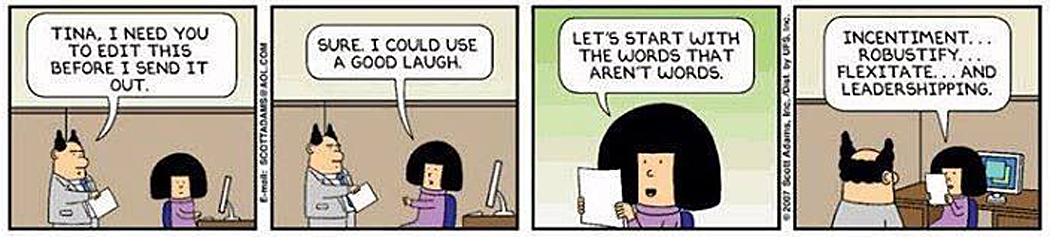
And so, when my stories passed through the section editor and got to the copy desk, the minions were oft perplexed by what I had written. Not that their vocabularies were any smaller than mine, but that such words were hardly ever printed in a newspaper. I once used “paradiddle” in a review and the signal went up from the copy desk to the section editor, who came to me. We hashed it out. I proved to her that the word was, indeed, in the dictionary, and the word descended back down the food chain to the copy desk and the word was let alone. 

But this led to a bit of a prank on my part. For a period of about six months (I don’t remember too clearly exactly, back in the Pleistocene when this occurred) I included at least one made-up word in every story I wrote. It was a little game we played. These words were always understandable in context, and were often something onomatopoetic and meant to be mildly comic (“He went kerflurfing around,” or “She tried to swallow what he said, but ended up gaggifying on the obvious lies”). For those six months, a compliant copy desk let me get away with every one of them. Every. Single. One. Copy editors, despite their terrifying reputation, can be flexible. Or at least they threw up their hands and got on to more important matters.

I will be forever grateful to my editors, who basically let me get away with murder, and the copy desk at The Arizona Republic, for allowing me to write the way I wanted (and pretty much the only way I knew how). Editors, of both stripes, will always be my heroes. 

John McPhee

Back to John McPhee. He describes the difficulty of spotting typos. Of course most are easily caught. But often the eye scans over familiar phrases so quickly that mistakes become invisible. In a recent blog, I wrote about Salman Rushdie’s newest book, Knife, and I had its subtitle as “Meditations After and Attempted Murder.” I reread my blog entries at least three times before posting them, in order to catch those little buggers that attempt to sneak through. But I missed the “and” apparently because, as part of a phrase that we use many times a day, the eye reads the shape of the phrase rather than the individual words and letters. 

There is a common saying amongst writers: “Everyone needs a copy editor,” and when I retired from The Republic, I lost the use, aid, and salvation of a copy desk. I had to rely on myself and my re- and re-reading my copy. But typos still get through. And on the day after I post something new, I will sometimes get an e-mail from my sister-in-law pointing out a goof. She let me know about my Rushdie “and,” and I went back into the text and corrected it (something not possible after a newspaper is printed and delivered). She has saved my mistakes many, many times, and has become my de-facto copy editor. 

But my training as both writer and copy editor have stood me well. Unlike so many other blog posters, I double check all name spellings and addresses, my math and my facts. I am quite punctilious about grammar and usage. And even though it is no longer required, I am so used to having AP style drilled into me, I tend to fall in line like an obedient recruit. 

In his story, McPhee details trouble he has had with book covers that sometimes misrepresented his content. And that hit me right in the whammy. One of the worst experiences I ever had with the management class came when I went to South Africa in the 1980s. Apartheid there was beginning to falter, but was still the law. I noticed that racial laws were taken very seriously in the Afrikaner portions of the country, but quite relaxed in the English-speaking sections. 

And I wrote a long cover piece for the Sunday editorial section of the paper about the character of the Afrikaner and the racial tensions I found in Pretoria, Johannesburg and Cape Town. The Afrikaner tended to be bull-headed, bigoted and unreflective. And I wrote my piece about that (and the fascist uniformed storm troopers that I witnessed threaten the customers at a bar in Nelspruit). The difference between the northern and eastern half of South Africa and its southern and western half, was like two different countries. 

As I was leaving the office on Friday evening, I saw the layout for the section cover and my story, and the editor had found the perfect illustration for my story — a large belly-proud Afrikaner farmer standing behind his plow, wiping the sweat from his brow and looking self-satisfied and as unmovable as a Green Bay defensive tackle. No one was going to tell him what to do. “Great,” I thought. “Perfect image.”

But when I got my paper on Sunday, the photo wasn’t there, being replaced by a large Black woman waiting dejectedly at a bus station, with her baggage and duffle. My heart sank. 

When I got back to the office on Monday, I asked. “Howard,” was the reply. Earlier in this blog, I mentioned management, with which the writer class is in never-ending enmity. Howard Finberg had been brought to the paper to oversee a redesign of The Republic’s look — its typeface choices, its column width, its use of photos and its logos — and somehow managed to weasel his way permanently into the power structure. He was one of those alpha-males who will throw his weight around even when he doesn’t know or understand diddly. I will never forgive him. 

He had seen the layout of my story and decided that the big Afrikaner, as white as any redneck, simply “didn’t say Africa.” And so he found the old Black woman that he thought would convey the sense of the continent. Never mind that my story was particularly about white South Africa. Never mind that he hadn’t taken the time to actually read the story. That kind of superficial marketing mentality always drives me nuts, but it ruined a perfectly good page for me. Did I say, I will never forgive him? 
It reminds me of one more thing about management. In the early 2000s, when The Republic had been taken over by the Gannett newspaper chain, management posted all over our office, on all floors, a “mission statement.” It was written in pure managament-ese (which I call “manglish”) and was so diffuse and meaningless, full of “synergies” and “goals” and “leverage” that I said, “If I wrote like that, I’d be out of a job.” 

How can those in charge of journalism be so out of touch with the language which is a newspaper’s bread and butter? 

These people live in a very different world — a different planet — from you and me. I imagine them, sent by Douglas Adams, on the space ship, packed off with the phone sanitizers, management consultants, and marketing executives, sent to a tiny forgotten corner of the universe where they can do less harm. 

One final indignity they have perpetrated: They have eliminated copy editors as an unnecessary cost. When I retired from the newspaper, reporters were asked to show their work to another writer and have them check the work. A profession is dying and the lights are winking out all over Journalandia. 

Click on any image to enlarge

Over the past dozen years, since my retirement, I have written and posted some 730 blog entries. But I have started many more than that. Some just get forgotten when something more urgent appears; some end short because nothing longer needs to be said. Some just led nowhere. Others began as lists, but ended as lists, unfilled by full sentences. And still more still wait to be written. 

The odd thing, to me, is that there is always something new to write about. With 75 years of life packed into this aging piece of meat, there are endless stories, bits, adventures, ideas, experiences, disappointments and discoveries to draw upon. The well keeps refilling. 

But here are a few fragments that never filled out beyond their early inspiration. Maybe I will get around to it, sometime. 

What is it that women see in men? Because I am a man, I know what men see in women, but I have a hard time reversing the equation. 

I am not here talking of sex or the ardor of the loins — understanding is not required for that; it is simple, direct action — but the desire of women to share company with men. What is the reward for that? Women are so much more interesting, and interested in such a variety of vital issues. Men seem interested only in sports and politics, neither of which carry much import in the lives we live. As I used to say, “Politics answers no question worth asking.” 

____________

2. I was a writer for many years, making my living from putting words against words, hoping to find the best way to express something I hoped would be genuine. 

Recently, my old employer, Gannett, made a new hire, and announced it in such a clot of management-buzz that I got a bad case of hiccups. Newspapers used to have editors, now, with middle management bloated beyond belief, while laying off reporters, photographers and copy editors, what they have is a “Chief Content Officer.” 

The announcement came with a gnat-swarm of buzz words, which may mean something to other management types, but not anything penetrable by actual human beings:

“ ‘We are thrilled to welcome Kristin to Team Gannett to champion innovative storytelling opportunities and develop strategic content initiatives to expand our audience and drive growth,’ Reed said in a Monday news release.”

“Strategic content initiatives?” You would think that those people who run a newspaper would have some sensitivity to language. If I had written prose like that, I would have been out of a job. 

3. The glory that was Greece and the grandeur that was Rome. Or maybe not so much. 

We owe a great deal to ancient Greece. At least, we pay lip service to our debt of democracy, philosophy, literature, science and not least, saving European culture from being overrun by that of Persia. But there are a host of words that describe the part of ancient Greece we would rather forget: Misogyny, xenophobia, pedophilia — come to us dressed in Greek etymology, and descend to us from Greek ideas and practice. We need to address some of the less attractive legacies of that Golden Age. 

Such as patriarchy, idealism, imperialism, colonialism, religious intolerance, cults, ethnocentrism, slavery. To say nothing of understanding sex as an exercise in dominance. And while we may think of Plato as the source of all philosophy, remember that he despised democracy and was an ardent believer in totalitarianism. 

____________

4. Columbus Day is a month away. I expect more anti-Columbus newspaper columns, art, a few tracts and manifestoes and perhaps a new opera. Much current art that tries to be political is really just polemical. To espouse any ideology is to strip life of its complexity. Yes, Columbus was a bad man and the evils he brought with him are real. But instead of preaching to us self-righteously, there are real problems to be discussed, such questions as, “What is in the nature of humans that causes territorial expansion, that causes them to make invisible the people they subjugate, that causes them to divide the world into Them and Us? Why does the boundary of ‘us’ expand and shrink periodically? Why is a world once headed in the direction of one-world nationhood, where the ‘tribe’ is humanity — why is that world now constricting so that nationhood is more tightly defined by blood, so that Serb kills Croat, Azerbaijani kills Armenian? The ethnic separatism that is emerging worldwide is, I believe, a source of exactly the same intolerance that the European West has for so many centuries visited on the rest of the world. Will it devolve to the point that Chiricahua despises Mescalero, or Venetian rises to kill Neopolitan? At what point does a coalition of interests grow from our recognition of our shared humanity?”

Questions such as these are avoided by nearly all political diatribes, whose authors prefer to point fingers and whine like grade-school tattle-tales. If a short perusal of the history of the world teaches us anything, it teaches us that war, inhumanity, violence, intolerance are universal. It isn’t only the Hebrews with their God-ordained genocide of Moabites and Amonites; it isn’t only the Pol Pot regime in Cambodia; it isn’t only Hitler killing Jews and homosexuals; it isn’t only Japan subjugating Manchuria; it isn’t only Custer at Sand Creek; it isn’t only the Hopi at Awatovi.

No one gets off the hook. Native Americans are no more righteous in this than anyone else, from Inca to Aztec to Lakota. If artists and writers chose to look a little closer, they could use Columbus as a metaphor for something richer, profounder, truer. They could have seen that Columbus was not sui generis, but rather representative of the species.

As it is, they came off sounding self-righteous. And no one self-righteous ever has much self-knowledge.

____________

5. Stasis is the enemy. Or rather, because stasis is utterly impossible, the idea of stasis is the enemy. It is the fatal stumbling block of every religion, political philosophy and marriage that has ever existed. Over and over, hundreds, thousands, millions of people die because someone promised them that if we only do things my way, everything will be forever hunky peachy. 

It is the lie behind the “original intent” argument espoused by some Supreme Court justices, and behind the infantile promises of politicians — most on the right, these days — that their policies will “finally” fix things and make them good forever. (In the past, it was the left and Marxism that promised a final end of historical change. It is not the sides one takes, but the phantom of permanence). 

The problem is that stasis is always temporary, which makes it not stasis. I.e., stasis is a pipe dream. 

____________

6. In America, “no” has become a dirty word. Americans like the positive attitude, the gung-ho approach to things. We feel actual moral disapproval of the word “no.” 

It can make your life easier and simpler. It can shake a load of guilt off your back. Although people talk of simplifying their lives, you can never simplify by doing something, you can simplify only by not doing something.  Just say no. It is the yang to “yes’s” yin, and the universe cannot function without both. 

“Yes” is kind of namby-pamby. “Yes” doesn’t want to hurt anyone’s feelings. “Yes” is go-along to get along. 

“No” is emphatic, direct, take-no-prisoners. “No” means no. Every change and improvement in life, every revolution begins with a “no.” 

In some way, every important historical development starts with somebody or some group saying no. Dissatisfaction, after all, is the great inspirer of humanity. If we were all duck happy all the time, nothing would ever get done.

7. I am 75 and am near death (Oh, I’m generally fine, but old and weak) and I think about non-being quite a lot, but not with fear, but a kind of objective interest in the whole idea of no longer hearing birds or feeling the breeze on my skin. Death seems to me a natural “rounding off” of a life and not something that I need to hold in my mouth like a tough crust of bread. 

I saw Carole take her last breath. I felt her turn instantly cool to my touch, like I was touching unfired clay. She ceased being. It was uncanny. My grief was incalculable — and it still is, although worn down — but it felt as inevitable or as natural as the coming of winter. I know the same awaits me — “To die — to sleep no more.” No dreams. Nothing. 

I didn’t sense a spirit or soul leaving her body, just her body ceasing to produce her being, like a light bulb blown out. We don’t ask a burnt-out lightbulb “where did the light go?” It ceases being generated. 

____________

8. One of my problems with Rilke is that I have no use for categorizing angels and animals. Angels don’t exist — not even as metaphors for me — and I accept that I, as a human being, am an animal. I am not so fast to accept that no animals know they are going to die. We have no evidence for that assumption. Perhaps they do; perhaps they don’t. I suspect that some, such as porpoises or whales, may very well have some concept of death. I remember when we human beings were so sure that what separated us from the beasts was tool-making. Ah, but then we discovered how many other animals forge tools.

9. It has seemed to me that part of the German soul is to speak in general and categorical terms, in ideas, rather than in things. It leads to mistaking words for reality. Logic has its own logic, but it is not the logic of the world. (Whole rafts of philosophy, including my hated Plato, only seem to work in words. You can prove with logic that Achilles can never catch the tortoise, but that ain’t how it works in reality.)

But I fear that they are much more about language than about experience. And that is my problem in a nutshell. I made my living with language, and I love words to distraction, but the older I get the more I am convinced that language is merely a parallel universe, with an order and meaning of its own, roughly mirroring the world, but never actually connecting, never touching the pulse of reality. I know, it’s all we have, but I still counsel wariness. 

10. “These fragments I have shored against my ruins.” Why write at all? It is a question I have wrestled with all my life. Do I have anything worth saying to be value to anyone else? Dr. Johnson said that “nobody but a blockhead ever wrote except for money.” Well, I’m a blockhead: I no longer get paid to string words together. But it doesn’t seem to come as a choice. Some may choose to write; I write with the same volition as I breathe. 

Early in my life, words were thin and sparse; it seemed as if there were a lack of hydrostatic pressure from within: I needed to fill myself first. But after living a certain time, the inside pressure grew and it had to come out. It became a fountain I could not stop if I had wanted to. And the well was constantly recharged. 

Now I am old, and travel becomes difficult, habits become settled, reading more and more becomes re-reading. In retirement I can no longer afford to attend concerts, plays and dance the way I used to. The incoming has slowed, and I suppose the outflow has dwindled in response, but the backpressure is still there. Hoping to cease not till death.

There were a lot of pleasures to working for a newspaper before the imposition of austerity that followed corporate buy-outs. The earlier parts of my career in the Features Department with The Arizona Republic in Phoenix, Ariz., came with great joys. 

Before being eaten up by Gannett, The Republic was almost a kind of loony bin of great eccentrics, not all of whom were constitutionally suited to journalism. Those days, it was fun to come to work. When Gannett took over, it imposed greater professionalism in the staff, but the paper lost a good deal of personality. Those who went through those years with me will know who I’m talking about, even without my naming names. But there was a TV writer who tried to build himself a “private sanctum” in the open office space, made out of a wall of bricks of old VHS review tapes. There was a society columnist who refused to double-check the spelling of names in his copy. A movie critic who could write a sentence as long as a city bus without ever using an actual verb. She was also famous for not wearing underwear. 

I could go on. There was the travel writer who once wrote that in Mexico City there had been a politician “assassinated next to the statue commemorating the event.” And a naive advice columnist whose world-view could make a Hallmark card seem cynical. The book editor seemed to hate the world. The history columnist was famous for tall-tales. 

And let’s not forget the copy editor who robbed a bank and tried to escape on a bicycle. 

There were quite a few solid, hardworking reporters. Not everyone was quite so out-there. But let’s just say that there was a tolerance for idiosyncrasy, without which I would never have been hired. 

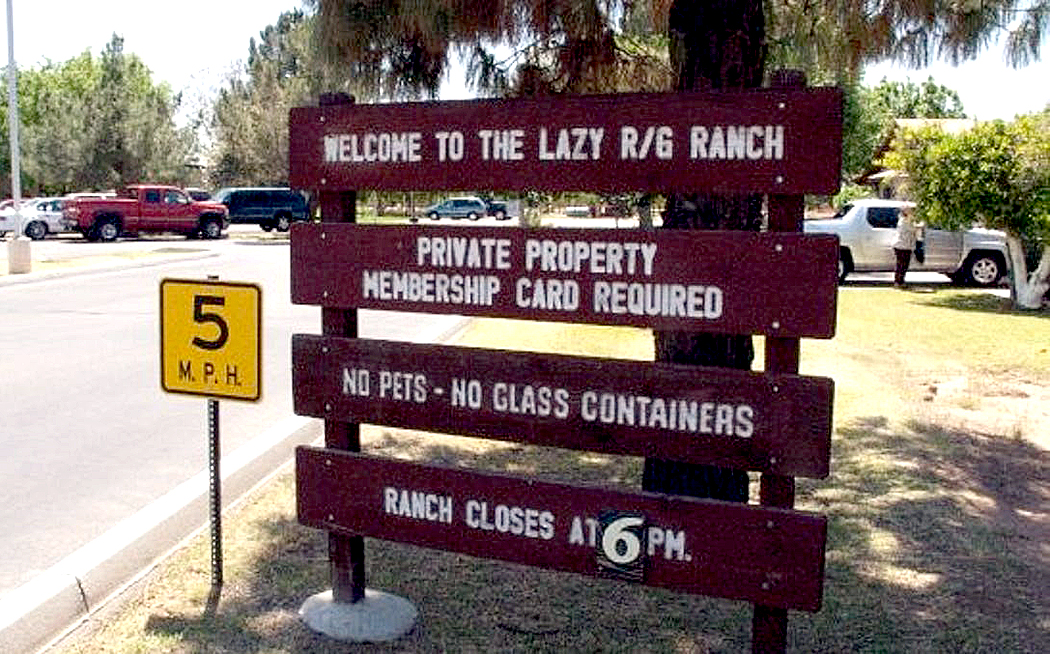
The newspaper had a private park, called the “Ranch,” where employees could go for picnics and Fourth-of-July fireworks. The managing editor was best known for stopping by your desk on your birthday to offer greetings.  

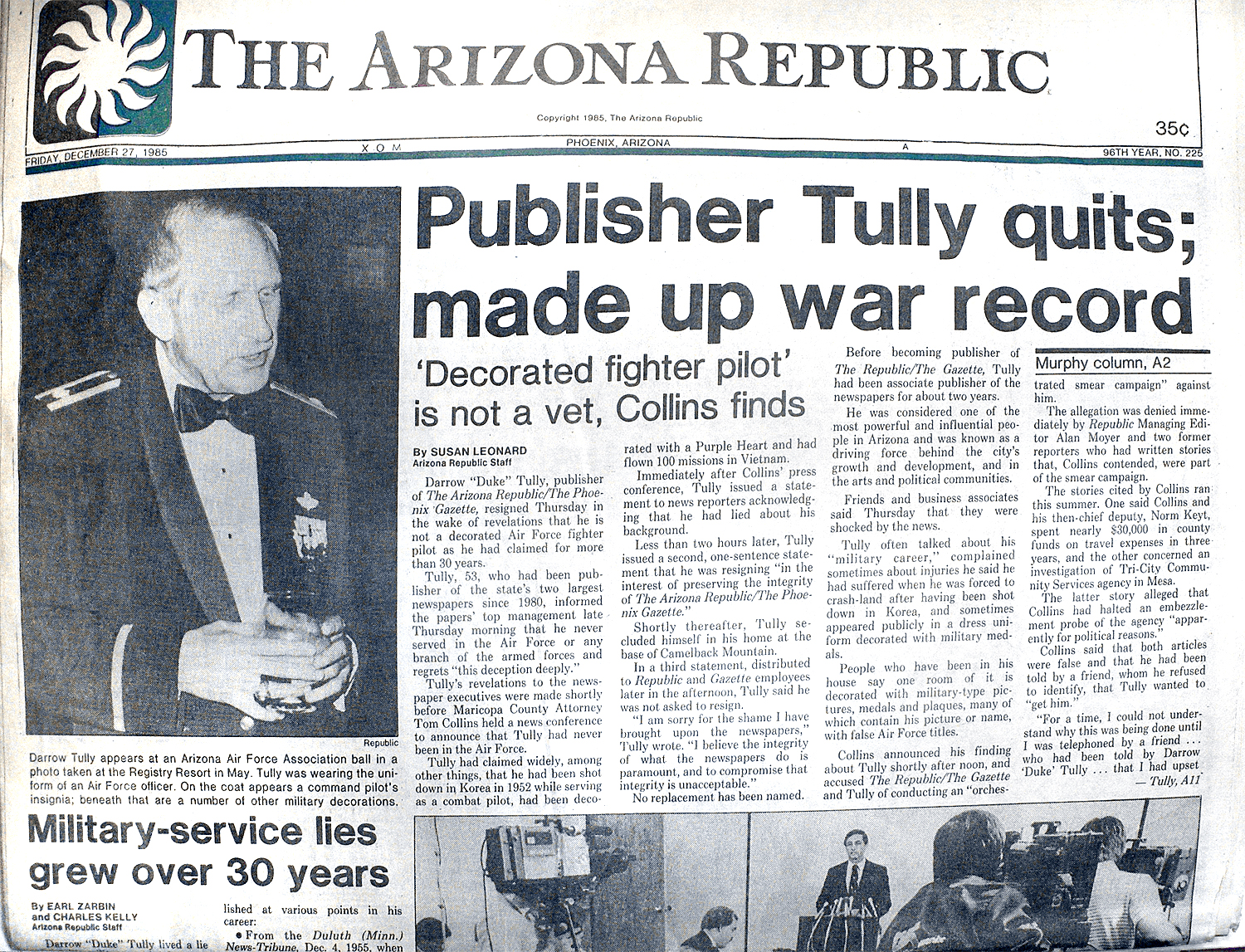
What can I say? Just a few months before I was hired, the publisher of the paper resigned in disgrace when it was revealed that his fabulous military career as a Korean War pilot (he was often photographed in uniform with his medals) was, in fact, fabulous. It was a fable he made up. 

And so, this was an environment in which I could thrive. And for 25 years, I did, even through corporate de-flavorization and a raft of changing publishers, executive editors, editors-in-chief and various industry hot-shots brought in to spiffy up the joint. I was providentially lucky in always having an excellent editor immediately in charge of me, who nurtured me and helped my copy whenever it needed it. 

(It has been my experience that in almost any institution, the higher in management you climb, the less in touch you are with the actual process of your business. The mid-level people keep things functioning, while upper management keeps coming up with “great ideas” that only bollix things up. Very like the difference between sergeants and colonels.)

The staff I first worked with, with all their wonderful weirdnesses, slowly left the business, replaced with better-trained, but less colorful staffers, still interesting, still unusual by civilian standards, but not certifiable. The paper became better and more professional. And then, it became corporate. When The Republic, and the afternoon Phoenix Gazette, were family-owned by the Pulliams, we heard often of our “responsibility to our readers.” When Gannett bought the paper out, we heard instead of our “responsibility to our shareholders.” Everything changed. 

And this was before the internet killed newspapers everywhere. Now things are much worse. When I first worked for The Republic, there was a staff of more than 500. Now, 10 years after my retirement and decimated by corporate restructuring and vain attempts to figure out digital journalism, the staff is under 150. I retired just in time. 

Looking back, though, I realize that every job I’ve ever had has had its share of oddballs. 

The first job I had, in my senior year at college, was on the groundskeeping team at school. It was full of eccentrics, mostly Quakers fulfilling their alternative service as conscientious objectors during the Vietnam war. One day, Bruce Piephoff and I were trimming the hedges at the front gate and he lit up a joint and offered me one. Traffic streamed in front of us, but he didn’t seem to mind. A few years later, Piephoff robbed a restaurant, grabbing everything he could from the till and then walking up the street throwing the cash at anyone he passed. He seems to have done well since then, now a singer and recording artist. 

Later, I worked at a camera store. My manager was Bill Stanley, who looked rather like Groucho in his You Bet Your Life days. Stanley chewed on a cigar all day, turning it into a spatulate goo. He had an improvisatory relation with the English language. When an obnoxious customer began spouting stupid opinions, Stanley yelled at him, “You talk like a man with a paper asshole.” When someone asked about the big boss, Stanley told her, “He came through here like a breeze out of bats.” Every day there were new words in new orders. 

When I worked at the Black weekly newspaper, the editor was a drunk named Mike Feeney, who had once worked at the New York Times and I would see him daily sitting at his desk surrounded by a dozen half-finished paper cups of coffee, some growing mold, and he would be filling out the Times crossword puzzle, in ink! And he would finish it before ever getting to the “down” clues. He gave me my first lessons as a reporter. “What reporting is,” he said, “is that you call up the widow and you say, ‘My condolences, I’m sorry that your husband has died, but why did you shoot him?’” 

The zoo in Seattle was also full of crazies. There was Bike Lady, Wolf Man, Gorilla Lady. And the kindly old relief keeper, Bill Cowell. One day, the place was full of kids running around screaming, spilling soda pop and popcorn, and Bill leaned over to me, “Don’tcha just wanna run them over?” 

And I finally got to be a teacher, in the art department of a two-year college. The art staff was especially close, and we had dinner together about once a week. There were some great parties. A Thanksgiving with a contest to make sculpture out of food. The winner was an outhouse made from cornbread, with a graham cracker door and a half a hard-boiled egg as a privy seat. I made a roast chicken in the form of Jackie Gleason, with a pear attached as his head. Another time the drawing teacher, Steve Wolf helped us put on a shadow-puppet show. He had us falling on the floor with the most obscene performance he called, “The Ballerina and the Dog.” 

And so, I suppose I have always worked with a class of people outside the normal order. So, when I was hired by the Features editor at The Republic and he was wearing Japanese sandals, it hardly registered with me. Mike McKay gave me my first real job in newspapers. 

 But, oh, how I loved my years there. Newspapers everywhere were profit-rich and the paper was willing to send reporters all over to cover stories. I benefited by getting to travel across the country, and even the world. 

I was primarily an art critic — and ran immediately afoul of the local cowboy artist fans when I reviewed the annual Cowboy Artists of America exhibition and sale at the Phoenix Art Museum. It was one of the major events on the social calendar, when all the Texas oil millionaires would descend on Phoenix to buy up pictures of cowboys and Indians. 

The event was an institution in the city, but I wasn’t having any of it. I wrote a fairly unfriendly review of the art and got instant pushback. I wrote, among other things, “It’s time, Phoenix, to hang up your cap pistols. It’s time to grow up and leave behind these adolescent fantasies.” And, “their work is just, well, maybe a few steps above black velvet Elvis paintings.” I was hanged in effigy by Western Horseman magazine. It was great fun. 

But my portfolio expanded, and by the end of my sojourn in the desert, I was also dance critic, classical music critic and architecture critic — one of the last things I did was complete a 40,000 word history of Phoenix architecture. I also became back-up critic for theater and film. And I wrote hundreds of travel stories. 

The paper sent me to Boston, New York, Chicago, Miami, San Francisco, Reno, and almost once a year, to Los Angeles. I covered major art exhibits by Van Gogh, Cezanne, Audubon, Jackson Pollock, among others. 

Because Frank Lloyd Wright had a Scottsdale connection, I wrote about him often and got to travel to and write about many of his most famous buildings, including Taliesin in Wisconsin and Falling Water in Pennsylvania. 

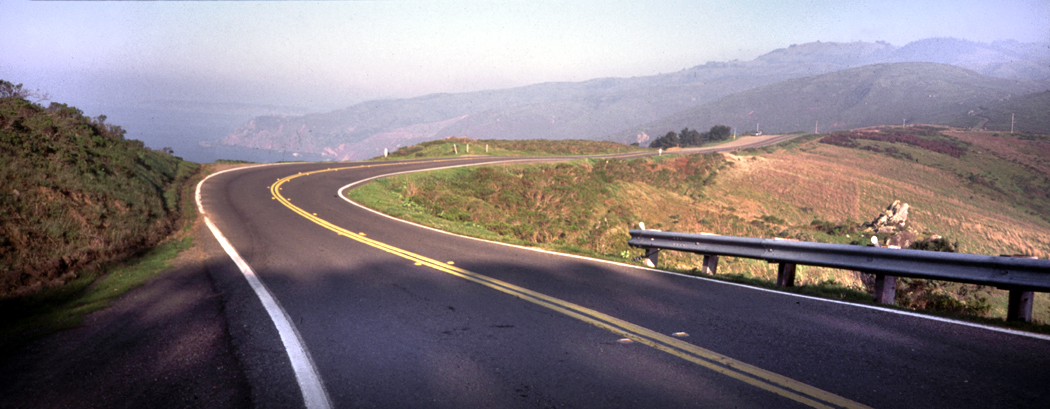
Pacific Coast Highway

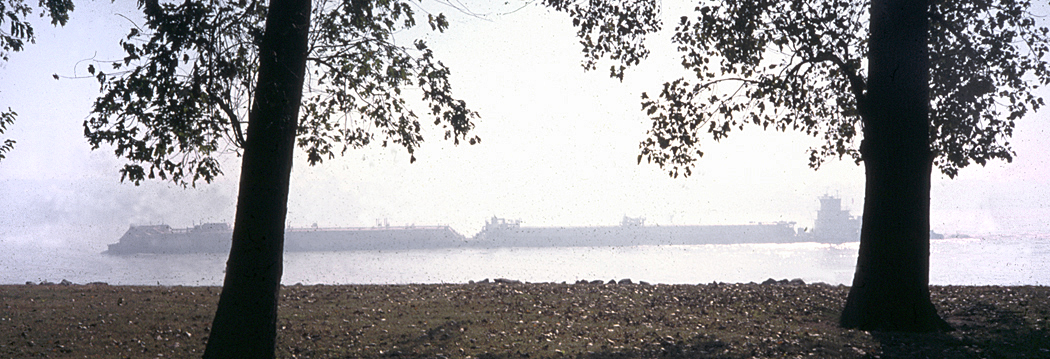
But the best were the travel stories, as when they let me take 10 days to drive up the Pacific Coast Highway from Tijuana to Vancouver, or another time when I also drove from Mexico to Canada, but along the Hundredth Meridian in the center of the continent — and then down the Mississippi River from Lake Itasca in Minnesota to the Gulf of Mexico. Over several different trips, I cobbled together a series of stories about the Appalachian Mountains from Alabama to the Gaspé Peninsula. 

Mississippi River near Cairo, Ill. 

I had assignments that let me cover all the national parks in Utah, and several excursions to every corner of Arizona. In 1988, I went to South Africa for the paper. 

Indian Ocean, Durban, South Africa

Of course, when Gannett took over, the travel miles shrunk to near zero. They didn’t want to pay for anything they didn’t absolutely have to. 

I left in 2012. The handwriting was on the wall. Thoughtful pieces about art and culture were no longer wanted. We were asked to provide “listicles,” such as “Top 5 things to this weekend.” After I left, I heard from former colleagues how the photography staff was let go, the copy editors were fired — how can you run a newspaper with no copy editors? They are the heart of a newspaper. They saved my butt I don’t know how many times. But no, they are all gone. 

It was a sweet spot I was lucky to have landed on, to be able to observe the old “Front Page” days in their waning glory, and leave when everything was drowning in corporatism. I have often said that if Gannett thought they could make more money running parking garages, they would turn The Republic building into one. 

When I left, a group of colleagues bought and gave me a blog site. I’ve been writing on it ever since — now just under 700 entries — and it proves what I have always said, writers never really retire, they just stop getting paid for it.

In addition to this blog, which I have been writing since 2012, I have written a monthly essay for the Spirit of the Senses salon group in Phoenix, Ariz., since 2015. I was, at various times, a presenter for the salon, which arranges six to 10 or so lectures or performances each month for its subscribers. Among the other presenters are authors, Nobel Prize-winning scientists, musicians, lawyers and businessmen, each with a topic of interest to those with curious minds. I recently felt that perhaps some of those essays might find a wider audience if I republished them on my own blog. This is one, from Sept. 4, 2019, is now updated and slightly rewritten.

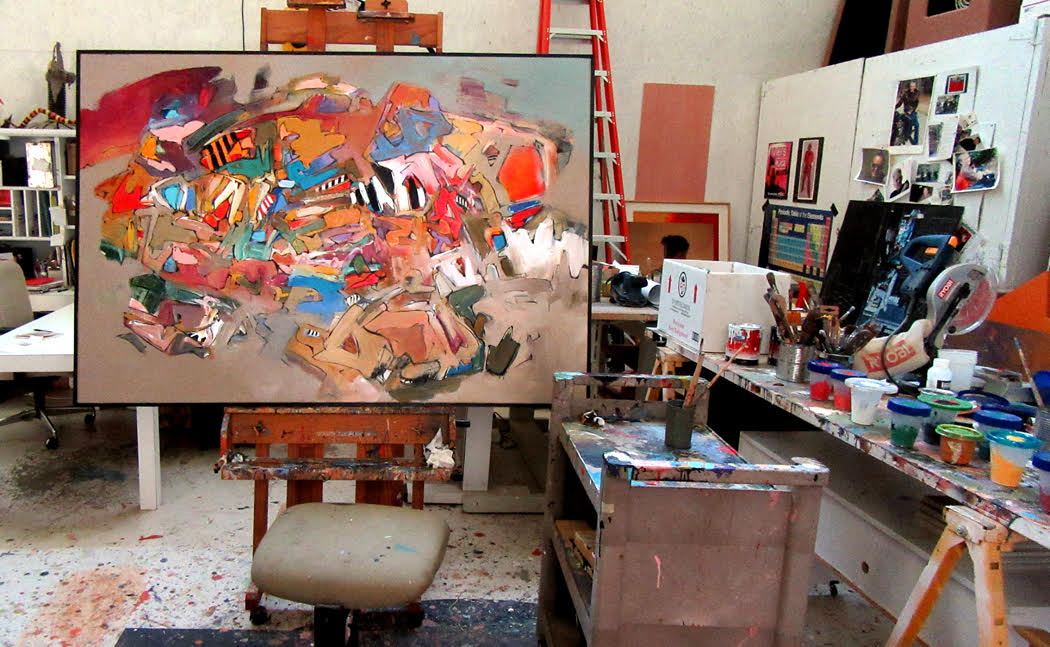
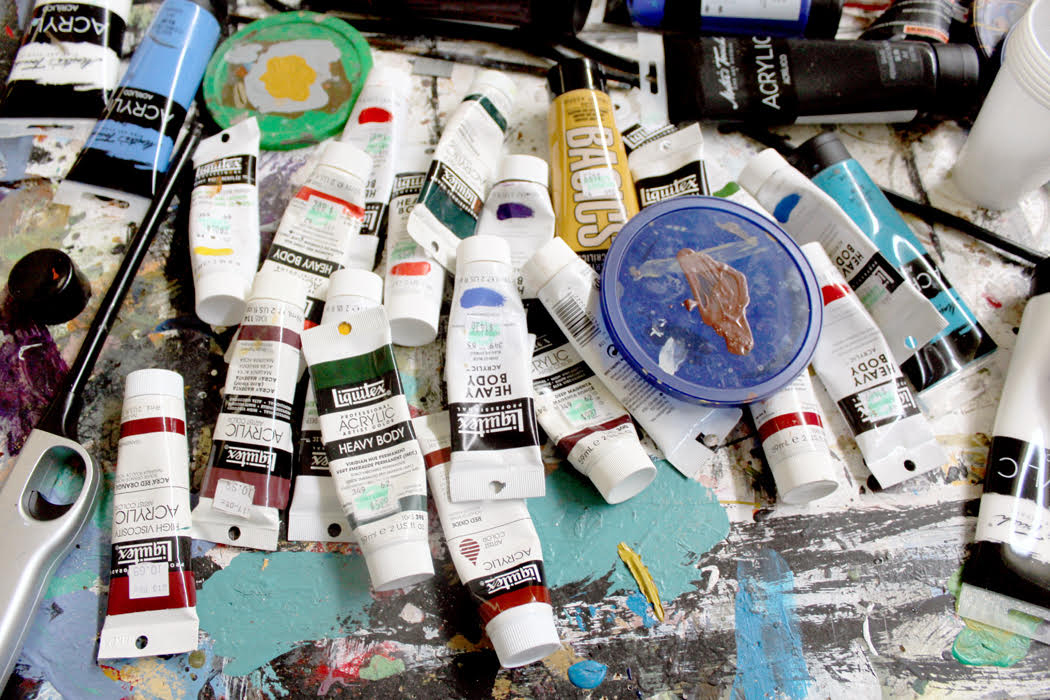
One of my great pleasures, when I was an art critic, was visiting artist studios. Certainly, there was usually a mess, spattered paint, cans dripping or tubes squeezed, and rags and brushes. Things taped to the walls, papers scattered and, often, music blaring. But there was also a sense of purpose, a sense that someone here knew what he or she was doing.

I had that sense again recently while visiting my brother-in-law, the painter Mel Steele. I love his work. And I can watch over time as he works and reworks his canvas, trying this or that to make it better.

Mel is a professional. And by that, I don’t just mean he sells his work, or that he is talented. That goes without saying. I mean something more particular. It is something I see in the work and work habits of many artists I have come across, from Jim Waid to James Turrell.

I have been thinking about the manifest difference between the work of an amateur and that of a professional. And I don’t mean to denigrate the work of amateurs. Indeed, there are professionals stunning mediocrity and there are amateurs hugely talented. No, I mean something about the approach to the work.

This is something that I have been cogitating about since retiring. Without making any great boast about my own writing, I can say with utter confidence that I wrote as a professional. This is not a claim about quality or greatness, but about some inner acquaintance with the nitty-gritty of the craft. It has been 10 years since I worked for The Arizona Republic and I can say with confidence that writers never really retire: They just stop getting paid. 

In 25 years with the newspaper, I wrote three-and-a-half million words. Since retiring, I have written another million-and-a-half for this blog. My fingers get itchy if they don’t pound a keyboard. 

In his book, Outliers, Malcolm Gladwell writes that the secret to achieving meaningful achievement is to repeat something 10,000 times. The book has been trashed by many critics as a kind of pop psychology, but without taking the actual number as gospel, certainly one of the things that makes a professional is that repetition. You don’t become a professional — as I mean it here — by being hired. You do it over the long haul, writing every day for years. Or painting every day for years. Or dancing, or playing violin. Or, for that matter, plumbing or dealing in the stock market.

For all that patience, what you get are several things. First, you get better at what you do. But you also become familiar with the business. By that, I don’t just mean the financial side of the work, but the daily bits of familiar habit. As a writer, that means understanding deadlines, the importance of editors and copy editors, the argot of the trade — point size, picas, inches, folios, air, heds, ledes, trims, slots, cutlines, sidebars, widows, and more than I can even now remember. But was once the lingo of my daily life.

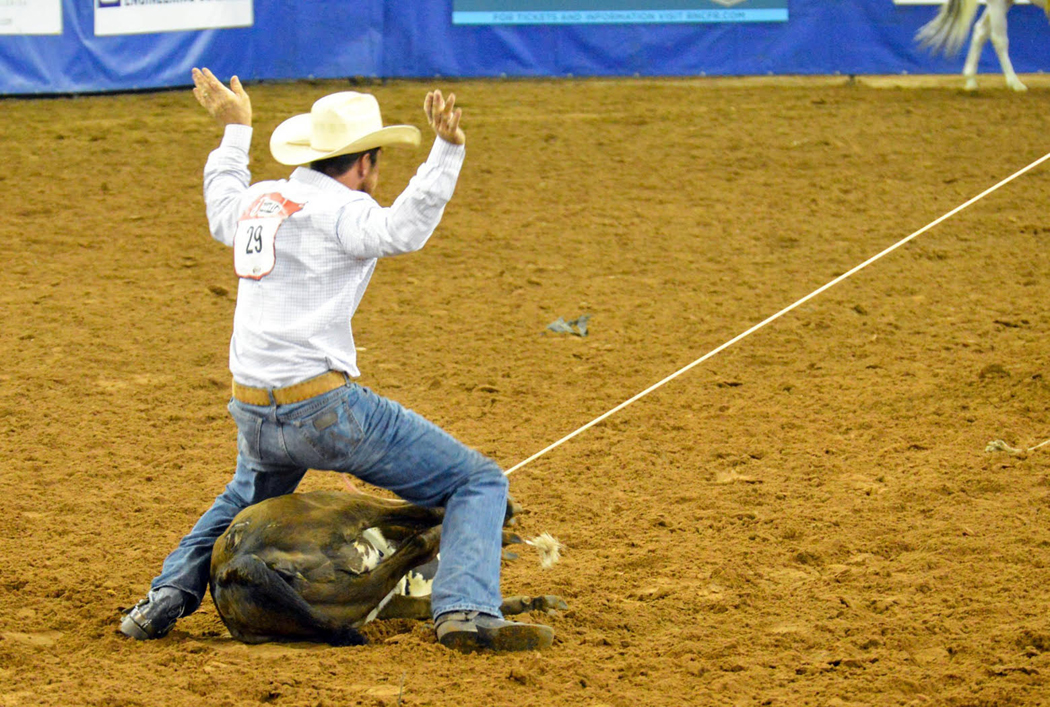
If told I had 10 inches to fill on deadline, I could write a piece that would come in at 10 inches, give or take nary more than a line, before I even measured it. You just have the feel of it. Occasionally, I would return to the office from a concert at 10:50 p.m. to write a review and have 10 minutes to file before deadline. I could whip that sucker out: Ten inches in 10 minutes, and feel at the end like a rodeo cowboy tying the feet of a calf and throwing my arms out in triumph.

More important, you divest yourself of the bad habits of your amateur years and your novitiate. You unconsciously avoid using the same word twice in paragraph; you vary your sentence length; You know instinctively to include just the amount of background your reader needs, without burdening him or her with unnecessary detail; and you know in what order to present that background. You become aware of consistency within a piece. You know the difference between first ref and subsequent. You don’t leave readers hanging with unfamiliar and unexplained acronyms.  Do you know where commas fall? Do you abbreviate “street” or not? All this comes with familiarity and practice. And becomes second nature.

I now look with embarrassment at something I wrote when I first came to the newspaper business because I see all the stupid mistakes I made. Rookie mistakes. Over time and countless deadlines, you leave those inelegancies behind.

Most of all, you gain a comfort level: a sense that you know what you’re doing. Like a pianist who can run his spider fingers up and down the keyboard and confidently hit each B-flat as it passes. Or a painter who automatically reaches for the Hooker’s green because the Phthalo won’t give him the shade he needs.

You watch Jacques Pepin on TV slicing an onion and you can see how second-nature it has become, how quickly and accurately he does it. He knows how to make an omelet because, as he preaches, he’s done it 10,000 times. There may be more creative or innovative chefs out there, even among amateurs, but you have to admire Pepin for his confident professionalism.

Nor is a professional precious about his work. Museum curators can be fussy about white gloves and humidity levels, but the artists themselves are seldom so concerned. If they screw up, “I can always paint another one.” It is not unusual for Mel to paint over some detail he was unhappy with, even weeks or months later, to alter the work. It is only amateur writers who bitch and moan about editors changing their sacred texts. Editors (good editors — and I was lucky to have only good ones) make the writing better, cleaner, more precise. Even such things as cutting stories to fit news holes won’t perturb the professional. He may negotiate, but he won’t whine.

I’ve written about artists and journalists because that is the world I know best. But much the same could be said about professional musicians, construction foremen or career diplomats. Professionalism, as I mean it here, is not simply about being paid; it is an attitude. An approach to the work. A comfort level and familiarity, an ease, an assurance.

And any true professional can spot a navvy in an instant. You won’t necessarily feel superior, but you will feel a kind of pity for the poor beginner. There is so much to learn that is entirely beyond merely talent.