Archive

Tag Archives: paying attention

I remember, as a child, going to the zoo and being impatient if I couldn’t see the animal immediately. The lion was off in the shade at the back? Move to the next animal. Children often have short attention spans, and I was no different. 

As I’ve aged, I’ve been surprised to discover how much more I can concentrate, how much more patient I’ve become. I can look long and hard until I see the lion, and wait to see what it will do next. Perhaps lick its paw; perhaps roll over and snooze. Oddly, with less time left on this earth, the amount of time I’m willing to wait has become inversely proportional. 

I am now an old man, with a powerful sense of how few years I will be able to enjoy this existence. People I knew and loved have left before me, giving me an imminent sense of what to expect.  

Maybe I am just growing soft in the head, or is it simply old age and the recognition that annihilation isn’t that far off, or some other cause, but I am almost daily having moments of utter beauty that remind me what I love about being. Moments that James Joyce might have called “epiphanies.” 

I have been going out and sitting on the back patio pretty much every day, usually for a half-hour at a time, sometimes longer, and saying to myself — or is it to the universe — “Show me something.” And every day, if I wait long enough and be patient enough, something will happen. 

Yesterday, a hummingbird flew not more than a couple of feet from my face to hover in front of a basil flower and then buzz back past me as he left. Another time, it was two cottontail rabbits hopping across the back yard, first one and as I watched it, a second one caught up. 

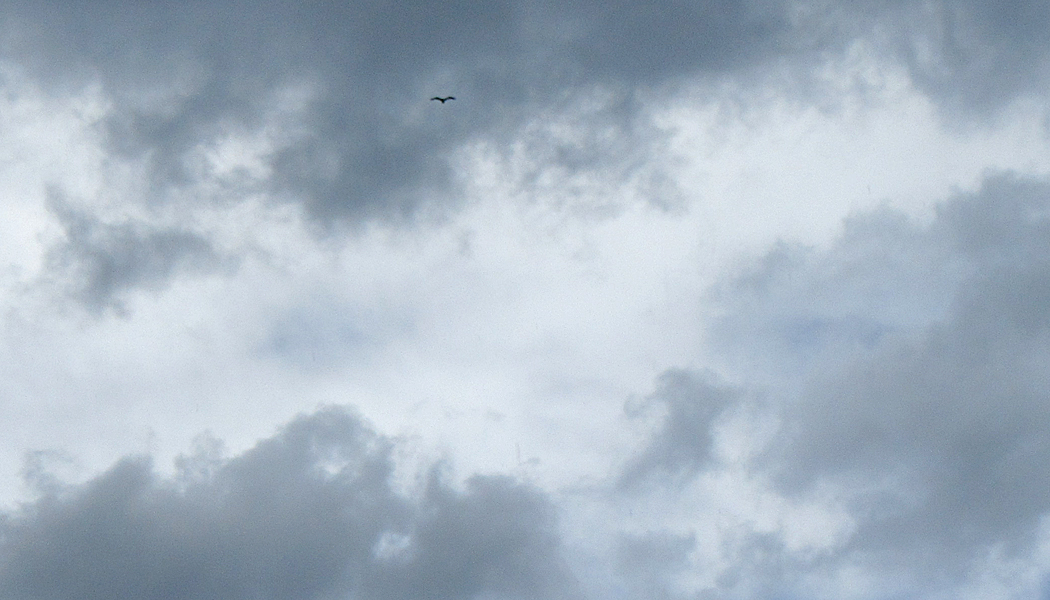
Once, I watched 15 vultures soar and climb in the air currents, one eventually so far up it was no bigger than a period at the end of a sentence in a book held at arm’s length. Yet again, a mockingbird sat on the roof of the shed beside the patio and sang his medley over and over, like I wasn’t there. Squirrels run around with acorn in their tiny front arms. A towhee landed on the steps of the shed. A rise of cumulus clouds was so white against the sky blue it nearly blinded. 

It never seems to fail. Each day, it is something new to delight me, and to remind me of the tremendous animation of the cosmos, and how minor fluctuations pile on top of one another to make it all new. 

A bright red cardinal flew directly at me, just a few feet above the grass, and turned away at the last minute to fly to my right and up over the roof behind me. 

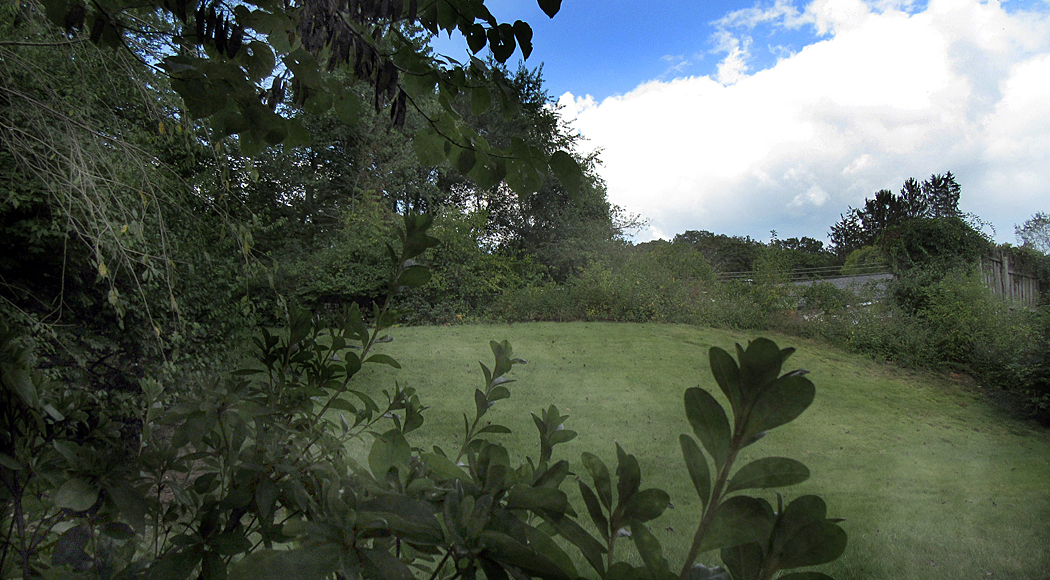
A groundhog poked out from the brush and glanced at me and then, apparently deciding I was no threat, waddled across the full stretch of the back lawn to disappear in the brush at the other side. Not a lot happens over the course of an hour sitting there, but every time I go out, there is something for me, as if the cosmos knew I was paying attention and wished to reward my efforts. 

Recently, I heard a crow caw, looked up and watched as he flew in a great “S” curve, coming from behind me on my right, flying past me to the left no more than 20 feet away, then looped back to the right, circled away and looping back to the left and eventually behind the stand of trees, uttering caws the whole way. The curve was so graceful, I felt it in my esthetic sense. “As the crow flies?” Not a straight line. 

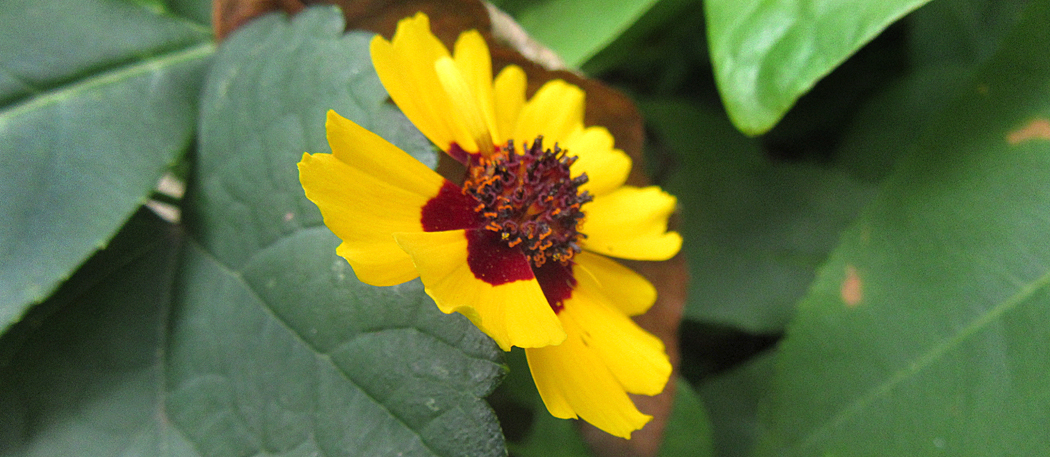
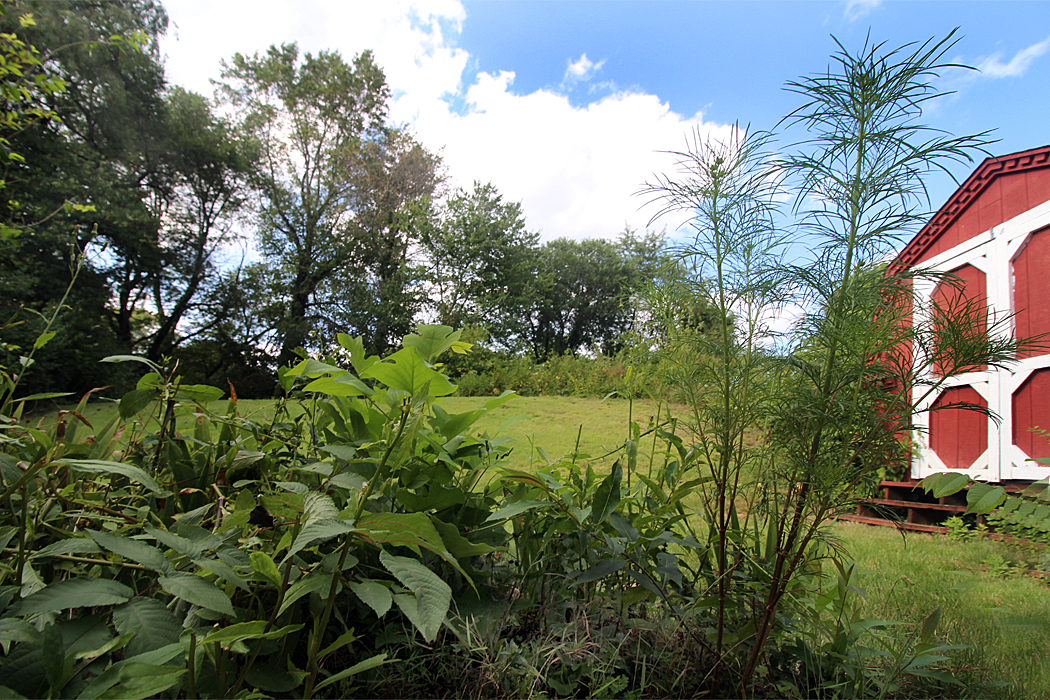
And so, every day, I sit and wait for the moment that the butterfly will land on the flowers at the edge of the patio, or the wasp will pause on the bluish florets of the mint. Or I will notice a small yellow flower that wasn’t there the day before. 

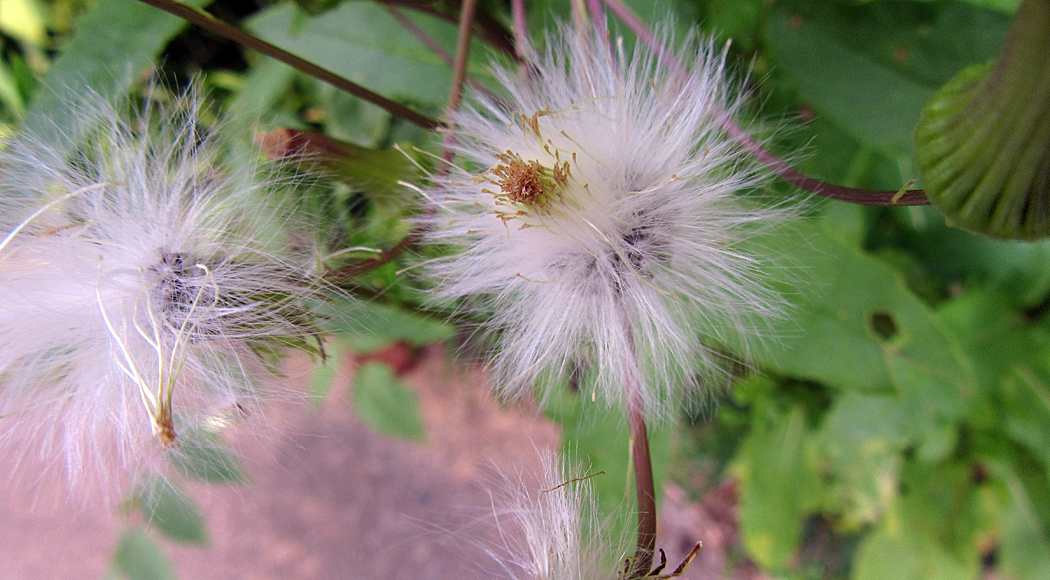
It is fall, and one of those flower seeds with its wisp of fibers landed on my shirt. I held it up in the light to see its tiny hard black seed and it reminded me of Carl Sagan’s “spaceship of the imagination.” 

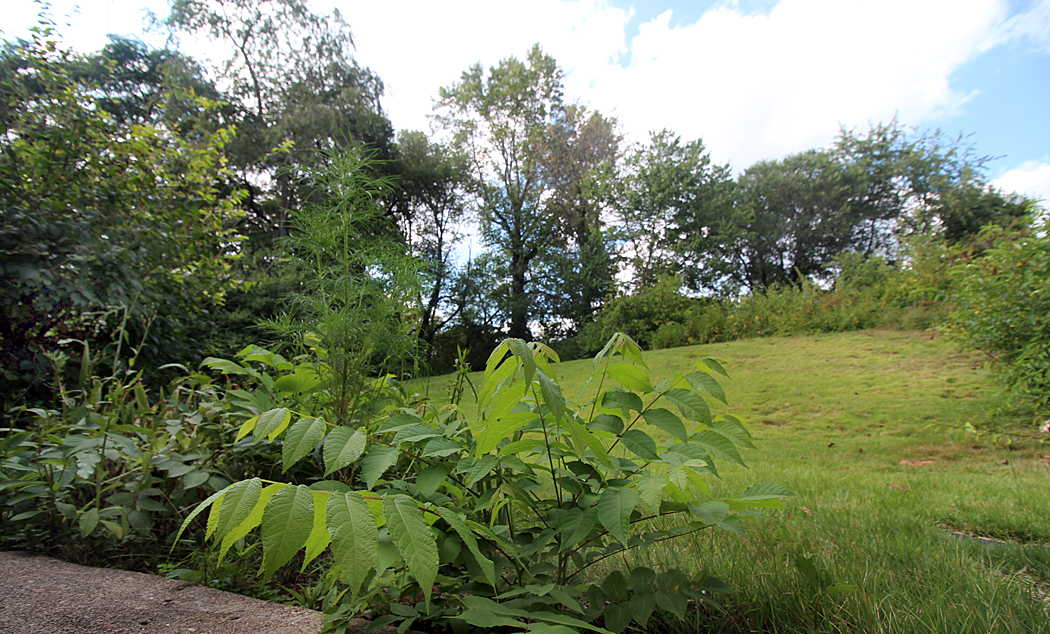
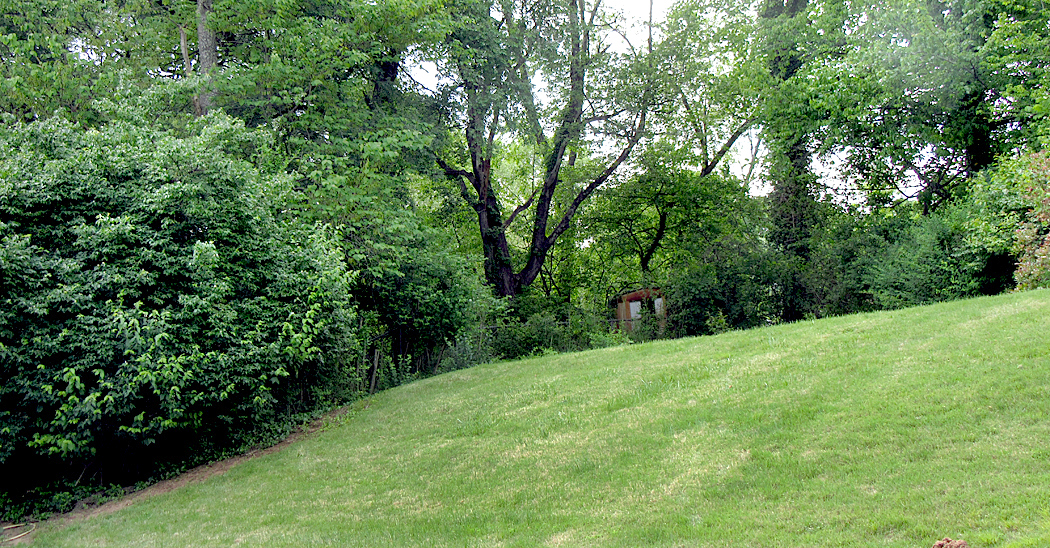
Today, it looks like rain. Dark clouds are everywhere, with the occasional white brightness poking through. And I sat in my silent seat when the wind came up, as it often does just before a rain, and all of a sudden, from the tall oak tree at the top of the hill in the back yard, a hundred leaves let go to flutter down, but, since the wind was blowing toward me, the leaves did not drop straight down, but all floated toward me, up in the air, like a hundred butterflies, or snow in the wind, or bubbles bobbing around in the currents. And so, from a hundred feet up at the top of the tree at the top of the hill, the tumbling leaves filled the sky from edge to edge of my vision, dancing in the air, each showing shadow and light as it twisted, making a glitter in the sky. It was so ungodly beautiful, I began weeping. 

This is the beauty I don’t want to leave. It fills me up. I know I will have to leave, and sooner rather than at some indistinct time in a future that once was only imaginary, but now is palpable in muscle and bone. 

So, perhaps I am going soft in the head. Should I be so moved by such pedestrian events? I am more aware now than when I was young and had other goals in mind, of the complex connectedness of all of the sensate  world, and how that makes an organism too immense to take it all in or understand it. Little things we may understand and describe, but the wholeness of it all can only be apprehended as beauty.

And so I feel gratitude for the world and what it is willing to show me. I do not want ever to leave it, though I know I must. 

And when the final curtain drops on the final scene, I can say “NO” to the end, and “YES” with the same conviction. 

Sometimes, while driving through a neighborhood, I will see an old person, a retiree, sitting in a chair on the front porch, or in the driveway, just watching the traffic go by. It’s become a meme, much like the “Get off my lawn,” thing that shows up in single-panel cartoons. 

I have to admit, I am of that age, although I don’t find traffic that interesting. 

But after several years of being partially house-bound by the Covid virus, and at times suffering from cabin fever — to say nothing of the fatigue that comes with hours staring into an iPad screen checking out the news or watching cat videos — I have discovered the pleasures of sitting quietly in my back yard. It gets me out of the house and it reacquaints me with what I jokingly call “reality.” That is, the sense that there is a world without electromagnetic signals commandeering my attention, a world that has been there always, before my greatest-grandparent was born, and will be there when all the power grids in the world are rusting back into the soil. 

I can sit there for half-an-hour at a time, maybe 40 minutes, without thinking about anything and just watching this tiny bit of the world as it moves in the breeze, as the cardinals and mockingbirds swoop across it into the low tree branches, as a white butterfly flits over the irises and a rabbit lopes across the bit of lawn. 

Occasionally, there is a groundhog who will waddle into the yard, get about halfway across before noticing me sitting there; stare at me for two or three seconds before turning back and returning to where he came from. 

This morning a bumble-bee dive-bombed me briefly. I don’t think he was attacking me; more likely he didn’t even recognize I was there. 

After a morning of staring at a computer screen, or watching an iPad, it is important to move to somewhere so my eyes can refocus at a distance, perhaps to infinity. I watch the clouds and notice which direction they travel. I listen to the birds nattering, or hear the neighbor on the next block mowing the lawn. An airplane may cut across the blankness leaving a contrail, and dropping a rumbling jet sound that always seems to be coming from some distance behind where you see the plane. 

It may seem to some, in the rush of civilization, that nothing is happening, that sitting quietly and watching is the very definition of boring. But for me, it is not. Something is always happening. It may be subtle, but it is happening. The leaves wiggle, the sky shifts from sunlight to shadow as the clouds pass, a mockingbird lights on the top of the shed and repeats his mantra over and over; he seems to notice that I’m there, but perhaps I am no different to him from the patio furniture. 

But I have noticed, over the weeks I have been doing this, at least three psychological states I have found myself in. 

First, if I am distracted by other thoughts, or if I am not really paying attention, my relationship with the yard is that I am looking at nature, almost as if I was still staring at my computer screen. I may notice things, may enjoy what I see, but it is quite separate from me and is, as I look, clearly something in front of me. 

There is nothing wrong with this, but it isn’t why I go out each day and sit there. I consider it a failure when I can’t get to the second state. 

That second state is when I feel not that I am looking at nature, but rather I am in nature. That is, it is all around me, and what is more it exists behind as well as in front. It extends into the air and to the clouds; I become aware of the soil under me, the weeds to the right and the undergrowth beneath the tree branches. 

To be in Nature is to be taken away from the self and redeposited into the wider world. I can easily lose myself in this state and that is when the watching becomes something more. I can feel the space around me expanding to the rest of the earth and sky and my bit in it, however tiny, is plugged in. I feel alive in a live world. 

These two states of mind depend primarily on my mood. If I am tired or distracted, I cannot reach the higher state; it just doesn’t come. But when I can silence my brain for a bit, it is like the coupling of a locomotive to a train. There is a click and it all becomes connected. 

It is the same state you enter when you are absorbed in a book and the room you are in disappears because you are so focused. 

But I said there is a third state, and that comes only with something like grace. It is when I neither look at nature nor feel in nature, but rather am nature. 

The barriers between me and the rest of the world, even the universe, vanish and I realize that I am part of it all. No. I don’t realize it. It just is. The very idea of realizing, or thinking, ceases to have meaning. If I look at the rabbit, I know he looks at me, too. No, again. It isn’t a question of knowing. We look at each other. A recognition. The metabolism that takes place in the cells of my meat is the same as that in the green iris leaf. The motion of the clouds across the blue is the motion of my blood through my arteries and veins. “For every atom belonging to me as good belongs to you.”

I disappear, except that I don’t. In fact, I am more present. It becomes one thing, and it is not that I am a part of the one thing, but that it is just one thing. 

That is, of course, a truism. Even Miss America might say the same thing through a Pepsodent smile. But just saying, or knowing it is not what I’m talking about. It is not knowledge I mean; it is the experience. I sit there in the back yard and it just is.

This cannot happen every time I sit in the back yard. And it isn’t necessary to have a back yard. It is just, as I say, a kind of state of grace, psychologically. 

What is required is receptivity, an openness without expectation. Paying attention. 

As I get closer and closer to the point when every atom belonging to me will belong again to the soil, I remember the lines in Thomas, that “it will not come by expectation, but it is all around us and we do not see it.” 

But once in a while, the veil is lifted and we can see. It is not what we see but that we see.

Now that it is well into spring, I like to sit in the back yard and just soak up the experience. On a chair on the patio, I can sit for a half-hour or so and just listen to what is going on around me. Often, I just close my eyes and enjoy the bird calls, the distant lawnmower, the occasional and distant roar of a passing jet high in the air. It is my form of meditation. 

It affords me great pleasure to hear all the sounds, and more, to hear them all at once, piled up in counterpoint, like so many voices in a Bach fugue. Indeed, I try with the same effort to be able to hear all the parts simultaneously. It is great training to hear the more traditional music of the concert hall. 

For, in any decent music, there are many things going on at the same time. Not only in dense Baroque counterpoint, but in all music. There is melody, harmony, rhythm, timbre, texture — to say nothing about a bass line. If you listen only for the tune, you miss so much else. 

And so, in the concert hall, I often close my eyes and concentrate on taking in all the bits. It takes some practice, but it is possible to hear multiple lines of melody at the same time. At the very basic, to hear the tune on top and the bass line at the bottom playing off one another. 

In my back yard, I enjoy the stereo effects of a cardinal squawking to my right, while a chickadee yawps to the left, while the mower sounds two blocks away and a dog barks somewhere behind me, down the hill. There is always traffic on the main road, about a quarter-mile up the hill, and the breeze shuffles the leaves on the trees that ring my yard in an aleatory rhythm that serves as bass line to the rest. The mockingbird has his repetitive medley of greatest hits. You can’t fool me. I know it is you. 

Listening to it all tells me the world is alive. It is animated and bustling, and it sings an earthy chant. 

I am reminded of John Cage’s infamous 4’33’’ — the piece where the pianist sits in front of his keyboard for that amount of time and plays nothing at all. Often seen as a hoax by those unwilling to take Cage at his word, and feeling they are being cheated, such a listener misses the point. The composer intends for his audience to actually hear the sounds of the hall — the rustling of programs, the passing truck outside, the AC unit clicking on, the throat clearing and feet shuffling — and appreciate them as a kind of music of their own.

It is one of the primary functions of art, and music included, to wake you up to the world, to see what is usually ignored, to hear what surrounds you, to feel what is churning inside. It all boils down to paying attention. 

The world is full of miraculous sound. I remember Kathy Elks, from eastern North Carolina, telling us of when she was an infant, just after World War II, and would hear the propeller sounds of an airplane too high in the sky to see, and how she always thought that buzz was “just the sound the sky makes.” 

Or Emily Dickinson’s “I heard a fly buzz when I died.” Or the “good grey poet,” Walt Whitman: “Now I will do nothing but listen,/ To accrue what I hear into this song, to let sounds contribute toward it./ I hear bravuras of birds, bustle of growing wheat, gossip of flames, clack of sticks cooking my meals…” 

Samuel Taylor Coleridge, in the Ancient Mariner: “A noise like of a hidden brook/ In the leafy month of June,/ That to the sleeping woods all night/ Singeth a quiet tune.” 

“Listen to them. Children of the night. What myoosik they make,” says Bela Lugosi in Dracula (1931). 

Beethoven included a quail, nightingale and cuckoo in the slow movement of his Pastoral symphony. Messiaen wrote whole symphonies built from transcribed birdcalls. Charles Ives built the sounds of his Connecticut village into his music. Rautavaara’s Concerto for birdsong and orchestra. Vivaldi imitates birds in his Spring concerto. Alan Hovhaness And God Created Great Whales, with its whalesong sounds buried in orchestral texture. 

Gustav Mahler said the symphony must embrace the world, and he included cowbells, hammer blows, distant military bands, bird calls, the memory of the postillion’s watery horn call, and even begins his first symphony with seven-octaves of unison A-naturals, almost a tinnitus of the universe — the music of the spheres — interrupted by a cuckoo in the woods. His own defective heartbeat was the opening of his final completed symphony. 

Bedrich Smetana wrote his tinnitus into his first string quartet, “From My Life,” in the form of a long-held high “E.” 

 The same world of sound that fills all this music waits outside my back door, waiting to be organized into coherence. The first step is paying attention. Engagement is the secret to unlocking the world. The ear is a gate to paradise. 

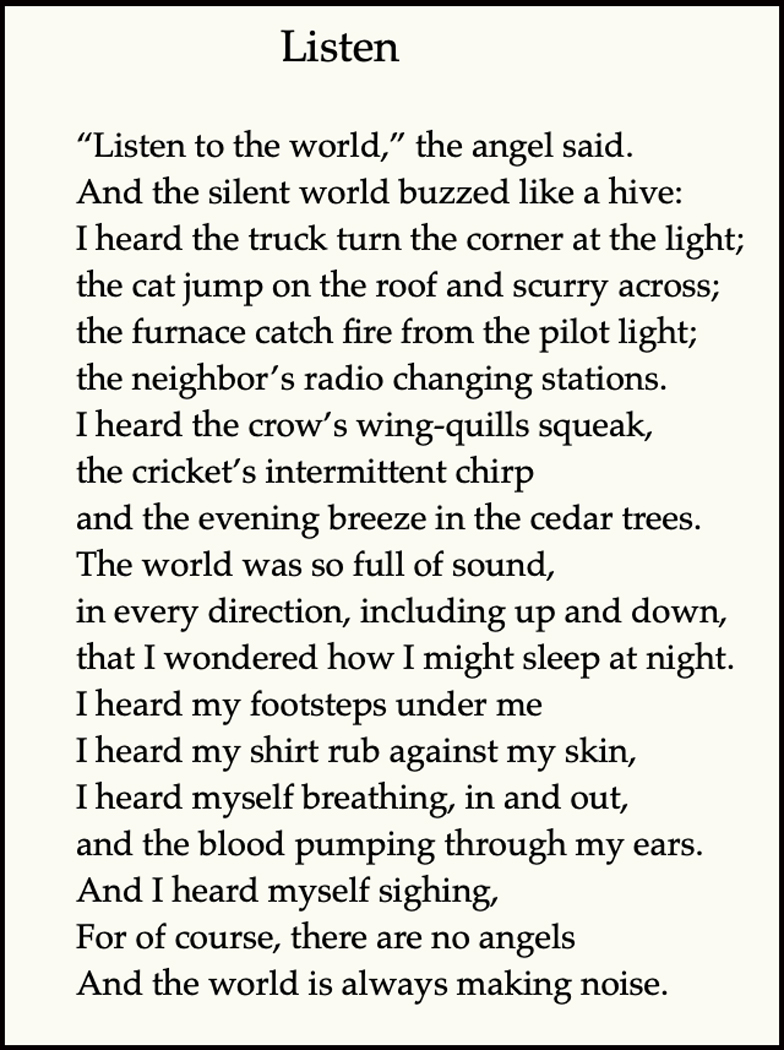
Some years ago, when I was still regularly penning verse, I wrote about this:

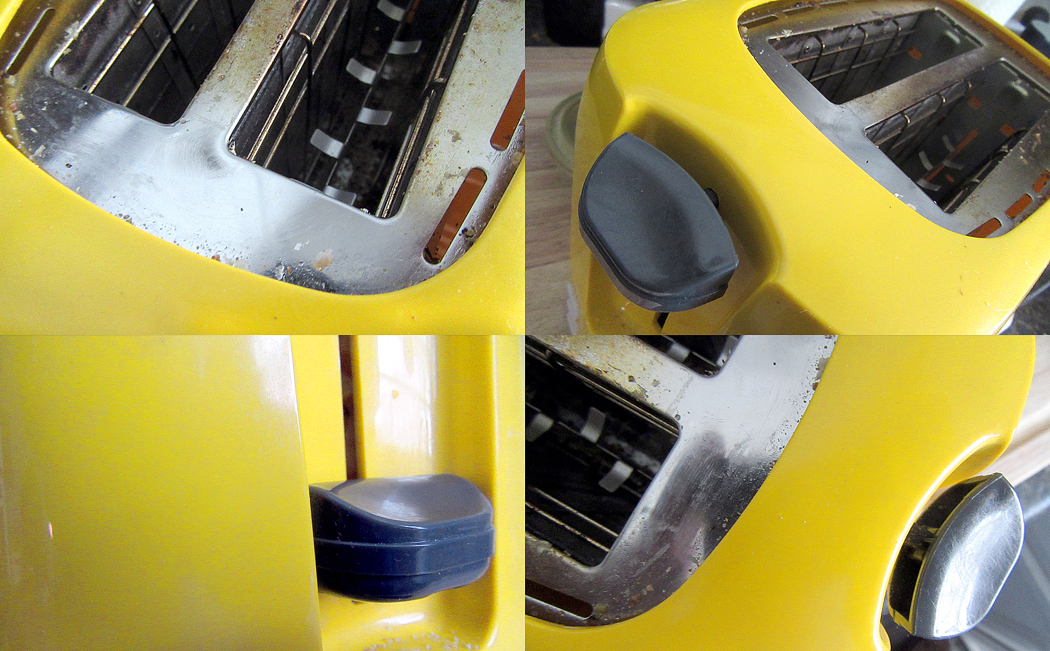
This is a toaster. Something so banal that in our ordinary lives, we hardly notice or look at it. Actually this is a picture of a toaster, which is a remove from the real thing. But then, so is the word “toaster,” which is also not the real thing, but a remove from the reality. 

For most of us, most of the time, seeing something — like the toaster — means being able to name it and move on to something more interesting or more immediately useful. The image in the picture functions as a pictogram, or a different “spelling” of the word. We read the image as if it were the word. 

Pictogram to “read” as teapot; teapot image as “seen”

It is how we respond to most images that bombard our daily lives. We name the item seen. It has been categorized, filed and forgotten. Our lives are too busy to spend any time remarking that the toaster is yellow, or made of plastic, or has rounded corners. These details are of no particular use when fixing our morning bagel, and so, they might as well be invisible. 

Of course, being able to recognize things quickly is a survival skill, and humans have survived these hundreds of thousands of years precisely because they could point quickly and yell, “Tiger!” So, I’m not pooh-poohing that ability categorically. 

But life is about more than just survival. The things of this world are bursting with sense data that gets ignored by reading rather than seeing the visible world. The toaster was designed to have an esthetic impact; the yellow was chosen to be pleasing to the eye; the curves were worked in to make the shape more inviting than it would be if it were all pointy edges. 

We are embedded in a universe of things — a material world — and all of those things have physical and sensuous properties. They have shape, color, heft, texture, volume, solidity or softness, shine or roughness. And all of these properties make up the elements of art, and one of the jobs art does  is to remind us of these delights we normally pay no attention to. Art reminds us we are alive. 

Any life can be enriched simply by paying attention. To notice the yellow, the curve, the size and shape. In fact, to those awake to the world, it is all art — and the emotional richness that the awareness brings. 

It is one of the things artists were doing at the beginning of the last century when they began making abstract art: art about the color, shape, texture, without a nameable subject. 

Of course, artists have always paid attention to these visual qualities. Just because a painting is of a still life, and we can name the objects, doesn’t mean that the artist wasn’t obsessed with the sensuous truth. 

And so, it is a worthwhile exercise to occasionally attempt to forget what you know and see the things of your life freshly, as if you didn’t know the names, but saw only the qualities. 

Humanity is varied in its ability to see beyond the names. It takes an imagination — a way of turning off your rational mind to see only the vital facts and not their meaning or use. Some people have the hardest time: I remember one woman who was asked to close her eyes and describe what she could see in her mind’s eye, and her answer was “With my eyes closed, I see only black.” 

But attempting to see past the names of things is deeply rewarding. The pleasure of colors, shapes, designs, apprehended primally enriches our lives immeasurably. 

Certainly the natural world invites us with color and beauty. But it isn’t just the flowers and trees, the birds and the clouds. Everyday items can be appreciated for their roundness, plumpness, hardness, color, shape, even the feel under your fingertips. 

Many eons ago, when I was teaching photography at a two-year college, one of the assignments I gave my students was to photograph something in such a way I could not tell what it was. I made sure they understood that I didn’t mean just out-of-focus, or so badly lit it was murk. But to see something from a different angle, or to find a meaningful detail and separate it out. 

The purpose was to help them see without depending on what they already knew things looked like. To see directly. 

For example, here’s something most people see almost every day. 

Did you spot what it is? It is a view of your driver’s side rear view mirror as you approach the door to open it. A great big globular shape. 

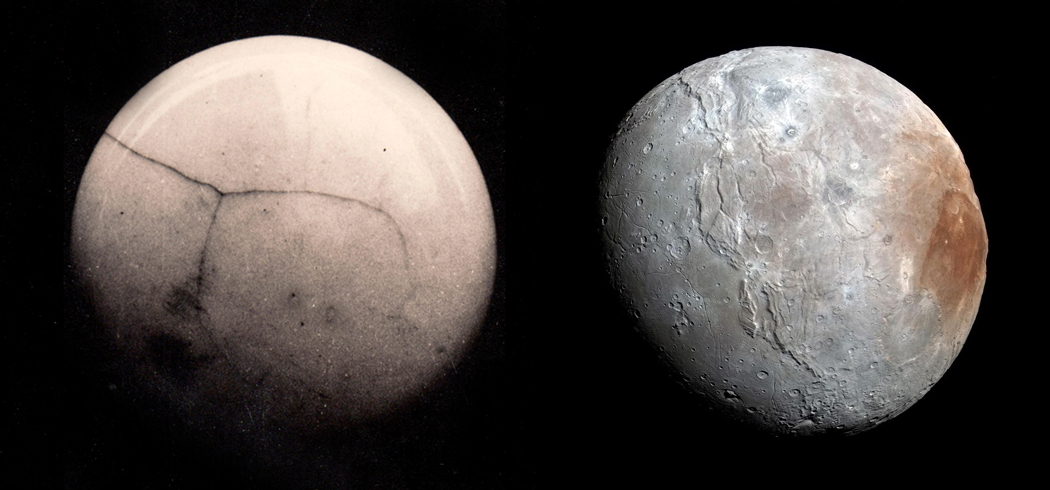
One of my favorite images is one taken by Voyager II in 1983 as it passed the (then) planet Pluto and snapped this image of its moon, Charon. And compare with the more recent, and clearer image taken by NASA’s New Horizons space probe on its flyby in 2015. 

Actually, that’s a lie. The image on the left is a doorknob. 

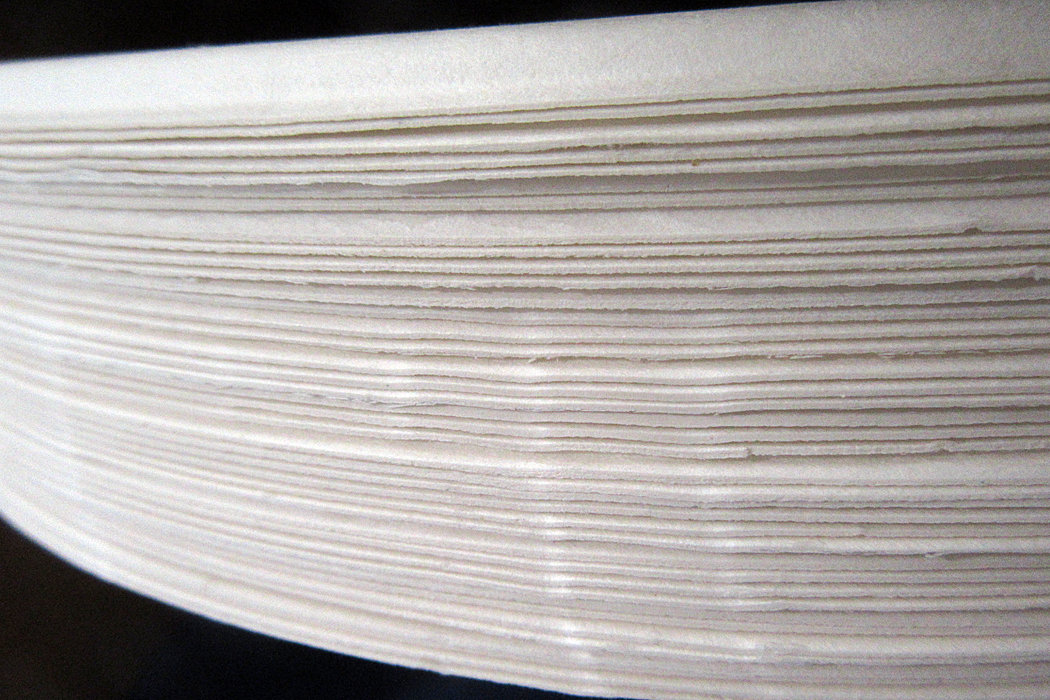
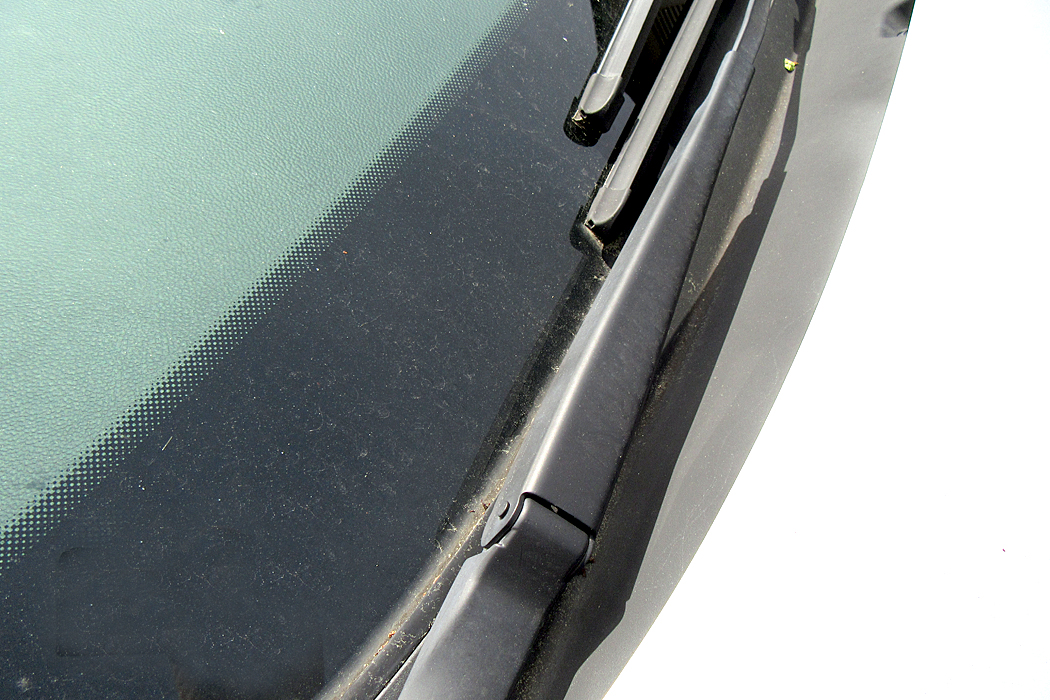
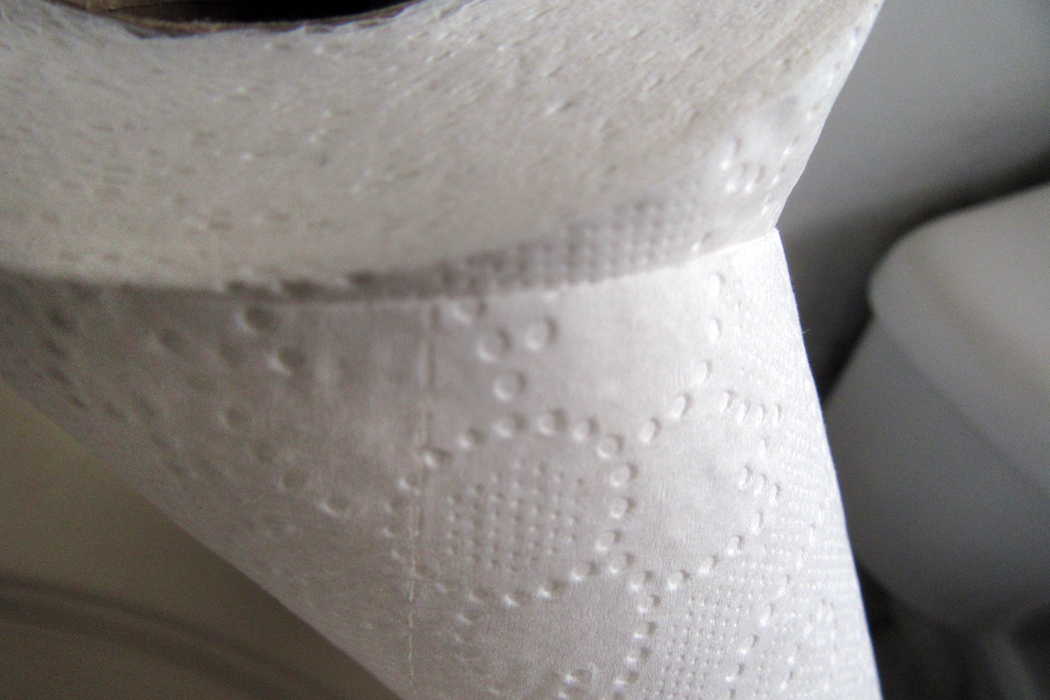
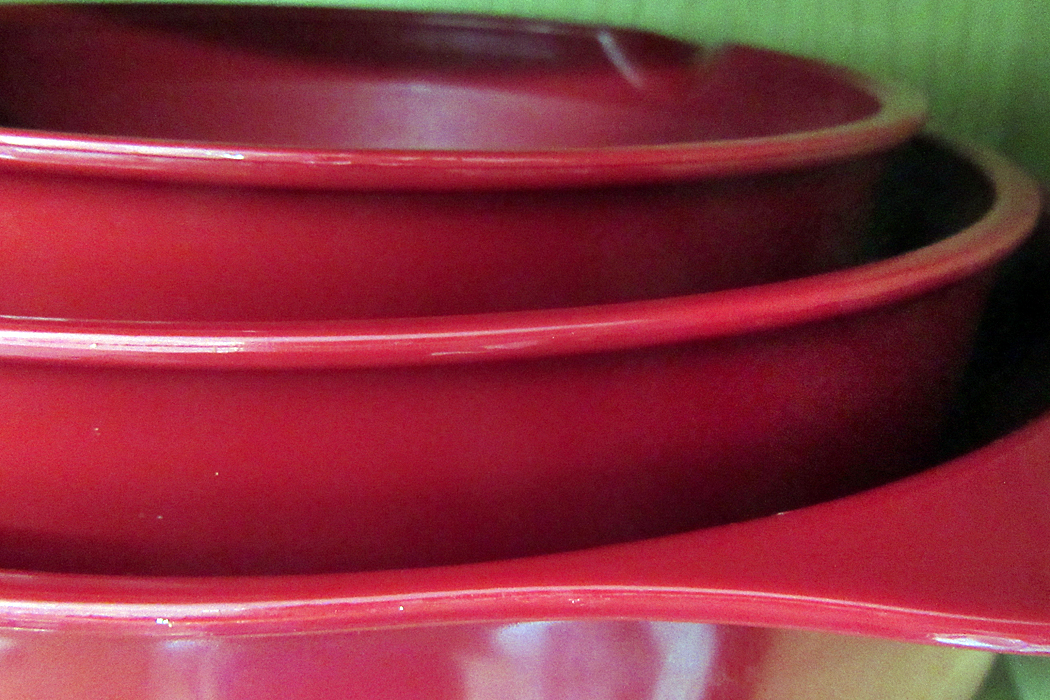
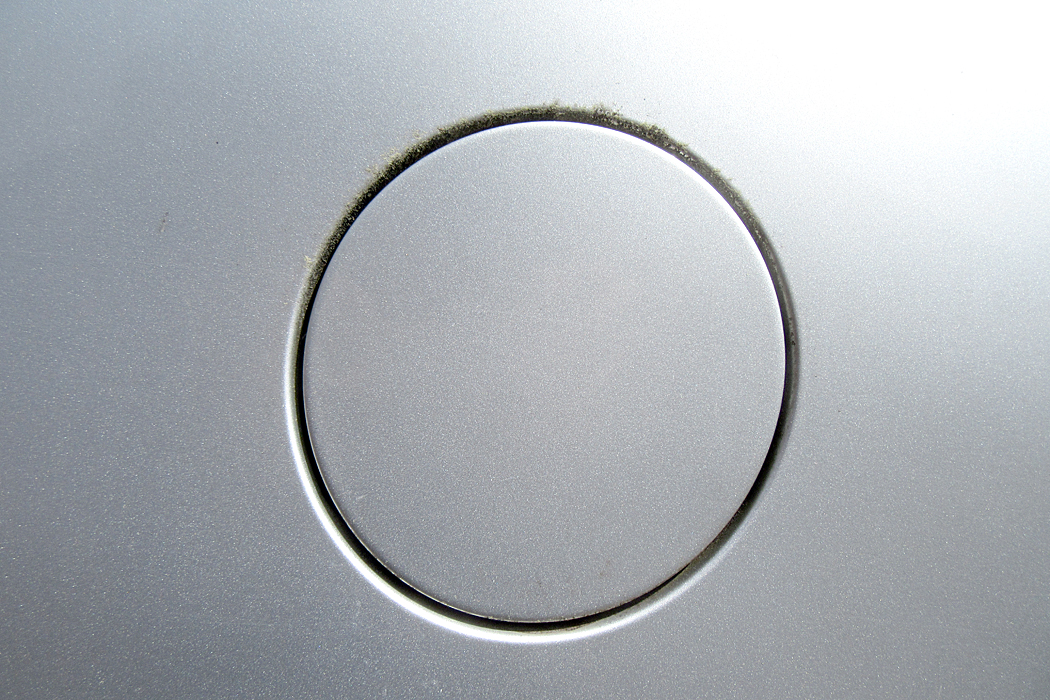
And so, here’s a little quiz. These photographs were taken to illustrate the shapes, colors and textures of ordinary objects, but seen in fresh ways. But they are still recognizable, if you can spot them. Can you tell what they are? The answers are at the end of the column. 

1

2

3

4

5

6

7

8


10

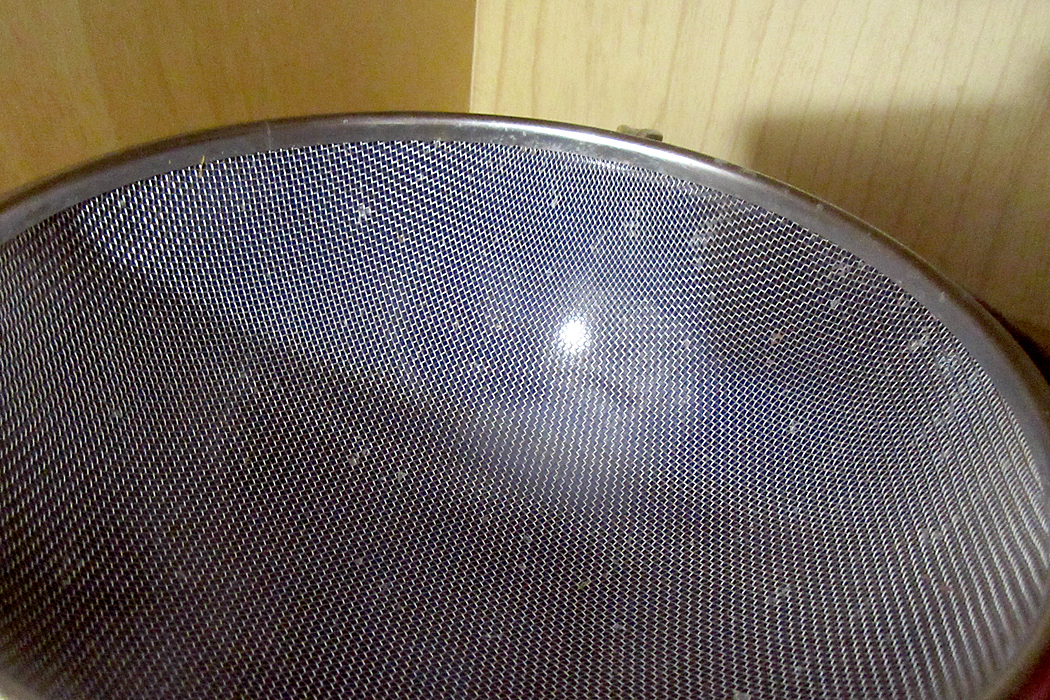
Even when you are not trying to be tricky, it is good to pay attention to the physical properties of the things of the world. Those shapes make images more memorable. And there are shapes all around.

A doorway turned into a check-mark

A paper tissue half out of a box

A kitchen strainer

We are alive on this planet for such a short time, and there is so much to take in. With our five senses we are privy to such delight and can never exhaust the riches around us. But we must be open to them, aware of them, awake to them. 

Learning to see is a part of art education. To see a picture of a giraffe and point, like a first-grader, and say, “Giraffe,” is not seeing. But take up a pencil and attempt to capture what you see on paper will teach you what things really look like. Paying attention is the great secret of life. 

Quiz answers: 1. Paper plates; 2. Work glove; 3. Windshield wiper; 4. Measuring spoons and ceramic duck head towel hook; 5. Old Oxford cloth shirt; 6. Toilet paper; 7. Plastic mixing bowls; 8. Pop-open gas-cap cover for Buick; 9. Ceiling fan lamp fixture; 10. Assorted shopping bags. 

Click on any image to enlarge

I’m tired of hearing that we live in a visual culture. The fact is, we are generally very bad at seeing. I am constantly reminded of this by bad signage, bad book design, bad photographs, and bad TV. To say nothing of the horror that is TikTok. 

It may be true that we like to use images instead of text whenever we can, but we also tend to treat the images as if they were text: That is, we turn them into the equivalent of hieroglyphs or rebuses. Hence the popularity of emojis. 

But seeing a picture of a house and thinking “house,” is really just turning a picture into a word. Yes, no alphabetic letters need be used, but the information conveyed is basically the same. That is not seeing; it is translating. 

I am reminded of this because of a frequent problem I find on some back-channel TV stations when they broadcast a program in the wrong aspect ratio. It is a visual goof that bothers me no end, and yet, so many people, when I point it out, simply don’t notice it. Faces can be squeezed thin or stretched fat and the visual-verbal translation isn’t affected, and therefore, not noticed. 


Believe me, I’ve been laughed at for fussing over aspect ratio. But how can people not SEE? The visual information is distorted even if the verbal information is left unbothered. 

Aspect ratio is simply the ratio of the width of an image compared with its height. A square is the same in both measurements, and hence, its ratio — its aspect ratio — is one-to-one — 1:1. 

If a rectangle is twice as wide as it is tall, its aspect ratio is 2:1. 

When photographs are made, or films or TV is shot, they are created in a particular aspect ratio. For instance, for decades, the standard aspect ratio for Hollywood films was 1.375:1, which was adopted in 1932 for the entire industry. Before that, silent films were mostly shot in a 1.33:1 ratio, which can also be stated as a 4:3 ratio, which corresponded to four sprocket-holes on standard 35mm film. But when sound was added as an extra track alongside the image on the film, the picture had to be made a wee bit smaller to accommodate, and hence, the 1.375:1 ratio. 

That all sounds very technical and who cares? Well, what happens, then, when you display an old film on a new TV, which are now standardize at an aspect ratio of 16:9, a “widescreen” ratio? When done right, you get a “letterboxed” image, with black bars on either side of the picture. When done wrong, the squarer image is stretched out to fill the wider screen and you get a lot of fat people. 

This used to be a big problem in the early days of digital television, when many stations heard complaints about those letterboxed images. The response was to crop the movies down to fit the screen, losing a good bit of visual information in the process (a process dubbed “pan and scan”), or — too often — just stretch it all out to fit. To anyone sensitive to visuals, this was a nightmare. But again, many people — especially at the TV stations mutilating the images — just didn’t seem to think it important. 

The reverse also happens when a real widescreen movie (some films are made in aspect ratios wider than 16:9, such as the 2.4:1 of the most widely used widescreen movies. Then, shown on a standard TV screen, you get everything squished down. 

Many of these widescreen movies were shot with anamorphic lenses, which allowed for a wider image to fit onto a narrower piece of film. In essence, they squeezed the picture thin on purpose, and then when it was projected in a theater, a reverse anamorphic projection lens would spread the image back out to its natural dimensions. Tons of films were made (and are made) this way. 

The problem shows up with DVDs, too. Some are produced in a natural aspect ratio, usually 16:9, but others, mostly older ones, were created anamorphically, and so you may need to use your remote to find the proper aspect ratio (or “screen size”) for the disc. If not, you watch squeezed people. 

I remember when my college film series showed a version of Bad Day at Black Rock but didn’t correct the anamorphic images. We watched the whole movie distorted into a squished frame. It was nauseating, at least to me. The projectionist, when this was pointed out, said he didn’t see what I was talking about. (The same projectionist showed Birth of a Nation with the music track turned off because “it’s a silent film.” There is no accounting for how these people get in charge of things.) 

Most all of us have something like this, which bothers us no end. For some it is bad spelling or incorrect grammar. For others, it is making too much noise when eating soup. Others still cannot bear canned laughter on sitcoms, or the superfluous chyrons streaming across the bottoms of cable newscasts, telling us exactly what the speaker is saying. We can hear them, you know. You don’t need to spell it out. 

Anyway, one of those irritations that just drives me nuts is the inability of so many to actually notice when the picture has gone bad on their TV. The wider the original, the squishier the mistake. I remember seeing an early broadcast of The Good, The Bad and The Ugly scrunched into an old cathode-ray TV screen, like a closed accordion, and I thought, “How can poor Clint Eastwood even breathe?”

The aspect ratio problem, though, is really just a symptom of a wider issue: that too many of us are just bad at seeing, of not paying attention to what our eyes are telling us. It is the translation problem: We don’t see to see, we see to extract only so much information as we feel we need. If we can follow the plot with skinny people, then good enough. 

But seeing isn’t just about keeping track of the story. It is about being alive in the world, of noticing everything around you, of taking in what existence gifts you with. The green of a tree, the roundness of a tire, the texture of denim. To notice is to be alive; failure to notice is deadening. 

Art, and I include even popular art, is there to remind us of, and to interpret, the world we live in and the lives we lead. The best art slaps us awake, the way the slap of the doctor makes the newborn take its first breath. We can see what we had taken for granted, we can reinterpret what had become habitual. Failure to use your eyes is to refuse a gift being offered by existence. 

Click any image to enlarge

I was in bed, having trouble getting to sleep, and so making mental lists instead of counting sheep. I made a list of the CDs I would keep, if allowed only one per composer, then if allowed 1 boxed set for each of the dozen major composers, then… well, it went on and I still couldn’t fall asleep. I had made probably half a dozen lists when I began a list of the most beautiful human-made things, one visual, one musical, one verbal, etc. 

Filling in the list was surprisingly easy, considering how many nominees should be considered, but I had no trouble finding single primary answers, which surprised me. 

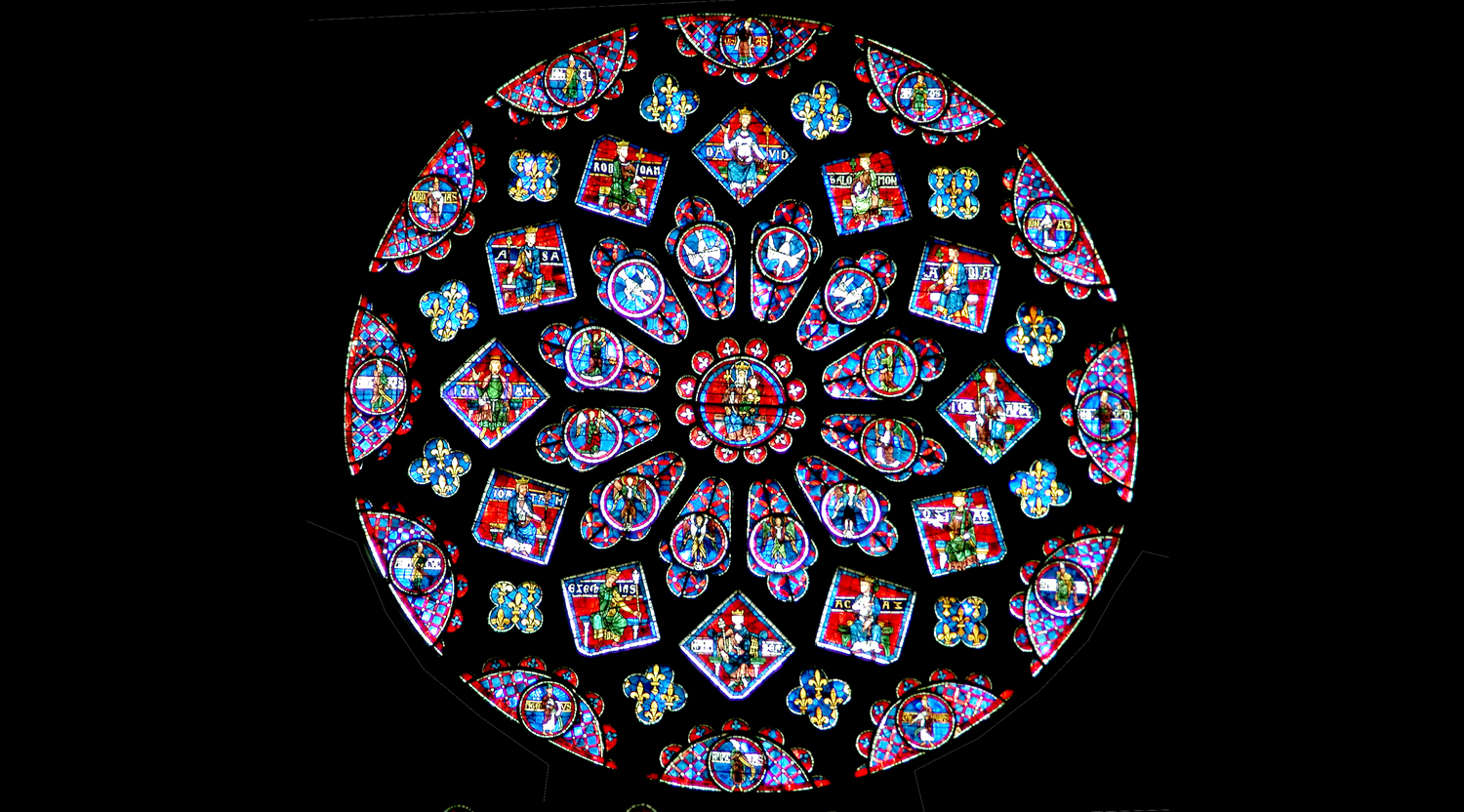
I’ve written numerous times that the single most beautiful thing I’ve seen, visually, is the north rose window at Chartres Cathedral. I’ve been there four times (five if you count multiple visits to the cathedral over a two-day visit to the town), and I never fail to fall spellbound by that tumbling wheel of light. Its beauty is not found in how pretty the colors are, but in something transcendent — the intent of the Gothic idea of architecture, that if God is light, then a building that celebrates light celebrates God. Even as a non-believer, I can appreciate that glimpse of eternity. The north window is singular in its design, with its set of 12 diamonds turning over and over as they circle the center, giving an illusion of motion — as of angels dancing around divinity. 

I love all the rose windows I’ve seen, but the north rose of Chartres is the dance of the cosmos. 

And if I had only one piece of music to listen to, it would be Der Abschied, the final half-hour song that finishes Gustav Mahler’s Das Lied von der Erde. Every time I listen to it, I dissolve into a puddle of helpless emotion, filled to the brim with the sense of eternity and the world. I have heard countless versions of Der Abschied — I own more than a dozen recordings — and I have my favorites, but even the least of them leaves me wrung dry. 

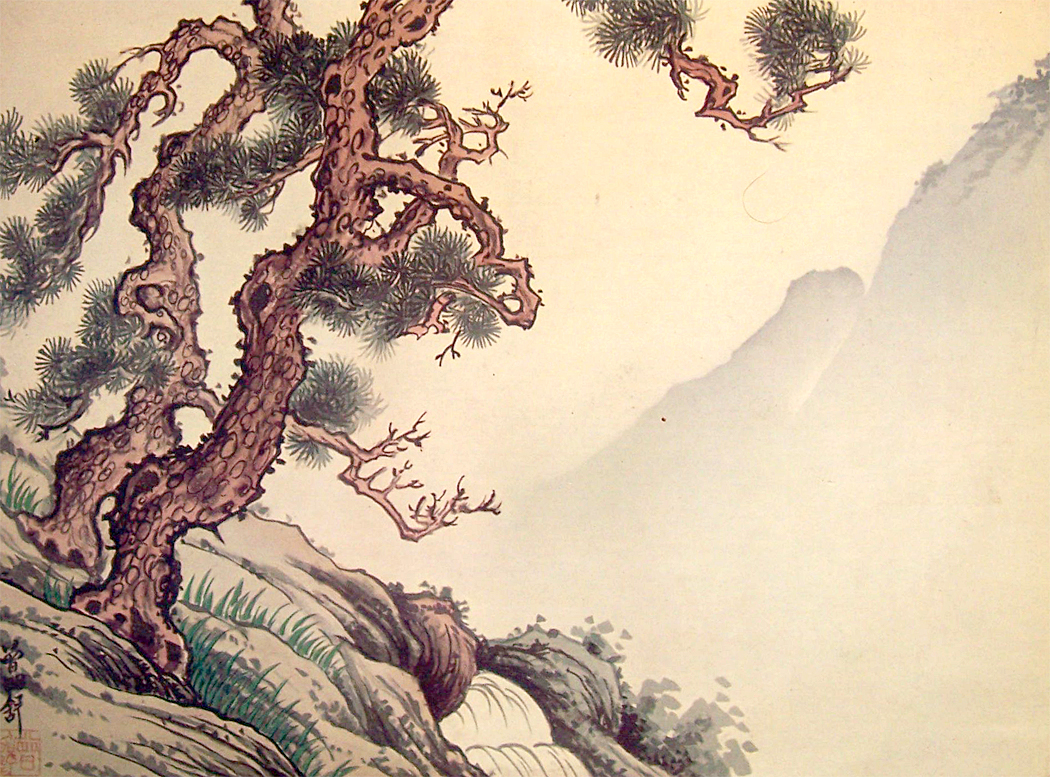
Das Lied von der Erde is a set of six songs, supposedly translated from Chinese into German and published, among other poems, in 1907 in a book titled Die chinesische Flöte (“The Chinese Flute”), by Hans Bethge. Mahler set his selection of six to orchestral music so rich as to be fattening. The final song, as long as the first five together, tells of the departure of a friend. The poet confronts the beauty of nature around him as he waits for the friend so they may make their farewells. Each stanza is alternated with long orchestral interludes of refined delicacy. 

The music ends — if it can be said to end at all — with lines Mahler wrote himself, perhaps sensing his own imminent death: “Die liebe Erde allüberall/ Blüht auf im Lenz und grünt aufs neu!/ Allüberall und ewig blauen licht die Fernen!” And then, repeated and repeated, ever more quietly and hesitantly, “Ewig … Ewig … … Ewig” — “Forever … Forever … … Forever” — until at last you can barely hear the word, and the music dies.

“The dear earth everywhere/ blooms in spring and grows green anew!/ Everywhere and forever blue lightens the horizon!” and “Ewig … Ewig…” 

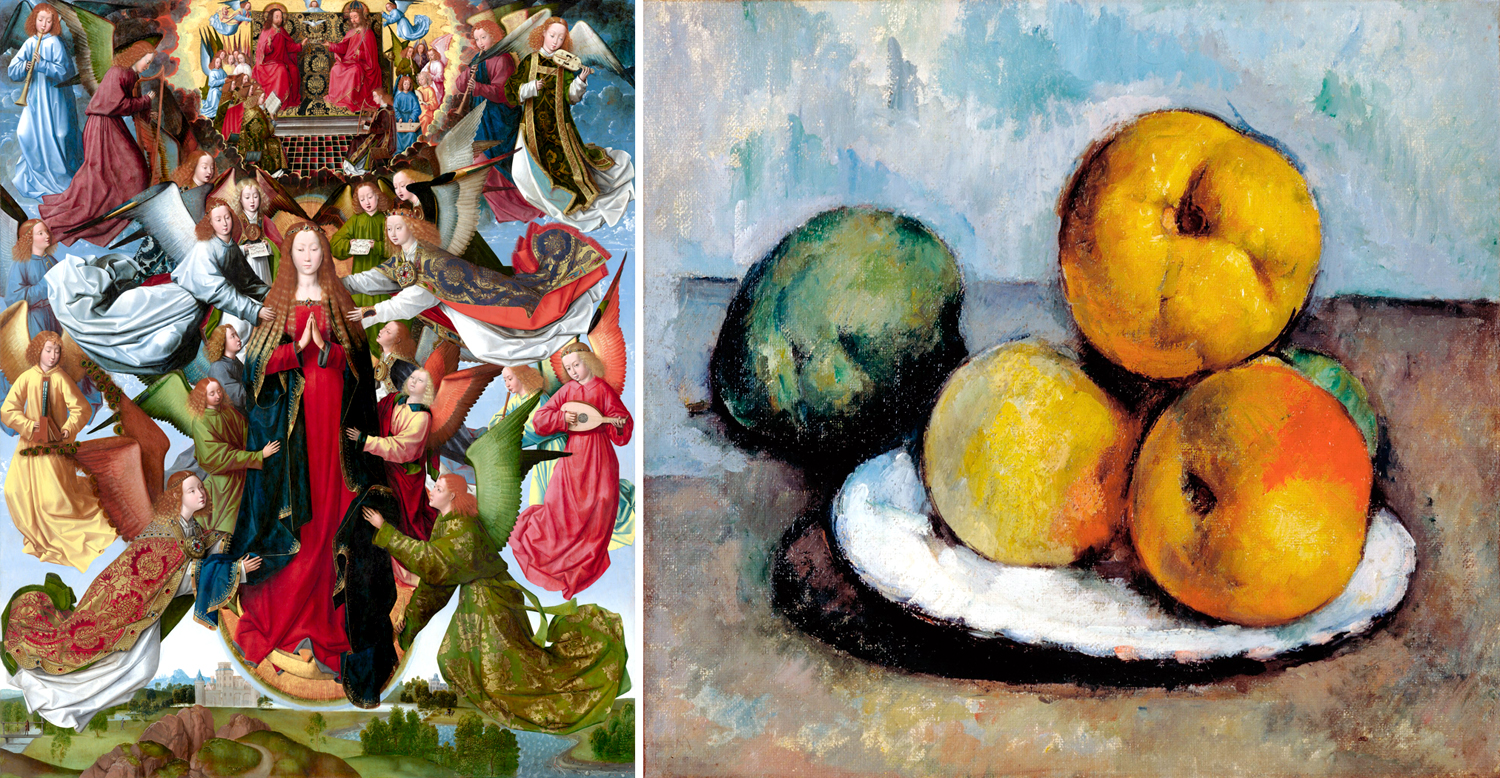
These choices came to me almost instantly, without having to think. There are other obvious choices that could be made. Other works of art that are profoundly beautiful, other music nearly as affecting. I have stood rapt in front of the Mary Queen of Heaven at the National Gallery in Washington DC, and been knocked silent by the pears and apples of Cezanne. And nearly as gut-slamming as Der Abschied is Richard Strauss’ Im Abendrot, the final of his Four Last Songs. Or a dozen other paintings and musics. 

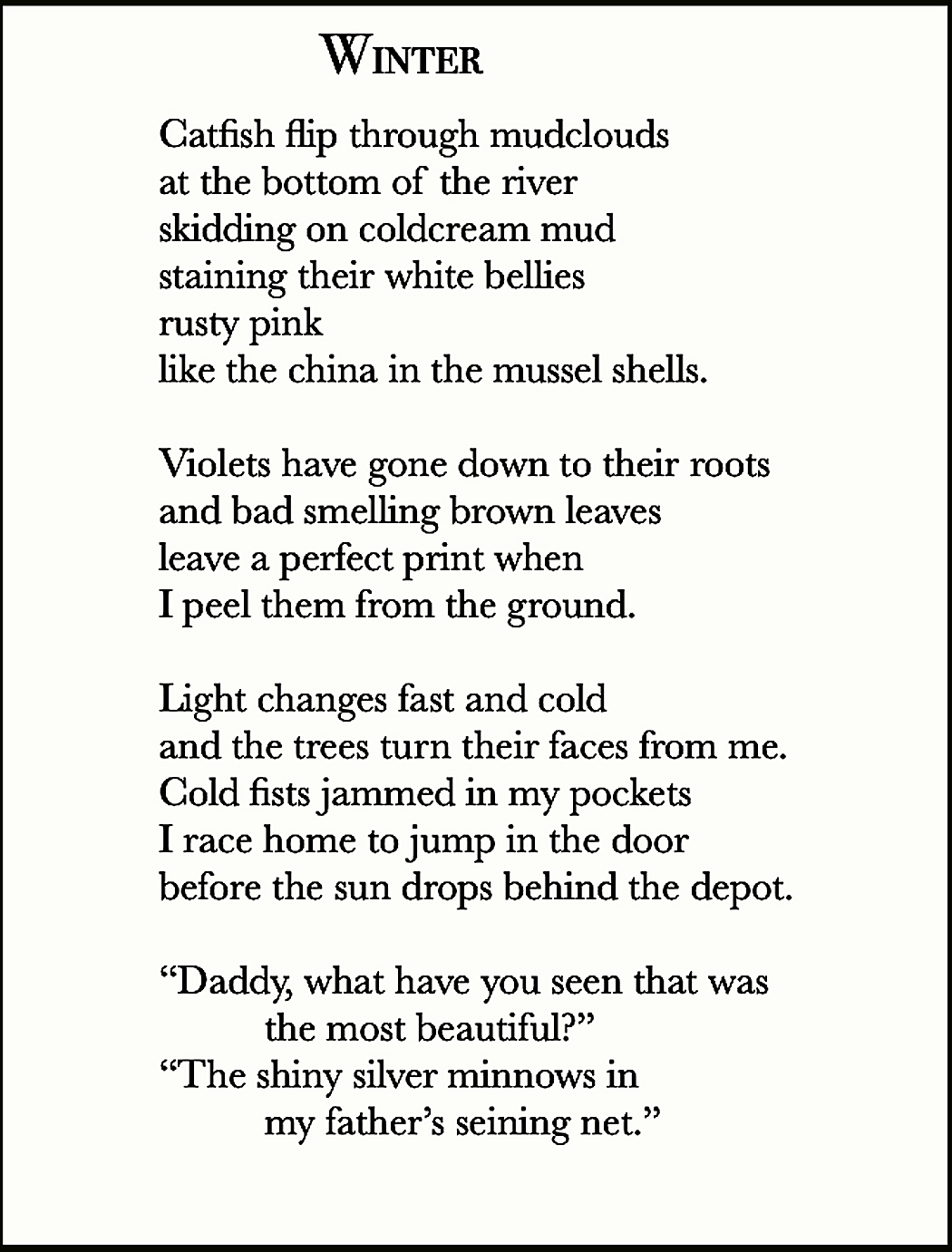
As I lay there in the dark, unable to sleep, I rifled through my brain trying to remember a poem that moves me the same way, or any piece of literature: words that leave me drained each time. I went through all the major English poets — and there is plenty of poetry that moves me deeply — and even poems in translation. But the one poem that came back and slapped me upside the head isn’t by Yeats or Wordsworth, but by Carole Steele, my late wife. It is the first poem in her book, 42 Poems.

Carole was the genuine article. And that poem brings me to tears every time. Certainly part of my response comes from the 35 years we spent together, and the overwhelming sense of loss at her death five years ago. But I had the same response when she was alive: This is a poem that makes the connection between the inner and outer worlds; it responds to the physicality of the world in words that startle in their aptness, and combines the directness of childhood with a slant acknowledgement of death, and the awareness that others share in the knowledge of beauty. It isn’t the particular example that counts, but the shared awareness of its existence. 

We may all have different ideas of beauty, and you can each make your own list, but what must be common in all of them is the engagement. Beauty does not work as some passive prettiness outside the psyche. Pretty is not Beauty. Pretty is what is conventional. Beauty is the result of engagement and the creation of meaning. It is an awareness between you and the cosmos, each of the other. It is the recognition, sometimes startling in its suddenness, of the wholeness of it all, of its permanence and its evanescence. 

I have thought for more than 70 years about this. The world is many things, and it offers a share of misery, pain and loss, there is war and death, but it also affords moments of epiphany, the breakthrough of beauty, like the red glow in the black ashy cracks of a dying fire. 

This can easily devolve into “Raindrops on roses and whiskers on kittens,” but I mean something more difficult. Yes, I resonate to warm spring rain and the crisp, dry, cold and sunny October afternoon. These things are beautiful and they can fill up our emotions to bursting, but only if we actually pay attention. Just a plain rainy day spent polishing the silverware, or spending a fall Sunday watching football on TV don’t elicit the response. Paying attention does. 

And when the beauty hits, it is not something external or “out there,” and neither is it something merely subjective or “internal,” but rather it is the identification of them together as a single entity. My awareness of the spring rain brings the rain into my psyche, and my awareness also give the rain its actuality. It makes it real. Yes, the tree falling in the forest makes a sound, but it doesn’t have meaning unless it is heard. The spring rain may fall whether or not anyone notices, but its existence has meaning only when my awareness and its existence become a single thing. 

It has been said that human consciousness is the universe’s means of self-awareness, that our senses are the mirror for the cosmos. It is what Andrew Marvell meant in his poem, The Garden: “The mind, that ocean where each kind/ Does straight its own resemblance find,/ Yet it creates, transcending these,/ Far other worlds, and other seas…”

Beauty is the amour de soi of the cosmos. Our sense of beauty, in the physical world or in art, its mask and mimic, is our sense of identity with the cosmos. “I am he as you are he as you are me/ And we are all together.” This sense is lost when we act like crabs in a bucket, each out for himself and not recognizing our shared humanity, but also when we fail to recognize ourselves as the conscious portion of the universe. Beauty is the breakthrough. 

What we consider pretty is merely a matter of taste, but beauty is a breaking up of our singularity and an identification, however brief, with totality. 

I am writing this for myself; you needn’t read it. Usually, if I include myself in a piece I write, it is only to provide a personal angle on a wider, more general point that is the purpose of the text. I try not to intrude on your patience. But here, I really am writing for myself: If you continue reading, you will be eavesdropping on thoughts not aimed at you. 

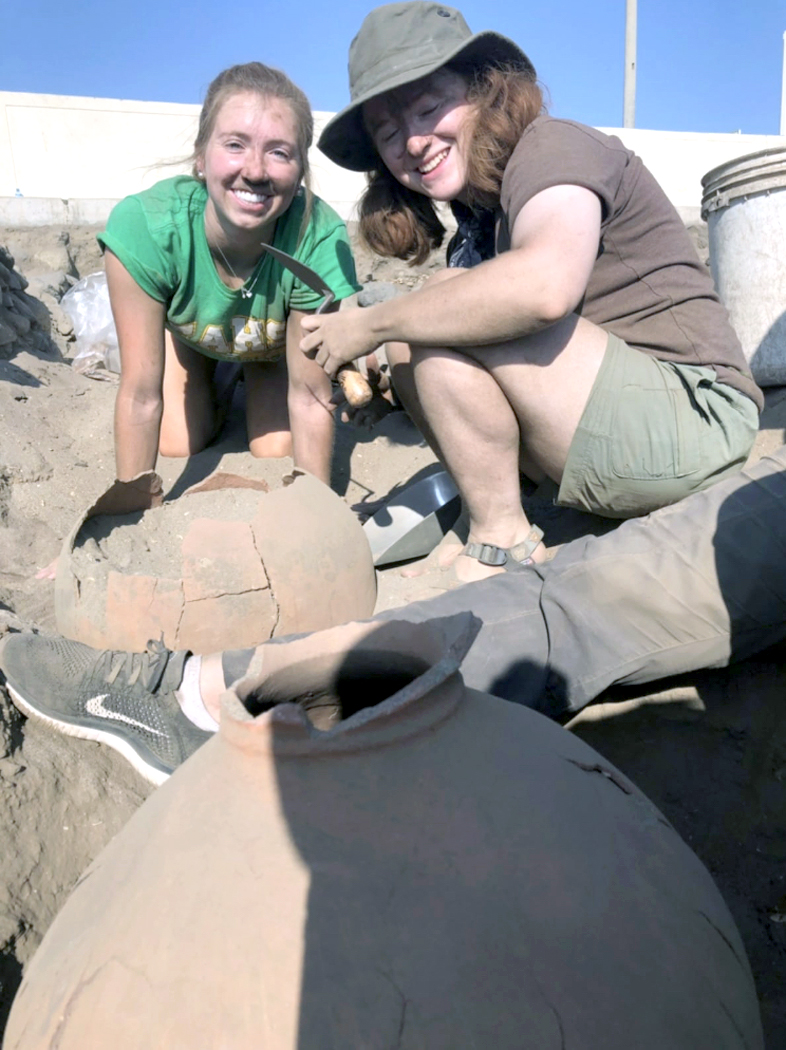
One of my granddaughters is currently on an archeological dig in Peru, part of her university studies. I wrote her saying this could be a life-defining experience for her. And that began my thinking: What have been those life-defining moments for me? I don’t simply mean chronologically, such as we all encounter as we age through our existence, such milestones as going off to school, turning 21, getting married and divorced, suffering job interviews and eventually retiring. No, I mean those episodes that bend the twig so the tree is inclined: Those things that turn us into ourselves rather than into someone else. 
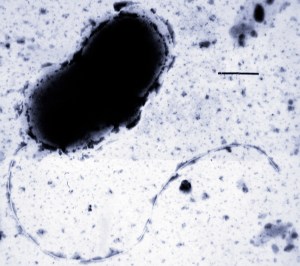
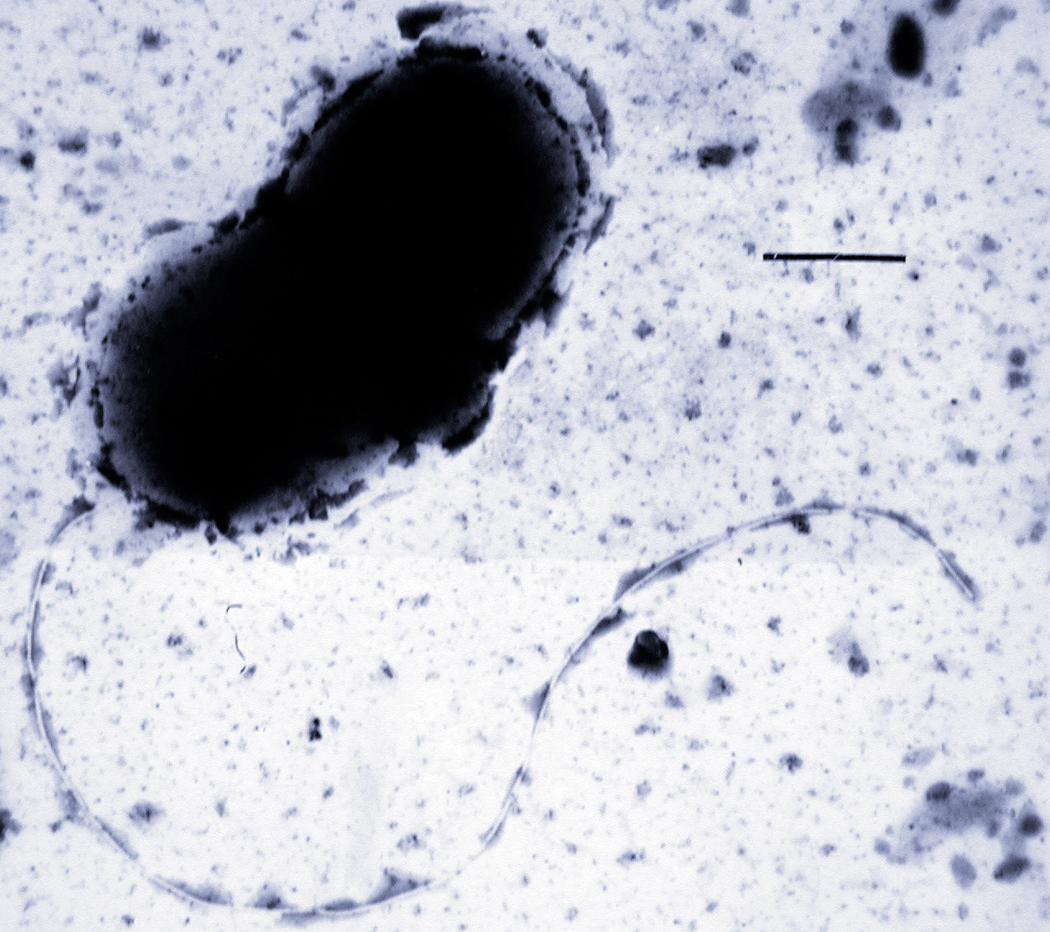
I could start, like David Copperfield, with “Chapter 1: I am born.” Not for the mere fact, which is universal, but for the inheritance I was given in the womb of the random pairings of genes that govern a good deal of my personality, abilities, and inclinations. I began not ab ovo a blank slate, but with bits of genetic material that came through my parents from their parents before them and so on, tracking back, if I had the means, first to Africa, and then beyond to single-cell beasties in the pond water, and before that to the prokaryotes and lithotrophs, the bacteria and the original amino acids, some semblance of which are still floating in my chromosomes, like genetic homeopathy. This ancestry is still there in every cell of my body, and they all have a “life-defining” push and pull. 

Beyond that, the first experience I had that altered my life was going to school, and not just the school, but the going. From kindergarten on, I walked to school every day and home again. It was a mile from home to the Henry Wadsworth Longfellow Elementary School, and I soon began to take “short cuts” home each day, which were new routes often so far out of the way, I actually went through neighboring towns on my nostoi. These routes served two functions: first, that I avoided the routine and the boredom that ensues; second, to explore the wider world and see what else was out there. I have continued to explore and to avoid routine for the rest of my life. 
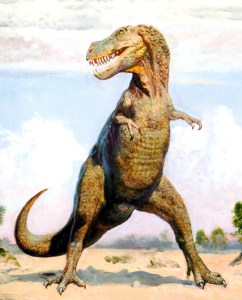
Then there was the moment I learned to read, although I cannot remember a time I couldn’t. But there was the discovery of the school library, which was also the town library, in the basement of the Charles deWolf Elementary School (we had moved). I read every book I could find there, subject by subject. Third grade was devoted to dinosaurs. 

After that, the next turning point, I believe was in third grade, when in art class we were asked to draw Christmas trees for the holiday. I earnestly built my tree up with a trunk and branches, which curved upward, as they do on a fir tree. My teacher told me I was wrong, and proceeded to demonstrate how a Christmas tree really looked, making the familiar diagrammatic greeting-card or cookie-cutter shape.

I was outraged, because I had looked at Christmas trees and I knew I was right and the teacher was wrong. So much for any trust in authority. I took from this a trust in my own observation. This would also later lead me to mistrust many mere conventions that were widely taken to be iron-clad  truths. 

As much as I loved grammar school, I hated high school. Most likely, it was just a victim of my adolescence. I studied and learned the things that piqued my interest, and ignored subjects that bored me. Concomitant grades. I got many an A in hard subjects and too many a C or D in subjects I found boring, badly taught, or otherwise had little interest in. 

But two events aimed my life in new directions. First, I worked on the student newspaper, expecting to be its photographer. But I wrote two stories for it, and both won state-wide awards. I didn’t know then I would become a writer.

The second was finding a girlfriend, who, it turned out, would go on to become a professional bassoonist, and while we were courting, we listened to classical music. I remember fondly sitting on her parents’ couch with her, spooning to the soundtrack of Stravinsky’s Rite of Spring. My homelife was oddly devoid of music. I was insufficiently stimulated by the popular music of my time and my own parents seldom listened to any music, except what turned up on TV variety shows, and so, becoming exposed to serious music was a revelation. I became not just a writer, but eventually a classical music critic for my newspaper. 

In college, the single most important thing was a class in English Romantic poetry, not so much for the poetry, but for the hard kick in the pants I got from the professor. I was always a smart kid, and was used to knowing how to get good grades, i.e., how to give the teacher what he or she wanted. I knew all the usual tricks. But somehow this professor didn’t want me to give him what he wanted. My first paper came back with a D-minus on it. What is this, I thought. I gave him back what he said in class. But what he wanted was not some rote lesson, but rather he wanted me to engage with the material. It would not have mattered if I was completely wrongheaded, if the wrongheadedness evolved from a genuine dive into the poetry, paying attention to what was actually there. The D-minus was like the slap a doctor gives a newborn to begin life. 
In a way, this was simply a reinforcement of the Christmas tree lesson: Trust yourself. Not arrogantly or stubbornly, but as the starting point. What the book says, or the teacher, must at least at the beginning correspond to my own experience. I may later learn more, and expand my horizon and discover my own ignorance, but the start is myself and my serious engagement with the material. Lesson: Pay attention. 

This has been the first of the two greatest lessons of my life. No: three. 

One other thing happened at college: A friend who had a horrible family turned out not to have a horrible family, and the ruin they had planned for him turned out to have been the psychiatric help I didn’t know he needed. It was another sort of kick in the pants: Things are not always as they seem; there is always more context and backstory than you have access to. This lesson was reinforced a few years later when I read through Lawrence Durrell’s Alexandria Quartet, which hit home like a ton of bricks. I had been Darley, I had been Balthazar, and the omniscient view of Mountolive does not exist in the world outside fiction. I was suitably chastened and forever after not so cocksure of myself or anything else. 

I skip over my first marriage and the birth of my son, because I was too young, ignorant and callow to understand any of it at the time. The marriage lasted just three years. Suffice it to say that I was repaid karmically in my next relationship for my callousness and unrecognized cruelty. 

I then lived with an exceptional young woman for seven years. I was settled into that relationship for the duration. My life was mapped. That is, until she told me she had decided to marry someone else, a shock that blindsided me and knocked me off kilter for at least five years, during which I left the state, moved to Seattle and tried to find another life to lead. I was a lost soul. 
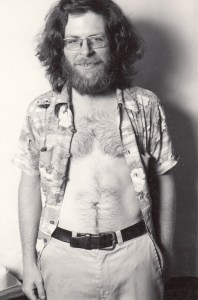
I shared a house there with two lesbian doctors and the world’s most obscene man. It was across the street from the zoo, where I found work at the snack counter. The WMOM, who had written several pornographic novels (the first, Sixty-Nine In-Laws, is one of the funniest books I’ve ever read), was already a published author, and I learned from him a thing or two about writing. I had been so immersed in literature, that when I wrote anything, it was like I was trying to be part of a university curriculum. I wasn’t writing for readers, but for libraries. The WMOM instead wrote quickly, facilely and more like he spoke than like Strunk and White instructed. I learned not to take my words so seriously, but to have fun with them. 

I read constantly, and among the formative books were virtually everything Henry Miller ever wrote. He reinforced the lessons I learned from the WMOM and taught me the importance of flow — that the writing could pour out like spring water. It’s a lesson maybe I’ve learned too well. 

Incidentally, the WMOM has cleaned up his act and is now one of the literary lights of Seattle. Unfortunately, his writing has become so literary as to be almost unreadable. It’s like we exchanged places. 

I practiced writing through letters. I wrote everyone and frequently. I kept carbons of them all. In March of 1978, I pumped out 500 pages on my aqua-colored portable typewriter. The nozzle has been wide open ever since. 
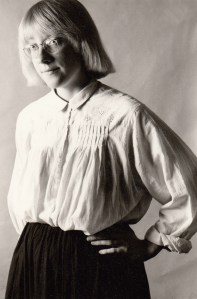
I had a brief romance in Seattle with a zookeeper. The relationship ran hot and cold, and made no sense to me: Did she like me, or did she not?  When I couldn’t take it anymore, I decided to move back East. Only years later did I discover the tragic situation that she was in, and the trauma she had suffered and never told me of. It once again underlined the truth that we never know the whole story, and we should never judge, for we are ignorant. 

This was the second most significant lesson, which I was given reinforcement any number of humbling times. I hope I have learned to wear my nescience gracefully. 

Back in North Carolina, I was close to homeless, and my best college friend and his wife took me in. I lived with them for a year and a half, at their sufferance. They saved my life. But I then found my real wife. We were together for more than 35 years until her death two years ago. 

That encounter was the single biggest thing that happened in my life. In an echo of the English Romantics professor, she forced me to take seriously the fundamental questions of living and to give up any lingering glibness I wore.

Ignorance is about the only thing I had no knowledge of when I was young. I had an answer to pretty much everything. Now, I realize that if I knew a lot of facts, it wasn’t because I was smart, but because the facts stuck on account of my brain being gummy. A collection of facts is not only meaningless, it also prevents learning. When I was a young man, I must have been insufferable. 
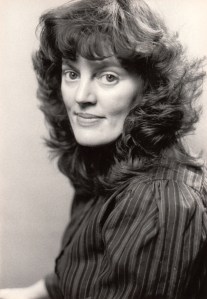
I did manage to make some spare change in bar bets. But what I learned from my wife was not so much how to think outside the box, but rather to remain ignorant that such a box even existed. She was the single most intelligent person I ever knew, although that fact might not be immediately apparent when you first met her. She was likely to say the most incomprehensible things, and only if you argued with her — sometimes for two days at a stretch — did you come to understand exactly how brilliant and insightful — how comprehensible — those odd things really were. 

She admitted that she had once been intimidated by my command of facts, but, the longer we lived together, the more I came to value my own ignorance, and the more freely I came to answer, “I don’t know.” She once told me her disappointment. “You used to know everything,” she said. Well, now I don’t. 

She also made me live up to my ideals, and she made me aware, not immediately, but over the long haul, the vital importance of family, and being constantly concerned for someone else’s welfare. The lesson came into profound use as she became increasingly ill and I had to care for her. What she gave to me by her slow decline is inestimable. The greatest hours of my life were those I was able to give to her. I would have given every hour I had, past and future, if she could have lived. 

Her death was the last — or at least the most recent — life-defining point, as I watched her go and came to realize, not something so stale as that life is short. We all know that, especially the closer we come to the end. But that there is little but breath and metabolism behind all that we love and care for. Take that away, and we stare at the void. 

And I can never be vain about my abilities or accomplishments, because not only will my breath and metabolism fail, but that the entire Earth has a sell-by date, the sun, the stars and the universe all sing the lines from Brahms’ German Requiem: “dass ein Ende mit mir haben muss.” 

What I could not have imagined coming out of college is that there is nothing distressing or mournful about this, but rather that I have a small, an infinitesimal part in a vast cosmic dance. 

The value is not in the result, but in the engagement. Gratia Rudy.