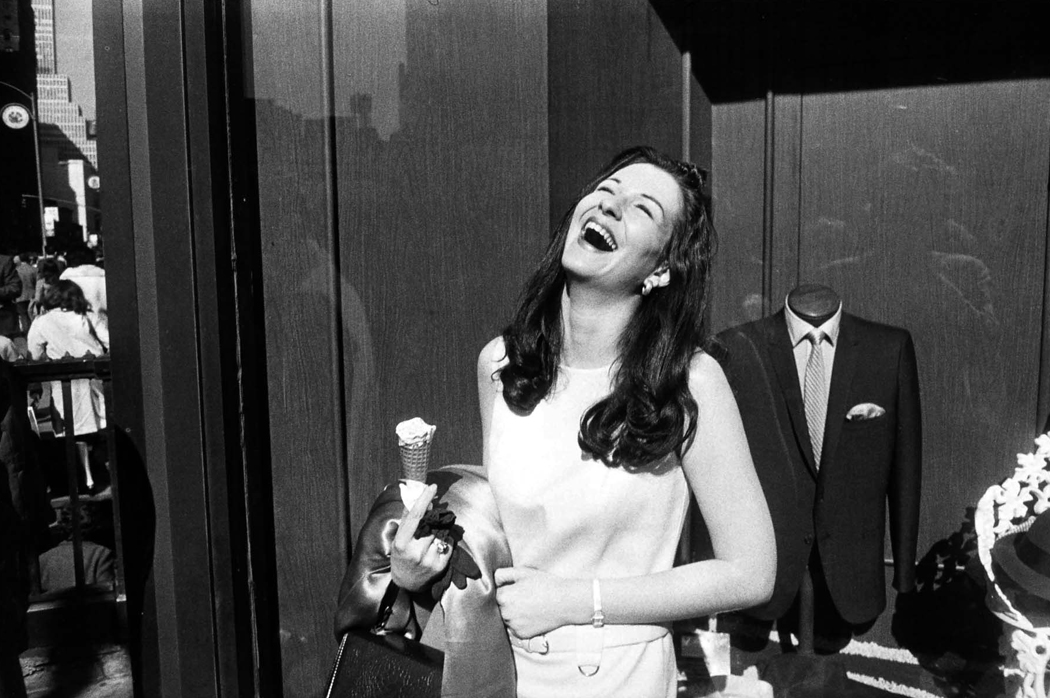
Archive

Tag Archives: photographic history

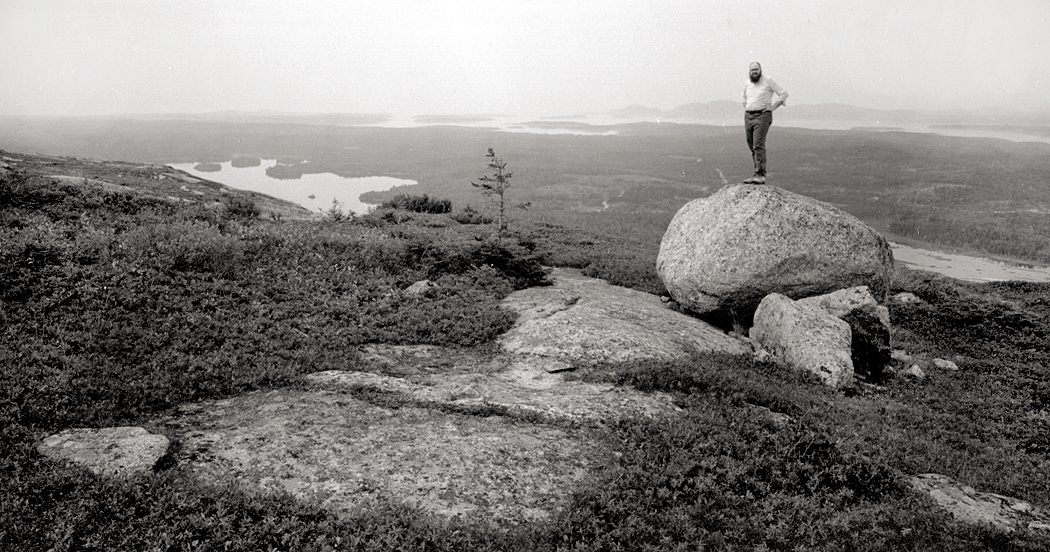
On Schoodic Mountain, Maine

I am within days of turning 78 and I feel my age, slowing down and dealing with new aches daily. I seem to be in reasonably good health, considering. But I don’t know how long I have left, and the length of string in front is clearly shorter than the length trailing behind. I am increasingly aware of mortality. 

And I have been considering all the things I have made and written over those piled decades and sometimes wonder why. Nothing will happen to any of it after I’m gone: It will eventually find some landfill somewhere. And part of me is perfectly alright with my life’s effort in words or images being utterly forgotten. Most of what anyone has produced over the millennia is long forgotten, and it’s fine. But I did a few things moderately well, and I can look at it all and note it. 

Over the past weeks, I have been spending time trying to consolidate a definitive version of some of the work from over the years. One has a tendency to take the long look and attempt some sort of codification of the evidence of a life lived. And so, I’ve been editing and winnowing. 

It is related to the unavoidable sadness one feels, having spent that life learning a huge trove, not merely of facts, but of useful experience — things we never understood as arrogant youths, full of ourselves and dead certain we were smarter than all those benighted generations that gave us birth — and knowing there is no way to impart that accrued experience to the children and grandchildren we love, that they will have to go through all of it again, on their own, and in turn come to rue that they will not be able to keep their own children and grandchildren from the same pains, mistakes and ignorances. 

And it will be the same for the physical evidence of that experience — the art and writing. So, I look over a lifetime of production and question to what end? 
Even I am astonished at the amount of work put in, a constant chugging away at the production machine, pictures and paragraphs. In 25 years at the newspaper, I wrote more than two-and-a-half million words, and since retiring, I have written another million-and-a-half on this blog — with another 100 essays written for the Spirit of the Senses website in Phoenix, having also given at least a score of well-researched lectures for that salon group. There are also an uncounted number of letters penned, and also both fiction and poetry. 

To say nothing of the tens — maybe hundreds — of thousands of photographs I have made.

I have always been this way. I didn’t think about it when I was a boy, but even before first grade, my idea of fun was a pile of paper and a pencil or crayon and I would spend hours drawing. Most kids do that, but most slowly lose the need as they grow up. In high school, I was given access to the darkroom and began making photographs, while also writing for the school newspaper. Always scribble, scribble, scribble. Eh, Mr. Nilsen? 

After college, I found work writing, editing and making photos for a Black weekly newspaper, where I pumped out a weekly cooking column and the “Dear Carol” advice to the lovelorn column, in addition to writing the editorials and coming up with the headlines. (My favorite: When the iconic Greensboro, N.C., nightclub closed, I wrote in giant 128 point type, “Cosmos Folds!” Thought it a grand joke.) 

In the single month of March of 1980, I wrote 500 pages of letters to friends, on a tiny plastic aqua-colored portable typewriter on a tree-stump “desk” in the back yard. When I finally began work at the daily paper in Phoenix, I averaged about three stories a week. I thought I was being lazy, but apparently I was producing more than most. (At least, that’s what my editors told me). 

I would use the word “creating,” but that seems too important for what I was doing. I was producing. 

Los, with his forging hammer, by William Blake

There is a character in poet William Blake’s obsessive mythology called Los, and he is one of the four main “gods” of human psychology, and Los spends eternity forging an endless chain. Why he does so is irrelevant: It is what he does. He is defined by it. He produces. It is what I have done: produce. 

Many jobs in life call more for other talents. Nurses and doctors, for instance, or office workers who keep the paperwork flowing, or in selling or organizing. The actual creation of something new is not for them the goal. But in my life, like that of Los, all that matters is production. Make. Make. Make. I cannot imagine spending my life without making stuff.

And so, I am going over the thousands of files stored on computer and CD-ROMs and winnowing down what I think has been the better examples, and working on them to create the best or final versions “for posterity,” by which I mean, so I can look at them and contemplate what I have spent my life doing. 
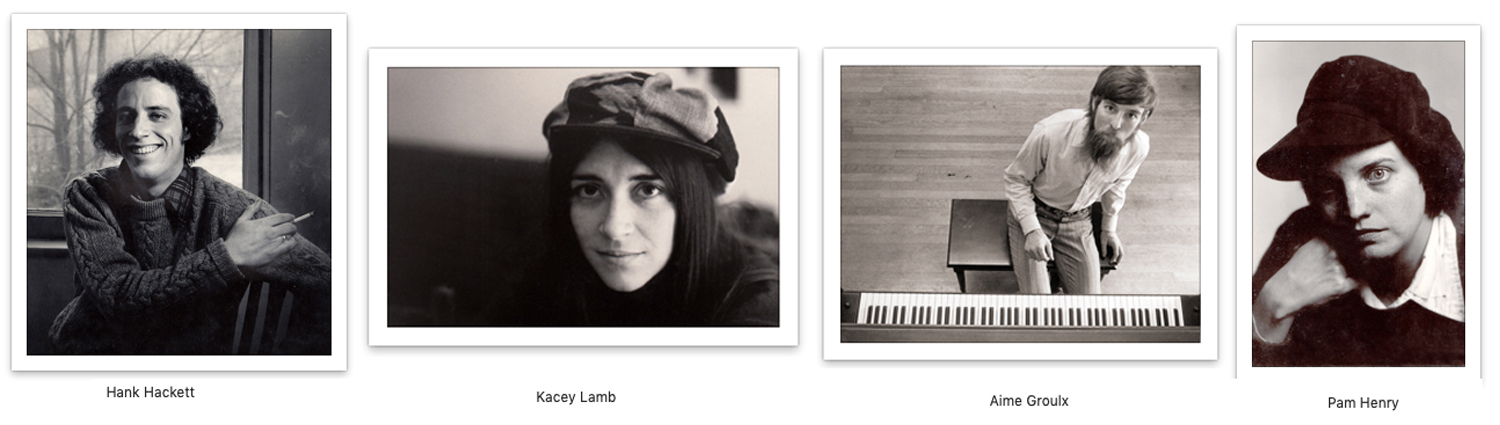
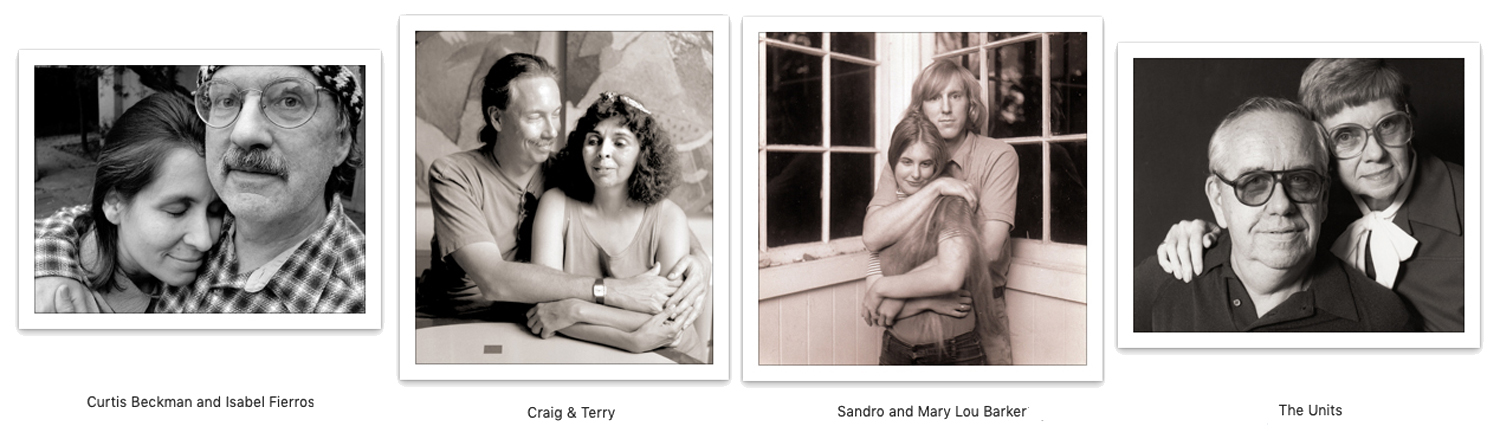
I just finished editing the bulk of the portraits I have made, cleaned them up, re-framed some, improved contrast and tone, and come up with a final version. If I were to present a portfolio, these images are what I would offer. I have about 200 such images in the file.
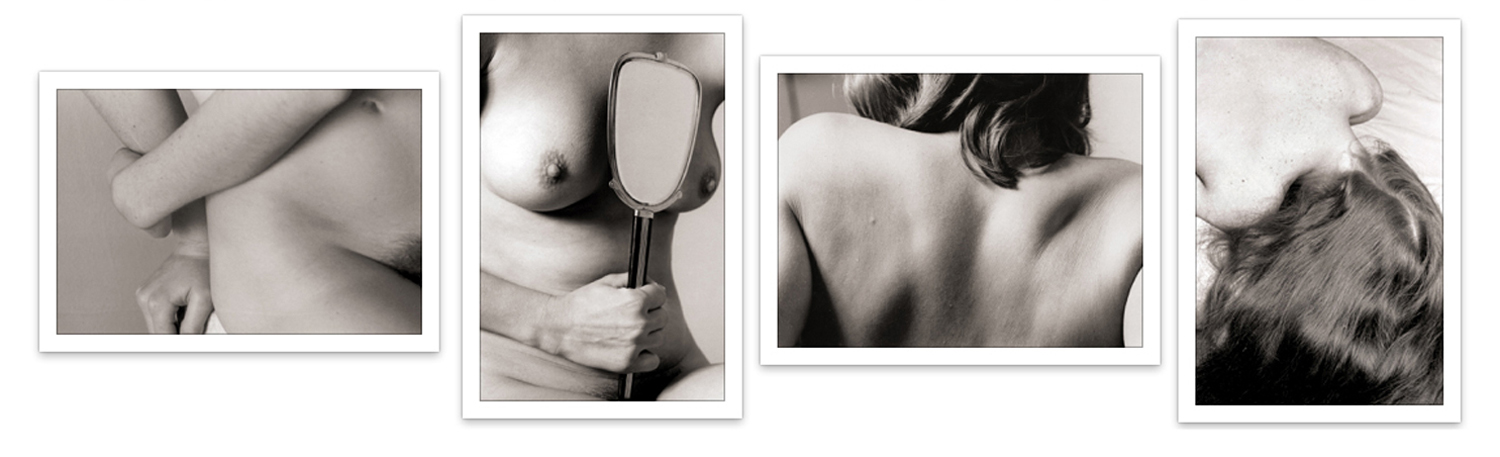
I previously did the same thing for the nudes I took over the years; there were fewer of them and even fewer of those were worth saving. 

There have been uncounted thousands, probably tens of thousands, of landscapes I have pointed my camera at. Most are just snapshots — memories of travel — but there are hundreds saved intended as works of art, and shown in gallery exhibits and printed in books
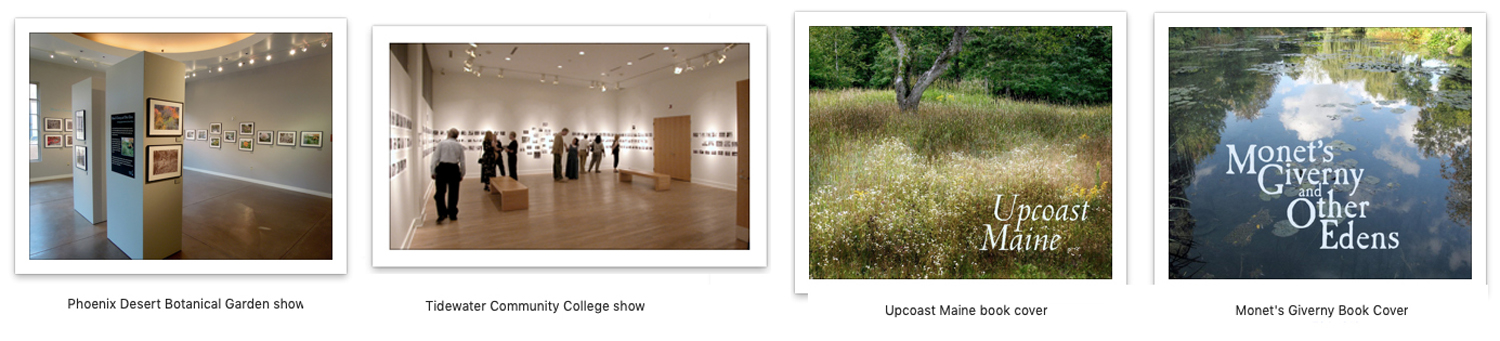
The earlier ones are more clearly derivative, but gave me lots of practice printing in the darkroom, so that I became an excellent printer of silver images. The longer I kept working, the more individual my landscapes became. 

Most of my photographic work has been in clear genres, such as portrait, nude, landscape and still life. 

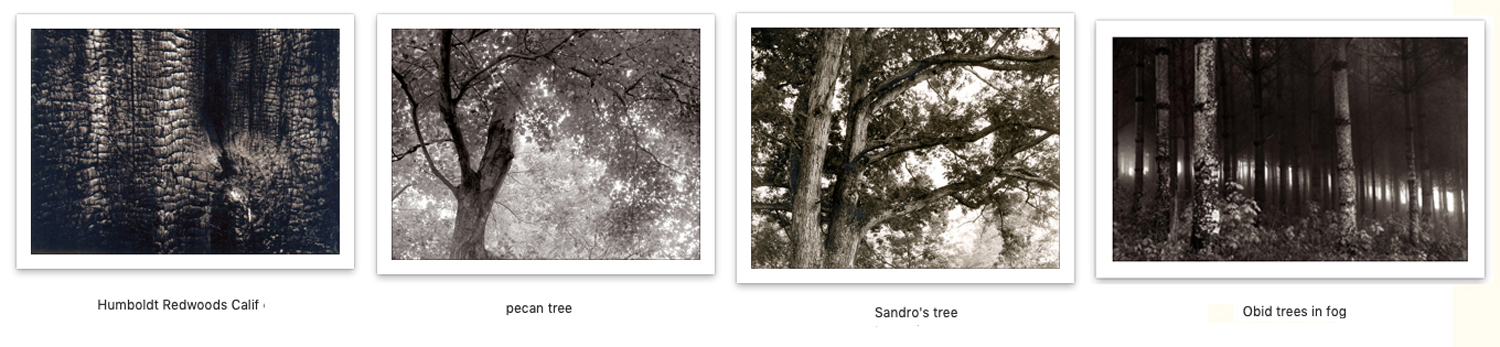
One subject that has remained as a visual source of amazement over 50 years of making images are trees. I have thousands of prints of various trees in various seasons and weathers. 
And, because of when I grew up — in an era when Abstract Expressionism was king of the hill — I add to those genres a search for abstractions.
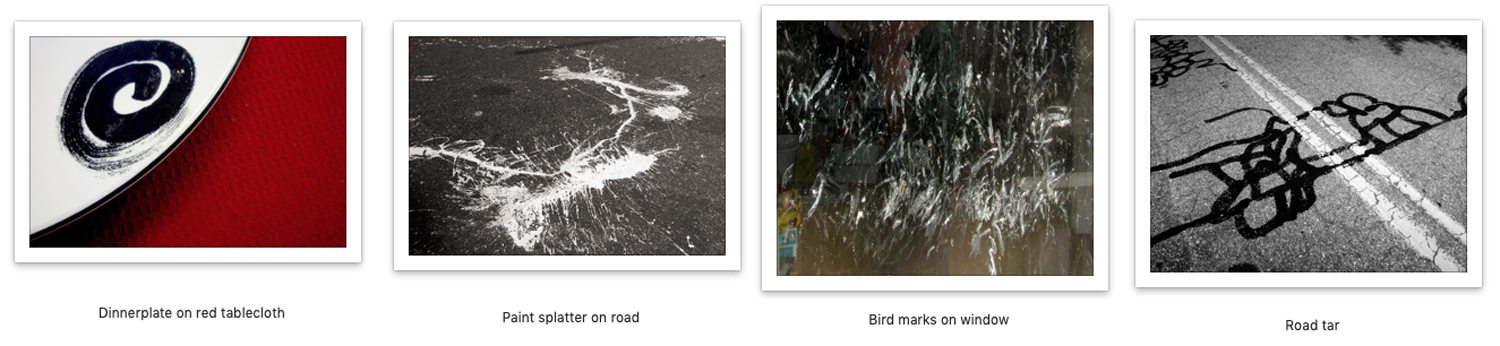
And even, non-camera work, where I played with the chemicals and papers to make my abstractions directly in the darkroom.

About 25 years ago, I began making photographs in series — collected in portfolios of between 10 and 20 prints each — made in various gardens, including public gardens and the back yards of friends and family. I must have made scores of these boxes, each with its title, and meant to be understood not as individual images, but as a kind of suite to be taken whole.

And with images made over the course of a few hours, tapping the shutter at whatever caught my eye as deserving its attention.

I expanded the series idea into images I found outside my airliner when flying around the country, a series I titled Window Seat

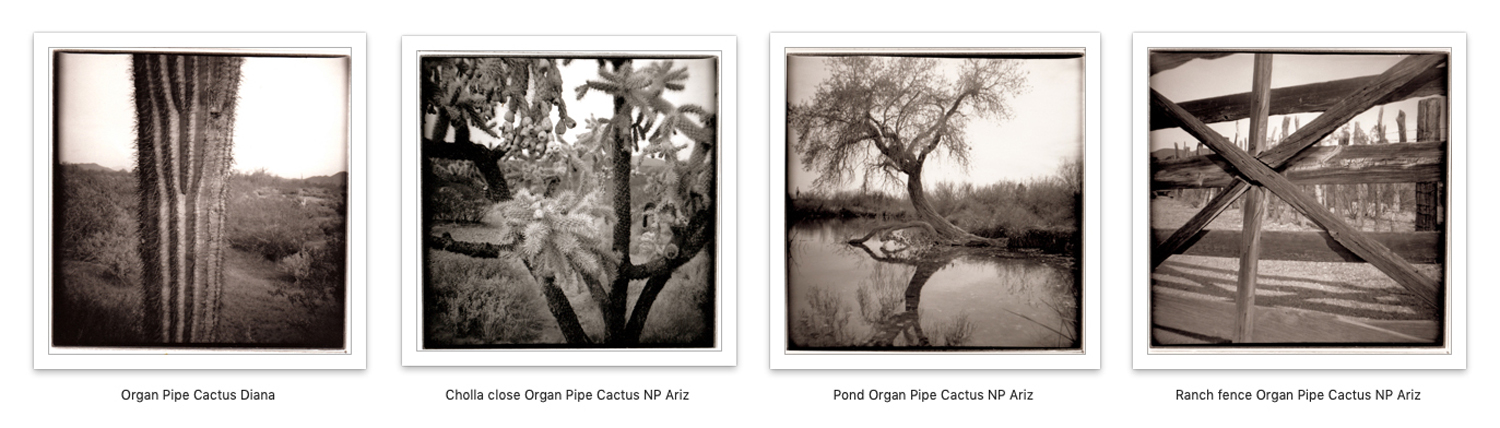
And another using a cheap toy camera (a $2.98 Diana) at Organ Pipe Cactus National Monument in southern Arizona.
And another made from clouds on one particularly stormy afternoon from my back yard in Phoenix, collected in a book titled Monsoon

Where does all this need to keep creating, keep producing come from? It is just my nature. I can’t help it: It keeps mind and hands busy, engaged, interested, alive.
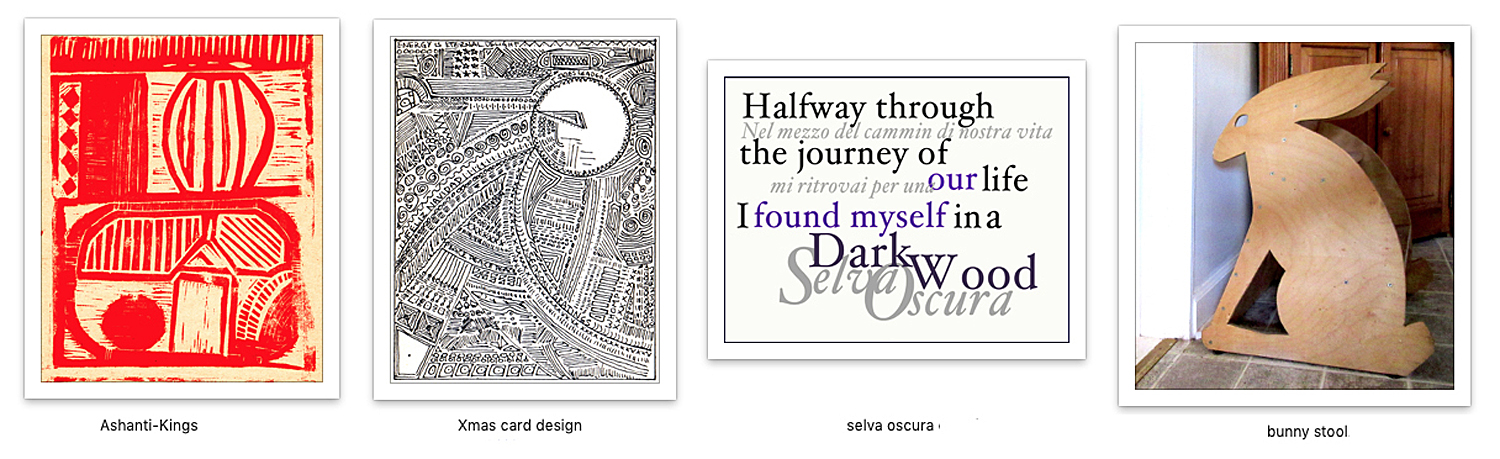
I’ve made linocuts, drawn with pen and ink, played with graphic design, and even, when my wife needed a step-stool for the kitchen, I built one from birch wood in the shape of a jack rabbit. 

None of this means I feel especially talented or important, but just that putting things into this world that hadn’t existed before I made them seems as if it is whatever purpose my life has been made for. 

When I was newly minted and 20 years old, I thought I would be an artist or poet. It was a goal. But it didn’t take long to give up such an idea. Instead, I began writing and making images. The focus was no longer on my identity, who I thought I was, and more on engaging with the world. Looking outward rather than being stuck with self. 
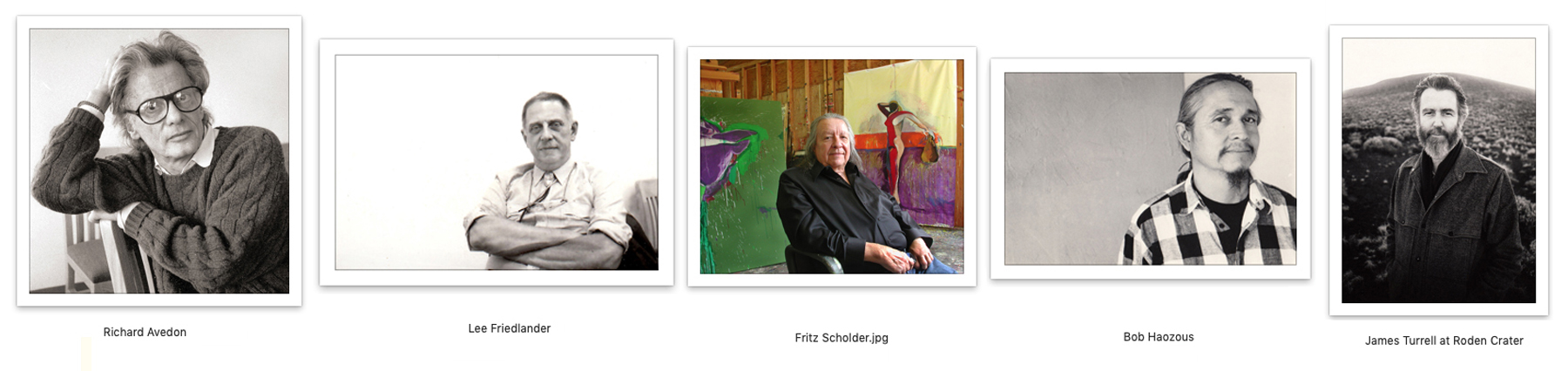
I’ve known plenty of genuine artists; I don’t count myself among them. But I am doing something analogous. 

I didn’t care if I was an artist. I was more interested in understanding the world, either visually or conceptually. And not so much understanding as simply experiencing it. I can’t say that self evaporated — I have always had a strong sense of self, as anyone who knows me will admit under muffled giggles. But that it didn’t matter. 

And so, a lifetime of making things was not spent in any ambitious attempt at public recognition. I certainly could have written books or sought more gallery shows, but, as comic Steven Wright once put it, “I have  ambition, but without the drive.” But I have been driven to use my words and my camera to see better, to connect better, to make objective documents recording what I have seen or learned. Making pictures forces my attention. 

So, when I question having spent my life making and producing, and what it was worth, the obvious answer is not in the rewards of having made, but in the immediate doing. The meaning is in the act. 

I will stop when I no longer breathe. 

Click on any image to enlarge
Someone, and I can’t remember who, once said that the best way to critique a photograph is to make another photograph. 

You can learn a great deal by the doing — a great deal more than by reading or hearing lectures. In the past, painters learned to paint by copying master paintings in museums (you can still take canvas and easel into the Louvre, with proper permission, to copy). 

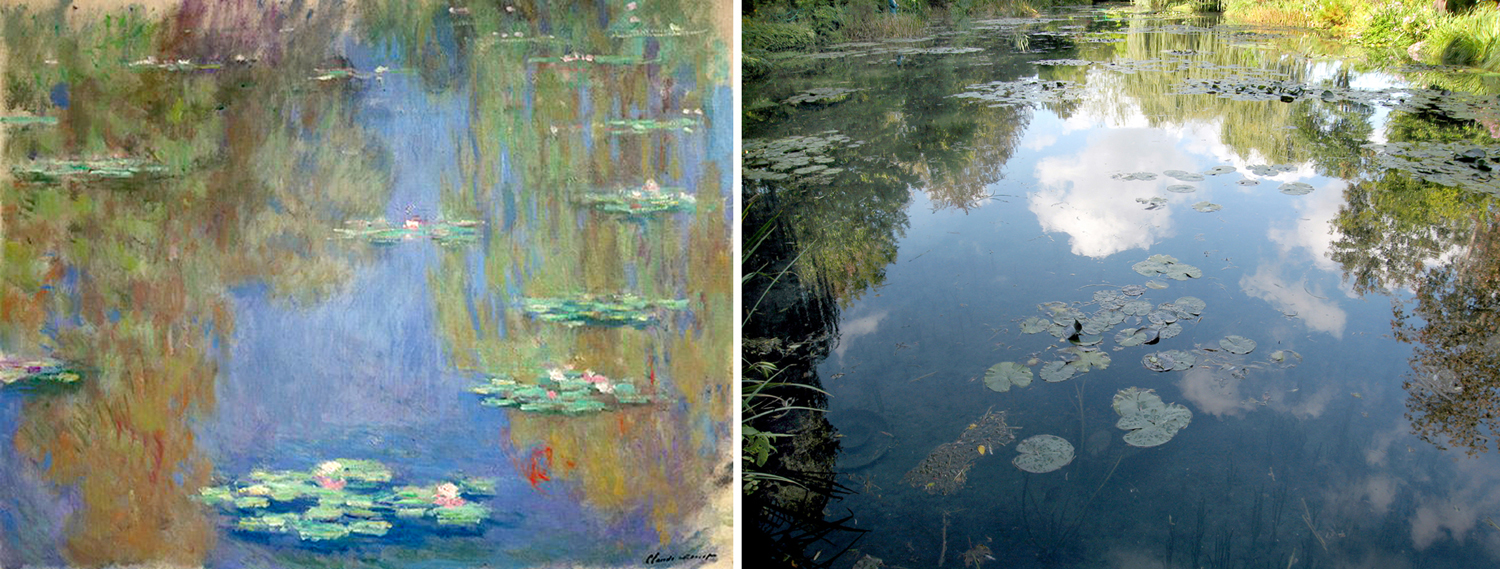
If there’s any one thing that you discover by the process, it is that it ain’t easy. Things you hadn’t so far considered turn out to be crucial. I tried this many years ago, wishing to take black-and-white large-format photographs of waterlilies to find out what, besides the color, went into the structure of Monet’s paintings at Giverny. The color is so dominant in the images, that we too easily forget the form. 

There is form in them, but very like the harmonic structure of Debussy, it is subtle. The black-and-white photographs I made amplified form over color and made for very different results.

Years later, at Giverny, I made color photographs of the waterlilies and the resemblance to the paintings was much more overt.

This sort of copying, in order to learn, is something I have always done. I have a self-portrait, made in 1980, when my beard was still dark, that mimics Van Gogh’s portrait of Dr. Gachet. 

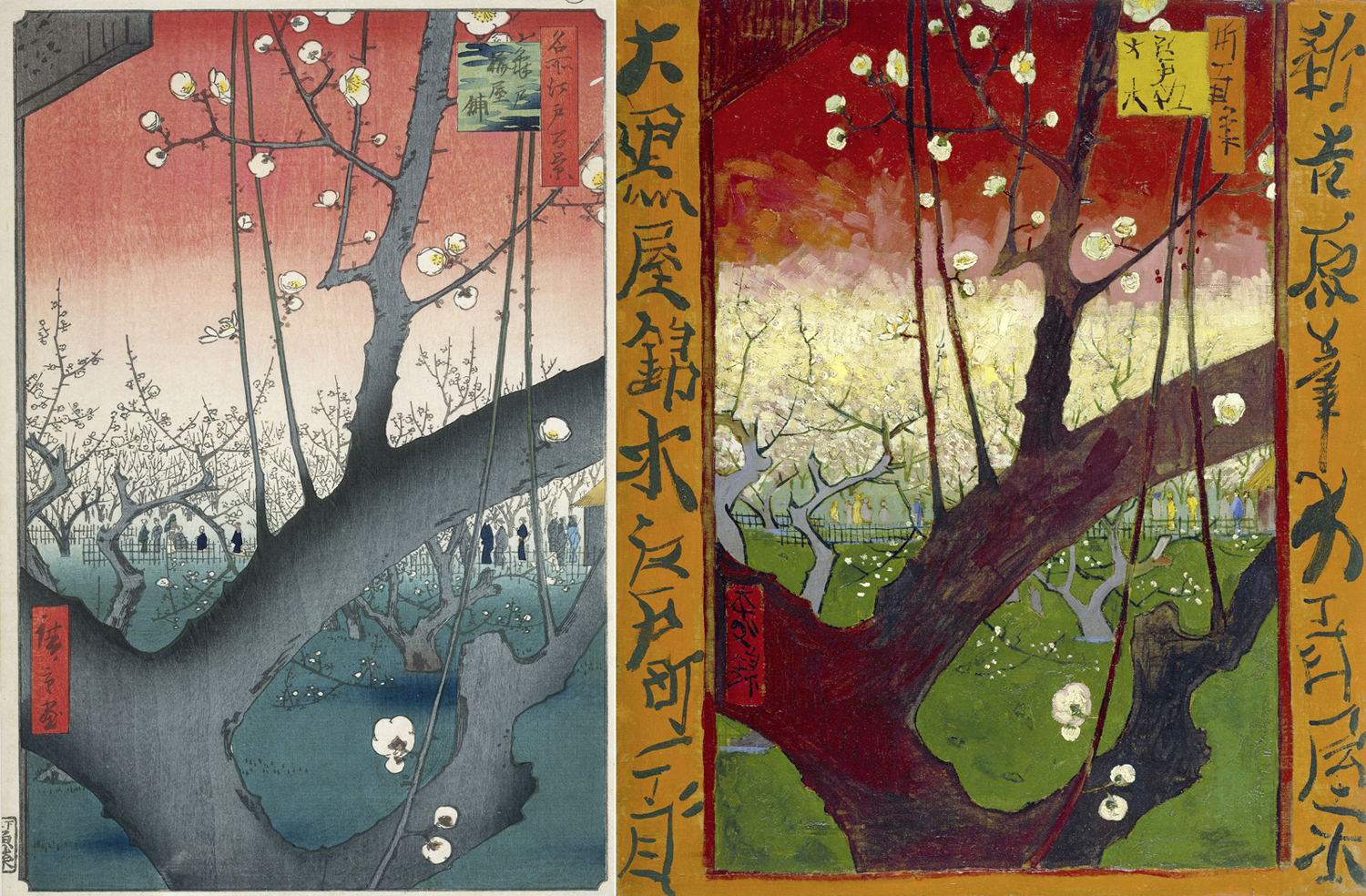
Of course, Van Gogh himself was well known for copying to learn, such as his oil-painted imitations of Japanese woodblock prints. The translation from Hiroshige to Van Gogh tells us a great deal about the Dutchman. 

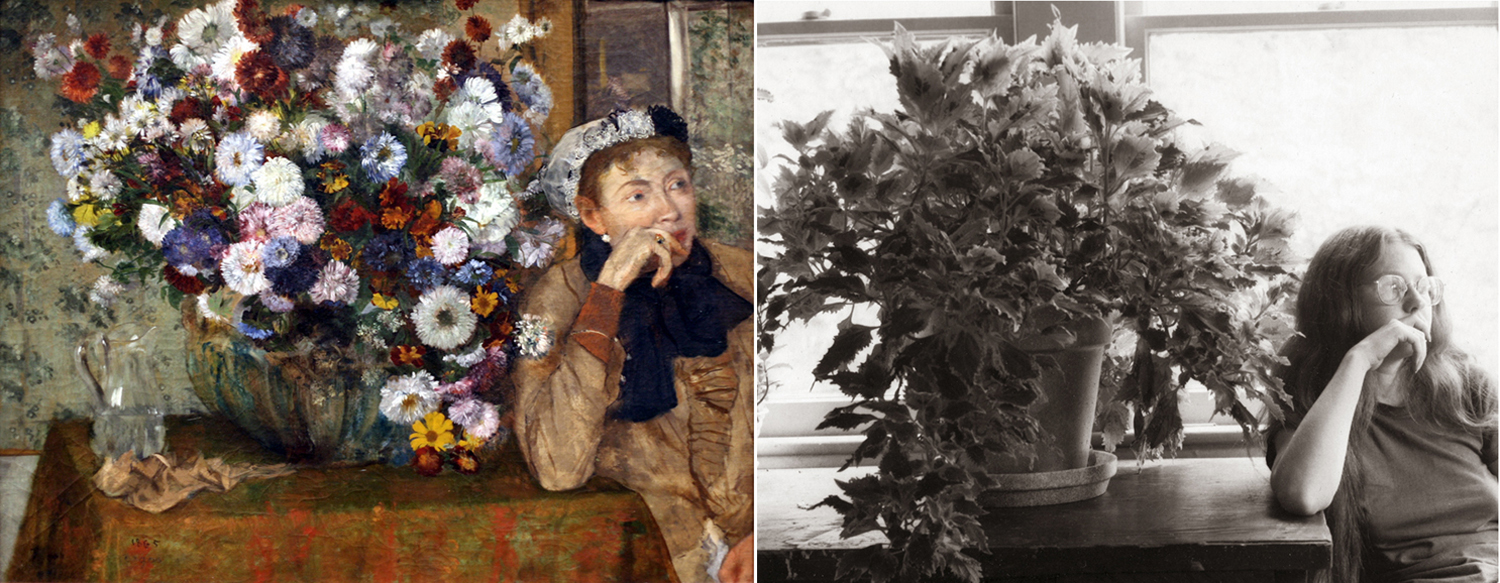
A portrait I made of Sharon Vernon in the early 1970s patterned itself on Degas’ Woman with Chrysanthemums. 

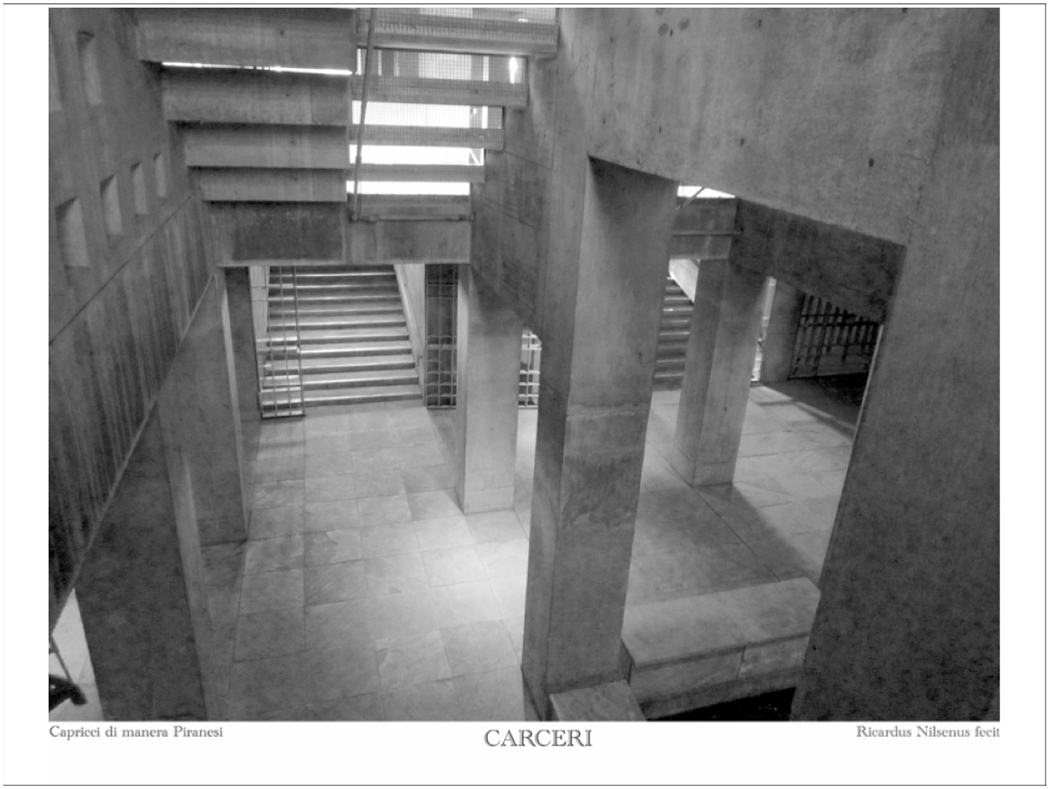
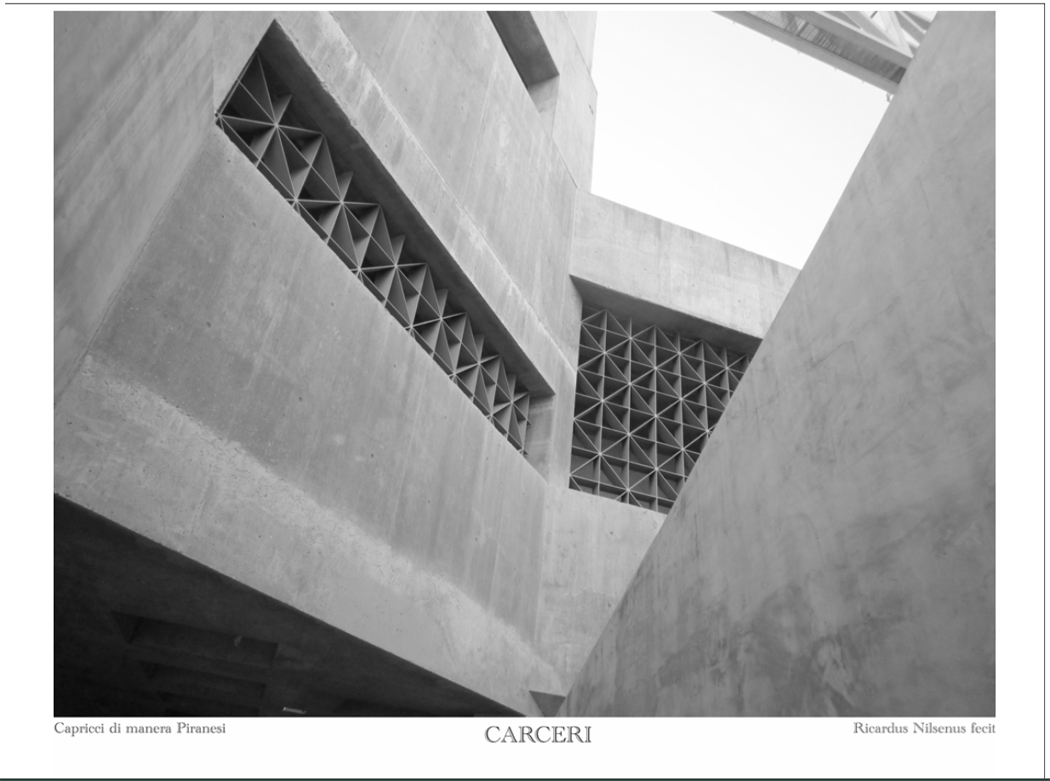
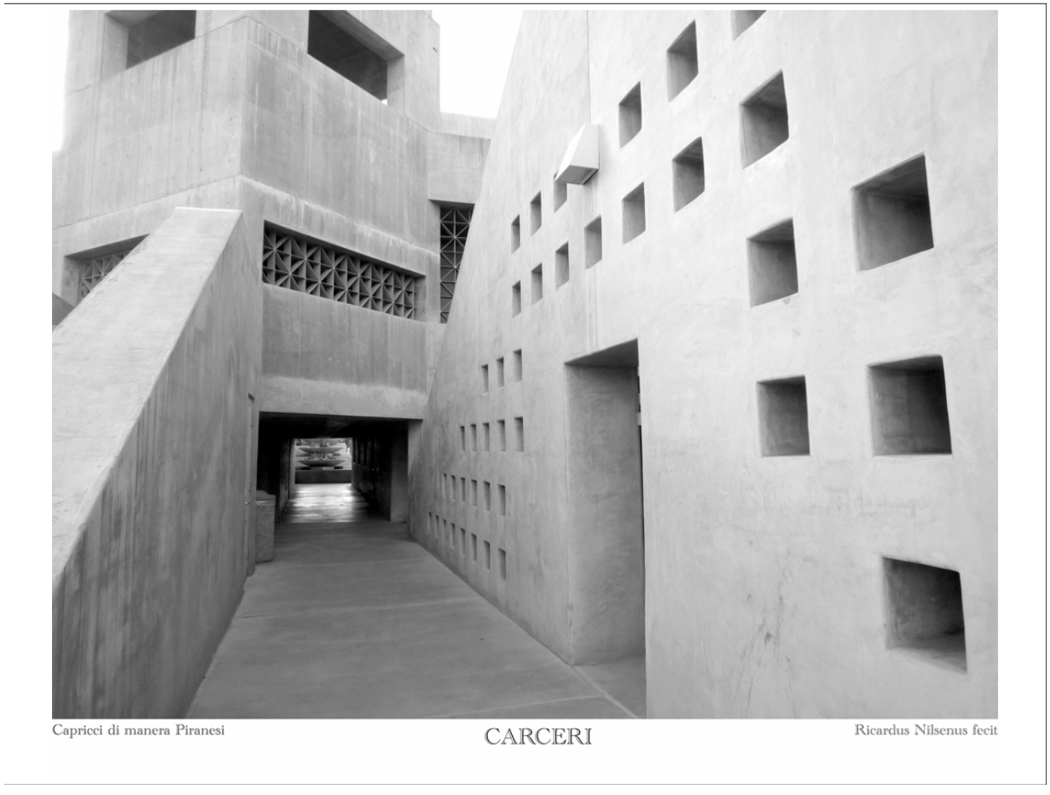
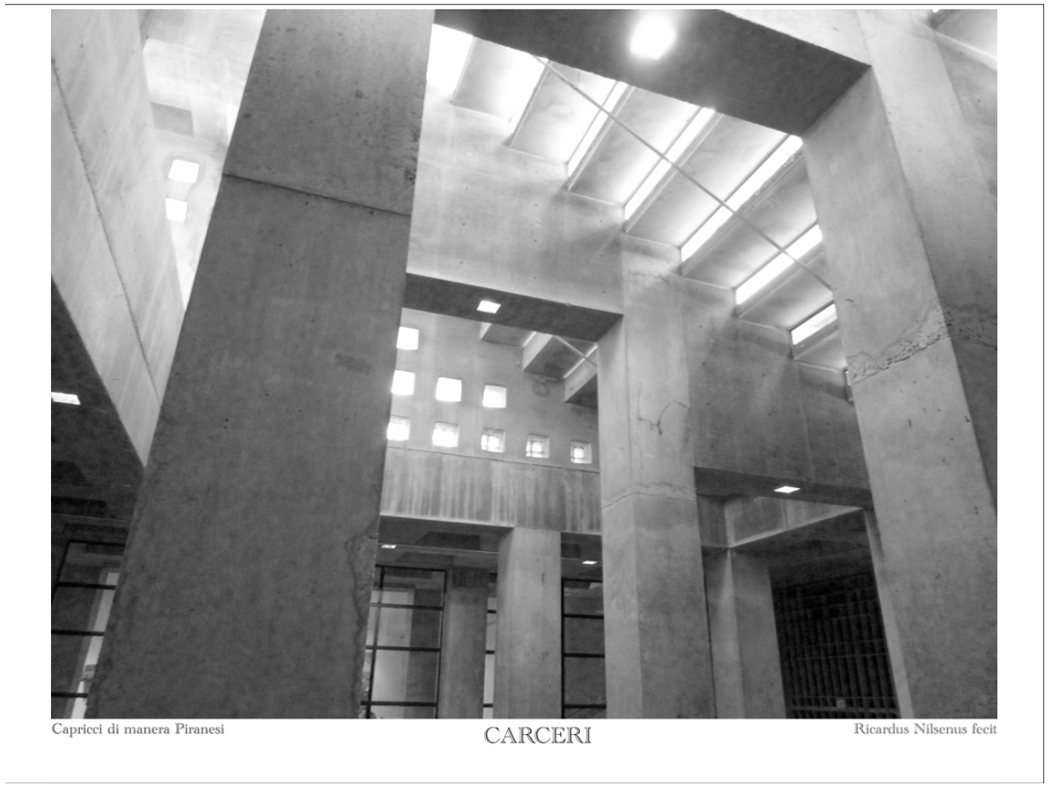
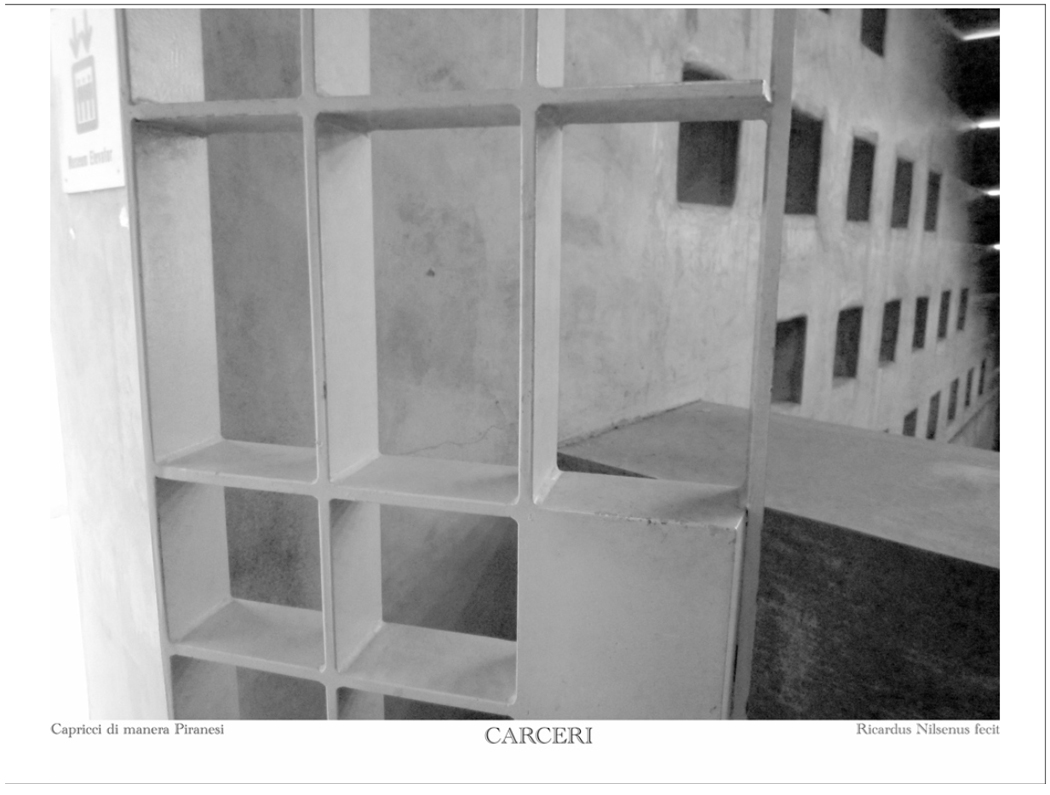
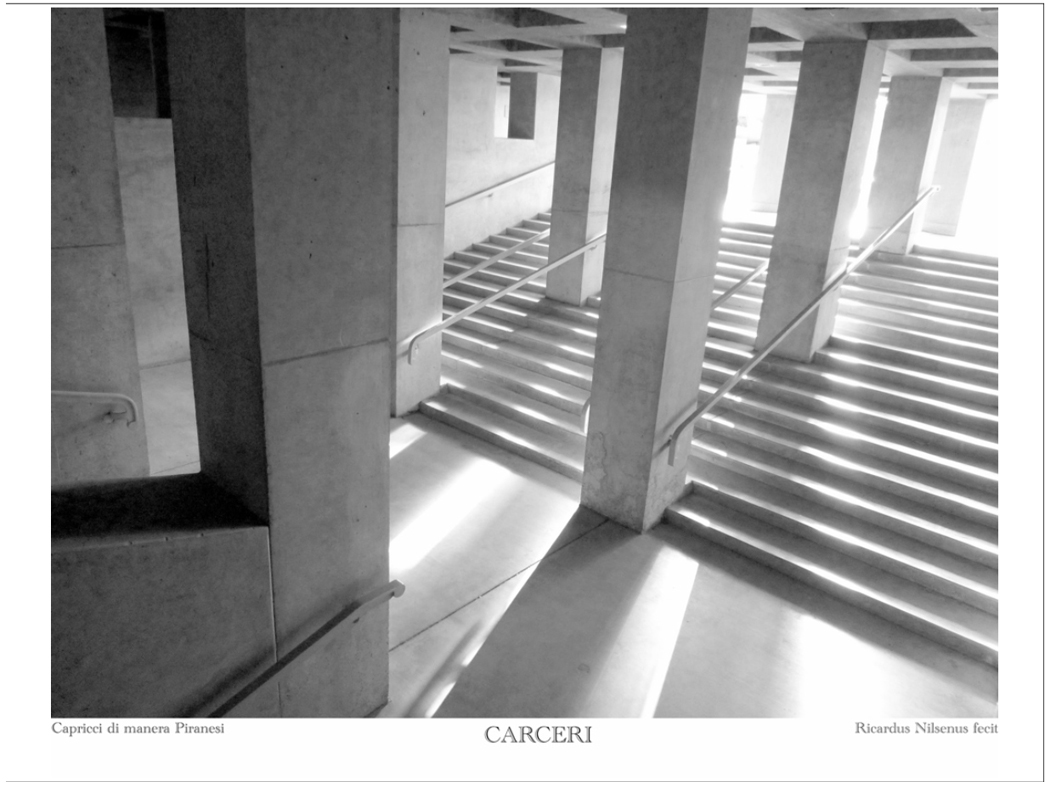
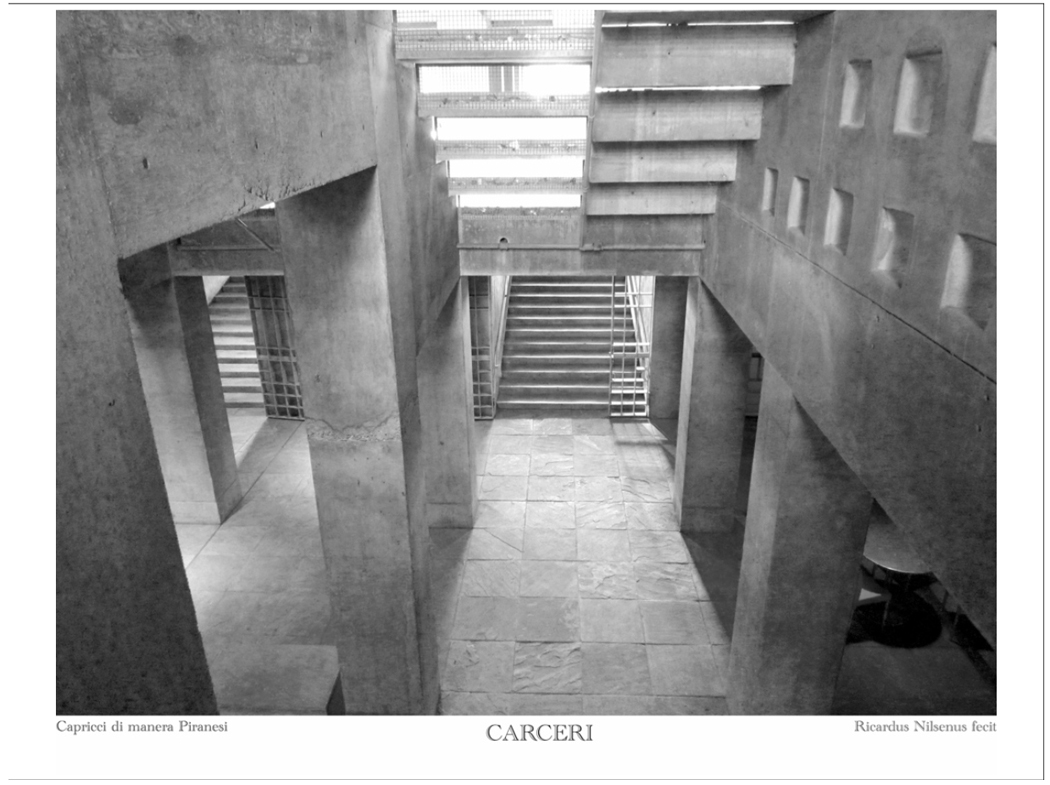
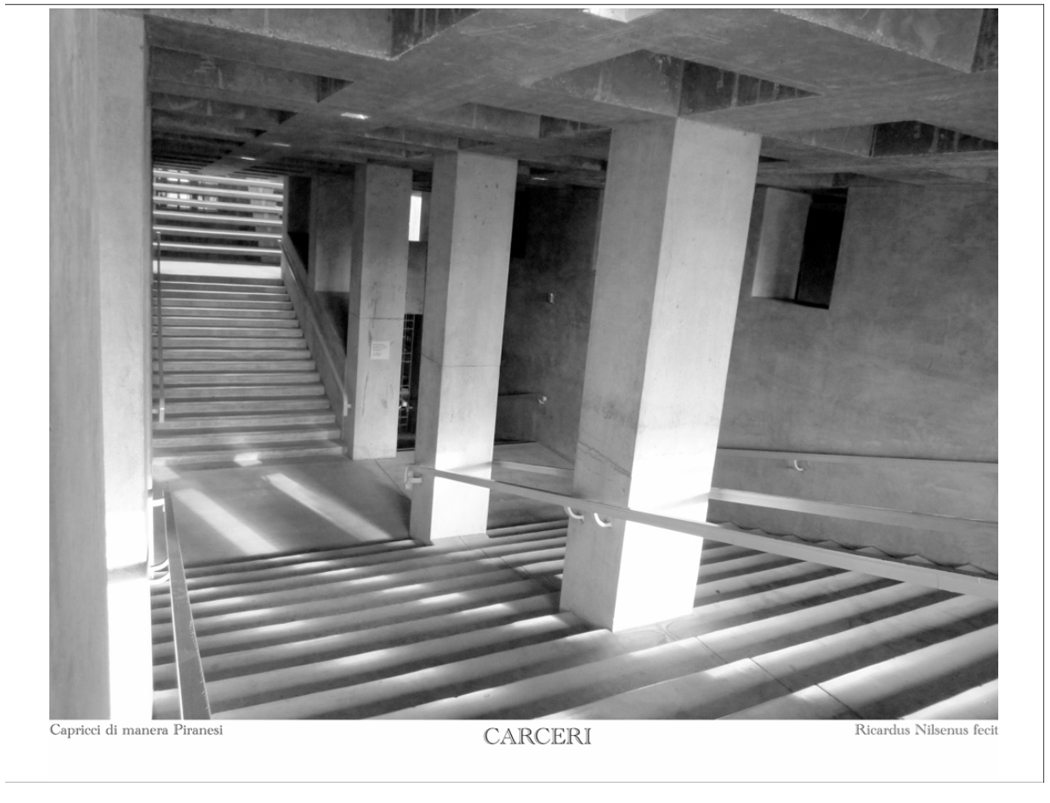
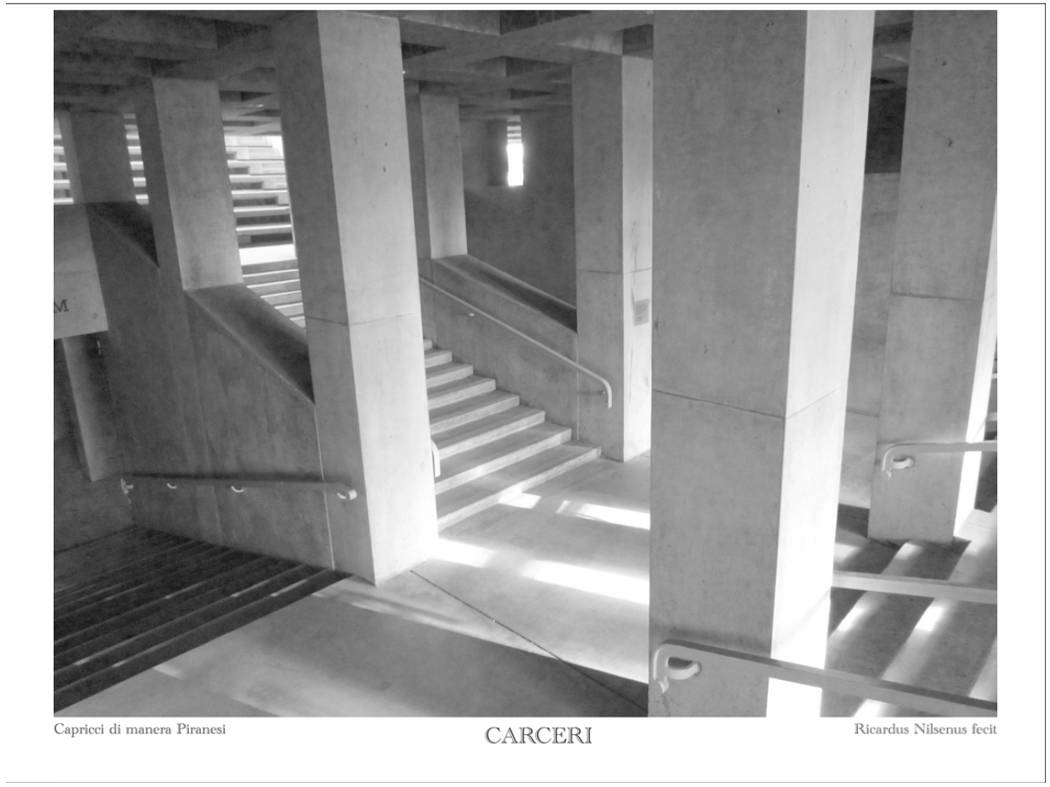
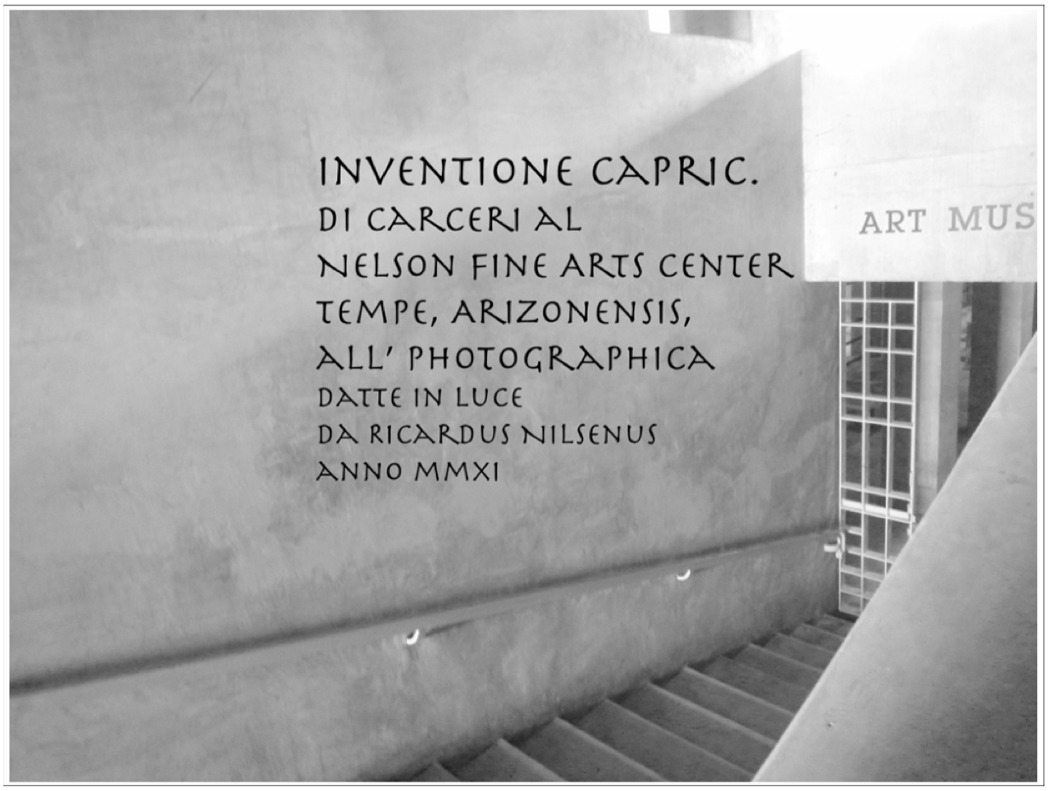
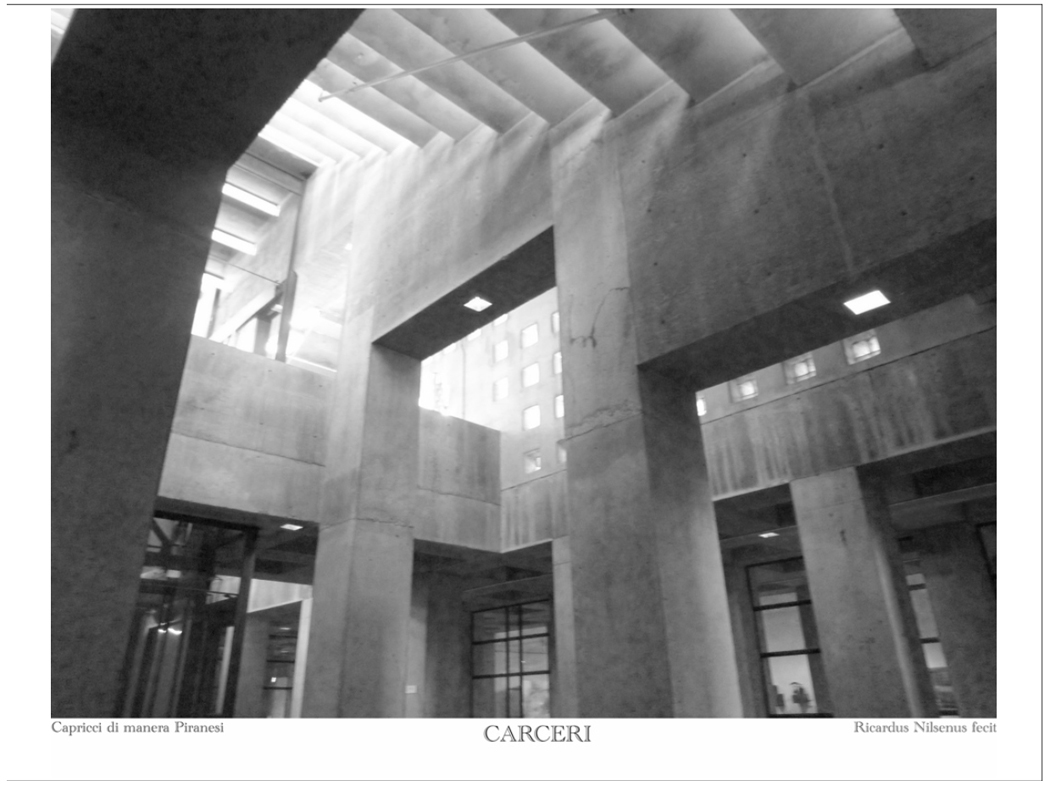
In 2011, I extended the copy to a series. As art critic for the daily newspaper in Phoenix, Ariz., I spent a lot of time at the Arizona State University Art Museum. It was housed in the Nelson Fine Arts Center, which opened in 1989 on the university campus.

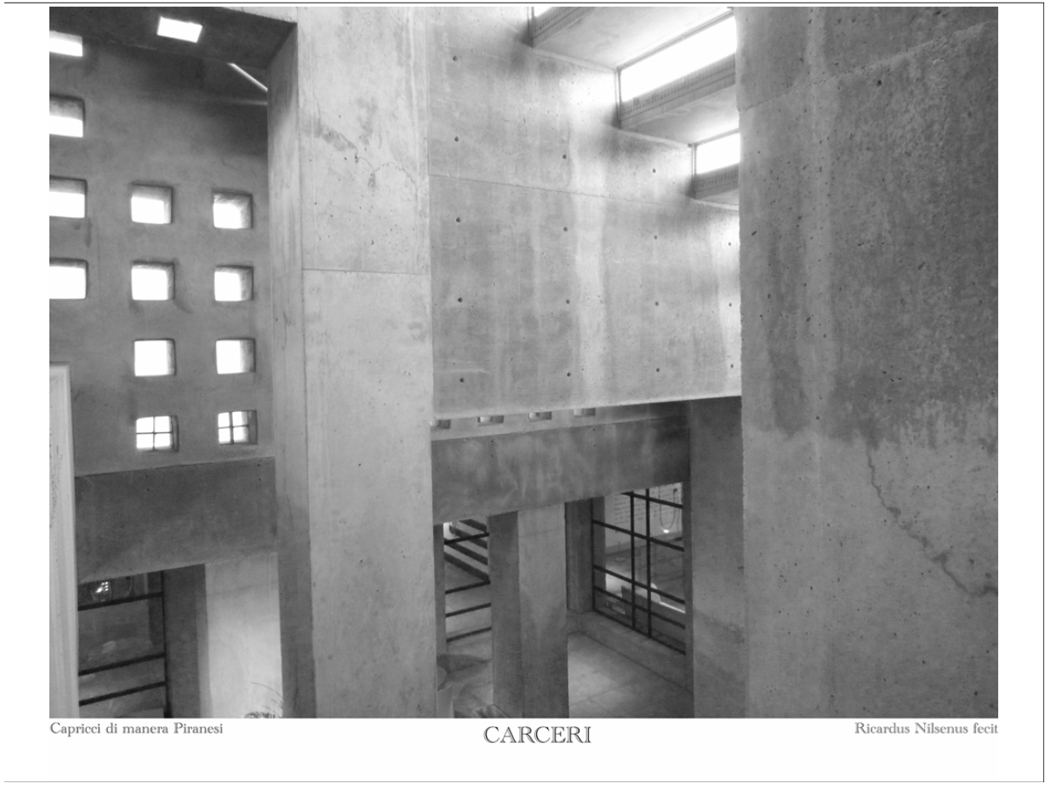
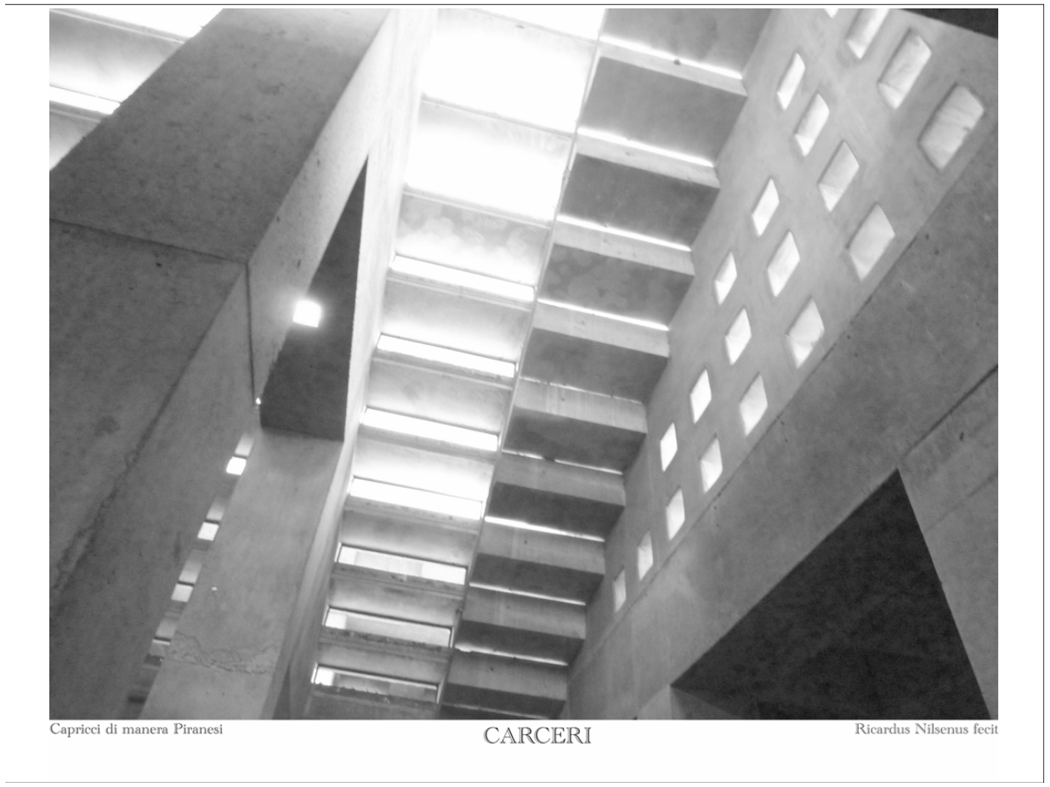
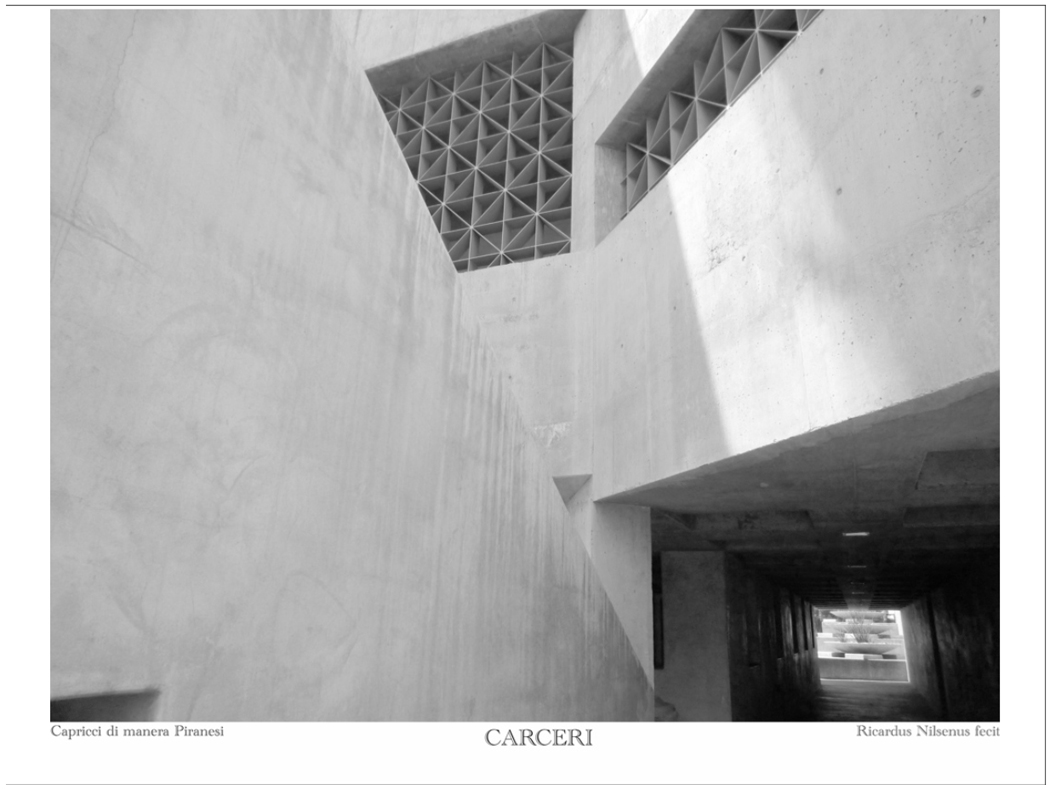
The building was designed by noted architect Antoine Predock and won many awards — although there was a significant backlash from more conservative commentators who thought the windowless building looked too much like a prison. 

The building itself was a labyrinth of stairways, running up past others descending. There was a barred gate at the underground entrance to the museum, and many sight-lines that seemed to defy logic.

The entire complex is immense, and includes a theater, an outdoor movie screen and staircase that goes nowhere. But it is the art museum and specifically the entry to the museum that I was concerned with.

Of course, my source material — the Piranesi etchings (Link here) — are quite dark and airless. They are dungeons, after all. 

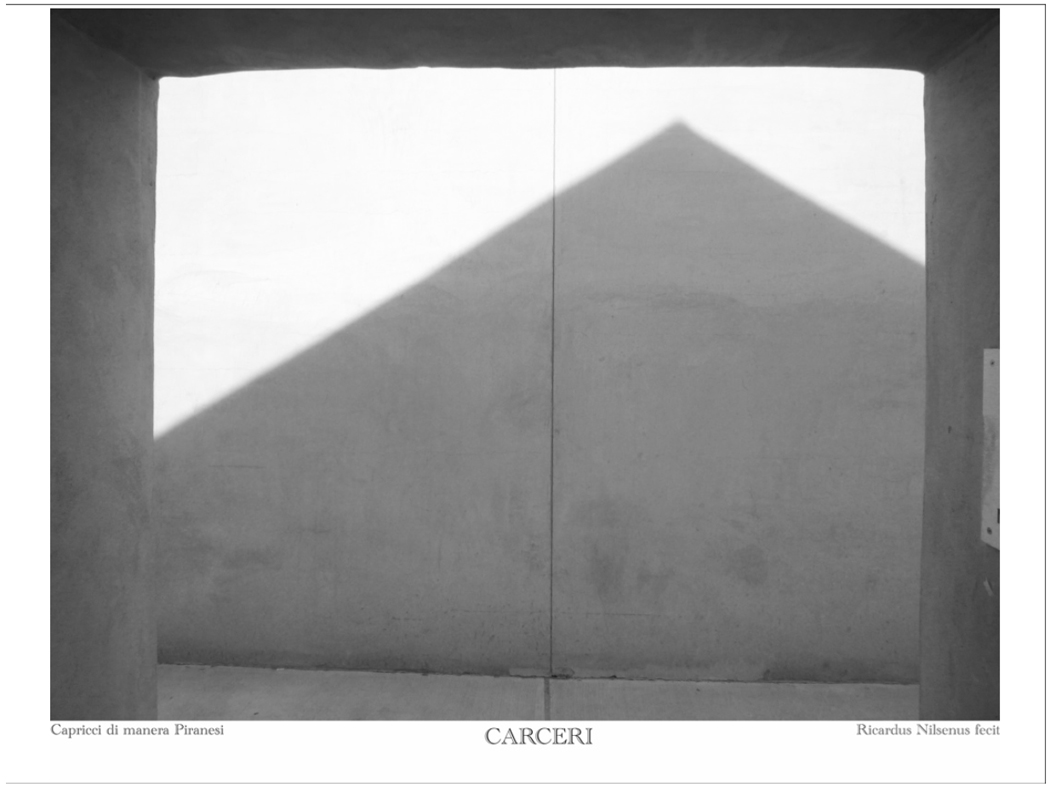
In contrast, the Nelson Fine Arts Center burns in bright sunlight, with bright walls. So, it would not be the murk I was trying to recreate in the photos.

Instead, it was the hallucinatory perspective that I tried to capture, the sense that up wasn’t always completely up and that down wasn’t always clear. 

I must note that I am not claiming for these exercises the status of art. Whether or not they achieve that level is quite beside the point for me. 

The point was simple and direct: I had fun in the doing, fun in the editing, fun in the printing and in the collating. 

I wound up with 24 prints, compared with Piranesi’s 16. The set, printed out on archival paper, I gave to the director of the art museum as a gift. 

I kept another set for myself, and I had the digital versions to arrange here for this presentation. At least, here are 16 of them, to match the number of the Carceri. 

I am also not the only one to consider the Nelson Fine Arts Center as a photographic subject. 

Arizona photographer Johnny Kerr has also attacked the building for a series; his series, however, is more consciously graphic, and sees the shapes and shadows as a form of Minimalist art.

You can see his version at: (Link here). 

Imitation, such as my meager attempt, is a great way to learn what you cannot just through cogitation. You get to engage with the physical world and see how it becomes transformed in the act of having its picture made.

It reminds me of Garry Winogrand’s manifesto: “I photograph to find out what something will look like photographed.”

But it goes beyond that. It makes the three-way connection between the subject, the photograph, and the long art history that stretches out behind us. Each photograph is a hinge between the real, physical world we wish to capture and its echo in the accumulated culture. 

Click any image to enlarge
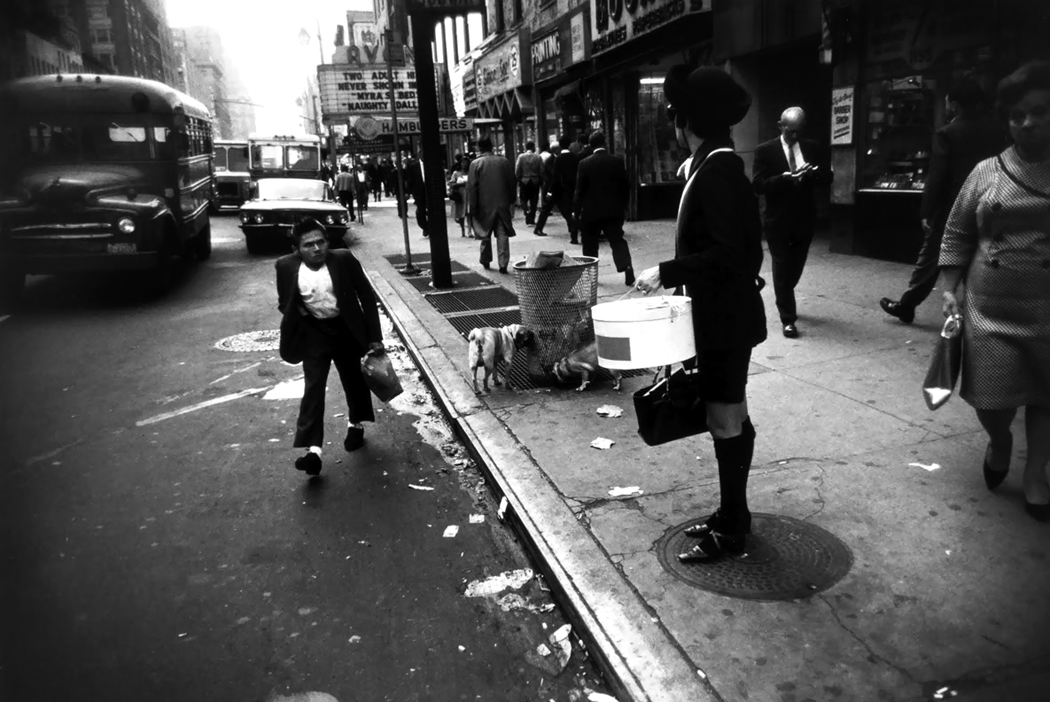
winogrand hollywood

Curiosity is the libido of art, and photographer Garry Winogrand was its visual Don Juan.

Over a 40-year career, he photographed with prodigal fascination the cities, foibles and mores of America. He pointed his Leica, with its wide- angle lens, at a roiling chaos of visual information. Anything might tickle his curiosity.

So prolific was he, promiscuous some might say, that at his death in 1984 at age 52, he left behind a third of a million exposures either undeveloped or unedited. He could never catch up in the darkroom with the conquests of his shutter button.
To be more specific: He ran through film like an alcoholic runs through gin. He left behind 2,500 rolls of film undeveloped, 6,500 rolls developed but not edited or printed and about 300 contact sheets unedited.

The pictures he did print are often enigmatic: You can’t always tell why he took a particular picture, at least until you look long and hard, and look through an entire box of them. Then, Winogrand’s odd world view takes hold and his pictures become addictive. It is a Winogrand world.

Someone once said, “The world is not only stranger than you imagine, it is stranger than you can imagine.”

This is the truth Winogrand captures in his pictures. winogrand elephant 2

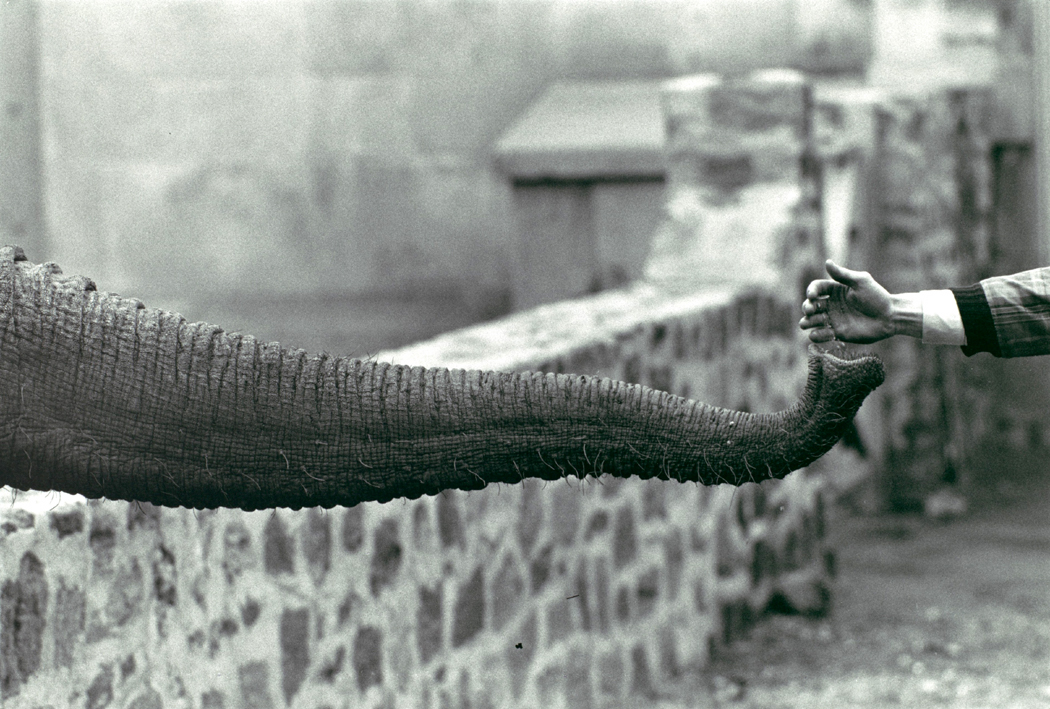
winogrand monkey in carIn many cases the photographs he left are jokes we can enjoy. An elephant’s trunk stretches across the frame to catch some peanuts dropped from a hand. No elephant in the picture; no person. Just hand and trunk.

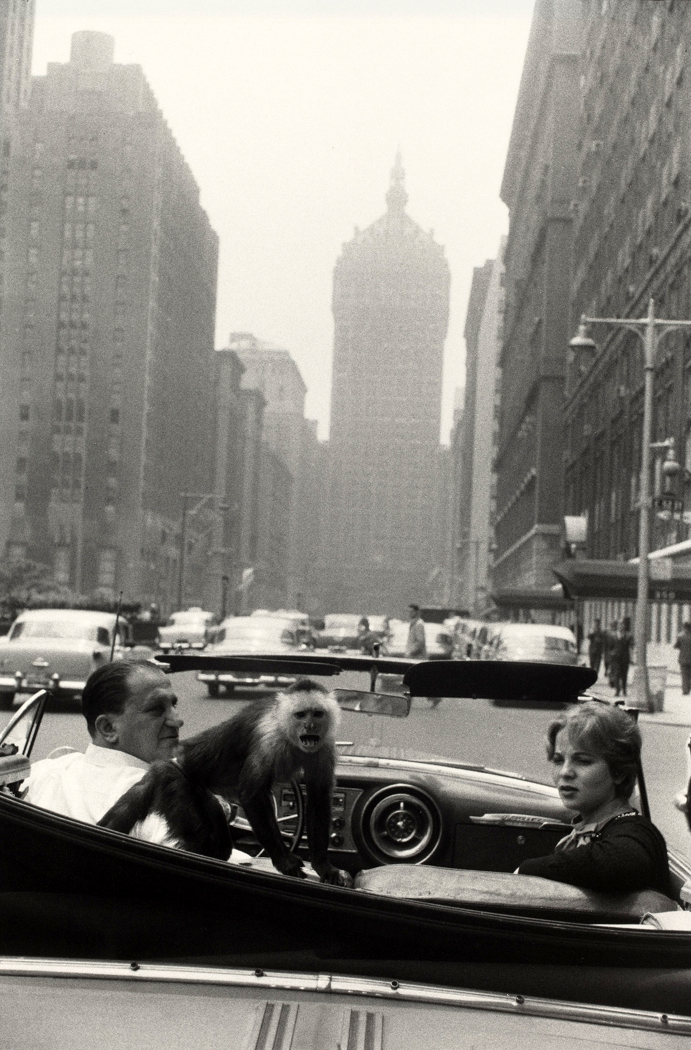
A middle-age couple sit in a convertible on Park Avenue in Manhattan; an angry monkey perches on the seat back. What does such a thing mean?

A bagpiper in full Scots drag plays a bagpipe in a men’s room in front of a rank of urinals.

Few of the pictures have titles, and for those that do, the titles tell us very little: Park Avenue, New York, for instance, for the scowling monkey, or Apollo 11 Moonshot, Cape Kennedy, Florida. That picture shows a crowd of people from the back watching — and photographing — a rocket launch, while one small woman in the foreground looks in the opposite direction and makes a picture — we can never know of what — with her Kodak Instamatic. winogrand cape canaveral

But more often than not, the punch line is equivocal; more often it looks as if there must be a joke we do not get. It is on this edge of comprehension, subtle and uncomfortable, that Winogrand’s most important photography creates its meaning. For pictures with punch lines, Elliott Erwitt is much more consistently funny. But Winogrand tells us something deeper and more disquieting. winogrand richardson 1977

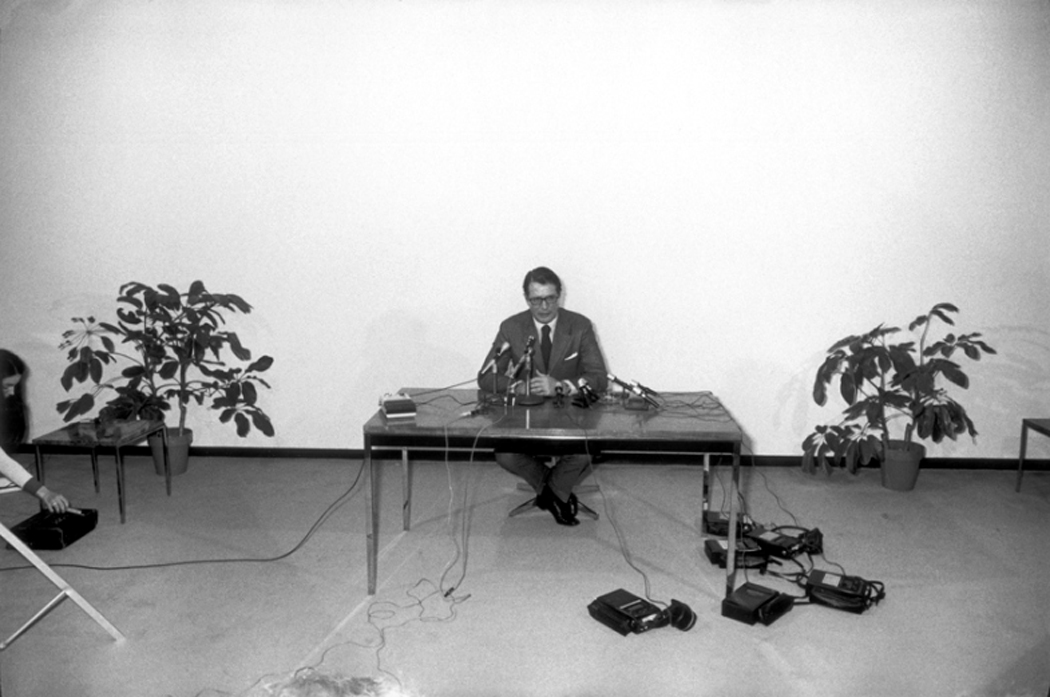
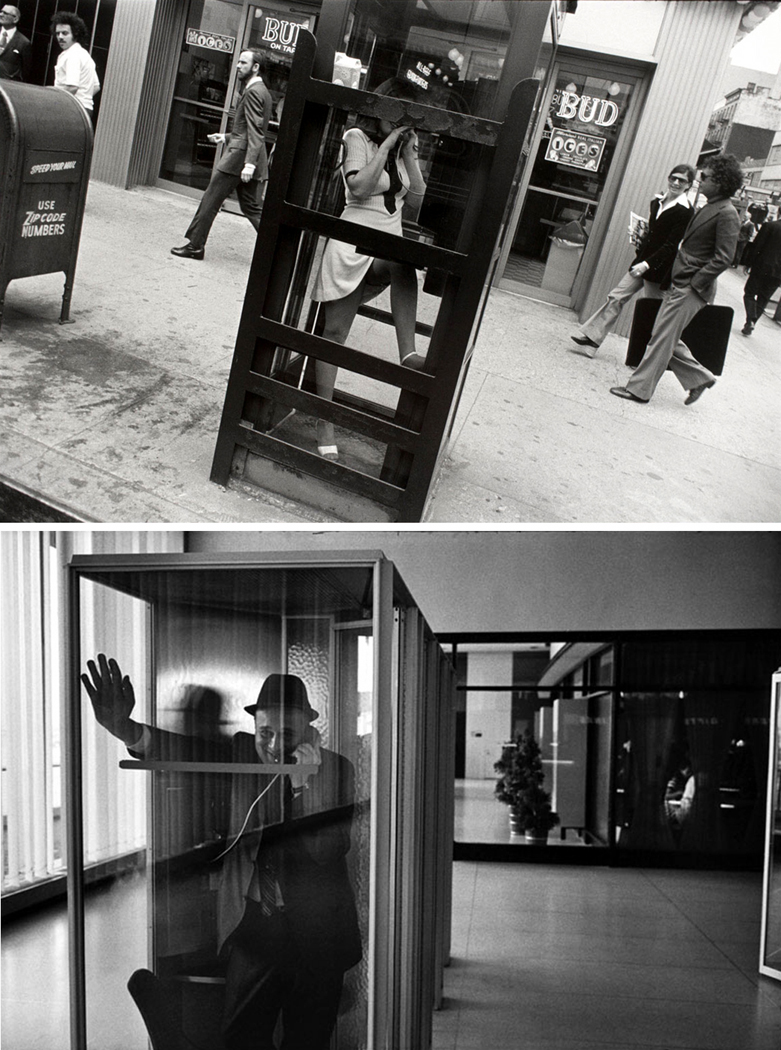
Most of us live in a world where things proceed largely as we expect them to. We hardly notice the anomalies. Winogrand was never so acculturated that he had conventional expectations; it freed him up to see what was really in front of him. Nixon Attorney General Elliot Richardson in a press conference alone and isolated — small — at a folding table and surrounded by tape recorders. A man and a woman — their backs to us — stare at a gorilla in a zoo; the gorilla stares back. winogrand phonebooth pair

Other photographers made consciously surreal pictures — Les Krims, for instance, who taped dozens of photos to his mother’s nude body, or Duane Michals, who used camera trickery to show a soul departing through an apartment window.

But Winogrand isn’t surreal. His world is the everyday one in front of us all the time, but which we do not see. Nothing is more bizarre than the ordinary. winogrand underwater pair

But it isn’t just the world by itself. As Winogrand insists, it is the world wrung through a camera lens. The act of making a picture changes the world.

He often said he made pictures to find out what the world looked like in photographs. And there is an awareness in Winogrand’s work that photographs rewrite reality. He makes us question our belief in the supposed truthfulness of photographs. winogrand nyc 1970

Winogrand knew that the four edges of a picture frame are a cookie cutter that slices out a bit of reality’s dough and separates it from its context and remakes the facts. No doubt there were a bevy of reporters listening to Richardson’s comments, but because they don’t appear inside the image frame, they cease to exist. This is what Winogrand means when he talks about seeing how something looks in a picture. It is changed. Utterly and inutterably. winogrand 1991 1

Winogrand was aware that a photograph has a grammar and syntax that we have learned to read. He makes us distrust that syntax.

He also plays God, making order out of chaos. Or at least, being aware that human perception will force meaning from chaos, he creates an artificial meaning from something that has none. In doing so, he forces us to consider the very existence and nature of meaning itself. Perhaps meaning is just a pattern we have gotten used to, a habit. Perhaps all it takes to create new meaning is a new pattern. Winogrand 1984 2

It is the artistic equivalent of naming constellations in the night sky. In that sky is a confused mass of stars, but we have grouped some together and named their configuration. The Big Dipper does not exist of itself, but only in that we have invented it. Orion, Scorpio, Gemini: The boundaries of any of these constellations could be redrawn and renamed. Put together the tail of the Big Dipper with the stars Spica and Arcturus and call it ”The Great Sky Scythe.”

Winogrand realized that we create such patterns; they are not inherent in reality. Winogrand understood that perception creates reality, or at least that we have no way of knowing reality except as it is ordered by our perception. winogrand nyc

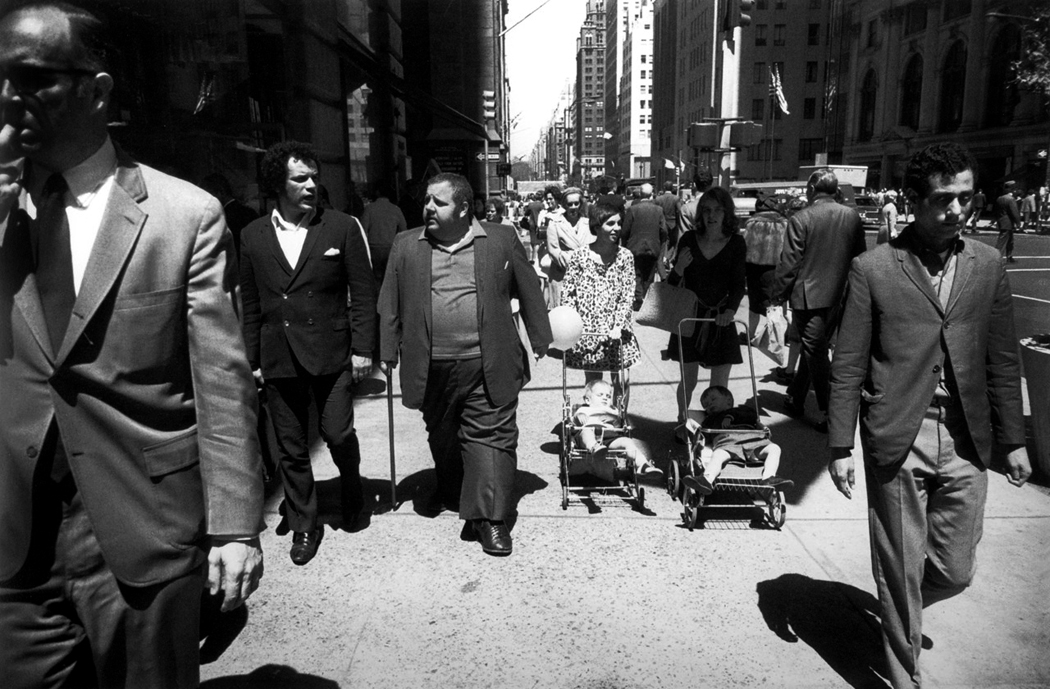
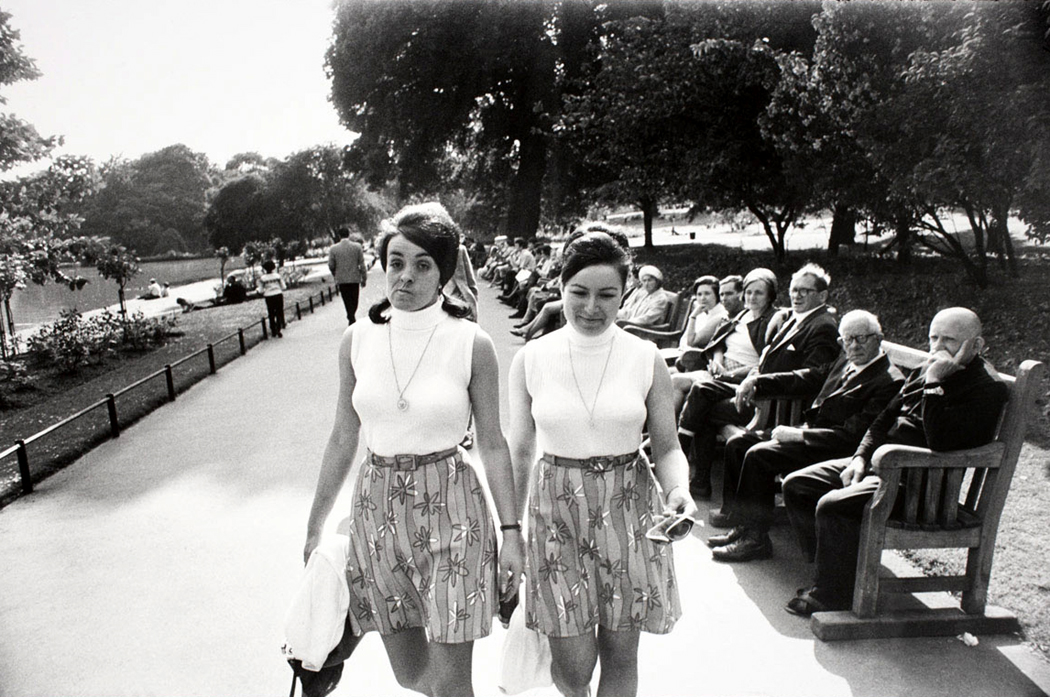
He will find four or five people walking down the street, or gathered at a party, and use the edge of his picture as that cookie cutter. He makes us see those people as a coherent group, just as we see the Big Dipper. A part of us knows we have been manipulated, but the instinctive part of us accepts the fiction. Photographs confer validity even to lies.

Yes, Winogrand presents a picture of America over the past 30 years; yes, the photographs often have a visual punch line; yes, they show sometimes grotesque people. But above all, they experiment with what the mere fact of pressing the shutter button does to reality. winogrand 1984 4

They don’t all work: That would be too much to ask of such a prolific seer. But even the boring photos play with what the camera does. An ordinary person standing with a drink in his hand at a party, someone else stands behind him. We are forced to stare at the photo until we satisfy ourselves that we understand why he took that photo.

At times no reason ever emerges. But the event, framed in the viewfinder, probably a meaningless juxtaposition of two partygoers, is forced to seem as if it were meaningful. The simple fact of its being taken creates that fiction.

The bottom line becomes not whether the picture has any meaning, but our understanding that we automatically assume it must. We see ourselves seeing. We become aware of the picture’s frame as an event in itself. winogrand street women pair

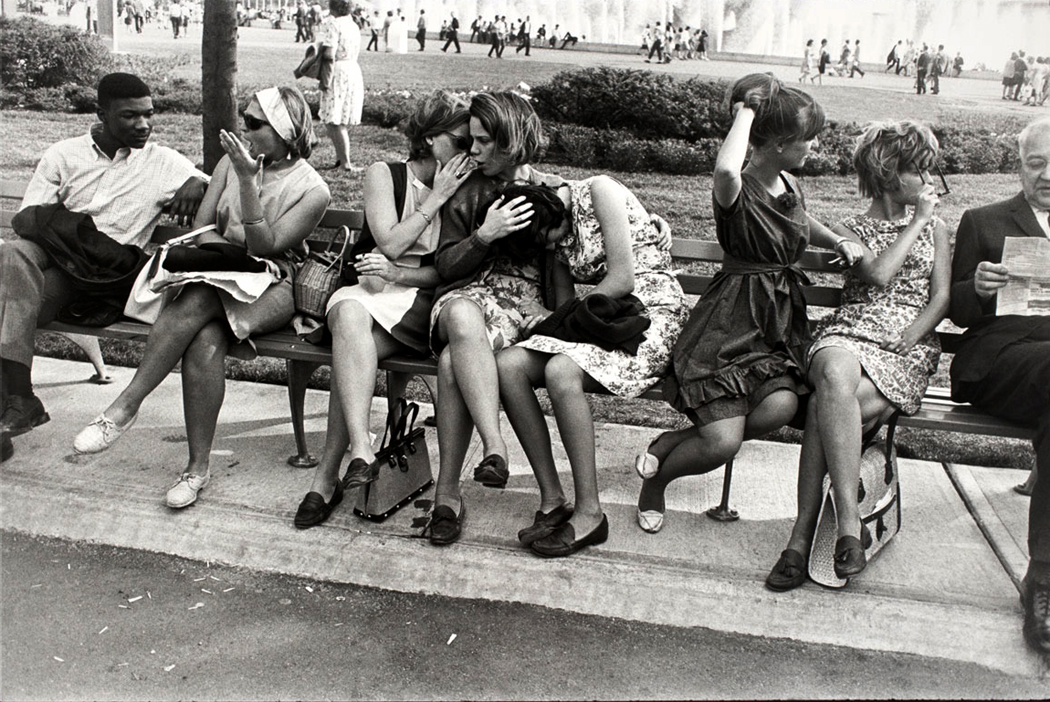
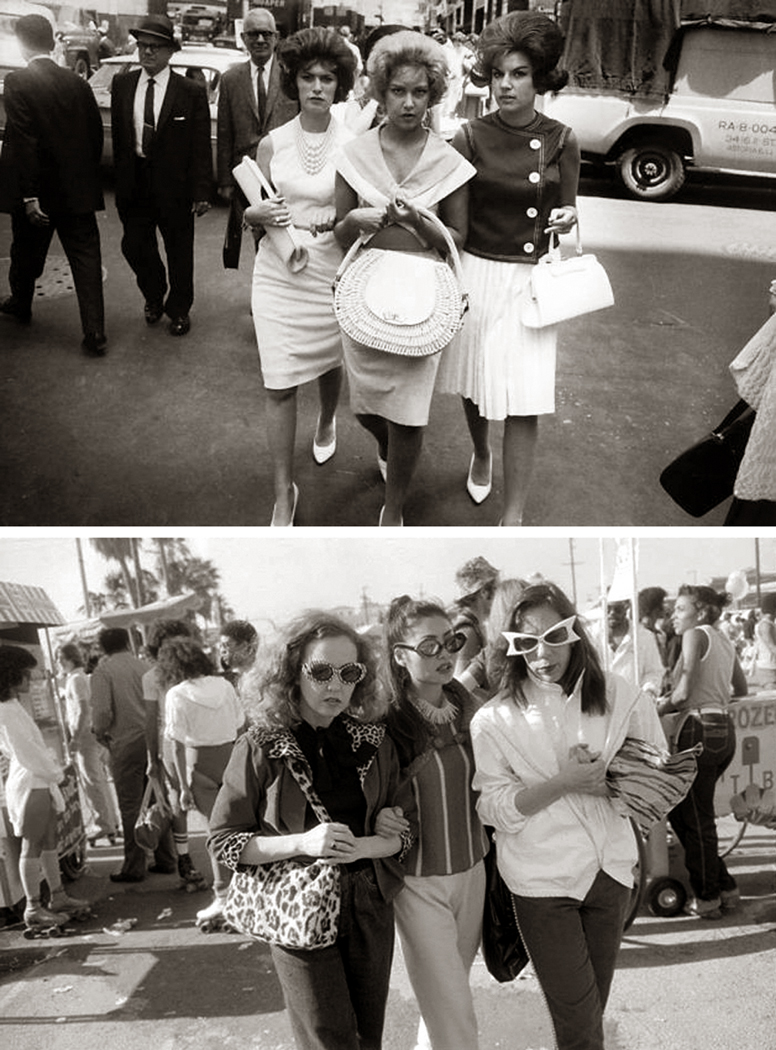
He was a peculiar man, neurotic and obsessive. His thousands of photographs of women, for instance. He took pictures over and over of women on the streets. He seems to have been sexually obsessed with them, but only as seen. They drown us in their banality, but Winogrand saw something different. Photography has made them worth ogling; it has made them into cover models, no matter how dreary the reality.

“Whenever I’ve seen an attractive woman, I’ve done my best to photograph her,” he said. “I don’t know if all the women in the photographs are beautiful, but I do know that the women are beautiful in the photographs.”winogrnd nyc 1982

Of course, everyone and his student is now playing with the ”medium as message.” But what is different with Winogrand — aside from the fact that he was doing it 30 years before the crowd — is that most of the facile youngsters doing so now almost seem to have no conscience about it. The tricks of the media hustler are used as if they were of themselves profound. winogrand nyc 1969

But Winogrand’s investigations are less glib, less pat. He is an intellectual intuiting a Postmodern truth. And there is an implied criticism of this packaged meaning. Winogrand is intuiting how images convey meaning and how they do so without any linear, verbal sense.

Others have used what he found, made theories about it. They turn what Winogrand found into sales pitches for Coke and Big Macs. But Winogrand was a discoverer, someone delighted and sometimes horrified by what he found.