Archive

Tag Archives: poetry

“It was six degrees last night,” I said. I was on the phone with Stuart. “A huge mass of cold has dropped down from the north. Tonight, it’s predicted to hit 5 degrees.”

“Sounds nasty,” Stuart said, although I know he was being diplomatic — He and Genevieve live in Portland, Maine. I’m pretty sure he’s seen his share of six-degree days. 

“But,” he went on, “I’m not sure cold actually exists.” I settled in for a Stuart session. He has these bouts of brain flurries. 

“It’s something I’ve been thinking about recently,” he said. “Cold is a judgment, not a thing. I mean, there’s no such entity as cold; it’s really just the absence of heat. Heat is real — the commotion of molecules. Cold is our perception of the lack of heat.” 

I don’t think he was being deliberately sophistical; it’s just that sometimes the gears in his brain spin rather fast. 

“We think of things being hot or cold,” he said. “But they are a single thing, which is an amount of heat. Sunspots, for instance, are ‘cold spots’ on the sun’s surface, even though they can measure 7000 degrees Fahrenheit, and frozen nitrogen can melt when heated above 346 degrees below zero.”

He knows this is a hobby-horse of my own: the gap between language and reality. I’ve written many times about how what we call opposites are usually just points on a single scale. A thermometer measures heat and we express it with words like “hot” and “cold.” We usually take words as reality, when they are merely a separate, parallel thing, with its own rules and forms. 

“There are things that we take for granted that only make sense in the language we use to describe them, but don’t really exist in any real way,” he said. “Real life isn’t so black-and-white.” 

Stuart went on: “Take black and white, for instance. You’ve heard it said that white is the combination of all the colors added together, cancelling each other out. That was what Newton demonstrated with his prism. But that’s if you are talking about light. If you are painting, the combination of all the colors is black. So which is it really? Well, we aren’t talking about color so much as about hue. There are millions of colors and we give them names, like ‘teal’ or ‘pink.’ They are the combination of hue, shade and tint. Hue is a specific spot on the spectrum, a basic ingredient, like an atom. From them we build molecules — specific colors. A blue can be light or dark and still be the same hue, although the colors are sky blue or ultramarine. 

“So, realistically, both black and white are the absence not of color, but of hue. In reality black and white are the same thing, just different shades of it, with all the grays in between. If you realize that black and white are simply variations of the same thing, then you realize that darkness, like cold, doesn’t exist: It is merely the absence of light.” 

OK, I thought. But does that really shed much light on our day-to-day lives? 

“We take these confusions of language as something real, when they are not,” he said. “When I hear terms like ‘left wing’ and ‘right wing,’ or ‘conservative’ and ‘liberal’ bandied about, as if they actually mean something, I develop a kind of psychic acid reflux. Beliefs shift with time and what was once considered conservative, is suddenly dangerously leftie. And vice versa. Is it conservative to believe in a strong central government or in a small government? Is it conservative to try to minimize change and keep things in place that have been there for ages? Or to radically transform government and shake things up? It changes over time, making the terms we use basically useless. Republicans call themselves conservative, but have complained for decades about an ‘imperial president,’ and yet have happily elected just that.”

It seems to me, this has immediate relevance to our lives today. Language matters. 

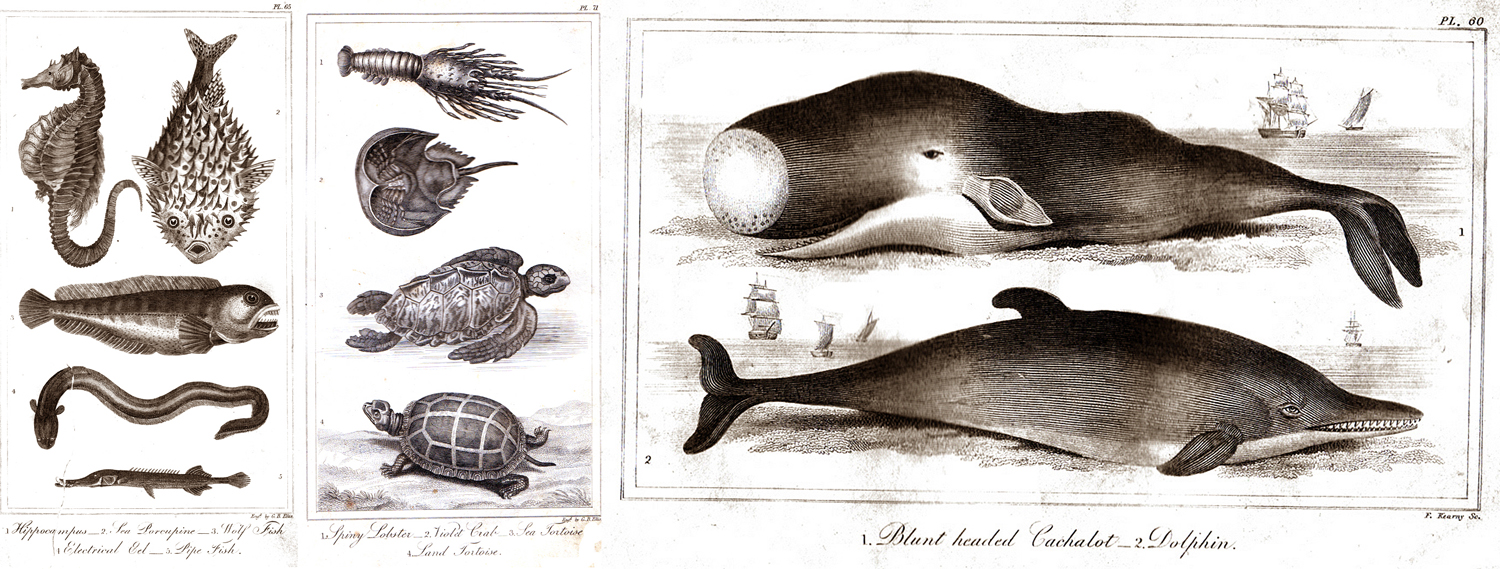
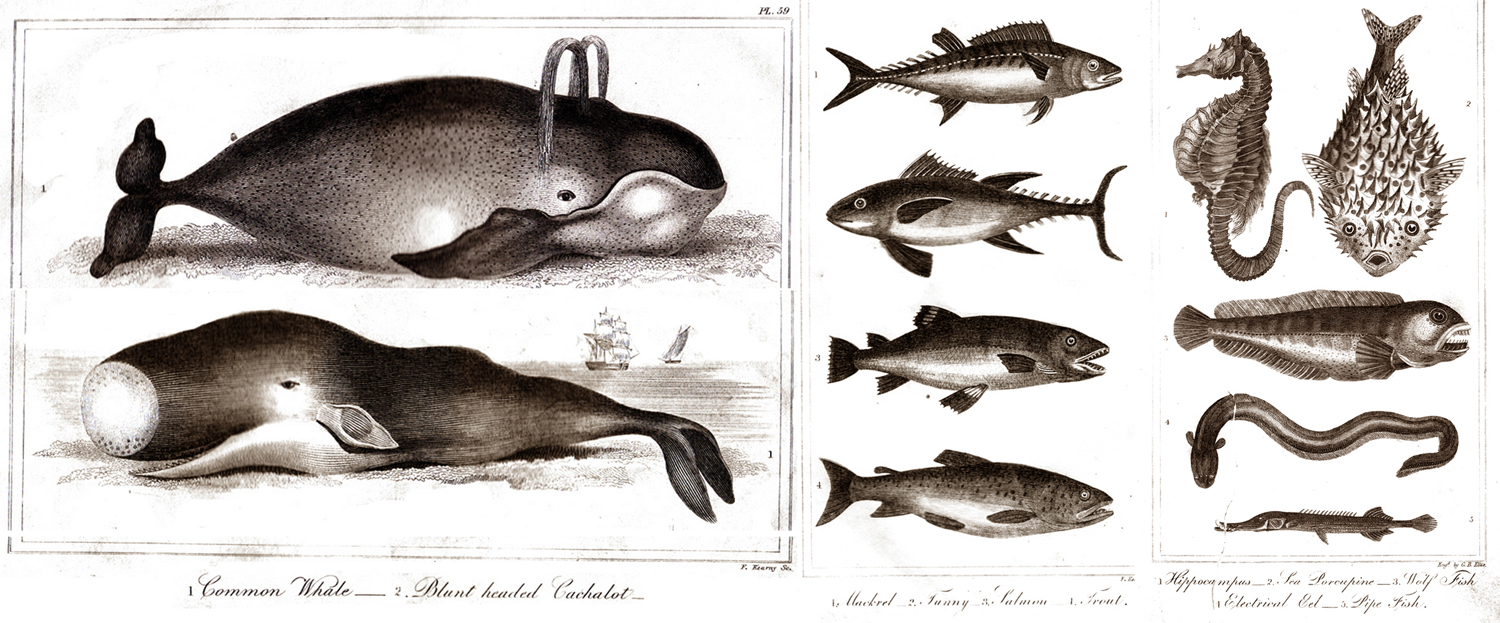
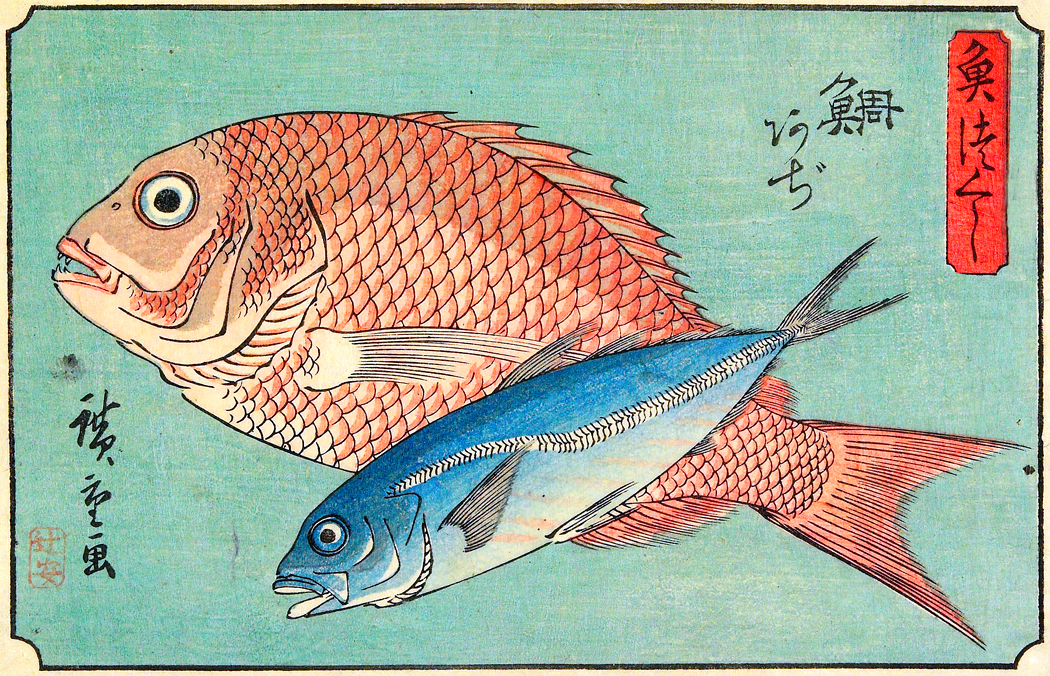
“You know, scientists have decided fish don’t exist,” I said. “Turns out a salmon is more closely related to a camel than it is to a hagfish. Just because it looks like a duck and quacks like a duck doesn’t mean it’s a duck. Just because something has fins and gills and swims in the water, doesn’t mean it’s in a common group called ‘fish.’ In the 17th century, a whale was a fish, too. And in earlier times, squids and mussels were also counted as fish. Jonah, after all, was swallowed by ‘a great fish,’ which tradition has it, was a whale.”

Once, these were all fish

“I have been thinking that language is really myth,” he said. “I don’t mean it doesn’t exist — that’s not the kind of myth I mean. 

“The world is itself. It was before there were humans to perceive it. We see it, however, through language. Take a car. We all know what a car is. That car is in a terrible crash and smashed up. Is it still a car? It gets taken to a junk yard and disassembled for parts. Are the parts still a car? Grind them up into bits of metal and ask the same question. Melt down the metal into a molten form. The same atoms every time, but at what point did it stop being a car? The thing was the thing; the word was just the word.”

“The ship of Theseus,” I said, “that Plutarch wrote about, that had each of its parts replaced as they rotted, leaving the identical ship but completely new. Is it the same ship?” 

“Our brains are hard-wired to see the world as things and those things have names,” Stuart said. “And we take the names seriously. It’s quite silly to worry if it’s the same ship: The question is entirely linguistic. All that piffle that Plato went on about, it’s all really just about language.

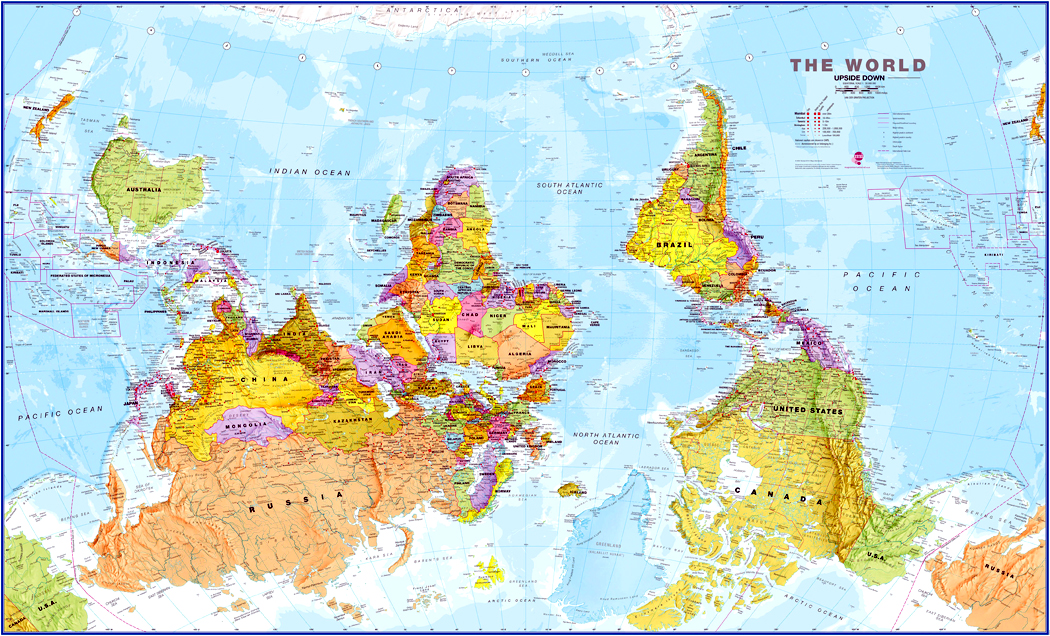
“It is our Umwelt,” he continued. “Which, as I’m using it, is a model of the world built into our psyches not only by experience, but by evolution, and through which we tend to filter our perception of the world, narrowing it down to what seem to be comprehensible limits. A pattern we impose on experience. In our Umwelt, the sky is up, the ground is down. Without thinking, we assume that north is up and south is down, although in a round world in a chaotic cosmos, up and down are meaningless terms. If we hang our world map on the world with Antarctica at the top, it looks wrong. Just wrong. It shouldn’t. 

“It’s why quantum physics is so hard to accept. Our Umwelt is built from human-size experience and the quantum theory makes no sense. In a world of things, we understand atoms as tiny pellets. How could they be vibrating strings? We attribute human emotions to animals, we assume other beasts see the same colors we see, we take anything larger than ourselves as big and anything smaller as little — but why should human size be the standard? 

“Weeks.” Stuart was on a roll. “We take weeks for granted, but they don’t exist except as a custom. We’d be rather upset if we didn’t have weekends punctuating our worktime. The metric system the world uses and believes is derived from nature, is all nowadays built on a measured second, which is an utterly arbitrary duration — no natural fraction of experience, but one counted by an arbitrary number of cesium vibrations. We think of the earth as flat, although we know it isn’t. I mean, we know the earth is a globe, but if I separate out North Carolina in my mind, spread out, it is as flat as a map. It’s how it feels. That we orbit around the sun, when in fact sun, earth, all the planets and moons spiral around in complex motions as the whole shebang skitters through space. 

“If we don’t simplify and schematize the world, we could never navigate it. That is what I mean when I claim that language is myth. It  explains what cannot be explained. It actually functions as myth, explaining the world to us. And so, we can personify nameless things by naming them.” 

“We think of myth as being, like Zeus and Theseus, but if Ancient Greeks thought of Zeus as a deity, he becomes a folk story when no one worships him anymore. But myths are also ways of explaining the world when science has no good answer — or rather, when the reality exceeds our tiny brain’s ability to grasp it all. Like when we were children and when we were scared of thunder, our parents might tell us not to worry, the noise was just angels bowling in the sky. It was a story that made sense to our infantile brains. 

“Language is angel bowling for grown-ups. We use words to box up ideas, tidying them so our feeble brains can swallow them. We cannot begin to understand where the cosmos came from, so we use Genesis to explain it, or, nowadays, we use the Big Bang. Existence is something so far more complex and chaotic than our tiny minds can begin to understand. So, we make language, a 2-D version of a 3-D world.”  

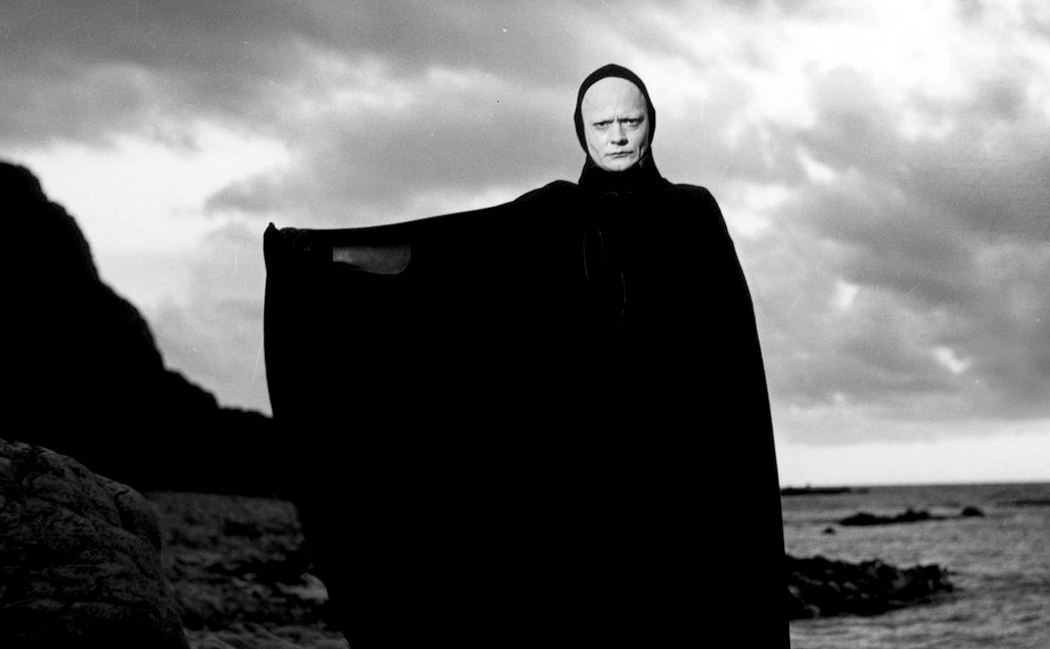
“Like death,” I said. “Death is a skeleton with a scythe in myth, or on a pale horse, or death hovers bedside over the terminally ill. But death doesn’t exist. Dying exists, but death is a myth. Death doesn’t take over our bodies, but the metabolism of our bodies ceases manufacturing life. The machine breaks down.”

“Yes,” Stuart said. “I remember someone pointing out that ‘life’ is not the opposite of ‘death,’ but that ‘birth’ is the opposite. They are verbs, not nouns.”

“I saw this with gut-tightening immediacy when Carole died,” I said. We watched her last inhalations, and then they stopped. She ceased being Carole. There were no 21 grams floating away, she just ceased manufacturing her own life. The light bulb burned out. Light didn’t go anywhere, it just stopped being generated. Almost instantly, her flesh began feeling like clay, cooling off. I’m sure it might soften the loss for those who believe in religion that her soul went somewhere else, but I just saw a factory close down, leaving an empty building.”

“Nice metaphor,” Stuart said. “All language is ultimately metaphor, and metaphor and myth are essentially the same thing. A way of talking about the unsayable.”

This was the moment I heard the faint voice of Stuart’s partner, Genevieve, somewhere in the other room say, simply, “Sophomore dorm room!” and we moved on. And I remembered that women know the real world a lot more than men. 

“You’ve gone all mellow,” Annie said, teasing me. 

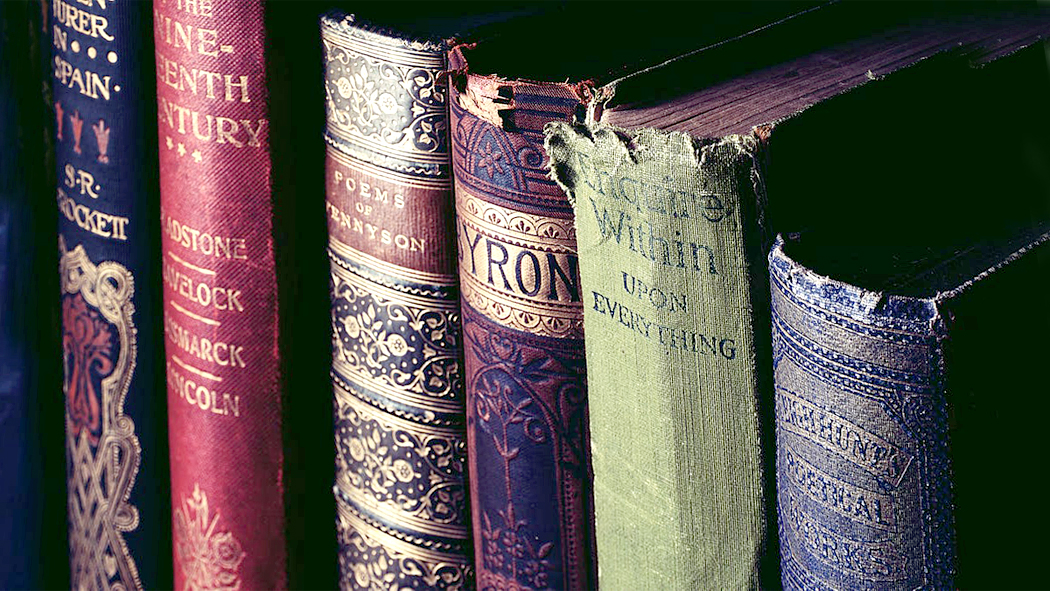
In the past, I have had some rather unforgiving opinions about the poetry I was force-fed as a youngster — you know, the Victorian stuff about the light brigade, or Barbara Frietchie. And now, I was reading it again. On purpose. 

At college, I foolishly took a Victorian Lit course and hated every second-hand tick of the classroom clock. Turgid, sentimental, maudlin, and unbearably prolix. (I had been primed to hate the stuff since the time I was  forced to read Oliver Twist in eighth grade and hated every word of that — I still can’t read Dickens. I know: My loss. But you shouldn’t be forced to read stuff before you are ready for it.) 

In that Vic Lit course, I found Browning asphyxiating, Tennyson hollow, Christina Rossetti cloying. I could see no difference in the verse of these hallowed poets from the mewlings of Ella Wheeler Wilcox or Edgar Guest. It was all a smear of treacle and oh-so-earnest goo. 

“I am the master of my fate, I am the captain of my soul.” Who came up with this stuff? 

Now, Anne is reminding me, I am waxing enthusiastic about the selfsame verse to her, quoting lines and rhymes with affection. I have gone mellow. But what has changed? 

I grew up in a time of ascending Modernism, an era of “less is more,” of irony sidelining sentiment and of skepticism in place of belief. When I was just on the cusp of turning adolescent, Modern art was still widely dismissed as something “my kid could do.” And in the eternal wheel of generations, I was signing on to the new version and leaving the old to such fuddy-duddies as my parents and teachers. 

(At least, I saw it that way. In reality, my parents were as much a product of Modernism as I was — my father was born the same year that the Bauhaus was founded and that Marcel Duchamp painted a mustache on the Mona Lisa. But the Modernism that affected his life was one of wars, electrification, washing machines and radio. Artistic matters mattered not at all to the solid, middle-class parental units.)

  And, like all such newly-awakened youths, I saw through the lies and hypocrisies of the elder generations while surpassingly blind to my own. My generation was going to fix all the botches those fools had made of the past. 

I read all the most current novels, ate up contemporary poetry (and all that written after Prufrock), regularly made my pilgrimage to the Museum of Modern Art in New York, and preached to all near and far the supremacy of the new.

In short, the modern was true; the old was a lie. A pretty lie, perhaps, but a lie nonetheless. As H.L. Mencken put it, “it’s essential character lies in its bold flouting of what every reflective adult knows to be the truth.” 

And all that verse: Mencken really had it in for poetry. He said, roundly including everything written from Chaucer to e.e. cummings, “Poetry represents imagination’s bold effort to escape from the cold and clammy facts that hedge us in — too soothe the wrinkled and fevered brow with beautiful balderdash.” 

That certainly summed up my take on Tennyson: “balderdash.” 

H.L. was not one to hedge his opinions. He went on to call poetry, “a series of ideas, false in themselves, that offer a means of emotional and imaginative escape from the harsh realities of everyday. In brief, poetry is a comforting piece of fiction set to more or less lascivious music.”

But it is that “lascivious music” that caught me short. No doubt Mencken rather misses the point, but it is the music of the old poetry, the poetry I so despised, that has brought me back to it. Let me explain — and apologize. 

It started when I recently came across a set of McGuffey’s Eclectic Readers, compiled beginning in the 1830s by William Holmes McGuffey. The books were the most common grade-school texts for nearly a century, and are still the preferred books for many current home-schoolers. 

They are popular now because of the unrelenting Victorian religiosity of them for Christian home-schoolers. Every lesson seems to have some biblical homily to teach, training youngsters to be pious, faithful, honest, loyal, earnest, frugal and industrious. McGuffey, himself, was a preacher, in addition to being an educator and college president. 

But what is often lost in the haze of piety, is just how progressive McGuffey was for his time. Most education was then mere rote memorization enforced with the rod; McGuffey thought that instead of just giving kids lists of words to master, it would work better if the words were embedded in stories, and that new words in one story would crop up again for reinforcement in later stories. He taught an early version of phonics, to parse out the sounds of written words, and followed each story-lesson with a short set of questions to test comprehension. 

Really, aside from the heavy Jesus-ness of it all, it was really very forward-looking. 

I valued the reprints I own for their classic typography, for the quaint illustrations that go with the stories, and for the insight the whole gives me into that formidable century. 

And in amongst the stories of boot-blacks making good, mothers dying, little orphans learning the virtues of truthfulness and the importance of being generous to the poor, McGuffey included many old poems. Some are just versifications of Bible passages, but others are the old standards that I once made fun of. 

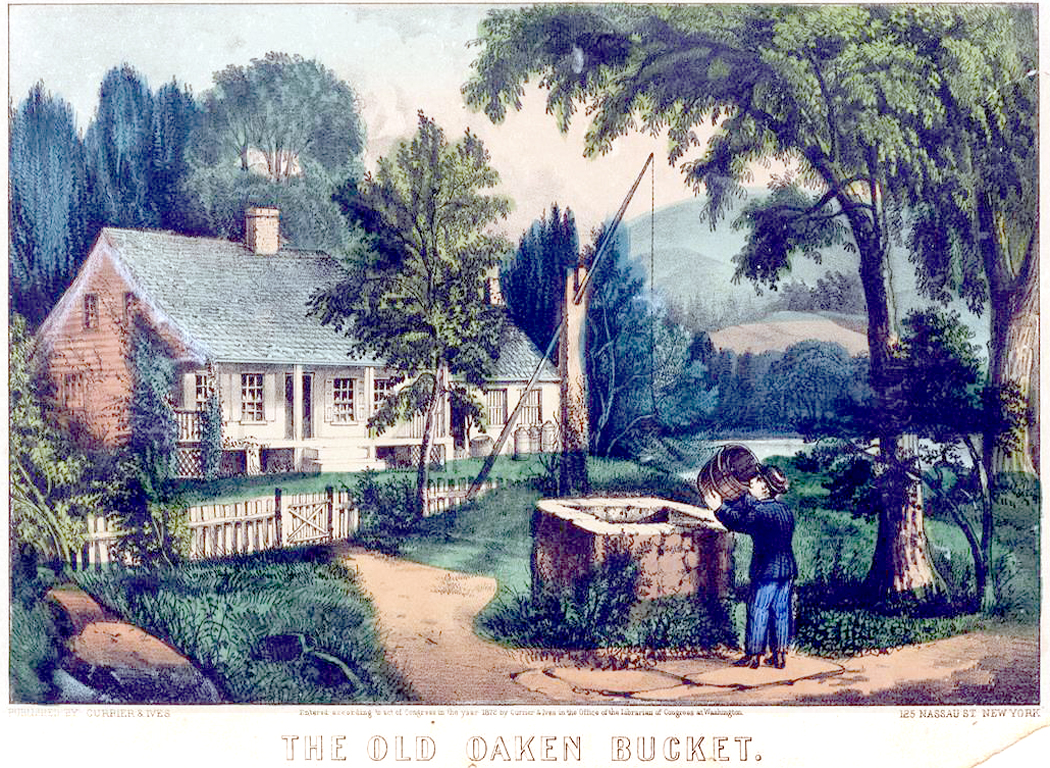
For instance, in McGuffey’s Eclectic Third Reader, I came across an old chestnut I had not encountered since I was a boy: The Moss Covered Bucket, by Samuel Woodworth. It’s one of those that most people have some vague recollection of, but perhaps not where the lines come from or what they mean. 

“The old oaken bucket, the iron-bound bucket, the moss-covered bucket, which hung in the well.” 

But as I began reading it, I found two very surprising virtues. The first was how much sense-memory there was in the poem — the noticing of small physical things that connect us with the world and that readers can almost feel, taste, or smell as they read the lines. 

It is a poem about remembering the things of youth, and there is a scent of sentimentality to it, but the memories evoked feel genuine. Sometimes, reading a pile of “O thou art…” poetry you wonder if a poet has ever actually seen a nightingale, let alone a “knight with burning brand,” but have merely read about such things in other poems. But here, I believe Woodworth really knew “the orchard, the meadow, the deep tangled wild wood…  the wide spreading pond, and the mill which stood by it; the bridge and the rock where the cataract fell; the cot of my father, the dairy house nigh it, and even the rude bucket which hung in the well.”  

Noticing — as I have often repeated — is essential to art. To life. 

But the second thing I found in the poem was the “lascivious melody.” Woodworth’s prosody was finished and refined, the meter and rhyme made the lines sing. Maybe not quite the level of Milton, but a danged good ditty. 

He describes coming in from working in the field and dropping the bucket down into the well “to the white pebbled bottom it fell,” and then how “dripping with coolness,” it rose from the well. “How sweet from the green mossy brim to receive it, and posed on the curb it inclined to my  lips! Not a full blushing goblet could tempt me to leave it, though filled with the nectar that Jupiter sips.” 

It moves with a forward-thrusting momentum hied on by the meter. 

I’m not trying to make too great a case for the old oaken bucket. It is not earth-shaking poetry. But it does afford a moment of pleasure as you read it, the way you get pleasure from a memorable tune. 

There were other poems in the Reader that now sang to me in ways I had formerly ignored. Byron’s “The Assyrian came down like the wolf on the fold, and his cohorts were gleaming with purple and gold…” 

In the Eclectic Fifth Reader, compiled some years later by McGuffey’s brother, Alexander Hamilton McGuffey, you find the familiar, “Under the spreading chestnut tree the village smithy stands; the smith, a mighty man is he, with large and sinewy hands; and the muscles of his brawny arms are strong as iron bands.”  

There is through all of the Readers a level of maudlin sentimentality that cannot be overlooked, but if you can wade through that, there are some true gems to enjoy, if primarily for their lascivious music. 

This discovery led me to another old book, one I have owned since I was a boy, but had hardly looked at in 60 years: Francis Turner Palgrave’s Golden Treasury of English Verse. First published in 1861, the book was an anthology of “the best English songs and lyrics,” and included Palgrave’s selection of verse written by poets of the past — his past; Palgrave made the decision not to include any poetry written by living poets, so, no Tennyson, no Browning. 

The book was originally divided into four “books,” one each per century from the Elizabethan era to the 19th century. There is a good deal of Shakespeare and an equal measure of Wordsworth, but all the usual names are included, and some that have largely been forgotten. Thomas Grey, William Cowper, Thomas Wyatt, Josuah Sylvester (no, that’s not misspelled). 

Having put aside my McGuffeys, I took up my Palgrave and read it from cover to cover. I found myself enjoying page after page, for the music of it more than for the sense. A good deal of the early verse is highly conventional in sentiment. Everyone had a version of “carpe diem,” many birds are extolled — I haven’t counted the skylarks, but there be many — many women described with coral lips and alabaster skin. It all gets a bit thick.

But listen to the music instead. “Whenas in silks my Julia goes Then, then (methinks) how sweetly flows That liquifaction of her clothes.

“Next, when I cast mine eyes and see That brave vibration each way free; O how that glittering taketh me!”

There is a perfection in the meter, rhythm and rhyme to Herrick’s little stanzas. Felix Mendelssohn wrote “Songs Without Words,” but Herrick has turned that around and written a song without the sheet music. 

Throughout my Palgrave, I came across piece after piece like that, with a flow of words as natural in metrical expression as a stream rushing over its rocky bed. 

“The curfew tolls the knell of parting day, The lowing herd winds slowly o’er the lea, The plowman homeward plods his weary way, And leaves the world to darkness and to me.” 

“A chieftain to the Highlands bound Cries, ‘Boatman, do not tarry! And I’ll give thee a silver pound To row us o’er the ferry!’ ‘Now who be ye, would cross Lochgyle, This dark and stormy water?’ O I’m the chief of Ulva’s isle, And this, Lord Ullin’s daughter.” 

The marriage of word and rhythm, with the fulfilled expectation of rhyme make these verses trot along like a tune sung well in time. 

It is the pleasure of tennis being played with a net. 

One listens to music for the pleasure it brings. Yes, there are mighty symphonies and Wagnerian music dramas meant to express deep emotional and philosophical things, but most, like a Mozart serenade or a Cole Porter tune, are meant to delight, devoid of any extra-musical sense. And that is what I am finding in this old verse I once so roundly denounced. 

If you don’t need to have profound thoughts as you read the words, then you can find the melody for its own sake and revel in the ear and craftsmanship of the poet. 

Yes, I’ve gone mellow in my senescence, and there is a touch of sentimental remembrance for the poetry I was fed when a boy. I guess I share that with those horrible Victorians. That is my apology.

Click on any image to enlarge

Now that it is well into spring, I like to sit in the back yard and just soak up the experience. On a chair on the patio, I can sit for a half-hour or so and just listen to what is going on around me. Often, I just close my eyes and enjoy the bird calls, the distant lawnmower, the occasional and distant roar of a passing jet high in the air. It is my form of meditation. 

It affords me great pleasure to hear all the sounds, and more, to hear them all at once, piled up in counterpoint, like so many voices in a Bach fugue. Indeed, I try with the same effort to be able to hear all the parts simultaneously. It is great training to hear the more traditional music of the concert hall. 

For, in any decent music, there are many things going on at the same time. Not only in dense Baroque counterpoint, but in all music. There is melody, harmony, rhythm, timbre, texture — to say nothing about a bass line. If you listen only for the tune, you miss so much else. 

And so, in the concert hall, I often close my eyes and concentrate on taking in all the bits. It takes some practice, but it is possible to hear multiple lines of melody at the same time. At the very basic, to hear the tune on top and the bass line at the bottom playing off one another. 

In my back yard, I enjoy the stereo effects of a cardinal squawking to my right, while a chickadee yawps to the left, while the mower sounds two blocks away and a dog barks somewhere behind me, down the hill. There is always traffic on the main road, about a quarter-mile up the hill, and the breeze shuffles the leaves on the trees that ring my yard in an aleatory rhythm that serves as bass line to the rest. The mockingbird has his repetitive medley of greatest hits. You can’t fool me. I know it is you. 

Listening to it all tells me the world is alive. It is animated and bustling, and it sings an earthy chant. 

I am reminded of John Cage’s infamous 4’33’’ — the piece where the pianist sits in front of his keyboard for that amount of time and plays nothing at all. Often seen as a hoax by those unwilling to take Cage at his word, and feeling they are being cheated, such a listener misses the point. The composer intends for his audience to actually hear the sounds of the hall — the rustling of programs, the passing truck outside, the AC unit clicking on, the throat clearing and feet shuffling — and appreciate them as a kind of music of their own.

It is one of the primary functions of art, and music included, to wake you up to the world, to see what is usually ignored, to hear what surrounds you, to feel what is churning inside. It all boils down to paying attention. 

The world is full of miraculous sound. I remember Kathy Elks, from eastern North Carolina, telling us of when she was an infant, just after World War II, and would hear the propeller sounds of an airplane too high in the sky to see, and how she always thought that buzz was “just the sound the sky makes.” 

Or Emily Dickinson’s “I heard a fly buzz when I died.” Or the “good grey poet,” Walt Whitman: “Now I will do nothing but listen,/ To accrue what I hear into this song, to let sounds contribute toward it./ I hear bravuras of birds, bustle of growing wheat, gossip of flames, clack of sticks cooking my meals…” 

Samuel Taylor Coleridge, in the Ancient Mariner: “A noise like of a hidden brook/ In the leafy month of June,/ That to the sleeping woods all night/ Singeth a quiet tune.” 

“Listen to them. Children of the night. What myoosik they make,” says Bela Lugosi in Dracula (1931). 

Beethoven included a quail, nightingale and cuckoo in the slow movement of his Pastoral symphony. Messiaen wrote whole symphonies built from transcribed birdcalls. Charles Ives built the sounds of his Connecticut village into his music. Rautavaara’s Concerto for birdsong and orchestra. Vivaldi imitates birds in his Spring concerto. Alan Hovhaness And God Created Great Whales, with its whalesong sounds buried in orchestral texture. 

Gustav Mahler said the symphony must embrace the world, and he included cowbells, hammer blows, distant military bands, bird calls, the memory of the postillion’s watery horn call, and even begins his first symphony with seven-octaves of unison A-naturals, almost a tinnitus of the universe — the music of the spheres — interrupted by a cuckoo in the woods. His own defective heartbeat was the opening of his final completed symphony. 

Bedrich Smetana wrote his tinnitus into his first string quartet, “From My Life,” in the form of a long-held high “E.” 

 The same world of sound that fills all this music waits outside my back door, waiting to be organized into coherence. The first step is paying attention. Engagement is the secret to unlocking the world. The ear is a gate to paradise. 

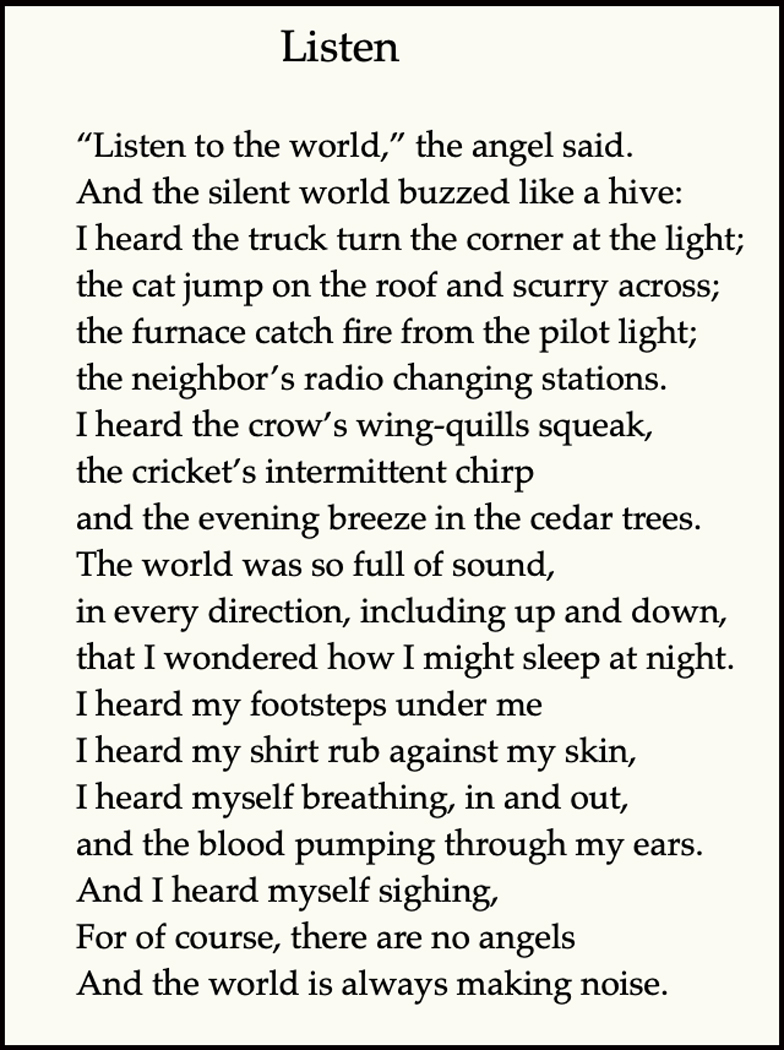
Some years ago, when I was still regularly penning verse, I wrote about this:

 Translation is a funky thing. You might think a literal transcription would be best, but language doesn’t work that way. 

If we translate Holly Golightly into French, and have her window shopping, the French reader will assume she is looking for a glazier — i.e., shopping for windows. If the original had been in French and we translated it to English as “licking the glass,” we’d assume Holly was more than slightly daft.

You can try to be literal and lose all the flavor, or you can try to find equivalent idiomatic expressions, or you can recast the whole thing, as if you were writing an original from a similar inspiration — your own words for a similar thought. 

I recently posted a blog entry about various versions in English of Ovid’s epic poem Metamorphoses. (link here). 

“It’s amazing that all the translations are so different,” responded a friend. And they are. I have been fascinated with the issue of translation for years, now, and have compared many versions of several works and am also “amazed” at how different they can be. 

Most recently, the Ovid comparisons has been obsessing me. And so, I went back to the original to see what I could ferret out about these variations. One discovers that although Ovid’s language moves quickly and simply, there is some ambiguity built in to those words. A translator has to disambiguate the text, and in the process make a single meaning for what in Latin can be multiple. 

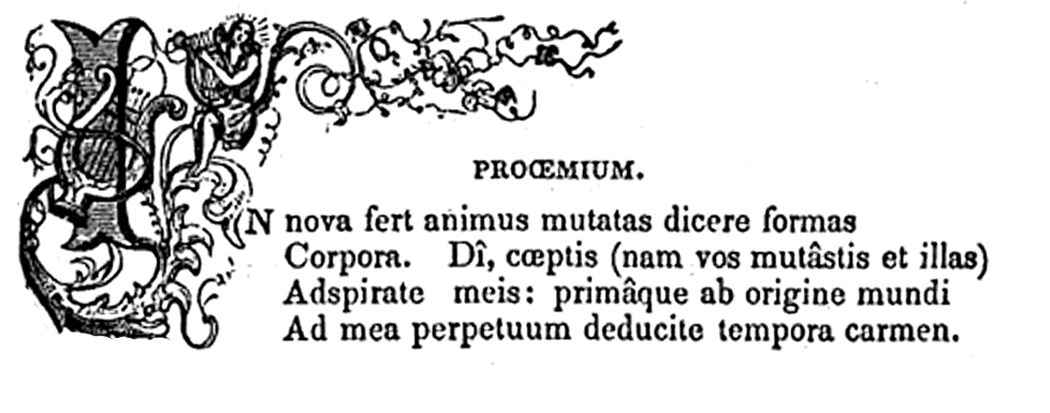
The first four lines of the Metamorphoses, in Latin, read: 

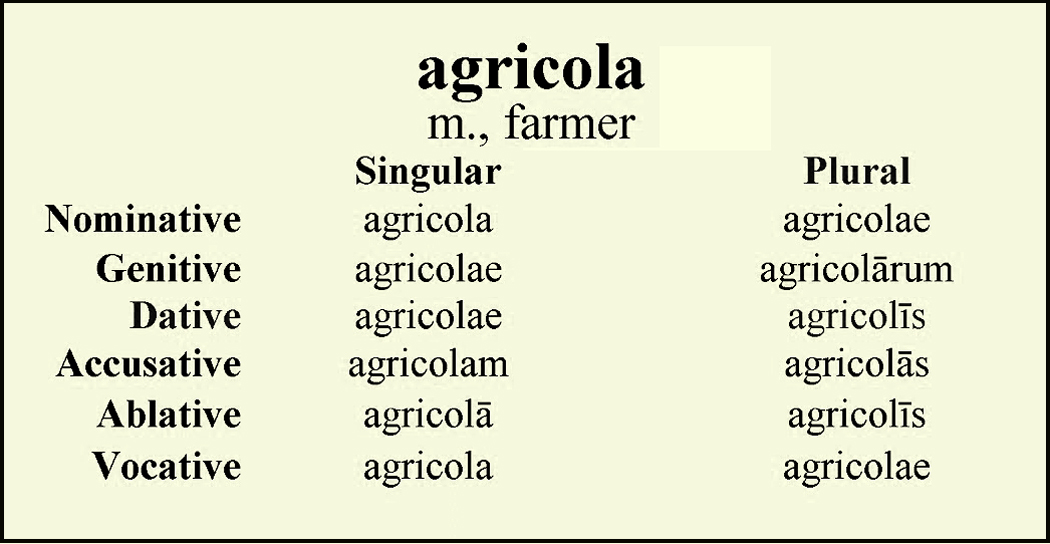
The Latin is alien to English speakers first because word order is not a central concern of Latin grammar. Ovid arranges his sentences according to his metrical choice — Latin hexameter. And that is built around syllable length, not stress. And so if you were to just put down a word-by-word transference from Latin to English, you get, essentially, nonsense.

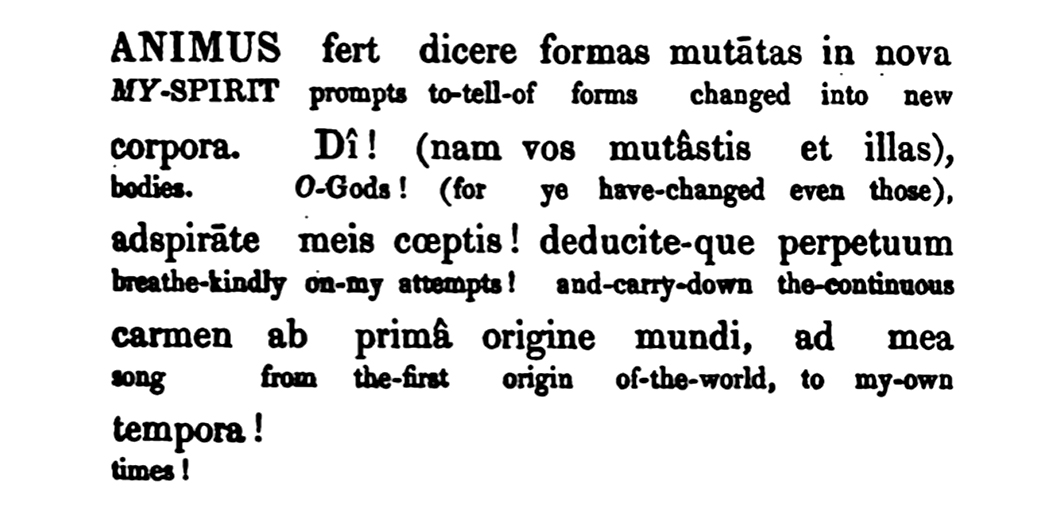
In 1828, a British publisher printed an interlinear translation, intended to help students in learning Latin. To simplify the project, Ovid’s word order has been shifted to mimic English word order. Thus published, the sense, more or less, becomes clear.

That is: “My-Spirit prompts to tell of forms changed into new bodies. O-Gods (for ye have-changed even those). Breathe-kindly on-my attempts and-carry-down the-continuous song from the-first origin of-the-world to my-own times.” 

(The hyphenated phrases are Latin single words that must be broken into multiple words to be rendered in English). 

All this is good, and one could easily smooth all this out into very plain English: “My spirit prompts me to tell of forms changed into new bodies. O Gods (for you have changed even those), breathe kindly on my attempts to carry down this song continuously from the origin of the world to my own times.” 

And there you have it: Ovid translated cleanly and understandable.

Except.


Except that this version, as plain as it might be, avoids some of the complexities of the Latin, which doesn’t so easily give up its meaning in a one-to-one way with our King’s English. And it doesn’t explain the wide variants rendered by translators from 1567 to our own times. 

Over the years, translators couldn’t make up their minds whether bodies were changed into new forms or forms into new bodies. Ovid writes forma into nova corpora. But in English that seems backwards. 

It’s been explained as hypallage (a rhetorical trope in which elements are switched from the place expected, as in “the angry crowns of kings” instead of the “crowns of angry kings.” It was a trope often used in Latin writings.) Ovid talks of “forms” changed into new “bodies,” where, in English, we might expect “bodies changed into new forms.” The difference is that in Latin, “forma” describes the “true” shape of something, in other words, the way it was created, such as your body or mine. Ovid is saying that the true shape of his mythological figures are being altered to new, perhaps temporary, bodies — in other words, the new bodies are not the “real” bodies.

In English, we would tend to word it the other way around, so that our “real” bodies are given new “forms.” And so, some translators write it that way, while others maintain the forms-to-bodies version.

This may seem like a trivial thing, but if you grew up with Platonic ideals and they were ripped apart into “false” new shapes, you’d understand what Ovid is getting at here. Of course, he does not make a big thing about it: He expected his listeners (or readers) to understand that the way we might understand “three strikes and you’re out.” It is just buried in the culture. Theirs, though; not ours. 

Most English translations really start with anima

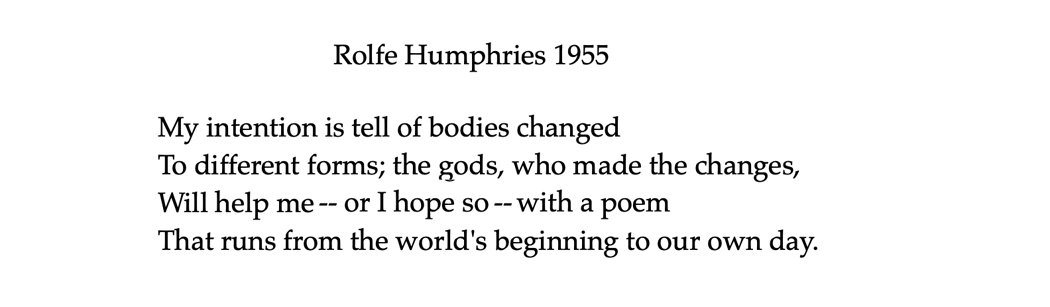
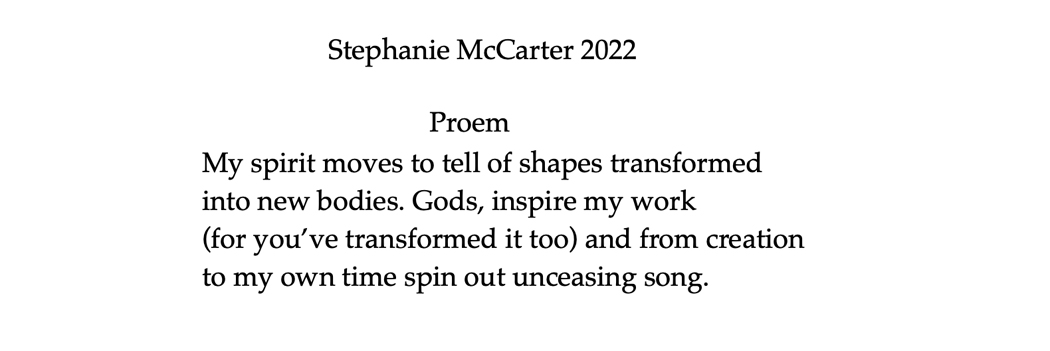
“My spirit prompts” can be understood as “My design leads me” (1899 Riley); “I want to speak about” (1903 Kline); “My mind is bent to tell of” (1916 Miller); “My soul is wrought to sing of” (1922 More); “My purpose is to tell of” (1955 Innes); “My intention is to tell of” (1955 Humphries); “My soul would sing of” (1993, Mandelbaum); “My spirit drives me now to sing about” (2012 Johnston); “My mind leads me to speak now of” (2012 Martin); and most recently, “My spirit moves to tell of” (2022 McCarter). 

But of course, the poem really begins with the word “Nova”… “New.” And a few attempt to mimic the Latin word order, approximately. One could attempt something in English, contorting it like a gymnast: 

Certainly, that is awkward sounding, and I am not recommending it as a preferred translation. We should want something that moves as cleanly in English as Ovid moves in Latin. Mimicking Latin won’t do that. 

But there are other issues, too. You’ll notice I used “weave the thread” of song. Ovid has “deducite” — to lead away, draw out, turn aside, divert, bring out, remove, drive off, draw down. It is used, says one set of notes, to mean to extend like a chain, or, as I have it, “weave the thread,” but more like “add links to links to make up a whole chain” of mythological stories. 

You can see the problem here: Which idiomatic Latin usage of “deducite” should you use here — again, without turning the passage into something utterly unreadable. 

That chain, and its metaphorical maritime implication is echoed in “adspirate,” which implies a fair wind in the sails, as if the gods were blowing their breath to move ships. These things are not clear in English and are only implied in Latin, but they are there. 

The multiple possible meanings of many of these words can bring variation to a potential translation. “Carmen,” for instance, can be a song or a poem — or a prophecy, an incantation, a tune. “Tempora” can be time, or a season, or a duration. “Fert” can be to pick something up, to carry it, to take something up. A translator has to decide what is best meant and how in English to make that clear.


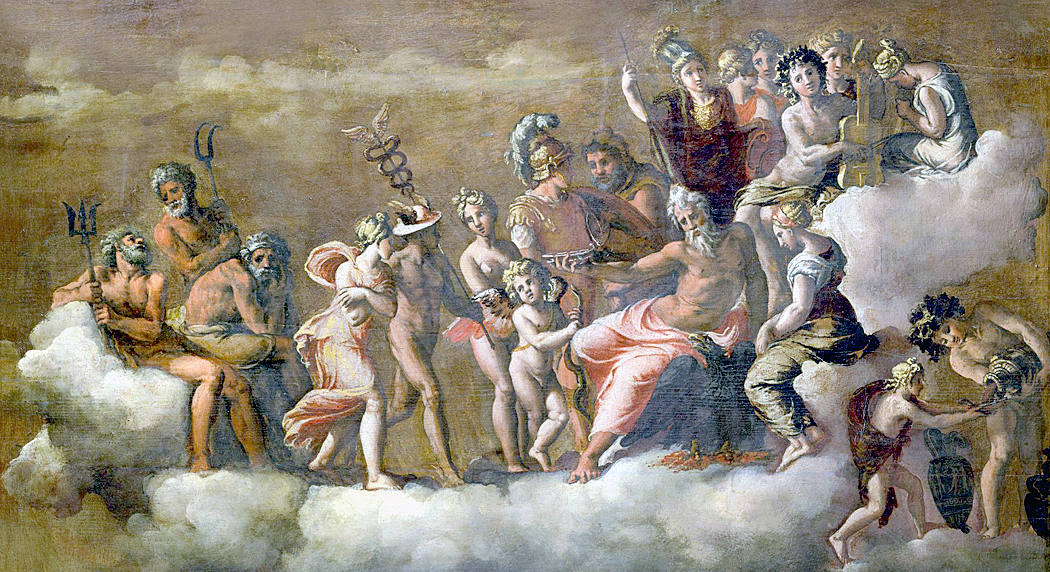
There is a giant ambiguity in these lines that gets very differently translated. When Ovid calls on the gods, he says “nam vos mutastis et illas,” which means, literally, “for you (plural) change (or move, or remove, or move away from) and that (or there, or yonder).” What do you make of that? 

In previous centuries, it was taken to mean, basically, “for you gods caused those changes.” And that seems to make sense of it. But beginning in 2001 with Michael Simpson’s translation, many have assumed it is the poem that the gods have changed. “Gods, inspire this poem I’ve begun (for you changed it too)” (2001 Simpson); “O gods (it is you who have even transformed my art)” (2004 Raeburn); “inspire this undertaking (which you’ve changed as well)” (2004 Martin); “inspire my work (for you’ve transformed it too)” (2022 McCarter). 

These two interpretations can not both be correct. Ovid is obscure here, and leaves a good deal to the discretion of the translator.   

Or to the edition. A translator has to pick among variant texts in Latin, collated by different editors. And the Latin is not completely identical in all of them. Remember, Ovid survives not in manuscripts from Roman times, but from copies made by monks in scriptoria through the Middle Ages and into the Renaissance, and when copies are made, mistakes are made. Which is the true version: That is the job of an editor putting together a modern published edition. 

Joseph Reed, in his annotations to the new edition of Rolfe Humphries’ translation write of this confusion: “Most manuscripts have ‘for you, gods, changed those [forms] as well’ (nam vos mutastis et illas), which Humphries seems to be translating here, omitting the troublesome ‘as well,’ which has no clear reference. Since the 1970s, most editors prefer to read the slightly different text, ‘illa,’ found in a few manuscripts, which yields the very different sense: ‘for you changed that [undertaking of mine] as well,’ referring to the new direction Ovid’s own poetry now takes from his earlier themes and metrical forms (love elegy) to those of epic-length mythological narrative.”

The difference between “that” and “those” (illa et illas). No matter how you parse it, the original is obscure. 

Finally, you must decide what you want in your Ovid. If you are a scholar you want whatever is closest to the poet’s original language, even if it is obscure. And I sympathize with the impulse. But if you are simply a reader who is looking for Ovid’s storytelling, then you will be just fine with letting the translator turn the ambiguity into something that makes sense (culturally and linguistically) in English. Sometimes the actual words don’t relate the actual meaning. 

Ovid is lucky, in that he really does survive translation well. He can be reworked without losing his essential Ovid-ness. And it is true that some writers survive the tidal pull of translation better than others. That pull can distort some works beyond help, while others keep their gussets unruffled. Hence, a good translation of the Iliad or Shakespeare can work just fine in a new language, because the story is paramount. Shakespeare tends to travel well. His plays are valued in many lands and many languages. There are famous examples of Macbeth in Swahili, of Hamlet in Russian, and dozens of operatic versions in Italian, French and German. They all pack a wallop. And Shakespeare is loved in all those languages by their native speakers.

But that other class of writing, where the effect depends on how it is being said can defy the best translator. I have never found a good translation of Goethe, for instance. In English, his poetry often sounds commonplace. But I am assured by a native German speaker that Goethe’s poetry is the best from his country by being written in the most elegant of German language. Horace in Latin is similar; in English you wonder what the fuss is all about; in Latin, it is the height of sophistication and elegance.

Going in the other direction, how in hell can you translate John Milton into French? You can tell the story of Paradise Lost, sure, but how can you convey the special organ-tone quality of his language.
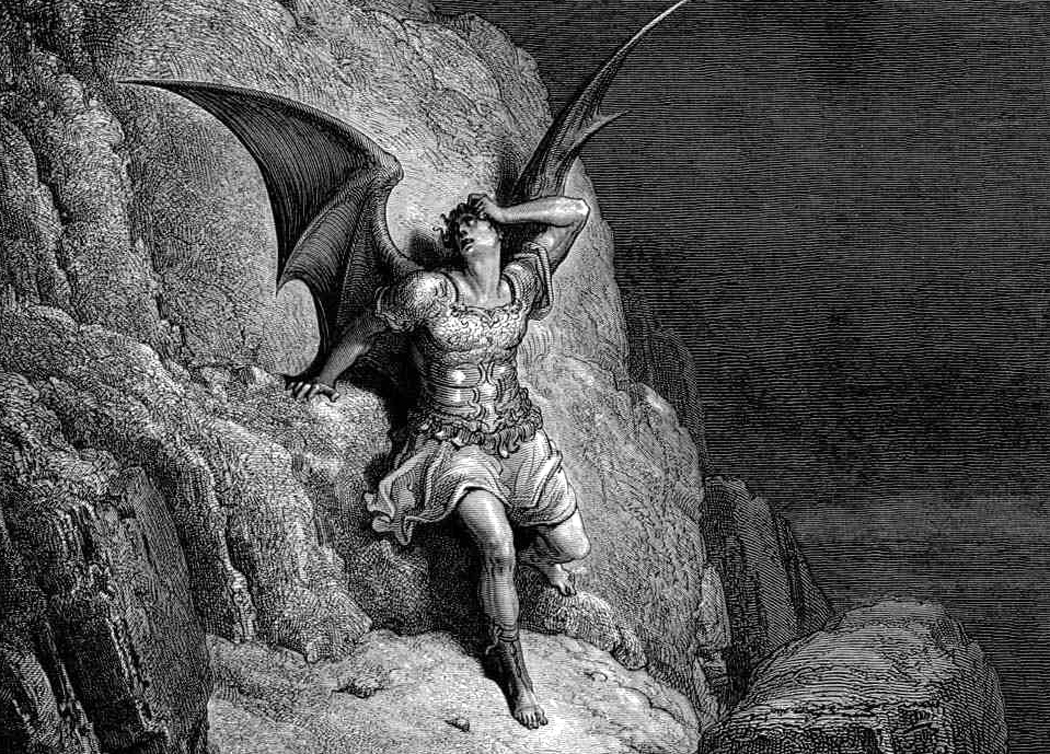
“Round he throws his baleful eyes.”

Translate it into French and it comes out as the equivalent of: “He looks around him malevolently.” Not the same thing, all the poetry is gone out of it. These things are untranslatable, and hence, Milton can never have the global currency of Shakespeare. 

There is behind language, a world. You can concentrate on the language, or on the world. It is easy to be lulled into forgetting the difference, to think that words describe the world, and that the best language is the most accurate lens on the things of this world but they are not the same, but rather, parallel universes, and what works in words does not necessarily explain how the world functions. In the reality of our experience, there are no nouns, no participles. There is only “is.” Can you get at that “is” through words. We try. And we try again.

And so, Ovid is lucky, he takes translation with grace, even glee. For although his Latin is singled out as impeccable, it is the stories that matter, and we can get them in English (or French or German or Chinese). 

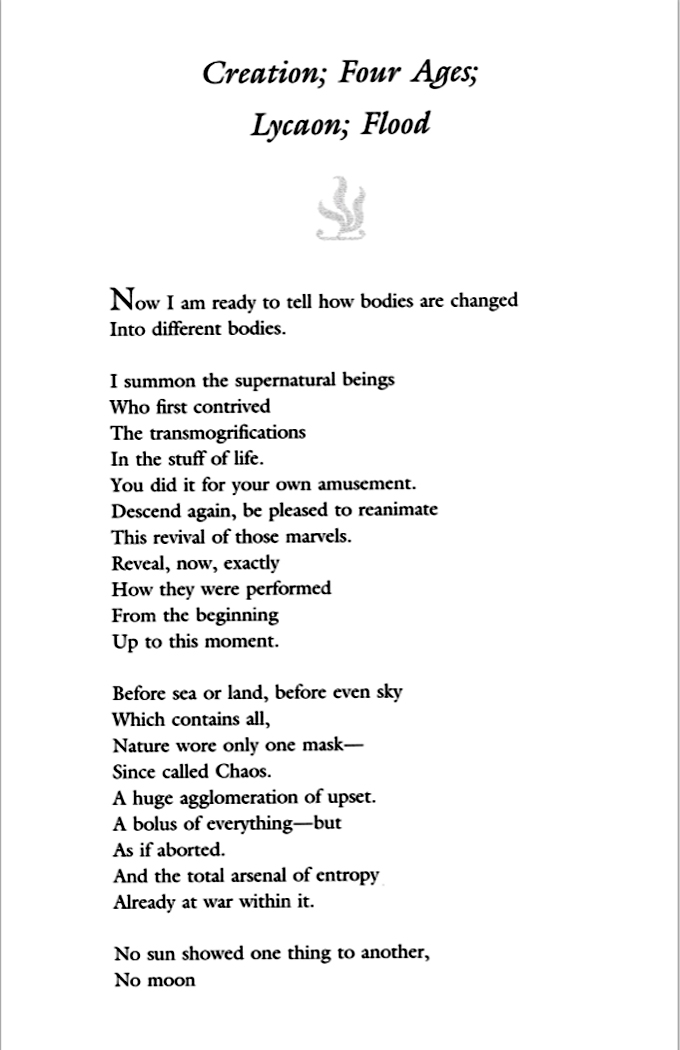
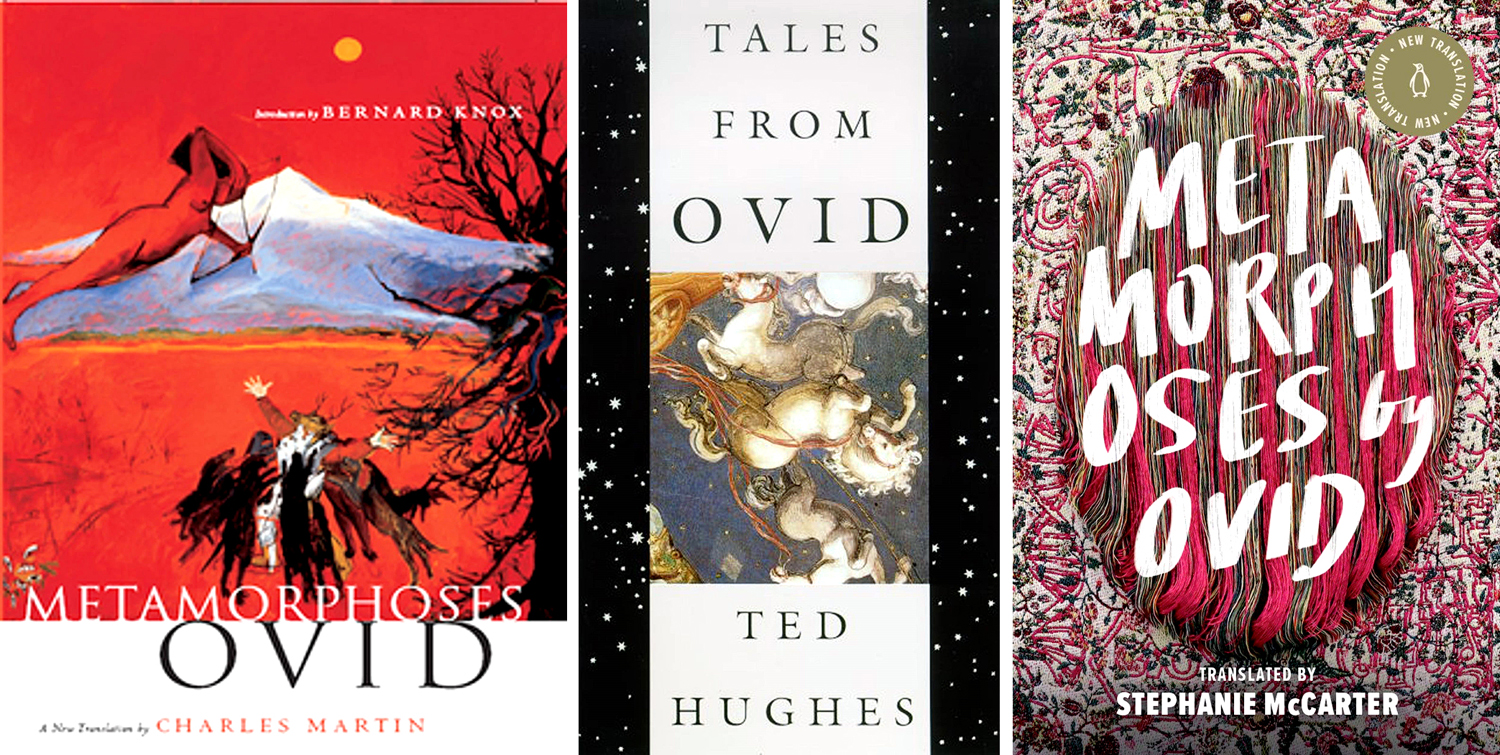
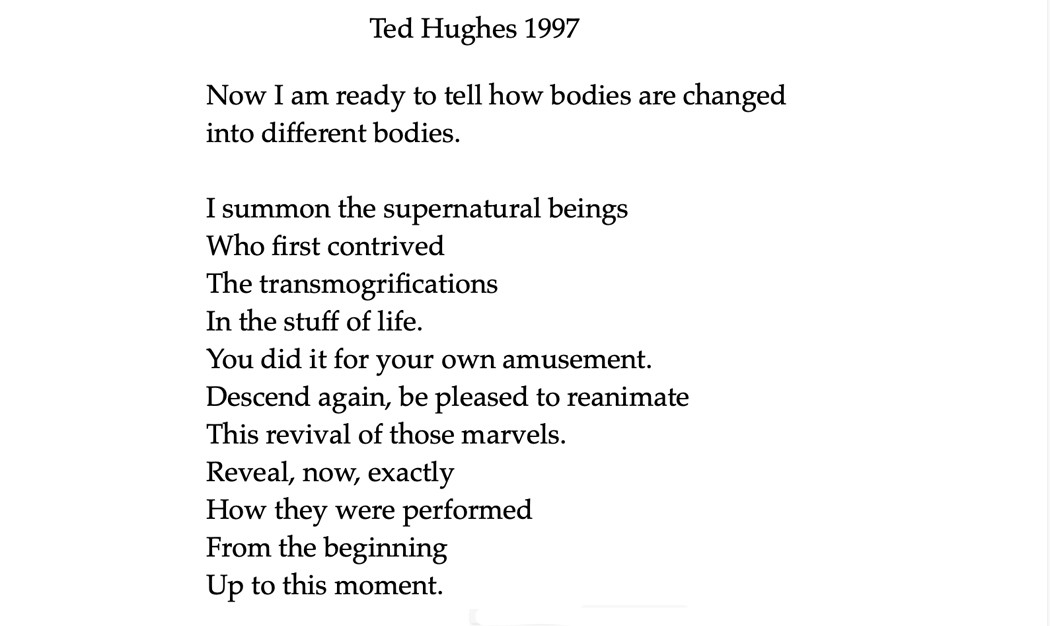
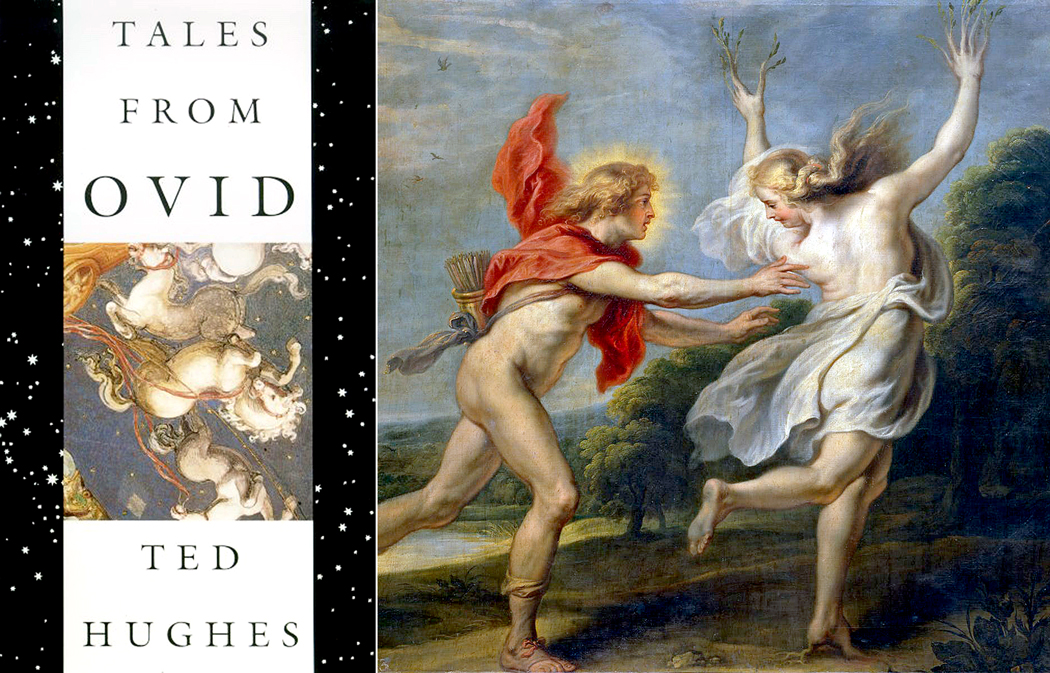
Which is why my favorite version is Ted Hughes’ Tales from Ovid, which is only a partial translation (it includes just 23 of the hundreds of stories Ovid retells) and is really more a metamorphosis of Ovid into English: rewritten as if Hughes himself were telling the stories, rather than translating the words of Ovid. It is a re-creation rather than a translation. 

It is a version I recommend to everyone as a complete joy. 

Click on any image to enlarge

Ovid is just plain fun to read. There are classic Latin texts that feel like doing homework, but Ovid — especially his Metamorphoses — just scoots by and can only be described in modern terms as a “page turner.” 

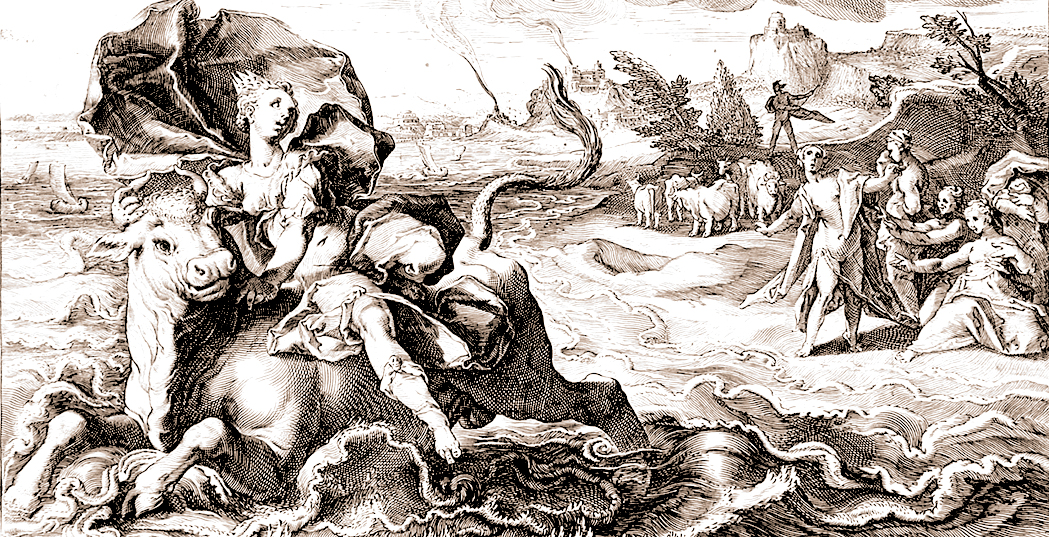
Publius Ovidius Naso (43 BC to AD 17) was probably the most prolific poet of ancient Rome, writing many books, often quite salacious. He wrote about how to seduce a woman, how women should attract men, how to break up with a woman — you get the picture. But his most famous book was “Changes,” or Metamorphoses in its original, which told dozens of mythological stories, mostly old Greek tales. It was a best-seller when it was written, copied out by hand many times over, and remained a best-seller through the Middle Ages and into modern times. Many writers — including Shakespeare — cribbed from Ovid and a good deal of what most people have absorbed of Greek mythology really comes through Ovid as the middle man. If you know about Daphne and Apollo or Pyramus and Thisbe, it is likely the Ovidian version you have seen. 

Ovid wrote in a sleek, fast Latin that told his stories economically. He has been used to teach students Latin for centuries, and has been translated into most of the world’s languages.

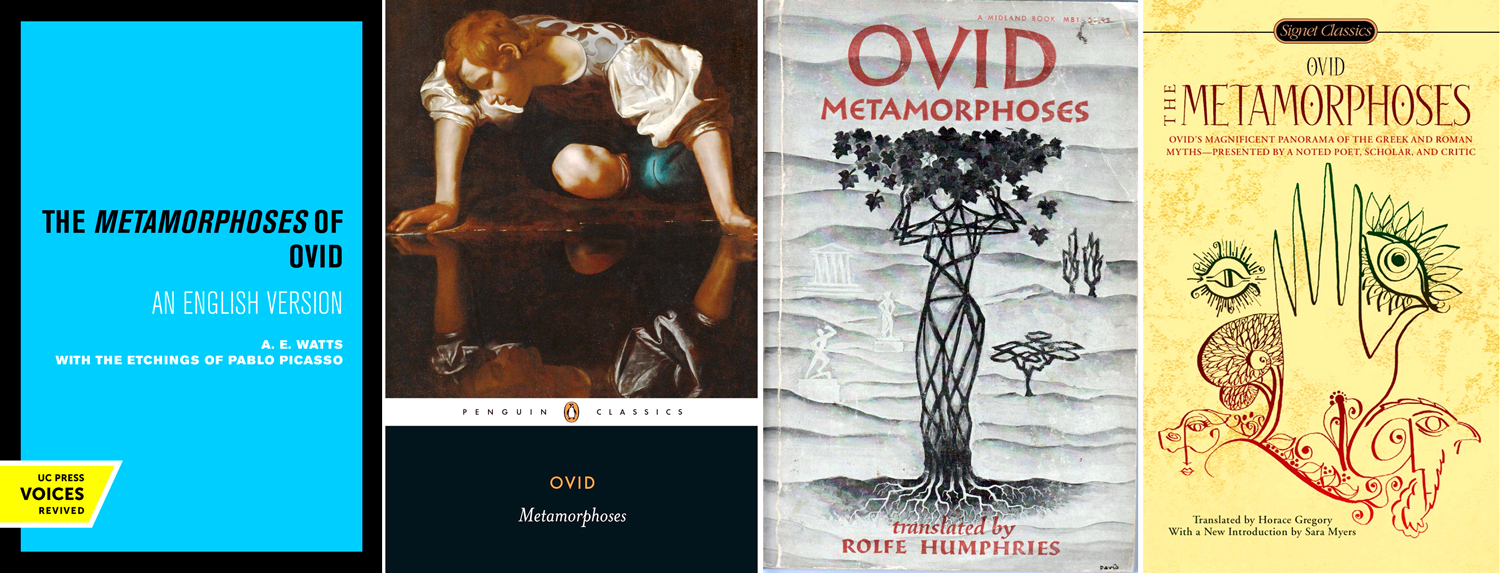
I’m one of Ovid’s devoted readers, and have gone through the book many times, in different translations, beginning in the 1960s with the old, standard Rolfe Humphries version (which I can’t say I found easy going). 

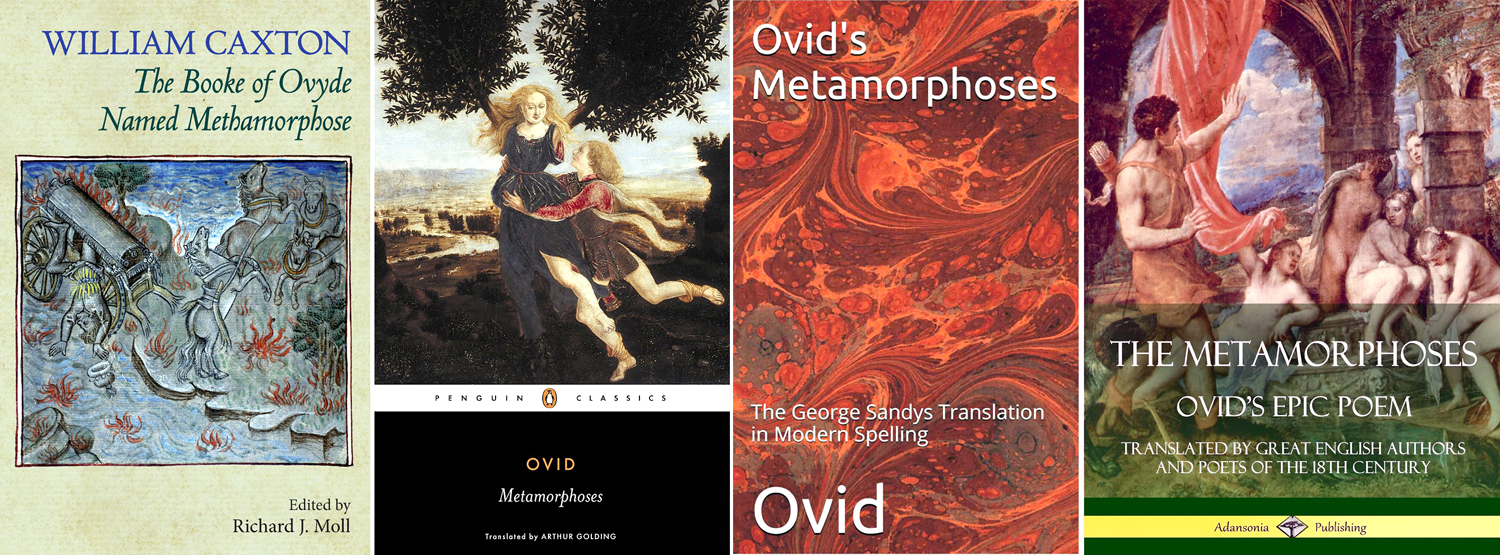
Since then, I have re-read the Metamorphoses many times, each time in a new translation. The newest is by Stephanie McCarter. She is not the first woman to take on the work, but she has made it a point to unforgive the gods their brutality. Where other translators give us gods “ravishing” their mortal victims, McCarter forthrightly calls it rape. In the “Me-Too” era, there is no glossing over the violence and brutality, the sexism and misogyny inherent in the myths. 

I applaud this shift of reference, but despite that, I found her verse tough plowing. These things are a matter of taste. Previously I had sailed through the 2004 translation by Charles Martin and found the lines so fast under my eyes, I hardly noticed I was reading a translation. Turning the pages with McCarter, I never forget that under her words there is a Latin pluperfect subjunctive. That it is a reasonably accurate version I don’t question. It is. But I want something else for my pleasure. Ovid’s original was always praised for its fleetness, and so I would wish my English equivalent also to fly by, so that I am immersed in the story rather than in the mechanics of the language relaying it. 

But reading this new version also made me want to look at how others have assayed the project. 

I took on a week-long effort to concentrate on the first four lines of the book and compare how each translator has looked at them, and found rather notable differences, considering how plain the meaning actually is. 

For this, Ovid must take a share of the responsibility. There is some ambiguity in his words, which make the poetry richer, but the translations more problematic. 

Then, there is the question of whether the translation should be prose or verse, and if verse, should it rhyme? Ovid wrote in hexameters, but English is geared to pentameter. Should you try to count six or count five? Six often sounds a bit awkward in English, while pentameter comes as naturally as breathing. Is six closer to Ovid’s original, or is the swiftness of English pentameter more faithful. Each translator has his or her own solution, and any can work. 

The first English translation was by William Caxton, who probably also gave us the first printed version (as opposed to hand-written by scribes), although the only versions extant seem to be the handwritten ones). It was in the Middle English that Chaucer would have read. He titled it The Booke of Ovyde Named Methamorphose

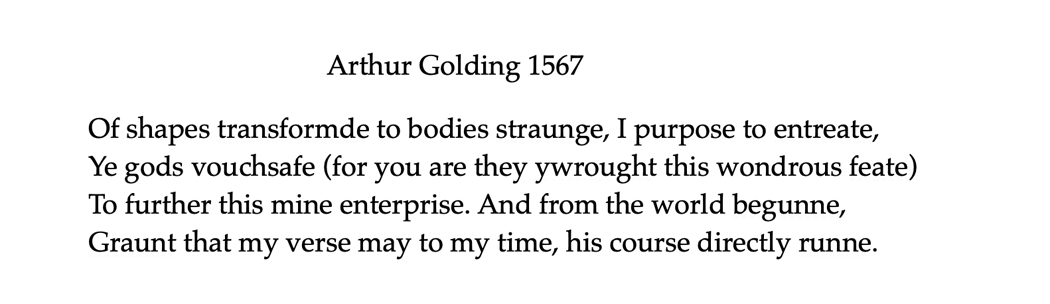
But the first translation that counts and is still readily available was made in 1567 by Arthur Golding. It was Golding that Shakespeare read and cribbed from. He opens his version with the four-line prologue:

It is written in “fourteeners,” the meter and rhyme scheme of the theme song to Gilligan’s Island: “Just sit right back and hear a tale, a tale of a fateful trip/ That started from this tropic port, aboard this tiny ship.” It was a popular meter in the 16th and 17th centuries. Nowadays, it can feel a touch jogtrot. (Now try to read Golding’s lines without singing them to the tune). 

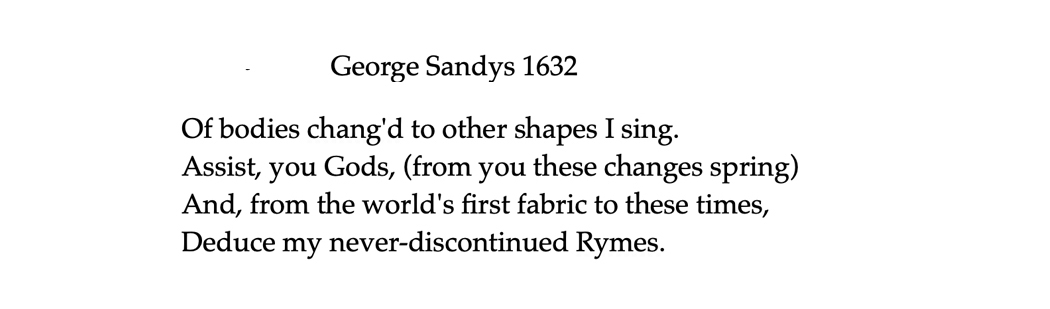
The second translation came in 1632, by George Sandys, who decided that English pentameter was more natural to the native speaker and recast the whole in a five-beat line, which shortened each and made for swifter reading, but also left out a bit of the original meaning.

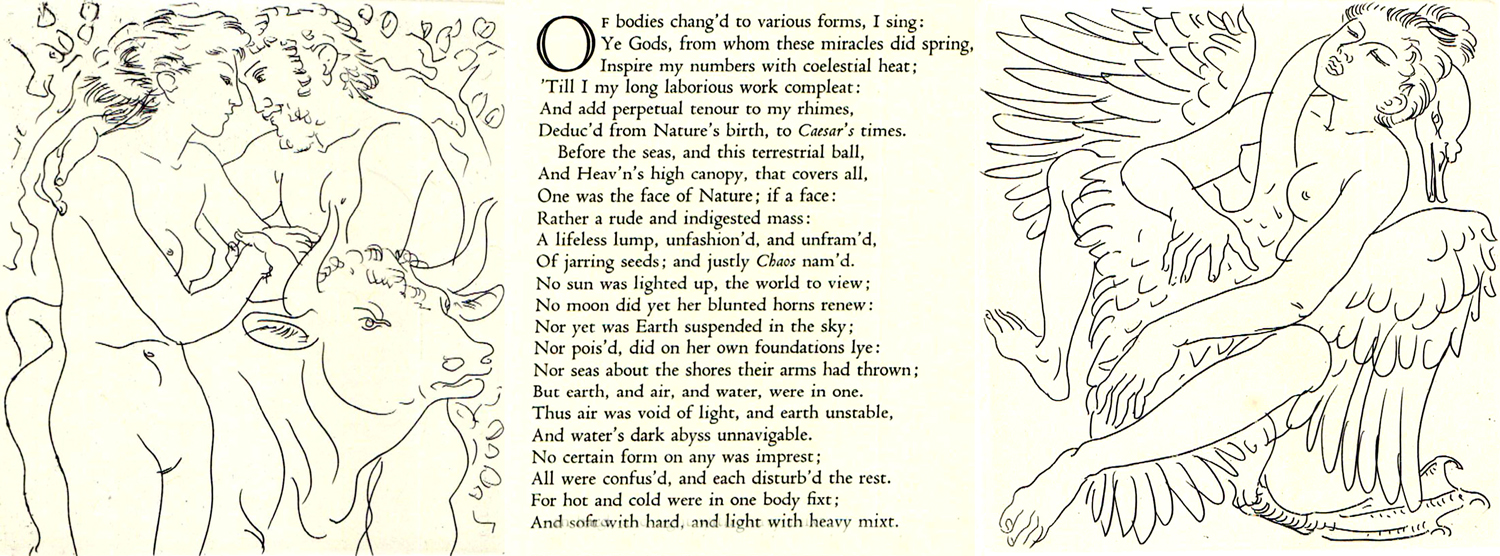
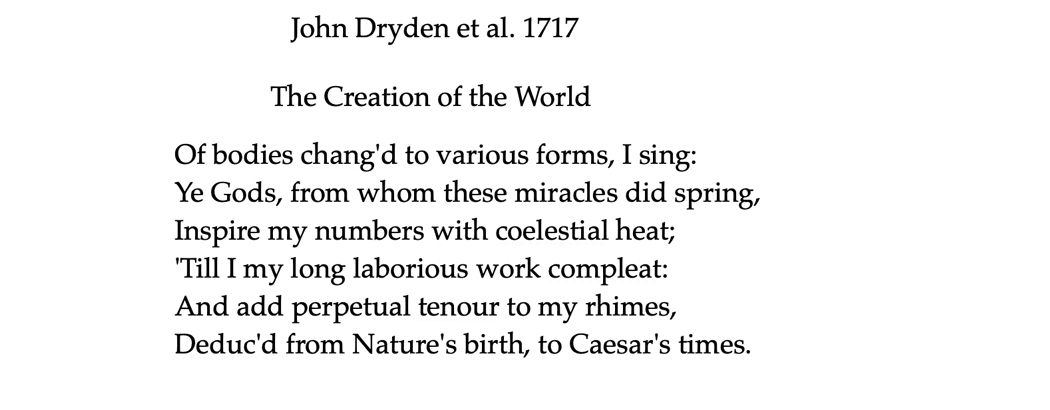
The most famous early translation came out in 1717, done by a team of writers rather than a single translator. These included John Dryden, Alexander Pope, Joseph Addison, John Gay, and William Congreve, among others. In was rendered in heroic couplets and was surprisingly fluent. Dryden took on the whole first book and began the introduction:

That became the standard Ovid for many years, and is still read and still quite readable. 

But then came the Victorians, who saw, among other things, Ovid’s usefulness in teaching Latin to its young men. And so you get a spate of them, usually in prose, meant almost as cribs for translation. 

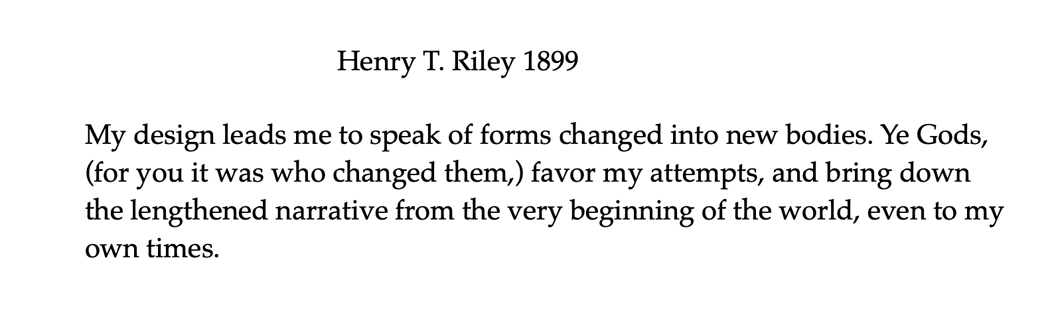
The one I have read several times is the Henry T. Riley, in a two volume pocket series published in 1899. Like many of the versions of its era, its notes try very hard to reconcile Ovid’s paganism with Victorian Christianity, and so, where Ovid talks of “gods,” the Victorian translators often write “God.” This isn’t much of a problem, if you are aware of it as you read. Riley’s proem runs:

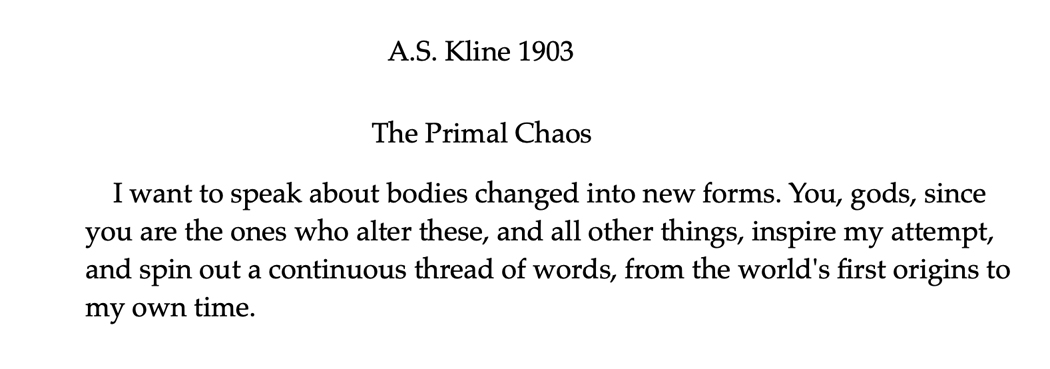
Anthony S. Kline, who seems to have translated pretty much everything at one point or another, came out with his Ovid in 1903. It is still widely available. It is in prose and meant to be almost pedestrian, i.e., not high-falutin’ and poeticalized. 

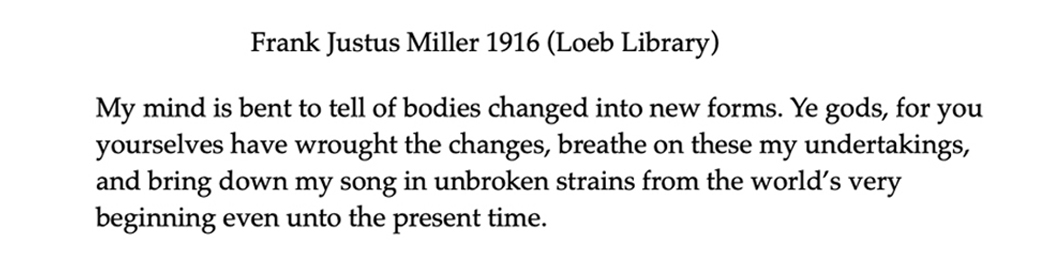
In 1916, the Loeb Library translation came out, with Ovid’s Latin on the left-hand page and Frank Justus Miller’s prose on the right-hand, opposite the original. It doesn’t quite work as an interlinear, but it will help anyone attempting the work in Latin. 

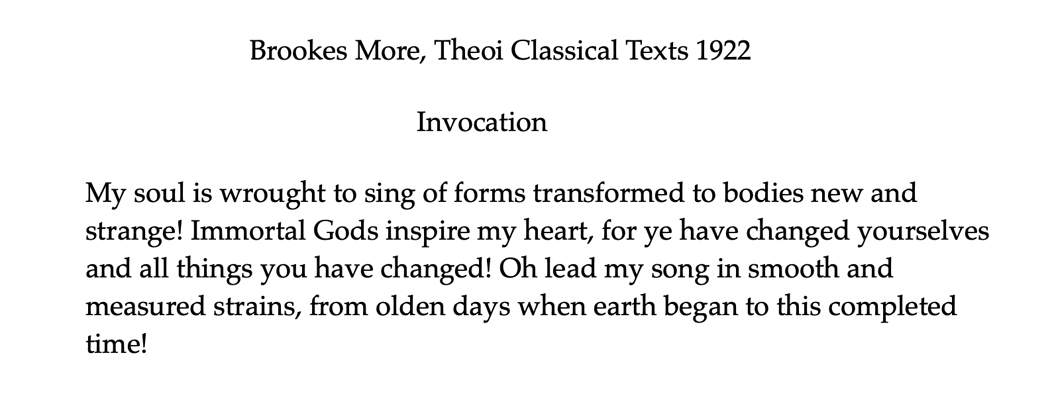
In 1922, writer Brookes More gave us a prose version for Theoi Classical Texts. Like many others, it as much interprets Ovid’s words as translates them. The word “strange” does not appear in the Latin. 

A new spate of translations hit in the 1950s, after the war, when so many new students were headed to university under the G.I. Bill. 

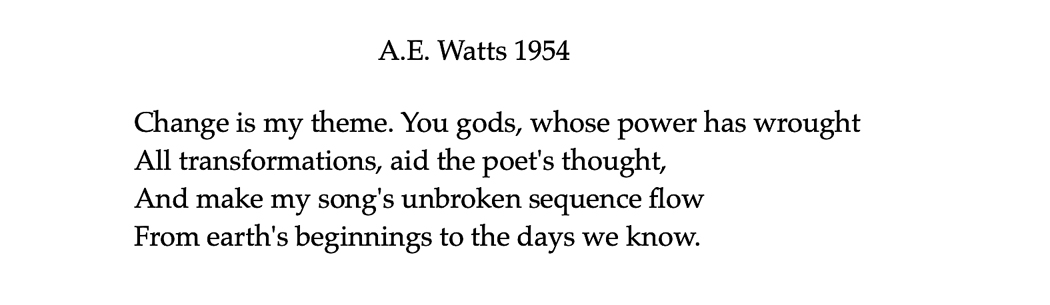
In 1954, A.E. Watts put it in pentameter and squeezed it all down to a fast-running nugget. His purpose seems to be to get the gist as directly as possible. 

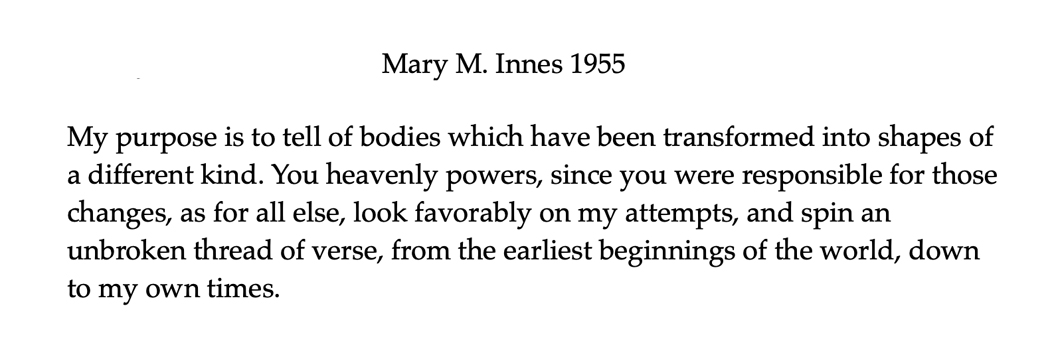
A year later, Mary M. Innes uses prose and is pretty much as close to the original as it can get, across languages and cultures. It has been a mainstay of Penguin Classics and is still widely available and read. 

The same year, the widely read Rolfe Humphries version came out in what must have been at the time a very contemporary sounding verse. It is the one I read in high school and didn’t like. Reading it now, I wonder what was I thinking. It is still in print, in a shiny, new annotated version published by Indiana University Press. It moves quite fast. 

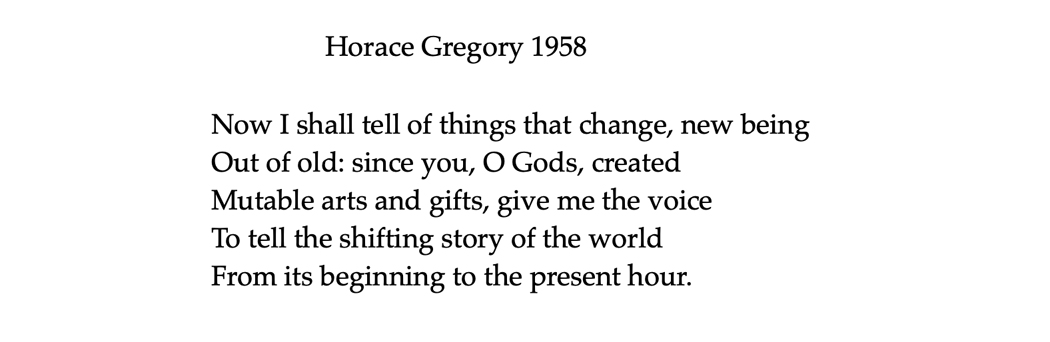
Finally, in 1958, Horace Gregory published his verse version, which attempts, also, to feel contemporary, but to my ears feels a tad straight-laced. 

The text sat dormant for a couple of decades, but in the 1980s, Ovid became a growth industry again. 

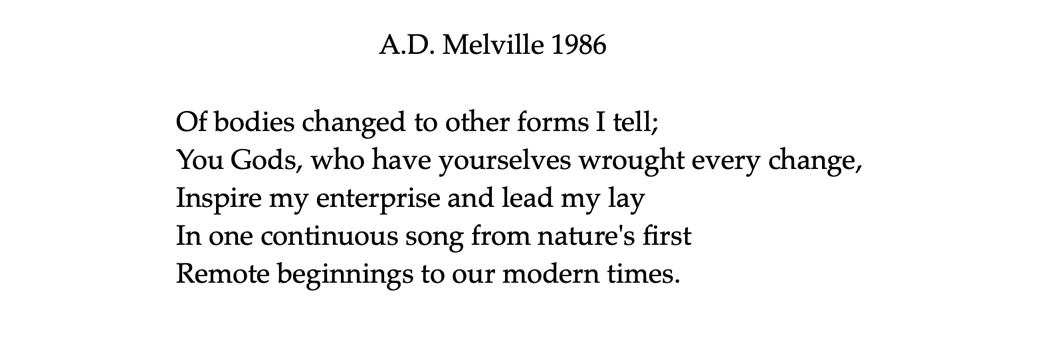
Oxford World Classics commissioned A.D. Melville for a new translation of the Metamorphoses, published in 1986. It is self-consciously poetic, with words such as “ere,” “countenance,” and “naught” to stumble over where more conversational words would be clearer. 

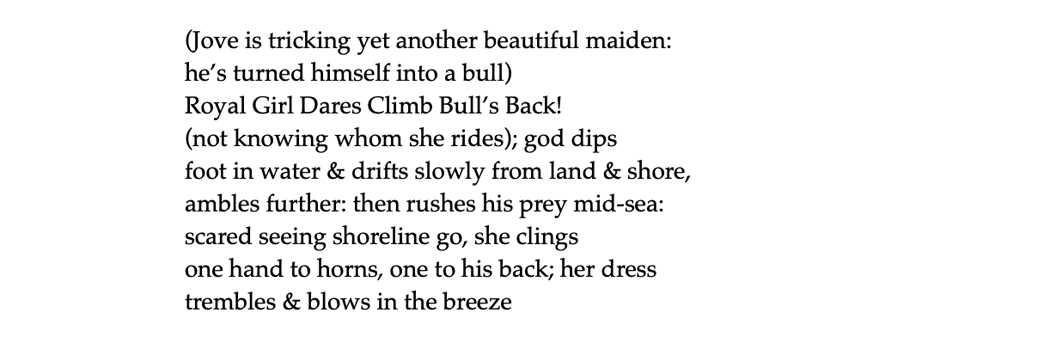
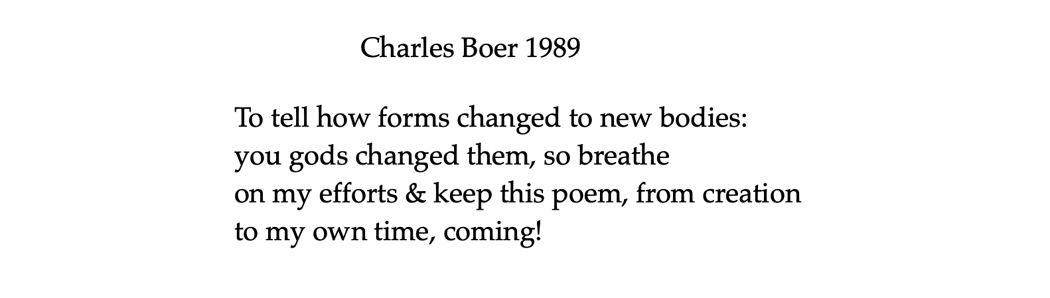
Charles Boer took another approach in 1989, with what one reviewer said is “like it’s spouted from the lips of some prehistoric shaman, barking out a tale to his animal skin-garbed flock.” In short, punchy lines, not always strictly grammatical, he seems to want to express each point as curtly as a newspaper headline. Articles evaporate and nouns shoot each other. It’s sui generis. To give the flavor of it, I have to quote more than just the proem. 

The proem is short and pithy, but the whole book is an acquired taste

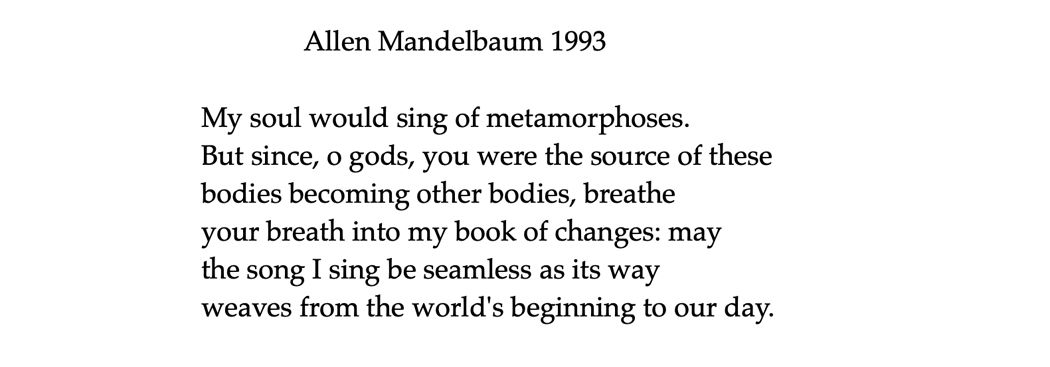
Allen Mandelbaum was a translating machine, and has given us versions of almost everything we might want to read, from Homer to Vergil to Dante. His Ovid, from 1993, in an Everyman Classic, which means it is gorgeously bound and printed in a handsome Bembo typeface. This is a book that looks really good on a bookshelf, but I’m afraid I find the translation rather worksmanlike. He takes six lines to say what Ovid said in four. 

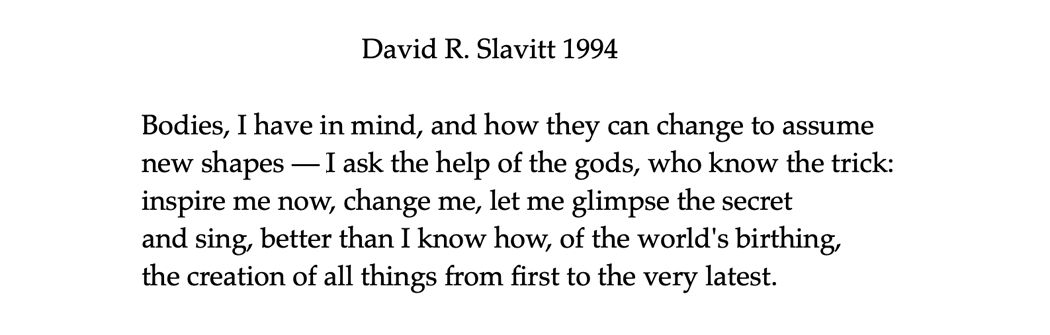
David Slavitt competed in 1994, with an entry in a very loose hexameter and what he says is “translated freely into verse.” He wanders a bit, and seems to add things into the text that sound more like commentaries on the text. In his introduction he writes: “As a translator, I take all kinds of liberties, but I am strict in my observation of length and scale, which I take to be significant artistic decisions that any new poem ought to respect and re-create.” In other words, he’d rather match Ovid’s prosody than his content. Some people swear by him.

The new century, 2000 years after Ovid actually wrote the thing, has exploded with new versions of his magnum opus. 

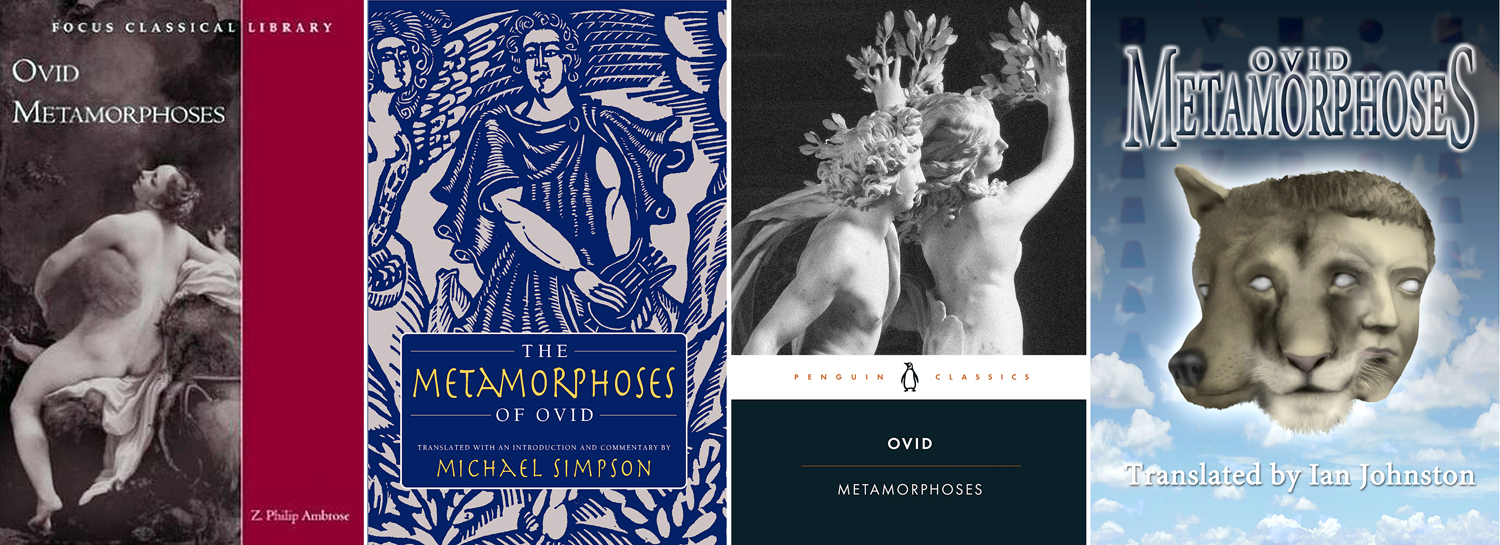
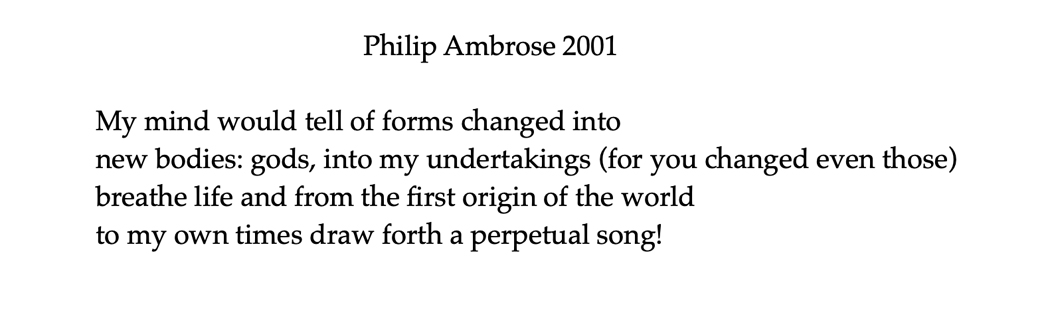
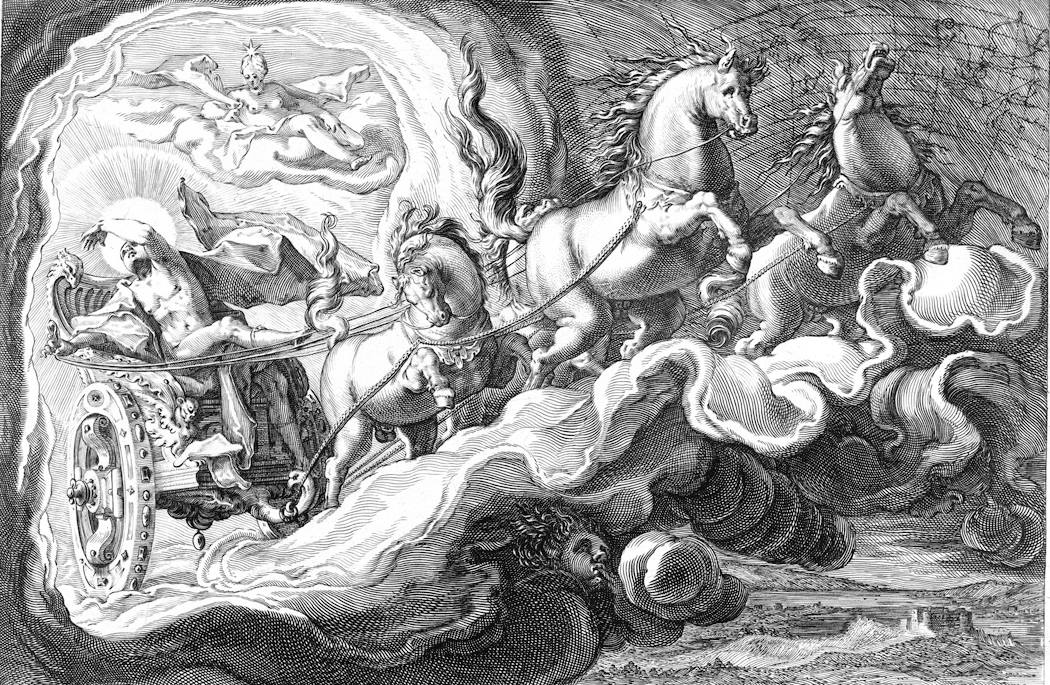
Philip Ambrose attempts to keep a line-by-line parallel with Ovid’s Latin, with sometimes an awkward phrasing, as when Phoebus, sounding like Yoda, tells Phaethon “But warn against this action I can”

Also in 2001, Michael Simpson brought out his prose version, attempting, he says in his introduction, “the rapid and direct American idiom while avoiding colloquialism on the one hand and academic translationese on the other. His version includes as many pages of notes, as of poem. 

I’m jumping ahead to 2004, skipping over Charles Martin for the moment, and to David Raeburn’s version for Penguin Classics, available in a handsome clothbound edition. It looks great on a bookshelf, but Raeburn’s somewhat wordy take means that most of the lines are longer than the page is wide, leading to insufferable line-breaks. Ugly. Reading it is like taking three steps forward and one back, over and over again. (This is a problem of book design rather than translation). 

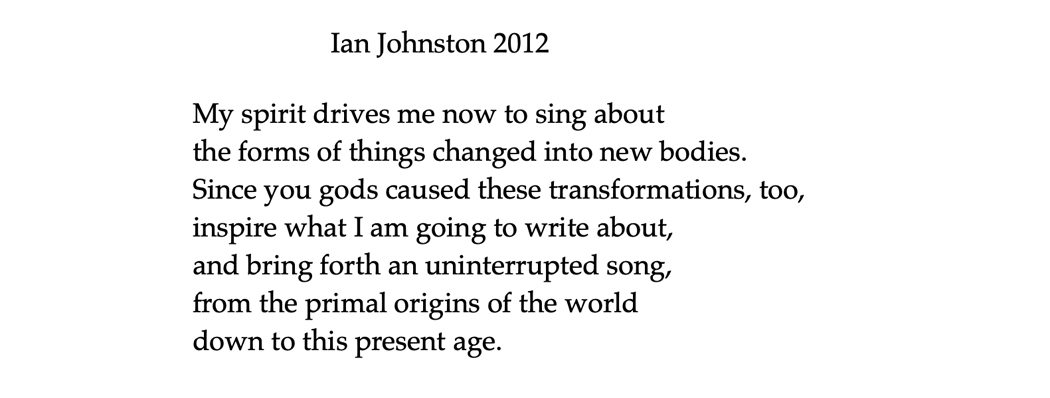
In 2012, Ian Johnston put the text into swift pentameter, and what is more, posted the entire book for free on his website. There is also, of course, a handsome physical book to buy. The tales are laid out with marginal headings to keep track of the often confusingly interlaced stories. 

That leaves three translation to consider: My two favorites and the newest one. 

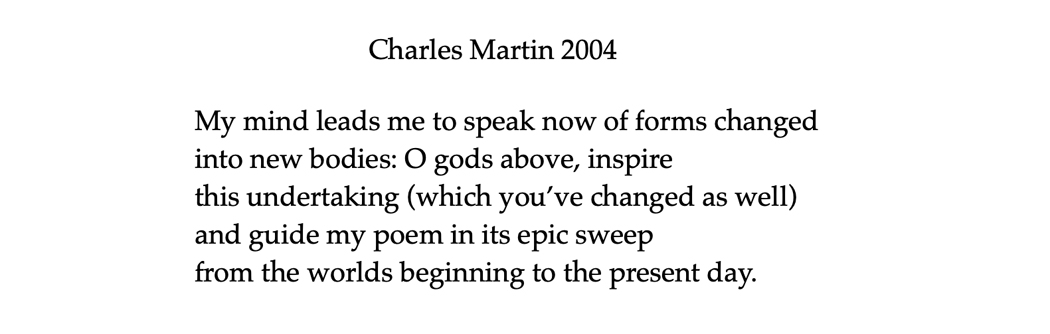
Charles Martin’s 2004 version for W.W. Norton is about as graceful as you can get, with a very free pentameter that moves as swiftly as Ovid is meant to move. I find no speedbumps in its wordage or lineage. It is the version I read over and over. 

But that doesn’t mean it is my true favorite, which is, I think, the best translation of anything that I have ever encountered. The problem is that Ted Hughes only worked on sections of the Metamorphoses, and so his version is incomplete, and second that his truly free approach means that he occasionally slightly rewrites Ovid to make things clearer or more proportioned to English (Ovid’s Latin doesn’t work word-for-word in English). It’s as if it were a completely original poem by Hughes rather than a translation of the Latin. I absolutely love Ted Hughes Tales from Ovid and cannot recommend it highly enough.

Which brings me back to the new McCarter translation, the latest in the long freight-train line of Penguin Books versions. If you read just the proem, she gets the gist of it absolutely perfectly, both metrically (as pentameter) and by giving us Ovid’s meaning as clearly as possible. 

But the rest of the book is less graceful, and about three pages in, I found myself working to read it. Martin’s version is greased and slides frictionless. McCarter is more like bumper-to-bumper traffic on the interstate, with a kind of start-and stop hiccups, and it sometimes suffers from what Simpson dubbed “translationese.” 

Translations seem to fall into one of three camps. One attempts to be as faithful as possible to the original, to simplify it and make it plain; the second seeks to poeticize it and make it sound as much like poetry as possible, and by that, we mean Victorian poetry; a third stream values contemporaneity, to make Ovid sound as if he were writing today, with the risk that in another 10 years it might sound as dated as Beatniks or bell bottoms. 

Any of these approaches can work, as long as the words spring along quickly and effortlessly, and Ovid’s stories keep you turning pages. Tastes vary and any one of these translation may strike you. I’ve laid out the range of them, and they can all be found somewhere in some published form. 

The best version for you is, of course, the one that keeps you reading to the end. 

Next time: A closer look at Ovid’s Latin

Translation is a funky thing. You can try to be literal and lose all the flavor, or you can try to find equivalent idiomatic expressions, or you can recast the whole thing, as if you were writing an original from a similar inspiration — your own words for a similar thought. 

And unless you are brought up bilingual so that you are completely comfortable in both languages, you will always be working from a disadvantage. You can work from crib notes, or take a literal translation and recast it. Many writers these days do something of the sort. Ezra Pound did not read Chinese, but that didn’t stop him from translating Chinese poetry. Scholars may quibble with the results (or laugh outright), but the versions Pound printed are good poetry, whether or not they are good translations. 

Would I rather read a poet’s regeneration or a scholar’s word-for-word? The answer is both. When it comes to poetry in languages I do not read, I’d rather have multiple versions to absorb and take in all the angles to arrive at something triangulated. 

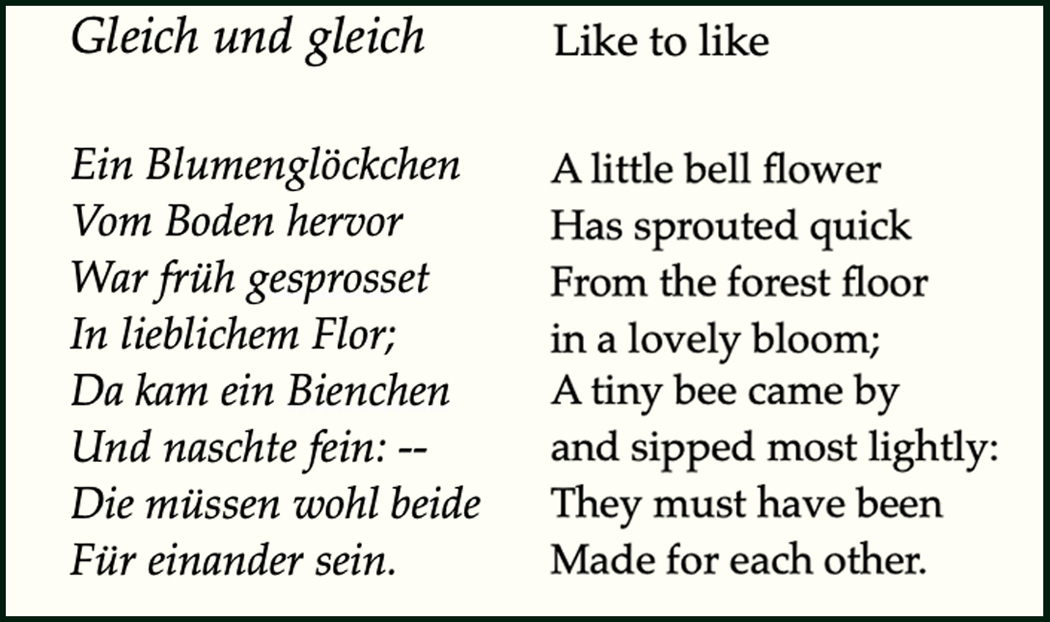
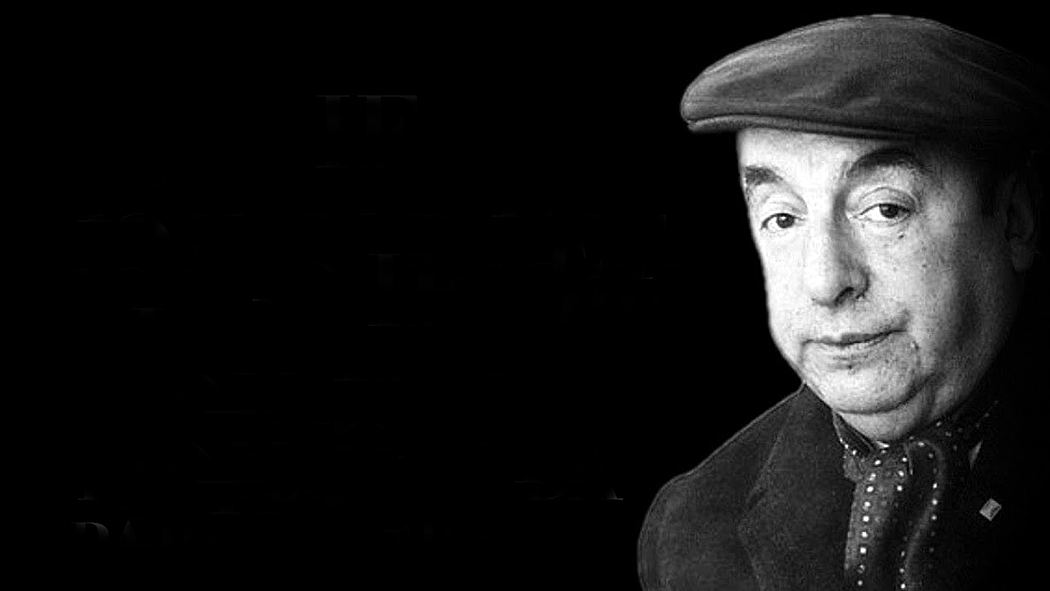
There are languages I have some familiarity with and so, I can usually read Pablo Neruda straight from the trough. And in French or German, I have some dealings with the originals, although I do not speak the languages with anything like fluency. I can read a French newspaper, but cannot always make out the spoken version. (Luckily, when in France, I have learned you don’t really need the fineries of grammar. You can speak French pretty usefully even with no verbs at all. You go to the patisserie and when it is your turn, you just say, “Deux croissants, s’il vous plait,” and you get what you want. No one before you on line has used a verb, either.)

And so, I have come to translate some poetry for myself, from German, from French or Spanish (even an occasional Latin poem), and mostly in self-defense. 

I say “self-defense” because most of the translations I’ve been subjected to sound like musty old Victorian twaddle. The translators seem to love archaic word forms and odd word orders — as if written by Yoda they were. 

Such things offend my ear. 

It’s not that I want them to be prose, but the secret of poetry is in the metaphor and the clever turn of phrase, not in the conventional language of old poetry forms. Take the first two lines of Nietzsche’s Zarathustra’s Rundgesang. In German:

O Mensch! Gib acht! Was spricht die tiefe Mitternacht?

Which could be translated, word for word, as:

“O men! Give attention! What says the deep midnight?”

Traditional translations usually go something like:

“O Man! Take heed! What saith deep midnight’s voice indeed?”

or:

“O Man! Attend! What does deep midnight’s voice contend?”

There is the problem with the original. “O Man!” is poetic cliche. It has to go. I suppose you could turn it into idiomatic English as “Hey, y’all, listen up,” but that would be a crime in a different direction. 

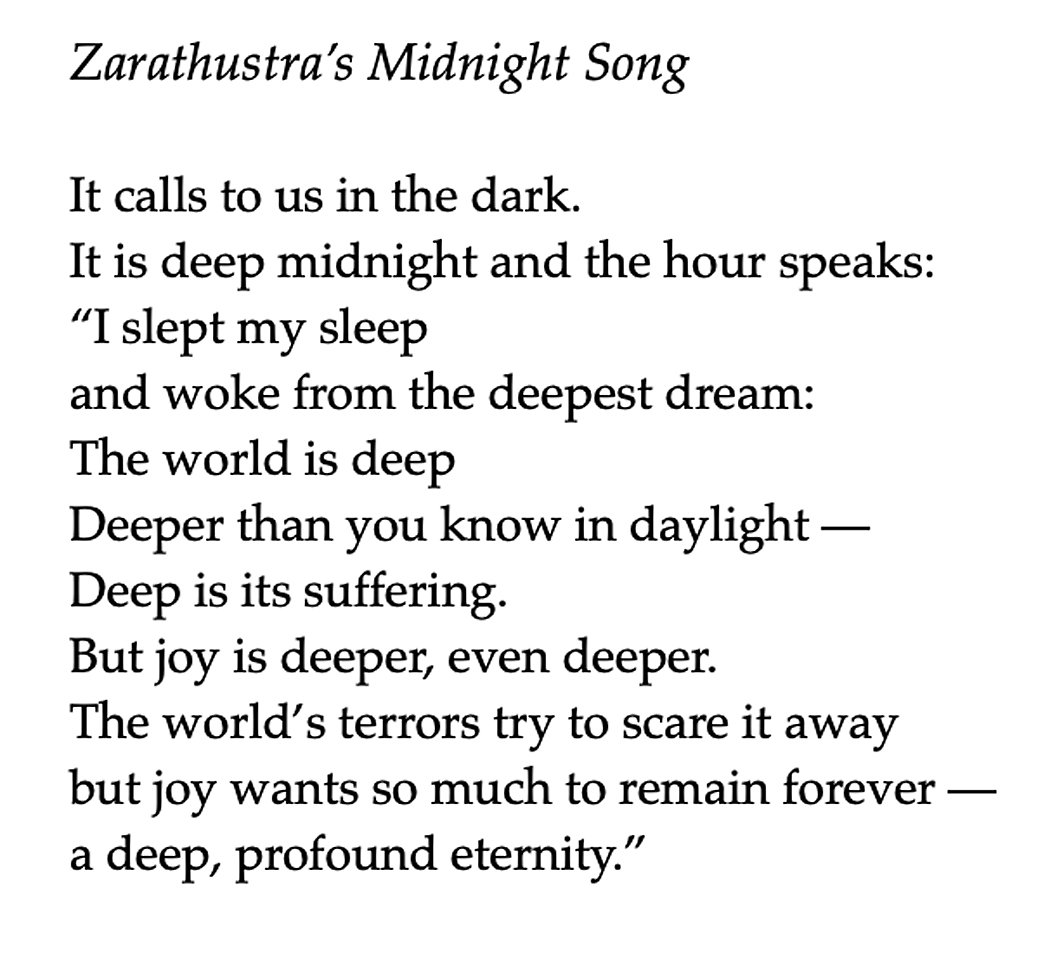
If I were to translate this bit, I would just leave off the unnecessary parts and rewrite it as: “It calls to us in the dark. It is deep midnight and the hour speaks:” This sets up a light/dark dichotomy that pays off later in the piece. 

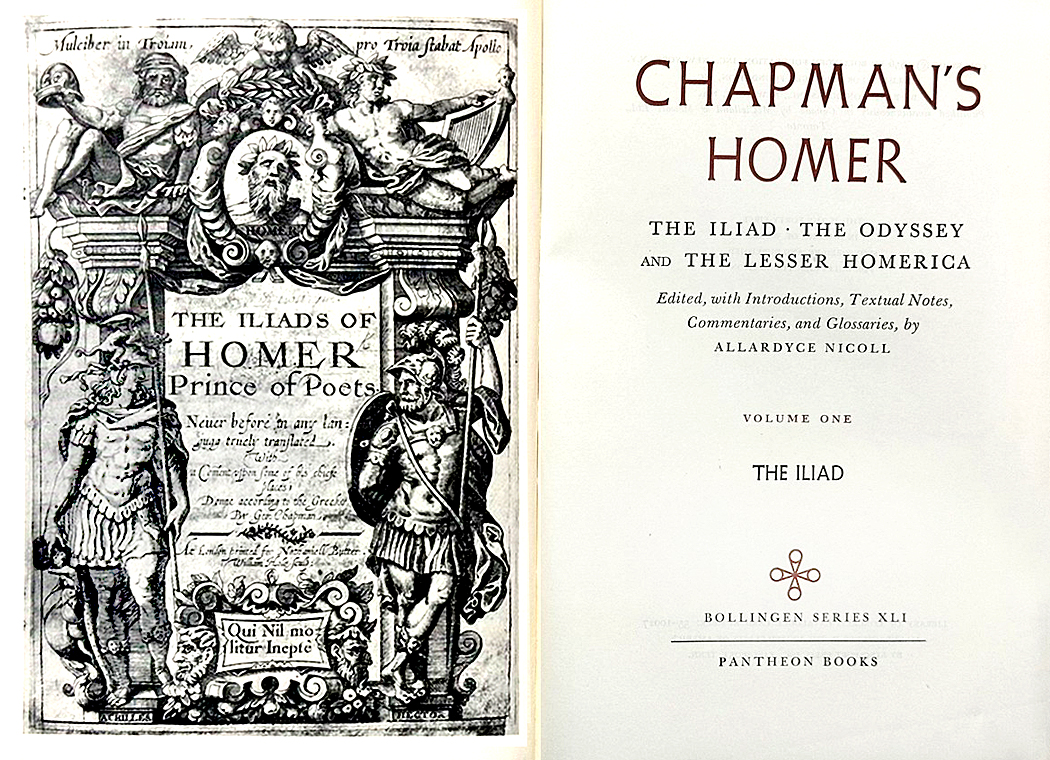
Too many translations, especially of classic Greek or Latin literature are written in this fusty, worn out poeticized and conventional twaddle. It’s amazing anyone waded through the Iliad in the 19th century. Homer’s actual style was immediate and direct. 

Imagine if Robert Frost had written: “Two paths in twain divided were; traverse we may but one.” Who would now bother with it? It is Circe turning men into pigs. 

In other words, I have no issue with completely recasting the originals to make modern, idiomatic sense in a language that I hope remains poetic but without the equipage of outworn convention. 

A stunning example of this approach is Ted Hughes’ Tales from Ovid, beautiful translations of several bits from The Metamorphoses. In Hughes’ style the stories move quickly and smartly and you turn the pages as in a best-seller. One only wishes Hughes had completed the whole thing, instead of mere sniglets. 

In this way, I have translated (or rewritten, if you hesitate) a good bit of German lieder. So much of it is hyperventilated Romantic sludge, which speaks to the early 19th Century of a generation that was weaned on Young Werther, and undoubtedly expressed the genuine feelings of those who lived through it, but now seem unrealistic and kitschy. 

Yet, there are real things being said and expressed in the poetry of Müller, Hölderlein or Eichendorff. It comes through like a buzz saw in the music of Schubert or Schumann, where the music has an authenticity that the verse sometimes lacks. 

I have tackled whole swaths of lieder verse, including a translation of all of the Winterreise. I found I could be a bit more faithful near the beginning of the cycle, but the deeper in, the more I had to rethink the verse. 

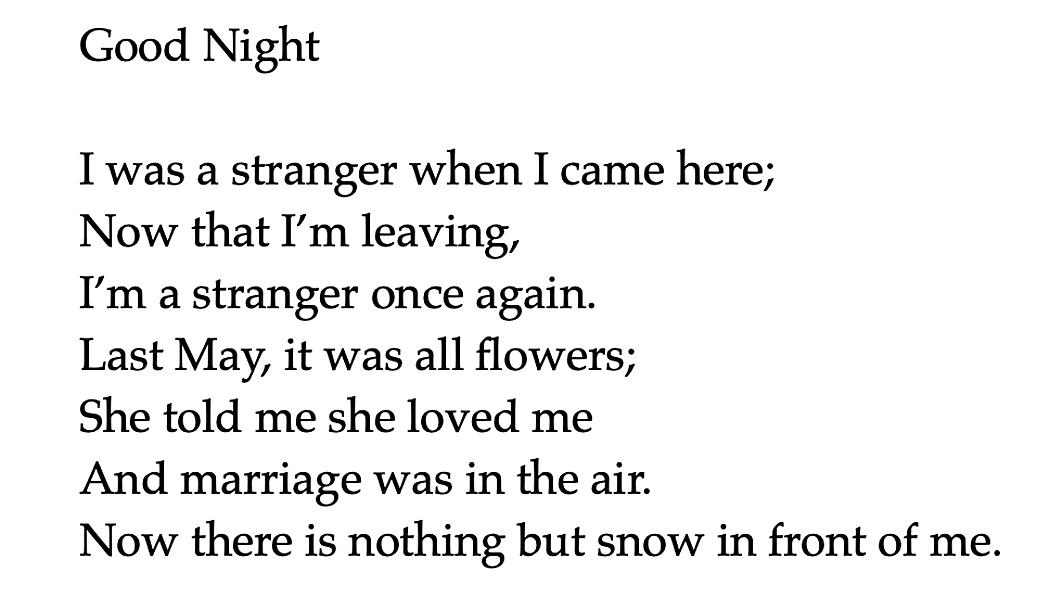
Take the first song, Gute Nacht. The text takes care of itself. A simple translation of the first stanza would be:

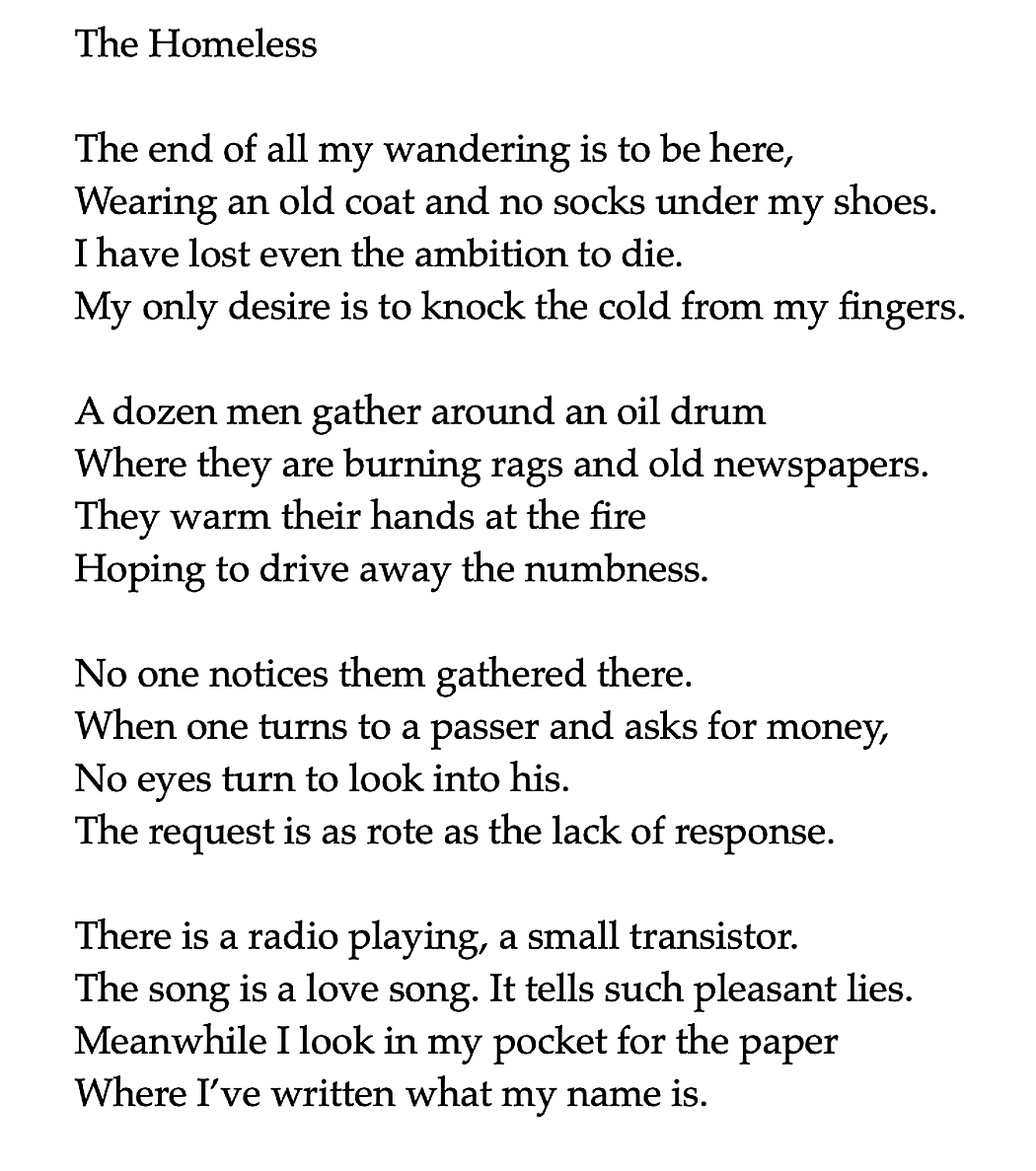
But, 24 songs later, the text of Der Leiermann, about a hurdy-gurdy man, is too bland without the devastating music Schubert provides (one of the most desolate and despairing bits of music ever penned), and so I’ve written my variation on it, to stand without the music:

Just this week, I started another project, translating four of the texts that Gustav Mahler set. I have arranged them into a set that belongs together, in four “movements,” rather like a symphony, meant to be taken as a single whole. 

I am offering them here as my apology for the type of translation I most appreciate — at least when others my better do it. 

The main benefit of doing such work (since I have no plans or hope ever to publish my translations — they are simply for the pleasure and knowledge I get from them — is that they force me to pay attention to the poetry and to the words. 

We can read through poetry much as we may distractedly hum a favorite tune. But good poetry offers much more, and forcing yourself to go through it word by word, can help you uncover much more. Translating forces concentration. 

And so, I read the German for its sound, parse individual words for their various meanings (for no word in any language has but one simple meaning), read various translations to compare how others have understood the words, reassemble them in my own English and then revise, over and over, until I get something that sounds good to me and — more importantly — makes sense. 

I have to admit that I generally like my own translations better than the ones packaged with the CD as the libretti or lyrics. But that is likely because they match my own particular esthetic — they are tailor made for my ear. Your ear may resonate to a different frequency. 

And so, the first “movement” of my Mahler word-symphony comes from the second of Mahler’s Songs of a Wayfarer, words originally written by the composer himself. The main melody of the song became the first theme of his Symphony No. 1. 

The second movement is Mahler’s own crib of Zarathustra’s Rundgesang, or “Zarathustra’s Midnight Song,” as the composer has it. All four of the texts I have translated focus on the twin but opposite facts that life is suffering but also it is joy. 

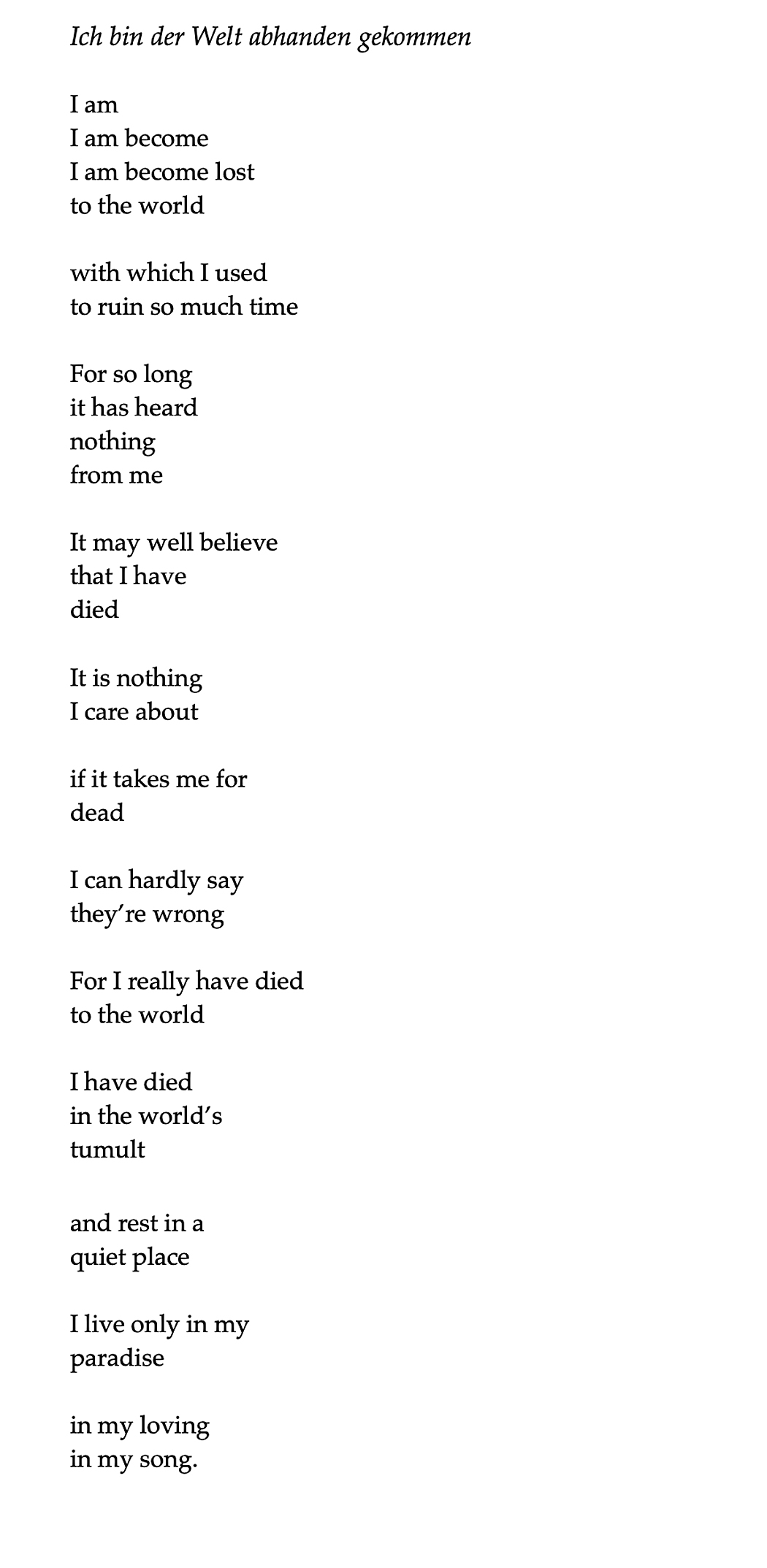
Third, there is heartbreaking and rueful song by Friedrich Rückert, Ich bin der Welt abhanden gekommen, set by Mahler first for voice and piano, but later orchestrated and part of his Sieben Lieder aus letzter Zeit (“Seven songs of Latter Days”). It is surely one of his greatest songs, and can hardly be heard or sung without feeling it was written directly with you in mind. 

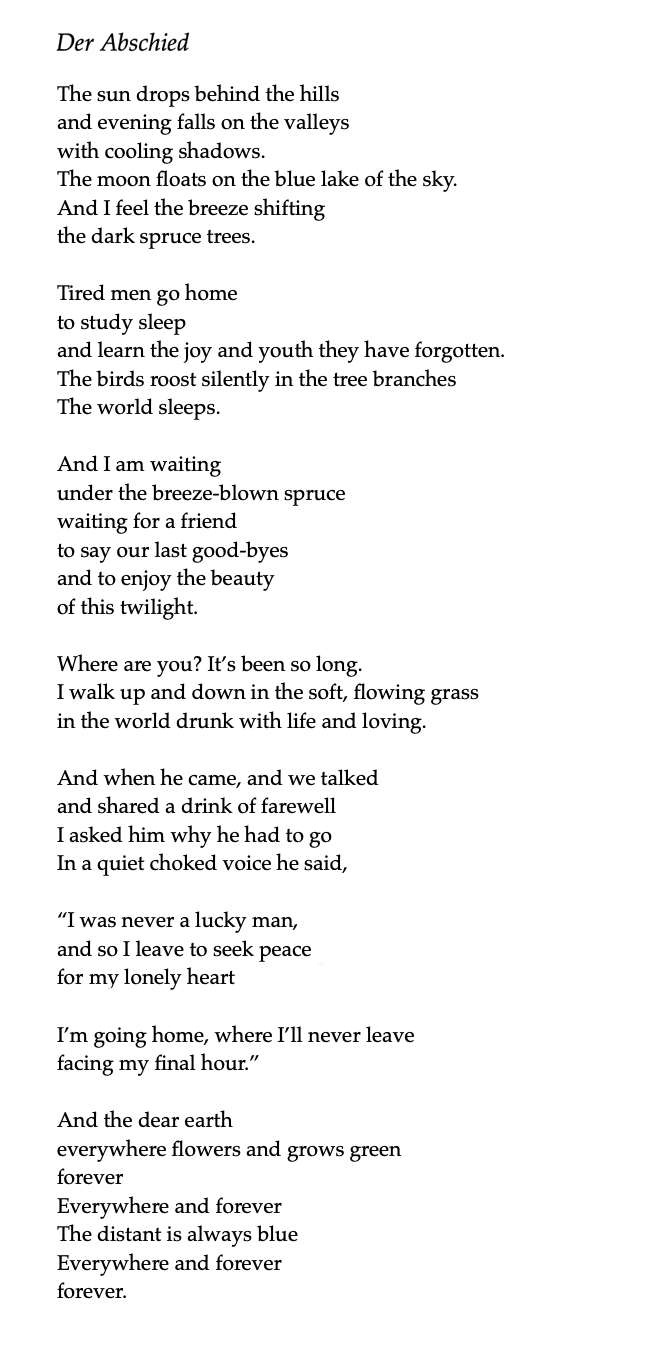
Finally, there is Der Abschied (“The Farewell”), the final movement of Mahler’s Das Lied von der Erde (“Songs of the Earth”). In it, Mahler has pieced together two Chinese poems of dubious provenance (themselves translated or rewritten, or perhaps invented in French and German) purportedly by Tang Dynasty poets Meng Haoran and Wang Wei, with three lines added at the end, written by Mahler himself. Der Abschied is Mahler’s summa, and at 30 minutes, is as long as the previous five movements combined. And it ends with the quiet reiteration, over and over, in dying voice, “Ewig… ewig…” (“forever… forever…”) finally so in performance you can never quite tell when it ends, the final “Ewig” as quiet as the silence that follows. 

In the end, I recommend to everyone that they attempt to translate a poem from a different language. Take a Baudelaire, for instance, or a Neruda (avoid Rilke like the plague, unless you wish to end in an asylum), and parse it through, word by word. Read it out loud in the original language to hear the music of it (yes, your French may not be as liquid as the original) and read various translations to see how differently the words are construed. Then arrange a version of your own.

In the end, you will have internalized the poetry and it will never again be a stranger to you. 

It’s completely meaningless to rate art. Is Picasso greater than Rembrandt? Beethoven than Mozart? Is Beethoven’s Fifth better than Beethoven’s Eroica? Pointless.

But there is a different question: faves. It’s possible to have favorites without making claims to supremacy. We all have them. Yes, they shift over the years: The older me appreciates different art and appreciates it in different ways than the young me did. But even day-to-day the favorites may change. Often my favorite symphony is the one I’m listening to at the moment. 

Still, Top Ten lists will be made. Or Top Five, or Top 100. There’s no hope for it. It’s instinctive, built into our DNA. And so, I’ve put together my list of my Top Dozen  favorite works of art — a baker’s dozen. Your mileage may vary. (For the ultimate list of lists, link here). 

And so, here are my favorites, listed by genre. I’ve tried to narrow my choices to art I have experienced in person — paintings I have actually seen, dances I have attended, books I have read. Book reproductions or sound recordings don’t count. I have a lifetime of art-going and concert-attending, and so I may have access to more than the average bear. But I am well aware that there’s a whole lot more that I haven’t seen. 

And by favorite, I don’t just mean something I like, but rather, something that has wormed into my very being and become a part of who I am, so that encountering it can explain to others a bit of who I am. It has been grafted into my personality. 

This list is entirely personal, flexible and apologetically incomplete. Ask me again tomorrow and this could be a very different list. 

Painting: None of these choices changes more often than painting. today’s favorite fades with tomorrow’s. I’ve simply come to love too many paintings to have a single choice. But today, I will go with Jackson Pollock’s Blue Poles. It was a painting I had wanted to see for years, and then got my chance when the Museum of Modern Art held a Pollock retrospective in 1998 and the elusive work was borrowed back from Australia, where it had sat for decades, out of the reach of us Northern Hemisphere shut-ins. Its appeal came from its elusiveness, for sure, but also for its unique place in Pollock’s catalog — more than just paint squiggles, it had the structure of the bars across its surface. I loved it in reproduction, but it bowled me over in person. 

Alternate takes: Picasso’s Guernica; John Singleton Copley’s Watson and the Shark

Sculpture: I grew up visiting the American Museum of Natural History in New York City as often as I could. I loved the place — and I mean loved. And deep in its bowels resided the giant Olmec head, chiseled from basalt (actually, the one in New York is a plaster copy, but I didn’t know that when I was 10 years old and rapt in wonder). In the darkened hall of the museum, the head seemed immense and the original weighs 20 tons. It impressed me no end and to this day, it is my favorite sculpture. No doubt there is other, more important sculpture elsewhere, but I have not been to Rome or Egypt to see them. I have spent considerable time in the Louvre in Paris and have several faves there, such as the Three Graces or the Winged Victory, but none has stuck in my psyche with quite the force of the Olmec head. 

Alternate takes: Rodin’s Burghers of Calais; Louvre’s Three Graces

Architecture: As architecture critic for The Arizona Republic, I got to visit a lot of buildings, including most of the Frank Lloyd Wright sites in the U.S. (Wright was a longtime resident of Scottsdale, Ariz.) I was blown away by Taliesin in Wisconsin and his studio in Oak Park, Ill. But the building that struck me as most beautiful was Falling Water in Pennsylvania. Everything you have ever heard about it is true — about its siting in the woods over the waterfall; about how its interior is micromanaged by Wright’s designs; and (I’m one of the few who have been given access to this) the pathetic orphan of a bathroom hidden in the basement. Wright really didn’t like having to deal with kitchens or bathrooms. 

Alternate takes: Chartres cathedral; George Washington Bridge

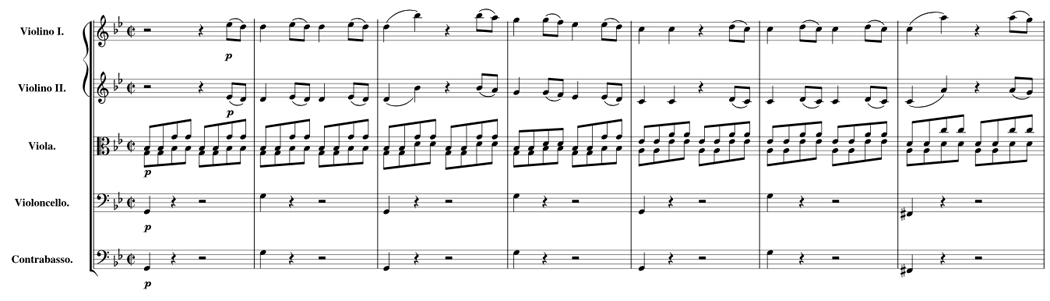
Orchestral music: this is the hardest category for me because I have so much music bottled up in the ol’ storage batteries, and faves change not only day to day, but hour to hour. But I studied Mozart’s Symphony in G-minor, K. 550, score in hand, for most of an entire semester in college and it is drilled into my memory so that I can hear the whole thing in my head, from beginning to end, even without the score. If ever a piece of music felt like home to me, it is Mozart’s 40th Symphony. Dissecting it has given me an approach to all other classical music. 

Alternate takes: Mahler’s Symphony No. 3; Stravinsky’s Rite of Spring

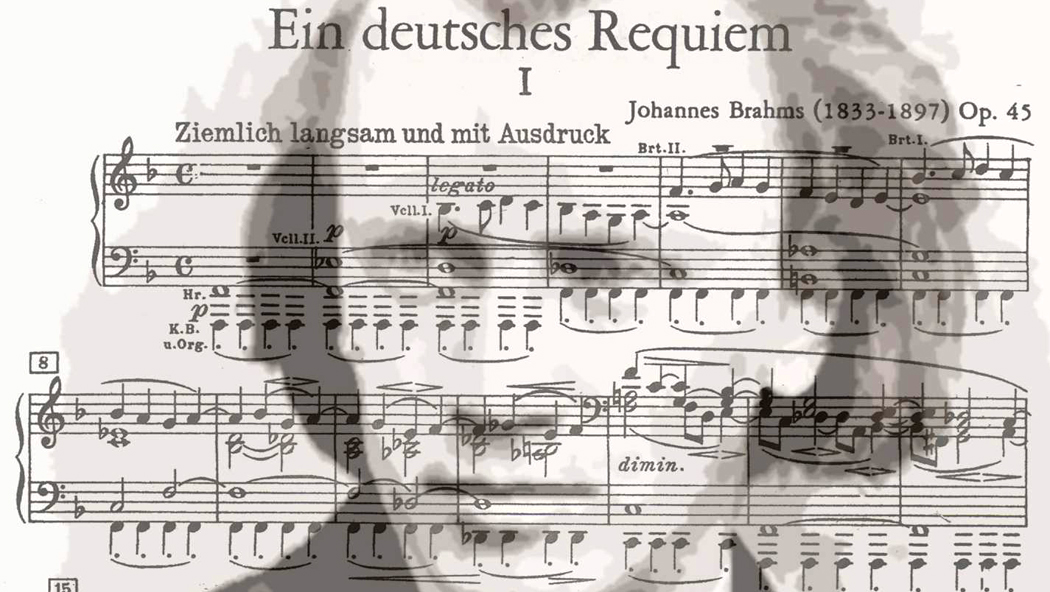
Choral music: I’m not a religious man, and neither was Johannes Brahms, so his German Requiem can console my most grief-stricken moments in a way more devout music cannot. More than any other music, I go to the Deutsches Requiem for consolation and peace. Each year, on the anniversary of the death of my wife, I drive up the Blue Ridge Parkway, find a quiet forest road and park and listen to my Brahms and weep for my loss and for the loss all humankind must suffer. 

Alternate takes: Haydn’s Creation; Rachmaninoff All-Night Vigil

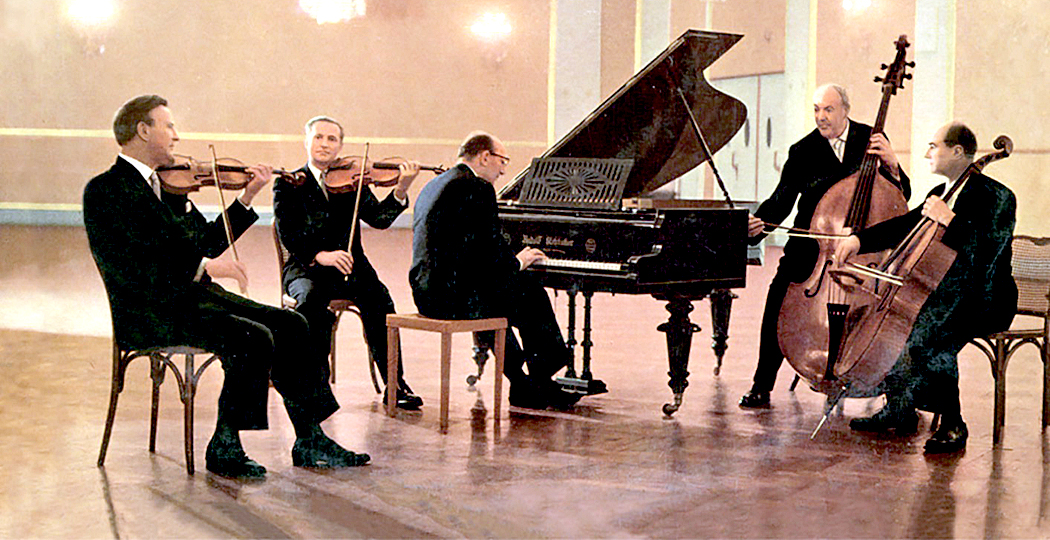
Chamber music: I want so much to claim Schubert’s C-major String Quintet, for it is the deepest, most emotionally moving piece of chamber music in the repertoire. Yet, I cannot, as long as there is Schubert’s competing “Trout” Quintet, which must be the most ebullient, life-affirming piece of music ever written. One cannot come away from it not feeling — despite all the sorrows of the world — that life is pure joy. It is no end of astonishment for me that Schubert wrote both. 

Alternate takes: Brahms Clarinet Quintet; Shostakovich Piano Trio No. 2 

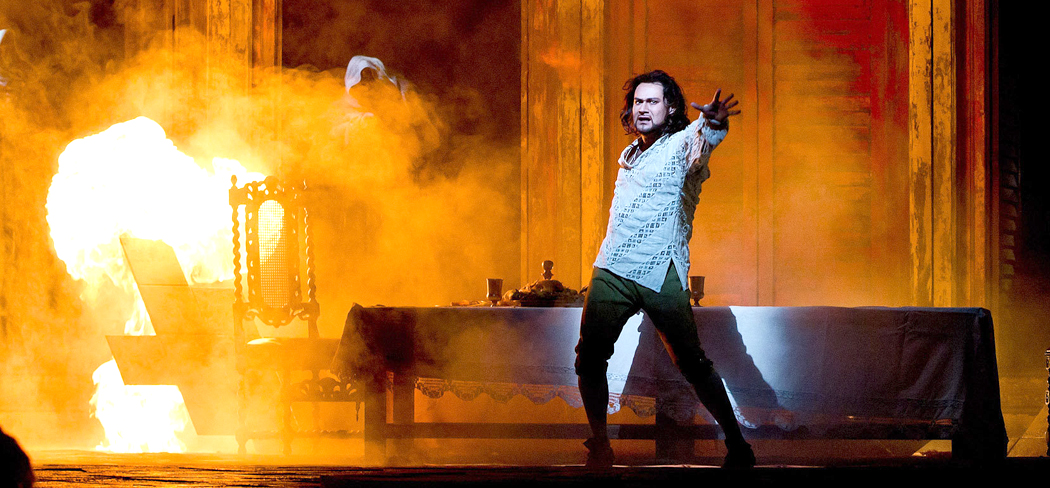
Opera: Mozart’s most subversive opera wasn’t The Marriage of Figaro, which was often banned for making fun of the aristocracy, but rather Don Giovanni, with its lusty chorus of “Viva la libertad” and its turning topsy-turvy the villain-hero model. The Don is the life force embodied, for good and bad, and when he is threatened with hell, he laughs and refuses to recant, choosing damnation over hypocrisy. Its first act is the most completely flawless in all of opera history and despite the phony ending usually tacked-on to the second act, a model of moral complexity. 

Alternate takes: Alban Berg’s Wozzeck; Richard Strauss’s Der Rosenkavalier 

Dance: Of all the artforms, dance moves me the most. And I was extremely lucky, because when I became dance critic, Ballet Arizona was taken over by Ib Andersen, former star dancer for George Balanchine and brilliant choreographer himself. He staged many Balanchine ballets and I was hooked. I have now seen Balanchine’s Apollo four times, once by the New York City Ballet in Paris, and I cannot watch it now without welling up with emotion. I love dance and Apollo stands in for all of it. 

Alternate takes: Ib Andersen’s choreography for Prokofiev’s Romeo and Juliet; Frances Smith Cohen’s choreography for Center Dance Ensemble’s Rite of Spring

Theater: Bad theater, or worse, mediocre theater can give the impression that live drama is hopelessly, well, theatrical. You know: dinner theater. But when it is done well, there is nothing that can match it, a lesson I learned by seeing the original Broadway production of Tony Kushner’s Angels in America. I’ve now seen it — both parts together — four times and it destroys me every time. In great theater, you soon forget all the artifice and everything becomes immediate and real. Movies are great, but they can’t match the breathing now-ness of live theater. 

Alternate takes: Eugene O’Neill’s Long Day’s Journey into Night; Peter Shaffer’s Amadeus

Film: There are films that are exciting, films that are visually beautiful, that are clever, that are cultural barometers, and there are films that are wise. Jean Renoir’s La Règle du Jeu has informed my own life more than any other film I’ve seen. How can you beat Octave’s observation: “The terrible thing about life is that everybody has their reasons.” I will watch Rules of the Game over and over for the rest of my life. It is cinematic comfort food. 

Alternative takes: Andrei Tarkovsky’s Andrei Rublev; Ingmar Bergman’s Seventh Seal

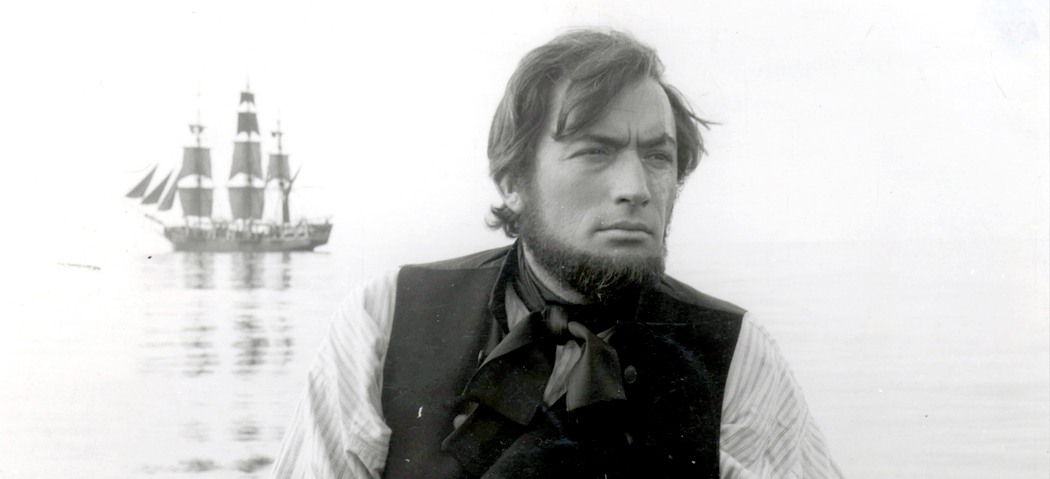
Novel: Most books, you read once. If it’s a mystery, you have the killer caught; if it’s a Victorian saga, you get the heroine married. But some books you can read over and over and get intense pleasure from the language used and the perspective offered. For me, that book is Herman Melville’s Moby Dick. I don’t always read the whole thing from beginning to end, but I bet I’ve read the first chapter, at least, a hundred times. Melville’s language has seeped into my own writing more than any other (for good or ill). 

Alternative takes: James Joyce’s Ulysses; Laurence Sterne’s Tristram Shandy

Poetry: I read a lot of poetry, mostly modern and contemporary, but the poem I go back to over and over, read out loud for the sound the words make in my mouth, proselytize to others and keep in my heart is Geoffrey Chaucer’s Trouthe. The antique language isn’t so hard, once you get used to it — sort of like listening to a working class Mancunian accent, or a Yorkshireman gabble — and once you’ve caught the knack of it, it’s like any other English. God, I love that poem. “The wrastling for the worlde axeth a fal.” 

Alternative takes: Eliot’s Four Quartets; Pablo Neruda’s Odas Elementales

And the Number One, hors compétition and sans genre, is: 

The north rose window, Chartres cathedral. As I have written many times, the north rose window is the single most beautiful human-made object I have ever seen. I am in awe of it. Reproduction cannot give you a sense of its glowing color and implied motion — it virtually spins (and I mean virtually literally). I can sit in its presence for an hour at a time. 

Again, I am not making the claim that these are all the greatest works, although they may be, but that they, more than their compeers, have buried their way into my innermost being, where they reside as a permanent part of my unconscious. They are who I am. 

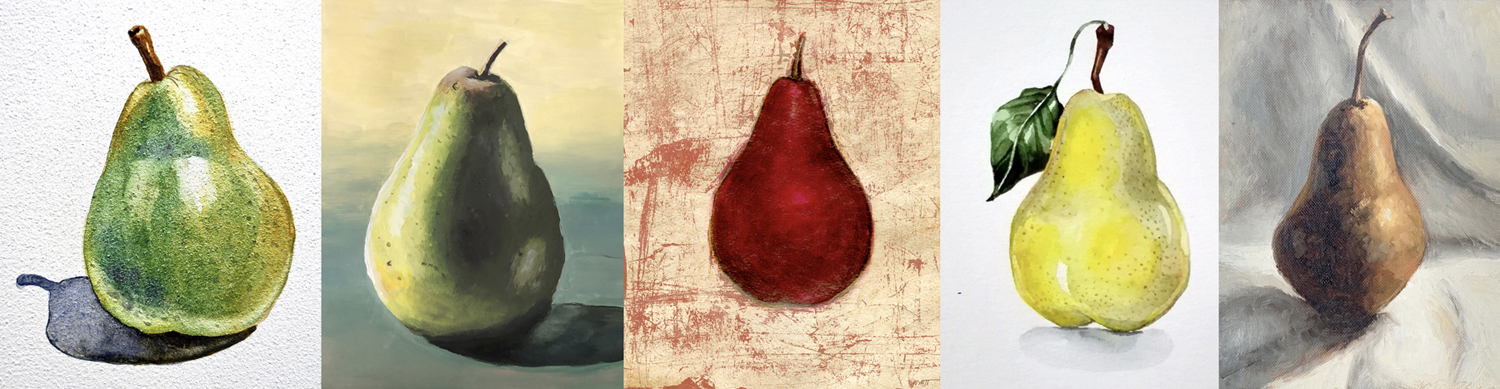
I started to write about philosophy, but realized I really wanted to talk about pears. Crisp, delicious succulent pears, the kind with small brown spots on the skin and a roly-poly bottom. Given a choice between reading Hegel (insert dry cough here) and slicing wedges off a Bartlett pear, the fruit wins hands down every time. 

I have been thinking about this because of philosophy. The intellectual world seems divided irrevocably between art and philosophy — image and word. One side deals with categories of thought, the other side deals with hubcaps, clouds, tight shoes and the sound of twigs snapping underfoot, to say nothing of pastrami sandwiches and corduroy trousers. 

I’m sorry if I value the one vastly over the other. I am a Dichter not a Denker. I have — this is my ideological burden — a congenital mistrust of language, particularly abstract language and language of categories. The world is too multifarious, indeed, infinite, and language by nature and requirement, simplifies and schematizes, ultimately to the point that language and reality split paths and go in separate directions. When one relies too much on  language, one misses the reality. 

The tragedy is, that language is all we have. We are stuck with it. We can try to write better, more clearly, use evocative metaphor when declarative words fail, use imagery rather than abstractions, and do our best — our absolute best — to avoid thinking categorically, and attempt to see freshly, with eye and mind unsullied by the words that have preceded us. It’s hard, but it is essential. To begin with the categories, and to attempt to wedge our experience into them, is to mangle and to mutilate the reality. 

The matter is only made worse by the impenetrable fustian written by so many philosophers — and especially the recent crop of Postmodern and Poststructuralist explainers. 

Take Hegel — please. Georg Wilhelm Friedrich Hegel (1770-1839) is just the kind of philosopher who thinks thoughtful thoughts and writes incomprehensible prose. 

“Knowledge of the Idea of the absolute ethical order depends entirely on the establishment of perfect adequacy between intuition and concept, because the Idea itself is nothing other than the identity of the two. But if this identity is to be actually known, it must be thought as a made adequacy.”

A made adequacy?” That’s from his System of Ethical Life (1803-4). I’m sure if you spent an hour or two going over it again and again, you might be able to parse something out of it. But, jeez. It’s the kind of prose you get from academia all over the place: 

“As histories of excluded bodies, the bodies that made national Englishness possible, this counterpastoral challenged the politics of visibility that made the very modern English models of nature, society, and the individual visible through the invisibility of bodies that did not matter.”

That’s from Kathleen Biddick’s The Shock of Medievalism (1998). She is also the author of The Typological Imaginary: Circumcision, Technology, History

In such writing, individual abstract words are made to stand in as shorthand for long complex ideas, not always adequately explained. And the words are then categories, and the categories allow blanket statements that cover the world like Sherwin-Williams paint. 

The basic problem is that words are always about words. When Plato talks about “the Good,” he is talking about how we define the word, “good.” Plato is about language. The linguistic grammar and language has its own rules, its own logic, and they soon supersede what the philosophers call “the case.” 

There is a book out there now titled Why Fish Don’t Exist, by Lulu Miller. And taxonomists now largely agree that what we used to call the class of animals Pisces (fish), are really a bunch of increasingly unrelated classes or clades, in fact at least 12 of them, not counting subclasses. For example, a salmon is more closely related to a camel than to a hagfish. 

But, back in the 18th century, both whales and sea urchins were also classified as “fish.” That we distinguish them separately now has made no difference to either whales or urchins, but only to dictionaries. That a whale is not a fish but a mammal is a shift in language, not biology. Fish still swim in the sea, even if we hesitate to call them fish. 

And in the same way, the parsing of philosophers is mostly a shift of wordplay. The philosopher Ludwig Wittgenstein made this the central issue of his later work. 

Meanwhile, as the philosophers mince language in their mental blenders, Gloucester fishermen keep pulling fish out of the oceans. When it comes to trust, I take the fishermen over the philosophers. The world is filled with sensible, seeable, feelable, hearable things. Things that give us pleasure and made the world we find ourselves cast into, like poached salmon. 

Our lives are filled with the things of this world and their shapes, colors, sounds, textures, smells and tastes. And so is our art, which makes images, poems, dances, music and theater from those shapes, colors, sounds, etc., is a direct connection with the things of this world — the “case” as it were. 

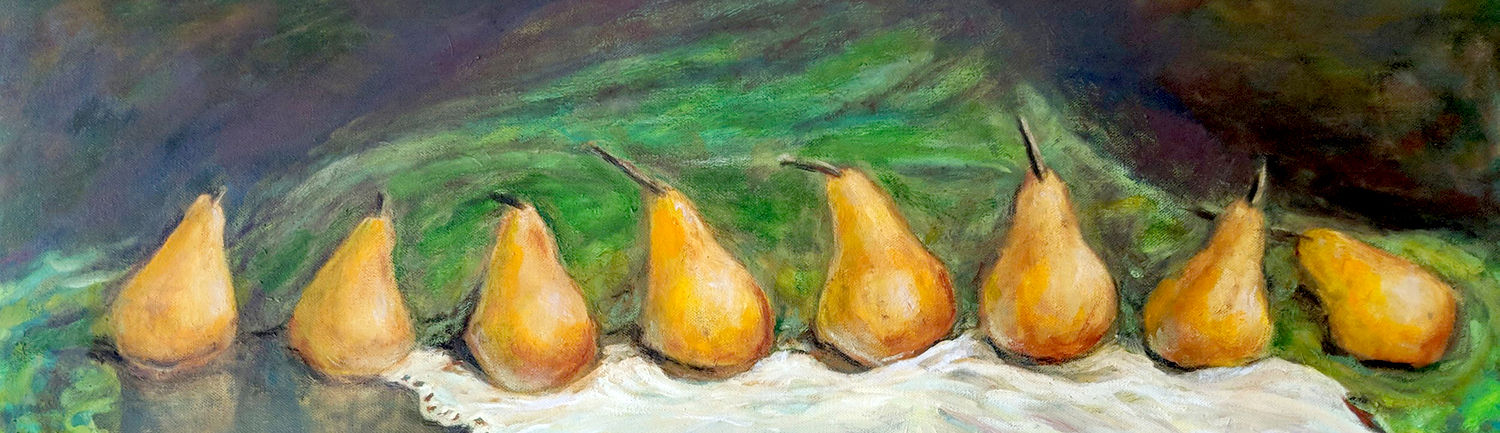
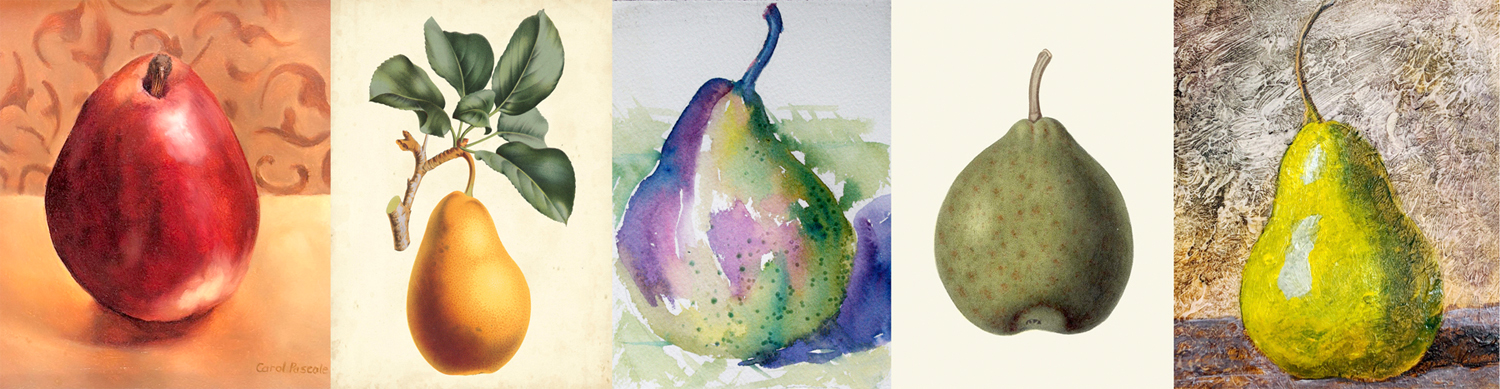
And I think of pears in art — those buttery layers of paint by Paul Cezanne — and the other still life art that singles out this bit or that of the physical presences of the world and shows them to us so we may notice them and appreciate them. 

Most of our art tends to be divided between people and things — “things” being mostly landscapes and still life. In our art, we privilege people over things and that is only fitting. I’m sure squirrels are most interested in other squirrels, too. 

But the non-human and non-living things things are so much a part of our lives, and a certain percentage of our art has been made about things. Like pears. 

I step outside into the sun and I hear distant traffic, the breeze hissing in the tree leaves, and, from several blocks away, the intermittent rattle of a chainsaw. In the morning, there are birds — mockingbirds and chickadees. There is the feel of the air and the sun on my skin. There is the smell of the grass, new mown, or maybe the oily resonance of diesel fumes. I stand and feel the temperature. I live in the welter of the world. 

And so, I am in love with the things of this world. I am mad for them to be in contact with me, to absorb them, to notice and appreciate them. To pay attention. To be alive. 

And I slice a pear. The insides are both pulpy and wet; the skin keeps the flesh from drying out. The stem at the top curves off. The nub at the bottom shows where the white flower had been. 

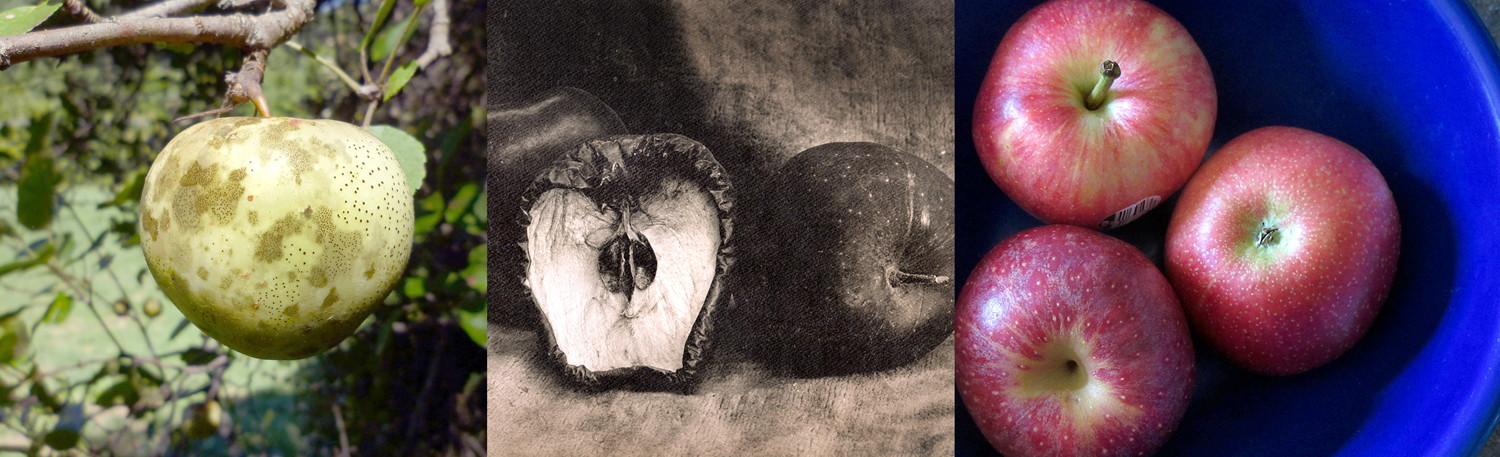
I take pears instead of apples here, because apples have too many words stuck to them, making them gummy with ideas, from Eve’s fruit of temptation to the computer on which I am writing these words. 

But a pear can be seen with less baggage. It bruises more easily than an apple, yet its pulp is firmer, stiffer, unless overripe, when it can go mushy. Nor is it as sweet as an apple, although we must point out that there are hundreds of different varieties of apple and that a red delicious is sweeter than a granny smith. (Yet the granny smith makes a better pie). 

There are varieties of pear, also, and they are perhaps more distinct than the apples. The lanky brown Bosc, the squat green Anjou, the nearly round Le Conte, the very sweet Seckel. In Japan, there is the ruddy, round Kosui, or russet apple pear. The Comice is great with ripe cheese. Yellow Huffcap for making perry — a cider made from pears. 

I believe the central fact of existence is variety, in infinite forms, which in contrast makes the categories of philosophers seem puerile and simplistic. And dry. Pears have juice. Derrida, none. 

These are smart people. I don’t begrudge them that. And perhaps we need people thinking such thoughts. But if we leave these words to the philosophers, I will have more time for myself with all the plants, rocks, fruit, animals, clouds, stars, cheeses and oceans. 

Ultimately, to experience things is more important — more rewarding — than explaining them. 

When it comes time to leave this planet and join oblivion, in those last moments left to my life, mostly, I will be thinking about the people I have loved and who have loved me. But beyond that, will I be thinking about Hegel or will I be remembering pears? My money is on the palpable. There is love there, too.

Click on any image to enlarge

“Manfred on the Jungfrau” John Martin, 1837

From the last half of the Eighteenth Century through the last quarter of the Nineteenth, an idea permeated popular and intellectual culture and showed itself in literature, art and music, although no one could quite agree on its definition. Like wit in the seventeenth and early eighteenth centuries, which also defied simple definition, the sublime was something no one couldn’t quite pin down, but like Justice Potter Stewart said, you knew it when you saw it. 

The Sublime features representations of vast spaces, horrifying disasters and universal chaos. Anything dark, scary, awe inspiring or supernatural. 

“Alpine Avalanche,” Philip James de Loutherbourg, 1803

Of course, the idea isn’t limited to the Eighteenth and Nineteenth centuries. It has been around as long as there has been art and literature. There is The Sublime in the epic of Gilgamesh and it is all over the Bible. 

There had always been a subspecies of The Sublime in art. It is in Shakespeare, in Titian, in Rubens. It runs throughout John Milton’s Paradise Lost, especially in those parts describing Satan and his acts. 

But The Sublime steps into the spotlight with the advent of Romanticism. It is in the poetry of Byron, the novels of Victor Hugo, the paintings of Caspar David Friedrich. It is behind the fad for Gothic novels and the nature poetry of Wordsworth and Coleridge. 

The first clear enunciation of The Sublime in literature was set down in the First Century by an anonymous author, usually called Longinus. His treatise, usually called On the Sublime, is primarily a guidebook to rhetoric, with all the usual tropes, but he also discusses how great writing — as opposed to the merely good — overwhelms us, and it is great subjects that lend themselves to great writing. 

In the climactic 35th chapter, he writes: “What was it they saw, those godlike writers who in their work aim at what is greatest and overlook precision in every detail? … (W)e are by nature led to marvel, not, indeed, at little streams, clear and useful though they be, but at the Nile, the Danube, or the Rhine, and still more at the Ocean.  … nor do we consider out little hearthfire more worthy of admiration than the craters of Etna whose eruptions throw up rocks and boulders or at times pour forth rivers of lava from that single fire within the earth.

“Vesuvius Erupting,” Pierre-Jacques Volaire, 1877

“We might say of all such matters that man can easily understand what is useful or necessary, but he admires what passes his understanding.”

What happened between the century of Voltaire and that of Shelley is the cultural shift from Neo-classicism to Romanticism. It is a shift from a concern for society and relations of humans to humans to a different frame of reference — to the relation of the individual to the cosmos. 

Relations between people are between roughly equal, similar size entities; relations with the cosmos pit the infinitesimal human being against the infinite. There is no satisfactory reaction but awe, terror, and admiration: That is The Sublime. 


“The Deluge” William Westall, 1848

Coleridge describes a Sublime experience in his 1818 lecture on “European Literature” by recalling: “My whole being expands into the infinite; earth and air, nature and art, all swell up into eternity, and the only sensible expression left is, ‘that I am nothing!’ which concludes that his ultimate realization of The Sublime was of his own human insignificance.” 

In 1757, a young Edmund Burke wrote an influential treatise, A Philosophical Enquiry into the Origin of our Ideas of the Sublime and Beautiful. He wrote: “Whatever is fitted in any sort to excite the ideas of pain, and danger, that is to say, whatever is in any sort terrible, or is conversant about terrible objects, or operates in a manner analogous to terror, is a source of the sublime; that is, it is productive of the strongest emotion which the mind is capable of feeling.”

He sorted The Sublime into seven constituents: darkness; obscurity; deprivation; vastness; magnificence; loudness; and suddenness. When used in art or literature, The Sublime reminds us of things we find frightening in the world, but by being framed in art, lets us contemplate it in safety, and thus we find pleasure in it. 

“Chamounix, Mont Blanc and the Arve Valley” JMW Turner 1803

The next generation sought out The Sublime in reality as well as in literature. When Mary and Percy Shelley visited the valley of the Arve River in the Alps, they noted in their History of a Six Weeks Tour through a Part of France, Switzerland, Germany, and Holland: “Mont Blanc was before us, but it was covered with cloud; its base, furrowed with dreadful gaps, was seen above. Pinnacles of snow intolerably bright, part of the chain connected with Mont Blanc, shone through the clouds at intervals on high. I never knew — I never imagined what mountains were before. The immensity of these aerial summits excited, when they suddenly burst upon the sight, a sentiment of ecstatic wonder, not unallied to madness.”

Shelley transformed this into his poem, Mont Blanc: Lines Written in the Vale of Chamouni:

In her 1794 gothic novel The Mysteries of Udolpho, Ann Radcliffe has her heroine face the Alps: 

“They quitted their carriages and began to ascend the Alps. And here such scenes of Sublimity opened upon them as no colors of language must dare to paint … Emily seemed to have arisen in another world, and to have left every trifling thought, every trifling sentiment, in that below: those only of grandeur and sublimity now dilated her mind and elevated the affections of her heart.”

“Hannibal Crossing the Alps in Snowstorm” JMW Turner 1812

And Byron is nothing without The Sublime. He takes his doomed hero to the Jungfrau in Manfred and used it in Childe Harold’s Pilgrimage over and over, as in the lines, “Roll on thou deep and dark blue Ocean — roll!”

In Canto 3 of Childe Harold, he takes his hero to the Alps: 

Coleridge’s Rime of the Ancyent Marinere (1798) is all about The Sublime and its terror — and ultimately, its beauty. 

Its hero, aboard a death ship is surrounded by a sea of monsters: “The very deep did rot: O Christ!/ That ever this should be!/ Yea slimy things did crawl with legs/ Upon a slimy sea.” But our mariner has a transformation of heart:

 Certain artists and painters became transfixed by The Sublime. First comes Joseph Wright of Derby (he is always referred to this way, apparently to distinguish him from other Joseph Wrights, including an American artist of the same time, who designed the Liberty Hat penny). 

In many of the English Wright’s paintings, a bright light glows in the darkness. He painted multiple canvasses of the eruption of Mt. Vesuvius in the 1770s. 

“Vesuvius in Eruption, With a View of the Bay of Naples,” Joseph Wright of Derby, 1776

Although he didn’t have to travel that far. Many of his landscapes feature brooding moonlight scenes, or images of fire in the darkness, such as

“Cottage on Fire,” Joseph Wright of Derby 1786

This fascination with The Sublime is primarily a northern European thing. You find it in British art, in German art and Scandinavian art, but less so in Italian or Spanish (Goya excepted). 

Germany produced Caspar David Friedrich, who specialized in images of the contemplation of vast nature.

The arctic inspired a good deal of Sublime art, as in Friederich’s Sea of Ice, with its barely noticeable shipwreck.

“Das Eismeer” Caspar David Friedrich, 1823

The ice of the arctic is where Mary Shelley had her Frankenstein creature float away on an ice raft to his death.

“We are still surrounded by mountains of ice, still in imminent danger of being crushed in their conflict. The cold is excessive, and many of my unfortunate comrades have already found a grave amidst this scene of desolation.”

And the final words of the novel:

“He sprang from the cabin-window as he said this, upon the ice raft which lay close to the vessel. He was soon borne away by the waves and lost in darkness and distance.”

Later in the century, American painter Frederick Edwin Church painted a dozen or so studies of icebergs. 

“Floating Iceberg,” Frederick Edwin Church 1859

Church also painted volcanoes, such as Cotopaxi in Ecuador.

“Cotopaxi,” Frederick Edwin Church 1862

Church’s most famous painting, now at the National Gallery in Washington DC, is his Niagara, a nearly 8-foot across panorama of the falls. It was shown in New York in 1857, where visitors could pay 25 cents to view the painting in a darkened art gallery (for best effect). The painting went on a cross-Atlantic tour, shown the same way. 

“Niagara,” Frederick Edwin Church 1857

Its effect was stunning for the time. Even a century later, writer David Harrington could say “Niagara is the American’s mythical Deluge which washes away the memory of an Old World so that man may live at home in a New World. The painting is an icon of psychic natural purgation and rebirth. Poetically a New World emerges as the waters of a flood subside. The rainbow, sign of the ‘God of Nature’s’ covenant with man, transfixes the beholder. … Niagara is a revelation of the cosmos to each and every man.”

The biblical reference is apposite. Much of the imagery of The Sublime in the 19th Century comes from the Bible. Painters loved to depict certain scenes from the Old Testament: the Deluge; the Destruction of Sodom and Gomorrah; Balshazzar’s Feast; Samson destroying the temple of the Philistines; the Plagues of Egypt — anything that would have delighted Cecil B. Demille.

In such paintings, you can see the difference between earlier ages and the rise of The Sublime. In Renaissance and Baroque paintings, the action centers on the people involved. Landscape is mere backdrop. But in the century and a half I’m writing about, the people shrink to insignificance and the landscape takes over, full of rocky climes, lightning bolts, hurtling boulders, spewing volcanoes and roiling stormclouds. You can almost make a stop-action movie, like watching a flower unfold in a nature film, showing the people getting smaller and smaller and the landscape becoming ever more menacing. 


“Gordale Scar, Yorkshire,” James Ward 1812

It is clear that as you go later into the 19th Century, The Sublime verges all too often at the edge of kitsch. The sense of cosmic overload funnels into a kind of religious sentimentality. Where you draw the line, personally, depends very much on your willingness to accept the underlying metaphor of the vastness and impenetrability of the universe. 

There are two British artists who straddle that line. John Martin and Joseph Mallord William Turner. Martin was very popular in the early years of the century, but is largely forgotten now. Turner was popular then and even more so today. Still, I have to admit a soft spot in my head for John Martin and his extravagance. 

“Pandemonium,” John Martin 1841

I first learned of him and his large painting (now in the St. Louis Art Museum) called Sadak in Search of the Waters of Oblivion. First painted in 1812, it exists in several forms, both in paint and as print. In it, the Persian prince, Sadak, must fulfill a quest for the legendary Waters of Oblivion, in order to save his kidnapped wife. It is based on one of the Tales of the Genii, by English author James Ridley and was a huge success when first exhibited. 

Martin turned to printmaking to make his work available to a wider audience and published, in 1824, an enormously popular series of illustrations to John Milton’s Paradise Lost. (These were, in part, the inspiration for the later Gustave Dore to make his own series for the epic poem). 

“The Bridge Over Chaos” from “Paradise Lost,” John Martin 1826

Biblical subjects became Martin’s bread and butter. The more grandiose the image, the more popular became his prints. They include The Fall of Babylon

The Destruction of Sodom and Gomorrah:

The Seventh Plague of Egypt:

And Joshua Commanding the Sun to Stand Still Upon Gideon:

And my favorite — The Great Day of His Wrath:

He ventured out of his biblical Fach for the historical:

“The Destruction of Pompeii,” John Martin 1822

And even the prehistorical — on of my favorite for its goofiness. It was the frontispiece illustration for Gideon Mantell’s book, The Wonders of Geology:

“The Country of the Iguanodon,” John Martin 1837

Martin’s appeal was to vastness and number. His Balshazzar’s Feast prompted Charles Lamb to deem it “vulgar and bombastic.” 

“Balshazzar’s Feast,” John Martin 1821

In contrast, JMW Turner also painted one of the plagues of Egypt, and it has its share of grandiosity, but Turner’s shtick was mist and fog, indistinct outlines — and uncertain scholarship (It is titled the Fifth Plague, but actually illustrates the biblical Seventh Plague). 

 “The Fifth Plague of Egypt,” JMW Turner 1800

In 1840, Turner exhibited a painting called Slavers Throwing Overboard the Dead and Dying — Typhoon Coming On. It depicts an event from 1781 when the captain of the slave ship Zong threw overboard 132 of his captives when drinking water was running low. Since insurance would not cover the cost of slaves dying of natural causes, he drowned them instead, so he could collect. Turner seems to have added the typhoon for effect.  

“Slave Ship,” JMW Turner 1840

The storm, the swirling air and sea, the lurid color and the loose brushwork all contribute to the sense of disaster. While the painting had an abolitionist intent, it is its forward-looking esthetics that appealed to critic John Ruskin. Turner is often seen as a precursor to the Impressionists. But while they tended to paint everyday scenes, Turner favored turmoil and disaster. 

“Disaster at Sea,” JMW Turner 1835

The circular swirl was a trademark of the later Turner. In 1842, he had himself lashed to the mast of a ship in a snowstorm in order to paint Snow Storm – Steam-Boat off a Harbour’s Mouth Making Signals in Shallow Water, and going by the Lead. The Author was in this Storm on the Night the “Ariel” left Harwich. Yes, that was its full title when first exhibited. 

“Snow Storm: Steam-Boat off a Harbour’s Mouth,” JMW Turner 1842

He also did a snow storm in the Alps. 

“Valley of Aosta: Snowstorm, Avalanche and Thunderstorm,” JMW Turner 1836

In the United States, The Sublime was a natural. The American West lent itself to large paintings of vast landscape, often in mist or early sunrise. An entire school of artists, usually called the Hudson River School, latched onto The Sublime, beginning with Thomas Cole.

“The Expulsion from Eden,” Thomas Cole 1828

Cole’s most famous protege was Frederic Edwin Church, whose paintings of South America brought the exotic landscape to the U.S.

“Rainy Season in the Tropics,” Frederic Edwin Church 1866

And Martin Johnson Heade verged on the surreal in many of his paintings.

“Approaching Storm — Beach Near Newport,” Martin Johnson Heade 1859

But it was the West that threw open the gates of heaven, with any number of painters, first among them, German-born Albert Bierstadt. 

“Among the Sierra Nevada, California,” Albert Bierstadt 1858

Latterly among them was Thomas Moran, whose huge and colorful canvases persuaded Congress to create our first national parks. 

“Shoshone Falls,” Thomas Moran 1900

These painters are the clear progenitors of the landscape photographs of Ansel Adams. 

“Clearing Storm, Yosemite,” Ansel Adams 1944

But The Sublime had pretty well worked itself out by the end of the 19th Century. It was harder to believe in the awesome beauty of Providence after the First World War, to say nothing of the horrors that followed. Post-Traumatic Stress wasn’t quite the same thing. Still, The Sublime hung on in the paintings of Jackson Pollock, and especially Mark Rothko, whose mysterious canvases of hovering colors evoke the same sort of awe among those willing to be seduced by them. 

“Black on Maroon,” Mark Rothko 1958

I’ve covered literature and painting, but The Sublime appears in music, also. The first sound depiction of it occurred when Franz Joseph Haydn depicted biblical Chaos as the prelude to his oratorio The Creation, which premiered in 1803. 

Hector Berlioz assayed The Sublime in several of his works, but none more grippingly than in the Tuba Mirum section of the Dies Irae of his Requiem Mass of 1837, which requires, in addition to a huge orchestra and chorus, four extra brass bands, set into the four corners of the concert hall, and 20 tympani, which roll doom out in the Dies Irae. 

Another Dies Irae with the power to blow you away is Giuseppe Verdi’s, from his Requiem Mass, which whacks the bass drum in alternation of staccato blasts from the strings and brass. 

Perhaps the cake is taken by Gustav Mahler’s Symphony of a Thousand — his Symphony No. 8, which in an ideal performance has an orchestra of about 200 and a chorus of 800. It is gargantuan, and the opening Veni Creator Spiritus is as close to manic insanity as music can probably sustain. 

There are moments in Wagner, in Liszt, Bruckner and many in Mahler’s other symphonies. 

Then, there’s The Ninth. I don’t need to mention whose. The Sublime makes itself present in each of the four movements, but rises to a climax in the choral finale, where voices and instruments poise at the limits of their abilities and hold those notes as they sing, “Seid umschlungen, Millionen!” — “Be embraced, you millions” and then “Ahnest du den Schopfer… — hold it, and then belt out — “Welt?” There follows a coda of ecstasy bringing home the central message of the symphony: “Freude, schöner Götterfunken” — “Joy, beautiful spark of divinity.” 

But perhaps the greatest moment of The Sublime, as terror and grandeur, comes with the recapitulation section of the first movement. The theme that began the symphony in uncertainty and mist — we don’t even know originally what key it is in — comes back forte underlined by two solid minutes of rolling tympani thunder. Some conductors downplay this moment, letting the tympani merely enforce the bass line, but done right, the drums are an earthquake of apocalyptic rumble. 

Perhaps I have been fascinated by The Sublime in art and poetry so much because I have experienced in life — probably a dozen times or so, maybe a score if I catalogued them — a moment when you don’t merely feel the joy of beauty found in nature, but experience a cosmic tingle, a sense of life magnified, intensified, made mythic. A body-sense of the vastness of existence and my minuscule place in it. 

It tends to come, as it does in art, in mountains or deserts or at sea. I recall the sense while crossing the Atlantic on a ship and walking the deck after midnight and seeing in the vast emptiness of the ocean a twinkle of a light on a ship many miles off, heading in the opposite direction. The sea swells were rocking the boat and I could make out the shifting facets of waves in the dark, where some starlight was caught in the reflection of the water.  

Or the Grand Canyon at five in the morning just before the sun broke the horizon. 

Once, driving east in North Carolina on my way to Cape Hatteras, it was near sunset and in front of me in the windshield was a sooty-dark thunderhead and rain on the road perhaps a mile in front of me, obscuring the road and any horizon. It was a canyon of charcoal cloud climbing up to the stratosphere, with spikes of lightning, while in the rear window, the sun was brilliant and red in a clear sky. It was the definition of The Sublime. 

Click any image to enlarge

Gustav Flaubert was said to have expressed “contempt for the bourgeoisie.” It is a sentiment I shared when growing up, as a bookish kid in a bookless family. Flaubert was himself a member of the middle class, and, alas, so am I. As much as I despised the suburban, middle-class New Jersey milieu in which I grew up, as I have aged, I have come to realize that it is this same middle class that allowed me to pursue my own interests. There was a bland tolerance inherent in mid-century suburbia that, while it watched Donna Reed and Bonanza, thought that college might be a good idea for its offspring — not knowing just what a subversive venture that education would turn out to be. 

As for me, even when I was in seven years old, I couldn’t wait to leave New Jersey and head off to college. As I entered second grade, I am famously (in the family) reputed to have asked, “does that mean I can go to college next year?”

My brother and I often ponder where we came from. Craig is an artist and I am a writer. Nobody else in our extended family of aunts, uncles, cousins, grandparents, in-laws or anyone else, had the slightest interest in art, literature of other intellectual things. The closest my mother came was daubing a few paint-by-numbers canvases. The primary reading matter in the house was the Reader’s Digest nested on top of the toilet tank. When I mentioned classical music, my uncle asked if I meant, “like Montovani?” When my high-school buddies were listening to Chubby Checker and Bobby Vinton, I was listening to Stravinsky and Bach. Where this taste for the high-brow came from remains a mystery, but it is deeply buried. 

There was early on a hunger for things that seemed deeper, truer, more complex than what I saw on TV or heard on AM radio. And I found that hunger fed by art and literature. In eighth grade, we had been required to read Shakespeare’s Julius Caesar and to memorize a few lines (“you blocks, you stone, you worse than senseless things. Knew ye not Pompey? Many a time and oft…” etc.) But the mere reading seemed archaic and incomprehensible. But late in the year, 1962, we took a class trip to Princeton, N.J. to the McCarter Theatre, where we watched a performance of the play, and it all then made sense. I loved it. 

But Julius Caesar is, after all, a fairly easy play to get through. Even the less inclined in class found it entertaining. 

The next season, though, on another class trip to the McCarter, we watched Long Day’s Journey Into Night, a rather tougher nut to crack. And I felt I had found a home. Eugene O’Neill was the kind of thing that spoke to me: To a green teen, it felt grown up, like the real thing I longed for. 

Looking back, I can see I was just a kid and had a somewhat limited understanding of what it actually meant to be grown up. By high school, I had subscriptions to the Evergreen Review and Paul Krassner’s The Realist. I read Kerouac and Ginsberg, and was a member of the Literary Guild — an off-brand Book of the Month Club — where I bought and read things like Jean-Paul Sartre’s autobiography, The Words

I look back now and remember Last Exit to Brooklyn and The Hundred Dollar Misunderstanding, and boy oh boy, what I misunderstood as a pimply-faced adolescent. I reread Saul Bellow’s Herzog again last year and was surprised to discover how funny the book is. When I read it in high school, I only knew it was a book that adults read, and so I dove in. That it was a comedy complete passed me by.

Art, music and literature: I knew — or felt in my bones — that this was the real stuff. All the quotidian was mere distraction. I was truly lucky: I lived only a short bus ride from Manhattan and could easily get into the city to visit museums, bookstores and concert halls. New York was real; New Jersey was boring. And what I found in the city turned my life.
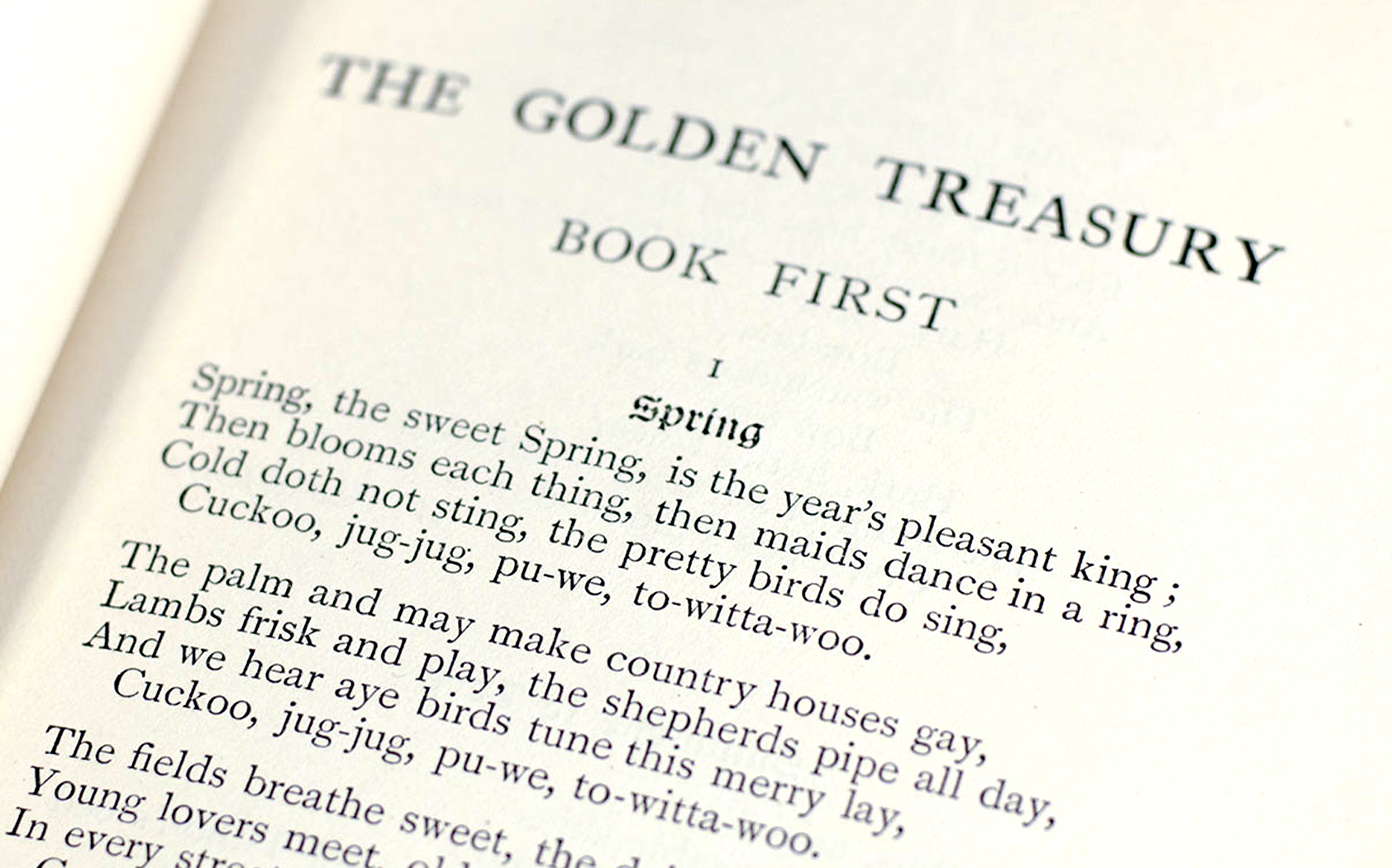
In 1966, I heard Russian pianist Emil Gilels at the Brooklyn Academy of Music. He played, among other things, the Liszt B-minor sonata. It is the first of many concerts and recitals that made in imprint on my life. I was there with my high-school girlfriend, who later became a professional bassoonist (played with both Philip Glass and PDQ Bach). We went to dozens of concerts, mostly in New York, and in Carnegie Hall. 

Speaking of Peter Schickele, my girlfriend and I were at the first PDQ Bach concert in Carnegie Hall, and after that, I was practically a PDQ groupie and managed to get to one of his concerts annually for at least 25 years, either in New York or when he took his circus on the road. 

I also had the Museum of Modern Art to go to, and the Metropolitan, the Guggenheim, the Whitney, the Frick Collection, and what was then the Huntington Hartford Gallery of Modern Art on Columbus Circle. 

The permanent collections in all these institutions became my dear friends. But there were changing exhibitions, too. The first serious art show I went to that altered the course of my life was also in 1966, at MoMA.   

It was a curated show, intended to make a case. It wasn’t just a collection of paintings, but a curatorial argument, intended to persuade and make us think of something in a new way. It attempted to prove that English painter Joseph Mallord William Turner was a precursor to the French Impressionists and Modernism, that his soft-focus paintings and, especially, his washy watercolor sketches, were somehow a step forward in the history of art, and led to the breakthrough we all know and love with Monet, Renoir and Pissarro. (It was an age that still believed in art history as a grand and natural procession from then to us, the enlightened). 

It was called “Turner: Imagination and Reality” and ran from March through May of that year. It made the claim that “During the last 20 years of his life, Turner developed a style of extraordinary originality. He evolved a new order of art, which was virtually unparalleled until the 20th century.” According to the curators, Turner was a harbinger of American Abstract Expressionists. Several of the images on view were so inchoate as to be purely abstract, like his Pink Sky, which might well be an early experiment by Mark Rothko, nothing more than strata of color spilled across the paper. 

In the catalog to the show, art historian and curator Lawrence Gowing wrote, “These pictures from the last 20 years of Turner’s life, reveal potentialities in painting that did not reappear until our time. They tell us something about the inner nature of a whole pictorial tradition, of which recent American painting is an integral part. Turner not only saw the world as light and color; he isolated an intrinsic quality of painting and revealed that it could be self-sufficient, an independent imaginative function.”

I was transfixed and went back to the exhibit a second time, convinced I was privy to a secret about art that few others knew; only those who had seen this show really understood what a revolutionary Turner had been. Please remember, again, I was a teenager at the time. 

In tandem with the Turner show was a smaller exhibit of Robert Rauschenberg’s “Illustrations for Dante’s Inferno,” a set of 34 drawings and ink transfers, one drawing per canto in Dante’s poem. It is difficult to recover the sense of elation and immersion a teenager in love with art could feel in the presence of something so new and so exciting. 

When I did get to leave New Jersey and go to Guilford College in Greensboro, N.C., I was in a candy shop: I signed up for Greek, Shakespeare, esthetics, astronomy — I wanted it all. 

There was also a film series, carefully programmed to expose us to the best in cinema. We saw La Strada, Seven Samurai, Seventh Seal, Jules and Jim, Last Year at Marienbad, Hiroshima, Mon Amour, Andalusian Dog, and even Birth of a Nation, although the student projectionist ran it without the sound on, calculating that it was a “silent film,” and not considering their was a musical soundtrack to accompany it. The racism was hard to swallow, but it was even worse — with no music, it seemed to last forever. 

With my new college girlfriend, we went to the downtown theater to see Antonioni’s Blow Up. That sense of being on the edge of art made being young  

All those films, added on to the reading material, and the concerts we had in the college auditorium, felt like what I had waited my whole life to gain access to. I fell in love with Chaucer; I read tons of Shelley — even stuff no one but a doctoral candidate bothers with. There was Classical literature in translation. There were three semesters of Comparative Arts. I minored in music composition (although, our stodgy professor der musik, Carl Baumbach, really only taught us figured bass and to harmonize chorales — and avoid parallel fifths. He could barely get himself to listen to anything as modern as Debussy.) 

I was a well, down which you could toss everything and never fill it up.

After graduation, I continued with it all, without the need to worry about grades or term papers. Every summer, there was the Eastern Music Festival, for which I acted as unofficial photographer. I sat in on master classes, went to concerts. A few were so memorable, I still keep them in my psychic storehouse: Walter Trampler giving a master class; Miklos Szenthelyi playing the Bartok First Violin Concerto — which seemed at the time the most beautiful thing I had ever heard. Szenthelyi was a young Hungarian, virtually the same age as me, and his posture on stage was almost Prussian, his tone penetrating and perfect. (I still own several of his recordings. He is now a white-haired Old Master in Budapest. A half century has intervened.)

I also first heard Yo-Yo Ma. He must still have been a teenager. He performed both Haydn cello concertos in High Point, N.C., one before intermission and one just after. Yo-Yo has been as much a constant in my life as Peter Schickele. What a pair.

I also photographed the Greensboro Civic Ballet. I wish I had paid more attention to the dance in the 1970s, but my plate was otherwise full. Many years later, I came to love dance more than any other artform. (After my late wife and I traveled to Alaska, she asked if I might want to live there. Without trying to be funny, I said reflexively, “No. Not enough dance.” It was the natural answer.)

There have been hundreds of concerts and recitals, scores of theater and dance performances, bookshelves still filled with thousands of books and CDs, and more museum and gallery shows than I can count. 

I want to write about a few of them next time.