Archive

Tag Archives: politics

Garden

There is a line in Andrew Marvell’s “The Garden” that should be a starting point: “The mind, that ocean where each kind/ Does straight its own resemblance find.”

These are two primary foci for our existence: There is the world and there is our mind working on the world. Mind and world, the face and the mirror. The central problem is that the world is incomprehensible, multifarious, immense and unimaginably complicated, self-entwined and raw, while our minds, however brilliant, are puny organizers and pattern-finders. What we believe of the world is what we have been able to make of it, and we are simply not humble enough to recognize the insufficiency.

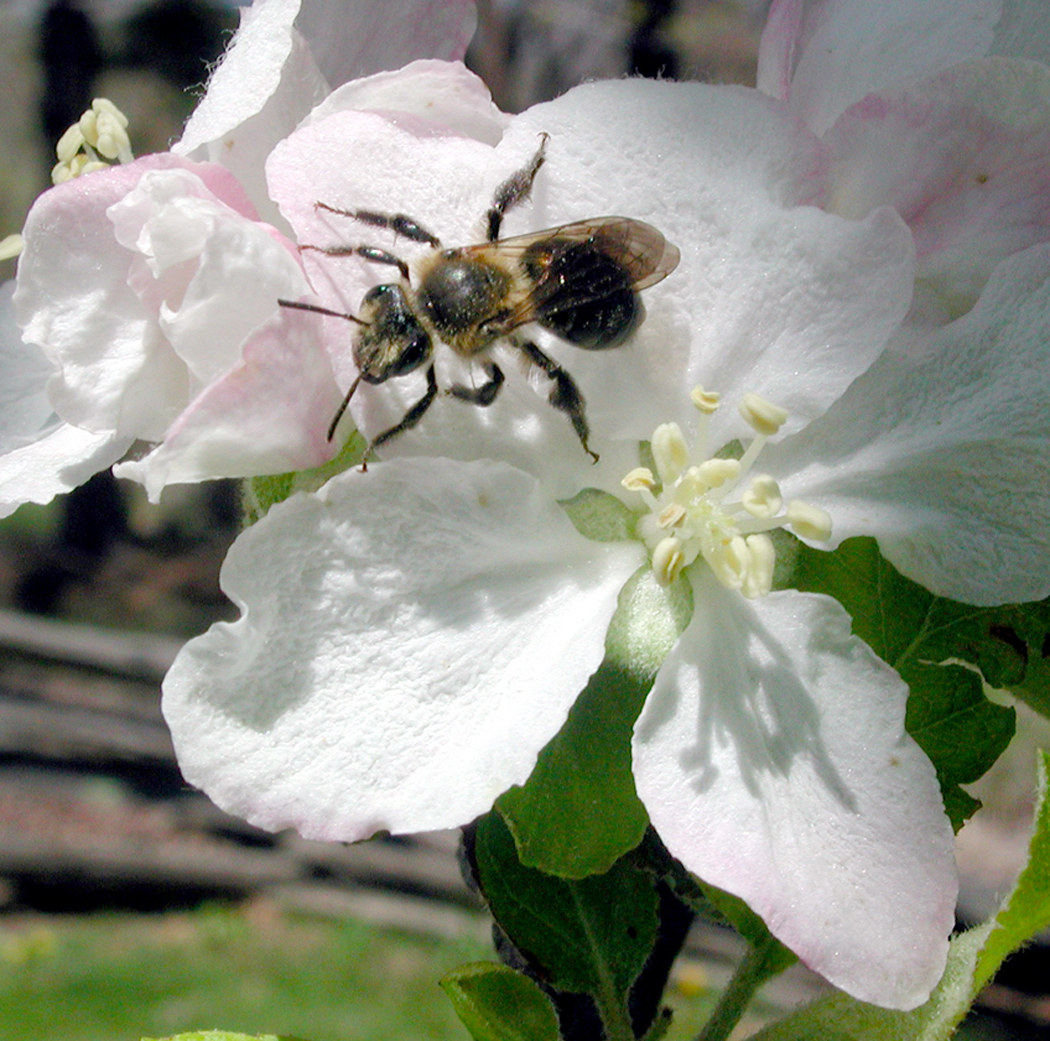
bee blossomTake something as basic as sight. We look upon the world and take what we see as something “real,” something actually “out there.” Yet, we know that visible light is such a tiny sliver of the electromagnetic spectrum, that our human vision is essentially nothing more than the chink of Pyramus and Thisbe, the slat of a Venetian blind lifted to see a wedge of the  world outside the window. Other animals are sensitive to different parts of the spectrum, and for them, the world is a different world: The bee sees not the daisy that you or I see.

We know this because human ingenuity has given us instruments that can measure those portions of the wavelengths that we cannot apprehend directly, and proves their existence. But we cannot know them directly: We are too limited. For that matter, so are the instruments.

Also limited are the odors we can smell, the sounds we can hear, the tastes we can enjoy or revile, or, for that matter, the languages we can understand or the names we have for the emotions we feel. And yet, somehow we feel we can say we know the world.

I am constantly amazed at human arrogance in the face of the vast ignorance we daily confront. Perhaps it is unavoidable that we have faith in our senses and our minds, that we believe what we have learned of the world is the way the world in actuality, is. It takes an act of imagination to escape our shortsightedness.

And it is not only the world beyond our skins that escapes us: The conscious mind — that part of ourselves we generally consider to be “us” — is such a small part of what our brains do for us. We are not consciously aware of our guts squeezing the chyme along our bowel, not aware of our capillaries constricting, our irises expanding, our hearts beating faster or slower, depending on the unconscious monitoring of our inner bodily needs. Consider yourself at this very second, sitting or standing. Are you fingers curled? Are you tapping them? Is your head tilted slightly? Are you yawning? Have you sneezed? Did you “decide” to do any of those things? Your body seems to work quite autonomously, and your administration has delegated authority to its constituent parts to act on their own. Let’s face it, you would die if you had to will each heartbeat, each breath, each eye blink: Keeping track of it all would be impossible.

And yet, we have faith in that little voice in our heads that seems to be in charge: It blithely makes assumptions that cannot be justified.

This is not to toss out the little voice: We could not operate in the world if we did not simplify it to our purpose; we would be overwhelmed. We make schemas and function within those schemas quite happily, but are seldom aware of their artificiality.

tres riches heuresA good deal of trouble is caused by our unawareness. In politics, for instance, one side believes in pure capitalism, the other in socialism, but each view is only a schema, and takes not into account the great variability of human want, need, ability, and the inevitability of change, both historical and social. Remember feudalism? Monarchy and aristocracy? These were earlier schema, and sustained over centuries, even millennia. One thing might work better at some point, while its opposite might be more functional at another, neither perfectly, while all are always mere band-aids. No human reality can be encompassed by an ideology. They are all simplifications to the point of absurdity.

take outRepublicans who now believe things diametrically opposed to what they had once believed, think that if they can finally pass the laws they want, everything will work like a well-oiled machine from thence onward. Conservatives, who once championed strong central power, now believe the least government is best. (In reality, they believe in whatever will best preserve their own hegemony and wealth and if that changes, so will their ideal of proper government). But in practice, nothing is ideal, nothing is unchanging and perfect: Politics is always ad hoc. It doesn’t fit into cardboard pint containers like so much chop suey.

Religions, political ideologies, psychologies, even science are all such partial schemata and none can be said to encompass all of existence. It isn’t that we should trash all of them, but rather that we should recognize their agendas. And beyond that we should embrace, enjoy and revel in all that is not contained therein. The universe is vast, it contains multitudes. It is this plenitude and fecundity that ultimately sustains us. No system is enough.

Largest ever galaxy portrait - stunning HD image of Pinwheel GalWhat wakes us to the complexity is experience: travel, reading, learning other languages, meeting other people (as a “thou” not an “it”), education, and most of all, the exercise and strengthening of imagination, which all the previous foster. Openness to the world rather than stricture according to ideology or schema. Pulling our turtle heads into the shells of our small perceptions is nothing but retreat.

And whenever possible — and this is the biggest lesson I have swallowed in 68 years on this round, bubbly planet — to love the things of this world. All of it, helter-skelter, unapologetic and enthusiastic, chaotic, overwhelming, incomprehensible and glorious. And recognize our smallness, our ignorance, in the face of it.

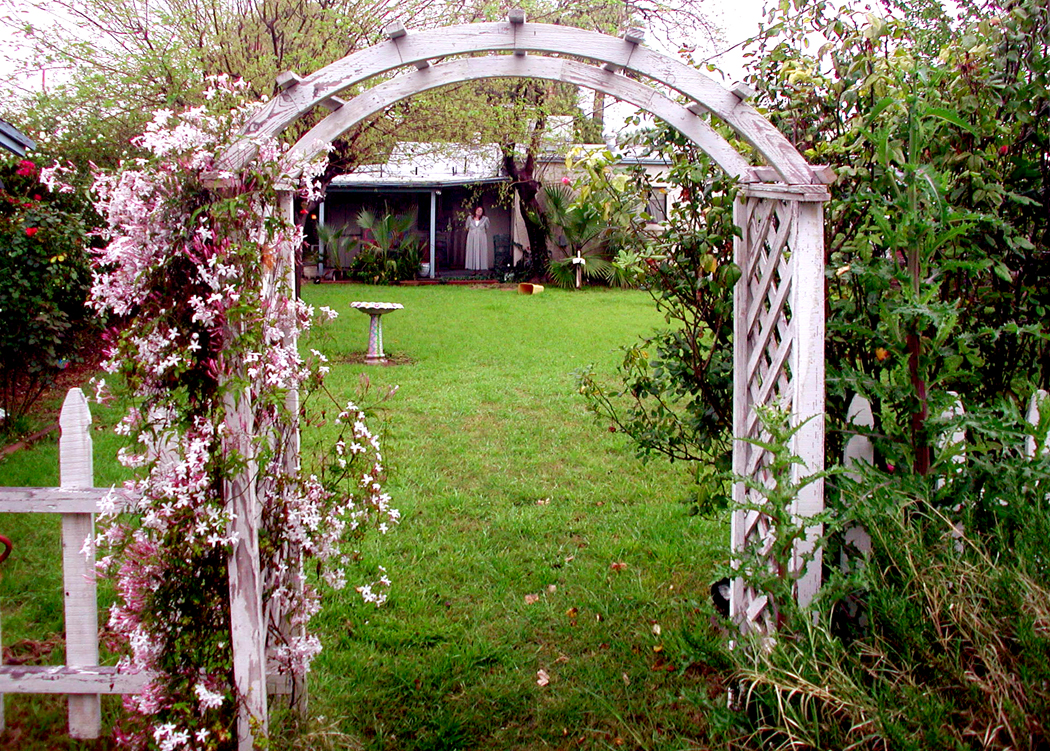
weeds lede photoI love gardens. My three most recent gallery shows have been of photographs taken in gardens. I photograph the gardens of most of my friends to make “books,” or series of images. Flowers are about growth, change, diversity, fecundity — and beauty. choke cherry 2

Yet, there is something in what I love about growing plants that is found in even more condensed form in the rankness of weeds. Gardens are wonderful, but weeds satisfy something philosophical deep in my soul. My own gardens have always been unkempt, and I tend not to weed out those plants that others fear will suffocate their more prized plantings. Weeds have a strength, if not a refinement, that I find almost heartbreaking. Right now, beside the roses and gladiolas that my wife planted, there is a great purple stalk of pokeweed, its berries still green against the fuschia of its stems. I prize it above the more formal and familiar plantings. weeds 09

Nothing lifts my heart up more than a clump of goldenrod beside the road, a spray of chickory, the tall swaying stalks of Joe Pye weed. It doesn’t even take the flowers: Even before they bloom, I like the sprawling weediness of their greens. chickory

And now is weed season. Yes, they grow year round, but the end of summer and the incipient autumn are when the weeds glory. Driving down the country roads of the Blue Ridge, you pass oceans of them, all colors and sizes, all rank and fertile.

I’m calling them weeds because their other name — wildflowers — makes them sound too pretty, and makes them sound like something you look up in a Peterson guide. Not all of the weeds I respond to even have the color dots you would call flowers. Sometimes their flowers are tiny and unnoticed; sometimes they stink instead of filling the nostrils with perfumes. grass in driveway

It isn’t just their appearance that moves me, although I revel in their varied shapes and forms, their repetitions of leaflets and their snaky tendrils; it is the very idea of weeds — the sense that life will force its way into the least cracks of concrete, will fill any emptiness and break through any barrier. I love to see some abandoned factory with vines covering its brick facade, and through its windows you may see ailanthus cracking up the interior floors. Others may rue the kudzu spreading over the trees, but I love the new forms we have, almost as if the trees were pulling sheets over their heads to play ghost. weeds 08

My love came early: When I was a boy, there was an empty farm field next to our house in northern New Jersey. In a few years, plant succession had covered it with stickers and grasses, later, saplings, and even before I moved away to college, there was such a dense thicket of young trees, it looked like a magnified view of the hairs on the back of a dog; you could hardly walk through the density. I have gone back to see the forest that it became; it has since been cleared and now someone is building tract housing there. Sometime in the future, it will be taken back by the vegetative maw that eventually devours everything. weeds 07

Some of my favorite places in a city are those that are forgotten, mostly, places that simply don’t have a use, being either too small, or not geometric enough to easily create deeds of title — spaces between properties left ambiguous of ownership, or little triangles next to on-ramps or beside old railroad sidings.composite Here the intention of humankind plays no part and weeds are left to themselves. There you find the yarrow and the cow itch, the Duchesnia indica and the knotweed. There what you find, and which I find so precious, is profusion. When humans become involved, you too often find monoculture, organization, rows and aisles, sameness, monotony and worse — usefulness.

The problem with usefulness is that it causes us to value something for how it might benefit us, turning it into a single descriptor, a one-dimensional entity, rather than a rich, multiple, various thing. An it rather than a thou. It ceases to be a part of the physical world and becomes instead a word — a concept instead of a living thing. Fie!weeds 04

There are things that are pretty — and some weeds count, too — but what I find beautiful, a concept so much larger than prettiness, as the universe is larger than the solar system, is profusion, fertility, irrepressibility — life.

Variety is not so much the spice of life, as life itself. Nature tries everything. It has no plan, motive or goal; it simply keeps putting stuff out there, like Blake’s mythical creative deity, Los.

“Exuberance is beauty.”weeds 10

This carries over into other areas of life. I enjoy all art, but I love the confusions of the Baroque, the exudations of the Romantic 19th century. If you compare Racine or Dryden with Shakespeare, you see the difference. Those 18th century unities are boring, while the uncontrolled profusion of metaphors in the Bard, and his shaggy plots and contradictory personae are the very stuff of life. The one rich and luscious, the other dry and didactic.

Victorian literature shares that didacticism, but even among the tidy moral lessons of Whittier and Longfellow, you have the weedy, rank profusion of language and thought and feeling that is Walt Whitman. How those of propriety hated the Good Gray Poet. Certainly, lots of Whitman is awful, repetitive and oracular, but then there is “Out of the Cradle Endlessly Rocking.” Emily Dickinson wrote some of the worst gobbledy-gook every published, but among her profusion of cryptic word-knots,  fruited with a million hyphens or dashes — certainly one of my favorite punctuations — there are such perfections that you are grateful for the weeds that give us such bounty. weeds 03

Simplicity is the enemy of life. When I hear a politician propound a dogmatic solution to an intractable problem, I sigh. When anyone has a simple answer, applied liberally (or conservatively), I know he is either a charlatan or a dunce. Probably both.

Such politics posits a final stasis, when all problems are solved by the simple prescription of an unchanging mantra: reduce taxes, reduce regulation, shrink government and Eden will be rebuilt. The political left is just as guilty, although we hear about it rather less. Communism equally anticipated an “end of history.” Problem solved.

Both sides fail to recognize that politics is ever shifting and cannot be otherwise. Interests contend, compromises are reached, grow out of date and so new compromises are found, no more permanent than the last. It is all weeds. We should value those weeds.

worth livingWhat is politics and why do so many people think that it matters?

After all, if I make a list of things that make life worth living, politics is not on it.

It can be a very long list, with love, marriage, music, literature on it. It could include winter, red maples, crisp apples and oak floors. Neon signs. Travel. Work, and the sense that you are creating something worthwhile.

Louis Armstrong playing “Potato Head Blues.”

Even beer, Letterman and The New York Times crossword puzzle. I could make a list of a hundred items, even 200, but politics doesn’t even make the cut.

That is because politics is a means to an end and not an end itself.

But tell that to Ted Cruz on one hand, or on the other, any committed member of the Communist Workers Party.

These are people who do to politics what the miser does to money.

After all, money has no value whatsoever. It is paper, metal and plastic. You can’t eat money, you can’t wear it, you can’t sleep in it. I suppose if you taped enough bills together, you could wrap fish.

Money is only worthwhile because it can be traded to gullible people for some things that are worth having, like food, clothing, shelter or cable TV.

But all around the world, there are people who would rather have money. And there are people who are committed to politics as if it mattered.

But really, politics answers no question worth asking.

‘Platypus’ law

By “politics” I mean two different things. On one hand, there is the practical side, which is the interrelationship of people and the friction of their conflicting desires. It is a constantly shifting game board of power, image, manipulation, blackmail and compromise.

Politics on this level is the jostle of competing self-interests. It is why legislation that enters committee looking like a lion always leaves looking like a platypus.

Politicians would have us believe that they work for the public good, but the reality is much messier, the results of their professed altruism much more equivocal.

For the politicians themselves, it is power, money, the fun of trading favors, gaining approval, trouncing opponents that may make life worth living. The politics involved is again only a means to that end.

The other version of politics is much more scary. Practical politics may be sloppy as mud-wrestling, but it is frequently benign. Fanatically held ideas, on the other hand, can be positively malignant.

These are the people who ruined Russia in 1917 and are ruining the Republican Party now. Idealogues are what fueled the Chinese cultural revolution under Mao, what ignited the McCarthy era, what reduced Pol Pot’s Cambodia to human cinders and what threw gasoline on the book piles in Hitler’s Germany.

Ideology always has a human cost. In my 67 years on this planet, the one thing I have come to be certain of: Certainty is the very devil.

Answers aren’t solution

What unites both camps is their interest in answers rather than questions. Questions muddy the waters and make action more difficult. It is much easier to do something when you are convinced you are right.

The irony is that answers always create more problems than they solve.

The interstate highway system was a wonderful transportation solution that contributed to the dissolution of small-town America and the attendant family structure. Civil-rights laws addressed a very real evil — discrimination on the basis of race, gender, national origin — and have left us with regulations that require us to discriminate on the basis of race, gender and national origin.

So we enter the fray once more and come up with new legislation to fix the mess we made last time. It’s like cutting the grass: There is no end to it.

Meanwhile, we live our lives despite politics. It is true some political systems allow us more freedom to do as we wish, some are more just and equitable, some are more benign. But, in the end, it is how we comport ourselves as individuals that counts, not how we vote en masse.

And it is the things of the inner life that make the top of our list and provide a satisfying reason to live and grow. You must look deeper than the politics to find the humanity.

Romeo and Juliet in frame
“All great love ends in death,” Stuart said.

“Maybe in literature, but not in real life,” I said.

“Yes. All love ends in death. On one hand, sometimes it’s love that dies and then you are stuck. But even if love doesn’t die, the lovers do.”

“You mean like Romeo and Juliet?” I asked.

“Yes, like Romeo and Juliet. Like Tristan and Isolde.”

“But can’t love end happily?” I put forward that possibility; I’ve been married 30 years.

“Yes, but even the most successful love ends in death,” Stuart said. “Either for one or the other and eventually, both. They may be 80 years old, but eventually, love ends in death.”

“Oh. I see what you mean. It’s a trick. Like a trick question.”

“No, it’s not a trick, except that it is a trick the universe plays on all of us. I don’t mean it as a trick.

“Romeo didn’t have to die the way he did,” Stuart went on, “but he had to die eventually. Even if they got married and lived long lives, he would have to die some time, and then, Juliet loses him anyway.”

It is the underlying metaphor of all tragic love stories, he thought. His own, for instance. Stuart had never seen a great gulf between literature and his own life. Others, well, they may be banal and ordinary, but his own life had all the electricity of a great book or epic myth.

The one thing that separated Stuart most from the accountants and dentists of the world was that he recognized in himself the hero of his own life — the sense that he was the main character in a story of infinite significance. When something happened to Stuart, it happened to the universe.

The joke was, of course, that this is true. But there was a stinger, too: Although it was true, the universe is so vast that no matter how big it was to Stuart, it added up to zilch in the big picture.

“That is truly depressing,” I made a sour face.

“But that is not the real issue,” Stuart said. “The real issue is the frame.”

“The frame?”

“Yes. This is something I’ve been wondering about for a while. Every comedy ends in a marriage, it is said. The curtain drops and the audience goes home enjoying the happy ending.

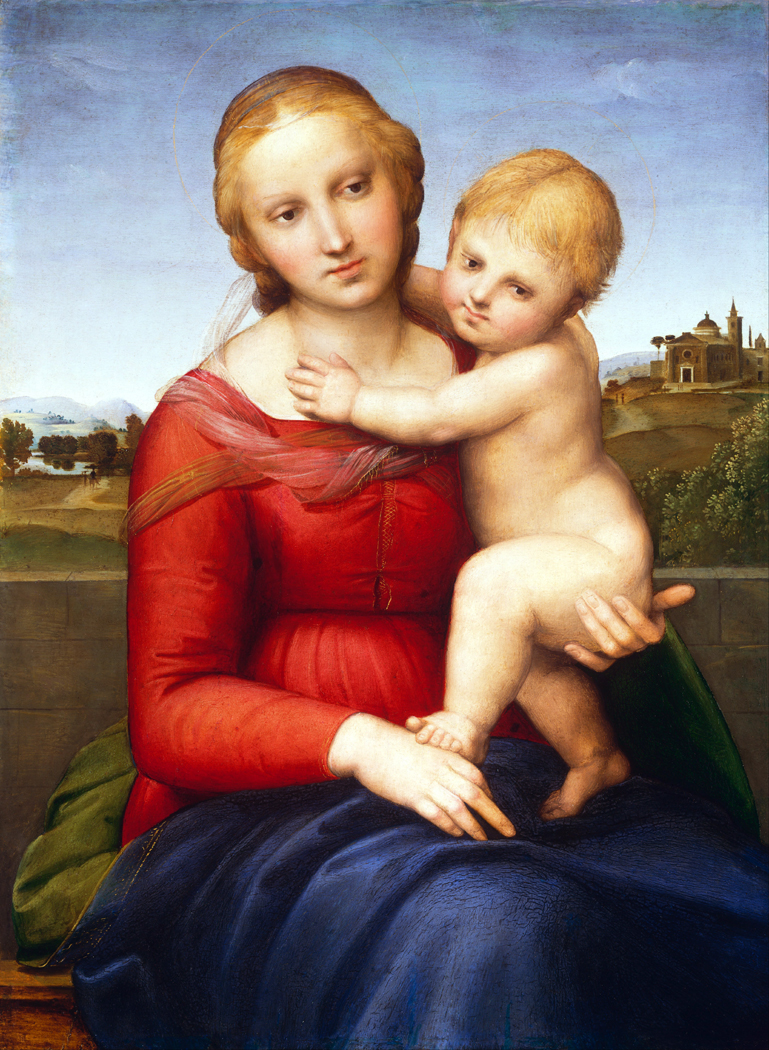
“But, if we followed Beatrice and Benedick after the end of the play, in a few years, at least, there would be divorce — or more likely, murder. Happy endings are always provisional. So, there is an artificiality to comedies that is ineradicable. The happiest comedy, if drawn out to the uttermost, ends in dissolution.”Raphael

“So, you’re saying that the frame — the curtain — reveals any art as an artifice.”

“Yes. And not just in theater. Take the photographs of Garry Winogrand. We are meant to see the frame — the edge of the photograph — as an arbitrary border drawn around some episode, but beyond the frame, there are other people doing other things. This has become something of a trope in photography.

“It used to be that we understood the frame in a painting — say a Renaissance crucifixion, or a Madonna — as merely the point at which our interest in the visual matter evaporates. It is the Christ or Virgin that sits in the middle that is meant as an object of contemplation. A frame could be larger or smaller and still contain the essential action.Tintoretto, La crocifissione, Sala dell'albergo, Scuola di San R

“In Baroque painting, there is often the growing sense that the frame cannot contain the action, but that there is something worth knowing just beyond the edge. That sense has become central in certain strains of contemporary photography. winograndA photograph may contain an image of someone looking back at the camera, over the photographer’s shoulder, at something behind him that we can never see.

“The first kind of frame serves as a kind of fence, or corral in which the important information is contained. The second is more like a cookie cutter, which sticks into the welter of existence and excises this small bit for us to consider.

“That is the frame, the ‘beginning, middle and end’ that gives us such satisfaction in a play or opera.”

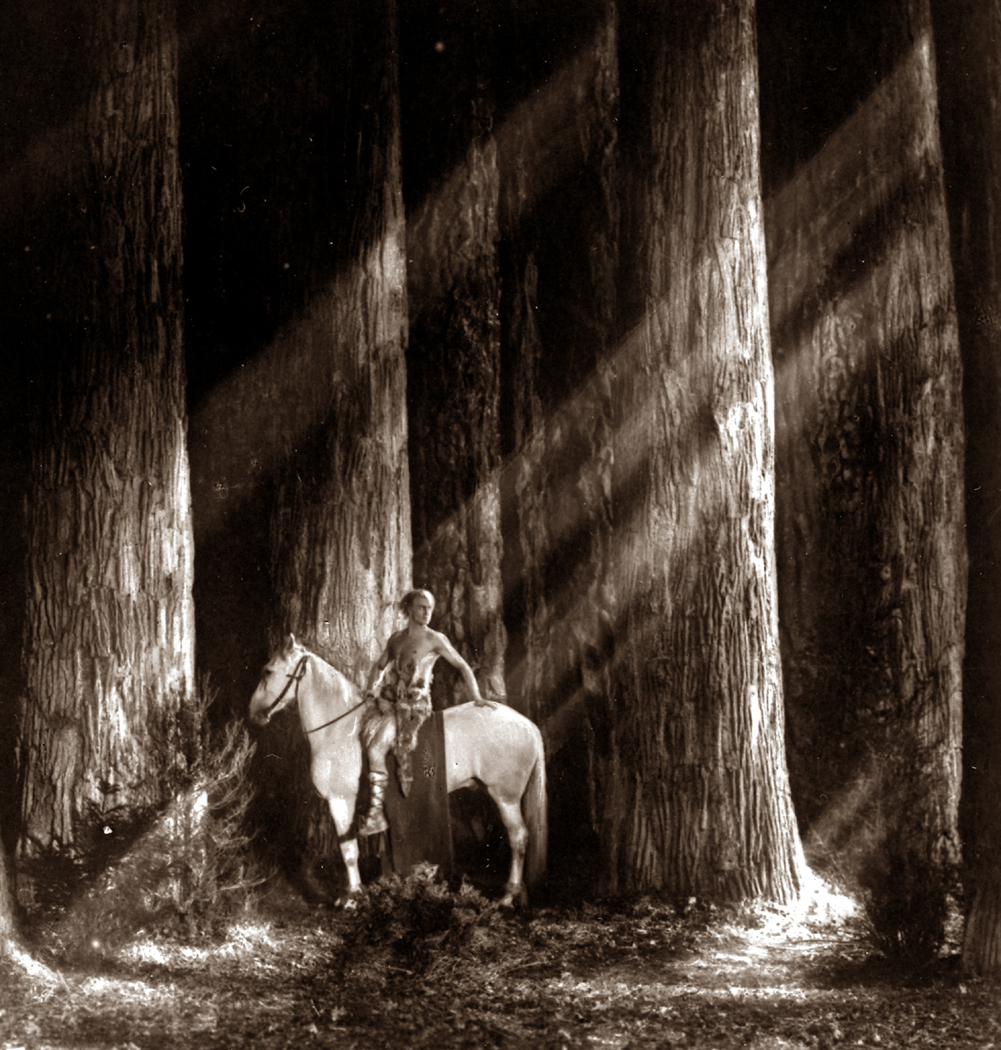
My concern at this point is that I could see that Stuart was unwinding his own life from the bobbin, and holding it out in his fingers to examine, and what he was finding was deflating. What set Stuart apart from most people was about to be undone. siegfried

I had known Stuart since college, and what made him glow from the inside was not just his energy — or jittery intelligence — but his sense that he was the star in his own movie. Or rather, that he saw in himself a larger, mythological version of himself playing out among the chess pieces of the universe. He was Siegfried voyaging down the Rhine; he was Odysseus; he was stout Cortez.

Don’t misunderstand, please. He was never grandiose — in his exterior behavior, he was as normal as you or me. But inside, was something larger, bursting to get out. He saw the world swirling the way Van Gogh did. For Stuart, every bush was the burning bush. Take away that internal furnace, and what would be left of Stuart? He would have grown up. Not something that any of us who knew him would wish for.van gogh

“This is the fundamental fallacy of American conservatism,” he went on, making another 90-degree turn.

“They seek to enforce a static vision of society, of law, of human behavior. They keep telling us, that if only we would do things their way, everything would finally be peach-hunky, into eternity — the happy ending that we know (and they don’t admit) is always provisional. They see a — excuse me for the exaggeration — ‘final solution’ for something that has no finality to it.

“Politics — real politics — is always the flux of contending interests. You want this, I want that, and we wind up compromising. Conservatives see compromise as surrender, precisely because they see politics with a frame. Get the picture right, and then it is done. Deficits are erased; the wealthy get to keep what is rightfully theirs; order is established. It is the underlying metaphor of all Shakespeare’s plays: The establishment of lasting, legitimate order, final harmony. stew

“Only, we know that after Fortinbras takes over, there will be insurgencies, dynastic plots, other invasions, a claim by mainland Danes over island-dwelling Danes, or questions of where tax money is going. It is never ending. Fortinbras is only a temporary way-station.

“Existence is a seething, roiling cauldron and sometimes this bit of onion and carrot comes to the surface, and sometimes it is something else. It is never finished, there is no frame, no beginning, middle and end.”

“So, where does this leave poor Juliet?”

“Juliet?”

“Yes, where does this leave us all, we who are all bits of carrot. We who are married for 30 years, we who entered the field of contention, worked for our required decades and left the battlefield to become Nestors — or Poloniuses. All this washes over us and we see that, in fact, we have a frame. Existence may not have one, but I do. I am getting old. 67th birthdayI just turned 67 and I feel it. And I know that my Juliet will die, or I will go before her. We do have, in fact, a frame, a curtain that draws down and leaves us — as Homer says — in darkness.”

“Exactly,” Stuart said, “and this is my point. Every one of us lives two very different lives. You can call them the external and internal lives. The first is the life in which we share the planet with 7 billion others. We are a tiny, insignificant cog in the giant machine. The second is the mythic life, the life we see ourselves as central to, in which we are the heroes of our own novels or movies, and everyone we know is a supporting actor. If we live only in the first life, we are crushed and spit out. But if we live only in the second life, we are solipsists. Sane people manage to balance the two lives. A beautiful counterpoint.

“We are most engulfed by that second life when we fall in love. We are certain that we invented this condition. No one else has ever felt what we feel. It’s comic, of course, but it is also profound. Without this feeling, life is unbearable. We have to have meaning, and meaning is created by how we imagine ourselves.

“Politics hovers oddly in the intersection of these two worlds. We need to sober up and consider the other 7 billion people if we are to create useful policy, but we mythologize those who lead us, and those who lead do so most effectively when they mirror back some version of mythology. The most extreme example I can think of is Nazism in Germany. A whole nation bought into the fantasy. Disaster follows.

“But all ideology is ultimately built on mythology: on a version of the world with one or two simple dimensions, when existence is multi-dimensional. The political myth is always a myth of Utopia, whether right-wing or left-wing. And it is always a static myth: Racism ends and everything is great, or government spending is curtailed and everything is great. That simply isn’t the way existence is.”

“The world is always bigger and more varied than our understanding of it, and it will always come back to whack us upside the haid.”

“Right. The conservative sees the world only with his ego eyes, not from outside himself. That frame — his death — is something he cannot see beyond. There is something egoistic about conservatism. Often selfish, also, but the selfishness isn’t the problem, it is the egoism — the frame they put around the world, the static sense of what is finally right — the so-called end of history. In this, the conservative — or at least the tin-foil-hat variety — is no different from the dyed-in-the-wool Communist. Both see the establishment of their Utopia as the endgame of human existence.” hubert robert

“You’ve been reading Ovid again.”

“How did you know?”

“The Pythagoras chapter.”

“Right again. Panta Horein, as Heraclitus said: ‘Everything is flowing.’ As Ovid has it, even landscapes change over time, and Hercules’ brawn withers and Helen’s breasts sag. Cities grow and are demolished; Mycenae gives way to Athens, to Alexandria, to Rome, to Byzantium and Baghdad, then to London and now to Washington, with Beijing waiting in the hopper. ‘Mais ou sont les neiges d’antan?’ “

“How’s that?”

In saecula saeculorum: World without frame.”


Dore chaos
My friend Stuart sent me a letter:

You can learn a great deal from a springer spaniel. For instance:

Total order and total chaos are the same thing. Identical. Not a dime’s worth of difference. And neither is very helpful.

Think of it in terms of the Linnean metaphor. I’ll get to the spaniel in a moment.

At one end of the spectrum is chaos, a totality that is unordered, a cosmic goo. This is not the current chaos of the eponymous theory, which is merely a complexity beyond calculation, but rather the mythic chaos out of which the gods either create the cosmos, or arrive unannounced from it like Aphrodite from the sea. It has no edges, no smell, no shape, no parts, no color, no anything. Inchoate muddle. john martin chaos

So, in the beginning was the word: Or rather, our ability to organize this chaos through language. The universe exists without form and void. Then we begin the naming of parts to help us understand the welter.

And so, god created the heaven and earth, dividing the parts. And this division of parts is in essence what the Creation is all about. Ouroboros

Of course, the incessant need to divide and name is only a metaphor, but it will help us understand the conundrum of order in the universe, and how the ouroboros of Creation begins and ends at the same place, no matter which direction we go in: The law of entropy and the law of increasing order both have the same final destination.

When we look at the world around us, we immediately split what we see into two camps: That which is living and that which isn’t. It helps us understand the world we live in and we make many of our biggest decisions on this basis: Ethics, for instance. We have no problem splitting a rock in half with a hammer, but would feel rather evil doing the same to a dog.

But the living things fall into two large camps, also: Animal and vegetable (again, I’m simplifying. I haven’t forgotten the bacteria, but we can ignore them for the sake of the metaphor).

Some of us have a problem eating animals but not eating vegetables. So, again, our ethical world depends on how we sort out the chaos.

Let’s take the animals and subdivide them, the way Carl von Linne did, into classes, orders, families, phyla, genera and species.

Each level makes our divisions less inclusive, more discriminatory.

Let’s take the dog, for instance. It is classified as a chordate, which means it has a central nervous system stretched out into a spinal chord. This is different from, say, a starfish or a nematode. But there are many chordates, so, if we want to differentiate a dog from a shark, we have to look to its class. It is a mammal. That makes it distinct from birds and fish.

But there are lots of mammals, too. Some of them eat other animals; we call them carnivores. A dog is a carnivore.

Notice how each level of nomenclature narrows our definition down to a smaller and smaller group of initiates. When we had only living and non-living, there were only two groups; with each level, we add dozens, hundreds and then thousands of other groups disincluded in our catalog.

The order carnivora is one of many orders in the class of mammalia, which is one of many in the phylum chordata, which in turn is one of many in the kingdom animalia.

The order separates our subject, but lets us see in relief that it is just one constellation in the heavens populated by many other constellations.

The same poor pup is in the family canidae, which includes all the dog-like animals, from fox to coyote to jackal. Among them, it is in the genus Canis, and species lupus, which makes it brother with the wolf.

But our wolf is a friendly one, as long as you aren’t the postman. So, now we call it Canis lupus familiaris, or the family dog. And our particularization of the beast means we are conversely aware of all of creation — each in its own genus and species — that makes up the non-dog, and each of them is like the billions and billions of stars that make up the many constellations in the night sky.

Yet, this isn’t far enough. For the dog I’m thinking of isn’t just a dog, but a spaniel, which is a type of dog which isn’t a poodle and isn’t a terrier. It is a dog with “a long silky coat and drooping ears.”
Sylvie

Each time we subclassify, we are adding to the order we impose on existence, and each classification adds to the proliferation of categories just as it reduces the members inside each class.

So, there are also different kinds of spaniels. The dog I’m thinking of is a springer spaniel, which come in two forms, with a brown-and-white coat and a black-and-white coat.

My brother’s dog is a brown-coated springer spaniel named Sylvie. She is getting old now, and her backside — very much like humans — is getting broader.

And now, by classifying things to the level of the individual, we have as many categories as there are things in the universe, which is effectively the same as nothing being categorized: It is all primordial goo and might as well not be cataloged: Total order and total chaos are the same thing. QED.

Victrola

From the “Preamble” to James Agee’s Let Us Now Praise Famous Men (1941).

Above all else: in God’s name don’t think of it as Art.

Every fury on earth has been absorbed in time, as art, or as religion, or as authority in one form or another. The deadliest blow the enemy of the human soul can strike is to do fury honor. Swift, Blake, Beethoven, Christ, Joyce, Kafka, name me a one who has not been thus castrated. Official acceptance is the one unmistakable symptom that salvation is beaten again, and is the one surest sign of fatal misunderstanding, and is the kiss of Judas.

Really it should be possible to hope that this be recognized as so, and as a mortal and inevitably recurrent danger. It is scientific fact. It is disease. It is avoidable. Let a start be made. And then exercise your perception of it on work that has more to tell you than mine has. See how respectable Beethoven is; and by what right any wall in museum, gallery or home presumes to wear a Cezanne; and by what idiocy Blake or work even of such intention as mine is ever published and sold. I will tell you a test. It is unfair. It is untrue. It stacks all the cards. It is out of line with what the composer intended. All so much the better.

Get a radio or a phonograph capable of the most extreme loudness possible, and sit down to listen to a performance of Beethoven’s Seventh Symphony, or of Schubert’s C-Major Symphony. But I don’t mean just sit down and listen. I mean this: Turn it on as loud as you can get it. Then get down on the floor and jam your ear as close into the loudspeaker as you can get it and stay there, breathing as lightly as possible, and not moving, and neither eating nor smoking nor drinking. Concentrate everything you can into your hearing and into your body. You won’t hear it nicely. If it hurts you, be glad of it. As near as you will ever get, you are inside the music; not only inside it, you are it; your body is no longer your shape and substance, it is the shape and substance of the music. 

Is what you hear pretty? or beautiful? or legal? or acceptable in polite or any other society? It is beyond any calculation savage and dangerous and murderous to all equilibrium in human life as human life is; and nothing can equal the rape it does on all that death; nothing except anything, anything in existence or dream, perceived anywhere remotely toward its true dimension.

Signing_of_Declaration_of_Independence_by_Armand-Dumaresq,_c1873

Perhaps the most peculiar thing about the Declaration of Independence is that the portion of it that seemed commonplace when it was written now seems revolutionary, and the part that seemed to its framers as most central, to us seems trivial, even whiny.

As a piece of rhetoric, it begins in generalities, narrows to specifics, and ends in a course of action. It couldn’t be more concisely structured. The committee charged with drafting it in the summer of 1776 chose wisely when it asked Thomas Jefferson to write the first version. Jefferson’s prose is a model of late 18th-century style: precise, lucid and syllogistic.

But the only part of the Declaration that most people can recall, outside the opening, “When in the course of human events,” is the second paragraph. That second stanza contains the seed of every revolution that followed, from the bloody French to the bloody Russian. It is a statement of belief that is the foundation of American society, and almost every government created since 1776.

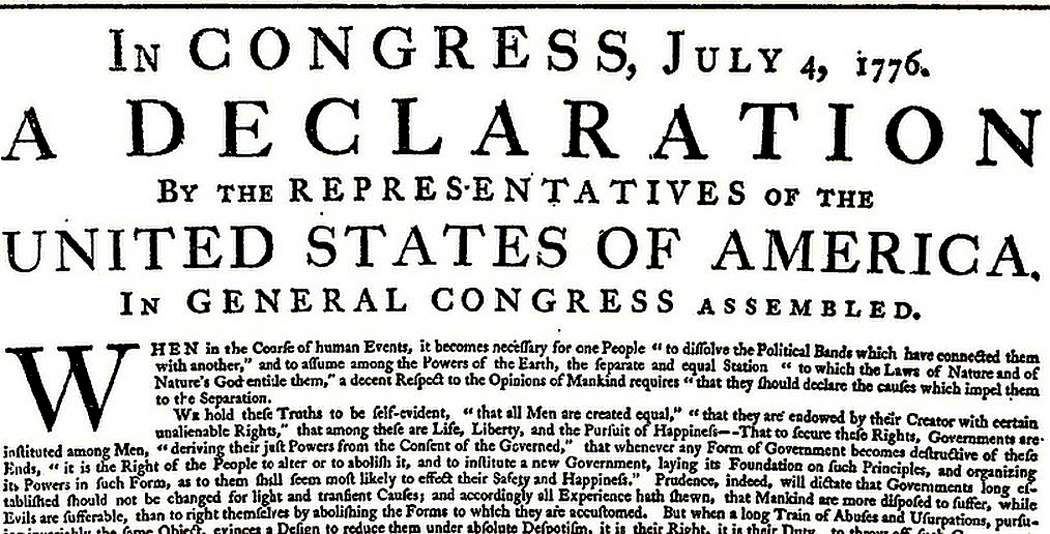
US-original-Declaration-topIt states baldly and without argument or support, that all men are born equal, have certain rights by virtue solely of being born, and that when a government fails egregiously to effect the safety and happiness of the people, it is their right to replace it.

But Jefferson didn’t invent its ideas whole cloth. In fact, as Jefferson wrote years later, the purpose of his stirring words was “not to find out new principles, or new arguments, never before thought of, but to place before mankind the common sense of the subject, in terms so plain and firm as to command their assent, and to justify ourselves in the independent stand we are compelled to take.”

Much of the remainder of the Declaration is given over to a litany of complaints the colonies had about British governance. Some of these complaints still seem legitimate; many seem trivial, even trumped up. “The King did this” and “The King did that.” ”

He has plundered our seas, ravaged our coasts, burnt our towns and destroyed the lives of our people,” it says. Pure hyperbole.

These complaints were the part of the Declaration that was “news” in 1776. They constituted what made the document inflammatory.

Few can read through the whole of the Declaration of Independence now without a sense of fatigue: Those complaints were the issues of 1776, not of today.

It is the second paragraph that seems told to all people at all times, and remains news to us in the 21st century.

Bridge between ages

But to follow those ideas from the century before the Declaration into the ink on its page shows just how important its year of birth was. It was born in the cusp between two great ages, two overriding sensibilities, and partakes of both.

The period from about 1750 to about 1825 is one of the richest in humankind’s history, fertile, even febrile. It is in many ways, the hinge between the past and the modern, between the classically minded 18th century and the Romantic 19th. From an age of Reason to one of Sentiment — as it was called at the time. In Europe, it was the age of Goethe and Rousseau.

And no figure in the American experiment better demonstrates that shift of sensibilities than Jefferson.

On one hand, he epitomized the faith in science and logic of the Enlightenment; on the other, he shared with the revolutionary Rousseau the belief in the nobility of humanity and its drive to social improvement.

You can hardly fail to notice this point when you visit Jefferson’s home in Virginia.

Monticello is a mirror of its maker. Jefferson built a model of Palladian proportion and filled it with moose antlers. The outside lines of the house are clean and mathematically rational. The inside is a warren of peculiar and unnerving spaces.

Jefferson never fully reconciled these two aspects of his personality. He was a slave owner who sings of the dignity of the free man. How much more conflicted than that can you be?

The Declaration of Independence speaks to us now, in large part, because of this clash of sensibilities in Jefferson.

On the one hand, you have the ideas of the Enlightenment, that brilliant flame of philosophy and science that sprang up in Europe in the 17th and 18th centuries.

On the other hand, you have the growth of the individual as a thinking and feeling person.

The Enlightenment preached rationality and temperance, tolerance and universal principals. One of its most influential writers was John Locke, who, in his Second Treatise on Civil Government, from 1690, wrote that all human beings have natural rights and that these included “life, liberty and the pursuit of property.”

It was an idea that took hold and flourished.

By the time of the American Revolution, the idea was commonplace. It shows up in George Mason’s Virginia Declaration of Rights in June 1776, in slightly altered form:

“That all men are by nature equally free and independent and have certain inherent rights, of which, when they enter into a state of society, they cannot by any compact, deprive or divest their posterity; namely, the enjoyment of life and liberty, with the means of acquiring and possessing property, and pursuing and obtaining happiness and safety.”

When you compare that with what Jefferson first wrote, you can see how much better a writer Jefferson was. He only needed 31 words to say what Mason required 57 for, and say it more forcefully and memorably.

An economy of words

Writing_the_Declaration_of_Independence_1776_Jefferson’s first take on this was considerably more sonorous, but still not quite there:

“We hold these truths to be sacred, that all men are endowed by their Creator with certain unalienable rights, and that among these are life, liberty and the pursuit of property.”

It was a committee of five, delegated by the Second Continental Congress, that were given the responsibility to draw up the Declaration. Jefferson wrote that first draft, but Benjamin Franklin, also on the committee, struck out “sacred” and replaced it with “self-evident.”

By 18th-century reasoning, self-evidence was universal, while sacredness could be construed as sectarian. Franklin wanted to emphasize the universal truth of the proposition.

And Jefferson himself changed “property” to “happiness,” and with that stroke made the Declaration jump from the past into the future.

The past was Thomas Hobbes, with his sense of the nastiness, brutishness and shortness of life, and a belief that the natural order of mankind was greed, rapine and thievery. Only strong central government, he wrote, could possibly control the natural impulses of humankind.

The future was Rousseau’s perfectibility of man, his belief in the nobility of those uncorrupted by society and government, the “natural man.”

The middle was Jefferson, perfectly if perilously balanced between.

The right of life remained pretty much the same looking forward and back, but the other two rights changed meaning over the cusp of 1800.

Locke believed that all humans coveted was property; Jefferson realized that there were many routes besides ownership to humanity’s true goal, individual happiness. Hence, the change in language.

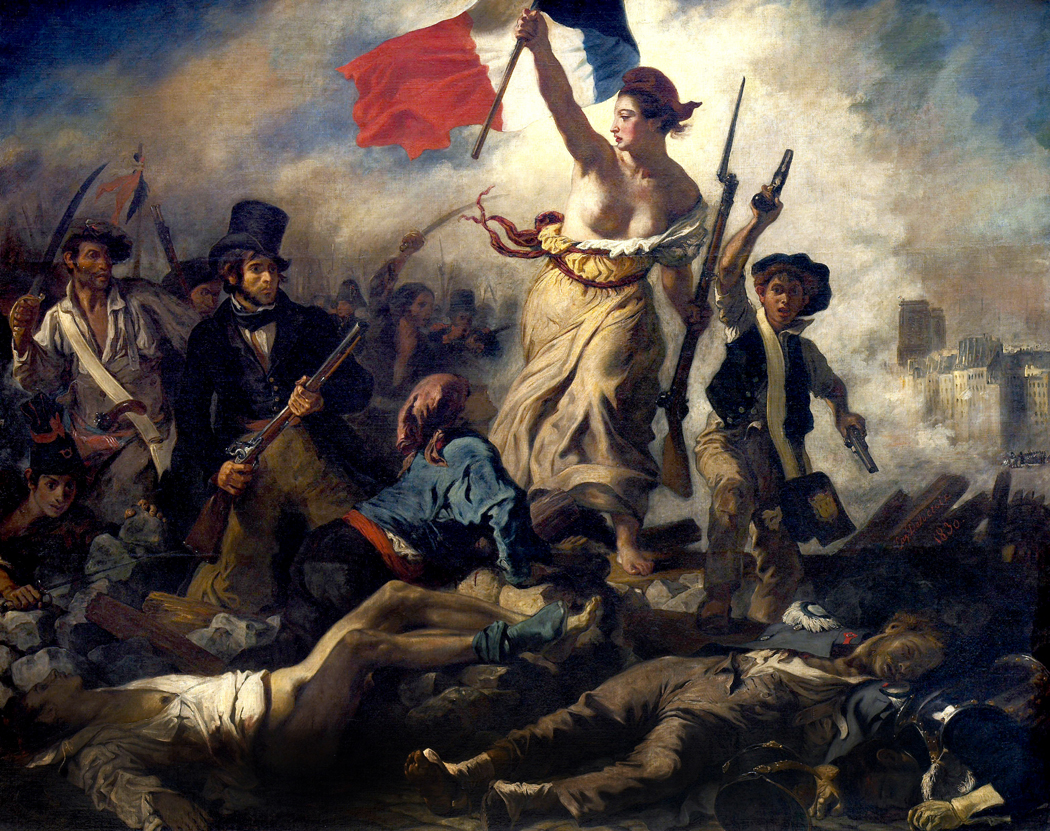
Liberty is the word that has changed the most. In the 18th century, it meant being left alone, basically. Your government let you be: Taxes shouldn’t be too onerous and armies shouldn’t be quartered in your home at the whim of the commandant.La_liberté_guidant_le_peuple

But by the 19th century, liberty took on a more revolutionary turn: Romantic writers saw liberty as the antidote to repressive regimes around the world and one read poems to Count Egmont, the Prisoner of Chillon and Nat Turner. It fueled popular movements all across Europe and led to a crisis year in 1848. Liberty meant revolt — a very different thing from what John Locke had in mind.

(And it makes almost comic the confusion of the two versions of liberty conflated by contemporary anti-tax factions and the paranoid fringe looking for the black helicopters that we can get all belligerent and militant about “tyranny” in Washington, when compared to what is happening in Sudan, Russia or North Korea, we remain among the most liberty-ridden people on earth. Admittedly, the Declaration of Independence itself is full of the same sort of inflated rhetoric.)

“Life, liberty and the pursuit of happiness.”

This meant that the Declaration could speak, Janus-like, forward and backward. The fulcrum of modern history. The Enlightenment is emerging from its chrysalis into the age of Romanticism.

hypocrite2

I want to put in a good word for hypocrisy.

Hypocrisy is so universally denounced — and no more so than by the hypocrites themselves — that we can forget that hypocrisy serves a useful function in the civilized world. Indeed, without it, civilization would hardly be possible.

To say one thing when you believe another is the lubrication of civilized life. It is, in another set of clothes, diplomacy. It is the avoidance of the unpleasant truth when the unpleasant truth will produce no results. A substituted fiction — hypocrisy — will allow action to proceed.

While the crassest forms of hypocrisy only solicit groans and outrage — when the televangelist is caught with his pants down or the anti-pornography crusader is discovered to be a swindler — more subtle forms serve several important purposes.

First, they produce a kind of national mythology, a set of beliefs, both high-minded and vague, that we can all buy into, even when individually we hold specific and opposing views. Everyone wants justice, for instance, but everyone defines it differently. The hypocrite invokes justice, knowing that more people will rally round the word than will rally round his particular policy direction.

Both opponents and proponents of affirmative action call on justice. Both pro- and anti-abortion activists call on it too.

Without the idealistic words to rally around, everyone dashes off in a hundred different directions.

The politician uses his hypocrisy to achieve ends. It works as a kind of legal fiction. Hypocrisy also helps us define what we truly believe in as a people. It doesn’t matter that George W. Bush executed more people than any other governor or that his state is near the bottom educationally: He ran as the compassionate conservative and touted education reform. His words, in this case, are more important than his actions.

Former Labor Secretary Robert Reich acknowledged the same in a column in American Prospect magazine when he compared the exorbitant hypocrisy of both sides in the 2000 presidential campaign and recognized the good that might come of it.

“If George W. wants to base his campaign on compassion, tolerance and educational opportunities for poor kids, let him. This is the best stuff I’ve heard coming out of the Republican Party since before Nelson Rockefeller was hooted down. If Al Gore wants to run on getting money out of politics and reining in powerful corporations, let’s cheer him on.”

And what is more, he said, their exhortations will produce voter expectations that they will have to satisfy in office. Their hypocrisy has pushed them into corners, and we will benefit.

At least, that was the theory. We’ll never really know, because Sept. 11, 2001 changed everything.

Slave-holding Thomas Jefferson was necessarily hypocritical when he wrote “all men are created equal” in the Declaration of Independence. But that phrase has come to be a goal, and we have tried for more than 200 years to rise above our national hypocrisy. Can we say the nation would have been better off without that hypocrisy?

In other words, as Rochefoucauld said, “Hypocrisy is the homage vice pays to virtue.”

Hypocrisy has other roles in our civic life. We also want to present our side with the best appearance, which is why we hire lawyers. We are paying them money to be hypocrites, to argue passionately for a cause that we may be passionate about but likely the lawyer isn’t. Yet, we would still happy to have that lawyer — and his hypocrisy — on our side if we were in the dock.

Yes, it is galling when a public figure gets elected on a pro-family platform and then is discovered in a love nest with his tootsie. Yes, it is irritating when with one hand a politician proposes election-funding reform and with the other hand accepts huge donations from corporations. And it is no pleasant thing to see both candidates hypocritically claim the high motives of democracy when all they really want is the advantage in the election — and are willing to change sides on the issues when the outcome seems in jeopardy.

But it isn’t hypocrisy itself on trial. Hypocrisy is neither good nor bad. It is just a tool, to be used for good or ill.

jefferson and hamilton

I lament the loss of the republic. Like the Roman senators under the emperors, who longed for the halcyon time before Julius Caesar, I long for the good old days when we had a republic in these United States.

For all the prating about democracy, and our current boilerplate pieties about the “will of the people,” it should be remembered that our Founding Fathers never intended that we should be a democracy. They feared democracy.

That is why they carefully crafted a republic.

The Romans and I lament the loss of the republic from opposite ends of the governance spectrum, but we lament nonetheless. Yes, just as Rome under the Claudians and Antonines maintained a certain hypocritical observance of the forms of the republic while the realpolitik was despotism, the United States maintains the observance of certain republican relics — like the Electoral College — while in reality giving over ourselves to mob rule.

“We are now forming a republican government,” wrote Alexander Hamilton during the debates of the Federal Convention in 1787. “Real liberty is neither found in despotism or in the extremes of democracy, but in moderate governments.”

And we wrote republicanism into our Constitution, giving the people the right to choose their leaders. The expectation was that these elected leaders would govern us. Instead, over the past 200 years, there has been an erosion of that idea into one where the people have come to micromanage. We vote or voice out about every single issue that comes up with the odd self-assurance that any regular Joe can know and understand complex issues as well as the thoughtful and educated people who have studied them for years.

It’s as if we elbowed Steve Jobs out of his position at Apple and let the assembly-line workers make the corporate and financial decisions. Jobs was a leader for a reason. We expect talent at the head of our businesses, we expect them to know more than we can possible know about the particularities of their fields. They are hired to know what we cannot: Specialists, not generalists.

So, leaders no longer lead. We complain about it all the time, yet in fact, when it comes to politics, we don’t want our leaders to lead. We want them to follow. To follow public opinion. If this week we want English as an “official language,” then, bigod, we’ll have it. If next week we want something else, then we’ll change once more. American history is fraught with the warnings of this.

There was a time, if constitutional republicanism hadn’t won out, that American voters would have outlawed Roman Catholicism. We would have prevented the Irish from immigrating. The majority has scant respect for minority rights. And how many times in the past decade has some group discovered that if given the chance, most Americans would revoke the First Amendment? And if Lyndon Johnson hadn’t actually led, but had instead followed the vox populi, we still might not have a voting rights act.

John Adams wrote Thomas Jefferson in 1815, “The fundamental article of my political creed is that despotism, or unlimited sovereignty, or absolute power, is the same in a majority of a popular assembly, an aristocratical council, an oligarchical junto, and a single emperor.”

It is instead with thoughtful, careful, prudent people that we should hope to entrust our governance. Admittedly, educated people are quite capable of stupidity. It was the “best and the brightest,” after all, who got us into Vietnam in the first place. But stupid half the time is an improvement on stupid all the time. If we leave government to momentary passion and popular prejudice, we will always be stupid as a people. At least the “aristocracy of merit” that Thomas Jefferson foresaw has the chance to lower the percentage of egregiousness in our governance.

“There is a natural aristocracy among men,” wrote Thomas Jefferson. “The grounds of this are virtue and talents.” That idea has faded into a lumpen and ignorant interpretation of his “all men are created equal,” as though you or I could play point guard for the Chicago Bulls, or build a moon rocket in our garage or write good law.

In a republic, we hire the best people to spend their time understanding just such things. In a democracy, such as we pretend to have now, our leaders need know nothing, as long as they do what we tell them in this week’s Gallup Poll, and change it all over again next week.

Wrestling Sikeston, MO 1938

Stop calling it “pop culture.”

There was a time when we made the distinction between pop culture and high culture. The highbrows went to the symphony and the lowbrows went to the armory for professional wrestling. But there is no more high culture. It is defunct. We need to stop making a distinction that no longer exists.

It isn’t pop culture, it is just culture.

One of the problems is that we don’t really understand what culture is. Most people think of culture as synonymous with taste in entertainment. If some people are entertained by a Bartok string quartet, others are entertained by South Park. But neither the quartet nor the cartoon are culture: They are two tastes in entertainment.

Culture — real culture — is the software we run our society by. It is what we collectively believe is “true.” More it is the sum total of what we believe is true, turned into rules to operate by. At one time, we believed in a bearded sky-god who told us what was right and wrong. Some people still believe and they are now a “subculture” within the larger one. The larger culture now believes what it hears on Oprah or Jerry. We run our lives accordingly. We look for closure, we seek the inner Atilla the Hun and his management strategies. HHH with belt

Everything we do is based, at some level, upon culture. Whether we spank our children, allow divorce, execute criminals and outlaw abortion. It is all based on culture, and culture all based on what we collectively think is true. At a time such as now, what we believe is rather jumbled. It is not coherent or unified. Religion becomes a buffet menu of attractive options. There is not a single unified belief system. The closest thing we have is the widely held belief that all cultures should be respected. But such a belief, at its heart, acknowledges the absence of a single believable system.

So, the argument isn’t between so-called high culture and low culture. It’s all culture. But, much worse, what we’re developing is a system of two opposing cultures — two vision of what each side believes is “true.”

One side calls itself “conservative,” although that is really just a convenient handle — it isn’t really conservative. It is a primarily rural culture, insular and cut-off from the rest of the world and the time it lives in. And, what is more, happy to be so cut off. It eyes the rest of the world with suspicion, even hate. Like the dragon in his cave, with his arms circling his horde, and scowling at anything outside in the sunlight.

The other culture is more cosmopolitan, but not necessarily more intelligent. It tends to believe in the goodness of humanity and the brotherhood of man, forgetting that brotherhood is Cain and Abel. It is more open to progress, but doesn’t always recognize good progress from bad ideas.

If one side is hard and miserly, the other is soft and gushy.

A curse on both your houses.

(One is forced to accept that the ironbound statistical truth that fully half the American populace has an I.Q. below average. It takes only one person with an I.Q. only one point above average to join and make a majority in this so-called democracy. And if you’ve ever met anyone with an I.Q. of 100 — the midpoint and the average — you know that is no great shakes. Overall, humans are just dumb monkeys.)

Anyway, these are two immiscible cultures, and the fact that Congress seems unable to compromise derives from the two cultures, and not from mere policy disagreements. Two umwelts, two completely different understanding of the nature of the world.

And both sides claim pop culture: that messy, energetic, imbecilic, entertaining system of rock-and-roll politics and television theology. It’s just that on one side the television theology comes from Kenneth Copeland, and on the other side it comes from Oprah.

In Victorian times, the symphony and ballet were seen as truer than the dime novel and music-hall comedy. The hoity-toity ran society according to the standards they learned from Tennyson, Carlyle or John Ruskin. The hoi-polloi followed along, reading crime stories in the popular press or sentimental novels. Christopher Daniels flying leap

The new bifurcation of taste and culture is not so vertical. Instead, everything is horizontalized; nobody is any better (or in this view, smarter, or wiser, or more fitted to solve a problem) than anyone else.

The old bifurcation is dead. It was a legacy of those awful Victorians. The last vestige of it is the tails and white tie our symphony conductors wear, and the gowns and dinner jackets symphony patrons wear to the concert hall.

But let’s face it. The symphonies are all near bankruptcy all across the nation. Art museums attempt more and more dumbed-down populist exhibits, hoping to boost attendance.

In a way, they are both irrelevant to the new split.

So, roll over, Beethoven, and tell Tchaikovsky the news.