Archive

Tag Archives: prokofiev

Happiness is a strange emotion, not a single thing, but really an umbrella term for a diffuse group of hard-to-define states. Periodically, studies are published about which nation is the happiest (usually, it seems, a Scandinavian country.) But what they are measuring is a rather tepid version of happiness. Usually, if we ask if someone is happy, what we mean is an absence of problems — basically a neutral state in which we are not currently threatened, hurting, being oppressed, or worried. “Are you happy?” “Yeah, sure, I guess so.” Enough to eat, a roof over the head, a relationship that isn’t a chore, no pending hospital bills or tax audits. 

Really, that is a condition to be wished for, as dull as it sounds. For most people in the world, its achievement would be a godsend. So, I don’t want to downplay such a state. Not getting bombed is a net positive. Yet, there are other happinesses. Falling in love, birth of a child, success at work — these all provide a joyful uplift that raises the psyche above the day-to-day and makes life more radiant, if only briefly. It is a state we cannot maintain over long periods without being considered a bit loopy. So, we return back to the state of happiness that is unremarkable. 

But, as adults, we can watch our children at play and recognize in their faces such a state of unreflective happiness that can only break our hearts. Oh, what they don’t know yet about being alive. It’s not just an emotion: The entire body explodes with it.

There is what I might call “body happiness,” which they express in movement, in play, in dancing and skipping, singing, letting out squeals that express the inner state that, as adults, we can only mourn the loss of. “There hath passed away a glory from the earth.” 

I mention all this because one of the reasons I listen to music — primarily, for me, what is called classical music — is its ability to evoke emotions in its listeners. They arise sympathetically and are often emotions more subtle than mere language can name. It has been said that music is more precise than words, and I recognize that, whenever I am moved by a quartet or sonata but cannot speak exactly the words that would distort the emotion into easily fixed categories. 

A standard symphony moves from thought to thought, emotion to emotion, in ways that express the same sort of progress a story makes, beginning, middle, end. Episodes all build together to a longer, coherent emotional or intellectual ride. Our limbic system moves along with that progress and we can basically take our emotional selves through the moves. The widest range is the most completely human. 

And one of the things music can express is that ebullient, body happiness, so that we can feel it again. 

Mostly, it jumps out of a single movement in the whole, or even a few bars in the movement, but it is inexpressible joy, and it makes our body move, to tap toes or sway our bodies to and fro, often with a surprised smile on our faces. I think of the finale of Haydn’s Symphony No. 88, for instance, or the scherzo from Dvorak’s Eighth Symphony. I can’t sit still while listening. 

George Frideric Handel has two “happy”numbers in his Acis and Galatea. The opening chorus sings of “Oh the pleasures of the plains, happy nymphs and happy swains,” which extolls the life of the peasants, and a love duet that repeats endlessly, “Happy, happy, happy we.” It all sets up the tragic ending. 

But, there are a very few works that take that body happiness from start to finish, works you can play or stream, that will infallibly lift your mood and remind you of the happiness that is upwards of neutral, and can replace all the fret and sorrow for the length of its performance, and usually, for some time after, as you bathe in the memory of its tunes. 

There are at least eight of these that I can name, which always leave me uplifted, my senses turned up several notches, and my memory of childhood’s version of happiness is re-animated. 

Prime among these is Franz Schubert’s “Trout” Quintet. It bounces and sings through five distinct movements, each of which floods with tune, rhythm and color, anchored by the bottom notes of the double bass. 

It was written in 1819, when Schubert was 22 years old, and before the lingering illness that eventually killed him nine years later. The haunting of death darkens the later String Quintet that he completed in 1828, just two months before his death. But the “Trout” is the antithesis of all that: Life giving, life affirming, joyful from first bar to last. What can you do when every tune is an ear-worm. Once inside your body, you carry the “Trout” with you the rest of your life. Play it every time you need it. 

Less well-known, but even more relentless is Darius Milhaud’s Le Boeuf sur le Toit, or “The Ox on the Roof.” Milhaud wrote it in 1919 after living in Brazil for two years in the French diplomatic service, and quotes dozens of Brazilian folk songs, adapted into a dance-hall band playing Latin rhythms, complete with güiro. He employs a polytonal technique, where different parts of the band play in different keys at the same time, giving the whole a piquancy and aliveness that has a feeling of spontaneity, like an amateur band in a smoky bar. It’s always just about to come apart. 

Written in the Baroque form of ritornello, with an 8-bar tune coming back over an over between alternate dances, it has some 20 Brazilian tunes buried in it, with infectious beats that express the unabashed happiness of a sweaty dance hall. Evybody dance now!

Mostly we think of Johannes Brahms as a sober German burgher writing symphonies with the seriousness required of höchste Deutsches Kunst. But the boy could let his hair down, which he did with two sets of vocal quartets, Liebeslieder Waltzes, op. 52 and op. 65. 

Brahms made his living, early in his career, when he moved to Vienna, as leader of various choruses such as the Singakademie and Musikverein, for which he wrote tons of choral music and songs. So, he had a popular streak in him. 

The 33 songs, each no longer than a minute or two, celebrate bourgeois domestic love in tunes so meltingly gemütlich that you will have them running through your head for days. They were meant to be sung in homes or in taverns, so they are best with normal voices, not the operatically trained soloists that so often record the set. “Ich gäbe dir so gern hunderttausend Küsse” — “I long to give you a hundred thousand kisses.” 

When Georges Bizet was a mere stripling of 17, he wrote a Symphony in C as an exercise for his studies at the Paris Conservatoire. It was never performed in his lifetime and ultimately forgotten about, until it was rediscovered in 1933, and performed two years later by Felix Wiengartner, a suitable conductor, whose first name means “happy.” 

Bouncy and tuneful from first note to last, it has proven hugely popular since then, and one wonders why Bizet never had it published, in fact, never even mentioned it. It is a masterpiece, but not on one of those marble pedestals, but the kind that makes your ears grateful to be on your head. It is breezy and fluent and just makes you happy to be alive. 

Georges Balanchine choreographed it for the Paris Opera Ballet, and I was lucky enough to see the New York City Ballet perform it with a live orchestra at the Palais Garnier in Paris, (where it was first performed in 1947). One of the highlights of my life. 

Also a youthful work is Serge Prokofiev’s Classical Symphony, written in 1916 when he was a conducting student at the St. Petersburg Conservatory. When one of his teachers, Boris Asafyev, mused “that there is no true joyfulness to be found in Russian music,” as Prokofiev wrote, he responded with one of the happiest works ever written by a Russian. 

And so, he wrote in his diary, “I composed a new finale, lively and blithe enough for there to be a complete absence of minor triads in the whole movement, only major ones.” 

It displays what is often called the composer’s “wrong note Romanticism,” with catchy tunes and ascerbic harmonies, and was meant to mimic the spirit of Haydn and Mozart. What a joy. 

Much shorter, at merely five minutes, but so fresh and lively as to become its composer’s most frequently performed piece, the overture Leonard Bernstein wrote to his musical Candide just can’t stop laughing, and teasing, with bubbling wit and elan. 

The musical (or operetta — it could never entirely make up its mind and went through multiple reworkings) never quite caught on the way West Side Story has, but its overture, shaped as a mock Rossini overture, is irresistible. 

Johann Strauss II produced music the way a lawn sprinkler sprays water. The “Waltz King” composed over 500 waltzes, polkas, quadrilles, and other types of dance music and several operettas, all of surprisingly consistent craftsmanship.

No one in his right mind, though, would sit for all of it; before too long the program would become monotonous: How do you tell one polka from another. That is, except for the large handful of truly memorable masterpieces, all of which will raise you spirits and make you want to dance. 

I mean, the Blue Danube, the Voices of Spring, Tales of the Vienna Woods, the Artist’s Life, the Kaiser Waltz — a CD full of the best Strauss is a must-have for any collection. It’s hardly surprising that Brahms envied Strauss’ gift for melody. Each is basically a tone poem in three-four time. Lift the spirits, make you smile and move your body. 

Finally, there is Benjamin Britten’s Simple Symphony, which displays a childlike joy in just spinning tunes, which is hardly surprising, since he wrote those tunes when he was a child, between the ages of 10 and 13. When he turned 20, he reworked the tunes into this four-movement suite for strings, with movements titled “Boisterous Bouree,” “Playful Pizzicato,” “Sentimental Sarabade,” and “Frolicsome Finale.” It premiered in 1934 with Britten conducting. 

Since then, it has been recorded dozens of times, usually as a filler on discs with other Britten pieces. 

There are other joyful pieces, but these are eight that come immediately to mind. They are each available in videos on YouTube, and worth seeking out, especially if you’re having a bit of a down day. 

Until relatively recently, 20th century concert music was a tough sell. It had the reputation of being dissonant, noisy, difficult, and unpleasant. It was a century that began with Arnold Schoenberg dispensing with harmony and Igor Stravinsky upending rhythm, followed by a World War that knocked the complaisance out of any rational being and told us that the coming century was going to be anything but calm and easy. 

A number of composers felt that music needed to reflect the mood of the angst-ridden age. 

But even Schoenberg admitted “There is still plenty of music left to be written in C-major.” He didn’t believe his 12-tone revolution would destroy all tunes to come, but was simply a logical conclusion to music history from Bach through Wagner, from tonality through chromaticism to atonality. And we shouldn’t blame poor Arnold for all the dreary ruckus that followed: His own music is quite emotional and beautiful, even if it often requires some serious commitment from his listeners. 

He was right about one thing certainly: There was plenty of music written in C-major, throughout the century. And F-major and D-minor. In fact, most of the music written in that century was based on familiar scales, albeit with plenty of playing around and trying new ways to use them. 

 It’s just that the music-industrial complex, so to speak, was hijacked around mid-century by a clutch of academically-minded composers — the “Darmstadt Mafia” — insisting that serialism was the only music to take seriously, and that the more unlistenable it was, the greater it must therefore be. (Some of these composers did write interesting music in that style — it wasn’t a complete loss — but they looked down their noses at anything that might stink of a tune.) 

And so, contemporary music turned its back on the concert audiences and those composers wrote only for other composers of their ilk, and audiences shrunk from any concert program that insisted they listen to the stuff. Modern music acquired a very bad reputation. 

But I find that after 60 years of concert-going and music absorption, I listen to 20th century music more than that of any other era. It is music that speaks directly to me. Oh, I listen to bunches of Haydn, Mozart, Beethoven, Brahms and Tchaikovsky, but the plurality of my music listening edges to the century in which I grew up. 

So, I wanted to create a list of representative compositions from the century in question and present them as a course in great music that anyone can listen to and enjoy. 

I went through my collection of thousands of CDs and chose 30 pieces to offer. I listened to each one, in order, to refresh my memory — and to flat out enjoy them all over again. 

The roughly chronological list begins with a surprising entry. Most people think of Ives’ music (if they think of it at all) as noisy, crashing, impish tomfoolery. But Ives was a well-trained musician, with a degree from Yale University. His Symphony No. 2 is pretty tame, except for his borrowing of familiar popular tunes, and a raspberry at the end. 

Here is my list:

1900-1920

Charles Ives (1874-1954) — Symphony No. 2 (1902; premiered in 1951) (42 minutes long). Performance listened to: Eugene Ormandy, Philadelphia Orchestra, recorded 1973.

Ives studied under the respectable, if stuffy Yale professor Horatio Parker, and after graduating in 1898, began working on his second symphony (the first was his senior thesis composition for Parker) and included bits from Camptown Races, Turkey in the Straw and Columbia the Gem of the Ocean run through a kitchen blender. He finished Symphony No. 2 in 1902, although, with Ives, he was never completely finished and continued tinkering until his death in 1952. The symphony wasn’t premiered until Leonard Bernstein and the New York Philharmonic played it in a radio performance in 1951. The house-bound but still cantankerous Ives heard it on his radio in Connecticut and his response was that he spit. 

I listened to Ormandy’s version from 1973. The recordings listed here are not my choices as “best” — although they are all good — but merely the ones I had to hand when I started this project. 

Frederick Delius (1862-1934) — On Hearing the First Cuckoo of Spring (1912) (7 minutes long). Performance: Thomas Beecham and Royal Philharmonic, recorded 1958.

Delius’ score instructs, “With easy flowing movement,” and the quiet, peaceful evocation of the countryside (presumably English) and its birdcalls, it is a calming balm for a tussled soul. Originally, it was one of Two Pieces for Small Orchestra, the other half being Summer Night on the River. Beecham championed the composer’s music and his performances of the music are definitive.

Manuel de Falla (1876-1946) — Nights in the Gardens of Spain (1916) (21 minutes long). Performance: Arthur Rubinstein, piano, Ormandy, Philadelphia Orch., recorded 1969.

Falla was an Andalusian composer and the quasi-Impressionist Nights in the Gardens of Spain functions as a kind of piano concerto, with three movements, each describing a different Andalusian garden. Rubinstein heard it first soon after its premiere in 1916 and performed it regularly after that.   

Serge Prokofiev (1891-1953) — Classical Symphony (1918) (13 minutes long) Performance: Ormandy, Philadelphia Orchestra, recorded 1961.

Prokofiev’s Symphony No. 1 is the Sara Lee of symphonies: No one doesn’t love it. It is a jaunty, energetic gloss on the Classical-era symphonies of Haydn, seen through the “wrong-note Romanticism” of the composer’s style.  

Gustav Holst (1874-1934) — The Planets (1918) (50 minutes long)

 Performance: Ormandy, Philadelphia, recorded 1975.

Marketed as “space-age music,” the intent of Holst’s seven-movement suite is astrological, not astronomical, and each movement is a musical description of a psychological type. It has become enormously popular, and it has been recorded more than 80 times, first in 1926 with the composer conducting.  

Igor Stravinsky (1882-1971) — Pulcinella (1920) (39 minutes long) Performance: Claudio Abbado, London Symphony Orchestra, recorded 1979.

Stravinsky took some old compositions by 18th century composers and reworked them into bright, colorful Stravinskian cogs in what Leonard Bernstein once called “Uncle Igor’s Asymmetry Machine,” giving them new life as a ballet score, complete with voices. 

1920s

Ralph Vaughan Williams (1872-1958) — The Lark Ascending (1921) (16 minutes long) Performance: Zina Schiff, violin, Dalia Atlas, Israel Philharmonic, recorded 1989.

Poet George Meredith wrote of the lark in his poem from 1881, “He rises and begins to round, He drops the silver chain of sound…” and Vaughan Williams gives us the violin and orchestra version, with the British pastoral, And whose primary intent seems to be the creation of simple beauty.

Darius Milhaud (1892-1974) — La Création du Monde (1923) (17 minutes long) Performance: Simon Rattle, London Sinfonietta, recorded 1986.

European composers began hearing jazz and they loved it. Milhaud even moved to Harlem for a while, to soak it all up. One of the best translations of jazz to the classical idiom is his Création du Monde, with its resonant  saxophone solo at the beginning. 

Arthur Honegger (1892-1955) — Pacific 231 (1923) (6 minutes long) Performance: Charles Dutoit, Bavarian Radio Symphony, recorded 1985.

A steam locomotive begins to move, gathers speed, churns along and comes slowly to a stop, in this propulsive tone poem to modernity. Trains have been a theme in 20th century music, from Duke Ellington’s Happy-Go-Lucky Local to Villa-Lobos’ Little Train of the Caipira. Chug-chug. 

Ottorino Respighi (1879-1936) — The Pines of Rome (1924) (20 minutes long) Performance: Ormandy, Philadelphia, recorded 1958.

There were no flying humpback whales in Respighi’s original score; blame Disney for that. But what you do get are rousing tunes and some spooky catacomb music, with a grand finish, the kind that gets you out of your chair cheering. 

Jean Sibelius (1865-1957) — Symphony No. 7 (1924) (22 minutes long) Performance: John Barbirolli, Halle Orchestra, recorded 1966.

Sibelius’ final symphony is also his shortest, being in one movement, but by some accounts his best. My old teacher said when he was young, he wanted to play the French horn, because it had all the great solos. But he wound up with the trombone, which “only plays supporting material,” he said. But in this symphony, the trombones get the big tune, the one you will most likely remember and hum after it’s over. 

George Gershwin (1898-1937) — Piano Concerto in F (1925) (32 minutes long) Performance: Andre Previn, piano and conductor, Pittsburgh Symphony, recorded 1998.

Who was Arnold Schoenberg’s favorite composer in America? His frequent tennis partner, George Gershwin, who was much more than a Tin-Pan Alley songster. At the time, there was a big rush to figure out how to incorporate jazz into concert music. Well, here’s how. 

Leos Janacek (1854-1928) — Sinfonietta (1926) (23 minutes long) Performance: Claudio Abbado, Berlin Philharmonic, recorded 1989

What grabs you at first are the 14 trumpets, four horns, trombones, tuba and euphoniums. But the rest of the music pops with chunks of memorable tunes, piled like crabs in a bucket, and the way Janacek uses musical “jump cuts” to go from one to the next. 

1930s

Howard Hanson (1896-1981) — Symphony No. 2 “Romantic” (1930) (29 minutes long) Performance: Gerard Schwarz, Seattle Symphony, recorded 1989.

All those American symphonies written in the 1930s and ’40s have been largely forgotten, despite their quality, but when Ridley Scott used Hanson’s music during the closing credits of his 1979 film Alien, it resurrected this “Romantic” symphony, which developed a second life. Scott did it without Hanson’s permission, which pissed off the composer, but Hanson never sued, probably because of the boost it gave his music with audiences. 

Maurice Ravel (1875-1937) — Piano Concerto in G (1932) (21 minutes long)

Performance: Samson François, piano, André Cluyten, Orchestre de la Société des Concerts du Conservatoire, recorded 1959.

The French were just as taken with jazz as Americans were, in the 1930s. Lots of composers attempted to weave the syncopations and blues notes into their work. Ravel did it twice, with each of his piano concertos. But this one has a slow movement of such hypnotic ethereal peaceful beauty that you feel in a trance, broken by the explosion of the finale. 

Alexander Glazunov (1865-1936) — Saxophone Concerto (1934) (14 minutes long) Performance: Marc Chisson, saxophone, José Serebrier, Russian National Orchestra, recorded 2010.

Glazunov was exiled to Paris when he wrote his own jazz-influenced concerto for alto saxophone, which is perhaps less jazzy than Russian, but is nevertheless probably the best concerto ever written for the instrument. 

Samuel Barber (1910-1981) — Adagio for Strings (1936) (8 minutes long) Performance: Ormandy, Philadelphia, recorded 1957.

Canadian filmmaker Guy Maddin made a movie in 2003 titled The Saddest Music in the World, about a contest to find such music. Well, he needn’t have worried: Hands down, the winner (ignored by the film) is Sam Barber’s orchestral transcription of the slow movement of his string quartet. Unbearably beautiful, it is near impossible to hear it without weeping. 

Colin McPhee (1900-1964) — Tabuh-Tabuhan: A Toccata for Orchestra (1936) (17 minutes long) Performance: Howard Hanson, Eastman-Rochester Orchestra, recorded 1956.

McPhee heard Javanese gamelan music on a visit to Bali and then moved there. He became an ethnomusicologist as well as composer and wrote his own gamelan-influenced music full of the percussive tintinnabulation that is so catchy. Tabuh-Tabuhan is his most popular work, meaning it’s pretty much the only piece most people know, McPhee having otherwise fallen into undeserved oblivion.

Heitor Villa-Lobos (1887-1959) — Bachianas Brasileiras No. 5 (1938) (7 minutes long) Performance: Bidú Sayão, soprano, orchestra of cellos, conducted by Leonard Rose, recorded 1949.

The composer was fascinated by the long-line melodies that Bach sometimes wrote and came up with his own. Originally a single movement for soprano and eight cellos, it was recorded that way in 1949 by Bidú Sayão in a recording of singular beauty and power. It is very difficult, as the final third of the movement is required to be hummed through the nose, with the mouth closed, and ending on a nearly impossible octave leap. He later wrote a second movement, but this recording of just the first is so exceptional, it has to be heard. 

1940s

Sergei Rachmaninoff (1873-1943) — Symphonic Dances (1940) (35 minutes long) Performance: Leonard Slatkin, Detroit Symphony, recorded 2002.

It is sometimes hard to realize that Rachmaninoff is essentially a 20th century composer. And all his later music (the Paganini Rhapsody, Third Symphony and this, the Symphonic Dances) is rife with irony and astringency. Heart no-longer on sleeve, but with unforgettable tunes and absolutely brilliant orchestration. These Dances were his final composition, and for my money, his best. 

Aram Khachaturian (1903-1978) — Violin Concerto (39 minutes long) Performance: Ruggiero Ricci, violin, Anatole Fistoulari, London Philharmonic Orch., recorded 1956.

Khachaturian doesn’t get much love. His music is catchy, tuneful, and never very deep. And so, the Music-Industrial Complex (i.e. German musicographers) turn their noses up. But what is music if not melody? And bright arresting orchestrations. At some point, the world will catch up with Khachaturian and realize there’s room for music that is simply enjoyable, with no philosophical baggage attached. 

Bela Bartok (1881-1945) — Concerto for Orchestra (1943) (47 minutes long) Performance: Fritz Reiner, Chicago Symphony Orchestra, recorded 1958.

Bartok was ill and in hospital when Serge Koussevitzky visited him in 1943 and presented him with the commission for this orchestral masterpiece. Bartok had fled Hungary because of the war and was dying of leukemia, but he got out of bed, left the hospital and wrote what became his most popular work, essentially his symphony, a five movement piece featuring brilliant solo work for pretty much everyone member of the orchestra. He died two years later. 

Paul Hindemith (1895-1963) — Symphonic Metamorphosis on a Theme by Weber (1943) (22 minutes long) Performance: Wolfgang Sawallisch, Philadelphia Orchestra, recorded 1994.

So much of the century’s music seems to have been written as gloss on music of the past: Stravinsky’s Pulcinella, Rachmaninoff’s Paganini Rhapsody; Prokofiev’s Classical Symphony — even Ives’ symphonies constantly quote old tunes. Hindemith’s most popular piece (popularity not having followed the composer into the 21st century) is his recasting of melodies written by Carl Maria von Weber. It is brilliant. Hindemith should be played more. 

Aaron Copland (1900-1990) — Appalachian Spring (1944) (24 minutes long) Performance: Leonard Bernstein, New York Phil, recorded 1961.

When the century’s music seemed to becoming more intellectualized and abstruse, Aaron Copland developed a simpler, more audience-friendly style, best captured in this hugely popular ballet score. Copland became the American composer. Originally for a chamber group, the orchestral version is now a standard concert piece. 

Erich Wolfgang Korngold (1897-1957) — Violin Concerto in D (1945) (24 minutes long) Performance: Jascha Heifetz, Alfred Wallenstein, LA Philharmonic, recorded 1953.

Korngold was a prodigy once compared to Mozart, came to America and became the Ur-film composer (three Oscar nominations). But after WWII, he tried to reestablish his bona fides as a serious composer, with this most beautiful of 20th century violin concertos, now in the standard repertoire. It begins with a startling two-octave run in just five notes. Championed by Jascha Heifetz, it is now in every serious violinists repertoire. 

Benjamin Britten (1913-1976) — Variations and Fugue on a Theme by Purcell (“Young People’s Guide to the Orchestra”) (1946) (17 minutes long) Performance: Ormandy, Philadelphia, recorded 1974-1978.

Another gloss on old music, Britten wrote his “Young People’s Guide to the Orchestra” as a means to teach about the instruments, along with narration.  But much better without the sometimes condescending talking, it is a brilliant showpiece for the orchestra. 

1950s

Joaquin Rodrigo (1901-1999) — Fantasia para un Gentilhombre (1954) ( 22 minutes long) Performance: Manuel Barrueco, guitar, Philharmonia Orchestra, Placido Domingo, conductor, recorded 1996. 

Rodrigo reworked the music of 17th-century Spanish composer Gaspar Sanz, in another retro work, mixing the old dance music with eminently listenable modern orchestra colors.  

Alan Hovhaness (1911-2000) — Mysterious Mountain (Symphony No. 2) (1955) (19 minutes long) Performance: Fritz Reiner, Chicago, recorded 1958. 

Hovhaness wrote 67 symphonies and sometimes it is hard to tell them apart: His style was his style and he stuck to it. But his second symphony, called Mysterious Mountain, is his most popular and a perfect introduction into what you get with this Armenian-American stalwart. 

Leonard Bernstein (1918-1990) — Candide Overture (1956) (4 minutes long)  Performance: Leonard Bernstein, London Symphony Orchestra, recorded 1989. 

The best overtures are bouncy, tuneful, catchy and bright. It is almost as if Bernstein had absorbed all of the best overtures of the past and wrapped them up in his ultra-brilliant Candide overture, certainly the composer’s most-often programmed work. 

Dimitri Shostakovich (1906-1975) — Piano Concerto No. 2 (1957) (20 minutes long) Performance: Christina Ortiz, piano, Royal Philharmonic Orchestra, Vladimir Ashkenazy, cond., recorded 1989.  

The composer write this late concerto for his son, Maxim, to perform. He didn’t have a very high opinion of the work, thinking it a throw-away piece, but it is his most accessible concerto, with a second movement nearly as hypnotic as the Ravel. It may be lightweight Shostie, but it is nothing to sneeze at. 

In going through these recordings, some of which had to be dug up out of the lower shelves of my collection, I have redoubled my admiration for the music of the previous century. 

When piano sonatas first became popular, in the 18th century, they were primarily written for home use, for talented amateurs to play for evenings with the family. Some sonatas were obviously more difficult than others, and a few by Haydn or Mozart, required a professional level of ability, and indeed, were written for the composers themselves to show off their performing abilities. But most were written to be sold as sheet music, and that’s how their composers made their livings. 

At the time, there were no public piano recitals to attend. There were private performances given for the aristocracy. Public concerts tended to feature concertos and concert arias, with maybe a little symphony or two thrown in. But no one bought tickets to hear a piano sonata — why? when you could play them yourself at home after dinner.

Then came Beethoven. 

Piano sonatas also used to run from perhaps 10 minutes to 15 or 20 minutes. Mozart’s C-major sonata (K. 545) comes in three movements. The first runs a tad over two minutes; the second just under four minutes; and the finale about a minute and a half. The bigger sonatas, such as his Sonata in A (K. 331) with the famous Ronda a la Turca, comes in at about 14 minutes, as played by pianist Mikhail Pletnev. 

Then came Beethoven, the revolutionary pounder of the keyboard, who shocked his contemporary listeners with the power, difficulty and length of his piano sonatas. The Appassionata Sonata of 1805 is devilishly difficult and a bit over 21 minutes. 

Then there’s the Hammerklavier Sonata of 1818, which is twice as long (Barenboim’s most recent recording takes 50 minutes) and 10 times more difficult, ending with a giant double fugue that confused his first listeners. What the heck is going on? It’s the original knucklebuster. Just look at that pile of notes:

Things changed after Beethoven. The 19th century saw fewer piano sonatas, but much bigger and more difficult specimens. You could say that Beethoven seems to have presented a challenge to all those who came after him: how to live up to his example. 

And the example he gave was for a longer, more complicated sonata — a kind not to be played by prosperous daughters of the middle class after dinner, but by traveling virtuosi giving piano recitals to a paying public. Franz Liszt began the practice, but the long, knucklebusting piano sonata was established. 

There were less ambitious works written, and the standard for most of the 19th century was the character piece, not the sonata. These were short catchy pieces sometimes singly and sometimes strung together in a suite, such as Schumann’s Carnivale or Tchaikovsky’s The Seasons

This was the heyday of Chopin’s waltzes, mazurkas and polonaises, of Grieg’s Lyric Pieces, of Brahms’ intermezzi and capriccios. 

And when there were sonatas, they went big. They became symphonies for the keyboard. 

I’ve chosen six of these knucklebusters as exemplars. There were more, but they haven’t joined the repertoire of regular performances. But these six as regulars of the recital hall. 

I’ve also appended a list of my favorite recordings of these sonatas. Notice, I did not say “best.” There are too many CDs out there and I haven’t listened to them all (although I have come close with the Hammerklavier — I once owned 21 complete sets of Beethoven piano sonatas and another five sets of the late sonatas by themselves, so I’ve heard quite a few). I’ve only listed recordings I have listened to. 

Beethoven Sonata No. 29 in B-flat, opus 106, “Hammerklavier”

Beethoven was at the height of his fame after the premiere of his Seventh Symphony, but the years that followed were thin ones for the composer. He was tied up in endless legal difficulties over his nephew, Karl, and was suffering from endless bouts of gastritis. He produced little between 1813 and 1818. But then came the final flourishing of late quartets, late piano sonatas and, of course, the Ninth. 

The first big explosion was the “Hammerklavier” sonata, that giant monstrosity of pianistic torture. It begins with a grand military fanfare, makes fun of the same in the teensy second movement, reaches the heart of things in a 20-minute adagio and concludes with a monumental fugue which demonstrates every trick in the book of fugue writing —- play the tune upside down, play it backwards, slow it down, speed it up, slow it down upside down, speed it up backwards and end it all with an explosion of hiccups and trills. 

It was the longest piano sonata written to that point and still one of the most challenging. 

It is the adagio that holds the key and the emotional power of the sonata. It has been called a “mausoleum of collective sorrow,” and “the apotheosis of pain, of that deep sorrow for which there is no remedy, and which finds expression not in passionate outpourings, but in the immeasurable stillness of utter woe.” It is that rare sort of music that you inhabit rather than simply listen to. 

My favorite recording, since I first heard it 50 years ago is also the first recording made, in 1935, by Artur Schnabel. It has been in print since it was first made and despite being in rusty sonics, comes across clearly as music of the most profound sort. 

If you want more modern sound, I recommend the 1970 recording by Rudolf Serkin. In completely modern sound, I love — especially the adagio — by Daniel Barenboim in his 2012 release of the complete sonatas. 

Schubert Sonata No. 21 in B-flat, op. posthumus, D. 960

When Franz Schubert reached the age when Mozart had died, he’d been dead for four years already. Mozart died at age 35 and mourned as a genius who died too soon. Schubert died at 31 and we can only mourn the lost of what he could have written in those missing four years, to say nothing of what we could have had if he had lived a normal life span. 

As it was, in the last year or so of Schubert’s life — when he knew he was dying — he produced a stunning series of works of such profound depth and beauty, it can only be called a miracle. There were the final three string quartets, the C-major Quintet, and the final three piano sonatas. If all we had from Schubert were these works, he would be given a first-class ticket at the front of the bus with Bach, Mozart, and Beethoven. 

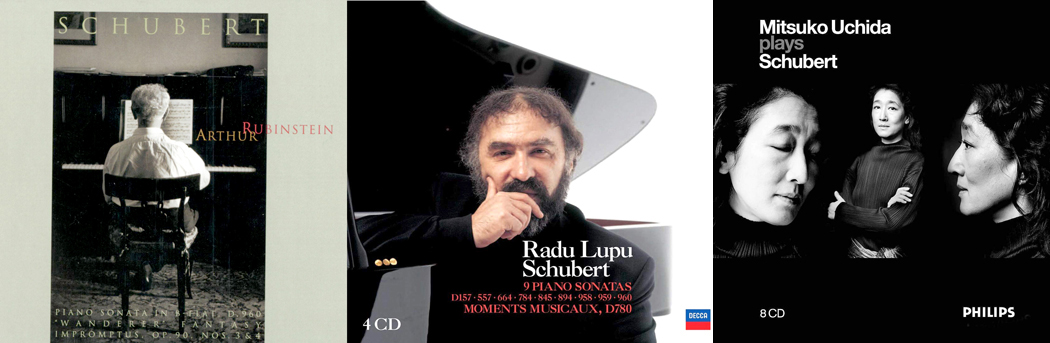
The final sonata, in B-flat, is one of the longest written by that time, rivaling Ludwig’s “Hammerklavier.” It, too, has a central slow movement of intense emotion. Arthur Rubinstein, who played the sonata as well as anyone ever has, said of the adagio, “This movement is like death. There is nothing else as close as this music that shows us what death feels like.”

Rubinstein recorded it twice, only a few years apart, but it is his first, from 1965, that I think is the best ever. There is a gracefulness and a humanity in the playing that is uniquely Rubinstein’s. 

There are tons of other performances, from everyone from Horowitz (a bit clangy) to Alfred Brendel (a bit stodgy). But I also recommend the versions by Radu Lupu and by Mitsuko Uchida. 


 Liszt Sonata in B-minor

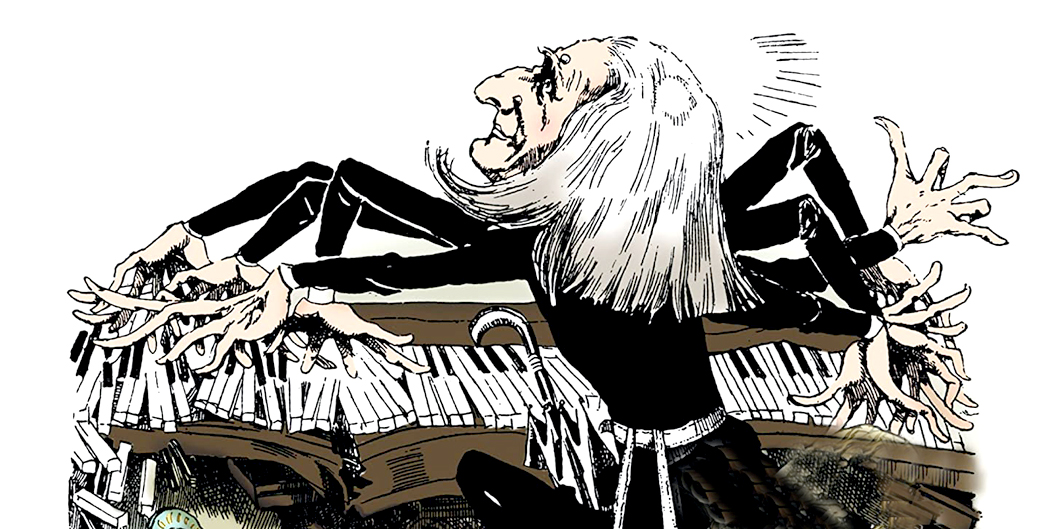
Franz Liszt is the guy who invented the piano recital: people paying good money to hear a pianist on stage all by himself, amazing them with his showmanship and technical brilliance. Liszt was the equivalent of a rock star in his day. Oh the women! Oh the humanity!

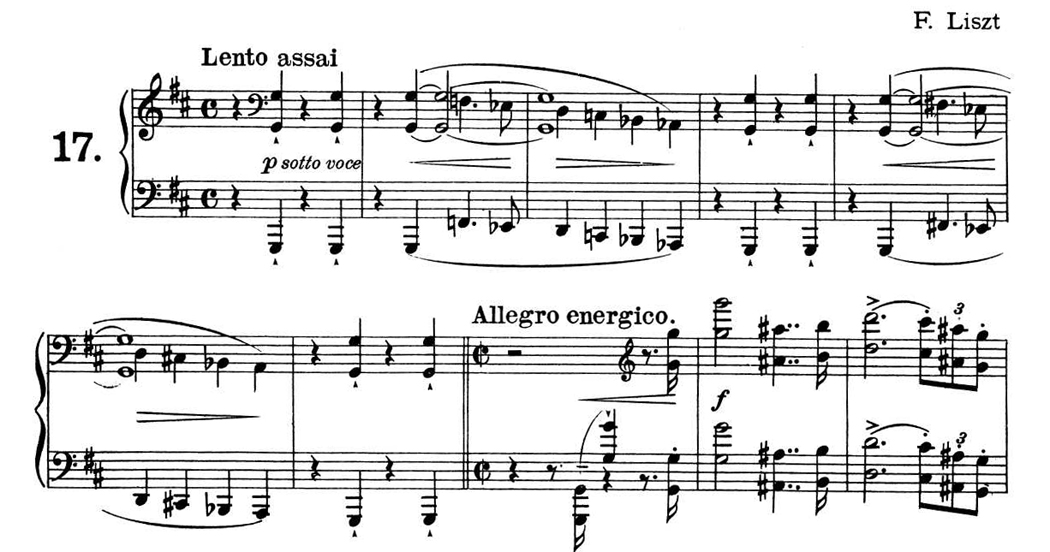
A lot of what Liszt wrote is surely just showboating — “Look what I can do!” But he wanted to establish his bona fides, also, as a great composer, and among those things he wrote of more serious intent is his gigantic Piano Sonata in B-minor. 

Written in 1853, it divided the listening audience in two, half hating, half loving it. Brahms fell asleep while hearing it. The critic Eduard Hanslick said “Anyone who has heard it and finds it beautiful is beyond help.” Another German critic, Otto Gumprecht, referred to it as “an invitation to hissing and stomping.” 

Liszt sent Clara Schumann a copy of the sonata. In her diary she described the sonata as “a blind noise … and yet I must thank him for it. … It really is too awful.” 

Yet, the more avant-garde audiences found it thrilling, adventurous and exciting. Richard Wagner loved it. And today, it is a staple of the concert repertoire. I have heard two great live performances of it, first by Emil Gilels and more recently by Andre Watts — both overwhelming experiences.

My favorite performance is by Ukranian pianist Valentina Lisitsa. Too many upstanding and earnest pianists have attempted to overcome the showmanship and flash in Liszt to, supposedly, “find the music.” But Liszt without the dash and flash isn’t really Liszt. The exhibitionism is built into the score, and Lisitsa’s Liszt (not just in the sonata) is the perfect presentation of what Liszt is supposed to be. It’s louder, faster, more dazzling. (Hence, Lisitsa is sometimes pooh-poohed by the snobbier critics).

If you don’t mind a slightly older audio sound, you also can’t go wrong with Vladimir Horowitz, who also knows what this music is about. Finally, I treasure the CD of Watts playing the sonata, with panache and taste, which reminds me of hearing him do it live. 

Brahms Sonata No. 3 in F#-minor, op. 5

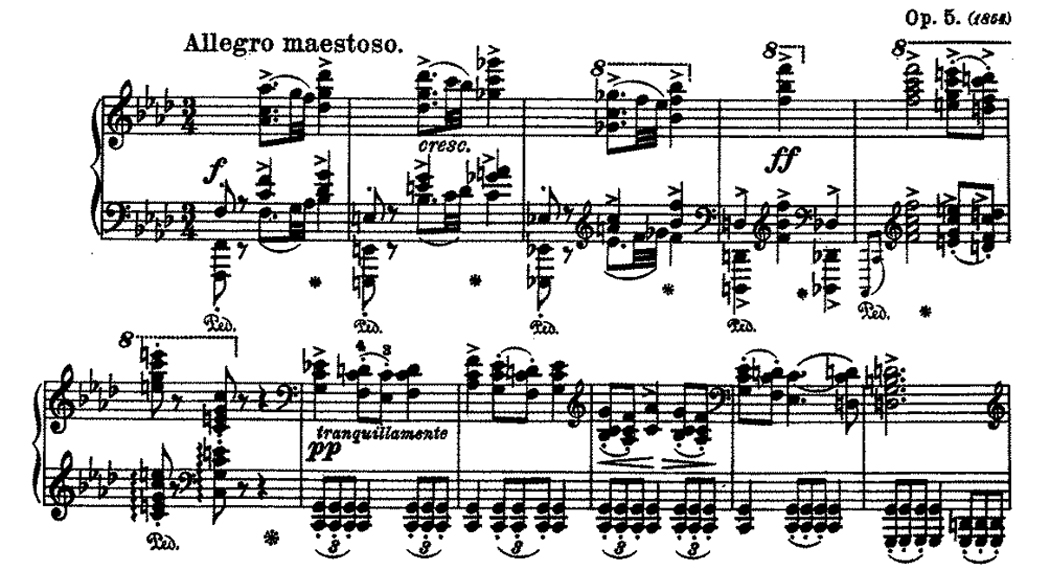
We think of Brahms as the old man with the beard spattered with cigar ash, but he was young once, full of piss and vinegar, and at the start of his career he wrote three monumental piano sonatas, opuses 1, 2, and 5. Each busting knuckles with the best of them. They are big, even by the standards of the time. 

The third is the one that caught on. He wrote it in 1853, the same years as Liszt wrote his sonata, and when he was just 20. It is vast, passionate, and gawky. It’s aggressive opening uses the whole length of the keyboard from booming bass to tintinnabulating treble. The second movement is tender andante inspired by a poem about pale moonlight and love. A rumbling scherzo follows and then an extra movement thrown in — a “recollection” or “remembrance” (“Rückblick”) that recalls the sweet andante with sweet nostalgia. (Did I mention that through all five movements, there is also a subtle recollection of the Dah-dah-dah-Dum of Beethoven’s Fifth Symphony — a ghost in the mechanism). Finally, an agitated rondo finale. The contrast between the more assertive segments and the more quiet, thoughtful parts give this sonata a sense of encompassing the range of human thought and emotion. 

No one plays Brahms better than Arthur Rubinstein. Period. Brahms is his mother tongue and compared with him, every other pianist, no matter how good, is speaking a second language in Brahms idiosyncratic keyboard style — the opposite of the natural pianism of, say, Chopin. But Rubinstein makes it flow and sing. 

He recorded it twice. The more recent, from 1959, is in better sound, so it is my first choice, but I have to put the 1949 version in as my second choice. There are many other good recordings of the sonata, but the only one which comes close to Rubinstein (that I have heard) is by Helene Grimaud. 

Ives Sonata No. 2, “Concord, Mass. 1840-1860” 

England has a centuries-long tradition of eccentrics, but America, in contrast, has its crackpots. Charles Ives was one of them. 

He began writing his second piano sonata in 1904, but didn’t finish it until 1915. I use the word “finished” provisionally, because after it was published, in 1920, Ives continued fiddling with it, rewriting it and republishing it in 1947. It was not performed, in full, before a paying public until 1939. And each performance after was slightly different, partly because there are ad lib sections of the score, and partly because Ives kept jiggering with it. He said it was never meant to be finished, but always to be a work in progress. 

Oh, and it comes with a 120-page preface, called Essays Before a Sonata, in which he discusses not just the music, but the whole of the Transcendentalist movement in New England in the 19th century. 

Ives wrote the work was his “impression of the spirit of transcendentalism that is associated in the minds of many with Concord, Massachusetts of over a half century ago. This is undertaken in impressionistic pictures of Emerson and Thoreau, a sketch of the Alcotts, and a scherzo supposed to reflect a lighter quality which is often found in the fantastic side of Hawthorne.”

The first movement, “Emerson,” is quite craggy, but there is humor in the following “Hawthorne,” and quotes from Beethoven’s Fifth, played after dinner on a parlor piano, in “Alcotts,” and finally a quiet, moody reflection of Nature, with a capital “N” in “Thoreau.” 

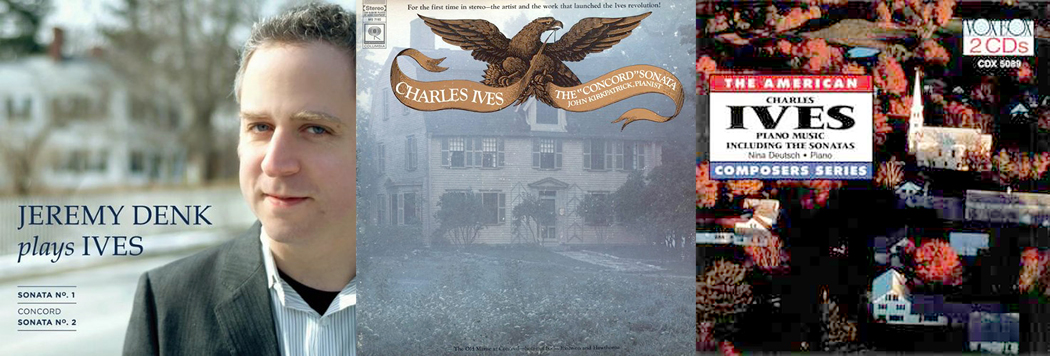
I got to hear Jeremy Denk play the Concord Sonata at Zankel Hall in New York, in a program that also included the “Hammerklavier.” Back to back in the same recital was more than impressive: It was like watching someone run a marathon in the morning and after lunch complete an iron man competition. It was exhausting. For a recording of the sonata, Denk is my man. 

But I also have a soft spot for a recording I have cherished for almost 50 years, first on vinyl and now on CD — Nina Deutsch in a Vox Box with a host of other Ives piano music. She brings a slightly softer edge to the Ives. And there is the original recording, made in 1949 by John Kirkpatrick, who first championed the piece. 


Prokofiev Sonata No. 7 in B-flat, op. 83

Schubert had his final three sonatas; Brahms had his first three. Knucklebusters seem to like coming in threes. Serge Prokofiev wrote his group of three during World War II, and are hence often grouped as his “War Sonatas.” Each is a job-and-a-half to tackle, and any of them could be chosen to represent Prokofiev as a knucklebuster. But the one that has become popular is the Seventh, in the middle of the trio. 

The sonata is usually seen as a reflection on the war, but, like so much Soviet music of the time, it holds an unspoken reference to the terror under Stalin. Prokofiev was friends and working colleague with theater director Vsevolod Meyerhold, who was arrested, tortured and murdered by the NKVD in 1939. Meyerhold’s wife, the actress Zinaida Reich, was stabbed 27 times in her apartment after Meyerhold’s arrest, also by the NKVD. Prokofiev (like Shostakovich) constantly feared they might come for him, also. He wrote a panegyric cantata “To the Glory of Stalin” for the dictator’s 60th birthday, in hopes to be left alone, but also wrote this piano sonata, in a more personal style, to maintain his self-respect. 

The first movement is a rough and tumble Allegro Inquieto. The second movement, Andante Caloroso, quotes a song by Robert Schumann, with lyrics that read, “I can sometimes sing as if I were glad, yet secretly tears well … everyone delights, yet no one feels the pain, the deep sorrow in the song.” It is one of the most beautiful moments Prokofiev ever wrote.

That is all followed by the toccata-like finale, Precipitato, which explodes and doesn’t relent until the final pounding chords. It is an angry, propulsive moto perpetuo, with an obsessive repetition in the left hand of a figure in the odd time signature of ⅞. It beats and crashes over and over till audience and pianist are exhausted. 

I heard Maurizio Pollini play the Prokofiev Seventh in Los Angeles many years ago in another monumental program (which also included all the Chopin Preludes and ended with Stravinsky’s Three Scenes from Petrushka). Pollini was great. 

But my first choice remains a dark horse: Barbara Nissman, on a disc with all three of the War Sonatas. Nissman makes the music less brutal, more musical, and I have loved this disc since I first got it in 1989. Nissman was the first pianist to record all the Prokofiev sonatas on CD. The first recording of the Seventh Sonata, by itself, was by Vladimir Horowitz, and it is still a show-off piece. And there is also a great recording by Pollini. 

Not on the list

These six pieces hardly exhaust the 19th century’s love of the big and difficult piano piece. I stuck with sonatas. I could have included Schumann’s Fantasie, op. 17, which could be considered a sonata. I could have included Cesar Franck’s Prelude, Choral et Fugue, which could also pass as a sonata incognito. Or either of Serge Rachmaninoff’s piano sonatas, which are clearly knucklebusters — but not so firmly established in the repertoire as the pieces I have chosen. Some will complain I didn’t include Alkan, but his music will probably never be generally popular. 

You may have your own candidates, either for compositions or performances. These are mine. 

As I continue to contemplate the possibility of perhaps, maybe, decluttering my trove of Classical music CDs, I come to the 20th century. I have to admit, that I listen to music from that period more than any other. It was my century. And so, I have a ton of discs from composers who wrote, beginning in the 19th, but extending their careers into the 20th, and now, music from the 21st century. 

Sometimes, we forget that such lush music as that of Rachmaninoff or Richard Strauss continued to be written: Strauss’ Four Last Songs, perhaps the most high-calorie confection ever put to paper, was premiered in 1949, four years after the end of World War II, and 36 years after Stravinsky’s Rite of Spring. “There’s still plenty of good music to be written in C-major,” said Arnold Schoenberg.

So now, as I did last time, I am going to sort through the violent century and salvage what I think needs to be saved, making a pile of recordings and regretfully saying goodbye to too much great music, but, you know — I’m 73 years old and I’m not going to be able to listen to all of the thousands of CDs that currently clog my shelves. 

I’ve set the goal of picking a single work (or set of works) by significant composers to throw on the pile. I’m going by chronological order, according to birth dates. And we start by remembering that Edward Elgar was a 20th century composer. Yes. He was. 

Edward Elgar 1857-1934 — Initially I thought the work I could not do without was the doleful Cello Concerto, from 1919. The First World War speaks directly through that music. But, no, I have to go with the Violin Concerto of 1910, which is one of the few noble concertos that can stand with those of Beethoven, Brahms, Sibelius, Berg and Shostakovich — not merely tuneful, but an expression of the highest thoughts and emotions that humans are capable of. 

But, I’m in luck. Because I can save the Violin Concerto, played by Pinchas Zukerman on a disc package that includes the Cello Concerto, played by Jacqueline Du Pre, with the Enigma Variations thrown in.  A perfect summing up of the best of Elgar.

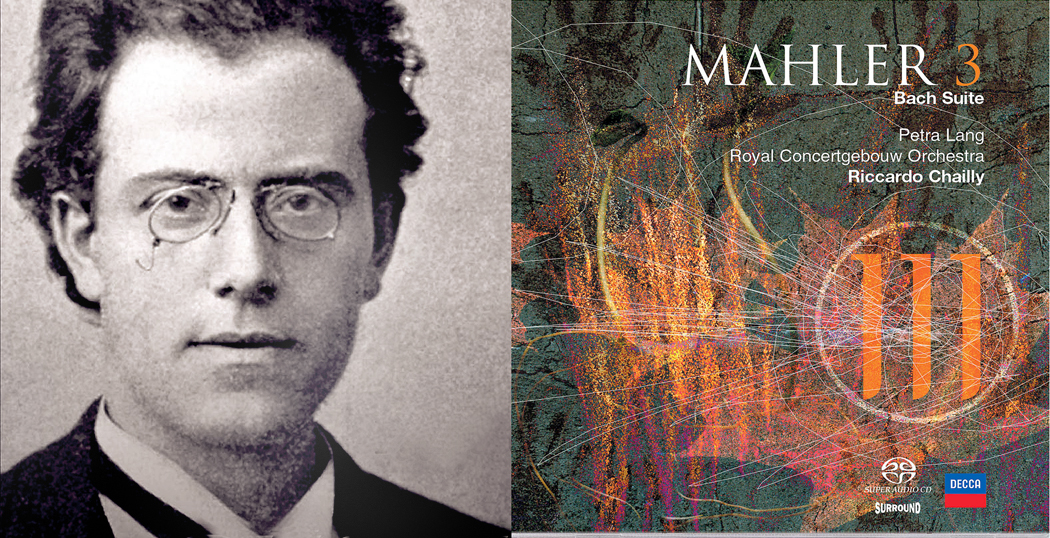
Gustav Mahler 1860-1911 — Choosing is too hard. I have double-decker shelves devoted to Mahler, the composer who moves me above all others. How can I clear it out? How can I consider any of it as “clutter?” I thought originally I would have to save Das Lied von der Erde, and I don’t know how I can say goodbye to it. But Mahler said famously, the symphony must contain the world, and the piece that does that more than any other is the Third Symphony, and so, I’m putting that on the pile.

I just counted, and I currently have 14 recordings of the Third (with another on the way from Amazon). The one I keep is Riccardo Chailly and the Concertgebouw Orchestra. Not only is it a great performance, but the 2-discs are magnificently engineered. The sound is stunning.

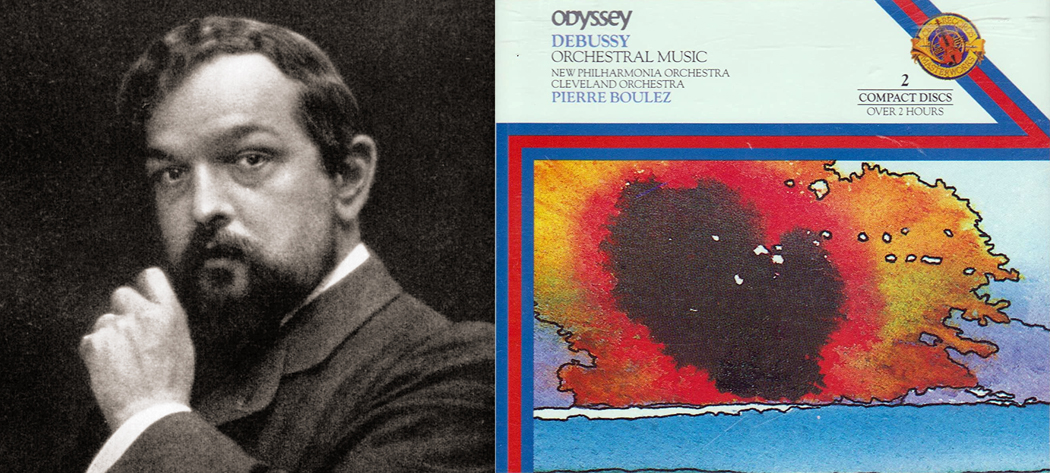
Claude Debussy 1862-1918 — While I love Debussy’s piano music (especially played by Paul Jacobs), the keeper is La Mer. I have not counted the versions on my shelf, but there are not a few. 

Pierre Boulez recorded it twice. The second is OK, but nothing special, but his first go-round, on Sony, is cut by diamond and the most exciting one I know. It may not be a sea-spray evocative as some, but it makes a compelling case for it as belonging to the 20th century. It comes in a package with a pile of other Debussy.

Richard Strauss 1864-1949 — Strauss can sometimes seem a bit reptilian. How much is show-biz with his show-off orchestration. But there is no doubt to the sincerity of his Four Last Songs. They are the most profoundly moving orchestral songs I know, outside Mahler’s Der Abschied

I wanted to save Jessye Norman’s version, with Kurt Masur, but I have to admit, my heart has always belonged to Leontyne Price in these songs, accompanied by Erich Leinsdorf. Both versions are gorgeous, but Price is now packaged with Fritz Reiner’s Also Sprach Zarathustra. On the pile. 

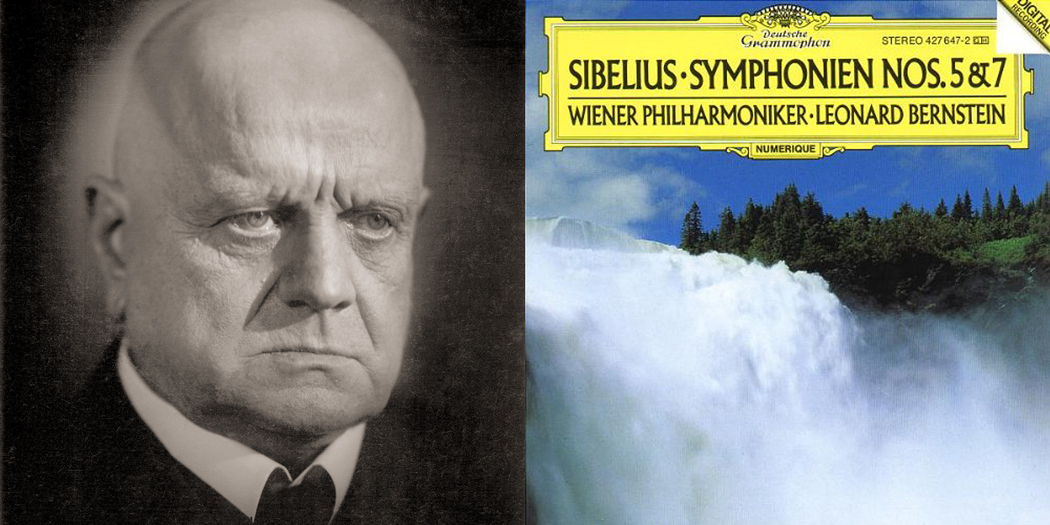
Jean Sibelius 1865-1957 — As tightly argued as Mahler is spacious, Sibelius packs a great deal into a well-cinched frame. Of his seven symphonies, the one that speaks to me loudest is the final one, which makes me feel in my bones the vast icy spaces of Scandanavia. 

Leonard Bernstein recorded it twice, once for Columbia (now Sony) and later for Deutsche Grammophon. The first is tighter, but the second comes with the Fifth Symphony, giving me the chance to save two symphonies for the price of one. Bernstein slowed his tempos as he got older, and some people don’t like the broadened Fifth, but I have no problem with it. And the Seventh takes me to other places. 

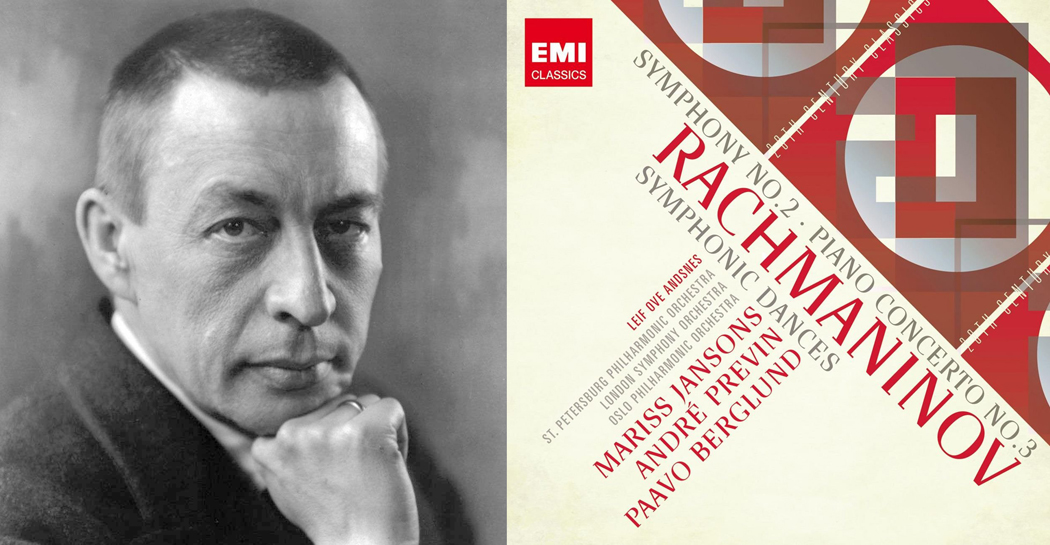
Serge Rachmaninoff 1873-1943 — My dearest friend, Alexander, refuses to listen to Rachmaninoff, saying he is too gooey and Romantic. But I have been trying to get him to recognize that his music — especially his later music — is oozing with Modernist irony. What is more sly than the Paganini Rhapsody? Yes, there’s the “big tune,” but even that is undermined by what surrounds it. But if I have to save just one piece, that would be the Symphonic Dances. I love them to death. 

But, like so many other things in this list, I can have cake and eat it at the same time, with the recording by Andre Previn and the London Symphony Orchestra, bundled with the gooey, Romantic Second Symphony under Mariss Jansons, and the tornado of the Third Piano Concerto, played by Leif Ove Andsness. 

Arnold Schoenberg 1874-1951 — Now we’re entering territory fully recognizable as Modernist. I wish I could save Pierrot Lunaire, but I have only one slot available, and it has to go to Verklaerte Nacht. While I admire Pierrot, I love Transfigured Night

Of the versions I have, both in its orchestral form and its original sextet form, I am surprised at how good the version is that was recorded by Herbert von Karajan and the Berlin Philharmonic. It goes onto the pile, and gives me the bonus of the Orchestral Variations

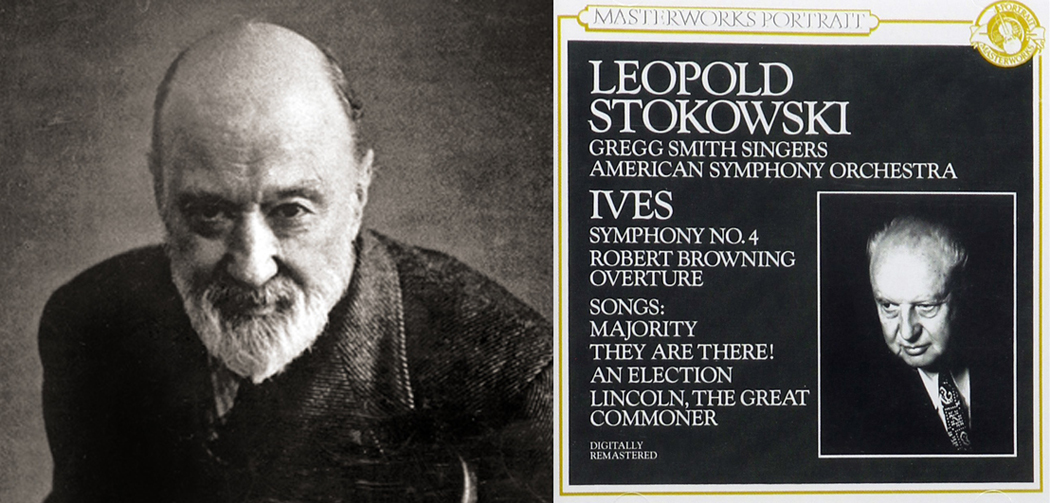
Charles Ives 1874-1954 — I have three or four versions of the Concord Sonata, and heard it live played by Jeremy Denk. It should be saved. But I am going, instead, with the Fourth Symphony, which is pure Ives, with all his usual tricks. Friends think I’m joshing when I claim that Ives’ music is beautiful. But it is. You just have to get used to the idiom. 

The best version (I have four of these, too) is the first recording, led by Leopold Stokowski. One word for it: Transcendental. 

Maurice Ravel 1875-1937 — Stravinsky dismissed him as a “Swiss watchmaker,” but I think that was only professional jealousy. Yes, we’re all tired of Bolero. But I want to save the Concerto for Left Hand, which is jazzy in parts, terrifying in parts, and always makes you wonder that anyone can play two-hand piano with only one hand. 

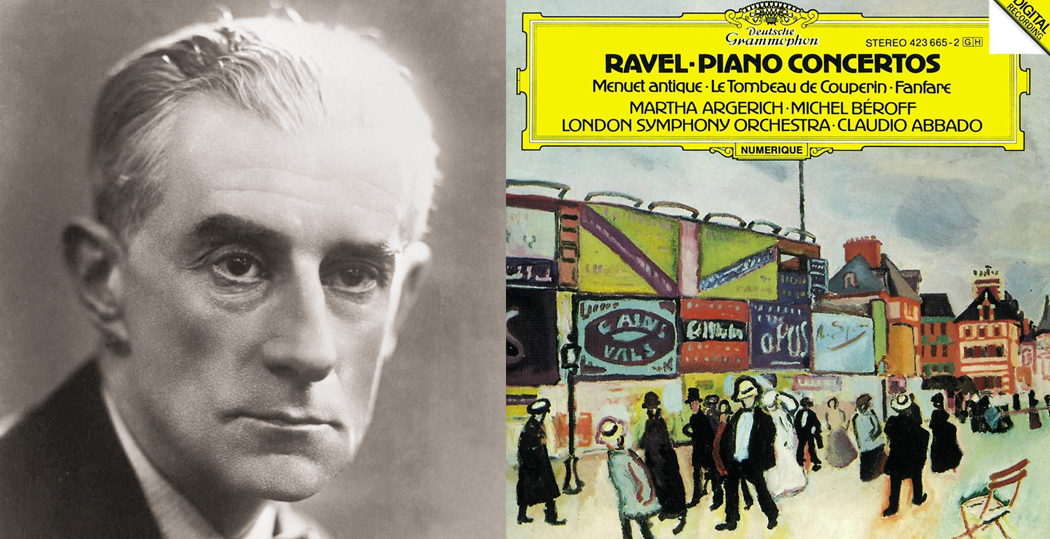
But there is also that ethereal slow movement of the G-major Piano Concerto. The disc with Martha Argerich playing the G-major and Michel Beroff playing the Left-Hander, with Claudio Abbado and the LSO, also gives us the orchestral version of Le Tombeau de Couperin. What a luscious disc. 

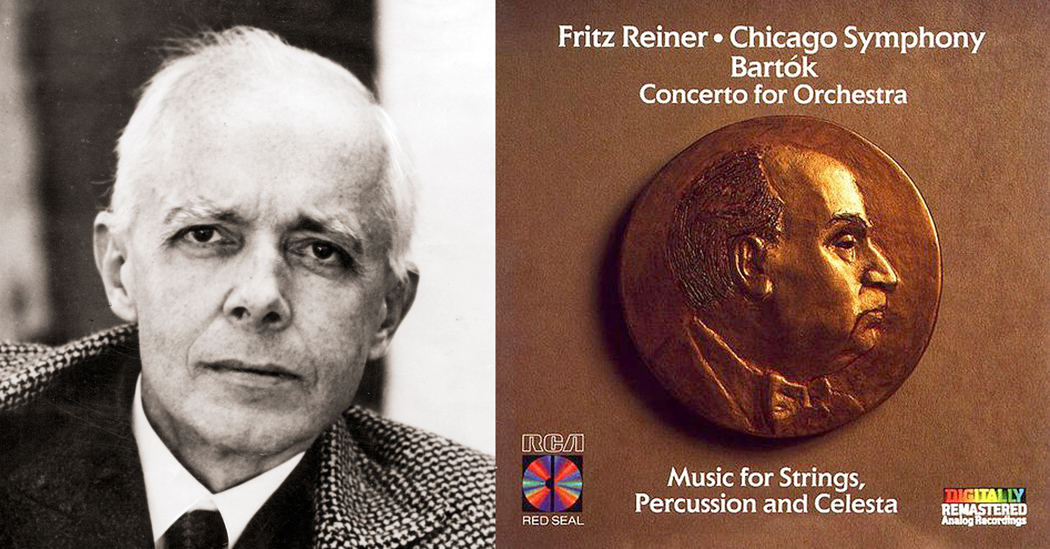
Bela Bartok 1881-1945 — There’s a lot to save with Bartok, also. But I can’t have the Contrasts, the piano concertos, the six quartets and the Concerto for Orchestra. No. One disc. And the piece I want to keep most is the Music for Strings, Percussion and Celesta

Luckily, one of the greatest performances of that music, by Fritz Reiner and the Chicago Symphony, also features one of the greatest performances of the Concerto for Orchestra. It is essential listening for any music lover.

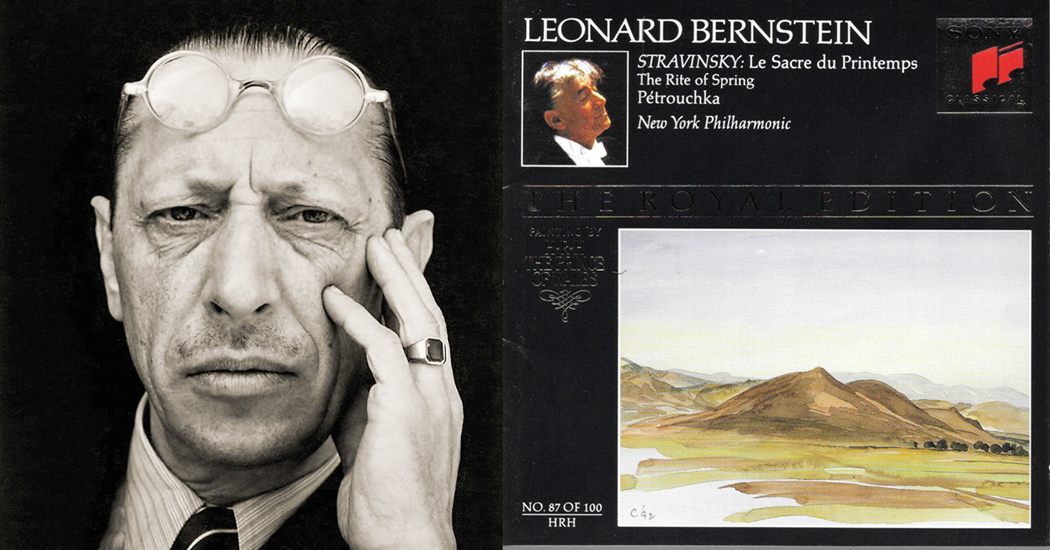
Igor Stravinsky 1882-1971 — Much music, many styles. Part of me wants to save the Requiem Canticles and the Movements for Piano and Orchestra, just to tweak those who hate 12-tone music. But since the entire 20th century seems launched by The Rite of Spring, just as the 19th was launched by the Eroica, I have to save it.

There are lots of great performances, but none as feral and primal as the first of them recorded by Leonard Bernstein and the NY Phil. Even Stravinsky, who hated “interpretation” in performance agreed that it was like no other. The disc also includes Petrushka, so, what’s not to love?

Anton Webern 1883-1945 — Do we have to? I’m afraid so. Luckily, there isn’t much of it. No one can make blips and blurps like Webern. He was the godfather of all subsequent serial music, disconnected, alienated and difficult. Yet, he makes such interesting sounds. And few pieces last more than a few minutes, even seconds. Take at least one bit of the broccoli: Try a little Webern. 

Karajan put out a tight, condensed disc with the Passacaglia, the 5 Movements for String Orchestra, Op. 5, the 6 Pieces for Orchestra, Op. 6, and the Symphony, Op. 21. This is a fair sampling, really well played. And the entire symphony lasts only 10 minutes. 

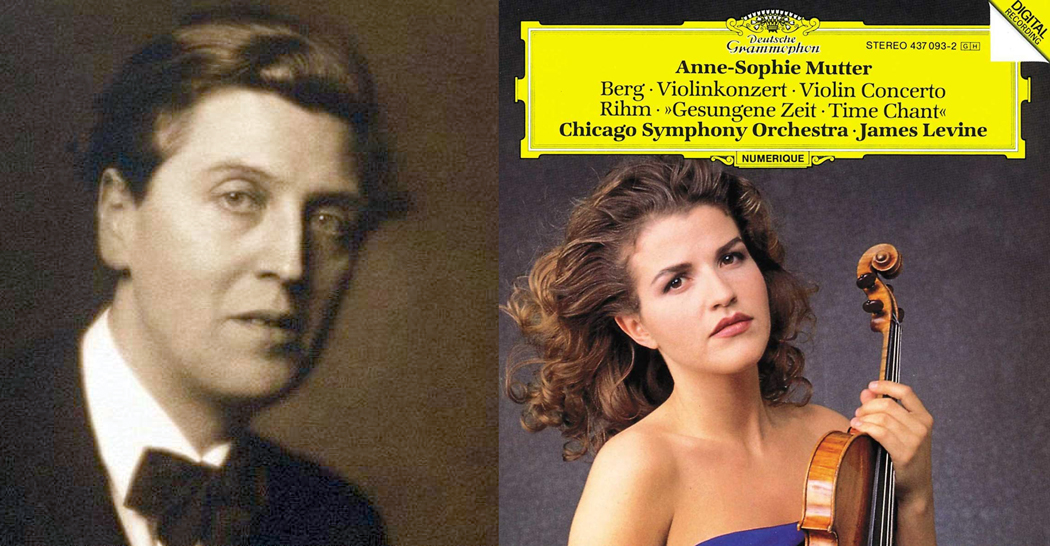
Alban Berg 1885-1935 — The third wheel of the Second Vienna School is the easiest to love and enjoy. He is the most emotional, and found a way to cheat on his 12-tones, to suggest key areas. His Violin Concerto is the most powerful fiddle concerto of the whole century, the most personal, the most emotional, and the most beautiful. 

No one plays it who doesn’t give it his or her most serious efforts. It cannot be just tossed off. My favorite is by Anne-Sophie Mutter with the Chicago Symphony and James Levine. It also includes Wolfgang Rihm’s Time Chant, which, I’m afraid, I find utterly forgettable. I’m saving the disc, anyway, for Mutter and Berg and all the pain of loss in the world condensed to music. 

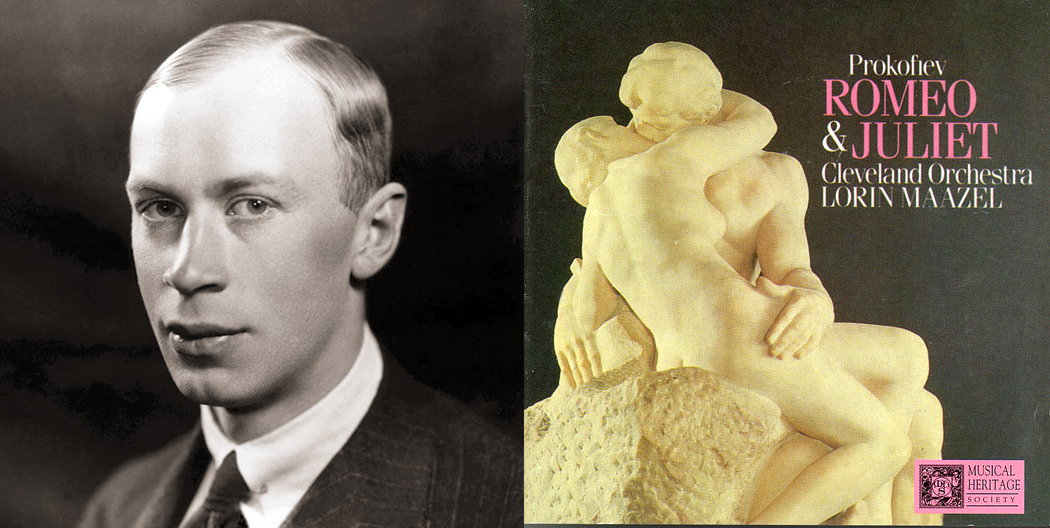
Serge Prokofiev 1891-1953 — Shouldn’t I save the Seventh Piano Sonata? Or the Third Piano Concerto? Or the Fifth or First symphonies? Yes, I should, but I’m going to save the full ballet score of Romeo and Juliet, which, I believe, is the greatest ballet score of all time. The whole thing, not just the suite. I might be swayed by having seen it danced many times, in some of the best productions ever. But the music stands on its own. 

There are three possibilities: Previn, Maazel and Gergiev. I’m going with Maazel and the Cleveland Orchestra. It just noses out the others. 

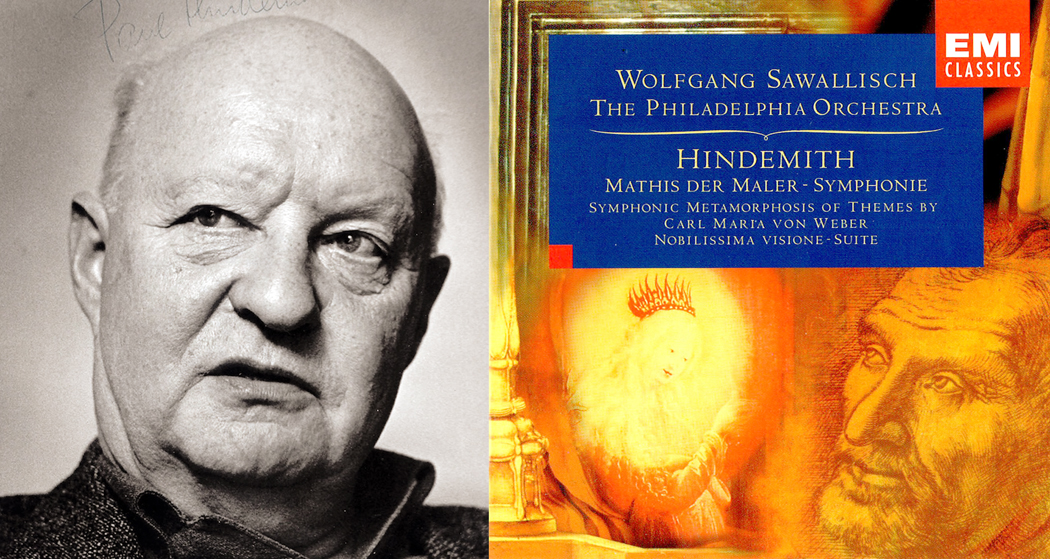
Paul Hindemith 1895-1963 — Hindemith used to be the third part of the triad of Stravinsky, Bartok and Hindemith as the top Modernists in music. But he has fallen on hard times. Stravinsky and Bartok have better tunes. But when Hindemith borrows tunes from Carl Maria von Weber, he is as good as any. I love a lot of Hindemith, but I admit, he is not overtly lovable. But the Symphonic Metamorphosis on Themes by Weber is jaunty, catchy and a ton of fun. 

A really good performance by the Philadelphia Orchestra under Wolfgang Sawallisch also gives us two of Hindemith’s best other scores, the Mathis der Maler symphony and Nobilissima Visione. This is Hindemith you could actually learn to love. 

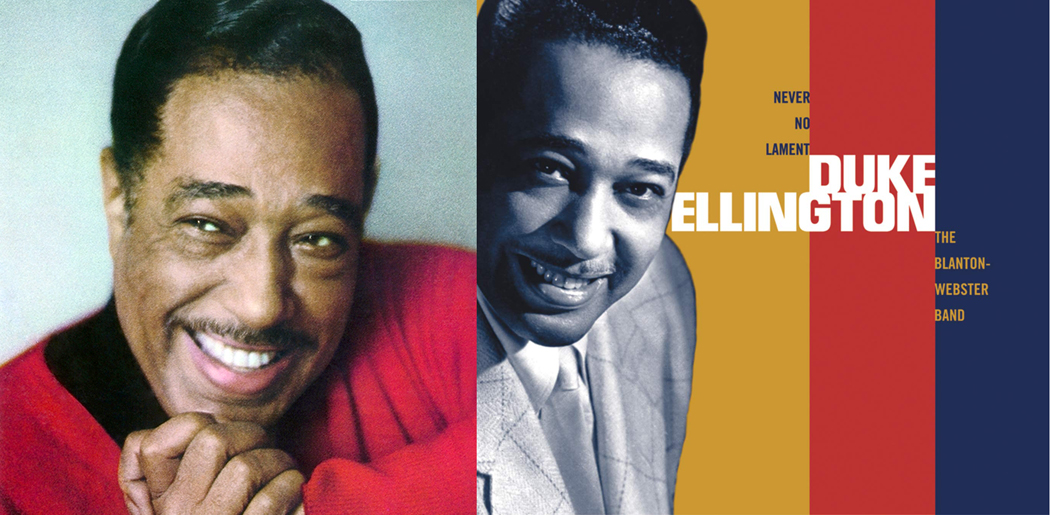
Duke Ellington 1899-1974 — Yes, in my book, this is classical music. Ellington does for his group of instruments nothing less than what Ravel can do for the standard symphony orchestra, with all the colors and surprises. And harmonically, Ellington is ages ahead of many more traditional composers. I have about 50 discs of Ellington’s music, and I love him in each of his decades. But the height of his creativity and originality was with the band he had in the 1941-42, the so-called Blanton-Webster band, named for bassist Jimmy Blanton and tenor sax, Ben Webster. It’s a misnomer, because you can’t forget all the other luminaries in the band, from Harry Carney to Cootie Williams to Johnny Hodges. 

There is a three-disc release that has most of the work the band did in those two years, including Ko-Ko, Cotton Tail, Harlem Air Shaft, Take the A Train, Blue Serge, Sophisticated Lady, Perdido and the C-Jam Blues. Each a miniature tone-poem. This is music to take seriously. Seriously. 

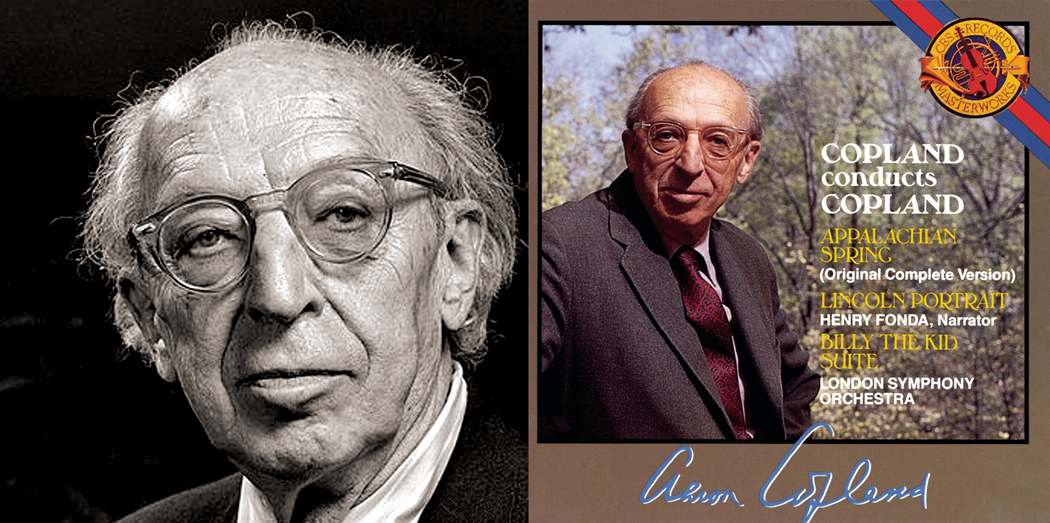
Aaron Copland 1900-1990 — There are two Coplands, the earlier, knottier Modernist of the Piano Variations, and the later, popular composer of Rodeo, El Salon Mexico and Billy the Kid. But to my mind, his very best is Appalachian Spring, a ballet score he wrote for Martha Graham. It is usually heard as a truncated suite and enlarged for full orchestra.

But the version I love best, and the one going on my pile, is the original full-length chamber version. Copland recorded it himself, along with the suite from Billy the Kid. Unfortunately, you have to put up with the tedious and tendentious Lincoln Portrait, here narrated by Henry Fonda. 

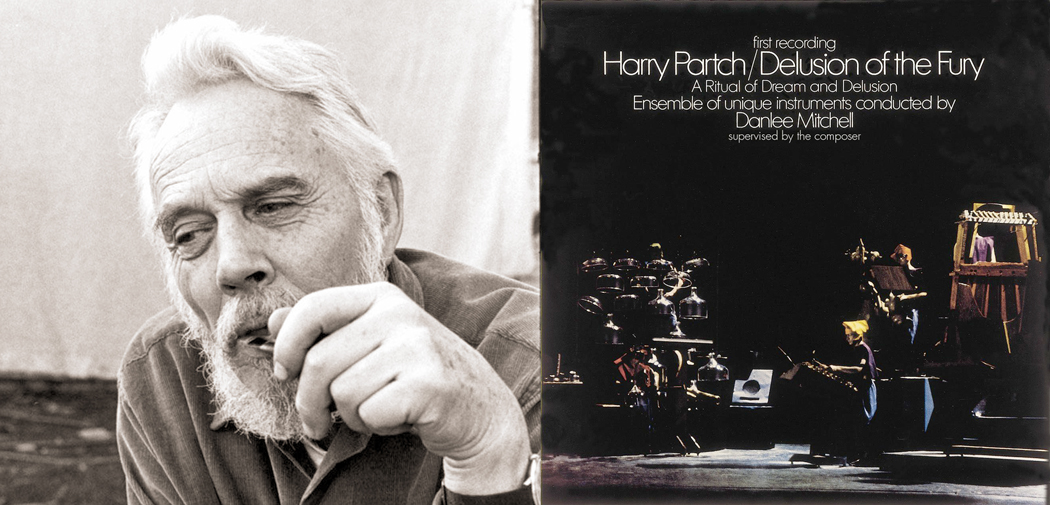
Harry Partch 1901-1974 — England has its eccentrics, but America has its crackpots, and Partch is Exhibit A. Having decided that the tempered musical scale is a “mutilation” of true music, he invented and built a whole orchestra of new instruments, such as the chromelodion, the quadrangularis reversum, the zymo-xyl, the gourd tree and cloud-chamber bowls, in order to play music in his 43-note octave. I saw an exhibit of them at the Museum of Modern Art in New York in the 1960s. They were stunningly beautiful to look at. Hearing them, is something different. 

Partch wrote a lot of music for his instruments, some enchanting, like his songs on Hobo graffiti, Barstow. I am saving his full-length Delusions of the Fury, which is based on a Japanese Noh play and an African legend and a codification of Partch’s own delusions. Hooray for him. 

Dimitri Shostakovich 1906-1975 — Surely the major composer of the middle of the 20th century, Shostakovich labored hard under the yoke of Stalinism, and his music expresses his deep humanity (except when he is buckling under the pressure of the commissars and pumping out party-hack material; but we can ignore all that). His symphonies 1, 4, 5, 7, 9, 10, 13, 14 and 15 are among the greatest works of the century. But I’m saving his first Violin Concerto. It is, I believe, his ultimate masterwork. 

Its dedicatee, David Oistrakh, recorded it with Dimitri Mitropoulos and the the New York Philharmonic and anyone who cares about classical music should know this performance. It is coupled with Rostropovich playing the first Cello Concerto with Ormandy and the Philadelphia. Together this is a powerful pair. 

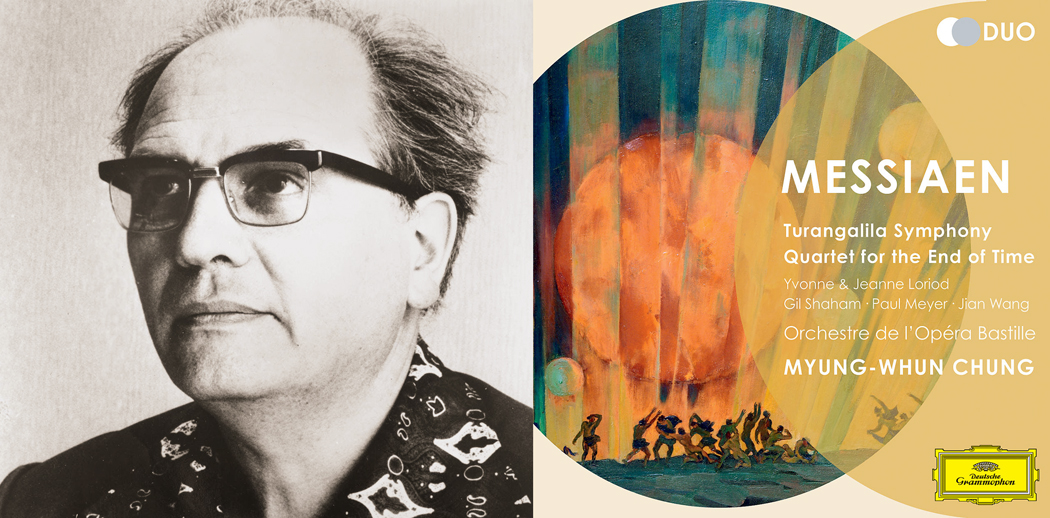
Olivier Messiaen 1908-1992 — Harry Partch wasn’t alone. French composer Olivier Messiaen had his own ideas about harmony and rhythm, and created an idiosyncratic body of music that is built on bird song and Eastern mysticism, combined with fervent Christianity. 

He wrote his Quartet for the End of Time in a Nazi prisoner camp and played it for the first time for its inmates and guards. His most popular work (if you can call anything so peculiar “popular”) must be the Turangalila Symphony, a rich, spicy, aromatic blend of orchestral colors, and you can get both works together in a set with conductor Myung-Whun Chung and the Orchestre de l’Opera Bastille. 

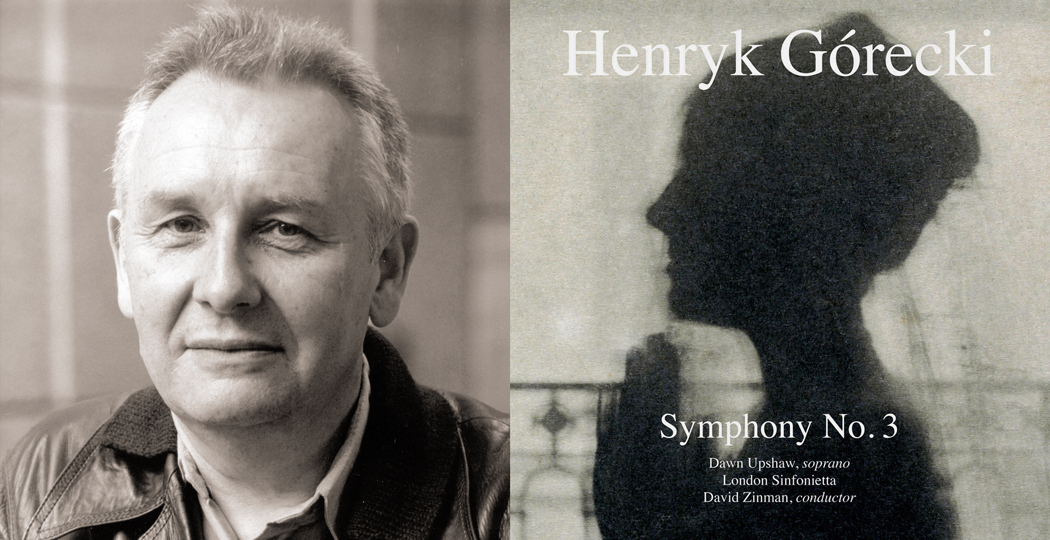
Henryk Gorecki 1933-2010 — Gorecki had the misfortune to have become popular. His Third Symphony topped the pop charts in England in 1992 and sold a million copies world-wide. Officially titled the Symphony of Sorrowful Songs, it speaks of war, love and loss. It is a slow piece, moving only by tiny steps from first to last. Its popularity has led some critics to pooh-pooh its depth and beauty, believing nothing that popular could be any good. They should listen more carefully. 

The version that sold so well was the premiere recording with Dawn Upshaw and David Zinman conducting the London Sinfonietta. I have several versions on my shelves, but this first one is still the best. Onto the pile. 

Morton Subotnick 1933- — The California-born composer of electronica had a brief moment of fame in the late 1960s when Nonesuch Records released his Silver Apples of the Moon, and followed it up with The Wild Bull. The first, with its synthesizer squeaks and blips was bright and energetic, the second with its groans and wheezes, was much darker. 

Both deserve to be remembered. They may be a relic of their times, but they really are worth listening to. And they are now both on a single Wergo CD. 

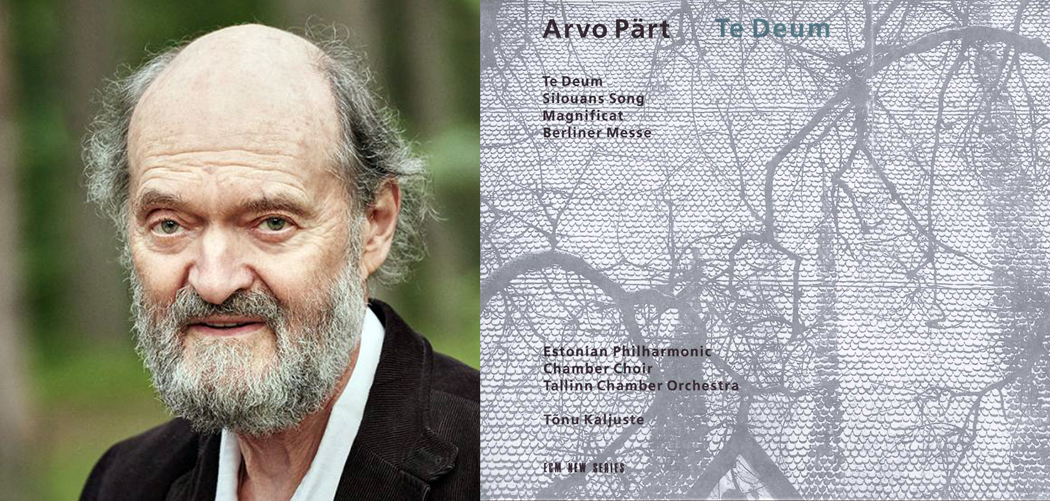
Arvo Pärt 1935- — The Estonian composer’s meditative music is what he calls “tintinnabuli,” and in 2018, Part was the most performed living composer in the world. His music appeals not only to the classical audience, but to the New Age one as well. It is spiritually-aimed music and is both beautiful, well-constructed, and easy to listen to. You can wash in it like a warm bath, or you can listen as intently as you might to Bach or Bartok. 

He has arranged his most popular piece, Fratres, for any number of instruments and combinations (there is even an entire CD of nothing but variations of the piece), and I could save pretty much any one of his discs. But I am going to put Te Deum on the pile, primarily for the Berlin Mass that is on the disc. 

Philip Glass 1937- — Glass is unavoidable, even in popular culture. He must be the most prolific composer since Vivaldi. He began as a strict Minimalist, but loosened up that style to become what can only be called a “Glassian.” At his best, he is hypnotic and powerful. At his worst, he can become tedious. His Einstein on the Beach was epochal and groundbreaking. I have an entire shelf devoted to his releases. His trilogy of movie scores for the Godfrey Reggio abstract-narrative films in the quatsi series are a perfect introduction to Glass. Koyaanisqatsi was the first and best known.

But I am going to save the third, Naqoyqatsi, mainly because it can be heard as an extended cello concerto played by Yo-Yo Ma. 

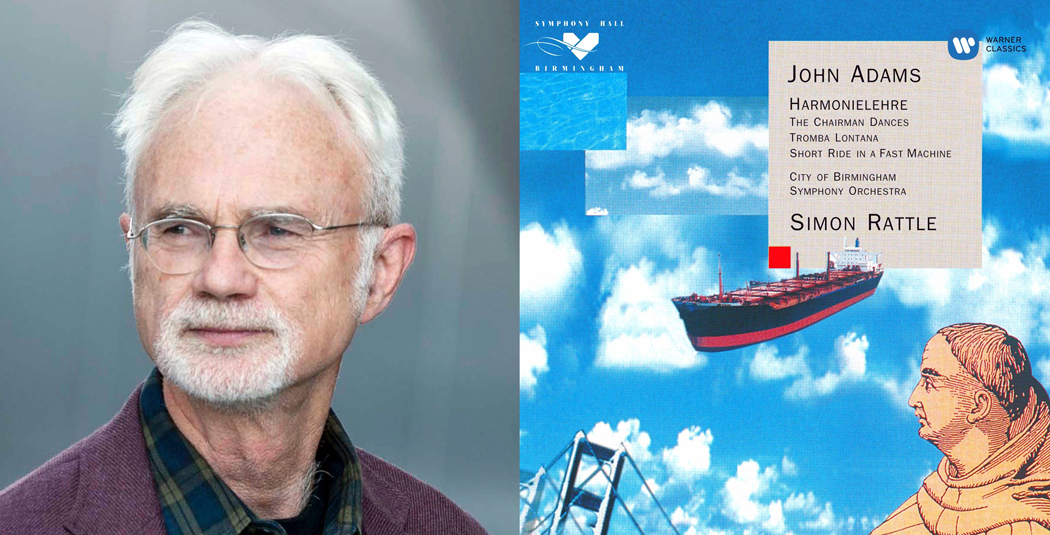
John Adams 1945- — Almost neck-and-neck with Glass is John Adams, another lapsed Minimalist who has created his own distinct voice. His opera, Nixon in China, is pretty well the only contemporary opera to join the mainstream repertoire. I’ve seen it live, and I’ve seen Adams’ Doctor Atomic live. They are both thrilling as Verdi or Puccini. 

But I’m going to save a particular favorite orchestral work, Harmonielehre, or “Harmony Lesson.” Its opening chords are even more startling than the two E-flat bangs at the start of Beethoven’s Eroica. And the disc I’m saving includes two of Adam’s most popular and gripping overture pieces, The Chairman Dances and A Short Ride in a Fast Machine

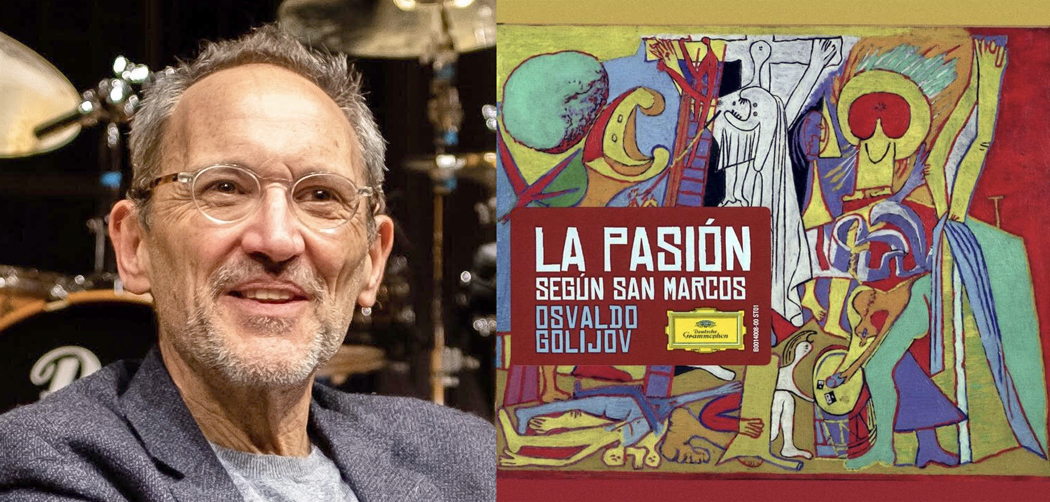
Osvaldo Golijov 1960- — The youngest composer on my pile is now 60. I first heard his music in a live performance of Ainadamar with Dawn Upshaw singing the lead. It blew me away. And I was going to put my recording on my pile, but then I heard his Passion of Saint Mark or La Pasión Según San Marco, and fell in love with it. 
It combines Latin and African rhythms and folk music with a huge percussion section and more than 50 singers. When it was premiered, it got a 15-minute standing ovation. It deserves its place on my pile. 

____________________

And so, my fantasy ends. I have now an imaginary pile of music to listen to, to the exclusion of a thousand other CDs. But it is just a fantasy; I could never actually declutter my shelves. I have, in the past, culled recordings to make space for new, but now those I culled are just stuffed into old dressers, cluttering up the drawers in both of them, hidden from view as if I had actually gotten rid of them. But I can’t. And with new recordings coming my way from Amazon, I may have to cull once more, just to make space. And I may need another old dresser in the storage room just to take care of my rejects. Marie Kondo can go jump in a lake. 

jumping for joyIn Shelley’s Ode to a Nightingale, he reminds us that “our sweetest songs are those that tell of saddest thought.” And in classical music, our greatest symphonies, quartets, sonatas and trios all give us a complex emotional universe — and the greater the music, the more likely it will contain heavy, dark, profound and difficult emotions. When it’s doing its job, a symphony is not background music.

You can go through it all: Even music that is ostensibly about joy tends to be about a kind of manic fervor or about the transcendence of the pains of mortal life — not simple happiness. Beethoven’s “Ode to Joy,” for instance, is so over the top, that sometimes you just want to say, “Boy, get a grip.”

Happiness would seem to be the province of the popular song — Feelin’ Groovy, or Irving Berlin’s Blue Skies (you should hear Duke Ellington’s take on that one in Blues No End). What you feel coming out of a performance of Mahler’s Third Symphony is something different — rung out, depleted yet renewed, taken through the paces of all of life. Happiness is irrelevant. Beethoven’s Fifth, Brahms’ First, Tchaikovsky’s Pathetique, Mozart’s Jupiter — They are all large, complex and attempts at metaphor for the joys and pains of being alive.

“Our sincerest laughter/ With some pain is fraught.”

But mere happiness? You can look long and wide to find anything that simple in classical music. And yet …

And yet, as I was driving to the store the other day, with Brahms’ First Serenade in the CD player, I felt a swelling of pure happiness as I listened. The music flew by with a genuine joie de vivre, a thought you rarely think when Brahms comes along. Johannes is all gravitas, Weltschmerz, longing — it used to be joked of Brahms that when he is happy, he sings, “The grave is my joy.”

But here he is, without a thought in his head, spinning out tunes of unreflexive pleasure. The horns and clarinets seem to dance their way through the six movements, with no angst over whether the G-major of this theme leads to the e-minor of that one, or whether the rising fourth here is balanced by a descending fifth in the finale. None of it, just tunes. Bouncy, happy tunes. Who knew Brahms had it in him.

And I began to consider other pieces in the standard repertoire that might share something of this simplicity, this sheer pleasure in the notes —  that feeling of walking along on a sunny day with some spare change in your pocket, knowing you will see your sweetie in the evening and whistling a happy chune. Happy couple

Could I list at least 10 such compositions: It was a challenge I set myself.

First up, of course, come Schubert’s “Trout” quintet. No one has ever written so many hummable tunes in a single piece of music, from beginning to end, pure forward-moving bouncy, danceable melody. It is the counterweight to that other quintet, the string quintet that seems to bind up in its aching arms all the sorrow and pain of the world. In the “Trout,” there is none of that, only hope and pleasure and everything that a major key can shout.
Did Beethoven ever write anything so worry-free? Beethoven had bigger fish to fry. He was busy creating a new century. And yet …

Buried in that treasure hoard of piano sonatas — the so-called “New Testament” of piano literature — there is one tiny sonata in G-major, op. 78 — alla Tedesca — that has nothing but bounce and verve. It is short, clever, witty and fun. Not your usual Beethoven adjectives.

Haydn, of course, is the fountain here. You can pick almost any of his works and find acres of wit, bounce, pleasure and fun. There are his more profound moments, but pick any symphony in the 60s or 70s and you can run from start to finish with a smile in your heart. When I want to feel good, I snap in a Haydn symphony to listen to.

For instance, the Symphony No. 73 in D, “La Chasse,” which ends with a fox hunt, a rousing ride through the countryside with horn and hounds.

Or the Symphony No. 60 in C, “il Distratto,” which has a joke larded into it every 11 bars — you never have to wait long for another one, like a New York City bus. There’s the place where he stops and has the orchestra retune, right in the middle of the finale; there’s the second theme in the first movement, that just stops in its tracks harmonically and seems to fall asleep. But it isn’t the jokes, per se, that I am touting here, but the sheer joy of the music, unalloyed with anything like “the saddest thought.”

If you want to find the same music, but in a 19th century idiom, you have it in Georges Bizet’s Symphony in C, which he wrote when he was a mere stripling of 17. It begins with joie and ends with enthusiasm and in between it is stuffed with buoyancy and energy. You cannot listen to it without it putting a bounce in your step.

I had the pleasure of seeing the New York City Ballet perform George Balanchine’s Symphony in C at the Palais Garnier in Paris, and I couldn’t tell which thrilled me more, the choreography or the music. It is one of the high points of my esthetic life and kept me smiling for days, even weeks.

You get something of the same confident buoyancy in Nikolai Rimsky-Korsakov’s Capriccio Espagnol, written as a virtuoso piece for orchestra, and everyone gets to join in the party. No shadow hangs over the music — it is all joy.

The 20th century is a sorry one, filled from end to end with war, murder, oppression and genocide. But there are points of light in the music. Prokofiev may have the three great “War Sonatas,” with all the weight of the world on them, but he started out with his Classical Symphony, which is a nod back to the music of Haydn, but with all the hot sauce of Modern dissonance tossed in for spice. The music bounces its way from the get-go. You can’t have a heavy thought while listening to it.

And Paul Hindemith — who used to count as one of the big three of Modern music with Stravinsky and Schoenberg (how the mighty have fallen) — joins my list with his Symphonic Metamorphoses on Themes of Carl Maria von Weber. He is helped out, of course, with the jaunty tunes that he culled from Weber, but he costumes those tunes with the happiest, bounciest orchestrations and developments.

And finally, to round out my self-assigned Ten, there is the verve and sass of Darius Milhaud’s Le boeuf sur le toit, which is 15 minutes of toe-tapping polytonality based on dance tunes from Brazil and named after a cabaret in Paris where the avant-garde met and drank and did their best to show off to each other. Listen to the music once and you will not be able to get it out of your head for days — or out of you hips, knees and feet. Not a care in the world.

The cares of the day will come back, as they always do, and even such happiness as embedded in this music can wear out its welcome, joyful, but a bit thin compared to the Big-Boy cousins in the concert hall, but for a moment, like that happiness you feel skipping down the street on a good day, it seems like all the world needs.

Here’s my list. Please add to it or make your own:

–Symphony No. 60 in C “il Distratto” by Joseph Haydn

–Symphony No. 73 in D “la Chasse” by Joseph Haydn

–Piano Sonata No. 25 in G, op. 79 “alla Tedesca” by Ludwig van Beethoven

–Piano Quintet in A, op. 114, D. 667 “Trout” by Franz Schubert

–Symphony No. 1 in C major by Georges Bizet

–Serenade No. 1 in D, op. 11 by Johannes Brahms

–Capriccio Espagnol, op. 34 by Nikolai Rimsky-Korsakov

–Symphony No. 1 in D, op. 25 “Classical Symphony” by Serge Prokofiev

–Symphonic Metamorphoses on Themes of Carl Maria von Weber by Paul Hindemith

–Le Boeuf sur le Toit, op. 58 by Darius Milhaud