Archive

Tag Archives: rite of spring

David Attenborough on Desert Island Discs with host Kirsty Young in 2012

One of the longest running radio shows is Desert Island Discs, which has been on the BBC since 1942. It is often said to be the second longest-running radio show after the Grand Ole Opry, which cranked up in 1925, although a few critics have discovered some obscure programs in foreign climes that may have been on longer, and there’s also the British Shipping Forecast which began in 1861, before radio was even invented, and first disseminated via telegraph before switching to radio in 1924. 

On Desert Island Discs, prominent people, whether politicians, entertainers, sports stars or academics, are asked to choose eight recordings they would take with them to the proverbial desert island, and place them in the context of their lives. Since the 1950s, they have also been asked to name a book, other than the Bible or Shakespeare, they would also take, and later still, adding on a “luxury item” they couldn’t live without. 

Nearly 4,000 episodes have been broadcast, with some predictable results. The music most often mentioned is Beethoven’s Ninth Symphony, and the luxury item most chosen is pen and paper, or “writing materials,” although Tom Hanks specifically mentioned “a Hermes 3000 manual typewriter and paper.” 

Many of the archived broadcasts can be heard from various online sources, and you can learn, for instance, that Alfred Hitchcock’s book choice was Mrs. Beeton’s Household Management, and his luxury item was “a continental railway timetable.” Some of the choices were equally eccentric. Oliver Reed wanted Winnie-the-Pooh to read and “an inflatable rubber woman.” Actress Janet Suzman wanted a “mink-lined hammock,” and Hugh Laurie asked for an encyclopedia and “a double set of throwing knives.” His long-time double-act partner Stephen Fry wanted a PG Wodehouse anthology and a “suicide pill.” 

My favorite, so far, is John Cleese, who asked for Vincent Price’s cookery book and “a life-size statue of Margaret Thatcher and a baseball bat.” 

One of the inevitable by-products of such a format is the urge to create your own list. And so, I have my own. 

I grew up in New Jersey in a family largely indifferent to music. What music there was came on TV in such variety shows as Perry Como or Dinah Shore. When I was little, there was a small portable record-player on which I played children’s songs, but I don’t count any of that. “Fire, fire, fire, raging all about. Here come the firemen to put the fire out.” 
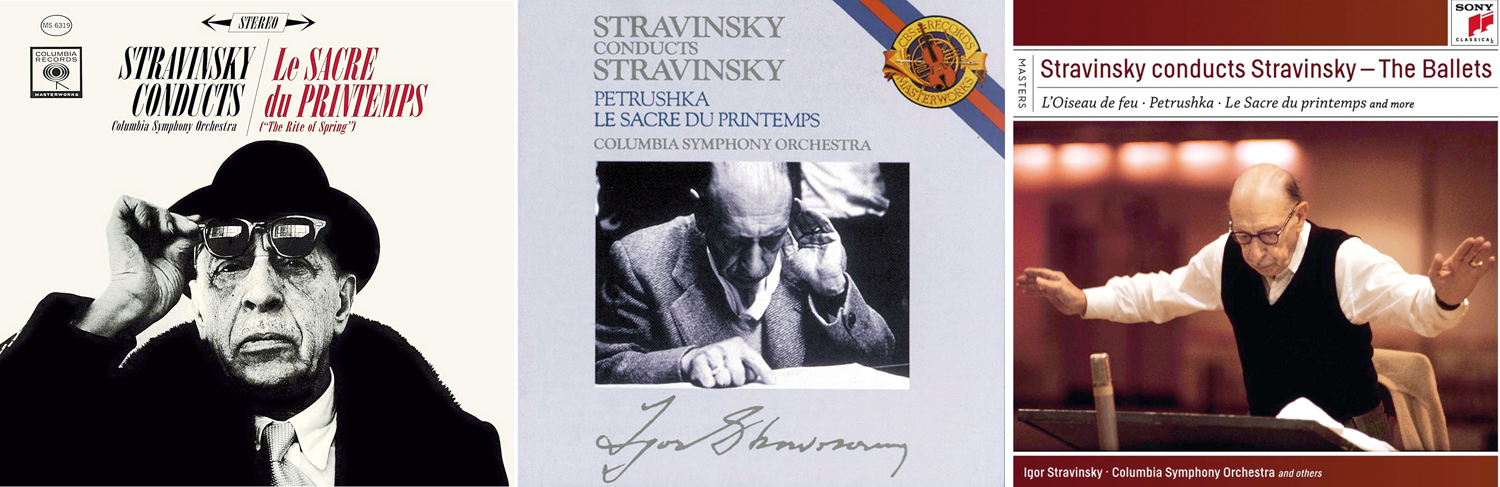
My musical education began in high school when my first serious girlfriend played music on the phonograph while we spooned on the sofa in her parents’ house. She went on to become a professional bassoonist and was studying at the time with Loren Glickman, who played the difficult opening bassoon solo on Igor Stravinsky’s recording of his Rite of Spring. I hadn’t known such music existed. It was mesmerizing. Who knew it was great make-out music? And so, that is my first choice for my desert island disc. 

There have been hundreds of other recordings of that music, and a few, perhaps, more exciting or primitive than the composer’s own, but that recording has never been out of print and comes in many versions, from LP to 8-Track to CD and now, streaming. As an introduction to classical music, I could hardly have done better — dive into the deep end. 
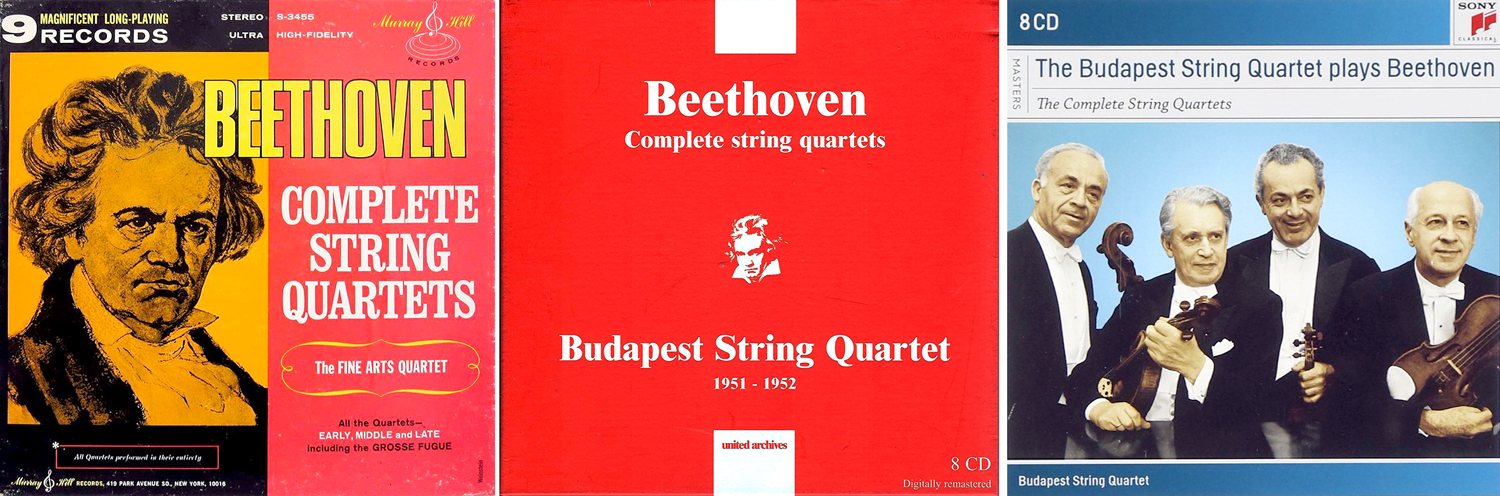
When I got to college in North Carolina, I made the acquaintance of Alexander Barker, who has remained my best friend for 60 years. He was as enthusiastic about classical music as I was and we spent hours in our dorm rooms spinning LPs and introducing each other to music that was our favorites. We were, of course, very serious about great music, as only college students can be, but we knew Beethoven’s string quartets were as serious as you could get. I bought a budget-line set of the quartets, by the Fine Arts Quartet on the off-brand Murray Hill label, and one evening, we started with Opus 18, No. 1 and played through all 16 of them, plus the Grosse Fuge, in one marathon session. (We later attempted the same thing with the piano sonatas, but gave up in exhaustion and the need for sleep by the time we hit the Hammerklavier.)

I have not been able to find a CD version of the Fine Arts Quartet set, but I found much better-played versions later on. I have owned a half-dozen or so complete sets of the Beethoven quartets, and as many of just the late quartets, but on the desert island, I would take the original mono versions by the Budapest String Quartet. They redid them later in stereo, but I like the earlier set better. I could have chosen the Guarneri, or the Tokyo or the Emerson, but I still think the Budapest have the measure of them best.
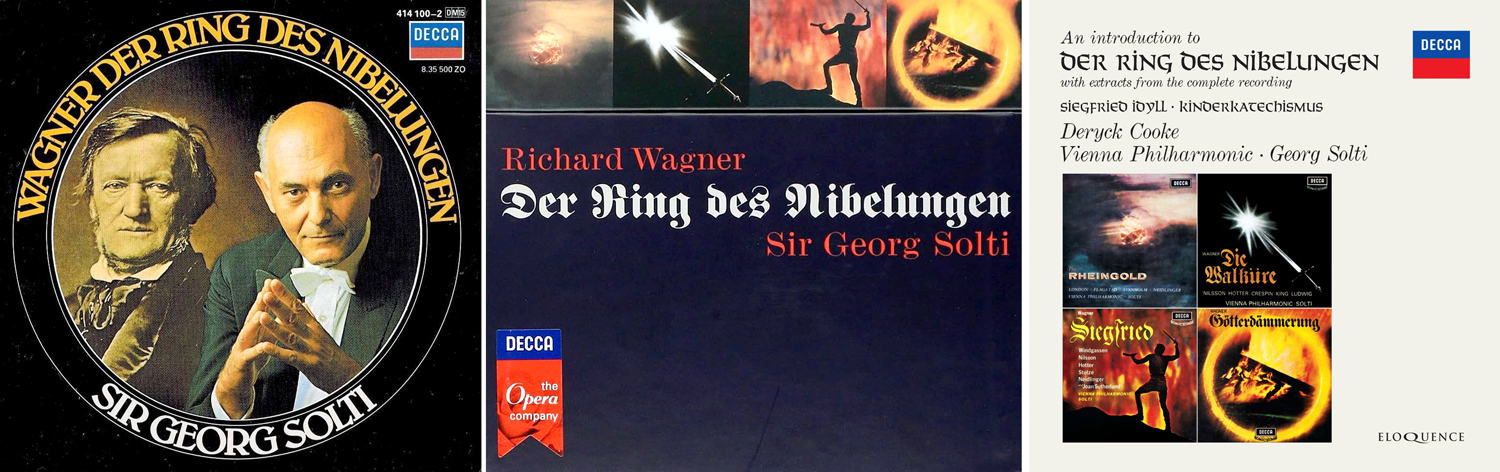
If you have the earnest seriousness of youth, you will eventually get into Wagner. After college and after a failed first marriage, I was living in North Carolina with my favorite redhead, scratching by on subsistence jobs, and I managed to save enough money to finally buy the Solti Ring. Something like 16 hours of music subsuming four operas, it opened up a world of myth and raw musical power. Now in retirement, I own five Ring cycles on CD and another two on DVD. And I’ve attended two complete live Ring cycles (not a patch on my late friend Dimitri Drobatschewsky, who went to Bayreuth 16 times beginning just after World War II.) But the Solti Ring of the Nibelungs is still my go-to set. And with it, I must also take the Deryck Cooke explication of the cycle, An Introduction to “Der Ring des Nibelungen.” Can’t have one without the other; they’re a set.
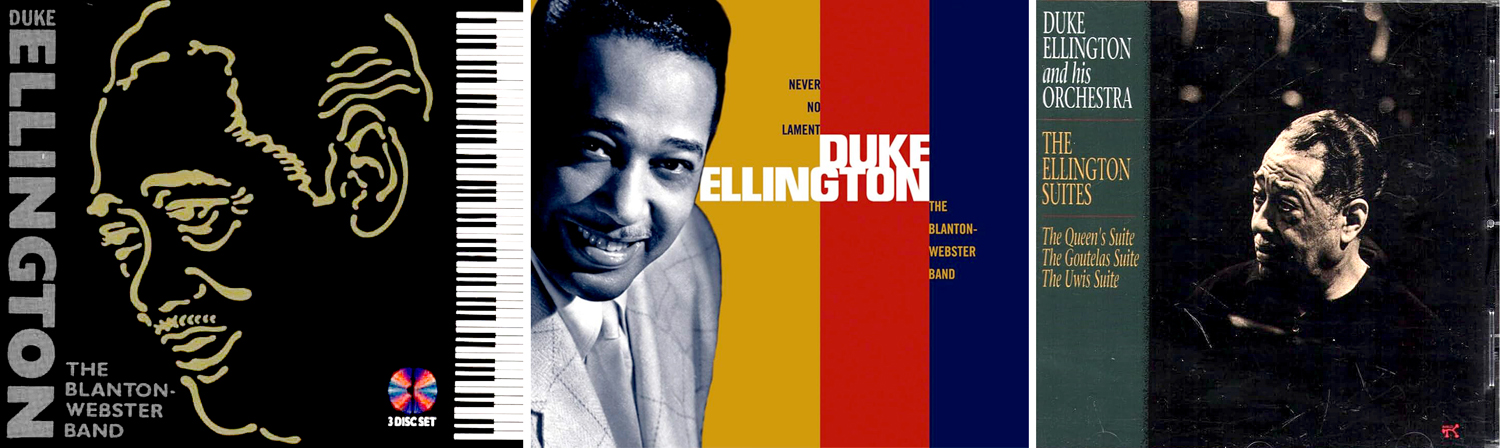
When the redhead and I split up, after seven years, I moved to Seattle and began working at the zoo, where I met a zookeeper whose hair was as blond as the sun. I fell. She had been a professional swing dancer at one time, and she played me old swing records on her Wurlitzer jukebox, which she had at her home. I had a whole new universe of music to learn about. But the one who stuck was the jazz musician closest to writing classical music, Duke Ellington. 

I still have about 50 CDs of Ellington’s recordings. There are counted several epochs of Ellington’s career, beginning with the “jungle music” of the 1920s and going through his rebirth at the Newport Jazz Festival in 1956. But most count the high point of his band and music to be those years in the early 1940s when Ben Webster was his tenor sax man and Jimmie Blanton was his string bass player. A collection of their recordings has been issued several times as “The Blanton-Webster Band.” It was the era of Take the A Train, Ko-Ko, Harlem Airshaft, and Perdido

But then, neither can I do without The Queen’s Suite, which he wrote with Billy Strayhorn in 1971, and is his most completely classically composed work. I love it. And so, I’m adding it to my Ellington entry. 

The zookeeper dumped me and I moved back to North Carolina. A few years later, I met Carole, who I married and lived with for 35 years, until her death in 2017. Marriage humanized me, and the most human composer is Mozart and the most humanistic of conductors was Bruno Walter. It was the the last years of the LP era, in 1980, and before digital took over, I found the last six symphonies of Mozart played by Walter and the Columbia Symphony Orchestra (a pickup ensemble, mostly of musicians from the New York Philharmonic). 

Walter’s Mozart remains the most humane and beautiful version of these works, which are now buried under historical-performance rhetoric and bounce along at a jog-trot, mechanistic pace. But one can still find the echt-Mozart, songful, emotional, and velvety rich, under Walter’s baton. Like all of my choices for the desert island, it has never been out of print. 
Carole and I moved to Arizona in 1987, where she took up teaching art to elementary pupils, and I began writing for The Arizona Republic as its art critic (later also its classical music critic). 

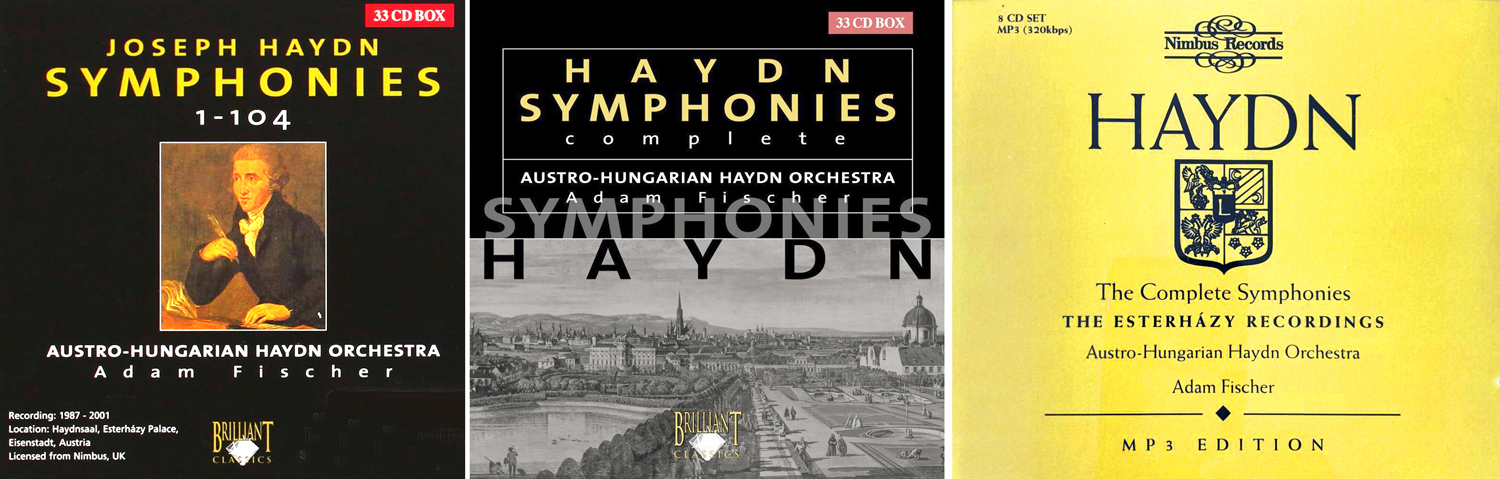
When we moved to a house at the foot of Camelback Mountain, it was a 20 to 30 minute drive (depending on traffic) to the Republic office downtown, and I found the perfect drive-time music, playing a Haydn symphony each way. I eventually went through all 104 symphonies, driving back and forth, three times, and absorbed their spirit from the Austro-Hungarian Haydn Orchestra and Adam Fischer. They have become my go-to performers for this music. I also have the earlier Antal Dorati version, which sometimes sounds like a quick read-through, and later was sent a review copy of the Dennis Russel Davies versions on Sony, which proved to be the most utterly humorless Haydn possible and I had to give them away. How can anyone misunderstand this music so thoroughly? 

When Carole died, and I sunk into grief, from which I have never fully recovered, I found myself listening with my whole being to Brahms German Requiem. I have spent the anniversary of her death every year driving up the Blue Ridge Parkway to find an old fire road into the woods, and sit quietly to Bruno Walter’s recording of the German Requiem. It is the most sympathetic, consoling music ever written. 

On Desert Island Discs, they also ask the guests to choose the one recording, above all, which they would take if everything else were not possible. And for me that is Johann Sebastian Bach’s Passion According to Saint Matthew, a three-hour musical retelling of the last days of Jesus and his death. I am not religious. (I am so not religious, I not even an atheist.) But every note of Bach’s music speaks to me on the deepest level of humanity. The opening chorus and the ending chorus are, for me, the greatest musical utterances ever penned. I’m keeping it with me.

There are many performances, and no one really does it badly, but most recordings now have been run through the historical performance wringer and the juice has been squeezed out. This is majestic and noble music, not something from a squeeze box. And the recording left behind by Otto Klemperer is the one I listen to over and over. He’s got the measure of this music. 
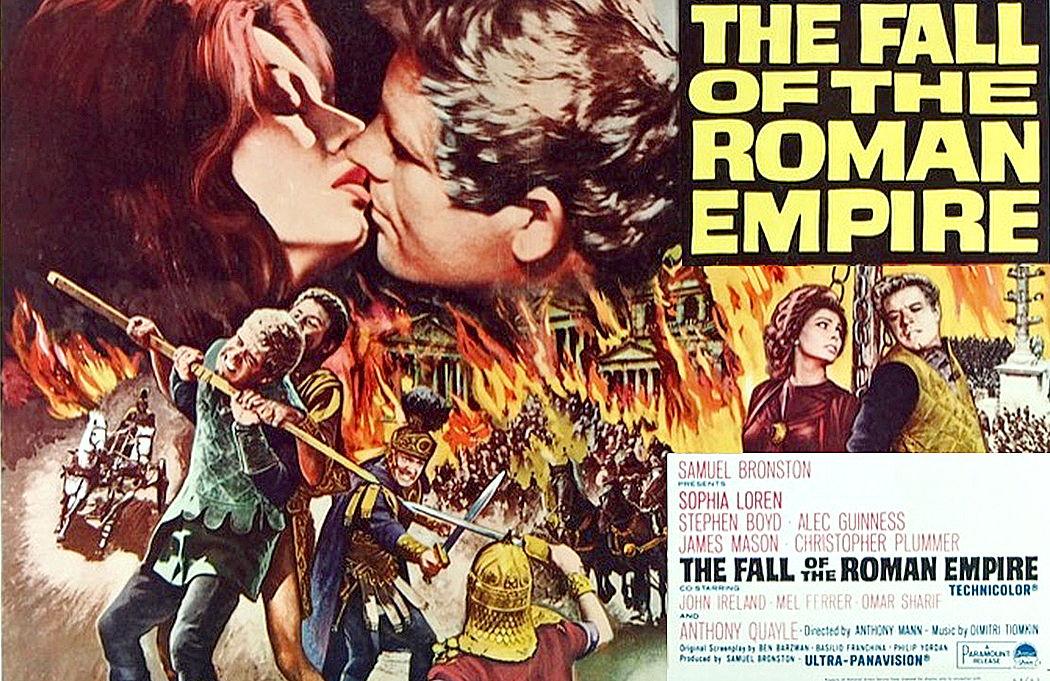
That leaves us a book and a luxury. People value books for, usually, one of three reasons. Either for the information they gather, or for the stories that are told, or for the prose they are written in. I fall into the last camp. I thought about Gibbon’s Decline and Fall of the Roman Empire, which is an utter joy to read, whether you care about the factual history of Rome or not. I revel in its river of words. But I read it in short segments, ultimately filling up like a rich meal and need to wait some hours before hitting the table again. And, for all the wonderful writing, there is a sameness that can creep in. 

Or I might have chosen a classic that somehow I’ve missed in 77 years of life. Many on Desert Island Discs have taken Marcel Proust’s Á la Recherche du Temps Perdu. But when it comes to monster works, I already put in my time, having gotten through The Gulag Archipelago. I no longer need to prove myself. 

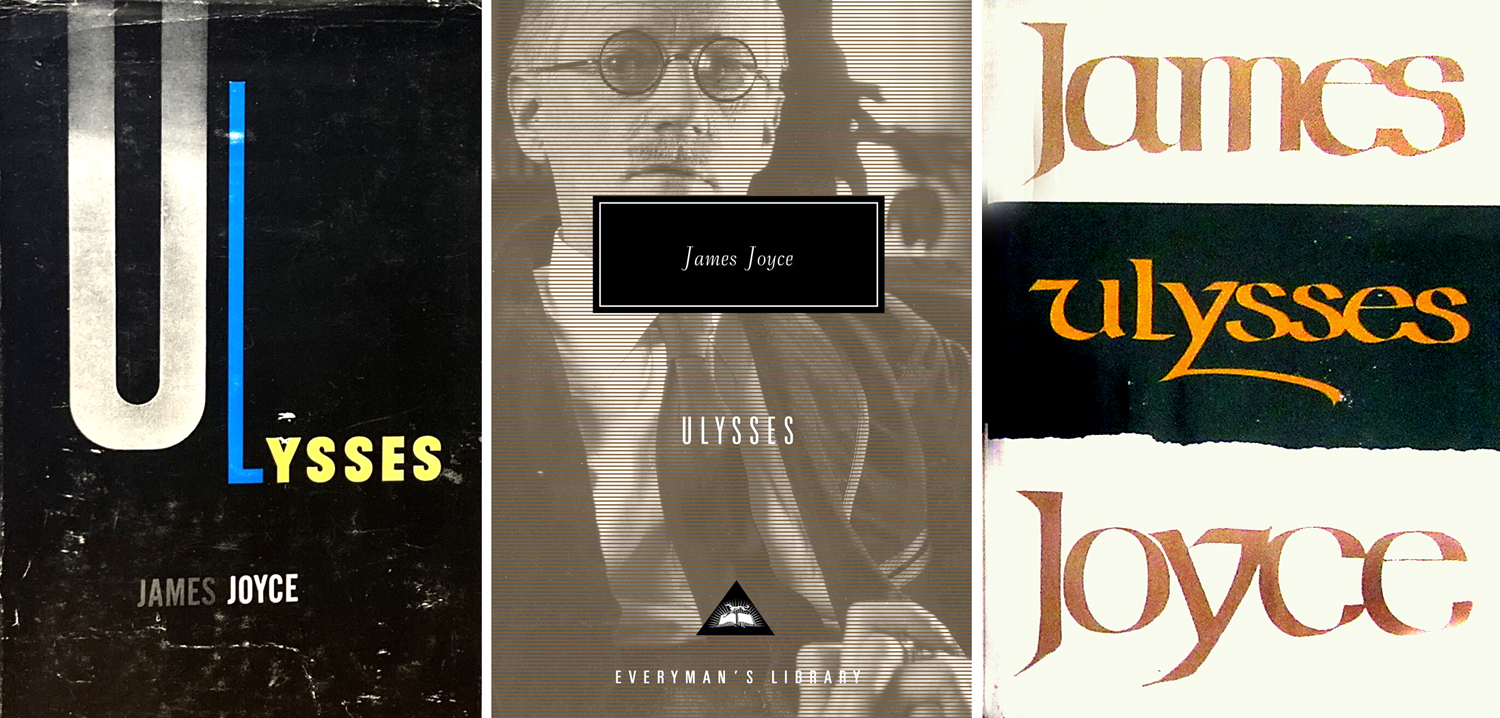
So, I have chosen Joyce’s Ulysses, the book I can read and re-read over and over, with such a variety of prose and method and such delicious words, that I don’t think I could ever tire of it. 

As for a luxury item, I had some difficulty coming up with something, because I am not much for luxury. But I have always owned a pear-wood handled Opinel folding knife. The current one sits in the glove compartment of the car, ready for anything called for. A man needs his tools.

Of course, the whole exercise is entirely pointless. There is no desert island, and with a house full of books, CDs, musical scores, and art, I don’t need to choose so parsimoniously. The whole idea is merely a pleasant game to play. 

But going through the process, and forcing myself to narrow the list arbitrarily, I come to see myself in a dusty mirror. And I surprise myself, looking back at me. 

Occasionally I get asked (OK, once) where should I start listening to classical music. Classical music is something that a few people as they age past Top 40 songs, come to believe they should begin to know, the way they should read Proust or watch foreign films. 

Philip Larkin mentions the drive in his poem Church Going: “Much never can be obsolete,/ Since someone will forever be surprising/ a hunger in himself to be more serious.” 

I have been listening to what is called classical music for 60 years, and my first thought is that classical music does not exist. Not really. 

What is called classical is a combination of old church music; popular music that has been around so long, it no longer sounds like the pop music we know; and music meant to entertain, first, a class of aristocrats who could afford to pay for it, and then an aspirational middle class that took up the buying of tickets. 

It wasn’t until late in the 19th century that anyone really considered such music “classical.” And only in the 20th century that most symphony orchestras were organized to play what in the past had just been music, but was now given this new label. 

Until then, most concerts consisted of new music mixed with a few old favorites (much like modern pop music — they wanted to hear the hits). And so, old standards became classics. 

Not all of the old standards were heavy and serious. Mozart wrote tons of divertimenti to be played as the count and countess ate lunch. It was only meant to sound nice, with catchy tunes. Yes, some classical music is meant to evoke deeper thoughts and emotions, some even meant to change lives. 

But there is pop music that is serious, too. Consider the Beatles’ A Day in the Life, or Queen’s Bohemian Rhapsody. They aren’t always short. 

And so, when you ask about classical music, you aren’t asking about a single thing. If you were to open up that can of worms and try to learn what classical music has to offer, you will have to recognize that no one thing can suffice. Nor any one style; nor any one century. 

If there is anything that marks music as classical, it is its length. Most tunes last three or four minutes, while a symphony can run anywhere from a half-hour to 90 minutes. The popular music is meant to put a tune in your head and you like it (or not) and may sing it to yourself as you wash the dishes. Such music is usually meant to be absorbed passively. 

What is called classical tends to be more like a story, even a novel, with multiple characters and changing moods, so where you start is not where you end up. It is music you pay active attention to. It goes somewhere and you have to pay attention to notice the plot. 

The story told in music, though, is not one that can be translated into words. It is one you listen to as it unfolds in musical terms: the melody changes, sometimes broken into pieces, the harmony turns grim or lilting, sometimes the melody might be played half-speed, or faster, or even upside down. These are all part of the musical story-telling. 

So, what do I say to my friend asking advice on how to start listening to classical music? 

The complaint I hear often is that classical music all sounds the same. It doesn’t. And so, I want to offer examples both of the stories and of the diversity. And I want to start off with a symphony with the clearest, most direct “story” to tell.

If there is any single place to begin, it is with Beethoven’s Fifth Symphony, or, more formally, Symphony in C-minor, op. 67, first performed in December, 1808, in a freezing cold concert hall in Vienna, along with a host of other new works by the composer, making for a concert lasting more than four hours. For all that music, the orchestra — a pickup ensemble paid for by Beethoven himself — had only a single rehearsal to work out the kinks. In one of the pieces played that evening, the orchestra got lost and had to stop and begin the whole piece all over again. 

But that Fifth Symphony eventually became iconic — the single stand-in for all of symphonic music. 

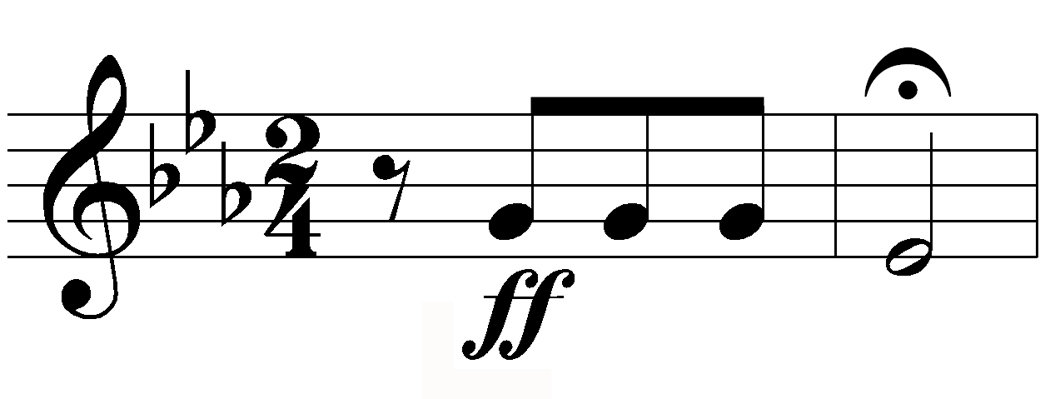
It begins, as almost everyone knows with the heavy tread of the dah-dah-dah-DUMM. Those four notes are played over and over through all four movements of the symphony, sometimes straight, sometimes altered, sometimes as a drumbeat underneath another tune. I once counted in the symphony score more than 700 repetitions of dah-dah-dah-dumm. That works out to once every three seconds of music from start to finish. It’s almost OCD. It’s no wonder the notes are often compared with hammer blows. 

The symphony is in the minor key, a key of angst, anger, uncertainty, which Beethoven underlines by having the music stop outright several times after we hear the four-note motif. As Peter Schickele said, in his comic sportscast of the symphony, “I can’t tell if it’s fast or slow, because it keeps stopping.” 

But it picks up steam to an intense, driving rhythmic motor, all in that relentless C-minor. It blasts you over the head with it. The first movement (of four) lasts, in most performances, only about five minutes, but you may very well be worn out by all that hammering and minor-keying. 

The second movement is a relief from the drive of the first, but the dah-dah-dah-dumm is often there, heard beating away in the bass line. The third movement starts with an ambiguous arpeggiated melody in the basses, but then brings back dah-dah-dah-dumm as a main theme, with the drive of a forced march. The movement doesn’t really end, but rather morphs into a chaotic repeated note pattern that doesn’t seem to be going anywhere, until … until… it does — and it explodes into a big, brassy blast of C-major — the major key the entire symphony has been trudging toward for all its length. The feeling is absolutely triumphant. The spirit soars. 

And yet, if you listen carefully, you will recognize that those happy, brilliant tunes are actually a metamorphosis of the dah-dah-dah-dumm, buried in a longer, rising optimistic melody. And at the very end, Beethoven drives home that C-major with 25 bars of pounding C-major chords in the full orchestra. You know you have reached the finish line with the last long-held chord. Having won it, he’s not going to let go. 

The story the symphony tells is from anger and angst into triumph and joy. It is this long development of an idea that marks what is called classical music as different from popular music. 

And even in classical music that doesn’t have the symphony-long coherent story to tell, each movement has its own plot and narrative. The most common narrative in classical music is presenting a theme or two, or three, in order, then mixing it all up, taking them apart, replaying them in foreign keys and disruptive orchestration, and then, finally, bringing them back in something like their original form so that you have a satisfying feeling of having returned home after a journey. Roughly half of all classical music is built on this pattern — with infinite variations. 

It is the surprise variations from the standard pattern that often delights music listeners. But to get the variants, you have to have become familiar with the expectations. It is hardly different from knowing the general plan of a TV sitcom, and being delighted when the show gives you a turn on your expectations. In a modern sitcom, you almost always have a main plot, a secondary plot, and a third, smaller background action, and they alternate in your attention, but are all wrapped up by the end. Same with a symphony or sonata. 

Next, about classical music all sounding the same (I have my own ignorance, too: For me, all pop music sounds the same). I have come up with a list of five classical pieces to spread the parameters. Each of these pieces can be found on YouTube to be listened to for free. 

Orchestral music is what most people think of as classical music. But there is so much more. 

Let’s start with some choral music. Before the late 17th century, most art music was vocal, and most often for the church. What instrumental music there was was usually improvised, rather like jazz. 

So, first, listen to Spem in Alium by English composer Thomas Tallis (1505-1585). It is a 40-part motet setting the Latin text “I have never put my hope in any other but in thee, God of Israel.” (Spem in alium — “Hope in other”). It was written about 1570 for a combined eight choirs of five voices each. 

It starts with a single soprano voice, adding others until, about three minutes into the piece, the entire five choirs all burst forth in a glorious racket. It is quite sublime. 

Then, let’s go the other direction. In 1913, Igor Stravinsky’s Le Sacre du Printemps (“The Rite of Spring”) was premiered as the score to Vaslav Nijinsky’s choreography for the Ballets Russes in Paris. That premiere famously caused a riot. Stravinsky fled the theater in fear for his life. Or so he claimed — one never knows just what to believe in a self-mythologizing artist. 

The music is rhythm torn apart, pounded home as part of what Leonard Bernstein called “Uncle Igor’s Asymmetry Machine.” It tells the ballet story of primitive Russian society and its ritual sacrifice of a young woman who dances herself to death. With its riotous dissonance, pounding percussion, and extreme orchestration, it remains perpetually modern. 

But we should not forget chamber music — music for a small group of players, often just two, such as violin and piano. César Franck’s Violin Sonata in A-major is about the most tuneful sonata ever written. He wrote it in 1888 as a wedding present for the famous violinist Eugene Ysaye. 

Its four movements borrow tunes from each other, and so although the movements are quite distinct emotionally, they are all tied together by the memorable melodies. 

And I cannot forget song. Most of the great composers also wrote songs, though they are nowadays called lieder, which is just the German word for “song,” but gives a higher-toned, more prestigious ring to the name. But they are songs nonetheless. 

The greatest of these classical song-writers is undoubtedly Franz Schubert (1797-1828). Poor all his life, and hardly recognized as a great composer by any but his closest friends, he was a gushing fountain of melody. His song Erlkönig tells the story of a father and son riding through the night on a horse, stalked by the evil elf-king who wants to take the boy. The child screams in fear, the father tries to protect him, and the goblin tries to seduce the kid away. It is a frightening song, but full of tremendous melody. 

This should give you some sense of the incredible range of the art music of Western culture. And a start in classical music. 

Next: A look at the changing eras of classical music

In 1956, psychologist Benjamin Bloom published his Taxonomy of Educational Objectives, a hierarchical ranking of thought processes, often recast as “Bloom’s Taxonomy.” It has been often revised and recast, but most often, at the bottom were simple tasks such as memorizing, at the top came creativity. 

My late wife, who was at least as smart as Bloom, had her own version of this taxonomy, and for her, the lowest level was “naming.” She taught school for more than 30 years and saw brain-burn at the individual level. Being able to say, “Horsie” or “Duckie” is naming. This is simple rote. Learn the name and repeat it when appropriate. 

Naming also shades into the second level — the level most people get stuck in — that of sorting. Finding categories and shunting the names into silos to contain them. As if that explained anything. 

The greater part of what we do with our brains is to sort things out. To put cats over here and dogs over there. When we learn, most of what we mean by that is to understand that Claude Monet was an Impressionist and that Luis Buñuel was a Surrealist. These are mere sortings. Important for a file clerk, perhaps, but more a form of busy work than of actual thinking. 

We learn a whale is not a fish, and that a spider is not an insect. We have separate categories for them, and when we recognize the categories, we believe we have actually said something meaningful about our whale or spider, when really, all we have done is play with words. 

Categories, are, after all, quite fugitive, quite fungible — squishy. When zoologists first tried to classify lions, for instance, they placed them in the genus “Felis,” for they are some kind of cat. But later, it was decided they were big cats, not small ones, and so they became “Panthera.” Oh, but that wasn’t good enough, and so a new genus was established, dividing them from tigers and leopards, making them “Leo.” New category, new silo. 

For a brief time, I worked at a zoo, and had the opportunity to walk behind the cages and get up close to many of the animals and I can tell you that standing with his zookeeper two feet from a male lion to feed him,(separated from Leo by the cage bars), the lion’s head seemed to be the biggest thing I had ever seen, shaggy and furry, with a very particular smell, and a sense that this beast could swallow my head as if it were an M&M. And then it “purred.” A low, gutteral roar expressing satisfaction at the afternoon meal, that made the ground rumble under my feet. It was one of the most impressive things I have ever witnessed and it mattered not a whit whether I was seeing a Felis or a Panthera or a Leo. The name was rather beside the point. The experience had a physical existence and it didn’t need a name. 

Language is not reality. And the experience — the feel of it in the palm of your hand, or in your nostrils, or under your feet — is worth all the words in the world. Words can be a barrier keeping us from what is real. 

And yet, we spend so much of our time arguing over these categories, as if they mean anything. As if they were a reality. Is Joe Biden a Socialist? Did Elon Musk actually reach outer space? Is a tomato a fruit or a vegetable? So much thought and energy to such meaningless ends. Think of all the dark money spent in political campaigns to paint the opposition into a category-corner that makes the opponent a one-dimensional boogeyman. The world and its things are infinite. 

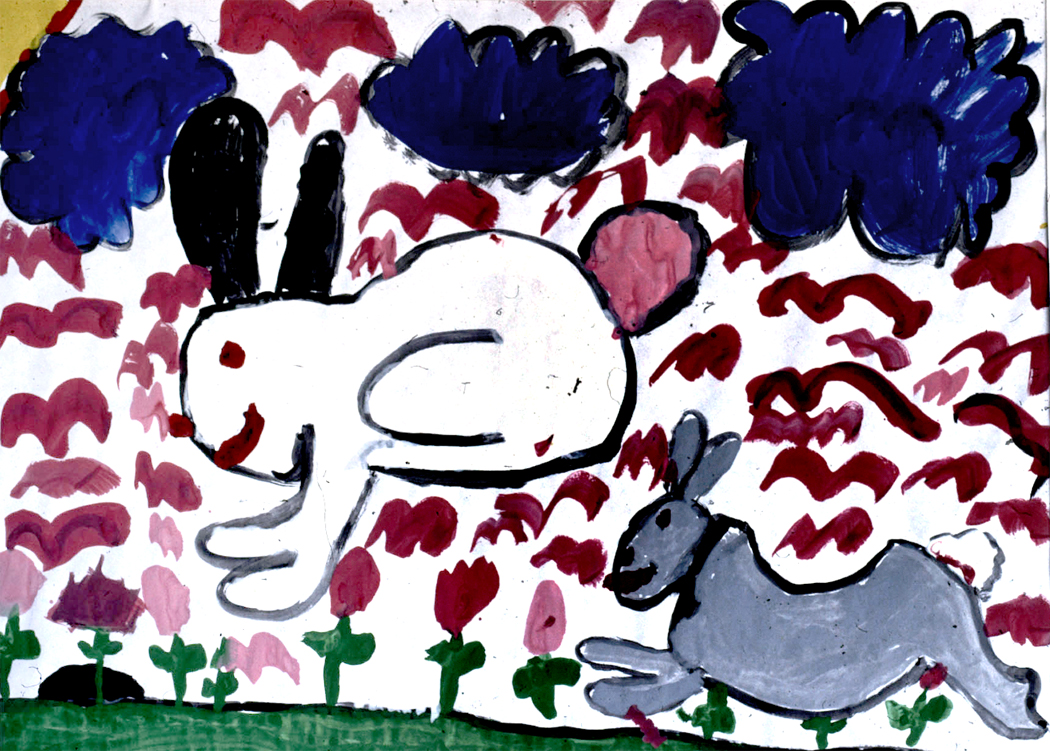
My late wife took animals to class with her so her pupils would have actual experiences — the twitching nose of a bunny, the blank stare of a hen, the brittle carapace of a hermit crab — and then gave the kids paper and paints and let them express what they had experienced. If names were mentioned, they were the names the kids gave the animals — a rabbit named Tiffany Evelyn or a crab named Eloise. What mattered was physical reality of the experience. Anything else is just language. Names. Categories. 

Historians like to take big chunks of time and give them names: Classical, Postclassical, Late Medieval, Romantic, and so on. Then they argue over it all, because these categories are misleading and constantly changing — being redefined. But, as they say, whatcha gonna do?

Take the Middle Ages. Middle of what? Homo sapiens developed something like — in a common low-end estimate — 300,000 years ago, putting the start of the Middle Ages somewhere approximately in the last 15/3000ths of human history. Not exactly the middle.

But the dates we give the Middle Ages vary widely. It came after the Roman Empire. When did the Roman Empire fall? Well, you can say that the final collapse came in 1453 with the fall of Constantinople. For some people, that is already the Renaissance, squeezing out the Middle Ages entirely. But no one really believes the Byzantine Empire was genuinely Roman. They spoke Greek, for god’s sake. They were Christian.

Usually, when we talk of the fall of Rome, we mean the Western Roman Empire and the sad reign of Romulus Augustulus, which came to an end in AD 476. But really, the Western Roman empire at the time consisted only of most of Italy and Dalmatia (later aka Yugoslavia) and a tiny bit of southern France.

And you could easily argue that Rome ceased to be Roman after Constantine converted to Christianity and legalized it in AD 313. After that, the slow slide from Roman imperialism into Medieval feudalism began its ambiguous transubstantiation.

It is the great paradox of scholarship: The more you read, the more your ignorance grows: The more you learn about something, the more you discover how little you know.

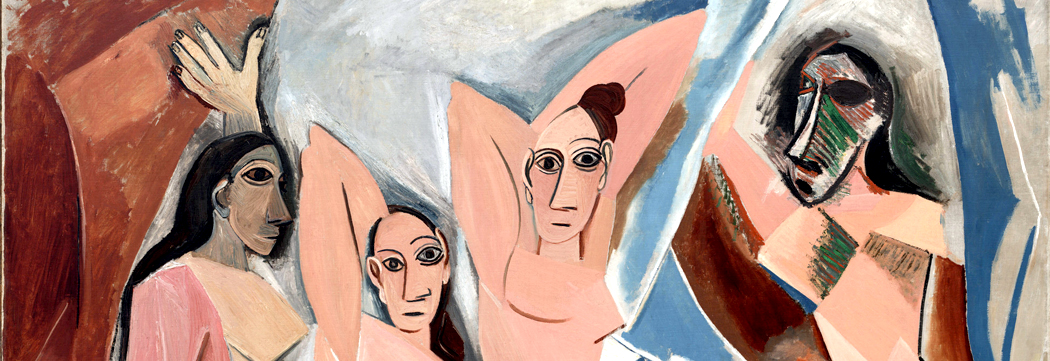
Are Picasso’s paintings Modern art? His first big Cubist painting, Les Damoiselles d’Avignon was painted in 1907. That is closer in time to the reign of Catherine the Great in Russia than it is to us. Closer to George Washington’s Farewell Address. To the Louisiana Purchase. 

So, what do we mean by “modern?” and when did modernity take over? It is a slippery question. And really it is simply an issue of definition — words, not experience. We let the words stand in for reality and then let the debates begin. Reality flows uninterrupted and continuous. Categories are discrete and they start and stop. 

The more you attempt to define the categories, the more they slip away. The history of academic scholarship is often the history of proving the categories wrong. It is historians who argue over the dates of the Renaissance. Or the fall of Rome, or the birth of Modernism. 

Categories are a convenience only. They are a name for the nameless.

I am reminded of the time, some 40 years ago, when I first drove west from North Carolina with my genius wife. We had never seen the great American West and eagerly anticipated finding it. It must be so different, we thought, so distinct. The West is a category. 

We were living in Boone, N.C., named for Daniel, who trod those mountains in the 1700s, when the Blue Ridge was the West. When George Washington surveyed the Northwest Territory in the late 1740s, he was measuring out what became Ohio.

So, when I was driving, I knew I had already pushed my own frontier past such things, and knew in my heart that the West began on the other side of the Mississippi River. But, when I crossed the river into Arkansas, it hardly seemed western. It didn’t look much different from Tennessee, in my rear view mirror. Yet, Arkansas was home to the “Hanging Judge” Isaac Parker and where Jesse James robbed trains. Surely that must be the West. But no, James looked more like a hillbilly than a cowboy. 

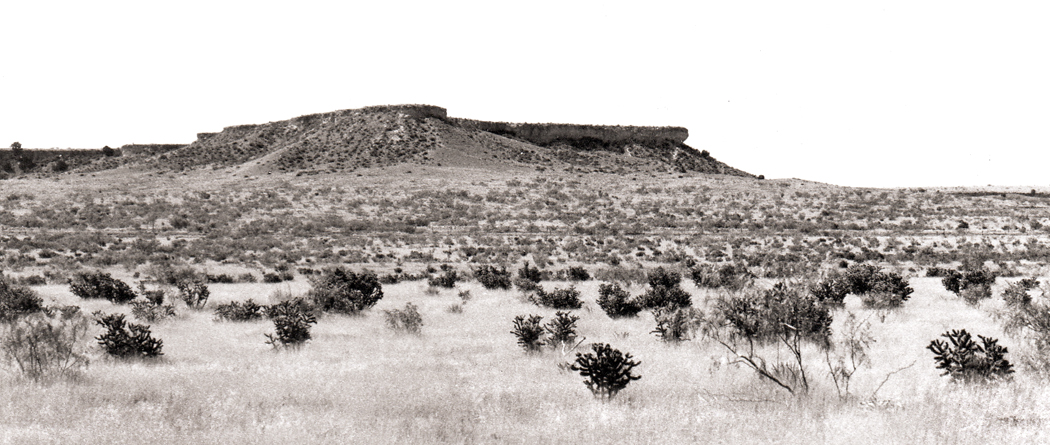
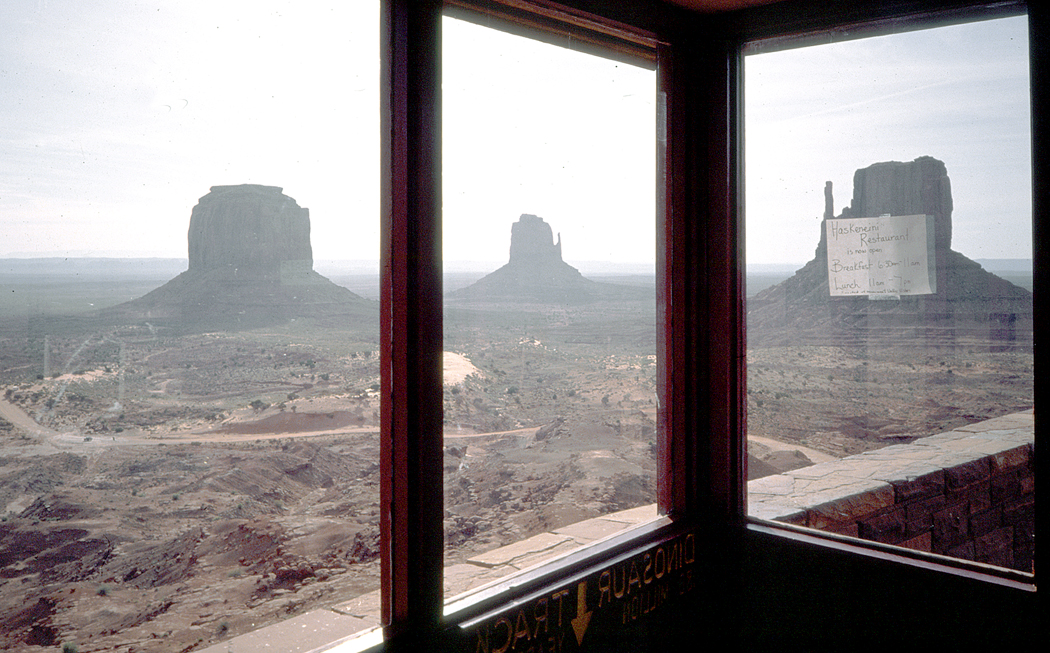
Then came Texas, which was the real West, but driving through flat, bland Amarillo on I-40 was as exciting as oatmeal. The first time we felt as if we had hit the West was at the New Mexico line, when we first saw a landscape of buttes and mesas. Surely this was the West.

Maybe, but we hadn’t yet crossed the Continental Divide. All the waters of all the rivers we crossed emptied into the Atlantic Ocean. Finally, crossing the Divide near Thoreau, N.M.,  we felt we had finally made it.

Yet, even when we made it to Arizona, we knew that for most of the pioneers who crossed this country a century and a half ago, the desert was just one more obstacle on the way to California. In some sense it still wasn’t the West.

When we got as far as we could in a Chevy, and stared out at the Pacific Ocean, we knew that there was still something farther: Hawaii, Japan, China, India, Africa — and eventually back to North Carolina.

So, the West wasn’t a place you could ever really reach, but a destination beyond the horizon: Every point on the planet is the West to somewhere else.

When we look to find the beginnings of Modernity, the horizon recedes from us the same way. Perhaps it began with World War I, when we entered a non-heroic world and faced a more sober reality.

Modern Art began before that, however, perhaps with Stravinsky’s Rite of Spring in 1913, perhaps with Debussy’s Afternoon of a Faun in 1894. Some begin with the first Impressionist exhibition in 1874.

Politically, maybe it begins with Bismarck and the establishment of a new order of nations and the rise of the “balance of power.”

You can make a case that Modernism begins with the Enlightenment in the 18th century, when a rising Middle Class began to fill concert halls and Mozart became an entrepreneur instead of an employee of the aristocracy.

Or before that, in 1648, with the Treaty of Westphalia, and the first recognition of national boundaries as something more than real estate owned by the crown.

You can set your marker down with Luther, with Gutenberg, with Thomas Browne, Montaigne, Caravaggio — or Giotto.

For many, Modernism began with the Renaissance, but when did the Renaissance begin? 15th century? The Trecento? Or did it begin further north with the Gothic, which is really the first sparking of a modern way of thinking.

Perhaps, though, the Roman republic divides modern political organization from more tribal eras before. Or you could vote for the democracy and philosophy of ancient Greece. Surely the time before that and the the time after are distinctly different. We recognize the near side of each of these divides as more familiar than the distant side.

You might as well put the starting line with the discovery of agriculture in the steppes of Anatolia and the river plains of Iraq. An argument can be made for any of these points on the timeline — and arguments could be made for many I haven’t room to mention.

Perhaps the horizon should be recognized for what it is: an ever-moving phantasm. For those peasants digging in the manorial dirt in the Ninth Century, the times they were living in were modern. The first person recorded to use the term “modern” for his own age was the Roman writer Cassiodorus in the 6th Century. Each moment is the new modern.

These are all just categories, and spending our time sorting things into their file folders should not be mistaken for actual knowledge. It is words about the knowledge. 

Now, I will concede that the words help us discuss the real things, and that it is probably useful to know the difference between cats and dogs, or butterflies and moths. But categories and sorting are just a second level of thinking. After these baby steps, there is so much more that the human brain can begin working on, much more grist to be ground. And a good deal of thought that outreaches the ability of words to capture. 

The level I have been most thinking about recently is that of observing, of paying attention. Not deciding anything, or sorting anything, but just noticing. The world opens up like a day lily; so much that was invisible is made visible — things that the rush of daily life, moving things from in-box to out-box, have made too inconsequential to waste time with. There is a richness to the world that becomes a glowing glory when attention is paid. 

In the days before the transcontinental railroad, a Cheyenne father would take his 10- or 11-year-old son out into the prairie and have him lie down on his belly. “Just look,” he would say. “Don’t talk, don’t decide, don’t name, just look.” And he would leave his son there for the day, not moving a whit. And when he came back to retrieve the boy he would not ask, “What did you see.” He would say nothing. He would not need to. 

So much of value is beyond words, beyond category.

This comes more than 50 years late, but I need to thank Lauren Goldstein. Laurie was my high school girlfriend and she gave me one of the most important gifts of my life.


Sometimes it takes a while for a gift to become clear. Even to know that it was a gift. Its impact can accumulate over an entire life. I am now 71 and for the past 50 years music has been central to my existence. As Nietzsche once said, “Life without music would be a mistake.” And Laurie gave me the music and my life has not been a mistake. 

There was almost no music in my house when I was growing up. The most we heard was probably watching the Perry Como show on TV. For most of my childhood, there was no phonograph, no guitar, no sheet music. Eventually, there was a Lowery organ and my mother would sometimes play by ear. She was quite talented, but only sat down at the keyboard maybe once a year, maybe once every two years. 

My brother and I took lessons briefly, but we didn’t practice and, frankly, it seemed like homework. The major cultural influence in our house was television. It was that bleak. 

But Laurie changed all that. She was a musician. And not just a girl playing glockenspiel in the marching band: She was a bassoonist taking lessons from one of the world’s great bassoonists. She also played piano with grace and style. 

I, of course, was just a pimply-faced kid, a high school junior when we started dating. For the next year and a half, until we grew apart as we went off to different colleges, it was a graduate course in music for me. 

Loren Glickman

Laurie was studying with Loren Glickman, the bassoonist who plays the high-pitched, incredibly difficult solo on the famous recording of The Rite of Spring conducted by Stravinsky himself. He also plays the beautiful bassoon part in Stravinsky’s recording of his Octet for Winds. Laurie and I went to several concerts to hear him perform. I still remember his Mozart concerto distinctly — he played with more rubato and freedom than is usual. It was a delight. It wasn’t just a collection of tunes, but rather, it had meaning. 

But it wasn’t only Glickman. We went to many concerts together, especially the New School concerts given by violinist Alexander Schneider and his pick-up ensemble. I can still name many of those tremendous musicians who played with him: Leonard Arner, Charlie Russo, Robert Nagel. They all went on to become the core of New York’s Mostly Mozart series. Those New School concert tickets were $3. We could afford them. And on Christmas Eve, we went to Carnegie Hall for Schneider’s annual concert. It was a rich education for the ear. Family complained I wasn’t spending that time with relatives, but I certainly felt closer to the music than I did to the clan. 

Alexander Schneider

Schneider was an especially intense musician, he would sit in his concertmaster’s chair to lead the orchestra and wrap his right leg around the chair leg like a snake on a caduceus, as if to anchor himself as he leaned forcefully into the music. As the twig is bent, they say, so inclines the tree, and this early exposure to the Schneider brand of music has informed my entire subsequent life in listening. There was a take-no-prisoners attitude to Schneider’s playing that told me music was not merely entertainment, but truly serious business. 

He was most famous as a member of the Budapest String Quartet, but I knew him in New York leading concerts and playing his fiddle. He made precious few recordings that are still available, but the best is a series he made with his own group, the Schneider Quartet, of the Haydn quartets. It was supposed to be all of them, but money ran out and they managed to record 53 of the more than 80 quartets Haydn wrote. The set is still a monument, not only to Haydn, but to quartet playing. I would not be without this set, which is still available, nearly 70 years after they were recorded, now on CD. 

Laurie and I would sit on her couch at home and make out, high-school style in that gentler age, with Stravinsky playing on the phonograph, or La Mer or Beethoven’s “Tempest” sonata. Once, her uncle Bucky came over and Laurie accompanied him on piano as he played a Beethoven violin sonata on his Geige — admittedly a squeaky and sour version as only a heedlessly self-confident amateur could manage. 

As I thank Laurie for this gift of music, I need to express my gratitude also to her mother, Esther, who nurtured my nascent interest. She seemed to see something in me that no one else did and encouraged me to follow art and culture. She also gave me a huge pile of old 78 rpm records from her own youth. The day of the 78 was quite past, but all record players still had a setting to play them. 

Among those recordings are some that are still the ur-performances for me: Artur Schnabel playing Beethoven’s Fourth Concerto with the Chicago Symphony and Frederick Stock; William Kincaid and the Philadelphia Orchestra playing the Telemann Suite in A-minor for flute and orchestra; Alice Ehlers on harpsichord playing Bach; Rafael Puyana playing the De Falla Harpsichord Concerto. Leo Slezak singing Schubert’s Erlkönig, Ungeduld and Heidenröslein. I played them over and over. There must have been 50 discs. Among them, I first heard Brahms’ Second, Beethoven’s Fifth and Sixth (the latter with Stokowski and Philadelphia), Bach’s Brandenburgs, and Weinberger’s Schwanda: Polka and Fugue. It was an eclectic mix. 

It was a revelation to see an entire family for whom art, music, literature were not only central, but a vivifying force in life. For whom culture created meaning. 

So, when I went off to college, I may have majored in English, but I minored in music, learned to read scores and harmonically analyze them, studied (rather pathetically) piano and listened to every recording I could get my hands on, spending all my spare cash on Nonesuch, Turnabout, Vox, Seraphim and Crossroads LPs — they were the cheap labels. 

Later in life, many of the concerts I went to were among the most signal events for me, deepening my psyche and opening new worlds of emotional response. Along with that came opera and ballet, theater and film, these were the “lively arts,” and gave me a living. I eventually became a classical music critic for a big-city daily newspaper. 

Laurie Goldstein and me, prom 1965

As for Laurie, when she graduated high school, she went on to study with Bernard Garfield, the long-time first-chair bassoonist with the Philadelphia Orchestra. She became a respected professional and played for and recorded with composers as widely different as PDQ Bach and Philip Glass. 

If it had not been for Laurie, I don’t know if I would have been introduced to classical music. I’m sure I was bound to enter a life of art and intellect somehow, but for me, music is the heart of it all. I love visual art and literature, but if I had to lose a sense, my hearing would be my last choice. I cannot imagine life without the Beethoven quartets, the symphonies of Haydn, the operas of Mozart. Or the music of Schoenberg, Bartok, Shostakovich or Barber or Glass. Or Ellington or Coltrane, or the Beatles. Music fills my insides and makes me more human. 

Thank you, Laurie. Thank you.