Archive

Tag Archives: rockingham county

Artist Mel Steele turned 85 recently. I have known Mel for nearly five decades, through the motorcycle years, the goat-herding years, the gun collecting years, the opera years. He is my brother-in-law and a friend. And I love his recent paintings as much as I’ve loved any art I’ve seen in person. So, I thought I might write a little something about his work.  

I made my living as an art critic, and during my time as a journalist, I made it a practice never to write about the art of any of my friends, both because I feared insulting them through misunderstanding, but mostly because I wanted to avoid the charge of favoritism. (There were artists I wrote about who later became friends, but that was different.) 

But I have been retired now for a dozen years, and I would not write anything about Mel’s paintings that I have not said to him face-to-face. 

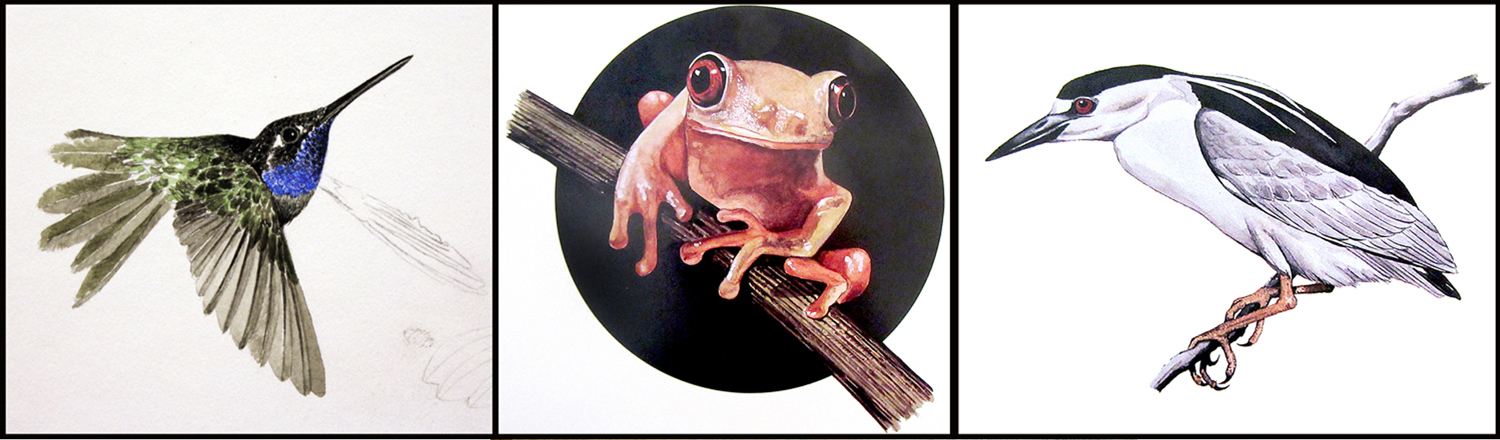
Mel Steele was born two years before America joined World War II, and was raised in Madison, N.C., about 30 miles north of Greensboro, and I doubt there was any question about what he would be when he grew up. From childhood, he had a brilliant talent for draftsmanship. I remember seeing a small painting of a rooster head he made when a schoolboy and it was as fully finished as any professional illustrator could have managed — almost photographic in its detail. 

He has always drawn and painted animals.
But what do you become when you are an enormously talented child? There is not a lot of expectation for a rural North Carolina boy to become a famous painter. He could have grown up to become a plumber, like his father, and perhaps doodled on his customer’s bills. 

 He wound up  going to the Richmond Professional Institute (now Virginia Commonwealth University) at age 20 and became a commercial artist, graduating from talented amateur to knowing professional. Commercial art seemed like the only meaningful way to use his gifts. Selling paintings in art galleries is an iffy prospect; a paid job is more dependable. As fashion-photographer great Richard Avedon once said about his own choice, “You can’t really make a living photographing trees.” 

Yet, at school, Mel was introduced to the larger world of contemporary art. It was 1959, and New York had become the world center for art, with the buzz of abstract painting at the center. 

Mel entered school wanting to paint like Norman Rockwell, but, as he says, “Most of the leading guys weren’t teaching just the standard way;  they were teaching what was going on right now.” And that meant Willem de Kooning, Jasper Johns, Robert Rauschenberg. Mel loved the new work. 
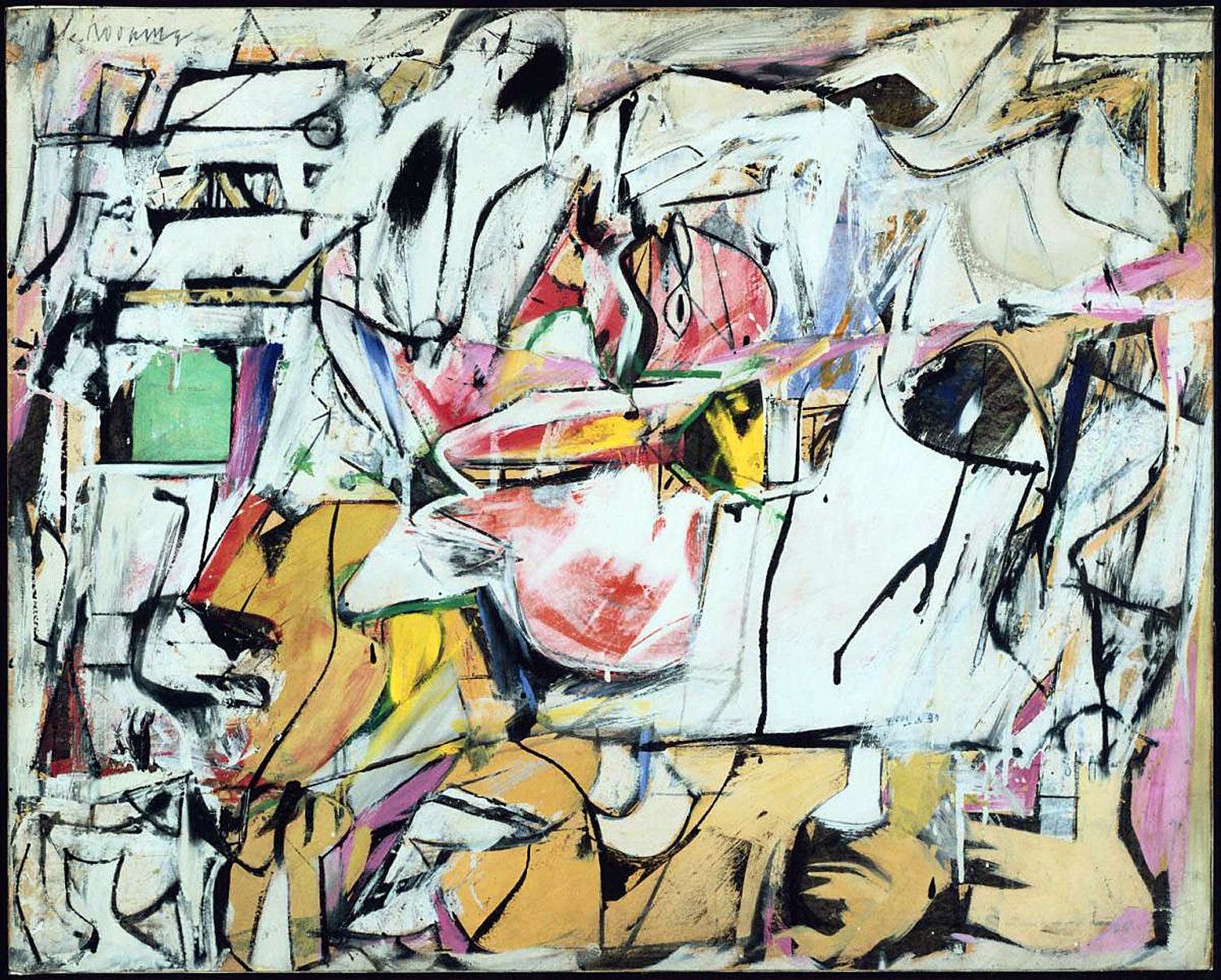
“Asheville” Willem de Kooning, 1948

But there was still that need to make a living, and when he graduated, he worked in advertising, employed initially for Belk department stores. Later, he opened up his own agency in Charlotte, N.C. He was good at what he was doing, enough so that he could pick and choose his clients. And move out of the city to a farmhouse in Rockingham County, N.C., where he and his wife, Deborah Ballington, took up raising goats and chickens. 

This is when I first came to know Mel and Deborah, when my wife —  Mel’s sister, Carole —and I would visit and get fed goat meat (absolutely fabulous) and perhaps do a bit of target shooting in the yard. (I was introduced to the .45 caliber Browning semi-automatic pistol, which had the kick of an angry horse and could knock a tree stump off its feet.) 

And by then, Mel had begun selling what are euphemistically called “limited edition prints” of rural scenes. These were essentially “posters” made from painted originals, printed up in volume and given evocative titles, like Down East or Wentworth Winter

Most regions of the U.S. have some populist art tradition that sells well commercially. In Maryland, it is pictures of skipjacks on Chesapeake Bay; in Maine, it is lobstering; in Arizona, it is cactus or Indians; in Texas, cowboys. In North Carolina, it was barns. Mel painted barns and farming scenes and became known statewide for his paintings and the prints made from them. 
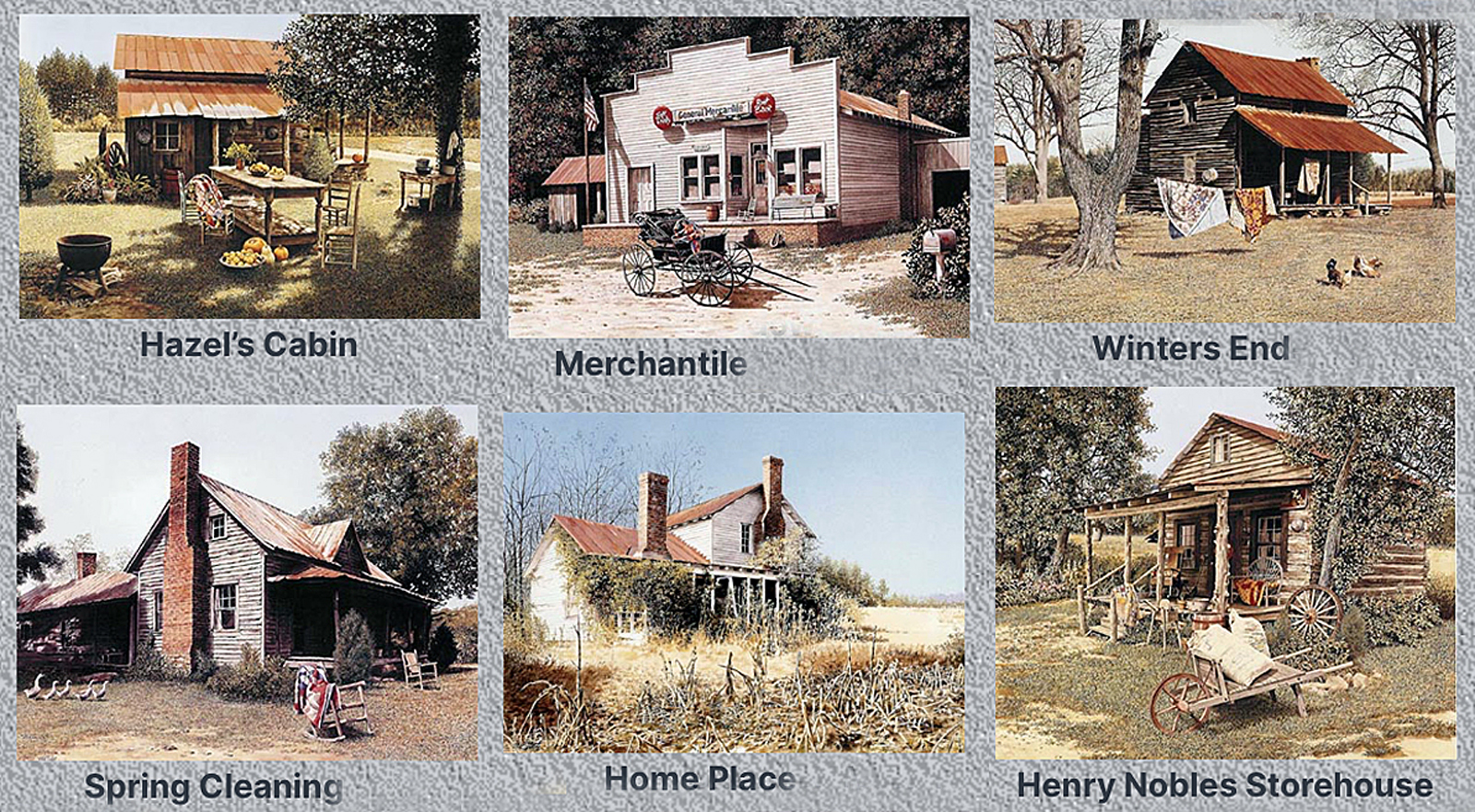
He did well with these, enough he could buy some land in the woods outside of Reidsville, N.C., and design and build a new house and studio. And his prints were popular enough, he could begin selling not just the prints, but the original paintings. 

Mel would sometimes cynically denigrate the art he was making, thinking of it as hack work. But it put food on his table and motorcycles in his garage. In retrospect, these images were better than they needed to be. They often had some edge to them, such as the print of a fox skulking near a barn, titled Thief, and presumably looking for chickens to grab.

Thief

Or, more graphically, a dead rabbit, run over in the road.

Highway 704

I say these prints were made better than they needed to be, and compared with many of the regional prints from around the country, they were. The most famous in North Carolina is Bob Timberlake, who has turned his talent into a marketing juggernaut, selling prints and furniture from his gallery in Lexington, N.C. But compared with Mel’s paintings, Timberlake’s are simplified and verge on the cartoonish. And they traffic in a greeting-card sort of nostalgia. 
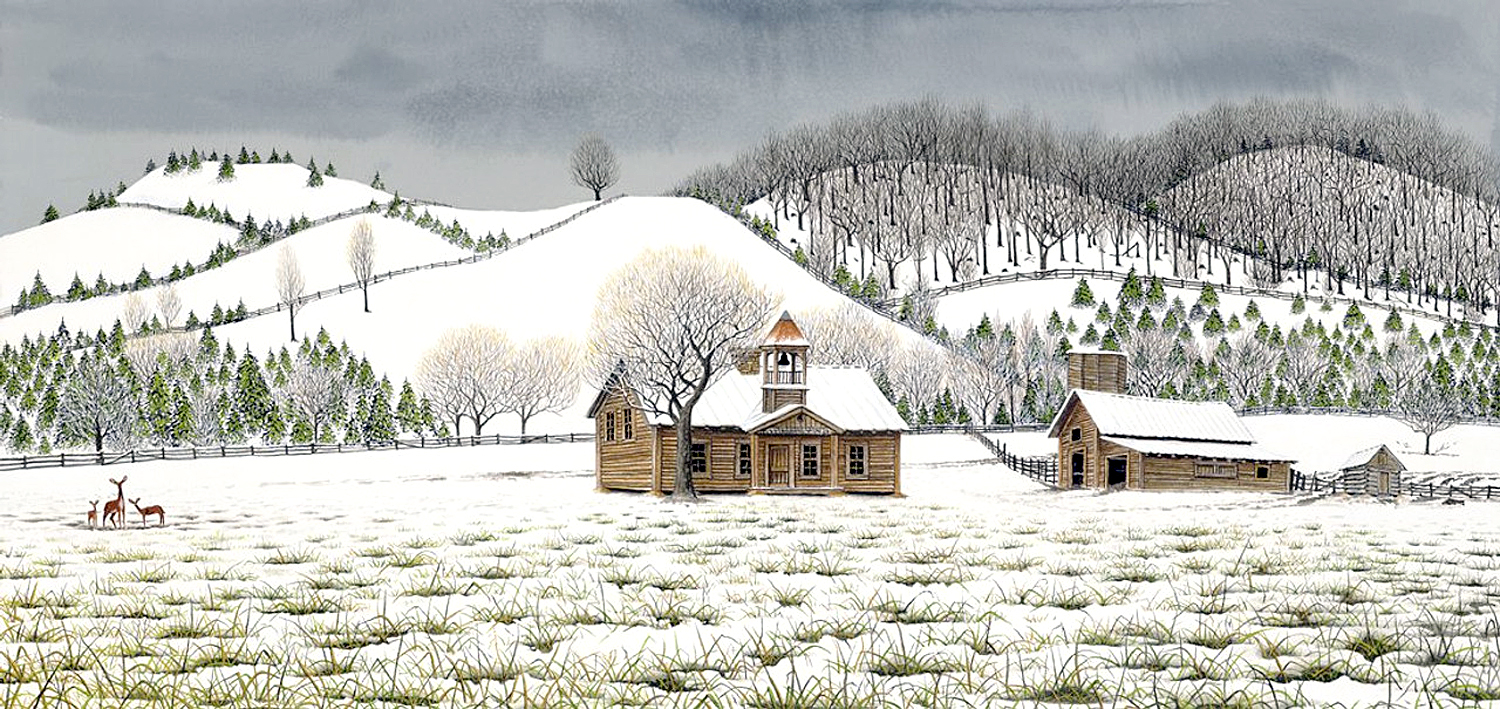
“Boyd’s Creek” Bob Timberlake

There is a long tradition of such sentimental fluff. People have always longed for a past they remember as better than it was. Victorian genre painting is full of such stuff. And artists, such as Paul Detlefsen, made a career out of sentimental Americana, painted for calendars and nowadays reproduced on jigsaw puzzles. Happy ragamuffin farmboys with fishin’ poles, covered bridges, horse-drawn wagons. 
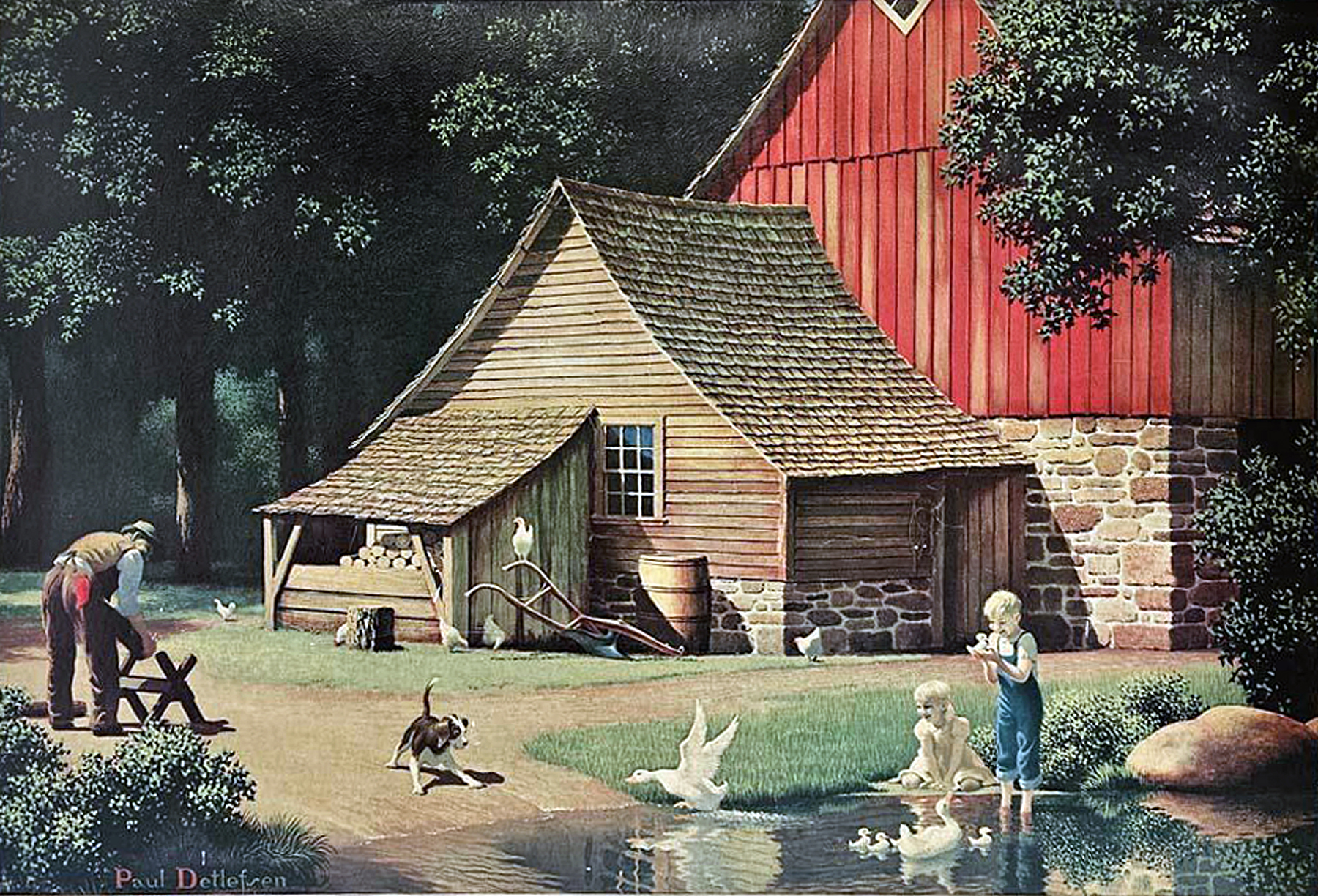
By Paul Detlefsen

The point is, the artists who make these images never actually lived such lives — Detlefsen was born in Denmark. It is a fictional history they proffer, a mythologized lie. 
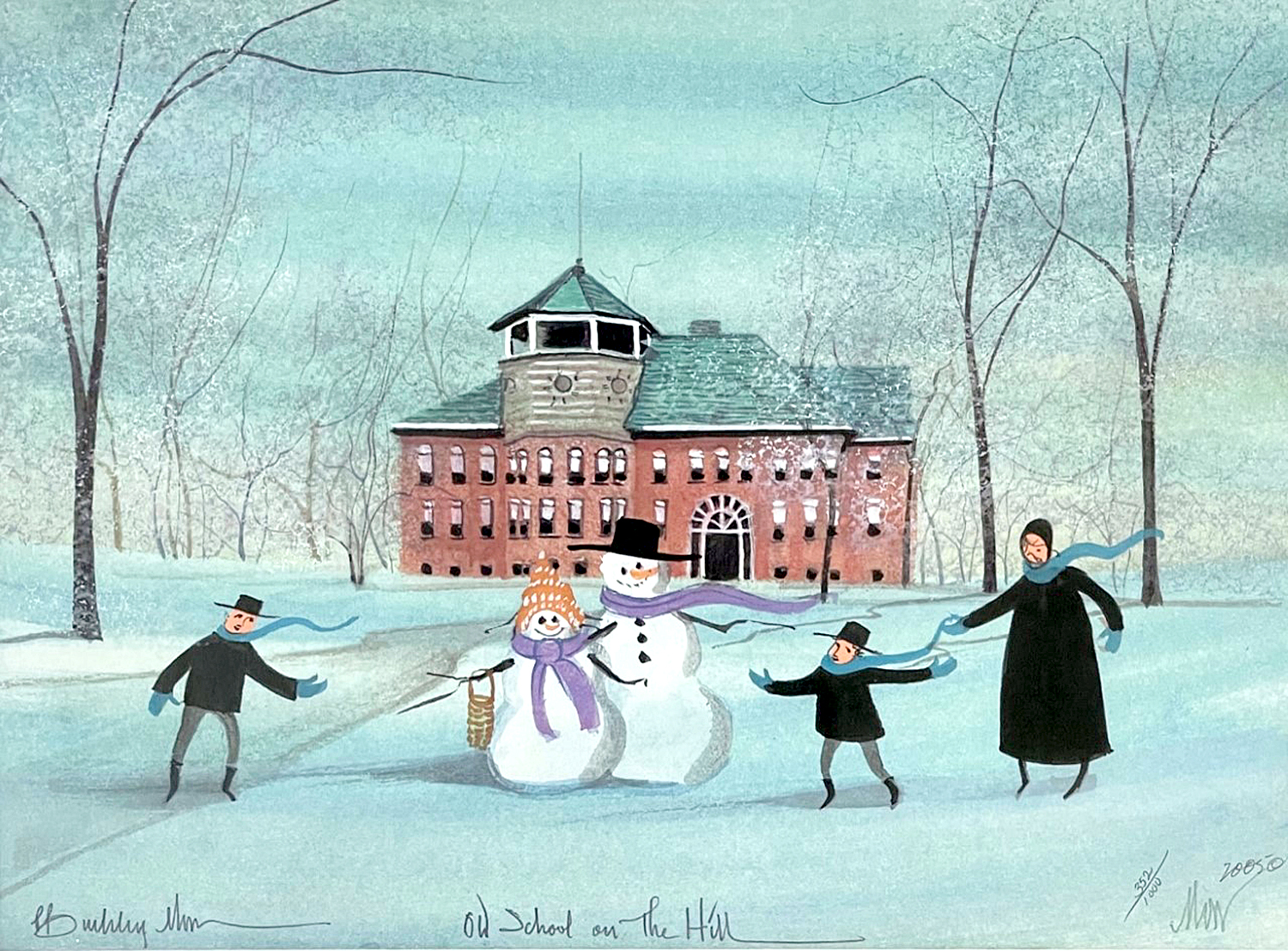
“Old School On the Hill” P. Buckley Moss

I don’t know if P. Buckley Moss had any real talent — she didn’t really need it for the kind of work she did, cartoonish prints of Mennonite farmers in northern Virginia — but Mel put some solid effort into his prints. 

Of course such prints all play on a kind of sentimental nostalgia, but the nostalgia in Mel’s prints is earned: He and his sister did live for a while in a log cabin growing up. They did know the houses and barns that show up in his prints. And rather than knock off simplified versions, he worked hard on detail and finish.

“The Thicket’s Edge” Mel Steele

Not that there wasn’t some tacky marketing involved. Mel knew his audience and often played to them. When he thought he could sell three prints instead of a single one, he tried making “trilogies,” such as the “Quilt Trilogy” — three prints featuring old-timey quilts in them. 

Or, discovering that he could charge more if his prints were “remarqued” — that is, a small detail from the image could be repainted in miniature on the border in actual paint — he began doing just that. You got a tiny bit of genuine painting along with your photomechanical print of the main picture. There should be no forgetting this was a commercial endeavor. 

Timberlake had published a coffee-table book to market his prints and Mel did the same, in a 1993 book called Weathered Wood & Rust. The text is godawful and smarmy — they hired a writer to come up with some cliché-filled pabulum — but the images were beautifully made. 
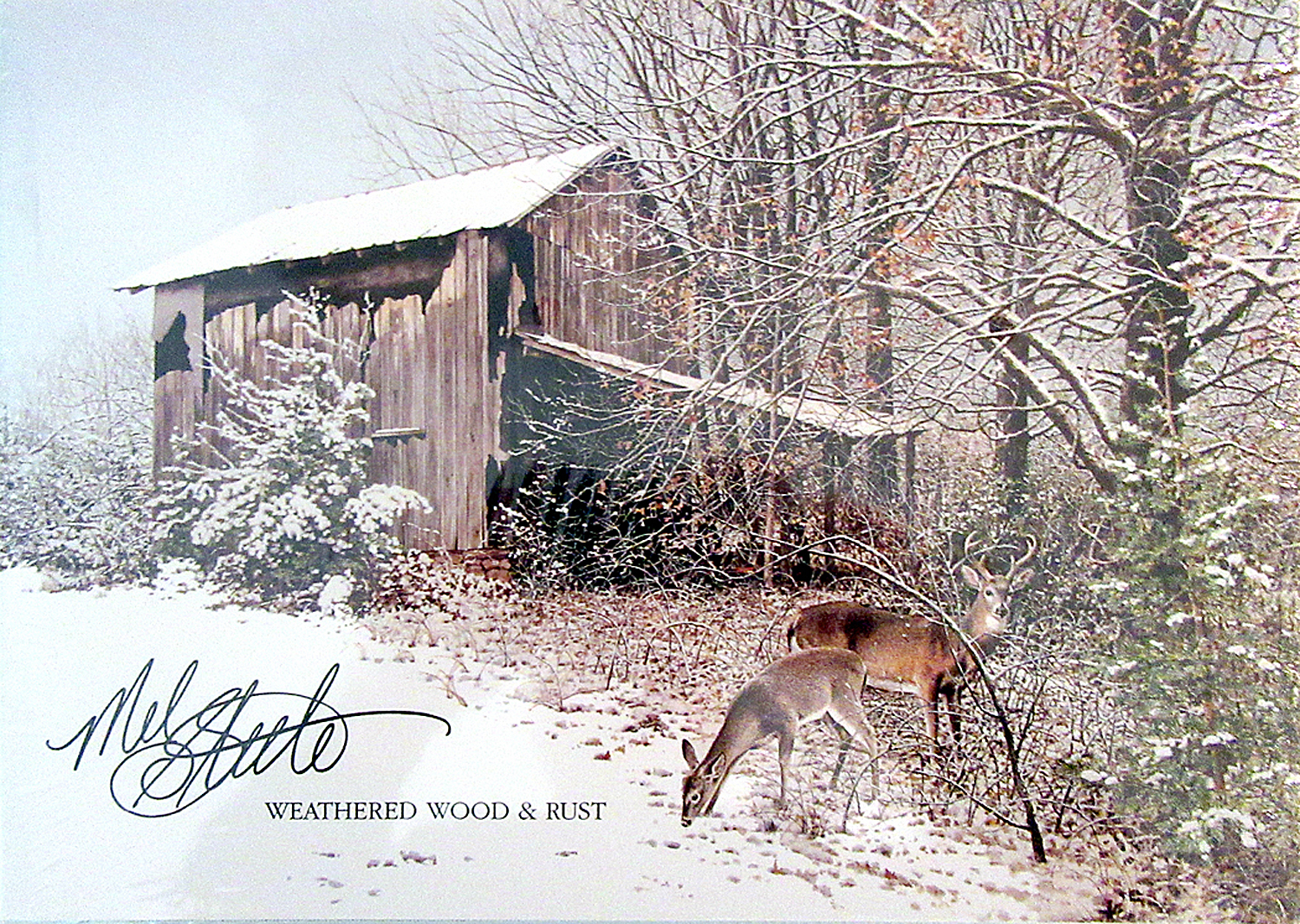
Marketing was an essential part of the limited-edition print business. But such things could get out of hand. I remember visiting the Moss studio in Virginia and seeing a framed print for sale with added “value” for having three signatures. First, on the original painting, which was then photographed and printed in large-number editions, with each prints given a second signature. And third, after the prints was framed, the glass was given an extra John Hancock, with gold ink. I don’t remember Mel ever going that far. 

I’ve spent a long time on this part of Mel’s career. I believe he often felt sheepish about courting popular fandom when what he was really interested in was more serious art. I have been telling him for years that he has nothing to be ashamed of for those populist prints. They really were often so much better than they needed to be. 
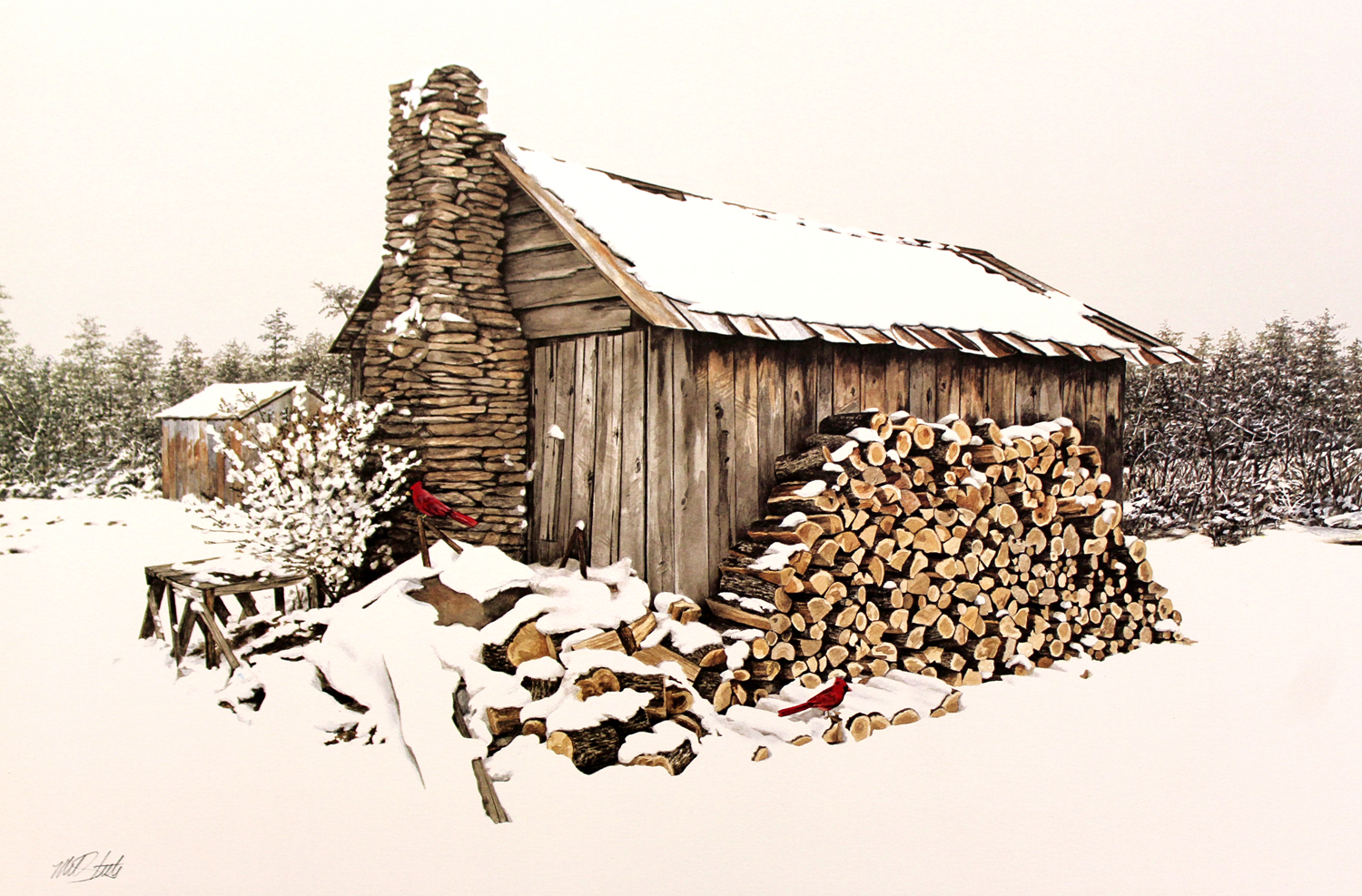
I’ve pointed out that his subjects, while they may have had an aura of nostalgia about them, were nevertheless genuine to his life and upbringing. I believe he felt genuine emotion toward them — even if he might have expressed a knowing disdain for what might have been taken as “cornball.” His professional training led him in one direction; his life experience informed another. 

I want to discuss two prints in particular. The first is Mitchell’s Mercantile, a gouache from 1980, that is just an old chair on a store’s front porch. 

Mitchell’s Mercantile

One of the things you notice in Bob Timberlake’s prints is their general lack of shadow. They are “cartoonish” in the sense that their subjects are simplified and usually portrayed in an overall wash of light. In Mel’s pictures, real objects tend to throw real shadows. Also, in the popular prints of other artists, objects — buildings, people, animals — are generalized, sketchy and not particular. But this chair on this porch is not just a chair, it is this chair. It is almost photographic; Mel has spent time and effort to look and to pay attention to the world. This is not some generalized metal chair. 

Paying attention is the unacknowledged secret of fine art. That is true of abstract art as well as naturalistic art. Nothing is glossed over or ignored. And so, the very exact angle that the chair’s seat leans back is paid attention to. The quotidian is afforded dignity. It is the idea behind the German expression “Ding an Sich.” The Thing in Itself. 

One does not need to get all academic over it. But look at the chair, the wood floor, the rusted Coke sign and the light that plays out over it all, from a distinct direction and shaping the images and recognize that Mel Steele has looked with care and internalized each millimeter of his picture. 

The other print is my favorite of all of them, and that is for entirely personal reasons. When Carole and I moved in together in the early 1980s, we lived in the Blue Ridge Mountains of North Carolina, along the New River in Ashe County and many of the hills were cleared for cattle, and other hills were natural “balds.” 
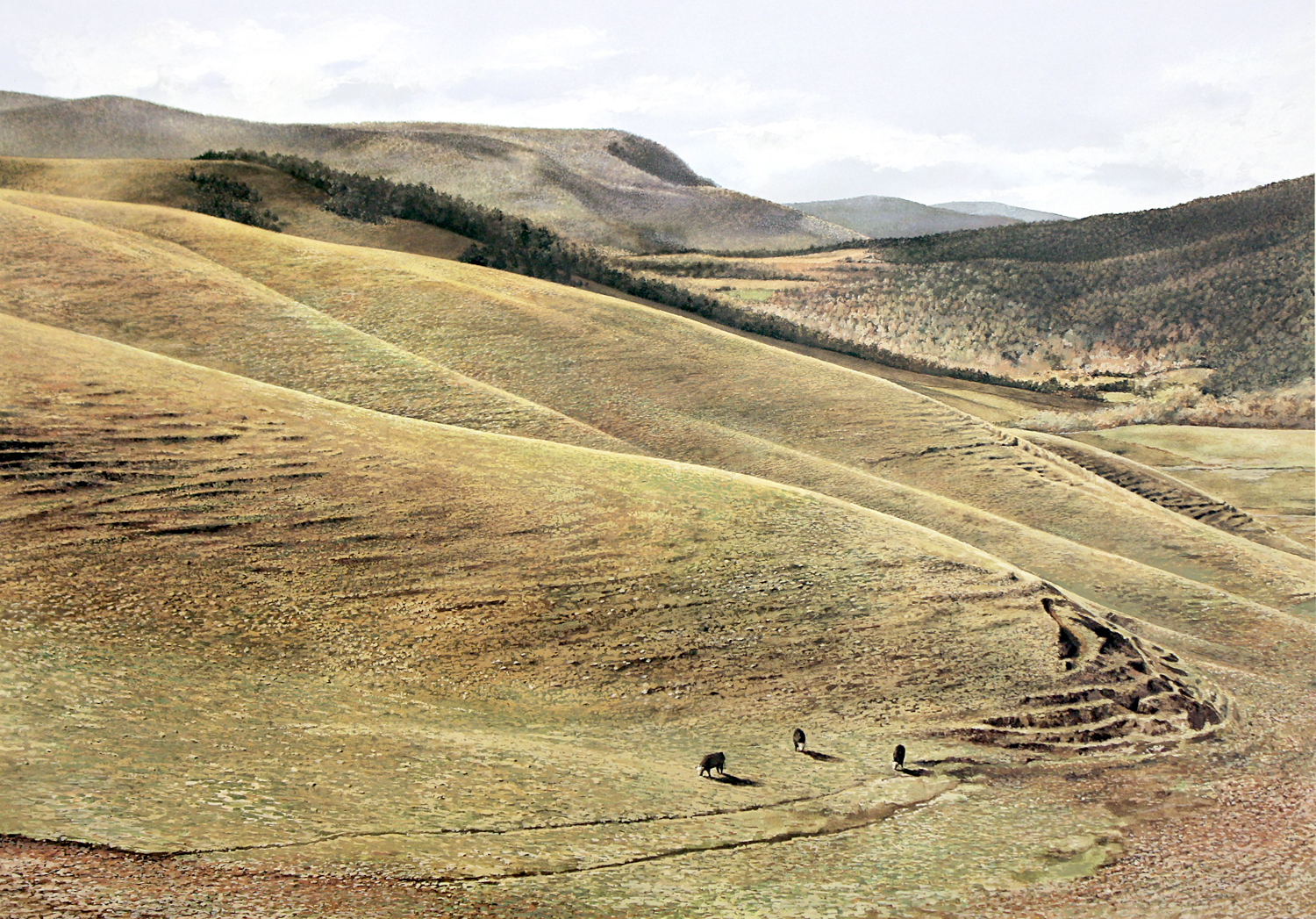
West Jefferson

Mel made a painting of this bare and unprepossessing landscape. It resonated strongly for me. I know this landscape and no one I know has better caught its sense of isolation and innigkeit — of being alone in an expansive space. I am convinced Mel made this picture because he felt something genuine in it. Surely it could never have been one of his more popular sellers. (In fact, Deborah tells me it was never made for sale, but as a Christmas gift for several valued regular collectors of his work.) 

So, there are two directions I sense Mel has always been pulled in. On one hand, as a professional and commercial artist, he knows his public and is able to aim his work at that market. But on the other hand, he truly wants to make something worth more than mere dollars, and so even making commercial work, puts an extra effort into it — and something personal — that lifts it above its mere purpose. 
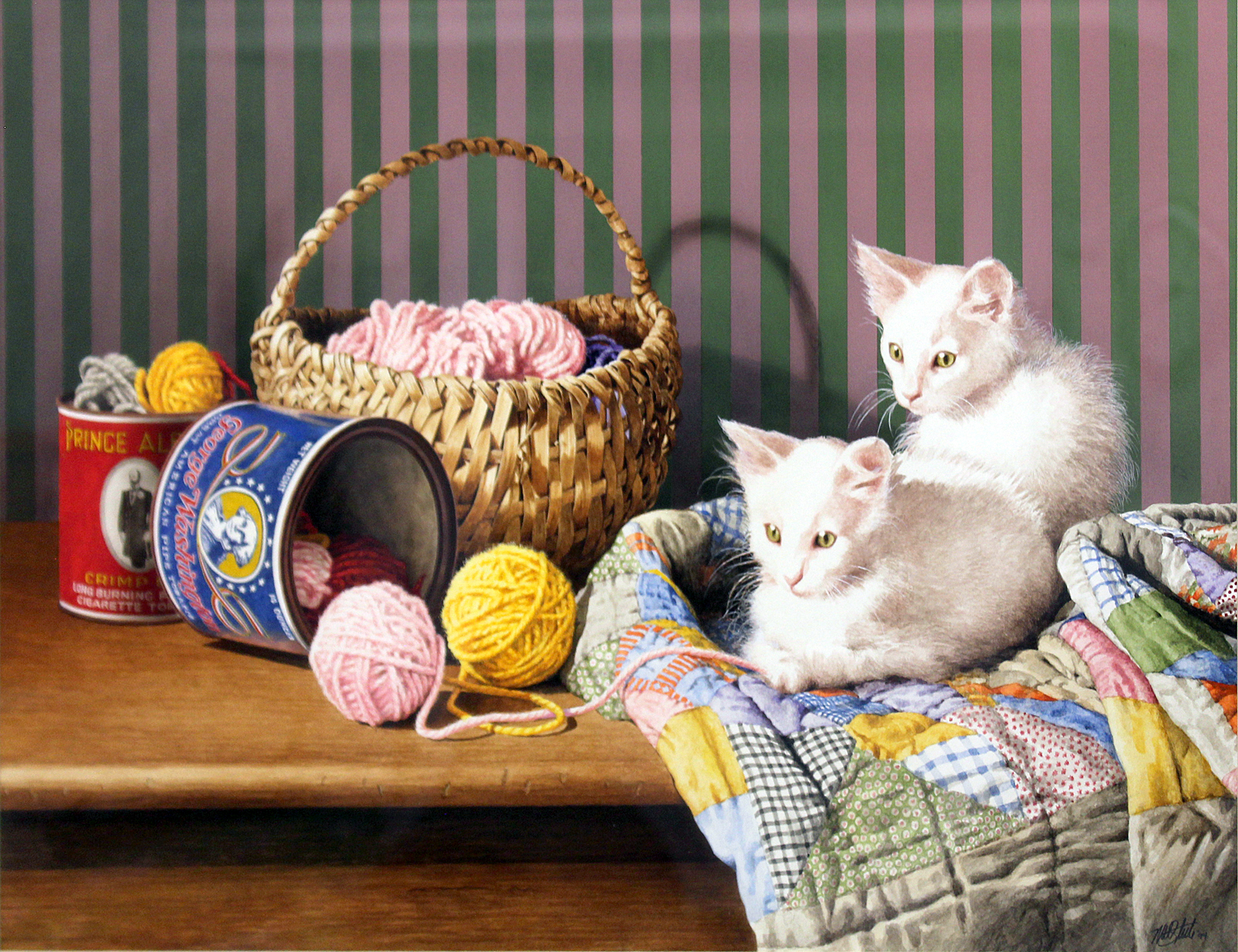
I shouldn’t overstate my case here. Mel has made his share of purely pandering images, and often they are not as well crafted, and maybe a little more quickly tossed off. The buying public is looking for rural nostalgia and Mel could give it to them. But in his best prints, he has invested himself and his life experience. 

 His success in the print world meant that he could also sell original paintings in art galleries, and accept commissions. And he made quite a few paintings for himself. Landscapes, 
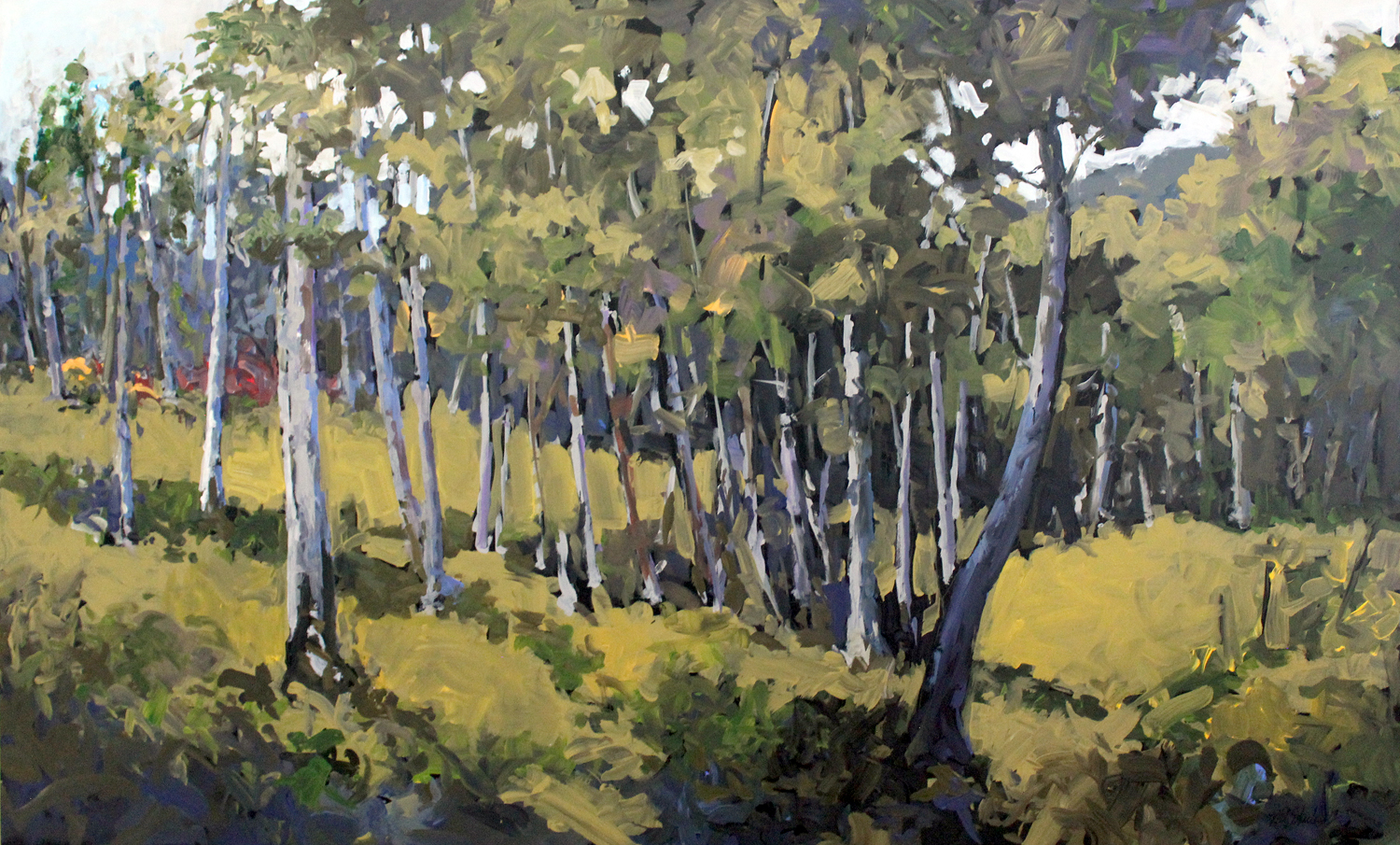
still lifes, 

portraits 

— even the motorcycles he loved and collected (he had been a big motocross fan as a young man
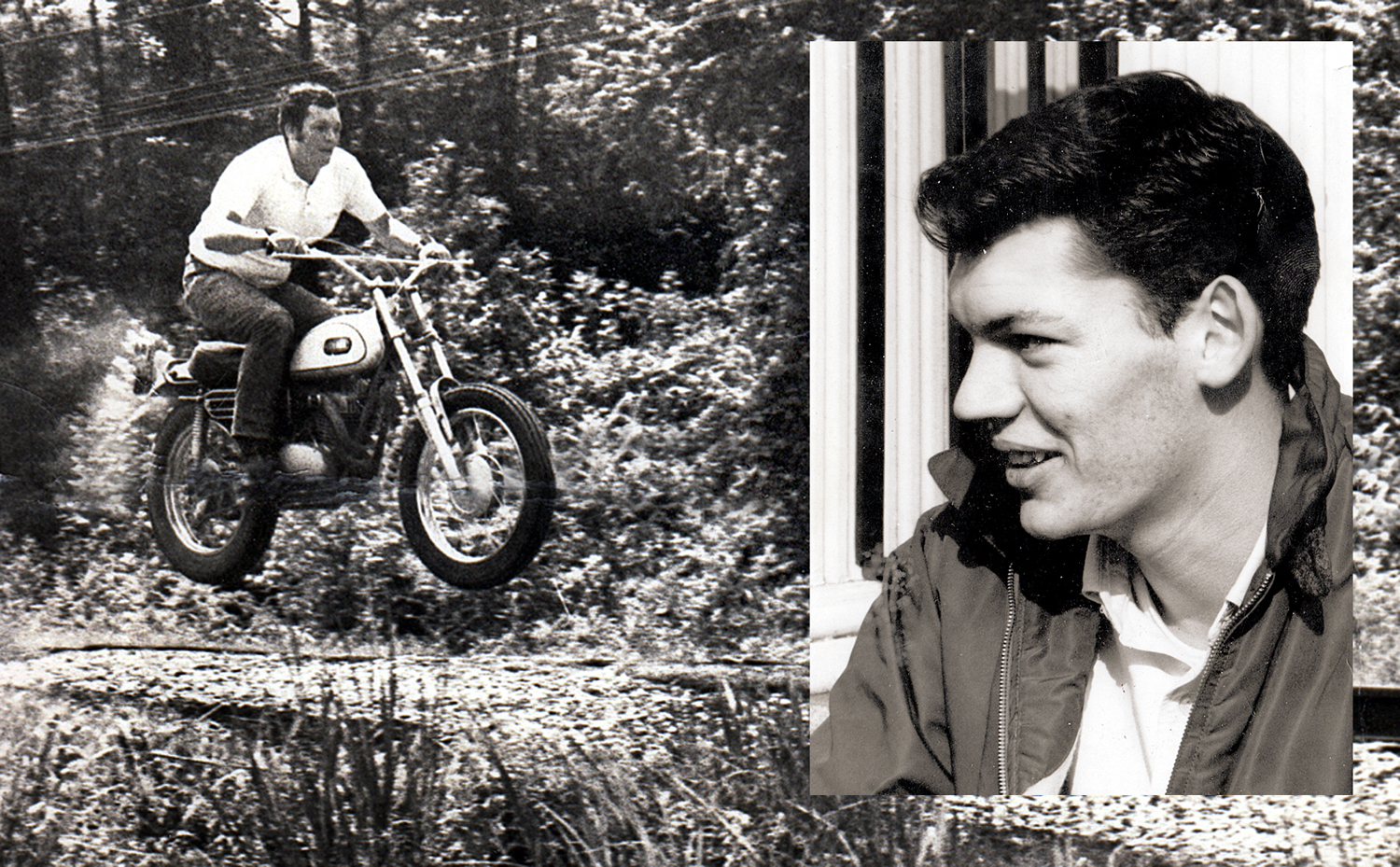
Which showed up in a series of motorcycle paintings

He experimented with a series of paintings made from little squares with letters, numbers of text in them, such as the red pepper. A detail shows how the picture is made up of tiny glyphs. 

He made another series of copies of famous paintings, usually in oil crayon, but always he made little “improvements” in them (as he called them), like this copy of Edward Hopper’s Chop Suey.
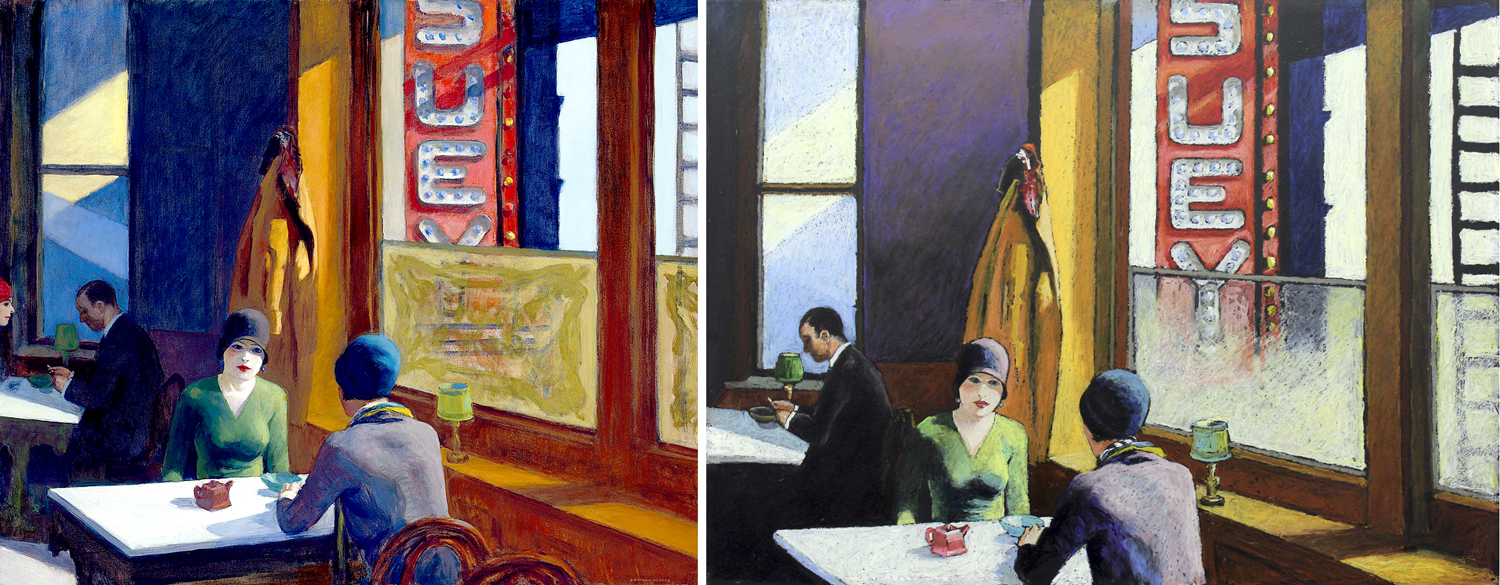
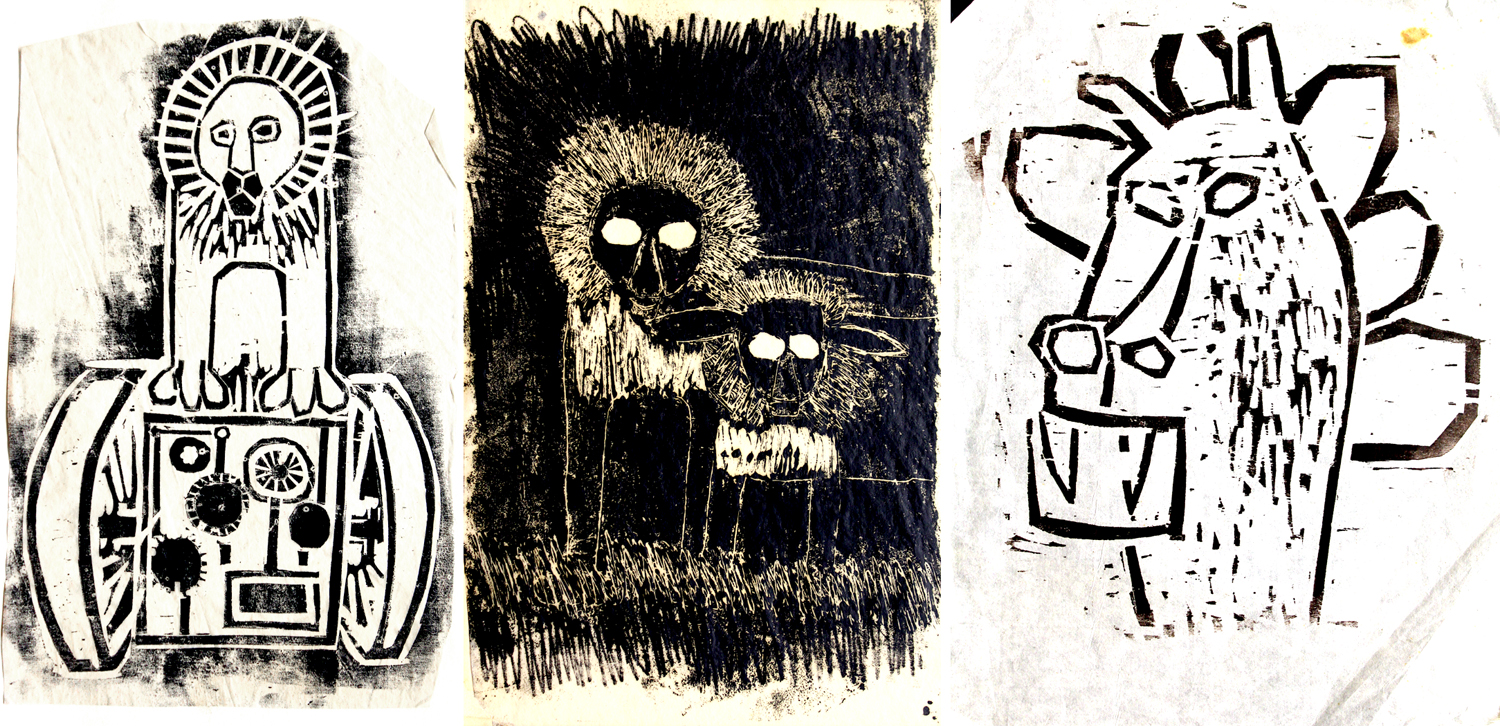
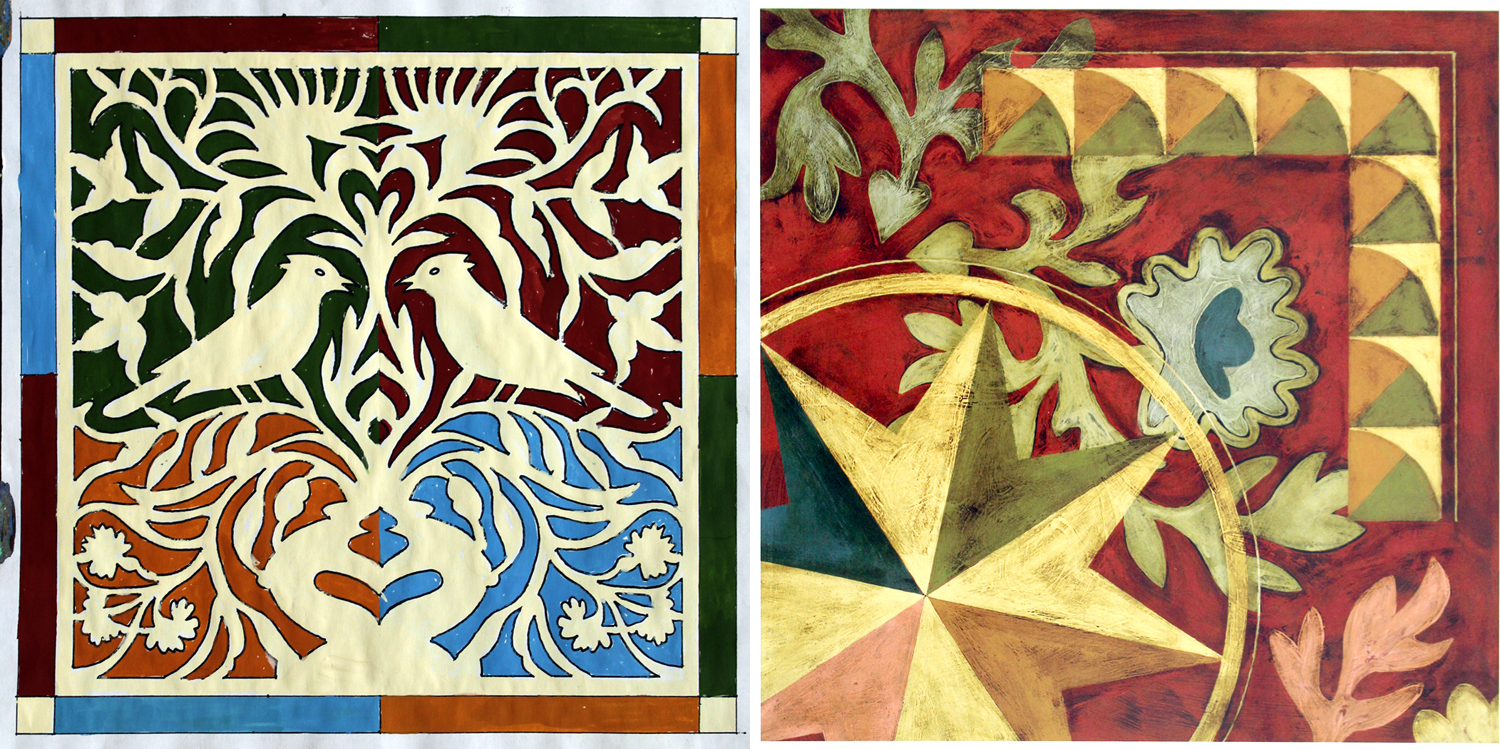
Mel could take on any style of art. His popular prints were photorealistic. But he could also do impressionistic
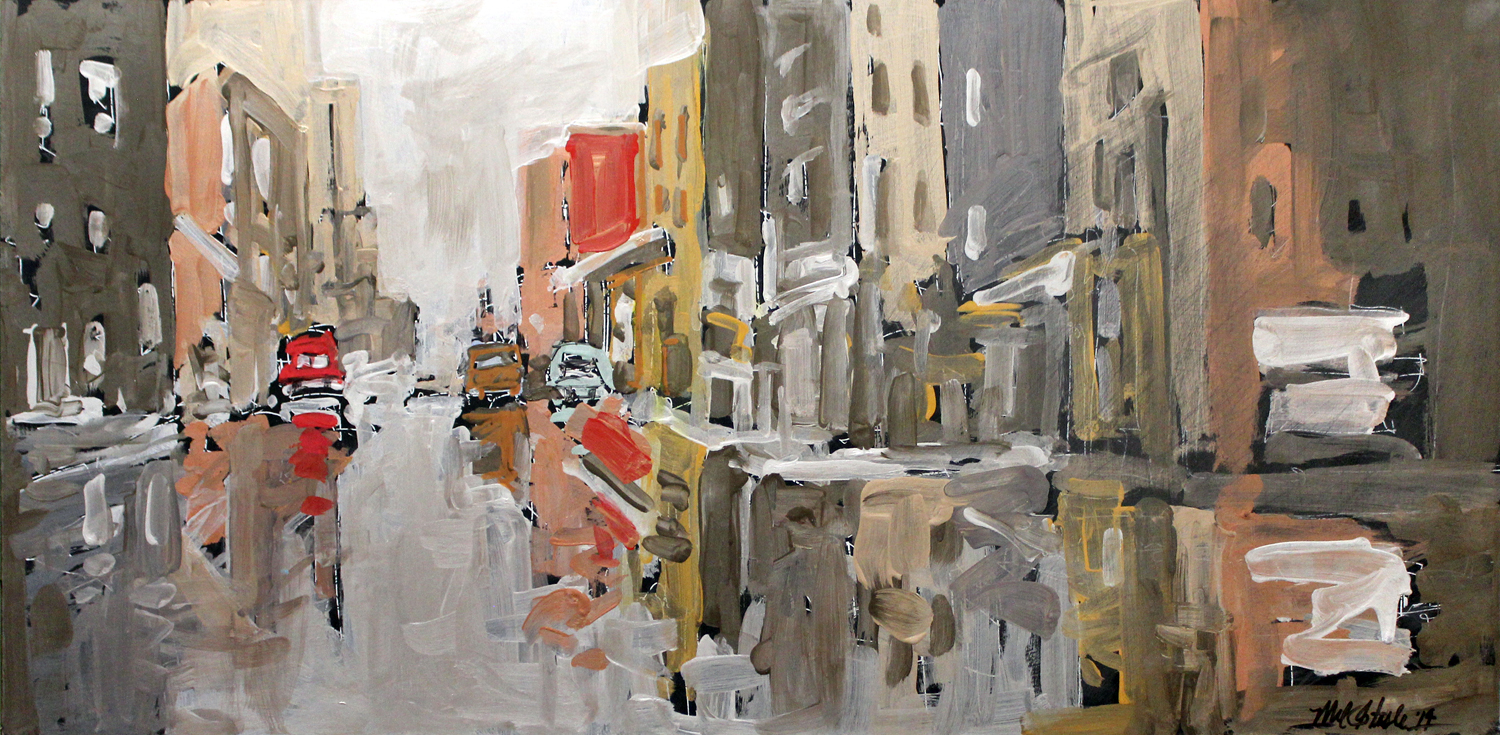
Or primitive
Or design work
Or even sculpture
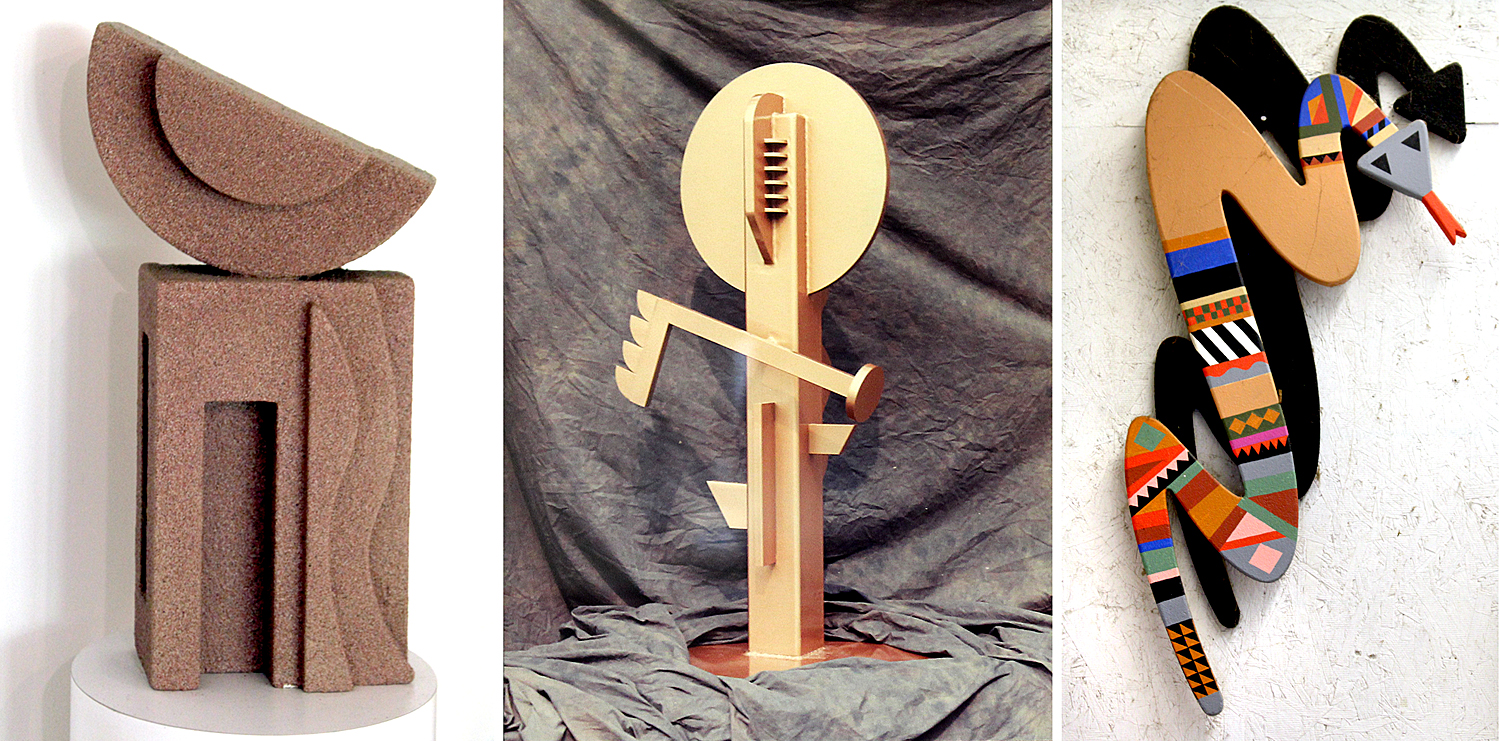
Mel can tackle pretty much any style or genre. Yet, what he really wanted to do, since his early days at art school, was the abstract painting he discovered there. 

It sometimes needs to be pointed out that abstract painting isn’t necessarily easier or faster than detailed realism. In fact, quality in any variety of art depends on careful attention to color, line, design, mass, balance, and a sense of depth (or lack of, when that is the point). A successful photo-realist scene will only work as art if all its parts work in harmony. A good abstract painting is the same as a good realistic painting, except without a subject matter you can name — like a barn or owl.

Believe me, as an art critic (often asked to judge local art shows and give out blue ribbons), I saw a deplorable boatload of bad abstract painting, and almost always, the problem was that the artist really just threw some colors on the canvas in a haphazard fashion. Bad abstract art is a dime-a-dozen. 

Bad, indifferent, tossed haphazardly

It isn’t just the public, but too often the artists themselves, that think an abstract is made by energetically slathering paint on the canvas, and that the energy of its creation will be conveyed to the appreciative viewer. Das ist schlamperei. Sloppy; lazy; careless. 

Sometimes a painting can give the appearance of spontaneity, but such doesn’t happen through accident. One may look at an abstract painting by Mel’s hero, Willem de Kooning, and believe he tosses them off in a fit of athletic frenzy, but there is film of the artist painting and mostly he stands back from his easel by about 10 feet and looks at the canvas for two or three minutes and then approaches with his brush and adds a few strokes and steps back again to look. It is a slow accumulation of careful decisions made through a lot of just looking and thinking. 

I have watched paintings by Mel in the process of being “builded.” He likes to work alone, but I have snuck into his studio in off hours and seen paintings change slowly over days until he gets the final version he is happy with. Whole quarters of the canvas may be covered over and repainted; new details added or others scrubbed out. 

Subtle differences in three states of the same work

When the famous Japanese Ikiyo-e artist, Hokusai, turned 80 he said, “I have drawn things since I was six. All that I made before the age of 65 is not worth counting. At 73, I began to understand the true construction of animals, plants, trees, birds, fishes, and insects. At 90 I will enter into the secret of things. At 110, everything — every dot, every dash — will live.” 

Mediocre artists will find a “style” and stick with it. Better artists continue to grow their whole lives. You can follow the growing maturity of Mel’s abstract work from his early canvases to his most recent. 

His early abstracts suffer from the rigorous training he got at art school. His abstract paintings are notably careful, well-lined, almost as if he were making photorealist versions of abstract paintings. When architects attempt to make gallery art, they often make this sort of deracinated art — more design-y than resonant. It’s what I have always called “architect’s art.” 
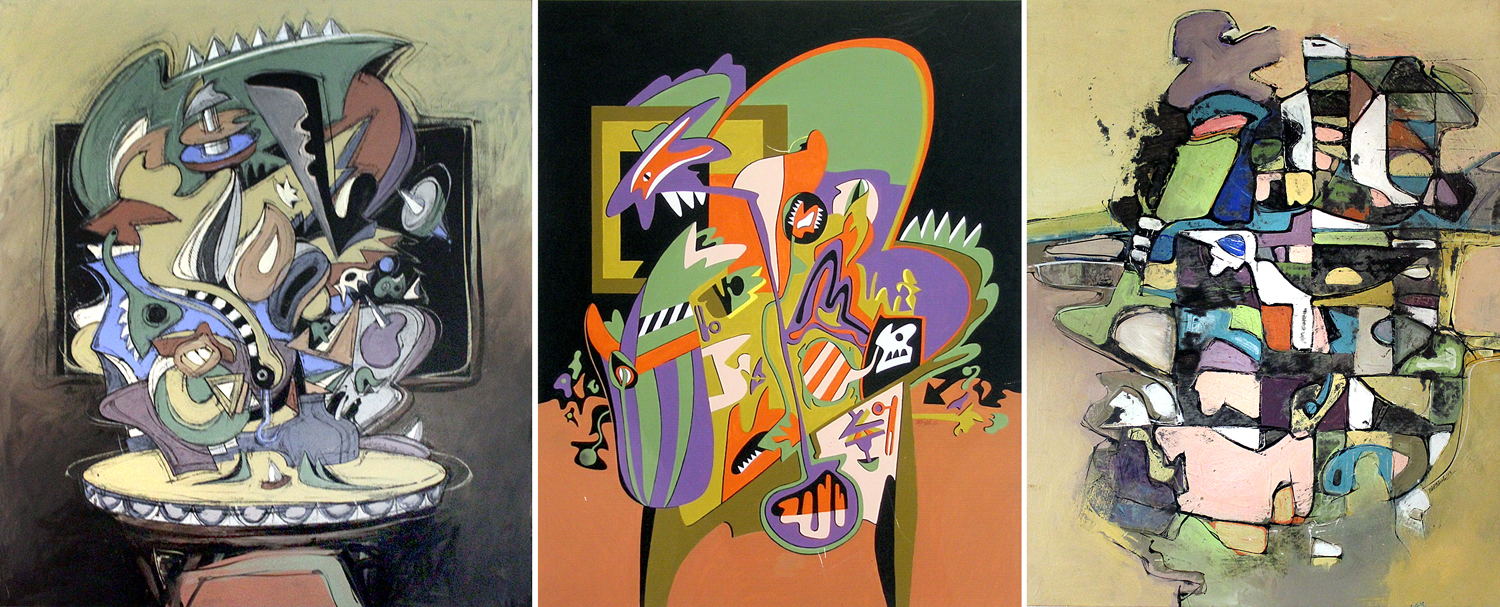
Even in this early work, you can see some through-lines to the later. Unlike many abstract paintings, which may as well be wall-paper, Mel tends to situate shapes against a background. Often the background is a tiny sliver at the top of the canvas, sometimes the shapes occupy a spot at the center like a vase of flowers on a table. 

You see that in the early paintings and in more recent ones.

This gives Mel’s abstracts a solid sense of structure. Squiggles don’t just run off the edge of the frame. 

He also uses the size of shapes and their colors to create a sense of near-and-far, a sense of depth in the painting, so you can look at it as if you were gazing at a landscape. (I don’t want to get caught up here in an argument about Clement Greenberg, the influential mid-century critic who claimed that painting should be flat and that two-dimensionality was its essential fact and that to attempt the illusion of depth was somehow anti-art. That was always pure balderdash and if he had had eyes instead of theories, he would have seen that.) 
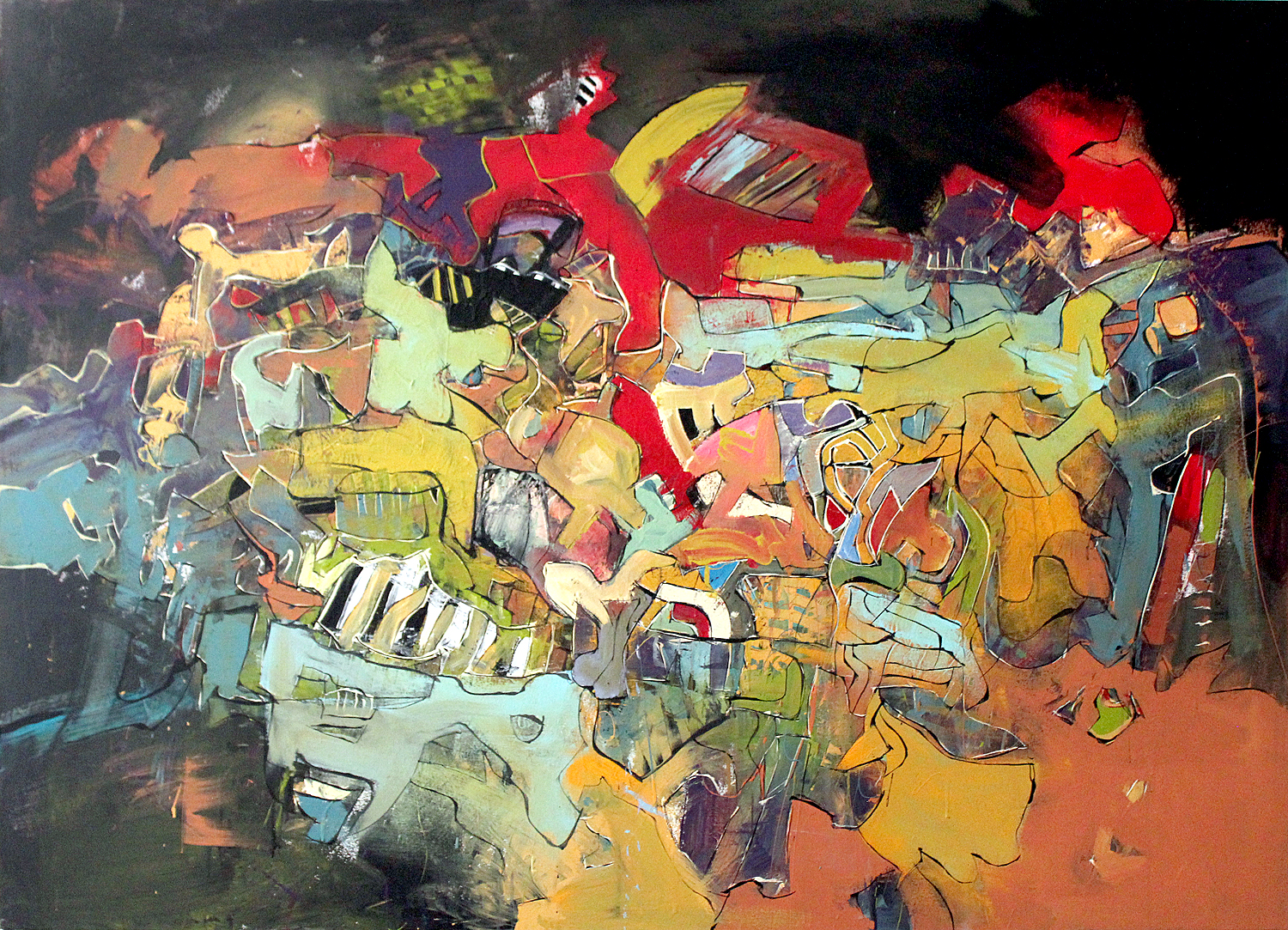
Some shapes cover up parts of other shapes. Cool colors and darker shades can recede while warmer colors and brighter ones can appear more forward. It isn’t all just a great bowl of oatmeal. There is visual structure available to those who take the time to immerse themselves in the art. Art takes time to look at and the longer you look, the more complex the painting, and the more intense the emotions that may be evoked. 

I mentioned that in his more commercial prints, at least in the best of them, Mel found ways to put his own life into them. Unlike some popular print artists, who present a nostalgic world that never actually existed, Mel’s barns and farm houses are part of the life he’s actually lived — at least in his childhood, and after a city life in Charlotte, once again in his life back in rural Rockingham County. 

When I have gone to visit Mel and Deborah in Reidsville, as I drive north from Winston-Salem on U.S. 158, I pass many tobacco barns like the ones in his prints. They are still there, and there is often a damaged barbed-wire fence around them. Nostalgia-mongers love white picket fences; there’s little quite so warm and fuzzy about barbed wire. Yet, it’s that detail that makes Mel’s print carry a weight greeting-card art never even attempts. 

Softer art likes flowers; Mel’s best paintings show weeds. 

And I think there is something similar in the abstract paintings. In most of them, there is a recurring detail of zebra stripes. A shape, either large or small, will be crossed with black-and-white stripes. I’ve asked Mel why and he doesn’t have a thought-out answer. “I just like it,” he says. But Mel grew up in a house in Madison, N.C., just across the street from a railroad grade crossing. I suspect that this detail has lodged in his consciousness and shows up as an emotional nexus in work that is otherwise non-figurative.
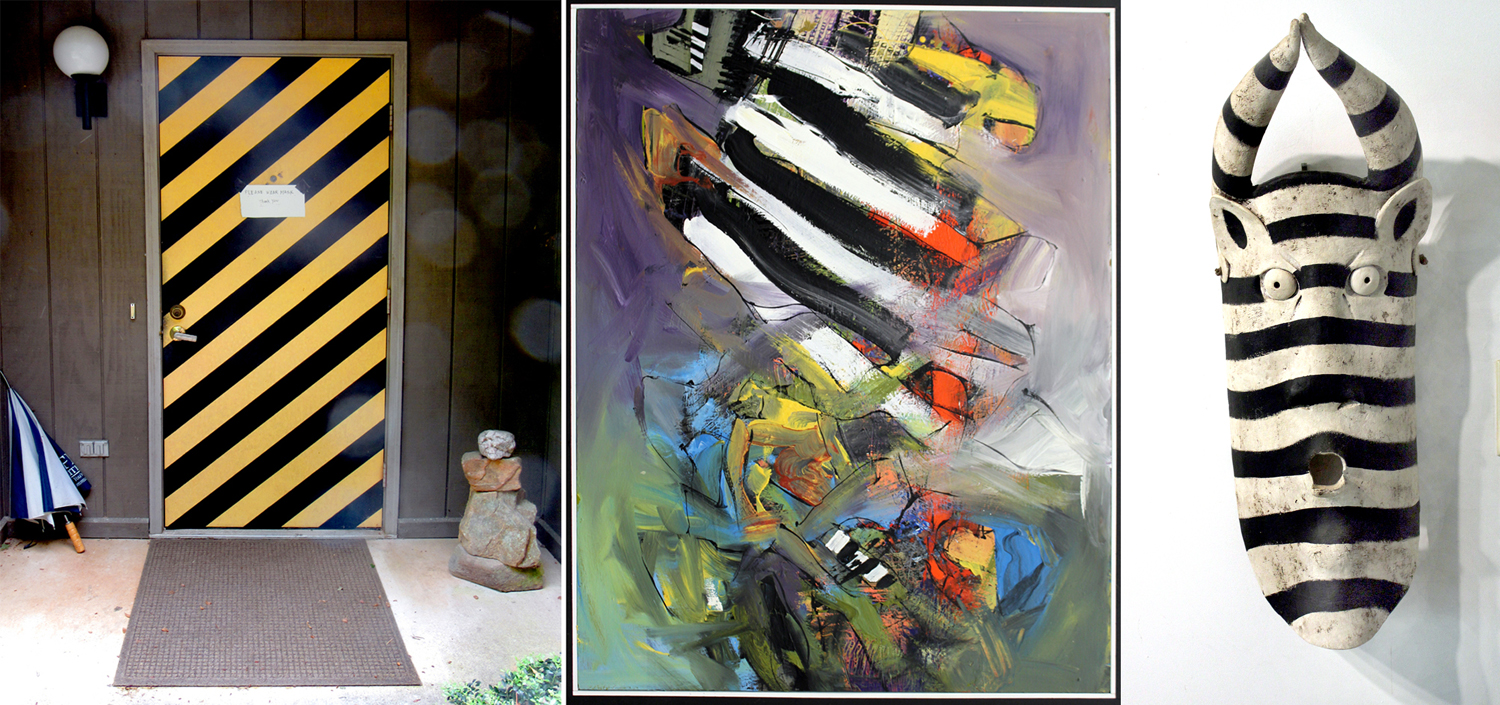
After all, the front door of his studio-home is striped also, and a spooky mask that sits on his wall. You can find these stripes all around his house, including on throw pillows on his sofa. 

 Like many creative people, Mel doesn’t seem to want to look too deeply into, or talk about the wellsprings of his work. Many artists I’ve talked to are afraid if they look too closely, their inspiration might dry up. 

One should always be wary of claiming to know what is going on in another person’s noggin. And I may have completely misunderstood Mel’s muse. If so, I’m sorry. It is only a guess, from watching from the outside. 

But over a very long work life, Mel has seemed to avoid talking about anything too deep in his art, while at the same time putting great effort into its making, even when less care would have been enough. 

For the past dozen years or so, Mel has painted landscapes on commission for certain collectors, mostly sold through his agent, and painted canvas after canvas working on his abstracts, using patches of color, on top or beneath each other, as if they were landscape paintings of imaginary shapes rather than trees and streams. 
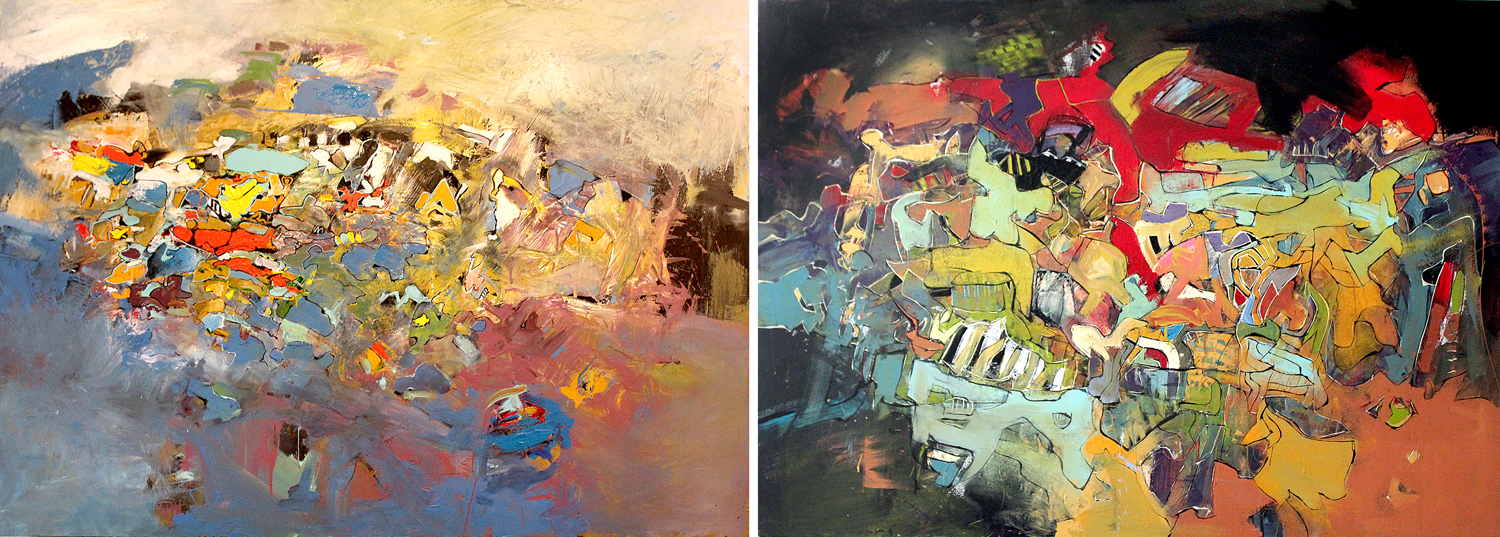
You can see the layout of shapes running through the middle of these canvases, with a clear patch — almost a sky — above and another patch, almost like a meadow, below. The fact that the middle is made up of a bustle of shapes and colors might stand in for a forest — except that they don’t need to. It is sufficient that they are tangible shapes. 

It is the way some classical music has a “program” that tells you the story being depicted in the orchestra, but if you didn’t know the program, you would still be able to feel the movement of the music in a specific direction. 

It is in this sense that I say Mel’s abstracts can be seen as quasi landscapes. Not that they are meant to be literally so, but that they display a visual form that mimics the mental idea we have of a landscape. Take away anything in a scene that has a name and this is what is left. Color, shape, form, space, frame. 

I have included a passel of Mel’s artwork in the blog entry, but I have at least another 200 images I simply don’t have room for. Mel has been an extraordinarily prolific and various artist, using many styles and many media over the years — gouache, oil crayon, acrylic, pen-and-ink. There is almost no style, genre or medium he has not taken on over the past 60 years. 

He is better than he lets on. 

Click any image to enlarge

Carole Steele was born two months before the attack on Pearl Harbor, and she spent her childhood in rural North Carolina, and for a short while during the war, in Portsmouth, Va., while her father worked in the shipyards at Norfolk. 

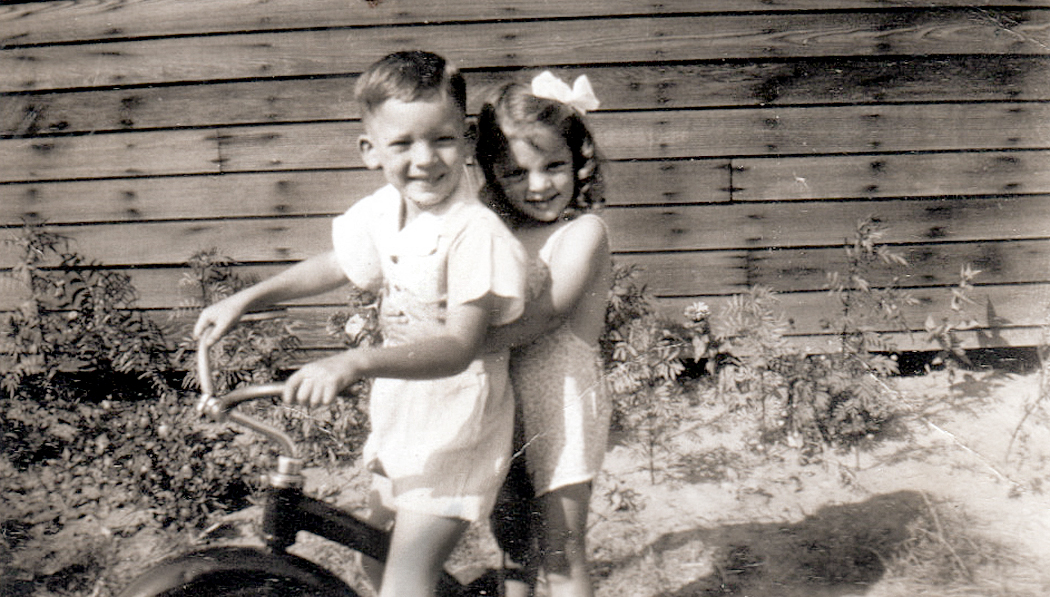
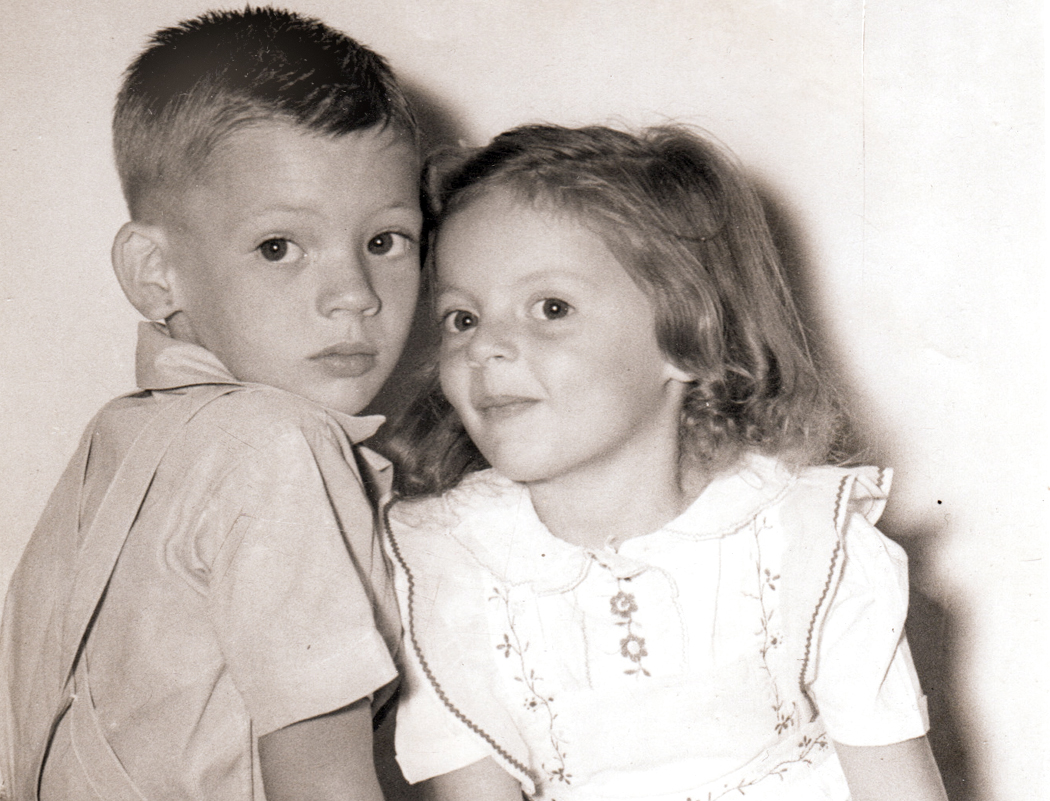
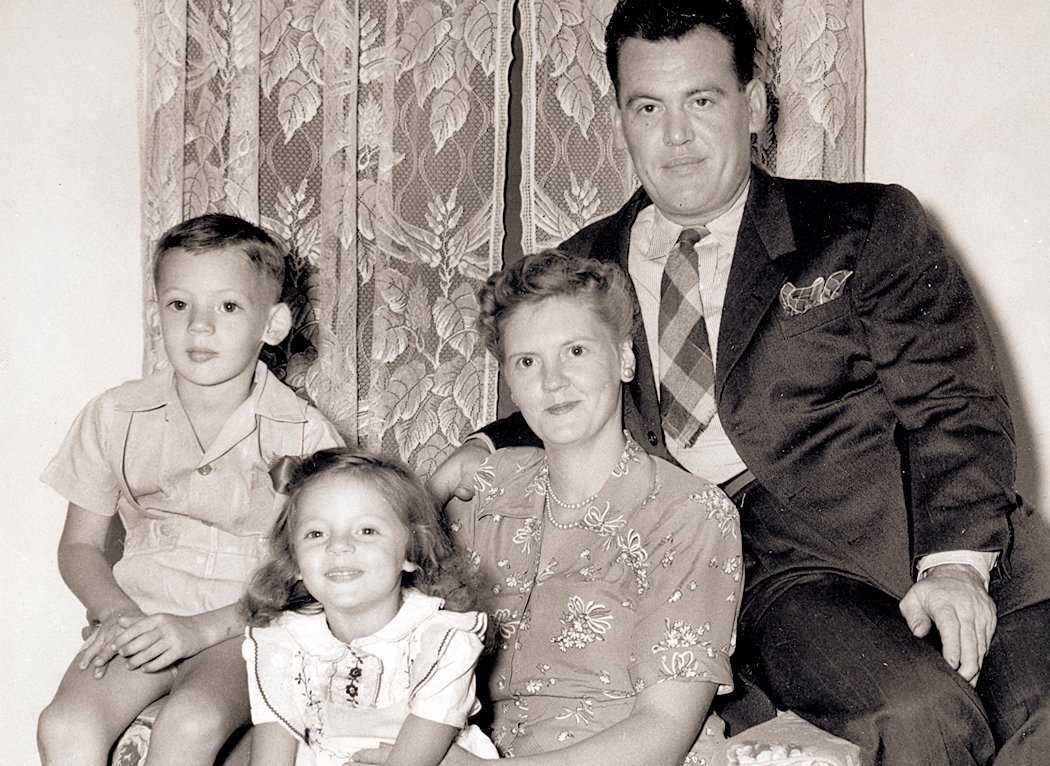
While we were married, she often told stories of that childhood: her older brother, Mel; her hardworking father, Mutt; her peculiar grandfather, Earl Thaddeus, whom she called “Papa E.” They lived in a small house on the banks of the Dan River in Rockingham County, some 30 miles north of Greensboro, in the 1940s, where her family kept animals — a cow, some hogs and chickens. In her memory, this childhood was by turns idyllic, stormy, disappointing and exhilarating. It was for her, even more than for most, the persistent foundation of her adult life. 

In the years before Carole died, I tried to get her to write down her stories of life and childhood. Finally, we settled on a strategy: I would sit her down, and like George Burns saying to Gracie Allen, “So, tell us about your brother, Gracie,” and she’d be off to the races. Carole was like that: She had a million stories. I typed as fast as she spoke, and I got much down, but I’m afraid Carole did not live long enough to finish the project. 

Ultimately, we filled about 35 pages with her recollections. I hope that someday, granddaughters Carol Lily and Tallulah Rose will want to find out more about their Tiggy and will appreciate that this was written down and saved for them. 

These are Carole’s words, verbatim and unedited. She spoke like a great storyteller, and much of it sounds as if it might come directly from Faulkner. These are 10 episodes, from when she was about two years old until she was eight or nine. 

Papa E and the Easter chicks

When I was a child, Easter chicks were sold at Mack’s 5&10. They were dyed fuchsia, green, blue and purple. The purple ones were my favorites.

And one day, before Easter, I saw them in the dime store counter between the toy watches and the rubber balls. So, I bought a little purple one and took it home. I had a colored Easter chick every year, but the poor little things never lived long. The dye probably made them sick.

On this occasion, Papa E was home when I brought my chick in and he thought it was beautiful, too. So pretty that he went up to the dime store and bought 100 of them, all different colors. And he put them in a big metal drum with high sides; he put them under the back porch where the land dropped away toward the river. This open spot was my “ranch/mud pie bakery.” And I was thrilled to have the chicks with me.

I must have been 5 or 6 because I had to drag a cinderblock up to the oil can to climb up high enough to hang my ribs on the rim of the oil can to look down and see the chicks. They were wonderfully beautiful. All different colors. Fuzzy and peeping.

Papa E came down to check them after supper, kicked the cinder block away and held me up over the rim so I could see them again. And then we all went in to bed.

The next morning, I woke up to the sound of Papa E’s feet hurrying through the house. 

“Get your pistol, Mutt. A weasel’s got the chicks.”

Daddy grabbed his pistol; Papa E already had his. And I jumped out of bed in my pajamas, barefooted and ran behind them out of the house, where Papa E had already located the weasel in the dirt road.

We all went running down the road behind the weasel, with Daddy and Papa E each shooting their pistols as we ran.

The bullets would puff up the dirt under the weasel’s feet, but it ran zig-zagging from left to right, left to right, all down the dirt road and finally ran off to the left into our small swamp, where we couldn’t follow.

We had to give up, turn around, and walk slowly back home and I heard Papa E tell Daddy, “He  killed ‘em just for blood, Mutt. Just for blood, every one.”

Daddy said, “Don’t you look at them, Carole.”

But when we got back to the house, I ran to the oil drum in my playhouse and dragged up the cinder block again, climbed up and hung on my ribs and there they were, 100 colored chicks each of their necks bitten and no chick swallowed. 

Carole and the balloons

One day, when Mama Piggy was visiting, Daddy was at the shipyard; Mama Piggy, Mother, Melvin and I rode to Buckroe Beach in Mama Piggy’s dark blue car. We were walking on the sand when we came upon a man selling ugly brown balloons. Mother bought one for Melvin and as we walked on, I pulled at Mother and asked could I have one, too. This was a familiar situation because Melvin often whined for things and when Mother got something for him, maybe because she thought I hadn’t expressed a desire for the Dixie Cup of ice cream or the balloon, or a toy, that I didn’t need one or even want one. But of course, seeing a toy in Melvin’s hands made me want a toy, too. So we turned around and went back to the ugly brown balloons and one was bought for me.

They were each tied on to skinny wooden sticks. Balloons were very scarce during the war, as were bright colored things. Anything related to grease or metal or oil or oil byproducts was scarce. When we got home from Buckroe Beach, we lay down to take a nap. I stayed awake long enough to make sure that Mother and Melvin were actually asleep; then I pulled a safety pin out of Mother’s pincushion and sneaked into the living room where the thin sticks of our balloons were slipped behind the coiled spring of the front spring door. I selected one balloon to represent the one that belonged to Melvin and I popped it. As Mother and Melvin were waking up from the bang, I realized I would have to sacrifice my own balloon to deprive Melvin of his, and with my cold hard little heart, I popped the second balloon. Melvin was totally pissed, and I thought he would never stop whining and crying about it.

This experience was really rewarding to me, so I decided to try some other things. That night, after everyone went to sleep — at this time Melvin and I shared the big double bed — I pulled up on my knees on the bed and leaned over and looked in Melvin’s face. I made faces at him; stuck out my tongue at him; waved my fingers behind my ears; and became convinced that he was completely asleep. Then I raised up, balled up my right fist and punched him in the nose as hard as I could. He woke up screaming and crying with blood running down his face. After cussing me, he ran into Mother and Daddy, told them I had punched him in the nose on purpose. They assured him I would never do anything like that, that I was a sweet little girl and he must have had a bad dream and waked up with a nosebleed.

When he came back to bed, he didn’t hit me back, but he really hated me. But I had drawn blood. I wondered what else would draw blood. I really enjoyed hitting him.

The next day, he and Ruebel Jones got into a fight in the back yard. I was probably 3 and Melvin would have been 5, making Ruebel about 7. Ruebel had a little brother, blond, named Dewey. His nose always ran and his face was always covered with dirty snotstripes. They were both unsavory characters and Ruebel was certainly a bully. 

I had a Pepsi bottle that Mother had filled with ice water and I carried it around with me in the back yard. Ruebel hit Melvin in the nose and of course, Melvin started bleeding all over again. Melvin did not hit Ruebel back because Ruebel was much bigger, but I ran over to Ruebel and hit him as hard as I could on the head with my glass filled-up Pepsi bottle and Ruebel went down with blood running out of his nose. Bloody noses, bloody noses: I was a MAN.

Melvin was furious with me because Ruebel had beaten him and I beat Ruebel. Ruebel and Dewey both ran home crying. Melvin ran into Mother crying and tattling on me: one of his favorite things. I don’t know that I ever really hit another child after that in my whole life; it was too easy to win. All it took was a hard heart.

Carole and yellow food

Sometimes I got into trouble entertaining myself, on my own. 

I loved to explore all the containers in the bathroom. Sometimes I left great messy trails of bath powder through the house, or pulled all the tissue off the roll. Sometimes I opened the refrigerator and experimented. After the first banana I ever had, I pulled out all the yellow foods of the refrigerator because I thought yellow meant sweet.

I carried it all to the back porch and tested each item. The worst disappointment was crookneck squash.

Then I found a cake of butter, a one pound cake of butter, that Grandmother Bell had mailed to us in an oatmeal box. I thought it would do as a doll birthday cake. Mother and Melvin came back into the house just as I was finishing the last few bites. Mother was sure I would be very sick, but I didn’t suffer any ill effects. 

Hub Hawkins stutter

Papa E’s sister, Mattie, married Captain Jack Hawkins. One of their sons was Dewey Hawkins, who ran the pool room. And this Dewey was Papa E’s nephew and lifelong sidekick.

Mattie and Captain Jack also had a son, Wallace Hawkins. And Wallace Hawkins married Mama Piggy’s sister, Valerie. Susie inherited Great Aunt Vallie’s reddish hair and blue eyes. 

Captain Jack and Mattie also had a son who was called Hub Hawkins and Hub could not talk plain, and might have been a little slow.

One day, I saw Hub coming walking down Murphy Street toward our house. Papa E, whose real name was Thaddeus Steele, or Thad Steele, and Dewey were in straight chairs, leaned up against the front of our plumbing shop. They were wearing their pistols in their holsters as usual, which Captain Jack always did.

At this time, Captain Jack was the sheriff, or head policeman. He was the big policeman of the town in that day.

Papa E said to Dewey, “You know, Dewey, if Hub ever got mad enough, he could talk plain as any man.”

And Papa E and Dewey pulled out their pistols and began shooting at Hub’s feet. Hub was, of course, furious. 

And as he was hopping up and down in the middle of the street trying to dodge their bullets, Hub yelled out, “D-Dod D-Dam you D-Dad Deele.”

Papa E and Bucko

Papa E bought a bull for a pet and named the bull Bucko. Or maybe I named him Bucko. Because each day when I would come home from school,  Bucko would be chained to a telephone pole at the right side of our house, of our front yard. And he was always trying to buck the telephone pole down. 

Bucko was very ill tempered and I was afraid of him. His only role at our house was to be Papa E’s pet. Bucko managed to work himself loose occasionally and only Papa E could catch him. 

There was a sunken well in our back yard, a very dangerous place that Melvin and I were forbidden to go near. We had some wooden Adirondack style furniture in the back yard and Bucko butted it all into the sunken well, piece by piece.

On my way home from school, I always checked the telephone pole to see if Bucko was tied up; he was. So I went down under the back porch to my cowgirl ranch/mudpie bakery to check on things and when I came out, Bucko was standing loose in the yard with red eyes and steam shooting out his nostrils and ears. I tried to run up the back steps, but Bucko cut me off from the steps and I had to run toward the creek. Bucko followed me and I ran around the yard twice. Finally, I saw mother at the top of the steps with the screen door open, and I made a run for the steps. This time, I made it and mother pulled me in the door just as Bucko climbed the steps after me.

The next morning, I looked out the window to see if Bucko was chained up and Bucko was not there. 

I went out into the front yard to talk to Daddy to ask about where Bucko might be, and I saw Papa E loading Bucko into the back of the truck. I asked mother where Bucko was going and she said, “The glue factory.”

Tea with dead squirrels

In the glove drawer, I used to keep a little white cardboard jewelry box with a rattlesnake rattle that Papa E had given to me. Every time I came home from college, I would open the little box and shake the rattle, but the day finally came when I opened the little box and the rattlesnake rattle had turned to dust. Rattlesnake dust.

Papa E often gave me parts of little animals when he skinned them. He gave me many poofy little rabbit tails and furry rabbit paws. When I was 5, and we lived in a cabin, Papa E was taking care of me one day and we went hunting. Papa E shot two flying squirrels but first, he had me watch them and he showed me how they spread out their little arms and sailed from tree to tree.

After he shot the two squirrels, he wanted to continue hunting, but was worried about me in the woods, so he found a good playhouse tree for me and stationed me under the tree asking me to take care of the two squirrels and not to leave the tree. I collected a lot of acorn caps and made a tea set; I closed the little squirrels’ eyes and put them to bed for a nap at the base of the tree using dry leaves for blankets. I woke them up and gave them tea.

It probably sounds gruesome, but I had a wonderful time.

Papa E and the pond

When Papa E and I walked in the woods, there was one special day that I realized Papa E was teaching me important things that he wanted me to remember.

He took me around to all the trees and had me rub the bark and sniff the bark, pull a little of the bark off and feel how wet the wood was underneath. He showed me the leaf shape of many different trees and I remember he told me that sweetgum twigs make good toothbrushes, and to find a sweetgum tree, to look up in the canopy for leaves that looked like stars.

He said, if I saw a tree in the woods that looked like a ghost, it would be a sycamore. There was a big-leafed plant he showed me, and he called it elephant ears. He also showed me what poison oak and poison ivy look like.

And then, I found jewelweed and he told me it was a cure for poison oak and poison ivy.

He dug up a little piece of ginseng root and cut off the tip of one of the roots. It looked just like a little bloody toe. He said, he and great grandmother made a tonic of ginseng every spring. That it would keep you healthy.

But best of all the plants in the woods, and I think his favorite, too, was young sassafras. He showed me the three kinds of leaves: the mitten, the ordinary leaf, and a glove, I think. I’m not sure about the third leaf shape.

We dug up the roots from one and using creek water, we boiled it in a tin can and then drank the tea. It was wonderful.

There was another thing that Papa E showed me that day about the trees. One was to take off some bark and pull out a wet strip of flexible hickory wood, make a slash in one end of the strip and cut a notched point at the other end of the strip. Then you could thread that strip through a piece of meat to hang a rack of meat strips over coals to dry the meat. As the hickory strips dried over the fire, they shrunk and held the meat fast. He said you could use hickory strips this way to fasten many things.

He also said, small hickory limbs, branches are the best for slingshots.

Daddy often made slingshots and was a great expert in their use.

Daddy could kill as many bullfrogs as he wanted to with the slingshot instead of a frog gig.

On this day, we stopped at a little black pool in the woods and we lay down in the pool on our stomachs. Papa E showed me how to lower my chin and nose into the water so that the water came up just beneath our eyes and then he said, now look. The top of the water had turned into something like a wonderful skating pond and there were dozens of tiny insects, many different kinds, skating across the water, hopping, taking off, landing and I knew this must have been his favorite game when he was a child.

These days with Papa E were the beginning of my lifelong love of the woods and the woods were my retreat. I was very proud that day because I did not feel like Papa E’s grandchild; I felt proud because I believe he found in me, a sister.

Old man Ratledge

Janice’s grandfather, Old Man Ratledge was the meanest looking man I ever saw. He still had some black hair and always grizzly whiskers. He always smelled like whisky and was extremely grumpy. I just have to say he was very mean. He spent his days on the porch of the old Ice Plant rocked back on the two back legs of his chair. Occasionally, Janice and I would walk down to the Ice Plant and ask him if he would please give us a nickel or a dime and he would call out, “Goddamn it, you sons of bitches! Get away from me!” 

Hog killing

We also had hogs. Down the road some distance from our house. If Daddy happened to be at home and Melvin or I telephoned, when we asked “Can I speak to Mother please,” Daddy would always say, “She’s gone to feed the hogs and the hogs got her.”

The hogs were a real trial. We had one successful year of raising hogs and on the day they were slaughtered, Daddy made me leave the scene but I was too tempted. It was a very exciting morning already because Melvin and I had seen a cottonmouth at the creek and daddy had sent Charlie Mosely down to the creek to hunt the cottonmouth and kill it.

Since I couldn’t go down to the creek, and Charlie wouldn’t let me go with him to kill the snake, I hid around the corner of the plumbing shop and watched the hog killing. Daddy and the men shot the hogs in the temple with a pistol. I remember seeing the heavy hog bodies go lifeless. Then they tied the two back feet together and hung the hogs upside down. They put buckets under the hogs to catch the blood and cut the hog’s bellies open down to their necks. 

I have a strange memory of everything that happened next because I have confusion about Charlie coming up holding the dead cottonmouth by its tail, and the hogs entrails coming out of them. I have a memory of seeing a snake or a hog cut open and little live black snakes crawling out.

We took lots of our hog meat to friends and family. Mama Piggy came and helped mother make extra hot sage sausage and Papa Bell took the hams to salt cure for us. The tenderloins were the most prized part of the meat. We ate those right away and took them fresh to friends.

Mother made wonderful country gravy with the tenderloins and we had all of the tenderloins and pork chops that we could hold for a good while. 

2 year old’s paradise

This doesn’t belong to that time: but to a time when I was probably 2 years old.

We’d come to Mayodan to visit Papa Bell and Grandmother Bell and very early in the morning, our cousin Marilyn came and woke us up to go out and play. And we went down the hill toward Papa Bell’s turnip patch. There was a big concrete conduit pouring out toward the turnip patch. It had a little water in the bottom of it. We crawled up in there and splashed around for a while. Then we came out and walked into what I thought was a jungle: all kinds of weed were up to my shoulders and trees I’d never seen before. At the other side of the turnip field, I could see a rising bank and the back steps of a group of houses. One of those back doors opened and a boy came out with a white dishpan full of soapy water. His mother yelled at him and he threw the water out and went back inside. Birds were singing all around my head. The smell of the leaves and the weeds all around me was so intense that I will never forget that morning. I think it might have been the first time I was ever in weeds and the first time I heard birds singing to me.

Now, if I imagine paradise, it is that second when the birds were singing and I saw the boy come out his kitchen door. 

Where is home? I don’t mean where is your house, where do you sleep most nights, what is your address. But rather, where do you belong? 

For many of us, home is illusive. For most of my adult life, I have not lived in the same house for more than seven years at a time. I have lived in four corners of the nation, splitting my time from the Northeast, where I grew up; to the Southeast, where I went to school, got married and divorced; to the Northwest, where I went to recuperate; back to the South, where I got married again; to the Southwest, where I worked for 25 years; and now, back to the Southeast in retirement. But I cannot say, despite repeatedly returning, that I feel the South is home. 

It is where I feel comfortable, where I recognize the landscape on my skin, where I have found family. But there remains something alien about it. Something I can never be fully a part of. 

Certainly, part of this is political: The red state conditions are sometimes depressing. There is nativism, clannishness, religion, suspicion of outsiders, lingering racial division. There is a satisfaction of being Southern that can seem provincial. 

Yet, there is also a friendliness and helpfulness that I never found in any other corner of the U.S. When my wife, before we were married, was snowed in in the mountains of Ashe County, N.C., a neighbor she barely knew, walked a mile and a half through the knee-high accumulation to knock on her door and check on her, to make sure she had enough firewood to last out the imposed isolation, and to bring her a basket of food. Not in New Jersey. Not in Seattle. Not in Phoenix — although snow in Phoenix would be pretty much out of the question anyway. 

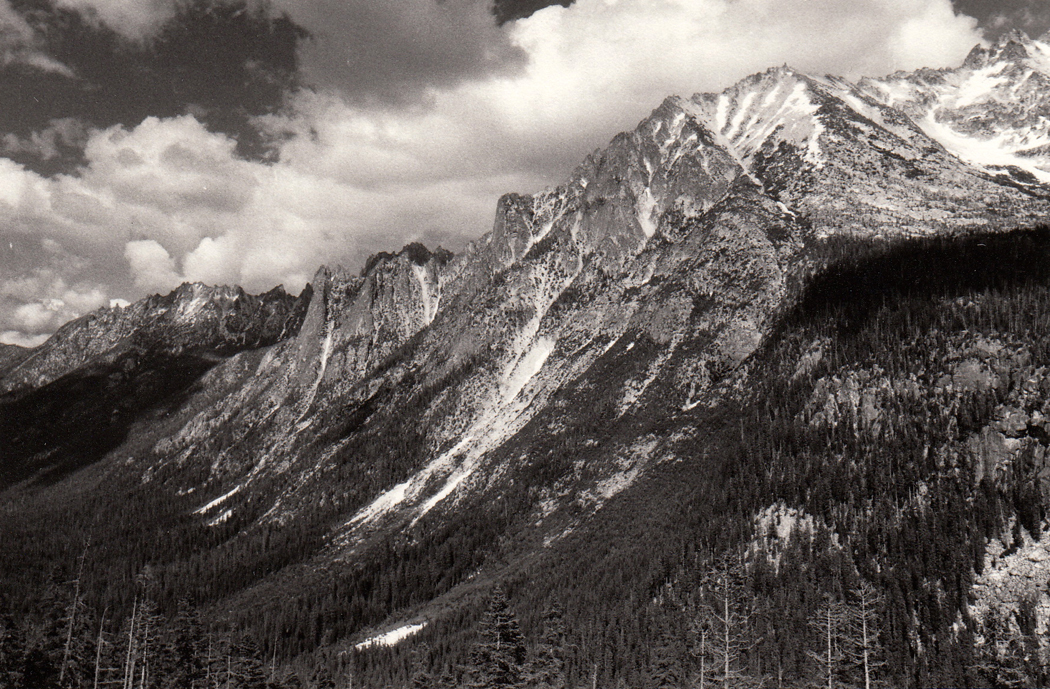
North Cascades

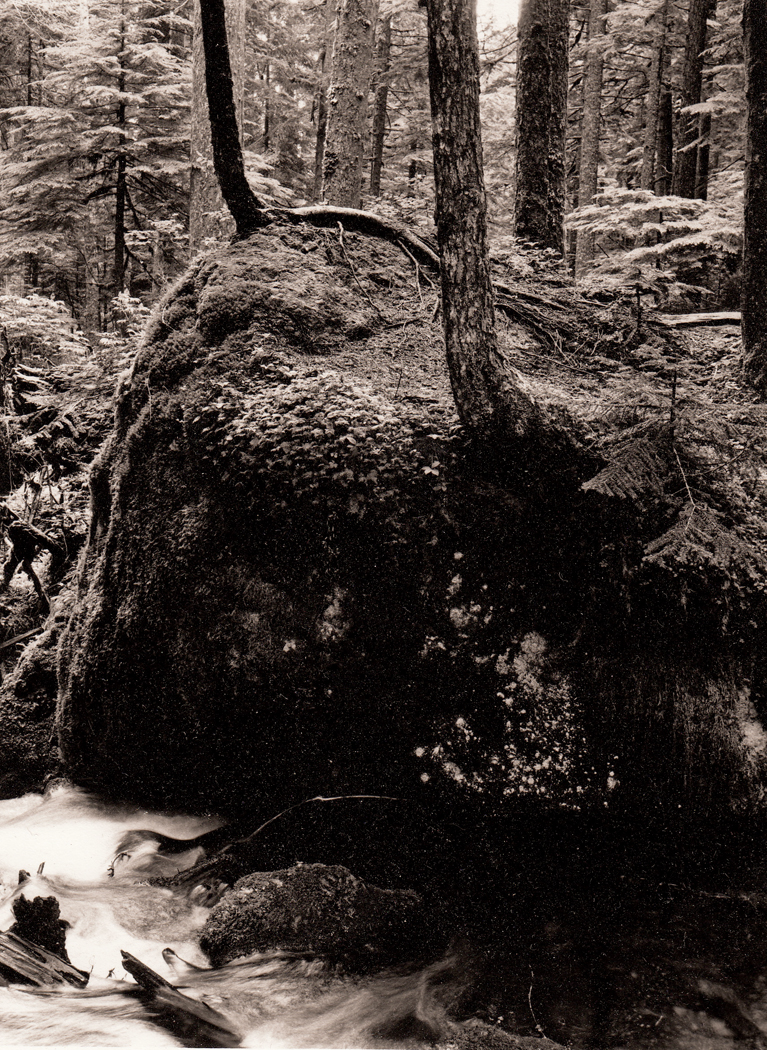
When I moved to Seattle, in 1978, before all the Starbucks and California immigration, I was agog over the Olympic Mountains I could see over Puget Sound to the West, and the towering Cascades to the east. When I went out hiking, it was through rain forests of Douglas fir and western red cedar. The ground was spongy underfoot and emerald green moss grew on decaying logs and stumps. Floating on the waters of the sound were goldeneye and cormorant. The air was soft with cool humidity. 

I certainly had planned to make Seattle my home, and I mean that —  not just a place to sleep at night, but I never felt like more than a traveler spending time in an exotic locale to soak up the ambience along with the rain.

And, compared with the East coast I grew up in, the nature was almost monotonous. When I lived in North Carolina, on the land around my house in Greensboro, I counted a hundred different species of tree and plant. I came to love them all. But there on Phinney Ridge in Seattle, there were two species of tree. Two. They were everywhere and they were prodigious and impressive. But two. I longed to return to the East. And so I did. 

Meat Camp, NC

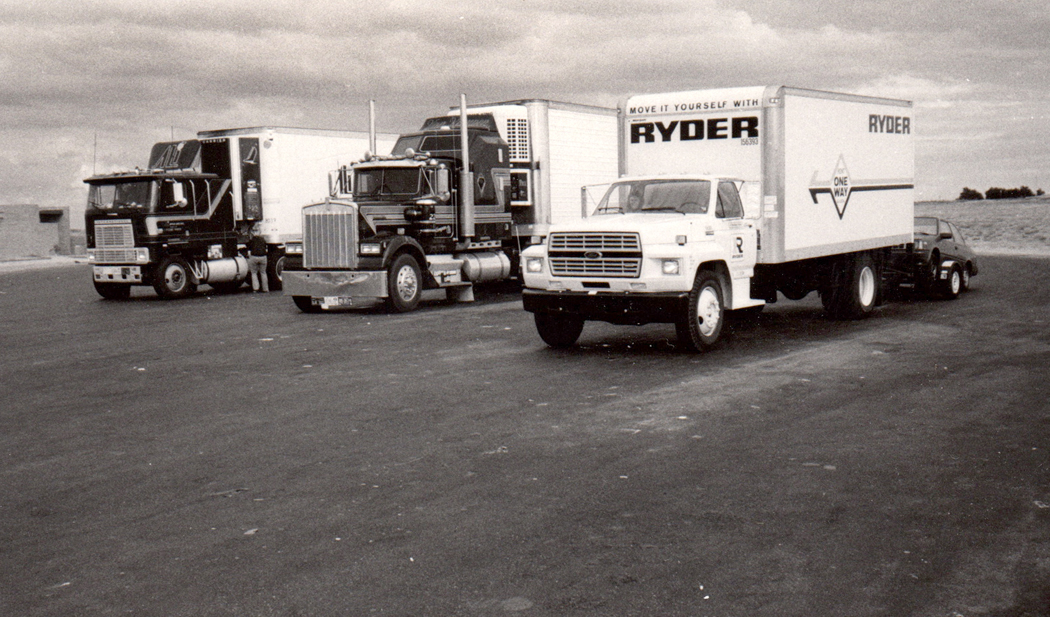
But even then, I moved from Summerfield north of Greensboro, to Obids in the mountains, to Meat Camp just north of Boone — all in the space of two years. And then, to Virginia Beach, Va., to take up a job teaching. After six years there, when my wife was offered a teaching position in Arizona, we packed everything up into a Ryder truck and drove across the continent, without even having a house lined up where to unload the truck. We thought it would be fun to stay in the desert for a couple of years. It turned into a quarter of a century. 

I came to love the desert, but truth be told, I did not live in the desert, I lived in Phoenix, which is Cleveland in the desert, a characterless city of endless suburbs and strip malls in the valley of the Salt River — a river with no water in it. 

(The famous joke about Arizonans is they go to visit New York City and when they came back they were asked about it. “It was wonderful, huge skyscrapers, millions of people, and traffic like you wouldn’t believe.” “What about the Empire State Building?” “Yep, we went up to the top and you could see for miles around from river to river.” “The Hudson?” “Yep.” “What was the Hudson River like?” “Couldn’t tell, it was covered in water.”)

I loved my job, writing for the newspaper, and I loved my colleagues: I came to respect and value the really hard and dedicated work that journalists do. Over those 25 years, we moved four times. None of the houses was home. They were our quarters, but there were no roots. 

North Carolina called back after retirement, and I now live in Asheville, in the Blue Ridge Mountains, a blue city in a red state. And I have gotten old here, but it is not home. It is a residence. 

I don’t know if it is my New Jersey birth that has given me this sense of rootlessness. I spent the first 17 years of my life there, but I couldn’t wait to escape. Going off to college was liberation. New Jersey was banal, suburban, bourgeoise, dull, conventional, oppressive. I never felt I belonged. 

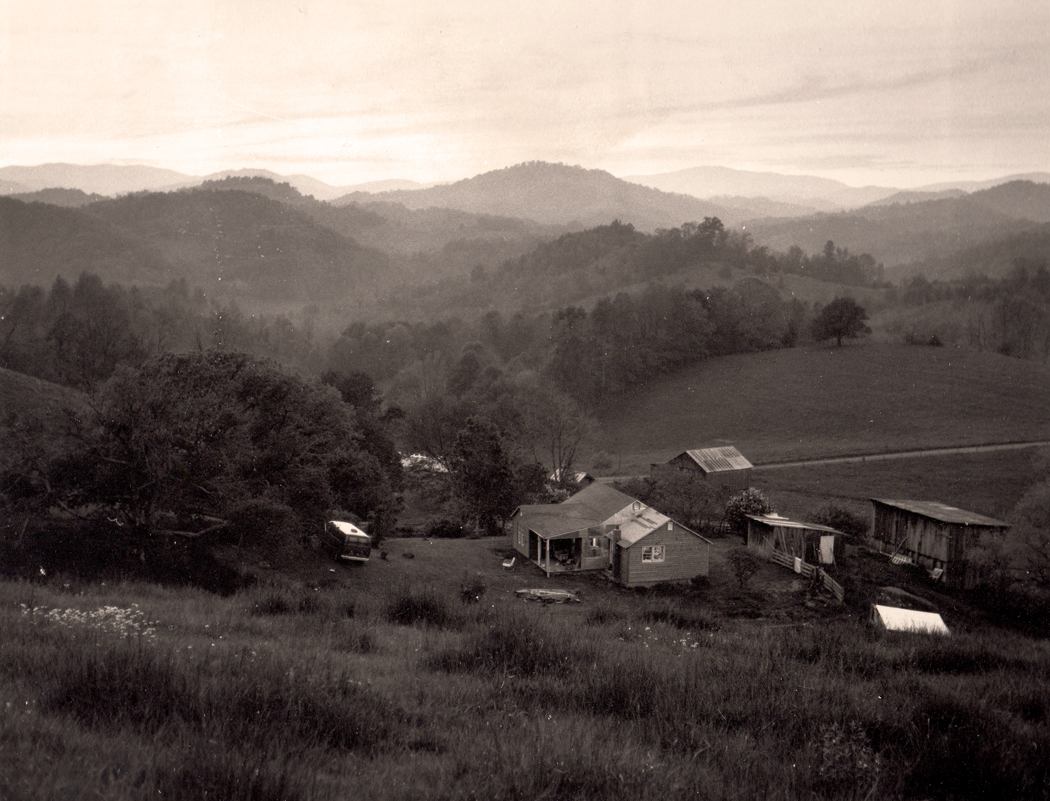
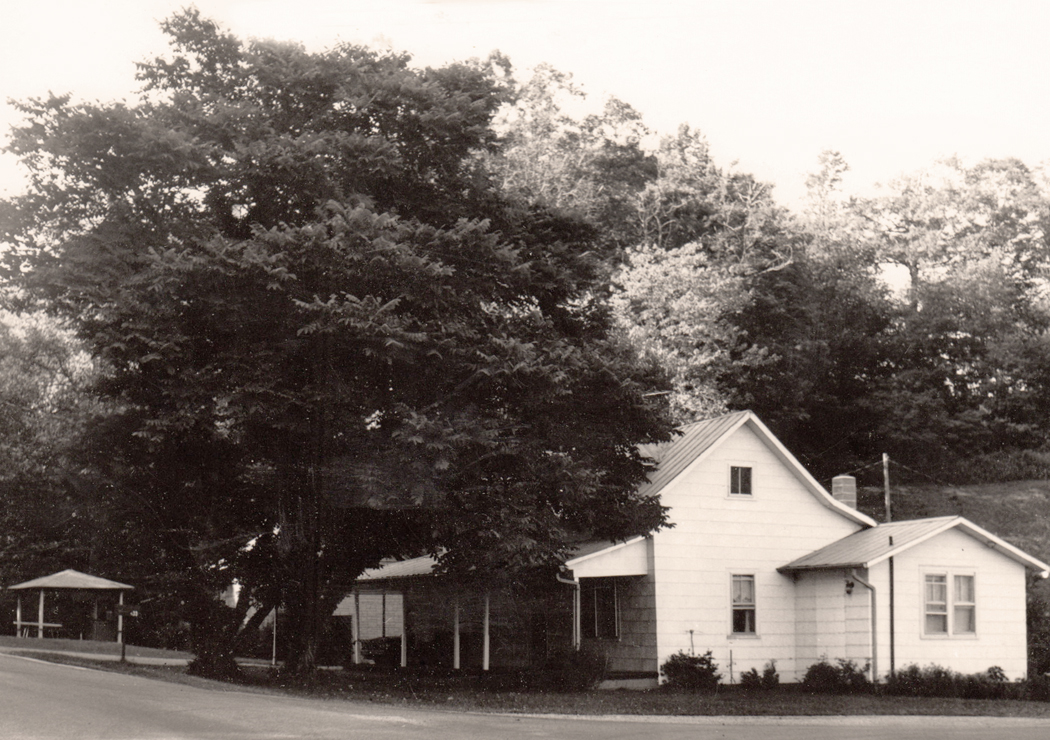
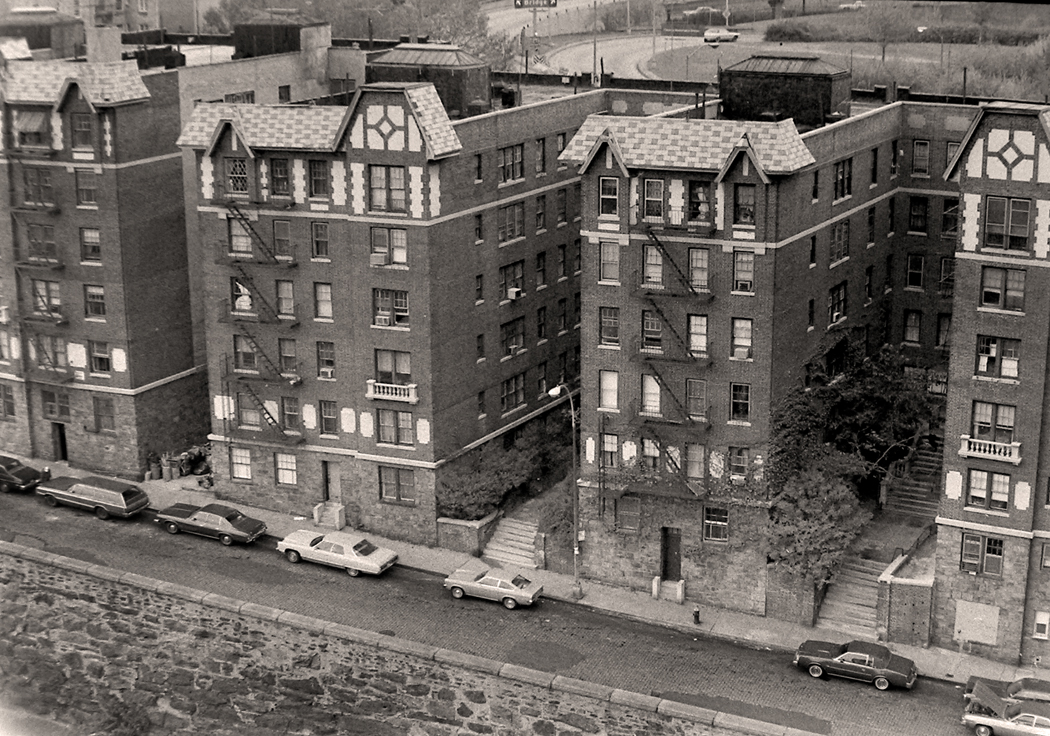
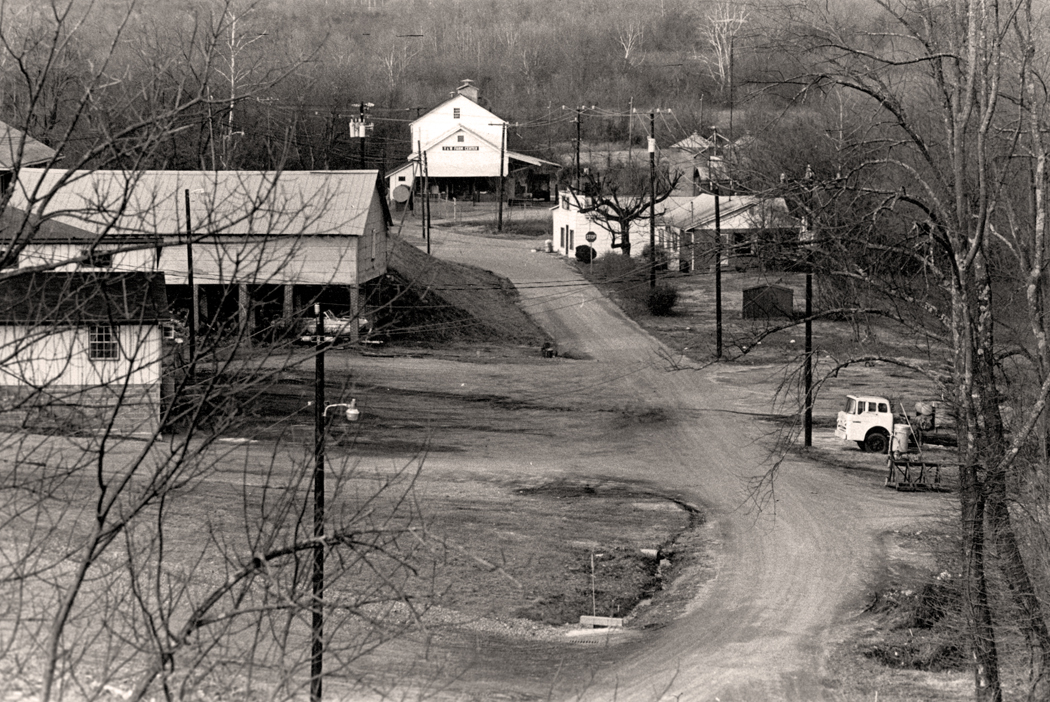
River Street, Madison, NC, in Rockingham County

I know from my wife and her family, that there is usually a deep sense of belonging that Southerners feel. A genuine love of the patch of ground where they grew up, a love like you feel for a parent. It is a love of where you were born that may not extend beyond the town or county and maybe the state. But for my wife, Rockingham County was where her father and grandfather were buried. That fact alone meant there was an unseverable umbilical connection to that omphalos, that tiny patch of piedmont, those trees, those creeks and rivers, those very weeds that crept over the edges of the crumbling pavement on the back roads. It is the feel of the red clay between your fingers, the blackbirds roosting by the hundreds in the oak tree. Home. 

I don’t know how widespread is this feeling I have, how many people share it, whether it is a symptom of the late 20th century, or whether it is confined to just me and my personal makeup. I believe I am not alone. 

I suspect many from my generation, growing up with the very real threat of nuclear annihilation and living through an adolescence and young adulthood of assassination, riots and revolutions, felt chucked out of Eden quite unceremoniously. 

If you come from Armenia or Poland or Vietnam or Tibet, you have a clear sense of identity, and an unbreakable bond with the land that gave you suckle. Certainly, most Southerners I have come to know have that feeling about their soil of origin. But there are many others, certainly from my generation, who share my sense of rootlessness, the sense that I can never be so comfortable in a place that I would long to be buried there. 

Perhaps it is because I have moved so often that I cannot share that sense of home. I have a residence on the earth, but not a home. 

I express all of this not so you should feel sorry for me. In fact, this homelessness has its advantages. I have had, in recompense, an ease and comfort anywhere in the world I find myself. I have been to three continents, and 14 countries, three oceans and the Mediterranean Sea, and never have I felt anything but at ease wherever I have gone. Being in a country where English is not spoken is as comfortable as being in a place where people eat mopane worms off the grill. 

Travel has felt such a part of my self-identity, that while others might feel distressed having to move to another state or country, torn roots and all from the soil they call home, I, in contrast, feel most myself when seeing some new terrain, hearing new accents or languages, eating new food, driving on different pavements and finding out about the sun-orbiting globe that, more than any single spot, feels like home to me.