Archive

Tag Archives: sartre

If you’re reading this, and read blogs, it suggests you are a reader, and probably love books as much as I do. In fact, you may be a bookaholic, or have gone over the edge to become a bibliopath. Books are a central foundation of who I am, who I used to be and who I am still becaming. How can it be otherwise for anyone with a pennyweight of curiosity about people and about the world? 

I’ve written about books in my life in many blog entries, and one of the most often-read is the piece I posted on Oct. 10, 2020, called “Shelf life,” in which I chose a single rung of a bookshelf in the house and discussed all the volumes resting on it. We are, at least in part, what we read: The books become internalized. And so, as I wrote then, I wanted: “to search for myself among my books.” I decided to take a single shelf from a single bookcase, “to see if they were in any way a mirror in which I could discover my own physiognomy.”

I didn’t want to pick a neatly organized shelf, but one where books were randomly scattered, left uncatalogued after casually unpacking after a move, or after re-reading, or just was too lazy to put back where it made sense. The bookcase next to the bed seemed the proper choice. 

And so, I thought I might do so a second time. I looked at the shelf above the one I wrote about and it also seemed to be a mirror: That was me, there, in those pages, however jumbled it seemed to be. 

What surprised me the most was how many of these books have been with me for most of my life — books I read when young that still take up space in my brain and on my shelf. And also how many were only recently bought and opened. 

I should start with the three matched volumes at the right of the shelf: James Joyce’s Dubliners, Portrait of the Artist as a Young Man, and Ulysses. This handsome set replaced the many earlier versions I have owned in various editions. (I still have at least four other Ulysses on various shelves in the house, including a very special cheapie pirated paperback printed by Collectors Publications, a publisher most known for printing porn — which I suppose Ulysses was thought of when this version was published — ads at the back of the book offer The Incestual Triangle, Four Way Swappers, and All Male Nudes, among other things.)

I first read Portrait of the Artist when I was in eighth grade, in the dark green paperback Viking Compass Book edition. I’m not sure how much I could have comprehended reading it at the age of 13, but I knew I loved the way the words looked and sounded: “Once upon a time and a very good time it was there was a moocow coming down along the road and this moocow that was coming down along the road met a nicens little boy named baby tuckoo …” There was the mud of the rugby field, the great hellfire of the sermon, and the “forged in the smithy of my soul.” 

I reread the book every four or five years, and every time, it hits the spot. In the habit readers always have, I soon jumped on all the other Joyce I could find. I bought a copy of Viking’s A Portable James Joyce, and have given up or lost several versions over the years, but still have one, a hardcover one, now in a library binding — in fact, it sits on a lower shelf of this selfsame bookcase I’m writing about. I tackled the play, the poetry, Stephen Hero, the essays — even Finnegan, although, at the age of 76, I am still defeated by the whirl of the whorl of the world of Finnegan. I will leave it to the next life. 

Ulysses was a harder nut to crack after Dubliners, when I was a scrub-faced kid; Ulysses problems were verbal; Dubliners was harder to understand because of the complexity of the human emotions written about. You have to have some life pushing behind you to grasp the complexities of human experience and emotions written about in those short stories. As a teenager, I knew pimples better than I knew people. I re-read Dubliners last year and was blown away, especially by the final “The Dead.” It broke my heart.

Ulysses I did get into years later, and it is now my favorite novel of all, although, to be fair, I don’t always read it cover to cover, but rather, read again and again the bits that I most love. It astounds me: It is filled with some of the most beautiful prose I have ever encountered. No, I take that back: The most beautiful prose. 

Next to Joyce on the shelf is James Michener: Tales of the South Pacific, and Return to Paradise. I remember, in my 30s and still something of a snob, looking down my nose at Michener as a best-selling author of doorstop bricks. But one day, in a book store, I picked up a copy of Tales and thought I would read a page, maybe two, to catch the flavor of Michener’s prose. It was 30 pages later I was standing there ready to flip the next page. This was a special kind of talent: to make you need to find out “what happens next.” 

The prose was simply not the point. It was invisible; you read through the words as if looking through glass. This was story-telling, and Michener really has a value I had failed to understand. I’m not saying he didn’t eventually turn into an industrial manufactory, but in his first book, he made magic. It was also nothing like the South Pacific musical I had expected. Rather it gave me a real sense of what the war in the Pacific must have been like for those who experienced it. 

A few years ago, after re-reading it, I found a copy of its sequel, Return to Paradise. I got through a few of the stories, maybe a third of the way in, but lost interest. The magic had gone. It was OK — it wasn’t just junk — but it didn’t grab me the way the first book did. It was more like a book of short stories that a short story writer might write. Something, perhaps, that a publisher might request after a best-seller. The two sit together on the shelf nonetheless. 
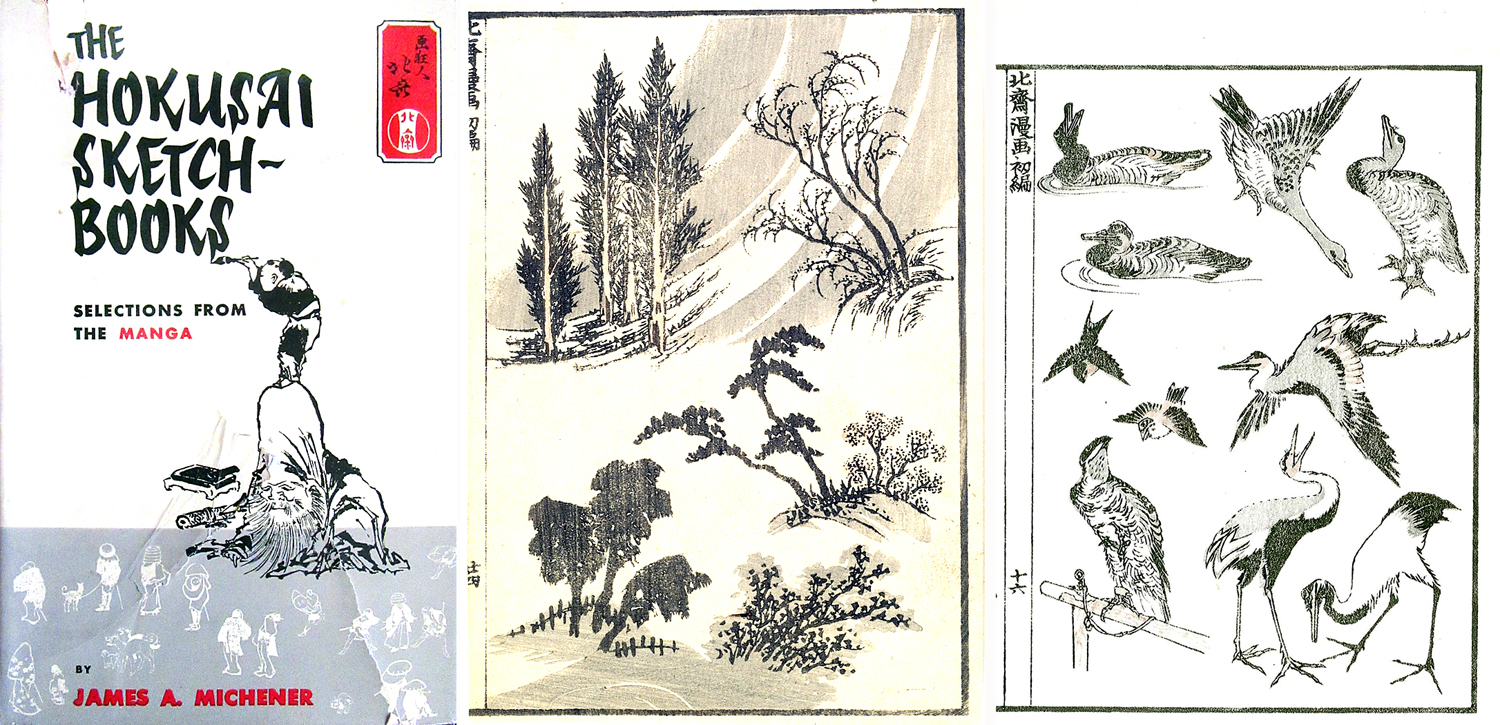
I’m going out of sequence on the shelf to mention the other Michener book sitting there. In 1958, Michener published The Hokusai Sketch-Books: Selections from the Manga. Hokusai, of course, was the famous Japanese 18th-19th century artist. In 1814, he published a multi-volume sketchbook, called manga, in which he drew everything he saw in the world around him: people, plants, animals, ghosts, architecture. It was an encyclopedic venture. Michener selected enough of these drawings to fill out a thick book. I have owned it since college. It is one of my holy-of-holies. 

From high-school days, I was fascinated with all things Asian; I read books on Zen Buddhism, listened to Noh Plays, took my girlfriend to restaurants with hibachis. There were Kurosawa movies and sumi ink paintings, which I attempted with my own shizuri and brush. 

The non-Western way of looking at the world opened my world view and I have been looking beyond the horizon ever since. 

Next on the shelf some The Great Gatsby and nothing proves how little youth knows, than what I made of the book — or didn’t make of it — when I was required to read it in eighth grade. I never then figured out who this Gatsby guy was; I thought the book was about Nick Carraway; and what the heck was all that about green light? 

It’s not that I didn’t enjoy the book then, but that I had no clue about its depths. I bought an excellent edition three years ago and reread it for maybe the third or fourth time and loved every second of it. It is a deep, rich book, with prose that is delectable. 

I believe for most young readers with a ripe curiosity, we tend to want to read beyond our abilities. We believe, as teenagers, we are grown-ups and want to partake of the adult world. And so we — and I — took to reading much that we had no business attempting. I read Saul Bellow, Henry Miller, John Updike, Jack Kerouac, Thomas Pynchon, James Purdy — a whole host of writers that I thought proved I was now in the company of the heavyweights. 

And among those books was Jean Paul Sartre’s The Words, his autobiography. I knew he was an existentialist and that all the most intellectual people (this was the mid-1960s) were hot on existentialism. Not that I knew what that meant (I’m not sure anyone really does — it encompasses so many different things, but back then, it pretty much meant berets and espresso). But I read it, enjoyed it, thought I understood it, and flashed a few words around to let anyone know. I got a subscription to Les Temps Moderne, although I couldn’t read French (and also a subscription to The Evergreen Review — I was one hip 16-year-old). I re-read Les Mots last year and it’s a fine enough autobiography, but not exactly world-shaking. 
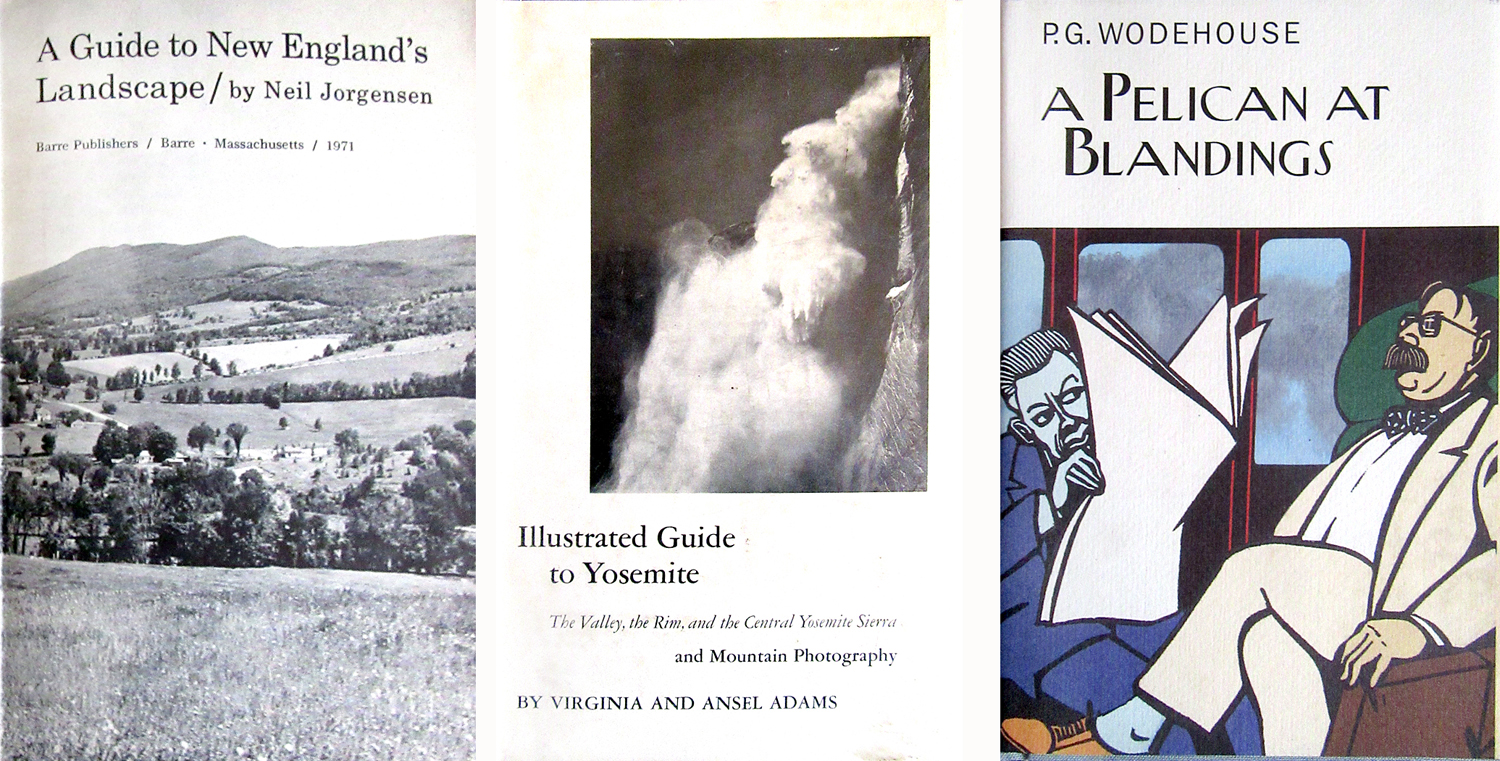
Getting back on track along the bookshelf: In the 1970s, I was living with a redhead and we wanted to travel. We hiked a good portion of the Appalachian Trail, and drove, amongst other destinations, to Maine and New England. I was fascinated by geology and I had a book by Neil Jorgensen called A Guide to New England’s Landscape. I had by then, an interest in all things under the heading of “Nature.” I had a raft of Peterson Guides, could name dozens of plants and birds by their scientific names (“Know-atia Dudiflorum,” my wife teased me), collected rock samples, and could name dozens of constellations in the night sky. 

The Jorgensen book accompanied us as we drove past monadnocks and till, varved clays and drumlins. I admit I haven’t read the book since then, but I still have it, as a memento of meaningful times.

I was by then active a photographer, and so I had another guidebook: Illustrated Guide to Yosemite, by Ansel Adams and his wife, Virginia Best Adams. I so wanted to visit Yosemite, but never had at those years the time or money for such a long trip. The book is loaded with Adams images, and so, it functioned more as a picture book than a useful guide. It was only many years later that my wife and I drove up the east slope of the Sierra Nevada along the Tioga Road and got to see the stunning Valley. The book is another that I’ve owned for 50 years and is a piece of me. 

If I could choose to write like anyone, it would be James Joyce, but if I couldn’t have that, I would want to write like P.G. Wodehouse. He is magic with words, although of a more comic variety. I have bunches of Wodehouse lying around, but three years ago, I bought a new edition of A Pelican at Blandings, mostly because these new hardback versions, by Overlook Press, were so seductively handsome. If I had the money, I would buy all the volumes in this set, but this one will have to do. 

All the Blandings books are a hoot. He may be most famous for his Jeeves stories, but I like Lord Emsworth and his pig and his sister Connie, just as much as Jeeves and Wooster. This is the kind of book I read when I just want to have fun. 
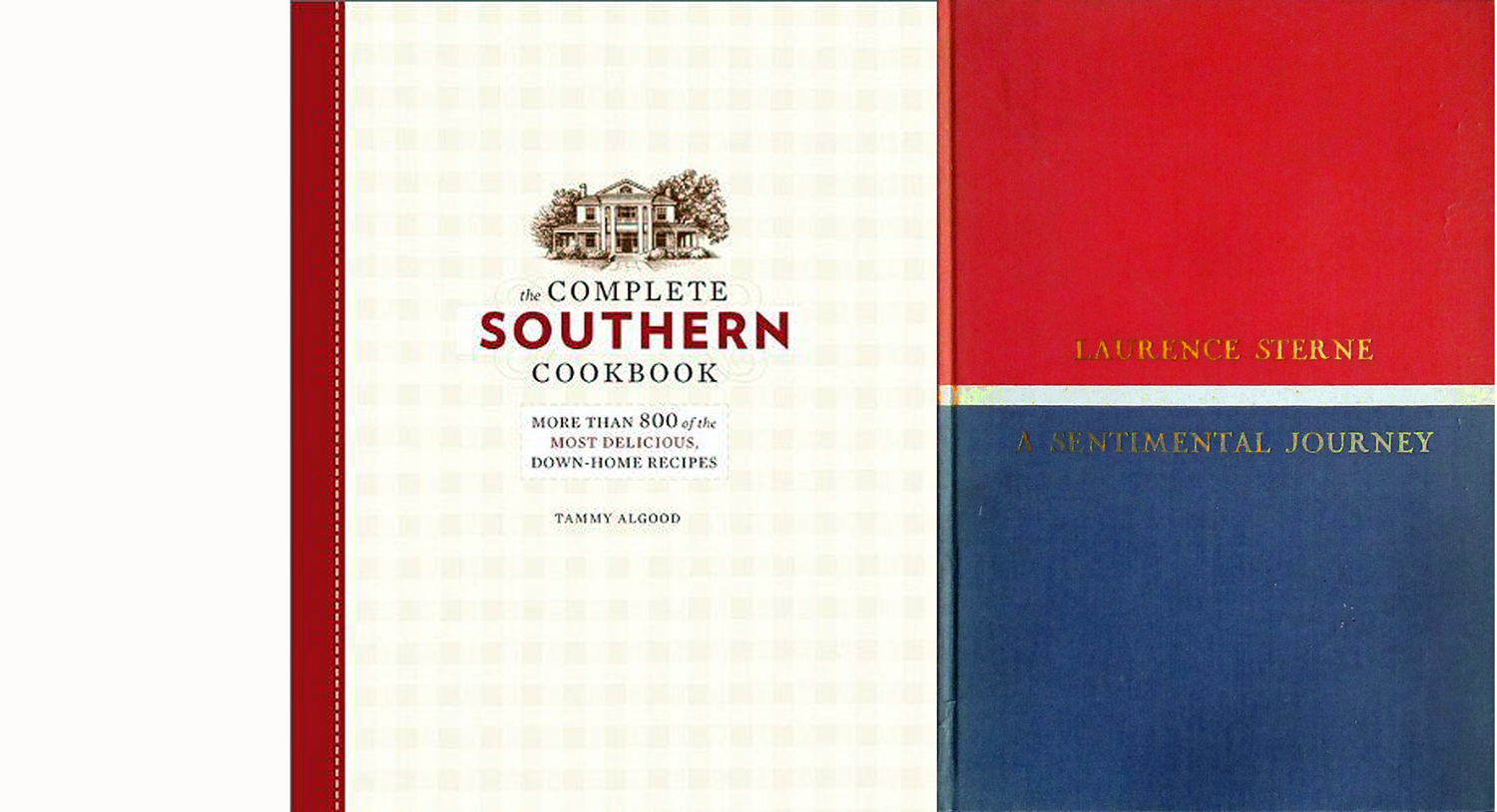
The Complete Southern Cookbook, by Tammy Algood is not one I bought. It was a gift from my daughter. I seldom use cookbooks. And when I do want one to check on some Southern specialty, I head for the old standby, Henrietta Dull’s Southern Cooking, originally published in 1928. 

I was born in New Jersey, but left there when I was 17. I’ve lived in four corners of the country, with 25 years in Arizona, and a year in Seattle, but the longest soujourn has been in the South, in North Carolina and Virginia, where my years add up to 33. I feel like an adopted Southerner. 

And while I still miss the foods I grew up with, such as a good pastrami on rye, real pizza, or a kaiser roll, I have to admit that I’ve come to love those things a Yankee will never understand, like greens, pulled pork, or fried okra. I count on Mrs. Dull for those (although, to be honest, no one uses a recipe for such things). 

The funniest book I have ever read is Laurence Sterne’s Life and Opinions of Tristram Shandy, Gentleman. It is one of the few I find myself actually laughing out loud at. So, thought I, perhaps his other book, A Sentimental Journey, must we worth looking into. It is much more straightforward, less surreal, and while it has its moments, doesn’t quite catch fire for me. The edition I have is however quite handsome to look at. 

The next two books are by Jean Renoir. Renoir is probably my favorite filmmaker. His films are so genuinely humane and wise. Nick Carraway, from Gatsby, relays that his father gave him advice to live by: “Remember that not everyone has had the advantages you have had.” That’s all well and fine, but the words that most illuminate my life are from Renoir’s Rules of the Game, when Octave, played by Renoir himself, says “The awful thing about life is this: Everybody has their reasons.” It isn’t usually malice or conspiracy that mucks things up, but rather, “Everybody has their reasons.” You learn to be less judgmental from that. 

He wrote about his work in My Life and My Films, from 1974. It is filled with anecdotes and pictures, and the quiet acceptance that is the core of his being. But even better is the biography he wrote about his father, Renoir. I was never a big fan of Pierre-Auguste Renoir. I find his paintings a little blowsy. He is the least of the major Impressionists. But, as his son writes about him, he comes off as one of the kindest, sweetest, most understanding and generous of men. I came to love old Pierre-Auguste not through his art, but through his biography. 
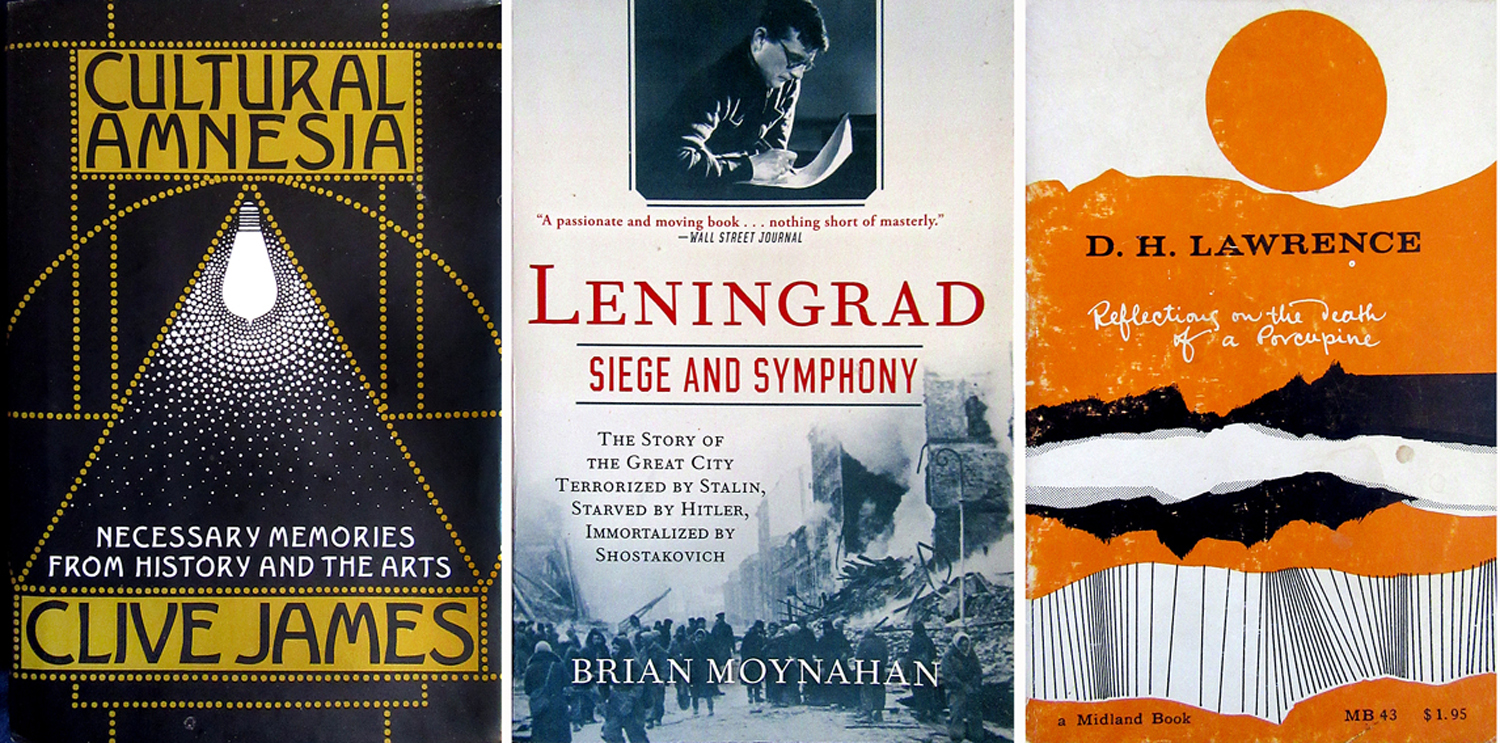
I said we readers have a tendency to find authors we like and then plow through the whole corpus willy-nilly. About five years ago, I came across Clive James, the late Australian-English writer and critic. I tore through everything, including his poetry. And when I found his book Cultural Amnesia, I couldn’t stop myself. Subtitled Necessary Memories from History and the Arts, it makes the case that too much important history has been forgotten, ignored, or misrepresented, and that if we need an understanding of the past to navigate the future, then the men and women he writes about in this book, deserve to be remembered. 

He writes about more than a hundred of them, in alphabetic order from Anna Akhmatova to Stephan Zweig. Some are hardly obscure, like Charlie Chaplin or Leo Tolstoy, but he brings to mind aspects that may have more cultural impact than you might remember, or other facets to their work. 

I love the grim joy of Dimitri Shostakovich; his music speaks volumes about misery and dictatorship. His Seventh Symphony, the “Leningrad Symphony” was partly written and later first performed in that city during the 900-day siege by the German Wehrmacht during World War II. It is a sprawling work, lasting well over an hour, and its first movement has a grinding passacaglia representing the jackboots of oppression. 

My wife gave me a copy of Leningrad: Siege and Symphony, subtitled “The Story of the Great City Terrorized by Stalin, Starved by Hitler, Immortalized by Shostakovich,” by Brian Moynahan. Its well-researched 500 pages cover everything one needs to know about the siege, the horrors, and its legacy. But, I confess, I have not read it. It sits there on the shelf, waiting. But I really feel I am told everything I need to by the music itself. 

I went through a D.H. Lawrence period, where I read everything I could get my hands on. But not the novels or short stories. For some reason, they never much appealed to me. But his essays and travel writing, and his poetry, I adored. It’s the best travel writing I know, partly because it isn’t the usual version of the kind, but his personal, very idiosyncratic way of looking at the world. 

Reflections on the Death of a Porcupine is an anthology of seven of his essays, including the title piece, which starts as thoughts on having to shoot a porcupine on his New Mexico ranch, and goes through the issue of all life dependent on devouring other life, and ends, in a disturbing turn that, for him, justifies “superior” existence having its way with “inferior.” Lawrence is capable of a good deal of piffle. 

But it is the particularity of his observation that I love, the detail. Even crazy talk can be well written. 

Next, the best writing, the most original use of word and sentence, since, at least Joyce, was penned by Vladimir Nabokov. Lolita is an absolute brilliance, despite is subject. And so I read Speak, Memory, his 1951 autobiography, which recounts his life in Russia, before leaving in 1940. 

It begins, “The cradle rocks above an abyss, and common sense tells us that our existence is but a brief crack of light between two eternities of darkness.” So, you know you are not just getting a sequence of entertaining anecdotes. The book is a dialog, essentially, between existence and memory, the memory of a pre-Revolution Russia, as recalled by a child, and then a young man. 

Finally, I have an omnibus edition of four Maigret novels by Georges Simenon. I have moments when I devour Simenon like chocolate-chip cookies, one after the other. But it can get expensive buying volume on volume, one at a time. This edition, once in the collection of the Ypsilanti District Library in Michigan, was bought used on Amazon, cost less than $5 and gave me four novels. I have read three. I am holding the fourth unread so far, in order to experience the delicious anticipation of reading it. 

And so, with that shelf catalogued, I look at the books and think, do I see myself in their spines, lined up? I certainly see a bit, like seeing a face through partially opened Venetian blinds. It’s me, all right, but only a bit. I look at the book case from top to bottom and see more of the rest of me. I walk down the hall and into other rooms with other bookcases and the picture fills up. The oldest books among them all speak of the boy that remains in the core, the newest of the weary old man I am now that covers it all in wrinkles. It is that “brief crack of light between two eternities of darkness.” 

It was 1965, the year that ran from the last half of my junior year in high school through the beginning of my senior year. In between, I spent the summer traveling through Norway and Europe. I mention that last because it made that year quite distinct in my memory, and I can recall all the books I read that year. Or all I can remember; there may be a few I’ve forgotten. 

It was a year of promiscuous reading. I picked up most anything. I have a list of them. I couldn’t get enough. Schoolwork suffered because I was largely bored by my classes, other than my English classes. I rebelled against doing homework — nothing worse than the questions at the end of a chapter, a tedious exercise. But reading on my own, outside curriculum, held me rapt. 

That year marked a change in the direction of my reading. When I was younger, I buried myself in non-fiction. One subject after another would overtake me and I would immerse myself in it. When I was in the eighth grade, my mother got me a young-adult novel, thinking I would enjoy it. But I didn’t read fiction. I remember I told her, “I don’t want to read anything that isn’t true.” But history, biography, essays — even cookbooks — they were “true.” They wouldn’t clog my head with fictional effluvia. 

For some reason, that changed in 1965. I picked up novel after novel. Not those assigned in school, of course. That was dry, tired, musty old fustian. I wanted to read what was current, new, on the biting edge. There was James Purdy, John Updike, Hubert Selby Jr., Thomas Pynchon. Needless to say, all of them were well above my meager level of understanding as a 16-year-old. 

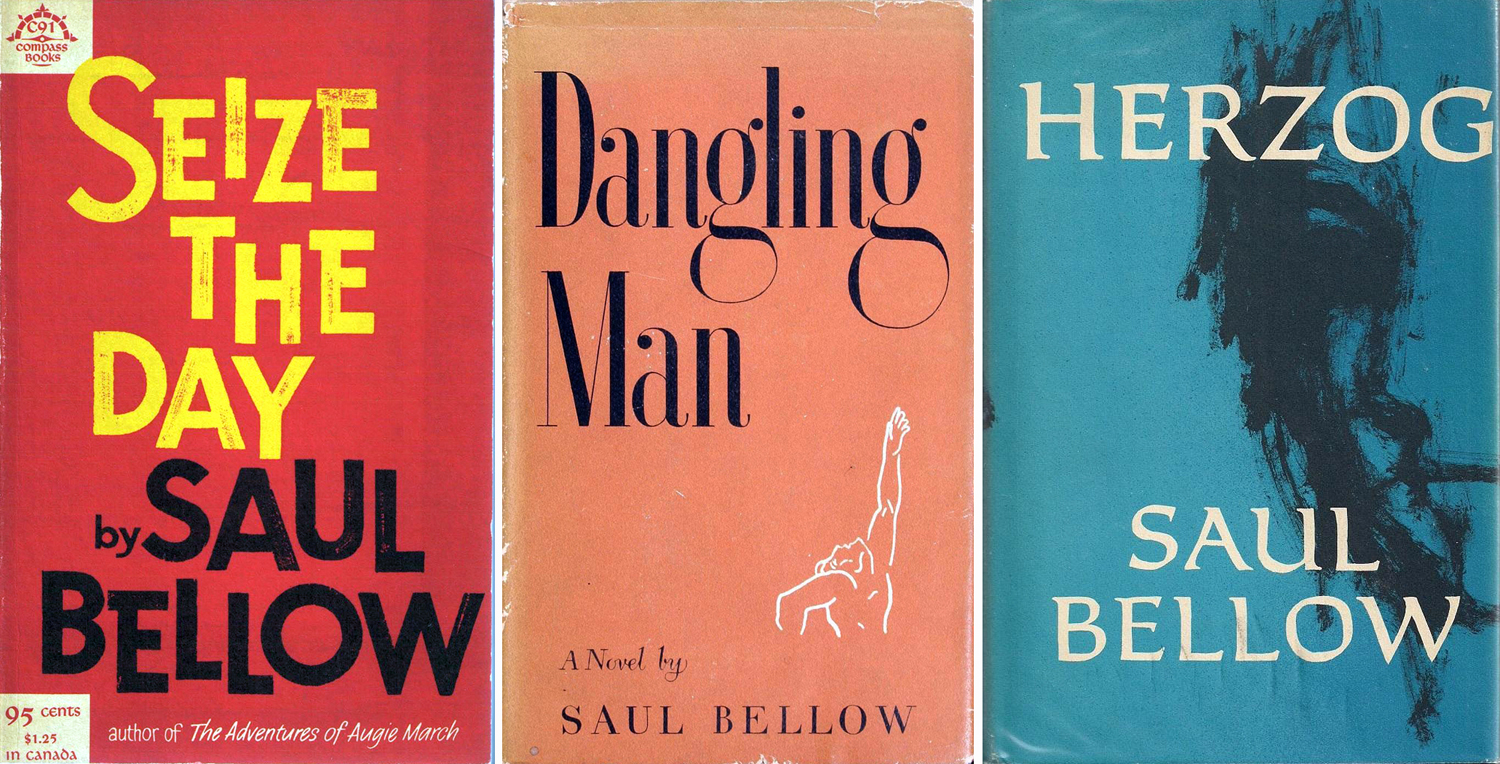
Some of the reading came in clumps. I read Saul Bellow’s Herzog when it came out, and followed that with Seize the Day and Dangling Man. To let you know how little I understood what I was reading, I reread Herzog earlier this year and was surprised — pleasantly — to discover it is a comedy. A very funny book. I’m afraid the thick layer of irony that makes the book such a delight was invisible to my adolescent mind. I think I saw it the first time as a window on the academic life I was planning to lead after I got out of college, after I got into college. 

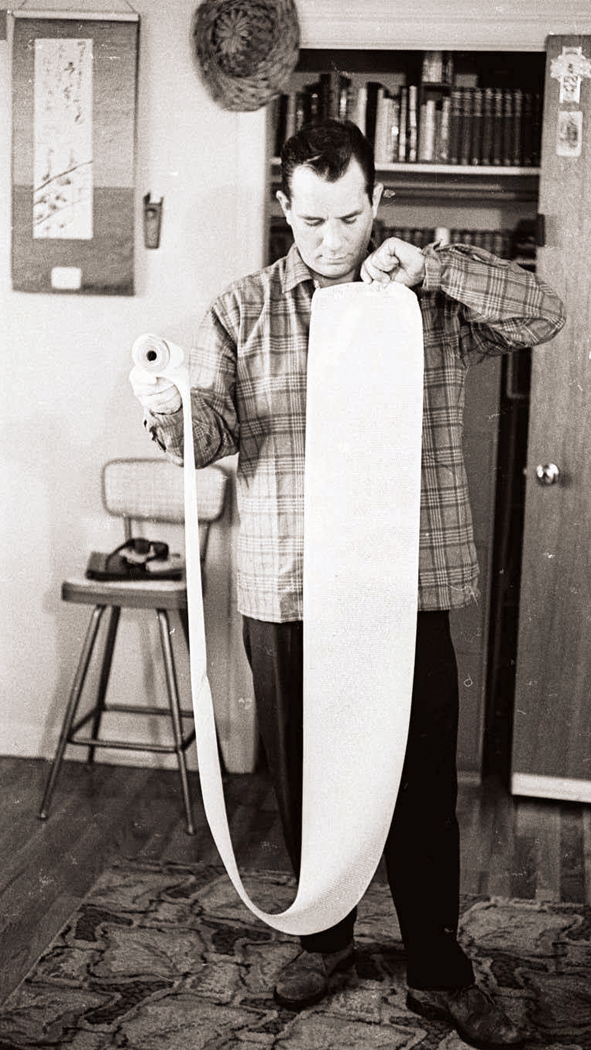
I had a Kerouac streak, soaking up first Big Sur then Dharma Bums. When I was in Oslo, I found a British paperback of Lonesome Traveler, a series of essays. For a kid my age, this was catnip. When I got home, I finished off On the Road — which I have managed to reread every decade or so, the last time in its original scroll version with all the names undisguised. No, it doesn’t hold up, but what an effect it had on me as a wimpy pimply-faced kid. 

The series I probably read the most of was Sax Rohmer’s Fu Manchu. I ate them through like Mars bars. I can’t remember most of their actual titles, they were all sequels like “son of,” and “daughter of” or “return of,” and the plots were interchangeable, but I loved the adventure and the atmosphere of London’s Limehouse district, with its opium dens and insidious “Yellow Peril.” The racism of the books was not yet apparent to me, and when I tried rereading one of them a few years ago, I couldn’t wade through the Victorian-style prose. 

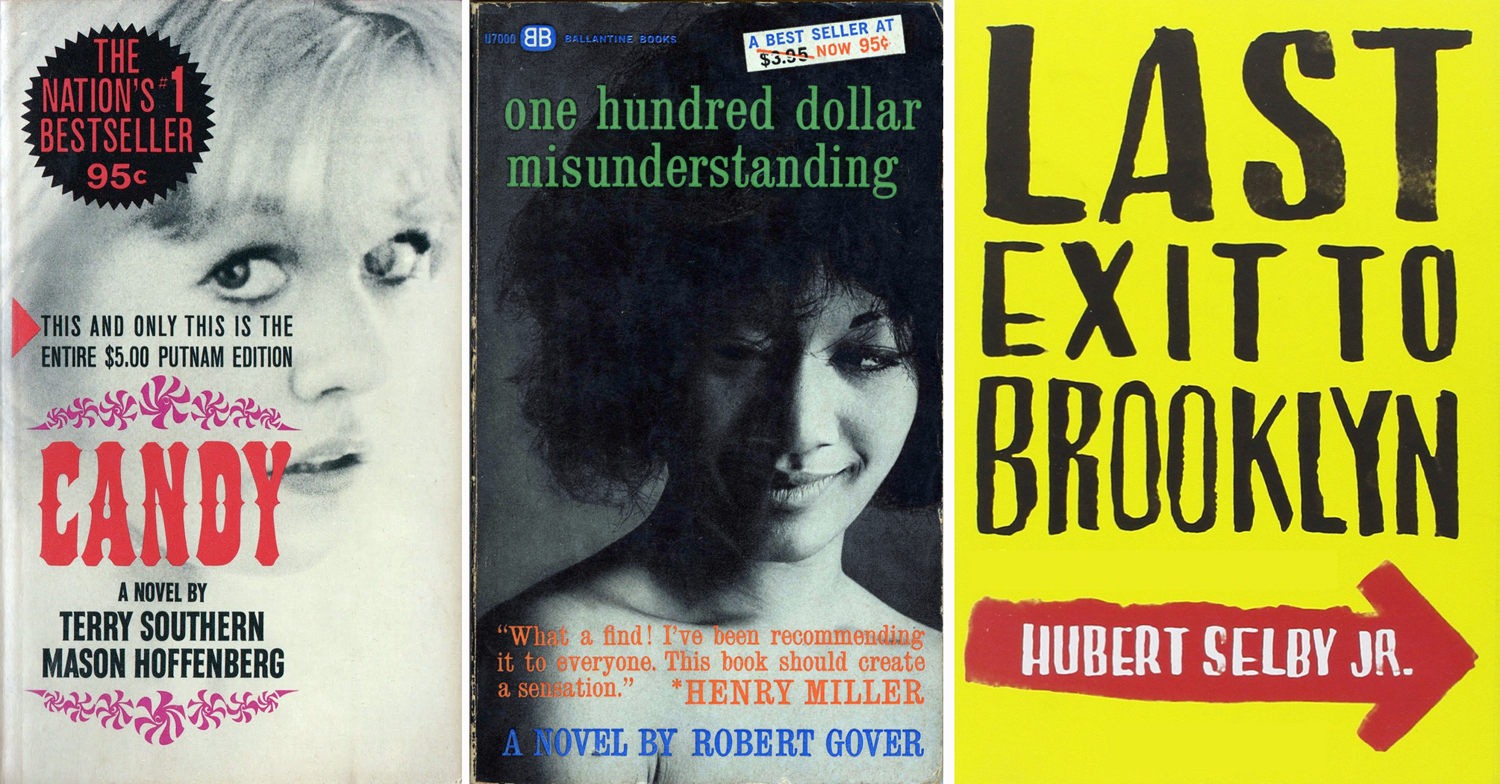
A few appealed to my burgeoning hormones and growing anti-bourgeois prejudices. Terry Southern and Mason Hoffenberg’s Candy was hot stuff to a teenager and so was Robert Gover’s One Hundred Dollar Misunderstanding. Hubert Selby Jr.’s Last Exit from Brooklyn was another one way above my pay grade in understanding, but I knew it was subversive. 

(In the same vein, among my other reading were two periodicals. I subscribed to both the Evergreen Review and Paul Krassner’s The Realist. Couldn’t wait for the next Phoebe Zeit-Geist. Such things were puerile, but then, I was a puer. A couple of years later, I was publishing a sophomoric underground newspaper at my college, called the K.M.R.I.A Journal. But then, I was a sophomore.)

There was literary fiction I read, beyond Saul Bellow. I tackled Thomas Pynchon’s V., although I have no recollection of what I might have made of it back then, but I knew the character names were clever. There was Louis Auchincloss and Walker Percy. 

Not all of it was high-minded. In Norway, I found a copy of Pat Frank’s Mr. Adam, a post-apocalyptic lampoon, and Kingsley Amis’s Lucky Jim. At that age, I also thought John Lennon was not only clever, but profound. At that age. 

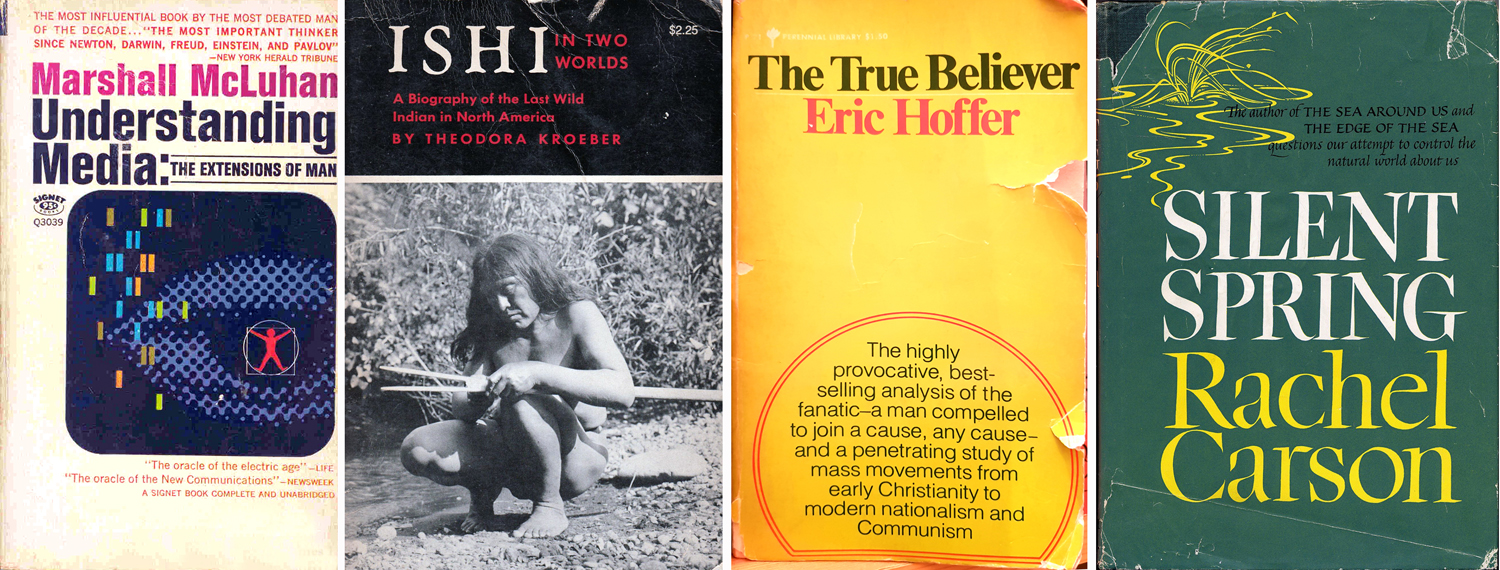
There were memoirs by Jean-Paul Sartre and Ernest Hemingway, and social and philosophic essays by Marshall McLuhan and Eric Hoffer. And something in-between: Dag Hammarskjöld’s Markings. 

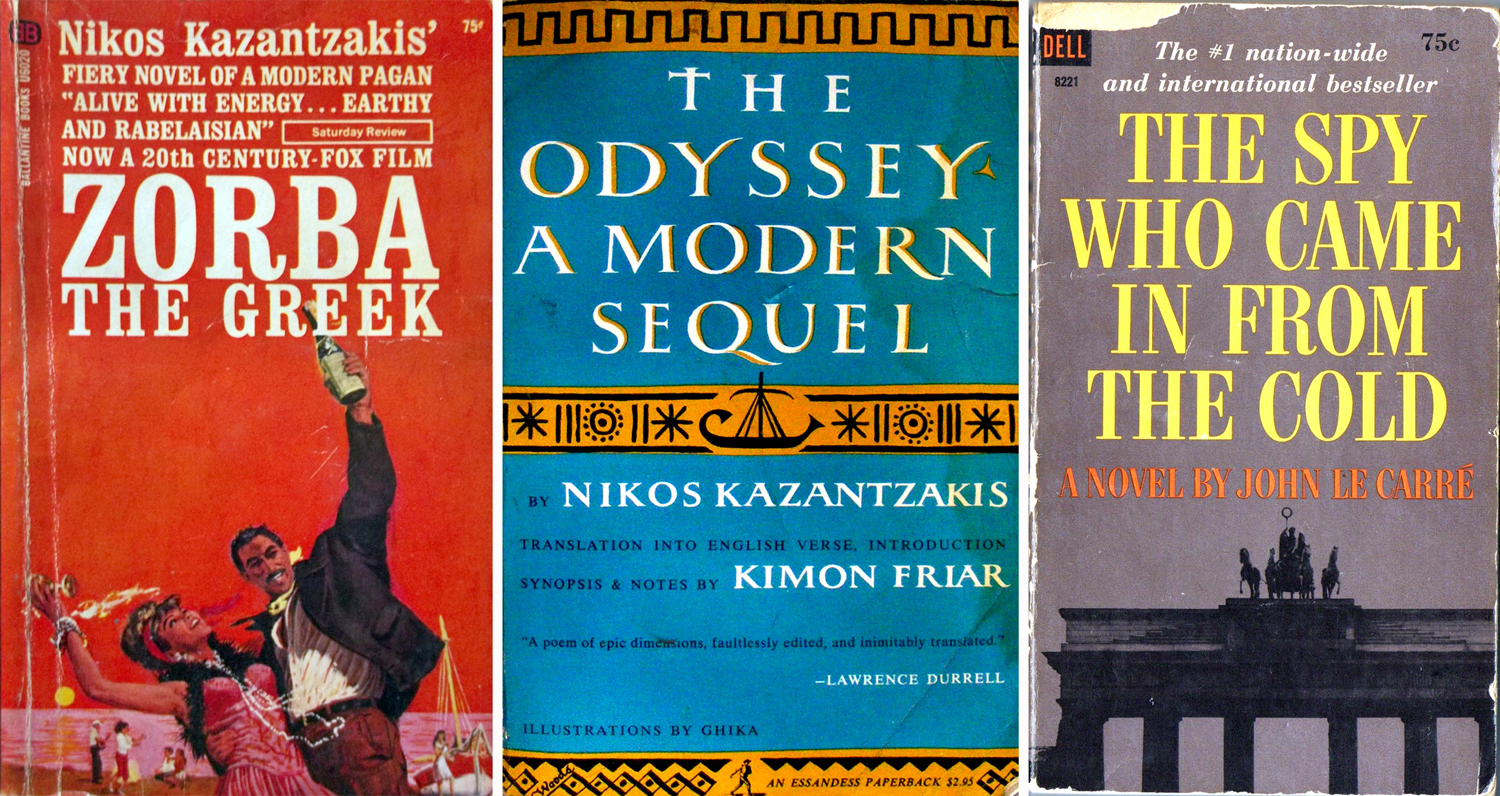
The film, Zorba the Greek, came out the year before, and so I picked up the book. It launched me into a series of books about Buddhism (Alan Watts, Christmas Humphreys, D.T. Suzuki) which kept me going in the spring of 1966. But it also dumped me deep into Kazantzakis’s The Odyssey: A Modern Sequel, which I read in my stateroom on my transatlantic shipboard trip to Norway. There was a lot of time to kill and a very fat book to murder it with. 

I imagine my teenage years were peculiar. I came from a quiet middle-class family. I doubt there were as many as a dozen books in the house, outside the grocery-store-premium Funk & Wagnalls. We lived on the New Jersey side of The Bridge (GW, that is — George Washington) and I spent as much time as I could on the non-Jersey side of that bridge, visiting art museums, concert halls and bookstores. In particular, I took the subway down to the Sheridan Square Paperback Corner, a tiny, crowded store with books piled high on all walls. (There was also the Hudson News at the 178th Street bus terminal, where I stopped every time before getting on the Public Service bus to go home to the benighted other side of the Hudson River.)

There was a time, many years later, when I was unemployed and nearly homeless (praise be to dear friends), that I dove back into the books and for a period of six months or so, read a book a day. I cannot say that such speed-reading provided the same depth of experience, but I soaked up a great deal that has served me well in the 40 years since. Reading has been my life, and has come out the other end as writing. 

I suppose I mention all this Proustian self-absorption because I look around the house now that I have turned 71 and see my walls held up by floor-to-ceiling bookshelves, and know that a lifetime of constant reading began in those years that — at the time — I considered a complete waste. High school was a torture I absolutely hated. Books taught me a billion times more than those classrooms ever did. It must say something that I remember so many of the books I read in that one seminal year. And have reread so many of them as a grown-up. 

These are the covers of the editions I read in 1965, click on any image to enlarge

I am not a religious man, but I have a ritual that I perform every day: I wash my breakfast bowl.

It doesn’t seem like much, especially in this age of dishwashing machines and takeout food on paper plates, but my ritual has a long and meaningful history.

There was a year in my life when I didn’t have a job. I lived with friends in North Carolina and did their cooking and cleaning. Every morning, after breakfast, I washed all the dishes.

To others, dishwashing may seem a boring chore, but to me, it was a time to regain contact with the eons. I could stand at the sink with my hands in the steamy suds and stare out the kitchen window at the leaves blown from their trees.

I stared out the window as I worked, mentally walking down the path behind the house past the tin-roof barn and the wide rolling field where old Mr. Price grew beans and tobacco. On the far side, there was a brook that meandered into a small ravine about a dozen feet deep, wet on its north, sunless side, and dry on the south.

And across the granite that forms the streambed as it cascades through this ravine was a long white stripe of quartz, an igneous dike where molten lava once inched up a joint in the surrounding rock and cooled into quartz bright and shiny against the black of the basalt streambed.

And standing at the sink with my hands glossy with detergent, I could travel upstream into myself the same way, finding, eventually, the glistening evidence of my own deepest thoughts: people I had long forgotten, places I hadn’t remembered being, songs I had sung with my grandmother, and sometimes even peace.

And so I rinsed the hot soap from a dish with scalding water and left it in the drain rack. I reached for the next dish and I thought about other times I have washed dishes.

I recalled the night my son was born. I had been at the hospital for his birth, in the delivery room as he entered the world screaming and miry. After I had taken the usual photos and Annie went back to her room for some well-deserved sleep and the kid was cleaned off and sent to the nursery, I drove home and found a kitchen full of dishes, greasy and smeared, waiting to be cleaned. Annie had been in labor almost two days and, though I had been with her through most of it, I also had gone home periodically for meals.

Those dishes and the ones left over from the dinner at which she started feeling her contractions were scattered all over the house. I filled the sink with hot water and divided up the dishes from the pots and set the plates and silverware into the sink to soak. Steam rose from the suds.

I remember that night; I was in knots, loaded with the new responsibility of a child and desperate with the empty feeling that my wife and I no longer could live together. I stuck my arm into the water and my guts began to relax.

I rinsed the first plate and my mind went blank – the blankness of meditation. My belly loosened and my teeth, which had been gnashing through the nights as I slept for months, relaxed. I rinsed the next plate, and it clicked against the first as I settled it in the drain rack. Soothing.

My problems were not solved, but I could look at the dilemmas I faced without the desperation I had been feeling. My frenzy abated.

Dishwashing became my mantra.

I recall camping with the redhead who succeeded my wife. We were staying in an abandoned farmhouse in a hidden valley of the Blue Ridge. Looking out over the balustrade, we saw the cliff across the glade, the rocky stream that poured down the valley bottom, the second growth in the old farm fields, millions of black-eyed Susans swaying in the breeze. As the sun dropped behind the cliff, I took our supper dishes down to the stream and washed them, scouring them with sand from the creek bottom and rinsing them in the icy water. Billions of fireflies made Fourth of July for us. I left the cold dishes on a large rock to dry overnight.

I recall once seeing a twisting globe of blackbirds rise from the trees and stretch out like the Milky Way across the sky. Hundreds of thousands of birds roosting took flight and spanned the evening sky. I dipped the last pan into the darkened suds and scrubbed it.

When the student asked Zen master Chao-Chou for instruction, the sage answered, ”Wash your bowl.” All philosophies else try to figure out logical ultimates, leaving us, at the end, only a useless ash.

No matter if Plato be right, or Whitehead, or Sartre, the one action that we all share is ”washing our bowl.” No matter if everything Wittgenstein ever wrote is absolutely true, we must act as if he never wrote anything. We still must wash our bowls. If everything is explained, nothing is explained, and we are back on square one. Better to wash your bowl.

So, as I wiped the final grease from the stove top and wiped down the counters and cutting board, I replaced the salt and pepper in the middle of the table and wiped off the tabletop.

All that remained was to rinse the dishrag and dump the greasy suds down the drain, setting the washbasin out to dry. That completed, I dried my hands on a fresh towel and began on one of the day’s other tasks.

Once, long ago, when I visited a friend, Judy Crawford, no longer with us, at her mountain house up near the Plott Balsam mountains of North Carolina, I cooked her a giant meal of coq au vin and I made French bread. We had several friends over and feasted, making such a pile of greasy dishes that we all agreed to let the mess sit overnight. ”I can’t look at the kitchen tonight,” Crawford said.

I woke early the next morning and dressed and went downstairs to the kitchen. It was a little after 6, and the sun was hours from rising over the first peak. I filled the sink and started the dishes. Boonie, her cat, crawled around my ankle, looking up at me, squealing for milk. A few robins and a bluebird were scratching at the ground outside the kitchen window. It was quiet – calm and silent. I finished every last dish before Crawford woke up.

”Golly. You didn’t have to do that,” she said when she saw her shining kitchen. No, I didn’t have to, but I enjoyed it. I was at peace.

Most of what we do in our lives is frivolous – watching TV, fixing the car, reading books, waiting for the bus – but the washing of dishes is important: It is necessary. And it is something humans have been doing since before the days when Abraham lived in Ur. Washing dishes is part of being human.

skull heartTen years ago, the Paris police discovered an outlaw movie theater, complete with bar and restaurant, hidden in a sealed-off old quarry tunnel under the 16th Arrondissement, just across the Seine from the Eiffel Tower.

“The whole thing ran off a professionally installed electricity system and there were at least three phone lines down there,” police were reported to say.

Three days later, when they came back to dismantle the illegal theater, it had all been packed up and shipped out, leaving only a single note for the police: “Do not try to find us.”

Every city has an underground.

But in Paris, the underground is literal. Ten percent  of the city is built above underground caves, tunnels and medieval limestone quarries. When building foundations are constructed, the tunnels have to be taken into account, and since no one in Paris has a complete and accurate map of the tunnels, it sometimes becomes a problem.

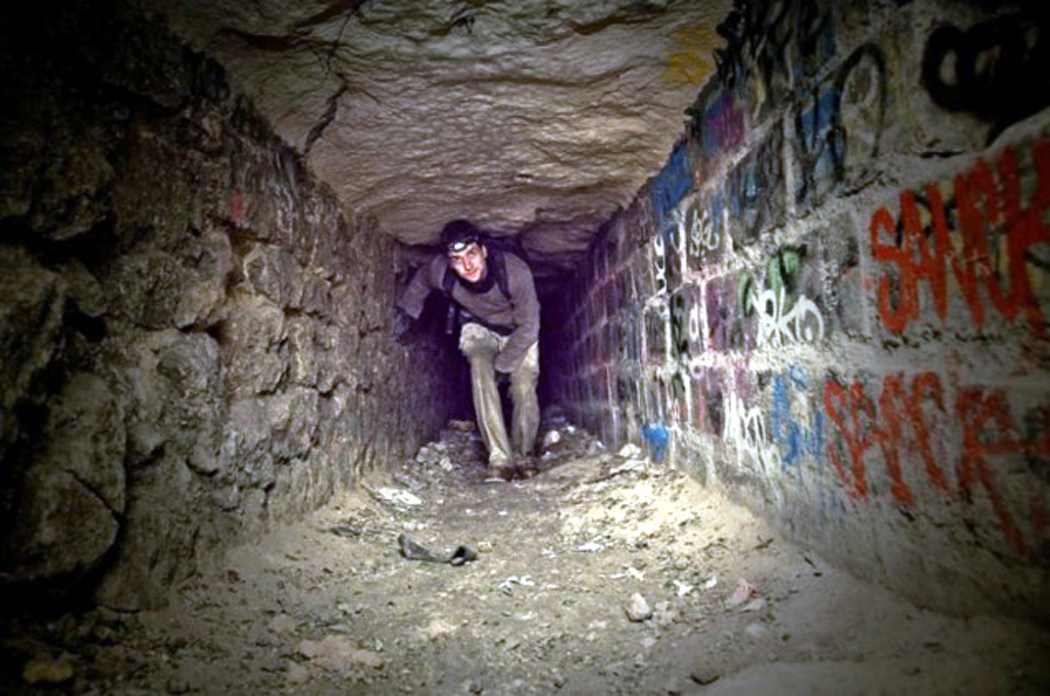
It is estimated that there are some 180 miles  of tunnel beneath the streets of Paris – and that’s not counting the 1,300 miles of sewers or 125 miles  of subways.old paris tunnel

Access to most of the tunnels has been illegal for civilians since 1955, but hordes of young people have been using them for recreation – of various sorts – since they were constructed. Even now, everything from rock concerts to picnics are held in the limestone tunnels by those called “cataphiles,” after the catacombs of the city. Less innocently, they are also the site of many drug deals and other underworld activity.

During World War II, the tunnels provided shelter for the Resistance. In the 1950s, there were underground jazz clubs. A fascination with the underworld is hardly a new thing.

From Ulysses to Dante, we have been deeply curious about a world that seems mysterious and dark, dangerous and illicit. And even for some tourists, a visit to the sunless portions of a city is an irresistible draw.

Luckily, there are legal ways to visit the subterranean Paris.

catacombs 1

CATACOMBS

When Paris was young and the Romans gave the orders, many of its important buildings were constructed of limestone quarried in the local hills. As the city grew, the quarries dug deeper into the hills, and the beige limestone city overtook its suburbs and their quarries, which now honeycomb the hills of Montparnasse and Montmartre.

By 1786,  Paris had grown to more than a half-million people, and there was need for fresh real estate. The city council decided it could empty out the cemeteries and use the land to build on, and so, from 1786 to 1860, graveyards were dug up and their bones transported to the tunnels under Montparnasse. In all, more than 5 million bodies made the move.

They are an eerie sight in the dark. All that death, all those bones, all that underworld, Avernus, Chiron, Cerberus.

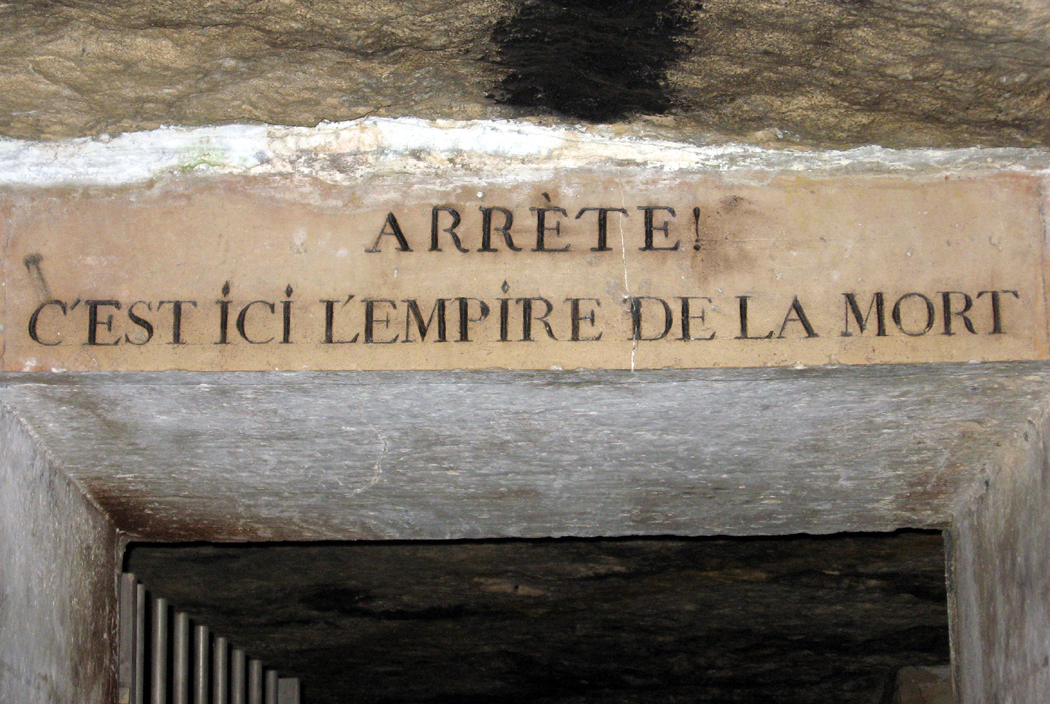
The trip through the catacombs is long and arduous, with stairs going down six stories into the bedrock of Paris, then a good half mile of twisting narrow tunnels before you ever even get to the bones.catacombs halt sign

“Stop!” said the sign above the final door. “You are entering the empire of the dead.”

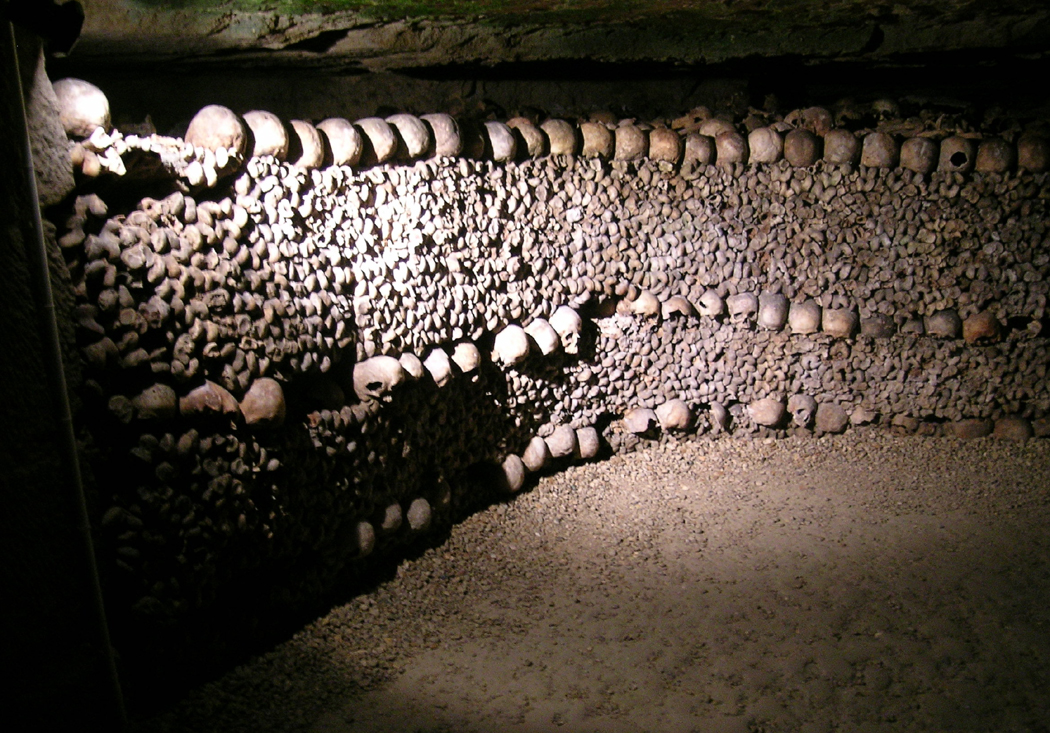
The tunnel contorts around in the underworld, with niches to right and left piled with the bones torn up from Paris graveyards.catacombs 2 - skulls

Millions of the dead from Paris’s past are piled here, with a wall of tibias and skulls making a kind of bone-dike, holding the remaining body parts behind it. Usually, the bones are assembled almost like masonry, with the knob-ends of the tibia bones left end out, and a line of skulls across them, like strata in rocks, or ornament in brickwork.

The tunnels are never higher than about 6-feet and maybe 2 inches high, and only one person wide. Their floors are often damp or wet with cave-drizzle.

Electric lights are placed on the walls every 10 or 15 feet, but with fairly low wattage bulbs.

catacomb cornerSigns were left with the bones describing what cemetery they were disinterred from, almost like regimental monuments in a battlefield.

After snaking through the underworld for perhaps a mile, you came to an even narrower spiral stone staircase with 84 steps, as the sign says, bringing you those six stories up from Hades, and you open out into a side street from a nondescript stone building-front with no markings to warn anyone this is the exit from Tartarus.

The trip is a genuine experience, an encounter with history.

Going through the tunnels is a completely alimentary experience. The bowels of the earth. Expelled into sunlight.

paris sewer 5

THE SEWERS

The sewer system of Paris is one of the world’s wonders. If straightened out, they could run from Paris to Istanbul.

They have a place in fable and lore far exceeding that of any other sewer system in the world: They are the tunnels through which Jean Valjean carried the wounded Marius in Les Miserables.

“By degrees, we will admit, a certain horror seized upon him. The gloom which enveloped him penetrated his spirit. He walked in an enigma. … How was he to get out? Would he find an exit? Would he find it in time? Would that colossal subterranean sponge with its stone cavities, allow itself to be penetrated and pierced? …Would they end by both getting lost, and by furnishing two skeletons in a nook of that night? He did not know. He put all these questions to himself without replying to them. The intestines of Paris form a precipice. Like the prophet, he was in the belly of the monster.”

The “intestines,” is the right word. They are called in French, Des Egouts — the “guts.”paris sewer 9

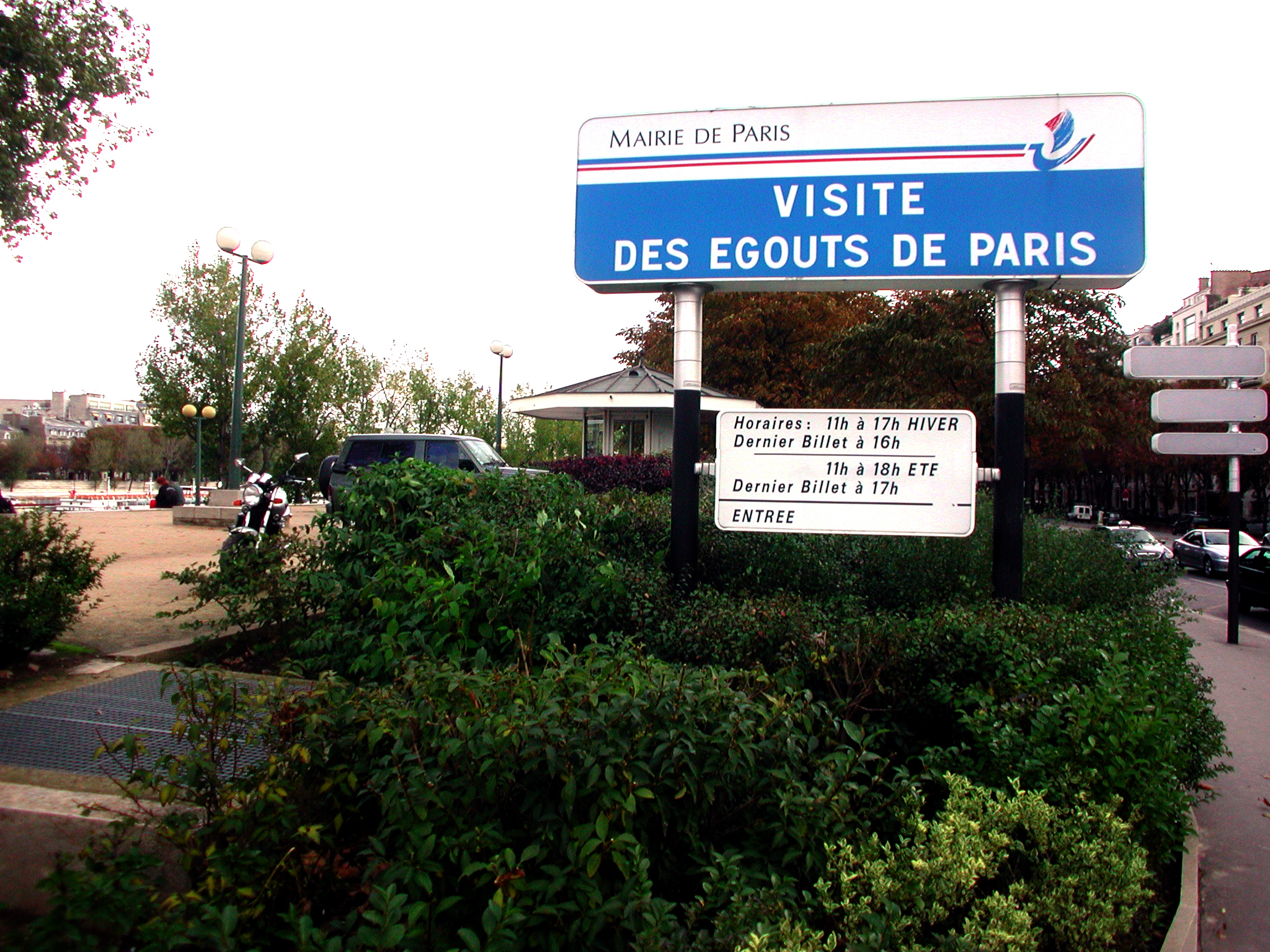
The entrance to the portion open to the public is like a tiny lemonade stand beside the bridge over the Seine. You buy tickets and descend into the depths, where a very faint odor of sewage wafts up — so faint that in a few moments, you no longer notice it.

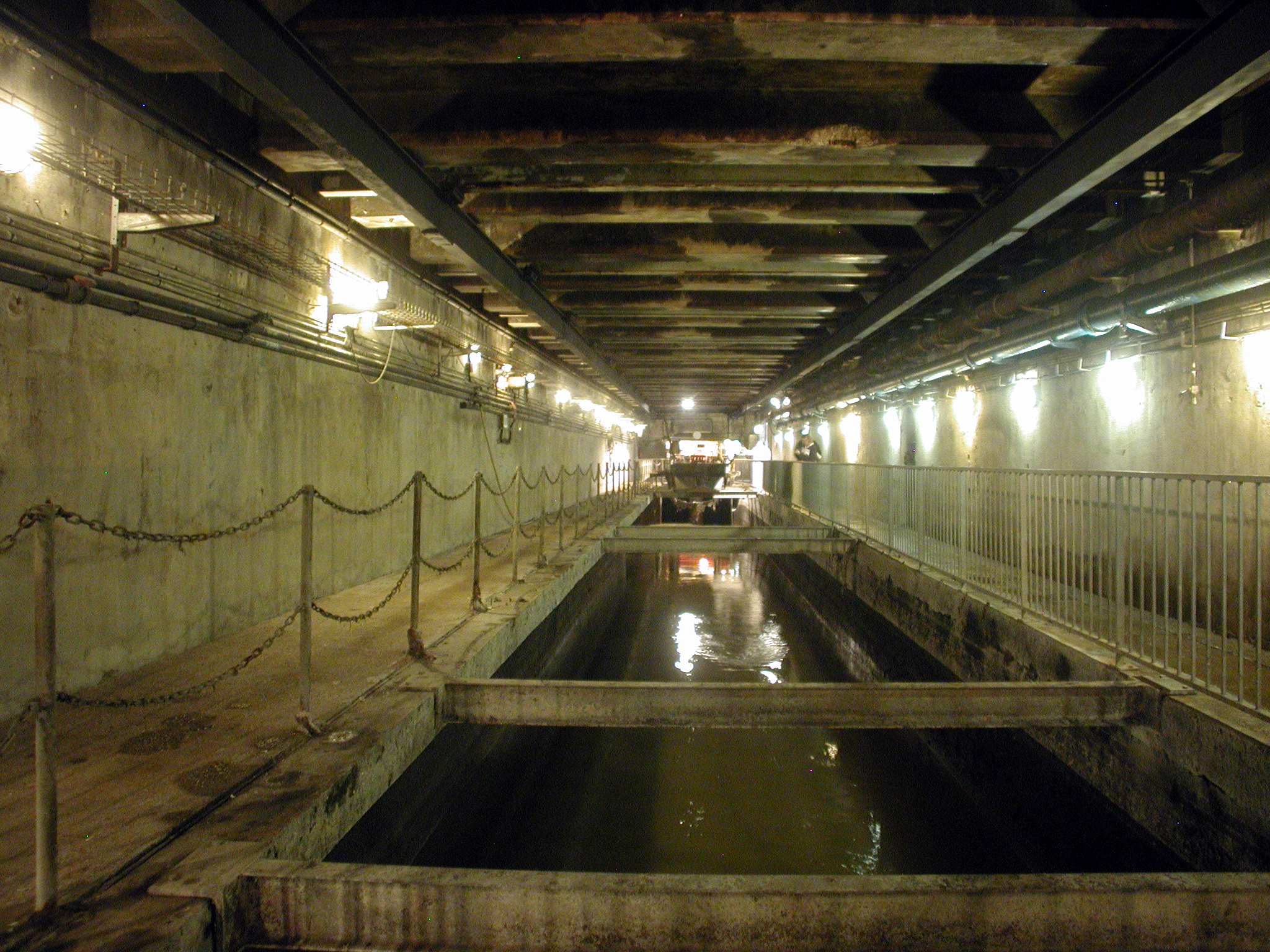
What first hits you in the darkness of the sewer tunnels is the sound, the thunderous sound of water, like a torrent over a waterfall. Part of this is the sound amplification of the tunnels, but most is the enormous quantity of water passing through the system. As you walk down one wide tunnel – more like an extended garage — the water passes underneath you as you walk over a steel mesh walkway.paris sewer 3

There are signs along the way explaining not only the sewers, but the history of the sewers, beginning in Roman times. The current system is a gift of Baron Haussmann from his city rebuilding plan of the mid 1800s.

There is a kind of pulse, or bloodflow, that the system implies, a circulation system for the city.

One looks at a city from above ground and sees the traffic, the shops, the restaurants, the pedestrians, the apartments above the stores, the metro stations, the statuary and monuments, but they are all just the skin of the city.

Under it run the subways, the catacombs, the sewers, the remains of hundreds of years of quarrying, the abandoned tunnels of previous water and sewer lines, abandoned subway tunnels, and millions of miles of cable.

And, of course, the people milling around on the surface, drinking their cafe cremes, could not exist in the city without the subsurface infrastructure.

cimetiere montparnasse

THE CEMETERIES

It says something about Charles Baudelaire that he is buried in a grave listed under his despised step-father’s name. It is odd, that someone as famous and accomplished as the poet was, of course, baudelaire 1someone’s son, and part of a family, and all the wretched dynamics that implies: Charles was Petit Charles  to his mom and step-dad, and even after he grew up, he seemed to remain their little boy, so that, unlike other more pompous and be-medalled Frenchmen, with their giant sepulture, with statues and trumpeting angels, he gets second billing on a plain headstone in the cimetiere Montparnasse, with his mother — who outlived him by two or three years — billed third.

It is her revenge on her wayward child.

There are three large cemeteries in Paris, and they each have their celebrity tombs.

Most famous is the grave of Jim Morrison of The Doors at the cimetiere du Pere-Lachaise near Montmartre.

There, you can also discover Apollinaire, Balzac, Beaumarchais, Sarah Bernhardt and Frederic Chopin.

At the cimetiere de Passy you find Debussy, Manet and Joan of Arc.three graves

Visiting the cimetiere Montparnasse leads one to discover things about personages that one might not have guessed: Henri Langlois, who ran the Cinémathèque Française, has a gravestone filled with publicity photos from scores of movies; Jean-Paul Sartre and Simone de Beauvoir share a headstone with only their names and dates; actress Jean Seberg has a simple flat stone grave with a tiny headstone with her name in a badly written script, as though done by an amateur. Many small stones had been left on the sarcophagus lid.

It is no surprise that composer Camille Saint-Saens has a sepulcher with sculpture carved inside. He was an honored figure from the French intelligentsia, but all his pomp doesn’t say as much as the one grave, with no name, and the only thing written on it, in elegant letters is “Le paradis c’est Paris.”le paradis c'est paris

Paradise, but also the underworld.