Archive

Tag Archives: schubert

No, classical music doesn’t all sound the same. In fact, sometimes it’s hard to find any relationship at all between the far corners of the field. What do Gregorian Chant and Karlheinz Stockhausen have in common? 

When someone complains that “it all sounds the same,” you can be pretty sure that the reason is simply lack of exposure. A sample group too small to generalize from. So, I thought, as a followup to my previous blog entry about classical music, I should try to stretch the boundaries of the subject, to stretch out the definition tightly from end to end to see how far it spreads. 

If you listen to the items on this catalog, you will find music so different as to be hard to assign a common category. 

In the previous blog entry, I attempted to move from one suggestion to the next in the most contrasting way, from, say, Renaissance polyphony to Stravinsky’s Rite of Spring — a clear jerk from one mode of hearing to the other. 

This time, I hope to provide some framework to see how what we call classical music, or art music, developed over time. You may object that about half of the music comes from the 20th- and 21st-centuries, but that is only being fair: You should remember that the Rite of Spring — which is the traditional mark for the beginning of Modernism in music — is actually closer in time to the death of Haydn than it is to us today. Twentieth Century music is no longer new — it is classical. 

(I’ve chosen a single piece from each of the large clumps of music history, varying both style and genre, including keyboard, chamber, vocal, choral and symphonic. From each period, I have supplemented the examples with two contrasting pieces for further listening.) Beginning with: 
Vivaldi: Gloria in D Major, RV 589

Antonio Vivaldi (1678-1741) wrote at least three settings for the Gloria, but this one is the version everyone remembers, with its chugging motoric drive and its brassy fanfares. It is built from 12 short movements split between choral numbers, solos and a duet for soprano and contralto. 

Its catchy opening “one-TWO-three-four, one-TWO-three-four” with its octave leaps, returns later to unify the work. The Baroque era ran from roughly 1600 to 1750, although styles evolve slowly and overlap. It’s not like everyone stops writing one way and begins writing the new way. This piece, from 1715 lasts about 30 minutes and exemplifies the energetic forward motion of the Baroque. 

Alternates:
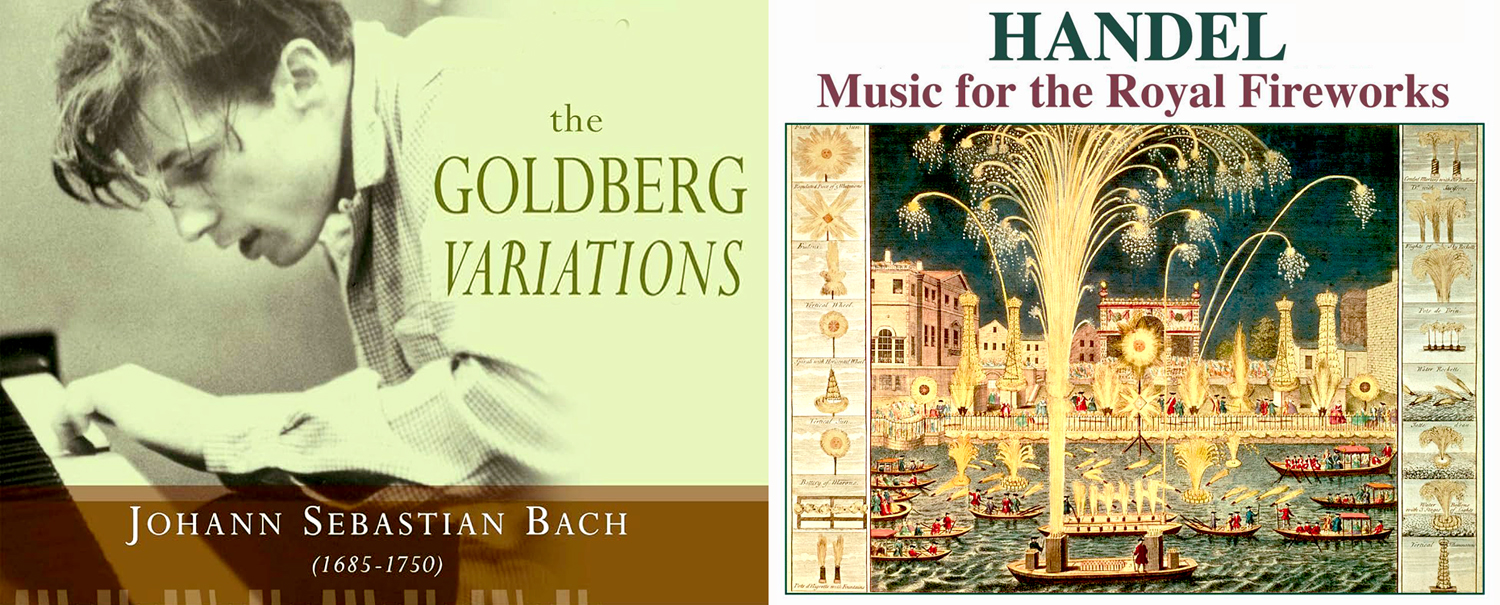
J.S. Bach (1685-1750), The Goldberg Variations (1714), a set of 30 variations on a repeating bass line, for keyboard; and George Friedrich Handel (1685-1759), Musick for the Royal Fireworks (1749), a suite for a large band of wind instruments, for outdoor performance during a famous fireworks display meant to celebrate the end of the War of Austrian Succession. The crowd loved the music, but the fireworks caused a building to burn down, blinded a soldier and injured several others. Later performances often added strings to the wind band, with no further reported injuries. 

Haydn: Quartet in D major, op. 64, no. 5 “The Lark”

It is often said that Joseph Haydn and Mozart wrote music in the classical style (roughly 1750-1828), but in fact, they created the classical style. If Haydn didn’t singlehandedly invent the symphony, he made it what we think of today; and he did the same for the string quartet — music for two violins, viola and cello. 

This is music generally less cluttered or fussy than the earlier Baroque, and seeks a kind of modest tastefulness, along with, in Haydn’s case, a witty sense of humor, as in the imitation bird calls at the start of this quartet, which was written in 1790 and has the usual four movements: an opening allegro, a dance movement, a slow movement and a jaunty finale. 

Alternates:

W.A. Mozart (1756-1791) Serenade No. 10 for 13 Winds in B-Flat, known as the Gran Partita (1781), which, in Peter Shaffer’s play, Amadeus, he has Antonio Salieri react by saying, “It seemed to me that I was hearing the voice of God.” Or Franz Schubert’s (1797-1828) Symphony No. 5 in B-Flat (1816), which is a really tuneful symphony built on Haydn’s model. 

Liszt: Piano Concerto No. 1 in E-Flat 

Franz Liszt (1811-1886) is the perfect Romantic composer, the greatest piano virtuoso of his time, and a matinee idol that all the ladies were in love with — something of which he took great advantage. His music, as in this 1855 concerto, is filled with all the wild emotion that the classical era avoided: over the top, loud, brash, and with a solo part for the triangle — it scandalized its first audiences. The jangle of the triangle was considered bad taste — but bad taste is the goal of much Romanticism. Audiences loved being scandalized. 

Alternates:

Robert Schumann (1810-1856) wrote a cycle of songs, telling a sad love story, called the Dichterliebe, or “A Poet’s Love,” in 1840, and includes a song claiming over and over, “I’m not angry,” to some of the angriest music ever. Clever. Or Bedrich Smetana’s (1824-1884) Moldau, an orchestral portrait of the Czech river (now usually called the Vlatva or Voltava), which is a perfect example of the Romantic Nationalism that swept over Europe. Great tunes. 

Debussy: Images for Piano, Book II

In the late 19th century and the 20th century before the First World War, music went through several changes. One of them is a rejection of Romantic excess, and the French composer Claude Debussy (1862-1918) came up with his own style — usually called Impressionism — of ambiguous tonality, exotic scales, and an approach to the piano that was soft and non-percussive. 

He wrote a great deal of piano music, including the famous Clair de Lune, but I’m offering the three pieces in his Images, second series (1907): Cloches à travers les feuilles (“Bells through the leaves”); Et la lune descend sur le temple qui fut (“And the moon descends on the temple that was”); and Poissons d’or (“Golden fish”).

Alternates:

Some composers went in the opposite direction, with larger orchestras, more chromatic harmonies of profound longing, in what is often called Late Romanticism, or Post-Romanticism. Gustav Mahler (1860-1911) often added voices to his orchestral music, or wrote orchestral song cycles, such as his Songs of a Wayfarer (1885). Richard Strauss (1864-1949) used huge orchestras and explodes out of the gate with Don Juan (1889), a musical version of a Don Juan more idealistic than lecherous. It is an avalanche of sound, with a huge six-horn signature that, in live performance, you feel through you fundament as much as hear with your ear. 

Janáček: Sinfonietta 

Now we are ripe in the 20th Century, and Leos Janáček’s Sinfonietta (1926), a five-movement piece for huge orchestra, including 25 brass instruments. The first movement has 10 trumpets alone, playing a hair-raising fanfare. 

All five movements are built from catchy tune-bits, extended and repeated. And although the music is clearly modernist, I’ve never come across anyone who didn’t instantly love the Sinfonietta

Alternates:

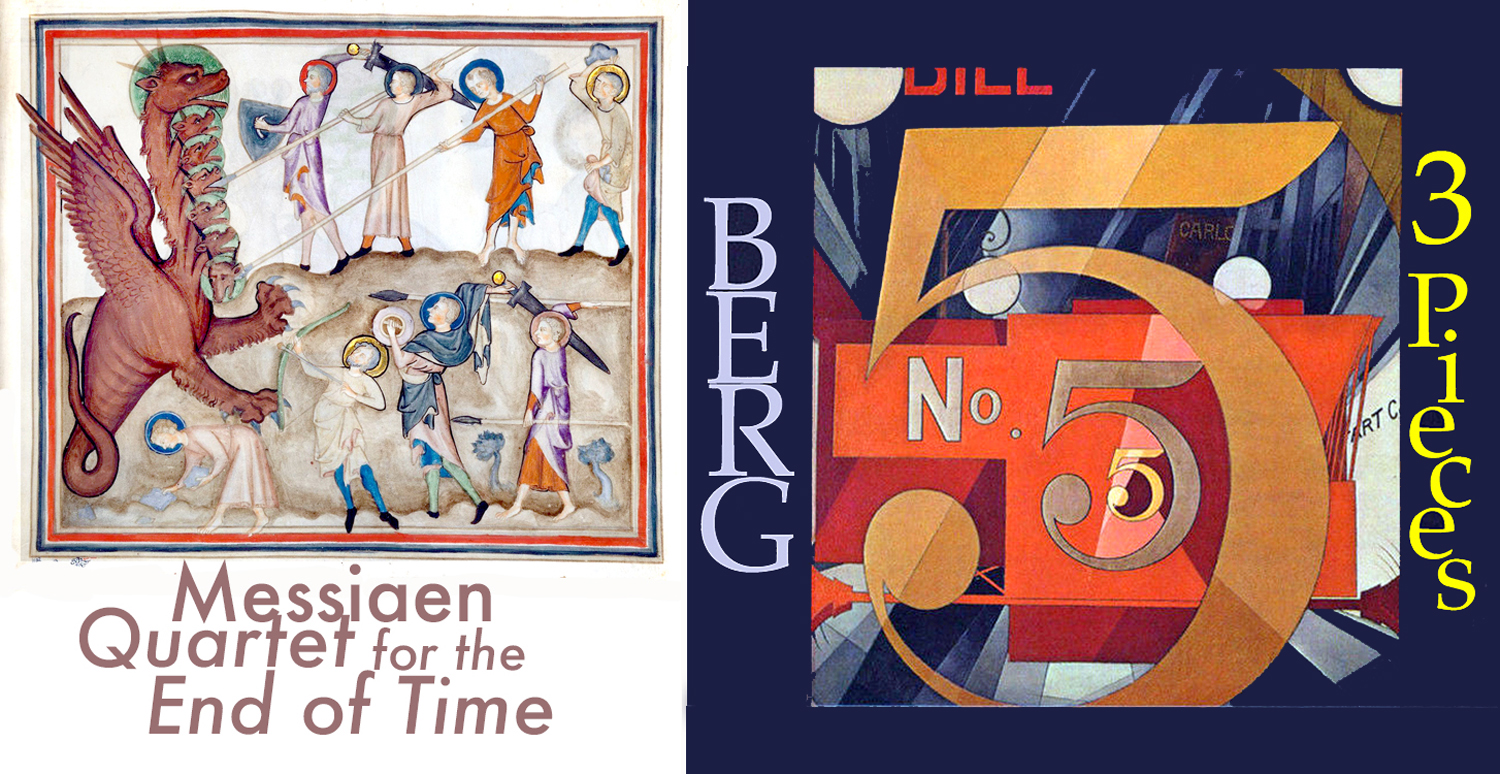
French composer Olivier Messiaen (1908-1992) was imprisoned by Nazis during World War II, and in prison camp, wrote his Quartet for the End of Time, for piano, clarinet, violin and cello (the instruments available in the camp). It is a hugely idiosyncratic piece, written to Messiaen’s own music theories, but can be overwhelmingly emotional in a good performance. And for the double-dip experience of atonal music, try Alban Berg’s (1885-1935) Three Pieces for Orchestra (1914), for something like what people used to call “modern music.” 

Penderecki: Threnody to the Victims of Hiroshima

Classical music, or art music, is still being written, and responds to life in the current world. We live in a post-Hiroshima age, and Polish composer Krzysztof Penderecki (1933-2020) summarized the feeling in his 1961 string-orchestra piece, Threnody to the Victims of Hiroshima, although you may have some difficulty recognizing it as string music made by violins, violas, cellos and double basses. It shrieks of the horror. 

It masses its 52 string players in tone clusters and dissonances, various vibratos and odd bowings, for 8 and a half minutes, that is not meant to be beautiful, but to evoke intense emotions. It is, nevertheless, beautiful. (Remembering Tom Robbins notion: “The ugly may be beautiful; the pretty, never.”)

Alternates:
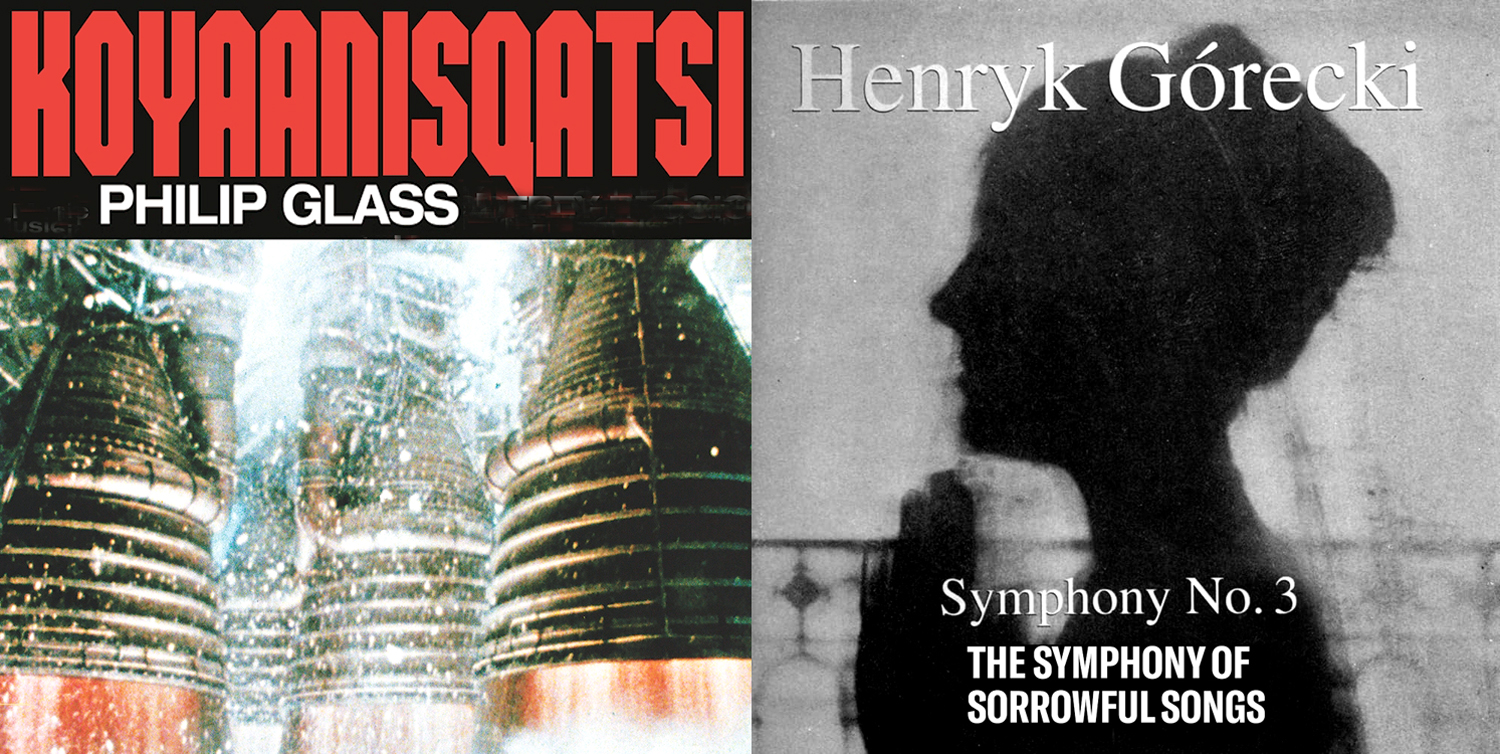
Minimalist composer Philip Glass (b. 1937) also reacts to the modern world in his film score for the Godfrey Reggio film, Koyaanisqatsi (1982). The modern world is a crazy world, as the film and music underline, but with quite a variety of minimalist techniques. The horrors of war fill Henryk Gorecki’s (1933-2010) Third Symphony (The Symphony of Sorrowful Songs) (1976), in which a soprano sings Catholic laments and words by victims of the Nazis, all to music so slow and so inexorable as to be almost a force of nature. Its 1991 recording by the London Sinfonietta sold more than a million copies. Gorecki, surprised at the popularity of such a sorrowful piece of music said, “perhaps people find something they need in this piece of music…. something they were missing. Something, somewhere had been lost to them.”

Epilogue

Of course, this diversity is among the European tradition of art or concert music. Most cultures have their own classical musics, such as the sitar or sarod music of India, the Chinese opera music, and Japanese flute music. Each is a tradition handed down from master to student and carried forth, with development and variation. That is what makes it classical. 

If I were to think of a purely American classical music, it would be jazz. It, likewise, has a wide range of styles and sounds, from Louis Armstrong through Duke Ellington and down through Ornette Coleman. 

But it is what we call classical music in the West that I am best familiar with and love. And writing this has given me the chance to listen once more to each of the pieces I’ve written about, and more joy me. 

Occasionally I get asked (OK, once) where should I start listening to classical music. Classical music is something that a few people as they age past Top 40 songs, come to believe they should begin to know, the way they should read Proust or watch foreign films. 

Philip Larkin mentions the drive in his poem Church Going: “Much never can be obsolete,/ Since someone will forever be surprising/ a hunger in himself to be more serious.” 

I have been listening to what is called classical music for 60 years, and my first thought is that classical music does not exist. Not really. 

What is called classical is a combination of old church music; popular music that has been around so long, it no longer sounds like the pop music we know; and music meant to entertain, first, a class of aristocrats who could afford to pay for it, and then an aspirational middle class that took up the buying of tickets. 

It wasn’t until late in the 19th century that anyone really considered such music “classical.” And only in the 20th century that most symphony orchestras were organized to play what in the past had just been music, but was now given this new label. 

Until then, most concerts consisted of new music mixed with a few old favorites (much like modern pop music — they wanted to hear the hits). And so, old standards became classics. 

Not all of the old standards were heavy and serious. Mozart wrote tons of divertimenti to be played as the count and countess ate lunch. It was only meant to sound nice, with catchy tunes. Yes, some classical music is meant to evoke deeper thoughts and emotions, some even meant to change lives. 

But there is pop music that is serious, too. Consider the Beatles’ A Day in the Life, or Queen’s Bohemian Rhapsody. They aren’t always short. 

And so, when you ask about classical music, you aren’t asking about a single thing. If you were to open up that can of worms and try to learn what classical music has to offer, you will have to recognize that no one thing can suffice. Nor any one style; nor any one century. 

If there is anything that marks music as classical, it is its length. Most tunes last three or four minutes, while a symphony can run anywhere from a half-hour to 90 minutes. The popular music is meant to put a tune in your head and you like it (or not) and may sing it to yourself as you wash the dishes. Such music is usually meant to be absorbed passively. 

What is called classical tends to be more like a story, even a novel, with multiple characters and changing moods, so where you start is not where you end up. It is music you pay active attention to. It goes somewhere and you have to pay attention to notice the plot. 

The story told in music, though, is not one that can be translated into words. It is one you listen to as it unfolds in musical terms: the melody changes, sometimes broken into pieces, the harmony turns grim or lilting, sometimes the melody might be played half-speed, or faster, or even upside down. These are all part of the musical story-telling. 

So, what do I say to my friend asking advice on how to start listening to classical music? 

The complaint I hear often is that classical music all sounds the same. It doesn’t. And so, I want to offer examples both of the stories and of the diversity. And I want to start off with a symphony with the clearest, most direct “story” to tell.

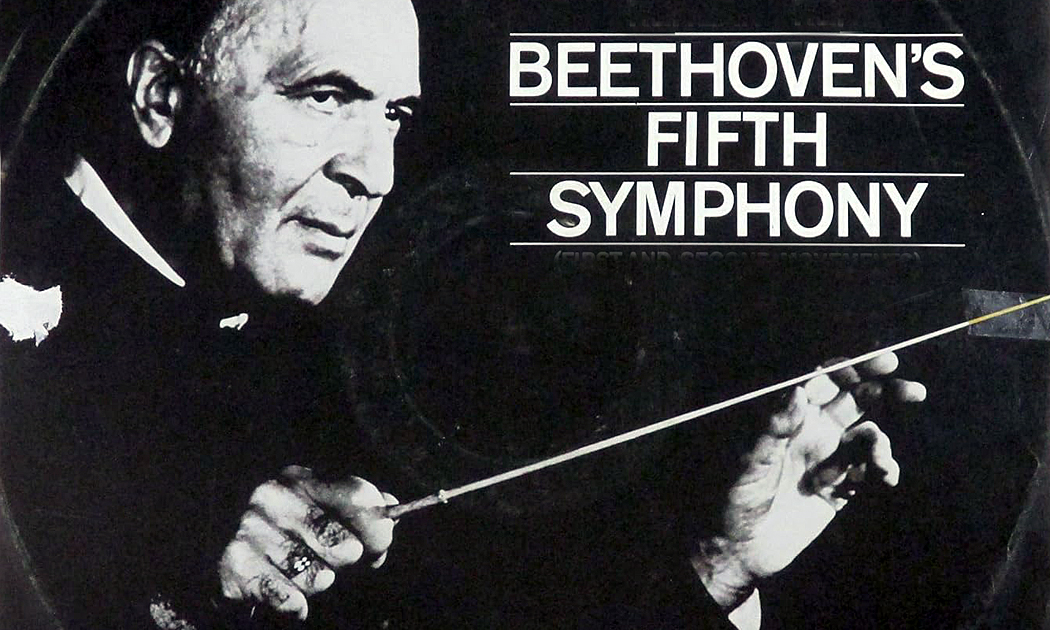
If there is any single place to begin, it is with Beethoven’s Fifth Symphony, or, more formally, Symphony in C-minor, op. 67, first performed in December, 1808, in a freezing cold concert hall in Vienna, along with a host of other new works by the composer, making for a concert lasting more than four hours. For all that music, the orchestra — a pickup ensemble paid for by Beethoven himself — had only a single rehearsal to work out the kinks. In one of the pieces played that evening, the orchestra got lost and had to stop and begin the whole piece all over again. 

But that Fifth Symphony eventually became iconic — the single stand-in for all of symphonic music. 

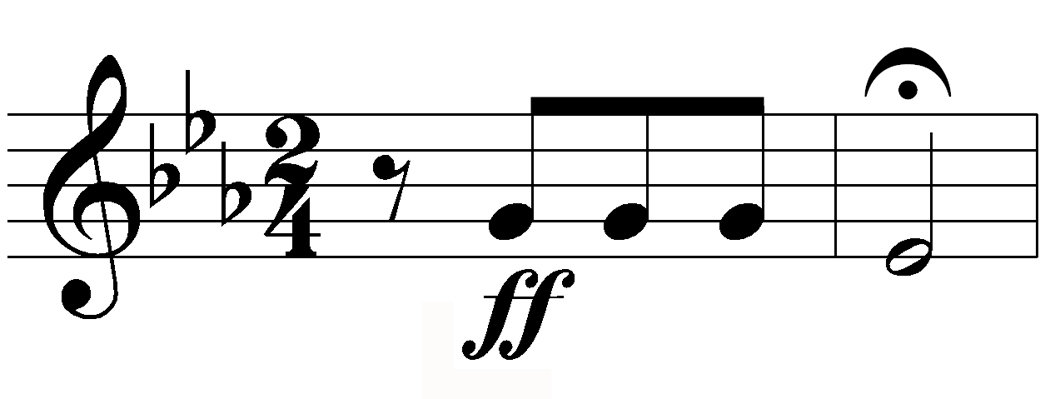
It begins, as almost everyone knows with the heavy tread of the dah-dah-dah-DUMM. Those four notes are played over and over through all four movements of the symphony, sometimes straight, sometimes altered, sometimes as a drumbeat underneath another tune. I once counted in the symphony score more than 700 repetitions of dah-dah-dah-dumm. That works out to once every three seconds of music from start to finish. It’s almost OCD. It’s no wonder the notes are often compared with hammer blows. 

The symphony is in the minor key, a key of angst, anger, uncertainty, which Beethoven underlines by having the music stop outright several times after we hear the four-note motif. As Peter Schickele said, in his comic sportscast of the symphony, “I can’t tell if it’s fast or slow, because it keeps stopping.” 

But it picks up steam to an intense, driving rhythmic motor, all in that relentless C-minor. It blasts you over the head with it. The first movement (of four) lasts, in most performances, only about five minutes, but you may very well be worn out by all that hammering and minor-keying. 

The second movement is a relief from the drive of the first, but the dah-dah-dah-dumm is often there, heard beating away in the bass line. The third movement starts with an ambiguous arpeggiated melody in the basses, but then brings back dah-dah-dah-dumm as a main theme, with the drive of a forced march. The movement doesn’t really end, but rather morphs into a chaotic repeated note pattern that doesn’t seem to be going anywhere, until … until… it does — and it explodes into a big, brassy blast of C-major — the major key the entire symphony has been trudging toward for all its length. The feeling is absolutely triumphant. The spirit soars. 

And yet, if you listen carefully, you will recognize that those happy, brilliant tunes are actually a metamorphosis of the dah-dah-dah-dumm, buried in a longer, rising optimistic melody. And at the very end, Beethoven drives home that C-major with 25 bars of pounding C-major chords in the full orchestra. You know you have reached the finish line with the last long-held chord. Having won it, he’s not going to let go. 

The story the symphony tells is from anger and angst into triumph and joy. It is this long development of an idea that marks what is called classical music as different from popular music. 

And even in classical music that doesn’t have the symphony-long coherent story to tell, each movement has its own plot and narrative. The most common narrative in classical music is presenting a theme or two, or three, in order, then mixing it all up, taking them apart, replaying them in foreign keys and disruptive orchestration, and then, finally, bringing them back in something like their original form so that you have a satisfying feeling of having returned home after a journey. Roughly half of all classical music is built on this pattern — with infinite variations. 

It is the surprise variations from the standard pattern that often delights music listeners. But to get the variants, you have to have become familiar with the expectations. It is hardly different from knowing the general plan of a TV sitcom, and being delighted when the show gives you a turn on your expectations. In a modern sitcom, you almost always have a main plot, a secondary plot, and a third, smaller background action, and they alternate in your attention, but are all wrapped up by the end. Same with a symphony or sonata. 

Next, about classical music all sounding the same (I have my own ignorance, too: For me, all pop music sounds the same). I have come up with a list of five classical pieces to spread the parameters. Each of these pieces can be found on YouTube to be listened to for free. 

Orchestral music is what most people think of as classical music. But there is so much more. 

Let’s start with some choral music. Before the late 17th century, most art music was vocal, and most often for the church. What instrumental music there was was usually improvised, rather like jazz. 

So, first, listen to Spem in Alium by English composer Thomas Tallis (1505-1585). It is a 40-part motet setting the Latin text “I have never put my hope in any other but in thee, God of Israel.” (Spem in alium — “Hope in other”). It was written about 1570 for a combined eight choirs of five voices each. 

It starts with a single soprano voice, adding others until, about three minutes into the piece, the entire five choirs all burst forth in a glorious racket. It is quite sublime. 

Then, let’s go the other direction. In 1913, Igor Stravinsky’s Le Sacre du Printemps (“The Rite of Spring”) was premiered as the score to Vaslav Nijinsky’s choreography for the Ballets Russes in Paris. That premiere famously caused a riot. Stravinsky fled the theater in fear for his life. Or so he claimed — one never knows just what to believe in a self-mythologizing artist. 

The music is rhythm torn apart, pounded home as part of what Leonard Bernstein called “Uncle Igor’s Asymmetry Machine.” It tells the ballet story of primitive Russian society and its ritual sacrifice of a young woman who dances herself to death. With its riotous dissonance, pounding percussion, and extreme orchestration, it remains perpetually modern. 

But we should not forget chamber music — music for a small group of players, often just two, such as violin and piano. César Franck’s Violin Sonata in A-major is about the most tuneful sonata ever written. He wrote it in 1888 as a wedding present for the famous violinist Eugene Ysaye. 

Its four movements borrow tunes from each other, and so although the movements are quite distinct emotionally, they are all tied together by the memorable melodies. 

And I cannot forget song. Most of the great composers also wrote songs, though they are nowadays called lieder, which is just the German word for “song,” but gives a higher-toned, more prestigious ring to the name. But they are songs nonetheless. 

The greatest of these classical song-writers is undoubtedly Franz Schubert (1797-1828). Poor all his life, and hardly recognized as a great composer by any but his closest friends, he was a gushing fountain of melody. His song Erlkönig tells the story of a father and son riding through the night on a horse, stalked by the evil elf-king who wants to take the boy. The child screams in fear, the father tries to protect him, and the goblin tries to seduce the kid away. It is a frightening song, but full of tremendous melody. 

This should give you some sense of the incredible range of the art music of Western culture. And a start in classical music. 

Next: A look at the changing eras of classical music

Happiness is the most innocuous of emotions; it is plain and uninflected. Compared with its brawny cousins, such as hatred, passion, grief or joy, it is rather simple and nondescript. It is to those as water is to wine. 

Happiness is what you see on the faces of children playing outdoors. It is for them, who don’t yet have the burdens of adulthood or the cares of life. They can innocently play with happy abandon. Heaven lies about us in our infancy! 

Yet, in those cares of life, who doesn’t wish for a few seconds freedom to experience once again the simple happiness of when we were young and didn’t know any better.

Most of our art and music concerns the bigger things. The emotions you get from Mahler are big, complex emotions, piled Pelion on Ossa, building overpowering climaxes that leave us hollowed and purged. 

Think about Bach’s B-minor mass, Wagner’s Tristan, Stravinsky’s Oedipus Rex and you find the complexity of life threaded around itself. Of the big emotions, none is uninflected, but includes a tincture of its opposite.   “Our sweetest songs are those that tell of saddest thought. Our sincerest laughter with some pain is fraught.” 

Happiness, as I’m using the term here, is unalloyed. And while most of the greater emotions are felt as “happening” to yourself, happiness takes you out of yourself. You are unaware of your self when experiencing it. It is a grace.

In that sense, there is ego invested in the transcendence of Mahler or the Ode to Joy of Beethoven, but when you are happy, you barely exist: Only the happiness exists. You are only really aware of it when you wake from it and realize what you have been gifted. 

Of course, such a state can only last a comparatively short time. When the philosopher asks if you have had a happy life, the only accurate answer is that life is not happy, but only moments are. 

Art can rouse in us a huge range of emotions, and classical music is designed to explore the subtleties of them, and we are overwhelmed by the passions in Mahler, the transcendence in Bruckner, the joy in Beethoven’s Ninth, the angst in Berg’s violin concerto. All huge, complex emotions. 

But surely, there must be some music completely devoid of such cares, and can arouse in us those feelings of abandon and freedom we had as little children. Is there music that is simply happy? This is music I put in the CD player when I just want to rock back and enjoy the simple tunes and unfettered sounds of being happy. Bouncy, tune-filled, catchy feel-good music. 

The place to start, where most of the habits of classical music start, is Joseph Haydn. He seems to have invented everything: the symphony, the string quartet, the sonata form — they all descend from Haydn. And Haydn was perhaps the sanest person ever to write music, burdened by no metaphysical agonies. But even his music expresses a variety of thoughts and emotions, movement by movement, from the depth of the Seven Last Words of Christ to the finale of Symphony No. 88, which bounces with unfettered happiness. (Link here). 

That kind of ebullience is hard to sustain, but here are five examples from classical music that bounce from beginning to end, along with some suggestions for recordings. (Not “the best” for I have not heard all of the recordings, but these are my favorites). 

Franz Schubert Piano Quintet in A “The Trout”

The Trout Quintet is unusual in that it includes a double bass, which provides a solid bottom for the music, which allows the tunes to float along like rafters down a river. It is a sunny quintet, with hardly the whisper of a shadow in its five bright movements. Even the minor-key variation in the fourth movement is dispelled with a major chord — “I was just playing,” its composer seems to be saying.

It was written in 1819, when Schubert was 22, for piano, violin, viola, cello and bass. Through most of his best music — the late piano sonatas, late quartets and the great C-major string quintet — there is a strain of despair that is heartbreaking. Even in his short piano pieces, beloved of amateurs for a century and a half, there runs a vein of deep melancholy that shades even his happiest moments.

But none of this in the Trout. It spreads sunshine from beginning to end.

Almost any performance of The Trout will leave you giddy, but the one essential element of any recording is that you can hear — even feel — the string bass at the bottom. It is the foundation for the edifice. 

I’ve always loved two performances. The first is Alexander Schneider with Peter Serkin on piano, Michael Tree on viola, David Soyer on cello and the indomitable Julius Levine on bass. It was on the Vanguard label. And Peter’s father, Rudolf Serkin anchors the Marlboro Festival musicians on Sony (then, Columbia). With Serkin is Jaime Laredo on fiddle, Philipp Naegele on viola, Leslie Parnas on cello and Levine, again, on bass. A classic performance, much loved by many, features Clifford Curzon on piano, with musicians from the Vienna Philharmonic. Originally on Decca (classical music labels are in constant flux, as mega-corporations gobble up older established labels; you never know where a classic performance will show up. Just check Amazon and you’ll find it.)

YouTube video at this link

Gioacchino Rossini String Sonata No. 1 in G

It shouldn’t be surprising that most of the music that expresses mere happiness should have been written by very young composers. The six sonatas for strings were written by Rossini when he was 12 years old, arranged for four string parts: two violin parts, one for cello and one for double bass — again providing that delightful solid bottom for the tunes. 

The bass is there because Rossini wrote them while visiting the home of bass player Agostini Triossi in Ravenna, Italy, in 1804, and tossed all six sonatas out in the space of three days to be played by members of the household, with Rossini himself on second violin. 

Although written for a quartet of players, they are usually performed by a full ensemble. Versions have been adapted for normal string quartet and for wind band, but the string ensemble has that fresh appeal that matches the music. 

I could have chosen any of the six sonatas. They are each in three movements, fast-slow-fast, and in major keys. But I mention the first because I particularly love its jaunty finale, with a tune I can’t get out of my head. 

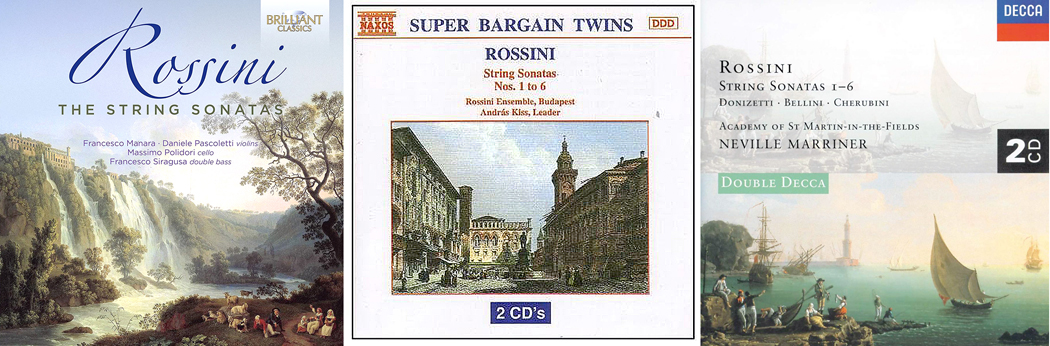
I’ve never heard a bad performance on disc, but mostly I listen to the Naxos recording of the Rossini Ensemble, Budapest. They almost always come in a pack of all six sonatas, so you are likely to love them all. Neville Marriner has a smooth set with the Academy of St. Martin’s in the Field, and Brilliant Classics has the version with four solo players. 

YouTube video at this link


 Georges Bizet Symphony in C

Another prodigy, Bizet wrote his symphony when he was 17 years old and a student at the Paris Conservatoire. It was never performed in the composer’s lifetime and indeed was lost and forgotten until 1933, when it was found in the composer’s papers, and was given a first performance by Felix Weingartner in 1935. Since then, its infectious tunes and untroubled elan have found it a place in the repertoire. 

I have always thought of it as a 19th century version of a Haydn symphony — perfectly proportioned, tuneful, and with no dead spots. Others may have stormed the heavens with Wagnerian thunder and Blitzen, but this symphony contents itself with pleasing its listener with melody, rhythm and smooth harmony. 

It has also been lucky on disc, when three of the most lively conductors have taken it on. Leonard Bernstein with the NY Phil, and Leopold Stokowski with the National Philharmonic (a pickup orchestra), and Thomas Beecham with the Royal Philharmonic. You can’t go wrong. 

YouTube video at this link

Serge Prokofiev Classical Symphony in D major, Op. 25

Another student work, in 1917 Serge Prokofiev wrote his first symphony in a kind of parodistic style of Haydn or Mozart, but with modern piquant dissonances — what has been derisively called “wrong-note romanticism.” 

But the four-movement symphony has proved enormously popular. It bounces from first to last, with memorable tunes and sharp wit. 

The composer Boris Asafyev, according to Prokofiev, “put into my mind an idea he was developing, that there is no true joyfulness to be found in Russian music. Thinking about this, I composed a new finale, lively and blithe enough for there to be a complete absence of minor triads in the whole movement, only major ones.” 

The energy in this music is propulsive. If anyone is feeling down, with the feeling of systematically knocking the hats off anyone you meet on the streets, a listen to the Classical Symphony will cure you and leave you with a goofy grin on your face. 

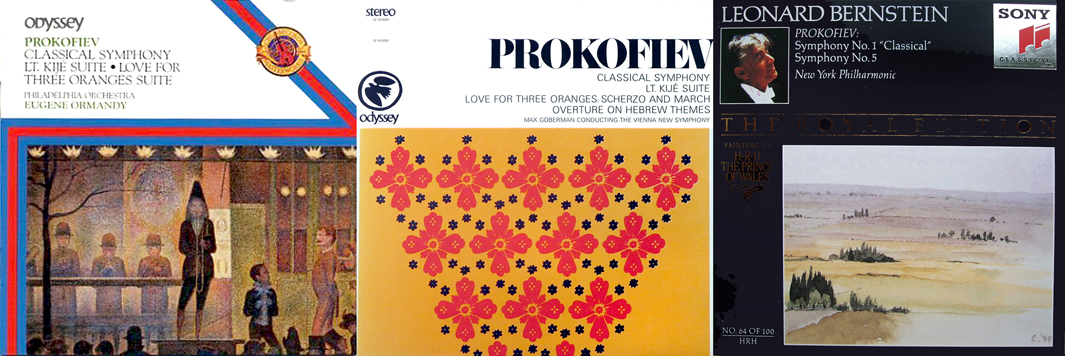
Many have recorded the symphony. The only failures are when the conductor takes the music too seriously or lacks any sense of humor. There are several dry versions. But I have three that I have loved. Leonard Bernstein and the NY Phil have all the elan and vigor you could ask for, if the ensemble is a tad scruffy. Eugene Ormandy and Philadelphia cannot be topped. It is a perfect recording of the music, bright and witty with gorgeous string playing. And I remember an old Odyssey LP I once owned with Max Goberman and the Vienna New Symphony. Perhaps one day a CD version will be offered. 

YouTube video at this link


Darius Milhaud Le Boeuf sur le Toit, Op. 58

Imagine you are in a Brazilian dance hall and the crowd, sloppy with  drink and dance, are bouncing to the music of an exuberant band — not all of whom are playing the the same key. And you cannot help but tap your toe, then jiggle your leg, and then get up and dance and sweat with the crowd. That is Milhaud’s Le Boeuf sur le Toit (“The Bull on the Roof”). 

It is a string of mostly Brazilian tunes, some borrowed, some invented by Milhaud, all of which are infectious and life-affirming. It is the most single-mindedly happy music I have ever encountered, completely unselfconscious and joyful. Milhaud himself called it, “15 minutes of music, rapid and gay, as a background to any Charlie Chaplin silent movie.” 

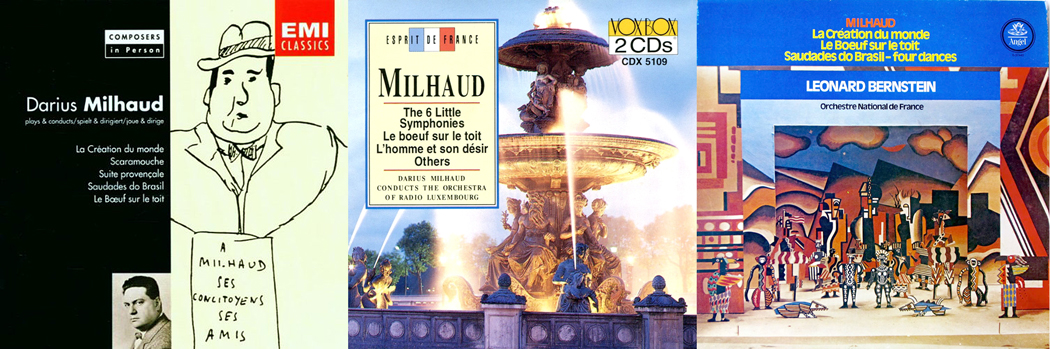
 You can get a recording of Milhaud himself conducting the Orchestre du Théâtre des Champs-Elysées from 1958, perhaps a bit ragged, but with all the spirit. A standard for decades has been Louis de Froment and the Orchestra of Radio Luxumbourg. But for me the perfect embodiment of this happy music is the Orchestra National de France under Leonard Bernstein; he is the perfect vehicle for the life-spirit of this music. 

YouTube video at this link

Those are my five suggestions. There are others: Benjamin Britten’s 1834 Simple Symphony, made up of tunes he wrote when he was 10 years old; or  perhaps Shostakovich’s Three Fantastic Dances from 1920, which he wrote between the ages of 14 and 16 — before the specter of Joseph Stalin darkened his art. Perhaps you have other suggestions to leave in the comments. 

When piano sonatas first became popular, in the 18th century, they were primarily written for home use, for talented amateurs to play for evenings with the family. Some sonatas were obviously more difficult than others, and a few by Haydn or Mozart, required a professional level of ability, and indeed, were written for the composers themselves to show off their performing abilities. But most were written to be sold as sheet music, and that’s how their composers made their livings. 

At the time, there were no public piano recitals to attend. There were private performances given for the aristocracy. Public concerts tended to feature concertos and concert arias, with maybe a little symphony or two thrown in. But no one bought tickets to hear a piano sonata — why? when you could play them yourself at home after dinner.

Then came Beethoven. 

Piano sonatas also used to run from perhaps 10 minutes to 15 or 20 minutes. Mozart’s C-major sonata (K. 545) comes in three movements. The first runs a tad over two minutes; the second just under four minutes; and the finale about a minute and a half. The bigger sonatas, such as his Sonata in A (K. 331) with the famous Ronda a la Turca, comes in at about 14 minutes, as played by pianist Mikhail Pletnev. 

Then came Beethoven, the revolutionary pounder of the keyboard, who shocked his contemporary listeners with the power, difficulty and length of his piano sonatas. The Appassionata Sonata of 1805 is devilishly difficult and a bit over 21 minutes. 

Then there’s the Hammerklavier Sonata of 1818, which is twice as long (Barenboim’s most recent recording takes 50 minutes) and 10 times more difficult, ending with a giant double fugue that confused his first listeners. What the heck is going on? It’s the original knucklebuster. Just look at that pile of notes:

Things changed after Beethoven. The 19th century saw fewer piano sonatas, but much bigger and more difficult specimens. You could say that Beethoven seems to have presented a challenge to all those who came after him: how to live up to his example. 

And the example he gave was for a longer, more complicated sonata — a kind not to be played by prosperous daughters of the middle class after dinner, but by traveling virtuosi giving piano recitals to a paying public. Franz Liszt began the practice, but the long, knucklebusting piano sonata was established. 

There were less ambitious works written, and the standard for most of the 19th century was the character piece, not the sonata. These were short catchy pieces sometimes singly and sometimes strung together in a suite, such as Schumann’s Carnivale or Tchaikovsky’s The Seasons

This was the heyday of Chopin’s waltzes, mazurkas and polonaises, of Grieg’s Lyric Pieces, of Brahms’ intermezzi and capriccios. 

And when there were sonatas, they went big. They became symphonies for the keyboard. 

I’ve chosen six of these knucklebusters as exemplars. There were more, but they haven’t joined the repertoire of regular performances. But these six as regulars of the recital hall. 

I’ve also appended a list of my favorite recordings of these sonatas. Notice, I did not say “best.” There are too many CDs out there and I haven’t listened to them all (although I have come close with the Hammerklavier — I once owned 21 complete sets of Beethoven piano sonatas and another five sets of the late sonatas by themselves, so I’ve heard quite a few). I’ve only listed recordings I have listened to. 

Beethoven Sonata No. 29 in B-flat, opus 106, “Hammerklavier”

Beethoven was at the height of his fame after the premiere of his Seventh Symphony, but the years that followed were thin ones for the composer. He was tied up in endless legal difficulties over his nephew, Karl, and was suffering from endless bouts of gastritis. He produced little between 1813 and 1818. But then came the final flourishing of late quartets, late piano sonatas and, of course, the Ninth. 

The first big explosion was the “Hammerklavier” sonata, that giant monstrosity of pianistic torture. It begins with a grand military fanfare, makes fun of the same in the teensy second movement, reaches the heart of things in a 20-minute adagio and concludes with a monumental fugue which demonstrates every trick in the book of fugue writing —- play the tune upside down, play it backwards, slow it down, speed it up, slow it down upside down, speed it up backwards and end it all with an explosion of hiccups and trills. 

It was the longest piano sonata written to that point and still one of the most challenging. 

It is the adagio that holds the key and the emotional power of the sonata. It has been called a “mausoleum of collective sorrow,” and “the apotheosis of pain, of that deep sorrow for which there is no remedy, and which finds expression not in passionate outpourings, but in the immeasurable stillness of utter woe.” It is that rare sort of music that you inhabit rather than simply listen to. 

My favorite recording, since I first heard it 50 years ago is also the first recording made, in 1935, by Artur Schnabel. It has been in print since it was first made and despite being in rusty sonics, comes across clearly as music of the most profound sort. 

If you want more modern sound, I recommend the 1970 recording by Rudolf Serkin. In completely modern sound, I love — especially the adagio — by Daniel Barenboim in his 2012 release of the complete sonatas. 

Schubert Sonata No. 21 in B-flat, op. posthumus, D. 960

When Franz Schubert reached the age when Mozart had died, he’d been dead for four years already. Mozart died at age 35 and mourned as a genius who died too soon. Schubert died at 31 and we can only mourn the lost of what he could have written in those missing four years, to say nothing of what we could have had if he had lived a normal life span. 

As it was, in the last year or so of Schubert’s life — when he knew he was dying — he produced a stunning series of works of such profound depth and beauty, it can only be called a miracle. There were the final three string quartets, the C-major Quintet, and the final three piano sonatas. If all we had from Schubert were these works, he would be given a first-class ticket at the front of the bus with Bach, Mozart, and Beethoven. 

The final sonata, in B-flat, is one of the longest written by that time, rivaling Ludwig’s “Hammerklavier.” It, too, has a central slow movement of intense emotion. Arthur Rubinstein, who played the sonata as well as anyone ever has, said of the adagio, “This movement is like death. There is nothing else as close as this music that shows us what death feels like.”

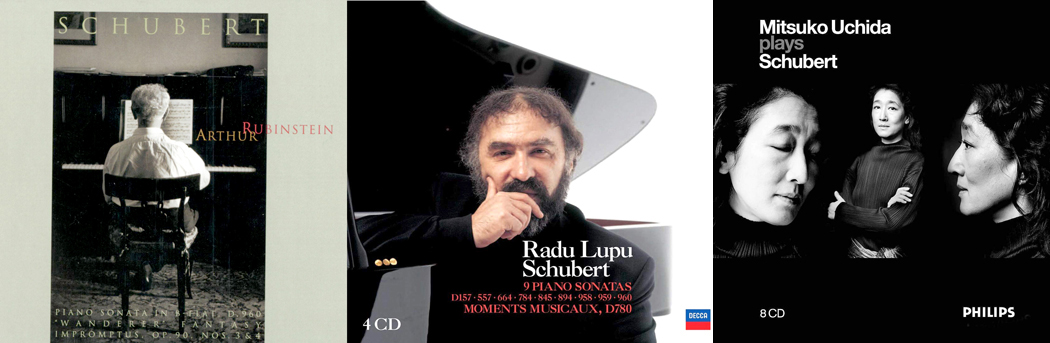
Rubinstein recorded it twice, only a few years apart, but it is his first, from 1965, that I think is the best ever. There is a gracefulness and a humanity in the playing that is uniquely Rubinstein’s. 

There are tons of other performances, from everyone from Horowitz (a bit clangy) to Alfred Brendel (a bit stodgy). But I also recommend the versions by Radu Lupu and by Mitsuko Uchida. 


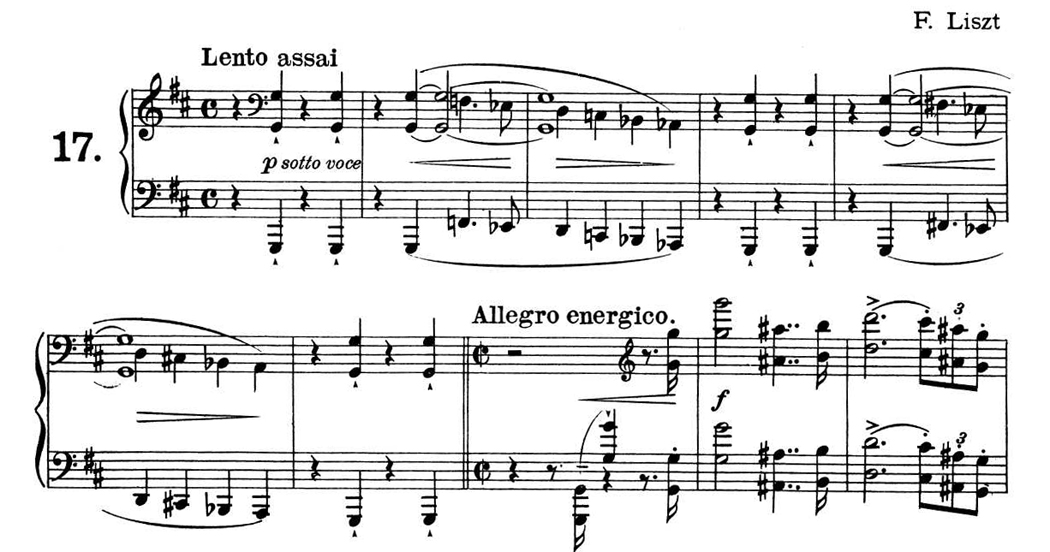
 Liszt Sonata in B-minor

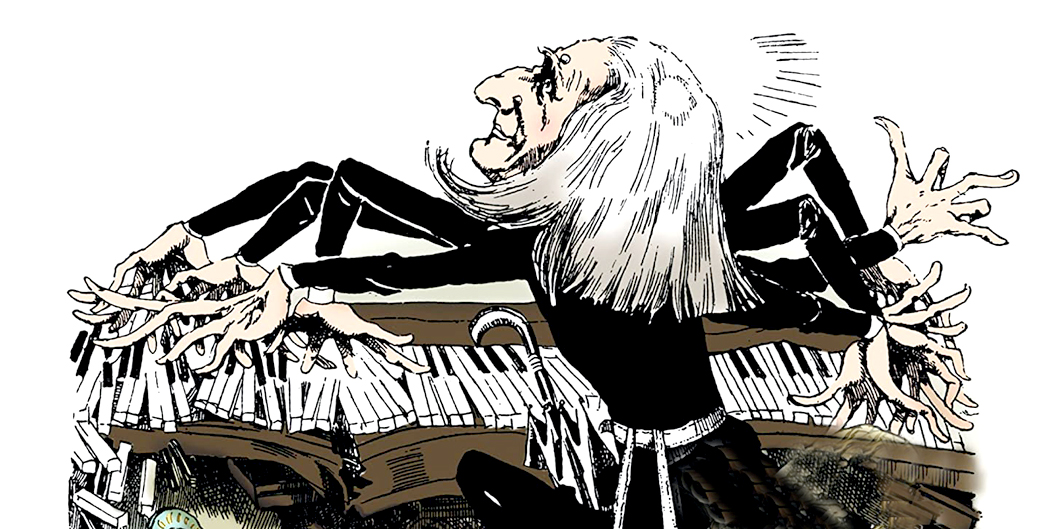
Franz Liszt is the guy who invented the piano recital: people paying good money to hear a pianist on stage all by himself, amazing them with his showmanship and technical brilliance. Liszt was the equivalent of a rock star in his day. Oh the women! Oh the humanity!

A lot of what Liszt wrote is surely just showboating — “Look what I can do!” But he wanted to establish his bona fides, also, as a great composer, and among those things he wrote of more serious intent is his gigantic Piano Sonata in B-minor. 

Written in 1853, it divided the listening audience in two, half hating, half loving it. Brahms fell asleep while hearing it. The critic Eduard Hanslick said “Anyone who has heard it and finds it beautiful is beyond help.” Another German critic, Otto Gumprecht, referred to it as “an invitation to hissing and stomping.” 

Liszt sent Clara Schumann a copy of the sonata. In her diary she described the sonata as “a blind noise … and yet I must thank him for it. … It really is too awful.” 

Yet, the more avant-garde audiences found it thrilling, adventurous and exciting. Richard Wagner loved it. And today, it is a staple of the concert repertoire. I have heard two great live performances of it, first by Emil Gilels and more recently by Andre Watts — both overwhelming experiences.

My favorite performance is by Ukranian pianist Valentina Lisitsa. Too many upstanding and earnest pianists have attempted to overcome the showmanship and flash in Liszt to, supposedly, “find the music.” But Liszt without the dash and flash isn’t really Liszt. The exhibitionism is built into the score, and Lisitsa’s Liszt (not just in the sonata) is the perfect presentation of what Liszt is supposed to be. It’s louder, faster, more dazzling. (Hence, Lisitsa is sometimes pooh-poohed by the snobbier critics).

If you don’t mind a slightly older audio sound, you also can’t go wrong with Vladimir Horowitz, who also knows what this music is about. Finally, I treasure the CD of Watts playing the sonata, with panache and taste, which reminds me of hearing him do it live. 

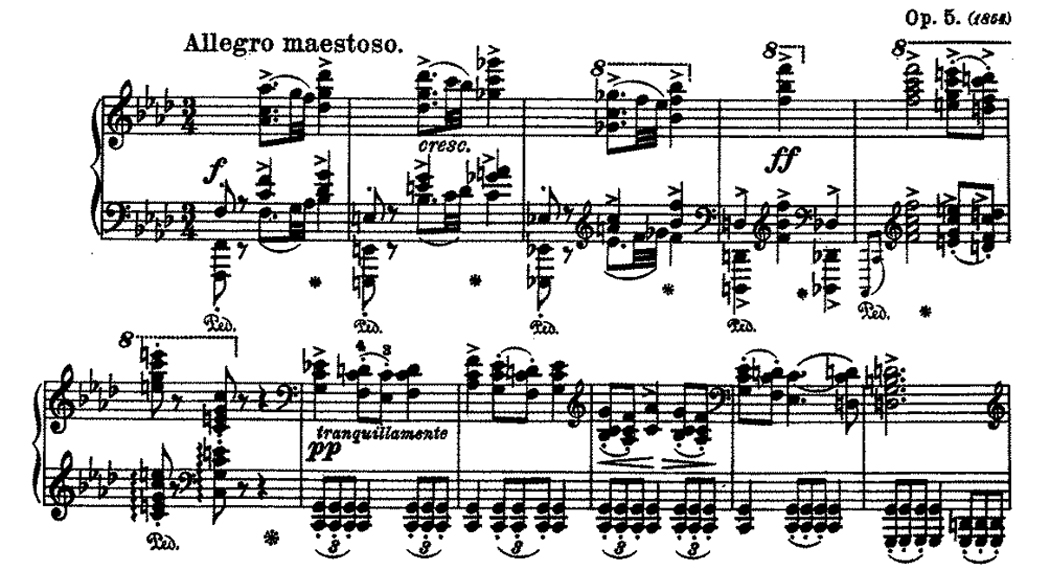
Brahms Sonata No. 3 in F#-minor, op. 5

We think of Brahms as the old man with the beard spattered with cigar ash, but he was young once, full of piss and vinegar, and at the start of his career he wrote three monumental piano sonatas, opuses 1, 2, and 5. Each busting knuckles with the best of them. They are big, even by the standards of the time. 

The third is the one that caught on. He wrote it in 1853, the same years as Liszt wrote his sonata, and when he was just 20. It is vast, passionate, and gawky. It’s aggressive opening uses the whole length of the keyboard from booming bass to tintinnabulating treble. The second movement is tender andante inspired by a poem about pale moonlight and love. A rumbling scherzo follows and then an extra movement thrown in — a “recollection” or “remembrance” (“Rückblick”) that recalls the sweet andante with sweet nostalgia. (Did I mention that through all five movements, there is also a subtle recollection of the Dah-dah-dah-Dum of Beethoven’s Fifth Symphony — a ghost in the mechanism). Finally, an agitated rondo finale. The contrast between the more assertive segments and the more quiet, thoughtful parts give this sonata a sense of encompassing the range of human thought and emotion. 

No one plays Brahms better than Arthur Rubinstein. Period. Brahms is his mother tongue and compared with him, every other pianist, no matter how good, is speaking a second language in Brahms idiosyncratic keyboard style — the opposite of the natural pianism of, say, Chopin. But Rubinstein makes it flow and sing. 

He recorded it twice. The more recent, from 1959, is in better sound, so it is my first choice, but I have to put the 1949 version in as my second choice. There are many other good recordings of the sonata, but the only one which comes close to Rubinstein (that I have heard) is by Helene Grimaud. 

Ives Sonata No. 2, “Concord, Mass. 1840-1860” 

England has a centuries-long tradition of eccentrics, but America, in contrast, has its crackpots. Charles Ives was one of them. 

He began writing his second piano sonata in 1904, but didn’t finish it until 1915. I use the word “finished” provisionally, because after it was published, in 1920, Ives continued fiddling with it, rewriting it and republishing it in 1947. It was not performed, in full, before a paying public until 1939. And each performance after was slightly different, partly because there are ad lib sections of the score, and partly because Ives kept jiggering with it. He said it was never meant to be finished, but always to be a work in progress. 

Oh, and it comes with a 120-page preface, called Essays Before a Sonata, in which he discusses not just the music, but the whole of the Transcendentalist movement in New England in the 19th century. 

Ives wrote the work was his “impression of the spirit of transcendentalism that is associated in the minds of many with Concord, Massachusetts of over a half century ago. This is undertaken in impressionistic pictures of Emerson and Thoreau, a sketch of the Alcotts, and a scherzo supposed to reflect a lighter quality which is often found in the fantastic side of Hawthorne.”

The first movement, “Emerson,” is quite craggy, but there is humor in the following “Hawthorne,” and quotes from Beethoven’s Fifth, played after dinner on a parlor piano, in “Alcotts,” and finally a quiet, moody reflection of Nature, with a capital “N” in “Thoreau.” 

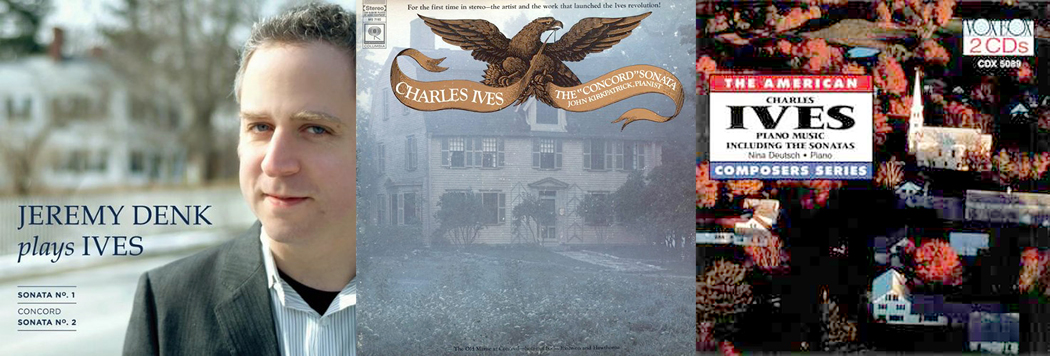
I got to hear Jeremy Denk play the Concord Sonata at Zankel Hall in New York, in a program that also included the “Hammerklavier.” Back to back in the same recital was more than impressive: It was like watching someone run a marathon in the morning and after lunch complete an iron man competition. It was exhausting. For a recording of the sonata, Denk is my man. 

But I also have a soft spot for a recording I have cherished for almost 50 years, first on vinyl and now on CD — Nina Deutsch in a Vox Box with a host of other Ives piano music. She brings a slightly softer edge to the Ives. And there is the original recording, made in 1949 by John Kirkpatrick, who first championed the piece. 


Prokofiev Sonata No. 7 in B-flat, op. 83

Schubert had his final three sonatas; Brahms had his first three. Knucklebusters seem to like coming in threes. Serge Prokofiev wrote his group of three during World War II, and are hence often grouped as his “War Sonatas.” Each is a job-and-a-half to tackle, and any of them could be chosen to represent Prokofiev as a knucklebuster. But the one that has become popular is the Seventh, in the middle of the trio. 

The sonata is usually seen as a reflection on the war, but, like so much Soviet music of the time, it holds an unspoken reference to the terror under Stalin. Prokofiev was friends and working colleague with theater director Vsevolod Meyerhold, who was arrested, tortured and murdered by the NKVD in 1939. Meyerhold’s wife, the actress Zinaida Reich, was stabbed 27 times in her apartment after Meyerhold’s arrest, also by the NKVD. Prokofiev (like Shostakovich) constantly feared they might come for him, also. He wrote a panegyric cantata “To the Glory of Stalin” for the dictator’s 60th birthday, in hopes to be left alone, but also wrote this piano sonata, in a more personal style, to maintain his self-respect. 

The first movement is a rough and tumble Allegro Inquieto. The second movement, Andante Caloroso, quotes a song by Robert Schumann, with lyrics that read, “I can sometimes sing as if I were glad, yet secretly tears well … everyone delights, yet no one feels the pain, the deep sorrow in the song.” It is one of the most beautiful moments Prokofiev ever wrote.

That is all followed by the toccata-like finale, Precipitato, which explodes and doesn’t relent until the final pounding chords. It is an angry, propulsive moto perpetuo, with an obsessive repetition in the left hand of a figure in the odd time signature of ⅞. It beats and crashes over and over till audience and pianist are exhausted. 

I heard Maurizio Pollini play the Prokofiev Seventh in Los Angeles many years ago in another monumental program (which also included all the Chopin Preludes and ended with Stravinsky’s Three Scenes from Petrushka). Pollini was great. 

But my first choice remains a dark horse: Barbara Nissman, on a disc with all three of the War Sonatas. Nissman makes the music less brutal, more musical, and I have loved this disc since I first got it in 1989. Nissman was the first pianist to record all the Prokofiev sonatas on CD. The first recording of the Seventh Sonata, by itself, was by Vladimir Horowitz, and it is still a show-off piece. And there is also a great recording by Pollini. 

Not on the list

These six pieces hardly exhaust the 19th century’s love of the big and difficult piano piece. I stuck with sonatas. I could have included Schumann’s Fantasie, op. 17, which could be considered a sonata. I could have included Cesar Franck’s Prelude, Choral et Fugue, which could also pass as a sonata incognito. Or either of Serge Rachmaninoff’s piano sonatas, which are clearly knucklebusters — but not so firmly established in the repertoire as the pieces I have chosen. Some will complain I didn’t include Alkan, but his music will probably never be generally popular. 

You may have your own candidates, either for compositions or performances. These are mine. 

Where I sit at my desk, typing this piece, I am surrounded by shelves filled with CDs. There are thousands of them. Eleven complete Mahler cycles (and I just ordered another). I don’t know how many boxes of Beethoven symphonies I have. I have literally lost count. Some are filed with Beethoven, some under the name of the conductor, some in my historical bin. Too much. Too much.

Henry David Thoreau famously advised “Simplify. Simplify.” And so, I’ve been cogitating, Marie Kondo style, how to reduce this agglomeration into a fine sauce, into the absolute essentials. 

And so, I decided I would pick a single composition and recording from each of the major composers and stack them up in a neat, tiny pile, figuring they would do me for the remaining years of my declining life. 

I realized, too, that I had to limit my list. There are simply too many composers out there. Do I really need Hans Pfitzner? Can I do without Louis Spohr, Max Reger, David Diamond? Surely, there is a short list of the pillars of Western art music. If not, I would make one. 

If you don’t find Palestrina on this list, or Josquin de Prez, it is not because I don’t value their work. I don’t even include Antonio Vivaldi, although I love his music and probably should include at least the Four Seasons. But I have chosen to start with Bach. He really is the fountainhead of the 250-year project we now call “classical music.” At least, those composers who followed him considered him so. 

Each of these winnowed-down composers can enter only a single work on my list, and I have chosen for each of these, a single performance to put in my “keepers” pile. 

Here are my suggestions, in roughly chronological order.

Johann Sebastian Bach — Since I want as much of him as possible on my pile, I will add the St. Matthew Passion, one of the greatest works of art ever assembled. It goes on for as much as three hours, depending on whether you’re listening to Otto Klemperer or Riccardo Chailly, who can squeeze the whole thing onto two discs. 

For my pile, I’m going with Klemperer, who brings a majesty and awe that few can match. In fact, if I had to have only a single recording on my pile, it would be Klemperer’s Matthew Passion. 

(If you find the passion too dour and downbeat, you can substitute the Mass in B-minor. I won’t complain. Klemp is good in that, too.)

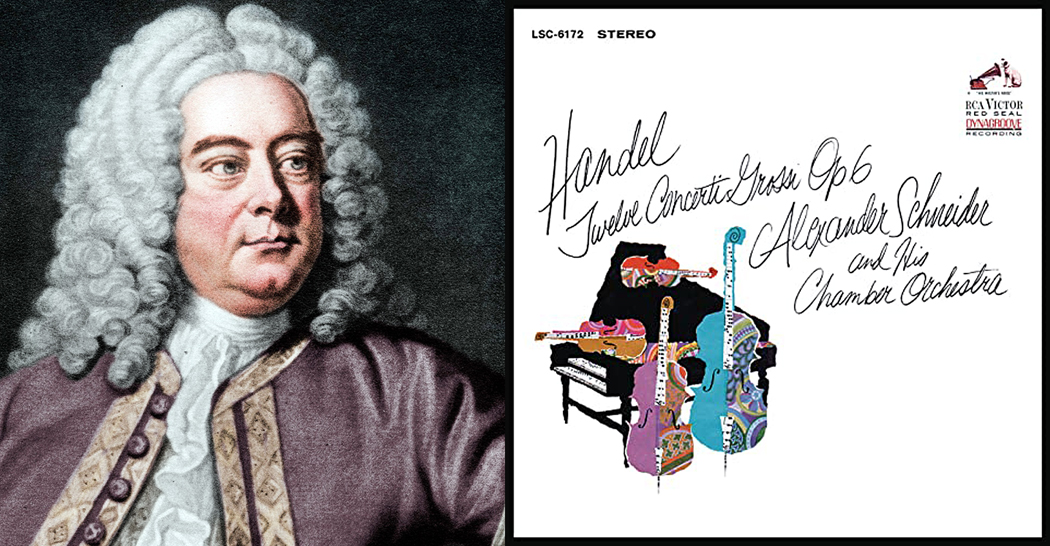
George Frederic Handel — If I can have three discs of Bach, I can do the same with Handel. I love the 12 concertos of Op. 6. They come in two forms: currently, the historically informed performance practice, bouncy, quick, staccato versions that dominate the market; and the old-fashioned warm Mitteleuropean version. No one does that anymore. 

I grew up hearing violinist Alexander Schneider in New York, and his brand of committed music making. And I have a set of his Op. 6 recordings, with a pick-up ensemble, that it horribly out of date, but glorious. Into the pile. 

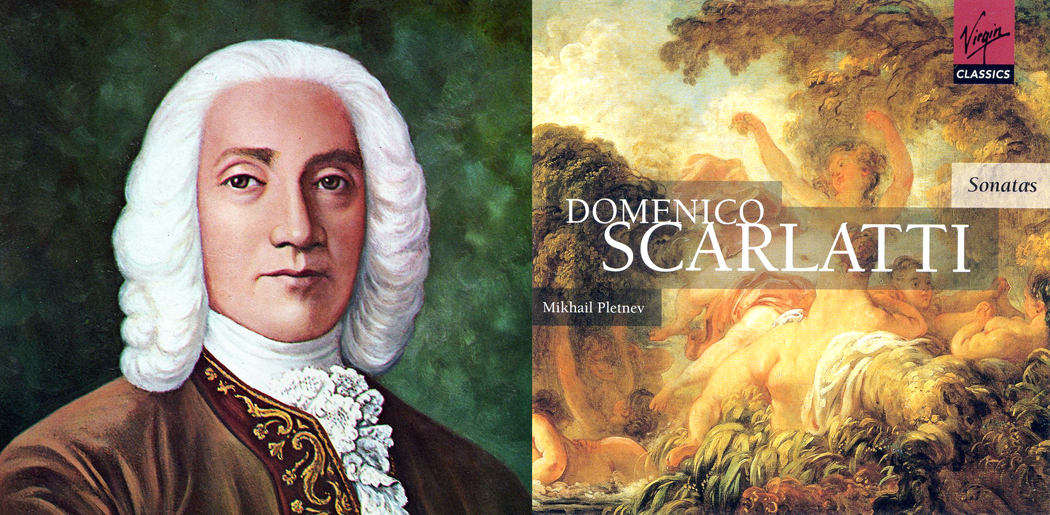
Domenico Scarlatti — On the shelves are all 555 sonatas, played on harpsichord by Scott Ross. But I hate the clangy, monotonous sound of the harpsichord and prefer my Scarlatti translated to piano. Most pianists now attempt to imitate the harpsichord by using no pedal and dry staccato. I want someone not afraid of using what the piano offers. My favorite used to be Vladimir Horowitz. He is still great. But I have since discovered an even richer performer in Mikhail Pletnev. This is magnificent piano playing. 

Joseph Haydn — Papa is hard to narrow down for me. He is one of my absolute dearest composers. But how do you choose a symphony over a quartet? Or a single symphony or quartet over all the others. Haydn’s work is so consistently excellent, it makes it hard to pick one as more essential than another. But there is The Creation. It is unlike anything else, and has the greatest sonic description of chaos ever devised. In his lifetime, The Creation was recognized as his crowning achievement. 

I have something like half a dozen recordings of it, including two by Leonard Bernstein, who had a magic sympathy with Haydn always. I will choose his second recording, with Deutsche Grammophon although I think the earlier with the New York Philharmonic is just as good. 

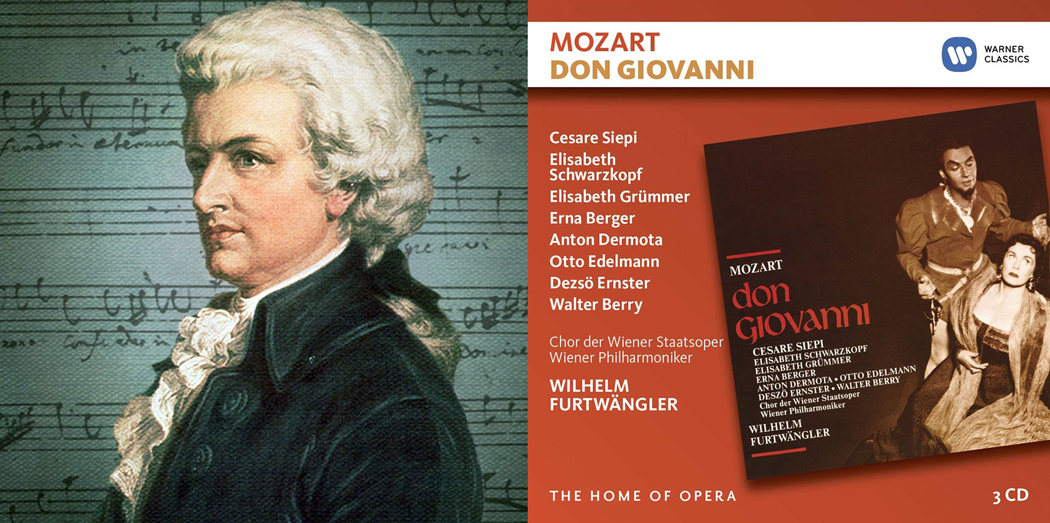
Wolfgang Amadeus Mozart — The problem with Wolfie is similar to that with Haydn: consistency. But Mozart is best in opera. I would have chosen The Marriage of Figaro — his most nearly perfect work and the world’s most perfect opera — but instead I pick Don Giovanni, which, although it sags a bit in the second act, has more emotional power and heft. 

There are many great performances, and lots by the newer, faster, punchier conductors who follow historically informed performance practice (pardon me while I spit at their feet). And my choice is the recording with Cesare Siepi as the Don, with the Vienna Philharmonic conducted by Wilhelm Furtwangler. What a supporting cast! 

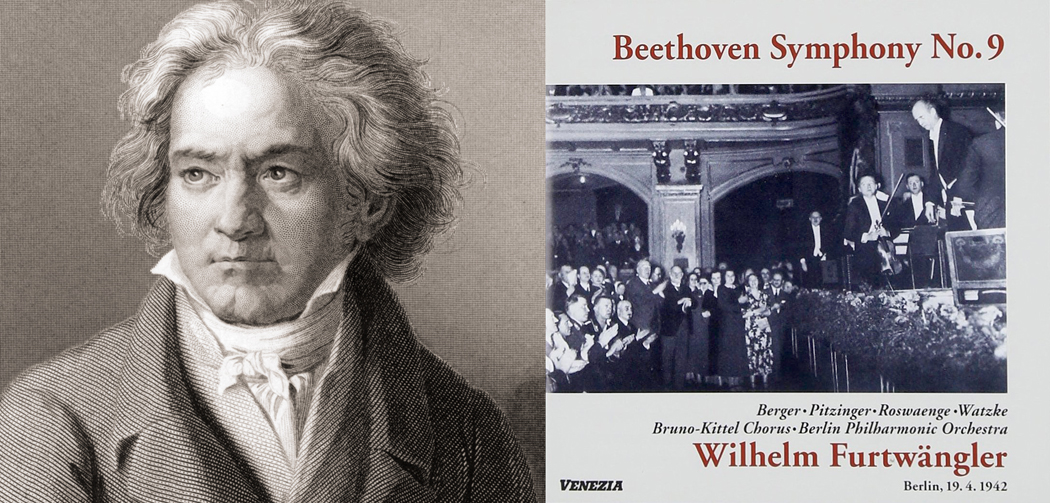
Ludwig von Beethoven — I hate to be caught out as predictable, but after considering one of the late quartets, or the Hammerklavier sonata, I realized that there is only one possible choice. I am sorry for it, but I have to pick the Ninth. If I had been really snobbish, I would have suggested the Missa Solemnis, but I don’t know anyone who really enjoys that music. Respects it, yes. Reveres it, even. But enjoys? No. But the Ninth. It was the sign over the door to the Nineteenth Century. Enter who dare. It cast a shade over the next hundred years. You wrote in emulation or reaction against. 

I’ve got to fess up to liking the first and third movements more than the second and fourth. The scherzo seems a little thin melodically speaking, and I always have to get through the first half of the finale before hitting the solid core of gold, which starts with the fugue after the Hogan’s Heroes’ march. The Adagio, though, is as sublime as music gets, and when it is done right, the first movement is a vision from Dante: If the conductor lets the tympani roar properly, the recapitulation can rouse the fight-or-flight in you. Too many conductors smooth that bit out, letting the kettle drums murmur underneath the themes. In 1942, Furtwangler unleashed his tympani in a recording that is both the greatest performance and one of the sloppiest and poorly recorded in history. You have to put up with a lot in that historical document (including knowing that Hitler was in the audience), but it is the version I put on my pile.

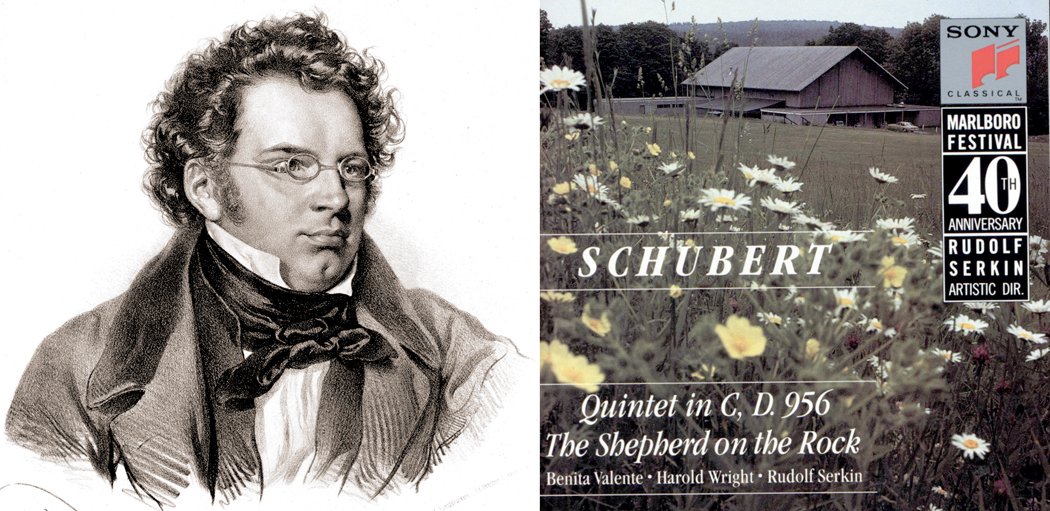
Franz Schubert — The riches are there: the Unfinished Symphony, the Trout Quintet, the B-flat Sonata, the Death and the Maiden quartet. Heck, the F-minor Fantasie for Two Pianos, the two piano trios, to say nothing of the songs, especially Winterreisse. But the most moving of all, deeply emotional and profound is the String Quintet in C, sometimes considered the greatest piece of chamber music ever — even topping Beethoven’s late quartets. That’s saying something. 

Lots of great performances, but my favorite and the one on my pile is by musicians from the Marlboro Festival. Some find it a bit over the top; I find the top cannot be gone over in this music. The disc also gives us The Shepherd on the Rock, sung by Benita Valente and so we have one of the songs, also. 

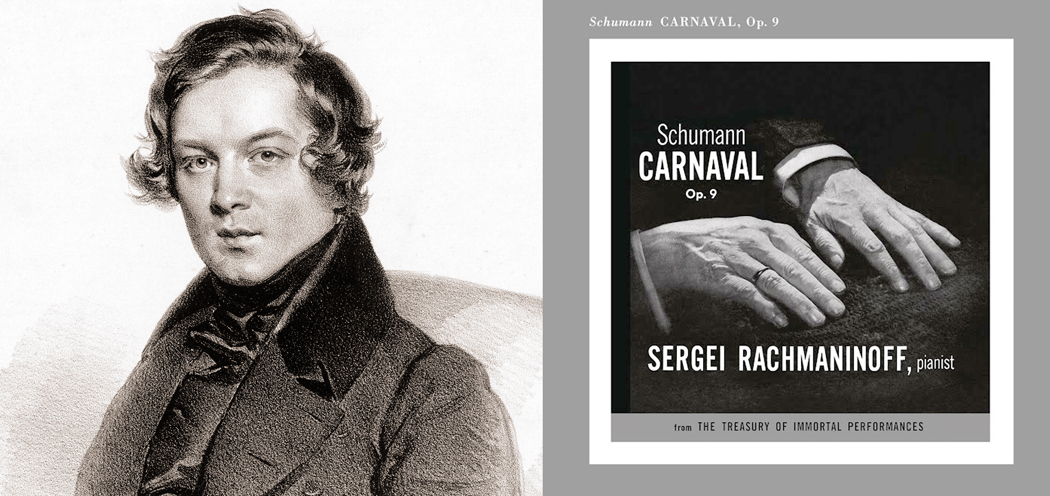
Robert Schumann — Bobbie doesn’t get a lot of props these days, and he can get repetitious. And as he aged, he became outright boring. But in his hot youth, he wrote a lot of the world’s most memorable tunes. For me, what goes on the pile is Carnaval, a series of sort-of variations, a necklace of character pieces for piano. 

There are two essential recordings of it: Artur Rubinstein and Sergei Rachmaninoff. When push comes to shove, I’m taking Rach with me. 

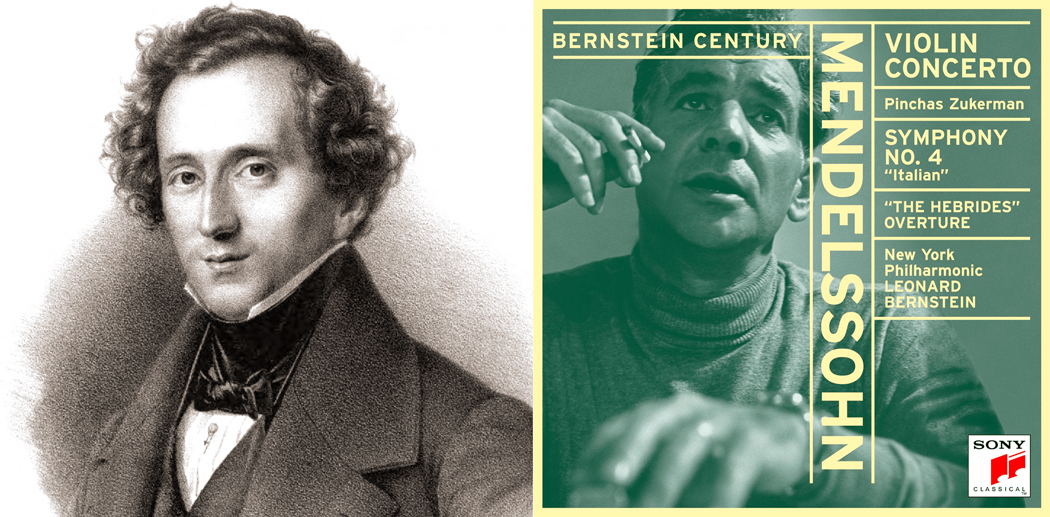
Felix Mendelssohn — My absolute favorite Mendelssohn is his Hebrides Overture, but it is too short for my pile, and so I pass by his symphonies and, god help us, his tedious oratorios, and pick the most elegant and refined of all the great violin concertos. 

I am in luck, though, because Pinchas Zukerman plays the bejeezus out of the concerto with Leonard Bernstein and the New York Phil and pairs it with the Hebrides and as a bonus, a rousing performance of the “Italian” Symphony. That’s hard to beat.

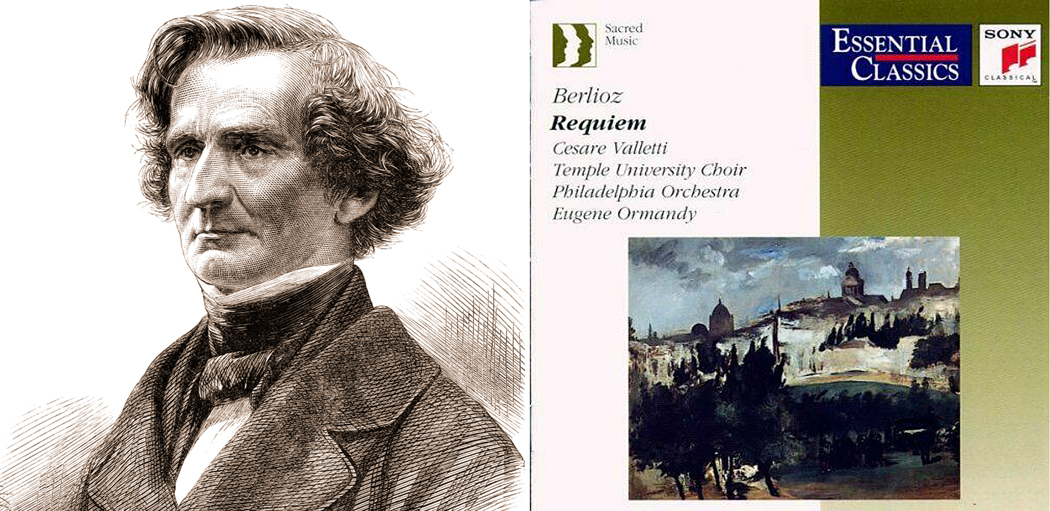
Hector Berlioz — This will probably be a controversial choice. How can you not choose the Symphonie Fantastique? It is his signature piece, and under the baton of Charles Munch, it can’t be beat. But my heart belongs to the Requiem. I love it without regard for its faults. It is ingenious, tuneful, and loud. (My college roommate’s brother used to love what he called “the loud classics,” by which he meant things like the 1812 Overture and Beethoven’s Fifth, but you can’t get much louder than the Dies Irae in the Berlioz “Wreck.” 

And there is one recording above all: Eugene Ormandy and the Philadelphia Orchestra. Too many other conductors (I’m looking at you, Colin Davis) attempt to make sense of this irrational music, to tame it and have it make sense. But Ormandy lets it all hang out, and his tenor, Cesare Valletti, is just cheesy enough. 

Frederic Chopin — This is a toughie. Chopin wrote mainly short pieces, and so picking just one would be giving him short shrift. I don’t particularly like his piano concertos, and his sonatas are fine, but what he really calls for is a program of mazurkas, scherzos, ballades, waltzes and the bunch. 

There are two contenders, almost opposite poles apart, interpretively, but they are the best at getting the spirit of Chopin. Most modern pianists are too dry and all seem to hate the pedal. The older Chopin tradition is closer to what the composer wanted. One could choose the 10-CD box of Artur Rubinstein Plays Chopin, which is a delight. But it is made of his later, stereo recordings, and his older mono ones were more idiosyncratic. Still, it is a great box. But on my pile goes Vladimir Horowitz: The Chopin Collection, with seven CDs. Volodya has all the snap and jump that sit in the music waiting to spring out. It’s a close call. The Rubinstein is more complete, but Horowitz is the only pianist who has ever taken the measure properly of the Polonaise-Fantasie, and so, I’m going with Horowitz. 

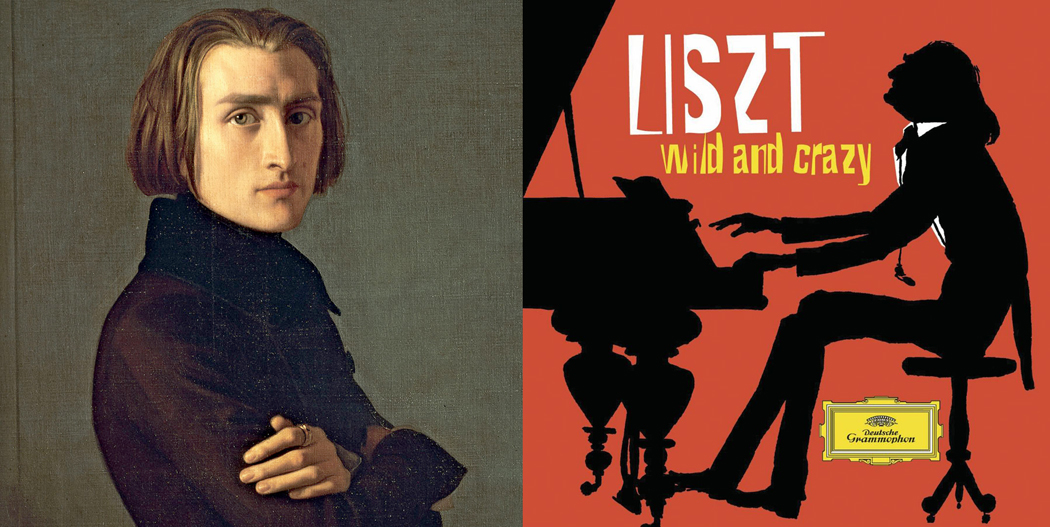
Franz Liszt — Like Chopin, Liszt is best in the shorter to medium size pieces. I’d want a compilation.

The best Liszt pianist going is Valentina Lesitsa, who understands that Liszt without the theatrics is not really Liszt. Those pianists who try to extract the “music” from the glitz only destroy the essence. The problem is that Lisitsa has not released a really good single Liszt disc; the best is spread out on several. No one does the second Hungarian Rhapsody with as much schmaltz as she does. She is great. But, I have to choose, and so, I’m going with a great 2-disc compilation on DG called Liszt: Wild and Crazy, with the works spread out among more than a dozen great pianists. 

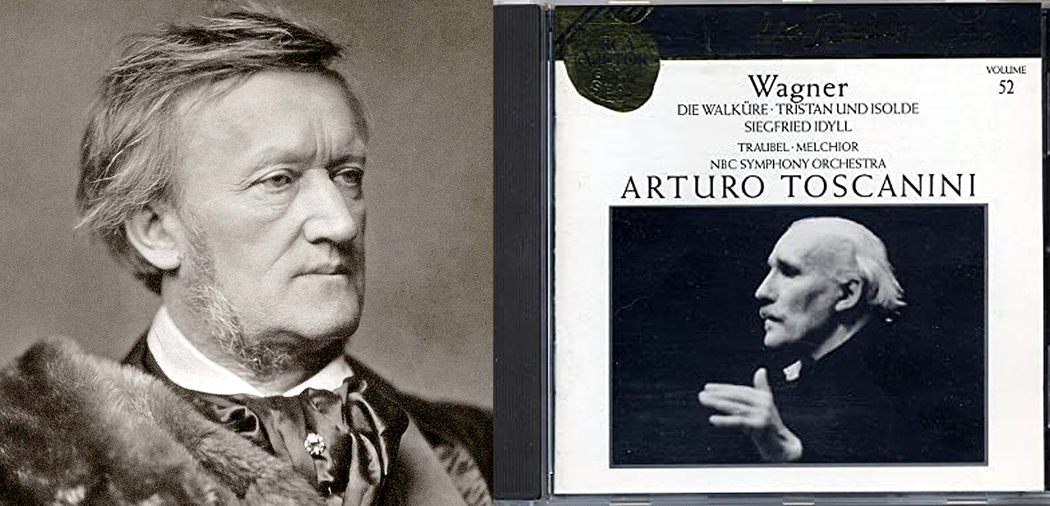
Richard Wagner — Oy, Wagner. This is a kind of classical music Everest, not just because the music is great, but because it takes a mountain-climber’s stamina. To a true Wagnerite, the music is transcendental, mythic, epic. To the not-so-convinced, it can seem bombastic, never-ending, and pretentious. I’m with the first group. I’ve attended two full Ring Cycles live, and own six cycles on disc. So sue me. 

But I’m not going to take all that with me, and so, Kondo-style, I will divest and choose a single disc. Each of Wagner’s operas contain longueurs, segments of what can seem like filler, as the story is rehashed once again. But the first act of Walküre is a perfectly enclosed whole, musically. Arturo Toscanini recorded Act 1, scene 3 with Helen Traubel and Lauritz Melchior that is, for me, the perfect Wagner recording. The disc also includes the Siegfried Idyll and the Prelude and Liebestod from Tristan und Isolde

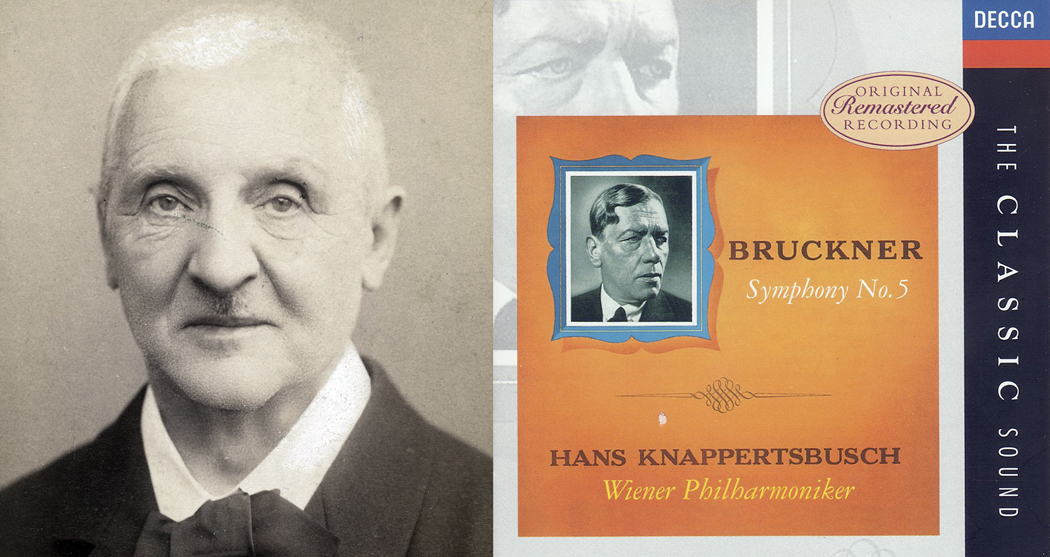
Anton Bruckner — Sometimes, it is hard to tell one Bruckner symphony from another. He had one tone, one message, one purpose in all his music. Symphonies Four and Seven are the easiest to love; Eight is the longest and most sublime; the unfinished Nine is profound. But if I choose just one, it will be Symphony No. 5 in B-flat. It has that fugal finale, and a first-movement ear-worm that you will carry with you for life.

And my recording of choice is with Hans Knappertsbusch and the Vienna Philharmonic. No one gets Bruckner quite like the quirky Kna. The disc also gives us Wagner’s Dawn and Rhine Journey, and so we get to cheat a little on our Wagner. 

Johannes Brahms — OK, this is painful. Old beard-face is very close to my heart. I’m going to want to add to my pile the DG box of “Complete Works,” but that would be cheating. Brahms is the greatest composer of chamber music since Beethoven and Schubert, and no one has equalled him since. His symphonies and concertos are top tier. But the music that moves me the most, that I could not live without, for it provides me with the deepest consolation is his German Requiem. “Denn alles Fleisch es ist wie Gras.” It is the most human, compassionate, loving music I have ever heard. I weep just remembering it. 

The greatest performance ever recorded, by general acclamation, is that of Otto Klemperer, with the Philharmonia and Elisabeth Schwarzkopf, Christa Ludwig, Dietrich Fischer-Dieskau, and Ralph Downes. I’m putting on top of my pile, so I can reach for it first. 

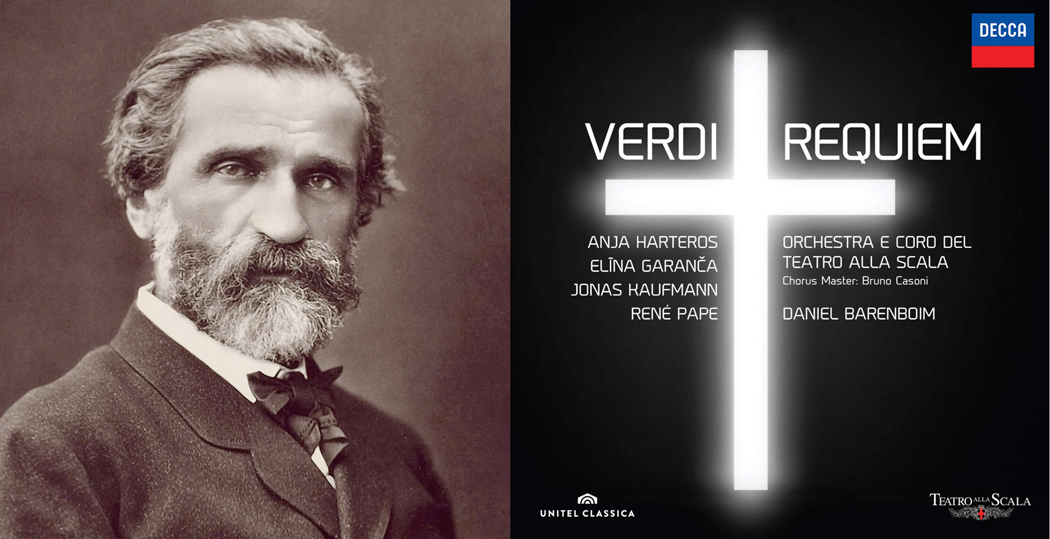
Giuseppe Verdi — I’m afraid am giving opera the short stick in this selection. I shouldn’t. And Joe Green is going to take a beating here. Because, although I would love to add Otello or La Traviata to my pile, I’m going to choose instead his Requiem. It is operatic, after all. 

Into the pile goes my Barenboim version, with the La Scala orchestra and chorus and Anja Hareros, Elīna Garanča, Jonas Kaufmann and Rene Pape. It is stunning. 

Antonin Dvorák — After Haydn, no composer has been more mentally and emotionally sound and hale than Dvorak. And that has translated, as with Haydn, into a remarkable consistency of quality across genres. You pretty much can’t go wrong with him. I’m going to go against the grain, here, though, and not choose the cello concerto or the New World Symphony, but an old Columbia box of the two piano quartets, the piano quintet and the lovely bagatelles for two violins and harmonium with the Juilliard Quartet and pianist Rudolf Firkusny. This recording is a delight.

Piotr Ilich Tchaikovsky — When I was younger, there was a prejudice against Tchaikovsky. My generation preferred irony and detachment. Tchike was all heart-on-sleeve. And besides, he wasn’t German, which meant he didn’t build his symphonies out of tiny germs of thematic material, like Brahms. We were too sophisticated for Tchaikovsky. We were, of course, stupid. Tchaikovsky was a great composer, a brilliant orchestrator, and put more of himself into his best music than almost anyone. For my pile, I’m going to pick his Sixth Symphony, the “Pathetique.” Everything about it is brilliant, emotionally deep and how can you not love the five-beat “waltz?” 

The performance I choose is Bernstein’s from 1987, with the New York Philharmonic, on DG. It is nearly an hour long (most performances run 40-45 minutes), and with anyone else, that slowness would dissipate all the forward motion of the music, but Lenny manages, even at the crawl, to keep the drive going, and the emotion he wrings from the performance is sui generis. Not to everyone’s taste, but it makes the music an experience, not just a pleasant listen. 

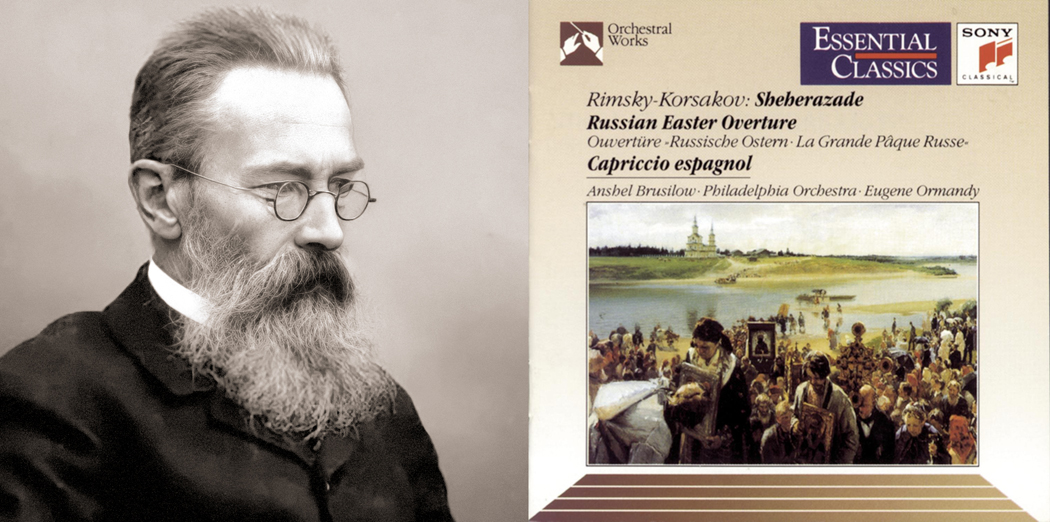
Nicolai Rimsky-Korsakov — I can’t live without Scheherazade. It is Rimsky-Korsakov’s greatest bit of tune-making and orchestrating. It is lush and washes over your ears like gentle surf. 

There are some great performances, including Beecham and Stokowski (I have both), but the one I’m gonna keep is Ormandy and the Philadelphia Orchestra, not only because it is a delicious recording, but it also includes the most joyous Capriccio Espagnol and the Russian Easter Overture, making it a Rimsky trifecta. 

_______________________

This takes us up to the end of the 19th Century. In the next piece, I’ll clean out my 20th and 21st century clutter.

And then, there’s Schubert.

We could name the musicians that rise to the top of the list in Western art music, and it’s an impressive list: Bach, Haydn, Mozart, Beethoven, Brahms, Tchaikovsky, Wagner, Debussy … But then, there’s Schubert, a name we tag onto the end as almost an afterthought. Oh, yes, then there’s Schubert. Little Franz, the “Schwammerl” — little mushroom. 

I don’t know why he is so often forgotten, or left at the remainders pile. In almost any terms you want to define quality or greatness, he is right there, a shiny, bright face, almost a puppy dog demanding our attention.

Oh, he gets his kudos. No one can talk about lieder, or art song, without putting Schubert’s name at the top of the menu. But, he belongs there with his piano music, his chamber music, his choral music, too. And three of his symphonies have never left heavy rotation in the repertoire. 

Each time I have overlooked his music and hear one of the three late piano sonatas, or the final quartets, I think: There is nothing better than this, not in Beethoven or even in Bach. It is emotionally powerful, harmonically rich and melodically persuasive. And then I find myself in a Schubert-orgy for the next week or so, realizing over again how deeply profound and psychologically acute is his music.

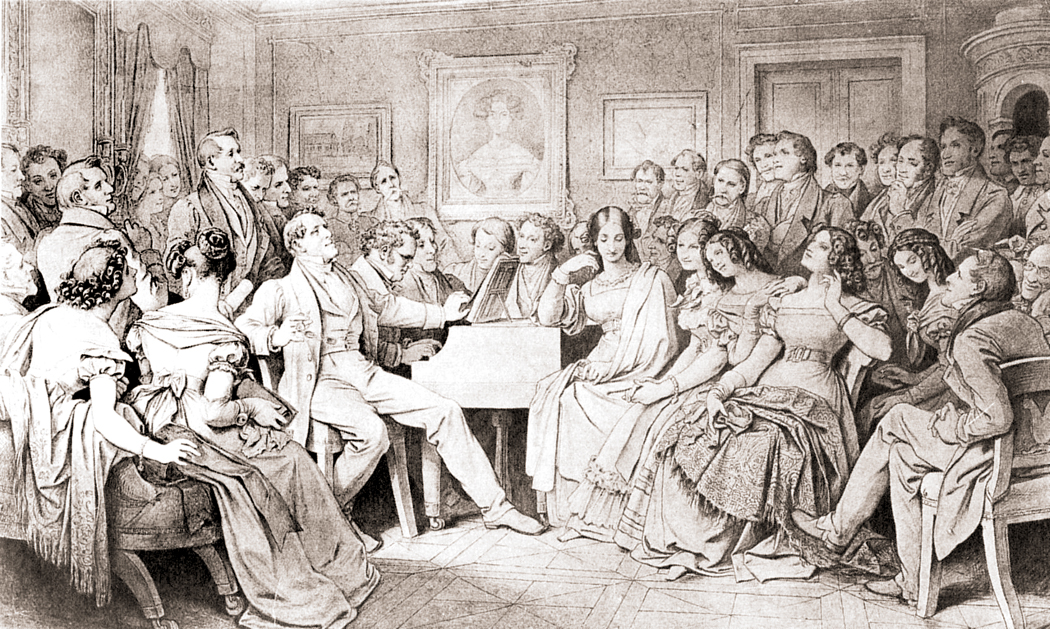
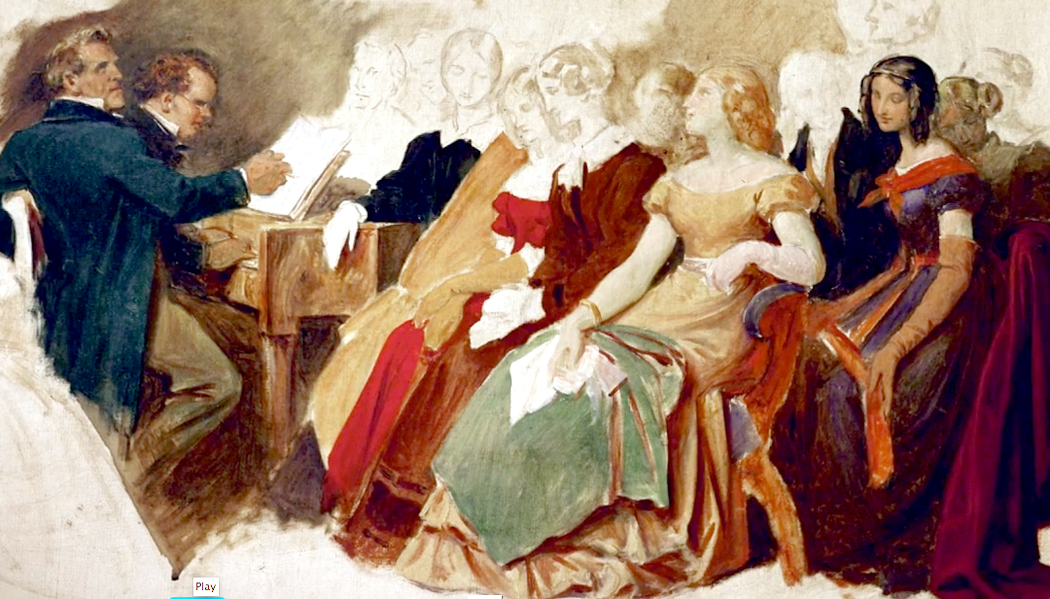
So why is he so often relegated to the also-rans? It was that way from the beginning, when little Franz lived in Vienna under the dark shadow of Beethoven. Schubert wrote thousands of compositions during his sadly short lifespan, but very little was published or performed during his life. Mostly his music was shared with friends at dinner parties — or “Schubertiades” — where he and his musician buddies would gather to play music, hoist a few, and sing along. 

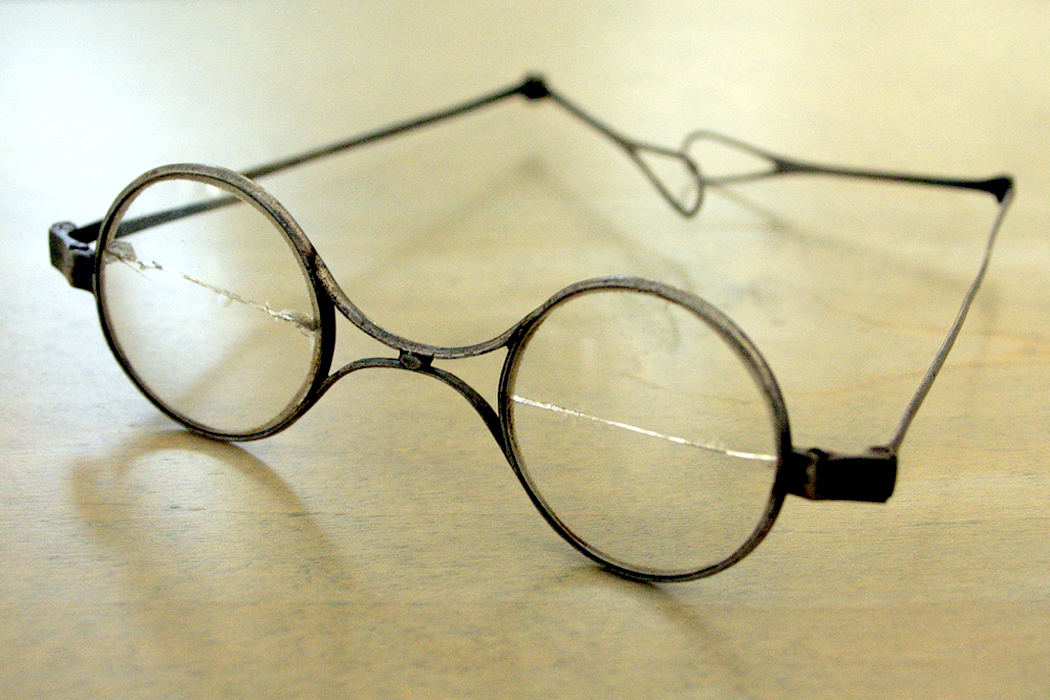
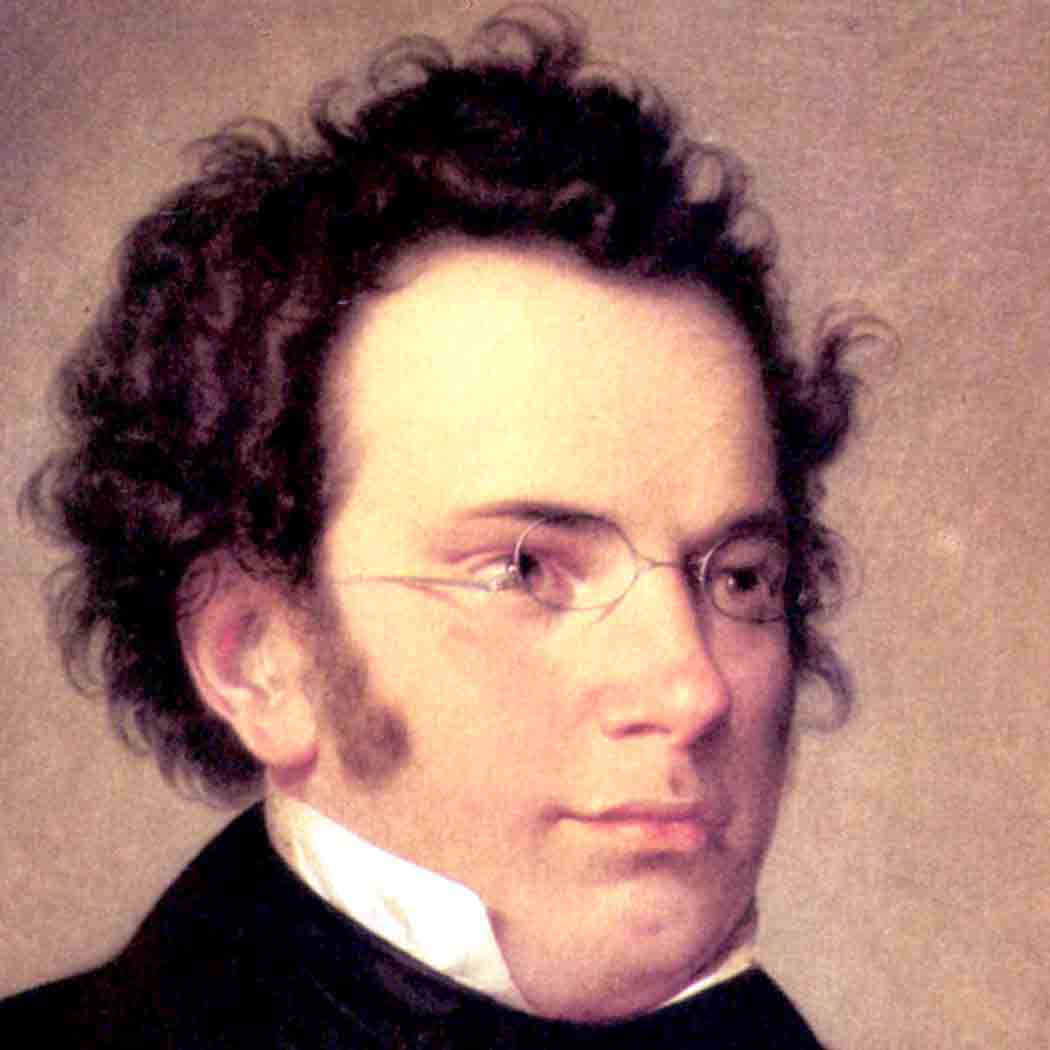
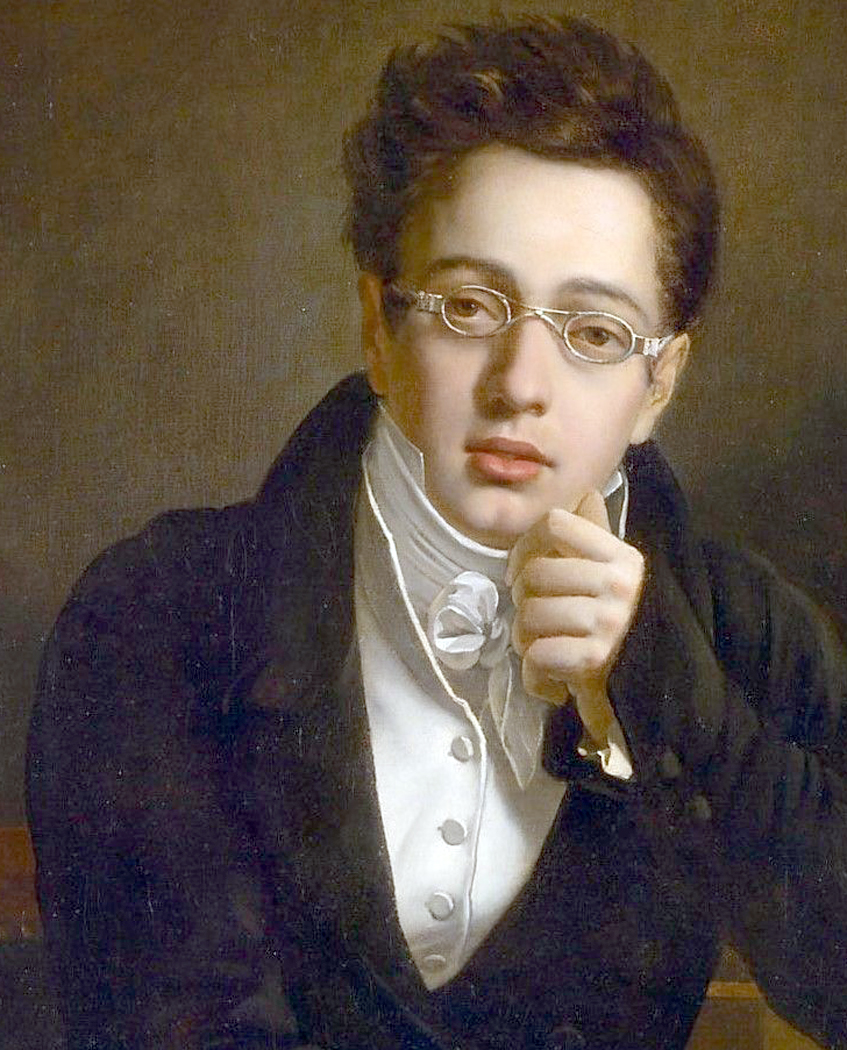
He was little over five feet tall and pudgy, with a double chin and a button nose that held up tiny spectacles. He had a hard time finding his place in society, trying at times to be a school teacher and at other times to earn a living as a music tutor. None of it clicked. 

But from the earliest age, he could write really good music. He wrote his first symphony (now only a fragment) when he was just 14. The official Symphony No. 1 came just two years later and was written for his family to play — everyone in the house played an instrument. 

He was one of the great musical prodigies. We think of Mozart or Mendelssohn — who wrote his famous Octet when he was just 16 — but Schubert composed his first genuine masterpiece, “Erlkönig,” when he was 17.  He wrote well over a thousand pieces of music before he died at the age of 31 in 1828, just a year after Beethoven. Mozart, in contrast, lived to the ripe old age of 35. 

Perhaps Schubert lags in popular estimation because he was such a slipshod worker. He left more unfinished pieces than any other great composer, sheaves of piano sonatas left as torsos, a movement here or there, and other bits left in fragment. His most famous symphony, after all, is the “Unfinished Symphony.” 

And perhaps he lags because his melodies are so memorable, they may be mistaken as facile. Beethoven, after all, hardly ever wrote something you could hum distractedly as you polish the silverware. Da-Da-Da-Dumm is hardly a tune. Schubert is endless song. 

And because we think of melodies as lightweight compared with, say Wagner or Brahms, we may think of Schubert as emotionally trifling. “Wer hat das schöne Liedlein erdacht?” “Who wrote this pretty little ditty?” Couldn’t be more wrong. 

Schubert has perhaps the widest range, emotionally, of any other composer. On one hand, he wrote what has to be the happiest, bounciest, most joyful music ever, the “Trout” Quintet, and the single bleakest, most desolate music ever, the C-major String Quintet. (I’ve written about the “Trout” before.) 

The String Quintet is another beast. Written for two violins, two violas and two cellos, it is most often named, when such lists are drawn up, as the greatest piece of chamber music ever written. My late friend, Dimitri Drobatschewsky, who was a longtime music critic at The Arizona Republic in Phoenix, when he died at the age of 90, had requested the quintet be played at his funeral. The slow movement, in particular, is about the deepest and most profound that music can reach — which is rather deeper and more profound than any words can reach.

Schubert had an intimate relationship with death. He learned several years before his own death that he was suffering from what has been subsequently diagnosed as mercury poisoning (which likely also killed Beethoven), typhoid fever, or tertiary syphilis (mercury was a common treatment for syphilis). He wrote his final works — the final three piano sonatas, the final three string quartets, and the String Quintet, with the full knowledge of his looming extinction. These works, along with his final two symphonies and song cycles, are the height of his achievement. At the same age, Beethoven was just writing his first symphony. One can only imagine what Schubert might have written if he had lived even to Beethoven’s young 56 years old. 

It is a miracle that someone who barely left Vienna during his life, and who had only lived three short decades, could write with such expressiveness about such dark matter. 

Take his final and greatest piano sonata, in B-flat. It opens with a jaunty and optimistic tune that is almost immediately interrupted by a low trill on a G-flat — a note not in the key of B-flat major, but injected from its minor. It is a discordant lowered sixth that resolves to the dominant and leaves an uneasy feeling, as if happiness was being threatened by a baleful presence. That sense of immanent evil or impending doom keeps returning, even as the first movement comes to a seemingly positive conclusion — and then, there’s that threat, that bottom-feeding trill, again. No good will come of that. 

I listen again to a performance of that sonata by Artur Rubinstein, made in 1965, and start sorting through my CDs — I suppose I am about to begin another weeklong Schubert marathon. I’ll certainly go through the quartets and sonatas, even the symphonies. But mostly, I will dive deep into the two great song cycles, Die Schöne Müllerin and Winterreise. 

The last is a 24-song cycle setting poems by Wilhelm Müller that tells the tragic story of a man betrayed by his lover; he wanders through town and country dropping deeper and deeper into madness and depression. It would be hard to find a more trenchant exposition of German Romanticism that this song cycle. 

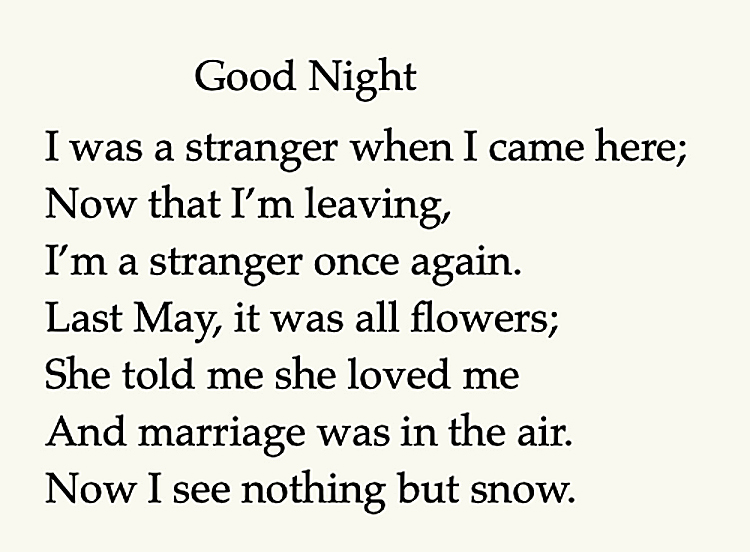
My late wife, Carole, loved to make music with others and often did so. I have no meaningful ability on any instrument, but was once persuaded to join her in singing “Gute Nacht,” the first song of the Winterreise cycle. It is tuneful and although it is strophic, the last go-round switches from minor key to major, with a stroke like lightning. The effect it had on me, in my pathetic attempt to sing to her piano accompaniment led me to attempt to translate Müller’s poems into English. 

The odd thing was that the further I went along, the more I found myself not so much translating as re-imagining. “Gute Nacht” turned out to be a more or less literal translation, beginning with the first stanza:

But by the time I got to the end, the devastating and desolate “Der Leiermann,” in which our protagonist finds himself back in the village listening to a hurdy-gurdy man and imagines his tragedy sung to the accompaniment of the pathetic little squeeze-box, I had left the original behind altogether. Schubert’s music for the entire song never leaves a single A-minor chord played as a slow pulse to the lament. The effect is a complete collapse of our hero’s personality. 

My version of Müller’s poem also left 19th century Germany and shifted to what I thought was the parallel situation in our own time. The whole series of my translations was in itself a metamorphosis from the original style of Müller to my own voice — in other words, I took the poetry seriously and personally, which is what the best art always gives us. 

There are many great recordings of Winterreise available. Among the best are four different versions by baritone Dietrich Fischer-Dieskau, made with Gerald Moore, Jörg Demus, Alfred Brendel and Daniel Barenboim in turn at the piano. They are all near perfect, but I have always favored the first, with Moore. But my favorite is even older than that one: Hans Hotter with Moore, recorded in 1954. Hotter’s voice is more bass than baritone and gives added heft to the work. 

Other Suggested Recordings

It’s hard to suggest a CD of the “Trout” Quintet: I have never heard a bad one, although the one I love most is by Alexander Schneider with Peter Serkin, David Soyer, Michael Tree and Julius Levine. You can never go wrong with Schneider. 

The three final quartets, including the “Death and the Maiden” and with the String Quintet, are all in a box with the Emerson Quartet and Mstislav Rostropovich on the second cello. Not a shabby addition. 

There is an 8-disc box of piano sonatas by Mitsuko Uchida that is a great performance and a bargain to boot. 

For the symphonies, you can hardly do better than a set by Daniel Barenboim and the Berlin Philharmonic, which is currently selling for under $15. But you should also check out two very different ideas of the “Great” C-major symphony (usually listed as No. 9) by Wilhelm Furtwangler and Arturo Toscanini. I should have said “Furtwangler vs. Toscanini.” 

But in this short overview, I have not had room for so many masterpieces. I have not mentioned the Arpeggione Sonata, the Fantasie in F-minor for Two Pianos, the Moments Musicaux, the “Wanderer” Fantasy, the Impromptus, or the simply titled, “Three Pieces,” which rank up there with the sonatas. Or the hundreds of other lieder that he wrote, to say nothing of the masses and the choral works. And there are operas, too, with beautiful music, if silly plots that make them almost unperformed anymore. 

There is much music that is meant only to please the ear, and Schubert wrote his share of that, too. But music can plumb the depths of human psychology, and provide a sonic metaphor for the most profound emotions and thoughts — at a depth where thought and emotion cannot be told apart. The best of Schubert’s music takes us there. 

texashillcountry1

I’ve gotten an early start on a long day’s driving. It is dawn on the plains of west Texas and as the sun pops its first bright blast over the horizon, Schubert’s Trout Quintet plays on the car stereo.

Its first chord is also a bright blast, beginning like a sunrise, with a skyrocket of an arpeggio on the keyboard that bounds out like that first instant blaze as the edge of the sun explodes on the horizon.trout score 2

And when the quintet’s first melody breaks free, the arpeggio is joined by the string bass descending to rock bottom. It’s like the unfolding of a musical universe. It’s almost like getting out of bed, stretching your arms up over your head and planting your feet firmly on the floor.trout score1

I often find myself whistling along with the music when I’m driving, but with the Trout, I find myself singing along, bellowing like a playful calf.

It’s a different thing altogether. The whistling is just a kind of inattentive tagging along with the tune.

The singing, however, is my physical presence in the music.

Bump-bump-bump-bummmmm, I yell out with the string bass.

It is that deep resonance that gives an anchor to the music. It is like the footings of a skyscraper dug 60 feet into the bedrock.

The Texas hill country glows in the first rays of the sun, each rolling rise of earth catching the light like the drapery on a Greek statue.

There are a few low sunrise clouds, but the sun enters underneath them and the road is so empty, they just undulate as they run up over the hills. There is nothing on the highway for miles, just the occasional transfer truck that you pass.

What gives the Trout its phenomenal sense of emotional rightness is its constant balancing of the upward and downward motion of its melodies, often at the same time, like the bass and piano at the outset.

It’s not often in life that the emotions coincide in such a perfect sense of morning, light, a new day, optimism and hope.

Such is the Texas daybreak; such is the Schubert. It is a sunny quintet, with hardly the whisper of a shadow in its five bright movements. Even the minor-key variation in the fourth movement is dispelled with a major chord — “I was just playing,” its composer seems to be saying.

Yet, the Trout is an anomaly among Schubert’s major compositions. He wrote it when he was only 22 and it spreads sunshine from beginning to end.

Through most of his best music — the late piano sonatas, late quartets and the great C-major string quintet — there is a strain of despair that is heartbreaking. Even in his short piano pieces, beloved of amateurs for a century and a half, there runs a vein of deep melancholy that shades even his happiest moments.

For soon after he wrote the Trout, Schubert knew he was going to die, and to die soon. He had contracted an incurable syphilis, and it left him an outcast. He was dead before he was 32.

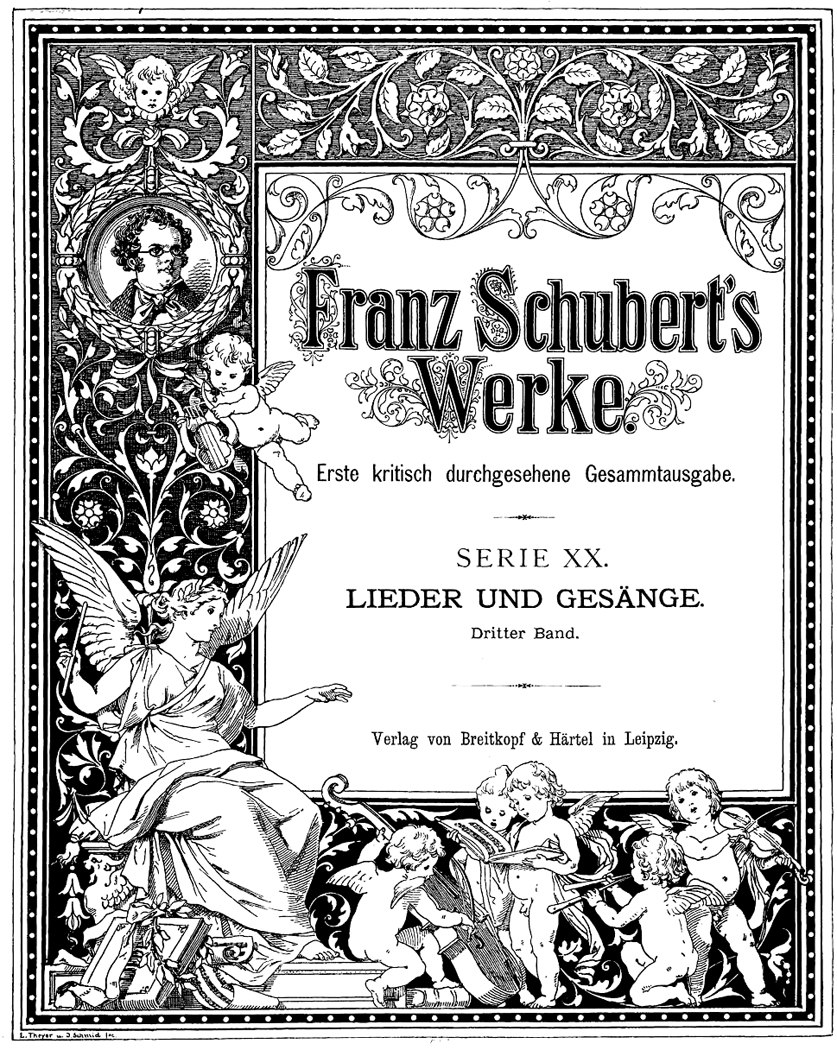
That knowledge, along with his poverty and his habitual sense of isolation and loneliness, give the dark tincture to his mature music.trout titlepage

And even the Trout gives expression — although in the most oblique way — to the melancholy that was constitutional in the composer: The earlier song he had written, also called The Trout, was the basis for his variations in the fourth movement of the quintet. The song tells the story of a bright, wily trout — “who gaily shoots past me like an arrow” — who then gets caught by an “cold-blooded” angler. The poet laments the loss of such a happy, bright fish. It is a miniature exposition of the theme, “Et in Arcadia ego.”

Somewhere east of Balmorhea, sunflowers begin showing up on the shoulders of the highway, great yellow clumps of them — sunshine growing from the roadside dirt.

I drive along in the shade under a cloud, but the sunlight rings the horizon with the tawny sand color of dry grass. I am an audience in the shade, but the spotlight is on a stage in all directions.

The rays of the sun break through the clouds in the north, making lines like rain hitting the ground.

There are lots of birds — finches, and swallows and swifts — darting around in the air over the road. I’m one of them.