Archive

Tag Archives: science

“It was six degrees last night,” I said. I was on the phone with Stuart. “A huge mass of cold has dropped down from the north. Tonight, it’s predicted to hit 5 degrees.”

“Sounds nasty,” Stuart said, although I know he was being diplomatic — He and Genevieve live in Portland, Maine. I’m pretty sure he’s seen his share of six-degree days. 

“But,” he went on, “I’m not sure cold actually exists.” I settled in for a Stuart session. He has these bouts of brain flurries. 

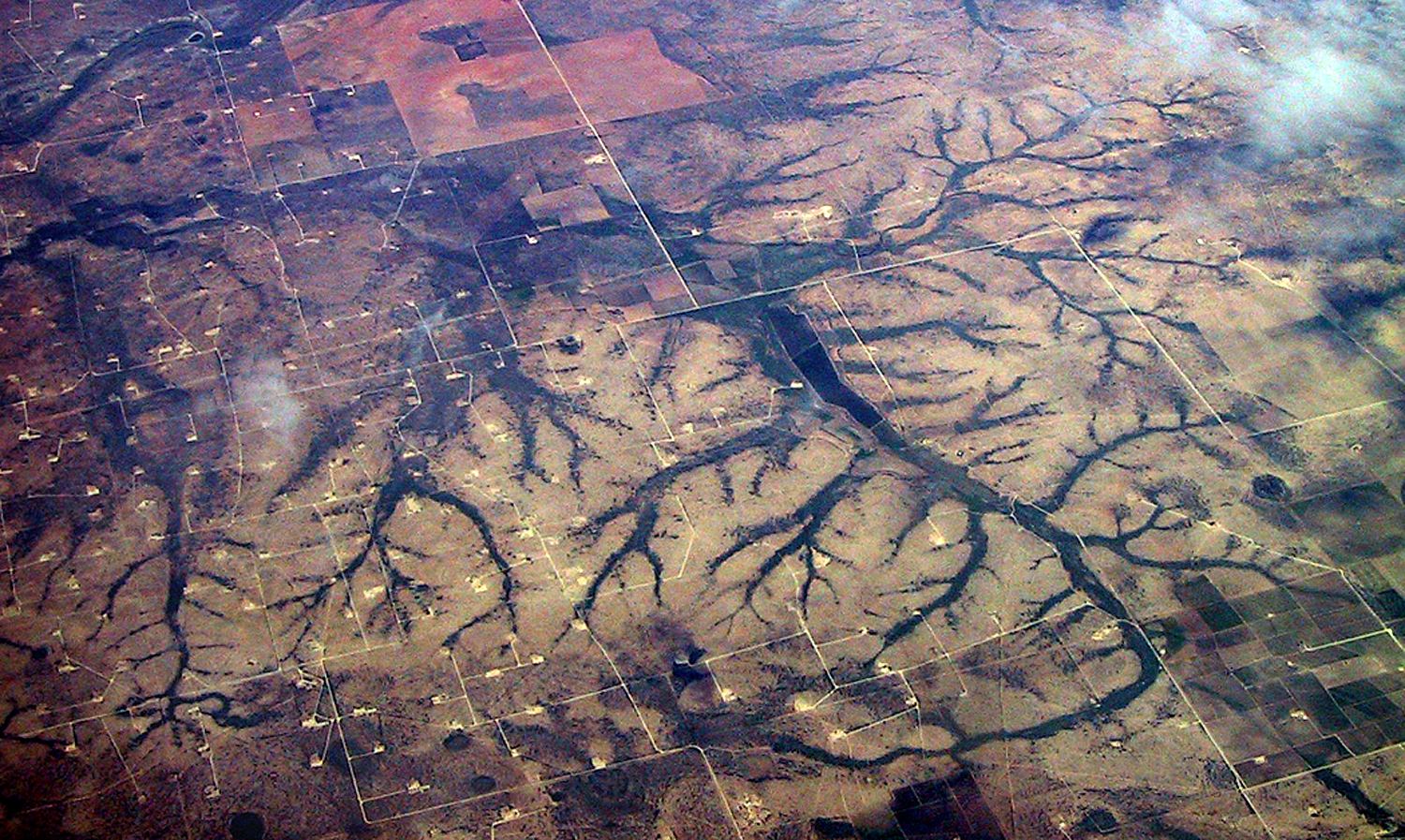
“It’s something I’ve been thinking about recently,” he said. “Cold is a judgment, not a thing. I mean, there’s no such entity as cold; it’s really just the absence of heat. Heat is real — the commotion of molecules. Cold is our perception of the lack of heat.” 
I don’t think he was being deliberately sophistical; it’s just that sometimes the gears in his brain spin rather fast. 

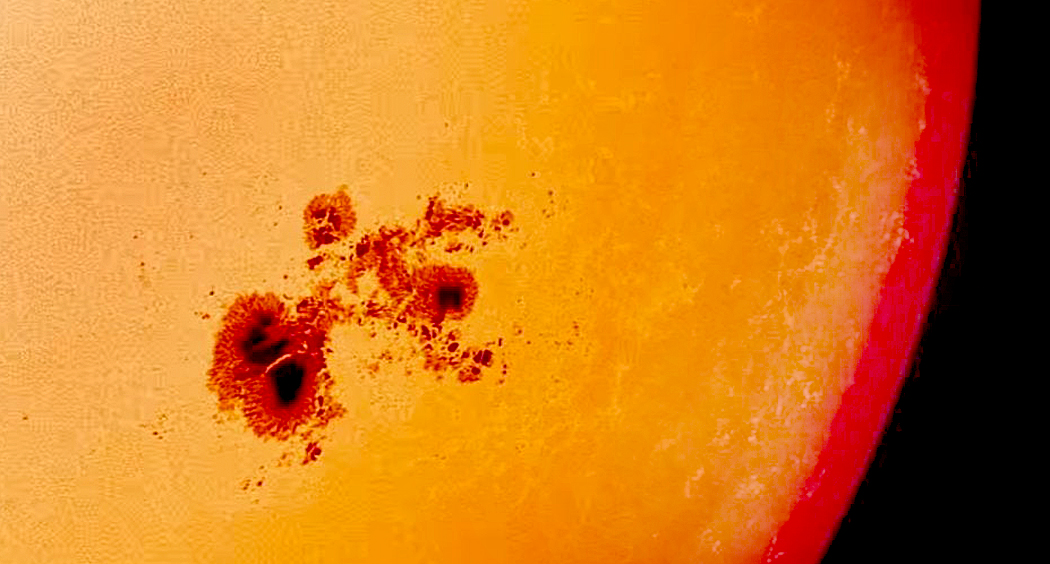
“We think of things being hot or cold,” he said. “But they are a single thing, which is an amount of heat. Sunspots, for instance, are ‘cold spots’ on the sun’s surface, even though they can measure 7000 degrees Fahrenheit, and frozen nitrogen can melt when heated above 346 degrees below zero.”

He knows this is a hobby-horse of my own: the gap between language and reality. I’ve written many times about how what we call opposites are usually just points on a single scale. A thermometer measures heat and we express it with words like “hot” and “cold.” We usually take words as reality, when they are merely a separate, parallel thing, with its own rules and forms. 

“There are things that we take for granted that only make sense in the language we use to describe them, but don’t really exist in any real way,” he said. “Real life isn’t so black-and-white.” 

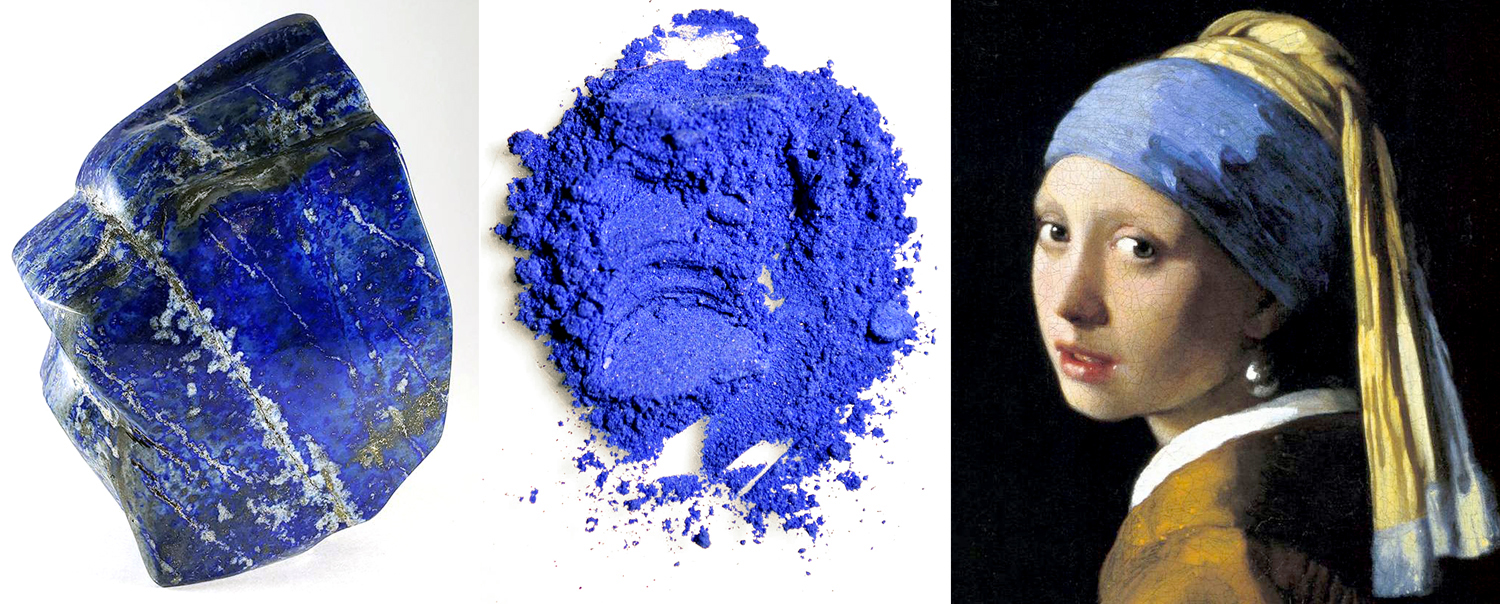
Stuart went on: “Take black and white, for instance. You’ve heard it said that white is the combination of all the colors added together, cancelling each other out. That was what Newton demonstrated with his prism. But that’s if you are talking about light. If you are painting, the combination of all the colors is black. So which is it really? Well, we aren’t talking about color so much as about hue. There are millions of colors and we give them names, like ‘teal’ or ‘pink.’ They are the combination of hue, shade and tint. Hue is a specific spot on the spectrum, a basic ingredient, like an atom. From them we build molecules — specific colors. A blue can be light or dark and still be the same hue, although the colors are sky blue or ultramarine. 

“So, realistically, both black and white are the absence not of color, but of hue. In reality black and white are the same thing, just different shades of it, with all the grays in between. If you realize that black and white are simply variations of the same thing, then you realize that darkness, like cold, doesn’t exist: It is merely the absence of light.” 

OK, I thought. But does that really shed much light on our day-to-day lives? 

“We take these confusions of language as something real, when they are not,” he said. “When I hear terms like ‘left wing’ and ‘right wing,’ or ‘conservative’ and ‘liberal’ bandied about, as if they actually mean something, I develop a kind of psychic acid reflux. Beliefs shift with time and what was once considered conservative, is suddenly dangerously leftie. And vice versa. Is it conservative to believe in a strong central government or in a small government? Is it conservative to try to minimize change and keep things in place that have been there for ages? Or to radically transform government and shake things up? It changes over time, making the terms we use basically useless. Republicans call themselves conservative, but have complained for decades about an ‘imperial president,’ and yet have happily elected just that.”

It seems to me, this has immediate relevance to our lives today. Language matters. 

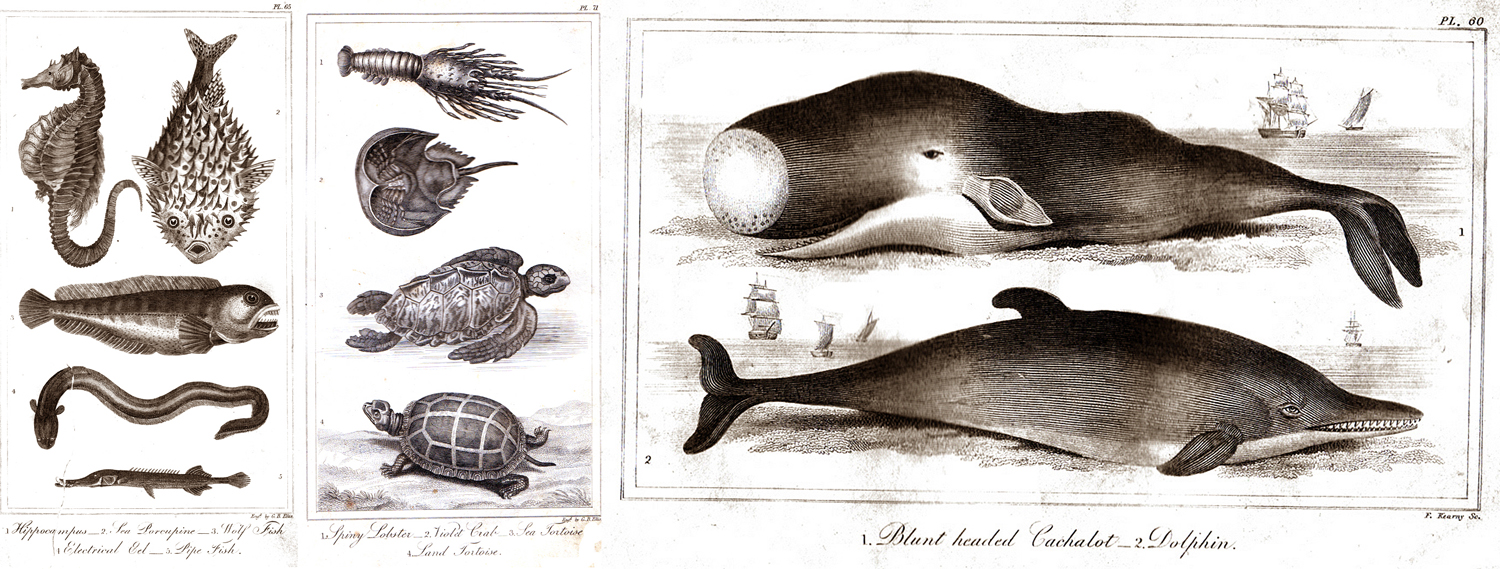
“You know, scientists have decided fish don’t exist,” I said. “Turns out a salmon is more closely related to a camel than it is to a hagfish. Just because it looks like a duck and quacks like a duck doesn’t mean it’s a duck. Just because something has fins and gills and swims in the water, doesn’t mean it’s in a common group called ‘fish.’ In the 17th century, a whale was a fish, too. And in earlier times, squids and mussels were also counted as fish. Jonah, after all, was swallowed by ‘a great fish,’ which tradition has it, was a whale.”

Once, these were all fish

“I have been thinking that language is really myth,” he said. “I don’t mean it doesn’t exist — that’s not the kind of myth I mean. 

“The world is itself. It was before there were humans to perceive it. We see it, however, through language. Take a car. We all know what a car is. That car is in a terrible crash and smashed up. Is it still a car? It gets taken to a junk yard and disassembled for parts. Are the parts still a car? Grind them up into bits of metal and ask the same question. Melt down the metal into a molten form. The same atoms every time, but at what point did it stop being a car? The thing was the thing; the word was just the word.”

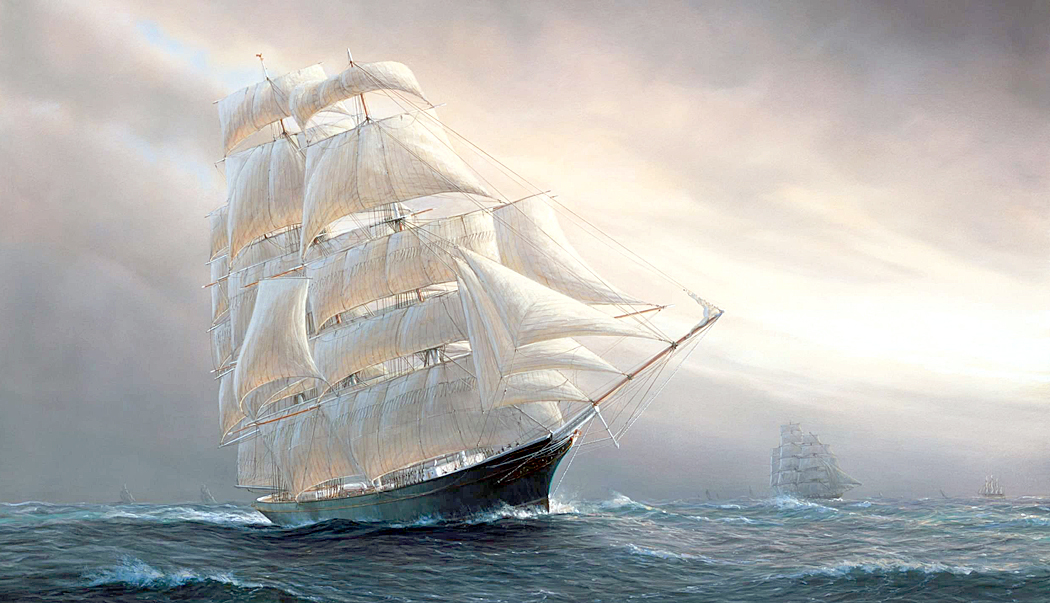
“The ship of Theseus,” I said, “that Plutarch wrote about, that had each of its parts replaced as they rotted, leaving the identical ship but completely new. Is it the same ship?” 

“Our brains are hard-wired to see the world as things and those things have names,” Stuart said. “And we take the names seriously. It’s quite silly to worry if it’s the same ship: The question is entirely linguistic. All that piffle that Plato went on about, it’s all really just about language.

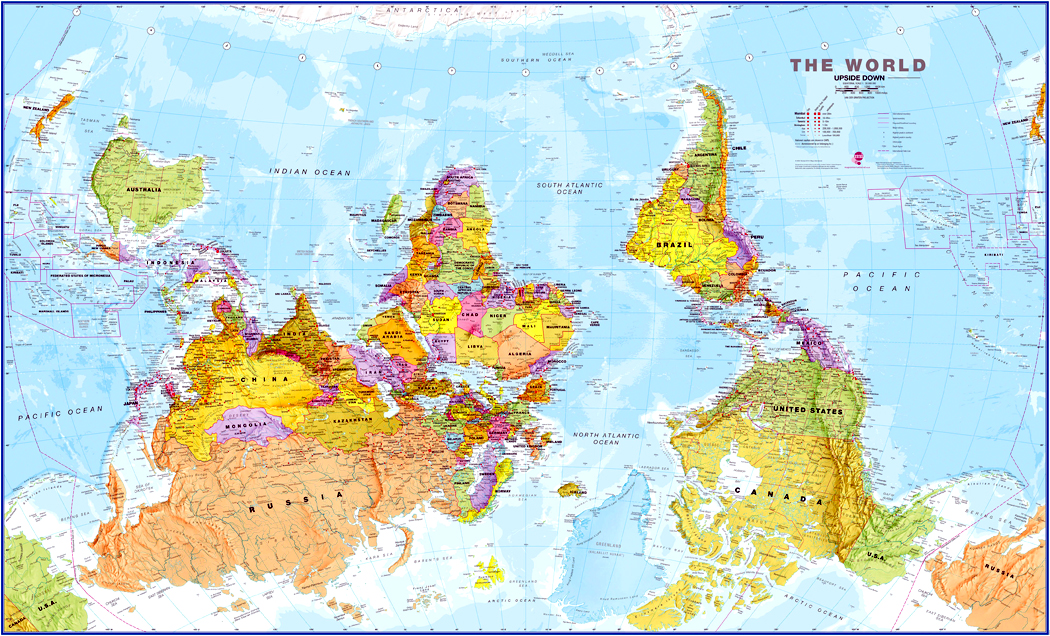
“It is our Umwelt,” he continued. “Which, as I’m using it, is a model of the world built into our psyches not only by experience, but by evolution, and through which we tend to filter our perception of the world, narrowing it down to what seem to be comprehensible limits. A pattern we impose on experience. In our Umwelt, the sky is up, the ground is down. Without thinking, we assume that north is up and south is down, although in a round world in a chaotic cosmos, up and down are meaningless terms. If we hang our world map on the world with Antarctica at the top, it looks wrong. Just wrong. It shouldn’t. 

“It’s why quantum physics is so hard to accept. Our Umwelt is built from human-size experience and the quantum theory makes no sense. In a world of things, we understand atoms as tiny pellets. How could they be vibrating strings? We attribute human emotions to animals, we assume other beasts see the same colors we see, we take anything larger than ourselves as big and anything smaller as little — but why should human size be the standard? 

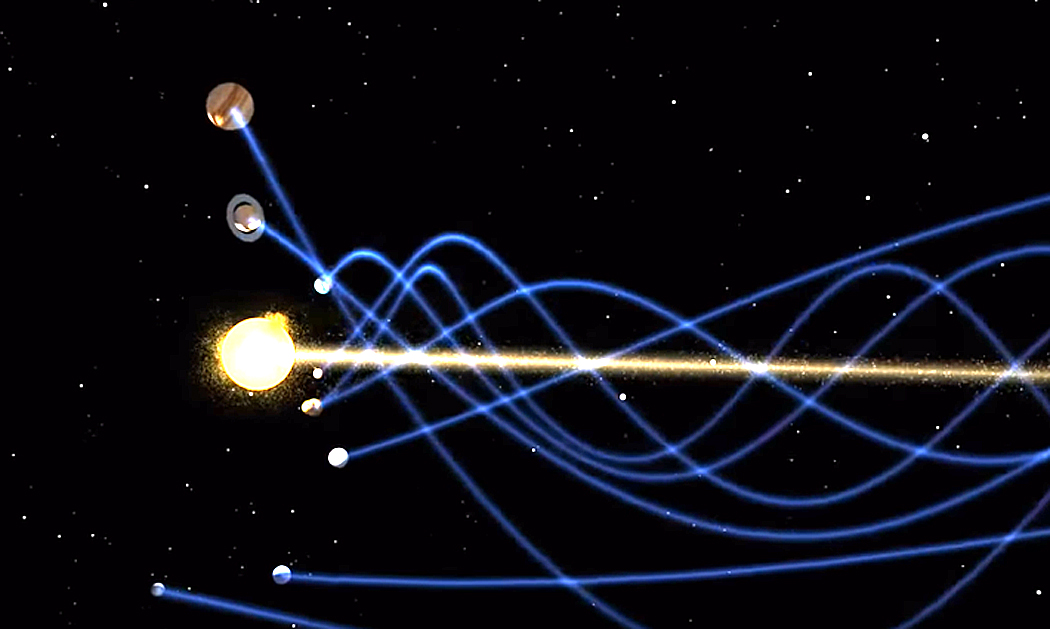
“Weeks.” Stuart was on a roll. “We take weeks for granted, but they don’t exist except as a custom. We’d be rather upset if we didn’t have weekends punctuating our worktime. The metric system the world uses and believes is derived from nature, is all nowadays built on a measured second, which is an utterly arbitrary duration — no natural fraction of experience, but one counted by an arbitrary number of cesium vibrations. We think of the earth as flat, although we know it isn’t. I mean, we know the earth is a globe, but if I separate out North Carolina in my mind, spread out, it is as flat as a map. It’s how it feels. That we orbit around the sun, when in fact sun, earth, all the planets and moons spiral around in complex motions as the whole shebang skitters through space. 

“If we don’t simplify and schematize the world, we could never navigate it. That is what I mean when I claim that language is myth. It  explains what cannot be explained. It actually functions as myth, explaining the world to us. And so, we can personify nameless things by naming them.” 

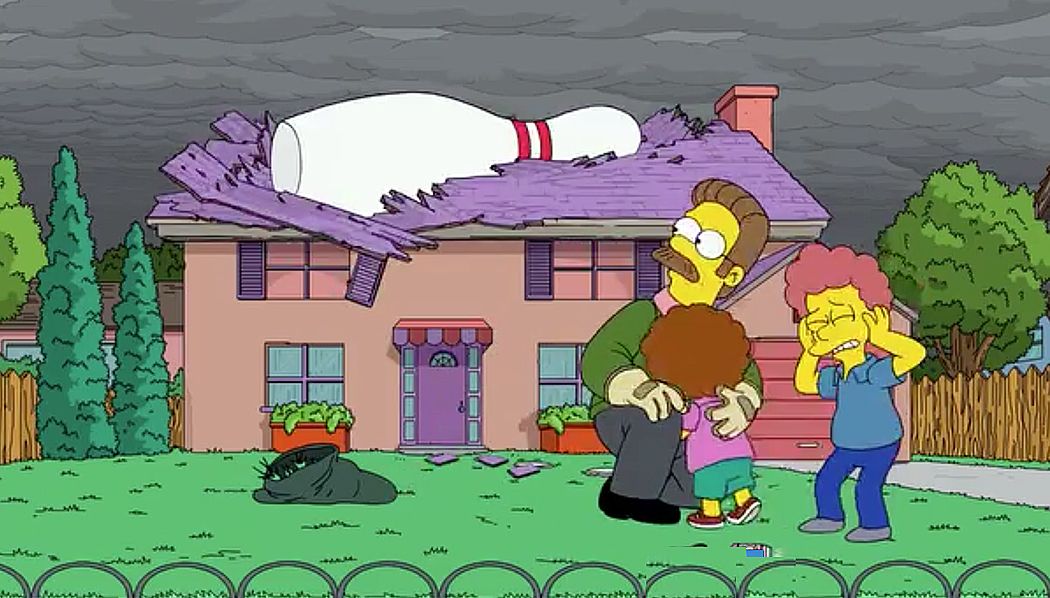
“We think of myth as being, like Zeus and Theseus, but if Ancient Greeks thought of Zeus as a deity, he becomes a folk story when no one worships him anymore. But myths are also ways of explaining the world when science has no good answer — or rather, when the reality exceeds our tiny brain’s ability to grasp it all. Like when we were children and when we were scared of thunder, our parents might tell us not to worry, the noise was just angels bowling in the sky. It was a story that made sense to our infantile brains. 

“Language is angel bowling for grown-ups. We use words to box up ideas, tidying them so our feeble brains can swallow them. We cannot begin to understand where the cosmos came from, so we use Genesis to explain it, or, nowadays, we use the Big Bang. Existence is something so far more complex and chaotic than our tiny minds can begin to understand. So, we make language, a 2-D version of a 3-D world.”  

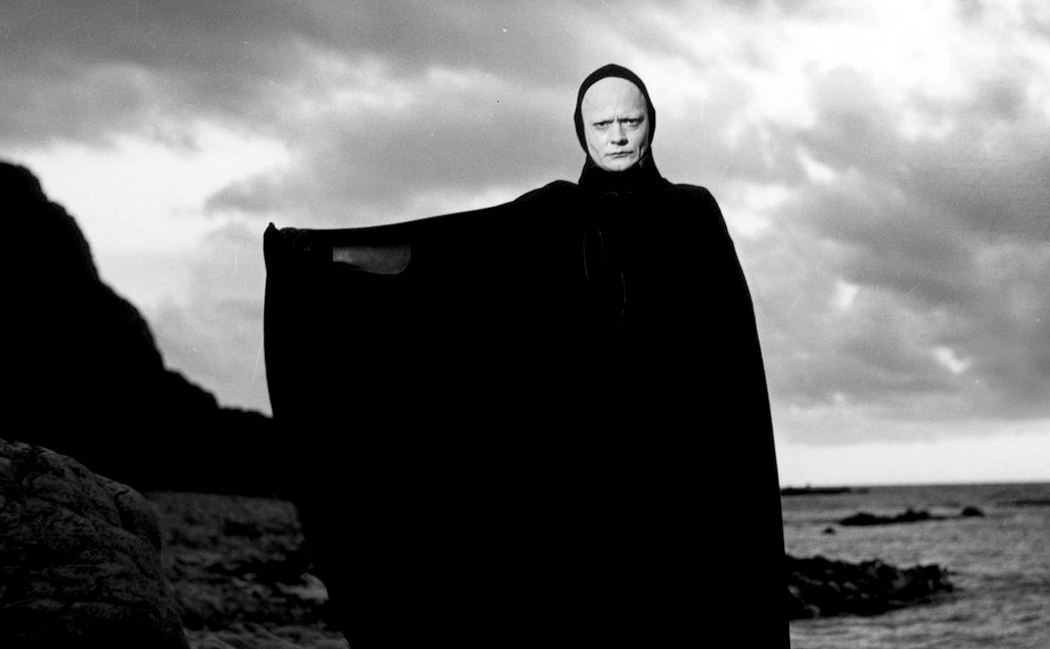
“Like death,” I said. “Death is a skeleton with a scythe in myth, or on a pale horse, or death hovers bedside over the terminally ill. But death doesn’t exist. Dying exists, but death is a myth. Death doesn’t take over our bodies, but the metabolism of our bodies ceases manufacturing life. The machine breaks down.”

“Yes,” Stuart said. “I remember someone pointing out that ‘life’ is not the opposite of ‘death,’ but that ‘birth’ is the opposite. They are verbs, not nouns.”

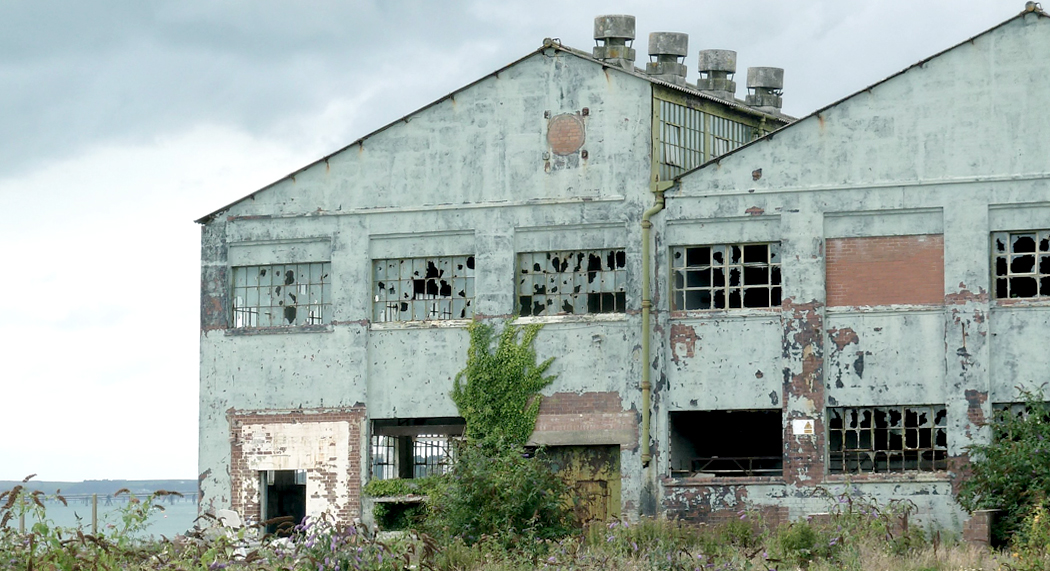
“I saw this with gut-tightening immediacy when Carole died,” I said. We watched her last inhalations, and then they stopped. She ceased being Carole. There were no 21 grams floating away, she just ceased manufacturing her own life. The light bulb burned out. Light didn’t go anywhere, it just stopped being generated. Almost instantly, her flesh began feeling like clay, cooling off. I’m sure it might soften the loss for those who believe in religion that her soul went somewhere else, but I just saw a factory close down, leaving an empty building.”

“Nice metaphor,” Stuart said. “All language is ultimately metaphor, and metaphor and myth are essentially the same thing. A way of talking about the unsayable.”

This was the moment I heard the faint voice of Stuart’s partner, Genevieve, somewhere in the other room say, simply, “Sophomore dorm room!” and we moved on. And I remembered that women know the real world a lot more than men. 

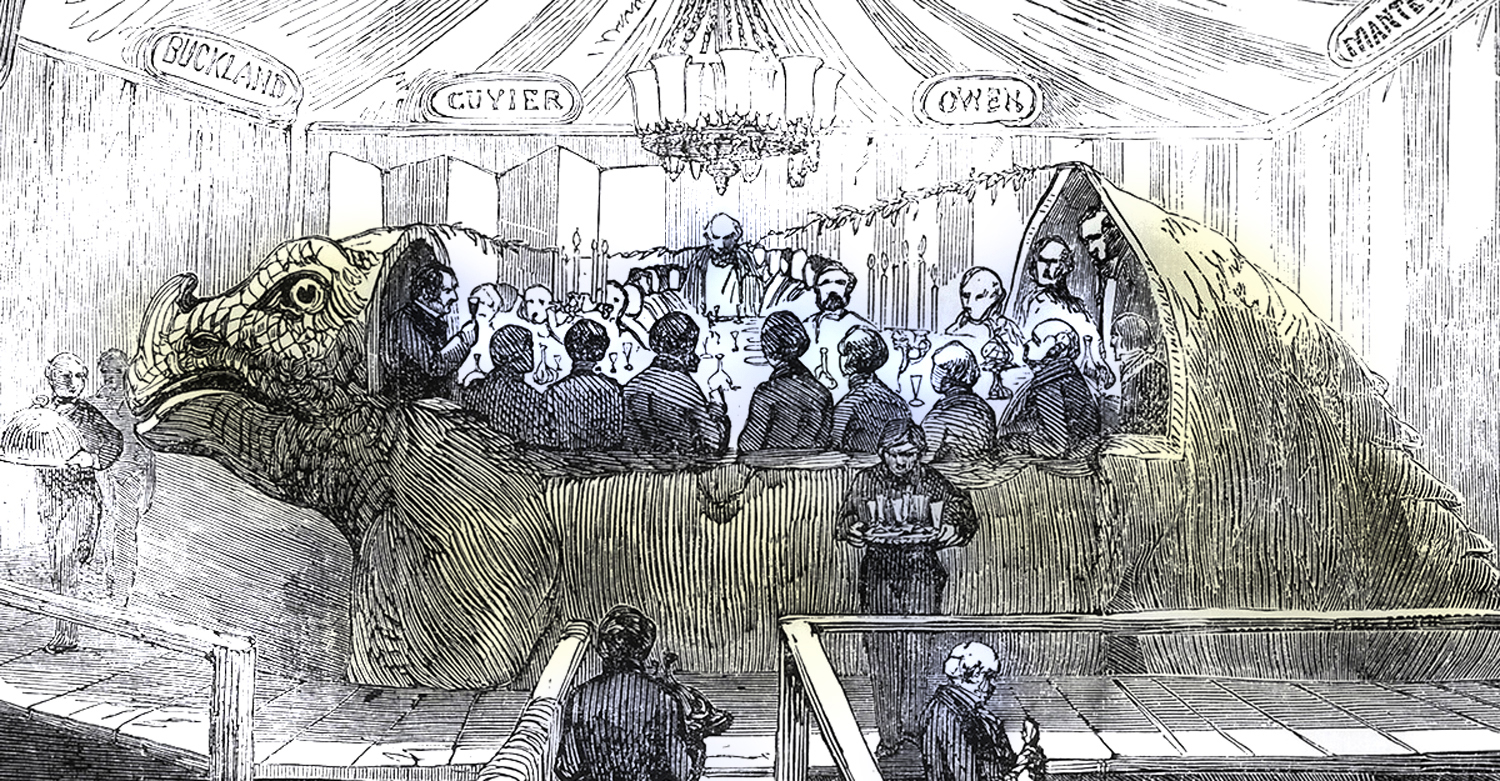
On New Years Eve in 1853, the famous scientist Richard Owen and 21 invited guests, the cream of Victorian English science and letters, gathered for a dinner, laid out for them inside a giant dinosaur. 

Actually, only 11 of them fit into the half-finished sculpture of an iguanodon, the rest sat at tables around the monster. At the head of the interior table, inside the skull of the beast, sat Owen, presiding over the affair well into the early hours of 1854. 

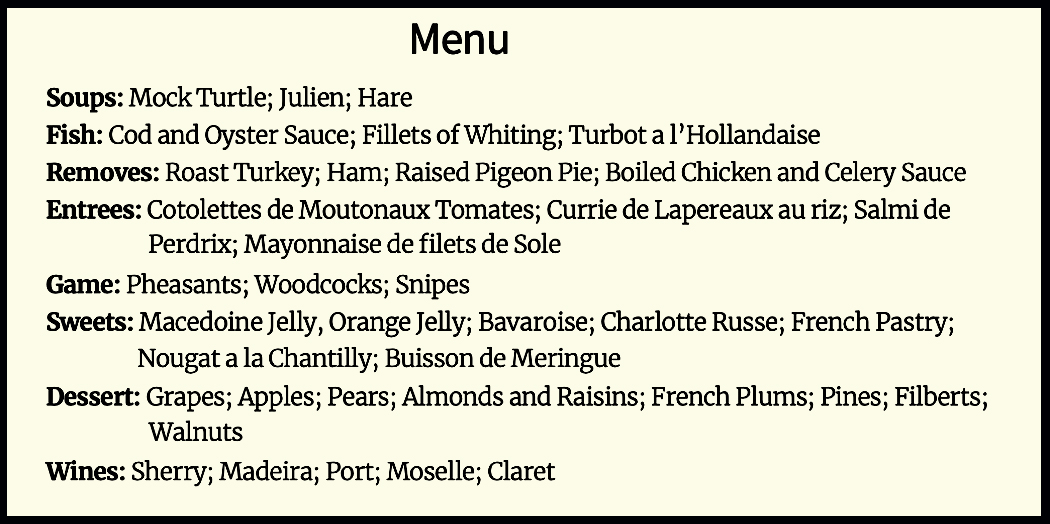
The menu was astounding

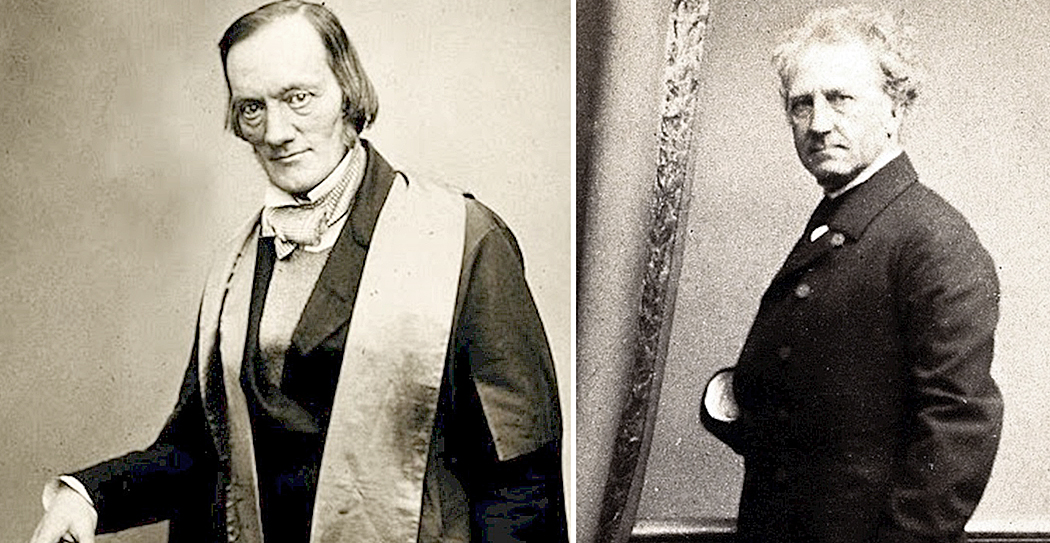
It was all a publicity stunt, promoting both the creation of a series of dinosaur sculptures by Benjamin Waterhouse Hawkins, but even more importantly, promoting Owen, a notorious publicity hound. 

Richard Owen and Benjamin Waterhouse Hawkins

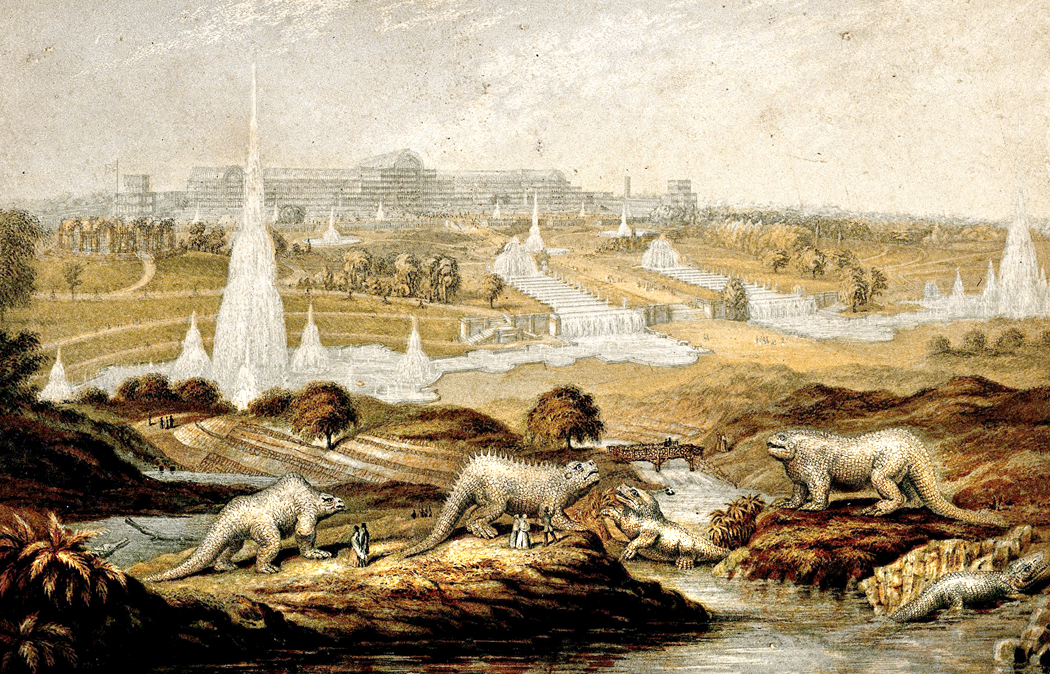
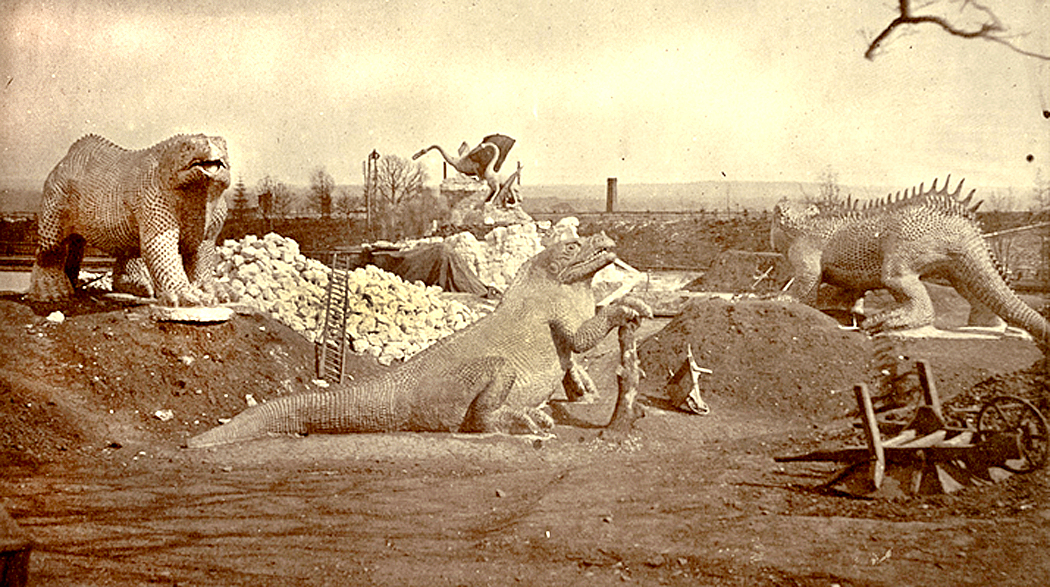
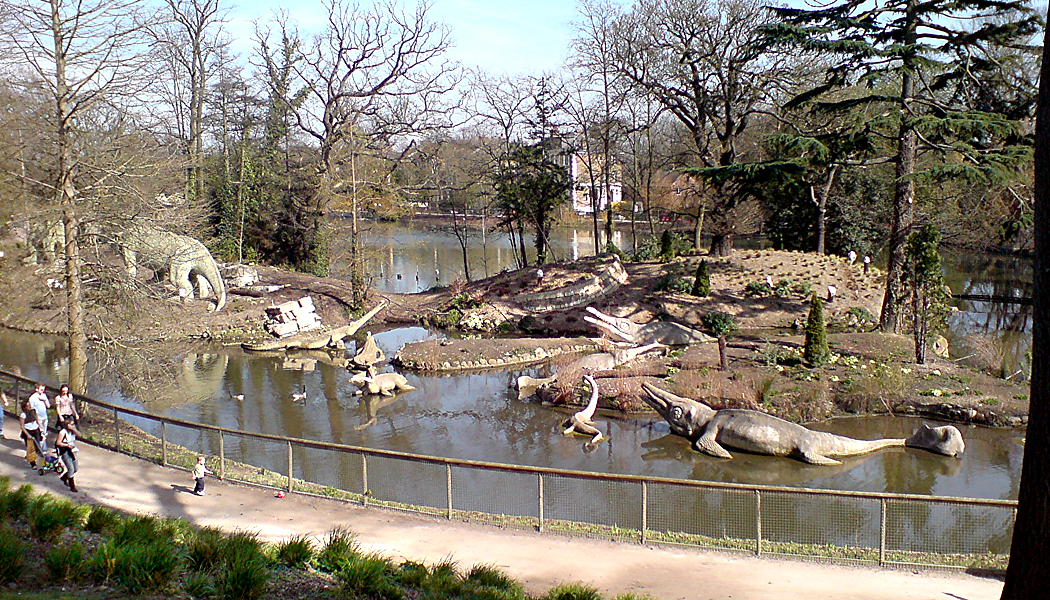
The iguanodon statue/dining hall was part of a huge project Hawkins was involved in, to create life-size models of 33 different dinosaurs, to be exhibited on the grounds of the newly relocated Crystal Palace Park just outside London. The Palace was taken apart and moved at the end of the Great Exhibition of the Works of Industry of All Nations held in the summer of 1851 in Hyde Park, London. The Exhibition was a kind of Worlds’ Fair, and the palace, made of glass and steel, was a wonder of architecture and although originally slated for demolition at the end of the exhibition, it was instead rebuilt in Sydenham Hill, south of the River Thames and made the centerpiece of a new park. (The Crystal Palace itself  burned down in 1936; the park is still there.) 

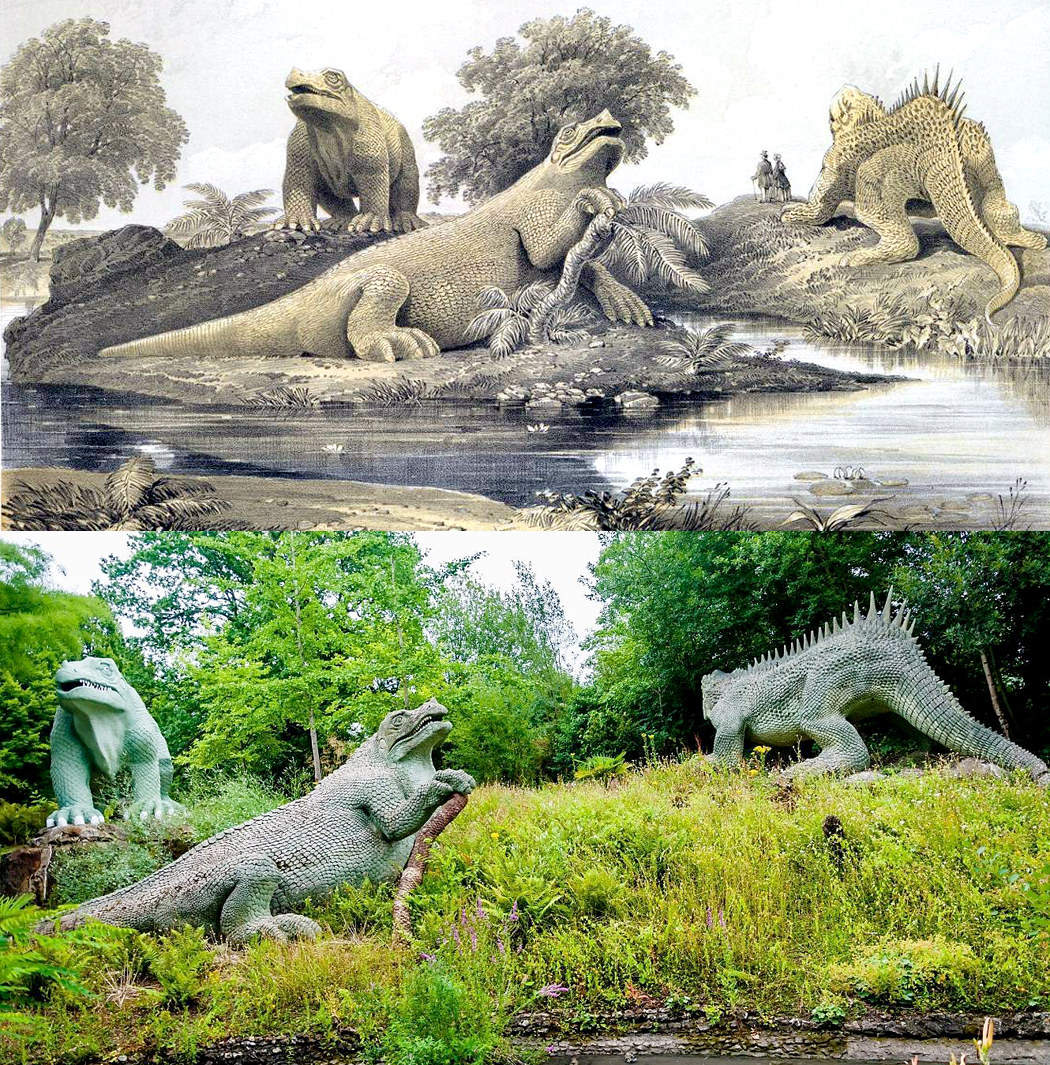
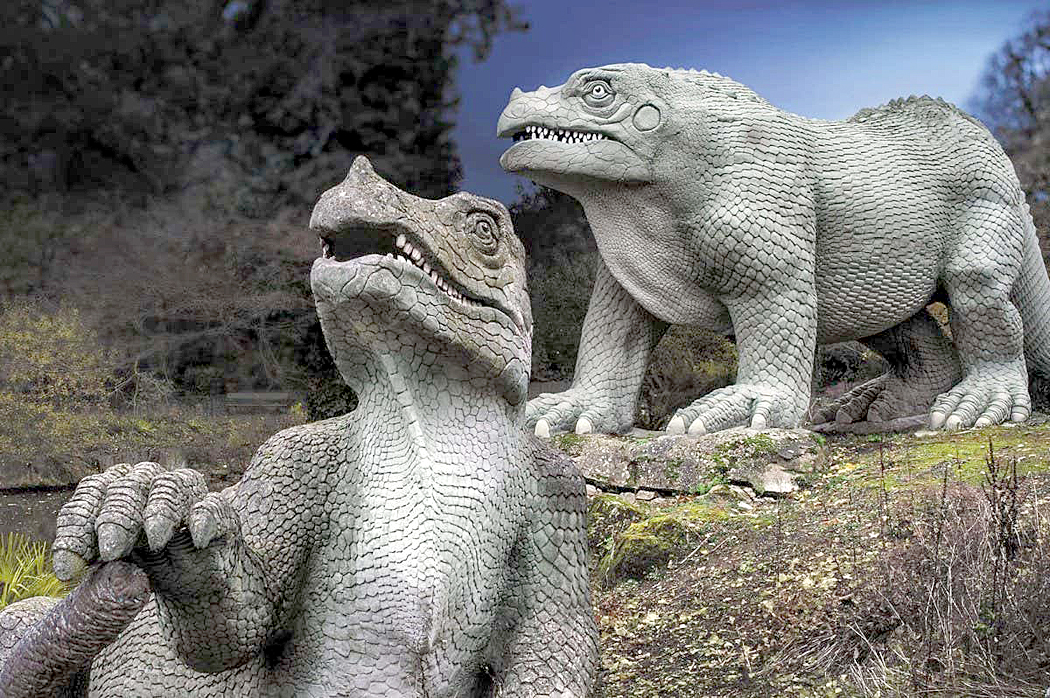
The creation of the new park was a hugely expensive operation, and with money always short, Hawkins’ plan for the 33 dinosaurs was cut back, but he still managed at least 25 of them — which are still there today, after having been restored several times in recent years. 

Hawkins’ sculpture, then and now

The iguanodon in which the banquet was given was a vast project itself. Hawkins wrote of it: 

“In the instance of the Iguanodon [it] is not less than building a house upon four columns, as the quantities of material of which the standing Iguanodon is composed, consist of 4 iron columns 9 feet long by 7 inches diameter, 600 bricks, 650 5-inch half-round drain tiles, 900 plain tiles, 38 casks of cement, 90 casks of broken stone, making a total of 640 bushels of artificial stone.

“These, with 100 feet of iron hooping and 20 feet of cube inch bar, constitute the bones, sinews, and muscles of this large model, the largest of which there is any record of a casting being made.”

The dinner kicked off a veritable Victorian dino-craze. and various scientists and amateurs went around the geology of England with pick and hammer trying to unearth new fossils. 

Actually, interest had already been going on for a few eager bone hunters. In 1824, bits of a Megalosaurus was found; in 1833, a Hylacosaurus; in 1836, the first dinosaur footprints. But after that, it was an explosion: in 1856, the Trachodon; in ensuing years, the Hadrosaur, Compsognathus, Archaeopteryx, Bronto- and Stegosauruses; and, by the end of the century, Triceratops and Diplodocus. Jackpot came in 1902 with the Tyrannosaurus Rex.

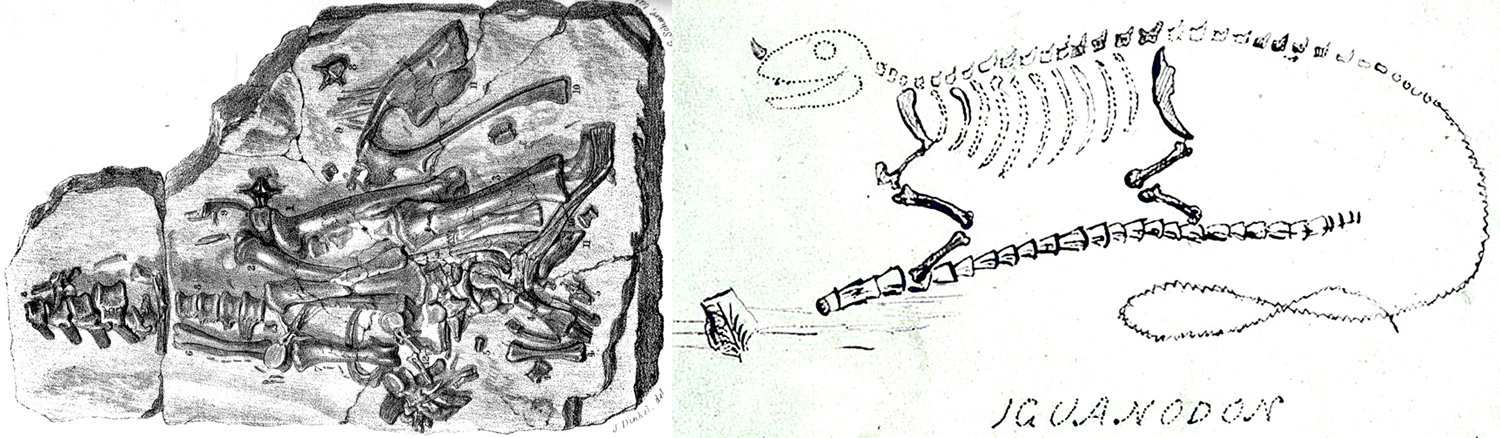
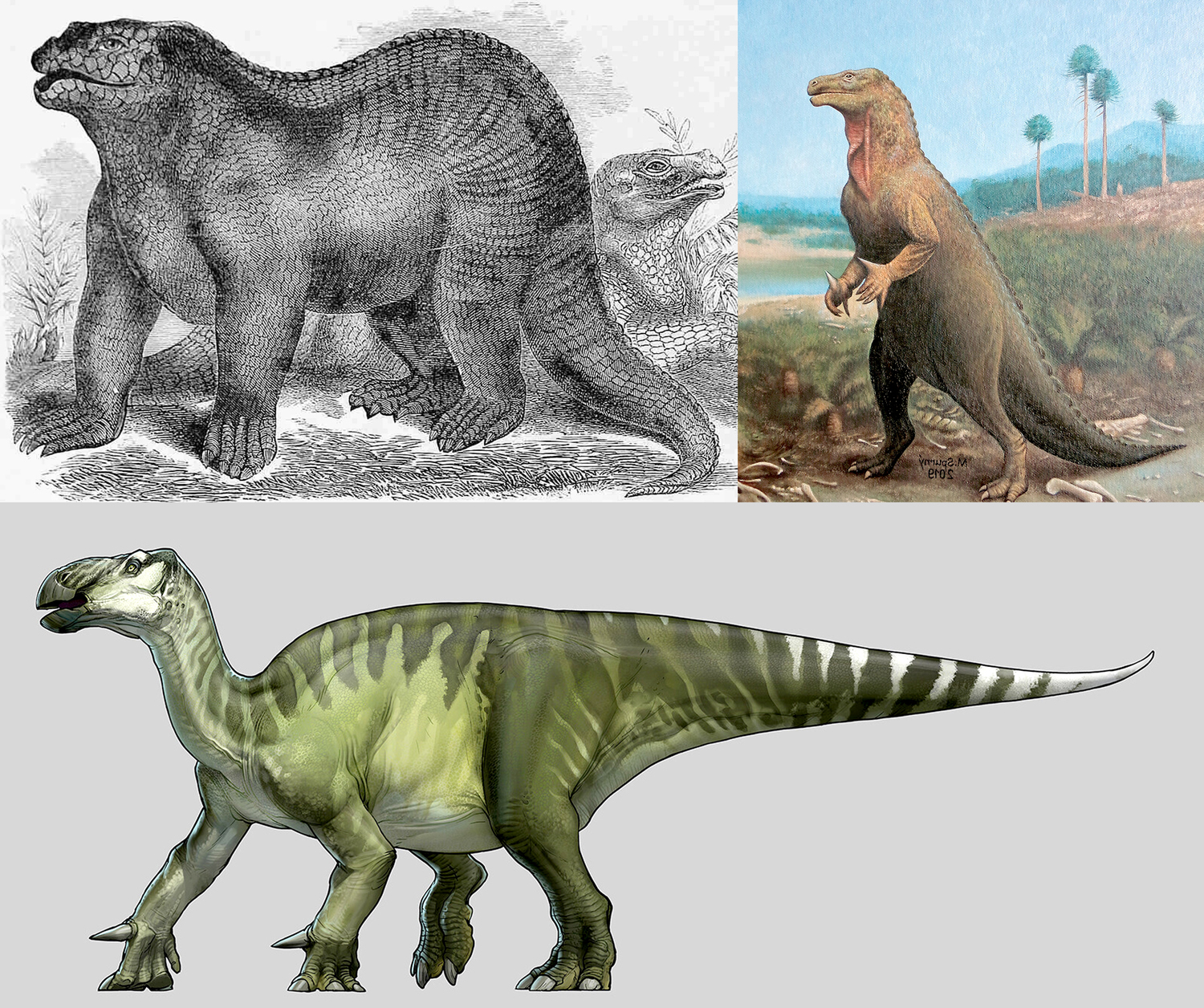
That branch of science we call paleontology hit its first stride in England beginning in the early 1800s, when the first dinosaur fossils were recognized and begun to be classified. It began in 1822, in Cuckfield, West Sussex, when a doctor from Lewes named Gideon Mantell — or his wife, Mary Ann (stories vary) — discovered a fossil tooth of a prehistoric beast they named “Iguanodon,” based on supposed similarities between the fossil tooth and the teeth of iguanas. It set off a fad for bone-hunting, and soon more fossils were excavated, and in 1834, a pile of bones were dug from a quarry in Maidstone, about 30 miles east of London. Mantell acquired the pile and attempted to reconstruct his iguanodon from the bits. His initial drawing looked something rather like a giant squirrel. 

Mantell’s bones and his drawing of recreation

In the bones was a horn, which Mantell assumed was like a rhinoceros horn or that of his iguana. And so he drew it on the nose. 

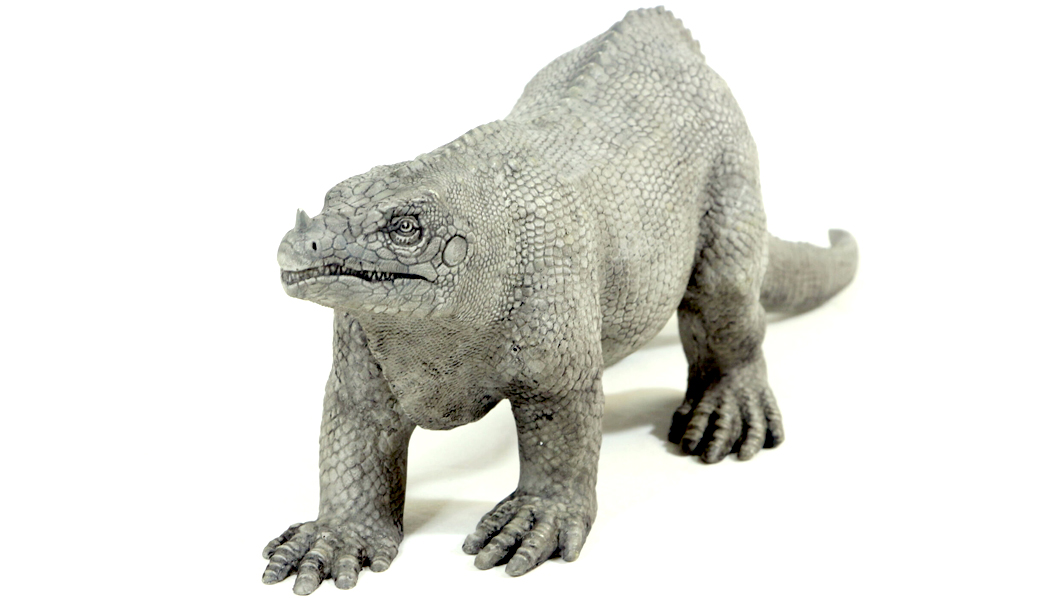
 In 1842, it was Owen who coined the word “dinosaur” for the recent finds. He attempted a more accurate reconstruction of the iguanodon and came up with a reptilian rhino, horn still on nose. It was Owen’s version that Hawkins attempted to replicate. 

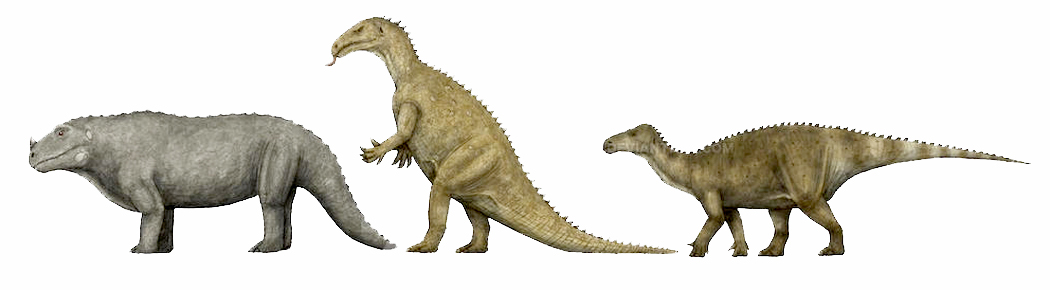
The year after the dinner in the belly of the beast, Samuel Beckles found giant three-toed footprint fossils in the Isle of Wight. He later discovered the hind limb of an iguanodon and the foot matched the prints, and so it was decided that the iguanodon was not a four-legged rhino-reptile, but stood like a kangaroo, on its hind legs. This completely revamped thinking about the beast, and for the next hundred years, iguanodon rather mimicked Godzilla. 

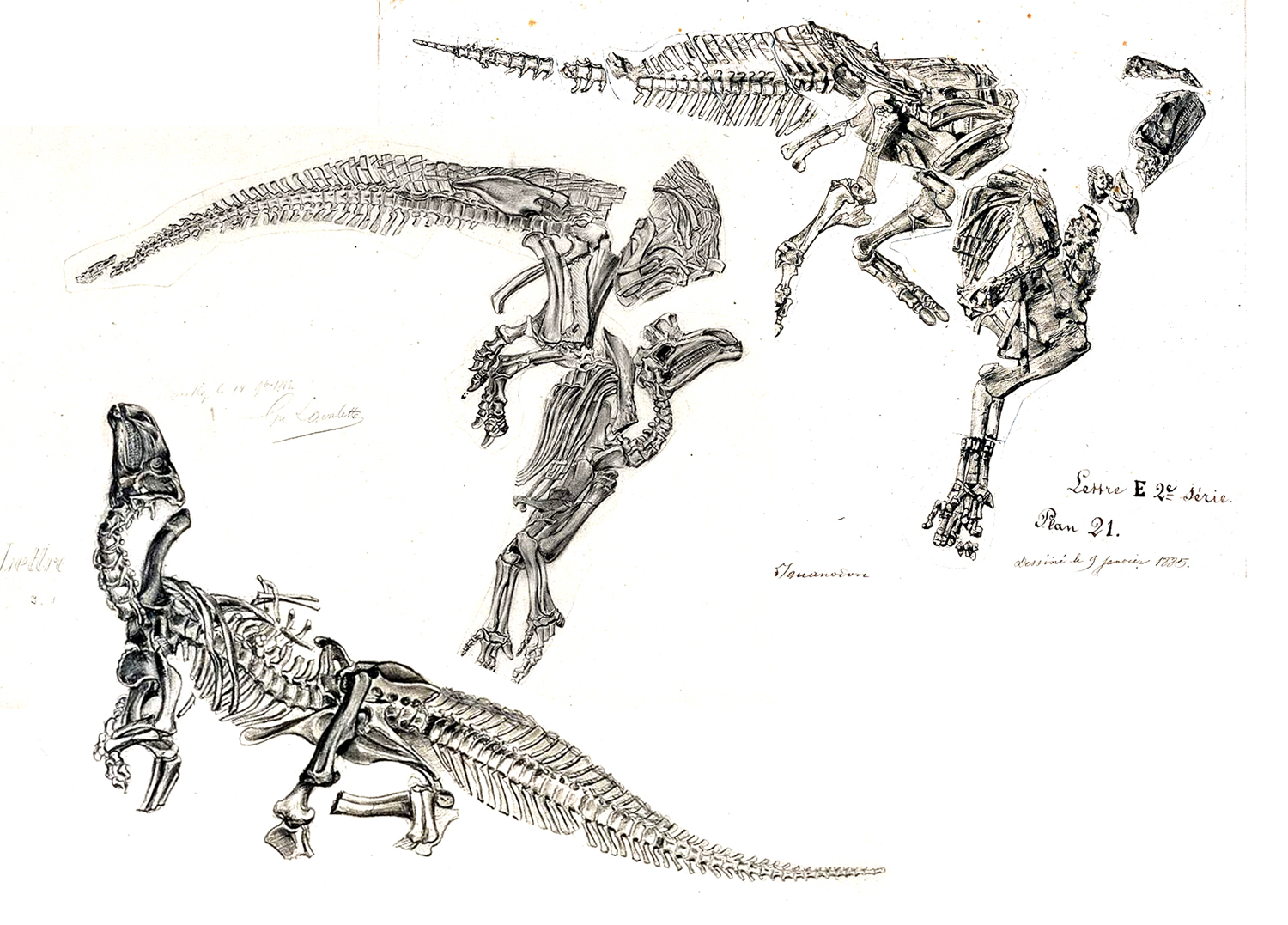
Then, in 1878, a whole herd of iguanodon fossils were discovered in a coal mine in Bernissart, Belgium. These confirmed that Iggy’s back legs were longer than his front, and so confirmed (so they thought) the upright posture. More importantly, the horn no longer fit the nose, but turned out to be the thumbs of the dinosaur, held firmly in the perpetual position of the hitchhiker. In 1895, the British Museum of Natural History acquired an iguanodon skeleton and assembled the pieces into its kangaroo pose that held up for a century. 

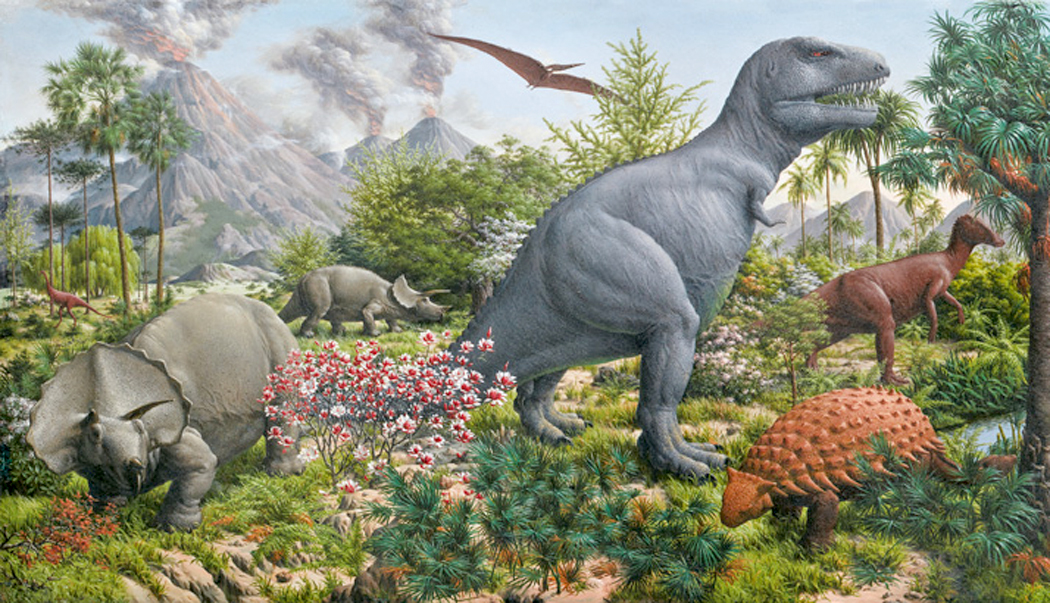
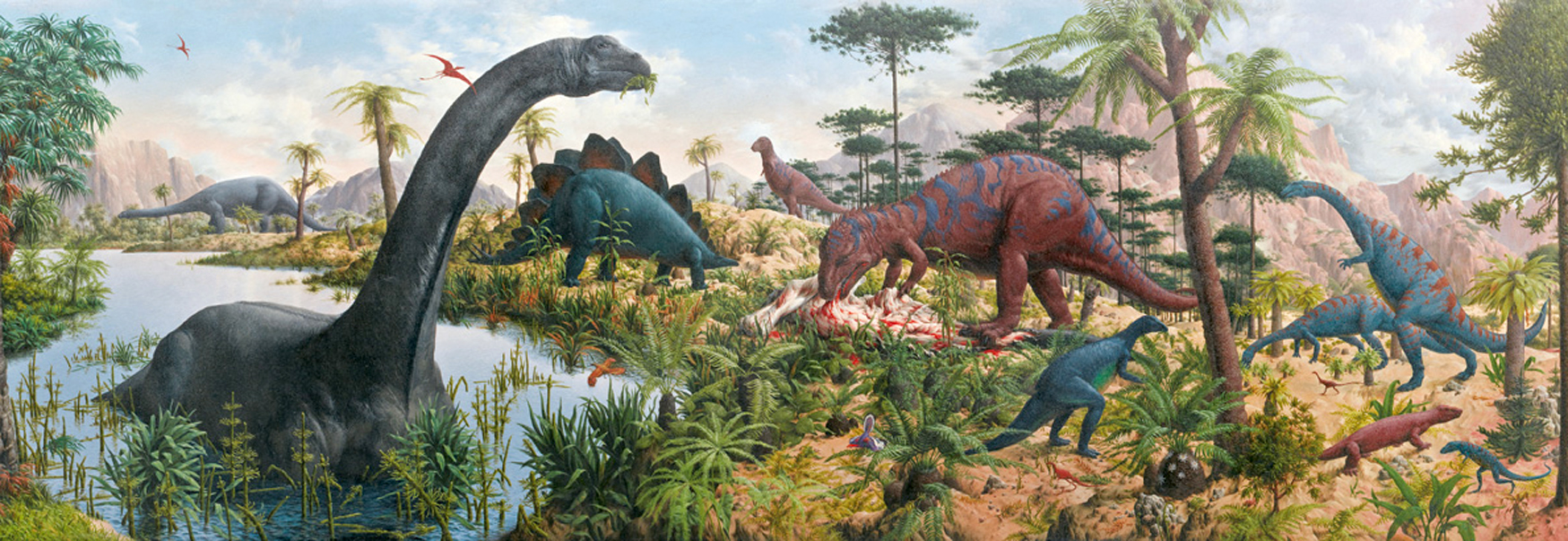
This was, of course, the version most of us grew up with. Upright, tail-dragging like a Piper Cub, and with his spikes giving us the “Thumbs-up” gesture. But in the 1990s, closer study of the fossil skeletons, reexamined with newer methods and anatomical knowledge, changed things once again. The iguanodon was set back on four legs once more, although allowing him to rotate upwards on his back legs occasionally to reach food. And it turns out the the vertebrae and their attending tendons were stiff, and the iguanodon tail did not drag, but, more like the cat wagging its tail to announce its mood, held out stiffly backwards and in the air.

So, Owen had been right, although for the wrong reasons. 

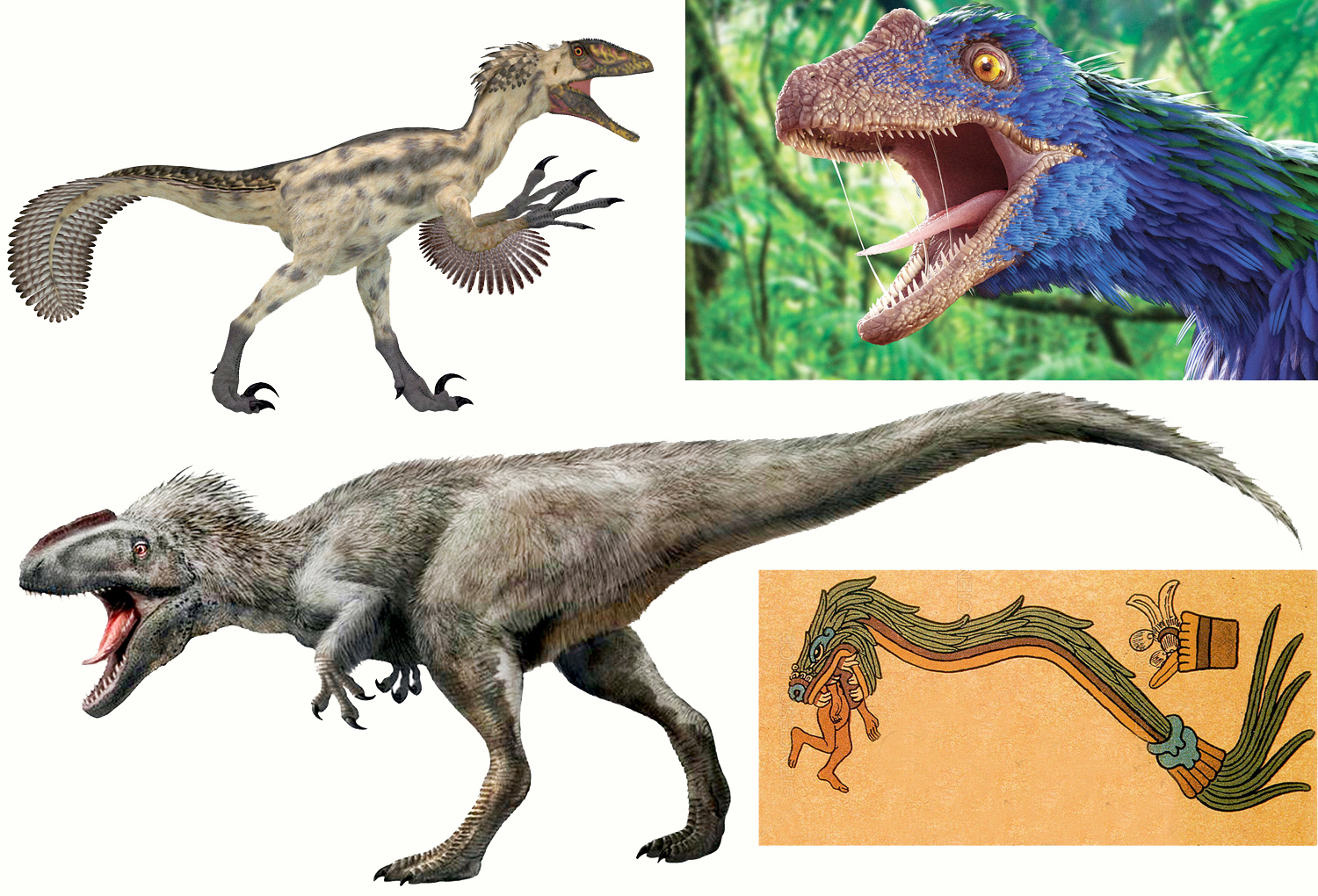
So much of what we now surmise about the dinosaurs has changed in the past 40 years. Not only the cat-tails lashing about in the air, but the warm blood of at least some of them, and the possibility — even probability of feathers, and the realization that dinosaurs are closer to being birds than reptiles. 
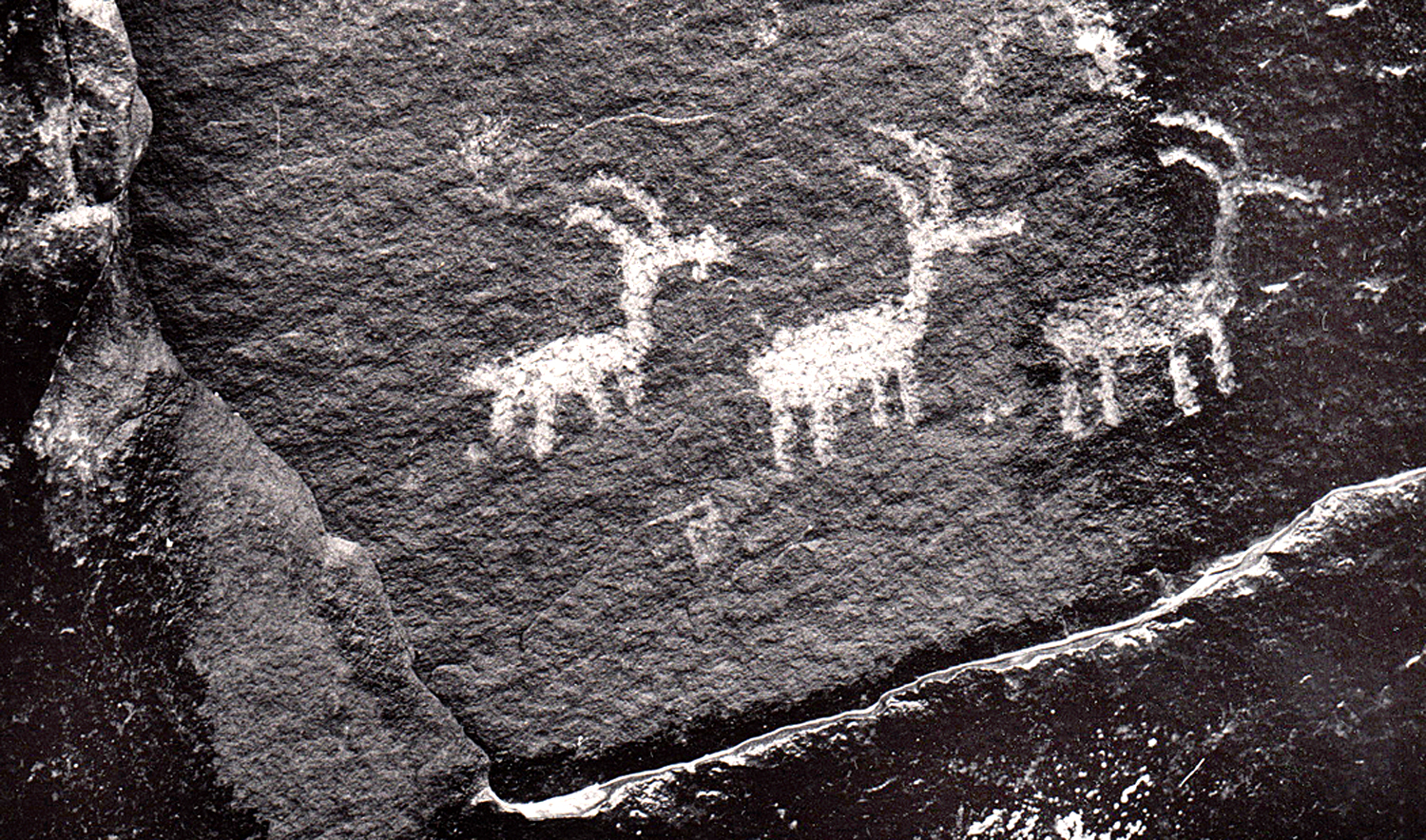
You have to wonder what the future holds out for the iguanodon. The future constantly reinvents the past. It is the heart of science to do so. The sun used to revolve around the earth; then it didn’t. Atoms were the smallest particles of matter until protons, neutrons and electrons were found and then until quarks were posited, and now we wonder about string theory. Maybe no particles at all, just vibrations. 
When I was a boy in my astronomy phase, there was a viable argument between Fred Hoyle’s “Steady State” theory of the expanding cosmos, and the newer “Big Bang” theory. The expanding universe found by Edwin Hubble shouldered out any idea we could have had of the static cosmos that had held sway for millennia. New discoveries and reformulated conceptions have pushed science ahead, sometimes by inches, sometimes by light years. 
Hawkins’ dinosaurs under construction 1855

The continents were rock solid until they started floating around the world like barges. Plagues were caused by “bad air,” until bacteria and viruses were discovered. Phlogiston was the substance of fires before the role of oxygen was understood. 

The dino park today

Sometimes the changes circle back on themselves, like the once-again four-legged iguanodon. In the ancient and Medieval worlds, moods were controlled by the four humors. Psychology gave up on such things and went Freudian, and now, neuroscientists have rediscovered brain chemistry — really the humors updated and modernized. 

The people who created these theories and ideas were not stupid. We should not hold ourselves superior to them. They were working with the data available and were often quite ingenious. The math behind the Ptolemaic system is absolutely brilliant, and as complex as anything on a blackboard at the Princeton Institute for Advanced Study. 

“Despite the fact that later evidence proved these theories wrong, I don’t think we should say the scientists involved made mistakes,” wrote Peter Vickers, professor of the philosophy of science at England’s Durham University. “They followed the evidence and that is precisely what a good scientist should do.”

Dinosaurs when I grew up

It’s a constant plod, one foot in front of the other. Mantell knew this when he first tried to understand the iguanodon in the 1820s. 

He wrote: “Imperfect as are the materials at present, they will be found to possess sufficient interest to incite further and more successful investigation that may supply the deficiencies which exist in our knowledge.”

And so, dinosaurs now have feathers, like Quetzalcoatl.

This is one of the glories of science — the willingness to be wrong when a more complete idea is proved. The entire world progresses because of this humility. We must leave it to the flat-earth people and anti-vaxers to be so damn certain they are right. Every step in the history of science is provisional. That is why the safest bet is to cast our lot with those who practice it.

Dore chaos
My friend Stuart sent me a letter:

You can learn a great deal from a springer spaniel. For instance:

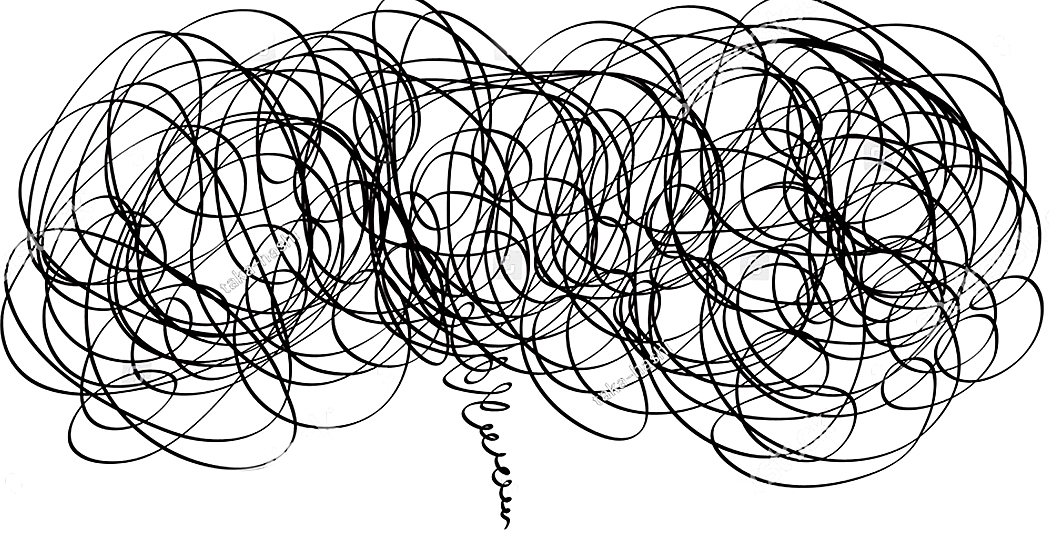
Total order and total chaos are the same thing. Identical. Not a dime’s worth of difference. And neither is very helpful.

Think of it in terms of the Linnean metaphor. I’ll get to the spaniel in a moment.

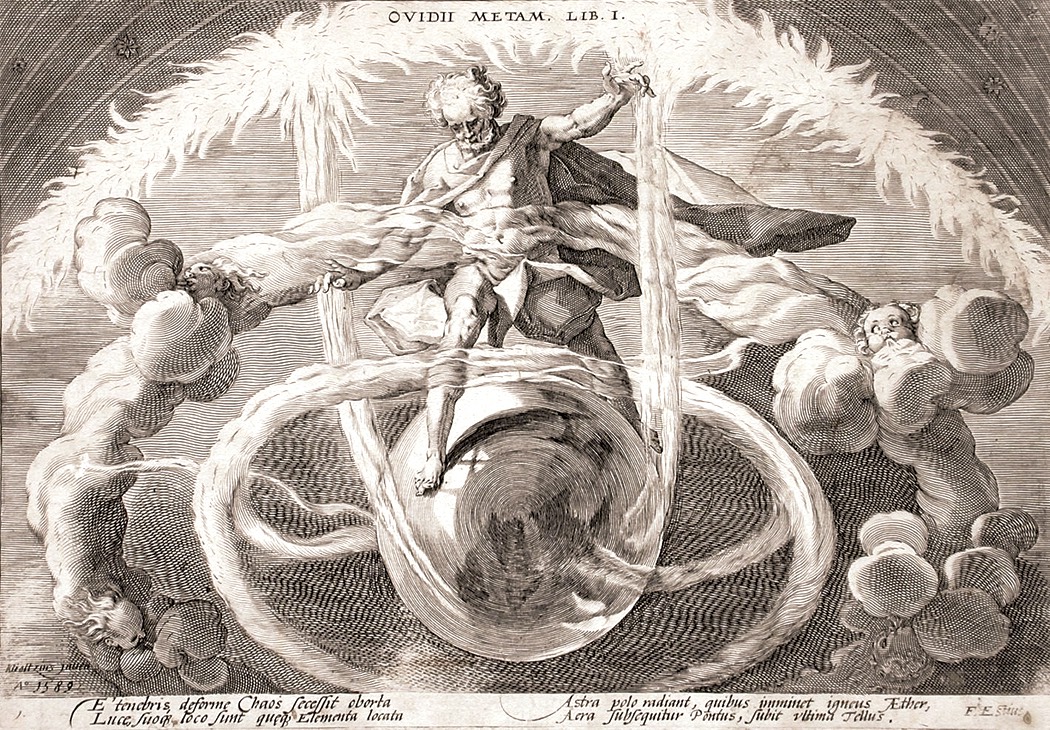
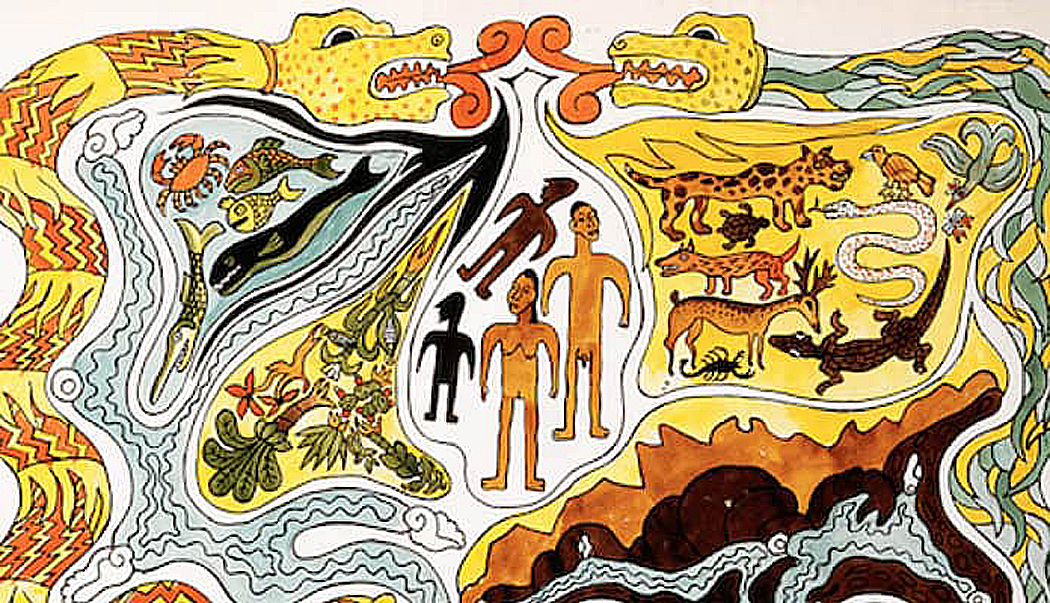
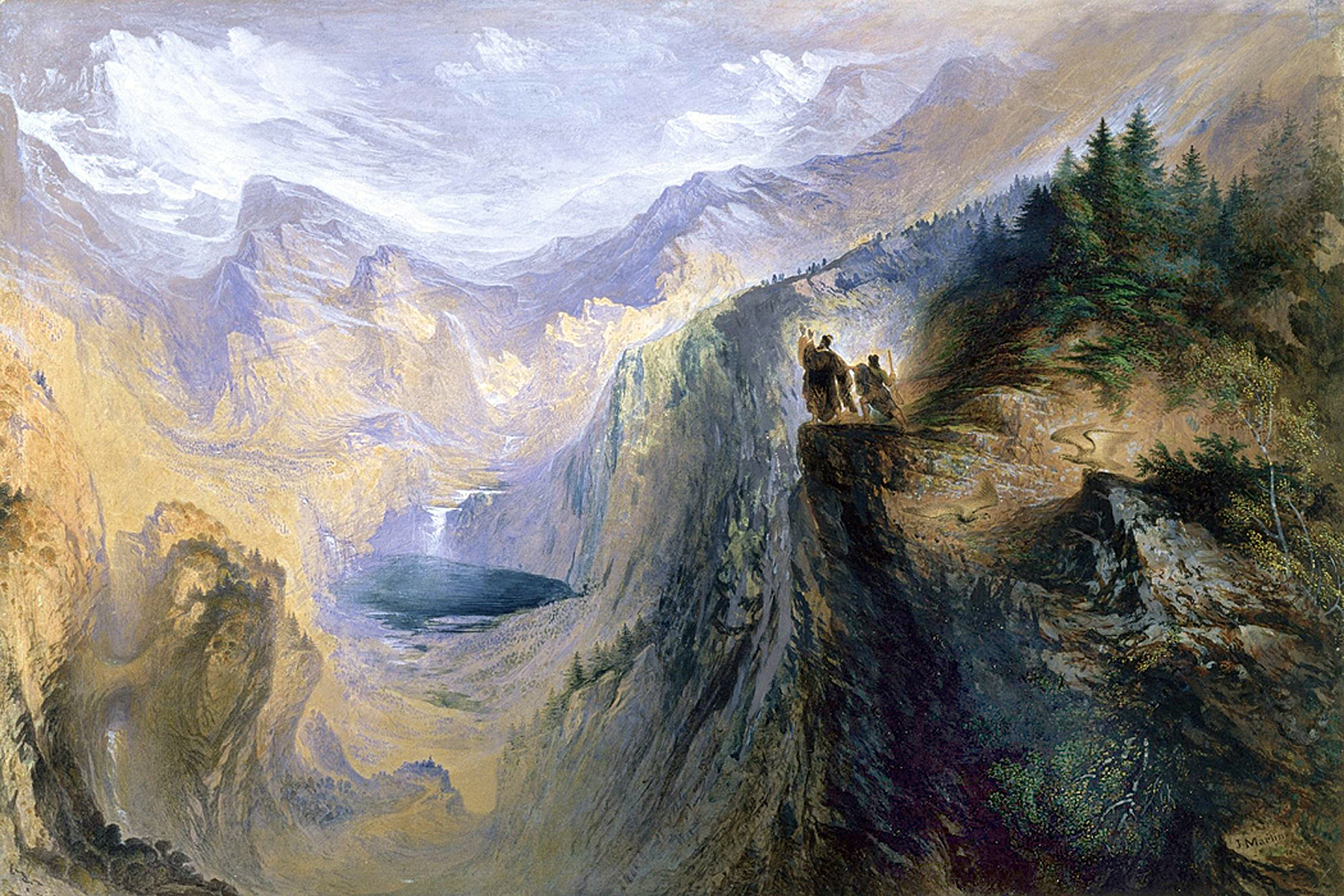
At one end of the spectrum is chaos, a totality that is unordered, a cosmic goo. This is not the current chaos of the eponymous theory, which is merely a complexity beyond calculation, but rather the mythic chaos out of which the gods either create the cosmos, or arrive unannounced from it like Aphrodite from the sea. It has no edges, no smell, no shape, no parts, no color, no anything. Inchoate muddle. john martin chaos

So, in the beginning was the word: Or rather, our ability to organize this chaos through language. The universe exists without form and void. Then we begin the naming of parts to help us understand the welter.

And so, god created the heaven and earth, dividing the parts. And this division of parts is in essence what the Creation is all about. Ouroboros

Of course, the incessant need to divide and name is only a metaphor, but it will help us understand the conundrum of order in the universe, and how the ouroboros of Creation begins and ends at the same place, no matter which direction we go in: The law of entropy and the law of increasing order both have the same final destination.

When we look at the world around us, we immediately split what we see into two camps: That which is living and that which isn’t. It helps us understand the world we live in and we make many of our biggest decisions on this basis: Ethics, for instance. We have no problem splitting a rock in half with a hammer, but would feel rather evil doing the same to a dog.

But the living things fall into two large camps, also: Animal and vegetable (again, I’m simplifying. I haven’t forgotten the bacteria, but we can ignore them for the sake of the metaphor).

Some of us have a problem eating animals but not eating vegetables. So, again, our ethical world depends on how we sort out the chaos.

Let’s take the animals and subdivide them, the way Carl von Linne did, into classes, orders, families, phyla, genera and species.

Each level makes our divisions less inclusive, more discriminatory.

Let’s take the dog, for instance. It is classified as a chordate, which means it has a central nervous system stretched out into a spinal chord. This is different from, say, a starfish or a nematode. But there are many chordates, so, if we want to differentiate a dog from a shark, we have to look to its class. It is a mammal. That makes it distinct from birds and fish.

But there are lots of mammals, too. Some of them eat other animals; we call them carnivores. A dog is a carnivore.

Notice how each level of nomenclature narrows our definition down to a smaller and smaller group of initiates. When we had only living and non-living, there were only two groups; with each level, we add dozens, hundreds and then thousands of other groups disincluded in our catalog.

The order carnivora is one of many orders in the class of mammalia, which is one of many in the phylum chordata, which in turn is one of many in the kingdom animalia.

The order separates our subject, but lets us see in relief that it is just one constellation in the heavens populated by many other constellations.

The same poor pup is in the family canidae, which includes all the dog-like animals, from fox to coyote to jackal. Among them, it is in the genus Canis, and species lupus, which makes it brother with the wolf.

But our wolf is a friendly one, as long as you aren’t the postman. So, now we call it Canis lupus familiaris, or the family dog. And our particularization of the beast means we are conversely aware of all of creation — each in its own genus and species — that makes up the non-dog, and each of them is like the billions and billions of stars that make up the many constellations in the night sky.

Yet, this isn’t far enough. For the dog I’m thinking of isn’t just a dog, but a spaniel, which is a type of dog which isn’t a poodle and isn’t a terrier. It is a dog with “a long silky coat and drooping ears.”
Sylvie

Each time we subclassify, we are adding to the order we impose on existence, and each classification adds to the proliferation of categories just as it reduces the members inside each class.

So, there are also different kinds of spaniels. The dog I’m thinking of is a springer spaniel, which come in two forms, with a brown-and-white coat and a black-and-white coat.

My brother’s dog is a brown-coated springer spaniel named Sylvie. She is getting old now, and her backside — very much like humans — is getting broader.

And now, by classifying things to the level of the individual, we have as many categories as there are things in the universe, which is effectively the same as nothing being categorized: It is all primordial goo and might as well not be cataloged: Total order and total chaos are the same thing. QED.

museum gorilla

I had two homes as a boy. First, there was the house my family kept, where I was fed and went to sleep. But second, there was The American Museum of Natural History in Manhattan. Its vast halls and marble floors held the wonders of the world. I couldn’t get enough of it. To say nothing of the Hayden Planetarium next door.

There were dinosaurs and sharks the size of split-levels; there were dioramas and a life-size blue whale; there were vast vitrines of rocks in darkened rooms where sound bounced off the hard floors and walls, giving young ears their first taste of echo location — the inner ear knew this was a large space.

There was the “Soil Profiles of New York State,” always one of my favorite places. The museum opened me up to the wide world and the things in it. The woods I grew up knowing were enshrined behind glass, letting me know that such things were important enough to study. It first showed me that there was nothing truly “ordinary,” that everything was somehow miraculous, like the gigantic centipede in the leaf litter exhibit.museum postcard

I have gone back to the museum countless times in the ensuing years, and it has always been a joy. But something has changed, and not just in the Wordsworthian sense.

What has changed is museum philosophy. Back then, museums were collections displayed indiscriminately: glass cases of quartz crystals; boxes of dragonflies; walls of stuffed birds.

Today, the emphasis is on education and, as a result, the displays are smaller, more organized and accompanied by explanatory text, with maps and diagrams. What used to be a pile of rocks is now one or two dramatically lit examples with a video display next to them with a media baritone giving us the pertinent facts.

It used to be the museum was about stuff. Now it is about words, and the stuff has been turned into visual aids. museum blue whale

The new museum is less cluttered, has greater clarity and is easier to digest. And, for me, that is just the problem. I feel cheated: My museum experience becomes passive.

I am no longer allowed to think for myself but am given only a single interpretation of the material, one that can only be called ”the official story.”

What I loved, and what sparked my boyhood imagination, was the profusion of specimens, and the lack of coherent explanation. There were those vitrines, with their hundreds of small chunks of quartz, and next to each a tiny typewritten label saying it came from Haddonfield, N.J., or Bloemfontein, South Africa. It was up to me to figure out why they all meant something, and why they were exhibited together. I got to make up my own story from the blizzard of data. museum butterflies

Surely, my stories might not be accurate, but then, they might be more accurate than the “official story.” That’s how Alfred Wegener figured out that the continents were rafts, how Johannes Kepler figured out — from the rafts of data collected by Tycho Brahe — that the planets move in ellipses.

Science, after all, like history, is made up of two elements: data and hypothesis, that is, primary material and the sense we make of it.

A historian, for instance, doesn’t write history from history books, but from the letters people have left behind, the church records and deed registers, old clothes and kitchen middens. A mass of confusing detail comes into his hands, and he has to whittle it down to a believable story. Only then is the history book written, and, if the historian has done a good job, his version becomes the accepted version.

Just being spoon fed the accepted version hinders our ability to make progress. Because the accepted version is always, to larger or smaller degree, imperfect. museum elephants

Part of the wonder of museums for me was just that: seeing a jumble of minerals or scarab beetles and figuring them out. I miss the confusion and the creative thought that is born of it.

The history of science is littered with abandoned theories, from geologic catastrophism to uniformatarianism, from geocentrism to heliocentrism, from Newton to Einstein.

In the science of history, this is often called ”revisionism” and thought of as a bad thing, although I can’t imagine why. New information or better hypotheses are good: They are truer.

So, when I go to the American Museum of Natural History and I see a few dinosaur bones with a timeline on the wall, I know the version I’m being fed is no more sacred than the version it replaced: coldblooded, lumbering lizards replaced by warmblooded, twitching, nervous birds 20 feet tall. museum dinosaur

The new museum thinks it is being educational, but more exactly, it is being entertainment. It is like TV.

And I cannot call that an improvement.