Archive

Tag Archives: seasons

It is midwinter spring, those few days that habitually show up in February with sunshine and temperatures into the 70s that fool you into believing that spring is close at hand, only later to kick you with plummeting temperatures and perhaps another snow. The National Weather Service predicts that for this weekend. 

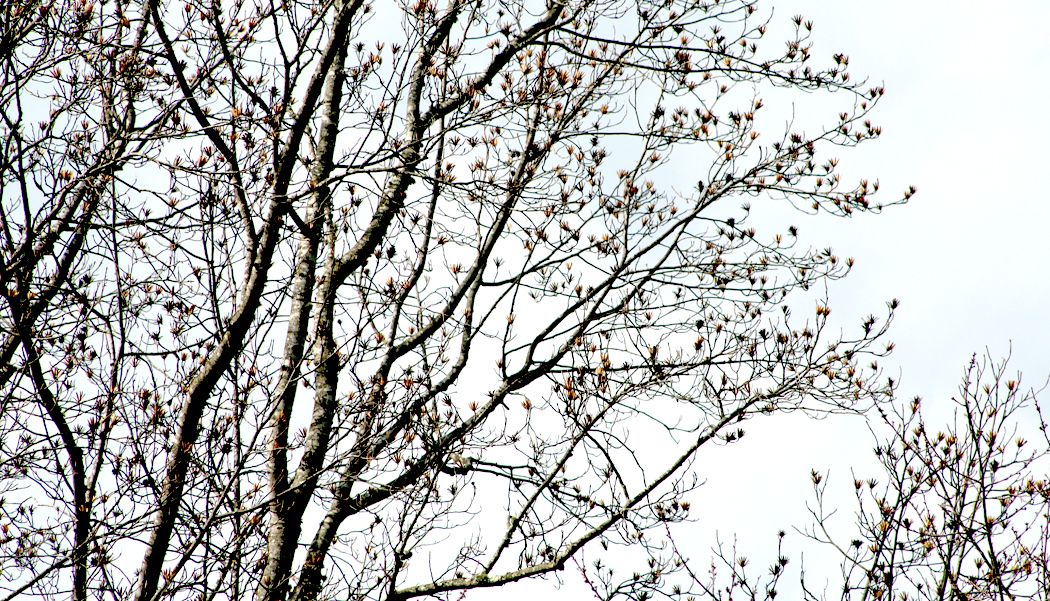
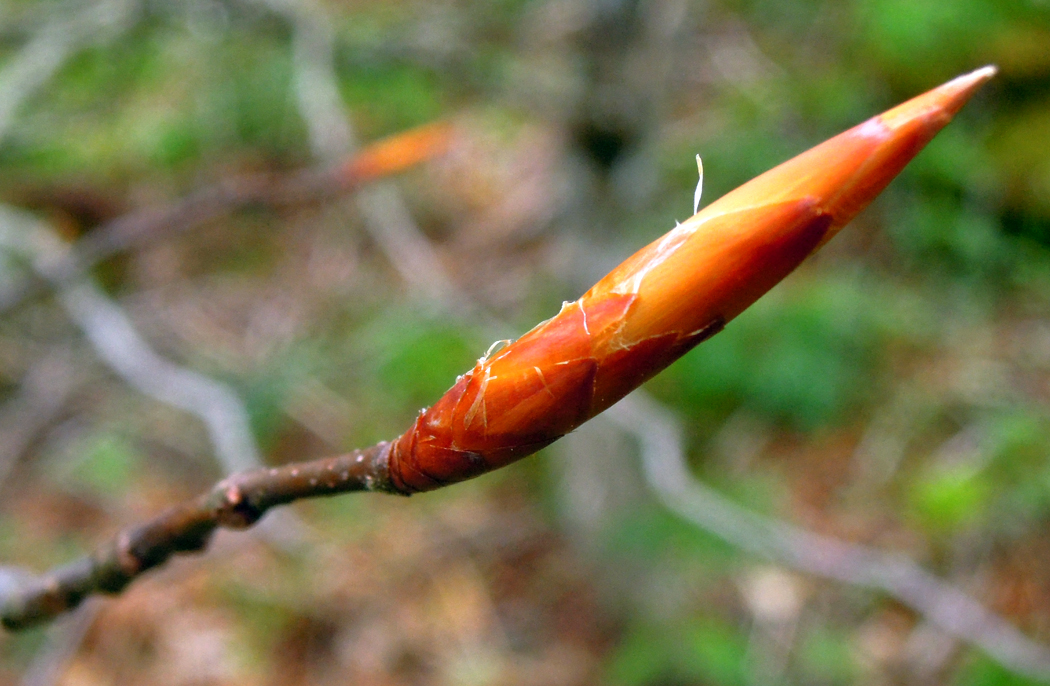
This is my favorite time of the year, when the bare trees begin budding at the twig tips. You can watch the trees change day by day, turning the dead sullen grey of December into something that clearly has a rising sap under the dull bark. When you watch the buds close up, their bud scales slowly separate, with thin lines of green beginning to spread at the edges. 
Fifty years ago, my friend Sandro and I would annually take this time to camp at the Outer Banks. Off-season meant we had the sand and sea to ourselves and could walk five miles along the strand without ever meeting another human. 
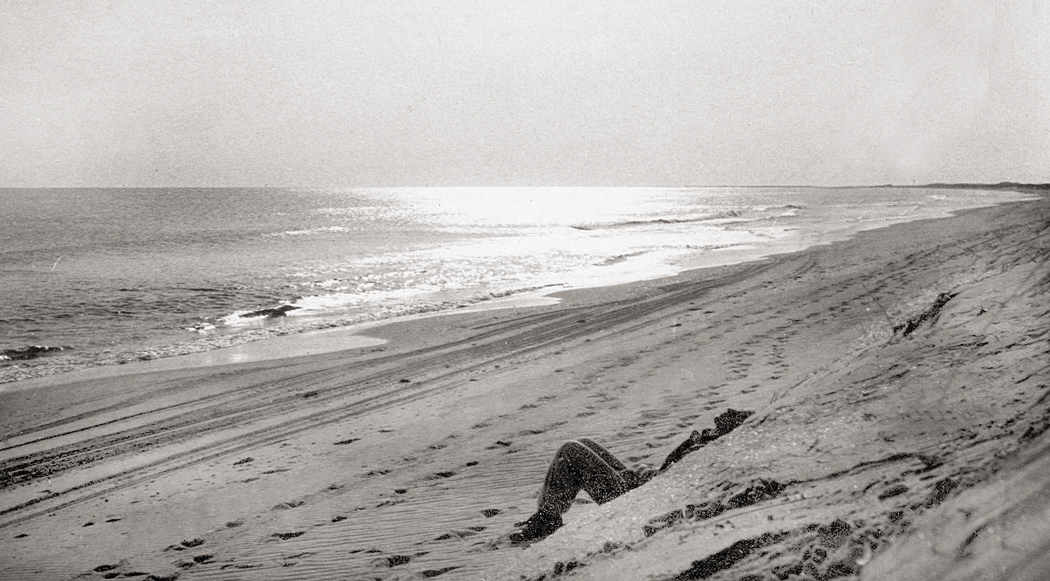
Sandro at Cape Hatteras, 1969

It was also Mud Season. You don’t read about it in literature, with its darling spring buds, its gold first green and its young sun half-run in the ram’s course. But there it is — early winter rains drained deep into soil and then turned hard as rock in the frozen air. November’s squishy footprint is turned to fossil, brittle as any sandstone, its edges wedged up in a tiny crater. But the February thaw, or later, when March brings those buds to stretch their scales, those footprints turn once more to watery goo, slippery under your shoe, sucking your heel right off your foot. It is what is wrong with pretty literature. Among all the pinking petals, among all the bright girls in spring dresses, among all the apple blossoms and greening grass to come, there is the mud, ripe, fertile, pliable in your squeezing fist, the one brown, crowning reality of the the coming spring, when there is mud again.

It is such elemental things that seem most real, most important. Culture changes, fashions change, but the cycle of seasons wears a constancy. 
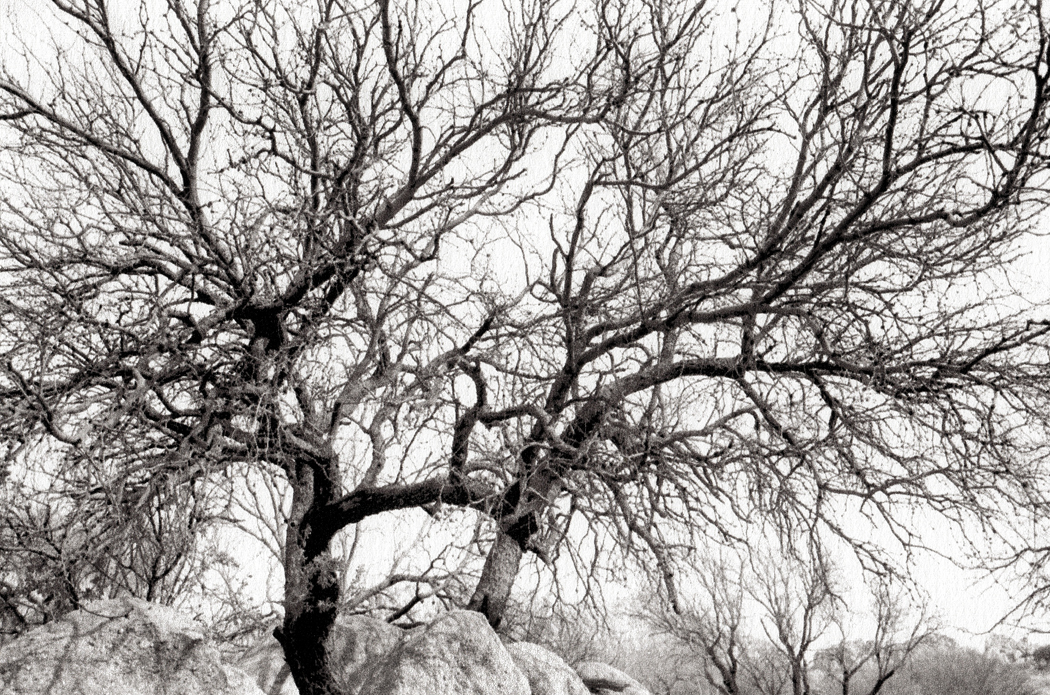
Texas Canyon, southern Arizona

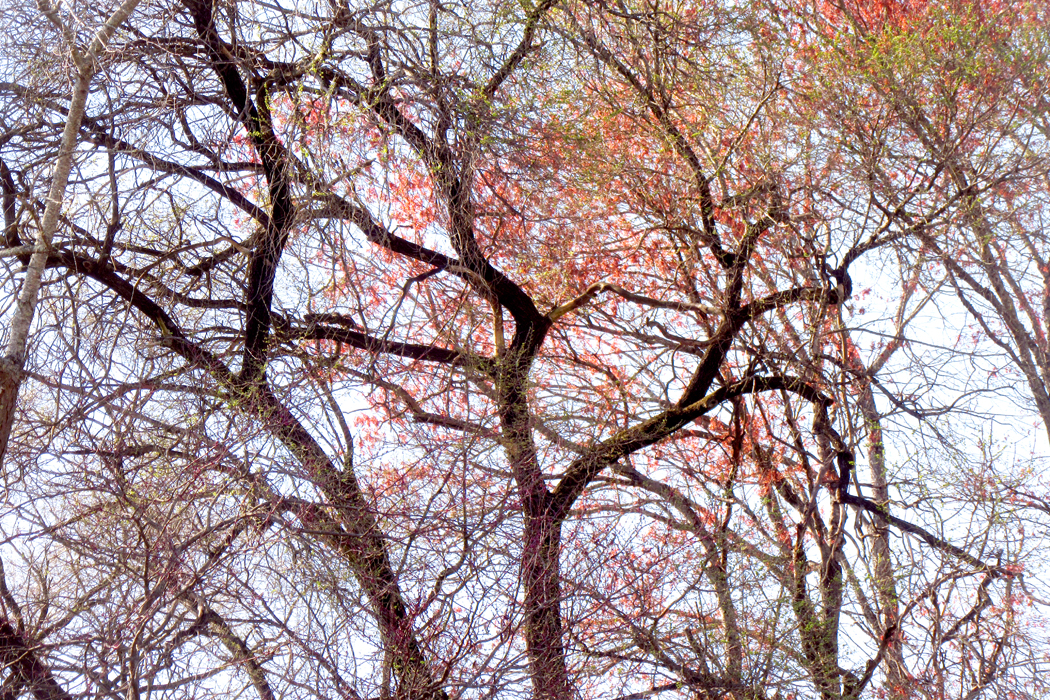
For me, it is the trees, most of all. I love the spring trees well enough, but it is this time of year, when the trees are still bare and show their bones that I wait for each fall. Drop the leaves ecdysiastically and I can see the shape of the thing they cover. 
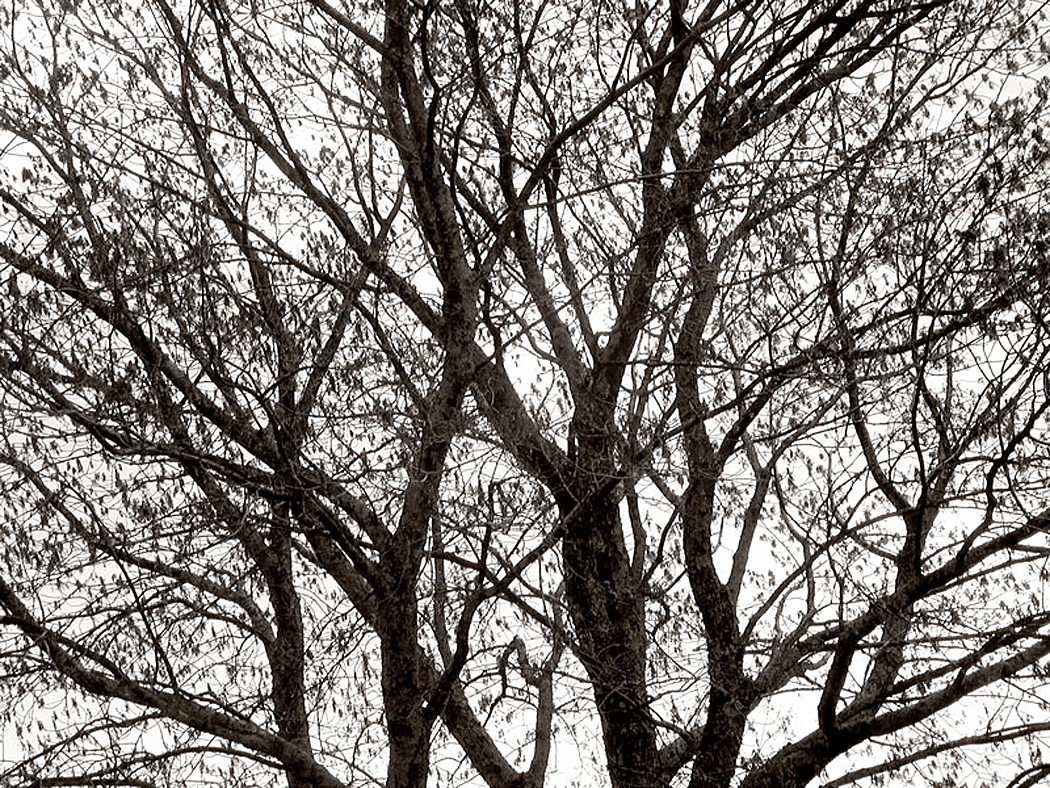
Spring oak, Blue Ridge

It is the lines they make against the sky. An etching more than a painting. Artists through history are generally assigned to one of two categories — they are either line people or color people. Line painters, like Botticelli, tend to draw their scenes, often in actual outlines, and then fill in the colors, while color guys, like Titian daub pigment onto the canvas and let the patterns of color define shapes. It’s one of the major distinctions made by Heinrich Wölfflin in his 1915 book, Principles of Art History. It doesn’t mean the line guy doesn’t appreciate color or the color guy doesn’t appreciate shapes and forms, but rather it defines what hits them first and most centrally. 

(There is a similar distinction in music. Composers — and performers, too — tend to be line guys or chord guys. Lots of counterpoint for the first, and washes of tonal color for the latter. Bach vs. Debussy.) 
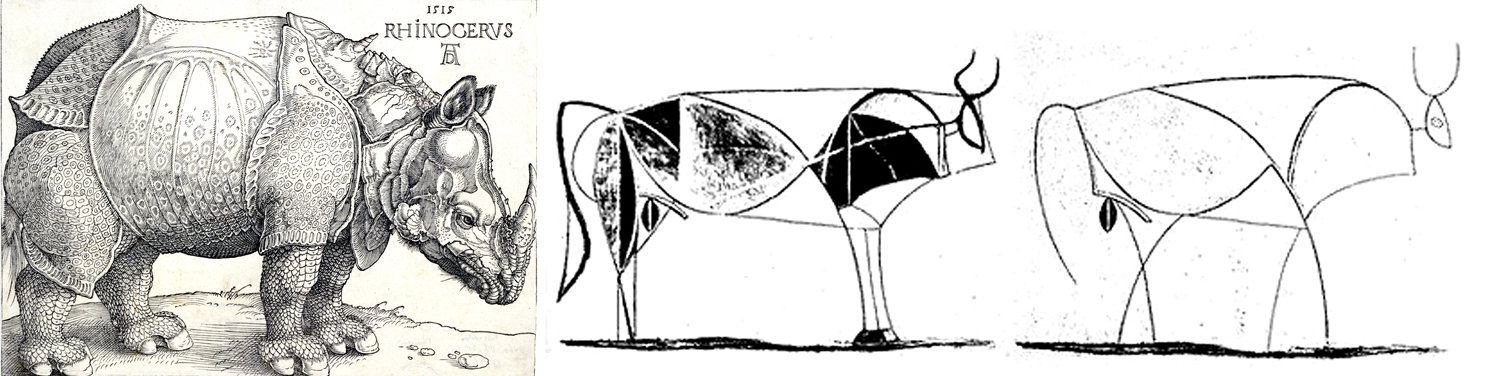
Albrecht Dürer rhino; Pablo Picasso bull

Albrecht Dürer was a line guy, most characteristically in his wood engravings. Picasso was a line guy and certainly an indifferent colorist. Most of his paintings could easily be given different fill-in colors. Matisse, though, a color guy to his teeth. Even more recent painters can be divided. Ellsworth Kelly a color guy; Lucian Freud a line guy. 

Well, I’ve always been a line guy. And the lines drawn by winter trees have hypnotized me since I was a wee bairn. One whole category of my photographs are what I called my “tree nudes.”
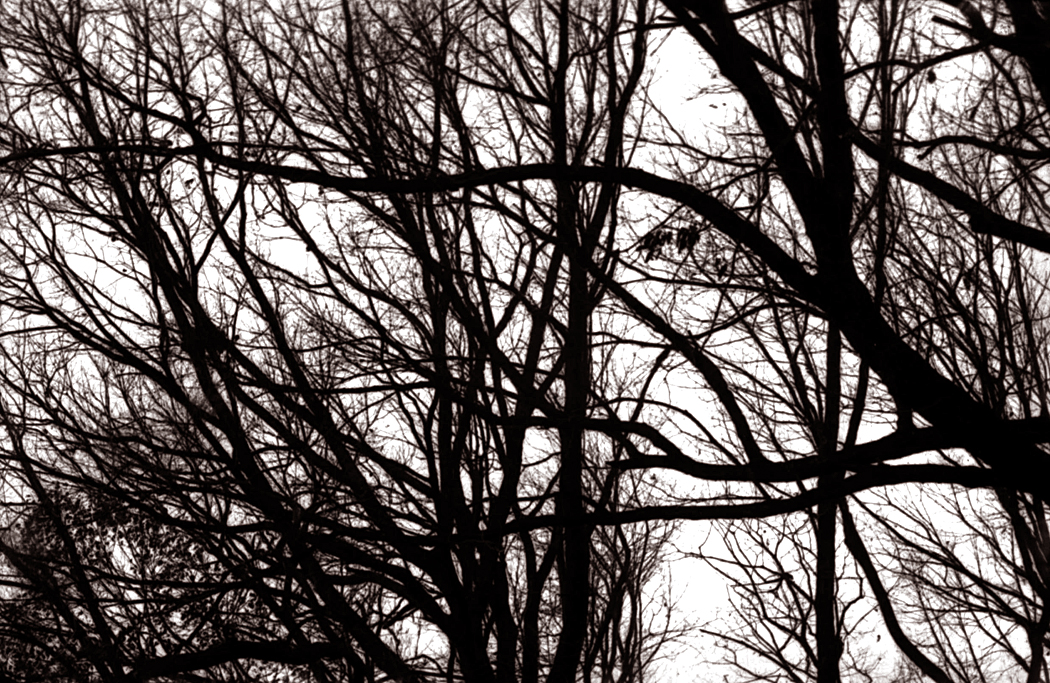
The nude has a specific purpose (outside the merely voyeuristic). Clothes drop their subjects into a very particular time and place. Eighteenth century breeches; flapper skirts; bell-bottom trousers; togas; saris; morning coats with a peeking handkerchief in the breast pocket. 

But the nude is — or can be — timeless (with the caveat that hairdos can be a giveaway). There is a universality to the nude in art, which is why so many Greek statues are naked. And we are meant to appreciate the form — shape, detail, muscularity — and not just a specific person with a name, family, opinions, and personality. 
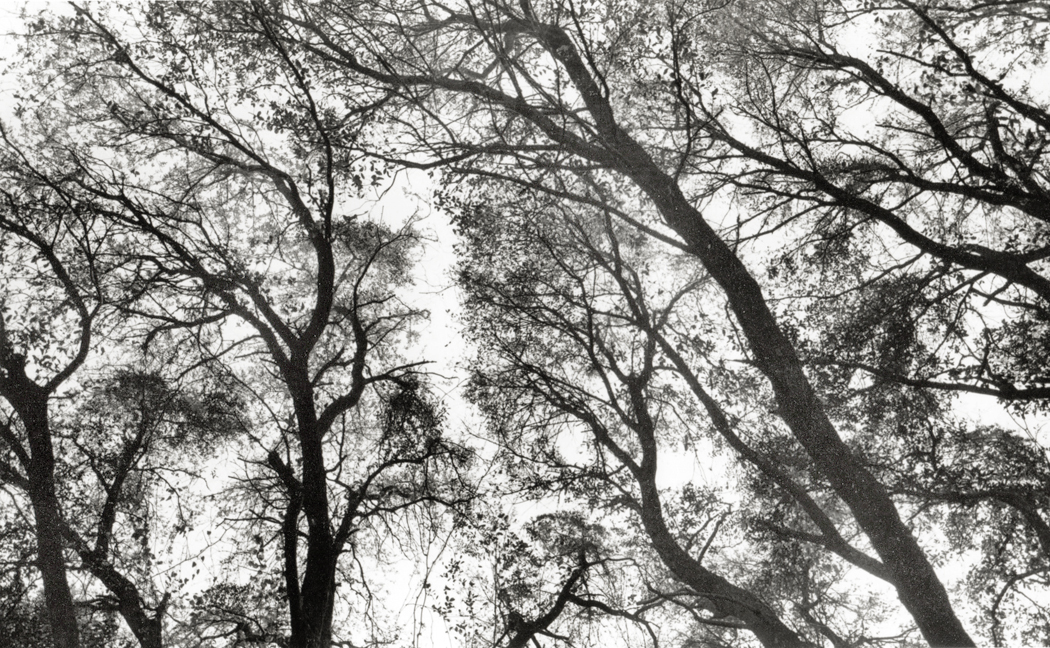
And I feel the same thing in the bare ruined quiers, where late the sweet birds sang. There is structure in the dark lines of the branches, and a systematic chaos in the way they all cross each other in a welter of visual information. 
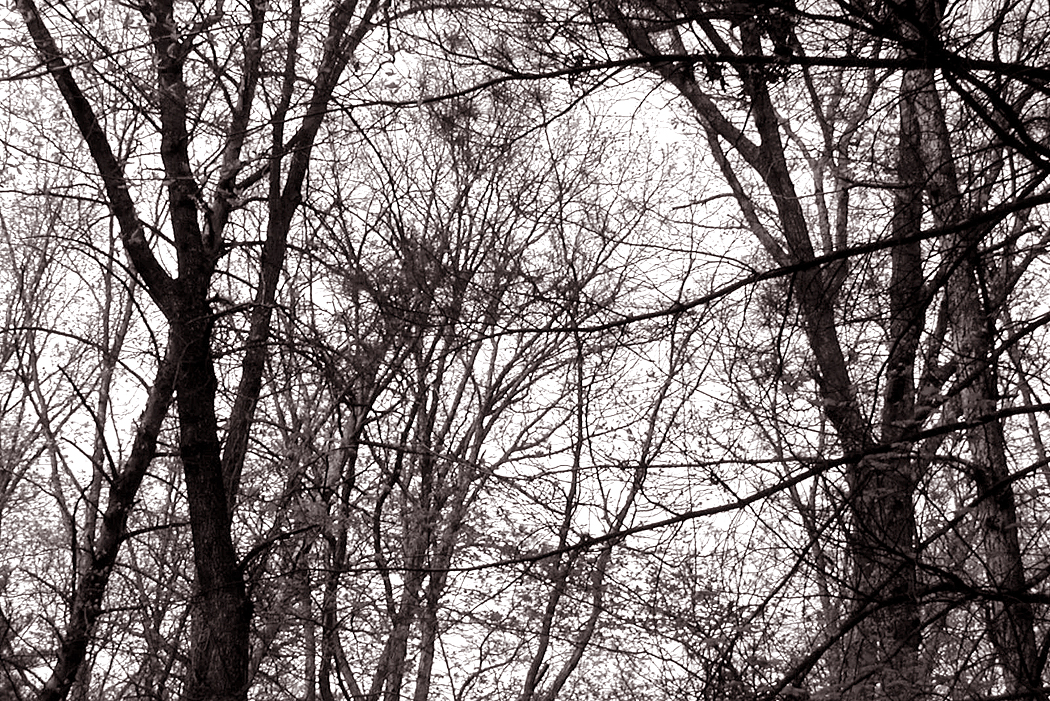
In this, I am reminded of the drip paintings of Jackson Pollock, which I came to love in the New York art museums I visited beginning as a teenager. A good nature-scribble of branches puts a buzz in my visual brain. I love it and have sought it for the past 60 years. Among the first photographs I ever made, 60 years ago with an ancient 35mm Praktica camera were of trees. 

Of course, while trees are beautiful, they can become an obsession. If I had chosen to make a career out of photography instead of writing, the trees pictures would have dwindled. As Fred Astaire says in the film  Funny Face, “You’d be amazed how small the demand is for pictures of trees.”

But I have followed trees through seasons
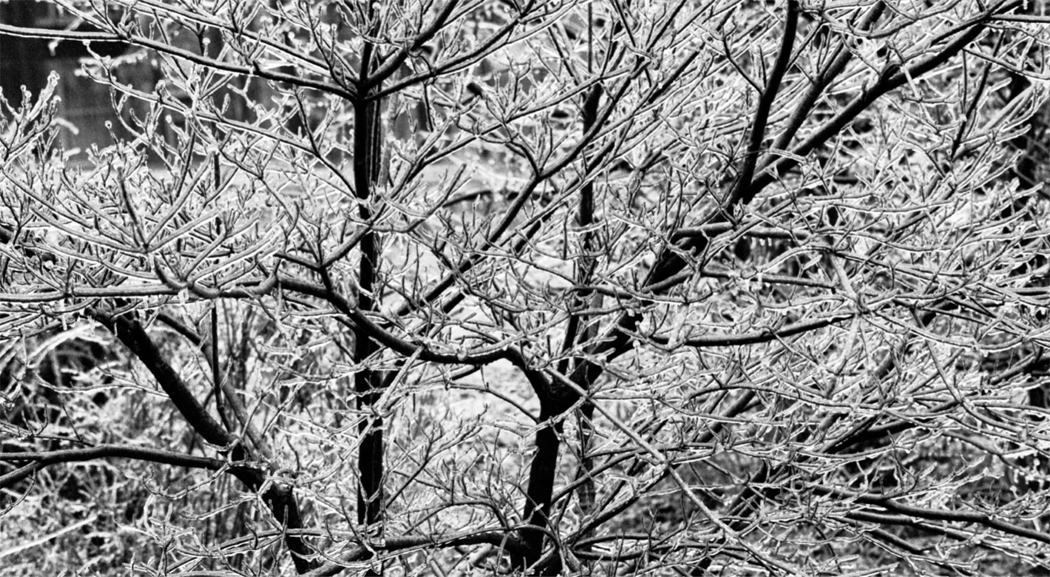
Ice storm, Greensboro, NC, 1969

and all their leafy-ness
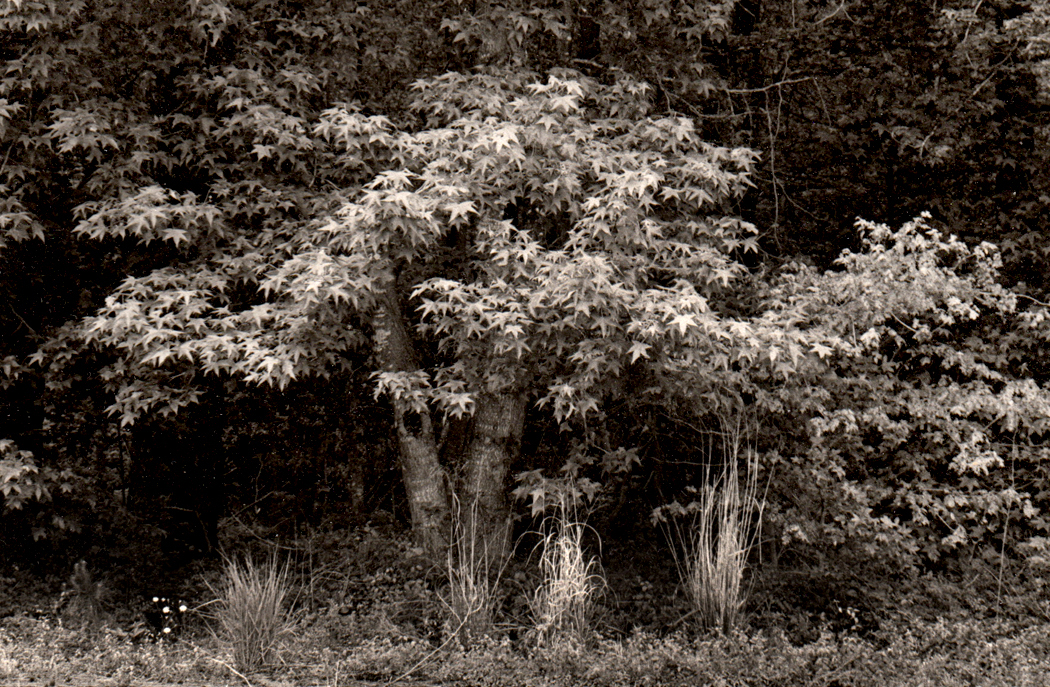
Sweetgum tree, Redwing Golf Course, Virginia Beach, Va., 1984

I have sought the best image of the jumble of buds, twigs, branches, trunks and bark that I feel as a signal for my emotions. 

One of the first shows at the Museum of Modern Art that made a deep impression on me was in the summer of 1972, when they put together a group of 50 photographs of Paris trees by Eugene Atget (1857-1927).  

Lined up on the wall in a darkened space, with brilliant track lighting that made each photograph gleam like a jewel, the photographs made my heart jump and my eyes smile. Most of the trees were winter trees, with wiry roots dug into the ground, and ancient boughs twisted and weighed down with age. They were ungodly beautiful, but also, in Minor White’s expression, it wasn’t just what they were, but what else they were. 
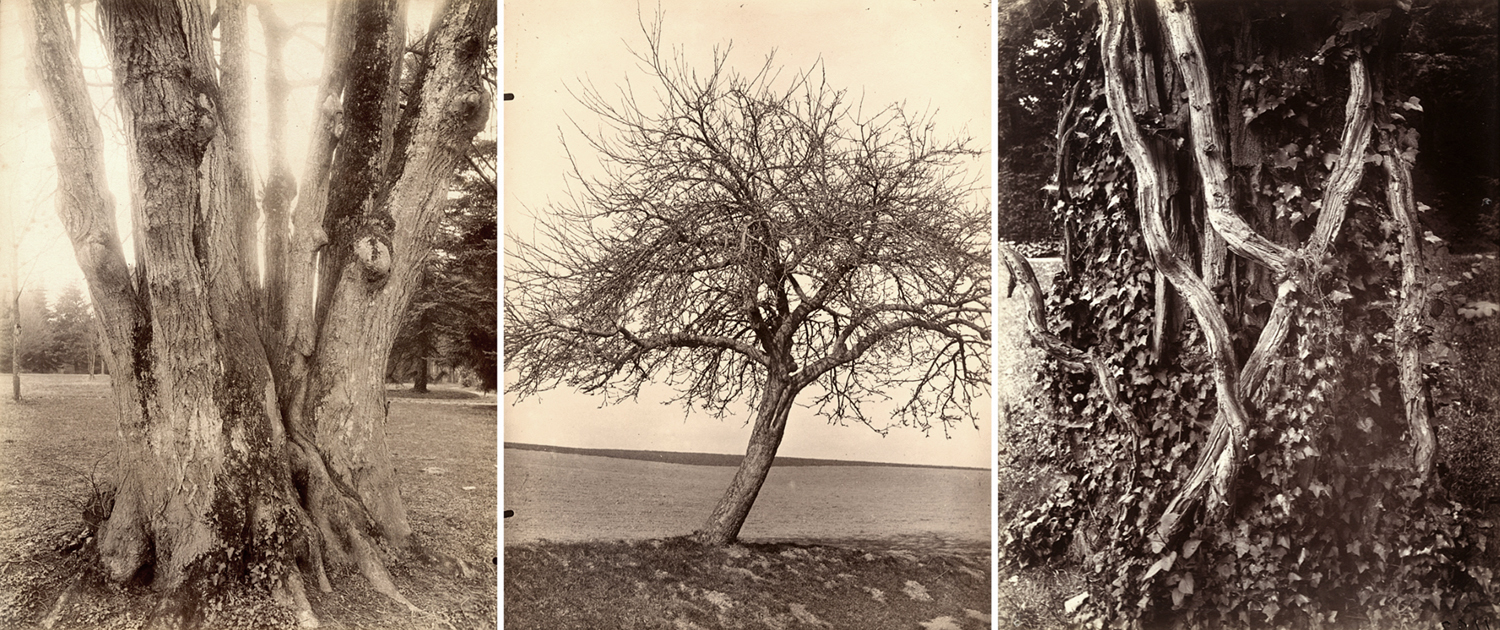
Three tree photographs by Atget

The way they were lit, the gnarled forms they took, their texture and even the gold-toned sepia surface of the silver images all functioned as metaphor. They evoked emotion the way art can. 

Usually, when most people see a picture, in a magazine or newspaper for instance, the image is just a kind of shorthand for language. You see a picture of a house or car and instantly the words “house” or “car” spring to mind. The journalistic photograph is a kind of pictogram or hieroglyph, like the stick figures on the doors of public restrooms. 

But images can also do more than that: When you abjure the naming phase and feel the color, line, shape, form and also the cultural resonance of an image, they evoke thoughts and emotions beyond the named subject. 
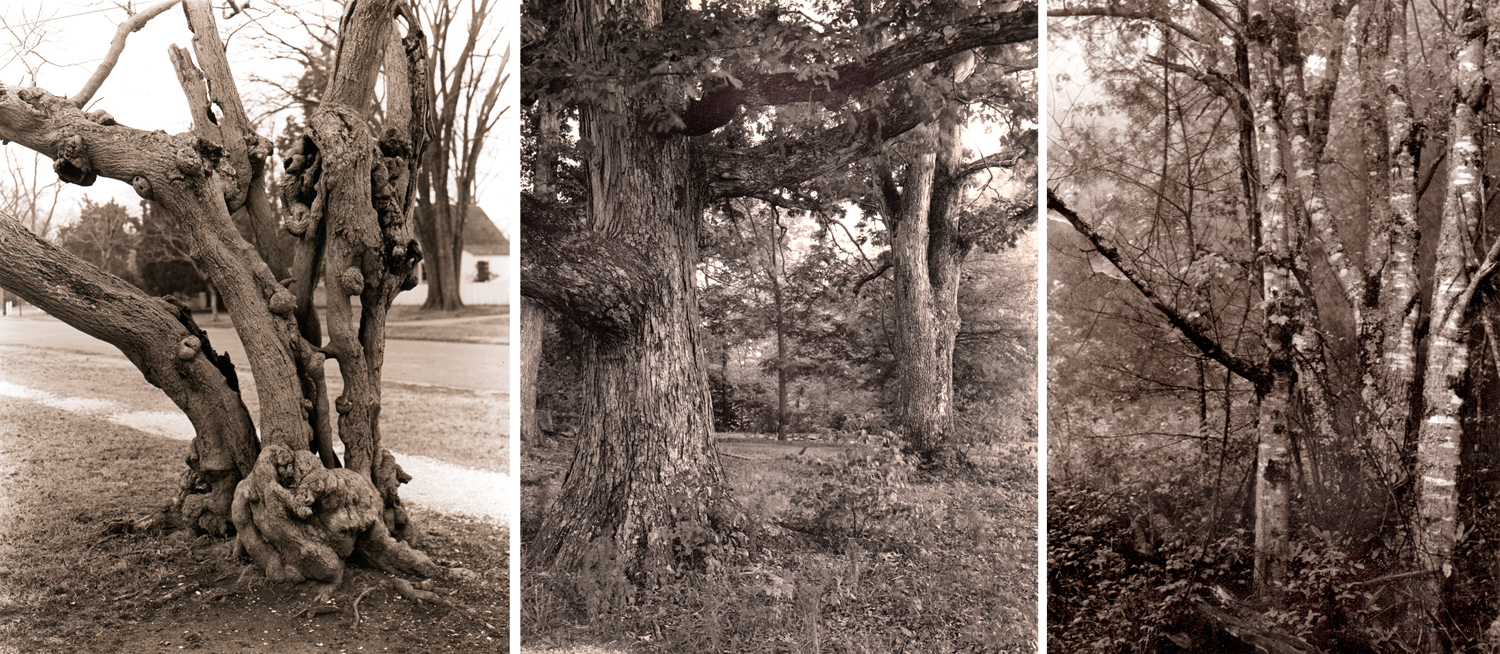
My imitations of Atget

And it was that that blew into my brain, seeing the Atget trees. 

And that is something I have been hunting all of my creative life. And attempting to find in my own photographs of trees. Or not just trees, but in all the photos I’ve tried, whether landscape or still life or nude or portrait or abstract. — What else it is. 
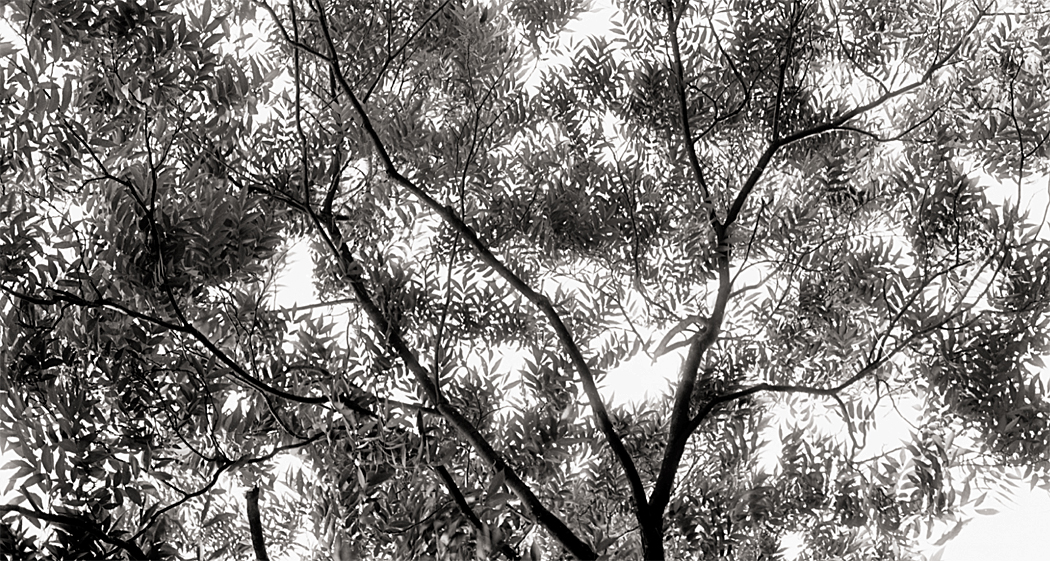
So, when I sit on my back patio and look up the hill at those mid-winter spring trees, with their augury of renewal, and their complex shapes and overlaps — those wonderful lines drawn against the sky’s paper — I want to catch something as it flickers by. 
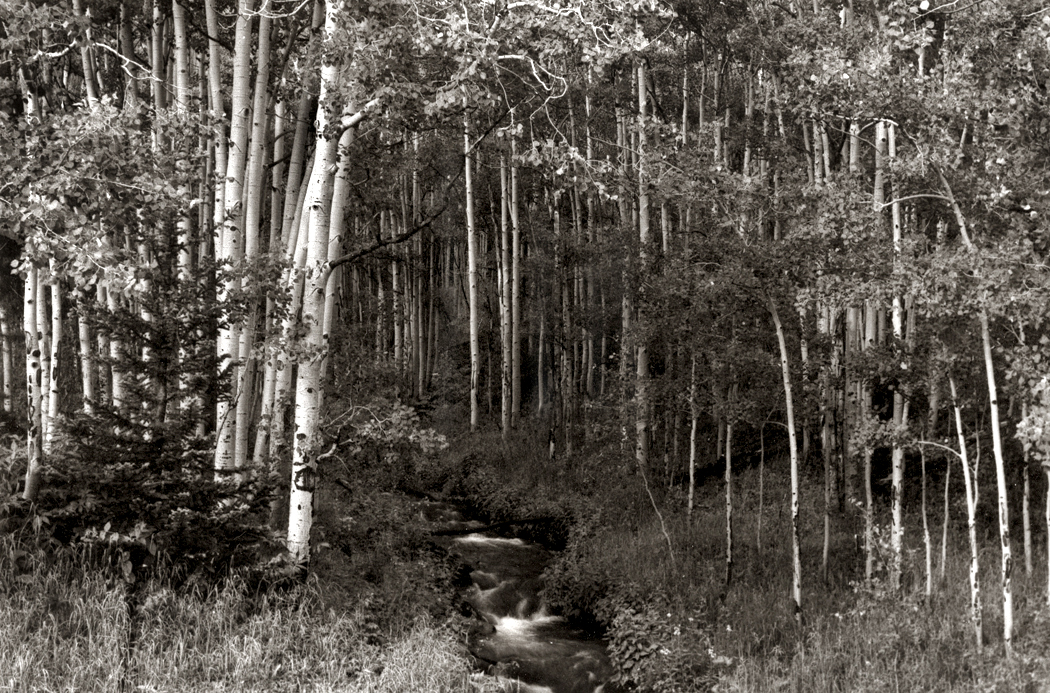
Aspens, Colorado

I’ve snapped a lot of them, although I’ve caught few. Many don’t have the magic and just sit there as noble attempts. It hasn’t just been bare trees. I’ve tried to find the emotion in all kinds of them.
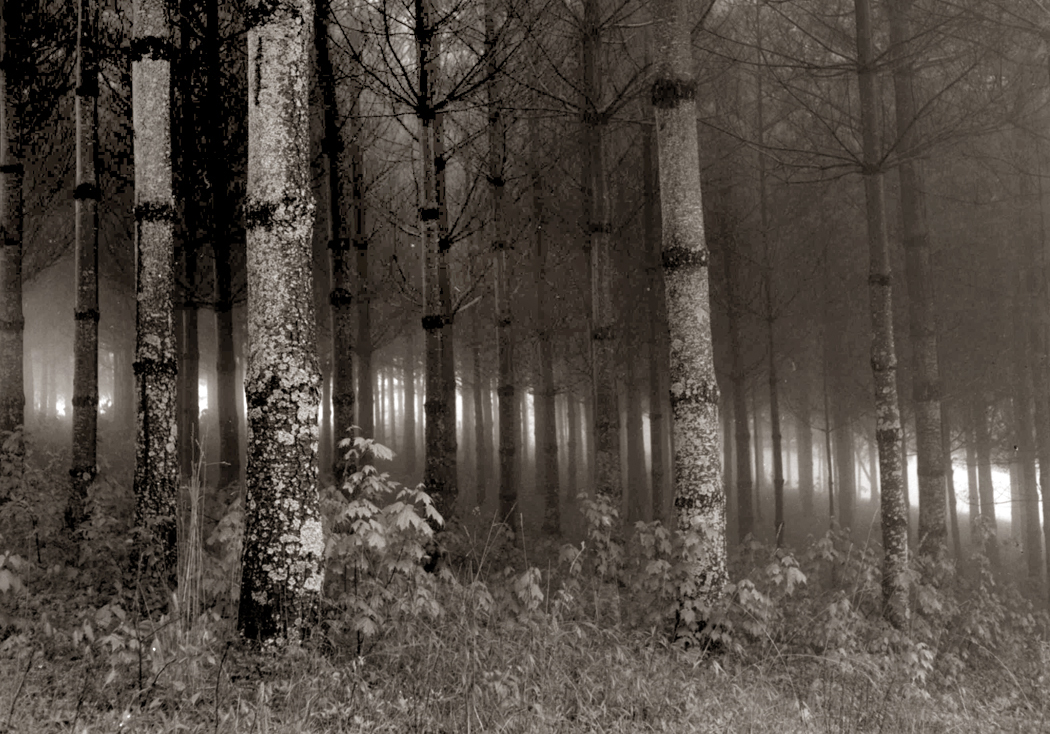
Morning, Obids, NC, Blue Ridge Mountains

The photographer Alfred Stieglitz called the equation between the subject of a picture and the emotions that are evoked “equivalents.” It’s part of the constant fight between the simple depiction of something you can name, and the attempt to make the image stand on its own as an esthetic entity. 
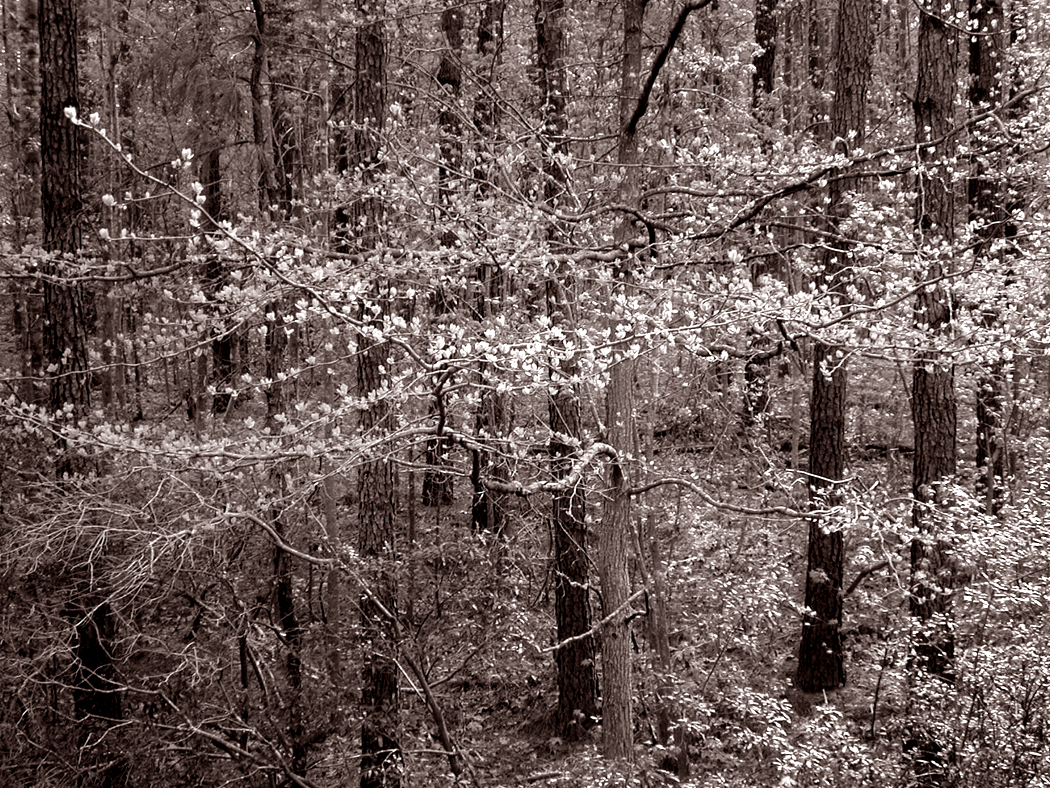
It’s what most visual art tries to do: create an equivalent in the limbic system to the shapes, colors, lines, and even the subject matter and its resonance with the personal. 
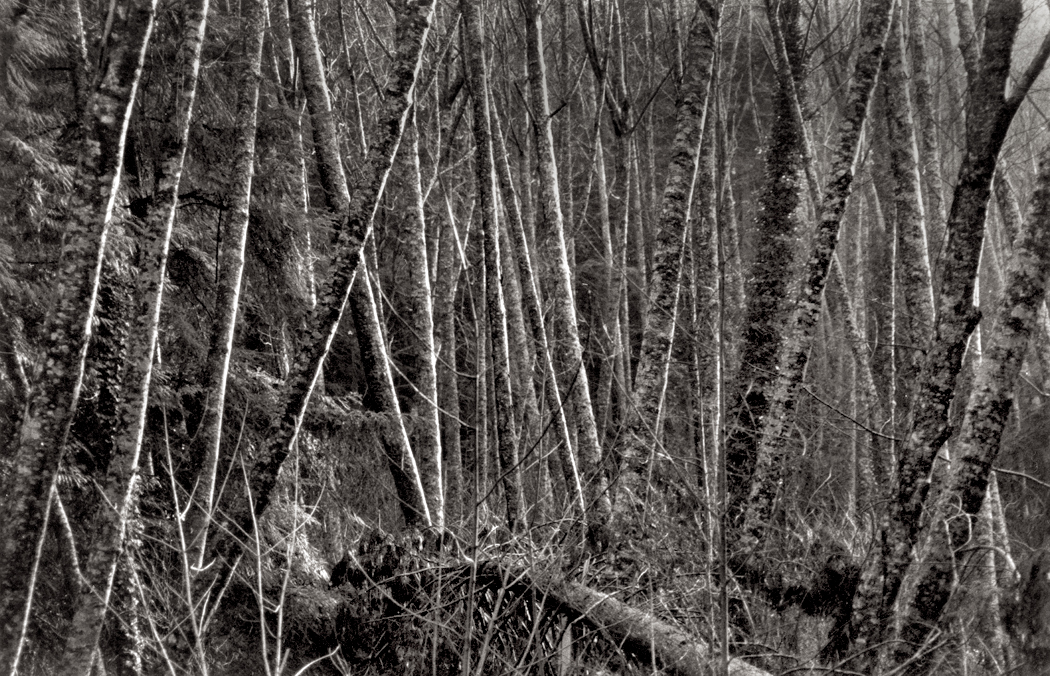
Bainbridge Island, Puget Sound, 1979

Most glossy travel photos are meant to make you wish to be there. But with the image made for display, or as art, you are there, in front of the thing itself. You don’t have to make travel plans. Not just pretty pictures, but objects of contemplation. 
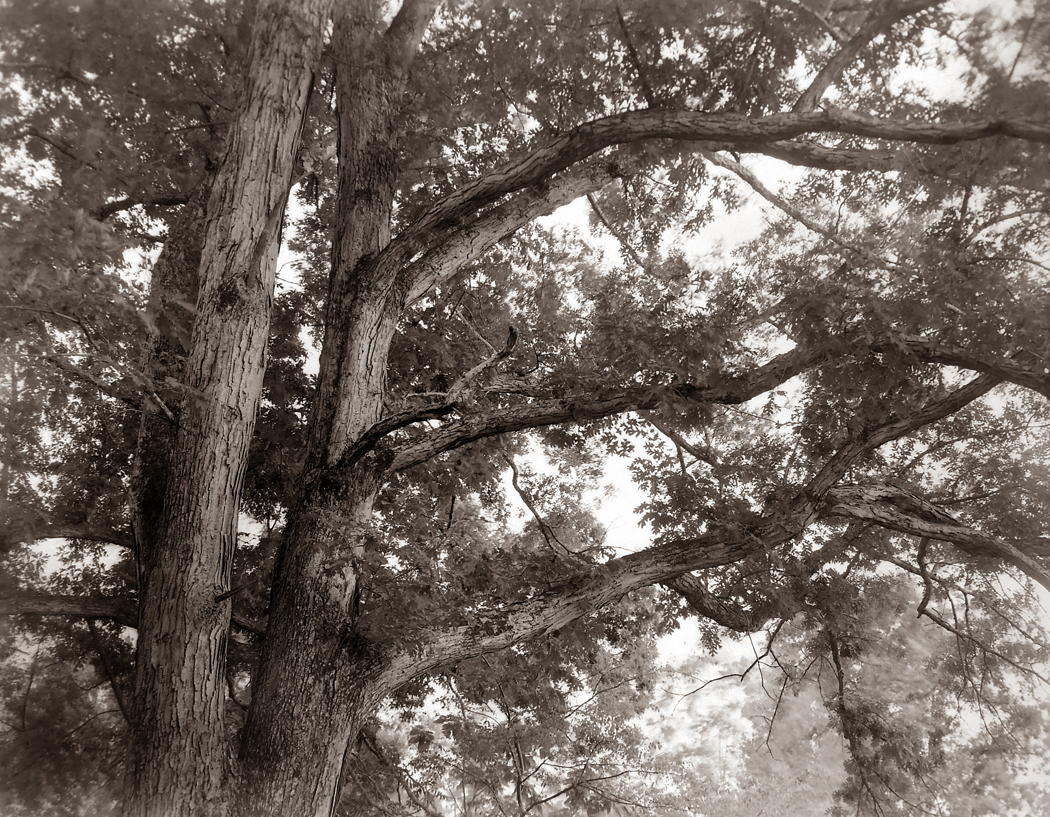
Sandro’s oaks, Summerfield, NC, 1980

The point is twofold. First, to make you pay attention to the world around you, to see with intention. And second, to allow you to connect with the emotions you have in potential.
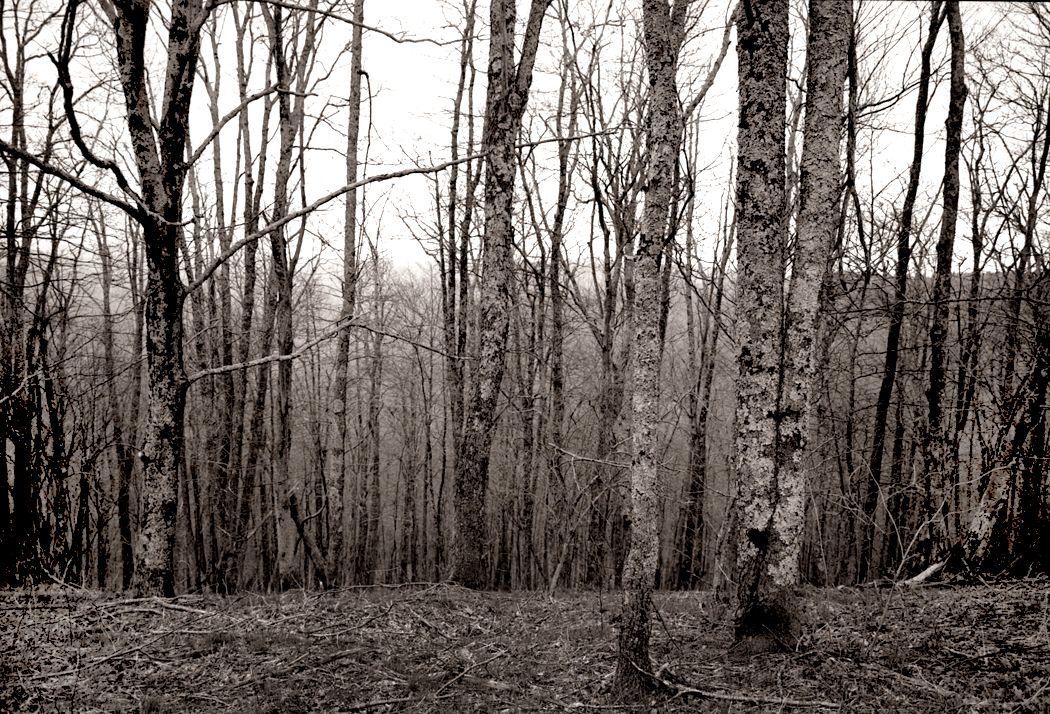
Wise, Va. 

Both together they make a single bond: interior and external; you and the world; individual and cosmos. No longer separate. 

Over the years, the images I make have become less public and more personal. I no longer pay much heed to the wide acceptance of the art I make. I don’t make it for others, but as a kind of personal meditation. 

I seek new ways of making this happen. One morning, while visiting my brother- and sister-in-law in Reidsville, N.C., I saw the shadows of winter branches projected onto the window blinds. It made for a kind of Japanese byōbu screen. 

And then, one day last week, in midwinter spring, sempiternally recurring, I was sitting out back, listening to birds and airplanes, the dogs down the street and watching the clouds move west to east and the branches waving in the moving air, and I managed to make an image that finally captures for me the complexity of the abstract, neuronal jumble, all the connections, the scribble and the energy. It is small on your computer screen, but it should be large as a mural. 
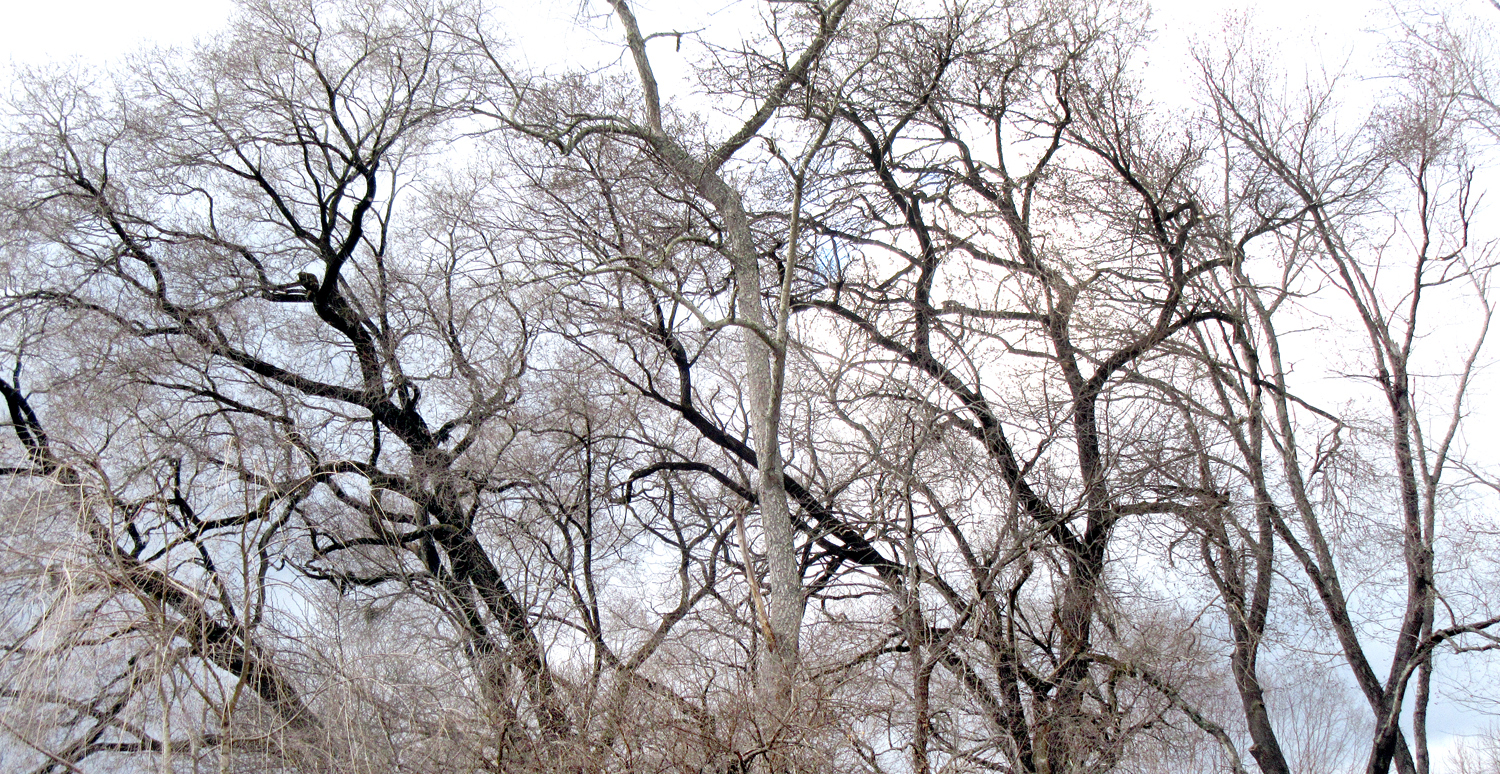
If I could, I would print it out mural size to cover a wall. Or split it up over several vertical panels, like a Japanese byōbu screen.

But I no longer have means to do that, and so, I just look at it and contemplate.
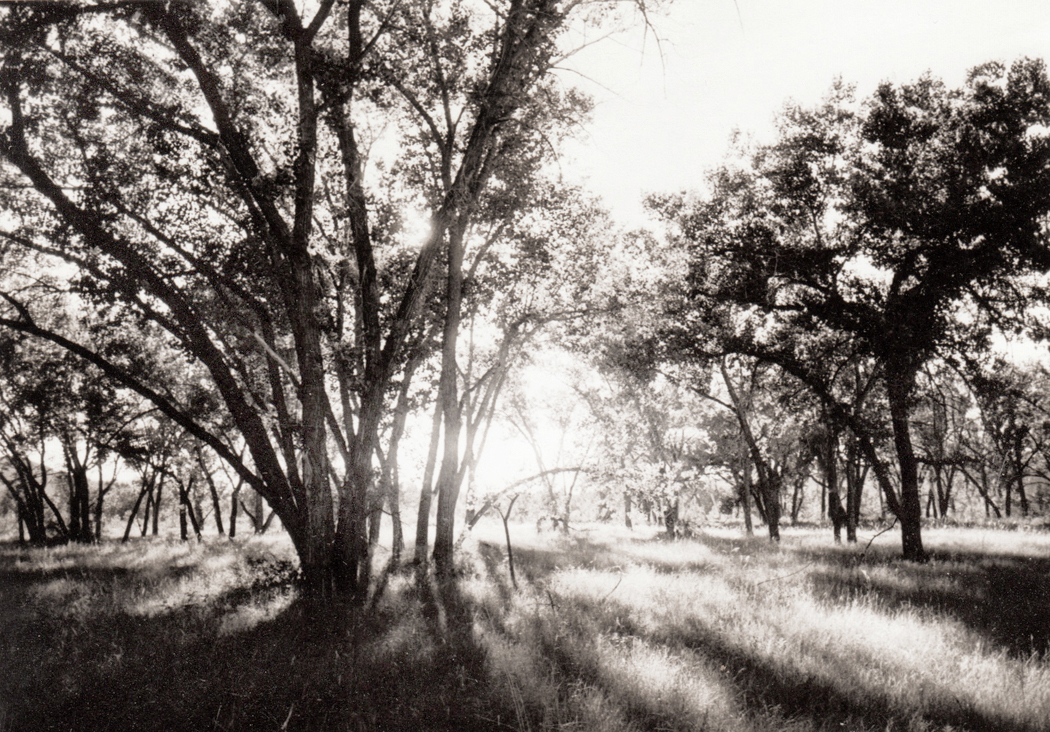
Roosevelt National Park, ND

Click on any image to enlarge

It was 74 degrees today in the Blue Ridge Mountains and spring is edging its way in. There is still some cold weather coming — Monday night is predicted to drop to the mid-20s. But the signs of shifting seasons  are all over. 

The daffodils have popped, the Bradford Pears are white lace, and the empty winter tree branches are feathering out with buds. 

According to the calendar, the new year begins mid-winter, but in practical terms it is the reawakening of nature that lets us know that we can all start over again. The year circles around to the beginning and we can put our overcoats back into the closet. 

It is a comforting thought, but the fact is, the recurrence of spring sits in equipoise with the hurtling forward of age. The trees come alive again, but I only get older. 

I have seen 76 springs, and when I was a boy, each season lasted years. Summer vacation seemed endless and the next school year might as well begin in a science-fiction future, eons away. As a grown-up, the year passed by almost unnoticed. Winter just meant sloppy roads; summer just meant sweat and iced tea. I went to my job every day, no matter. 

But I am old now, and the season change has yet another meaning. 

One of the impenetrable facts of being 76 years old, even in decently good health, is that I have a limited number of springs ahead of me. 

I have to face the possibility that this one now could be the last; there is no counting on next year or the year after that. 

It’s not that I am anxious over the likelihood of my existence being cut short, after all, over eight decades, from 1948 to now, it has been a long and I hope fruitful life. 

But the uncertainty of future springs makes this one more necessary. I am paying attention more than ever before, and although I have always enjoyed the spring, it feels closer to the bone this year. 

I don’t want to miss a moment of it. 

Click on any image to enlarge
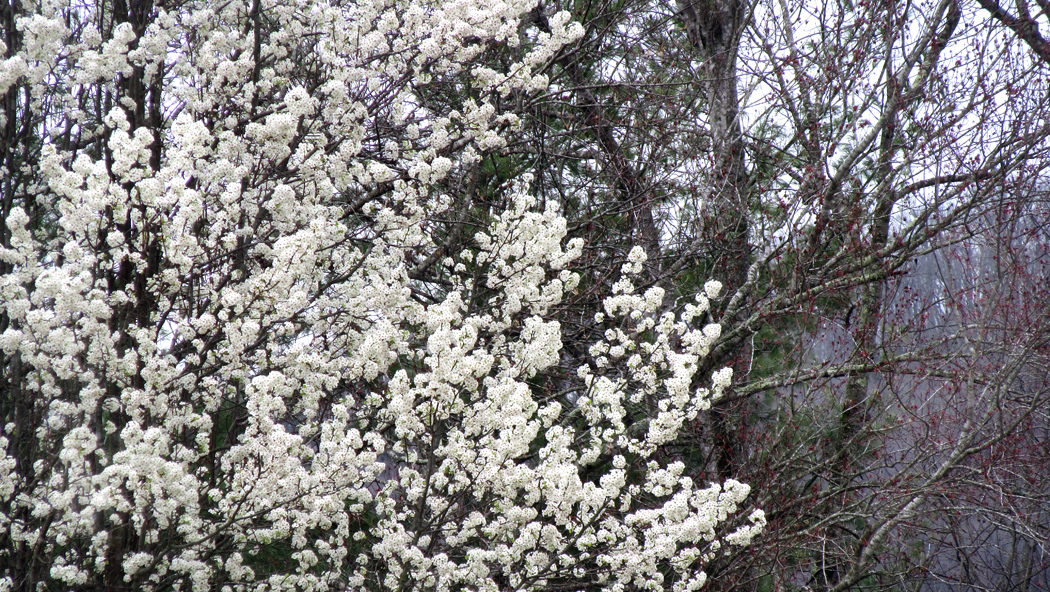
“Nature’s first green is gold, her hardest hue to hold.”

I am seeing my seventy-sixth spring. The first, I don’t remember, because I was only four months old. And most of the rest tend to blur into clumps — the springs of my New Jersey childhood; the springs of my adolescence; those from my college years; those from just after — each clump has its own resonance and emotion. 

Now that I am 75, the spring is more poignant for the fact I have so few left to experience. 

When I was a child, springs were so far separated from each other, they were wholly new each time. They augured the end of the school year and the beginning of an eternal summer vacation. Now, they come thrusting upon each other like jostling ticket-holders in a queue, pushing toward the head of the line. Through that door, though, is an end.

Through my twenties and into my thirties, I was living in North Carolina, and spring brought what was called “mud season,” when the ground thawed and turned into muck, which caught your shoes as you walked. The air was still crisp and the trees just budding, but it was clear winter was over and daffodils were already yellow. Next step, the redbuds and then the dogwoods. I’m afraid winters just aren’t as cold anymore, and the ground never really freezes. Climate change is obvious for anyone with enough years to remember. 

It is often said that spring is a rebirth, as the seasons circle around and the grey and brown of naked winter trees turn first yellow-green (nature’s “first gold”) and then leaf subsides to leaf, darkening to the deep forest green that augurs summer. Animals rise from burrows; bees begin circling gardens; birds squawk and chatter; the sun rises higher in the sky each day. 

But that is not spring for me. Instead, at my age, the changing seasons are like mile-markers on a highway, and each passing one means there are fewer in front of me. It is a straight line rather than a cycle. 

As the years are squeezed, so the pressure increases to take it all in, to pay attention to each small detail, to garner pleasure from the tiniest bits. What once was simple pleasure is now joy — an increase in appreciation for what I am going to have to leave behind. 

I sit on the deck behind the house I’m visiting in the North Carolina Piedmont, in the scant shade that the freshest, newest leafs make before fully fledging their trees, and listen to the wrens and nuthatch, the rattle of the woodpecker. I feel the warming air and look up to the clouds shifting against the blue. 

It is a sensuous recognition of the variety the planet holds. The many greens of the newest foliage. The varied textures of the leaves, smooth, dentate, glabrous or slick. 

The fullness in my chest as I take all this in, is a form of love. I watch the new spring. It is now Earth Day once again. The world is ticking on. This blue planet — this green planet — and the parent will outlive its child.

One of these springs, perhaps even this one, will be my last. My hand is always at my lips bidding adieu. 

When I was a young man, each loss, however devastating, was temporary, an emptied pool to be refilled by a gushing spring. But now that  has changed, and I know that the final loss will bring only oblivion. I hold on to what I love with tighter grasp. A bumble bee hovers; the cat yawns; a breeze teases the upper tree branches; a cardinal yawps. 

I want to hold it all tight in my arms.

I am 74 years old and it is fall again. Again. There are a countable number of them left for me, a fact of which I am daily aware. It will soon be winter.

It is the middle of October and the leaves in Rockingham County, N.C., are falling like snow all day and clotting the ground; the woods around the house are turning brilliant colors. It is something I’ve seen 74 times and each cycle around it seems more beautiful and more precious. 

Fall color can be reduced to mere postcard cliche. We drive the highway and look for the yellows of oak and the reds of maple and see them gleam in sunlight and think, Oh how pretty. 

That is the view from the car window; it is too far away to see the leaves clearly — just broad patches of attractive color. I am not saying that view is a lie. It is beautiful and we should enjoy it if we take a weekend drive into the mountains to see the hues. We enjoy what it is given to our age and awareness to see. 

But at 74, I walk out into the grounds behind the house and pick up one of those expired chlorophyll factories, wet and matted from under my feet and what I see is very different. Not less beautiful, but much less pretty. 

The dead leaf is ribbed and spotted, with holes eaten through, worn at the edges. Patches of dun yellow, raw red and sometimes so dark in maroon as to be almost black. Few leaves fall in a perfect and whole shape. Most have been damaged, mostly by time, bit by bugs. They are curled and sere. 

The highway view of the fall is a generalized one, the close up is individual, almost personal. The highway view is the short story; the individual is the novel — a great Tolstoyian or Dostoevskian epic. It is a constellation of detail. Like a great abstract painting, you can gaze at it and see a palimpsest of accretion, of time having its way, of decay not as the loss, but rather as a build-up of detail, each on top of the other. A Pollock able to reward the look at any detail pulled from the whole. 

We are all sitting on the patio in the back yard, with woods acres deep behind and the sweetgum tree has covered the deck. While we talk, I pick up one and feel its roughened surface, its crisp desiccation, but mostly its bruised and patterned color. 

And I recognize myself in them, now that I am old. My skin is also sere and crisped. It has its mottling and discoloration. The sheen of youth is  rasped away. This is not a lament, but a recognition. Surely there are recompenses for the years’ brutality. 

Primary among them is an equanimity. Motes that seemed essential are washed away; acceptance promotes forgiveness; the need to advance in the world vanishes. 

And, perhaps most important, I find beauty in things that, when I was younger, I could not recognize, or found ugly. After such long experience on earth, I look for different things — very different from when I was young and ignorant. Now I am aged and ignorant, but have learned to see things with a wider eye. 

So those failing leaves speak to me of a profound beauty. A beauty of mortality. Of multiplicity, of profuse accretion — of time as a building up of one thing on top of another, a layering of meaning. A depth. 

I don’t know if this will be my last fall season. I could live another 20 years, although no reasonable actuary would advise placing a bet. I do know that it forces me to appreciate the worn leaf and see its innate glory.

Click on any image to enlarge

I am old, Father William, I am old. I wear the bottoms of my trousers rolled. And I’m not kidding: I am sitting at my keyboard and there are wide cuffs on my dungarees. I have shrunk. I am only minimally shorter than I was when I was young, but I have settled, like an old house. I have been crawling around on this earth for 72 years. 

Two days ago, the maple tree in the front yard was a deep forest green. Today, half its leaves are yellow and orange. I don’t know if this will be my last fall, but certainly the number of them ahead is dwarfed by the number behind.

It has always been my favorite season, although I lost 25 of them by living in the desert, where fall is really just a period of about 17-and-a-half minutes between the thermometer at or above 100F and the moderating drop to about 80. In Arizona, it skulks by almost unnoticed. Winter is the great season in Arizona. 

I grew up in the Northeast, where fall has a special character, with nippy, dry October days and a sun getting lower in the sky, which makes the leaf color all the more ruddy and the shadows more deeply lined. Leaves raked into piles for kids to jump into. A skim of ice on ponds in the early morning. 

Now, I am in the North Carolina mountains and this time of year, the Blue Ridge Parkway begins to feel like the 101 in Los Angeles, clogged with cars, their inhabitants seeking the perfect fall-color experience. 

In most of my past years, what I noticed about fall was the color. It wasn’t always as postcard-perfect as the New England autumn of The Trouble With Harry, but then, in Hitchcock’s movie, they had to paint the leaves orange (they shot the film in summer). Still, that is the mental image most of us have of the season. 

But the calendar-picture image of fall is too pretty, like peonies or dahlias. I am not moved. They belong on postcards with names like “Autumn Paintbox” and “New England Rhapsody.” The very word “autumn” is too Latinate. It reeks of literature. It traces its etymological roots back to Proto-Indo-European words meaning “cold” and “dry.” In plain-spoken North America, we prefer to call the transforming season simply “fall.” It is the leaves that fall, after all. 

It is much as I love weeds and dislike flower gardens. The gardens are too prissy. Perhaps they smile in bright reds and yellows, but their smiles are unearned. But weeds at the side of the road have strained and labored and live without permission. They are ungoverned and profuse: The force that through the green fuse drives — weeds. 

Gardens are planted in rows, people march in columns, books are alphabetized, plants are given phylum and genus, but any idea of order in this profuse world is a fiction.

There is a rankness to the weeds that I love. If you need a demonstration of the difference between the pretty and the beautiful, it is there beside the roadways, the Joe-Pye weed, the ironweed, the asters, the thistles, goldenrod, cow-itch, cockle burrs, pokeweed, teasel. Most distinguished by their textures and scratchiness. You can feel them on your skin. “I am mad for it to be in contact with me.”

Now that I am old, with liver spots and wrinkles, it is not the color of fall so much as its texture that appeals to me. The leaves spot and crinkle, curl at the edges and almost rattle as you walk through them as they collect on the walkway. I recognize myself. 

The inner world and the outer come to match. We have inner weather, and we have an interior climate as well. At the extreme it is Lear’s “cataracts and hurricanoes,” and it is my own sense of the textural maculation of my old age: Those blackened spots and browned edges are my own. 

I cannot distinguish between my projection of myself on the world, and that world’s identification in me. It is all one. And the shrinking leaves are verse and chorus. 

And so I look with a burning concentration at the sere and weakened leaves with an intensity brought by my own awareness of how few recurrences of the season I will get to witness. They are all the more beautiful for that. 

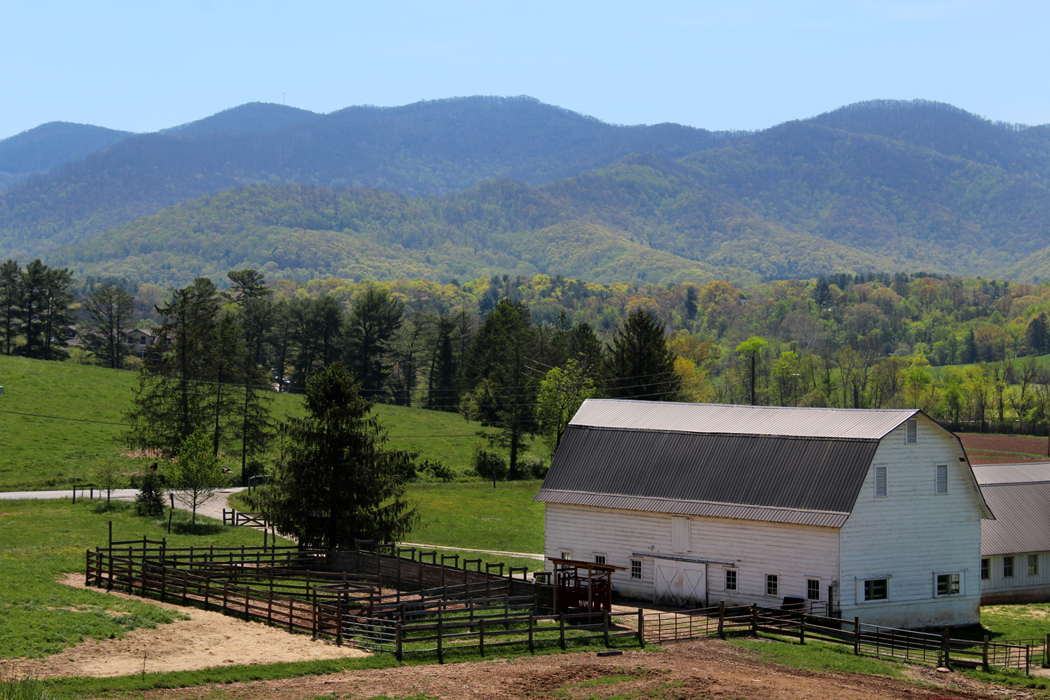
The Swannanoa River runs in western North Carolina from the town of Black Mountain to Asheville. It is where I live now, and it is spring. 

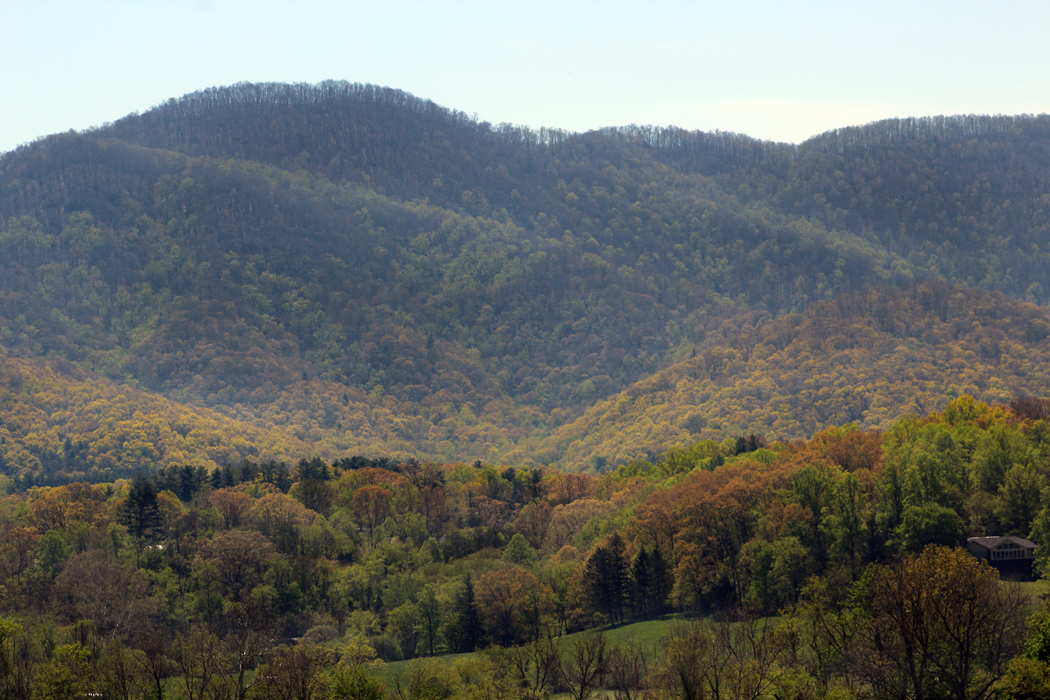
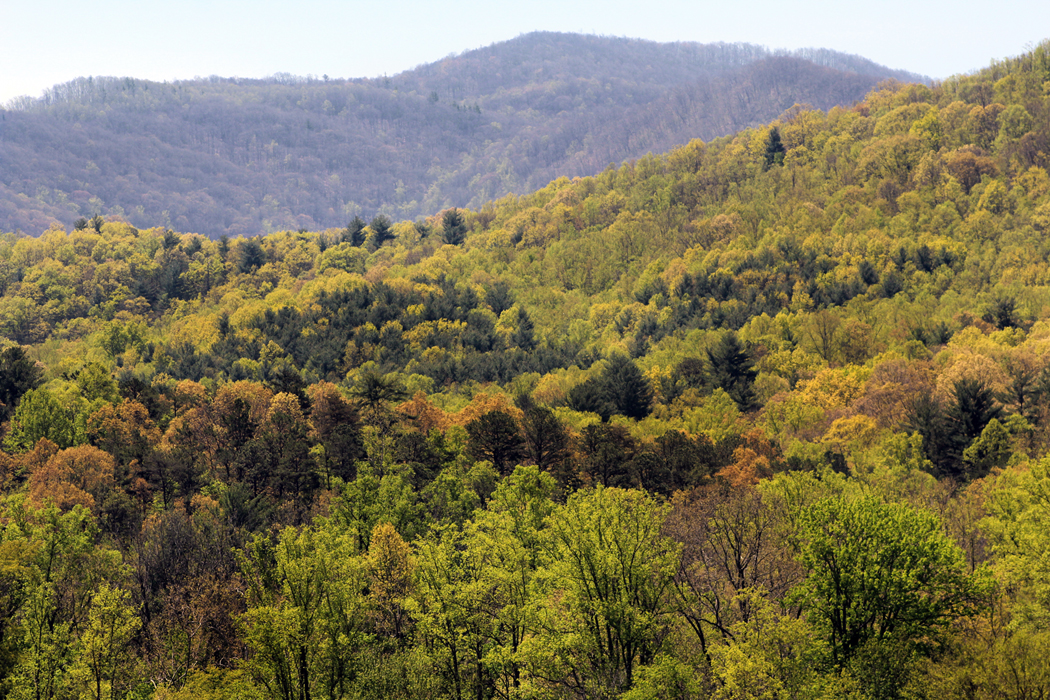
As I drive through the valley, with the Swannanoa Mountains directly to the south and, further north, in the distance, the lofty Black Mountains — the highest east of the Mississippi — the lower slopes of the Swannanoas are green, the bright green of early spring. The mid slopes are what Robert Frost wrote about: “Nature’s first green is gold, her hardest hue to hold.” And the tops of the peaks are still the dusky grey-black of winter. You can see spring climbing up the mountains. The green-line moves fast; a few days ago, it was all grey. Tomorrow, the line will be hundreds of feet higher up the slope, chewing up the grey, until it is all consumed in green. In their half-world, the hills look almost iridescent, the way draped satin will pick up the highlights and shimmer.

And all the while, I have Mahler’s Third playing and — I didn’t plan this; it’s just what was in the CD player — the first movement culminates in a great joyous march that is meant to describe the triumphant return of spring; all the animals and plants, all the hills and rivers are marching in procession like Mummers. It was overwhelming. I almost had to pull over and stop. Luckily, I hit a traffic light. I could steal a look to the left and soak in the iridescence and the utter, unutterable beauty of it all. De Welt is schoen.

I will be heartbroken to leave it when my time comes.

It used to be that January turned to February and February turned to March — and so on. Then, as I got older, it was January-July-January-July. Now, it is January-January-January. I don’t know why time speeds us so in senescence. I think, May is so far off, I don’t have to decide anything yet, then, all of a sudden, it is May again. The earth spins around the sun like a propeller.

It never stops; it only speeds up. Existence is not a thing but a process: nature is a verb, not a noun. It is never the same river; it is always the same flow. The green climbs up the hillside; my years shrink in front of me. I have now seen countless leaves sprout, green, shrivel and fall, and countless lives. The loss builds up and each spring slightly more wistful, more sad and the joyful march of plants and animals, hills and rivers deeper and more grief-laden. All rolled up into a single procession, full to bursting. 

Die Welt ist tief; tief ist ihr Weh.