Archive

Tag Archives: solaris

There is a class of movie that deserves special mention. The films aren’t necessarily the best, although they tend to be decent. They don’t usually show up on Top 10 lists or all time greats. But the fact is, that when they show up on TV, often late at night, we will watch them over and over. I don’t necessarily tune in on purpose, and don’t set the DVR to record, but if I tune in halfway through, I’ll see them out to the end. 

These are movies we know almost by heart. There is an amiability to them. Like a favorite tune we like to hum along with, I’ll recall the dialog or the set pieces. A good tune never wears out its welcome. 

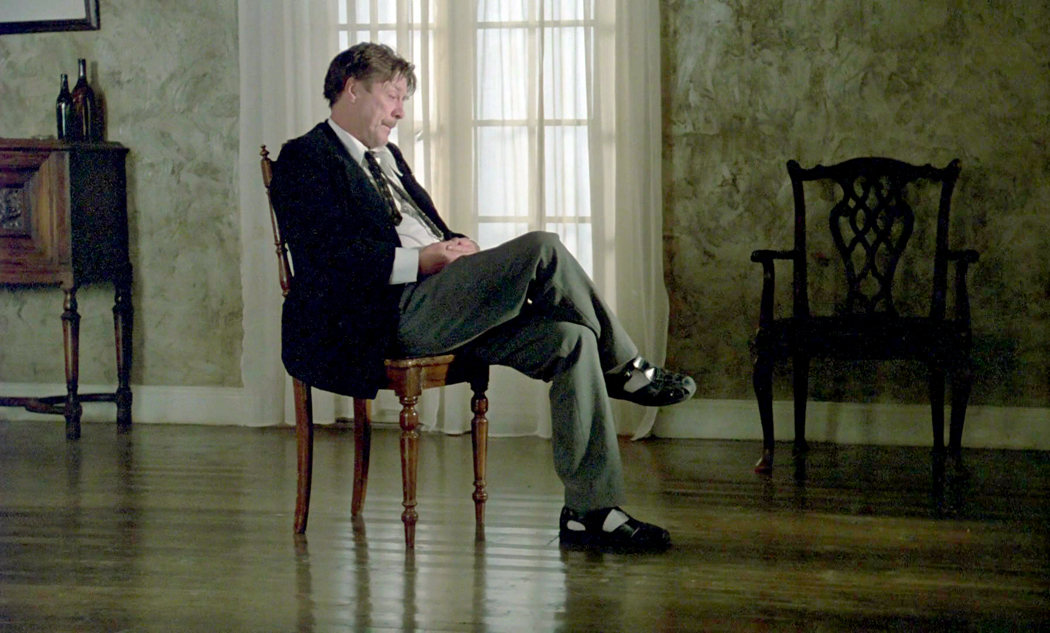
I thought about this one night when I was clicking the clickerator and came upon Support Your Local Sheriff. It was bedtime and I was about to turn off the tube, but instead, I sat back down and saw the thing through. Not a notably good movie, but just so pleasant, that I watched yet again to see Walter Brennan do his Walter Brennan imitation. And there’s Bruce Dern and Jack Elam, and Gene Evans and Henry Jones and Harry Morgan and Walter Burke. All great character actors doing what they do best: carefully etched characters, albeit caricatures, but all memorable and distinct. 

This is not a claim that the movie is one of the great classics of cinema, but I can’t help but just enjoy the heck out of it whenever it’s on. Old friends I’d drop in on and visit. 

And it’s far from the only such film. There’s a whole class of them. Among notable “rewatchables” are My Cousin Vinny or Key Largo or The Blues Brothers. Such a list will be entirely personal, although there are probably movies that show up on a majority of lists, the consensus rewatchables. 
There are movies I will choose to watch again and again. They are favorites and I will seek them out. But this list isn’t about that, but about happening on one when channel surfing and finding one that is an old shoe, comfy, familiar. I have the dialog memorized, and no matter if it’s just starting or soon ending, I will keep it on and watch, under various levels of engagement, until it ends. Not so much movies I choose to watch, but that I happen upon and stay with. 

There are movies that, because of this habit, I have seen the end of many times, but seldom see the beginning. For all the times I’ve seen the beginning of Airplane! or The Fifth Element, I’ve seen their endings at least a dozen times. You catch these films mid-flight and ride until they land. 

(There is a subset of films where it is only the beginning that I watch over and over — If Turner Classic Films is showing 2001: A Space Odyssey, I will watch the prehistoric beginning but then tune out. Not that I don’t think the rest of the movie is good, but because it is only the opening that has this over-and-over quality of a favorite song that scratches a certain cinematic itch.)

When I consider what makes a movie rewatchable by this standard, there are a few things that seem to be true. 

First, plot doesn’t matter much. Movies that I will stay to watch are composed of memorable set pieces rather than a story with a goal-oriented ending. It is the set-pieces that I want to see, each scene a mini-story in itself. 

Second, they feature memorable dialog. Snappy chatter and witty responses. 

Third, they feature memorable characters, whether germane to the plot or not, and usually played by memorable character actors. 

Sometimes the attraction is none of the above, but just how bad the movie is. My brother says, “Growing up, I’d watch any movie with robots in it. Still will. I’ll visit most any ’50s movie with a monster or a rocket ship (or monster in a rocket ship). Stupid and cheesy and incompetent don’t matter.” 
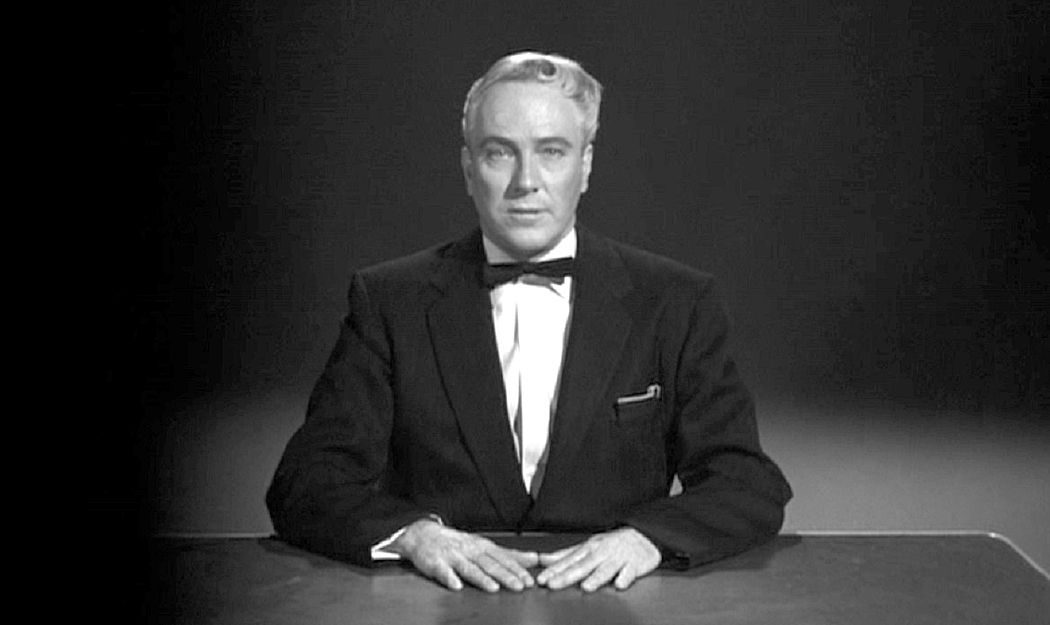
And so, Plan 9 From Outer Space is a Class-A dip-in-at-any-time film (I hesitate to even use the word “film” in this context, as the word implies a certain level of craftsmanship famously missing in this “classic.”) But it has memorably dippy dialog (“We are all interested in the future, for that is where you and I are going to spend the rest of our lives. And remember, my friend: Future events such as these will affect you in the future.”) It has memorable characters, like Vampira or Tor Johnson. And it has character actors, such as Lyle Talbot and cowboy star Tom Keene, doing their best with the unspeakable script. 

At the opposite end of the quality spectrum is Citizen Kane, which is the acme of episodic great dialog with wonderful actors. Lots of scenes to remember in discrete chunks, any of which can be pulled out and dissected line by line and feel complete in themselves. 

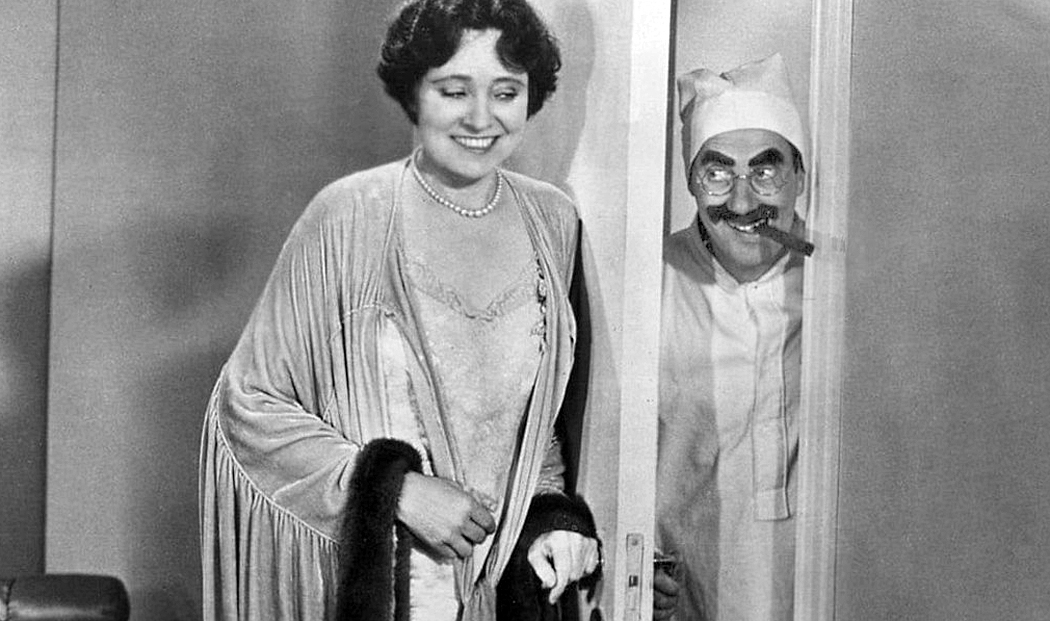
I came up with a list of about 40 films that fill the bill and I know there are at least that many again I have forgotten to include. Among them are The Bride of Frankenstein (mostly for the scenes with Ernest Thesiger), Them!, Duck Soup, Dracula, Rio Bravo, and Beetlejuice. There is no average quality level, they run from Seventh Seal to Harold and Kumar Go to the White Castle

The most important quality of most of the films on my list (although not all of them) is that episodic structure. Francis Coppola’s Godfather is often described as “operatic,” and that is dead-on: Like opera, the rewatchable film is made up of recitatives, arias and choruses. And the same way you can make a concert program of favorite arias, you can do the same with favorite movie scenes. 

I will watch any black-and-white Fred Astaire film for the dance scenes. And any film with a Busby Berkeley extravaganza in it, although, once the plot creaks back into action, I’ll tune out. Each Berkeley choreography is an esthetic whole complete in itself.
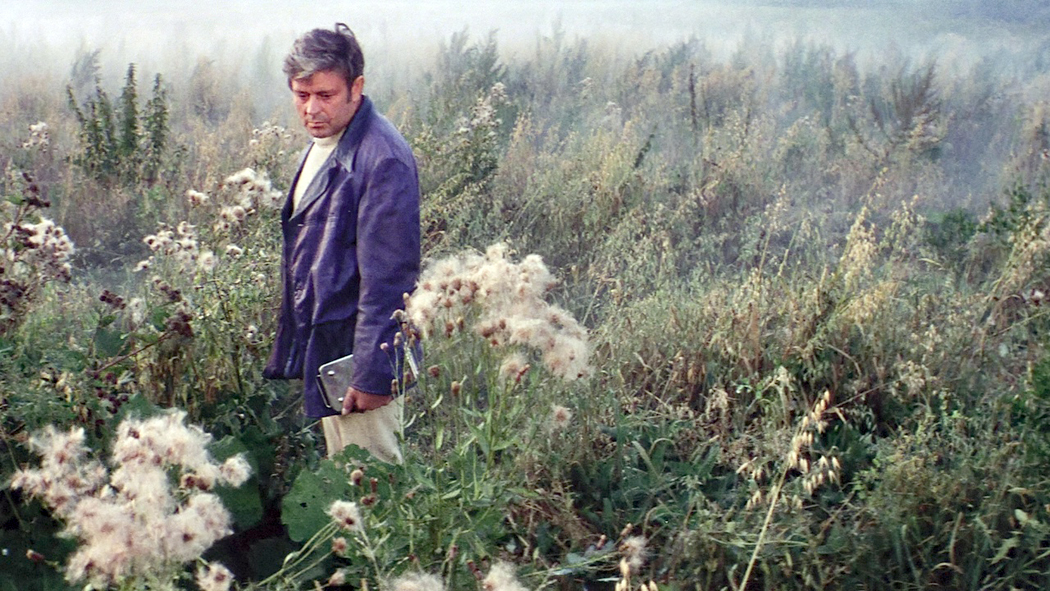
The opening 20 minutes of Tarkovsky’s Solaris is intensely beautiful and I will set my DVR for it, just for those minutes, I don’t often take on the whole, long film that trails behind. 

Bogart and Charles Waldron, upper left; with Sonia Darrin, upper right; with Dorothy Malone, lower left; with Lauren Bacall, lower right

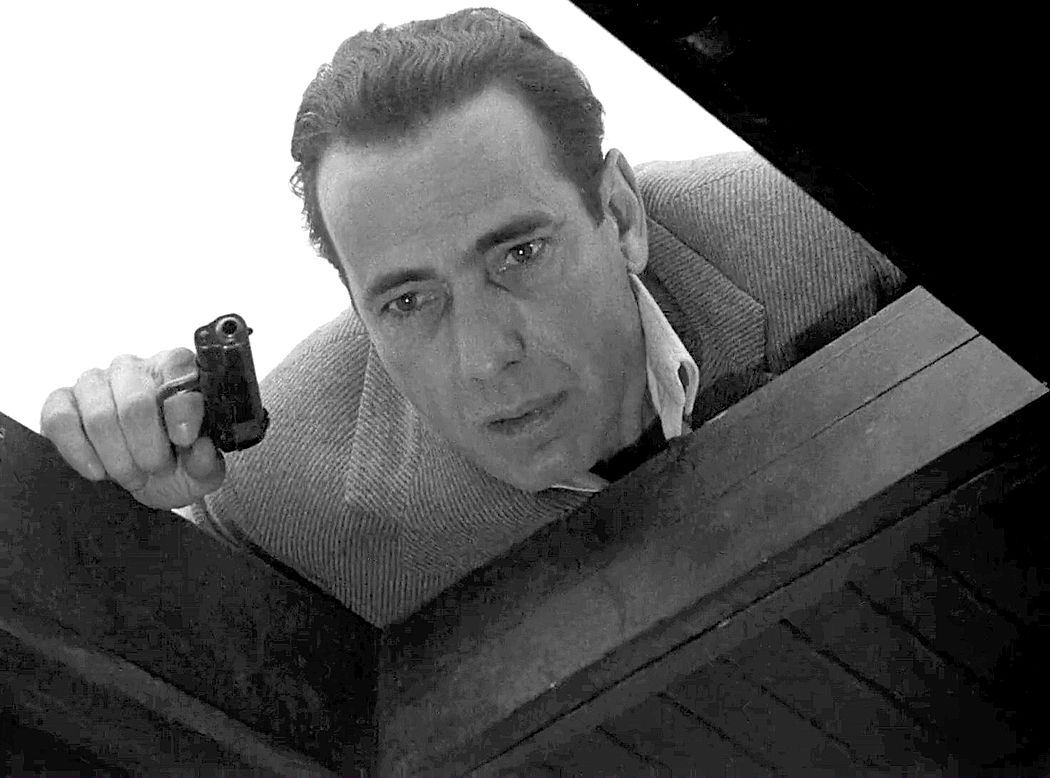
The essential set-piece rewatchable film is Howard Hawks’ The Big Sleep. You cannot watch it for the plot. As a whodunnit, it is hopeless. But each scene is a carefully crafted gem, beginning with perhaps my favorite, Bogart’s interview with the old General Sternwood. (“If I seem a bit sinister as a parent, Mr. Marlowe, it’s because my hold on life is too slight to include any Victorian hypocrisy. I need hardly add that any man who has lived as I have and who indulges, for the first time, in parenthood, at my age, deserves all he gets.”) Includes verbal fencing with Lauren Bacall and Martha Vickers (“Your not very tall, are you?” “I try to be.”) Snappy parrying with Sonia Darrin (“You do sell books. Hmm?” “What do those look like, grapefruit?”) A racy scene with Dorothy Malone skirting the boundaries of the Code, and lines with the cab driver Joy Barlow, John Ridgely (Eddie Mars), Regis Toomey, Charles D. Brown (Norris) and Louis Heydt (Joe Brody), to say nothing about some really cruel lines given to Bob Steele as Canino. 

In the end, you don’t really care who did what to whom, but you are grabbed by the gloss and flash of the individual scenes. Which makes Big Sleep the champ of rewatchable movies. 
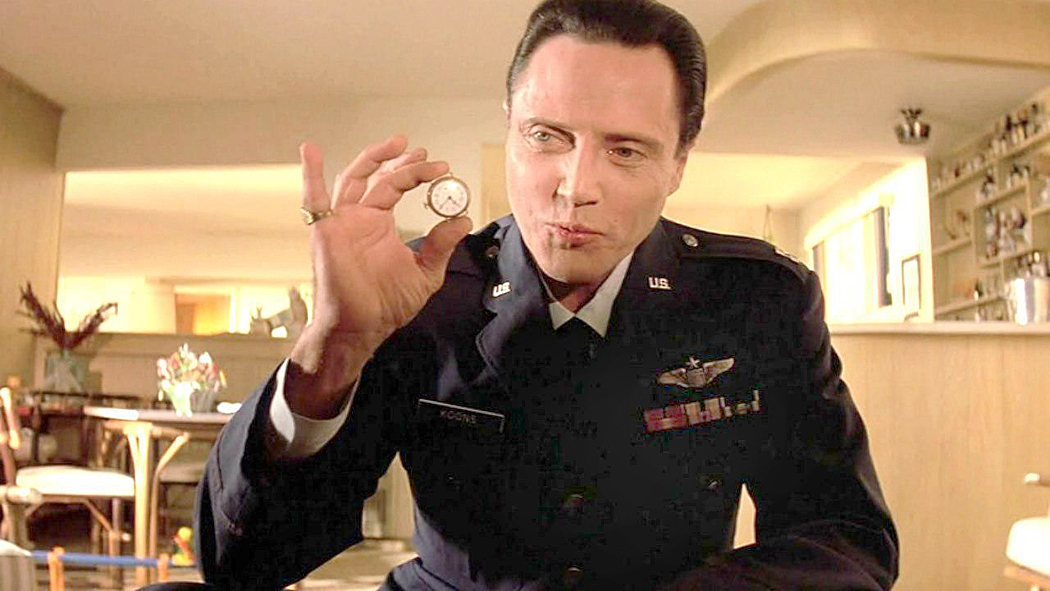
Pulp Fiction is another film built from scene-blocks, in this case all shuffled around. Is there anything more memorable — or more extraneous to the plot — than Christopher Walken explaining the provenance of a watch? It seems that the best parts of the film are all those that are completely unnecessary for the story. “You know what they call the Big Mac in France?” 

A film like North by Northwest might seem to be about a through-driven story, but really, it is also just a series of memorable scenes strung together. Each scene — the cropduster attack; the auction scene; the Mount Rushmore scene; and the final dirty joke — are all just pearls on a string.

Many of the series movies from Hollywood in the ’30s and ’40s are endlessly rewatchable, in part because what plots they have are practically interchangeable. “I’ll watch any Charlie Chan,” says my brother, and TCM devotee, Craig. ”I’ll watch Mr. Moto, but they are a rung below Charlie Chan, and the Falcon movies are a rung below that, and Boston Blackie, another rung down, but, hell, I’ll still watch them.” 

You just want to soak up the cinematic ambience of their docksides and back alleys. The fog, the boat horns, the apartment staircases, the eavesdropping at closed doors. 

“Mostly, my list taunts me, saying ‘You are a man of Low Tastes,’ and I guess it’s true,” Craig says. “And my list seems to be almost all American, and old. But these are just the movies that occur to me off the top of my old and balding head. There are a ton of movies that could be on my list, if I could remember them.”

The first movie I began watching endlessly was King Kong, which I first saw when I was in first or second grade and was shown over and over on New York’s Channel 9 (WOR-TV). In the seven decades that have followed, I must have seen it close to a hundred times — maybe more. I will still watch it whenever I catch it being played. And that despite the creaky borrowed plot (mainly from the silent Lost World) the stilted dialog, and the acting, where Bruce Cabot shows off all the acting prowess of a loblolly pine. 

It was Kong that showed to me the possibility that a movie was worth watching multiple times. There are those who don’t partake, for whom the main interest in the film is the plot and having once seen it, “I know how it ends, so why would I watch it again?” And, indeed, there are many movies for which that is the main draw: The story line pulls you along and having once satisfied your need to know “what happens next,” you have emptied the film of its meaningful content. 

But, for me, the movies I’m talking about are more like music. You can listen to Beethoven’s Fifth many times, drawing something fresh from it with each hearing. Or listen to the Beatles’ Hey Jude over and over, and each time, it tickles just the spot that needs the stimulus. Bingo. Dead on. 

Who ever heard of someone who didn’t want to hear their favorite song again because “I’ve already heard it?” (I remember that bastion if intellectual curiosity Ronald Reagan saying “You’ve seen one redwood tree, you’ve seen them all.”) 

I will never get enough of any of the Thin Man movies, even Song of. Nor will I turn down The Thing with James Arness, nor M with Peter Lorre, nor Touch of Evil, nor Time Bandits

You see this is an eclectic list of movies, and not based on quality alone, nor on subject matter or genre, but entirely on that subjective and personal sense of rewatchability. 

What is on your list? 

Click on any image to enlarge

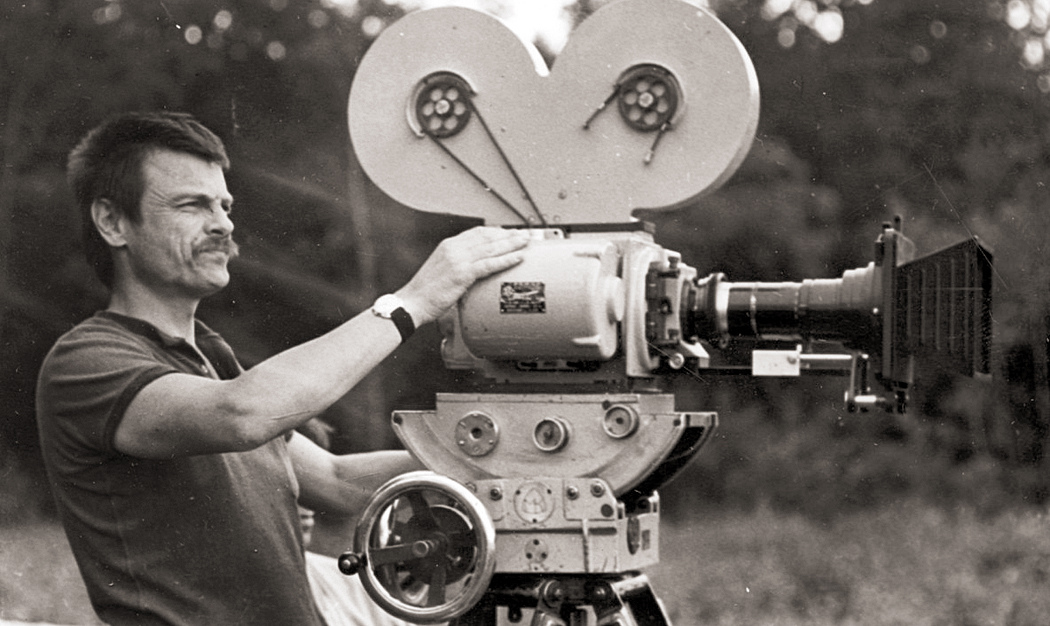
Hello, my name is Richard and I am a Tarkovsky addict. As usual, the first fix was free: I watched Andrei Rublev on Turner Classic Movies a number of years ago. 

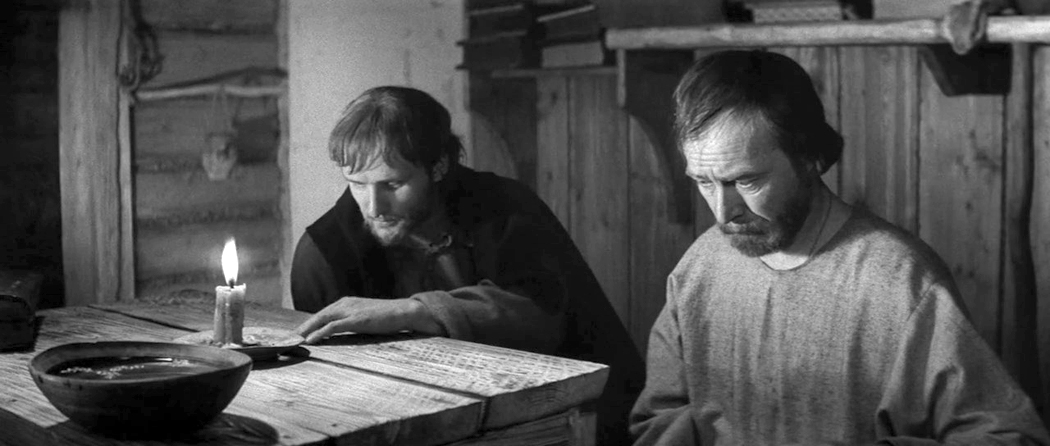
Rublev (1966) is a three-hour black-and-white epic about a 15th century Russian icon painter, which isn’t quite the selling point that it may sound. But it is also complicated by the problem that there is no discernible plot, and that large chunks of the movie are not about Rublev at all. And also, what story there is moves at the pace of paint drying. I was hooked. 
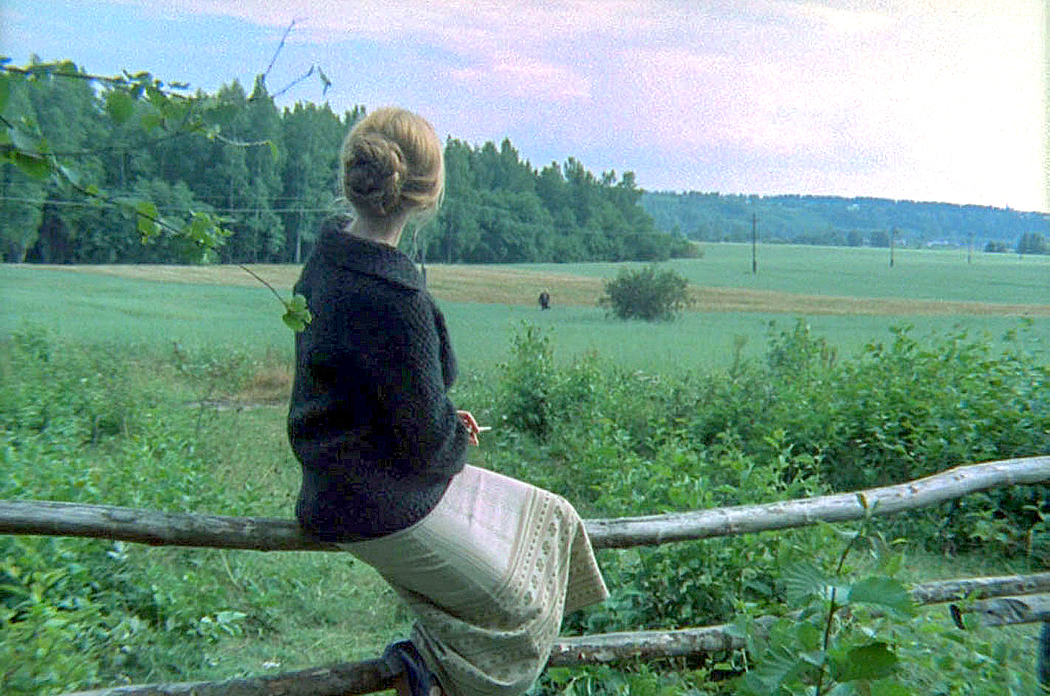
As New Yorker writer Alex Ross said, “Some art works impress us so deeply on first encounter that they become events in our lives.” 

Andrei Rublev is one of the most visually stunning films I have ever seen, black and white, with more black than white, lots of murky weather and nighttime scenes. It is divided into eight tableau, with a prologue and an epilogue. 

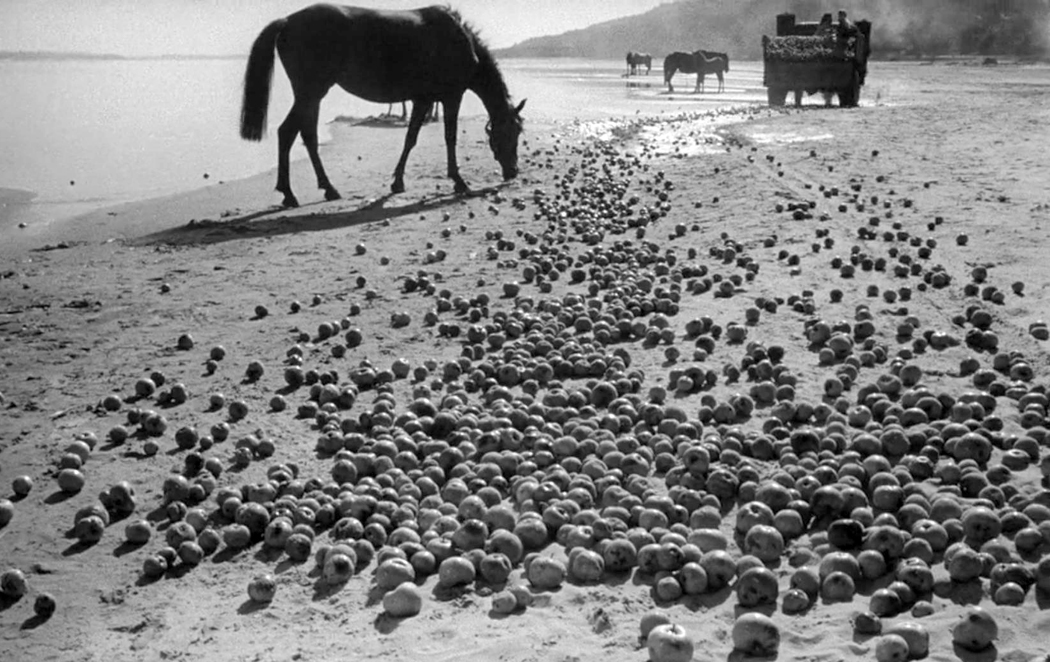
It begins with a crowd of Russian peasants watching a man attempt an early hot-air balloon ascent. A lot of commotion, not a lot of clarity. He manages to get aloft and from his point of view, we watch the landscape beneath him as he screams with joy — until he crashes. Then a horse rolls over on his back and we move on to the first official scene. 

This prologue has nothing to do with the rest of the movie. 

Each of the next eight scenes documents episodes from the life of the painter, although we are not at first clear which of the characters we see actually might be Rublev. There are three of them taking off from a monastery. Tarkovsky doesn’t spend a lot of effort differentiating them. 

I can’t relay the plot, because there really isn’t one. And any attempt would be interminable. Suffice it to say that the film is hypnotic rather than active. It seems to make time stand still. 

This is a virtue of all of the films of Russian director Andrei Tarkovsky, who made only seven feature films in his short life, each of them more enigmatic than the last. He was born in 1932 and died of cancer in 1986, a cancer he most likely acquired making his 1979 film, Stalker. (Two others from that film, including its star, also died of cancer). 

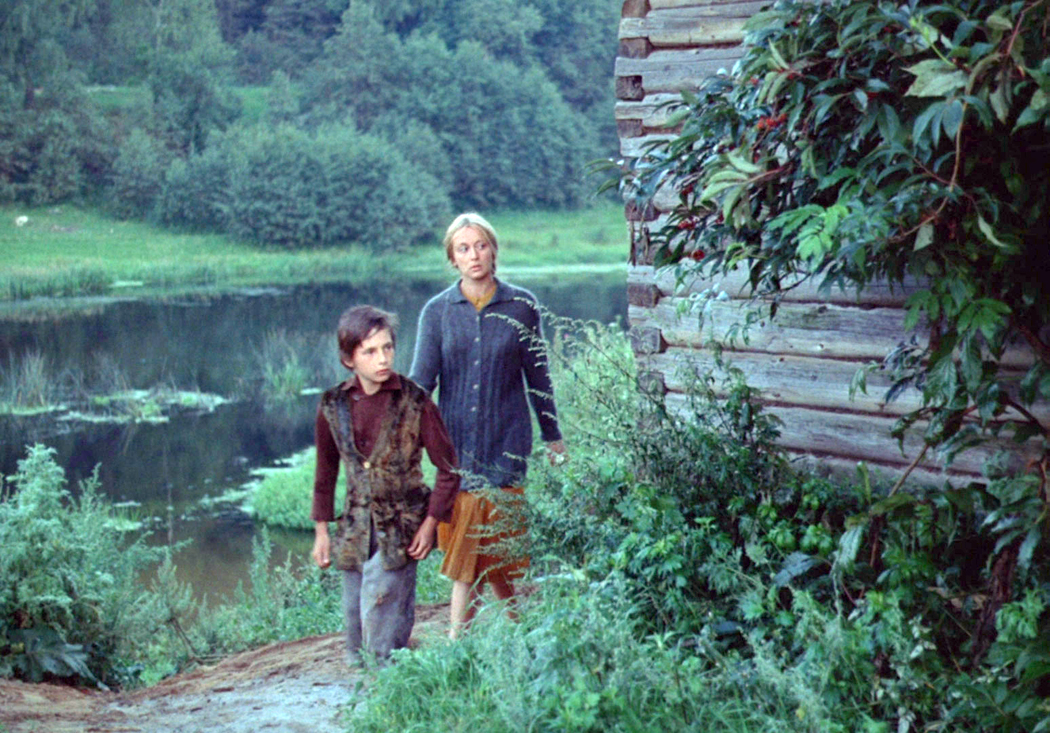
I saw my second Tarkovsky on Turner Classics also. It was also three hours long, but was a space epic. Sort of. Solaris (1972) was Tarkovsky’s response to Stanley Kubrick’s 2001: A Space Odyssey. It is about a Russian scientist visiting a space station around a planet names Solaris. While there, he encounters his dead wife, and she dies again. It turns out the planet can create mental reality for anyone nearby. 

A lot more happens, of course, but again, the plot is hardly the point of the film. Tarkovsky seems to view plot as an unpleasant necessity for filmmaking, which he is willing to put up with, but not if it requires too much of his thought and energy. He is more interested, like his planet, in creating a mental reality for anyone nearby. 

Solaris was remade in Hollywood in 2002 by Steven Soderbergh and starring George Clooney. The films was shortened, tightened and made sense, and therefore was a complete botch. 
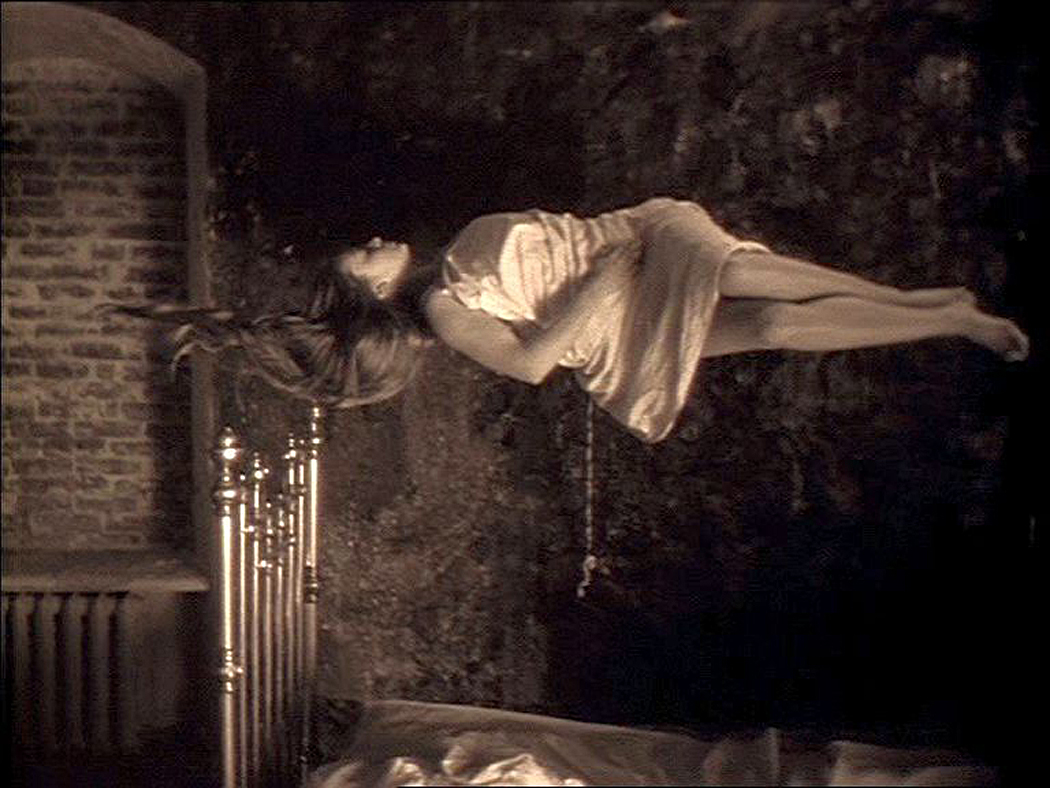
The Tarkovsky original begins with a half-hour scene set on Earth, with some of the most stunningly beautiful photography I’ve ever seen in a film, outside a Terrence Malick movie. Watching it breaks my heart, it is so beautiful. I have often watched just this beginning, just for the sheer pleasure of it. 

Solaris is less successful than Rublev, and precisely to the extent that it tries to actually tell a story. But it is still a great film.

(In an almost comic bit, Tarkovsky seems to be making fun of Kubrick’s film by inserting a five-minute long, nearly unedited segment from the point of view of someone driving a car along streets into a city. It makes no plot sense, but does seem to mock the “star journey” from 2001). 

Then, these “free samples” began costing me money. I bought DVD versions of both films and watched Rublev many times. Each time, confusions became clearer; this is what happens with Tarkovsky. Other filmmakers lead you through their plots by the nose, so you don’t miss anything. You get a passive experience, sitting back and letting the story wash over you. Tarkovsky forces you to participate actively in the film, joining him in making meaning as you go. 

Several people had recommended Stalker as the Tarkovsky film I really had to see. And so, I hit Amazon for another DVD. 

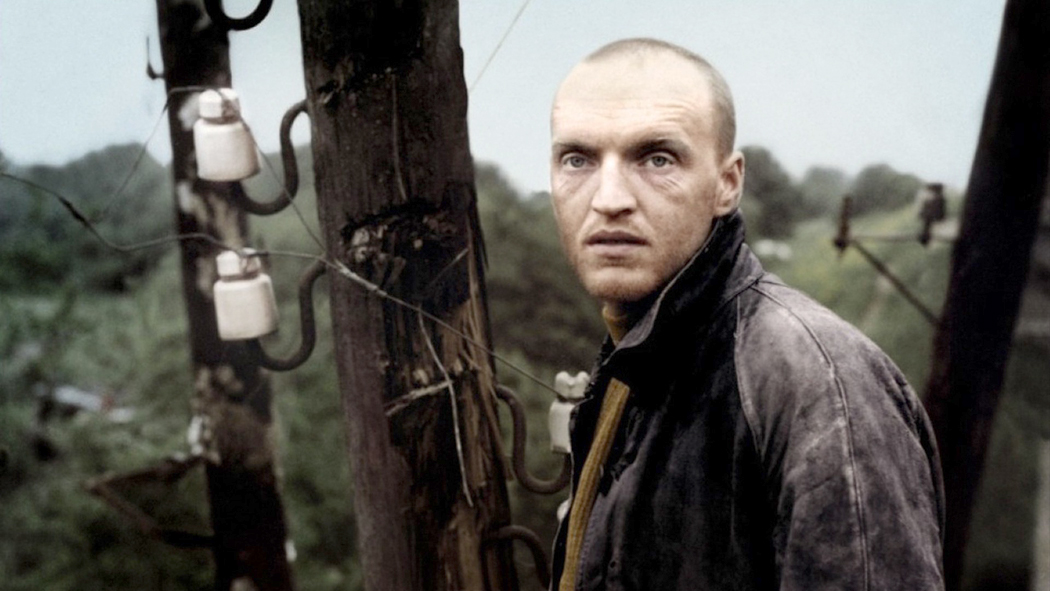
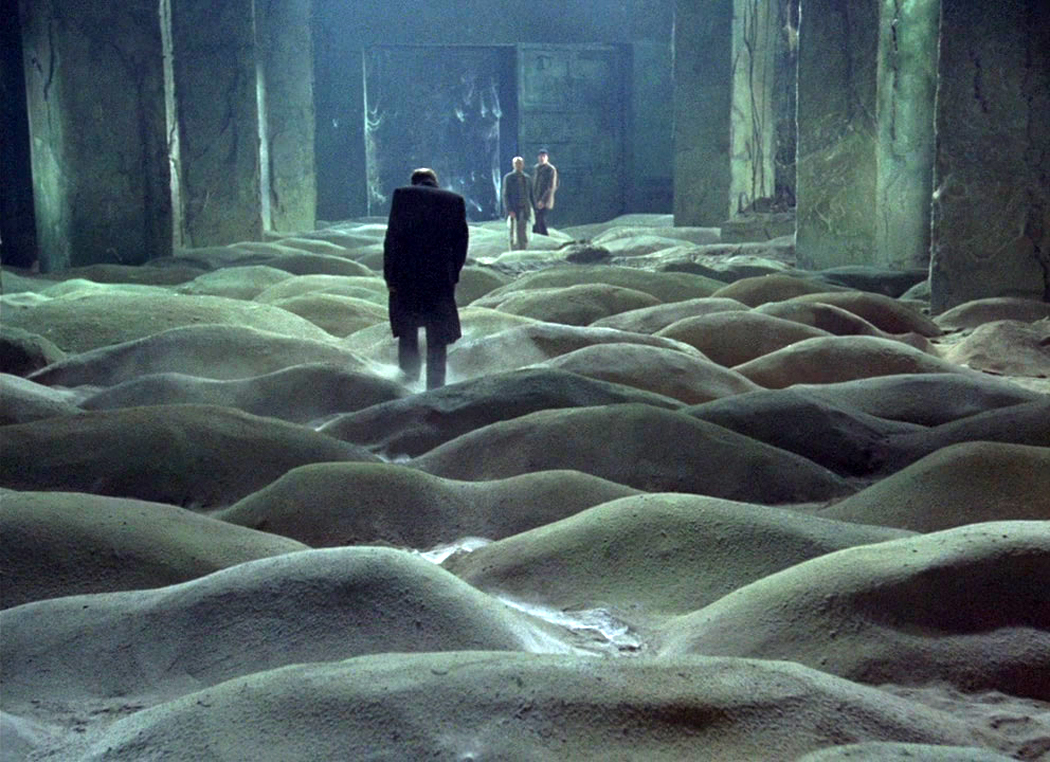
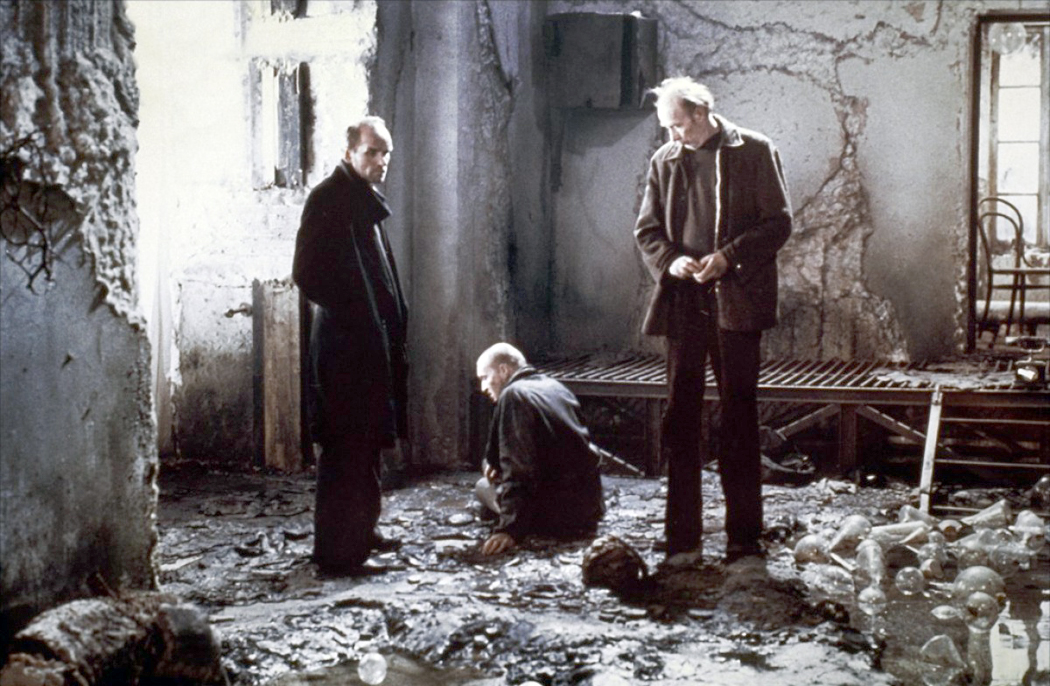
In Stalker, a guide leads two other men on an illicit expedition to “The Zone,” where an unnamed disaster has rendered the land out-of-bounds. They have to elude the authorities and make their way through a kind of post-apocalyptic landscape, littered with trash, abandoned tanks, overgrown weeds and industrial waste. The destination is to reach a room where a person’s deepest wish will be fulfilled. 

But this retelling of the storyline implies that the plot is the point, and it is not. The film is all atmosphere and poetry. It was seeing Stalker that first clued me in to the fact that Tarkovsky’s films are about a series of symbols very personal to the filmmaker and not explicable in ordinary terms. We just have to recognize their meaning, the way we recognize meaning in a dream. One thing does not “mean” another thing as in semiotics, but rather these are projected obsessions of the filmmaker. 

In almost every Tarkovsky film, you will find these obsessions repeated: horses; 

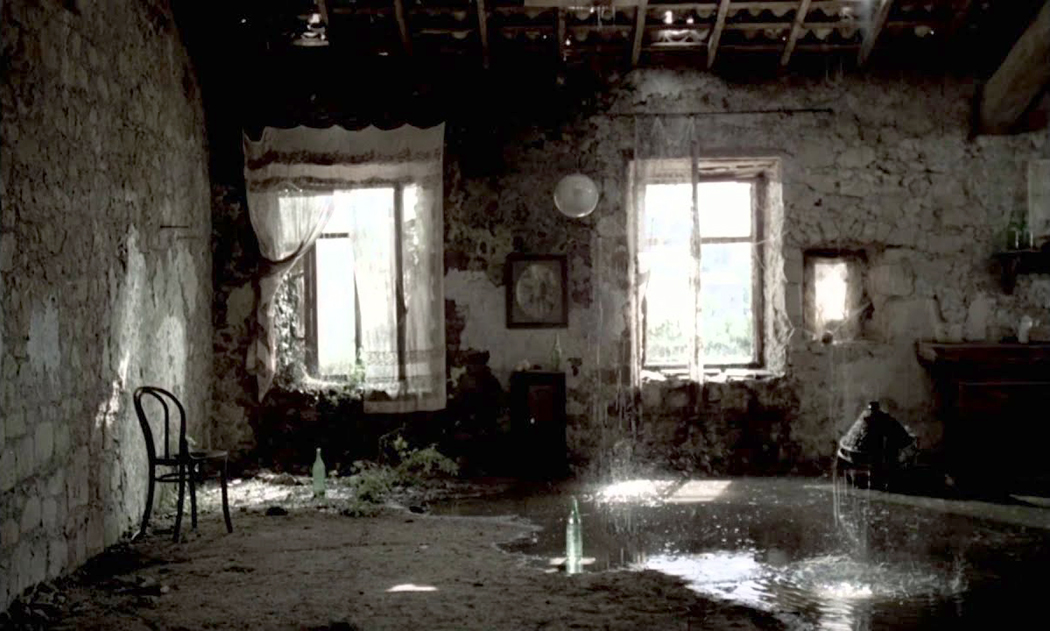
you will find ceilings dripping with water; 

puddles of shallow water that actors have to trudge through; 

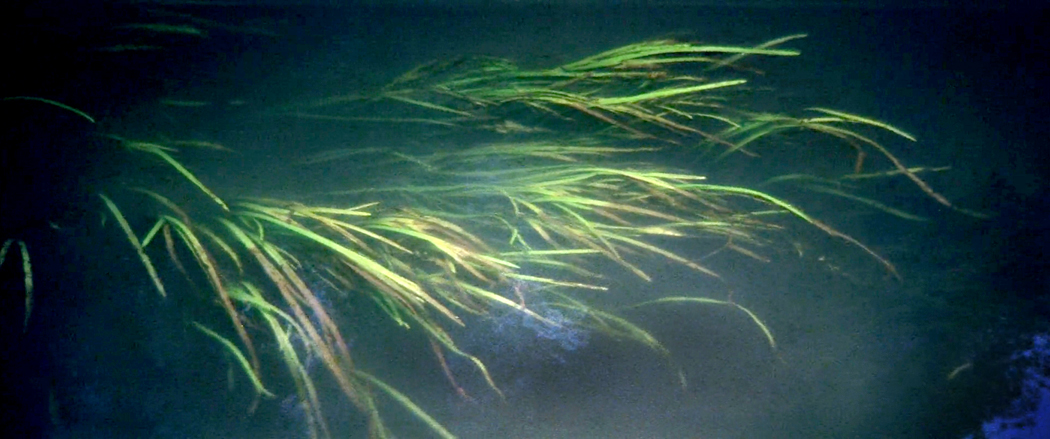
wind rippling through grass; houses burning; 

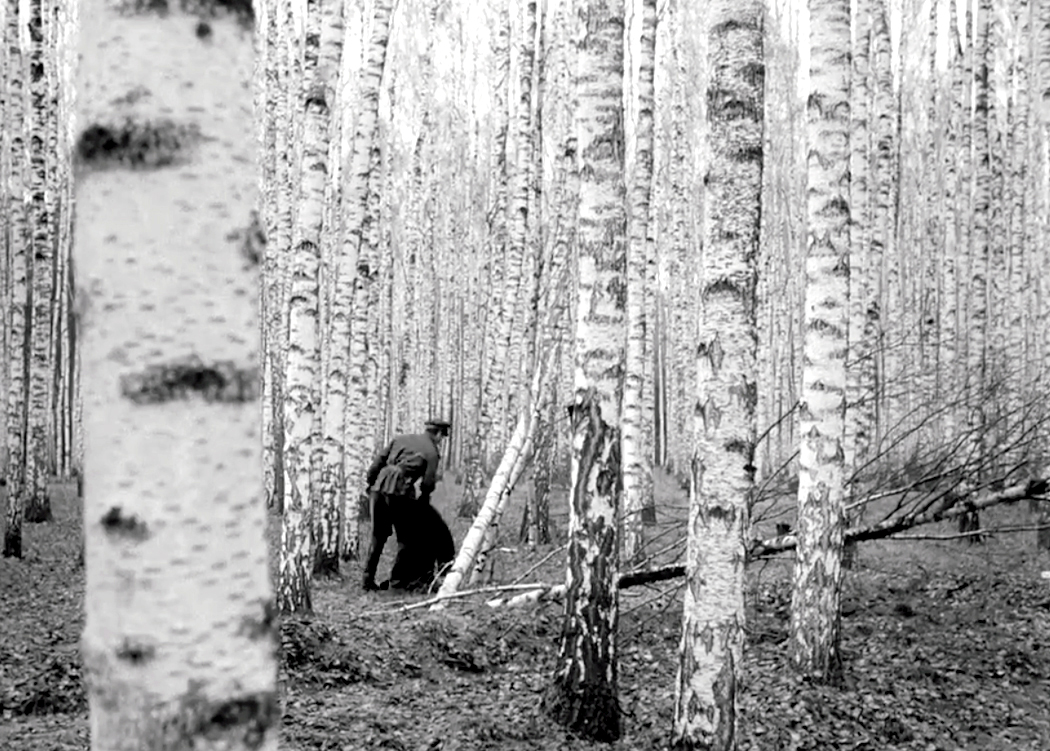
action seen through a screen of forest trees; 

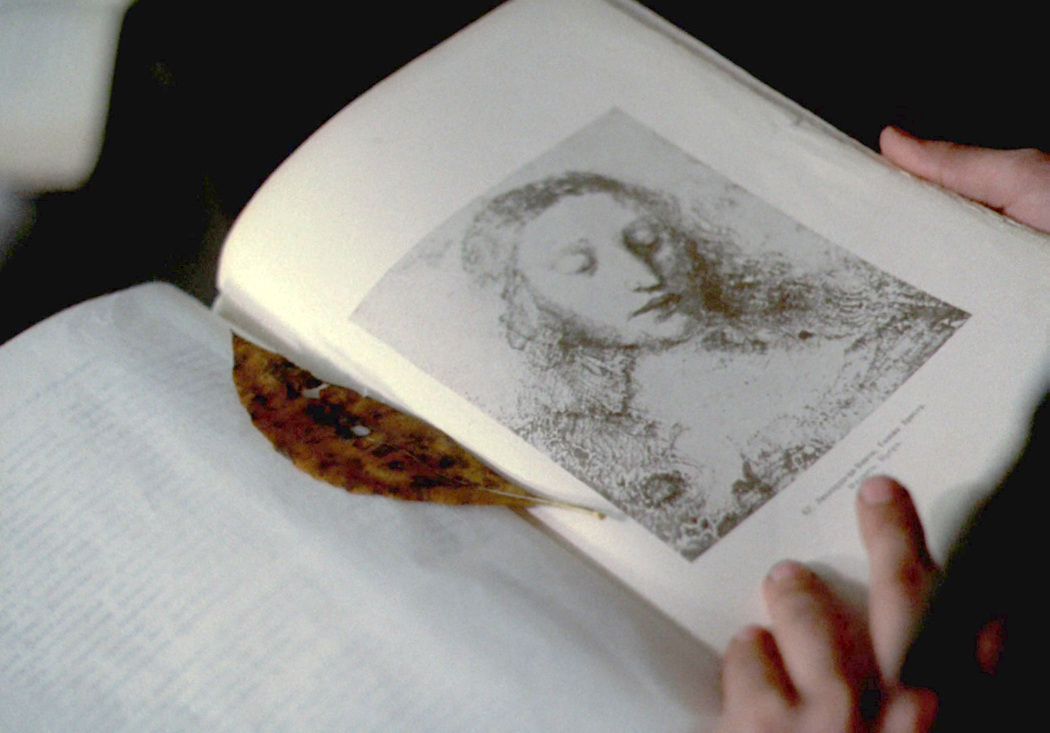
and over and over, someone looking at reproductions of art. 

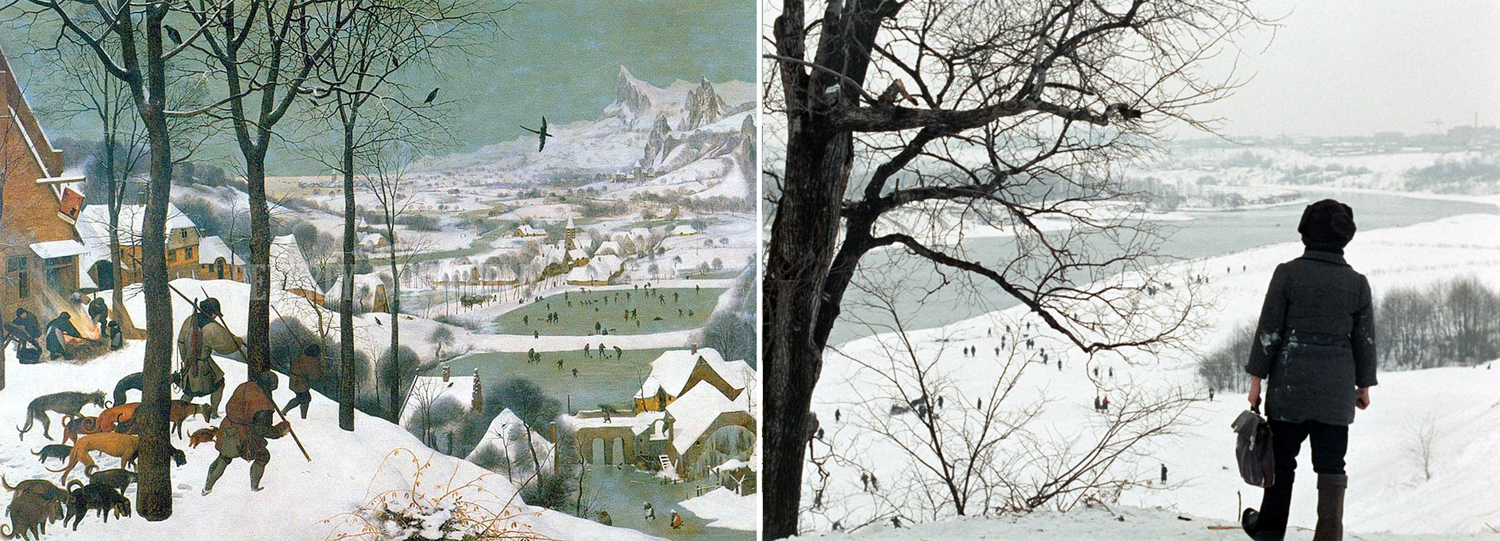
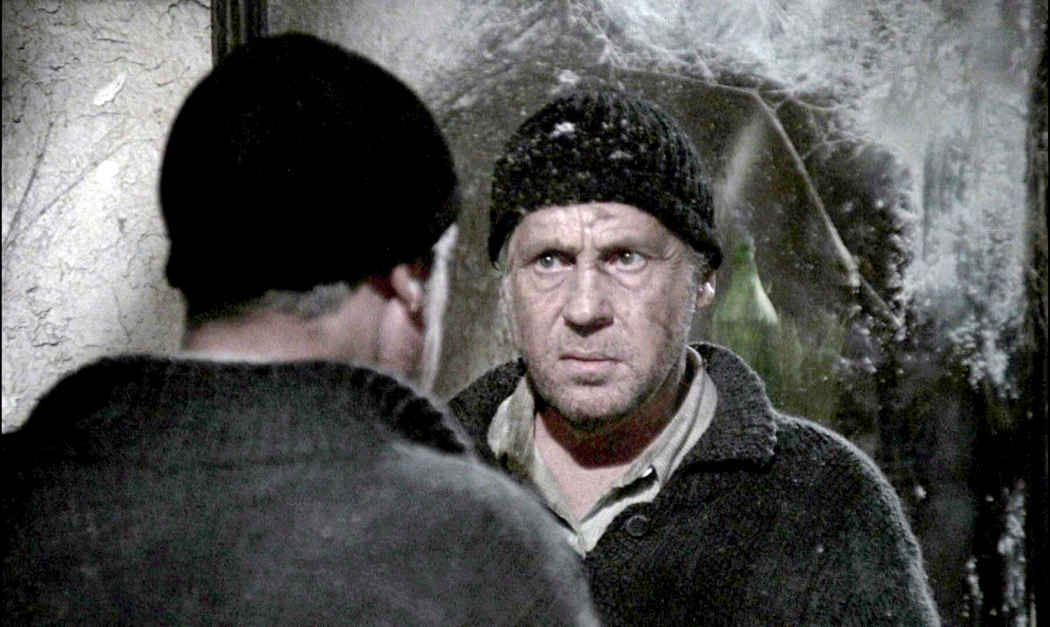
(The influence of art is obvious in many of Tarkovsky’s compositions, such as this one from Zerkalo):

There are also an extraordinary number of people viewed from behind their heads. 

And mothers and children. 

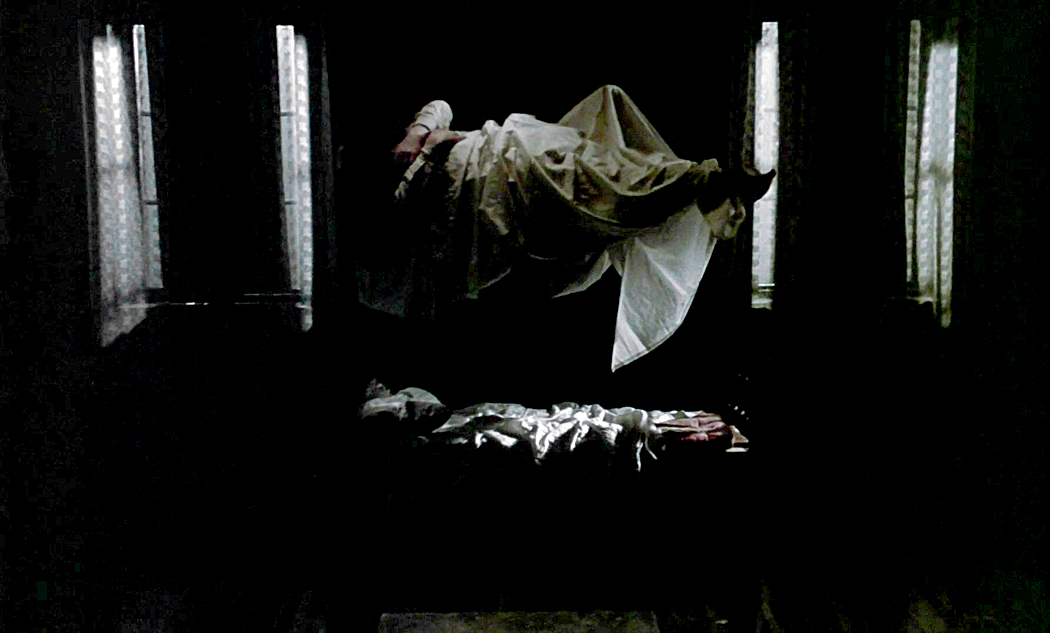
More than one levitation;

 and lots of symmetrical compositions. 

These pieces are assembled and reassembled through all seven films.

Stalker is now imprinted on my own imagination. It is unforgettable, even if you never have a clue what it is about. Forget “about.” It is not “about” anything. It is an experience. If you visit Niagara Falls and stand under its torrent, it isn’t “about” something; it is an experience. A Tarkovsky film is the same. It is something you absorb and it stays with you for the rest of your life. 

If you attempt to find meaning, you will be sidetracked, and you may very well decide the effort is not worth it. 

Susan Sontag wrote a book called Against Interpretation, and Tarkovsky is Exhibit A. He is providing you with the same kind of gift that you get from the changing of seasons, a great snowfall, the night sky, the loss of love. 

Earlier this year, I set myself a Tarkovsky marathon (not all in one day — I’m not a masochist) and watched all seven features in order, beginning with Tarkovsky’s first film, Ivan’s Childhood (1962), which is the most conventional film he made, coming in at just 95 minutes. 

It tells the story of 12-year-old Ivan during World War II, who serves as a spy for the Soviet army, and comes under the protection of a captain who wants to send him back to school. Ivan runs away to join partisans and eventually winds up leading a raiding party into the German occupied area. Flashbacks show us Ivan in happier times, before his mother and father were killed by the Nazis, and there are dream sequences and a wonderful interpolation of a flirtation between the captain and a beautiful nurse. 

That scene, set in a forest of white birch trees, is extraneous to the story, but the image of the captain holding the nurse over gulley, her feet dangling as they embrace, is unforgettable, even if you never know why. 

There is a horse, there are puddles, there is action in trees, mother and child — a host of images that will reoccur in subsequent films. 

Ivan’s Childhood is a good place to start with Tarkovsky. It is almost a normal film, and has a story that can be followed. It is also an indictment of war rather than the usual Soviet glorification of their victory. 

Next came Rublev and Solaris.

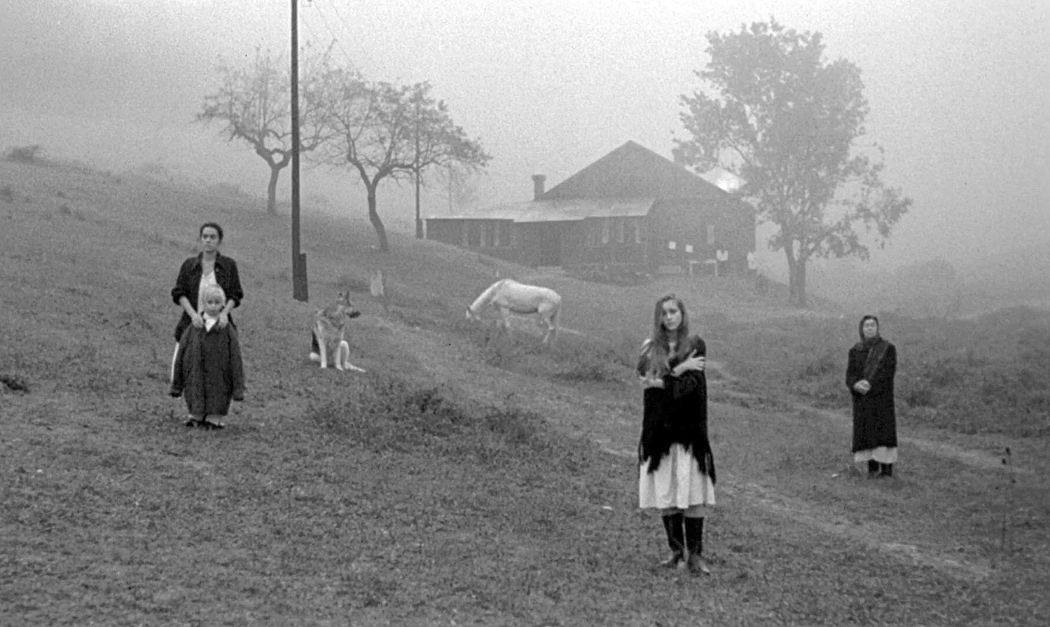
In 1975, he made Mirror (in Russian, Zerkalo), a semi-autobiographical film set in three time periods: pre-war, wartime, and the present. It shifts back and forth with no explanation, and also switches from color to black-and-white and to sepia. There are dream sequences, and it all seems to flow more like a stream of poetic images than like a story. 

It has been called the “most beautiful movie ever made” and is almost always included in lists of the “greatest movies.” 

But explaining it is as difficult as explaining a dream. 

Then comes Stalker, which is as gritty and filthy as Zerkalo is intensely beautiful. 

By this time, any viewer has come to realize that all these films are not only about an intense engagement with life, but the subjective life of the filmmaker himself. 

To paraphrase Anais Nin, Tarkovsky didn’t see things as they are, but as he was. 

His films are often called “spiritual,” but only in the sense that Tarkovsky seems to be trying to figure out what spirit really is. 

The films are often about faith, but not in advocacy, but in exploration. In Andrei Rublev, the crisis is that the painter has lost, not his faith in God, but his faith in humankind. 

In other films, the faith is either formal, as with the Russian Orthodox Church, or pagan. 

The filmmaker’s belief that the Orthodox Church is central to the Russian soul made things squirmy for Tarkovsky during the officially atheist Soviet era. Many of his films were either censored or cut by censors to tone down the religion. The three-hour Rublev was first withheld and then shown in a 90-minute version, with all the offending parts excised. 

Eventually, Tarkovsky felt he could no longer work under the Soviet system and moved to the West. 

In Italy, he made Nostalghia (1983), about a Russian writer (named Andre) who visits Italy for research, fails to have a relationship with his beautiful guide, meets an unbalanced man who has kept his family indoors for seven years, becomes sick, remembers many things, and finally attempt to carry a lit candle across an empty pool, in order to save the world. 

It is probably Tarkovsky’s least watched film, which is a shame, because it worms into your psyche and never leaves it. Again, its logic is not linear, but moves more like music. Scenes follow each other like themes in a sonata. 

The film also features Bergman regular Erland Josephson as the crazy man. In the end, he mounts a statue in Rome and preaches a sermon about connecting with the real things of life, then sets himself on fire in protest. 

The film has its share of dripping ceilings and walking through puddles. 

It has many a symmetrical composition,

and it moves from time and place with no warning and ultimately ends by splicing together dual times and places in a single uncanny image. 

The film could be seen as an exploration of Tarkovsky’s nostalgia for his lost homeland, but it is more widely about the loss of the entirety of a life that has been lived through and lost to the irrecoverable past. 

It is also, again, about faith. Not a specific faith — indeed the belief that carrying a candle could “save the world” is on the surface an absurdity — but mere faith, separate from any belief. 

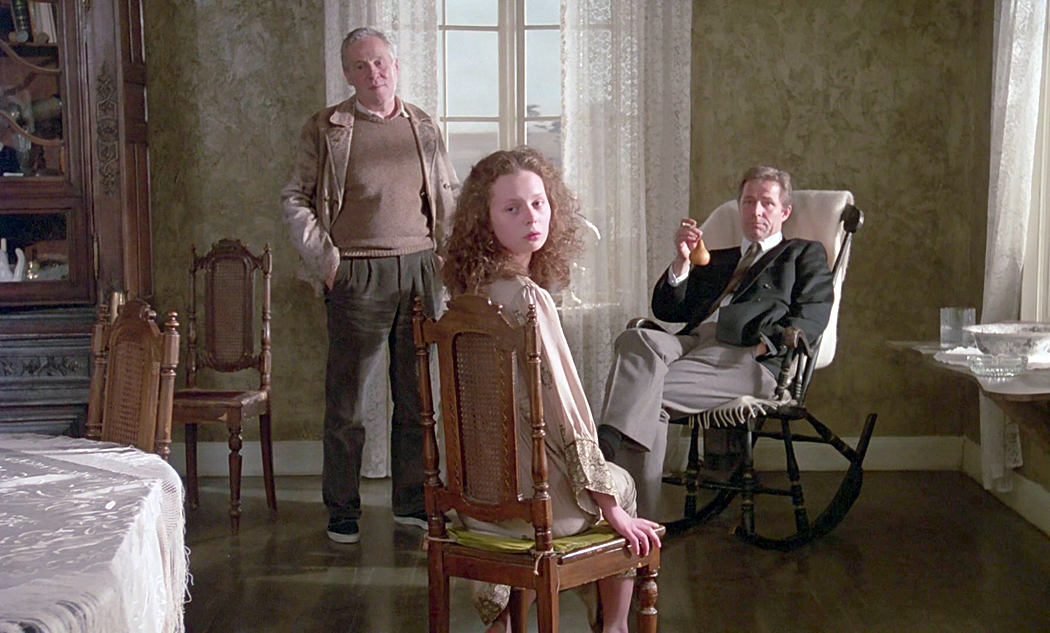
Tarkovsky’s final film, The Sacrifice (1986), also features Josephson, this time speaking his native Swedish. 

Set on a very Bergman-like Swedish island, Josephson plays a writer who, on his birthday, is faced with world-ending nuclear holocaust, makes a bargain with God: Take us back to yesterday and start over with no war and I will sacrifice my house and family. He also hedges his bet, by making a pact with a witch to do the same thing. When he wakes up, it is the previous morning. 

He then single-mindedly prepares to burn down his house while the family is out. 

We never know if it is God or the witch who changes things, or if it all takes place in the writer’s mind. (At the end of the film, we see him carted away in an ambulance, as if he is being taken to an asylum. This is never explained, and it is up to the viewer to make sense of a good deal that doesn’t make sense.)

Like all of Tarkovsky’s films, it moves very slowly, with very long single takes, uninterrupted by edits, and long moments where no one talks and we are forced to break past our own boredom by noticing every tiny detail of the scene. 

This technique makes us either dismiss the film as boring, or spend the effort to discover some of the richest material in any movie ever. I’m of the second school.

But I understand why anyone might not find Tarkovsky — and especially his last film — riveting. I do. I am never so awake as I am soaking in all the stimulus from a Tarkovsky film. I find them overwhelming. 

I sometimes visit my brother- and sister-in-law. He is an artist and they are both brilliant and intellectual. And I bring a bag of movies to watch together. When I showed them Andrei Rublev, I wasn’t sure how they would react, but they loved it. 

Some visits later, I showed them Stalker and he liked it even more. I was feeling confident. 

Two down and a third one this last visit: I showed The Sacrifice, and that was too much. They sat through it patiently, but it was uncomfortable watching them watch the movie. I could sense their boredom. The Sacrifice is a test of anyone’s patience. I don’t think I’ll venture Nostalghia

To be overwhelmed, though, you have to have patience. The films move at the pace of a glacier. Or rather, their stories do. As for visual information, you are being assaulted in a shower of imagery. 

In his book, Sculpting in Time, Tarkovsky quotes several letter writers with approval. “Accustomed to films as story-line, action, characters and the usual ‘happy ending,’ the audience looks for these things in Tarkovsky’s films, and often enough leaves disappointed.” Instead, you should watch “as one watches the stars, or the sea, as one admires a landscape. There is no mathematical logic here, for it cannot explain what man is or what is the meaning of life.”

In most of the world’s movies there is cause and effect moving the story ever forward. A woman is kidnapped causing the police to search for her, causing a rise in tension before the ultimate resolution. Cause and effect. Each part of the film explains the rest. In Tarkovsky, it begins with effect and what follows is the emotional. We don’t need to understand why, only that

Another writer comments, “How many words does a person know? … How many does he use in his everyday vocabulary? One hundred, two, three? We wrap our feelings up in words, try to express in words sorrow and joy and any sort of emotion, the very things that can’t in fact be expressed. … There’s another kind of language, another form of communication: by means of feeling, and images.”

When words fail, images, like music, can express. It is in this sense I mean Tarkovsky’s films are musical. He prefers to call it poetry. 

“When I speak of poetry,” he says, “I am not thinking of it as a genre. Poetry is an awareness of the world, a particular was of relating to reality.” 

In another place: “Art, like science, is a means of assimilating the world.” 

He quotes Nikolai Gogol from 1848: “It’s not my job to preach a sermon. Art is anyhow a homily. My job is to speak in living images, not in arguments. I must exhibit life full-face, not discuss life.’

Often, his characters look directly into the camera, making you, the viewer, a connected part of the filmic world Tarkovsky is giving us. 

And finally, “If not to explain, at least to pose the question.”

Andrei Tarkovsky made only seven features, but life only gives us so many years.