Archive

Tag Archives: spring

It is midwinter spring, those few days that habitually show up in February with sunshine and temperatures into the 70s that fool you into believing that spring is close at hand, only later to kick you with plummeting temperatures and perhaps another snow. The National Weather Service predicts that for this weekend. 

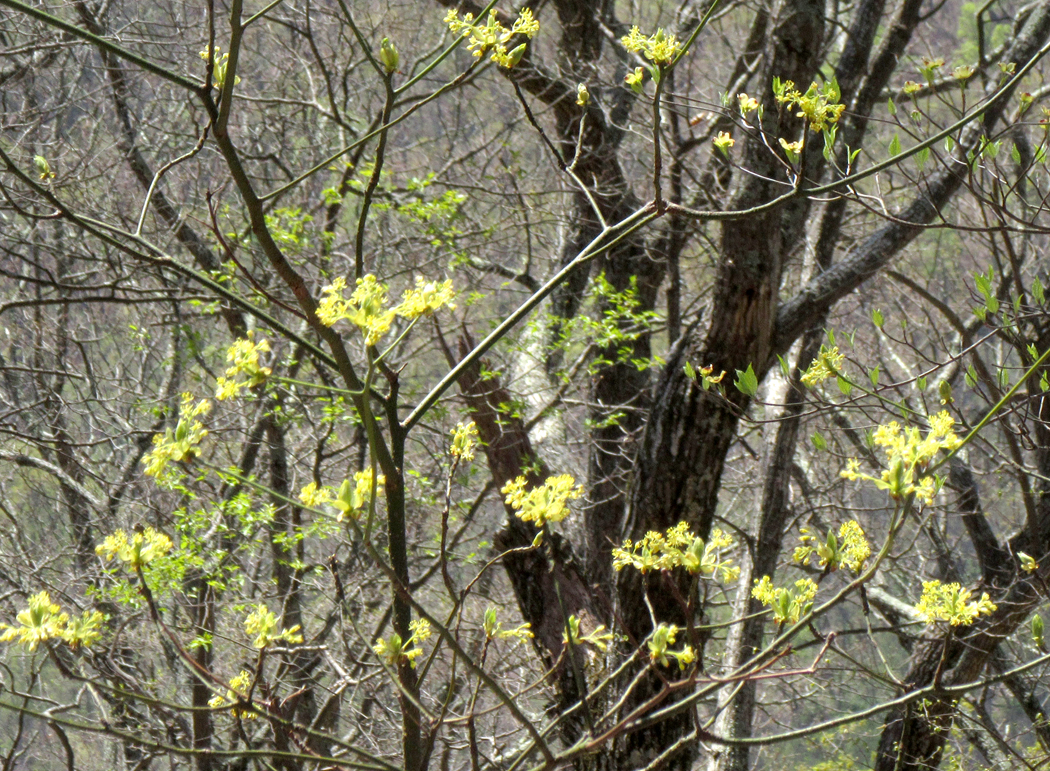
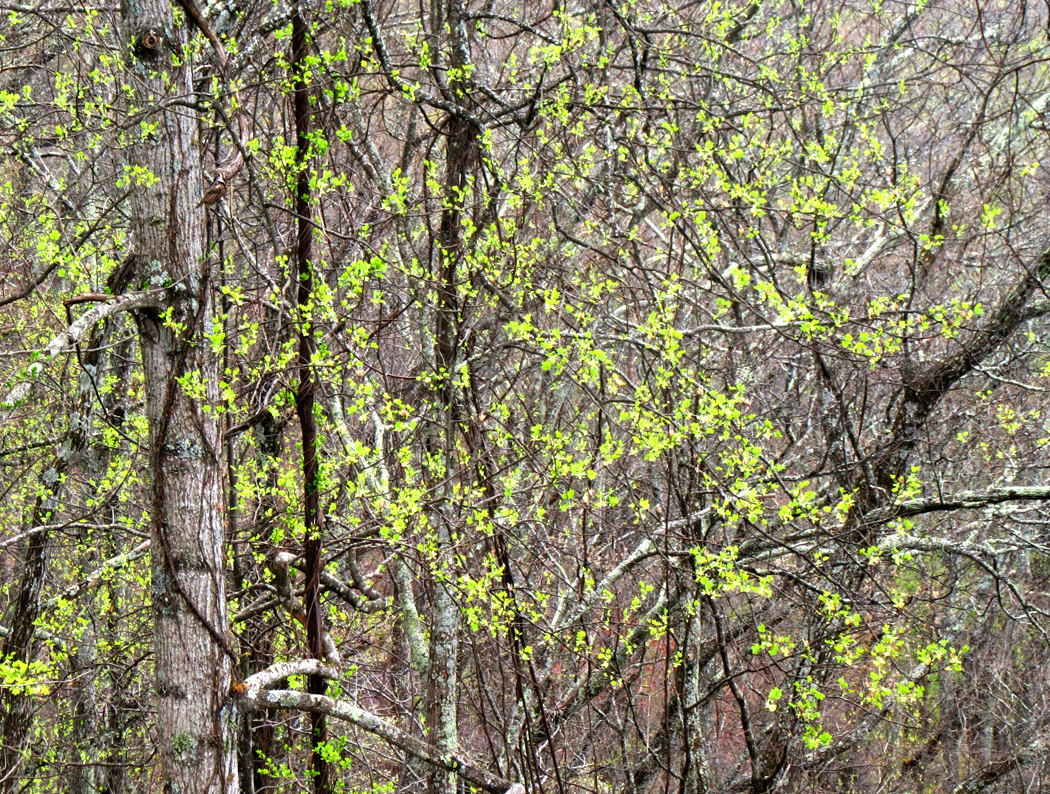
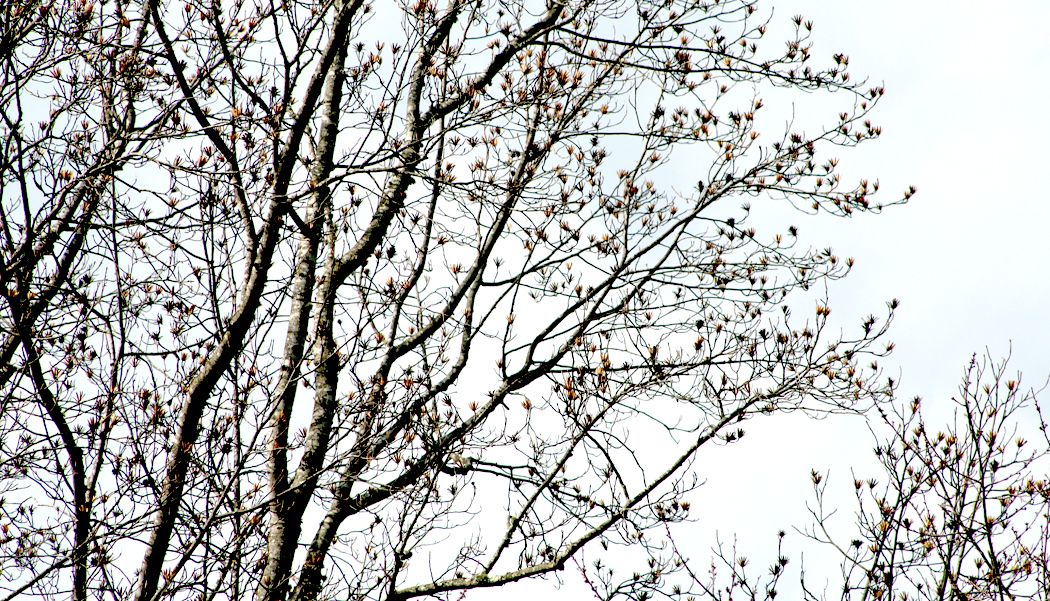
This is my favorite time of the year, when the bare trees begin budding at the twig tips. You can watch the trees change day by day, turning the dead sullen grey of December into something that clearly has a rising sap under the dull bark. When you watch the buds close up, their bud scales slowly separate, with thin lines of green beginning to spread at the edges. 
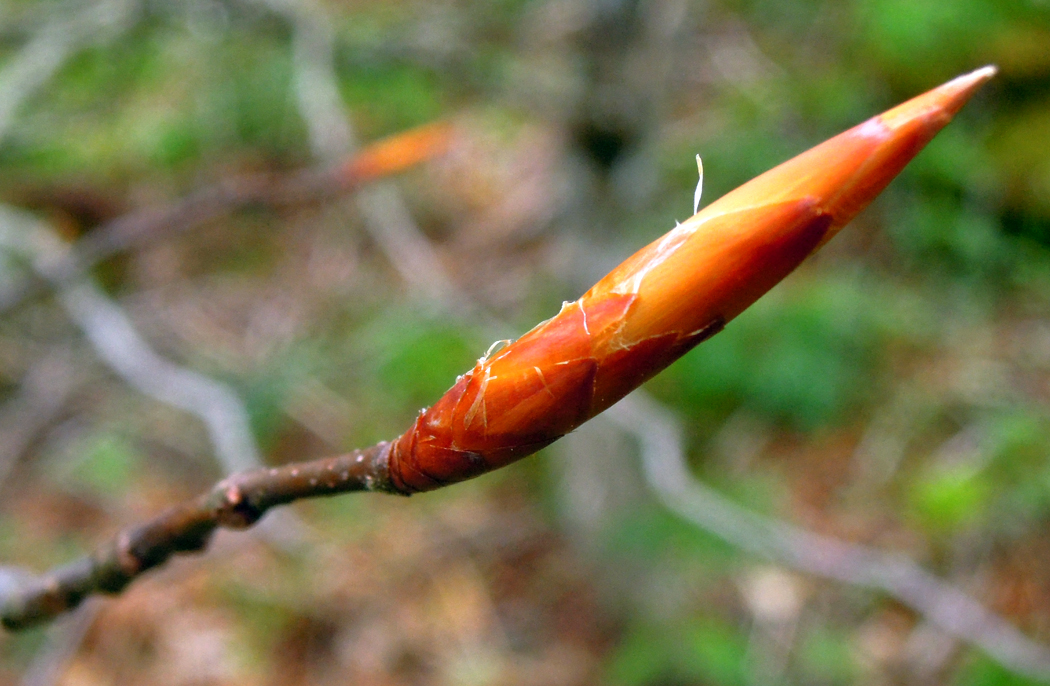
Fifty years ago, my friend Sandro and I would annually take this time to camp at the Outer Banks. Off-season meant we had the sand and sea to ourselves and could walk five miles along the strand without ever meeting another human. 
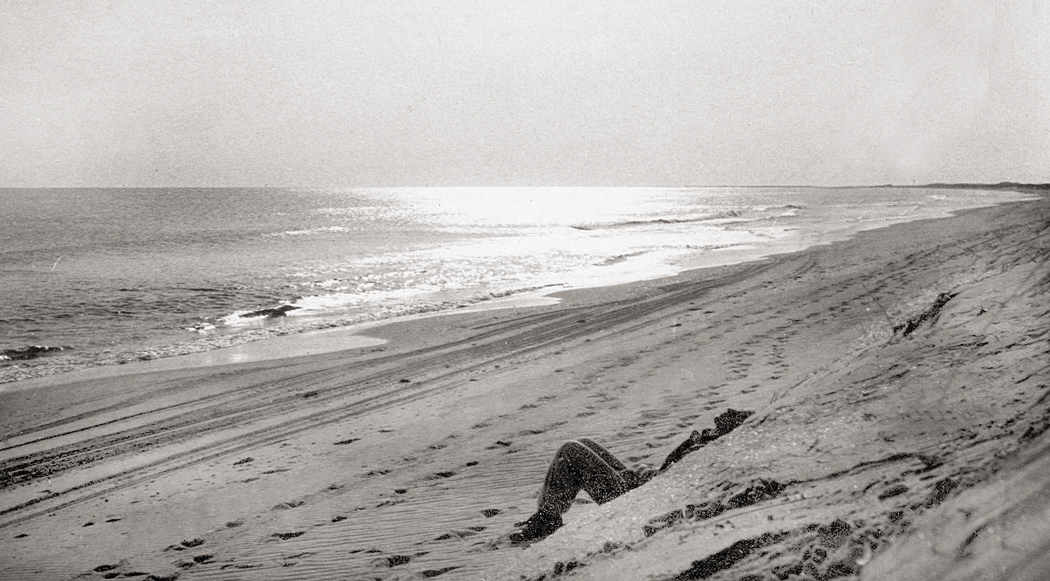
Sandro at Cape Hatteras, 1969

It was also Mud Season. You don’t read about it in literature, with its darling spring buds, its gold first green and its young sun half-run in the ram’s course. But there it is — early winter rains drained deep into soil and then turned hard as rock in the frozen air. November’s squishy footprint is turned to fossil, brittle as any sandstone, its edges wedged up in a tiny crater. But the February thaw, or later, when March brings those buds to stretch their scales, those footprints turn once more to watery goo, slippery under your shoe, sucking your heel right off your foot. It is what is wrong with pretty literature. Among all the pinking petals, among all the bright girls in spring dresses, among all the apple blossoms and greening grass to come, there is the mud, ripe, fertile, pliable in your squeezing fist, the one brown, crowning reality of the the coming spring, when there is mud again.

It is such elemental things that seem most real, most important. Culture changes, fashions change, but the cycle of seasons wears a constancy. 
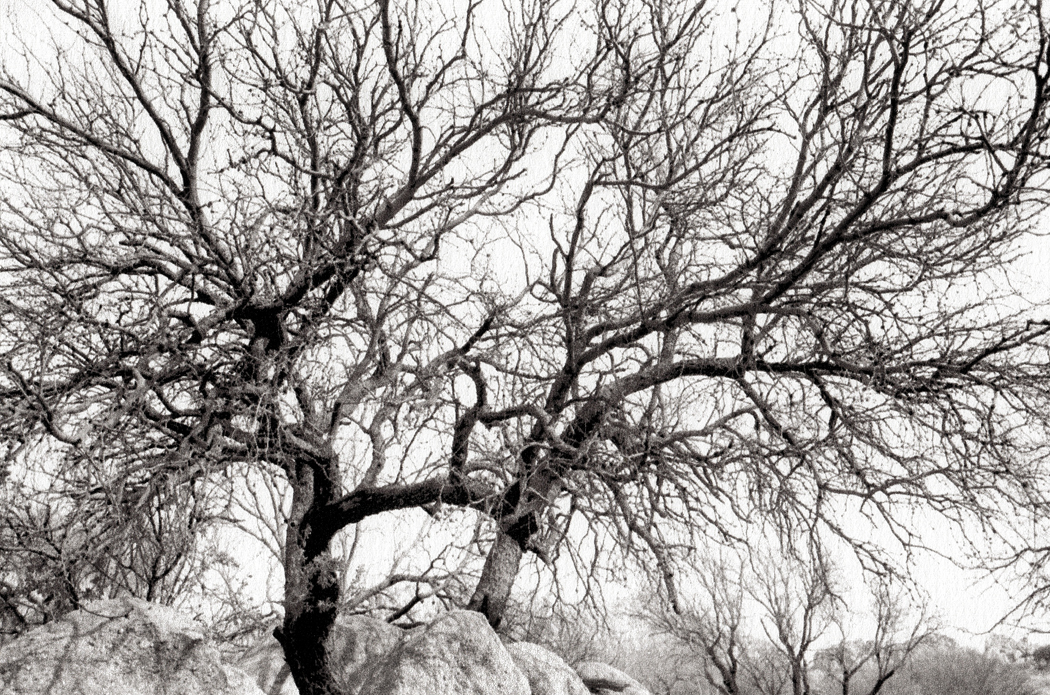
Texas Canyon, southern Arizona

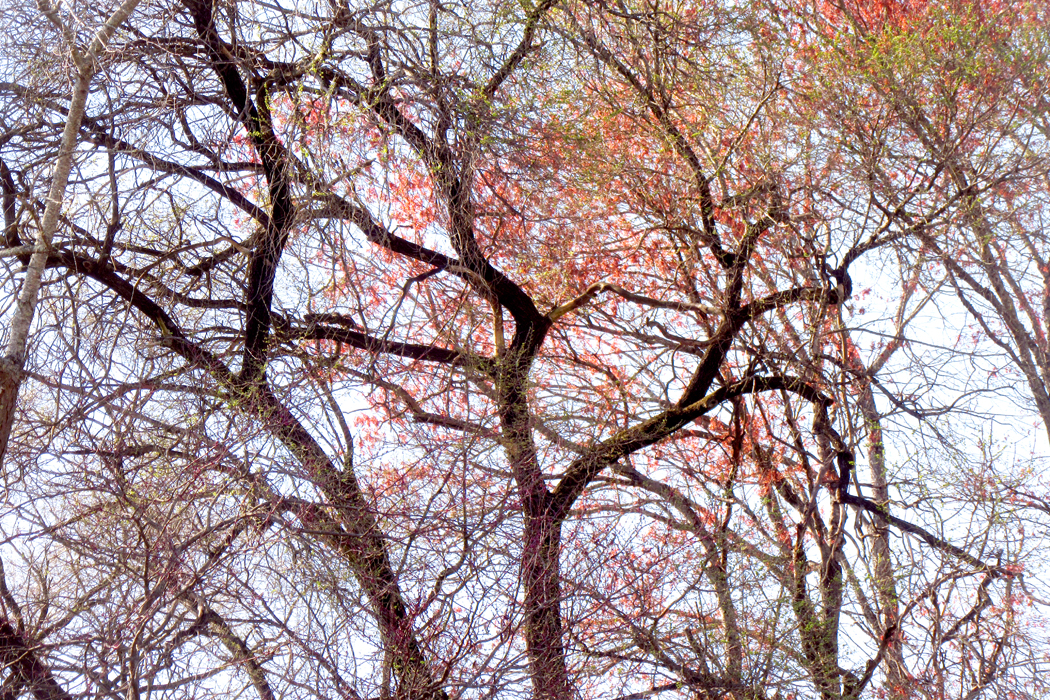
For me, it is the trees, most of all. I love the spring trees well enough, but it is this time of year, when the trees are still bare and show their bones that I wait for each fall. Drop the leaves ecdysiastically and I can see the shape of the thing they cover. 
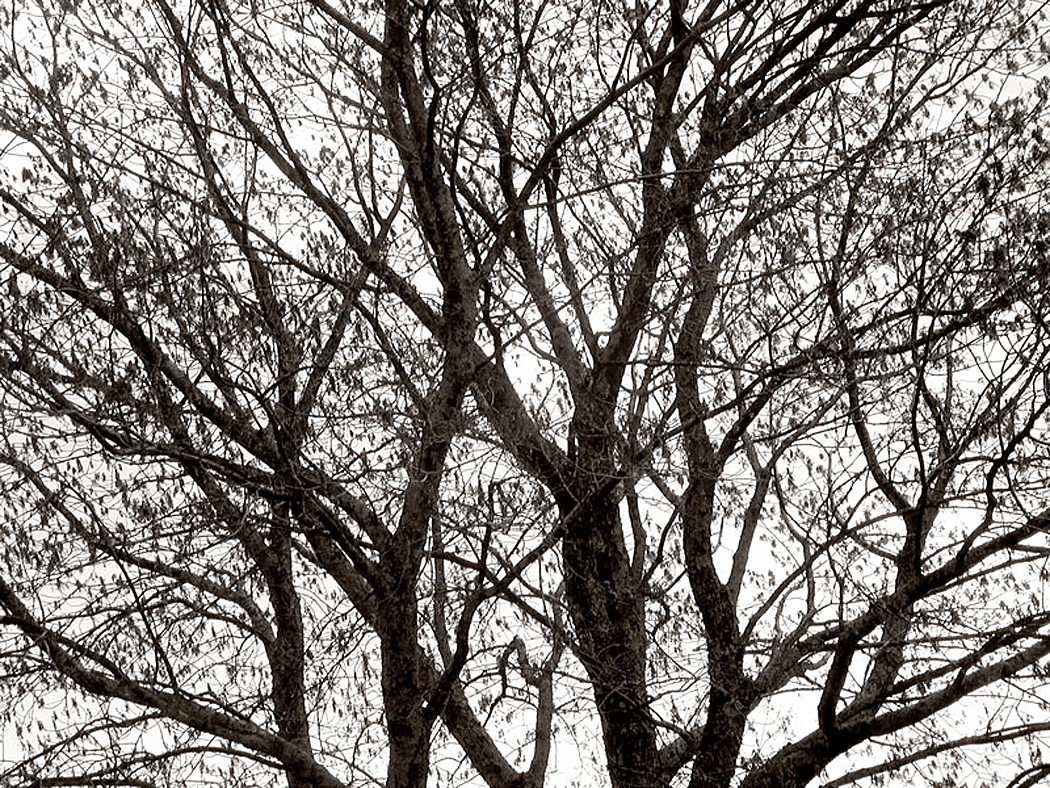
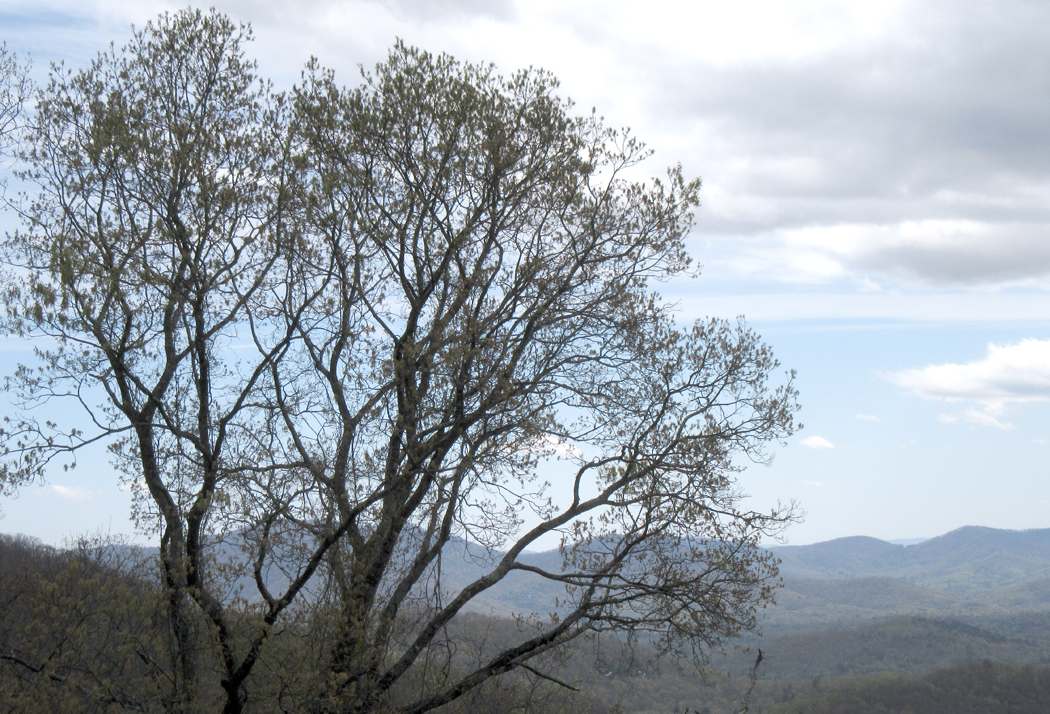
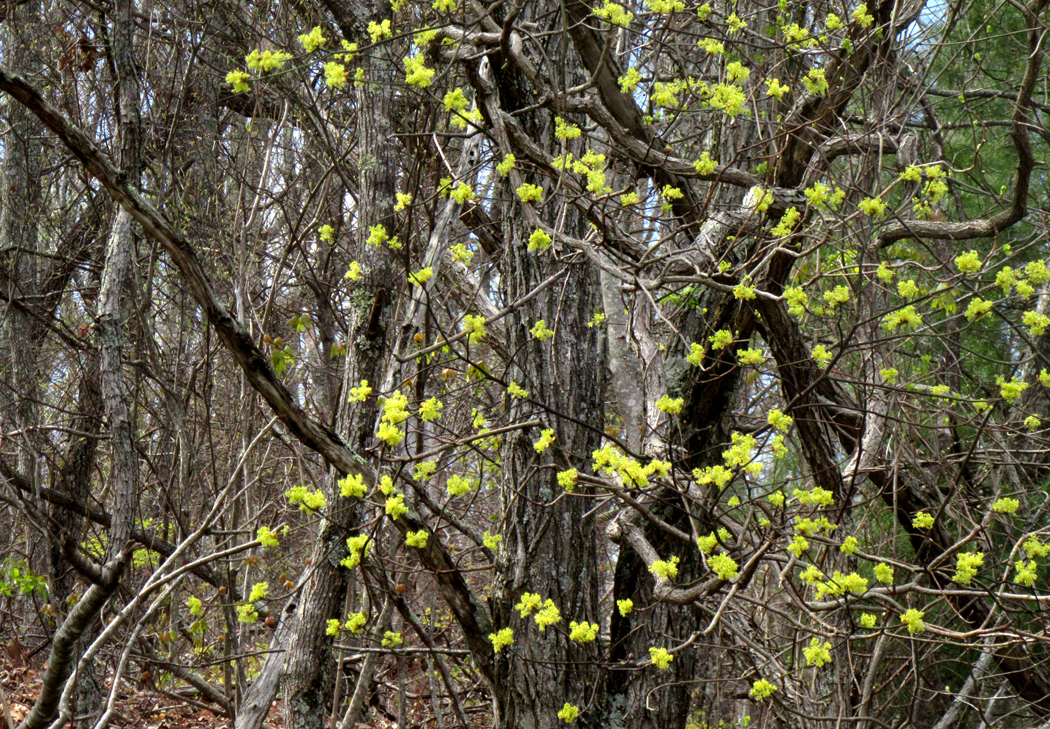
Spring oak, Blue Ridge

It is the lines they make against the sky. An etching more than a painting. Artists through history are generally assigned to one of two categories — they are either line people or color people. Line painters, like Botticelli, tend to draw their scenes, often in actual outlines, and then fill in the colors, while color guys, like Titian daub pigment onto the canvas and let the patterns of color define shapes. It’s one of the major distinctions made by Heinrich Wölfflin in his 1915 book, Principles of Art History. It doesn’t mean the line guy doesn’t appreciate color or the color guy doesn’t appreciate shapes and forms, but rather it defines what hits them first and most centrally. 

(There is a similar distinction in music. Composers — and performers, too — tend to be line guys or chord guys. Lots of counterpoint for the first, and washes of tonal color for the latter. Bach vs. Debussy.) 
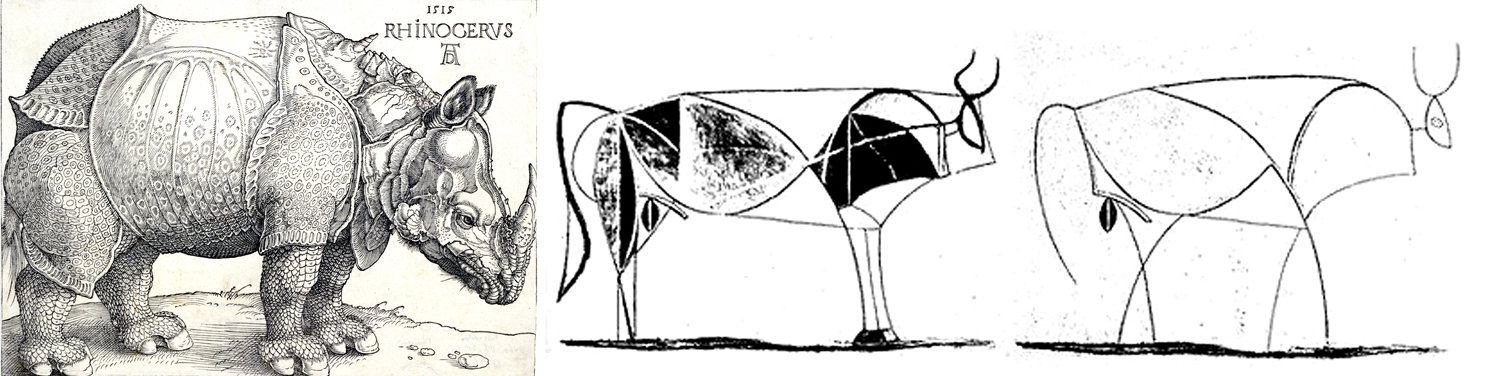
Albrecht Dürer rhino; Pablo Picasso bull

Albrecht Dürer was a line guy, most characteristically in his wood engravings. Picasso was a line guy and certainly an indifferent colorist. Most of his paintings could easily be given different fill-in colors. Matisse, though, a color guy to his teeth. Even more recent painters can be divided. Ellsworth Kelly a color guy; Lucian Freud a line guy. 

Well, I’ve always been a line guy. And the lines drawn by winter trees have hypnotized me since I was a wee bairn. One whole category of my photographs are what I called my “tree nudes.”
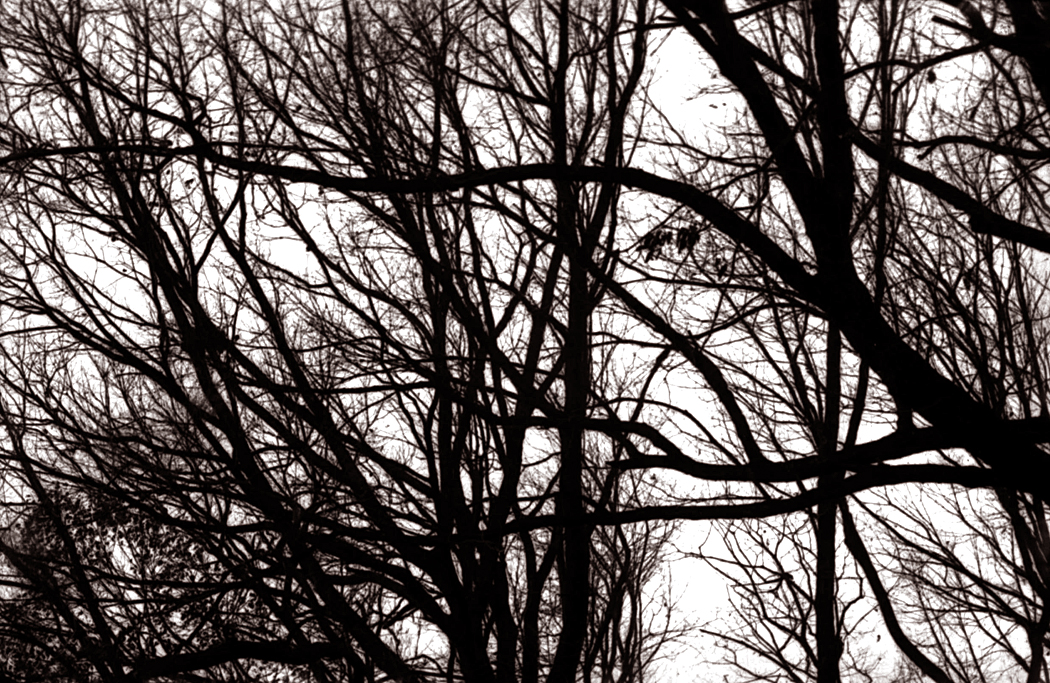
The nude has a specific purpose (outside the merely voyeuristic). Clothes drop their subjects into a very particular time and place. Eighteenth century breeches; flapper skirts; bell-bottom trousers; togas; saris; morning coats with a peeking handkerchief in the breast pocket. 

But the nude is — or can be — timeless (with the caveat that hairdos can be a giveaway). There is a universality to the nude in art, which is why so many Greek statues are naked. And we are meant to appreciate the form — shape, detail, muscularity — and not just a specific person with a name, family, opinions, and personality. 
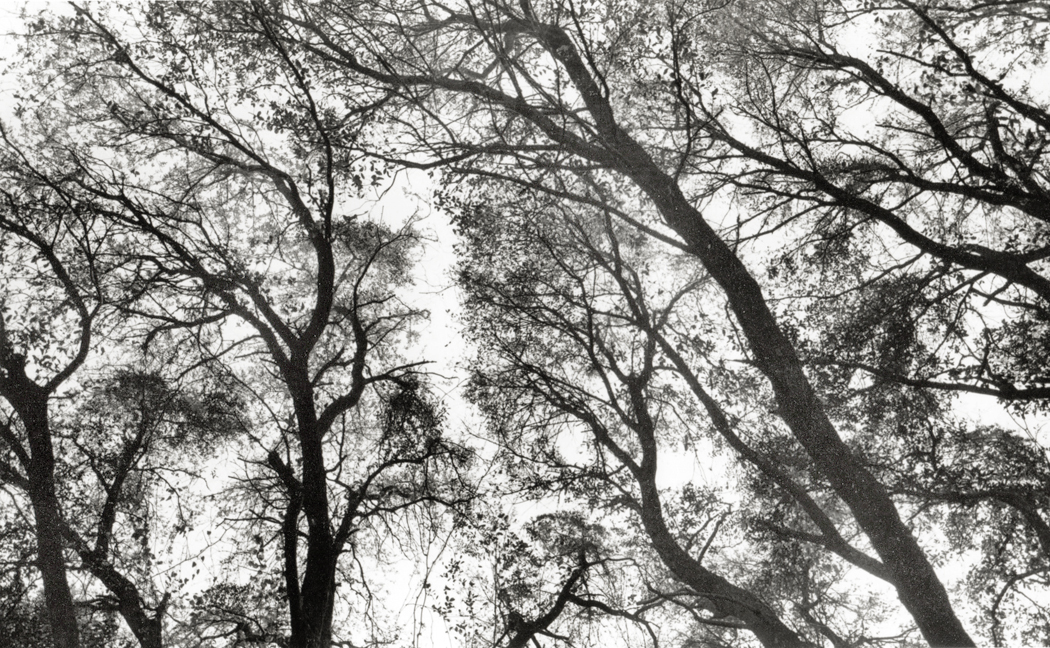
And I feel the same thing in the bare ruined quiers, where late the sweet birds sang. There is structure in the dark lines of the branches, and a systematic chaos in the way they all cross each other in a welter of visual information. 
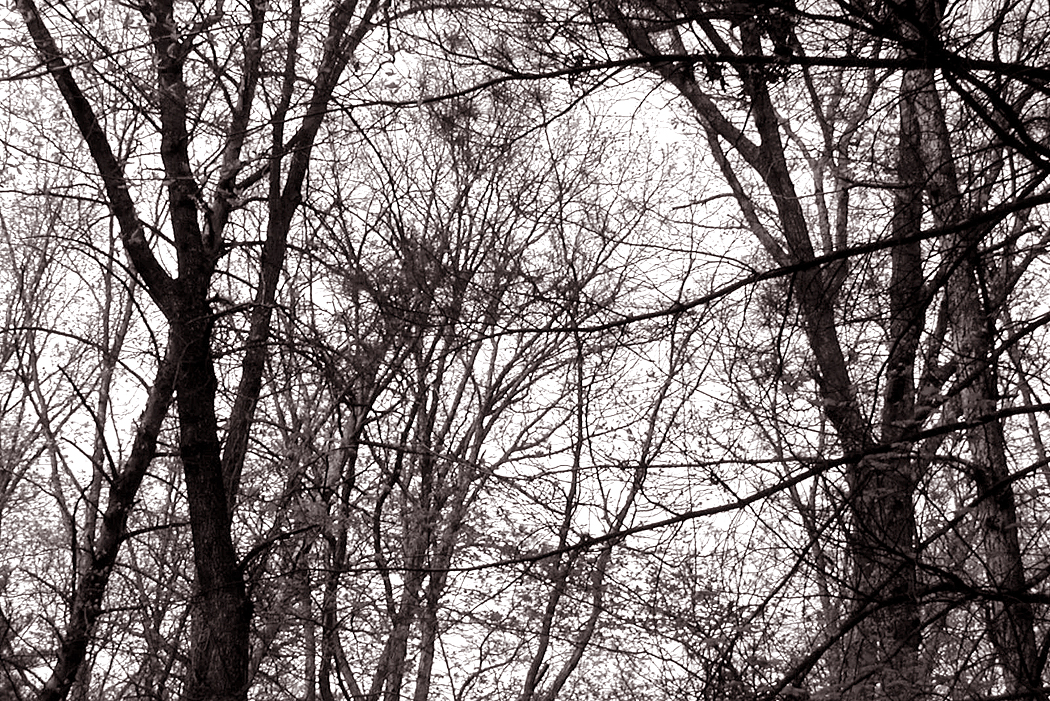
In this, I am reminded of the drip paintings of Jackson Pollock, which I came to love in the New York art museums I visited beginning as a teenager. A good nature-scribble of branches puts a buzz in my visual brain. I love it and have sought it for the past 60 years. Among the first photographs I ever made, 60 years ago with an ancient 35mm Praktica camera were of trees. 

Of course, while trees are beautiful, they can become an obsession. If I had chosen to make a career out of photography instead of writing, the trees pictures would have dwindled. As Fred Astaire says in the film  Funny Face, “You’d be amazed how small the demand is for pictures of trees.”

But I have followed trees through seasons
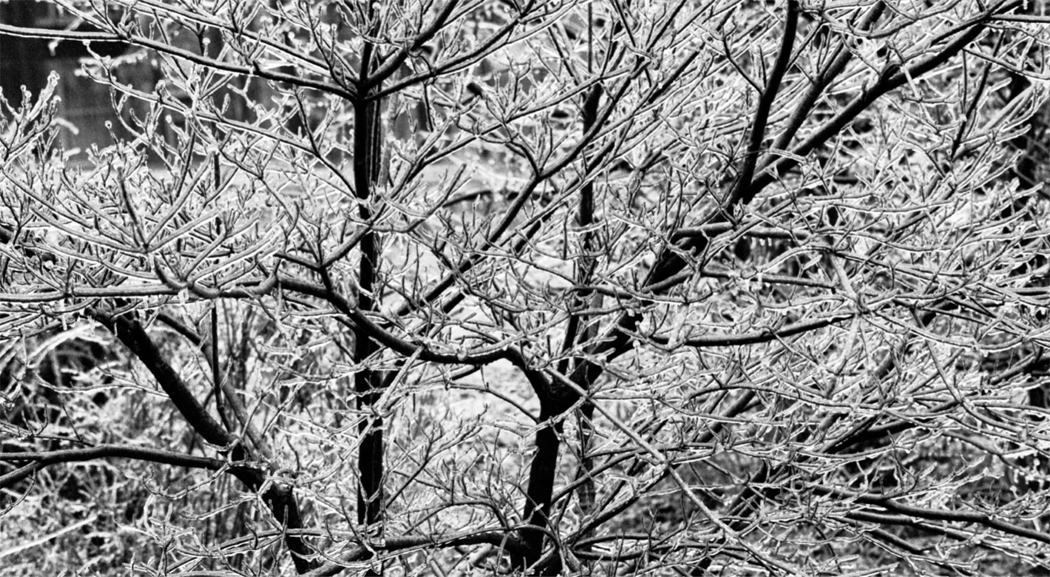
Ice storm, Greensboro, NC, 1969

and all their leafy-ness
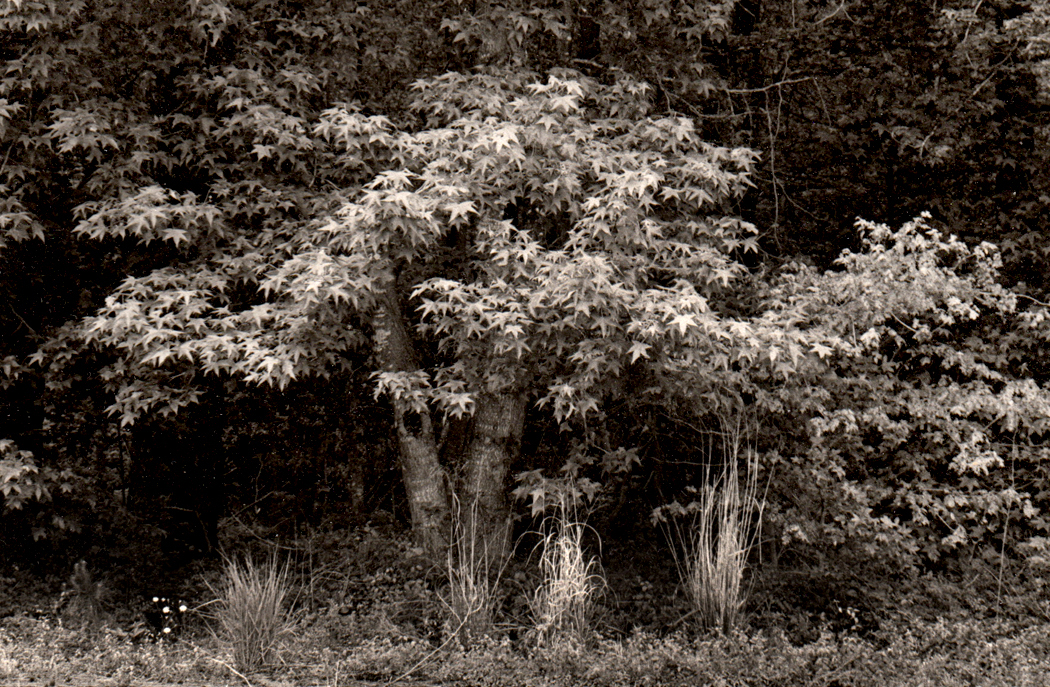
Sweetgum tree, Redwing Golf Course, Virginia Beach, Va., 1984

I have sought the best image of the jumble of buds, twigs, branches, trunks and bark that I feel as a signal for my emotions. 

One of the first shows at the Museum of Modern Art that made a deep impression on me was in the summer of 1972, when they put together a group of 50 photographs of Paris trees by Eugene Atget (1857-1927).  

Lined up on the wall in a darkened space, with brilliant track lighting that made each photograph gleam like a jewel, the photographs made my heart jump and my eyes smile. Most of the trees were winter trees, with wiry roots dug into the ground, and ancient boughs twisted and weighed down with age. They were ungodly beautiful, but also, in Minor White’s expression, it wasn’t just what they were, but what else they were. 
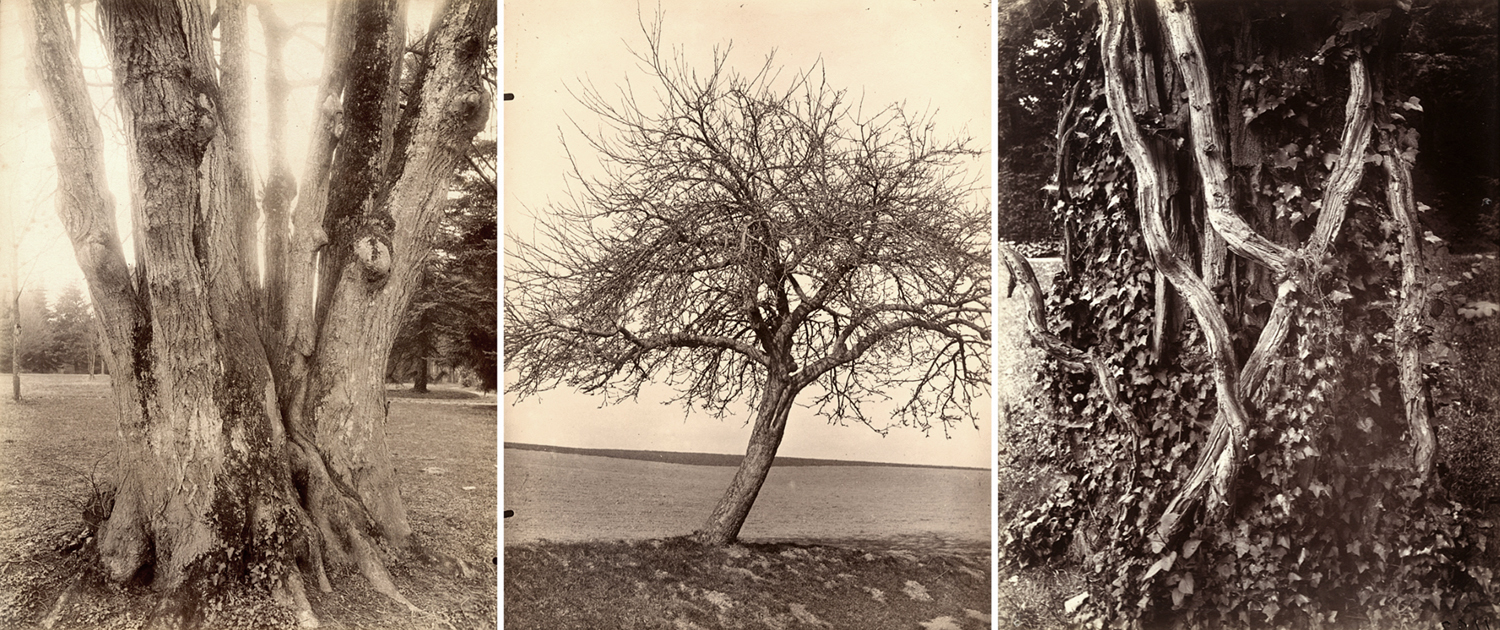
Three tree photographs by Atget

The way they were lit, the gnarled forms they took, their texture and even the gold-toned sepia surface of the silver images all functioned as metaphor. They evoked emotion the way art can. 

Usually, when most people see a picture, in a magazine or newspaper for instance, the image is just a kind of shorthand for language. You see a picture of a house or car and instantly the words “house” or “car” spring to mind. The journalistic photograph is a kind of pictogram or hieroglyph, like the stick figures on the doors of public restrooms. 

But images can also do more than that: When you abjure the naming phase and feel the color, line, shape, form and also the cultural resonance of an image, they evoke thoughts and emotions beyond the named subject. 
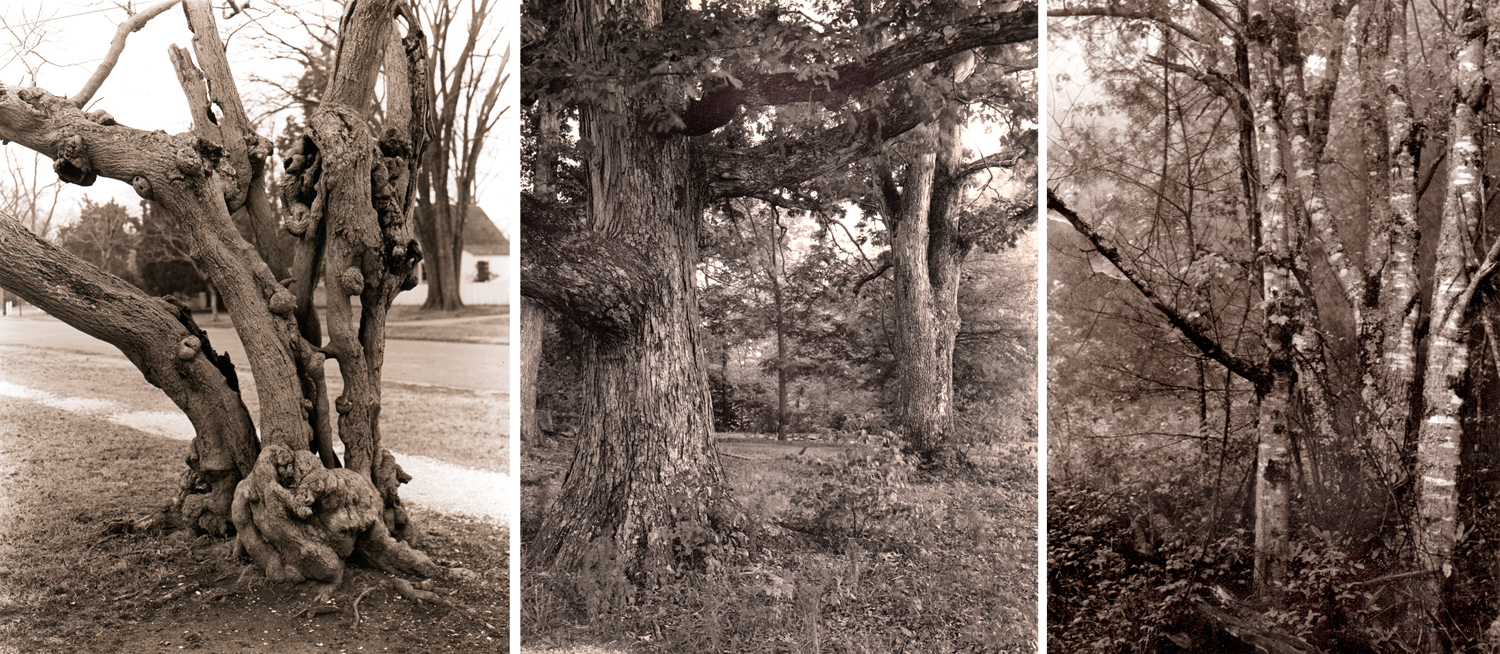
My imitations of Atget

And it was that that blew into my brain, seeing the Atget trees. 

And that is something I have been hunting all of my creative life. And attempting to find in my own photographs of trees. Or not just trees, but in all the photos I’ve tried, whether landscape or still life or nude or portrait or abstract. — What else it is. 
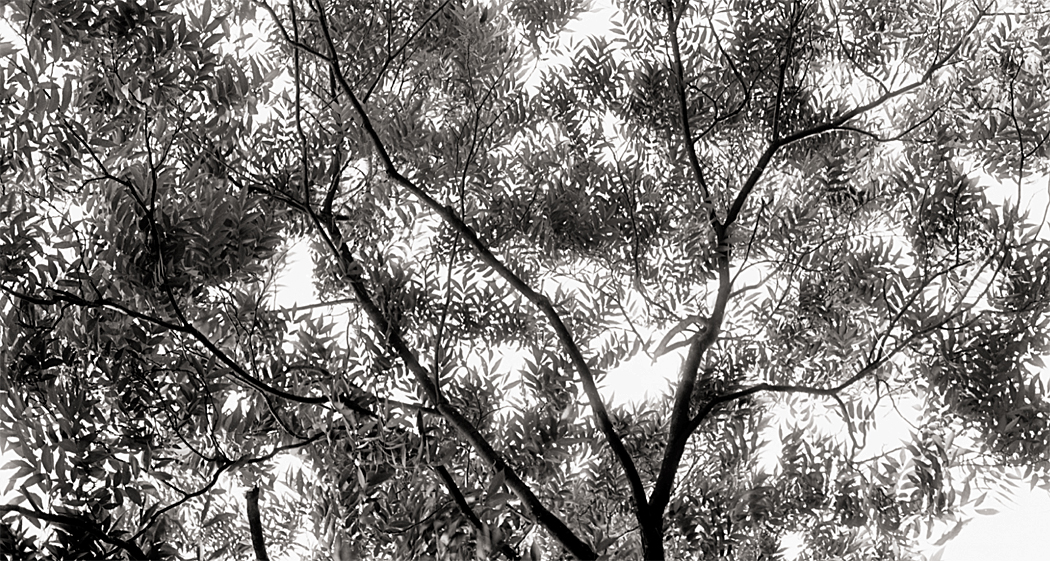
So, when I sit on my back patio and look up the hill at those mid-winter spring trees, with their augury of renewal, and their complex shapes and overlaps — those wonderful lines drawn against the sky’s paper — I want to catch something as it flickers by. 
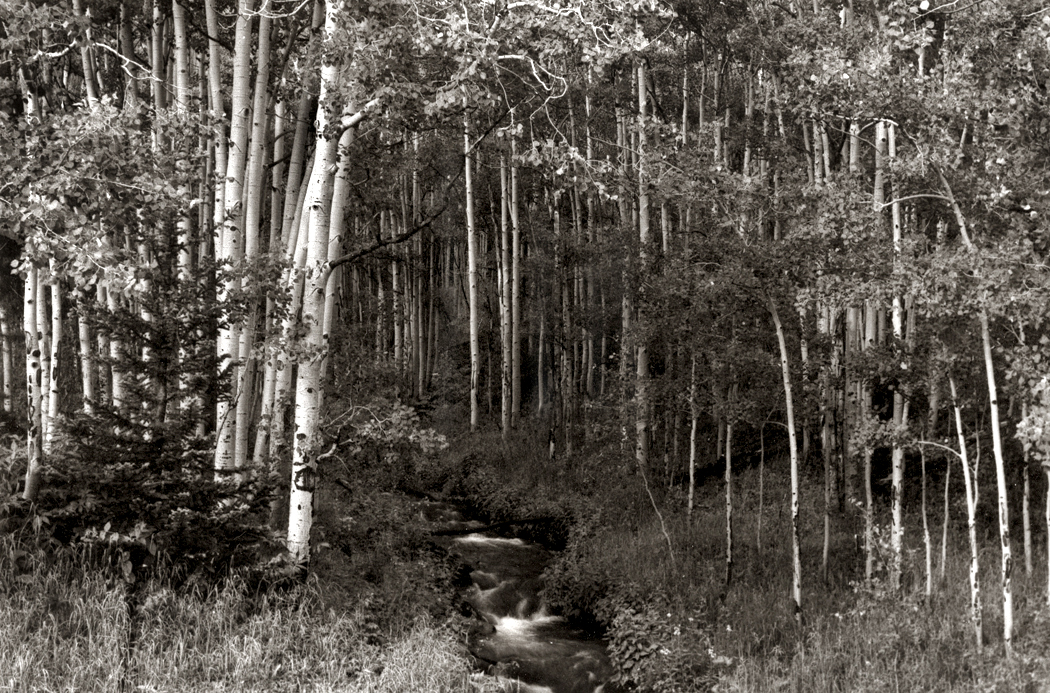
Aspens, Colorado

I’ve snapped a lot of them, although I’ve caught few. Many don’t have the magic and just sit there as noble attempts. It hasn’t just been bare trees. I’ve tried to find the emotion in all kinds of them.
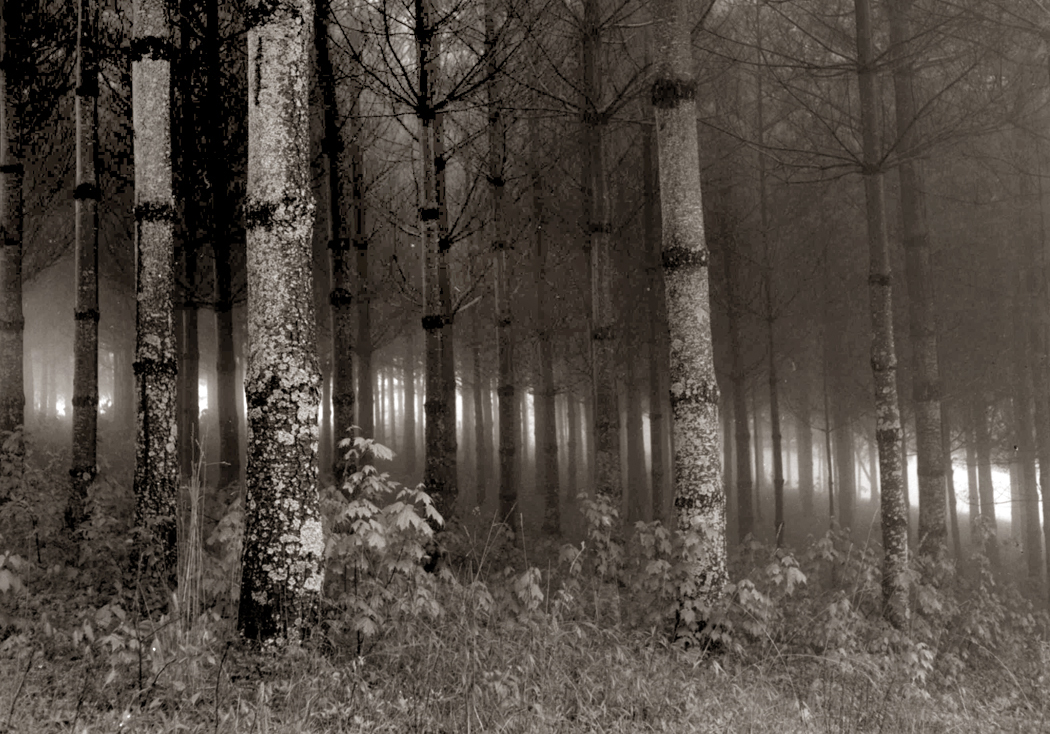
Morning, Obids, NC, Blue Ridge Mountains

The photographer Alfred Stieglitz called the equation between the subject of a picture and the emotions that are evoked “equivalents.” It’s part of the constant fight between the simple depiction of something you can name, and the attempt to make the image stand on its own as an esthetic entity. 
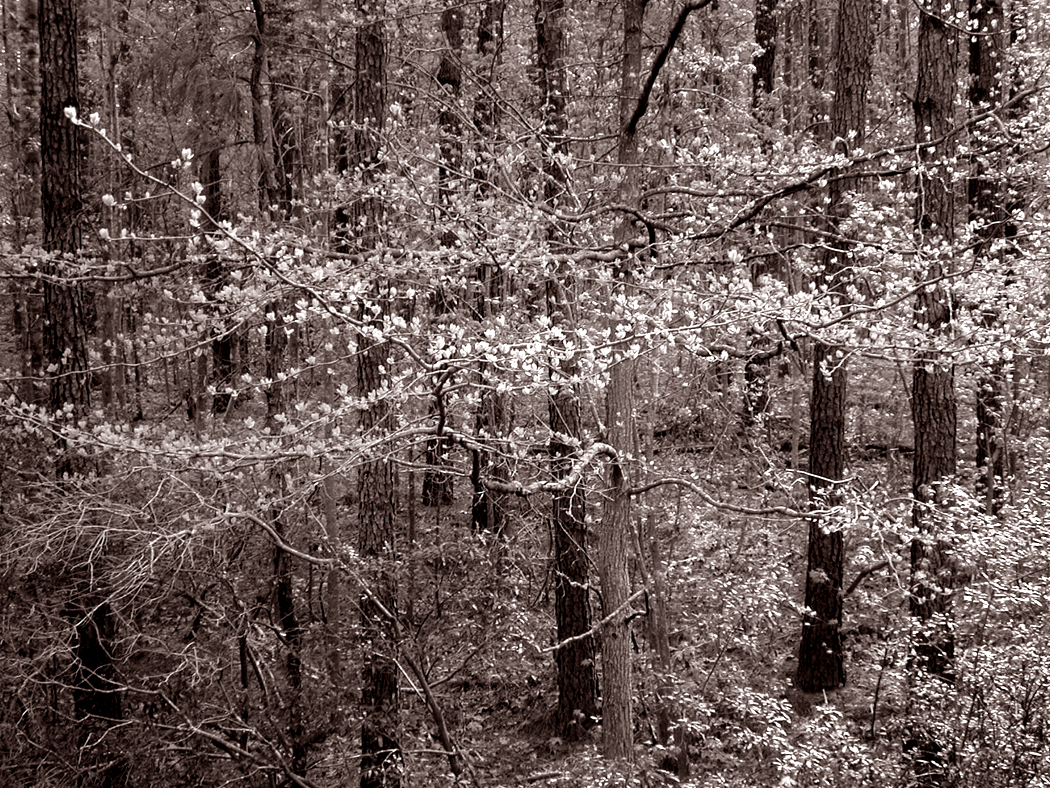
It’s what most visual art tries to do: create an equivalent in the limbic system to the shapes, colors, lines, and even the subject matter and its resonance with the personal. 
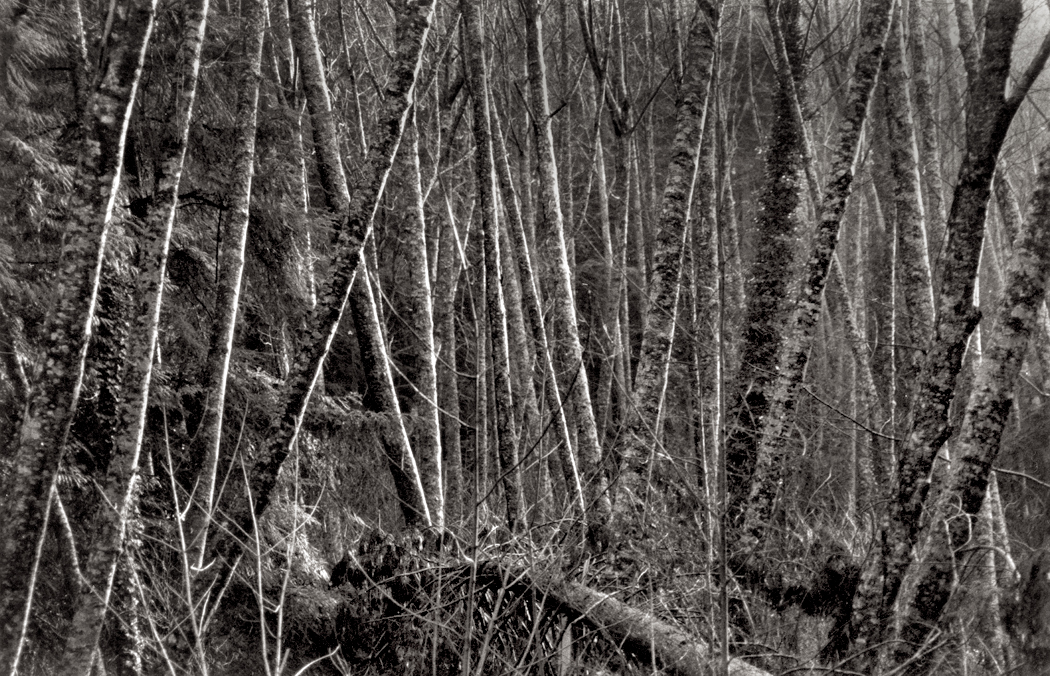
Bainbridge Island, Puget Sound, 1979

Most glossy travel photos are meant to make you wish to be there. But with the image made for display, or as art, you are there, in front of the thing itself. You don’t have to make travel plans. Not just pretty pictures, but objects of contemplation. 
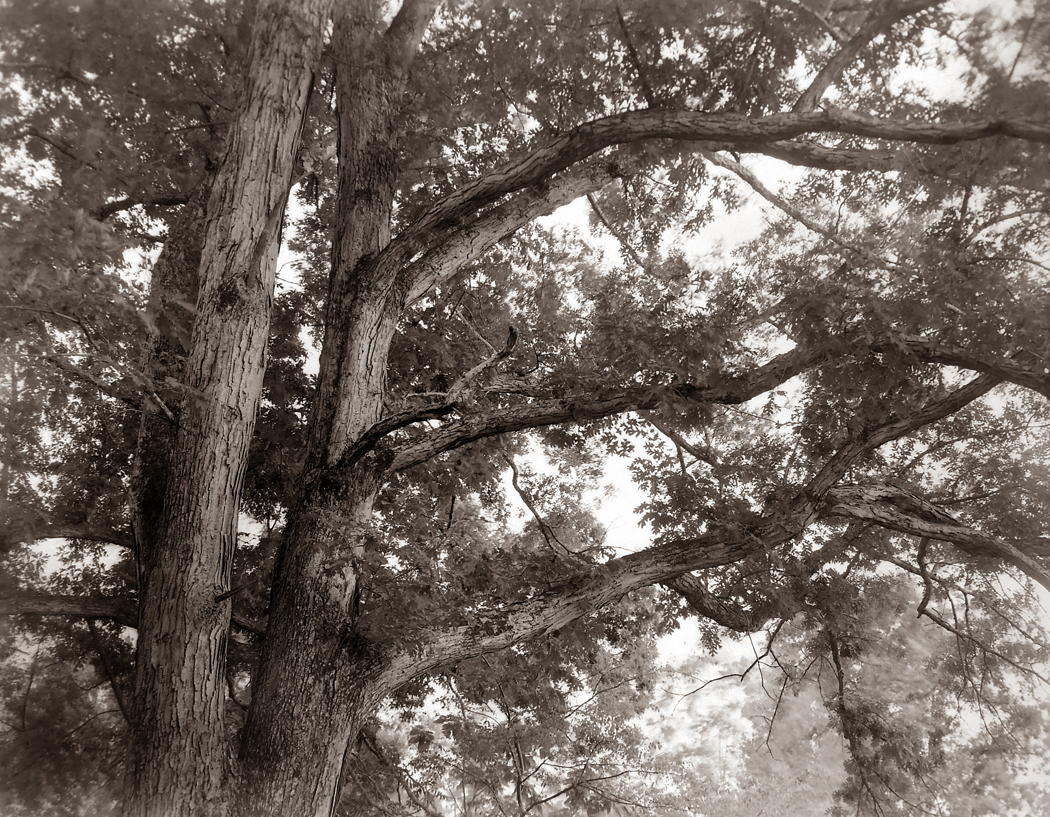
Sandro’s oaks, Summerfield, NC, 1980

The point is twofold. First, to make you pay attention to the world around you, to see with intention. And second, to allow you to connect with the emotions you have in potential.
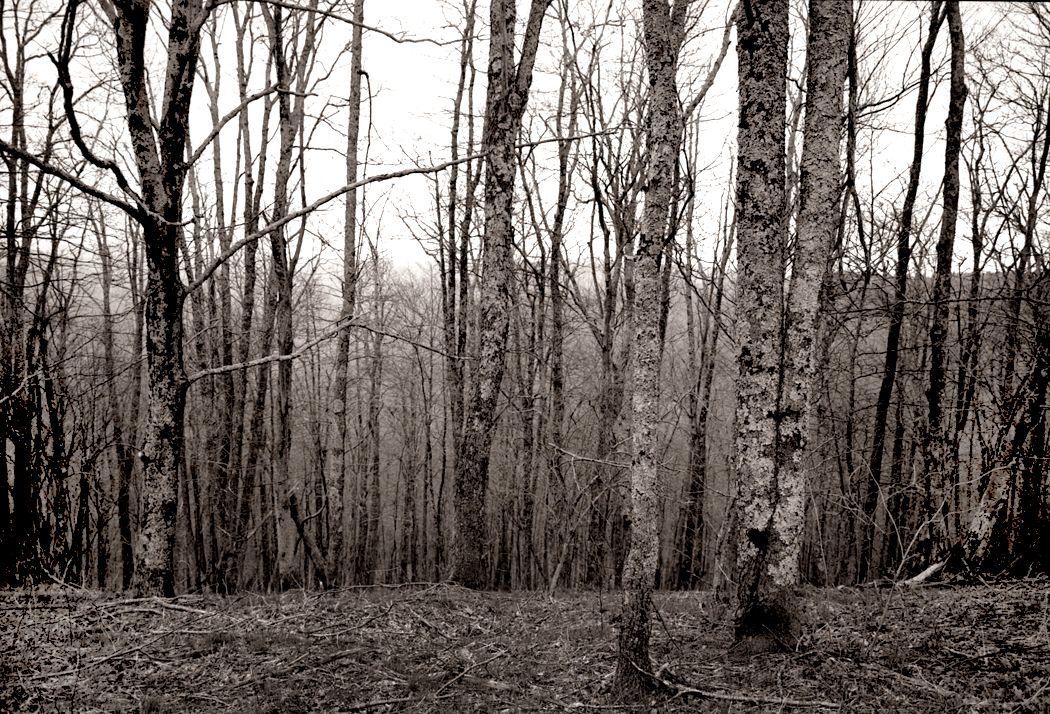
Wise, Va. 

Both together they make a single bond: interior and external; you and the world; individual and cosmos. No longer separate. 

Over the years, the images I make have become less public and more personal. I no longer pay much heed to the wide acceptance of the art I make. I don’t make it for others, but as a kind of personal meditation. 

I seek new ways of making this happen. One morning, while visiting my brother- and sister-in-law in Reidsville, N.C., I saw the shadows of winter branches projected onto the window blinds. It made for a kind of Japanese byōbu screen. 

And then, one day last week, in midwinter spring, sempiternally recurring, I was sitting out back, listening to birds and airplanes, the dogs down the street and watching the clouds move west to east and the branches waving in the moving air, and I managed to make an image that finally captures for me the complexity of the abstract, neuronal jumble, all the connections, the scribble and the energy. It is small on your computer screen, but it should be large as a mural. 
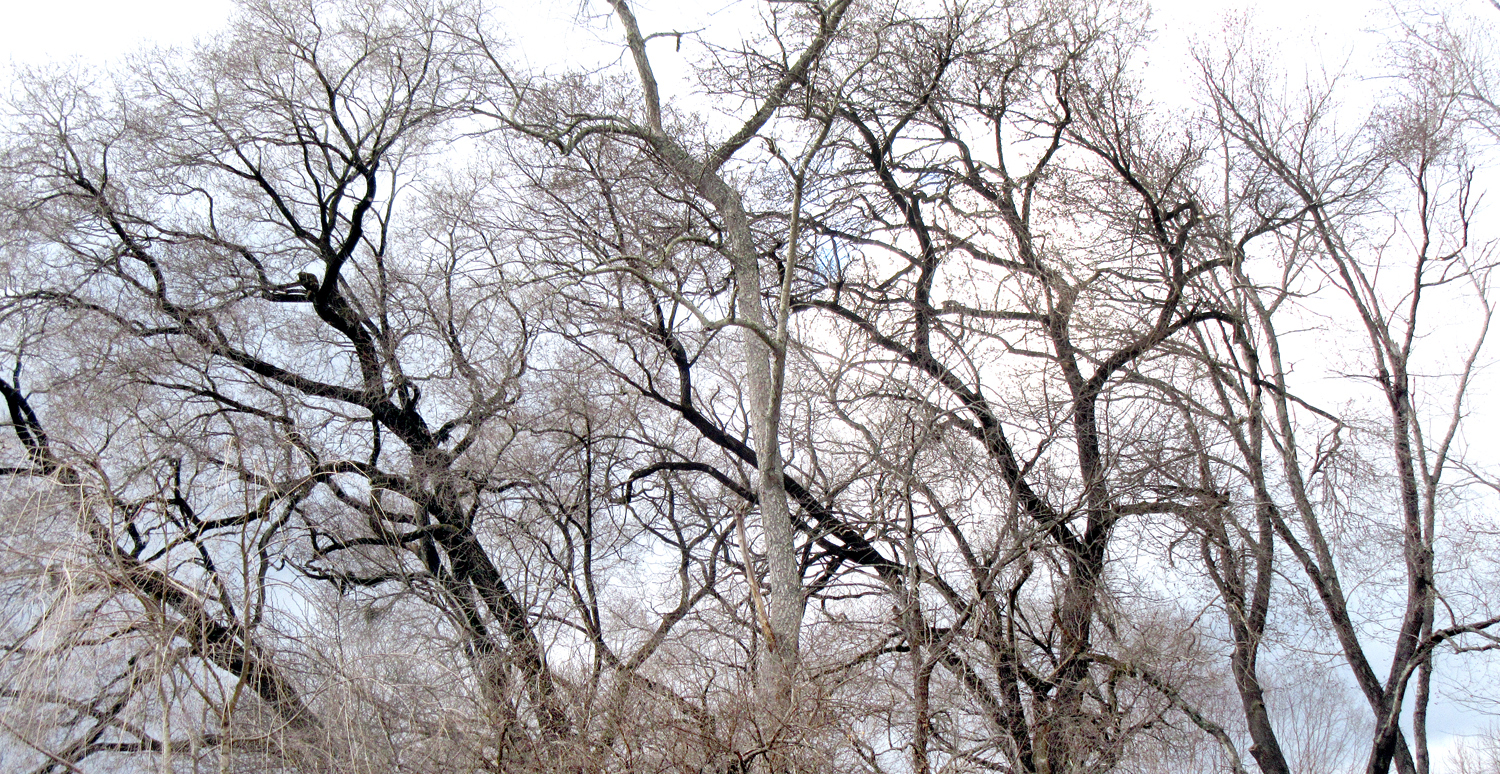
If I could, I would print it out mural size to cover a wall. Or split it up over several vertical panels, like a Japanese byōbu screen.

But I no longer have means to do that, and so, I just look at it and contemplate.
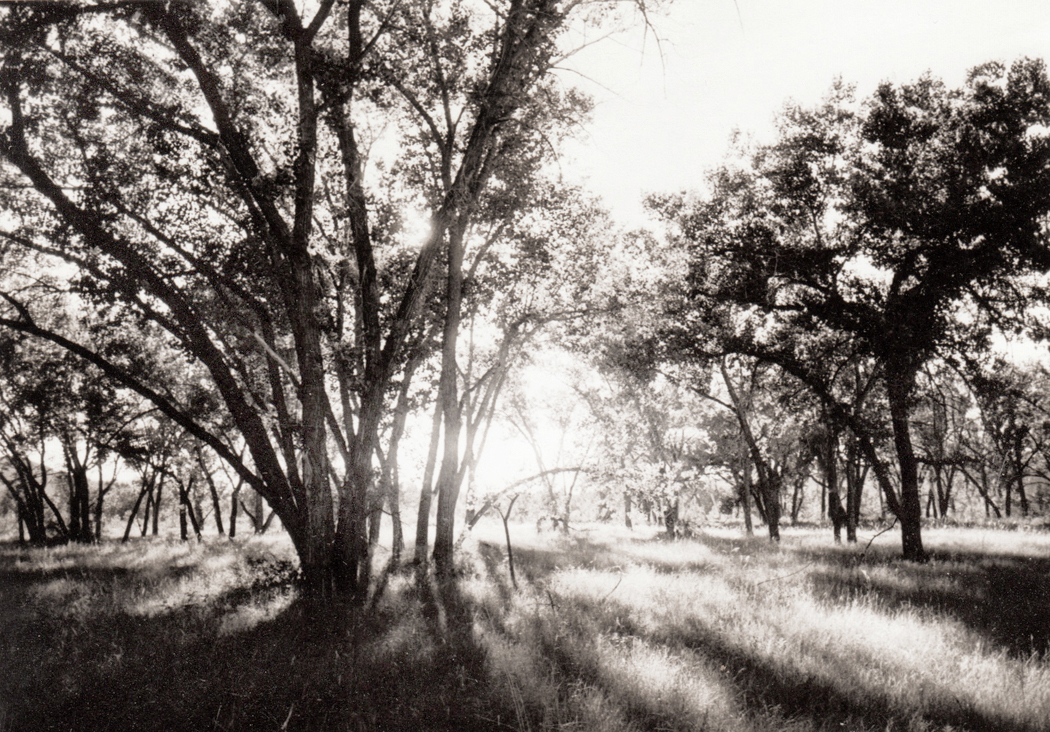
Roosevelt National Park, ND

Click on any image to enlarge

It was 74 degrees today in the Blue Ridge Mountains and spring is edging its way in. There is still some cold weather coming — Monday night is predicted to drop to the mid-20s. But the signs of shifting seasons  are all over. 

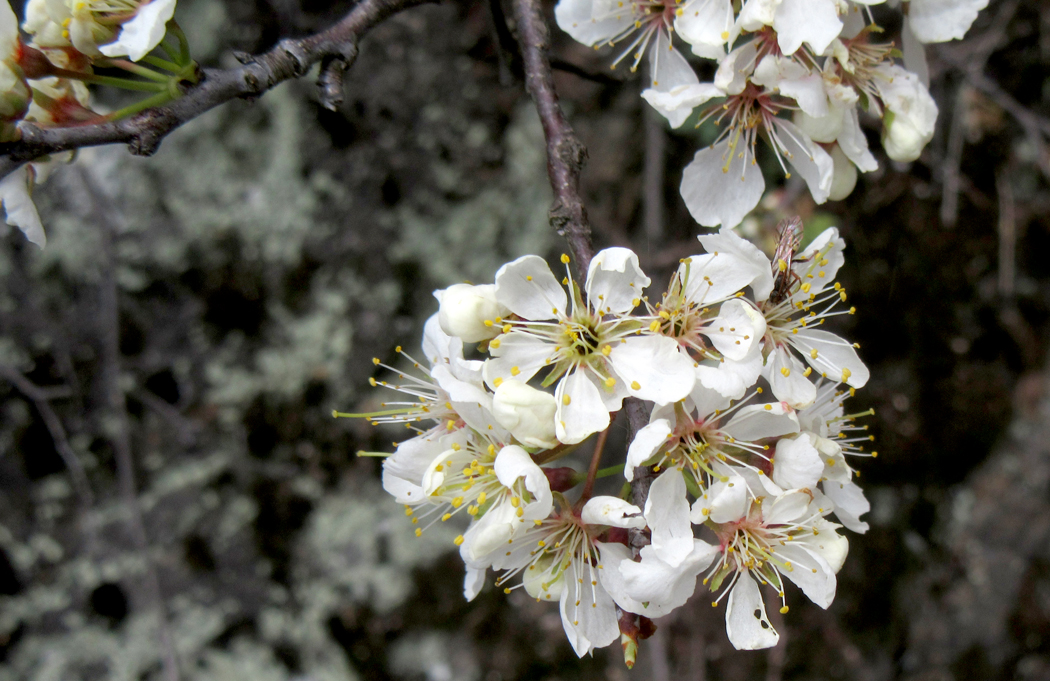
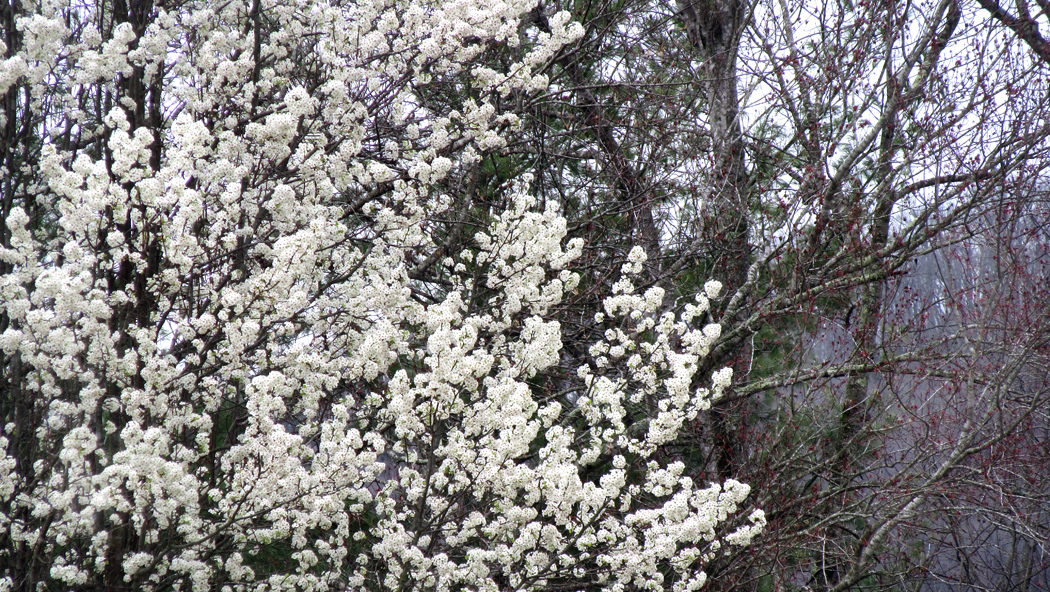
The daffodils have popped, the Bradford Pears are white lace, and the empty winter tree branches are feathering out with buds. 

According to the calendar, the new year begins mid-winter, but in practical terms it is the reawakening of nature that lets us know that we can all start over again. The year circles around to the beginning and we can put our overcoats back into the closet. 

It is a comforting thought, but the fact is, the recurrence of spring sits in equipoise with the hurtling forward of age. The trees come alive again, but I only get older. 

I have seen 76 springs, and when I was a boy, each season lasted years. Summer vacation seemed endless and the next school year might as well begin in a science-fiction future, eons away. As a grown-up, the year passed by almost unnoticed. Winter just meant sloppy roads; summer just meant sweat and iced tea. I went to my job every day, no matter. 

But I am old now, and the season change has yet another meaning. 

One of the impenetrable facts of being 76 years old, even in decently good health, is that I have a limited number of springs ahead of me. 

I have to face the possibility that this one now could be the last; there is no counting on next year or the year after that. 

It’s not that I am anxious over the likelihood of my existence being cut short, after all, over eight decades, from 1948 to now, it has been a long and I hope fruitful life. 

But the uncertainty of future springs makes this one more necessary. I am paying attention more than ever before, and although I have always enjoyed the spring, it feels closer to the bone this year. 

I don’t want to miss a moment of it. 

Click on any image to enlarge
“Nature’s first green is gold, her hardest hue to hold.”

I am seeing my seventy-sixth spring. The first, I don’t remember, because I was only four months old. And most of the rest tend to blur into clumps — the springs of my New Jersey childhood; the springs of my adolescence; those from my college years; those from just after — each clump has its own resonance and emotion. 

Now that I am 75, the spring is more poignant for the fact I have so few left to experience. 

When I was a child, springs were so far separated from each other, they were wholly new each time. They augured the end of the school year and the beginning of an eternal summer vacation. Now, they come thrusting upon each other like jostling ticket-holders in a queue, pushing toward the head of the line. Through that door, though, is an end.

Through my twenties and into my thirties, I was living in North Carolina, and spring brought what was called “mud season,” when the ground thawed and turned into muck, which caught your shoes as you walked. The air was still crisp and the trees just budding, but it was clear winter was over and daffodils were already yellow. Next step, the redbuds and then the dogwoods. I’m afraid winters just aren’t as cold anymore, and the ground never really freezes. Climate change is obvious for anyone with enough years to remember. 

It is often said that spring is a rebirth, as the seasons circle around and the grey and brown of naked winter trees turn first yellow-green (nature’s “first gold”) and then leaf subsides to leaf, darkening to the deep forest green that augurs summer. Animals rise from burrows; bees begin circling gardens; birds squawk and chatter; the sun rises higher in the sky each day. 

But that is not spring for me. Instead, at my age, the changing seasons are like mile-markers on a highway, and each passing one means there are fewer in front of me. It is a straight line rather than a cycle. 

As the years are squeezed, so the pressure increases to take it all in, to pay attention to each small detail, to garner pleasure from the tiniest bits. What once was simple pleasure is now joy — an increase in appreciation for what I am going to have to leave behind. 

I sit on the deck behind the house I’m visiting in the North Carolina Piedmont, in the scant shade that the freshest, newest leafs make before fully fledging their trees, and listen to the wrens and nuthatch, the rattle of the woodpecker. I feel the warming air and look up to the clouds shifting against the blue. 

It is a sensuous recognition of the variety the planet holds. The many greens of the newest foliage. The varied textures of the leaves, smooth, dentate, glabrous or slick. 

The fullness in my chest as I take all this in, is a form of love. I watch the new spring. It is now Earth Day once again. The world is ticking on. This blue planet — this green planet — and the parent will outlive its child.

One of these springs, perhaps even this one, will be my last. My hand is always at my lips bidding adieu. 

When I was a young man, each loss, however devastating, was temporary, an emptied pool to be refilled by a gushing spring. But now that  has changed, and I know that the final loss will bring only oblivion. I hold on to what I love with tighter grasp. A bumble bee hovers; the cat yawns; a breeze teases the upper tree branches; a cardinal yawps. 

I want to hold it all tight in my arms.

I opened the front door and stepped outside, where a choir of birds twittered and chirped. There must have been scores of them up in the still-bare trees of early spring, all blasting at once, and a kind of joy crept up in my chest at the sound, a sense that this was beautiful in a way that almost justified existence. 

It is another spring. I have seen 73 of them and the number I have left is dwindling. Now there is a sense, like Takashi Shimura at the end of Seven Samurai, talking to Daisuke Kato, saying: “Once more we have survived.” 

Another spring, another year. I see the bud tips on the maple tree spread and burst out in the million tiny sprays of maroon maple flowers. It is a moment I wait for each year. Another small moment of joy. Those moments are of immense importance. 

I want to avoid sounding like a Hallmark card here. For much of existence for much of the world is misery. People continue to bomb each other; children continue to die; famine spreads; refugees live by the thousands in makeshift tents; ethnic minorities are hounded and enslaved. Even in our so-called First World, otherwise comfortable people face death, betrayal, hate, disappointment and the hounding sense of their own meaninglessness. 

For much of history, we have lived through plagues, wars, superstitions and “continual fear, and danger of violent death; and the life of man, solitary, poor, nasty, brutish, and short.”

And yet, you see children in those refugee camps playing soccer in the dust. They are laughing. Mothers find great love in their children. Above the camps, birds still twitter and peep. I don’t mean to downplay the misery being suffered, but to point out that even in the midst of suffering, there are sprints of joy. It is so to be human. 

What affords those moments of joy — which come upon us unannounced always — is that they give us a glimpse of connectedness. To our kin and childers, to nature, even to the larger city in which we live. 

I was reading in Ezra Pound’s Cantos a few days ago, through the Pisan Cantos section of that monstrous, abstruse, inchoate mass of culture-shard, written when Pound, after World War II, was imprisoned in Italy for having given intemperate radio broadcasts lauding il Duce and fascism. He was a cranky, possibly insane old man and he was kept in an outdoor cage with a concrete floor for a bed. He wrote the bulk of his Pisan Cantos there, full of the usual blatherings about economics and world history, mixed with bits of incomparable poetry and the language gave even the most pathetic of imbecilities brief moments of majesty of utterance. But, like most of Pound’s verse, it is almost all literary, with little sense of the poet’s actual life, at least outside of books. 

But in the middle of Canto LXXIX, there appear, popping up in the jumble of classical allusion, several birds on the power lines strung above his cage. “With 8 birds on a wire/ or rather on 3 wires.” They make a melody on the music staff of those wires. And later, “4 birds on 3 wires, one bird on one.” Further on, “5 of them now on 2; on 3; 7 on 4.” The real birds keep breaking into his phantasmagoria of theory and the poet’s tirades about ancient China and Tallyrand seem vaporous in contrast with the physicality of those birds above his cage. Philomel and the Nachtigall give way to pigeons and starlings. 

And you sense, behind all the immense brickwork of culture and reference, that moment of real connection with an actual world. And in the misery of that cage, open to wind and rain, a brief moment of joy, left fleeting and unprocessed. 

Such moments are epiphany — the rending of a veil to see what is most essential. Joy is the ephemeral product of such an insight. 

Such moments come in a flicker; they cannot last long. No one is joyful all the time. We are not living in some Pepsodent commercial, skipping down the sidewalk with teeth so shiny they blind passersby. Indeed, we live the bulk of our lives in neutral, neither miserable nor happy, but plodding on. But then we have that glimpse, periodically, of a bliss that transports us from our own toad-like passivity. It is a seed waiting to sprout in our psyches. 

These moments don’t always stick, but sometimes they do, and inform the rest of our lives. I remember a visit to the National Gallery of Art in Washington DC in the 1970s. In the basement at the time, there was a small exhibit of Cezanne still lifes. I had never much valued Cezanne, but I had only seen his work in reproduction or on slides in art history class. But here was the real thing. Who knew there were that many greens in the world? Infinite seeming gradations of blues and greens that glowed almost like fire, “fire green as grass.” And it was, for that moment, the most beautiful thing I had ever seen. I’ve since been to the big retrospective of Cezanne at the Philadelphia Art Museum in 1996 and was bowled over. The color alone, glowing like neon, gave me intense pleasure.

Another time, I heard the Philadelphia Orchestra under Wolfgang Sawallisch play Strauss’ Don Juan and the palpability of the sound, especially from eight horns playing in unison and making the seat under me vibrate, let me feel the sound as a physical presence. Jericho would have shuddered. I know I did. 

Art has been at the root of much of my own experience of joy and epiphany. I could name dozens of concerts and hundreds of art exhibitions that have brought me to this afflatus — for that is what joy is. 

Other sources are family: my twin granddaughters when they were three, riding bouncy-horsey, each on one of my knees and laughing the way only three-year-olds can. Even such a trivial thing as one of them asking for seconds on the pot roast I have cooked for them. Seeing them enjoy what I have prepared is a constant source of joy. I imagine the same for some Syrian refugee in a tent making dinner for her children. These moments come to us as gifts. 

Nature is the third great source. I remember standing on the top of Roden Crater in Arizona, an extinct volcano being reshaped by artist James Turrell. It was dusk and the sun was setting. Turrell pointed out the now-obvious fact that night doesn’t “fall,” but rather, it rises. And you can see the edge of the shadow of the earth cast by the lowering sun against the sky forming a boundary between the light and the dark and as the sun drops, the line of demarkation rises until the night swallows all. It is an effect you don’t get to notice in the cities or suburbs, where the horizon is blocked by human busy-ness. 

I stood by the Rhine River in Dusseldorf at night, with the reflection of city lights flashing off the dark current like firesparks. The river flowed broad with a swiftness and power that felt almost as if it must be a god. This was the river Robert Schumann felt was worthy of writing a symphony about. 

On the plains of eastern Montana, at the Little Bighorn, I stood on a hill — one hill like a frozen wave peak in the ocean among many such peaks — and watched the wind curl the long grass in moving ripples across the landscape. The manifestation of Wakan Tanka, the great spirit that animates the cosmos. I had to stand very still among all the motion to absorb it as a moment of eternity. 

In the early ’70s, I visited Gaddys Pond, just east of Charlotte in North Carolina, which was home to tens of thousands of Canada geese, a midway stop in their annual migrations. And the sound of all of them honking over each other, the din of chaos, remains the single most joyful sound I have ever heard. Ever since I have sought to recapture that moment, my hound, bay horse and turtle-dove.

We talk about joy being an emotion, as if it were some abstract titillation of the neurons, but it is a physical effect: the chest swells to almost bursting. You can feel the inner pressure of the joy wanting to escape the confines of the meat that is your body. And you feel something rising in your throat and your eyes begin to tear and overflow. The experience surges inside you. It may last only a second, or even a fraction of a second, but in that moment, you know you are alive. You know that everything is alive, and that to be alive is everything. 


Like most everyone else, I have been bunker hunkering, like some 1920’s gangster, holed up in a house, fearful of each approaching human. And like most everyone else, a bit of cabin fever intrudes. I peek out the window and see a yard across the street with a Bradford pear tree like a snowstorm of white, and the lawn is beginning to get unkempt. The temperature has moderated and the sky is filled with crisp, dry air. And so, I have to get out. 

For me, the best solution is to drive up the Blue Ridge Parkway. Its entrance is only a few hundred yards from my house. I can stay sealed up in the car but find a place where the horizon is still marked by the distance where the curvature of the earth bends the rest down and away from my sight. When you are stuck at home, it is easy to think of the planet as consisting of four walls; things are cubicular and static. But get out into the mountains, up high where you see for such a length, and you are again standing on the apex of a globe. Everything falls away from you, both geographically and emotionally. Anxiety thins. 

This century has redefined nature. In the 19th century of Thoreau and Emerson, nature was green and pleasant. To Emerson, nature was the outer manifestation of deity. Earlier, to Wordsworth, “There was a time when meadow, grove, and stream,/ The earth, and every common sight,/ To me did seem/ Appareled in celestial light.”

To Byron nature was so vast not even humankind could mar it. Our century has proven him wrong. For us, nature can no longer be the birds and beasties, the green leaves and burbling streams, the sky above and the soil below. We have filled the oceans — where Byron said man’s control “stopped with the shore” — with tangles of plastic waste the size of islands. In our cities, we have turned the transparent air into murk. We have left our rivers thick with the runoff of pigpens. 

The television nature programs I grew up with, that showed us the wildebeest swarming on the veldt and the flying squirrel gliding from tree to tree, have turned into chronicles of rapine and threatened extinction. Those documentaries are now alarums to wake the public to what it is losing. 

The Antarctic ice is thinning, the oceans are swelling, the bees are coughing and the once myriad cod have turned into shriveling shoals. It is hard to think of nature the way I did when I was young. 

“There hath past away a glory from the earth.” 

When I was in my 20s (which was 50 years ago), I was a bird watcher, a hiker, a camper, an amateur astronomer and a gardener. I knew the name of every tree and wildflower or weed. I had an almost mythic connection to the earth: It glowed every day, like a van Gogh painting, buzzing and whirling. Every bush was the burning bush. A surge of brain chemicals blasted my emotions. I was giddy. Now, half a century later, it is not now as it hath been of yore. “Whither is fled the visionary gleam?” “At length the Man perceives it die away,/ And fade into the light of common day.”

Career and responsibilities, the vicissitudes of living, the betrayals of love and the deaths of those we loved, have all risen to take too much space in our journals. And so, in my senescence I have drawn away from what we used to call nature, and that selfsame nature has itself decayed and left me. 

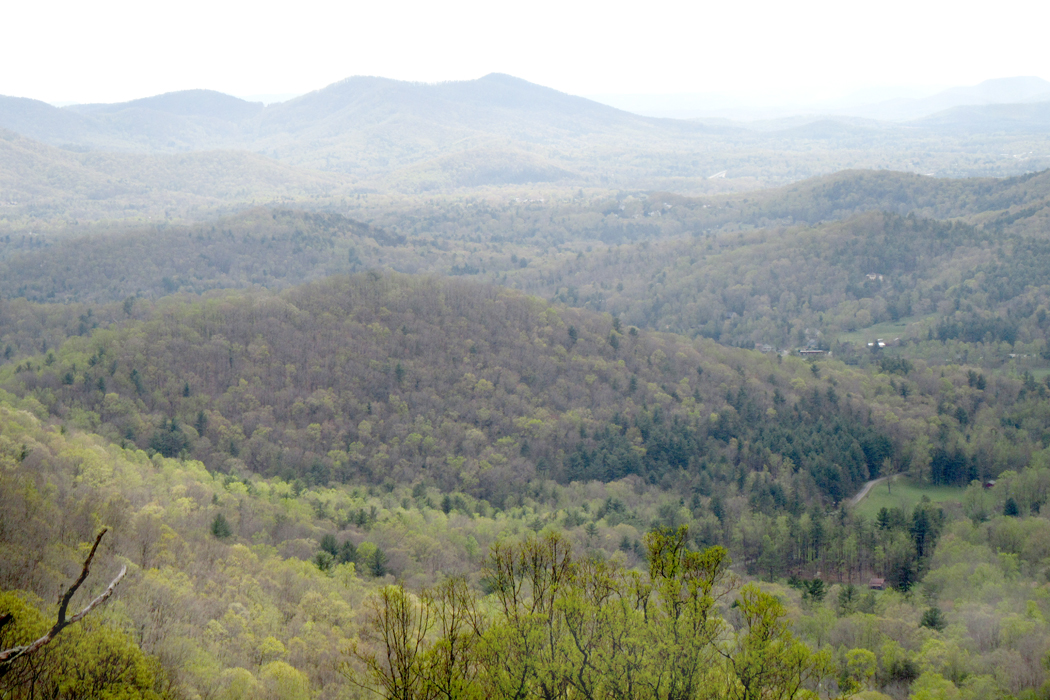
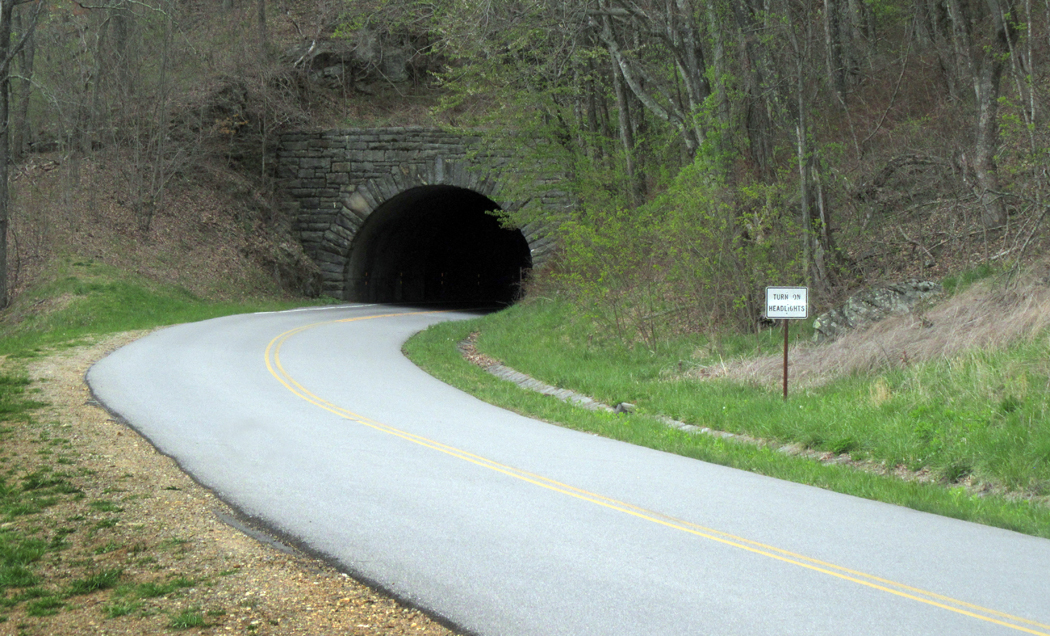
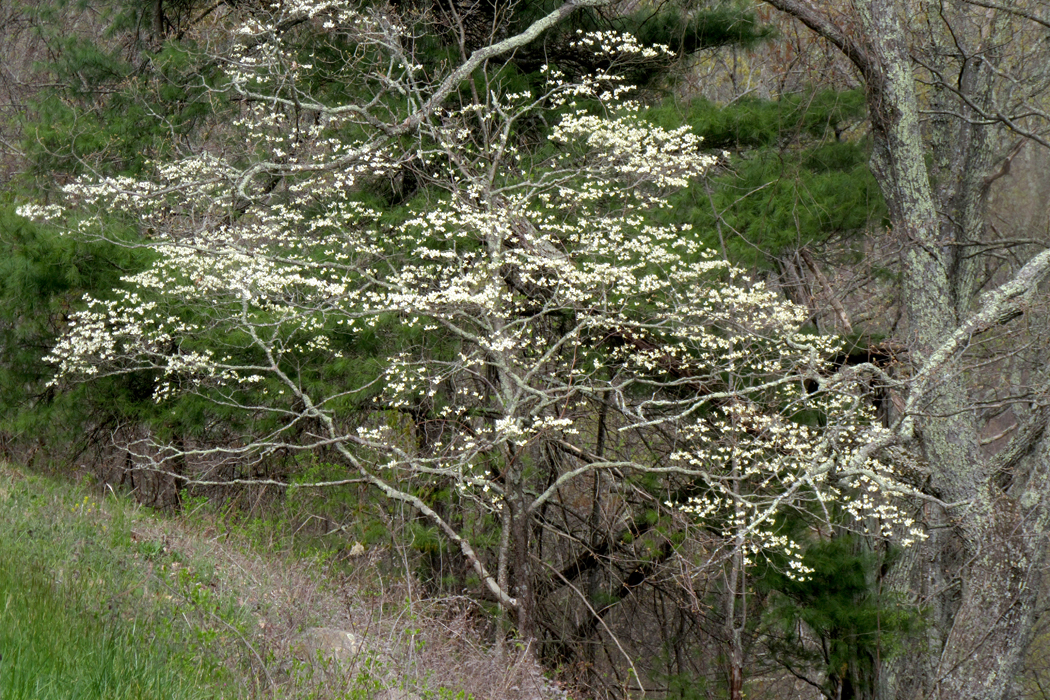
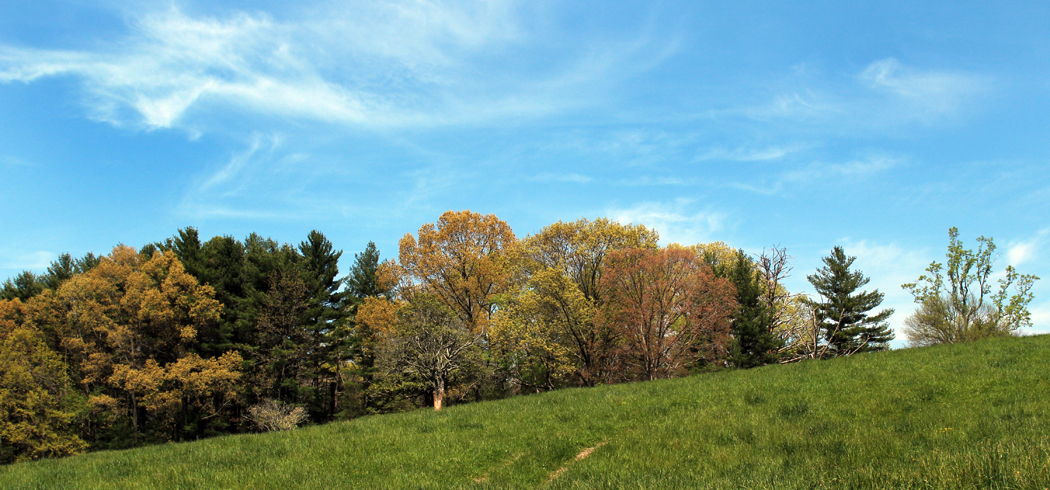
But not completely. I drive up the road into the hills, through the tunnels, into the high country where the sun shines and the wind blows the shadows of clouds across the flanks of the peaks. It is April and the dogwoods become galaxies of stars against the darker, still-leafless trees behind them. When I look down at the valleys, I see in the lower elevations the bright young leaves swelling from the buds. It is certainly beautiful, but it isn’t just beauty that makes this important. 

We are facing a new virus and most of us, and especially those of us on the shorter end of life’s measuring stick, feel an immediate threat. We may die. We always knew that, but now we can almost touch it and taste it on our fingertips. It is not theoretical. 

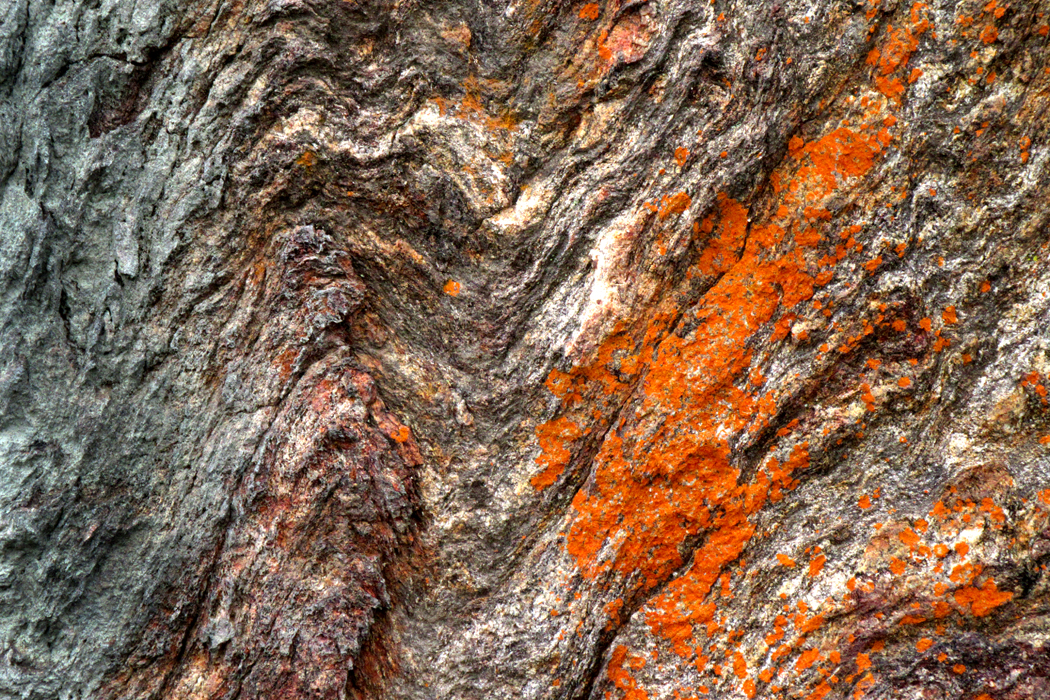
And so, I get out of my car in a roadside pullout and look down from the mountain into the woods beside the road and see the fresh buds and the tree branches that sway and the shoots springing tip first through the forest litter and I know that it is another spring, my seventy-second, and one more of millions that make a wake behind the present going back before there was any consciousness to know it. On the uphill side of the road there are stony outcroppings and those folded strata tell me of eons of continuity. 

I have heard, as you have, poets and essayists talk about the importance of nature, and I have at times winced at what seemed to me the perfervid sentimentality of such bromides. After all, everyone knows, or else, should know, that if nothing drastic is done, we’re all going to hell and taking the world with us. The news is 24 hours a day bad, or at least the talking heads tell us so. Over and over. 

But when I go to the woods, it is quiet except for the “small fowls that make melody and sleep all night with open eye.” And the hurly-burly slows and I am forced to know that there is a rhythm that is not that of CNN, that whether it is plague or influenza or corona virus, we have inhaled and exhaled this pestilence before, that the world endures, with me or without me. My frame of reference, like my horizon, expands.

So, it isn’t the simple beauty of the natural world that does me needed good. Gustav Mahler’s Third Symphony has six movements and they include such titles as “What the Flowers in the Meadow Tell Me,” “What the Animals in the Forest Tell Me,” and ends with “What Love Tells Me.” And what they all join to say is a harmony and a flow. And so, as I drive along the Parkway, I listen to that music on the CD player and the outside and inside, the world and my thoughts and feelings, all twine together into a singularity, mind as mirror to the world, and world as mirror to mind. Pan awakes, Summer marches in. 

Click any image to enlarge

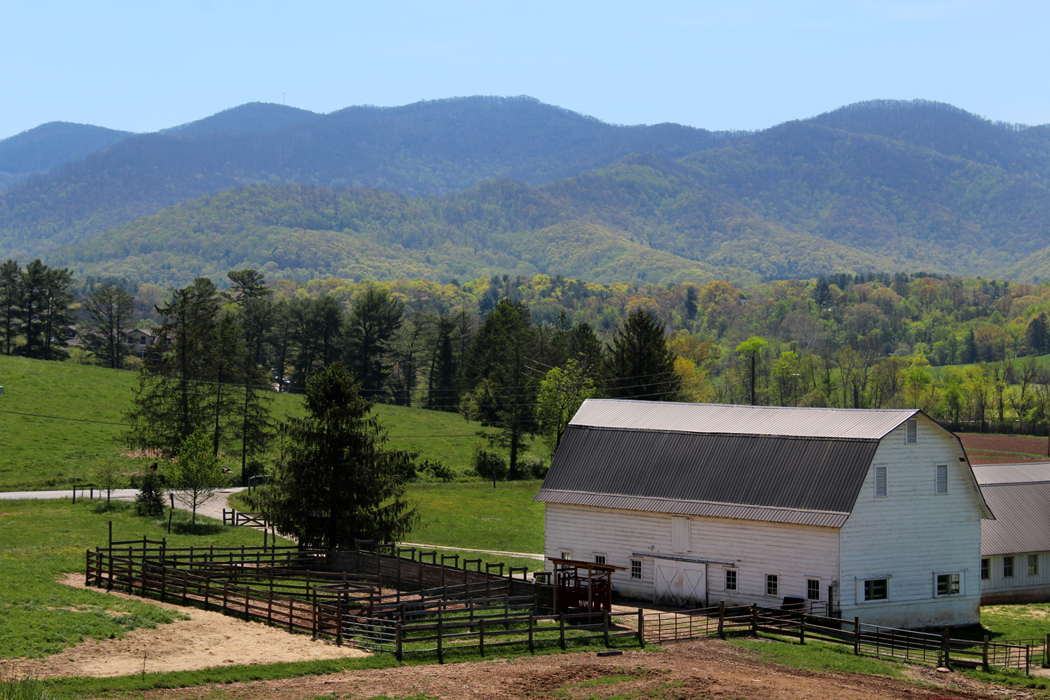
The Swannanoa River runs in western North Carolina from the town of Black Mountain to Asheville. It is where I live now, and it is spring. 

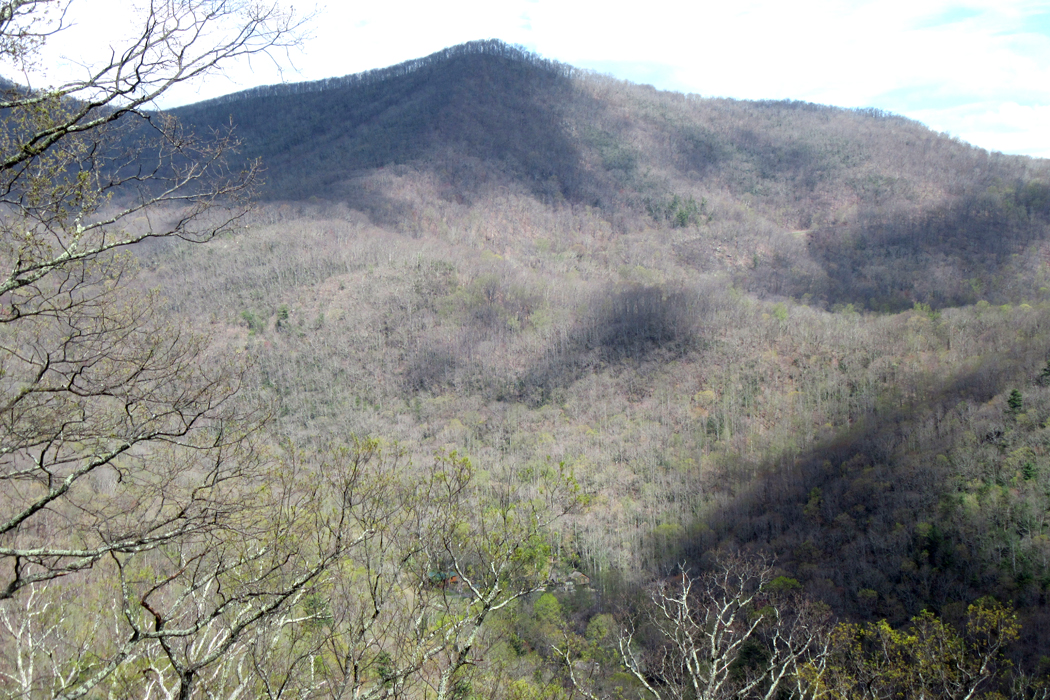
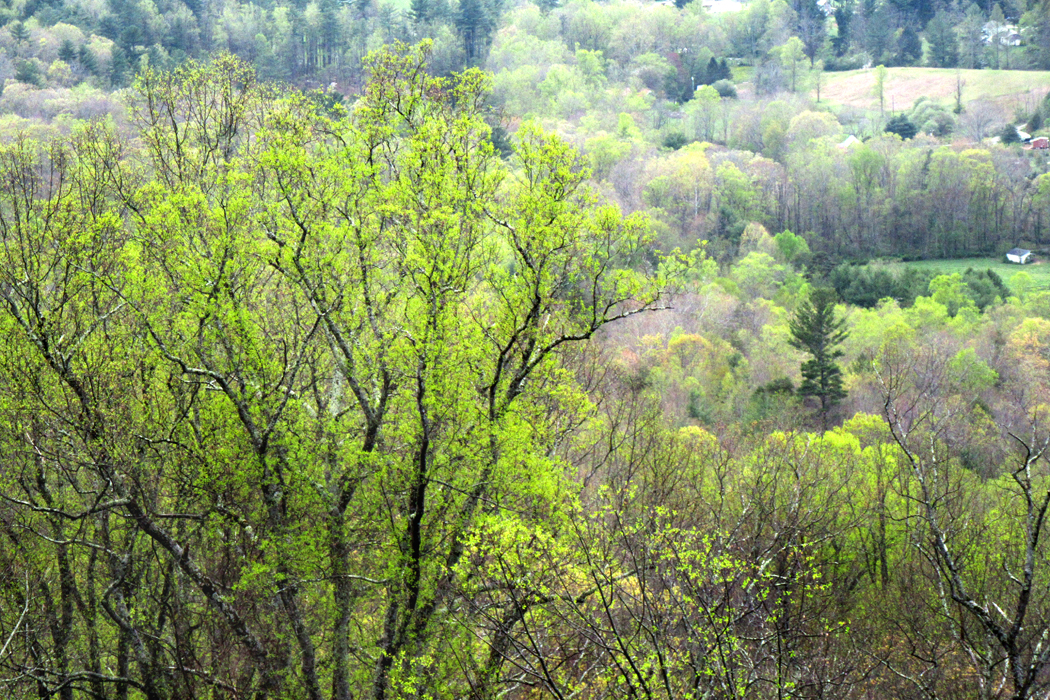
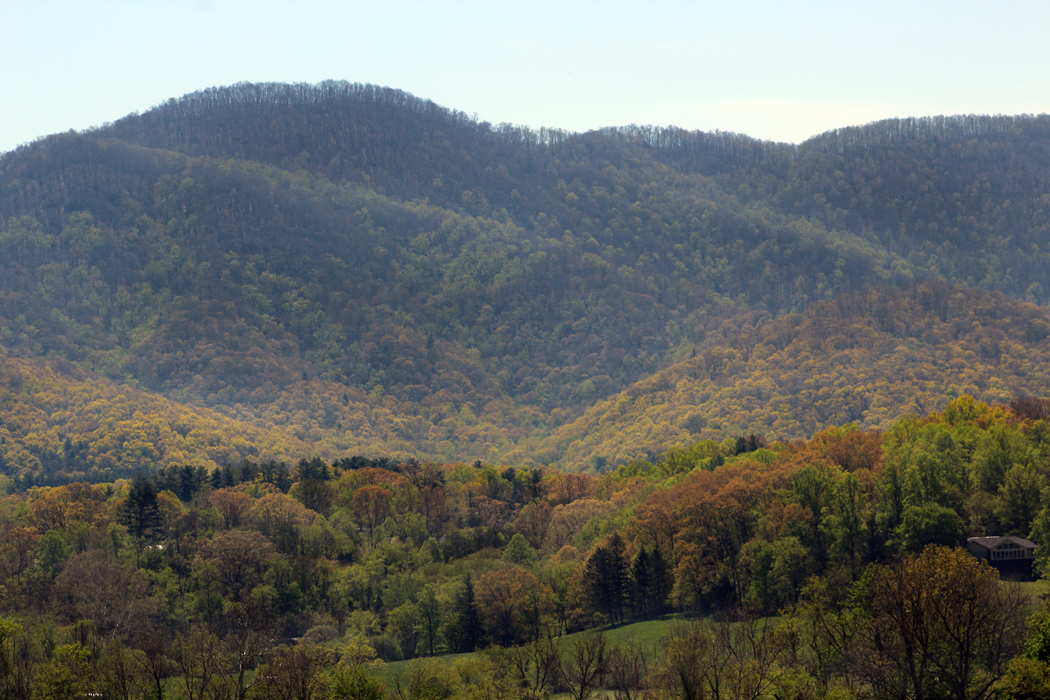
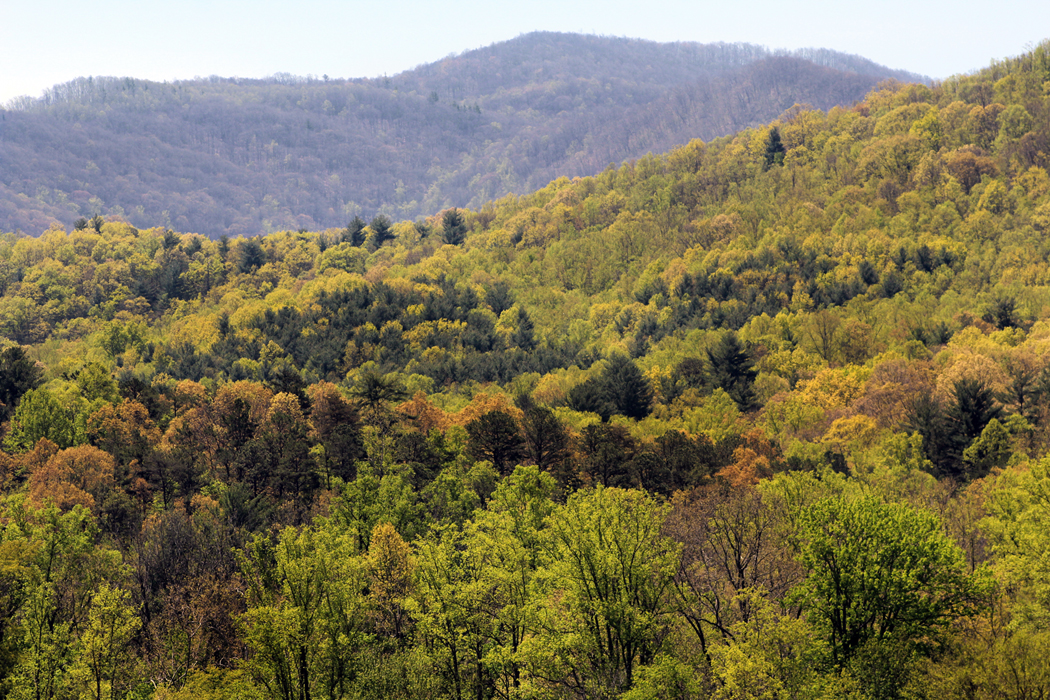
As I drive through the valley, with the Swannanoa Mountains directly to the south and, further north, in the distance, the lofty Black Mountains — the highest east of the Mississippi — the lower slopes of the Swannanoas are green, the bright green of early spring. The mid slopes are what Robert Frost wrote about: “Nature’s first green is gold, her hardest hue to hold.” And the tops of the peaks are still the dusky grey-black of winter. You can see spring climbing up the mountains. The green-line moves fast; a few days ago, it was all grey. Tomorrow, the line will be hundreds of feet higher up the slope, chewing up the grey, until it is all consumed in green. In their half-world, the hills look almost iridescent, the way draped satin will pick up the highlights and shimmer.

And all the while, I have Mahler’s Third playing and — I didn’t plan this; it’s just what was in the CD player — the first movement culminates in a great joyous march that is meant to describe the triumphant return of spring; all the animals and plants, all the hills and rivers are marching in procession like Mummers. It was overwhelming. I almost had to pull over and stop. Luckily, I hit a traffic light. I could steal a look to the left and soak in the iridescence and the utter, unutterable beauty of it all. De Welt is schoen.

I will be heartbroken to leave it when my time comes.

It used to be that January turned to February and February turned to March — and so on. Then, as I got older, it was January-July-January-July. Now, it is January-January-January. I don’t know why time speeds us so in senescence. I think, May is so far off, I don’t have to decide anything yet, then, all of a sudden, it is May again. The earth spins around the sun like a propeller.

It never stops; it only speeds up. Existence is not a thing but a process: nature is a verb, not a noun. It is never the same river; it is always the same flow. The green climbs up the hillside; my years shrink in front of me. I have now seen countless leaves sprout, green, shrivel and fall, and countless lives. The loss builds up and each spring slightly more wistful, more sad and the joyful march of plants and animals, hills and rivers deeper and more grief-laden. All rolled up into a single procession, full to bursting. 

Die Welt ist tief; tief ist ihr Weh.