Archive

Tag Archives: statues

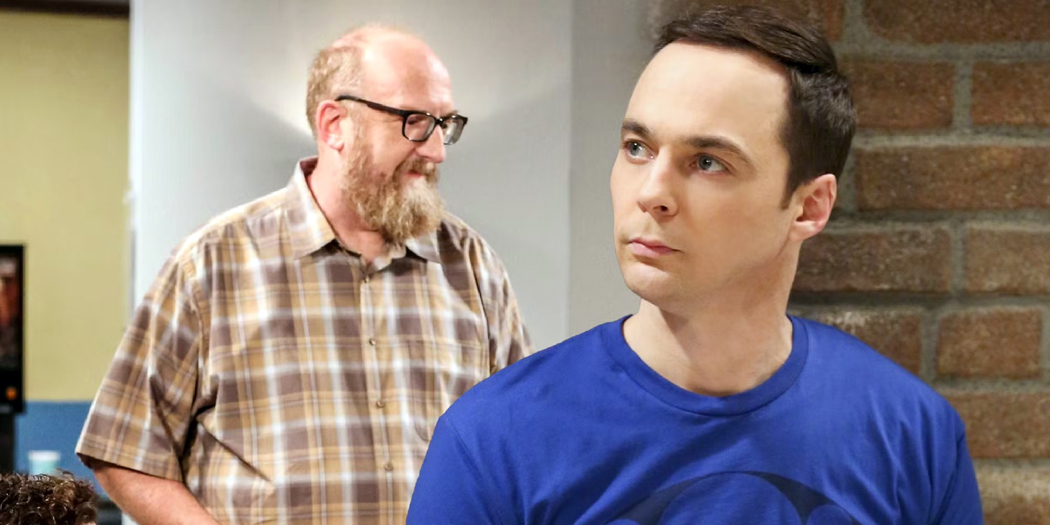
In the TV show, Big Bang Theory, physicist Sheldon Cooper claims that geology “isn’t a real science.” He’s quite a snob about it. But if you unfold any standard geological map — one that outlines the underlying bedrock of any state or county — you will see something so mindbogglingly complex and incomprehensible, that it couldn’t be anything but science. 
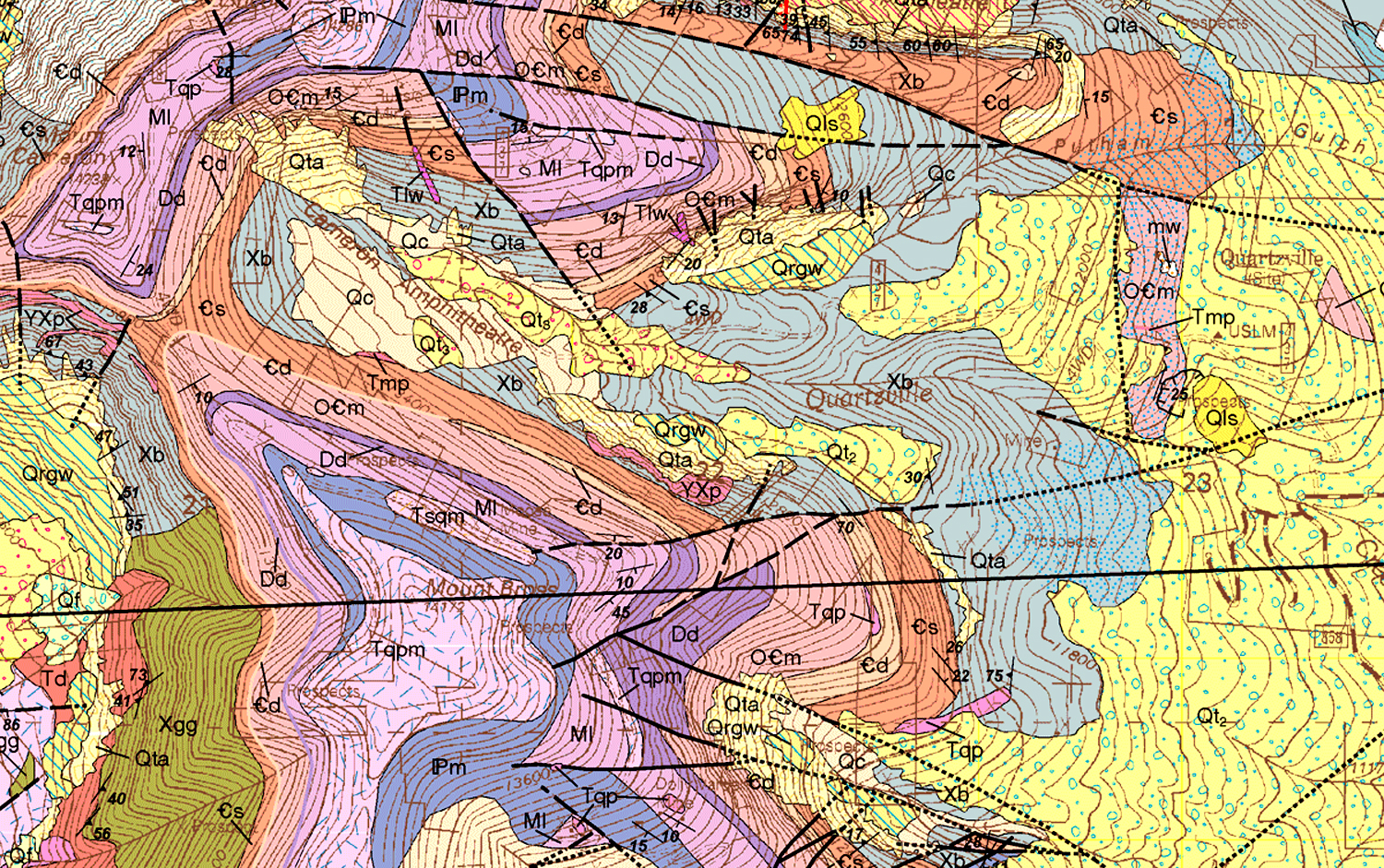
A geologist is someone who can tell the difference between diorite and andesite, and can measure the schistosity of mica, and explain how seashell fossils came to be found on the top of Mt. Everest. Geologists find petroleum and metals under the earth, and tell us the Earth is 4.6 billion years old. And a good deal of what is written in the field is — much as with  quantum physics — well beyond the ken and vocabulary of mere mortals. 

They write things such as: “Mass transport deposits (MTDs) occur as intercalations within turbiditic sequences above the ophiolites. They represent syncontractional submarine slides that occurred on frontal accretionary prism slopes during the Late Cretaceous–Paleocene closure of the LPOB.” That, by the way is “Ligurian-Piedmont Ocean Basin,” in case you were confused. 
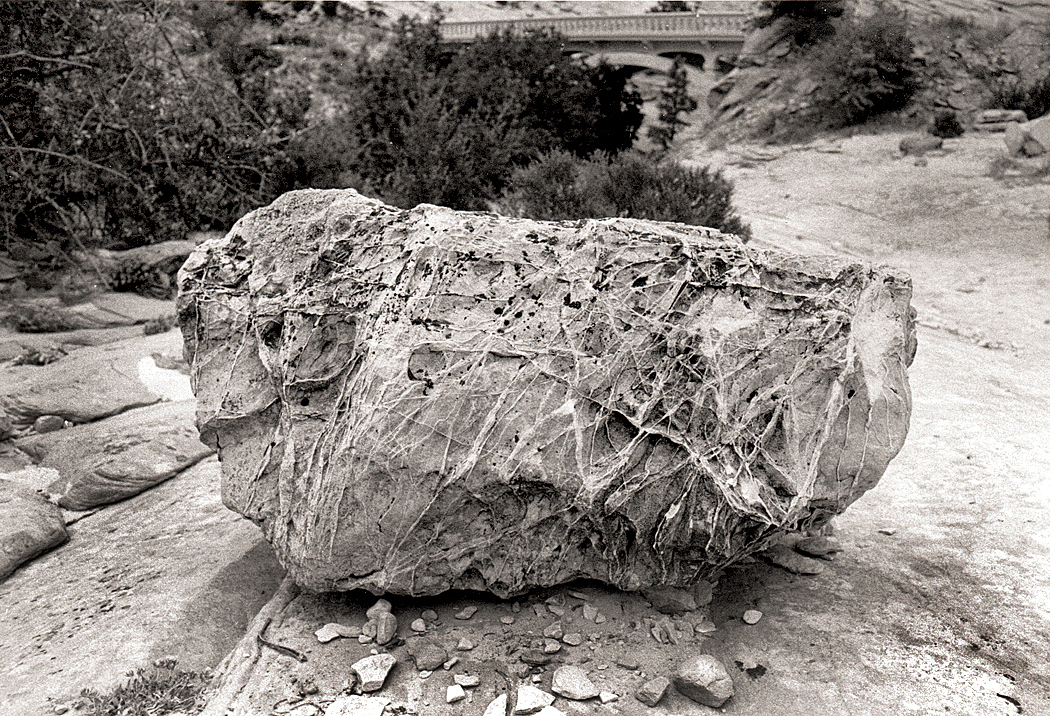
Southern Utah

So, yes, they are scientists. And it’s fun to learn as much as you can, and collect interesting rocks and minerals. But geology is also for poets, artists and cooks. And it is the humanistic aspects of geology that have fascinated me since first studying geology in college. 
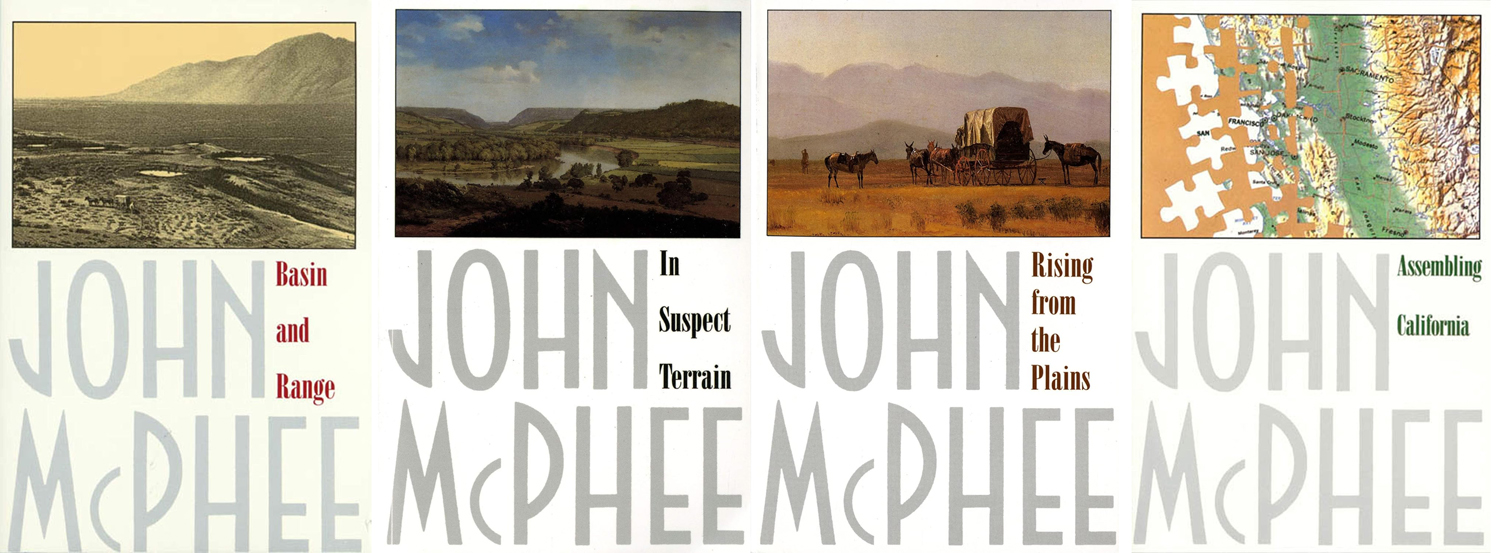
I read a good deal about geology, including the four books written by John McPhee in the 1980s — although they are about geologists as much as about the rocks they study. They are at the comprehensible boundary between general and specialist knowledge. And you’ll never drive through an interstate highway roadcut the same way again. 
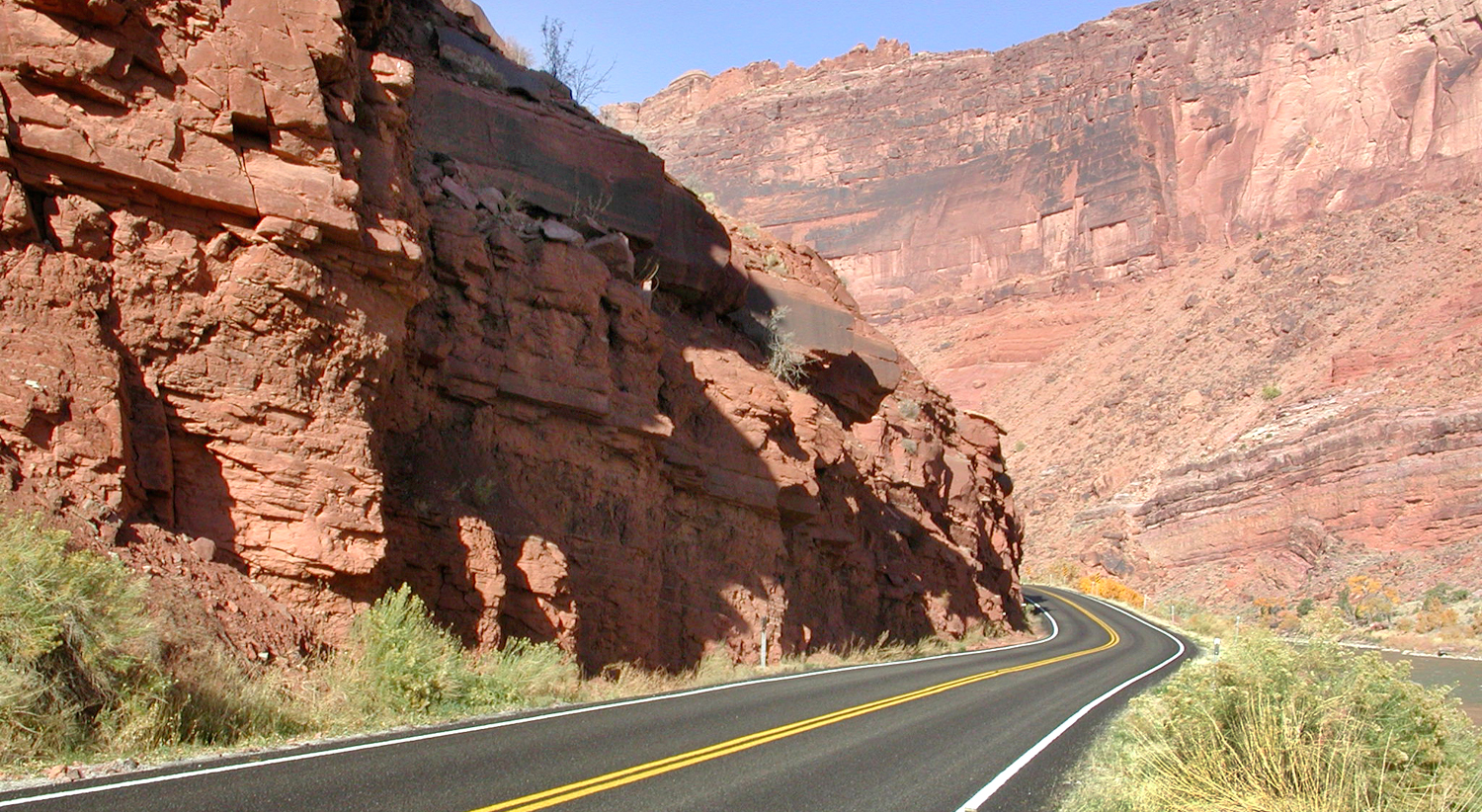
Along the Colorado River, Utah

Geology is just everywhere and affects all of our lives not only daily, but even hourly. Think of your car. Every bit of it, save only the rubber in its tires and the fabric or leather of its upholstery, came originally out of the ground. Whether it is the steel of its engine, the platinum in its catalytic converter, the glass in its windshield or the plastic of its dashboard — all dug out of the ground before being polished up and installed on your Hyundai. 

And even your tires, these days, are only partially rubber. The rest of it was dug up, too. 
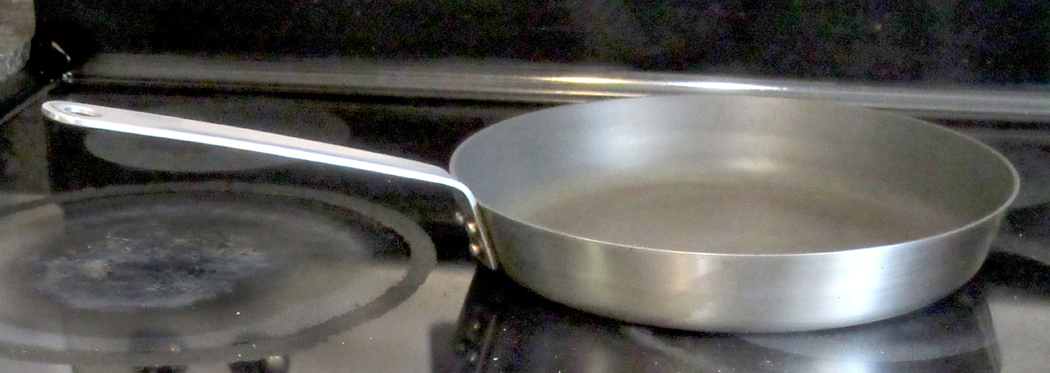
The skillet in your kitchen is just a rock that has been processed. The knives, too, and the potato peeler. All just carefully refined stones. In many ways, we still live in the Stone Age; we’re just more sophisticated about it than those guys banging rocks together in the Paleolithic caves. 
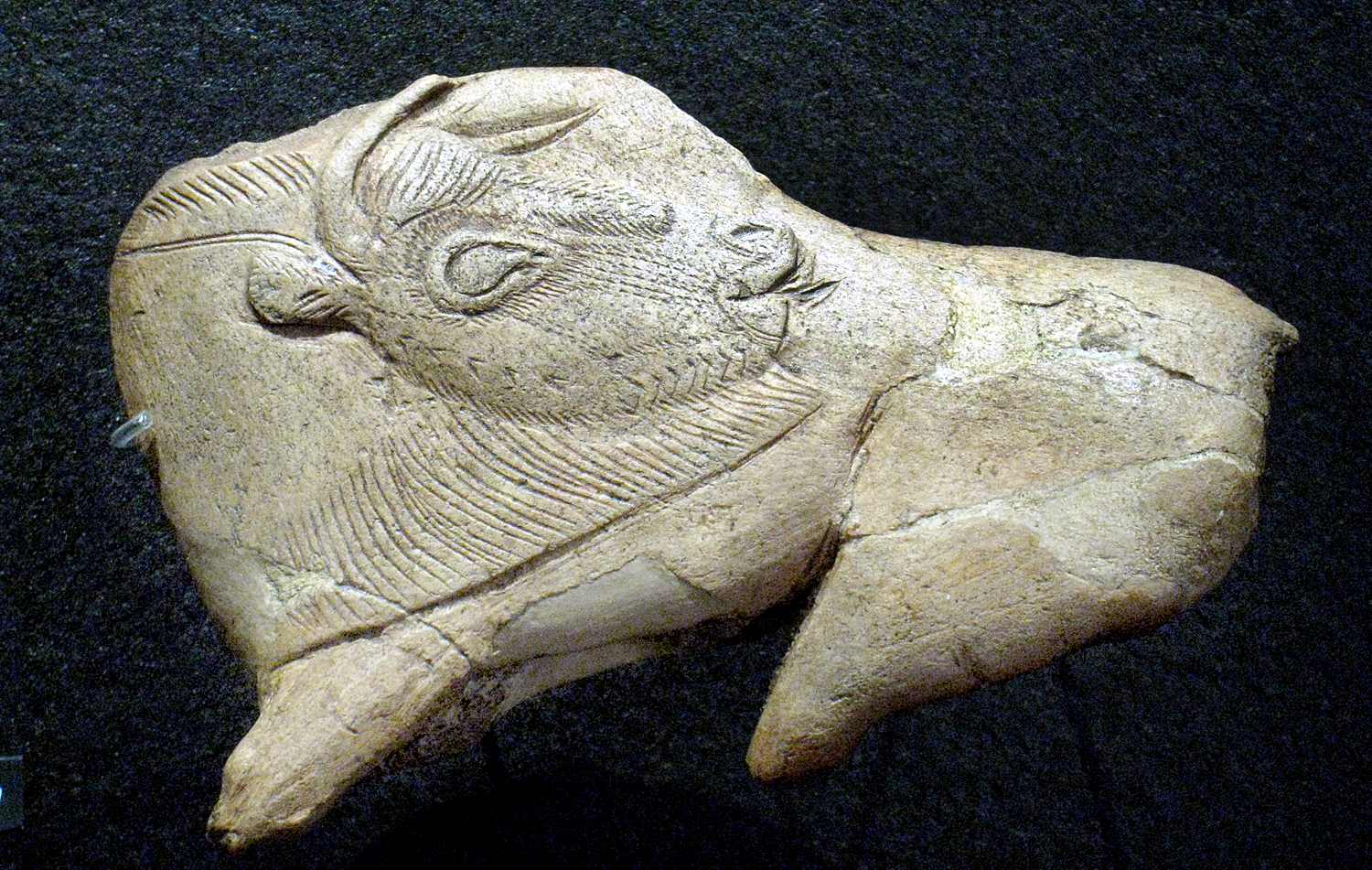
Paleolithic bison carving

Our human prehistory has been divided into the Paleolithic, Mesolithic and Neolithic. I suggest we now live in the Metalithic Age. (Everything now seems to be “meta.”) We do amazing things with the ore we dredge out of the ground and the petroleum we pump, but the foundation of our civilization is still geology. 
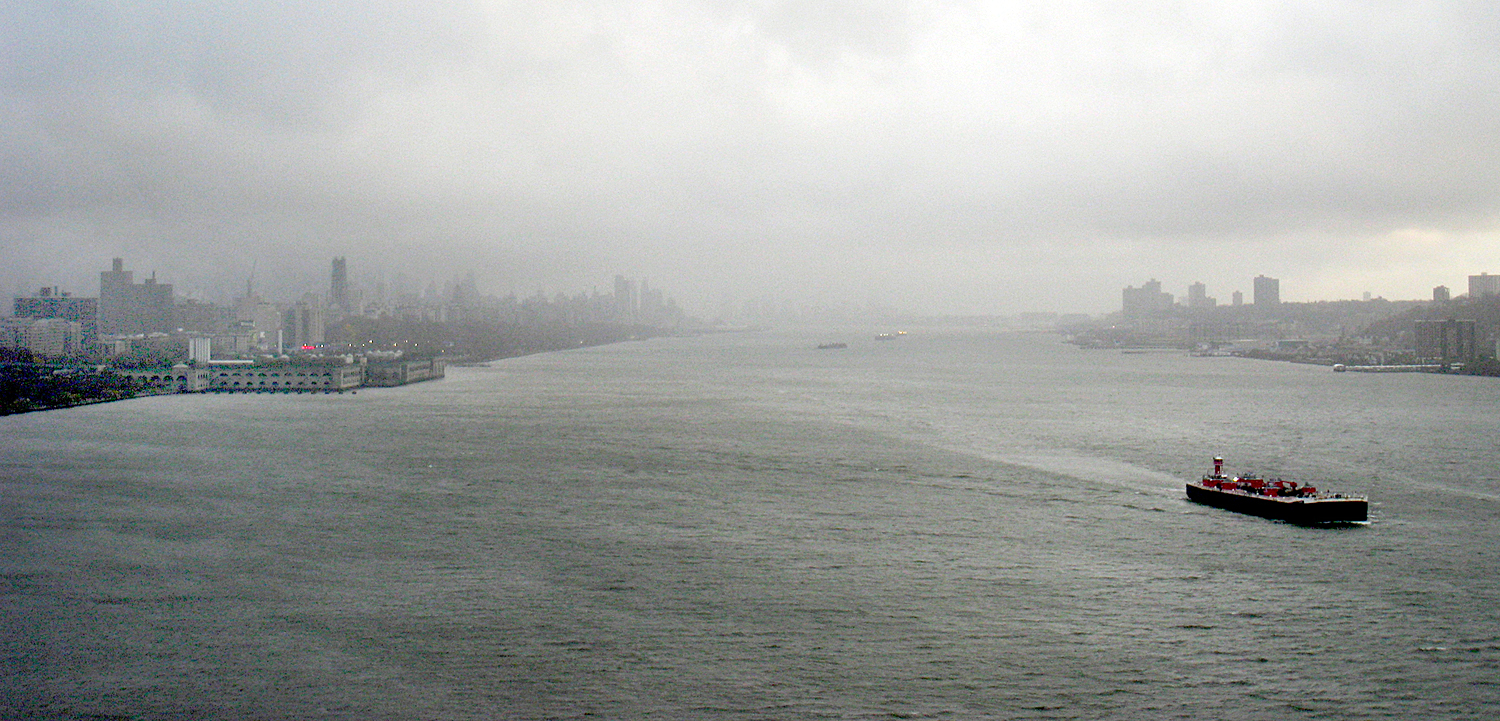
New York on the Hudson River

Cities are the index of civilization and most of the world’s great cities are built on harbors or rivers. The Indus, the Euphrates, the Nile, the Huang Ho. That’s geology. The cities are built with steel and concrete. Geology. Their streets are paved with either concrete or tar and gravel. More geology. 

Our food grows in dirt, or grazes on the grasses that sprout from the soil — a soil derived from the bedrock underneath. What are vitamins and minerals but the residue of those same rocks? 
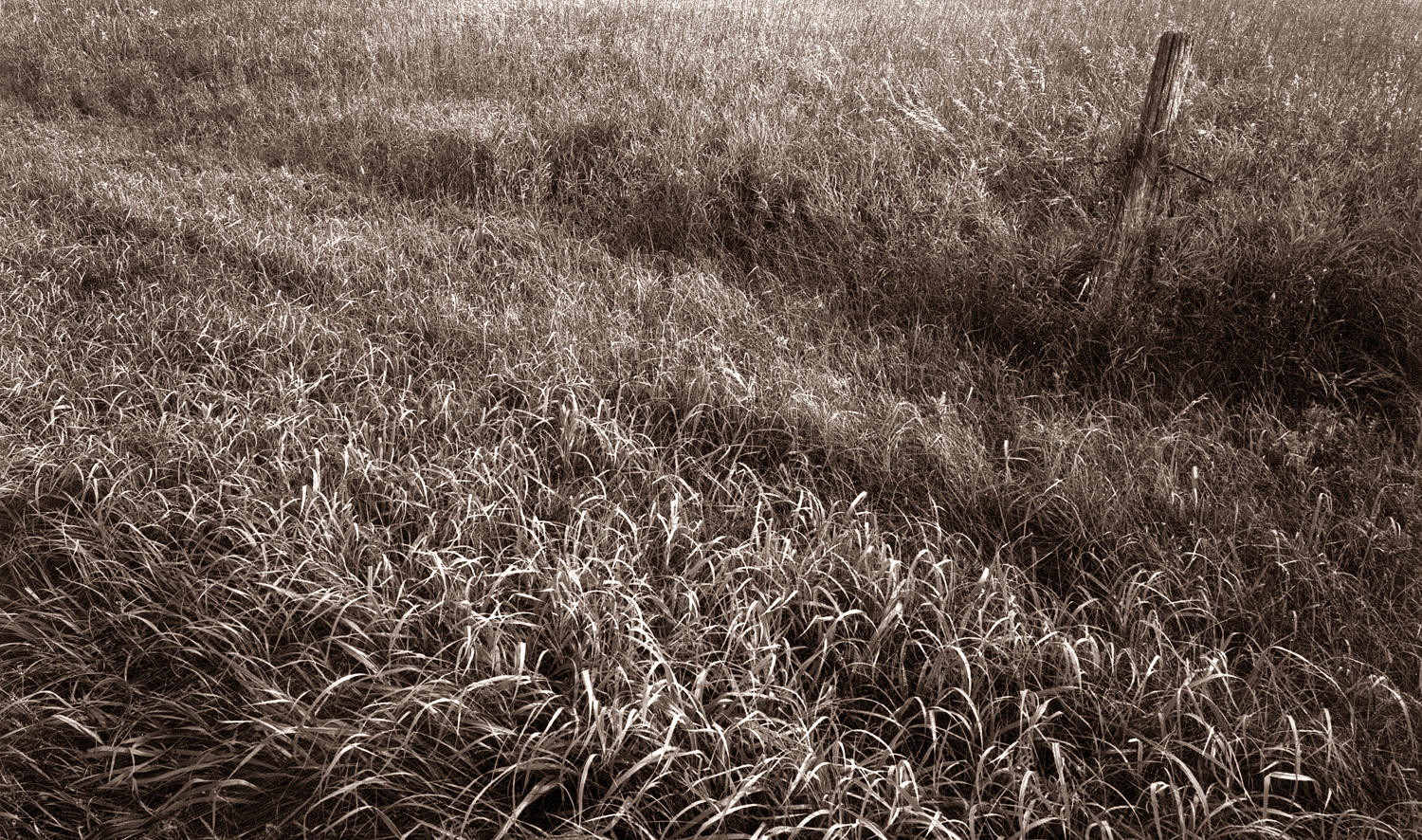
Blue Hill, Maine 

Geology drives history, too. For instance, because Norway and Greece are so rocky and ungenerous for agriculture, their peoples took to the sea and the Greeks colonized everywhere from Spain to the Black Sea, and the Vikings from Constantinople and Sicily to England and Iceland. Geology kept the Old World and the New from interacting significantly until 1492. It blocked the westward expansion of the British colonies in North America for a century. It is the reason that Afghanistan is the “graveyard of empires.” Plate tectonics — “continental drift” — and the formation of Eurasia as a single east-west landmass has been hypothesized as the cause for European and Asian historical dominance. 
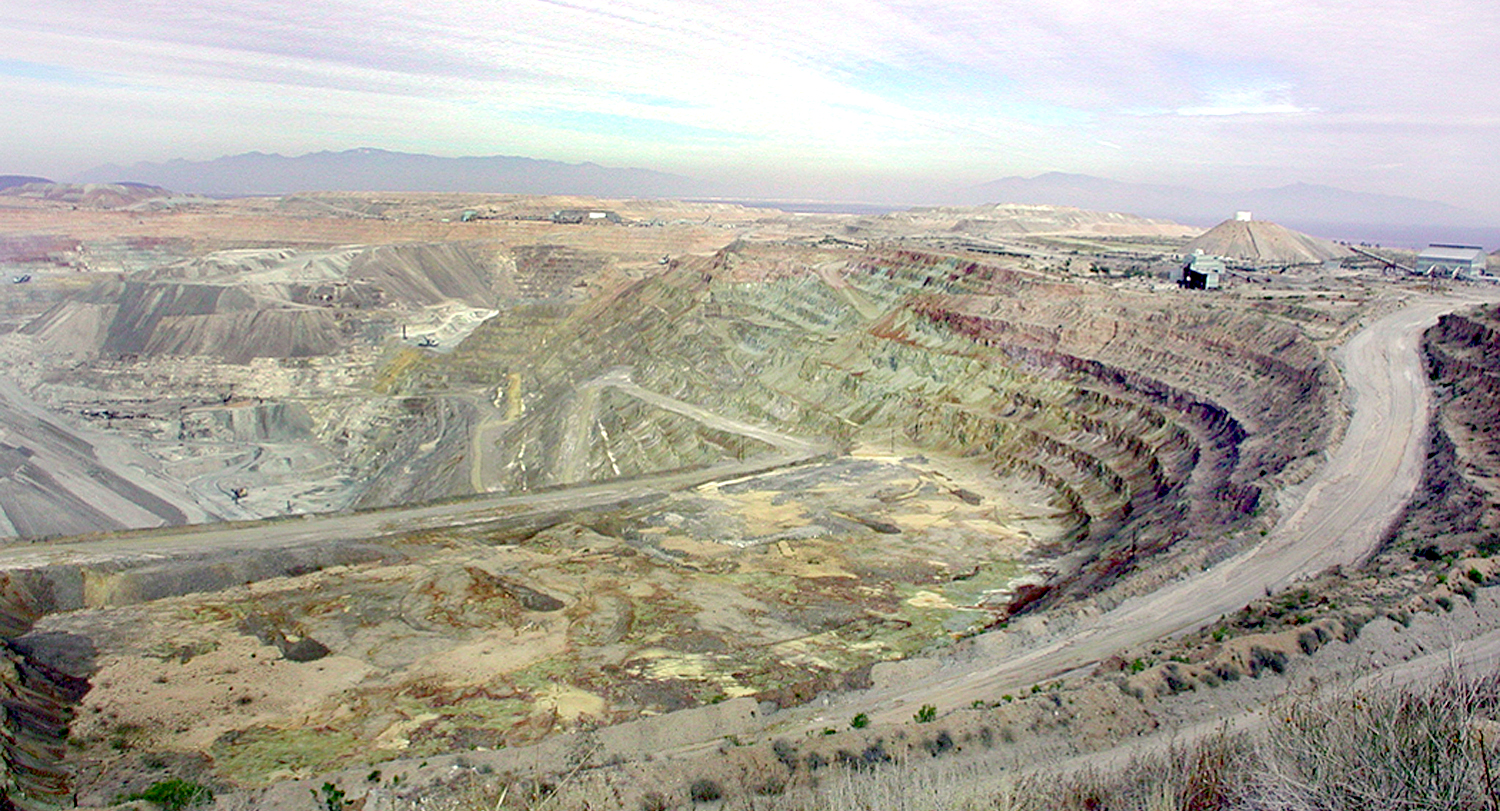
Asarco pit mine, Arizona

And geology, in the form of coal mining and petroleum extraction, is the cause of catastrophic climate change and global warming. 

Geologist Donald Beaumont wrote, “Geology will, unfortunately, remain an under-recognized, ‘phantom,’ science in that its role in explaining the foundations for human society may never be fully appreciated.”

I’m not making the case that geology explains everything, nor that it is the only thing that made us what we are, but I am saying that it helps explain it, and that you can see the same forces acting out elsewhere in the world. 
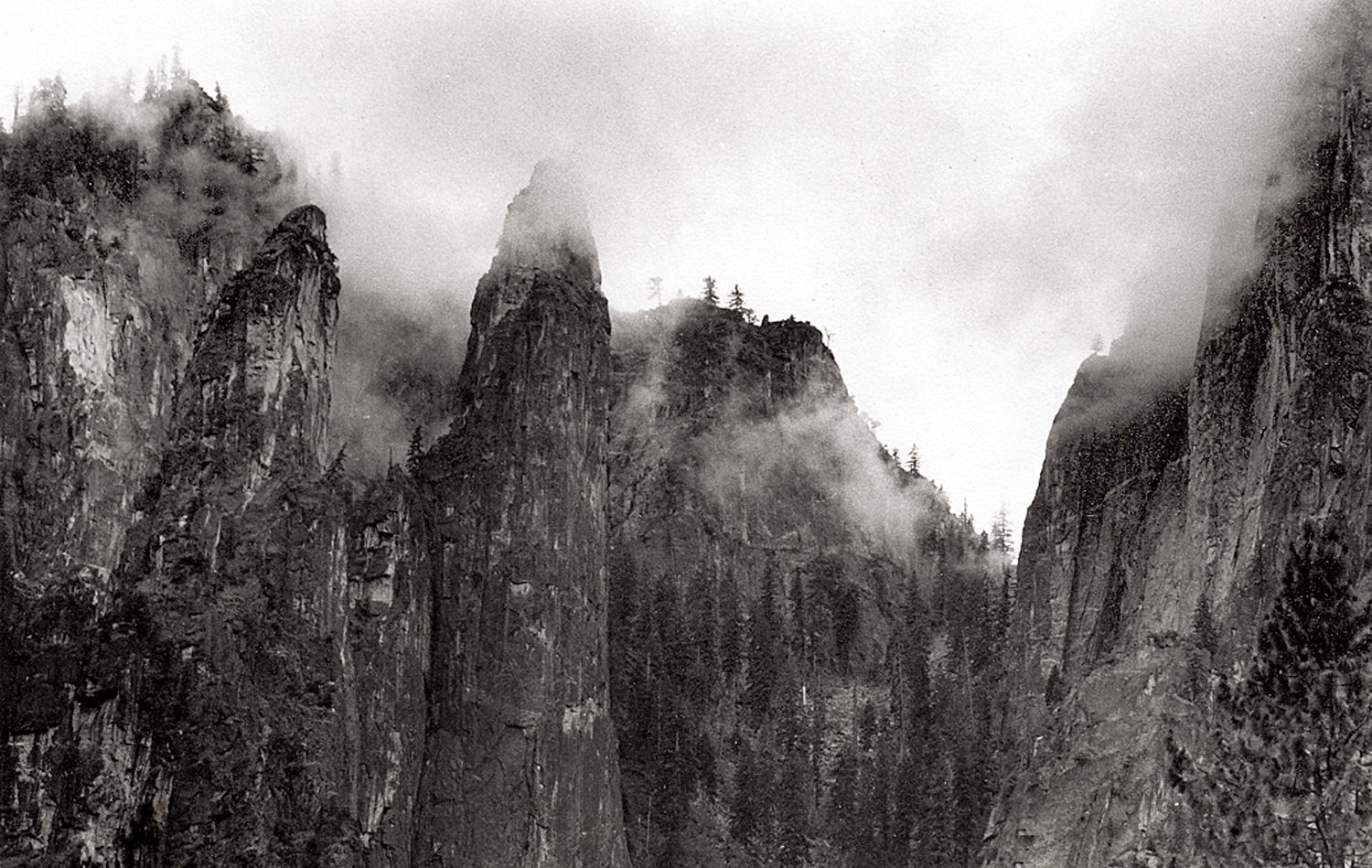
Olympic Mountains, Washington

It isn’t only physical, it is psychological also. Geology creates emotions. And so artists and poets have used geology to elicit in their audiences certain emotional states — rocky metaphors. 
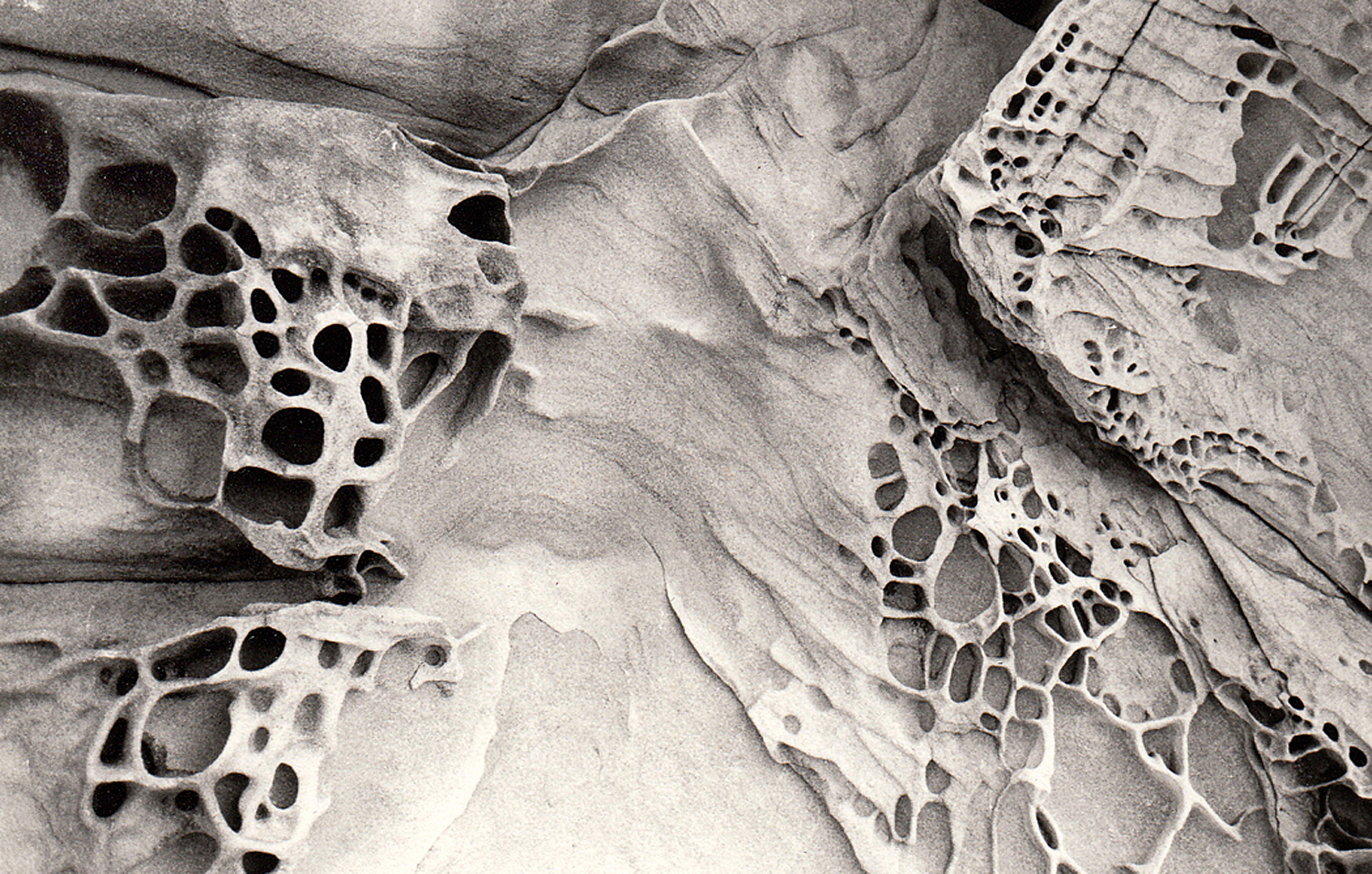
Pleasant Cove, Chuckanut, Wash. 

It is to seek this power that great landscape artists — whether painters or photographers — make their pictures. It is not to make a postcard of a pretty piece of scenery, but to find in the land a metaphor for thought, emotion or state of mind — or even a political philosophy.
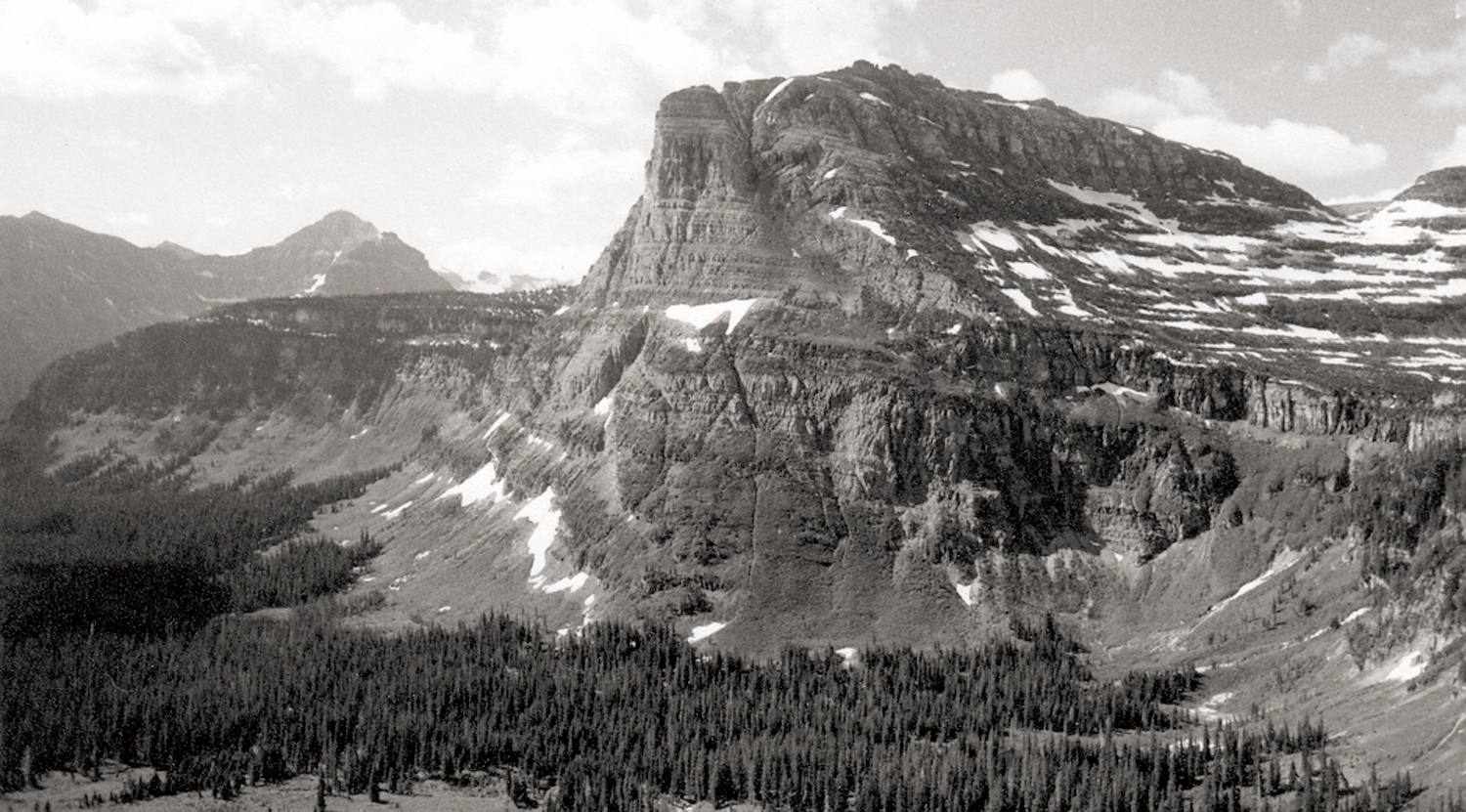
Canadian Rockies, Alberta

That mythic force is why we feel the rise in our throats when we sing of “amber waves of grain,” and “purple mountains majesty above the fruited plain.” Rocks and terrain serve as metaphors for internal states. 
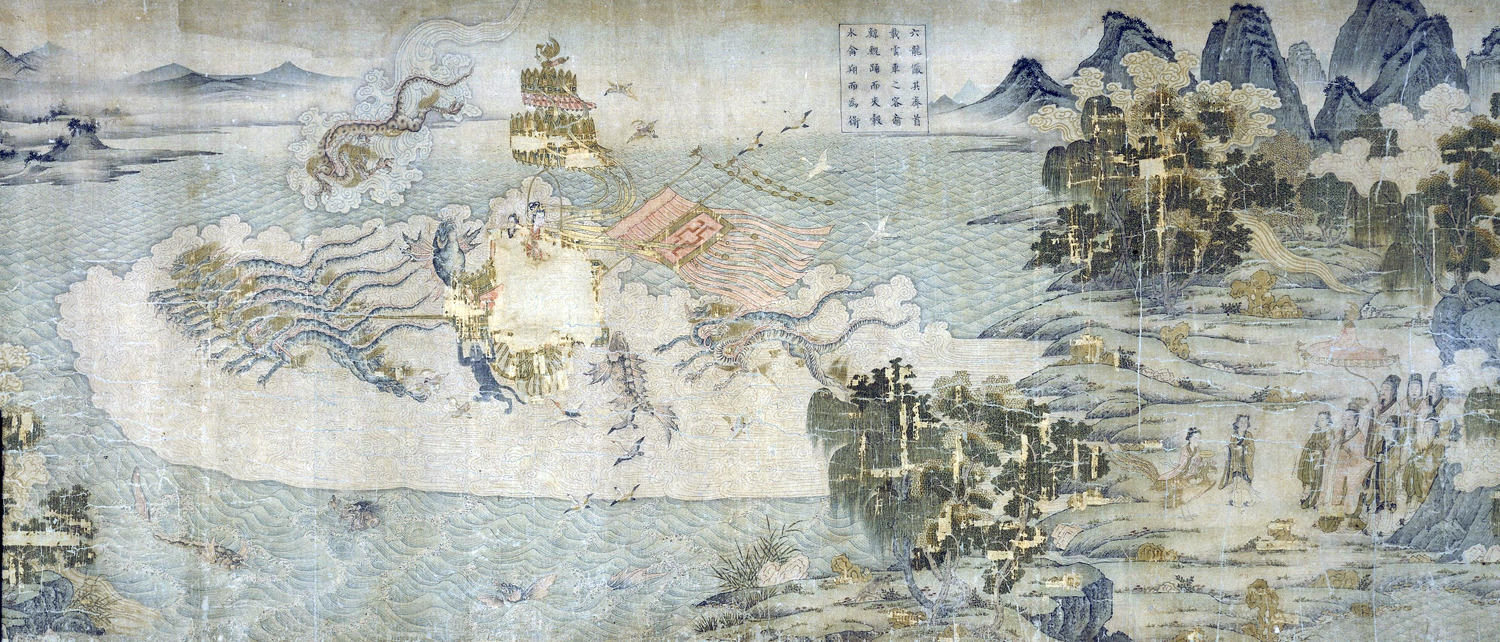
“The Nymphs of the Luo River,” by Gu Kaizhi

European artists have used that metaphor since the Middle Ages, Asian artists since the Jin Dynasty. 
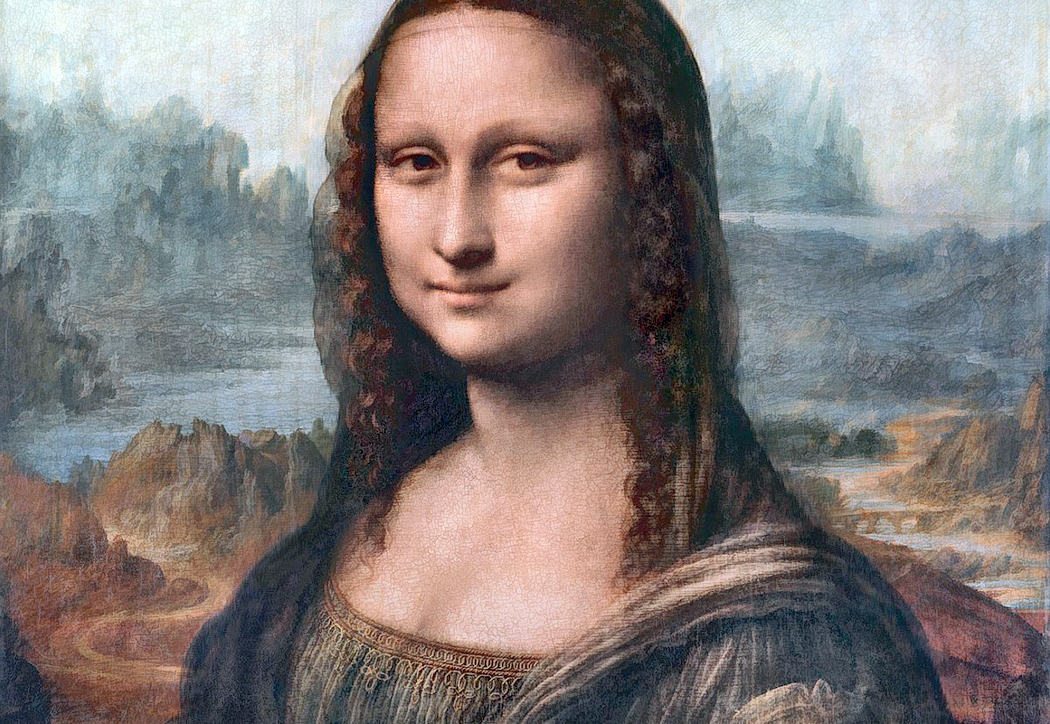
“La Gioconda” detail 

Consider the Mona Lisa. Yes, it is a portrait, but behind the smiling lady is a rocky landscape. It is not like anything actually found in Italy, but rather it is a metaphorical landscape — a mountainous desert. Renaissance artists often used such stony views as a reminder that life on earth is a kind of spiritual desert (and the afterlife is where true fulfillment is to be found). As Geoffrey Chaucer wrote: “Here nis noon hoom, here is but wildernesse.”
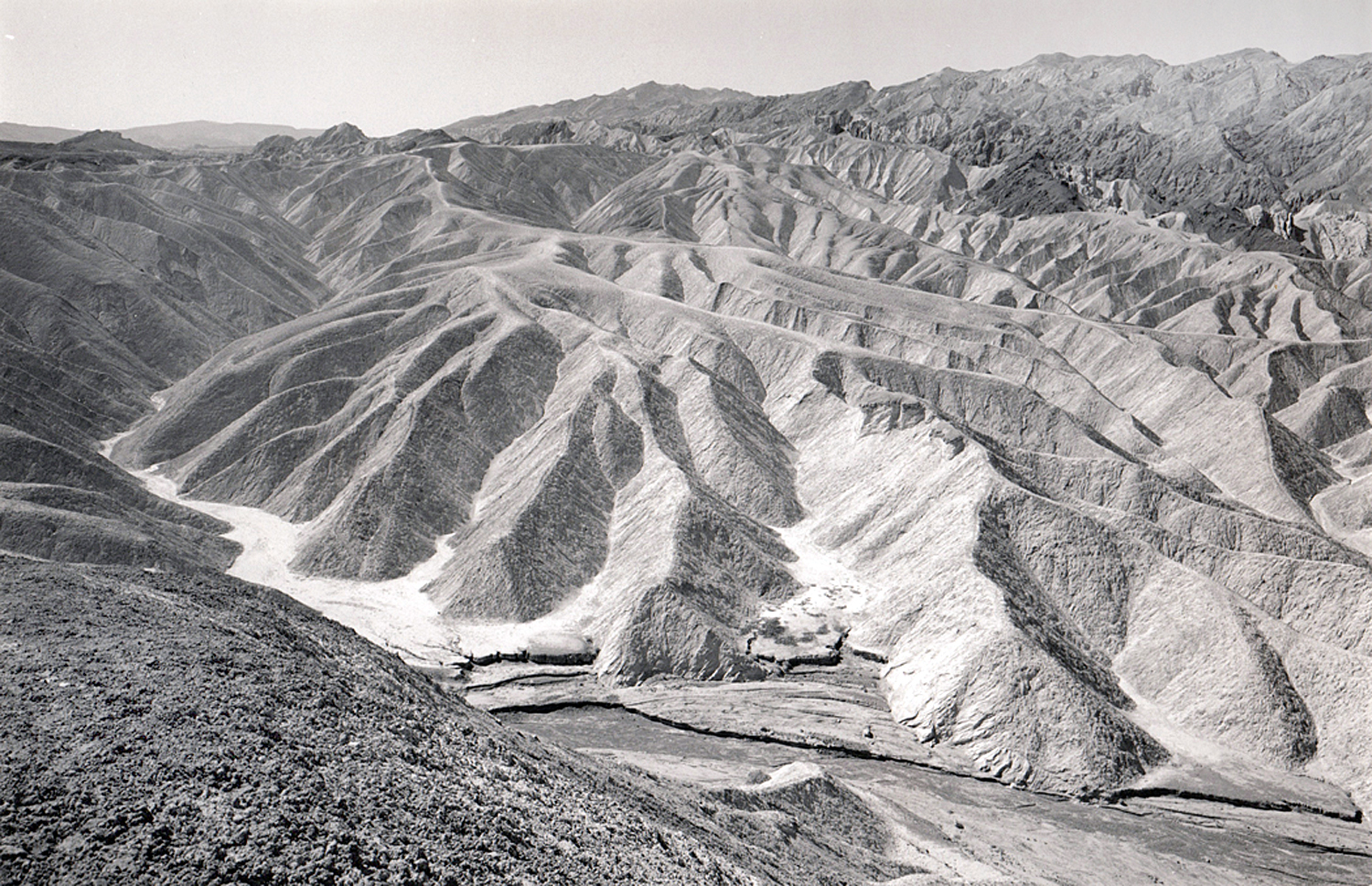
Zabriskie Point, Death Valley, Calif. 

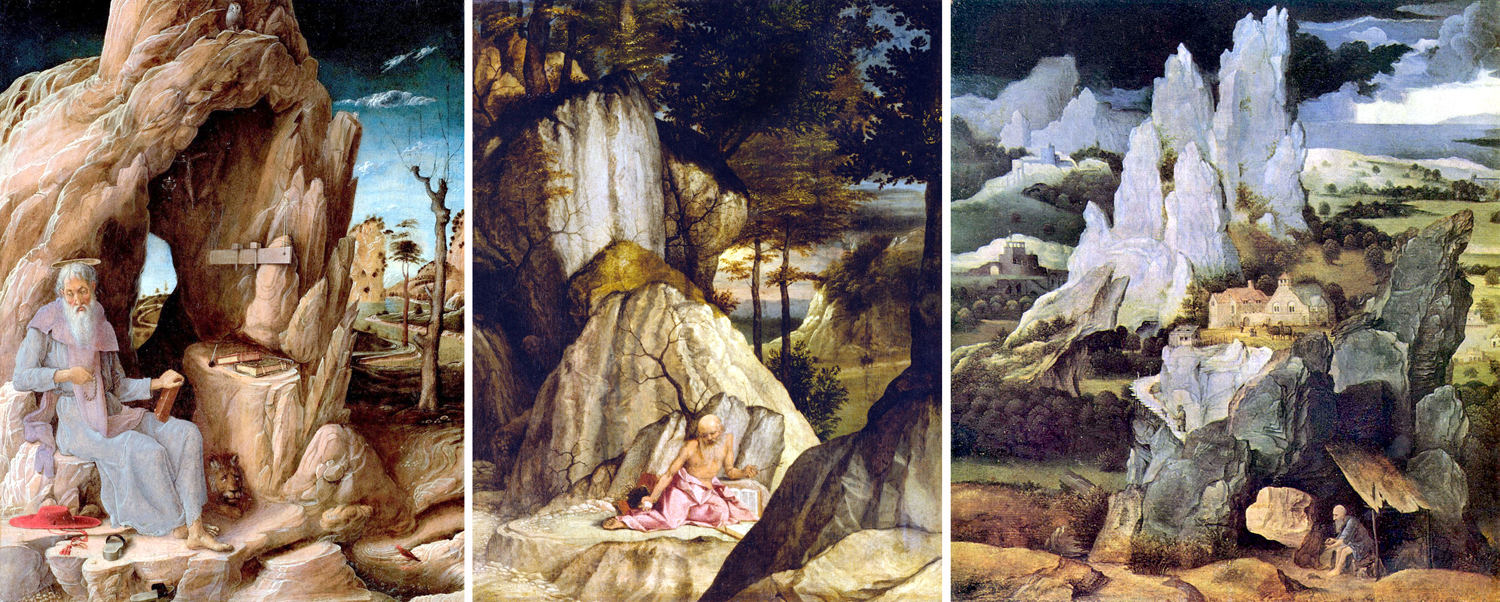
St. Jerome lived in a cave, and painters used the story to show the geology of spiritual isolation. Here are only three of many Renaissance paintings of the saint, by Andrea Mantegna, Lorenzo Lotto, and Joachim Patenier, all from the early 1500s. 
Romantic painters in the 19th century used the vast Alps as a reminder that the cosmos is infinitely larger and more impersonal than we like to believe. Geology becomes an image of The Sublime. 
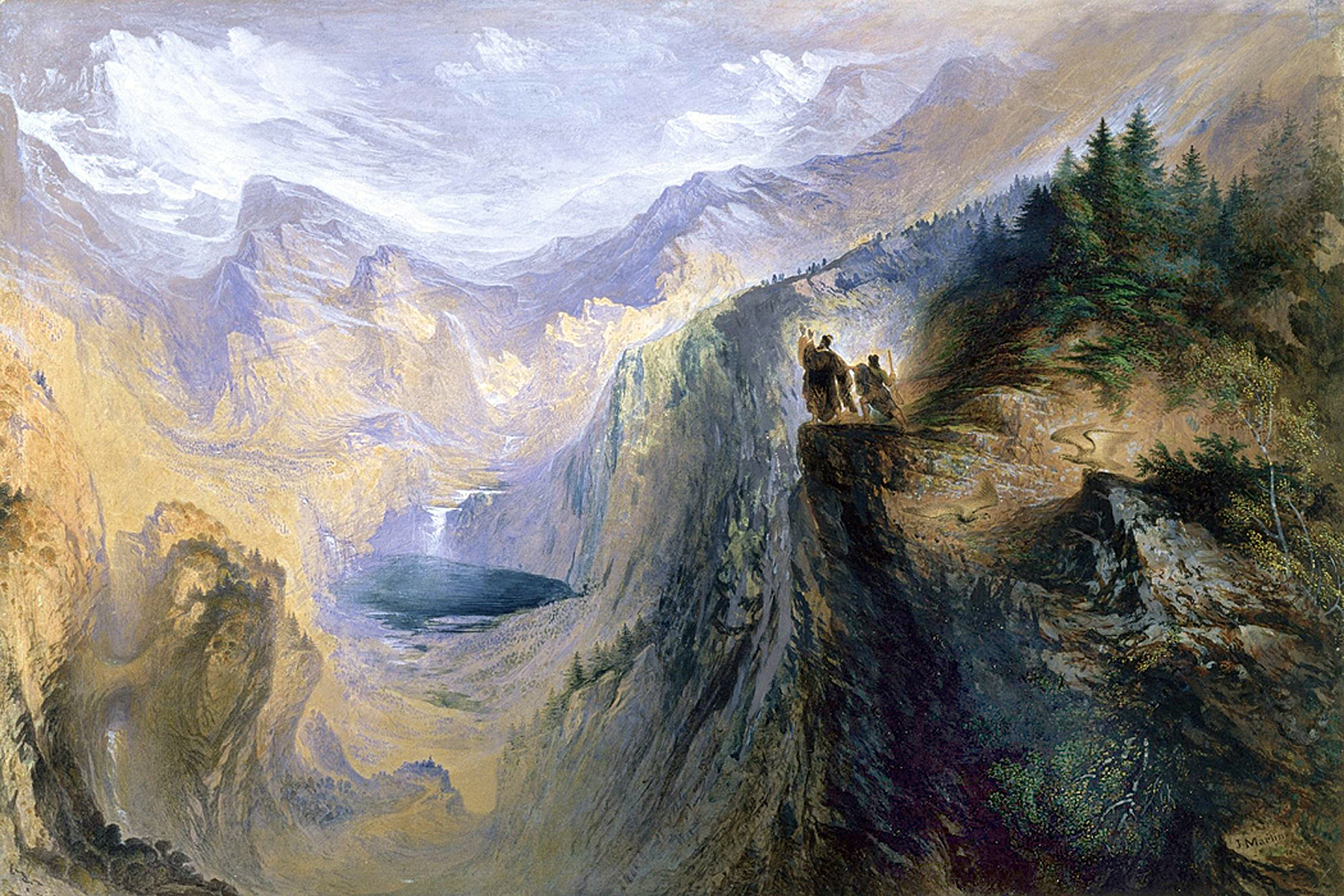
“Manfred on the Jungfrau” by John Martin

Chinese landscape painting features some amazing mountains. I used to believe these scenes were pure fantasy, but no, these mountains actually exist. On porcelain, by Huang Huanwu, a traditional painting — and a photograph, to prove they’re real. 
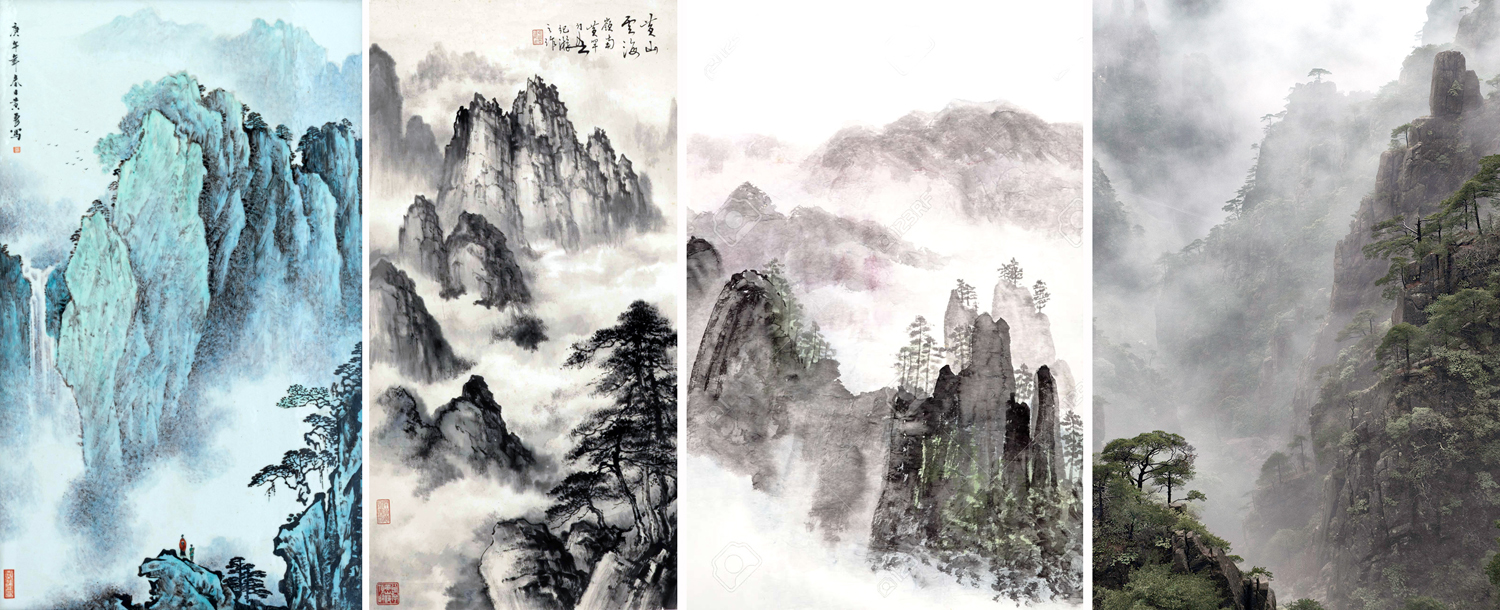
Three paintings and a photo

Prehistoric peoples used the rocks for their art, too. 
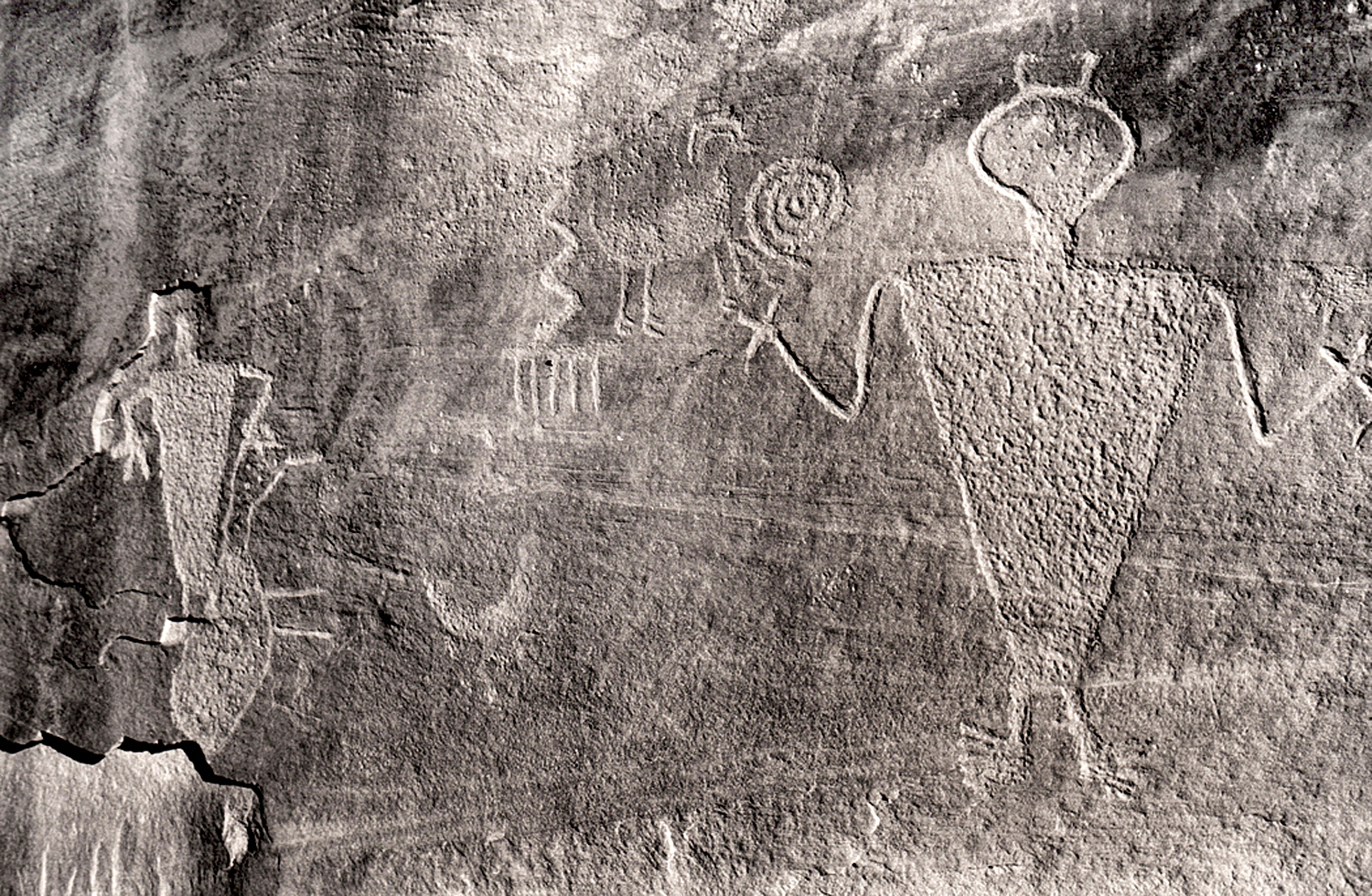
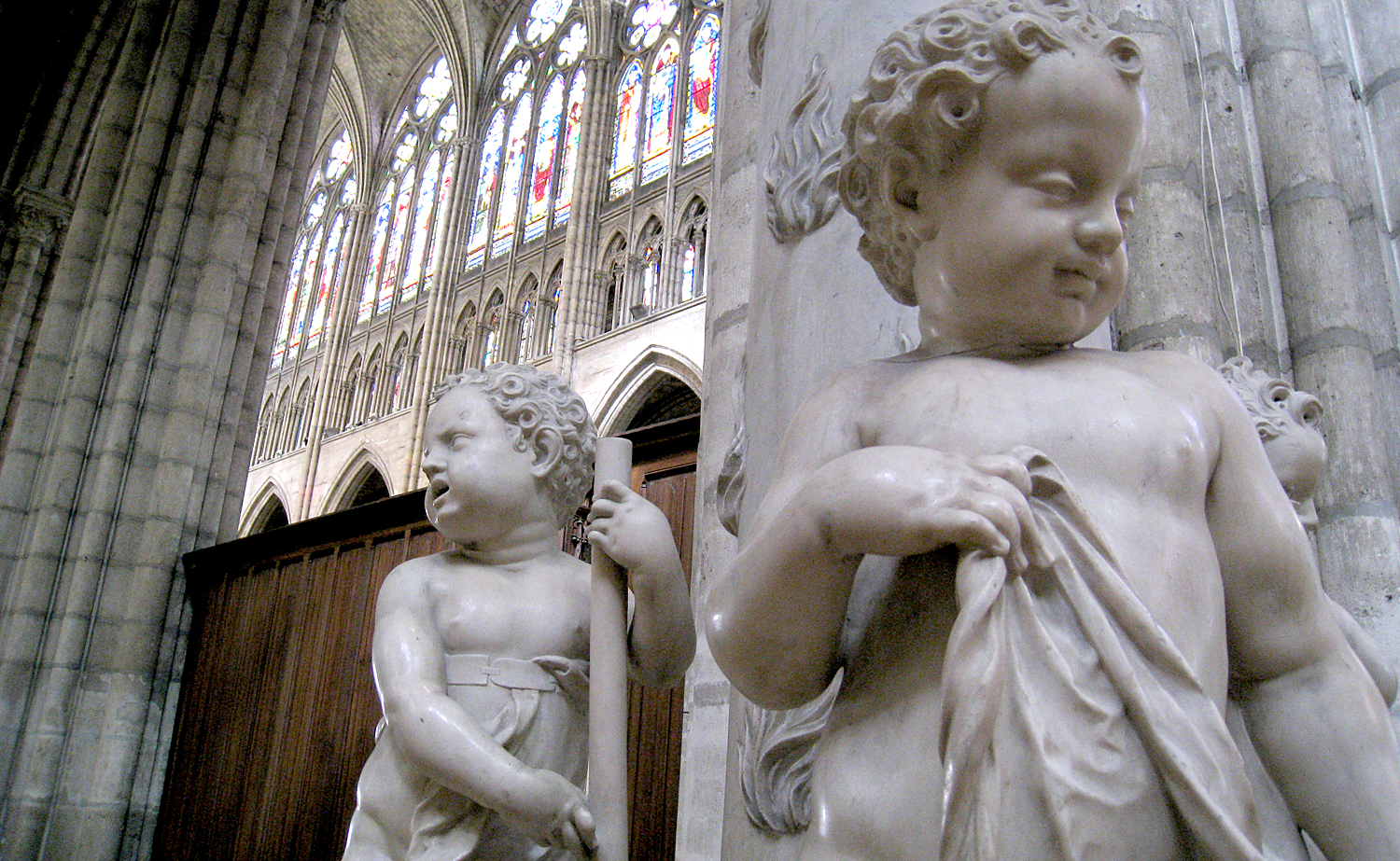
We use stone for permanence. Consider all the marble statuary and granite architecture. 
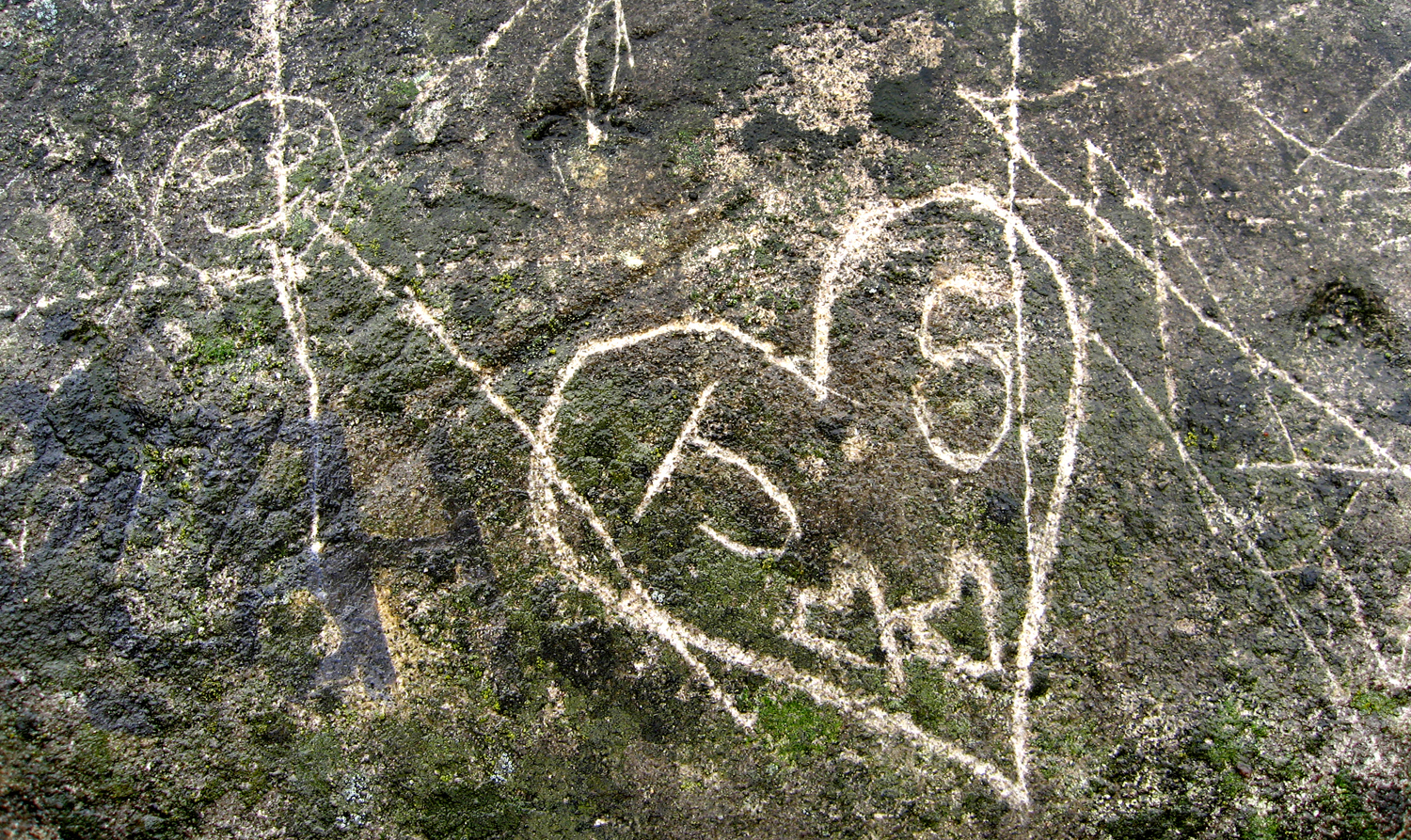
And the way we scrawl our names on rock faces. “K and A Forever.”
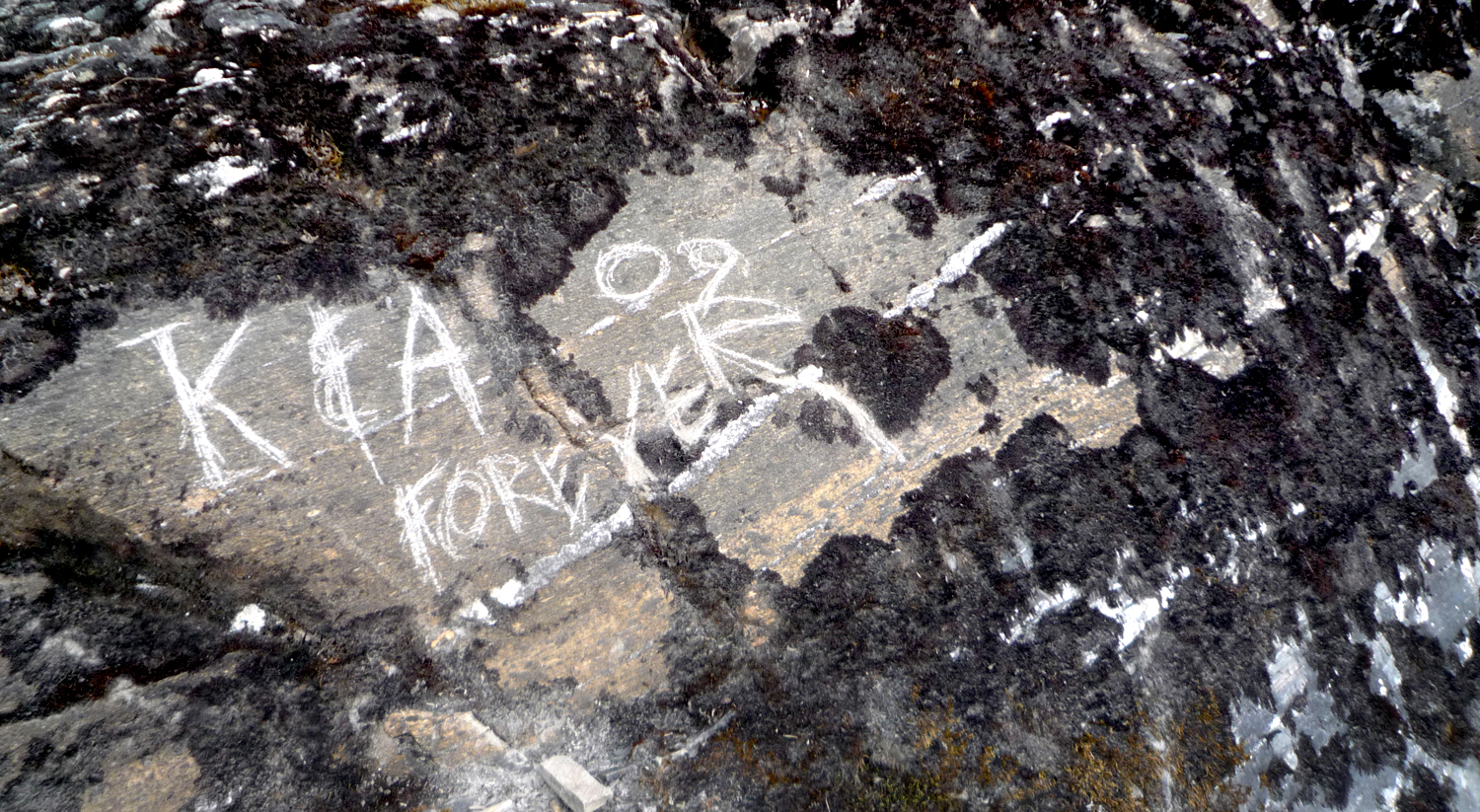
The stone is certainly more permanent than the relationship. 
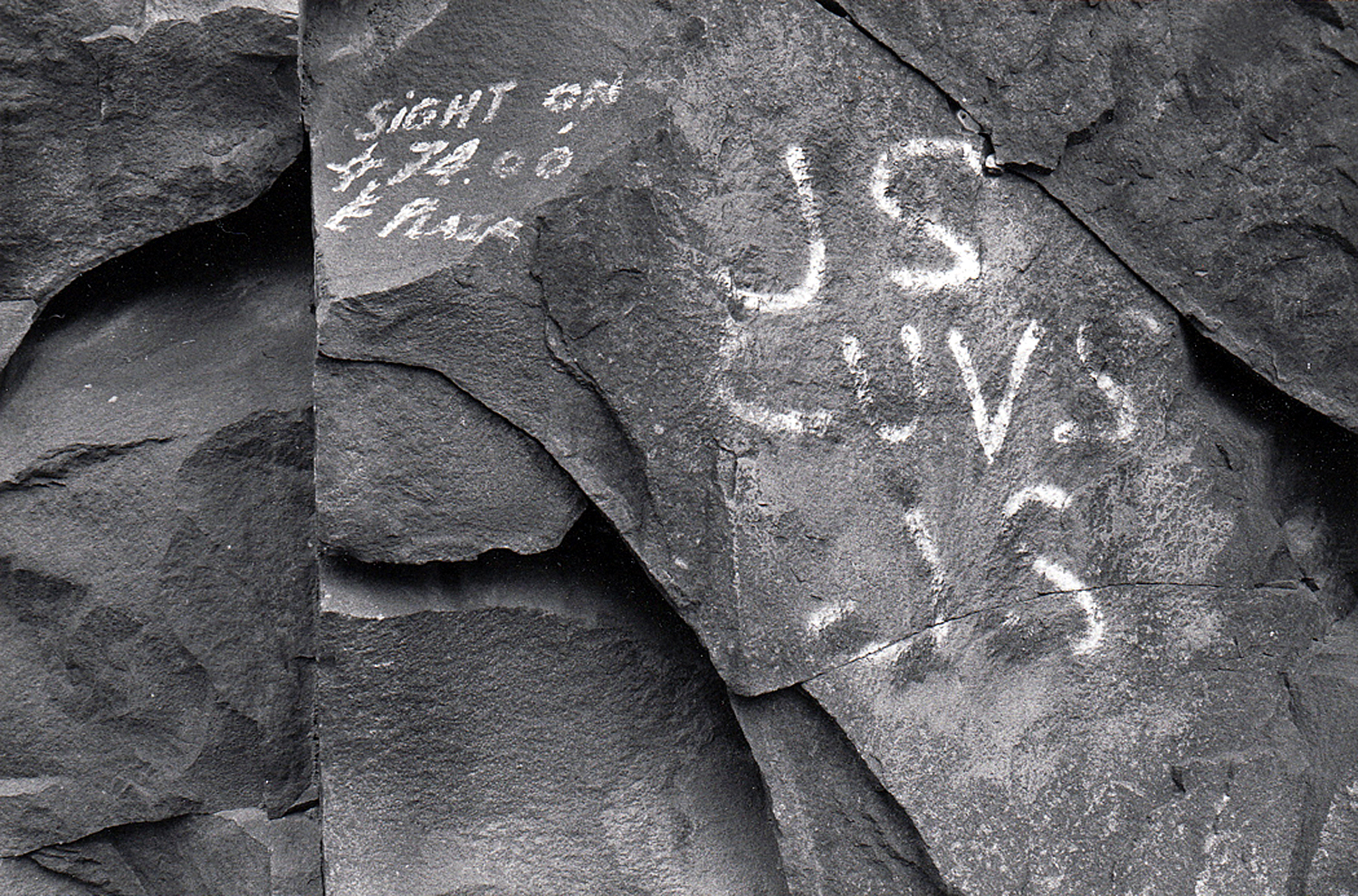
Hudson River Palisades, N.J. 

Even the pigments that artists use comes from the ground. In the past, it was actually rocks that were ground up and processed. Now, there are pigments also made from petroleum. 
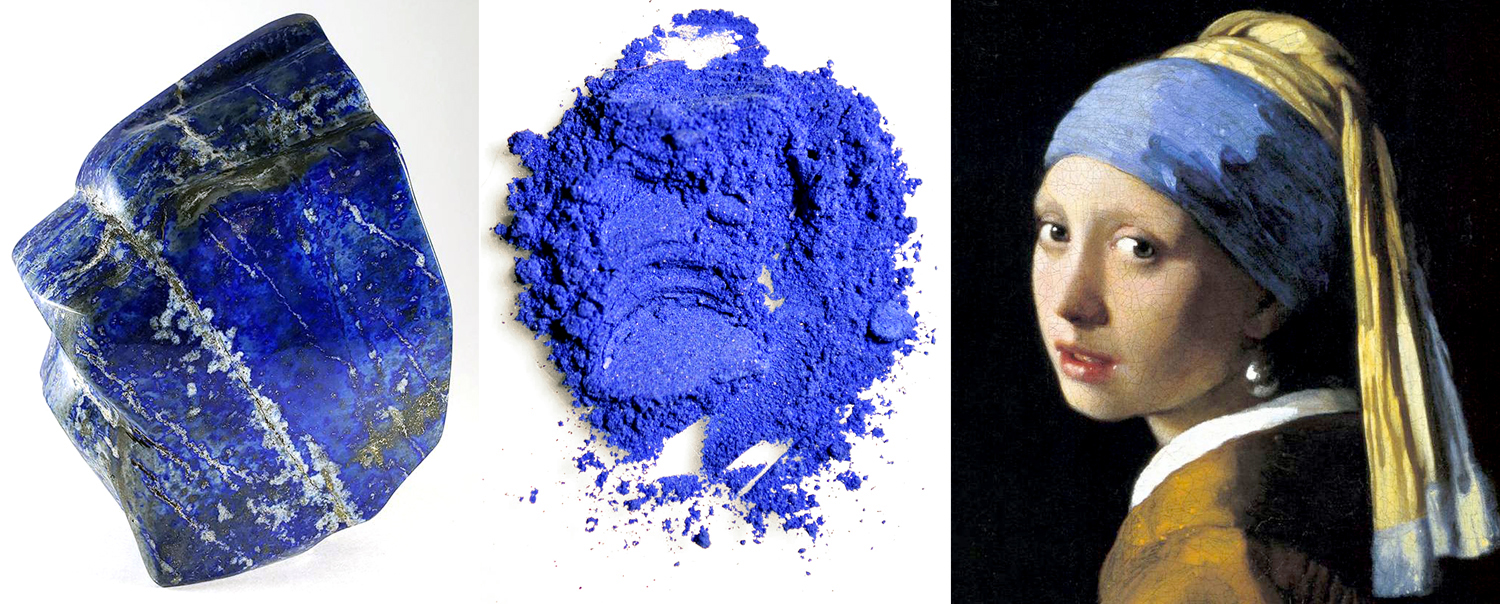
Lapis Lazuli

Different rocks, with their colors and textures, evoke different emotions. Think of a brilliant diamond or ruby; think of a cinder. Different emotions. 
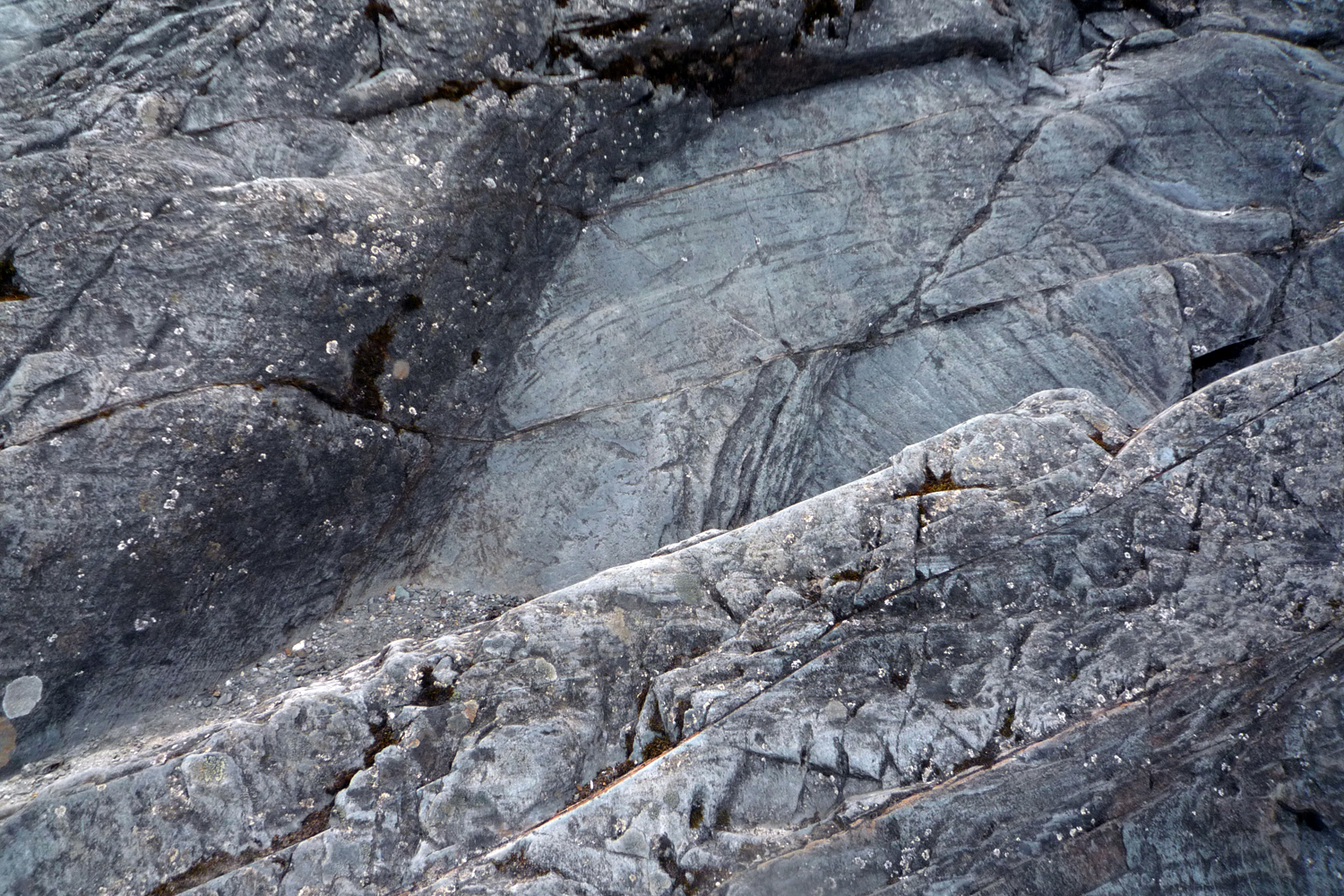
Mendenhall Glacier, Alaska

We use geology in our language, although often the words mutually exclusive import. 

“You must have been stoned when you thought that up.” “No, I was stone cold sober.” “Well, the theory is either a bit rocky or it is rock-solid.” He answered with a stony silence.
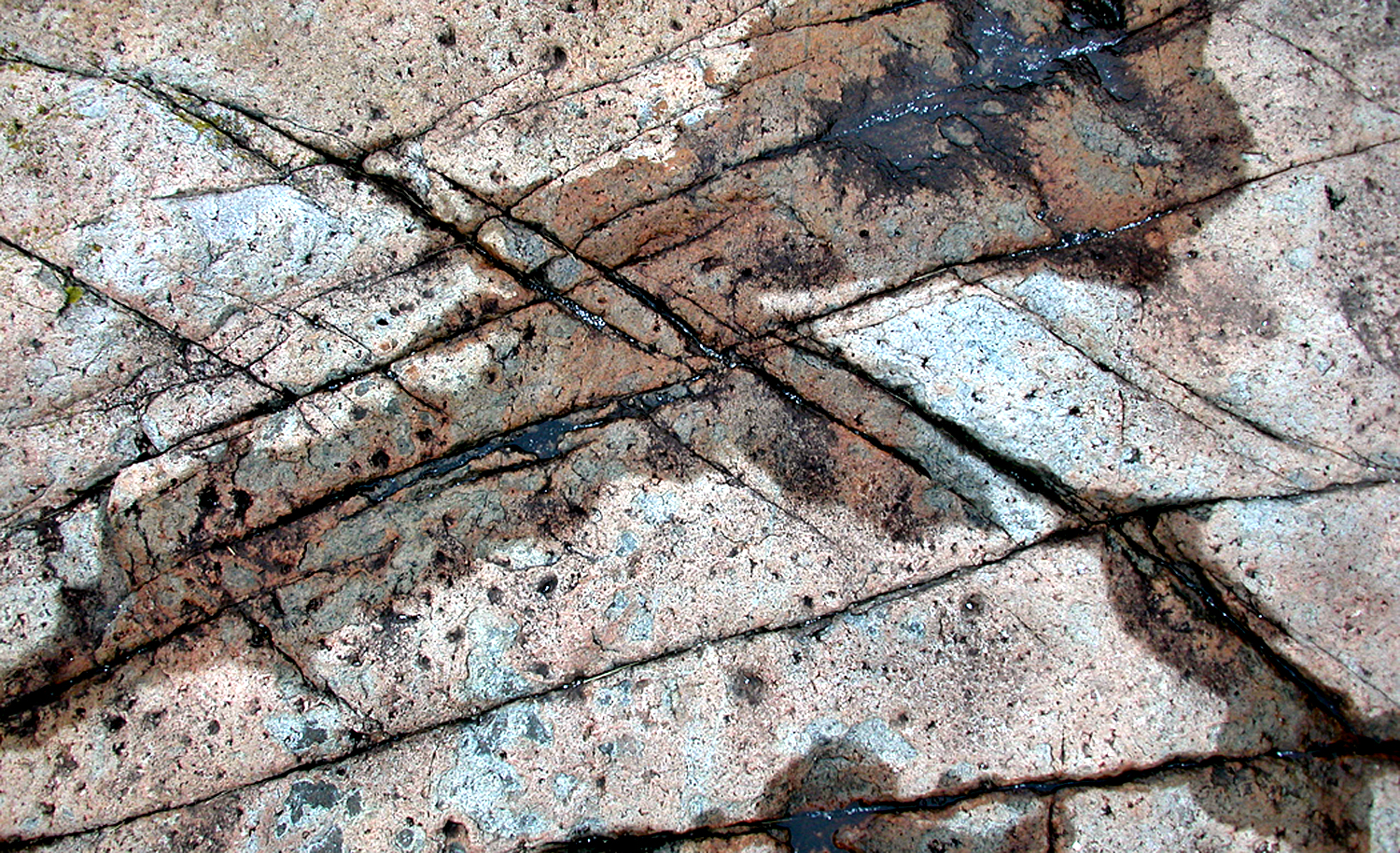
Schoodic Point, Maine

The colors, textures and the grain all impart meaning. 
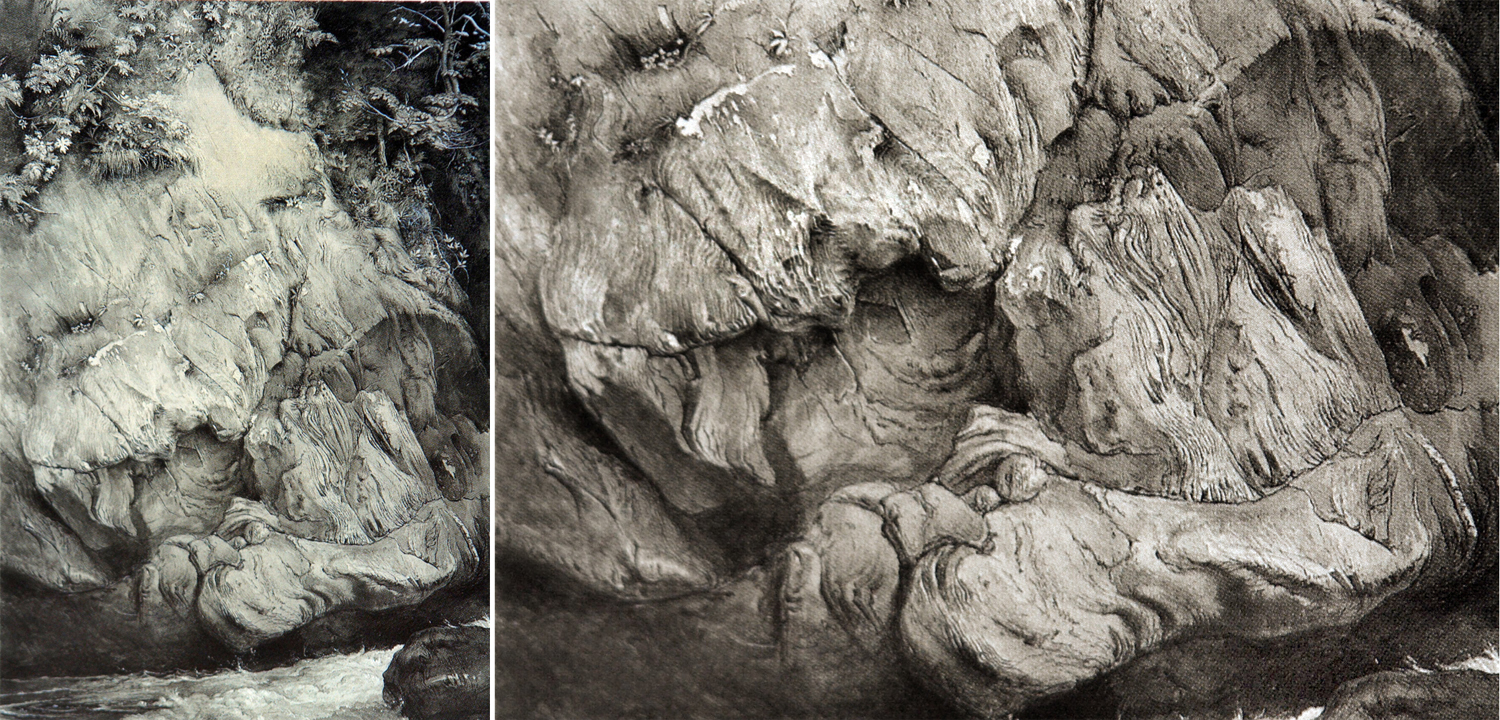
By John Ruskin

I began seriously considering the art elements of geology after seeing a splendid drawing of gneiss by English artist and critic John Ruskin. He made it over several days while visiting Scotland in 1853. The drawing had everything I respond to: texture, detail, close observation and an attention to the world as it is, that is as close to love as is possible to hold for the inanimate world. Ruskin was an astonishing draftsman. 
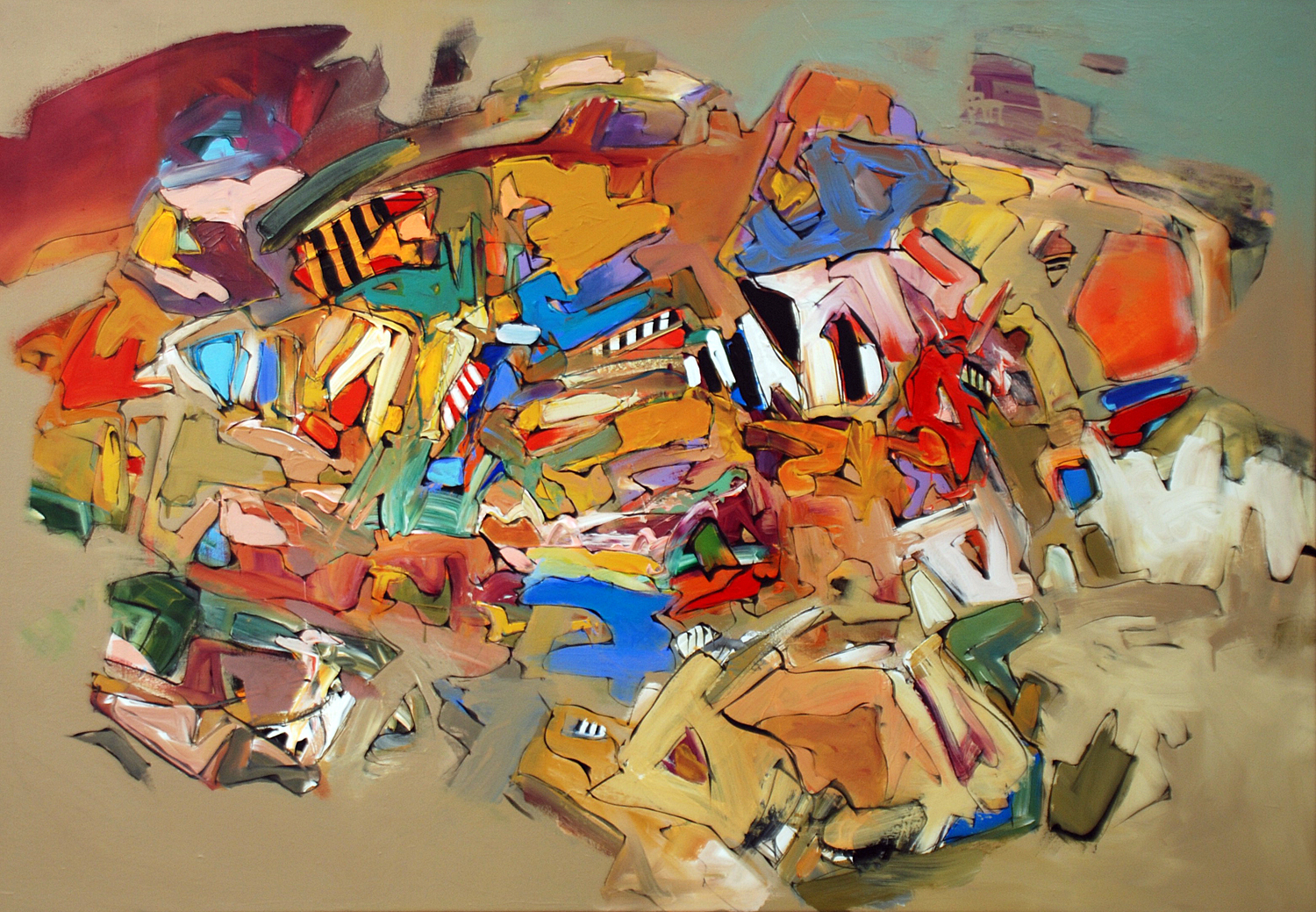
By Mel Steele

It has been one of the lessons of the 20th century and Modernism that meaning in art can transcend anecdote and be more than a story told in a still scene and can impart meaning purely through shape, color, texture, line and scale. Emotions can be evoked by all of them. We have had well more than a hundred years of abstract art. 

Even realistic painting depends on the medium it is made from. It isn’t just the face or the scene, but the color and texture of that face and scene. 
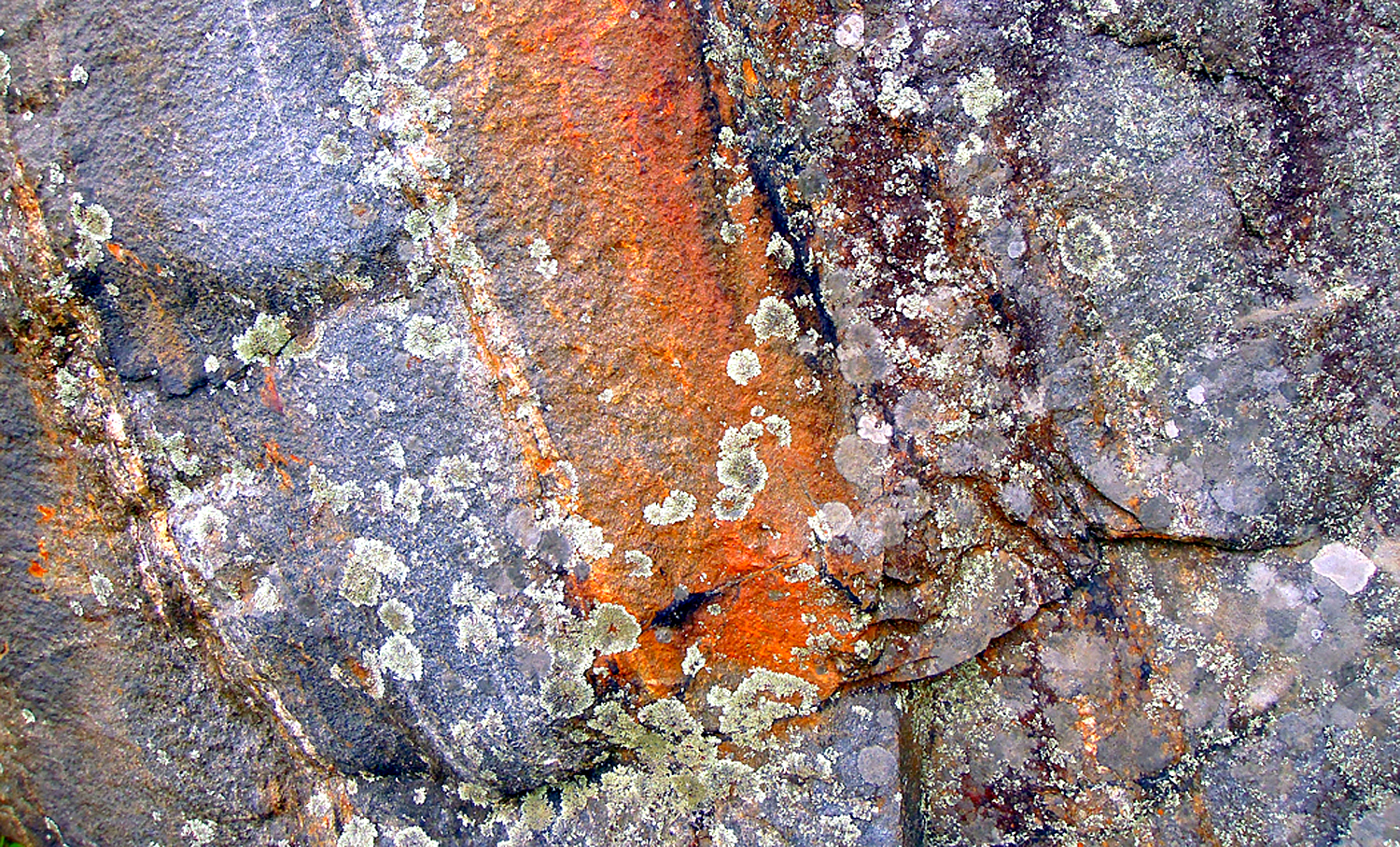
Craggy Gardens, N.C. 

And a camera pointed at the shapes of geology can create meaning in the same manner as the abstract painting we lionize. 

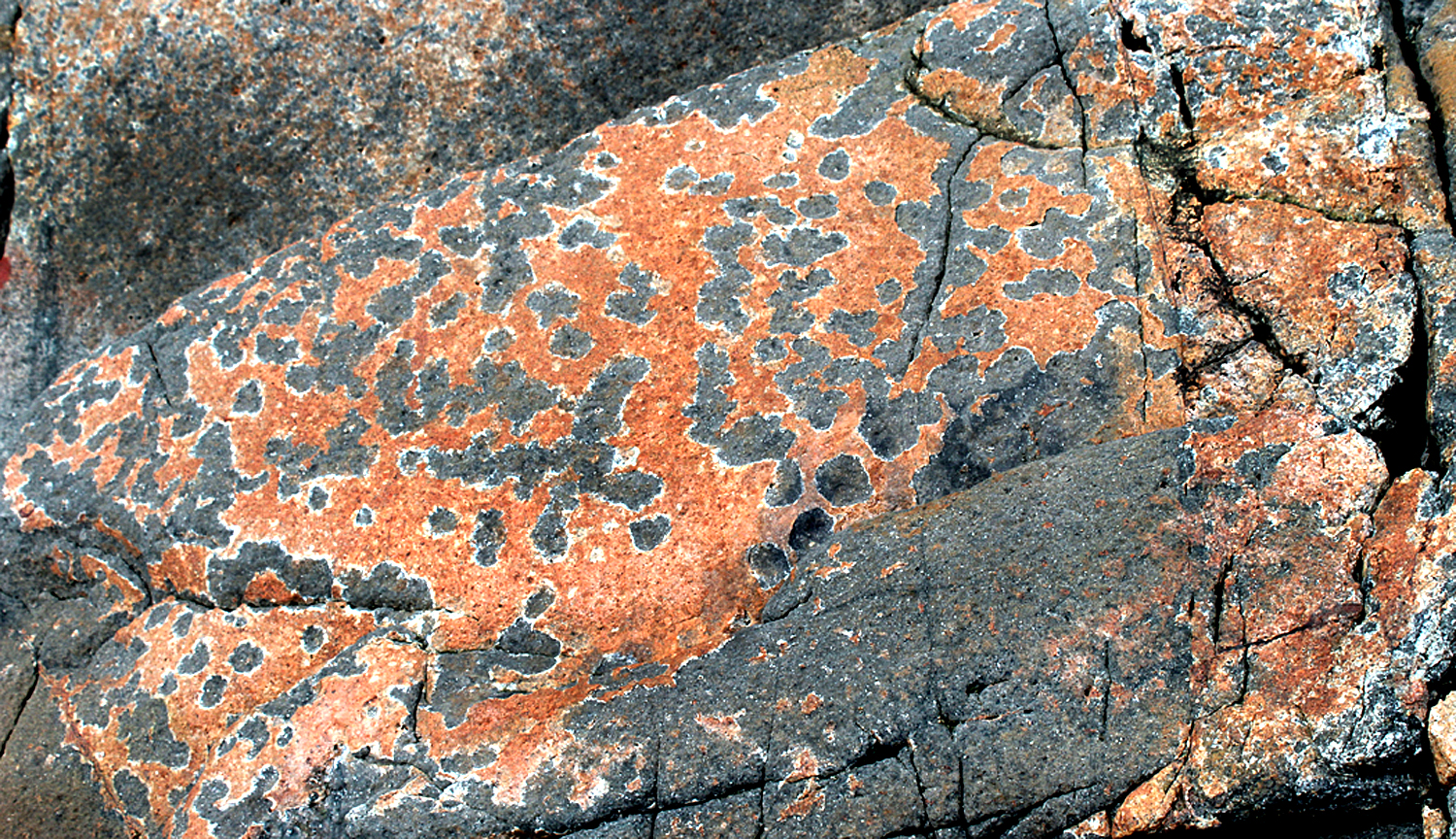
I have since found many rocks, with their esthetic pleasures. There is bright color
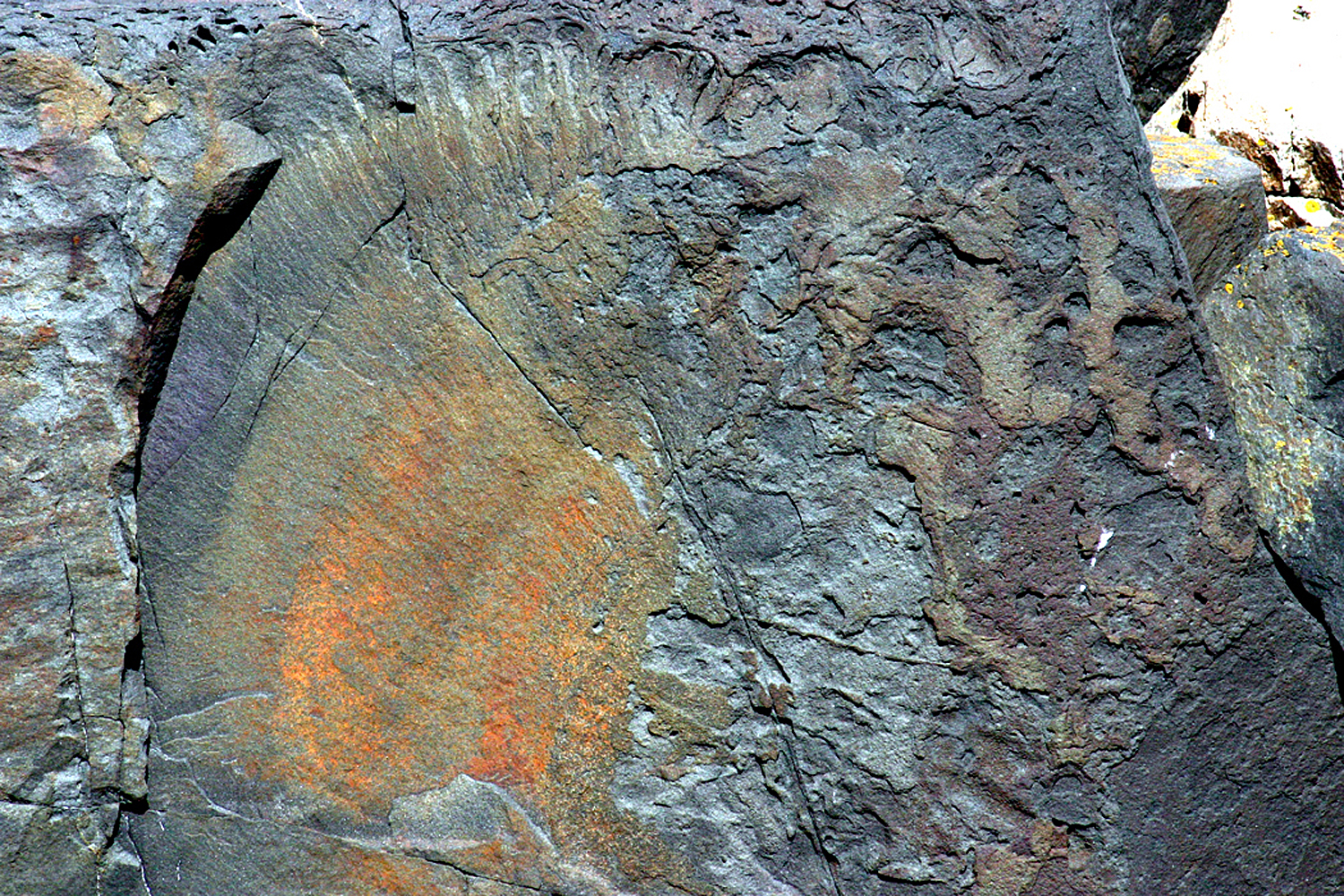
Blue Ridge Parkway, N.C. 

There is gnarly texture
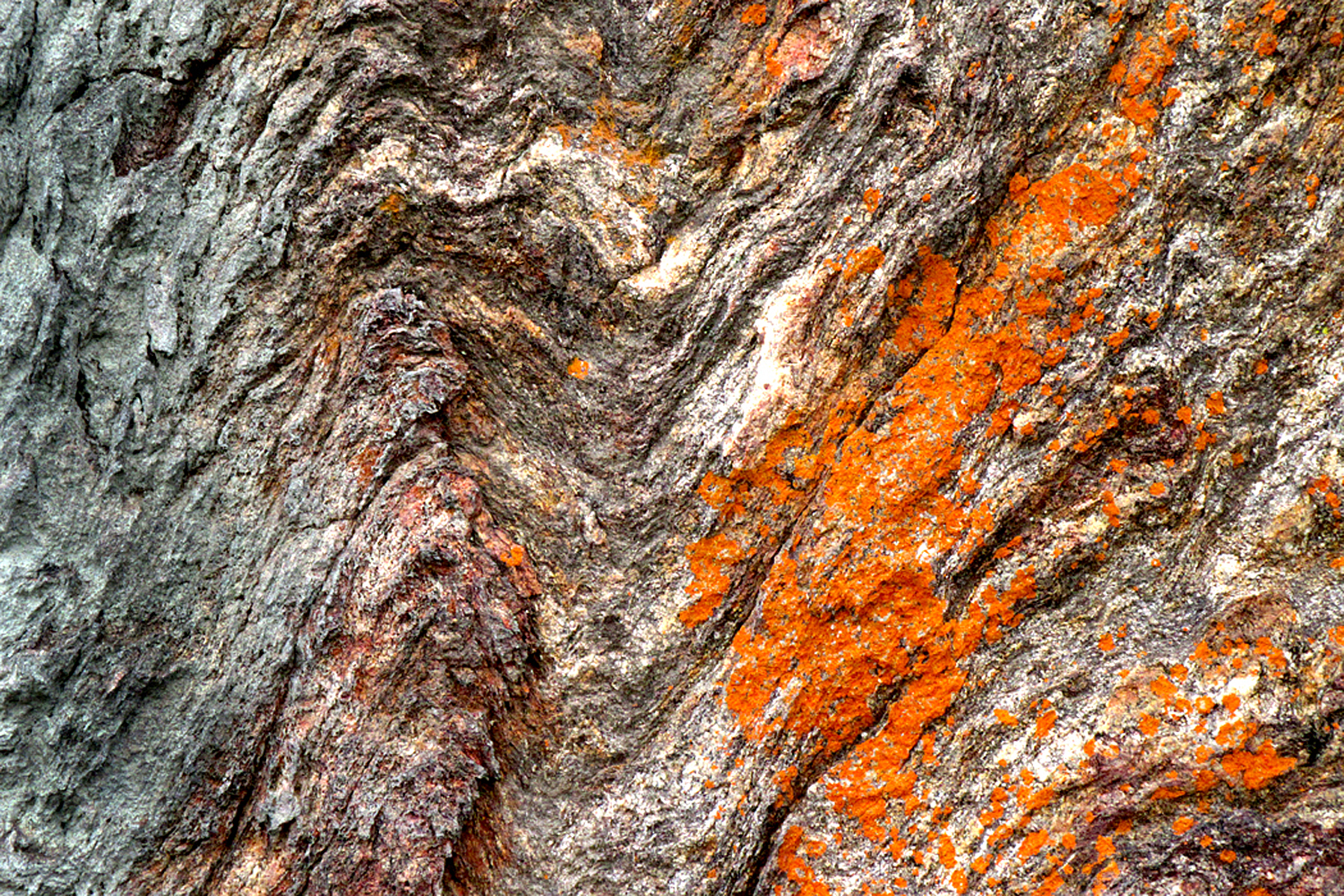
Blue Ridge Parkway, N.C. 

There are planes of surface
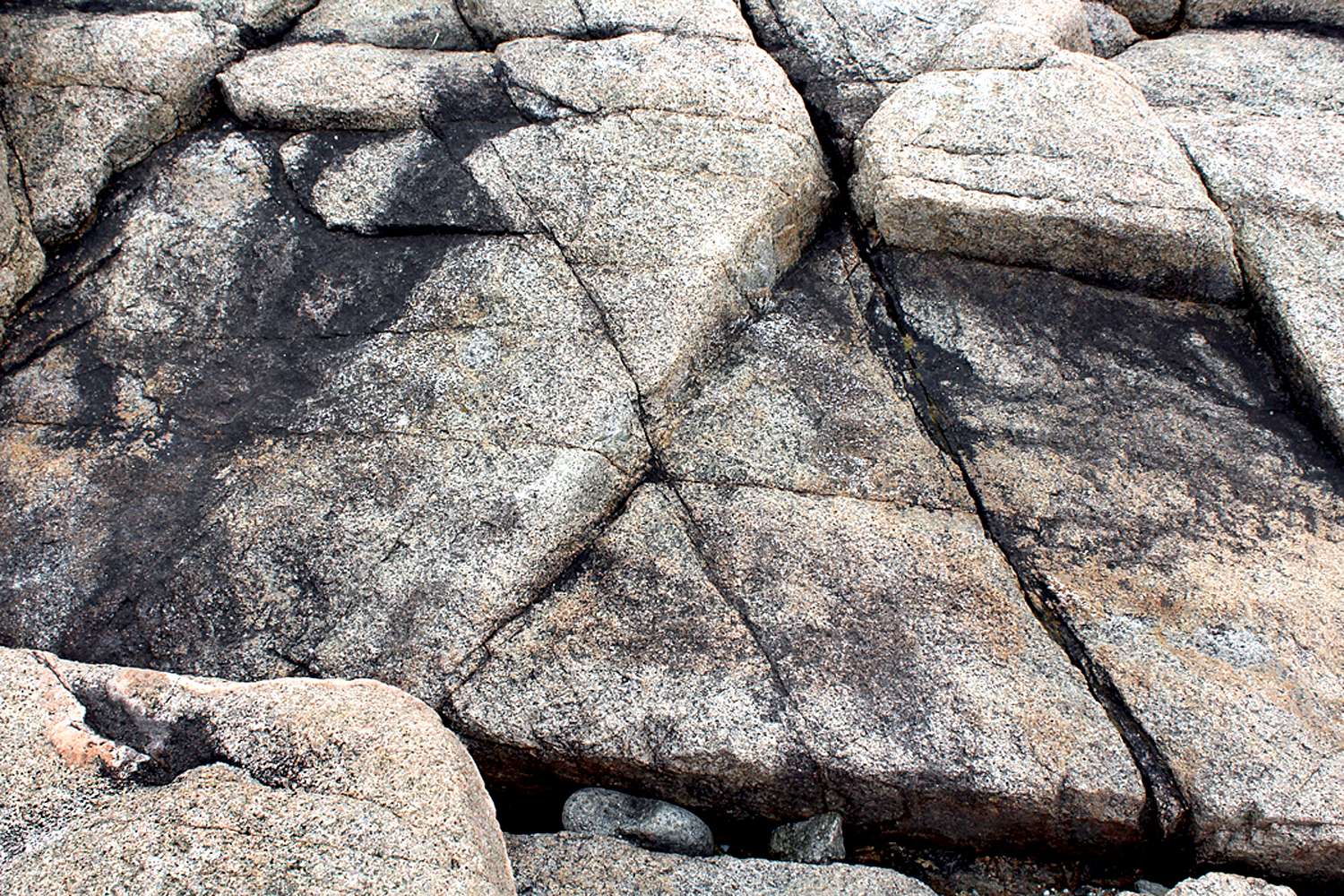
Schoodic Point, Maine

Repetition of shapes
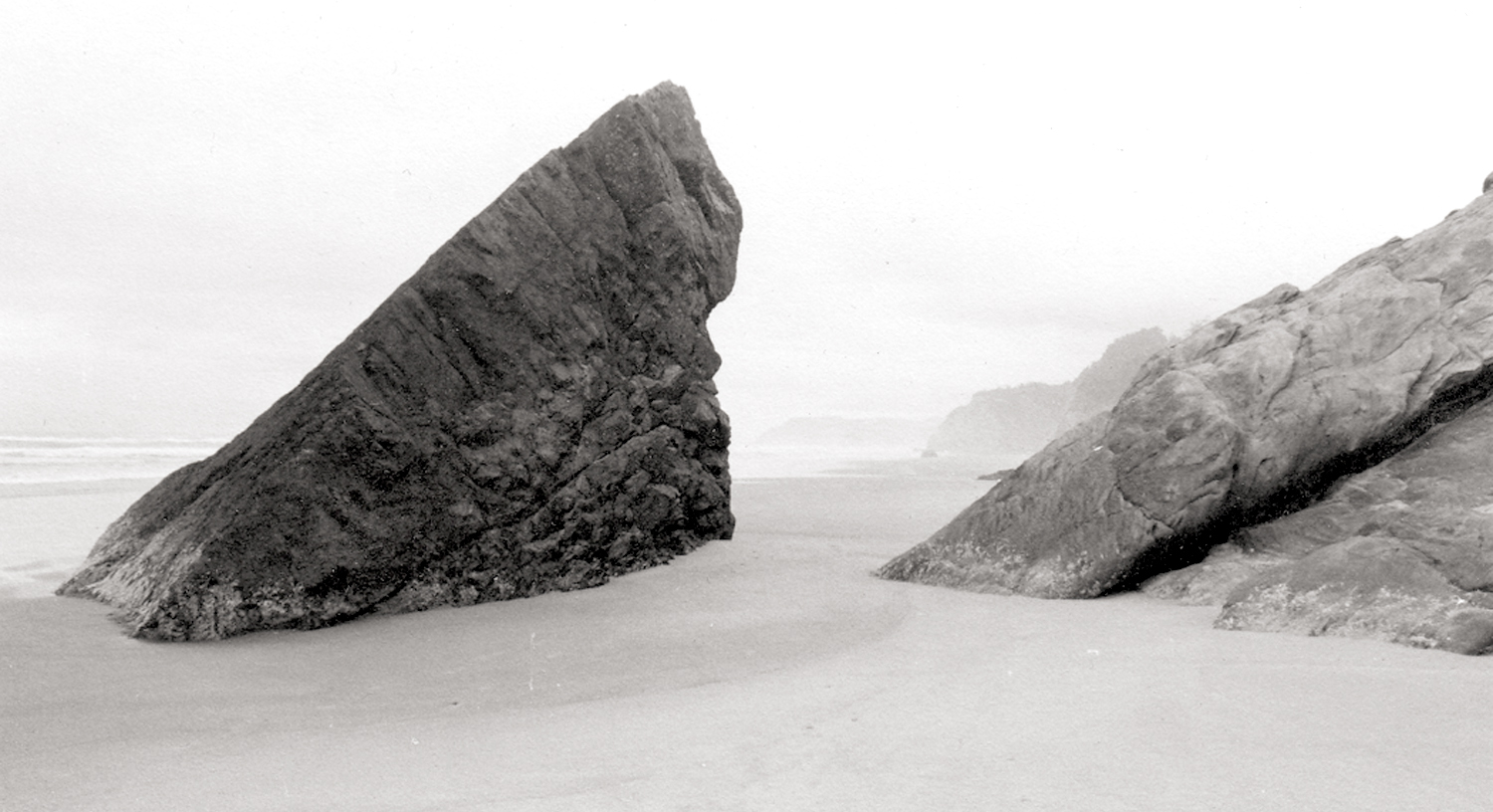
Hug Point, Arch Cape, Ore. 

Complexity of image
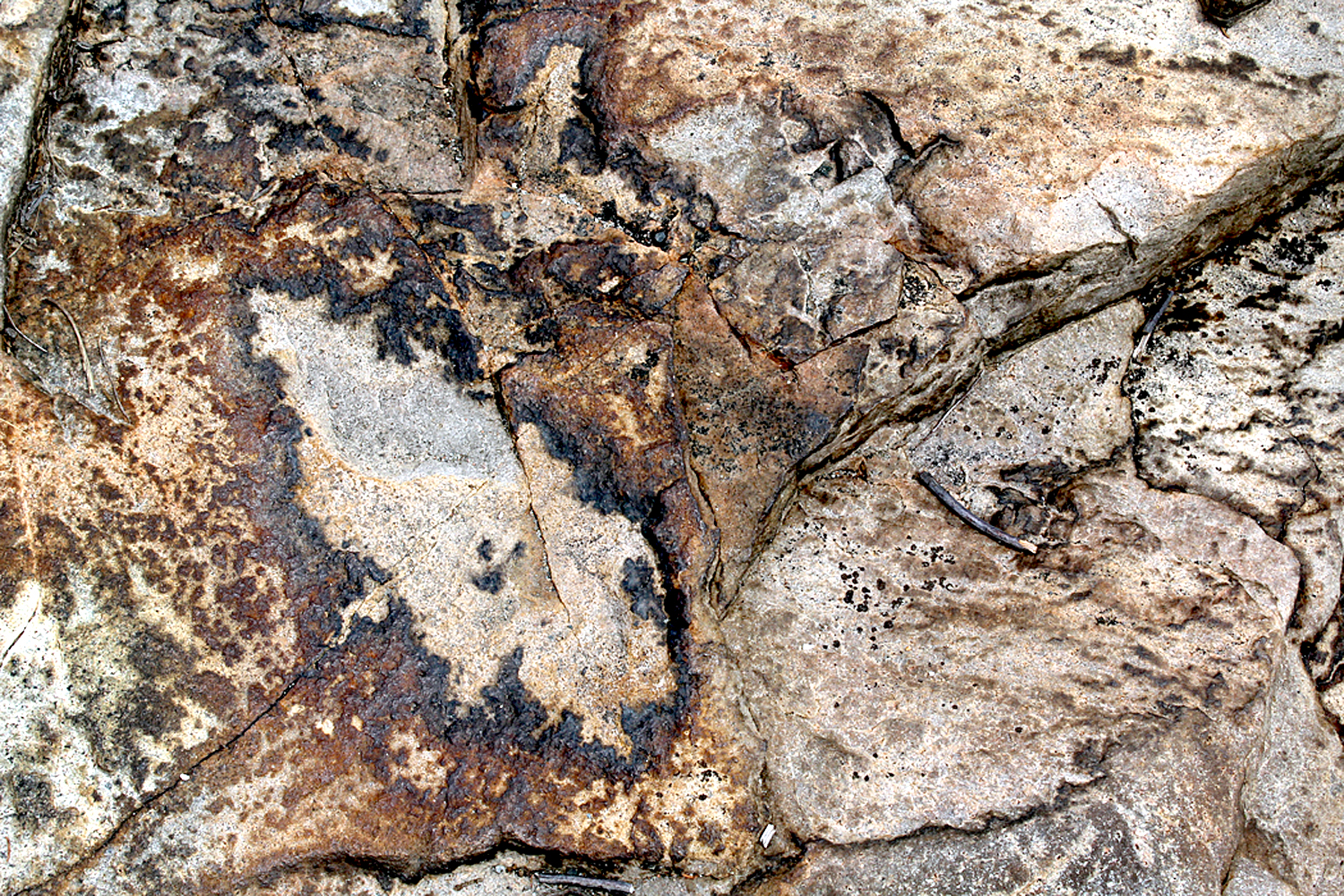
Schoodic Point, Maine

And a starry night
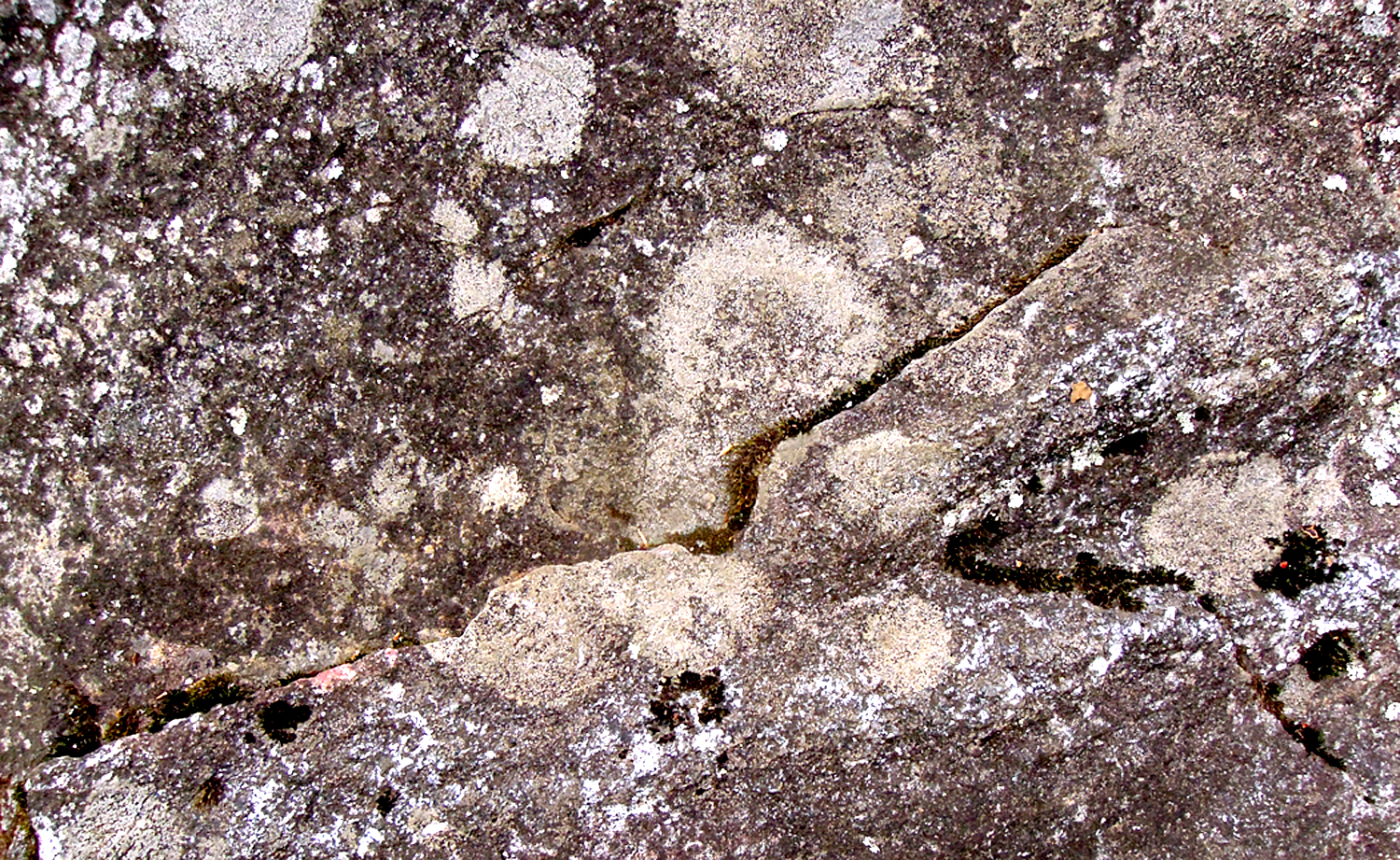
Pisgah National Forest, NC

Or flying over the continent and looking down at erosion
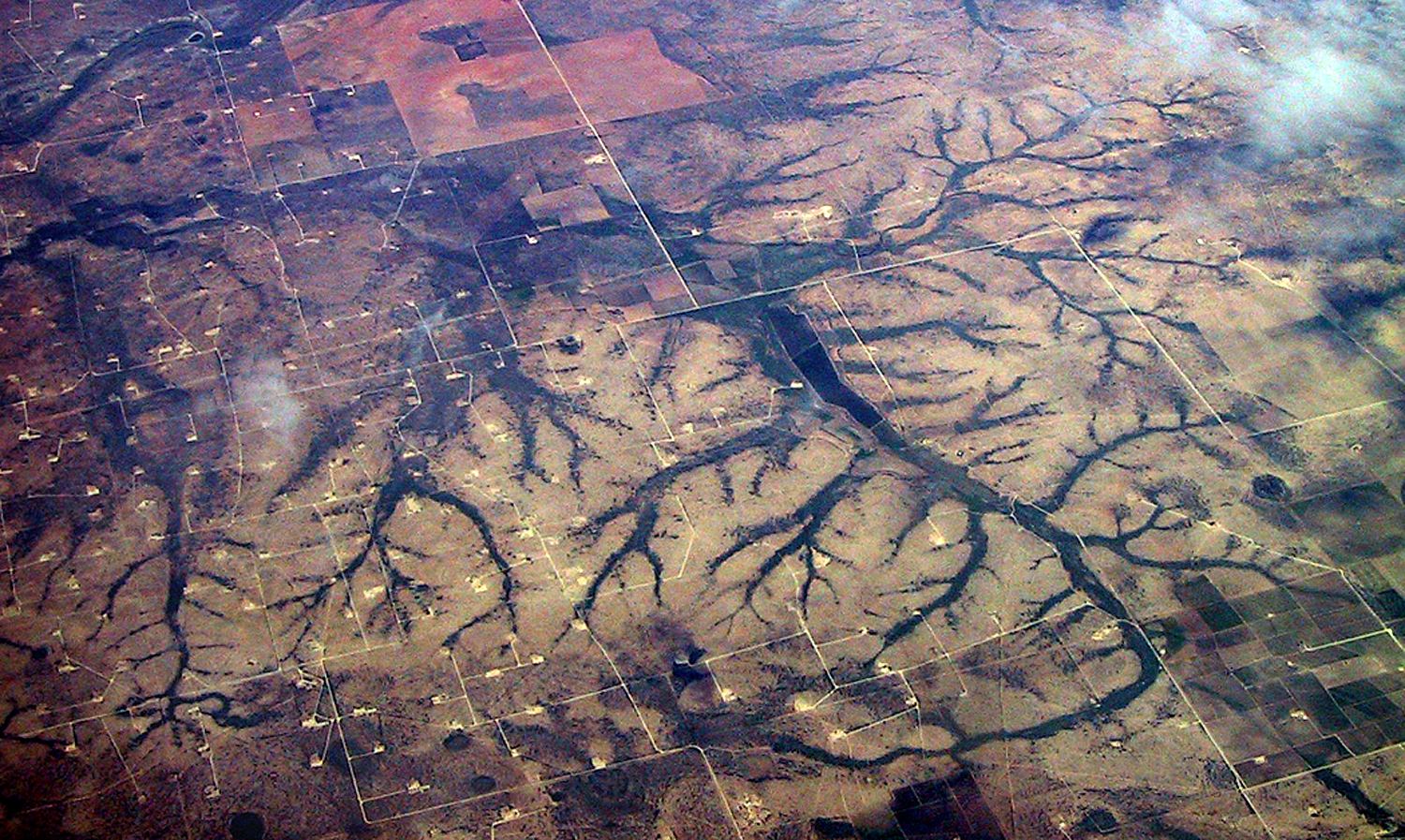
Over Colorado

One of the primary functions of art is to make us pay attention. It is an interaction with the world and a response to it. 
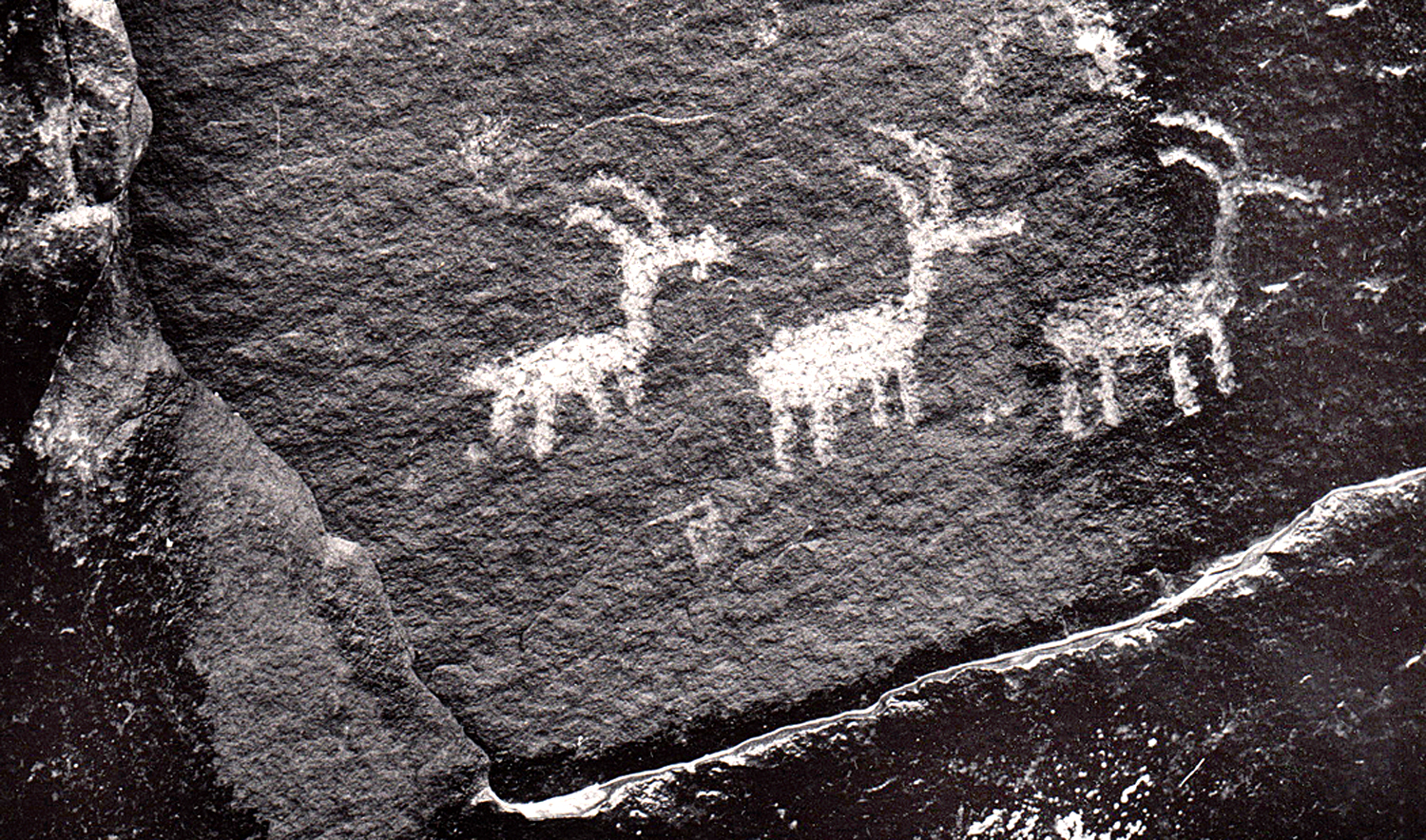
Rio Puerco Ruins, N.M. 

The most important lesson I was ever taught was by a college professor who would not accept glib work. Like many bright students, I was adept at giving a teacher what he or she wanted — basically repeating back what was said in class. But when I did that in my English Romantic Poetry class, he gave me a D for a paper that was otherwise correct in every aspect except one. “Don’t give me back what I’ve said,” he told me. “Engage with the material.” Real engagement cannot be faked. 

What was real were the words written, not the words written about the words. Dive directly into the poetry. Don’t waste time learning “about” the poetry. 

Try to take the material under study seriously and be real about it. If what you find contradicts what the teacher said, all the better. You’ve learned something. 
Engage with the material — something you should do with friends, family, society, even the air and the rocks. Engage. Don’t gloss. 
Click on any image to enlarge
Stories rise to climaxes, and our first trip to Paris reached that point on Sunday, when we accidentally stumbled into one of the most profound experiences of my life: seeing the Gothic cathedral in full tilt, with all its bells and whistles sounding. Later trips to France would be focused on the many cathedrals and churches built centuries ago across northern France.

Click any photo to enlarge.

NDP horiz with seine

Notre Dame: 2nd round
Sunday, March 30: Easter

A machine is always more beautiful when it is running.

A cathedral, as Carole said, is a machine to take you someplace.

Today, we saw that machine with all its gears rotating and its cylinders pumping.

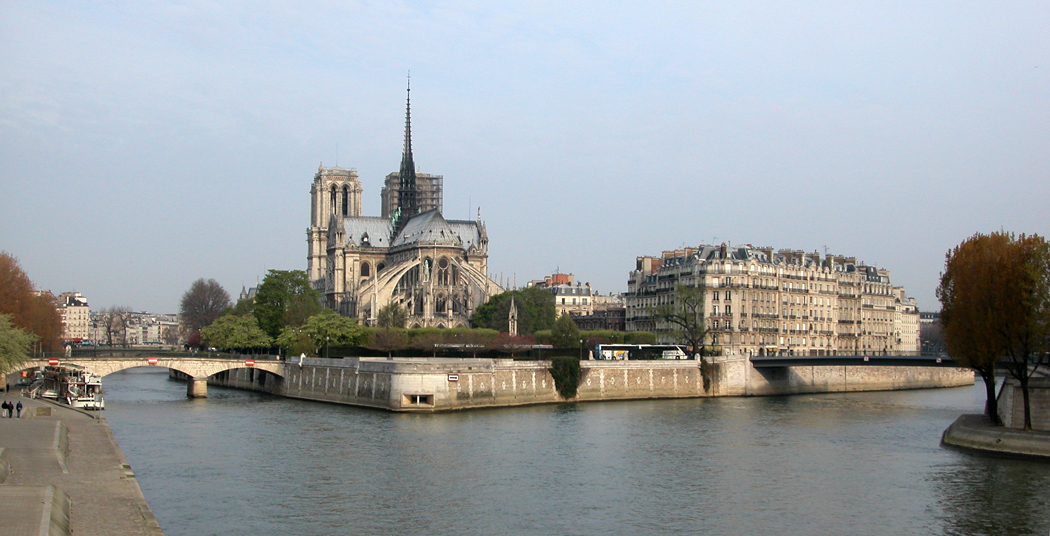
Not that we expected it when we left in the morning. We were just going to walk along the river, on the Ile St. Louis. We had a petit dejeuner at L’Etoile d’Or down the street, and wandered over the Pont de la Tournelle and along the Quai d’Orleans, to get a good photo of the cathedral of Notre Dame de Paris on its island.

NDP gargoylesAs we crossed over to Ile de la Cite, we noticed hordes of people, tour buses and commotion.

“Sunday,” I thought. Must bring out more tourists. They were everywhere.

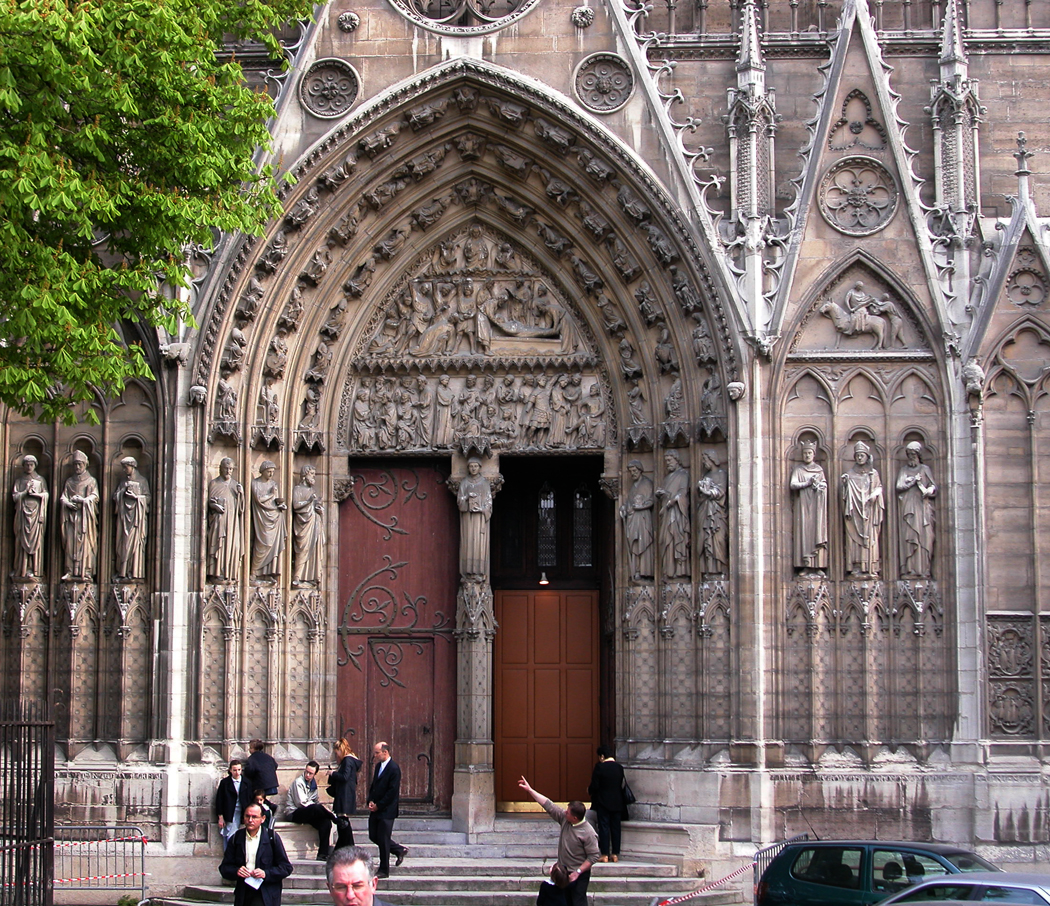
We walked around the north side of the cathedral, to photograph details and gargoyles. But as we passed the transept portal, we noticed that, for the first time, the doors were open. Why not wander in and see.

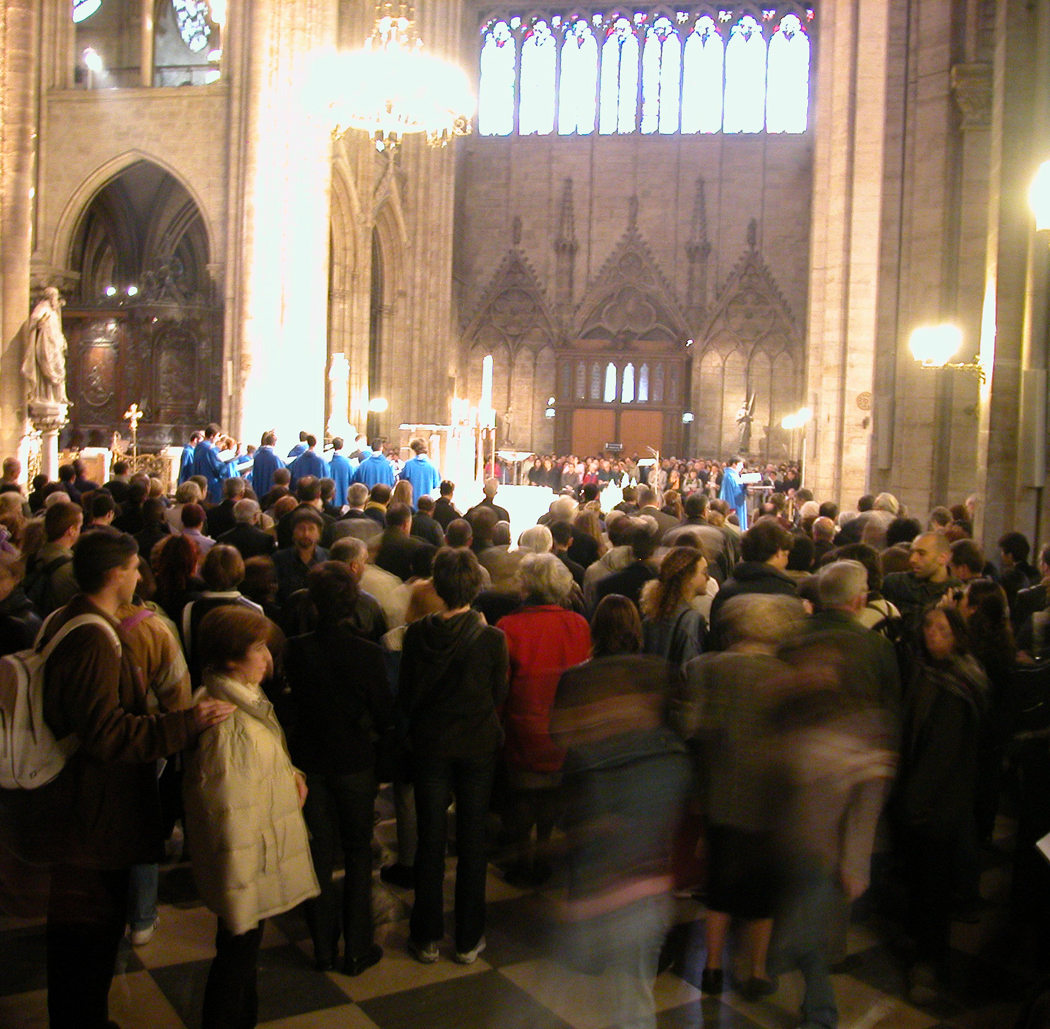
Well, we should have realized, with the bells pealing all morning, that it was Easter. Not our religion, but still, we should have known.NDP Easter crowd

Inside, the big Easter mass was being celebrated. The church was packed. Most of the visitors were celebrants, but a good number around the edges were just tourists.

But at the altar, spotlighted like a good stage, there were priests and a choir, which was chanting plainsong that echoed through the building like surf.

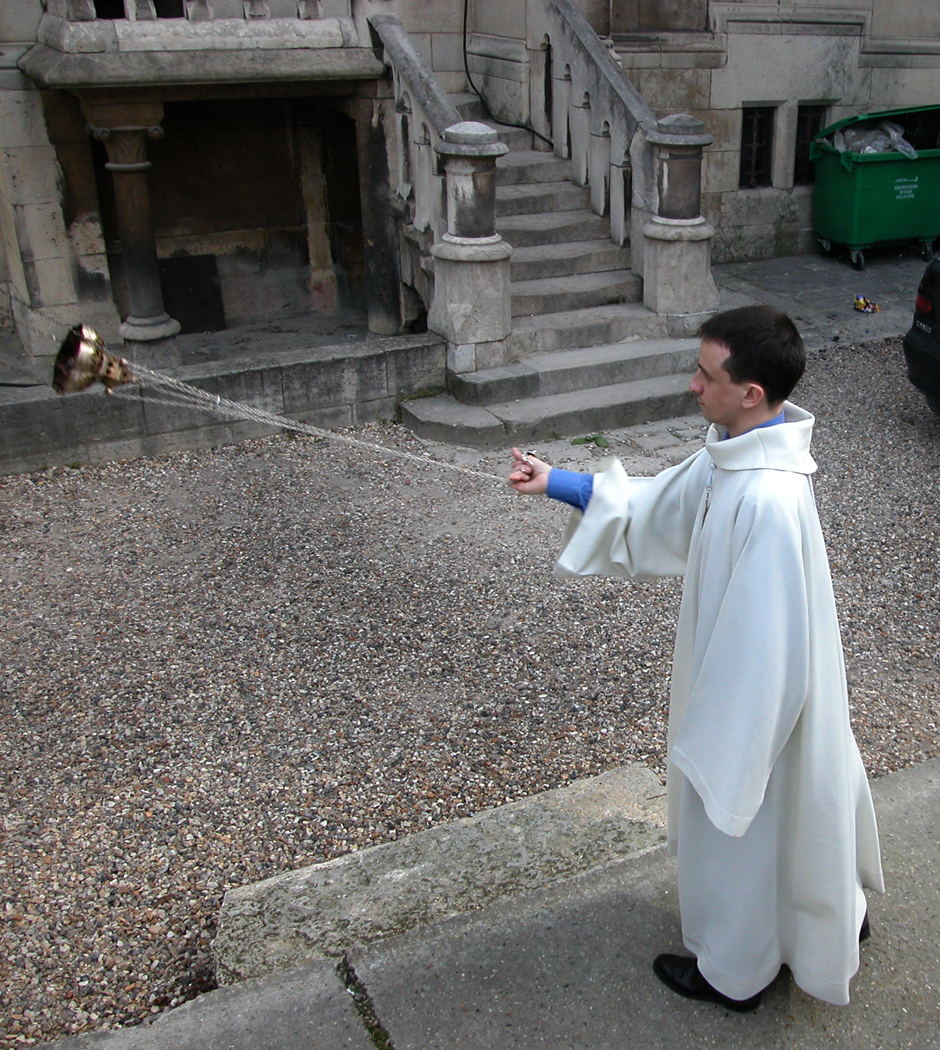
A priest was swinging a censer around the altar, spreading smoke through the crossing of the transept.

It took a while to get past the “gee whiz, what did we stumble into?” But soon we recognized the beauty and theater of the ceremony. It was intoxicating to hear the chant, melismatically floating like the censer smoke, under the brilliant blues and reds of the Rose Window, high above.

NDP bishop presidingOne doesn’t have to be a believer to appreciate how the mass, spoken and sung in the space built for it, 700 years ago, addresses the magnum misterium. Both Carole and I were soon caught up in it.

The vaulting, the lights, the stained glass, the church, spread out in its cruciform, that is also the diagrammatic shape of my body and your body, with the vast ceiling which is metaphorical of the inner dome of the skull — we could see how the priest at the crossing of the transept — the place that counts as the heart of the cruciform homunculus — was casting us out into the cosmos, out into the mystery, out into an intense beauty we only rarely let ourselves be aware of.NDP priest swinging censer

I was shaken. I believe Carole was, too. One listened to the choir, now taking on a later music, a descant from the 15th or 16th century, with the soprano floating her melos out over an altos lower harmony, and looked up, and on raising eyes, one sees the axis of the rose window, with all the light pouring through the interstices in the tracery, very like the angels dancing around the divine center of Dante’s mystical rose.

The vastness of the cathedral interior became the vastness of the universe, the singing became the music of the spheres.

The particular music split between soprano and alto was early enough that it did not participate in the tonic-dominant of classical music, but instead flowed endlessly in shifting concord, opening into landini cadences here and there to redirect the tonality.

And I heard in that melisma something completely separate from an esthetic event. It became the closest thing I have ever heard to the human equivalent of a bird’s song, a sound beautiful beyond its need to be beautiful, uttered out of instinct and joy. Shelley’s skylark, perhaps.

I don’t want to trivialize the event with frivolous hyperbole. But I swelled inside, and tears broke onto my cheek.NDP doorpost temptation

The doctrine simply didn’t matter. The metaphor behind the doctrine — the metaphor truer than the sometimes unknowing doctrine — took over.

We were privileged to witness the building doing what it was designed to do, like driving a Maserati across the countryside, or seeing the dynamos at Hoover Dam spin out electrical power.

I’ve often talked about the “business end” of the cathedral — the choir and apse — in a kind of jocular way, but now I have experienced just what a meaningful business it is.NDP through tree lace horiz

We stepped out of the church after about a half hour. The bells were pealing all over town. Easter morning bells, not only from Notre Dame de Paris, but from every small church and chapel.

NDP north portalI continued making the photographs I had come to make, getting all the details of the West Facade, the sculptures and portals. While moving from point to point, I left Carole waiting in the crowded plaza so she wouldn’t have to keep up with me while I jumped around.

Then, I reentered the cathedral through the West door. I thought I’d see what the service was like looking down the spine of the nave. The choir was silent, but the organ was playing some Messaien. I could hardly believe it: The French composer was being taken seriously enough to play at an event as important as this. And the music was transformed by the place and event, too.

It was no longer an esthetic construct. Messaien is a joy, rich as pastry, if you have the ears to stand it. But Messaien didn’t write music — especially his organ music — so his listeners could get their jollies. No, he wrote it out of religious devotion to serve a function.

And it, like the cathedral itself, became a machine to take you somewhere. It couldn’t have been designed to be more perfect for its job.NDP church garden tondo

Bach organ music is great for a Lutheran service, but that deep, familiar tonic-dominant drive of the fugues and passacaglias would have seemed all out of place in the middle of Catholic mass. The Messaien is as powerful a music as Bach’s on the organ, but it is built on another schema, one that doesn’t give you an expectation and fulfills it. No, it is much more like the mystery, going into unexpected places and finding awe, finding sublimity.

To see the mass, hear the choir and the organ, on an Easter morning, in a 13th Century cathedral, Gothic to the core, with those windows, that color, that light, that theater: It is one of the highlights, not of this trip, but of my life. I was overwhelmed, which is the only appropriate response to the Great Mystery.

Addendum: The martyrdom of St. Denis

NDP st Denis with angelsThe exterior of Notre Dame de Paris is covered with the tall, attenuated statues of saints. Most of the sculpture there today is the work of Eugène Viollet-le Duc, who restored the worn, weathered and often insulted cathedral in the middle of the 19th century. (After the French Revolution, the deconsecrated structure was used as a barn to store grain.) His work on Notre Dame, like his work elsewhere, freshened the architecture and sculpture. No one knows for sure who each of the saints are. Some are obvious from the symbolism, others are obscure. But St. Denis (Dionysius) is clear as can be: The third century saint was beheaded during the persecutions of the Emperor Decius, and he stands at the cathedral in stone, holding his head in his hands. According to Butler’s Lives of the Saints, after he was decapitated, he picked up his head and walked six miles north from Montmartre, where he was executed, to what is now the banlieu of St. Denis, where the basilica bearing his name was later built, and where so many of the kings of France are entombed.

luxembourg garden horizLuxembourg Gardens

We wandered through the crowds along the river, gazing at the bookstalls, walked up Boulevard St. Michel to the Luxembourg Gardens.rue de huchette

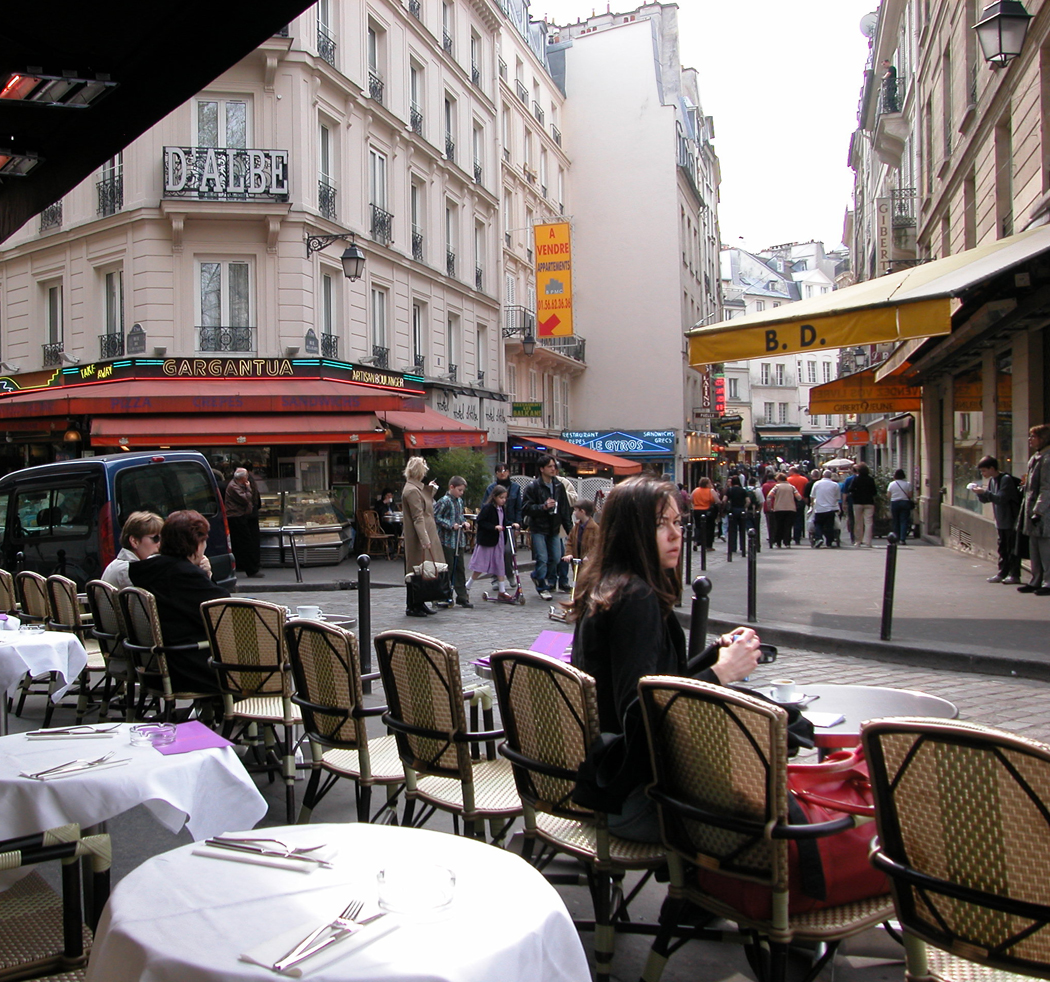
As profound as the cathedral is, the area around it in Paris is a tourist sewer. Even the bookstalls are geared to moving merchandise to a herd of passing tourists. The awful Rue de Huchette is clogged with places to separate you from your lucre, and sell you “naughty” French postcards or mass-produced “original” paintings of the cathedral or the Eiffel Tower.

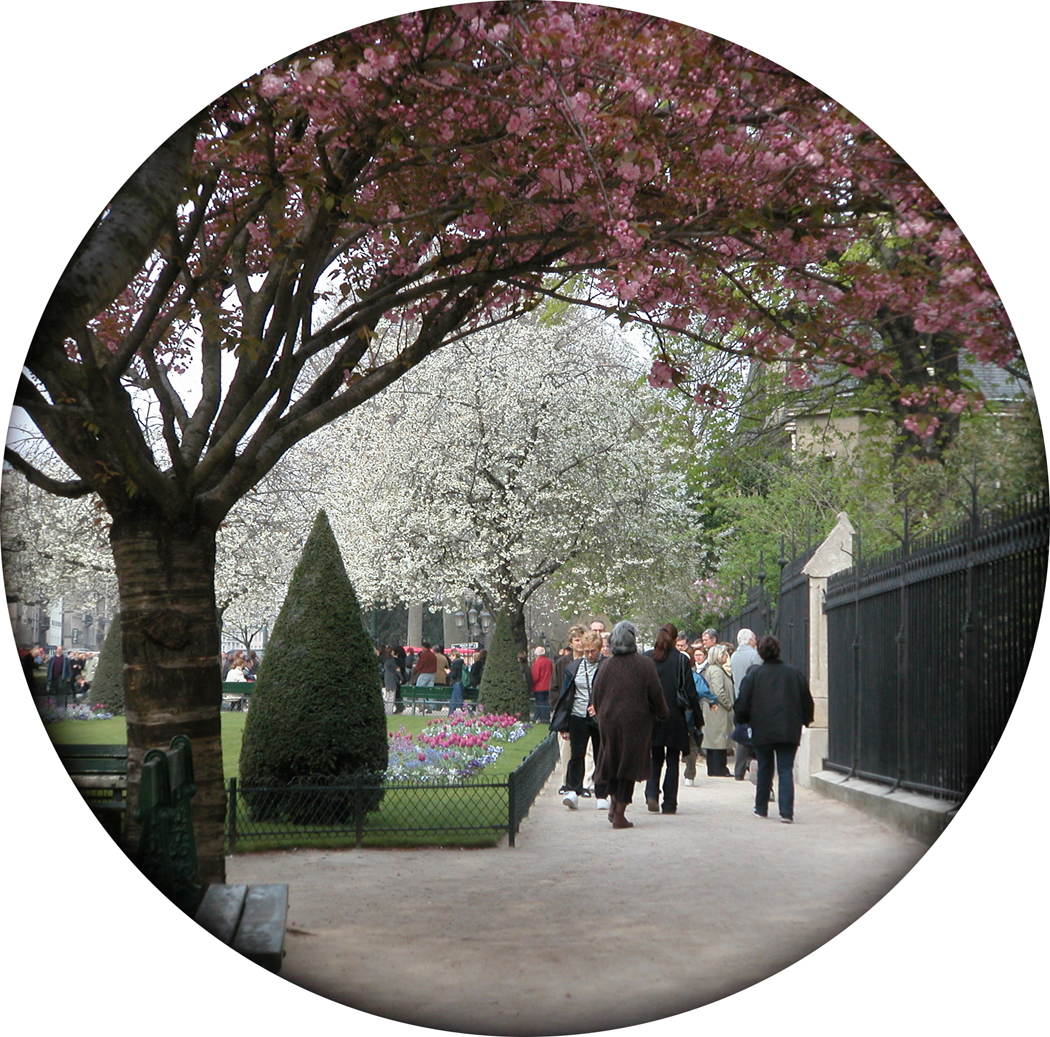
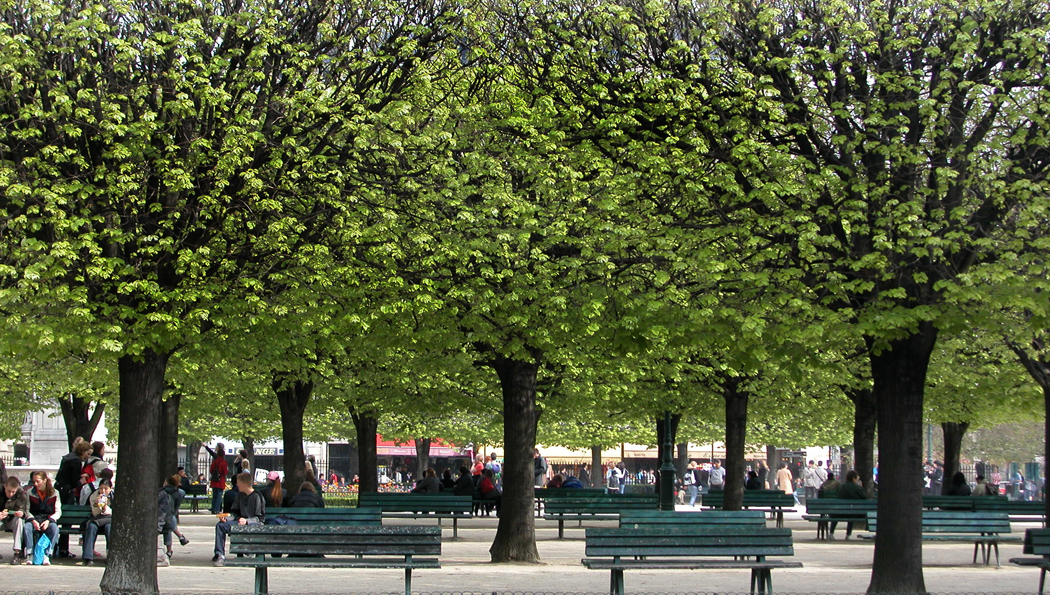
But as we moved up the hill toward the Luxembourg Gardens, Paris reasserted itself and the tourists disappeared. We walked through the gardens, among the statues and horsechestnut trees and were in the middle, once more, of a living city. People all around were walking dogs, sitting under trees and reading, or cuddling or smoking. Teenagers rolled past on their inline skates and joggers puffed around corners. All I heard was French.jardin de luxembourg horiz

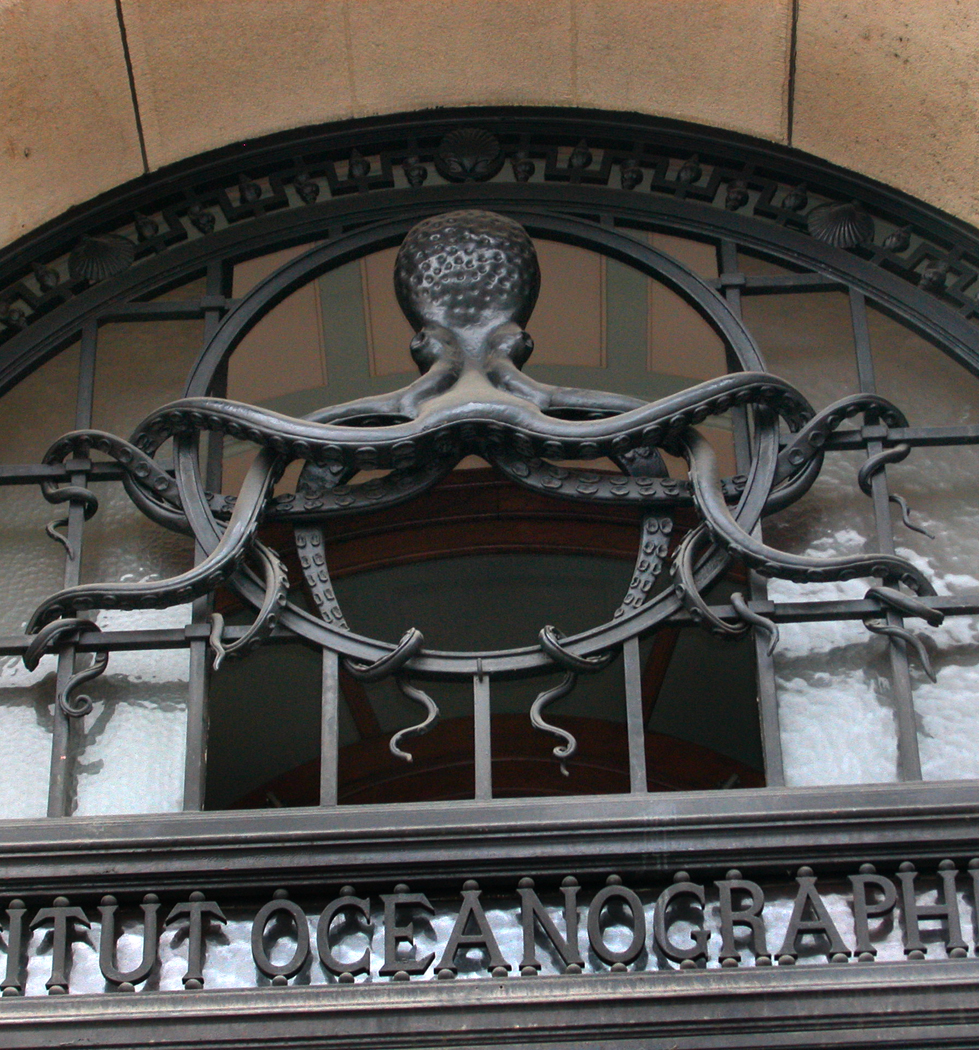
As we walked back from the gardens, we passed an older section of town (if that isn’t redundant in this ancient city) and had fun spotting all the sculptured apartment facades. octopusThere were not only the usual satyr faces and acanthus leaves, but giant elephant heads and lions. The Institute of Maritime Science had a great wrought iron octopus above its door.

Passing back around the Pantheon — an ungainly building — we came down the hill on Rue de Cardinal Lemoine and home territory. We stopped at l’Etoile d’Or again for a late lunch of Boeuf Bourgignon. Carole had a creme brulee and told the waiter that the crystalized caramelized sugar on the top of the custard was “like the glass in the windows of the cathedral.”

He laughed and appreciated the comment. Later we heard him telling the chef what she said, and the chef said simply, “Vrai.”

When we got back to the hotel, it rained a good clean rain.

Carole’s response:

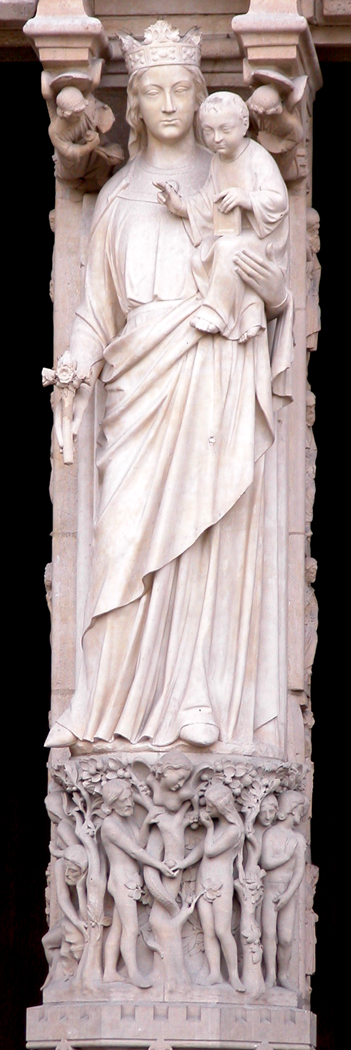
NDP mary doorpostI had the sensation of being pulled up and up and up. First my eyes and then my body and then my soul. And I don’t know how to say this, but it makes you want to be better. Being inside that building appeals to the best part of you. The incense really worked: It appealed to my sense of smell. I was “smelling in a sacred manner.” And when we left the cathedral I carried some of that incense in my hair for a long time. It smelled a little like cloves, but more like the resin of some wonderful tree. Outside, when we saw some of the members of the choir, they were really young, laughing and being lighthearted, and just a moment before they had been angels. It reminded me of Bergman’s Magic Flute, the way the characters are also regular people and also in the play.
I loved seeing the statue of Mary, and she was wearing a crown and holding the infant Jesus, but she didn’t seem sacred to me because she was the mother of God, she looked sacred to me because she was a sweet little mother with her baby.