Archive

Tag Archives: steven moeckel

I have been listening seriously to classical music since 1965, and I have attended hundreds of concerts and recitals since then. Most of those were enjoyable, well-played, musical and provided emotional nourishment, yet almost every one was ultimately digested and forgotten. How could it be otherwise? It takes an exceptional performance to register permanently on the psyche, so that, even 60 years later, they are still resonant in the memory. Now that I am 77, I think about them again. 

I grew up in a household with very little music, outside of watching Perry Como or Dinah Shore on the TV. But my high school girlfriend was a musician. She was studying bassoon with Loren Glickman, the man who played the opening notes of The Rite of Spring on the recording conducted by Igor Stravinsky. (She later studied with Bernard Goldberg, primary bassoonist with the Philadelphia Orchestra — she was the real deal). She later went on to work with both PDQ Bach and Philip Glass. 
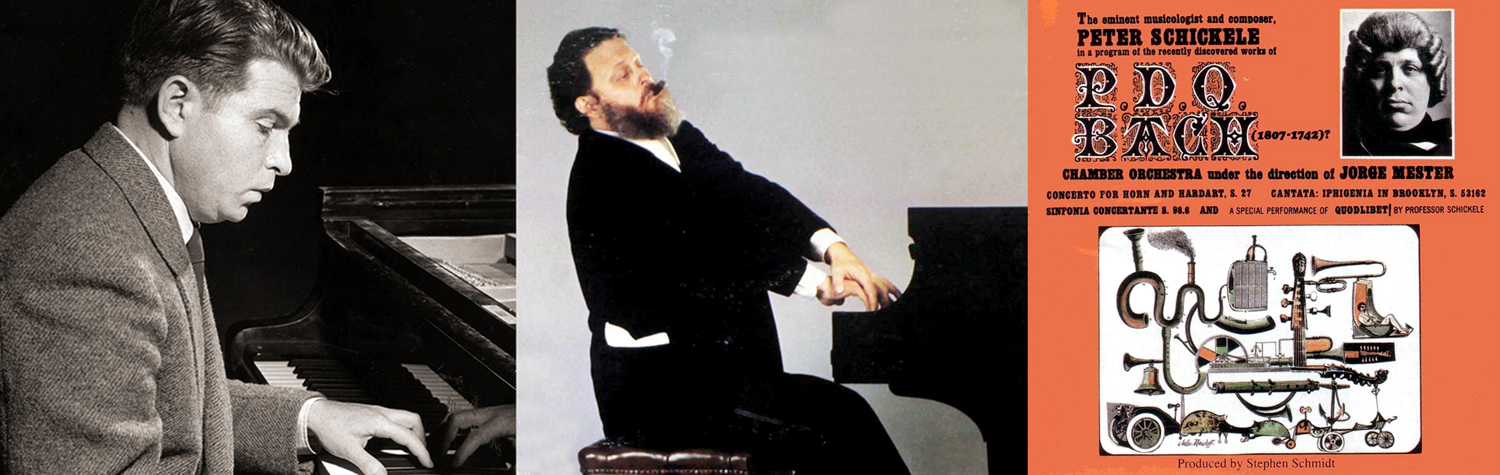
She and I often took the bus into Manhattan to attend concerts. We heard Emil Gilels play the Liszt sonata at the Brooklyn Academy of Music and we went to the very first PDQ Bach concert at Carnegie Hall, hearing both the Concerto for Horn and Hardart and the cantata, Iphegenia in Brooklyn. (For about 20 years after that I went to at least one PDQ Bach concert each year, no matter where I was living). But most of all, we went to the New School concerts led by violinist Alexander Schneider. Tickets were $3 and we could afford them. 

And on Christmas Eve, Schneider held an annual midnight concert which allowed me to escape to New York and avoid the boring evenings with my coffee-drinking repressed Norwegian aunts and uncles. 
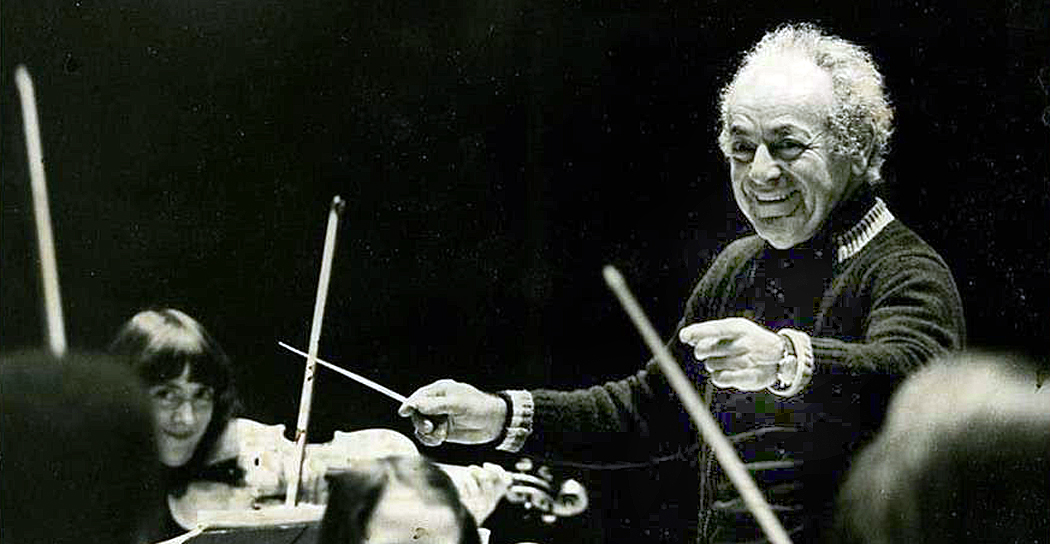
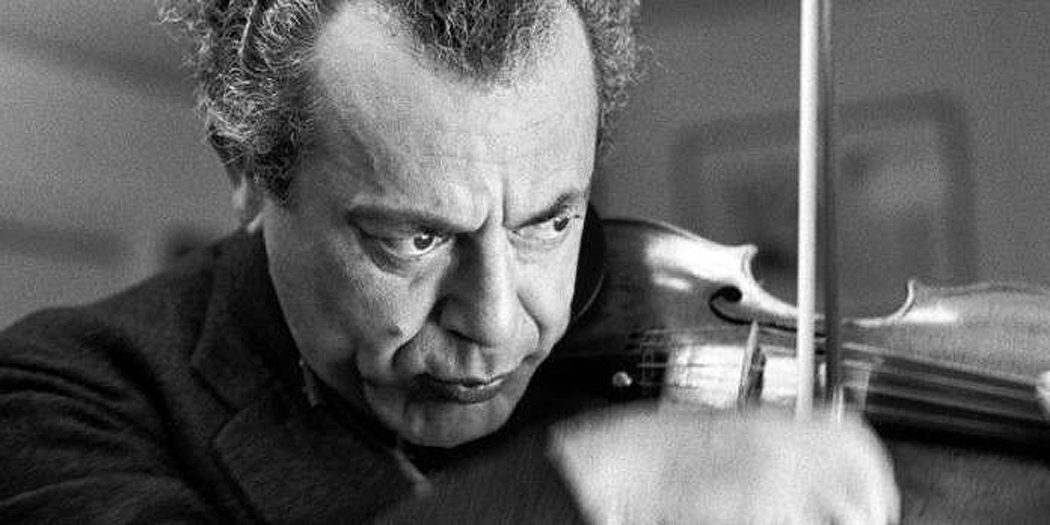
Schneider has always remained my ideal of committed musicianship. He led his chamber group from his seat, with his leg wrapped around the chair leg like the serpent of a caduceus, leaning forward into the music with the intensity of a man defusing a bomb. The music was always exciting. (To this day, I seek out the rare Schneider recordings, such as his Handel op. 6 Concerti Grossi and his Haydn quartets. Schneider was a force.)

New York Times critic Howard Klein wrote about Schneider at the time, “… the playing was that rare ideal of single-mindedness, give-and-take, technical polish and heart. There were a few slides to Mr. Schneider’s melodic playing, just enough to remind one of his romantic tradition. Some scholars might object to the rhythmic liberties that were taken, those marvelous pauses, the slackenings of pace, then the eager striding forth into a fugue, or slipping into a dance rhythm. But this was not romantic Handel, just human warmth. As usual, Mr. Schneider was totally consumed with playing, putting his back into every bow stroke and exhorting the others from his chair to join in the fun. Mr. Schneider is one of the city’s most valuable musicians.”

To this day, Schneider remains my touchstone. 

I owe a lot to that first serious girlfriend, but high school romances notoriously don’t last, and this one didn’t, but the music did. I became a serious classical music junkie, going to concerts, recitals, chamber music, and buying endless reams of LPs, tapes and CDs. 
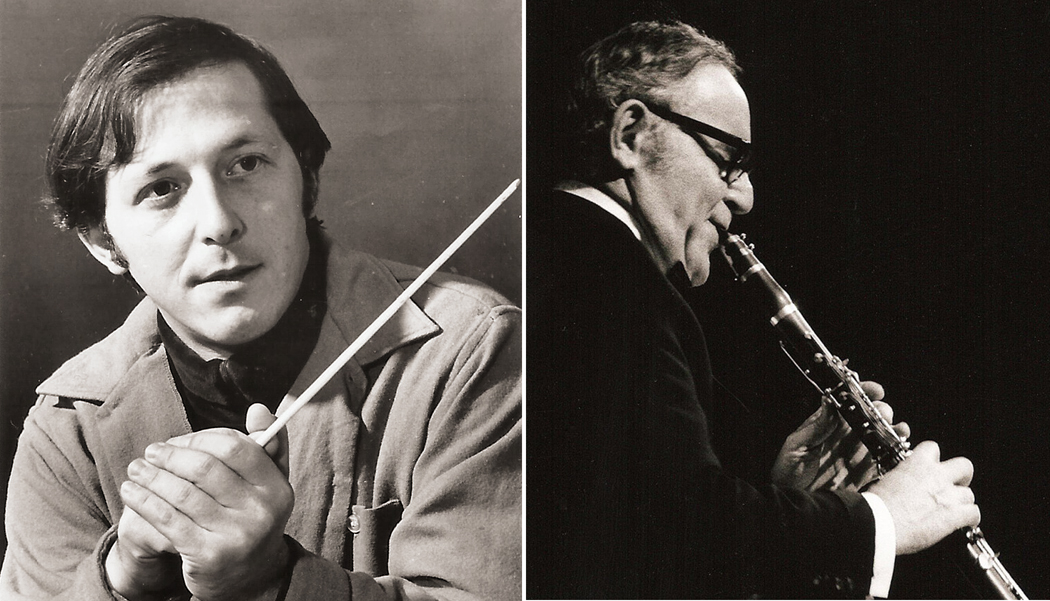
Shelly and Benny

In my college years, most of the music I heard, at Greensboro Symphony concerts, under first Sheldon Morgenstern and then Peter Paul Fuchs, was what you would expect from a community orchestra, although I was still happy to hear the music live. I also heard Benny Goodman play the Weber Clarinet Concerto in F-minor there (and after intermission, play the rest of the evening with his jazz trio). 

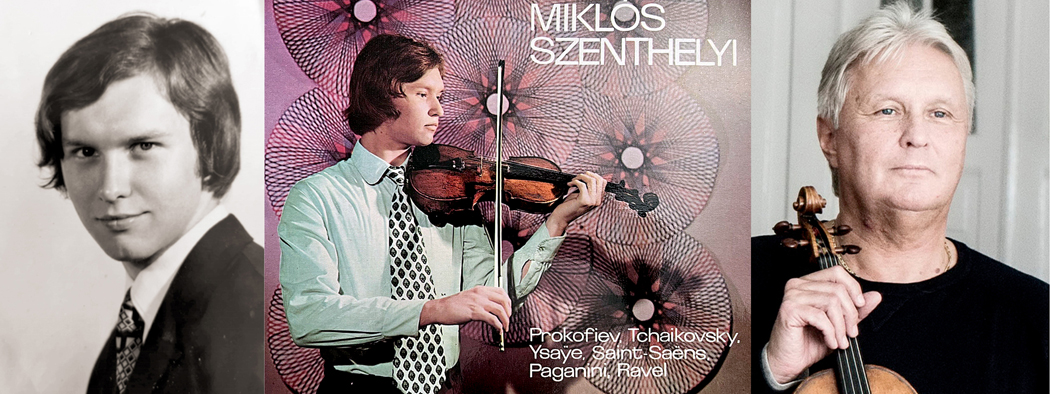
Morgenstern became director of the Eastern Music Festival held each summer at Guilford College in Greensboro, where I was a student, and I heard some world-class soloists come to play with the festival orchestra. The Hungarian Wunderkind Miklos Szenthelyi played the rarely heard Bartok First Violin Concerto and I fell in love with it. Szenthelyi was the most dignified soloist, with the most erect posture I’ve ever seen and played like the music was the most important ever written. It was wonderful. Szenthelyi is now the elder statesman of Hungarian violinists. It has been that long. 
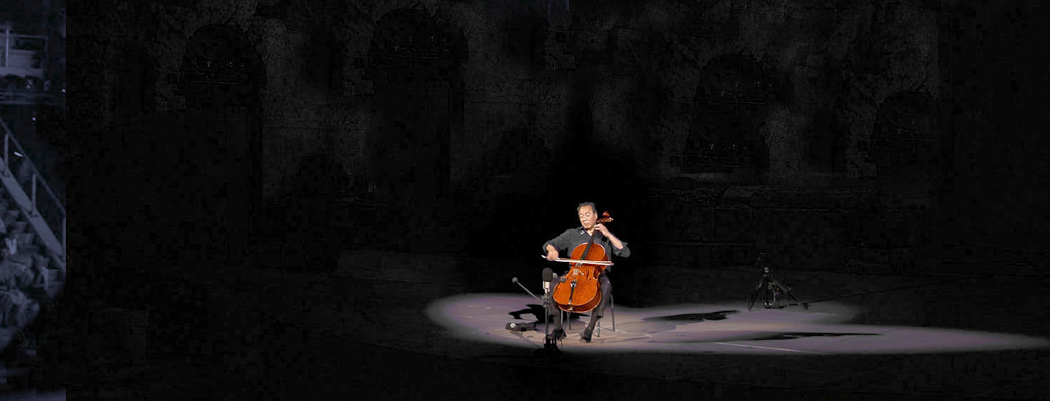
Beyond the EMF, one concert stands out from that time. A still-teenage Yo-Yo Ma played both Haydn concertos with the High Point Symphony, one before intermission and one just after and the tunes became ear worms for weeks. Yo-Yo Ma has been a constant ever since, and I have heard him live over and over throughout my concert-going life. 

Over the next decades, I moved around quite a bit, often with low-paying jobs, or none at all, and could not often afford tickets. But I still managed to hear Bernstein and the New York Phil play La Mer, and later the same orchestra under Kurt Masur play Schoenberg’s Transfigured Night and Beethoven’s Eighth Symphony. Masur had a reputation as a mere Kappelmeister, a time-beater, but he played Beethoven’s smallest symphony as if it were a tiger as big and muscular as the Fifth. I was surprised and blown away. Ever since, I have had greater respect for the power possible to be found in the Eighth. 
Haitink and the LSO

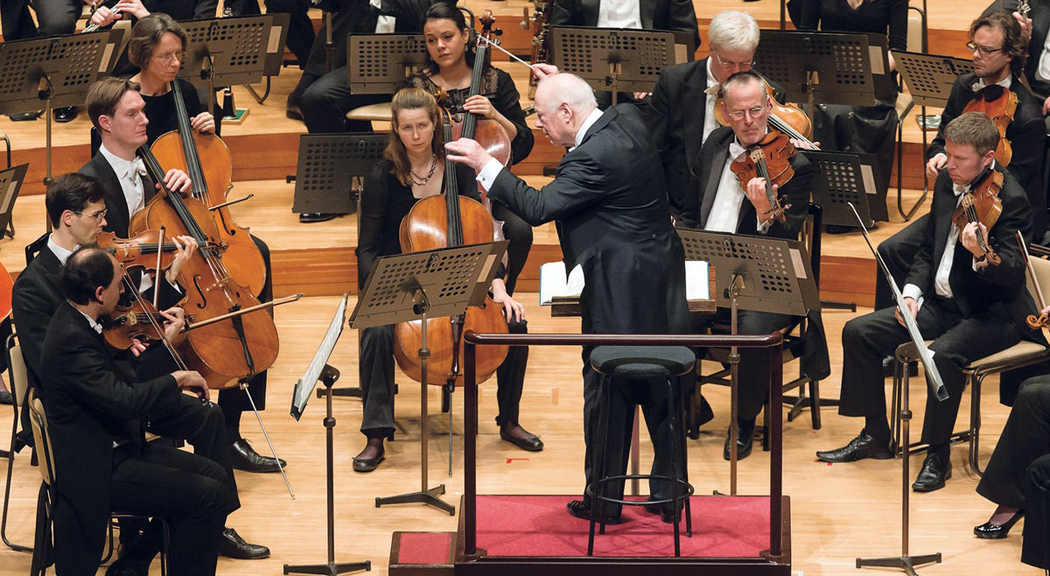
There is a class of musician whose recordings have a reputation for being bland, but hearing live, they take the chances they never do for records. Masur was one. Bernard Haitink was another. All the CDs I had of Haitink were safe and, while well-played, were kind of boring. But then I heard him with the London Symphony at the Salle Pleyel in Paris playing the Eroica with all the fire and passion that could be wrung from the piece. Completely changed my mind about the Dutchman, although it didn’t make the CDs better.

I have to admit that my cherished Yo-Yo could be that way, too. Not that his recordings are bad or boring, but they never capture the buzz and excitement of hearing him live, where he is electric. I heard him playing the Dvorak concerto in Phoenix and I was in tears, almost shaking with emotion after hearing it. It was one of the greatest concert performances I ever attended. His recording of the concerto is really good, but nothing like the live beast. 
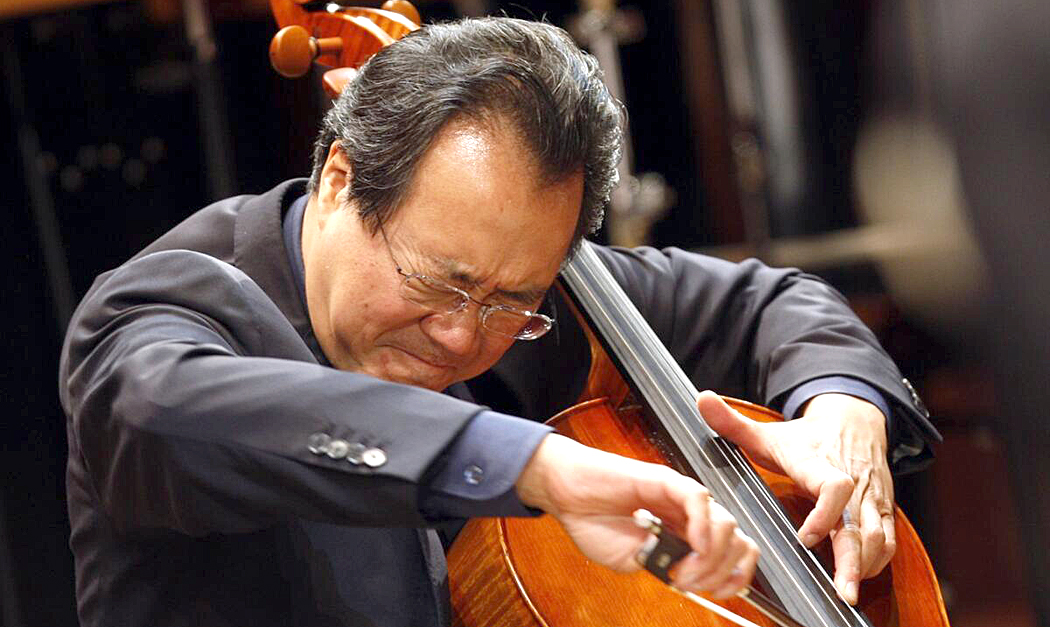
He has recorded the Bach cello suites three times over his career. The first two are dependable, even excellent, but I’ve heard him doing them live several times and the metaphor again shows up: Played with the intensity of someone defusing a bomb. In his third recording of the six suites, he finally got something of that adventurous power into the CD. 

In Seattle, I got to hear the Berlioz Requiem, a piece, because of its logistical demands (expanded orchestra and chorus, four extra brass bands at the four corners of the hall and eight tympani blasting away) I never expected to hear live. It may not have been the best performance of the piece ever, but it yanked my hair back. In the late 1970s, when I lived in Seattle, my regular date was a former professional violinist, turned bicycle messenger, and we went to many concerts together. Unfortunately, although we were good friends, she played for the other team. 

By the late 1980s, I was living with my late espoused saint in Phoenix, Arizona, and was the art critic for the major daily newspaper, and later became to classical music critic as well. When you don’t have to pay for your tickets, you get to go to a lot more music. And I heard some great music, not only from local Arizona musicians and from touring groups, but because the paper sent me all over the country, I got to hear music in Los Angeles, New York, Chicago, Boston and Philadelphia (and Boulder, Colo., too). 
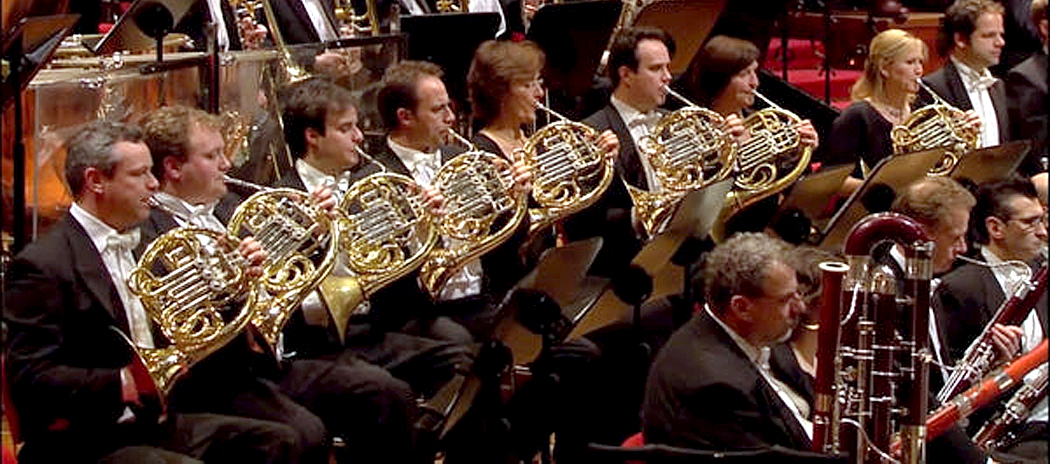
One of the most unforgettable experiences was hearing the Philadelphia Orchestra under Wolfgang Sawallisch play Richard Strauss’ Don Juan. If I ever needed to be persuaded that live music offers something recordings cannot, it was the great horn call in Don Juan, when eight French horns sound off in unison and one doesn’t just hear the sound in one’s ears, but vibrating through the fundament: It was music with a physical presence of a brick wall. No recording can capture that shudder. You have to be there. 

I heard Maurizio Pollini in LA playing a first half of all the Chopin Preludes and a second half doing Stravinsky’s Two Scenes from Petruschka (with an intermission of over an hour while, from the lobby, we heard a piano being tuned to his satisfaction in the emptied hall) and ending with the Prokofiev Piano Sonata No. 7. That was the single most daunting program I had ever heard up to that point. 
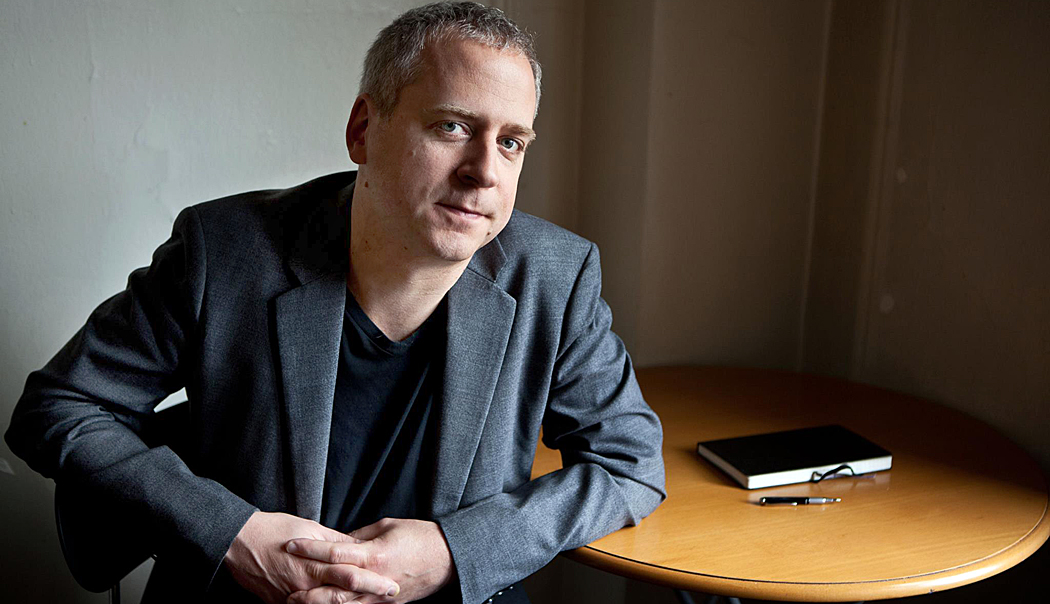
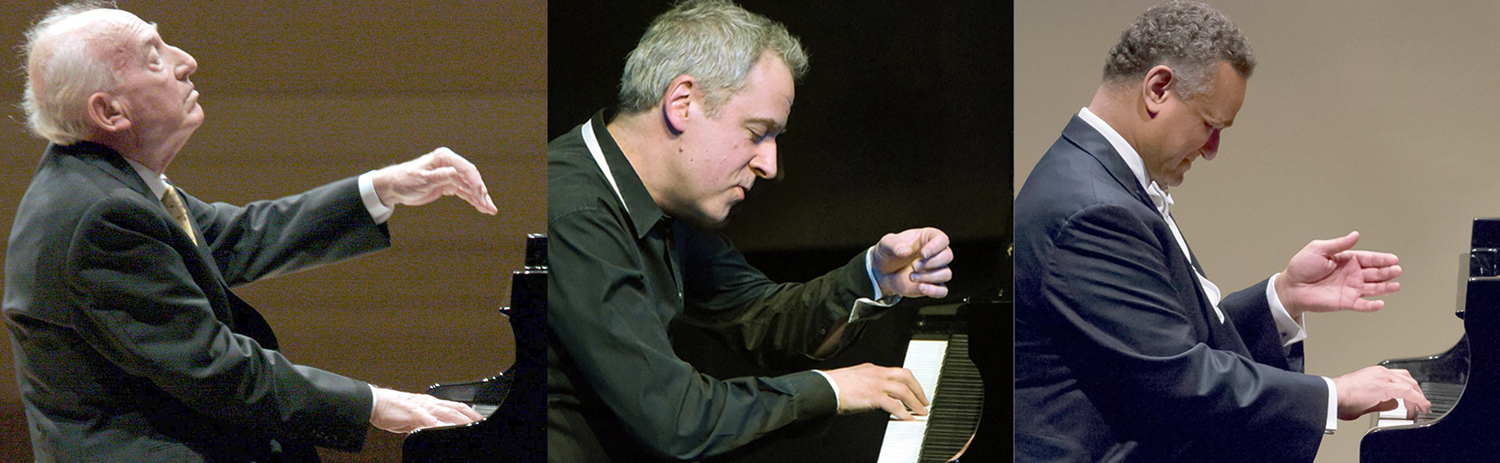
At least until I heard pianist Jeremy Denk at Zankel Hall, part of Carnegie Hall, when the first-half of the recital was Charles Ives’ Concord Sonata and the second half Beethoven’s Hammerklavier — two of the longest and most difficult pieces in the repertoire. He then re-played the “Hawthorne” movement of the Concord Sonata as an encore. His fingers must have been bloody stumps after all that. 

I later heard Denk in Scottsdale playing Beethoven’s Eroica Variations, and showing their comic side, and several Ligeti etudes, showing that composer was more than the film score to 2001: A Space Odyssey

Some of these memorable cases come in pairs, like the Denk’s. 

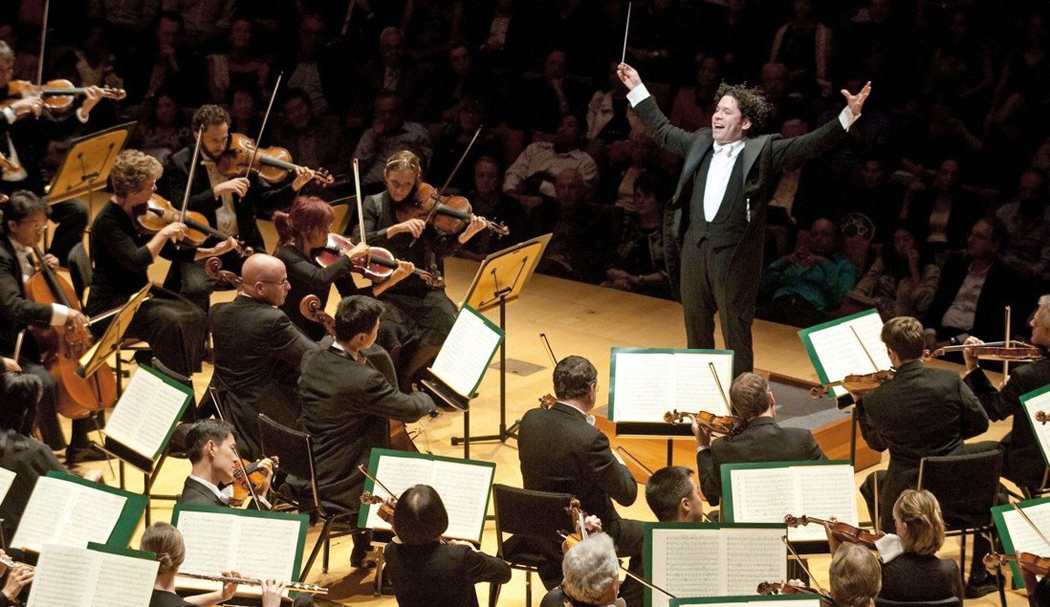
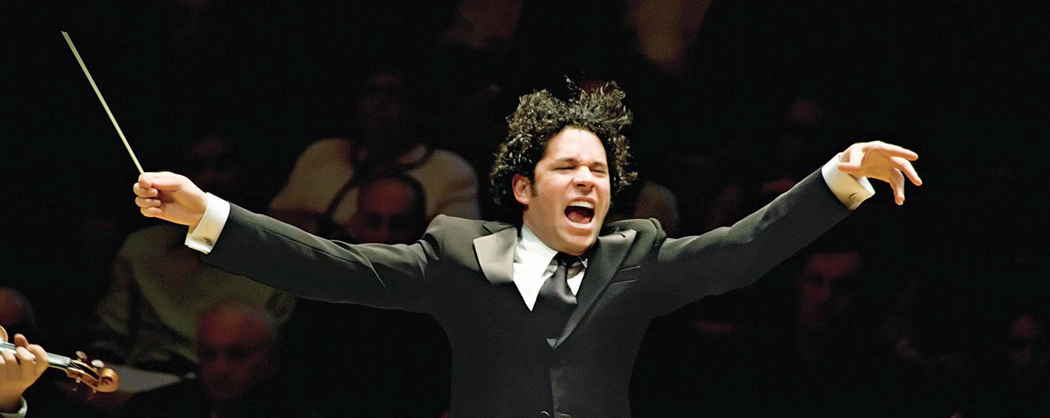
At Carnegie Hall, I heard the Israel Philharmonic play the Tchaikovsky Fourth Symphony under Gustavo Dudamel, and it was pure magic. The 80 or so old Israeli pros were turned back into teenagers by the young enthusiasm of the Dude. They played their hearts out for him. At the end, Dudamel did not take the customary audience bows, but ran up into the orchestra, shaking the hand of every musician, making them all stand up and accept the applause. 
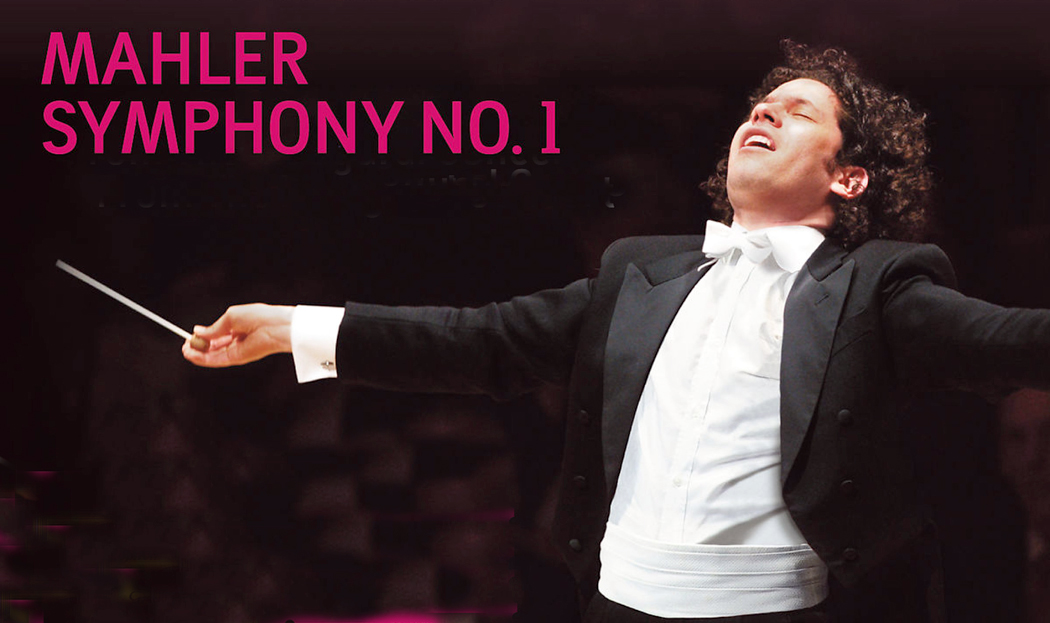
Later, with the LA Phil, I heard him lead the Mahler First. These were two of the greatest orchestral concerts I ever heard. 

One might expect great sounds from these orchestras, but two of the best live performances I have under my belt came from the Phoenix Symphony and its concertmaster Steven Moeckel, under the direction of Music Director Michael Christie. Moeckel played the greatest version of the Beethoven Violin Concerto I ever heard live, perfect in every expressive detail, and powerfully emotional. I was so blown away that I came back the next night to hear it again, but the magic had passed. It was a very fine performance, but not the same. You are not allowed back into Eden. 

Several times, I had lunch with Moeckel and we talked of many things. He mentioned that he had always wanted to play the Elgar concerto, a piece I didn’t know, having always thought of Elgar as a stuffy English imperialist. But he persuaded Christie to let him do it, and I was transfixed and realized how much I had been missing all my life. The Elgar Violin Concerto is one of the five or six greatest ever written, up there with Beethoven, Brahms, Sibelius, Tchaikovsky, Berg, and Mendelssohn. And Moeckel’s performance couldn’t have sold it any better. It changed my musical life. 

Then, there were two concert opera performances by the Phoenix Symphony and Christie. They engaged Dawn Upshaw to sing in Osvaldo Golijov’s Ainadamar, about the death of Spanish poet Gabriel Garcia Lorca at the hands of the Fascist forces of Franco. 
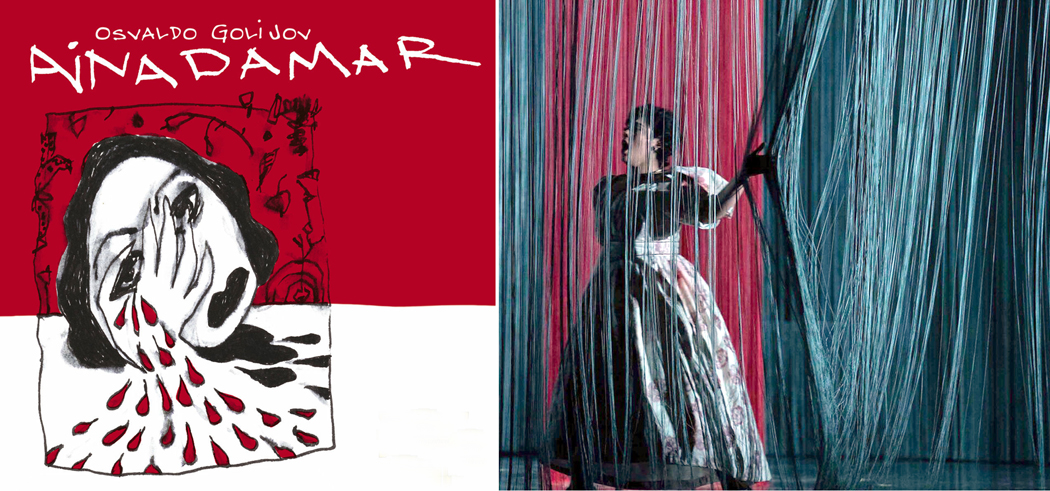
As the music critic for The Arizona Republic, I often had issues with conductor Michael Christie over 19th century classics — Christie had not a Romantic bone in his body — but he was brilliant with contemporary music. I fell in love with Golijov’s eclectic style.

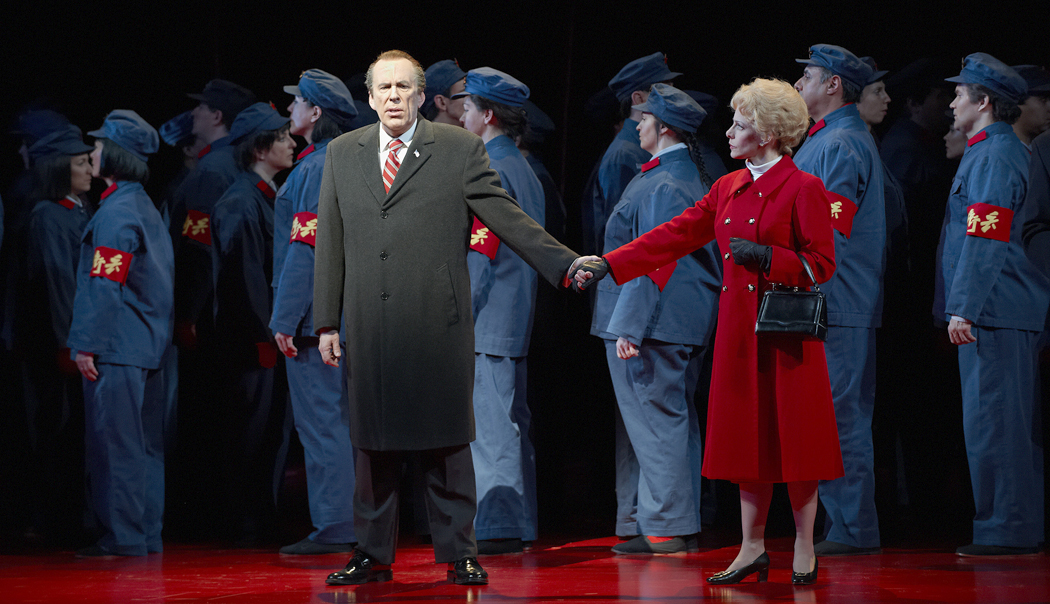
And Christie led a great semi-staged version of John Adams’ Nixon in China, one of the rare contemporary operas to make it into the mainstream repertoire. What a great piece, and the Phoenix Symphony played the daylights out of it. 
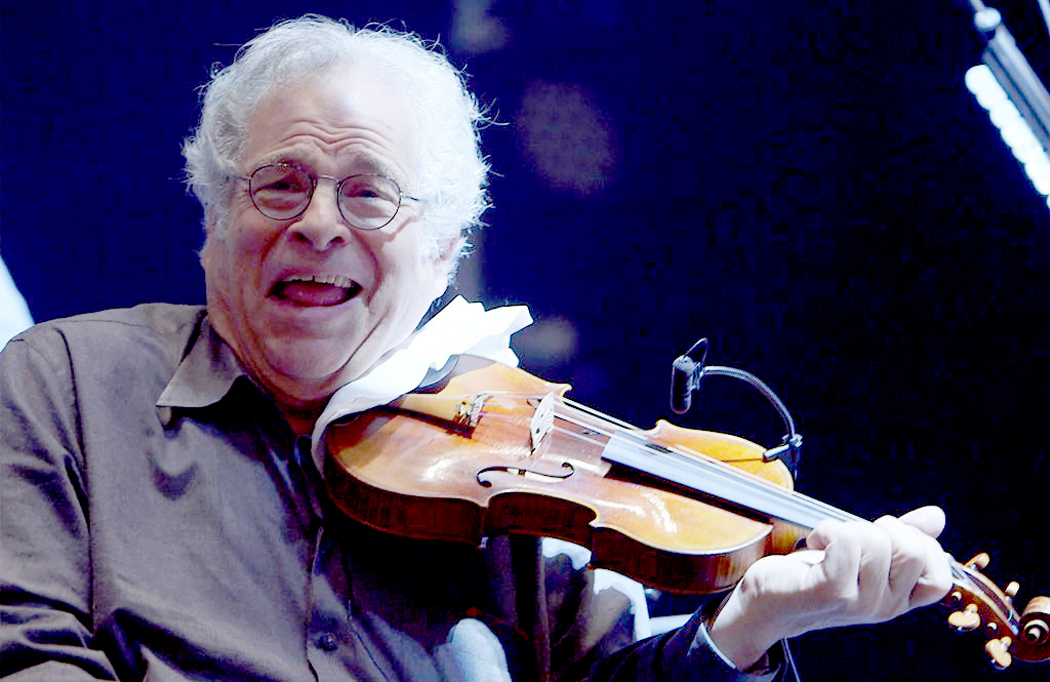
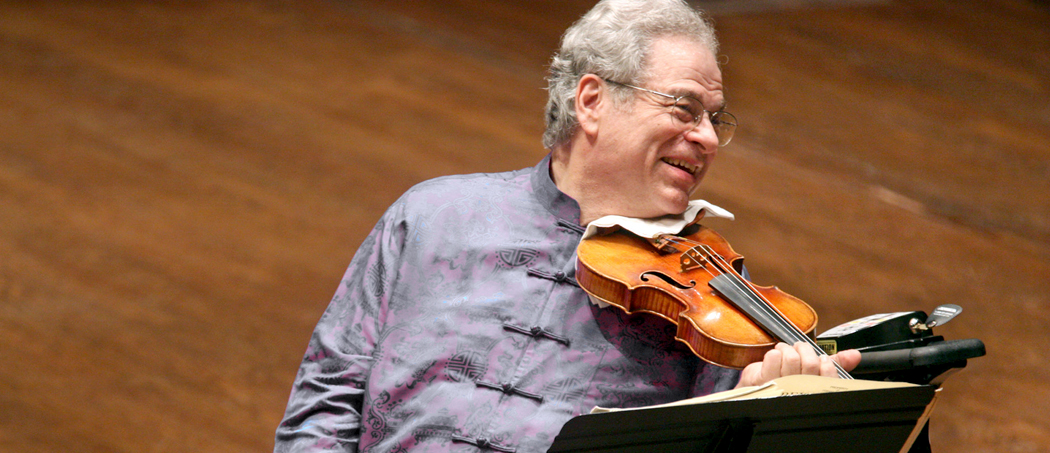
Twice I heard Itzhak Perlman give recitals in Mesa, Ariz. and each time the same thing happened. He opened with a slight sonata, at the first recital a Bach sonata for violin and keyboard and at the second, one of the op. 12’s of Beethoven. I don’t remember which exactly. Perlman played them expertly and even brilliantly, but he just didn’t seem all that involved. I thought, Oh, he’s playing for the boonies and just phoning it in. 

Then, the second piece on the program he played like the Greatest Living Violinist, with all the deep engagement, excitement and power anyone ever had. I realize those first pieces were just warm-up. In one recital, it was Beethoven’s “Kreutzer” Sonata and in the other, it was the Strauss Violin Sonata, a piece generally ignored as turgid and overlong, one of the composer’s less inspired works. Well, not when played by Perlman: This was one of the great musical experiences of my life. Geezus! Who knew this was really great music? If I ever had any doubts about Perlman, I lost them completely. 
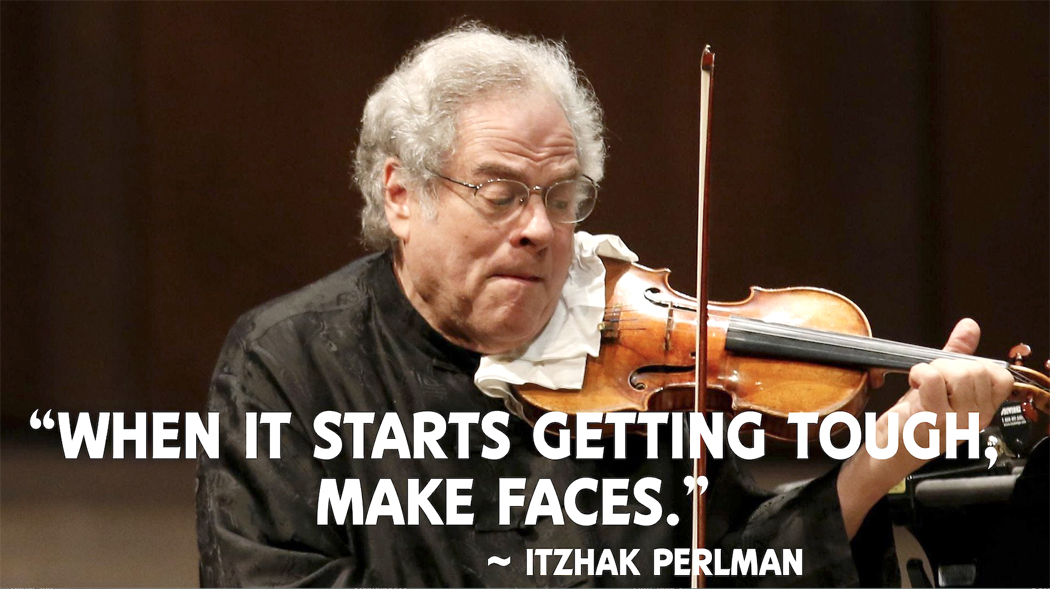
Of course, all that makes up for after intermission, when Perlman puts on his embarrassing Borscht Belt act. The program just says, “selections to be announced from the stage,” which means the violinist plays a series of short schmaltzy pieces once played by the likes of Fritz Kreisler, Ole Bull or Bronislaw Huberman, catchy virtuoso show-off pieces that once fit on a single side of a 78rpm record: Hora Staccato, Liebeslied, Salut d’Amour. And worse, Perlman spends even more time with a pile of dad jokes and cornball puns, as if he really wanted to be a baggy-pants vaudeville comedian rather than a great fiddler. A comic he is not. I shoulda left at intermission with the warm memory of the Strauss still in my mind. 

Finally, I want to mention three pianists I heard, whose appearances have permanent real estate in my psyche. 
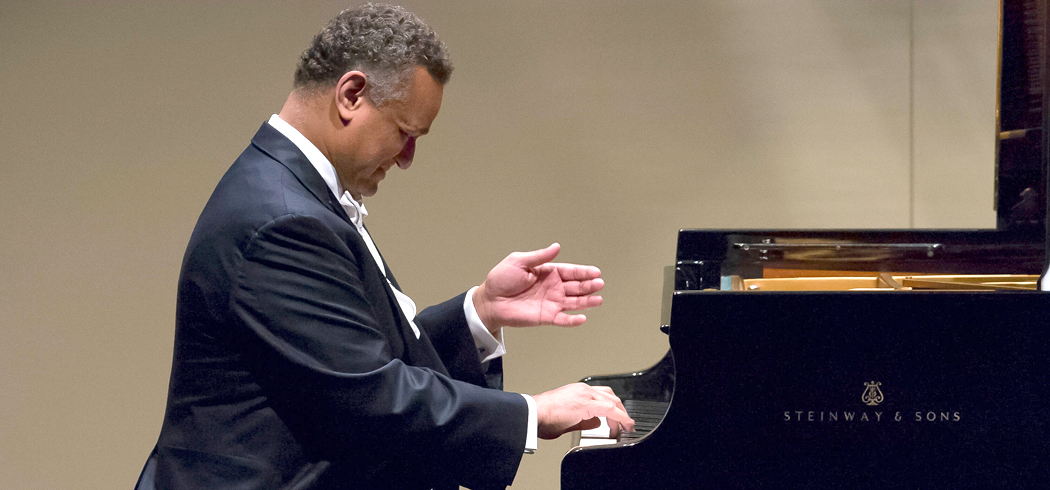
The first is Andre Watts, who I heard several times, but once at the Scottsdale Center for the Arts playing the same Liszt sonata I heard Gilels play at the beginning of my listening life. This time, I understood what I was hearing, and watching Watts’ fingers on the keys, dancing and pouncing. It was a wonderful, performance of clarity and power. 

Second, quite different, was Olga Kern playing the Rachmaninov Paganini Rhapsody with the Phoenix Symphony. It is clearly a 20th century piece, but often played as if it were late Romanticism, like his famous concertos. But it is an ironic masterpiece, and Kern played it with such lightness and humor that it was reinvigorated. And the audience gasped at the audacious ending when Kern began standing up even before knocking out the last cadence as if it were an afterthought. Yes, it was a coup de theatre, but it worked and perfectly summed up the tone of the piece as she played it.
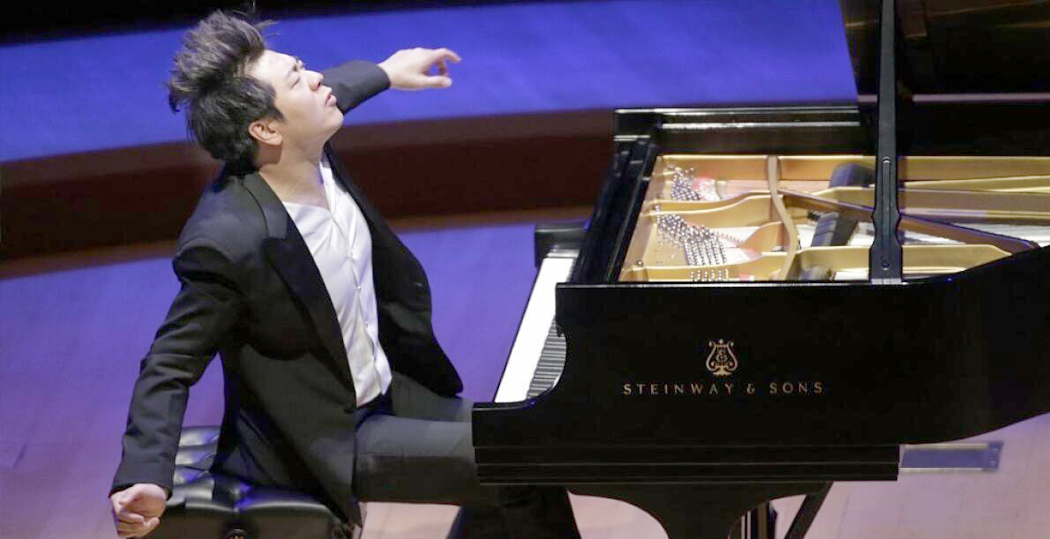
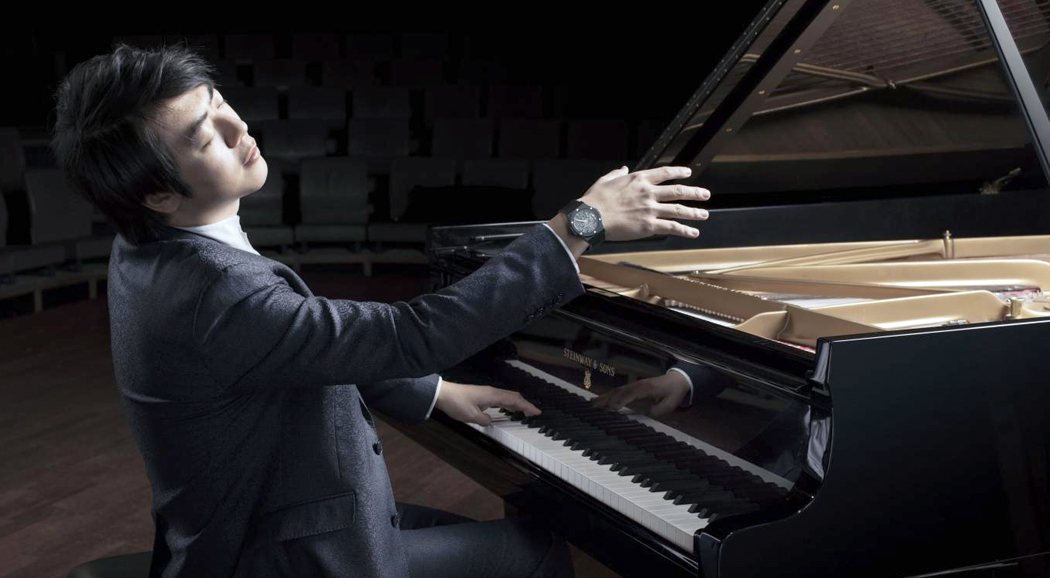
And third, a problem performer. You never know what you’re gonna get with Lang Lang. He is often seen as a flashy product of PR and promotion, and doesn’t help himself by often showing off and posturing for audiences, making faces as he stares at the ceiling and waving his arms around. I’ve heard Lang Lang live four times and sometimes he is very good and earns his credit, and sometimes you just wanna slap him. But one time, he played the first Chopin concerto with the Phoenix Symphony and time stopped still for the entire slow movement. Dead still. The world disappeared. Eternity opened up. It cannot be played better or more affectingly than Lang Lang did it that evening. I am forever grateful for what he gave me — one of the greatest performances I ever heard. 

Of course, the next time he came to town, it was the other Lang Lang who showed up. 
In my seven decades — half of them spent as an art critic — I have been to too many art galleries and museums to be able to count the shows I have seen. Nor can I count the concerts, recitals, theater productions I’ve seen or books I’ve read. Most of them I’ve enjoyed, but few were so memorable that I still have in my nostrils the aroma they gave off. 

This is not to disparage most of the others. I’ve eaten too many restaurant meals to count. Most of them I enjoyed. They did what was asked of them. But can I recount a ribeye I once had in Bakersfield? No. That would be silly. 

But there are meals and concerts that stick, art exhibits that did more than give an hour’s pleasure, concerts that changed my way of thinking about the world. 

And let’s be honest, one is willing to pay the ticket price for a lot of minor pleasure in the expectant hope that this next one will be a world-changer. The odds are against it, but we persist. Every once in a while, we are gobsmacked, and know why it has been worthwhile to sit through a hundred Beethoven Fifths to get to this one that goes beyond mere pleasure to transcendence. 

We live for those moments; they make life worth living. 

In a recent blog, I recounted my earliest such encounters, with Eugene O’Neill at the McCarter Theatre in Princeton, N.J., when I was in high school. With J.M.W. Turner at the Museum of Modern Art in New York a few years later. With Emil Gilels at the Brooklyn Academy of Music the same year. These all set my life on a course to spend it with art and music. These all proved to my adolescent heart and mind that there was something more real, more important, than the suburban life I was being brought up in. 

But the immersion didn’t end there. In subsequent years, there were many exhibits and concerts that stand out. That became such an engrained part of my life and world view, that it is as if I was still standing in front of those paintings, or sitting in the concert hall, hearing those notes. 

Let’s just take three piano recitals as examples. In 1991, I heard Maurizio Pollini at the Dorothy Chandler Pavilion in Los Angeles. In the first half of the recital, he played all of Chopin’s Preludes. In the second half, he played the Berg sonata and Schoenberg’s Six Little Pieces, Op. 19. All that was great. But he finished with the Stravinsky Three Scenes from Petrushka, one of the most difficult bravura piano pieces ever written. Pollini tore through it like a demon, but made every note musical. It blew me away. (The recital was notable for its intermission, too. The doors to the hall were locked and for nearly an hour, we could hear the piano being re-tuned behind those doors. Apparently Maestro Pollini was not satisfied with the instrument. We were kept waiting in the lobby until he gave his approval to the tuning). 

In 2008, I heard Jeremy Denk at Zankel Hall in New York, the recital hall that is part of Carnegie Hall, play the single most daunting program I could imagine, with Charles Ives knucklebusting Concord Sonata in the first half, and Beethoven’s mind-busting Hammerklavier Sonata in the second. I could only think of John Lennon’s immortal line “I got blisters on me fingers.” For an encore, he reprised the Hawthorne movement of the Concord. Very like running a 200-meter directly after running a marathon. 

I’ve heard Denk several times since then, and each time, his playing was, if not so Olympian, certainly significantly memorable. He proved to me, for instance, that the etudes of Gyorgy Ligeti are great music. And that Beethoven’s Eroica Variations are actually comic. 

Then, in 2011, I heard Andre Watts play the Liszt B-minor sonata in Scottsdale, Ariz., on an all-Liszt program. I had the perfect seat to see his fingers spin over the keys, and learned a great deal about the disposition of Liszt’s voicings by being able to see Watt’s fingers. His playing was ethereal. Liszt was a Watts specialty. 

But it wasn’t only music. After my initial infatuation with O’Neill in high school, I had seen too many mediocre live theater productions, and had come greatly to prefer movies. Theater seemed too artificial, too, well, “theatrical” for my tastes. But then, in 1993, I saw the original Broadway production of Tony Kushner’s Angels in America — both parts on successive days — and saw what live theater can do that nothing else can. It was one of the seminal experiences of my life. 

(It was also ruined for me most other theater, because so seldom is it ever this overwhelmingly powerful. But I have seen other great theater since then. Angels is not sui generis. I have seen Angels three more times, once in its road production —not all that good — once in a production by Actors Theatre in Phoenix, which was nearly as good as the New York production, and finally, in its Mike Nichols filmed version, which is very different from the stage version. It is a movie, not theater. Very good, but still, not the live experience on stage. The same difference between seeing the movie Amadeus and the stage version. Movie is good; live is great.)

I got to travel for my newspaper, and was able to review many major art shows around the country. They have been some of the most eye-opening and mind-expanding things I’ve done. 

In 1994, I saw John James Audubon: The Birds of America at the Art Institute in Chicago. It featured 90 of the original paintings used for the engravings published in his books. The originals persuaded me that Audubon might be considered America’s greatest artist. (You can read a version of my newspaper review here.)

In 1996, I visited Philadelphia for the big Cezanne show at the Philadelphia Museum of Art. One hundred oil paintings, 35 watercolors and 35 drawings from public and private collections. It was an overwhelming experience. I never knew there were this many distinct greens, blues, blue-greens, and greenish blues. And when you swipe a bit of vermilion against them, the whole thing glows like neon. Seeing Cezannes live is a very different thing from seeing them reproduced in books. 

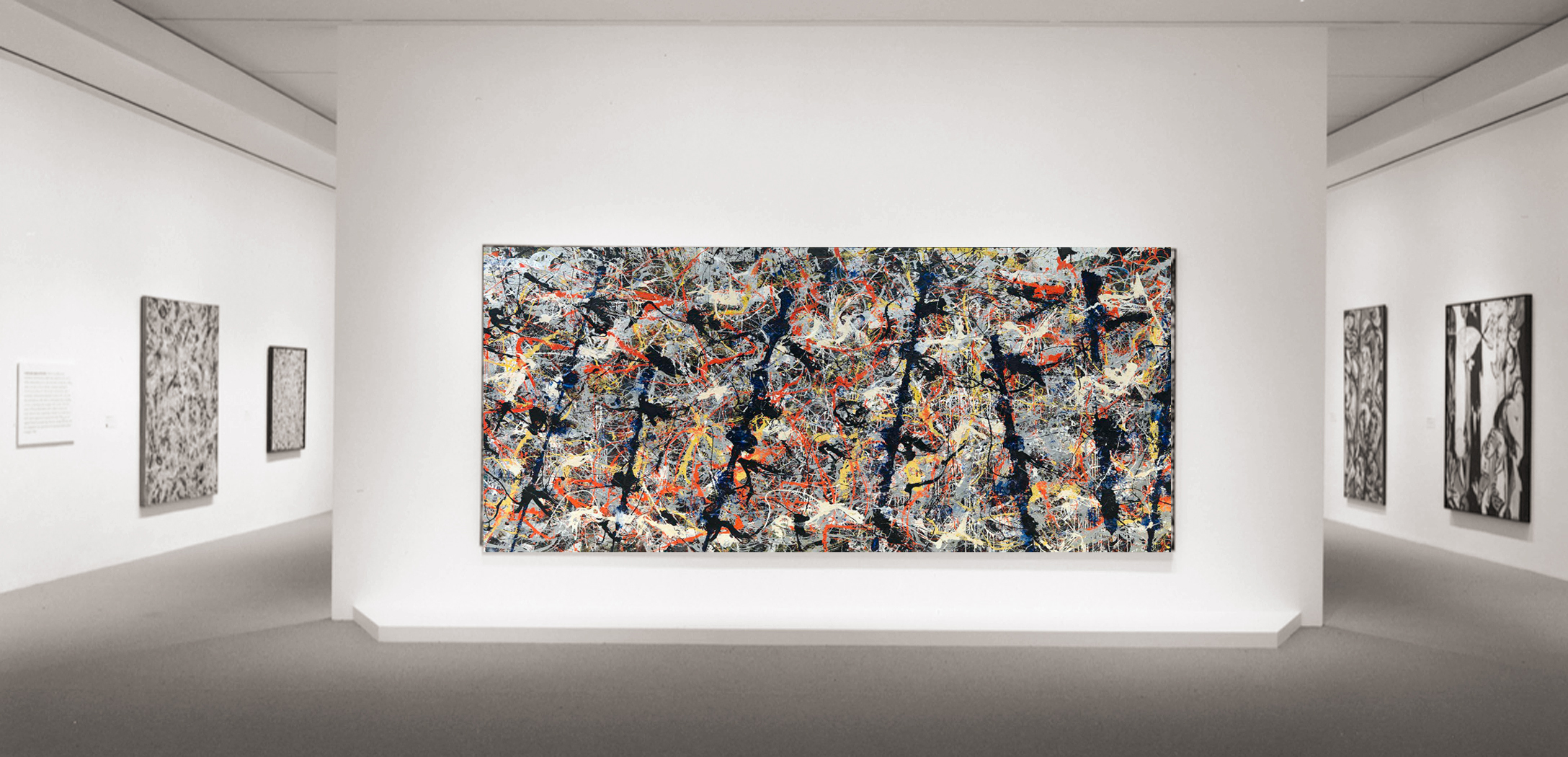
In 1999, I got to see the great Jackson Pollock retrospective at the Museum of Modern Art, which gave me the rare chance to see his Blue Poles, which is normally hidden away in the National Gallery of Australia in Canberra. 

That same year, there was a great Van Gogh show at the Los Angeles County Museum of Art from the Van Gogh Museum in Amsterdam. Like having the chance to see Pollock’s Blue Poles, I got to see Vincent’s iconic Wheatfield with Crows. The show as a whole was the best introduction to the artist’s growth from a clumsy, almost talentless neophyte to one of the world’s greatest painters. He wasn’t always Van Gogh, but when he became himself — the very definition of transcendence. 

I’ve been to Chartres Cathedral four times, and each time was overwhelming. I’ve now been to most of the great churches of northern France. The single most beautiful manmade thing I have ever seen is the north rose window at Chartres. I have sat transfixed in the south part of the crossing, staring back to the north, in total, for hours. It is a meditation or very like a prayer, if such can be said for a complete atheist. 

Overall, it is music that has most provided me with this feeling: Of taking me out of myself and letting my mind expand to a size larger than mere me-ness. Of course, most of the hundreds of concerts I have attended have only provided pleasure and entertainment. But there are those that do more. I thirst for those. 

In 1994, I heard the Philadelphia Orchestra under Wolfgang Sawallisch play the Strauss Don Juan and I felt music not just through my ears, but through my whole body and being. 

I’ve heard Gustavo Dudamel twice live. Once playing the Mahler First with the LA Phil, shortly after his appointment as music director. But before that, in New York with the Israel Philharmonic, playing the Tchaikovsky Fourth. That was in 2008; the Israel Phil was then an orchestra made up of older, formerly Eastern European men — bald-headed old pros who could give a polished performance under any conductor. But they played with the enthusiasm of little boys, even smiling at this bit or that as they produced the sound. After the performance, Dudamel, instead of turning and bowing to absorb the adulation of the audience, immediately danced up into the orchestra and jumped up and down with the musicians, shaking hands and pointing out soloists. I’ve never seen such a powerful effect a conductor has had on a group of musicians. They seemed to love him back. 

There have been other concerts: In 2008, there was Ozvaldo Golijov’s Ainadamar with Dawn Upshaw; in the same year, there was Doctor Atomic at the Metropolitan Opera in New York. In 2009, there was Nixon in China with Robert Orth in the title role. In 2010, Steven Moeckel played the Beethoven violin concerto with the Phoenix Symphony at the Scottsdale Center for the Arts. I have never heard a better, more moving and detailed performance of the concerto. At least not live. 

Sometimes, it is only a single work on a program. I’ve heard Itzhak Perlman I don’t know how many times. He’s a miracle; but he isn’t always completely engaged. He can give a creditable performance even half asleep — and he has been known to. But then he will redeem himself. In 2008, he gave a performance in Scottsdale. He ended the recital with his usual encore pieces and tired jokes. The same jokes over and over each concert. Perlman can be quite tiresome. And he opened with a Bach sonata, well played but nothing special. Then, as I wrote in my review:

“But then, with the Richard Strauss violin sonata, the sun shone through and the angels sang. It’s not for nothing that Perlman is a superstar. He gave us a version of the music no one else could give. Rich as butter, emotionally complex and powerful, he persuaded us that the Strauss sonata is a major piece of music, rather than B-list work by an A-list composer, which is how it’s usually ranked.

“From the opening notes the music dripped with personality, as Perlman pushed or dragged the notes just enough to create the kind of perfect phrasing that makes the music speak directly to your innards.”

It is for moments like that for which we will put up with so much less for so long. 

There are two other moments I would like to mention. 

The first is a concert with pianist Lang Lang. He has a bad reputation with some critics for histrionics on stage — rocking and eye-rolling — and he has on occasions played loud and fast, but without much impact, for which he has gotten the nickname “Bang Bang.” But he can also play the way he did in the slow movement of the Chopin concerto, on Oct. 24, 2008 (2008 was a very good year for me). As I wrote in the review:

“At the conclusion of Goethe’s Faust, his aging hero looks out on the world with a note of satisfaction. ‘I could almost wish this moment to last forever, it is so beautiful.’

“That is exactly how pianist Lang Lang played the slow movement of the Chopin E-minor piano concerto Sunday with the Phoenix Symphony. He lingered over it, stretching its already vague rhythmic drive down to a near halt, and stopping the audience’s breath with it.

“Each phrase seemed to pour forth spontaneously from the pianist’s fingers, followed by another seemingly thought of on the spot. No two phrases were played at the same tempo, and each tempo seemed perfectly expressive.

“It is a rare performer who can risk such an arrhythmia, and who can use it to make the music express poetry and longing, dreaming and anticipation. It was one of the best performances ever given by a soloist at Symphony Hall.”

My best moments in the concert hall has been when time completely stops and I get a glimpse of eternity — not eternity as an infinite number of moments end-to-end, but a eternity as utter timelessness. Time ceases to exist. 

That has happened each time I’ve heard Yo-Yo Ma play the Bach cello suites. I’ve heard him several times, including doing all six in a single concert. 

“Ma concluded with the sixth suite, as intense as an Aeschylan tragedy, with climaxes at the slow allemande and the even slower, deeper, more intense sarabande. Blood almost ceased moving in my veins and only started pulsing once more with the gavotte that followed, as the relief from tragedy, and a reawakening to the life of the body.

“This kind of music is why we listen to classical music: It isn’t enjoyment we are after but solace, reflection, a reconnection with the more important parts of ourselves. It brings us to the place where the deepest thought and the most profound emotion cannot be told apart; they are the same thing. It is proof that art is not merely entertainment, but food for our deepest hunger.”

There are many more such moments over the years, but I can’t mention them all. This is already too long. But, my life has been nurtured by such moments and experiences. They have made me who I am. 

beethovn lede photo
Ludwig van Beethoven would have turned 244 this week. belushi beethoven

Everyone knows Beethoven. He wrote “Da-da-da-dum” and “Ode to Joy.” He’s the scowling visage parodied by John Belushi on Saturday Night Live. He’s the plaster bust on Schroeder’s toy piano.

Ask anyone to name a classical music composer and nine out of 10 will utter his name. Even those with no familiarity with classical music know he’s the one who rolls over to tell Tchaikovsky the news.

So it’s not surprising that symphonies program his music more than anyone else’s, and often devote entire festivals to the music. schroeder 2

It would be silly to call anyone the “greatest” composer, but Beethoven — along with only Bach — is the one most often given that honor. Such is his power as a producer of human emotion through the ear canal, that his only real rivals in European art music are Bach and perhaps Mozart. That doesn’t mean he is everyone’s favorite composer. There are many who cannot stand his relentless pounding and drive. And surely among “great” composers, Beethoven probably has the third-most detractors, after Schoenberg and Wagner.

But it would be hard to find anyone who has altered Western music history more directly and obviously than the scowling master from Bonn. michael christie

“There are many reasons one could say Beethoven’s music is the greatest. His music speaks to the listener from the first note,” says conductor Michael Christie, music director of the Minnesota Opera.

It isn’t just that the music is familiar, it’s overpowering. It’s big, loud, sublime and of an intensity unheard before him.

“Just take the opening of the ‘Eroica’ symphony,” conductor Joel Revzen says. “The first two chords. Haydn or Mozart used a slow introduction to prepare us for what is to come. Beethoven takes a hammer and hits you over the head with it.”

Two crisp E-flat chords, and we’re off to the races.steve moeckel

“You can listen to one chord and know it’s Beethoven,” conductor James Sedares says. “He had a voice that was completely unique for his time and always.”

Violinist Steven Moeckel has given wonderfully insightful performances of Beethoven’s violin concerto.

“This may sound cheesy, but it feels, when you play it, Beethoven got a glimpse of heaven. Audiences are taken on this journey, so epic. Beethoven is on a heroic scale — and he means to be.”

Difficult to appreciate

But why does Moeckel qualify it? “It may sound cheesy … . ”

There are several things that stand between us and Beethoven, and make both the performance and appreciation of his music difficult.

Beethoven’s music is about big ideas, such as heroism, nobility, struggle, brotherhood. He believed in them; the question is, do we? Or have such ideas been rendered into toothless bromides and platitudes?

Can we still understand Beethoven’s music after the trenches of World War I, after Auschwitz, after all the dehumanizing misery of the 20th century?

Music historian Richard Taruskin has written about the difficulty of accepting the grand vision of Beethoven’s Ninth Symphony, with its paean to universal brotherhood.

“Why? Because it is at once incomprehensible and irresistible, and because it is at once awesome and naive,” he wrote.

“We have our problems with demagogues who preached to us about the brotherhood of man. We have been too badly burned by those who have promised Elysium and given us gulags and gas chambers.”

You can hear the problem in many modern performances of Beethoven. The conductor no longer believes in the grand ideas and falls back instead on the music’s obvious rhythm and drive. There’s a great divide between the conductors who performed before World War II and those who came after.james de preist

“I look for the old depth and breadth of expression that was there and can be retrieved if we listen to the right master,” the late conductor James DePreist said. “And most of the right masters are dead.”

You listen to recordings by Wilhelm Furtwangler or Willem Mengelberg and you hear a Beethoven different from that of Roger Norrington or David Zinman.

To many modern ears, the older performances seem melodramatic and overwrought. The modern performances seem cleaner and less fussy. The older conductors interpreted the music and massaged its rhythms. They conducted by phrase length, not by bar length, and they knew the rhetoric of performance and often spoke to their orchestras about the philosophy and meaning of the music. Modern conductors speak of the notes.

But Beethoven was clear about this. In the same way a great actor interprets Shakespeare when performing as Hamlet, and makes pauses and emphases, the musician was asked by Beethoven to do the same.

“The poet writes his monologue or dialogue in a certain continuous rhythm, but the elocutionist, in order to ensure an understanding of the sense of the lines, must make pauses and interruptions at places where the poet was not permitted to indicate it by punctuation,” Beethoven told his friend Anton Schindler. “The same manner of declamation must be applied to music.”

‘Writing for history’

But ours is an unheroic age. We reserve the word for firemen and soldiers, who certainly perform courageous acts. But a hero is more than that. Mythologically speaking, a hero is the individual who translates the will of the gods into history.

This is no small claim: A hero changes the world. Beethoven certainly did.

There is good reason to be suspicious of such things now. Too many have changed the world for the worse.lawrence golan

But Beethoven, born in Bonn, Germany, in 1770, clearly saw himself as a hero. He knew he was changing the world. He championed freedom and democracy in a restricted and aristocratic age.

“He changed the world of music,” conductor Lawrence Golan says. “Right off the bat, with the first chord of his first symphony. It was revolutionary at the time.”

He performed for the aristocracy and slummed with the nobility, but he told Schindler, “My nobility is here,” pointing to his heart, “and here,” pointing to his head.

“We’re clearly looking at big ideas in Beethoven’s music,” conductor Timothy Russell says. “Mozart wrote for an audience, but Beethoven knows he’s writing for history.”

History, however, has moved on.

Disposable music

For the 21st century, music has mostly become entertainment. Music written to be pondered and meditated upon does not fit into the jigsaw puzzle of a niche-market audience, where music is used and discarded in months.beethoven bust

“Beethoven wrote Velcro music and this is a Teflon Age,” DePreist says.

“We have deconstructed the 19th century and have an initial impulse to jettison so much of it. But the idea that the 20th century — or the 21st century — would simply supplant the 19th was absurd,” he says. “But we have much to learn from every century.”

The difficulty has been to separate the desire to be free from the past — which is an honest desire — from the tendency to ignore the past and refuse to look at what the past teaches us.

“It teaches us more than the notes of the stylistic things,” DePreist says.

Art has a responsibility to challenge people, says Moeckel.

“To broaden their horizons, and, so, if you don’t like it, that’s fine, but let’s talk.”

And what he confronts us with is the struggle of being alive.Joel Revzen 1

“Beethoven was a man who struggled every day of his life, a man shaking his fist at the heavens constantly,” says Revzen. “It is the human condition to struggle against adversity, whether socially, politically or one’s physical limitations. It is the struggle of the human condition through eternity.”

If you want to relate it to the contemporary world, he says, just think of what the people in in Syria or Afghanistan are going through just to survive, “or the people who struggle against oppression every day around the world, or the people who struggle in this recession.”

“How can I survive until tomorrow in hopes maybe my life will change?”

It is that engagement with the big things that drives Beethoven’s music and gives it such power to move us, even when we are suspicious of its meaning. The problem is ours, not Beethoven’s.

“There is still a message in the ‘Eroica’ or the ‘Ode to Joy,’ ” conductor Benjamin Rous says.

“Our time is broken in a way Beethoven’s music isn’t. Maybe a broken era needs an art that is whole.”

Three creative periods

Critics, biographers and historians divide Beethoven’s life and work into three periods: early, middle and late.

Since Beethoven, the tripartite division has come to fit the careers of many artists, but it began with the composer.beethoven young man

His Early Period features music that imitates the style of Haydn and Mozart, and although the music sometimes strains to escape the bonds of that style, it’s thoroughly Classical.

His Middle Period contains most of the music for which he’s best loved: the “Eroica” symphony, the “Emperor” concerto, the “Archduke” trio, the “Appassionata” sonata. It is big, brawny, heroic music that strains to escape not just the style but the very limits of the musical instruments of his time, the philosophical and religious conventions of his era, and sometimes the very heart in his breast. It is loud, pounding music.

“He grabs you by the collar and says, ‘I’m Beethoven, and I have something to say!’ ” says Revzen.

There are a lot of musical exclamation points in this very publicly aimed music.beethoven primary portrait

It is in the Middle Period that Beethoven staked his claim to being the first Romantic composer, emphasizing emotion over formal restraint. But, as conductor Benjamin Rous puts it, “He started out as Classical and ended up as Romantic, but in reality, he was Classical and Romantic at every moment in his life.”

Finally, Beethoven’s Late Period defines the term for all others: The music becomes more inward and searching, it has left behind the formal constraints of the time and experiments with new form, new meaning and expression. His late quartets bewildered not only the audiences of his time but the musicians who played them.schuppanzigh

“Do you imagine, when the spirit speaks to me, I have your wretched fiddle in mind?” he asked violinist Ignaz Schuppanzigh, whose string quartet premiered most of Beethoven’s late quartets.

Beethoven’s late music remains a challenge for many listeners. The “Grosse Fuge,” was his final movement to the string quartet op. 130, but was a movement so difficult for both listeners and performers that when Beethoven originally submitted it for publication, his publisher requested he substitute something easier. It is still work to listen to, albeit work with a tremendous payoff to those willing to dive in.

The rondo he wrote in its place as the quartet’s finale turned out to be the last piece of music Beethoven wrote before his death.

A gut reaction

Ludwig van Beethoven was probably history’s most famous sufferer of irritable-bowel syndrome. It made the composer’s life miserable and likely accounts for the scowl he wears in almost every portrait.

“The cause of this must be the condition of my belly which, as you know, has always been wretched and has been getting worse, since I am always troubled with diarrhea, which causes extraordinary weakness,” the composer wrote a friend in 1801.beethoven death mask

It was a problem that plagued him his entire life, and its likely cause is what killed him.

This may seem an undignified way to introduce “the greatest composer in history,” but you have to do something to clear away the idolatry that accumulates around a world-changing figure, to see him as a man rather than a demigod.

Otherwise, when we spin panegyrics about the man’s greatness, our eyes will glaze over, reading it as conventional boilerplate.

So, it must be said that this colossus who changed music and directed its course for more than a century was in reality a short, stocky German with a provincial accent, boorish manners, who wrote in bad grammar and frequently uttered banal platitudes as if they were earth-shaking profundities.

He was born in Bonn in 1770, and his drunken father tried to pass the child off as a prodigy, like Mozart. But Beethoven’s virtues were not Mozart’s: He had none of the grace and felicity of Mozart; his music grew from hard work and infinite rewriting.

Beethoven went to Vienna to make his fortune as a piano virtuoso and found many aristocratic patrons. He frequently insulted the hand that fed him.

He told one of his patrons, “Prince, what you are, you are by accident of birth; what I am, I am through my own efforts. There have been thousands of princes and will be thousands more; there is only one Beethoven!”beethoven ear trumpet

But just as he began to achieve fame, his hearing started to fail. In later years, he was completely deaf: At the premiere of his Ninth Symphony, a soprano had to turn him around onstage so he could see the applause he could not hear.

Each new piece found both acclaim and criticism: Conservatives disliked the profusion of ideas in the music, finding them confusing and the works too long and difficult; admirers recognized in his work overwhelming emotional power.

By the time of his death, in 1827 at the mere age of 56, he was generally acclaimed as the greatest composer in the world. More than 20,000 people attended his funeral.

It is only in recent years, after scientific analysis of a few strands of his hair, that we know how the composer died: It was lead poisoning, probably by drinking wine from a lead-lined cup, that slowly killed the composer and probably caused his lifetime of colic.

The ‘Mighty Nine’

Beethoven’s nine symphonies are the cornerstone of classical music. Every conductor cuts his teeth on them; every audience expects them.

Their monumentality influenced every composer who came after him for at least a century, and even now, it’s impossible to dip into classical music without addressing “The Nine,” as they’re known.

But the symphonies are very distinct; each has its own personality. Collectively, they are probably the best entry point for discovering the music of the titan, Beethoven.

There are many sets of them on CD, spanning nearly the entire history of recorded music. The first complete set of symphonies was recorded in 1920 and since then there have been at least 100 traversals. There have been 60 full sets sold since 1960. Herbert von Karajan recorded them all four times, Bernard Haitink and Eugen Jochum each did it three times. Any conductor worth his salt wants to prove his mettle by tackling the nine.

There is no one “best” set — pretty much everyone is agreed on that point — but if you want them all in one package, you could hardly to better than the set with Daniel Barenboim and the Staatskapelle Berlin recorded on Teldec. Both the performance and engineering are tops. Teldec makes the orchestra sound like it’s in your room with you. Barenboim has a unified and coherent view of the cycle which is intelligent and emotionally persuasive.

But for some, it will feel old-style. It is. If you want the modern huff-and-puff race to the finish, then you should look to John Eliot Gardiner and the Orchestre Revolutionnaire et Romantique on so-called original instruments.

You could hardly find two more different views of the music, but both are played with commitment and musicality. (Avoid the Norrington sets, which are dreadful and downright unmusical).

One-by-one

There are many who insist the best way to acquire the best of them is to get them individually and not in complete sets. Different orchestras and different conductors respond to certain symphonies better than others. David Zinman and the Tonhalle Orchestra Zurich, for instance, cannot be beat for discovering the wit and verve in Beethoven’s first symphony, but they don’t really believe in the nobility and heroism inherent in the bigger, odd-number symphonies, like the Fifth. For that, you have to go to an old-order conductor, such as Wilhelm Furtwangler and the Berlin Philharmonic, which recorded the most harrowing and emotionally wrought versions of the Fifth Symphony.

Any choices among the symphonies will be idiosyncratic: As listeners we are just a variable in our sympathies as the conductors themselves. You may want the bounce and beat of a modern performance, or you may be more moved by the old tradition.

These are a few of my suggestions, along with some information about each of the Nine.

Please note that modern critics aren’t the only ones who are idiots.

Symphony No. 1 in C

First performed: 1801.

david zinmanBeethoven’s first is his lightest, brightest and funniest, an obvious imitation of the spirit of his teacher, Joseph Haydn. Its jokes begin with the very first notes: a dissonance in the wrong key!

Initial critical response: One critic called it “a caricature of Haydn pushed to absurdity.”

Suggested recording: No one has captured the wit of this symphony better than David Zinman and the Tonhalle Orchestra Zurich.

Symphony No. 2 in D

First performed: 1803.

bernard haitinkNow considered one of Beethoven’s “shorter, lighter” symphonies, it was a large symphony by the standards of the time and a challenge for its first audience.

Initial critical response: The Leipzig critic called it “a gross enormity, an immense wounded snake, unwilling to die, but writhing in its last agonies, and (in the finale) bleeding to death.”

Suggested recording: Bernard Haitink and the London Symphony.

Symphony No. 3 in E-flat, “Eroica”

First performed: 1805.

bernstein youngThis immense symphony single-handedly changed the course of music history; twice as long as the standard Haydn symphony and built on ideas of heroism, with a great funeral march as a slow movement.

Initial critical response: The leading music journal of the day described it as “a daring wild fantasia of inordinate length and extreme difficulty of execution. … There is no lack of striking and beautiful passages in which the force and talent of the author are obvious; but, on the other hand, the work seems often to lose itself in utter confusion.”

Suggested recording: Many modern performances are too tame. For the needed heroism and grandeur, and the sheer visceral excitement, try Leonard Bernstein and the New York Philharmonic.

Symphony No. 4 in B-flat

First performed: 1807.

claudio abbado 2Robert Schumann called it a “graceful Grecian maiden between two Norse giants.” It seems like a retreat after the furious charge of the “Eroica,” but if it is less noisy, it is subtly subversive, with an introduction in the “wrong” key.

Initial critical response: Carl Maria von Weber wrote a review in which the orchestra instruments all bitterly complain about having to play this symphony and then are threatened with being forced to play the “Eroica” if they don’t shut up.

Suggested recording: Claudio Abbado and the Berlin Philharmonic are as elegant as it gets.

Symphony No. 5 in C-minor

First performed: 1808.

wilhelm furtwanglerFor two centuries, this has been Beethoven’s calling card, the primal symphony, restless, turbulent, an epic struggle to wrest a triumphant C-major out of an obsessive C-minor, and with more than 700 relentless iterations of the iconic rhythm: “Da-da-da-dum.”

Initial critical response: French critic Jean Lesueur said it was such exciting music that it shouldn’t even exist.

Suggested recording: The music is so familiar, and so emotional, it’s hard to play now without irony, but when attacked with conviction, it still packs a wallop. Wilhelm Furtwangler and the Vienna Philharmonic are still the champs in a pre-stereo recording, but in modern sound, Carlos Kleiber and the same orchestra come very close.

Symphony No. 6 in F, “Pastoral”

First performed: 1808.

bruno walter 2This is Beethoven’s musical picture of nature, complete with birdcalls and thunderstorm. But it’s also one of the composer’s most tightly argued pieces musically, with much of the symphony drawn from the first two bars: It’s a miracle of concision, even when most discursive.

Initial critical response: Berlioz agreed with critics, “as far as the nightingale is concerned: the imitation of its song is no more successful here than in M. Lebrun’s well-known flute solo, for the very simple reason that since the nightingale only emits indistinct sounds of indeterminate pitch it cannot be imitated by instruments with a fixed and precise pitch.”

Suggested recording: Every critic’s choice in this seems to be Bruno Walter and the pickup Columbia Symphony Orchestra.

Symphony No. 7 in A

First performed: 1813.

arturo toscanini 1Richard Wagner called this the “apotheosis of the dance,” and it is the most rhythmically driven of all symphonies; the second movement hardly contains anything but its rhythm. It all comes together in a Dionysian paean to the spirit of life.

Initial critical response: Weber expressed the opinion that Beethoven “was now ripe for the madhouse.”

Suggested recording: Even though it’s a pre-stereo recording, you have to hear Arturo Toscanini and the NBC Symphony in a driven performance that wrests every ounce of power out of the score.

Symphony No. 8 in F

First performed: 1814.

georg solti 1The composer looks backward with a smaller, almost Haydnish symphony, full of Haydnesque “jokes,” such as the metronome tick-tick of the second movement.

Initial critical response: One critic wrote that “the applause it received was not accompanied by that enthusiasm which distinguishes a work which gives universal delight; in short — as the Italians say — it did not create a furor.”

Suggested recording: Georg Solti and the Chicago Symphony give a brawny performance of this work and include a really fine Symphony No. 7 as well.

Symphony No. 9 in D-minor, “Choral”

First performed: 1824.

bernstein oldBeethoven’s magnum opus, which adds singers and chorus to the symphony and expresses the composer’s view of universal brotherhood and the joy of the cosmos. At more than an hour long, it is immense and usually performed for ceremonial occasions.

Initial critical response: “Beethoven is still a magician, and it has pleased him on this occasion to raise something supernatural, to which this critic does not consent.”

Suggested recording: Despite mangling the finale by changing Beethoven’s “Freude” (“joy”) to “Freiheit” (“freedom”), there is no more committed performance than the one given by Leonard Bernstein at the fall of the Berlin Wall in 1989 with an orchestra composed of musicians from many orchestras in both East and West Germany.