Archive

Tag Archives: stravinsky

“Postmodernism” is a catchall word that seems to have lost all meaning, especially because it hardly seems “post-“ at all. In the popular mind — if it thinks about such art-historical buzzwords at all — it means paintings of “Donald Duck Crossing the Delaware,” a mashup of pop culture and the history of fine art. 

But such things are hardly new. In fact, rejiggering the past has been a central tenet of Modernism for more than a century. Old wine in new bottles. It could be argued that remaking the old is central to all art for as long as it has existed. Virgil remade Homer and Milton remade them both, and Derek Walcott’s Omeros does it all over again. And even the Iliad is the result of its previous oral tellings and retellings. Churn and rechurn. 

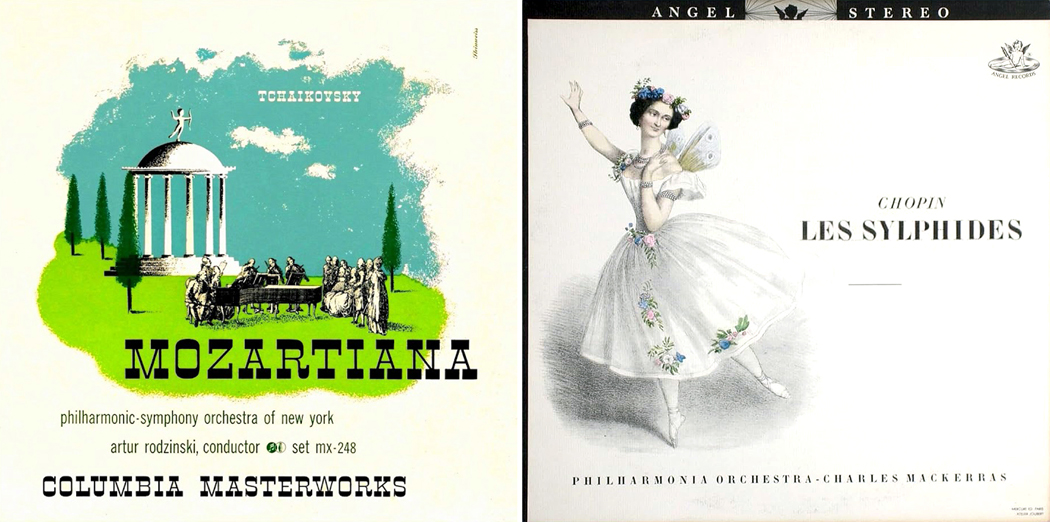
This is true in music, also. Not just the parody masses of the 15th century, or all those Baroque composers “borrowing” tunes from themselves or their contemporaries, or the many recomposings of La Folie, but more recently, Tchaikovsky rescoring Mozart and Glazunov turning Chopin into the ballet Les Sylphides

Of course, all the arts build on previous, if not through quoting or re-use, but at the very least just by existing in a continuum of culture. You could not have had the Renaissance without Classical Rome, or Hedda Gabler without As You Like It. All one forward surge. 

All art is, on one level, a conversation with the past. Even Jeff Koons’  sculptural portrait of Michael Jackson and Bubbles is a gloss on Pheidias’ statue of Dionysos from the east pediment of the Parthenon from the Fifth Century BCE.
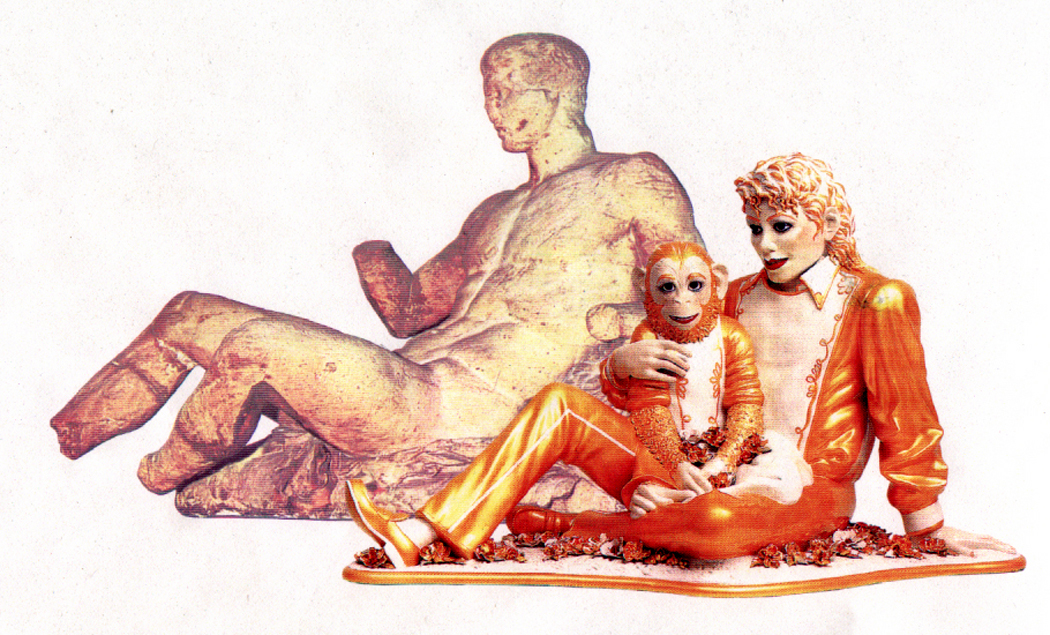
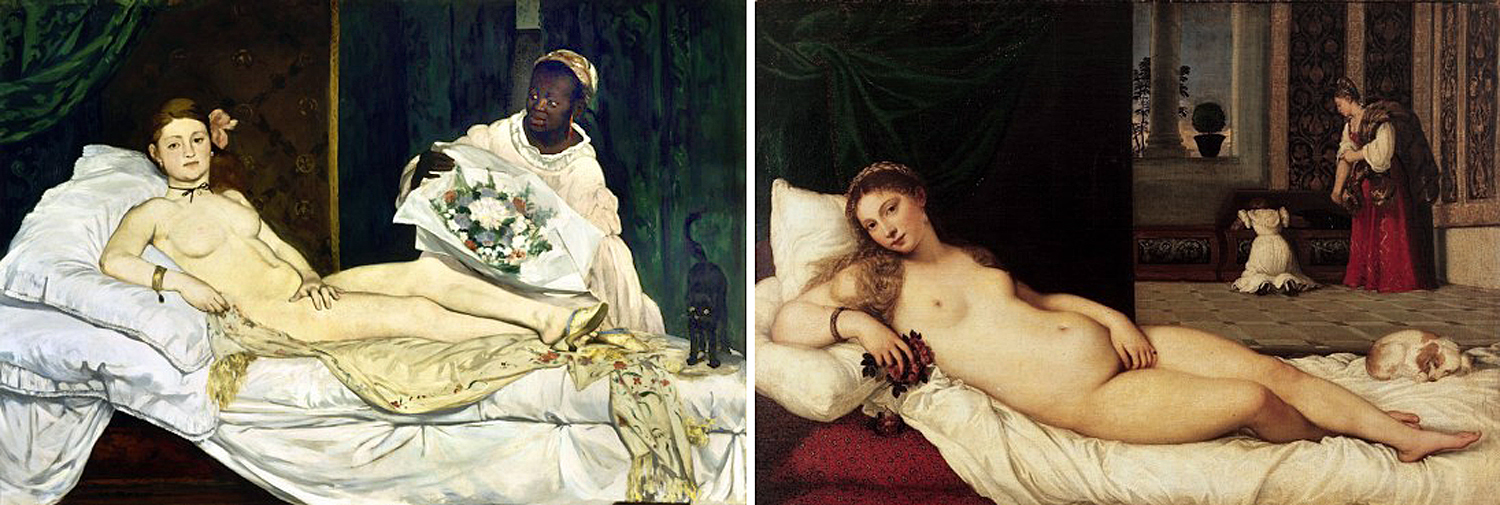
Or, take Manet’s Olympia, which ironically quotes Titan’s Venus of Urbino. (I wrote an exhaustive essay in “Meme and Variations,” from this blog in 2014. Link Here

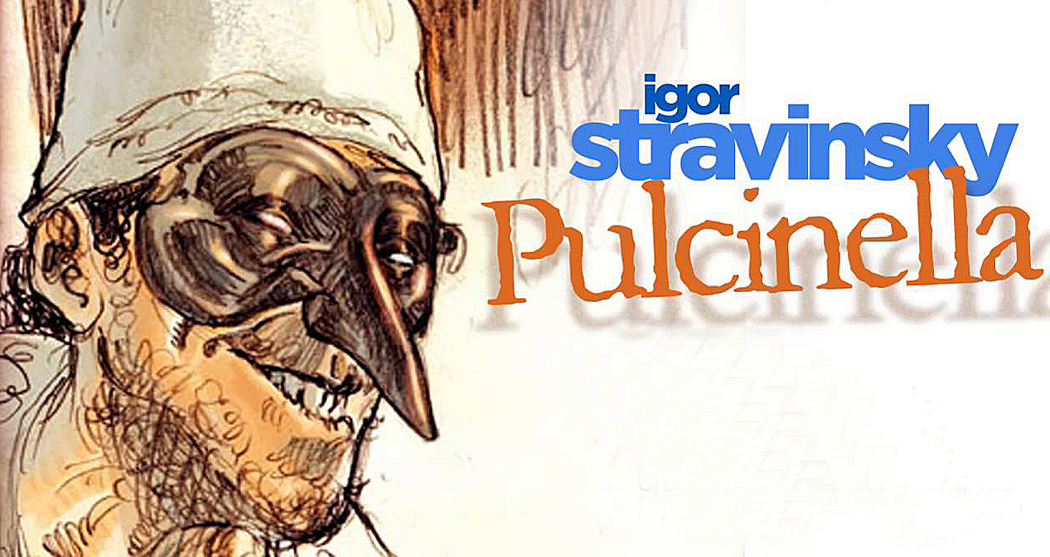
Manet was tweaking his nose at the Renaissance painting, and in 1920, Igor Stravinsky was doing something similar to what he assumed was the music of Giovanni Pergolesi, in his ballet score, Pulcinella

In 21 movements, he rebuilt and re-orchestrated the 18th-century music and made it sound utterly Stravinskian. “Uncle Igor’s Asymmetry Machine,” as Leonard Bernstein called it. Catchy tunes and astringent orchestration. (The fact that the source-music wasn’t Pergolesi but mostly keyboard music by Milanese composer Carlo Ignazio Monza and trio sonatas by Domenico Gallo, a lesser known Venetian composer, both of  whose works were sometimes bootlegged under the more salable name of Pergolesi. A YouTube video with the original compositions is available. Link here)
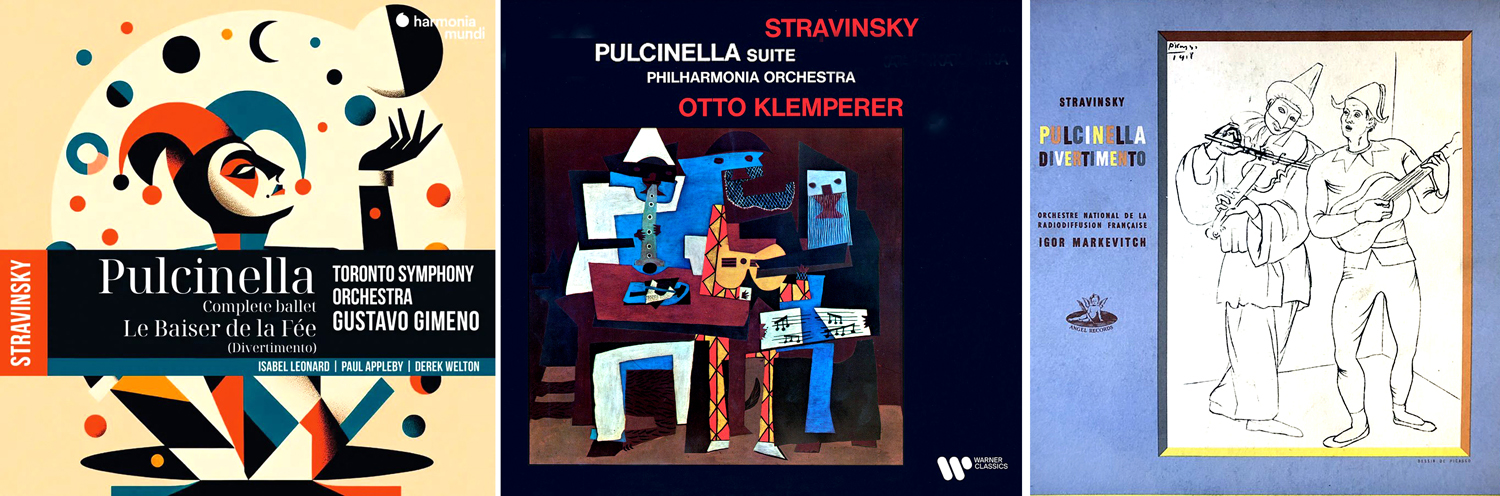
It’s surprising how little Stravinsky changed his originals, except by a little nipping and tucking, and using brilliant and cheeky orchestration. 

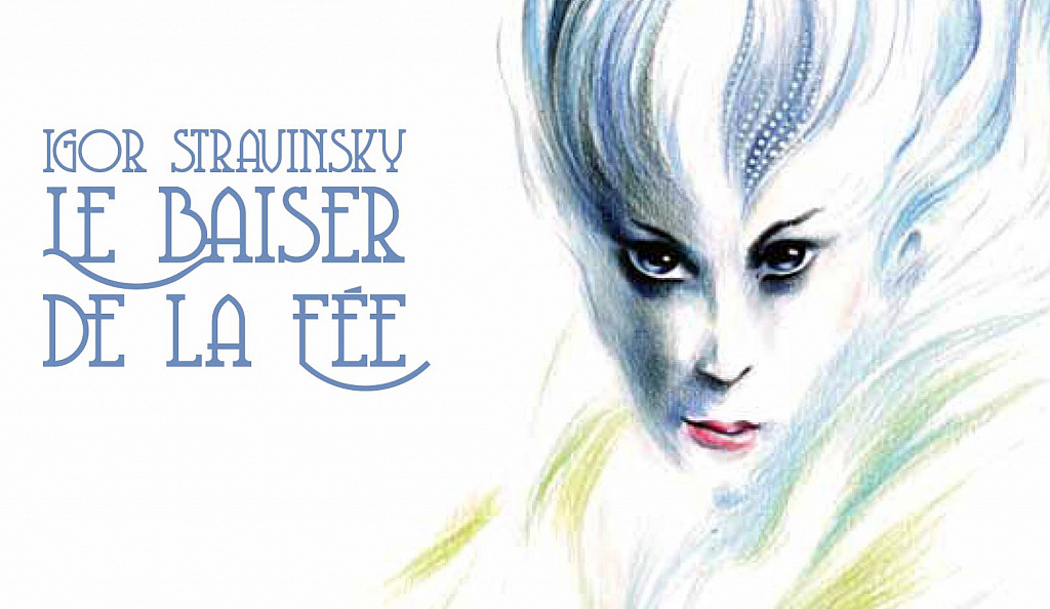
But this habit of updating ancient music was a frequent technique among composers, especially in the 20th century. Stravinsky himself applied the spice to Tchaikovsky in Le Baiser de la Fée (“The Fairy’s Kiss”) from 1928. 
When I was a young recent college graduate, with little or no money in my pocket, I found a battered LP in a castaway bin of a local bookstore. It was on an Eastern European recording label, perhaps a Soviet one, lost to time and my ancient loss of memory. It cost 98 cents and contained William Walton’s The Wise Virgins on one side and Domenico Tomassini’s The Good Humored Ladies on the other. That LP’s fate is lost to 60 years of peregrination, and I only recently found a CD with these works on it. I was emotionally transported to another time and place. 

The Walton was a re-orchestration and revamp of work by Johann Sebastian Bach, and the Tomassini did the same with music by Domenico Scarlatti. Both were designed as ballet scores. 
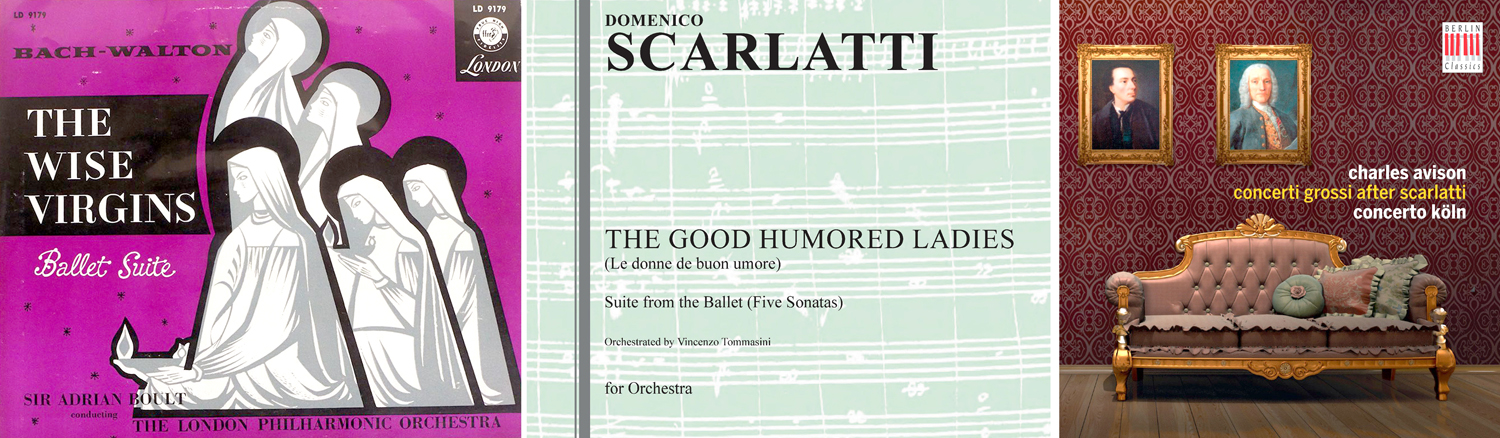
(Scarlatti’s keyboard sonatas were first orchestrated in 1743 by English Baroque composer Charles Avison in 12 Concerti Grossi After Scarlatti, but Avison did the opposite of Stravinsky: He smoothed over Scarlatti’s pungent harmonies and expressive dissonances, to make them “pretty.” Avison did the same for a dozen violin sonatas by Francesco Geminiani.) 

All this piqued my interest, and I spent the past week listening to recordings of all the refurbished music I could find, and there is a lot of it. Two people, in particular, are the source for a great deal of it. 
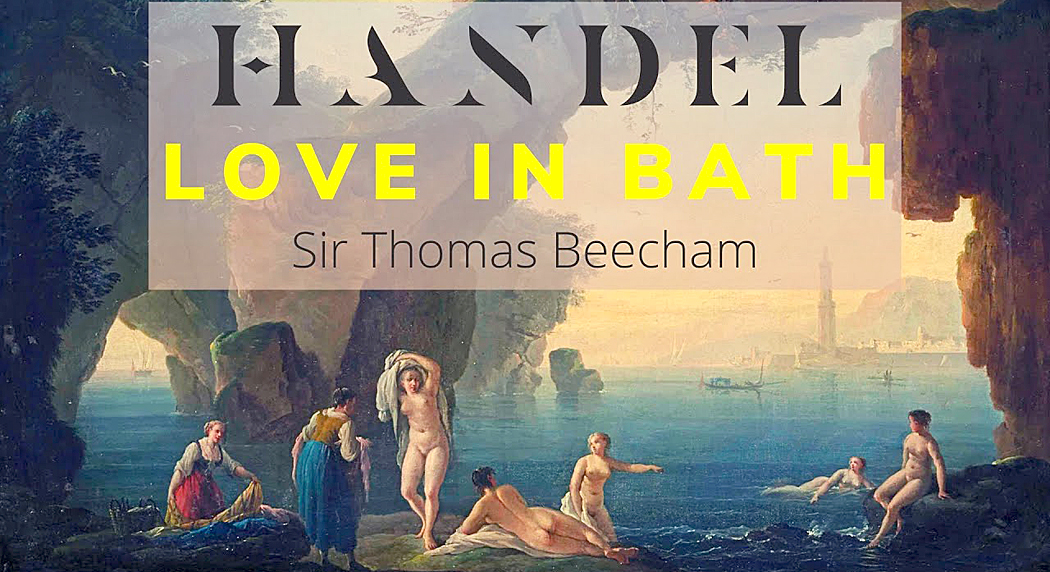
The conductor Thomas Beecham performed the music of Handel back in the early 20th century when Baroque music was practically unheard, outside of the annual Messiah productions. But Beecham not only recorded whole Handel operas and oratorios, he brought excerpts of them into ballet scores he compiled, with his own modern re-orchestrations of them, but often played bits in his concerts. 

The best known is probably Love in Bath, a ballet score made from arias, choruses and sinfonias from various Handel works, in rescorings much less snarky than Stravinsky’s, and entirely pleasant on the ear. 
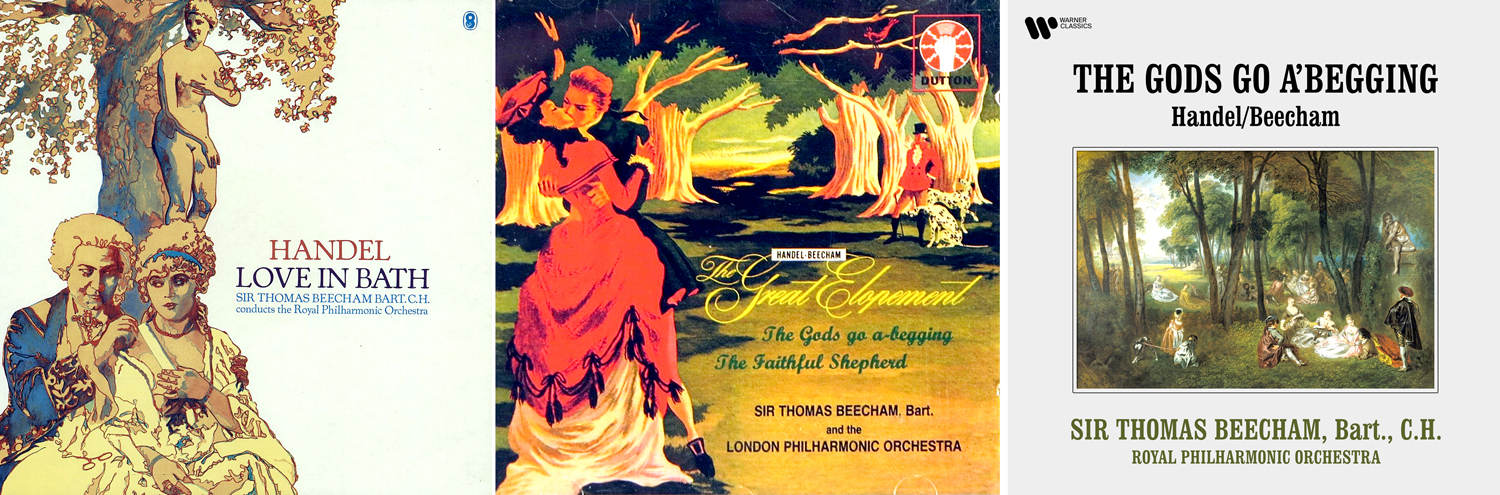
He began with The Gods Go a’Begging in 1928, then The Origin of Design (1932), The Faithful Shepherd (1940), Amaryllis (1944), The Great Elopement (1945) and finally, Love in Bath (1956). They often varied each time he presented them, changing suite movements according to his pleasure each time they were programmed. 

The other popular champion of ancient music was Ottorino Respighi, who made popular hits out of Renaissance and Baroque lute and keyboard music, most famously in his three suites of Antiche danze ed arie (“Ancient Airs and Dances”) which he wrote from 1917 to 1931. They remain popular in concert and have often been recorded. It’s hard not to love them and whistle the tunes for the rest of the day. 
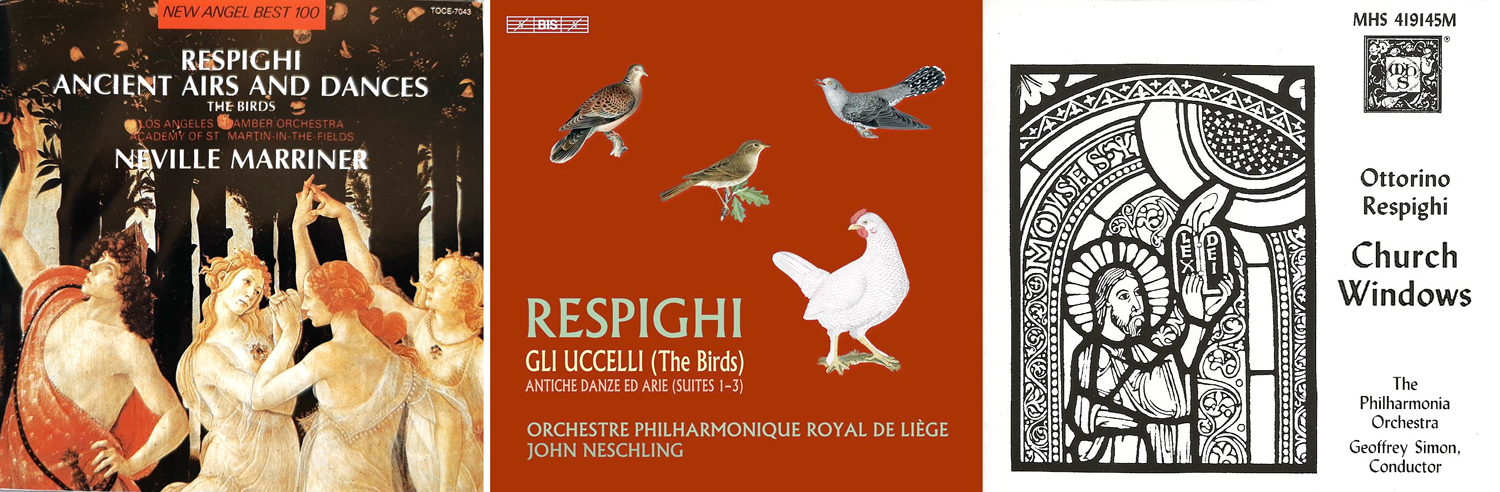
Then, there’s Gli Uccelli (“The Birds”) from 1928, in which Respighi orchestrated keyboard pieces by early (mostly) Italian composers from the 17th and 18th centuries. And Vetrate di chiesa (“Church Windows”) from 1926, based on Gregorian chant and plainsong. 

Richard Strauss wrote two suites updating and orchestrating keyboard music by François Couperin. First, Tanzsuite (“Dance Suite”) from 1923, consisting of eight movements, and then Divertimento, from 1942, with 25 keyboard pieces arranged in eight movements. 
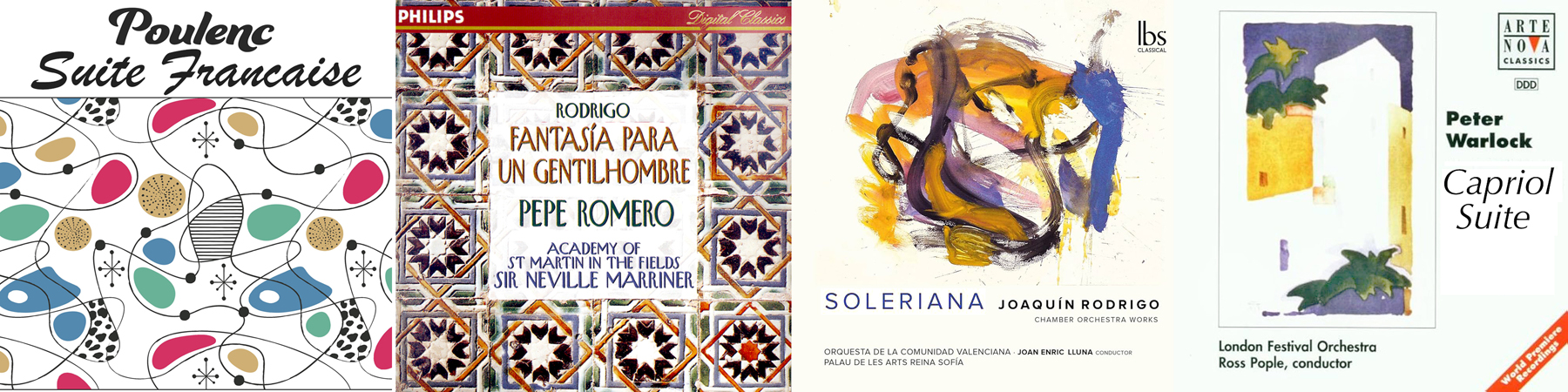
In 1935, Francis Poulenc wrote a suite for wind band, called Suite Français, using the tunes of 16th century composer Claude Gervaise. 

And among the most popular pieces from the 20th century was a four-movement guitar concerto, based on six compositions by the 17th century Spanish composer Gaspar Sanz. It was written in 1954 by Joaquin Rodrigo and titled Fantasia para un Gentilhomo (“Fantasy for a Gentleman”) Dozens of guitarists have recorded it. 

Rodrigo also put together an eight movement suite called Soleriana, orchestrating the harpsichord music of 18th century composer Antonio Soler. I had a hard time tracking down a recording, but I found one and have to say it was just as catchy and memorable as the Fantasia

Finally, among works of this kind, I should mention Peter Warlock’s Capriol Suite, built, according to the composer, on tunes in Thoinot Arbeau’s Orchésographie, a manual of Renaissance dances. 
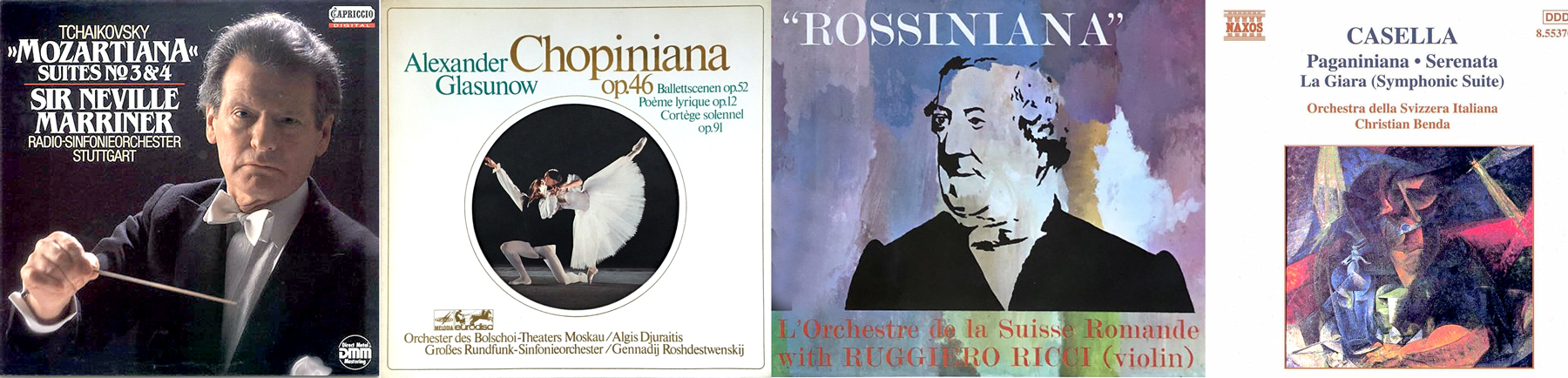
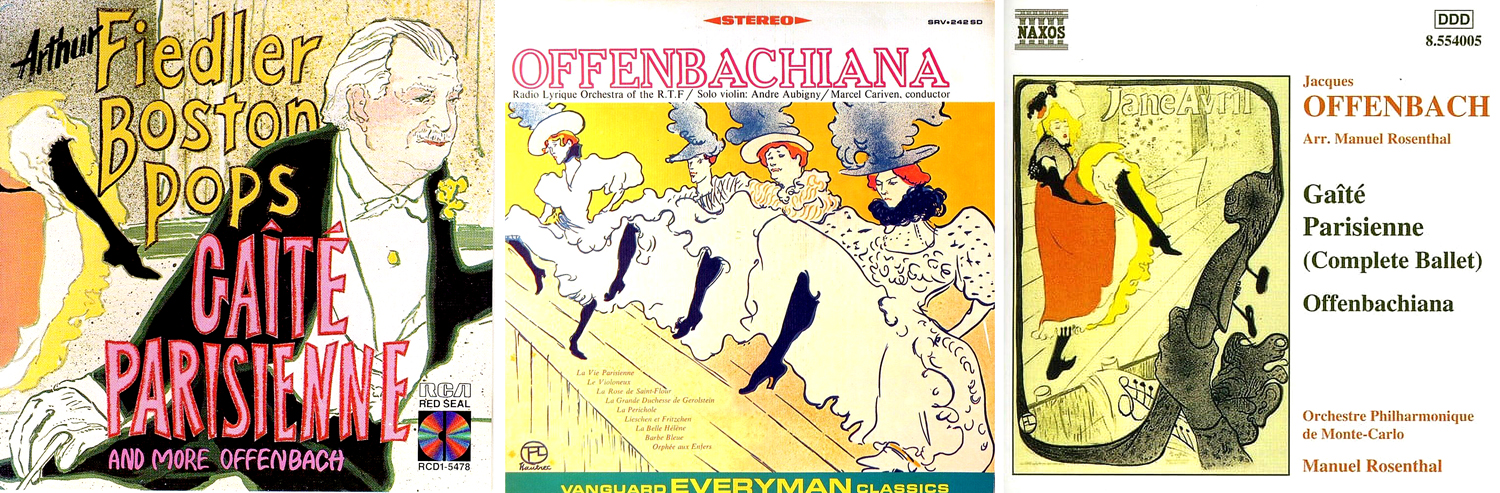
But all this rewriting and modernized orchestration wasn’t only applied to antique music. There’s plenty of 19th century music that gets reworked, usually to accompany a ballet. And a lot of them get named some form of “ianna.” Like Mozartiana, Rossiniana, Paganiniana, Soleriana, and Offenbachiana. (Not to mention Bachianas Brasileiras, but that’s another thing.)

Gioachino Rossini wrote 39 hugely profitable operas by the age of 39. Then, in 1832, he retired to live comfortably for the next 40 years. But starting in or about 1857, he began writing short pieces, songs, piano works, choral works — some 150 of them — meant for friends and family and never intended for public performance. He called them his Péchés de vieillesse – “sins of old age.”
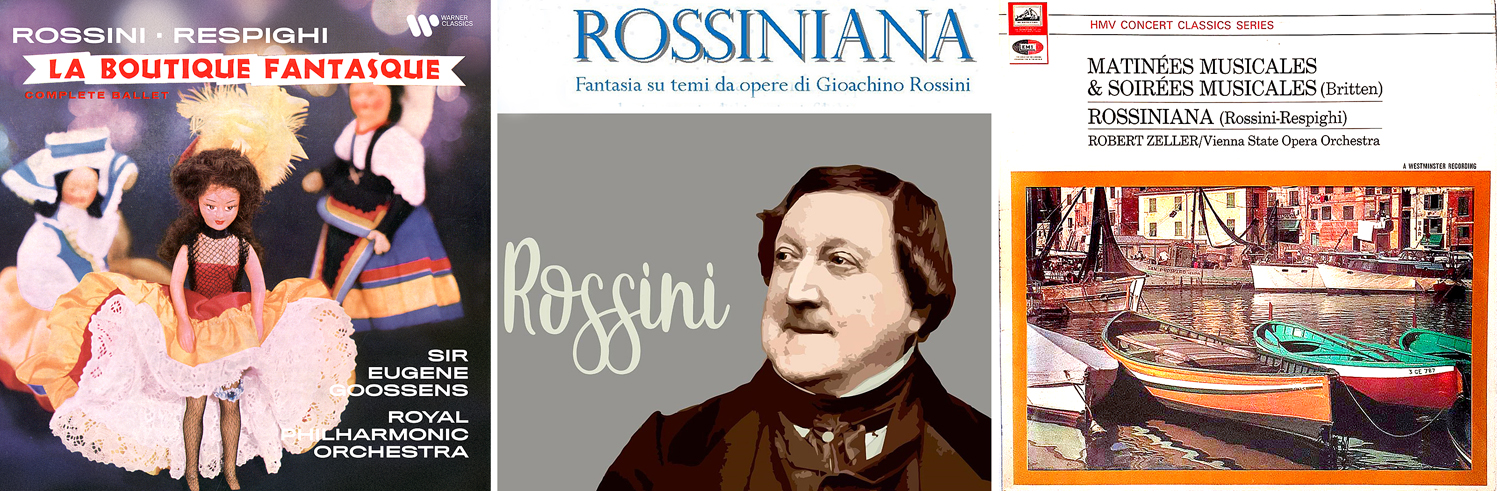
In 1918, Respighi orchestrated nine of these “sins” for a ballet, La Boutique Fantasque. It remains enormously popular with dozens of recordings. Later, in 1925, he dove back into the collection to “freely orchestrate” his Rossiniana

Benjamin Britten used bits from Rossini’s late works for his Soirées Musicales from 1937, and later, his Matinées Musicales from 1941. 

Strangely by default, French composer Manuel Rosenthal was tasked with selecting and orchestrating music by operetta champion Jacques Offenbach for a Massine ballet, Gaité Parisienne, in 1938. It remains popular in concert. Then, in 1953, he dipped once more into the well for Offenbachiana

But let’s face it, this becomes a rabbit hole: There are endless workings and reworkings of music, turning piano pieces into orchestral showpieces, or chamber works into ballets. I should mention just a few of the most famous or popular. 

Maurice Ravel took Modest Mussorgsky’s Pictures at an Exhibition and did such a number on those short keyboard works, that some people are shocked to discover they weren’t originally written for the orchestra. 

Leopold Stokowski made a career of turning Bach organ works into hyper-lush symphonic showpieces. (He was also not shy about changing around, cutting, or adding cymbals or tam-tam crashes to established symphonies.) 

Arnold Schoenberg decided to orchestrate Brahms’ G-minor piano quartet because, he said, “1. I like the piece; 2. It is seldom played; and 3. It is always very badly played, because the better the pianist, the louder he plays, and you hear nothing from the strings. I wanted once to hear everything, and this I achieved.” He was also commissioned to do it by L.A. Phil conductor Otto Klemperer, where it was first played in 1937. 
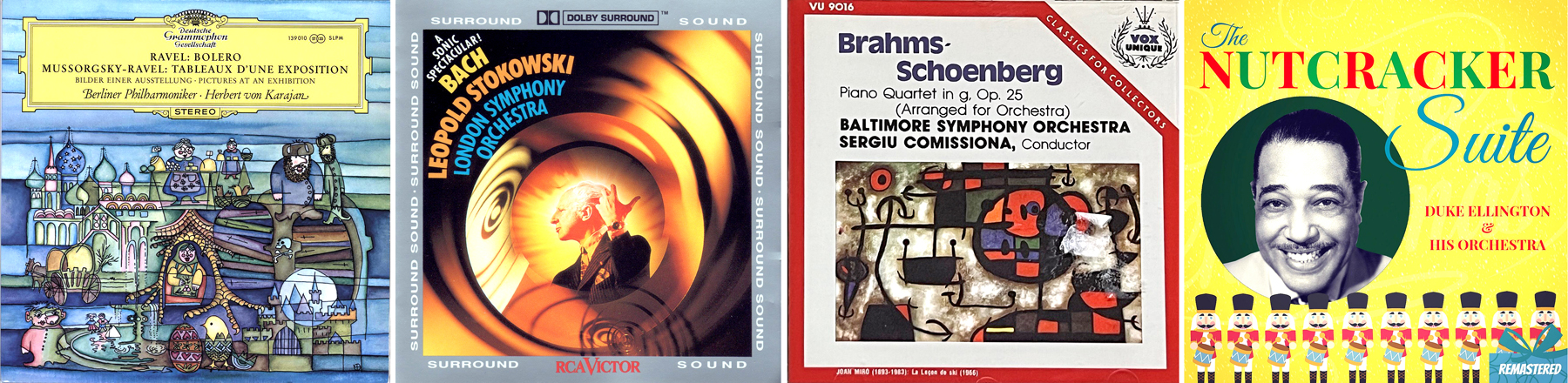
And finally, I should mention Duke Ellington, who recorded his jazz-orchestra versions of both Tchaikovsky’s Nutcracker Suite, and Grieg’s Peer Gynt Suite. Both hugely fun. 

It never ends. Kismet, a broadway musical with songs borrowing tunes by Borodin. A nearly infinite number of variations by a nearly infinite number of composers on Paganini’s 24th Caprice for solo violin. All those “Reminiscences” of various operas for solo piano by Franz Liszt. Charles Gounod’s Ave Maria built on top of Bach’s C-major prelude from the Well Tempered Clavier.  Franz Waxman’s Carmen Fantasie. Paul Hindemith’s Symphonic Metamorphoses on Themes by Weber

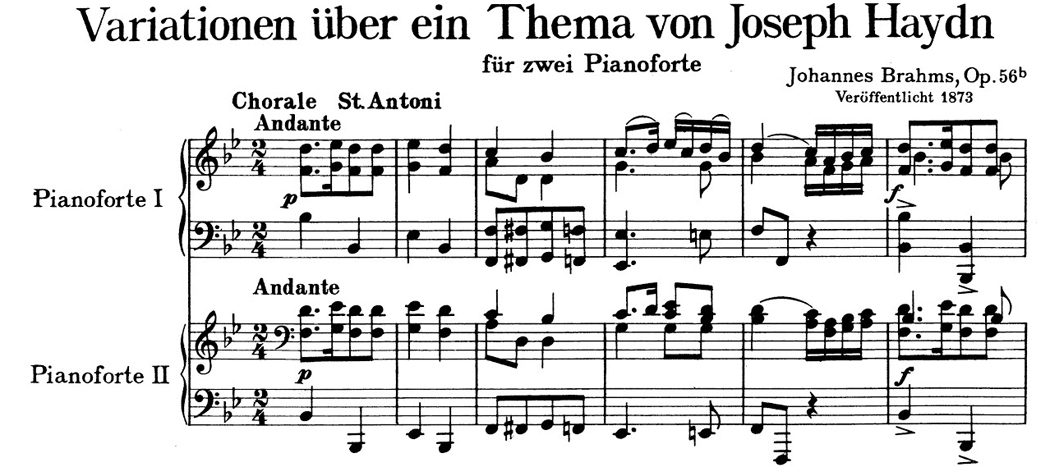
And let’s not leave out Brahms’ Variations on a Theme by Haydn, which was on a theme Haydn had borrowed in the first place. He didn’t write it. 

A quick check of Wikipedia lists hundreds, perhaps thousands (too many for me to count and still have a life) of “variations on” or “hommage to” or quotations from or transcriptions of orchestral music for home piano, or vice versa, piano music turned orchestral. No Haydn, no Beethoven, no Beethoven no Wagner, no Wagner, no Schoenberg, no Schoenberg, no  Lutosławski. Piles on piles. 

So, this idea that anything Postmodern is new needs to be chucked out the window. Postmodernism is a catchall phrase, with rather more meaning in architecture than in art or music. After all, we’ve been feeding on the past since the beginning. 

David Attenborough on Desert Island Discs with host Kirsty Young in 2012

One of the longest running radio shows is Desert Island Discs, which has been on the BBC since 1942. It is often said to be the second longest-running radio show after the Grand Ole Opry, which cranked up in 1925, although a few critics have discovered some obscure programs in foreign climes that may have been on longer, and there’s also the British Shipping Forecast which began in 1861, before radio was even invented, and first disseminated via telegraph before switching to radio in 1924. 

On Desert Island Discs, prominent people, whether politicians, entertainers, sports stars or academics, are asked to choose eight recordings they would take with them to the proverbial desert island, and place them in the context of their lives. Since the 1950s, they have also been asked to name a book, other than the Bible or Shakespeare, they would also take, and later still, adding on a “luxury item” they couldn’t live without. 

Nearly 4,000 episodes have been broadcast, with some predictable results. The music most often mentioned is Beethoven’s Ninth Symphony, and the luxury item most chosen is pen and paper, or “writing materials,” although Tom Hanks specifically mentioned “a Hermes 3000 manual typewriter and paper.” 

Many of the archived broadcasts can be heard from various online sources, and you can learn, for instance, that Alfred Hitchcock’s book choice was Mrs. Beeton’s Household Management, and his luxury item was “a continental railway timetable.” Some of the choices were equally eccentric. Oliver Reed wanted Winnie-the-Pooh to read and “an inflatable rubber woman.” Actress Janet Suzman wanted a “mink-lined hammock,” and Hugh Laurie asked for an encyclopedia and “a double set of throwing knives.” His long-time double-act partner Stephen Fry wanted a PG Wodehouse anthology and a “suicide pill.” 

My favorite, so far, is John Cleese, who asked for Vincent Price’s cookery book and “a life-size statue of Margaret Thatcher and a baseball bat.” 

One of the inevitable by-products of such a format is the urge to create your own list. And so, I have my own. 

I grew up in New Jersey in a family largely indifferent to music. What music there was came on TV in such variety shows as Perry Como or Dinah Shore. When I was little, there was a small portable record-player on which I played children’s songs, but I don’t count any of that. “Fire, fire, fire, raging all about. Here come the firemen to put the fire out.” 

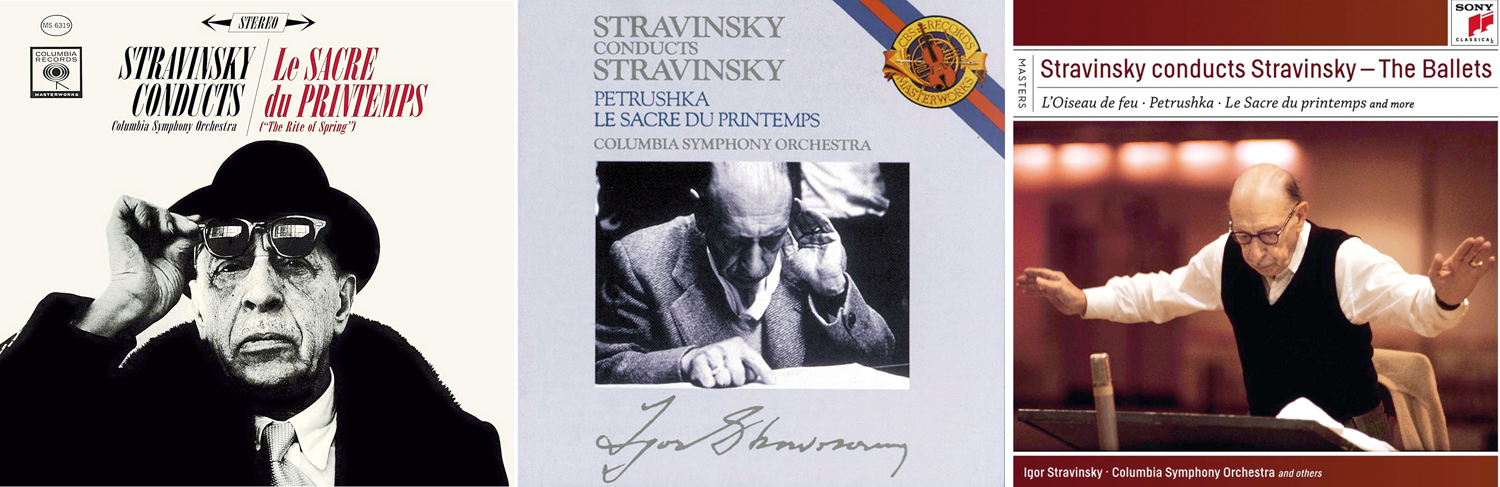
My musical education began in high school when my first serious girlfriend played music on the phonograph while we spooned on the sofa in her parents’ house. She went on to become a professional bassoonist and was studying at the time with Loren Glickman, who played the difficult opening bassoon solo on Igor Stravinsky’s recording of his Rite of Spring. I hadn’t known such music existed. It was mesmerizing. Who knew it was great make-out music? And so, that is my first choice for my desert island disc. 

There have been hundreds of other recordings of that music, and a few, perhaps, more exciting or primitive than the composer’s own, but that recording has never been out of print and comes in many versions, from LP to 8-Track to CD and now, streaming. As an introduction to classical music, I could hardly have done better — dive into the deep end. 

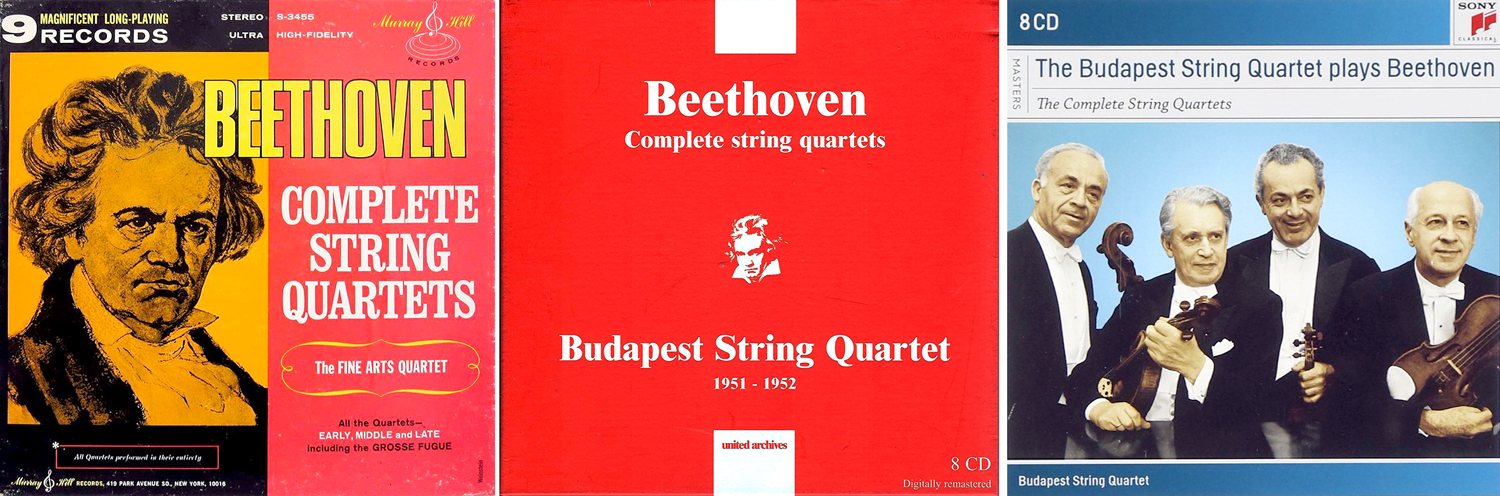
When I got to college in North Carolina, I made the acquaintance of Alexander Barker, who has remained my best friend for 60 years. He was as enthusiastic about classical music as I was and we spent hours in our dorm rooms spinning LPs and introducing each other to music that was our favorites. We were, of course, very serious about great music, as only college students can be, but we knew Beethoven’s string quartets were as serious as you could get. I bought a budget-line set of the quartets, by the Fine Arts Quartet on the off-brand Murray Hill label, and one evening, we started with Opus 18, No. 1 and played through all 16 of them, plus the Grosse Fuge, in one marathon session. (We later attempted the same thing with the piano sonatas, but gave up in exhaustion and the need for sleep by the time we hit the Hammerklavier.)

I have not been able to find a CD version of the Fine Arts Quartet set, but I found much better-played versions later on. I have owned a half-dozen or so complete sets of the Beethoven quartets, and as many of just the late quartets, but on the desert island, I would take the original mono versions by the Budapest String Quartet. They redid them later in stereo, but I like the earlier set better. I could have chosen the Guarneri, or the Tokyo or the Emerson, but I still think the Budapest have the measure of them best.

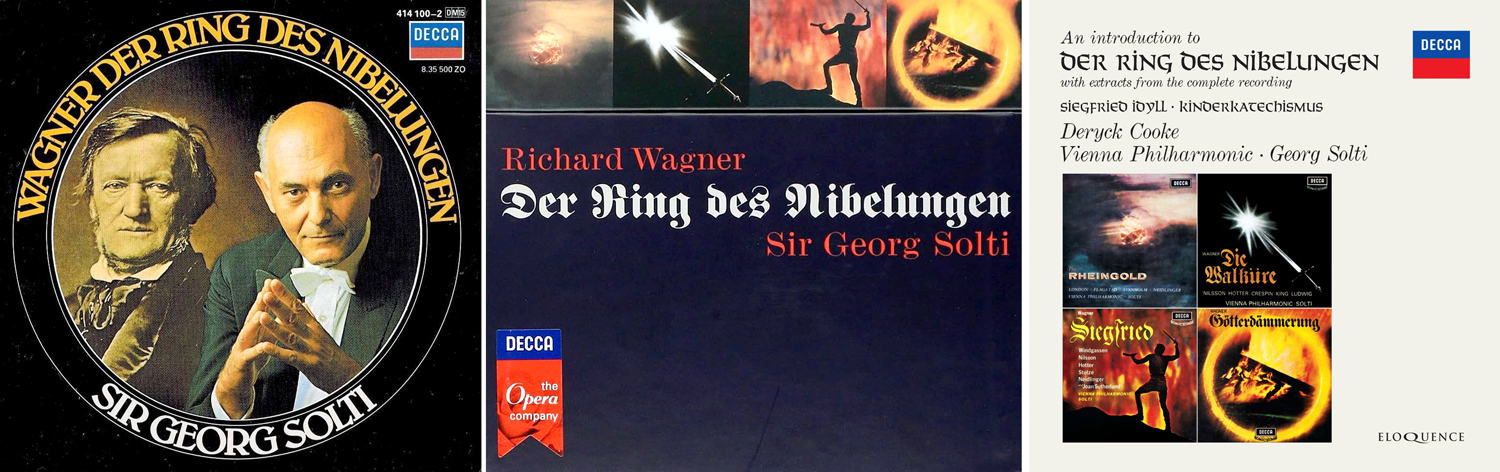
If you have the earnest seriousness of youth, you will eventually get into Wagner. After college and after a failed first marriage, I was living in North Carolina with my favorite redhead, scratching by on subsistence jobs, and I managed to save enough money to finally buy the Solti Ring. Something like 16 hours of music subsuming four operas, it opened up a world of myth and raw musical power. Now in retirement, I own five Ring cycles on CD and another two on DVD. And I’ve attended two complete live Ring cycles (not a patch on my late friend Dimitri Drobatschewsky, who went to Bayreuth 16 times beginning just after World War II.) But the Solti Ring of the Nibelungs is still my go-to set. And with it, I must also take the Deryck Cooke explication of the cycle, An Introduction to “Der Ring des Nibelungen.” Can’t have one without the other; they’re a set.

When the redhead and I split up, after seven years, I moved to Seattle and began working at the zoo, where I met a zookeeper whose hair was as blond as the sun. I fell. She had been a professional swing dancer at one time, and she played me old swing records on her Wurlitzer jukebox, which she had at her home. I had a whole new universe of music to learn about. But the one who stuck was the jazz musician closest to writing classical music, Duke Ellington. 

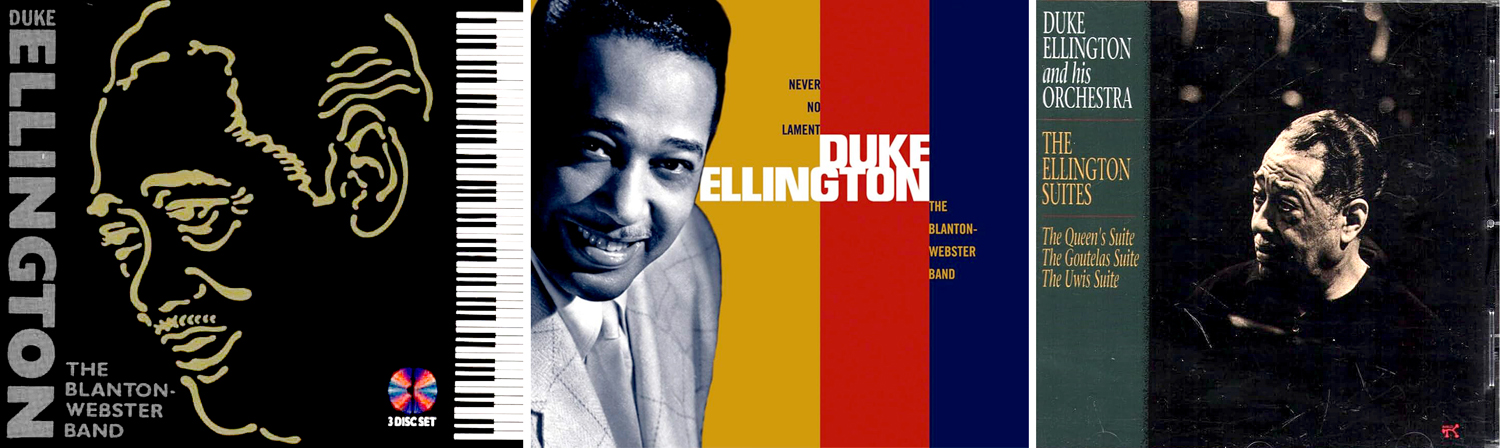
I still have about 50 CDs of Ellington’s recordings. There are counted several epochs of Ellington’s career, beginning with the “jungle music” of the 1920s and going through his rebirth at the Newport Jazz Festival in 1956. But most count the high point of his band and music to be those years in the early 1940s when Ben Webster was his tenor sax man and Jimmie Blanton was his string bass player. A collection of their recordings has been issued several times as “The Blanton-Webster Band.” It was the era of Take the A Train, Ko-Ko, Harlem Airshaft, and Perdido

But then, neither can I do without The Queen’s Suite, which he wrote with Billy Strayhorn in 1971, and is his most completely classically composed work. I love it. And so, I’m adding it to my Ellington entry. 

The zookeeper dumped me and I moved back to North Carolina. A few years later, I met Carole, who I married and lived with for 35 years, until her death in 2017. Marriage humanized me, and the most human composer is Mozart and the most humanistic of conductors was Bruno Walter. It was the the last years of the LP era, in 1980, and before digital took over, I found the last six symphonies of Mozart played by Walter and the Columbia Symphony Orchestra (a pickup ensemble, mostly of musicians from the New York Philharmonic). 

Walter’s Mozart remains the most humane and beautiful version of these works, which are now buried under historical-performance rhetoric and bounce along at a jog-trot, mechanistic pace. But one can still find the echt-Mozart, songful, emotional, and velvety rich, under Walter’s baton. Like all of my choices for the desert island, it has never been out of print. 

Carole and I moved to Arizona in 1987, where she took up teaching art to elementary pupils, and I began writing for The Arizona Republic as its art critic (later also its classical music critic). 

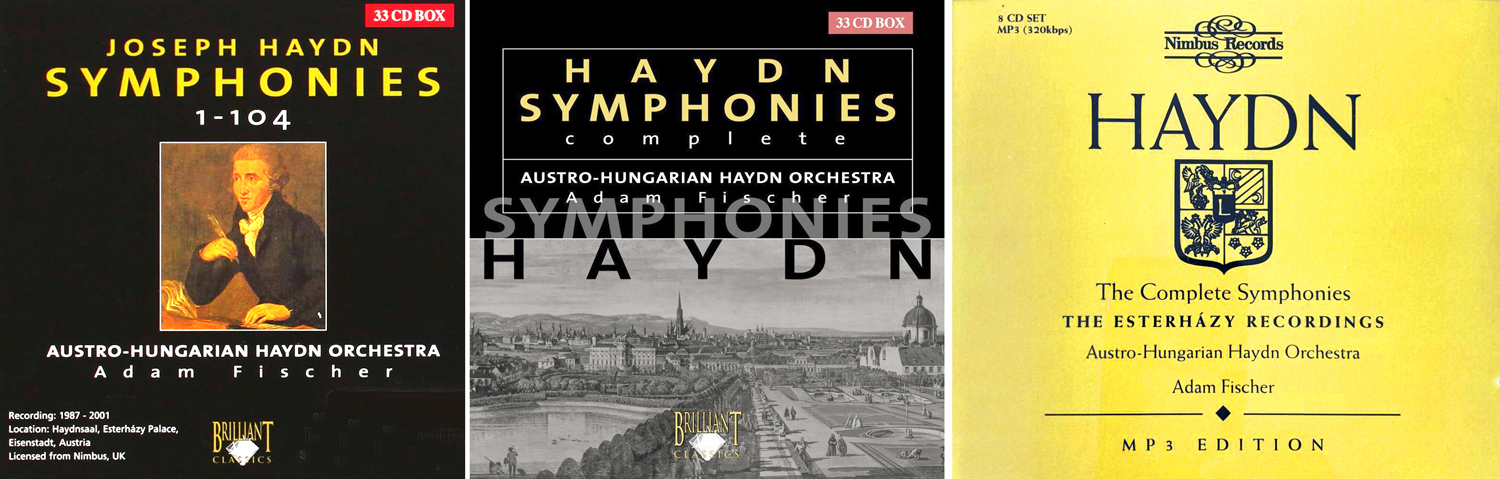
When we moved to a house at the foot of Camelback Mountain, it was a 20 to 30 minute drive (depending on traffic) to the Republic office downtown, and I found the perfect drive-time music, playing a Haydn symphony each way. I eventually went through all 104 symphonies, driving back and forth, three times, and absorbed their spirit from the Austro-Hungarian Haydn Orchestra and Adam Fischer. They have become my go-to performers for this music. I also have the earlier Antal Dorati version, which sometimes sounds like a quick read-through, and later was sent a review copy of the Dennis Russel Davies versions on Sony, which proved to be the most utterly humorless Haydn possible and I had to give them away. How can anyone misunderstand this music so thoroughly? 

When Carole died, and I sunk into grief, from which I have never fully recovered, I found myself listening with my whole being to Brahms German Requiem. I have spent the anniversary of her death every year driving up the Blue Ridge Parkway to find an old fire road into the woods, and sit quietly to Bruno Walter’s recording of the German Requiem. It is the most sympathetic, consoling music ever written. 

On Desert Island Discs, they also ask the guests to choose the one recording, above all, which they would take if everything else were not possible. And for me that is Johann Sebastian Bach’s Passion According to Saint Matthew, a three-hour musical retelling of the last days of Jesus and his death. I am not religious. (I am so not religious, I not even an atheist.) But every note of Bach’s music speaks to me on the deepest level of humanity. The opening chorus and the ending chorus are, for me, the greatest musical utterances ever penned. I’m keeping it with me.

There are many performances, and no one really does it badly, but most recordings now have been run through the historical performance wringer and the juice has been squeezed out. This is majestic and noble music, not something from a squeeze box. And the recording left behind by Otto Klemperer is the one I listen to over and over. He’s got the measure of this music. 

That leaves us a book and a luxury. People value books for, usually, one of three reasons. Either for the information they gather, or for the stories that are told, or for the prose they are written in. I fall into the last camp. I thought about Gibbon’s Decline and Fall of the Roman Empire, which is an utter joy to read, whether you care about the factual history of Rome or not. I revel in its river of words. But I read it in short segments, ultimately filling up like a rich meal and need to wait some hours before hitting the table again. And, for all the wonderful writing, there is a sameness that can creep in. 

Or I might have chosen a classic that somehow I’ve missed in 77 years of life. Many on Desert Island Discs have taken Marcel Proust’s Á la Recherche du Temps Perdu. But when it comes to monster works, I already put in my time, having gotten through The Gulag Archipelago. I no longer need to prove myself. 

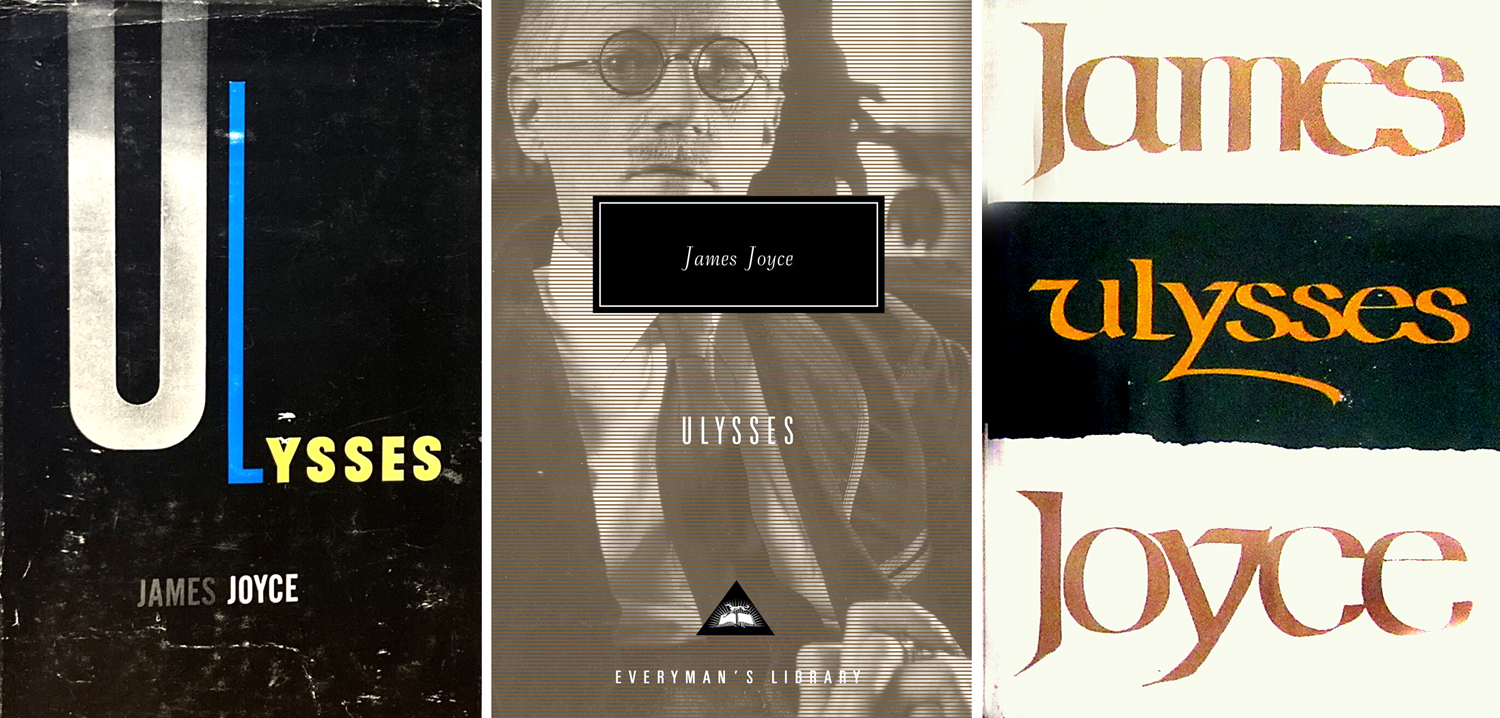
So, I have chosen Joyce’s Ulysses, the book I can read and re-read over and over, with such a variety of prose and method and such delicious words, that I don’t think I could ever tire of it. 

As for a luxury item, I had some difficulty coming up with something, because I am not much for luxury. But I have always owned a pear-wood handled Opinel folding knife. The current one sits in the glove compartment of the car, ready for anything called for. A man needs his tools.

Of course, the whole exercise is entirely pointless. There is no desert island, and with a house full of books, CDs, musical scores, and art, I don’t need to choose so parsimoniously. The whole idea is merely a pleasant game to play. 

But going through the process, and forcing myself to narrow the list arbitrarily, I come to see myself in a dusty mirror. And I surprise myself, looking back at me. 

Until relatively recently, 20th century concert music was a tough sell. It had the reputation of being dissonant, noisy, difficult, and unpleasant. It was a century that began with Arnold Schoenberg dispensing with harmony and Igor Stravinsky upending rhythm, followed by a World War that knocked the complaisance out of any rational being and told us that the coming century was going to be anything but calm and easy. 

A number of composers felt that music needed to reflect the mood of the angst-ridden age. 

But even Schoenberg admitted “There is still plenty of music left to be written in C-major.” He didn’t believe his 12-tone revolution would destroy all tunes to come, but was simply a logical conclusion to music history from Bach through Wagner, from tonality through chromaticism to atonality. And we shouldn’t blame poor Arnold for all the dreary ruckus that followed: His own music is quite emotional and beautiful, even if it often requires some serious commitment from his listeners. 

He was right about one thing certainly: There was plenty of music written in C-major, throughout the century. And F-major and D-minor. In fact, most of the music written in that century was based on familiar scales, albeit with plenty of playing around and trying new ways to use them. 

 It’s just that the music-industrial complex, so to speak, was hijacked around mid-century by a clutch of academically-minded composers — the “Darmstadt Mafia” — insisting that serialism was the only music to take seriously, and that the more unlistenable it was, the greater it must therefore be. (Some of these composers did write interesting music in that style — it wasn’t a complete loss — but they looked down their noses at anything that might stink of a tune.) 

And so, contemporary music turned its back on the concert audiences and those composers wrote only for other composers of their ilk, and audiences shrunk from any concert program that insisted they listen to the stuff. Modern music acquired a very bad reputation. 

But I find that after 60 years of concert-going and music absorption, I listen to 20th century music more than that of any other era. It is music that speaks directly to me. Oh, I listen to bunches of Haydn, Mozart, Beethoven, Brahms and Tchaikovsky, but the plurality of my music listening edges to the century in which I grew up. 

So, I wanted to create a list of representative compositions from the century in question and present them as a course in great music that anyone can listen to and enjoy. 

I went through my collection of thousands of CDs and chose 30 pieces to offer. I listened to each one, in order, to refresh my memory — and to flat out enjoy them all over again. 

The roughly chronological list begins with a surprising entry. Most people think of Ives’ music (if they think of it at all) as noisy, crashing, impish tomfoolery. But Ives was a well-trained musician, with a degree from Yale University. His Symphony No. 2 is pretty tame, except for his borrowing of familiar popular tunes, and a raspberry at the end. 

Here is my list:

1900-1920

Charles Ives (1874-1954) — Symphony No. 2 (1902; premiered in 1951) (42 minutes long). Performance listened to: Eugene Ormandy, Philadelphia Orchestra, recorded 1973.

Ives studied under the respectable, if stuffy Yale professor Horatio Parker, and after graduating in 1898, began working on his second symphony (the first was his senior thesis composition for Parker) and included bits from Camptown Races, Turkey in the Straw and Columbia the Gem of the Ocean run through a kitchen blender. He finished Symphony No. 2 in 1902, although, with Ives, he was never completely finished and continued tinkering until his death in 1952. The symphony wasn’t premiered until Leonard Bernstein and the New York Philharmonic played it in a radio performance in 1951. The house-bound but still cantankerous Ives heard it on his radio in Connecticut and his response was that he spit. 

I listened to Ormandy’s version from 1973. The recordings listed here are not my choices as “best” — although they are all good — but merely the ones I had to hand when I started this project. 

Frederick Delius (1862-1934) — On Hearing the First Cuckoo of Spring (1912) (7 minutes long). Performance: Thomas Beecham and Royal Philharmonic, recorded 1958.

Delius’ score instructs, “With easy flowing movement,” and the quiet, peaceful evocation of the countryside (presumably English) and its birdcalls, it is a calming balm for a tussled soul. Originally, it was one of Two Pieces for Small Orchestra, the other half being Summer Night on the River. Beecham championed the composer’s music and his performances of the music are definitive.

Manuel de Falla (1876-1946) — Nights in the Gardens of Spain (1916) (21 minutes long). Performance: Arthur Rubinstein, piano, Ormandy, Philadelphia Orch., recorded 1969.

Falla was an Andalusian composer and the quasi-Impressionist Nights in the Gardens of Spain functions as a kind of piano concerto, with three movements, each describing a different Andalusian garden. Rubinstein heard it first soon after its premiere in 1916 and performed it regularly after that.   

Serge Prokofiev (1891-1953) — Classical Symphony (1918) (13 minutes long) Performance: Ormandy, Philadelphia Orchestra, recorded 1961.

Prokofiev’s Symphony No. 1 is the Sara Lee of symphonies: No one doesn’t love it. It is a jaunty, energetic gloss on the Classical-era symphonies of Haydn, seen through the “wrong-note Romanticism” of the composer’s style.  

Gustav Holst (1874-1934) — The Planets (1918) (50 minutes long)

 Performance: Ormandy, Philadelphia, recorded 1975.

Marketed as “space-age music,” the intent of Holst’s seven-movement suite is astrological, not astronomical, and each movement is a musical description of a psychological type. It has become enormously popular, and it has been recorded more than 80 times, first in 1926 with the composer conducting.  

Igor Stravinsky (1882-1971) — Pulcinella (1920) (39 minutes long) Performance: Claudio Abbado, London Symphony Orchestra, recorded 1979.

Stravinsky took some old compositions by 18th century composers and reworked them into bright, colorful Stravinskian cogs in what Leonard Bernstein once called “Uncle Igor’s Asymmetry Machine,” giving them new life as a ballet score, complete with voices. 

1920s

Ralph Vaughan Williams (1872-1958) — The Lark Ascending (1921) (16 minutes long) Performance: Zina Schiff, violin, Dalia Atlas, Israel Philharmonic, recorded 1989.

Poet George Meredith wrote of the lark in his poem from 1881, “He rises and begins to round, He drops the silver chain of sound…” and Vaughan Williams gives us the violin and orchestra version, with the British pastoral, And whose primary intent seems to be the creation of simple beauty.

Darius Milhaud (1892-1974) — La Création du Monde (1923) (17 minutes long) Performance: Simon Rattle, London Sinfonietta, recorded 1986.

European composers began hearing jazz and they loved it. Milhaud even moved to Harlem for a while, to soak it all up. One of the best translations of jazz to the classical idiom is his Création du Monde, with its resonant  saxophone solo at the beginning. 
Arthur Honegger (1892-1955) — Pacific 231 (1923) (6 minutes long) Performance: Charles Dutoit, Bavarian Radio Symphony, recorded 1985.

A steam locomotive begins to move, gathers speed, churns along and comes slowly to a stop, in this propulsive tone poem to modernity. Trains have been a theme in 20th century music, from Duke Ellington’s Happy-Go-Lucky Local to Villa-Lobos’ Little Train of the Caipira. Chug-chug. 

Ottorino Respighi (1879-1936) — The Pines of Rome (1924) (20 minutes long) Performance: Ormandy, Philadelphia, recorded 1958.

There were no flying humpback whales in Respighi’s original score; blame Disney for that. But what you do get are rousing tunes and some spooky catacomb music, with a grand finish, the kind that gets you out of your chair cheering. 

Jean Sibelius (1865-1957) — Symphony No. 7 (1924) (22 minutes long) Performance: John Barbirolli, Halle Orchestra, recorded 1966.

Sibelius’ final symphony is also his shortest, being in one movement, but by some accounts his best. My old teacher said when he was young, he wanted to play the French horn, because it had all the great solos. But he wound up with the trombone, which “only plays supporting material,” he said. But in this symphony, the trombones get the big tune, the one you will most likely remember and hum after it’s over. 

George Gershwin (1898-1937) — Piano Concerto in F (1925) (32 minutes long) Performance: Andre Previn, piano and conductor, Pittsburgh Symphony, recorded 1998.

Who was Arnold Schoenberg’s favorite composer in America? His frequent tennis partner, George Gershwin, who was much more than a Tin-Pan Alley songster. At the time, there was a big rush to figure out how to incorporate jazz into concert music. Well, here’s how. 

Leos Janacek (1854-1928) — Sinfonietta (1926) (23 minutes long) Performance: Claudio Abbado, Berlin Philharmonic, recorded 1989

What grabs you at first are the 14 trumpets, four horns, trombones, tuba and euphoniums. But the rest of the music pops with chunks of memorable tunes, piled like crabs in a bucket, and the way Janacek uses musical “jump cuts” to go from one to the next. 

1930s

Howard Hanson (1896-1981) — Symphony No. 2 “Romantic” (1930) (29 minutes long) Performance: Gerard Schwarz, Seattle Symphony, recorded 1989.

All those American symphonies written in the 1930s and ’40s have been largely forgotten, despite their quality, but when Ridley Scott used Hanson’s music during the closing credits of his 1979 film Alien, it resurrected this “Romantic” symphony, which developed a second life. Scott did it without Hanson’s permission, which pissed off the composer, but Hanson never sued, probably because of the boost it gave his music with audiences. 

Maurice Ravel (1875-1937) — Piano Concerto in G (1932) (21 minutes long)

Performance: Samson François, piano, André Cluyten, Orchestre de la Société des Concerts du Conservatoire, recorded 1959.

The French were just as taken with jazz as Americans were, in the 1930s. Lots of composers attempted to weave the syncopations and blues notes into their work. Ravel did it twice, with each of his piano concertos. But this one has a slow movement of such hypnotic ethereal peaceful beauty that you feel in a trance, broken by the explosion of the finale. 

Alexander Glazunov (1865-1936) — Saxophone Concerto (1934) (14 minutes long) Performance: Marc Chisson, saxophone, José Serebrier, Russian National Orchestra, recorded 2010.

Glazunov was exiled to Paris when he wrote his own jazz-influenced concerto for alto saxophone, which is perhaps less jazzy than Russian, but is nevertheless probably the best concerto ever written for the instrument. 

Samuel Barber (1910-1981) — Adagio for Strings (1936) (8 minutes long) Performance: Ormandy, Philadelphia, recorded 1957.

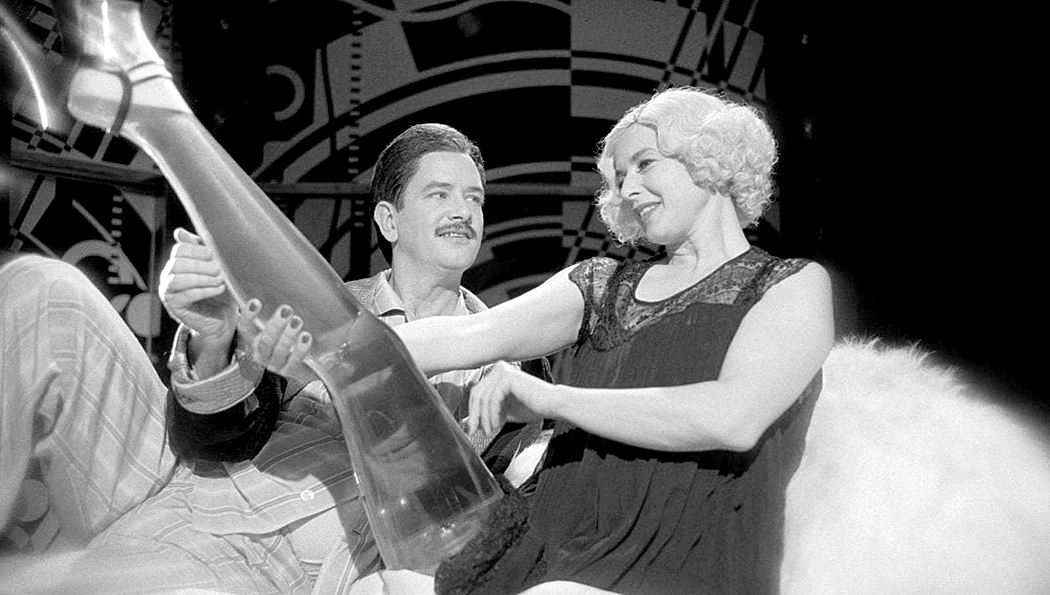
Canadian filmmaker Guy Maddin made a movie in 2003 titled The Saddest Music in the World, about a contest to find such music. Well, he needn’t have worried: Hands down, the winner (ignored by the film) is Sam Barber’s orchestral transcription of the slow movement of his string quartet. Unbearably beautiful, it is near impossible to hear it without weeping. 

Colin McPhee (1900-1964) — Tabuh-Tabuhan: A Toccata for Orchestra (1936) (17 minutes long) Performance: Howard Hanson, Eastman-Rochester Orchestra, recorded 1956.

McPhee heard Javanese gamelan music on a visit to Bali and then moved there. He became an ethnomusicologist as well as composer and wrote his own gamelan-influenced music full of the percussive tintinnabulation that is so catchy. Tabuh-Tabuhan is his most popular work, meaning it’s pretty much the only piece most people know, McPhee having otherwise fallen into undeserved oblivion.

Heitor Villa-Lobos (1887-1959) — Bachianas Brasileiras No. 5 (1938) (7 minutes long) Performance: Bidú Sayão, soprano, orchestra of cellos, conducted by Leonard Rose, recorded 1949.

The composer was fascinated by the long-line melodies that Bach sometimes wrote and came up with his own. Originally a single movement for soprano and eight cellos, it was recorded that way in 1949 by Bidú Sayão in a recording of singular beauty and power. It is very difficult, as the final third of the movement is required to be hummed through the nose, with the mouth closed, and ending on a nearly impossible octave leap. He later wrote a second movement, but this recording of just the first is so exceptional, it has to be heard. 

1940s

Sergei Rachmaninoff (1873-1943) — Symphonic Dances (1940) (35 minutes long) Performance: Leonard Slatkin, Detroit Symphony, recorded 2002.

It is sometimes hard to realize that Rachmaninoff is essentially a 20th century composer. And all his later music (the Paganini Rhapsody, Third Symphony and this, the Symphonic Dances) is rife with irony and astringency. Heart no-longer on sleeve, but with unforgettable tunes and absolutely brilliant orchestration. These Dances were his final composition, and for my money, his best. 

Aram Khachaturian (1903-1978) — Violin Concerto (39 minutes long) Performance: Ruggiero Ricci, violin, Anatole Fistoulari, London Philharmonic Orch., recorded 1956.

Khachaturian doesn’t get much love. His music is catchy, tuneful, and never very deep. And so, the Music-Industrial Complex (i.e. German musicographers) turn their noses up. But what is music if not melody? And bright arresting orchestrations. At some point, the world will catch up with Khachaturian and realize there’s room for music that is simply enjoyable, with no philosophical baggage attached. 

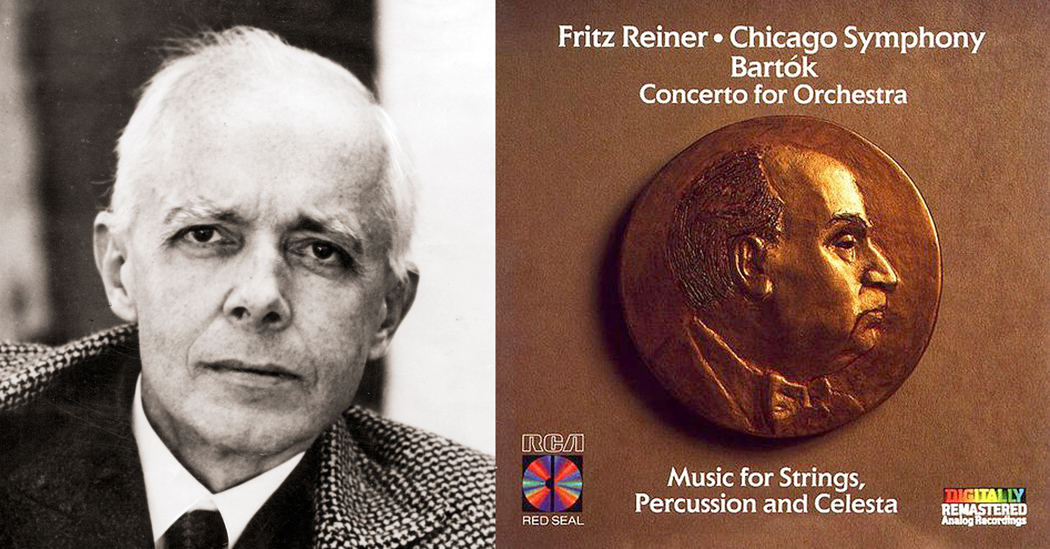
Bela Bartok (1881-1945) — Concerto for Orchestra (1943) (47 minutes long) Performance: Fritz Reiner, Chicago Symphony Orchestra, recorded 1958.

Bartok was ill and in hospital when Serge Koussevitzky visited him in 1943 and presented him with the commission for this orchestral masterpiece. Bartok had fled Hungary because of the war and was dying of leukemia, but he got out of bed, left the hospital and wrote what became his most popular work, essentially his symphony, a five movement piece featuring brilliant solo work for pretty much everyone member of the orchestra. He died two years later. 

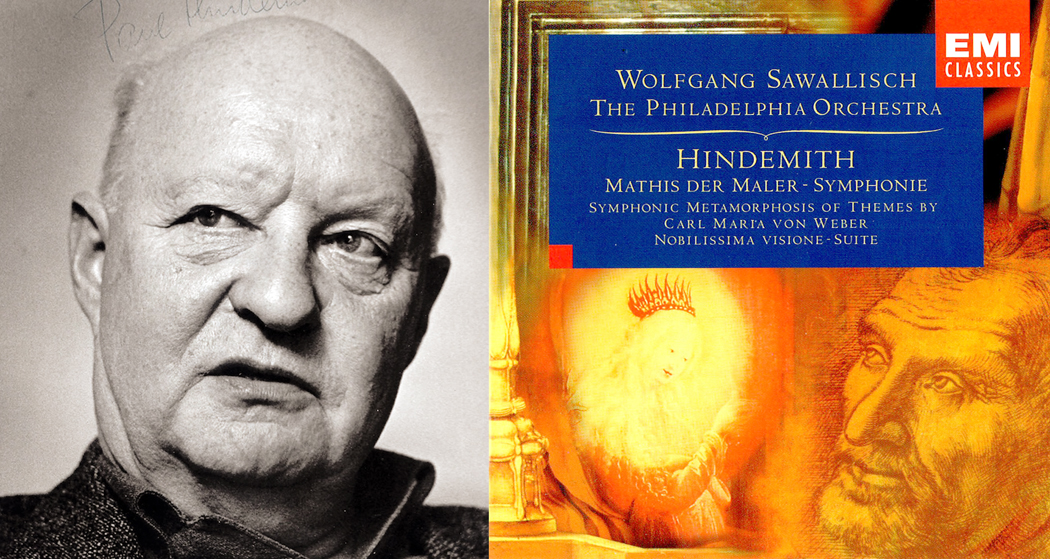
Paul Hindemith (1895-1963) — Symphonic Metamorphosis on a Theme by Weber (1943) (22 minutes long) Performance: Wolfgang Sawallisch, Philadelphia Orchestra, recorded 1994.

So much of the century’s music seems to have been written as gloss on music of the past: Stravinsky’s Pulcinella, Rachmaninoff’s Paganini Rhapsody; Prokofiev’s Classical Symphony — even Ives’ symphonies constantly quote old tunes. Hindemith’s most popular piece (popularity not having followed the composer into the 21st century) is his recasting of melodies written by Carl Maria von Weber. It is brilliant. Hindemith should be played more. 

Aaron Copland (1900-1990) — Appalachian Spring (1944) (24 minutes long) Performance: Leonard Bernstein, New York Phil, recorded 1961.

When the century’s music seemed to becoming more intellectualized and abstruse, Aaron Copland developed a simpler, more audience-friendly style, best captured in this hugely popular ballet score. Copland became the American composer. Originally for a chamber group, the orchestral version is now a standard concert piece. 

Erich Wolfgang Korngold (1897-1957) — Violin Concerto in D (1945) (24 minutes long) Performance: Jascha Heifetz, Alfred Wallenstein, LA Philharmonic, recorded 1953.

Korngold was a prodigy once compared to Mozart, came to America and became the Ur-film composer (three Oscar nominations). But after WWII, he tried to reestablish his bona fides as a serious composer, with this most beautiful of 20th century violin concertos, now in the standard repertoire. It begins with a startling two-octave run in just five notes. Championed by Jascha Heifetz, it is now in every serious violinists repertoire. 

Benjamin Britten (1913-1976) — Variations and Fugue on a Theme by Purcell (“Young People’s Guide to the Orchestra”) (1946) (17 minutes long) Performance: Ormandy, Philadelphia, recorded 1974-1978.

Another gloss on old music, Britten wrote his “Young People’s Guide to the Orchestra” as a means to teach about the instruments, along with narration.  But much better without the sometimes condescending talking, it is a brilliant showpiece for the orchestra. 

1950s

Joaquin Rodrigo (1901-1999) — Fantasia para un Gentilhombre (1954) ( 22 minutes long) Performance: Manuel Barrueco, guitar, Philharmonia Orchestra, Placido Domingo, conductor, recorded 1996. 

Rodrigo reworked the music of 17th-century Spanish composer Gaspar Sanz, in another retro work, mixing the old dance music with eminently listenable modern orchestra colors.  

Alan Hovhaness (1911-2000) — Mysterious Mountain (Symphony No. 2) (1955) (19 minutes long) Performance: Fritz Reiner, Chicago, recorded 1958. 

Hovhaness wrote 67 symphonies and sometimes it is hard to tell them apart: His style was his style and he stuck to it. But his second symphony, called Mysterious Mountain, is his most popular and a perfect introduction into what you get with this Armenian-American stalwart. 

Leonard Bernstein (1918-1990) — Candide Overture (1956) (4 minutes long)  Performance: Leonard Bernstein, London Symphony Orchestra, recorded 1989. 

The best overtures are bouncy, tuneful, catchy and bright. It is almost as if Bernstein had absorbed all of the best overtures of the past and wrapped them up in his ultra-brilliant Candide overture, certainly the composer’s most-often programmed work. 

Dimitri Shostakovich (1906-1975) — Piano Concerto No. 2 (1957) (20 minutes long) Performance: Christina Ortiz, piano, Royal Philharmonic Orchestra, Vladimir Ashkenazy, cond., recorded 1989.  

The composer write this late concerto for his son, Maxim, to perform. He didn’t have a very high opinion of the work, thinking it a throw-away piece, but it is his most accessible concerto, with a second movement nearly as hypnotic as the Ravel. It may be lightweight Shostie, but it is nothing to sneeze at. 

In going through these recordings, some of which had to be dug up out of the lower shelves of my collection, I have redoubled my admiration for the music of the previous century. 

Everyone has at least one minority taste — a love of some obscure discipline that the vast majority of the public find uninteresting or unimportant. It could be stamp collecting or motocross racing. The majority watch popular shows on TV, listen to Top-40 music and read best-sellers. But pick any individual from such an audience, and you’ll find at least one out-of-the-way obsession. Surfing, perhaps, or Civil War re-enacting. 

For those lucky or persistent enough, this may turn out to be a vocation: Universities are full of those who have turned their love of Medieval linguistics or non-Newtonian physics into a meal ticket. In fact, this is where we expect to find these eccentrics. It is their niche. 

But there are a few of us, a benighted few, whose lives are made up entirely out of the odder corners of life, who have almost no popular tastes and have not turned our weird fascinations into a job. We are the outcasts who love all those things that normal people find irrelevant, and we bury ourselves in the obscure, arcane, esoteric, hermetic or recondite. 

I cannot speak for others of our brotherhood (and sisterhood), but I’m afraid I was born that way. It was not a reaction to anything — no childhood traumas drove me away from things popular; no deprivations led me to seek fulfillment in those oddments of culture I find so absorbing. 

From as long back as I  can remember, my interests were not those of my peers. I heard classmates complain about school, having to learn things they didn’t feel they would ever need to know in life. And I admit, it is very seldom I have ever needed to calculate the area of a circle. But I loved school from first grade on. 

In the early grades, I adored diagraming sentences. I spent free moments between classes in the school library. I never found sports persuasive. I was in dire peril of losing myself in something as abstruse as lepidoptery or studying the history of bottle making. In third grade, I could tell you anything you wished to know about the Mesozoic Era — rather more than you would wish to know, really. 

I grew up just outside New York City, and spent many fine hours at the American Museum of Natural History, in its darker recesses, and at the Hayden Planetarium. 

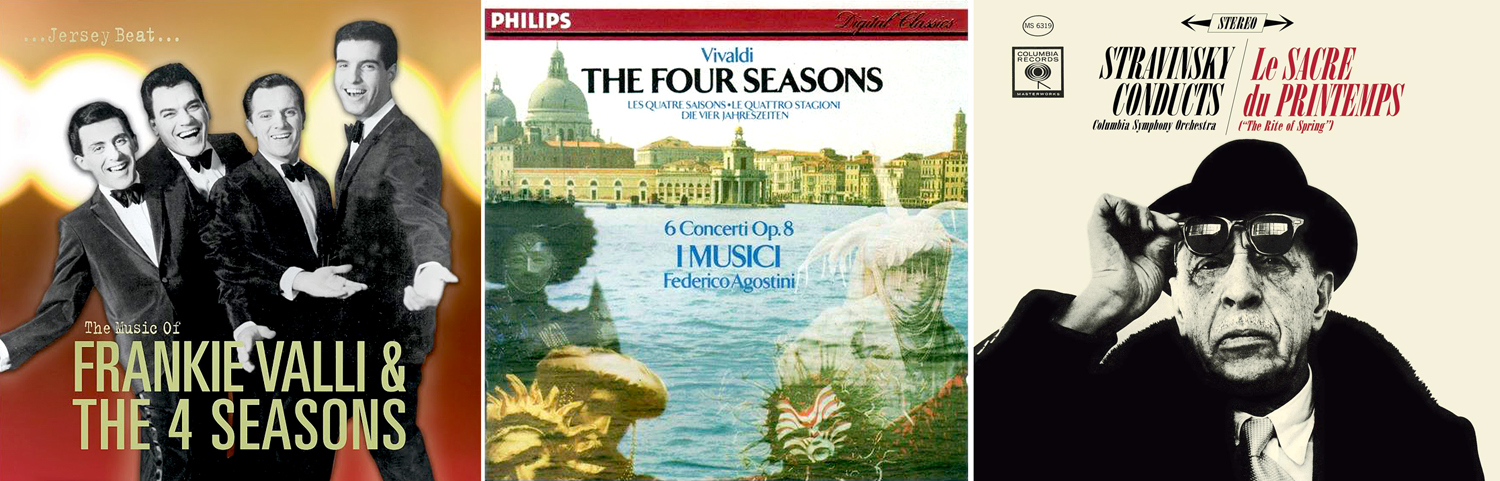
As a teenager, when everyone else was listening to Paul Anka or Chubby Checker. I was listening to Leonard Bernstein. My Four Seasons was Antonio Vivaldi, not Frankie Valli. My make-out music was Stravinsky.  Honestly; I’m not making that up. 

I am not claiming special merit for my tastes. There is great value in the best pop music, and some of our classic authors were best-sellers in their own time. So I’m not making a case for being high-brow, but rather confessing my own weirdness, my own unfitness for human society. 

Not all my minority tastes are so high-falutin’ as Orlando di Lassus. I have in my bones more specialized knowledge of 1930s B Westerns than should block up any segment of a person’s long-term memory bank. Do you know the difference between Ken Maynard and his brother, Kermit? Can you name even one of the cast line-up of the ever-changing Three Mesquiteers? I can. The same for science-fiction movies from the 1950s. They are all there, clogging my brain-case. 

As I take inventory of what is boxed up in my brain-attic, I find any number of things most people don’t care about. In fact, what most people don’t care about pretty well defines who I am. 

When visiting France, I never went to the Eiffel Tower, but did drive through all of the north, visiting Gothic cathedrals. I’ve been to Chartres three times, and in Paris, Notre Dame was practically a second home. I cannot remember how many visits to it. So, yes, my tastes are not the normal tastes. 

On weekends, I watch C-Span’s “Book TV.” I search YouTube for college lectures. I have a huge collection of Great Courses DVDs. 

When it comes to movies, I love them slow and arty, preferably with subtitles. I have all of Tarkovsky on DVD, all of Almodovar, and all that are available of Robert Bresson, Eric Rohmer and Jacques Rivette. And tons of Bergman and Herzog and Renoir. I would have a bunch of Marcel Pagnol, but there isn’t a bunch. Nor is there much of Guy Maddin available, but if you ever needed bona fides as a weirdo, a confessed love of Maddin’s films is proof. 

Then, there’s classical music. If I had to lose a sense, I would ask for sight to go before hearing. I need music. Nothing else so precisely both describes and evokes the most profound human emotions. My insides swell up when I listen to the greatest music. Pop music does an excellent  job of pumping up energy and cheerleading for the happiest emotions. But classical music is needed to speak for grief, transcendence, fear, anxiety, love, power — and even more, the interplay between all these feelings. The virtue of popular music is its simplicity and directness; that of classical music is its complexity and depth. 

But even amidst the classical repertoire, I find myself drawn to the outskirts. Yes, I love my Beethoven and Brahms, but I also love my Schoenberg, my Morton Subotnick, my Colin McPhee. And even when dealing with Beethoven, I’m more likely to pull up the Grosse Fuge than the Appassionata. 

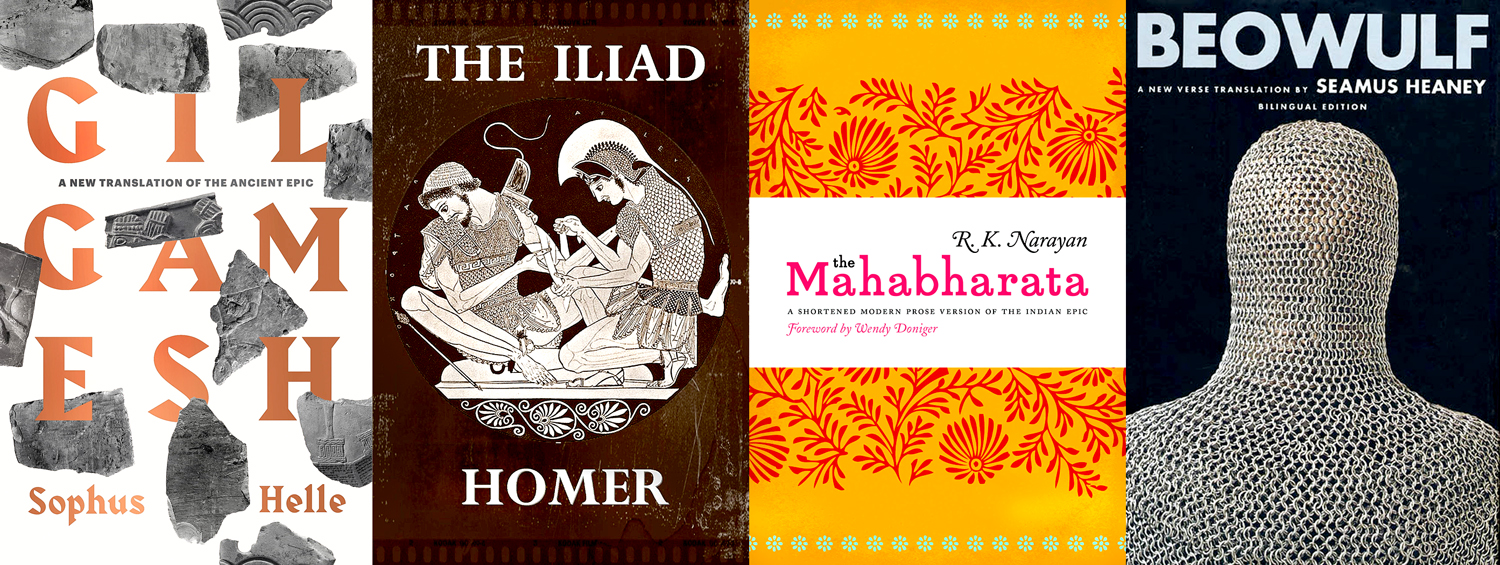
Then, there’s my reading. The authors I most often re-read are Homer and Ovid. I collect Loeb Library editions. I have seven translations of the Iliad on my shelves behind my writing desk. Five Odysseys. 

And not just Greek or Roman lit. I can’t count the number of times I’ve been over Beowulf. There’s the poetry of Rumi and Basho. I’ve read two different translations of the Indian Mahabharata. I am currently reading two very different translations of Gilgamesh, one is a line-by-line literal translation of the extant fragments, the other is a re-telling from all the varied bits of the epic that have survived, into a single version. Comparing the two gives me a better handle on Mesopotamian thought and literature. These current two now join the two earlier translations that I had previously read. 

I have often wondered why I am so out of step with my fellow beings. Any one of them might well enjoy any one of the things I’ve mentioned, but the concatenation of them defines me. You can see the wide range of things I write about in this blog. 

My late wife used to say I’m “the man who can’t have fun,” and laugh at me because I cannot bear musical theater, don’t dance, don’t listen to pop music, don’t read popular novels, and lord save me from theme parks. I shudder. But I respond that I have lots of fun with my oddments. I get tremendous pleasure from string quartets or visiting art galleries or reading multiple translations of German poetry. 

If we are what we eat, we are also what we read, see and listen to. It all goes into us and feeds us, body and soul, and fashions who we have become. For better or worse.

As I continue to contemplate the possibility of perhaps, maybe, decluttering my trove of Classical music CDs, I come to the 20th century. I have to admit, that I listen to music from that period more than any other. It was my century. And so, I have a ton of discs from composers who wrote, beginning in the 19th, but extending their careers into the 20th, and now, music from the 21st century. 

Sometimes, we forget that such lush music as that of Rachmaninoff or Richard Strauss continued to be written: Strauss’ Four Last Songs, perhaps the most high-calorie confection ever put to paper, was premiered in 1949, four years after the end of World War II, and 36 years after Stravinsky’s Rite of Spring. “There’s still plenty of good music to be written in C-major,” said Arnold Schoenberg.

So now, as I did last time, I am going to sort through the violent century and salvage what I think needs to be saved, making a pile of recordings and regretfully saying goodbye to too much great music, but, you know — I’m 73 years old and I’m not going to be able to listen to all of the thousands of CDs that currently clog my shelves. 

I’ve set the goal of picking a single work (or set of works) by significant composers to throw on the pile. I’m going by chronological order, according to birth dates. And we start by remembering that Edward Elgar was a 20th century composer. Yes. He was. 

Edward Elgar 1857-1934 — Initially I thought the work I could not do without was the doleful Cello Concerto, from 1919. The First World War speaks directly through that music. But, no, I have to go with the Violin Concerto of 1910, which is one of the few noble concertos that can stand with those of Beethoven, Brahms, Sibelius, Berg and Shostakovich — not merely tuneful, but an expression of the highest thoughts and emotions that humans are capable of. 

But, I’m in luck. Because I can save the Violin Concerto, played by Pinchas Zukerman on a disc package that includes the Cello Concerto, played by Jacqueline Du Pre, with the Enigma Variations thrown in.  A perfect summing up of the best of Elgar.

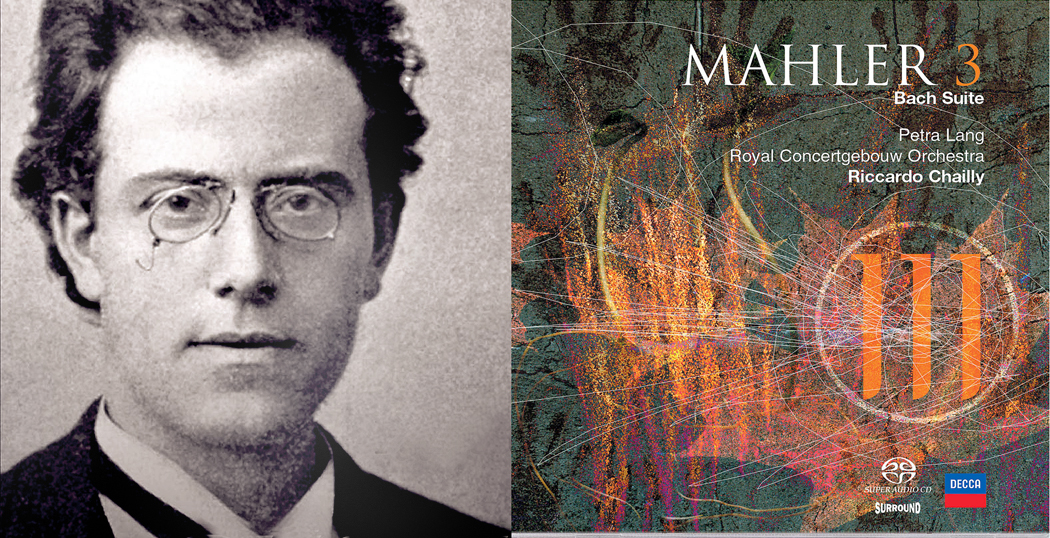
Gustav Mahler 1860-1911 — Choosing is too hard. I have double-decker shelves devoted to Mahler, the composer who moves me above all others. How can I clear it out? How can I consider any of it as “clutter?” I thought originally I would have to save Das Lied von der Erde, and I don’t know how I can say goodbye to it. But Mahler said famously, the symphony must contain the world, and the piece that does that more than any other is the Third Symphony, and so, I’m putting that on the pile.

I just counted, and I currently have 14 recordings of the Third (with another on the way from Amazon). The one I keep is Riccardo Chailly and the Concertgebouw Orchestra. Not only is it a great performance, but the 2-discs are magnificently engineered. The sound is stunning.
Claude Debussy 1862-1918 — While I love Debussy’s piano music (especially played by Paul Jacobs), the keeper is La Mer. I have not counted the versions on my shelf, but there are not a few. 

Pierre Boulez recorded it twice. The second is OK, but nothing special, but his first go-round, on Sony, is cut by diamond and the most exciting one I know. It may not be a sea-spray evocative as some, but it makes a compelling case for it as belonging to the 20th century. It comes in a package with a pile of other Debussy.

Richard Strauss 1864-1949 — Strauss can sometimes seem a bit reptilian. How much is show-biz with his show-off orchestration. But there is no doubt to the sincerity of his Four Last Songs. They are the most profoundly moving orchestral songs I know, outside Mahler’s Der Abschied

I wanted to save Jessye Norman’s version, with Kurt Masur, but I have to admit, my heart has always belonged to Leontyne Price in these songs, accompanied by Erich Leinsdorf. Both versions are gorgeous, but Price is now packaged with Fritz Reiner’s Also Sprach Zarathustra. On the pile. 

Jean Sibelius 1865-1957 — As tightly argued as Mahler is spacious, Sibelius packs a great deal into a well-cinched frame. Of his seven symphonies, the one that speaks to me loudest is the final one, which makes me feel in my bones the vast icy spaces of Scandanavia. 

Leonard Bernstein recorded it twice, once for Columbia (now Sony) and later for Deutsche Grammophon. The first is tighter, but the second comes with the Fifth Symphony, giving me the chance to save two symphonies for the price of one. Bernstein slowed his tempos as he got older, and some people don’t like the broadened Fifth, but I have no problem with it. And the Seventh takes me to other places. 

Serge Rachmaninoff 1873-1943 — My dearest friend, Alexander, refuses to listen to Rachmaninoff, saying he is too gooey and Romantic. But I have been trying to get him to recognize that his music — especially his later music — is oozing with Modernist irony. What is more sly than the Paganini Rhapsody? Yes, there’s the “big tune,” but even that is undermined by what surrounds it. But if I have to save just one piece, that would be the Symphonic Dances. I love them to death. 

But, like so many other things in this list, I can have cake and eat it at the same time, with the recording by Andre Previn and the London Symphony Orchestra, bundled with the gooey, Romantic Second Symphony under Mariss Jansons, and the tornado of the Third Piano Concerto, played by Leif Ove Andsness. 

Arnold Schoenberg 1874-1951 — Now we’re entering territory fully recognizable as Modernist. I wish I could save Pierrot Lunaire, but I have only one slot available, and it has to go to Verklaerte Nacht. While I admire Pierrot, I love Transfigured Night

Of the versions I have, both in its orchestral form and its original sextet form, I am surprised at how good the version is that was recorded by Herbert von Karajan and the Berlin Philharmonic. It goes onto the pile, and gives me the bonus of the Orchestral Variations

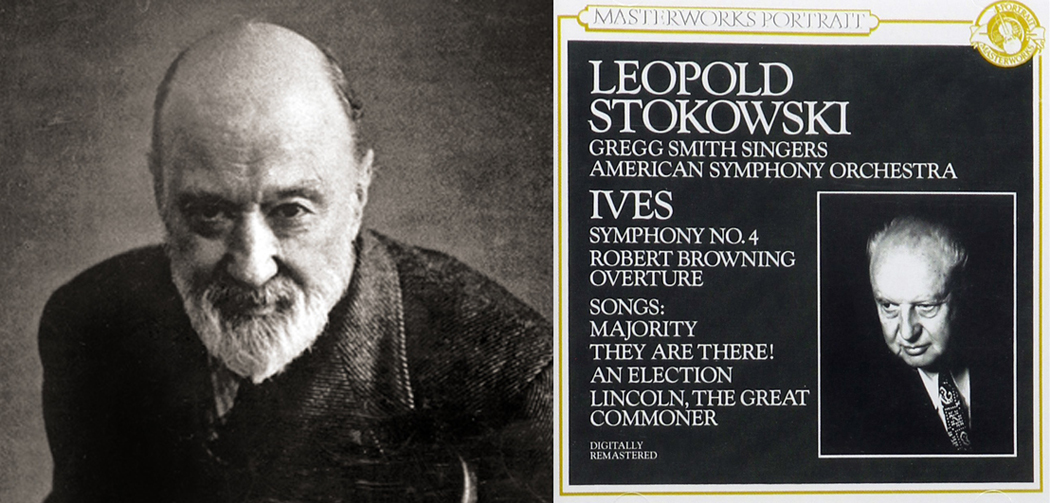
Charles Ives 1874-1954 — I have three or four versions of the Concord Sonata, and heard it live played by Jeremy Denk. It should be saved. But I am going, instead, with the Fourth Symphony, which is pure Ives, with all his usual tricks. Friends think I’m joshing when I claim that Ives’ music is beautiful. But it is. You just have to get used to the idiom. 

The best version (I have four of these, too) is the first recording, led by Leopold Stokowski. One word for it: Transcendental. 

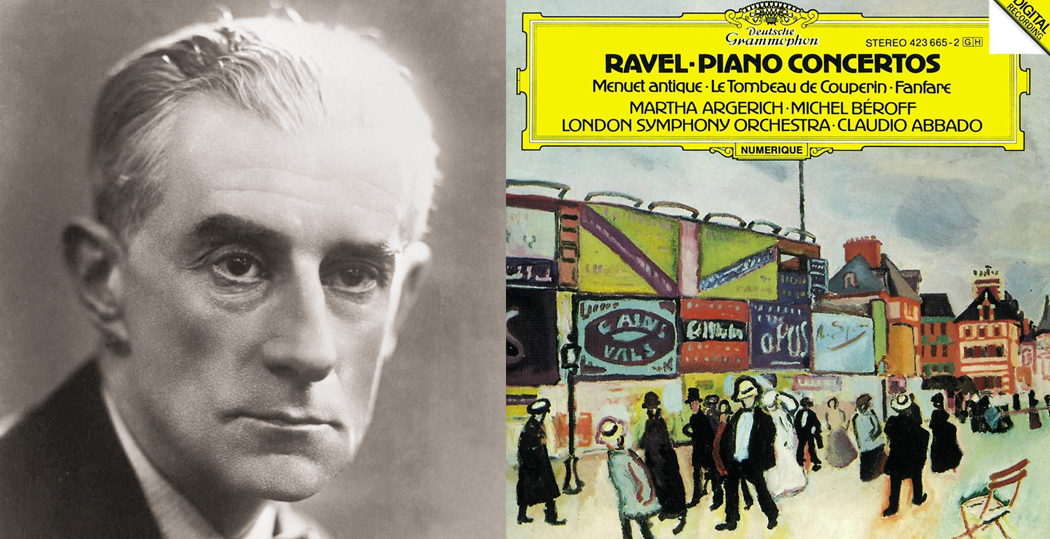
Maurice Ravel 1875-1937 — Stravinsky dismissed him as a “Swiss watchmaker,” but I think that was only professional jealousy. Yes, we’re all tired of Bolero. But I want to save the Concerto for Left Hand, which is jazzy in parts, terrifying in parts, and always makes you wonder that anyone can play two-hand piano with only one hand. 

But there is also that ethereal slow movement of the G-major Piano Concerto. The disc with Martha Argerich playing the G-major and Michel Beroff playing the Left-Hander, with Claudio Abbado and the LSO, also gives us the orchestral version of Le Tombeau de Couperin. What a luscious disc. 

Bela Bartok 1881-1945 — There’s a lot to save with Bartok, also. But I can’t have the Contrasts, the piano concertos, the six quartets and the Concerto for Orchestra. No. One disc. And the piece I want to keep most is the Music for Strings, Percussion and Celesta

Luckily, one of the greatest performances of that music, by Fritz Reiner and the Chicago Symphony, also features one of the greatest performances of the Concerto for Orchestra. It is essential listening for any music lover.

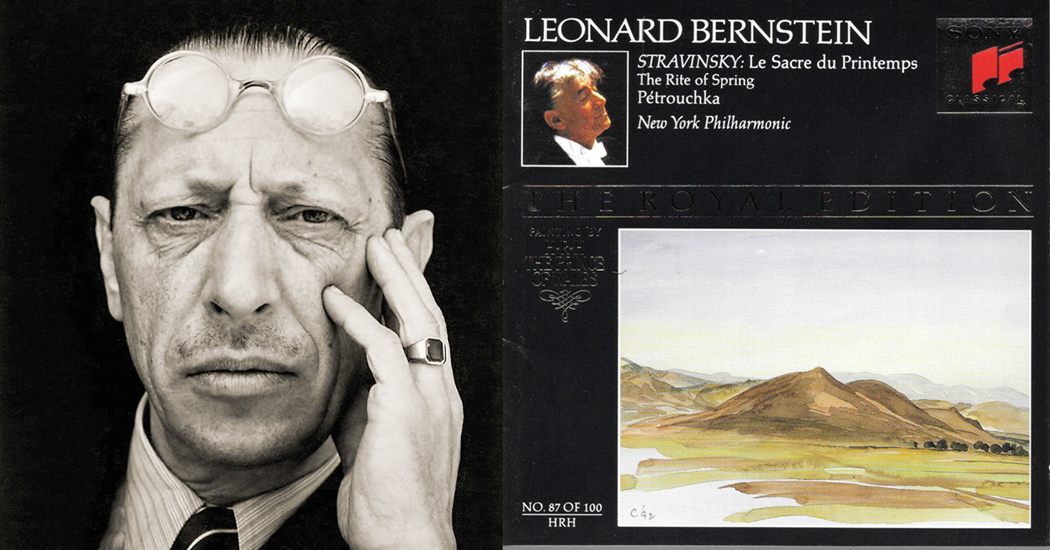
Igor Stravinsky 1882-1971 — Much music, many styles. Part of me wants to save the Requiem Canticles and the Movements for Piano and Orchestra, just to tweak those who hate 12-tone music. But since the entire 20th century seems launched by The Rite of Spring, just as the 19th was launched by the Eroica, I have to save it.

There are lots of great performances, but none as feral and primal as the first of them recorded by Leonard Bernstein and the NY Phil. Even Stravinsky, who hated “interpretation” in performance agreed that it was like no other. The disc also includes Petrushka, so, what’s not to love?

Anton Webern 1883-1945 — Do we have to? I’m afraid so. Luckily, there isn’t much of it. No one can make blips and blurps like Webern. He was the godfather of all subsequent serial music, disconnected, alienated and difficult. Yet, he makes such interesting sounds. And few pieces last more than a few minutes, even seconds. Take at least one bit of the broccoli: Try a little Webern. 

Karajan put out a tight, condensed disc with the Passacaglia, the 5 Movements for String Orchestra, Op. 5, the 6 Pieces for Orchestra, Op. 6, and the Symphony, Op. 21. This is a fair sampling, really well played. And the entire symphony lasts only 10 minutes. 

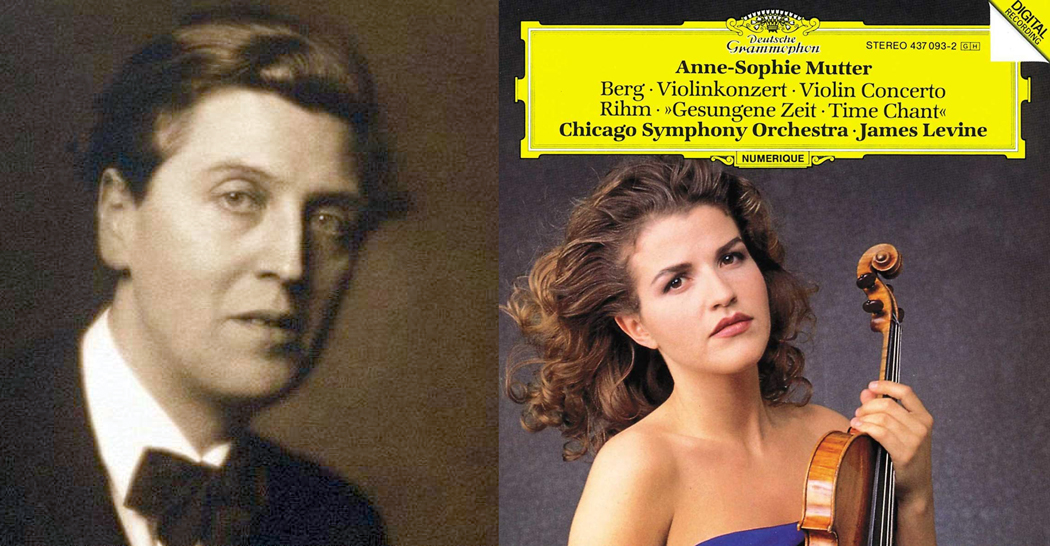
Alban Berg 1885-1935 — The third wheel of the Second Vienna School is the easiest to love and enjoy. He is the most emotional, and found a way to cheat on his 12-tones, to suggest key areas. His Violin Concerto is the most powerful fiddle concerto of the whole century, the most personal, the most emotional, and the most beautiful. 

No one plays it who doesn’t give it his or her most serious efforts. It cannot be just tossed off. My favorite is by Anne-Sophie Mutter with the Chicago Symphony and James Levine. It also includes Wolfgang Rihm’s Time Chant, which, I’m afraid, I find utterly forgettable. I’m saving the disc, anyway, for Mutter and Berg and all the pain of loss in the world condensed to music. 

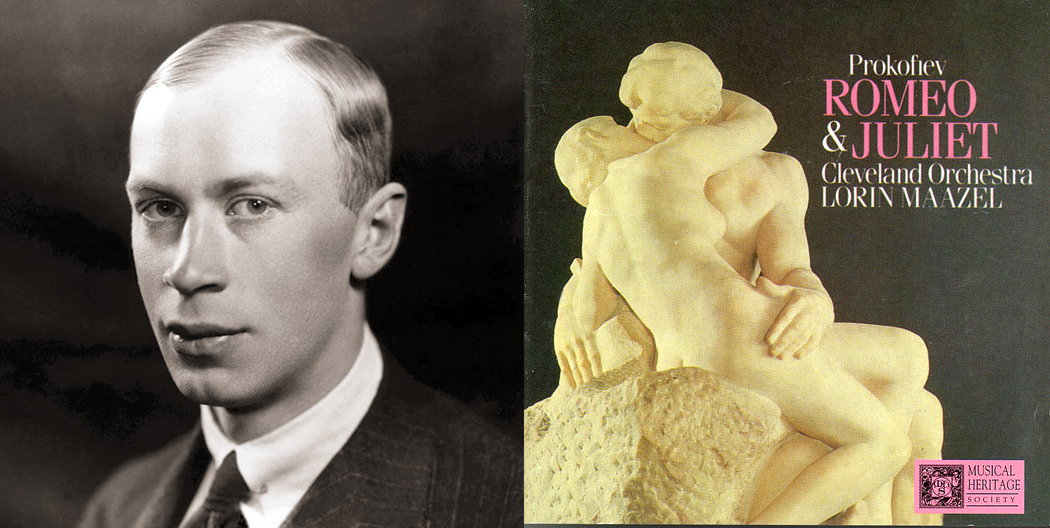
Serge Prokofiev 1891-1953 — Shouldn’t I save the Seventh Piano Sonata? Or the Third Piano Concerto? Or the Fifth or First symphonies? Yes, I should, but I’m going to save the full ballet score of Romeo and Juliet, which, I believe, is the greatest ballet score of all time. The whole thing, not just the suite. I might be swayed by having seen it danced many times, in some of the best productions ever. But the music stands on its own. 

There are three possibilities: Previn, Maazel and Gergiev. I’m going with Maazel and the Cleveland Orchestra. It just noses out the others. 

Paul Hindemith 1895-1963 — Hindemith used to be the third part of the triad of Stravinsky, Bartok and Hindemith as the top Modernists in music. But he has fallen on hard times. Stravinsky and Bartok have better tunes. But when Hindemith borrows tunes from Carl Maria von Weber, he is as good as any. I love a lot of Hindemith, but I admit, he is not overtly lovable. But the Symphonic Metamorphosis on Themes by Weber is jaunty, catchy and a ton of fun. 

A really good performance by the Philadelphia Orchestra under Wolfgang Sawallisch also gives us two of Hindemith’s best other scores, the Mathis der Maler symphony and Nobilissima Visione. This is Hindemith you could actually learn to love. 

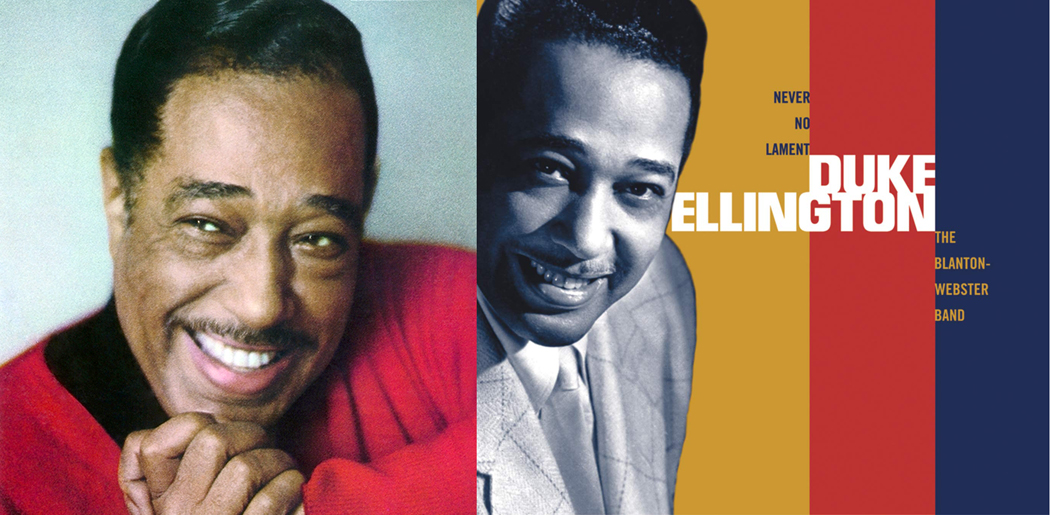
Duke Ellington 1899-1974 — Yes, in my book, this is classical music. Ellington does for his group of instruments nothing less than what Ravel can do for the standard symphony orchestra, with all the colors and surprises. And harmonically, Ellington is ages ahead of many more traditional composers. I have about 50 discs of Ellington’s music, and I love him in each of his decades. But the height of his creativity and originality was with the band he had in the 1941-42, the so-called Blanton-Webster band, named for bassist Jimmy Blanton and tenor sax, Ben Webster. It’s a misnomer, because you can’t forget all the other luminaries in the band, from Harry Carney to Cootie Williams to Johnny Hodges. 

There is a three-disc release that has most of the work the band did in those two years, including Ko-Ko, Cotton Tail, Harlem Air Shaft, Take the A Train, Blue Serge, Sophisticated Lady, Perdido and the C-Jam Blues. Each a miniature tone-poem. This is music to take seriously. Seriously. 

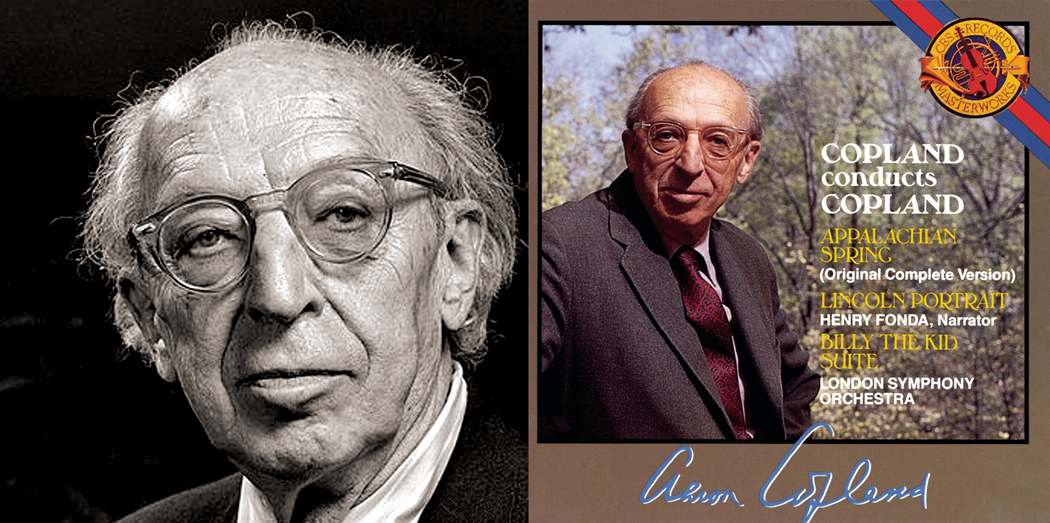
Aaron Copland 1900-1990 — There are two Coplands, the earlier, knottier Modernist of the Piano Variations, and the later, popular composer of Rodeo, El Salon Mexico and Billy the Kid. But to my mind, his very best is Appalachian Spring, a ballet score he wrote for Martha Graham. It is usually heard as a truncated suite and enlarged for full orchestra.

But the version I love best, and the one going on my pile, is the original full-length chamber version. Copland recorded it himself, along with the suite from Billy the Kid. Unfortunately, you have to put up with the tedious and tendentious Lincoln Portrait, here narrated by Henry Fonda. 

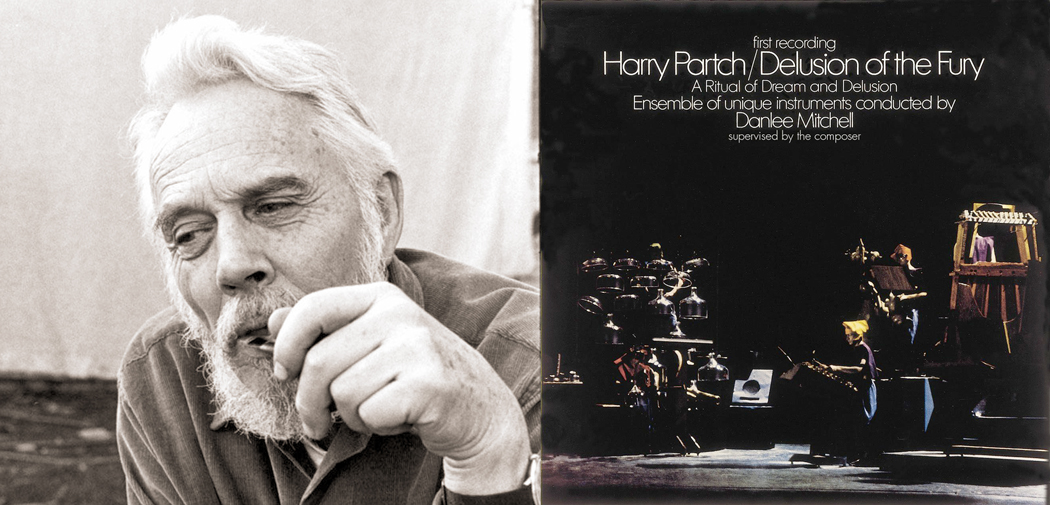
Harry Partch 1901-1974 — England has its eccentrics, but America has its crackpots, and Partch is Exhibit A. Having decided that the tempered musical scale is a “mutilation” of true music, he invented and built a whole orchestra of new instruments, such as the chromelodion, the quadrangularis reversum, the zymo-xyl, the gourd tree and cloud-chamber bowls, in order to play music in his 43-note octave. I saw an exhibit of them at the Museum of Modern Art in New York in the 1960s. They were stunningly beautiful to look at. Hearing them, is something different. 

Partch wrote a lot of music for his instruments, some enchanting, like his songs on Hobo graffiti, Barstow. I am saving his full-length Delusions of the Fury, which is based on a Japanese Noh play and an African legend and a codification of Partch’s own delusions. Hooray for him. 

Dimitri Shostakovich 1906-1975 — Surely the major composer of the middle of the 20th century, Shostakovich labored hard under the yoke of Stalinism, and his music expresses his deep humanity (except when he is buckling under the pressure of the commissars and pumping out party-hack material; but we can ignore all that). His symphonies 1, 4, 5, 7, 9, 10, 13, 14 and 15 are among the greatest works of the century. But I’m saving his first Violin Concerto. It is, I believe, his ultimate masterwork. 

Its dedicatee, David Oistrakh, recorded it with Dimitri Mitropoulos and the the New York Philharmonic and anyone who cares about classical music should know this performance. It is coupled with Rostropovich playing the first Cello Concerto with Ormandy and the Philadelphia. Together this is a powerful pair. 

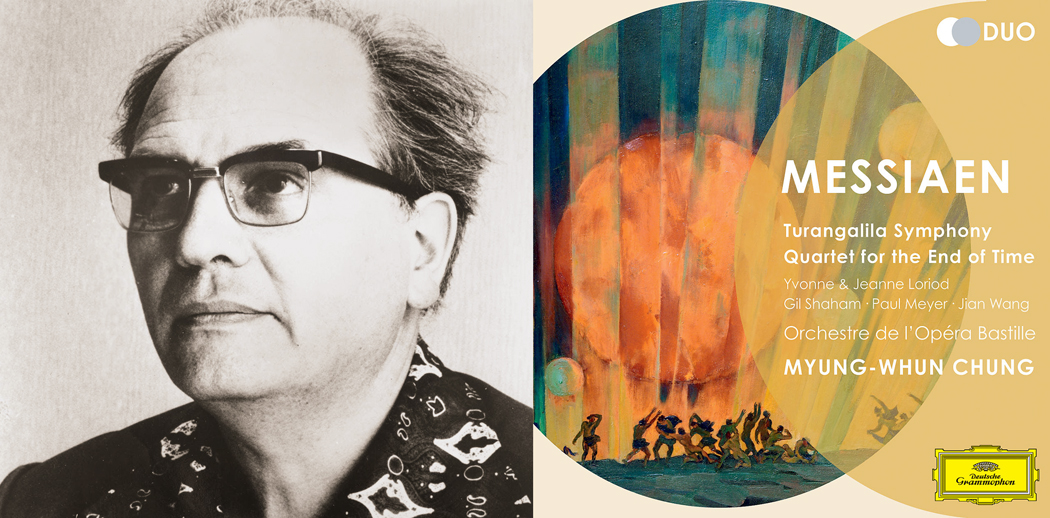
Olivier Messiaen 1908-1992 — Harry Partch wasn’t alone. French composer Olivier Messiaen had his own ideas about harmony and rhythm, and created an idiosyncratic body of music that is built on bird song and Eastern mysticism, combined with fervent Christianity. 

He wrote his Quartet for the End of Time in a Nazi prisoner camp and played it for the first time for its inmates and guards. His most popular work (if you can call anything so peculiar “popular”) must be the Turangalila Symphony, a rich, spicy, aromatic blend of orchestral colors, and you can get both works together in a set with conductor Myung-Whun Chung and the Orchestre de l’Opera Bastille. 

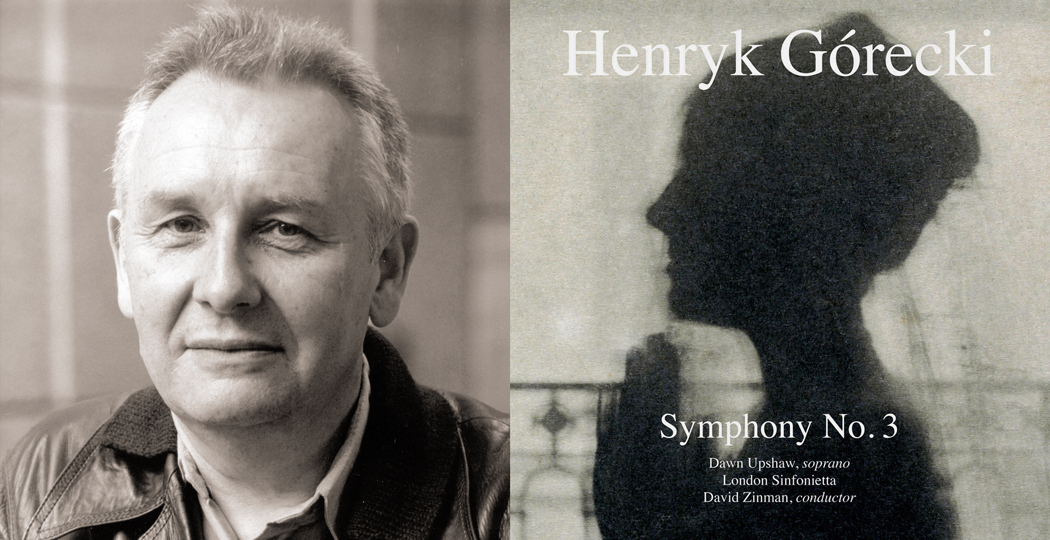
Henryk Gorecki 1933-2010 — Gorecki had the misfortune to have become popular. His Third Symphony topped the pop charts in England in 1992 and sold a million copies world-wide. Officially titled the Symphony of Sorrowful Songs, it speaks of war, love and loss. It is a slow piece, moving only by tiny steps from first to last. Its popularity has led some critics to pooh-pooh its depth and beauty, believing nothing that popular could be any good. They should listen more carefully. 

The version that sold so well was the premiere recording with Dawn Upshaw and David Zinman conducting the London Sinfonietta. I have several versions on my shelves, but this first one is still the best. Onto the pile. 

Morton Subotnick 1933- — The California-born composer of electronica had a brief moment of fame in the late 1960s when Nonesuch Records released his Silver Apples of the Moon, and followed it up with The Wild Bull. The first, with its synthesizer squeaks and blips was bright and energetic, the second with its groans and wheezes, was much darker. 

Both deserve to be remembered. They may be a relic of their times, but they really are worth listening to. And they are now both on a single Wergo CD. 

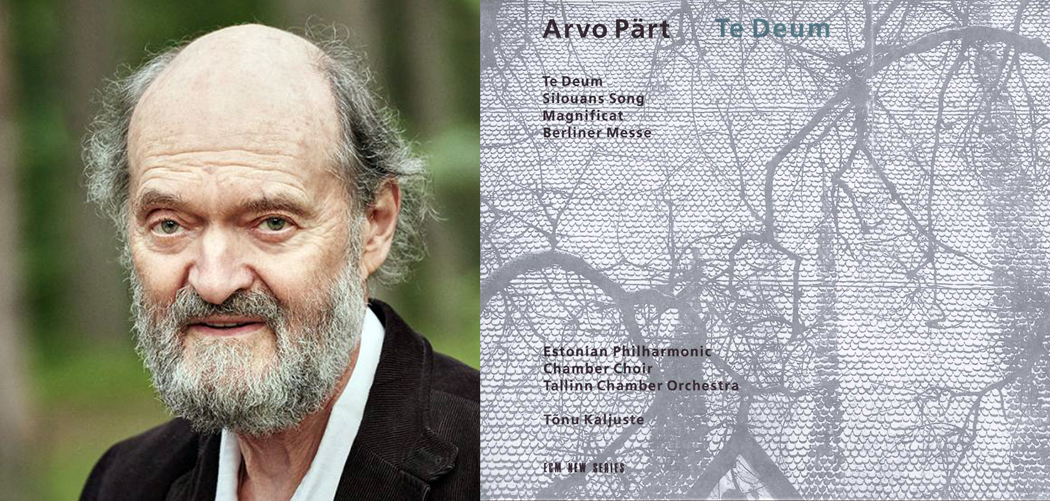
Arvo Pärt 1935- — The Estonian composer’s meditative music is what he calls “tintinnabuli,” and in 2018, Part was the most performed living composer in the world. His music appeals not only to the classical audience, but to the New Age one as well. It is spiritually-aimed music and is both beautiful, well-constructed, and easy to listen to. You can wash in it like a warm bath, or you can listen as intently as you might to Bach or Bartok. 

He has arranged his most popular piece, Fratres, for any number of instruments and combinations (there is even an entire CD of nothing but variations of the piece), and I could save pretty much any one of his discs. But I am going to put Te Deum on the pile, primarily for the Berlin Mass that is on the disc. 

Philip Glass 1937- — Glass is unavoidable, even in popular culture. He must be the most prolific composer since Vivaldi. He began as a strict Minimalist, but loosened up that style to become what can only be called a “Glassian.” At his best, he is hypnotic and powerful. At his worst, he can become tedious. His Einstein on the Beach was epochal and groundbreaking. I have an entire shelf devoted to his releases. His trilogy of movie scores for the Godfrey Reggio abstract-narrative films in the quatsi series are a perfect introduction to Glass. Koyaanisqatsi was the first and best known.

But I am going to save the third, Naqoyqatsi, mainly because it can be heard as an extended cello concerto played by Yo-Yo Ma. 

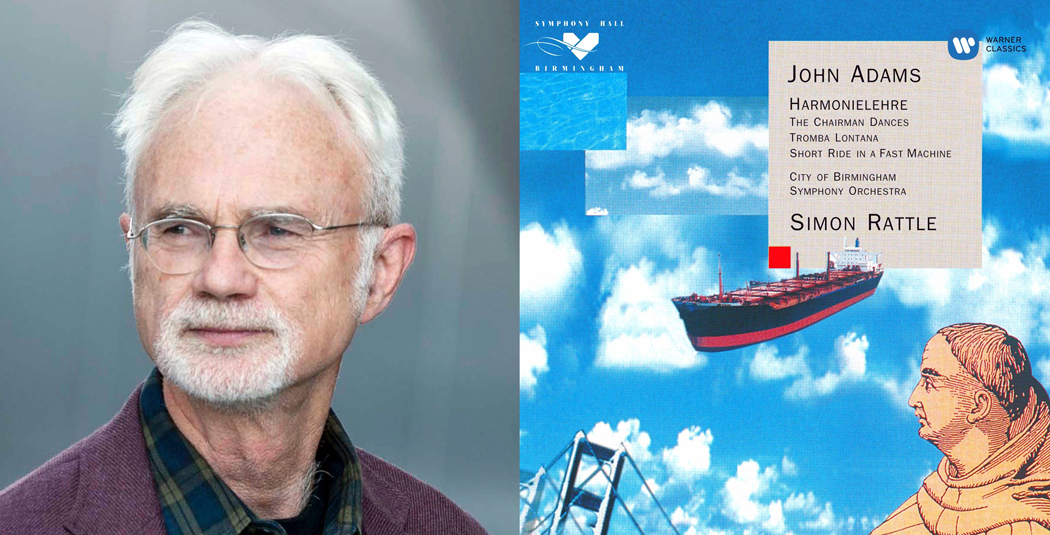
John Adams 1945- — Almost neck-and-neck with Glass is John Adams, another lapsed Minimalist who has created his own distinct voice. His opera, Nixon in China, is pretty well the only contemporary opera to join the mainstream repertoire. I’ve seen it live, and I’ve seen Adams’ Doctor Atomic live. They are both thrilling as Verdi or Puccini. 

But I’m going to save a particular favorite orchestral work, Harmonielehre, or “Harmony Lesson.” Its opening chords are even more startling than the two E-flat bangs at the start of Beethoven’s Eroica. And the disc I’m saving includes two of Adam’s most popular and gripping overture pieces, The Chairman Dances and A Short Ride in a Fast Machine

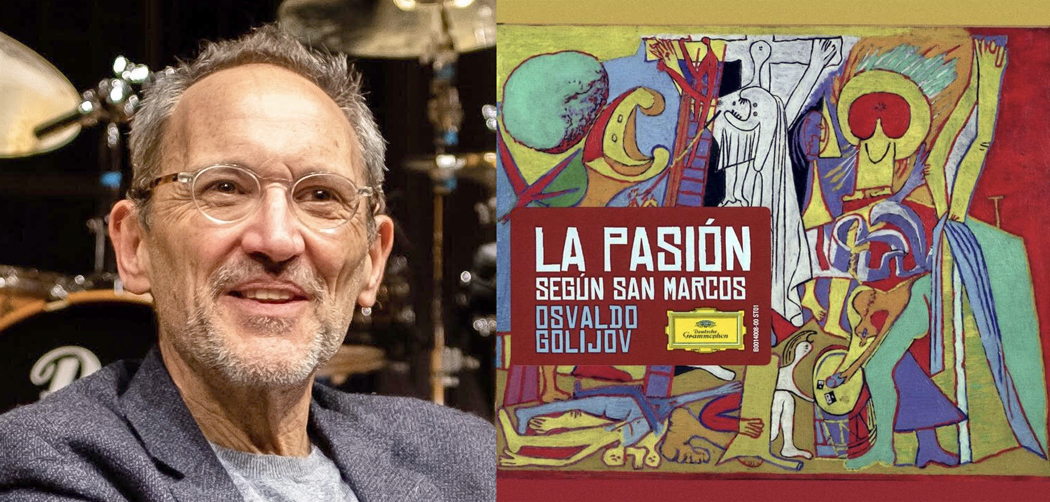
Osvaldo Golijov 1960- — The youngest composer on my pile is now 60. I first heard his music in a live performance of Ainadamar with Dawn Upshaw singing the lead. It blew me away. And I was going to put my recording on my pile, but then I heard his Passion of Saint Mark or La Pasión Según San Marco, and fell in love with it. 

It combines Latin and African rhythms and folk music with a huge percussion section and more than 50 singers. When it was premiered, it got a 15-minute standing ovation. It deserves its place on my pile. 

____________________

And so, my fantasy ends. I have now an imaginary pile of music to listen to, to the exclusion of a thousand other CDs. But it is just a fantasy; I could never actually declutter my shelves. I have, in the past, culled recordings to make space for new, but now those I culled are just stuffed into old dressers, cluttering up the drawers in both of them, hidden from view as if I had actually gotten rid of them. But I can’t. And with new recordings coming my way from Amazon, I may have to cull once more, just to make space. And I may need another old dresser in the storage room just to take care of my rejects. Marie Kondo can go jump in a lake. 

How did I ever become such a sobersides? An old fogey? So donnish?

My late wife used to call me “the man who can’t have fun.” But I do have fun. I have lots of it; it’s just that I get pleasure out of things most people find impenetrably dull. I find them incredibly fascinating. I watch C-Span Book TV on weekends, for instance. I read Homer and Dante, and listen to Paul Hindemith. I pine for ballet. And little makes me happier than digging into some arcane research. 

It goes way back to when I’m this kid, see. When my classmates were listening to Cousin Brucie on the AM radio and loving the Drifters or “Splish-splash, I was takin’ a bath,” I was spinning Stravinsky’s Rite of Spring on the Sears Silvertone. 

In third grade, I enjoyed diagramming sentences. Why?

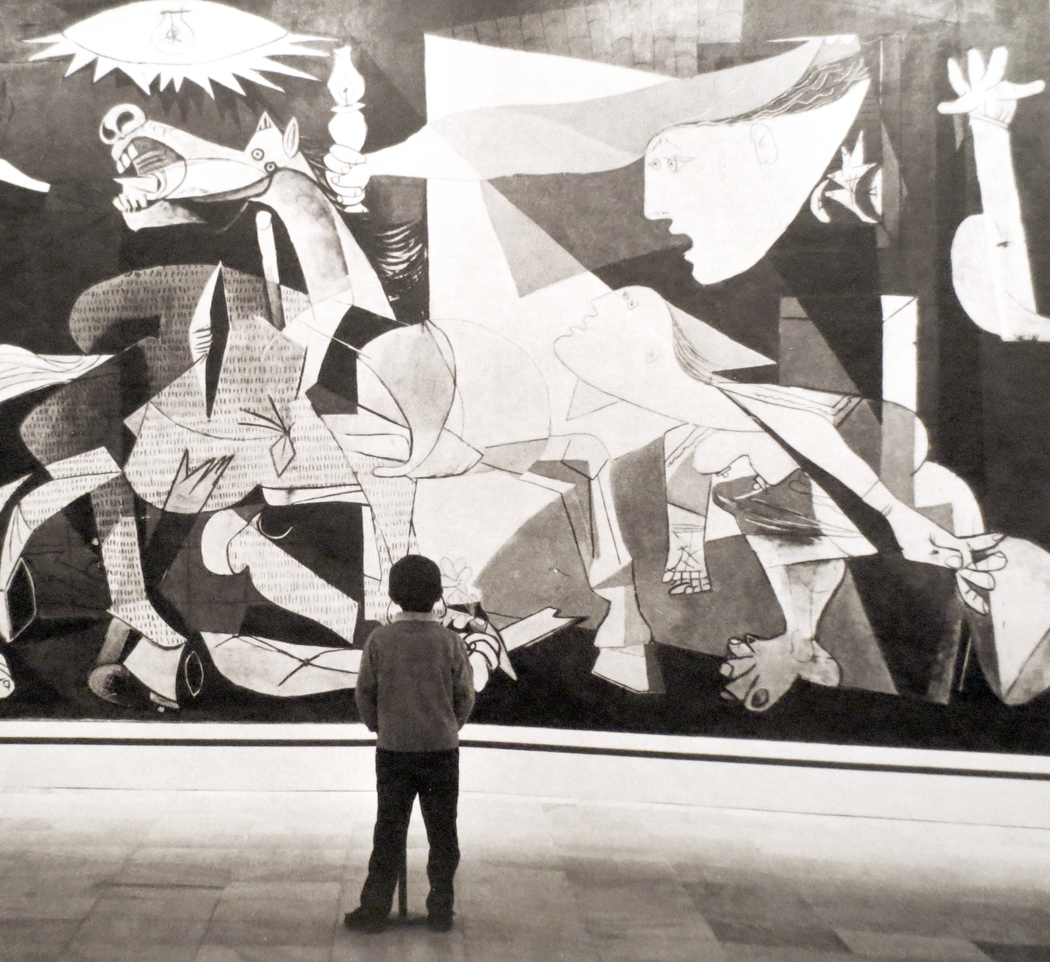
 These things come to mind because I recently came across an essay written by Artsy editor Casey Lesser about how seeing Guernica when she was 15 years old changed her life and set it on its course. I had an instant reaction to her piece because when I was about the same age, I also came across the painting. 

It was in the early 1960s and I was a high-school student in New Jersey. I took the bus to Manhattan as often as I could and practically lived in the city’s museums, including the Museum of Modern Art, where I became lifelong friends with Van Gogh’s Starry Night, Jackson Pollock’s Number 1A and, of course, the wall-spanning expanse of Picasso’s Guernica. 

Back then, when I would exit the elevator on the third floor of MoMA, the painting — more than 11 feet high and 25 feet wide — dominated the view to the right, on the far wall through two other galleries. It was on “permanent exhibition,” and I was confident it would always be there for me to see. Nothing is permanent in this life, and in 1981, the painting absconded to Spain. 

With its powerful and painful imagery, the painting was proof to my adolescent mind that there was a world more real and more meaningful than the suburban life I was stuck in. And like countless young “sensitive souls,” from Wilhelm Meister to Holden Caulfield, I urgently and earnestly yearned for something that cast a larger shadow on the screen. I was a little too conscious of being the hero of my own Bildungsroman. 

That early exposure to the art at MoMA, and especially Guernica, aimed me at my eventual career as an art critic. Parvis e glandibus quercus. Or, as Pope had it, “As the twig is bent, so the tree inclines.”

But this recognition also set me off to consider what other early exposures bent that twig. Of course, some of the most transformative influences were people: teachers, friends, and eventually, wives. But I am concerned here primarily with arts and books that yanked the steering wheel from my hand and sent me in new directions.

I was in high school and my new exposure to history, poetry, foreign languages, both Latin and Spanish, all kindled a growing sense that there was more to life than sitting in the living room watching Bonanza and eating Oreos. 

Many of us rebel as adolescents against the banality of our lives, and that of our parents’. Most of that rebellion is inchoate and poorly aimed, leading to teen drinking, minor car theft or simple sullenness. But in some few cases, such as mine, there was a clear alternative: For me, the life of the mind. 

Art and literature spoke of an existence that was not banal, but intense and meaningful. I began eating it up. 

For instance, theater. I had little experience of live theater until my freshman year in high school, when the class was bussed down to Princeton, N.J., to see Shakespeare’s Julius Caesar at the McCarter Theatre. It was the perfect introduction to the Bard; the story was clear and simple, so, while the language was baroque, we could still follow the play easily enough. 

McCarter Theatre Center

Then, the following fall, we went back to the McCarter to see O’Neill’s Long Day’s Journey into Night. What crazed educator thought that a three-and-a-half hour play about a screwed up family in 1912 was a good one for high school sophomores, I don’t know. But it struck just the right note of high seriousness for my nascent psyche. I loved it. I wanted more. 

I’ve already written about my high school girlfriend, who became a professional musician, and how we used to make out on her couch while listening to Stravinsky on the phonograph. We went to countless concerts and recitals in New York and I came to love classical music. I bypassed the doo-wop: My Four Seasons were Vivaldi’s, not Frankie Valli’s. 

I took up reading contemporary literary fiction: Updike, Bellow, Pynchon. Two books especially hit the mark. I was bowled over by Joyce’s Portrait of the Artist as a Young Man. I sought epiphanies. It’s a book I still read again every few years. 

Then, I discovered Kazantzakis after watching the movie of Zorba the Greek, where I read the book and found in the novel a deeper level of Buddhist thinking, which sent me on to discover Zen via Alan Watts and poetry via Matsuo Basho. 

Each taste made me seek out more. Haiku eventually expanded into Paradise Lost — an inflation equivalent to the early seconds of the universe after the Big Bang. 

All this was heady stuff for a pimply-faced teenager, but even if only dimly understood at the time what I was reading and experiencing, I knew it was bigger and more important than my paper route or the Reader’s Digest. The desire for a richer, deeper, more profound life has been the driving force behind my inclination toward what used to be called high-brow culture.

There has been an ersatz distinction between high-brow and low-brow. But that distinction is characteristically middle-brow. There is a snobbery of the middle classes that seeks to distinguish itself from the uneducated tastes, and an aspirational striving for the status (and wealth) that seem to mark the upper classes. In this dynamic, there is an inherent self-loathing to the middle class, at least when it is self-aware. 

And no doubt my allegiance to fine art was originally spawned by this loathing of what seemed a mundane and insipid upbringing. Art told me there were more serious concerns in life, and bigger adventures. If I didn’t want to be squelched by the 9-to-5 life, hanged by the necktie and imprisoned by my own front lawn, then I would have to take on Bach, Joyce, Hokusai, Zora Neale Hurston, Laurence Sterne, Miles Davis, Correggio, Xenophon, and Philip Glass. Gobble them all up and look for even more with an incessant appetite. 

That was all a half-century ago. I have sucked up every bit of knowledge and wisdom I could find, only to discover that I knew less and less, and was more foolish than I ever knew possible. Now at 72, I no longer feel intolerant of the middle class that gave birth to me, but find it is the foundation of a society that allows me space to be an outlier. Only with the solid support of a functioning culture could I have found a means to leave it behind. Its tolerance allows me my eccentricity. I know I would have found none in Stalin’s Moscow nor Pol Pot’s Phnom Penh. 

So, I have been allowed to read what I want, see and hear what I want, and if that has led me away from the class that a-borned me, it has led me to a place where I find it hard to judge anyone. Not impossible, but difficult, knowing how little all my education and cultural exposure has taught me. Much information; little wisdom. 

But it has informed my life, made it richer, provided endless pleasure, occupied a mind that hated inactivity, and, as all great art and literature does, nurtured compassion and forgiveness, an awareness of others both locally and globally. It has been the key to let me step out of the prison of myself. 

I once wanted to change the world. Most of us did in the 1960s. We knew we could make it a better place. That has all collapsed. Now, my idealism is drained from me, my expectation for the future and future generations is quelled. I expect no better than life can serve up. There is no end, only perpetual churn and change. I cannot fix the world; it needs no fixing, it only needs accepting, faults and all. And my need for improvement turns in on myself. 

Someone once said in defense of our youthful enthusiasms that what is called maturity is made up of equal parts of cowardice and exhaustion. I once would have agreed. Exhaustion, maybe, but cowardice, no. Maturity is acceptance. “The wrastling for the world axeth a fal.” 

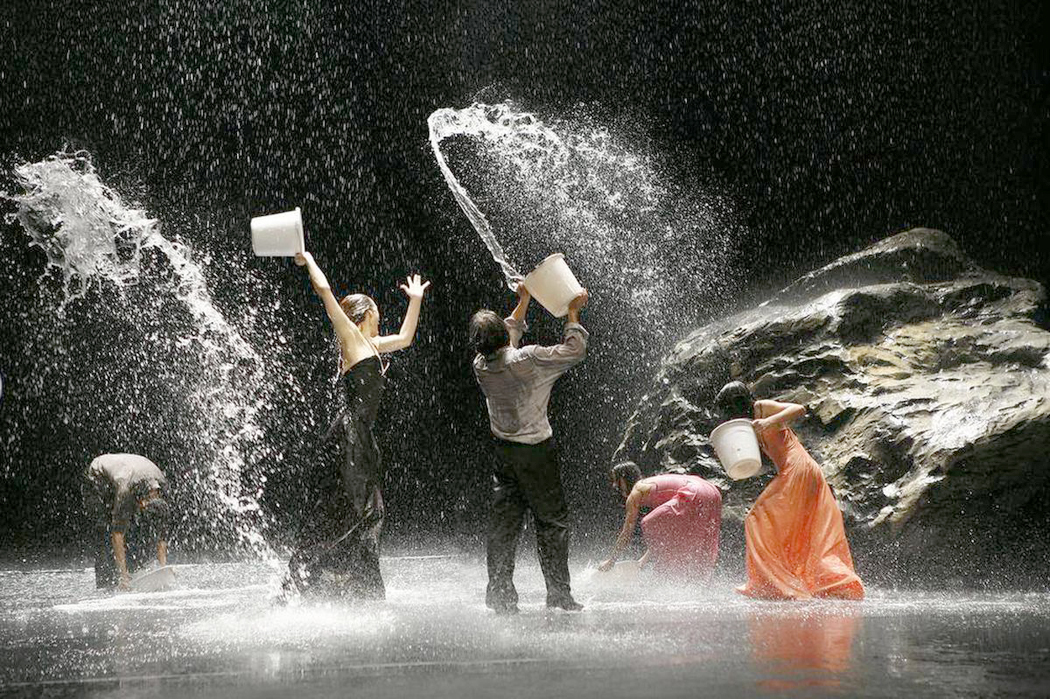
I still find myself bored by the simple and simple-minded, and find myself excited by the complex and the beautiful. And so, I read Tolstoy, listen to Bartok, examine the canvases of Titian and Francis Bacon, weep over the dance of Pina Bausch, and soak in the films of Tarkovsky. These may not be plebeian tastes, but they are my tastes. They satisfy. 

It is is not just the life of the mind, it is life to the mind. 

“Do not move. Let the wind speak.” 

May those I love try to forgive what I have made of it. 

This comes more than 50 years late, but I need to thank Lauren Goldstein. Laurie was my high school girlfriend and she gave me one of the most important gifts of my life.


Sometimes it takes a while for a gift to become clear. Even to know that it was a gift. Its impact can accumulate over an entire life. I am now 71 and for the past 50 years music has been central to my existence. As Nietzsche once said, “Life without music would be a mistake.” And Laurie gave me the music and my life has not been a mistake. 

There was almost no music in my house when I was growing up. The most we heard was probably watching the Perry Como show on TV. For most of my childhood, there was no phonograph, no guitar, no sheet music. Eventually, there was a Lowery organ and my mother would sometimes play by ear. She was quite talented, but only sat down at the keyboard maybe once a year, maybe once every two years. 

My brother and I took lessons briefly, but we didn’t practice and, frankly, it seemed like homework. The major cultural influence in our house was television. It was that bleak. 

But Laurie changed all that. She was a musician. And not just a girl playing glockenspiel in the marching band: She was a bassoonist taking lessons from one of the world’s great bassoonists. She also played piano with grace and style. 

I, of course, was just a pimply-faced kid, a high school junior when we started dating. For the next year and a half, until we grew apart as we went off to different colleges, it was a graduate course in music for me. 

Loren Glickman

Laurie was studying with Loren Glickman, the bassoonist who plays the high-pitched, incredibly difficult solo on the famous recording of The Rite of Spring conducted by Stravinsky himself. He also plays the beautiful bassoon part in Stravinsky’s recording of his Octet for Winds. Laurie and I went to several concerts to hear him perform. I still remember his Mozart concerto distinctly — he played with more rubato and freedom than is usual. It was a delight. It wasn’t just a collection of tunes, but rather, it had meaning. 
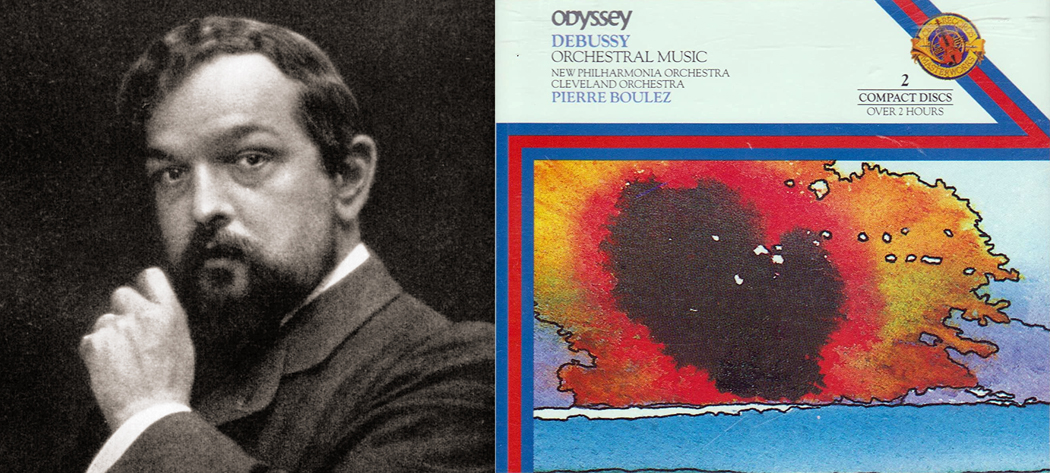
But it wasn’t only Glickman. We went to many concerts together, especially the New School concerts given by violinist Alexander Schneider and his pick-up ensemble. I can still name many of those tremendous musicians who played with him: Leonard Arner, Charlie Russo, Robert Nagel. They all went on to become the core of New York’s Mostly Mozart series. Those New School concert tickets were $3. We could afford them. And on Christmas Eve, we went to Carnegie Hall for Schneider’s annual concert. It was a rich education for the ear. Family complained I wasn’t spending that time with relatives, but I certainly felt closer to the music than I did to the clan. 

Alexander Schneider

Schneider was an especially intense musician, he would sit in his concertmaster’s chair to lead the orchestra and wrap his right leg around the chair leg like a snake on a caduceus, as if to anchor himself as he leaned forcefully into the music. As the twig is bent, they say, so inclines the tree, and this early exposure to the Schneider brand of music has informed my entire subsequent life in listening. There was a take-no-prisoners attitude to Schneider’s playing that told me music was not merely entertainment, but truly serious business. 

He was most famous as a member of the Budapest String Quartet, but I knew him in New York leading concerts and playing his fiddle. He made precious few recordings that are still available, but the best is a series he made with his own group, the Schneider Quartet, of the Haydn quartets. It was supposed to be all of them, but money ran out and they managed to record 53 of the more than 80 quartets Haydn wrote. The set is still a monument, not only to Haydn, but to quartet playing. I would not be without this set, which is still available, nearly 70 years after they were recorded, now on CD. 
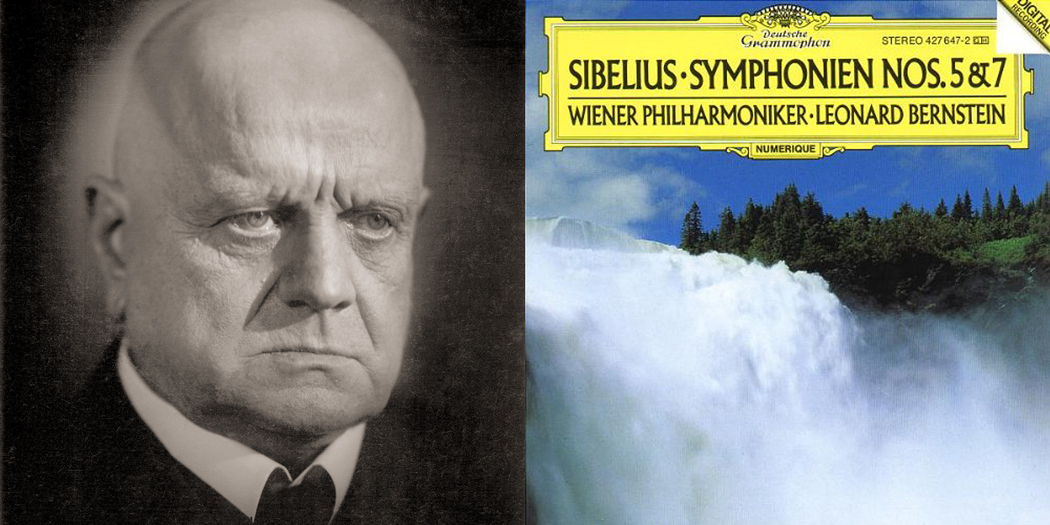
Laurie and I would sit on her couch at home and make out, high-school style in that gentler age, with Stravinsky playing on the phonograph, or La Mer or Beethoven’s “Tempest” sonata. Once, her uncle Bucky came over and Laurie accompanied him on piano as he played a Beethoven violin sonata on his Geige — admittedly a squeaky and sour version as only a heedlessly self-confident amateur could manage. 

As I thank Laurie for this gift of music, I need to express my gratitude also to her mother, Esther, who nurtured my nascent interest. She seemed to see something in me that no one else did and encouraged me to follow art and culture. She also gave me a huge pile of old 78 rpm records from her own youth. The day of the 78 was quite past, but all record players still had a setting to play them. 

Among those recordings are some that are still the ur-performances for me: Artur Schnabel playing Beethoven’s Fourth Concerto with the Chicago Symphony and Frederick Stock; William Kincaid and the Philadelphia Orchestra playing the Telemann Suite in A-minor for flute and orchestra; Alice Ehlers on harpsichord playing Bach; Rafael Puyana playing the De Falla Harpsichord Concerto. Leo Slezak singing Schubert’s Erlkönig, Ungeduld and Heidenröslein. I played them over and over. There must have been 50 discs. Among them, I first heard Brahms’ Second, Beethoven’s Fifth and Sixth (the latter with Stokowski and Philadelphia), Bach’s Brandenburgs, and Weinberger’s Schwanda: Polka and Fugue. It was an eclectic mix. 

It was a revelation to see an entire family for whom art, music, literature were not only central, but a vivifying force in life. For whom culture created meaning. 
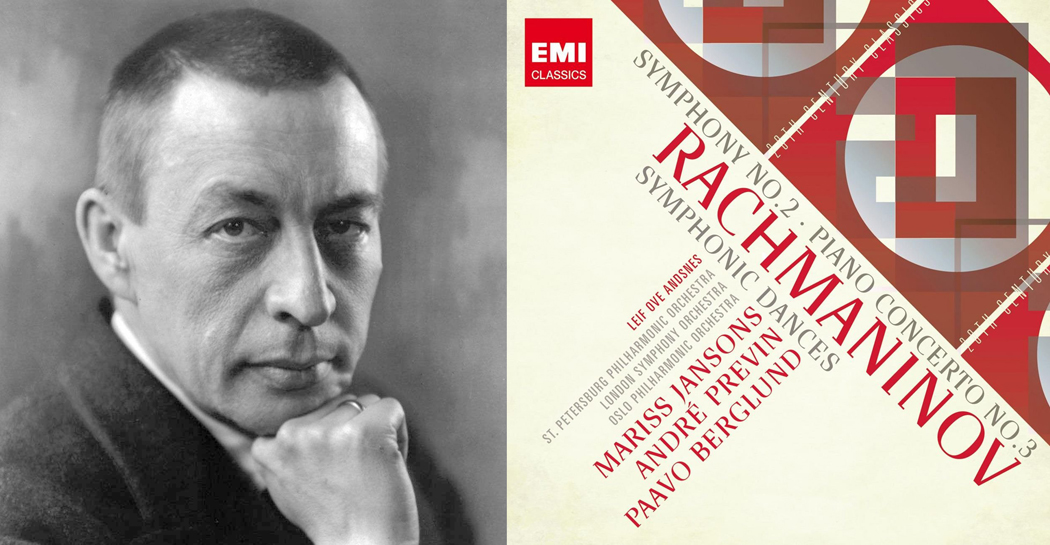
So, when I went off to college, I may have majored in English, but I minored in music, learned to read scores and harmonically analyze them, studied (rather pathetically) piano and listened to every recording I could get my hands on, spending all my spare cash on Nonesuch, Turnabout, Vox, Seraphim and Crossroads LPs — they were the cheap labels. 

Later in life, many of the concerts I went to were among the most signal events for me, deepening my psyche and opening new worlds of emotional response. Along with that came opera and ballet, theater and film, these were the “lively arts,” and gave me a living. I eventually became a classical music critic for a big-city daily newspaper. 

Laurie Goldstein and me, prom 1965

As for Laurie, when she graduated high school, she went on to study with Bernard Garfield, the long-time first-chair bassoonist with the Philadelphia Orchestra. She became a respected professional and played for and recorded with composers as widely different as PDQ Bach and Philip Glass. 

If it had not been for Laurie, I don’t know if I would have been introduced to classical music. I’m sure I was bound to enter a life of art and intellect somehow, but for me, music is the heart of it all. I love visual art and literature, but if I had to lose a sense, my hearing would be my last choice. I cannot imagine life without the Beethoven quartets, the symphonies of Haydn, the operas of Mozart. Or the music of Schoenberg, Bartok, Shostakovich or Barber or Glass. Or Ellington or Coltrane, or the Beatles. Music fills my insides and makes me more human. 

Thank you, Laurie. Thank you.