Archive

Tag Archives: tao te ching

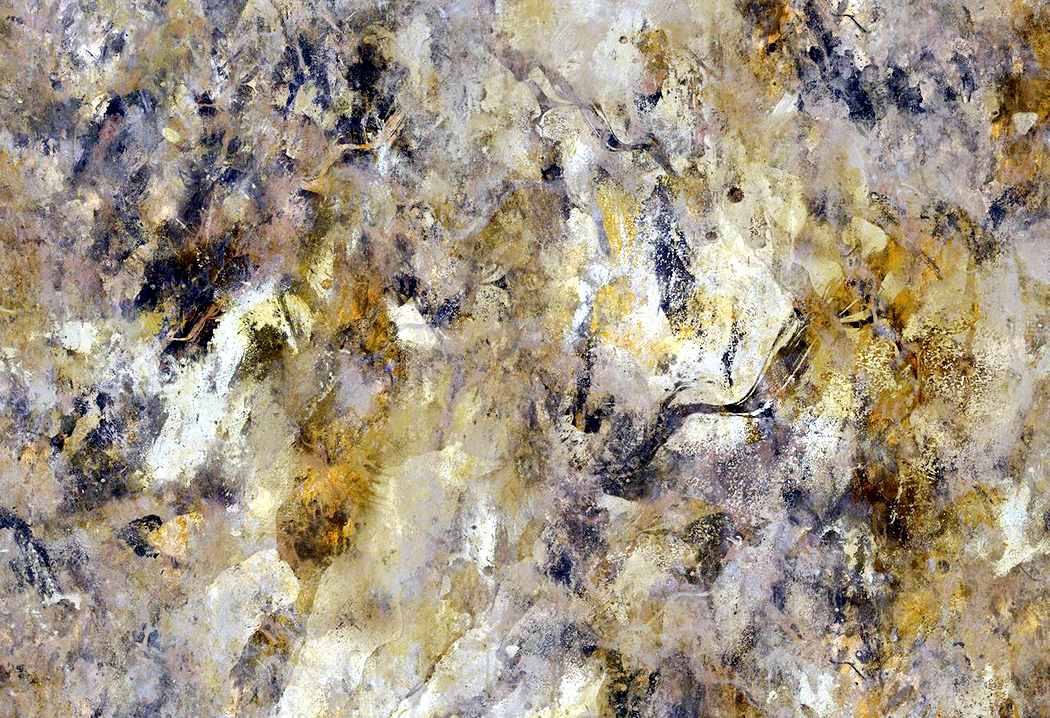
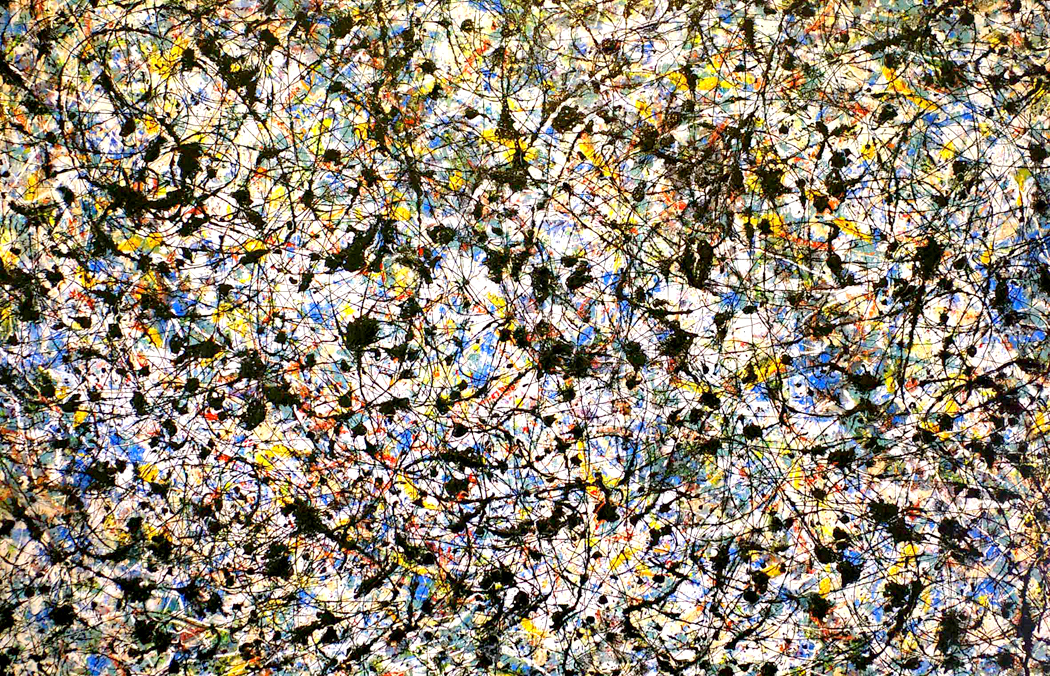
Imagine nothing. Got it? Now, imagine that not even nothing exists.  For after all, nothing is something. At the very least “nothing” implies its opposite, and I’m asking you to imagine a time before opposites are even possible, before time is possible. 

Then, imagine a point, the way geometry defines a point, with no dimensions. This point is something. But it can exist for only a billion-trillionth of a second — although a second is something that doesn’t really exist yet. The word “yet” implies that a future does exist, however, and in that infinitesimal fraction of eternity the point — which is everything that exists or ever will exist — physicists tell us that the point “expanded,” although that word cannot adequately express the explosion. In fact, the universe ejaculated into both something and nothing. It gave rise to particles and antiparticles and we were off to the races.
Chaos 1

It is important to note that the “point” did not expand into a great big empty nothingness but rather something and nothing together expanded — and they keep expanding, even as we sit sipping our tea and watching Big Bang Theory in endless reruns on TV. There is math to show this, but you wouldn’t understand it. I certainly don’t. It’s complicated. 

“Alice laughed. ‘There’s no use trying,’ she said. ‘One can’t believe impossible things.’

“‘I daresay you haven’t had much practice,’ said the Queen. ‘When I was your age, I always did it for half-an-hour a day. Why, sometimes I’ve believed as many as six impossible things before breakfast.’”

As it says in the Tao Te Ching, “Thus something and nothing produce each other.”
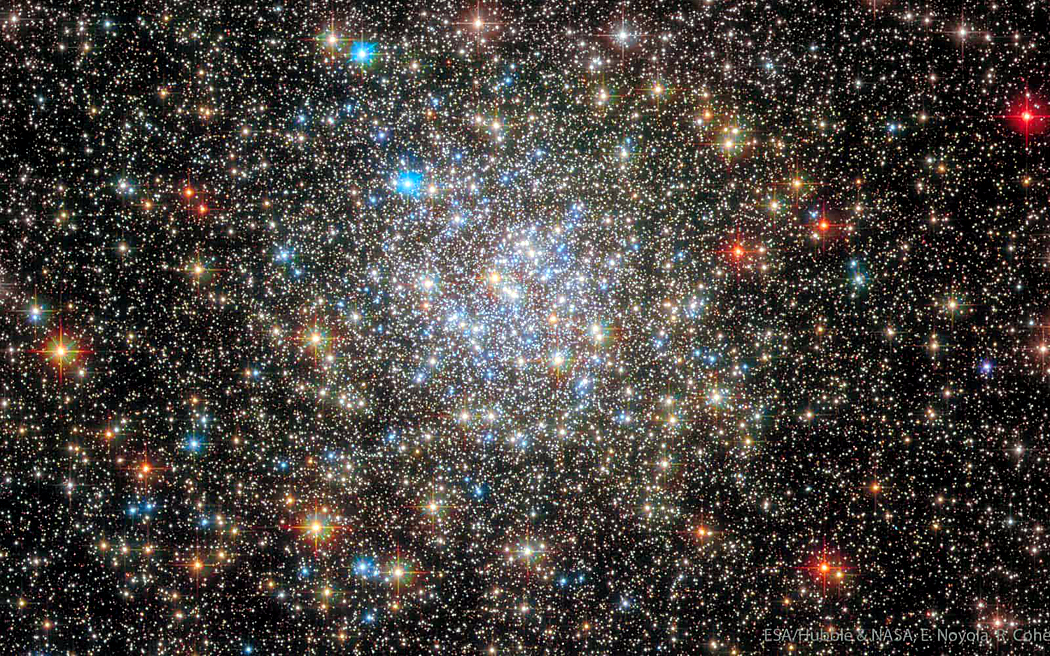
Now, it is 13.799 billion years later, and the universe is still expanding, ever faster and faster. And we are riding on one meager little mote in that great soup, called the planet Earth. It is something. Now, “nothing” is what exists between the bits of “something.”

That is our Creation Myth. 
By calling it a myth, I am not implying it is not true, or not factual. Myth does not mean something is untrue, but means it is our way of comprehending what is beyond our actual understanding. 

Myth is our explanation to ourselves of something. It may be factual, it may be fantastical. It may be taken literally or it may be understood as metaphor. Either way, it is an approach to the comprehension of something too complex to be held in the mind any other way. 

Chaos 2

A physicist may be able to put the math together and parse out the myth in non-mythic terms (I use the word “may” advisedly), but for the rest of us, we take it on faith that our creation myth is scientifically verifiable and therefore, factual. It is the myth we believe in, i.e., the story we take as true. (That it is true is irrelevant to its function as myth). 

We mistakenly tend to look on myth as something from the past: Zeus or Achilles, or Odin, or Indra fighting Vritra, or Quetzalcoatl, or the Chinese dragon. It is something we condescend to, having learned better. We know that thunder isn’t clouds crashing together. But such an attitude misunderstands myth and its function. We all live by myth, even now. 
Chaos 3

There are things we do not or cannot understand. Either too complicated to grasp or just plain unknowable. We need a metaphor to help us come to grips with such things. Language cannot describe such things with the precision of a dictionary, but rather it has to fall back on not “what it is,” but “what is it like.” We tell a story.

The Big Bang is our story. When we assume our superiority, we fail to understand that for most of us, we are relying on the argument from authority no less than the Middle Ages did. We must accept that the physicist knows what we merely accept. (I am making the assumption that a physicist has a more complete understanding than even an educated lay person).

And since we cannot know every corner of relativity or quantum mechanics, we simplify it all into a comprehensible story. The Big Bang. 
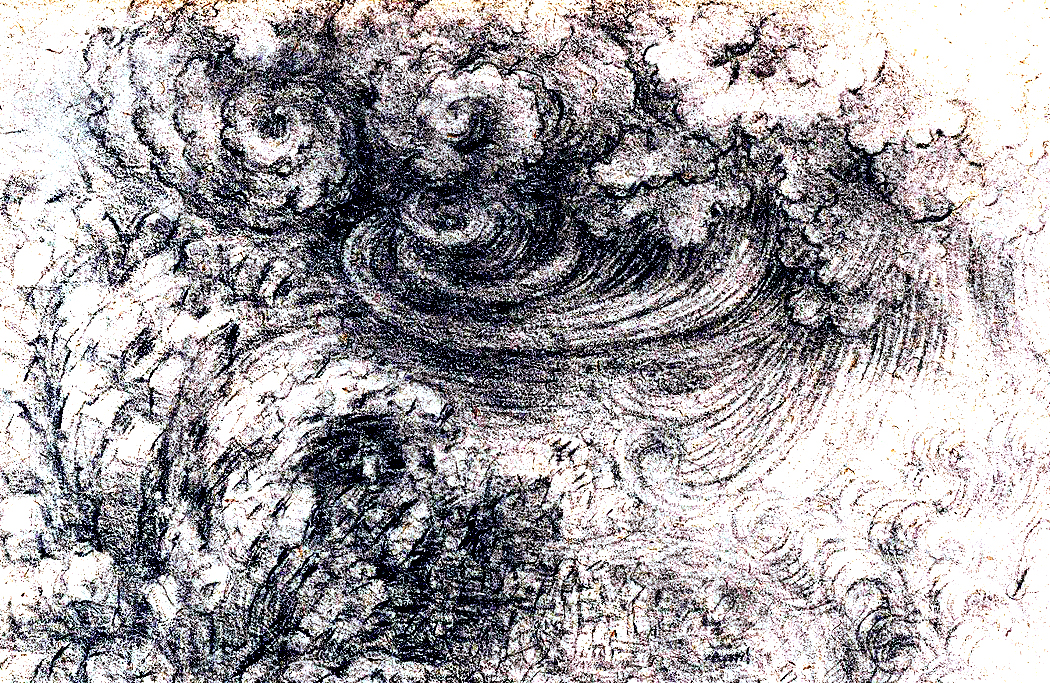
Chaos 4

I am not claiming what science has parsed out is false, but that our understanding as non-scientists is a mythological understanding, not a literal one. And for that matter, I doubt any scientist is equally conversant in all aspects of the field — relativity, quantum theory, the math and the particle physics. Perhaps he or she has a good grasp on black holes, but how much has he or she published on quarks with spin? Specialization is necessary for modern science, and even a scientist has to rely on and trust the work of others. 

And it is important to remember that not all scientists agree. The popular version of the Big Bang is certainly wrong, or at the very least wildly simplified. New theories are always coming forth. No version is entirely consistent and coherent, not even the Bible’s. 
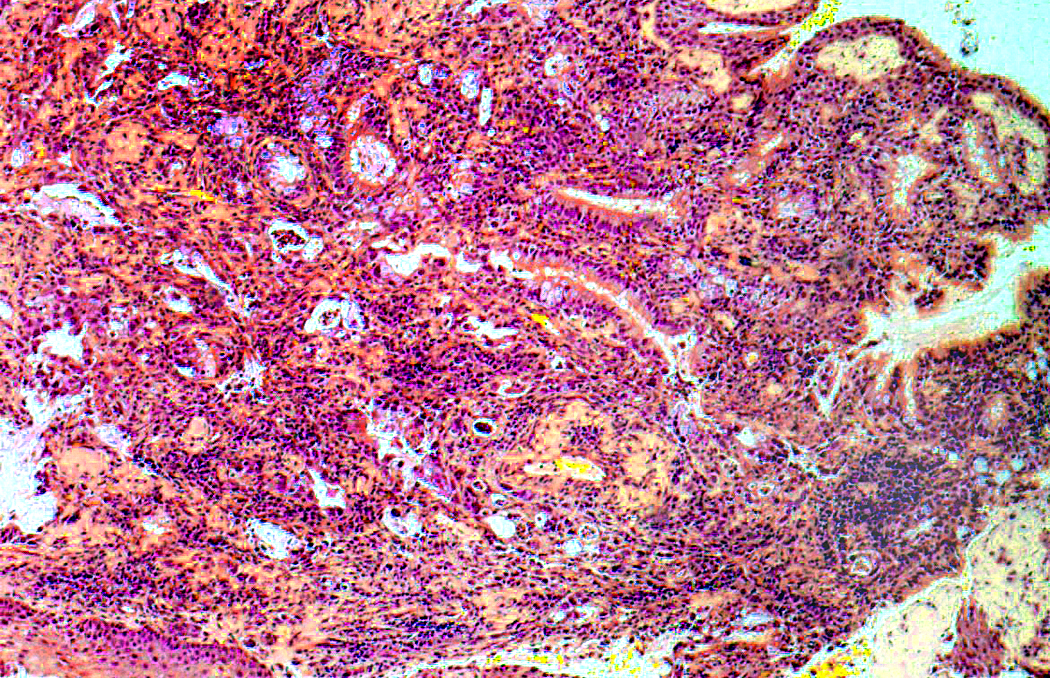
Chaos 5

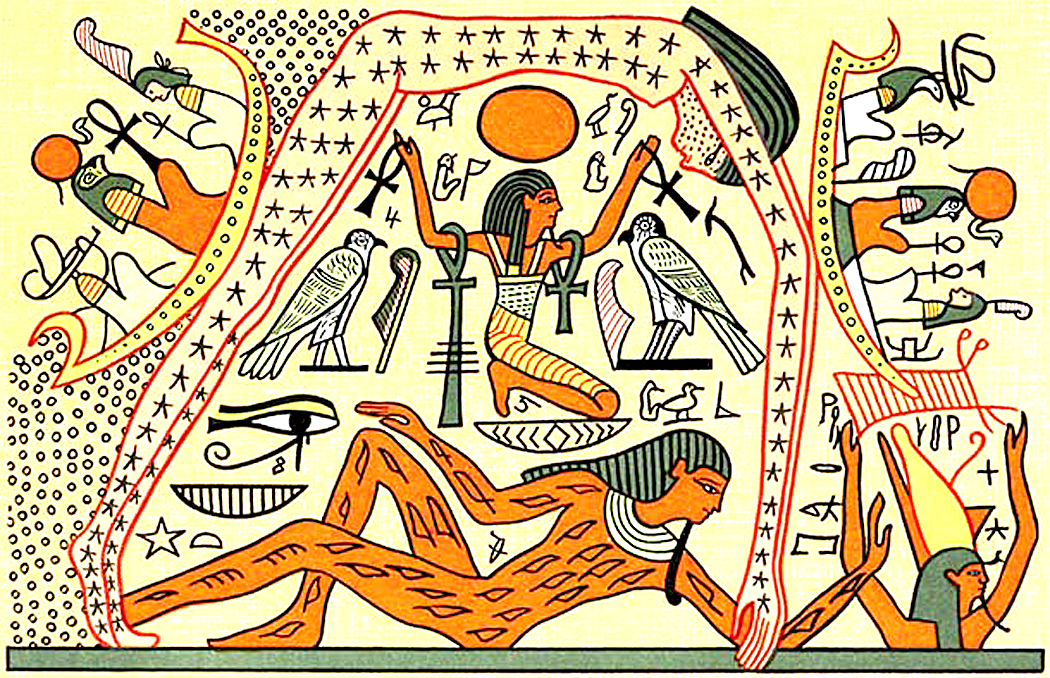
All of which takes me off point: Creation myth. There are so many of them, from the Chinese cosmic egg to the Mesopotamian butchery of the sea goddess Tiamat. The one we in the West are most familiar with is that of Genesis. 

“In the beginning God created the heaven and the earth. And the earth was without form and void; and darkness was upon the face of the deep. And the Spirit of God moved upon the face of the waters. And God said, Let there be light.”

We are so used to the organ tones of the King James translation that sometimes putting it into modern English takes away some of the majesty. 

“When God began creating the sky and earth, the earth was formless and empty.”
Chaos 6

There are many believers who take this story literally, just as most of us take the Big Bang. For most of us, the Bible story is a story. So, if we had to stake our lives on it, we would more likely defend physics — even if we were Christian believers — and accept that ancient Middle-Eastern poetry is just that. The King James Genesis is transcendent poetry. But so is our story of the Big Bang.  

“Mythology opens the world so that it becomes transparent to something that is beyond speech, beyond words, in short, to what we call transcendence,” said scholar Joseph Campbell.

“The energies of the universe, the energies of life, that come up in the sub-atomic particle displays that science shows us, are operative. They come and go. Where do they come from? Where do they go? Is there a where?”

Which returns us to the Big Bang. 
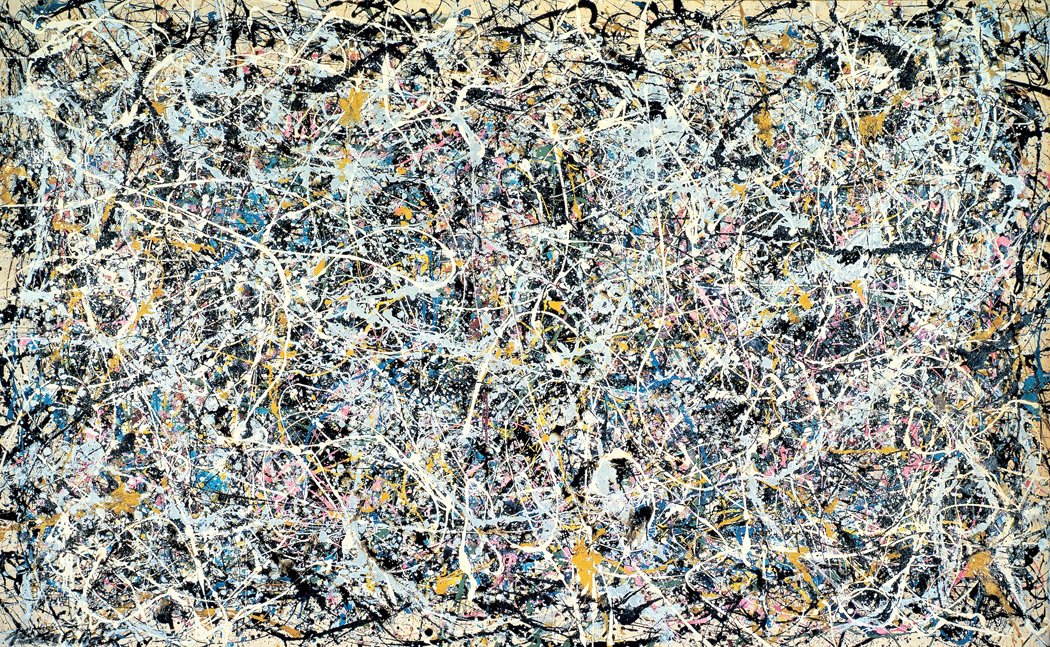
Chaos 7

Physicist Paul Dirac in 1930 imagined a where: Now called the “Dirac Sea,” it is an infinite or unnumbered source of subatomic particles that exist “beneath” our visible world. An electron may pop up anywhere, as quantum physics has shown, and may disappear also. Where they come from, where they go is the Dirac Sea. Using the nautical term is another case of mythology making familiar what cannot be grasped otherwise. 

Imagine a billiard table, he said, completely covered in balls, leaving no room. Place another ball on top and it sits there, on top of the rest. But push it down and that forces another ball to pop up elsewhere. We cannot predict where. The one above the rest is the one we see and measure, the rest, below, are the “Dirac Sea,” unavailable for study in the visible universe. 

Yes, it’s a story. Most of us would run screaming from the math involved in a more proper explanation. 
Chaos 8

“The ultimate ground of being transcends definition, transcends our knowledge,” said Campbell. “When you begin to ask about ultimates, you are asking about something that transcends all the categories of thought, the categories of being and non-being. True, false; these are, as Kant points out in The Critique of Pure Reason, functions of our mode of experience. And all life has to come to us through the esthetic forms of time and space, and the logical ones of the categories of logic, so we think within that frame,” he wrote.

“But what is beyond? Even the word beyond suggests a category of thought. So transcendence is literally transcendent.”
Chaos 9

Vedic mythology has many creation stories, but the one most widely seen has the Brahman, or the ultimate ground of reality, as the source of all. However as it says in the Upanishads, the Brahman is just a word, and already it is a distortion of the ultimate, which is beyond words, beyond category, beyond comprehension.

True “of all knowledge,” Campbell said, that is beyond comprehension. “In the Kena Upanishad, written back in the seventh century BC, it says very clearly, ‘that to which words and thoughts do not reach.’ The tongue has never soiled it with a name. That’s what transcendent means. And the mythological image is always pointing toward transcendence and giving you the sense of riding on this mystery.”
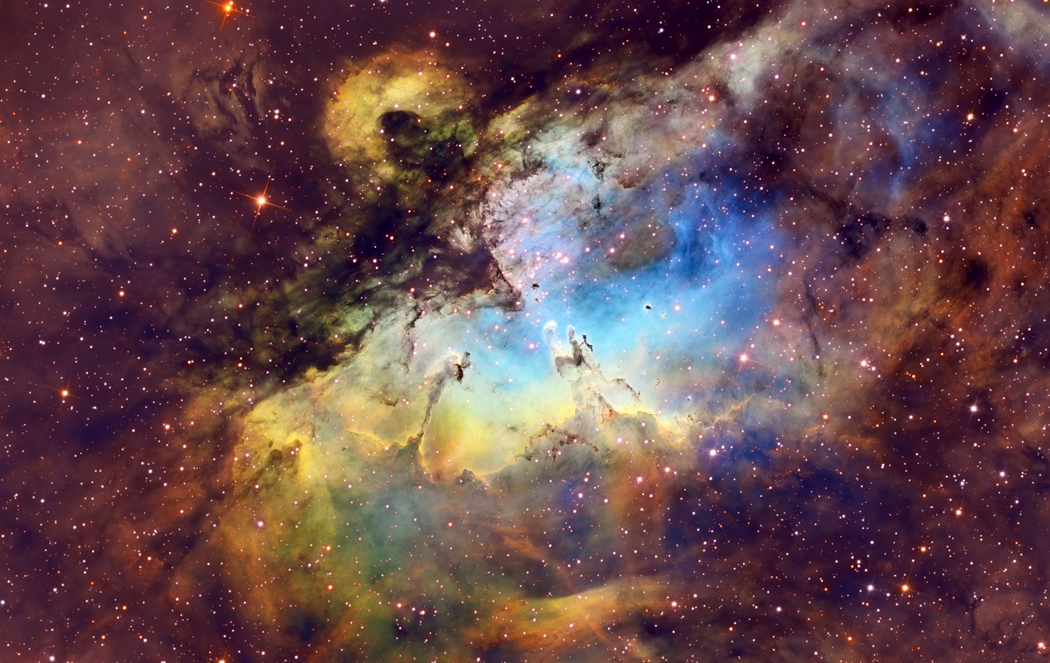
Pillars of Creation

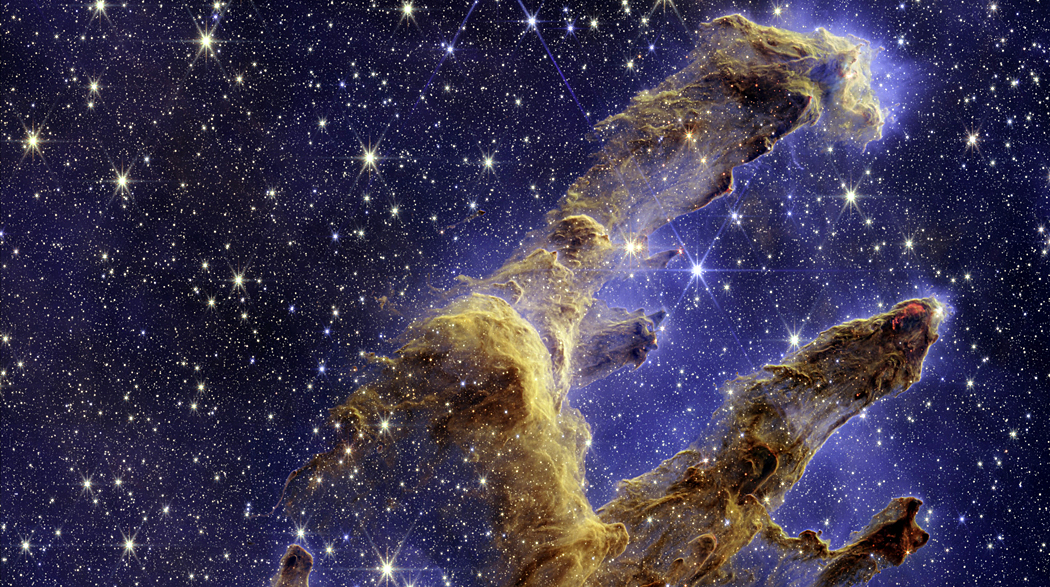
So, we look at the Hubble image of a portion of the Eagle Nebula and have named it “The Pillars of Creation.” It is a transcendent image, and fills most of us with genuine awe. But of course, it is a photograph in false color: It would not look that way if seen by a human eye through a telescope. It is a myth. Again, I am not saying it is not true — even the false color is true in its way — it provides a way to see wavelengths that cannot register in a human eye, but are there nonetheless.

But let us go back again to that bit before “something” and before “nothing” — those pairs of opposites. 
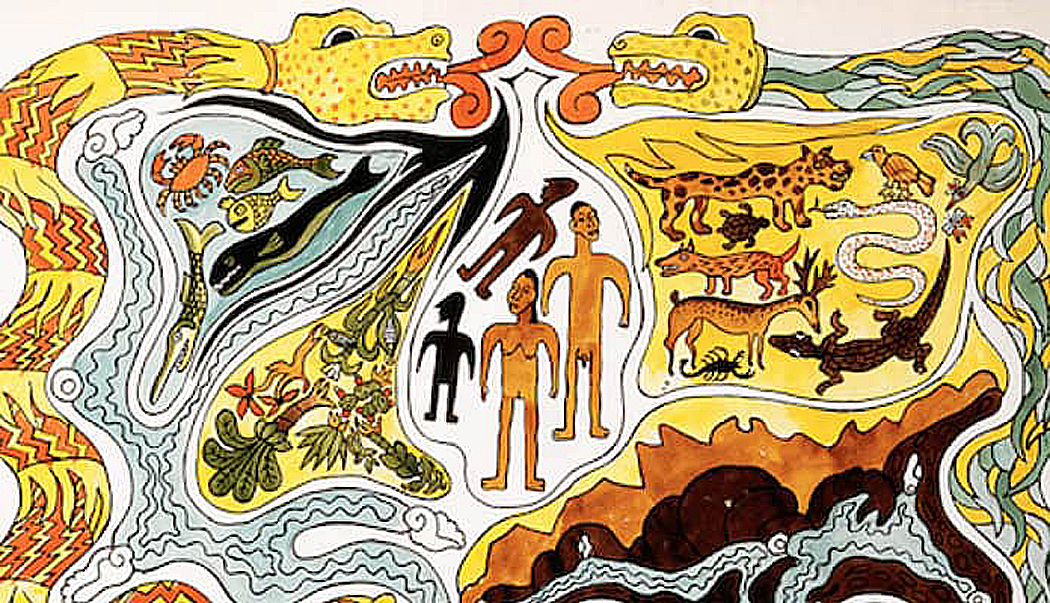
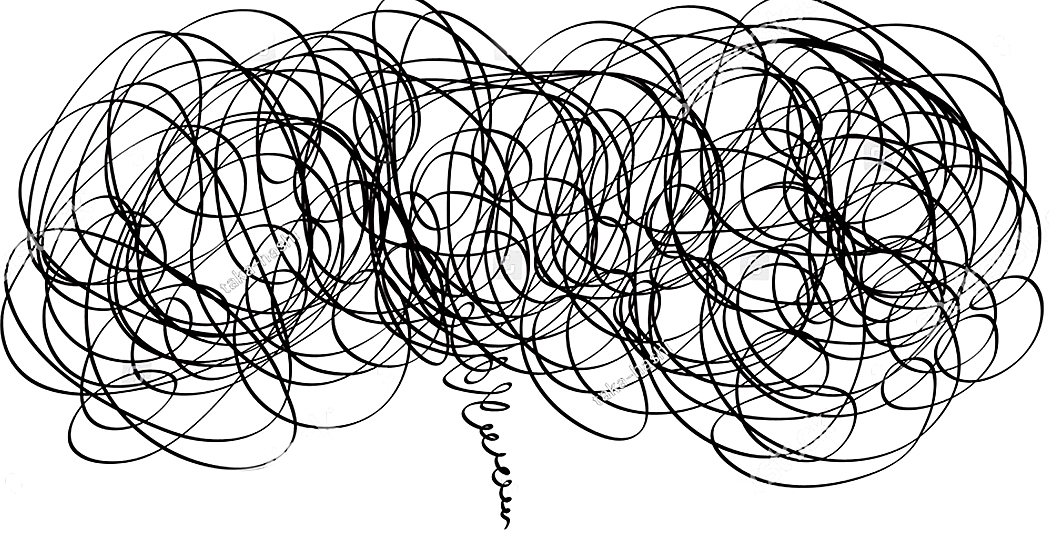
In many recorded myths, before anything, there was Chaos. We should not be fooled by modern science’s version of Chaos Theory. In that, chaos is just something so complex it cannot be predicted by mathematical formula. But mythological Chaos is something else again: It is to order what eternity is to time — which is not simply forever, but rather outside of time altogether. 

Likewise Chaos in myth is not a lack of order, but something outside the very idea of order. It is before the organization of “categories of thought,” and cannot be described either in words or algebra. 
Chaos 10

The word comes from the Greek χάος meaning “emptiness, vast void, chasm, abyss,” related to the verbs χάσκω and χαίνω “gape, be wide open,” from Proto-Indo-European cognate that gives rise, millennia later, to the English “yawn.”

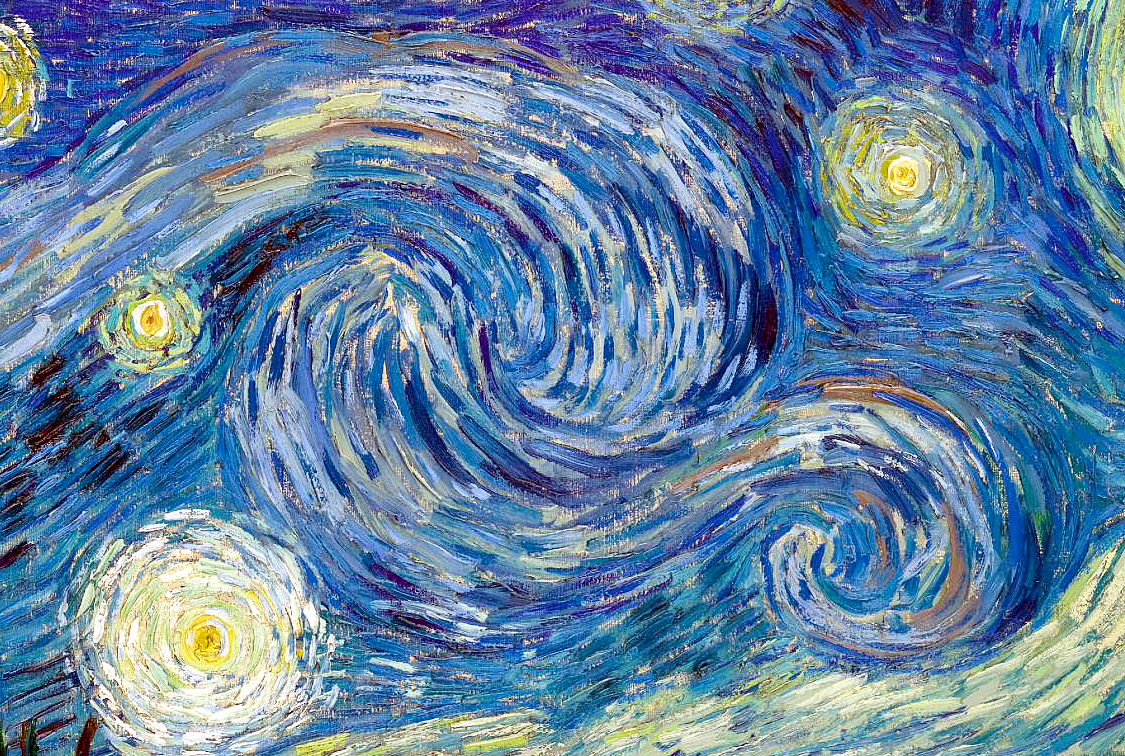
In Shelley’s Prometheus Unbound, the Spirit of the Hour talks about “The loftiest star of unascended heaven,/ Pinnacled dim in the intense inane.” And here the poet’s unfortunate word choice doesn’t mean insipidity, but rather translates from the Latin word inanis, which meant “empty,” or “void.” And so I like to think of chaos as an intense emptiness. 
Chaos 11

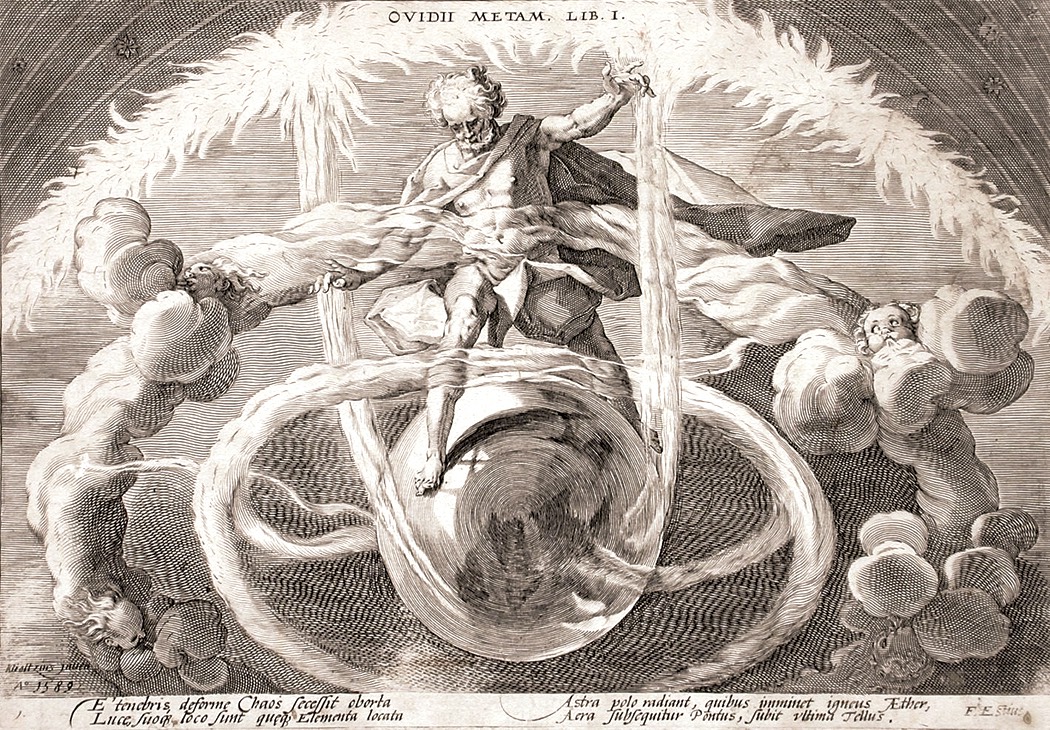
My favorite Creation myth is found in the opening of Ovid’s Metamorphoses: “Before the sea was, and the lands, and the sky that hangs over all, the face of Nature showed alike in her whole round, which state have men called chaos: a rough unordered mass of things, nothing at all save lifeless bulk and warring seeds of ill-matched elements heaped in one.” 

In his De Rerum Natura (“On  the Nature of Things”), the Roman writer Lucretius (ca. 99-55 BC) comes very close to both modern astrophysics and to quantum mechanics, although told in mythic terms rather than mathematical formula. 
Chaos 12

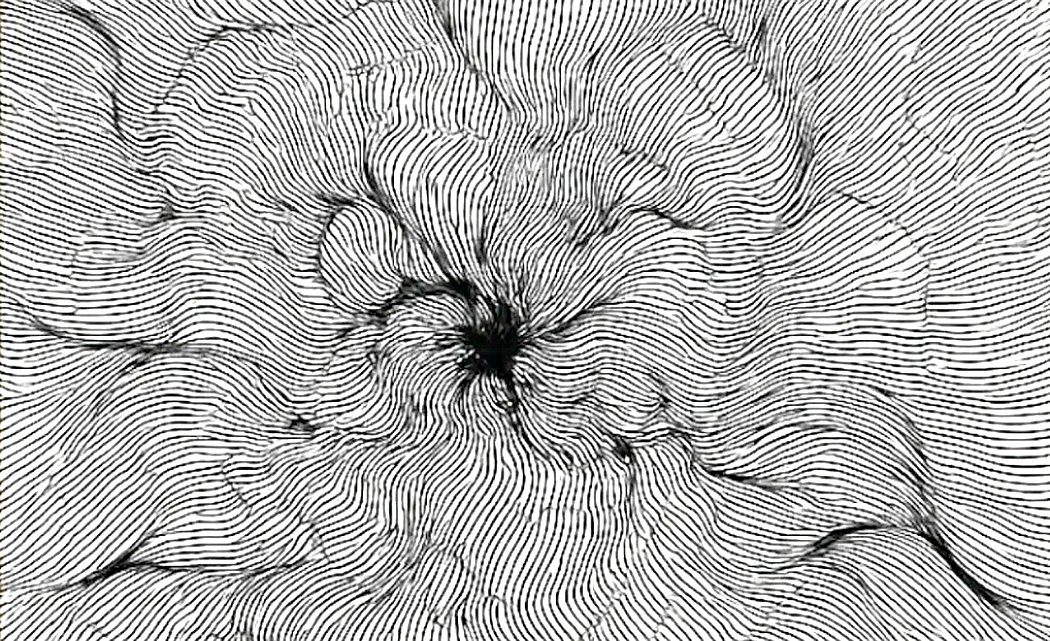
For Lucretius, the universe has always existed. Nothing can be created from nothing, he wrote, nor can it be destroyed — anticipating the conservation of matter and energy. But the universe originally was an undifferentiated mass of atoms, all traveling in straight lines, he wrote — anticipating Newton’s First Law of Motion — but oddly the atoms had an irrational  tendency to “swerve.” This unaccounted divergence of the atoms’ direction led them to bump into each other, to make concentrations of matter in some localities and voids of matter in others — very like the astrophysicists’ explanation of how the cooling of the Big Bang led to unequal distribution of matter in the early universe through gravity and density fluctuations. 
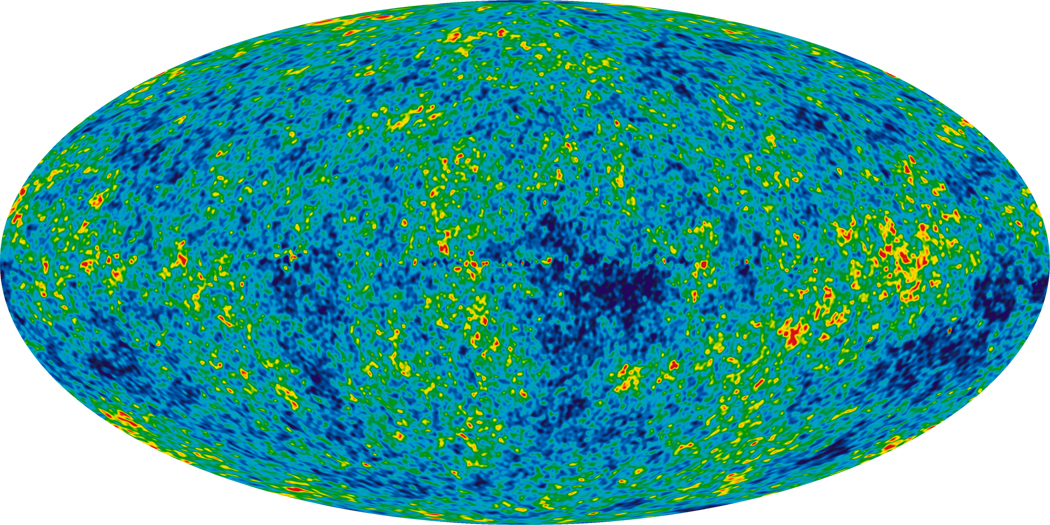
Map of cosmic background microwave radiation

We have an image of this in the map of the cosmic microwave background radiation, discovered by accident in 1965, which supported the Big Bang theory — and Lucretius — with actual data. The two scientists who found this at first thought the data was “noise” in the signal caused by pigeons nesting in the Holmdel Horn Antenna, in New Jersey, where they did their work. Turned out, no, it was evidence of the universe before condensing into protons and electrons. 
And so, the Big Bang is now part of the wider public’s sense of where the universe came from. Physicists and cosmologists worry over the many corners that don’t neatly fit, and reams of arcane mathematical formulae are published to support one idea or another. Standard model relativity doesn’t fit, tab-into-slot, with quantum mechanics, and scientists scratch their heads and try new ideas. And they sometimes torture the English language with things like “temperature inhomogeneities,” and torture math with paragraph-long formulas with no actual numbers in them. Looks good on a white board, but it’s Greek to me. 
Someday a newer common myth will be created to refine or supplant the version of Big Bang that the educated laymen currently accept. Again, it doesn’t mean the myth isn’t true, but that it is a story that attempts to make the unexplainable facts comprehensible to the puny human mind, which evolved, after all, when we were still banging rocks together. Sometimes it’s like watching a monkey trying to open a jar of pickles. 

A Facebook friend left a challenge for her followers: 

“In a text post, list 10 books that have stayed with you in some way. Don’t take but a few minutes, and don’t think too hard — they don’t have to be the “right” or “great” works, just the ones that have touched you. Tag ten friends, including me, so I’ll see your list.”

Church Iceberg flotante, 1859

There are so many books I have overlooked. There is no way to tally up the consequence of reading most of them: Such cumulation is like measuring the rain that fills the sea bed.

But I want to pick out several of the idiosyncratic ones, outside the usual suspects (Camus, Dostoevsky, Lawrence, Shakespeare, Faulkner, Hemingway, et al.), which can be assumed. My taste has always gravitated to the forgotten, abused and out-of-fashion. There is something in my sensibility that just flat-out enjoys complex, baroque sentences and the kind of observational intensity that you find most developed in those authors hovering on the edge of custom or sanity.

Part of this preference comes from a desire for transcendence, and transcendence never comes in conventional form.

Longinus explains why my tastes may run to the extravagant.

“The startling and amazing is more powerful than the charming and persuasive,” he writes.

His On the Sublime is a sometimes numbing description of rhetorical tropes, but several times in their midst, he breaks free and discusses the big issues. In the climactic 35th chapter, he breaks out:

etna erupting“What was it they saw, those godlike writers who in their work aim at what is greatest and overlook precision in every detail? … (W)e are by nature led to marvel, not, indeed, at little streams, clear and useful though they be, but at the Nile, the Danube, or the Rhine, and still more at the Ocean.  … nor do we consider out little hearthfire more worthy of admiration than the craters of Etna whose eruptions throw up rocks and boulders or at times pour forth rivers of lava from that single fire within the earth.

“We might say of all such matters that man can easily understand what is useful or necessary, but he admires what passes his understanding.”

It is that great writing that attracts me to Henry Thoreau and Herman Melville. Both have a foundation in a kind of biblical tone, a King James timbre, full of striking metaphor and cosmic awareness.

“Time is but the stream I go a-fishing in. I drink at it; but while I drink I see the sandy bottom and detect how shallow it is. Its thin current slides away, but eternity remains. I would drink deeper; fish in the sky, whose bottom is pebbly with stars.”

Or: Herman Melville 1885

“All visible objects, man, are but as pasteboard masks. But in each event — in the living act, the undoubted deed — there, some unknown but still reasoning thing puts forth the mouldings of its features from behind the unreasoning mask. If man will strike, strike through the mask! How can the prisoner reach outside except by thrusting through the wall? To me, the white whale is that wall, shoved near to me. Sometimes I think there’s naught beyond. But ’tis enough. He tasks me; he heaps me; I see in him outrageous strength, with an inscrutable malice sinewing it. That inscrutable thing is chiefly what I hate; and be the white whale agent, or be the white whale principal, I will wreak that hate upon him. Talk not to me of blasphemy, man; I’d strike the sun if it insulted me.”

That ain’t Hemingway.

But it isn’t only Walden and Moby Dick; I have spent many hours in happy lucubration over the pages of Thoreau’s Journals, collected in two giant volumes by my favorite publishing house, Dover Books. And I can hardly pass up re-reading most of Melville’s short stories, I and My Chimney, The Apple-Tree Table and Piazza. I read them over the way one listens to a favorite tune, waiting for your favorite chorus to set your toe tapping.let us now praise cover

But for intense unreadability married to heartbreaking self-flagellation and obsessive observational skill, you cannot beat James Agee’s Let Us Now Praise Famous Men, a volume of such personal journalism that it makes Tom Wolfe or Hunter Thompson look like disinterested sub-sub-librarians.

The book is an investigation of tenant farmers in Alabama during the Depression and Agee spends a portion of his life living with one of the families he reports on. And he spends an entire chapter describing the shanty room he is sitting in late in the night under a kerosene lamp as the family sleeps in the other room. He describes, it seems, every knot in the wood of the walls he stares at, every hook holding up every potholder or towel. It approaches the insane, but in the same way the fevered eyes of Vincent Van Gogh looked at the wheatfield and crows. Every bush is the burning bush.

The intensity, the engagement is the thing. 2006.13.1.8 002

“Every fury on earth has been absorbed in time, as art, or as religion, or as authority in one form or another,” he writes. “The deadliest blow the enemy of the human soul can strike is to do fury honor … Official acceptance is the one unmistakable symptom that salvation is beaten again, and is the one surest sign of fatal misunderstanding…”

Perhaps Agee attempts more than is possible in sewn signatures and binding, and maybe he is a fool for even trying, but I am his target and he hits me in the quick.

Official acceptance means becoming part of an unexamined and cataloged orthodoxy: Things settled so you don’t have to parse them out all over again. The problem with that is:

“The way that can be named is not the constant way.”tao te ching

The Tao Te Ching can be read as an ambiguous and mystical series of woo-woo New-Age aphorisms, or it can be taken as precise and direct in meaning. Most of its readers, and many of its more recent translators opt for the former, turning it into a kind of text to daze its readers and perhaps sell them a regimen of dietary supplements.

I take the latter view, that it means what it says and means it directly.

If there is one thing at the core of my intellectual being, as a dense molten iron core of the planet, it is a recognition — I cannot call it a belief, because it is too obvious — a recognition of the primacy of diversity and fecundity in the cosmos. A sense that existence is too complex ever to be summed up in a political philosophy, theology or epistemology. Every esthetic and intellectual movement comes a cropper against the largeness and variety of the universe. As the Tao puts it, any time you name something, you have lied.

The way that can be named is not the constant way: Our cultural world view and our personal understanding of the structure and meaning of the world — our umwelt — changes over time, and changes in ways that are largely predictable, at least in wider outline, even if details surprise us.

These are the waves hitting the shores that we see over and over — a pendulum swinging back and forth — over the centuries, and embodied in cultures we name as pairs: Hellenic and Hellenistic, Romanesque and Gothic, Renaissance and Baroque, Neoclassical and Romantic. It is the same pendulum slowly rocking.

Most people take sides, like T.S. Eliot’s angry brief against John Milton, but some of us step back and observe them as two sides of the same coin. Taking sides is self-limiting: “mind-forged manacles.”

“It is the way of heaven to show no favoritism.”

For me, the most interesting times are those on the cusp of one or the other named moments: the change itself, rather than the brief second when the pendulum stills on one end of the arc or the other.

maistre book 2And it leads me to such peculiar books as Xavier de Maistre’s Voyage Around My Room, a travel book — or a parody of a travel book — about the room de Maistre is trapped in during a house arrest in 1790, at just the point that the classicism of the 18th century was melting into the weirdness of the coming age. But it also takes seriously — if that is the word — the possibility that one might invest a description of one’s daily surroundings with the same majesty one might use to describe, say, Goethe’s journey over the Alps. Every bush, again.

Oh, I wish I could go on. I have left out Robert Burton’s Anatomy of Melancholy; I have left out the Mahabharata and its Bhagavad Gita; I have snubbed Yeats’ A Vision. Villon’s Testament; the Daybooks of Edward Weston — I have inherited for the meat of my bones the DNA from my parents, for better or worse, but I have inherited my intellectual genes from all the books I have had the happiness to encounter.

NEXT: The books age with their reader

A Facebook friend left a challenge for her followers: 

“In a text post, list 10 books that have stayed with you in some way. Don’t take but a few minutes, and don’t think too hard — they don’t have to be the “right” or “great” works, just the ones that have touched you. Tag ten friends, including me, so I’ll see your list.”

birds

This is about two very unpleasant men and a third about whom I know little except his work and talent. I learned from all three.

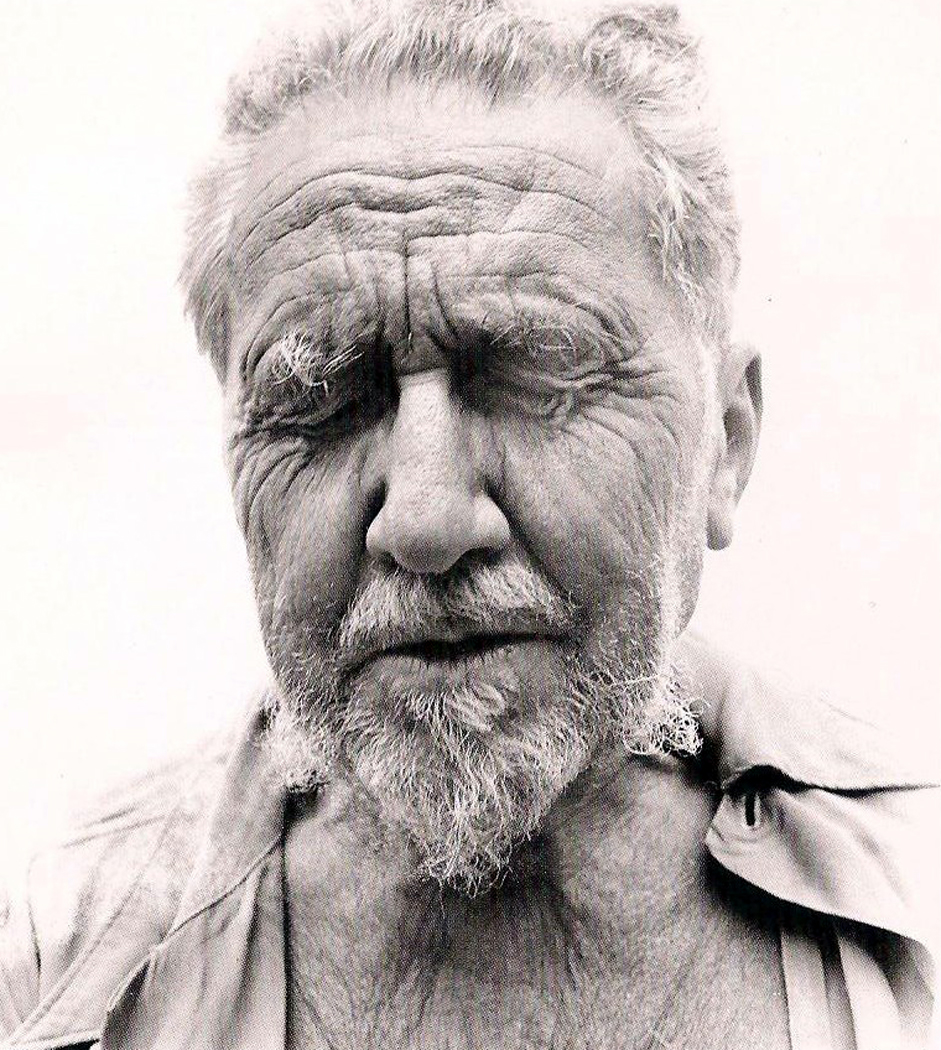
Old EzThe first is Ezra Pound, a vile anti-semite and spouter of crackpot economic and political — to say nothing of conspiracy — theories. He also wrote some profoundly beautiful verse. When I was in college, I pored over his Personae, the collection of his shorter poems. But that is not why he makes this list. I read a lot of wonderful poetry by lots of excellent poets.

The one thing you have to say about Pound is that he knows a lot of stuff. And as he got older, more and more of that stuff became the upholstery of his writing — cushion stuffing, basically. Pound couldn’t help writing about what he knew — or rather what he had read about. It is very literary knowledge and you wonder if he ever looked around him to see the street traffic or the overcoats his fellow pedestrians were wearing against the winter. Instead, his head is stuck in the world of Procne and Philomela, that of Greek classical culture, Renaissance finance, the historical concepts of founding fathers and Provencal verse forms.

I mention Procne and Philomela for a reason. In his early poetry, any reference to nature comes in the form of a literary reference. Hence nightingales and doves. In the myth, Procne was turned into a swallow and her sister into a nightingale. In Pound, owls are Athena and eagles are imperial. One gets used to this as one gets used to the scenic flats in a stage set. pound mugshot

But then, after the war, when Pound, who had been making rather silly anti-American radio broadcasts for il Duce, was arrested and imprisoned as a traitor in a POW camp in Pisa, his poetry begins to crack, much like he cracked mentally. The Pisan Cantos, for which he won the Bollingen Prize for poetry in 1948, has its share of remembered, misremembered and half-remembered arcana, but throughout the many sections of the book, moments pop through where you are suddenly out of the dusty library of his brain and in a cage in Pisa, noticing actual weather and actual birds.

“4 birds on 3 wires, one bird on one”

And you see them, black notes on a musical staff. The world begins to break through the battlements of book learning. Air ventilates the stony cell of his brain.

“The Pisan clouds are undoubtedly various

and splendid as any I have seen since

at Scudder’s Falls on the Schuylkill

by which stream I seem to recall a feller

settin’ in a rudimentary shack doin’ nawthin’

not fishin’, just watchin’ the water,

a man of about forty-five

nothing counts save the quality of the affection”

At several points he notices small but very real details:

“That butterfly has gone out thru my smoke hole.”

And you weep to know that buried under all that pointless erudition — an erudition that is a deflection of experience — there is a genuine human soul who might have been truly great. Cantos

The final fragments of Cantos speak of his dawning understanding of what he has failed to grasp.

“Let the gods forgive what I

have made

Let those I love try to forgive

what I have made”

These are the final words of his Cantos, and your heart breaks. And you remember the quote from Henry Miller: “What is not in the open street is false, derived, that is to say, literature.”

Literature is nice, but living one’s life in the actual weather wearing actual galoshes is more to the point.

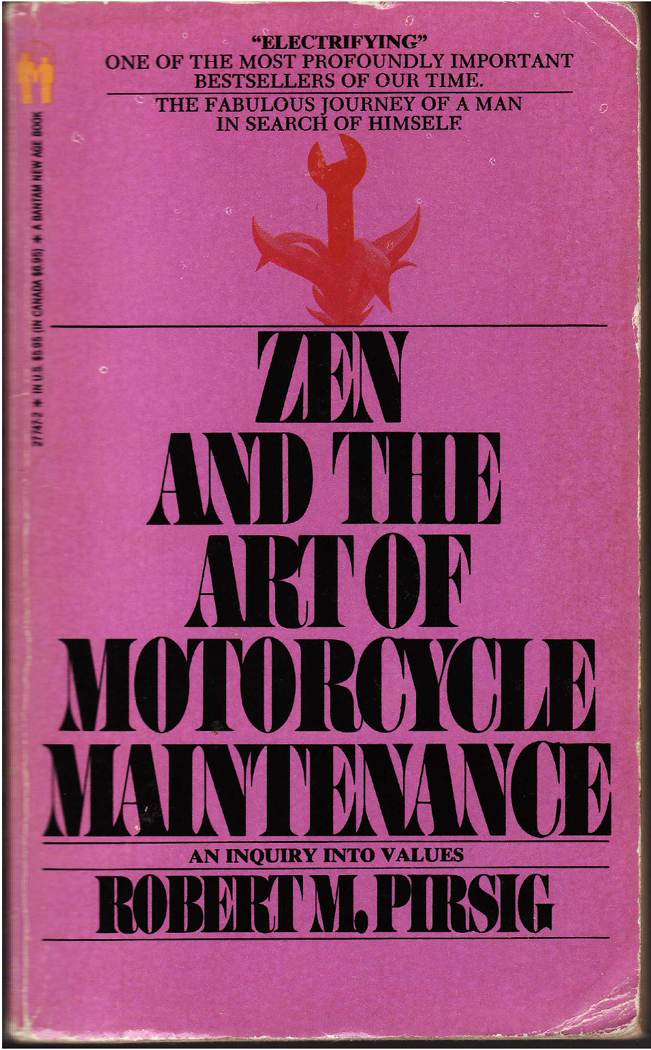
The relationship between brain and book is explored in the next book — which has the most unfortunate title since the now out-of-print Design of Active-Site Directed Irreversible Enzyme Inhibitors: ZenbookIt is Robert Pirsig’s Zen and the Art of Motorcycle Maintenance. The title is a faddish one, that practically screams, “I was written in 1974!” The book has nothing meaningful to say about either Zen Buddhism or motorcycles. But it has a lot to say about the central distinction between nouns and verbs as they play out both in our minds and in the world before us.

Pirsig makes no attempt to be likable. He is spiny, querulous, bossy, pedantic, and exhibits some of the anempathetic qualities of Asberger syndrome. Yet, he is unquestionably brilliant.

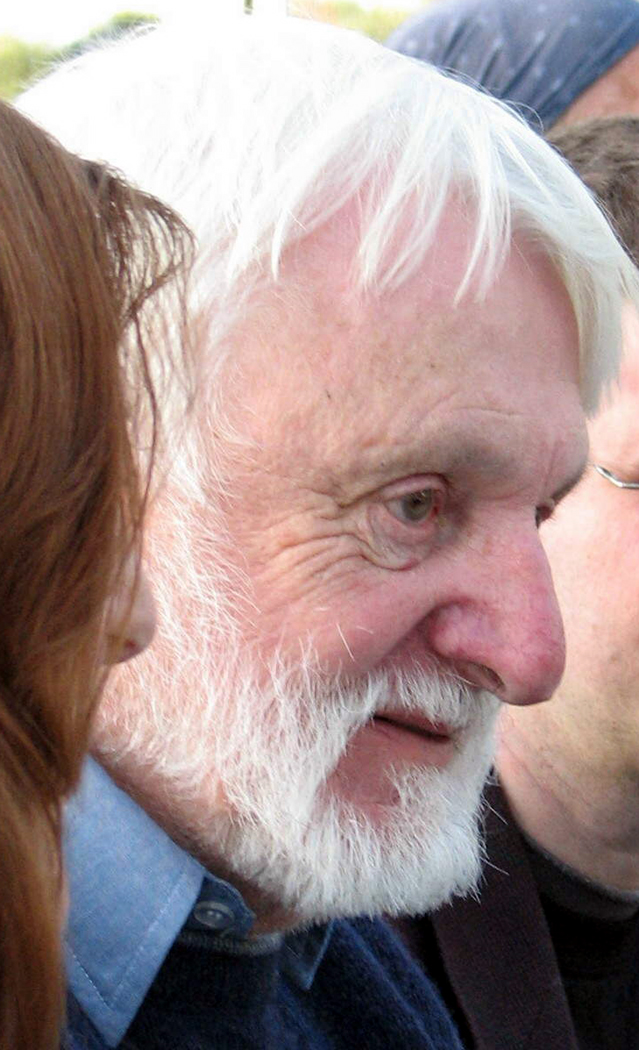
He uses Plato’s dialog, Phaedrus, to examine what he calls “Quality,” which he defines in an entirely idiosyncratic way, essentially remaking the word entirely. Pirsig

“Quality is not a thing. It is an event.”

That is, a verb, not a noun. It is one’s engagement with the world in the instantaneous present, before anything is named or understood.

The book slowly builds to this understanding as Pirsig takes a motorcycle trip with his son. The tour is interrupted by long stretches of philosophical discussion taking us into the issues of perception.

“Any intellectually conceived object is always in the past, and therefore unreal.” When you have experienced something and given it a name, it is already over. That unintellectualized instant of engagement is an active boiling; anything after it is already a snapshot looked at in leisure.

And we tend to fit what we experience into the patterns of the snapshots we already have in our photo album. As I have said many times, “What you know prevents learning.”

The climax of the book, for me, comes when Pirsig makes the leap from this to the words of the Tao Te Ching of Lao Tzu, and suddenly, the odd, incomprehensible language of that Chinese classic pops into palpable reality: “The name that can be named is not the absolute name.” Pirsig substitutes his odd definition of “quality:” “Fathomless! Like the fountainhead of all things …  Yet crystal clear like water it seems to remain.”

I have since substituted the word “beauty” for “quality.” If art seeks beauty, it is in the form of engagement with “the fountainhead of all things,” the precious, unslotted, uncataloged now and its very active nowness. Beauty is the engagement, not the thing: A verb, not a noun.

But language itself can be bypassed. Too many seem to believe that thought comes in words. It may do so, but a good deal of thought comes non-verbally. There is visual thinking, aural thinking, spatial thinking, temporal thinking. You cannot verbally engage your brain with a pitcher’s slider and hope to connect with the bat. The thinking involved is completely non-verbal.artur schnabel

Music is the great cultural means of making an argument over time without words, and you cannot get a better example of this than Beethoven’s piano sonatas.

Of all the things I learned at college, the one I am most grateful for is the ability to read musical scores. I collect scores — Eulenberg and Kalmus miniatures — the same as language books, and read them with much pleasure. If you are on an airplane and try to listen to music through headphones, all you get is static drowned in jet noise. But if you bring along the score, say, to Beethoven’s Seventh Symphony, you can read it and hear it in your head and the jet noise disappears.

And no score has meant more to me than Artur Schnabel’s edition of Beethoven’s sonatas. The notes sit on the pages like Pound’s blackbirds on their wires and sing their song. schnabel edition score

Schnabel is a micromanager as an editor, and many pages have more footnotes than musical notes. But he was one of the greatest performers of this music ever — his recordings of the complete set, made in the 1930s, is still in print and has never been superseded, even as technology has progressed. And his insight into the music, expressed in those footnotes, is always enlightening. I have gone through those two volumes of sonatas many, many times, always with profound enjoyment and growing depth.

I cannot imagine my library without them.

NEXT: What has fallen by the wayside

blake dante

I love language; I hate language. It is how I made my living, but it always feels like cheating. It feels heartfelt, but dishonest. Odi et amo.

Do you remember the first time you were in love, or thought you were, as a teenager? The longing, the rapture. There is an almost universal response that “Love” is not an adequate word to describe the emotion. You feel as if your love is special, better, more aware, alert and awake than everybody else’s, especially  your parents’. And you say, “I wish there were another word to describe how I feel.”

That is the first awareness most of us have of the difference between authentic and inauthentic existence. It is the first, and most universal — at least in our culture — awareness that our lives are divided into separate portions, one of them alive and burning and dangerous, and the other ordinary, safe and comforting.

Heidegger

Heidegger

German philosopher and godawful writer Martin Heidegger gave us the verbal formulation for this distinction when he named the “authentic” and “inauthentic” existence.

Authentic existence: An individual’s conscious response to his existence; i.e., his “being-in-the-world,” which inescapably associates life with death. Authentic existence is thus opposed to everyday (inauthentic) existence.

Heidegger is nearly impossible to read, in part because he invents words to express his ideas rather than relying on the old, well-understood words. He has more than 200 words alone created with the suffix that means “being.”

But it couldn’t have been any other way. Heidegger felt toward the ordinary vocabulary just as the teenager does toward the word “love,” that it is worn out and sounds trite and phony on the tongue that doesn’t truly understand, or rather live through, the experience — and specifically MY experience.

That is because language is by its essence inauthentic.

Language always takes us a step away from our “being-in-the-world.” It is a way of softening the experience, a way of taming it.

In this sense, I take as a central dichotomy the opposition of language and love.

An awareness of death, says Heidegger, is what wakes us up to the here-and-now, keeps us focused on the experience of being alive. And a desire to transcend death is the ultimate goal of both language and love.

The analogy of love and language is nothing new.

When Shakespeare wrote his sonnet, “Shall I Compare Thee to a Summer’s Day,” he ends it with the telling couplet, “So long as men can breathe, or eyes can see, So long lives this, and this gives life to thee.’’

In that, he is mixing the two: the words are immortal, and therefore, so is his love.

But the actual love is an experience and at its fullest transcends words more certainly than it transcends death. We love, have children and HOPE that the love will live past death. But there is no question that the experience of love can never be adequately expressed in words: They are too small, too conventional, too ordinary.

Richard Freiherr von Krafft-Ebing with his wife, Marie Luise

Richard Freiherr von Krafft-Ebing with his wife, Marie Luise

The sliver of experience in the condition of love IS the authenticity. It is the experience of life. The words are only ABOUT the experience of life. After all, would you rather make love or read Krafft-Ebing?

Now, certainly Heidegger wasn’t the first to recognize the distinction. He is merely the philosopher who fixes the meaning of the distinction like an entomologist pinning a butterfly. Heidegger gives us the vocabulary — now necessarily inauthentic — to describe the reality. We use his words, and as a consequence, fall (another of his words) into inauthencity.

The writer Henry Miller expresses it another way in his book Black Spring:

“What is not in the open street is false, derived, that is to say literature.”

Henry Thoreau’s whole book, Walden, is essentially about living an authentic life.

“To him whose elastic and vigorous thought keeps pace with the sun, the day is a perpetual morning. It matters not what the clocks say or the attitudes and labors of men. Morning is when I am awake and there is a dawn in me. Moral reform is the effort to throw off sleep. Why is it that men give so poor an account of their day if they have not been slumbering? They are not such poor calculators. If they had not been overcome with drowsiness they would have performed something. The millions are awake enough for physical labor; but only one in a million is awake enough for effective intellectual exertion, only one in a hundred millions to a poetic or divine life. To be awake is to be alive. I have never yet met a man who was quite awake. How could I have looked him in the face?”

“As if you could kill time without injuring eternity,” he writes in another place.

Yeats called inauthentic living “automatonism.”

For William Blake, what made Christ different from the rest of us was his ability to live authentically at every moment.

“Now hear how he has given his sanction to the law of ten commandments: Did he not mock at the sabbath, and so mock the sabbath’s God? Murder those who were murder’d because of him? Turn away the law from the woman taken in adultery? Steal the labor of others to support him? Bear false witness when he omitted making a defence before Pilate? Covet when he pray’d for his disciples, and when he bid them shake off the dust of their feet against such as refused to lodge them? I tell you, no virtue can exist without breaking these ten commandments. Jesus was all virtue, and acted from impulse, not from rules.”

And in another place: “Know that after Christ’s death, he became Jehovah.” Know that for Blake, Jehovah wasn’t a good thing. Jehovah is all rules: “One God, One Law, One King.”

Or perhaps we could go all the way back to Lao-Tse, who wrote the Tao-Te-Ching and said, “The way that can be named is not the constant way, the name that can be given is not the constant name.”

The best popular discussion of authenticity comes in Robert Pirsig’s book, Zen and the Art of Motorcycle Maintenance, which has absolutely nothing to do with zen, even in its pop forms, and only a little to do with motorcycle maintenance.

The book is an investigation of what Pirsig calls “quality,” which, it turns out, is much the same as Heidegger calls “authenticity.”

Pirsig writes:

“You can’t be aware that you’ve seen a tree until after  you’ve seen the tree, and between the instant of vision and instant of awareness, there must be a time lag.”

Any intellectually conceived object is always in the past and therefore, unreal. Reality is always the moment of vision before the intellectualization takes place. There is no other reality. This pre-intellectual reality is what [I] felt [I] had properly identified as Quality. Since all intellectually identifiable things must emerge from this pre-intellectual reality, Quality is the parent, the source of all subjects and objects.”

And authenticity, rather than being a result, is likewise a source. Authenticity is a relation you have with being alive that allows you to see, feel, and experience without the intervention of word or symbol.

All art, or all worthwhile art, exists to reawaken in us this often closed-off authenticity.

Art cannot itself embody authenticity: It is, after all, words or symbols — even music is an analog of the experience.

But the best art gives us an experience in itself and demonstrates, or forces us to become aware, of how to experience the rest of our lives — that portion we live with our mates, children, parents, that portion that is our careers, that portion that gives rise to spiritual awareness.

Of course, all art is, in this sense, inauthentic.

But just as a metaphor is never the thing, but points the way to the thing, so art points the way to the authentic.