Archive

Tag Archives: television

I want to put in a good word for TV sitcoms. They don’t get much respect. And it is true that many of them are routine, uninspired and forgettable. “Chewing gum for the eyes.” But the genre as a whole has both a long history (longer than you may suspect), and a significant role to play in the arts. Yes, the arts.

What we call art is a lot of things, and serves many purposes, but one thing all art, whether painting, music, theater or literature, is asked to do is entertain. There are different levels of entertainment, but even Joyce’s Ulysses or Berg’s Lulu offer an underlying level of amusement. 

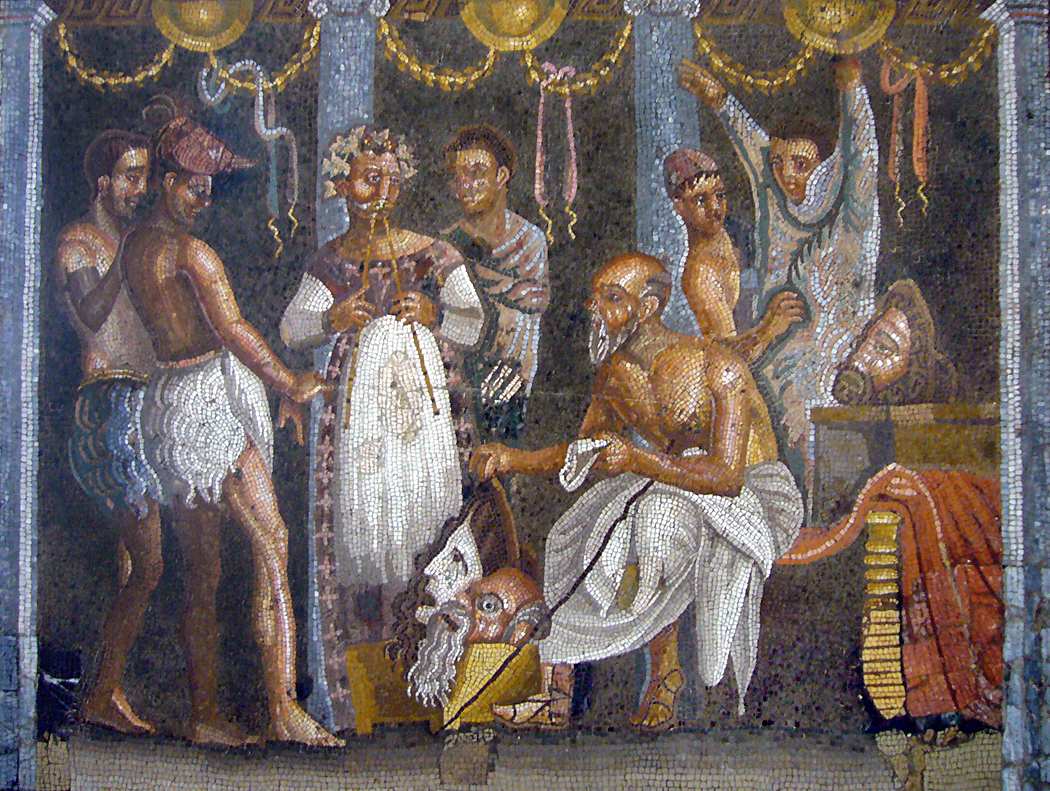
Comedy players, Mosaic from Pompeii

Some offer much more, but the base line of keeping us interested has been there from the earliest times we have record of. And much of it even fills university courses. We study Plautus and Terrence — among the earliest sitcom writers (Rome, 6th century BC), with plays full of dirty old men, unfaithful wives, clever slaves, mistaken identities and love-struck young men. 

There are few actual characters in such plays, and a great panoply of stock figures. These kinds of figures, stuck in difficult and comic situations, populate the works of Italian commedia dell’arte, the comedies of Molière, and the plays of Shakespeare (who would sometimes borrow from Plautus and Terrence). Victorian novels — by Dickens, Trollope, Thackeray —  now treated as literature, were at the time serialized in popular magazines and thought of much the same as we now consume TV shows. And all now deemed worth of academic study and even reverence. 

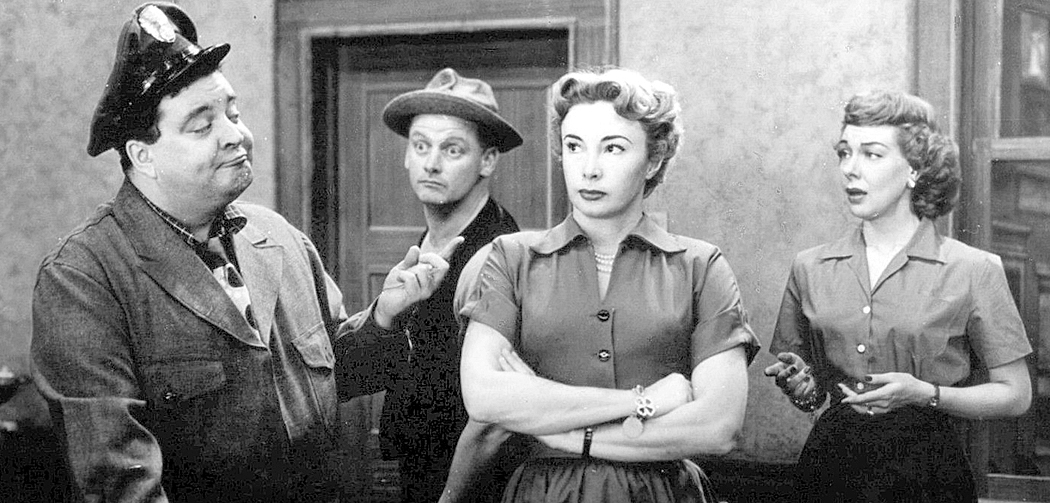
So, why not the same for All in the Family or The Honeymooners? Are they any “lower” an art form than The Twin Menaechmi? Or The Braggart Soldier

Remember, Shakespeare’s audience included the uneducated  groundlings; he wrote also for them. And he was not above the traditional fart joke. It ain’t all Seneca and Henry James. 

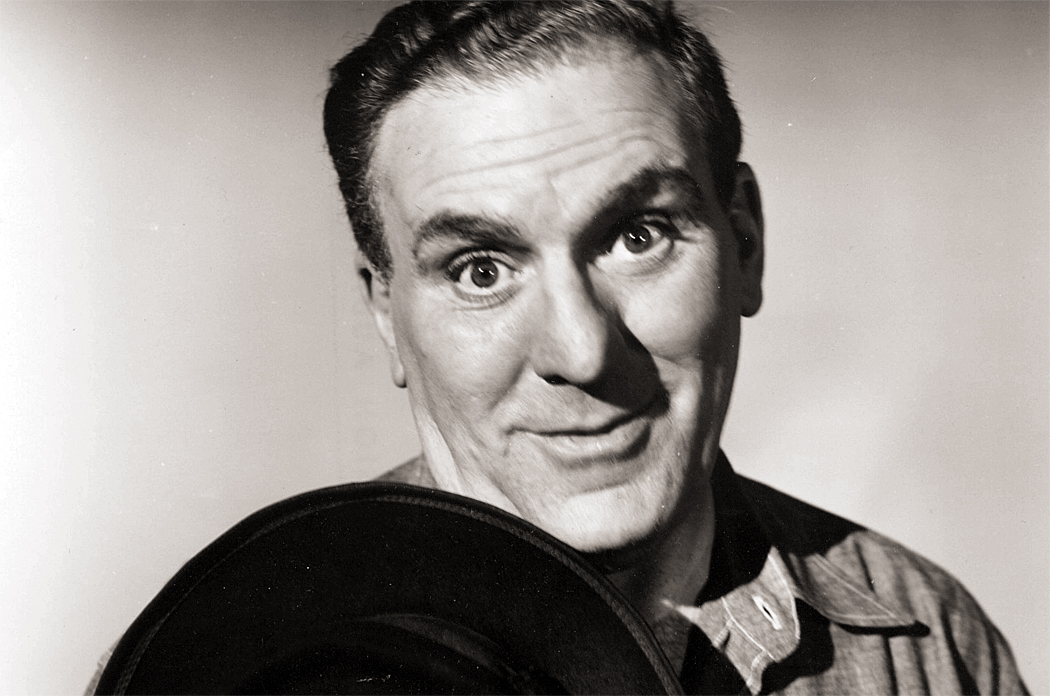
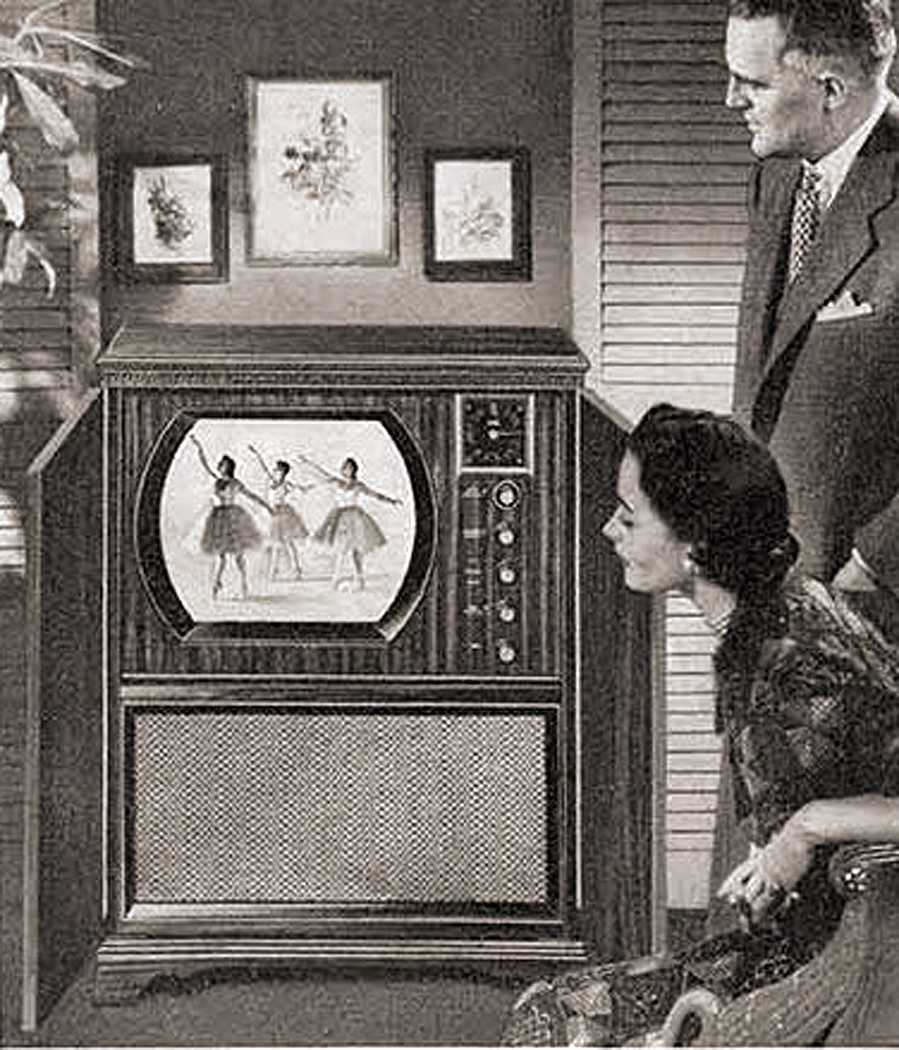
I am roughly the same age as television, and have watched the sitcom from its earliest TV days. I was one year old when The Goldbergs switched from radio to television (“Yoo-Hoo, Mrs. Bloom…”).  There was The Aldrich Family from 1949 to 1953 (“Henry! Henry Aldrich!” “Coming, Mother.”), and the first season of The Life of Riley, with Jackie Gleason originally taking over the title role from William Bendix, who had played the part on radio (“What a revoltin’ development this is”). Bendix took back the role for the rest of the series run. I don’t know how old I might have been when I first started watching these series. Probably in my playpen watching the images wiggle on the 12-inch screen of a Dumont television. 

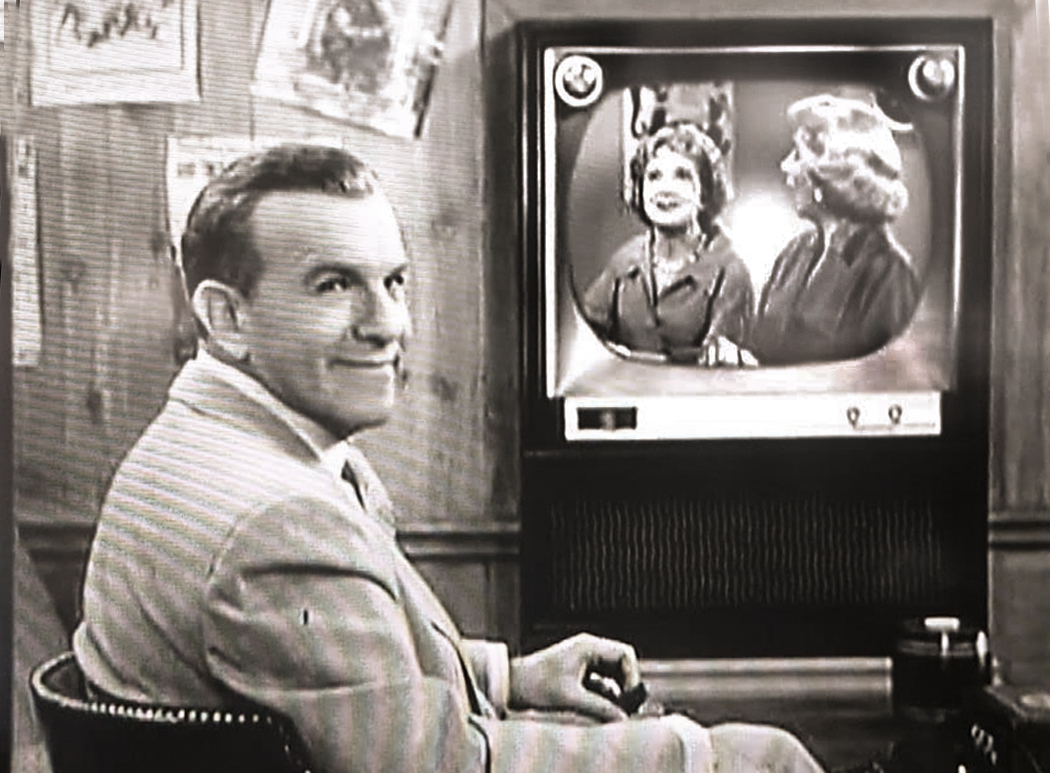
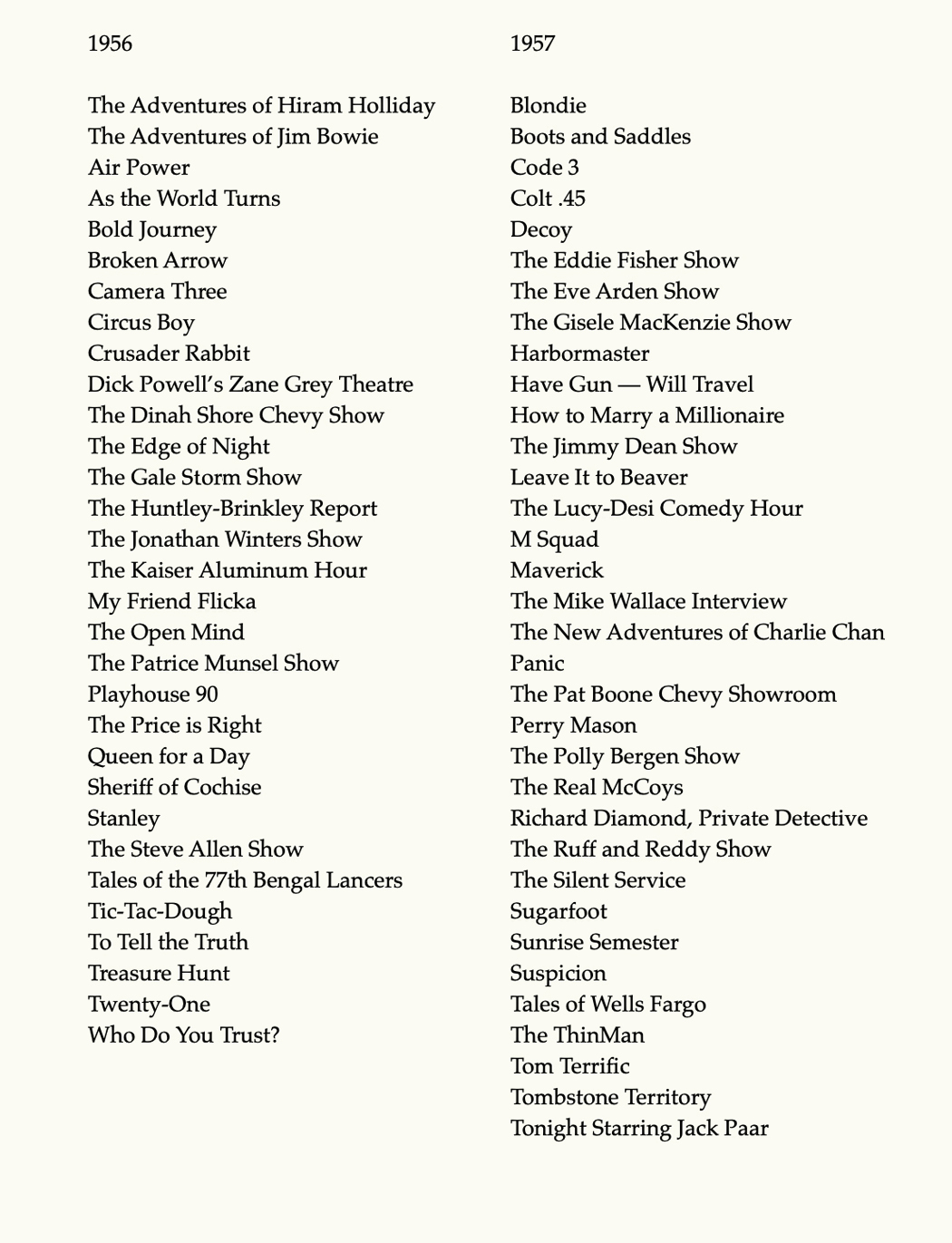
The 1950s brought the onslaught and the sitcom became a staple of the boob tube. These series I remember quite well: Beulah; The Bob Cummings Show; The George Burns and Gracie Allen Show (the first Postmodern show, where George could watch what Gracie was planning on his own TV screen and comment to the audience); December Bride; I Married Joan; Private Secretary; Mister Peepers

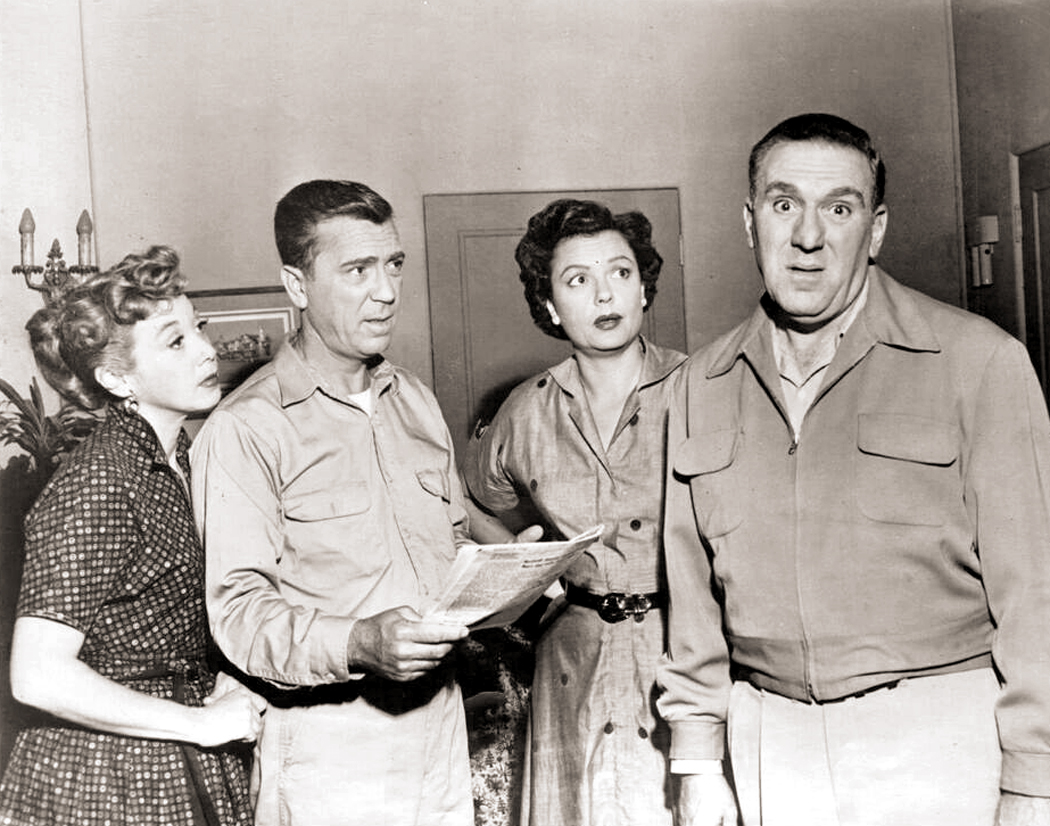
I haven’t mentioned the three most important shows of the time. The Honeymooners emerged as a sometime skit on Cavalcade of Stars, the Jackie Gleason variety show on the Dumont network, sometimes taking up most of the run time. But in 1955, the skit was spun off into a half-hour sitcom for 39 episodes, still run in syndication on various cable channels. (“To the moon, Alice”). 

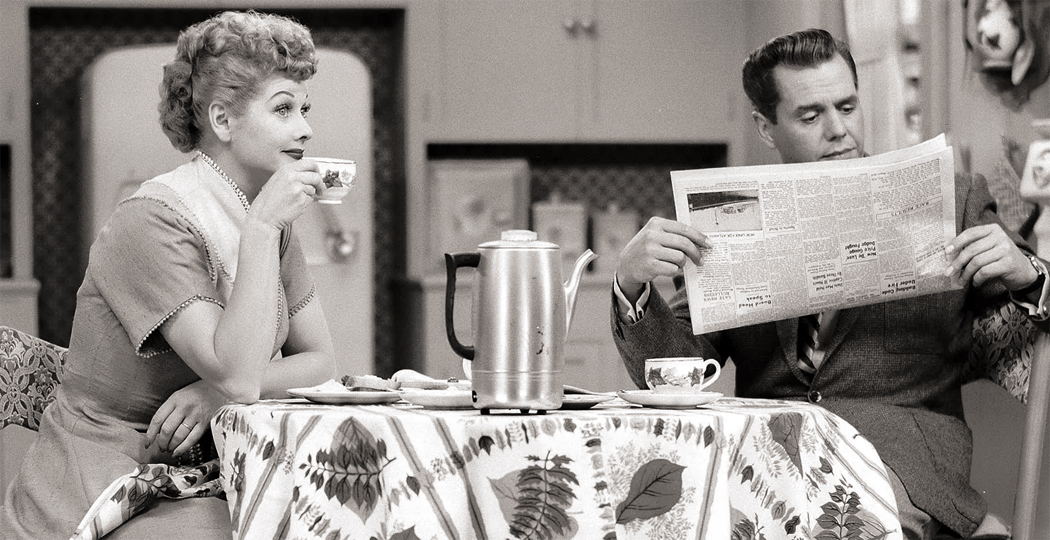
I Love Lucy ran from 1951 to 1957 and pioneered the three-camera filmed sitcom with live audience and laugh track. For its entire run, it ranked No. 1, No. 2, or No. 3 in the ratings. (I have to confess, contrary to the majority opinion, I never found Lucy very funny. Watching reruns, I still don’t). Those reruns can still be found in syndication on cable. 

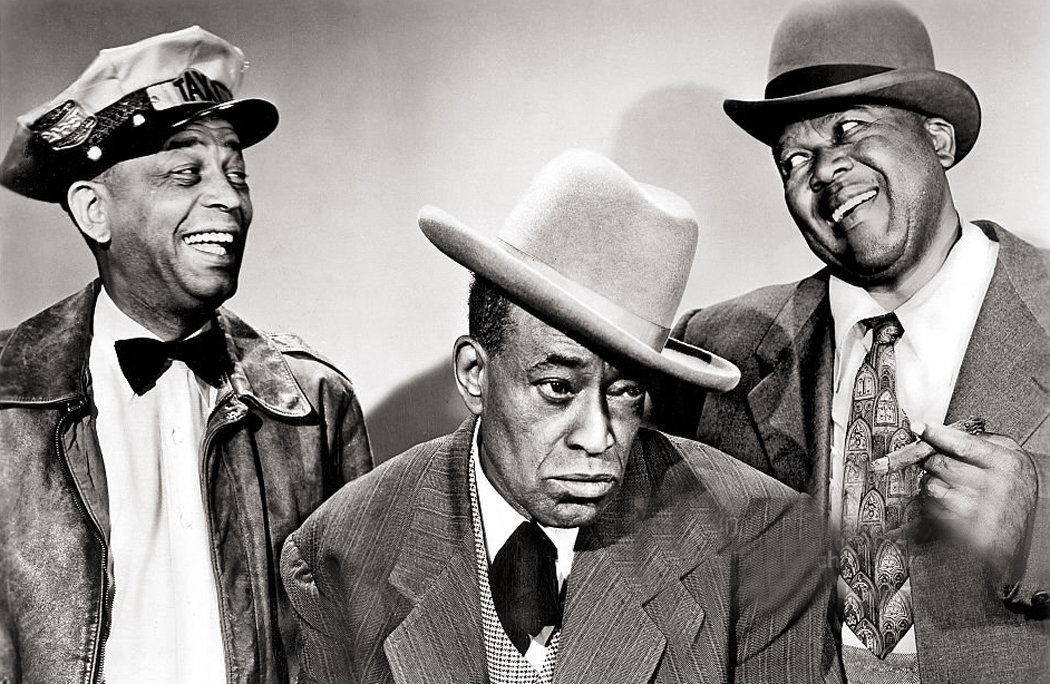
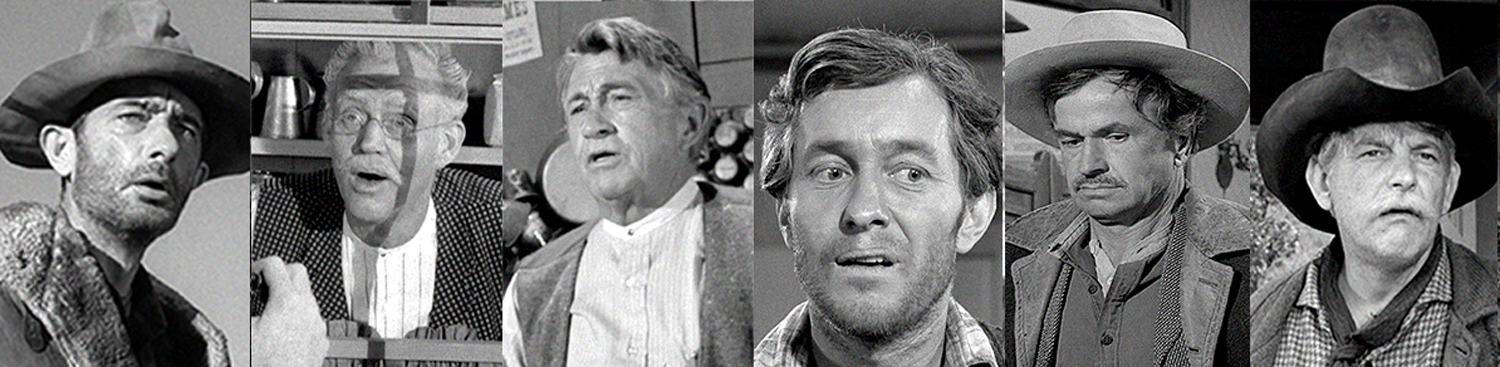
Alvin Childress, Tim Moore, Spencer Williams

But you won’t find Amos ’n’ Andy. It was enormously popular from 1951 to 1953. But reaction to the racial stereotypes changed markedly during the rise of the Civil Rights movement. It would be hard to complain about the series cancellation. In the context of its times, it was deserved. It can be hard to watch nowadays. But I have seen all 78 episodes on bootleg DVDs and must admit we have lost some brilliant comic performances, especially by ex-vaudevillian Tim Moore as the Kingfish. Yes, there are some awful stereotypes, but not everyone was shufflin’ and grifting. Amos was an upright citizen and family man, and the series showed quite a few Black doctors and judges, all horrified at the shenanigans of the series stars. 

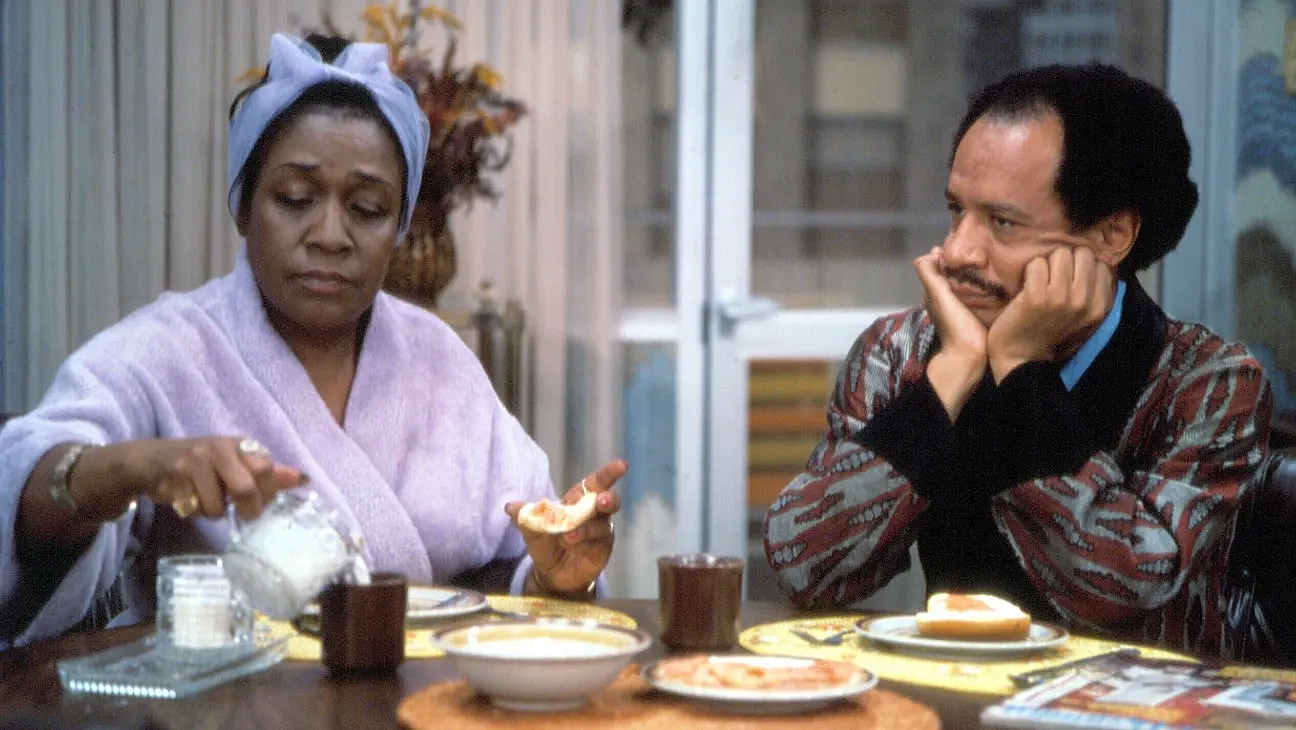
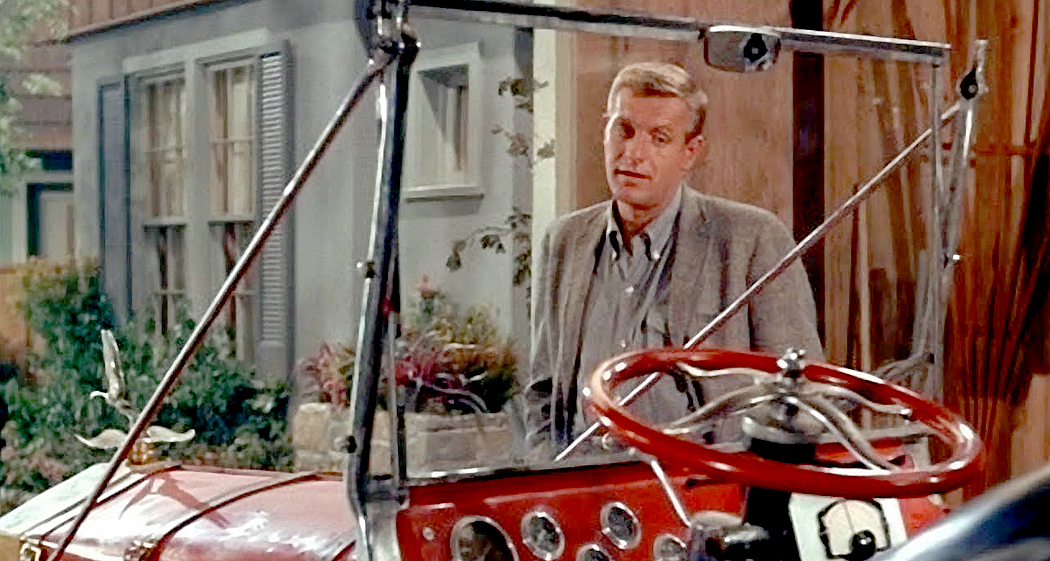
And it should be pointed out that most sitcoms, Black, white or otherwise, focus on less-than-admirable characters. Let’s face it, bland Ward Cleaver does not support a TV series. You need Archie Bunker, Ralph Kramden, or Larry David. Something out of the norm, but exaggerated. Getting past the particulars of Amos ’n’ Andy, basically the same stereotypes come back later as George Jefferson or J.J. in Good Times (“Dyn-O-Mite”) or Redd Foxx in Sanford and Son. Same caricatures, different generation. 

I’m not suggesting we forgive Amos ’n’ Andy, but rather to see it in context, and recognize the talent that went into it. 

The fact that even Millennials know who Lucy Ricardo was, or Ralph Kramden or Rob and Laura Petrie, means that some of the hundreds of sitcoms that have aired, from the last century and this, have a cultural staying power, very like the classics we read at university. 

The foundational stereotypes — or archetypes — have persisted, too. How many sitcoms feature bumbling husbands, from Chester A. Riley and Ozzie Nelson to Curb Your Enthusiasm and The King of Queens? Conversely, the trope of the ditzy wife, from Gracie Allen to Married … With Children to The Middle? Mothers-in-law are a perennial butt of jokes, as are clueless bosses and gay best friends. They each provide a predictable set of familiar and comfortable jokes. (Although the limits of comfort can and have changed over time: Blonde and Polish jokes haven’t worn as well).

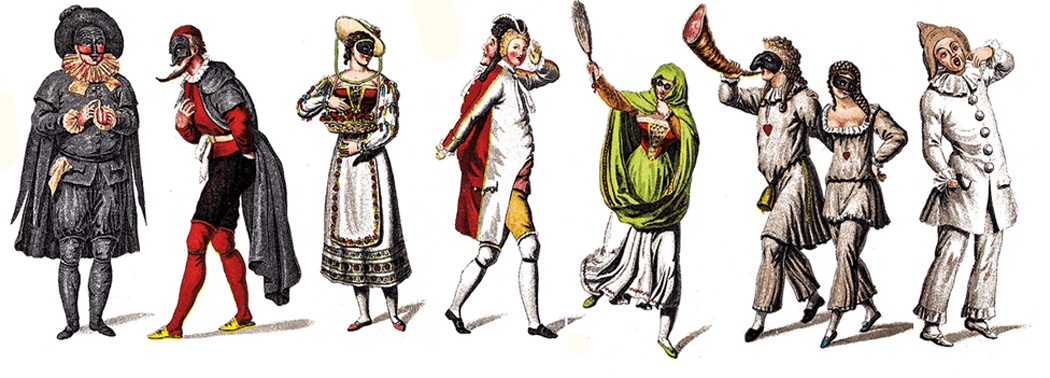
And most of these are just modern changes rung on the characters of the commedia dell’arte. Harlequin, Colombina, Pantalone, Pulcinella, Zanni and the lot. We aren’t looking for fully rounded characters so much as familiar types to build plots and gags around — the “situations” in situation comedies. 

So, the sitcom has a long history. And I have a long history with them. And I have divided them into four roughly defined groups. The borders of these groups may be squishy — you may parse them differently — but the categories are defensible.

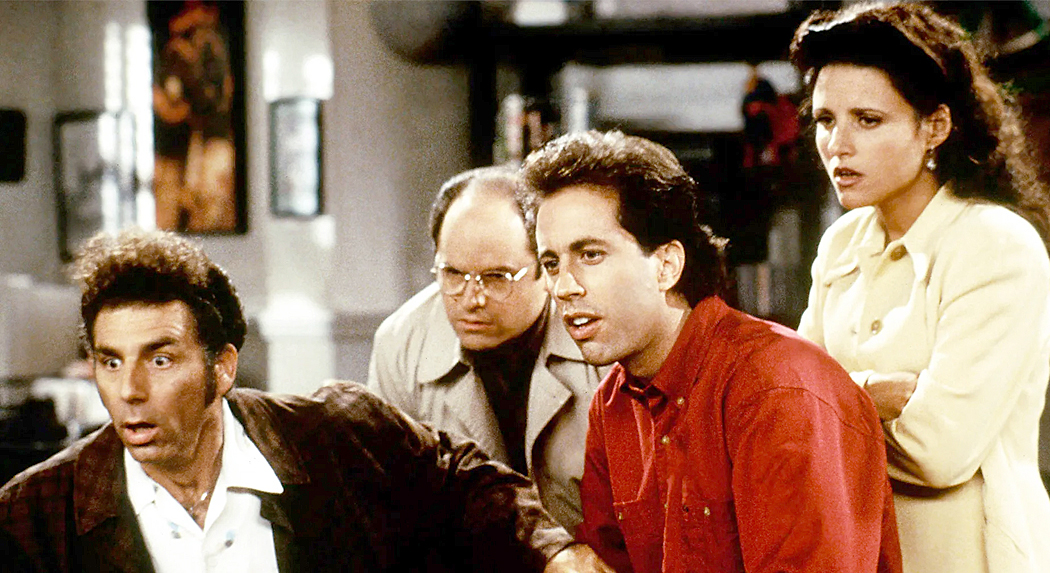
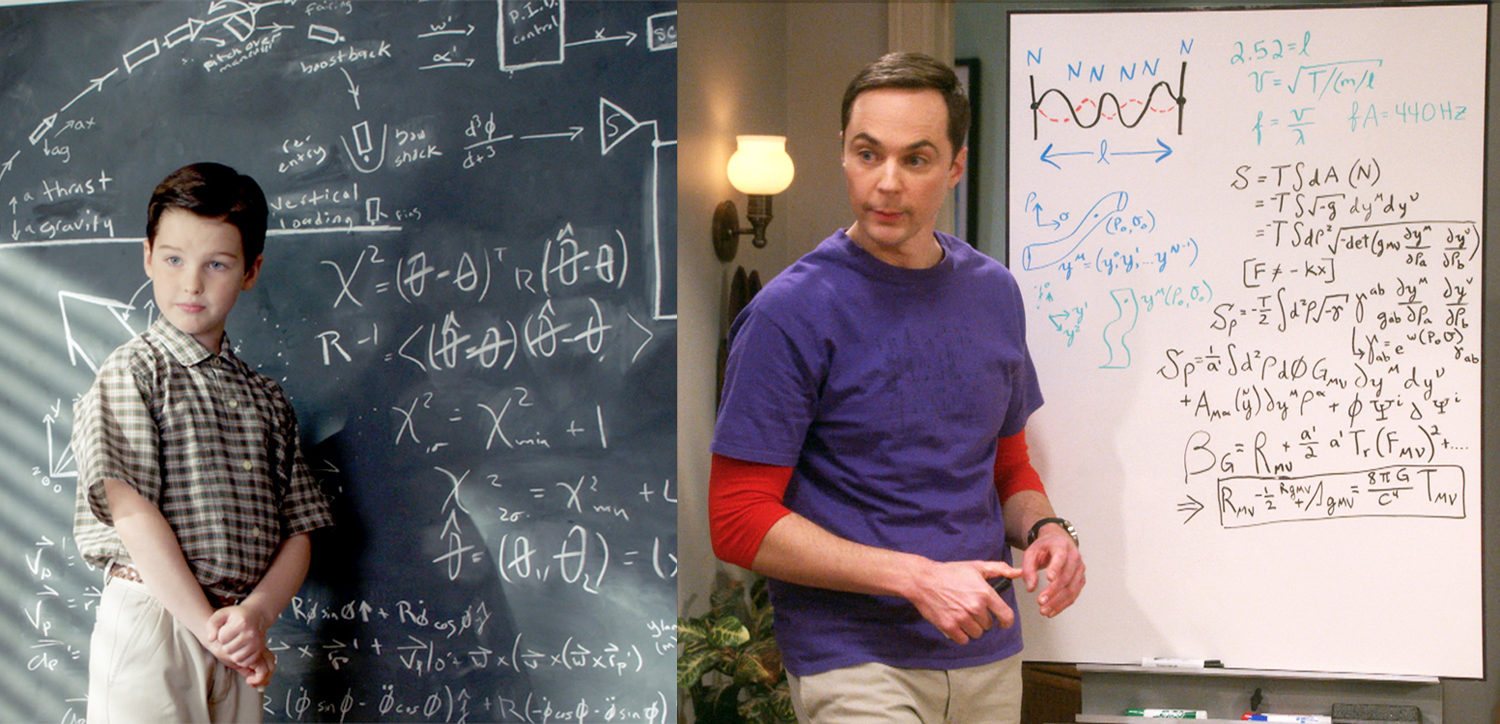
First, there are those that have had an effect on culture broadly. They tend to be the best written and acted, but they have wormed their way into the general consciousness. Class A includes I Love Lucy (my qualms not withstanding), The Honeymooners, All In the Family, The Mary Tyler Moore Show, M*A*S*H, Murphy Brown, The Office (American version), Seinfeld, Roseanne, Curb Your Enthusiasm, and The Cosby Show (which now is hard to watch — both hard to find and hard to endure, knowing what we now know). And I would include both The Big Bang Theory and Young Sheldon. Class acts all the way. 

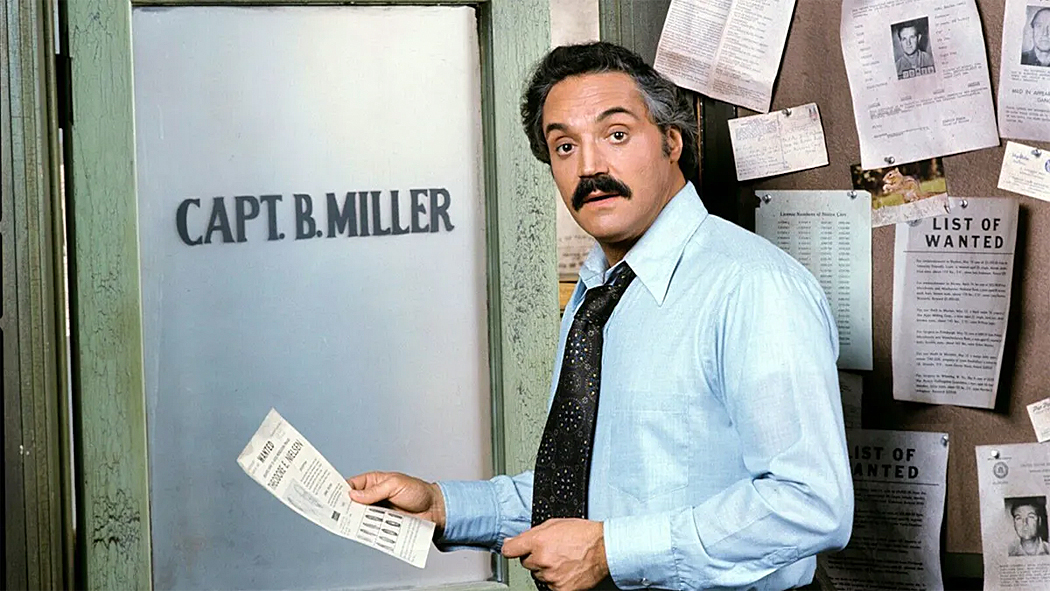
But I would include also: Taxi, Barney Miller, Dick Van Dyke, Cheers, The Bob Newhart Show (the original one), and a few that I never warmed to, but still have a cultural significance, like Friends and Married… With Children. All are or have been in the national conversation.

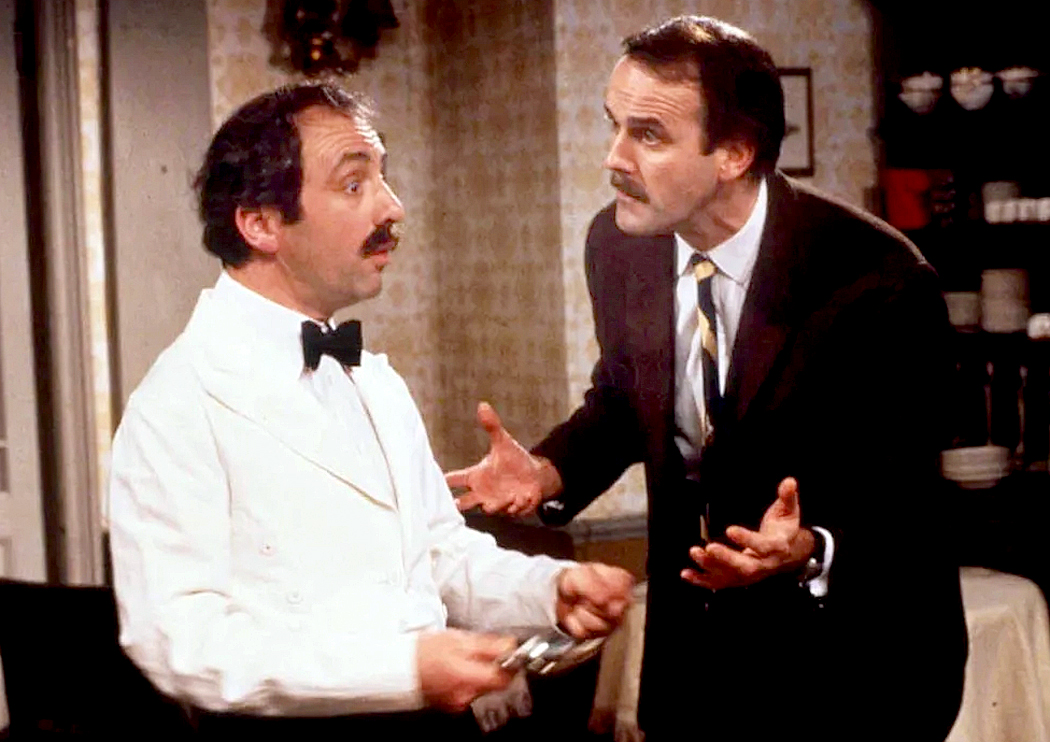
I should also include a few British series that have had an impact, mainly Fawlty Towers, the British Office, and Absolutely Fabulous.  

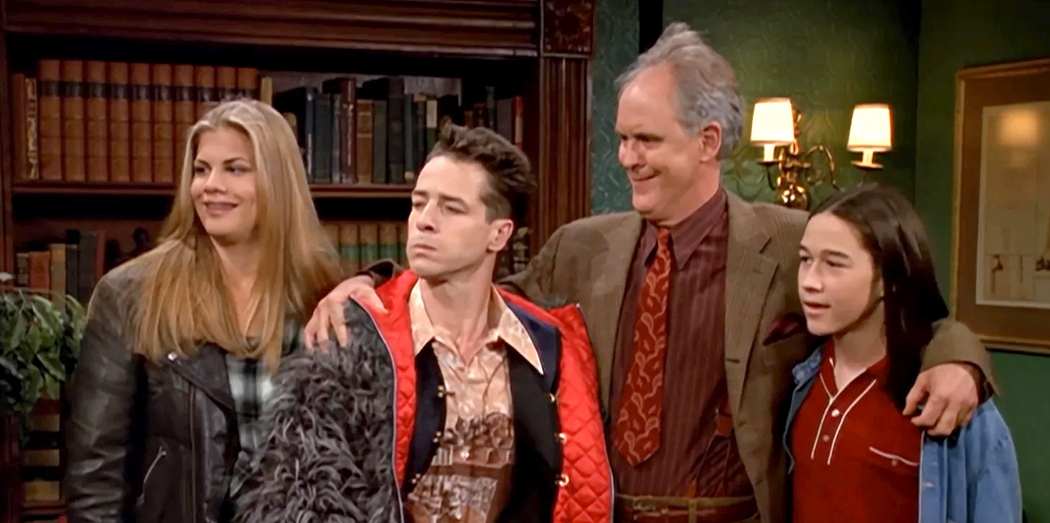
Class B includes all the quality shows that came and went, with funny characters and solid jokes, but never buried into the Zeitgeist in quite the same way. All solid entries. You can add quite a few to this list and it will depend on your taste and funny bone. I would include: 3rd Rock From the SunBlack-ish; Brooklyn Nine-Nine; Frasier; Golden Girls; The Good Place (should be in Class A, but not enough people watched); Happy Days; Malcolm in the Middle; The Middle; Mike & Molly; Modern Family; The New Adventures of Old Christine; Parks and Recreation; Scrubs; Two and a Half Men; Veep; WKRP in Cincinnati; and your choice of others. Among my favorites are Mom, Night Court, Reno 911. Individual taste may vary. (I have not included many of the old shows from the ’50s and ’60s that few people have had a chance to see: My Little Margie, Private Secretary; Topper.)

The next rung down, in Class C are the workaday shows, sometimes OK time-wasters, but full of cliched characters and tired jokes — the kind that have the familiar form of jokes, but seldom the wit or laughs. Writing on autopilot. This is the vast majority of TV sitcom bulk. The roughage and fiber of the viewing diet. 

When we watch these, it is often more out of habit than desire. The forms are familiar and the laugh track tells us when a joke has passed by. Did anyone ever think The Munsters was prime comedy? or Gilligan’s Island? McHale’s Navy? Saved by the Bell? Mediocrity incarnate. Hogan’s Heroes? I could name a hundred, propelled by laugh tracks and the need of writers to fill air time. Networks toss them on the screen, hoping they’ll stick. Some do, but only because they are gluey. 

Wikipedia lists hundreds of sitcom titles and I would guess some 75 percent of them fall into Class C. At least half of those are gone in a single season, un-renewed, or cancelled after a few goes. The rest stick around because they are not overly offensive. They may feature actors we like, even if they have to spout insipid dialog. 

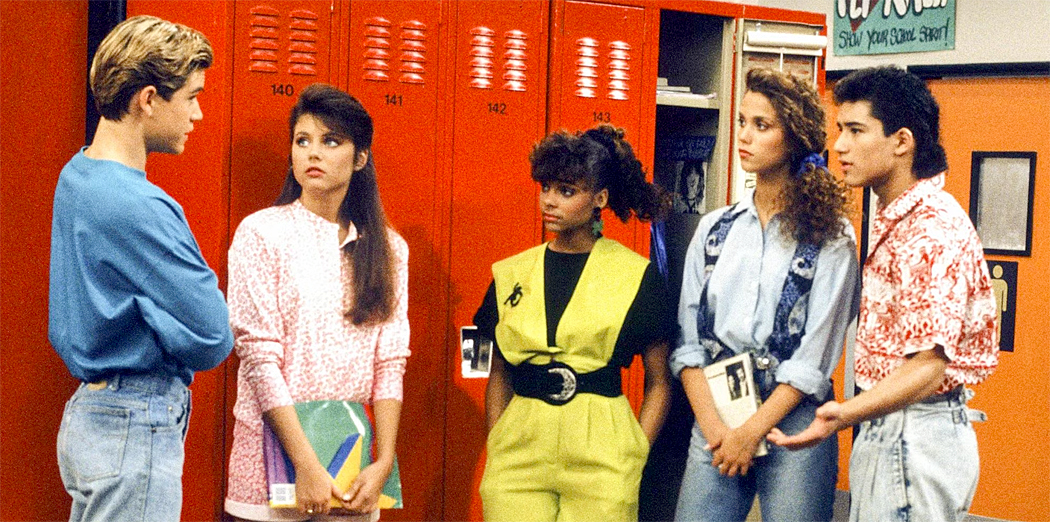
Bewitched; The Brady Bunch; Chico and the Man; Community; Ellen; F Troop; The Facts of Life; The Flying Nun; I Dream of Jeannie; Last Man Standing; The Monkees; Perfect Strangers; That ’70s Show; Who’s the Boss? Go ahead: Make a case for any of them. Tube fodder. 

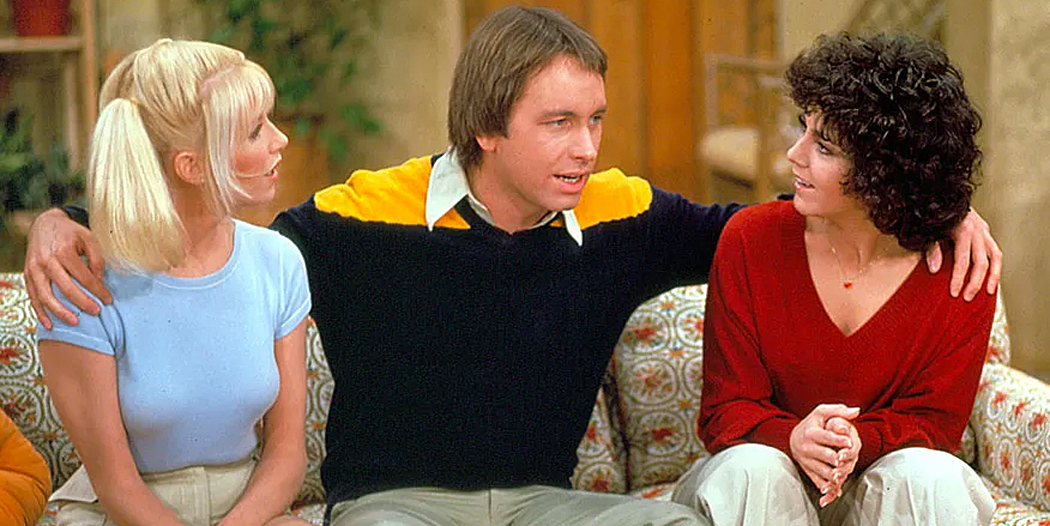
Three’s Company is the epitome of Class C, although my son, deeply knowledgeable in the ways of film and media, assures me it is a classic. He loves it. De gustibus

Then, there is the bottom feeding Class D, those shows so bad they have become legend. My Mother the Car is the type specimen for this class. A series only a studio executive high on cocaine and bourbon, and distracted by facing an expensive divorce and maybe a teenage son in jail  could have green-lighted. Quite a few of these were meant to be vehicles for aging film stars given their own sitcom series. The Doris Day Show, The Debbie Reynolds Show, The Tammy Grimes Show, Mickey (with Mickey Rooney), The Paul Lynde Show (in which he is an attorney and family man), Wendy and Me (with George Burns and Connie Stevens), Shirley’s World (Shirley MacLaine as a photojournalist), and The Bing Crosby Show. Most of these didn’t make it past the first season. 

Also at the dismal bottom: Hello Larry, New Monkees, She’s the Sheriff, The Trouble with Larry (“not just not funny, but actively depressing”), Cavemen, Homeboys in Outer Space, The Ropers. Most cancelled after one season. 

In England, Heil, Honey, I’m Home with Adolf and Eva never made it past the first episode. (currently unavailable on streaming or disk. Too soon?).  

Among the abject failures are most of the American remakes of popular British comedies. Many of them never made it past the pilot stage.

And so, you have four general classes of television sitcoms. The best worthy of saving for future generations, the worst best left for whatever is the digital version of the bottom of the canary cage. 

The past wasn’t so different. What we remember of classical Roman comedy are what is extant. Much isn’t. A good deal of it was probably just as banal as most bad TV. We don’t know: It didn’t survive. The Victorian novel was largely a serial enterprise, like seasons of a sitcom, weekly chapters published. But for each Dickens or Trollope, there were dozens, maybe hundreds of lesser works now mostly forgotten. In time, we will no doubt continue winnowing the TV past, saving the Norman Lears and perhaps the Chuck Lorres and ranking them as our Plautus and Terrence. Perhaps. 

The low arts can still be art.

Every once in a while as if by a miracle, something good is transformed by art into something godawful. Case in point: the most recent remake of the detective stories of Georges Simenon that go under the heading “Maigret.” 

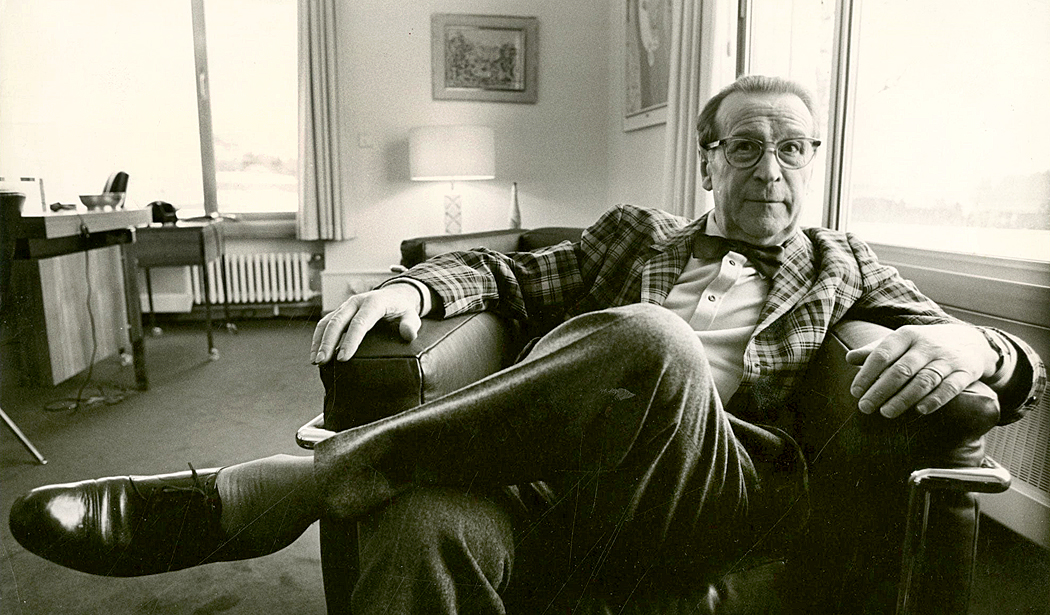
The Belgian writer pumped out (and that is about the only way you can describe his method) some 75 novels and piles of short stories featuring his creation Jules Maigret, commissaire of the police judiciaire at le Quai des Orfèvre in Paris. 

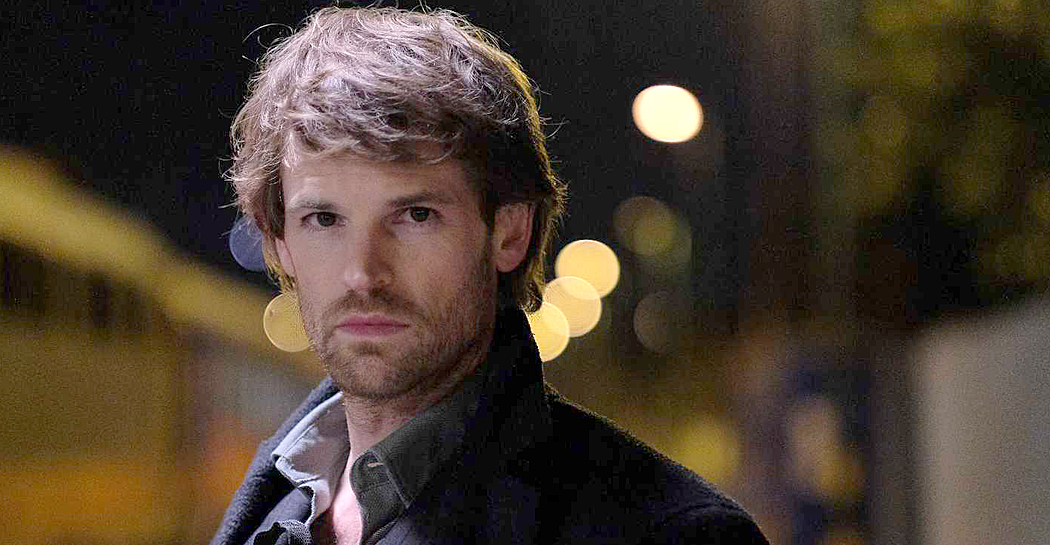
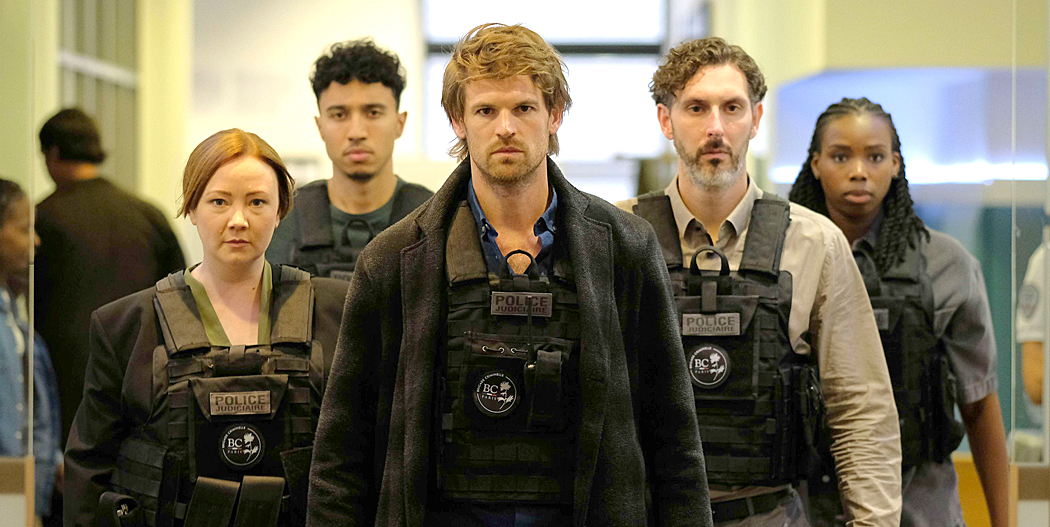
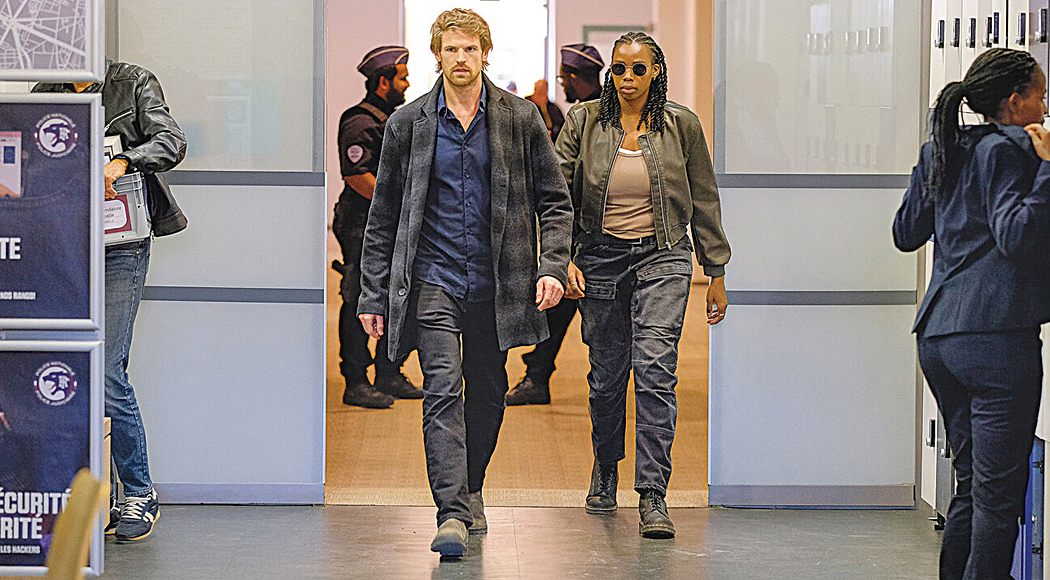
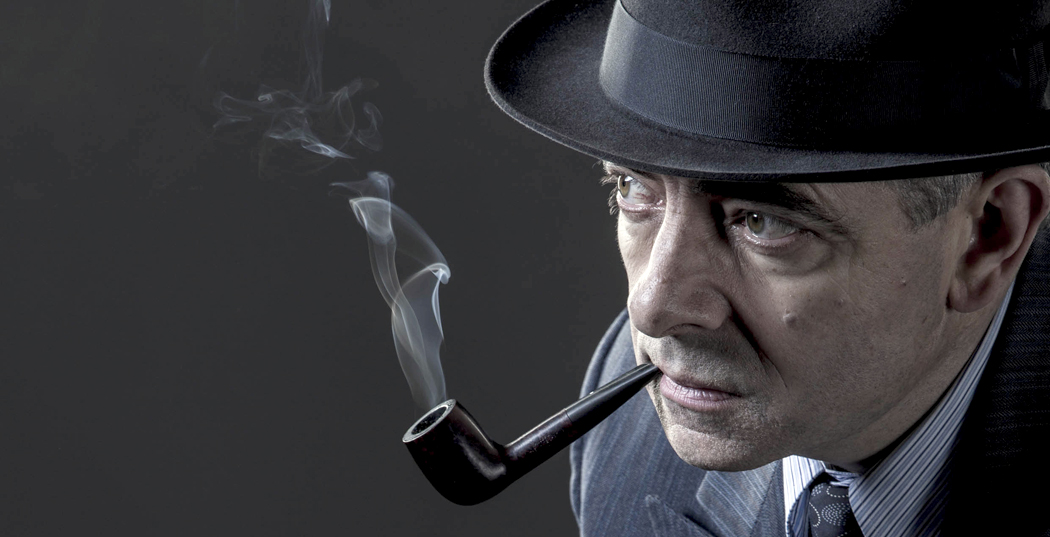
I just tried watching the new Maigret series on PBS Mysteries and, honestly, someone needs to be shot before a firing squad. They seem to have turned Maigret and his team into “Le Mod Squad.” Simenon’s Maigret is famously middle aged and looks like a tired bureaucrat. That’s how Simenon wrote him. To turn him into a — and I quote — “young, streetwise leader of an elite crime unit known as ’The Maigrets’” — is worse than a travesty, it is pandering of the worst sort. 

“Le Mod Squad” hardly ridicules it enough. “Montmartre 90210”  perhaps — No pipe, no hat, no overcoat. Probably doesn’t even drive a Citroen. And that curated day-old chin scruff — what a tired cliche! And from the images I’ve seen online, the series seems to be lit in the contemporary flat digital style, with faces darker than the background. Oy veyzmir. 

In other words, I don’t think I’ll be watching this series. I could barely make it through the first episode. In fact, I couldn’t. The episode was a two-parter and I quit after the first part. 

Its sins are legion. Perhaps if it had been made under some other title, like “Les Flics a la Mode,” it might have served a purpose on network TV, alongside long running series. Maybe even “CSI: Paris.” But its questionable status as a remake of the famous French detective is not its only or worst sin. Its dialog is straight out of a soap opera, with great lumps of exposition floating like unincorporated lumps of flour in a gravy. The script seemed assembled rather than written. 

It’s not that I object to modernizing or updating a classic. Mark Gatiss and Steven Moffat did a great job with the BBC’s Sherlock, with Benedict Cumberbatch, keeping all the quirkiness but adding a digital world. But the new Maigret is simply ham-handed. 

Simenon wrote his Maigret books from 1931 until 1972, which were only a fraction of his immense literary output. Right from his apprenticeship, writing under 17 pen names, he produced 358 pulp novels and short stories from 1921 to 1934. He was writing at a pace of 70 typed pages a day. Even after he began writing under his own name, his production was prodigious. There can be no count, only approximations. Estimates have run from 170 books to about 500. What is more amazing is the quality level. No less than Andre Gide wrote, “I consider Simenon a great novelist, perhaps the greatest, and the most genuine novelist that we have had in contemporary French literature.”

Simenon’s mysteries are functionally different from the standard model, where, as in Agatha Christie books, suspects and clues pile up and at the end, Miss Marple sorts it all out and solves the crime. With Maigret, we often know who the perpetrator is in the first few chapters and the bulk of the book is Maigret figuring out how to catch the bad guy, or what motivates him and could lead to his capture. The heart of a Maigret book is not the mystery, but the characters and their psychologies. It seems almost as if Simenon begins with a vivid character or two and builds a story around that. We read them not to find out “whodunnit,” but to spend time with fascinating personages. 

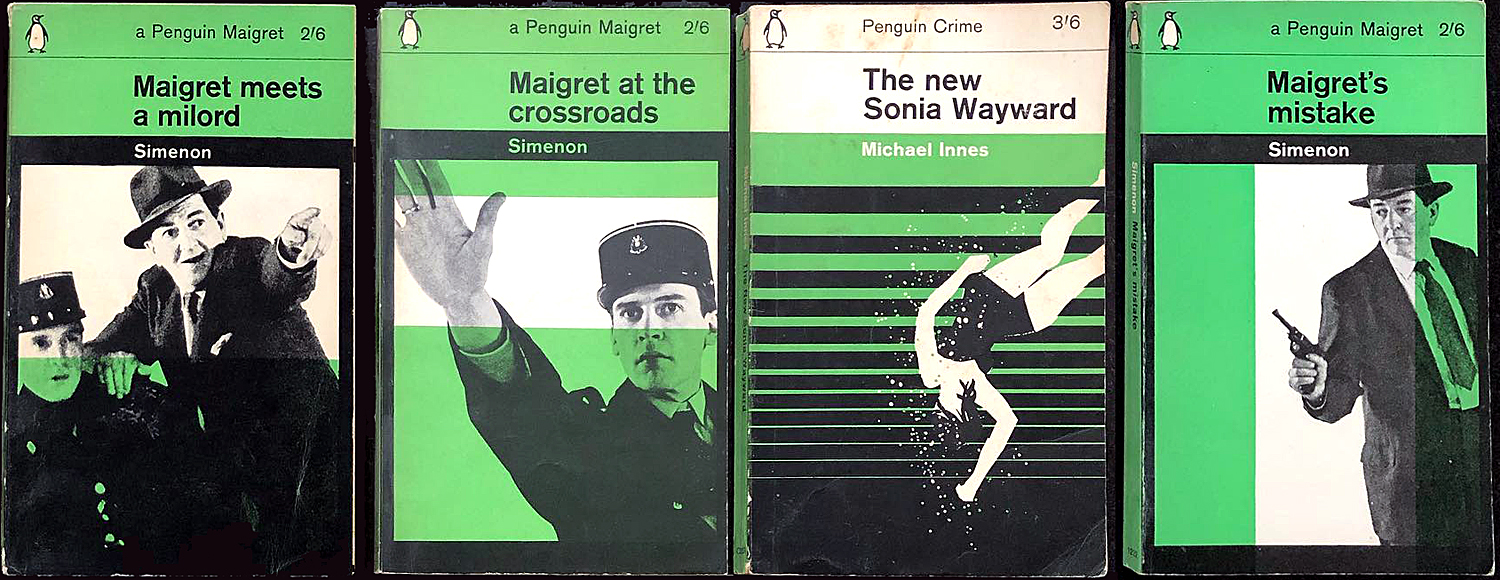
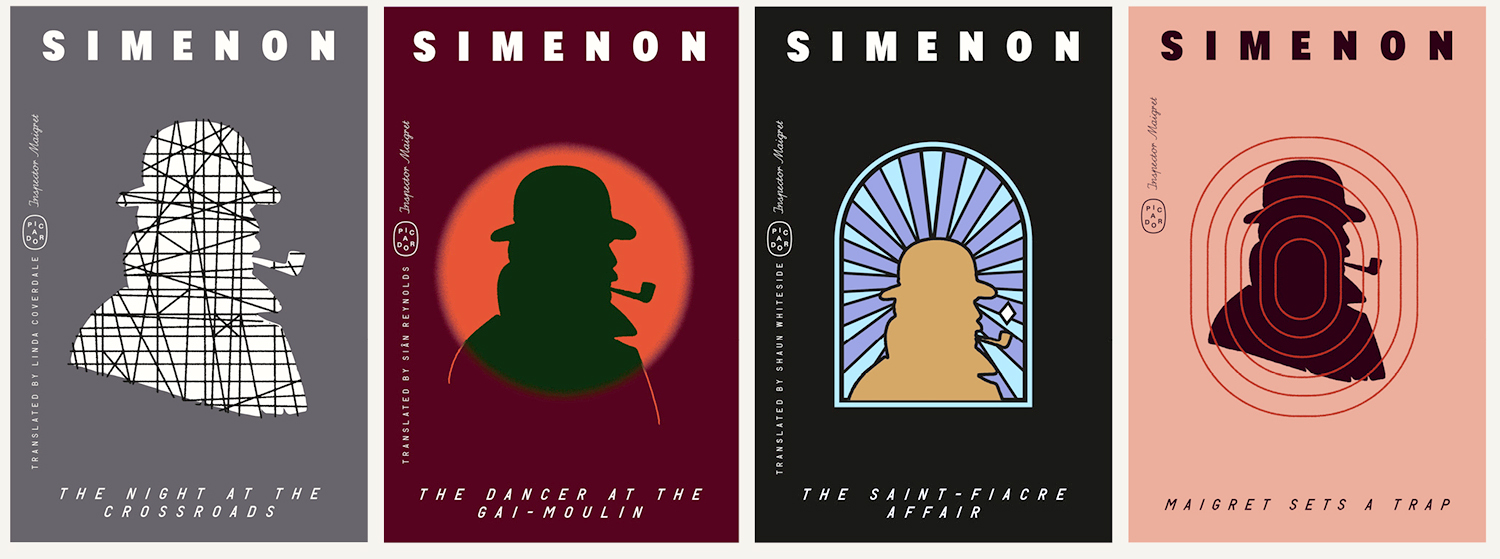
All of his Maigret novels remain in print — the whole series in English translation is published by Penguin Books. Numerous other translations are available, and multiple compilations. 

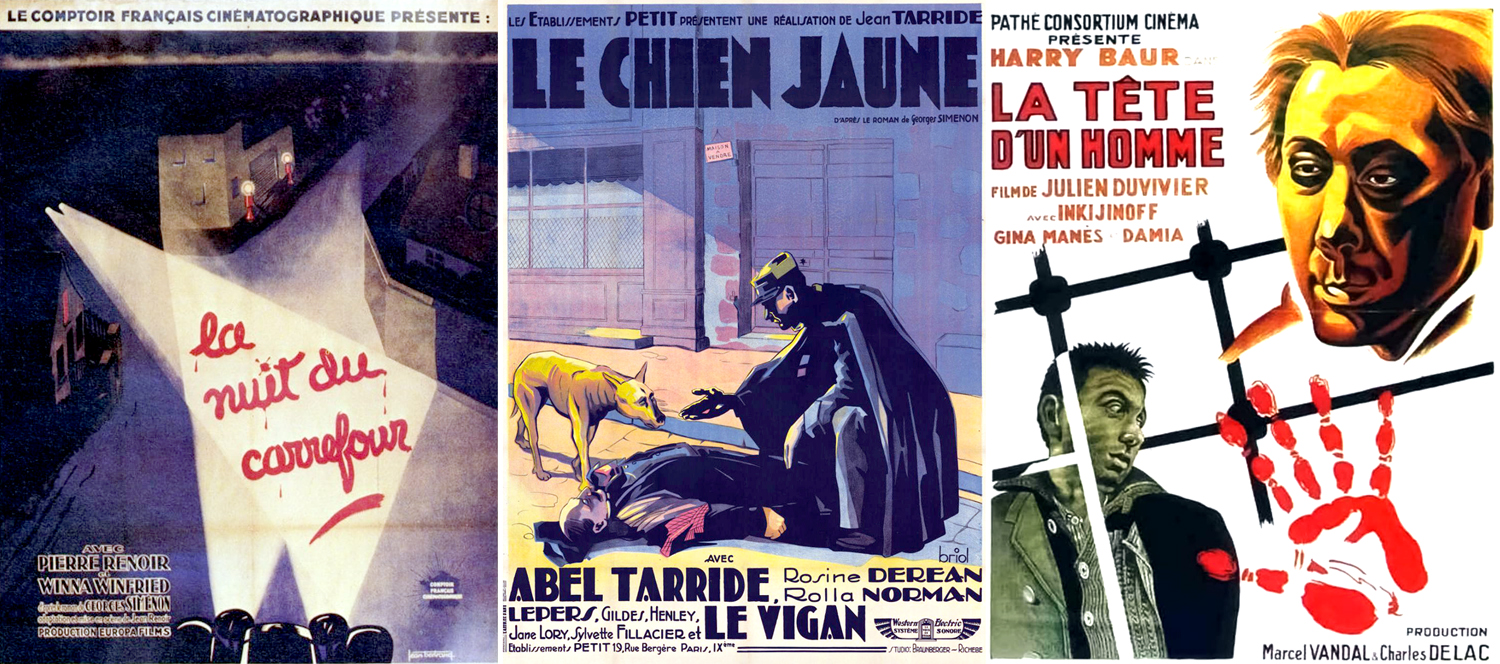
At least 70 films and TV series have been made from his works, beginning with Jean Renoir’s La Nuit du Carrefour, from 1932, starring the director’s brother Pierre Renoir as Maigret. The same year saw Le Chien Jaune (“The Yellow Dog”), with Abel Tarride as the commissaire, directed by his son, Jean Tarride. The following year, Julien Duvivier directed Harry Baur as Maigret in La tête d’un homme (“A Man’s Neck.”) 

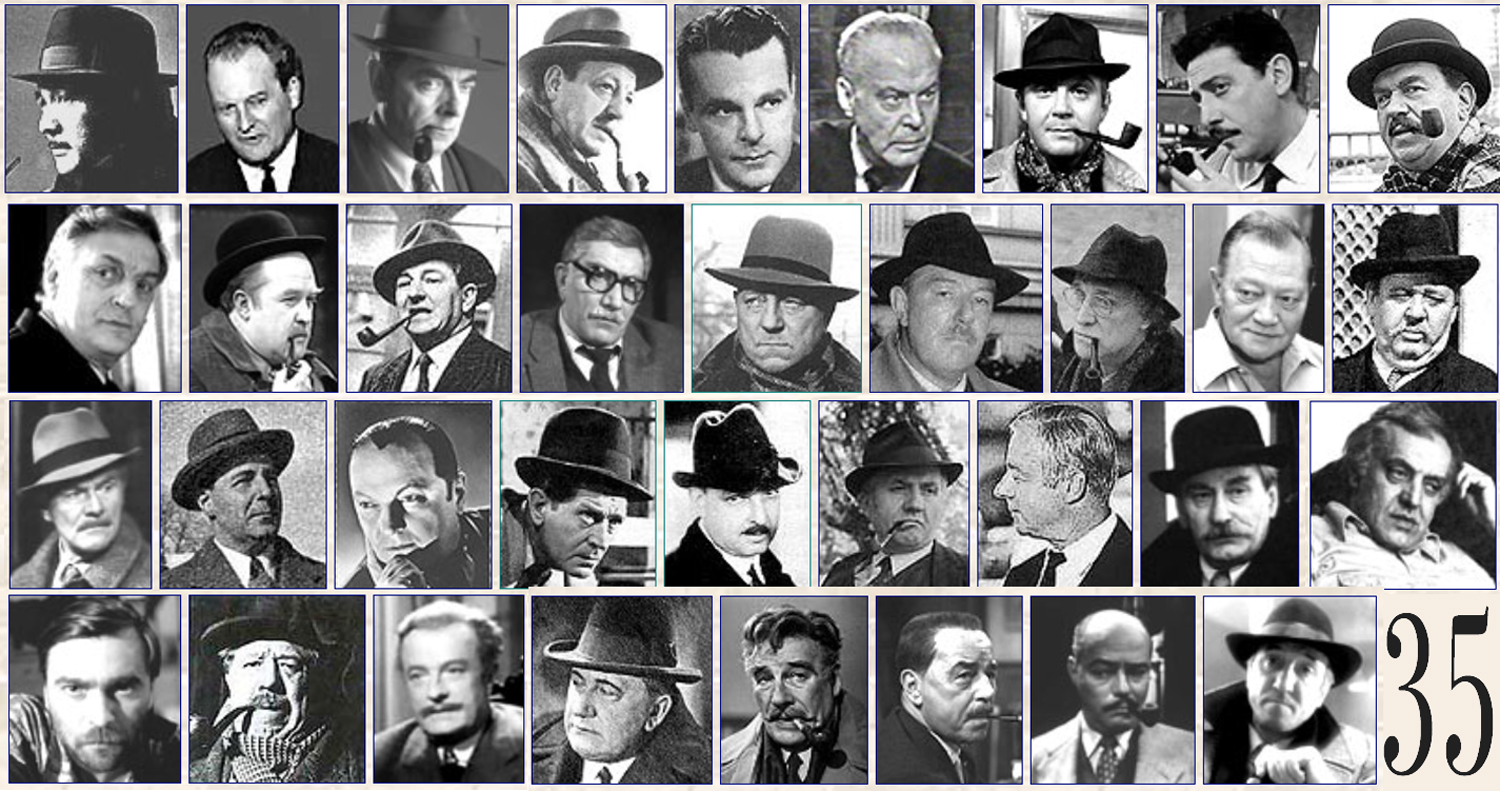
Over the years, at least 35 actors have smoked the pipe as Inspector Maigret, give or take some forgotten versions. They were made in several languages, including Italian, German, Russian, and Japanese. 

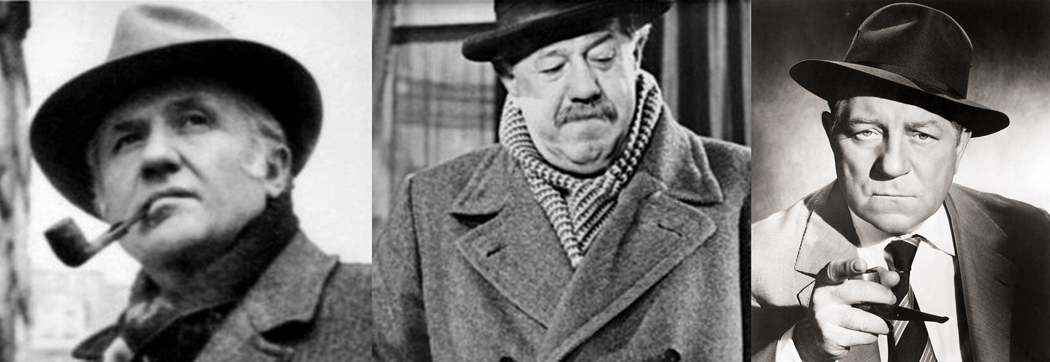
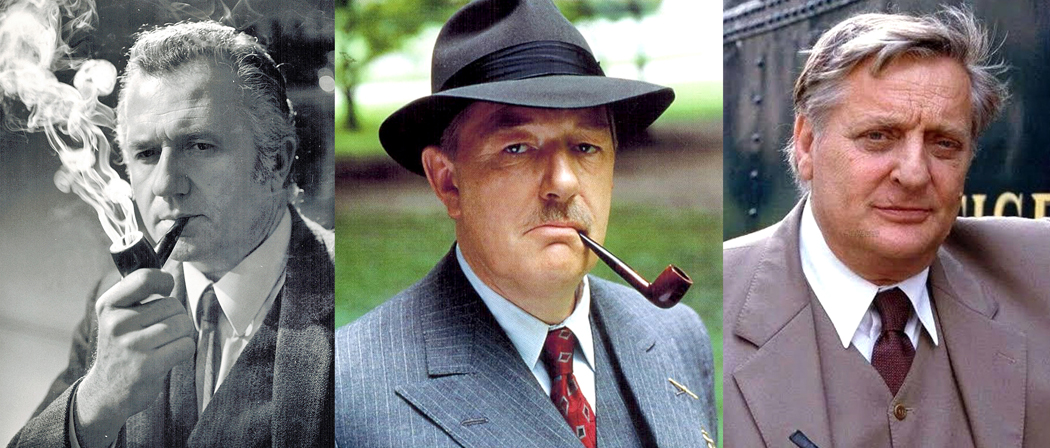
Albert Prejean, Michel Simon, Jean Gabin

But most notable, in English or French, including three films made with Albert Prejean as Maigret in the mid-1940s, by a wartime German film company in occupied France; and another three, from 1958 to 1963 with Jean Gabin. The great Michel Simon took his turn in 1952 in one-third of the anthology film Brelan d’as. Maurice Manson played him in Maigret dirige l’enquête (1955). 

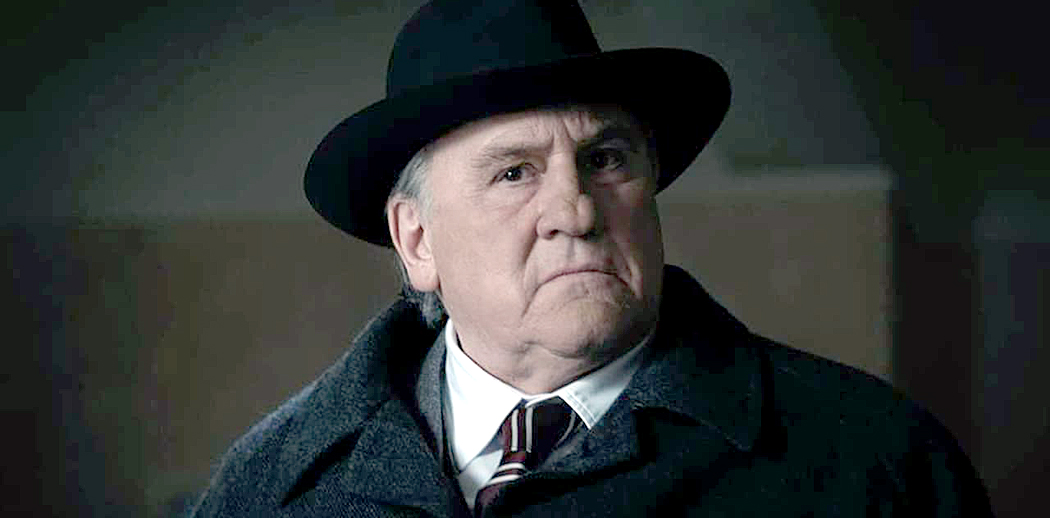
And Gerard Depardieu was an especially bulky commissaire in Maigret (2022). The prolific (and prodigious) French actor had previously played a Maigret clone in 2009’s Inspector Bellamy

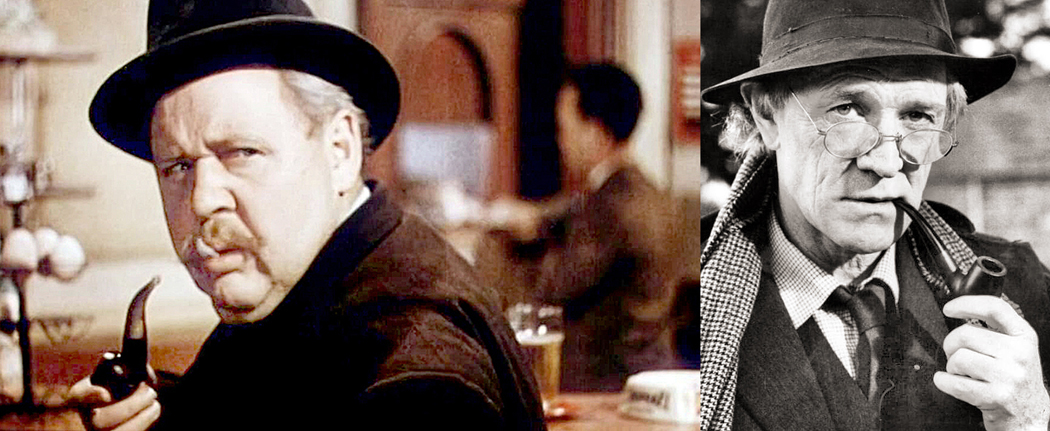
Charles Laughton, Richard Harris

English language one-offs begin with Charles Laughton in The Man on the Eiffel Tower (1950), and Richard Harris, in a tweed hat, in Maigret (1988), of which, the less said, the better. 

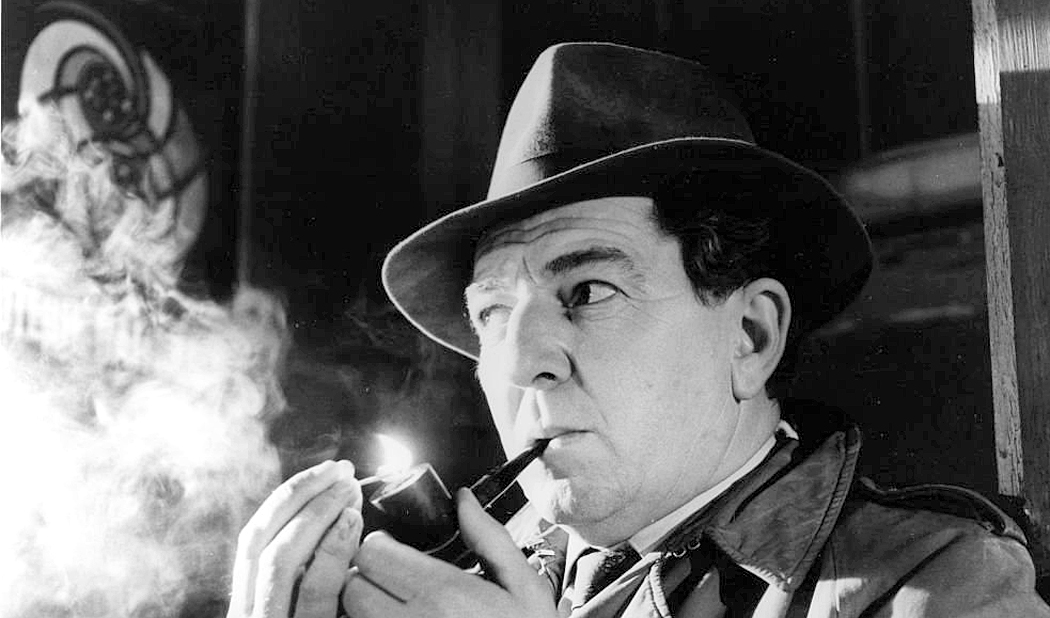
Rupert Davies

But, when you have 75 novels and 28 short stories to draw from, the ideal version of Inspector Maigret is a television series. The first — 53 episodes from 1960 to 1963 — featured Rupert Davies, who would have been the ideal Maigret except for the fact that the episodes were only 50 minutes long, and the production was rather studio-bound (other than some excellent exteriors actually shot in Paris). Standard TV lighting and sets. 

Jean Richard, Michael Gambon, Bruno Cremer

Jean Richard starred in 88 90-minute episodes from 1967 to 1990, and was the version Simenon said he liked best. Bruno Crèmer filmed 53 episodes from 1991 until his death in 2005, each 90 minutes long. These are probably my favorites. 

Michael Gambon gave what might be the definitive English language version in only 12 episodes from 1992 and 1993. Although each episode was only 50 minutes, he embodied Maigret so perfectly, at least for an English-language audience, that his successors all pale in comparison. 

And those include Rowan Atkinson in four 90-minute versions from 2016 and 2017. Atkinson (aka Mr. Bean) does a very good job, but the filmmakers attempted to turn the books into noir films, mostly shot at night or in moody rain, and dumped so much dialog, they were almost silent films. The Maigret books are almost pure dialog, very like the earliest Dragnet episodes. 

I have not seen the Dutch versions, first with Kees Brusse in 6 episodes from 1964; or 17 episodes with Jan Teulings from 1966-1969. Nor the Italian version with Gino Cervi from 1967-1972. And not the 25 episodes in Japanese with Kinya Aikawa from 1978, where the inspector’s name is transliterated as “Megure.” “Meg-goo-ray.” I’m not sure where any of these might be found. 

And that leaves us with the latest misery, a poor substitute for the real Maigret. 

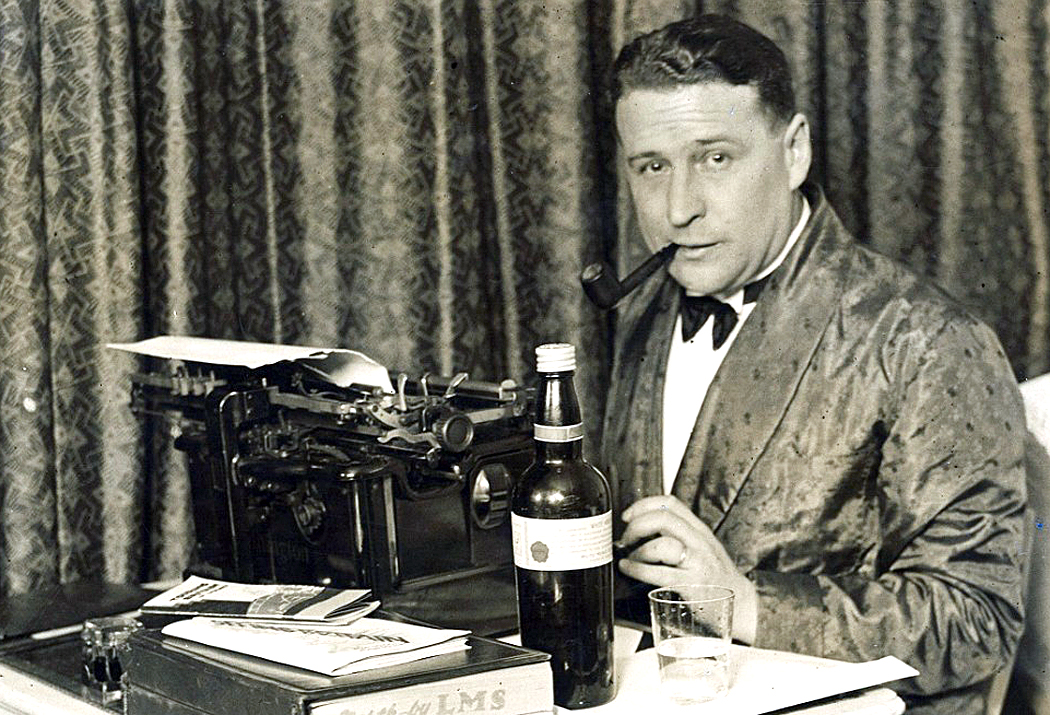
Simenon

L’Envoi

Georges Simenon was as much a character as those he stuffed into his novels. His writing was prodigious — those hundreds of novels — but so was his sex life. He was one astonishing horn dog. 

When he married, the pair took on a young housemaid, and by the evening of her hiring, Simenon had already had sex with her. This went on for some time. His wife seems to have become inured to his proclivities, which included frequent visits to brothels. 

When his wife went away for a spell, he hired a second maid. Same result. When his wife finally left him, everyone moved up a notch. Later a third maid took over from the second, in a kind of musical beds. Although beds are not really the issue. One report has him coming home one day and seeing his maid washing dishes, and then coming up behind her, lifting her skirts, having his way while she continued the scrubbing. 

He once claimed to have had sex with 10,000 women, although his second wife, Denyse, said, “Georges always exaggerates. We worked it out ourselves once and it came to no more than 1,200 women.” 

How strange, then, that Jules Maigret was so faithful and attentive to his wife, Louise — aka Madame Maigret.

The foundational mythology of the United States belongs to the cowboy. An argument can be made for the Founding Fathers, but they are understood more as history than as myth. And by myth I don’t merely mean something that isn’t “true,” but as a mental model that we have absorbed as the definition of what makes us American. We are more John Wayne than we are John Adams. 

Like many of us, I grew up on Westerns, although because I am in my 70s, my foundational Westerns were those from the 1930s recycled in the 1950s on television. I grew up knowing who Ken Maynard was, or Buck Jones. Back then, TV stations were starving for content to broadcast, and the pile of old Westerns filled the Saturday morning hunger. Those younger than me likely didn’t have such a cinematic indoctrination. Later TV Westerns became their version. 

But, since I wrote a blog piece about TV’s Gunsmoke, (link here) I have been thinking about Westerns and their role as our national psychic subconscious, and about how the fictional version differed from the historical. And what is more, what that shift means, culturally. 

It has not always meant the same thing, and the evolution over time describes the changes in America’s perception of itself. 

I believe there were distinct eras of Westerns, that have evolved over the past two centuries. These versions of the West overlap, and all of them have been present from the beginning, or near enough. But the preponderance of each defines each era. 

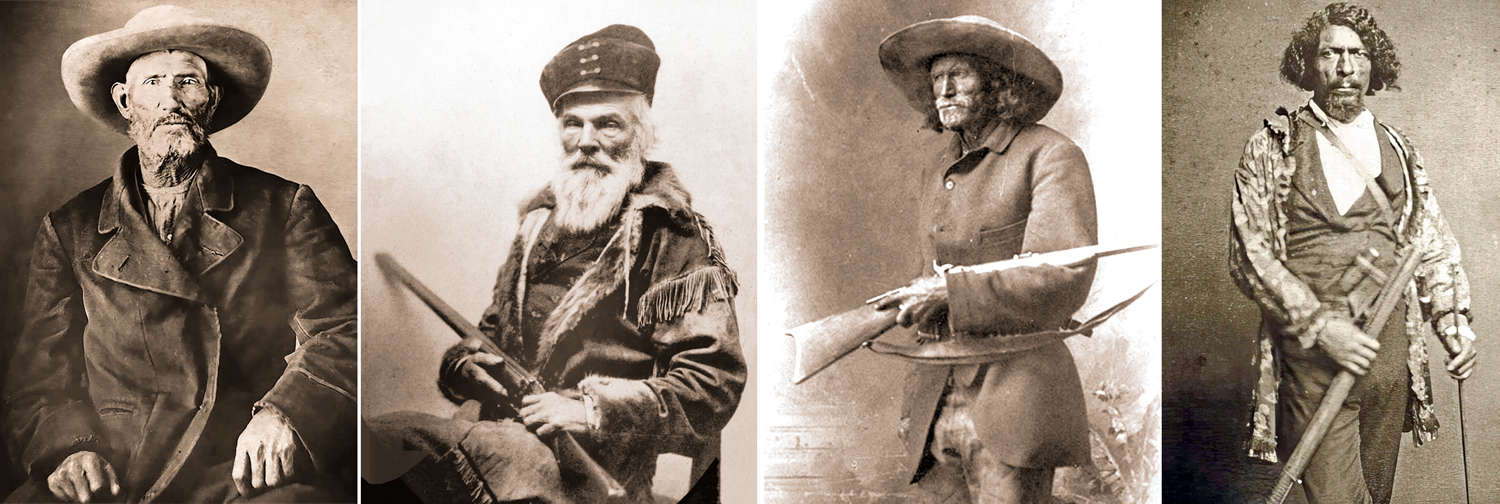
The West began in upstate New York with Natty Bumppo, or Hawkeye, as he was known in The Last of the Mohicans, and gave us the prototype of the rugged individualist. He morphed into Jim Bridger, Daniel Boone, Davy Crockett and various mountain men living in the wilderness. 

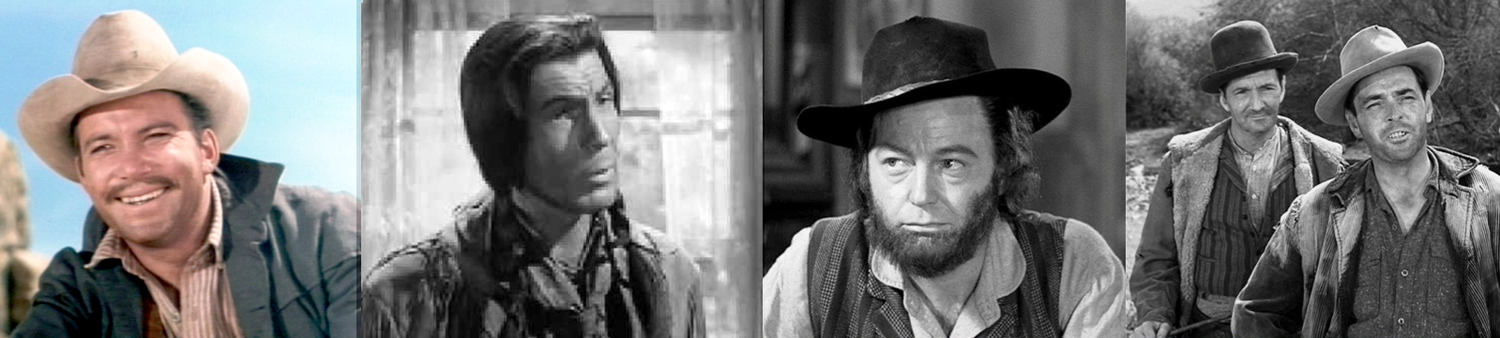
Jim Bridger; Joseph Walker; Jim Baker; Jim Beckwourth

These heroes played out the myth of how we conquered a vast wilderness with rugged individualism and tenacity. It grew into the myth of Manifest Destiny.  

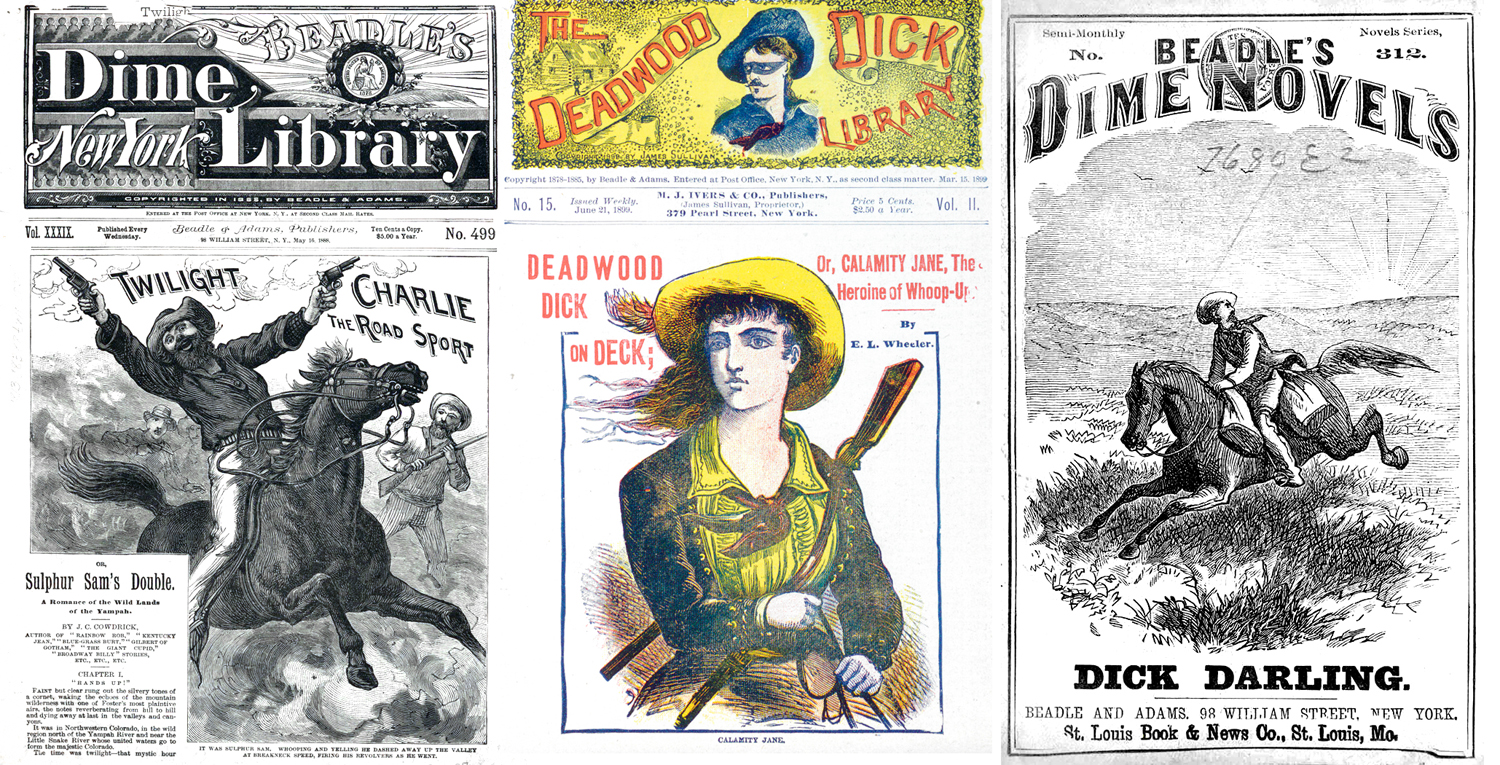
After the Civil War, when economic exploitation of the West began in earnest, with mining and cattle industries, the cowboy took over, with adventurous exploits popularized in a thousand dime novels. Certain names begin showing up with regularity, including Buffalo Bill, Wyatt Earp, Jesse James, Belle Starr. These elided into the early Western movies, including The Great Train Robbery (1903) and Across the Plains (1911), which starred Broncho Billy Anderson, the first cowboy movie star. 

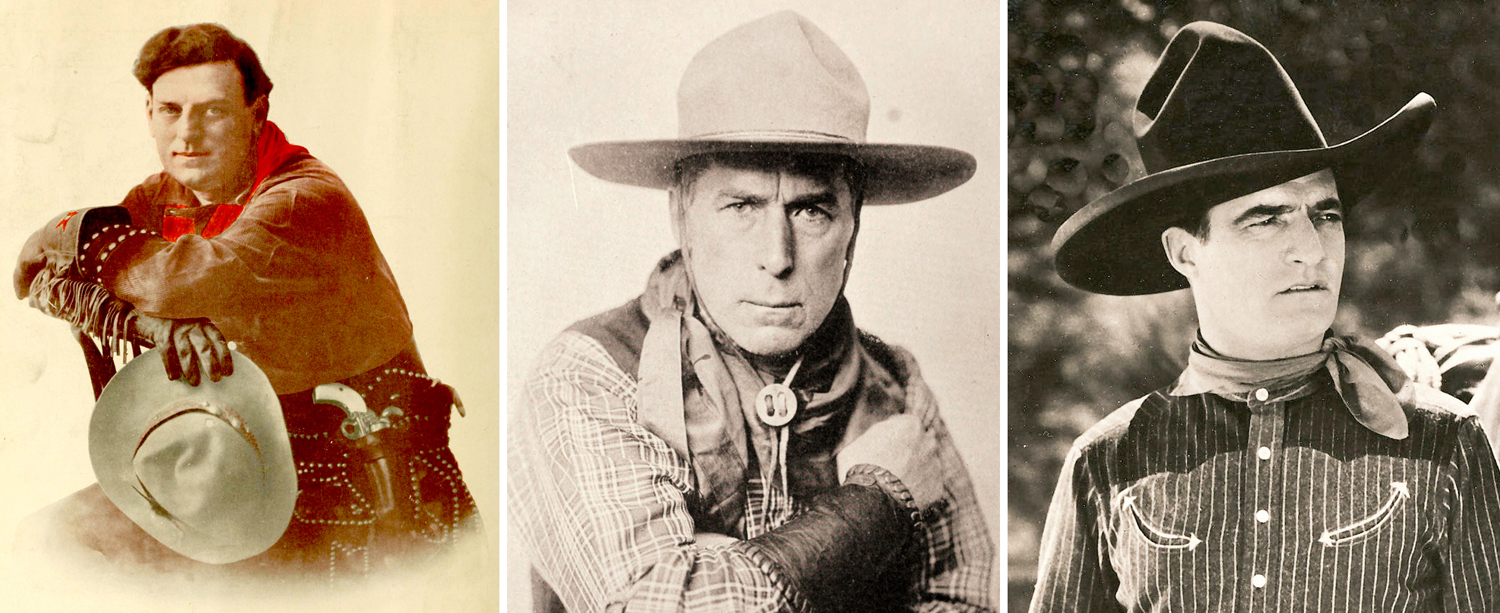
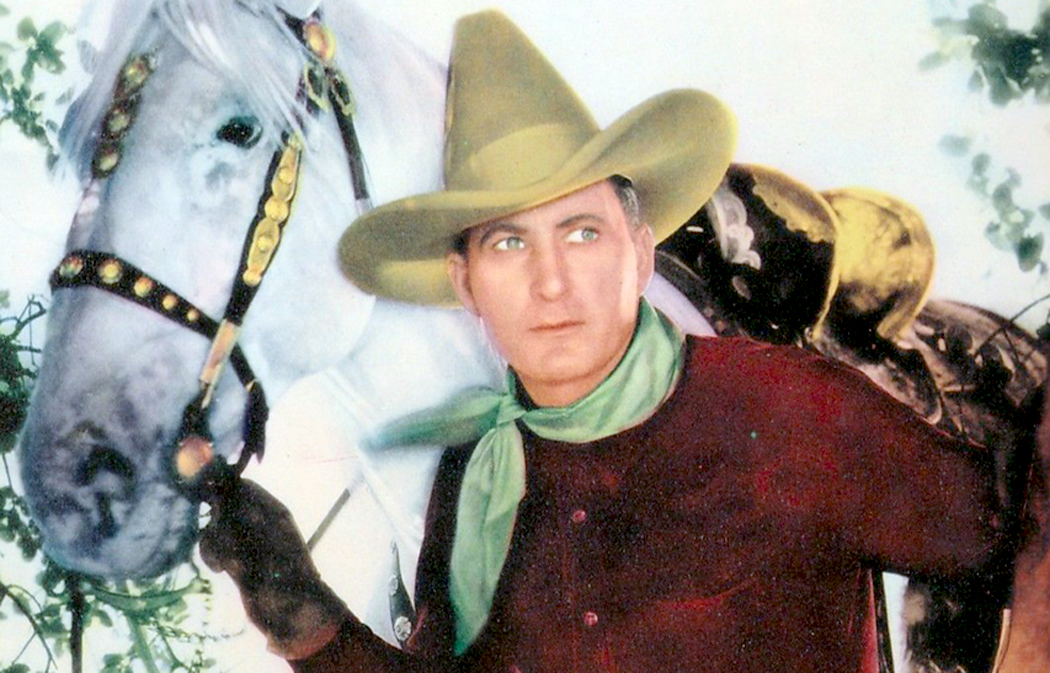
And a split in the myth. On one hand, you had William S. Hart, who attempted a level or realism in costume and plot (matched with a high level of sentimentality), and on the other hand, you had Tom Mix, the show-biz cowboy all duded out with fancy kit. 

The difference was between movies made for general audiences and those aimed at children, mainly young boys. Mix brought glamour to the Western, with fancy cowboy duds and sparkling saddlery to his horse, Tony. 

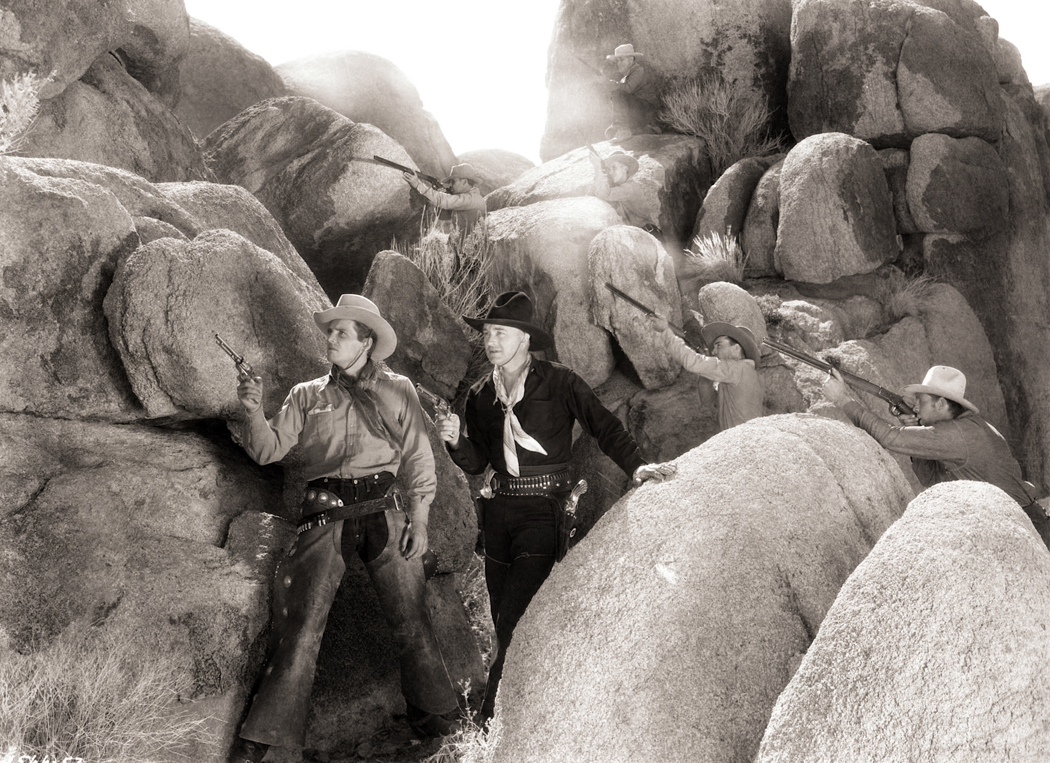
That split continued into the sound era with hour-long Saturday matinees  with Hoot Gibson, Bob Steele and dozens of others, including John Wayne, who made scores of cheap oaters and even took to trying out as one of the singing cowboys that were briefly popular. 

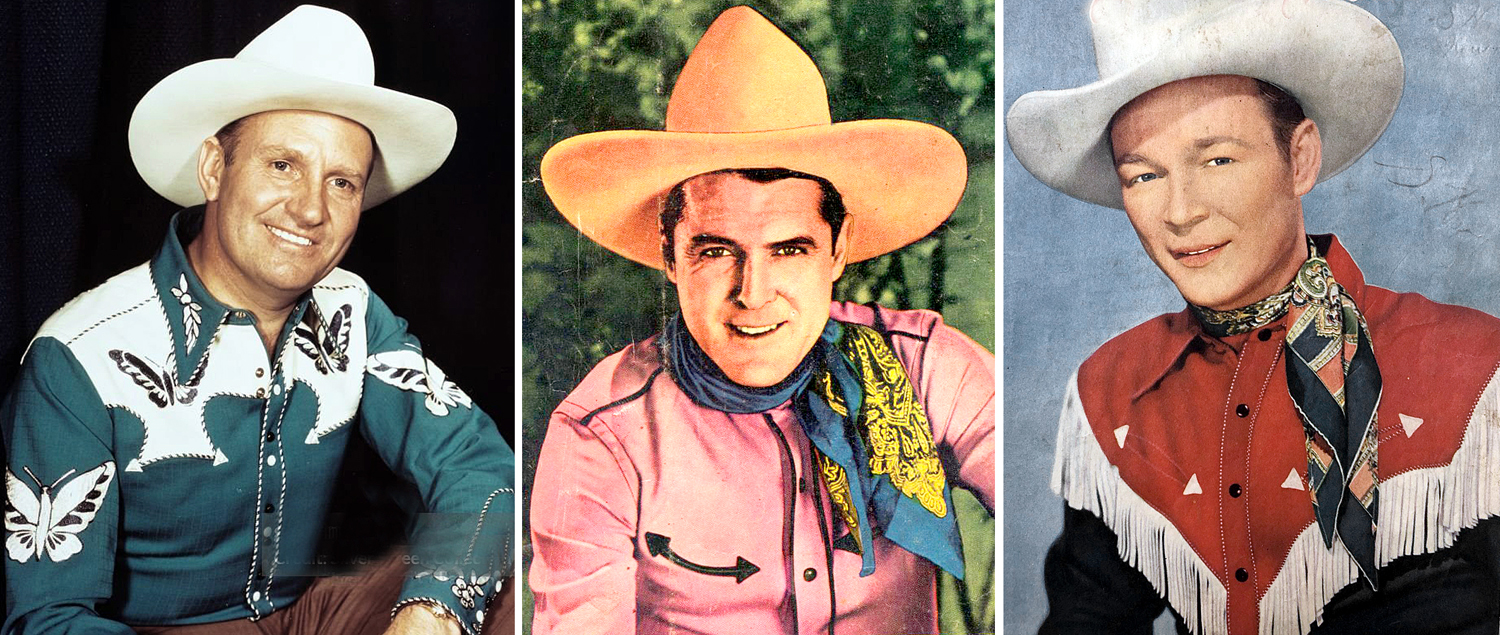
Through the 1940s, the cowboy movie became stereotyped with stars such as Roy Rogers, Gene Autry and William Boyd as Hopalong Cassidy. There was little attempt at realism. Sometimes they actually fought Nazis. 

These were the cowboys wearing shirts with crescent pockets and shoulder fringe, and often sported a six-gun on each hip. 

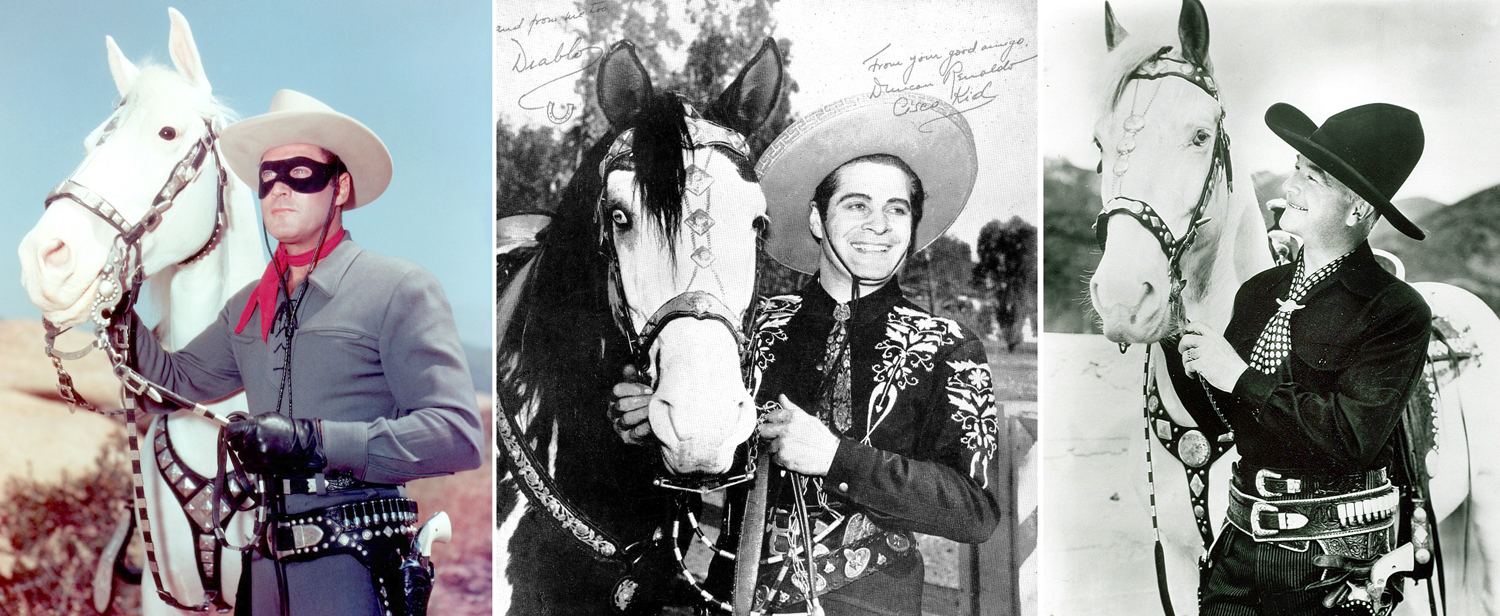
All that carried over into the television era, with a skein of popular Westerns mostly aimed at kids: The Lone Ranger; The Cisco Kid; renewed popularity of Hopalong Cassidy.

Meanwhile, there were always Westerns made for grown-ups, too. From John Ford’s Stagecoach and Howard Hawks’ Red River, through the Budd Boetticher films with Randolph Scott. There was Shane, and High Noon, and Winchester ’73

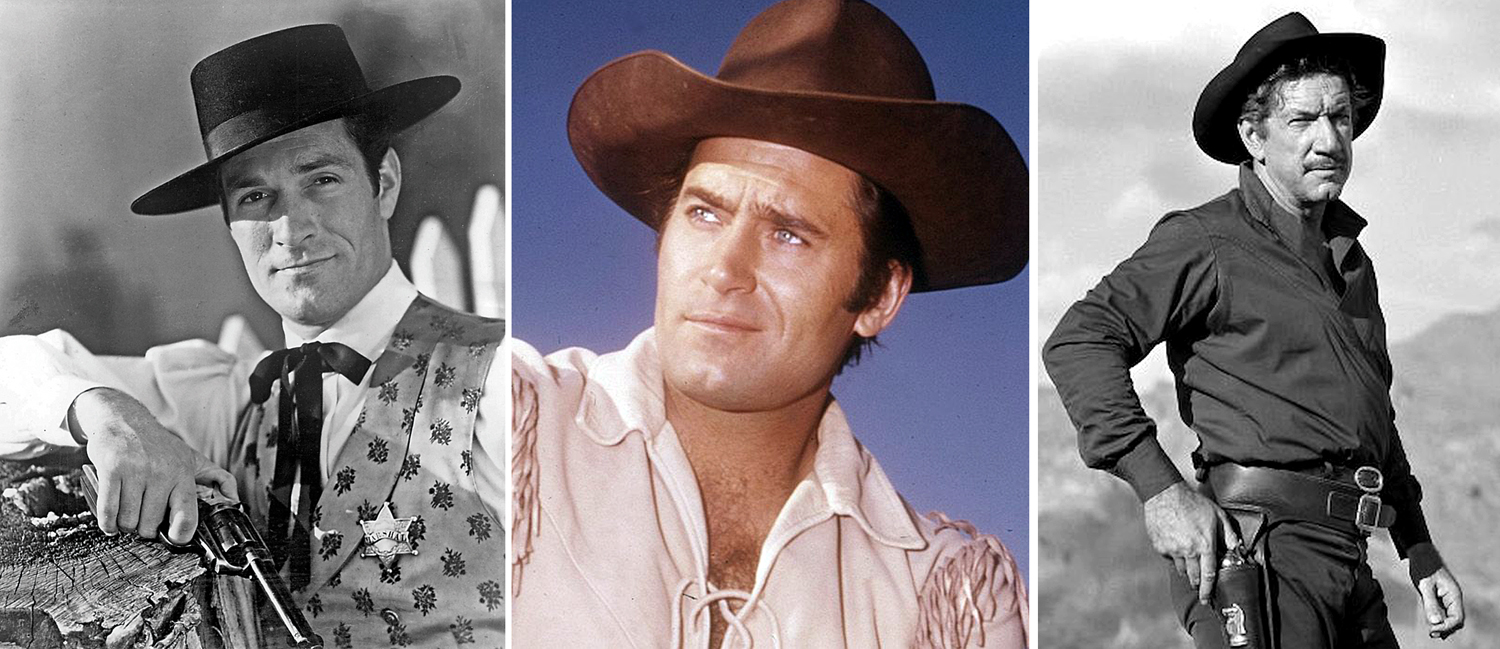
Initially, the lone hero version carried over into the TV era, also, when  The Life and Legend of Wyatt Earp, with Hugh O’Brien, kicked off a decade of evening programing with cowboy heroes, such as Cheyenne, Maverick, Have Gun — Will Travel, Bat Masterson, and The Rifleman. And, of course, Gunsmoke. You can name a dozen others. The market became glutted and then, suddenly, it seems, Westerns were shot dead. 

There came a cultural shift. Maybe it was the Vietnam War, maybe it was fatigue with the cowboy cliches, but when Westerns eventually did return to the silver screen, they took a dark turn. There had been revisionist Westerns before. Indians weren’t always the bad guys. But starting in the 1960s, with films such as Ride the High Country (1962), A Fistful of Dollars (1964) and the subsequent Spaghetti Westerns, Hang’em High (1968) and ultimately, The Wild Bunch (1969), the new Western was brutal, filled with low-lifes and lots, and lots of grime. 

“McCabe & Mrs. Miller”

The trend continued through McCabe & Mrs. Miller (1971) to Unforgiven (1992). Even the more positive films like those from Larry McMurtry novels or with Tom Selleck attempt a more naturalistic view of the times in which they were set. 

Of course, there’s a good deal of overlap in the eras. It’s a question of what predominates in what decade. There have been revisionist Westerns from the earliest years, but this view of the overall shape of the Western in American consciousness over time is, I believe, basically accurate. 

What is not accurate, though, are the Westerns themselves. Admittedly, they were never really intended as realism: They are myth and they are national epic. Our equivalent of the Iliad or the Kalevala. Even those attempting fidelity to historical fact ultimately underline the myth more than the fact. “When the legend becomes fact, print the legend.” 


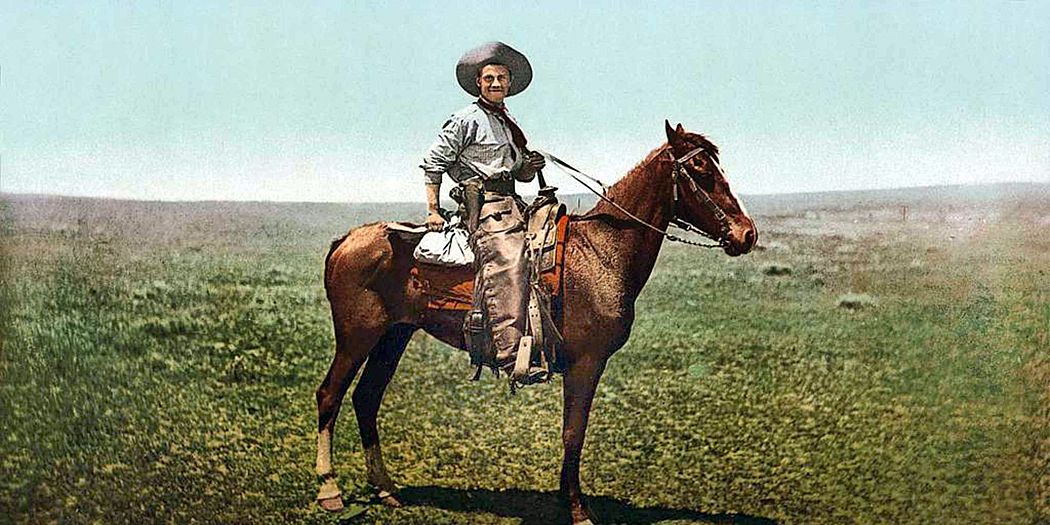
Actual cowboys

As a kid, I loved the cowboy movies, but as an adult, I am bothered by them. I try to remember they are not meant to be documentaries, but crystallizations of myth, and you don’t expect myth to be realistic. You don’t ask Hercules if he has a mortgage. 

Yet, there are sore thumbs that stick out for me in almost all filmed Westerns; four of them — aspects that scream out: “No, this isn’t the way it was.” And perhaps that shouldn’t matter, but these things make it difficult for me to appreciate Westerns the way I did when I was a kid. 

I have four primary gripes. They are: economy; geography; ethnic diversity; and language. Let’s take them in order. 

Two movies, same location

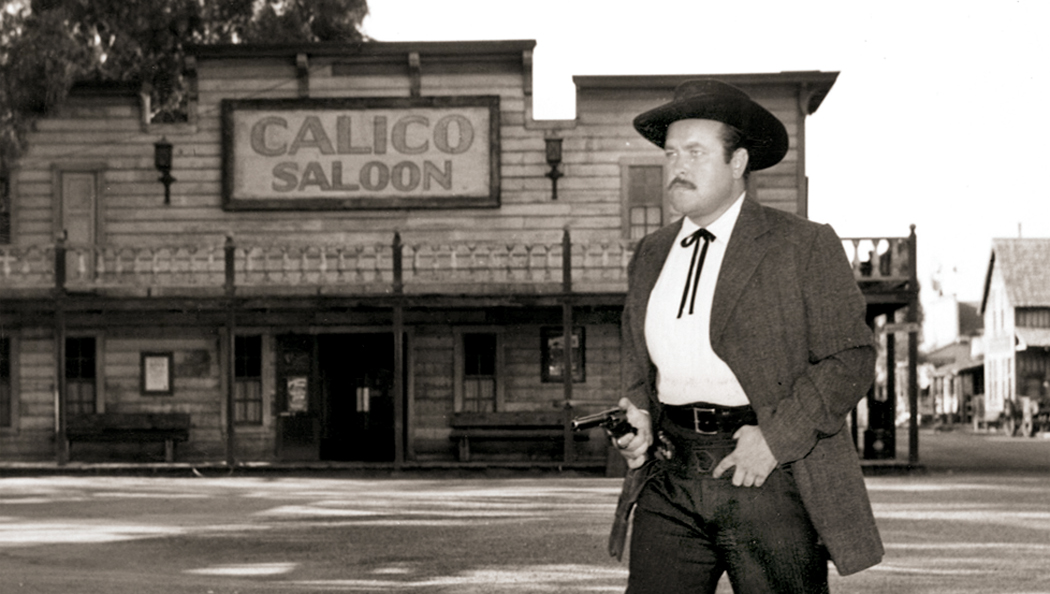
Towns exist in Western mainly to stand in for civilization. It’s where the people are — the people largely left undefined. They stand in front of general stores or the saloon while the heroes and villains play out the ritual of the gunfight. The same set can be used and reused in many pictures, even as diverse as Westworld and Blazing Saddles. The Western movie town is just the stage set for the plot.

But actual towns are built for economic reasons. There was some industry that needed workers and the workers needed services, and so, towns grew. But in most Western movies, there doesn’t seem to be any functioning economy. There are references to cattle and ranches, but aside from giving rustlers something to do, they barely show up as economic factors.  

While the standard movie Western town has its saloons, its general store, its hotel and restaurant, its stable and blacksmith, there is never a thought to where its residents get the money to pay for their drinks, meals, gingham or horseshoes. A town doesn’t grow for just no reason. 

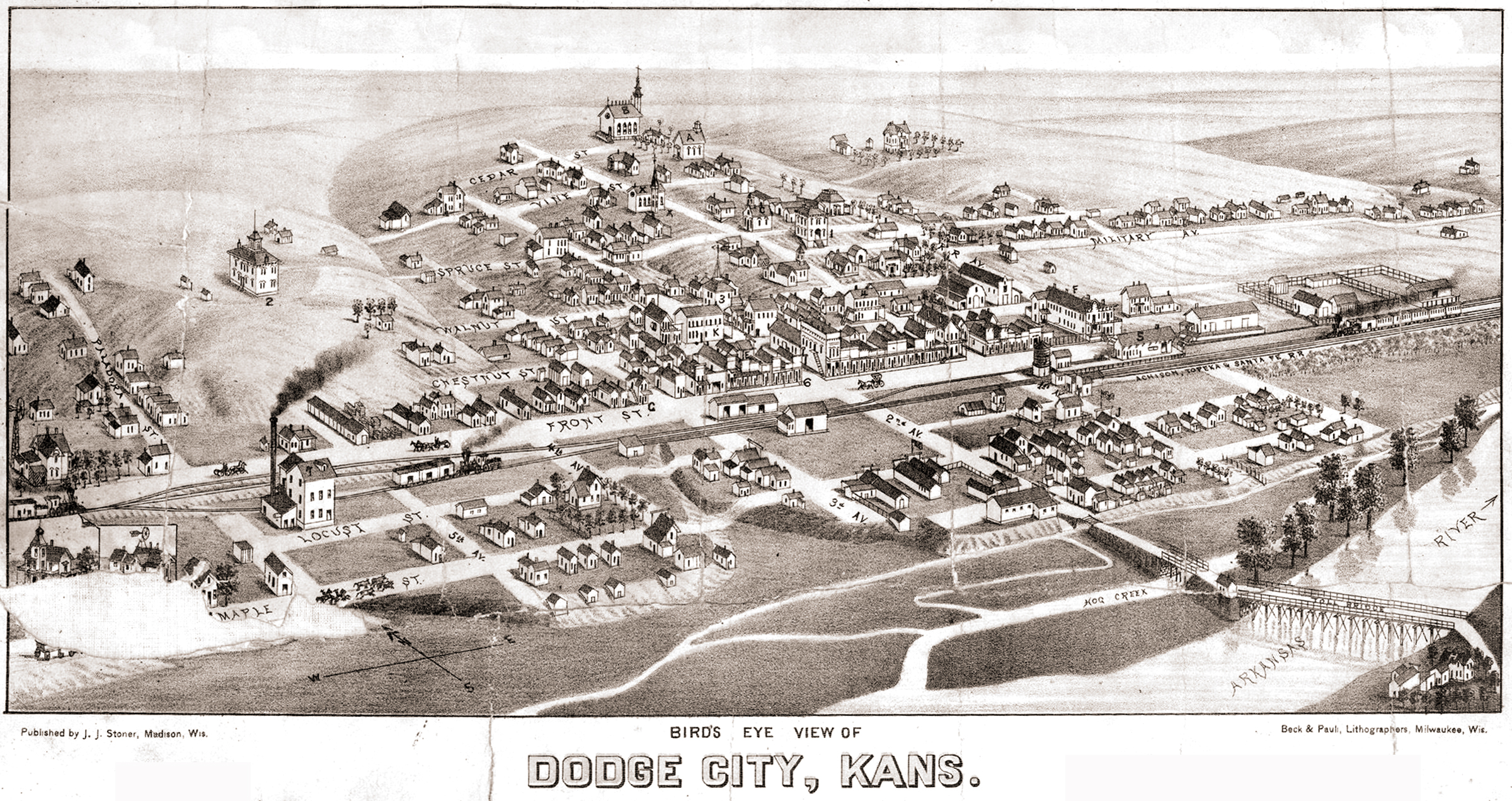
Even Dodge City, in the 1870s, when Gunsmoke is supposedly set, had a mayor and council and a police force. There would also likely have been an elected sheriff for Ford County and a judge, to say nothing of at least two lawyers, advertising on the front page of the Dodge City Times in 1878. 

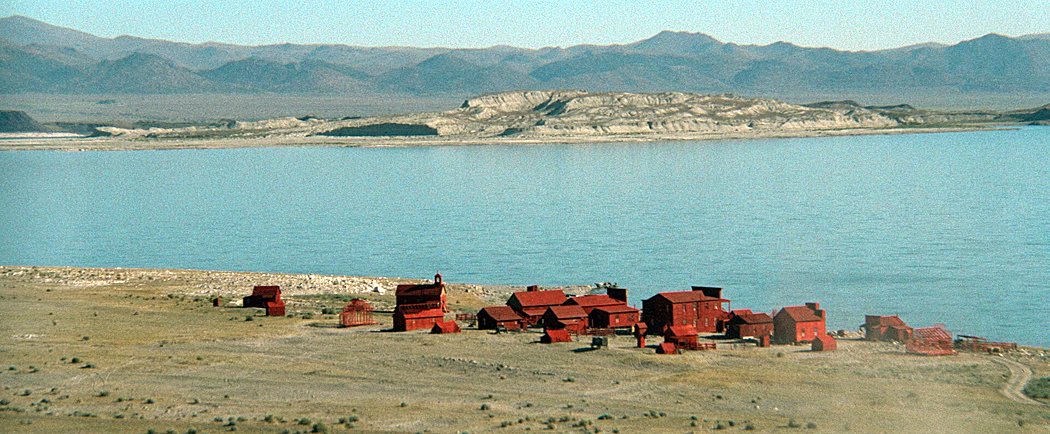
Sometimes it is downright preposterous. Consider Clint Eastwood’s High Plains Drifter. Its town is built on Mono Lake in California with no economic base at all — just a hodgepodge of buildings erected near a salty lake that cannot even provide drinking water for the residents.

“High Plains Drifter”

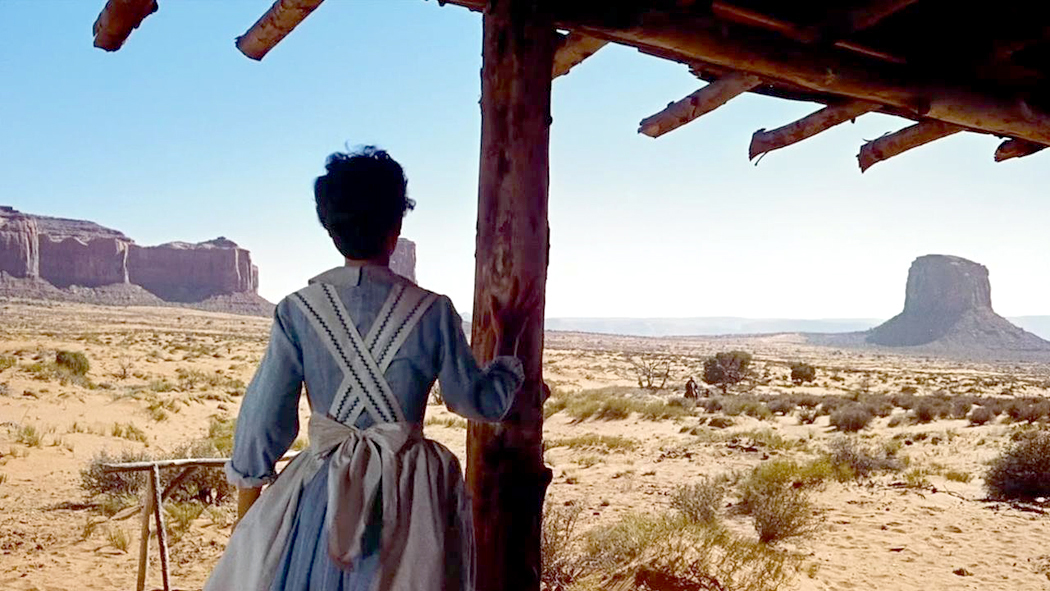
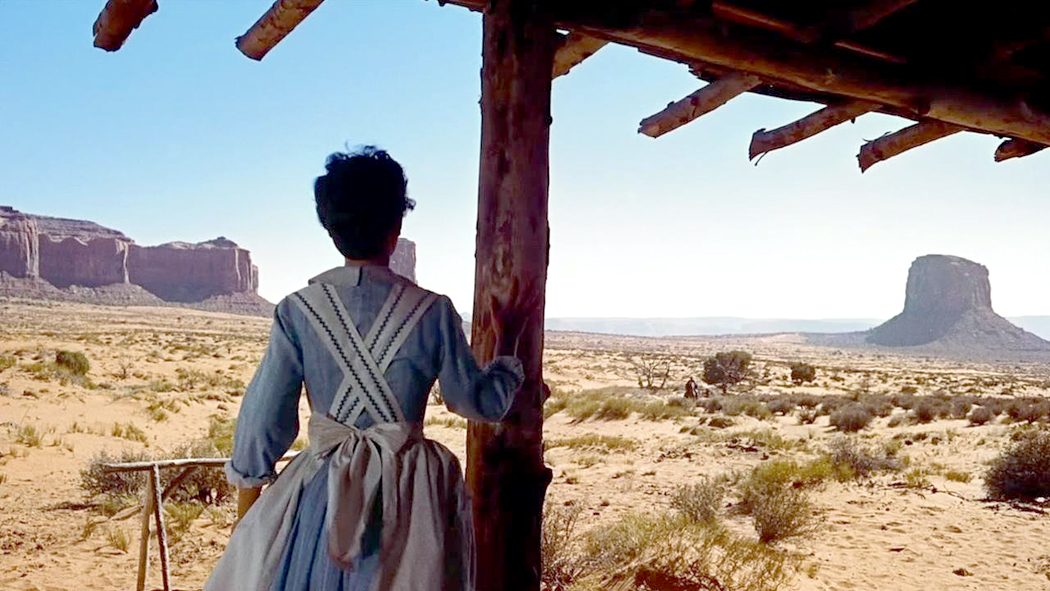
Or, one of my favorites, the supposed farm built in Monument Valley in Arizona, in The Searchers. The idea of such a farm is ludicrous — not made better because the landscape is supposed to stand in for Texas. 

“The Searchers”

 Again, there is a reason towns were built where they were. On rivers for shipping; near mines to provide supplies and provisions; along railroads to ship cattle; near army forts to unload soldiers of their pay.  

As seen in the movies

 My second beef with Westerns is its geography. Most of the Western tales we have historically took place in the most boring landscapes imaginable, in Kansas, Nebraska, Missouri, Texas. 

What the actual working West looked like

But such places are not very photogenic. And so, we move them lock, stock and barrel to the Rocky Mountains, the Desert Southwest or California’s Alabama Hills with the Sierra Nevada in the background. 

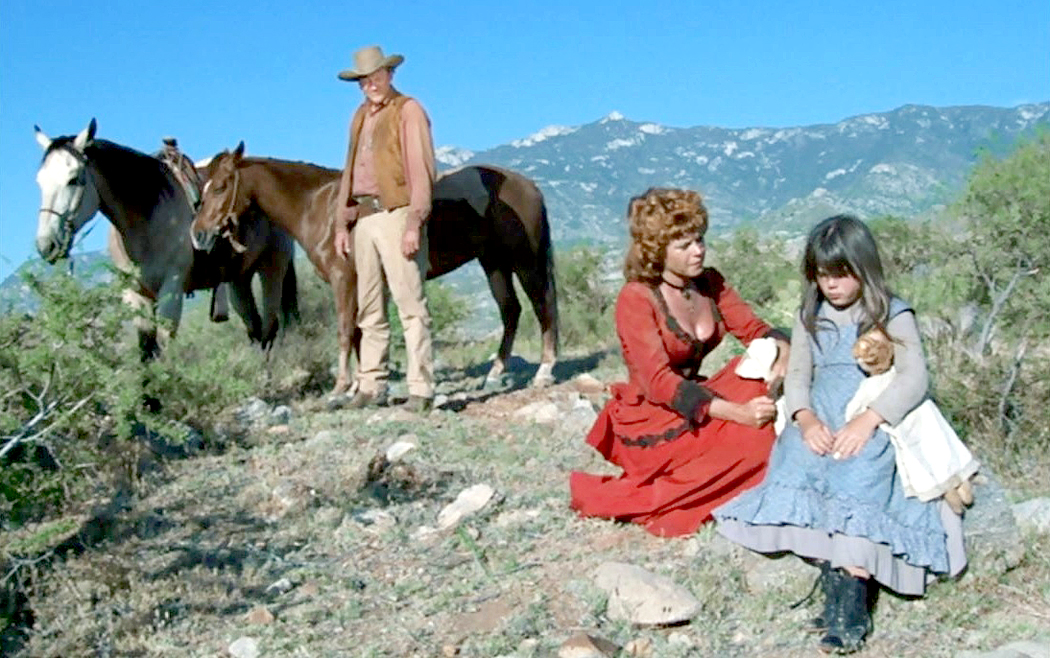
“Gunsmoke”

Even Gunsmoke, set in Kansas, sometimes shows a mountain range off in the distance sighted down the main street. (I’ll discuss Dodge City in more detail in Part 2 of this essay, to follow). Matt Dillon is sometimes shown accompanying a prisoner, for instance, across the Rocky Mountains or into the desert, hundreds of miles from his jurisdiction. To say nothing of the months it would take to ride there on the back of a horse. 

In the 1950 film Broken Arrow, Jimmy Stewart rush back from Lordsburg, N.M., to Tucson, Ariz., and somehow manages to pass through Sedona, Ariz., on the way — a detour of several hundred miles. Clearly Sedona was more photogenic than the Wilcox Playa or Benson. 

Wilcox Playa (left); Sedona, Ariz. (right)

As in so many Westerns, the West is just a mental landscape, where any buttes and saguaro cactus will do as a setting. 

As a sidenote, related to the geography: Cowboys stranded in the desert reach for their canteen and take a slug of water, or else hold it upside down so we can see it’s empty. I lived in the desert for 25 years and can tell you water is a big deal. Driving through Death Valley one July, I became so dehydrated I developed a headache and was beginning to become disoriented. I had to drink a full gallon of water to recover. A few swigs from a canteen is basically meaningless. 

The third and fourth distortions are perhaps less important, but they nevertheless stick out for me when I’m watching an old Western. There is the lack of ethnic diversity and the matter of speech.

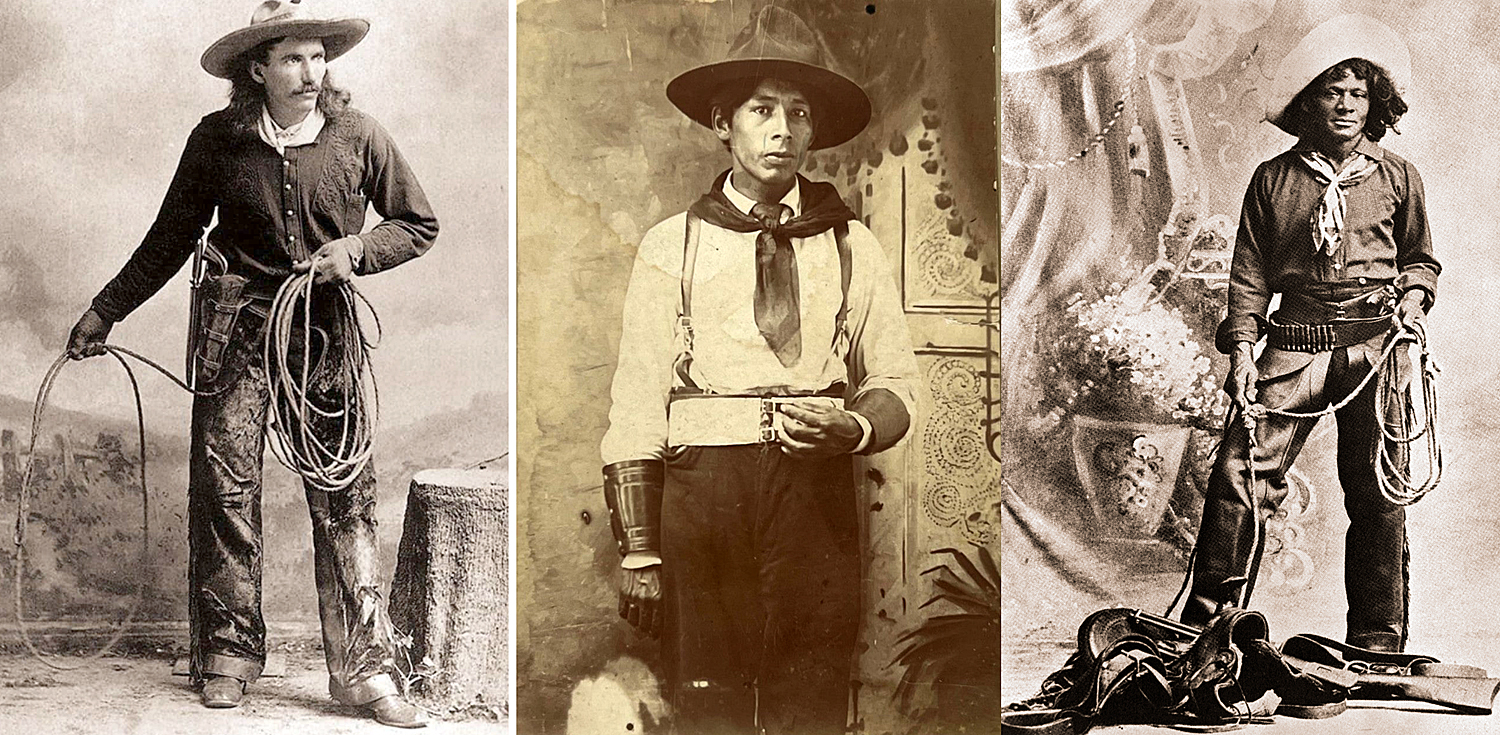
Cowboys: Vanilla, Native American; African American

It’s been documented that about a quarter of all cowboys were African-American. They don’t much show up in the movies (John Ford had his Woody Stroud and at least that was a nod to the fact). And another 20 percent were Mexican and many were Native American. In the towns, segregation was normal, even if the working cowboys out on the plains were mixed. Virtually all the laundries and restaurants in the Old West were run by Asians, mostly Chinese. Other ethnicities were notable factors in various troubles, as the Irish clashed with the English. 

Finally, there is the language spoken in 19th century America, which was much more formal than we take for normal now. In the Western movies, the actors tend to speak in the manner current when the films were made, and that changes over time, just the way the hats went from 10 gallons to three pints, and the brassieres just kept getting pointier. 

The evidence from letters and from novels written during the period tell us that people spoke in longer sentences with fewer contractions. At home, you might relax when talking to your spouse or children, but in public, you attempted to be correct. Even the illiterate miners and farmers spoke more formally. 

This last bothers me less, because if Randolph Scott or John Wayne spoke as they would have in the Old West, the audience might laugh, or at least yawn. How often have you heard parodies of Ken Burns’ Civil War, when they read letters soldiers wrote home? What was normal speech in the 1870s sounds utterly archaic, even stilted, to our ears. 

Next: Part 2 — A look at the historical Dodge City

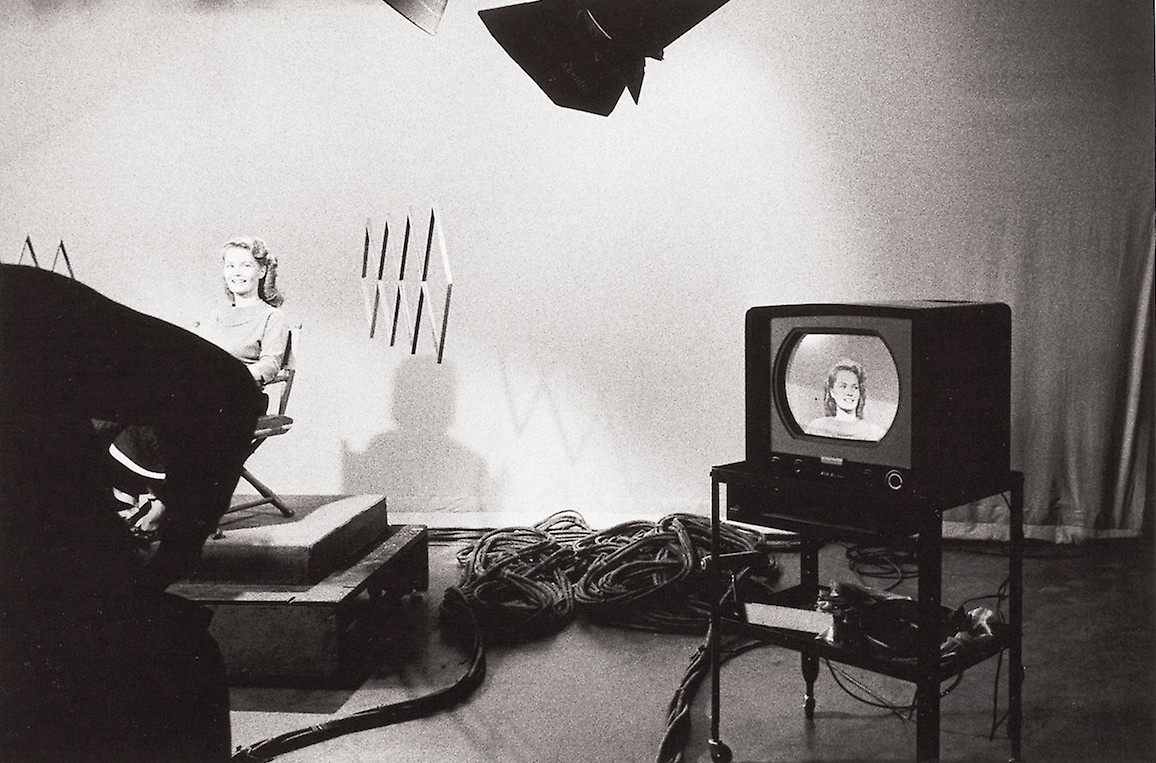
When I was a wee lad, in the 1950s and television was about the same age, I watched the images on the screen flash by with no critical eye. It was all the same: old movies, kiddie shows, talk shows, variety shows, sitcoms — it all wiggled on the toob and that was enough. 

If there were any difference in production quality, or acting ability, it made no difference. I just watched the story, or listened to the music. The very idea that there were people behind the camera never occurred. I didn’t really even think about there being a camera. Things just appeared. I suspect this is true for most kids. It may be true for quite a few grown-ups, too. 

There were certainly programs I liked more than others, but I could not have given any reason why one and not the other. Mostly, in the daytime, I watched cowboy movies and cartoons, and in the evening, I watched whatever the rest of the family was watching. 

In all that, there were a good number of Westerns. There were those for the kids, such as The Lone Ranger or The Cisco Kid, and later, those in the after-dinner hours aimed at the grown-ups — Gunsmoke or Death Valley Days. There were also the daytime screenings of old Western movies with such stars as Buck Jones, Hoot Gibson, Bob Steele or Johnny Mack Brown. 

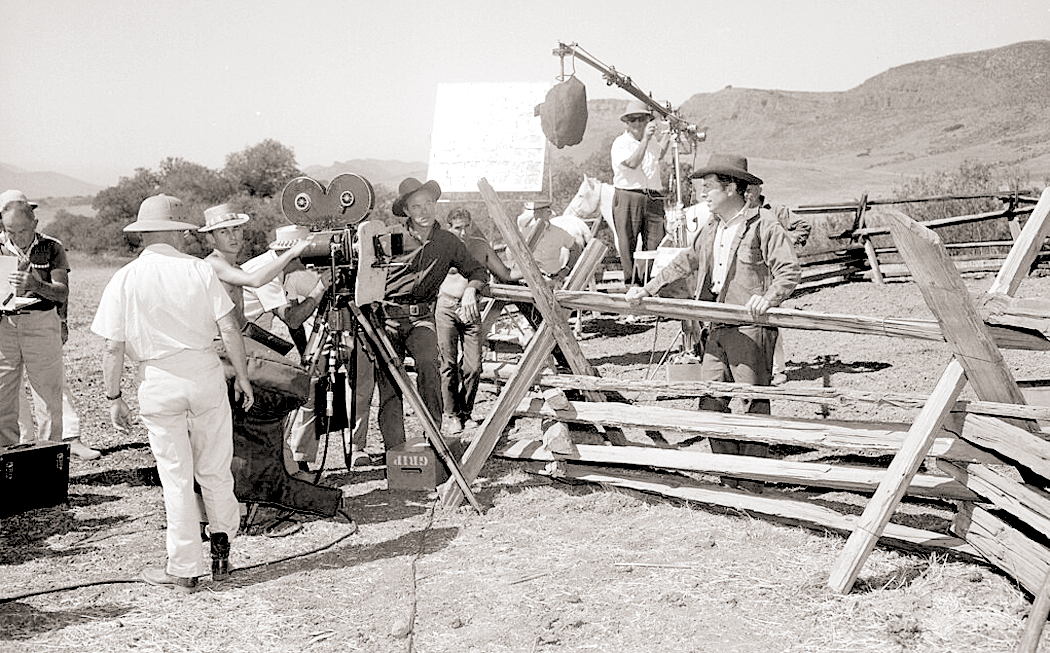
I mention all this because I have recently begun watching a series of reruns of old TV Westerns on various high-number cable channels, seeing them in Hi-Def for the first time. I have now seen scores of original Gunsmoke episodes and my take on them is entirely different from when I was in grammar school. I can now watch them critically.

It’s been 70 years since I was that little kid, and since then I’ve seen thousands of movies and TV shows, served a stint as a film critic, written about movies, and introduced films in theaters. I have a different eye, and understand things I couldn’t know then. 

And so, a number of random thoughts have come to me, in no particular order:

1. 

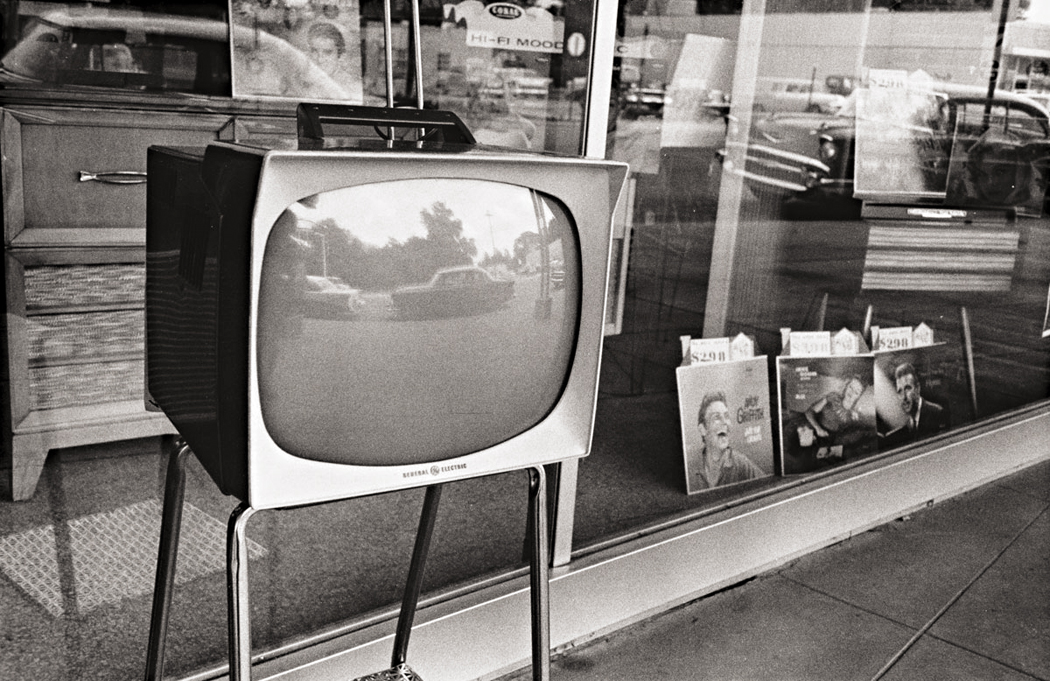
Old TVs were fuzzy; new TVs are sharp. In the old days of cathode-ray tubes, TV pictures were made up of roughly 480 lines, running from top to bottom of the screen, refreshing themselves every 60th of a second. Broadcast TV was governed by what is called NTSC standards (altered slightly over time). Such images were of surprisingly low definition (by modern standards). 

The sharpness of those early TV pictures was not of major importance because most people then really thought of television as radio with pictures, and story lines were carried almost entirely by dialog. The visual aspect of them was of minor concern (nor, given the resolution of the TVs at the time, should it have been.)

Of course, now, we watch those old Gunsmoke episodes on HD screens. And two things become apparent. 

First, is that shows such as Gunsmoke were made better than they needed to be. They were made mainly by people trained in the old Hollywood studio system, where such things as lighting, blocking, focus, camera angles, and the such were all worked out and professionally understood. They were skilled craftsmen. 

However, second, some things were designed for analog screens, and so, often, painted backdrops used, especially for “outdoor” scenes shot in the studio, have become embarrassingly obvious, when, originally, they would have passed unnoticed on the fuzzy screen. 

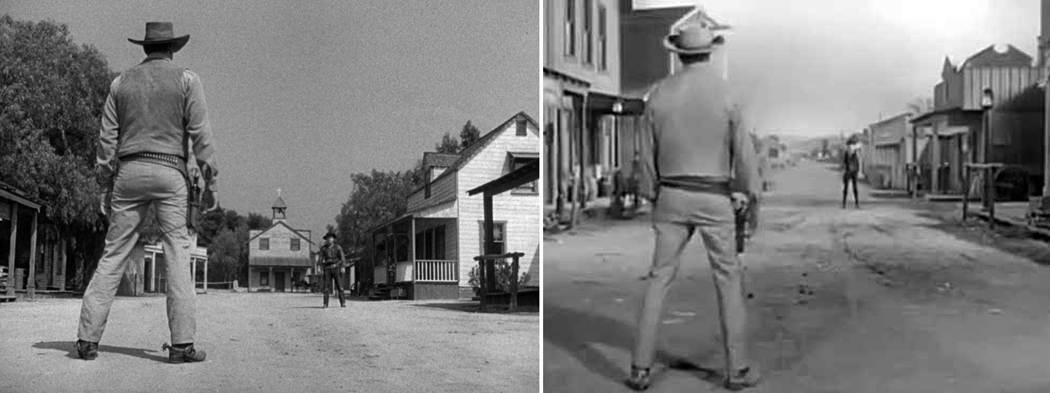
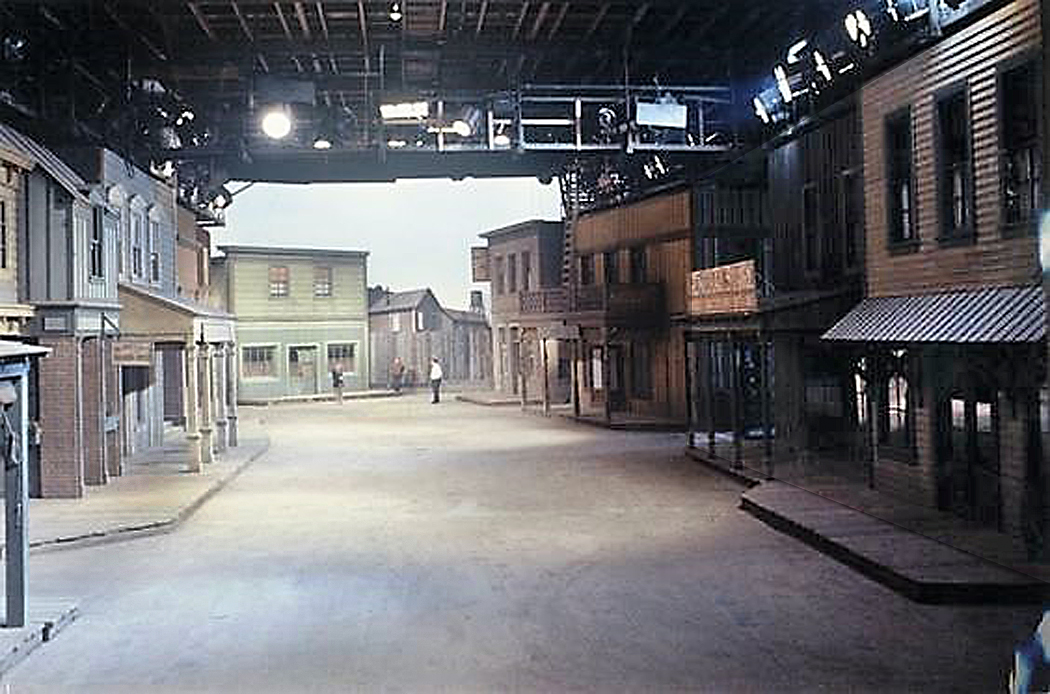
Outdoor scenes were often shot in studios. Dodge City, during some seasons, was built indoors and the end of the main street in town was a backdrop. Again, on the old TVs you would not notice, but today, it’s embarrassing how crude that cheat was. 

You can see it in the opening shootout during the credits. In early seasons, Dillon faces the bad guy outdoors. In later seasons, he’s in the studio. 

2. 

Because Gunsmoke is now seen on a widescreen HD screen, but were originally shot for the squarer 4-by-5 aspect ratio, the image has to be rejiggered for the new screen. There are three ways of doing this, and as they show up on current screens, they are either shown with black bars on either side of the picture, to retain the original aspect ratio, or they are cropped and spread out across the wider 16:9 space. And if so, there are two ways this happens. 

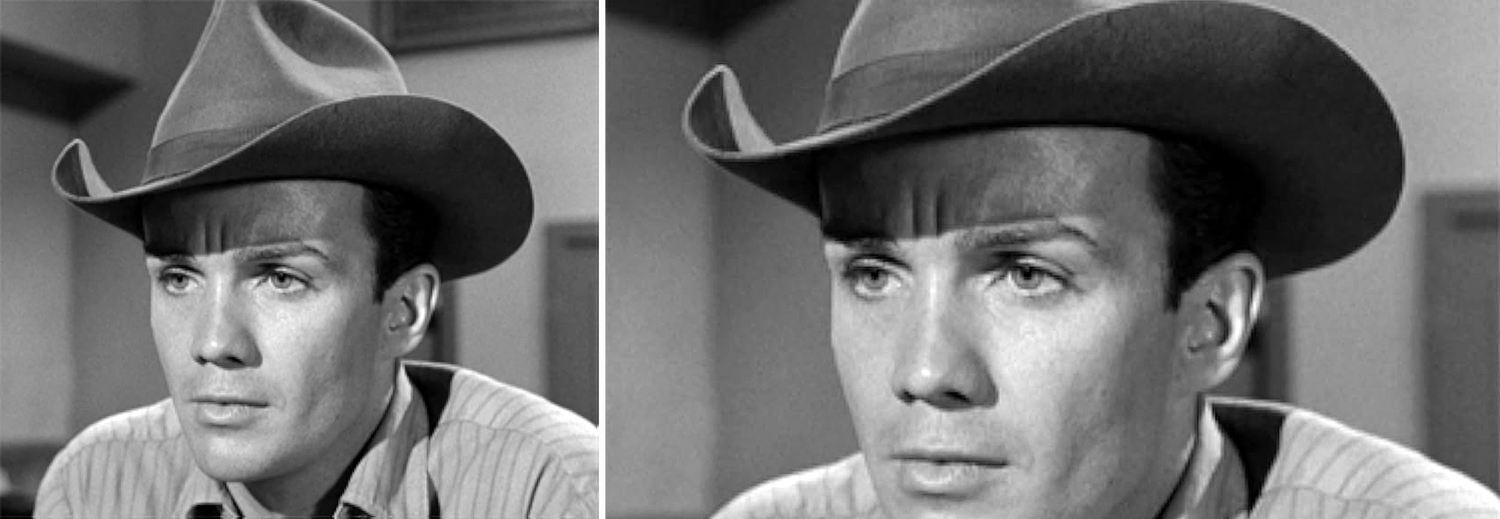
If the transfer is done quickly and cheaply, the cropping is done by just chopping off a bit of the top and bottom of the picture, leaving the middle unchanged. The problem is this often leaves the picture awkwardly framed, with, in close ups, the bottoms of characters’ faces left out. 

However, in some of the newly broadcast Gunsmokes, someone has taken care to reframe the shots — moving the frame up or down — so as to include the chins and mouths of the characters. To do this, the technician has to pay attention shot by shot as he reframes the image. 

And so, it seems as if the Gunsmoke syndications have been accomplished either by separate companies, or at different times for different series packages. You can see, for instance, on the INSP cable network, examples of all three strategies. (My preference, by far, is for the uncropped original squarer picture.)

3. 

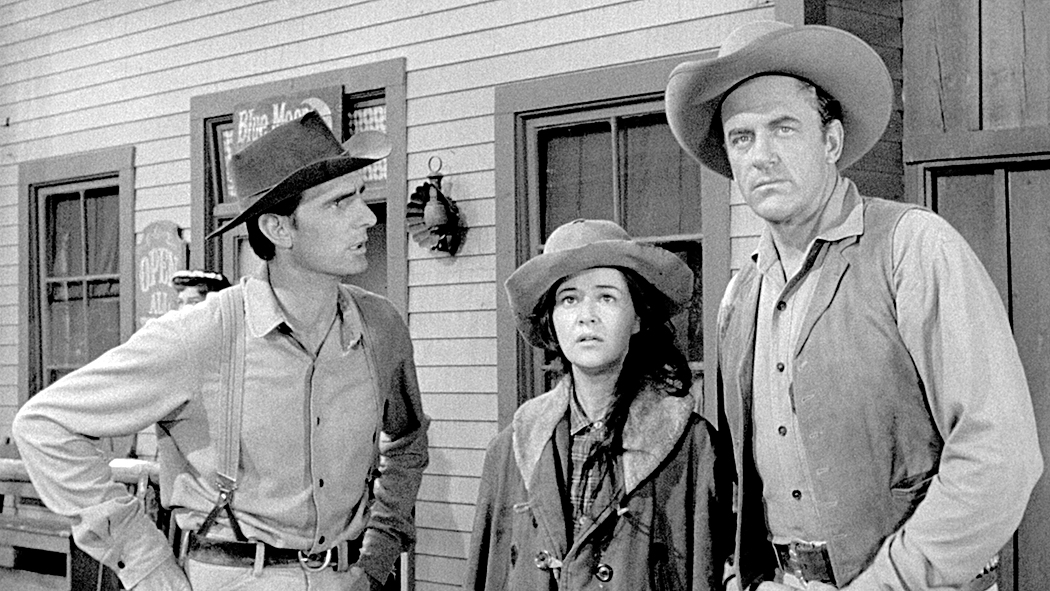
Gunsmoke changed over its 20-year TV run. There are three main versions: Black and white half-hour episodes (1955-1961); black and white hour-long episodes (1961-1966); and hour-long color episodes (1966-1975). The shorter run times coincided with the period when Dennis Weaver played Matt Dillon’s gimpy-legged sidekick Chester Goode. Chester continued for a season into the hour-longs, but was replaced by Ken Curtis as Festus Haggen, the illiterate countrified comic relief. 

Technically, the black and white seasons were generally better made than the color ones. When the series began, TV crews had been those previously at work in cinema, and brought over what they learned about lighting, framing, editing, blocking, use of close-ups. The black and white film stock allowed them to use lighting creatively, using shadows to effect, and lighting faces, especially in night scenes, with expressive shadows. Looking at the older episodes, I often admire the artistry of the lighting. 

But when color came in, the film stock was rather less sensitive than the black and white, and so the sets had to be flooded with light generally for details to be rendered. This led to really crass generic lighting. Often — and you can really spot it in night scenes — a character will throw two or three shadows behind him from lights blasting in different directions. Practicality drowns artistry. 

Gunsmoke wasn’t alone in this: This bland lighting affected all TV shows when color became normal. It took decades — and better film stock — before color lighting caught up. (One of the hallmarks of our current “golden age” of TV is the cinematic style of lighting that is now fashionable. Color has finally caught up with black and white.) 

4. 

One of the pleasures of watching these reruns is now noticing (I didn’t when I was a little boy) the repertory company of actors who showed up over and over again, playing different characters each time. 

I’m not just talking about the regular actors playing recurring roles, such as Glenn Strange as Sam the barkeep or Howard Culver, who was hotel clerk Howard Uzzell in 44 episodes, but those coming back over and over in different roles. Victor French was seen 18 times, Roy Barcroft (longtime B-Western baddie) 16 times; Denver Pyle 14 times, Royal Dano 13 times, John Dehner, John Anderson and Harry Carey Jr. a dozen times each.

Other regulars with familiar faces include Strother Martin, Warren Oates, Claude Akins, Gene Evans, Harry Dean Stanton, Jack Elam. Some were established movie actors: George Kennedy, Dub Taylor, Pat Hingle, Forrest Tucker, Slim Pickens, Elisha Cook Jr., James Whitmore. Bette Davis, too. 

William Shatner, Leonard Nimoy, DeForest Kelley, James Doohan

And a few surprises. Who knew that Leonard Nimoy was in Gunsmoke (four times), or  Mayberry’s George Lindsay (six times — usually playing heavies and you realize that the goofy Goober Pyle was an act — Lindsay was an actor, not an idiot), Mayberry’s barber Howard McNear showed up 6 times. Jon Voight, Carroll O’Connor, Ed Asner, Harrison Ford, Kurt Russell, Suzanne Pleshette, Jean Arthur, DeForest Kelley, Werner Klemperer (Colonel Klink), Angie Dickenson, Dennis Hopper, Leslie Nielsen, Dyan Cannon, Adam West, and even William Shatner — all show up. 

It becomes an actor-spotting game. John Dehner, in particular, was so very different each time he showed up, once a grizzled old miner, another a town drunk, a third as an East-coast dandy, another as a hired gunslinger — almost never looking or sounding the same. “There he is, Dehner again!” 

And it makes you realize that these were all working actors, needing to string together gigs to make a living, and the reliable actors would get many call-backs. It is now a pleasure to see how good so many of these old character actors were. 

5. 

I have now watched not only Gunsmoke, but other old TV Westerns, and the quality difference between the best Gunsmoke episodes and the general run of shows is distinct. While I have come to recognize the quality that went into the production of Gunsmoke, most of the other shows, such as Bonanza, simply do not hold up. They are so much more formulaic, cheaply produced, and flat. Stock characters and recycled plots. 

Gunsmoke was designed to be an “adult Western” when it was first broadcast, in 1952, as a radio show, with stocky actor William Conrad as Matt Dillon. In contrast to the kiddie Westerns of the time, it aimed to bring realism to the genre. 

William Conrad as Marshal Dillon

It ran on radio from ’52 to 1961, and on TV from 1955 to 1975, and then continued for five made-for-TV movies following Dillon in his later years. There were comic books and novelizations. Dillon became a household name.

Originally, Matt Dillon was a hard-edged, lonely man in a hard Western landscape. As imagined by writer and co-creator of the series John Meston, the series would overturn the cliches of sentimental Westerns and expose how brutal the Old West was in reality. Many episodes were based on man’s cruelty to both men and women. Meston wrote, “Dillon was almost as scarred as the homicidal psychopaths to drifted into Dodge from all directions.” 

On TV, the series mellowed quite a bit, and James Arness was more solid hero than the radio Dillon. But there was still an edge to the show, compared with other TV Westerns. After all, according to True West magazine, Matt Dillon killed 407 people over the course of the TV series and movie sequels. He was also shot at least 56 times, knocked unconscious 29 times, stabbed three times and poisoned once. 

And the TV show could be surprisingly frank about the prairie woman’s life and the painful treatment of women as chattels. 

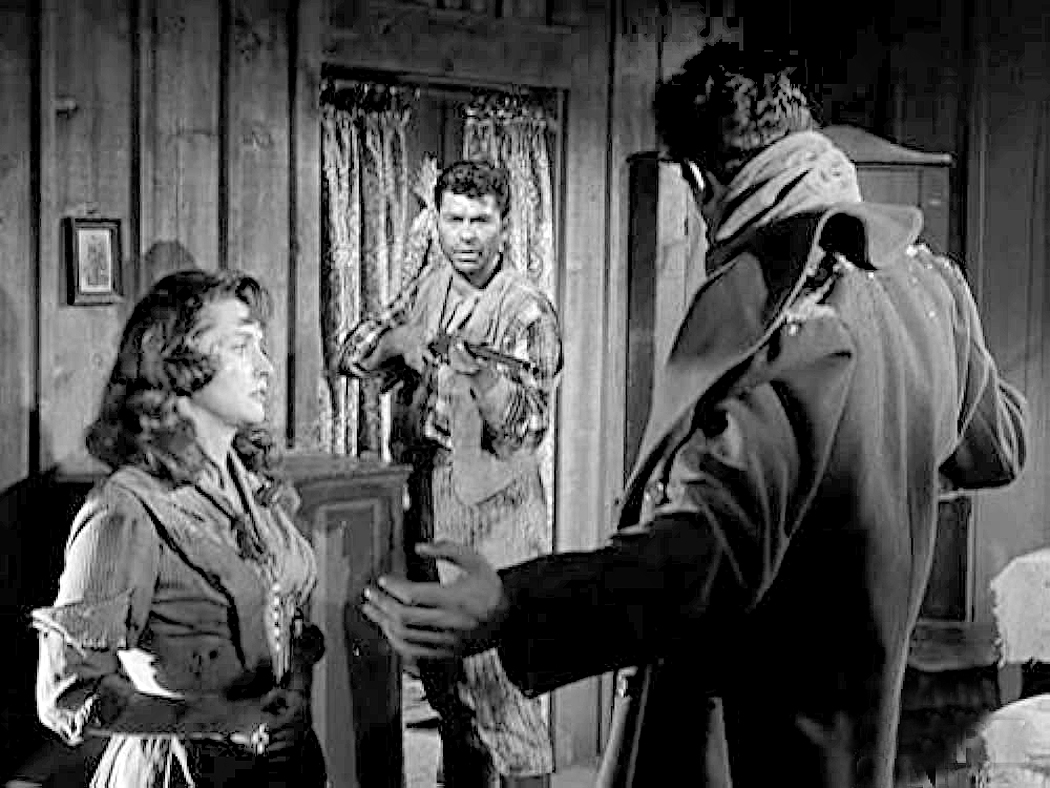
In Season 3 of the TV series, an episode titled “The Cabin,” two brutal men (Claude Akins and Harry Dean Stanton) kill a woman’s father and then serially beat and rape her over the course of 35 days, when Dillon accidentally comes upon the cabin to escape a snowstorm. The thugs plan to kill the marshal, but he winds up getting them first. When Dillon suggests that the woman can now go back to living her life, the shame she feels will not let her. No one has to know what has happened here, he tells her, but, she says, she will know. And so she tells Dillon she will go to Hayes City, “buy some pretty clothes” and become a prostitute. “It won’t be too hard, not after all this,” she says. 

“Don’t let all this make you bitter,” Dillon says. “There are a lot of good men in this world.”

“So they say” she says. 

This is pretty strong stuff for network TV in 1958. There were other episodes about racism, and especially in the early years, not always happy endings. 

Dodge City, 1872

6. 

According to Gunsmoke producer John Mantley, the series was set arbitrarily in 1873 and in Dodge City, Kansas, on the banks of the Arkansas River, although the river plays scant role in the series. In 1873, the railroad had just arrived, although in only a few episodes of the TV series is the train even mentioned. 

The Dodge City of the series is really just a standard Hollywood Western town, with the usual single dusty street with wooden false-front buildings along either side. 

In reality (not that it matters much for a TV show, although Gunsmoke did try to be more realistic than the standard Western), Dodge was built, like most Southern and Western towns, with its buildings all on one side of the street (called Front Street in Dodge) and the railroad tracks on the other. Beyond that, the river. 

Dodge City, Kansas 1888

And in general, the geography of Gunsmoke’s Kansas would come as a surprise to anyone visiting the actual city. The state is famously flat, while the scenery around Matt Dillon often has snow-capped mountains, and at other times, mesas and buttes of the desert Southwest. 

Hollywood’s sense of geography is often peculiar. So, I don’t think it is fair to hold it against the TV series that its sense of the landscape has more to do with California (where the series was generally shot) than with the Midwest prairies. 

I remember one movie where James Stewart travels from Lordsburg, N.M., to Tucson, Ariz., and somehow manages to pass through the red rocks or Sedona on the way. Sedona is certainly more picturesque than Wilcox, Ariz., but rather misplaced.

Or John Ford’s The Searchers, where the Jorgensen and Edwards families are farming in Monument Valley, Ariz., which has no water, little rain, sandy soil and no towns within a hundred miles. It is ludicrous place to attempt to farm. Of course, it is said, in the movie, to be set in Texas, but Texas doesn’t look like the Colorado Plateau at all. 

We forgive such gaffes because the scenery is so gorgeous, and because we’ve been trained by decades of cowboy movies to have a picture of “The West” as it is seen in Shane rather than how most of it actually was: flat, grassy, and boring. And often, it is not even the West, as we think of it. Jesse James and his gang robbed banks in Missouri. The Dalton Gang was finished off in Minnesota. The “hanging judge” Parker presided in Arkansas. Some of the quintessential Western myths are really Midwestern or Southern. 

So, many of the tropes of Hollywood Westerns still show up in Gunsmoke, despite its attempt at being “more realistic” than the standard-issue cowboy show. 

“Gunsmoke” studio set

Two things, however, that are hardly ever mentioned that seems germane to the question of realism on film. The first is the pristine nature of the streets. Historians have shown that, with all the horses, not only in Westerns, but even in 19th-century Manhattan, the streets were paved with horseshit. Cities even hired sanitation workers to collect the dung in wheeled bins, so as not to be buried in the stuff. 

OK, I get that perhaps on TV shows broadcast into our homes, we might not want to see that much horse manure. In reality, the dirt dumped in the studio set of Dodge City had to be cleaned out, like kitty litter, each day, or under the hot lights, the whole set would stink of horse urine. 

But the second issue relates to the very title of the show: Gunsmoke. Strangely, smoke never appears from the many guns being fired in the course of 20 years of episodes. But the series is set in an era at least a decade before the invention of a practical smokeless powder (and 30 years before its widespread usage). And so Matt Dillon’s gun should be spouting a haze of nasty smoke each time he fires at a miscreant. 

Me firing a black powder rifle

We know, from records of the time, that Civil War battlefields, and before that, Napoleonic battlefields, were obscured by clouds of impenetrable smoke, blocking the views of soldiers aiming at each other. And I know from my own experience firing black powder weapons, that each show spews a cloud of smoke from the barrel. So, why no gun smoke on Gunsmoke?
Click on any image to enlarge

In addition to this blog, which I have been writing since 2012, I have written a monthly essay for the Spirit of the Senses salon group in Phoenix, Ariz., since 2015. I was, at various times, a presenter for the salon, which arranges six to 10 or so lectures or performances each month for its subscribers. Among the other presenters are authors, Nobel Prize-winning scientists, musicians, lawyers and businessmen, each with a topic of interest to those with curious minds. I recently felt that perhaps some of those essays might find a wider audience if I republished them on my own blog. Here is one, from July 2, 2016 slightly updated and rewritten.

It is said we are in a golden age of television. Not so much because of what is available on broadcast TV, but what is available on cable and on live streaming video, such as Netflix and Hulu.

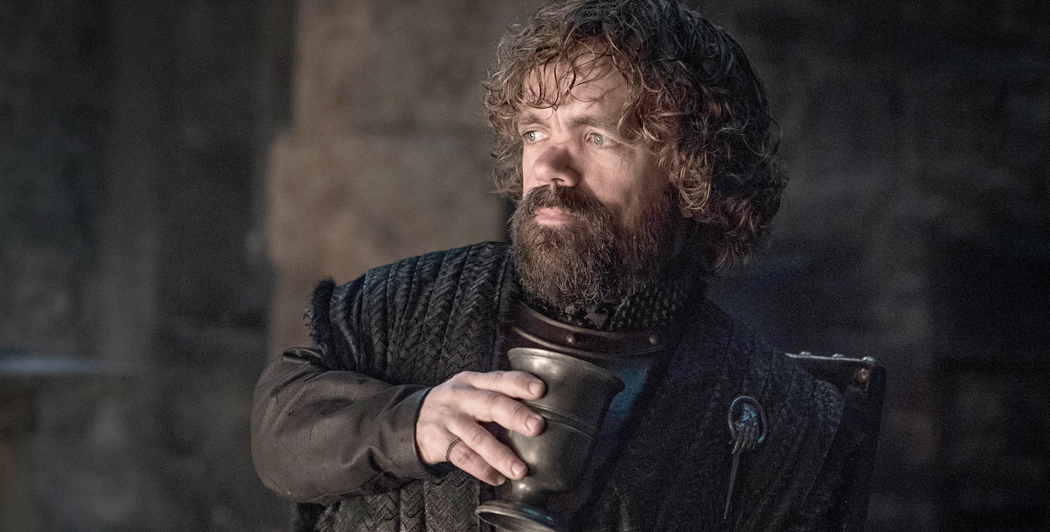
It’s hard to argue against this, what with so much out there to see, from Game of Thrones (at perhaps one extreme) and Book TV on C-Span (at the other end). For many, this new Golden Age was born with HBO’s series, The Sopranos. It certainly made a quantum leap in what was possible on the tube.

But, for an entire demographic segment, the term “Golden Age” is reserved for another time, another place. I grew up in the first Golden Age of Television, its earliest years just after the Second World War, making TV, just as much as myself, a baby boomer. There is little left of that first Golden Age that isn’t merely the buzzing of neurons in the memory of an aging generation. What survives beyond that are some gray, blurry kinescopes and whatever was shot on filmstock in those nascent years. Even that is hard to come by, outside a few remnants retrievable on You Tube.

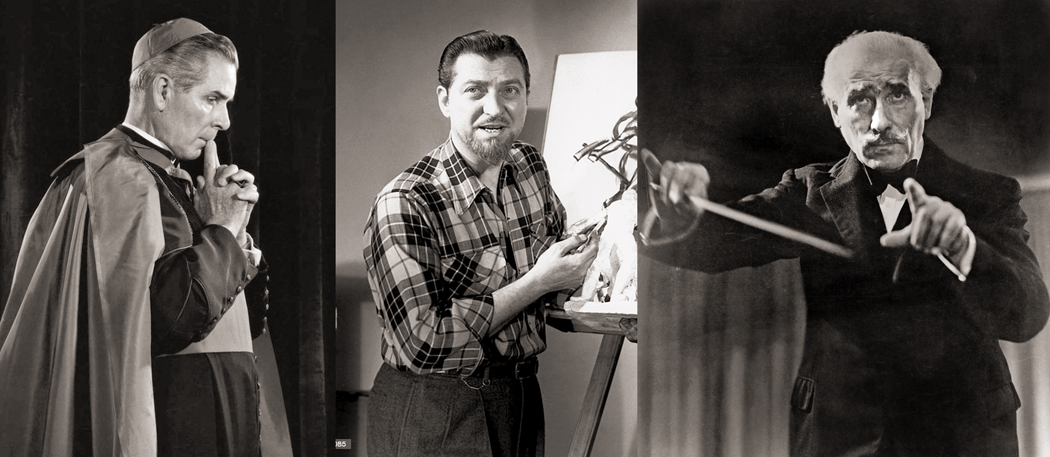
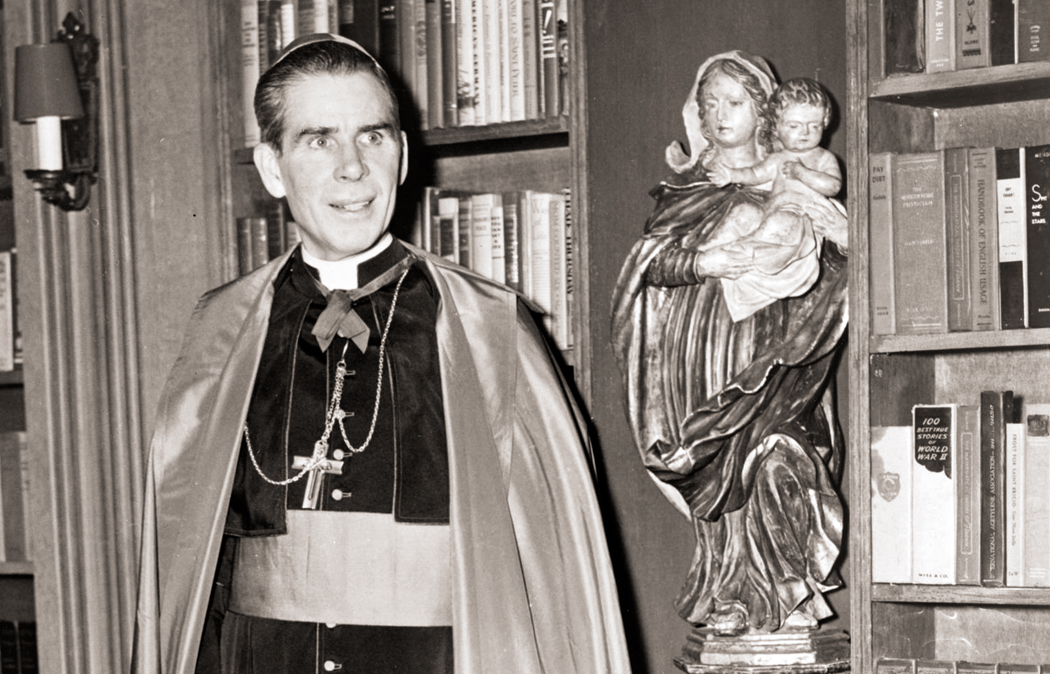
What was special about the first decade of broadcast, despite the technical and budgetary limitations, was the sense that anything was possible. Since it hadn’t existed before, no one knew exactly what TV should be, and so, they threw everything up against the wall to see what would stick. And the current generation would be astonished at what became popular, like Bishop Fulton J. Sheen in his purple vestments talking to us in his calming but authoritative Catholic voice on Life is Worth Living, or artist Jon Gnagy giving lessons on How to Draw, or Arturo Toscanini and the NBC Symphony from 1948 to 1952.

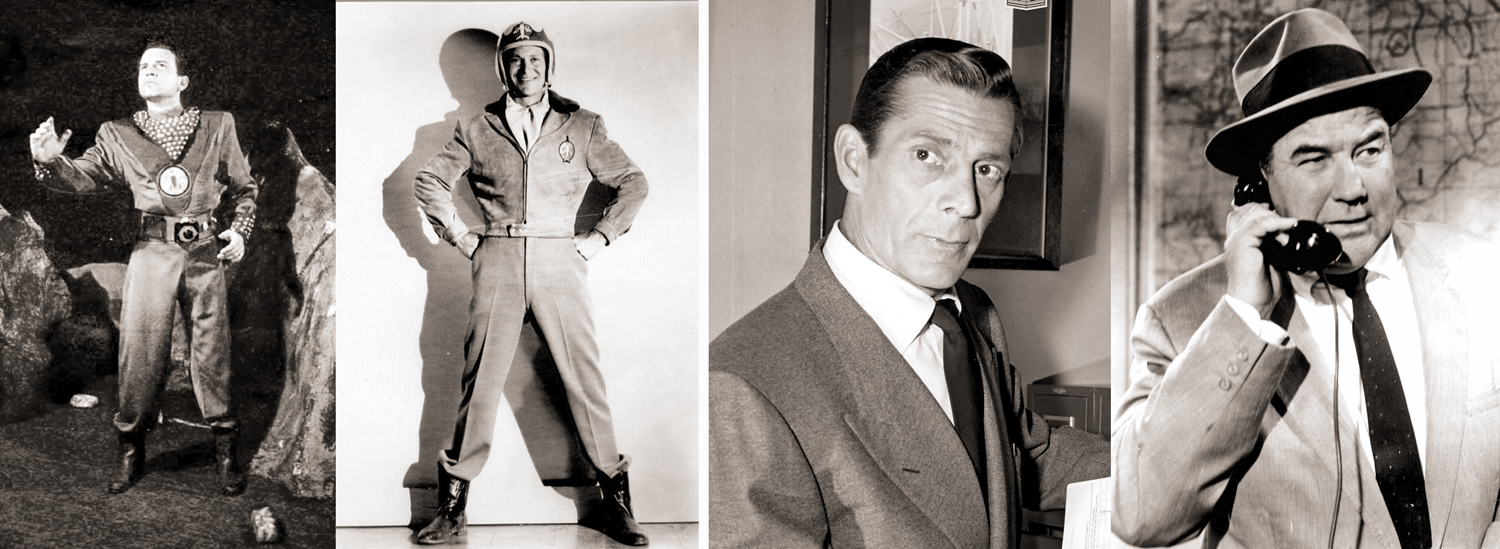
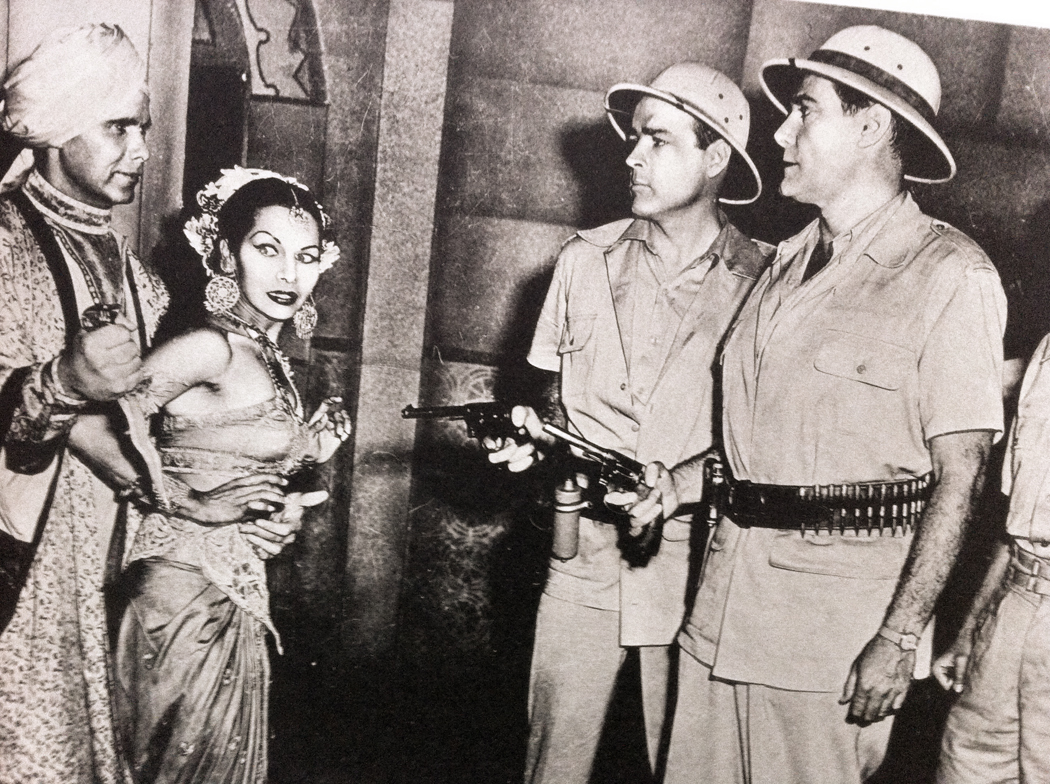
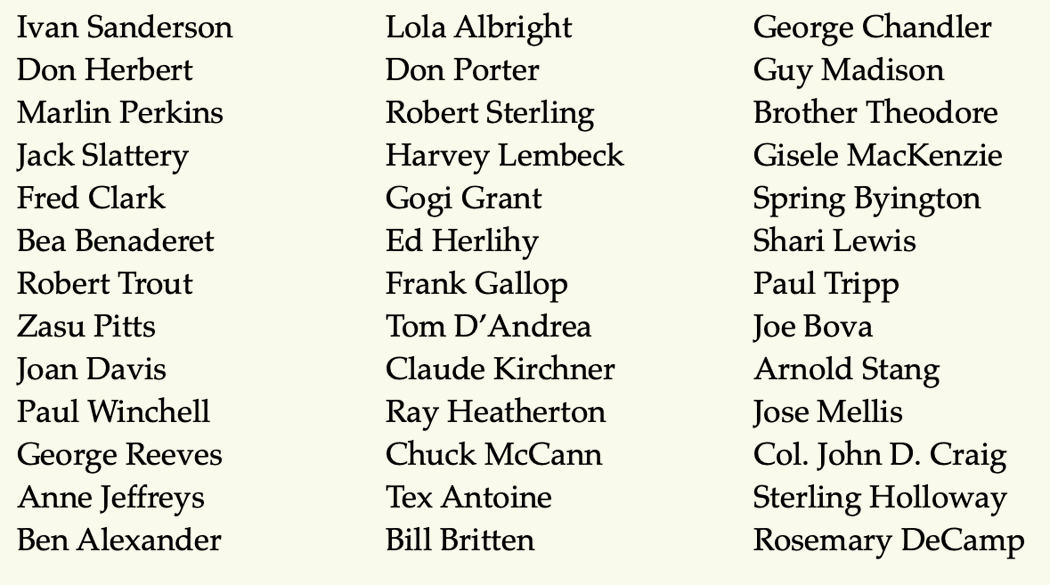
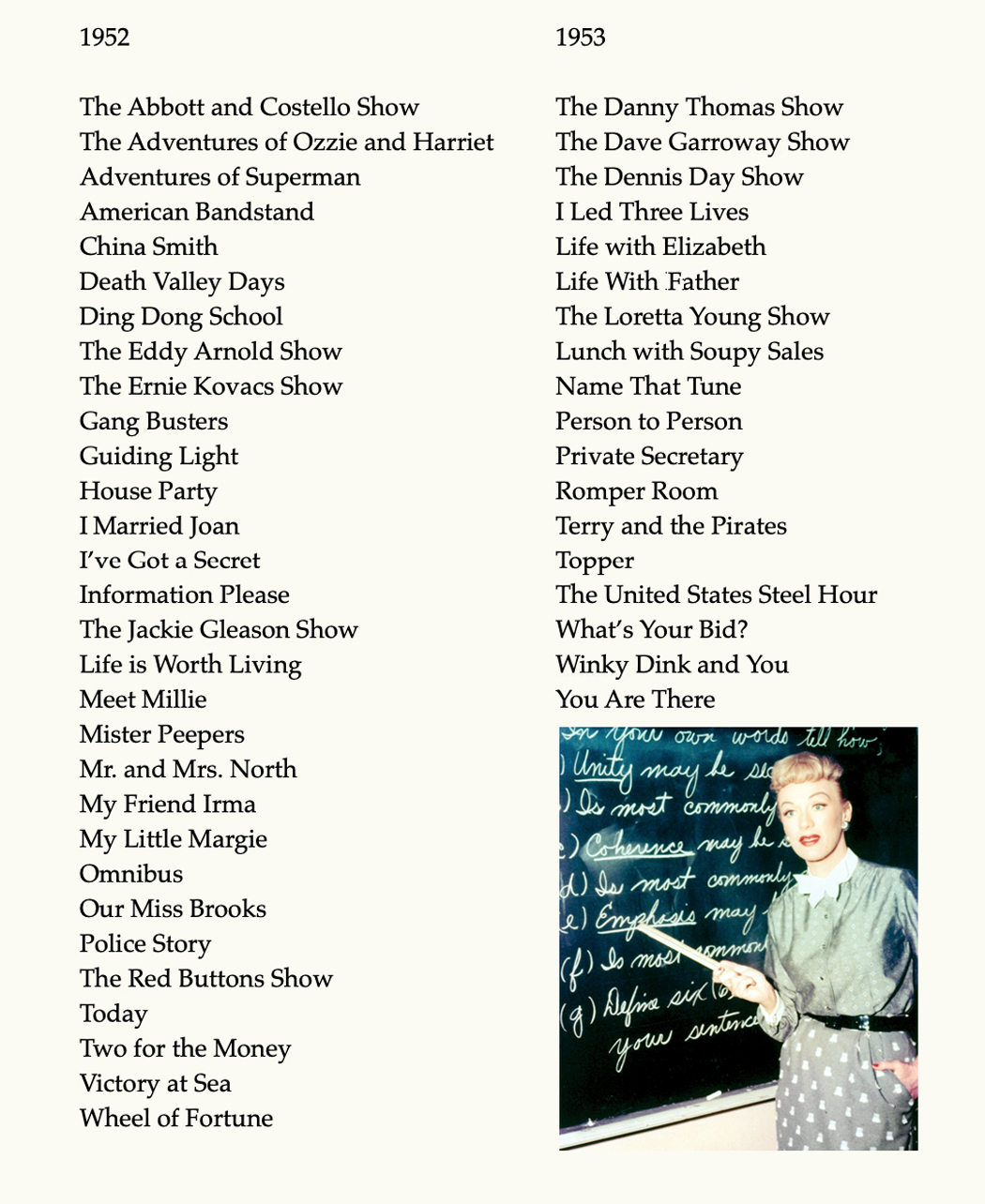
Their modern counterparts now find their home on obscure cable channels or PBS, but Bishop Sheen was on the Dumont Network and then ABC. Gnagy was originally on NBC. In its earliest years, television was willing to try anything. There were home travelogue movies on Bold Journey and I Search for Adventure (with Col. John D. Craig); there were African adventure series, Ramar of the Jungle and Jungle Jim; there were cop shows such as Highway Patrol and Racket Squad (it is surprising how many of these shows come in competing pairs); Captain Video and Captain Midnight; Mama and The Goldbergs; Ozzie and Harriet and George Burns and Gracie Allen.

The last of these was surprisingly ante-post-modern, as George Burns would watch his own TV show to discover what was happening in the episode he was in. More than breaking the fourth wall, it was breaking the fifth.

By the end of the 1950s, television had begun to feel like the familiar boob-tube we all know and love. The programs were becoming settled and familiar. There were Westerns, cops shows, talk shows, game shows — all the usual furniture of the air waves.

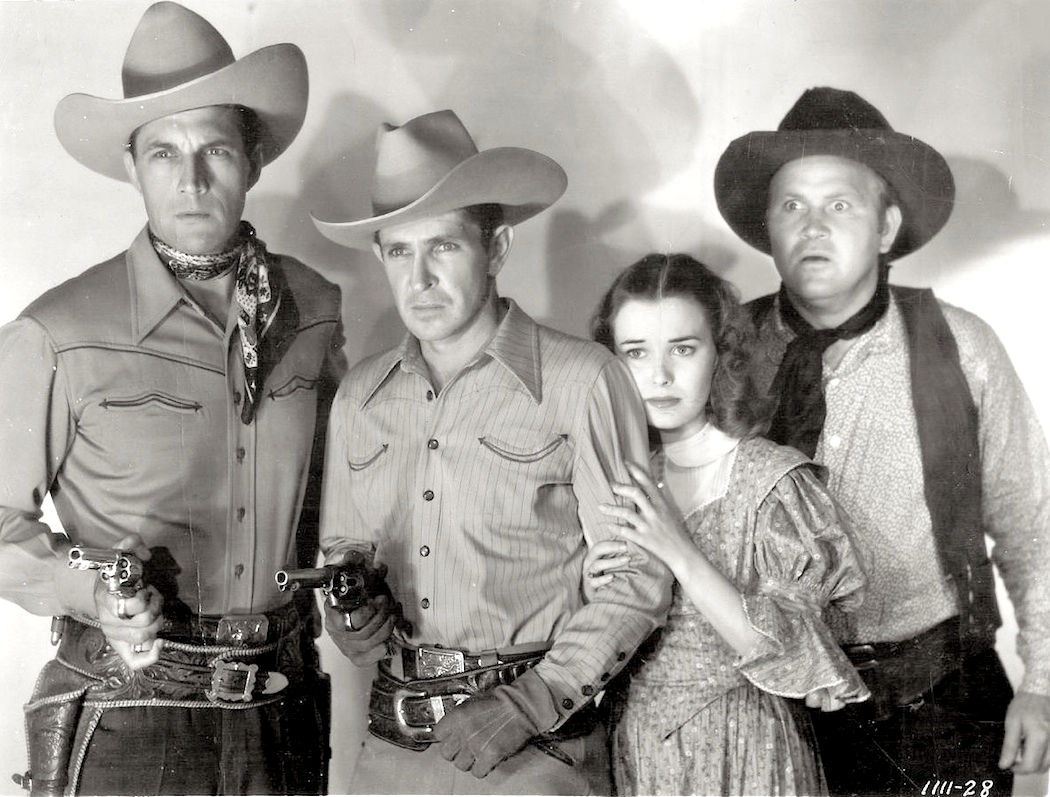
But when I was a wee bairn, it was all a bit wild and wooly. Because there wasn’t enough content available to fill all the time, television went blank in the middle of the night and didn’t light up again till well into the next morning. And because there was a shortage of content, a good deal of the detritus of Hollywood was repurposed for the tube, which means that I received a graduate-level exposure to the B-Westerns of the 1930s. I knew well such stars as Hoot Gibson, Tim McCoy, Bob Steele, Buck Jones and Johnny Mack Brown. I still know the difference between Fuzzy Knight and Fuzzy St. John.

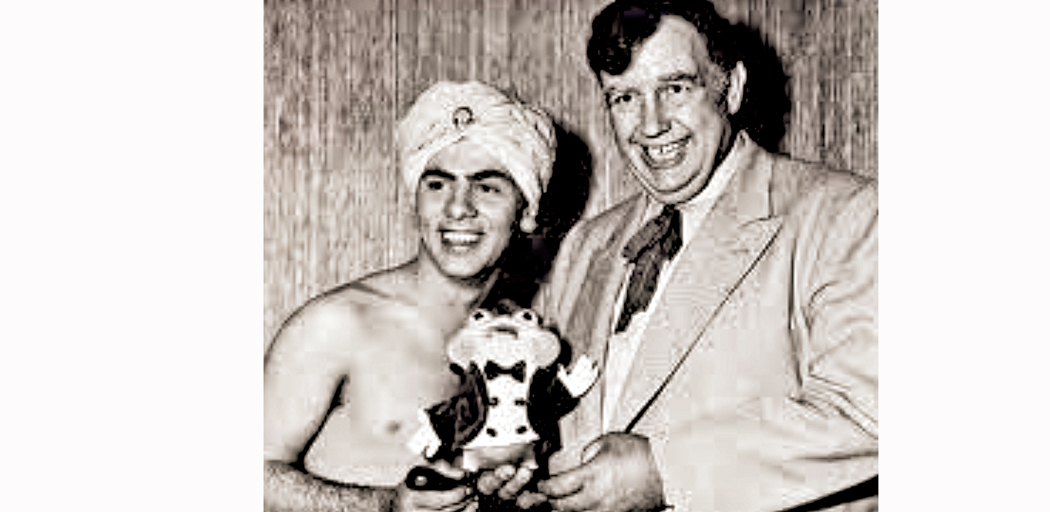
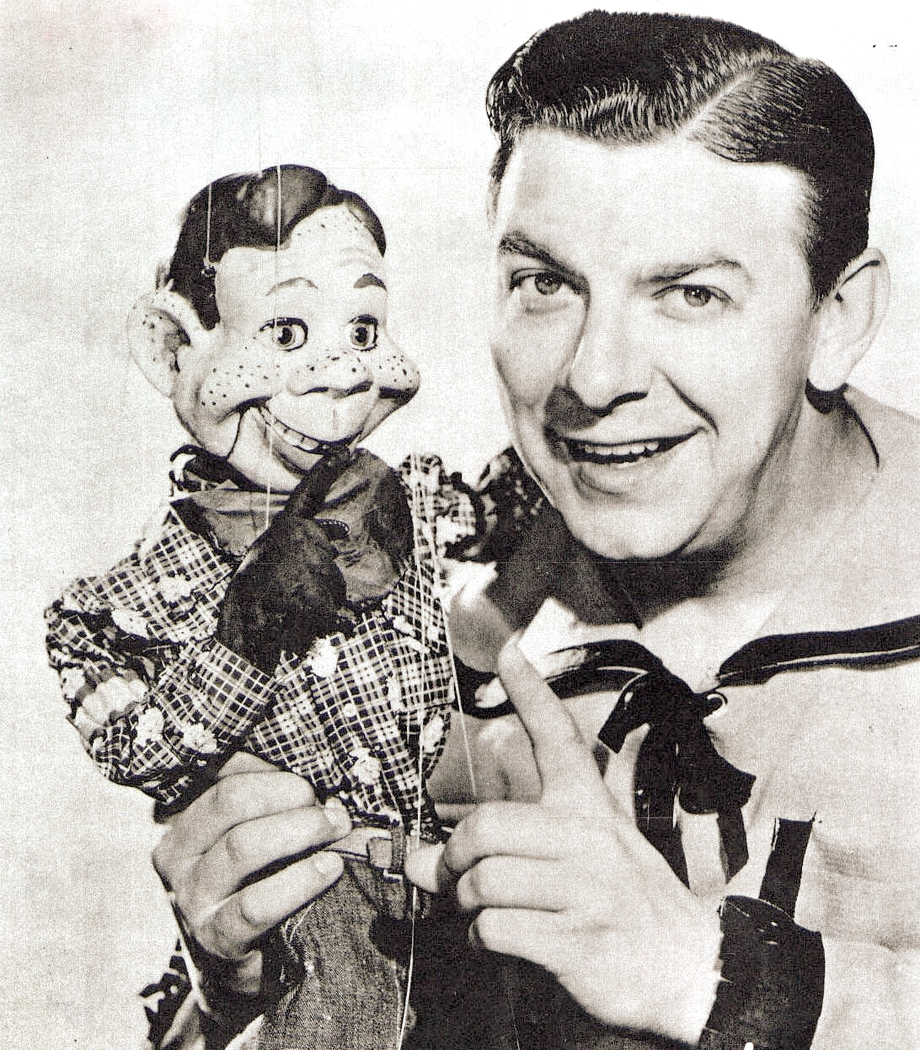
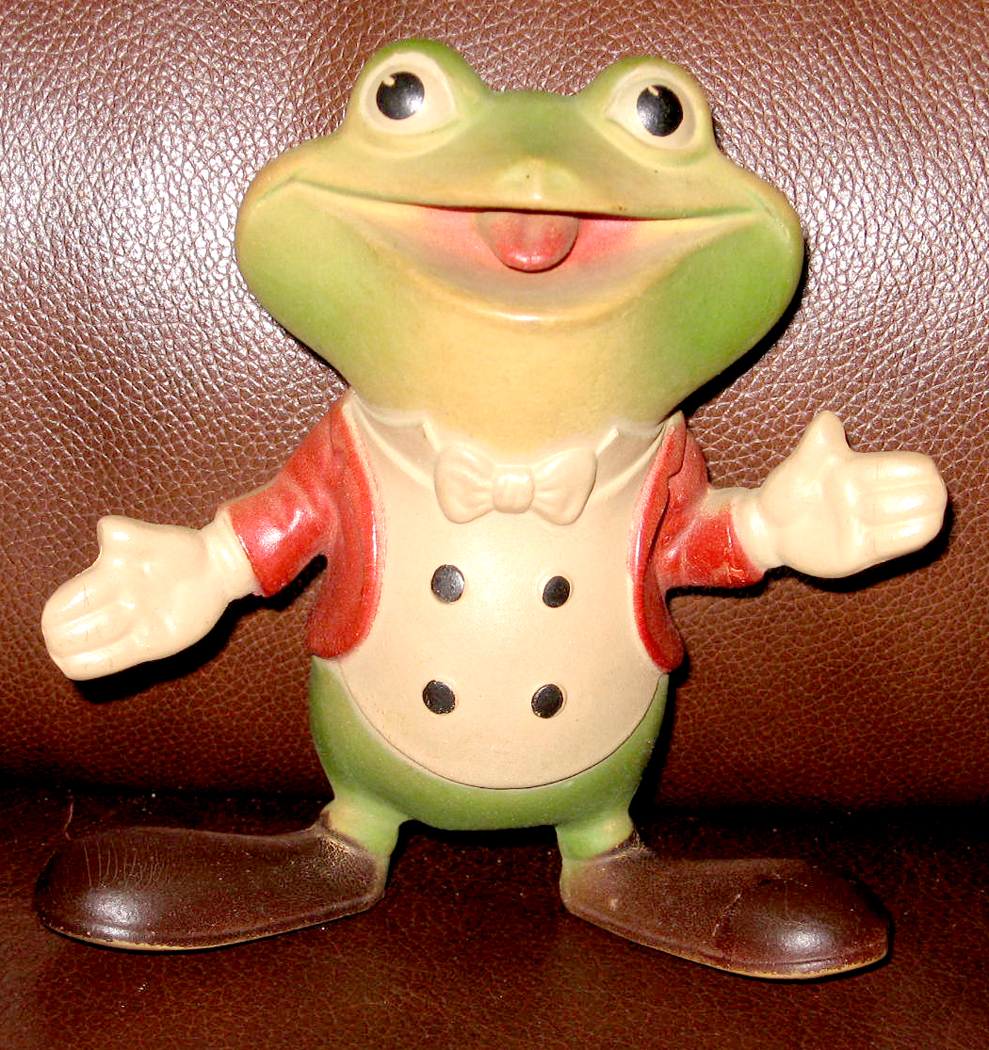
Some of the old actors found new work on the small screen. Western sidekick Andy Devine first worked as sidekick to Guy Madison in the Wild Bill Hickock series of half-hour oaters, but more memorably, as the host of Andy’s Gang, a children’s show featuring a serial of Gunga, the East Indian Boy, and a retinue of animal and puppet regulars, including Froggy the Gremlin, a classic trickster, and a phrase that re-emerged during the drug-hazed hippie era: “Pluck your magic twanger, Froggy!”

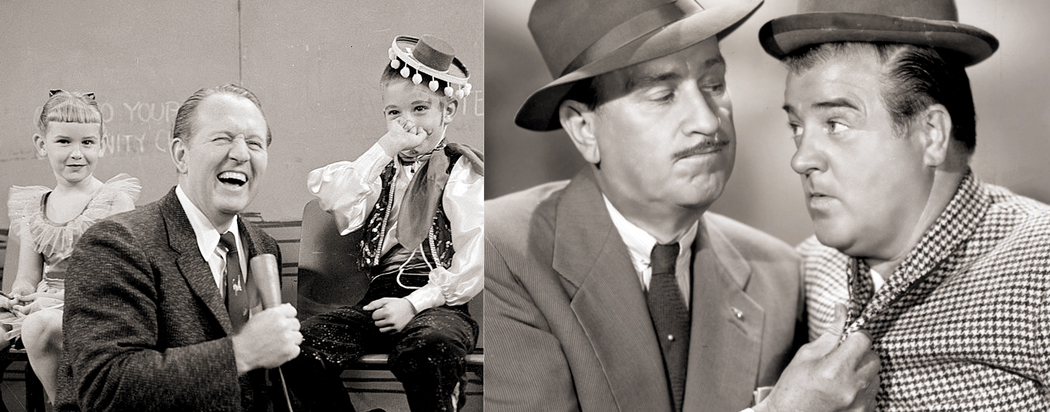
It would be easy — and tempting — to recall all that rubble that has collected in the mystic chords of memory from a childhood ill-spent in front of a glowing cathode-ray tube, but what I really mean to say is that what enters the consciousness at that tender age remains a touchstone for the rest of our lives. If our everyday childhood was one of front stoops and schoolyards, of family supper and the pinch of a new pair of shoes, what we watched through the glass bubble was the big world, the larger world that we knew we would eventually grow up to inhabit, and it was a world more interesting, more important, more everything than the ordinary one we woke up to each day, and that gave us a sense of the world that colored the rest of our lives. The actual matter of television was indeed a “vast wasteland,” but that hardly mattered. It seemed like magic to a six-year-old watching Art Linkletter in the afternoon or Abbott and Costello before dinner.

I know, for a generation earlier than mine, the same transcendent glow attached to radio — “Only the Shadow knows” — and that same sense of magic is what Woody Allen’s movie Radio Days is all about. But for anyone born after the war, it was television.

I am reminded of this by my youngers, who apparently feel the same “Golden Age” glow about their TV shows. How can one wax nostalgic about Gilligan’s Island or The Brady Bunch? They were such godawful shows. Or Scooby-Doo? Not my circus, not my monkeys. They are a grey cloud of mediocrity, but nevertheless the glowing childhood of those who came after me. Surely that is what any Golden Age is. Somewhere there is a class of novice businessmen whose sense of the world’s magic glow was a result of an infusion of Teletubbies.
When we are children — and I mean from the first memories until maybe second grade — everything is new, and because of that, it is radiant. It glows from inside and is what we aspire to throughout our lives, even when we go through divorces, failures, traffic tickets or bad clams. There is something ignited in us at that early time that is somehow a pilot light that remains. When we talk about a Golden Age of television — whichever age it is for us — it is primarily that inner light that we call gold.

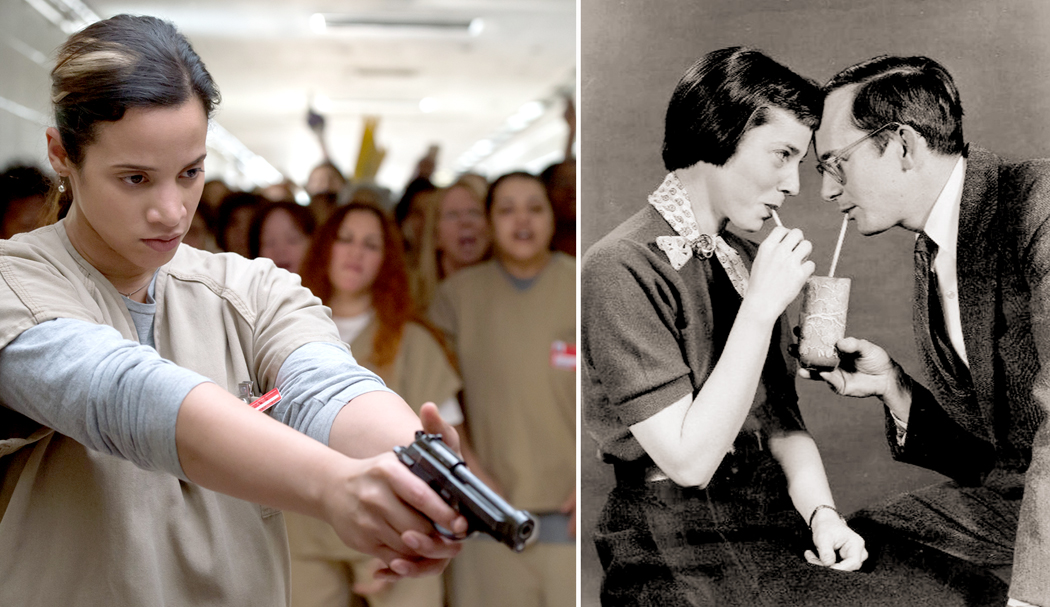
And so, it feels quite different when we talk about the current era as being the second Golden Age of television. TV, like us, has grown up, and the current crop of shows that garner critical acclaim tend to be full of “adult” content, sex, drugs and vaulting ambition, violence and treachery. It speaks to us of a world very different, where orange is the new black, Kimmy Schmidt escapes from a doomsday cult, and the kingdom of Westeros is not so much dog-eat-dog, as dog-rapes-and-beheads-dog. It is a world very hard to explain to Mr. Peepers or Gale Storm.


The new Golden Age is infinitely more sophisticated and better written. It takes on the real issues of the world, albeit in metaphorical form, and gives us some real meat to chew on. I am not denigrating the new Golden Age. At its best, it is as real an art form as Greek tragedy.

But the earlier Golden Age, where “Uncle Fultie” left us rapt with homilies, and Morey Amsterdam played the cello and told jokes on morning TV, where Victory at Sea replayed the previous decade’s war with narrator Leonard Graves’ booming “voice of doom,” and Miss Frances taught us right from wrong on Ding Dong School, it has left a residue in my psyche — fuzzy as a kinescope — that has infected me with this damned unexpungeable sense that the world may be — despite House of Cards and Game of Thrones — somehow and inexplicably redeemable.

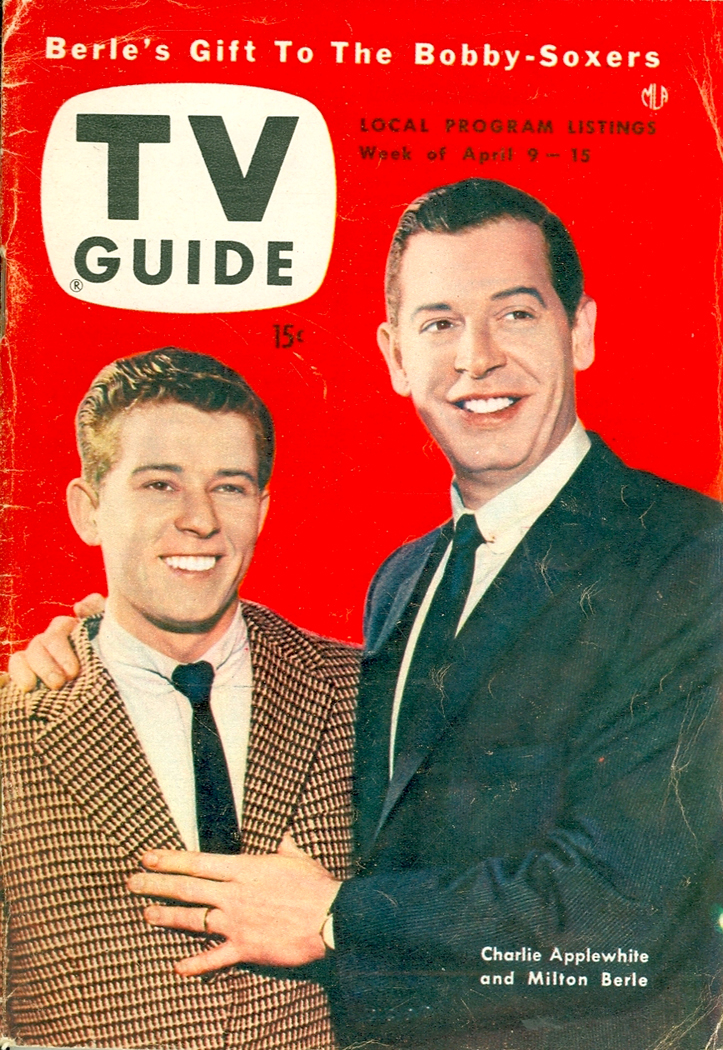
I was born in 1948 and shared my infancy with television. Me and Uncle Miltie saw the light of day in the same instant of time, just a few clicks after the end of the war that killed 60 million people. Uncle Miltie was fun. 

My father still fit into his Eisenhower jacket and automobiles were just being remarketed, having been turned back from the Sherman Tank pumpkins they had been for the duration. I, of course, knew nothing of this: I was eating pureed prunes and slapping my sippy cup on the tray of my high chair and gurgling with ignorant happiness. 

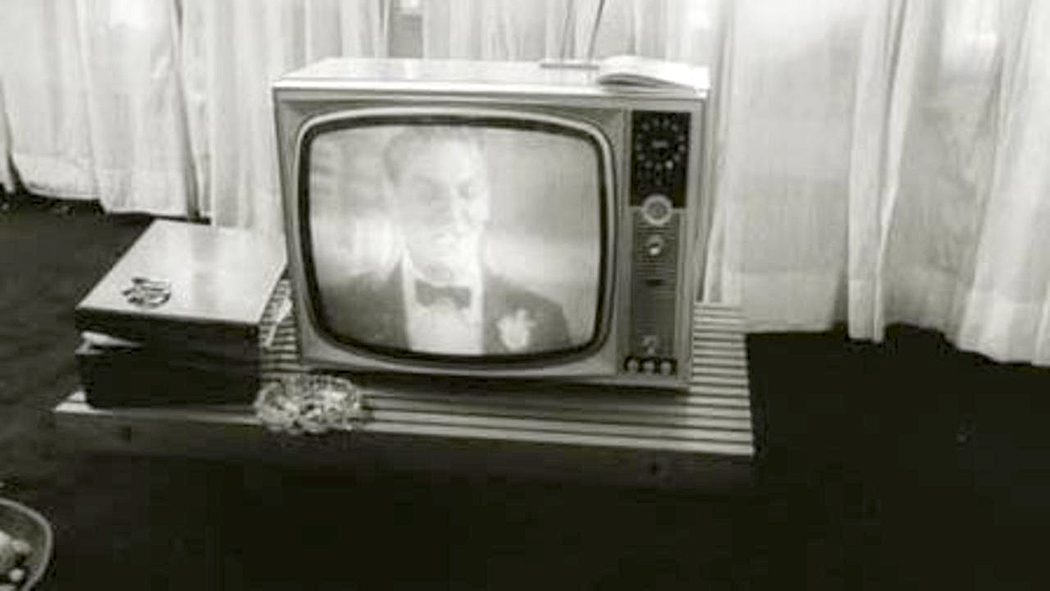
I can’t remember a time when we didn’t have a television in the house. Some of my earliest memories were of watching that ovoid 12-inch screen in our house in Teaneck, N.J. and being told that I entered the world in the same hospital where Ozzie and Harriet’s son, Rickey, was born. 

Those early broadcast years were sparse. There was a test pattern on the screen until about six in the morning, and by midnight the National Anthem played over a picture of a waving flag, followed by a high-pitched sine-wave note and that familiar test pattern. 

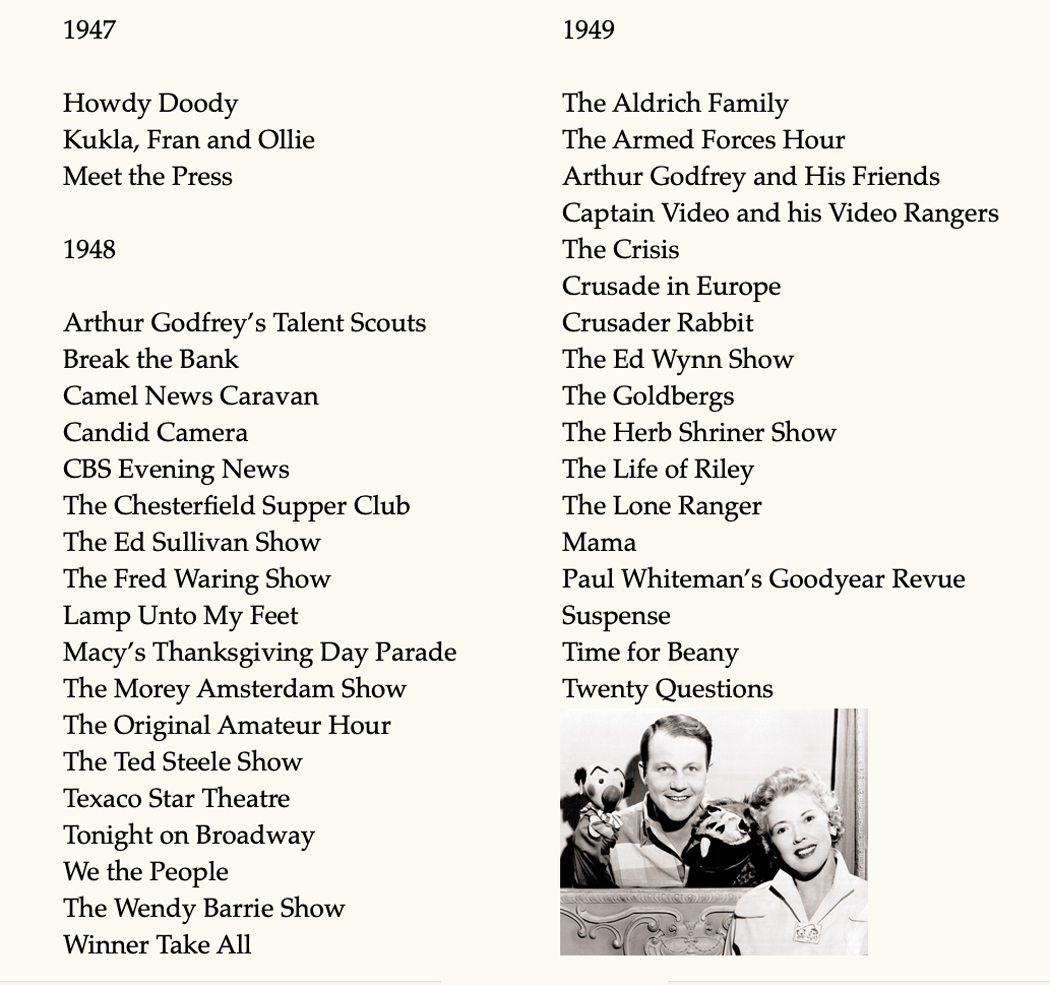
In between, broadcasters scrambled for what today we call “content.” They found old movies, silent slapstick comedies, talk shows and, ever the staple, variety shows. What original material they had wasn’t really original, but was translated from radio. Many of the old familiars were now filmed (or performed live) and given new life. The Life of Riley, The Goldbergs, The Aldrich Family, My Friend Irma, Jack Benny, and George Burns and Gracie Allen. William Boyd repackaged his old Hopalong Cassidy westerns from the Thirties and such cowboy shows as The Cisco Kid and The Lone Ranger filled Saturdays for the wee bairns. 

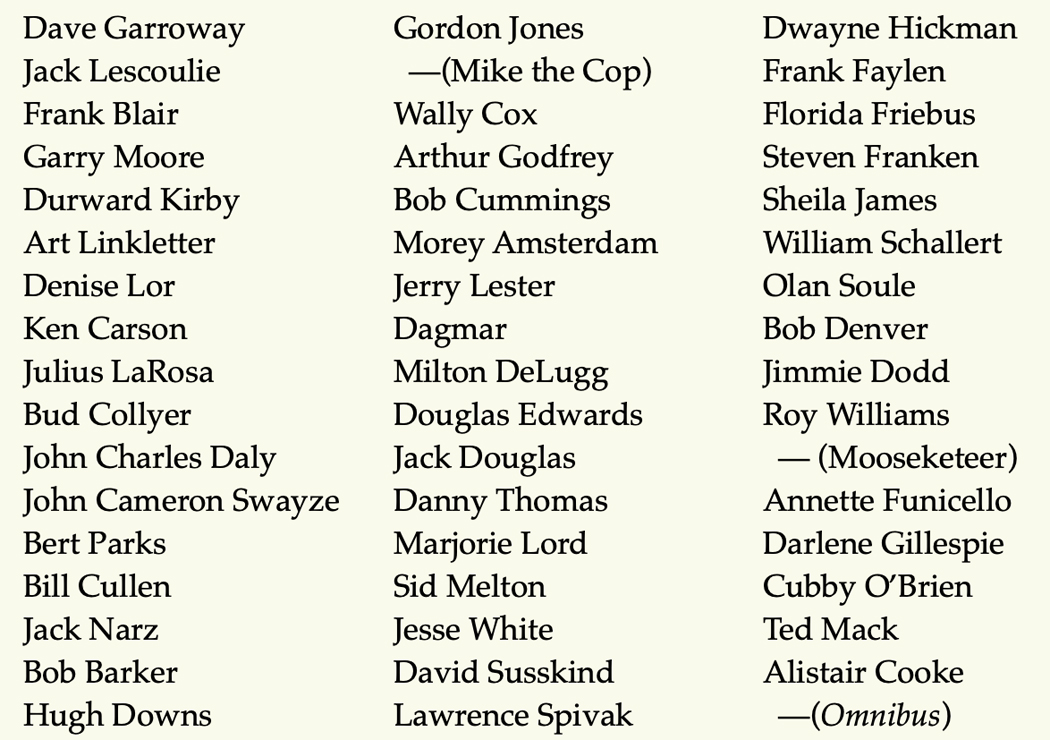
Before I was sent off to kindergarten, I watched daytime TV with my mother as she ironed or cooked. Art Linkletter, Arthur Godfrey, Herb Shriner, and Dave Garroway, always Dave Garroway, with his meaty palm held toward the screen as he signed off the Today Show each morning: “Peace.” 

For the evening, a host of second-string movie actors stepped up as top bananas in sitcoms: Eve Arden, Stu Erwin, Joan Davis, Gale Storm, Ann Sothern, Robert Cummings, Leon Ames, Wendy Barrie, Harriet Hilliard and Ozzie Nelson, and the greatest leap up from B-films: Lucille Ball. 

And the kiddie shows. Howdy Doody was the royalty, but the rest of the aristocracy included Kukla, Fran and Ollie, Romper Room, Ding-Dong School, Captain Video, Beany and Cecil the Seasick Sea Serpent, Crusader Rabbit and Mr. Wizard. 

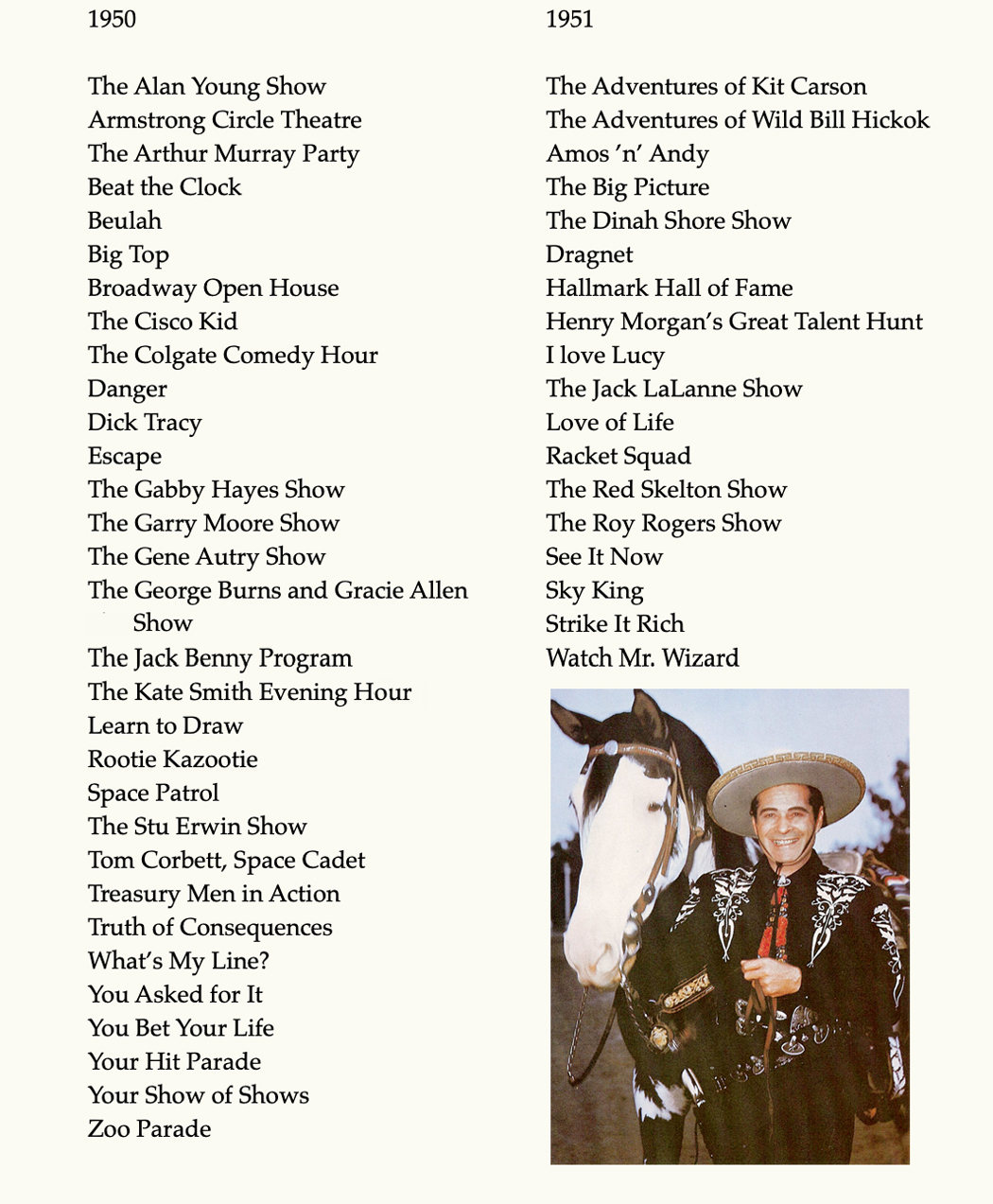
Three genres ate up a great part of the clock: game shows (Beat the Clock, Truth of Consequences, What’s My Line, Name That Tune),  Westerns (Roy Rogers, Gene Autry, Sky King, The Adventures of Wild Bill Hickock, Hopalong Cassidy), and space operas (Tom Corbett, Space Cadet, Captain Video, Space Patrol, Rocky Jones, Space Ranger, Captain Midnight). At least, on our TV. 

And to fill up the empty programming hours, there were endless old Western movies. The cream were from the 1930s, with Hoot Gibson, Buck Jones, Tim McCoy, Hoppy, Bob Steele, Bob Livingston, John Wayne (in his B-movie phase). The quality plateaued in the ’40s with Johnny Mack Brown, Rogers, Autry, Wild Bill Elliott, and Buster Crabbe, and then dropped significantly after that with some truly awful films with Lash LaRue, Whip Wilson and Tim Holt. The ’50s were bad for movies in general, but disastrous for Westerns — the best of them were now made for TV directly.

I haven’t forgotten the variety shows. Way too much singing for my childish tastes. My parents loved Perry Como, Dinah Shore, Patti Page, Kate Smith and Tennessee Ernie Ford. Me, not so much. But the parental units had the power over us powerless kids and so we watched. 

Toast of the Town, later called The Ed Sullivan Show, dominated our Sunday evenings. Nothing like plate spinners for the imaginations of 5-year-olds. Jugglers, ventriloquists, comics, animal acts, and Broadway tunes. The dying gasp of vaudeville.

But, I’m just naming names here, and gorging on nostalgia. What I really meant to do was point out the changing tenor of early television. I see three major periods from 1948, when I was born, to 1970, when I graduated college and pretty much ceased watching the tube on any regular basis. I’m afraid I lost touch with pop culture at that time. 

The first period was the one I call “Spaghetti on the Wall.” Audiences were familiar with radio, and television was radio with pictures. To fill the time-void, broadcasters tried pretty much everything trying to figure out just what this new beast was. Talk was cheap, so many of the programs, like Arthur Godfrey, Garry Moore or Art Linkletter’s House Party went on for hours filling the airwaves with chatter. Radio had half-hour sitcoms and hour-long dramas, and so TV did the same. Music was big on radio, more the same on the tube. 

There was an innocence in these first 10 years. A certain “Let’s put on a show” attitude. There were hits, such as Sullivan and I Love Lucy, but a lot of dead ends, too. Some old performers just didn’t have the TV magic and Ed Wynn, Jimmy Durante, Fred Waring, Ted Steele, Paul Whiteman, and Red Buttons simply didn’t translate well. (Loretta Young, who started out in silent films, attempted to remain 20 years old well into her 60s).

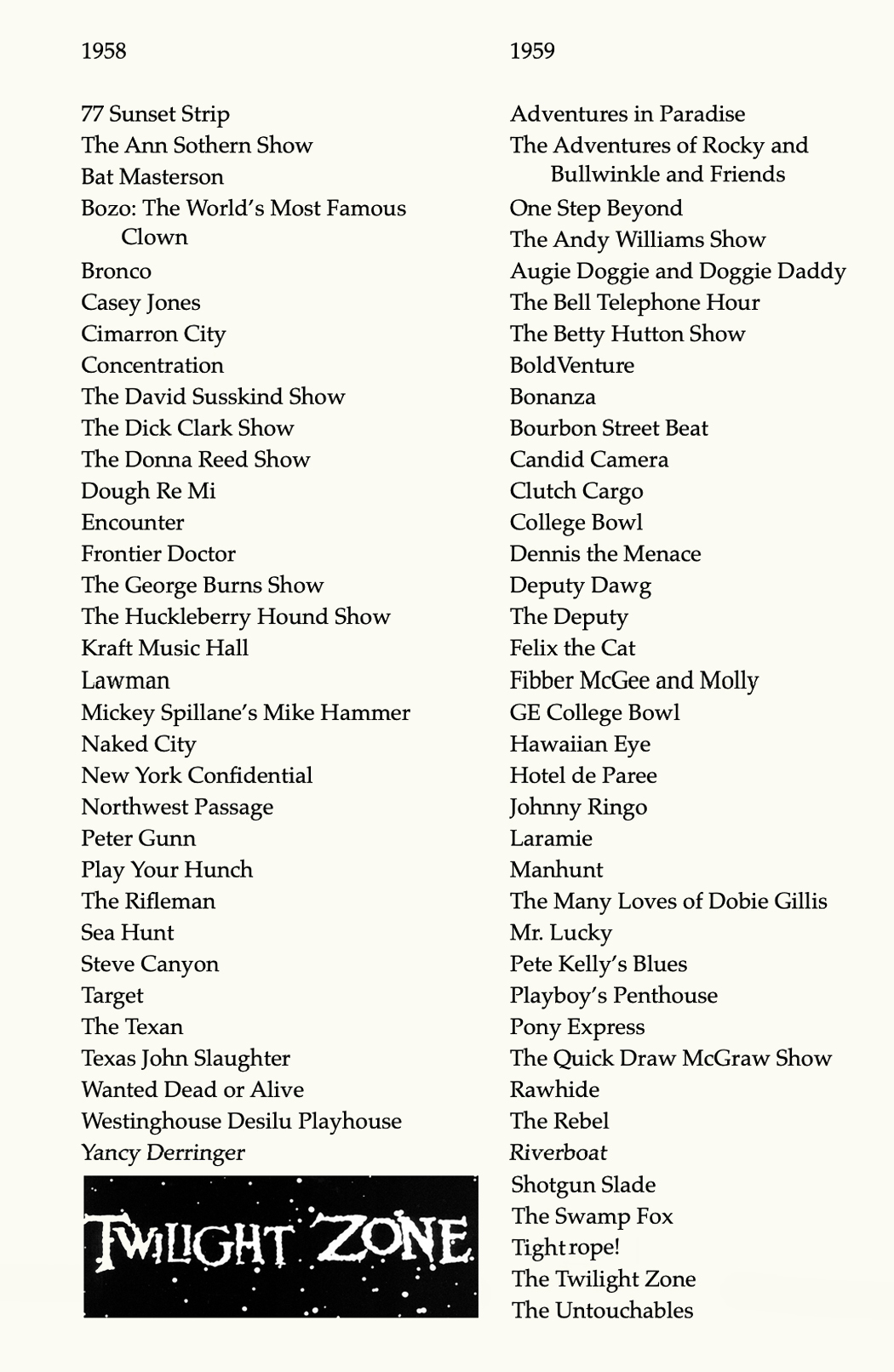
In the second period, beginning in 1957 or 1958, TV develops a confidence of its own, a kind of throaty adolescence. Radio was no longer something most audiences remembered, except as the source for rock and roll music, and some studios, such as Desilu and Warner Brothers began making TV-appropriate series. It was also the first time TV began remaking, not radio shows, but previous TV shows. There were a new Dinah Shore Show, a new Tonight Show with Jack Paar, new vehicles for Ann Sothern, George Burns, Ernie Kovacs, Gale Storm, Bob Denver, Jim Nabors and even Beany and Cecil. 

It was also the era of the explosion of cheap animation. Joseph Hanna and William Barbera pumped out assembly-line cartoons, beginning with The Ruff and Reddy Show in 1957, followed by Huckleberry Hound (with Yogi the Bear), Deputy Dawg, and The Flintstones. Similar animation came from Jay Ward et al. in the various Rocky and Bullwinkle shows. 

But the real prize came with popular filmed series, many from Warner Brothers, including Cheyenne, Sugarfoot, Maverick, 77 Sunset Strip, Hawaiian Eye, and Surfside 6.  There were other stalwarts, such as Have Gun-Will Travel, Perry Mason, Naked City, Sea Hunt, One Step Beyond, Bonanza, Rawhide, The Untouchables, Route 66, and East Side/West Side. 

And The Twilight Zone (and its poor relation, The Outer Limits). 

This is the era that brought us a normalized suburban vision of the U.S. and its country cousin. Dick Van Dyke and The Beverly Hillbillies. Leave It to Beaver and The Real McCoys. The Donna Reed Show and The Many Loves of Dobie Gillis vs. The Andy Griffith Show and Petticoat Junction. These were the Eisenhower Years reflected in My Three Sons and The Bob Newhart Show. 

This was TV in its stride, its first full flowering as the universal entertainment medium for the vast majority of Americans. 

After, comes a period of decadence, of imitation and slipshod production. Instead of The Man from U.N.C.L.E., we get The Girl from U.N.C.L.E. There’s Voyage to the Bottom of the Sea, Fantastic Voyage, and Voyage to the Center of the Earth. 

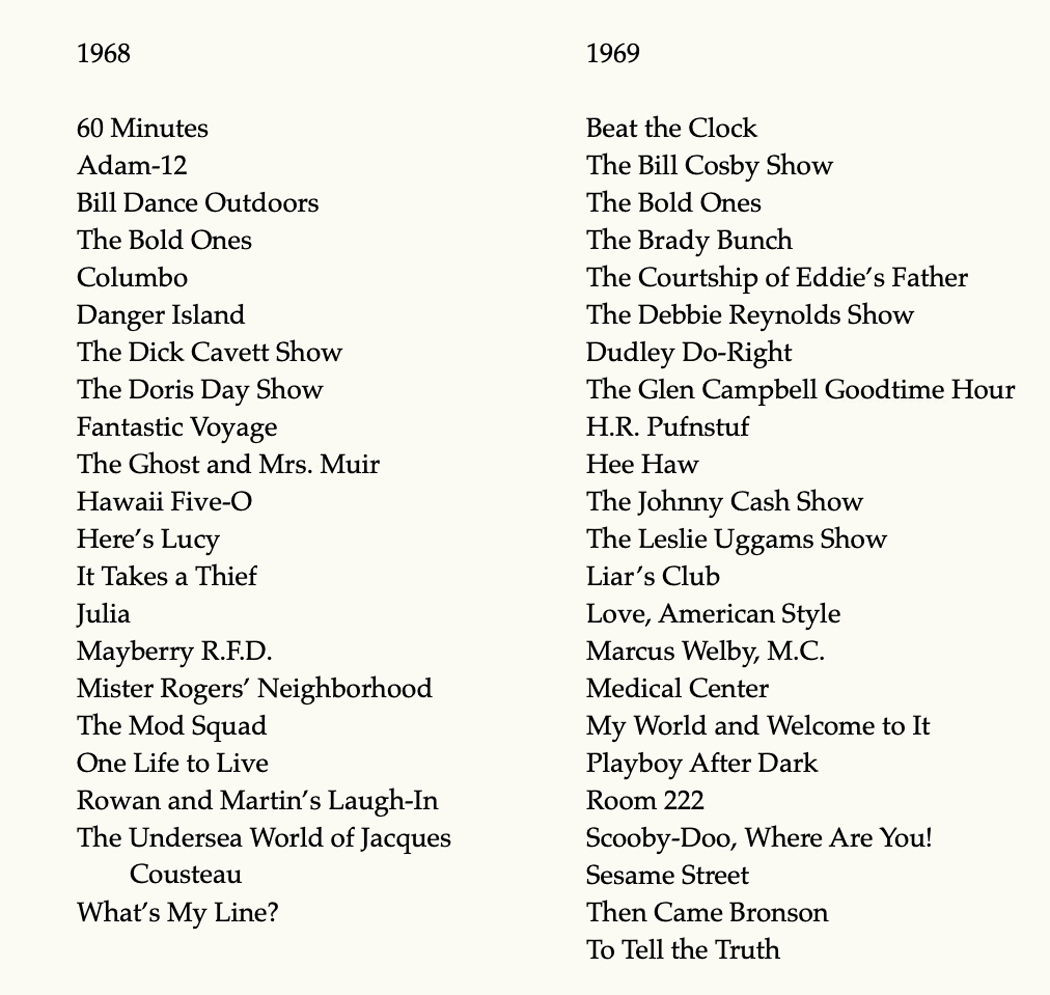
It was also the time of America’s cultural paroxysm and it shows on the screen. Black actors and entertainers showed up beyond Beulah and Amos ’n’ Andy: Julia, The Leslie Uggams Show, I Spy, Nichelle Nichols on Star Trek, The Bill Cosby Show and Flip Wilson. The counter culture ruled The Mod Squad and Laugh-In. It was clear the world was changing …

…and TV’s response was to go for the cheese. The second half of this third era of television history is really dominated by the shows remembered fondly by Generation X and those who saw these things in later syndication. This is The Brady Bunch and The Partridge Family. Adam-12, Love, American Style, The Flying Nun, Ironside, My Mother, the Car, Kung Fu, The Six Million Dollar Man, Wonder Woman. There was a full reliance on gimmicks. And what didn’t depend on a gimmick still felt like a bad parody — even a deconstruction — of what bad TV is all about. Some young people, grown up in a world of media rather than one of sky, sea and soil, enjoy such programs in cable reruns precisely because of how bad they are. 

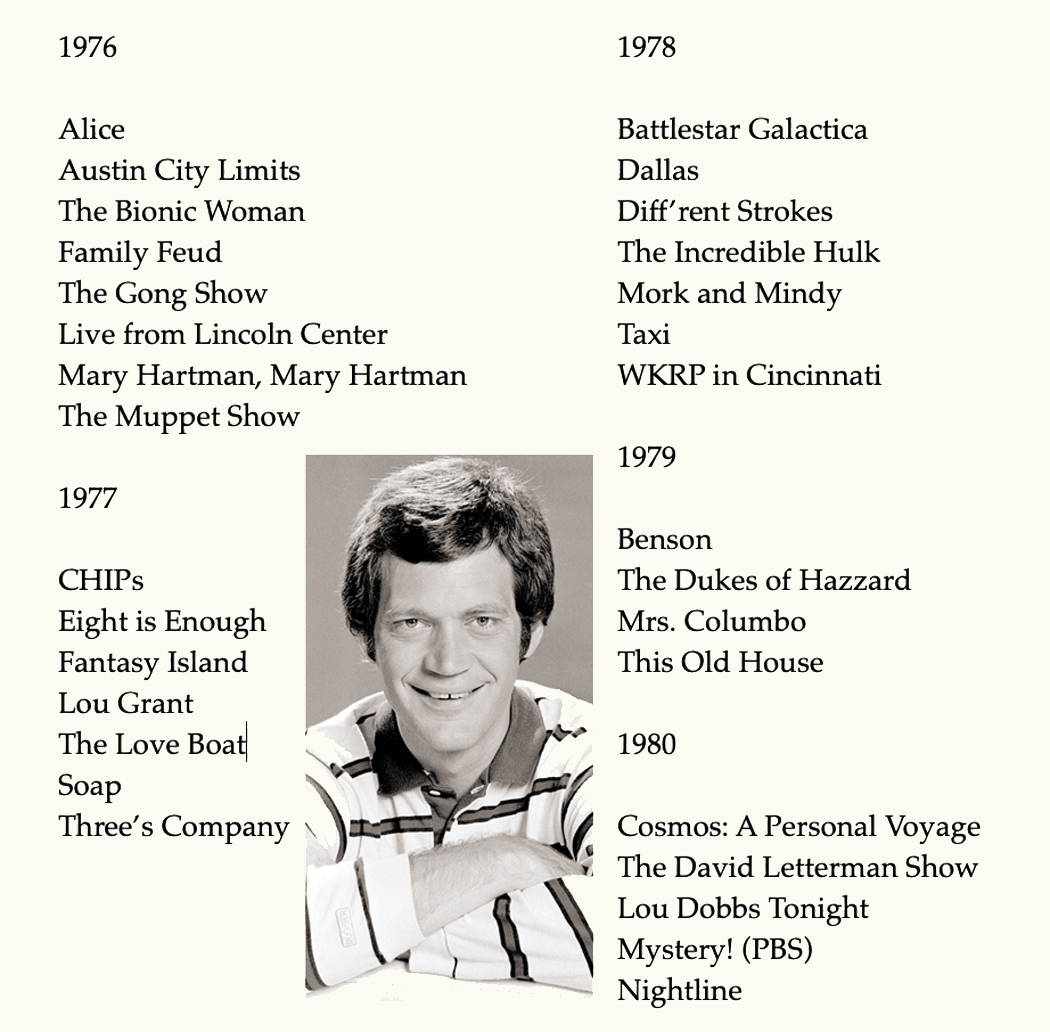
Television itself has become so much more self-aware as television. Postmodernism hit the medium with a wallop. You can’t have a David Letterman without the irony of his take on the very medium that brings him bread. 

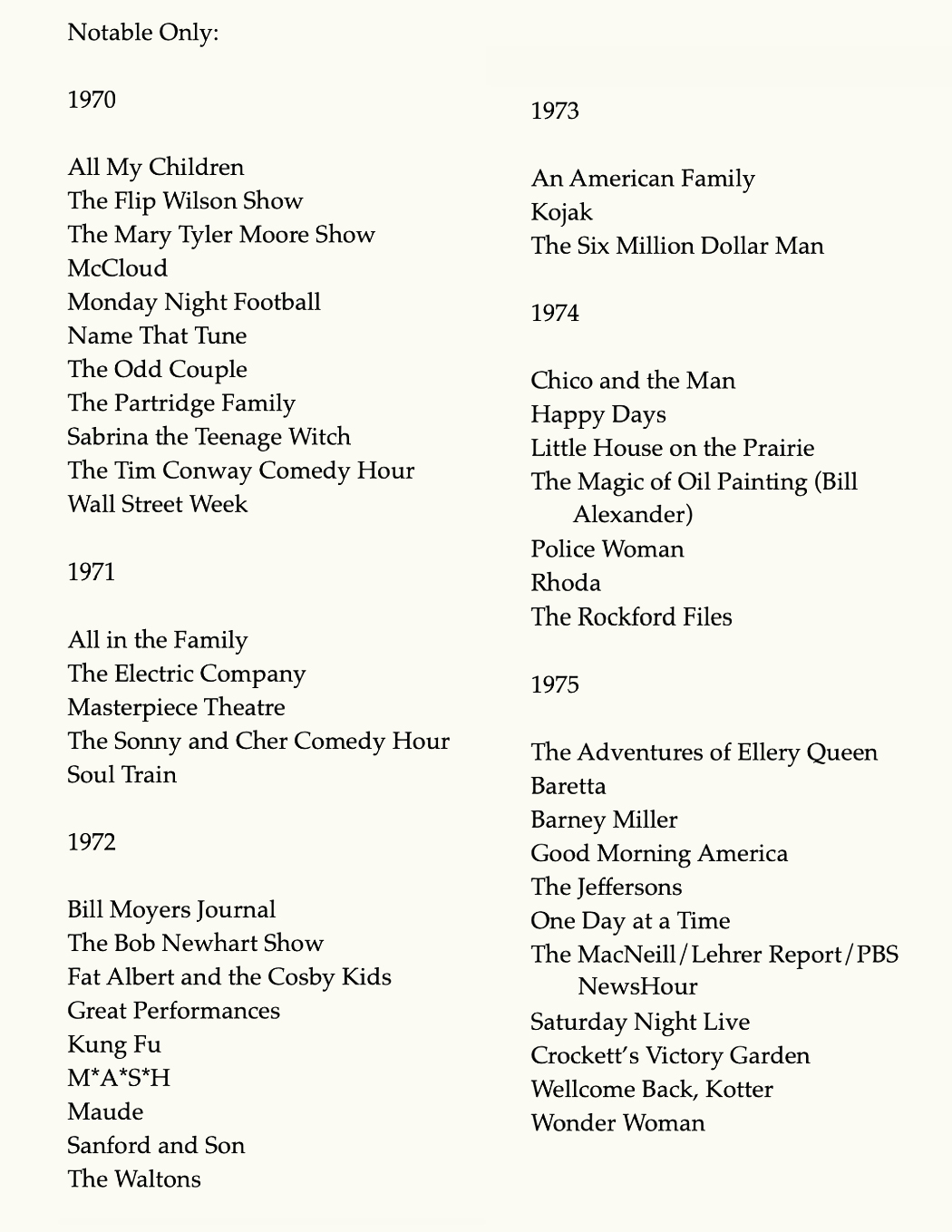
This has all been a very broad overview. Certainly, there have been good shows in each era. Even in the ruins of decadence we have Mary Tyler Moore, All in the Family, M*A*S*H, The Rockford Files, Barney Miller, Soap, and Taxi. There are always creative people in the field: No era is complete dross. 

 I have very fond recollections of the TV I watched as a child and no doubt rank such shows higher in my estimation than they deserve and no doubt each generation feels something of the same for the fare they ingested in their formative years. We should all be forgiven the folly of our youths.

I rather lost track of the toob after going to college and since graduating. I have caught bits and pieces and I’m afraid I am rather disgusted with the current 24-hour news channels. This has been called a new “Golden Age” of TV, and no doubt it is: The quality levels of much is quite high, at least on cable and on streaming services. The networks seemed largely mired in repetition of the same cafeteria food. I find myself turning primarily to Turner Classic Movies, PBS, and British television. Or perhaps, cracking open a book. 

But then, I am a crotchety old geezer.

I see my granddaughters staring into their phones, watching video of themselves and their friends making goofy faces, or bits of viral kitties on YouTube and, like many of us of a declining generation, worry about the future of the culture. How quick we forget.

The young nowadays hardly watch ordinary television anymore, unless it is streaming video from Netflix. But there was a time when the boob-tube was the primary entertainment for an entire post-war generation. You might even call the damnable thing the “boomer-tube.” We were there at its inception. We watched it try to find its feet. 

I was born the same year Milton Berle made television a necessity in the American home. In a sense, TV and I grew up together and it would be a shame not to admit it.

In my earliest years, we had no TV, but I cannot remember much before the great wooden chunk of furniture with the little oval screen of greenish gray — the DuMont television we had in suburban New Jersey.

It seemed as huge as a furnace and the fire that flickered through the window was the normal hearth of the home. 

Television doesn’t seem to be any miracle if you’ve never known a time without it. It’s an appliance, like the washer or the stove.

In its earliest years, television tried to fill up its empty spaces with recycled product from the movies and radio: Many of its first series were carry-overs from radio, though I didn’t know it. We never listened to radio before television.

I watched Pinky Lee, Miss Frances on Ding Dong School, Crusader Rabbit and Rags the Tiger, Beany and Cecil, the seasick sea-serpent, Bill and Cora Baird and their puppets, including Charlemagne the Lion. With my grandmother, I would watch the Bishop Fulton J. Sheen stand with that long, lined face and tell us that Life is Worth Living. 

There was Howdy Doody and Clarabell the Clown, Princess Summerfall Winterspring and Chief Thunderthud (the original “Kowabunga”). I longed to sit in the peanut gallery. I knew Buffalo Bob many years before I ever heard of Buffalo Bill. 

On Saturday mornings, I’d watch Tom Corbett, Space Cadet and each weekday afternoon, there was Al Hodge (formerly radio’s Green Hornet) as Captain Video, fighting the evil robot, Tobor. (I was proud as a pre-schooler to figure out that “Tobor” was “robot” spelled hindwards.) Later, there was Rocky Jones, another space adventurer.

The broadcast bands were filled with old Westerns, too. Not only Gene Autry and Roy Rogers, but a host of older stars, from Hoot Gibson and Ken Maynard to Col. Tim McCoy. I ate up every Three Mesquiteers film ever made, and knew subliminally that Bob Steele as an actor was better with his fists than any other cowboy star.

There was at least one old Western every afternoon, introduced by an aging cowboy, who was actually Lyle Talbot, “B”-movie actor and veteran of Ed Wood’s Plan 9 from Outer Space, which we watched a dozen times in a week on Channel 9’s Million Dollar Movie — my first serious film course. They showed the same movie all day and night over and over. I first knew King Kong there, and Wee Geordie and Loneliness of the Long Distance Runner. It really was a great film course. (And it was only years later I realized that the theme music to Million Dollar Movie was the Tara theme from Gone With the Wind.)

We were lucky in the New York Tri-State Area: In those days when TV channels were few across the nation, we had seven: three networks and four independents  (channels 5, 9, 11 and 13 — which later became the pre-PBS WNET-TV educational television.) 

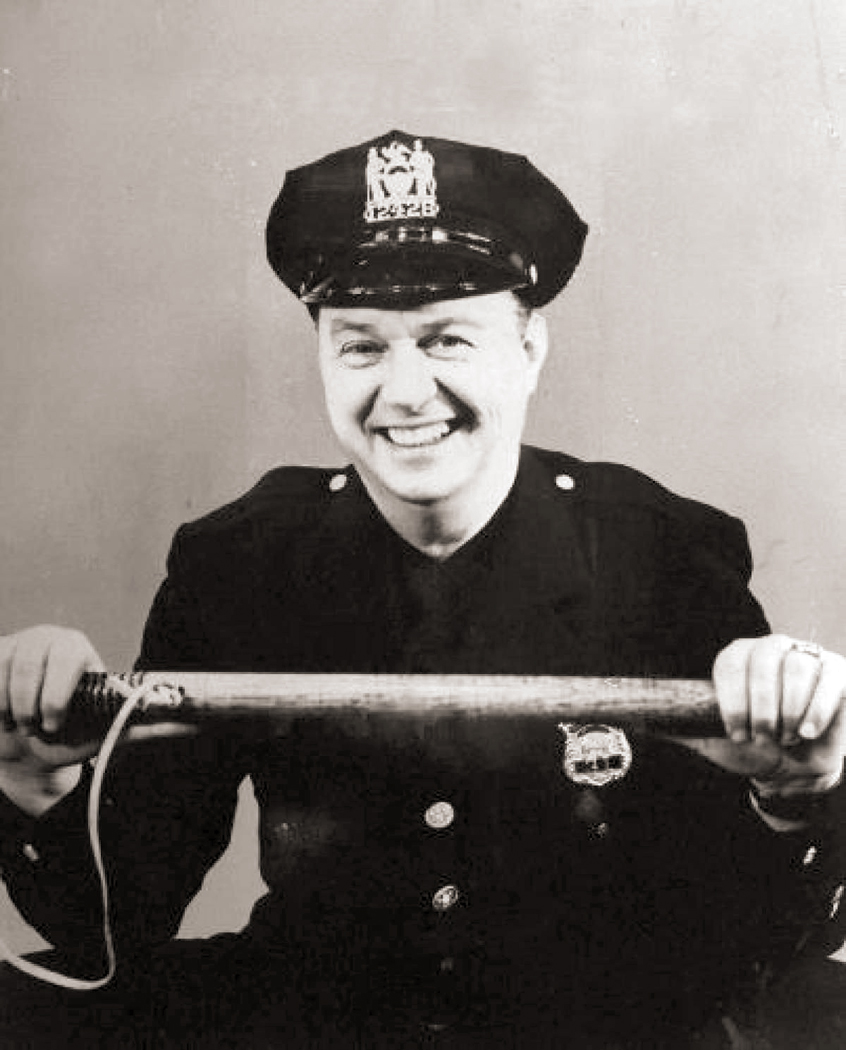
The kiddie hosts were all over those indies: Officer Joe Bolton, Sonny Fox, Claude  Kirschner, Sandy Becker, Paul Tripp.

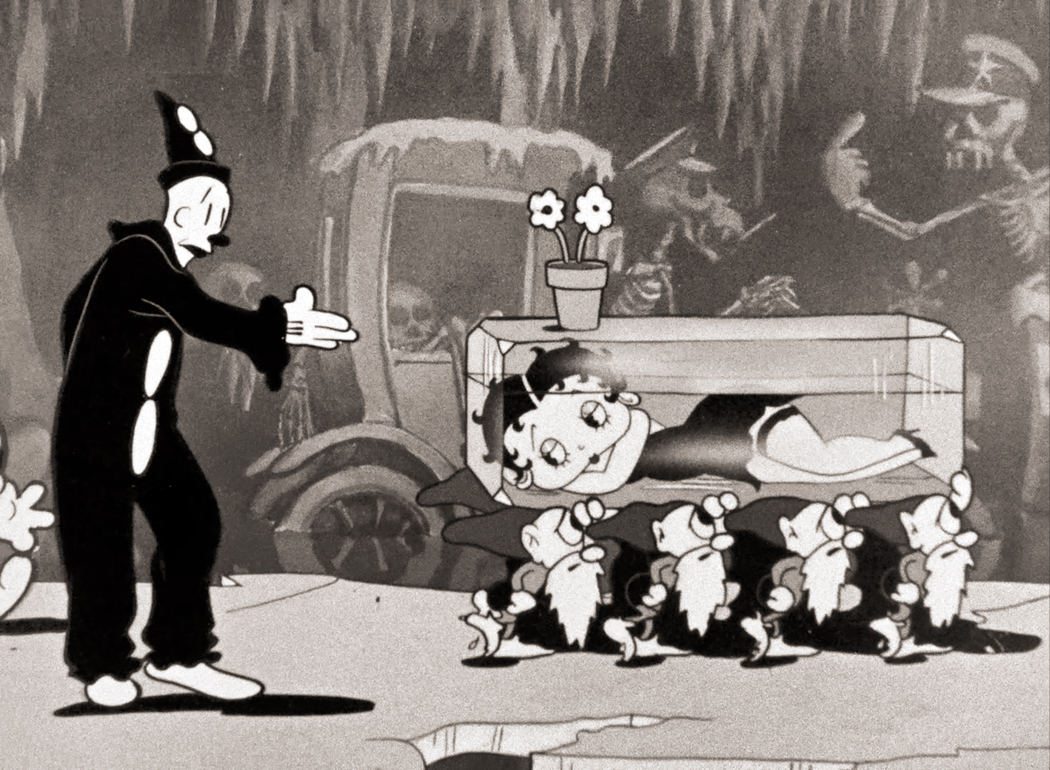
Late in the afternoon, Uncle Fred Sayles came on with Junior Frolics (I think it had originally been called Juniortown, or something like), where I became unintentionally conversant with the silent animation of Van Beuren Studios, Max Fleischer and Pat Sullivan. Farmer Gray (originally Farmer Al Falfa) and the Aesop’s Fables of Paul Terry — a billion stick-figure mice running all over the place. (This was also my introduction to jazz, used as background music to the silent cartoons, just as Bugs Bunny and Warner Brothers cartoons were my introduction to classical music.) There were also the Ko-ko the Clown features — Out of the Inkwell — and Betty Boop.

In those early years, they were really hurting for things to fill up the airwaves and threw up on screen anything they could scrounge.

Andy Devine hosted Andy’s Gang, with the gremlin, Froggy: “Pluck your magic twanger, Froggy!” The show featured a serial of Gunga the East Indian Boy, which was supposed to be set in India, but was shot near Los Angeles. The confusion of jungles was common. Ramar of the Jungle switched between generic Africa and fictitious India. I was a kid, what did I know? Imagine my surprise when years later, on Million Dollar Movie, I saw Ramar (Jon Hall) as a South Seas islander, Terangi, with Dorothy Lamour in The Hurricane from 1937.

I look back now and think what a pioneer I was, eating up the first indigestible offerings the networks and independent channels served up.

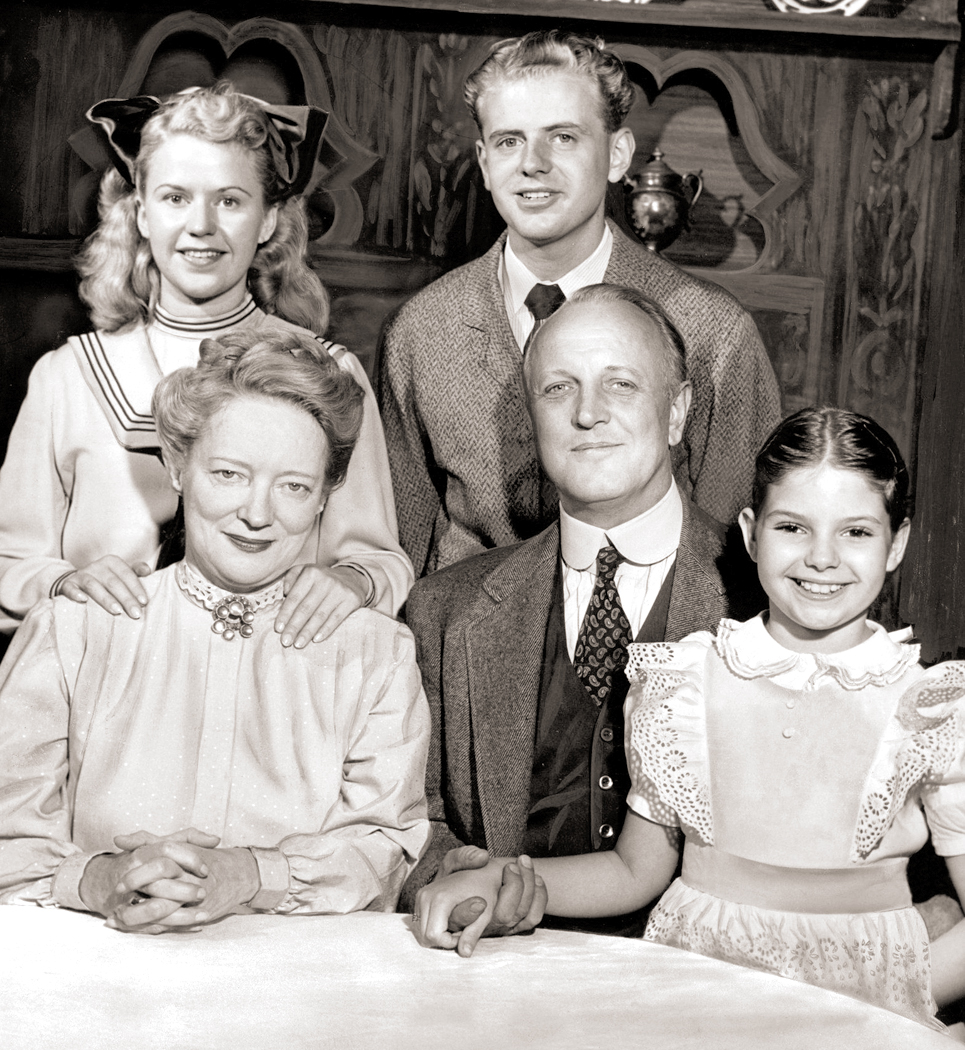
I remember I Remember Mama, The Goldbergs, Life with Riley, I Led Three Lives, Mr. Peepers, Bob Cummings, My Little Margie, and the early Postmodern Burns and Allen. There were searchlights that I didn’t understand in the credits of the Lux Mystery Theatre and a horrible vise that trapped a silhouette in Climax.

In the afternoons, in the years before I went to school, I watched Art Linkletter’s House Party and Ernie Kovacs, before his later primetime shows.

There was Arthur Godfrey and his ukelele and Garry Moore and his Durward Kirby, along with singers Ken Carson and Denise Lor. It was on the Moore show I saw my first stand-up comedians, when Wayne and Shuster appeared. The orchestra was led, of course, by Milton DeLugg and his accordion.

Even Morey Amsterdam had a brief afternoon show, where he told jokes between a note or two on his cello.

Television was certainly more populated than my real life: I came to know many of its citizens almost as if they were friends. I don’t know what I would have done without Hopalong Cassidy every day.

The familiarity continued as I grew up. Each age had its phosphoric denizens, and it’s astonishing how many of them were Westerns: Cheyenne, Maverick, Have Gun, Will Travel, Wagon Train, and Rawhide took the place of Sky King, Annie Oakley and Roy and Dale.

It’s a shame how much square footage in my cranium is taken up with old crates stuffed with meaningless gibberish:

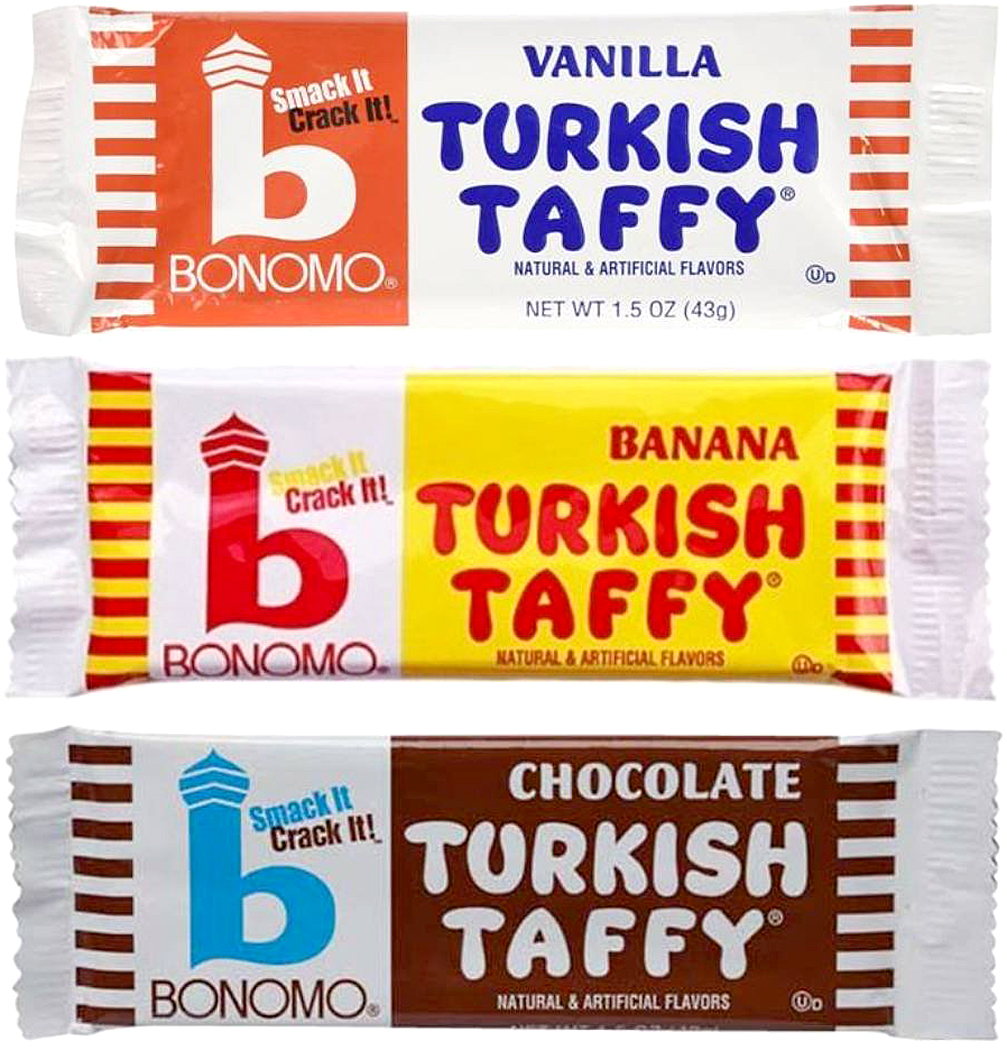
“B, O — N, O — M, O — Bonomo’s” Turkish Taffy.

Hoffman Beverages, Carvel Ice Cream.

“Who’s the first to conquer space?/It’s incontrovertible/ That the first to conquer living space/ Was the Castro Convertible./ Who conquered space with fine design?/ Who saves you money all the time?/ Who’s tops in the convertible line?/ — Castro convertible.”

“Now back to those thrilling days of yesteryear …”

“What a revoltin’ development this is.”

In high school, it was Man from U.N.C.L.E. and Mission Impossible.

I am mortified at how much time I spent in front of the screen, soaking up American TV culture. And none of it seems to have escaped. It’s all still in there. 

“A little travelin’ music, Sammy — And away we go.”

Dave Garroway holding that meaty palm up to the screen, close enough it seemed to leave a grease print on the inside of the screen glass. “Peace,” he said, every single day of my childhood. I don’t know just how large a part of my decision to become a conscientious objector during the Vietnam War that daily intonation was. I suspect it played a larger part than having gone to a Quaker college.

Joe Franklin and Memory Lane; Jack Bailey and Queen for a Day; Jon Gnagy and Learn to Draw. Jack LaLanne and Marty Glickman and Win Elliot and Jack Paar. 

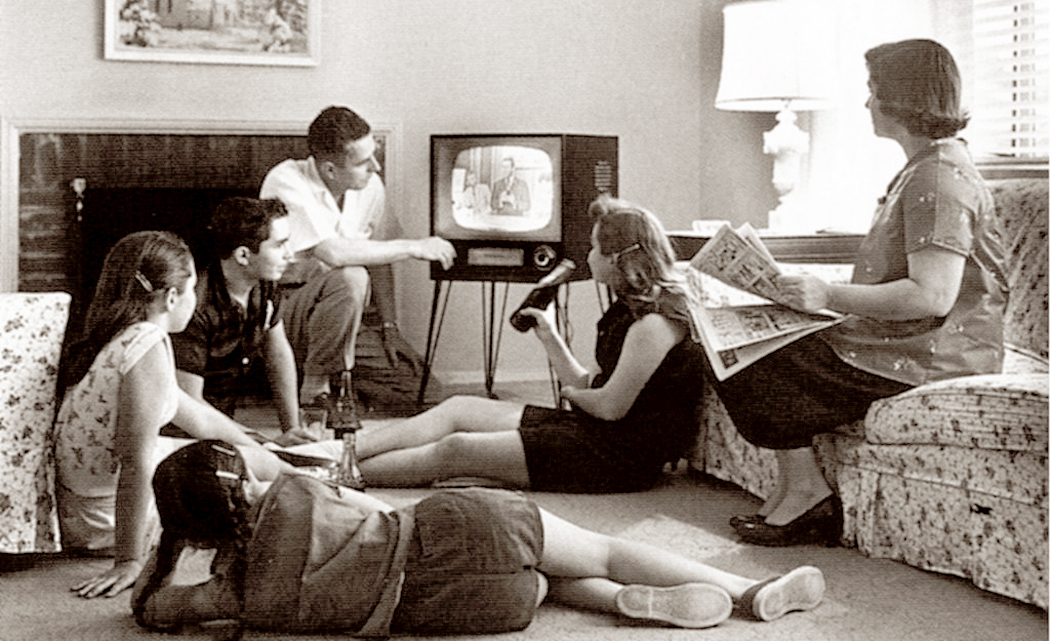
From infancy, plopped in front of the tube, and through grade school, when I remember spending every night spread out on the carpet in front of the console TV with my two brothers, with our parents in the chairs behind us, smoking cigarettes. We’d hit the freezer for a bowl of ice cream or the cookie jar for a handful of Oreos, and nibble and watch, hypnotized by Ed Sullivan or Carol Burnett.

Every culture has its mythology, its stories and foundational personages. For my generation — and those to follow — television and its plots and casts have replaced historical figures (at least those not turned into Fess Parker’s Davy Crockett or Hugh O’Brian’s Wyatt Earp) and the Bible stories that earlier generations grew up with. It was the TV mythology that filled out my inner picture of what the world was and how it functioned. I’m afraid it may have done the same to every generation since. Chester A. Riley gave way to Marcia Brady to Alex P. Keaton to Eric Cartman to Tyrion Lannister. If only the gray matter were stuffed with all of Dickens or Dostoevsky instead of Jerry Mahoney and Captain Video, what a wonder would have been. 

It gives me the creeps now to think about how much of my childhood was wasted utterly. But it’s all in there, the well I draw on. 

The TV show, Seinfeld, was famously said to be “about nothing.” But that is not actually true, is it? It was about a group of self-absorbed mooks in New York City. But more than that, it was about humiliation. In every episode someone — usually George — is humiliated. Sometimes it is painful to watch.

But there really are programs about nothing, or at least, in which nothing happens. These shows are primarily British and they are a subset of English television that I find increasingly attractive.

As I have gotten old, I find my attention span increases, and I prefer to float along at 4 mph, soaking everything in, instead of racing through a frenetic plot in expectation of reaching a conclusion. Even British cop shows tend to move more slowly and proceed with less overt violence. (There may be a grisly murder, but usually we are spared the actual crime and the story opens on some unsuspecting person coming across a body. In medias res.)

But it isn’t just the police procedurals and detective shows. Many a British sitcom moves at the pace of the sun across a blue sky. More on them in a moment, but it isn’t only the comedies. There is a gentleness that pervades most British broadcasting. Just consider David Attenborough’s calm and reassuring voice.

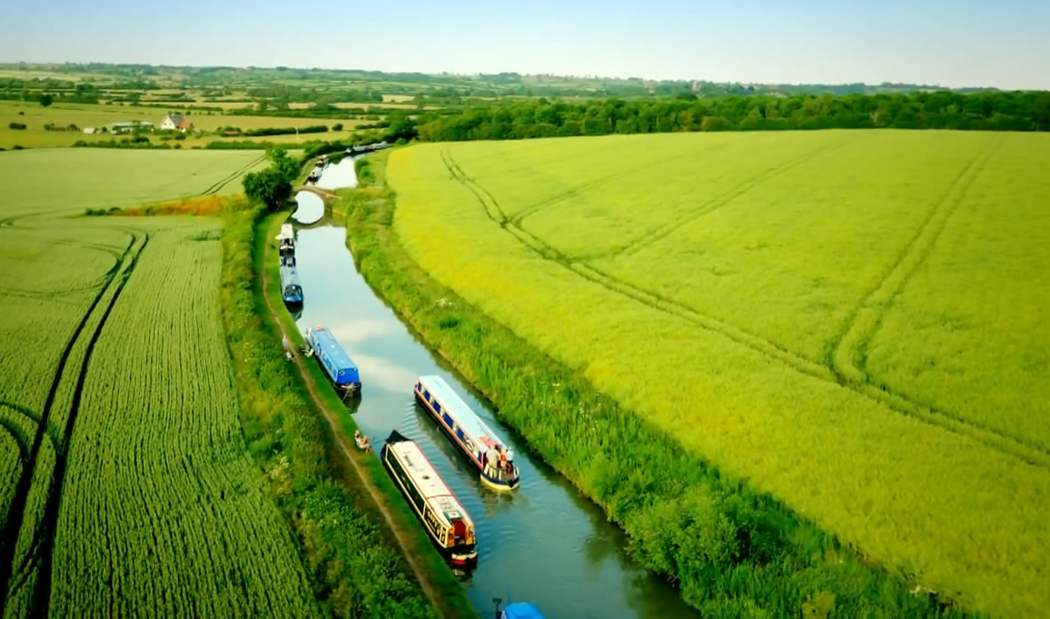
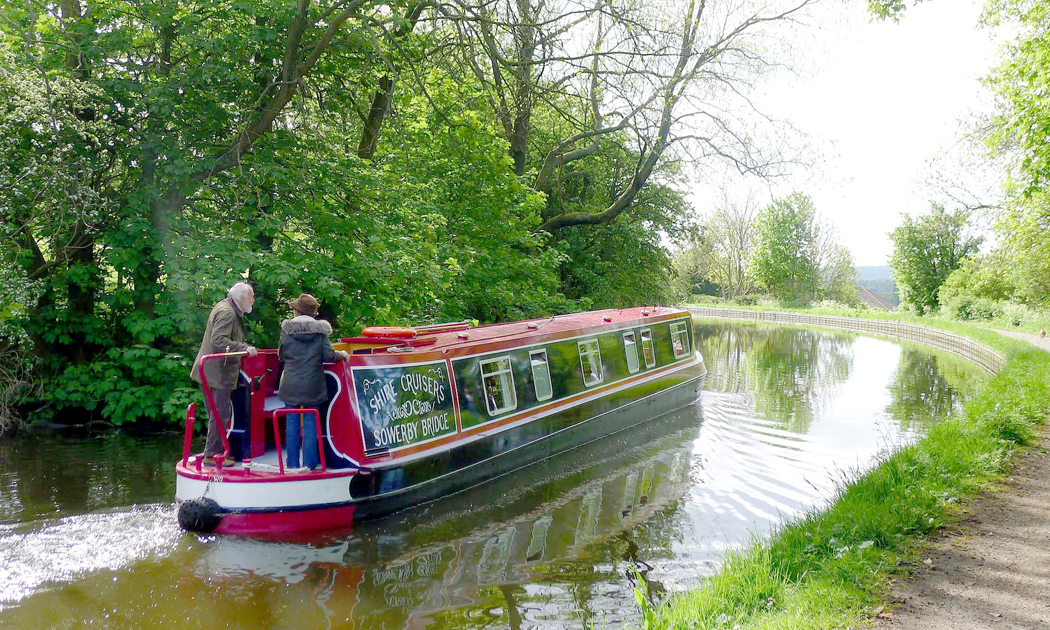
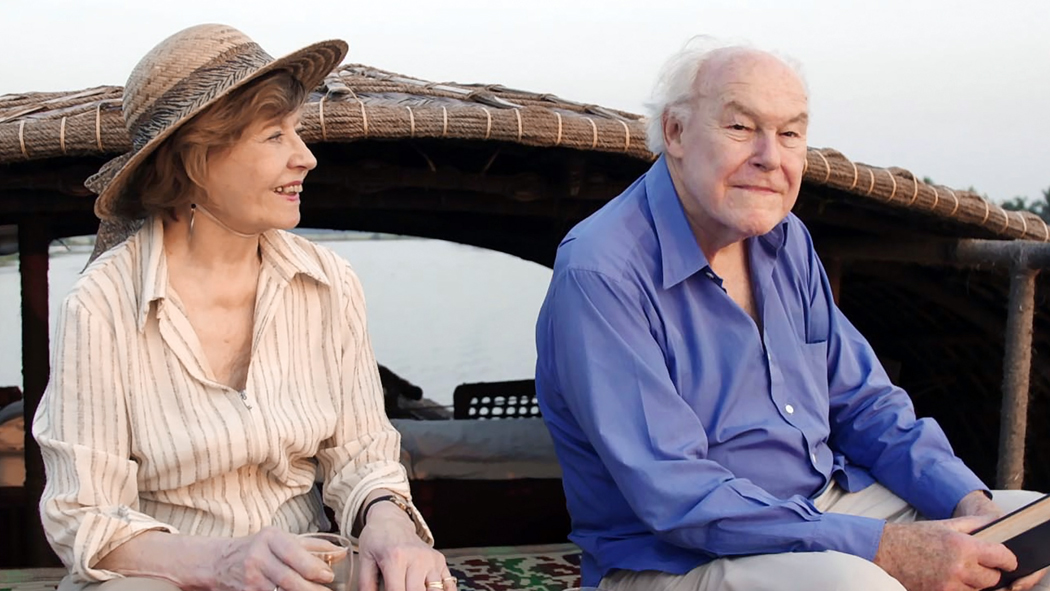
Still, nothing could quite prepare me for Great Canal Journeys. Over eight series, actors Timothy West and Prunella Scales take us down canal after canal, from England to Venice to India. All at the aforesaid 4 mph.

Both in their 80s, they have been married for over 50 years, and for more than 40 years, they have been devoted canaliphiles, owning their own “narrow boat” and spending luxurious moments drifting down verdant waterways in a boat 8-feet wide and 60-feet long, raising a family and taking them along the way.

I doubt even the England’s Channel 4 expected the reaction to the series. Who would want to see an elderly couple navigate obscure waterways, drinking the occasional glass of chablis and discussing old plays they have been in? But the series is mystifyingly hypnotic.

A viewer commented, “Tim & Pru brilliant once again on Channel 4 — awesome adventures and dealing with real life issues.”

And another: ”Is there a more lovely and gentle programme on telly than Great Canal Journeys? Proving life never stops being an adventure.”

Can the suits at Channel 4 have ever expected the reaction to the series on first broadcast in 2014? Or that the series would continue through eight sequel series?

With each journey, you feel you have spent time with old friends you have gotten to know intimately.

That last is not an exaggeration. Because we learn in the very first episode that Scales is suffering from dementia. “A condition,” West calls it. “a slight condition.” While Scales can remember “a hundred-thousand lines of Shakespeare” and things that happened 60 years ago, she cannot always remember the morning. And what we see with astonishing tenderness is how West and Scales manage their relationship in the face of her increasing sense of being lost. We can often see it in her face.

Yet, there is nothing maudlin about the show. They two obviously love each other and their is a glint in their eyes that shows how much they enjoy each others’ company.

There is also a lot of gorgeous B-roll, featuring the green landscapes, the decayed relics of the Industrial Revolution that spawned the canals, and the cities they once made possible.

But it is West and Scales that make the show real. They speak in “real time” aboard the boat, but also in voice-over, commenting on what we just saw, and their different takes on it. So, there are three levels to every scene: the journey, the conversation on the journey, and the commentary afterwards. It gives the series texture.

This sense of enjoyment, spending time with people we come to know and feel almost as friends, is what animates several of the British shows I find myself watching.

The oldest and earliest of the “nothing happens” TV is a series called Last of the Summer Wine, which ran on the BBC for 37 years, from 1973 to 2010.

Over that stretch, the show hardly changed, and through all 295 episodes, very little happened. In every episode, three Yorkshire pensioners sit around and talk, walk through the countryside and talk, visit the cafe and talk.

They might plan a trip and we see them discuss how to manage it. They may gather supplies, but by the end, they haven’t traveled at all. Credits roll.

Last of the Summer Wine is a leisurely visit with people you enjoy spending time with. You don’t watch to see what will happen; you watch to visit friends. The cast changed over the years, with actors dropping out due to illness or death, and new pensioners added to keep the level up to three.

The half-hour series was funny, but gentle. The cast of subordinate characters eventually numbered in the scores, all of them idiosyncratic and memorable. After each episode, you felt refreshed by the quiet, if frustrated humanity of the Yorkshire village — and the sometimes impenetrable North Country accents.

A bit more conventional was the series, As Time Goes By, starring Judi Dench and Geoffrey Palmer, which ran on the BBC from 1992 to 2005. The premise is that in 1953, they fell in love, but were separated when he went off to the Korean War and did not see each other again for 38 years; they meet again and fall in love again, now older, with full lives — and backstories — behind them.

As Time Goes By

Again, lots of subordinate characters, all distinct and memorable, and the sense, with each episode, that you are spending time with friends you are eminently comfortable with.

Two more recent shows take this nothingness to extremes.

Michelle Terry

From 2011 to 2013, over a scant 13 episodes, The Cafe follows three generations of women who run a seaside cafe in the resort town of Weston-super-Mare on the southwest coast of England. Created by Michelle Terry and Ralf Little, and populated with a dozen or so regular characters, it follows the cafe-owner’s daughter, Sarah (Terry), who wants to leave the town and go to London to become a writer; she doesn’t pull it all together until the final episode; in the meantime, the worries and happenstances of the dozen characters play out in a complex web of relationships. Again, it is the calmness of the series, the lack of violent crises, and the three-dimensional cast that make you want to sit through the half-hour in which nothing happens. It is a kind of therapy, and all your pent-up angst drains away.

Most recently, beginning in 2015, Detectorists follows two sad-sacks in rural Essex County, just northeast of London, who spend all their leisure time with metal detectors, scouring the farm fields looking for “Saxon treasure,” but mostly finding beer-can pull tabs and buttons.

The series was created and written by Mackenzie Crook, who also stars as Andy Stone, one of the pair (with Toby Jones as Lance Stater). Stone is lean and wiry and through the first several episodes establishes himself as a true loser. He is living with a schoolteacher, Becky (Rachael Stirling), who is bright, energetic and — what the heck is she doing with this droopy hound dog?

One of the things that makes the series so compelling is that over the course of three series (the show ended in 2017), we discover that Andy has genuine substance. Beneath the fecklessness is a solid man, who earns a degree in archeology, marries Becky and raises a child.

Yet, in each episode, nothing really happens. Andy and Toby walk fields swinging their metal detectors back and forth and commenting on the weather, or asking about what happened on last night’s QI (another British TV series — and a quiz show in which panelists score points not for the right answers to questions, but the most interesting answers, answers that are “quite interesting.”)

This is so much different from standard American TV, with its roots in vaudeville, with its relentless set-up and punchline. “A little song, a little dance, a little seltzer in your pants.” It is a rare sitcom that transcends the cliches of the genre, or the monotonous pace: set-up, punchline; set-up, punchline. Something has to pop every second in fear that the viewer might grab the clickerator and change channels.

But as you get older as a viewer, you don’t need the buzz so much as you need the connection.

In these British series, the viewer is drawn to empathize with the characters (or, with the canal journeys, the real people). They all become friends we enjoy spending our time with. At a pace for sipping and savoring, for taking it all in and processing it. At 4 mph.

As Stephen Colbert says, “I don’t know if these are actually sins, but I do feel bad about them.”

I have a seven-decade long reputation to maintain as a dour, serious-minded  stick-in-the-mud, with no time for trivialities. My theme song is Party Pooper. My favorite color is gray. My wife used to call me, “The man who can’t have fun.”

I argued back that I have lots of fun, but for me fun is reading Gilgamesh or Xenophon, listening to Beethoven piano sonatas while following along with the Schnabel edition of the score (including reading all the footnotes), listening to lectures on the Indus Valley Civilization or the Black Death from the Great Courses Plus, watching C-Span Booknotes and waiting with great anticipation for the C-Span bus to visit Sheboygan or Wilkes-Barre. These things give me great pleasure and fill my life with great joy.

Yet, that doesn’t mean I don’t have my guilty pleasures — bits of pop culture that I partake of on odd occasions. There are times I switch away from the PBS Newshour or online lectures from M.I.T. and let my hair down. You won’t tell anyone, will you?

Here, then, are five guilty pleasures that I recommend to you. (There are more, but my quotient for mortification is limited).

Drunk History — It would be hard to find anything sillier than Comedy Central’s Drunk History. Created by comic Derek Waters and Jeremy Konner, it asks various, mostly D-list entertainers to drink themselves goofy and attempt to tell the story of some historical figure, while various, mostly A-list actors and comedians lip-synch costumed re-enactments of the events.

The camera switches back and forth between the drunkard, in a home with an equally plastered Waters, and the beautifully photographed recreations, in which the actors perfectly mime the words of the storyteller, right down to the hiccups and incoherence. A fair number of the drinkers wind up finishing their tales while driving the porcelain bus; others pass out on the couch.

A few for-instances: Actor Eric Edelstein tells the story of Elvis and Nixon, while we see the re-enactment with Jack Black playing Elvis, Bob Odenkirk as Nixon and Jack McBrayer as H.R. Haldeman.

In another, Tiffany Haddish (they’re not all D-list) tells us about French Resistance fighter Rose Valland, who saved and helped retrieve hundreds of art treasures threatened or stolen by the Nazis, with Busy Philipps playing Valland in the dramatization.

For most of the half-hour shows, three stories are told, with the first two taking up 5 to seven minutes each, separated by annoying commercials, and the third filling two segments, with annoying commercials in between. (As usual, the best solution is to Tivo the show so you can fast-forward through the muck).

One of the best shows recently was when Lin-Manuel Miranda got himself pie-eyed and tried to summarize the life of Alexander Hamilton. He got the whole half-hour. Blind-casting adds extra confusion to the show: Hamilton was played by Alia Shawkat; Aaron Burr was Aubrey Plaza; Bokeem Woodbine was George Washington; and Tony Hale was James Monroe. I am astonished that Miranda would risk reputation, alcohol poisoning and brain damage to take part, but it was a scream.

And one can actually learn things from this show, although you will want to verify what you find out by actual reading and research. Sometimes the drunks get confused.

Climbing Mount Washington, N.H., in Stanley Steamers

Jay Leno’s Garage — I’m old enough to remember when Jay Leno was funny. Before the Tonight Show de-clawed him and turned him into a toothless shill for Hollywood celebrity backslapping, Leno was edgy, took chances and snookered the very thing he later became mouthpiece for. Now retired from the daily grind of pleasing his corporate masters, Leno, now 67, is still a workaholic, but it seems now he can put his energy into something he actually cares about: cars.

With Gabriel Iglesias and his 1966 VW bus

Reportedly, he owns 286 vehicles, both cars and motorcycles, and has a garage that could double as a museum. In his current show, on CNBC — a network that as far as I can tell, is watched by no one — Leno gets to play with his toys and his enthusiasm is infectious.

As someone who does not care about cars — I think of them as being appliances, like washing machines on wheels — I am surprised myself at how much I enjoy watching Leno enjoy driving Maseratis, Bugattis, Abrams tanks, fire engines, monster trucks, drag racers, and a 1939 Ford pickup truck loaded with the radial engine of a Cessna airplane.

He often has Hollywood friends show up with their own favorite autos and bikes. Keanu Reeves manufactures high-end motorbikes. Comic Adam Corolla has been collecting race cars once owned and driven by actor Paul Newman. Tim Allen plays “Stump the Car Nerd.” Arnold Schwarzenegger shows off his electric Mercedes-Benz G-Wagen conversion.

It is less the high-end muscle cars that interest me and more the peculiar vehicles he encounters, like the Mars Rover, the Ripsaw EV-2 civilian tank that can reach 60 mph, the two-story tall dump truck that carries borax from the mines, the wienermobile, a convertible filled with water and turned into a mobile hot tub. There are a lot of these.

But mostly, it is the obvious pleasure Leno takes in his toys that makes this series a joy to watch.

Young Sheldon — This never sounded like a good idea. A spin-off from The Big Bang Theory, this show follows the 9-year-old genius, Sheldon Cooper, as he negotiates life, neuroses and high school.

The parent show has long jumped the shark (although I continue to watch it because, even worn out, it has more energy — and more smarts — than most things on TV).

Many years ago, when the Colbert Report first broadcast, it was sharp and funny, but I was sure — and most people I knew were sure — there was no way to keep this up. But it kept up for nearly 10 years. In the same way, I don’t see how Young Sheldon can keep it up. But I was wrong once; maybe again.

Young Sheldon is quite different in tone from its predecessor. Big Bang is a three-camera, live-audience show and written to showcase gags and caricatures. (This is not a complaint: It has done that very well for many years). But Young Sheldon is a one-camera show, with no laugh track, which allows it to be more real.

Zoe Perry and Laurie Metcalf

And, while it is hard to actually care for the Big Bang characters — they are all there to be laughed at — Young Sheldon has so far given us warm, three-dimensional human characters. None more warm or more human than Sheldon’s mother, Mary Cooper, played by Zoe Perry, who happens to be the daughter of Laurie Metcalf, who has long played Sheldon’s mother on Big Bang Theory. The physical resemblance is striking, but more so, the personalities. There is a harried, confused wisdom in her character.

Just as good, 10-year-old Iain Armitage plays the 9-year-old Sheldon without ever being cute, without downplaying his atheism or his neuroses. Or his innocent bafflement at the complexities of the human condition.

The core of the show is Mary’s relationship with the gifted Sheldon and with her mother, the cantankerous Meemaw (Annie Potts). If there is a flaw, it is that the rest of the family, father George, sister Missy and older brother George Jr., are rather less developed, although Lance Barber brings warmth to a blustery father George, who we know from Big Bang, will die of a heart attack. That gives added resonance to the show.

Please excuse me if I sound like a critic writing a review. It’s what I am; I cannot shake it.

But, I recommend Young Sheldon. It really surprised me.

The Late Late Show with Craig Ferguson — Ferguson left the Late Late Show in 2014, after nine years behind the desk. But segments of the show are all over YouTube, uploaded by several perseverant chroniclers.

When the show was live, I often watched (via Tivo the next day, so I could fast-forward through those damned Shamwow and boner pill commercials) but even I have to admit there were bits of the show that proved tedious. I could never enjoy the e-mail and tweet segments, and the monolog was often rather shaggy. And when there was a musical guest, I just turned the thing off.

Sarah Paulson and Craigyferg

But Ferguson must be the best late night interviewer there has ever been. The purpose of late night TV is for celebrities to come on, pretend to be regular people and plug their latest project with the assiduity of a used-car salesman. The whole set-up is unashamedly artificial.

Ferguson, in contrast, didn’t interview his guests so much as have a conversation with them. It was not unusual for them never to get around to the current “project.” Oh, there were guests who were duds, who wanted to coerce the talk back to their sales pitch, guests who did not seem to understand the nature of Ferguson’s self-described deconstruction of the late night talk show.

But there were many guests who got it, and they often came back over and over. Kristen Bell appeared 28 times. William Shatner 25, Regis Philbin 25, Betty White 22.

Ariel Tweto, one of his regulars

I am old enough to remember Jack Paar. Paar had a stable of regulars who came back over and over and took part in witty conversation. Peter Ustinov, Robert Morley, Oscar Levant, Hermione Gingold, Genevieve, Jonathan Winters, Dick Gregory.

Ferguson had his crew, too. They were those who obviously adored Ferguson, and understood the subversive nature of the broadcast. They often showed up with nothing to promote. Just to be there and talk. Bell was prime among them, but so, too, were Rashida Jones, Michael Clark Duncan, Paula Poundstone, Larry King, Kathy Griffin, Carrie Fisher, Mila Kunis, Lauren Graham, Jeff Goldblum, Morgan Freeman, Marion Cotillard.

Ferguson in Scotland with Rashida Jones, Ariel Tweto and David Sederis

This was a fabulous stable of personalities, including several that had obviously been previous amours of the host, and they hinted furiously at it.

The advantage of the YouTube videos is that you can see the interviews, often strung together (the set of Kristen Bell interviews lasts 4 hours, 41 minutes). Among the most infectious: Rosie Perez’s 8 visits;

Ferguson is also obviously intelligent, although he did his best to downplay that. But he has had many authors on, spent an entire hour with Archbishop Desmond Tutu (for which he won a Peabody Award), and another hour with Stephen Fry — and once had as a guest a professor of moral philosophy (who happened to be Claire Danes’ father-in-law).

Bob Steele

Cowboy movies — I use this term instead of “Westerns” because I mean a specific type of film: the cheaply made series films from the late silent era through the 1930s with stars such as Buck Jones, Col. Tim McCoy, Hoot Gibson, Bob Steele, Ken Maynard, William Boyd and, of course John Wayne.

Buck Jones

I was born at roughly the same time as television, and in those early years, stations scrambled to find content to fill those broadcast hours, and reams of old cowboy films were re-released cheaply to the stations and ran constantly, especially on the independent channels. I saw a ton of them through my pre-school years and into grade school. I loved them.

So, it is with some nostalgia that I watch them again as a grown-up.

I am not talking here about the legitimate Westerns by John Ford or Howard Hawkes, but of those films pumped out week-by-week from tiny studios such as Monogram and Republic. They were “programmers,” with repetitive plots, recognizable landscapes and often acting just this side of organic when compared with a dead tree.

Hoot Gibson

Not that there weren’t some good actors. Boyd, as Hopalong Cassidy, had a natural screen presence and a comfortable way with dialog. And John Wayne was magic on the screen, even in those early films when he was saddled with playing Singing Sandy, the singing cowboy.

And the secondary actors and the villains were played by what was almost a stock company of real pros such as Earl Dwyer, Charles Middleton, Harry Woods, Charles King, and Roy Barcroft. Dependable, every one. It was mostly the heroes who were stiffs.

But what most impressed me in these movies was their settings, the imaginary West of the cowboy, kicking up dust galloping through the Alabama Hills of California, with the glorious Sierra Nevadas in the distance, or the Santa Clarita Valley. Those backgrounds show up over and over again. I almost memorized them.

In the Alabama Hills of California

Alas, such a golden age couldn’t continue. Singing cowboys invaded the screens, such as Gene Autry and Roy Rogers, in movies much slicker and emptier than the earlier ones. And worse, the rising need to include a boy sidekick. Cowboy movies gave up on adults and became pabulum for children. In the ’30s, even grown-ups watched Hoot Gibson. He was my late father-in-law’s favorite actor.

Some good B-Westerns continued to be made in the early 1940s, but by the time Eisenhower became president, we had descended to Lash LaRue and Whip Wilson and the most stolidly oaken of all of them, Tim Holt. The lighting flattened out, as it tended to do in the TV-influenced ’50s, and no one really seemed to believe in what they were doing.

The quality of many cable channel Westerns is atrocious, all grainy and contrasty, and at least one S.O.B. has added synthesized music to the originals. But a good print is as beautiful and professional as anything else the studios pumped out in that wonderful era of film. Luckily, one can still occasionally find a good print on Turner Classics, and the Hoppy movies are usually in good shape, thanks to the foresight of Boyd, who bought them all up in the late ’40s and curated them carefully.

So, there you have it, the pleasures I am embarrassed to admit to. I have no defense. But I know I share some of these sins with some of you.  

bonneville broadbent ford davies

My wife and I watch a lot of British TV. Mostly crime, mystery and cop shows. The English have a different view of such things. If you watch American television, crime consists almost entirely of serial killers, terrorists and drug lords. The stereotypes come faster and more furious than naked blondes on Game of Thrones. As for the cops who battle them, there is a rather disproportionately frequent appearance of FBI profilers and clairvoyants, to say nothing of Asberger-spectrum inhabitants.

The American version tends to focus on action and violence, where the British tends to focus on character and the effects of crime on the rest of us.

"Inspector George Gently"

“Inspector George Gently”

Simon Callow

Simon Callow

But there is one aspect of British TV that gives me no end of pleasure and it is something beyond plot, character, dialog or camera angle. England is roughly the size of North Carolina; it has approximately one-sixth of the population of the U.S., and by extension, fewer actors to draw on for TV dramas. In fact, by our count, there are only 79 actors in all of England, which means they show up over and over again. Over time, we see them over and over in many roles, and we watch them over the years as they age.

Take the face we see at the head of this blog. You see him move from strapping adult, to senescence and to old age. Wait — that’s not the same actor: It’s Hugh Bonneville, Jim Broadbent and Oliver Ford Davies. I think. The same weak chin, thin lips, broad pate and pudgy little nose. Come to think of it, have you ever seen any two of them in the same production? Perhaps they really are the same person.

Annabelle Apsion

Annabelle Apsion

Coming to recognize British actors is one of the subtle joys of watching British TV shows. There are the British superstars, and they don’t do that much TV. There is Helen Mirren, for instance. But she made Prime Suspect for Granada TV. There are Ian McKellan and Derek Jacobi. You would never expect them to do TV. But there they are camping it up as two aging queens in Vicious. Jacobi is also in the BBC series, Last Tango in Halifax. Of course, most Americans first came to know him in I, Claudius.

British actors have always seemed more willing to take on television series. Dame Judith Dench, Oscar and Tony award winner and stalwart of Shakespearean stage, did not believe it beneath her to take on episodic TV in A Fine Romance and As Time Goes By.

The actors who show up in Harry Potter are also the ones who show up at the Royal Shakespeare company and on half-hour sitcoms, like Vicious. English actors seem very like they will take on any job that needs doing.

Malcolm Storry

Malcolm Storry

But the actors I find most interesting in this context are the lesser-known character actors who show up over and over — actors such as Roger Allam, David Ryall, Malcolm Storry or Clare Holman. They will have a featured role one week on one series, and a bit part the next. There are some who always play the same part, like Simon Callow with his perennially supercilious air, who can be plugged into any plot where needed, the way the great Hollywood character actors of the 1930s, and liven up any scene they are in (think of Eric Blore, Donald Meek, S.Z. “Cuddles” Sakall or James Gleason.) Then there are those who can be an Oxford don in one show, and a Yorkshire farmer in another. Sometimes we are astonished by the transformation.

David Troughtman

David Troughton

It’s hard to believe that the threatening thug Ricky Hanson from New Tricks is the same David Troughton as the sensitive and thoughtful gardener from the mild comedy, The Cafe.

Often, when we watch, we can’t recall the name of the actor, but our faces light up and my wife will point and say, “Isn’t he the same guy that was the Vicar in that episode of Midsomer Murders?” Yes, he was, and it was likely to be Richard Briers or David Ryall.

Still, after all these years of buying DVDs from Amazon.UK (we have an all-region DVD player — which I recommend to one and all), finding things on Netflix and on Acorn, and seeing them on PBS, we have come to know many of these role players by name. Phyllida Law, Alison Steadman, Peter Davison, Gemma Jones, Alun Armstrong, Philip Jackson,

Celia Imrie

Celia Imrie

Annabelle Apsion, Celia Imrie, Julie Graham, John Shrapnel, Anthony Bate, Sorcha Cusack. I might be able to name all 79 by now. That includes all the Foxes (Edward, James, Freddie, Emilia and Laurence) and the Weeks (Honeysuckle, Rollo and Perdita).

I think our interest in these actors began with a single source, a fountain of tremendous English character actors, who we see over an over and over, and keep track of their careers. That single source is The Singing Detective, which first aired in 1986 and remains one of the greatest TV series ever. If you haven’t watched it, I suggest you stop reading this immediately and go out and find a copy.

The Singing Detective is a postmodern concatenation of a pulp private eye story; a ride through a debilitating skin illness; and the raw guilt of a childhood crime, filtered through the unstable mind of our protagonist, the writer Philip Marlowe, played by Michael Gambon. But most importantly, here, the cast was filled by the actors we have come to know so well: Patrick Malahide, Gerard Horan, Leslie French, Ron Cook, Jim Carter, Janet Henfrey, Bill Paterson, Charles Simon, Simon Chandler.

Simon Chandler

Simon Chandler

Let’s take Chandler for example. He played the ultra-Christian doctor in Singing Detective, forcing the medical ward patients to sing banal hymn tunes of a Sunday. But we have since seen him in: Wallander, Vera, Midsomer Murders (twice, in different parts, separated by nine years), Judge John Deed, Foyle’s War, The Inspector Lynley Mysteries, The Ruth Rendell Mysteries, Silent Witness, and Bergerac. He has also been in movies and dozens of other TV shows that we haven’t seen.

Patrick Malahide

Patrick Malahide

Malahide plays the “villain” in Singing Detective, and he does so dripping with insinuations and venom — so successfully that when he later took the lead part in The Inspector Alleyn Mysteries, he was simply not believable as a “good guy.” He embodied his vileness so well, in voice, aspect and posture, that the perfect villain became a smarmy hero (the series didn’t last). (American viewers may know Malahide for playing Lord Balon Greyjoy in Game of Thrones).

We have watched these actors grow old. Take Gerard Horan, from Singing Detective. In that series, he was a young thief in the hospital visited in the night by the beat cop played by Malcolm Storry. Horan has been in most of the regular cop shows, even later, playing a cop in Kingdom, and a firefighter in London’s Burning. Horan, once svelte and fit, has swelled up to his manly form over the years.

Gerard Horan

Gerard Horan

You can marvel at the change in John Nettles from his earlier series, Bergerac, where he is athletic and dashing, and his later work in Midsomer Murders, where he is barrel-chested, middle-aged and let’s his detective sergeant do all the chasing down of escaping baddies.

John Nettles, "Bergerac" and "Midsomer Murders"

John Nettles, “Bergerac” and “Midsomer Murders”

We have particularly enjoyed the rise of Jim Carter from the forlorn and bereft father in Singing Detective, to the butler Carson on Downton Abbey. He is always a joy.

While we enjoy all the British TV we have seen, from comedies such as The Fall and Rise of Reginald Perrin and Miranda, to the dramas  and dramadies, like Doc Martin and All Creatures Great and Small, the bulk of our TV time is spent with detective shows.

Helen Mirren and David Ryall in "Prime Suspect"

Helen Mirren and David Ryall in “Prime Suspect”

As a connoisseur of such things, I will say they fall into several grades. There are the truly lightweight ones, such as Father Brown and Pie in the Sky. There are those which are completely middlebrow and are perhaps the British equivalent of Matlock, such as Midsomer Murders. There are the best of them, headed by Inspector Morse and its sequel, Lewis, and one of the best and most thoughtful, Foyle’s War.  And there is at least one that transcends mere TV: Prime Suspect.poirot

They are also divided by running time. The hour-long series (really, 50 minutes) can only comfortably handle the crime and the solution, with a limited cast of suspects. The longer version (90 minutes to 2 hours) can fill out the drama with subsidiary characters, more complex solutions and a good deal more context. (You see the difference, for instance, between the early Poirots and the later ones, expanded out and filled with more interesting atmosphere.)

Then, there is the divide between the “nice” ones and the grittier ones. There are the “cozy” mysteries, where someone is found dead in the conservatory, and the detective brings all the suspects together at the end and points the finger at the true culprit. Agatha Christie was the master of the genre, and you find that formula in Poirot and Miss Marple. But you find it also in the more recent Death in Paradise, set in the Caribbean.

"A Touch of Frost"

“A Touch of Frost”

The nice ones tend to be set in the British (or Scottish, or Welsh) countryside, like Midsomer Murders or Rosemary and Thyme. The crimes may be gruesome enough, but we usually don’t see the actual acts of murder; more often, a body is found, setting off the story). The grittier ones are usually set in cities, like Prime Suspect, A Touch of Frost or Inspector George Gently. (There is a recent tendency for English TV to begin emulating their American cousins. Luther can be quite violent, and there is an English version of Law and Order.)

It must be possible to spread these series out, like a spectrum, from the strongest to the blandest. Each has its pleasures and its virtues — some more than others. On the way, you gather a good deal of insight into the British law enforcement and legal system, class differences, and the regional accents and customs of Great Britain. And you will learn the names of all 79 English actors.