There is a class of movie that deserves special mention. The films aren’t necessarily the best, although they tend to be decent. They don’t usually show up on Top 10 lists or all time greats. But the fact is, that when they show up on TV, often late at night, we will watch them over and over. I don’t necessarily tune in on purpose, and don’t set the DVR to record, but if I tune in halfway through, I’ll see them out to the end.
These are movies we know almost by heart. There is an amiability to them. Like a favorite tune we like to hum along with, I’ll recall the dialog or the set pieces. A good tune never wears out its welcome.

I thought about this one night when I was clicking the clickerator and came upon Support Your Local Sheriff. It was bedtime and I was about to turn off the tube, but instead, I sat back down and saw the thing through. Not a notably good movie, but just so pleasant, that I watched yet again to see Walter Brennan do his Walter Brennan imitation. And there’s Bruce Dern and Jack Elam, and Gene Evans and Henry Jones and Harry Morgan and Walter Burke. All great character actors doing what they do best: carefully etched characters, albeit caricatures, but all memorable and distinct.
This is not a claim that the movie is one of the great classics of cinema, but I can’t help but just enjoy the heck out of it whenever it’s on. Old friends I’d drop in on and visit.

And it’s far from the only such film. There’s a whole class of them. Among notable “rewatchables” are My Cousin Vinny or Key Largo or The Blues Brothers. Such a list will be entirely personal, although there are probably movies that show up on a majority of lists, the consensus rewatchables.
There are movies I will choose to watch again and again. They are favorites and I will seek them out. But this list isn’t about that, but about happening on one when channel surfing and finding one that is an old shoe, comfy, familiar. I have the dialog memorized, and no matter if it’s just starting or soon ending, I will keep it on and watch, under various levels of engagement, until it ends. Not so much movies I choose to watch, but that I happen upon and stay with.

There are movies that, because of this habit, I have seen the end of many times, but seldom see the beginning. For all the times I’ve seen the beginning of Airplane! or The Fifth Element, I’ve seen their endings at least a dozen times. You catch these films mid-flight and ride until they land.

(There is a subset of films where it is only the beginning that I watch over and over — If Turner Classic Films is showing 2001: A Space Odyssey, I will watch the prehistoric beginning but then tune out. Not that I don’t think the rest of the movie is good, but because it is only the opening that has this over-and-over quality of a favorite song that scratches a certain cinematic itch.)
When I consider what makes a movie rewatchable by this standard, there are a few things that seem to be true.

First, plot doesn’t matter much. Movies that I will stay to watch are composed of memorable set pieces rather than a story with a goal-oriented ending. It is the set-pieces that I want to see, each scene a mini-story in itself.
Second, they feature memorable dialog. Snappy chatter and witty responses.
Third, they feature memorable characters, whether germane to the plot or not, and usually played by memorable character actors.
Sometimes the attraction is none of the above, but just how bad the movie is. My brother says, “Growing up, I’d watch any movie with robots in it. Still will. I’ll visit most any ’50s movie with a monster or a rocket ship (or monster in a rocket ship). Stupid and cheesy and incompetent don’t matter.”
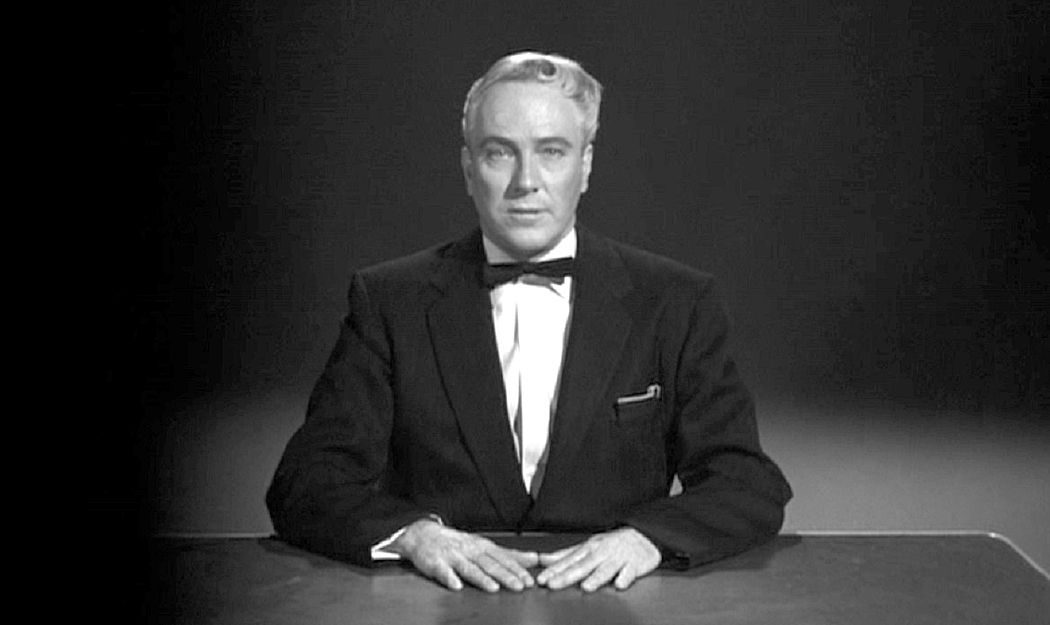
And so, Plan 9 From Outer Space is a Class-A dip-in-at-any-time film (I hesitate to even use the word “film” in this context, as the word implies a certain level of craftsmanship famously missing in this “classic.”) But it has memorably dippy dialog (“We are all interested in the future, for that is where you and I are going to spend the rest of our lives. And remember, my friend: Future events such as these will affect you in the future.”) It has memorable characters, like Vampira or Tor Johnson. And it has character actors, such as Lyle Talbot and cowboy star Tom Keene, doing their best with the unspeakable script.
At the opposite end of the quality spectrum is Citizen Kane, which is the acme of episodic great dialog with wonderful actors. Lots of scenes to remember in discrete chunks, any of which can be pulled out and dissected line by line and feel complete in themselves.

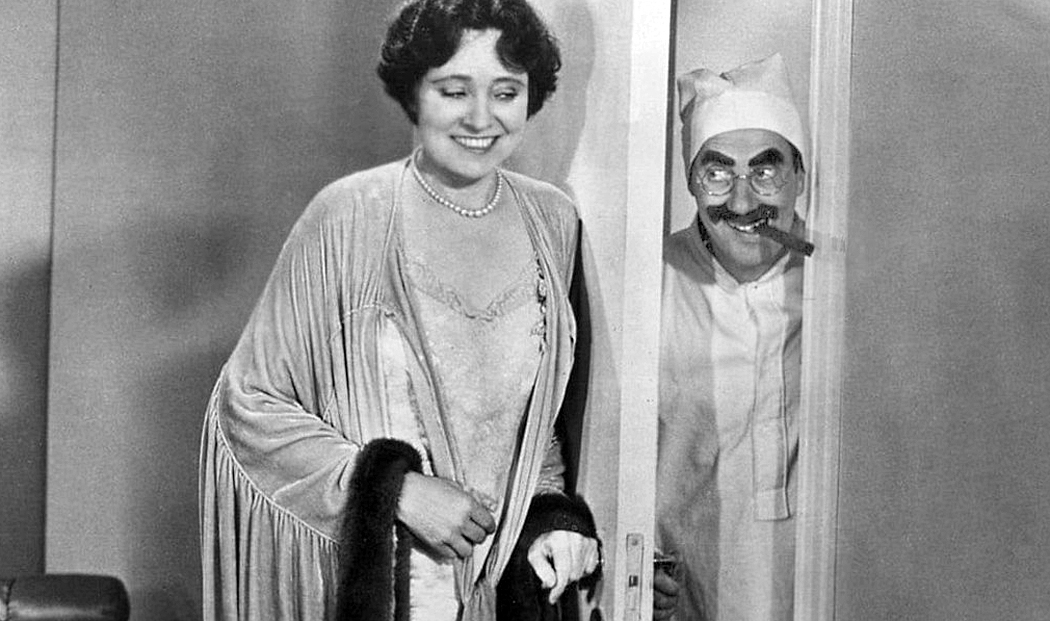
I came up with a list of about 40 films that fill the bill and I know there are at least that many again I have forgotten to include. Among them are The Bride of Frankenstein (mostly for the scenes with Ernest Thesiger), Them!, Duck Soup, Dracula, Rio Bravo, and Beetlejuice. There is no average quality level, they run from Seventh Seal to Harold and Kumar Go to the White Castle.

The most important quality of most of the films on my list (although not all of them) is that episodic structure. Francis Coppola’s Godfather is often described as “operatic,” and that is dead-on: Like opera, the rewatchable film is made up of recitatives, arias and choruses. And the same way you can make a concert program of favorite arias, you can do the same with favorite movie scenes.

I will watch any black-and-white Fred Astaire film for the dance scenes. And any film with a Busby Berkeley extravaganza in it, although, once the plot creaks back into action, I’ll tune out. Each Berkeley choreography is an esthetic whole complete in itself.

The opening 20 minutes of Tarkovsky’s Solaris is intensely beautiful and I will set my DVR for it, just for those minutes, I don’t often take on the whole, long film that trails behind.

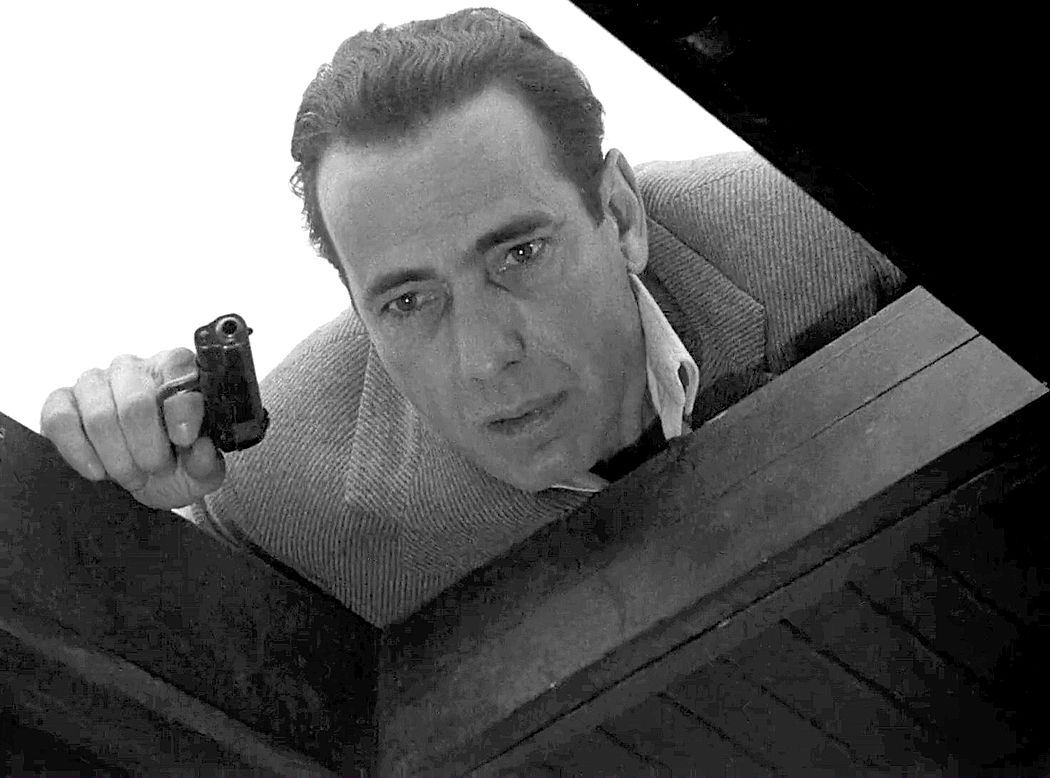
Bogart and Charles Waldron, upper left; with Sonia Darrin, upper right; with Dorothy Malone, lower left; with Lauren Bacall, lower right
The essential set-piece rewatchable film is Howard Hawks’ The Big Sleep. You cannot watch it for the plot. As a whodunnit, it is hopeless. But each scene is a carefully crafted gem, beginning with perhaps my favorite, Bogart’s interview with the old General Sternwood. (“If I seem a bit sinister as a parent, Mr. Marlowe, it’s because my hold on life is too slight to include any Victorian hypocrisy. I need hardly add that any man who has lived as I have and who indulges, for the first time, in parenthood, at my age, deserves all he gets.”) Includes verbal fencing with Lauren Bacall and Martha Vickers (“Your not very tall, are you?” “I try to be.”) Snappy parrying with Sonia Darrin (“You do sell books. Hmm?” “What do those look like, grapefruit?”) A racy scene with Dorothy Malone skirting the boundaries of the Code, and lines with the cab driver Joy Barlow, John Ridgely (Eddie Mars), Regis Toomey, Charles D. Brown (Norris) and Louis Heydt (Joe Brody), to say nothing about some really cruel lines given to Bob Steele as Canino.
In the end, you don’t really care who did what to whom, but you are grabbed by the gloss and flash of the individual scenes. Which makes Big Sleep the champ of rewatchable movies.
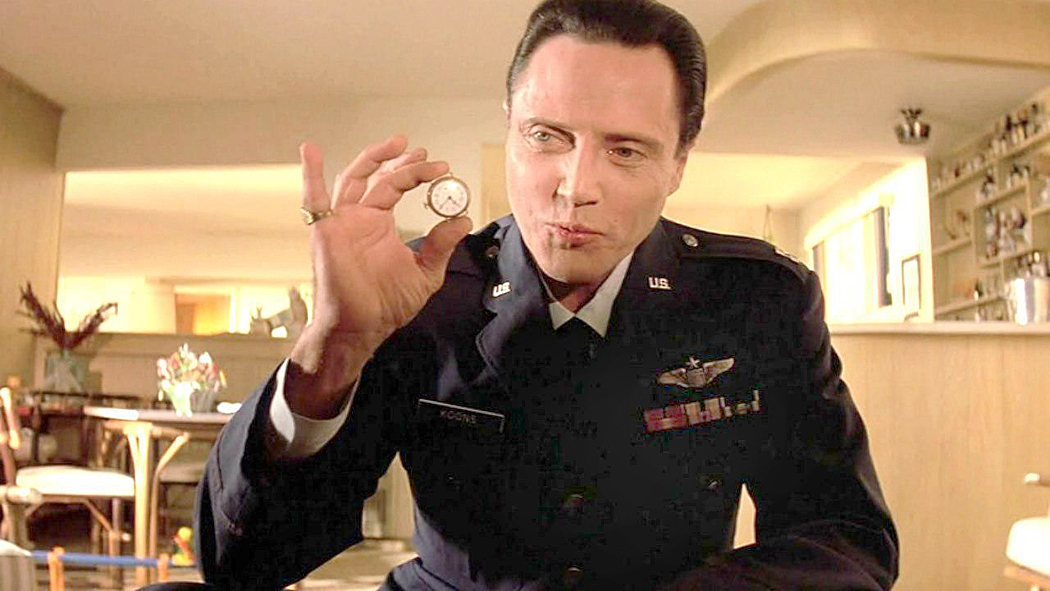
Pulp Fiction is another film built from scene-blocks, in this case all shuffled around. Is there anything more memorable — or more extraneous to the plot — than Christopher Walken explaining the provenance of a watch? It seems that the best parts of the film are all those that are completely unnecessary for the story. “You know what they call the Big Mac in France?”
A film like North by Northwest might seem to be about a through-driven story, but really, it is also just a series of memorable scenes strung together. Each scene — the cropduster attack; the auction scene; the Mount Rushmore scene; and the final dirty joke — are all just pearls on a string.

Many of the series movies from Hollywood in the ’30s and ’40s are endlessly rewatchable, in part because what plots they have are practically interchangeable. “I’ll watch any Charlie Chan,” says my brother, and TCM devotee, Craig. ”I’ll watch Mr. Moto, but they are a rung below Charlie Chan, and the Falcon movies are a rung below that, and Boston Blackie, another rung down, but, hell, I’ll still watch them.”

You just want to soak up the cinematic ambience of their docksides and back alleys. The fog, the boat horns, the apartment staircases, the eavesdropping at closed doors.
“Mostly, my list taunts me, saying ‘You are a man of Low Tastes,’ and I guess it’s true,” Craig says. “And my list seems to be almost all American, and old. But these are just the movies that occur to me off the top of my old and balding head. There are a ton of movies that could be on my list, if I could remember them.”

The first movie I began watching endlessly was King Kong, which I first saw when I was in first or second grade and was shown over and over on New York’s Channel 9 (WOR-TV). In the seven decades that have followed, I must have seen it close to a hundred times — maybe more. I will still watch it whenever I catch it being played. And that despite the creaky borrowed plot (mainly from the silent Lost World) the stilted dialog, and the acting, where Bruce Cabot shows off all the acting prowess of a loblolly pine.

It was Kong that showed to me the possibility that a movie was worth watching multiple times. There are those who don’t partake, for whom the main interest in the film is the plot and having once seen it, “I know how it ends, so why would I watch it again?” And, indeed, there are many movies for which that is the main draw: The story line pulls you along and having once satisfied your need to know “what happens next,” you have emptied the film of its meaningful content.
But, for me, the movies I’m talking about are more like music. You can listen to Beethoven’s Fifth many times, drawing something fresh from it with each hearing. Or listen to the Beatles’ Hey Jude over and over, and each time, it tickles just the spot that needs the stimulus. Bingo. Dead on.
Who ever heard of someone who didn’t want to hear their favorite song again because “I’ve already heard it?” (I remember that bastion if intellectual curiosity Ronald Reagan saying “You’ve seen one redwood tree, you’ve seen them all.”)

I will never get enough of any of the Thin Man movies, even Song of. Nor will I turn down The Thing with James Arness, nor M with Peter Lorre, nor Touch of Evil, nor Time Bandits.
You see this is an eclectic list of movies, and not based on quality alone, nor on subject matter or genre, but entirely on that subjective and personal sense of rewatchability.
What is on your list?
Click on any image to enlarge










 Richard Nilsen