Archive

Tag Archives: time

Linville falls from upper look

I first saw Linville Falls 40 years ago. Getting there meant finding an unmarked gravel road and an unmarked dirt parking lot — really just a thicker place in the road to pull over onto.

Then we followed a spongy, loamy footpath under the hickories and oaks toward the distant roar of the waterfall on North Carolina’s Linville River. No one was there but us, and we picnicked on the rocks over the crashing water. The upper falls are a broad, shallow drop, but at the lower falls, the quartzite pulls tight, constricting the river and forcing it down a spiraling chute that drops over the edge of the cliff and down 75 feet to the river and Linville Gorge.
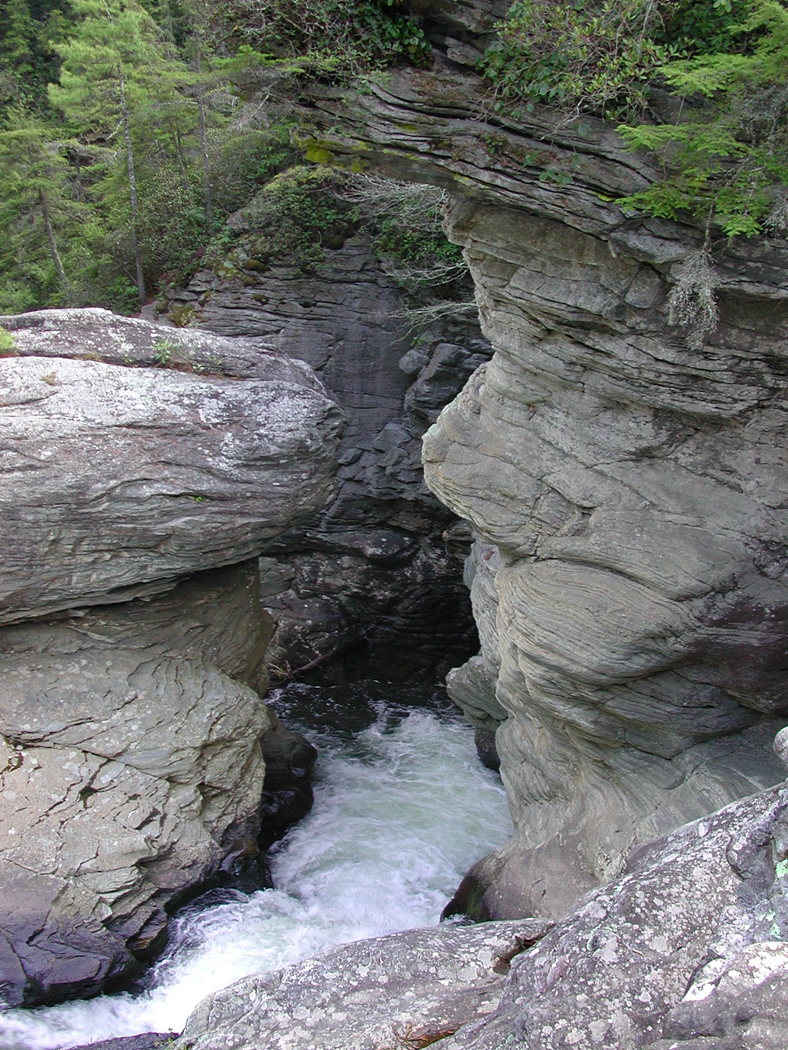
Linville Falls 03

It is an impressive torrent with a basso profundo roar, and nothing will ever change the way it seemed to me that day, as I leaped over rocks, crossing the white water to the other shore so I could climb on the gnarled rock to see down the waterway.

I’ve been back many times over the years. The National Park Service built a paved road from the Blue Ridge Parkway, making it easier to find. Then they paved the parking lot and built a pedestrian bridge over the river upstream from the falls.

The last time I went back, there was a visitor’s center and a souvenir shop and a parade of vacationers trotting down the path to the fenced-in overlook. The falls are just as impressive, but the experience isn’t.

If I speed up those 40 years in my head like time-lapse photography, I can see time take shape. It builds and it destroys in a constant rise and fall like an ocean tide.

And what comes in, ebbs.

Linville trillium

A few years ago, my wife and I visited another familiar site, on Old Route 16, a dirt road that drops down the side of the Blue Ridge toward North Wilkesboro. When we lived in the mountains, we used to visit an abandoned farm along the road, halfway down the mountain face.

There was a clearing in the wood and an old wooden house with a broad porch that looked out over the steep valley below. Above us was the spot ominously known as the ”Jumpin’-Off Place.”

We could picnic on the porch with the bluebird and tanager singing in front of us, the buzz of insects all around and the gentle breeze rattling the grass in the field.

It had been 14 years since we visited that farmhouse, and we thought we should see what had become of it.

About three miles down the old dirt road, we passed where it should have been, but there was no break in the forest, no open field. We couldn’t find the house. We kept driving, hoping we’d find something that looked familiar, but we didn’t. Finally we stopped the car where the farm should have been and walked deep into the woods.

Buried a hundred yards into the tangle of maple trees was a naked standing chimney, completely eaten up by brush and undergrowth.

When I climbed down the hill toward it, I discovered the forest floor was spongy with rotten boards, completely collapsed in on themselves, with a few nail heads showing.

In the 14 years since we last visited, the old house had been completely digested by the woods, leaving only the indigestible brickwork of the twin-sided chimney.

And the once-glorious view of the declivity was now completely obscured by trees and brush. Instead of a vacant field overgrown, the house was survived only by complete woods.

In 14 years.

Nature can reclaim an entire farm in 14 years and leave nothing behind but the masonry. And that won’t last much longer.

Linville Gorge1

accordion lady

Time, said Alfred Hitchcock, was meant to be stretched and squeezed like an accordion. Sometimes, you need to cover a lot of ground quickly; sometimes you need to slow the ticking clock to drag out the tension.

Joan Fontaine is eating dinner with her wealthy family in Hitchcock’s Suspicion and she is called to the phone. She rises slowly and anxiously and walks through a door, down an endless hall and off screen to the right, and we follow her with our eyes, a long, slow aggravating wait with suspense for the possibly distressing news the call will bring.

It’s a typical moment in a movie by the master of suspense. What happens next may be even more typical for Hitchcock. After the suspense is drained, Fontaine puts the phone down, takes two steps toward us and eases quickly back into her seat.

joan fontaine

What happened to the hallway? The door? The slow steps?

It’s the time accordion. Hitchcock was its virtuoso.

Movies and time:

One small experimental film I’ve seen takes 90 minutes to cover the events of 10 minutes. Terrence Mallick’s Tree of Life apparently covers 12 billion years in its two hours.

But time, in America, is money, and we have little of it to waste: We want our rewards now. We don’t want to work for it; we don’t want to linger.

One-Hour Photo? Takes too long. Digital is instant.

Minute Rice? Who has the time? You can buy a pre-made pilaf at the grocery store on the way home from work.

Instant tea? Why, when you can buy it in a bottle?

Let’s face it: Do you actually have the time to read this story?

Or are you conference-calling on the cellphone while driving 75 mph down the freeway on your way to drop off a package at FedEx?

In America today, not only has time speeded up, but we demand it be so.

There is little patience for anything slow. Especially in our movies. Fast editing, short, punchy dialog, and lots of things blowing up, without too much exposition in between the ignitions. Fuses, thus, must be short: We cannot wait for the boom.

I remember coming out of one recent art film and overhearing a fellow audience member saying, “I just spent the last two weeks at the theater watching that movie. Maybe it was two hours that just seemed like two weeks.”

But people go to the movies for different reasons. If it’s action you want, or a good plot, Hollywood has a vast menu of tapas, quick hits. Even most Indie films — the butt of many a complaint about sluggishness in film — move like arrows through the air compared to some of filmdom’s real glaciers.

There are films – and filmmakers – who do their best to slow the viewer down, make him pause and ponder, to consider the smaller issues, or the details that normally go past us unnoticed. They are the Bruckner symphonies of the cinema.

They want to to notice what’s hanging on the walls of the bedroom, what the weather is like outside the window, what emotional color the lighting is.

Such art movies are aimed at a different audience from those usually found at the multiplex. Such films are difficult. Some are nearly unwatchable.

But they are great art nonetheless, and true classics.

Those of us who appreciate glaciers on film don’t just want to “get” the story, to move the plot along, but rather, we want to live in the world the filmmaker has created, so savor its flavors, scents and sensations. We engage with that world even as we compare it with our own to find the congruences and divagations. Some of the greatest films ever made are long, slow and trying.

Here is my list of the Top 5 Unwatchable Gold-plated Classic Films:


La belle Noiseuse

La belle Noiseuse

Number 5: La Belle Noiseuse (1991)  – Director Jacques Rivette  spends a good deal of this 4-hour  film showing us an artist drawing. He’s drawing a naked Emmanuelle Béart,  so it’s not all tough going, but we watch endless moments of pen-scrawl on paper as the fictional artist who is the film’s hero, tries to recapture his earlier genius.

The Sorrow and the Pity

The Sorrow and the Pity

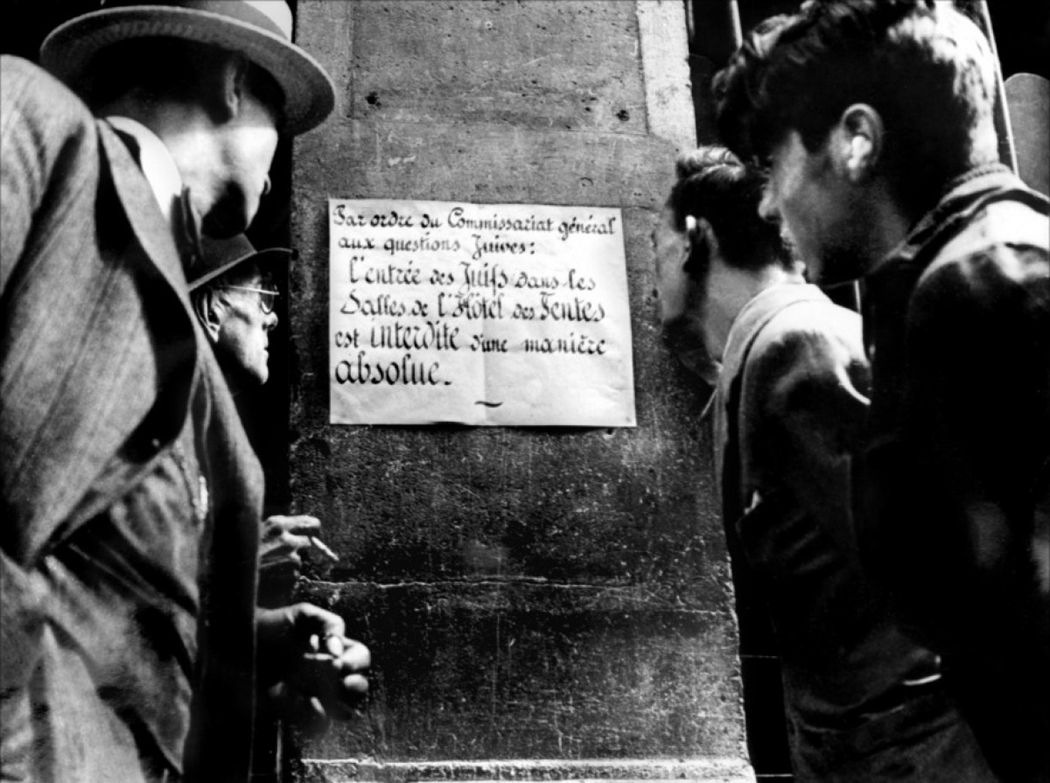
No. 4: The Sorrow and the Pity (1969)  – This is four hours plus  of talking heads, discussing the collaboration with the Nazi government during the Vichy years of France, and the excuses otherwise good people make for acceding to evil. By director Marcel Ophuls.


Andrei Rublev

Andrei Rublev

No. 3: Andrei Rublev (1969)  – Spend 3 ½ hours  in medieval Russia with Andrei Tarkovsky’s  truly glacial moodpiece about a 15th-century  monk and artist who created religious ikons.  Utterly hypnotic, it is also opaque: We don’t always know what’s going on, but it is almost mystical.


L'Avventura

L’Avventura

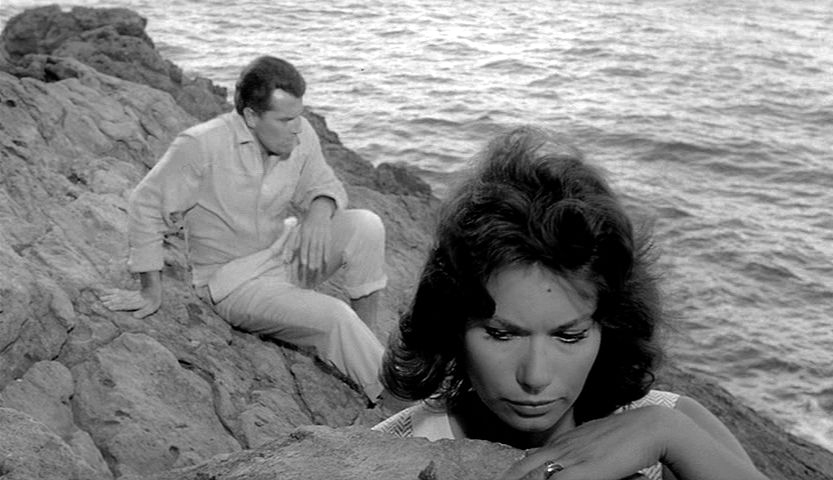
No. 2: L’Avventura (1960)  – A young woman goes missing on a rocky island in the Mediterranean in Michelangelo Antonioni’s  ur-existentialist rumination, and her lover and her friend spend the rest of the film looking for her. Hint: They never find her. One of the most beautiful films of all times, it also drives many viewers crazy with impatience.


And the No. 1 Unwatchable Gold-plated Classic Film of all time:


Last Year at Marienbad

Last Year at Marienbad

Last Year at Marienbad (1961)  – The poster child for artsy-fartsy films, Alain Resnais  notorious L’Année dernière è Marienbad  is the most self-conscious film of all time. You never know – and never find out – exactly what is happening, or if it is happening, or if it happened, or maybe it will happen. This is the supreme test of the artfilm lover. You have to check to make sure you are still breathing by the end.


Of course, there are lots of candidates for such a list. If we forgot your “favorite,” well, here are a bunch more of the movies that give art film a bad name. Nevertheless, they are all great films. Just not for the multiplex.


Hiroshima Mon Amour (1959, Renais)

Heart of Glass (1976, Werner Herzog)  (He actually had the actors hypnotized for their performances)

Woman of the Dunes (1964, Hiroshi Teshigahara)

Solaris (1972, Tarkovsky)

The Passion of Joan of Arc (1928, Carl Theodore Dreyer)

Dogville (2003, Lars von Trier)

Hour of the Wolf (1968, Ingmar Bergman)

Arabian Nights (1974, Pier Paolo Pasolini)

Zabriskie Point (1970, Antonioni)

The Thin Red Line (1998, Terrence Mallick)

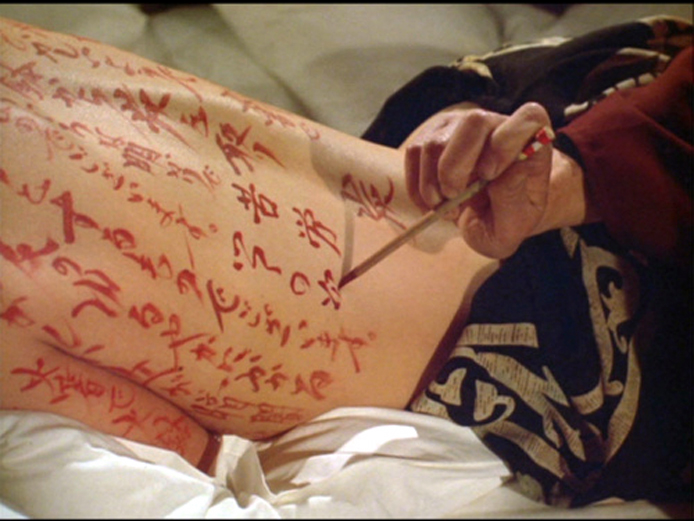
The Pillow Book (1996, Peter Greenaway)  (Actually, anything by Greenaway counts. He’s the current king of the pretentious.)


Pillow Book

Pillow Book

You probably have your own nominees: But for this list, it only counts if you also think they are great films: Bad tedium remains bad tedium.