Archive

Tag Archives: tornado

The most distinctive feature of Shamrock, Texas, in 1980 was the old Conoco gas station downtown. I don’t know if it is still there. But that is not what I remember best about the tiny town in the Texas Panhandle. 

My wife and I were driving across country for the first time. Neither of us had ever been west of the Appalachian Mountains and we had romantic ideas about the West. We dreamed of mesas and buttes, of cactus and coyotes, Navajos and the Pacific Ocean. And so we had set off in our old Chevy Citation during Carole’s summer school vacation planning to make the grand circuit. We were camping most of the way as our budget was economy size. 

It was perhaps the third night we were out, and we found a KOA campground in Shamrock. The sites each had a concrete picnic table under a tin awning. In the center of the camp was a low brick building with the office and camp store. 
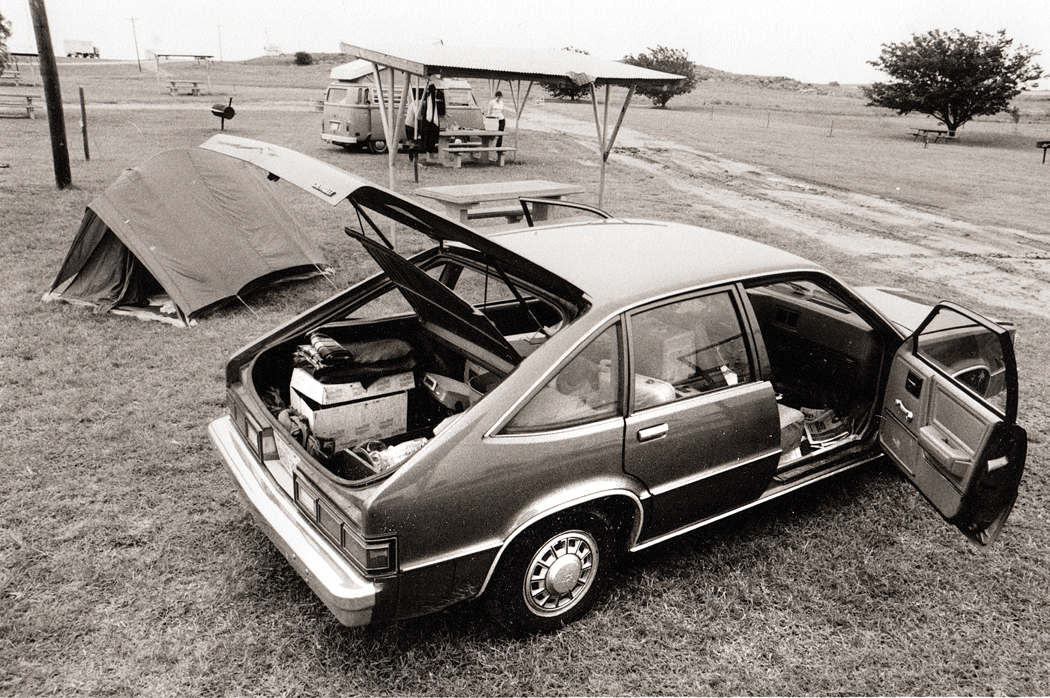
As we were pitching our tent, a neighbor camper came over and told us that two days before a tornado had struck a few miles away. “No real damage,” he said. “There’s not much out there to hurt.” But he wanted to let us know, he said, because the weather forecast was iffy. 

We had driven that day through some rough weather already, with dark, louring clouds, a heavy rain — the kind the windshield wipers only made mad. At one point, we had to pull off the road and wait for the heavens to calm. 

But by the time we got to Shamrock, the skies were clear again. And we tucked in for the night in our sleeping bags, with the tent zipped tight and cozy. 

Then, about 1 a.m., we woke to find ourselves, tent and all, floating on several inches of water. It felt very like a waterbed, except that the rain made such a racket on the tent-sides. The wind luffed the fabric and lightning grew almost constant. We both began to worry. 

The only sane course of action was to leave the tent and head for the brick office. Carole went ahead of me, while I attempted to strike the tent against a howling wind. But the wind yanked it from my grip and I had to chase it until it caught on the picnic table. The tent had a tubular frame, which kept it in full shape. I grabbed the top crease and the wind took umbrage at my effrontery and tried to lift me airborne, with the tent as a kite and me as the kite tail. I fought it over my head, holding on for dear life. Finally the tent caught in the tin awning and held steady enough for me to de-tentpole the thing and collapse the kite into a smart bundle, soggy and dripping, which I put into the car before heading to the office and Carole. 

The office was not very big for the 30 or 40 people herded into it. There were crying babies, frightened grown-ups. One man explained that the weather service had confirmed a tornado in the vicinity. A husband and wife were yelling at each other, each blaming the storm on the other. The wind blew outside, hurling detritus past the door. It all finally calmed down after 20 minutes or so and the wind subsided and the rain gave up its anger and turned into a normal rainshower. 

But there was no way we could set the tent back up. Our campsite was a pond and the tent itself was a crumpled mess. We got into the car and thought perhaps we could make through the night sitting up.

I remembered, though, we had passed a motel in town. Maybe we should drive back into Shamrock and see if we could get a room. And so we did. 

When I entered the motel office — now it was well past 2 a.m. — the office was dark, but a woman came out and got us a room. 

I got back in the car and told Carole, “I’m not sure about this.” The office was choked with the aroma of curry — something I normally love, but this felt more like chemical warfare. We found our room at the back of the motel complex. It had that musty smell of old cigarettes, this time mixed with the vestige of curry. The window looked out into the tool shed.

But the prize was the carpet. It was a sickly blue-green shag rug and it ran up the walls like wainscotting, and around the bottom of the bed as a kind of dust ruffle. 

This would have been the worst motel experience we had, except that we had already spent a night in Forrest City, Ark., in a motel where we were bitten all night by fleas, and the toilet had a “sanitized for your protection paper band under which was a floating cigarette butt. 

Still, our Shamrock motel gave us a chance to sleep and calm our nerves from the storm. 

The next day, we set off west again, and finally reached Glen Rio, on the border between Texas and New Mexico, where the bottom dropped out of the flat Panhandle and we drove down into a new landscape filled with the mesas and buttes we had imagined. 
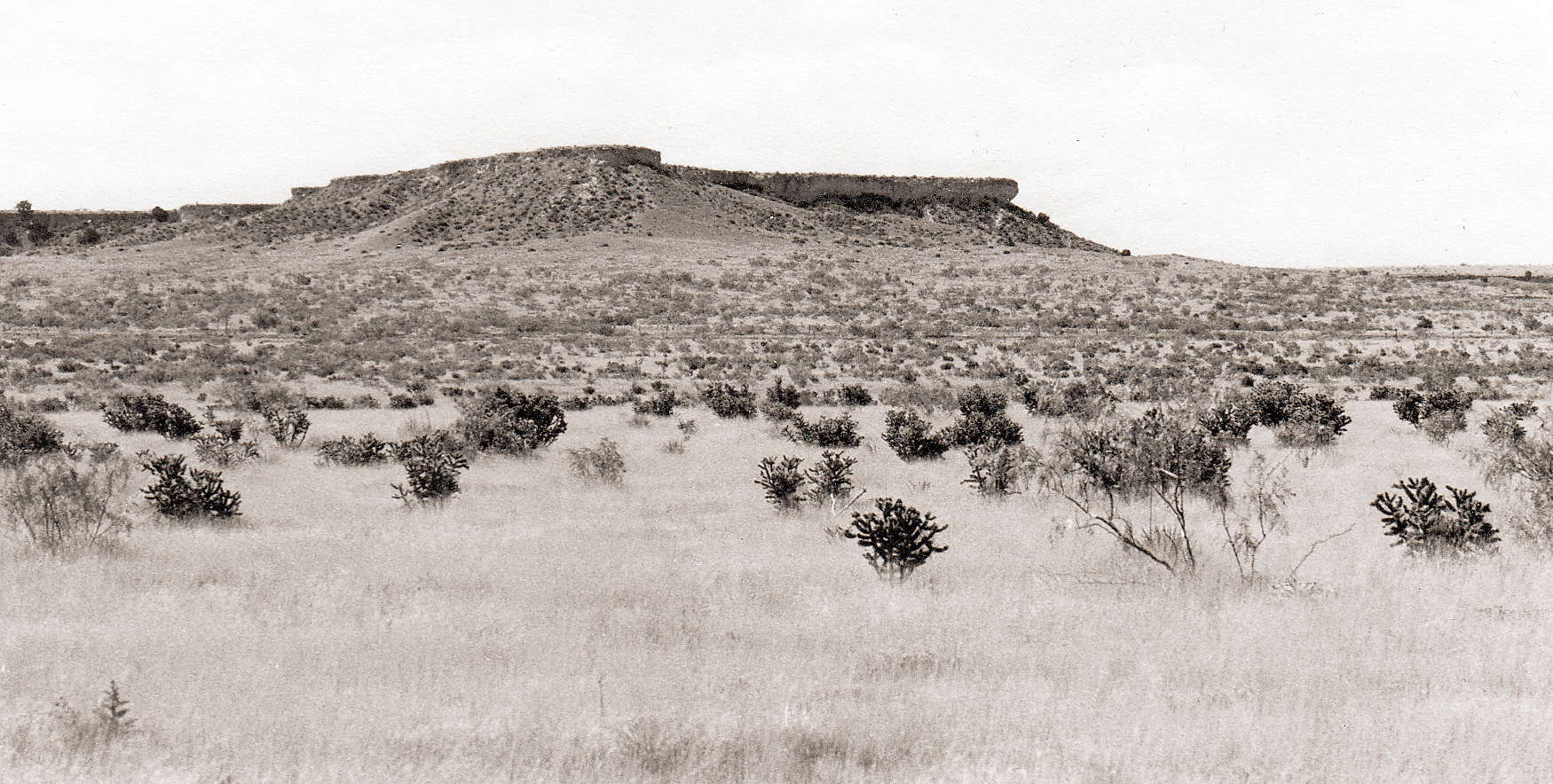
We had to laugh at ourselves years later, after living in Arizona for 25 years, at the naive glee we felt at seeing the tiny, unprepossessing hills we first passed in New Mexico, which would hardly merit the notice of anyone used to such things. But they were the first hintings of the sense that the American West was entirely alien to anything we had known in tidewater Virginia, where we were living back then. 

It was as if the Western movies I grew up with in New Jersey had come to life. We gawked at everything for the remainder of that first trip West, through Arizona, up California, through Oregon, Wyoming, Montana and all the states in between. We put 10,000 miles on the odometer that summer. 

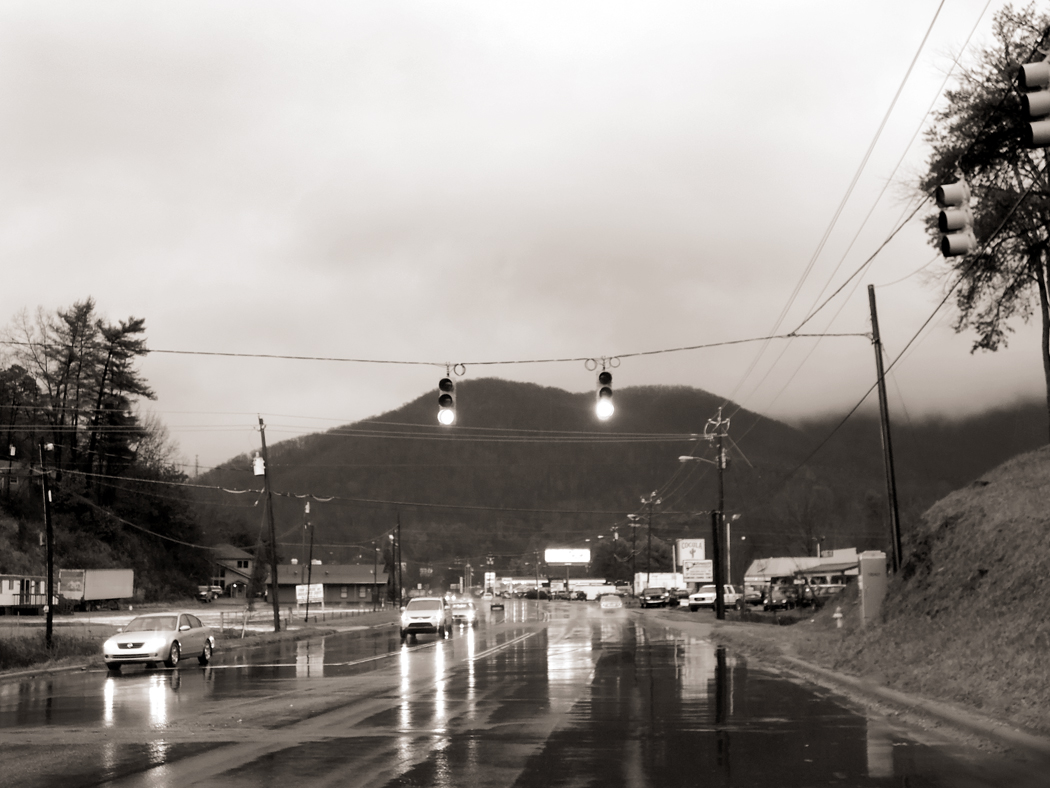
It is an hour or less before the setting of the sun, a shadowless moment already greyed out, with an evenness of tone across the landscape, and it has begun raining, a heavy downpour, a late summer evening drenching. I first hear it, and drawn to the door, I look out and watch.

It is not just the rain, coming down in parallel lines across the trees, but the sudden humidity, a thickness in the air, and a kind of cool warmth — the air being cooler than the daytime, but the mugginess felt as summer heat. The drops splatter on the pavement outside the house and bounce up as they explode, making a kind of haze above the ground. 

It is a multi-sensory event: the hiss of the rain, the sight of the shower diagonal against the trees, the feel on the skin and the damp in the nostrils. As the weather develops, there is distant thunder. It rolls rather than claps. 

And the presence at my door cannot help but expand beyond this afternoon and its downpour. I am 70, and there are seven decades of familiarity to the rain. This moment and the emotion I feel watching is a palimpsest of all those years — each time it has rained, overlapped one on the other to make not a single day’s weather, but a book of pages, each another storm, bound in morocco to make a life. 

As a boy, growing up in what was then rural New Jersey, a brook ran through our yard and when it rained, it would flood, rushing down its channel the color of chocolate milk.

As a Boy Scout, there were camping trips in tents made from heavy oiled canvas duck, with no floors, and in the rain, the heavy drops would splatter through the weave and spray us as we tried to sleep with a mist. 

Later, in summer camp and living in large tents on wooden platforms, the rain would make a sizzle on the canvas that was pleasantly soporific. 

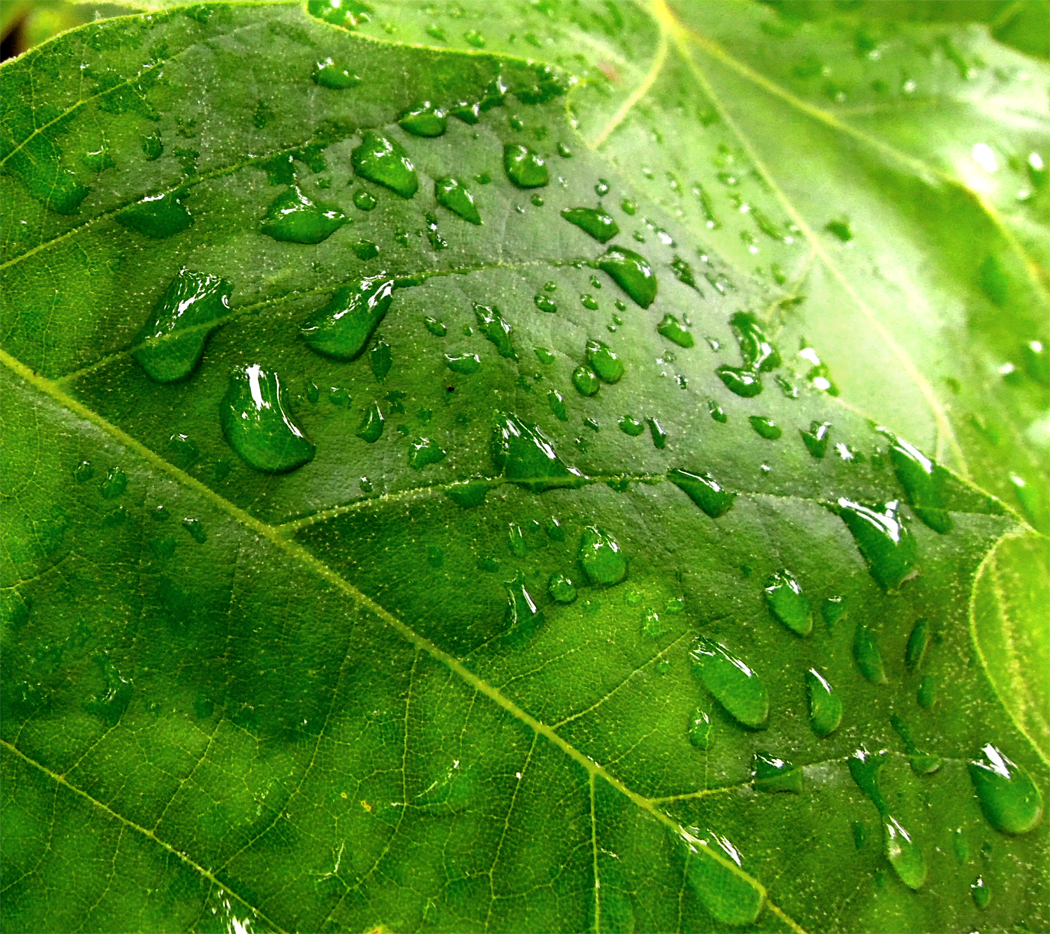
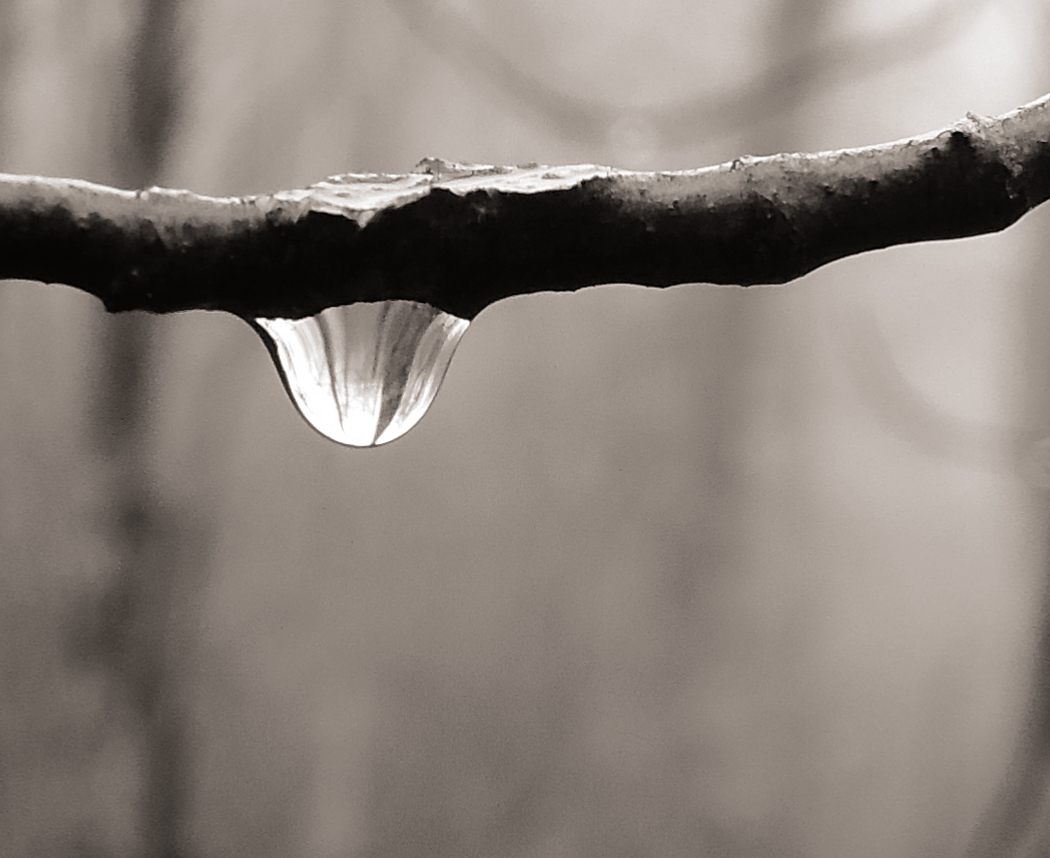
In my 20s, trying to hike the length of the Appalachian Trail, rain would sometimes keep us sheltered in a lean-to to wait out the weather, and after a night of downfall, we would wake up to a glazed world with leaves dripping, wet and clean, into the earth below and the long curved stamens of the rhodora flower weighted with a single bead on each tip. 

In Oslo, Norway, it rained every day in the summer at 4 p.m. You could almost set your clock by it. The downpour lasted perhaps 15 minutes and then it stopped, leaving streets running and the sound dampened by the humidity.

Eshowe

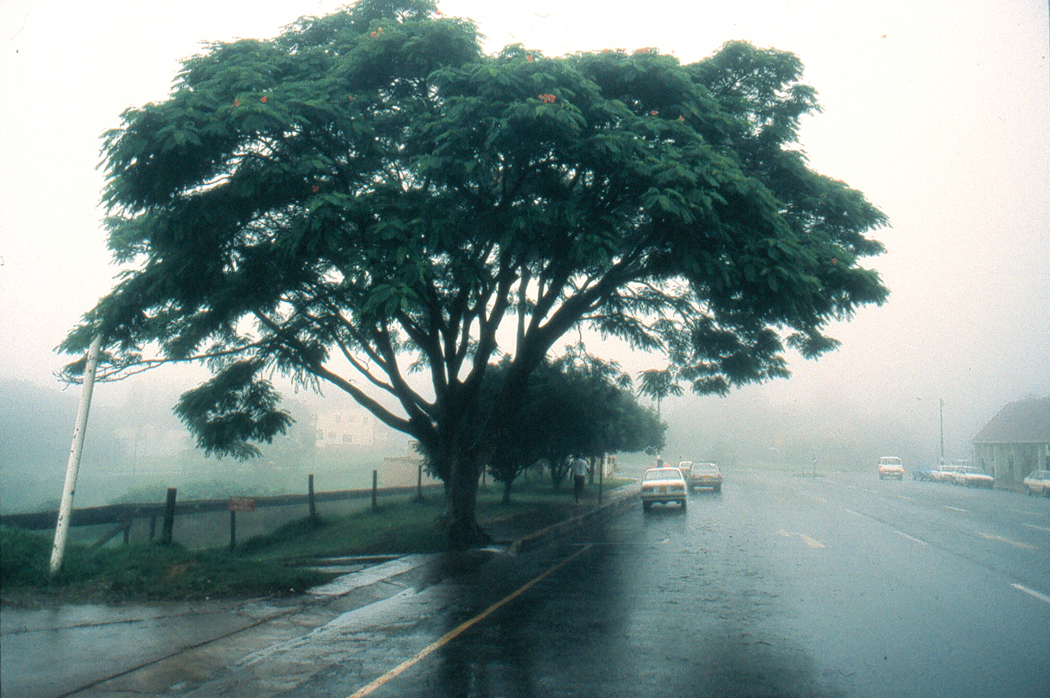
In South Africa, we were almost stranded on our way to Eshowe in Natal Province in 1987, when heavy rains washed out the John Ross bridge over the Tugela River. Eventually, our bus crossed the river on a railway bridge a few miles north. 

And, of course, I lived in Seattle for a while. The city is famous for its rain, but unless it was a gully-washer, no one even noticed. The constant winter mizzle was considered by most of the populace as fair weather. Or fair enough, anyway. 

Once, traveling across the continent, my wife and I were camping in Shamrock, Texas. In the middle of the night, a storm and tornado struck. First, our tent began floating as the drainwater created a flash flood, and then, when we abandoned the tent to find more secure shelter, the wind grabbed the tent like a kite, and I stood there, lit by the lightning, holding onto the airborne canvas trying to keep it from blowing off to the next county. I managed to get it caught under the tin roof of a picnic table and was able to dismantle it in the torrent. 

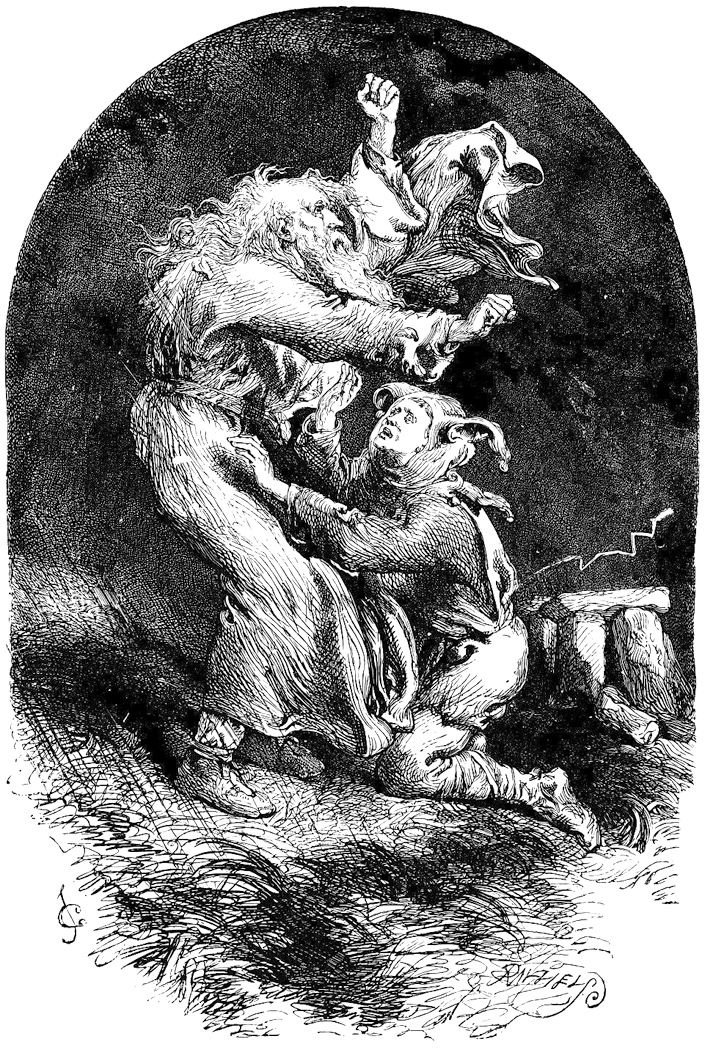
These and a thousand other pages in my morocco bound memory come to mind. But it isn’t merely the personal that maintains this resonance. Rain animates some of our best and most beautiful art, from Chaucer’s “shoures soote” to Lear’s “Blow winds, crack  your cheeks! Rage, blow! You cataracts and hurricanoes.” (When I watch Lear in the theater, I cannot help thinking of Shamrock, Texas). “Hey, Ho, for the wind and the rain. … For the rain, it raineth every day.”

There’s the thunderstorm in Beethoven’s Pastoral Symphony, the wind machine in Strauss’s Alpine Symphony, and Chopin’s “Raindrop” prelude. 

There’s the downpour that begins Kurosawa’s Rashomon and the hurricane in John Huston’s Key Largo. The shower in The Big Sleep, when Humphrey Bogart ducks out of the rain into the bookstore with Dorothy Malone — when I first saw the film on television as an adolescent, the scene counted as pretty racy stuff. 

Looking out my door now, the trees across the road are a grey mass, not a boring cardboard grey, but a rich, charcoal and velvet grey, a grey made up not of a lack of color, but of all the colors veiled over each other. 

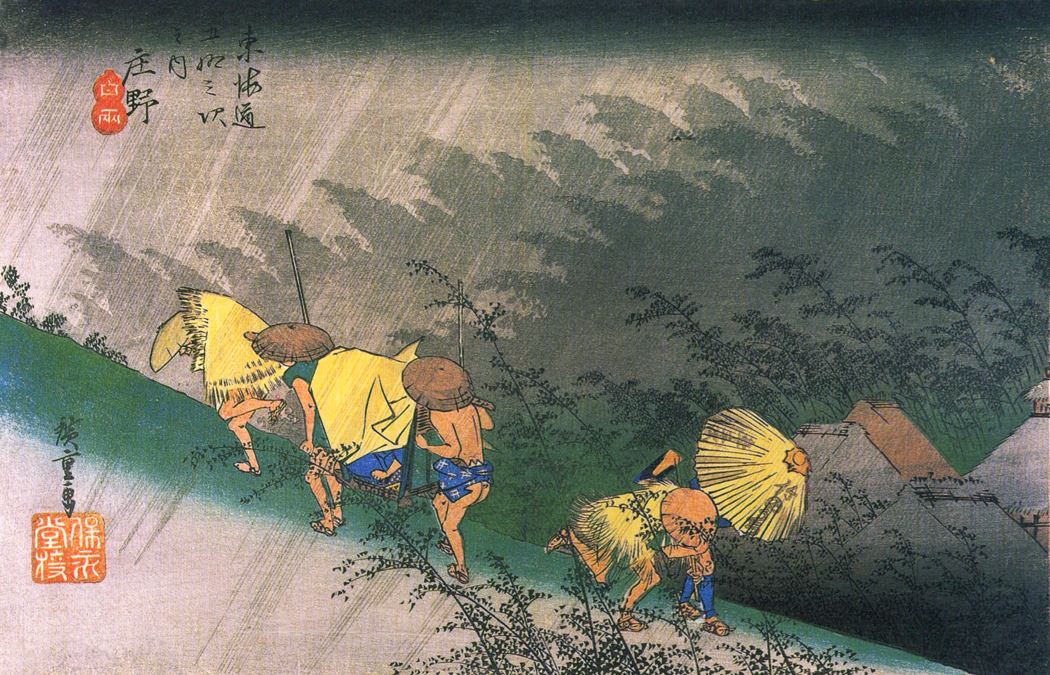
The visual poet of such rich greys in the rain is the Japanese woodblock artist, Ando Hiroshige. In so many of his Ukiyo-e images, the rain has dulled the contrast of the trees, leaving them a blank wash of charcoal or slate. It is what I see across the road — the overlapping of ever lighter greys as the landscape recedes. 

In 20 minutes, it is over. The street is flowing with runoff, more leaves have blown from the trees and collect in the wash along the curb. Fall is not too far off. The sky is barely brighter than the silhouetted trees; night will be here in another 10 minutes. 

Aprill with his shoures soote cannot match the end of summer and its late afternoon drenches. Trees all leafed out are ready to give up and let go. A certain exhaustion can be felt in the air; we have pushed so hard into the growth and flowering, and in seed time, we recognize our day is over. 

I close the door; the rain is forgot. I am remembering it now — emotion recollected in tranquility. I recall to mind the humidity on my skin, the sound in my ear, the riot of greys and the street wash. 

I love the rain; it is infinitely more beautiful than sunshine, which blares and obscures in shadow. The forms of things are revealed in sunless weather that are obliterated by sunlight. You see the world the way it truly is, not split into a manichean dichotomy of bright and dark — of Ahriman and Ormazd. 

It is the middle of August. I write this with some trepidation, remembering a warning by Sylvia Plath, who wrote: “It is hot, steamy and wet. It is raining. I am tempted to write a poem. But I remember what it said on one rejection slip: ‘After a heavy rainfall, poems titled Rain pour in from across the nation.’ ”