Archive

Tag Archives: truth

When you have ideas where your ears should be, you can be such a self-righteous moron. My Tchaikovsky problem is a case in point. I wasted years not listening to his music. What I thought closed my ears to what I might hear. 

When I was a boy, longer ago than even your parents can remember, the music of Tchaikovsky was easy to love — all those sweeping tunes and swelling fiddles. His music was, in that antediluvian age, pretty well ubiquitous. Concert halls played his symphonies, pianists conquered the Soviet Union playing his piano concerto, and supermarkets offered LP specials for 49 cents with grocery purchases. And that is where I was first exposed to the Nutcracker Suite, played by an anonymous orchestra and conductor (Grieg’s Peer Gynt Suite was on the “B” side). 

My parents bought successive volumes from the supermarket and I became exposed to “The World’s Greatest Music,” including Beethoven’s Fifth Symphony, the Brahms Second, the Sorcerer’s Apprentice and all of those now-familiar war horses a friend of mine used to call “The Loud Classics.” 

A few years on, as puberty hit, it was music like Tchaikovsky’s that spoke to me, with its pile-driven emotional excess and immediacy. My insides swelled with powerful feelings. That sort of “heart-on-sleeve” thrum speaks to those newly activated hormones. 

But then, unfortunately, I became smarter, learned more, read what critics had written. I discovered that such music was trivial, shallow, showy and unserious and learned how wrong I had been. My taste turned to Beethoven’s late quartets and Bach’s unaccompanied violin works. That was serious music. 

This is something that happens to many of us when we are becoming adults and presume to take on more grown-up tastes, pretending to understand more than we actually can. Ideas about the music supersedes what we actually hear. 

And so, for the next 40 years or so, I disdained listening to much Tchaikovsky. Occasionally I would spin the Pathetique on the record player. It, after all, had a second movement in 5/4 time. Like Dave Brubeck. 

Looking back, I realize that the musical culture was traveling much the same route as I was taking. Music that had been pilloried for being too “modern” and “dissonant” became more mainstream. One could hear Bartok or Stravinsky in the concert halls, played alongside Beethoven and Sibelius. And musicians and conductors, grown up in the same era as I did, shared much of my taste. Tchaikovsky slowly became out of fashion. Astringent drowned out lush.

It was still played, of course, but less frequently, and by orchestras and conductors more simpatico with Modernist esthetics than the tired old Romanticism. Stravinsky had stated, in no uncertain terms “Music is, by its very nature, essentially powerless to express anything at all.” And Toscanini has said Beethoven’s Eroica was not about heroism, but about “E-flat.” (Neither man actually believed their own words, and their music and music-making prove that, but their words proved highly influential). 

Toscanini also said, “Tradition is only the last bad performance.” But tradition is the very heart of any classical music — music handed down from one generation of masters to a younger generation. Whether it is Indian classical music, Japanese Noh flute playing, or Pablo Casals teaching Bernard Greenhouse (of the Beaux Arts Trio) and Greenhouse teaching Paul Katz, onetime cellist of the Cleveland Quartet) it is tradition that defines it. 
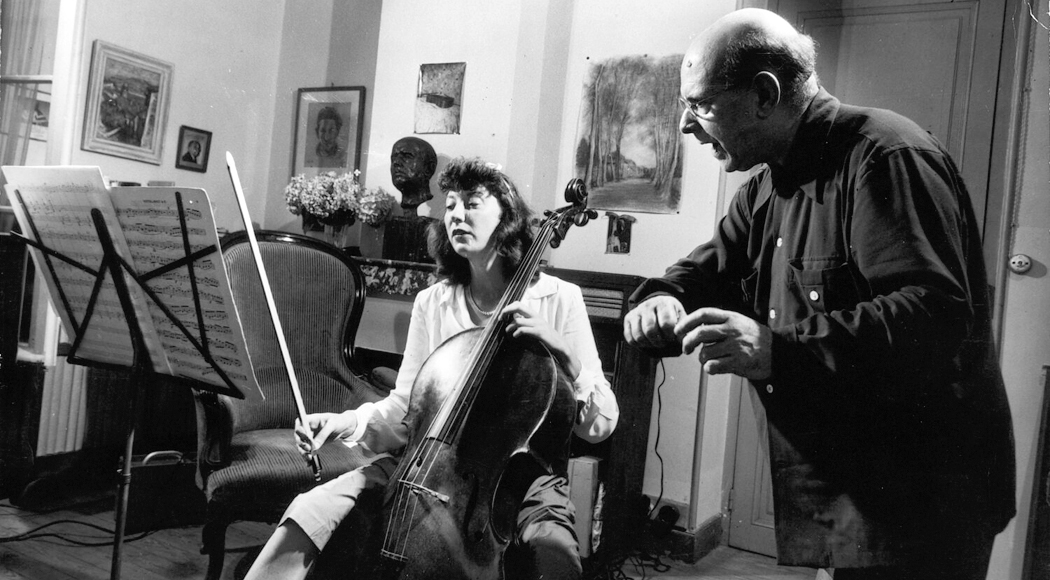
Orchestras and conductors who had learned their art before the 20th century and continued the traditions up through, perhaps 1970 or so, had the music in their old bones, understood how it was meant to go, and how the musical arguments played out in the notes. But the older musicians died out and the younger generation taking charge had a more “objective” view of the music. A tradition was dying. 
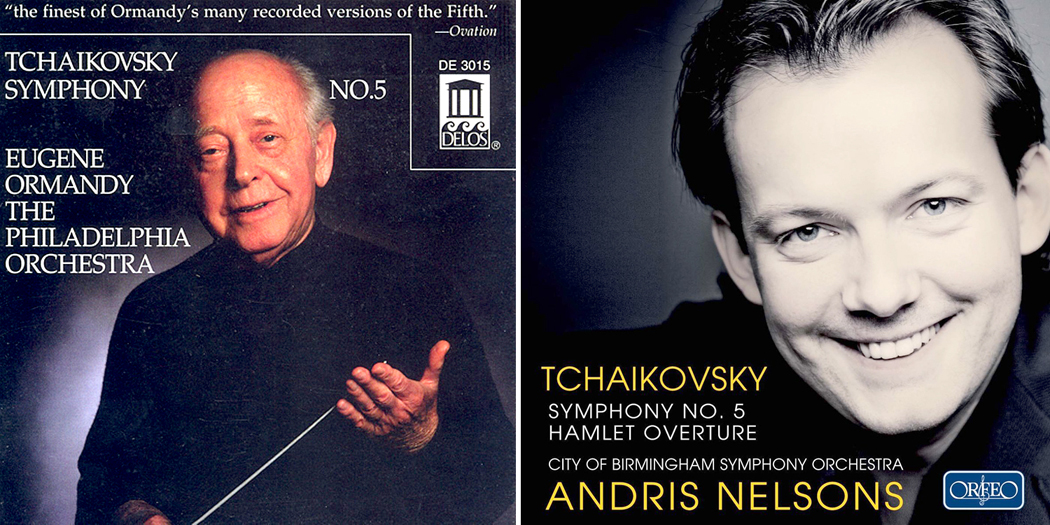
You can hear this by comparing any Tchaikovsky symphony recorded by Eugene Ormandy (1899-1985) or Yevgeny Mravinsky (1903-1988) with the same performed by Andris Nelsons (b. 1978) or Vladimir Jurowski (b. 1972). The younger players play the notes clearly and cleanly, even with excellent musicianship, but notes and music are different things. The younger generation grew up with Stravinsky or Prokofiev and had no problem with their complex scores. It was a shift in sensibilities. Younger musicians can breeze through Le Sacre du Printemps perfectly, while many old recordings show esteemed conductors fumbling through, missing accents and here and there. It’s a new tradition. (And I’m not even talking about “historically informed performance practice.”) 

But in the 19th century music, the older conductors knew much the younger generation had no grasp of. They knew how the music “went.” What it was saying. 

The true divide between the old and new were the World Wars and millions of dead. And especially after the genocide of the Second World War, it was no longer possible to believe in such old ideas as nobility or heroism. And music about such things no longer rang true. Listen to the version of Franz Liszt’s Les Preludes performed by Kurt Masur and the Leipzig Gewandhaus Orchestra, from 1978 and you hear all the notes, and certainly there is excitement. But listen then to the 1929 performance by the Amsterdam Concertgebouw and Willem Mengelberg, and you hear music that believes what it is saying. There is an earnestness to it, a fervor, that feels second-hand in the Masur recording. The difference between a hero and an actor playing a hero.

 And so, I and the generations that grew up with me and after me no longer had the stomach to hear such “universal” emotions as Tchaikovsky tried to evoke in his music. Nothing universal could be trusted anymore, and the grand statements of fate and tradition were dumped.

I remember when teaching, a student pushed back on something I had said. “It’s all relative,” she said. “Nothing is true. It is your truth or my truth, but nothing is universally true.” It was a common belief for her generation. And given the “truths” espoused by various institutions that were shown to be mere self-serving hypocrisy after Watergate, after “I did not have sex with that woman,” and most of all, after Auschwitz, it was hard to fault her. 

But I replied: “There is one truth that is universal. You will die. I will die. All living things will die.” That, I said, is the starting point for all art. After that, we look for anything else that we may make art from. Second truth follows from the first: The people you love will die, and many of those will die before you and you will suffer loss. How do you react to that loss? Yes, some Victorian pieties seem like sentimental claptrap to us now, but the impulse behind them is very real, and we can react to that reality. 
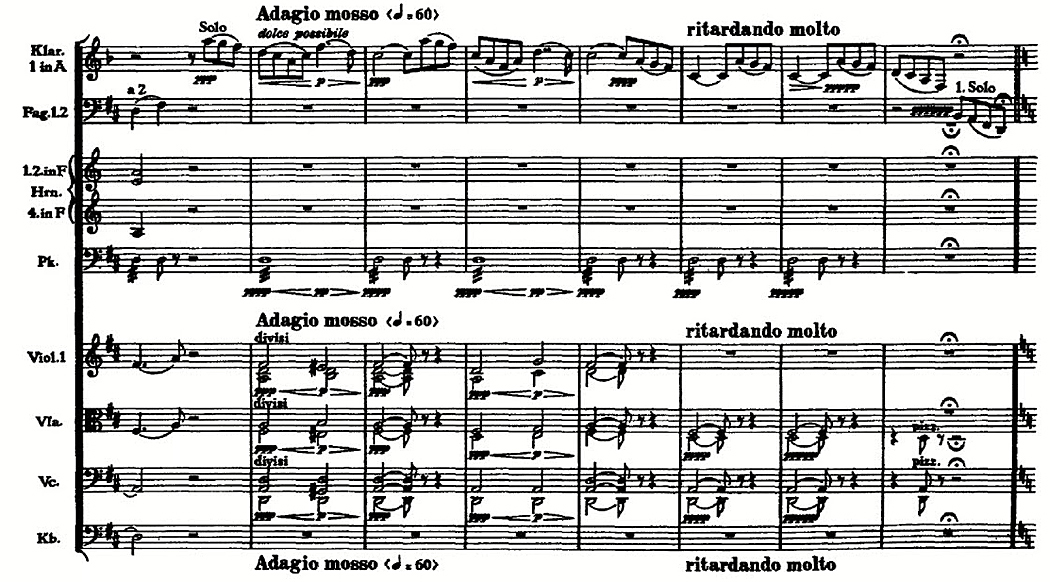
And so, when I hear Tchaikovsky’s Pathetique, I feel deeply in my psyche the sense of death and loss inherent in the harmonies and melodies, and I am moved. Deeply moved. If the stylistic idiosyncrasies of his age are not ours, the underlying emotions are. 

It is incumbent upon us, as listeners (and readers, and theater audiences) not to be deaf to the content of art. Yes, some music is meant only as divertissement, as Mozart serenades or Schubert ländler, but the more ambitious pieces — symphonies, operas, even ballets — are responses to the larger questions. Not only death or loss, but the subsequent propositions built from those original two: What is happiness, what is narrative, what is rhythm and physical movement and how does it all reflect the experience of being alive? 

If you listen to Tchaikovsky’s music with ears instead of ideas, you hear not only emotions both bright and dark, but extraordinary melody and harmony, often rather advanced for its time, and unparalleled brilliance of orchestration. 
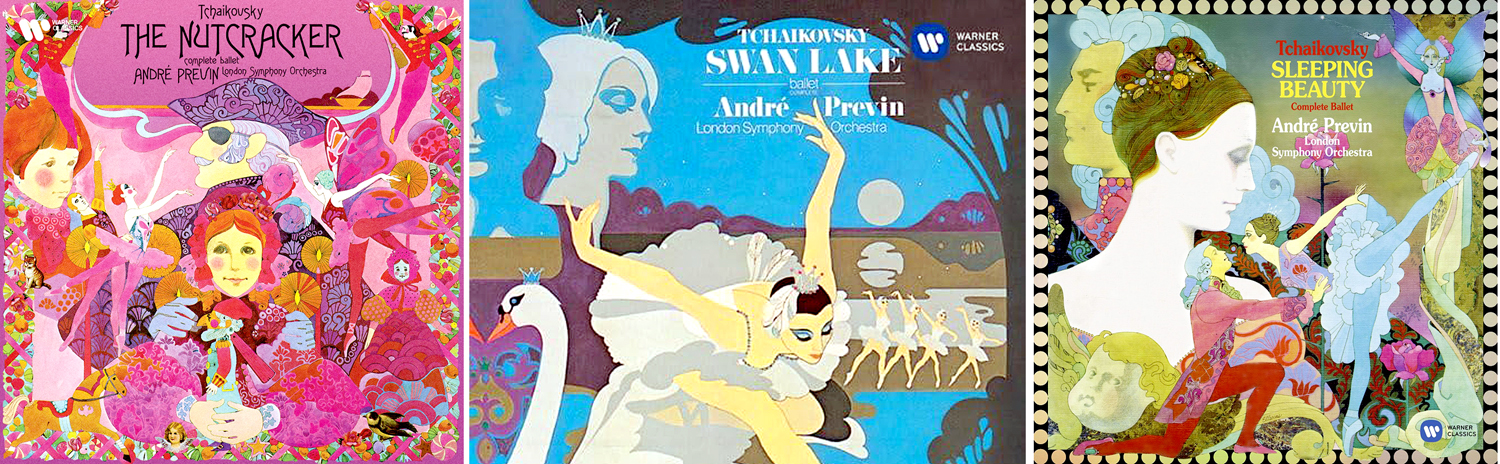
Even so minor a piece as his Nutcracker ballet is built from absolute crystal gems of sound combinations. Pure genius. 

The disdain so many now feel for the music of Tchaikovsky, or, for that matter, Rachmaninoff, or others of their era, is, as far as I am concerned, unearned, and merely an expression of ignorance. One should never cut oneself off from such delight, pleasure, and the emotions evoked. One should never close off one’s ears to music, or let ideas about the music take charge. 

Maxim Gun

Nobody writes epigrams anymore, and we are the worse for it. Instead, they are too busy writing Tweets. The difference? A Tweet says in 140 characters what no one needs to say. An epigram says in a few short words what can be unfolded and stretched out into a book: It is a seed waiting to sprout in the mind of the hearer. A Tweet goes everywhere in the world, but goes nowhere.

A Tweet is flaccid and generally pointless; an epigram, or maxim, is a gun that fires rapidly.

La Rochefoucauld

La Rochefoucauld

I love rambling through such terse cynics as La Rochefoucauld, and I eat up the ”eternity in a phrase of glass” of Ralph Waldo Emerson and the punchy paragraph perorations Henry Thoreau.

I don’t claim to be any Martial, but over the years, I’ve squeezed out a few. Here are some, strung together and pretending to be pearls:

–› Curiosity is the libido of art.

–› Art doesn’t come from the brain; it comes from the base of the spine.

–› I don’t want to know an artist is clever; I want to know he is more alive than me.

–› We need to know that the moments of time are connected to one another and are not merely adjacent.

–› Meaning depends on ambiguity. The more precise a word is, the less it describes.

–› You can forget knowledge; understanding changes your life.

–› It is the conservative’s impotence that he can only react, never create.

–› Ultimately, what counts is not the wisdom of Solomon, but stories of that wisdom.

–› Design is your awareness of everything in the frame.

–› Western art is really a branch of physics.

–› Art history is fine for the historians, but the rest of us must watch not to be hit by the flying debris.

–› Reality is no excuse.

–› What you know prevents learning.

–› There can be no great beauty that doesn’t know tragedy.

–› There are those for whom the world is rote. For whom knowledge is an orderly collection of facts, not the experience of understanding. For whom a set of rules prescribes behavior and describes art, music, politics, commerce. They are the managers, the commissars, the education reformers — for them, the planet turns on a dry axle.

–› To the degree that you use someone else’s words to express yourself, to that degree you don’t understand what you are saying.

–› The difference between a commercial artist and a fine artist is that a commercial artist knows what he is doing.

–› Art is the discovery or creation of meaning and order from the chaos of perception and experience.

–› The artist knows that 1 plus 1 equal 3. There is the one apple, the other apple and the two together.

–› Art is not a product; it is a byproduct.

–› A fact is a fragment, a truth is a wholeness.

–› Science is the test we give to hard facts, art is the test we give to everything else.

–› Art makes you aware that you are alive. That is not always very pleasant.

–› Art worth remembering is art that tackles knotty problems. Everything else is wallpaper.

–› Entertainment diverts us from the cares of life; art makes us feel alive. The two things are opposites.

–› Design is not a set of rules, it is a level of awareness.

–› All the questions that matter are insoluble.

–› Civilization is an irrational fear of the irrational.

–› Art creates civilization, not the other way around.

–› Everyone asks questions; intellectuals ask questions about the questions.

–› Opposites do not exist in the world separate from the language that describes them.

–› One end of the cigar is lit, the other is where we draw smoke. We call the two ends opposites, but there is only one cigar.

–› You can teach knowledge, but understanding has to be learned.

–› Aesthetics is the use of large words to describe what you can feel in your fingertips without any words at all.

–› Everything changes, said Heraclitus. Nature is a verb; a noun is only a parking space.

–› All art is regional art; New York City is a region, too.

–› A Truth is never probable.

–› A Truth satisfies an inner need for order.

–› It’s not what you know, but what you are willing to be aware of.

–› Words are the smoke screen art attempts to penetrate.

–› You must look at art longer than you can stand.

–› Boredom is an essential part of the art process, for artist and viewer alike.

–› Art starts out with only one belief: that the intuitions and emotions of the artist are valid. Period.

seventh seal knight

Can you choose to believe?

Some people seem to think so. You consider a menu of possible beliefs and choose which you like best. The American church scene certainly gives you a host of beliefs to sign up for: Not only Catholicism or Mormonism or Christian Science, but a hundred different versions of Protestantism, each with its heartfelt shibboleths. And there are thousands of varieties of Buddhism, Hinduism, Islam. And let’s not forget that Atheism is a belief, also.

So, you scan the menu and choose.

Blaise Pascal offered a bet: Believe and be saved. If there turns out not to be a God, then you have lost nothing. Fail to believe and maybe nothing happens, but if there is a God, then you lose your bet.

The problem is, of course, that the bet isn’t merely whether there is a god or not — putting your chips on the red or the black — but which god will save you and which will cast you to perdition: With so many choices, the odds are always against you: The house wins.

But you cannot merely choose. It sounds good until you try it. There is, after all, a difference between joining a church and believing what it teaches. seventh seal knight looks up

There are plenty of examples of people choosing one religion over another for political or survival reasons. Composers Gustav Mahler and Felix Mendelssohn each converted to Christianity to further their careers and escape the anti-Semitism of their time and place. It wasn’t at all uncommon in earlier centuries when one’s religion could disqualify one for certain jobs.

But did they believe in their adopted religions? That’s another question altogether.

For belief cannot be a matter of choice: You can believe only in what seems true. You don’t choose a religion and decide to believe its tenets; you decide what you believe is true, and look for a religion that offers those beliefs to you.

Believe simply isn’t volitional. You believe because you think certain things are true. Ineluctably true.

That doesn’t mean that what you believe is true — people can believe all kinds of odd piffle — but that those who believe do so because those ideas seem true to them. Whether it is religion or science, fiction or the ravings of a tin-foil-hat Tea Party Republican, you can only believe what rings true.

This is so even for those young academics who profess not to believe in any truth, that truth is all just relative. But of course, they believe it is true that there isn’t any truth. You cannot escape it: If you believe, you do so because you perceive it as true.

There are certainly people who wish they could choose to believe. There are those without faith who suffer from their inability to believe. They desperately want to believe, like the knight in Ingmar Bergman’s film The Seventh Seal.

What holds them back is that they cannot choose to believe something that doesn’t seem to be true, no matter how beneficial it would be if they could enforce that choice. Faith has, after all, many demonstrated benefits.

But if you don’t think there is a god or a savior, you cannot pretend there is.

Conversion happens when you accept that the religious tenets are true. It isn’t logic or reason that defines truth for us. We each have inclinations of genes and upbringing. seventh seal subtitle

Our emotions as surely as our syllogisms govern what seems true to us.

Some people are credulous and can accept as true any amount of silliness. I know a man who converted to a new religion every six months or so. He has been Baptist, Buddhist, Catholic, Methodist, Hindu and Evangelical.

One religion he joined actually worshipped triangles and explained the entire universe in terms of three-sided figures. There was not an ounce of hypocrisy in him: He believed each religion in turn was the true one.

Yet, if you cannot choose to believe, you can nevertheless choose to be open to possibilities, to allow yourself to learn about things you had previously been closed to. You can choose to look and listen.

Maybe you’ll be lucky.

This is the Information Age, a century choked with facts and factoids, bites and gigabites. Yet, for all the blizzard of data, it has been a century of drought for Truth.

As the century has progressed, we have become increasingly suspicious of the very idea of Truth, to the point that many younger people simply no longer believe there is such a thing.

I ran into this attitude in a university art seminar I was asked to address. The brightest and most talented student in the class took exception to my exhortation that they use their art to discover truth.

Art, of course, often pretends to address “universal truths.”

“There is nothing universal,” she said, giving words to the common belief, which in itself is a sweepingly universal statement. “It’s all just personal preference.”

I asked her if she didn’t think that her art had validity for her viewers.

“No, it’s just my version. I don’t expect anyone else to believe it,” she said.

Why, then, I wondered, did she bother to make art? What was the point, beyond self-gratification?

It was, as I saw it, utter capitulation.

Yet, I still understood why she might think that way. It was a previous “universal truth” held by everyone from Aristotle to Southern Baptist Convention that prevented women from making art in the past — or at least kept them from being taken seriously. Universal truths held people back, subjected them, disenfranchised them, enslaved them, justified the status quo and glorified local circumstances — that is all she cared about the subject.

The century has had its belly full of horror perpetrated in the name of “universal truths.” Cambodia cleared out its cities and slaughtered its citizens in the name of a great truth. The Soviet Union starved its provinces and imprisoned its best in the name of a “historical truth.” Germany’s big truth was a big lie and ended in genocide.

And in the centuries before ours, truth had a nasty habit of justifying colonialism, war, racism, the subjugation of women and the worst aspects of jingoistic nationalism. Just read any 19th Century justification of slavery. Is it any wonder that we have become nervous and twitchy about anyone claiming a franchise on Truth?

Even in our own time, those who profess to know the Truth habitually kill those who don’t agree. It doesn’t matter if they are Christian or Muslim, Tamil or Sikh. Truth is too often just a good excuse to blow each other to kingdom come. The nightly news carries new proof of this every day.

Yet, the loss of a sense of universal truth is in some ways just as bad.

We have no core beliefs to unify our culture; it fragments into interest groups and the groups fragment into individuals, each with his own desires and directions. The groups quarrel and soon, like Tutsis and Hutus, they are at each others throats.

Seven billion screaming ids. Either way, people wind up dead.

It used to be one of the functions of art and literature that it tested the veracity of purported truths, taking exception to ideas that had become outworn and making provisional stabs at creating substitutes. Art was the attempt to find universal truths that could stand up to the sulfuric acid used to separate the gold from metals more base.

As D.H. Lawrence said about the novel, meretricious ideas are easier to spot in fiction than in everyday life.

But the problem now is that it isn’t just that we no longer know which truth to believe, but that we simply don’t believe there is any truth.

We have reached an uncomfortable impasse. We need belief to make life meaningful, yet we cannot allow ourselves to believe in anything. Every faith, institution, political faction and ideal has proved at some level to be a tissue of hypocrisy. We decry our own cynicism, but recognize that at some level, it is merely realism.

Some retreat into conventional orthodoxies; others free float, aimless in an increasingly valueless society.

But there is another alternative: starting from scratch to see if we may discover for ourselves something like universal truth and build the whole thing all over again.

If we could only find a starting point, a single truth that everyone can agree is universal.

I suggest there is one such truth: We all die.

Death, if nothing else, is common to all 7 billion people on this planet. It is common to all living things, and metaphorically, common to all inorganic things, too. Perhaps if we recognize the universality of death, we can allow the possibility of other universals, even if we tread such territory gingerly.

If there is one truth, perhaps there are others. At the very least, it puts the lie to the canard that “it is all just personal preference.” At least one thing isn’t.

Death may seem a grisly place to start, but it doesn’t have to be.

The raw fact of death, when we are willing to be aware of it, also brightens and colors the gray ordinariness of daily life. It is what philosopher Martin Heidegger meant by the term, “authenticity.”

In simple terms: Death makes life more immediate.

If we ignore the fact of death, we can become bored with small things. But if we keep our death in mind, even mud becomes magic.

Perhaps just as important, it isn’t our own death that we feel most poignantly. We may not experience our own deaths at all — at least we have no reliable reports from after the fact — but we do feel the deaths of those around us in a profound sense of loss.

A sense of loss may be our second universal truth: It is certainly at the root of much mythology, from the expulsion from the Garden of Eden to the current New Age belief that Native American culture is somehow “in harmony with nature” and that our own culture is somehow cut off from it.

This loss is not merely generated by our awakened sense of our own mortality — in the face of loss, our own deaths often become insignificant — but of the recognition that we extend beyond our egos: We love.

Love — this opening up beyond self-interest — is perhaps a third truth, for whatever cultural inflection it picks up — and make no mistake: despite the rumblings of the Republican right, love is manifested in a million forms — the basic truth is that we all manage to break out of our blind egos and forge connections with others.

From love, we can begin to build a sense of morality. By breaking from our own egos, by imagining what it is to be other than ourselves, we begin to understand how our behavior affects those around us.

Young artists often deal with death in a symbolic fashion: skulls and blood. It is the mainstay of prison art, tattoos, heavy metal music and adolescent — primarily male adolescent — fantasies. Yet such doodling has as little to do with death as with art.

Such things are mere conceit.

It isn’t until we are older and come face-to-face with loss, that we begin to understand the meaning of death and the hundreds of emotional consequences that follow.

Beginning with one uncomfortable truth and wind up with a complex web of things, including that which makes us happiest.

I recommend to artists, not that they get all morbid, — quite the opposite — but that, starting with the universality of death, they may begin to build once more a fabric of belief that will sustain the human spirit.