Archive

Tag Archives: TV history

I want to put in a good word for TV sitcoms. They don’t get much respect. And it is true that many of them are routine, uninspired and forgettable. “Chewing gum for the eyes.” But the genre as a whole has both a long history (longer than you may suspect), and a significant role to play in the arts. Yes, the arts.

What we call art is a lot of things, and serves many purposes, but one thing all art, whether painting, music, theater or literature, is asked to do is entertain. There are different levels of entertainment, but even Joyce’s Ulysses or Berg’s Lulu offer an underlying level of amusement. 

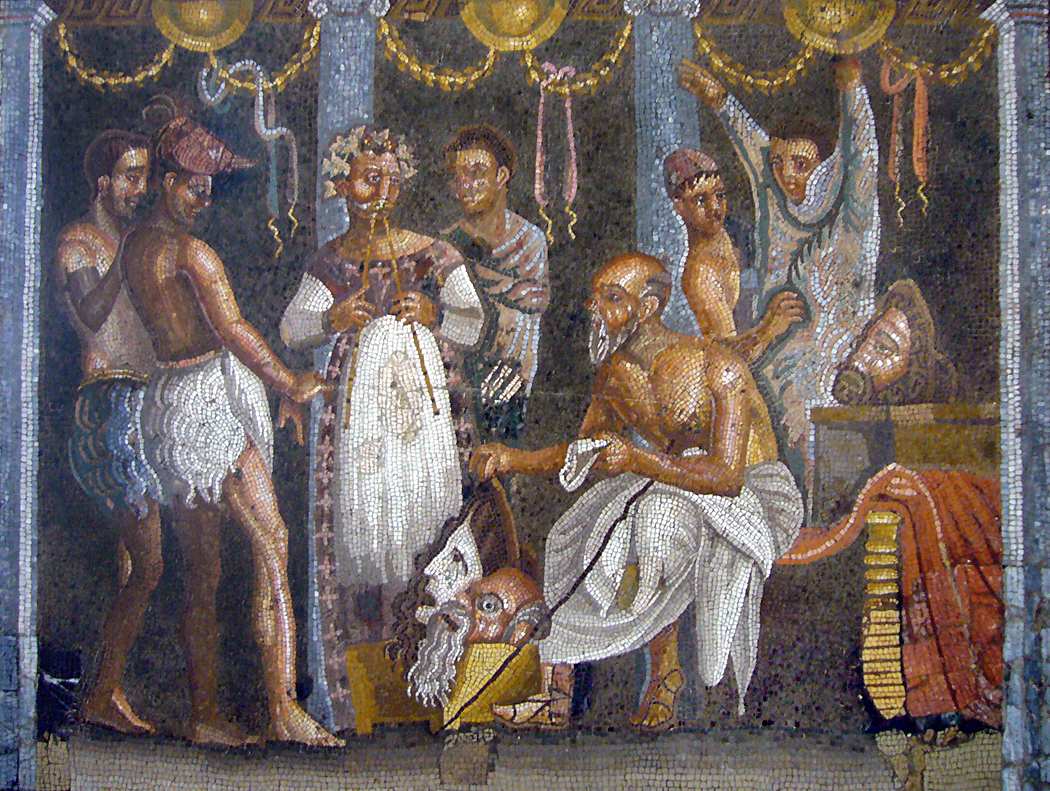
Comedy players, Mosaic from Pompeii

Some offer much more, but the base line of keeping us interested has been there from the earliest times we have record of. And much of it even fills university courses. We study Plautus and Terrence — among the earliest sitcom writers (Rome, 6th century BC), with plays full of dirty old men, unfaithful wives, clever slaves, mistaken identities and love-struck young men. 

There are few actual characters in such plays, and a great panoply of stock figures. These kinds of figures, stuck in difficult and comic situations, populate the works of Italian commedia dell’arte, the comedies of Molière, and the plays of Shakespeare (who would sometimes borrow from Plautus and Terrence). Victorian novels — by Dickens, Trollope, Thackeray —  now treated as literature, were at the time serialized in popular magazines and thought of much the same as we now consume TV shows. And all now deemed worth of academic study and even reverence. 

So, why not the same for All in the Family or The Honeymooners? Are they any “lower” an art form than The Twin Menaechmi? Or The Braggart Soldier

Remember, Shakespeare’s audience included the uneducated  groundlings; he wrote also for them. And he was not above the traditional fart joke. It ain’t all Seneca and Henry James. 

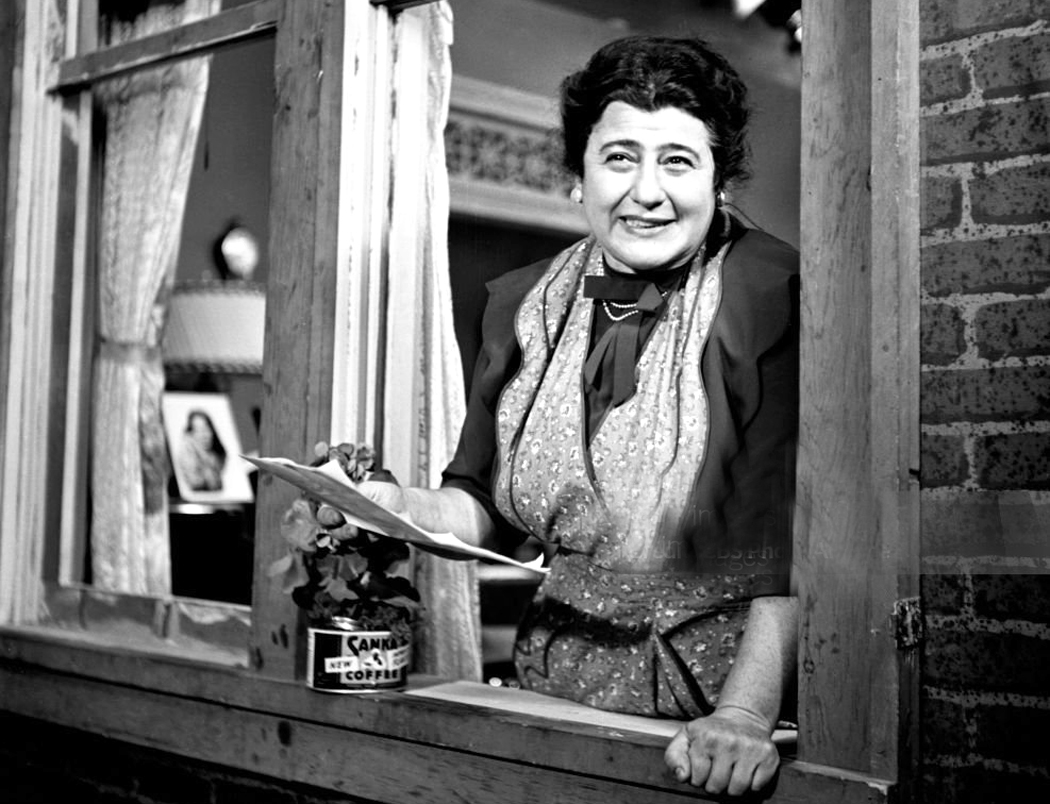
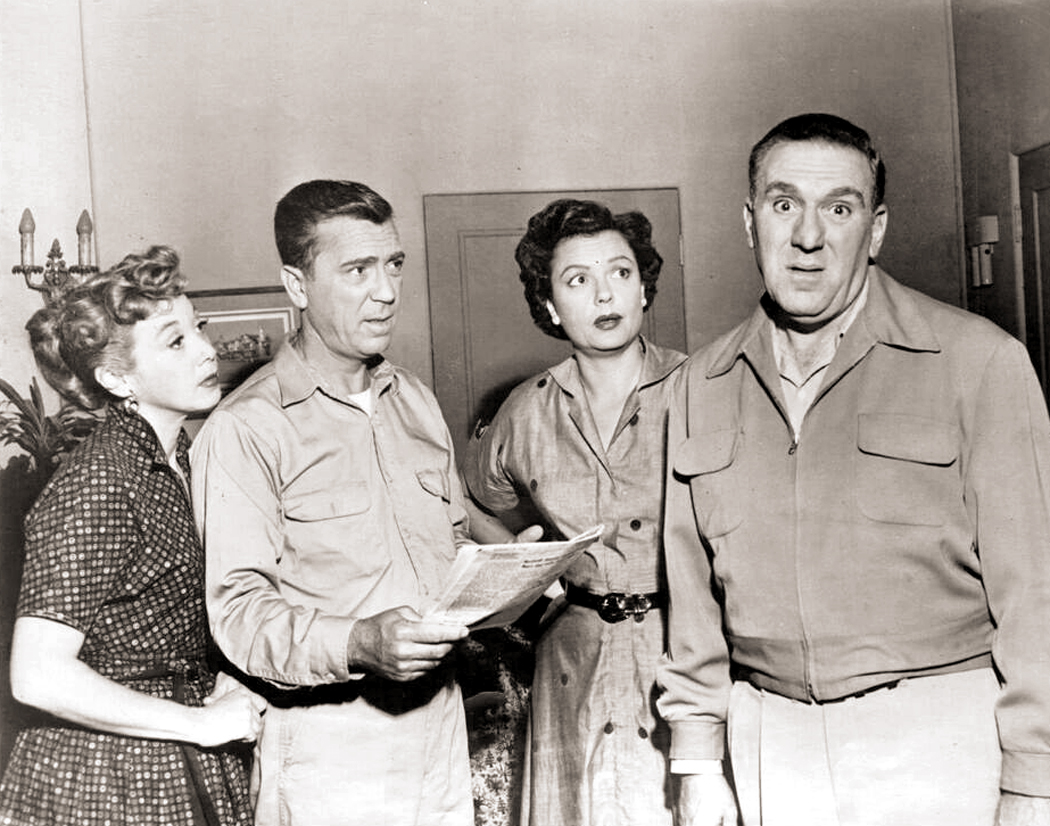
I am roughly the same age as television, and have watched the sitcom from its earliest TV days. I was one year old when The Goldbergs switched from radio to television (“Yoo-Hoo, Mrs. Bloom…”).  There was The Aldrich Family from 1949 to 1953 (“Henry! Henry Aldrich!” “Coming, Mother.”), and the first season of The Life of Riley, with Jackie Gleason originally taking over the title role from William Bendix, who had played the part on radio (“What a revoltin’ development this is”). Bendix took back the role for the rest of the series run. I don’t know how old I might have been when I first started watching these series. Probably in my playpen watching the images wiggle on the 12-inch screen of a Dumont television. 

The 1950s brought the onslaught and the sitcom became a staple of the boob tube. These series I remember quite well: Beulah; The Bob Cummings Show; The George Burns and Gracie Allen Show (the first Postmodern show, where George could watch what Gracie was planning on his own TV screen and comment to the audience); December Bride; I Married Joan; Private Secretary; Mister Peepers

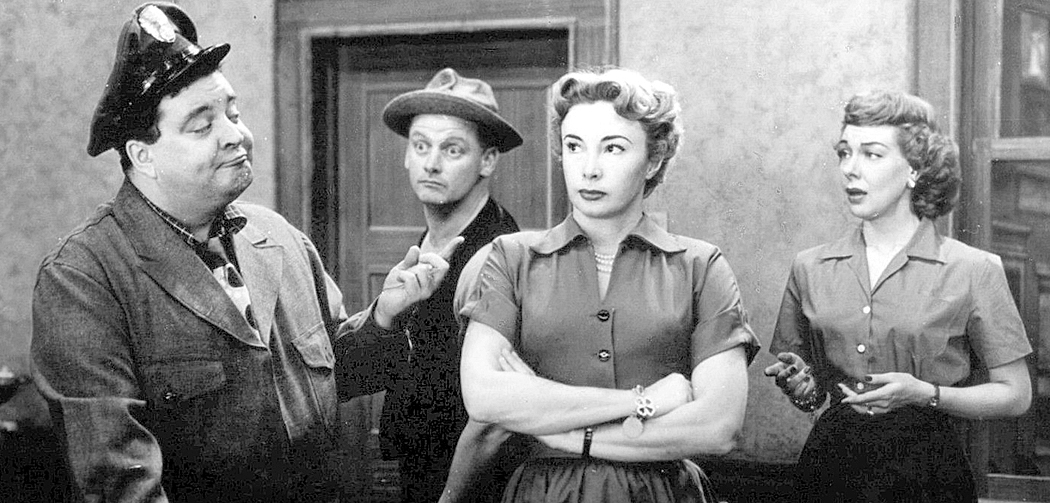
I haven’t mentioned the three most important shows of the time. The Honeymooners emerged as a sometime skit on Cavalcade of Stars, the Jackie Gleason variety show on the Dumont network, sometimes taking up most of the run time. But in 1955, the skit was spun off into a half-hour sitcom for 39 episodes, still run in syndication on various cable channels. (“To the moon, Alice”). 

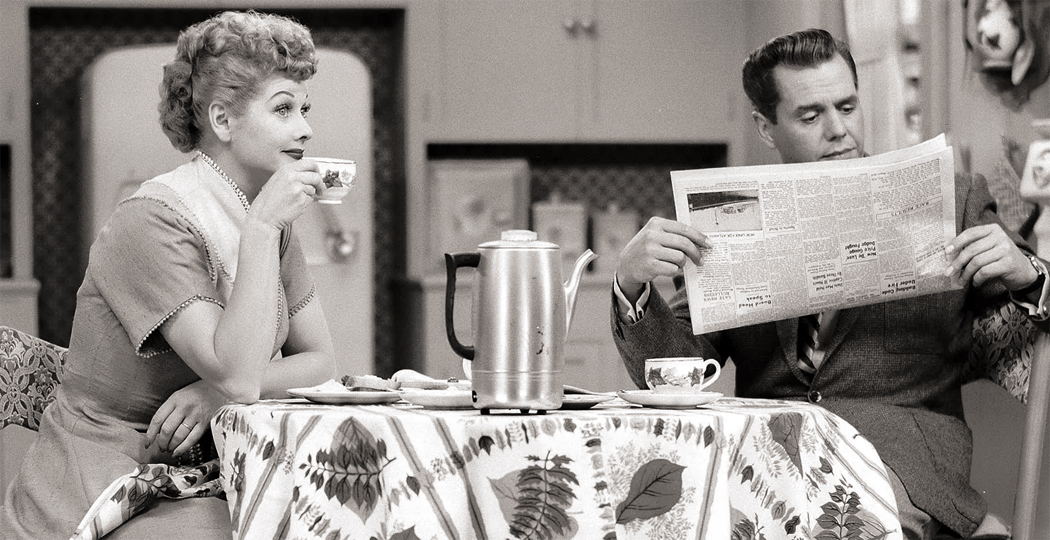
I Love Lucy ran from 1951 to 1957 and pioneered the three-camera filmed sitcom with live audience and laugh track. For its entire run, it ranked No. 1, No. 2, or No. 3 in the ratings. (I have to confess, contrary to the majority opinion, I never found Lucy very funny. Watching reruns, I still don’t). Those reruns can still be found in syndication on cable. 

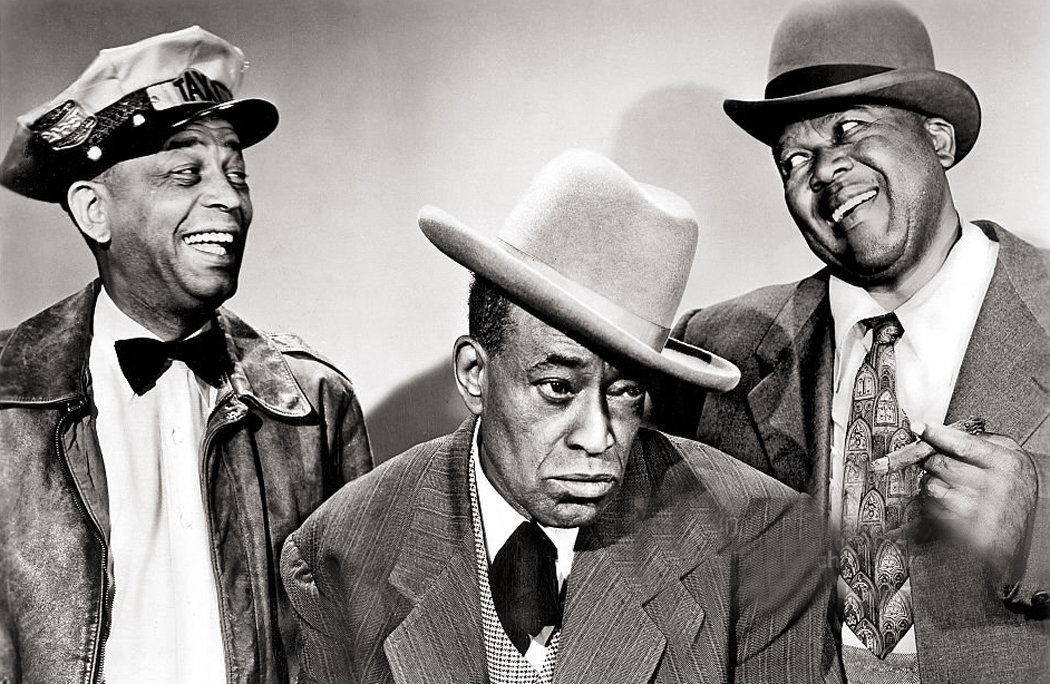
Alvin Childress, Tim Moore, Spencer Williams

But you won’t find Amos ’n’ Andy. It was enormously popular from 1951 to 1953. But reaction to the racial stereotypes changed markedly during the rise of the Civil Rights movement. It would be hard to complain about the series cancellation. In the context of its times, it was deserved. It can be hard to watch nowadays. But I have seen all 78 episodes on bootleg DVDs and must admit we have lost some brilliant comic performances, especially by ex-vaudevillian Tim Moore as the Kingfish. Yes, there are some awful stereotypes, but not everyone was shufflin’ and grifting. Amos was an upright citizen and family man, and the series showed quite a few Black doctors and judges, all horrified at the shenanigans of the series stars. 

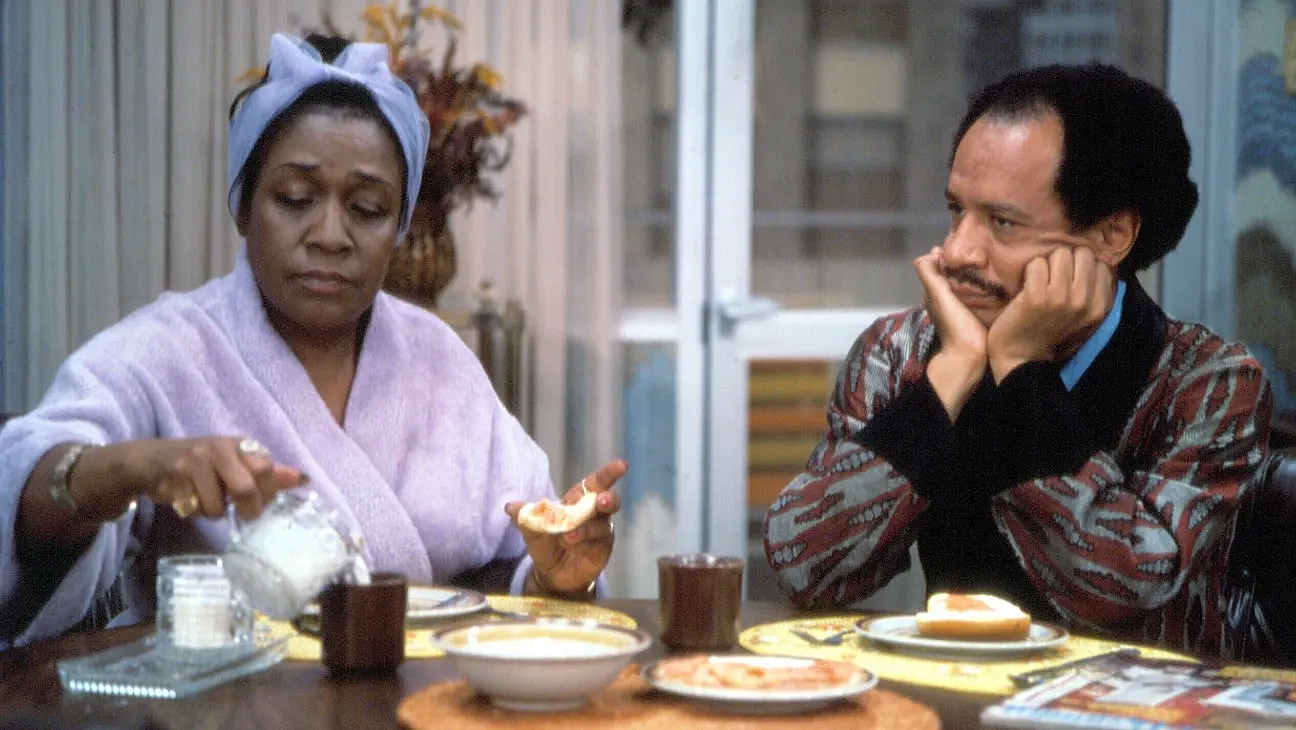
And it should be pointed out that most sitcoms, Black, white or otherwise, focus on less-than-admirable characters. Let’s face it, bland Ward Cleaver does not support a TV series. You need Archie Bunker, Ralph Kramden, or Larry David. Something out of the norm, but exaggerated. Getting past the particulars of Amos ’n’ Andy, basically the same stereotypes come back later as George Jefferson or J.J. in Good Times (“Dyn-O-Mite”) or Redd Foxx in Sanford and Son. Same caricatures, different generation. 

I’m not suggesting we forgive Amos ’n’ Andy, but rather to see it in context, and recognize the talent that went into it. 

The fact that even Millennials know who Lucy Ricardo was, or Ralph Kramden or Rob and Laura Petrie, means that some of the hundreds of sitcoms that have aired, from the last century and this, have a cultural staying power, very like the classics we read at university. 

The foundational stereotypes — or archetypes — have persisted, too. How many sitcoms feature bumbling husbands, from Chester A. Riley and Ozzie Nelson to Curb Your Enthusiasm and The King of Queens? Conversely, the trope of the ditzy wife, from Gracie Allen to Married … With Children to The Middle? Mothers-in-law are a perennial butt of jokes, as are clueless bosses and gay best friends. They each provide a predictable set of familiar and comfortable jokes. (Although the limits of comfort can and have changed over time: Blonde and Polish jokes haven’t worn as well).

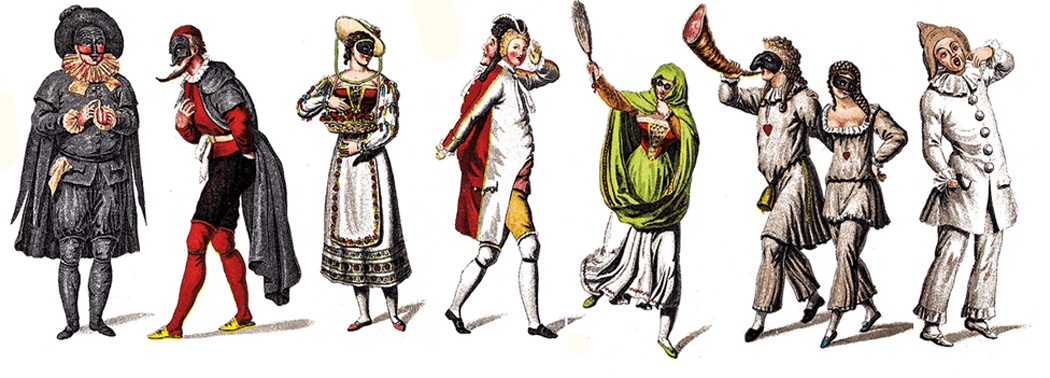
And most of these are just modern changes rung on the characters of the commedia dell’arte. Harlequin, Colombina, Pantalone, Pulcinella, Zanni and the lot. We aren’t looking for fully rounded characters so much as familiar types to build plots and gags around — the “situations” in situation comedies. 

So, the sitcom has a long history. And I have a long history with them. And I have divided them into four roughly defined groups. The borders of these groups may be squishy — you may parse them differently — but the categories are defensible.

First, there are those that have had an effect on culture broadly. They tend to be the best written and acted, but they have wormed their way into the general consciousness. Class A includes I Love Lucy (my qualms not withstanding), The Honeymooners, All In the Family, The Mary Tyler Moore Show, M*A*S*H, Murphy Brown, The Office (American version), Seinfeld, Roseanne, Curb Your Enthusiasm, and The Cosby Show (which now is hard to watch — both hard to find and hard to endure, knowing what we now know). And I would include both The Big Bang Theory and Young Sheldon. Class acts all the way. 

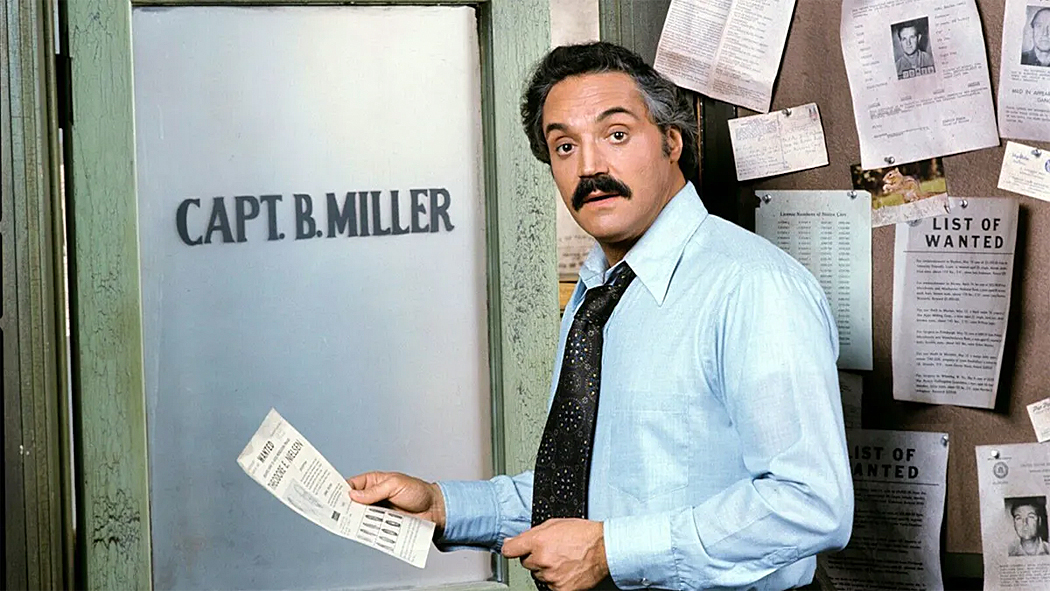
But I would include also: Taxi, Barney Miller, Dick Van Dyke, Cheers, The Bob Newhart Show (the original one), and a few that I never warmed to, but still have a cultural significance, like Friends and Married… With Children. All are or have been in the national conversation.

I should also include a few British series that have had an impact, mainly Fawlty Towers, the British Office, and Absolutely Fabulous.  

Class B includes all the quality shows that came and went, with funny characters and solid jokes, but never buried into the Zeitgeist in quite the same way. All solid entries. You can add quite a few to this list and it will depend on your taste and funny bone. I would include: 3rd Rock From the SunBlack-ish; Brooklyn Nine-Nine; Frasier; Golden Girls; The Good Place (should be in Class A, but not enough people watched); Happy Days; Malcolm in the Middle; The Middle; Mike & Molly; Modern Family; The New Adventures of Old Christine; Parks and Recreation; Scrubs; Two and a Half Men; Veep; WKRP in Cincinnati; and your choice of others. Among my favorites are Mom, Night Court, Reno 911. Individual taste may vary. (I have not included many of the old shows from the ’50s and ’60s that few people have had a chance to see: My Little Margie, Private Secretary; Topper.)

The next rung down, in Class C are the workaday shows, sometimes OK time-wasters, but full of cliched characters and tired jokes — the kind that have the familiar form of jokes, but seldom the wit or laughs. Writing on autopilot. This is the vast majority of TV sitcom bulk. The roughage and fiber of the viewing diet. 

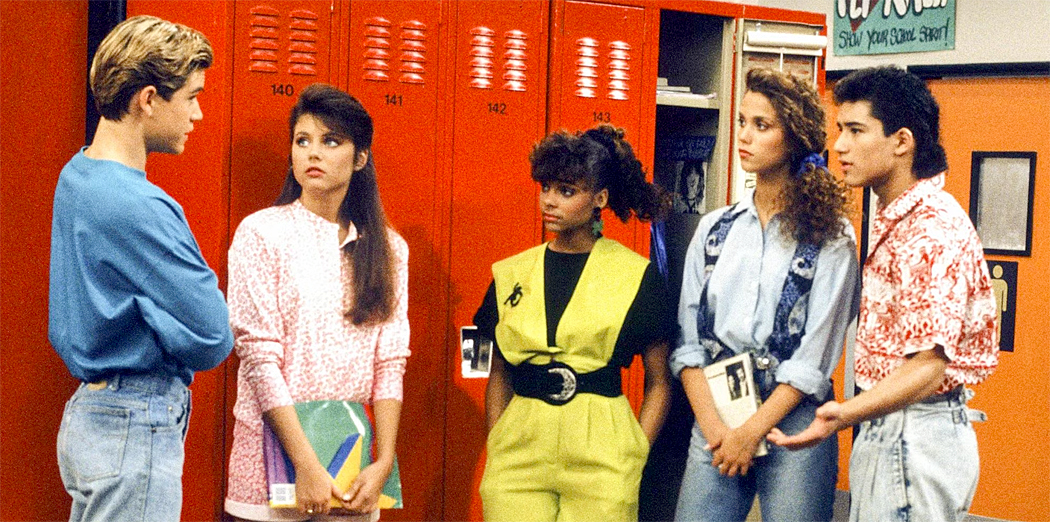
When we watch these, it is often more out of habit than desire. The forms are familiar and the laugh track tells us when a joke has passed by. Did anyone ever think The Munsters was prime comedy? or Gilligan’s Island? McHale’s Navy? Saved by the Bell? Mediocrity incarnate. Hogan’s Heroes? I could name a hundred, propelled by laugh tracks and the need of writers to fill air time. Networks toss them on the screen, hoping they’ll stick. Some do, but only because they are gluey. 
Wikipedia lists hundreds of sitcom titles and I would guess some 75 percent of them fall into Class C. At least half of those are gone in a single season, un-renewed, or cancelled after a few goes. The rest stick around because they are not overly offensive. They may feature actors we like, even if they have to spout insipid dialog. 

Bewitched; The Brady Bunch; Chico and the Man; Community; Ellen; F Troop; The Facts of Life; The Flying Nun; I Dream of Jeannie; Last Man Standing; The Monkees; Perfect Strangers; That ’70s Show; Who’s the Boss? Go ahead: Make a case for any of them. Tube fodder. 

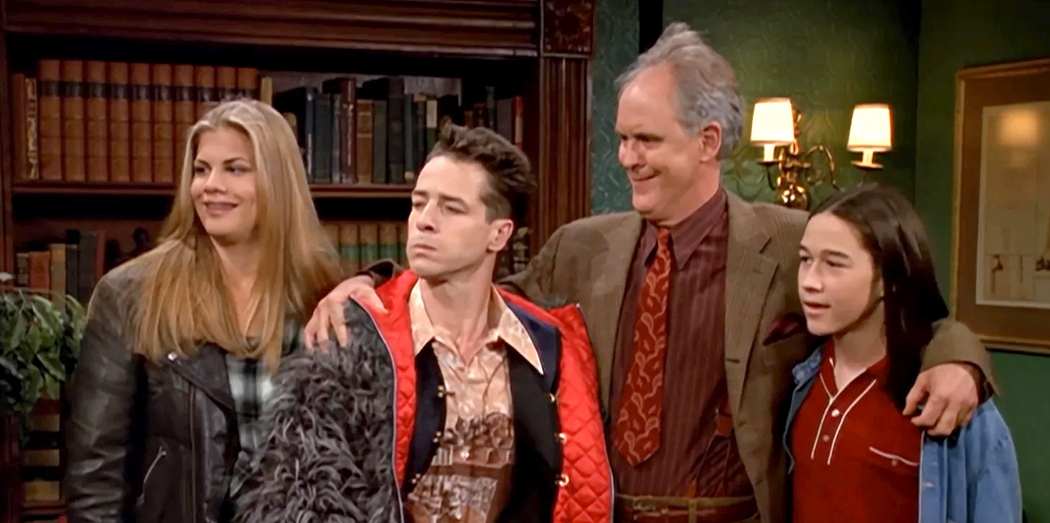
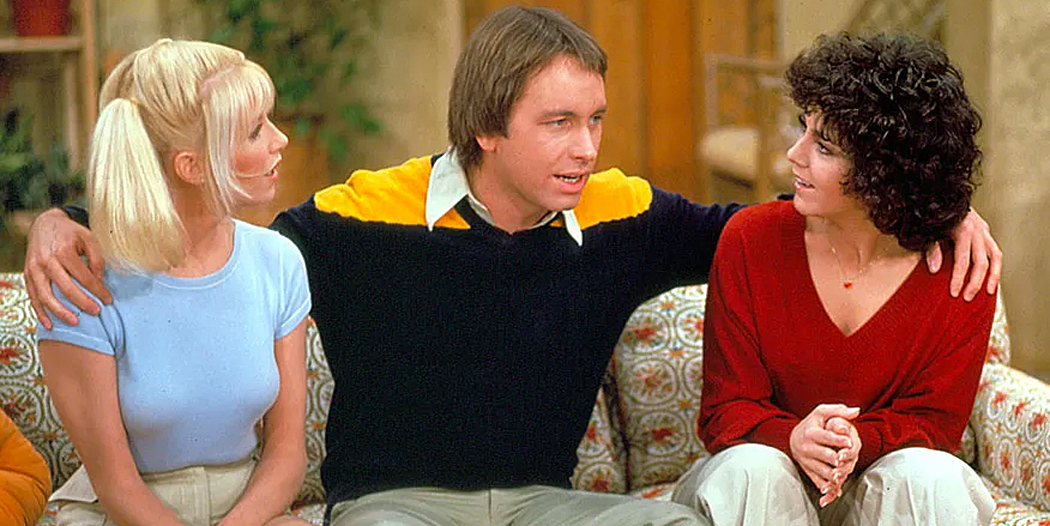
Three’s Company is the epitome of Class C, although my son, deeply knowledgeable in the ways of film and media, assures me it is a classic. He loves it. De gustibus

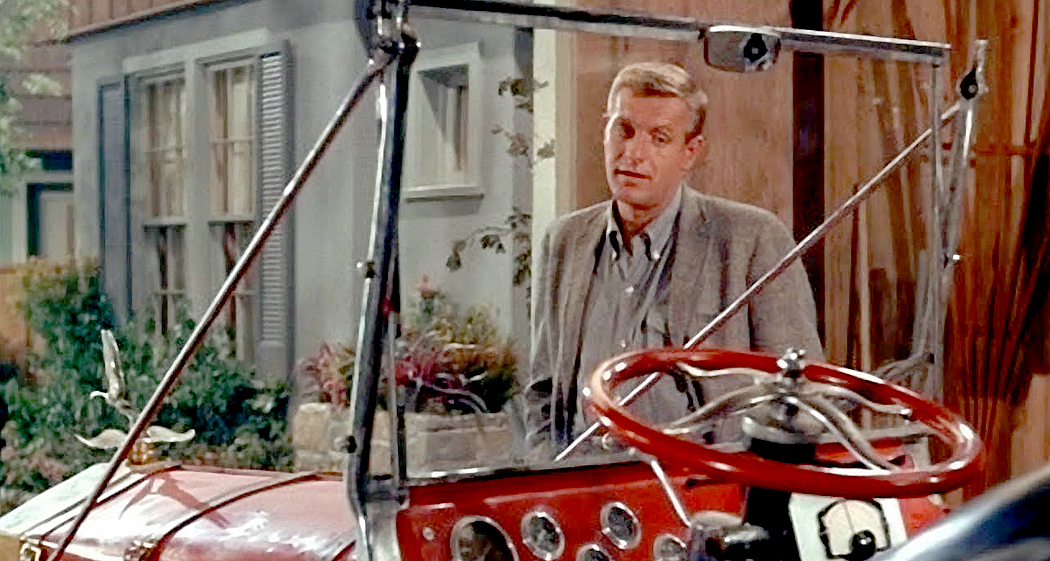
Then, there is the bottom feeding Class D, those shows so bad they have become legend. My Mother the Car is the type specimen for this class. A series only a studio executive high on cocaine and bourbon, and distracted by facing an expensive divorce and maybe a teenage son in jail  could have green-lighted. Quite a few of these were meant to be vehicles for aging film stars given their own sitcom series. The Doris Day Show, The Debbie Reynolds Show, The Tammy Grimes Show, Mickey (with Mickey Rooney), The Paul Lynde Show (in which he is an attorney and family man), Wendy and Me (with George Burns and Connie Stevens), Shirley’s World (Shirley MacLaine as a photojournalist), and The Bing Crosby Show. Most of these didn’t make it past the first season. 

Also at the dismal bottom: Hello Larry, New Monkees, She’s the Sheriff, The Trouble with Larry (“not just not funny, but actively depressing”), Cavemen, Homeboys in Outer Space, The Ropers. Most cancelled after one season. 

In England, Heil, Honey, I’m Home with Adolf and Eva never made it past the first episode. (currently unavailable on streaming or disk. Too soon?).  

Among the abject failures are most of the American remakes of popular British comedies. Many of them never made it past the pilot stage.

And so, you have four general classes of television sitcoms. The best worthy of saving for future generations, the worst best left for whatever is the digital version of the bottom of the canary cage. 

The past wasn’t so different. What we remember of classical Roman comedy are what is extant. Much isn’t. A good deal of it was probably just as banal as most bad TV. We don’t know: It didn’t survive. The Victorian novel was largely a serial enterprise, like seasons of a sitcom, weekly chapters published. But for each Dickens or Trollope, there were dozens, maybe hundreds of lesser works now mostly forgotten. In time, we will no doubt continue winnowing the TV past, saving the Norman Lears and perhaps the Chuck Lorres and ranking them as our Plautus and Terrence. Perhaps. 

The low arts can still be art.

I see my granddaughters staring into their phones, watching video of themselves and their friends making goofy faces, or bits of viral kitties on YouTube and, like many of us of a declining generation, worry about the future of the culture. How quick we forget.

The young nowadays hardly watch ordinary television anymore, unless it is streaming video from Netflix. But there was a time when the boob-tube was the primary entertainment for an entire post-war generation. You might even call the damnable thing the “boomer-tube.” We were there at its inception. We watched it try to find its feet. 

I was born the same year Milton Berle made television a necessity in the American home. In a sense, TV and I grew up together and it would be a shame not to admit it.

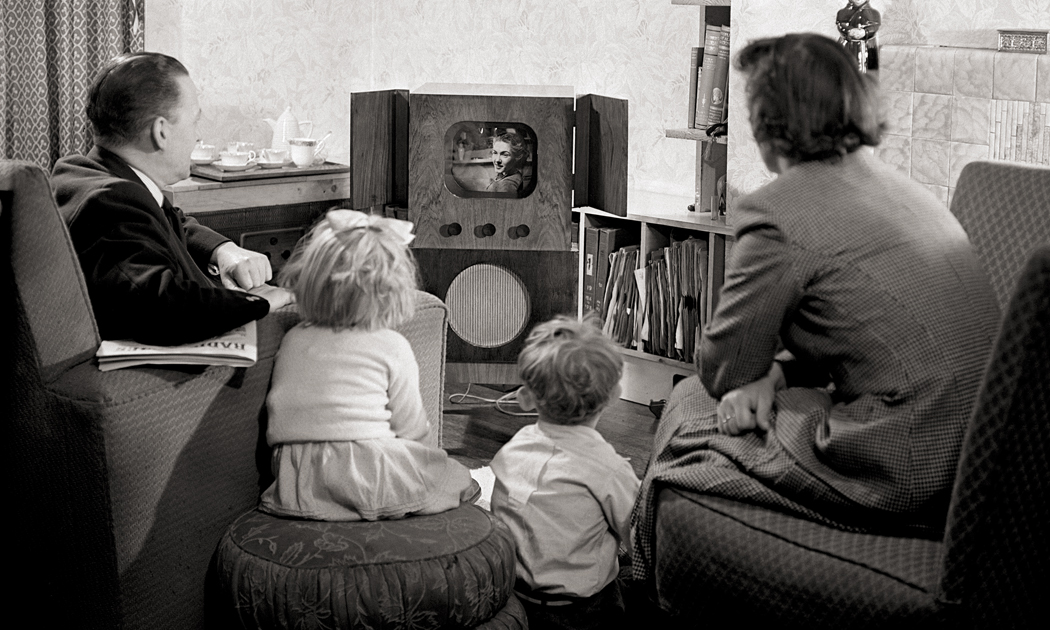
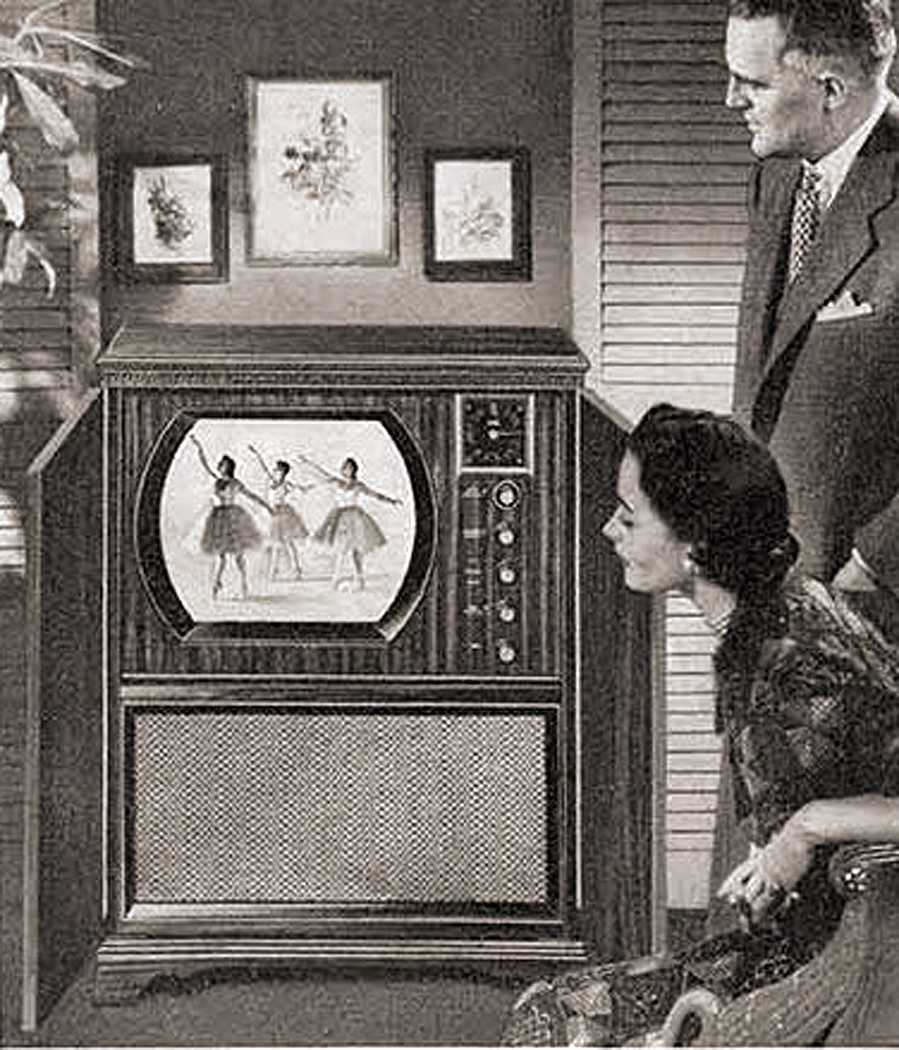
In my earliest years, we had no TV, but I cannot remember much before the great wooden chunk of furniture with the little oval screen of greenish gray — the DuMont television we had in suburban New Jersey.

It seemed as huge as a furnace and the fire that flickered through the window was the normal hearth of the home. 

Television doesn’t seem to be any miracle if you’ve never known a time without it. It’s an appliance, like the washer or the stove.

In its earliest years, television tried to fill up its empty spaces with recycled product from the movies and radio: Many of its first series were carry-overs from radio, though I didn’t know it. We never listened to radio before television.

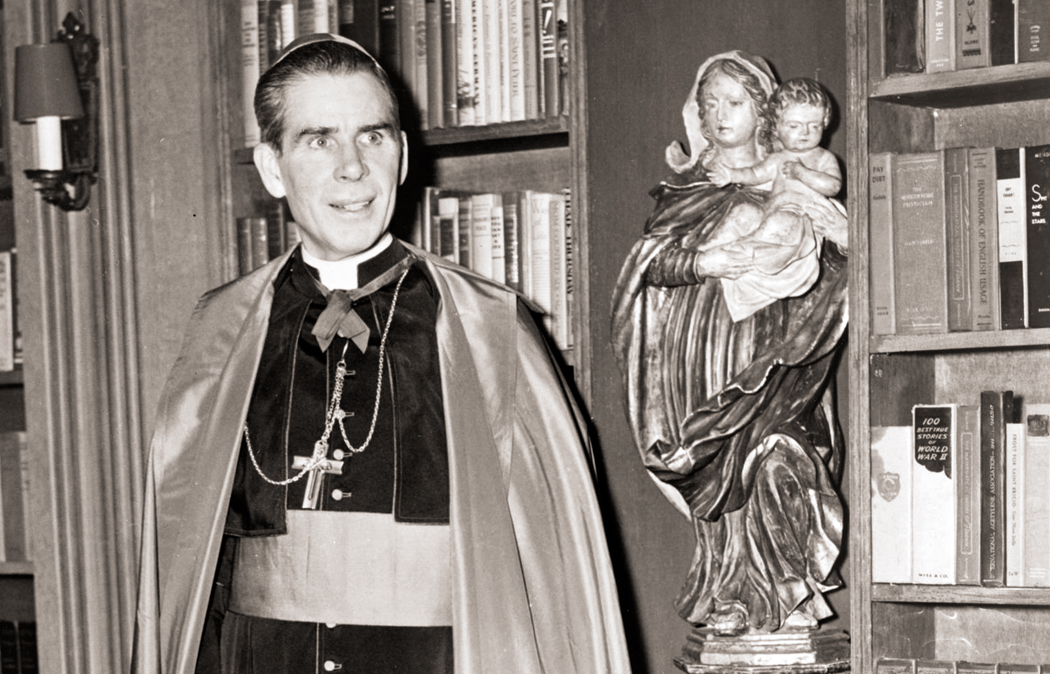
I watched Pinky Lee, Miss Frances on Ding Dong School, Crusader Rabbit and Rags the Tiger, Beany and Cecil, the seasick sea-serpent, Bill and Cora Baird and their puppets, including Charlemagne the Lion. With my grandmother, I would watch the Bishop Fulton J. Sheen stand with that long, lined face and tell us that Life is Worth Living. 

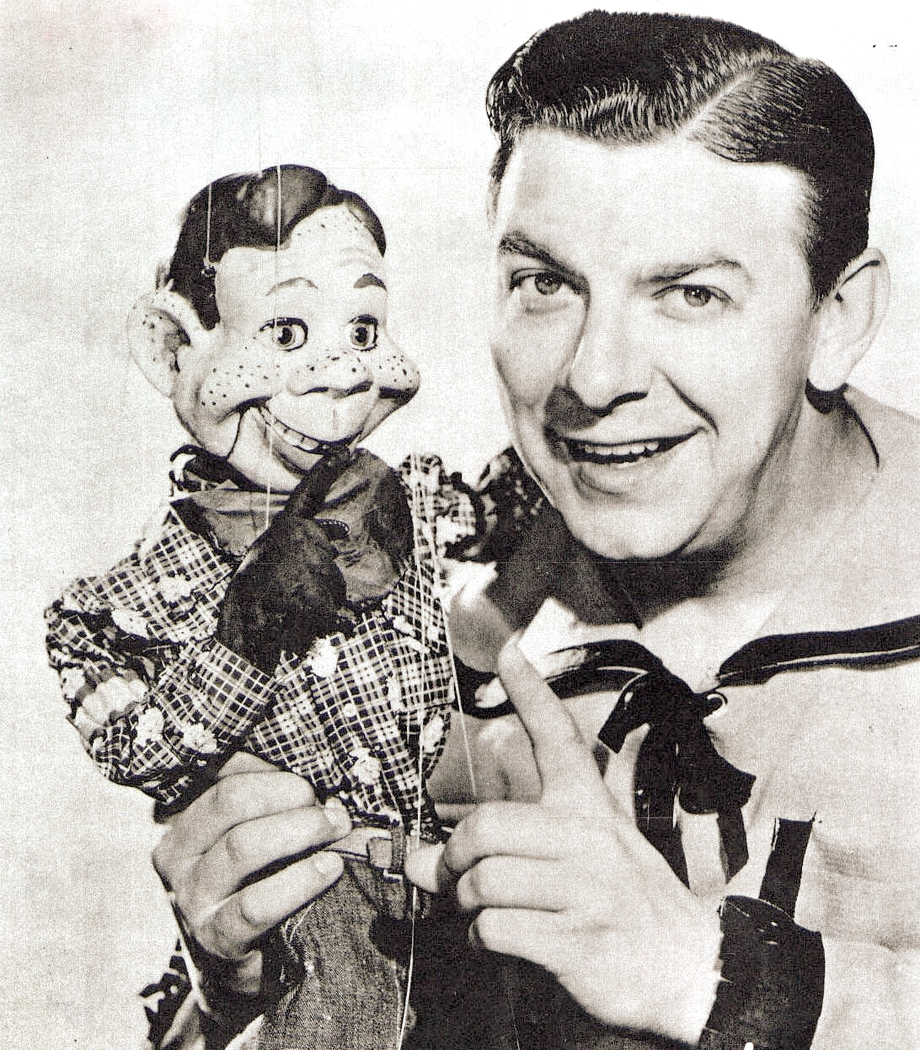
There was Howdy Doody and Clarabell the Clown, Princess Summerfall Winterspring and Chief Thunderthud (the original “Kowabunga”). I longed to sit in the peanut gallery. I knew Buffalo Bob many years before I ever heard of Buffalo Bill. 

On Saturday mornings, I’d watch Tom Corbett, Space Cadet and each weekday afternoon, there was Al Hodge (formerly radio’s Green Hornet) as Captain Video, fighting the evil robot, Tobor. (I was proud as a pre-schooler to figure out that “Tobor” was “robot” spelled hindwards.) Later, there was Rocky Jones, another space adventurer.

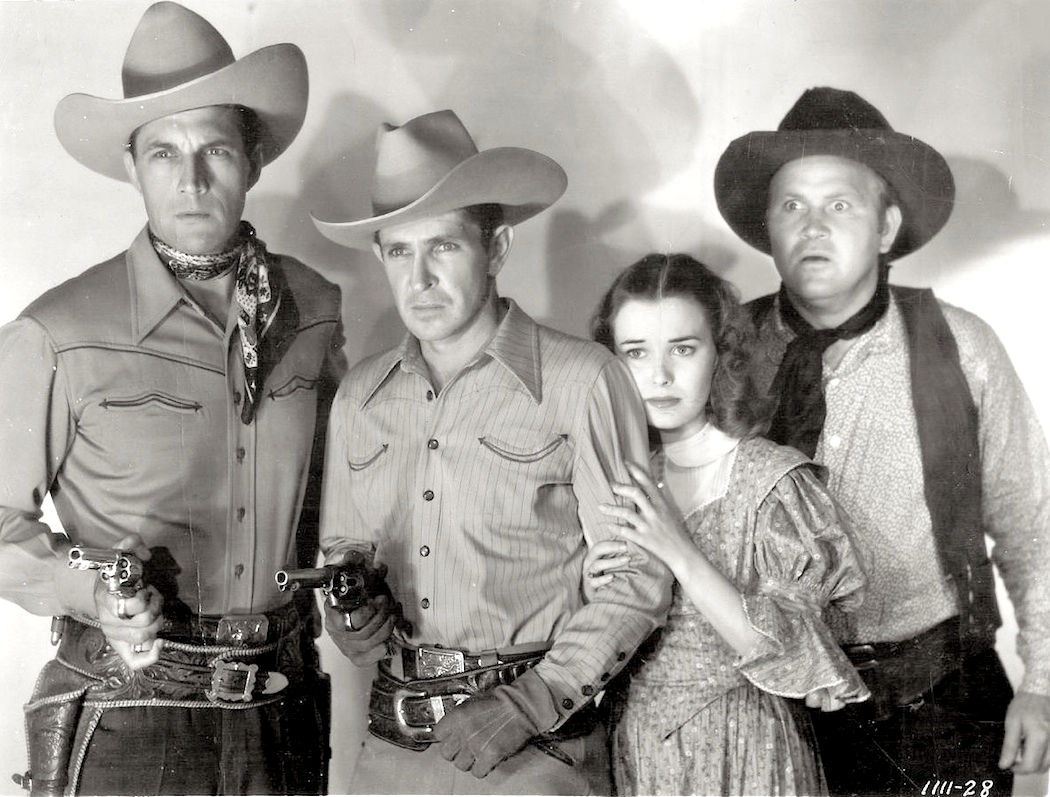
The broadcast bands were filled with old Westerns, too. Not only Gene Autry and Roy Rogers, but a host of older stars, from Hoot Gibson and Ken Maynard to Col. Tim McCoy. I ate up every Three Mesquiteers film ever made, and knew subliminally that Bob Steele as an actor was better with his fists than any other cowboy star.

There was at least one old Western every afternoon, introduced by an aging cowboy, who was actually Lyle Talbot, “B”-movie actor and veteran of Ed Wood’s Plan 9 from Outer Space, which we watched a dozen times in a week on Channel 9’s Million Dollar Movie — my first serious film course. They showed the same movie all day and night over and over. I first knew King Kong there, and Wee Geordie and Loneliness of the Long Distance Runner. It really was a great film course. (And it was only years later I realized that the theme music to Million Dollar Movie was the Tara theme from Gone With the Wind.)

We were lucky in the New York Tri-State Area: In those days when TV channels were few across the nation, we had seven: three networks and four independents  (channels 5, 9, 11 and 13 — which later became the pre-PBS WNET-TV educational television.) 

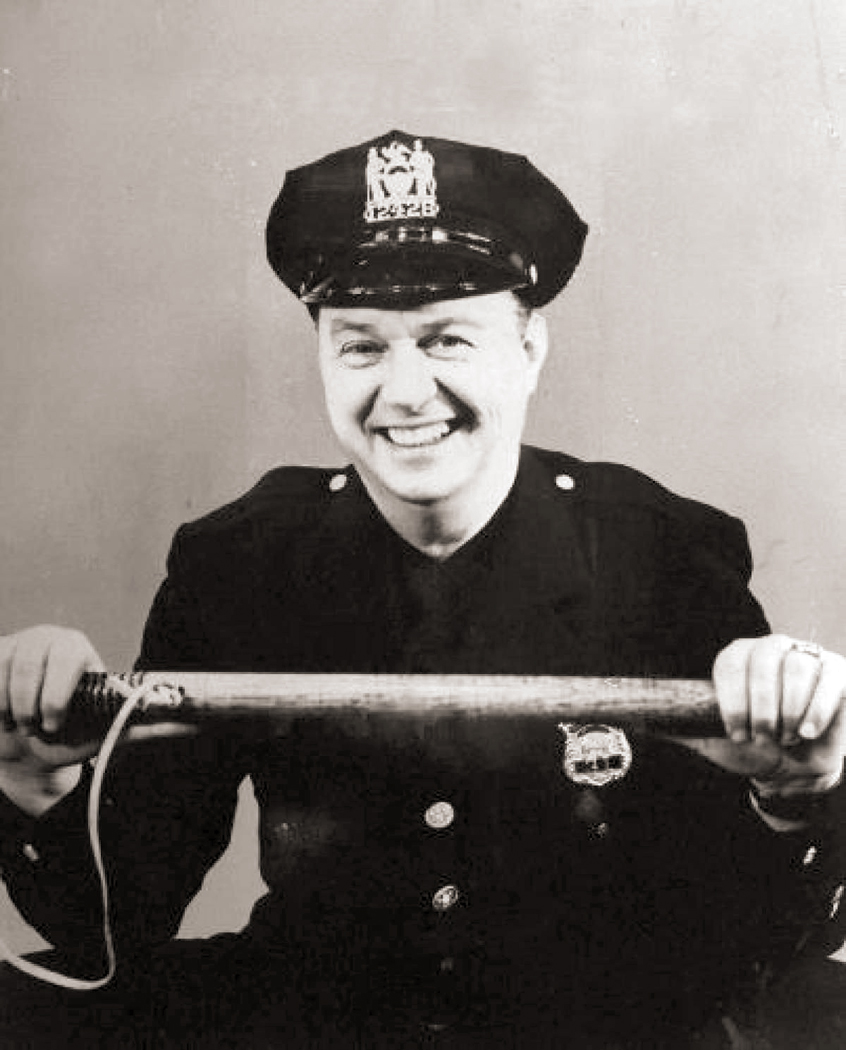
The kiddie hosts were all over those indies: Officer Joe Bolton, Sonny Fox, Claude  Kirschner, Sandy Becker, Paul Tripp.

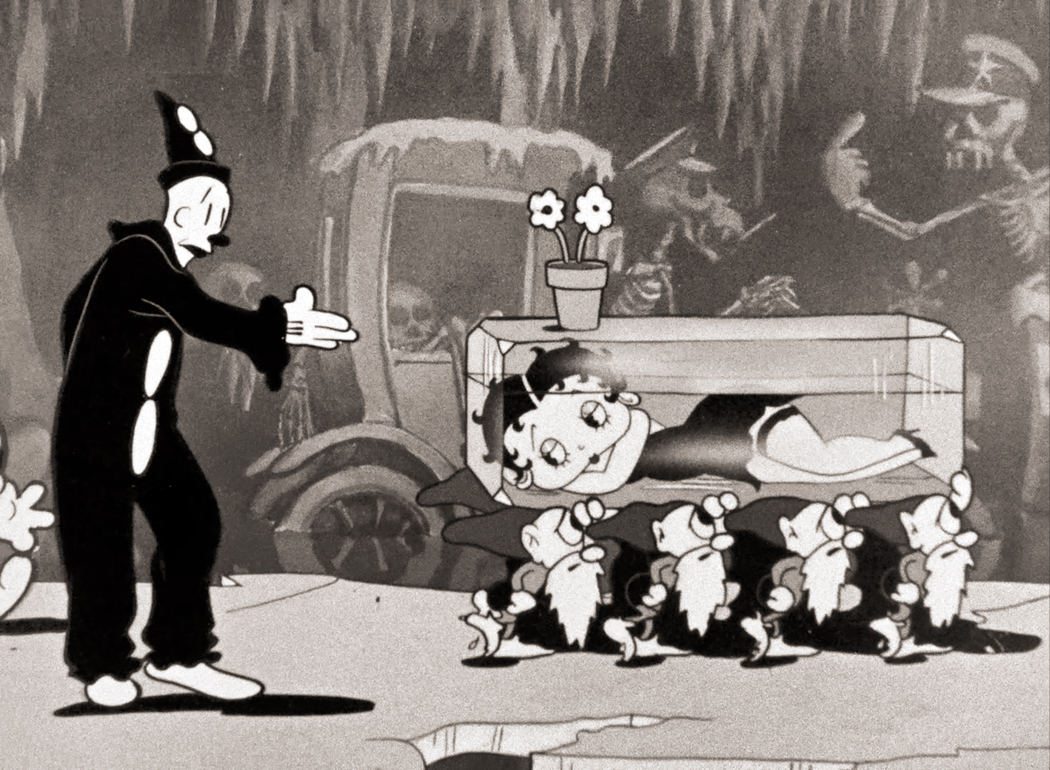
Late in the afternoon, Uncle Fred Sayles came on with Junior Frolics (I think it had originally been called Juniortown, or something like), where I became unintentionally conversant with the silent animation of Van Beuren Studios, Max Fleischer and Pat Sullivan. Farmer Gray (originally Farmer Al Falfa) and the Aesop’s Fables of Paul Terry — a billion stick-figure mice running all over the place. (This was also my introduction to jazz, used as background music to the silent cartoons, just as Bugs Bunny and Warner Brothers cartoons were my introduction to classical music.) There were also the Ko-ko the Clown features — Out of the Inkwell — and Betty Boop.

In those early years, they were really hurting for things to fill up the airwaves and threw up on screen anything they could scrounge.

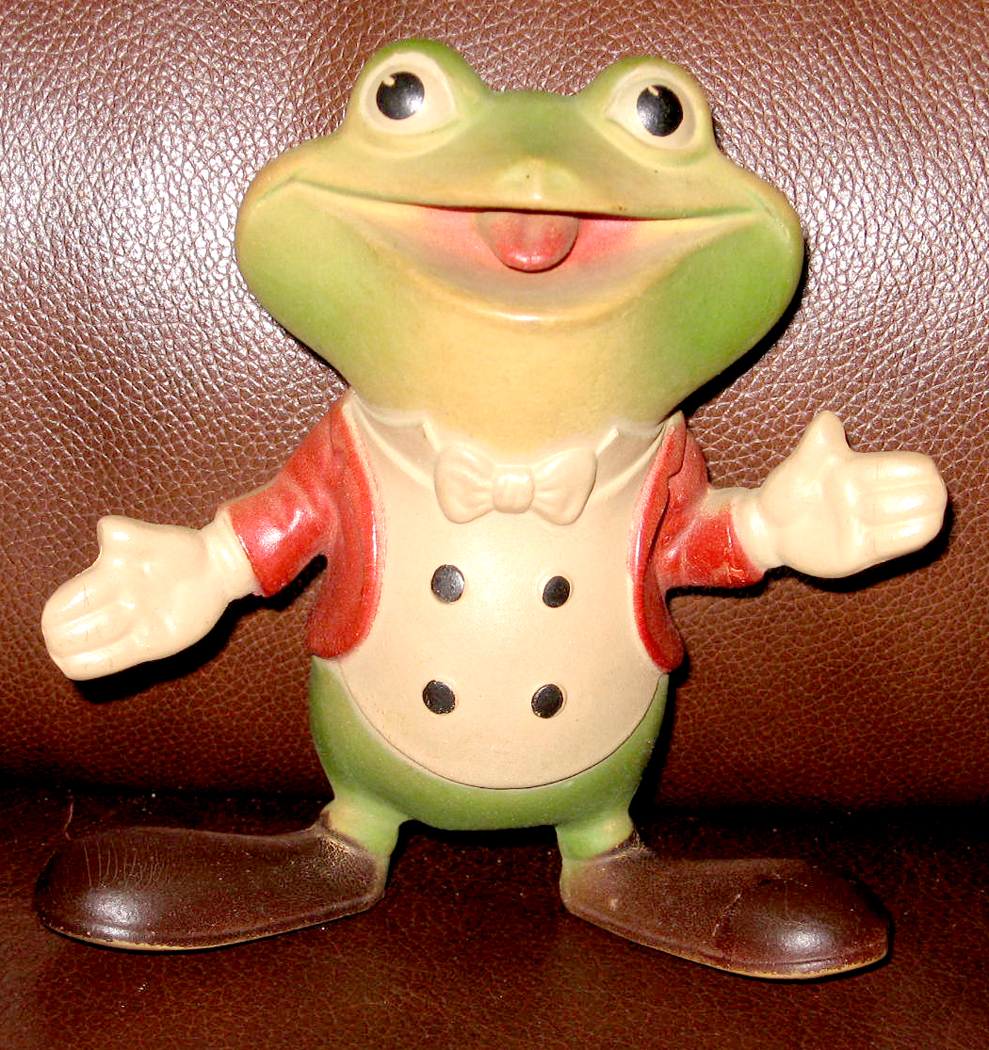
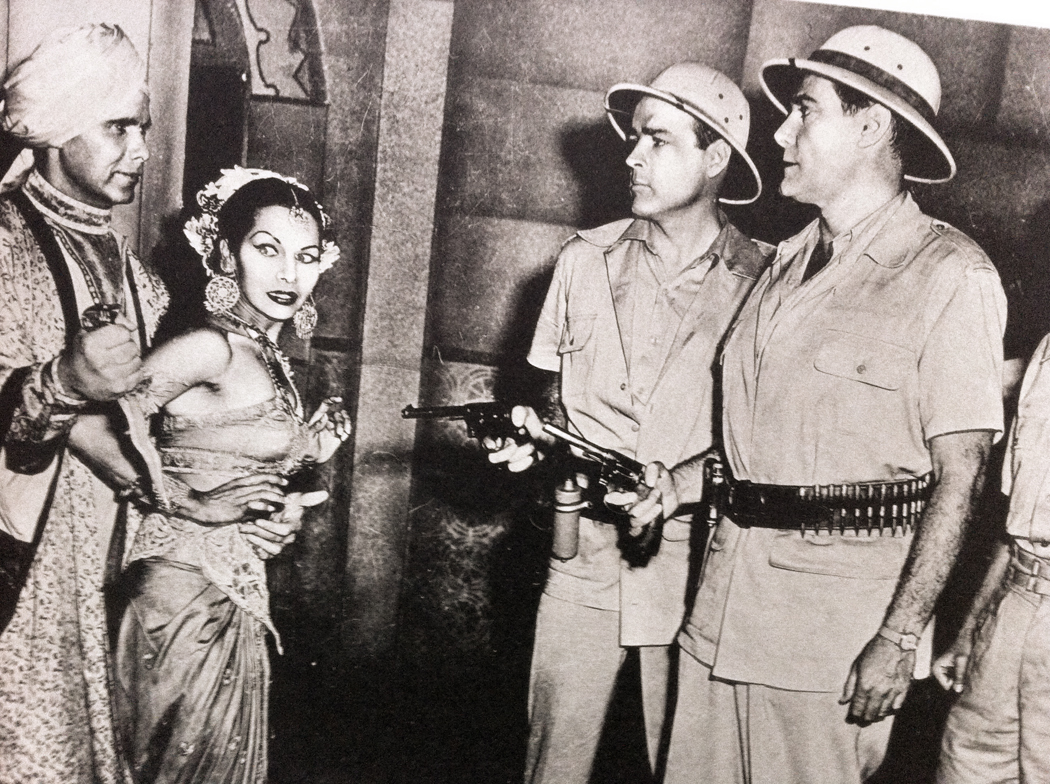
Andy Devine hosted Andy’s Gang, with the gremlin, Froggy: “Pluck your magic twanger, Froggy!” The show featured a serial of Gunga the East Indian Boy, which was supposed to be set in India, but was shot near Los Angeles. The confusion of jungles was common. Ramar of the Jungle switched between generic Africa and fictitious India. I was a kid, what did I know? Imagine my surprise when years later, on Million Dollar Movie, I saw Ramar (Jon Hall) as a South Seas islander, Terangi, with Dorothy Lamour in The Hurricane from 1937.

I look back now and think what a pioneer I was, eating up the first indigestible offerings the networks and independent channels served up.

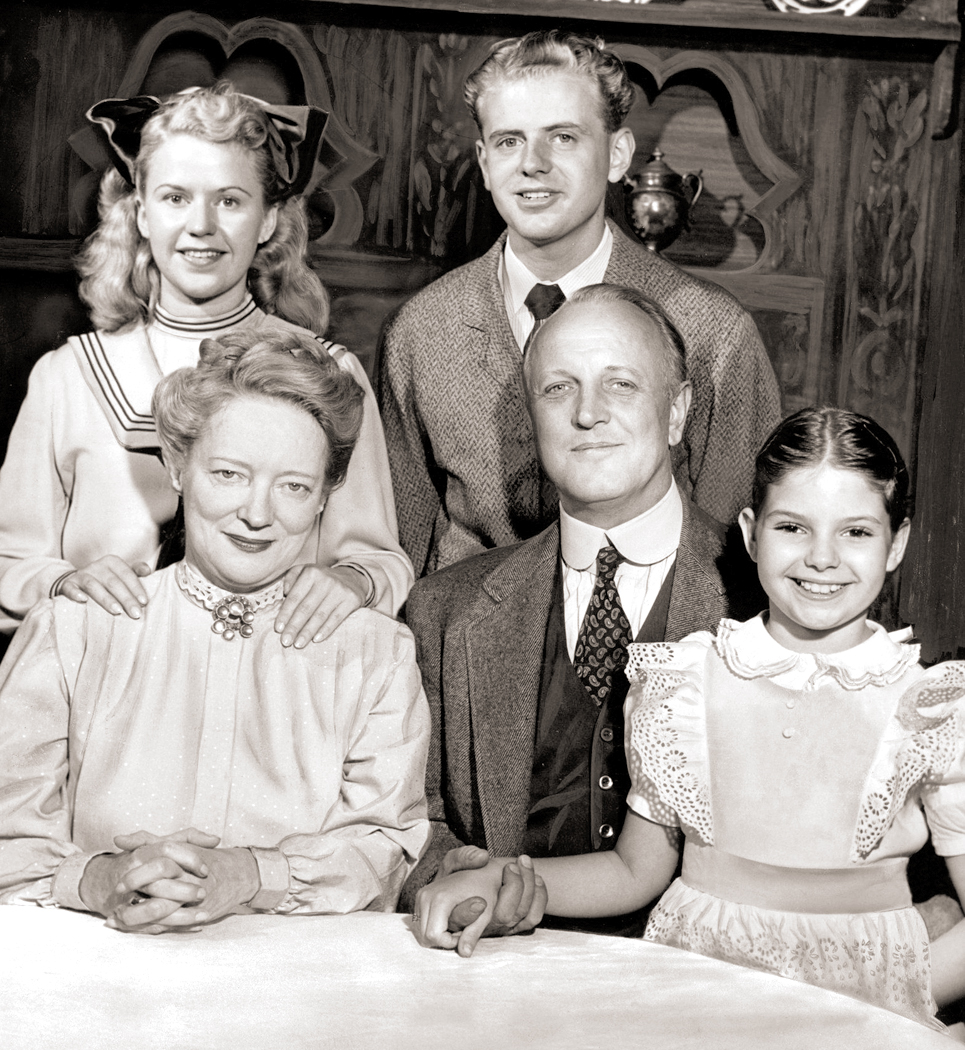
I remember I Remember Mama, The Goldbergs, Life with Riley, I Led Three Lives, Mr. Peepers, Bob Cummings, My Little Margie, and the early Postmodern Burns and Allen. There were searchlights that I didn’t understand in the credits of the Lux Mystery Theatre and a horrible vise that trapped a silhouette in Climax.

In the afternoons, in the years before I went to school, I watched Art Linkletter’s House Party and Ernie Kovacs, before his later primetime shows.

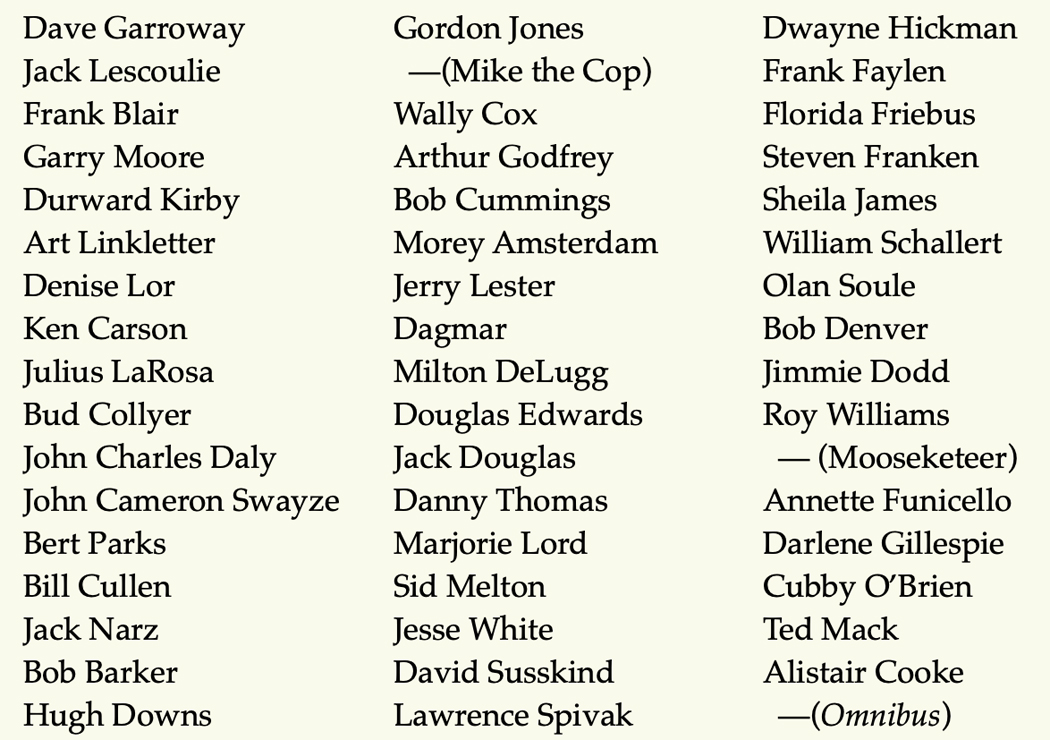
There was Arthur Godfrey and his ukelele and Garry Moore and his Durward Kirby, along with singers Ken Carson and Denise Lor. It was on the Moore show I saw my first stand-up comedians, when Wayne and Shuster appeared. The orchestra was led, of course, by Milton DeLugg and his accordion.

Even Morey Amsterdam had a brief afternoon show, where he told jokes between a note or two on his cello.

Television was certainly more populated than my real life: I came to know many of its citizens almost as if they were friends. I don’t know what I would have done without Hopalong Cassidy every day.

The familiarity continued as I grew up. Each age had its phosphoric denizens, and it’s astonishing how many of them were Westerns: Cheyenne, Maverick, Have Gun, Will Travel, Wagon Train, and Rawhide took the place of Sky King, Annie Oakley and Roy and Dale.

It’s a shame how much square footage in my cranium is taken up with old crates stuffed with meaningless gibberish:

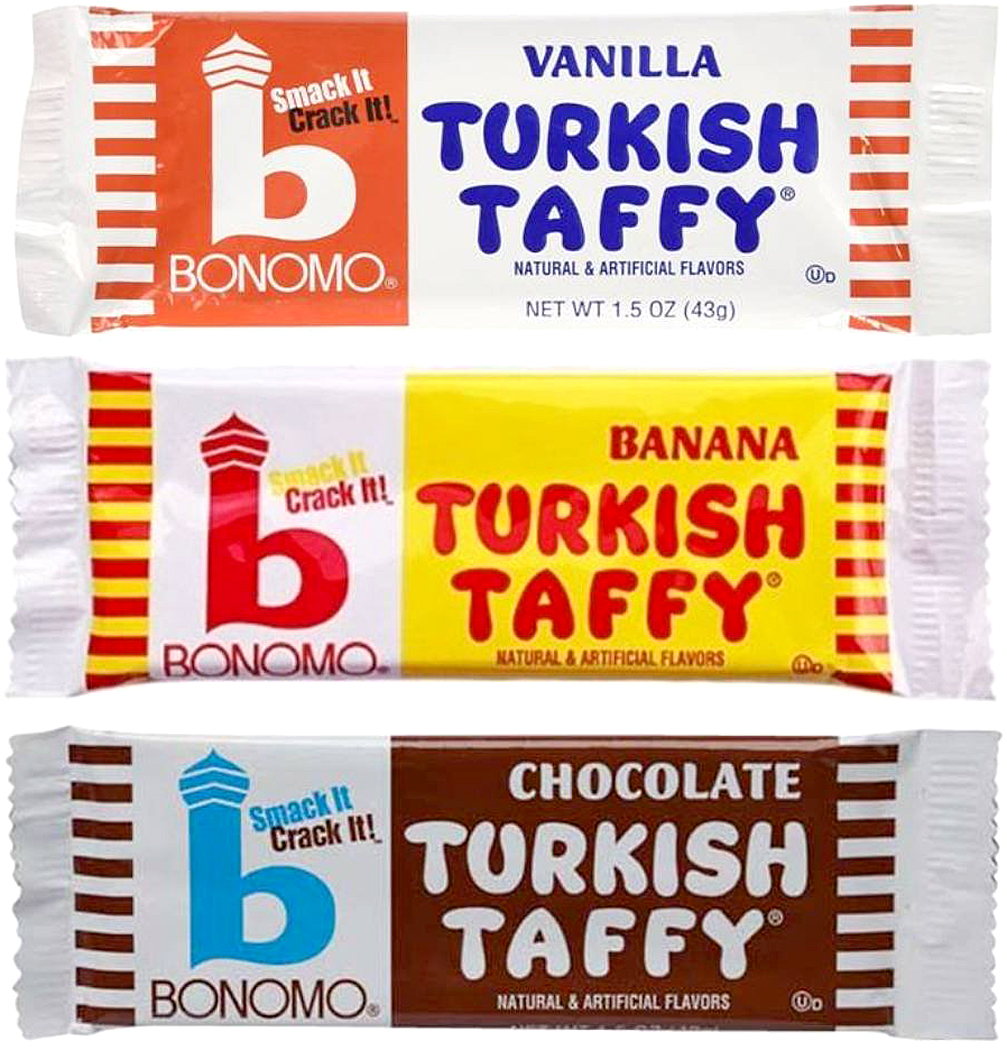
“B, O — N, O — M, O — Bonomo’s” Turkish Taffy.

Hoffman Beverages, Carvel Ice Cream.

“Who’s the first to conquer space?/It’s incontrovertible/ That the first to conquer living space/ Was the Castro Convertible./ Who conquered space with fine design?/ Who saves you money all the time?/ Who’s tops in the convertible line?/ — Castro convertible.”

“Now back to those thrilling days of yesteryear …”

“What a revoltin’ development this is.”

In high school, it was Man from U.N.C.L.E. and Mission Impossible.

I am mortified at how much time I spent in front of the screen, soaking up American TV culture. And none of it seems to have escaped. It’s all still in there. 

“A little travelin’ music, Sammy — And away we go.”

Dave Garroway holding that meaty palm up to the screen, close enough it seemed to leave a grease print on the inside of the screen glass. “Peace,” he said, every single day of my childhood. I don’t know just how large a part of my decision to become a conscientious objector during the Vietnam War that daily intonation was. I suspect it played a larger part than having gone to a Quaker college.

Joe Franklin and Memory Lane; Jack Bailey and Queen for a Day; Jon Gnagy and Learn to Draw. Jack LaLanne and Marty Glickman and Win Elliot and Jack Paar. 

From infancy, plopped in front of the tube, and through grade school, when I remember spending every night spread out on the carpet in front of the console TV with my two brothers, with our parents in the chairs behind us, smoking cigarettes. We’d hit the freezer for a bowl of ice cream or the cookie jar for a handful of Oreos, and nibble and watch, hypnotized by Ed Sullivan or Carol Burnett.

Every culture has its mythology, its stories and foundational personages. For my generation — and those to follow — television and its plots and casts have replaced historical figures (at least those not turned into Fess Parker’s Davy Crockett or Hugh O’Brian’s Wyatt Earp) and the Bible stories that earlier generations grew up with. It was the TV mythology that filled out my inner picture of what the world was and how it functioned. I’m afraid it may have done the same to every generation since. Chester A. Riley gave way to Marcia Brady to Alex P. Keaton to Eric Cartman to Tyrion Lannister. If only the gray matter were stuffed with all of Dickens or Dostoevsky instead of Jerry Mahoney and Captain Video, what a wonder would have been. 

It gives me the creeps now to think about how much of my childhood was wasted utterly. But it’s all in there, the well I draw on. 

As Stephen Colbert says, “I don’t know if these are actually sins, but I do feel bad about them.”

I have a seven-decade long reputation to maintain as a dour, serious-minded  stick-in-the-mud, with no time for trivialities. My theme song is Party Pooper. My favorite color is gray. My wife used to call me, “The man who can’t have fun.”

I argued back that I have lots of fun, but for me fun is reading Gilgamesh or Xenophon, listening to Beethoven piano sonatas while following along with the Schnabel edition of the score (including reading all the footnotes), listening to lectures on the Indus Valley Civilization or the Black Death from the Great Courses Plus, watching C-Span Booknotes and waiting with great anticipation for the C-Span bus to visit Sheboygan or Wilkes-Barre. These things give me great pleasure and fill my life with great joy.

Yet, that doesn’t mean I don’t have my guilty pleasures — bits of pop culture that I partake of on odd occasions. There are times I switch away from the PBS Newshour or online lectures from M.I.T. and let my hair down. You won’t tell anyone, will you?

Here, then, are five guilty pleasures that I recommend to you. (There are more, but my quotient for mortification is limited).

Drunk History — It would be hard to find anything sillier than Comedy Central’s Drunk History. Created by comic Derek Waters and Jeremy Konner, it asks various, mostly D-list entertainers to drink themselves goofy and attempt to tell the story of some historical figure, while various, mostly A-list actors and comedians lip-synch costumed re-enactments of the events.

The camera switches back and forth between the drunkard, in a home with an equally plastered Waters, and the beautifully photographed recreations, in which the actors perfectly mime the words of the storyteller, right down to the hiccups and incoherence. A fair number of the drinkers wind up finishing their tales while driving the porcelain bus; others pass out on the couch.

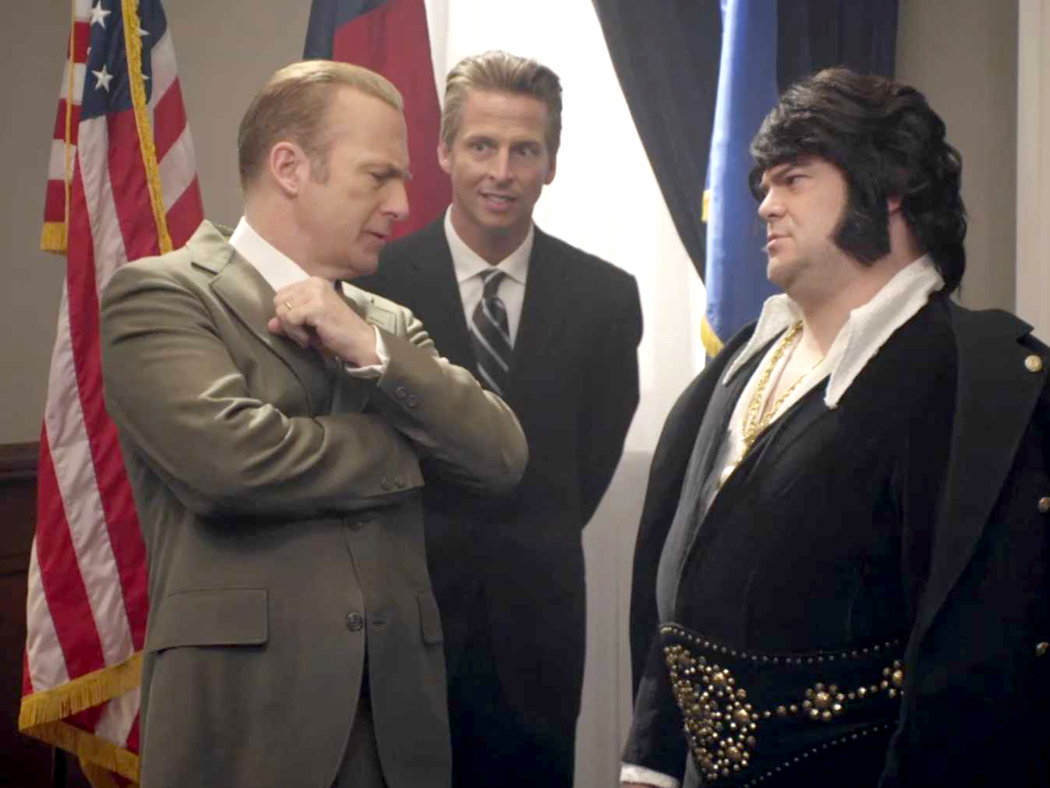
A few for-instances: Actor Eric Edelstein tells the story of Elvis and Nixon, while we see the re-enactment with Jack Black playing Elvis, Bob Odenkirk as Nixon and Jack McBrayer as H.R. Haldeman.

In another, Tiffany Haddish (they’re not all D-list) tells us about French Resistance fighter Rose Valland, who saved and helped retrieve hundreds of art treasures threatened or stolen by the Nazis, with Busy Philipps playing Valland in the dramatization.

For most of the half-hour shows, three stories are told, with the first two taking up 5 to seven minutes each, separated by annoying commercials, and the third filling two segments, with annoying commercials in between. (As usual, the best solution is to Tivo the show so you can fast-forward through the muck).

One of the best shows recently was when Lin-Manuel Miranda got himself pie-eyed and tried to summarize the life of Alexander Hamilton. He got the whole half-hour. Blind-casting adds extra confusion to the show: Hamilton was played by Alia Shawkat; Aaron Burr was Aubrey Plaza; Bokeem Woodbine was George Washington; and Tony Hale was James Monroe. I am astonished that Miranda would risk reputation, alcohol poisoning and brain damage to take part, but it was a scream.

And one can actually learn things from this show, although you will want to verify what you find out by actual reading and research. Sometimes the drunks get confused.

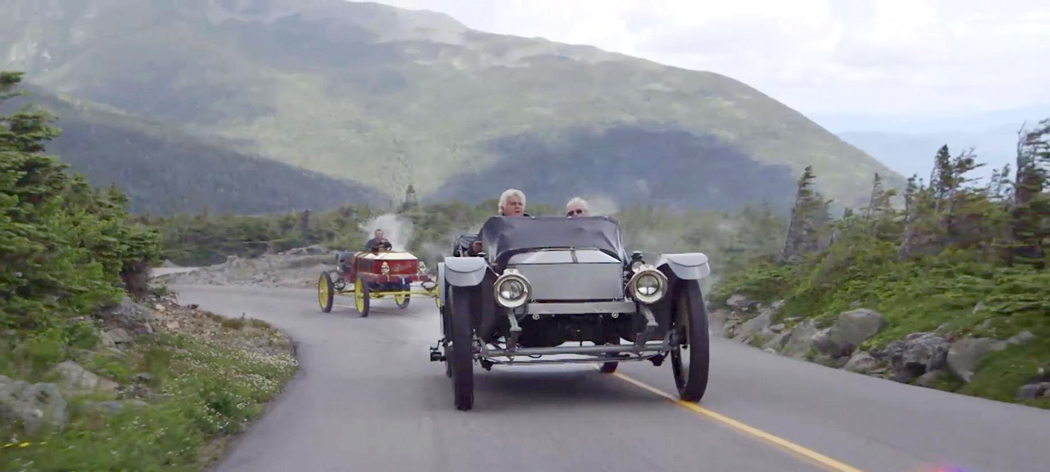
Climbing Mount Washington, N.H., in Stanley Steamers

Jay Leno’s Garage — I’m old enough to remember when Jay Leno was funny. Before the Tonight Show de-clawed him and turned him into a toothless shill for Hollywood celebrity backslapping, Leno was edgy, took chances and snookered the very thing he later became mouthpiece for. Now retired from the daily grind of pleasing his corporate masters, Leno, now 67, is still a workaholic, but it seems now he can put his energy into something he actually cares about: cars.

With Gabriel Iglesias and his 1966 VW bus

Reportedly, he owns 286 vehicles, both cars and motorcycles, and has a garage that could double as a museum. In his current show, on CNBC — a network that as far as I can tell, is watched by no one — Leno gets to play with his toys and his enthusiasm is infectious.

As someone who does not care about cars — I think of them as being appliances, like washing machines on wheels — I am surprised myself at how much I enjoy watching Leno enjoy driving Maseratis, Bugattis, Abrams tanks, fire engines, monster trucks, drag racers, and a 1939 Ford pickup truck loaded with the radial engine of a Cessna airplane.

He often has Hollywood friends show up with their own favorite autos and bikes. Keanu Reeves manufactures high-end motorbikes. Comic Adam Corolla has been collecting race cars once owned and driven by actor Paul Newman. Tim Allen plays “Stump the Car Nerd.” Arnold Schwarzenegger shows off his electric Mercedes-Benz G-Wagen conversion.

It is less the high-end muscle cars that interest me and more the peculiar vehicles he encounters, like the Mars Rover, the Ripsaw EV-2 civilian tank that can reach 60 mph, the two-story tall dump truck that carries borax from the mines, the wienermobile, a convertible filled with water and turned into a mobile hot tub. There are a lot of these.

But mostly, it is the obvious pleasure Leno takes in his toys that makes this series a joy to watch.

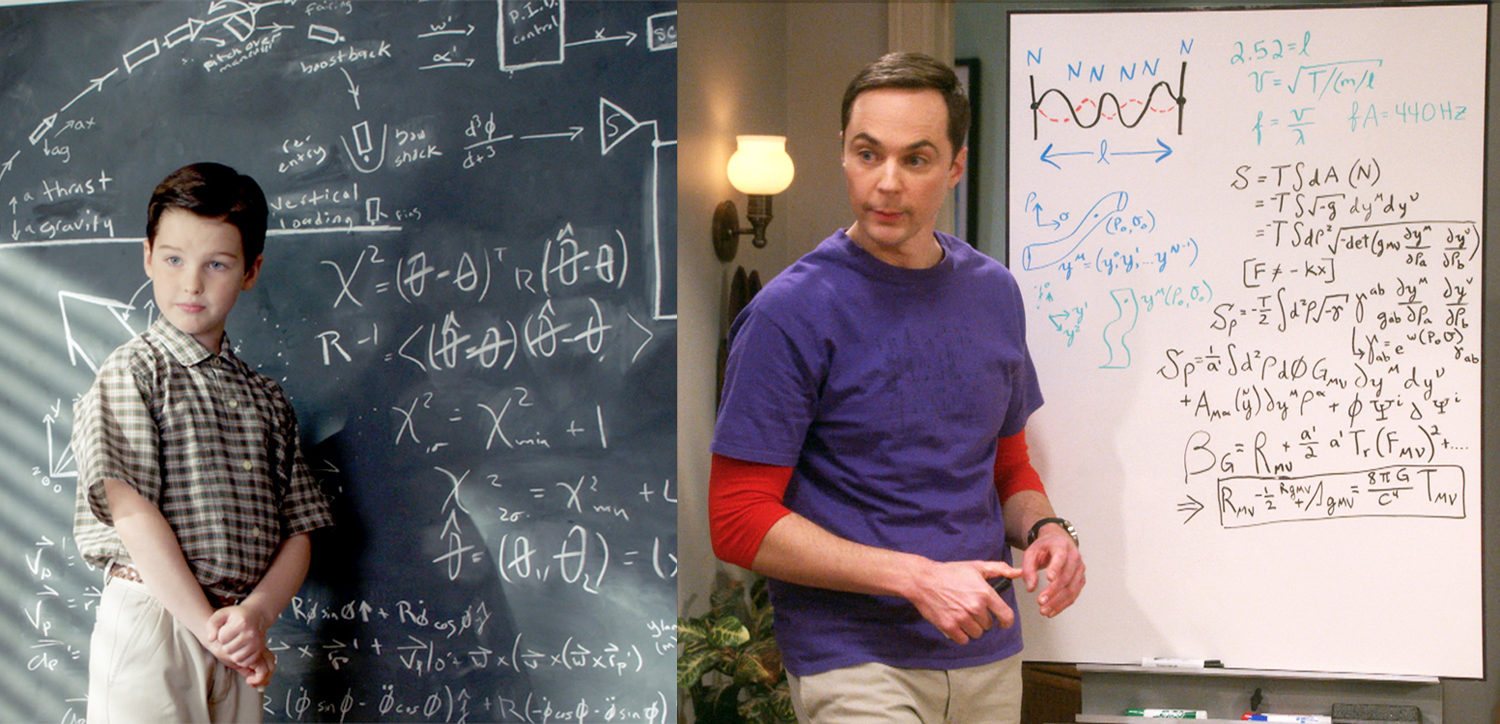
Young Sheldon — This never sounded like a good idea. A spin-off from The Big Bang Theory, this show follows the 9-year-old genius, Sheldon Cooper, as he negotiates life, neuroses and high school.

The parent show has long jumped the shark (although I continue to watch it because, even worn out, it has more energy — and more smarts — than most things on TV).

Many years ago, when the Colbert Report first broadcast, it was sharp and funny, but I was sure — and most people I knew were sure — there was no way to keep this up. But it kept up for nearly 10 years. In the same way, I don’t see how Young Sheldon can keep it up. But I was wrong once; maybe again.

Young Sheldon is quite different in tone from its predecessor. Big Bang is a three-camera, live-audience show and written to showcase gags and caricatures. (This is not a complaint: It has done that very well for many years). But Young Sheldon is a one-camera show, with no laugh track, which allows it to be more real.

Zoe Perry and Laurie Metcalf

And, while it is hard to actually care for the Big Bang characters — they are all there to be laughed at — Young Sheldon has so far given us warm, three-dimensional human characters. None more warm or more human than Sheldon’s mother, Mary Cooper, played by Zoe Perry, who happens to be the daughter of Laurie Metcalf, who has long played Sheldon’s mother on Big Bang Theory. The physical resemblance is striking, but more so, the personalities. There is a harried, confused wisdom in her character.

Just as good, 10-year-old Iain Armitage plays the 9-year-old Sheldon without ever being cute, without downplaying his atheism or his neuroses. Or his innocent bafflement at the complexities of the human condition.

The core of the show is Mary’s relationship with the gifted Sheldon and with her mother, the cantankerous Meemaw (Annie Potts). If there is a flaw, it is that the rest of the family, father George, sister Missy and older brother George Jr., are rather less developed, although Lance Barber brings warmth to a blustery father George, who we know from Big Bang, will die of a heart attack. That gives added resonance to the show.

Please excuse me if I sound like a critic writing a review. It’s what I am; I cannot shake it.

But, I recommend Young Sheldon. It really surprised me.

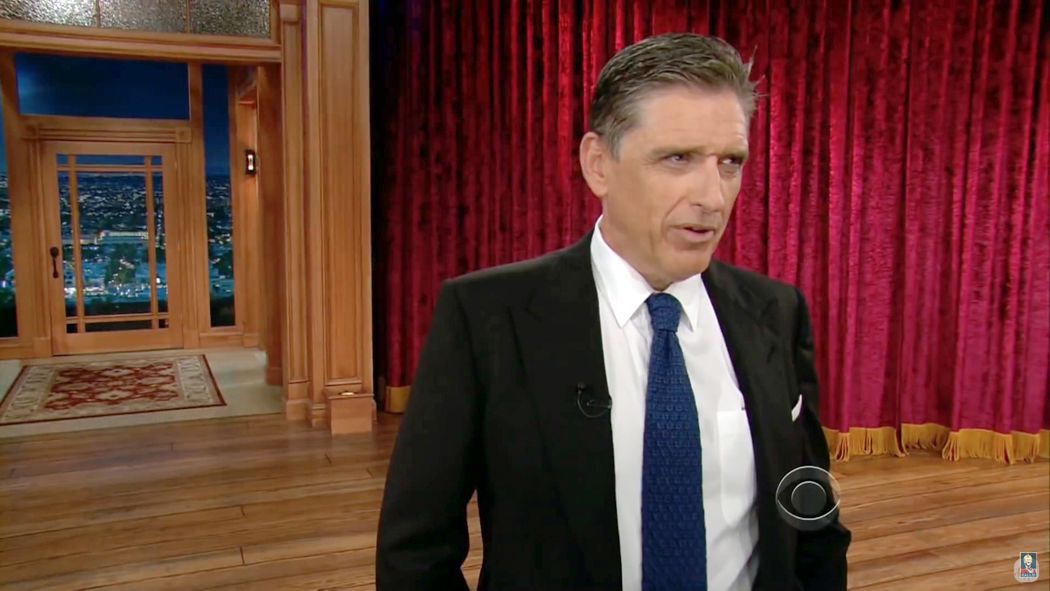
The Late Late Show with Craig Ferguson — Ferguson left the Late Late Show in 2014, after nine years behind the desk. But segments of the show are all over YouTube, uploaded by several perseverant chroniclers.

When the show was live, I often watched (via Tivo the next day, so I could fast-forward through those damned Shamwow and boner pill commercials) but even I have to admit there were bits of the show that proved tedious. I could never enjoy the e-mail and tweet segments, and the monolog was often rather shaggy. And when there was a musical guest, I just turned the thing off.

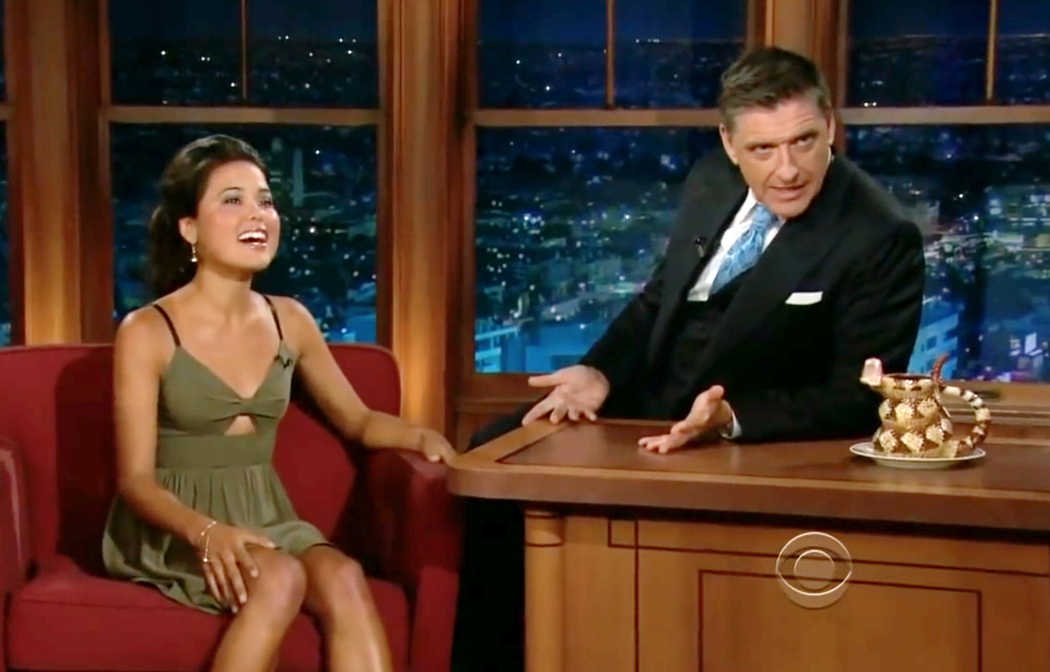
Sarah Paulson and Craigyferg

But Ferguson must be the best late night interviewer there has ever been. The purpose of late night TV is for celebrities to come on, pretend to be regular people and plug their latest project with the assiduity of a used-car salesman. The whole set-up is unashamedly artificial.

Ferguson, in contrast, didn’t interview his guests so much as have a conversation with them. It was not unusual for them never to get around to the current “project.” Oh, there were guests who were duds, who wanted to coerce the talk back to their sales pitch, guests who did not seem to understand the nature of Ferguson’s self-described deconstruction of the late night talk show.

But there were many guests who got it, and they often came back over and over. Kristen Bell appeared 28 times. William Shatner 25, Regis Philbin 25, Betty White 22.

Ariel Tweto, one of his regulars

I am old enough to remember Jack Paar. Paar had a stable of regulars who came back over and over and took part in witty conversation. Peter Ustinov, Robert Morley, Oscar Levant, Hermione Gingold, Genevieve, Jonathan Winters, Dick Gregory.

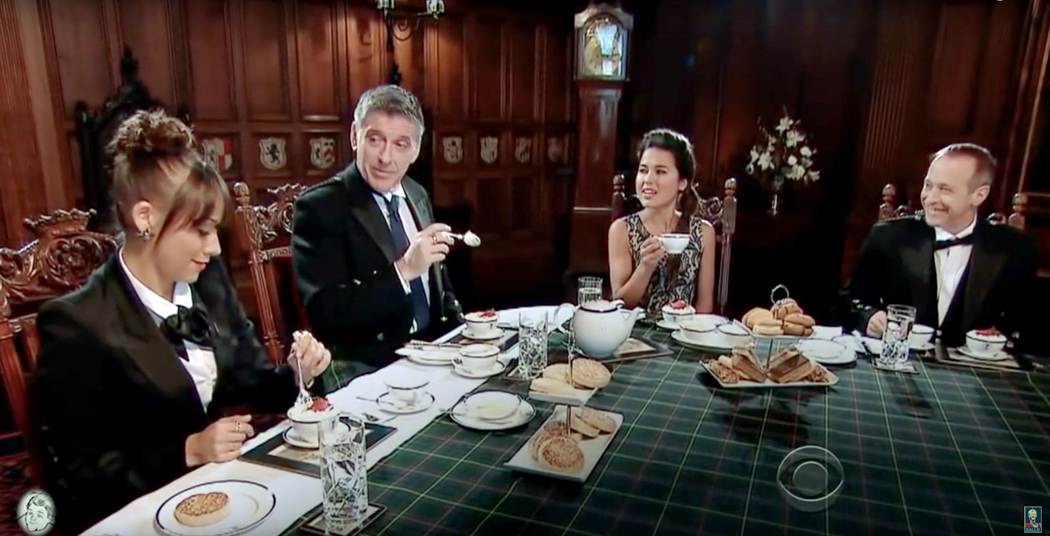
Ferguson had his crew, too. They were those who obviously adored Ferguson, and understood the subversive nature of the broadcast. They often showed up with nothing to promote. Just to be there and talk. Bell was prime among them, but so, too, were Rashida Jones, Michael Clark Duncan, Paula Poundstone, Larry King, Kathy Griffin, Carrie Fisher, Mila Kunis, Lauren Graham, Jeff Goldblum, Morgan Freeman, Marion Cotillard.

Ferguson in Scotland with Rashida Jones, Ariel Tweto and David Sederis

This was a fabulous stable of personalities, including several that had obviously been previous amours of the host, and they hinted furiously at it.

The advantage of the YouTube videos is that you can see the interviews, often strung together (the set of Kristen Bell interviews lasts 4 hours, 41 minutes). Among the most infectious: Rosie Perez’s 8 visits;

Ferguson is also obviously intelligent, although he did his best to downplay that. But he has had many authors on, spent an entire hour with Archbishop Desmond Tutu (for which he won a Peabody Award), and another hour with Stephen Fry — and once had as a guest a professor of moral philosophy (who happened to be Claire Danes’ father-in-law).

Bob Steele

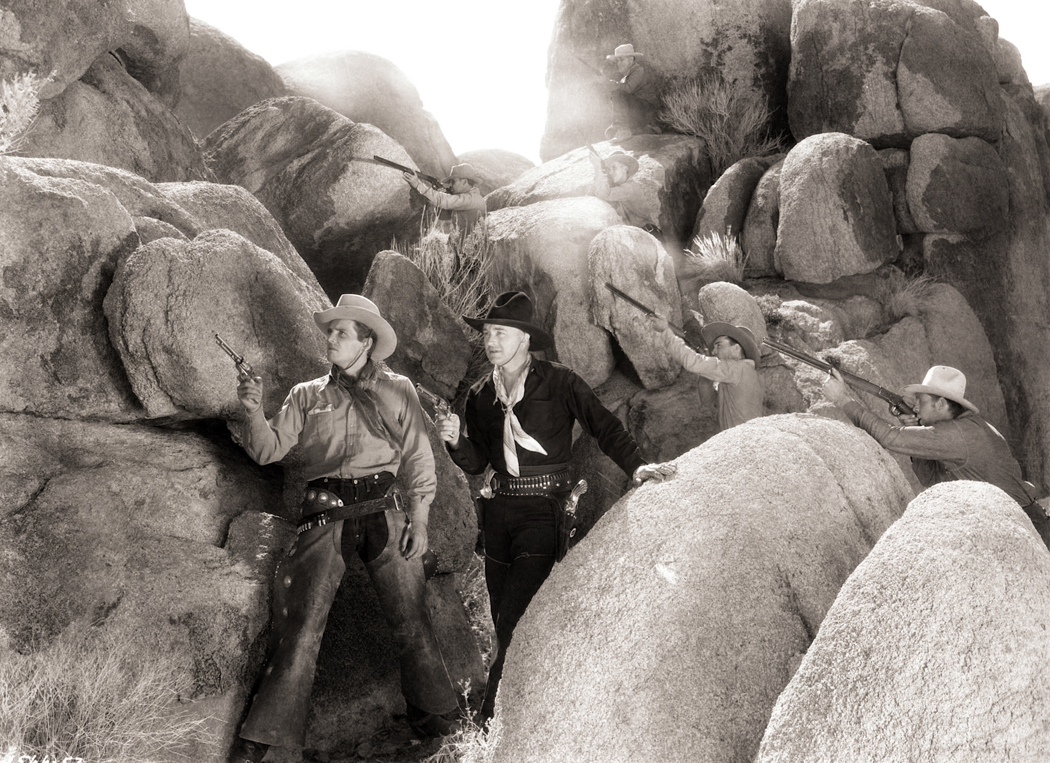
Cowboy movies — I use this term instead of “Westerns” because I mean a specific type of film: the cheaply made series films from the late silent era through the 1930s with stars such as Buck Jones, Col. Tim McCoy, Hoot Gibson, Bob Steele, Ken Maynard, William Boyd and, of course John Wayne.

Buck Jones

I was born at roughly the same time as television, and in those early years, stations scrambled to find content to fill those broadcast hours, and reams of old cowboy films were re-released cheaply to the stations and ran constantly, especially on the independent channels. I saw a ton of them through my pre-school years and into grade school. I loved them.

So, it is with some nostalgia that I watch them again as a grown-up.

I am not talking here about the legitimate Westerns by John Ford or Howard Hawkes, but of those films pumped out week-by-week from tiny studios such as Monogram and Republic. They were “programmers,” with repetitive plots, recognizable landscapes and often acting just this side of organic when compared with a dead tree.

Hoot Gibson

Not that there weren’t some good actors. Boyd, as Hopalong Cassidy, had a natural screen presence and a comfortable way with dialog. And John Wayne was magic on the screen, even in those early films when he was saddled with playing Singing Sandy, the singing cowboy.

And the secondary actors and the villains were played by what was almost a stock company of real pros such as Earl Dwyer, Charles Middleton, Harry Woods, Charles King, and Roy Barcroft. Dependable, every one. It was mostly the heroes who were stiffs.

But what most impressed me in these movies was their settings, the imaginary West of the cowboy, kicking up dust galloping through the Alabama Hills of California, with the glorious Sierra Nevadas in the distance, or the Santa Clarita Valley. Those backgrounds show up over and over again. I almost memorized them.

In the Alabama Hills of California

Alas, such a golden age couldn’t continue. Singing cowboys invaded the screens, such as Gene Autry and Roy Rogers, in movies much slicker and emptier than the earlier ones. And worse, the rising need to include a boy sidekick. Cowboy movies gave up on adults and became pabulum for children. In the ’30s, even grown-ups watched Hoot Gibson. He was my late father-in-law’s favorite actor.

Some good B-Westerns continued to be made in the early 1940s, but by the time Eisenhower became president, we had descended to Lash LaRue and Whip Wilson and the most stolidly oaken of all of them, Tim Holt. The lighting flattened out, as it tended to do in the TV-influenced ’50s, and no one really seemed to believe in what they were doing.

The quality of many cable channel Westerns is atrocious, all grainy and contrasty, and at least one S.O.B. has added synthesized music to the originals. But a good print is as beautiful and professional as anything else the studios pumped out in that wonderful era of film. Luckily, one can still occasionally find a good print on Turner Classics, and the Hoppy movies are usually in good shape, thanks to the foresight of Boyd, who bought them all up in the late ’40s and curated them carefully.

So, there you have it, the pleasures I am embarrassed to admit to. I have no defense. But I know I share some of these sins with some of you.