Archive

Tag Archives: verdun

I have traveled more widely than most, I believe. I was a travel writer for my newspaper (among other things). But even outside of vocational duties, travel has been central to my life. My late wife and I have been on the move considerably, visiting each of the 48 contiguous states many times, and gone outside the country when we could. In the summer of 1981, for instance, we put 10,000 miles on the car while driving around the country. We were both teachers and the summer gave us the chance to wander. 

There are places, however, that I have gone back to, over and over, throughout my life, not through mere happenstance, but because they have been meaningful. They are destinations for non-religious pilgrimages. 

Meaning can be hard to define. On first thought, one thinks “meaning” implies a second message: “This” means “that.” “I know what he said, but what did he mean?” That sort of thing.

But meaning has a more personal existence, a psychological one. Something can have meaning even if you don’t know what it means. I suppose you might otherwise call this significance. And there are places I visit over and over because they bear the weight of personal significance. They have meaning. And I go back to them. 
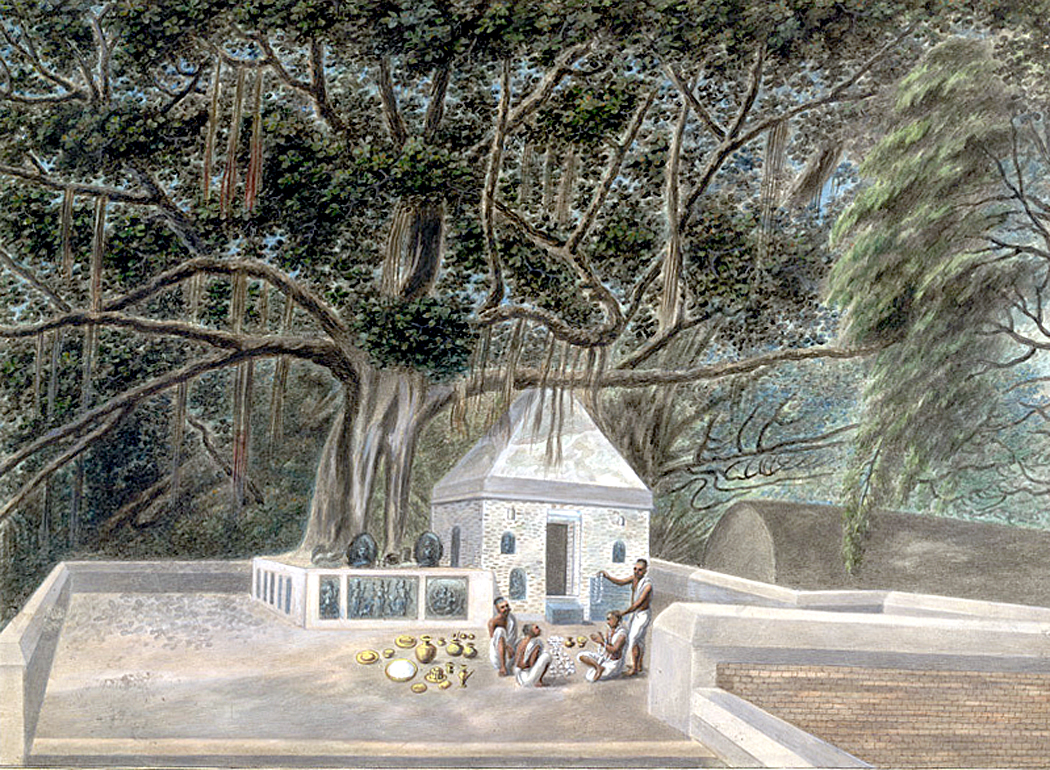
Bodhgaya

It isn’t just me. The world is full of such places, some personal, some cultural, some religious or spiritual. They can be sacred spaces or holy ground. They have accrued some emotional hold on those for whom this kind of significance has meaning. It can be the Buddhist bo tree, the Dome of the Rock, the Western Wall, Independence Hall. For a few of us, the list would include Fenway Park. These are places of social significance and people will make the hajj to see them out of devotion or just to absorb the numinous halo surrounding them. Life is empty without meaning, although what we call meaning and where we might discover it is personal. 

Meaningful places needn’t be so to groups, or to have religious importance. I have no belief in ghosts, spirits or ouija boards and I don’t believe that the past hangs on to the present to make itself palpable. But I have several times experienced a kind of emotional resonance when visiting certain famous sites. 
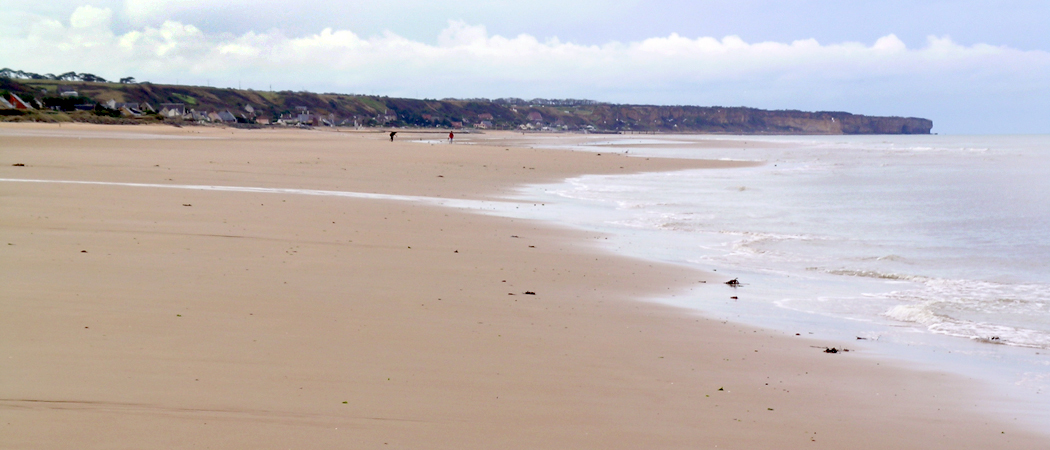
Normandy beach

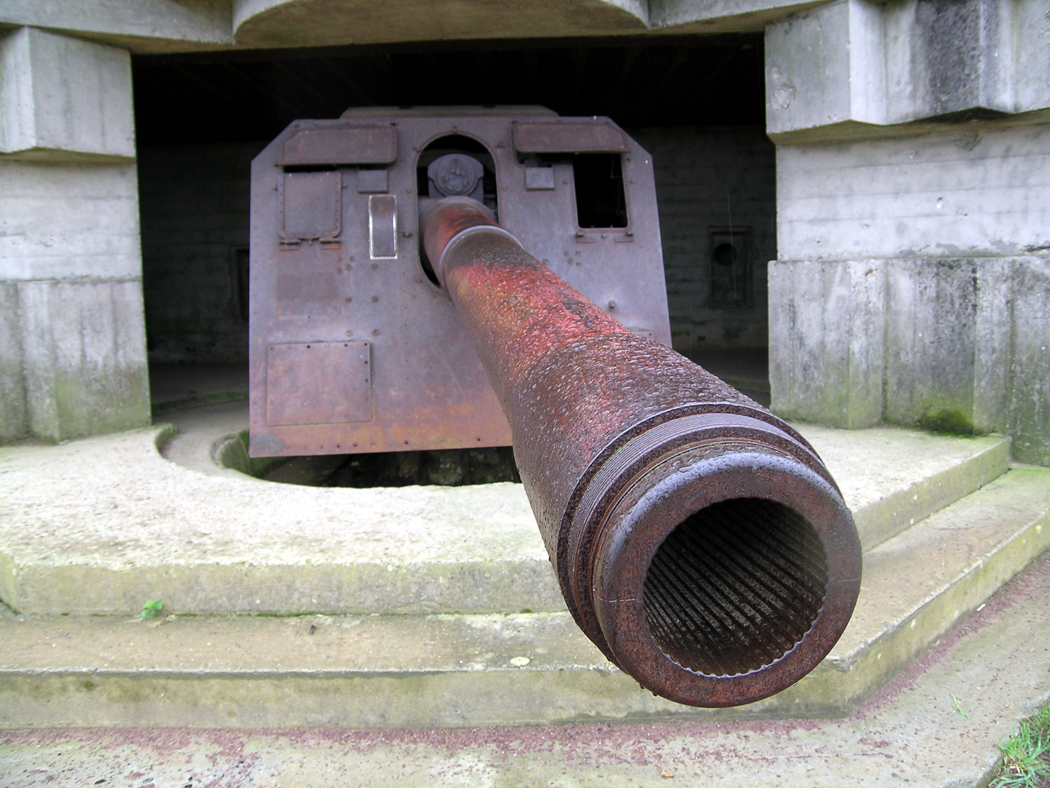
The thought re-emerged recently while watching the recent commemoration of the 80th anniversary of the D-Day landings in Normandy. I have visited those beaches and had an overwhelming rush of intense sadness. It was inevitable to imagine the thousands of soldiers rushing up the sands into hellish gunfire, to imagine a thousand ships in the now calm waters I saw on a sunny day, to feel the presence in the concrete bunkers of the German soldiers fated to die there manning their guns. 

The effect is entirely psychological, of course. If some child with no historical knowledge of the events that took place there were to walk the wide beach, he would no doubt think only of the waves and water and, perhaps, the sand castles to be formed from the sand. There is no eerie presence hanging in the salt air. The planet does not record, or for that matter, much note, the miseries humans inflict on each other, and have done for millennia. But for those who have a historical sense, the misery reasserts itself. Imagination brings to mind the whole of human agony.  

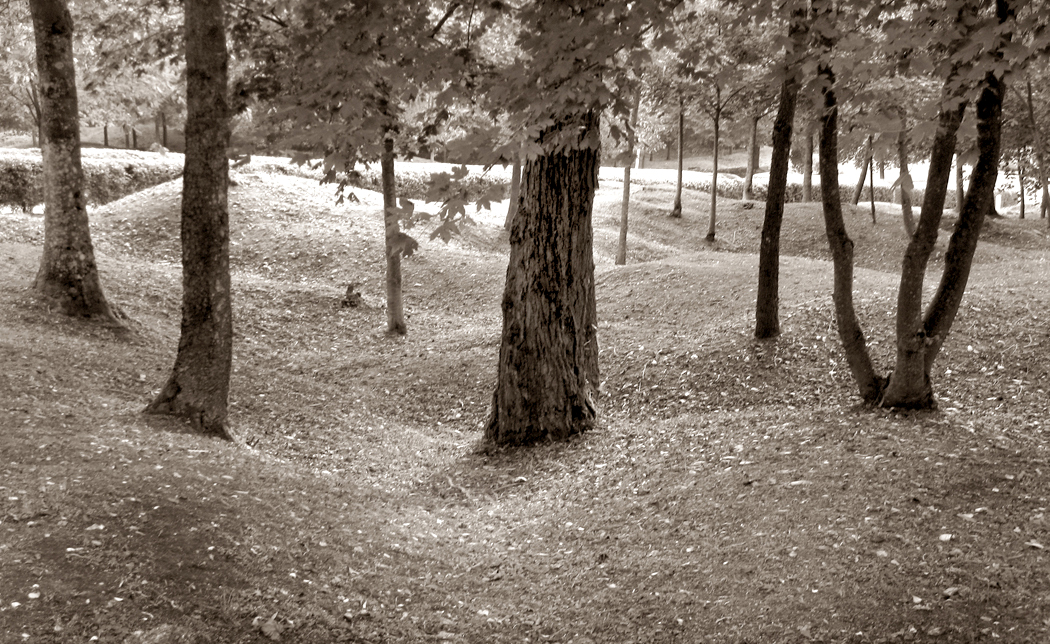
Perhaps I should not say that the earth does not remember. It can, in certain ways. Visiting the woods of Verdun in France, site of a horrendous battle in World War I, I saw the uneven forest floor, where time has only partially filled in the shell craters. Once the trees were flattened by artillery, leaving a moonscape littered with corpses. The trees have grown back, but the craters are still discernible in the wavy forest floor. The same child who thought of sand castles in Normandy might well think the churned land at Verdun merely a quirk of geology, but the land itself bears its scars. 

The presence of the dead was overwhelming at Antietam, site of the bloodiest battle during America’s Civil War. In one spot alone, a 200-yard stretch called Bloody Lane, 5,000 men were blown apart in a few short hours. 

Before Sept. 17, 1862, the brief dirt drive was called the Sunken Road, and it was a shortcut between two farm roads near Sharpsburg, Md. All around were cornfields rolling up and down on the hilly Appalachian landscape.

The narrow dirt road, depressed into the ground like a cattle chute, now seems more like a mass grave than a road. And it was just that when Confederate soldiers mowed down the advancing Federals and were in turn mowed down. The slaughter was unimaginable.

You can see it in the photographs made a few days after the battle. The soldiers fill the sunken road like executed Polish Jews. It was so bad, as one Union private said, “You could walk from one end of Bloody Lane to the other on dead soldiers and your feet would never touch the ground.”

It is difficult to stand now in Bloody Lane and not feel that all the soldiers are still there, perhaps not as ghosts, but as a presence under your boot-sole, there, as blood soaked into the dirt.

But it needn’t be horror or blood that gives meaning to a place. It may be achieved through personal association with something we lived through, or through esthetic appreciation — the sudden awareness of sublimity — or through an awareness of a less traumatic history born in a landscape. And I thought about places I have gone back to over and over; places that bear significance to me. I’m sure most of us could make such a list, whether long or short. Here are 10 of my personal pilgrimage sites that I have visited and revisited over a long life.  
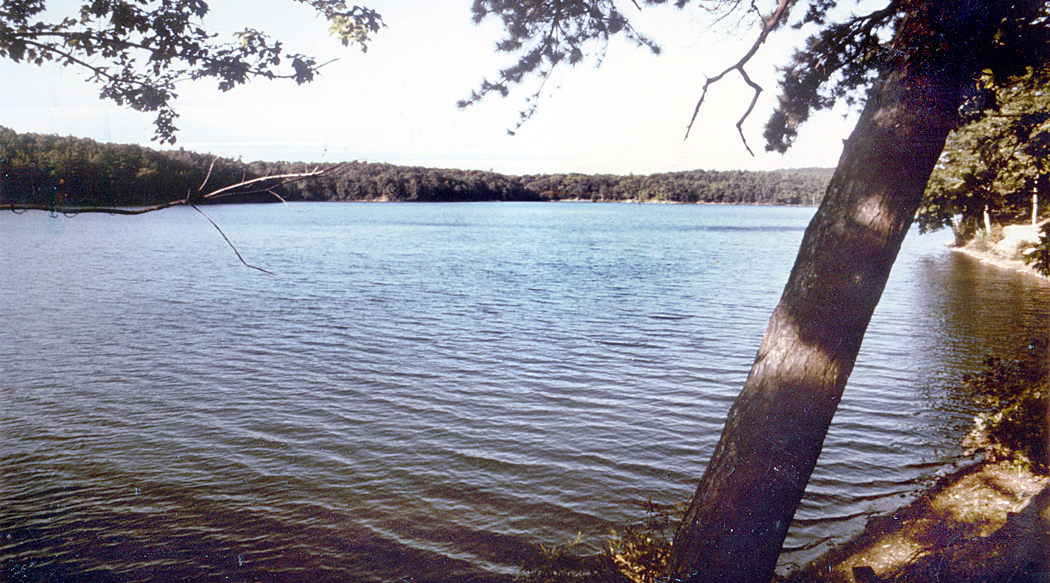
Walden Pond — I cannot count the number of times I have visited Concord, Mass., or how often I have made the pilgrimage to the glacial kettle lake just outside downtown where Henry David Thoreau built his cabin and lived for two years, and which led him to write his book about the experience. 

The most recent visit was only two years ago, passing through on my way to friends in Maine. The site now has a large parking lot and a visitor center (although the parking is primarily for summertime local beachgoers, who use Walden Pond as a swimming hole). When I first saw it, there was not much there but the water and the woods; I had to park alongside the road. 

I have circumambulated the pond, a walk of just under two miles, the first time in the early morning when a mist hung over the water and the sun slowly burned through. I have read Walden several times, and own several editions, both cheap and deluxe, and Thoreau’s other books, including his Journals, and eaten up his idiosyncratic style of writing with relish. 

Walpi

Hopi Mesas — In northern Arizona, the Hopi have built their towns primarily on three mesas, First, Second, and Third, which are really the southern fingers of the larger Black Mesa. We have visited all three mesas many times, including one snowy Christmas spent with a Hopi family we knew on First Mesa in the village of Walpi. The warmth of the hearthfire in the stone house, and the cookies we were offered, and the smiles on the faces of the children are indelible. 

Another time, we were invited to a social dance on Second Mesa in Old Oraibi, and climbed to the roof of one of the houses with the rest of the Hopi to watch and cheer the Kachina dancers. Another time, driving past New Oraibi, at the foot of Second Mesa, we were caught as traffic was halted so the sacred Kachina dancers could cross the road from where they emerged from the kiva and marched toward the plaza. We were not supposed to be there but couldn’t leave, with the Kachina traffic cop in front of us and several cars behind. We apologized profusely, but the angry cop didn’t seem to care. We shouldn’t have been there, but we also couldn’t have known a sacred dance had been scheduled for that day. 

You can stand at the cliff edge on First Mesa and look south over the Navajo Reservation, nearly to Flagstaff and marvel at the intense beauty of the Colorado Plateau. 

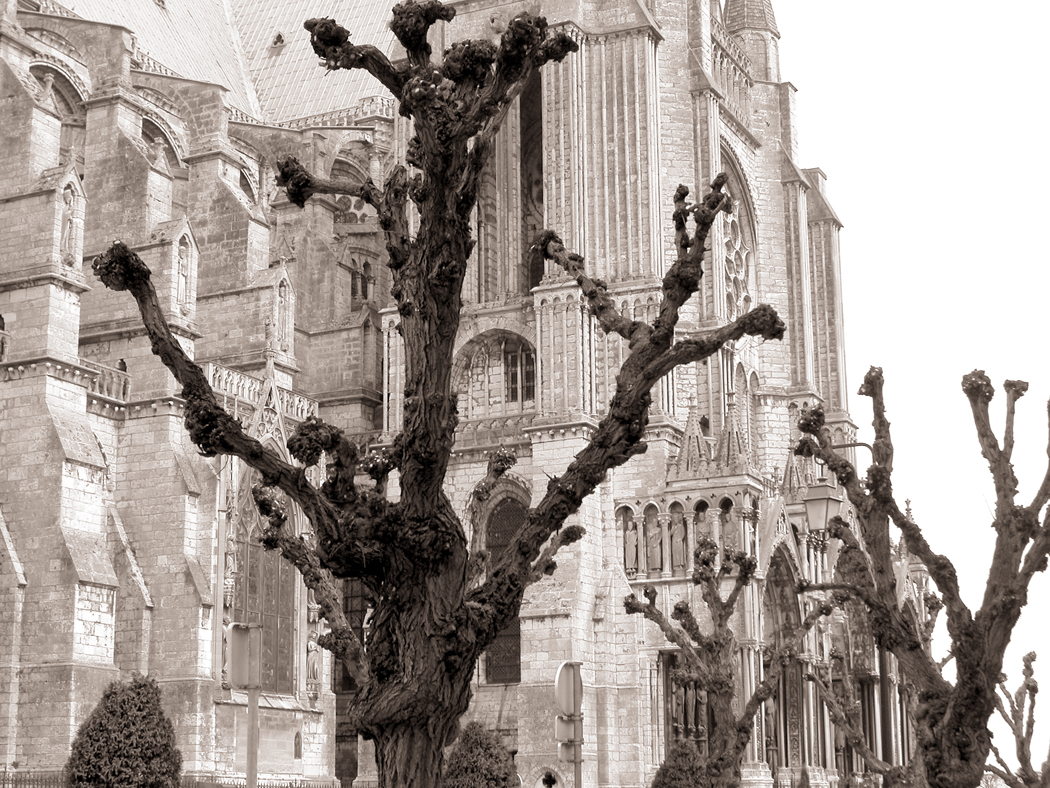
Chartres Cathedral — It wasn’t until our second visit to France that we managed to get to Chartres, but after that we went back over and over. The cathedral is, of course, a World Heritage Site, and a sacred place to many. But it spoke to me less of religion than of history — architecture 800 years old and still functioning for its original purpose. 

Most of the cathedrals and basilicas of Northern France have been restored and reworked (Notre Dame, before the fire, was largely re-imagined in the 19th century as it was restored by Viollet-le-Duc) but Chartres is almost entirely original. If you are sensitive to it, you can feel all that passage of time embodied in the stonework and the interior space. 

The cathedral sits at the top of a hill at the center of town, and can be seen in the distance from miles around. I have spent hours sitting in the transept meditating over the great north rose window, which remains the single most beautiful manmade object I have ever seen. The entire experience engenders awe. 

American Museum of Natural History — I was originally going to list New York City here, but then narrowed it down to Manhattan, but, really, the center of magic for me is the Natural History Museum. I first visited on a third-grade school trip and fell in love with the dinosaurs. But all through my childhood and adolescence I visited the museum as often as I could. I loved the dioramas, the dinosaur bones, the giant stone Olmec head, the huge suspended blue whale — even the “Soil Profiles of New York State.” To say nothing of the room full of chunks of quartz, each with a little typed tag explaining where it was collected. 

I could also have mentioned the George Washington Bridge, which my grandfather helped build; he was an engineer working on the bridge in the 1930s. Through most of my life, when living in or visiting New Jersey, I would take the bus to the bridge and walk across the bridge to 178th St. I have walked the bridge too many times to count. 

The Outer Banks — I went to Guilford College in North Carolina beginning in 1966 and soon met lifelong friend Alexander and we made annual camping trips to Cape Hatteras, usually in winter when the beaches were empty. Later, my first wife and I spent our honeymoon camped directly under the lighthouse. It was February and the regular campsites were closed, and so we pitched our tent in the dunes. 

I have been back over and over, with each succeeding wife or possl-q, although as I got to be old, we tended to sleep in motel rooms. When my brother began teaching in Virginia, he lived at the northernmost bit of the Outer Banks, Sandbridge, and when visiting I often made a side-trip back down to Hatteras and Okracoke. 

Once, with Alexander, we went after a huge storm, and parts of the road were washed out just north of the lighthouse. He got out of the car and walked in front, feeling the asphalt under his feet and leading me safely past the overwash. Another time, at night, we walked down to Cape Point with a Coleman lamp projecting our shadows, like giants, up into the misty black sky. 
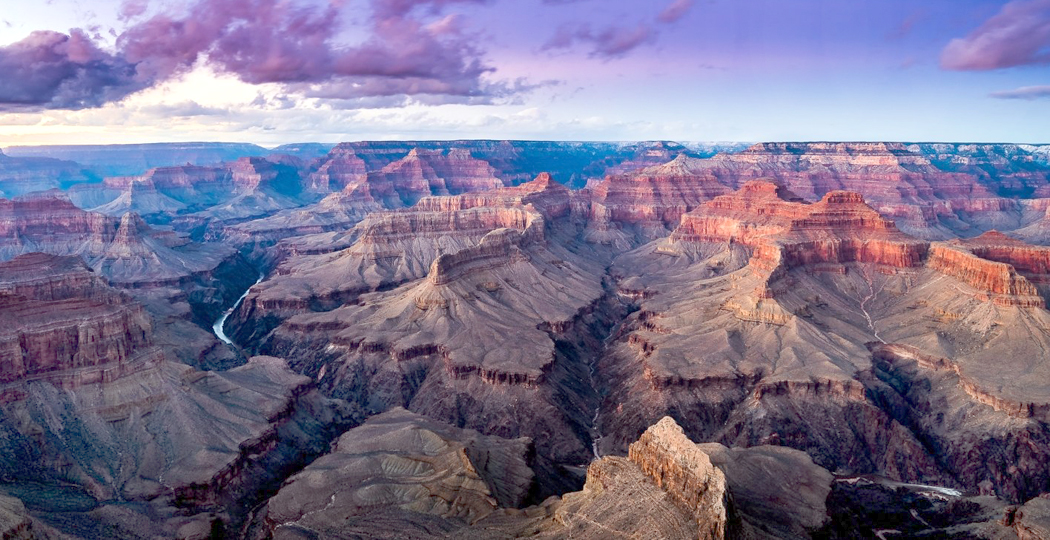
Grand Canyon — My brother once observed that unlike most hyped destinations, where you are always at least a tiny bit disappointed when you finally get there, the Grand Canyon is actually more impressive, more overwhelming, when you actually see it live: It never lets you down. It is 200 miles of vast geology, color, and depth. 

We lived in Arizona for 25 years and so I cannot number the times we visited the Canyon, mostly the South Rim, where most of the tourist action happens. But the second time we came, in 1982, we went to the North Rim and when we couldn’t get a room at the hotel there (it is always full), we went out of the park after dusk into the national forest, where it is legal to camp anywhere, and pulled into a side road in the dark. In the morning, we got out of the tent and discovered that if I had backed the car up 10 feet  further, we would have tumbled down into the canyon. We were right on the edge. 

And once, on assignment from the paper, I drove 60 miles off road to the Toroweap Overlook, also on the North Rim, but in pure wilderness where only a rare person ventures, and camped away from all city lights, where the night sky was neon in intensity. 


Hudson River Valley — I grew up in northern New Jersey, in the apotheosis of suburbia. But my father’s family had a rustic house — a “bungalow” — in West Park, N.Y., halfway up the Hudson River, and we spent many summer vacations, and at least one winter ski vacation, at the bungalow. It was the town where the once-famous nature writer John Burroughs lived. There was woods, a swimming hole with a waterfall. 

But up and down the river, from Dunderberg through Bear Mountain and the Seven Lakes Drive, it was the escape from the ordinariness of the suburbs. We regularly went swimming in the summer at Lake Welch, or watched ski jumping at Bear Mountain. 

In 1986, we drove up Perkins Drive to the top of Bear Mountain, during an outbreak of gypsy moth caterpillars. The tower at the top was covered in a sheath of hairy worms and the ground was gooey with the squashed ’pillars. It was eerie and more than a little stomach churning. 

The bungalow at West Park

The Nilsen family drove up Route 9W on summer weekends to visit the bungalow, and the three-lane highway had to curl around Storm King Mountain, a section of road that made my cautious father extremely nervous with a sheer drop down the edge to the river. They are gone now. That portion of 9W has now been re-routed and the treacherous third (middle) lane now long gone. Near Haverstraw, the “Ghost Fleet” of WWII-era liberty ships were moored. They are gone now. So is the bungalow. I am sorry for that. 

From the Palisades up through the Catskill Mountains, the Hudson River is holy ground, as far as I am concerned. It glows with the inner light of myth. 
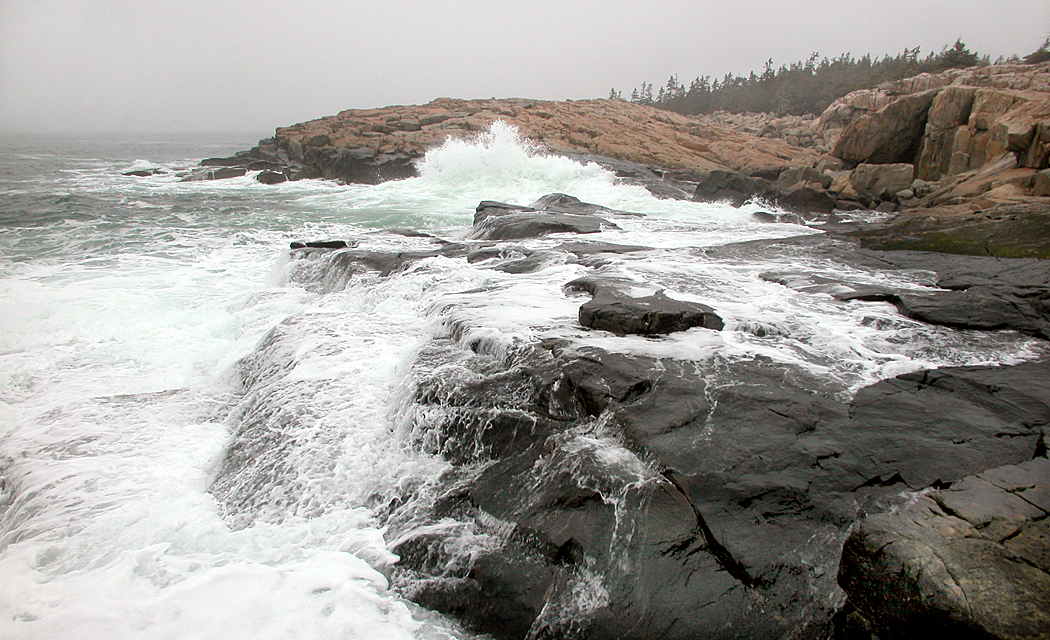
Schoodic Point — Maine is its own mythology, and like the city of New York, I was going to include the whole state in my list, but likewise, I have narrowed it down to the place that I have been back to over and over for the longest. I first visited Maine as an infant when my parents took a trip there. I can’t say I have any memory of then. But subsequently, I have been there many times, now to visit my friends Alexander and Mary Lou. I’ve traveled the whole state over, camped at Mt. Katahdin, driven round Mooselookmeguntic Lake, reached the summit of Cadillac Mountain on Mt. Desert Island, took the tour of the paper mill in Millinocket — and you can get there from here. 

But the mythic center of Maine for me has been the rocky bit of coastline that juts out into Frenchman’s Bay north of Acadia National Park, called Schoodic (with the double “O” pronounced as the “oo” in “good.”) It is one of those windswept romantic landscapes where the spume blows into your face, the waves crash against rock with an explosive boom, and the sky, water, and land still seem of one substance. 

Giverny — I’ve been to Monet’s house and gardens three times, once in the spring and twice in the fall. He and his family lived in the small town 50 miles north of Paris, from 1883 until his death in 1926, and many of his greatest works were made there, primarily his extensive series of water lily paintings. 

I had become familiar with some of those wide canvases in museums in New York and at the Carnegie Museum in Pittsburgh. And I had been inspired to make scores of photographs of waterlilies in imitation of Monet’s paintings. 


But the chance to get to see the genuine article in situ, in the grand gardens in Giverny was a pilgrimage from the get-go. One enters, of course, with curiosity, but also with reverence. 

Austin house

Rock Castle Creek, Woolwine, Va. — Some of the happiest and unfettered moments of my life have been spent on the porch of the Austin house along Rock Castle Creek in Virginia. I have been back many times, beginning during my college years, when a group of Guilford students hiked the five or so miles up the creek, fording over logs, and reaching the 1916 farmhouse, with its spring house and barn. 

With my companion, or with a group, we would break into the house (not recommended, for legal reasons) and roll out our sleeping bags on the floor. At night in the summer, the field in front of the house was a galaxy of blinking lightning bugs. 

At the end of Bergman’s film, Wild Strawberries, the old professor Isak Borg, lies in bed after a tumultuous day, full of cares and regrets, and in voice over, says, “If I have been worried or sad during the day, it often calms me to recall childhood memories,” and he thinks of a time he saw his parents together, with his father fishing. It soothes him and he sleeps peacefully. For me, that moment of pure calm happiness that I recall is of sharing a hammock with my beautiful red-headed mate on the second floor porch of the Austin house and watching the sun go down over the creek and meadows beyond. Such moments consecrate a place. 


These are all places I have gone back to multiple times. But there are places where I have only ventured once that still have that emotional buzz that signifies a sacralized locale. These may be places set aside by history or by personal experience, or simply by their extraordinary natural setting. 

We all have such places, and they while they may be widely shared, such as the World Trade Center, they are just as often special only to one or a few people. Places where we stand in awe, and may not even be able to speak. 

From top right: Cape of Good Hope; Gaspe; Montauk; Finisterre

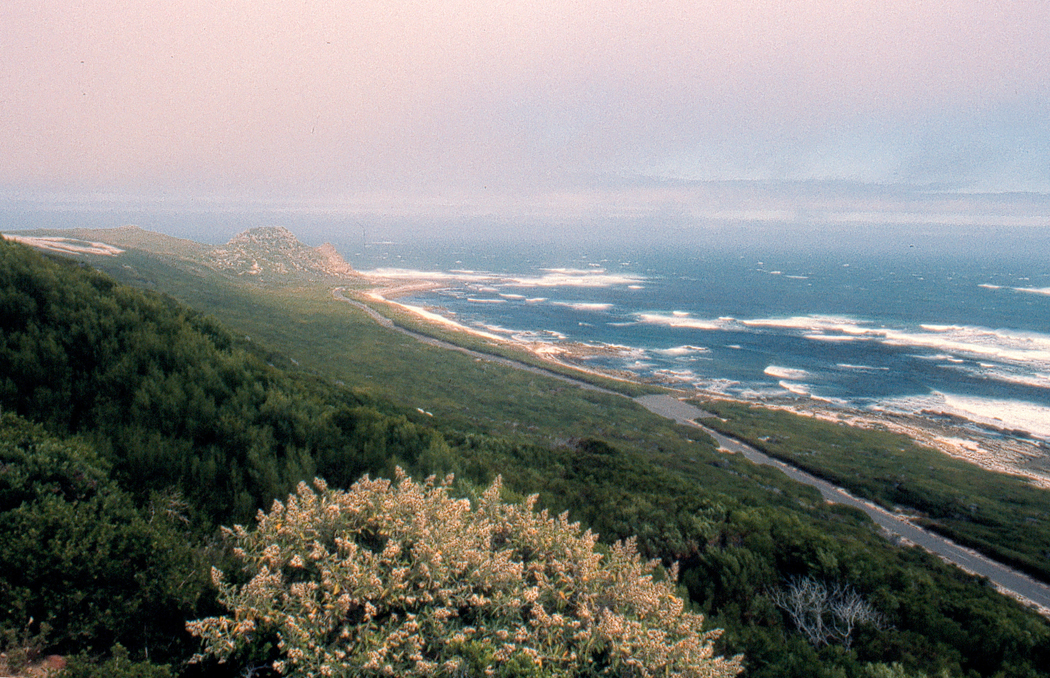
For me, many have been where the land runs out and the seas begin. There is something about the extremity, the sense of the limitations of land and the seeming infinity of the watery horizon. I seek them out, such as the Gaspé Peninsula, Long Island’s Montauk Point, Brittany’s Finisterre, or South Africa’s Cape of Good Hope. At my age, I know my existence shall soon run out and the dark infinite void is the horizon, and that I will not likely ever get to visit such places again. 

And I have been to Civil War sites where I felt the ghosts in the soil: places such as Shiloh, Vicksburg, Appomattox, Gettysburg, Petersburg, Bull Run, Chancellorsville, Fredericksburg, and Five Forks. And important places in the Western expansion: Sand Creek, Little Bighorn, Wounded Knee, Washita. Japanese internment camps at Manzanar and Poston. And to the Lorraine Motel in Memphis, where Dr. King was shot; and the slave quarters at the Oakley Plantation in Louisiana. All places where death and suffering are felt in the air breathed there — at least to anyone with an awareness of history. 

Mt. Saint Michel

And I could list many less fraught places with their own resonance that I have only visited once, but that have created space in my psyche: Mt. Saint Michel; Big Bend National Park; the catacombs in Paris; the caves at Lascaux; the town of Moosonee on James Bay in Ontario; the Okefenokee swamp in Georgia; Mt. Angeles in Washington’s Olympic Mountains; Hallingskarvet mountains in the spoon of Norway; Chaco Canyon; Taliesin in Wisconsin; Ice Water Springs in the Smokies; the Salton Sea; Glacier Bay in Alaska. 

Each of these places has become a part of me. They are my sacred spaces. 

Click any image to enlarge

We were camping at Huntington Beach in South Carolina, and I woke up before dawn and walked down to the ocean. The sky was beginning to brighten to the east and I watched for the coming sunrise. 

When the sun broke the horizon, its motion was noticeable and I watched it slowly lift from the water. But then, something happened: The sun stopped dead in its tracks and my frame of reference shifted involuntarily and instead of the sun moving up, the earth I was standing on jerked forward, as if I were coming over the top of a ferris wheel and I nearly lost my balance. It seemed the ground was moving away from under my feet, toward the immobile sun. 

At the same time, seawaves reflected the bright copper sheen and the shadowed portions of the water formed a network of glossy black, making the entire landscape before me into a shimmering enameled lattice and more, it seemed not so much to reflect the sun, but rather to be glowing from within. 

The magic lasted only a few moments and the earth stood still again and the sun began climbing once more. I felt that I had been given a chance to see how things really were — a stationary sun and a rotating earth — and the whole, with its copper and black waves, was unutterably beautiful.

Such visions are epiphanies. 

Of course, “Epiphany” means different things. In the Roman church, it is the name for the visitation of the wise men; in the Orthodox churches, it marks the baptism of Jesus and the descent of the dove; according to some early Church fathers, it marks the miracle at the wedding feast at Cana; and for Syriac Christians, it celebrates the rising light of dawn, as expressed in Luke 1:78. In all these versions, it refers to the recognition of divinity as it shines forth. 

But I take the word for its otherwise secular meanings. It is a sudden recognition of reality, or the momentary transformation of the ordinary into something strange, or the psychological state of overlaying the personal in registration with the objective world, the way you might orient a map to match the landscape in front of you. Then the two meld into a single thing. In any version, you experience a moment out of time. 

It is the word James Joyce used when referring to such experiences, usually something quite ordinary, but seen in a new, illuminating way. A theophany with no theos

In his early novel, Stephen Hero, he defined these epiphanies as “a sudden spiritual manifestation, whether in the vulgarity of speech or of gesture or in a memorable phase of the mind itself.” And he “believed that it was for the man of letters to record these epiphanies with extreme care, seeing that they themselves are the most delicate and evanescent of moments.” 

In an early manuscript, Joyce collected 22 pages of these moments he found in his own life, and used many of them later in his finished works. At one point, there were at least 71 epiphanies written down in Joyce’s own handwriting. 

Later in his career, the term grew in meaning and significance, and tends to mean moments of behavior observed or experienced that seem to metaphorically summarize some insight or contain “meaning” in some way or other. 

In ordinary usage, “meaning” is a term of translation: “This means that,” but it has another purpose: significance. An experiences doesn’t have to “mean” something that we can express in paraphrase, or take as a lesson we have learned, but can have meaning, unexplainable except in terms of itself, as when a dream feels meaningful even if you don’t know why. 

I believe we all have such moments. They tend to stick with us. I know I have had them throughout my life. The first one I can remember was at the age of four or five and driving with my family along the Palisades at night, looking across the Hudson River at the constellation of lights in the darkened Manhattan buildings. It was my first remembered experience of something I would call beauty. I couldn’t wait for the next time we visited my grandparents so I could see those lights again. 

Often we function as actors in a stage set, with the world as backdrop. Our focus is on the particular action or conversation, with the set merely happenstance; it could easily be some other set. But the epiphany is when you step back and see actor, set, words, as a single unit, all of a piece. We can live our lives barely noticing the world we walk through, except as it helps or hinders us — it is functional. But that moment comes when the boundary between us and the rest of it all evaporates and we sense ourselves as part of a whole. That instant is the epiphany and for it, time stops, even as the clock keeps moving. It is an uncanny feeling.

It feels as if you are taken out of the real world for a moment, but actually, you are dropped into it. The illusion of separateness is dispelled and you become face to face with something bigger. 

When I was about 10, my younger brother, Craig, and I thought to follow the brook that ran through our property in New Jersey, through the woods behind the house, to see where it went. It ended as it fed into the Hackensack River. We then followed the river to the Oradell Reservoir and followed the railroad tracks. We were crossing a little bridge when a train arrived and we ducked under the bridge, sitting on the concrete abutment  not more than a couple of feet from the screaming wheels of the train as it passed over. Time may have stopped, but the train didn’t. It was thrilling. It was untameably real. 

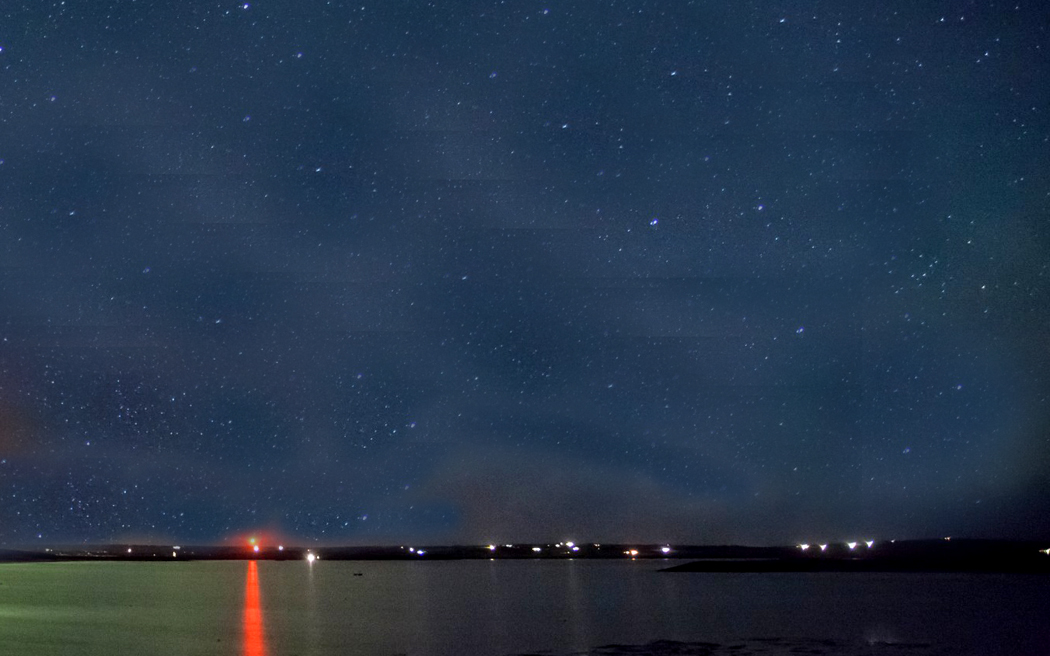
In high school, I spent one summer vacation in Europe, crossing over the Atlantic on a steamship. After days of faceless unchanging ocean horizon, one  night came when on deck I looked out and saw pinpricks of light in the darkness, maybe 8 or ten miles away. It was the Orkney Islands and I was dumbstruck at their remoteness. They were ghostly lights strung out along the horizon in a seemingly infinite blackness. They seemed unmoored to this now. 

There is often sense of the uncanny, of something we don’t quite see, but feel it is there. 

On night, I was driving up the Big Sur, between San Luis Obispo and Monterey. With the sun finally below the horizon, it was completely black, but with grades of black showing in front of me. The blackest black is rock, rising in cliffs to the right side of the road. The glossiest black was the ocean on the left below. As I whipped along the road with my up-beams gleaming back at me from the reflectors on the road stripe, I could occasionally see a flash of light in the corner of my eye. When I looked, there is nothing, but when I turned back to the road, it flashed again. But there seemed to be something riding beside my car. I called it the “God of the Nighttime Highway.” 

It turned out to be my own running lights reflecting off the guard rail at the edge of the road. But for 10 minutes or so, until I figured it out, the experience was eerie and I almost believed in a spirit world that I don’t believe in. 

I imagine it must be episodes like this that gave rise to the myths and folklores of the ancients. The experience feels so real, it must be real. 

And these epiphanies are not especially rare. I’ve had many in my life. My wife and I had left Yellowstone National Park early on a gray, rainy day, driving eastward on the North Fork Highway through Wyoming’s Shoshone Canyon. At the canyon’s mouth the land broadened out and dipped down into vast plains with the Buffalo Bill Reservoir in the distance. We had just turned on the radio and the skies suddenly parted and the scene before us was drenched in sunlight just as the radio began pouring out the early morning sign-on music of “America the Beautiful,” and the Mormon Tabernacle Choir sang, “Oh beautiful for spacious skies and amber waves of grain…” And there it was, before us, just as in the song, and we had to laugh, but also we had to recognize the emotional power of what we were seeing. 

Once, camping at the Outer Banks with my friend Sandro, we walked along the beach at Hatteras Point at night, carrying a Coleman lantern. The air was so humid that it was on the edge of becoming fog. And the light we carried threw our shadows up into the sky, among the stars, and we could see we were giants. 

Or, visiting Verdun in France, my wife and I drove through the old World War I battlefields that had been blasted into moonscape by artillery fire, but now had grown back into woodlands. But there, between the tree trunks, the shell craters were still there, pock-marking the ground nearly a hundred years later. 

I’ve had that strange recognition many times when visiting old battle sites — as if the past is always present. I’ve had it at Antietam, at the Little Bighorn, at Shiloh, at the Normandy beaches, at Wounded Knee, at Appomattox. The epiphany that breaks through isn’t just history as you read it in books, but rather the persistence of events: that what once happened is still happening; wave ripples running out through time. 

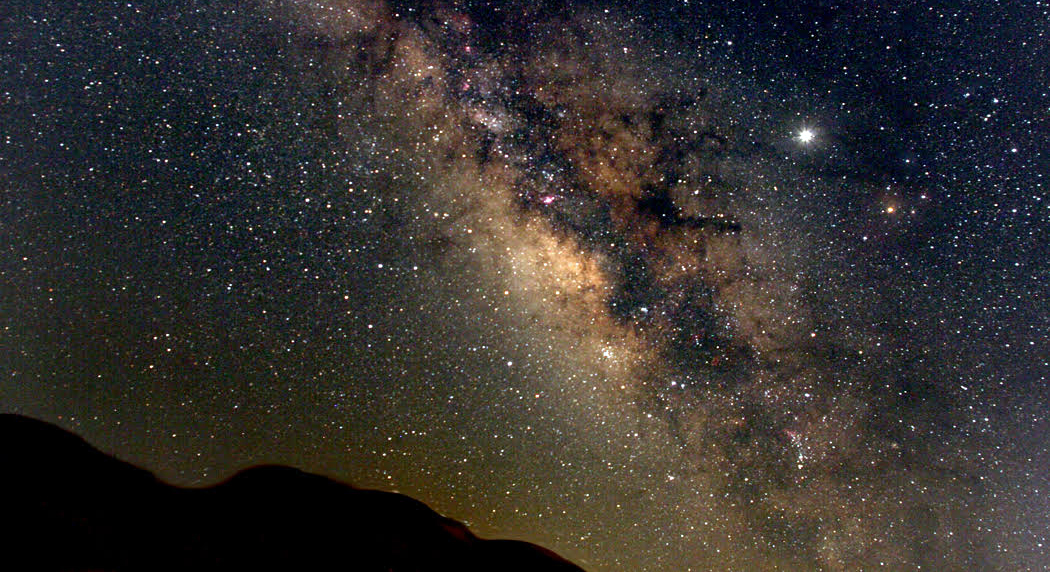
I once spent the night alone on the North Rim of the Grand Canyon in Arizona. My campsite was a good 30 miles from any other human being and the sky was darker than any I had seen before or since and the stars were spilled like beach sand across the expanse, with the Milky Way splitting the dome in two. About 3 in the morning, I woke up, left the tent and sat on the hood of my car, staring up at the infinity. I stared for maybe 20 minutes or a half hour, and a kind of hypnosis took over and I no longer felt like I was on my back staring up, but rather as if I were at the forward point of a planet racing through infinite space toward those stars. The planet was at my back, and I could almost feel the wind on my face as this planetary vehicle was racing forward toward the lights. 

And, of course, this is exactly what was happening. The ordinary sense of terra firma under a wide sky is the illusion. The recognition of a giant ball of earth and water raging through an infinite void is the reality. Sometimes we see it that way. 

And that is the epiphany. 

I have no belief in ghosts, spirits or ouija boards and I don’t believe that the past hangs on to the present to make itself palpable. But I have several times experienced a kind of spooky resonance when visiting certain famous battlefields. 

The thought re-emerged recently while watching a French TV detective show that was set in Normandy, and seeing the panoramas of the D-Day landing beaches. I visited those beaches a few years ago and had an overwhelming rush of intense sadness. It was inevitable to imagine the thousands of soldiers rushing up the sands into hellish gunfire, to imagine a thousand ships in the now calm waters I saw on a sunny day, to feel the presence in the concrete bunkers of the German soldiers fated to die there manning their guns. 

The effect is entirely psychological, of course. If some child with no historical knowledge of the events that took place there were to walk the wide beach, he would no doubt think only of the waves and water and, perhaps, the sand castles to be formed from the sand. There is no eerie presence hanging in the salt air. The planet does not record, or for that matter, much note, the miseries humans inflict on each other, and have done for millennia. 

But for those who have a historical sense, the misery reasserts itself. Imagination brings to mind the whole of human agony. 

Perhaps I should not say that the earth does not remember. It can, in certain ways. Visiting the woods of Verdun I saw the uneven forest floor, where the shell craters have only partially been filled in. Once the trees were flattened by artillery, leaving the moonscape littered with corpses. The trees have grown back, but the craters are still discernible in the wavy forest floor. 

This sense came to me first many years ago visiting the Antietam battlefield in Maryland. There is a spot there now called Bloody Lane. Before Sept. 17, 1862, the brief dirt drive was called the Sunken Road, and it was a shortcut between two farm roads near Sharpsburg, Md. All around were cornfields rolling up and down on the hilly Appalachian landscape.

The narrow dirt road, depressed into the ground like a cattle chute, now seems more like a mass grave than a road. And it was just that in 1862, when during the battle of Antietam Creek, Confederate soldiers mowed down the advancing Federals and were in turn mowed down. The slaughter was unimaginable.

You can see it in the photographs made a few days after the battle. The soldiers, mostly Southerners, fill the sunken road like executed Polish Jews. It was so bad, as one Union private said, “You could walk from one end of Bloody Lane to the other on dead soldiers and your feet would never touch the ground.”

Even today, with the way covered with crushed blue stone, the dirt underneath seems maroon. Perhaps it is the iron in the ground that makes it so; perhaps it is the blood, still there after 160 years.

Antietam was the worst single day of the Civil War. Nearly 23,000 men were killed or wounded. They were piled like meat on the ground and left for days before enough graves could be dug for them. There were flies, there was a stench. The whole thing was a fiasco, for both sides, really.

But all these years later, as you stand in Bloody Lane, the grassy margins of the road inclining up around you and the way lined with the criss-cross of split-rail fencing, it is painful to stand in the declivity, looking up at the mound in front of you, covered in cornstalks in a mid-July day. You can see that when the Yankees came over the rise, they were already close enough to touch. There was no neutralizing distance for your rifle fire to travel, no bang-bang-you’re-dead, no time, no room for playing soldier. Your enemy was in your face and you had to tear through that face with lead, the blood splattered was both Federal and Confederate, in one red pond among the furrows. In four hours on 200-yard stretch of Bloody Lane, 5,000 men were blown apart.

It is difficult to stand in Bloody Lane and not feel that all the soldiers are still there, perhaps not as ghosts, but as a presence under your boot-sole, there, soaked into the dirt.

It is almost, as some cultures believe, as if everything that happens in a place is always happening in that place. The battle was not something that occurred before my great-grandfather was born, but a palpable electricity in the air. You can not stand there in Bloody Lane and not be moved by that presence.

A similar wave of dismay overcame me at several Civil War sites: Shiloh; Vicksburg; Fredericksburg; Cold Harbor; Petersburg; Appomattox. Always the images rise in the imagination. Something epochal and terrible happened here. 

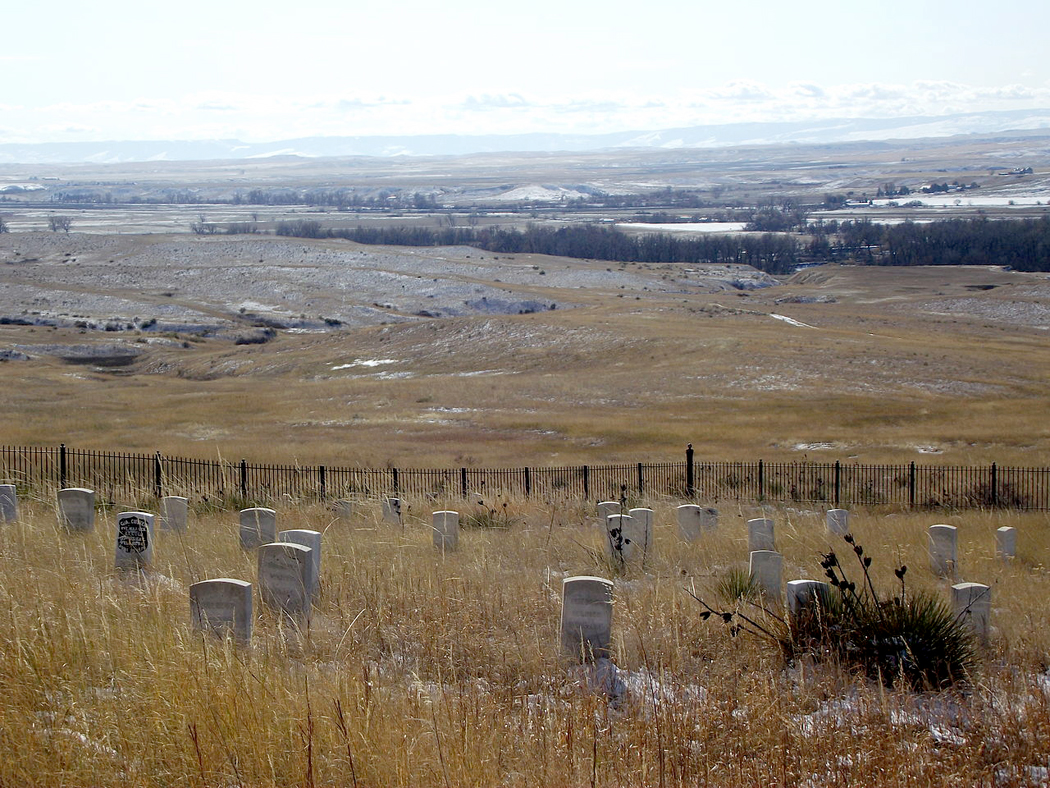
Visiting the Little Bighorn Battlefield in Montana, there are gravestones on the slope below the so-called “Last Stand,” but you also look down into the valley where the thousands of Sioux and Cheyenne were camped. 

I’ve visited Sand Creek and Washita. And Wounded Knee. That was the most disturbing. You travel through the Pine Ridge Reservation and the landscape is hauntingly beautiful, then you pull into the massacre site and you see the hill where the four Hotchkiss guns had a clear shot down into the small ravine where the victims huddled. The sense of death and chaos is gripping. The famous image of the frozen, contorted body of Big Foot  glowers in the imagination. It feels like it is happening in a past that is still present. 

This sense of horror and disgust wells up because of the human talent for empathy. Yes, I know full well that there are no specters of the victims waiting there for me, but my immediate sense of brotherhood with them resurrects them in my psyche. I am human, so I know that those dead were just like me. I can imagine myself bowel-loosening scared seeing my comrades to either side being blown to pieces and an enemy who I’ve never met and might have been friends with races toward me with bayonet stretched in front of him, eyes wide with the same fear. 

History is an act of the imagination. The most recent may be memory, but for me to know what my father went through in France and Czechoslovakia in World War II requires my identification with him, my psyche to recognize the bonds I share with him — and with all of humanity. 

So, when visitors are shaken by visits to Auschwitz or stand on the plains of Kursk, or the shores of Gallipoli, they well may sense that history as more present than past. I have had that experience. The ghosts are in me.

Some people have a bucket list — of extraordinary experiences they would like to have before the final extraordinary experience. My bucket, however is already full, in fact, it runneth over. 

It is probably much the same for most people. By the time you reach the age of 70, you can look back on a lifetime of extraordinary and satisfying adventures. Perhaps you have not swum the Hellespont like Leander or Lord Byron, nor circled the globe in 72 days, like Nelly Bly, but there are no doubt things you have done that brought your own life to its full. 

I’ve seen the Rhine at night in Dusseldorf; driven the length of the Mississippi River from Lake Itasca to the Gulf of Mexico; spent a snowy Christmas eating hot homemade cookies at the home of a Hopi friend in Walpi on First Mesa in Arizona; twice circumambulated Walden Pond in Concord, Mass.; and been charged by a bear in the Great Smoky Mountains of North Carolina.

I was an idiot — I took the picture

I see birthday number 71 coming up next week and realize that translates to 852 months, 3702 weeks or nearly  26,000 days. They have gone by very quickly, picking up speed as they progress, like a train leaving the station. They are now barreling along at the speed of an express. 

Cape of Good Hope, South Africa

From the rear of that train, I can look back and say I have seen the Cape of Good Hope in South Africa; the menhirs of Brittany; seen Wagner’s complete Ring Cycle live twice; made love surreptitiously in the North Carolina legislature building. 

Menhirs at Carnac, Brittany

I’ve seen the Atlantic and Pacific, but also the Indian Ocean, the Mediterranean, the North Sea, the Sea of Cortez and Hudson Bay — my personal seven seas. I have crossed the Atlantic on an ocean liner. They don’t really have those anymore.

Mediterranean Sea

I have done other things that now seem quaint and ancient. I have twice crossed the continent on trains, once from North Carolina to New York on the Southern Crescent, from New York to Chicago on the Twentieth Century Limited, and then from Chicago to Seattle on the Empire Builder. Amtrak never had the cache of those earlier routes. 

Years later, under the shrunken Amtrak banner, I took the Sunset Limited from Los Angeles to Miami. 

Each of these things is stamped and notarized in my cerebral cortex.

Given the sum of those years, it is hardly surprising that so many things were seen, done, felt, tasted, smelled, heard. You turn the pages of the book one by one, and sooner than you realize, you are on page 852 and something has happened on every page. 

Chartres cathedral

Been to Chartres four times; and to Notre Dame de Paris half a dozen times; to Mont St. Michel; and to Reims, where French kings were crowned; and climbed the bell tower (illegally) at the National Cathedral in Washington; and descended the kivas at Chaco Canyon and Mesa Verde. 

Kiva, Mesa Verde National Park, Colorado

Been to 14 countries, including Norway and Namibia. Been to all 48 contiguous United States and all Canadian provinces except Prince Edward Island, and to the Yukon Territory. Alaska made 49 states (still haven’t been to Hawaii).

Omaha Beach, Normandy

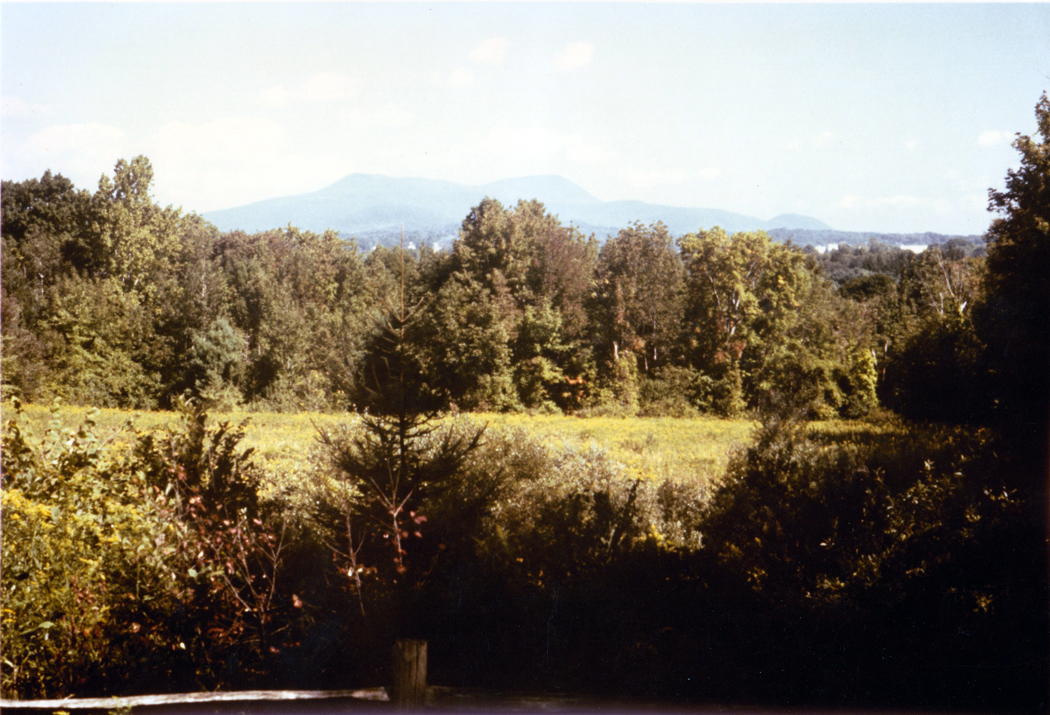
Been to Lascaux and to Font de Gaume to see prehistoric cave paintings; been to the Normandy beaches of D-Day; to the shell craters still visible at Verdun; to all the major Civil War battle sites, and across the Old North Bridge. Stood on the piazza that Herman Melville built at Arrowhead, his home in Pittsfield, Mass. with its view of Mount Greylock (“Charlemagne among his peers”). 

Mt. Greylock, from Melville’s piazza

Three times I have walked Monet’s gardens at Giverny and seen the great waterlily murals at the Orangerie in Paris.

Giverny, France

I have ridden a horse into Canyon de Chelly in Arizona and paddled a canoe down the white water of the Mayo River in North Carolina (admittedly, not a scary rapids). 

Once, I stood at the top of the raging Linville Falls in the Blue Ridge and stupidly jumped across the cataract, rock to rock, to get to the other side of the river. I’ve also climbed to the top of Pilot Mountain in the Sauratown Mountains of Surry County, N.C. (a climb that is now illegal). 

Linville Falls, N.C.

Hiked a fair portion of the Appalachian Trail; camped in the Canadian Rockies; and 65 miles from the nearest paved road on the north rim of the Grand Canyon. Been to the telescopes at Mt. Wilson, Mt. Palomar and the Lowell Observatory in Flagstaff and the Kitt Peak observatories southwest of Tucson. 

 When I hear Hank Snow singing “I been everywhere, man,” I count the place names as they tick off and check them on my own list. “Reno, Chicago, Fargo, Minnesota, Buffalo, Toronto, Winslow, Sarasota…” Yes, yes, yes, check, check, check.

And Bobby Troup singing “Don’t forget Winona,” well, yes, been there many times. 

Glacier Bay, Alaska

But it isn’t just geography. There are cultural touchstones I count, experiences that have breathed oxygen into my soul. Not only Wagner, but also I heard Lenny Bernstein conduct La Mer with the NY Phil; heard Emil Gilels live at the Brooklyn Academy of Music; heard Maurizio Pollini play all the Chopin Preludes, Stravinsky’s Three Movements from Petrushka, and the Prokofiev Seventh Sonata. I heard Jeremy Denk play Ives’ Concord Sonata and Beethoven’s Hammerklavier in the same recital: That is like climbing Everest and Mont Blanc on the same day. Itzhak Perlman play the Strauss violin sonata — and made it seem like one of the most important sonatas ever. That was magic. Heard the Matthew Passion live twice and Haydn’s Creation. And, of course, twice heard Yo-Yo Ma perform all six Bach suites in a single program. 

I’ve seen a dozen Balanchine ballets with live orchestra, including my favorite, Apollo, five times, once by the NY City Ballet at the Palais Garnier in Paris. 

I’ve seen the full Angels in America four times through, including its original Broadway production. 

Remnants of shell craters, Verdun, France

These are all gifts, and made my life ever richer, and informed my growth, emotional and intellectual. I can say, they made me a better human being. 

I can’t count the art shows and museums I’ve visited that gave me rare treasures. The first I can remember was in high school when I went to the Museum of Modern Art in 1966 to see “Turner: Imagination and Reality.” It yanked the rudder of my craft and steered my life in a new direction. 

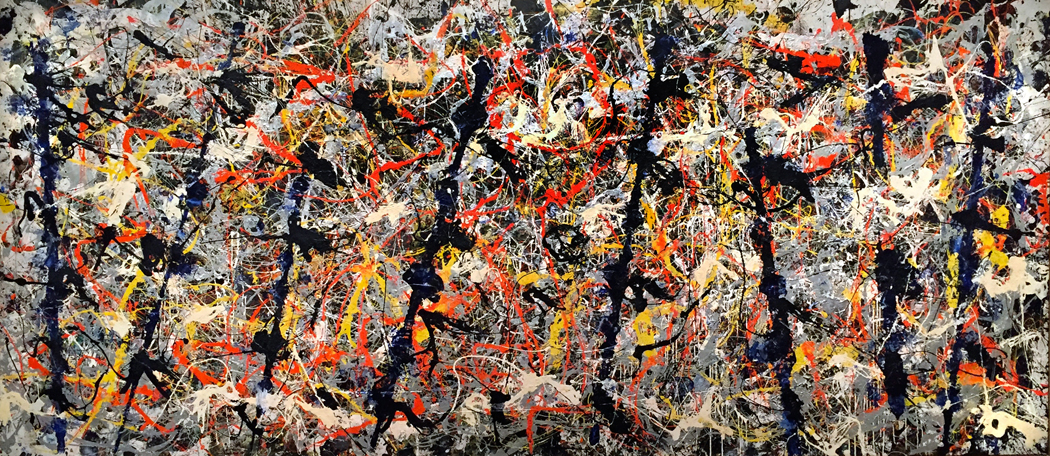
“Blue Poles,” Jackson Pollock

I also grew up with Picasso’s Guernica. I visited it over and over and never expected it would leave me for a new home in Spain. But in return, I never thought I’d get to see Jackson Pollock’s Blue Poles, which had been sold to Australia; it came to New York in 1998 for the big Pollock retrospective at MoMA. 

I cannot mention everything. The list is already grown tedious and begins to sound like bragging. I don’t mean that: I believe a similar list can be put together for almost everyone, although it will likely be very different from mine. Not everyone has eaten grilled mopane worms or drunk spit-fermented Zulu beer. Or needs to. 

But we can all say, after a long life, full of boons and banes, joys and privations, evils we have done, and those we have suffered, the loves we have failed at and those that stuck and nourished our lives, “We have heard the chimes at midnight, Master Shallow.”