Archive

Tag Archives: victorian

“You’ve gone all mellow,” Annie said, teasing me. 

In the past, I have had some rather unforgiving opinions about the poetry I was force-fed as a youngster — you know, the Victorian stuff about the light brigade, or Barbara Frietchie. And now, I was reading it again. On purpose. 

At college, I foolishly took a Victorian Lit course and hated every second-hand tick of the classroom clock. Turgid, sentimental, maudlin, and unbearably prolix. (I had been primed to hate the stuff since the time I was  forced to read Oliver Twist in eighth grade and hated every word of that — I still can’t read Dickens. I know: My loss. But you shouldn’t be forced to read stuff before you are ready for it.) 

In that Vic Lit course, I found Browning asphyxiating, Tennyson hollow, Christina Rossetti cloying. I could see no difference in the verse of these hallowed poets from the mewlings of Ella Wheeler Wilcox or Edgar Guest. It was all a smear of treacle and oh-so-earnest goo. 

“I am the master of my fate, I am the captain of my soul.” Who came up with this stuff? 
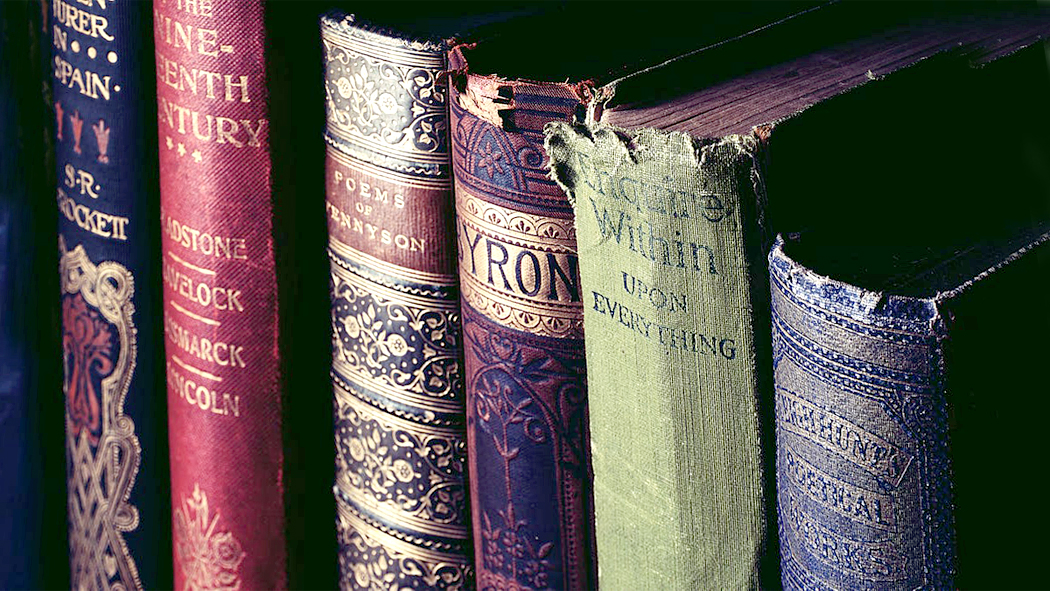
Now, Anne is reminding me, I am waxing enthusiastic about the selfsame verse to her, quoting lines and rhymes with affection. I have gone mellow. But what has changed? 

I grew up in a time of ascending Modernism, an era of “less is more,” of irony sidelining sentiment and of skepticism in place of belief. When I was just on the cusp of turning adolescent, Modern art was still widely dismissed as something “my kid could do.” And in the eternal wheel of generations, I was signing on to the new version and leaving the old to such fuddy-duddies as my parents and teachers. 

(At least, I saw it that way. In reality, my parents were as much a product of Modernism as I was — my father was born the same year that the Bauhaus was founded and that Marcel Duchamp painted a mustache on the Mona Lisa. But the Modernism that affected his life was one of wars, electrification, washing machines and radio. Artistic matters mattered not at all to the solid, middle-class parental units.)

  And, like all such newly-awakened youths, I saw through the lies and hypocrisies of the elder generations while surpassingly blind to my own. My generation was going to fix all the botches those fools had made of the past. 

I read all the most current novels, ate up contemporary poetry (and all that written after Prufrock), regularly made my pilgrimage to the Museum of Modern Art in New York, and preached to all near and far the supremacy of the new.

In short, the modern was true; the old was a lie. A pretty lie, perhaps, but a lie nonetheless. As H.L. Mencken put it, “it’s essential character lies in its bold flouting of what every reflective adult knows to be the truth.” 

And all that verse: Mencken really had it in for poetry. He said, roundly including everything written from Chaucer to e.e. cummings, “Poetry represents imagination’s bold effort to escape from the cold and clammy facts that hedge us in — too soothe the wrinkled and fevered brow with beautiful balderdash.” 

That certainly summed up my take on Tennyson: “balderdash.” 

H.L. was not one to hedge his opinions. He went on to call poetry, “a series of ideas, false in themselves, that offer a means of emotional and imaginative escape from the harsh realities of everyday. In brief, poetry is a comforting piece of fiction set to more or less lascivious music.”

But it is that “lascivious music” that caught me short. No doubt Mencken rather misses the point, but it is the music of the old poetry, the poetry I so despised, that has brought me back to it. Let me explain — and apologize. 

It started when I recently came across a set of McGuffey’s Eclectic Readers, compiled beginning in the 1830s by William Holmes McGuffey. The books were the most common grade-school texts for nearly a century, and are still the preferred books for many current home-schoolers. 

They are popular now because of the unrelenting Victorian religiosity of them for Christian home-schoolers. Every lesson seems to have some biblical homily to teach, training youngsters to be pious, faithful, honest, loyal, earnest, frugal and industrious. McGuffey, himself, was a preacher, in addition to being an educator and college president. 

But what is often lost in the haze of piety, is just how progressive McGuffey was for his time. Most education was then mere rote memorization enforced with the rod; McGuffey thought that instead of just giving kids lists of words to master, it would work better if the words were embedded in stories, and that new words in one story would crop up again for reinforcement in later stories. He taught an early version of phonics, to parse out the sounds of written words, and followed each story-lesson with a short set of questions to test comprehension. 

Really, aside from the heavy Jesus-ness of it all, it was really very forward-looking. 

I valued the reprints I own for their classic typography, for the quaint illustrations that go with the stories, and for the insight the whole gives me into that formidable century. 

And in amongst the stories of boot-blacks making good, mothers dying, little orphans learning the virtues of truthfulness and the importance of being generous to the poor, McGuffey included many old poems. Some are just versifications of Bible passages, but others are the old standards that I once made fun of. 

For instance, in McGuffey’s Eclectic Third Reader, I came across an old chestnut I had not encountered since I was a boy: The Moss Covered Bucket, by Samuel Woodworth. It’s one of those that most people have some vague recollection of, but perhaps not where the lines come from or what they mean. 

“The old oaken bucket, the iron-bound bucket, the moss-covered bucket, which hung in the well.” 

But as I began reading it, I found two very surprising virtues. The first was how much sense-memory there was in the poem — the noticing of small physical things that connect us with the world and that readers can almost feel, taste, or smell as they read the lines. 
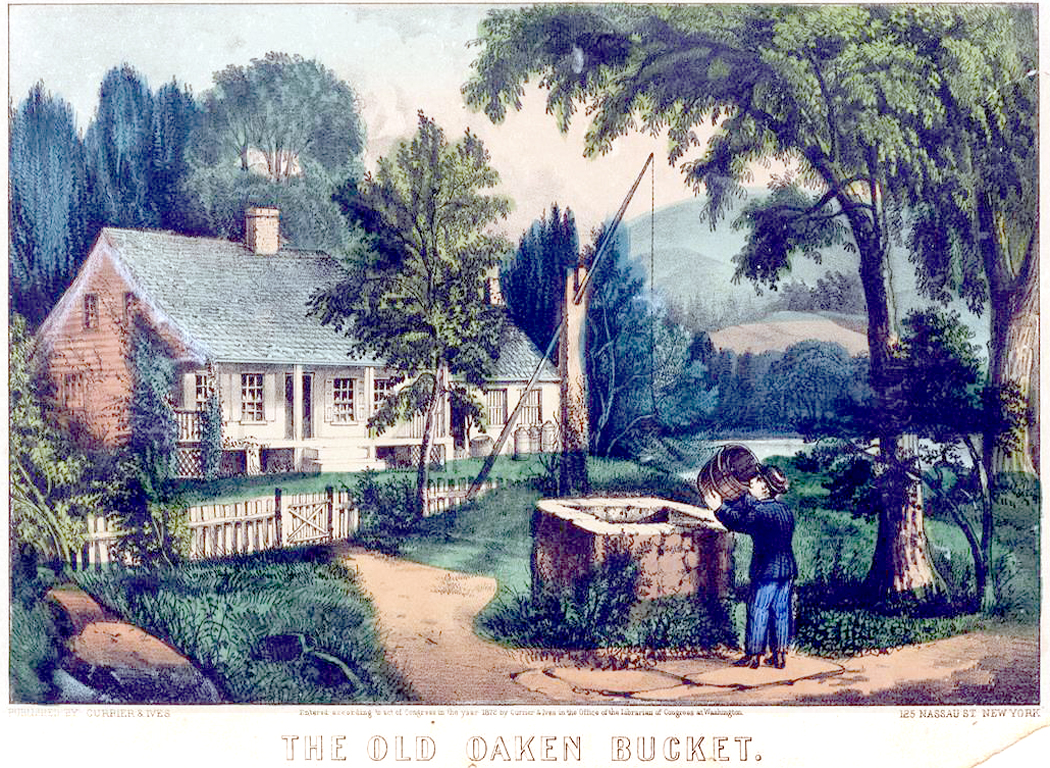
It is a poem about remembering the things of youth, and there is a scent of sentimentality to it, but the memories evoked feel genuine. Sometimes, reading a pile of “O thou art…” poetry you wonder if a poet has ever actually seen a nightingale, let alone a “knight with burning brand,” but have merely read about such things in other poems. But here, I believe Woodworth really knew “the orchard, the meadow, the deep tangled wild wood…  the wide spreading pond, and the mill which stood by it; the bridge and the rock where the cataract fell; the cot of my father, the dairy house nigh it, and even the rude bucket which hung in the well.”  

Noticing — as I have often repeated — is essential to art. To life. 

But the second thing I found in the poem was the “lascivious melody.” Woodworth’s prosody was finished and refined, the meter and rhyme made the lines sing. Maybe not quite the level of Milton, but a danged good ditty. 

He describes coming in from working in the field and dropping the bucket down into the well “to the white pebbled bottom it fell,” and then how “dripping with coolness,” it rose from the well. “How sweet from the green mossy brim to receive it, and posed on the curb it inclined to my  lips! Not a full blushing goblet could tempt me to leave it, though filled with the nectar that Jupiter sips.” 

It moves with a forward-thrusting momentum hied on by the meter. 

I’m not trying to make too great a case for the old oaken bucket. It is not earth-shaking poetry. But it does afford a moment of pleasure as you read it, the way you get pleasure from a memorable tune. 

There were other poems in the Reader that now sang to me in ways I had formerly ignored. Byron’s “The Assyrian came down like the wolf on the fold, and his cohorts were gleaming with purple and gold…” 

In the Eclectic Fifth Reader, compiled some years later by McGuffey’s brother, Alexander Hamilton McGuffey, you find the familiar, “Under the spreading chestnut tree the village smithy stands; the smith, a mighty man is he, with large and sinewy hands; and the muscles of his brawny arms are strong as iron bands.”  

There is through all of the Readers a level of maudlin sentimentality that cannot be overlooked, but if you can wade through that, there are some true gems to enjoy, if primarily for their lascivious music. 

This discovery led me to another old book, one I have owned since I was a boy, but had hardly looked at in 60 years: Francis Turner Palgrave’s Golden Treasury of English Verse. First published in 1861, the book was an anthology of “the best English songs and lyrics,” and included Palgrave’s selection of verse written by poets of the past — his past; Palgrave made the decision not to include any poetry written by living poets, so, no Tennyson, no Browning. 

The book was originally divided into four “books,” one each per century from the Elizabethan era to the 19th century. There is a good deal of Shakespeare and an equal measure of Wordsworth, but all the usual names are included, and some that have largely been forgotten. Thomas Grey, William Cowper, Thomas Wyatt, Josuah Sylvester (no, that’s not misspelled). 

Having put aside my McGuffeys, I took up my Palgrave and read it from cover to cover. I found myself enjoying page after page, for the music of it more than for the sense. A good deal of the early verse is highly conventional in sentiment. Everyone had a version of “carpe diem,” many birds are extolled — I haven’t counted the skylarks, but there be many — many women described with coral lips and alabaster skin. It all gets a bit thick.

But listen to the music instead. “Whenas in silks my Julia goes Then, then (methinks) how sweetly flows That liquifaction of her clothes.

“Next, when I cast mine eyes and see That brave vibration each way free; O how that glittering taketh me!”

There is a perfection in the meter, rhythm and rhyme to Herrick’s little stanzas. Felix Mendelssohn wrote “Songs Without Words,” but Herrick has turned that around and written a song without the sheet music. 
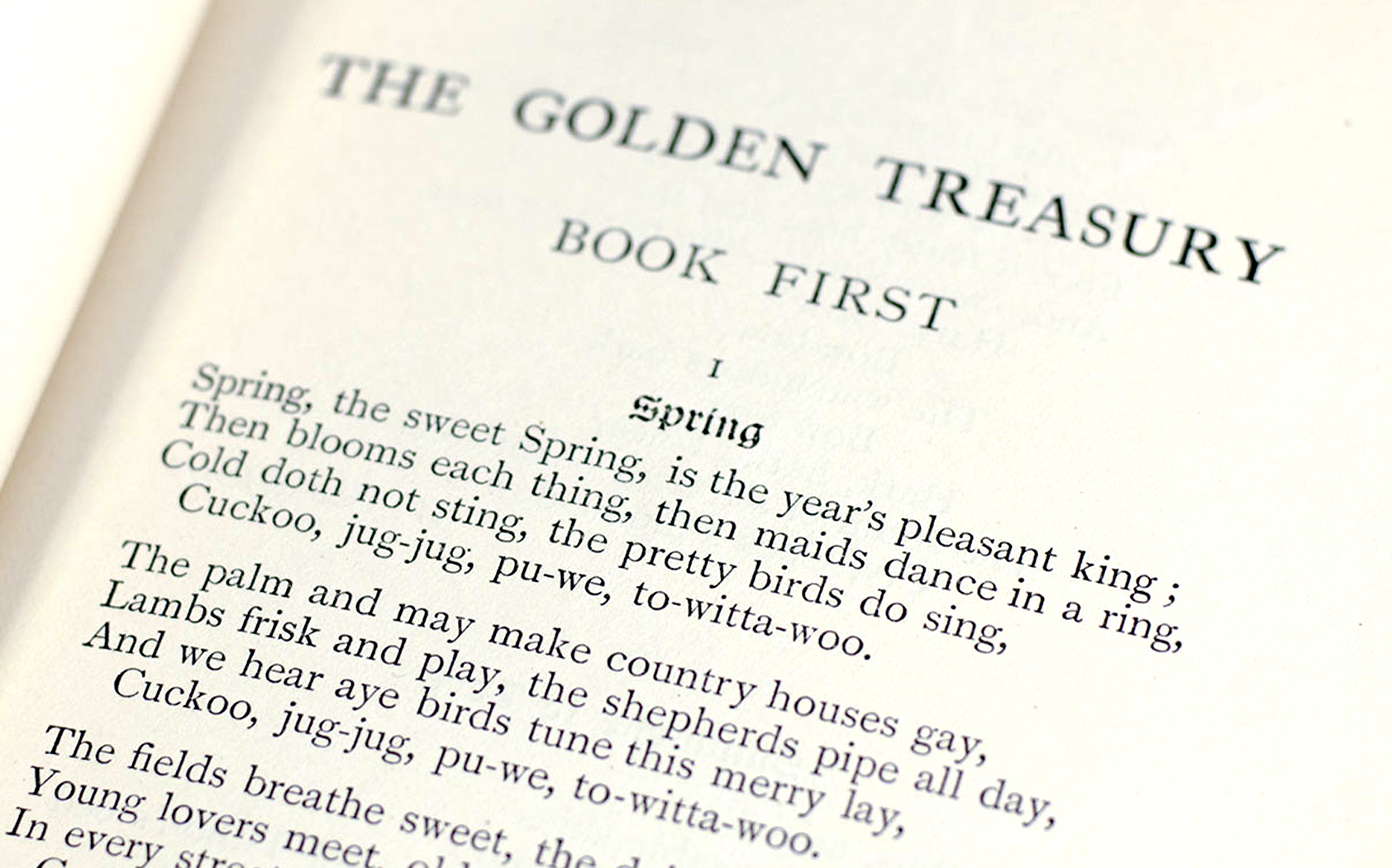
Throughout my Palgrave, I came across piece after piece like that, with a flow of words as natural in metrical expression as a stream rushing over its rocky bed. 

“The curfew tolls the knell of parting day, The lowing herd winds slowly o’er the lea, The plowman homeward plods his weary way, And leaves the world to darkness and to me.” 

“A chieftain to the Highlands bound Cries, ‘Boatman, do not tarry! And I’ll give thee a silver pound To row us o’er the ferry!’ ‘Now who be ye, would cross Lochgyle, This dark and stormy water?’ O I’m the chief of Ulva’s isle, And this, Lord Ullin’s daughter.” 

The marriage of word and rhythm, with the fulfilled expectation of rhyme make these verses trot along like a tune sung well in time. 

It is the pleasure of tennis being played with a net. 

One listens to music for the pleasure it brings. Yes, there are mighty symphonies and Wagnerian music dramas meant to express deep emotional and philosophical things, but most, like a Mozart serenade or a Cole Porter tune, are meant to delight, devoid of any extra-musical sense. And that is what I am finding in this old verse I once so roundly denounced. 

If you don’t need to have profound thoughts as you read the words, then you can find the melody for its own sake and revel in the ear and craftsmanship of the poet. 

Yes, I’ve gone mellow in my senescence, and there is a touch of sentimental remembrance for the poetry I was fed when a boy. I guess I share that with those horrible Victorians. That is my apology.

Click on any image to enlarge
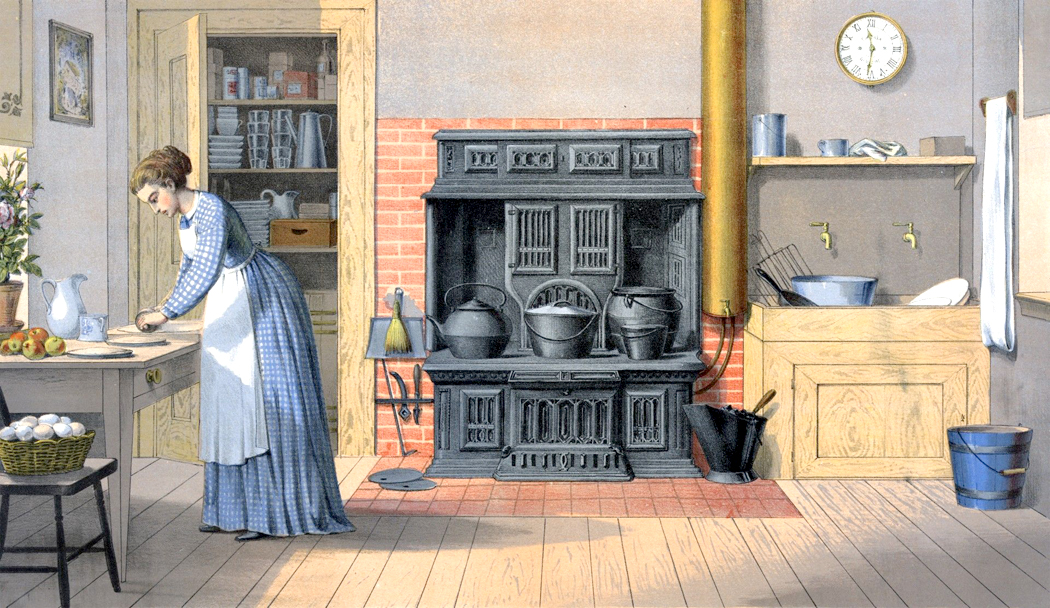
The Long Nineteenth Century began in the waning years of periwigs and knee britches and didn’t end until World War soured everything. In between, it was the age of Victoria, of expansive optimism, of smug colonialism, of scientific, commercial and engineering progress, of George Stephenson, Richard Trevithick, and Isambard Kingdom Brunel.  

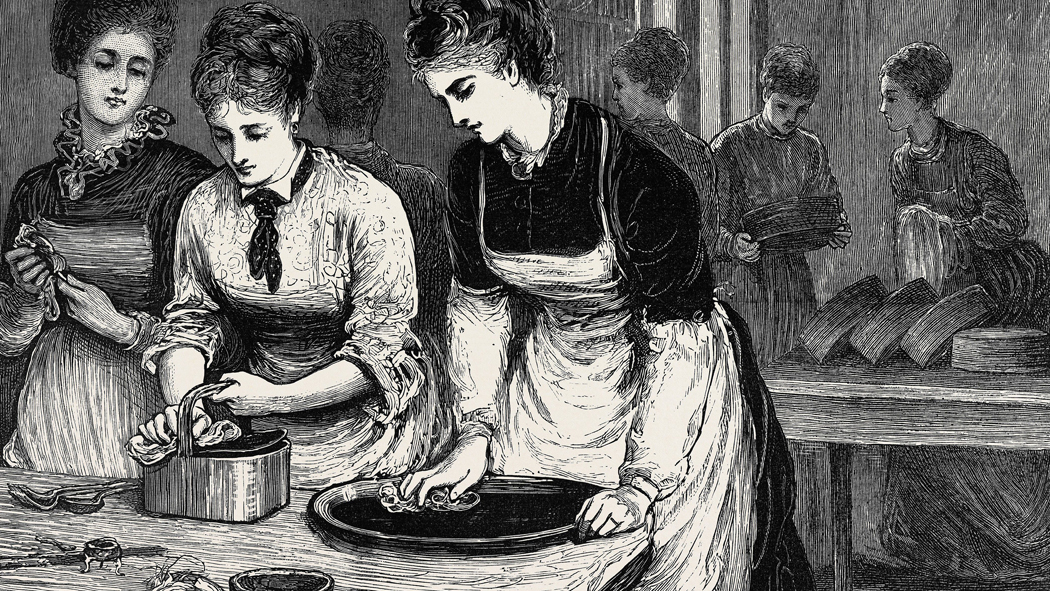
It was also an age of the sacralization of middle-class family life and a sentimentalized ossification of gender roles. Even the queen acted like a bourgeois burgheress. But if women were ever more restricted in their fields of endeavors, they picked up the slack by becoming ever more powerful within those limits. They were, among other things, accorded the authority to run the households, including family finances, hiring and firing servants (even modest middle class families had servants), the dealings with merchants and butchers, and complete oversight of the kitchens. The men might have the offices and streets, but the women were domestic executives. (I am not making the claim this was a fair trade; please don’t shoot me.)

And many seized that power and made good with it. Cookbooks were already ceded to the fairer sex, but most of them wrote a single cookbook and had done with it; in the 19th century, several women upped the ante and turned their cookbooks into an almost industrial level, and became franchises, pumping out books in their names one after the other, as proto-Martha-Stewarts. They became brand names.

Earlier, in the previous century, there arose an appetite for books written for women, either as family cooks, or ladies in charge of a servant kitchen. The first such book was published in 1674 by Hannah Wolley; she was followed by Mary Kettilby, Eliza Smith, Sarah Harrison, Elizabeth Moxon, Susannah Carter, Elizabeth Raffald and Amelia Simmons — the last being the first cookbook author in America. And Hannah Glasse, who wrote the best-selling cookbook of the 18th century. 

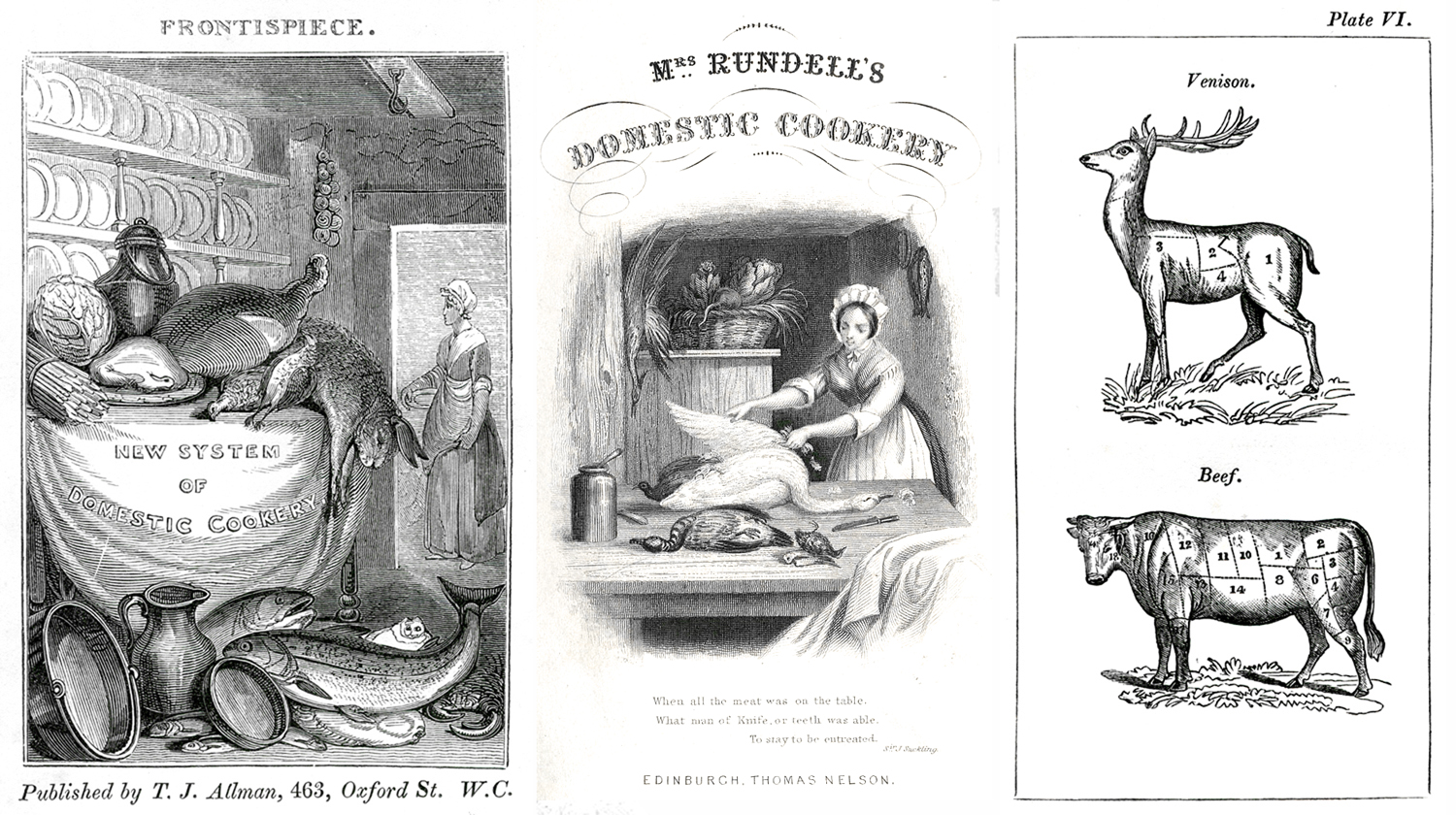
The following century begins with books very like those of the previous century. Ages don’t develop their character with the flipping of a calendar page. The first best-selling cookbook of the new century was Maria Rundell’s A New System of Domestic Cookery: Formed Upon Principles of Economy; and Adapted to the Use of Private Families from 1806. It was much like its predecessors, but better organized. The book went on for 67 editions, and usually known generically simply as “Mrs. Rundell.” In addition to recipes, it offered advice on how to set up a home brewery, and the usual medical prescriptions and how to give directions to servants. 

The book was first published with only the attribution, “By a Lady.” So many of the cookbooks of the time did the same. In 1810 The Cook’s Complete Guide on the Principles of Frugality, Comfort and Elegance came out, “By a Lady,” who proved to be Esther Copley. In 1827, Copley’s The New London Cookery and Complete Domestic Guide came out, also “By a Lady.” She was a prolific author of children’s books, religious texts and an abolitionist tract, A History of Slavery and its Abolition (1836). She also followed up her New London Cookery success with a series of other cookbooks and household instruction books: The Housekeeper’s Guide, or A Plain and Practical System of Domestic Cookery (1838), Cottage Comforts (1825), The Young Servant’s Friendly Instructor (1827), Catechism of Domestic Economy (1850).

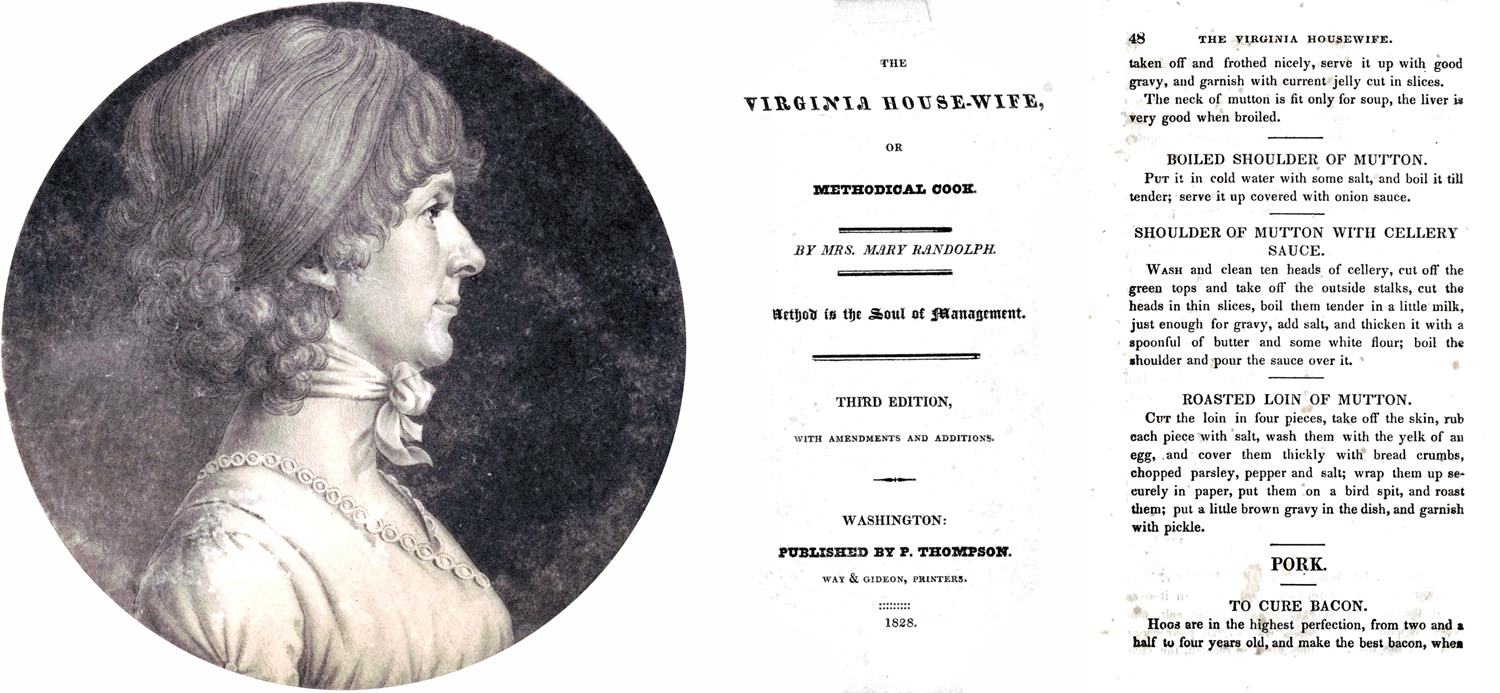
In the new United States, however, the older model persisted: single books by women authors, beginning with American Cookery by Amelia Simmons, “an orphan.” Many of the new American cookbooks were expressions of regional tastes, most famously in Mary Randolph’s The Virginia Housewife, of 1824. It was republished 19 times before the Civil War and contained some 500 recipes.

Historian Cynthia Kierner wrote of Randolph that she “presented a Southern — specifically, a Virginian — model for Southern readers. … using Virginia produce for dishes influenced by African, Native American, and European foods. the book included recipes for Southern classics such as okra, sweet potatoes, biscuits, fried chicken, barbecue shote (young pig), and lemonade.” 

She also included a recipe called “Dough Nuts — a Yankee Cake.”

She was  born to a prominent Virginia family and when she died in 1828, she was buried in what later became Arlington National Cemetery. 

Chef Jose Andre cites Randolph as an influence and he serves her Gazpacho at his America Eats Tavern in Washington, D.C., and says the recipe “demonstrates just how far back the notion of this country as a cultural melting pot goes.” 

Gaspacho-Spanish — Put some soft biscuit or toasted bread in the bottom of a sallad bowl, put in a layer of sliced tomatas with the skins taken off, and one of sliced cucumbers, sprinkle with pepper, salt and chopped onion; do this until the bowl is full; stew some tomatas quite soft, strain the juice, mix in some mustard, oil and water, and pour over it; make it 2 hours before it is eaten.

Other regional cookbooks followed. In 1839, Lettice Bryan wrote The Kentucky Housewife and in 1847 Sarah Rutledge wrote The Carolina Housewife, again acknowledged only as “a lady of Charleston.” Rutledge was the daughter of Edward Rutledge, a signer of the Declaration of Independence. A report says that until about 1920, “the name of a Charleston woman appeared in print but thrice — when born, when married and when buried — legal necessities.” When Rutledge was outed as the author after her death in 1855, it was said that the disclosure would have made her “spin in her grave.”

Here is her recipe for Hopping John:

Three books by African-Americans should be mentioned. Malinda Russell was a free Black woman from Tennessee who wrote the first known cookbook by an African-American woman. Her Domestic Cook Book: Containing a Careful Selection of Useful Receipts for the Kitchen came out in 1866 and included recipes for catfish fricassee, Irish potatoes with cod and sweet onion custard. 

Former slave Abby Fisher wrote What Mrs. Fisher Knows About Old Southern Cooking published by the Women’s Cooperative Printing Office in San Francisco in 1881. Mrs. Fisher was a pickle maker by trade and her book includes many recipes for pickles, in addition to fried chicken and biscuits. Here is one:

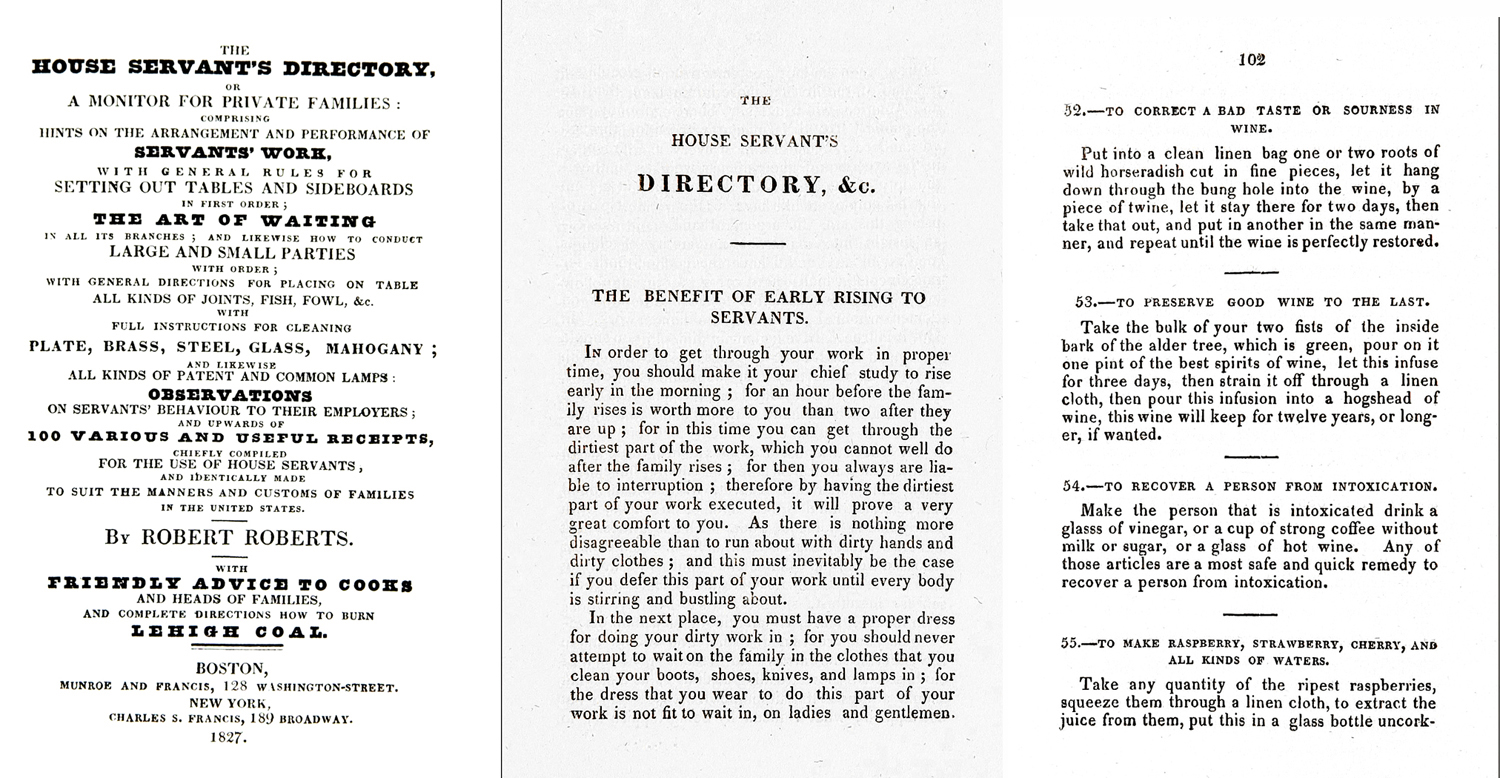
Breaking the mold of cookbooks written by women for women, the first recipe book by an African-American author was written by a man for other men. In 1827, Robert Roberts published The House Servant’s Directory: A Monitor for Private Families. Roberts was butler and majordomo for Massachusetts governor Christopher Gore. His book is aimed at those running a household, including how to complete chores, how to clean, how to behave properly and then, to prepare foods. 

“In order to get through your work in proper time, you should make it your chief study to rise early in the morning; for an hour before the family rises is worth more to you than two after they are up.” He also includes his method of curing a drunk of his habit:

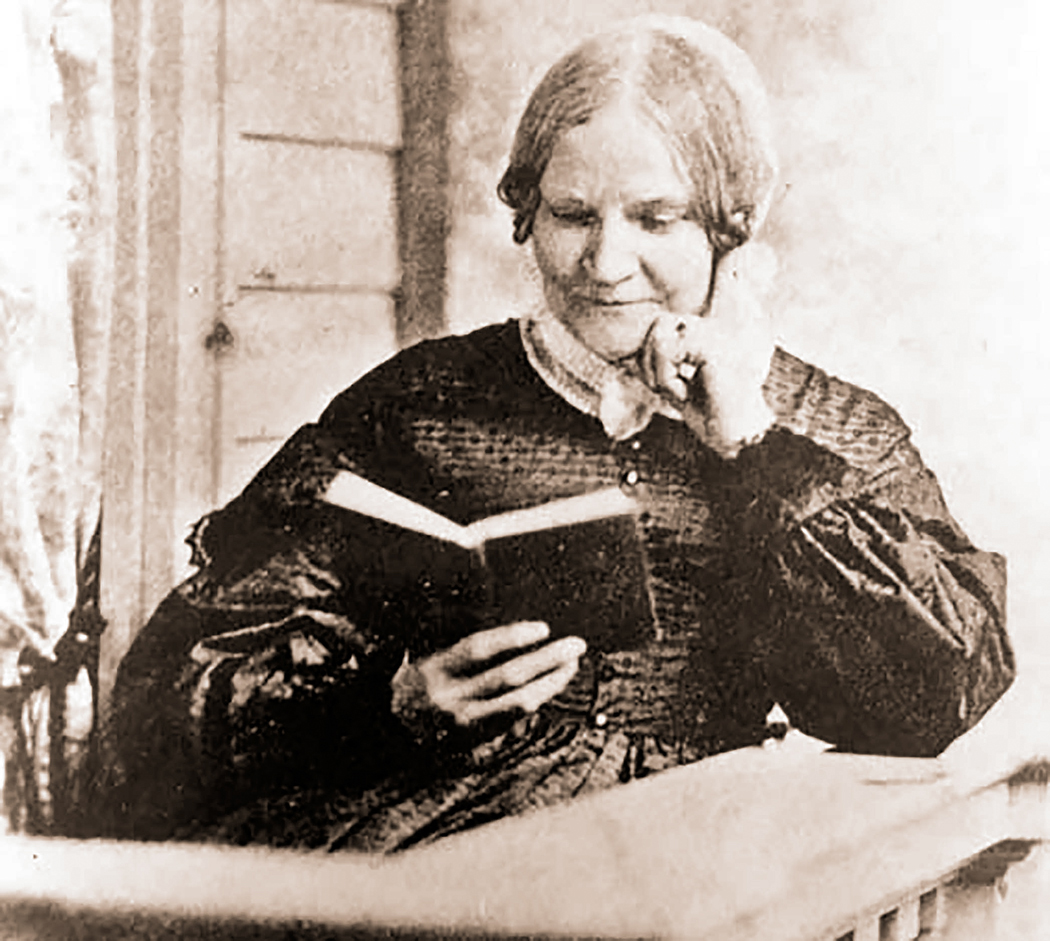
All of these cooks and authors were impressive, but none holds a candle to the formidable Lydia Maria Child (1802-1880). She wrote in many veins, probably best remembered today for the lyrics to “Over the River and Through the Woods,” she took on many dragons: She was an abolitionist, a women’s rights activist, a spokesperson for Native American rights, and opponent of Manifest Destiny, white supremacy and male dominance, an advocate of women’s education, a novelist taking on issues such as miscegenation. And she was a journalist and poet. Mrs. Child could walk through walls, and don’t get in her way.

In 1833, she wrote An Appeal in Favor of That Class of Americans Called Africans, calling for instant emancipation with no compensation for slaveholders. In it, she wrote “The intellectual inferiority of the Negroes is a common, though most absurd apology, for personal prejudice.” She went on to publish The Duty of Disobedience to the Fugitive Slave Act and act as editor of a national abolitionist periodical. 

As a women’s rights activist, she wrote that significant progress for women could not be made until after the abolition of slavery, because women and slaves were similar in that white men held both groups in subjugation and treated them as property. 

She also worked for Native American rights, too. Her novel Hobomok, A Tale of Early Times concerns an interracial marriage between a white woman and an Indian man, who have a son together. 

Beyond that, she was a notorious freethinker. She wrote, “It is impossible to exaggerate the evil work that theology has done in the world,” and “What blooming paradise would the whole earth be if the same amount of intellect, labor and zeal had been expended on science, agriculture and the arts.” 

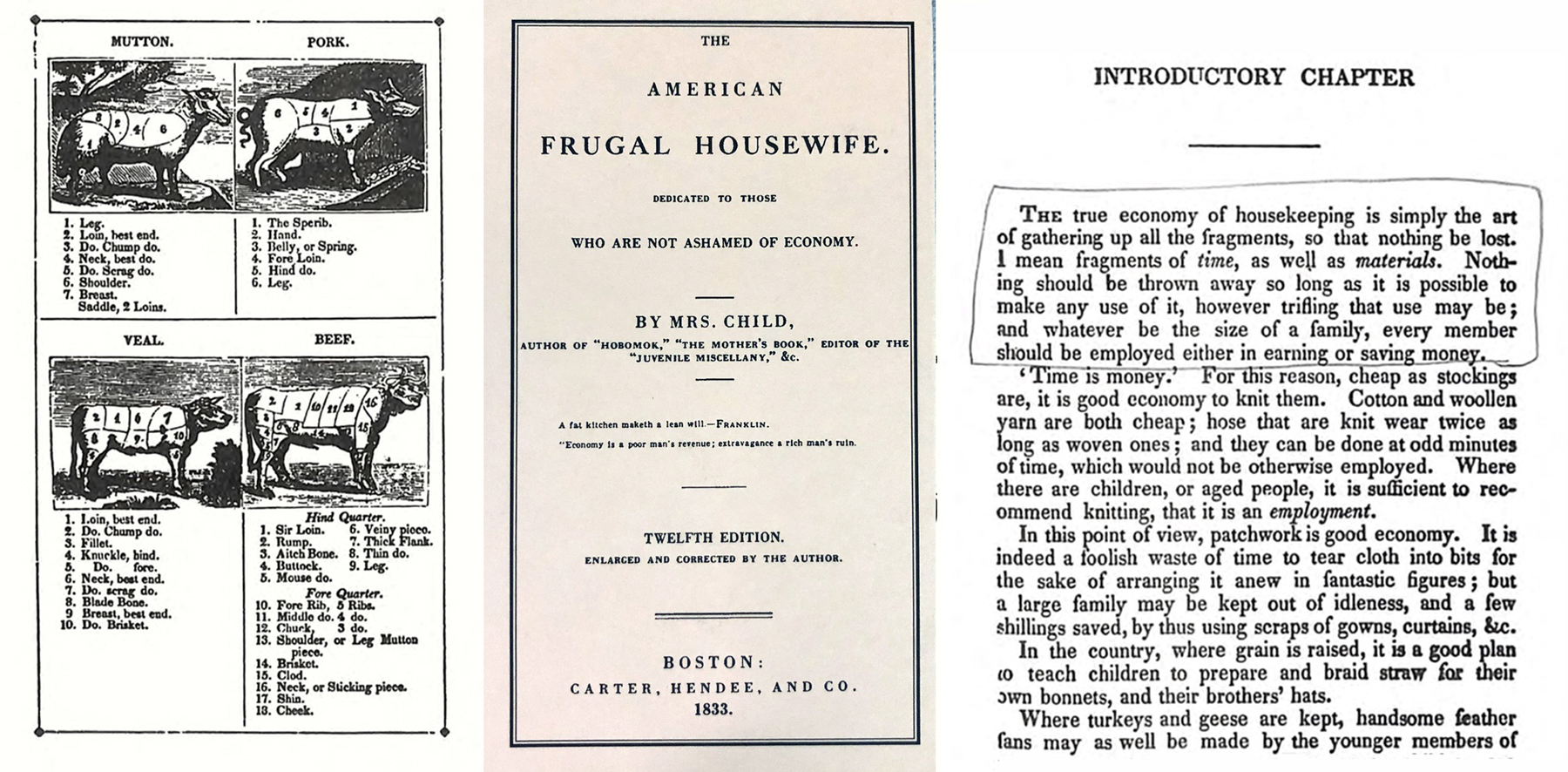
But I have become sidetracked by my admiration for Ms. Child. What we are concerned with here is her cookbook, The American Frugal Housewife for Those Who Are Not Ashamed of Economy, published in 1829 when she was 27 years old. It went through 33 printings in 25 years. In it the same indomitable schoolmarm certainty reigns. I have to wonder if she ever told — or even heard — a joke, in her life. 

The book was aimed at women cooking for their families without servants to do the work. It is written simply, and always with an eye to saving money. It begins:

“The true economy of housekeeping is simply the art of gathering up all the fragments, so that nothing be lost. I mean fragments of time, as well as materials. Nothing should be thrown away so long as it is possible to make any use of it, however trifling that use may be; and whatever be the size of a family, every member should be employed either in earning or saving money.”

That includes children, who shouldn’t be wasting their time in “useless play:”

“Children can very early be taught to take all the care of their own clothes.

“They can knit garters, suspenders, and stockings; they can make patchwork and braid straw; they can make mats for the table, and mats for the floor; they can weed the garden, and pick cranberries from the meadow, to be carried to market. … it is a great deal better for the boys and girls on a farm to be picking blackberries at six cents a quart, than to be wearing out their clothes in useless play. They enjoy themselves just as well; and they are earning something to buy clothes, at the same time they are tearing them.”

In a chapter concerning “The Education of Daughters,” she enjoins: 

“The greatest and most universal error is, teaching girls to exaggerate the importance of getting married; and of course to place an undue importance upon the polite attentions of gentlemen.”

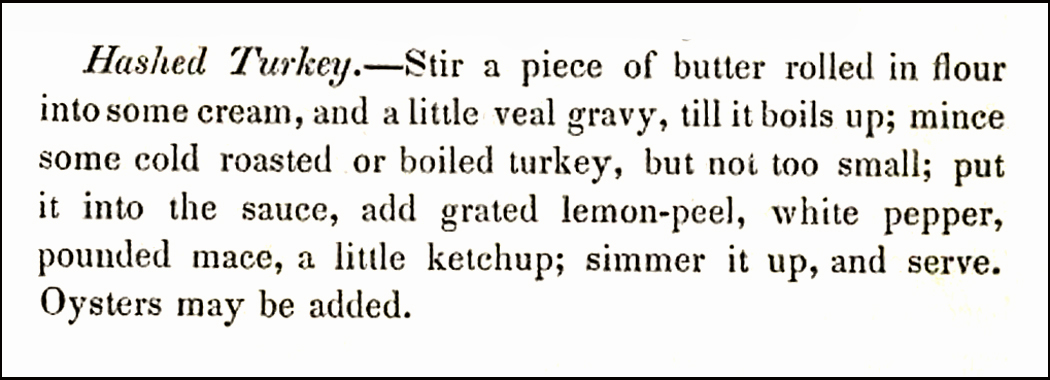
Her recipes extoll the frugality of finding the best cuts of meat and of using those parts that others snub. 

Or:

Another multi-tasking and prolific writer was Frances Harriet Whipple Green McDougall, who published under the simplified name as Frances Green, although, for her cookbook, she was listed on the title page of The Housekeeper’s Book (1837) as “By a Lady.” 

She was a poet, abolitionist, women’s rights advocate and spiritualist. Her many books include Memoirs of Elleanor Elbridge, a Colored Woman (1838); Might and Right (1844), a book about the Dorr Rebellion in Rhode Island; The Primary Class-Book of Botany (1856), a botany text for students; and Beyond the Veil (1878, posthumous) about communicating with the dead. 

The Housekeeper’s Book: Containing Advice on the Conduct of Household Affairs: with a Complete Collection of Receipts for Economical Domestic Cookery (earlier centuries doted on enormous titles) was written for middle and upper class women and those in their employ and covers everything from freshening up bedding to making cordials. 

“The work has been founded on the results of actual experience, and is intended for every day use; that the receipts, directions, and general advice have all been prepared with strict view to utility, and true economy; and that nothing has been omitted which the author deemed subservient to the general design – the promotion of domestic happiness by attention to the constantly recurring and inevitable duties of good housekeeping.”


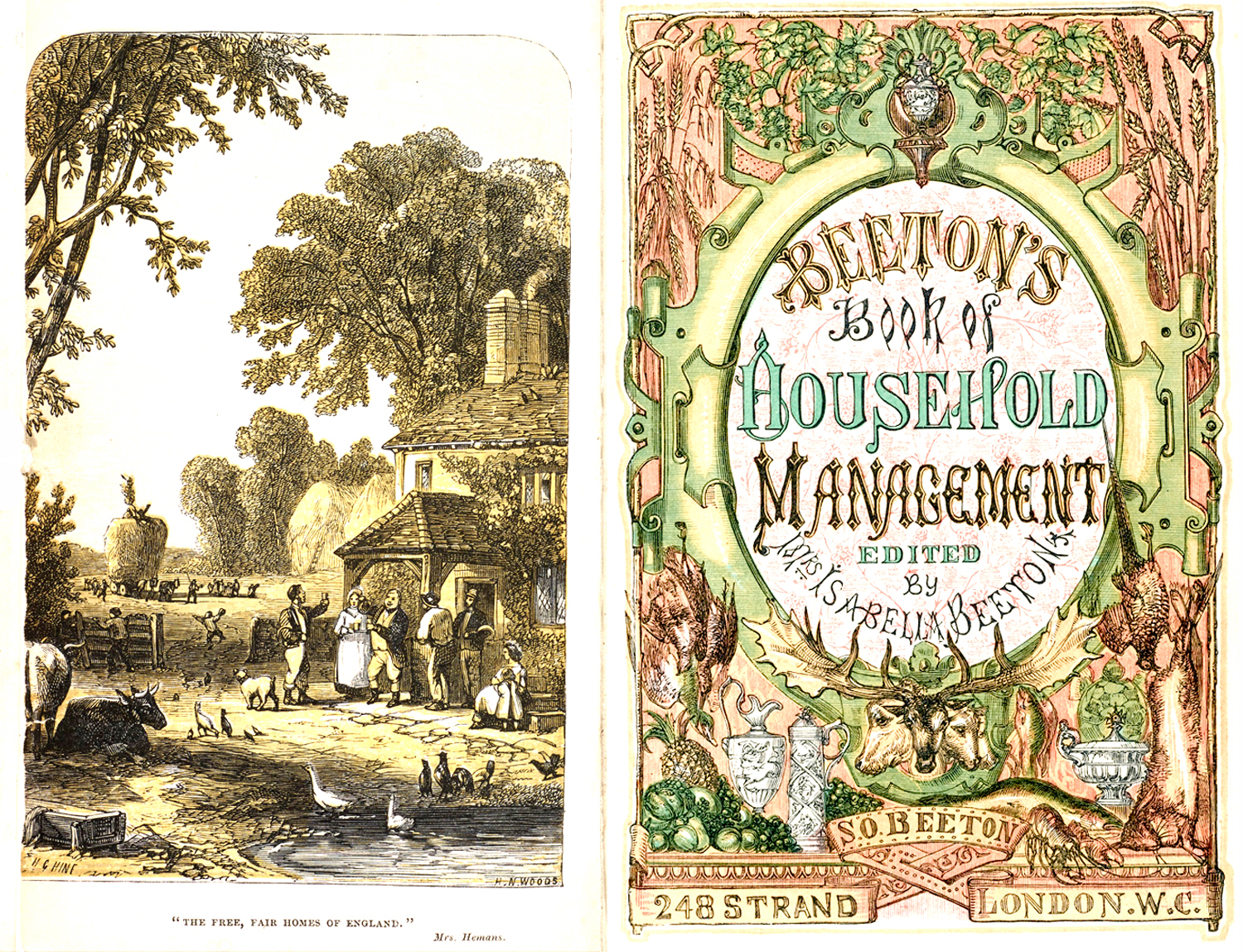
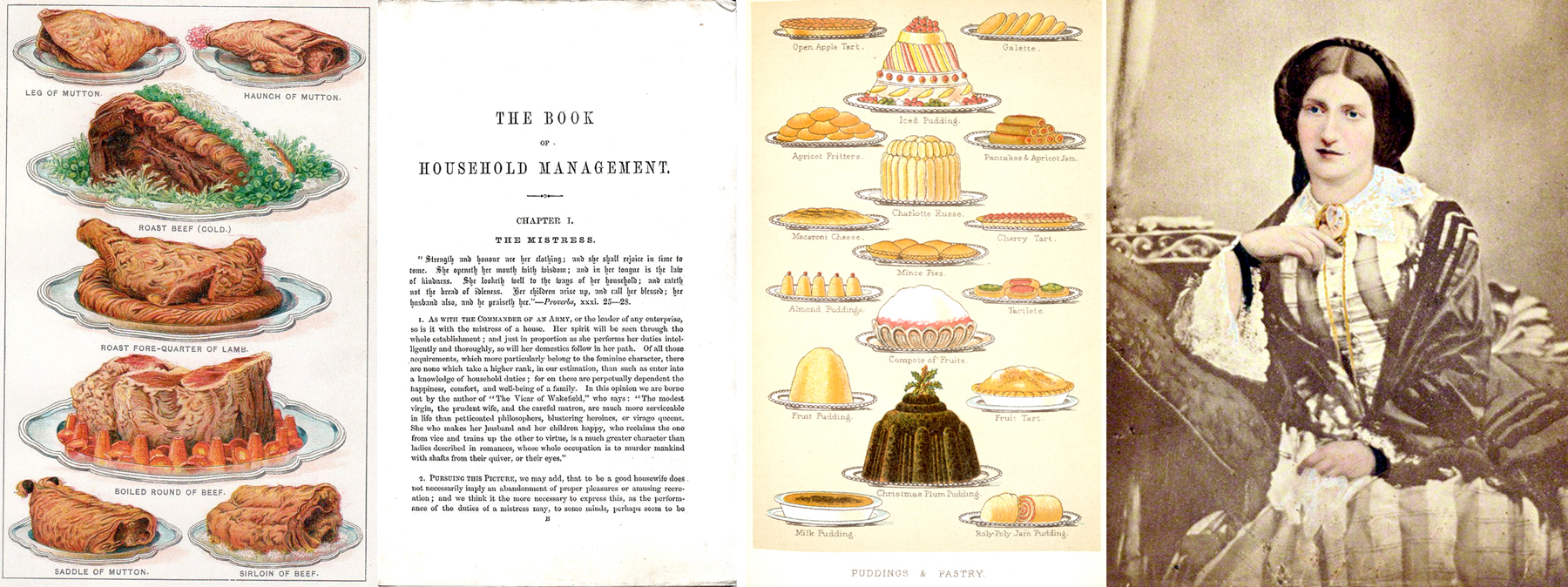
Back in England, the absolute queen of the kitchen and cookbook was Isabella Beeton. Her books were everywhere. Mrs. Beeton’s Book of Household Management came out in 1861 and by 1868, had sold nearly 2 million copies. It was reprinted well into the 20th century. In fact, it can still be bought today.

The book was first published as 24 installments in her husband’s magazine, The Englishwoman’s Domestic Magazine. Samuel Beeton was a magazine editor and publisher and brought out the first British edition of Uncle Tom’s Cabin. He was also a proponent of the equality of the sexes.  There seemed to be a connection in the 19th century between abolitionism, feminism and cookbooks. 

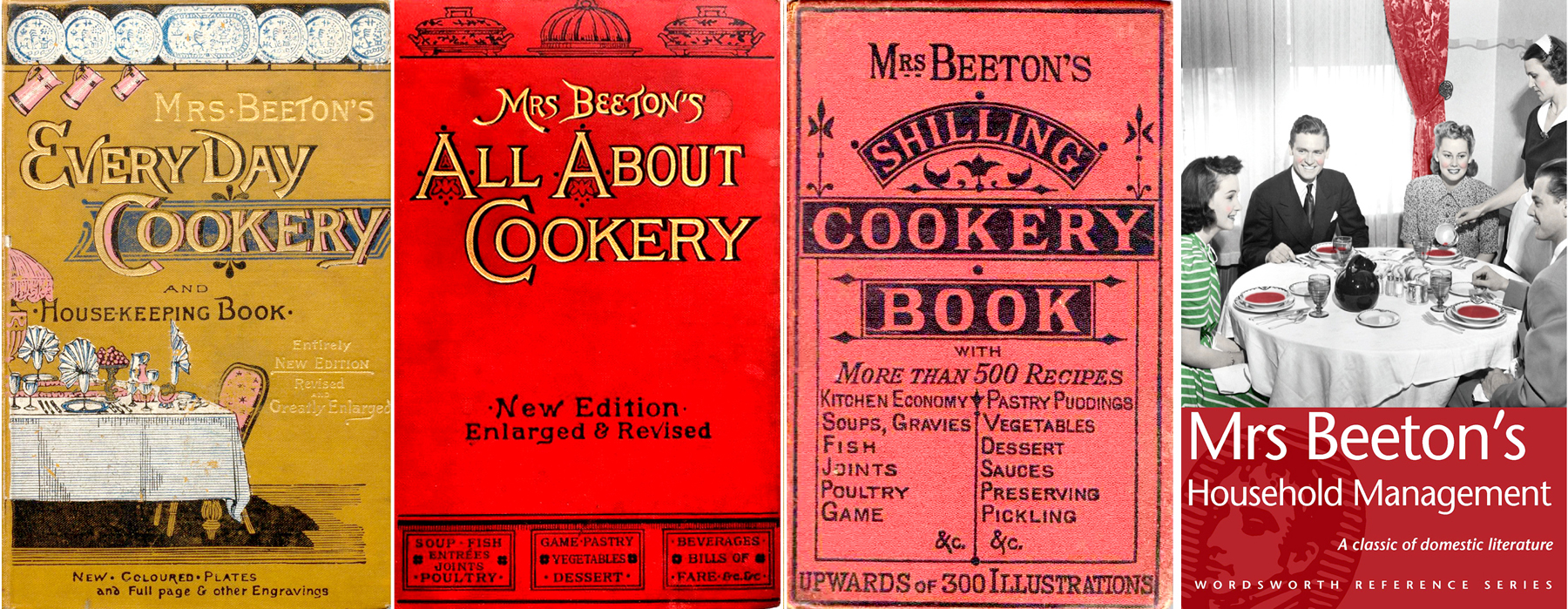
Mrs. Beeton’s work was published and republished in many forms, re-edited and resold under many titles after her early death at age 28 in 1865. At her death, she was working on her Dictionary of Every-Day Cookery. 

After her death, her husband sold the publishing rights to Ward, Lock and Tyler, a firm that continued to resell the book through dozens of editions, sometimes with only the flimsiest connection to the original. By 1891 the term Mrs Beeton had become used as a generic name for a domestic authority. They suppressed the fact of Mrs. Beeton’s death, so that the name became, like Betty Crocker, really a brand name rather than a person. The book became for the 19th century what The Joy of Cooking has been for the 20th. 

Mrs. Beeeton was one of the first cookbook authors to present her recipes with a list of ingredients and their measurements, in the modern style. In her introduction, she wrote: 

“I have attempted to give, under the chapters devoted to cookery, an intelligible arrangement to every recipe, a list of the ingredients, a plain statement of the mode of preparing each dish, and a careful estimate of its cost, the number of people for whom it is sufficient, and the time when it is seasonable.” 

She explains that she was thus attempting to make the basics of cookery “intelligible” to any “housewife.”

Author Christopher Clausen, in his study of British middle classes, wrote that Beeton’s book reflected Victorian values, particularly hard work, thrift and cleanliness. “Mrs. Beeton has … been for over a century the standard English cookbook, frequently outselling every other book but the Bible”

Did I mention that they loved preposterous titles in those days? The full title of the book was The Book of Household Management, comprising information for the Mistress, Housekeeper, Cook, Kitchen-Maid, Butler, Footman, Coachman, Valet, Upper and Under House-Maids, Lady’s-Maid, Maid-of-all-Work, Laundry-Maid, Nurse and Nurse-Maid, Monthly Wet and Sick Nurses, etc. etc.—also Sanitary, Medical, & Legal Memoranda: with a History of the Origin, Properties, and Uses of all Things Connected with Home Life and Comfort.

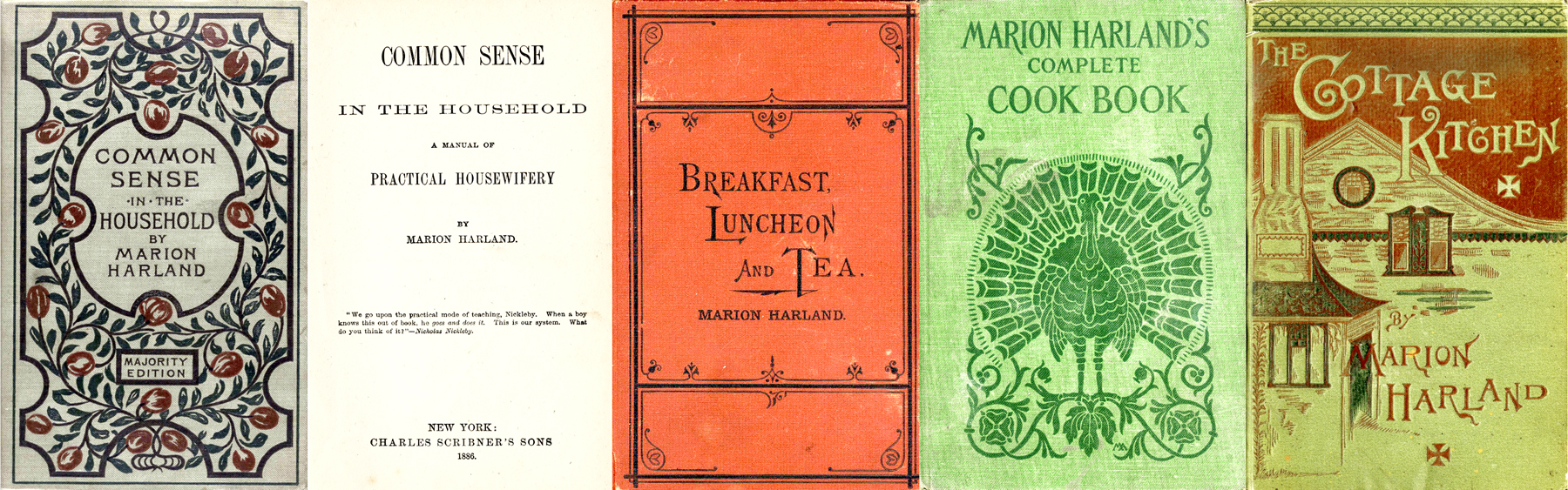
The closest thing America had to Mrs. Beeton was Marion Harland, pen name of Mary Virginia Terhune. She published some 50 books during her life, including novels, short story collections, biographies, travel guides, histories and cookbooks. Her first novel, Alone, came out in 1854. Her first cookbook, Common Sense in the Household: A Manual of Practical Housewifery, came out in 1872. It eventually sold more than a million copies. 

Harland became a franchise, much like Beeton, but lived to see her success. She died at 91 in 1922. Among her domestic books, published after Common Sense in the Household, were Breakfast, Luncheon and Tea (1875); Bills of Fare for All Seasons of the Year (1889); House and Home (1889); Marion Harland’s Complete Cookbook: A Practical and Exhaustive Manual of Cookery and Housekeeping (1903); and The Helping Hand Cook Book (1912), written with her daughter, Christine Terhune Herrick. 

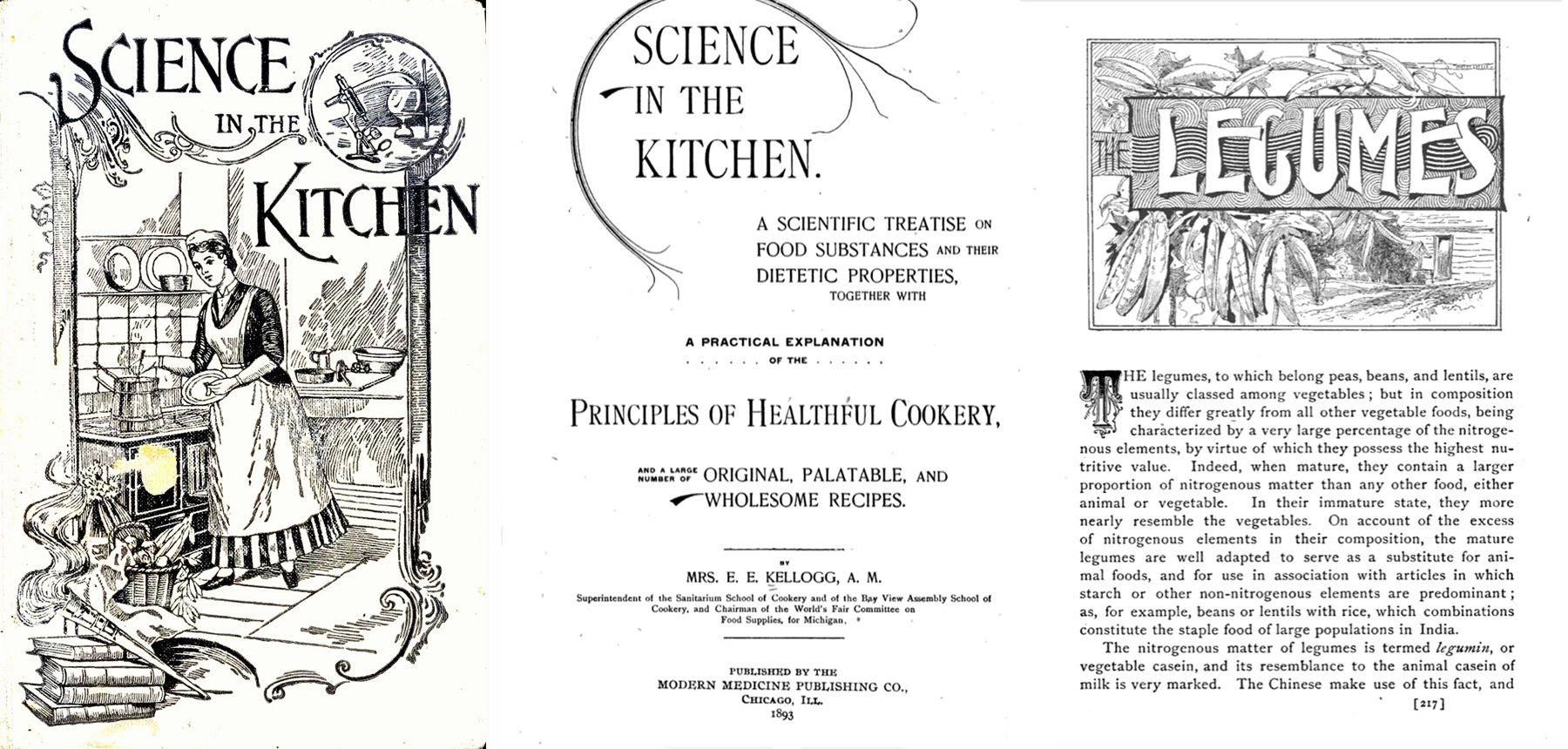
If there is a theme beyond food in all these cookbooks, it is one of moral improvement. Each of them has chapters on proper deportment, how to run clean household, and frugality. This tendency runs on hyperdrive in Ella Eaton Kellogg’s Science in the Kitchen (1892), which features vegetarianism and hygiene as aspects of the same thing. She married John Harvey Kellogg, superintendent of the Battle Creek Sanitarium and the inventor of corn flakes, which he saw as an anaphrodisiac, and proponent of eugenics. Ella Eaton joined the Women’s Christian Temperance Union, becoming associate superintendent of the Social Purity department. 

She ran the kitchen at Battle Creek and wrote that:

 “One of the evils of unwholesome food is its decided tendency to create a craving for intoxicants. Bad cookery causes indigestion, indigestion causes thirst, and thirst perpetuates drunkenness.” 

Kellogg recommended bland foods, as being not only healthier, but leading to a more moral behavior. Vegetarianism is the key:

“The use of large quantities of animal food, however free from disease germs, has a tendency to develop the animal propensities to a greater or less degree, especially in the young, whose characters are unformed. Among animals we find the carnivorous the most vicious and destructive, while those which subsist upon vegetable foods are by nature gentle and tractable. There is little doubt that this law holds good among men as well as animals. If we study the character and lives of those who subsist largely upon animal food, we are apt to find them impatient, passionate, fiery in temper, and in other respects greatly under the dominion of their lower natures.”

And spicy foods cause terrible diseases, she said:

“Physicians have long observed that in tropical countries where curry powder and other condiments are very extensively used, diseases of the liver, especially acute congestion and inflammation, are exceedingly common.”

The undercurrent of racism is unmistakable throughout the book. 

And her instructions for cooking macaroni makes for mush:

“The length of time required may vary from twenty minutes, if fresh, to one hour if stale. When tender, turn into a colander and drain, and pour cold water through it to prevent the tubes from sticking together.”

So much for “al dente.” 

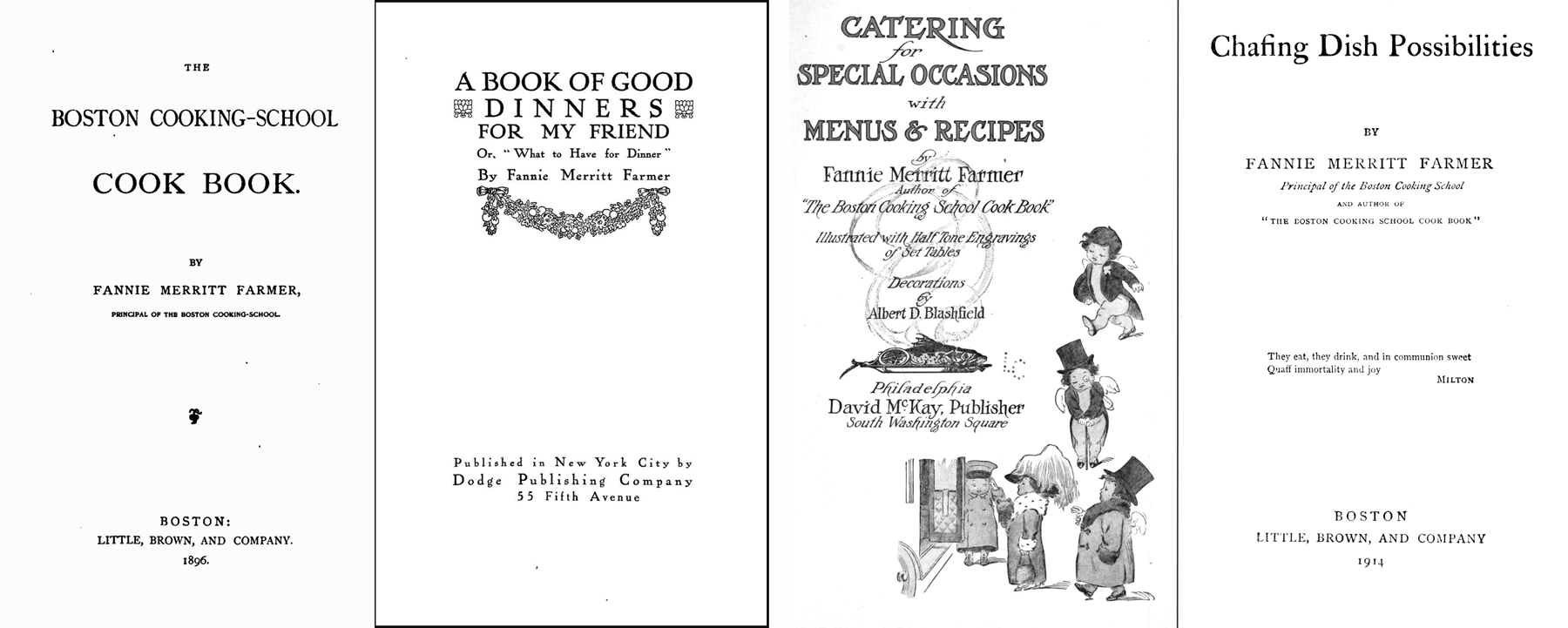
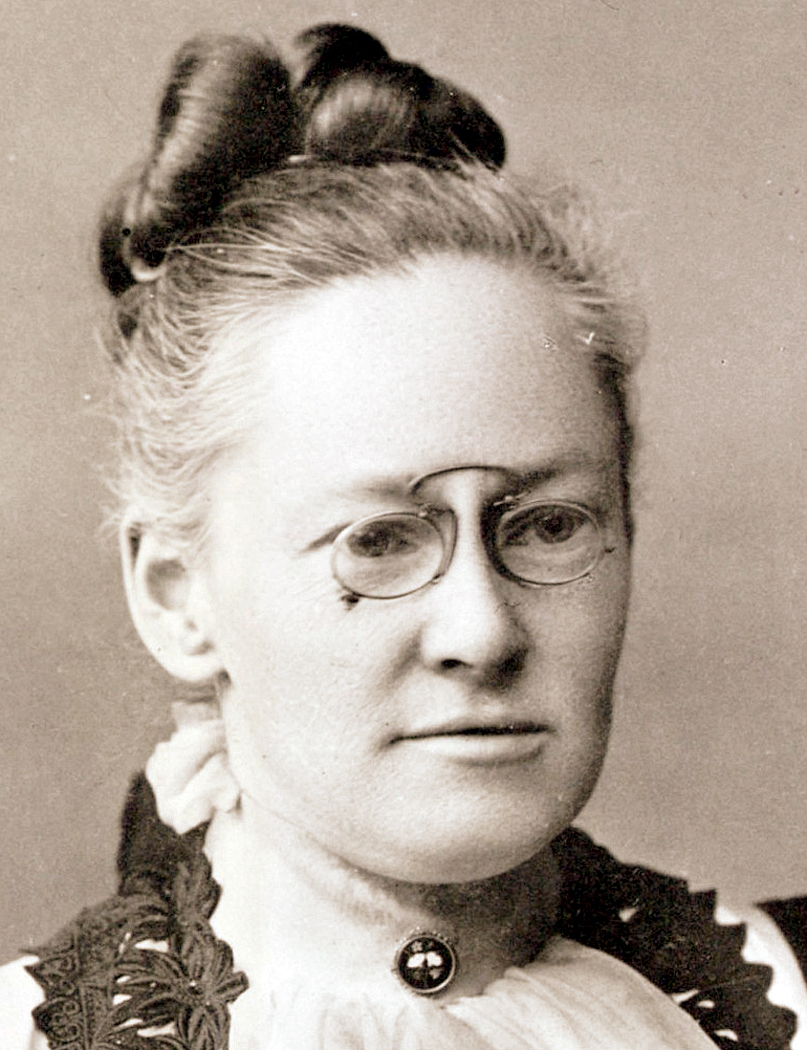
There is more real and systematic science found in The Boston Cook-School Cook Book by Fannie Merritt Farmer, from 1896. Farmer revamped the former Mrs. Lincoln’s Boston Cook Book. Mary Johnson Lincoln had been head of the Boston Cooking School and published her book in 1884 as a textbook for her classes. Farmer expanded the book to some 1,850 recipes and her version eventually became the most popular cookbook in the country and was known simply as the “Fannie Farmer Cookbook.” 

At a time when most American cookbooks were still saying to use a “dollop of butter” or a “teacup of cider,” Farmer used precise measurements in 8 oz. cups and leveled tablespoons. She organized recipes with ingredients and measurements before the text. 

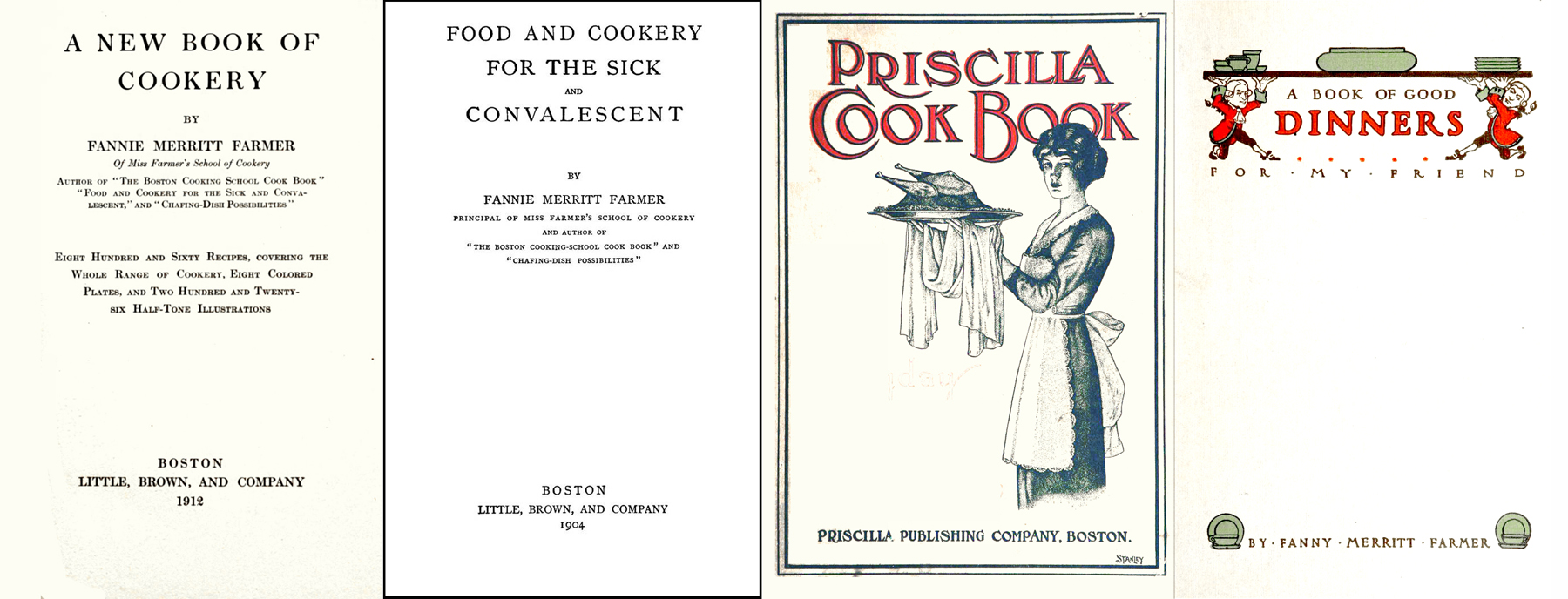
Her book became so popular, she followed up with a series of books,, including Chafing Dish Possibilities (1898); Food and Cookery for the Sick and Convalescent (1904); What to Have for Dinner: Containing Menus with Recipes for Their Preparation (1905); Catering for Special Occasions (1911); A New Book of Cookery: Eight-hundred and Sixty Recipes (1912); The Priscilla Cook Book for Everyday Housekeepers (1913); and A Book of Good Dinners for My Friend, or “What to Have for Dinner” (1914). 

There are many books I have been forced to leave out, including The Epicurian by Charles Ranhofer, who was chef at Delmonico’s Restaurant in New York. His book was an encyclopedic guide to haut cuisine. 

Or Mary Jewry’s Warne’s Every-Day Cookery; Mrs. W.G. Water’s Cook’s Decameron and her Just a Cookery Book; or Mrs. A.B. Marshall’s Larger Cookery Book; or Mary Harrison’s Guide to Modern Cookery; or Mary Doncaster’s Luxurious Modern Cookery. 

But I want to end with Elizabeth Black Kander, a Progressive reformer and founder of a settlement house in Milwaukee where she wrote a book titled The Way to a Man’s Heart, but almost universally referred to as The Settlement Cook Book. 

Daughter of European Jewish immigrants, Kander joined the settlement movement in America, a movement meant to bridge the gap between the poor and the middle class through education and assimilation. Jane Addam’s Hull House in Chicago was a famous example. Kander founded the Settlement House in Milwaukee in 1900. To help fund her relief work, she wrote her cookbook, using recipe that were taught to immigrants in her Settlement House classes. The book became a surprising success and was revised and updated every year from 1901 to 1954, selling more than 2 million copies. 

The World War that came soon after twisted a knot in history, and what followed after, in everything from politics to literature to economics and even to cookbooks, was qualitatively different. The world became modern, for better and for worse. 

Epilogue

Taking the long look from Sumer through Apicius to Ina Garten, there are eon-long trends in cookbooks. The earliest made little distinction between food and medicine and recipes were as often apothecary, mixed with gustatory. 

Somewhere, in the 16th or 17th centuries, the medical part shrunk and became a appendix chapter or two on how to feed the feeble, sick and convalescent. But those same centuries, and especially the 18th, also added chapters on how to deal with servants and how to maintain a household. 

The Victorian age added moral uplift and chapters on proper deportment, mostly for young wives, and the need for cleanliness and rectitude. At its fringes, it advocated crank fad diets. 

After World War I, cookbooks dropped most of the admixture and concentrated on clear recipes, with measurements, serving sizes and instructional information on processes, such as found in The Joy of Cooking or Craig Claiborne’s New York Times Cookbook. 

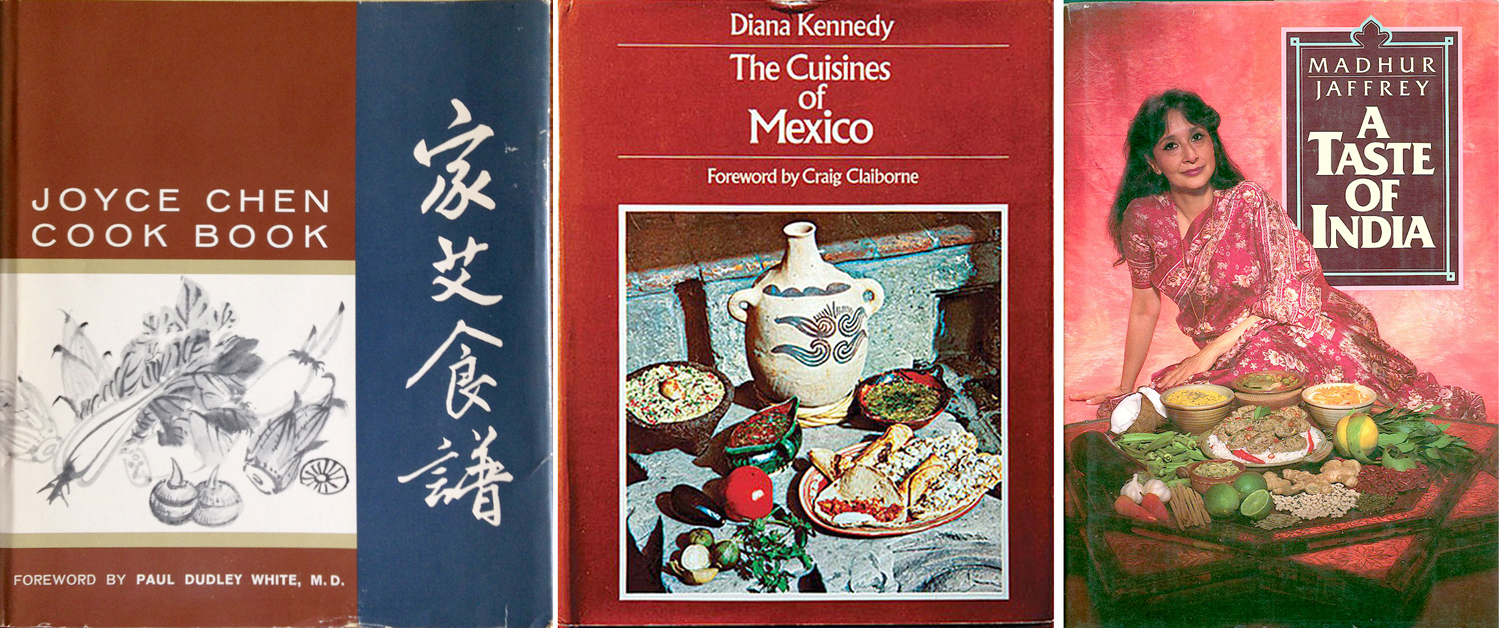
In the past few decades, there has been a resurgence in fads and weight-loss or coronary-health, but also a growth in combining recipes with travel and culture, such as you find in Diana Kennedy, Madhur Jaffrey, Joyce Chen, Patricia Wells, and so many others. 

Of course, cookbooks are facing the same changes as everything else in the digital age, and more people are now turning to YouTube or television for their cooking instruction, which really only brings us, by a commodius vicus back to the days when cooking was taught chef to apprentice or mother to daughter by hands-on verbal instruction. 

Plus ça change, plus c’est la même chose. 

Click on any image to enlarge