Archive

Tag Archives: walden pond

I have traveled more widely than most, I believe. I was a travel writer for my newspaper (among other things). But even outside of vocational duties, travel has been central to my life. My late wife and I have been on the move considerably, visiting each of the 48 contiguous states many times, and gone outside the country when we could. In the summer of 1981, for instance, we put 10,000 miles on the car while driving around the country. We were both teachers and the summer gave us the chance to wander. 

There are places, however, that I have gone back to, over and over, throughout my life, not through mere happenstance, but because they have been meaningful. They are destinations for non-religious pilgrimages. 

Meaning can be hard to define. On first thought, one thinks “meaning” implies a second message: “This” means “that.” “I know what he said, but what did he mean?” That sort of thing.

But meaning has a more personal existence, a psychological one. Something can have meaning even if you don’t know what it means. I suppose you might otherwise call this significance. And there are places I visit over and over because they bear the weight of personal significance. They have meaning. And I go back to them. 
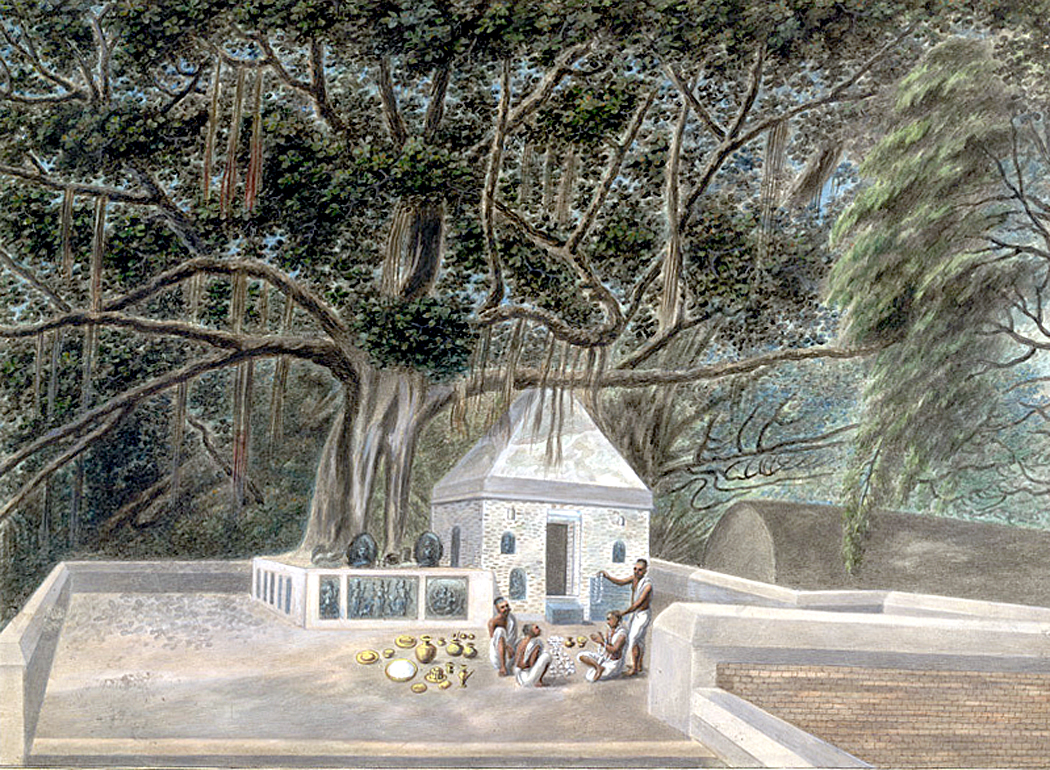
Bodhgaya

It isn’t just me. The world is full of such places, some personal, some cultural, some religious or spiritual. They can be sacred spaces or holy ground. They have accrued some emotional hold on those for whom this kind of significance has meaning. It can be the Buddhist bo tree, the Dome of the Rock, the Western Wall, Independence Hall. For a few of us, the list would include Fenway Park. These are places of social significance and people will make the hajj to see them out of devotion or just to absorb the numinous halo surrounding them. Life is empty without meaning, although what we call meaning and where we might discover it is personal. 

Meaningful places needn’t be so to groups, or to have religious importance. I have no belief in ghosts, spirits or ouija boards and I don’t believe that the past hangs on to the present to make itself palpable. But I have several times experienced a kind of emotional resonance when visiting certain famous sites. 
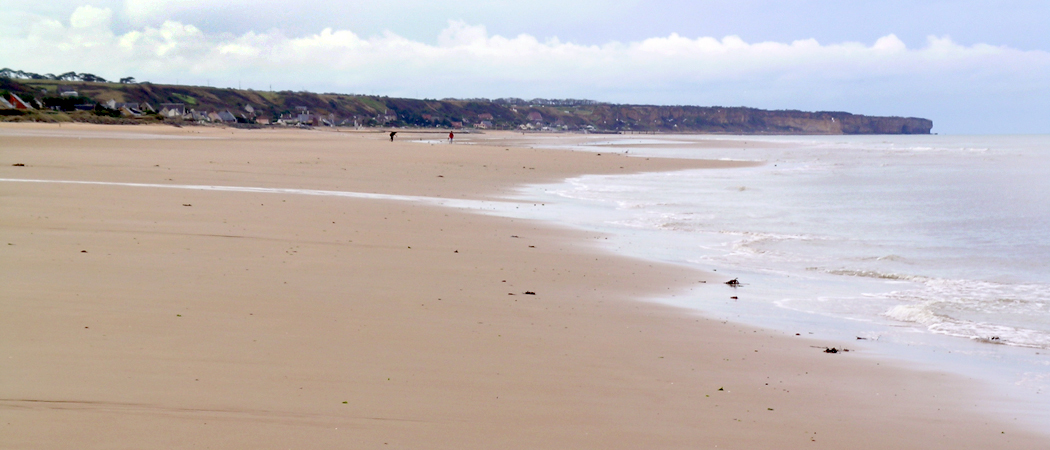
Normandy beach

The thought re-emerged recently while watching the recent commemoration of the 80th anniversary of the D-Day landings in Normandy. I have visited those beaches and had an overwhelming rush of intense sadness. It was inevitable to imagine the thousands of soldiers rushing up the sands into hellish gunfire, to imagine a thousand ships in the now calm waters I saw on a sunny day, to feel the presence in the concrete bunkers of the German soldiers fated to die there manning their guns. 

The effect is entirely psychological, of course. If some child with no historical knowledge of the events that took place there were to walk the wide beach, he would no doubt think only of the waves and water and, perhaps, the sand castles to be formed from the sand. There is no eerie presence hanging in the salt air. The planet does not record, or for that matter, much note, the miseries humans inflict on each other, and have done for millennia. But for those who have a historical sense, the misery reasserts itself. Imagination brings to mind the whole of human agony.  

Perhaps I should not say that the earth does not remember. It can, in certain ways. Visiting the woods of Verdun in France, site of a horrendous battle in World War I, I saw the uneven forest floor, where time has only partially filled in the shell craters. Once the trees were flattened by artillery, leaving a moonscape littered with corpses. The trees have grown back, but the craters are still discernible in the wavy forest floor. The same child who thought of sand castles in Normandy might well think the churned land at Verdun merely a quirk of geology, but the land itself bears its scars. 

The presence of the dead was overwhelming at Antietam, site of the bloodiest battle during America’s Civil War. In one spot alone, a 200-yard stretch called Bloody Lane, 5,000 men were blown apart in a few short hours. 

Before Sept. 17, 1862, the brief dirt drive was called the Sunken Road, and it was a shortcut between two farm roads near Sharpsburg, Md. All around were cornfields rolling up and down on the hilly Appalachian landscape.

The narrow dirt road, depressed into the ground like a cattle chute, now seems more like a mass grave than a road. And it was just that when Confederate soldiers mowed down the advancing Federals and were in turn mowed down. The slaughter was unimaginable.

You can see it in the photographs made a few days after the battle. The soldiers fill the sunken road like executed Polish Jews. It was so bad, as one Union private said, “You could walk from one end of Bloody Lane to the other on dead soldiers and your feet would never touch the ground.”

It is difficult to stand now in Bloody Lane and not feel that all the soldiers are still there, perhaps not as ghosts, but as a presence under your boot-sole, there, as blood soaked into the dirt.

But it needn’t be horror or blood that gives meaning to a place. It may be achieved through personal association with something we lived through, or through esthetic appreciation — the sudden awareness of sublimity — or through an awareness of a less traumatic history born in a landscape. And I thought about places I have gone back to over and over; places that bear significance to me. I’m sure most of us could make such a list, whether long or short. Here are 10 of my personal pilgrimage sites that I have visited and revisited over a long life.  
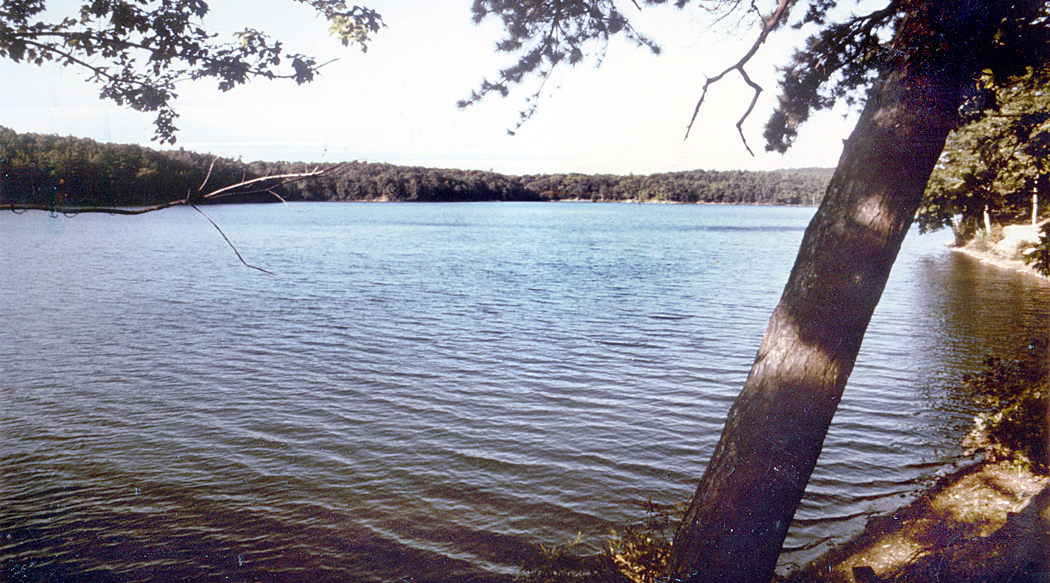
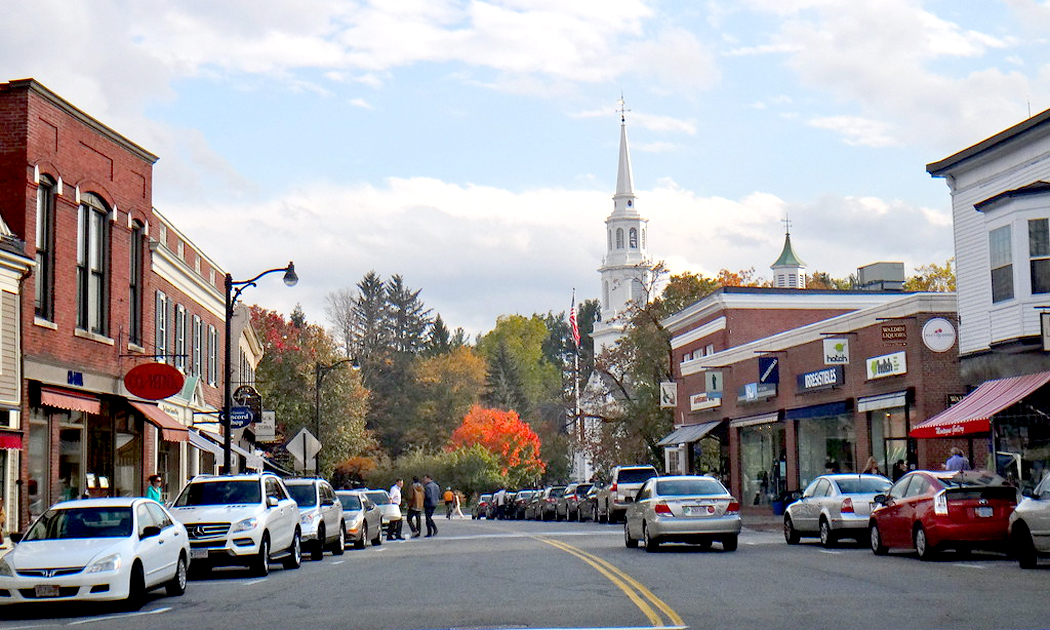
Walden Pond — I cannot count the number of times I have visited Concord, Mass., or how often I have made the pilgrimage to the glacial kettle lake just outside downtown where Henry David Thoreau built his cabin and lived for two years, and which led him to write his book about the experience. 

The most recent visit was only two years ago, passing through on my way to friends in Maine. The site now has a large parking lot and a visitor center (although the parking is primarily for summertime local beachgoers, who use Walden Pond as a swimming hole). When I first saw it, there was not much there but the water and the woods; I had to park alongside the road. 

I have circumambulated the pond, a walk of just under two miles, the first time in the early morning when a mist hung over the water and the sun slowly burned through. I have read Walden several times, and own several editions, both cheap and deluxe, and Thoreau’s other books, including his Journals, and eaten up his idiosyncratic style of writing with relish. 

Walpi

Hopi Mesas — In northern Arizona, the Hopi have built their towns primarily on three mesas, First, Second, and Third, which are really the southern fingers of the larger Black Mesa. We have visited all three mesas many times, including one snowy Christmas spent with a Hopi family we knew on First Mesa in the village of Walpi. The warmth of the hearthfire in the stone house, and the cookies we were offered, and the smiles on the faces of the children are indelible. 

Another time, we were invited to a social dance on Second Mesa in Old Oraibi, and climbed to the roof of one of the houses with the rest of the Hopi to watch and cheer the Kachina dancers. Another time, driving past New Oraibi, at the foot of Second Mesa, we were caught as traffic was halted so the sacred Kachina dancers could cross the road from where they emerged from the kiva and marched toward the plaza. We were not supposed to be there but couldn’t leave, with the Kachina traffic cop in front of us and several cars behind. We apologized profusely, but the angry cop didn’t seem to care. We shouldn’t have been there, but we also couldn’t have known a sacred dance had been scheduled for that day. 

You can stand at the cliff edge on First Mesa and look south over the Navajo Reservation, nearly to Flagstaff and marvel at the intense beauty of the Colorado Plateau. 

Chartres Cathedral — It wasn’t until our second visit to France that we managed to get to Chartres, but after that we went back over and over. The cathedral is, of course, a World Heritage Site, and a sacred place to many. But it spoke to me less of religion than of history — architecture 800 years old and still functioning for its original purpose. 

Most of the cathedrals and basilicas of Northern France have been restored and reworked (Notre Dame, before the fire, was largely re-imagined in the 19th century as it was restored by Viollet-le-Duc) but Chartres is almost entirely original. If you are sensitive to it, you can feel all that passage of time embodied in the stonework and the interior space. 

The cathedral sits at the top of a hill at the center of town, and can be seen in the distance from miles around. I have spent hours sitting in the transept meditating over the great north rose window, which remains the single most beautiful manmade object I have ever seen. The entire experience engenders awe. 

American Museum of Natural History — I was originally going to list New York City here, but then narrowed it down to Manhattan, but, really, the center of magic for me is the Natural History Museum. I first visited on a third-grade school trip and fell in love with the dinosaurs. But all through my childhood and adolescence I visited the museum as often as I could. I loved the dioramas, the dinosaur bones, the giant stone Olmec head, the huge suspended blue whale — even the “Soil Profiles of New York State.” To say nothing of the room full of chunks of quartz, each with a little typed tag explaining where it was collected. 

I could also have mentioned the George Washington Bridge, which my grandfather helped build; he was an engineer working on the bridge in the 1930s. Through most of my life, when living in or visiting New Jersey, I would take the bus to the bridge and walk across the bridge to 178th St. I have walked the bridge too many times to count. 

The Outer Banks — I went to Guilford College in North Carolina beginning in 1966 and soon met lifelong friend Alexander and we made annual camping trips to Cape Hatteras, usually in winter when the beaches were empty. Later, my first wife and I spent our honeymoon camped directly under the lighthouse. It was February and the regular campsites were closed, and so we pitched our tent in the dunes. 

I have been back over and over, with each succeeding wife or possl-q, although as I got to be old, we tended to sleep in motel rooms. When my brother began teaching in Virginia, he lived at the northernmost bit of the Outer Banks, Sandbridge, and when visiting I often made a side-trip back down to Hatteras and Okracoke. 

Once, with Alexander, we went after a huge storm, and parts of the road were washed out just north of the lighthouse. He got out of the car and walked in front, feeling the asphalt under his feet and leading me safely past the overwash. Another time, at night, we walked down to Cape Point with a Coleman lamp projecting our shadows, like giants, up into the misty black sky. 
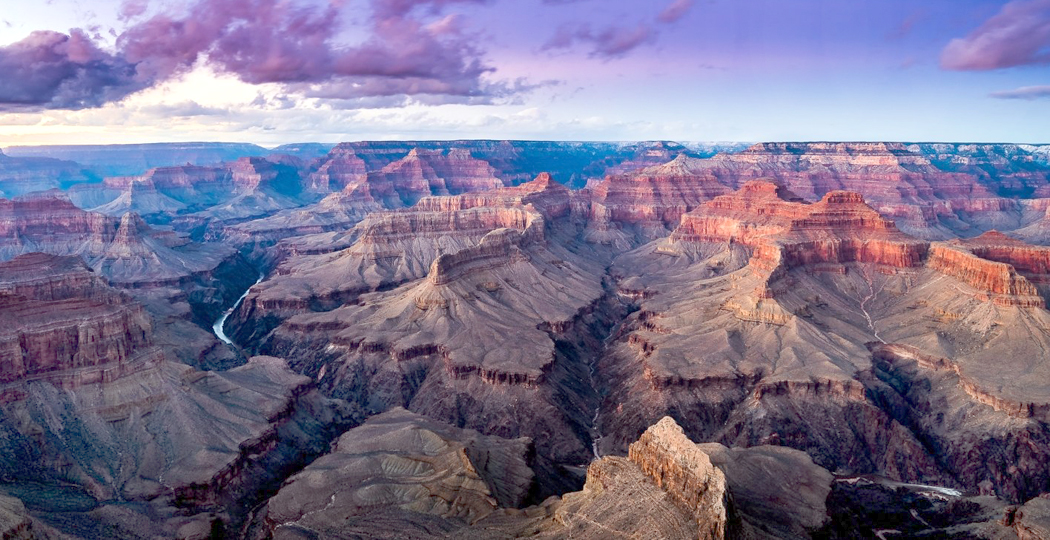
Grand Canyon — My brother once observed that unlike most hyped destinations, where you are always at least a tiny bit disappointed when you finally get there, the Grand Canyon is actually more impressive, more overwhelming, when you actually see it live: It never lets you down. It is 200 miles of vast geology, color, and depth. 

We lived in Arizona for 25 years and so I cannot number the times we visited the Canyon, mostly the South Rim, where most of the tourist action happens. But the second time we came, in 1982, we went to the North Rim and when we couldn’t get a room at the hotel there (it is always full), we went out of the park after dusk into the national forest, where it is legal to camp anywhere, and pulled into a side road in the dark. In the morning, we got out of the tent and discovered that if I had backed the car up 10 feet  further, we would have tumbled down into the canyon. We were right on the edge. 

And once, on assignment from the paper, I drove 60 miles off road to the Toroweap Overlook, also on the North Rim, but in pure wilderness where only a rare person ventures, and camped away from all city lights, where the night sky was neon in intensity. 


Hudson River Valley — I grew up in northern New Jersey, in the apotheosis of suburbia. But my father’s family had a rustic house — a “bungalow” — in West Park, N.Y., halfway up the Hudson River, and we spent many summer vacations, and at least one winter ski vacation, at the bungalow. It was the town where the once-famous nature writer John Burroughs lived. There was woods, a swimming hole with a waterfall. 

But up and down the river, from Dunderberg through Bear Mountain and the Seven Lakes Drive, it was the escape from the ordinariness of the suburbs. We regularly went swimming in the summer at Lake Welch, or watched ski jumping at Bear Mountain. 

In 1986, we drove up Perkins Drive to the top of Bear Mountain, during an outbreak of gypsy moth caterpillars. The tower at the top was covered in a sheath of hairy worms and the ground was gooey with the squashed ’pillars. It was eerie and more than a little stomach churning. 

The bungalow at West Park

The Nilsen family drove up Route 9W on summer weekends to visit the bungalow, and the three-lane highway had to curl around Storm King Mountain, a section of road that made my cautious father extremely nervous with a sheer drop down the edge to the river. They are gone now. That portion of 9W has now been re-routed and the treacherous third (middle) lane now long gone. Near Haverstraw, the “Ghost Fleet” of WWII-era liberty ships were moored. They are gone now. So is the bungalow. I am sorry for that. 

From the Palisades up through the Catskill Mountains, the Hudson River is holy ground, as far as I am concerned. It glows with the inner light of myth. 
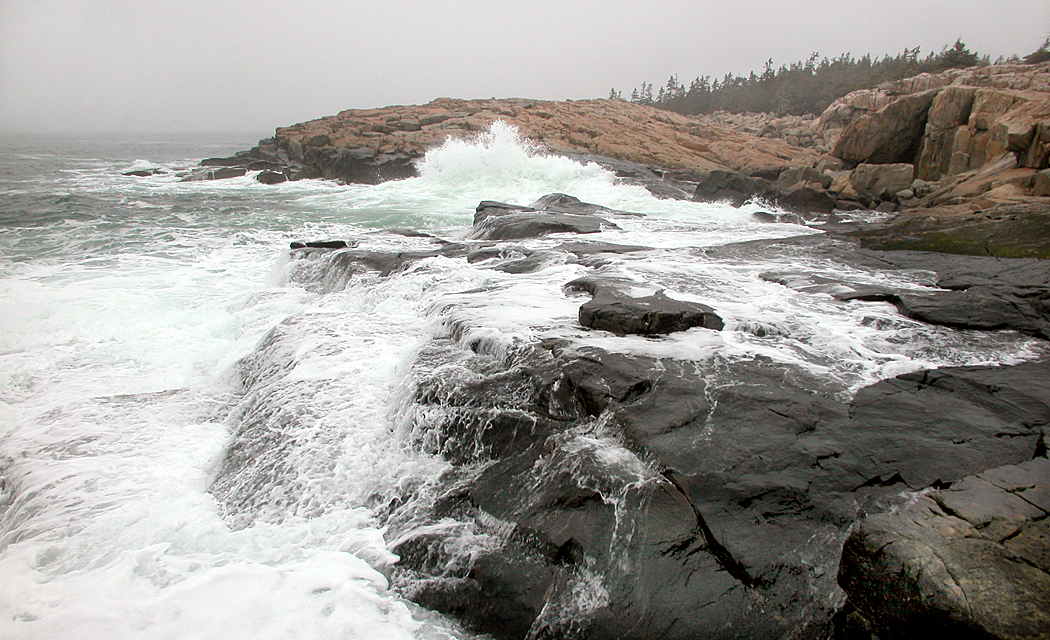
Schoodic Point — Maine is its own mythology, and like the city of New York, I was going to include the whole state in my list, but likewise, I have narrowed it down to the place that I have been back to over and over for the longest. I first visited Maine as an infant when my parents took a trip there. I can’t say I have any memory of then. But subsequently, I have been there many times, now to visit my friends Alexander and Mary Lou. I’ve traveled the whole state over, camped at Mt. Katahdin, driven round Mooselookmeguntic Lake, reached the summit of Cadillac Mountain on Mt. Desert Island, took the tour of the paper mill in Millinocket — and you can get there from here. 

But the mythic center of Maine for me has been the rocky bit of coastline that juts out into Frenchman’s Bay north of Acadia National Park, called Schoodic (with the double “O” pronounced as the “oo” in “good.”) It is one of those windswept romantic landscapes where the spume blows into your face, the waves crash against rock with an explosive boom, and the sky, water, and land still seem of one substance. 

Giverny — I’ve been to Monet’s house and gardens three times, once in the spring and twice in the fall. He and his family lived in the small town 50 miles north of Paris, from 1883 until his death in 1926, and many of his greatest works were made there, primarily his extensive series of water lily paintings. 

I had become familiar with some of those wide canvases in museums in New York and at the Carnegie Museum in Pittsburgh. And I had been inspired to make scores of photographs of waterlilies in imitation of Monet’s paintings. 


But the chance to get to see the genuine article in situ, in the grand gardens in Giverny was a pilgrimage from the get-go. One enters, of course, with curiosity, but also with reverence. 

Austin house

Rock Castle Creek, Woolwine, Va. — Some of the happiest and unfettered moments of my life have been spent on the porch of the Austin house along Rock Castle Creek in Virginia. I have been back many times, beginning during my college years, when a group of Guilford students hiked the five or so miles up the creek, fording over logs, and reaching the 1916 farmhouse, with its spring house and barn. 

With my companion, or with a group, we would break into the house (not recommended, for legal reasons) and roll out our sleeping bags on the floor. At night in the summer, the field in front of the house was a galaxy of blinking lightning bugs. 

At the end of Bergman’s film, Wild Strawberries, the old professor Isak Borg, lies in bed after a tumultuous day, full of cares and regrets, and in voice over, says, “If I have been worried or sad during the day, it often calms me to recall childhood memories,” and he thinks of a time he saw his parents together, with his father fishing. It soothes him and he sleeps peacefully. For me, that moment of pure calm happiness that I recall is of sharing a hammock with my beautiful red-headed mate on the second floor porch of the Austin house and watching the sun go down over the creek and meadows beyond. Such moments consecrate a place. 


These are all places I have gone back to multiple times. But there are places where I have only ventured once that still have that emotional buzz that signifies a sacralized locale. These may be places set aside by history or by personal experience, or simply by their extraordinary natural setting. 

We all have such places, and they while they may be widely shared, such as the World Trade Center, they are just as often special only to one or a few people. Places where we stand in awe, and may not even be able to speak. 

From top right: Cape of Good Hope; Gaspe; Montauk; Finisterre

For me, many have been where the land runs out and the seas begin. There is something about the extremity, the sense of the limitations of land and the seeming infinity of the watery horizon. I seek them out, such as the Gaspé Peninsula, Long Island’s Montauk Point, Brittany’s Finisterre, or South Africa’s Cape of Good Hope. At my age, I know my existence shall soon run out and the dark infinite void is the horizon, and that I will not likely ever get to visit such places again. 

And I have been to Civil War sites where I felt the ghosts in the soil: places such as Shiloh, Vicksburg, Appomattox, Gettysburg, Petersburg, Bull Run, Chancellorsville, Fredericksburg, and Five Forks. And important places in the Western expansion: Sand Creek, Little Bighorn, Wounded Knee, Washita. Japanese internment camps at Manzanar and Poston. And to the Lorraine Motel in Memphis, where Dr. King was shot; and the slave quarters at the Oakley Plantation in Louisiana. All places where death and suffering are felt in the air breathed there — at least to anyone with an awareness of history. 

Mt. Saint Michel

And I could list many less fraught places with their own resonance that I have only visited once, but that have created space in my psyche: Mt. Saint Michel; Big Bend National Park; the catacombs in Paris; the caves at Lascaux; the town of Moosonee on James Bay in Ontario; the Okefenokee swamp in Georgia; Mt. Angeles in Washington’s Olympic Mountains; Hallingskarvet mountains in the spoon of Norway; Chaco Canyon; Taliesin in Wisconsin; Ice Water Springs in the Smokies; the Salton Sea; Glacier Bay in Alaska. 

Each of these places has become a part of me. They are my sacred spaces. 

Click any image to enlarge

In October my ex-wife and I decided to take a drive from Asheville, N.C., to Sullivan, Maine, to visit our old college friends, Sandro and Mu. This is Part 5 and the conclusion of that trip. 

We left Sullivan on Friday, Oct. 25, and made it easily to Portsmouth, N.H. On the way north we took a desultory route with side trips and excursions. On the way south, the plan was to stay on the interstates and make time. I generally despise interstate driving. One such road looks very much like all the rest and you share the way with gargantuan trucks and impatient drivers who believe that no matter what speed you are driving, it is never enough, so, get the hell out of my way. 

There was one stop on the way, however, that took us off the four-lane. 

Oct. 26

We had tried to visit Walden Pond on our way up to Maine, but it was so clogged with traffic and visitors, there was no possibility of parking. “We can see it on the way home,” Anne said. 

When I was a young man, my attention was split between books and what we nostalgically used to call nature. I had a life list of birds and could identify any tree or wildflower by popular and scientific names. I was a hiker and once attempted, with my second unofficial wife, to traverse a large chunk of the Appalachian Trail. 

The one hinge that swung both worlds was Henry David Thoreau and I read everything he wrote, including his journals, which come in at 14 volumes and each of those come in at an average of 500 pages. 

There have been four writers who have most influenced my own feeble scribblings. They weren’t so much models as they were permissions. Henry Miller gave me permission not to care too much about being literature, i.e., to lose my self-consciousness about writing; Edward Gibbon gave me permission to write long sentences; Herman Melville allowed me to hide philosophizing in cryptic jokes; and Henry Thoreau taught me to think directly in imagery and metaphor. 

  “Time is but the stream I go a-fishing in. I drink at it; but while I drink I see the sandy bottom and detect how shallow it is. Its thin current slides away, but eternity remains. I would drink deeper; fish in the sky, whose bottom is pebbly with stars.”

I still read Melville and Gibbon with pleasure; I cannot read Miller anymore — he was a passion of my younger shallower self — and Thoreau I can seldom tolerate. His prescription for living now feels hyperbolic and not a little selfish. 

But I still love — and I use that word advisedly — love Walden Pond. I cannot count the number of times I have visited. I came to see it first with my second unofficial wife and have been back over and over. I have walked its circumference it three times, written about it too many times, both for my newspaper and for my blog. 

We must each have our sacred spaces. Places we go to for recharging, for awe, for a recognition of the larger things, for connection or reconnection with what matters. I have maybe five or six such locations on the planet. Walden Pond is one of them. 

When I first visited, the pond was just a place outside of Concord, Mass., who only a few students of American literature ever visited, except in the summer, when it was the swimming hole for locals, most of whom probably never connected it with one of the classics of American culture. It was a place I could consider proprietary. Only us acolytes knew or cared. 

Now, it is a spot on a tour bus itinerary. Hordes of people show up at the 335-acre state park during summer months and there are multiple parking lots, a visitor center and worse — signage. 

Yet, still, under it all is the 64-acre lake, the trees, underbrush and the birds and insects that populate it. 

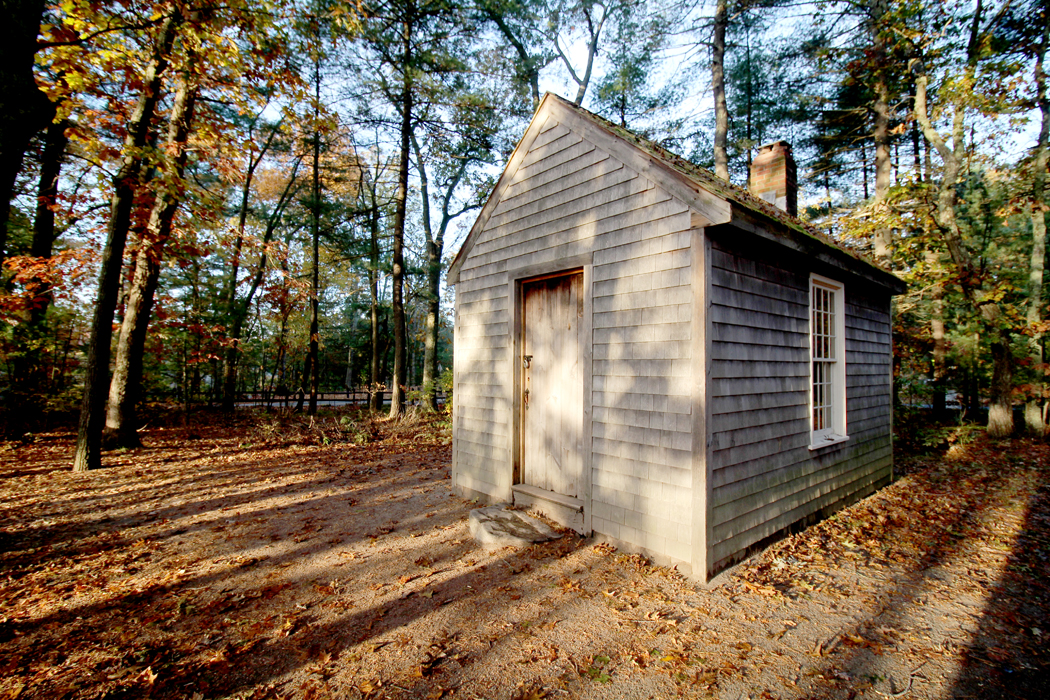
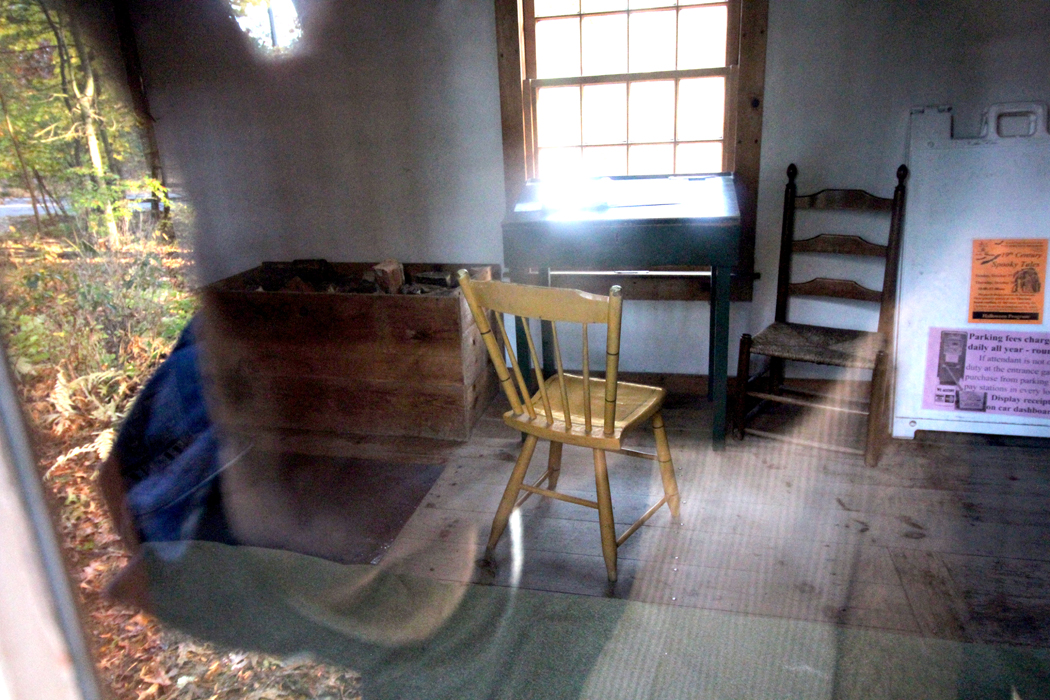
We arrived in early morning, it is chill and the only visitors so far are several fishermen and a kayaker. I walk past the reproduction cabin, peek into the window and continue on downhill to the water. 

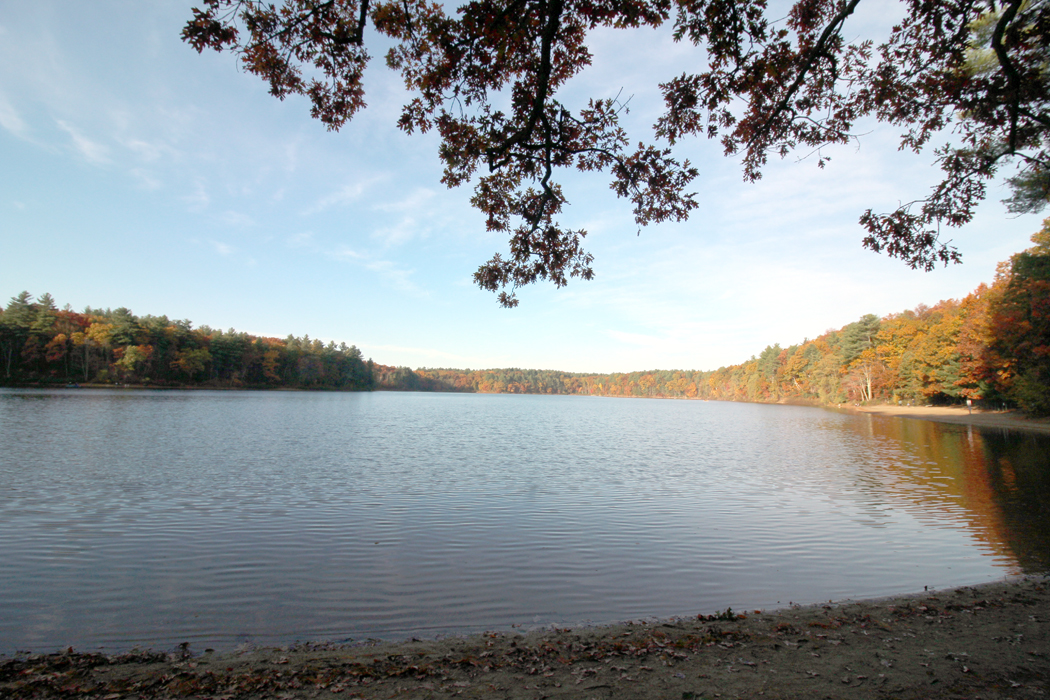
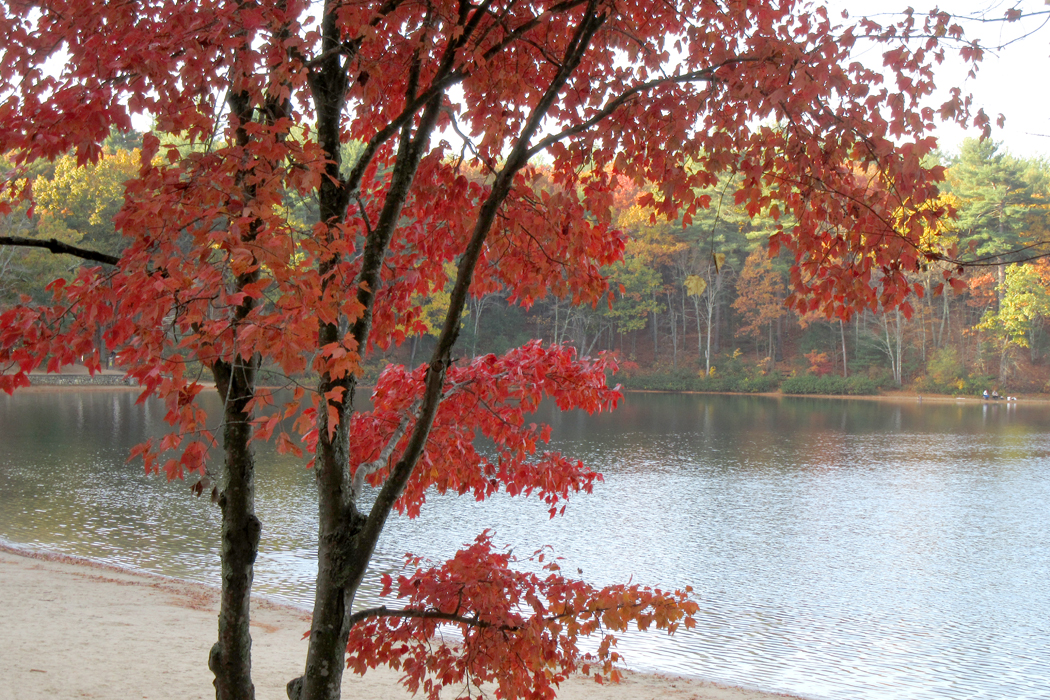
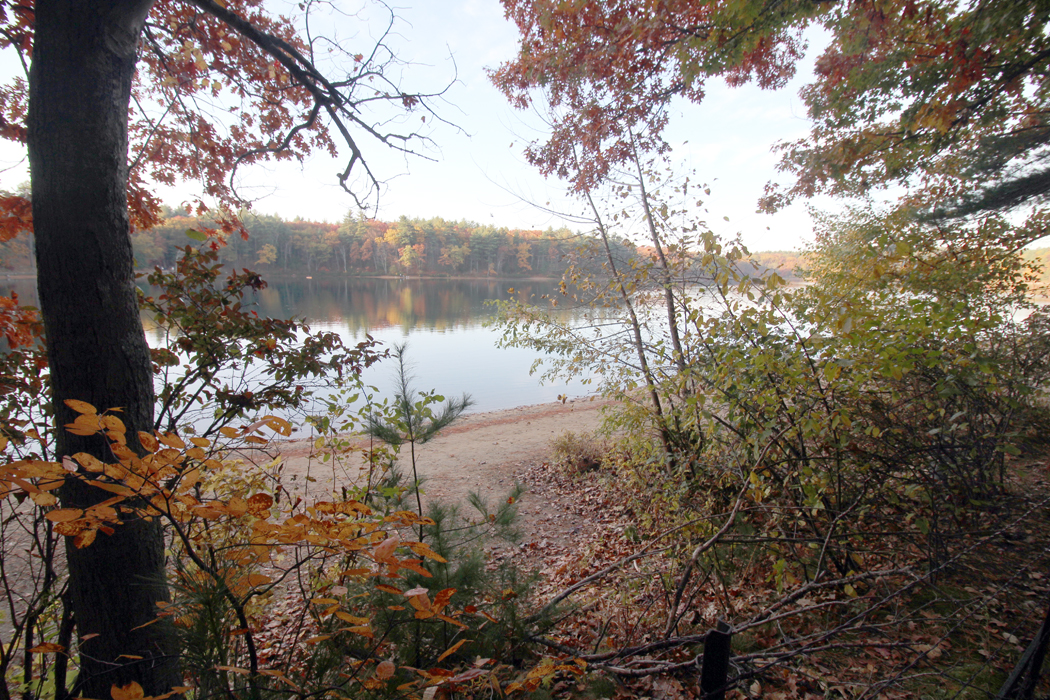
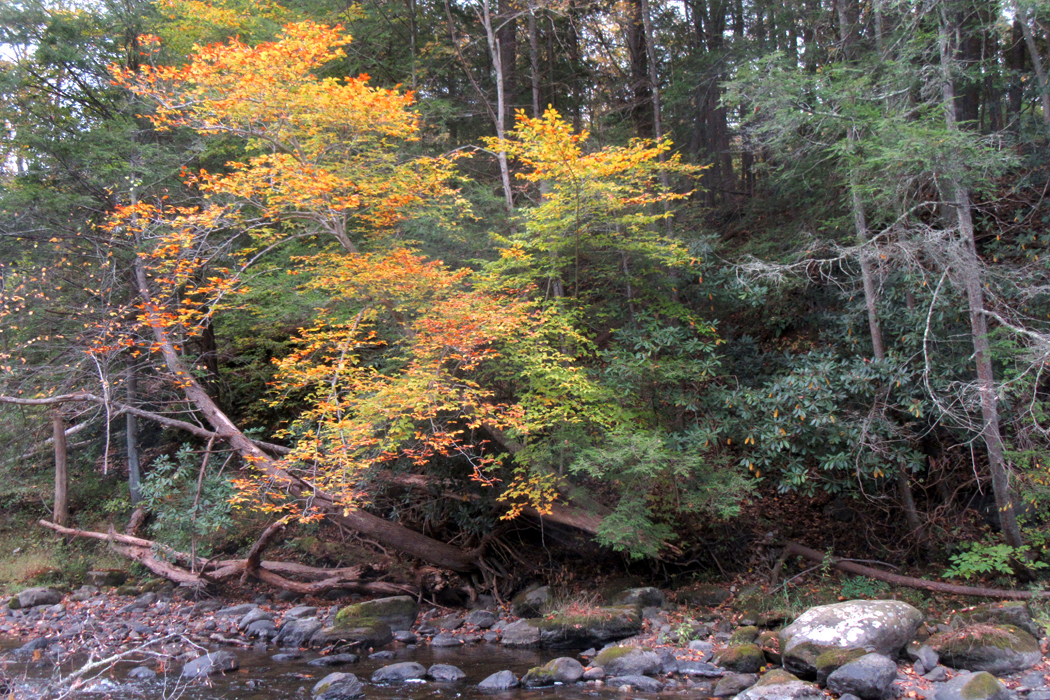
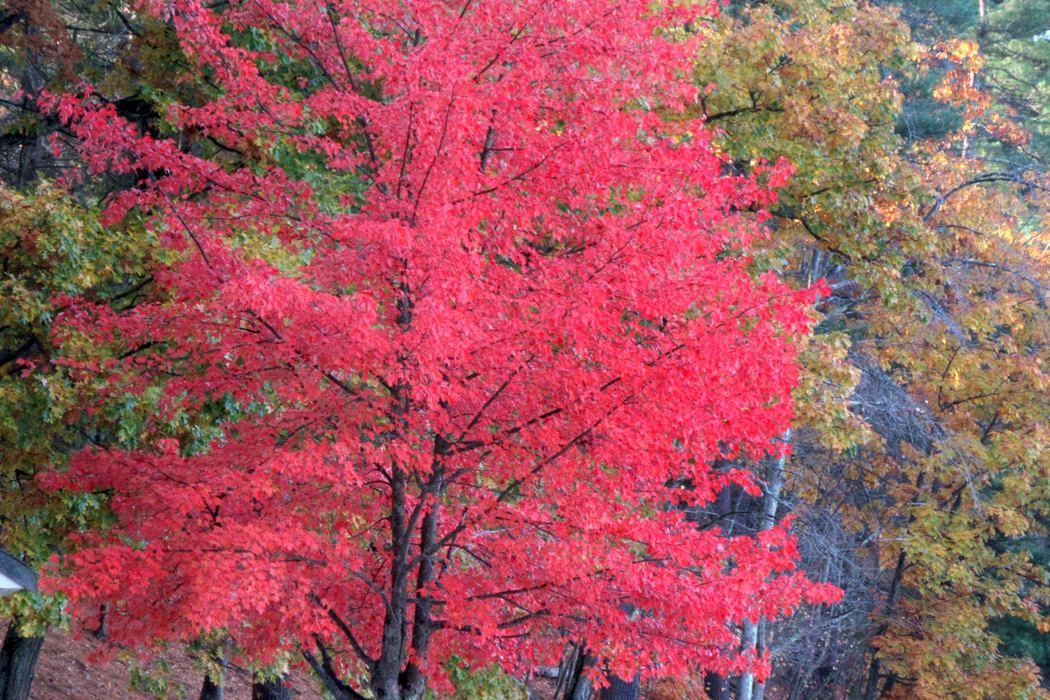
It is the height of fall and there are trees of bright red and yellow. 

I don’t have time to circumambulate the lake one more time, but I did walk about a quarter of the way counterclockwise around its shore. I do not need to do anything; just stand there as if soaking up the sun’s rays, but soaking up instead the sense of connection with: nature; time; history; literature; my own past; the sky; and what is beyond the sky, pebbly with stars. 

And finally, my recognition that this is almost certainly the last time I will ever be able to stand on this sandy, watery edge. Travel has become difficult, and what travel I still have in me should aim at the many other holies that need valedictory visitations. 

So, I walk back uphill to the car and head south through Connecticut, New York and New Jersey before finding a motel in Easton, Penn. I feel the loss of leaving Sandro and Mu, and of leaving behind Walden Pond for a last time. 

Oct. 27

What a satisfying end to a horrible, horrible day.

We left Easton, Pa, in a simple rain, but in only 10 miles or so, it became a Niagara. The sky was slate and then got darker. The windshield wipers could not keep up with the downpour and I had to slow down, not that anyone else did.

We were on I-78 and about an hour in, we hit a work zone in which there was no shoulder and a concrete wall on either side of the roadway, leaving no wiggle room. The visibility was often only a couple of car-lengths in front of us. And then — And then the semis would pass (I called them “bruisers”) and kick up a wash that blinded me entirely. I tried desperately to maneuver so that the truck would pass me on a straightaway, but of course, that wasn’t always possible.

The bruiser would pass and splash and I would have to slow down to 20 mph on the interstate, knowing that the vehicles behind me weren’t going to do the same thing.

I entered a completely Zen state, if you can call it that, or “wu hsin” — “no mind.” The Zen master attempts to get the student to empty his mind so that it is not processing any words, not thinking about plans or the future, not remembering past delights or grudges, but to be wholly in this moment, very like we believe animals must be.

Well, that pretty well describes the situation. Nothing was in my mind but concentrating on keeping the car in the road, in this moment, now, with no thought even of what might be around the bend. Nothing existed in the entire universe but this Buick on this road in this precise, rolling instant.

At one time or another, the dark lour would seem to lighten and gave us hope that the weather might break, but then it darkened once more and buckets poured onto my windshield and another bruiser passed, hissing up a gusher.

We crossed the Squeaky-Hannah River and continued down I-81. The sky cleared, the sun came out and the roads dried. I still flinched every time I saw a bruiser in the rear-view mirror, but I soon got over that. Pumped up to 65 mph and cruised into Chambersburg, Pa. and went on to Winchester, Va., and got a room. I have to say, I was blasted. The intensity of the drive through the weather took every ounce of constant focus I had, both hands on the wheel, grabbing tight and eyes bulging out wide staring through the windshield and glancing back through the rear-view. The expression “holding it in the road” took on new and immediate meaning.

I plopped down on the bed in our room and tried to keep the flashback to a minimum. Anne went to sleep. I couldn’t. We rested for a couple of hours and then the magic happened.

Anne searched on her phone for a place to eat and found what she called a Popoo-Syria. At first I didn’t understand, but as soon as I did, my face must have ignited like a skyrocket. I burst a giant grin and said: “Pupusaria. It’s a pupusaria! I haven’t had a good pupusa since leaving Phoenix.” I think I may have done a little jig.

“Where is it? Is it close?” This was important. I don’t know Winchester and was afraid I would never find it. Anne gave me the address; I punched it into my Google maps and lo, it was exactly one block from our hotel.

“I’m not really hungry,” Anne said. But she came anyway. We found the joint, a little storefront hole-in-the-wall — just as it should be. I ordered a couple of pupusas and a plate of fried platano with crema. An horchata to drink. The only people there spoke Spanish. The waitress could barely put together a couple of words of English. I felt completely at home. I spoke my best laughable Spanish. “Me gusta la comida.” It fulfilled every desire I had for pupusas.

Anne had one, too, a chicken and cheese pupusa and judged it “really good.” She actually liked it.

I sat there in the booth with a great shit-eating grin on my face. “Estoy muy feliz,” I told the waitress. I sat for a moment soaking up the pleasure, nay, almost ecstasy.

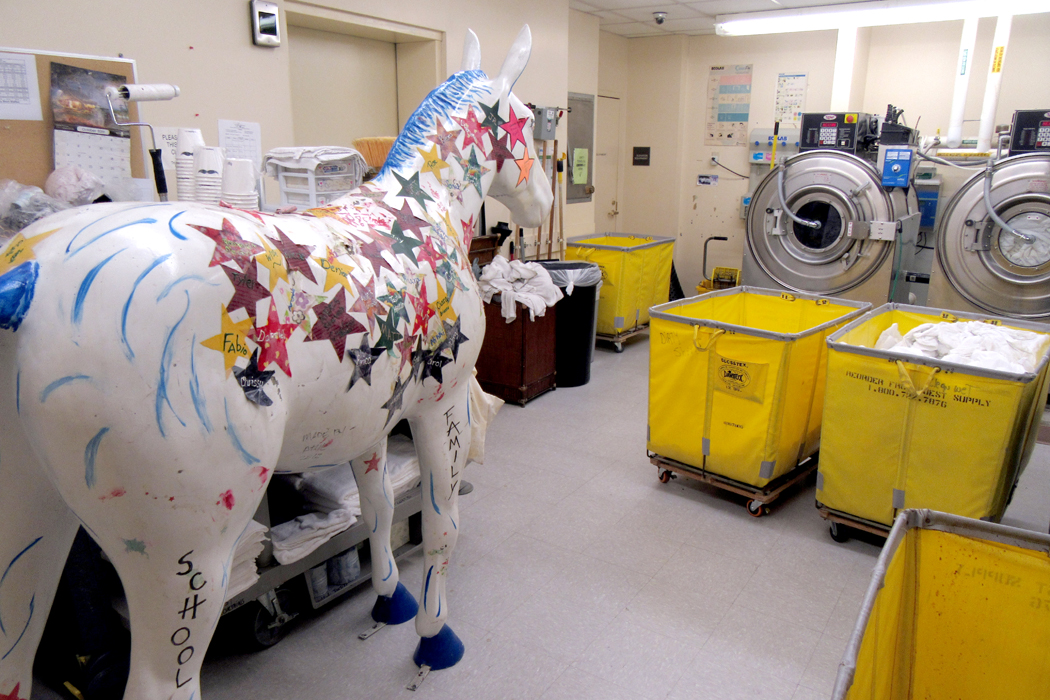
Back at the motel, there is a Halloween-themed wedding party and the halls are filled with costumed guests yelling, screaming and dancing. As I pass the hotel laundry room, the door is open and inside I see a pony-size fiberglass horse. I have no idea why. 

Oct. 28

Interstate 81 runs down the Shenandoah Valley along the western edge of Virginia. It is a chute-the-chute towards home. The Blue Ridge to the east and the long, low Allegheny Mountains and Massanutten to the west. 

We stop for a leg-stretch at Valley Pike Farm Market in Weyer’s Cave, Va., and Anne looks for some gifts to take back to her friends in Augusta, Ga. 

We make our night — the last one on the road — in Radford, Va. and find a chain restaurant for dinner. Tomorrow, home. 

Oct. 29

We shift from I-81 to I-26. As we near the North Carolina state boundary line, the highway twists through the mountains again on the way down towards Asheville. I begin to see familiar landmarks. There is a nervous sense of homecoming. 

We got home about noon. Total mileage for the whole trip: 3,419.3 miles. Finally, I pull up the driveway. 

“Look, a bear.”

“Where?”

“There. No. Up in the tree.”

We pulled up the driveway and turned the car off and I spotted a bear up in the tallest oak tree in our back yard. It was a young bear; not a cub, but not fully adult either. 

It was walking out on a branch about 30 feet above the ground. 

“No, wait. Two bears.”

There were two bears in the tree. I couldn’t get a photo of them both, because the one was around the back side of the tree trunk, mostly hidden. We watched for several minutes.

The second bear turned out to be an adult; I guess the mama. There were dogs barking in the next yard, behind the screen of trees and brush. We guessed that may be why the two bears were up in the tree. Anne went inside, since it seemed nothing was happening. I waited and saw the grown-up bear begin to descend, head downwards then turning around to shimmy down behind-first. Again, it was mostly on the far side of the tree and obscured by twigs and leaves, so I couldn’t get a decent photo. Then, I didn’t see either one of them anymore. 

A little later, dogs began to bark on the other side of the back yard, so I assumed the two had ambled on towards the woods and the Blue Ridge Parkway. 

My closest friends know who that bear was. 

Click any image to enlarge
In October my ex-wife and I decided to take a drive from Asheville, N.C., to Sullivan, Maine, to visit our old college friends, Sandro and Mu. This is Part 2 of that trip. 

Oct. 12

The plan was to drive no more than 200 miles a day. Yesterday, we did 305; today, we did 370. We woke up this morning in somewhere in the middle of Pennsylvania, and are going to sleep this evening in Massachusetts. Again, not our plan. But sometimes fortune intervenes. 

The problem, once again, was finding a motel. I’ve driven all over France, where the guide books tell you that hotels are scarce and you should always plan ahead and make reservations. We never did, but always found a place to stay, and some of the cleanest, best-designed rooms I’ve ever seen. You can’t beat the Ibis hotels. 

Who ever thought that we’d come a cropper in upstate New York or western Massachusetts? 

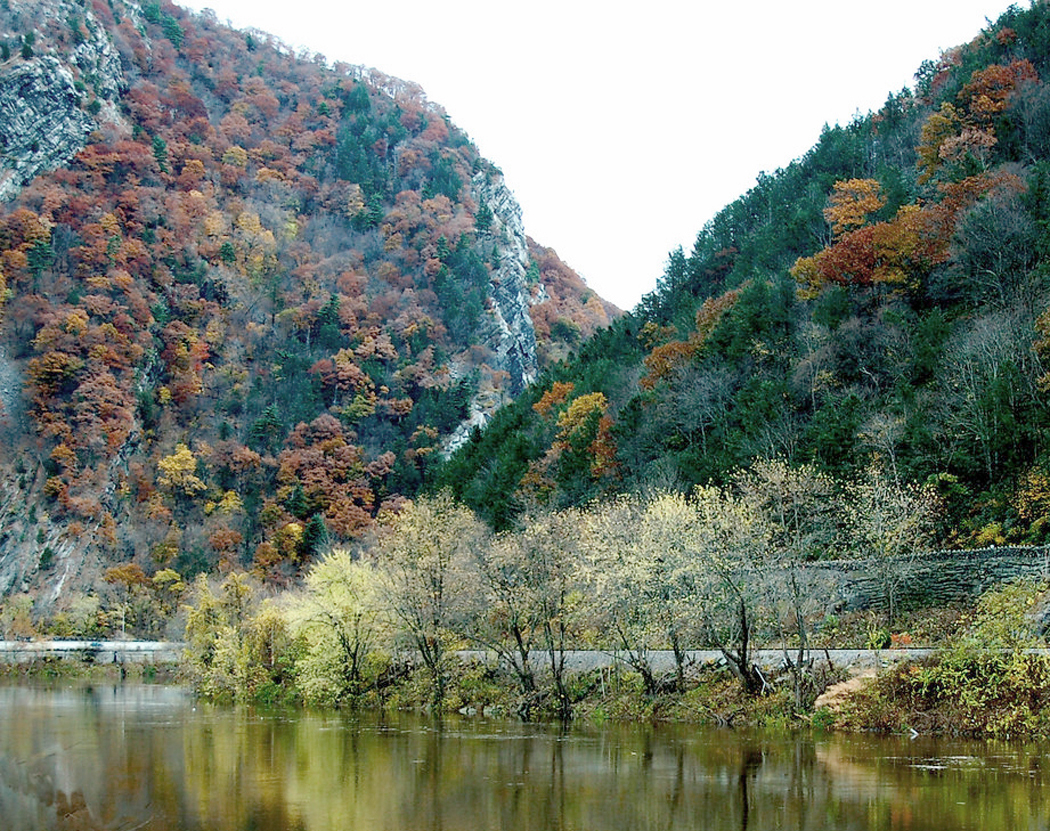
The day began well. A fast trip to the Delaware Water Gap and a slow 15 mph drive up the National Scenic Area along the Old Mine Road on the New Jersey side. At the visitor center the ranger told us to be careful of the potholes. “Some of them are bigger than I am,” she said. The road alternated between pothole pavement and gravel, with a couple of patches of new macadam. We played pothole slalom for most of the way, weaving from one side of the road — call it a path most of the time — and back to the other. For the first nine miles or so, we saw no other car, either coming or going. 

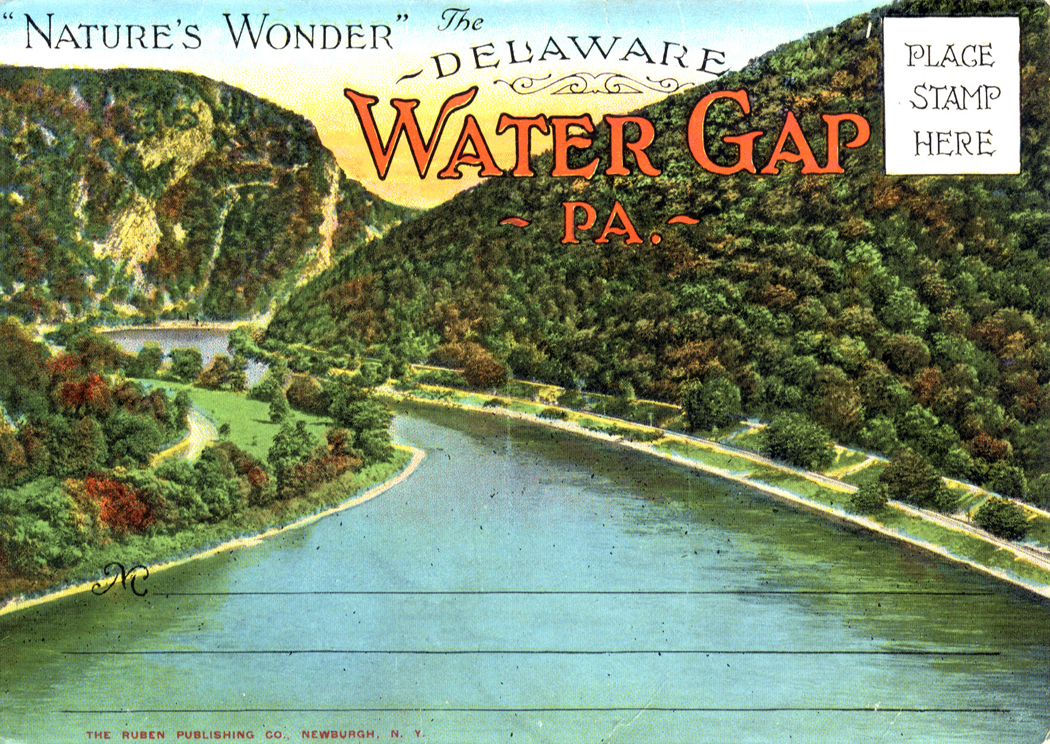
The Gap is a place where the Delaware River has cut through the Kittatinny Mountain ridge, leaving a notch in the hills. On the Pennsylvania side, Mount Minsi rises to 1,540 feet and on the Jersey side, Mount Tammany, about 20 feet lower.

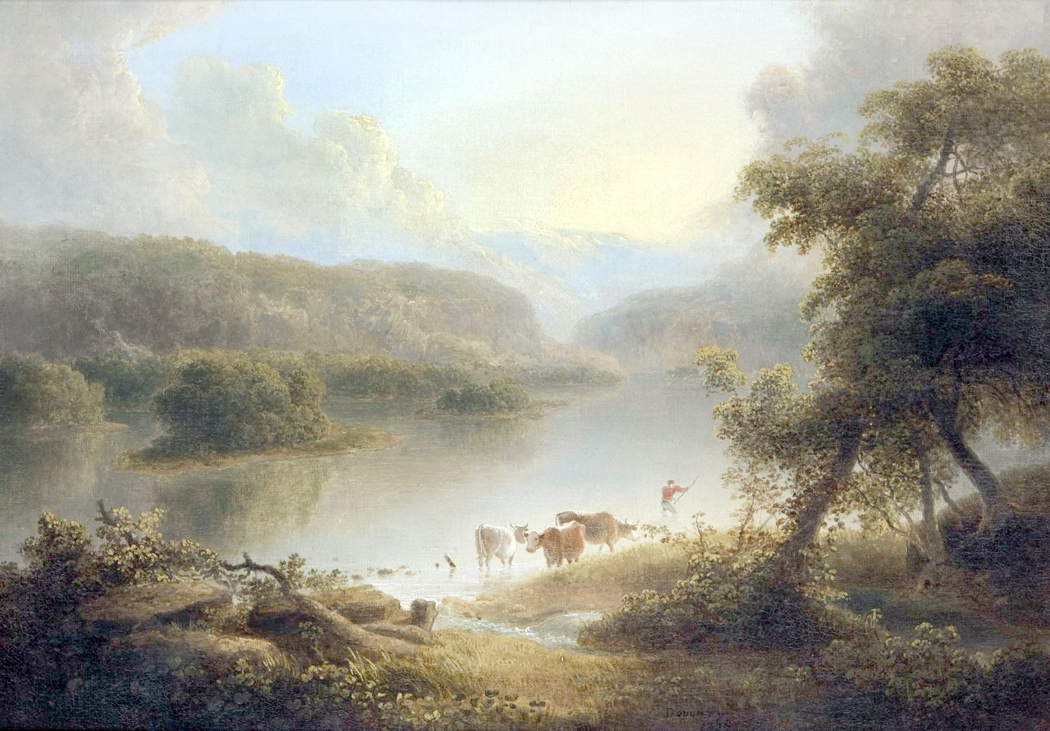
The 40-mile stretch of the river and surrounding country is now the Delaware Water Gap National Recreation Area, and the whole area has been a tourist draw since the 19th century, when landscape painters, such as Thomas Doughty, made scenic and romantic paintings of the region. 

It is also about 4 miles from where I went to summer Boy Scout camp as a boy.   

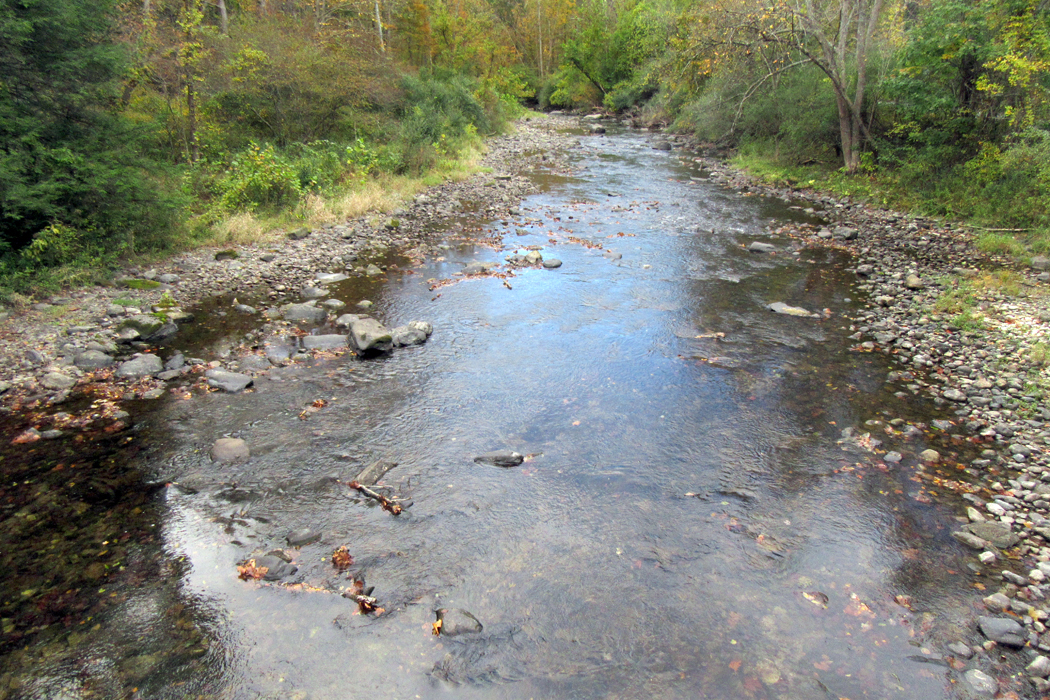
The Delaware River is gorgeous in the morning. We stopped away from the river at an old bridge and watched a couple of fishermen tossing their lines into the tributary creek.

Bear Mountain Bridge, Hudson River

Then we hopped back on the Interstate in Port Jervis, N.Y., and drove across Orange County and into Harriman State Park and Bear Mountain. By this time, Anne was feeling hungry and bladder-bloated, so we had to find a place to satisfy both urges rather than drive up Bear Mountain. 

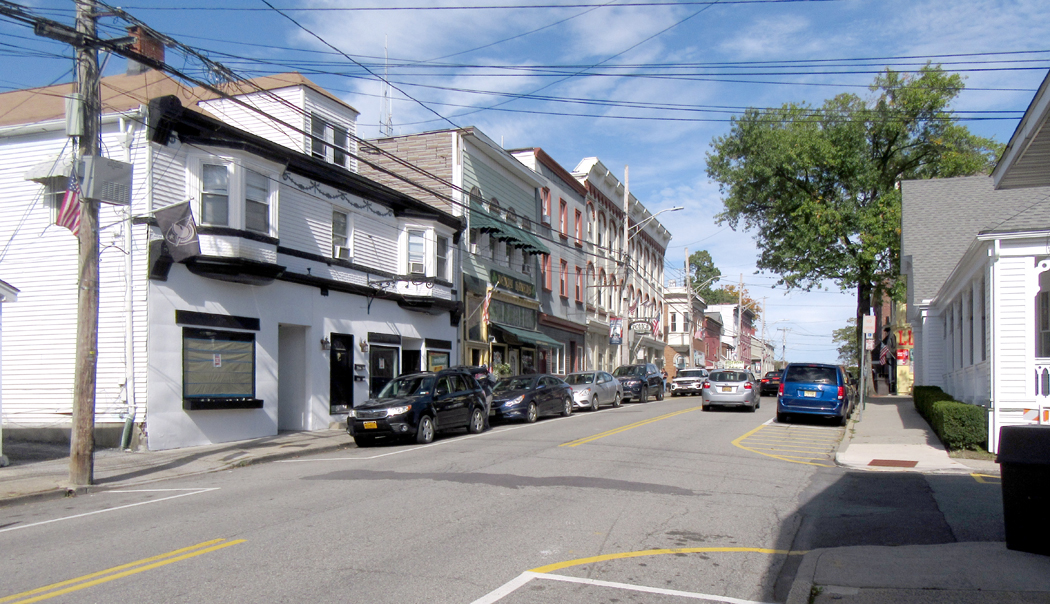
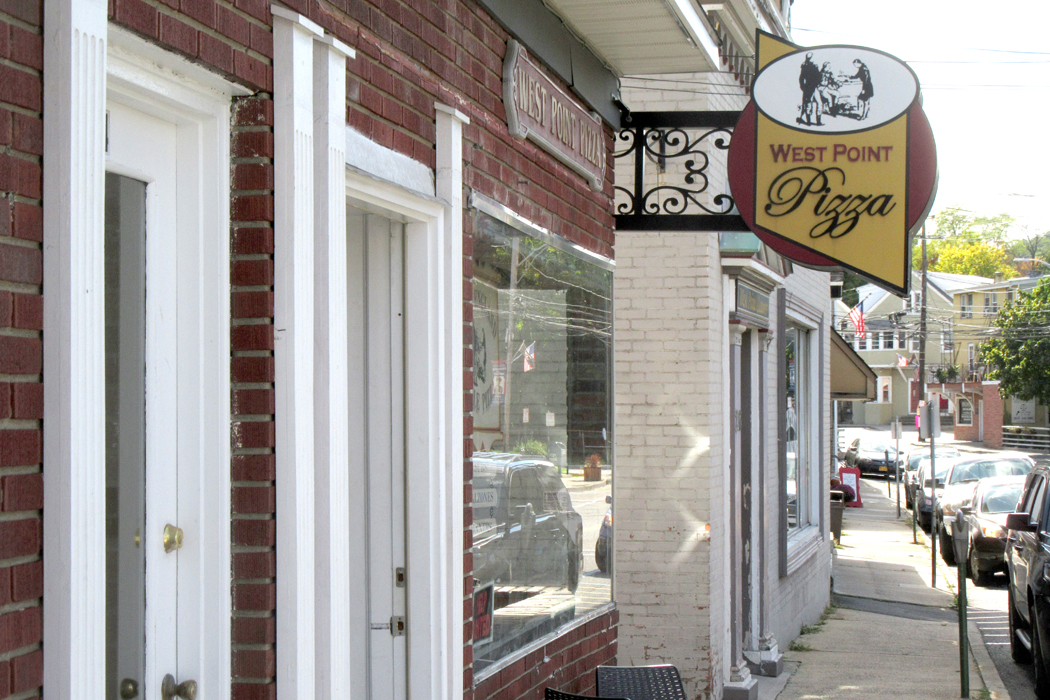
So, off to West Point. In the town of Hudson Highlands we found a pizza joint — a storefront with three tables and a counter to order at. We asked the man if they had a bathroom. “No, no bathroom.” But, he said, “They have bathroom two buildings up street.” I hope you can tell by my brazen attempt to capture accent that he was not born in New York.

We walked up the street and found the public library, a tremendous old wooden building white with columns in front. Inside there was no one. You could hear the echo of your own footsteps on the wooden floor. But they had the conveniences that Anne required. We walked back to the pizzeria and had a damned fine pie. New Jersey style. The way it’s supposed to be.

Each time I drive anywhere near the tri-state area, I seek out a non-chain pizza joint to achieve that satisfying foodgasm of a New York pizza, the only real pizza to anyone who has grown up with it. 

Every region has its food chauvinisms. North Carolina barbecue, Seattle alder-smoked salmon, Philadelphia cheese steaks. One of the lesser regional contenders is the soft pretzel. These are the size of calzones, with a malty, bready interior and a thin crisp brown crust coated with kosher salt. They taste like nothing else, especially when they are still warm, and the only place to get them in their true form is in eastern Pennsylvania and in a belt up through New Jersey and parts of New York. Oh, you can find them elsewhere, but they are no better than the so-called “New York style” pizza you find in Kansas or Saskatchewan. Worse: the frozen pretzels you can find in the grocery store. 

Well, Anne, who has barely left North Carolina through most of her life, had never had one of these. We stopped at a turnpike rest plaza and I bought one for the car. She took a bite of it and decided she had to have another. And another. We spent a good portion of the drive all the way to Maine looking for another pretzel, but never found one. We had left the pretzel’s home territory. 

Anyway, we drove up U.S. 218 around Storm King, a great mountain of rock that juts out into the Hudson River with a tiny two land road curving around it above the water and below the summit. This is a road my family used to take when driving up to the family bungalow in West Park and the ride on the thin ribbon of road around the mountain was the part of the trip that I loved most, but gave my poor father white knuckles.

Finally, we got to Newburgh, where we had intended to spend the night. But, I thought — like an idiot — let’s just get over the river on the bridge. So, we crossed over the Hudson to the other side and immediately came a cropper on finding a motel. “Motels are often found along the freeways,” I thought to myself, so we turned north on the Taconic State Parkway. No hotels. No nothing. Robert Moses designed this road in the 1940s and must have purposely routed it through empty terrain to make a pleasant and green drive. But it meant no hotels. We drove for a hundred miles. No hotels.

Got off the parkway and back on U.S. 9, which is a commercial road. No hotels. We drove through Hudson, N.Y., home of Frederick Edwin Church’s Olana. No hotels. Up through Kinderhook, boyhood home of Martin Van Buren. No hotels.

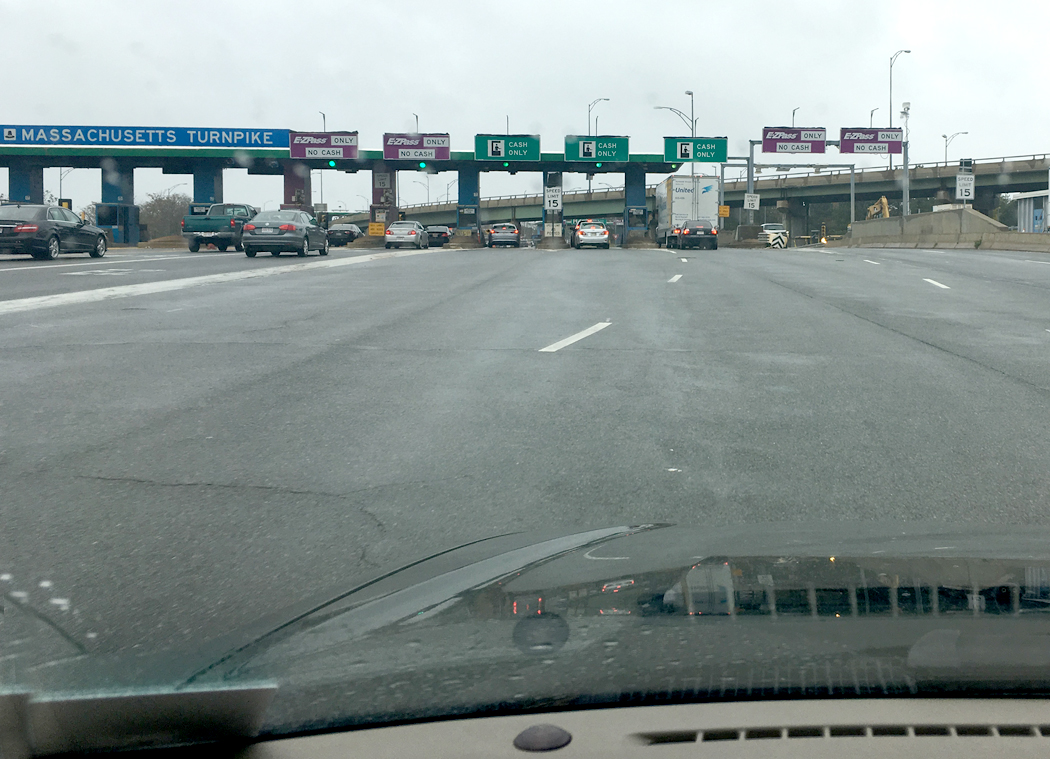
“Route 9 will hit the interstate soon,” I said to Anne. “There are always hotels along the exits.” No, there aren’t always. The interstate turned into the Massachusetts Turnpike. We asked the man at the toll booth if there were any motels along the pike. “Yes, he said, every exit has them after Exit 2.”

We sighed relief and drove on. Turns out, the turnpike runs for more than 30 miles before any exit. We both thought of the old song about “running forever ’neath the streets of Boston.” The MTA.

The deal was that the turnpike runs up and over the Berkshires and there were no exits until the road came back down from the hills. Then we turned off into Exit 3 in Westfield, Mass. Hooray, a single solitary motel. I went in to sign up. No room. All full.

“There’s a dog show in town and a couple of 50th anniversary school reunions and a football game, so everything is booked. You might try the next exit; there are several hotels there.”

So, back on the turnpike to Exit 4. A Miracle Mile sort of place and several motels. But this time, I am pretty well blasted. We have driven 370 miles so far today. I pulled in to a Clarion Inn. Anne stayed in the car and I went into the lobby. Eight people were in line at the desk and when I finally got to the front of the line: “No, we’re all filled up.”

I drove up and down the highway, trying to get into motels that always seemed to be on the other side of the median, making me drive up the street to make a U-turn and back to the place. Full.

“There’s a Red Roof Inn over there,” Anne said. Up the road. U-turn. Into the lot. A room. A blessed room. A holy respite. Peace at last. Second floor, up the exterior stairs with all our bags.

“I’ll go out and get something for supper,” Anne said. She walked up the road to Five Guys and got a couple of greasy burgers and a bucket o’ fries and brought them back. We ate. We watched the glum news on MSNBC.

It was getting dark when we finally pulled into the motel. Sleep will be early tonight. Tomorrow, we head for Portland.

Oct. 13

We are in Portland tonight, at a La Quinta. We are wondering what is it about New England that they try to hide their motels? We came up I-95 into South Portland and took an exit that had a “lodging” sign by the roadway. The ramp emptied into a roadway that came to a stoplight in the middle of nowhere. All around us, vacant lots and empty fields. In the distance, a few office buildings.

I tried to find signs for the airport. Motels usually cluster around airports. But when I got to the airport: Nothing. We circled the airport and found zilch. How is this possible?

Anne thought she saw a Comfort Inn near the freeway, but when we drove to where she thought she saw it: Bupkis. We drove aimlessly for a while, trying to scare up something and finally drove by the La Quinta. Drove by is the operative word. It came up on us too fast and I was in the wrong lane. So, I tried to loop around, but faced a maze of one-way streets. Finally, we got there. It is the most expensive hotel I have ever stayed at, but I wasn’t going to venture out into the jungle again to find something cheaper.

Earlier today, we drove through Concord, Mass. When I first visited Walden Pond, so many years ago, I remember we were dreading that it would turn out to be a tourist trap. We imagined fast food restaurants and miniature golf. But when we got there, there were only a few parking spots beside the road and no one at the lake except a couple of fishermen with their lines in the drink.

I’ve been back to Walden Pond maybe a half-dozen times, maybe eight. I have circumambulated it three times. Each visit back, the site is a little more built up. Still just a wide spot in the road, except for the swimming beach on the east end. Walden Pond, it turned out was the local swimming hole. The last time I was there, for the newspaper, someone had built a replica of the original cabin across the street from the pond.

Well, this time, it was the full catastrophe: Tour busses, parking lots, a new visitor center and the street choked with pedestrians crossing from their cars to the beach. I got into the line for the parking lot, but when I got up near the turn-off, I could see the cars extending like a freight train into the distance and so decided to drive off without visiting the shrine.

“Maybe it’s because it is a weekend,” Anne said. “Maybe we can come back on the way home during a weekday. Maybe it’s because it’s Columbus Day weekend.” I dunno, but it was Myrtle Beach all the way. How horrifying.

The other misadventure was Kittery. It was lunchtime and Anne was hungry, so I got off I-95 and looped into town on U.S. 1, only to find it was clogged with tourists. We found a Dunkin’ Donuts and had a sandwich and got back on Route 1 heading north. At Ogunquit, we found the highway turned into a parking lot. The road into downtown was stock still. It took us nearly an hour to get through town. We felt a teensy bit better on traveling north as we watched the parking lot headed south go on for miles and miles, much worse than we had it going north. Phew.

Anyway, as soon as we could, we got off Rt. 1 and back onto the interstate and cruised into Portland.

Tomorrow, to Augusta, Rt. 3 to Belfast and then zip the rest of the way past Ellsworth and into Sullivan.

Oct. 14

We have arrived in Sullivan, Maine. It has been a drive of 1472 miles. The fall color has been absolutely neon. I don’t remember the last fall with this much color.

It is overcast and chilly this afternoon, and although it is only 4:15 p.m., it is already getting dark. We are a touch on the pooped side, and will probably turn in early tonight.

To be continued

Click on any image to enlarge

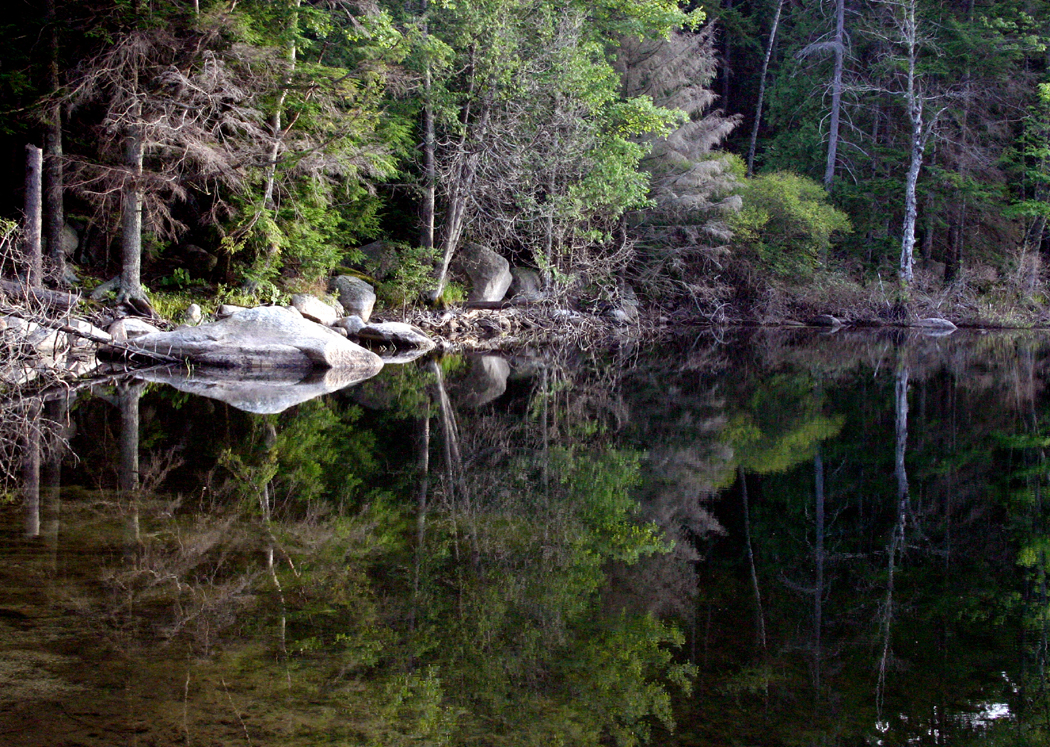
Fall color reflected in surface of Walden Pond, Concord, Mass.

Fall color reflected in surface of Walden Pond, Concord, Mass.

Four seasons may seem like enough. Maybe for a resort hotel. It is the conventional way to divvy  up the annual circumambulation of the sun. But four is an arbitrary number. In some places, two seasons are all there is, rainy season and dry season, or in Arizona: unbearable heat, and respite from unbearable heat.

And even in those climes where the traditional four account for our calendar, there are really any number of discernible seasons: Indian summer, midwinter spring, mud season. In Maine, there’s black fly season; there’s tourist season at the Jersey shore. Many places have their annual infestations.

Some of the most interesting moments of the annual cycle are those that fall between the seasons, those moments that are neither quite winter nor quite spring, or neither summer nor fall.

Of these, my favorite has always been that slip in time between autumn and the harder breath of winter — when the color has passed from the cheeks of the trees but not all the leaves have dropped to gather in soft, brittle piles on the ground.

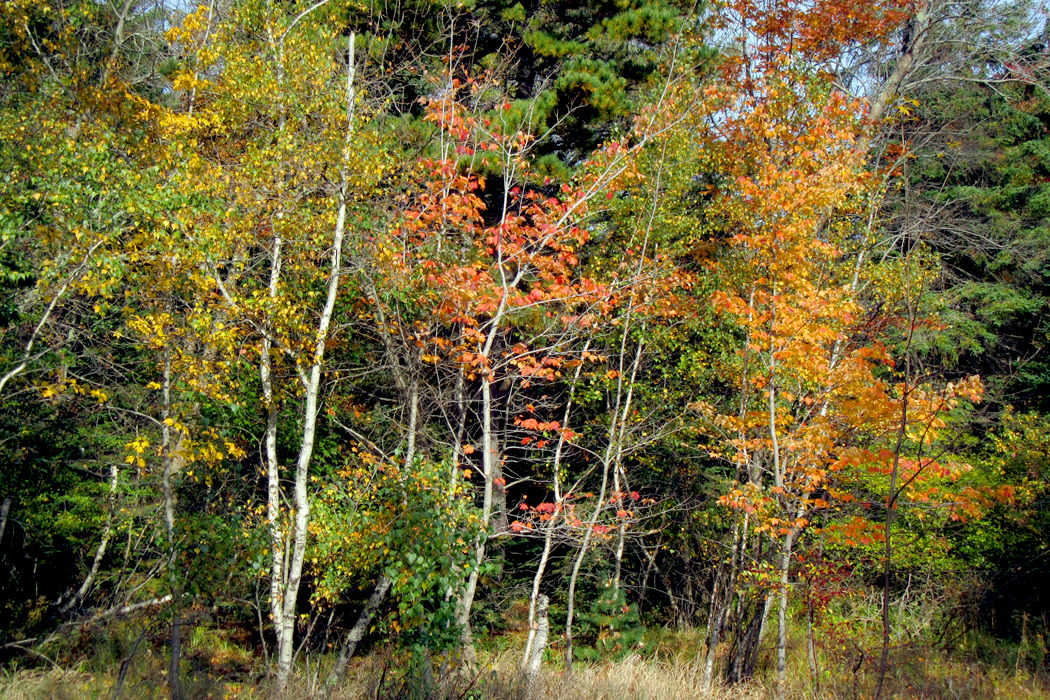
It was like that near the end of October at Walden Pond in Massachusetts, about 30 miles west of Boston. The Canada geese were flying south in droves across the crisp sky, the alders at water’s edge were naked except for the tiny seed cone at the tip of each branch. The pond water was beginning to chill, but not so much that the fish lost their will to bite the hook.
Walden Pond is a small kettle pond, left in place just south of Concord by the glaciers that covered the land 10,000 years ago. It is essentially a dimple left in the ground by the weight of the ice. When the ice melted, the water remained in the depression.

Around the pond, the land rises up in places something like 20 feet above the water level in formations the geologists call ”eskers,” which are the loose junk left behind by the ice. The twin tracks of the railroad run along the back side of the pond.

On the October morning, before the sun arises, the temperature is in the low 40s and desert-dry. You can see the light catch in the tops of the trees along the heights of the eskers and slowly descend into the water as the morning progresses. walden pond aerial view

Walden is an oblong stretch of lake, with one shallow bubble along its northeastern side. A bit of the lake is cordoned off by a footpath causeway, leaving a shallow lagoon trapped in the backwater.

Most of the trees’ leaves have dropped, leaving only the maroon of the red maple and the bright tan of the beech tree still hanging. A huge number of the leaves have collected on the surface of the lagoon, making it look as if it were paved in tree droppings.

On the water, about 50 yards out, I can see four ducks buzzing along, with their necks held flat on the water and their faces half-submerged as they wiggled their heads back and forth, gleaning a meal from the detritus of the pond. As they swam this way and that, moving like feathered zambonis, each left a wake behind it cleared of leaves.

Immediately, what had seemed a randomly mottled pond surface of tree-junk took on order and meaning as the old ”contrails” remained, leaving the water scratched with a history of duck dinners. Their names may have been ”writ in water,” as Keats had it, but those signatures had persistence.

I crouched down at the mucky edge of the water and waited. Patience pays off. The ducks slowly swam my way. Twenty minutes later, they were so close I could have stroked their slick, waterproof feathers. One started and flew off, leaving two females and a single male mallard. They scooted in circles, clapping their bills through the jetsam. One of the females came up to the water’s edge where I knelt down and began poking her beak into the mud. She found something to eat and continued.

A small boy approached on the path, calling back to his mother. I looked at him, put my finger to my lips to hush him and pointed at the birds. He looked briefly and walked right past. I wondered what he could have been racing to find that wasn’t right here: three ducks in arm’s reach.

It was early on a Sunday morning and the path around Walden Pond had perhaps 10 hikers on it. It is about a mile and a half to circumambulate the pond, so it never seemed crowded.

In addition, there were a dozen or so fishermen standing at the western and southern ends of the pond with their poles anchored in the sand and bobbing weights hanging like goiters from the poles.

”What do you catch?” I asked one.

”Trout. Rainbows and brookies,” he said in that dodgy Boston accent. ”This is our second time out this year” — said as “yee-ah” — “and we haven’t caught anything yet. There’s a fellow down the way there who pulled in a couple of them this morning.”

When I got to him, he had them strung on a line and submerged back in the water about three feet out. Each was about a foot long, one was speckled.

”Mighty good eating,” was all he said.

By the time I made it all the way around the pond, the sun was up and the temperature had climbed into the upper 50s. The light gleamed on the bark of the tree trunks and glared on the remaining leaves.

A century and a half ago, when Walden Pond first became known to a wider public, it was a quiet place, a few miles outside of town, where only the muskrats and crows came for recreation.

The silence was shattered only momentarily when the train to Fitchburg came through. Nowadays, a road passes right by the pond, and a divided highway sits only a quarter-mile away.

The sound as you walk across the far shore of the pond is a constant but subdued roar of whizzing cars, mixed with an occasional jet airplane and the same railroad commotion.

Oddly, though, as you walk around to the edge of the pond nearest the highway, its noise becomes blocked by the esker and the pond seems quiet once more.

Journalism is a funny profession, because its readers read about what happened yesterday and its reporters are writing what will be published tomorrow. It has little use for today.

But a day as distinct as this one on Walden Pond, in the cusp between the seasons, speaks only of the deliberate now, the specific and incandescent moment, as thin and sensuous as the membrane of the water’s surface as you stick your arm through it to pick a pebble from the pond’s bottom.

a house

You walk through New England and you sense that it is a place that has finished itself. It was once the seed from which America grew, but it is now the seed husk, and the growth is elsewhere.

The Southwest, for instance, where people move around like billiard balls on a break. Or the Northwest, where eyes watch the Pacific Rim for the coming millennium.

But New England has settled like an old house. It has become itself and leaves becoming to others.

I don’t mean to imply that New England is dead. Boston is a busy city, and Hartford or New Haven might as well be a suburb of Manhattan. Nor do I mean that change has left New England behind. They have their satellite dishes and their shopping malls, just like the rest of the country.

Yet, there is a sense, as you walk through the countryside, that New England has become comfortable with what it is, and no longer feels the need to change into something else.

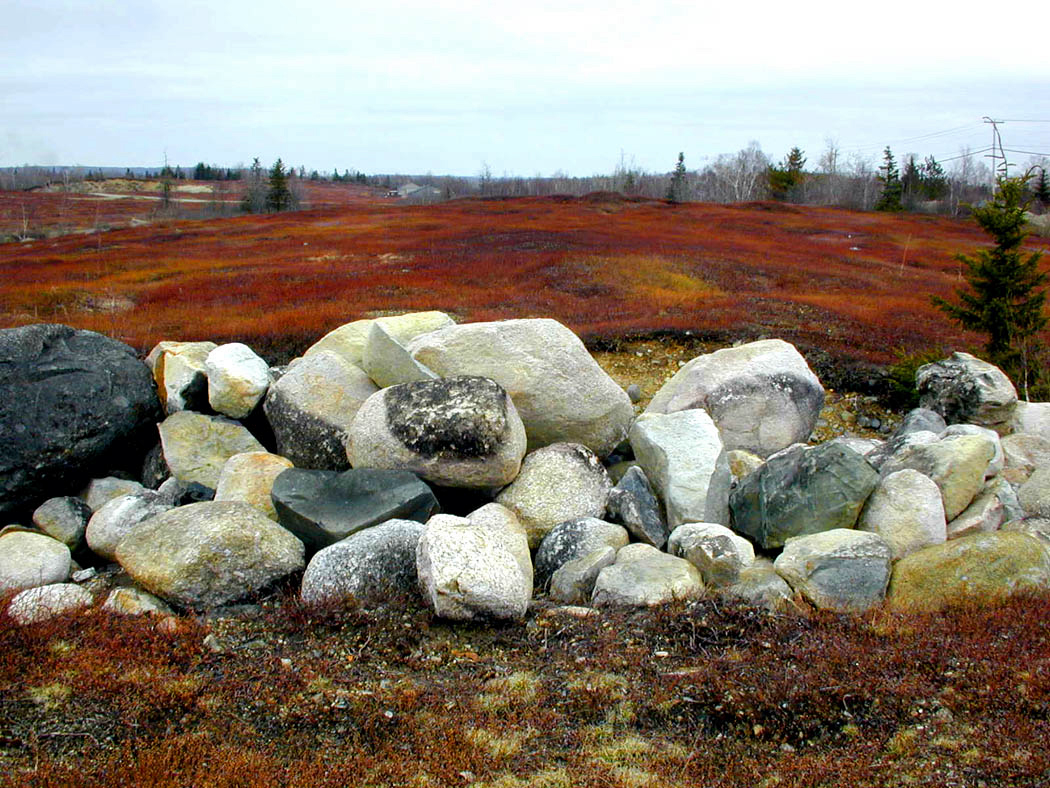
Blueberry heath

New England wasn’t the first part of the New World settled. Not even the first part of the United States. Virginia, Florida and the Southwest can claim that distinction. But the settlers of Massachusetts gave us the first American myth: The hard-driving Yankee industriousness that weathered all kinds of inconvenience to create a government and an independent nation. We remember Plymouth Rock, the Pilgrims, Cotton Mather, Paul Revere, Samuel Adams — the myth of Yankee ingenuity, hardiness and perseverance.

It was a useful myth for our nation’s first 150 years or so. But the United States has left the Novae-Anglo myth behind in a spurt of expansion and immigration. Culturally, New England, outside the big cities, now looks kind of monochrome.

You travel through New England and you see the idea that America used to have of itself. There are paths through woods around lakes, roads through farms built on stony ground, old warping wooden houses with weathered clapboards along the Maine coast.

Fox lake

This is the New England that gave us our first cultural identity, through the writings of Nathaniel Hawthorne, Henry Thoreau, Ralph Waldo Emerson, Herman Melville, William Cullen Bryant, Henry Wadsworth Longfellow, James Russell Lowell, Emily Dickinson.

It was a cultural identity that taught hard work and little play. It taught guilt and redemption, tight lips and stoicism.

That once-ideal American, hard working and suspicious of pleasure, seems to have disappeared, replaced by a softer, fun-addicted American. But the habitat of that earlier American is still there to be seen.

Visit the less-populated portions of Cape Cod, for instance, south of Truro, and feel the salt wind whip over the sandy dunes. It’s a wind that can turn your face into leather.

Or climb Mount Greylock, with its granite and white pines. You get the long view from its summit.

Or watch the white water in the Swift River along the Kancamagus Highway in New Hampshire. You can see the power that New Englanders sought to run their mills.

Or walk along the Boston Common on a warm Sunday morning and see the office buildings that border it, the business that the Common grass provides relief from.

Perhaps you can saunter along the shore of Walden Pond in Concord, Mass., on an oak-orange fall afternoon. You know that the Massachusetts winter is coming soon. You feel, like cold humidity in your joints, that life is short.

You can see the aftermath of that first American in the emptied brick factories of Fall River and Lowell and the white steeples of the churches in every hamlet of Vermont.

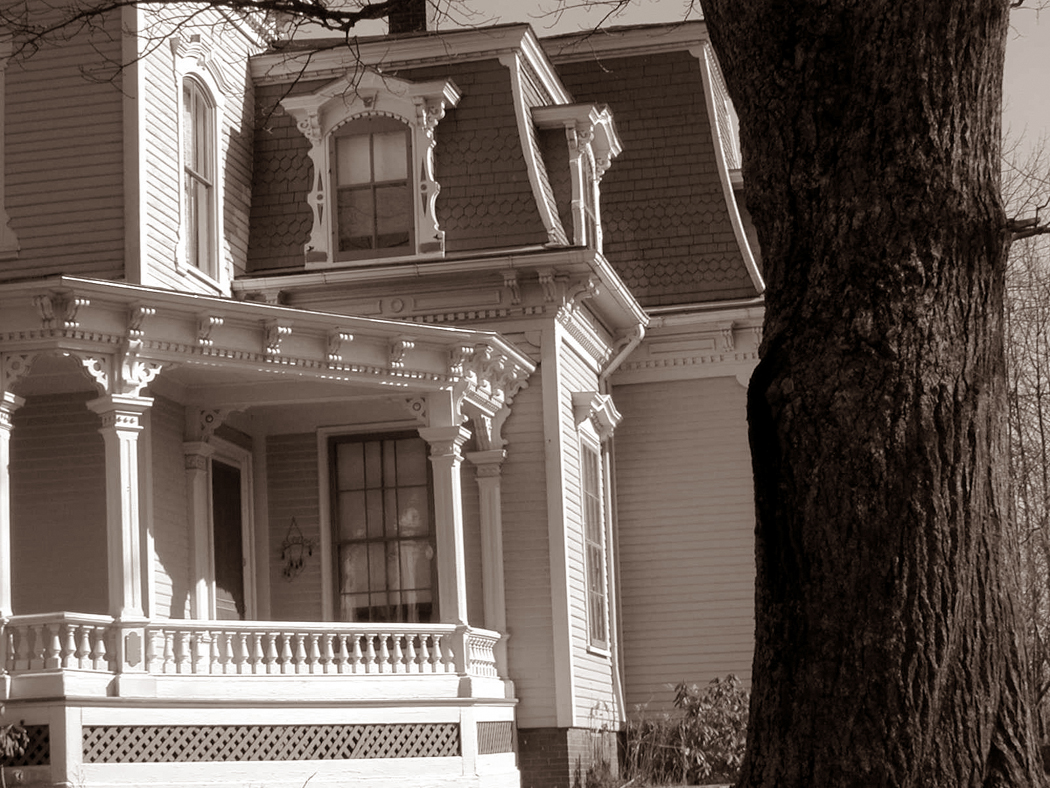
Victorian house

Sometimes, New England seems surprisingly unpopulated. It was once the most crowded part of the country, but now, outside its main population centers, you can find a lot of empty space to walk through.

Your boots slog through piles of fallen leaves and stub on the outcropped stones that float in the New England soil.

And finally, you stop on the granite of the Maine coast and watch the surf peck away at the continent, slowly and with great noise.