Archive

Tag Archives: willie mays

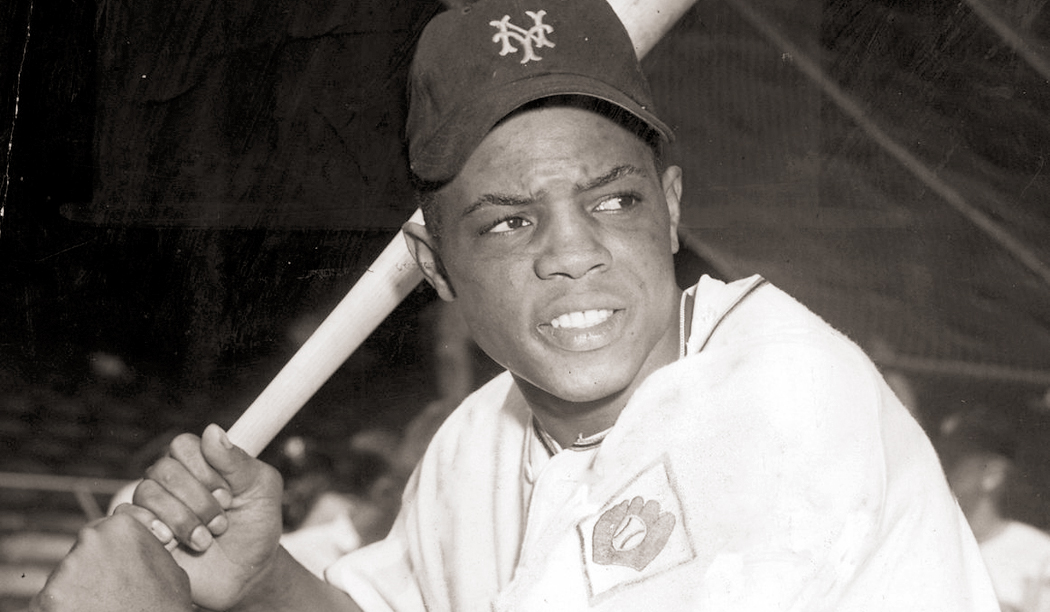
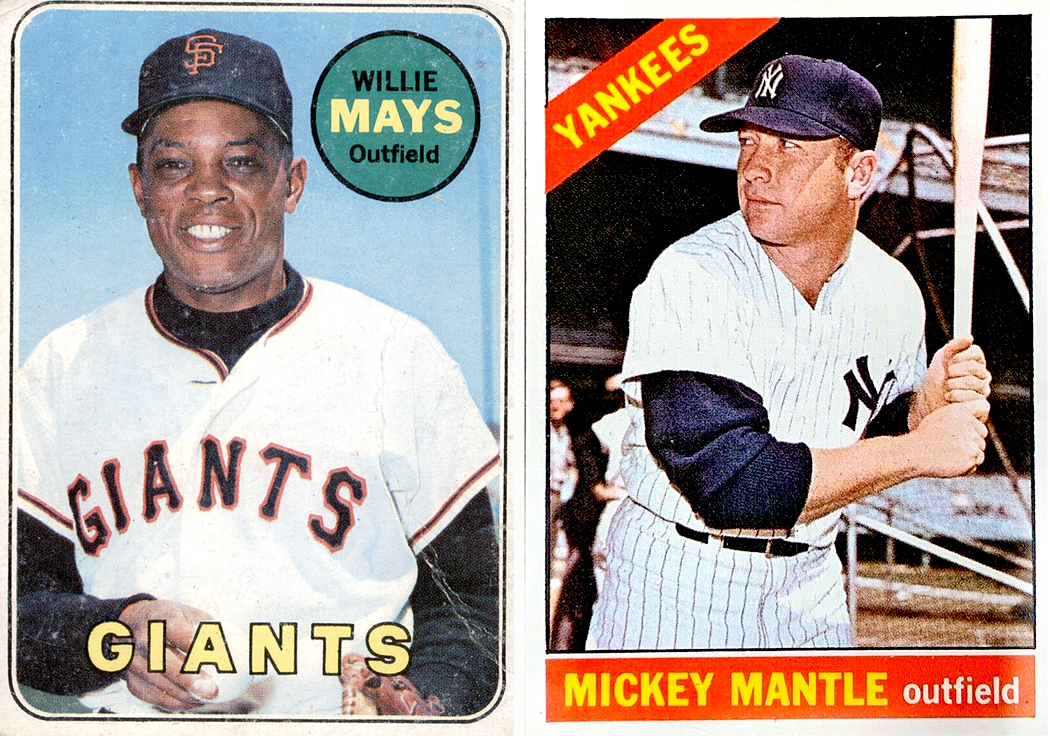
When I was a boy, one thing divided us into tribes: Was Willie Mays the greatest baseball player, or was Mickey Mantle? (This was before Mantle’s legs gave out). 

And of course, this was a silly argument, first because there were many other great ballplayers at the time, but mostly because choosing the “greatest” anything is a meaningless endeavor. (Just in the 1950s, we’re counting Stan Musial, Duke Snider, Hank Aaron, Ernie Banks, Yogi Berra, Ted Williams, Gil Hodges, Jackie Robinson, Ken Boyer.) 

But for us kids on the sandlot, it was a clear choice between Mays and Mantle. Was Mays the better hitter? Was Mantle as good a fielder? And are we comparing each player at the height of his abilities? Are we comparing lifetime batting averages, number of home runs, percentage of votes to enter the Hall of Fame? In the era of sabermetrics, there are so many obscure statistics to weigh, it all becomes bogged down and pointless. (Who is best at hitting with a 2-and-1 count, on an overcast day with men on second and third — it can get quite specific, i.e. quite anal). 

By the way, I was a Mays guy. Perhaps I was swayed by the fact that my father hated the Yankees. He was National League all the way. 

It’s all really quite silly. Above a certain level, players just count as exceptional and comparisons are meaningless. I mean, who was the greatest pitcher? Sandy Koufax? Bob Gibson? Nolan Ryan? Greg Maddux? They were all so different, with different strengths, and playing for widely different teams and different eras. (I remember when Roger Craig lost 20 games for the NY Mets, but was still considered the team’s pitching ace — how can you measure his quality when playing for one of the worst teams ever? How many games could Gibson have won playing for the 1962 Mets? They went 40-120.)

Ranking is a game, but one that is ultimately meaningless. Let’s face it, the most mediocre ballplayer in the major leagues is still hugely talented. We’re talking gradients of excellence. 

All this comes to mind when I remember how classical music listeners talk similar nonsense over the “greatest” conductor or orchestra, or recording of the Mahler Second. 

I was guilty of such silliness earlier in my life. When I was in high school, there was no question in my mind that Arturo Toscanini was the greatest. I had all his Beethoven symphonies on LP. Later, having listened to a wider range of recordings, it was clear that Toscanini had his limitations. And not the least of these were the lousy quality of his recordings — they were hardly hi-fi. 

Open any Gramophone book of recording ratings and you will find a “top ten” and the “best” recording of any particular work. Top 10 lists are immensely popular as clickbait on YouTube. Critics argue endlessly about why this Mahler Ninth is the greatest and that one is just awful. 

But the truth is, that pretty much any recording you buy will give you the music you want, in a performance that is generally very good. Even a middling performance of Beethoven’s Fifth will give you 80 or 90 percent of what’s in the music. 

The arguing usually comes over trivial details that the critic considers essential: Was the tam-tam audible in the finale? Was the oboe in the second movement a bit squeaky? Was the tempo in the finale too fast, or too slow? We all have these benchmarks that define what we demand from a performance of a particular piece. But should that disqualify an entire performance? 

I have to fess up to a level of insanity here — I have 30 complete Beethoven symphony cycles (I used to own more, but have since divested of some). It was a decades-long quest for the ultimate set, the perfect lineup of Beethoven symphonies. Which is best? 

Well, now, I see them lined up on the shelf, and I realize they are all fine. They all deliver the goods. They are quite different, from Karajan’s smooth unctuousness to Hermann Scherchen’s outright weirdness. Toscanini (which I still own, now on CD) is quick, abrupt and rhythmic; Bruno Walter is gentle, humane, and warm. And so, at different times, in different moods, I will choose one over the other for the moment. But they are all perfectly good. Why rank them? 

Yes, there are some outliers, badly played or outrageously conducted — Listen to Sergiu Celibidache doing the Eroica and you wonder if you are playing the disc at the wrong speed — it’s the speed a novice orchestra might play for an initial sight reading. Glacial in a way that is just nuts. Or Roger Norrington, who conducts as if his bladder is bursting and he needs to get it all over with fast. (Norrington races through the adagio of Beethoven’s Ninth in 10 minutes; Bernstein in Berlin takes 20 minutes for the same music. You pays your money and you takes your choice.)

But the mainstream recordings, from George Szell to Andre Cluytens to Pierre Monteux to Joseph Krips, all give perfectly fine, reputable, performances, whether Beethoven, Brahms, Sibelius, Stravinsky or Shostakovich. They are excellent musicians with excellent orchestras (some, such as Maurice Abravenel, had less than excellent orchestras, but made them play on a level you can hardly credit). 

So, we search endlessly for that one performance that will send us into paroxysms of ecstasy, that single transcendental recording, and each CD we buy we hope will be that one. Wilhelm Furtwängler recorded Beethoven’s Fifth 13 times from 1929 to 1954 (most of them miserably low-fi, even amateur recordings), and the Furtwängler cult will search endlessly for a 14th, hoping it will finally fulfill their hunger for the ultimate, the one after which they will gladly give up life with a satisfied smile on their faces. 
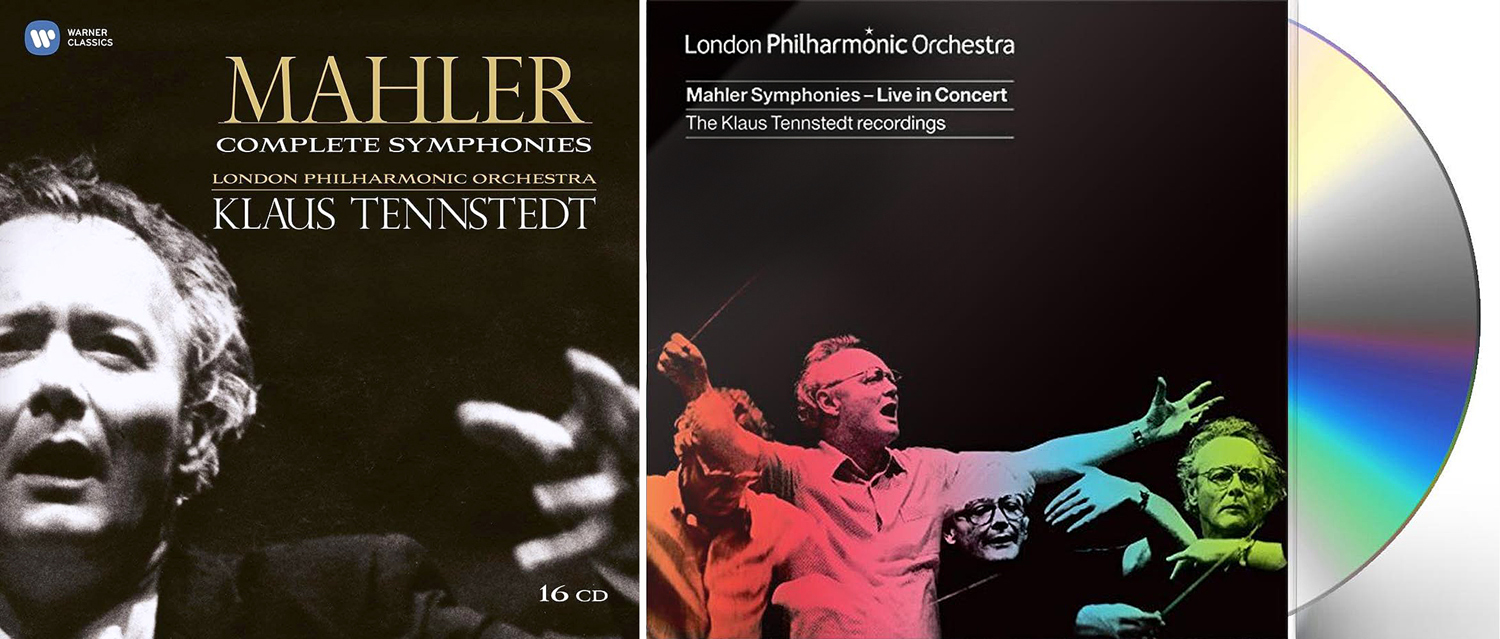
It is widely opined that Klaus Tennstedt’s live 1991 recording of Mahler’s Sixth Symphony is more emotional, more tragic, more vital than his earlier 1983 studio recording with the London Philharmonic. And that’s probably true. But if you only heard the earlier version, you would not be aware of anything missing or lesser in urgency or power. 

Martha Argerich has a habit of recording the same few concertos over and over again (how many Beethoven second piano concertos do we need from her? She has recorded it at least 13 times, and I may have missed a few.) And some people swear one or another is “the best,” but they are all excellent, and whether you prefer her with Abbado or Dutoit or Sinopoli is nothing more than a matter or taste. If you own one and you like it, there is no reason to buy the others, unless you are part of the Argerich cult, and if so, there’s nothing we can do for you. (Classical music does tend to generate cults: Maria Callas, Celibidache, Arturo Michelangeli, Jascha Horenstein, Toscanini, and, above all, Furtwängler. Cult members will search world over for the one missing 1949 partial recording from a radio broadcast from Rio de Janeiro. The heart goes pitter-pat.)
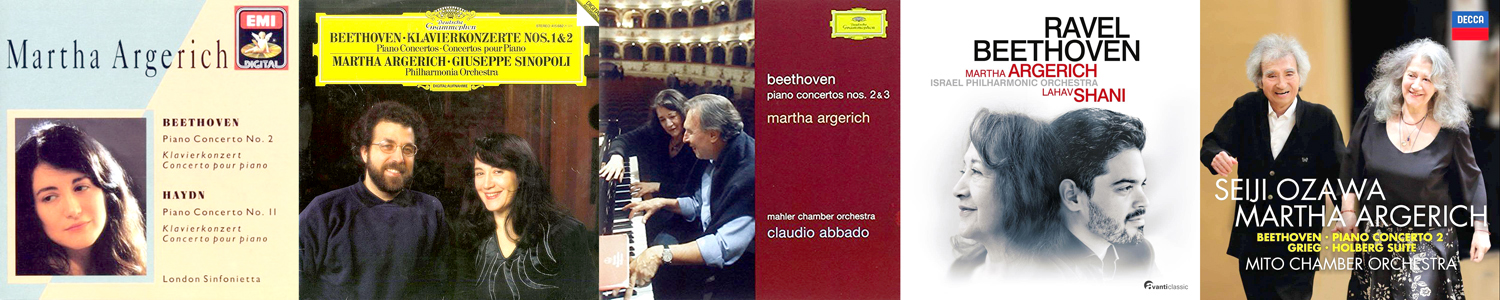
(Just for the record, Argerich has recorded once with herself conducting the London Sinfonietta; and also with Vladimir Ashkenazy; Gabor Takacs-Nacy; Gabriel Chmura; Lorin Maazel, Charles Dutoit; Neeme Jarvi; Giuseppe Sinopoli; Claudio Abbado; Riccardo Chailly; Seiji Ozawa; Lahav Shani; and again with Takacs-Nagy Please make her stop. She’s wonderful, but she needs to branch out.)

Yes, you will undoubtedly develop favorites, conductors who play more to your tastes. I know I have mine. But I cannot in honesty say that the ones I like best are demonstrably better than the ones I have less affection for. Taste is a different issue from quality. Basically, with a few unfortunate exceptions, if a performance was good enough to justify the expense of being recorded, produced, distributed and promoted, it will be perfectly fine. You don’t need 30 complete sets of Beethoven symphonies. 

So, one should not worry about what performance, what orchestra or conductor you get. Chances are, it will give you what you need. Bernstein or Walter; Mays or Mantle — they were each great players and picking one over the other is just silly.
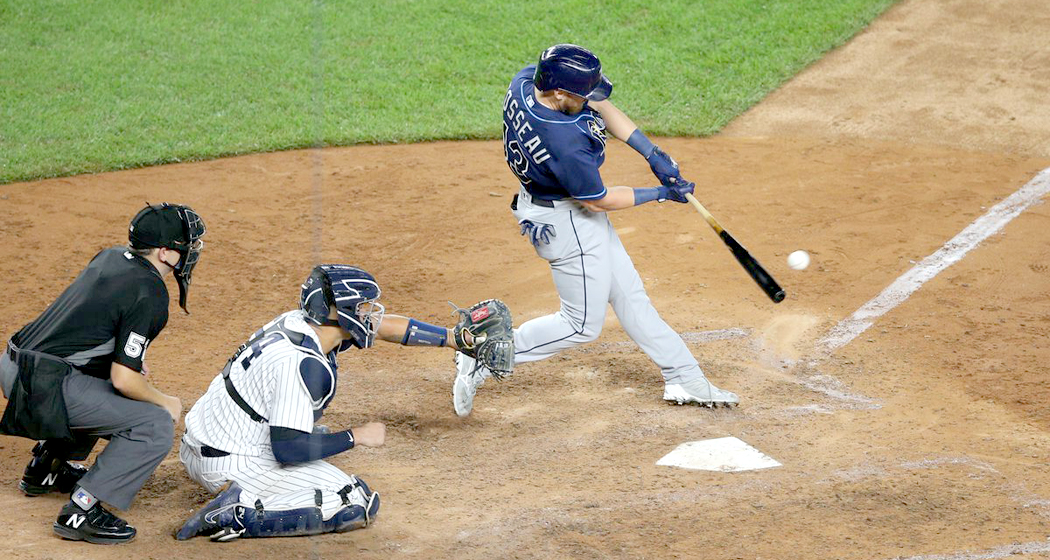
Some friends of mine are watching the baseball playoffs. But they only watch the games (in replay) when they know their team will win. More specifically, until now, only when the Yankees lose. They were cheering for Tampa Bay, not so much because they cared about the Rays, but because they wanted New York to go crashing down in fire and fury. 

I understand the animus against the Yanks. It is a longstanding prejudice in the South, for obvious reasons, but it is not just in Dixie that the Yankees are team non grata. Everyone loves to hate the pinstripes. Why this should be so is curious. 

Obviously, one reason is that for so many decades the Yankees were the bullies of the American League. They have more than twice as many World Series titles as any other team. Heck, they’ve lost more series than the second place team has won. (Twenty-Seven wins for New York, 13 losses; 11 wins for second-place St. Louis). And the Yankees have not been gracious about their hegemony. 

But more to the point is why people other than the players feel they have a stake in the won-loss record of a bunch of hyper-paid athletes. Yea for our team! But it is their team, not yours. You had nothing to do with their winning or losing. 

I wonder all this, not because I am so above this sort of silliness, but because I share it. There are teams I root against, too. I always pull for anyone to beat the Dallas Cowboys. Why I should despise the Cowboys is hard to explain. They are just another NFL team, and indeed the players on the field this season could just as well have been on a favorite team last year. It may have something to do with reviling the team’s owner — it’s easy to do — but it’s not as if other owners are less venal, greedy, and condescending.

The reasons for rooting are irrational. Yes, you may cheer the hometown team. But most people don’t live in a major-league city. When I lived in Virginia in the 1980s, the TV station broadcast Orioles games and I followed the team. When I lived in North Carolina, Braves games were all over the TV. I followed them as a kind of substitute home team. But there are so many other reasons people follow teams. Much has to do with history and trivial grievance, like the hatred of the Yanks. My old friend, Michael Johns, from Seattle, says: 

“At this writing (unless I jinx it), the Atlanta Braves are headed to a 2-0 lead in games against the Dodgers.  I approve.  In the American League, the Tampa Bay Rays are up 2-0 over the Houston Astros.  Again, I approve.”

“Unless it’s the Mariners, my loyalties shift from year to year,” he writes. The Dodgers “are like the Yankees of the National League. While not as clean-cut as the Bronx Bombers, they come close, and they have too many guys named Cody, Corey, and Justin for my taste.” And not enough Dizzies, Pugs and Catfishes, I might add. 

He’s rooting for Tampa Bay in the American League, because the Astros are “a powerhouse team that needs to be taken down a peg.” And besides, they were caught cheating. 

“Having been a fan for over 60 years, I have plenty of memories to share and grievances to air,” he says. 

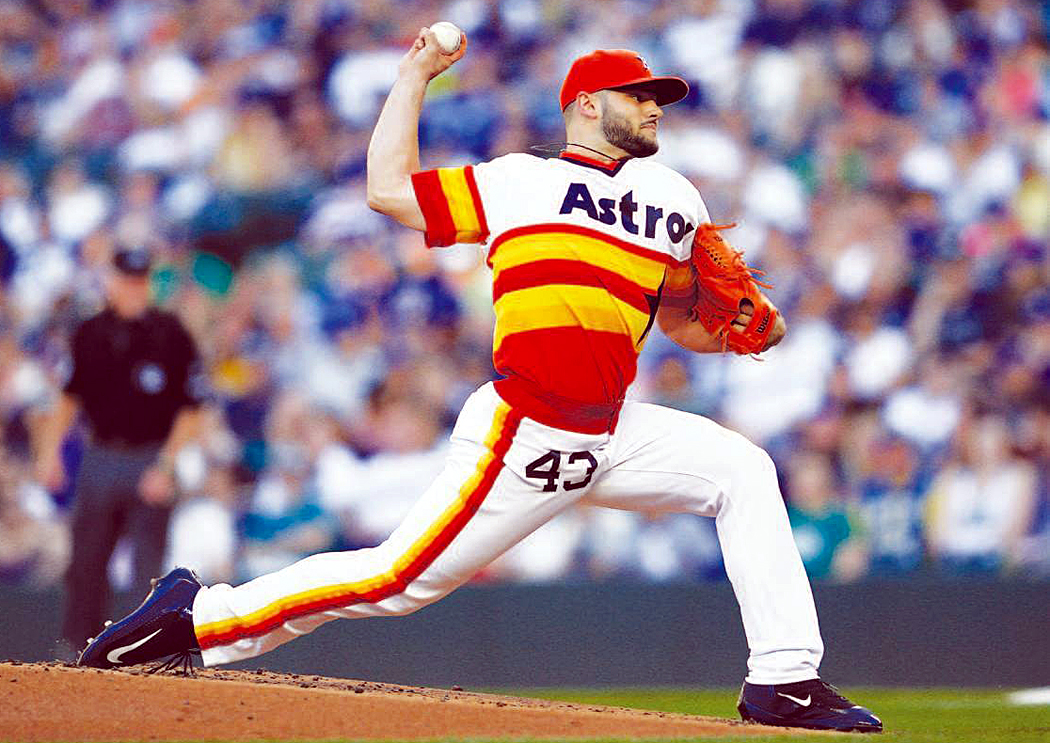
We all have those “grievances,” although they are ultimately pointless, and they drive much of our fandom. I, too, am rooting for the Rays. I have always despised the Astros — even back to their days as the Colt .45s — and for three very substantial reasons. First, the Astrodome was truly ugly, and besides, baseball was meant to be played outdoors. Second, because Astroturf is a crime against humanity and it spread, like a virus or the designated-hitter rule, across too many stadiums. But most important to me — and silliest — because they had the stupidest uniforms in baseball — the equivalent of tie-dye and bell bottoms. For these sins, they have captured my eternal enmity. Reasonable, right? 

Those uniforms were substantially mooted by the later White Sox atrocities with short pants and collars. And then the San Diego Padres kept coming up with newer and worser ideas. Always a good reason to root against a team. 

I grew up watching hockey. I went to Ranger games at Madison Square Garden. There were six teams in the NHL. Maple Leafs, Canadiens, Red Wings, Bruins, Rangers, and Black Hawks. Then, the league expanded and because of my long-standing sports conservatism, none of the new teams ever seamed legitimate. I couldn’t root for any of them. To this day, I will pull for any of the originals to beat any of the newbies, even though the oldest of them has been in the league for more than half a century now. They are still interlopers and not “real” hockey teams. 

I have a similar prejudice against baseball expansion teams, although not quite as strong. It began with moving teams. My father — and I, as a little boy — rooted for the Brooklyn Dodgers. When they absconded and went to Los Angeles, it took a piece of my Dad and me with them that we never got back. Then the Giants took Willie Mays away from us. The world was suddenly not permanent. Anything could change. The Braves moved to Milwaukee; the Browns moved to Baltimore; the Athletics moved to Kansas City; the Senators moved to Minnesota. What could we count on?

My father later shifted his loyalty to the Mets, but I never could. And then, other new teams began popping up. The Angels, the Colt .45s, the Mets and a revised Senators. Then the Seattle Pilots and the Royals, the Expos and the Padres. Where would it end? The Marlins, the Rockies, the Diamondbacks, the Devil Rays. How could you take a team seriously from Florida? 

Of course, none of this actually matters. It’s just sports. Yet the loyalty so many feel towards such an irrational attachment can be overwhelming. Consider the rioting that breaks out every four years during the World Cup. Soccer hooligans are not much different from Crips and Bloods. 

The National Football League went from 12 teams in 1955, when I was 7 years old and first becoming sports-aware, to its current 32 teams, with many bouncing from city to city like caroming billiard balls (Las Vegas Raiders?) The league merged with the AFL in 1960, but my loyalty remains with the original teams, even when they have shifted from the National Conference to the American. History has shown the supremacy of those original teams. In 2011, I wrote a story for The Arizona Republic looking at the history of the Super Bowl and discovered that original NFL teams held a two-to-one edge in Super Bowl wins: 30 wins for the old NFL, 15 wins for the AFL and all other expansion teams. (The ratio has shrunk some since then.)

I realized that watching football on TV, I root for the team that is older — that I root for any team that was in the original NFL before it became the NFC. Even the original AFL teams, which joined the NFL in 1960 seem like interlopers to me. And expansion teams since then hardly deserve notice as teams at all. Tennessee Titans? Give me a break: Real teams are named Packers, Giants, Bears.

Is there any good reason for this. No, and I don’t pretend there is. Its just stubborn cussedness. An unwillingness to accept change. 

I don’t have a team I follow. When I watch a game, football, baseball or hockey, my rooting interest is always based on which team I judge more “legitimate,” i.e., original. So, if the 49ers are playing the Ravens, I root for the San Francisco. But if the Giants are playing the Niners, I root for New York, since San Francisco didn’t enter the league until 1950. They are the junior team. If the Giants are playing the Packers, I have to root for Green Bay; they are four years older (1921) than New York (1925 joining the league).

(I pull for the Rays against the Astros only because my animus toward the Astros is so overwhelming. Those uniforms, I can never forgive.)

This may seem silly, but what other method can one choose for rooting? Hometown teams make sense, but on “any given Sunday,” as they say, for most Americans, there is no home team. You choose between Tampa Bay and Tennessee? Toss a coin.

But I bring all this up not to badmouth football or sports, but to discuss the impulse towards conservatism. It is something I discover in my own makeup that confuses me — the ineradicable desire for stability and a disdain of change.

This is, of course, the heart of genuine conservatism (as opposed to the radical loony movement that has coopted the name in the service of what is really a kind of anarchism frosted over with religious intolerance).

Political conservatism — as it was once formulated — is the belief what worked for generations of citizens before you shouldn’t be changed lightly. All that now-gone population in aggregate had a kind of multiplied wisdom, and the institutions and laws that have been in place for perhaps centuries  have a kind of legitimacy in numbers: A group is wiser than an individual. If change is needed, we should be slow to believe we are smarter than our forebears en masse, and be slow to adopt the reform until it can be proven the better route. Such conservatism never forbade reform, but took a cautious approach to it. 

One of the things it held onto in England was the primacy of the monarch. Kingship had served us well for so many centuries, why should we give it up? But even there, a parliamentary system eventually became the real government. The Windsors hold on out of sheer habit.

The conservatism of Bill Buckley or Barry Goldwater was more or less of this sort. Let’s not move too quickly. But even such a conservative as Everett Dirksen signed on the the Civil Rights bills because the change was truly needed. 

Now, of course, to be a conservative is not so thoughtful, but rather the same sort of autonomic response we have when rooting for our favorite sports team. There is very little conservative about the Republican Party anymore. It is merely a team to root for against that other team from across town. Especially in the Trump era, even policies are not notably conservative, but radical. Rather than “Let’s keep what we have until we can prove better,” we have “Let’s uproot everything and see what happens.” Grievance is a driving force, and surprisingly like the grievance I still maintain against the Dodgers for moving to California. It has little to do with reality.