When I was a kid, most things in the world just were. Everything was normal, even if it wasn’t. People lived in houses, roads were paved, families had a mom and dad. And, for a kid, parents were just parents; I never gave much thought to why they did what they did. It wasn’t even that if they did something, they must have had a reason. They just did things. They were Mom and Dad, and as children, me and my brothers just followed along. As a child, the world is a given.
It’s hard to recall that state of affairs, when things happened because they happened. That they might have done things for the abstract good of their children never dawned on me. Of course, now that I am old, I look back and realize how much they did for us, things they didn’t have to do, or things they probably would have preferred to do some other way, including some other things they might have wanted to do with their sparse vacation time.
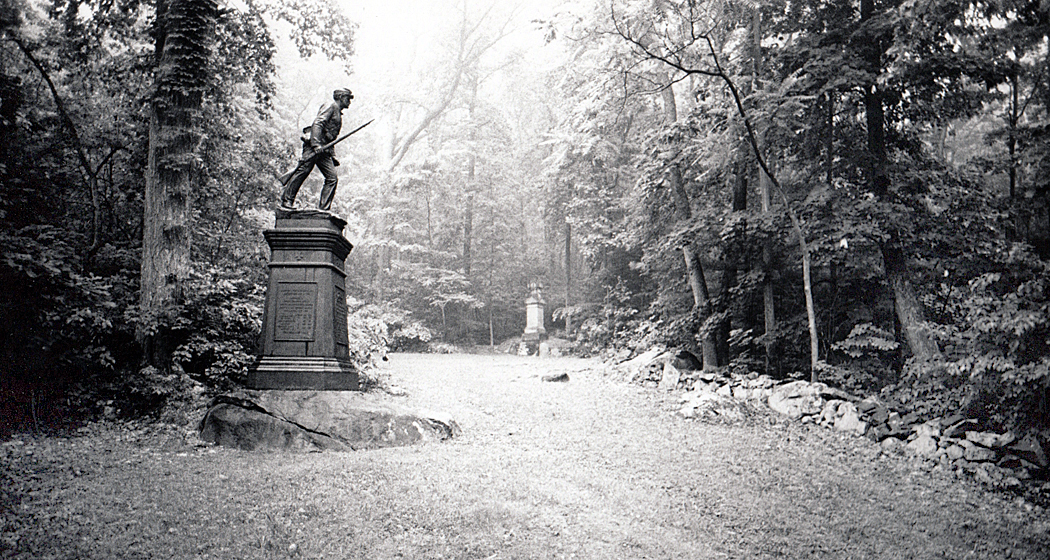
Gettysburg, Pennsylvania
But one of the things they did for us was travel. When we had our summer school vacations, Mom would pore over various brochures, magazine articles, and roadmaps and carefully plan routes to drive and sites to take in, and then, when it came time, we would load up the car and take off. We went to Washington D.C., to Niagara Falls, to Fort Ticonderoga, to Gettysburg — and many spots in between. Only later did I come to understand there was a purpose to these vacation trips. they chose these things to expose their children to history, geography, politics and to let us see what was possible outside suburban New Jersey. Travel was part of our education.
Back when they were children, they didn’t get to travel. They both grew up in northern New Jersey and neither had more than a high school education. Dad’s family was heavily religious and didn’t approve of having fun, and Mom had to raise her two younger siblings after her father died when she was still in grade school and her mother had to find work in New York City. And so, the worlds they grew up in were limited.
German gun, Omaha Beach, Normandy, France
But when my father was drafted in 1940, he was sent to Camp Wheeler in segregated Georgia. He didn’t talk much about his army life, but he did express shock at discovering the pervasiveness of racial discrimination. And then he was sent overseas after D-Day to France, Czechoslovakia and Germany and found that other peoples had various ways of making a decent life. His horizons were involuntarily expanded.
When they got married, shortly after the war, they felt it was important to broaden their children’s horizons, too, and to make sure we got the best educations. There was never any question that their kids would go to college. (I was told that when I entered second grade, I asked if that meant I could go to college “next year?”) Education was Priority One. Travel was a component of that.
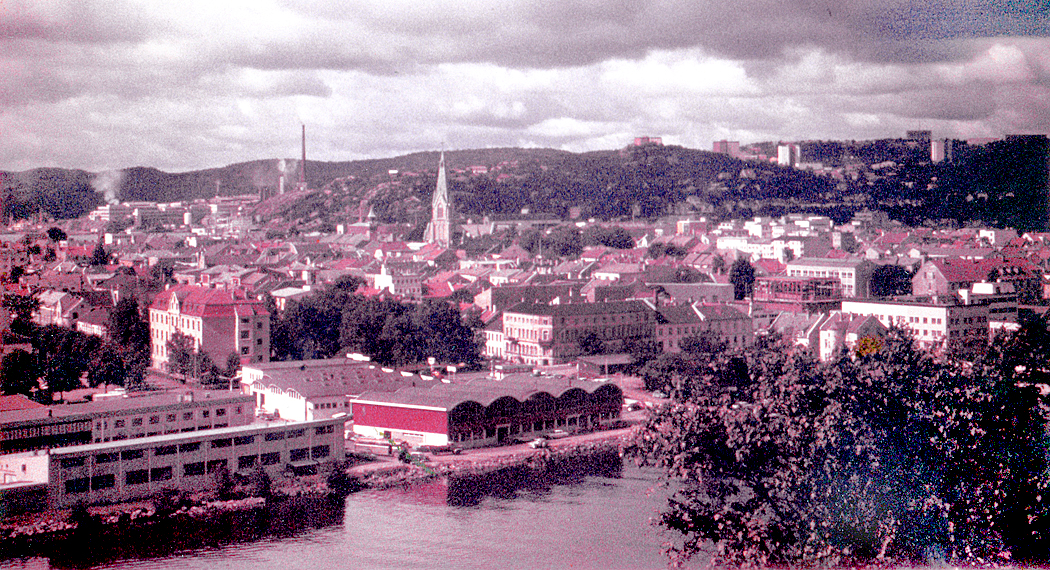
Kristiansand, Norway
Later, when I was in high school, they made it possible for me to go to Europe, accompanying my immigrant grandmother to her birthplace in Norway, and to take a bus tour through France, Germany, the Netherlands, Belgium and Luxembourg. A few years later, my younger brother, Craig, was sent off on a similar trip.
Mark Twain famously said that “Travel is fatal to prejudice, bigotry, and narrow-mindedness, and many of our people need it sorely on these accounts. Broad, wholesome, charitable views of men and things cannot be acquired by vegetating in one little corner of the earth all one’s lifetime.”
The vast bulk of the MAGA world, it seems to me, is made up of those who have never ventured far from their birthplace. If they had seen how others live, they would not accept the lies.
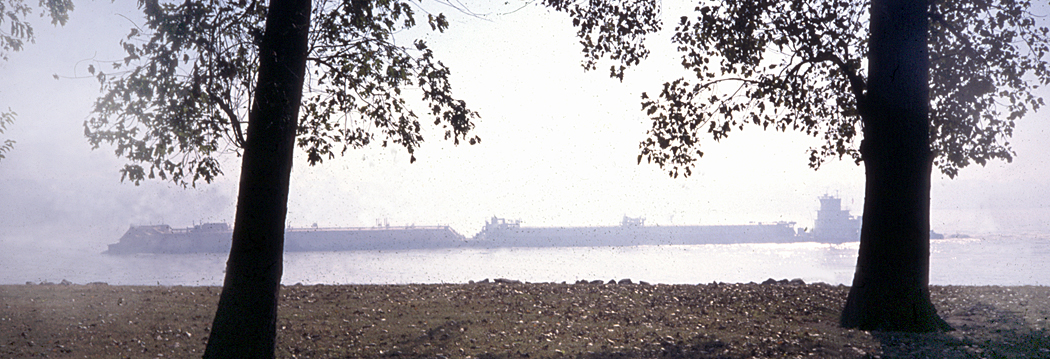
Cairo, Illinois
Travel, then, has pretty much always been an essential part of my life, and having become an adult — at least as quantified in years accrued on the planet — I have continued the habit instilled by my parents. Education wasn’t only in books; I read Huckleberry Finn, of course, but I’ve also been to Mark Twain’s childhood hometown of Hannibal, Mo., and to what remains of Cairo, Ill. I’ve driven along the entire length of the Mississippi River, from Lake Itasca, Minn., to the Venice Marina where the road ends in Louisiana.
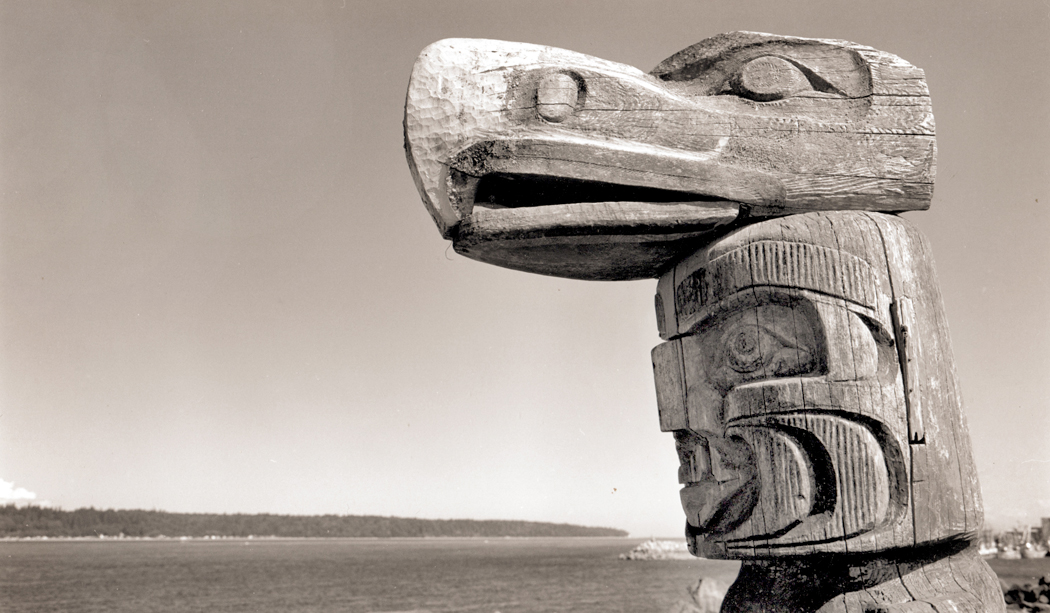
Vancouver Island, British Columbia
It is rare to mention a place I haven’t been in the continental United States or provincial Canada. Big Sur; Mt. Katahdin; the Everglades; El Paso;, the Union Pacific Bailey Train Yard in North Platte, Neb.; Hudson Bay; Halifax, Nova Scotia; the Tehachapi Loop in California; the Sturgis Rally in South Dakota; even Glacier Bay in Alaska.
Glacier Bay, Alaska
Believe me, I can be quite irritating, when someone mentions some far-off place and I chime in, “Oh, yeah, I’ve been there. Had a great Po Boy sandwich in a little shack along the road in Pecan Island.” Which is a tiny community along the southernmost road in Louisiana. Or “Abiquiú? Yes, we visited Georgia O’Keeffe’s place there.” I am slowly learning to keep my yap shut.
Red Mesa, Navajo Reservation, Arizona
I’ve been to every state except Hawaii, and most of them many times, and every province in Canada, save only Prince Edward Island and Newfoundland. I’ve lived in four corners of the continental states, growing up in the Northeast, moving to the American South, then to Seattle in the Northwest, and spending 25 years as a writer in the Southwest. Each move gave me a chance to explore all the territory nearby, often in some detail (There’s hardly a square meter of Arizona that I haven’t been to. Go ahead, name something obscure: Ajo? Red Mesa? Tumacacori? Freedonia? Gadsden? Quartzsite? Check, check, check, check, check and check.)
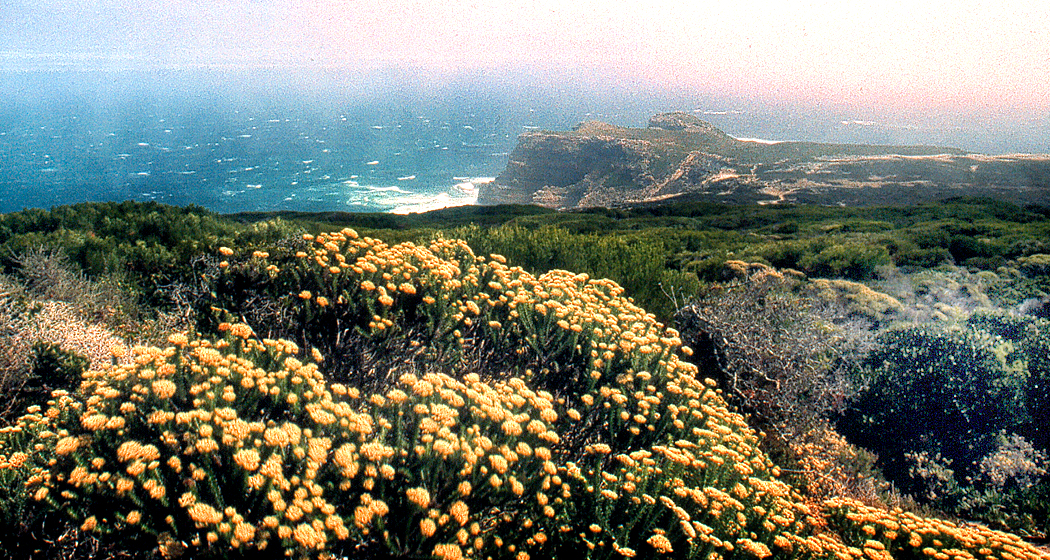
Cape of Good Hope, South Africa
I’ve been to the Cape of Good Hope in South Africa and to Marylebone Road in London; I’ve been to the Chartres Cathedral, and to the bull ring in Arles, in Provence. My late wife and I went back to France many times, and drove to all six corners of “The Hexagon.”
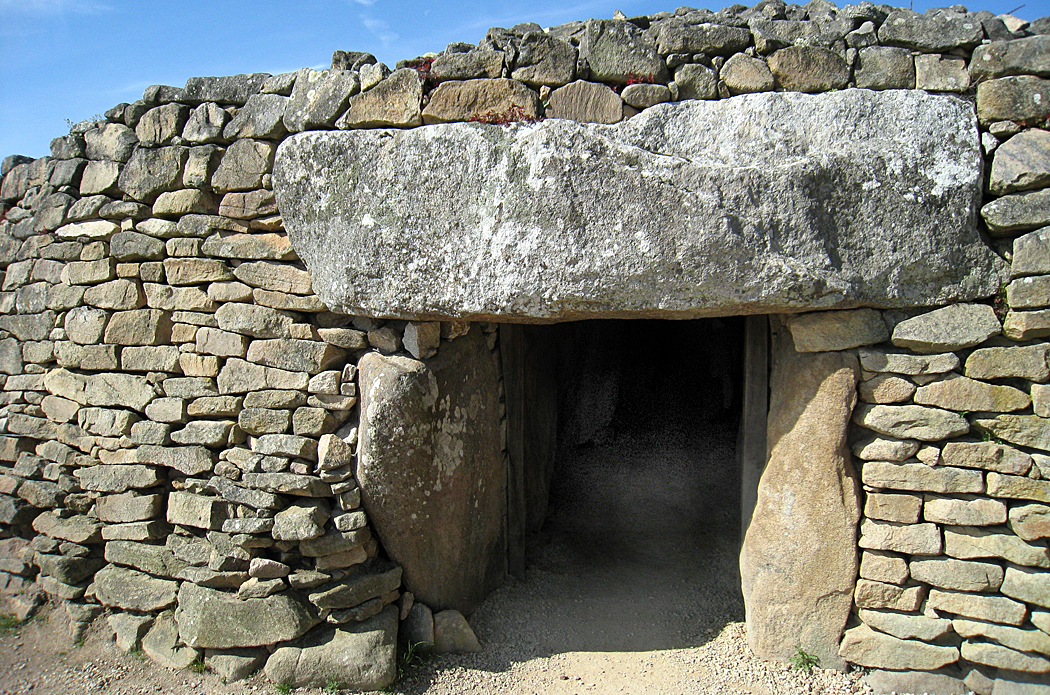
And so, yes, I’ve been to the D-Day beaches at Normandy and to the bomb craters still evident in Verdun, to the cave art along the Vézère Valley, to the paleolithic menhirs and dolmens near Locmariaquer.
Dolmen, Locmariaquer, Brittany, France
I’ve visited the Museum of Questionable Medical Devices, the Museum of Jurassic Technology and the Hammer Museum of Haines, Alaska.
And it has all been an education. I certainly learned that the omelet I get at Denny’s is a pale mutilation of the rich, creamy offering you can find at any neighborhood cafe in Paris.
O’Keeffe Country, New Mexico
Of course, I’ve also learned how little of the world I’ve actually seen. I have so much of the non-European inflected planet yet to see, although, at my age, it’s almost certain I will never get to Japan or the Seychelles or Samoa. Just as, no matter how many books I’ve read, there is always a hundred times more books I will never get to read, and not enough time left even to put a dent in that list. I keep trying.
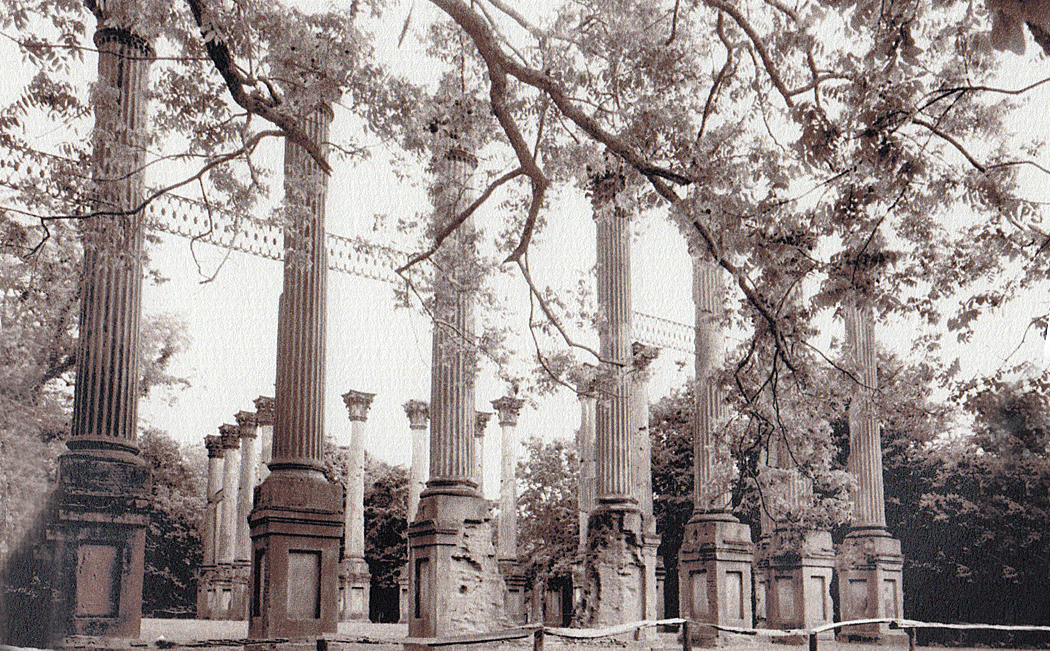
Windsor Ruins, Mississippi
And so, in addition to bragging about all the places I’ve been, I am shamed by all those places I have not gone to, just as all the art I haven’t seen, all the books I haven’t read, all the music I have never heard. But I think that it is only because of all I have read, seen, and heard, that I know enough to feel the gaping holes in my education.
I have lived in all four corners of this country: in the Northeast until I was 17; in the South — for the first time — until I was 30; in the Northwest for a bit more than a year; back in the South until I turned 39; moved to the Southwest until I was 64; and back, finally, to the South. I am now 74. And so, I’ve lived in the American South longer than anywhere else, and while that does not give me the right to consider myself a Southerner (you have to be born here for that — maybe even your granddaddy had to have been born there for that), I have come to have a complex and conflicted love for the region. The South has a mythic hold on the psyche that no other region can match.
Oxford, Mississippi
Perhaps the biggest problem in dealing with the American South is that there is no good way to separate the reality of it from its mythic power. Other regions have their myth, too, for sure. There is a Puritan New England, and there is the Wild West, but both of those have an element of legend to them — they are made up of familiar stories, whether of pilgrims debarking at Plymouth Rock, or Wild Bill Hickok playing aces and eights. These are stories that get repeated and we presume they tell us something about the character of the inhabitants of these regions. But the South is not built of stories, but of myth, which another thing entirely.
There is something external about stories and legends; myth is born from that place in the psyche that Carl Jung called “the shadow.” Stories are told; myth is felt. It is something profound but unexamined — it is the sense of significance, of meaning, even if we cannot exactly put our finger on any specific meaning — the way a dream can feel significant, even if we don’t know why.
Windsor Ruins, Mississippi
And there are at least four conflicting myths about the South, which can overlap. There is the “moonlight and magnolias,” which is now and has always been bullhockey; there is the redneck South, riven with poverty, ignorance and superstition; there is the Black South, which has its own subdivisions. And then, of course, there is the “New South,” with its Research Triangles and its civic progress.
Yanceyville, North Carolina
The first is the bearer of the Lost Cause, a self-deluded sense that the Old South was a place of gentility and honor; the second includes both the rural farm South and the Appalachian hillbilly; the third is counterweight to both of the first two, and yet, is also the power-grid on which the first two run — it is there behind all of it.
And lastly, if you have ever watched a new butterfly wriggle slowly, struggling out of its chrysalis, seeming to be stuck halfway, then you have a pretty good image for the New South trying to leave behind the problems of the Old. The Old is unwilling to let go.
Because history is the foundation of Southernness.
Zubulon Vance birthplace, North Carolina
When I first arrived in the South, in 1966, one of the first things I saw on driving into the campus of Guilford College, in Greensboro, N.C., was a giant banner hanging out of the third-story window of my dorm with “Forget? Hell!!” written on it in gigantic hand-scrawled letters written on a bedsheet. It was my introduction to the sense of grievance that has ridden the back of the South since the Civil War. It is a sense of being put upon by others, of having been defeated despite the assumed bravery, honor and courage of the soldiers attempting to protect the South and its heritage. Of course, this is all myth, but myth is a powerful driver.
In Homer’s Iliad, when two soldiers meet on the fields outside Troy and are about to beat each other into bone-snapping pulp, they first stop to tell each other their genealogy.
“And the son of Hippolochus answered, ‘Son of Tydeus, why ask me of my lineage? … If, then, you would learn my descent, it is one that is well known to many. There is a city in the heart of Argos, pasture land of horses, called Ephyra, where Sisyphus lived, who was the craftiest of all mankind. He was the son of Aeolus, and had a son named Glaucus, who was father to Bellerophon, whom heaven endowed with the most surpassing comeliness and beauty’…” And this goes on for another 30 lines, explaining the history of his family from its origin among the gods. No one is merely an individual, but rather the tail-end of a long history, known to both the warrior himself and to his foe.
Bell Family, Mayodan, North Carolina
This sense of history is rife in the American South, too, and the Civil War takes the place of the heights of Ilion.
My late wife, Carole Steele, was born in North Carolina and learned about the war first-hand from her great-grandmother, Nancy Hutcherson Steele, who was 10 when it began. She had plowed the fields during the war while her father and brothers were away fighting. When she died at the age of 98, she did so in my wife’s childhood bed in a small house on the banks of the Dan River. Carole was 8 at the time.
Steele family, just after Civil War
The confluence of childhood and history formed the seed of the poetry she wrote. The blood in her veins was the blood in her father’s veins, in her grandfather’s and great-grandfather’s. History, blood and identity flowed like a river.
“My father’s blood is always a river/ rushing to his mind/ igniting diamonds,” she wrote. She called the sense of history being alive in the genes the “long man,” an identity stretching across centuries.
Carole described the feeling in several of her poems. One describes the feeling of being in the South and reads, in part, “It was for the wasps/ singing in the rotten apples/ under the trees,/ the sweetish smell/ of rabbit guts and/ frozen fur stuck to the bloody/ fingers/ and frost on the stubble,/ the dipper and the well,/ tobacco juice in the privet hedge,/ and liquid night/ the muted rumble/ of old voices/ at the kitchen table/ drifting up the wooden stairs”
I learned from Carole and her family, that there is usually a deep sense of belonging that Southerners feel: The second pillar of Southernness is place, and what is more, place and history are almost the same thing. A genuine love of the patch of ground where they grew up, a love like you feel for a parent. It is a love of where you were born that may not extend beyond the town or county and maybe the state. But for Carole, Rockingham County was where her father and grandfather were buried. Another poem ends: “your Daddy is a fragrance/ gathered in the peach trees/ over there.”
That fact alone meant there was an unseverable umbilical connection to that omphalos, that tiny patch of Piedmont, those trees, those creeks and rivers, those very weeds that crept over the edges of the crumbling pavement on the back roads. It is the feel of the red clay between your fingers, the blackbirds roosting by the hundreds in the oak tree. Home.
And, in the meantime, the blood of countless slaves and freedmen enlarged the tragedy of the South. There were lynchings and later the violence of the civil-rights movement.
Mobile, Alabama
It isn’t only rancor and slaughter that give the South its sense of history, but the land itself. You can stand in a cornfield in rural Sprott, Ala., 25 miles north of Selma, and see the stand of trees at its border, knowing the trees are no more than 60 years old. And that before those trees began filling in the countryside, there were cotton, sharecroppers and poverty. A dilapidated wooden shack sits in the middle of the woods, and you wonder why anyone ever built there.
Then you recognize they didn’t. The sharecroppers’ home — just like those written about by James Agee in his Let Us Now Praise Famous Men of 1941 — was built by a cotton field, but times change and history presses on and the fields are now woods.
Sprott, Alabama
There is history elsewhere in the country, too: Bunker Hill, Mass., Fort Ticonderoga in New York or Tombstone, Ariz. But they are singular places you go to visit — somebody else’s history. The South is so full of history that its land and people seem buried under the sense of it.
The first democratic legislature in the New World was Virginia’s House of Burgesses. The author of the Declaration of Independence was a Virginian. And the Revolutionary War came to a close at Yorktown, Va.
Shiloh battlefield, Tennessee
Each state has its Civil War sites, where thousands of its men are buried. There are the street corners where civil-rights workers were hosed and beaten by police. Cotton fields where slaves were whipped. It is interesting that the one place in the country where Black and White share the most is the South.
For most Americans, history is a story told in a schoolbook. It seems removed from the lives we live. For most Southerners, history is something their grandparents did or was done to them.
And I, of course, have come late to this epic, first in 1966 when segregation was officially illegal but still largely in effect. The local barber shop would not cut a Black man’s hair; “We were not trained how to,” the barber explained, weakly and not very convincingly.
Jim Crow was so unconsciously buried in the White brain that a local ministry could, with no irony, proudly boast that it offered help and aid to “the alcoholic, the prostitute, and the Negro.”
After graduating from college, I eventually found work writing for the Black weekly newspaper in Greensboro, N.C., The Carolina Peacemaker, where I found myself writing editorials for the city’s Black population. It felt strange to do so, but I never felt less than completely welcome. When I visited the African Methodist Episcopal church, I was invited in with a warmth I never felt in New Jersey — and, I might add, magnificently fed in the church basement after the service. Clearly the resistance to change in the South was a one-way thing.
My daughter, Susie, who is also a journalist, worked in daily papers in Jackson, Miss., and Mobile, Ala., also started on a Black weekly — the Jackson Advocate, in Mississippi, where she had the same experience I did of welcome and inclusion.
I did not find that sense in 1967 when I and a few of my college friends attended a Ku Klux Klan rally in Liberty, N.C. There, the sheriff of Forsyth County gave the keynote harangue with tales of Africans feeding their babies to crocodiles, and how Africans still had the “stub of a tail.” The smell of alcohol was pervasive, and the festivities ended with the circling and burning of a 30-foot cross, built of intersecting phone poles set alight with poured kerosene. Meanwhile, a scratchy recording of The Old Rugged Cross played on a miserable loudspeaker system.
Later, I covered the followup to the 1979 Klan shootings in Greensboro. Klan members and American Nazi Party members were acquitted for the killings of five protesters. The city police were claimed to have colluded with the Klan, and 25 years later, the city apologized. So, the recent rash of police violence against people of color comes as neither surprise nor shock to me.
Yet, I love the South and choose to live here. It fills my mythic life also. In the 1970s, it was the Eden from which I was exiled. I was setting roots and rhizomes in the soil of the house I shared with the woman I expected to grow old with. It was the paradise garden: In the front yard was an Yggdrasil of a shaggy, ancient black walnut tree, covered in moss. In the back yard was a pecan tree. There were two fig trees from which we ate fresh figs. There was a vacant lot next door with an old pear tree. A chinaberry grew on the street side. And a proud row of the most brilliant red maple trees along the road, changing reds throughout the year — buds, flowers, leaves, branches, each with their own ruddy glow.
There were lilacs beside the house, wild Cherokee roses along the driveway, random chickory spreading blue along the foundation. Between our yard and the vacant lot, I counted more than a hundred species of weed — or rather, wildflower — with my Peterson Guide. I grew a vegetable garden with beans, peppers, eggplants, okra and tomatoes.
There were mockingbirds that I trained to whistle, pileated woodpeckers that would climb the pecan tree. Crows, owls, cardinals, sparrows, redwing blackbirds, the rare ruby-throated hummingbird. Circling overhead were buzzards and hawks. There were butterflies and beetles. Ants highwayed up and down the walnut tree. A luna moth sat on the screen door.
We lived there for seven years, digging our feet deeper into the soil, until the Archangel Michael came brandishing his sword: My love left me suddenly and I left the house. And I left the South.
When I returned, some years later and bearing with me a numbed depression, I was taken in by my college friend and his wife, and a second, shadow-Eden was set in Summerfield, N.C., in an old house with only a wood stove for heat, and three great ancient oak trees in the back. I walked through the woods behind the house and into a small ravine — the petit canyon — and soaked my loss in the loam and leaf litter.
The thing about depression and myth is that they play into each other. It isn’t so much that depression makes you the center of the universe, but that it wipes away everything else, leaving only yourself and your loss. You are forced to experience your life at a mythic level and for me that meant the land, its history and its people.
New River, Ashe County, North Carolina
I recovered, moved to the Blue Ridge Mountains when I was invited by Carole. The house was on a bluff above the New River, with a dark green patch of pine trees on the hill and an unmowed grassy field on the other side of the house. I could stand at the kitchen sink, doing dishes, and watch the weather shift over the peak of Mt. Jefferson, five miles off to the north.
Ashe County, North Carolina
Together we moved to Virginia, where Carole taught in Norfolk and I taught in Virginia Beach. Six years there, with much travel around the country. When Carole got a job offer in Arizona, we moved, lived in the desert for 25 years and when we both retired, moved back to North Carolina, to be near our daughter.
Swannanoa Mountains, Asheville, North Carolina
It’s been 10 years now, and five since Carole died, and I have hunkered down in Asheville, at the foot of the Swannanoa Mountains, and feel as if I am where I belong. The trees and birds, the weeds and the occasional wandering black bear, the snow on top of the hills, the barbecue joints and auto parts stores.
Age has a way of deflating myth. When I was in my 20s, the world seemed aglow, lit from within by a kind of mythic importance. The South had that glow: its people, its landscape, its history. I have come back to the South after a quarter-century in the desert. It has lost some of its oneiric power, as, indeed, the world has in general. But the South feels comfortable and human and my children and grandchildren all live here and I cannot imagine living anywhere else. I burrow in and pull its blankets around my shoulders.







 Richard Nilsen