Archive

Tag Archives: wolfflin

It is midwinter spring, those few days that habitually show up in February with sunshine and temperatures into the 70s that fool you into believing that spring is close at hand, only later to kick you with plummeting temperatures and perhaps another snow. The National Weather Service predicts that for this weekend. 

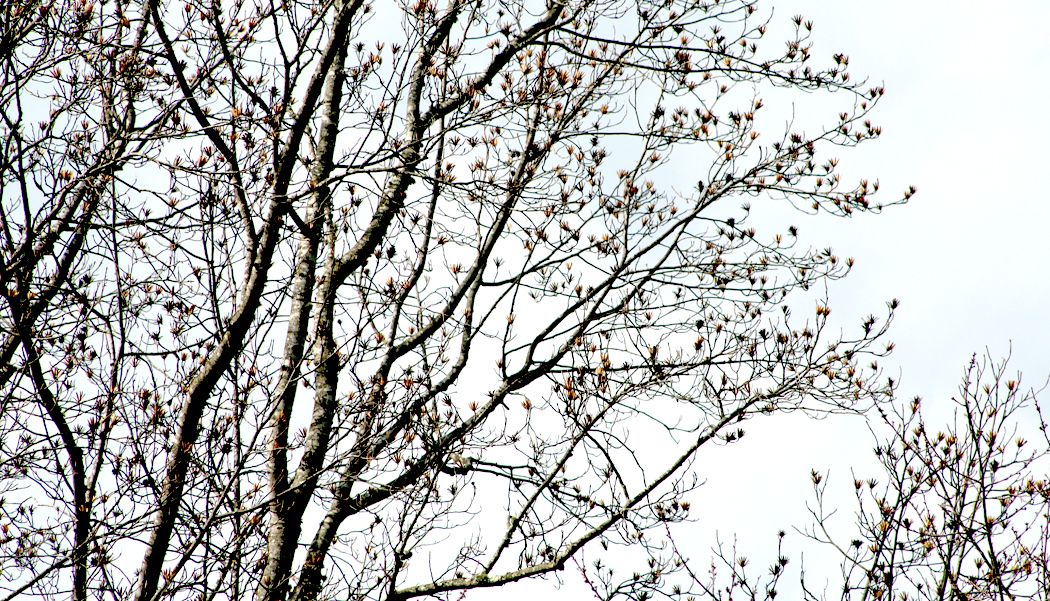
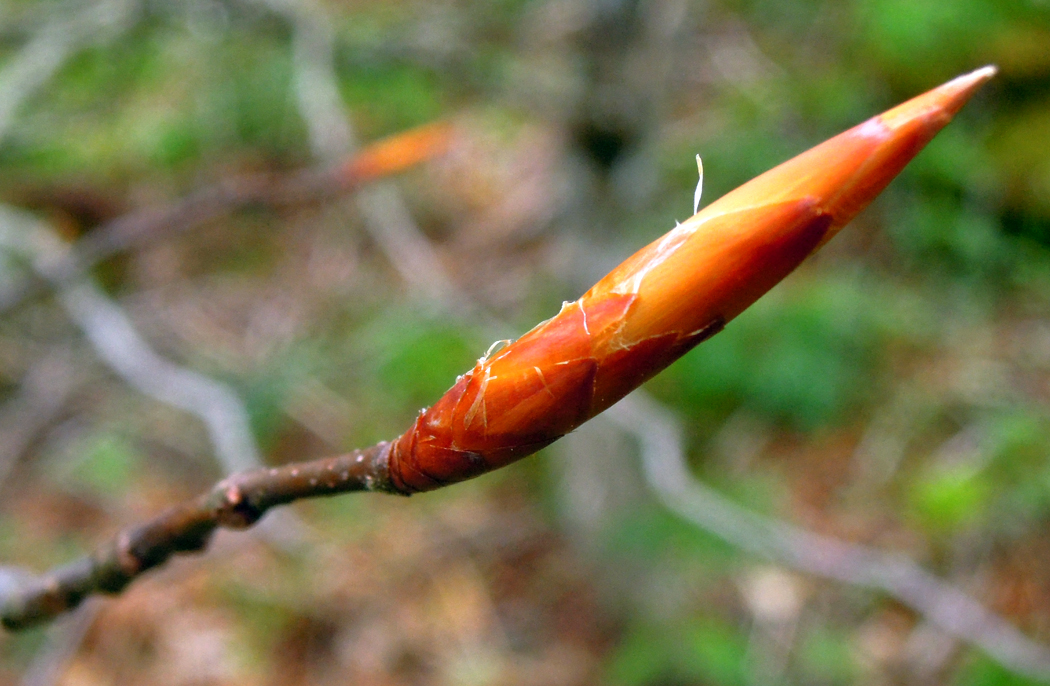
This is my favorite time of the year, when the bare trees begin budding at the twig tips. You can watch the trees change day by day, turning the dead sullen grey of December into something that clearly has a rising sap under the dull bark. When you watch the buds close up, their bud scales slowly separate, with thin lines of green beginning to spread at the edges. 
Fifty years ago, my friend Sandro and I would annually take this time to camp at the Outer Banks. Off-season meant we had the sand and sea to ourselves and could walk five miles along the strand without ever meeting another human. 
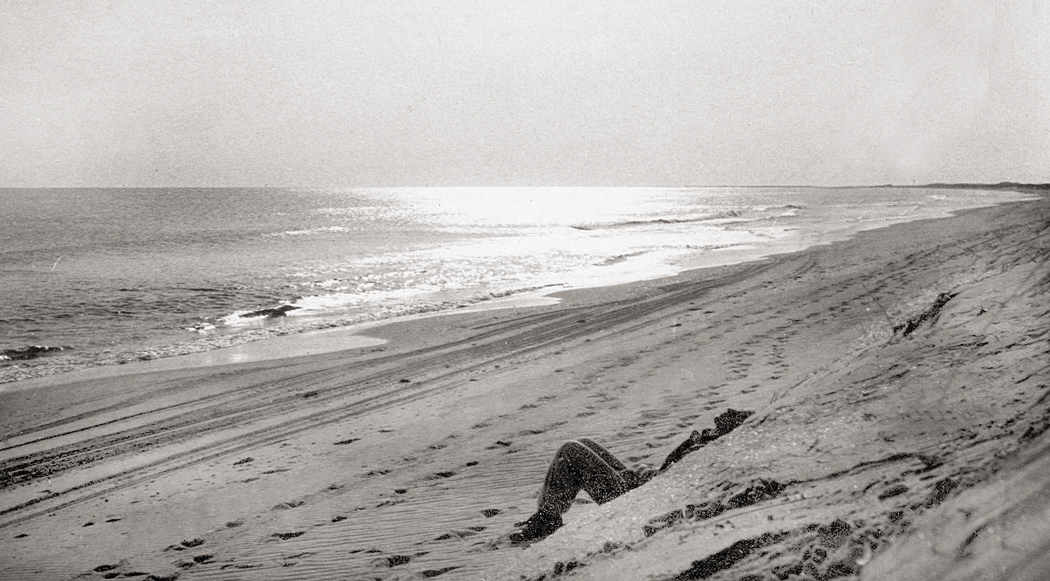
Sandro at Cape Hatteras, 1969

It was also Mud Season. You don’t read about it in literature, with its darling spring buds, its gold first green and its young sun half-run in the ram’s course. But there it is — early winter rains drained deep into soil and then turned hard as rock in the frozen air. November’s squishy footprint is turned to fossil, brittle as any sandstone, its edges wedged up in a tiny crater. But the February thaw, or later, when March brings those buds to stretch their scales, those footprints turn once more to watery goo, slippery under your shoe, sucking your heel right off your foot. It is what is wrong with pretty literature. Among all the pinking petals, among all the bright girls in spring dresses, among all the apple blossoms and greening grass to come, there is the mud, ripe, fertile, pliable in your squeezing fist, the one brown, crowning reality of the the coming spring, when there is mud again.

It is such elemental things that seem most real, most important. Culture changes, fashions change, but the cycle of seasons wears a constancy. 
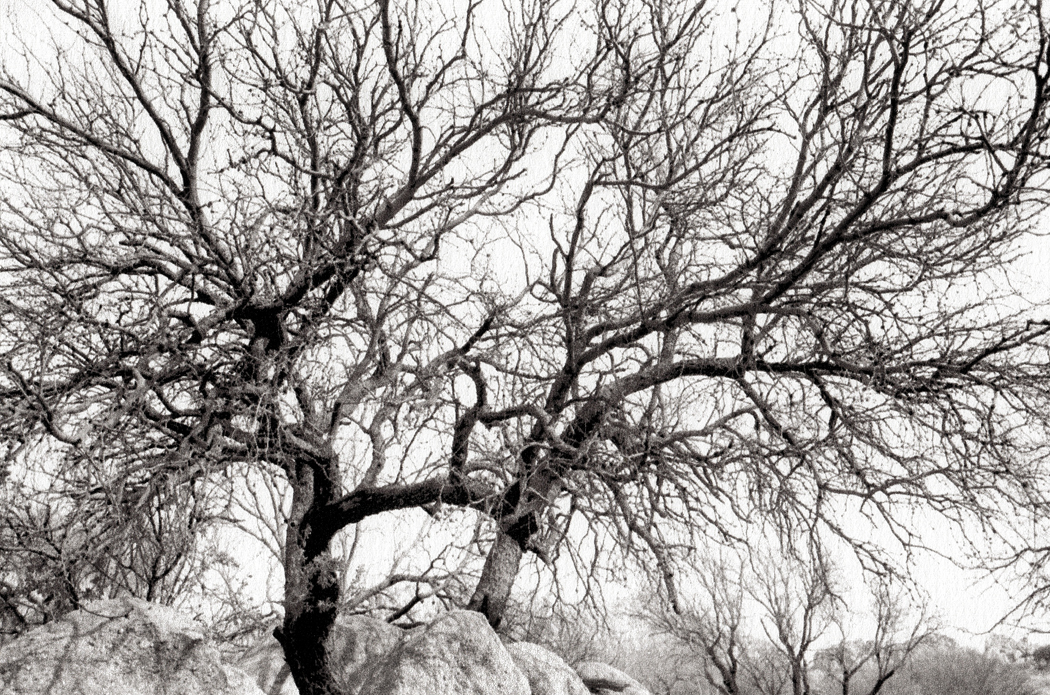
Texas Canyon, southern Arizona

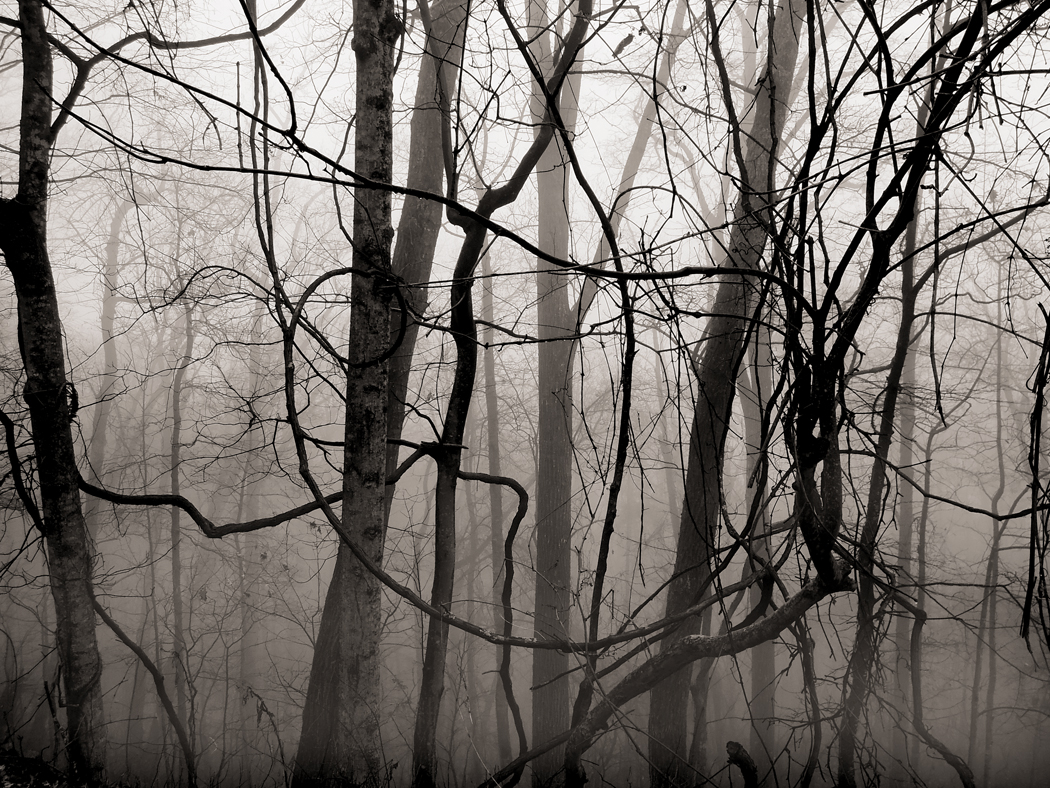
For me, it is the trees, most of all. I love the spring trees well enough, but it is this time of year, when the trees are still bare and show their bones that I wait for each fall. Drop the leaves ecdysiastically and I can see the shape of the thing they cover. 
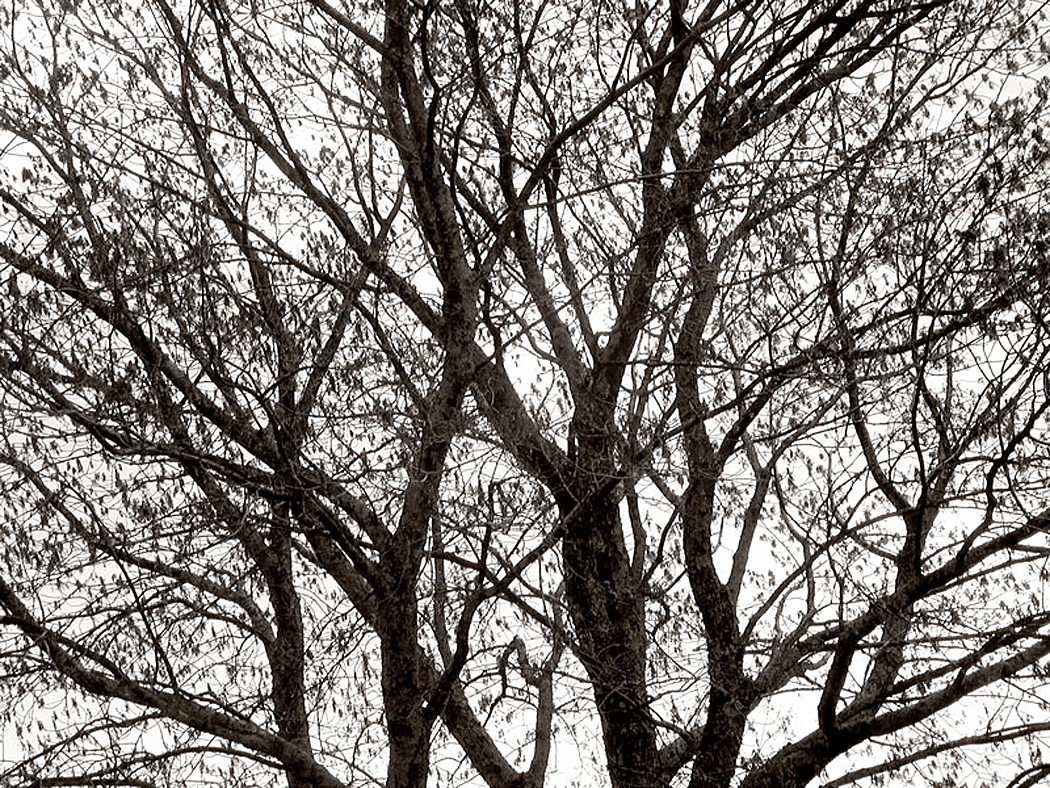
Spring oak, Blue Ridge

It is the lines they make against the sky. An etching more than a painting. Artists through history are generally assigned to one of two categories — they are either line people or color people. Line painters, like Botticelli, tend to draw their scenes, often in actual outlines, and then fill in the colors, while color guys, like Titian daub pigment onto the canvas and let the patterns of color define shapes. It’s one of the major distinctions made by Heinrich Wölfflin in his 1915 book, Principles of Art History. It doesn’t mean the line guy doesn’t appreciate color or the color guy doesn’t appreciate shapes and forms, but rather it defines what hits them first and most centrally. 

(There is a similar distinction in music. Composers — and performers, too — tend to be line guys or chord guys. Lots of counterpoint for the first, and washes of tonal color for the latter. Bach vs. Debussy.) 
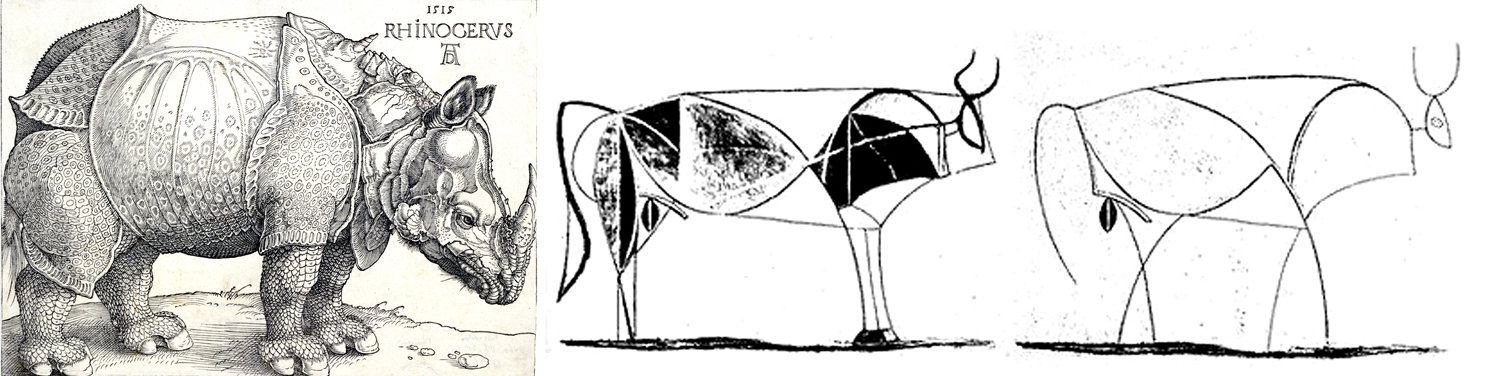
Albrecht Dürer rhino; Pablo Picasso bull

Albrecht Dürer was a line guy, most characteristically in his wood engravings. Picasso was a line guy and certainly an indifferent colorist. Most of his paintings could easily be given different fill-in colors. Matisse, though, a color guy to his teeth. Even more recent painters can be divided. Ellsworth Kelly a color guy; Lucian Freud a line guy. 

Well, I’ve always been a line guy. And the lines drawn by winter trees have hypnotized me since I was a wee bairn. One whole category of my photographs are what I called my “tree nudes.”
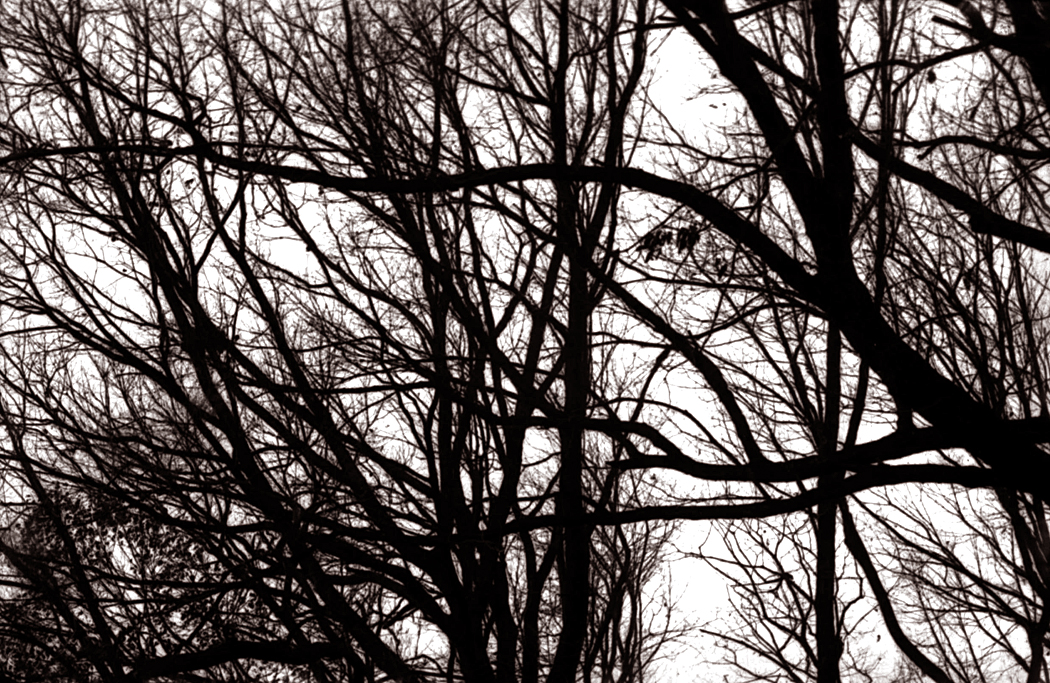
The nude has a specific purpose (outside the merely voyeuristic). Clothes drop their subjects into a very particular time and place. Eighteenth century breeches; flapper skirts; bell-bottom trousers; togas; saris; morning coats with a peeking handkerchief in the breast pocket. 

But the nude is — or can be — timeless (with the caveat that hairdos can be a giveaway). There is a universality to the nude in art, which is why so many Greek statues are naked. And we are meant to appreciate the form — shape, detail, muscularity — and not just a specific person with a name, family, opinions, and personality. 
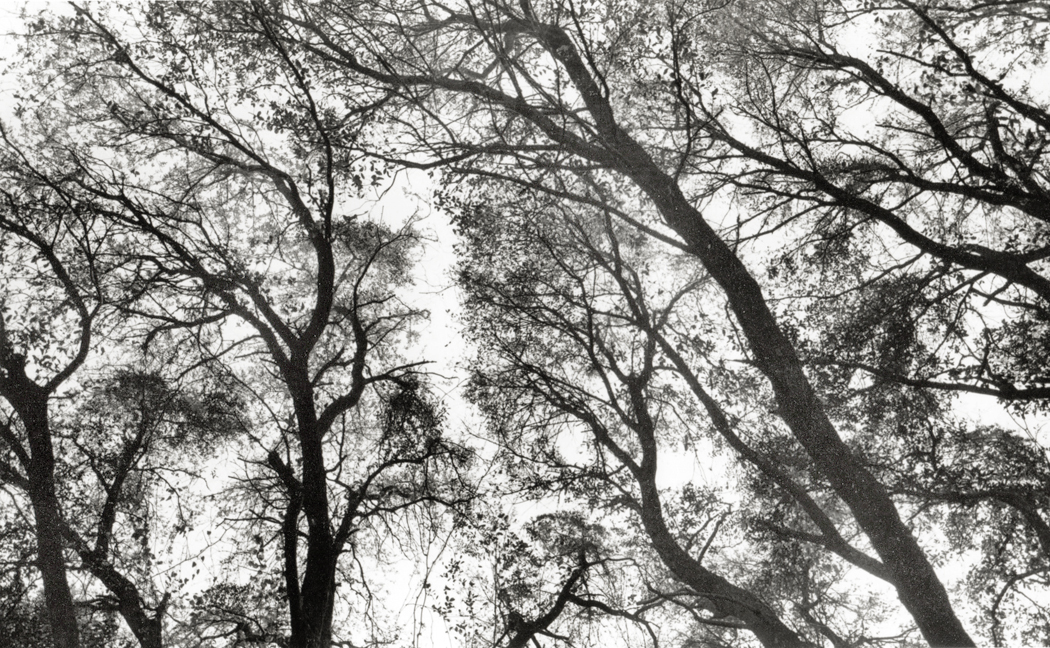
And I feel the same thing in the bare ruined quiers, where late the sweet birds sang. There is structure in the dark lines of the branches, and a systematic chaos in the way they all cross each other in a welter of visual information. 
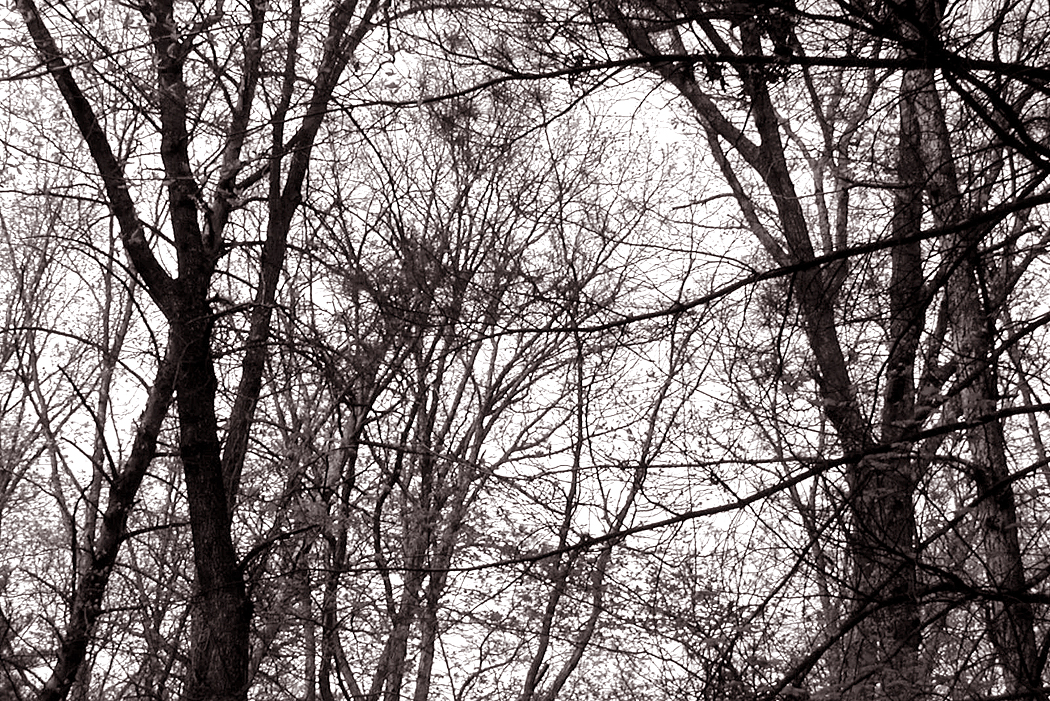
In this, I am reminded of the drip paintings of Jackson Pollock, which I came to love in the New York art museums I visited beginning as a teenager. A good nature-scribble of branches puts a buzz in my visual brain. I love it and have sought it for the past 60 years. Among the first photographs I ever made, 60 years ago with an ancient 35mm Praktica camera were of trees. 

Of course, while trees are beautiful, they can become an obsession. If I had chosen to make a career out of photography instead of writing, the trees pictures would have dwindled. As Fred Astaire says in the film  Funny Face, “You’d be amazed how small the demand is for pictures of trees.”

But I have followed trees through seasons
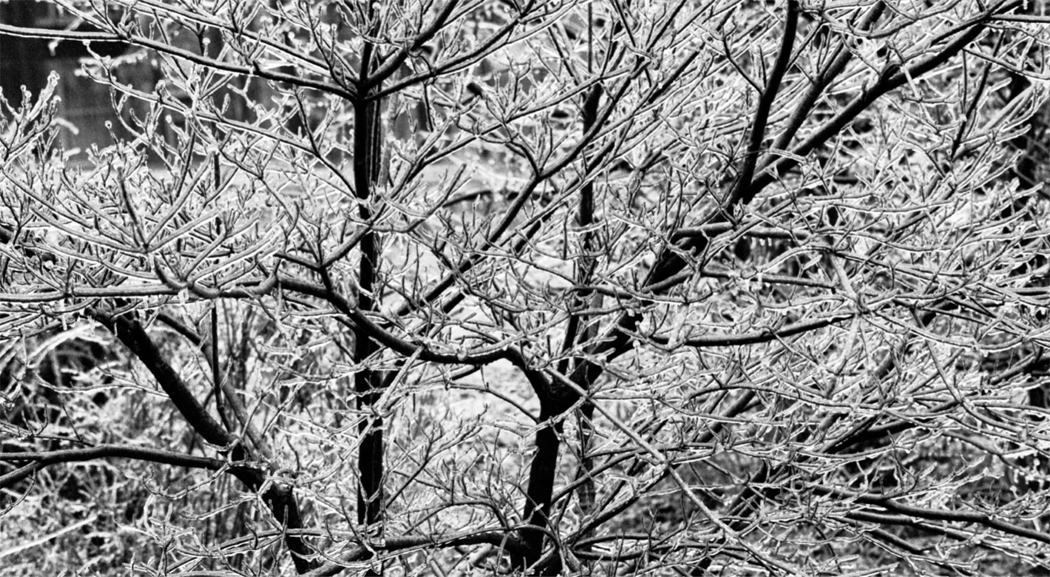
Ice storm, Greensboro, NC, 1969

and all their leafy-ness
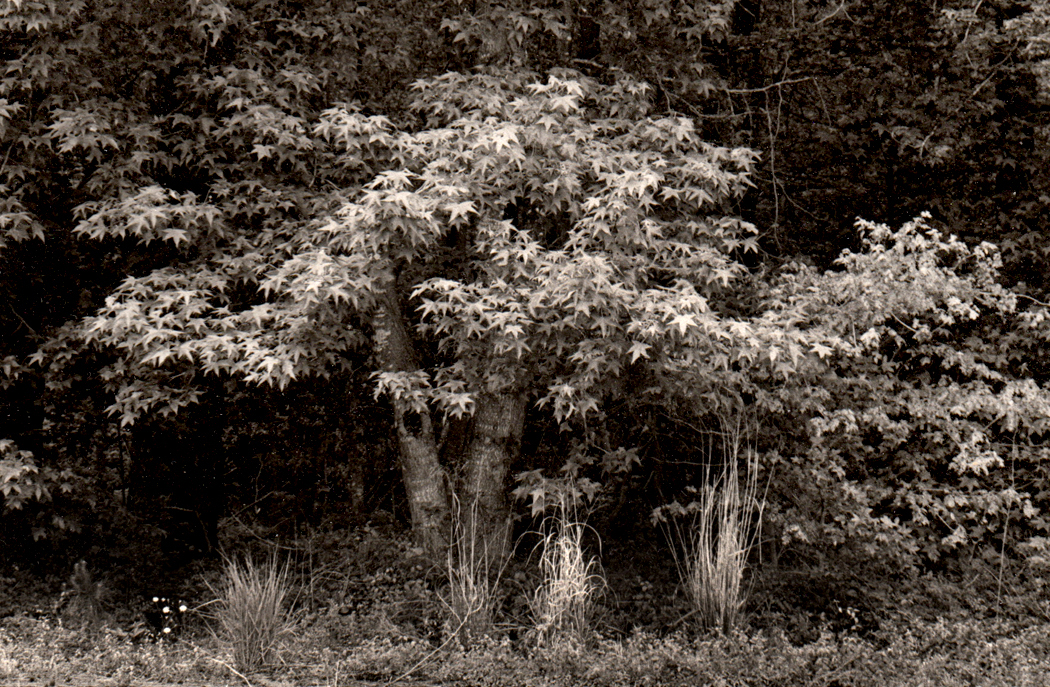
Sweetgum tree, Redwing Golf Course, Virginia Beach, Va., 1984

I have sought the best image of the jumble of buds, twigs, branches, trunks and bark that I feel as a signal for my emotions. 

One of the first shows at the Museum of Modern Art that made a deep impression on me was in the summer of 1972, when they put together a group of 50 photographs of Paris trees by Eugene Atget (1857-1927).  

Lined up on the wall in a darkened space, with brilliant track lighting that made each photograph gleam like a jewel, the photographs made my heart jump and my eyes smile. Most of the trees were winter trees, with wiry roots dug into the ground, and ancient boughs twisted and weighed down with age. They were ungodly beautiful, but also, in Minor White’s expression, it wasn’t just what they were, but what else they were. 
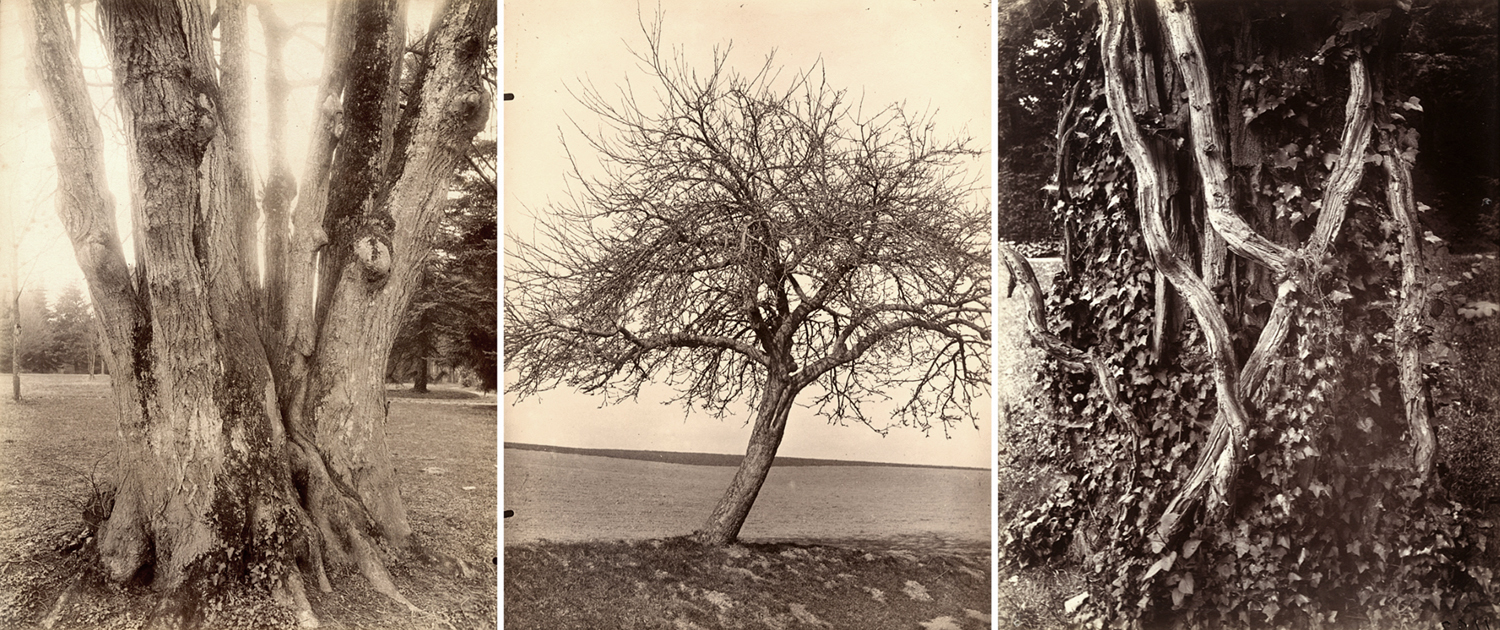
Three tree photographs by Atget

The way they were lit, the gnarled forms they took, their texture and even the gold-toned sepia surface of the silver images all functioned as metaphor. They evoked emotion the way art can. 

Usually, when most people see a picture, in a magazine or newspaper for instance, the image is just a kind of shorthand for language. You see a picture of a house or car and instantly the words “house” or “car” spring to mind. The journalistic photograph is a kind of pictogram or hieroglyph, like the stick figures on the doors of public restrooms. 

But images can also do more than that: When you abjure the naming phase and feel the color, line, shape, form and also the cultural resonance of an image, they evoke thoughts and emotions beyond the named subject. 
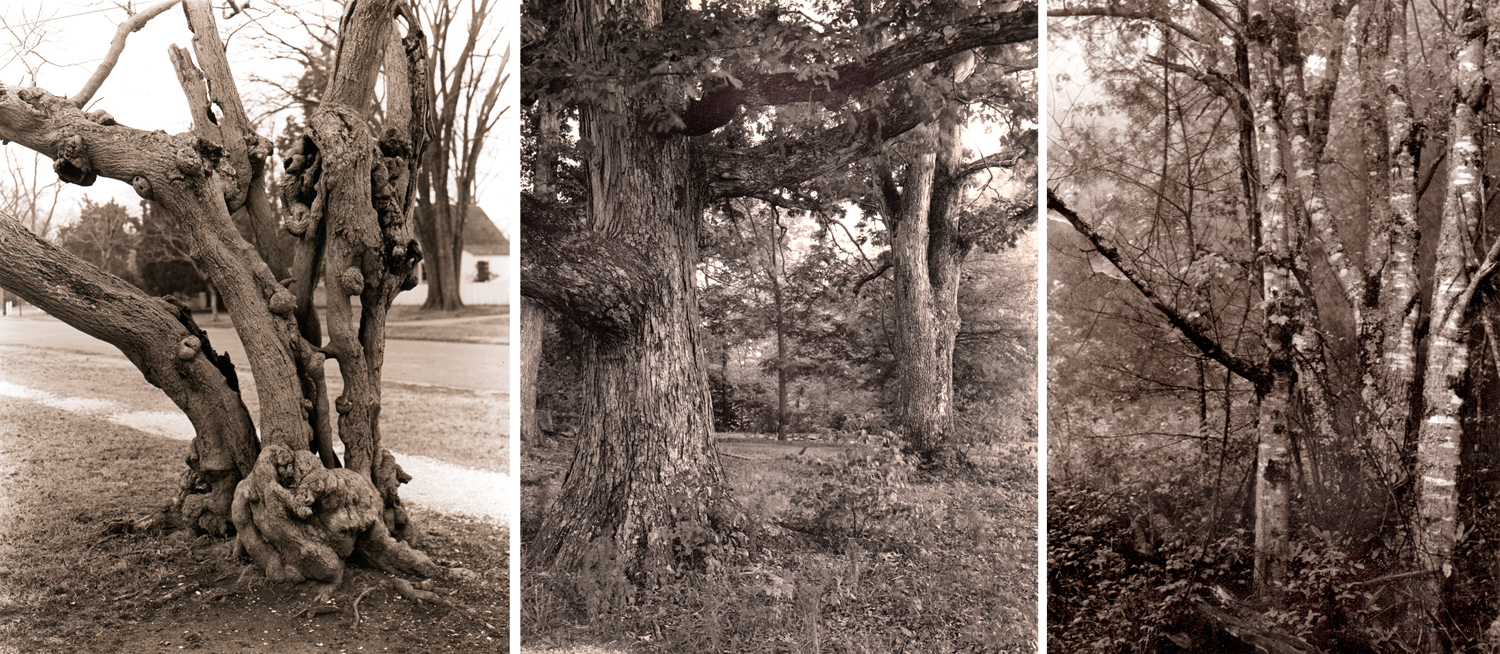
My imitations of Atget

And it was that that blew into my brain, seeing the Atget trees. 

And that is something I have been hunting all of my creative life. And attempting to find in my own photographs of trees. Or not just trees, but in all the photos I’ve tried, whether landscape or still life or nude or portrait or abstract. — What else it is. 
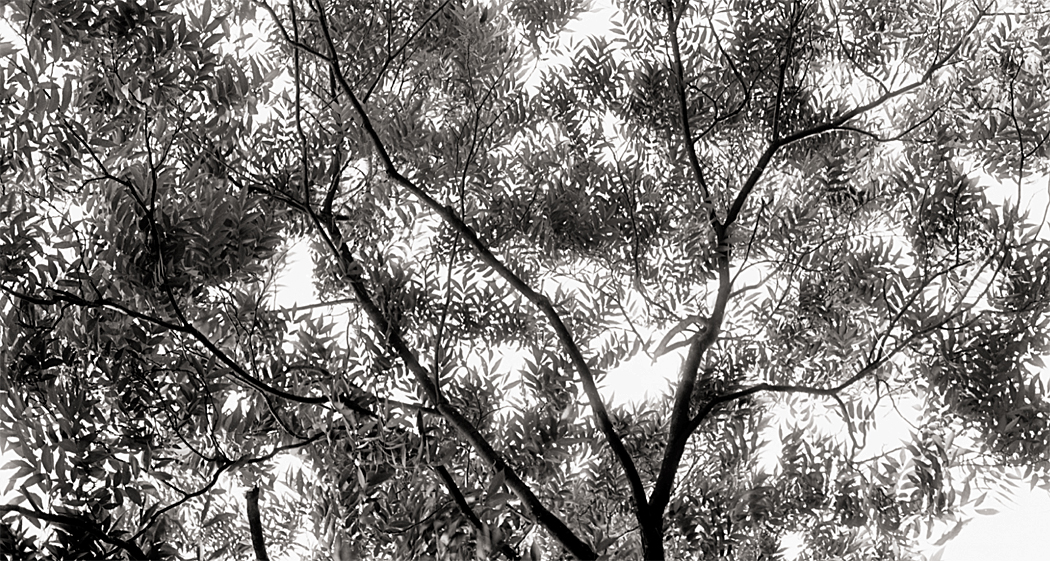
So, when I sit on my back patio and look up the hill at those mid-winter spring trees, with their augury of renewal, and their complex shapes and overlaps — those wonderful lines drawn against the sky’s paper — I want to catch something as it flickers by. 
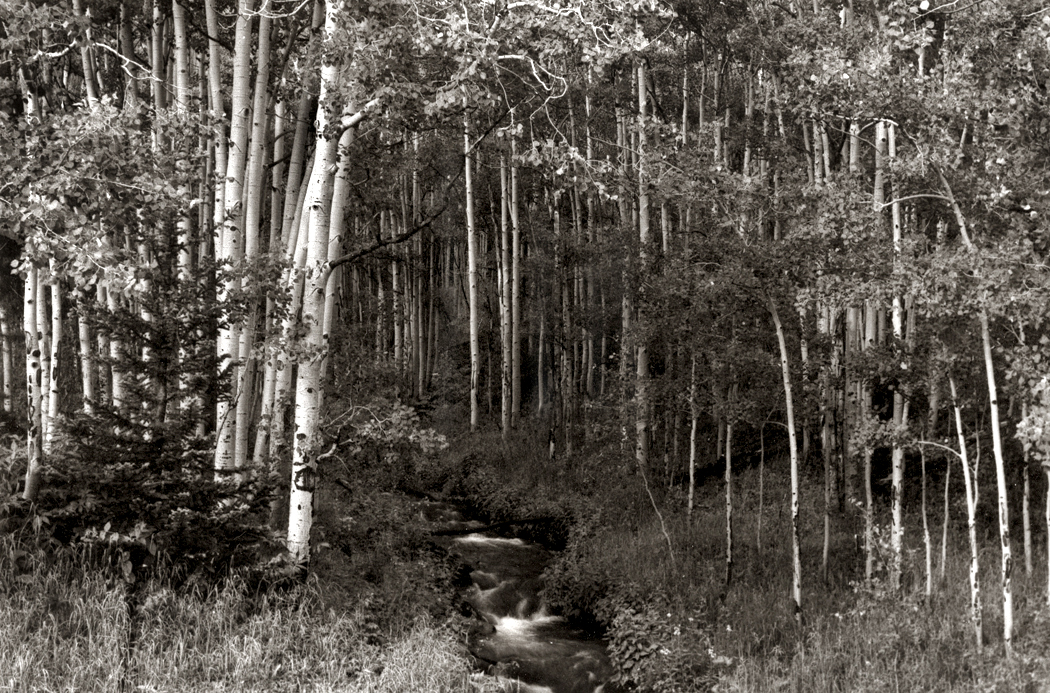
Aspens, Colorado

I’ve snapped a lot of them, although I’ve caught few. Many don’t have the magic and just sit there as noble attempts. It hasn’t just been bare trees. I’ve tried to find the emotion in all kinds of them.
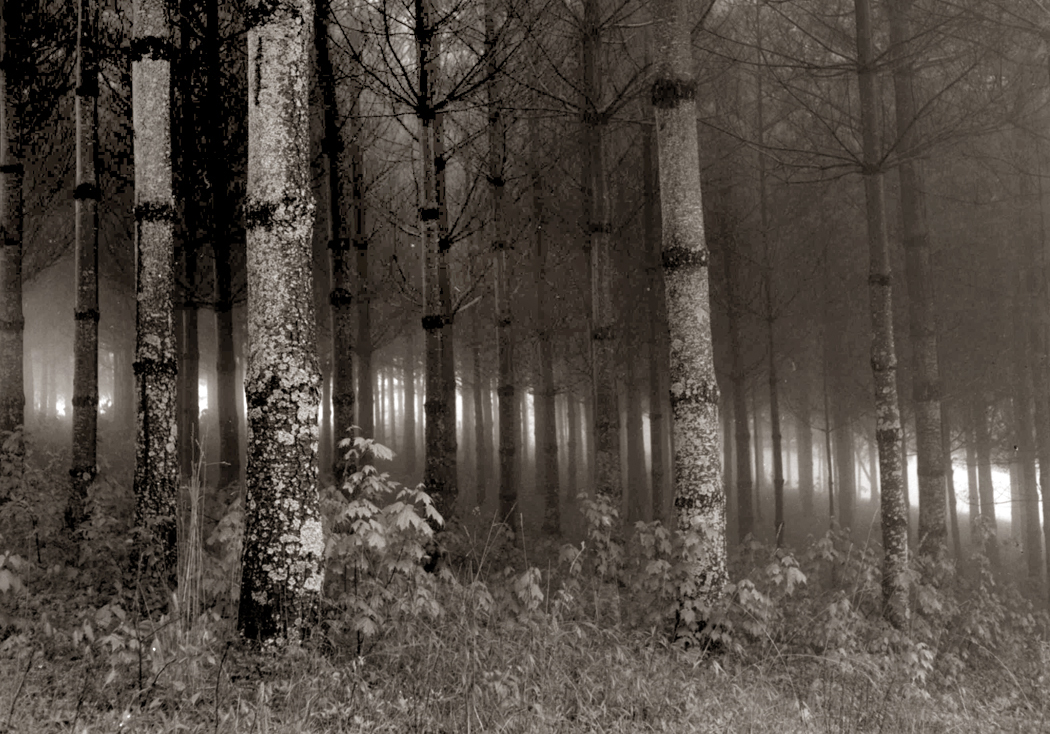
Morning, Obids, NC, Blue Ridge Mountains

The photographer Alfred Stieglitz called the equation between the subject of a picture and the emotions that are evoked “equivalents.” It’s part of the constant fight between the simple depiction of something you can name, and the attempt to make the image stand on its own as an esthetic entity. 
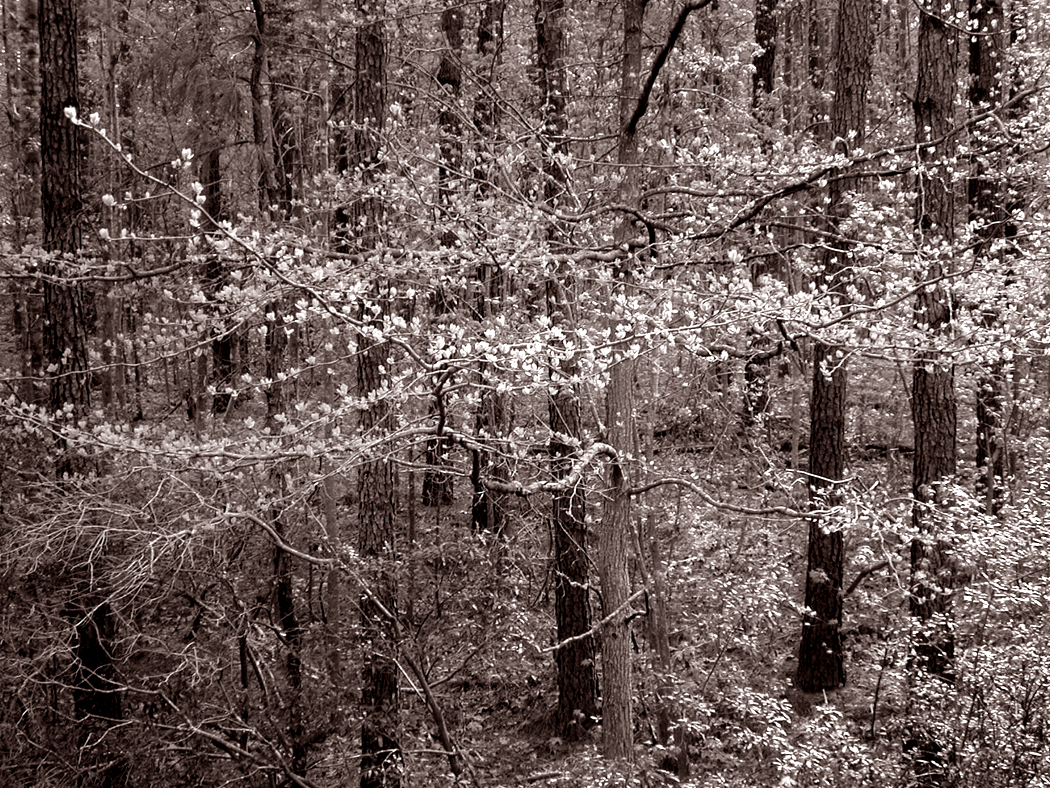
It’s what most visual art tries to do: create an equivalent in the limbic system to the shapes, colors, lines, and even the subject matter and its resonance with the personal. 
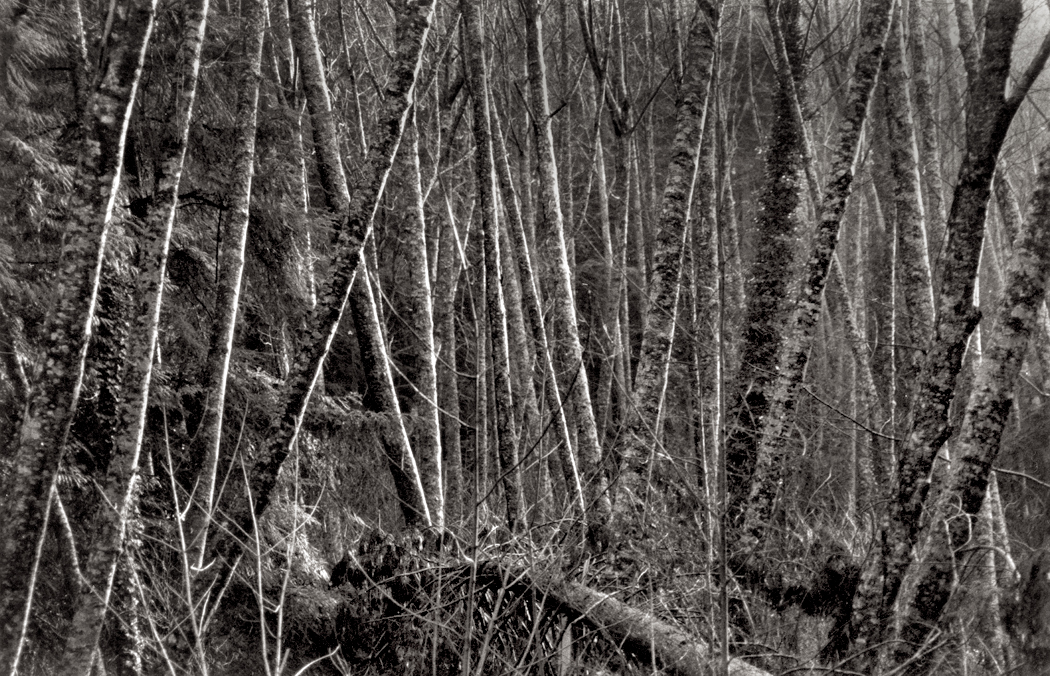
Bainbridge Island, Puget Sound, 1979

Most glossy travel photos are meant to make you wish to be there. But with the image made for display, or as art, you are there, in front of the thing itself. You don’t have to make travel plans. Not just pretty pictures, but objects of contemplation. 
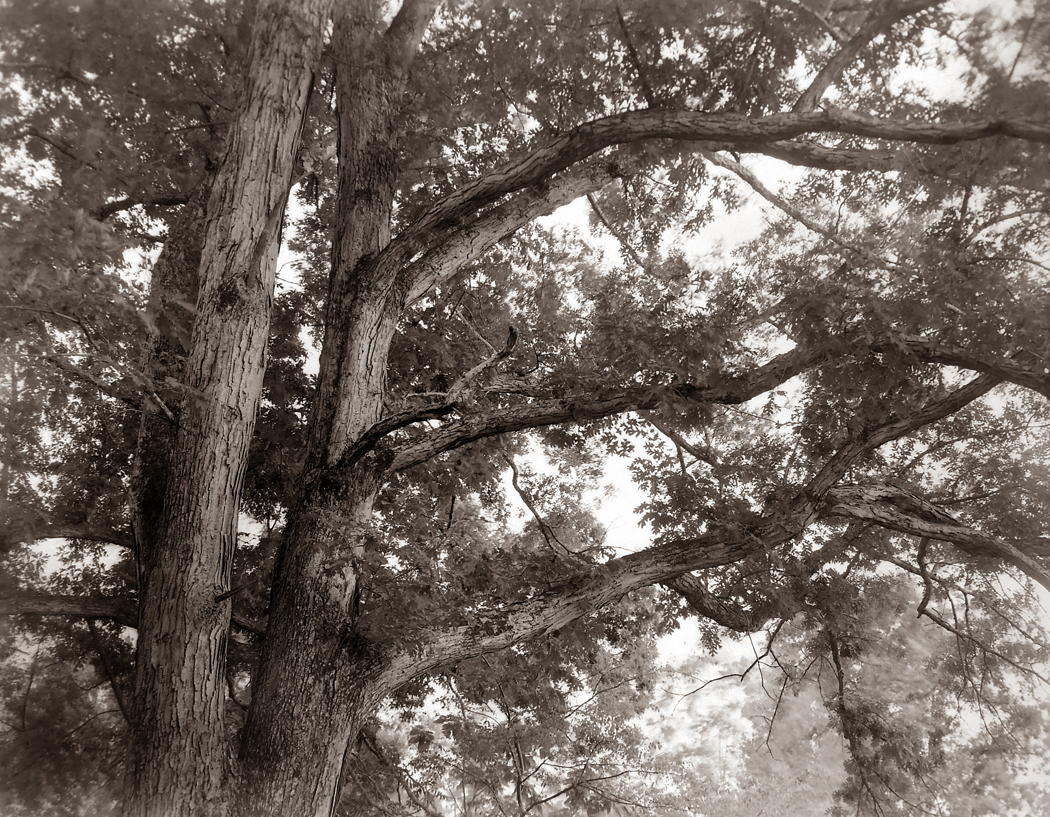
Sandro’s oaks, Summerfield, NC, 1980

The point is twofold. First, to make you pay attention to the world around you, to see with intention. And second, to allow you to connect with the emotions you have in potential.
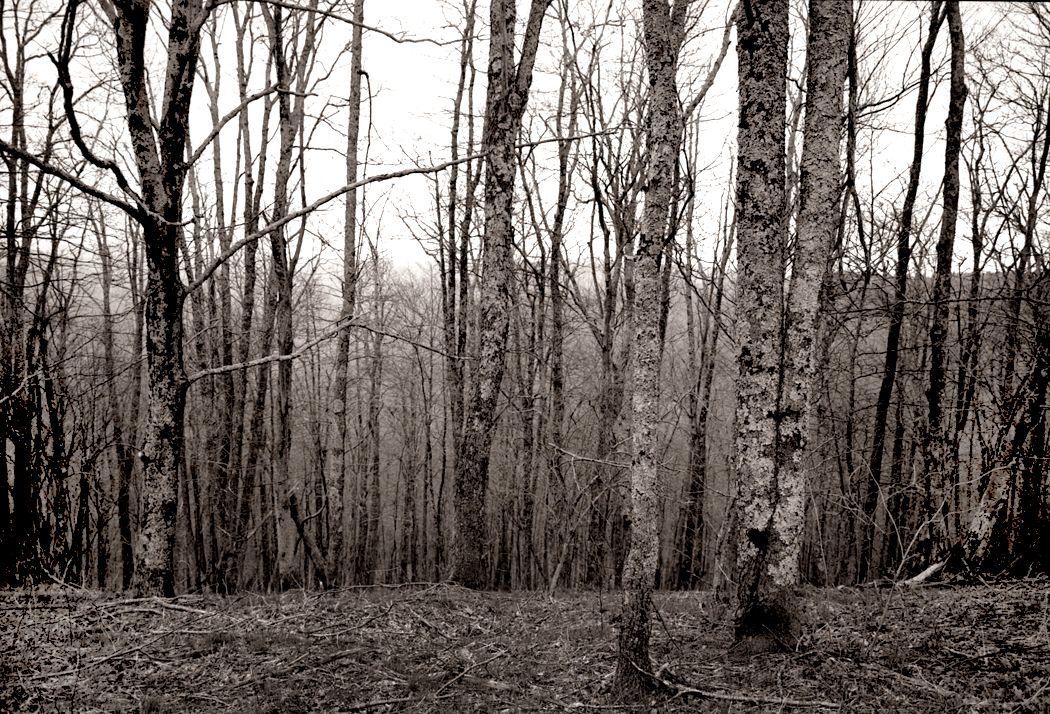
Wise, Va. 

Both together they make a single bond: interior and external; you and the world; individual and cosmos. No longer separate. 

Over the years, the images I make have become less public and more personal. I no longer pay much heed to the wide acceptance of the art I make. I don’t make it for others, but as a kind of personal meditation. 

I seek new ways of making this happen. One morning, while visiting my brother- and sister-in-law in Reidsville, N.C., I saw the shadows of winter branches projected onto the window blinds. It made for a kind of Japanese byōbu screen. 

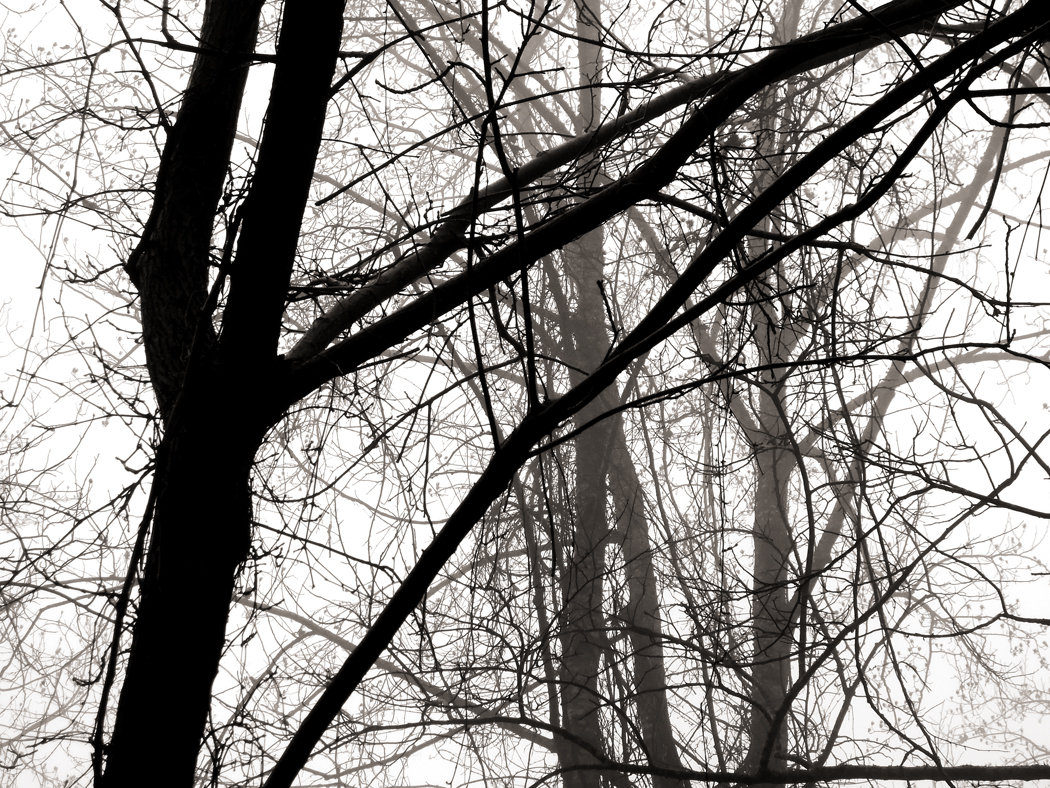
And then, one day last week, in midwinter spring, sempiternally recurring, I was sitting out back, listening to birds and airplanes, the dogs down the street and watching the clouds move west to east and the branches waving in the moving air, and I managed to make an image that finally captures for me the complexity of the abstract, neuronal jumble, all the connections, the scribble and the energy. It is small on your computer screen, but it should be large as a mural. 
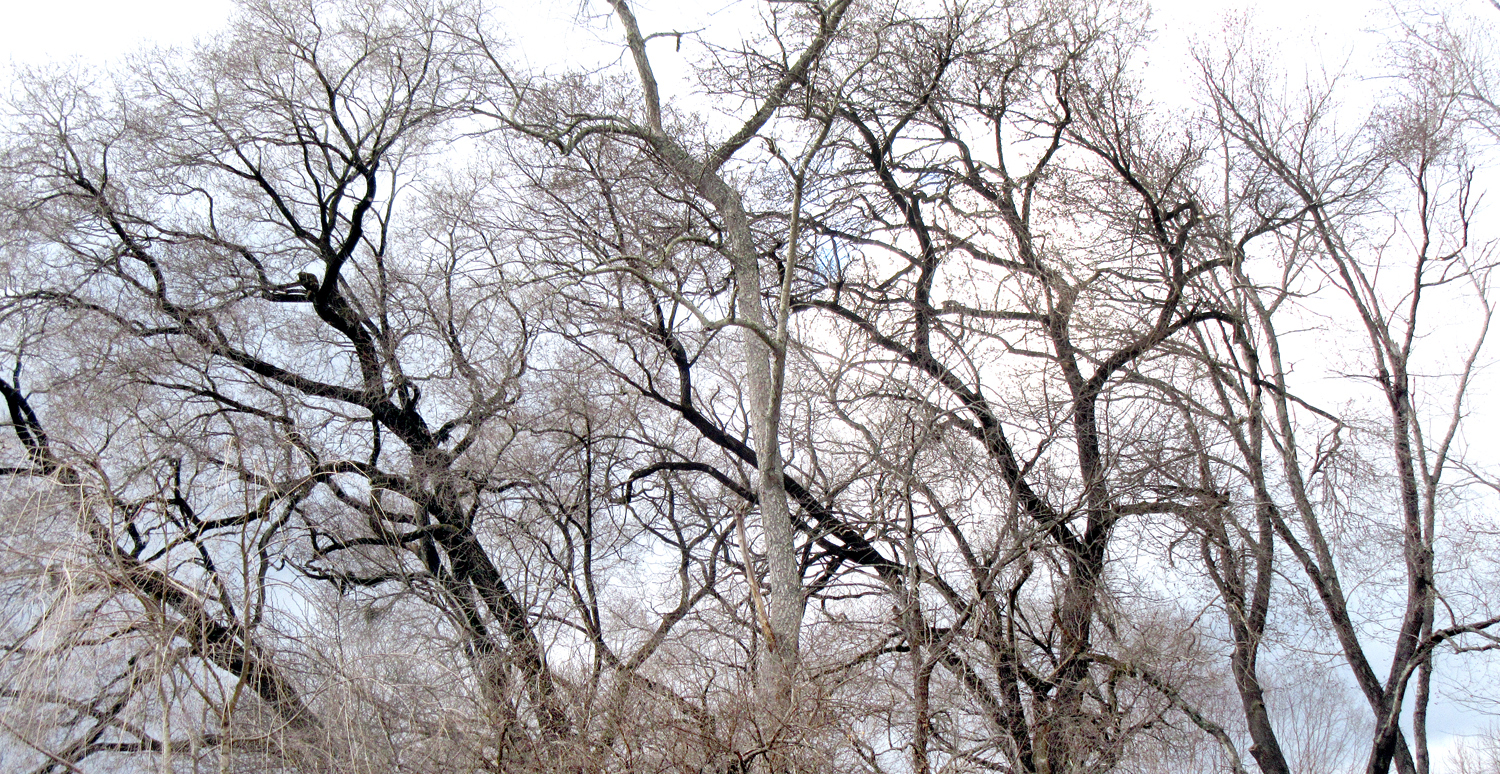
If I could, I would print it out mural size to cover a wall. Or split it up over several vertical panels, like a Japanese byōbu screen.

But I no longer have means to do that, and so, I just look at it and contemplate.
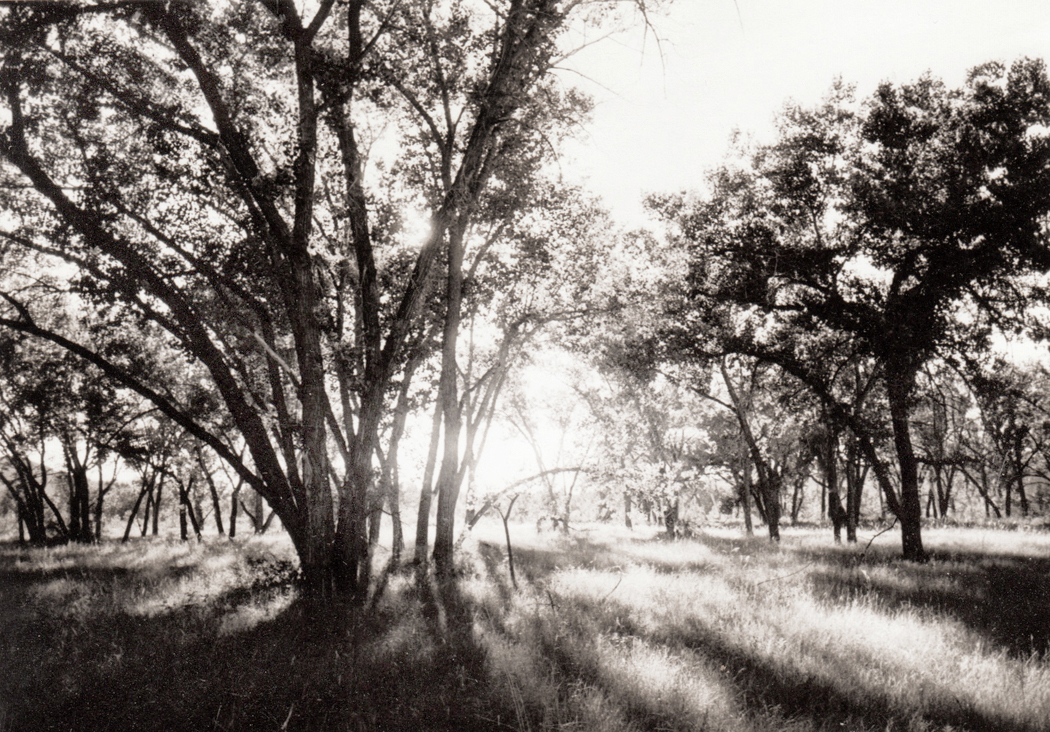
Roosevelt National Park, ND

Click on any image to enlarge
Many years ago, I attended a photo staff meeting at my newspaper and the photo editor was complaining about a picture that a very talented staffer had made. For him, it was too arty.

“This is a newspaper,” he said. “Our photographs must be clear. We cannot have any ambiguity in them. If it is a picture of a house, I want it in the center of the frame, and I want the whole house. Like a real estate photo. We are not making images for a gallery; we are showing readers what the story is about.”

I remember cringing, but I said nothing. I was not on the staff, but just a travel writer who made my own photographs for my stories. I was in the meeting by default. 

The idea that a photograph was merely an illustration to back up words bothered me then, and it bothers me now. Instead of a supplement, I thought of them as amplification. 

Some things can be said better visually than verbally. The photo might very well be able to stand on its own. 

But, in a culture of verbal people — as a newspaper tends to be — a picture is a stand-in for words. You should be able to point to something in the photograph and name it: “House.” The name then, takes over, and any visual information is immediately rendered moot. Very like when you head to a rest room at a McDonald’s and the pictures on the doors tells which one to open. The image becomes a pictogram. 

This is the way many people regard photographs. They look and they name. “Aunt Julia.” “The house I used to live in.” “Niagara Falls.” Then they turn the page in the album. “Here is me at my prom.” 
Much of the visual information in the picture is passed over, not registering. Was that a blue tux at the prom? Did those horn-rim glasses make you look dorky? Were the shoes cropped out of the picture? Can you remember, then, what shoes you wore? 

Details matter. When you name the image rather than see it, you miss the majority of what is pictured; you miss all the pleasures you could enjoy — the colors, shapes, textures — and all the information that is there to mine. I am reminded of those impatient people I have seen in art museums running from painting to painting and reading the tags next to them. “This is a Renoir. Oh, this one is a Picasso.” 

Naming things often gets in the way of seeing them. Naming is a very low form of intellectual activity, but one it is too easy to become proud of. It does not actually indicate your intelligence if you can name ever painting in the gallery, or the make and model of every car you spot on the highway. It just means you can memorize. 

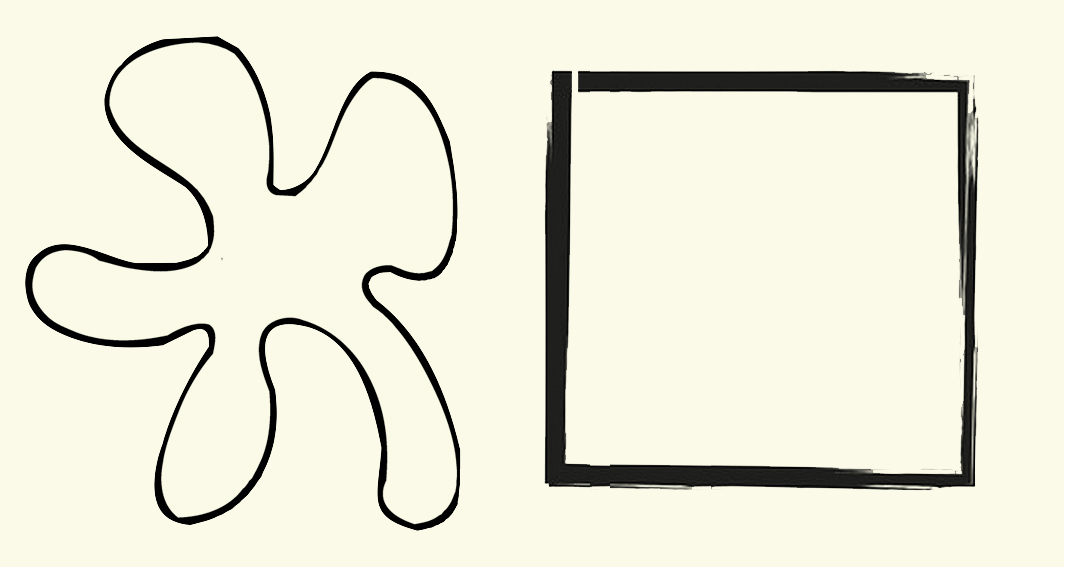
When, before I was a writer, I was a teacher, I would sometimes draw two shapes on the blackboard and ask, “Which of these shapes can you draw more accurately?” Most students would pick the square. It had a name and they could see the square, translate what they saw to a word, and then retranslate that word onto the paper with their pen. In the process, details of the original are obliterated.

Notice that the square here is not a perfect square. It has some sketchy lines and it is not completely closed up, and, in fact, it isn’t even a square, but a low-aspect-ratio rectangle. All of that visual information is expunged when you replace it with the name, “square.” The amorphous shape, on the other hand, would require you to look at it and attempt to follow its contours with your pen, forcing you to pay attention visually. 


Your blob would be drawn more accurately than your square. 

In his groundbreaking book, Principles of Art History (1915), Heinrich Wölfflin described the differences between Renaissance and Baroque art with a series of oppositions. Among these is the contrast between art which emphasizes the unity of the whole, which may suppress detail to the benefit of the overall design; and art which revels in a multiplicity of detail, even if it confuses the overall design. 

It isn’t that the classic art doesn’t pay attention to detail. In fact, it often takes pains to make everything equally easy to recognize, well lit, well placed in the frame. But the whole is more important than the parts. 

Balancing that is art that may even obscure some detail to make others more prominent. 

This dichotomy occurs repeatedly in art history — from Classic Greek art to Hellenistic Art, from Renaissance to Baroque, from Neoclassic to Romantic, from Modernism to Postmodernism. In Nietzschean terms, classic and romantic, Apollonian and Dionysian. 

The 20th Century, which we are most recently heir to, unity was valued as supreme. Artists, writer and poets who filled their work with profusion of detail were denigrated. The most concise poets were held superior. Painters who reduced their subject to basic forms were extolled. Musicians who subdued florid detail in order to render the overall form of the music more clear were applauded. They had a “grasp of the structure.” 

The complaint lodged against pianist Vladimir Horowitz, for instance, was that he never fully expressed the form of longer pieces of music, such as sonatas, getting lost in multifarious musical volutes and whorls. Of course, when you listen to the ancient recordings of the great pianists of the early 20th century — an era of romantic piano playing — all of the pianists focused on details. It is where the fun was to be found, the flavor of the ingredients rather than the melange of the whole.  

Romanticism in general relishes the detail, and can often get lost in it. That’s what makes it Romanticism. (Well, one of the things). Detail is where we find the pith, the essential oils, the meat. 

Classic painter Joshua Reynolds taut the “grand style,” and recommended choosing the general over the particular: a stylized tree over the quirky oak in the back yard. Romantic artist William Blake read Reynold’s book and wrote in the margin: “To generalize is to be an idiot. To particularize is the alone distinction of merit.” You can also imagine him chasing kids off his lawn. 

But his point is that the world is made up of details, and meaning is found in them. The collection of details fills out the impression we get from the quick overview. It is the detail that we know the whole. 

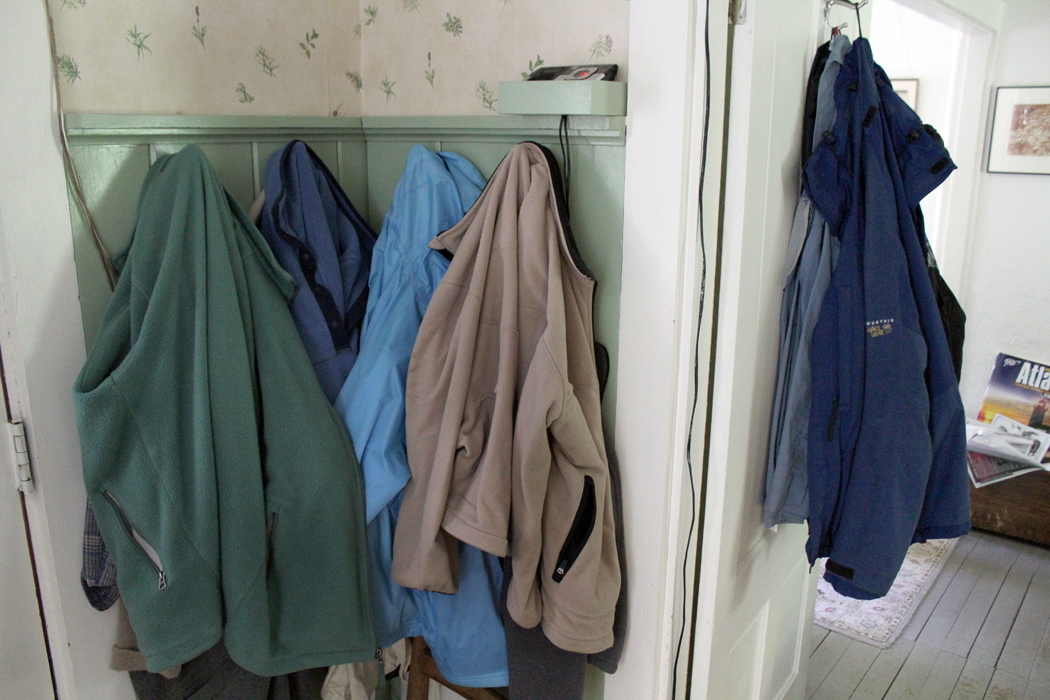
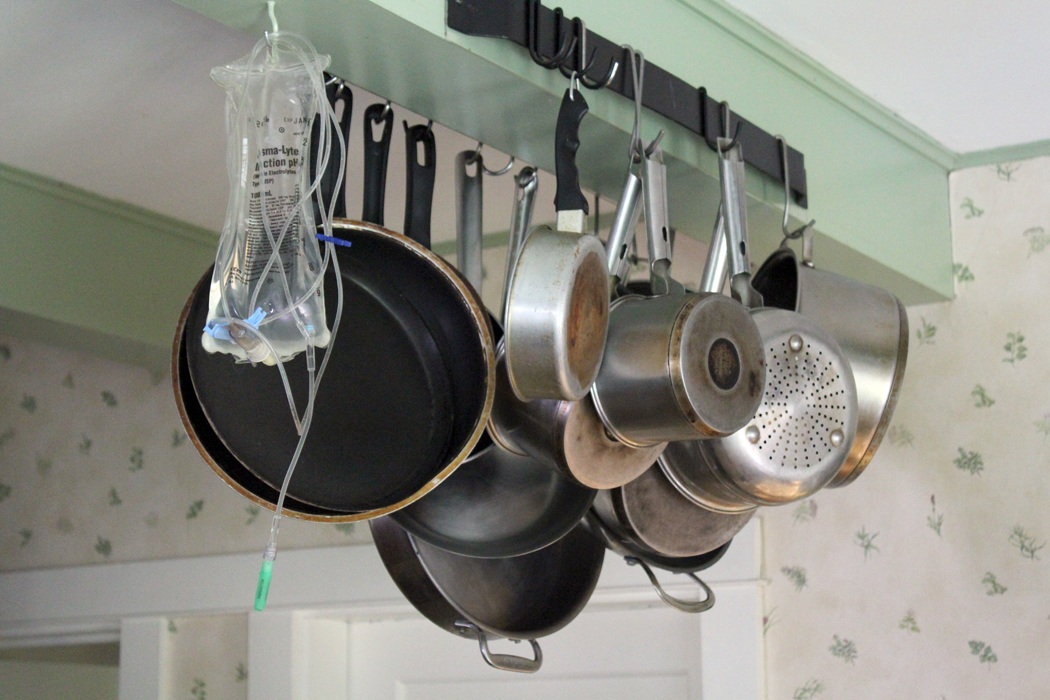
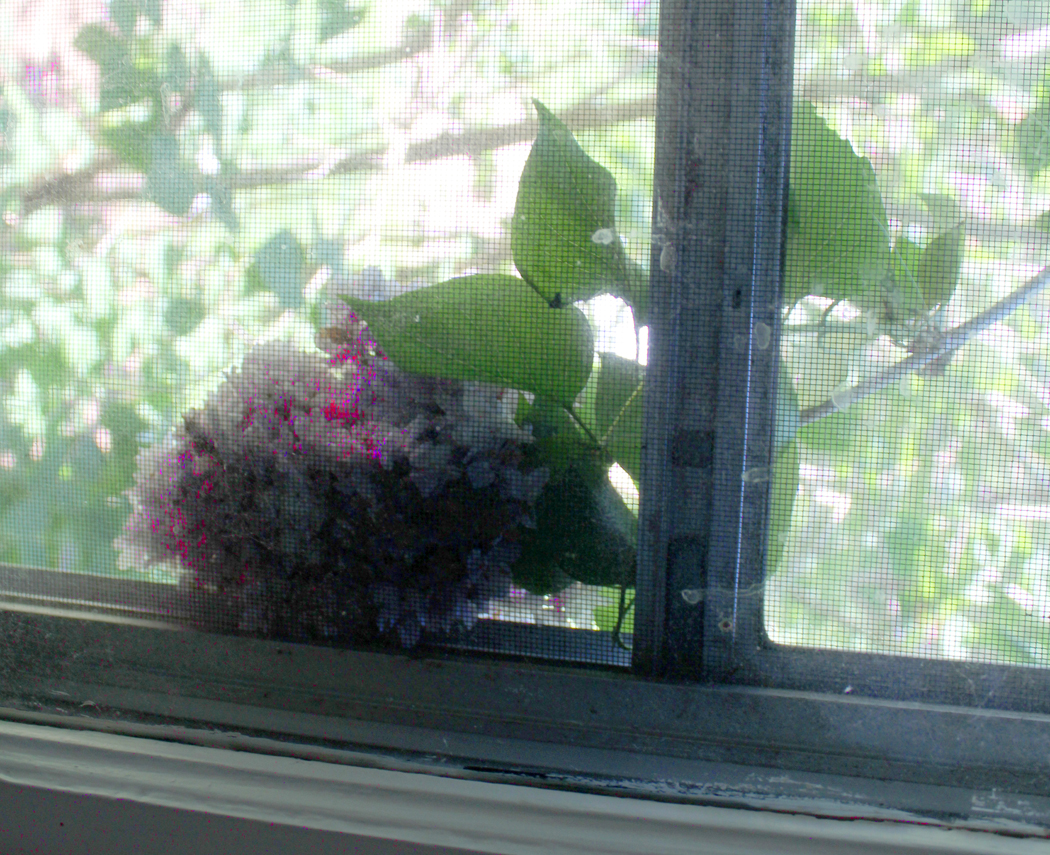
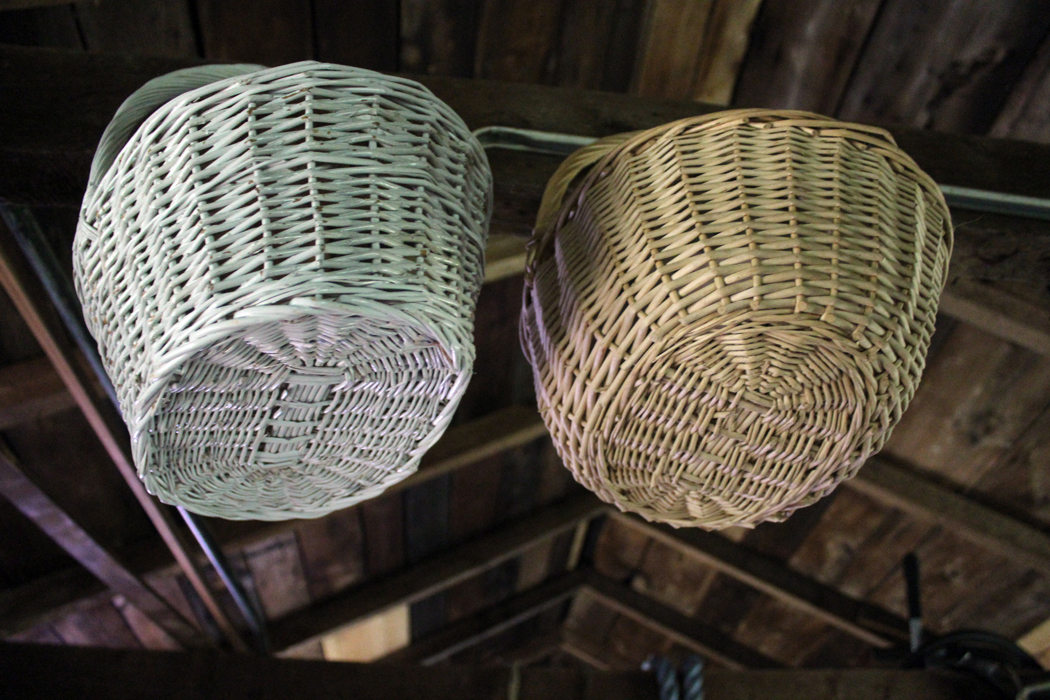
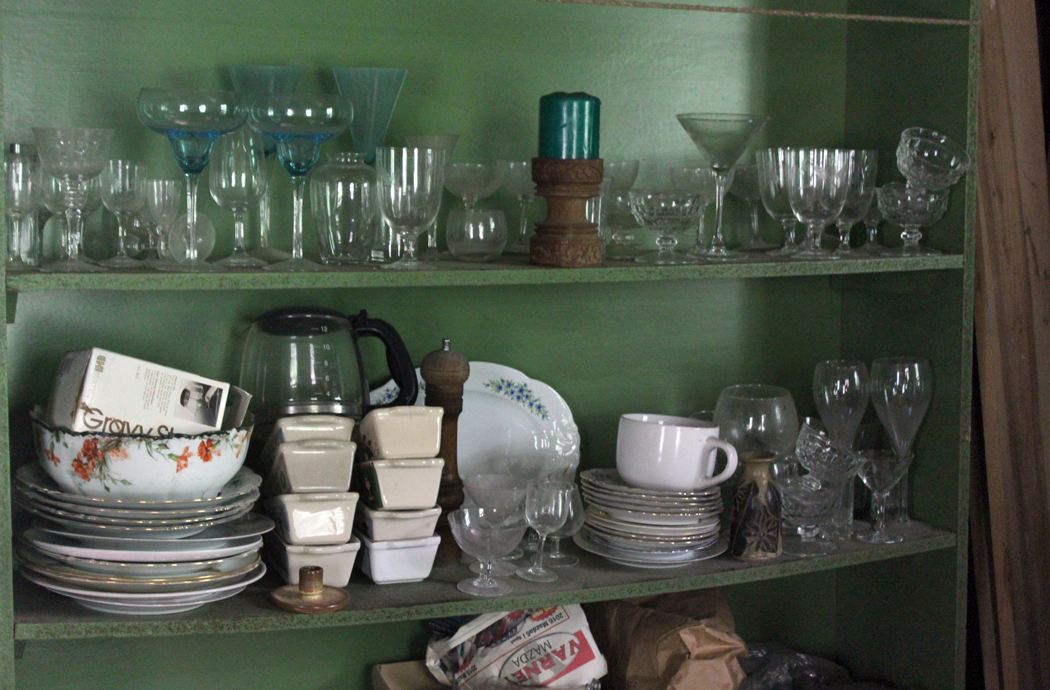
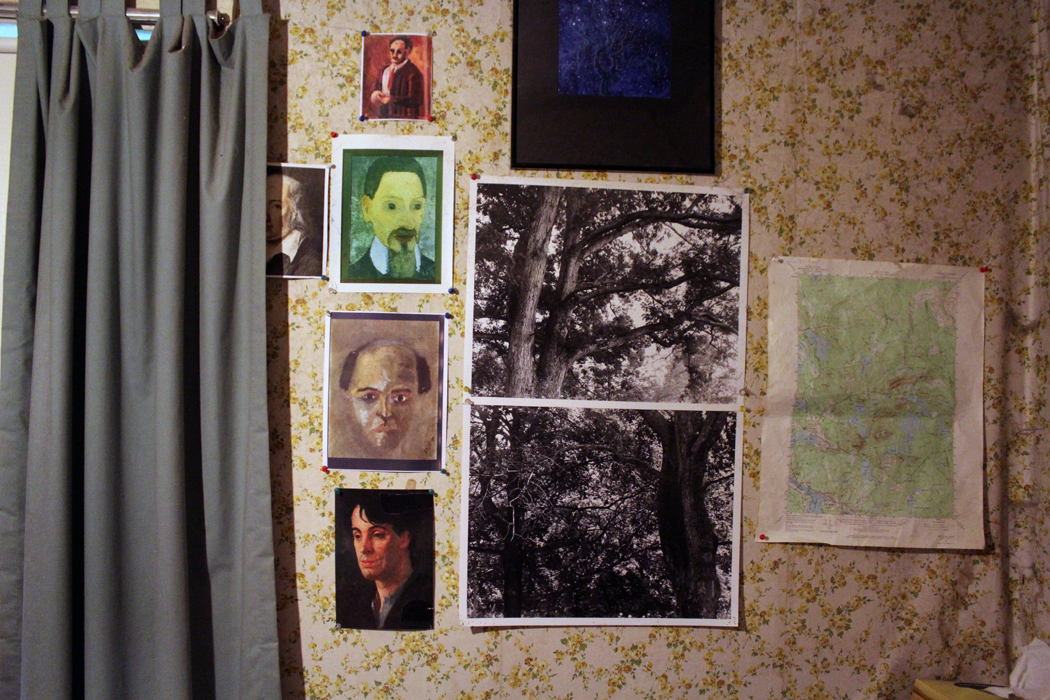
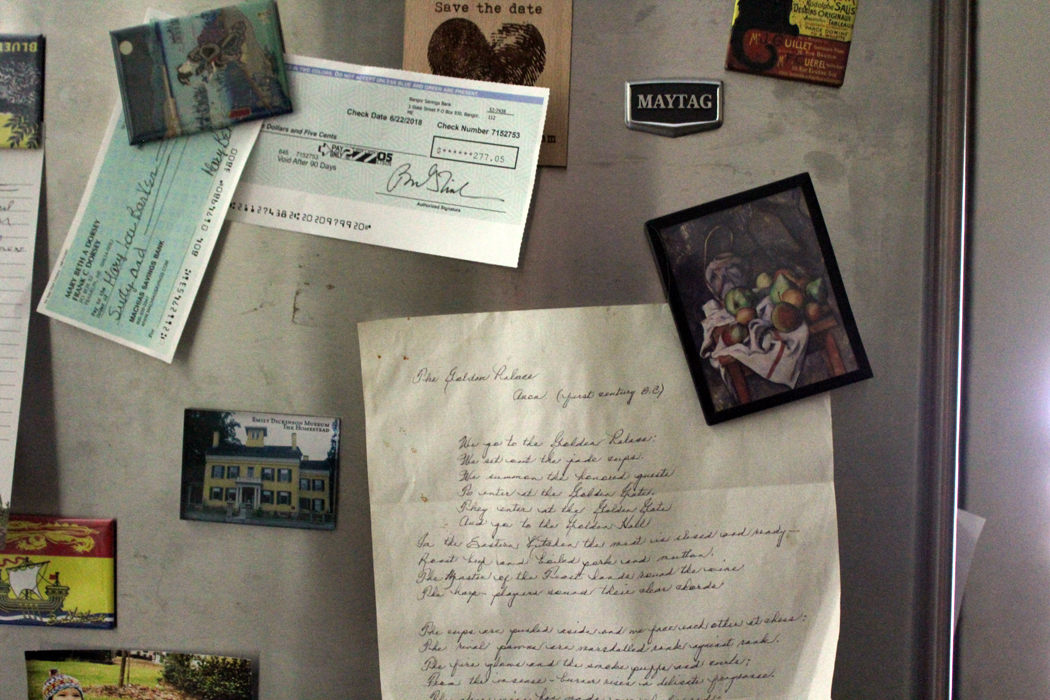
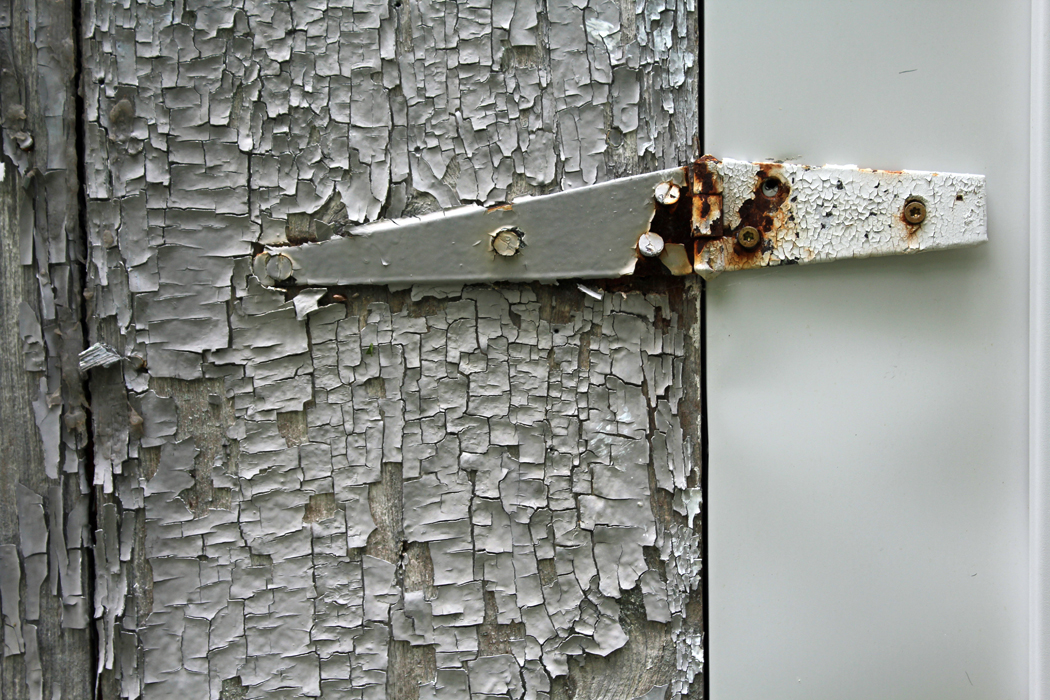
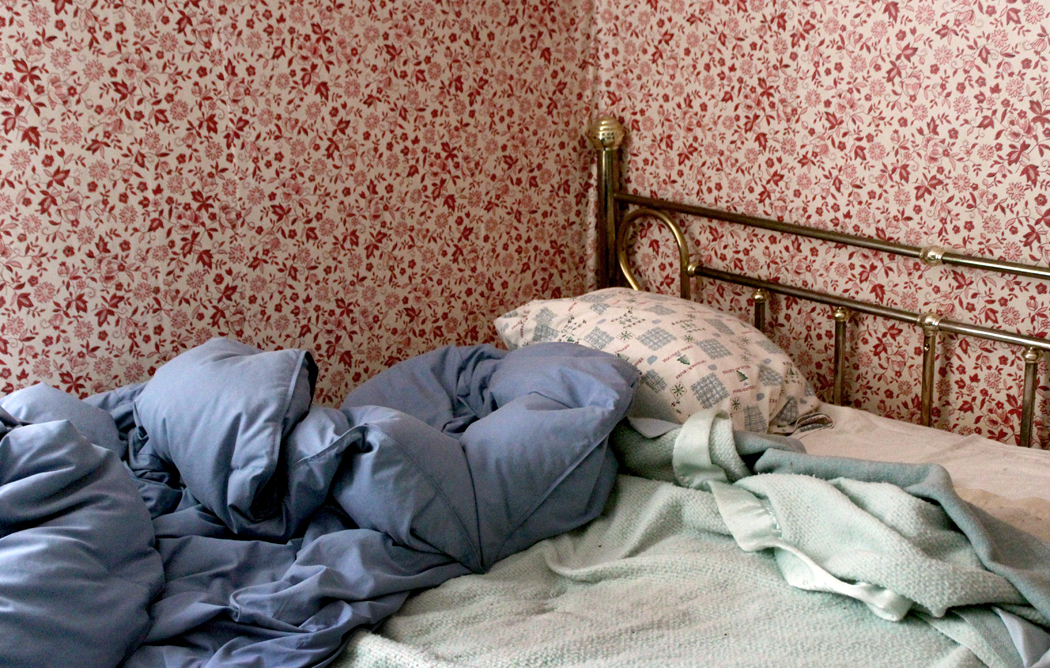
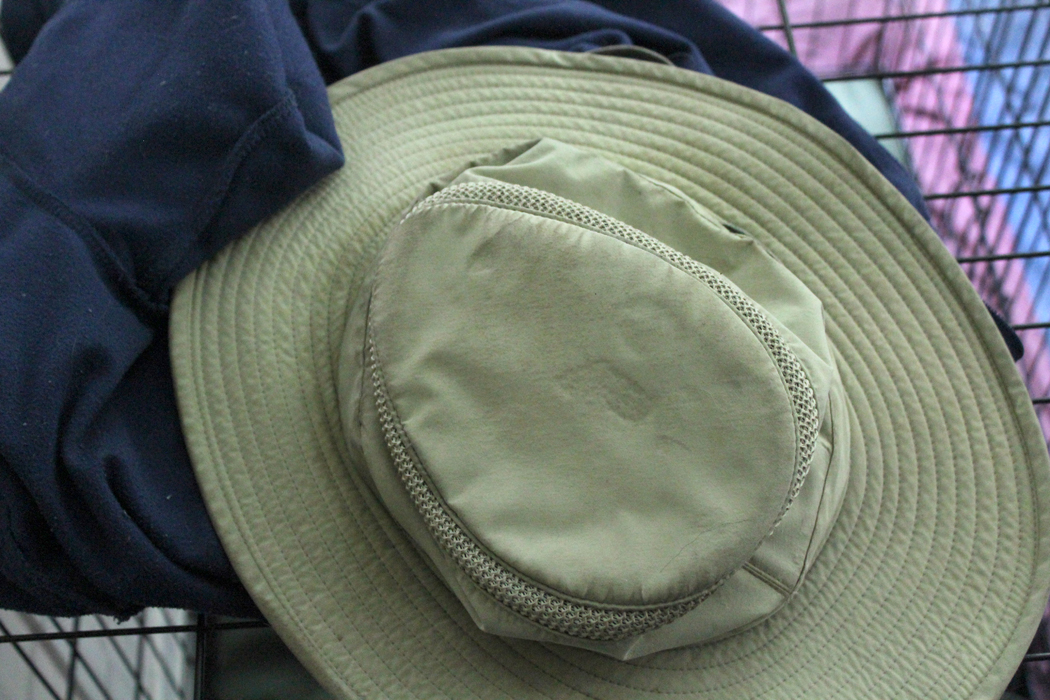
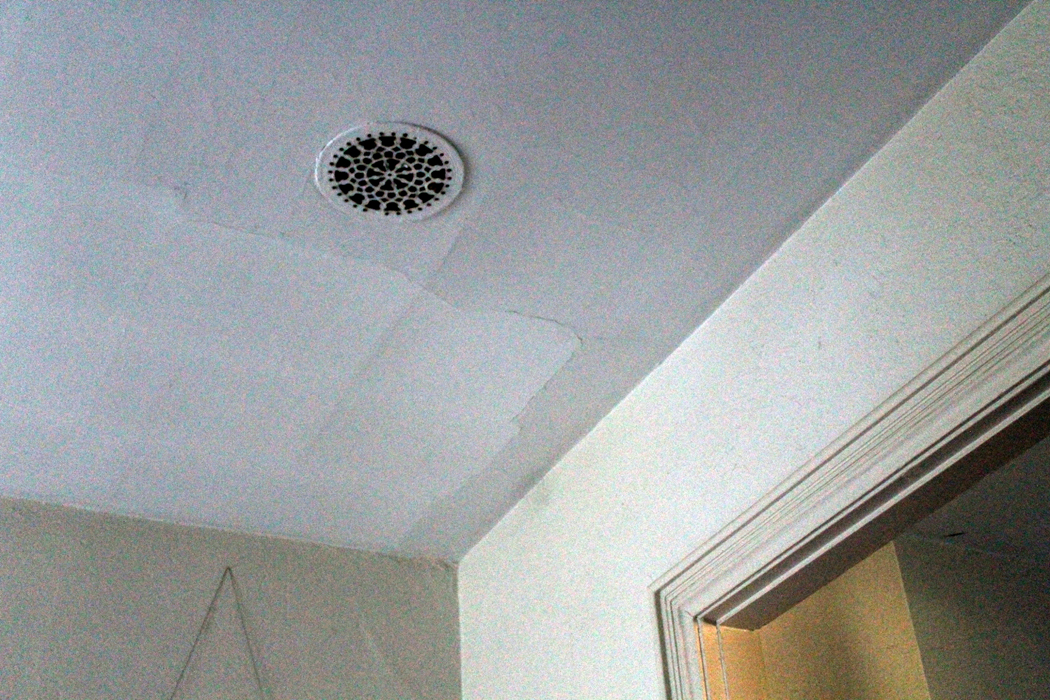
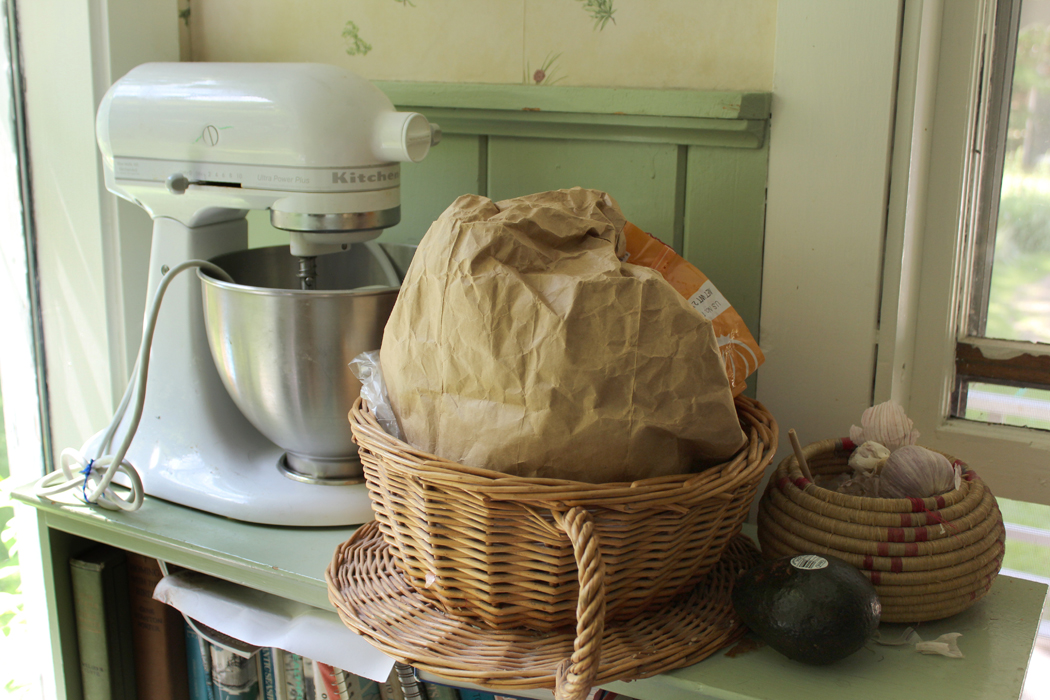
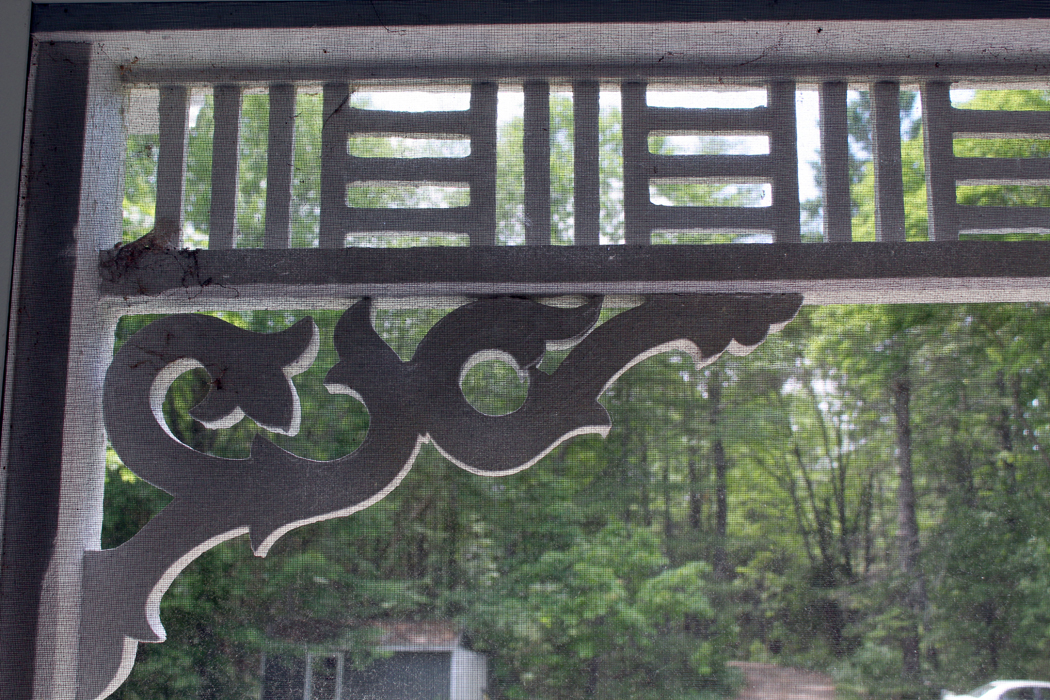
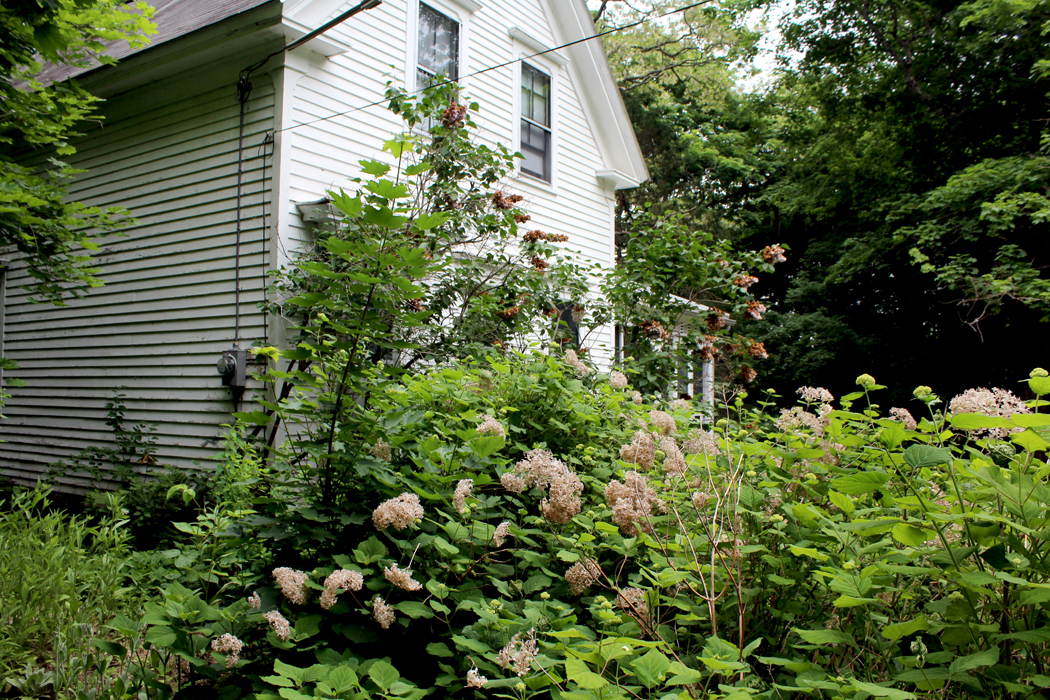
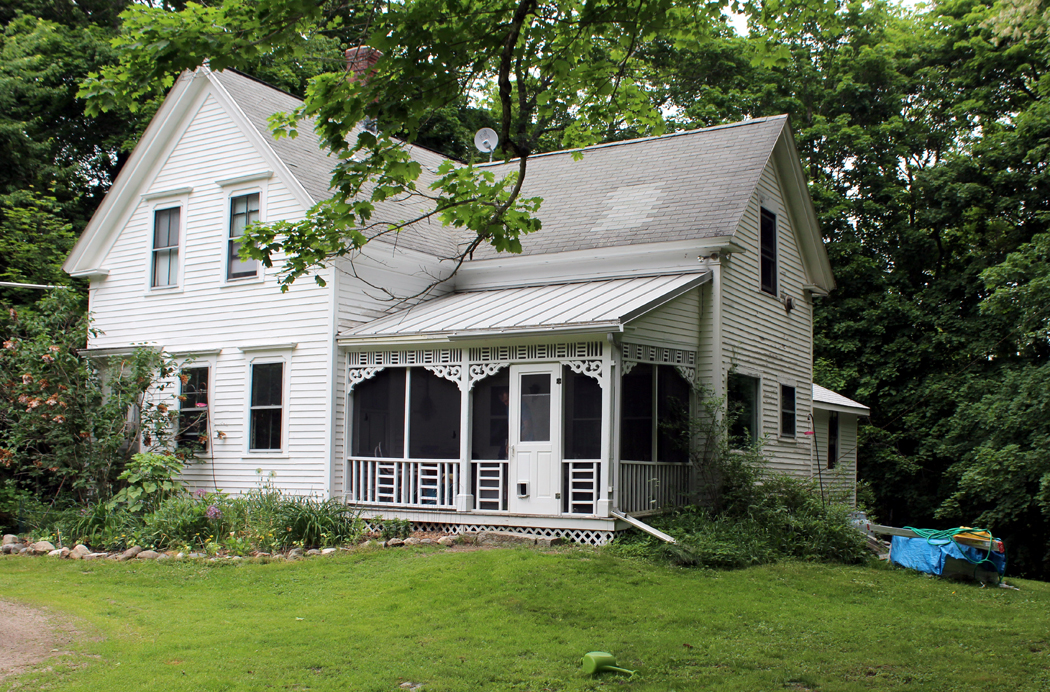
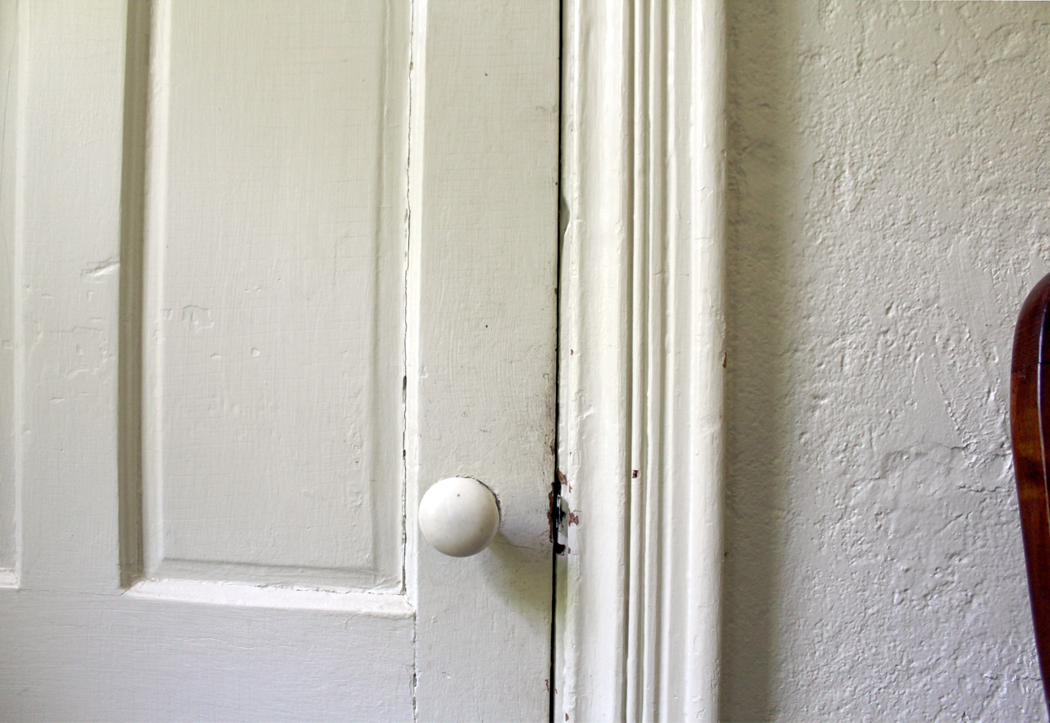
Through this essay, I have sprinkled photographs of the details of a house in Maine. It is one I know and love very well. 

If you look closely at them and absorb all the tasty detail, you can have a much fuller understanding, not only of the house, but of the style of Down East Maine, its economy, its culture, the nature that grows green in profusion everywhere. 

Crumbs to make a cake. 

It is going to be 6 degrees  tonight. Even in the day, it won’t get over freezing until Wednesday. It is winter.

I have not been out of the house for three days.

I may climb into the refrigerator for warmth.

Now that I am old, winter gets into my bones. But when I was younger, I loved the bracing cold, the breath congealed on my beard. I made myself warm by chopping wood. A good walk in the woods, with snow crunching under my boots left my cheeks ruddy and numb. I felt like I was skin to skin with nature. It was a glorious feeling.

Many years before that, I remember building an igloo on the front lawn in New Jersey. I must have been 8 or 9 years old. Inside, it was dark and if you stayed there long enough, it began to get a little warmer. The neighbor’s yard was a hill, and my brothers and I would sled down it when it snowed.

In New Jersey, the snow only stayed white a short, glorious period before turning soot gray as the snowplows piled up moraines of the stuff along the roadsides.

So, I am not so fond of winter now as I was then. The cold makes my knees ache. Yet, there are still elements of the season I cherish. In North Carolina, there is always a midwinter spring, often in February, when the temperature rises for a week before dropping back into the bin-bottom of the thermometer to remind us winter is not so kind, nor so short.

In February, the red maples earn their name, with spreading leaf buds uncovering the red beneath. You can see, even as the winter grips hard, that spring is working its way to the surface.

In March, as winter recedes, the frozen ground melts and mud season descends. Boots get stuck in the mire; you have to watch out not to step completely out of them.

But it is January First, and a cold snap has bottled up Asheville. The trees seem brittle with the freeze. It is a perfect day to listen to Sibelius and stare out the window.

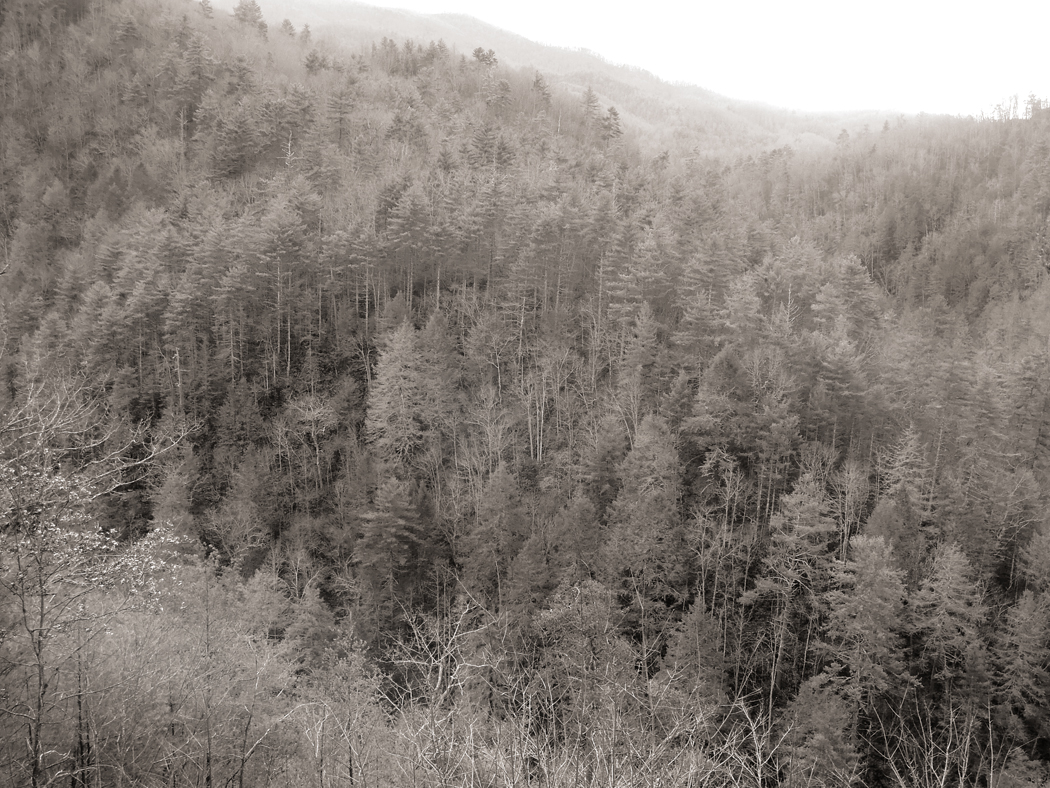
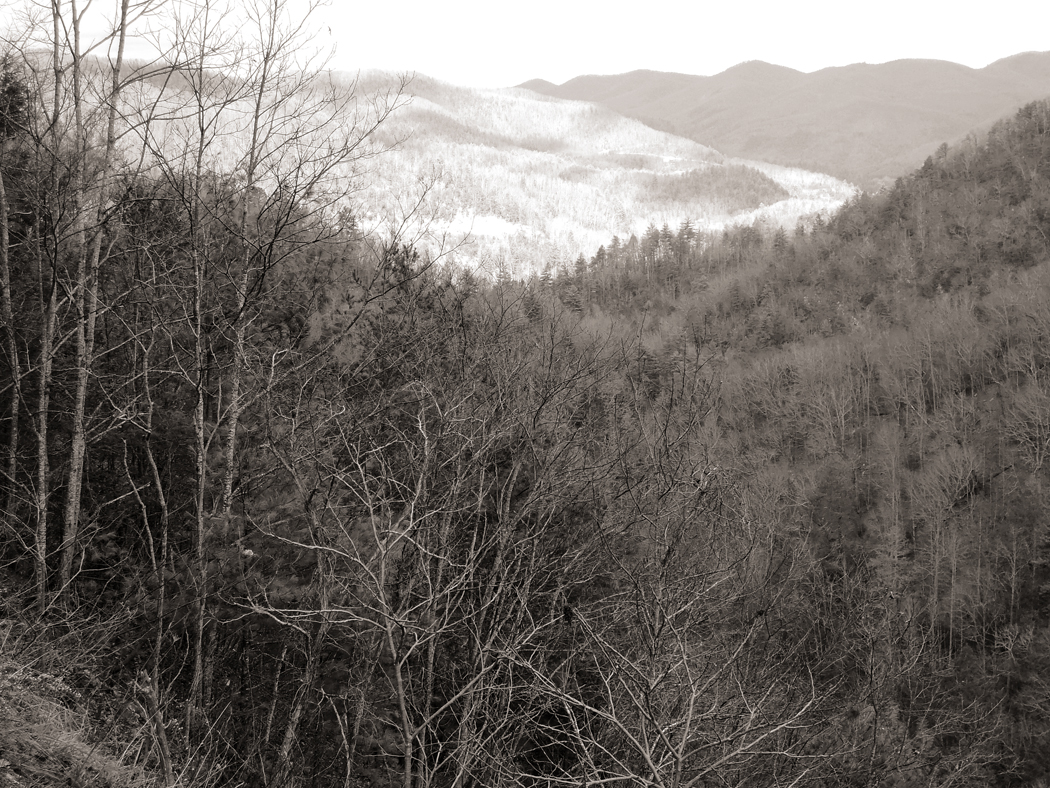
For some reason, although most other people seem to most appreciate trees in the spring, when they come back to sap-life or fall, when they turn gaudy colors, I have always responded to the empty trees of winter. Looking over the Blue Ridge in winter, the leafless trees, from a distance, become a gray fur on the backs of the mountains. The hills look almost soft.

I think of the winter trees as nudes. They have dropped their clothes to show their real form, the trunk, branch and stem.

If you remember your Wölfflin from art history, there are eras — and people — who prefer painting and those who prefer drawing. I have always been a drawing-guy. I appreciate the linear, the ink-on-paper scratches of tree limbs, the crosshatching of twigs. There is something dour in my soul that enjoys gray more than party colors. Not a flat, simple gray, but a complex gray built from dusty blues mixed with tawny beiges. A good gray has as much depth as a river.

In winter, the air is clearer, except when a cold mist obscures the trees. The cold keeps you awake. The floors are icy underfoot, even if the room temperature inside is kept a comfortable 68. One sleeps well at night, with cool air in the nostrils.

A steaming stew or vegetable soup with a crusty bread and the evening seems just right.

Winter light, low and dim; early dusk, late dawn; the sun not strong enough to reach zenith, but arcing across the sky barely above the trees.

I remember one winter day, 40 years ago, walking across the railway bridge the cuts over Lake Brandt. It was probably 20 degrees and the air dead still. The surface of the water was not yet frozen, but it was mirror-smooth. The remains of snow covered the lake’s banks and no one seemed stirring in the landscape except me, walking tie by tie over the water beneath. It was silent; so quiet I could hear my breathing. It was one of those moments of epiphany, when suddenly the world becomes clear. It is almost a religious experience. You recognize that fact of the planet beneath your boot sole, and the atmosphere above your watch cap, bleeding into infinite dark space.

Such moments are delicious, and more valuable for their rarity. If we are lucky, we have perhaps a dozen or so such instants in our lives. For me, most of them have happened in freezing cold.

But now, my joints ache. What glimpses of eternity I get are less optimistic. Winter has a different meaning as you turn 70.