Archive

Tag Archives: women

Over the past dozen years, since my retirement, I have written and posted some 730 blog entries. But I have started many more than that. Some just get forgotten when something more urgent appears; some end short because nothing longer needs to be said. Some just led nowhere. Others began as lists, but ended as lists, unfilled by full sentences. And still more still wait to be written. 

The odd thing, to me, is that there is always something new to write about. With 75 years of life packed into this aging piece of meat, there are endless stories, bits, adventures, ideas, experiences, disappointments and discoveries to draw upon. The well keeps refilling. 

But here are a few fragments that never filled out beyond their early inspiration. Maybe I will get around to it, sometime. 

What is it that women see in men? Because I am a man, I know what men see in women, but I have a hard time reversing the equation. 

I am not here talking of sex or the ardor of the loins — understanding is not required for that; it is simple, direct action — but the desire of women to share company with men. What is the reward for that? Women are so much more interesting, and interested in such a variety of vital issues. Men seem interested only in sports and politics, neither of which carry much import in the lives we live. As I used to say, “Politics answers no question worth asking.” 

____________

2. I was a writer for many years, making my living from putting words against words, hoping to find the best way to express something I hoped would be genuine. 

Recently, my old employer, Gannett, made a new hire, and announced it in such a clot of management-buzz that I got a bad case of hiccups. Newspapers used to have editors, now, with middle management bloated beyond belief, while laying off reporters, photographers and copy editors, what they have is a “Chief Content Officer.” 

The announcement came with a gnat-swarm of buzz words, which may mean something to other management types, but not anything penetrable by actual human beings:

“ ‘We are thrilled to welcome Kristin to Team Gannett to champion innovative storytelling opportunities and develop strategic content initiatives to expand our audience and drive growth,’ Reed said in a Monday news release.”

“Strategic content initiatives?” You would think that those people who run a newspaper would have some sensitivity to language. If I had written prose like that, I would have been out of a job. 
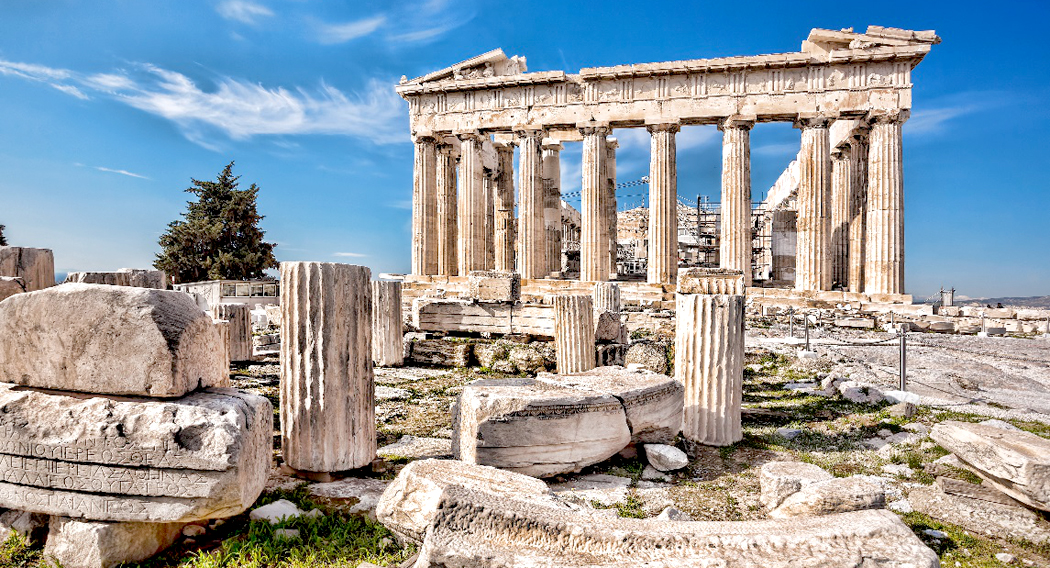
3. The glory that was Greece and the grandeur that was Rome. Or maybe not so much. 

We owe a great deal to ancient Greece. At least, we pay lip service to our debt of democracy, philosophy, literature, science and not least, saving European culture from being overrun by that of Persia. But there are a host of words that describe the part of ancient Greece we would rather forget: Misogyny, xenophobia, pedophilia — come to us dressed in Greek etymology, and descend to us from Greek ideas and practice. We need to address some of the less attractive legacies of that Golden Age. 

Such as patriarchy, idealism, imperialism, colonialism, religious intolerance, cults, ethnocentrism, slavery. To say nothing of understanding sex as an exercise in dominance. And while we may think of Plato as the source of all philosophy, remember that he despised democracy and was an ardent believer in totalitarianism. 

____________

4. Columbus Day is a month away. I expect more anti-Columbus newspaper columns, art, a few tracts and manifestoes and perhaps a new opera. Much current art that tries to be political is really just polemical. To espouse any ideology is to strip life of its complexity. Yes, Columbus was a bad man and the evils he brought with him are real. But instead of preaching to us self-righteously, there are real problems to be discussed, such questions as, “What is in the nature of humans that causes territorial expansion, that causes them to make invisible the people they subjugate, that causes them to divide the world into Them and Us? Why does the boundary of ‘us’ expand and shrink periodically? Why is a world once headed in the direction of one-world nationhood, where the ‘tribe’ is humanity — why is that world now constricting so that nationhood is more tightly defined by blood, so that Serb kills Croat, Azerbaijani kills Armenian? The ethnic separatism that is emerging worldwide is, I believe, a source of exactly the same intolerance that the European West has for so many centuries visited on the rest of the world. Will it devolve to the point that Chiricahua despises Mescalero, or Venetian rises to kill Neopolitan? At what point does a coalition of interests grow from our recognition of our shared humanity?”

Questions such as these are avoided by nearly all political diatribes, whose authors prefer to point fingers and whine like grade-school tattle-tales. If a short perusal of the history of the world teaches us anything, it teaches us that war, inhumanity, violence, intolerance are universal. It isn’t only the Hebrews with their God-ordained genocide of Moabites and Amonites; it isn’t only the Pol Pot regime in Cambodia; it isn’t only Hitler killing Jews and homosexuals; it isn’t only Japan subjugating Manchuria; it isn’t only Custer at Sand Creek; it isn’t only the Hopi at Awatovi.

No one gets off the hook. Native Americans are no more righteous in this than anyone else, from Inca to Aztec to Lakota. If artists and writers chose to look a little closer, they could use Columbus as a metaphor for something richer, profounder, truer. They could have seen that Columbus was not sui generis, but rather representative of the species.

As it is, they came off sounding self-righteous. And no one self-righteous ever has much self-knowledge.

____________

5. Stasis is the enemy. Or rather, because stasis is utterly impossible, the idea of stasis is the enemy. It is the fatal stumbling block of every religion, political philosophy and marriage that has ever existed. Over and over, hundreds, thousands, millions of people die because someone promised them that if we only do things my way, everything will be forever hunky peachy. 

It is the lie behind the “original intent” argument espoused by some Supreme Court justices, and behind the infantile promises of politicians — most on the right, these days — that their policies will “finally” fix things and make them good forever. (In the past, it was the left and Marxism that promised a final end of historical change. It is not the sides one takes, but the phantom of permanence). 

The problem is that stasis is always temporary, which makes it not stasis. I.e., stasis is a pipe dream. 

____________

6. In America, “no” has become a dirty word. Americans like the positive attitude, the gung-ho approach to things. We feel actual moral disapproval of the word “no.” 

It can make your life easier and simpler. It can shake a load of guilt off your back. Although people talk of simplifying their lives, you can never simplify by doing something, you can simplify only by not doing something.  Just say no. It is the yang to “yes’s” yin, and the universe cannot function without both. 

“Yes” is kind of namby-pamby. “Yes” doesn’t want to hurt anyone’s feelings. “Yes” is go-along to get along. 

“No” is emphatic, direct, take-no-prisoners. “No” means no. Every change and improvement in life, every revolution begins with a “no.” 

In some way, every important historical development starts with somebody or some group saying no. Dissatisfaction, after all, is the great inspirer of humanity. If we were all duck happy all the time, nothing would ever get done.

7. I am 75 and am near death (Oh, I’m generally fine, but old and weak) and I think about non-being quite a lot, but not with fear, but a kind of objective interest in the whole idea of no longer hearing birds or feeling the breeze on my skin. Death seems to me a natural “rounding off” of a life and not something that I need to hold in my mouth like a tough crust of bread. 

I saw Carole take her last breath. I felt her turn instantly cool to my touch, like I was touching unfired clay. She ceased being. It was uncanny. My grief was incalculable — and it still is, although worn down — but it felt as inevitable or as natural as the coming of winter. I know the same awaits me — “To die — to sleep no more.” No dreams. Nothing. 

I didn’t sense a spirit or soul leaving her body, just her body ceasing to produce her being, like a light bulb blown out. We don’t ask a burnt-out lightbulb “where did the light go?” It ceases being generated. 

____________

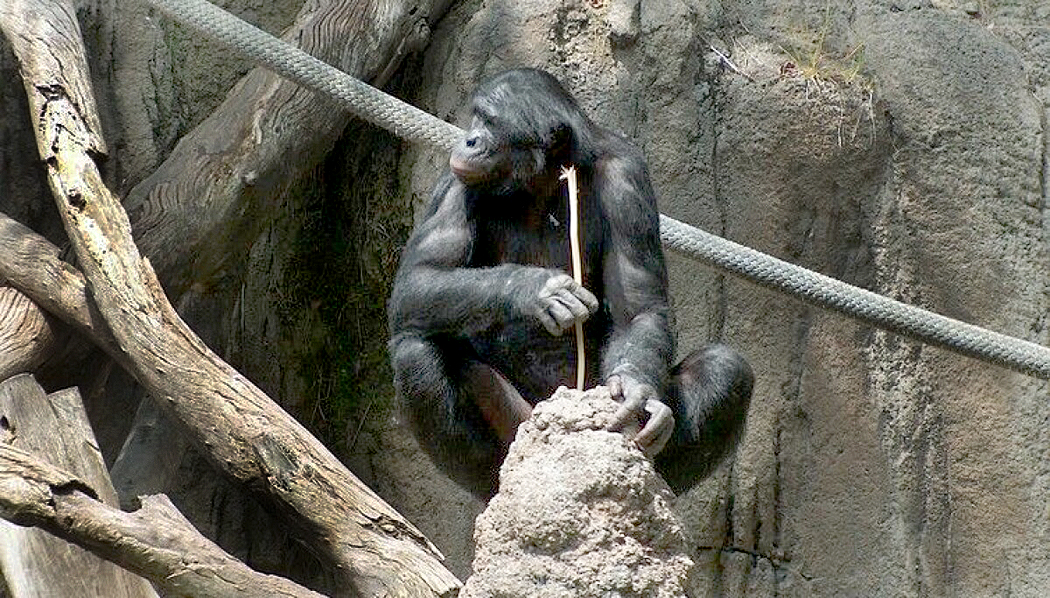
8. One of my problems with Rilke is that I have no use for categorizing angels and animals. Angels don’t exist — not even as metaphors for me — and I accept that I, as a human being, am an animal. I am not so fast to accept that no animals know they are going to die. We have no evidence for that assumption. Perhaps they do; perhaps they don’t. I suspect that some, such as porpoises or whales, may very well have some concept of death. I remember when we human beings were so sure that what separated us from the beasts was tool-making. Ah, but then we discovered how many other animals forge tools.
9. It has seemed to me that part of the German soul is to speak in general and categorical terms, in ideas, rather than in things. It leads to mistaking words for reality. Logic has its own logic, but it is not the logic of the world. (Whole rafts of philosophy, including my hated Plato, only seem to work in words. You can prove with logic that Achilles can never catch the tortoise, but that ain’t how it works in reality.)

But I fear that they are much more about language than about experience. And that is my problem in a nutshell. I made my living with language, and I love words to distraction, but the older I get the more I am convinced that language is merely a parallel universe, with an order and meaning of its own, roughly mirroring the world, but never actually connecting, never touching the pulse of reality. I know, it’s all we have, but I still counsel wariness. 

10. “These fragments I have shored against my ruins.” Why write at all? It is a question I have wrestled with all my life. Do I have anything worth saying to be value to anyone else? Dr. Johnson said that “nobody but a blockhead ever wrote except for money.” Well, I’m a blockhead: I no longer get paid to string words together. But it doesn’t seem to come as a choice. Some may choose to write; I write with the same volition as I breathe. 

Early in my life, words were thin and sparse; it seemed as if there were a lack of hydrostatic pressure from within: I needed to fill myself first. But after living a certain time, the inside pressure grew and it had to come out. It became a fountain I could not stop if I had wanted to. And the well was constantly recharged. 

Now I am old, and travel becomes difficult, habits become settled, reading more and more becomes re-reading. In retirement I can no longer afford to attend concerts, plays and dance the way I used to. The incoming has slowed, and I suppose the outflow has dwindled in response, but the backpressure is still there. Hoping to cease not till death.

I cannot forget that Abigail Adams said, “Remember the ladies.”

I recently wrote a blog about several of my “heroes.” I was not oblivious of the fact that my five choices were all of the dangly-bits gender, and I promised in that entry to follow up with one on women who were also my heroes — those who embody character that I admire and would aspire to, if I were a better person than I have managed to be.

Top on my list of women who are my heroes I would place my wife of 35 years, but I will not be writing about her, for deeply personal reasons. Let us simply acknowledge that there is now a constellation that bears her name, made up of the brightest stars, cast up into the nighttime sky.

As with the previous posting, there are some women who most of the world would add to the list. I will never be as brave or as eloquent as Malala Yousafzai. If someone had shot me in the face, I’m sure I would have lain low for the rest of my life, looking back nervously over my shoulder and jumping at Fourth of July fireworks. But Malala continues to speak out forcefully for the education of women. She won the Nobel Peace Prize in 2014, when she was 17, which is the age my granddaughters are now. I think of them as mature for their ages, but Malala — wow. They don’t hand out Nobel Peace Prizes for being class president or state legislative page. She is one in a billion.

They do hand out Nobel Peace Prizes for upholding democracy in the face of authoritarian military juntas, though. Aung San Suu Kyi has one. She spent a total of 15 years under house arrest in her native Burma for speaking out against the repressive government, and finally managed to bring democracy back to her nation. (I recognize that all heroes run the risk of clay feet. Malala so far has avoided that fate, but Aung San Suu Kyi nearly blew decades of good will in the world by failing to condemn violence against the Rohingya Muslim minority in Burma. One always has to forgive something in one’s heroes. Not one of us is perfect.)

But my personal pantheon comprises five women who have something to give me on a more personal level; they embody traits that I would aspire to and that among them are fervent curiosity; a willingness to include everyone in the circus of humanity; an ability to feel not just sympathy, but empathy; a refusal to accept the conventional wisdom; and a burning aliveness. The each see the multiple layers of existence not as contradictory, but as accumulative.

Toni Morrison — Another Nobel Prize winner, this time for literature, Morrison has the fierce physiognomy of a Tibetan temple’s guardian demon. She suffers not fools gladly. But, as with the Buddhist demons, when you accept her for herself, she turns out to be a guide, not a gatekeeper. I especially appreciate that, although she can walk through walls — indeed, chew the walls up and spit them out — she does not cave in to the conventional definitions laid out for her by society.

When asked about feminism in a 1998 interview in Salon magazine, she said, “In order to be as free as I possibly can, in my own imagination, I can’t take positions that are closed. Everything I’ve ever done, in the writing world, has been to expand articulation, rather than to close it, to open doors, sometimes, not even closing the book – leaving the endings open for reinterpretation, revisitation, a little ambiguity.” 

She has done a great deal for feminism by being the powerful woman she is. It may be “off-putting to some readers, who may feel that I’m involved in writing some kind of feminist tract. I don’t subscribe to patriarchy, and I don’t think it should be substituted with matriarchy. I think it’s a question of equitable access, and opening doors to all sorts of things.”

And geez, can she write.

Agnès Varda — French New Wave cinema broke away from the conventions of studio filmmaking in the 1950s and ’60s, with a fresh approach to storytelling. Varda is often including in their ranks, but really, she isn’t in anyone’s army. She is peculiarly and significantly her own. It is often hard to tell whether she is making documentary or feature film. Her fiction often includes bits of real life, and her documentaries are often so imaginative that the only way you can categorize them is to call them “personal essays” in film language.

She is clearly in love with the things of this world, from her first feature, La Pointe Courte, from 1954, which focuses as much on the physical settings and objects in the small fishing village central to her story, as it does on the two main characters. There are wooden sheds and fishing nets lingered over lovingly by the camera, which moves ever so slowly, giving us all the time we need to pay attention. She dares us to be bored and challenges us to transcend that boredom by paying attention to the wealth she has spread before us.

In The Gleaners and I, she begins by following the poor as they gather bits of food left in the farm fields — a practice written into French law. But, the movie goes on to look at many people who have found value in things forgotten and discarded, including artists who make work from found objects. This includes herself. She said in an interview “I’m not poor, I have enough to eat.” But she points to “another kind of gleaning, which is artistic gleaning. You pick ideas, you pick images, you pick emotions from other people, and then you make it into a film.”

There is no doubting Varda’s feminist bona fides, but her argument is found not in politics, but in human relationships, and in the unembraceable fact that we all die. We wait for the biopsy results with the pop star in Cleo from 5 to 7, we watch the suffering of the poor wraith as she winds down to a cold death in a ditch in Vagabond, and we see Varda’s own love for her husband, Jacques Demy, as he slowly winks out of this life in Jacquot de Nantes. In all of them, death is not a literary device, but a vivifying fact of life we all must face with — if nothing else — creativity.

Ruth Bader Ginsburg — There are many reasons for admiring Ginsburg, not the least of which is her sparkling wit. Even as she becomes older and slower, the words that come out of her mouth always a bit more hesitatingly as age grips her ribcage are often ripping funny. There is always light flashing in those eyes. Whenever she shows up on a C-Span panel discussion, I stop flipping channels and sit through the duration. I love hearing her.

And certainly one admires the legal career which lead her to the senior position on the U.S. Supreme Court (in age, if not in length of service). She is always on the right side, even if not always on the winning side. Her dissents are deeply felt and forcefully written.

One also admires her fashion choice, wearing that lacy jabot across the front of her judicial robe. She was the third woman to administer the oath of office to a president, and the first Supreme Court justice to preside over a same-sex wedding.

And there is her love of opera; she has even appeared several times as a supernumerary in opera productions. And her long marriage to her late husband, Martin Ginsburg. I have a warm regard for anyone forming so close a bond for so long a time.

But the single quality I most admire in the Notorious RBG is the fact she could be friends with the late Antonin Scalia. How, you ask, could this have been possible. Scalia was the most ideologically inflexible of the justices during his term, and the most biting in his writings, whether in the majority or in dissent. Truculent and pugnacious, he had a nasty turn of phrase and seemed to ooze contempt for those who disagreed with him. Yet, Ginsburg and Scalia had a famous friendship in the court. They went to opera together. For years, the Scalias and the Ginsburgs had dinner together every New Year’s Eve. (His friendship with RBG is the one single redeeming feature I can cite in Scalia’s favor).

Nan Goldin — Seeming a universe apart from the high-achieving Supreme Court justice is an artist known for her snapshots of her drug-using friends. Goldin, now 63, made her name with The Ballad of Sexual Dependency in 1985, a slide show with music accompaniment that was presented via a Kodak Carousel transparency projector presented against the walls of a gallery. Along with the hundreds of slides, a recording of music by the Velvet Underground, Charles Aznavour, Nina Simone, James Brown and Richard Strauss played, underlying both the rebellious and romantic nature of the lifestyle portrayed — that of the gay subculture, the heroin chic, the damaging personal life of Goldin herself.

It is painful to look at these lost people, with their bruises, smeared eye-liner, tangled hair and thousand-yard-stares. One critic called them “the beaten down and beaten-up,” with “gritty disheveled miens” photographed in “dark and dank ramshackle interiors.”

An edited-down version of the slide show was published a year later as a book. It would be hard to turn those pages and feel there was anything to admire in them, other than the color and composition of them as photographs. But they are redeemed by two contradictory things: their truth and their romanticism. Goldin was not pointing her camera at this lifestyle to admonish it, but to document it; she was not outside it, but a part of it. It was a harsh self-inspection. But it also, while telling hard truths, explored the deep and abiding search for meaning in life. The need for transcendence, for escaping the banality of bourgeoise existence. Surely we are more important as individuals than as cogs in a societal machine.

For a more in-depth analysis of Goldin’s work, check out: https://richardnilsen.com/2013/08/30/the-goldin-mean/

Anne Iott — There are people who are bilingual, but Anne Iott is so in a very specific way: She is an artist, but she was also the chair of the art department at Tidewater Community College in Virginia Beach, Va., for many, many years and was fluent both in art and in administration. This is — if you haven’t been subject to either or both — extremely rare. To be able to converse meaningfully with artists about art in their own language, but to be able to function efficiently in the bureaucratic atmosphere of academe is more than a talent, it is a genius.

As an artist, she is first a painter, but that is just the start. There is hardly an art form or medium that she hasn’t essayed brilliantly. There are prints, collages, photographs, assemblages and in recent years, artist books, which she seems to spin out of her like a tree grows apples.

Certainly her prolific drive to create would nominate her for this list, but it is rather more than that. Anne has a special genius for seeing in other people that which they do not see in themselves. She has helped uncounted people with their careers and with their lives. I know; I owe my career as a writer to her. When I was teaching as a lowly adjunct faculty member at TCC, she finagled a position for me at Norfolk’s Virginian-Pilot newspaper as a freelance art critic. She knew I was a better writer than teacher. I wound up writing one or two reviews each Sunday for the paper, which gave me the confidence and experience to sign on full-time to the Arizona Republic when my wife and I moved to Phoenix, Ariz.

But it is not mere gratitude for her constant support and aid that I put her on this list, but rather for the particular ability to see other people clearly, even when they don’t see themselves, to go out of her way to make life better for other people. Anne has made a good life for herself, but she has also made good lives for all those she has helped. Nothing feels so good as to be seen. Really seen.

All those on these lists, both men (in a previous post) and women embody qualities I love and admire in them, and would wish to be able to emulate. I can try, but even when I don’t succeed, these are the lodestars of my better self.