 As a now former and once long-time member of the Society of Professional Journalists, I was taught — indeed, had it drummed into me — that the best prose style was invisible, that it disappeared like window glass, letting the matter and substance of what was being written be transmitted from one mind to the other effortlessly, almost telepathically, as if it had no need of linguistic intercessor. One should never notice that there were words — black tadpoles — darting across the white expanse of page.
Yet, that was never how I felt in my deep heart’s core. I came to writing through love of reading, and that which I loved to read were words that gave me pleasure in the reading. Certainly, the stories being told carried their own power, and the ideas expressed fertilized and pruned my own ever-growing and expanding sensibility. But for utter pleasure, it was the words. I enjoyed writers who used those words and fashioned elegant sentences with a joyful abandon. I loved those sentences that could fill out a printed page with dependent clauses, semicolons and parenthetical interpolations. Hemingway made a distinction between those writers who were “taker-outers” and those who were “puter-inners.” My heart always went lost to the puter-inners, the piler-on-ers, the expanders and expatiators. I frequently crack a book not for what it has to tell me but for its way of telling it, for its personality, its sparkle.
Until recently, for instance, the New Yorker magazine had two primary and alternating film critics. One — David Denby, who recently retired from the ring — was a sober and thoughtful critic, whose judgment I valued, and whose taste was undeniably similar to my own. I could trust his opinion when I meant to put down my peso for a ticket. But the other — Anthony Lane — gave me joy in the reading. Each week, when the magazine materialized in my mailbox, I opened to the final pages to see who was writing. If Denby, my heart sank a little, not because he was a bad writer, he wasn’t — he was actually a very clear and intelligent crafter of words — but because Lane’s reviews, even when espousing views antithetical to my own, sparkled with wit and inventive phrases; the page bubbled. I looked to Denby for discernment and taste; what I got from Lane was a kind of naughty tickle to my brain, as if he were sharing some ripe piece of villainous gossip. I learned a lot from my schoolmasters, too, but I loved going to the amusement park.
Or, consider author Elmore Leonard’s famous advice to writers, where he warns them away from what Steinbeck called “hooptedoodle:”
“Rule No. 10: Try to leave out the part that readers tend to skip.
“A rule that came to mind in 1983. Think of what you skip reading a novel: thick paragraphs of prose you can see have too many words in them. What the writer is doing, he’s writing, perpetrating hooptedoodle, perhaps taking another shot at the weather, or has gone into the characters head, and the reader either knows what the guys thinking or doesn’t care. I’ll bet you don’t skip dialogue.
“My most important rule is one that sums up the 10.
“If it sounds like writing, I rewrite it.”
This is all well and good for Elmore Leonard, who wants to make the reader turn the page, as if the last one were worthless, but maybe there was gold in the next. And that is fine for a certain kind of book. It reminds me of the advice given by film director Sam Fuller, when asked what makes a good movie.
“A story,” he said, with a cigar in his teeth.
“And what makes a good story?”
“A story.”
But it isn’t the story that gives me the pleasure I seek, it is the hooptedoodle.
Here are a dozen of the books that satisfy my addiction to hooptedoodle, the books I return to over and over just for the sybaritic enjoyment of chewing over their words, gurgling their wine on my palate as I suck in a bit of air to pick up the notes of wood and chocolate, words I can inhale and breathe out like the curl of smoke from a good cigar. I recommend them to you.
Edward Gibbon, The Decline and Fall of the Roman Empire
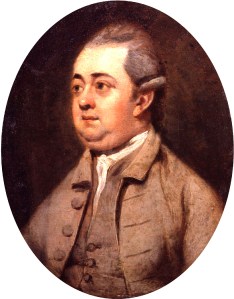 This monumental tome, in six volumes, follows its subject with intense scholarship. Gibbon had read all the sources, so that we don’t have to. After all, how much Procopius or Irenaeus have you actually imbibed? But it isn’t the history itself that propels the work, it is Gibbon’s propulsive prose, a piling on of detail and irony that keeps me buried in the pages. I can pick up a volume and dip into it at any point and come away with a full belly. Such wonderful, rich, cream-filled sentences:
“If a man were called to fix the period in history of the world during which the condition of the human race was most happy and prosperous, he would, without hesitation, name that which elapsed from the death of Domitian to the accession of Commodus.”
It is Gibbon’s theme that the empire fell because it embraced Christianity. He reaches for his highest caliber irony when discussing what he calls its “superstition.” And although he lives in an age of an established church in England, when everyone was nominally pious, he uses his irony to express what he felt he could not say outright. About the claim of miracles, and of resurrection:
“But the miraculous cure of diseases of the most inveterate or even preternatural kind can no longer occasion any surprise, when we recollect that in the days of Irenaeus, about the end of the second century, the resurrection of the dead was very far from being esteemed an uncommon event: that the miracle was frequently performed on necessary occasions, by great fasting and the joint supplication of the church of the place, and that the persons thus restored to their prayers had lived afterward, amongst them many years. At such a period, when faith could boast of so many wonderful victories over death, it seems difficult to account for the scepticism of those philosophers who still rejected and derided the doctrine of the resurrection. A noble Grecian had rested on this important ground the whole controversy and promised Theophilus, bishop of Antioch, that, if he could be gratified with the sight of a single person who had been actually raised from the dead, he would immediately embrace the Christian religion. It is somewhat remarkable that the prelate of the first eastern church, however anxious for the conversion of his friend, thought proper to decline this fair and reasonable challenge.”
As the Duke of Gloucester said when the author presented him with a copy, “Another damned thick book! Always scribble, scribble, scribble! Eh, Mr. Gibbon?”
Vladimir Nabokov, Lolita
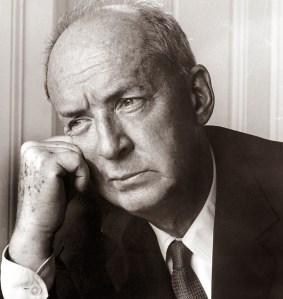 A wicked and malicious book, all verbal skyrockets and Roman candles, there is no more sustained example of literary pyrotechnics in English in the 20th century (the requirement for English disqualifies Finnegans Wake). It tells the story of the nympholept and child molester Humbert Humbert in his own words, which drip with irony from start to finish, yet with a second layer of irony underneath, provided by Nabokov. Humbert freely admits his crime, with charm and erudition, but Nabokov lets us know that however forthcoming Humbert seems to be, there is an imposture in self-revelation. All in virtuoso prose: “You can always count on a murderer for a fancy prose style,” he says.
There is misogyny and misanthropy in Humbert, which you can read in his description of a dalliance he has with another amour, Rita: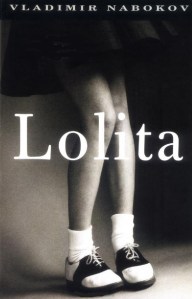
“She was twice Lolita’s age and three quarters of mine: a very slight, dark-haired, pale-skinned adult, weighing a hundred and five pounds, with charmingly asymmetrical eyes, an angular, rapidly sketched profile, and a most appealing ensellure to her supple back — I think she had some Spanish or Babylonian blood.”
“She was so kind, was Rita, such a good sport, that I daresay she would have given herself to any pathetic creature or fallacy, an old broken tree or a bereaved porcupine, out of sheer chumminess and compassion.”
“When I first met her she had but recently divorced her third husband — and a little more recently had been abandoned by her seventh cavalier servant — and others, the mutables, were too numerous and mobile to tabulate. Her brother was — and no doubt still is — a prominent, pasty-faced, suspenders-and-painted-tie-wearing politician, mayor and booster of his ball-playing, Bible-reading, grain-handling home town. For the last eight years he had been paying his great little sister several hundred dollars per month under the stringent condition that she would never enter great little Grainball City.”
A little later:
“Then one day she proposed playing Russian roulette with my sacred automatic; I said you couldn’t, it was not a revolver, and we struggled for it, until at last it went off, touching off a very thin and very comical spurt of hot water from the hole it made in the wall of the cabin room; I remember her shrieks of laughter.”
James Joyce, Ulysses
 Joyce has a reputation for being difficult, but when he wants to be clear, there is no better stylist in the English language. His prose is clear and direct and redolent of the things of this world. If I were to choose a single sentence (or two) that sums up everything I love most in a book, it would be:
“Mr Leopold Bloom ate with relish the inner organs of beasts and fowls. He liked thick giblet soup, nutty gizzards, a stuffed roast heart, liverslices fried with crustcrumbs, fried hencods’ roes. Most of all he liked grilled mutton kidneys which gave to his palate a fine tang of faintly scented urine.”
 But he can make dire fun of his other protagonist, Stephen Daedalus, and the way the scholar can drown in Aquinian scholasticism. Going down for the third time, Daedalus says:
“Ineluctable modality of the visible: At least that if no more, though through my eyes. Signatures of all things I am here to read, seaspawn and seawrack, the nearing tide, that rusty boot. Snotgreen, bluesilver, rust: coloured signs. Limits of the diaphane. But he adds: in bodies. Then he was aware of them bodies before of them coloured. How? By knocking his sconce against them, sure. Go easy. Bald he was and a millionaire, maestro di color che sanno. Limit of the diaphane in. Why in? Diaphane, adiaphane. If you can put your five fingers through it, it is a gate, if not, a door. Shut your eyes and see.”
Herman Melville, Moby Dick
 There is no more perfect example of the “putter-inner” than Melville. He expands; he exfoliates; he swells with words on words. I love his best work like little else in American literature. I can reread I and my Chimney or Bartleby or The Piazza or Benito Cereno over and over again, sucking up the juices. But it is Moby Dick that is the champ. I had trouble reading it at first, not because I found it hard going — quite the opposite — but because I loved its opening chapter so much that each time I picked it up, I found myself not reading where I had left off, but starting anew each time with “Call me Ishmael.” I must have read the first chapter a hundred times before I managed to break through and get to the end.
“Whenever I find myself growing grim about the mouth; whenever it is a damp, drizzly November in my soul; whenever I find myself involuntarily pausing before coffin warehouses, and bringing up the rear of every funeral I meet; and especially whenever my hypos get such an upper hand of me, that it requires a strong moral principle to prevent me from deliberately stepping into the street, and methodically knocking people’s hats off — then, I account it high time to get to sea as soon as I can. 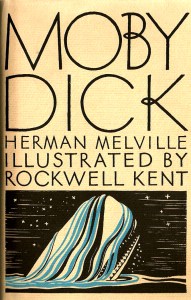 This is my substitute for pistol and ball. With a philosophical flourish Cato throws himself upon his sword; I quietly take to the ship. There is nothing surprising in this. If they but knew it, almost all men in their degree, some time or other, cherish very nearly the same feelings towards the ocean with me.”
The pith of the book can be found in Ahab’s description of his hatred of the white whale:
“All visible objects, man, are but as pasteboard masks. But in each event — in the living act, the undoubted deed—there, some unknown but still reasoning thing puts forth the mouldings of its features from behind the unreasoning mask. If man will strike, strike through the mask! How can the prisoner reach outside except by thrusting through the wall? To me, the white whale is that wall, shoved near to me. Sometimes I think there’s naught beyond. But ’tis enough. He tasks me; he heaps me; I see in him outrageous strength, with an inscrutable malice sinewing it. That inscrutable thing is chiefly what I hate; and be the white whale agent, or be the white whale principal, I will wreak that hate upon him. Talk not to me of blasphemy, man; I’d strike the sun if it insulted me.”
Laurence Sterne, The Life and Opinions of Tristram Shandy, Esq.
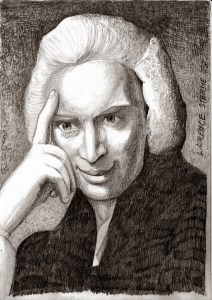 This must be the funniest book in the English language. Sterne manages to make fun of the human condition without ever seeming mean about it. There is a gentleness to it, even when he is close to obscene, as when he opens the book with the very moment of conception for its hero, and the discomfiting dialog between his mother and father at the moment of ejaculation:
“I wish either my father or my mother, or indeed both of them, as they were in duty both equally bound to it, had minded what they were about when they begot me; had they duly consider’d how much depended upon what they were then doing; — that not only the production of a rational Being was concerned in it, but that possibly the happy formation and temperature of his body, perhaps his genius and the very cast of his mind; — and, for aught they knew to the contrary, even the fortunes of his whole house might take their turn from the humours and dispositions which were then uppermost; — Had they duly weighed and considered all this, and proceeded accordingly, — I am verily persuaded I should have made a quite different figure in the world, from that in which the reader is likely to see me.  — Believe me, good folks, this is not so inconsiderable a thing as many of you may think it; — you have all, I dare say, heard of the animal spirits, as how they are transfused from father to son, &c. &c. — and a great deal to that purpose: — Well, you may take my word, that nine parts in ten of a man’s sense or his nonsense, his successes and miscarriages in this world depend upon their motions and activity, and the different tracks and trains you put them into, so that when they are once set a-going, whether right or wrong, ’tis not a half-penny matter, — away they go cluttering like hey-go mad; and by treading the same steps over and over again, they presently make a road of it, as plain and as smooth as a garden-walk, which, when they are once used to, the Devil himself sometimes shall not be able to drive them off it.
Pray my Dear, quoth my mother, have you not forgot to wind up the clock? — Good G..! cried my father, making an exclamation, but taking care to moderate his voice at the same time, — Did ever woman, since the creation of the world, interrupt a man with such a silly question?”
James Agee, Let Us Now Praise Famous Men
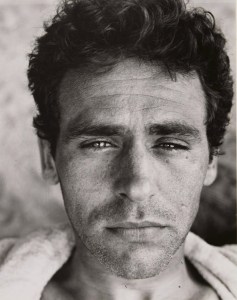 While ostensibly, this is a book about white tenant farmers in Alabama in the 1930s, it is almost more about Agee’s guilt over the fact that he is using their misery to make a book, and his empathy for their condition, and his righteous insistence on not falling back on stereotypes and formulae, but to get it absolutely right, to be absolutely accurate, which leads him to vast circumlocutions as he tries to find just the right words.
It is a very hard book to describe, so unlike anything else in the literature, and must be taken in long draughts to get the real flavor of it. Short quotes will not do.
A long section describes him late at night in the Gudger cabin, fretting over his relationship with them. He describes the lamplight and the bare wooden walls, all in minute detail, so we don’t too easily generalize, which, he feels would be a lie. All the while, on the other side of that wall the family sleeps, husband, wife, sister-in-law and four children. 
“.. and there lie sleeping, on two iron beds and on pallets on the floor, a man and his wife and her sister and four children, a girl and three harmed boys. Their lamp is out, their light is done this long while, and not in a long while has any one of them made a sound. Not even straining, can I hear their breathing: rather I have a not quite sensuous knowledge of a sort of suspiration, less breathing than that indiscernible drawing-in of heaven by which plants live, and thus I know they rest and the profundity of their tiredness, as if I were in each one of these seven bodies whose sleeping I can almost touch through this wall, and which in the darkness I so clearly see, with the whole touch and weight of my body: George’s red body, already a little squat with the burden of thirty years, knotted like oakwood, in its clean white cotton summer union suit that it sleeps in; and his wife’s beside him, Annie Mae’s, slender, and sharpened through with bone, that ten years past must have had such a beauty, and now is veined at the breast, and the skin of the breast translucent, delicately shriveled, and blue, and she and her sister Emma are in plain cotton shirts; and the body of Emma, her sister, strong, thick and wide, tall, the breasts set wide and high, shallow and round, not yet those of a full woman, the legs long thick and strong; …”
It goes on. Nothing is easily said in this book; it is all tortured and parsed: 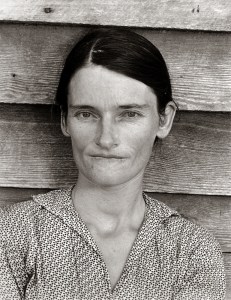
“The Gudgers’ house, being young, only eight years old, smells a little dryer and cleaner, and more distinctly of its wood, than an average white tenant house, and it has also a certain odor I have never found in other such houses: aside from these sharp yet slight subtleties, it has the odor or odors which are classical in every thoroughly poor white southern country house, and by which such a house could be identified blindfold in any part of the world, among no matter what other odors. It is compacted of many odors and made into one, which is very thin and light on the air, and more subtle that it can seem in analysis, yet very sharply and constantly noticeable. These are its ingredients. The odor of pine lumber, wide thin cards of it, heated in the sun, in no way doubled or insulated, in closed and darkened air. The odor of woodsmoke, the fuel being again mainly pine, but in part also, hickory, oak and cedar. The odors of cooking. Among these, most strongly, the odors of fried salt pork and of fried and boiled pork lard, and second the odor of cooked corn. The odors of sweat in many stages of age and freshness, this sweat being a distillation of pork, lard, corn, woodsmoke, pine, and ammonia. The odors of sleep, of bedding and of breathing, for the ventilation is poor. The odors of all the dirt that in the course of time can accumulate in a quilt and mattress. Odors of staleness from clothes hung, or stored away, not washed. I should further describe the odor of corn: in sweat or on the teeth, and breath, when it is eaten as much as they eat it, it is of a particular sweet stuffy fetor, to which the nearest parallel is the odor of the yellow excrement of a baby. All these odors as I have said are so combined into one that they are all and always present in balance, not at all heavy, yet so searching that all fabrics of bedding and clothes are saturated with them and so clinging that they stand softly out of the fibers of newly laundered clothes. Some of their components are extremely ‘pleasant,’ some are ‘unpleasant’; their sum total has great nostalgic power.”
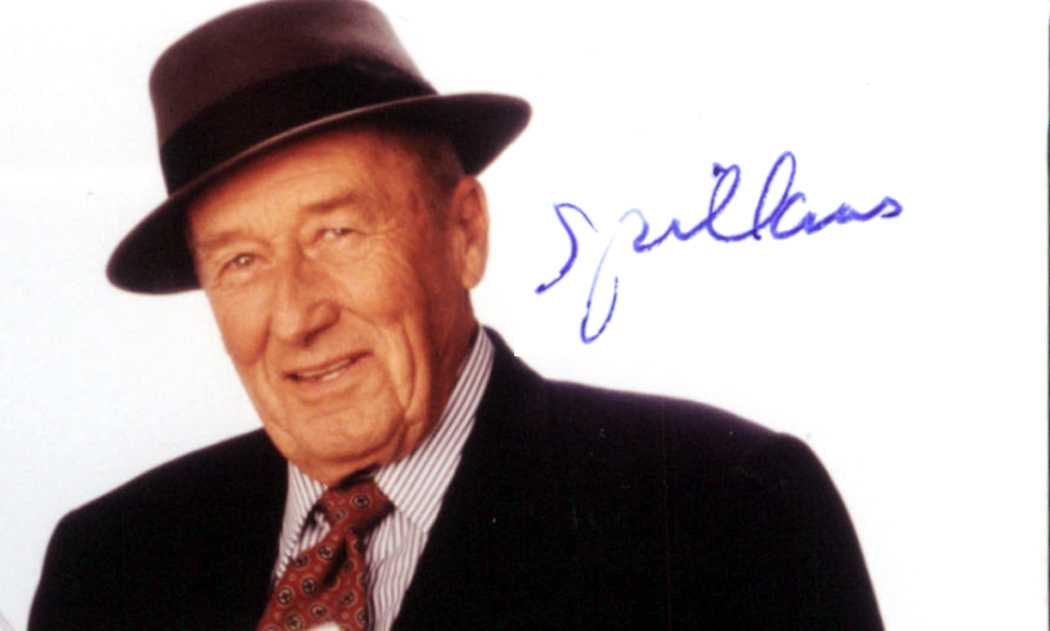
Mickey Spillane, The Big Kill
From the sublime to the ridiculous. Mickey Spillane said he didn’t have readers, he had customers. “The first page sells the book,” he said, “the last page sells the next book.”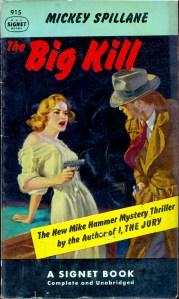
But there is a vigor in his prose, tinged with kitsch, for sure, but still vivid in the extreme. You could find examples in almost any of the books, but this is from The Big Kill:
“It was one of those nights when the sky came down and wrapped itself around the world.
The rain clawed at the windows of the bar like an angry cat and tried to sneak in every time some drunk lurched in the door. The place reeked of stale beer and soggy men with enough cheap perfume thrown in to make you sick.
Two drunks with a nickel between them were arguing over what to play on the juke box until a tomato in a dress that was too tight a year ago pushed the key that started off something noisy and hot. One of the drunks wanted to dance and she gave him a shove. So he danced with the other drunk.
She saw me sitting there with my stool tipped back against the cigarette machine and change of a fin on the bar, decided I could afford a wet evening for two and walked over with her hips waving hello.”
Lawrence Durrell, The Alexandria Quartet
If there were ever an author who required you to have a dictionary beside your reading table, it was Durrell. He would choose “pegamoid” and “objurgation,” as a dare. In his books, language is the readers’ usufruct, somewhere in the banlieus of usage. 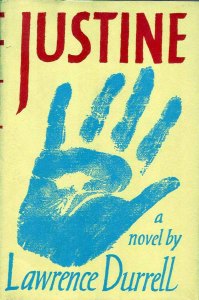
The Alexandria Quartet are four novels that tell the same story, each from the point of view of a different actor. We find out that no one really understands what is happening, but it is happening in Alexandria, Egypt, and is populated by espionage, love-sickness, sex and camels. Durrell’s prose is as perfumed as it comes, and the books, as a unit, are perhaps best read when the reader is still young; older, you have less patience for the exoticism and the verbal barnacles crusting the pages. I love it.
I’ll give only a short tasting, from the last volume, Clea:
“The whole quarter lay drowsing in the umbrageous violet of approaching nightfall. A sky of palpitating velours which was cut into the stark flare of a thousand electric light bulbs. It lay over Tatwig Street, that night, like a velvet rind. Only the lighted tips of the minarets rose above it in their slender invisible stalks — appeared hanging suspended in the sky; trembling slightly with the haze as if about to expand their hoods like cobras.”
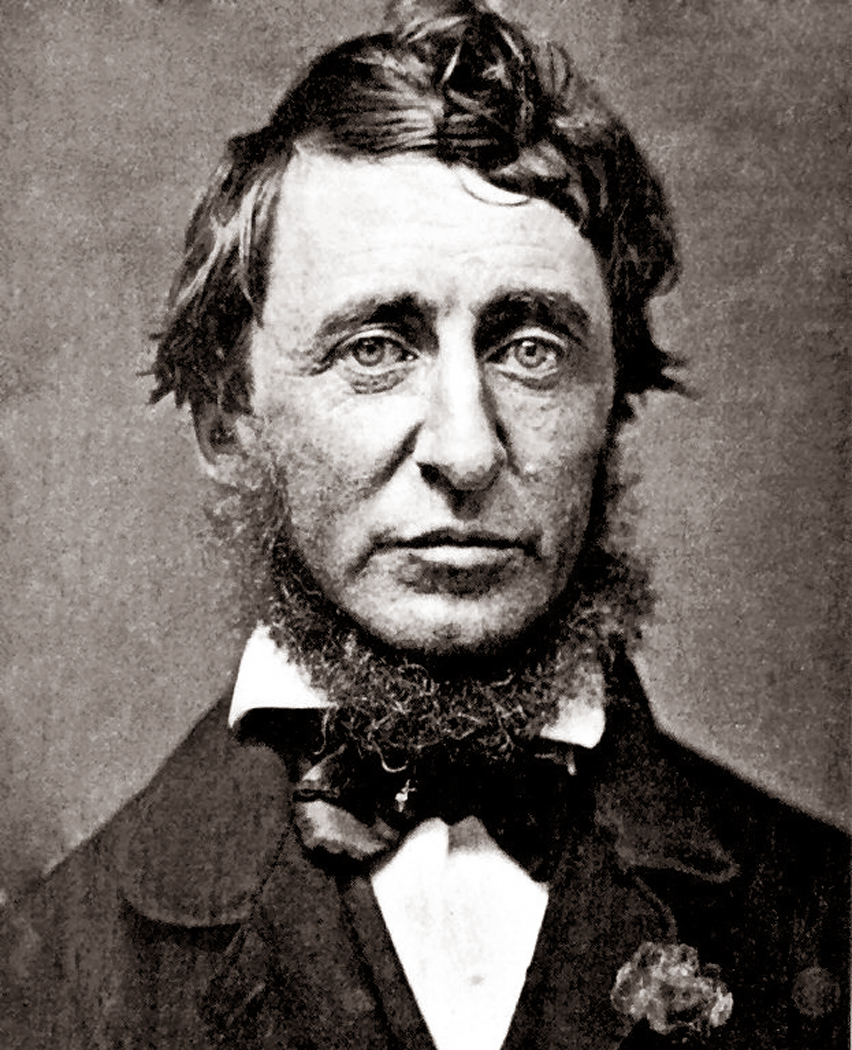
Henry David Thoreau, Walden
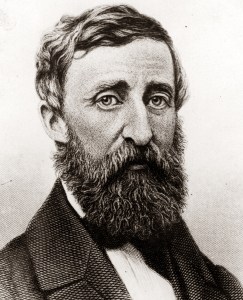 Thoreau mixed ancient Greek writers with agronomy; no philosopher had so much to say about beans since Pythagoras. What elevates his style is a mixture of close observation with nature and the ability to fly, like Icarus, up to the heavens in vast sweeps of inspired hooha. Metaphors grow like weeds in his paragraphs, and we are all the richer for it. There is something Shakespearean about his means of expression: A rich overflowing of imagery, mixed, we might say, like a salad, and unpruned like a feral apple tree. He simply can’t stop making new metaphors:
“Time is but the stream I go a-fishing in. I drink at it; but while I drink I see the sandy bottom and detect how shallow it is. Its thin current slides away, but eternity remains. I would drink deeper; fish in the sky, whose bottom is pebbly with stars. I cannot count one. I know not the first letter of the alphabet. I have always been regretting that I was not as wise as the day I was born. The intellect is a cleaver; it discerns and rifts its way into the secret of things. I do not wish to be any more busy with my hands than is necessary. My head is hands and feet. I feel all my best faculties concentrated in it. My instinct tells me that my head is an organ for burrowing, as some creatures use their snout and fore paws, and with it I would mine and burrow my way through these hills. I think that the richest vein is somewhere hereabouts; so by the divining-rod and thin rising vapors I judge; and here I will begin to mine.”
Jack Kerouac, On the Road
“That’s not writing, that’s typing,” said Truman Capote. But there is power in it. Kerouac set out across the country in the late 1940s, with peanut butter sandwiches and a part-of-the-way bus ticket. He ended up a sorry, alcoholic travesty, ruined by the popular image of the beatnik.  But his book is better than that. Even if he sometimes forgets Elmore Leonard’s Fifth Rule of Good Writing: “Keep your exclamation points under control.”
“George Shearing, the great jazz pianist, Dean said, was exactly like Rollo Greb. Dean and I went to see Shearing at Birdland in the midst of the long, mad weekend. The place was deserted, we were the first customers, ten o’clock Shearing came out, blind, led by the hand to his keyboard. He was a distinguished-looking Englishman with a stiff white collar, slightly beefy, blond, with a delicate English-summer-night air about him that came out in the first rippling sweet number he played as the bass-player leaned to him reverently and thrummed the beat. The drummer, Denzil Best, sat motionless except for his wrists snapping the brushes. And Shearing began to rock; a smile broke over his ecstatic face; then the beat went up, and he began rocking fast, his left foot jumped up with every beat, his neck began to rock crookedly, he brought his face down to the keys, he pushed his hair back, his combed hair dissolved, he began to sweat. The music picked up. The bass-player hunched over and socket it in, faster and faster, it seemed faster and faster, that’s all. Shearing began to play is chords; they rolled out of the piano in great rich showers, you’d think the man wouldn’t have time to line them up. They rolled and rolled like the sea. Folks yelled for him to “Go!” Dean was sweating; the sweat poured down his collar. “There he is! That him! Old God! Old God Shearing! Yes! Yes! Yes!” And Shearing was conscious of the madman behind him, he could hear every one of Dean’s gasps and imprecations, he could sense it though he couldn’t see. “That’s right!” Dean said. ‘Yes!’ Shearing smiled; he rocked. Shearing rose from the piano, dripping with sweat. These were his great 1949 days before he became cool and commercial.”
H.L. Mencken, Prejudices, Series I-VI
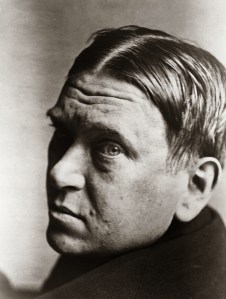 My personal hero, Mencken was a sour old pessimist, a journalist through and through, who never let sentiment cloud his prejudice. Almost anything he wrote is worth reading, not so much for the ideas therein, which are sometimes lamentable, but for the vigor and spark of their saying. I can read his work endlessly, like eating popcorn or Fritos, and never get tired of it.
“Of all forms of the uplift, perhaps the most futile is that which addresses itself to educating the proletariat in music. The theory behind it is that a taste for music is an elevating passion, and that if the great masses of the plain people could be inoculated with it they would cease to herd into the moving-picture theaters, or to listen to Socialists, or to beat their wives and children. The defect in this theory lies in the fact that such a taste, granting it to be elevating, simply cannot be implanted. Either it is born in a man or it is not born in him. If it is, then he will get gratification for it at whatever cost — he will hear music if hell freezes over. But if it isn’t, then no amount of education will ever change him — he will remain stone deaf until the last sad scene on the gallows.”
Robert Burton, Anatomy of Melancholy
 Finally, there is Robert Burton (1577-1640), the great magpie of English literature, who put everything he could stuff into his one big book. It purports to be about melancholy — depression, as we know it — but really, it has no boundaries. Burton cannot say something once, but must, like Walt Whitman in his cataloguing mania, say it three, four, five times over, in slightly varying phraseology, just to make his point, to emphasize it, to make it clear, to ram it home, to buttonhole you and make sure you have got it.
This is a particularly juicy section, in which he discusses sex and the contemptus mundi of the sallow-skinned blue-stockings that in our own day, as much as in his, make our lives less gaudy and fleshy.
“Into what subject have I rushed? What have I to do with Nuns, Maids, Virgins, Widows? I am a Bachelor myself, and lead a Monastick life in a College. I am truly a very unfit person to talk about these subjects, I confess ‘tis an indecorum and as Pallas, a Virgin, blushed, when Jupiter by chance spake of Love matters in her presence and turned away her face, I will check myself; though my subject necessarily require it, I will say no more.
 And yet I must and will say something more, add a word or two on behalf of Maids and Widows, in favour of all such distressed parties, in commiseration of their present estate. And as I cannot choose but condole their mishap that labour of this infirmity, and are destitute of help in this case, so must I needs inveigh against them that are in fault, more than manifest causes, and as bitterly tax those tyrannizing pseudo-politicians’ superstitious orders, rash vows, hard-hearted parents, guardians, unnatural friends, allies, (call them how you will), those careless and stupid overseers, that, out of worldly respects, covetousness, supine negligence, their own private ends, (because, meanwhile, it is well for him), can so severely reject stubbornly neglect and impiously contemn, without all remorse and pity the tears, sighs, groans, and grievous miseries, of such poor souls committed to their charge. How odious and abominable are those superstitious and rash vows of Popish Monasteries, so to bind and enforce men and women to vow virginity, to lead a single life against the laws of nature, opposite to religion, policy and humanity, so to starve, to offer violence to, to suppress the vigour of youth! by rigourous statutes, severe laws, vain persuasions, to debar them of that to which by their innate temperature they are so furiously inclined, urgently carried, and sometimes precipitated, even irresistibly led, to the prejudice of their souls’ health, and good estate of body and mind! and all for base and private respects, to maintain their gross superstition, to enrich themselves and their territories, as they falsely suppose, by hindering some marriages, that the world be not full of beggars, and their parishes pestered with orphans! Stupid politicians!
Stupid politicians, indeed!

 Needless to say, my love of such sentences caused me some embarrassment during my years as a practicing journalist, where I was encouraged to keep my sentences simple and clear. I am sure I must have tested the patience of many an editor over those years. I did pick up one countervailing habit: My paragraphs tend to be short. Often a single sentence per.
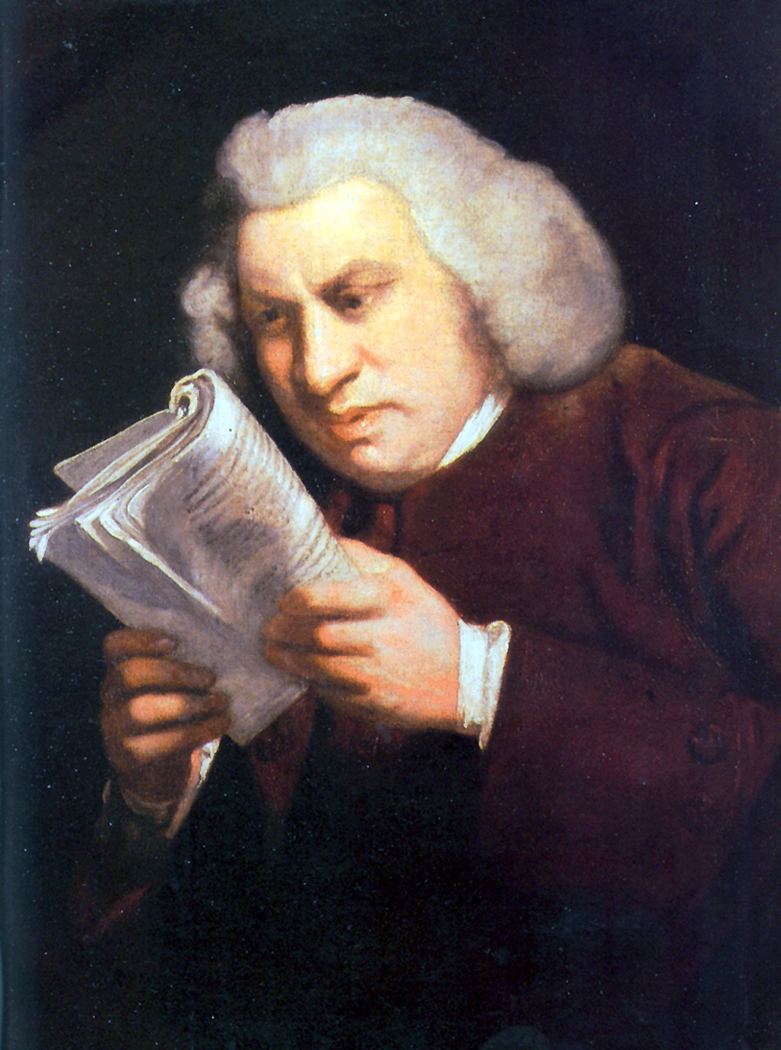
 Nevertheless, if you consider the immensity of the task he set himself in 1746 — a task that wound up taking away nine years of his life — you must admire his profound sincerity and deep devotion. He put together the first comprehensive English dictionary, and in doing so, pretty well had to come up with the plan for it ab ovum. (There were glossaries and word lists, and a few dictionaries before him, but none complete or even attempting to be so). If his definitions sometime seem a trifle punctilious, it must be remembered he was pretty much inventing the whole idea. The definitions range from those that hardly convey what we would consider sufficient information (“Rhinoceros: A vast beast of the East Indies armed with a horn on his front”) to those that seem to do verbal somersaults to convey their meaning (“Network: Anything reticulated or decussated, at equal distances, with interstices between the intersections.” By the way: “To Decussate: To intersect at acute angles” and: “Reticulated: Made of network; formed with interstitial vacuities.”)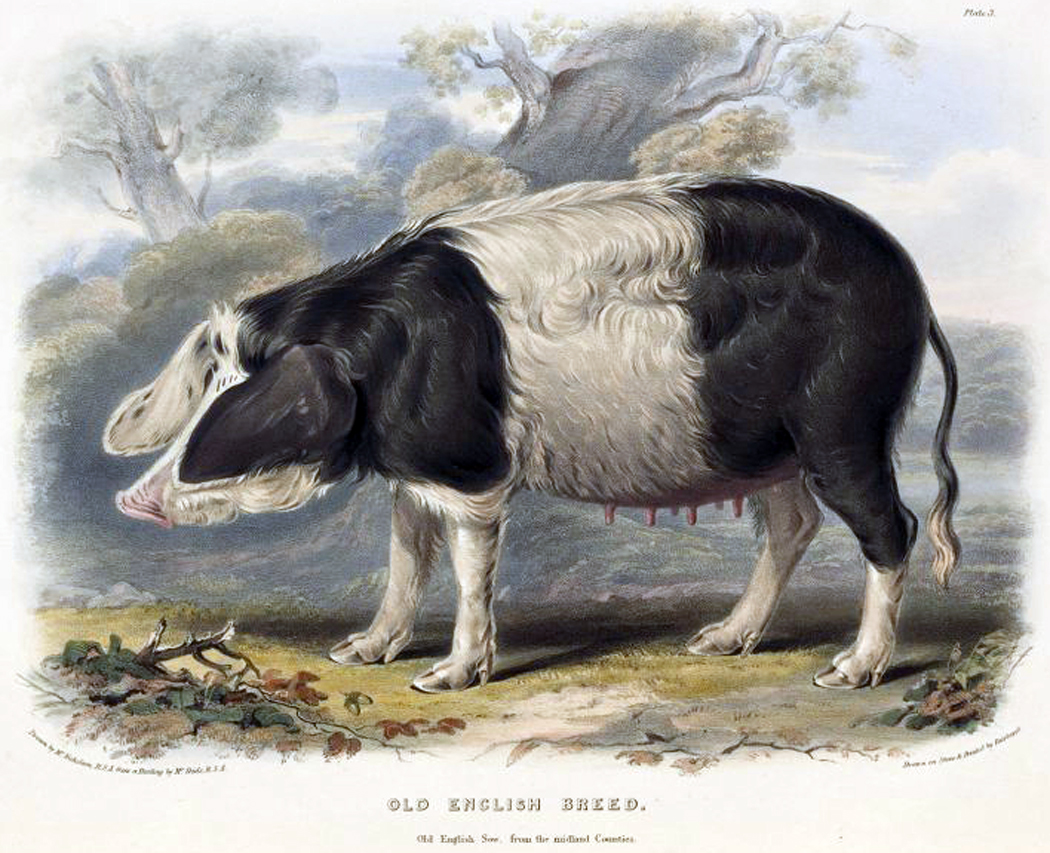
 “Alligator: The crocodile. This name is chiefly used for the crocodile of America, between which, and that that of Africa, naturalists have laid down this difference, that one moves the upper and the other the lower jaw; but this is now known to be chimerical, the lower jaw being equally moved by both.”
 “Camelopard: An Abyssinian animal, taller than an elephant, but not so thick. He is so named because he has a neck and head like a camel; he is spotted like a pard, but his spots are white upon a red ground. The Italians call him giaraffa.”
 “Starfish: A fish branching out into several points.”
 “Elephant: The largest of all quadrupeds, of whose sagacity, faithfulness, prudence , and even understanding, may surprising relations are given. This animal is not carnivorous, but feeds on hay, herbs and all sorts of pulse; and it is said to be extremely long lifed. It is naturally very gentle; but when enraged, no creature is more terrible. He is supplied with a trunk, or long hollow cartilage, like a large trumpet, which hangs between his teeth, and serves him for hands: by one blow with his trunk he will kill a camel or a horse, and will raise a prodigious weight with it. His teeth are the ivory so well known in Europe, some of which have been seen as large as a man’s thigh, and a fathom in length. Wild elephants are taken with the help of a female ready for the male: she is confined to a narrow place, round which pits are dug; and these being covered with a little earth scattered over hurdles, the male elephants easily fall into the snare. In copulation the female receives the male lying upon her back; and such is his pudicity, that he never covers the female so long as anyone appears in sight.”








 Richard Nilsen