Archive

Monthly Archives: February 2014

adam and eve

OK, so then what is the “canon,” with which we should all be familiar?

There are scores of lists, put forth by scores of people, ranging from insightful critics to close-minded boobs (Yes, Bill Bennett, I’m talking about you). Such lists usually share the usual suspects: Here’s Hamlet, there’s War and Peace, and over there is the Recherche of Marcel Proust. All of them worthy of your deepest attention and capable of inciting the most delightful pleasure.

But as I’ve written before, the purpose of engaging with the canon of Western culture is to understand who your grandparents were, whose cultural DNA you were born to — the common inheritance of all of us in the modern world, our Adams and Eves.

Through most of my youth and into my adult life, my version of the list has grown and grown. I have, after all, at least 50 films on my Top Ten list. I could not do without hundreds of books I have read, paintings I have seen in the flesh, music I know by heart.

But, as I have grown old, I have jettisoned more and more baggage. “Simplify, simplify,” Thoreau said. I’ve given away books, CDs, DVDs. I’m tempted to dump even more. Those that were important, I have internalized; those I want to keep are those I reread and reread.

Under even those, however, is a foundation level, the cultural footings on which I have built my intellectual life, and that the civilization I have inherited was founded upon, almost as its Constitution.

So, I am proposing a canon. A very short one, but an essential one.

First, there is Homer. Everyone should have read the Iliad, at least. The Odyssey is initially more fun — or at least the chapters that chronicle the wanderings of Odysseus — but the Iliad is one of the founding documents of Western civilization and provides a necessary backdrop for everything that has come since.

I reread the Iliad about once a year. I try different translations, because any bit of ancient Greek I used to study has evaporated. The newest translations are usually the best, not because they are more literary, but because they speak the language I use. Older translations sniff of their age, smelling of linsey-woolsey or gaberdeen. I can sense the antimacassar oil on the Lang-Leaf-Myers translation. I sense the Cold War in the Lattimore.

So, the Robert Fagles translation is my standard, although the most recent re-read was in the even newer Stephen Mitchell version.

In Homer, you find the myths that have been re-used and re-energized in all the books written since, that outline the archetypes, give us the parameters of story and narration. The scope of Homer is the widest: from the bee’s tongue to the planet’s motions among the stars.

This is all beside the wonderful enjoyment gotten from reading it, 2500 years after he (or she) set it down.

The second book in my canon is the Bible. Not for any religious reason; I’m completely an atheist and have no use for religion. But the Bible is, like Homer, one of the founding documents and underlies all that has followed. I may wish otherwise, and may often wonder if the Bible wasn’t really authored by a group of people who have spent too long out under the desert sun. It may have been written by white bearded patriarchs under the influence of sunstroke, but they are our grizzled patriarchs.

There are two important considerations when approaching the Bible.

The first is the translation. The King James version is the primary one, and it is the organ-pipe tones of the KJV that underpin our own ideas of language, of majesty, of ritual and solemnity. It is the KJV you hear behind the sentences of Melville and Thoreau, behind the speeches of Martin Luther King.

But the King James is also miserably out-of-date, with usages that are no longer current and oftentimes either misleading or downright incomprehensible. So, a more modern translation may make the stories of the Bible easier to assimilate.

Even so, I prefer mixing the King James and a modern translation with an interlinnear word-for-word translation that demonstrates how much any translation of the Bible is de facto an interpretation. I have valued greatly the Everett Fox version of The Five Books of Moses from the Schocken Bible. Any version of the Hebrew and Christian Bibles is a moving target.

The second thing is that you should read the whole Bible, not just the familiar parts. Some of it is heavy slogging, but you should have read the whole thing. It’s one of the best ways to counteract the baleful influence of all those fundamentalists that would have you believe only their way. You see how they pick and choose only the parts they want and that reinforce their prejudices. You will be astonished at how many things are held to be “an abomination.” You will scratch your head over most of them.

The Bible stories are the Semitic balance to the Hellenic myths and between the two, they are the parents of all that followed.

Finally, in my canon, are the plays and sonnets of William Shakespeare. Ideally, one should see them on stage, in an excellent production (since a mediocre production can be the kiss of death for someone whose language is a florid and baroque as Shakespeare’s), but the fact is that it is as text on a page that Shakespeare has most influenced the course of Western Civ. We read Hamlet, Lear, Othello, and their words continue to astonish the attentive reader with their fire, their brilliance, their wit, and their expansiveness. The “sirrahs” and “prithees” may certainly feel dated, but everything else is bursting with life.

It was after a long-ago divorce that I first decided that if I was going off into exile, I needed to pack only three books: The Iliad, the Bible and a complete Shakespeare, and that somehow, if the world were destroyed all around me, I could resurrect an entire civilization with just these three.

And we would see everything that followed.

"Michael Jackson and Bubbles" by Jeff Koons, and Elgin Marbles figure

“Michael Jackson and Bubbles” by Jeff Koons, and Elgin Marbles figure

In 1632, the young English poet John Milton, just out of college, took up residence at his father’s country estate at Horton, near Windsor. And for the next six years he managed to read everything that had ever been written and was extant, in all languages living and dead, that a European scholar of the time might have heard of. That included literature, history, biography, philosophy, science, mathematics — the whole throatful of it. milton cigar

Everything that had ever been written.

It boggles the mind. Today, we cannot even keep up with the magazines we subscribe to; most of human knowledge falls off the edge of the Earth, where the map of our erudition shows nothing but serpents. reading the oed

We can never achieve what Milton did; it’s foolish to even try. But shouldn’t we attempt at least some sketch of what was fully painted for the poet? There have been recent books by writers who have read every article in the Encyclopedia Britannica (The Know-It-All, One Man’s Humble Quest to Become the Smartest Person in the World, A.J. Jacobs, 2004), The Oxford English Dictionary (Reading the OED: One Man, One Year, 21,730 Pages, Ammon Shea, 2008), or the equivalent of the Harvard Five-Foot Shelf (Great Books, David Denby, 1996), but such ventures are little more than stunts.

To absorb 5,000 years of human culture requires more than memorizing almanacs or dictionaries. It means to have a grounding in the art, literature, theater, music and architecture of our ancestors.

Of course, most of human knowledge, at least in ordinary life, in mass or pop culture and in our individual autobiographies is utterly trivial, and it would be a crime to stuff our brains with it.

But not all knowledge in this information age is trivial. There is still a core of useful literature — and I use the word in the broadest possible sense — that it behooves us to be acquainted with.

It is unfortunate that there is an argument over this. In the imbecilic culture wars that currently ravage the intellectual countryside, the lines are drawn between ignorant armies.

On one side, you find right-wing reactionary fossils fighting to maintain the canon of mainly European classics. On the other side, there is a cadre of victimization that wants to eliminate anything written by dead white males.

A pox on both their houses.

Milton didn’t have to worry about the canon. For him, the canon encompassed everything he could possible encounter.

Since that time, though, we have had to become more selective. Those items we have, as a culture, thought worth perpetuating we have called ”classics” and added them to the list — the canon — of ”required reading.”

But we misunderstand the very idea of culture if we believe the world froze solid with the publication of the Harvard Five Foot Shelf.

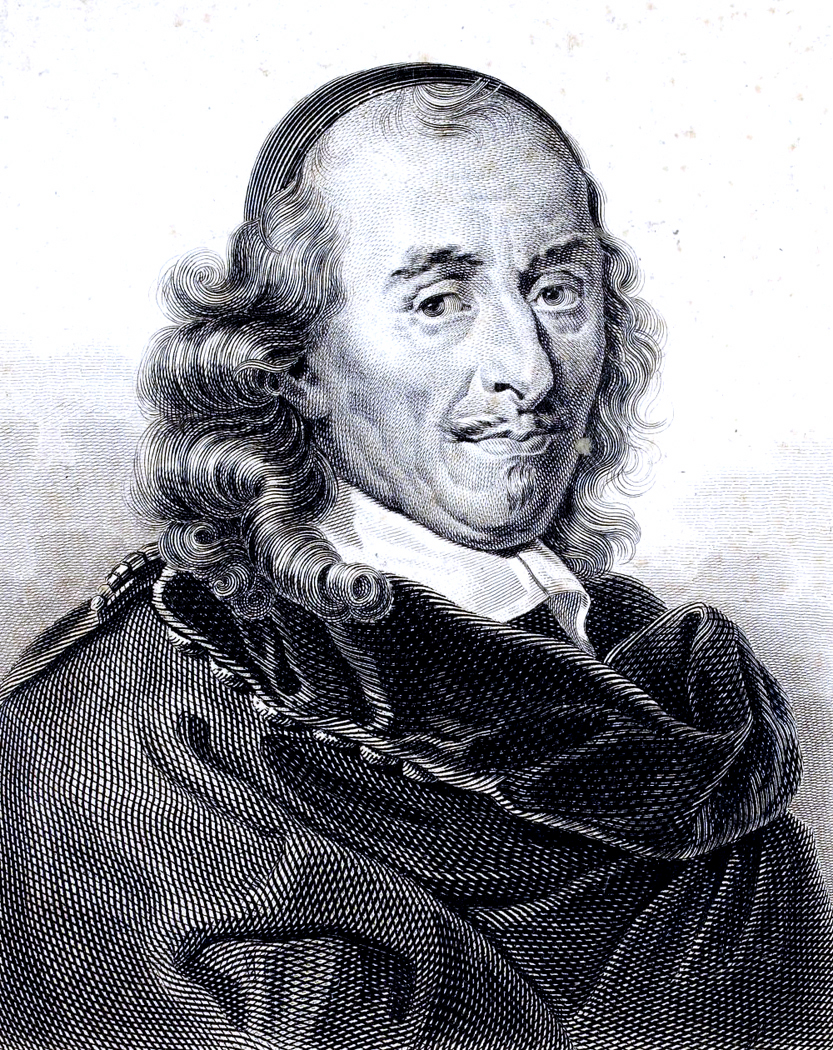
Corneille

Corneille

The canon is a garden that must be weeded and tended, and each season may call forth a different harvest.

The problem with the conservative view is that it values a former ”golden age” that our own time never measures up to. It is a sentimental view of life and history, and deaf to the fact that we live now, not in the imaginary ”then.” It is the voice of Cato, of Corneille, of William Bennett — a man of whom it is said he cannot sleep a-nights if he suspects someone, somewhere is having fun.

It is a view of an idealized perfection that we have disastrously fallen short of. It is one form of imbecility.

The problem from the other side is an egalitarianism that is just as moronic. According to them, nothing is better than anything else. Either it is merely a question of personal taste, or it is one of cultural identity.

By their standards, it is elitist to prefer Pablo Neruda to Rod McKuen. Let them, I say, let them renew their subscriptions to Us magazine.

They can deconstruct its gossip to death and find the parallels with Plutarch — if they only knew who Plutarch was.

To consider one “text” more important than another, for them, is to promote colonialism and the subjugation of the downtrodden.

Hence, they judge not by esthetic considerations — it’s all just personal taste to them — but rather by politics.

For them, politics overwhelms aesthetics — overwhelms reason, emotion, common sense and experience. For them, everything has a party line. Ah, but they forget, politics answers no question worth asking.

It also worries me that behind the masks of intellectual argument, I sense a fascism on each side — at the very least a certain priggishness to both sides that any reasonable human finds dangerous.

At bottom, the problem is that both sides make the mistake of believing the canon immutable and fixed. They see the canon as an end, one side blindly despising it and the other defending it like Texans at the Alamo.

But the canon, properly seen, is a beginning, not an end; a foundation, not a roof.

It is the ABC of cultural literacy, the cardinal numbers of thought.

One used to hear the warning that when you have sex, you are having sex with everyone your partner has ever slept with. Well, when you read a book, you are also reading everything that the author read. When you hear music, you also hear everything that composer heard.

Culture is the slow accumulation of thoughts and habits. To read Melville is to hear the diapason of King James under the rich melody of the prose. Every author is the product of multiplier and multiplicand: the writer’s imagination and the long road of history leading to his standing on the curb with his thumb out.

The fact is, we cannot read everything, the way Milton did. We must be more selective. Suggestions for that selective offering is what we call the canon. But it changes constantly: It now includes James Baldwin and Toni Morrison; it includes Derek Wolcott and Yukio Mishima;  The Beatles and Duke Ellington.

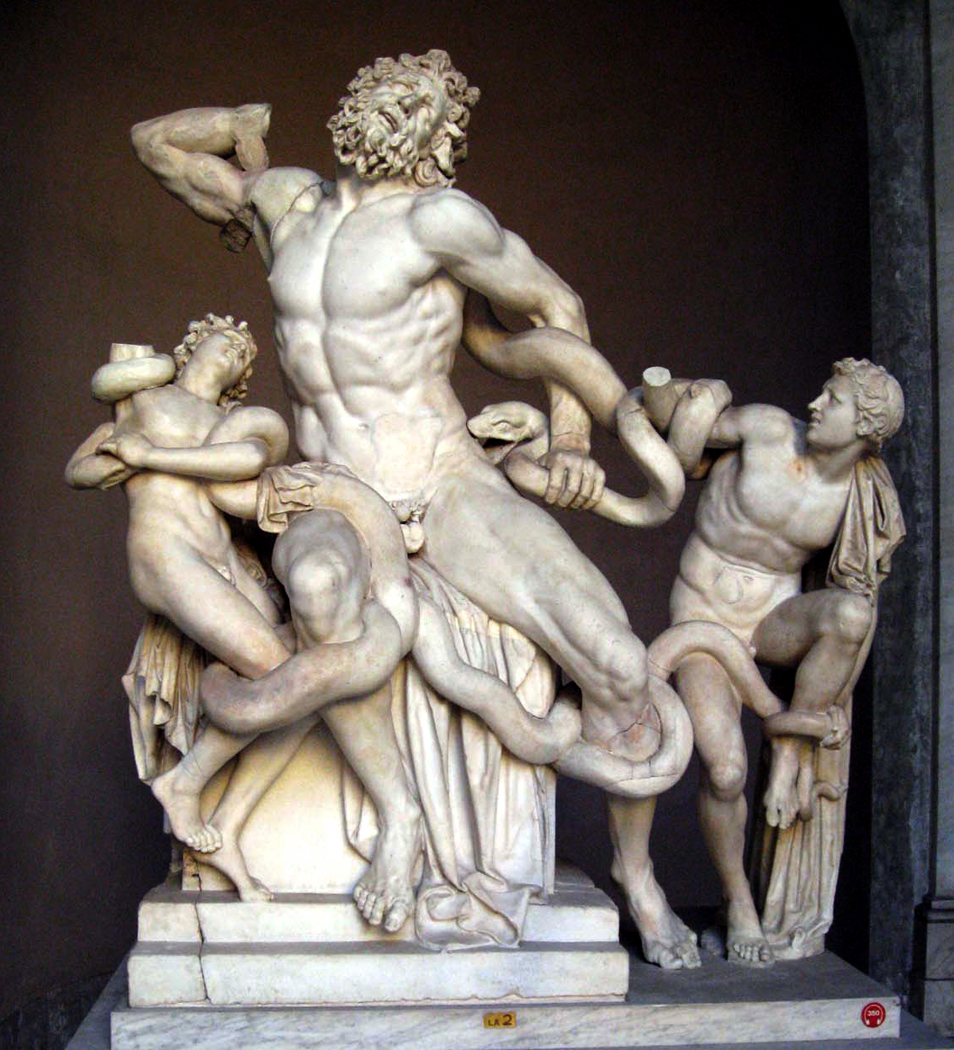
The Laocoon

The Laocoon

How can you understand Jacques Derrida without standing firmly on the firm ground of Kant’s a priori? How can you read Isabel Allende without sensing the spirituality of Calderon behind her words?

How can you understand Jeff Koons’ Michael Jackson and Bubbles if you don’t already have the Elgin Marbles in your system? You can’t. How can you get the joke on the back of countless Yellow Pages if you don’t know the Laocoon?

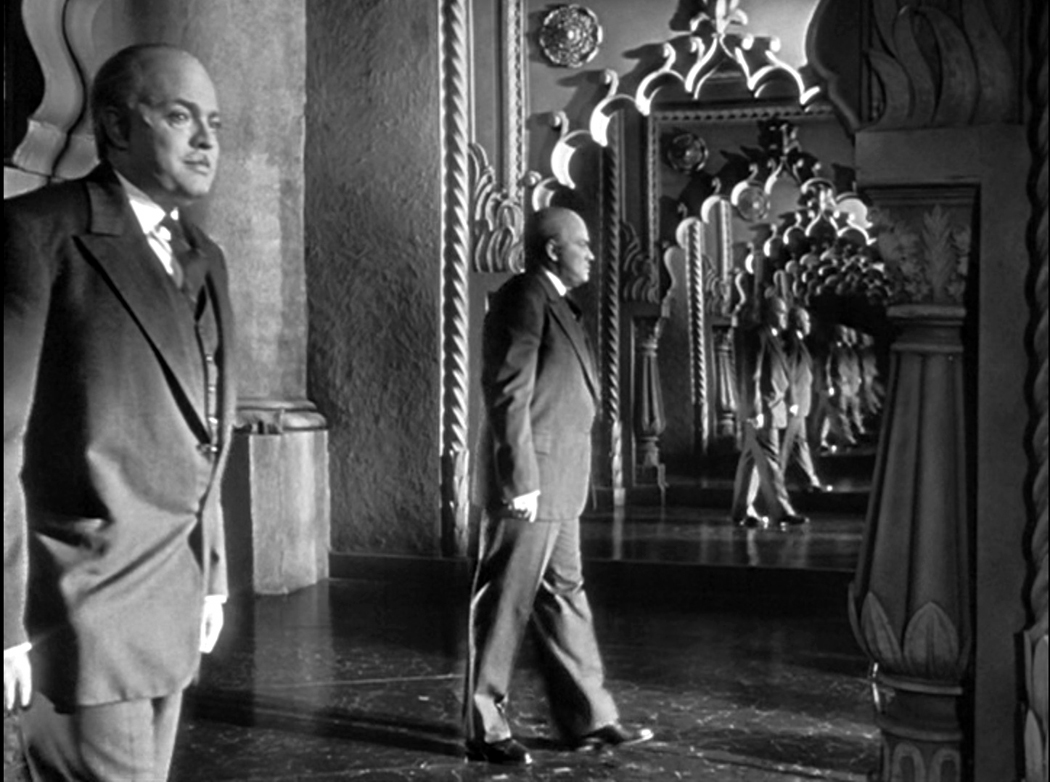
Certainly, the old rationale for learnedness remains: These are great writers, profound thinkers and brilliant painters and sculptors and we cannot consider ourselves educated without their acquaintance. Knowing them is its own excuse. But even more important is that when you hear the echoes in a piece of art, see its ancestry, the piece resonates. Resonance is what gives art and literature is power. kane

Like the mirror scene in Citizen Kane, one man is multiplied into an army. Like Isaac Newton said, if we see further, it is because we stand on the shoulders of giants. It is a wise man who knows his parents.

carmen death

Opera has an ABC. They are Aida, Boheme and Carmen. No regional opera company ever went broke programming these blockbusters. They are all extremely popular and well-known.

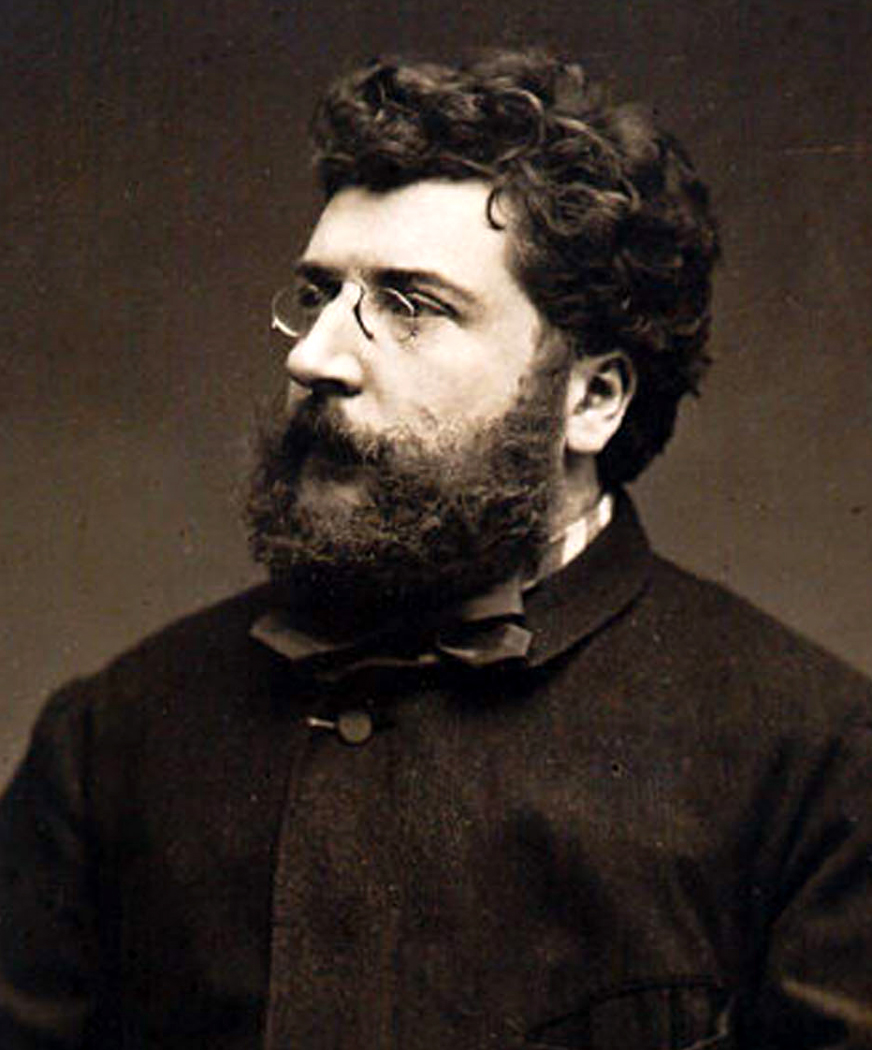
Georges Bizet

Georges Bizet

Carmen, especially. Perhaps too well known.

We all know that the gypsy Carmen seduces the not-too-bright army corporal, Don Jose, and then dumps him for the flashy matador Escamillo. Death ensues while crowds cheer in the bull ring.

We hum along with the tunes: the habanera, the toreador song, the boys mocking the soldiers and their tune. The suite from the score was once one of the most programmed pieces of light classical music, rivaling Tchaikovsky’s Nutcracker Suite and Grieg’s Peer Gynt. One of Sir Thomas Beecham’s “lollipops.”

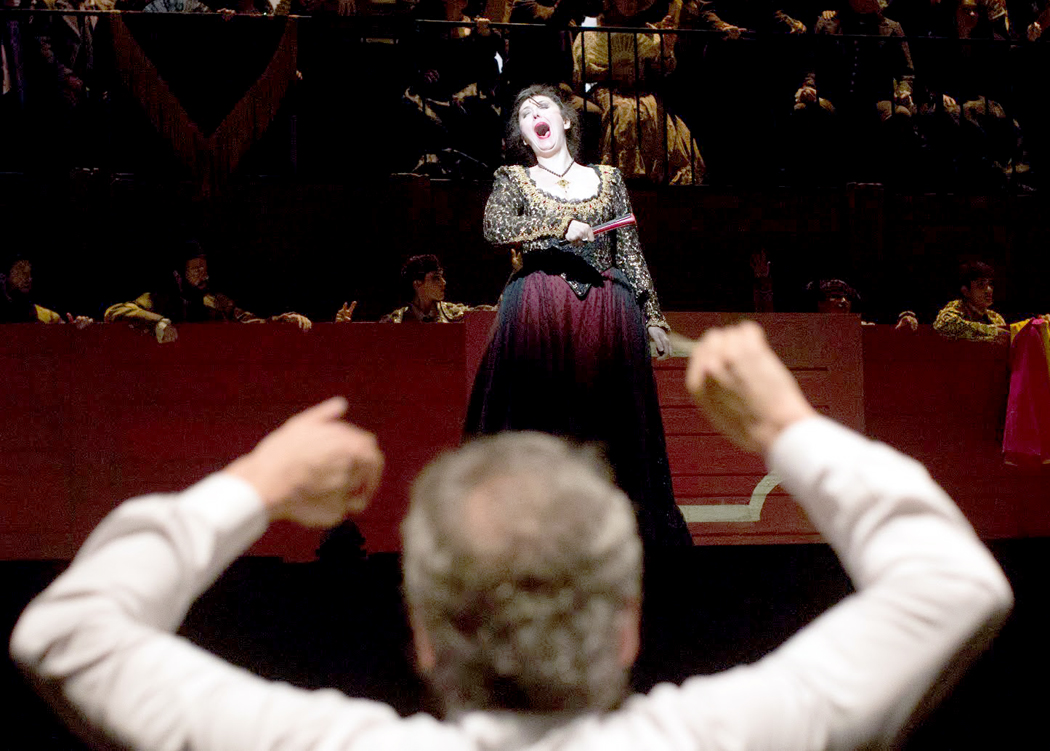
The opera comes from a novella written in 1845 by the French Romantic author Prosper Merimee. And like a movie made from a book, a few things are changed for the sake of drama.carmen conductor

Here are some things you probably don’t know about Georges Bizet’s Carmen:

1. Bizet’s librettists, Henri Meilhac and Ludovic Halevy, gave their bullfighter a major promotion. In Merimee’s book, he is not the noble matador, but a mere picador, a stripling named Lucas.habanera score

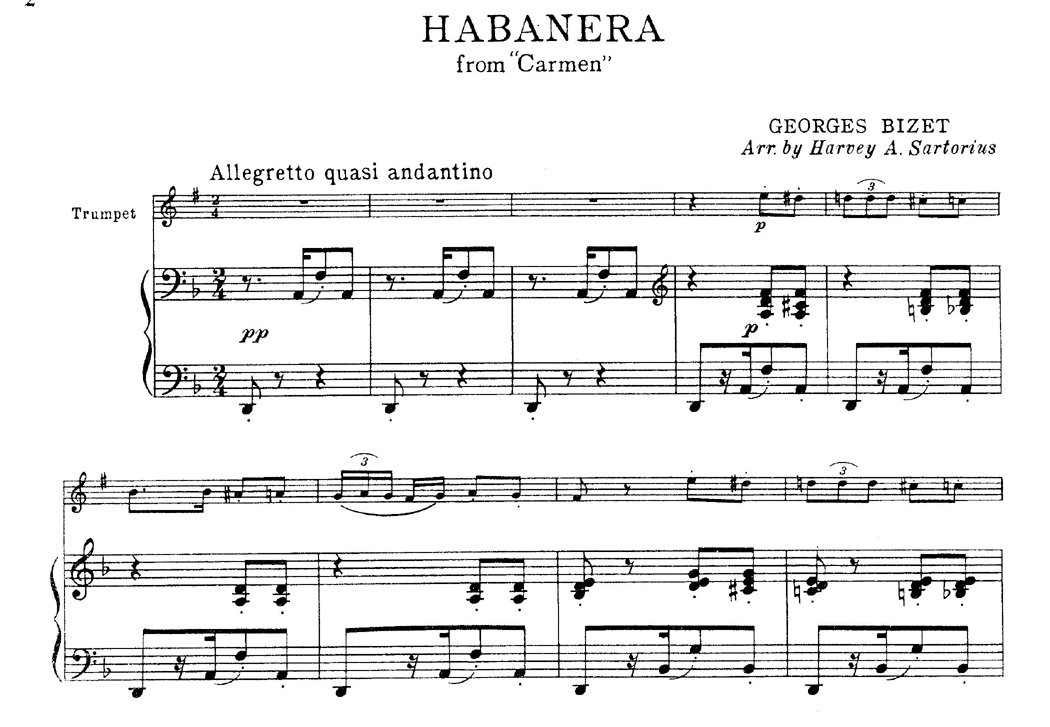
2. The famous Habanera (“L’amour est un oiseau rebelle“) was an afterthought.carmen painting

The mezzo hired to sing the part of Carmen didn’t like the aria Bizet had first written. He tried 10 times to come up with something, eventually writing the single most famous tune from the opera. Or did he? Turns out, he stole the melody from an earlier tune, called El Arreglito, by Sebastian Yradier who had only recently died. Yes, Bizet plagiarized the melody. When the score to Carmen was published, Bizet had to add a note acknowledging his source.

3. The first recording of Carmen (1908) was sung in German. “Liebe ist wie ein wilder Vogel.” Oy.

4. More than 60 films have been made of the story. Oddly, the first 17 were silent films. Silent opera is rather like dancing on the radio. That list of silent films includes one by Cecil B. DeMille, from 1915, which was based on the original novel because the producers didn’t want to pay the rights to the opera and chose the public-domain novel instead. They then changed the book’s plot to match the opera’s. Among the silent Carmens were Theda Bara (1915, directed by Raoul Walsh), Pola Negri (1918, directed by Ernst Lubitsch) and Delores Del Rio (1927, also directed by Walsh).carmen saura

5. Recent Carmens tend to stretch the story or the music. Like Beyonce in Carmen: A Hip Hopera (2001), or the 1983 Carlos Saura masterpiece, which turns it into a flamenco dance. Also on the list: Carmen on Ice (1990); Karmen Gei (2001), which sets the story in Senegal; Carmen Jones (1954), with Dorothy Dandridge and Harry Belafonte; and most recently the powerful South African township version, U-Carmen eKhayalitsha. Check it out on DVD.