We’ve reached the end. Six days in Palm Springs looking at a hundred or more short films. The judges now have to sit down and parse out who will get the awards. Some judges are better at this than others. Notes I took as one of those jurors in 2000 at the Palm Springs International Short Film Festival.

Aug. 6
Today is judgment day.
We met as groups in the Festival office beginning at 9 a.m. Jack and I sat in one booth with a VCR. Sharon and Andy took the conference room. Selise and Norman took the larger office.
Jack and I had already discussed out choices for documentary the evening before, so we had a good idea where we were going. But Jack, very generously had gone and viewed my choice for documentary another time.
“I looked at Esther, Baby and Me one more time this morning,” he said. “And I’m willing to change my mind on it. I’ll agree it is a documentary. It’s not a traditional one, but it does examine the filmmaker’s state of mind during his wife’s pregnancy, and although he gave her lines to learn and perform, I guess that is the only way you could film it.”
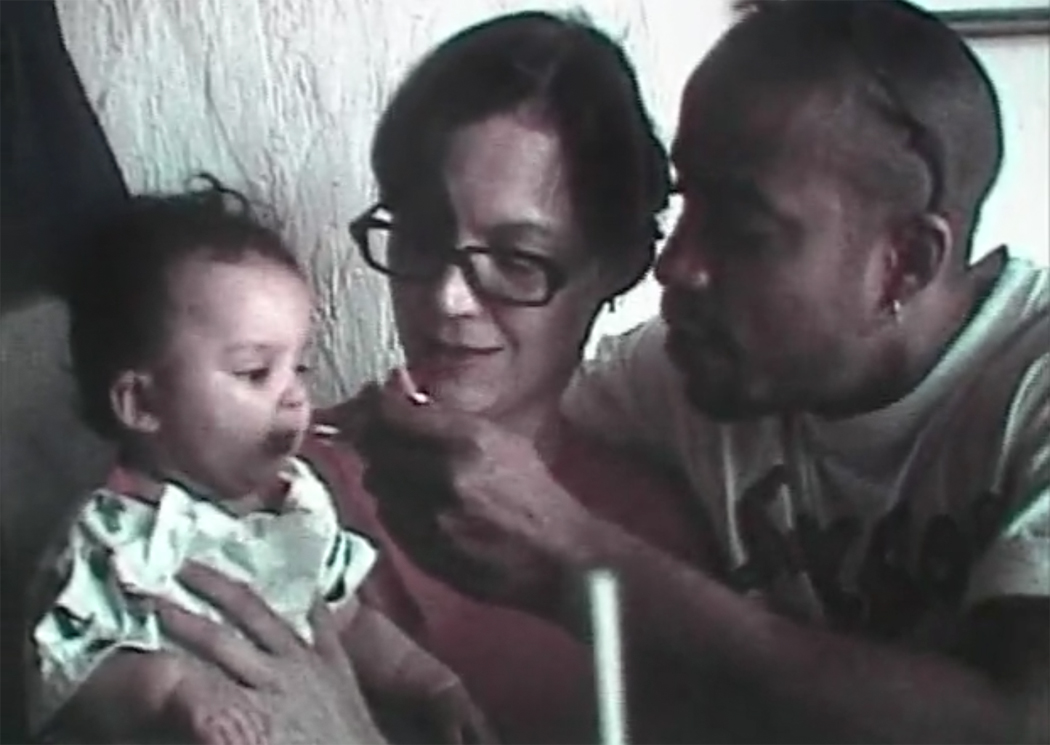
Note from 2016 — Decide for yourself; See Louis Taylor’s Esther, Baby and Me: https://vimeo.com/39118601
Jack surprised me several times with his generosity and willingness to consider other points of view.
Indeed, during the juroring process, he was always willing to negotiate and bargain and compromise. I take that as a sign of a very good juror. I also was willing to compromise. I think it’s the only way to do it successfully.
At any rate, we got through our choices in about a half hour and it only took that long because we stopped to view one of the films another time.
I conceded his first choice for documentary — The Sunshine, a straight documentary about the bums living in a Bowery flophouse — and he accepted Esther, Baby and Me as the second prize winner.
For Live Action 15 minutes and under, we both agreed on This Guy is Falling, although, if he had wanted to argue the point, he might have said it wasn’t really live action, since all the sets and backgrounds were computer generated. He didn’t so argue.

Note from 2016 — the film by Michael Horowitz and Gareth Smith explores what happens if the gravity switch is accidentally turned off. See This Guy is Falling: https://vimeo.com/347702
Our previous first choice, Echo, about a pair of holocaust survivors, one blind, the other deaf, fell gracefully into second place. Done.
In the conference room, Andy and Sharon had twice as many categories to go through: all the student films. It took them about an hour and they were done, too, with no rancor.
We waited and waited. I went out to the car and got a book. We watched a few favorite videos while waiting for Selise and Norman.
At one point, Fred Linch came into the booth with two videos.
“I’m going to have to cast a tie-breaking vote,” he said.
As head of jury, that was his job, although in six years of the festival, he had never had to actually do such a thing before. He watched two animations and finally made a choice. We heard a few grumbles from the office where Selise and Norman were arguing.
Another hour goes by. Fred comes in with another two films to cast another tie-breaker.
The voting was supposed to last from 9 to 11, if necessary. It took till 2 in the afternoon, because Norman and Selise didn’t know how to compromise and negotiate. They were both stubborn, although, as we found out later, it was mostly Norman who was the horse’s ass.
During the full-jury session to pick “Best of the Fest” from our selections, Norman blocked us, slowed us down and vacillated constantly.
“No, wait. Did I vote for Edge of Dusk? I meant to vote for … no wait, what were the choices?”
There were three choices, but he kept wanting to open it up to others, although no one else would have voted for them anyway, making the issue moot.
Over and over, Norman split hairs, argued points — all meaningless — and made us vote and revote. His notes were a salad of scrap paper with scribblings, in no particular order, so when he wanted to consult them, it would take him forever to find the note he needed, and then when he found it, it was no longer the point he was trying to make.
We were all pretty well exasperated by him, but finally drew the thing to a close.
Each judge was permitted to give one award to any film he wanted, no questions asked. Six “special merit” awards.
I gave mine to Titler, for the category, “Offensive in the Most Memorable Way.” In it a transvestite Hitler sings wildly obscene songs in various industrial settings. Note from 2016 — You can find it on You Tube, but I feel good taste and discretion recommends I not post it here.
After the five of us had done that, Norman came up with three possible merit awards and couldn’t make up his mind — more precisely, he couldn’t remember what they were. He shuffled notes, voted for one picture, changed his mind, no, wait, he went back the the first choice, but then, no, he found a third film and went with it, but wasn’t sure. We were beginning to form a lynch group.
Then Fred asked if there were any other films we should consider.
“I’ll allow up to two more merit awards, if you think they deserve it. But only two. I’ll leave the room and you decide what you want.
I nominated Tex, the Passive Aggressive Gunfighter. Everyone agreed it deserved an award.
Note from 2016 — Tex, The Passive Aggressive Gunslinger, by Brian Sawyer, features Bob Balaban as the deadly desperado who never needs to draw his gun. See Tex: https://vimeo.com/14837389

Sharon nominated a slender little slapstick animation film. Norman had three or four — he couldn’t make up his mind which.
Selise joined in. One of Norman’s films was a socially aware film about child abuse. As she was an officer in the group called Women in Film, she jumped right on it.
When Fred came back, we wound up having to vote to see which of the films would get the awards. Tex came in first, so he passed.
To make Selise happy (we didn’t care about Norman), we agreed to give an award to the child abuse film. Sharon was very upset, because, she said, “No one understands animation. This film is very good. I know how hard it was to do it. Awwwwwww.”
Jack jumped to it.
“I’m going to change my choice. For my unchallengable choice for a merit award, I’m going to go with Sharon’s animation. My film already won another award.”
Here he was again, building consensus. Sharon was very mollified.
So, that is how it all ended. The best film didn’t win best of show, but the film that did win was very good. Jack and I had bartered and were satisfied with our awards. I managed to squeeze a special award in for Titler, Andy and Sharon were happy with their choices, and Fred’s choices for Norman and Selise’s two first-place awards were perfectly acceptable.
That is the way it is as a juror. You hope to come out not being embarrassed by the jury’s choices. We did. If the best films in any one juror’s opinion didn’t prevail, at least the second choices of all averaged out and we all came away satisfied.
Even Norman was finally satisfied.








 We had to rush back to the theater for the 8 p.m. showing of Jewish documentaries, mostly involving the holocaust. Scary looking stuff, but the real winner was a film called King of the Jews, which took a very personal look at the image of Jesus as seen by a young Jewish boy who was deathly afraid of Jesus. It was all made up of clips of family films and old movies, set to the music of Bartok and Arvo Part. It made me cry. It gets my vote for best documentary. At least, so far.



 Take Forrest City, Arkansas. It is now more than 30 years since we came to that benighted place in the flat floodplain farmlands just west of the Mississippi River. We had traveled some 600 miles that day, from western North Carolina and were too exhausted to go further.
 The cracked concrete parking lot, with crabgrass poking through didn’t tip us off. The crazy old crone who was “concierge” didn’t give it away, either. I suppose our first real signal was when we got to our room, that underneath the paper “sanitized-for-your-protection” band on the toilet seat, a cigarette butt and a raft of soggy ashes floated in the water.


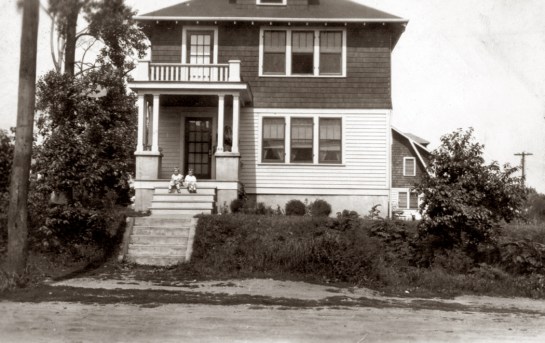
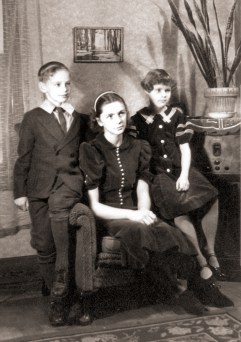 And so, I remember the front room of the house where we lived with my grandmother, Nana, in New Jersey just after the war. It sat directly on the town boundary between Teaneck and Bogota at the point Degraw Avenue began its long westerly descent to the Hackensack River. It was the house where my mother grew up, where her father died when she was seven, where she then had to raise her younger brother and sister while her mother worked in Manhattan. It meant that my mother never really had a free childhood, and perhaps as a result, adulthood always seemed to feel like a burden.
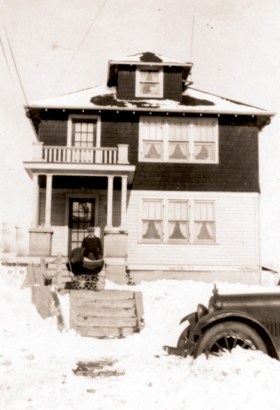 That two-family house divided at the front door. To the right was the front room of our apartment. Straight behind the front door were the stairs to the second floor, where Nana’s sister and her husband lived. Tante Esther and Uncle Gerry. That front room led through a wide arch to the dining room, at the far end of which were two spring-mounted swinging doors — one on either end of the wall — which led to the kitchen. Off the dining room to the left, underneath the staircase to Tante Esther’s, were the bedrooms and the hard-tiled bathroom with its claw-footed bathtub. At the back of the house, tucked behind the kitchen, was an addition my father had built where Nana’s mother came briefly to live and finally to die. She was a formidable woman, born Anne Gurina Kristiansen in Norway, but so old by the time I knew her she seemed almost like death already. The fact she died in what became my bedroom hardly registered on me. I was too young to understand.
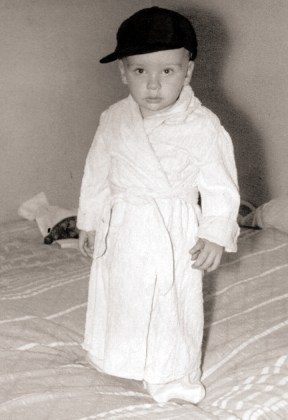 This isn’t about nostalgia, however, but about how a small boy experiences life. As an adult, one has a well of experience to draw on, a series of related moments forming a net, so that each new occurrence has some resonance with its past. But as a child, each thing is new and as yet unconnected to the rest. There are things taken as given: family, the house, the yard; later, the school, the way to the grandparents house. All these things ultimately mesh together, but those early memories are discrete; it is only as I pull them together while trying to doze off, that they begin cohere.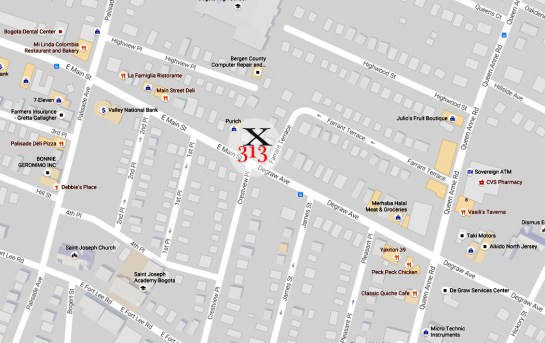
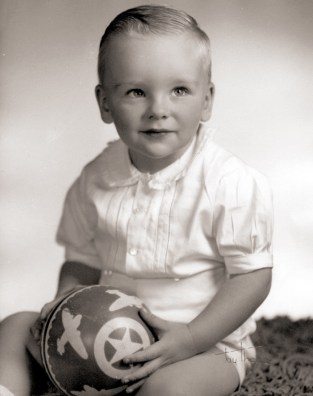 Out the front door of our house and across the street was Crestview Place, which ran uphill steeply to Fourth Place in Bogota, where Nana’s mother-in-law, Aase, lived, upstairs in a house where her sister lived downstairs — Tante Marie. The two were very old, very wrinkled and very powdered. When I was still pre-school, Aase lived with her ancient husband Thorvald, who wore thick black wool suits with a vest and a pocket watch, had wire-brush whiskers and the distinctive smell of old man. He died early on in my life and Aase — whom we called “Bestemor (Norwegian for “grandma”) — lived on into her nineties. I spent many a day at Bestemor’s house, climbing into the attic to play with the toys she still had from the childhood of my mother’s brother, painted lead cars and airplanes.



 Richard Nilsen