Archive

Uncategorized

There are classics, there are best-sellers, there are reference books. There are, in fact, books of all sorts and they keep coming out. The best-sellers are on the charts for a few weeks or months and three years later, libraries begin deaccessioning them; they turn up on the lower shelves of thrift stores or in dollar-bins at used book stores. Classics keep getting published in ever newer editions and more up-to-date translations. (Reference books are being replaced by Wikipedia). 

But there is a class of books that often gets forgotten, and of which I am a particular aficionado: peculiar books. I realized this the other day when I picked up off my shelves — after many years of neglect — a volume of Voyage autour de ma chambre, or Voyage Around My Room by 18th Century author Xavier de Maistre. It is a travel book detailing the geography, geology, climate, economics and the art and culture of the author’s bedroom. It is written in the form and style of a standard travel book, and while its intentions may have been satiric or at least comic, de Maistre plays it straight all the way through. 
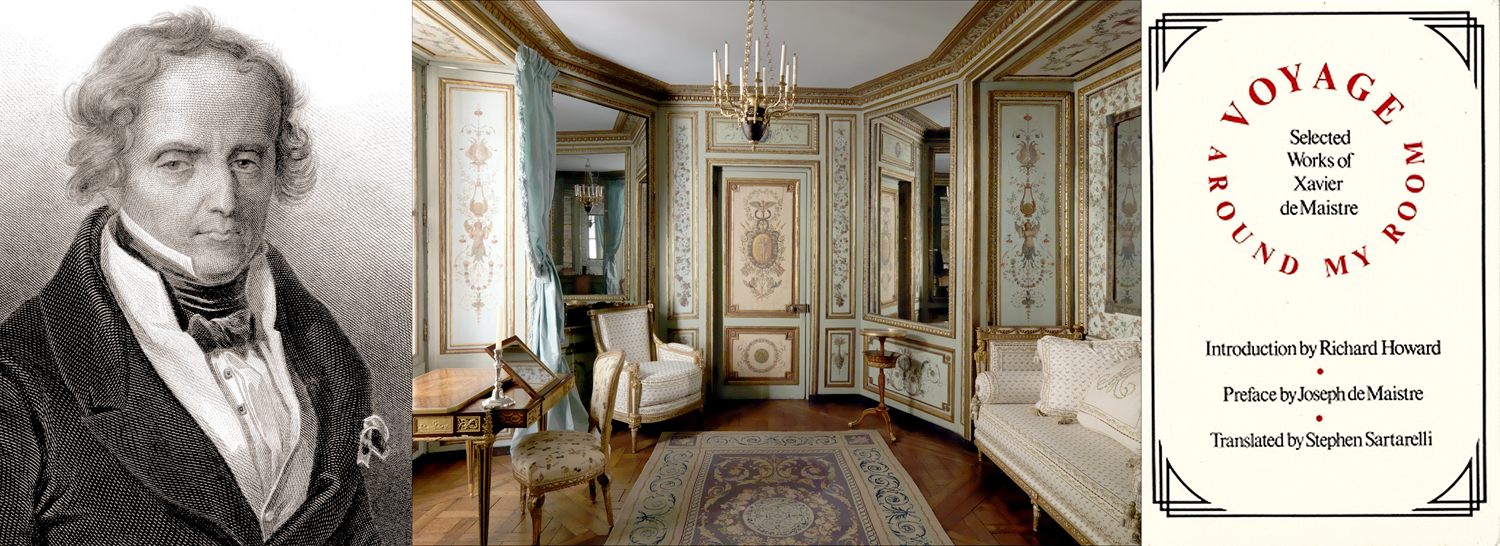
Its author was a military man who was placed under house arrest after illegally engaging in an “affair of honor,” or, in other words, a duel. He was cooped up in his room for 42 days and took the time to write his book, which he never really intended to be published. His older brother, Joseph de Maistre, however, got hold of it and had it printed in 1794 without Xavier’s knowledge. It became something of a minor literary sensation and was republished several times. 

“The walls of my room are hung with prints and paintings that greatly embellish it. I most sincerely wish I could let the reader examine them one by one, to amuse and distract him along the road that remains to be traveled before we reach my writing desk; but it is impossible to explain a painting clearly as it is to paint a faithful portrait on the basis of a description.” 

De Maistre goes off on many tangents. I love tangents; I always have. I remember once, when… well, maybe another time. 
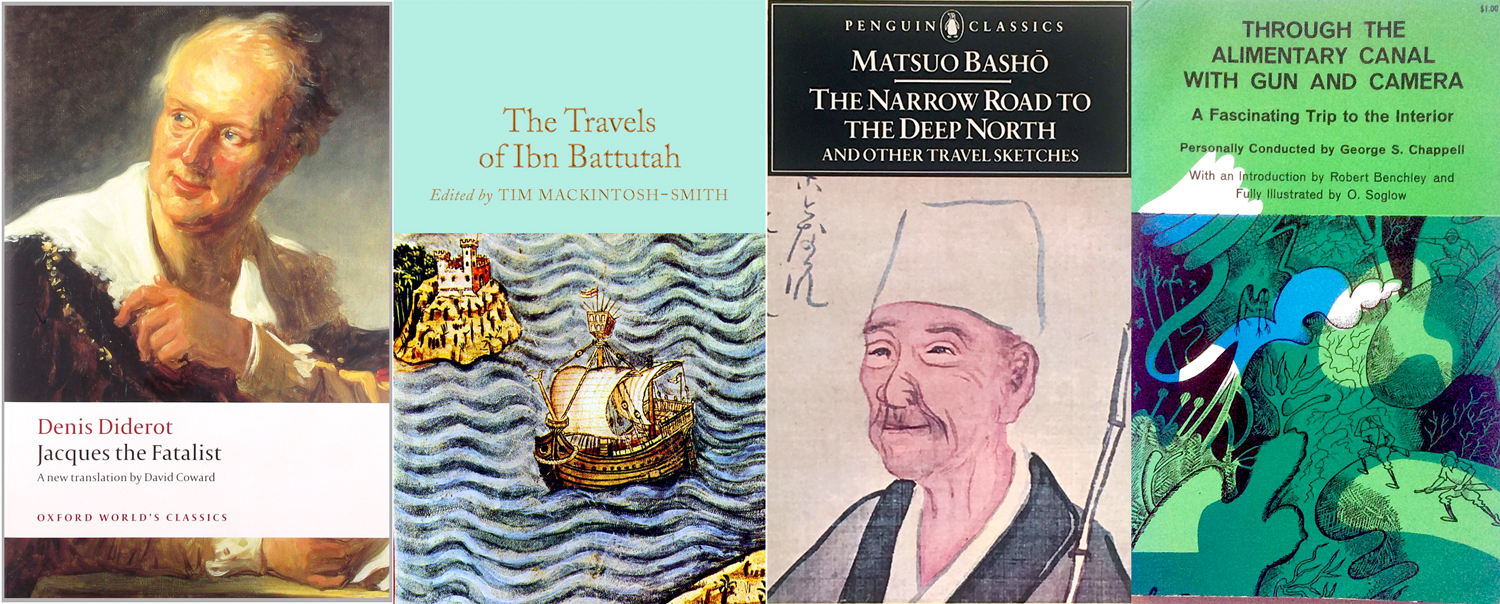
My own library has its fair share of arcane and esoteric books. Contemporaneous with de Maistre is Denis Diderot’s Jacques the Fatalist, another sort of travel book, although where Jacques and his master are traveling is never quite made clear. Through the book, the servant Jacques passes the time by telling many stories, most of them interrupted before they conclude. 

Then, there is The Travels of Ibn Battutah, an Arabic book from the 14th century in which its author travels through all the lands of the Dar al-Islam. He put on more than 70,000 miles in his wanderings, more than three times the distance traveled by Marco Polo. The full title of his book is A Gift to Those Who Contemplate the Wonders of Cities and the Marvels of Traveling, but most just call it the “Travels.” 

Then there is The Narrow Road to the Deep North, by Japanese poet Matsuo Basho. Published in 1702, it is as much haiku as prose, as the author travels by foot across northern Honshu, visiting shrines and literary sites. “Every day is a journey, and the journey itself is home.”

More facetious is George Chappell’s Through the Alimentary Canal with Gun and Camera, published in 1930, with illustrations by Otto Soglow. 
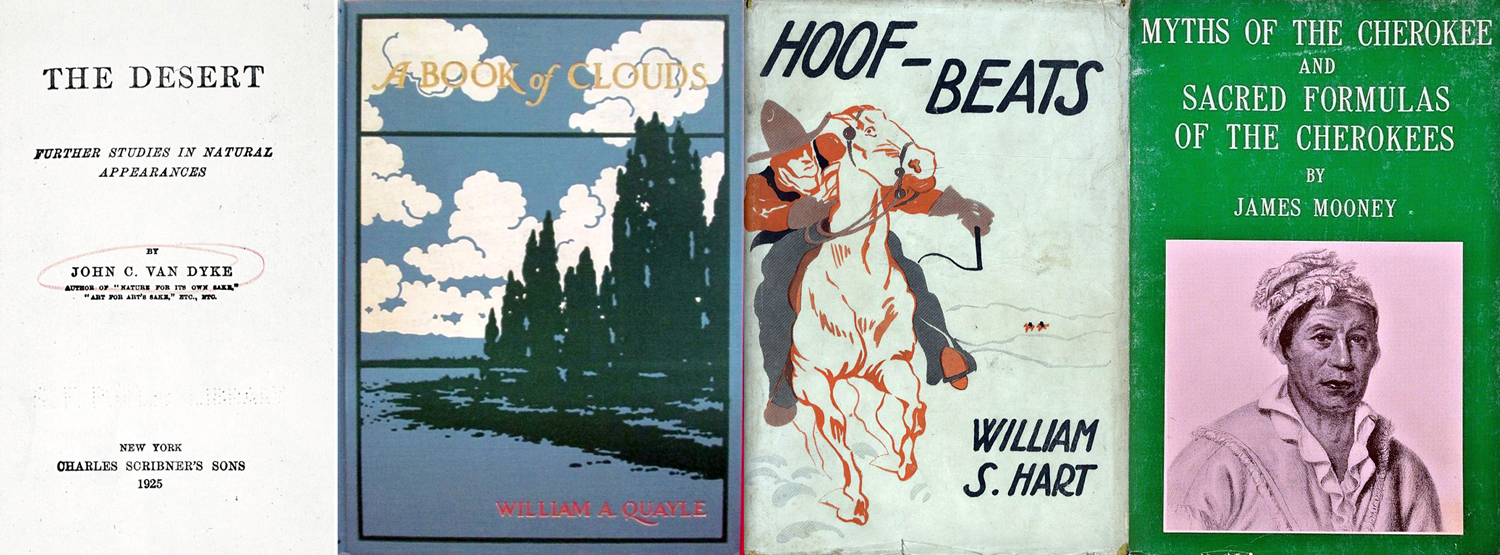
One of the most overwritten books I know, purple as any prose ever penned, is John C. Van Dyke’s The Desert, from 1903, a paean to his visit to the great American Southwest. For those who like this sort of thing, this is an utter and complete delight. It is difficult to quote him briefly; his charms are in his expatiation. He begins by talking about a group of mountains in the Colorado desert: “For days I have been watching them change color at sunset — watching the canyons shift into great slashes of blue and purple shadow, and the ridges flame with the edgings of glittering fire. They are lonesome looking mountains lying off there by themselves on the plain, so still, so barren, so blazing hot under the sun. Forsaken of their kind, one might not inappropriately call them the ‘Lost Mountains’ — the surviving remnant no doubt of some noble range that long centuries ago was beaten by wind and rain into desert sand.” 

To find language more garish, you would need to go to A Book of Clouds by William A. Quayle, from 1925, a series of black-and-white photographs layered with encomia and reminiscence. Writing about clouds and trees, he goes on: “In cloudy summer days the whole sense of the summer personality of a tree becomes manifest. The observer is not blinded by the light and not misled by the empyrean distance and height and azure. The tree stands as a picture hung and framed upon a gallery wall. It intrudes on you there. It seems to feel its own dignity and stands to have itself observed, the very picture of modest yet unashamed loveliness.” 

They are not all travel and nature, these oddities of publication. I have a copy of 1933’s Hoofbeats by the great cowboy actor William S. Hart. When retired from making movies, he wrote in his introduction, “You can’t see me on the screen any more and I do so yearn to be remembered,” and so he wrote a series of Western novels. Hoofbeats begins: “How the wind did lash the rain into our faces! The flashes of lightning were so brief that where you were quite sure you had seen solid ground, your feet would slide into a deep puddle. Then, too, my captors had bound my arms with a stout rope, and it was not easy to make headway against the storm.” 

I bought this tome many years ago while visiting Hart’s home, Horseshoe Ranch, in Newhall, Calif. The property was bequeathed to the state and is now William S. Hart Park and Museum. 

There are Indians as well. My late wife was besotted from childhood with American Indian stories and lore. She had a collection of arrowheads and stone axes. We had, at one point, a library of books on Native America that would have been the pride of a minor research facility. Most of them, we sold as a unit when we moved from Arizona to North Carolina. Among those we kept is James Mooney’s Myths of the Cherokee and Sacred Formulas of the Cherokees, first published in 1900. She used several of the spells and curses against her ex-husband. 
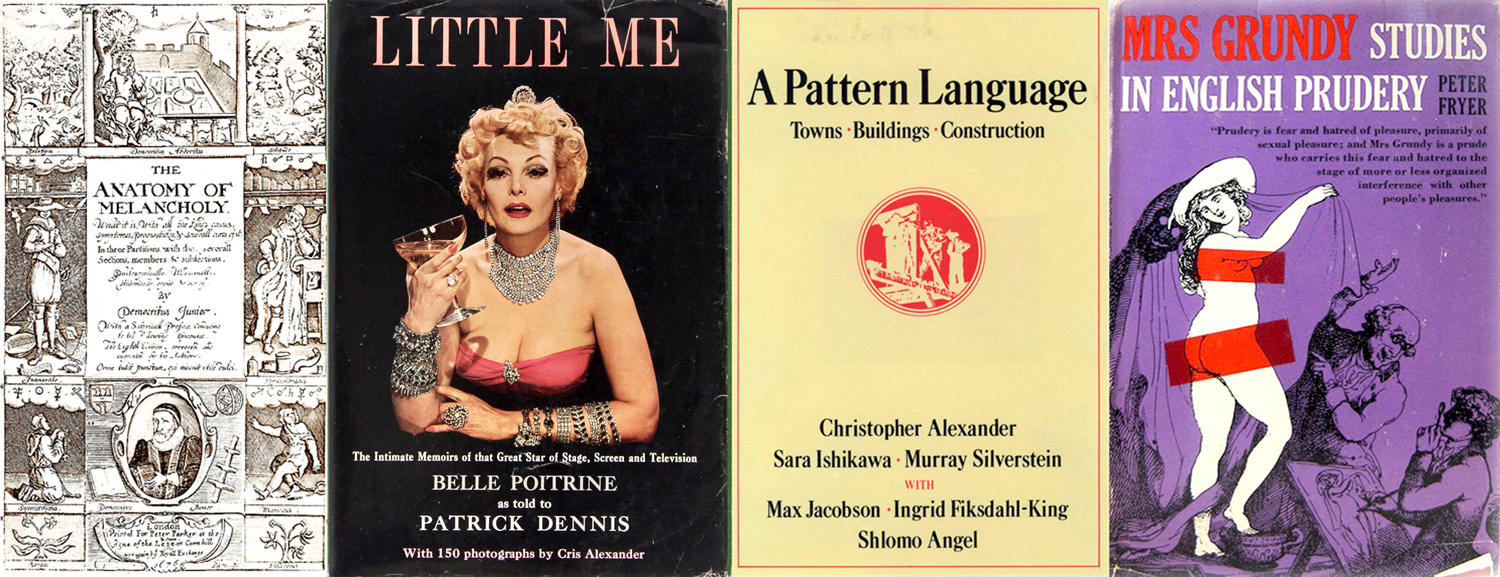
There are piles more oddities on the shelves. I don’t want to list them all. I should probably mention Robert Burton’s Anatomy of Melancholy, an early exploration of depression and mental illness, wrapped up in Latin quotations and wild digressions, from 1621. Or the odd architectural book, framing memes and ideas in design and planning, called A Pattern Language. On a more risque side, there is Patrick Dennis’ Little Me, a fictional autobiography of a fictional dim-witted sex-bomb actress named Belle Poitrine. And Peter Fryer’s compendium of blue stockings, Mrs. Grundy: Studies in English Prudery

But it isn’t just arcane subject matter than interests me. Sometimes it is the titles alone that catch your interest. One of my favorite oddball books is George Leonard Herter’s Bull Cook and Authentic Historical Recipes and Practices, one of the looniest books ever to see ink. ((I’ve written about it elsewhere). He includes the Virgin Mary’s favorite recipe for spinach and the fact that she loved bagpipe music. Also, how to survive a nuclear bomb and the dangers of peppering your eggs. Herter wrote several other books, including How to Live with a Bitch

Titles can get quite involved. I learned music theory from Allen Irvine McHose’s The Contrapuntal Harmonic Technique of the 18th Century. I’ve collected books simply for their titles. Such as Phylogenetic and Morphological Problems of Taxonomy in Relation to Hominid Evolution and the immortal Design of Active-Site-Directed Irreversible Enzyme Inhibitors, by Bernard Baker. Everyone should have a copy, prominently placed in the living room bookshelf, just for the consternation of nosy houseguests digging through it. 

This interest in peculiar titles led me to search for others. I found dozens worthy of note. There is even an annual prize for the oddest book title, the “Bookseller/Diagram Prize,” which was first given out in 1978 and awarded to Proceedings of the Second International Workshop on Nude Mice. The following year, it went to The Madam as Entrepreneur: Career Management in House Prostitution

The organizers of the award soon realized a problem. Too many publishers were giving catchy and peculiar names to otherwise sane books to boost sales and, perhaps to get the coveted prize. One winning title was discovered to have been generated solely by algorithms: The 2009–2014 World Outlook for 60-milligram Containers of Fromage Frais. The question was, should that be allowed in competition? 

The odd titles fall into three broad categories. First are the self-help books that need the extra boost from a catchy title. 

And so we have Bombproof Your Horse, which is really just a manual for training your horse not to get skittish at surprises. Then, there’s Outwitting Squirrels and The Beginner’s Guide to Animal Autopsy, which is a pretty-picture book about animal anatomy aimed at young audiences. Living with Scarves is self explanatory. All About Pockets is subtitled: “Storytime Activities for Early Childhood.” The catchy title is amusing, but there are more serious books, such as:

Deodorizing the Skunk by Surgery or Anyone Can Build a Tub-Style Mechanical Chicken Plucker, subtitled “Plucks Turkeys Geese and Ducks Too!” Farming with Dynamite was published by the DuPont company as “A Few Hints to Farmers.” Good-bye, Testicles, by Anne Welsh Guy, is a book to explain animal neutering to your child. 

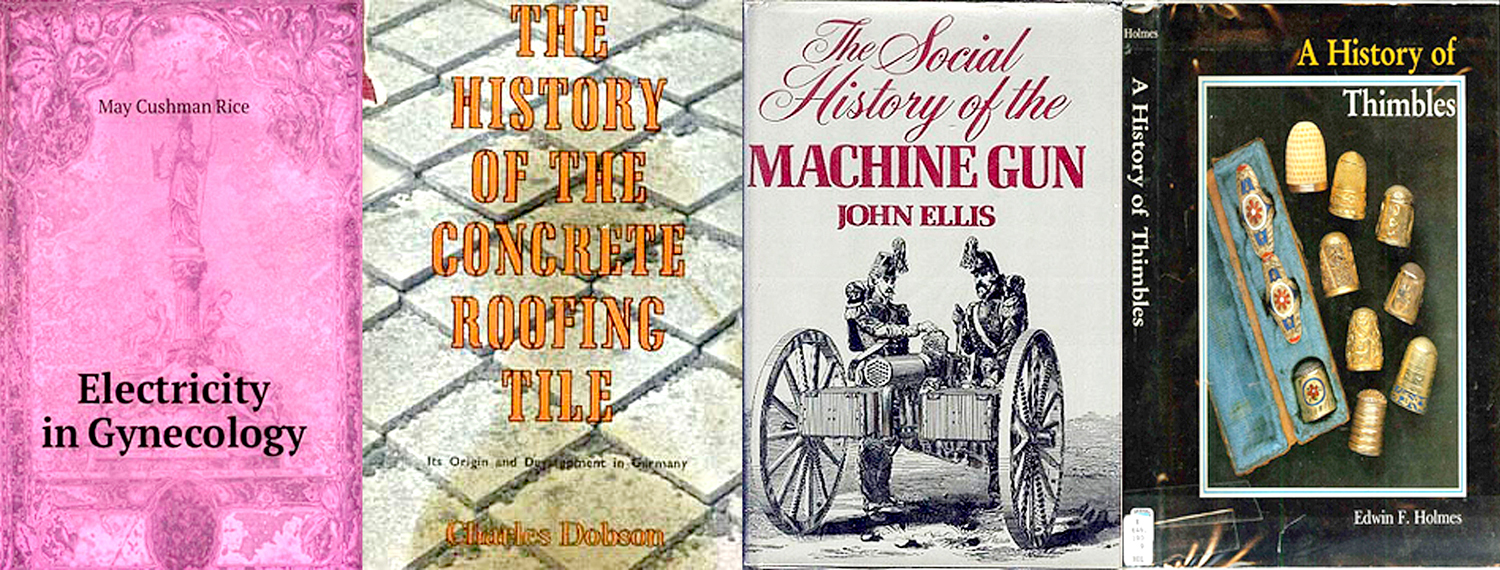
Then there is the category of histories and explanatory manuals. They cover a great deal. One of the more alarming is May Chushman Rice’s Electricity in Gynecology. Charles Dobson offers the electrifying History of the Concrete Roofing Tile. I did not even know there was a Social History of the Machine Gun. How about the History of Thimbles

There’s also Anne Wilson’s The Book of Marmalade: Its Antecedents, Its History, and Its Role in the World Today. And C.C. Stanley’s Highlights in the History of Concrete. Or Gregory Forth’s A Dog Pissing at the Edge of a Path: Animal Metaphors in Eastern Indonesian Society

A third category is titles from a bygone age, when the world was, well, different. Sometimes it is a change in language, which makes the old title mean something different now. Like Drummer Dick’s Discharge, a 1902 book by Beatrix M. De Burgh about a young soldier leaving the military. Which brings us to the 1713 book, The Symptoms, Nature, Cause and Cure of a Gonorrhoea, not funny in itself, except its author was William Cockburn.  

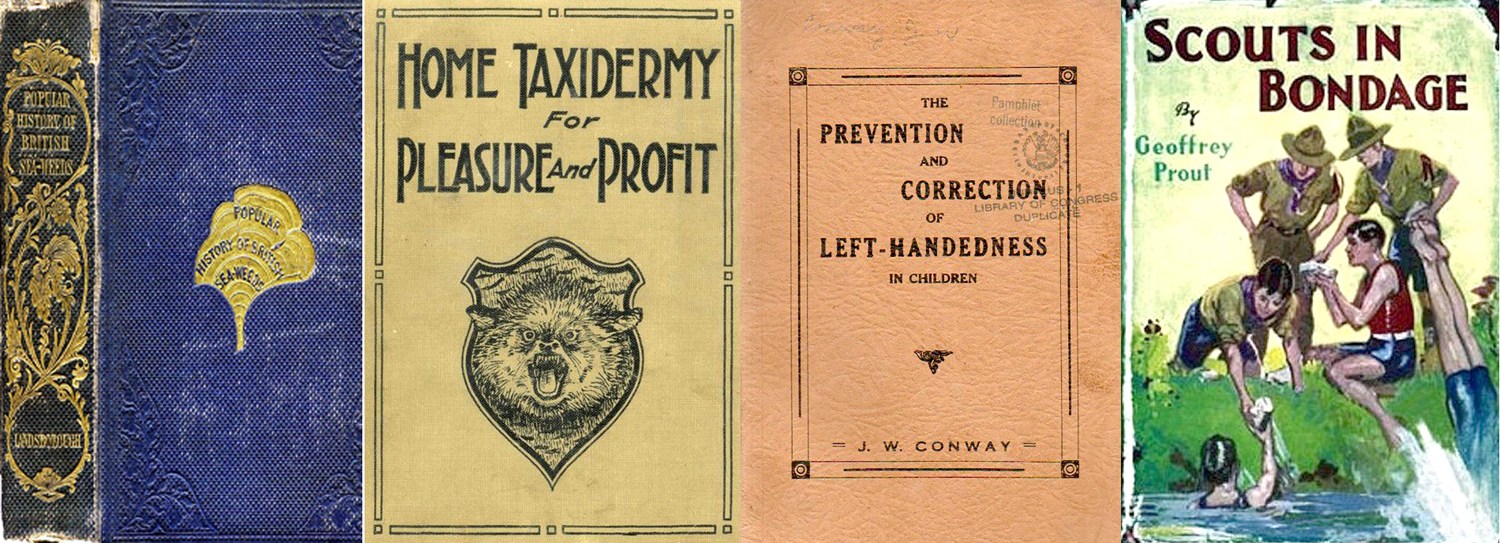
Among the older volumes is the Popular History of British Sea-Weeds. I would love to own a copy. Among outmoded ideas is J.W. Conway’s The Prevention and Correction of Left-Handedness in Children. Geoffrey Prout wrote a book called Scouts in Bondage. I have no idea. 

I want to throw out there a few other titles. In 1991, the U.K. published The Population of Great Britain Broken Down by Age and Sex. Ambiguity in action. In 1891, Captain John G. Bourke published Scatalogic Rites of All Nations. The title page warns “Not for general perusal.” 
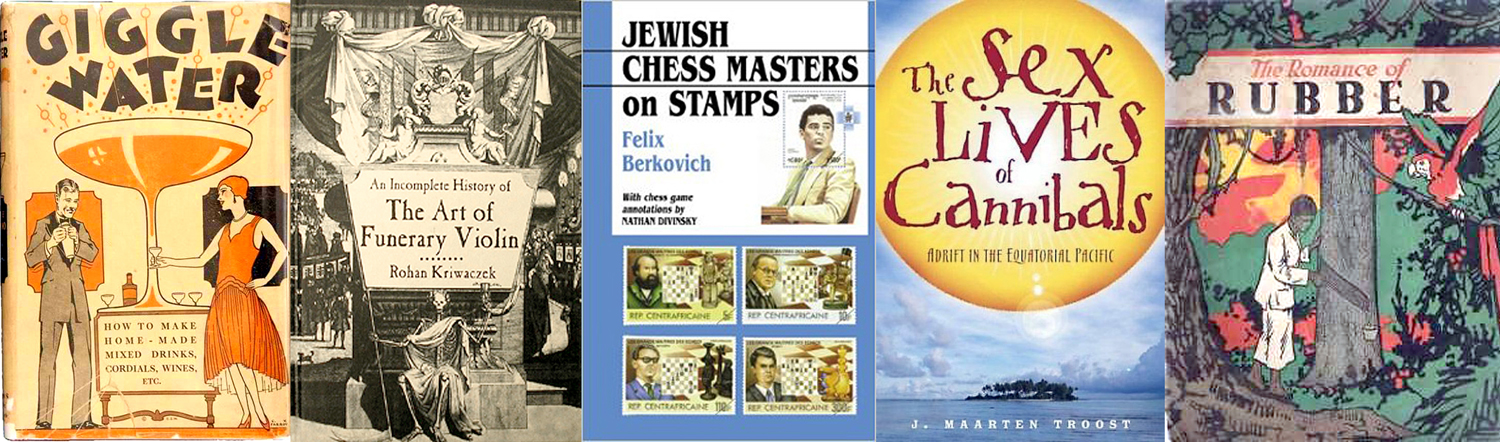
In 1900, an episode in the Second Boer War was chronicled in Thrilling Experiences of the First British Woman Relieved by Lord Roberts. From 1856 comes Three Weeks in Wet Sheets: A Moist Visitor to Malvern

Lesbians get their own subsection, with Lesbian Sadomasochism Safety Manual by Pat Califia and The Big Book of Lesbian Horse Stories by Alisa Surkis and Monica Nolan.

And finally, a few last Bookseller/Diagram Prize winners. Unsolved Problems of Modern Theory of Lengthwise Rolling, by A.I Tselikov, S. Nikitin and E.S. Rokotyan — about rolling as a metalworking technique. 

Greek Rural Postmen and their Cancellation Numbers, by Derek Willan. Not a large audience for that one. Weeds in a Changing World by Charles H. Stirton. Designing High Performance Stiffened Structures. The Stray Shopping Carts of Eastern North America: A Guide to Field Identification. Strangers Have the Best Candy

Alan Stafford’s Too Naked for the Nazis is about the once-famous vaudeville act of Wilson, Keppel and Betty, which was denounced as “indecent” by Joseph Goebbels in 1936. 

There’s also Dentistry for the Deceased Annual 1974, Teach Your Wife to be a Widow, Help Lord — The Devil Wants Me Fat! and The Pop-Up Book of Phobias. Boo. 

The Bible says “Of making books there is no end.” The same for goofy books. If you have a favorite weird book or book title, please add them in the comment section. 

Click on any image to enlarge
In my seven decades — half of them spent as an art critic — I have been to too many art galleries and museums to be able to count the shows I have seen. Nor can I count the concerts, recitals, theater productions I’ve seen or books I’ve read. Most of them I’ve enjoyed, but few were so memorable that I still have in my nostrils the aroma they gave off. 

This is not to disparage most of the others. I’ve eaten too many restaurant meals to count. Most of them I enjoyed. They did what was asked of them. But can I recount a ribeye I once had in Bakersfield? No. That would be silly. 

But there are meals and concerts that stick, art exhibits that did more than give an hour’s pleasure, concerts that changed my way of thinking about the world. 

And let’s be honest, one is willing to pay the ticket price for a lot of minor pleasure in the expectant hope that this next one will be a world-changer. The odds are against it, but we persist. Every once in a while, we are gobsmacked, and know why it has been worthwhile to sit through a hundred Beethoven Fifths to get to this one that goes beyond mere pleasure to transcendence. 

We live for those moments; they make life worth living. 

In a recent blog, I recounted my earliest such encounters, with Eugene O’Neill at the McCarter Theatre in Princeton, N.J., when I was in high school. With J.M.W. Turner at the Museum of Modern Art in New York a few years later. With Emil Gilels at the Brooklyn Academy of Music the same year. These all set my life on a course to spend it with art and music. These all proved to my adolescent heart and mind that there was something more real, more important, than the suburban life I was being brought up in. 

But the immersion didn’t end there. In subsequent years, there were many exhibits and concerts that stand out. That became such an engrained part of my life and world view, that it is as if I was still standing in front of those paintings, or sitting in the concert hall, hearing those notes. 

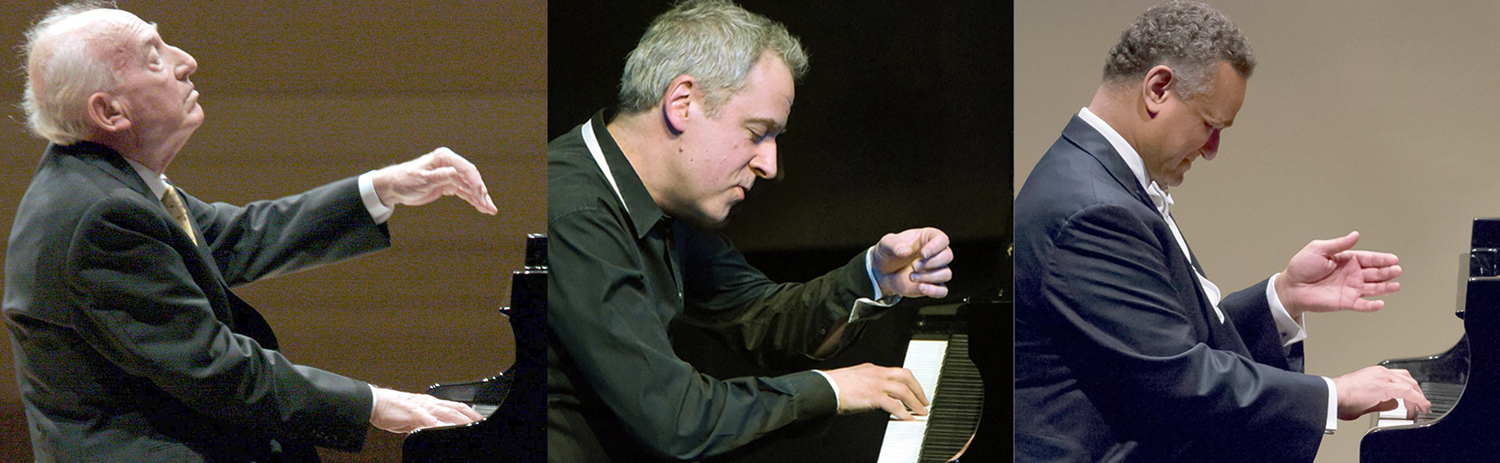
Let’s just take three piano recitals as examples. In 1991, I heard Maurizio Pollini at the Dorothy Chandler Pavilion in Los Angeles. In the first half of the recital, he played all of Chopin’s Preludes. In the second half, he played the Berg sonata and Schoenberg’s Six Little Pieces, Op. 19. All that was great. But he finished with the Stravinsky Three Scenes from Petrushka, one of the most difficult bravura piano pieces ever written. Pollini tore through it like a demon, but made every note musical. It blew me away. (The recital was notable for its intermission, too. The doors to the hall were locked and for nearly an hour, we could hear the piano being re-tuned behind those doors. Apparently Maestro Pollini was not satisfied with the instrument. We were kept waiting in the lobby until he gave his approval to the tuning). 

In 2008, I heard Jeremy Denk at Zankel Hall in New York, the recital hall that is part of Carnegie Hall, play the single most daunting program I could imagine, with Charles Ives knucklebusting Concord Sonata in the first half, and Beethoven’s mind-busting Hammerklavier Sonata in the second. I could only think of John Lennon’s immortal line “I got blisters on me fingers.” For an encore, he reprised the Hawthorne movement of the Concord. Very like running a 200-meter directly after running a marathon. 

I’ve heard Denk several times since then, and each time, his playing was, if not so Olympian, certainly significantly memorable. He proved to me, for instance, that the etudes of Gyorgy Ligeti are great music. And that Beethoven’s Eroica Variations are actually comic. 

Then, in 2011, I heard Andre Watts play the Liszt B-minor sonata in Scottsdale, Ariz., on an all-Liszt program. I had the perfect seat to see his fingers spin over the keys, and learned a great deal about the disposition of Liszt’s voicings by being able to see Watt’s fingers. His playing was ethereal. Liszt was a Watts specialty. 

But it wasn’t only music. After my initial infatuation with O’Neill in high school, I had seen too many mediocre live theater productions, and had come greatly to prefer movies. Theater seemed too artificial, too, well, “theatrical” for my tastes. But then, in 1993, I saw the original Broadway production of Tony Kushner’s Angels in America — both parts on successive days — and saw what live theater can do that nothing else can. It was one of the seminal experiences of my life. 

(It was also ruined for me most other theater, because so seldom is it ever this overwhelmingly powerful. But I have seen other great theater since then. Angels is not sui generis. I have seen Angels three more times, once in its road production —not all that good — once in a production by Actors Theatre in Phoenix, which was nearly as good as the New York production, and finally, in its Mike Nichols filmed version, which is very different from the stage version. It is a movie, not theater. Very good, but still, not the live experience on stage. The same difference between seeing the movie Amadeus and the stage version. Movie is good; live is great.)

I got to travel for my newspaper, and was able to review many major art shows around the country. They have been some of the most eye-opening and mind-expanding things I’ve done. 

In 1994, I saw John James Audubon: The Birds of America at the Art Institute in Chicago. It featured 90 of the original paintings used for the engravings published in his books. The originals persuaded me that Audubon might be considered America’s greatest artist. (You can read a version of my newspaper review here.)

In 1996, I visited Philadelphia for the big Cezanne show at the Philadelphia Museum of Art. One hundred oil paintings, 35 watercolors and 35 drawings from public and private collections. It was an overwhelming experience. I never knew there were this many distinct greens, blues, blue-greens, and greenish blues. And when you swipe a bit of vermilion against them, the whole thing glows like neon. Seeing Cezannes live is a very different thing from seeing them reproduced in books. 

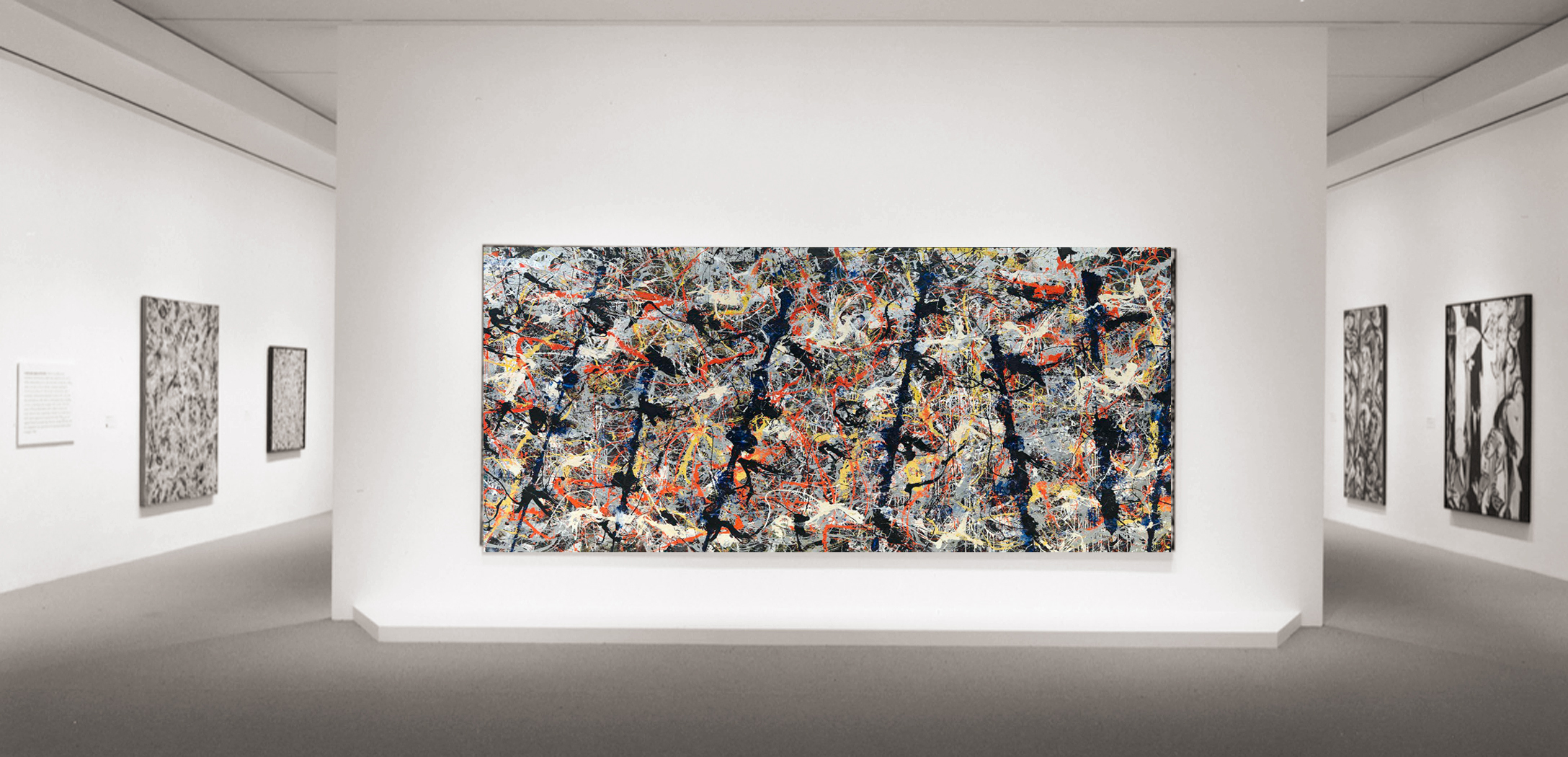
In 1999, I got to see the great Jackson Pollock retrospective at the Museum of Modern Art, which gave me the rare chance to see his Blue Poles, which is normally hidden away in the National Gallery of Australia in Canberra. 

That same year, there was a great Van Gogh show at the Los Angeles County Museum of Art from the Van Gogh Museum in Amsterdam. Like having the chance to see Pollock’s Blue Poles, I got to see Vincent’s iconic Wheatfield with Crows. The show as a whole was the best introduction to the artist’s growth from a clumsy, almost talentless neophyte to one of the world’s greatest painters. He wasn’t always Van Gogh, but when he became himself — the very definition of transcendence. 

I’ve been to Chartres Cathedral four times, and each time was overwhelming. I’ve now been to most of the great churches of northern France. The single most beautiful manmade thing I have ever seen is the north rose window at Chartres. I have sat transfixed in the south part of the crossing, staring back to the north, in total, for hours. It is a meditation or very like a prayer, if such can be said for a complete atheist. 

Overall, it is music that has most provided me with this feeling: Of taking me out of myself and letting my mind expand to a size larger than mere me-ness. Of course, most of the hundreds of concerts I have attended have only provided pleasure and entertainment. But there are those that do more. I thirst for those. 

In 1994, I heard the Philadelphia Orchestra under Wolfgang Sawallisch play the Strauss Don Juan and I felt music not just through my ears, but through my whole body and being. 

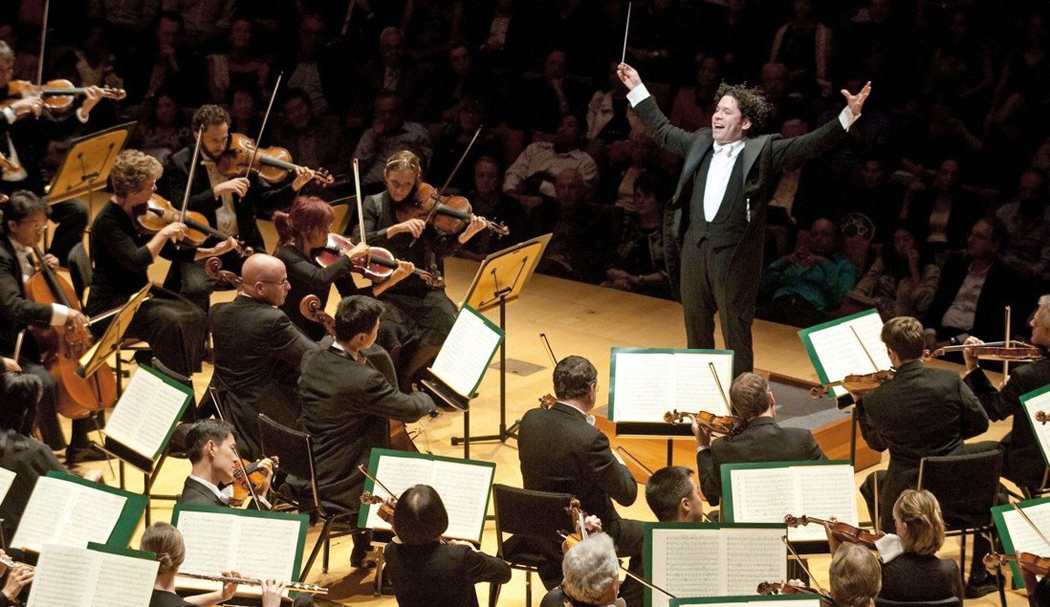
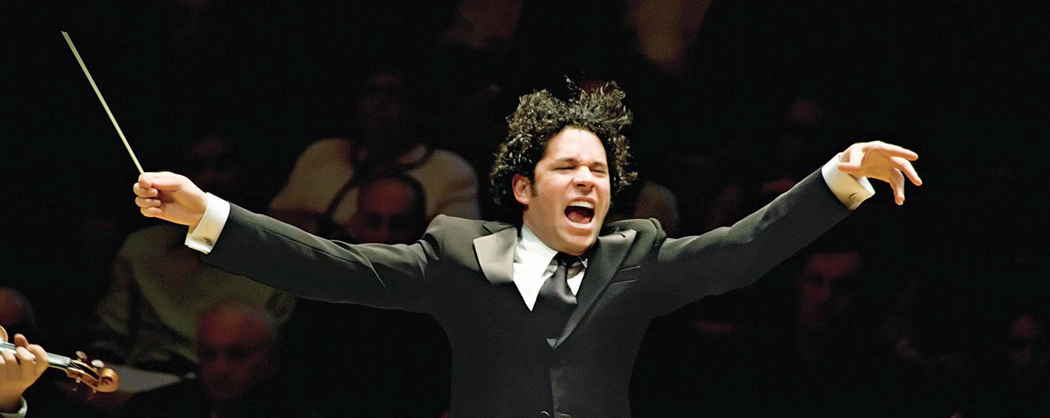
I’ve heard Gustavo Dudamel twice live. Once playing the Mahler First with the LA Phil, shortly after his appointment as music director. But before that, in New York with the Israel Philharmonic, playing the Tchaikovsky Fourth. That was in 2008; the Israel Phil was then an orchestra made up of older, formerly Eastern European men — bald-headed old pros who could give a polished performance under any conductor. But they played with the enthusiasm of little boys, even smiling at this bit or that as they produced the sound. After the performance, Dudamel, instead of turning and bowing to absorb the adulation of the audience, immediately danced up into the orchestra and jumped up and down with the musicians, shaking hands and pointing out soloists. I’ve never seen such a powerful effect a conductor has had on a group of musicians. They seemed to love him back. 

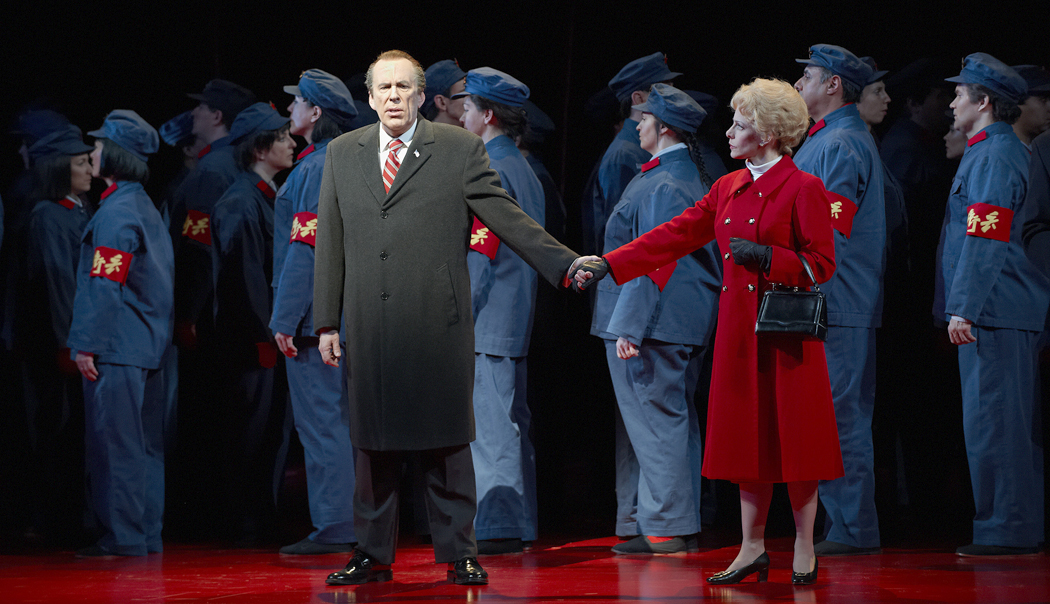
There have been other concerts: In 2008, there was Ozvaldo Golijov’s Ainadamar with Dawn Upshaw; in the same year, there was Doctor Atomic at the Metropolitan Opera in New York. In 2009, there was Nixon in China with Robert Orth in the title role. In 2010, Steven Moeckel played the Beethoven violin concerto with the Phoenix Symphony at the Scottsdale Center for the Arts. I have never heard a better, more moving and detailed performance of the concerto. At least not live. 

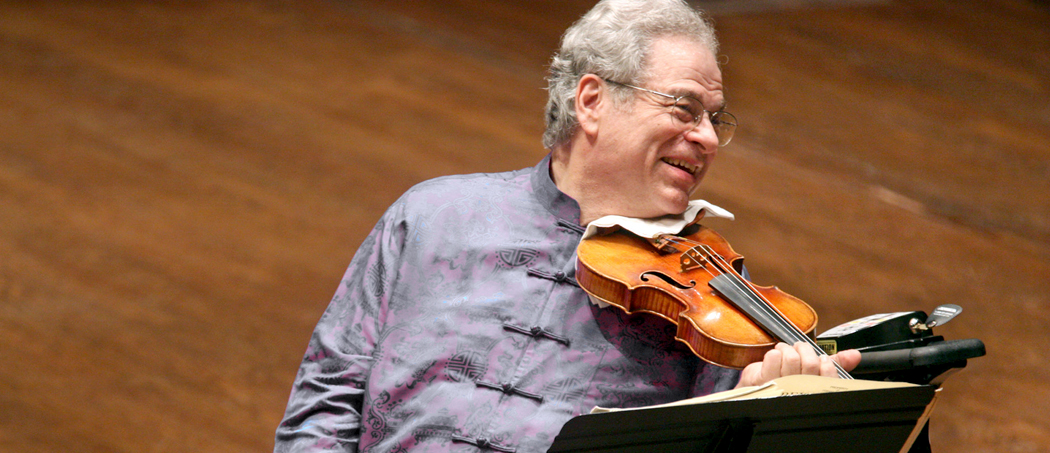
Sometimes, it is only a single work on a program. I’ve heard Itzhak Perlman I don’t know how many times. He’s a miracle; but he isn’t always completely engaged. He can give a creditable performance even half asleep — and he has been known to. But then he will redeem himself. In 2008, he gave a performance in Scottsdale. He ended the recital with his usual encore pieces and tired jokes. The same jokes over and over each concert. Perlman can be quite tiresome. And he opened with a Bach sonata, well played but nothing special. Then, as I wrote in my review:

“But then, with the Richard Strauss violin sonata, the sun shone through and the angels sang. It’s not for nothing that Perlman is a superstar. He gave us a version of the music no one else could give. Rich as butter, emotionally complex and powerful, he persuaded us that the Strauss sonata is a major piece of music, rather than B-list work by an A-list composer, which is how it’s usually ranked.

“From the opening notes the music dripped with personality, as Perlman pushed or dragged the notes just enough to create the kind of perfect phrasing that makes the music speak directly to your innards.”

It is for moments like that for which we will put up with so much less for so long. 

There are two other moments I would like to mention. 

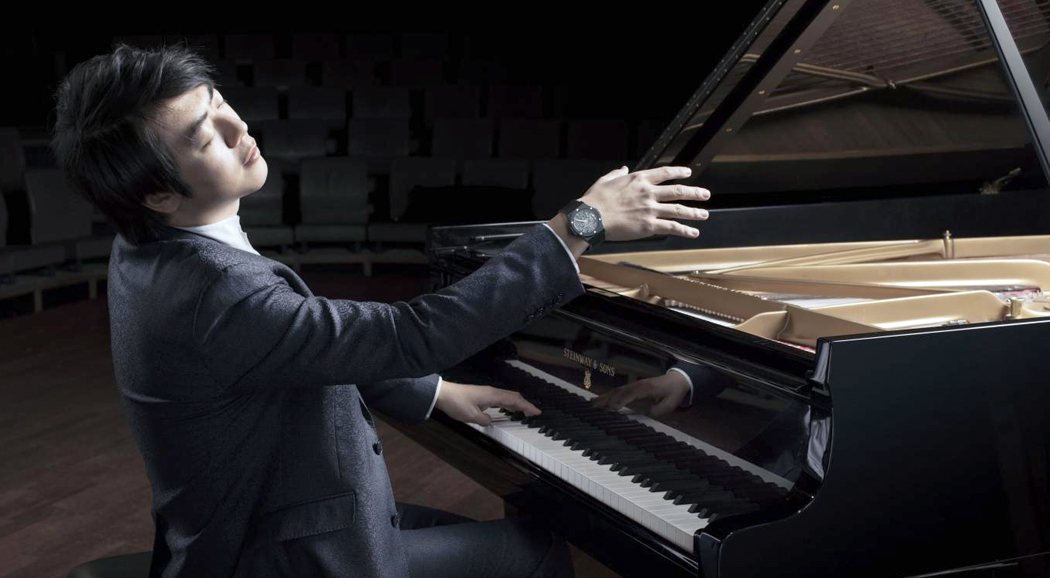
The first is a concert with pianist Lang Lang. He has a bad reputation with some critics for histrionics on stage — rocking and eye-rolling — and he has on occasions played loud and fast, but without much impact, for which he has gotten the nickname “Bang Bang.” But he can also play the way he did in the slow movement of the Chopin concerto, on Oct. 24, 2008 (2008 was a very good year for me). As I wrote in the review:

“At the conclusion of Goethe’s Faust, his aging hero looks out on the world with a note of satisfaction. ‘I could almost wish this moment to last forever, it is so beautiful.’

“That is exactly how pianist Lang Lang played the slow movement of the Chopin E-minor piano concerto Sunday with the Phoenix Symphony. He lingered over it, stretching its already vague rhythmic drive down to a near halt, and stopping the audience’s breath with it.

“Each phrase seemed to pour forth spontaneously from the pianist’s fingers, followed by another seemingly thought of on the spot. No two phrases were played at the same tempo, and each tempo seemed perfectly expressive.

“It is a rare performer who can risk such an arrhythmia, and who can use it to make the music express poetry and longing, dreaming and anticipation. It was one of the best performances ever given by a soloist at Symphony Hall.”

My best moments in the concert hall has been when time completely stops and I get a glimpse of eternity — not eternity as an infinite number of moments end-to-end, but a eternity as utter timelessness. Time ceases to exist. 

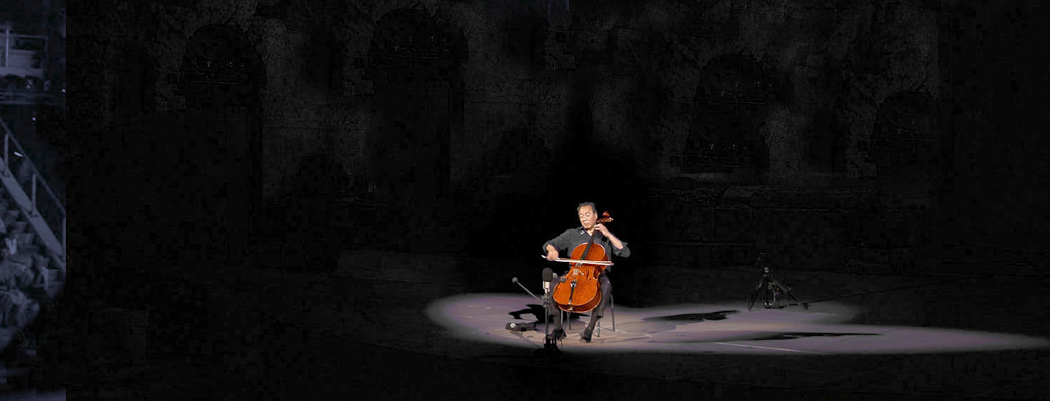
That has happened each time I’ve heard Yo-Yo Ma play the Bach cello suites. I’ve heard him several times, including doing all six in a single concert. 

“Ma concluded with the sixth suite, as intense as an Aeschylan tragedy, with climaxes at the slow allemande and the even slower, deeper, more intense sarabande. Blood almost ceased moving in my veins and only started pulsing once more with the gavotte that followed, as the relief from tragedy, and a reawakening to the life of the body.

“This kind of music is why we listen to classical music: It isn’t enjoyment we are after but solace, reflection, a reconnection with the more important parts of ourselves. It brings us to the place where the deepest thought and the most profound emotion cannot be told apart; they are the same thing. It is proof that art is not merely entertainment, but food for our deepest hunger.”

There are many more such moments over the years, but I can’t mention them all. This is already too long. But, my life has been nurtured by such moments and experiences. They have made me who I am. 

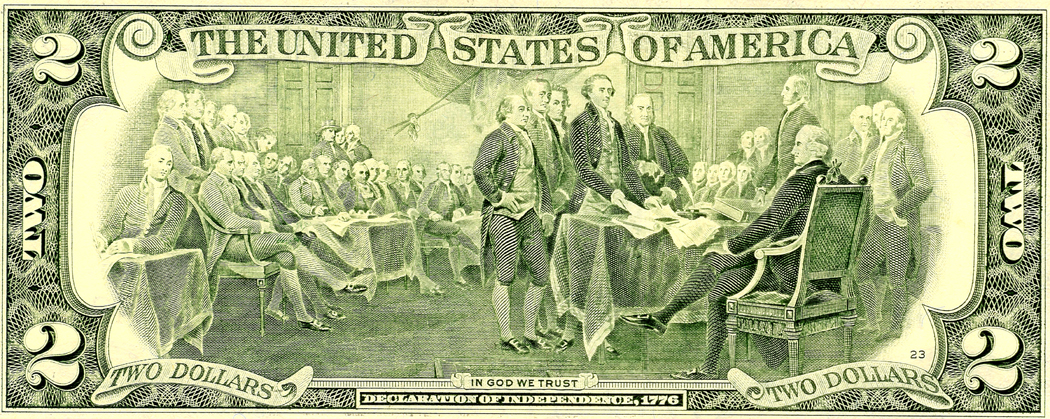
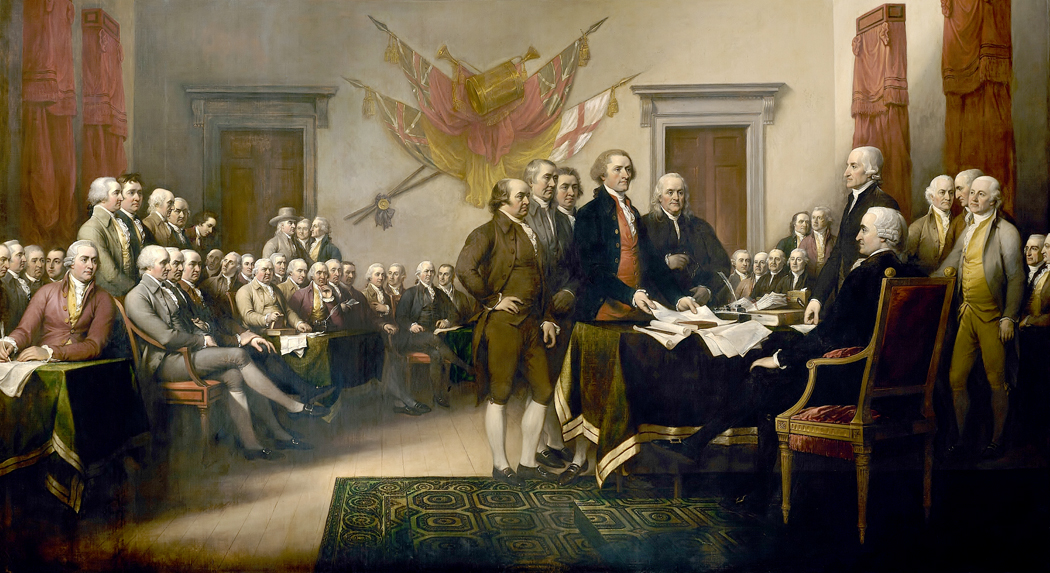
I am reposting an earlier piece, about the Declaration of Independence, on this Fourth of July. It seems appropriate in this age when Enlightenment values are under siege. 

Perhaps the most peculiar thing about the Declaration of Independence is that the portion of it that seemed commonplace when it was written now seems revolutionary, and the part that seemed to its framers as most central, to us seems trivial, even whiny.

As a piece of rhetoric, it begins in generalities, narrows to specifics, and ends in a course of action. It couldn’t be more concisely structured. The committee charged with drafting it in the summer of 1776 chose wisely when it asked Thomas Jefferson to write the first version. Jefferson’s prose is a model of late 18th-century style: precise, lucid and syllogistic.

But the only part of the Declaration that most people can recall, outside the opening, “When in the course of human events,” is the second paragraph. That second stanza contains the seed of every revolution that followed, from the bloody French to the bloody Russian. It is a statement of belief that is the foundation of American society, and almost every government created since 1776.

It states baldly and without argument or support, that all men are born equal, have certain rights by virtue solely of being born, and that when a government fails egregiously to effect the safety and happiness of the people, it is their right to replace it.

But Jefferson didn’t invent its ideas whole cloth. In fact, as Jefferson wrote years later, the purpose of his stirring words was “not to find out new principles, or new arguments, never before thought of, but to place before mankind the common sense of the subject, in terms so plain and firm as to command their assent, and to justify ourselves in the independent stand we are compelled to take.”

Much of the remainder of the Declaration is given over to a litany of complaints the colonies had about British governance. Some of these complaints still seem legitimate; many seem trivial, even trumped up. “The King did this” and “The King did that.”

He has plundered our seas, ravaged our coasts, burnt our towns and destroyed the lives of our people,” it says. Pure hyperbole.

These complaints were the part of the Declaration that was “news” in 1776. They constituted what made the document inflammatory.

Few can read through the whole of the Declaration of Independence now without a sense of fatigue: Those complaints were the issues of 1776, not of today.

It is the second paragraph that seems told to all people at all times, and remains news to us in the 21st century.

Bridge between ages

But to follow those ideas from the century before the Declaration into the ink on its page shows just how important its year of birth was. It was born in the cusp between two great ages, two overriding sensibilities, and partakes of both.

The period from about 1750 to about 1825 is one of the richest in humankind’s history, fertile, even febrile. It is in many ways, the hinge between the past and the modern, between the classically minded 18th century and the Romantic 19th. From an age of Reason to one of Sentiment — as it was called at the time. In Europe, it was the age of Goethe and Rousseau.

And no figure in the American experiment better demonstrates that shift of sensibilities than Jefferson.

On one hand, he epitomized the faith in science and logic of the Enlightenment; on the other, he shared with the revolutionary Rousseau the belief in the nobility of humanity and its drive to social improvement.

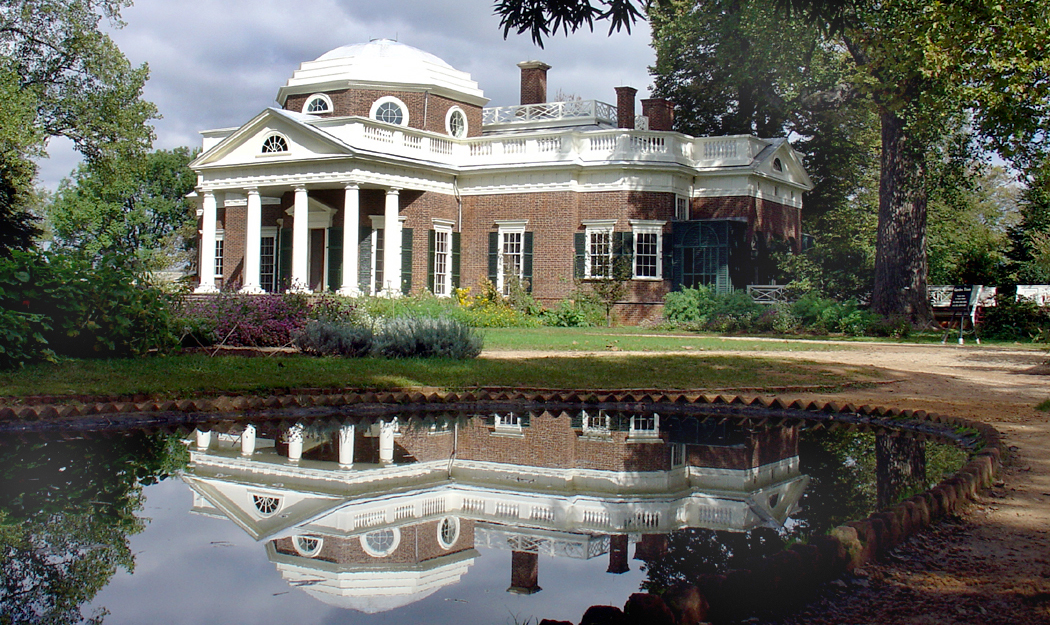
You can hardly fail to notice this point when you visit Jefferson’s home in Virginia.

Monticello is a mirror of its maker. Jefferson built a model of Palladian proportion and filled it with moose antlers. The outside lines of the house are clean and mathematically rational. The inside is a warren of peculiar and unnerving spaces.

Jefferson never fully reconciled these two aspects of his personality. He was a slave owner who sings of the dignity of the free man. How much more conflicted than that can you be?

The Declaration of Independence speaks to us now, in large part, because of this clash of sensibilities in Jefferson.

On the one hand, you have the ideas of the Enlightenment, that brilliant flame of philosophy and science that sprang up in Europe in the 17th and 18th centuries.

On the other hand, you have the growth of the individual as a thinking and feeling person.

The Enlightenment preached rationality and temperance, tolerance and universal principals. One of its most influential writers was John Locke, who, in his Second Treatise on Civil Government, from 1690, wrote that all human beings have natural rights and that these included “life, liberty and the pursuit of property.”

It was an idea that took hold and flourished.

By the time of the American Revolution, the idea was commonplace. It shows up in George Mason’s Virginia Declaration of Rights in June 1776, in slightly altered form:

“That all men are by nature equally free and independent and have certain inherent rights, of which, when they enter into a state of society, they cannot by any compact, deprive or divest their posterity; namely, the enjoyment of life and liberty, with the means of acquiring and possessing property, and pursuing and obtaining happiness and safety.”

When you compare that with what Jefferson first wrote, you can see how much better a writer Jefferson was. He only needed 31 words to say what Mason required 57 for, and say it more forcefully and memorably.

An economy of words

Jefferson’s first take on this was considerably more sonorous, but still not quite there:

“We hold these truths to be sacred, that all men are endowed by their Creator with certain unalienable rights, and that among these are life, liberty and the pursuit of property.”

It was a committee of five, delegated by the Second Continental Congress, that were given the responsibility to draw up the Declaration. Jefferson wrote that first draft, but Benjamin Franklin, also on the committee, struck out “sacred” and replaced it with “self-evident.”

By 18th-century reasoning, self-evidence was universal, while sacredness could be construed as sectarian. Franklin wanted to emphasize the universal truth of the proposition.

And Jefferson himself changed “property” to “happiness,” and with that stroke made the Declaration jump from the past into the future.

The past was Thomas Hobbes, with his sense of the nastiness, brutishness and shortness of life, and a belief that the natural order of mankind was greed, rapine and thievery. Only strong central government, he wrote, could possibly control the natural impulses of humankind.

The future was Rousseau’s perfectibility of man, his belief in the nobility of those uncorrupted by society and government, the “natural man.”

The middle was Jefferson, perfectly if perilously balanced between.

The right of life remained pretty much the same looking forward and back, but the other two rights changed meaning over the cusp of 1800.

Locke believed that all humans coveted was property; Jefferson realized that there were many routes besides ownership to humanity’s true goal, individual happiness. Hence, the change in language.

Liberty is the word that has changed the most. In the 18th century, it meant being left alone, basically. Your government let you be: Taxes shouldn’t be too onerous and armies shouldn’t be quartered in your home at the whim of the commandant.

But by the 19th century, liberty took on a more revolutionary turn: Romantic writers saw liberty as the antidote to repressive regimes around the world and one read poems to Count Egmont, the Prisoner of Chillon and Nat Turner. It fueled popular movements all across Europe and led to a crisis year in 1848. Liberty meant revolt — a very different thing from what John Locke had in mind.

(And it makes almost comic the confusion of the two versions of liberty conflated by contemporary anti-tax factions and the paranoid fringe looking for the black helicopters that we can get all belligerent and militant about “tyranny” in Washington, when compared to what is happening in Syria, Turkey, Russia or North Korea, we remain among the most liberty-ridden people on earth. Admittedly, the Declaration of Independence itself is full of the same sort of inflated rhetoric.)

“Life, liberty and the pursuit of happiness.”

This meant that the Declaration could speak, Janus-like, forward and backward. The fulcrum of modern history. The Enlightenment is emerging from its chrysalis into the age of Romanticism.

Gustav Flaubert was said to have expressed “contempt for the bourgeoisie.” It is a sentiment I shared when growing up, as a bookish kid in a bookless family. Flaubert was himself a member of the middle class, and, alas, so am I. As much as I despised the suburban, middle-class New Jersey milieu in which I grew up, as I have aged, I have come to realize that it is this same middle class that allowed me to pursue my own interests. There was a bland tolerance inherent in mid-century suburbia that, while it watched Donna Reed and Bonanza, thought that college might be a good idea for its offspring — not knowing just what a subversive venture that education would turn out to be. 

As for me, even when I was in seven years old, I couldn’t wait to leave New Jersey and head off to college. As I entered second grade, I am famously (in the family) reputed to have asked, “does that mean I can go to college next year?”

My brother and I often ponder where we came from. Craig is an artist and I am a writer. Nobody else in our extended family of aunts, uncles, cousins, grandparents, in-laws or anyone else, had the slightest interest in art, literature of other intellectual things. The closest my mother came was daubing a few paint-by-numbers canvases. The primary reading matter in the house was the Reader’s Digest nested on top of the toilet tank. When I mentioned classical music, my uncle asked if I meant, “like Montovani?” When my high-school buddies were listening to Chubby Checker and Bobby Vinton, I was listening to Stravinsky and Bach. Where this taste for the high-brow came from remains a mystery, but it is deeply buried. 

There was early on a hunger for things that seemed deeper, truer, more complex than what I saw on TV or heard on AM radio. And I found that hunger fed by art and literature. In eighth grade, we had been required to read Shakespeare’s Julius Caesar and to memorize a few lines (“you blocks, you stone, you worse than senseless things. Knew ye not Pompey? Many a time and oft…” etc.) But the mere reading seemed archaic and incomprehensible. But late in the year, 1962, we took a class trip to Princeton, N.J. to the McCarter Theatre, where we watched a performance of the play, and it all then made sense. I loved it. 

But Julius Caesar is, after all, a fairly easy play to get through. Even the less inclined in class found it entertaining. 

The next season, though, on another class trip to the McCarter, we watched Long Day’s Journey Into Night, a rather tougher nut to crack. And I felt I had found a home. Eugene O’Neill was the kind of thing that spoke to me: To a green teen, it felt grown up, like the real thing I longed for. 

Looking back, I can see I was just a kid and had a somewhat limited understanding of what it actually meant to be grown up. By high school, I had subscriptions to the Evergreen Review and Paul Krassner’s The Realist. I read Kerouac and Ginsberg, and was a member of the Literary Guild — an off-brand Book of the Month Club — where I bought and read things like Jean-Paul Sartre’s autobiography, The Words

I look back now and remember Last Exit to Brooklyn and The Hundred Dollar Misunderstanding, and boy oh boy, what I misunderstood as a pimply-faced adolescent. I reread Saul Bellow’s Herzog again last year and was surprised to discover how funny the book is. When I read it in high school, I only knew it was a book that adults read, and so I dove in. That it was a comedy complete passed me by.

Art, music and literature: I knew — or felt in my bones — that this was the real stuff. All the quotidian was mere distraction. I was truly lucky: I lived only a short bus ride from Manhattan and could easily get into the city to visit museums, bookstores and concert halls. New York was real; New Jersey was boring. And what I found in the city turned my life.

In 1966, I heard Russian pianist Emil Gilels at the Brooklyn Academy of Music. He played, among other things, the Liszt B-minor sonata. It is the first of many concerts and recitals that made in imprint on my life. I was there with my high-school girlfriend, who later became a professional bassoonist (played with both Philip Glass and PDQ Bach). We went to dozens of concerts, mostly in New York, and in Carnegie Hall. 

Speaking of Peter Schickele, my girlfriend and I were at the first PDQ Bach concert in Carnegie Hall, and after that, I was practically a PDQ groupie and managed to get to one of his concerts annually for at least 25 years, either in New York or when he took his circus on the road. 

I also had the Museum of Modern Art to go to, and the Metropolitan, the Guggenheim, the Whitney, the Frick Collection, and what was then the Huntington Hartford Gallery of Modern Art on Columbus Circle. 

The permanent collections in all these institutions became my dear friends. But there were changing exhibitions, too. The first serious art show I went to that altered the course of my life was also in 1966, at MoMA.   

It was a curated show, intended to make a case. It wasn’t just a collection of paintings, but a curatorial argument, intended to persuade and make us think of something in a new way. It attempted to prove that English painter Joseph Mallord William Turner was a precursor to the French Impressionists and Modernism, that his soft-focus paintings and, especially, his washy watercolor sketches, were somehow a step forward in the history of art, and led to the breakthrough we all know and love with Monet, Renoir and Pissarro. (It was an age that still believed in art history as a grand and natural procession from then to us, the enlightened). 

It was called “Turner: Imagination and Reality” and ran from March through May of that year. It made the claim that “During the last 20 years of his life, Turner developed a style of extraordinary originality. He evolved a new order of art, which was virtually unparalleled until the 20th century.” According to the curators, Turner was a harbinger of American Abstract Expressionists. Several of the images on view were so inchoate as to be purely abstract, like his Pink Sky, which might well be an early experiment by Mark Rothko, nothing more than strata of color spilled across the paper. 

In the catalog to the show, art historian and curator Lawrence Gowing wrote, “These pictures from the last 20 years of Turner’s life, reveal potentialities in painting that did not reappear until our time. They tell us something about the inner nature of a whole pictorial tradition, of which recent American painting is an integral part. Turner not only saw the world as light and color; he isolated an intrinsic quality of painting and revealed that it could be self-sufficient, an independent imaginative function.”

I was transfixed and went back to the exhibit a second time, convinced I was privy to a secret about art that few others knew; only those who had seen this show really understood what a revolutionary Turner had been. Please remember, again, I was a teenager at the time. 

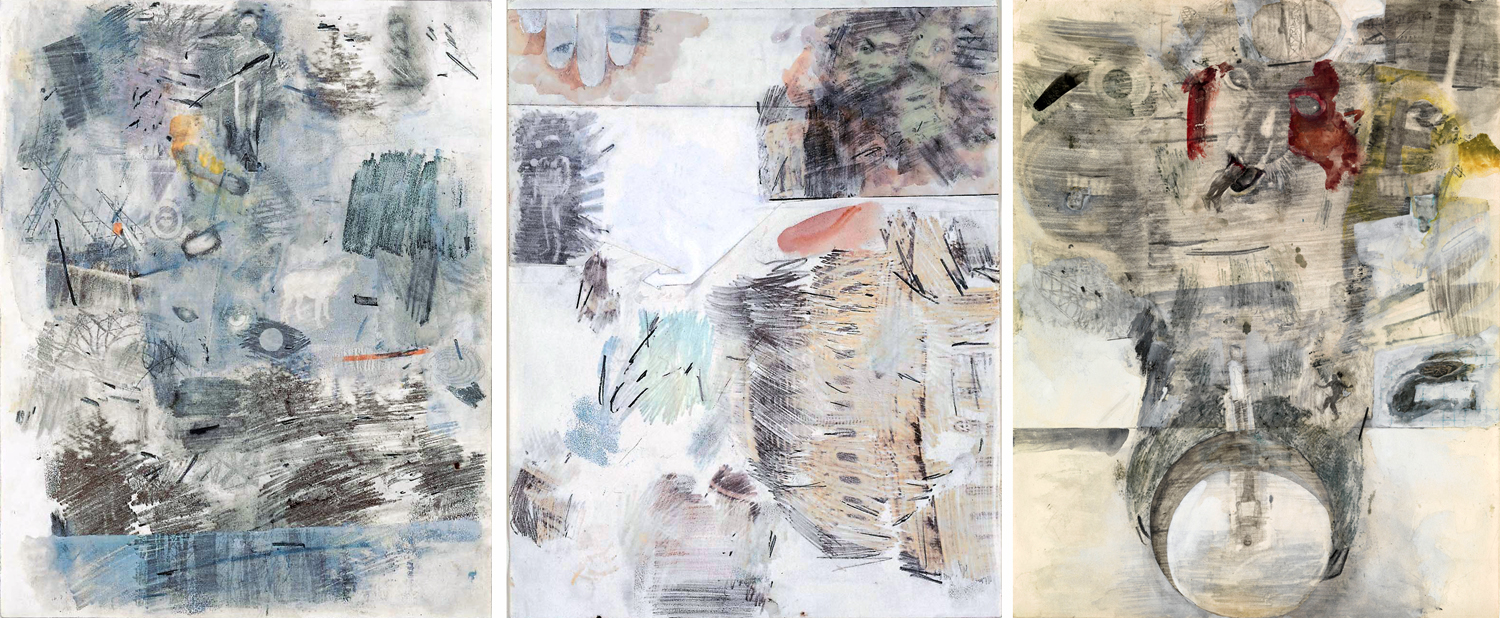
In tandem with the Turner show was a smaller exhibit of Robert Rauschenberg’s “Illustrations for Dante’s Inferno,” a set of 34 drawings and ink transfers, one drawing per canto in Dante’s poem. It is difficult to recover the sense of elation and immersion a teenager in love with art could feel in the presence of something so new and so exciting. 

When I did get to leave New Jersey and go to Guilford College in Greensboro, N.C., I was in a candy shop: I signed up for Greek, Shakespeare, esthetics, astronomy — I wanted it all. 

There was also a film series, carefully programmed to expose us to the best in cinema. We saw La Strada, Seven Samurai, Seventh Seal, Jules and Jim, Last Year at Marienbad, Hiroshima, Mon Amour, Andalusian Dog, and even Birth of a Nation, although the student projectionist ran it without the sound on, calculating that it was a “silent film,” and not considering their was a musical soundtrack to accompany it. The racism was hard to swallow, but it was even worse — with no music, it seemed to last forever. 

With my new college girlfriend, we went to the downtown theater to see Antonioni’s Blow Up. That sense of being on the edge of art made being young  

All those films, added on to the reading material, and the concerts we had in the college auditorium, felt like what I had waited my whole life to gain access to. I fell in love with Chaucer; I read tons of Shelley — even stuff no one but a doctoral candidate bothers with. There was Classical literature in translation. There were three semesters of Comparative Arts. I minored in music composition (although, our stodgy professor der musik, Carl Baumbach, really only taught us figured bass and to harmonize chorales — and avoid parallel fifths. He could barely get himself to listen to anything as modern as Debussy.) 

I was a well, down which you could toss everything and never fill it up.

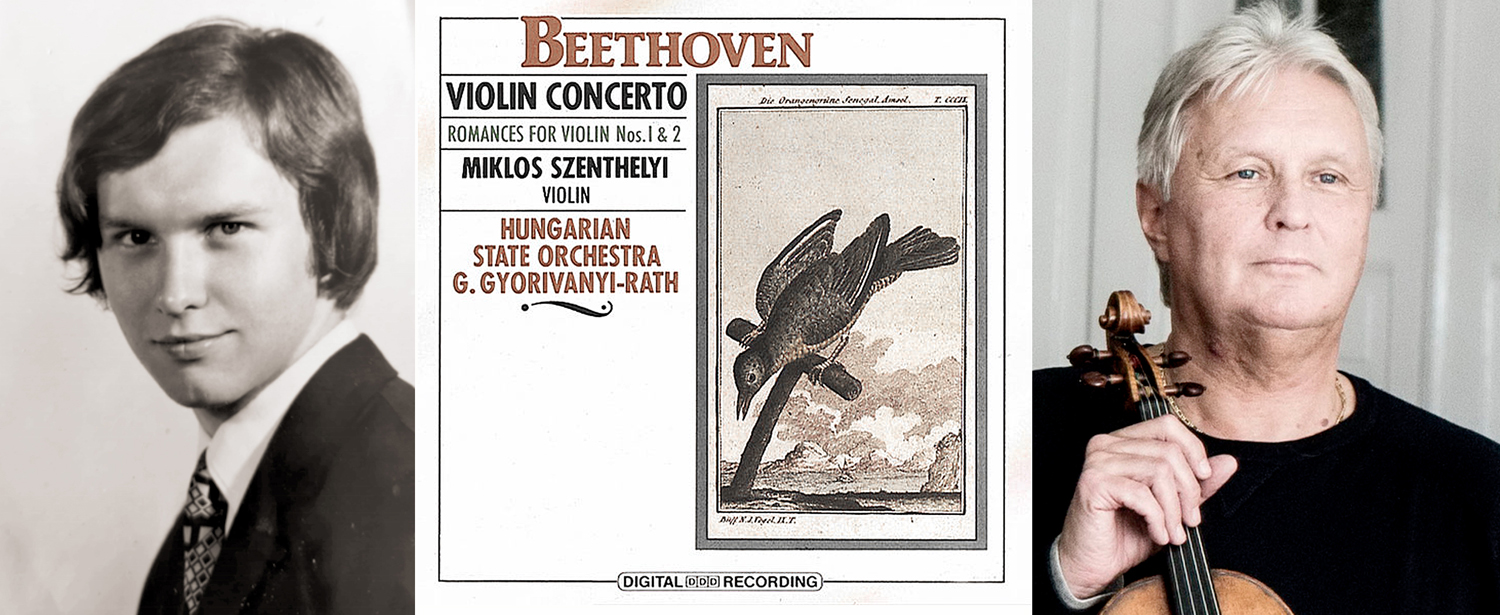
After graduation, I continued with it all, without the need to worry about grades or term papers. Every summer, there was the Eastern Music Festival, for which I acted as unofficial photographer. I sat in on master classes, went to concerts. A few were so memorable, I still keep them in my psychic storehouse: Walter Trampler giving a master class; Miklos Szenthelyi playing the Bartok First Violin Concerto — which seemed at the time the most beautiful thing I had ever heard. Szenthelyi was a young Hungarian, virtually the same age as me, and his posture on stage was almost Prussian, his tone penetrating and perfect. (I still own several of his recordings. He is now a white-haired Old Master in Budapest. A half century has intervened.)

I also first heard Yo-Yo Ma. He must still have been a teenager. He performed both Haydn cello concertos in High Point, N.C., one before intermission and one just after. Yo-Yo has been as much a constant in my life as Peter Schickele. What a pair.

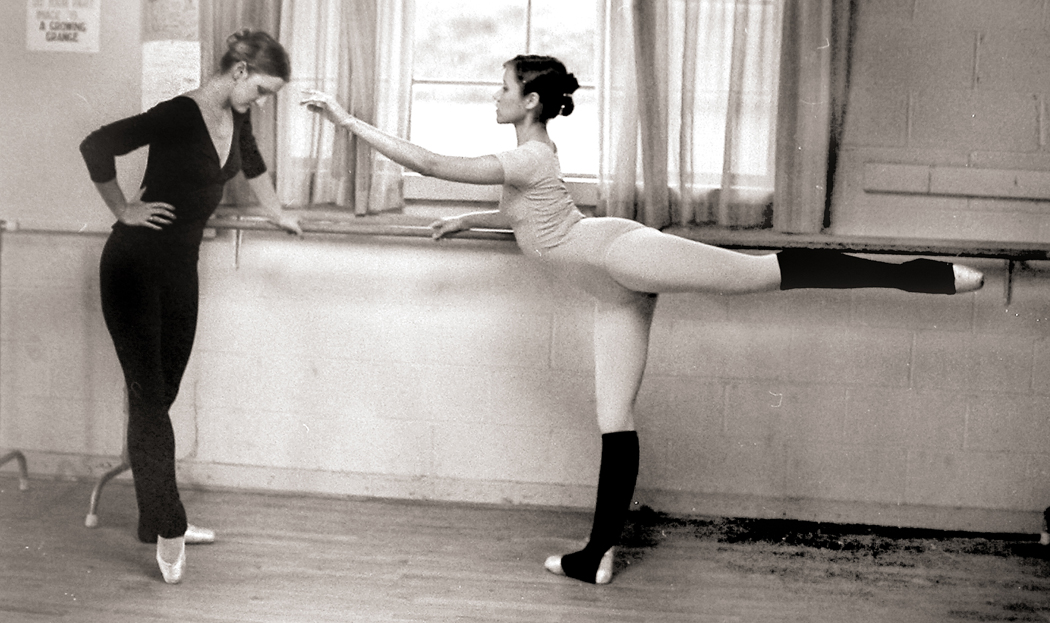
I also photographed the Greensboro Civic Ballet. I wish I had paid more attention to the dance in the 1970s, but my plate was otherwise full. Many years later, I came to love dance more than any other artform. (After my late wife and I traveled to Alaska, she asked if I might want to live there. Without trying to be funny, I said reflexively, “No. Not enough dance.” It was the natural answer.)

There have been hundreds of concerts and recitals, scores of theater and dance performances, bookshelves still filled with thousands of books and CDs, and more museum and gallery shows than I can count. 

I want to write about a few of them next time. 

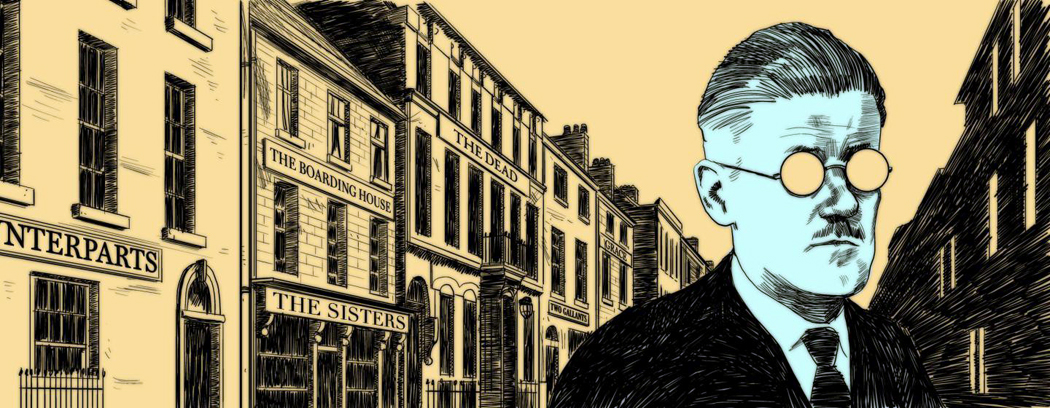
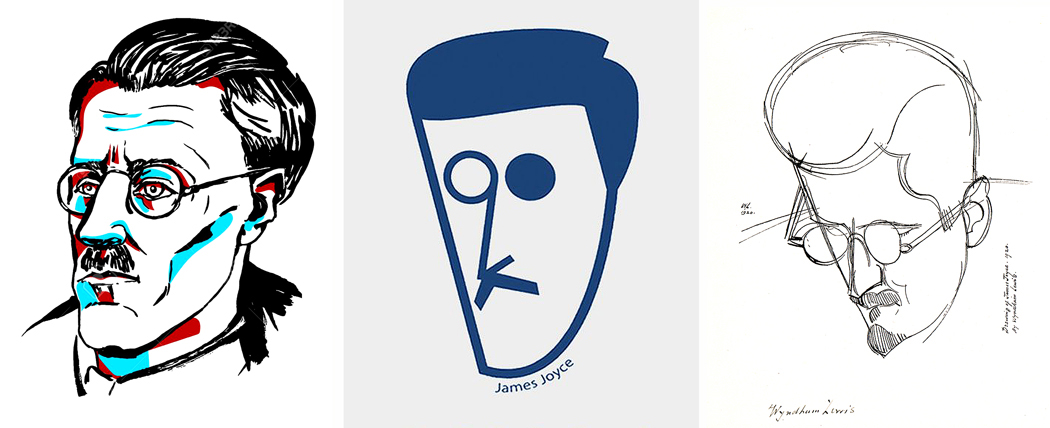
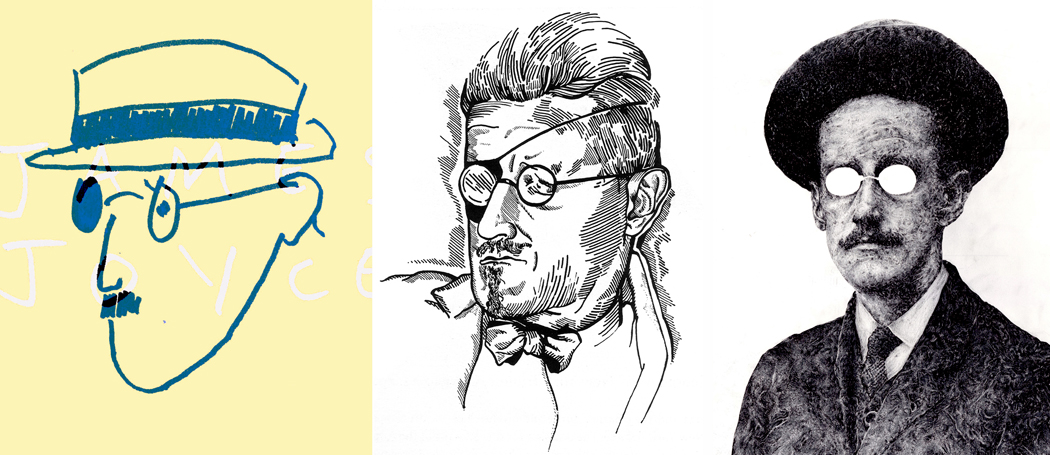
Today is Bloomsday — June 16 — anniversary of the day, in 1904, when James Joyce set the action of his novel “Ulysses.” He chose that day because it was also the day of his first “date” with his future wife, Nora Barnacle, in Dublin, a date with a happy ending. Around the world, there are people who celebrate the anniversary with live readings of Joyce’s book, and, in Dublin, with trips to the sites featured in it. This is a reprint of an essay written originally for The Spirit of the Senses, a salon group in Phoenix, Ariz., published on their website Nov. 2, 2018. It is now updated and slightly rewritten for Bloomsday. Happy Bloomsday. Have a Guinness on me. 

What’s the most beautiful sentence in the English language?

In his epic TV series, The Singing Detective, author Dennis Potter has his hero ask a similar question: “What’s the loveliest word in the English language?” An answer is offered: “Love.” But no, you’re responding to the sentiment behind the word. What is the loveliest word “in the sound it makes in the mouth? In the shape it makes in the page?”

His answer: “E-L-B-O-W.”

You may have your own candidate. Mine might be “anaflaxis,” or perhaps “curmudgeon.” Both pleasant to say, “in the sound it makes in the mouth.”

My nomination for the most beautiful sentence?

Mr. Leopold Bloom ate with relish the inner organs of beasts and fowls.”

It is the opening sentence of the second chapter of James Joyce’s Ulysses. It is followed by a tasty list of those comestibles that Mr. Leopold Bloom especially savored. “He liked thick giblet soup, nutty gizzards, a stuffed roast heart, liverslices fried with crustcrumbs, fried hencods’ roes.” And then he brings you up short with the consummation of the paragraph: “Most of all he liked grilled mutton kidneys which gave to his palate a fine tang of faintly scented urine.”

If you get past the last bit without a distinct sensory, gustatory and olfactory assault, you aren’t paying attention.

But it’s that first sentence I want to examine. It has a cadence to it: You can scan its metrics two ways. First, you can break it down into four brief bursts: His name, as if it were the first line of a song; then comes the two-beat “ate with relish;” another two-beat “the inner organs,” and the peroration in another two beats — “of beasts and fowls.”

You can, however, scan it as two lines, a pentameter followed by a tetrameter. And if you do it that way, you can feel behind the rhythm the ghost of Anglo-Saxon poetry, each line interrupted by a caesura.

Mr. Leopold Bloom // ate with relish

The inner organs // of beasts and fowls.

Either way, it is a graceful mix of iambs and dactyls. All that is fine, and worth noting. But the real treasure is paying attention to where in your mouth you articulate the various consonants and vowels: You shift the sounds around in your mouth, front to back, roof to base, like you were savoring a morsel of tasty food. These are words that as you say them out loud, you practically chew on. Try it: Mister Leopold Bloom ate with relish, etc. Your tongue flies around, your lips purse, your teeth come together and separate, your jaw moves forward and back, in a fine simulacrum of mastication.

This is one tasty sentence.

You should also note how heterogeneous the sounds are. A few consonants and vowels are repeated. There are five “L” sounds, which move your tongue up to the palate; four sibilant “S” sounds; four “O” sounds, making your lips project, as if you were smacking them; four short “I” sounds drawing the tongue back in the mouth; four rhotic “R” sounds, which scrunches your mouth up in a contortion (admittedly, a different sound if you speak them with the Irish accent that Joyce would have used); three “T” sounds, moving that tongue to hide just at the back of the teeth; three “E” sounds, stretching your cheeks out wide to pronounce; two “M” sounds, making you go, “mmm,” like you really enjoyed that mouthful; two “N” sounds, drawing the aroma up into your nasal cavities; two “B” bumps, rhyming with the single “P” to keep your lips plosive. There are two different “TH” sounds, an eth and a thorn — voiceless and voiced dental fricatives.

All the rest of the sounds occur only once. Which means, to read the sentence out loud, your tongue, lips and jaw get a workout worthy of Jane Fonda.

So much for the gnathometry of the sentence.

 I also want to point out that the sentence is not difficult to comprehend. It is, in fact, a fairly ordinary sentence, outside its poetry. And I mention that because I want to make the case for the book as a whole. Ulysses has a reputation. People who haven’t yet essayed it are apt to fear it like ebola. But, these days, now nearly a hundred years after its conception, we have grown used to many of its more idiosyncratic habits. Stream of consciousness has made its way to paperback bodice rippers and Tom Clancy munitionology. And after MTV, how simple seems the rapid cutting and multiple points of view. Joyce should not present any unclimbable obstacles these days.

Which makes it all the more important to read the book. It is some of the best prose ever put to paper. Joyce’s writing is elegant, precise, musical and redolent.

The entire final chapter of the book is one of the greatest monologues in literature, when Molly Bloom lies in bed next to her husband and recalls her love affairs, her life, her body, her mind and heart. It alone raises Ulysses to the level of classic. Everyone should read it and weep.

But to enjoy the prose, you have to break yourself of the habit of reading solely for content. Speed reading Ulysses is flying over country where the driving would reveal cities, rivers, regional foods, national parks, and people worth meeting. The prose is meant to noticed. It is unsurpassed. The plot of the book is hardly more than an excuse for the writing.

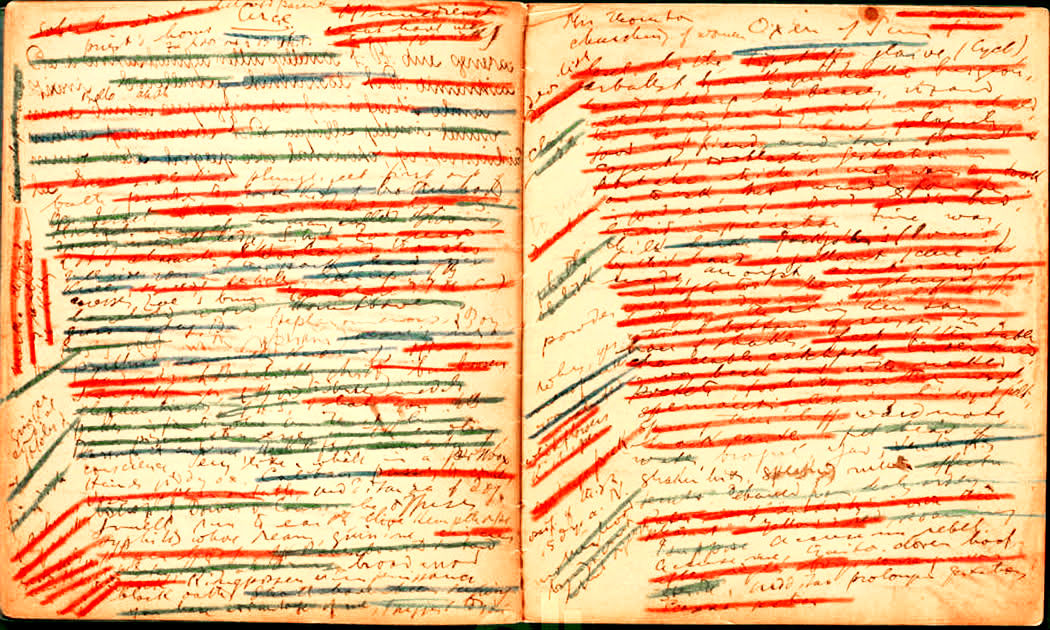
Joyce wrote the book over many years, writing and rewriting like a demon. It takes reworking on an obsessive scale to get just the right mot juste in every case. You can see that in the manuscript, worked over so thoroughly, it is barely legible.

Ulysses was written at the end of the First World War and published in 1922 by Sylvia Beach and the Paris bookstore, Shakespeare & Co. Joyce was 40 years old and an exile from his native Ireland. It chronicles a single day — June 16, 1904 — in Dublin, Ireland as lived by three primary characters, Stephen Daedalus, and Leopold and Molly Bloom. It’s a simple plot. Not much happens of consequence, but we follow the events in the minds of the characters as much as through the words of a narrator. And we aren’t often told which.

But what is of consequence is the language. You can pretty much read any page and nearly swoon at the beauty of the words, the rhythm, pitch and melody.

Of course, that’s not what caught public attention first. The book has been banned in many countries, including the U.S. It was considered obscene. It had to be printed in Paris, and at least 500 copies were seized and burned by the U.S. Postal Service as they were confiscated in shipment. Another 2000 to 3000 copies were seized and destroyed by the New York Society for the Suppression of Vice in 1929.

When Random House decided to take up the American publication, The publisher sued and in The United States v. One Book Called Ulysses, U.S. District Judge John M. Woolsey ruled that the book was not pornographic and therefore could not be obscene. Random House published the authorized American edition in 1934.

We say “authorized,” because Ulysses has been much pirated. Even printed as an underground book by publishers of pornography, wishing to capitalize on its notoriety. I have an edition by Collectors Publications of Industry, Calif., which features pages and pages of ads at the back for such other literary gems as True Love Stories of a Wayward Teenager, The Incestual Triangle, Four Way Swappers, and The Debauched Hospodar. (Along with Henry Miller’s The World of Sex and Lawrence Durrell’s Black Book and The Story of O. They seemed to make little distinction between actual literature and smut, i.e., they knew their audience).

My late wife’s father-in-law was a poet who had studied with Robert Frost, and after a trip to Europe, he smuggled in a copy of Ulysses in the 1920s concealed by binding it in a cover for a Nancy Drew mystery.

To read it now, after Fifty Shades of Grey and countless Jackie Collins tomes, one puzzles over the ruckus. You can search the pages of Ulysses looking for the “good bits” and be disappointed. Judge Woolsey in his judicious judicial opinion famously wrote, “whilst in many places the effect of Ulysses on the reader undoubtedly is somewhat emetic, nowhere does it tend to be an aphrodisiac.” (Remember the mutton kidneys).

 Woolsey’s opinion opened the door for Lady Chatterly’s Lover (or is it “Lady Loverly’s Chatter?”), Henry Miller’s Tropic of Cancer., and Allen Ginsberg’s Howl. It may be hard to define great literature, but you know it when you see it.

This is real. I need to emphasize that. It is a paper handed to me by an English major at Tidewater Community College, Virginia Beach, Va., in 1984. That’s right: an English major. The art-history assignment was to write a short research paper on an artist of the student’s choice, picking someone whose work they especially liked. 

I was sometimes astounded at what I received from students. On one test for an art history class, with sixteen students, I got the word “coliseum” spelled sixteen different ways — and none of them correct. And that despite there being two acceptable spellings: “Coliseum” and “Colosseum.” 

At any rate, this paper, on sculptor George Segal, was a particularly — what? — unusual — example. At many a faculty party, it was read aloud in full, with professors falling on the floor and holding their guts in laughter. If you have ever been a teacher, I’m sure you can understand. 

It is important, when reading it, to pronounce all the misspellings and nonsense words. This transcription has been thoroughly copy-edited and proofread. Every typo and solecism is original to the student. 

GEORGE SEGAL

It all started as a painter. George Segal, an artist fasinated by the relationships between form and space, especially with negative space. Most of Segals education was centered around painting, in fact, while persuading a life as a chicken farmer, Segal continued his education in art. In one of the xerxed photos youll notice a scene of an artists studio. In the background are some of George Segals paintings. His interest in space and form are obvious in these paintings, and are expressed vividly.

After twenty years of painting Segal felt the canvas was too confining and explored other options. However he wanted to maintain his interest in form and shape. He discovered sculppture and felt great satisfaction with this. He said Sculpture deals with basic forms. … All basic forms exists as volumes. … Volumes penetrate each other and in this way are no longer single formations. Through penetration, space is created in its entirety. Every portion of space results from it. Basic forms are positive space volumes; negative space is created through the opposition of these positiv space volumes. Positive space is life-fulfilled — negative space is force impelled. Both exist simultaneously — both conceivable with each other. Its only the simultaneous existence of positive and negative space that creates the plastic unity. Segal realized he could free the image from the canvas by emphasizing it, however he was restricted the use of color as he used in painting. He began his career in sculpture with chicken wire and wood, and is now using bandages soaked in plaster and molding it over the models. He realized that he felt dissatisfaction with the modes of painting, and that he couldnt express the quality of his own feelings and emotions.

Segals subjects for his sculpture are common, every day subjects. Life situations that tend to be ignored or forgotton. Hes sculpted a woman putting on her shoe to carpenters working an average day. He almost always have a messages or reasons behind his subject matters. The discovery of his powerful sculptures came about quite accidental. Segal was showing his last exhibits at the Hansa Gallery in 1959, and wanted to convey how painted figures aspired to a third dimension and the illusion of space was missing. He tried to acheive this idea by placing three dimensional figures stepping out of his paintings which were hung low. The rough, and loosely drawn paintings corresponded with his sculptures that were also very rough. This is when the impact of the sculptures hit the public. This became the basic principal for all of the rest of Segals sculptures. A scupture gains definition by its relationship to another consciously presenting itself. This is definitely a rule that Segal continues to use.

Segals sculptures didnt appeal to everyone. In fact it was art that some people found hard to swallow. Some criticism included that the figures only confirmed an impression of a knotty conflict between freedom and timitation that looks to physical means only for a solution. The sculptures were found to be grotesque and dull. This put Segal on shifting ground. Segal felt his sculptures had a certain realism to them, and it allowed for free expression. He proceeded with his creations in scupture. Continuing with plaster he explored the possiabilities with this media. He soon began to practice putting the wet plasrer bandages on live models to get his human forms. This was frowned upon by the public because it was not free-hand. In the nineteenth century Rodin experienced a similar dilemma with his sculpture of a ballerina wearing a real tu-tu. But the awesome perfection of this effect couldnt be ignored, aside with the originality involved. Segal took up for himself by replying that its impossiable to have a human model pose in any other way than realistically when sitting in wet plaster. He goes on to expain that people have attitudes locked up in their bidies and arent aware of this. A person may reveal nothing of himself and then, suddenly one movement is made in the wet bandages and that movement contains a whole biography. Segal tries to capture the slightest gesture in order to show the imperfection, which he considers to be beautiful. Therefore his sculptures take on more realism and more emotions than if he had molded them by hand.

Segal claims to count heavily on the human ability to spot a metaphor, the urge to read poetry into things is universal. he has a lot to say and his scuptures have a dramatic way of expressing it. He arranges his figures as if there actors on a stage. They are placed as if we were as the audience, looking in through a window. This allows for the on-looker to feel free expression as to what is going on through the window.

Abstract Expressionsim is considered hot, serious, committed and spiritually strong. Pop Art is considered to be cool, ironic , detached and materialistic. Pop Art artist were often concerned with subject matter and technique. With this in mind Segal considered himself to be a Pop artist, if he had to place himself in a category. he considered an attitude of honesty as top priority, and to him there is neither good nor bad subject mater for life is life whether your tying your shoes or working a daily job. He claims to be primarily interested in aesthetic statements and insist on the attainment of abstract forms to carry this message out. he says it opens doors of riches of everyday experiences.

Many critics agreed with Segals opinion of his art. However there were some who did not. Still others would place him in the Abstract Expressionist scene. His colorous sculptures were seen as being absrtact, and his paintings have a lot of expression to them, yet still maintaining an abstract form. The critics saw a dynamic message behind his work which is a characteristic of Abstract Expressionism.

I personally view Segals talent lying in the Environmental Happenings or Assemblages. His work has escaped the flat canvas and moved to a three dimensional scupture. Much importance is placed on the environment of his subjects. This sets a mood for the emotion. His work is a frozen happening that stimulates a feeling. Take a look at the Execution, found in the back. This is four basic figures done in basic white. Nothing extravagavt is used here, however theres a strong reaction to this scene that creates an emotion.

Its been said its impossiable to place Segal in a certain historical category on account fo the various perceptural opinions. Possiably its a mix of Pop Art, Abstract Expressionism, and Environmental Happenings or Assemblages. People are different and will see things different. This is why boundaries cannot be placed on what art is. If it strikes a feeling or emotion, I consider it art, however way it is done.

In addition to this blog, which I have been writing since 2012, I have written a monthly essay for the Spirit of the Senses salon group in Phoenix, Ariz., since 2015. I was, at various times, a presenter for the salon, which arranges six to 10 or so lectures or performances each month for its subscribers. Among the other presenters are authors, Nobel Prize-winning scientists, musicians, lawyers and businessmen, each with a topic of interest to those with curious minds. I recently felt that perhaps some of those essays might find a wider audience if I republished them on my own blog. This is one, from May 31, 2020, is now updated and slightly rewritten.

The only thing physical we carry with us since since birth is our bodies. And while they stay with us through the decades, they change radically — and the older we get, the more radical. 

I finished college 50 years ago, and I’ve changed a great deal in that half-century, and I don’t just mean the issue of losing hair on the top of my head and gaining it in my ears.

We accumulate much over the years. Some of it we lose over time, divorces, moves, and job changes. Much we divest ourselves whenever we feel on the verge of being overcome by our possessions. And some few objects stay with us, year after year, either because they are meaningful, or, sometimes, through mere habit. 

My sense of myself is most directly the continuity of my memory. But memory is sometimes faulty. And we make up stories about ourselves — usually they flatter us, although sometimes they convict. But our physical possessions tell a harder-edge story. 

Surely the self is more than our own cogito ergo sum, recalled in memory. It is embodied in what we keep around us: more pointedly, we are what we can’t get rid of. Sure, it is also our behavior, the sense we make of the world and how it is constructed and how it functions. But much of that we learn through what we have owned. It is not simply our past, but our expectations of a future. And there should be some outward manifestation of our selfness, not solely the interior rattling around of snippets of memory, strung together like a necklace of remembered events.

I began to think of such things when I woke one morning and sat on the side of the bed, facing the bookshelf on the wall in front of me. I happened to spot the slim volume of The Elizabethan World Picture by E.M.W. Tillyard, an ancient paperback that I had in college. It is a book I’ve owned for more than 50 years. It is where I first encountered the idea of the “Great Chain of Being.”

Then, I gazed over the shelves to discover if there were other books I’d owned that long, and saw Julia Child’s Mastering the Art of French Cooking, which I attempted to cook from during my first marriage, when I was still in college. Are those two books as much a part of my selfness as the memories of the old school or the failed marriage?

As I wandered through the house later that day, I pored over the many bookshelves to seek the books I’ve owned the longest, through divorces and break-ups, through four transcontinental relocations, through at least a dozen homes I have rented in five different cities. Nine cities, if you count homes from before college, which I didn’t rent, but lived with parents.

The oldest book I still have is my great-grandmother’s Bible, which was given to me when I was four years old. I also have my grandmother’s Bible, in Norwegian, and the Bible my parents gave to me when I was a boy, with my name embossed on the cover in gold. I am not a religious man and don’t believe any of the content scribed therein, I also have to recognize that the culture that nurtured me is one founded on the stories and strictures bound in that book, and more particularly, in the King James version, which I grew up on and which has shaped the tone of the English language for 400 years.

Surely, completely divorced from doctrine, the KJV is a deeply embedded part of who I am.

The second oldest book is one my grandmother gave me on my eighth birthday, a giant-format Life magazine book called The World We Live In. It was a counterbalance to the Holy Writ, in that it was a natural history of the world and gave me science. At that age, I was nuts about dinosaurs (many young boys are in the Third Grade), and The World We Live In had lots of pictures of my Jurassic and Cretaceous favorites. It also explored the depths of the oceans, the mechanisms of the weather, the animals of the forest, the planets of the solar system, and a countering version of the creation of the world, full of volcanoes and bombarding meteorites. I loved that book. I still love it. It is on the shelf as a holy-of-holies (and yes, I get the irony).

Both the Bible and The World We Live In are solid, tangible bits of my selfness that I can touch and recognize myself in, as much as I recognize myself in the mirror.

I pulled down Tillyard from the shelf, and gathered up the several Bibles and began piling by my desk, and went through the bookshelves finding the many books that have defined me and that I kept through all the disruption that life throws at us, with the growing realization that these books are me. They are internalized and now their physical existence is an extension of my selfness into the world.

The pile beside my desk slowly turned into a wall, one stack next to another, building up a brick-foundation of me-ness. They were cells of my psyche very like the cells of my body, making up a whole. And they began to show a pattern that I had not previously noticed. The books I’ve held on to for at least 50 years sketched a me that I knew in my bone.

I’ve kept books from 40 years ago, from 30, from 20. I’ve got books that define me as I am at 73 years old that I have bought in the past month. But the continuity of them is a metaphor for the continuity of my self.

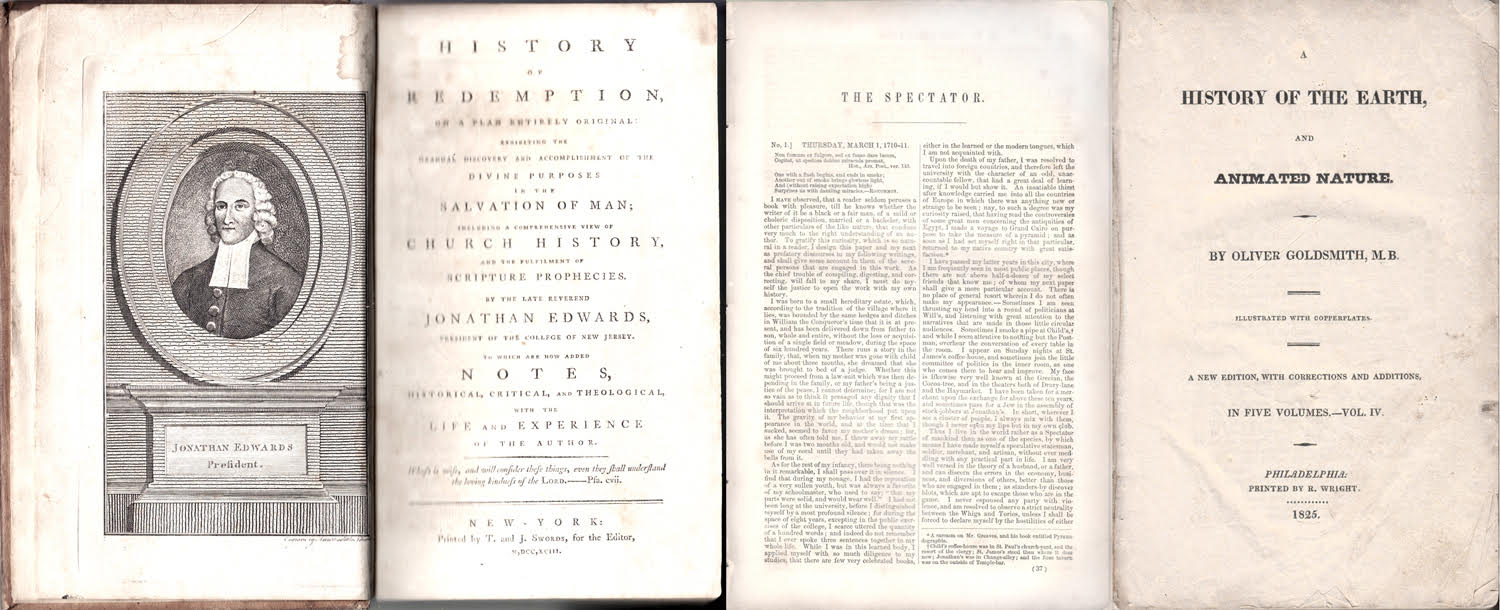
When I was just out of college, a neighbor of my parents died and left my a pile of old books, printed in the 18th and early 19th century. There are three volumes of the poetry of William Cowper, a History of Redemption by Jonathan Edwards, a fat volume with tiny print collecting the Addison and Steele Spectators, and a single volume of Oliver Goldsmith’s History of the Earth and Animated Nature. I have Volume IV of five volumes, which contains descriptions and illustrations of birds, fishes and “Frogs, Lizards, and Serpents.”

And while my great-grandmother’s Bible gives me a sense of roots running four generations deep, these older books take those roots deeper into the culture that made me. I see myself not as a single mind born in 1948, but as part of a longer-running continuity back in time. A reminder that any single generation is simply a moment in a process: seed, sprout, plant, flower, fruit, seed. Over and over. My self grew from my mother’s womb and she from her mother’s. And my psyche grew from all the books I’ve read, and all the books that have shaped the culture that produced those books. It is a nurturance that disappears in the far distant past, like railroad tracks narrowing to a point on the horizon.

I am not here making an argument for nurture vs. nature. I am not simply the sum of the books I’ve read. Rather, the books I’ve read that have remained with me — and there are many times more that haven’t stuck with the same tenacity — have not only nurtured me, but are the mirror of who I was born, my inner psyche, who I AM. They are the outward manifestation of the inward being.

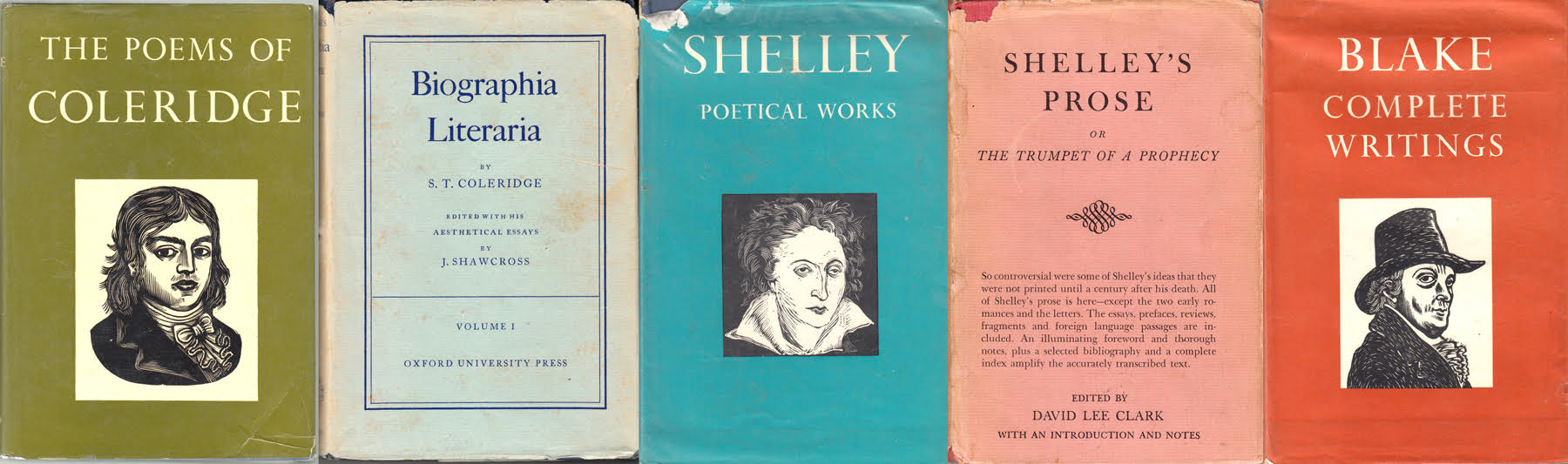
I have books left over from college, such as my Chaucer and my Shelley, my Coleridge and my Blake.

I have the poetry I was drawn to when first discovering its linguistic and cultural power, such as all the Pound I gobbled up.

There are the two volumes of Beethoven’s piano sonatas, edited by Artur Schnabel. I could never be without them. I read scores for pleasure just as I read words. 

I still have piles of Kalmus and Eulenburg miniature scores that I have used over the years to study music more minutely than ears alone can permit.

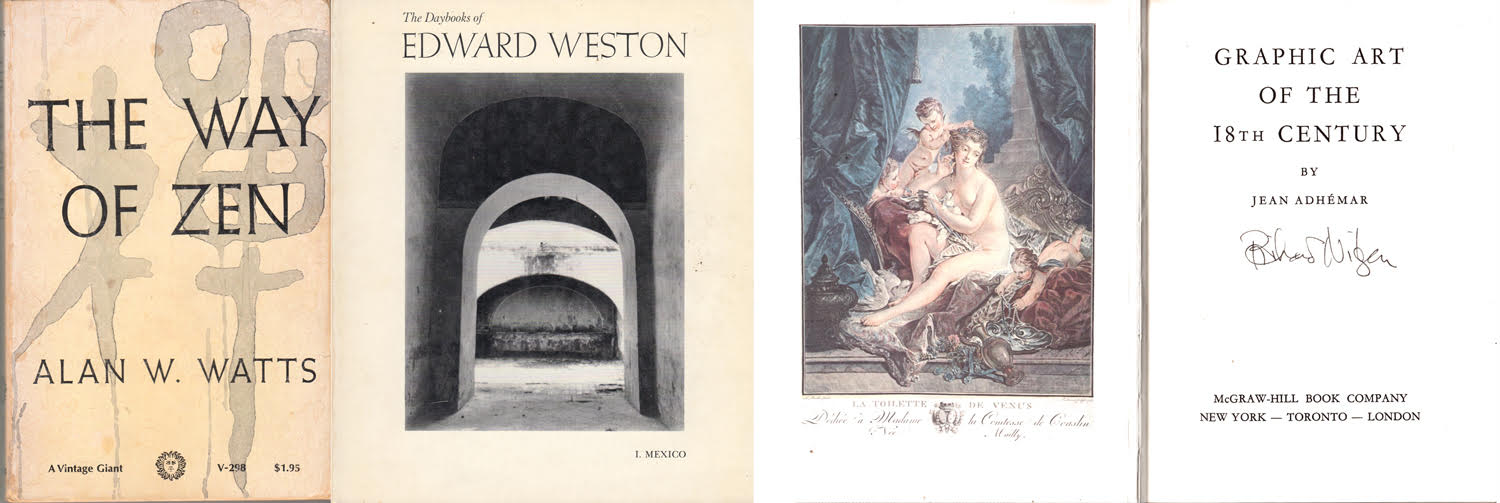
Books that have turned the twig to incline the tree stay with me, such as Alan Watts’ The Way of Zen, or the Daybooks of photographer Edward Weston, or The Graphic Art of the 18th Century, by Jean Adhémar.

I still have the Robert Graves two-volume Greek Myths that I had when taking a Classics course my freshman year, and the Oxford Standard Authors edition of Milton that I took with my in my backpack when I tried to hike all of the Appalachian Trail (“tried” is the operative word), and the photographic paperback version of the Sierra Club book, In Wildness Is the Preservation of the World.

My many Peterson Guides and wildflower books have only multiplied, but the basics have been with me for at least five decades.

The Thurber Carnival I still have was actually my mother’s book that I took from home when I went off to school. The catalog from the National Gallery of Art in Washington D.C. is now browned out and tattered and the Hokusai manga is another holy of holies.

All these have stuck to me like glue all through a life’s vicissitudes, many with ragged and torn covers, as I have myself in a body worn and torn by creeping age.

I could name many more, but you get the idea. And it is undoubtedly the same for all of us. For you, it many not be books; it might be a shirt or blouse you have kept, or maybe a blanket that comforted you when you were an infant, or your first car. These are the outward signs of an inner truth. The you who is not separate from the world, but embedded in it, connected to it, born from it and in some way, its singular manifestation.

NB: The books illustrated are all some of them I’ve lugged with me for at least 50 years; anyone who knows me would recognize me in them. 

Click on any image to enlarge.

In addition to this blog, which I have been writing since 2012, I have written a monthly essay for the Spirit of the Senses salon group in Phoenix, Ariz., since 2015. I was, at various times, a presenter for the salon, which arranges six to 10 or so lectures or performances each month for its subscribers. Among the other presenters are authors, Nobel Prize-winning scientists, musicians, lawyers and businessmen, each with a topic of interest to those with curious minds. I recently felt that perhaps some of those essays might find a wider audience if I republished them on my own blog. This is one, from May 1, 2020, is now updated and slightly rewritten.

Imagine Persia — Then think of Iran. 

Very different places occupying the same geographic location. The names of places carry a kind of emotional scent that surrounds them. Persia has an exotic perfume; Iran rather stinks to American minds as moldy bread.

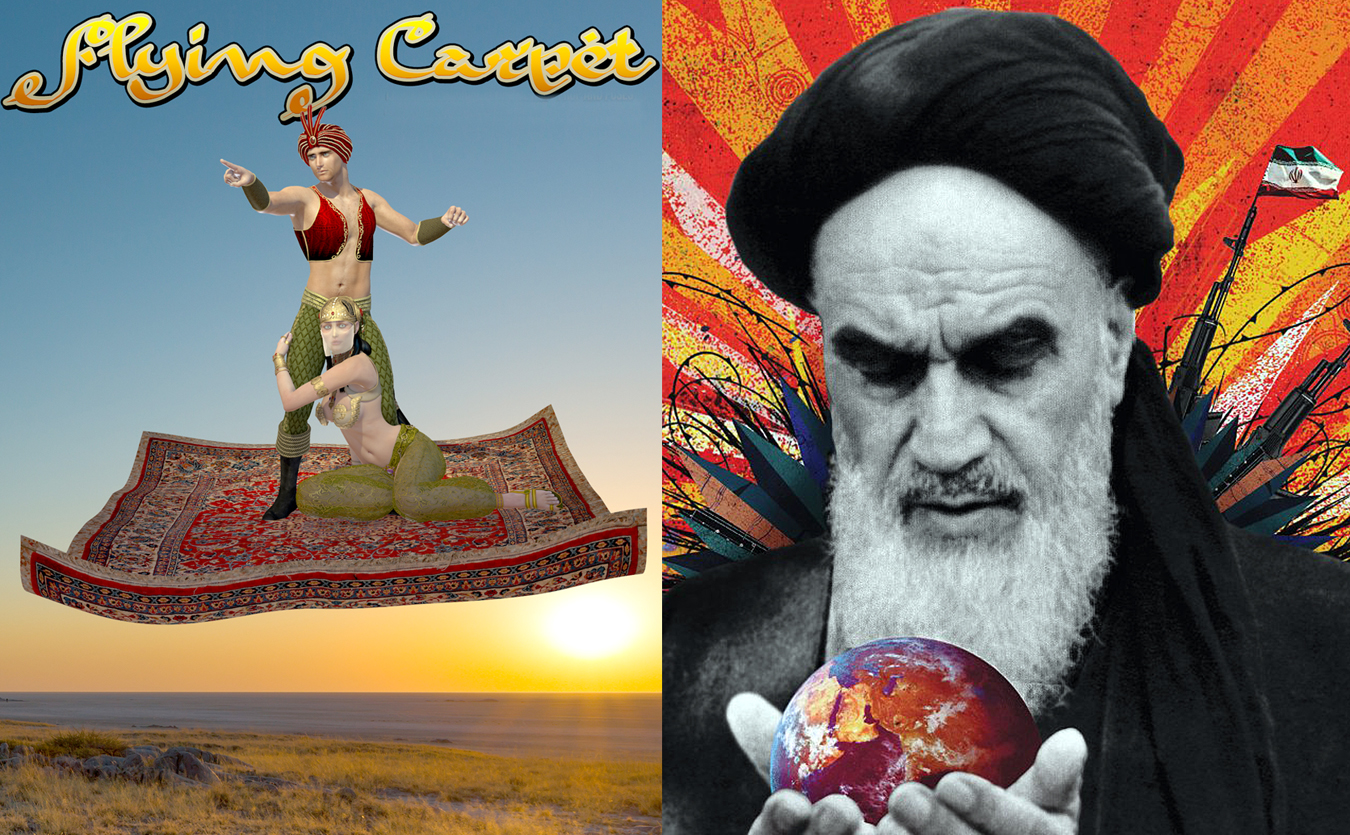
Persia is a land of legend of djinn, of harems, and magic carpets; Iran rather has its mullahs, its chador, and its Revolutionary Guard. Persia had its Omar Khayyam and his “The Bird of Time has but a little way to flutter — and the Bird is on the Wing.” Iran has religious fundamentalism and “Death to America.”

Certainly the political situation has changed radically over time and that contributes to our different perceptions of the same country, but the names we use conjure up very different associations, too, and not just for Iran, but the names we use around the world and especially, over time. Most locations on the globe have born a variety of toponyms over the ages. Some of these names are better for journalism, some for poetry.

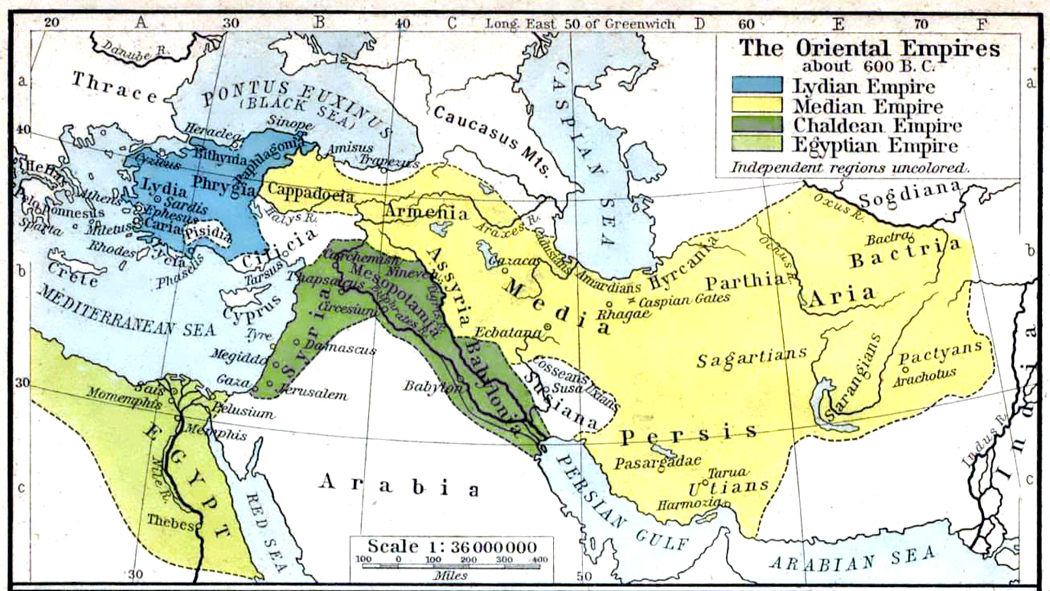
The same land that we now know as Iran was once called Parthia. Once called Media — land of the Medes — once called Ariana, at another time, the Achaemenid Empire. In the Bible, it is Elam. (The borders are never quite the same; borders are notoriously fugitive.) There are other names, too, all accounting for parts of what are now The Islamic Republic of Iran: Hyrcania; Bactria; Jibal; Fars; Khuzestan; Hujiya; Baluchistan.

Some of these names, such as Baluchistan and Bactria, have a kind of exotic emotional perfume and remind us of the Transoxiana of folklore and half-remembered, half-conjured history. Samarkand and Tashkent; Tales of Scheherazade or Tamurlane, stories recounted by Richard Halliburton or Lowell Thomas. One thinks of old black and white National Geographic magazines.

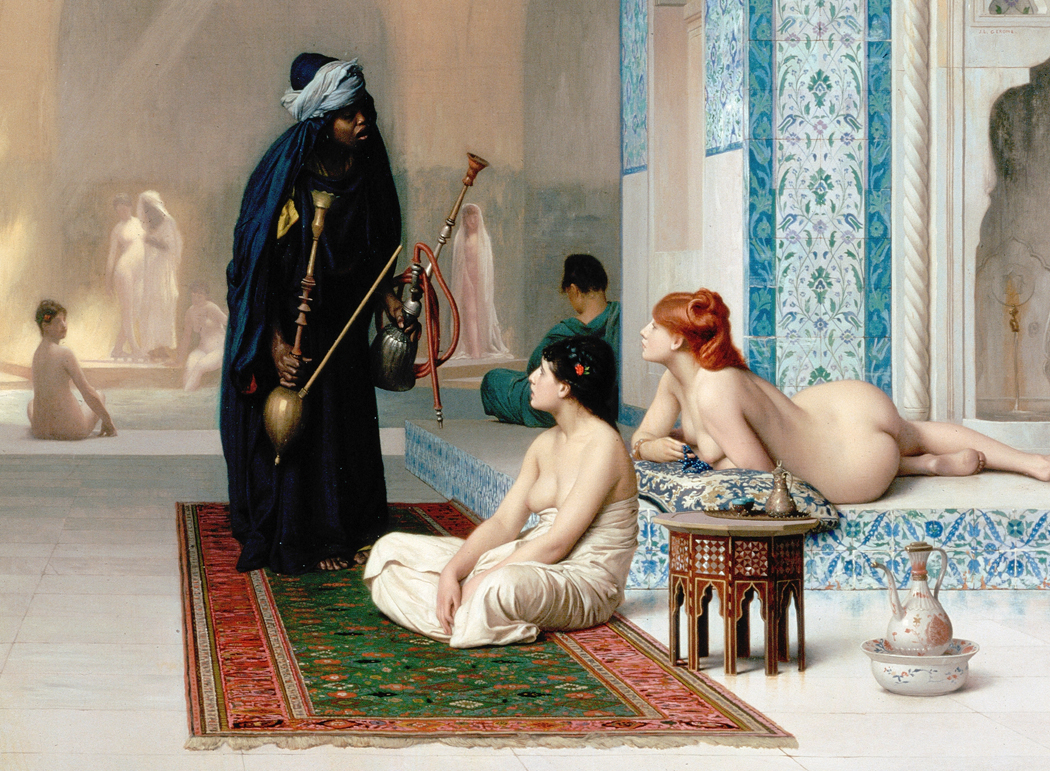
Countless Victorian paintings depicted a romantic Orientalized version of seraglios, viziers, genies, pashas, often with women in various states of undress.

I have long been interested in this nomenclatural perfume, and how the names of places conjure up emotional states. The Sahel, Timbuktu, Cappadocia, Machu Picchu, Angkor Watt, Bali, Madagascar, the Caspian Sea, Tristan de Cunha, Isfahan. You listen to Borodin’s In the Steppes of Central Asia or his Polovtsian Dances, or Ippolitov-Ivanov’s Caucasian Sketches, or Rimsky-Korsakov’s Scheherazade. Watch the Cooper-Schoedsack 1925 silent film documentary of the annual Bakhtiari migrations in western Iran, Grass

There are Paul Gauguin’s brown-fleshed vahines from Tahiti, or the Red Fortress of Delhi, or the Taj Mahal. 

All have taken up residence in our subconscious imaginations. Places we likely will never visit except in art or literature. We watch Michael Palin and vicariously sail across the Arabian Sea on a Dhow, or look south from the Tierra del Fuego towards the icy basement of the planet. We read Herodotus, Marco Polo or Ibn Batuta. The best writing of Charles Darwin can be found in his Voyage of the “Beagle”. Or Melville’s Encantadas

And how often those aromas and scents are ambiguous as to be unplaceable. Where, for instance, is Bessarabia? What about Saxony? I have written before about how borders change over time, and the names of places change along with the borders, but here I am writing about the emotional resonances of those place names.

Saxony, Westphalia, Silesia, Franconia, Pomerania, Swabia, Thuringia: These are names from history books, but we are quite unlikely to know where to spot them on a map. They are all sections of Germany and Eastern Europe that have been subsumed by more modern nations, but a few centuries ago were their own kingdoms, principalities and dukedoms. Some reappear as regions or counties in larger nations, but some are pretty well evaporated. Saxony, for instance, as it exists now as a part of Germany, was originally a separate nation, and not even in the same place where the current Saxony lies.

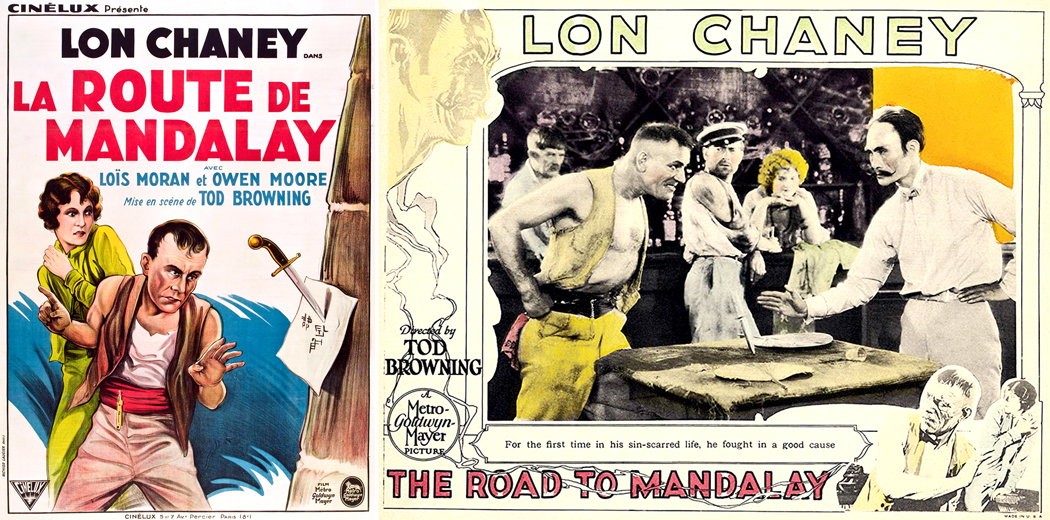
The older names often have a more exotic connotation than the current names. Siam brings to mind Anna and Yul Brynner; Thailand may elicit thoughts of sex tourism. Abyssinia is a place of Solomonic apes and peacocks; Ethiopia is a nation that went through the Red Terror and famine of the Derg. Burma had its Road to Mandalay, its Kayan women with their elongated brass-coiled necks or even George Orwell’s “Shooting an Elephant,” but Myanmar brings to mind military rule, extreme xenophobia and Rohingya genocide.

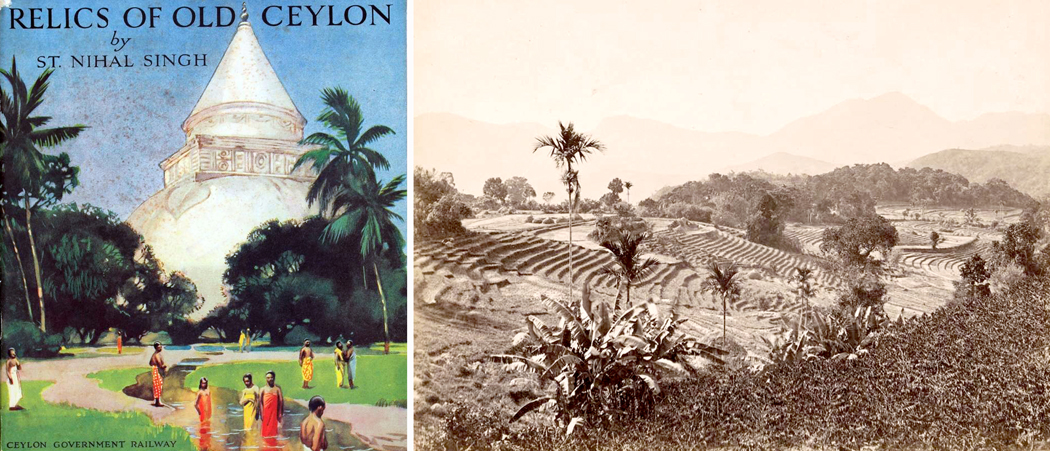
Sri Lanka used to be Ceylon, but it was also known as Serendip, from which we get the word “serendipity.” Both “Ceylon” and “Serendip” derive from the ancient Greek word for the island, Sielen Diva. And according to legend and literature, it was originally named Tamraparni, or “copper colored leaves” by its first Sinhalese king, Vijaya. That name becomes the more common Taprobana.

The older names are almost always more resonant, more perfumed, which is why they show up so often in poetry and literature. Where have you heard of Albion, Cambria, Caledonia, Hibernia or Cornubia, but in verse? England, Wales, Scotland, Ireland and Cornwall just don’t have that literary heft. It’s hard enough for non-Brits to keep straight the difference between England, Britain, Great Britain, and the United Kingdom or UK.

If you’ve ever wondered what the ship Lusitania was named for, that was the former name for what is now Portugal. When James Joyce talks about Armorica in Finnegans Wake, he is using the old name for Brittany. Firehouse Dalmatians are named for the former Roman province located across the Adriatic Sea from Italy and now part of Croatia.

Eastern Europe is a coal bucket of forgotten or half-remembered toponyms. These places don’t translate one-for-one with modern nation-states, but across the map from Poland through Ukraine and down to Romania you find such redolent names as Pannonia, Sarmatia, Podolia, Wallachia, Pridnestrovia, Bohemia, Moravia. All of which makes the region a fertile spot to locate a fictional country when you want to write a spy novel or film comedy. Just make up a name that sound vaguely plausible.

Of the following, only one has ever been real. The rest are made up. Can you pick the genuine from the bogus?

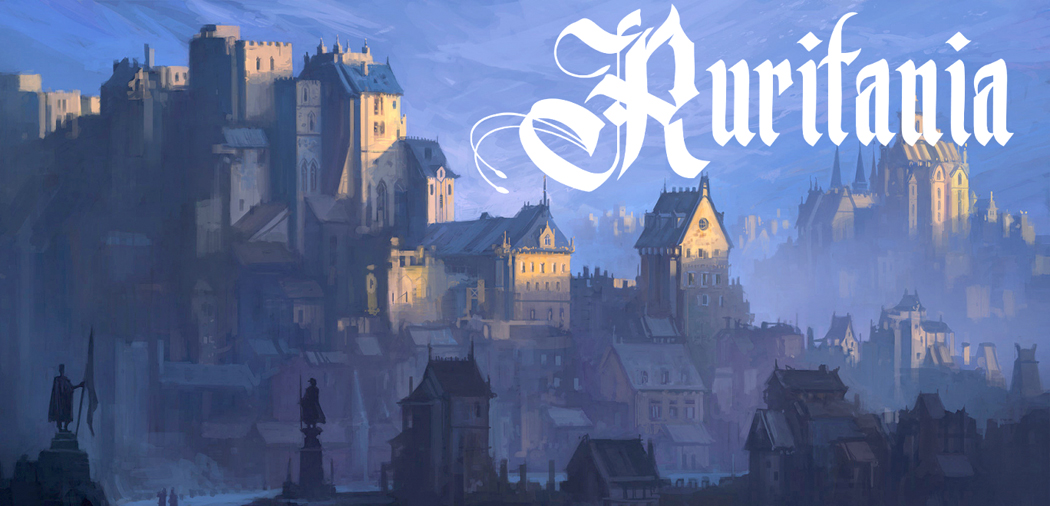
If you picked Ruritania, a slap on the wrist for you. You have probably heard of it, but it is the fictional country that Anthony Hope used to set his 1894 novel The Prisoner of Zenda. It has since been used myriad times as a stand-in for any small nation in a movie or book.

(Other fictional countries that show up on celluloid: Freedonia and Sylvania from the Marx Brothers’ Duck Soup; Tomainia, Bacteria and Osterlich from Charlie Chaplin’s The Great Dictator; Moronica in the Three Stooges’ You Nazty Spy. There are many more.)

The ringer in the question is Ruthenia, which was a real name for a real place in Eastern Europe, now parts of Hungary and Ukraine. As for the others: Brungaria is from the Tom Swift Jr. series of boys’ books; Estrovia is from Charlie Chaplin’s film A King in New York; Lichtenburg is from the 1940 film, The Son of Monte Cristo; Pontevedro is from operetta and film, The Merry Widow; and Grand Fenwick is from the Peter Sellars film The Mouse That Roared.

There are names for mythical places, too, and they really carry their exoticism well: Atlantis; El Dorado; Shangri-La. Less well known, but once more current are the lost continents of Mu and Lemuria, both popular with cultists, and the sunken Arthurian country of Lyonesse and the drowned city of Ys.

But even real places have their exotic past. What we now call Mexico was once Aztlán. Iceland was once the almost legendary land of Thule. What we know as Xi Jinping’s China was to Marco Polo, Cathay. There is more incense to that than the more modern smog-choked superpower. Properly, Cathay was the northern part of modern China during the Yuan dynasty; the south was called Mangi. Shangdu is the modern name once transliterated as Xanadu. It has gone the way of Ozymandias.

Ruins of Xanadu

Turkey wants to be part of the European Union and is a NATO member, but in the far past, we knew the part of it east of the Dardanelles  as Asia Minor. But even that part was originally known by its regions: Anatolia in the east; Bithynia in the northwest; Cilicia in the southwest; Pontus in the northeast; and Galatia in the center (that’s who the New Testament Galatians was addressed to). The nation’s current capital is Ankara, but how much more soft and silky is its earlier incarnation as Angora?

The Middle East is now divided up in a jigsaw created after the world wars. What was The Holy Land is now Israel and its surrounding lands, which used to be aggregated as Palestine. But that whole end of the Mediterranean used more commonly to be called the Levant. I love those old terms: The Levant east of the sea and the Maghreb along the sea’s southern coast west of Egypt.

Hawaii used to be the Christmas Islands, counterweight to Easter Island. But speaking of counterweights: Tonga used to be the Friendly Islands and to their east is Niue was once Savage Island. (“Niue” translates as “Behold the Coconut”).  Back in the Atlantic, the Canary Islands were latterly the Fortunate Islands.

Nations like to attempt to make their own emotional perfume, with more or less success. Some nicknames are quite familiar: Japan is “The Land of the Rising Sun;” England is “The Land of Hope and Glory;” Ireland is “The Emerald Isle.” Norway is “The Land of the Midnight Sun.” Some nicknames aren’t particularly glorious. Italy is “The Boot;” France is “The Hexagon.” Some are just descriptive: Australia is “The Land Down Under;” Canada is “The Great White North;” Afghanistan is “The Graveyard of Empires.”

States have nicknames, too. Alaska has a bunch of them: “The Last Frontier” is printed on license plates. But others are less chamber-of-commerce-ish: Seward’s Ice Box; Icebergia; Polaria; Walrussia; the Polar Bear Garden.

Among the odder state nicknames: Arkansas is the Toothpick State; Colorado is The Highest State (which now has added meaning with the legalization of marijuana); Connecticut is both The Blue Law State and “The Land of Steady Habits;” Delaware is The Chemical Capital of the World; Georgia is The Goober State (for the peanut, please); Massachusetts is The Baked Bean State; Minnesota is “Minne(snow)ta;” Nebraska is The Bugeating State; New Jersey is officially The Garden State, but many call it “the Garbage State,” none too kindly; North Carolina used to be The Turpentine State; South Carolina used to print on its license plates, “Iodine Products State;” Tennessee is The Hog and Hominy State.

Cities have their nicknames, too. Some are in universal parlance. Paris is The City of Light, Rome is The Eternal City. In the U.S. we can drive from Beantown to the Big Apple to the City of Brotherly Love and through Porkopolis on to the Windy City and head south to the Big Easy and then out west to the Mile High City (again, now a double entendre), and finally to The City of Angels or more northerly to Frisco. (The full name given to Los Angeles is El Pueblo de Nuestra Señora la Reina de los Ángeles or “the town of Our Lady the Queen of the Angels.” Put that on a Dodgers ballcap.)

But there are less common and less polite names for cities, too. And some real oddball ones. Albertville, Ala., is The Fire Hydrant Capital of the World. Berkeley, Calif., is “Berzerkeley.” LA is also “La-La Land.” Indianapolis is “India-no-place.” New Orleans is also the “Big Sleazy.” Las Vegas is “Lost Wages.” Boulder, Colo., is The People’s Republic of Boulder.

You can string together toponyms and almost make poetry, or at least a song: “Oklahoma City looks oh so pretty/ You’ll see Amarillo/ Gallup, New Mexico/ Flagstaff, Arizona/ Don’t forget Wynonna/ Kingman, Barstow, San Bernardino/ … Get your kicks on Route 66.”

“I’ve been to Reno, Chicago, Fargo, Minnesota/ Buffalo, Toronto, Winslow, Sarasota/ Wichita, Tulsa, Ottawa, Oklahoma/ Tampa, Panama, Mattawa, La Paloma/ Bangor, Baltimore, Salvador, Amarillo/ Tocopilla, Barranquilla, and Padilla, I’m a killer/

“I’ve been everywhere, man/ I’ve been everywhere.” 

But I ain’t been to Timbuktu. 

Carole Steele was born two months before the attack on Pearl Harbor, and she spent her childhood in rural North Carolina, and for a short while during the war, in Portsmouth, Va., while her father worked in the shipyards at Norfolk. 

While we were married, she often told stories of that childhood: her older brother, Mel; her hardworking father, Mutt; her peculiar grandfather, Earl Thaddeus, whom she called “Papa E.” They lived in a small house on the banks of the Dan River in Rockingham County, some 30 miles north of Greensboro, in the 1940s, where her family kept animals — a cow, some hogs and chickens. In her memory, this childhood was by turns idyllic, stormy, disappointing and exhilarating. It was for her, even more than for most, the persistent foundation of her adult life. 

In the years before Carole died, I tried to get her to write down her stories of life and childhood. Finally, we settled on a strategy: I would sit her down, and like George Burns saying to Gracie Allen, “So, tell us about your brother, Gracie,” and she’d be off to the races. Carole was like that: She had a million stories. I typed as fast as she spoke, and I got much down, but I’m afraid Carole did not live long enough to finish the project. 

Ultimately, we filled about 35 pages with her recollections. I hope that someday, granddaughters Carol Lily and Tallulah Rose will want to find out more about their Tiggy and will appreciate that this was written down and saved for them. 

These are Carole’s words, verbatim and unedited. She spoke like a great storyteller, and much of it sounds as if it might come directly from Faulkner. These are 10 episodes, from when she was about two years old until she was eight or nine. 

Papa E and the Easter chicks

When I was a child, Easter chicks were sold at Mack’s 5&10. They were dyed fuchsia, green, blue and purple. The purple ones were my favorites.

And one day, before Easter, I saw them in the dime store counter between the toy watches and the rubber balls. So, I bought a little purple one and took it home. I had a colored Easter chick every year, but the poor little things never lived long. The dye probably made them sick.

On this occasion, Papa E was home when I brought my chick in and he thought it was beautiful, too. So pretty that he went up to the dime store and bought 100 of them, all different colors. And he put them in a big metal drum with high sides; he put them under the back porch where the land dropped away toward the river. This open spot was my “ranch/mud pie bakery.” And I was thrilled to have the chicks with me.

I must have been 5 or 6 because I had to drag a cinderblock up to the oil can to climb up high enough to hang my ribs on the rim of the oil can to look down and see the chicks. They were wonderfully beautiful. All different colors. Fuzzy and peeping.

Papa E came down to check them after supper, kicked the cinder block away and held me up over the rim so I could see them again. And then we all went in to bed.

The next morning, I woke up to the sound of Papa E’s feet hurrying through the house. 

“Get your pistol, Mutt. A weasel’s got the chicks.”

Daddy grabbed his pistol; Papa E already had his. And I jumped out of bed in my pajamas, barefooted and ran behind them out of the house, where Papa E had already located the weasel in the dirt road.

We all went running down the road behind the weasel, with Daddy and Papa E each shooting their pistols as we ran.

The bullets would puff up the dirt under the weasel’s feet, but it ran zig-zagging from left to right, left to right, all down the dirt road and finally ran off to the left into our small swamp, where we couldn’t follow.

We had to give up, turn around, and walk slowly back home and I heard Papa E tell Daddy, “He  killed ‘em just for blood, Mutt. Just for blood, every one.”

Daddy said, “Don’t you look at them, Carole.”

But when we got back to the house, I ran to the oil drum in my playhouse and dragged up the cinder block again, climbed up and hung on my ribs and there they were, 100 colored chicks each of their necks bitten and no chick swallowed. 

Carole and the balloons

One day, when Mama Piggy was visiting, Daddy was at the shipyard; Mama Piggy, Mother, Melvin and I rode to Buckroe Beach in Mama Piggy’s dark blue car. We were walking on the sand when we came upon a man selling ugly brown balloons. Mother bought one for Melvin and as we walked on, I pulled at Mother and asked could I have one, too. This was a familiar situation because Melvin often whined for things and when Mother got something for him, maybe because she thought I hadn’t expressed a desire for the Dixie Cup of ice cream or the balloon, or a toy, that I didn’t need one or even want one. But of course, seeing a toy in Melvin’s hands made me want a toy, too. So we turned around and went back to the ugly brown balloons and one was bought for me.

They were each tied on to skinny wooden sticks. Balloons were very scarce during the war, as were bright colored things. Anything related to grease or metal or oil or oil byproducts was scarce. When we got home from Buckroe Beach, we lay down to take a nap. I stayed awake long enough to make sure that Mother and Melvin were actually asleep; then I pulled a safety pin out of Mother’s pincushion and sneaked into the living room where the thin sticks of our balloons were slipped behind the coiled spring of the front spring door. I selected one balloon to represent the one that belonged to Melvin and I popped it. As Mother and Melvin were waking up from the bang, I realized I would have to sacrifice my own balloon to deprive Melvin of his, and with my cold hard little heart, I popped the second balloon. Melvin was totally pissed, and I thought he would never stop whining and crying about it.

This experience was really rewarding to me, so I decided to try some other things. That night, after everyone went to sleep — at this time Melvin and I shared the big double bed — I pulled up on my knees on the bed and leaned over and looked in Melvin’s face. I made faces at him; stuck out my tongue at him; waved my fingers behind my ears; and became convinced that he was completely asleep. Then I raised up, balled up my right fist and punched him in the nose as hard as I could. He woke up screaming and crying with blood running down his face. After cussing me, he ran into Mother and Daddy, told them I had punched him in the nose on purpose. They assured him I would never do anything like that, that I was a sweet little girl and he must have had a bad dream and waked up with a nosebleed.

When he came back to bed, he didn’t hit me back, but he really hated me. But I had drawn blood. I wondered what else would draw blood. I really enjoyed hitting him.

The next day, he and Ruebel Jones got into a fight in the back yard. I was probably 3 and Melvin would have been 5, making Ruebel about 7. Ruebel had a little brother, blond, named Dewey. His nose always ran and his face was always covered with dirty snotstripes. They were both unsavory characters and Ruebel was certainly a bully. 

I had a Pepsi bottle that Mother had filled with ice water and I carried it around with me in the back yard. Ruebel hit Melvin in the nose and of course, Melvin started bleeding all over again. Melvin did not hit Ruebel back because Ruebel was much bigger, but I ran over to Ruebel and hit him as hard as I could on the head with my glass filled-up Pepsi bottle and Ruebel went down with blood running out of his nose. Bloody noses, bloody noses: I was a MAN.

Melvin was furious with me because Ruebel had beaten him and I beat Ruebel. Ruebel and Dewey both ran home crying. Melvin ran into Mother crying and tattling on me: one of his favorite things. I don’t know that I ever really hit another child after that in my whole life; it was too easy to win. All it took was a hard heart.

Carole and yellow food

Sometimes I got into trouble entertaining myself, on my own. 

I loved to explore all the containers in the bathroom. Sometimes I left great messy trails of bath powder through the house, or pulled all the tissue off the roll. Sometimes I opened the refrigerator and experimented. After the first banana I ever had, I pulled out all the yellow foods of the refrigerator because I thought yellow meant sweet.

I carried it all to the back porch and tested each item. The worst disappointment was crookneck squash.

Then I found a cake of butter, a one pound cake of butter, that Grandmother Bell had mailed to us in an oatmeal box. I thought it would do as a doll birthday cake. Mother and Melvin came back into the house just as I was finishing the last few bites. Mother was sure I would be very sick, but I didn’t suffer any ill effects. 

Hub Hawkins stutter

Papa E’s sister, Mattie, married Captain Jack Hawkins. One of their sons was Dewey Hawkins, who ran the pool room. And this Dewey was Papa E’s nephew and lifelong sidekick.

Mattie and Captain Jack also had a son, Wallace Hawkins. And Wallace Hawkins married Mama Piggy’s sister, Valerie. Susie inherited Great Aunt Vallie’s reddish hair and blue eyes. 

Captain Jack and Mattie also had a son who was called Hub Hawkins and Hub could not talk plain, and might have been a little slow.

One day, I saw Hub coming walking down Murphy Street toward our house. Papa E, whose real name was Thaddeus Steele, or Thad Steele, and Dewey were in straight chairs, leaned up against the front of our plumbing shop. They were wearing their pistols in their holsters as usual, which Captain Jack always did.

At this time, Captain Jack was the sheriff, or head policeman. He was the big policeman of the town in that day.

Papa E said to Dewey, “You know, Dewey, if Hub ever got mad enough, he could talk plain as any man.”

And Papa E and Dewey pulled out their pistols and began shooting at Hub’s feet. Hub was, of course, furious. 

And as he was hopping up and down in the middle of the street trying to dodge their bullets, Hub yelled out, “D-Dod D-Dam you D-Dad Deele.”

Papa E and Bucko

Papa E bought a bull for a pet and named the bull Bucko. Or maybe I named him Bucko. Because each day when I would come home from school,  Bucko would be chained to a telephone pole at the right side of our house, of our front yard. And he was always trying to buck the telephone pole down. 

Bucko was very ill tempered and I was afraid of him. His only role at our house was to be Papa E’s pet. Bucko managed to work himself loose occasionally and only Papa E could catch him. 

There was a sunken well in our back yard, a very dangerous place that Melvin and I were forbidden to go near. We had some wooden Adirondack style furniture in the back yard and Bucko butted it all into the sunken well, piece by piece.

On my way home from school, I always checked the telephone pole to see if Bucko was tied up; he was. So I went down under the back porch to my cowgirl ranch/mudpie bakery to check on things and when I came out, Bucko was standing loose in the yard with red eyes and steam shooting out his nostrils and ears. I tried to run up the back steps, but Bucko cut me off from the steps and I had to run toward the creek. Bucko followed me and I ran around the yard twice. Finally, I saw mother at the top of the steps with the screen door open, and I made a run for the steps. This time, I made it and mother pulled me in the door just as Bucko climbed the steps after me.

The next morning, I looked out the window to see if Bucko was chained up and Bucko was not there. 

I went out into the front yard to talk to Daddy to ask about where Bucko might be, and I saw Papa E loading Bucko into the back of the truck. I asked mother where Bucko was going and she said, “The glue factory.”

Tea with dead squirrels

In the glove drawer, I used to keep a little white cardboard jewelry box with a rattlesnake rattle that Papa E had given to me. Every time I came home from college, I would open the little box and shake the rattle, but the day finally came when I opened the little box and the rattlesnake rattle had turned to dust. Rattlesnake dust.

Papa E often gave me parts of little animals when he skinned them. He gave me many poofy little rabbit tails and furry rabbit paws. When I was 5, and we lived in a cabin, Papa E was taking care of me one day and we went hunting. Papa E shot two flying squirrels but first, he had me watch them and he showed me how they spread out their little arms and sailed from tree to tree.

After he shot the two squirrels, he wanted to continue hunting, but was worried about me in the woods, so he found a good playhouse tree for me and stationed me under the tree asking me to take care of the two squirrels and not to leave the tree. I collected a lot of acorn caps and made a tea set; I closed the little squirrels’ eyes and put them to bed for a nap at the base of the tree using dry leaves for blankets. I woke them up and gave them tea.

It probably sounds gruesome, but I had a wonderful time.

Papa E and the pond

When Papa E and I walked in the woods, there was one special day that I realized Papa E was teaching me important things that he wanted me to remember.

He took me around to all the trees and had me rub the bark and sniff the bark, pull a little of the bark off and feel how wet the wood was underneath. He showed me the leaf shape of many different trees and I remember he told me that sweetgum twigs make good toothbrushes, and to find a sweetgum tree, to look up in the canopy for leaves that looked like stars.

He said, if I saw a tree in the woods that looked like a ghost, it would be a sycamore. There was a big-leafed plant he showed me, and he called it elephant ears. He also showed me what poison oak and poison ivy look like.

And then, I found jewelweed and he told me it was a cure for poison oak and poison ivy.

He dug up a little piece of ginseng root and cut off the tip of one of the roots. It looked just like a little bloody toe. He said, he and great grandmother made a tonic of ginseng every spring. That it would keep you healthy.

But best of all the plants in the woods, and I think his favorite, too, was young sassafras. He showed me the three kinds of leaves: the mitten, the ordinary leaf, and a glove, I think. I’m not sure about the third leaf shape.

We dug up the roots from one and using creek water, we boiled it in a tin can and then drank the tea. It was wonderful.

There was another thing that Papa E showed me that day about the trees. One was to take off some bark and pull out a wet strip of flexible hickory wood, make a slash in one end of the strip and cut a notched point at the other end of the strip. Then you could thread that strip through a piece of meat to hang a rack of meat strips over coals to dry the meat. As the hickory strips dried over the fire, they shrunk and held the meat fast. He said you could use hickory strips this way to fasten many things.

He also said, small hickory limbs, branches are the best for slingshots.

Daddy often made slingshots and was a great expert in their use.

Daddy could kill as many bullfrogs as he wanted to with the slingshot instead of a frog gig.

On this day, we stopped at a little black pool in the woods and we lay down in the pool on our stomachs. Papa E showed me how to lower my chin and nose into the water so that the water came up just beneath our eyes and then he said, now look. The top of the water had turned into something like a wonderful skating pond and there were dozens of tiny insects, many different kinds, skating across the water, hopping, taking off, landing and I knew this must have been his favorite game when he was a child.

These days with Papa E were the beginning of my lifelong love of the woods and the woods were my retreat. I was very proud that day because I did not feel like Papa E’s grandchild; I felt proud because I believe he found in me, a sister.

Old man Ratledge

Janice’s grandfather, Old Man Ratledge was the meanest looking man I ever saw. He still had some black hair and always grizzly whiskers. He always smelled like whisky and was extremely grumpy. I just have to say he was very mean. He spent his days on the porch of the old Ice Plant rocked back on the two back legs of his chair. Occasionally, Janice and I would walk down to the Ice Plant and ask him if he would please give us a nickel or a dime and he would call out, “Goddamn it, you sons of bitches! Get away from me!” 

Hog killing

We also had hogs. Down the road some distance from our house. If Daddy happened to be at home and Melvin or I telephoned, when we asked “Can I speak to Mother please,” Daddy would always say, “She’s gone to feed the hogs and the hogs got her.”

The hogs were a real trial. We had one successful year of raising hogs and on the day they were slaughtered, Daddy made me leave the scene but I was too tempted. It was a very exciting morning already because Melvin and I had seen a cottonmouth at the creek and daddy had sent Charlie Mosely down to the creek to hunt the cottonmouth and kill it.

Since I couldn’t go down to the creek, and Charlie wouldn’t let me go with him to kill the snake, I hid around the corner of the plumbing shop and watched the hog killing. Daddy and the men shot the hogs in the temple with a pistol. I remember seeing the heavy hog bodies go lifeless. Then they tied the two back feet together and hung the hogs upside down. They put buckets under the hogs to catch the blood and cut the hog’s bellies open down to their necks. 

I have a strange memory of everything that happened next because I have confusion about Charlie coming up holding the dead cottonmouth by its tail, and the hogs entrails coming out of them. I have a memory of seeing a snake or a hog cut open and little live black snakes crawling out.

We took lots of our hog meat to friends and family. Mama Piggy came and helped mother make extra hot sage sausage and Papa Bell took the hams to salt cure for us. The tenderloins were the most prized part of the meat. We ate those right away and took them fresh to friends.

Mother made wonderful country gravy with the tenderloins and we had all of the tenderloins and pork chops that we could hold for a good while. 

2 year old’s paradise

This doesn’t belong to that time: but to a time when I was probably 2 years old.

We’d come to Mayodan to visit Papa Bell and Grandmother Bell and very early in the morning, our cousin Marilyn came and woke us up to go out and play. And we went down the hill toward Papa Bell’s turnip patch. There was a big concrete conduit pouring out toward the turnip patch. It had a little water in the bottom of it. We crawled up in there and splashed around for a while. Then we came out and walked into what I thought was a jungle: all kinds of weed were up to my shoulders and trees I’d never seen before. At the other side of the turnip field, I could see a rising bank and the back steps of a group of houses. One of those back doors opened and a boy came out with a white dishpan full of soapy water. His mother yelled at him and he threw the water out and went back inside. Birds were singing all around my head. The smell of the leaves and the weeds all around me was so intense that I will never forget that morning. I think it might have been the first time I was ever in weeds and the first time I heard birds singing to me.

Now, if I imagine paradise, it is that second when the birds were singing and I saw the boy come out his kitchen door. 

In addition to this blog, which I have been writing since 2012, I have written a monthly essay for the Spirit of the Senses salon group in Phoenix, Ariz., since 2015. I was, at various times, a presenter for the salon, which arranges six to 10 or so lectures or performances each month for its subscribers. Among the other presenters are authors, Nobel Prize-winning scientists, musicians, lawyers and businessmen, each with a topic of interest to those with curious minds. I recently felt that perhaps some of those essays might find a wider audience if I republished them on my own blog. This is one, from Dec. 2, 2016, is now updated and slightly rewritten.

You have no idea. 

Russia is big. You just won’t believe how vastly, hugely, mind-bogglingly big it is. I mean, you may think it’s a long way down the road to the 7-Eleven, but that’s just peanuts to Russia.

The largest nation by landmass on the planet, it covers 11 time zones (recently simplified — perhaps out of modesty — by the Russian government to 9 expanded zones) and 9 percent of the earth’s dry land. What remains of the former Soviet Union actually has more surface area than the former planet of Pluto. It spreads across the globe like Michael Jordan’s hand on a basketball.

The Trans-Siberian railway, from Moscow to Vladivostok, is the  longest single line in world; it would take 152 hours, 27 minutes to traverse — nearly a week — to go from one end to the other — that is, if it ran on time, which it notoriously never does.

Despite the hugeosity of the land — nearly twice the land area of the U.S. — Russia has less than half the population. In fact, it has a population density of less than 22 people per square mile, compared to 86 per square mile in the U.S. It is even less than half the population density of Arizona (57/sq. mi.). Yet, this figure is misleading, because more than three-quarters of Russia’s people live in the European one-quarter of the country. The population density of eastern Russia, aka Siberia, approaches that of the area in Arizona north of the Grand Canyon.

Even though the western quarter of Russia is just a sliver of the whole, even that western quarter occupies 38 percent of the land area of Europe. So, when we are talking big, we are talking big.

Most of the history of Russia, and most of its presence in the consciousness of the rest of the world can be found in that western quarter, the European Russia. Yet, even then, Russia has always had a whiff of the Asiatic about it. One thinks of those onion-dome churches or the long history of “Oriental despots” who have run things. For a large portion of Russian history, the land was ruled by the Mongols, a period known as “under the Mongol yoke,” controlled by that portion of them known as the Golden Horde, or the Tatars. Tatars remain a significant minority in the demographics of the Russian Federation.

But while the Tatars descended from the east to rule — or at least demand tribute from the Rus in Moscow, Kiev and Novgorod — in later centuries, the situation reversed, and Russian Cossacks returned the favor, invading and conquering the Russian East.

It is that huge expanse of sparseness that has fascinated me for many years; just what sort of land was it, what people lived there, what mythologies and religions did they live, how did they survive in the snowy emptiness?
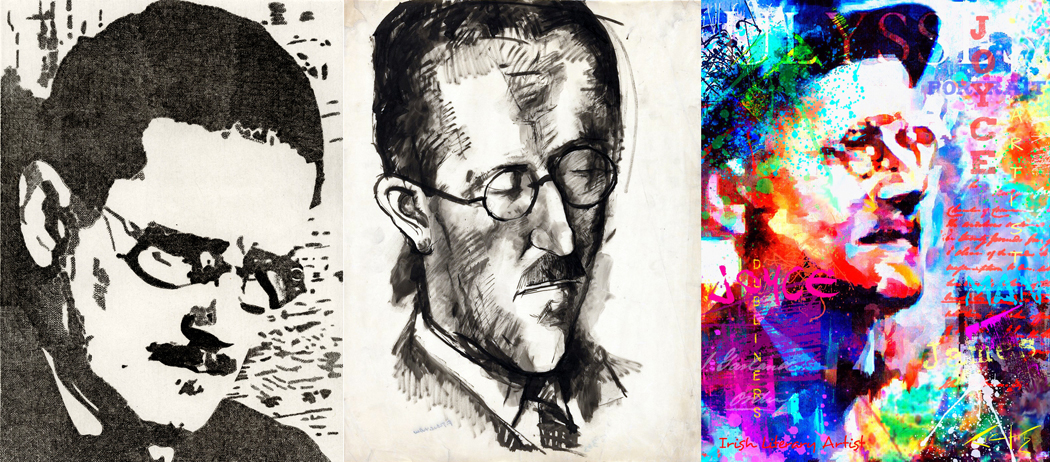
It is this vast expanse of Russia that interests me, because hardly anyone ever thinks about it, except in terms of the Gulag prisons and the exiles of so many Russian artists, intellectuals and political dissidents to the wastelands of Siberia — a term, by the way, as indistinct and poorly defined as “the frozen north,” or “ultima Thule.” For most Americans, Russia is the Kremlin, St. Basil’s, Moscow and Vladimir Putin. If they have a sense of history, they may remember Krushchev, Stalin, the czars, Peter the Great and Ivan the Terrible. The mass of Russian history concerns European Russia — Russia west of the Ural Mountains. East, though — east is a vast land of pagan history and limitless forests and tundra. It is the source of 75 percent of Russia’s wealth, primarily in oil and natural gas, and the home of those few remaining indigenous peoples.

In many ways, Russian history is the mirror image of American history. We moved west, they moved east. We appropriated Native American lands, they did the same to the Yakuts, Nenets, Chukchis, and scores of other tribal groups. They did it through military conquest and the spreading of disease.
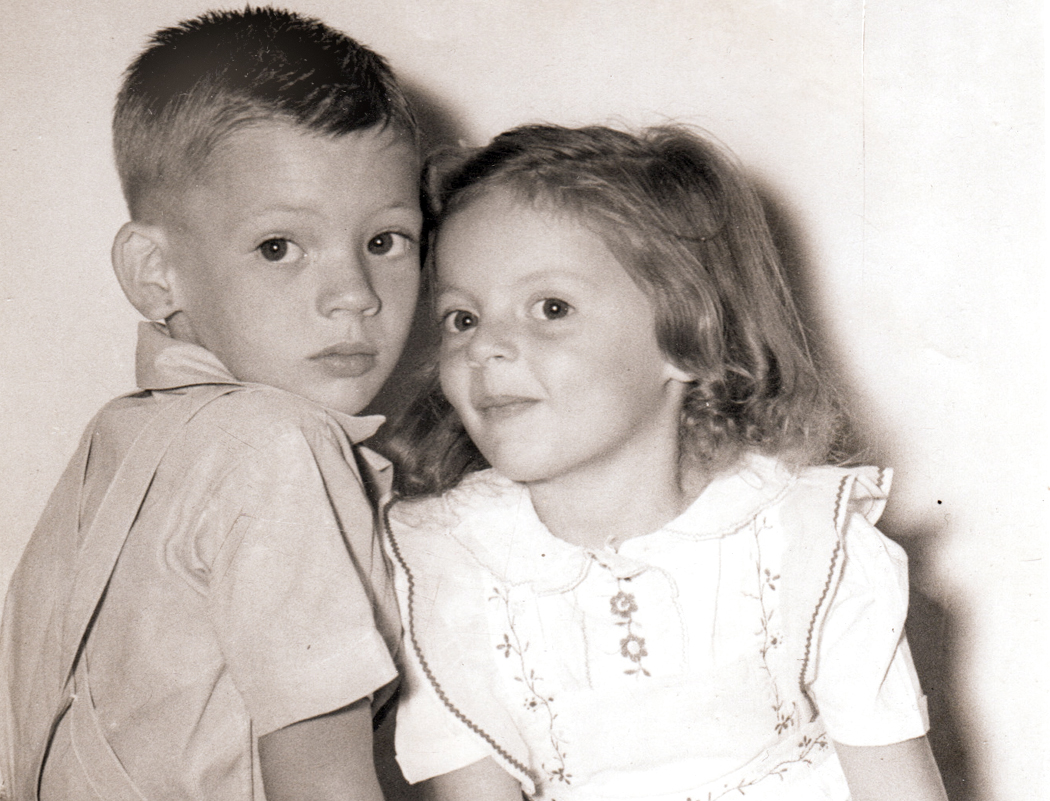
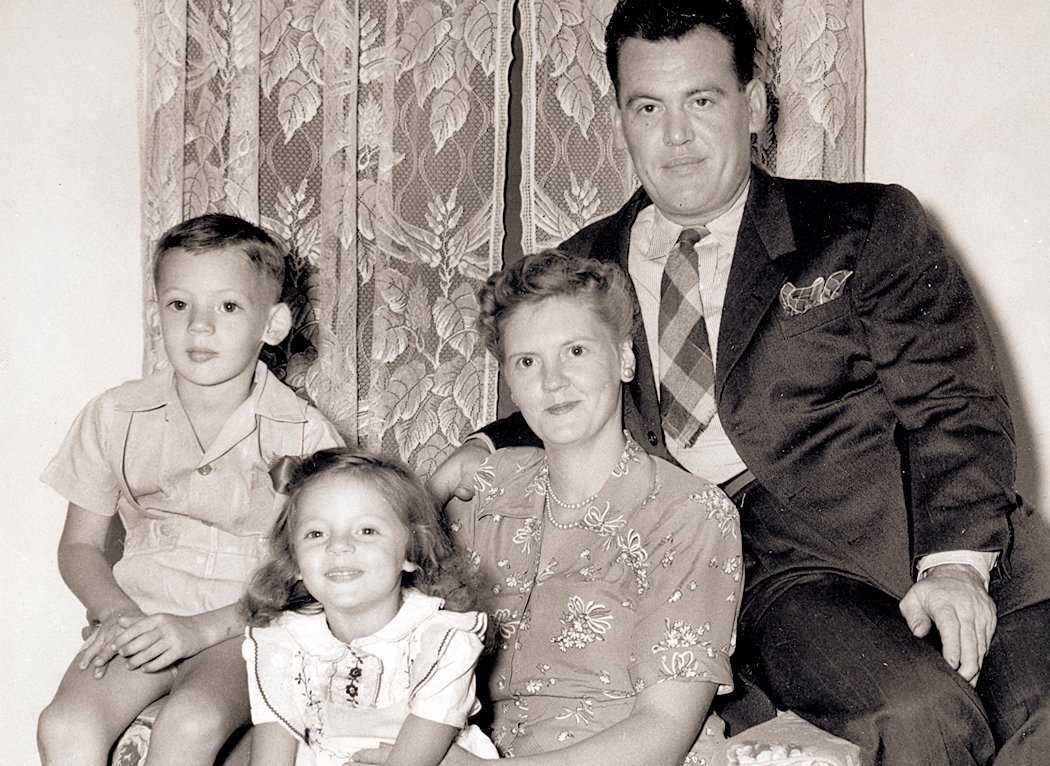
Until the 16th century, Russia was confined to the European part of the Eurasian continent, but beginning in 1581, the Cossack leader Yermak  Timofeyevich led an army of 1,600 into what was then the Khanate of Sibir, in southwestern Siberia, and began to lay siege to its cities (although “city” might be too strong a word: Estimates for the primeval population of Siberia put the population of the entire area at something like 300,000). Yermak died during the siege of Qashliq (near the modern city of Tobolsk), but over the next century and a half, the vastness of Siberia was brought under the control of the Moscow czars. Their primary interest in the area was economic, and in that, primarily in furs. Just as in the American West, hunters nearly exterminated the bison, in eastern Russia, the reindeer herds of nomadic indigenous peoples were nearly gone. (Recent policy changes have brought back the herds, just as the bison have been revived in the U.S.)

Those tribal people who survived the genocide — there is no other word for it: At least 12 separate ethnic groups were wiped from the planet by the end of the 19th century — were forced to change their way of life, and learn Russian.

The conquering Russians, like their American counterparts, also used disease, if not consciously, at least to their benefit. According to historian John F. Richards, “New diseases weakened and demoralized the indigenous peoples of Siberia. The worst of these was smallpox because of its swift spread, the high death rates, and the permanent disfigurement of survivors. … In the 1650s, it moved east of the Yenisei, where it carried away up to 80 percent of the Tungus and Yakut populations. In the 1690s, smallpox epidemics reduced Yukagir numbers by an estimated 44 percent. The disease moved rapidly from group to group across Siberia.”

The Russian incursion into Siberia and the Far East (the official name for all of Russia east of the Ural Mountains) remains heaviest along the southern edge of the nation. The cities we think of in Siberia — Omsk, Novosibirsk, Krasnoyarsk, Irkutsk (I love those names: Saying them out loud is like chewing cabbage) — all hug the bottom of the map. Settlements that venture north tend to follow rivers, some of which are navigable in the summer and function as frozen roadways in the winter. The Trans-Siberian Railway follows that southern route. It has to.

But the north; the frozen, vast, icy, north, spreading to the Arctic Circle and east to the Kamchatka Peninsula and the end of the line at Vladivostok — is 1.5 times the area of the Sahara Desert and the largest sparsely inhabited region in the world. The north half of the Kamchatka peninsula features a population density of only one person per every 6.2 square miles. Talk about swinging a cat and not hitting anything.

When a meteorite (or comet or black hole) crashed into the Tunguska region of Siberia in 1908, it hit with the force of 1,000 atom bombs of the size that destroyed Hiroshima, and flattened 770 square miles of taiga yet  somehow missed killing anyone at all.

Film director Werner Herzog fashioned a wonderful film about the area near the Yenisei River north of Krasnoyarsk, and the native Ket people, re-editing footage by Russian filmmaker Dmitry Vasukov into an atmospheric documentary that captures the vastness, drabness, emptiness and sublimity of the region, all to the soundtrack of his hypnotic voice-over. It is called, only half-ironically, “Happy People: A Year in the Taiga.” I highly recommend it.