The story of Galileo isn’t what I thought it was. It usually gets written about as if the enlightened astronomer were persecuted for being right about the sun, earth and planets, while the Catholic Church was the Evil Empire mired in reactionary ignorance. 

But we often get history wrong — or at least mixed up. I’ve spent a month or so looking into the Galileo case and it turns out to be rather different from the common understanding. Some of it, of course, we get right. 

Galileo di Vincenzo Bonaiuti de’ Galilei was born in Pisa (then part of the Duchy of Florence), Italy, on February 15, 1564, in the same year as Shakespeare and on same day that Michelangelo died.  He was the first of six children of Vincenzo Galilei, a lutenist, composer, and music theorist, and Giulia Ammannati, who had married in 1562. 

He was a smart kid, went to school, did well, went to university. 

By 1580, he was studying medicine at the University of Pisa where he had his first scientific insight. While attending a lecture, which seems to have bored the young man, his attention wandered and he noticed that a chandelier, swaying back and forth in a breeze, would swing wider or lesser depending on the force of the wind. More importantly, he timed the swinging with his pulse and to his surprise, whether the chandelier swung wide or narrow, the rhythm didn’t vary: A long swing took exactly the same time as a short swing.

At home, he made an experiment with a pair of identical pendulums and set them in motion, one in a wide sweep and the other in a short one and discovered that they remained in synch. 

Galileo was born at a propitious time. It was the beginning of the Age of Reason, begun in the previous century when the Aristotelian explanations for the natural world had begun to come into question and a range of scientists, such as Francis Bacon, urged that we search for truth empirically. 

It was a special age in Italy, which produced not only Galileo, but the philosophy of Giordano Bruno; the sculpture of Bernini; the music of Monteverdi; the poetry of Torquato Tasso and reams of painters. 

With the need to make a living, he became an inventor to subsidize his small income as a teacher. In 1586, he invented a hydrostatic balance to measure the relative weights of metals in an alloy, and wrote an essay about the center of gravity in solid bodies. He later developed the thermoscope, an early version of the thermometer. 

Later, as chair of mathematics at Pisa, he affirmed the indestructibility of matter, formulated the principles of the lever and the pulley, showed the speed of freely falling bodies increases at a uniform rate, experimented with inclined planes, argued that an object rolling down one plane would rise on a similar plane to a height equal to its fall, outside of friction and concluded the law of inertia  — Newton’s first law of motion — that a moving body will continue indefinitely in the same line and rate of motion unless interfered with by some external force. He was on a roll. He proved that a projectile propelled in a horizontal direction would fall to the earth in a parabolic curve. He reduced musical tones to wave lengths of air, and showed that the pitch of  note depends upon the number of vibrations made by a struck string in a given time.

And he posited that only those properties of matter belonging to mathematics could be objective, and all other properties sounds, tastes, odors, colors and so on “reside only in consciousness; if the living creature were removed, all these qualities would be wiped away and annihilated.”
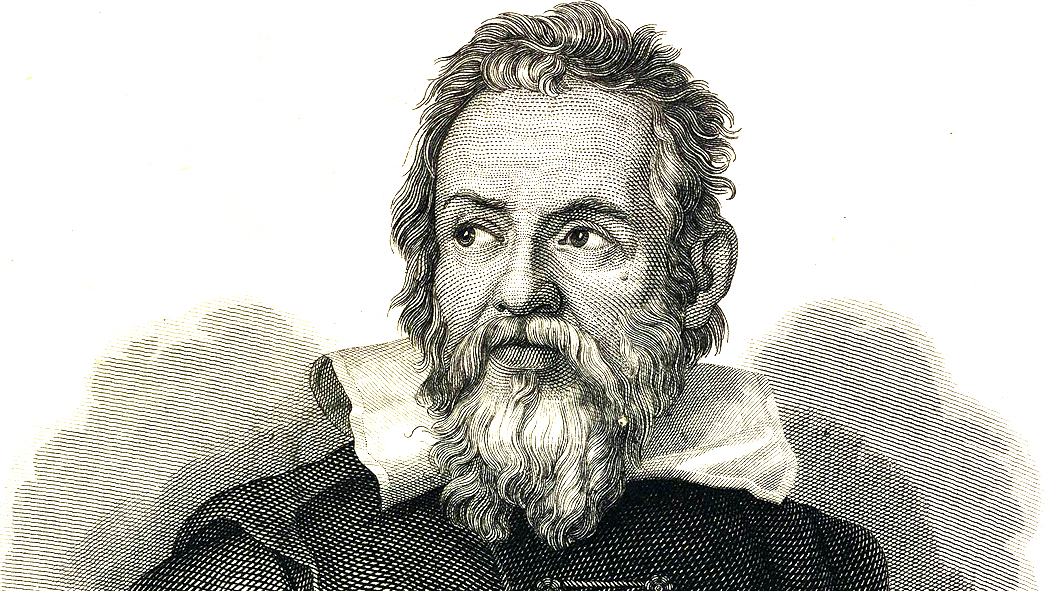
There is little question that Galileo was a genius. And he was recognized as one even then. He was someone on the same exulted level as Isaac Newton or Albert Einstein. 

And all that was before what he was later most famous for: his astronomy. He didn’t invent the telescope, but he improved it in 1609 (not initially for studying the heavens, but for commercial use on merchant ships). And when he turned its glass eye on the stars, he discovered startling things. And that’s when his troubles began. 
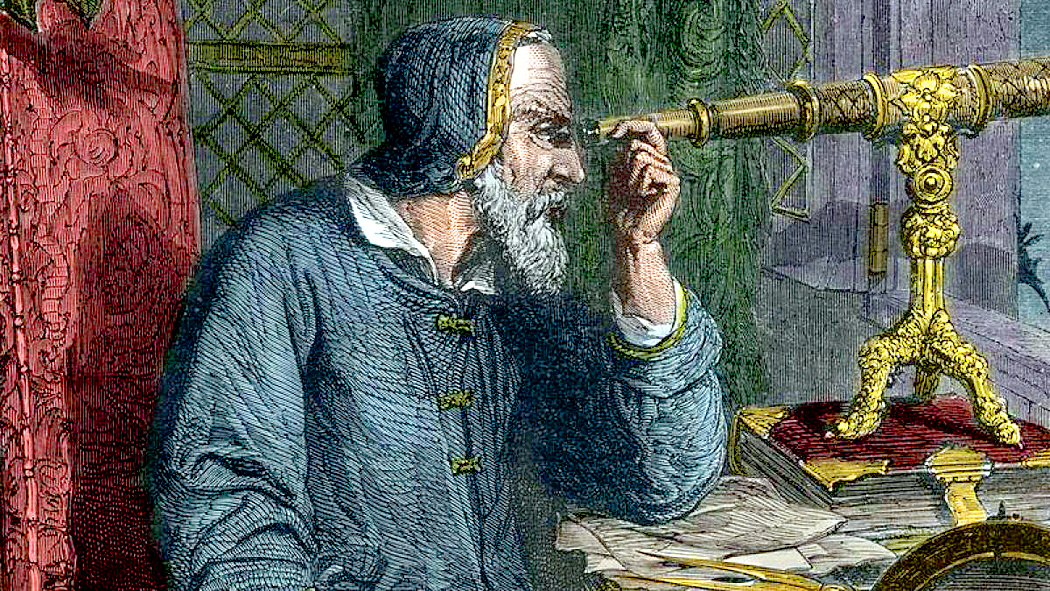
In the usual version of the story, Galileo came to realize that Copernicus had been right. Centuries of belief that the Earth was the center of the universe and the sun and planets revolved around the Earth was turned around and Copernicus put the sun in the center and demoted the Earth to a mere planet, like all the others, spinning around the central sun. 

The church — and pretty much everyone (although the church pretty much was everyone) — had assumed the obvious: The earth didn’t move under their feet and the sun rose each day in the east and set in the west “and hastens to the place where it arose,” as Ecclesiastes had it in the Bible. It was not at all clear that Copernicus got it right. After all, Aristotle was the smartest man who ever lived, and Aristotle taught the sun spun around the earth. Who can argue with the smartest man who ever lived? 
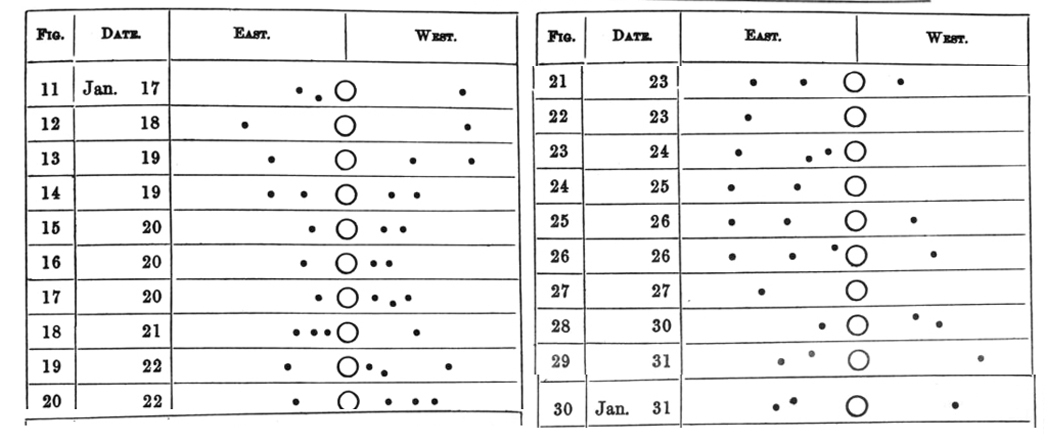
Galileo’s record of Jupiter’s moons in orbit

When Galileo was 45 and playing with his new telescope, he discovered the four large moons of Jupiter. “These new bodies, moved around another very great star, in the same way as Mercury and Venus, and peradventure the other known planets, move around the sun.”

That and other things proved to Galileo what he had long believed, that Copernicus had it right: The earth revolved around the sun, along with the other planets. Other bits of evidence began to turn up. 

Critics of Copernicus had argued that if Venus revolved around the sun, it should show phases like the moon. Then, in 1610, Galileo’s telescope revealed such phases. Later, he discovered the rings of Saturn. In 1611, he he showed the existence of sunspots and argued they proved the sun rotates. 

Galileo recognized that his opinion varied from church doctrine and knew he needed support from powerful people if he was going to stay out of hot water. He sought the patronage of the powerful Cosimo II, Grand Duke of Tuscany. He moved to Florence and cleverly named the four moons of Jupiter the Sidera Medicea, after Cosimo’s family name, Medici. There he published his astronomical findings in a book he dedicated to Cosimo called the Sidereus nuncius, or “The Starry Messenger.” So far, so good. 

Galileo was also friends with several Vatican bigwigs. And this is where the familiar story starts to fray. These powerful men of the cloth were among the brightest and most educated and forward looking of their age. They were not knuckle-dragging troglodytes attempting to destroy the honest astronomer. In fact, they gave him every opportunity to teach his ideas — as long as he didn’t insist he was right and everyone else was wrong. 

And the Church was fine with him presenting his case as just that, an alternative interpretation of the facts. Just not OK with him saying it was the absolute truth. He could explain the Copernican theory, since it made celestial navigation easier to compute. And, they said, if ever he could provide actual proof of heliocentrism, then they would be forced to reinterpret the biblical citations. As Cardinal Bellarmine put it, he had asked only that until proof was at hand, astronomers refrain from making strong truth claims and present their results merely hypothetically.

In effect, the Church was willing to bend over backwards to tolerate the haughty astronomer. 

We forget that Galileo had no proof for his ideas. He had inferences and metaphors. The fact that he got it essentially right and the Church was wrong was not provable at the time. Galileo had an alternative way of understanding the facts and observations. Proof of the earth’s rotation, for instance, wasn’t available until 1851 and Leon Foucault’s pendulum experiment. So, Galileo was defending a theory that had no direct evidence. We know now he was right; but he had only the weight of his belief. It was belief vs. belief at the time, not simply truth vs. superstition.

We forget also that Galileo ran into trouble with the Church not in one big trial, but twice, and for different reasons. 

The first, in 1615, when he was 51, and a group of clergy brought before the Inquisition charges against the astronomer. The charge brought was not that he was teaching heliocentrism, but rather that in defending it, he was re-interpreting several verses from scripture. 

Pages from Galileo’s notes

Yes, Galileo originally did not argue with the church over scientific principles, but rather the fact that he attempted to prove that his science did not conflict with the Bible. The Council of Trent in 1563 had forbidden individual interpretations of scripture, saying that “no one relying on his own judgement shall, in matters of faith and morals pertaining to the edification of Christian doctrine, distorting the Scriptures in accordance with his own conceptions, presume to interpret them contrary to that sense which the holy mother Church… has held or holds.” And Galileo was attempting just that. It struck the Inquisition as “dangerously close to Protestantism.”
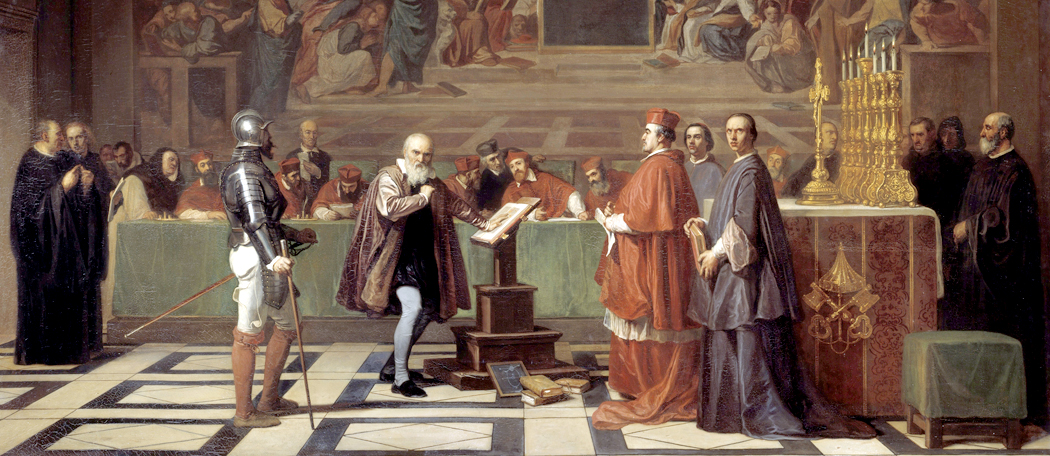
The Inquisition was a subset of those in the Vatican, and made up of the more reactionary elements. When you were denounced to the Inquisition, you had to defend yourself and Galileo did that, again but disputing the meaning of passages in the Bible. This was not a good tactic with these priests. It was exactly what he was being charged with. 

He could have been imprisoned or even executed for his “crime,” but the Inquisition showed deference to his eminence and reputation and merely forbid him from teaching or writing about the Copernican system. The judgement in February, 1616, Galileo was ordered “to abandon completely … the opinion that the sun stands still at the center of the world and the Earth moves, and henceforth not to hold, teach, or defend it in any way whatever, either orally or in writing.”
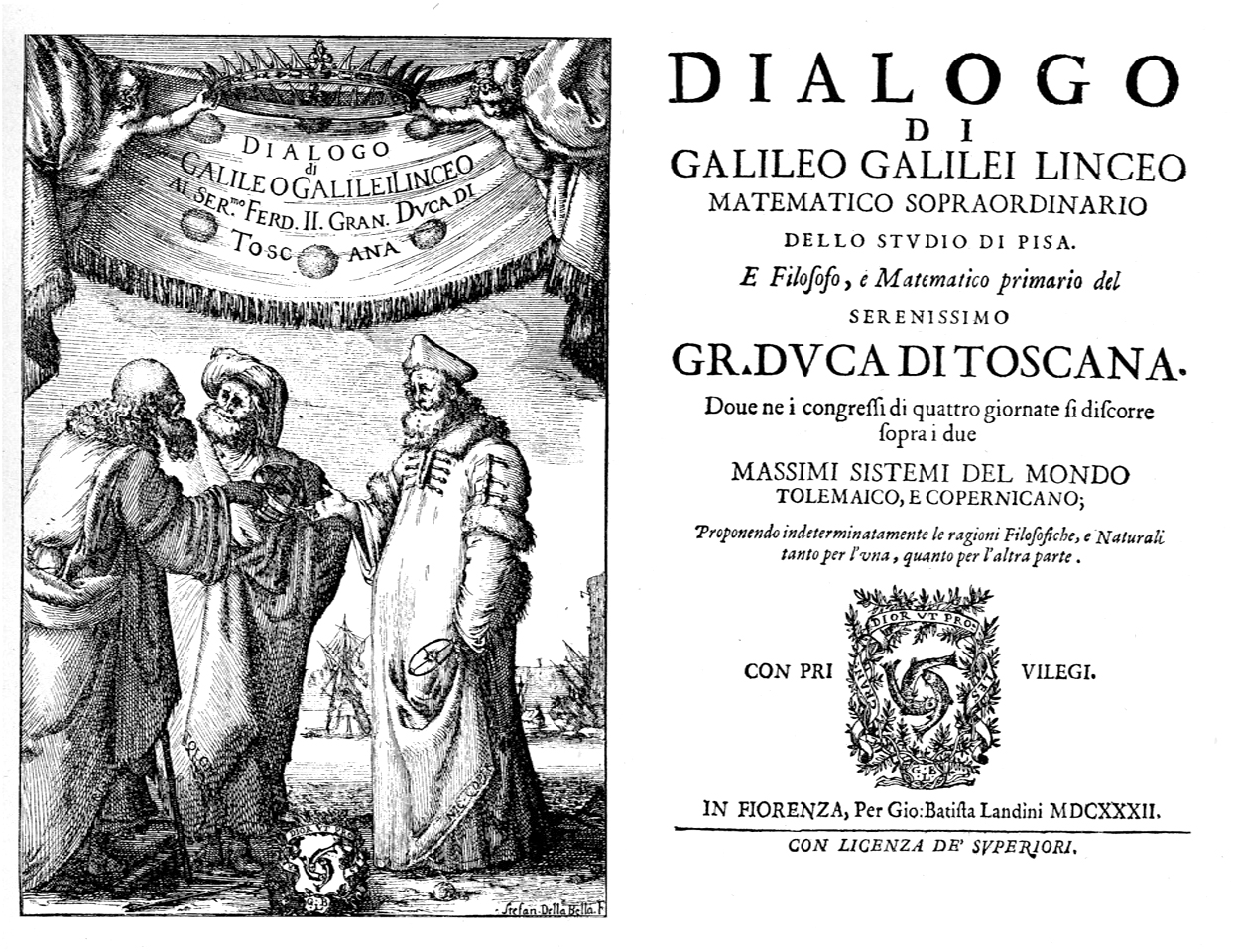
By 1623, Galileo’s friend and supporter, Cardinal Maffeo Barbarini, had been elected as Pope Urban VIII and Galileo apparently felt the pressure was off and decided it would be OK to write again about heliocentrism. Barberini had opposed the admonition of Galileo in 1616, and later, as pope, had given permission to Galileo to write a book presenting arguments for and against the Copernican system. Galileo’s resulting book, Dialogue Concerning the Two Chief World Systems, was published in 1632, with formal authorization from the Inquisition and papal permission. But then, they read the book. 

It was a conversation among three supposed points of view, one in favor of Copernicus, one against it, and a third as disinterested third party to ask questions of the other two. Unfortunately and immoderately, Galileo named the anti-Copernican Simplicio, or “Dunce,” and put into his mouth several ideas and phrases that had previously been uttered by Urban. Not a good idea to insult your primary supporter. 

Worse, Urban was facing backlash as pope from more reactionary elements, and so the pope felt political pressure not to forgive his erstwhile friend. The pope had bigger fish to fry and Galileo was a minor irritation in the big picture. 
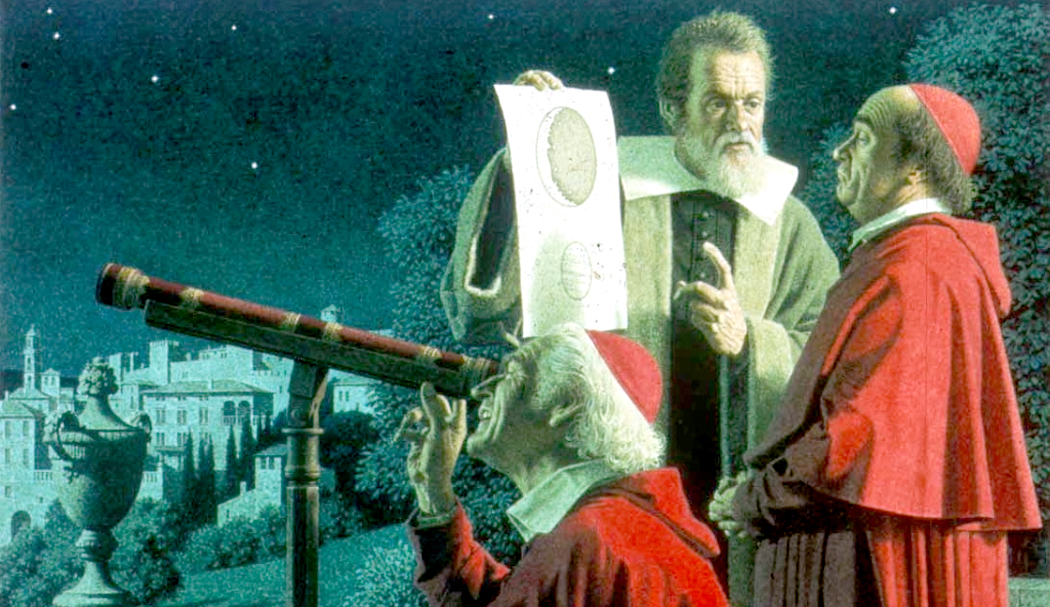
Galileo had a long history of arrogance and Galileo’s very personality made things much worse for him than they needed to be. He was a cussed pig-headed man who unnecessarily insulted the powerful people who had the power over his fate.

He wrote that “philosophy had “gone to sleep in the lap of Aristotle.” In the margin of a book by Jesuit Antonio Rocco defending the Ptolemaic astronomy, Galileo wrote “Ignoramus, elephant, fool dunce … eunuch.”

 He wrote a letter to Johannes Kepler in 1596 and said in it that he feared being “ridiculed and condemned by countless people (for very great is the number of the stupid.”) 

All of may have been true, but it was surely impolitic of Galileo to point it out when they had power of life and death over him. 
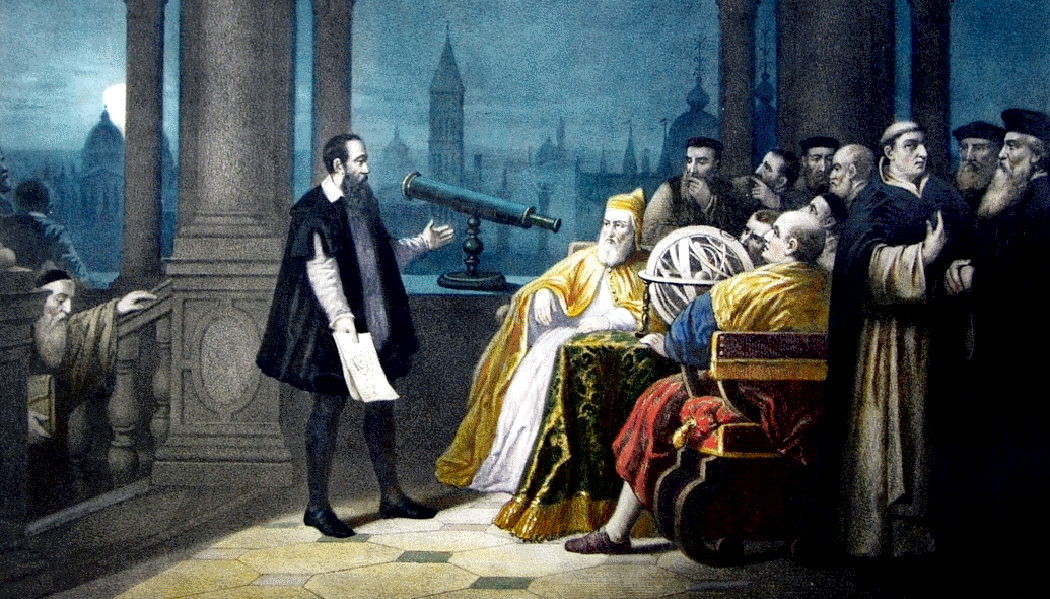
One of his supporters, Jesuit Father Grassi, whom Galileo had once made fun of, wrote, “Many resented his arrogant tone, his presumption for speaking on theological matters, and for crossing over from the world of mathematical astronomy into the world of natural philosophy.” And later, “I have always had more love for him than he has for me. And last year at Rome [during the trial] when I was requested to give my opinion on his book on the motion of the earth, I took the utmost care to allay minds harshly disposed toward him and to render them open to conviction of the strength of his arguments, so much so, indeed, that certain people who supposed me to have been offended by Galileo . . . marveled at my solicitude. But he has ruined himself by being so much in love with his own genius, and by having no respect for others. One should not wonder that everybody conspires to damn him.”

And they did. In 1633, Galileo was ordered to stand trial on suspicion of heresy “for holding as true the false doctrine taught by some that the sun is the center of the world” against the 1616 condemnation, since “it was decided at the Holy Congregation … on 25 Feb 1616 that … the Holy Office would give you an injunction to abandon this doctrine, not to teach it to others, not to defend it, and not to treat of it; and that if you did not acquiesce in this injunction, you should be imprisoned.”

He was interrogated and, according to the directives of the Inquisition to be “shown the instruments of torture” to encourage his acquiescence. Galileo was found “vehemently suspected of heresy,” namely of having held the opinions that the Sun lies motionless at the centre of the universe, that the Earth is not at its centre and moves, and that one may hold and defend an opinion as probable after it has been declared contrary to Holy Scripture. He was required to “abjure, curse, and detest” those opinions.

He was sentenced to house arrest, which he remained under for the rest of his life, and his books were banned, including any new works he might write. (His books remained on the Index of Forbidden Books until it was formally removed in 1835.) 
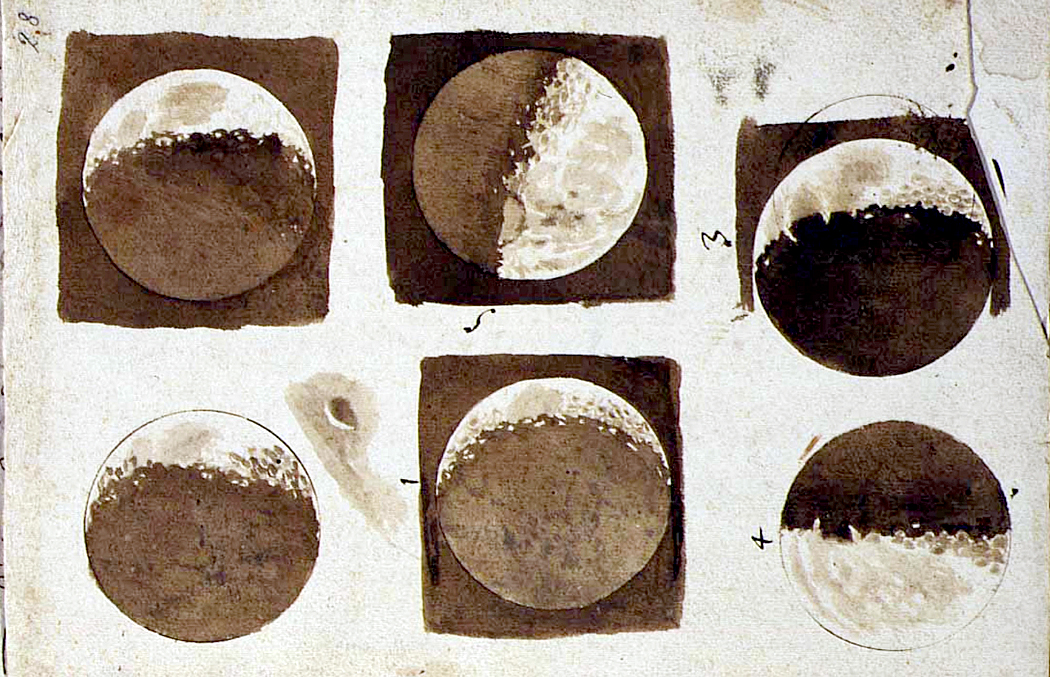
Galileo’s drawing of the moon

While under house arrest, he managed to surreptitiously write a new book, Discourses and Mathematical Demonstrations Relating to Two New Sciences, which was published in 1638 in Holland, outside the jurisdiction of the Inquisition. The book concerns mechanics and physics, not astronomy. 

The astronomer was 69 when he was sentenced. His health declined, and five years later, in 1638, he went blind. He died in 1642 at the age of 77. 

There is a common story that as Galileo was led away after his condemnation for teaching that the earth revolved around the sun, he muttered under his breath, “E pur si muove” — “And yet, it moves.” Unfortunately, he likely never said it. The earliest attestation for the quote comes from 1837, more than 200 years later. 

____________________________

E pur si muove

—Galileo Galilei, 1633 (maybe)

____________________________ 
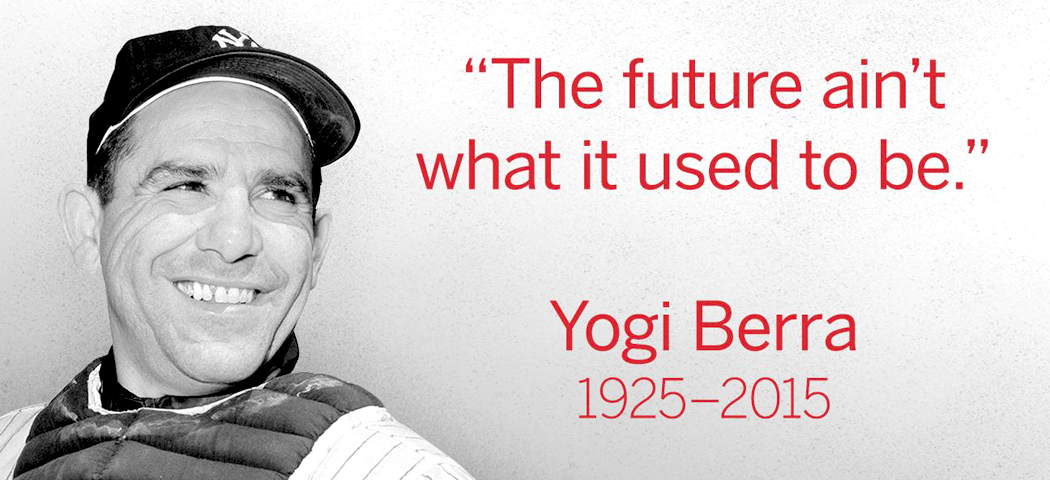
Yogi Berra, source of many notable quotes referred to as “Yogi-isms,” (“When you get to the fork in the road, take it” or “It gets late early out here”) also said, “I never said all the things I said.” 

The world is full of famous quotes, and it is appalling how many of them never happened. Marie Antoinette never said, “Let them eat cake.” Gandhi never said, “Be the change you wish to see in the world.” And Sigmund Freud never said, “Sometimes a cigar is just a cigar.” 

These misquotes come in several varieties. A lot of historical ones come from later rewritings of less succinct utterances. Some are just wishful thinkings — wouldn’t it have been great if Galileo actually did say, “Yet it still moves.” But it is most likely he never did. 

Queen Victoria never said, “We are not amused.” In reality, according to those who knew her, she was quite easily amused. 

Niccolo Machiavelli never wrote, “The ends justify the means.” He may have meant that, but the closest thing he actually wrote says, “One must consider the final result.” Not quite so ringing a quote. 

George Bernard Shaw never said, “England and America are two countries divided by a common language.” The closest actually comes from Oscar Wilde, who wrote in The Canterville Ghost, “We really have everything in common with America nowadays except, of course, language.”

In their book, They Never Said It : A Book of Fake Quotes, Misquotes, and Misleading Attributions, authors Paul F. Boller Jr. and John George write: “There have always been people who liked to liven up what they were saying with appropriate statements from the writings of others. This was true even in ancient times; Plato used quotations freely, and Cicero’s letters are full of quotations. Today, however, quotations tend to be polemical rather than decorative. People use them to prove points rather than to provide pleasure. … What has been called ‘quotemanship’ (or ‘quotesmanship’) — the use and abuse of quotations for partisan purposes — has during the past few decades become a highly refined art in this country.”
The internet is awash with meme-quotes, almost always attributed to Mark Twain, Albert Einstein or Mohandas Gandhi. But Mark Twain, who said more quotable things than anyone after Shakespeare, never commented on Microsoft Word, despite the quote put in his mouth on FaceBook. 

These things come in at least three forms. The first and easiest are the misquotations — close but no cigar. 

Leo Durocher never said, “Nice guys finish last.” He did say, “Nice guys finish seventh in the National League.” Near miss. 

Financier J.P. Morgan never said, “If you have to ask how much, you can’t afford it.” He actually said, “You have no right to own a yacht if you ask that question.”

Often these are notable sentiments originally expressed in less memorable language and later cleaned up, rewritten and made pithier. 

The second source of bad quotations come from crossed, or misappropriation. Sometimes a nobody says something clever and we would pay more attention if we pretend Mark Twain said it. Or Shakespeare. 

Winston Churchill did not say, “Americans can always be counted on to do the right thing, after they tried everything else.”  In reality, it was said by Frederick Edwin Smith, First Earl of Birkenhead, a British Conservative politician. But I doubt you’ve ever heard of him. 

Marilyn Monroe is often quoted for saying, “Well-behaved women rarely make history,” but it wasn’t her; it was Pulitzer-Prize-winning historian Laurel Thatcher Ulrich, who was amused by its spread. “It was a weird escape into popular culture. I got constant e-mails about it, and I thought it was humorous.” 

“There’s a sucker born every minute.” is usually put in the mouth of P.T. Barnum, but the real quote, “There’s a sucker born every minute, but none of them ever die” actually came from rival circus owner Adam Forepaugh. And even he probably stole it from famous con-man Joseph (“Paper Collar Joe”) Bessimer. And it likely predates even him. In 1930, novelist John Dos Passos attributed it to Mark Twain, one in a long line of quotes put in the mouth of Twain, who “never said all the things I said.” 
The need to find a famous name to give weight to a pithy saying is enormous. It is on one hand a vestige of the Medieval “argument from authority.” If you have a recognized celebrity say it, it must be true. 

And so, “Our deepest fear is not that we are inadequate. Our deepest fear is that we are powerful beyond measure” is all over the internet attributed to the incontestable moral authority of Nelson Mandela, but was really said by New Age flake and air-headed inspirational speaker Marianne Williamson. 

“Success is not final, Failure is not fatal: It is the courage to continue that counts” shows up as Winston Churchill, but really owes to football coach Don Shula.

And speaking of football coaches, the most famous football quote of all times — “Winning isn’t everything, it’s the only thing” wasn’t coined by  Vince Lombardi (he did repeat it, but did not originate it.) It was first said by UCLA coach Red Sanders, who also said about football, “It’s not a matter of life and death; it’s more important than that!”

The final group are those that are completely bogus. At least the source has never been identified. They are usually ascribed to one of the usual suspects, but those suspects never said or wrote the quote. And so: 

“Age is an issue of mind over matter. If you don’t mind, it doesn’t matter.” Not said by, but given to Mark Twain, or Jack Benny, or Muhammad Ali. 

“Two things are infinite: The universe and human stupidity.” Einstein never said it.

“All that is necessary for the triumph of evil is that good men do nothing.” Not found anywhere in the writing of Edmund Burke. 

Mark Twain never said: “The coldest winter I ever spent was a summer in San Francisco.” Nor: “A banker is a fellow who lends you his umbrella when the sun is shining but wants it back the minute it begins to rain.” Nor: “It is better to keep your mouth shut and appear stupid than to open it and remove all doubt.” And he did not say, “History does not repeat itself, but it rhymes.” That last didn’t occur anywhere until 1970, long after Twain’s demise. (And he never said, “Reports of my death have been greatly exaggerated.”) 

Einstein never said: “Insanity is doing the same thing over and over again and expecting different results.” And neither did he say: “You do not really understand something unless you can explain it to your grandmother.” And the supposed quote, “Evil is the result of what happens when man does not have God’s love present in his heart” doesn’t appear anywhere until 1999, when it surfaced online. 
On the internet, you can make anything up and put someone’s name under it, and within a week, you’ll see it reposted a hundred times — and often with some other name given as its author. It’s a great big mix ’n’ match. 

There’s an old saying in journalism. “If you mother says she loves you, check it out.” It has been credited to Chicago editor Arnold A Dornfield. But an enterprising reporter checked it out and discovered it was really said by another Chicago editor, Edward H. Eulenberg, and what he actually said was, “If your mother tells you she loves you, kick her smartly in the shins and make her prove it.” Has a bit more oomph. 

And so, to quote Mohandas K. Gandhi, “Trust but verify.” 

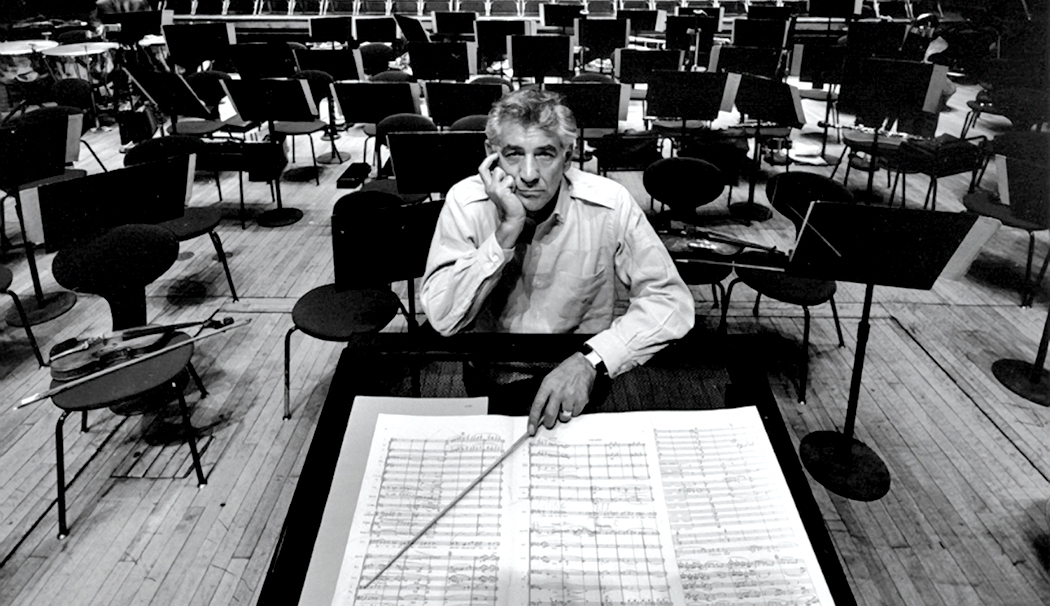
Yesterday, I accidentally came across a YouTube video of Leonard Bernstein conducting the Vienna Philharmonic in the finale of Joseph Haydn’s Symphony No. 88, which is one of the composer’s bounciest, most ebullient movements, and therefore one of the bounciest, most ebullient in all music. And I was transfixed: After a tiny initial tempo beat with the baton, the conductor dropped his arms and stood there, letting the orchestra play the entire movement, indicating directions entirely with facial expressions. (Link here). 

He was conducting with his face. It was brilliant. Every fleeting emotion played across his face, as if he were the music. And each expression came a half-second before the orchestra reacted, so Bernstein wasn’t following the music, but leading it. Extraordinary. It was one of the best performances of that finale I’ve ever heard, with a naturalness and clarity, but more important, a joy and spontaneity. 

I go back a long way with Lenny. When I was a mere bairn, I watched him on the Young People’s Concerts and I remember his explanation of Beethoven’s Fifth Symphony on the Omnibus TV show. I was just six years old in 1954, so I don’t remember much of what he said, but I remember the set, with the score of the symphony on the floor, so he could position his players on their staffs to show what they were doing. I was fascinated. 

Since then, Lenny has been a part of my life. Sometimes a small part, in the background, sometimes I spent extra money to buy one of his recordings over a cheaper Turnabout or Vox recording, with the trust that I would be rewarded by something special. I usually was. 

I heard Lenny conduct at New York’s Philharmonic Hall (later Avery Fisher Hall, now David Geffen Hall — it changes as much as the names on ballparks). I remember a rousing version of Debussy’s La Mer with the New York Phil. But mostly, I heard Lenny via recordings, first LP and then CD. There were also videos and TV presentations. 

I don’t deny that Lenny talking could be hard to take, with that resonant basso voice that he seemed to be in love with, and sometimes a ham actor’s thesbianicity. But if you can get past that surface, what he says is almost always revelatory, precise, and true. I listen to his Harvard lectures over and over, and despite some tedious Chomskian linguistic folderol, really insightful. (He drops the Chomsky in the latter lectures, thank god). 

But it is the music that really counts. For many, Bernstein was the great podium presence of the second half of the 20th century. The singer Christa Ludwig, who performed with Lenny often, once said she worked with three truly great conductors: Karl Böhm, Herbert von Karajan and Bernstein, but the difference was, she said, “Bernstein was a genius.” 

Others have commented that when he conducted, he “became” the music. A member of the Vienna Philharmonic told my old friend, the late music critic Dimitri Drobatschewsky, “Name one other conductor who, just by standing in front of the orchestra, could make them play better than they thought they could.” Bernstein seemed to have a special relationship with the Vienna Phil, and many of his later recordings were with them.

Lenny had his detractors, who thought he was showing off in front of the audience and orchestra, or that he exaggerated details, or — especially later in his career — dragged tempos. But, as critic David Hurwitz has said many times, “Every time I think Bernstein has distorted something, I look in the score and see that it is exactly what the composer had notated. He was truer to the score than almost any other conductor I know.” 

It is true that for Lenny, as for Old Lodge Skins in Little Big Man, “Sometimes the magic works, sometimes it doesn’t.” But the best recordings have something to give that few others can match: commitment, power, emotion, persuasiveness. 

I have chosen 10 of Lenny’s recordings that for me summarize his best. There are many others. He was especially great with Haydn, with Beethoven, with Mahler, with Stravinsky, with Shostakovich. And Modern music — if it was tonal or polytonal, like Milhaud — he made it all just bounce. 

We’ll start with Haydn’s Paris Symphonies, that is symphonies Nos. 82-87, including “The Hen” and “The Bear.” It is pretty well consensus that Bernstein’s Paris Symphonies are the reference recordings. Sprightly, bright, witty, energetic and beautifully played. Bernstein was always good in Haydn, and I would have listed his Creation here, or his Nelson Mass or Tempore Belli Mass. You can’t go wrong with Bernstein and Haydn. In comparison, almost everyone else just feels soggy. 

In roughly chronological order, we come to one of his most controversial recordings ever: the live recording of Beethoven’s Ninth Symphony from 1989 and the fall of the Berlin Wall. Bernstein substituted the word “Freiheit” (“freedom”) for Schiller’s “Freude” (“joy”) in the finale, caught up in the moment’s exhilaration over the fall of East Berlin and Communism. Actually, he only does it once, and later reverts back to the original. But it is jarring when you hear the baritone intone it at the start of the finale. Yet, I am listening to it now as I write this and it is an absolutely thrilling version of the Beethoven’s greatest symphony. Members of six different orchestras came together and meld perfectly under Lenny’s baton. It is my go-to version of the symphony. It is a symphony played so often (I can’t count the number of times I’ve heard it live) that it has lost some of its magic as occasion, but here, it magnifies that sense of occasion. Despite the mutilation of the “Freiheit,” but because of the intensity and emotional engagement of the 20-minute Adagio — more like a prayer than anything else. (Roger Norrington takes it in 10 minutes of throw-away carelessness.) 

Then, there’s Berlioz’s Grande Messe de Morts, or Requiem. There are few decent recordings, and most fail for exactly the same reason: They attempt to make sense of the thing, toning it down into something “normal.” That is the issue with Colin Davis’ version. But Lenny lets it all hang out. What is fevered and hysterical, comes across as fevered and hysterical, just as Berlioz wrote it. 

If there is any symphony from the 19th century more Haydnesque than Bizet’s Symphony in C, I have yet to discover it. It is fresh, bright, tuneful and unendingly happy. The composer wrote it in 1855, when he was 17, and it remained unplayed until 1935 and I feel pity for all those audiences who, for 80 years could have been enjoying it, but never had the chance. Lenny was the perfect conductor for its joie de vivre and rhythmic snap. It is as if Bizet wrote it with Bernstein in mind. 

Lenny recorded Tchaikovsky’s Sixth Symphony at least twice, once with the New York Philharmonic, in 1964 for Columbia, and then again in 1987 for Deutsche Grammophon, with the same orchestra. What a difference. The first — an excellent version — takes about the usual 45 minutes. The second comes in at just a chip under an hour. Most of that extra time comes in the finale, which in the second recording is wrenching and heartbreaking. One critic wrote that it “devastates the emotions. … At the end of the last movement, the despair is complete.” Of course, the performance has its detractors, with some finding it distended and, as one always hears the complaint against Lenny, “is more about the conductor than the composer.” Poppycock. This is Tchaikovsky titrated and distilled into pure essence. 

Lenny recorded Stravinsky’s Rite of Spring many times, also, but there is no quibbling about the one to go to. It is his first, from 1958 with the New York Phil. When the composer first heard the recording, his only response was “Wow!” Lots of conductors have the measure of the Rite, but there is a rhythmic vitality, a violence and explosiveness to the 1958 recording that has never been matched, even by Lenny. 

Just seven years after Stravinsky’s blast, came Darius Milhaud’s Le Boeuf sur le toit (“The Bull on the Roof”), which he says he wrote as “fifteen minutes of music, rapid and gay, as a background to any Charlie Chaplin silent movie.” It is a piling up of Brazilian tunes, in several keys at once, and is as bright and toe-tappy as anything. Indeed, it becomes an ear-worm and you will be hearing its tunes over and over in your head for the rest of the day. The Bernstein recording also features La Création du Monde from 1923, which is a fully realized jazz composition for a ballet about an African creation story. This is Lenny in his element. You can just see him dancing on the podium with happiness and joy. 

Then, there is another highly controversial recording — his DG performance of George Gershwin’s Rhapsody in Blue. Lenny, playing the piano part himself, plays it not as a jazz riff, but as if it were, from bottom-to-top, a classical piano concerto, rather like Ravel’s Concerto in G. Critics miss the easy jazzy element of famous performances by Earl Wilde or Oscar Levant, but Bernstein’s version seems to those who adore it (as I do) as a perfectly genuine alternate view. And it is gorgeous. Did I mention that? Absolutely gorgeous. 

Dimitri Shostakovich wrote his massive Symphony No. 7 “Leningrad” during the German siege of that city in 1942. It is a piece that defeats many orchestras and conductors; it is very difficult to keep it from diffusing into long, undigested sections. Lenny keeps it going as a single directional line from beginning to glorious end, and the Chicago Symphony has the cojones to perform what is asked of them. Almost everyone agrees, this is the Leningrad Symphony to hear. 

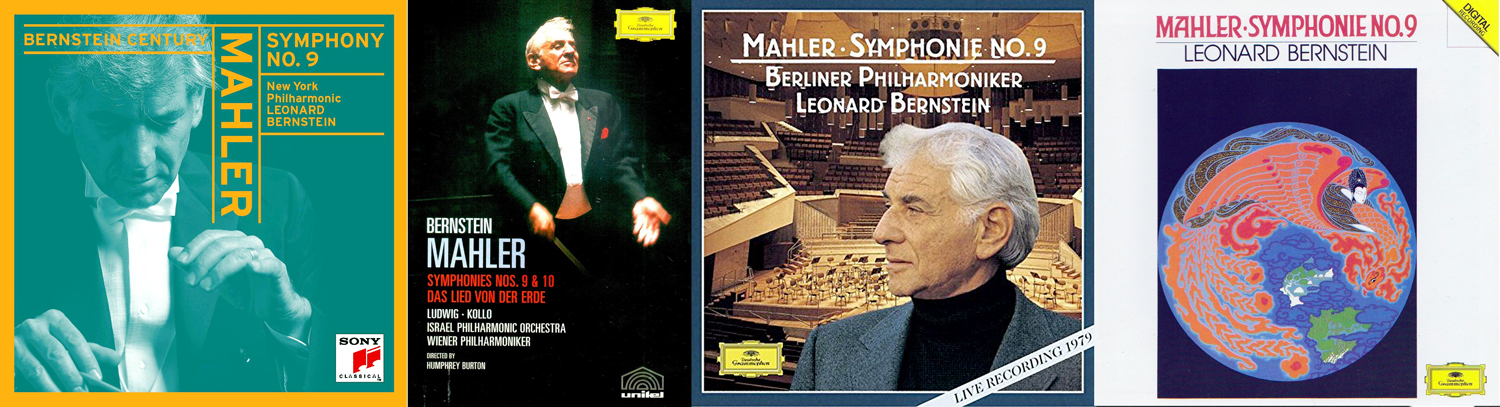
Finally, I’ve kept last (and out of order), Mahler, which sometimes seems like Bernstein’s personal property. It isn’t, of course, but he brings something special to his Mahler performances, and none more so than with the Ninth, which he recorded at least six times (1965 NY Phil; 1971 Vienna Phil; 1979 Berlin Phil; 1979 Boston Symphony; 1985 Concertgebouw; 1985 Israel Phil). It is perhaps the Mahler symphony Bernstein felt closest to. Only four of these are genuine releases, not bootlegs, and among them it is hard to choose, but I suppose I migrate to the late Concertgebouw recording. Berlin has the intensity, but there is a major cock-up in the finale when the trombone section failed to play in the climax (apparently an audience member had died of a heart attack directly behind the brass section and there was some commotion that distracted the players). But listening to any one of them seems as if the music becomes more than music; it is a direct communication from one soul or heart to another. There are other great performances of the Ninth — it seems to draw out the best in most conductors — but there is something extra in the Bernstein versions, something more immediate, more direct. 

That is a list of 10 (or more), but I feel I’ve left out so much. There’s his Bartok Music for Strings, Percussion and Celeste; there’s two complete surveys of Beethoven symphonies; there’s his Copland, his Ives, his Schumann, his Sibelius. And so much more. But I believe the 10 I’ve chosen are not just great, but peculiar to Lenny — and I choose the word carefully. He was an idiosyncratic conductor, but all the personality that went in to his performances meant they are often memorable in a way more straightforward ones are not. 

Many moons ago, when I was a snotty college kid, I went through a period of disdaining Lenny. I bought the canard that he was shallow, heart-on-sleeve and bombastic. I wuz a idjit. One should never let the opinions of others block your ears. There is a world of difference between words and sounds, and the sounds are always more meaningful. I am older now, have experienced a great deal more of living, discovered depths in myself I hadn’t understood, and now Lenny’s insistence on finding the marrow is what I value. My ears are opened to what is gifted to me. 

Click on any image to enlarge

There’s a lot of cynicism creeping around currently. And a good deal of it is earned. Politicians, especially, seem to lie with faces so bald an eel could slide across them. I mean, hypocrisy used to be something to be ashamed of, now it is simply coin of the realm. Yes, there has always been lying, but that doesn’t mean it isn’t especially galling now. After all, they used to pretend they were telling the truth, while now, they don’t care how obvious it is. They will lie about the the sentence they have just spoken, denying they ever said it — even while it is there on the videotape. Truth used to be paid lip service, now, among a Trump-infested lot, there is a pretense that truth is whatever has just been said. 

So, I get it. Ever since Lyndon Johnson lied about Vietnam and Robert McNamara cooked the numbers for him, and even since Richard Nixon proved that “I am not a crook” was “no longer an operable statement,” national faith in institutions has dwindled. So, as I say, the cynicism has its share of being earned. No wonder faith in government and institutions has never been lower.

And yet. And yet, all that runs counter to my actual experience. After all, when I have come in contact with government, I deal with the day-to-day bureaucrat, the ordinary working Joe or Joan. I’ve never actually dealt with a cabinet secretary or a senator. And when I’ve gone to my local Social Security office, the person on the other side of the desk has invariably been solicitous and helpful, if harried (even if I’ve had to wait half a day to get to the desk — I don’t blame the SS worker for that). 

Critics complain about “faceless bureaucrats,” but that’s only because they’ve never faced them.

My experience with government — the part I actually deal with, rather than the part I yell at the TV screen over on the nightly news — is that the poor schlub is earnest, hard working and serious about the job. The government I actually have to face is the postal worker behind the desk selling me Forever stamps and talking about the weather, or the Social Security clerk, or the cashier I joked with when paying a traffic fine. Regular people doing their jobs. 

I first came to realize how seriously people took their civic duty when on jury duty. I’ve served on six juries in my life so far and in every single one of them each juror approached the responsibility with utter sincerity and a sense of the importance of getting it right. And that was true for all the cases, from a simple traffic case to a multiple murder case. Each time I came away with a pride in my fellow citizens, who didn’t complain or blow off the task. 

And, of course, I used to be a journalist. Boy, how people love to hate on journalists. Now, I wasn’t a regular reporter, I was an art critic and I had my own, minor, forms of abuse to suffer, from artists and their mothers. But occasionally I was pulled in to the bigger newsroom. 

I remember the day Congresswoman Gabrielle Giffords was shot in Tucson, Ariz., and our newsroom in Phoenix went into high gear. The entire staff was pulled in and I was assigned to rewrite — taking phone calls from our reporters in Tucson and turning their notes into coherent stories. The place was frenetic with reporters and editors, tracking down information, interviewing witnesses, checking out leads. 

For those who don’t remember: On January 8, 2011, U.S. Representative Gabby Giffords and 18 others were shot during a constituent meeting held in a supermarket parking lot in Casas Adobes, Ariz., in the Tucson metropolitan area. Six people were killed, including federal District Court Chief Judge John Roll; Gabe Zimmerman, one of Giffords’s staffers; and a 9-year-old girl, Christina-Taylor Green. The scene of the shooting at the time, as you might guess, was chaos. 

Those who know nothing and cheerlead the complaining can not fathom just how seriously all the journalists took their jobs and the need to get everything right. Even the spelling of a “Smith” had to be checked and double checked. When the shift was over, I felt a genuine sense of pride in my profession. Not in my tiny role, which, rightly, could have been filled by a well-trained chimpanzee, but in the rigor, honesty, earnestness and work that the entire newsroom put in. Get it right. We didn’t know if she were dead or alive, how many shooters there were, how many in the crowd, if anyone else had been shot, or if the police were on the scene or if the shooter were caught, alive or dead. All that had to be determined, and had to be gotten right. No speculation; just facts. 

I burn with anger at those who believe journalists are dishonest. I don’t speak here for TV pundits, or for the editorial boards, who are hired for their opinions, but for reporters. It may be true that journalists, personally, tend to be liberal (And, as it is often said, reality has a liberal bias). But they also go out of their way to avoid letting their personal beliefs color their reporting. Facts first, then think about them. The first draft of history has to be as accurate as humans can make it. 

It is easy, maybe required, to complain about Washington, but the fact is that little that happens there actually affects our daily lives. Most of our lives happen in our communities and even more, in our homes. Those decisions, by mayors, councils, police, neighbors, spouses and children, make up 98 percent of what we deal with. It may be that in the long run, tax credits or tariffs make a dent in our lives, and that we should worry about refugee camp devastation and cops killing unarmed black men, and we should do what we can to ameliorate these outrages. But when it comes to cynicism, all the screaming at the TV is energy wasted on what accounts for little. Cynicism will fix nothing.

There are terrible things in the world, and terrible people. I’ve met a small share of them. And I don’t mean to downplay the immensity of the horrors that so many face in the world. But for most Americans, they have little effect on daily life.  

And in the little things that matter, I am again and again reminded that most people, most of the time, are decent. 

Anne says, “There must be a word in German for it.” There probably is, but I don’t know it. 

But it is something I have begun feeling, often, now that I am three-quarters of a century old — or in another way of looking at it, at a point where the fraction of life I’ve lived has a numerator quickly rising to equal the denominator. 

I frequently go out my front door to watch the treetops wave in the breeze, to see the birds wheel in a sky filled with brilliant white cumulus clouds, bees and butterflies dip from flower to flower, the palette of multiple greens in the garden leaves leave almost a taste in my mouth, and I think it is all beautiful. Unutterably beautiful. I feel in love with the things of this world.

But I know, as my body tells me every morning, that I am coming to my own end, that even if I live a long life, there is still only the tail end of it remaining, and I feel a confusing sense both that I will miss all this so dearly when I am gone, and that when I’m gone, I won’t be around to miss anything. 

And so, I am having a kind of premature sense of loss for what I have not yet lost, but know I will lose — and yet, know I will not miss it when I do, because I will be annihilated and will not exist to miss what I already know I must miss. 

Do you get the paradox of all this? And this is what there must be some German compound-word for: the sadness of loss you know you would suffer if you could, but know you will not be able to. As Keats has it, “Joy, whose hand is ever at his lips bidding adieu.” 

Perhaps Vorausschauendsehnsucht is the word I’m looking for. It is long, impressive and German. Whether it is or not, and whether it even exists outside my construction of it from parts, the emotion is very real for me. 

It is said that humans are distinct from other animals in that they know they will die. And this awareness must make everything in our lives seem both fleeting and dear. For me, the closer I get to the great blackening halt, the dearer it all gets, and the faster it flies. 

And so, I walk out the front door with no other purpose than to watch the treetops wave in the breeze, to see the birds wheel in a sky filled with brilliant white cumulus clouds, bees and butterflies dip from flower to flower, and enjoy the palette of multiple greens in the garden that leave almost a taste in my mouth. And I think it is all unutterably beautiful.

When piano sonatas first became popular, in the 18th century, they were primarily written for home use, for talented amateurs to play for evenings with the family. Some sonatas were obviously more difficult than others, and a few by Haydn or Mozart, required a professional level of ability, and indeed, were written for the composers themselves to show off their performing abilities. But most were written to be sold as sheet music, and that’s how their composers made their livings. 

At the time, there were no public piano recitals to attend. There were private performances given for the aristocracy. Public concerts tended to feature concertos and concert arias, with maybe a little symphony or two thrown in. But no one bought tickets to hear a piano sonata — why? when you could play them yourself at home after dinner.

Then came Beethoven. 

Piano sonatas also used to run from perhaps 10 minutes to 15 or 20 minutes. Mozart’s C-major sonata (K. 545) comes in three movements. The first runs a tad over two minutes; the second just under four minutes; and the finale about a minute and a half. The bigger sonatas, such as his Sonata in A (K. 331) with the famous Ronda a la Turca, comes in at about 14 minutes, as played by pianist Mikhail Pletnev. 

Then came Beethoven, the revolutionary pounder of the keyboard, who shocked his contemporary listeners with the power, difficulty and length of his piano sonatas. The Appassionata Sonata of 1805 is devilishly difficult and a bit over 21 minutes. 

Then there’s the Hammerklavier Sonata of 1818, which is twice as long (Barenboim’s most recent recording takes 50 minutes) and 10 times more difficult, ending with a giant double fugue that confused his first listeners. What the heck is going on? It’s the original knucklebuster. Just look at that pile of notes:

Things changed after Beethoven. The 19th century saw fewer piano sonatas, but much bigger and more difficult specimens. You could say that Beethoven seems to have presented a challenge to all those who came after him: how to live up to his example. 

And the example he gave was for a longer, more complicated sonata — a kind not to be played by prosperous daughters of the middle class after dinner, but by traveling virtuosi giving piano recitals to a paying public. Franz Liszt began the practice, but the long, knucklebusting piano sonata was established. 

There were less ambitious works written, and the standard for most of the 19th century was the character piece, not the sonata. These were short catchy pieces sometimes singly and sometimes strung together in a suite, such as Schumann’s Carnivale or Tchaikovsky’s The Seasons

This was the heyday of Chopin’s waltzes, mazurkas and polonaises, of Grieg’s Lyric Pieces, of Brahms’ intermezzi and capriccios. 

And when there were sonatas, they went big. They became symphonies for the keyboard. 

I’ve chosen six of these knucklebusters as exemplars. There were more, but they haven’t joined the repertoire of regular performances. But these six as regulars of the recital hall. 

I’ve also appended a list of my favorite recordings of these sonatas. Notice, I did not say “best.” There are too many CDs out there and I haven’t listened to them all (although I have come close with the Hammerklavier — I once owned 21 complete sets of Beethoven piano sonatas and another five sets of the late sonatas by themselves, so I’ve heard quite a few). I’ve only listed recordings I have listened to. 

Beethoven Sonata No. 29 in B-flat, opus 106, “Hammerklavier”

Beethoven was at the height of his fame after the premiere of his Seventh Symphony, but the years that followed were thin ones for the composer. He was tied up in endless legal difficulties over his nephew, Karl, and was suffering from endless bouts of gastritis. He produced little between 1813 and 1818. But then came the final flourishing of late quartets, late piano sonatas and, of course, the Ninth. 

The first big explosion was the “Hammerklavier” sonata, that giant monstrosity of pianistic torture. It begins with a grand military fanfare, makes fun of the same in the teensy second movement, reaches the heart of things in a 20-minute adagio and concludes with a monumental fugue which demonstrates every trick in the book of fugue writing —- play the tune upside down, play it backwards, slow it down, speed it up, slow it down upside down, speed it up backwards and end it all with an explosion of hiccups and trills. 

It was the longest piano sonata written to that point and still one of the most challenging. 

It is the adagio that holds the key and the emotional power of the sonata. It has been called a “mausoleum of collective sorrow,” and “the apotheosis of pain, of that deep sorrow for which there is no remedy, and which finds expression not in passionate outpourings, but in the immeasurable stillness of utter woe.” It is that rare sort of music that you inhabit rather than simply listen to. 

My favorite recording, since I first heard it 50 years ago is also the first recording made, in 1935, by Artur Schnabel. It has been in print since it was first made and despite being in rusty sonics, comes across clearly as music of the most profound sort. 

If you want more modern sound, I recommend the 1970 recording by Rudolf Serkin. In completely modern sound, I love — especially the adagio — by Daniel Barenboim in his 2012 release of the complete sonatas. 

Schubert Sonata No. 21 in B-flat, op. posthumus, D. 960

When Franz Schubert reached the age when Mozart had died, he’d been dead for four years already. Mozart died at age 35 and mourned as a genius who died too soon. Schubert died at 31 and we can only mourn the lost of what he could have written in those missing four years, to say nothing of what we could have had if he had lived a normal life span. 

As it was, in the last year or so of Schubert’s life — when he knew he was dying — he produced a stunning series of works of such profound depth and beauty, it can only be called a miracle. There were the final three string quartets, the C-major Quintet, and the final three piano sonatas. If all we had from Schubert were these works, he would be given a first-class ticket at the front of the bus with Bach, Mozart, and Beethoven. 

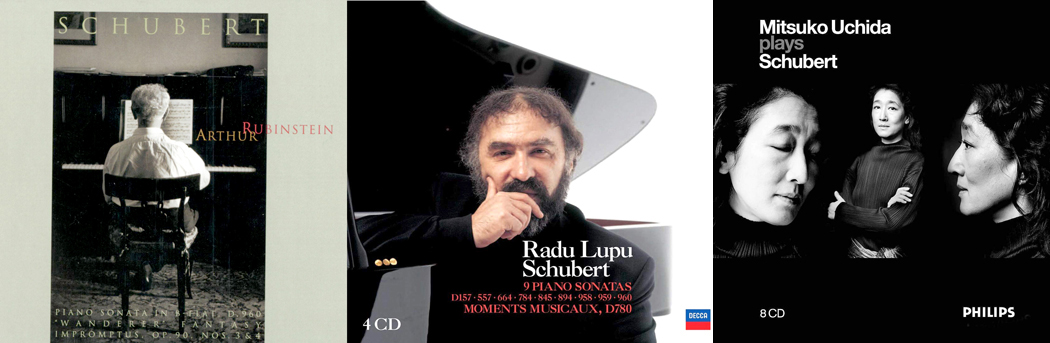
The final sonata, in B-flat, is one of the longest written by that time, rivaling Ludwig’s “Hammerklavier.” It, too, has a central slow movement of intense emotion. Arthur Rubinstein, who played the sonata as well as anyone ever has, said of the adagio, “This movement is like death. There is nothing else as close as this music that shows us what death feels like.”

Rubinstein recorded it twice, only a few years apart, but it is his first, from 1965, that I think is the best ever. There is a gracefulness and a humanity in the playing that is uniquely Rubinstein’s. 

There are tons of other performances, from everyone from Horowitz (a bit clangy) to Alfred Brendel (a bit stodgy). But I also recommend the versions by Radu Lupu and by Mitsuko Uchida. 


 Liszt Sonata in B-minor

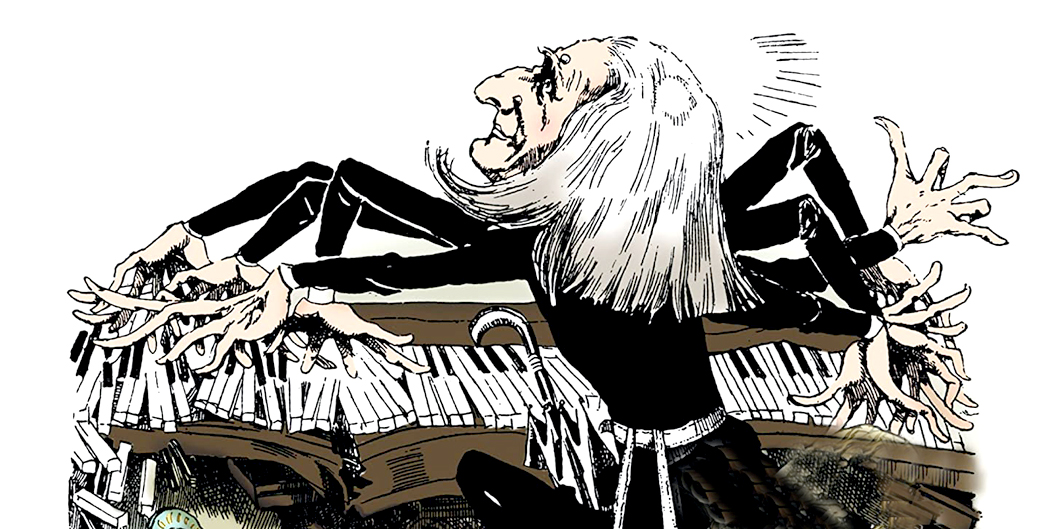
Franz Liszt is the guy who invented the piano recital: people paying good money to hear a pianist on stage all by himself, amazing them with his showmanship and technical brilliance. Liszt was the equivalent of a rock star in his day. Oh the women! Oh the humanity!

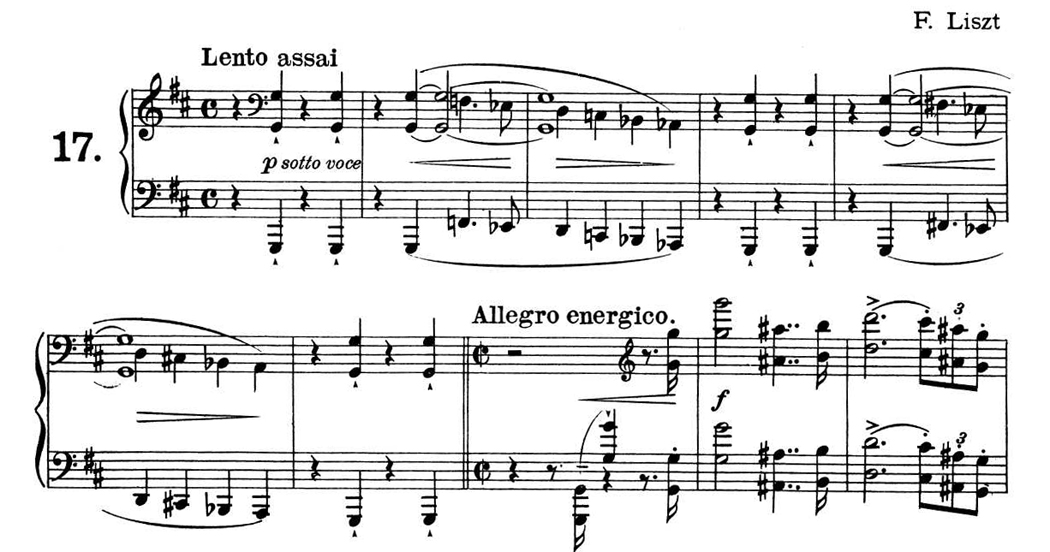
A lot of what Liszt wrote is surely just showboating — “Look what I can do!” But he wanted to establish his bona fides, also, as a great composer, and among those things he wrote of more serious intent is his gigantic Piano Sonata in B-minor. 

Written in 1853, it divided the listening audience in two, half hating, half loving it. Brahms fell asleep while hearing it. The critic Eduard Hanslick said “Anyone who has heard it and finds it beautiful is beyond help.” Another German critic, Otto Gumprecht, referred to it as “an invitation to hissing and stomping.” 

Liszt sent Clara Schumann a copy of the sonata. In her diary she described the sonata as “a blind noise … and yet I must thank him for it. … It really is too awful.” 

Yet, the more avant-garde audiences found it thrilling, adventurous and exciting. Richard Wagner loved it. And today, it is a staple of the concert repertoire. I have heard two great live performances of it, first by Emil Gilels and more recently by Andre Watts — both overwhelming experiences.

My favorite performance is by Ukranian pianist Valentina Lisitsa. Too many upstanding and earnest pianists have attempted to overcome the showmanship and flash in Liszt to, supposedly, “find the music.” But Liszt without the dash and flash isn’t really Liszt. The exhibitionism is built into the score, and Lisitsa’s Liszt (not just in the sonata) is the perfect presentation of what Liszt is supposed to be. It’s louder, faster, more dazzling. (Hence, Lisitsa is sometimes pooh-poohed by the snobbier critics).

If you don’t mind a slightly older audio sound, you also can’t go wrong with Vladimir Horowitz, who also knows what this music is about. Finally, I treasure the CD of Watts playing the sonata, with panache and taste, which reminds me of hearing him do it live. 

Brahms Sonata No. 3 in F#-minor, op. 5

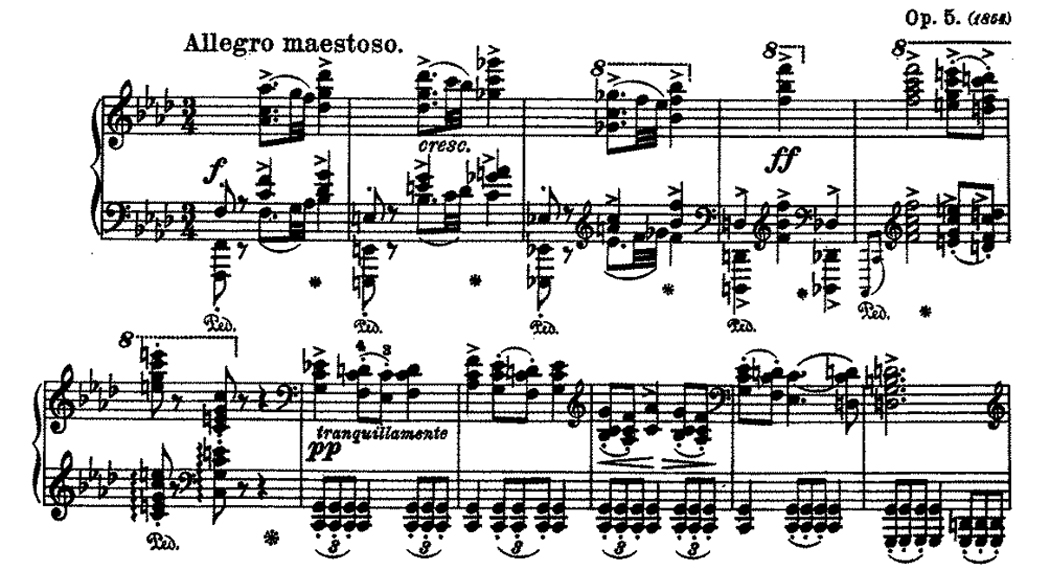
We think of Brahms as the old man with the beard spattered with cigar ash, but he was young once, full of piss and vinegar, and at the start of his career he wrote three monumental piano sonatas, opuses 1, 2, and 5. Each busting knuckles with the best of them. They are big, even by the standards of the time. 

The third is the one that caught on. He wrote it in 1853, the same years as Liszt wrote his sonata, and when he was just 20. It is vast, passionate, and gawky. It’s aggressive opening uses the whole length of the keyboard from booming bass to tintinnabulating treble. The second movement is tender andante inspired by a poem about pale moonlight and love. A rumbling scherzo follows and then an extra movement thrown in — a “recollection” or “remembrance” (“Rückblick”) that recalls the sweet andante with sweet nostalgia. (Did I mention that through all five movements, there is also a subtle recollection of the Dah-dah-dah-Dum of Beethoven’s Fifth Symphony — a ghost in the mechanism). Finally, an agitated rondo finale. The contrast between the more assertive segments and the more quiet, thoughtful parts give this sonata a sense of encompassing the range of human thought and emotion. 

No one plays Brahms better than Arthur Rubinstein. Period. Brahms is his mother tongue and compared with him, every other pianist, no matter how good, is speaking a second language in Brahms idiosyncratic keyboard style — the opposite of the natural pianism of, say, Chopin. But Rubinstein makes it flow and sing. 

He recorded it twice. The more recent, from 1959, is in better sound, so it is my first choice, but I have to put the 1949 version in as my second choice. There are many other good recordings of the sonata, but the only one which comes close to Rubinstein (that I have heard) is by Helene Grimaud. 

Ives Sonata No. 2, “Concord, Mass. 1840-1860” 

England has a centuries-long tradition of eccentrics, but America, in contrast, has its crackpots. Charles Ives was one of them. 

He began writing his second piano sonata in 1904, but didn’t finish it until 1915. I use the word “finished” provisionally, because after it was published, in 1920, Ives continued fiddling with it, rewriting it and republishing it in 1947. It was not performed, in full, before a paying public until 1939. And each performance after was slightly different, partly because there are ad lib sections of the score, and partly because Ives kept jiggering with it. He said it was never meant to be finished, but always to be a work in progress. 

Oh, and it comes with a 120-page preface, called Essays Before a Sonata, in which he discusses not just the music, but the whole of the Transcendentalist movement in New England in the 19th century. 

Ives wrote the work was his “impression of the spirit of transcendentalism that is associated in the minds of many with Concord, Massachusetts of over a half century ago. This is undertaken in impressionistic pictures of Emerson and Thoreau, a sketch of the Alcotts, and a scherzo supposed to reflect a lighter quality which is often found in the fantastic side of Hawthorne.”

The first movement, “Emerson,” is quite craggy, but there is humor in the following “Hawthorne,” and quotes from Beethoven’s Fifth, played after dinner on a parlor piano, in “Alcotts,” and finally a quiet, moody reflection of Nature, with a capital “N” in “Thoreau.” 

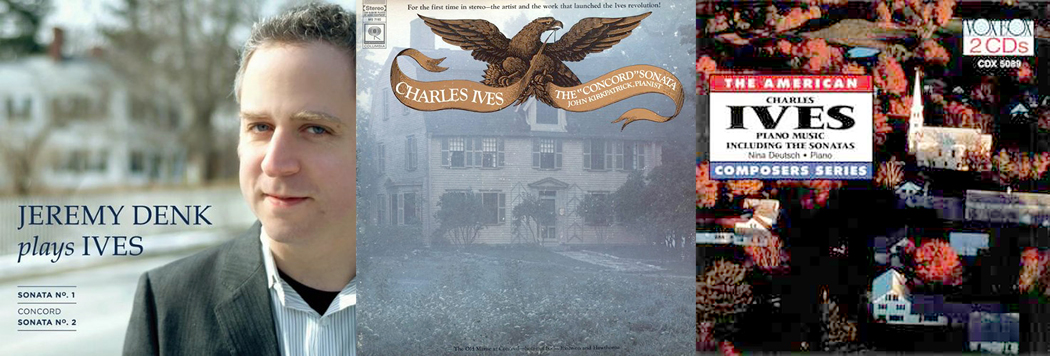
I got to hear Jeremy Denk play the Concord Sonata at Zankel Hall in New York, in a program that also included the “Hammerklavier.” Back to back in the same recital was more than impressive: It was like watching someone run a marathon in the morning and after lunch complete an iron man competition. It was exhausting. For a recording of the sonata, Denk is my man. 

But I also have a soft spot for a recording I have cherished for almost 50 years, first on vinyl and now on CD — Nina Deutsch in a Vox Box with a host of other Ives piano music. She brings a slightly softer edge to the Ives. And there is the original recording, made in 1949 by John Kirkpatrick, who first championed the piece. 


Prokofiev Sonata No. 7 in B-flat, op. 83

Schubert had his final three sonatas; Brahms had his first three. Knucklebusters seem to like coming in threes. Serge Prokofiev wrote his group of three during World War II, and are hence often grouped as his “War Sonatas.” Each is a job-and-a-half to tackle, and any of them could be chosen to represent Prokofiev as a knucklebuster. But the one that has become popular is the Seventh, in the middle of the trio. 

The sonata is usually seen as a reflection on the war, but, like so much Soviet music of the time, it holds an unspoken reference to the terror under Stalin. Prokofiev was friends and working colleague with theater director Vsevolod Meyerhold, who was arrested, tortured and murdered by the NKVD in 1939. Meyerhold’s wife, the actress Zinaida Reich, was stabbed 27 times in her apartment after Meyerhold’s arrest, also by the NKVD. Prokofiev (like Shostakovich) constantly feared they might come for him, also. He wrote a panegyric cantata “To the Glory of Stalin” for the dictator’s 60th birthday, in hopes to be left alone, but also wrote this piano sonata, in a more personal style, to maintain his self-respect. 

The first movement is a rough and tumble Allegro Inquieto. The second movement, Andante Caloroso, quotes a song by Robert Schumann, with lyrics that read, “I can sometimes sing as if I were glad, yet secretly tears well … everyone delights, yet no one feels the pain, the deep sorrow in the song.” It is one of the most beautiful moments Prokofiev ever wrote.

That is all followed by the toccata-like finale, Precipitato, which explodes and doesn’t relent until the final pounding chords. It is an angry, propulsive moto perpetuo, with an obsessive repetition in the left hand of a figure in the odd time signature of ⅞. It beats and crashes over and over till audience and pianist are exhausted. 

I heard Maurizio Pollini play the Prokofiev Seventh in Los Angeles many years ago in another monumental program (which also included all the Chopin Preludes and ended with Stravinsky’s Three Scenes from Petrushka). Pollini was great. 

But my first choice remains a dark horse: Barbara Nissman, on a disc with all three of the War Sonatas. Nissman makes the music less brutal, more musical, and I have loved this disc since I first got it in 1989. Nissman was the first pianist to record all the Prokofiev sonatas on CD. The first recording of the Seventh Sonata, by itself, was by Vladimir Horowitz, and it is still a show-off piece. And there is also a great recording by Pollini. 

Not on the list

These six pieces hardly exhaust the 19th century’s love of the big and difficult piano piece. I stuck with sonatas. I could have included Schumann’s Fantasie, op. 17, which could be considered a sonata. I could have included Cesar Franck’s Prelude, Choral et Fugue, which could also pass as a sonata incognito. Or either of Serge Rachmaninoff’s piano sonatas, which are clearly knucklebusters — but not so firmly established in the repertoire as the pieces I have chosen. Some will complain I didn’t include Alkan, but his music will probably never be generally popular. 

You may have your own candidates, either for compositions or performances. These are mine. 

I was watching TV tonight and had a momentous realization: It is not possible to go slumming anymore. 

When I was a younger man, it was possible to enjoy various lowbrow entertainments. Professional wrestling was fun, in small doses. There was Haystack Calhoun and Wahoo McDaniels. It wasn’t meant to be taken seriously, and you could watch them on the television between commercials for safety razors and beer. 

Or, as in college, an afternoon between classes could be spent with Ryan’s Hope or All My Children. There was no guilt attached to watching what we knew — what pretty much everyone knew — was empty and meaningless. But fun, in a mindless kind of way. 

You could sometimes go to the movies to watch junk, and enjoy it for its junkosity. You could read Sidney Sheldon at the beach or have a blast with the Monster Mash

To go slumming was not to look down on those involved. Far from it. In that part of American cultural history, before it all went meta, there was an acknowledgment of the differences between highbrow, lowbrow and even middlebrow, and people would gravitate to their respective level and there was no shame in that — not everyone needed to be the same, and it was just fine if you were a plumber, just as it was fine if you taught physics at Columbia (I had friends whose fathers did both). Society needed both. 

My own parents were solidly middlebrow (my mother read every Sidney Sheldon book as it came out) and I gravitated to a brow a few grades more rarified. That was my natural “specific gravity” and I sought it as naturally as a hatched sea turtle waddles to the ocean. 

It was a stratified culture, and aside from the haughty censure of a few snobs, that fact seemed both acceptable and, in fact, normal to most of us. 

But, as I was watching tonight, I recognized promos for TV shows that reveled in what one old-timer used to call “meatball culture” — that is, adolescent testosterone-inebriated arrested development stupidity. And I realized that all the brows had been swirled together into one agglomerated goo of meatballery. 

We’ve even added a drunken frat boy to the Supreme Court. 

I think I first noticed this change with the advent of Beavis and Butt-Head in 1993. Since then, the number of shows, cartoon and live-action, in which all the characters are slovenly and imbecilic has metastasized. 

If you compare it with The Simpsons, you can see the difference. The Simpsons is a well-populated series, with all levels of intelligence and aspiration accounted for. Homer may be a dunce (but good hearted), but Marge is solidly middle-class, Lisa is highbrow, Bart is lowbrow. Each has a place in the well-greased family dynamic. 

But, look at Bob’s Burgers now, where everyone is a marginal cretin. 

The Simpsons also was consistently witty, with sharp writing, social observation, character-driven gags. It was written by a gang of really smart people and meant to appeal to every level of society and education. 

Now, the general pitch level is for Cletus the slack-jawed yokel. How else do you explain the multi-season broadcasts of Jersey Shore, Real Housewives, The Masked Singer, Duck Dynasty, Honey Boo Boo, Drunk History, The Batchelor and Batchelorette, Love Island, The Kardashians, Cops, Pawn Stars, Judge Judy, Toddlers and Tiaras, Sister Wives, The Apprentice — You can continue the list. I haven’t the heart. 

To say nothing of so-called “Trash TV,” and the fist-fight, chair-throwing, bleep-rhythmed shows like those with Maury Povich, Jerry Springer, Geraldo. And all the other faux courts and dating shows. Low culture is now all culture.  

Quiz shows used to ask substantive questions (Jeopardy was the last to give in to pop-culture references, although it still asks many hard questions), but when we get to Who Wants to be a Millionaire, we get questions more akin to “What color dress did Adele wear to the 2020 Emmy awards?” 

And I shouldn’t have to mention that a professional wrestler has had his turn as governor of Minnesota, or that a reality TV star has occupied the White House. 

Our culture now sees no difference between Jackass and Jackson Pollock. Even academics now consider Duck Dynasty worthy of a Ph.D. thesis, while at the same time castigating Rilke as dreadfully elitist.

Film has become an endless assembly line of multiverse superheroes. I cannot begin to count the number of different Batman actors have put on the suit. Michael Bay sells tickets. Blow stuff up real good. 

Even classical music has been taken over by the so-called “historical performance practice” people, whose claim to be inspired by the way music used to be played when originally composed (which nobody really knows — it was centuries ago, before recordings), but to be honest, that is mere self-delusion. It is really the propulsive rhythmic drive of rock and roll that makes them rip through the classics. Beethoven à la speed metal. 

I believe that the rise of a universal meta has come to us partly because of this meatball culture. Brains come in various capacities, and just as some people are taller than others, some more athletic, some more talented, some people are more intelligent than others. We’ve made a horrible mistake in the past by ranking intelligence with value. Taller people are not “better” than short people. Brown eyes are not better than green. And we shouldn’t think that intelligence makes anyone better than anyone else. 

There have been some pretty horrible people in the world with tremendous IQs. 

But neither should we think that we are all the same, that one size fits all. Smarter people and those better educated (different from simple intelligence — plenty of really bright people never went to college) get more easily bored by simple entertainments. It is why highbrow culture exists — it is really just more complex material that keeps an intelligence engaged. 

And so, with the level of culture in general aiming lowbrow, the intelligent mind, on the edge of boredom without more nuanced material, looks for some way to occupy itself and spins wheels with invented complexity: theory, deconstruction, post-structuralism — all ways to make the simple seem more complicated, more rigorous and more worth our time and thought. 

And so, here come the graduate classes in “post-dynamic power relations in multiracial subtext in 21st century television comedy.” Not that something like that isn’t worth investigating, but rather that bored minds will go to great lengths to occupy their capacities. Great poetry, dance, symphonies, literature all used to do that. Now there is only Hillbilly Handfishin’ to feed on. 

Which brings me back to my original thought. It is now pretty close to impossible to merely sit back and enjoy a guilty pleasure. Slumming has become ironic. 

Anyone following this blog will recognize that I have begun a series of entries that I am calling my “alphabestiary.” I thought I might explain what I am doing. 

I am currently researching and writing the seventh entry in the series, a piece about Galileo Galilei. Such a thing takes a lot of time and effort — more than you might imagine. I am about two-thirds of the way through and trying to work out a knotty problem: how to explain his trial and confinement without getting boggled up in the minutiae of 17th century Roman Catholic doctrine and Vatican law. It’s daunting. 

And so, while I am working on the research and the de-clogging of that, I thought I might explain what brought all this on. 

Since I was given this blog on my retirement from The Arizona Republic in 2012 — given to me by my colleagues on my leaving — I have written nearly 700 entries, which means I have written almost as much in retirement as I did when working. (As I have often said, writers never really retire, they just stop getting paid for it.) It’s an addiction. If you are a writer, you write just in the same way as how you breathe. You can’t stop or you die. 

And it’s not that I have run out of subjects to write about, but after 688 blog essays (this is No. 689), I sometimes have to program a plan for coming up with new pieces if one doesn’t present itself automatically. And so, I have started the occasional alphabestiary piece. 

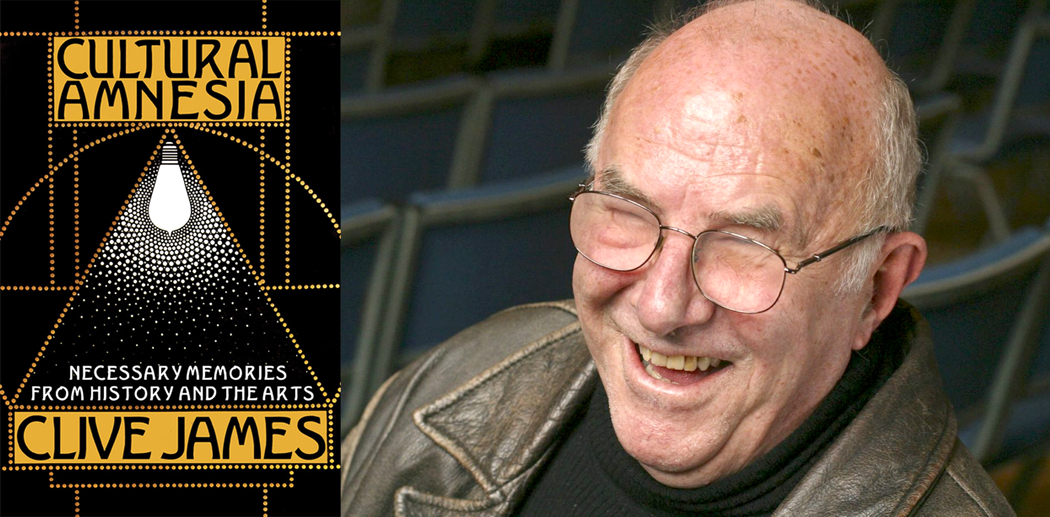
The idea came to me after reading Clive James’ Cultural Amnesia, a hefty book from 2007 in which James writes about historical and literary figures and arranges the biographies in alphabetical order. He covers 106 figures in the 876-page book, which is subtitled: “Necessary Memories from History and the Arts.” 

James, for anyone who is unfamiliar, was an Australian-born London-based essayist, poet, TV-presenter and critic who was a ubiquitous public intellectual in England until his death in 2019. His style was distinct, breezy, witty and with many a clever turn of phrase (“All I can do is turn a phrase until it catches the light,” he wrote about writing). 

The essays in Cultural Amnesia each come in two parts: The first is fairly straight-forward potted biography, then, separated by a quote from the first part, comes an essay by James about something suggested by the biography. It might be only tangentially related, but writing about whichever person has tickled his imagination to find a buried connection. 

I liked this plan a lot. I’ve read great wads of James, his TV criticism (which first brought him fame), his poetry (which is surprisingly good, even if most of it rhymes), his critical and political essays, and even when I might disagree with him, he is always an absolute pleasure to read. 

And so, I stole a bit of his idea and modified it. If I have a momentary lapse in inspiration for the blog, I move to a new letter of the alphabet and find myself a subject. Inspiration, after all, doesn’t come from angels tapping you on the noggin with a magic wand — it comes from typing. Get started and the daimon swoops in unnoticed to guide your fingers on the keyboard. Inspiration is the doing, not the waiting. 

In my version, I planned a single subject per alphabet letter, not the multiples that James has in his book. And I thought, to make it just a bit more interesting for me, let’s only choose names where the first and surnames begin with the same letter. AA, BB, CC, etc. 

And so, I began with Ansel Adams, followed with Betty Boop, Caryl Chessman, 

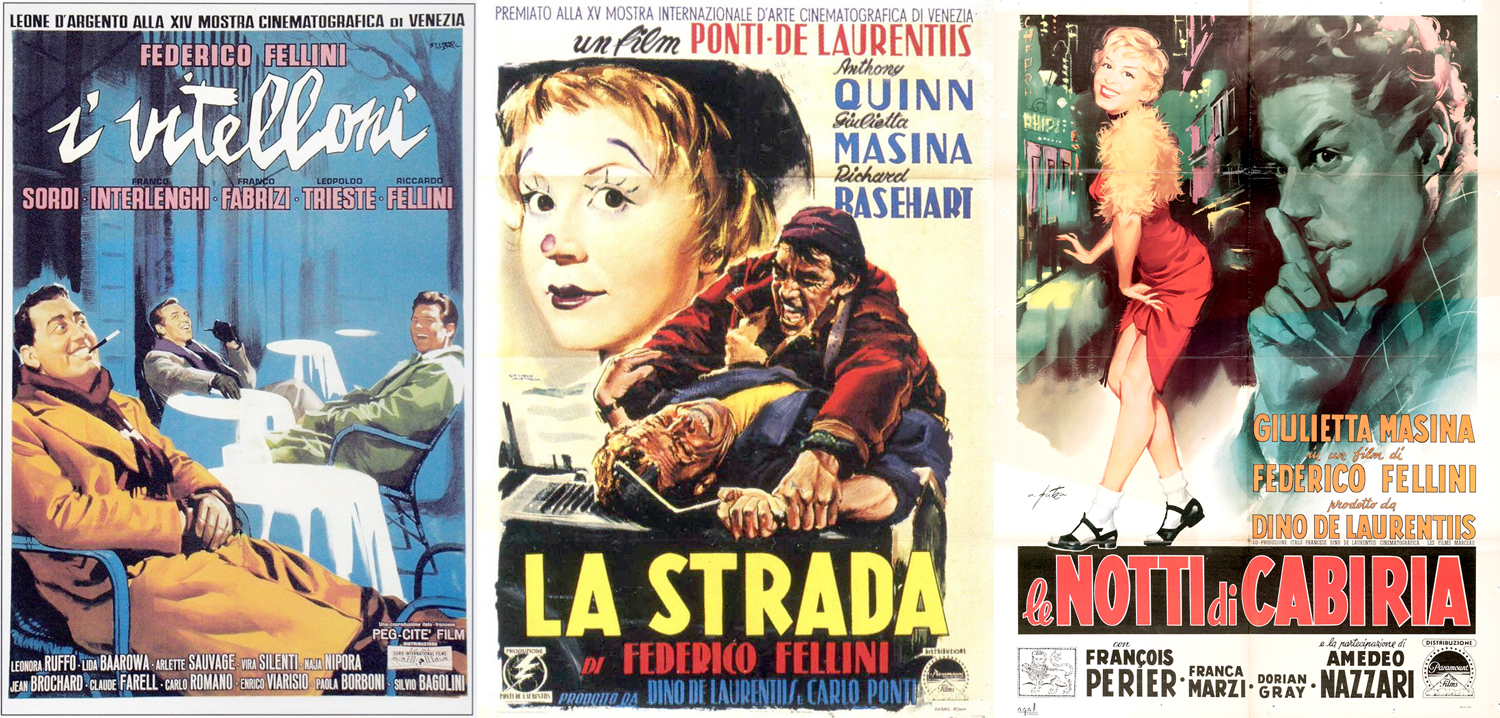
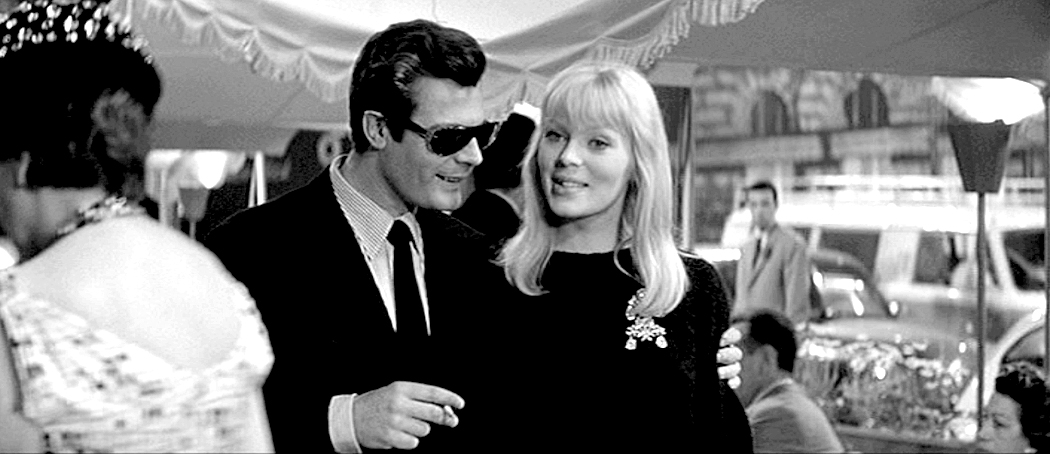
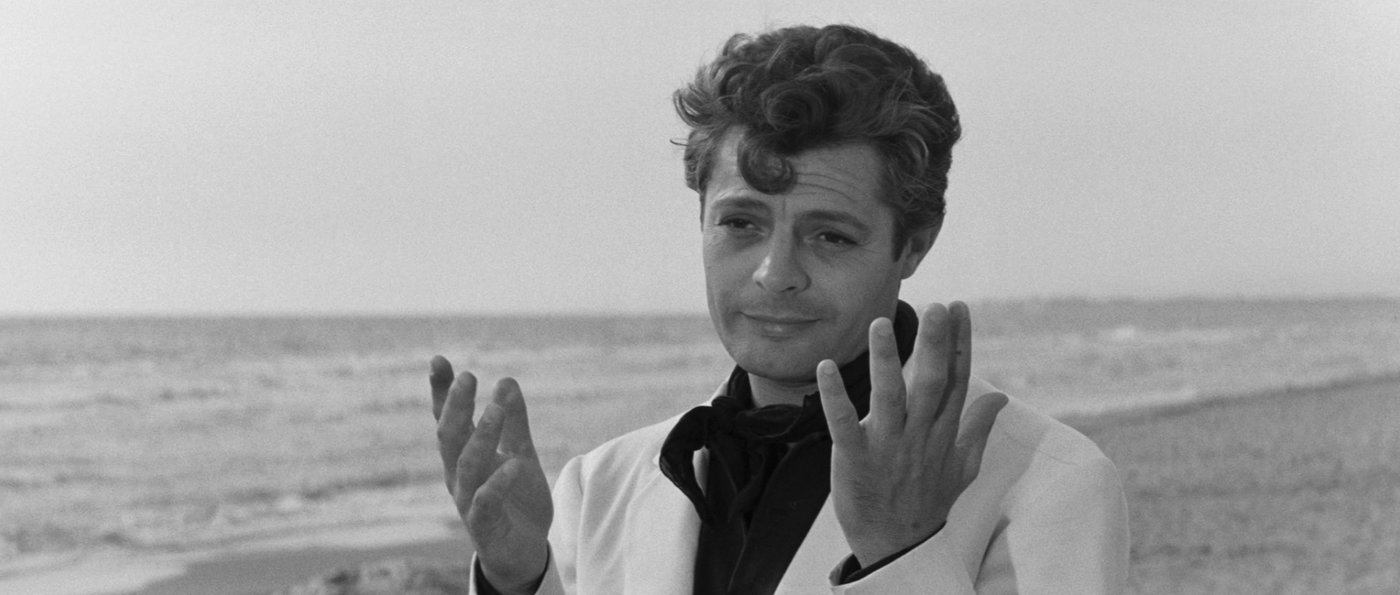
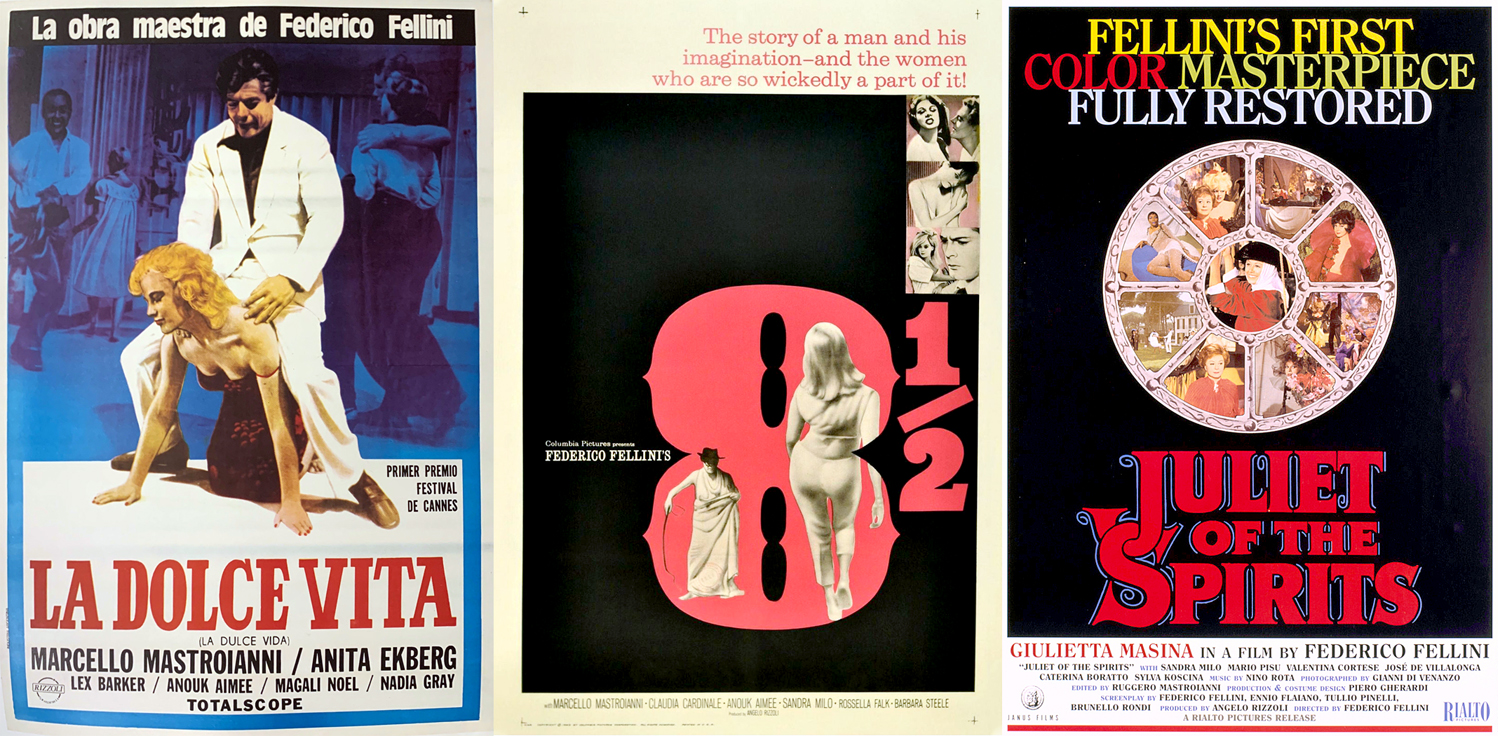
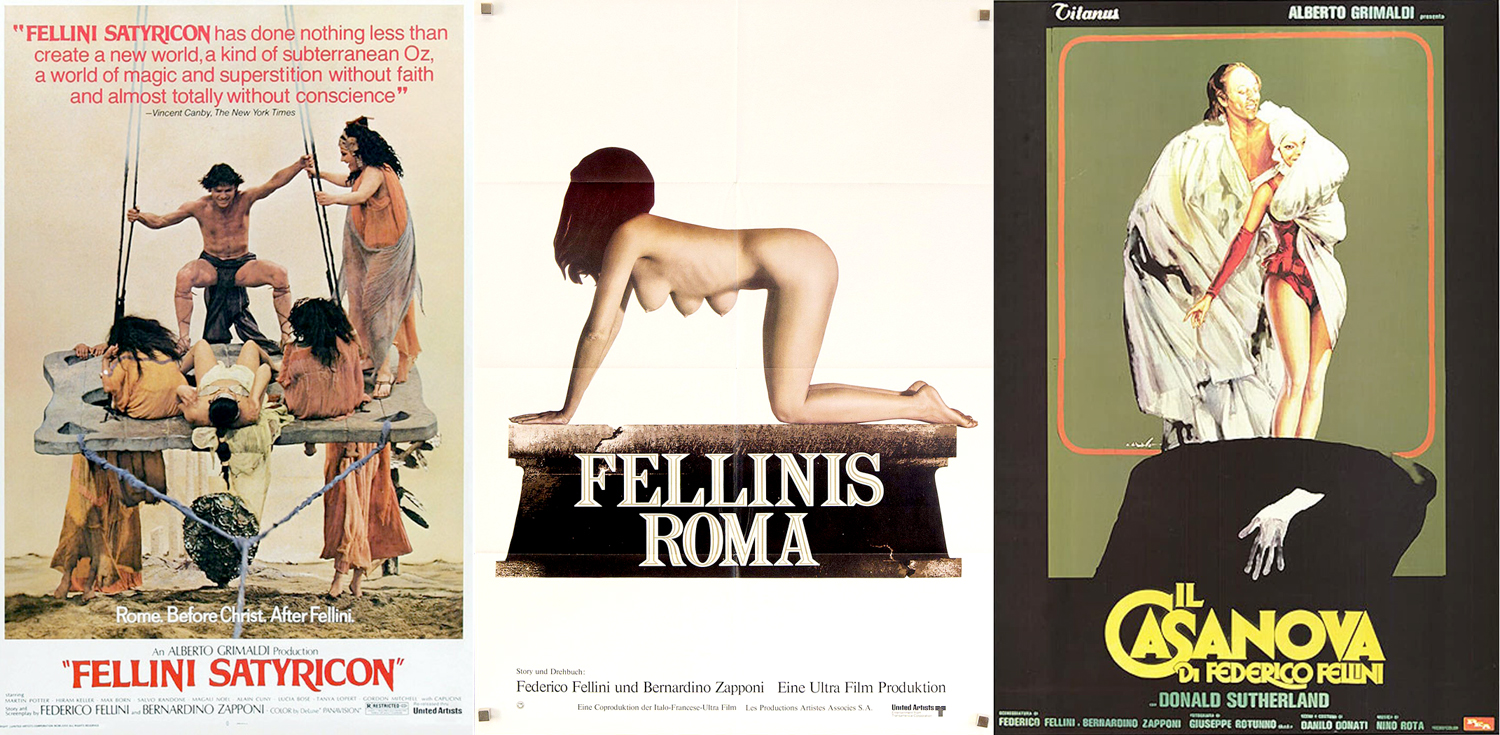
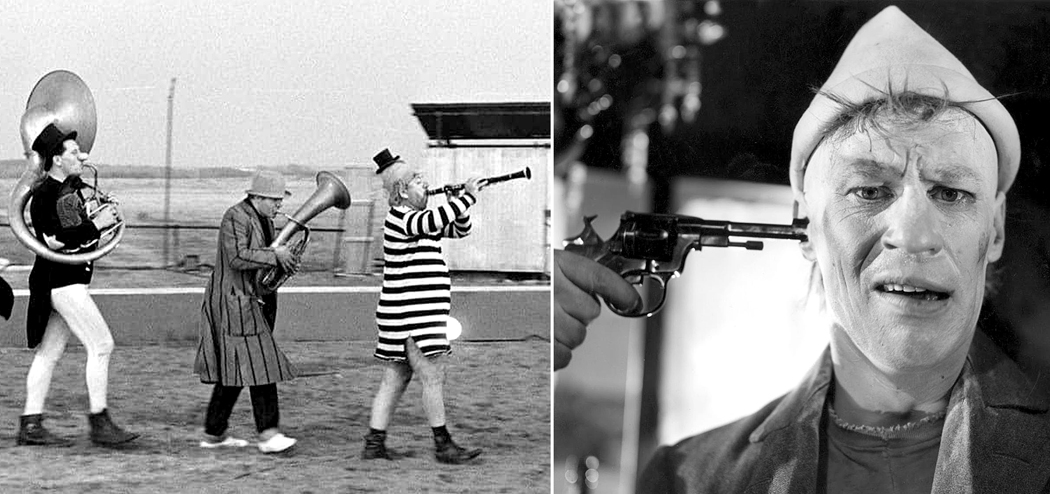
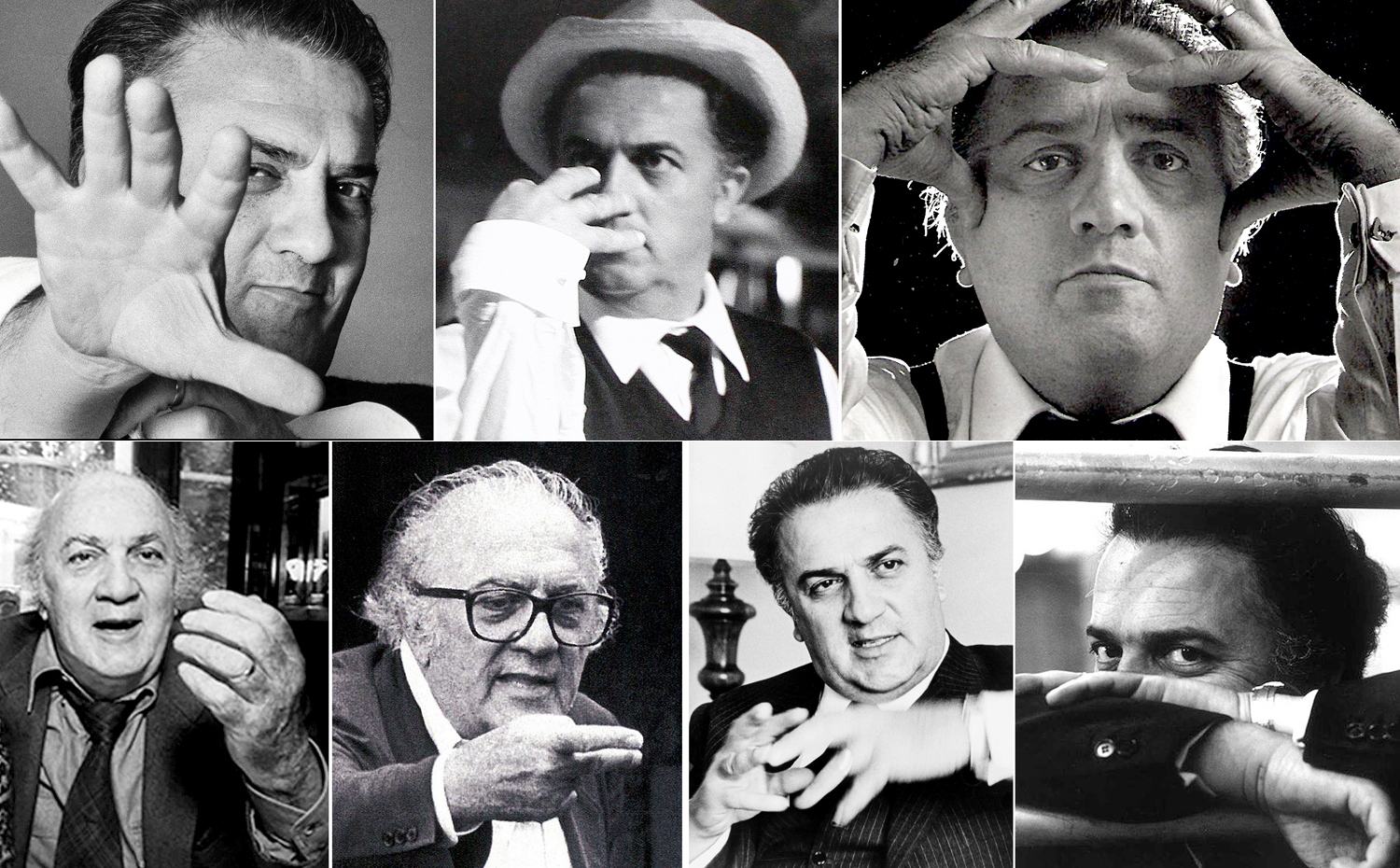
Denis Diderot, Edward Elgar and Federico Fellini. And I am now hard at work on Galileo Galilei. It should pop out sometime in the next week. 

And so, chug, chug, the old writer keeps on moving forward, unable to stop. 

As a kind of footnote, I thought I should append a list, to show just how variable the alphabet is in spitting up potential subjects. Some letters are filthy with choice, others are deserts. And while you might guess that finding an “X” could be somewhat rare, it still surprised me, making up my list of potentials, that while there are many, many “M” names, there are surprisingly few “N” possibles. 

I made my list from a passel of sources. No one place online had all I needed. I searched “alliterative names” and found some, but I must have waded through a dozen sites to compile my list, which, to be honest, includes quite a few names I had never heard of — and you probably haven’t either. 

I thought you might find the list entertaining, in that way lists can be. And if you can help me out by adding some I’ve missed, by all means, add them in the comment section. You may save me from having to write an essay about Qozidavlat Qoimdodov (yes, he’s real). 

And so, here is my listilicious roster of names. Help me add to them. 

Ansel Adams, Amy Adams, Abigail Adams, Andre Agassi, Alan Alda, Ayman al-Zawahiri, Aziz Ansari, Adam Ant, Alan Arkin, Arthur Ashe, Amedeo Avogadro 

B

Barbi Benton, Barry Bonds, Betty Boop, Brian Blessed, Backstreet Boys, Bilbo Baggins, Brigitte Bardot, Bob Barker, Beach Boys, Beastie Boys, Ben Bernanke, Bernardo Bertolucci, Benazir Bhutto, Bill Bixby, Ben Bradlee, Bill Bradley, Benjamin Bratt, Bugs Bunny, Billy Burke, Barbara Bush  

C

Caryl Chessman, Charlie Chaplin, Charlie Chan, Christopher Columbus, Calvin Coolidge, Carlos Castaneda, Coco Chanel, Carol Channing, Cesar Chavez, Chris Christie, Charlotte Church, Cassius Clay, Chelsea Clinton, Claudette Colbert, Charles Colson, Courteney Cox, Cindy Crawford  

D

Denis Diderot, Dorothy Dandridge, Doris Day, Dana Delany, Don DeLillo, Drea De Matteo, Dorothea Dix, Dr. Demento, Don Draper, David Duchovny, Daisy Duke 

E

Edward Elgar, Emilio Estevez, Eddie Edwards, Eddie the Eagle, Erik Estrada

F

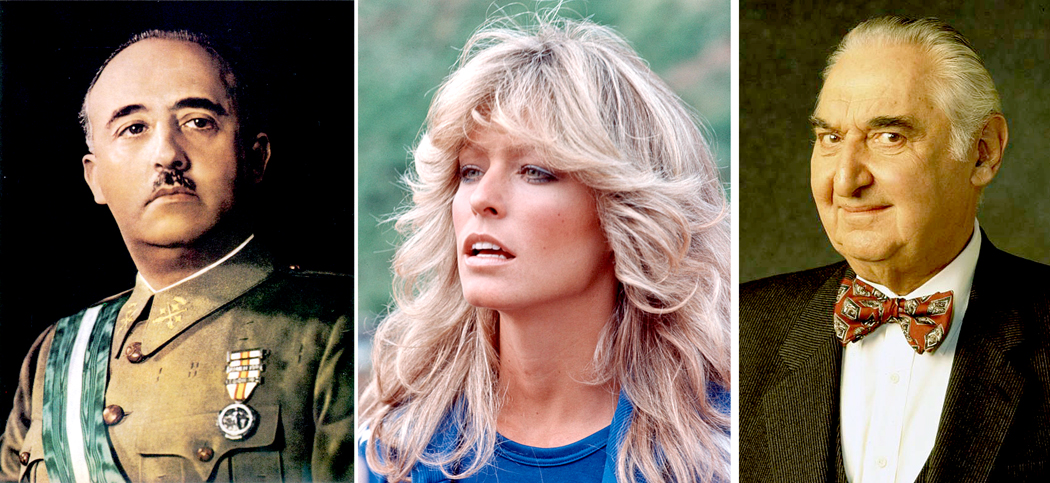
Federico Fellini, Francisco Franco, Faith Ford, Farrah Fawcett, Freddy Fender, Fionnula Flanagan, Fannie Flagg, Frances Farmer, Felix Frankfurter, Fyvush Finkel, Fannie Farmer, Frankie Frisch 

G

Greta Garbo, Greer Garson, Grace Gummer, Galileo Galilei, George Gershwin, Gal Gadot, George Gallup, Gabrielle Giffords, Gilbert Gottfried, Graham Greene, Germaine Greer, George Gobel 

H

Harry Houdini, Humbert Humbert, Helen Hayes, Harriet Hosmer, Howard Hawks, Hugh Hefner, Henry Heimlich, Henry Hudson, Heinrich Himmler, Hulk Hogan, Hal Holbrook, Herbert Hoover, Howard Hughes, Hubert Humphrey, Holly Hunter, Helen Hunt, Heinrich Heine

I

Itziar Ituño, Ivan Illich, Ilya Ivanov, Ilya Ivashka, Ivan Ilyin 

J

Jim Jarmusch, James Joyce, Janis Joplin, Janet Jackson, Jesse Jackson, Jesse James, John Jay, Jasper Johns, James Earl Jones, January Jones, Jennifer Jones, Jim Jones 

K

Kim Kardashian, King Kong, Kevin Kline, Killer Kowalski, Kato Kaelin, Khloe Kardashian, Ken Kesey, Klaus Kinski, Kunta Kinte, Keira Knightley, Kris Kringle, Kublai Khan 

L

Lois Lane, Linda Lovelace, Louis L’Amour, Lucy Lawless, Lucille Le Seuer, Lee Liberace, Laura Linney, Lucy Liu, Lara Logan, Lindsay Lohan, Lyle Lovett, Lucky Luciano, Louis Lumiere, Loretta Lynn, Loretta Lynch 

M

Marilyn Monroe, Mercedes McCambridge, Malcolm McDowell, Mad Max, Mary Magdalene, Moses Maimonides, Marilyn Manson, Mickey Mantle, Meghan Markle, Marky Mark, Mary Martin, Melissa McCarthy, Matthew McConaughey, Mitch McConnell, Mark McGwire, Margaret Mead, Mickey Mouse, Martin Milner, Mini-Me, Margaret Mitchell, Maria Montessori, Mandy Moore, Marianne Moore, Mary Tyler Moor, Michael Moore, Marion Morrison, Mike Myers, Michelangelo Merisi

N

Nick Nolte, Nichelle Nichols, Natalya Neidhart, Nigel Ng, Niecy Nash, Natti Natasha, Nazriya Nazim, Nicephore Niepce, Nell Newman 

O

Ozzy Osbourne, Olive Oyl, Oona O’Neill, Olive Oatman, Olusegun Obasanjo, Olivia O’Brien, Özge Özpirinçci, Olivia Olson, Oliver Onions, Olivia Ong, Olga Ostroumova  

P

Pablo Picasso, Parker Posey, Pete Postlethwaite, Pauley Perrette, Peter Parker, Pawel Pawlikowski, Peter Pan, Pink Panther, Pol Pot, Pope Pius IX, Paula Poundstone, Prince Philip, Punxsutawney Phil  

Q

Qin Qin, Qu Qiubai, Qi Qi, Qozidavilat Qoimdodov 

R

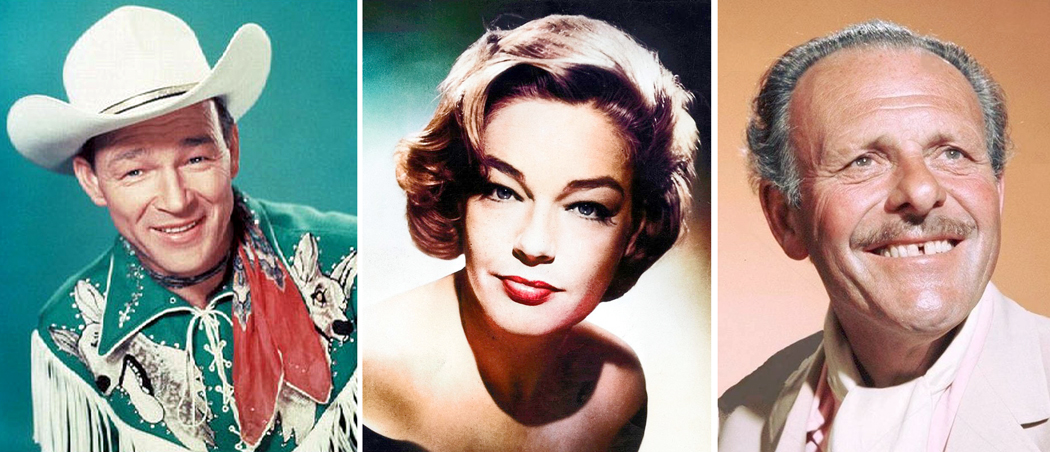
Ronald Reagan, Roy Rogers, Ricky Ricardo, Robert Redford, Ralph Reed, Ryan Reynolds, Ray Rice, Robert Ripley, Richard Rodgers, Robert Rodriguez, Ray Romano, Rebecca Romijn, Ruby Rose, Rosie Ruiz, Rene Russo 

S

Steven Spielberg, Susan Sarandon, Simone Signoret, Sissy Spacek, Sylvester Stallone, Sam Shepard, Sheryl Sandberg, Stephanie Seymour, Sidney Sheldon, Sarah Silverman, Shel Silverstein, Sirhan Sirhan, Severus Snape, Steven Soderbergh, Suzanne Somers, Stephen Sondheim, Sonia Sotomayor, Sam Spade, Splendid Splinter, SpongeBob SquarePants, Sri Srinivasan, Saint Sebastian, Sharon Stone, Sutan of Swat  

T

Tina Turner, Ted Turner, Tiny Tim, Terry Thomas, Tim Tebow, Tiffany Trump  

U

Umit Ulgen, Usha Uthup, Udo Ulfkotte, Ugyen Ugyen  

V

Vince Vaughn, Vivian Vance, Vincent Van Gogh, Vidya Vox, Victor Valdes, Val Valentino, Virginia Vallejo, Ville Valo, Victoria Vetri, Victor Vasarely, Violetta Villas, Vito Volterra, Violette Verdy, Via Vallen, Vanessa Vadim 

W

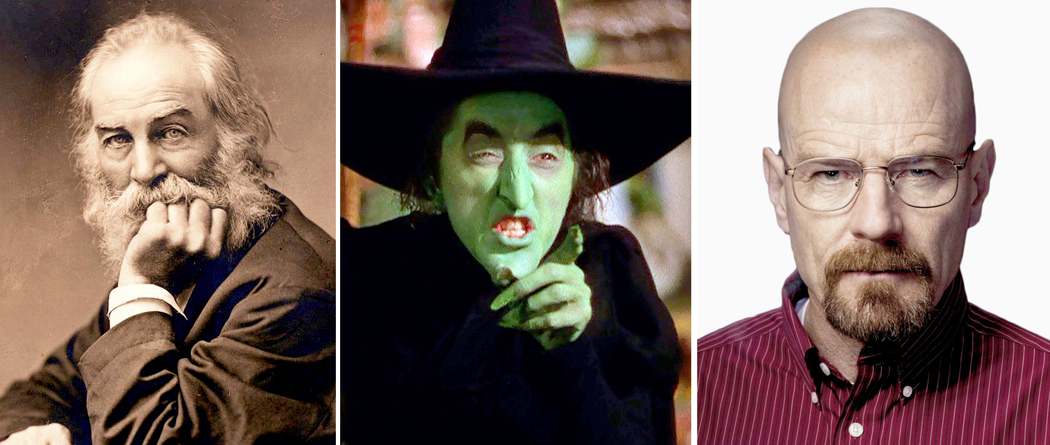
William Wyler, William Wordsworth, Walt Whitman, Woodrow Wilson, Warren Wilson, William Wallace, Wil Wheaton, Walter White, Wicked Witch of the West, Wendy Williams, William Carlos Williams, Willy Wonka  

X

Xiu Xiu the Sent Down Girl, Xuxa, Xu Xin, Xie Xinfang, Xia Xuanze 

Y

Yo-Yo Ma, Yoo Yeon-seok, Yukio Yamaji, Yelena Yemchuk, Yu Yamada, Yakov Yurovsky, Yang Yang, Yevgeny Yevtushenko, Yeo Yann Yann, Yohji Yamamoto, Yordan Yovkov, Yan Yuan 

Z

Zhang Ziyi, Zinedine Zidane 

— So, there you have it: Homo Ludens playing with names to keep the brain sharp and engaged. 

Translation is a funky thing. You can try to be literal and lose all the flavor, or you can try to find equivalent idiomatic expressions, or you can recast the whole thing, as if you were writing an original from a similar inspiration — your own words for a similar thought. 

And unless you are brought up bilingual so that you are completely comfortable in both languages, you will always be working from a disadvantage. You can work from crib notes, or take a literal translation and recast it. Many writers these days do something of the sort. Ezra Pound did not read Chinese, but that didn’t stop him from translating Chinese poetry. Scholars may quibble with the results (or laugh outright), but the versions Pound printed are good poetry, whether or not they are good translations. 

Would I rather read a poet’s regeneration or a scholar’s word-for-word? The answer is both. When it comes to poetry in languages I do not read, I’d rather have multiple versions to absorb and take in all the angles to arrive at something triangulated. 

There are languages I have some familiarity with and so, I can usually read Pablo Neruda straight from the trough. And in French or German, I have some dealings with the originals, although I do not speak the languages with anything like fluency. I can read a French newspaper, but cannot always make out the spoken version. (Luckily, when in France, I have learned you don’t really need the fineries of grammar. You can speak French pretty usefully even with no verbs at all. You go to the patisserie and when it is your turn, you just say, “Deux croissants, s’il vous plait,” and you get what you want. No one before you on line has used a verb, either.)

And so, I have come to translate some poetry for myself, from German, from French or Spanish (even an occasional Latin poem), and mostly in self-defense. 

I say “self-defense” because most of the translations I’ve been subjected to sound like musty old Victorian twaddle. The translators seem to love archaic word forms and odd word orders — as if written by Yoda they were. 

Such things offend my ear. 

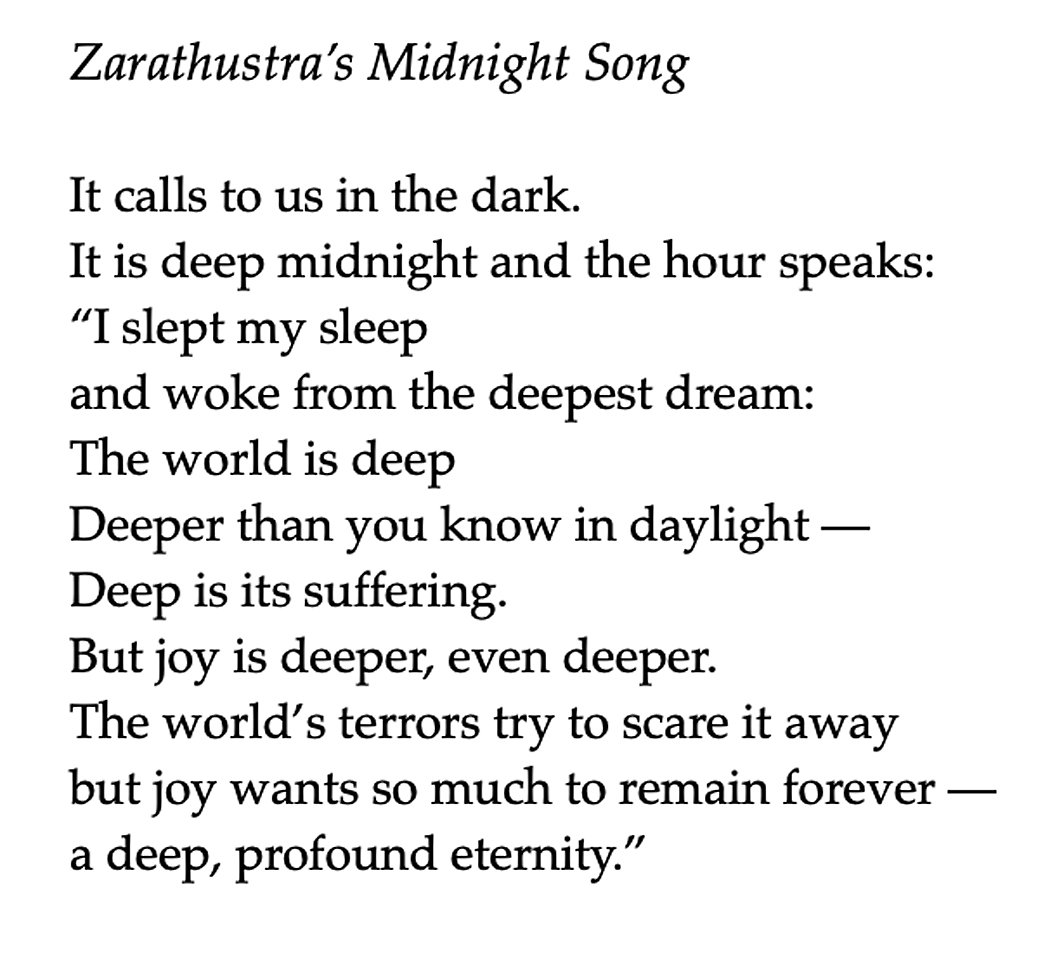
It’s not that I want them to be prose, but the secret of poetry is in the metaphor and the clever turn of phrase, not in the conventional language of old poetry forms. Take the first two lines of Nietzsche’s Zarathustra’s Rundgesang. In German:

O Mensch! Gib acht! Was spricht die tiefe Mitternacht?

Which could be translated, word for word, as:

“O men! Give attention! What says the deep midnight?”

Traditional translations usually go something like:

“O Man! Take heed! What saith deep midnight’s voice indeed?”

or:

“O Man! Attend! What does deep midnight’s voice contend?”

There is the problem with the original. “O Man!” is poetic cliche. It has to go. I suppose you could turn it into idiomatic English as “Hey, y’all, listen up,” but that would be a crime in a different direction. 

If I were to translate this bit, I would just leave off the unnecessary parts and rewrite it as: “It calls to us in the dark. It is deep midnight and the hour speaks:” This sets up a light/dark dichotomy that pays off later in the piece. 

Too many translations, especially of classic Greek or Latin literature are written in this fusty, worn out poeticized and conventional twaddle. It’s amazing anyone waded through the Iliad in the 19th century. Homer’s actual style was immediate and direct. 

Imagine if Robert Frost had written: “Two paths in twain divided were; traverse we may but one.” Who would now bother with it? It is Circe turning men into pigs. 
In other words, I have no issue with completely recasting the originals to make modern, idiomatic sense in a language that I hope remains poetic but without the equipage of outworn convention. 

A stunning example of this approach is Ted Hughes’ Tales from Ovid, beautiful translations of several bits from The Metamorphoses. In Hughes’ style the stories move quickly and smartly and you turn the pages as in a best-seller. One only wishes Hughes had completed the whole thing, instead of mere sniglets. 

In this way, I have translated (or rewritten, if you hesitate) a good bit of German lieder. So much of it is hyperventilated Romantic sludge, which speaks to the early 19th Century of a generation that was weaned on Young Werther, and undoubtedly expressed the genuine feelings of those who lived through it, but now seem unrealistic and kitschy. 

Yet, there are real things being said and expressed in the poetry of Müller, Hölderlein or Eichendorff. It comes through like a buzz saw in the music of Schubert or Schumann, where the music has an authenticity that the verse sometimes lacks. 

I have tackled whole swaths of lieder verse, including a translation of all of the Winterreise. I found I could be a bit more faithful near the beginning of the cycle, but the deeper in, the more I had to rethink the verse. 

Take the first song, Gute Nacht. The text takes care of itself. A simple translation of the first stanza would be:

But, 24 songs later, the text of Der Leiermann, about a hurdy-gurdy man, is too bland without the devastating music Schubert provides (one of the most desolate and despairing bits of music ever penned), and so I’ve written my variation on it, to stand without the music:

Just this week, I started another project, translating four of the texts that Gustav Mahler set. I have arranged them into a set that belongs together, in four “movements,” rather like a symphony, meant to be taken as a single whole. 
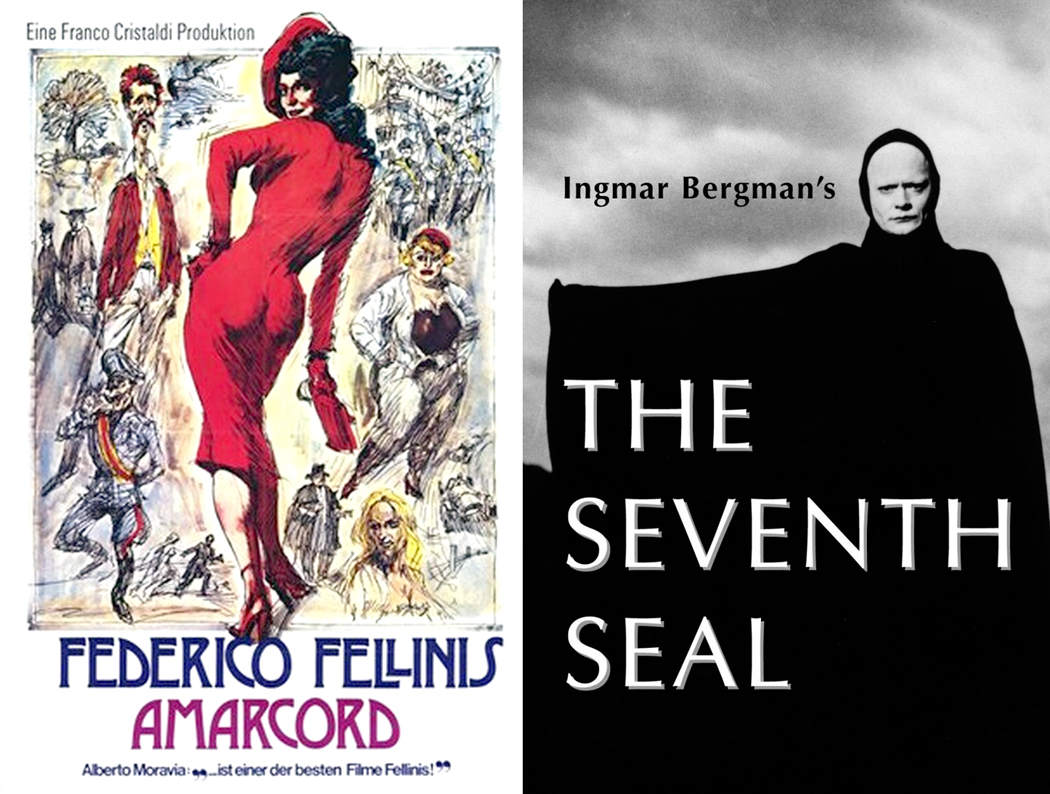
I am offering them here as my apology for the type of translation I most appreciate — at least when others my better do it. 

The main benefit of doing such work (since I have no plans or hope ever to publish my translations — they are simply for the pleasure and knowledge I get from them — is that they force me to pay attention to the poetry and to the words. 

We can read through poetry much as we may distractedly hum a favorite tune. But good poetry offers much more, and forcing yourself to go through it word by word, can help you uncover much more. Translating forces concentration. 

And so, I read the German for its sound, parse individual words for their various meanings (for no word in any language has but one simple meaning), read various translations to compare how others have understood the words, reassemble them in my own English and then revise, over and over, until I get something that sounds good to me and — more importantly — makes sense. 

I have to admit that I generally like my own translations better than the ones packaged with the CD as the libretti or lyrics. But that is likely because they match my own particular esthetic — they are tailor made for my ear. Your ear may resonate to a different frequency. 

And so, the first “movement” of my Mahler word-symphony comes from the second of Mahler’s Songs of a Wayfarer, words originally written by the composer himself. The main melody of the song became the first theme of his Symphony No. 1. 

The second movement is Mahler’s own crib of Zarathustra’s Rundgesang, or “Zarathustra’s Midnight Song,” as the composer has it. All four of the texts I have translated focus on the twin but opposite facts that life is suffering but also it is joy. 

Third, there is heartbreaking and rueful song by Friedrich Rückert, Ich bin der Welt abhanden gekommen, set by Mahler first for voice and piano, but later orchestrated and part of his Sieben Lieder aus letzter Zeit (“Seven songs of Latter Days”). It is surely one of his greatest songs, and can hardly be heard or sung without feeling it was written directly with you in mind. 

Finally, there is Der Abschied (“The Farewell”), the final movement of Mahler’s Das Lied von der Erde (“Songs of the Earth”). In it, Mahler has pieced together two Chinese poems of dubious provenance (themselves translated or rewritten, or perhaps invented in French and German) purportedly by Tang Dynasty poets Meng Haoran and Wang Wei, with three lines added at the end, written by Mahler himself. Der Abschied is Mahler’s summa, and at 30 minutes, is as long as the previous five movements combined. And it ends with the quiet reiteration, over and over, in dying voice, “Ewig… ewig…” (“forever… forever…”) finally so in performance you can never quite tell when it ends, the final “Ewig” as quiet as the silence that follows. 

In the end, I recommend to everyone that they attempt to translate a poem from a different language. Take a Baudelaire, for instance, or a Neruda (avoid Rilke like the plague, unless you wish to end in an asylum), and parse it through, word by word. Read it out loud in the original language to hear the music of it (yes, your French may not be as liquid as the original) and read various translations to see how differently the words are construed. Then arrange a version of your own.

In the end, you will have internalized the poetry and it will never again be a stranger to you. 

It’s completely meaningless to rate art. Is Picasso greater than Rembrandt? Beethoven than Mozart? Is Beethoven’s Fifth better than Beethoven’s Eroica? Pointless.

But there is a different question: faves. It’s possible to have favorites without making claims to supremacy. We all have them. Yes, they shift over the years: The older me appreciates different art and appreciates it in different ways than the young me did. But even day-to-day the favorites may change. Often my favorite symphony is the one I’m listening to at the moment. 

Still, Top Ten lists will be made. Or Top Five, or Top 100. There’s no hope for it. It’s instinctive, built into our DNA. And so, I’ve put together my list of my Top Dozen  favorite works of art — a baker’s dozen. Your mileage may vary. (For the ultimate list of lists, link here). 

And so, here are my favorites, listed by genre. I’ve tried to narrow my choices to art I have experienced in person — paintings I have actually seen, dances I have attended, books I have read. Book reproductions or sound recordings don’t count. I have a lifetime of art-going and concert-attending, and so I may have access to more than the average bear. But I am well aware that there’s a whole lot more that I haven’t seen. 

And by favorite, I don’t just mean something I like, but rather, something that has wormed into my very being and become a part of who I am, so that encountering it can explain to others a bit of who I am. It has been grafted into my personality. 

This list is entirely personal, flexible and apologetically incomplete. Ask me again tomorrow and this could be a very different list. 

Painting: None of these choices changes more often than painting. today’s favorite fades with tomorrow’s. I’ve simply come to love too many paintings to have a single choice. But today, I will go with Jackson Pollock’s Blue Poles. It was a painting I had wanted to see for years, and then got my chance when the Museum of Modern Art held a Pollock retrospective in 1998 and the elusive work was borrowed back from Australia, where it had sat for decades, out of the reach of us Northern Hemisphere shut-ins. Its appeal came from its elusiveness, for sure, but also for its unique place in Pollock’s catalog — more than just paint squiggles, it had the structure of the bars across its surface. I loved it in reproduction, but it bowled me over in person. 

Alternate takes: Picasso’s Guernica; John Singleton Copley’s Watson and the Shark

Sculpture: I grew up visiting the American Museum of Natural History in New York City as often as I could. I loved the place — and I mean loved. And deep in its bowels resided the giant Olmec head, chiseled from basalt (actually, the one in New York is a plaster copy, but I didn’t know that when I was 10 years old and rapt in wonder). In the darkened hall of the museum, the head seemed immense and the original weighs 20 tons. It impressed me no end and to this day, it is my favorite sculpture. No doubt there is other, more important sculpture elsewhere, but I have not been to Rome or Egypt to see them. I have spent considerable time in the Louvre in Paris and have several faves there, such as the Three Graces or the Winged Victory, but none has stuck in my psyche with quite the force of the Olmec head. 

Alternate takes: Rodin’s Burghers of Calais; Louvre’s Three Graces

Architecture: As architecture critic for The Arizona Republic, I got to visit a lot of buildings, including most of the Frank Lloyd Wright sites in the U.S. (Wright was a longtime resident of Scottsdale, Ariz.) I was blown away by Taliesin in Wisconsin and his studio in Oak Park, Ill. But the building that struck me as most beautiful was Falling Water in Pennsylvania. Everything you have ever heard about it is true — about its siting in the woods over the waterfall; about how its interior is micromanaged by Wright’s designs; and (I’m one of the few who have been given access to this) the pathetic orphan of a bathroom hidden in the basement. Wright really didn’t like having to deal with kitchens or bathrooms. 

Alternate takes: Chartres cathedral; George Washington Bridge

Orchestral music: this is the hardest category for me because I have so much music bottled up in the ol’ storage batteries, and faves change not only day to day, but hour to hour. But I studied Mozart’s Symphony in G-minor, K. 550, score in hand, for most of an entire semester in college and it is drilled into my memory so that I can hear the whole thing in my head, from beginning to end, even without the score. If ever a piece of music felt like home to me, it is Mozart’s 40th Symphony. Dissecting it has given me an approach to all other classical music. 

Alternate takes: Mahler’s Symphony No. 3; Stravinsky’s Rite of Spring

Choral music: I’m not a religious man, and neither was Johannes Brahms, so his German Requiem can console my most grief-stricken moments in a way more devout music cannot. More than any other music, I go to the Deutsches Requiem for consolation and peace. Each year, on the anniversary of the death of my wife, I drive up the Blue Ridge Parkway, find a quiet forest road and park and listen to my Brahms and weep for my loss and for the loss all humankind must suffer. 

Alternate takes: Haydn’s Creation; Rachmaninoff All-Night Vigil

Chamber music: I want so much to claim Schubert’s C-major String Quintet, for it is the deepest, most emotionally moving piece of chamber music in the repertoire. Yet, I cannot, as long as there is Schubert’s competing “Trout” Quintet, which must be the most ebullient, life-affirming piece of music ever written. One cannot come away from it not feeling — despite all the sorrows of the world — that life is pure joy. It is no end of astonishment for me that Schubert wrote both. 

Alternate takes: Brahms Clarinet Quintet; Shostakovich Piano Trio No. 2 

Opera: Mozart’s most subversive opera wasn’t The Marriage of Figaro, which was often banned for making fun of the aristocracy, but rather Don Giovanni, with its lusty chorus of “Viva la libertad” and its turning topsy-turvy the villain-hero model. The Don is the life force embodied, for good and bad, and when he is threatened with hell, he laughs and refuses to recant, choosing damnation over hypocrisy. Its first act is the most completely flawless in all of opera history and despite the phony ending usually tacked-on to the second act, a model of moral complexity. 

Alternate takes: Alban Berg’s Wozzeck; Richard Strauss’s Der Rosenkavalier 

Dance: Of all the artforms, dance moves me the most. And I was extremely lucky, because when I became dance critic, Ballet Arizona was taken over by Ib Andersen, former star dancer for George Balanchine and brilliant choreographer himself. He staged many Balanchine ballets and I was hooked. I have now seen Balanchine’s Apollo four times, once by the New York City Ballet in Paris, and I cannot watch it now without welling up with emotion. I love dance and Apollo stands in for all of it. 

Alternate takes: Ib Andersen’s choreography for Prokofiev’s Romeo and Juliet; Frances Smith Cohen’s choreography for Center Dance Ensemble’s Rite of Spring

Theater: Bad theater, or worse, mediocre theater can give the impression that live drama is hopelessly, well, theatrical. You know: dinner theater. But when it is done well, there is nothing that can match it, a lesson I learned by seeing the original Broadway production of Tony Kushner’s Angels in America. I’ve now seen it — both parts together — four times and it destroys me every time. In great theater, you soon forget all the artifice and everything becomes immediate and real. Movies are great, but they can’t match the breathing now-ness of live theater. 

Alternate takes: Eugene O’Neill’s Long Day’s Journey into Night; Peter Shaffer’s Amadeus

Film: There are films that are exciting, films that are visually beautiful, that are clever, that are cultural barometers, and there are films that are wise. Jean Renoir’s La Règle du Jeu has informed my own life more than any other film I’ve seen. How can you beat Octave’s observation: “The terrible thing about life is that everybody has their reasons.” I will watch Rules of the Game over and over for the rest of my life. It is cinematic comfort food. 

Alternative takes: Andrei Tarkovsky’s Andrei Rublev; Ingmar Bergman’s Seventh Seal

Novel: Most books, you read once. If it’s a mystery, you have the killer caught; if it’s a Victorian saga, you get the heroine married. But some books you can read over and over and get intense pleasure from the language used and the perspective offered. For me, that book is Herman Melville’s Moby Dick. I don’t always read the whole thing from beginning to end, but I bet I’ve read the first chapter, at least, a hundred times. Melville’s language has seeped into my own writing more than any other (for good or ill). 

Alternative takes: James Joyce’s Ulysses; Laurence Sterne’s Tristram Shandy

Poetry: I read a lot of poetry, mostly modern and contemporary, but the poem I go back to over and over, read out loud for the sound the words make in my mouth, proselytize to others and keep in my heart is Geoffrey Chaucer’s Trouthe. The antique language isn’t so hard, once you get used to it — sort of like listening to a working class Mancunian accent, or a Yorkshireman gabble — and once you’ve caught the knack of it, it’s like any other English. God, I love that poem. “The wrastling for the worlde axeth a fal.” 

Alternative takes: Eliot’s Four Quartets; Pablo Neruda’s Odas Elementales

And the Number One, hors compétition and sans genre, is: 

The north rose window, Chartres cathedral. As I have written many times, the north rose window is the single most beautiful human-made object I have ever seen. I am in awe of it. Reproduction cannot give you a sense of its glowing color and implied motion — it virtually spins (and I mean virtually literally). I can sit in its presence for an hour at a time. 

Again, I am not making the claim that these are all the greatest works, although they may be, but that they, more than their compeers, have buried their way into my innermost being, where they reside as a permanent part of my unconscious. They are who I am. 

Federico Fellini is unquestionably one of the greatest of all filmmakers. He is on everyone’s list. He won five Oscars, was nominated for a total of 17 of them. Heck, he was nominated twice before he even made his first film (as screenwriter for two Rossellini films). He made two of the movies on my own 10-Best list.

His 1954 film, La Strada, changed my idea of what movies could be. When I was growing up, the movies I saw, mostly on TV, were filled with car chases and gunfights. Movies were an entertainment. But, in my college film series, I saw La Strada and realized, for the first time, that film could be about real things, and that they could leave me weeping. The final scene with the brutish Zampano (Anthony Quinn) on the beach, wailing for what he knew he had lost, left me drained. 

And La Strada isn’t even one of the two Fellini films on my 10-Best. 

There are only a few film directors who have words added to the dictionary defining their style, but we all know what “Fellini-esque” means: an almost surreal grotesquerie tied to a very personal sense of human psychology. There are other great filmmakers, but there is no “Scorsese-esque,” no “Renoir-esque,” although these directors, too, had a personal style. Only two directors have joined the dictionary, with “Fellini-esque” and “Bergmanesque.” The two directors couldn’t be more different, but their styles are each identifiable, even when another filmmaker uses them. 

So, Fellini’s is a distinct and individual voice. Yet, the arc of his career is also distinct, and not toward ever greater or more profound films. It is a career with an upward start, a middle as high as it gets, and then a slacking as he declined. What is interesting is that it is that the cause for both up and down is the same: Fellini being Fellini. 

Federico Domenico Marcello Fellini was born in 1920, two years before Mussolini’s rise to power, in the Adriatic city of Rimini. His father was a salesman and hoped his son would rise to be a lawyer. And although he enrolled in law school, Fellini’s biographers says that “there is no record of his ever having attended a class.” Instead, he dropped out to become a cartoonist and caricaturist, and he wrote for several satirical magazines. 

He expanded to writing gags for radio shows and managed to avoid the Italian draft during the early years of World War II. He also met his wife and muse, radio actor Giulietta Masina (they remained married from 1943 to his death in 1993). 

His work in radio brought him to the attention of Neo-Realist film pioneer Roberto Rossellini, who hired him to work on the script of Rome, Open City (1945) and later, Paisan (1946). Both efforts won him Academy Award nominations. 

In 1950, he got to direct his first film, Variety Lights, followed the next year with The White Sheik, two low-budget comedies of middling success and reputation. But then, in 1952, he got to make the first genuine Fellini movie, I Vitelloni (“The Young Bulls”, or, idiomatically, “The Layabouts”), an autobiographical Neo-Realist film about his own teen years in Rimini, which won him a fourth Oscar nomination for screenplay. (The film wasn’t released in America until after the success of La Strada and Nights of Cabiria, — both Oscar winners for Best Foreign Language Film — hence, the later nomination.)

These three early masterpieces — I Vitelloni, La Strada and Nights of Cabiria — all have their roots in Italian Neo-Realism, although with Fellini’s particular stamp of both humor and grotesquerie. There is no confusing them with films by Rossellini, De Sica or Visconti. While each of Fellini’s first great films concern themselves with social conditions, poverty and the Post-War problems, they are really more concerned with individuals. Fellini was never overtly political. 

Fellini had, by 1957, been nominated for six Academy Awards and won two. But they could not have foretold what came next. Arguably his greatest film, La Dolce Vita, was also his greatest box office success. 

The great 1960 Italian classic of the Roman “sweet life” in the postwar years shows us nine days and eight nights in the life of tabloid celebrity journalist Marcello Rubini (Marcello Mastroianni) as he negotiates personal relationships, professional crises and spiritual doldrums.

“Rarely, if ever, has a picture reflected decadence, immorality and sophistication with such depth,” Box Office magazine said when the film was released. Rather than a plot, the film is a collection of episodes as our hero recognizes the emptiness of his life, decides to do something about it, and ultimately, cannot. The final scene with Mastroianni on the beach, shrugging at the girl across the way as a sign of giving up, is one of the most heartbreaking ever shot on film. 

Fellini structured the film in a series of climactic nights each followed by a dissolving dawn. In each of the nighttime episodes, Marcello faces one of his demons — although he doesn’t recognize them as such. Each night rises to a crux, a point that might waken Marcello to the aimlessness of his life, and at each sunrise, there comes not a culmination, but a dissipation of the situation — all its air is let out.

La Dolce Vita occupies a pivotal point in the career of Fellini, between the early Neo-Realist films, such as I Vitelloni and La Strada, and his later, sometimes visionary films. In La Dolce Vita, there is a balance between the sense of external reality — Italy’s boom economy in the decade after World War II, and its forgotten underclass — and the purely subjective sense of individual psychological crisis. 

In his next film, the crisis becomes personal: Otto e Mezzo or “8½” is about a filmmaker who can’t figure out what to do next. It begins with one of Fellini’s most visionary scenes: The filmmaker (again played by Mastroianni) is stuck in his car and imagines being trapped, then floats away above the car, held only by a kite-string attached to his ankle. As an opening scene, it would be hard to match, let alone beat. Through the rest of the film, he attempts to avoid his responsibility, to his producer, to his wife, to his mistress, to his crew, to his financial backers, to his fans. He imagines committing suicide, and in the end, in one of the most enigmatic and memorable scenes ever, joins a dance to the circus music of Nino Rota. As a concluding scene, it would be hard to match, let alone beat. 

What does that scene mean? We all have our own solutions. I tend to see it as the same message that Krishna gave to Arjuna in the Bhagavad-Gita, that the end or the meaning isn’t the point. The doing is. Joining in life is the point of life. Or as writer Joseph Campbell once phrased it, “the joyful participation in the sorrows of the world.” 

Whatever you decide about the ending, it is clear that these two films, together, are among the highest points of film art, at the same time, clever, funny, moving, heartbreaking, hugely cinematic and visual, and ultimately, wise. 

There are grotesque scenes in La Dolce Vita and Otto e Mezzo, but they are just part of the mix. In some of his later films, such as Roma or Fellini Satyricon, the grotesque predominates. But at the midpoint of his career, in his two best films, he balances the real and the freakish like a saint balancing heaven and hell.

Then, Fellini discovered Carl Jung, read the psychiatrist’s autobiography, Memories, Dreams, Reflections, began visiting a psychoanalyst, experimented with LSD, and became fascinated with dreams, archetypes, spirits and the unconscious. He famously defined a movie as “a dream we dreamt with our eyes open.” Jung is a dangerous thing put in the hands of an artist with no governor on his engine. 

Fellini made Juliet of the Spirits in 1963, about a repressed housewife (Masina) entering a world of debauchery, visions, memories, and mysticism to find herself. It was Fellini’s first full-length color film, and uses what one critic called “caricatural types and dream situations to represent a psychic landscape.”

As critic Roger Ebert wrote, “The movie is generally considered to mark the beginning of Fellini’s decline.” 

And three of the next four of Fellini’s major films are given over to grotesquerie, hallucination and oneiric excess: Fellini Satyricon (1969), Fellini’s Roma (1972), and Fellini’s Casanova (1976). The fact that the director’s name is attached to these three titles should tell you something. There is nothing historical or documentary about them: They are exudations of the filmmaker’s fevered brain.

Satyricon is the best of the three films, and actually captures rather accurately the spirit of Petronius’ First Century tale of Nero’s Rome. Although Fellini invented most of the episodes, they capture the tone of the picaresque original pretty well. 

Satyricon, Roma and Casanova all prominently feature parades of caricatural grotesques, people buried under exaggerated make up and hairdos, rather like some of the more peculiar drawings of Leonardo da Vinci. 

Even if they don’t succeed as whole works of art, each is stuffed like a cannolo with brilliant imagery, unforgettable moments. It is as if he was more concerned with the moment-by-moment, than the story coherence — the way a dream moves. “Don’t tell me what I’m doing,” he said. “I don’t want to know.” 

If La Dolce Vita and were satires on modern mores, the later films pass beyond satire to a rather personal misanthropy dredged up from his unconscious. 

There was one very bright and beautiful exception, though, a final grace note to his career — the 1973 film, Amarcord, which is a comic, forgiving and joyful reminiscence of Fellini’s childhood in Rimini. In 1953, his I Vitelloni explained why the young Fellini desperately wanted to escape his provincial hometown; twenty years later, he felt the need to show what he had lost by leaving. Everything that he was bitterly satirical about in his earlier films becomes the very human qualities of his dramatis personae in Amarcord. It is a gentle, affectionate, humane account of human folly, and the easiest of all of Fellini’s films to love. 

He made a handful of films after that, but none catches fire. There was Ginger and Fred (1986) and, more dubiously, City of Women (1980) in which Fellini, as his frequent alter ego Marcello Mastroianni, attempts to deal with his fear of, and lack of understanding of — women. 

Fellini made his last film, The Voice of the Moon, in 1990, and died of a heart attack in 1993, a day after his 50th wedding anniversary, and just a few months after receiving his Oscar for lifetime achievement. 

As is so often the case, Fellini’s best and worst were manifestations of the same thing — his ability and his need to put himself into his films. As he once said, “Even if I set out to make a film about a fillet of sole, it would be about me.” It gave him the secret of breaking out of the Neo-Realist mold and find his own way, but it also let him wander off into a sometimes almost solipsistic dream world of images and obsessions. When focused, as in La Dolce Vita and , he was one of the three or four greatest filmmakers of all, and even when he was noodling in fevered Fellini-Land, still provided indelible visions and emotions. There was no one like Federico Fellini.

_____________________________

We are not in control of our memories. 

One doesn’t own one’s memories. 

One is owned by them.

—Federico Fellini

______________________________

I used to have long discussions with friend and colleague Sal Caputo, who was pop music critic for the newspaper I worked for. Sal — or Salvatore — was as Italian in ancestry as I was Norwegian. And it played out in our conversations. Sal was always intense and expressive, and sometimes prone to anger and moods. He took things personally when I didn’t — I always remembered the line from Renoir’s film, Rules of the Game: “The terrible thing about life is that everyone has their reasons.” I.e., it isn’t personal. 

Searching the Internet for Sal, I could only find a couple of mug shots

Anyway, we once had a talk about movies and our varying takes on Federico Fellini and Ingmar Bergman. It wasn’t about which was the better filmmaker, but about how we internalized the films. We both appreciated both directors. But there was a difference.

The difference was almost comic. Consider the ways each director portrayed clowns. In , they play Nino Rota’s music and point the way to salvation for our lost Marcello; in Bergman’s Sawdust and Tinsel, well, you get the picture.

 I loved Fellini’s films and could appreciate both the filmmaking craft that went into them, and also the humanistic concerns of the director. Fellini rates very high on my list of movie directors. Top three or four. But somehow, I always feel as if I’m watching him from the outside. In contrast, when I see a Bergman film, it is in the blood — I know this world from the bones out. It is a world I didn’t just see, but lived. 

And for Sal, it was quite the opposite: Fellini felt to him like home, like everything he knew and felt in the fibers of his nervous system. 

In Bergman, all the action is internal; his characters are all suffering midnights of the soul. Their torture is self-imposed.

While Fellini’s people have trouble with other people, with society, with Catholicism, with Fascism, with their wives.

Bergman’s people sit silently, brooding. Fellini has hardly a photo of himself without his hands waving in the air, expostulating. 

This sense of recognition in the films, different for Sal and for me, has always made me wonder if there is something genetic about national difference. All the Squareheads I know feel Bergmanesque and all the Italians seem to feel Fellini-esque. This may just as easily have grown out of cultural familiarity as from DNA, and I’m not sure its origin makes a difference. 

I’m cheating a little with these images — not all German painting is so dour, or Italian so extravagant — but only to make a point. But there are national and regional styles, psychologies, approaches and techniques that show up across the arts. German painting is instantly told apart from Italian painting. French music from Viennese. Russians have their novels; Italians their opera; Iberians their fado and zarzuealas.

You can hear six bars of Elgar, Holst or Vaughn Williams and you know they are English. 

This has been recognized for centuries. In Baroque music, national styles were standard descriptions, as Bach’s French Suites or his Italian Concerto, or his Overture in the French Style. And you could never confuse Telemann’s music for Vivaldi’s or either for Couperin’s. 

(In deliberately oversimplified terms, German music emphasizes harmony and counterpoint; Italian music emphasizes melody and singing; French music emphasizes timbre and ornament.) 

And there does seem to be a generalized North-South axis. If you compare the Gothic cathedrals of northern France with those of Italy, you see a spare austere style, even with all the statuary, and in Italy or Spain, a kind of Plateresque extravagance. 

In the European south, expression seems to be extrovert and unrepressed; in the north, introvert and brooded over. It would be wrong to say that Italians are more emotional than Scandinavians. But in the north, the emotions are directed at themselves, whereas in the south, they are almost theatrical. 

So far, I’m using European examples, but this national or folk identity is global. Chinese art is instantly identifiable. And except for those examples of conscious imitation, Japanese art is very different. Hindu sculpture on the Indian subcontinent is easily told from Buddhist sculpture in Southeast Asia. 

Nor, in Africa, could you confuse a Benin bronze with a Fang mask or a Kota reliquary figure. 

These differences are not merely stylistic, but grow from very different world views and historical experience. There is a world of difference between the Tlingit of the rainy Northwest Coast of North America and the Navajo of the desert Southwest. 

Many years ago, I was first made aware of this kind of difference when I moved from New Jersey to North Carolina and discovered a culture radically alien to the one I was brought up in. It was agrarian rather than suburban; it held a tremendous grudge from the previous century that had not made a twinkle of a dent in my Northern psyche. It had a sense of history tied to the land, whereas I grew up in a world of second- and third-generation immigrants. These kinds of cultural differences make their way into the art, whether it is the difference between Hemingway and Faulkner, or between Fellini and Bergman.

It may be only a metaphorical expression, but it is profound: It is in the blood.