blake dante

I love language; I hate language. It is how I made my living, but it always feels like cheating. It feels heartfelt, but dishonest. Odi et amo.

Do you remember the first time you were in love, or thought you were, as a teenager? The longing, the rapture. There is an almost universal response that “Love” is not an adequate word to describe the emotion. You feel as if your love is special, better, more aware, alert and awake than everybody else’s, especially  your parents’. And you say, “I wish there were another word to describe how I feel.”

That is the first awareness most of us have of the difference between authentic and inauthentic existence. It is the first, and most universal — at least in our culture — awareness that our lives are divided into separate portions, one of them alive and burning and dangerous, and the other ordinary, safe and comforting.

Heidegger

Heidegger

German philosopher and godawful writer Martin Heidegger gave us the verbal formulation for this distinction when he named the “authentic” and “inauthentic” existence.

Authentic existence: An individual’s conscious response to his existence; i.e., his “being-in-the-world,” which inescapably associates life with death. Authentic existence is thus opposed to everyday (inauthentic) existence.

Heidegger is nearly impossible to read, in part because he invents words to express his ideas rather than relying on the old, well-understood words. He has more than 200 words alone created with the suffix that means “being.”

But it couldn’t have been any other way. Heidegger felt toward the ordinary vocabulary just as the teenager does toward the word “love,” that it is worn out and sounds trite and phony on the tongue that doesn’t truly understand, or rather live through, the experience — and specifically MY experience.

That is because language is by its essence inauthentic.

Language always takes us a step away from our “being-in-the-world.” It is a way of softening the experience, a way of taming it.

In this sense, I take as a central dichotomy the opposition of language and love.

An awareness of death, says Heidegger, is what wakes us up to the here-and-now, keeps us focused on the experience of being alive. And a desire to transcend death is the ultimate goal of both language and love.

The analogy of love and language is nothing new.

When Shakespeare wrote his sonnet, “Shall I Compare Thee to a Summer’s Day,” he ends it with the telling couplet, “So long as men can breathe, or eyes can see, So long lives this, and this gives life to thee.’’

In that, he is mixing the two: the words are immortal, and therefore, so is his love.

But the actual love is an experience and at its fullest transcends words more certainly than it transcends death. We love, have children and HOPE that the love will live past death. But there is no question that the experience of love can never be adequately expressed in words: They are too small, too conventional, too ordinary.

Richard Freiherr von Krafft-Ebing with his wife, Marie Luise

Richard Freiherr von Krafft-Ebing with his wife, Marie Luise

The sliver of experience in the condition of love IS the authenticity. It is the experience of life. The words are only ABOUT the experience of life. After all, would you rather make love or read Krafft-Ebing?

Now, certainly Heidegger wasn’t the first to recognize the distinction. He is merely the philosopher who fixes the meaning of the distinction like an entomologist pinning a butterfly. Heidegger gives us the vocabulary — now necessarily inauthentic — to describe the reality. We use his words, and as a consequence, fall (another of his words) into inauthencity.

The writer Henry Miller expresses it another way in his book Black Spring:

“What is not in the open street is false, derived, that is to say literature.”

Henry Thoreau’s whole book, Walden, is essentially about living an authentic life.

“To him whose elastic and vigorous thought keeps pace with the sun, the day is a perpetual morning. It matters not what the clocks say or the attitudes and labors of men. Morning is when I am awake and there is a dawn in me. Moral reform is the effort to throw off sleep. Why is it that men give so poor an account of their day if they have not been slumbering? They are not such poor calculators. If they had not been overcome with drowsiness they would have performed something. The millions are awake enough for physical labor; but only one in a million is awake enough for effective intellectual exertion, only one in a hundred millions to a poetic or divine life. To be awake is to be alive. I have never yet met a man who was quite awake. How could I have looked him in the face?”

“As if you could kill time without injuring eternity,” he writes in another place.

Yeats called inauthentic living “automatonism.”

For William Blake, what made Christ different from the rest of us was his ability to live authentically at every moment.

“Now hear how he has given his sanction to the law of ten commandments: Did he not mock at the sabbath, and so mock the sabbath’s God? Murder those who were murder’d because of him? Turn away the law from the woman taken in adultery? Steal the labor of others to support him? Bear false witness when he omitted making a defence before Pilate? Covet when he pray’d for his disciples, and when he bid them shake off the dust of their feet against such as refused to lodge them? I tell you, no virtue can exist without breaking these ten commandments. Jesus was all virtue, and acted from impulse, not from rules.”

And in another place: “Know that after Christ’s death, he became Jehovah.” Know that for Blake, Jehovah wasn’t a good thing. Jehovah is all rules: “One God, One Law, One King.”

Or perhaps we could go all the way back to Lao-Tse, who wrote the Tao-Te-Ching and said, “The way that can be named is not the constant way, the name that can be given is not the constant name.”

The best popular discussion of authenticity comes in Robert Pirsig’s book, Zen and the Art of Motorcycle Maintenance, which has absolutely nothing to do with zen, even in its pop forms, and only a little to do with motorcycle maintenance.

The book is an investigation of what Pirsig calls “quality,” which, it turns out, is much the same as Heidegger calls “authenticity.”

Pirsig writes:

“You can’t be aware that you’ve seen a tree until after  you’ve seen the tree, and between the instant of vision and instant of awareness, there must be a time lag.”

Any intellectually conceived object is always in the past and therefore, unreal. Reality is always the moment of vision before the intellectualization takes place. There is no other reality. This pre-intellectual reality is what [I] felt [I] had properly identified as Quality. Since all intellectually identifiable things must emerge from this pre-intellectual reality, Quality is the parent, the source of all subjects and objects.”

And authenticity, rather than being a result, is likewise a source. Authenticity is a relation you have with being alive that allows you to see, feel, and experience without the intervention of word or symbol.

All art, or all worthwhile art, exists to reawaken in us this often closed-off authenticity.

Art cannot itself embody authenticity: It is, after all, words or symbols — even music is an analog of the experience.

But the best art gives us an experience in itself and demonstrates, or forces us to become aware, of how to experience the rest of our lives — that portion we live with our mates, children, parents, that portion that is our careers, that portion that gives rise to spiritual awareness.

Of course, all art is, in this sense, inauthentic.

But just as a metaphor is never the thing, but points the way to the thing, so art points the way to the authentic.
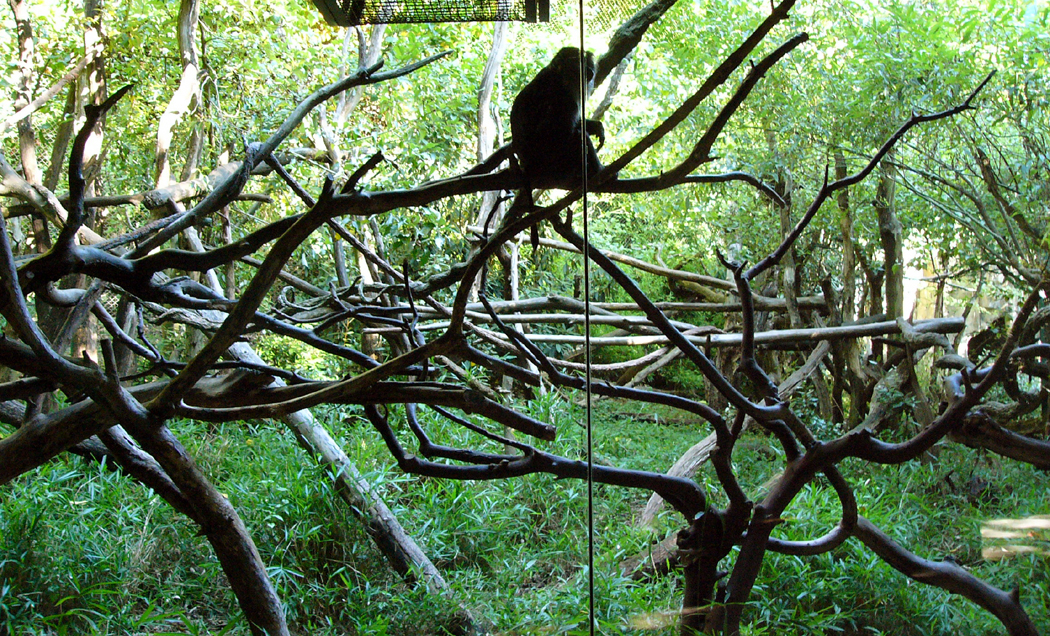
Lion-tail macaques, Woodland Park Zoo, Seattle

Lion-tail macaques, Woodland Park Zoo, Seattle

Woodland Park Zoo, Seattle 1978

When I finally got a job, it was at the zoo. I was hired as a peon to sell popcorn. A week later, I had been promoted to manager and had the safe combination. The concessions stand at the zoo became my little kingdom; I ran it just as I wanted to. I hired the people I wanted and ignored company regulations when they seemed stupid. As a result, our zoo business made money even when the tourist season was over and all the other “restaurants” in the company were losing money down at the Puget Sound docks.

I worked in an iron box maybe 11 feet by six feet deep surrounded by Rube Goldberg steaming, fuming machines.

The concessions stand is a trailer, like those seen at little league games of county fairs, and at lunchtime, the lines for wieners and Pepsi stretch around the children’s zoo. I felt like some zoo animal myself, people staring as they walked past at this six-foot simian with a white snapper cap and striped vest smiling through his beard. But the real zoo was outside my steel cage:

“What do you have to drink?”

“Pepsi, 7-Up, Orange, Diet Pepsi and milk.”

“No grape?”

“No grape.”

“I’ll have root beer, then.”

One woman whose root beer thirst couldn’t be satisfied elsewise asked my to mix half orange and half Pepsi. (I tried it after she left to see if it was as vile as it sounds and it is.)

“You have peanuts?”

“No peanuts. We have popcorn.”

“I never heard of a zoo without peanuts. What do we feed the animals?”

(Under my breath: “That’s WHY we don’t have the damn peanuts, idiot.”)

One sweet motherly woman took us for an information booth and asked, “Do they mate the gorillas every day?”

“I think they pretty much let the gorillas do what they want.”

Early on one day, a young woman in a zookeepers uniform wandered by carrying a baby gorilla like a two-year-old in her arms. He must have weighed nearly 100 pounds. Around lunchtime, an elephant walked past, guided by two men who had to whip his trunk to prevent him from turning at us and snaffling popcorn. In the afternoon, the gorilla woman went by in the other direction with the gorilla twitching one hand on her breasts.

Bobo all grown up

Bobo all grown up

We sold only a few items. There were the aforementioned drinks, hot dogs, potato chips, popcorn, coffee, crackerjacks, Cheez-twirlz and an abominable nougat candy called Big Hunk. It was our only candy bar and no one seemed to want it, and considering the crap that they were willing to eat, that was surprising.

“What kind of candy you got?”

“Big Hunk,” I said, grinning and holding out a bar.

“Izatall? No thanks.”

And considering what we sold, I was amazed at the naivete of another with-it mother, who asked, “Do your hot dogs have any nitrates? We don’t want any nitrates.”

“Nitrates? I don’t know, but there are some mighty tasty fly legs, and if you look close, you can see the coagulated sputum.”

She also asked if the orange pop was carbonated, apparently wanting to protect her urchin from carbonic acid. She settled on a bag of barbecue potato chips “with no preservatives.”

The hot dogs were made of turkey and spices and anything else, and they sat all day bloating in a steel box of simmering water. When I picked up the little suckers with the tongs, they sometimes disintegrated. But they were better than the buns.

The buns sat in a steamer that hissed and sputtered all day, acting like some volcanic fumerole. If they remained too long, they turned into a finger of wallpaper paste and were as appetizing as jellied snot.

And with the bun steamer blasting, the pup steamer simmering, the coffee machine blustering and the tea pot heating that little trailer was one large Vicks Vaporizer. Steam condensed everywhere and the bottoms of all the shelves dripped, leaving the floor eternally sopping. I enjoyed that. I enjoyed the infernal, brimstone appearance of all that venting steam. At least I enjoyed it the first day.

Meanwhile, I just had to enjoy watching people like the couple who walked toward us from the children’s zoo talking about how cute all the loose animals were. There were peacocks, guinea fowl, mallards, cocks and hens. Then a squirrel jumped out of the bushes and ran right up to the woman stopping just short of hopping on her leg. They stood there, startled, not knowing what to expect. The squirrel twitched his nose suddenly and the wife jumped behind her hubby, screaming and he, no John Wayne, couldn’t think of anything to do. The squirrel had made his point, and feeling reasonably superior, he dived back into the geraniums, looking for another victim.

And yes, I got to eat hot dogs free for lunch.

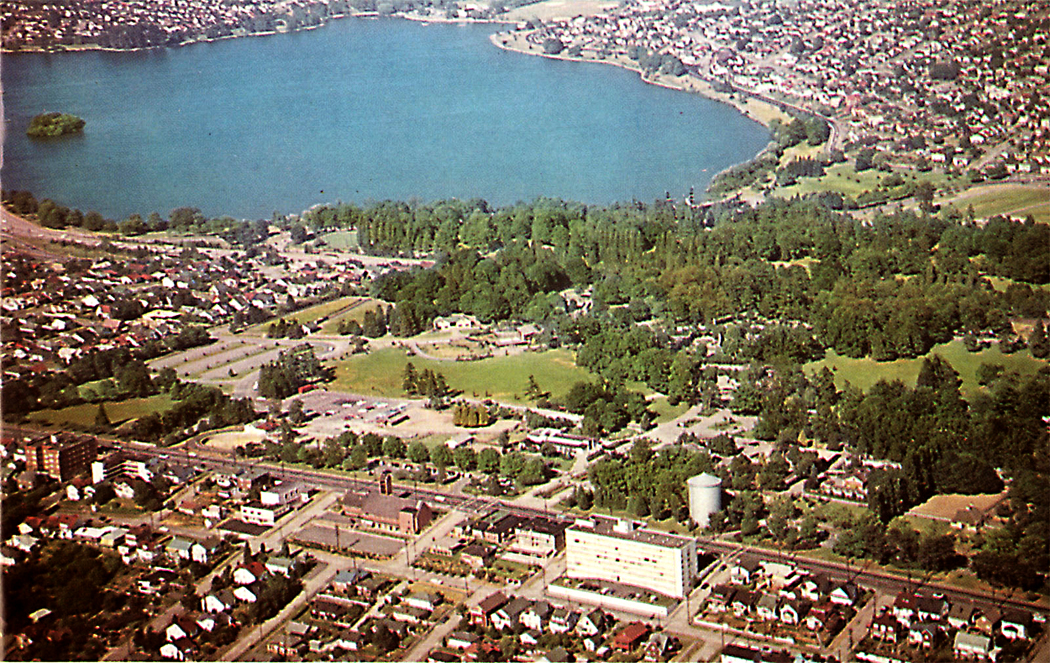
Woodland Park and Green Lake, 4 decades ago

Woodland Park and Green Lake, 4 decades ago

Of course, the zoo had its share of misfits, people who may well have belonged on the other side of the bars.

There was Bill Cowell, the old relief keeper. He had seniority and could vary his routine, taking care of whatever animals needed help while their regular keeper was sick or on vacation. Bill was getting on and had lost some of his former sharpness, but he still talked over the speed limit.

One day, he brought in a newspaper story about Johnny Weismuller, ex-Tarzan and faded Olympic star. Johnny was in a sanitarium and apparently senile, running through the halls, scaring the other geriatrics with his Tarzan yells. Bill brought out this piece of paper clipped from the Post-Intelligencer and started telling me, “You are too young to remember this guy, but maybe you’ve read about him. Johnny Weismuller, he used to swim in the Olympics. You ever heard of him?”

“Yeah,” I said. “He was Tarzan.”

“Uh-huh. He starred with, uh, Muriel O’Sullivan, I think it was. But you’re too young to know those movies.”

“I saw them all on television.”

“Oh, yeah. I guess they have been on TV. Well, read this. It’s real sad. I guess I’m next. But I really think someone’s trying to make him look crazy to get at his money, you know, like they did with Groucho Marx. I bet he ain’t crazy at all.”

Another time, he endeared himself to me when, on a busy Saturday, with crowds of kids screaming and spilling their popcorn and crying and parents at the end of their patience, he said, as he bought his daily hot dog, “These goddamn kids — Dont’cha just wanna run them over?”zoo bear

As in any retail business, whether it’s a tavern or a hot dog stand, you got to know regular customers by their orders. One regular was Large Pepsi No Ice. He was on the maintenance crew and picked up the mess we caused by handing kids all the paper wrappings they loved to strew across the grounds. LPNI was about 50 with a permanent 5-O’clock shadow and a view of the world honed on his dedication to professional wrestling. He was married but professed to hate his wife, saying so in a tone of voice I understood to be the tenderest expression he was capable of. Or the next tenderest: I remember him saying as he took a break to go over and watch the orangutans, “I’ve got to go see my babies today.”

He loved sports and Seattle was a good city for it. He brought me all the news everyday of his beloved Sonics. He also kept up with the Mariners and Seahawks. He had tickets to the last playoff game between the Sonics and the Lakers, but was torn between going to watch the roundball and watching his favorite wrestler at the Arena. he had tickets to both and finally decided to watch Nasty McGurdle fight Big Anastasio for a while (“There should be lots of blood flowing tonight”) and then move over to the Coliseum to catch the last half of the Sonics game.

We talked about how good it was that the Sonics got rid of Marvin Webster and then how Bob McAdoo was hurting the Celtics by being a one-man team. LPNI Liked McAdoo a lot, however. He explained himself: “McAdoo is like me; I’m a great pig fucker.”

Then there was Eugene. He was also maintenance. He was about 60 and black. He talked about when he used to live in Oakland, but I could tell by his rural accent that he used to live on a farm somewhere before Oakland.

“Yes, yes. I comes from Arkansas.”

He drank five or six cups of coffee a day, paying for maybe two of them. (“How about a heatin’ up for this cup?”)

“I don’ believe in doin’ no work. I never worked in Oakland. I jus’ hustled the streets. Made a good livin’ at it, too. But when I gets to Seattle, I finds a good woman and she makes me get this here job. I don’ mind it much, I guess. It ain’t hard. But this rheumatiz in my neck is gettin’ me. I got to go see a doctor ’bout it. I thinks the bones in my neck is grinding themselves and the marrow is comin’ out, like you see on a hog when the bone is wearin’ and busted. You ever see the marrow of a hog’s bone?”

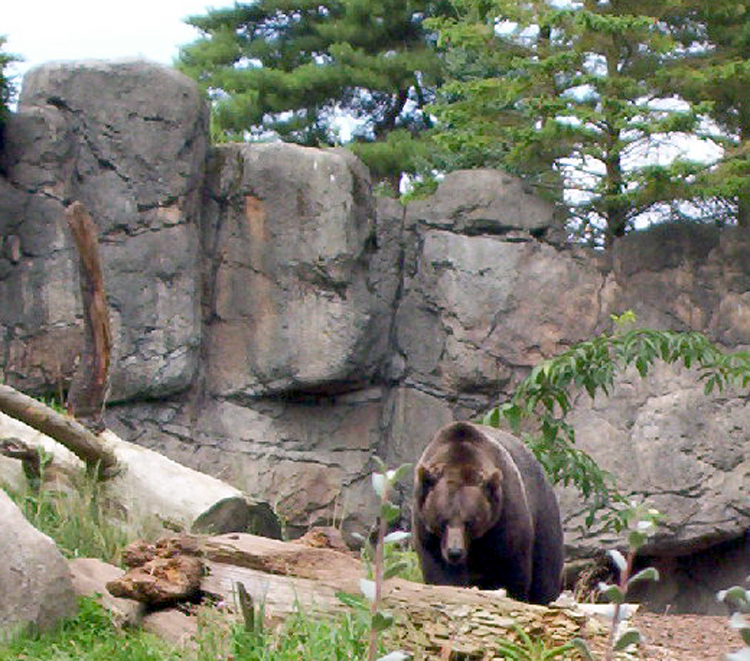
And to anyone who hangs around them, the people working at the zoo are often just as exotic as the slow loris or Przewalski’s Wild Horse. There is the twitch-eyed monkey keeper who looks like his lion-tailed macaques, the avuncular bear keeper who likes to pitch day-old hot dogs down the bottomless maw of his grizzlies, the tropical-house keeper who has to dig down the throat of a questionably sedated crocodile to pull out the gobs of ingested pennies heedless zoogoers have tossed into his water.

But the oddest zookeeper of all is the night-keeper, who skulks around the grounds in the dark with his flashlight and walkie-talkie.

I met one  one evening just before closing time. We were both leaning over the rail in front of the orangutans.

“Fascinating, aren’t they?,” I asked.

“Oh, hell, they ain’t too fascinating,” he answered in a growling voice of a 50-ish blue-collar man who knows what it is to be an alpha male.

I said I thought he must have been a zookeeper too long, if the animals had lost their appeal.

“Well, I used to think they were fascinating,” he said, “but then I got to know them pretty close. They are stupid.

“As far as evolution goes, the orangs are just hanging on. They aren’t adapted well. They need a specialized habitat and it’s disappearing.”

A staccato of static blasted from his intercom and he answered something back, then stuck it back in the leather holster on his belt.

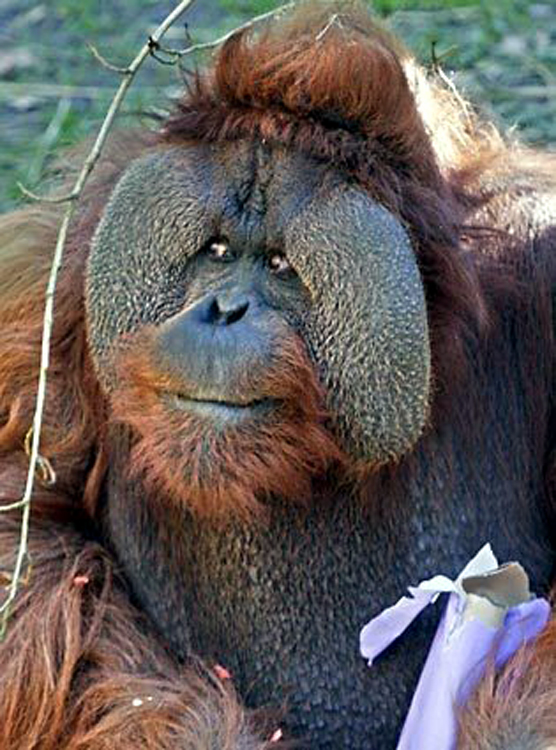
Towan

Towan

“Now, I’ve known some pretty smart gorillas, and a lot of mediocre ones, and a few dumb gorillas. And the chimpanzees — I’ve known a whole lot of really smart chimps. There are some stupid chimps, too, but not many. But I’ve never known a smart orang.

“Once, when I was in Sumatra, I was walking out in the brush and this huge male orang came walking up to near where I was. He came to maybe 10 feet from me and I stood stock still so I wouldn’t disturb him. I thought he knew I was there, but wasn’t going to give an inch of his territory. He was the biggest orang I ever saw and he was standing around digging up grasses and roots. He finally walked on without so much as acknowledging my presence.

“That was the start of my fascination with orangs. It wasn’t until years later that I found out the ape got that close to me only because he was too dumb to know what I was and what a threat mankind posed for him.”

“You seem to like the apes,” I said. “Do you know why this zoo doesn’t have any chimpanzees?”

“Well, a few years ago, a political decision was made somewhere in the front office that we didn’t have enough money to support all three great apes, so they decided to get rid of the chimps. It’s always politics that runs things, never what the zoo needs or how we can solve a problem.

“Someone in the administration, who probably had never even been to the zoo, decided to get rid of the chimps. It’s like the new displays that are being built.”

Towan, the male orang in the cage, looked through the glass and offered us some chime from his outstretched lower lip. It’s an orang’s way of saying, “grab a seat, make yourself at home.”

We talked about the new gorilla exhibit, one of those open-ground enclosures that replaced the dingy old glass-front cages that used to be used.

“It’s all political,” the zookeeper said, with some bite in his tone. “These people think it will be better for the gorillas to be out in a more ‘natural habitat.’ But, hell, our gorillas were born in captivity. They’ve never known what it is to be out in the open. We don’t know what will happen; chances are, the gorillas will be freaked out by the change. We introduce stressors in their life, saying it will reduce them. But it is only our own conscience that is calmed. Five of our gorillas were born in captivity. For them the cage is the natural habitat. I’m sure the stress will kill at least one of them. But I was never asked. Someone up front decided it was politically better to give them trees and concrete mountains. At least one will die.

“I guess I’ve been around and I know about as much about departing as anyone on this earth and I know that you don’t die without giving up. That goes for apes and humans, too. No one ever died without giving up somehow. Even a wreck on the freeway means that someone gave up.

“Disease is just partial suicide. You give up part of your will to live and you get sick. The human body was designed to fight off disease. But when you give up, you let the germs and microbes into your system. I haven’t had so much as a cold in seven years. Not that I don’t take care of my body. I eat good foods and keep myself in shape. But I haven’t seen a doctor in a long time and I intend to keep it that way. Doctors are like mechanics. You keep your car healthy and you don’t need one. But if you have a wreck or it breaks down, the mechanic can fix it, but it’s never as good as it once was.

“People get sick because their will is worn down by stressors. Just like the apes will be worn by moving them; they can’t take the stressors.”

Towan tilted his red-haired simian head and began playing peek-a-boo with the remains of the burlap sack he is given daily.

“Like the IRS,” the nightkeeper went on. “Every year they take a little more out of your pay and they figure out some new way to make life harder.

“I wonder if the federal government knows how much disease it causes by not living within its budget.

“It’s not the money they take out. We can afford to pay it, but every year they take a little more and each increase is a stressor and someone gets sick, maybe dies because of the federal government. It’s all politics.”

And somewhere in the increasing dusk, a peacock screeched and it was time to close.

Towan reached his long arms side to side and embraced the glass. Then he climbed up the steel posts that made for trees in his cage and he sat in his roost next to Melati, one of the females.

Sleep well, Towan, I thought. Life could be worse. You could have to file a 1040.

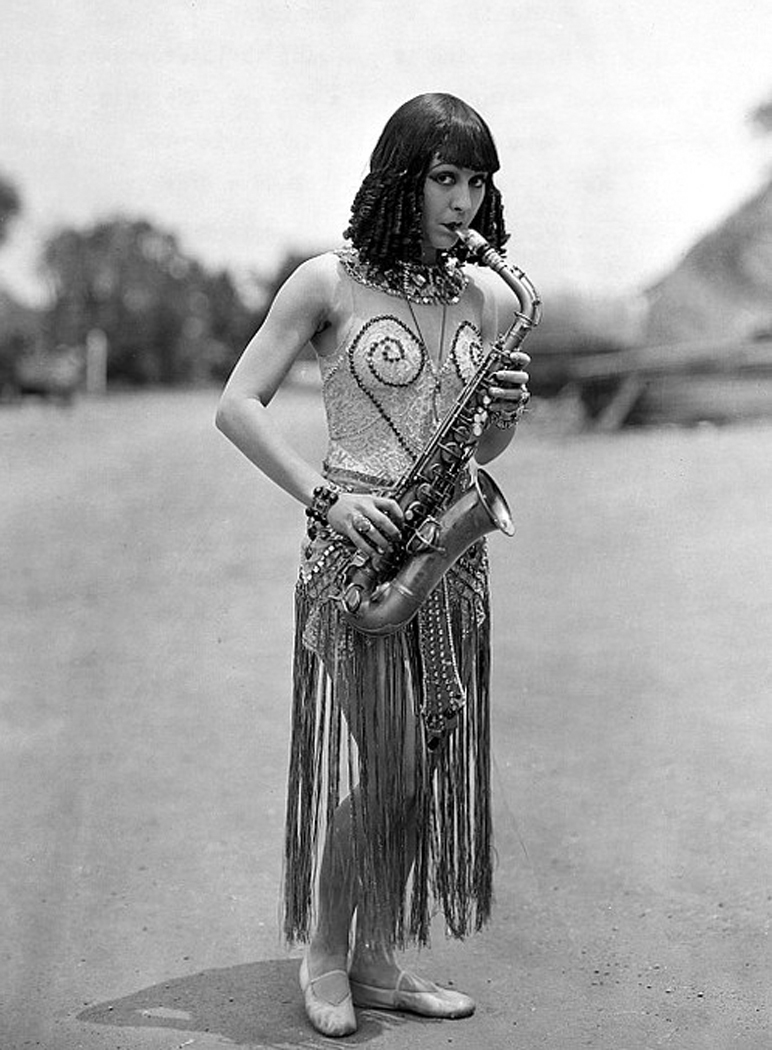
sexophone

Life is full of interesting little questions, questions of no consequence that lead to bigger things. Like, why is the finale of Gioachino Rossini’s William Tell Overture used as the theme for The Lone Ranger?

Admit it, when you hear that tune — ditty bump, ditty bump, ditty bump-bump-bump — you hear the hearty hi-yo Silver. Even kids, who know the masked man only from cable TV reruns, know about him and his faithful Indian companion, Tonto.

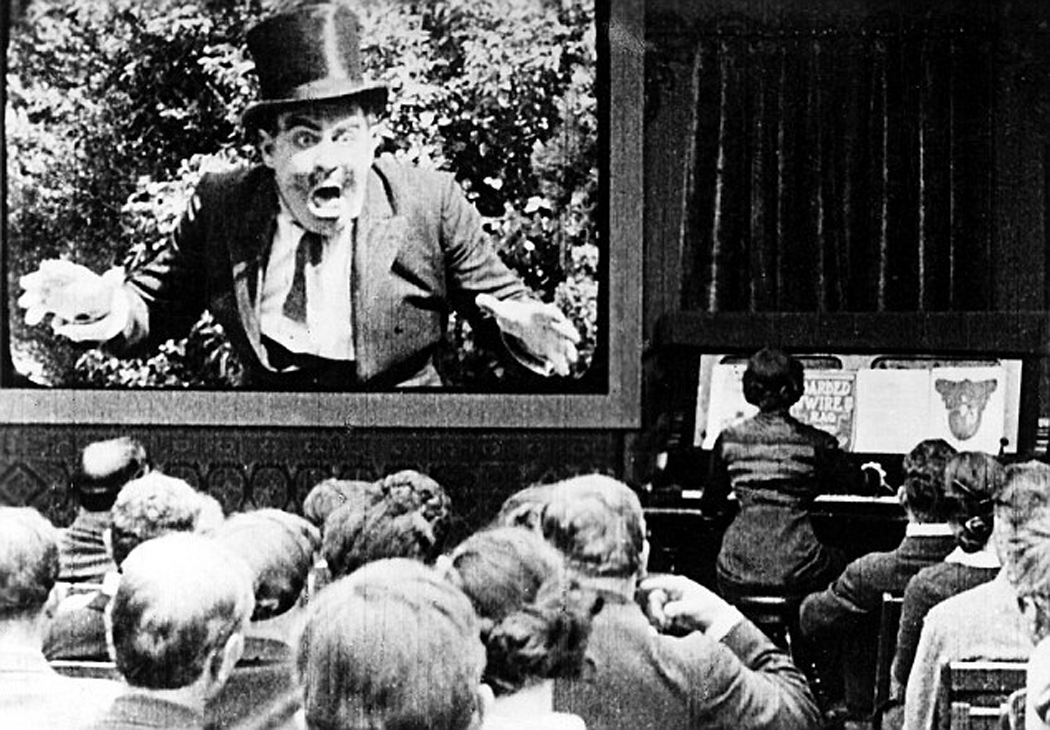
But what does all that have to do with a Bel Canto grand opera about the freedom of the Swiss from the oppression of the Austrian Empire? To understand, you must go back to the era of silent movies. Although they are always called silent, in fact, they never were. From the very first public showing of the new motion picture, in Paris in 1895, the images have been accompanied with music.

You can as easily imagine a ballet without music as a Chaplin short or a D.W. Griffith epic. And in fact, movie studios gave more consideration to the music than is generally known nowadays. From the time of Griffith’s Birth of a Nation, many studios provided full scores for their “A” pictures. Nation opened in New York to the strains of a 70-piece symphony orchestra playing the music written by Griffith himself, in collaboration with composer Joseph Carl Briel. It freely borrowed bits of Tchaikovsky and Verdi, mixing them with strains of Dixie and the Star Spangled Bannermovie piano

The first full score for a silent film was Camille Saint-Saens’ 1908 score for the French film, The Assassination of the Duke of Guise. The composer recast the music later for concert performance as his Concerto for Strings, Piano and Harmonium, op. 128.

Such scores were not uncommon. Arthur Honegger wrote the score for Abel Gance’s groundbreaking Napoleon in 1927; Darius Milhaud did the same for Marcel l’Herbier’s L’Inhumaine. And Dimitri Shostakovich made a good living writing films scores, when he wasn’t picking up a few extra dollars playing piano for the low-end movie houses.

The full scores survive that Charlie Chaplin wrote for his late silent features, City Lights and Modern Times, made after the sound invasion, and now permanently attached to their otherwise silent action.

The problem was that not every film was Birth of a Nation, and not every movie house could afford an orchestra. A full score might be fine for New York City, but when the movie went to Dubuque, a cheaper alternative was needed. So, most Roxies and Paramounts across the nation relied on pianists and organists. For an “A” picture, they might rely on piano reductions of the full score, provided by the studios, printed on cheap paper and distributed with the films along with such other promotional material as posters and blocks for newspaper ads. But for a “B” picture, the pianist either improvised on the spot, or relied on one of several “cheat” books. sinister misterioso

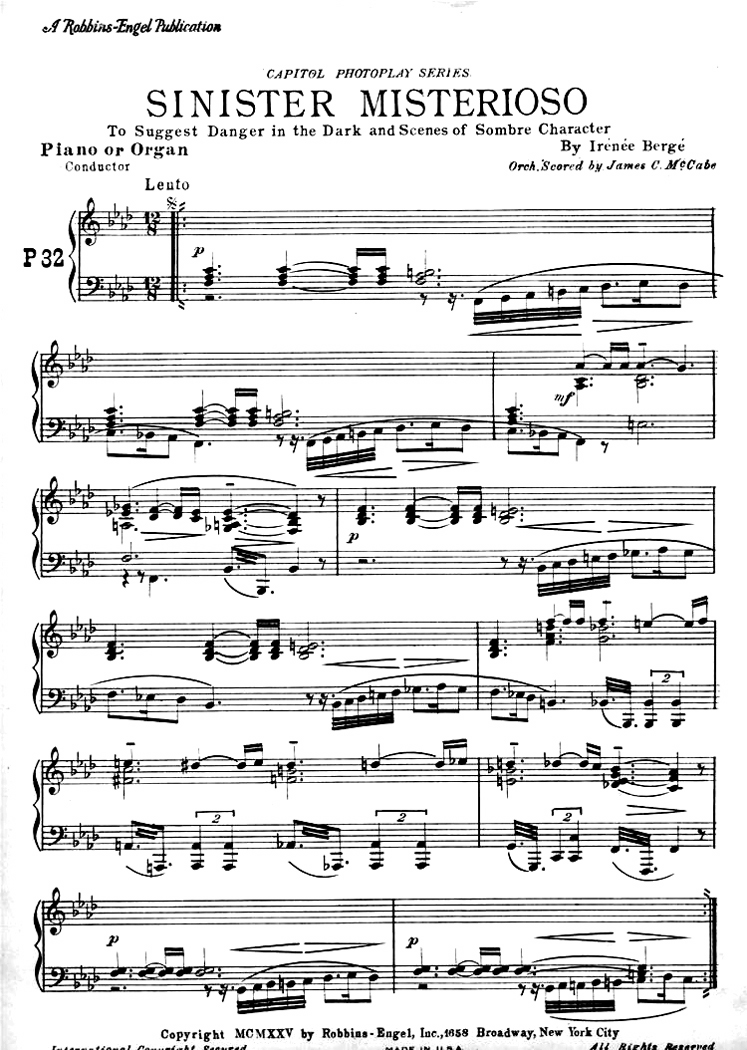
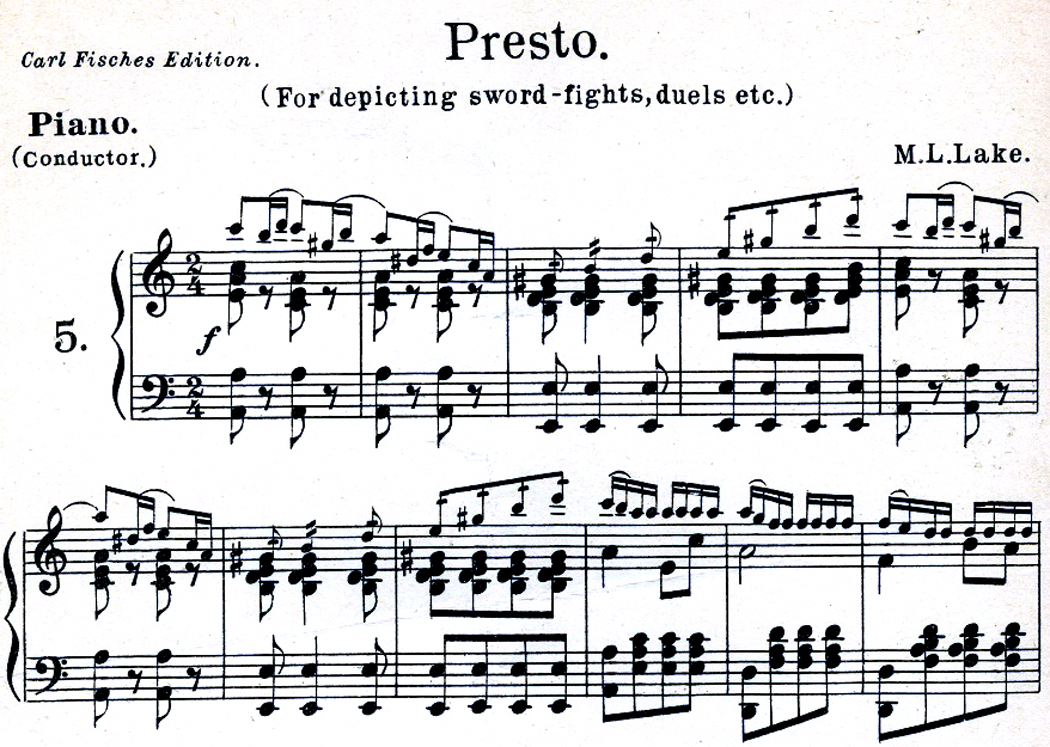
In 1919, Giuseppe Becce published his Kinobibliotek, which was a volume of musical chunks each matched to an emotion or action likely to be encountered in a film. One might be titled, Pursuit, and another, Tender Agitato. Universal Studio came up with its own, assembled by Max Winkler, who borrowed freely from classical music, excising snippets of Beethoven or Bizet to be played by the house pianist at the appropriate moment in the film. Winkler actually made up lists of tunes for each film Universal released, matched to the cues in the plot. “J.S. Bach’s immortal chorales became Adagio Lamentoso for sad scenes,” Winkler wrote. Beethoven provided a “Sinister Misterioso” and Tchaikovsky a “Strange Moderato.” Mendelssohn’s familiar Wedding March was used for weddings. presto for sword fights

The classical music had two advantages. First, it was readily identifiable. Everyone knew the Wedding March, for instance, so it could be used to make a point. And it was cheap; it was public domain and no copyright fees applied.

When sound films took over, some of these silent habits persisted. In Hollywood’s Golden Age, film scores still sounded like classical music. The great film composers — Korngold, Waxman, Herrman — were classical composers. And even to this day, when a director wants to add class or underline a scene dramatically, he will likely choose classical extracts. So, Samuel Barber’s Adagio for Strings adds emotional heft to Oliver Stone’s Platoon, and Richard Strauss’s Thus Spake Zarathustra adds portentousness to Stanley Kubrick’s 2001: A Space Odysseykeaton band

It also persisted in the sound era in “B” movie scoring, those undercard films on the double feature. You can hear many a familiar melody in the low-budget films. Every Hopalong Cassidy film, for instance, came to a climax with a chase scene underlined with Gluck’s Dance of the Furies. You could count on it. It was an odd marriage of high art with popular culture.

And, or course, it provided us with “those thrilling days of yesteryear” and the Rossini trumpet fanfares that summoned us all first to the radio, then to the TV screen.

W. Eugene Smith

W. Eugene Smith

Sometimes, failure is the greatest success.

That is the key to the secular sainthood of photojournalist W. Eugene Smith. He aspired to such purity of esthetic and moral vision, that, in a way, if he had succeeded, it would only have proved to himself that his sights had been set too low.

Smith is the patron saint of photojournalists. During his stint as a Life magazine photographer in the 1940s and ’50s, his picture essays — of World War II, an American country doctor, a nurse midwife and a Spanish village, among others — made his reputation as not only a fine journalist but also a photographic stylist. A Gene Smith photograph had a look all its own. schweitzer in pith helmet

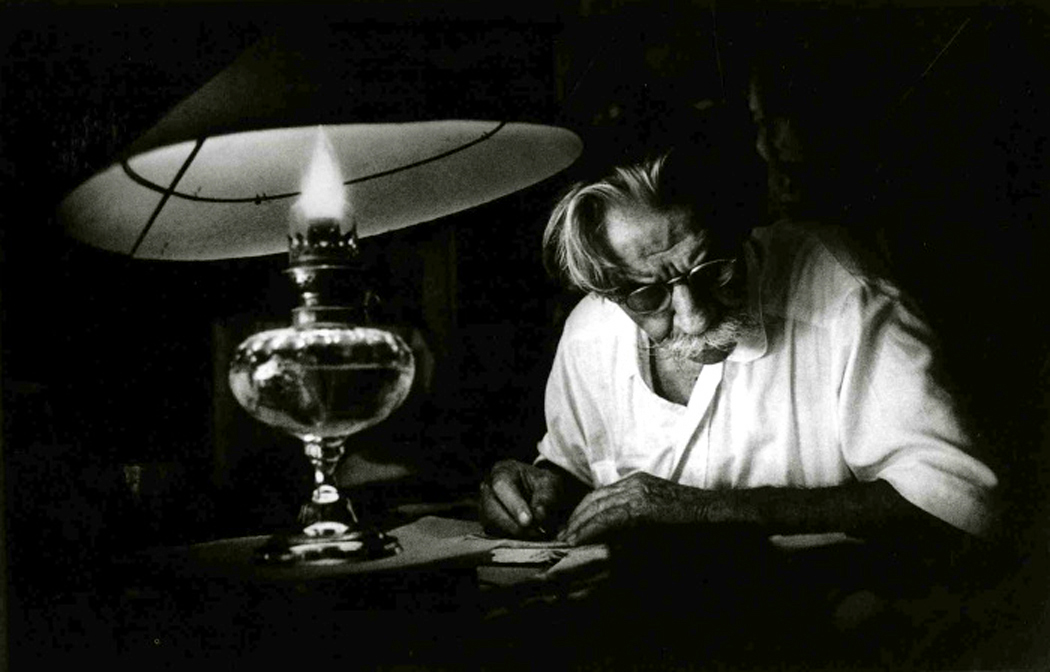
Smith’s reputation as saint began in 1954, when he quit Life after a dispute over the editorial layout for a story he did on Dr. Albert Schweitzer. Smith had photographed Schweitzer in the context of his hospital at Lambarene in what was then French Equatorial Africa and concentrated on the difficulties of providing health care in the Third World. Life’s editors trimmed the essay back and made Schweitzer into a one-dimensional white hero among the natives.

From Smith’s point of view, it would be as if the editors had taken an essay of emotional depth and turned it into an Entertainment Tonight sound bite.

It wasn’t the first time Smith had fought with his editors (in fact, he had quit the magazine once before), but the Schweitzer imbroglio caused him to leave the magazine permanently. Depending on whether you were a photographer or an editor, Smith’s single-minded insistence on the integrity of his work made him a saint or a crybaby prima donna.

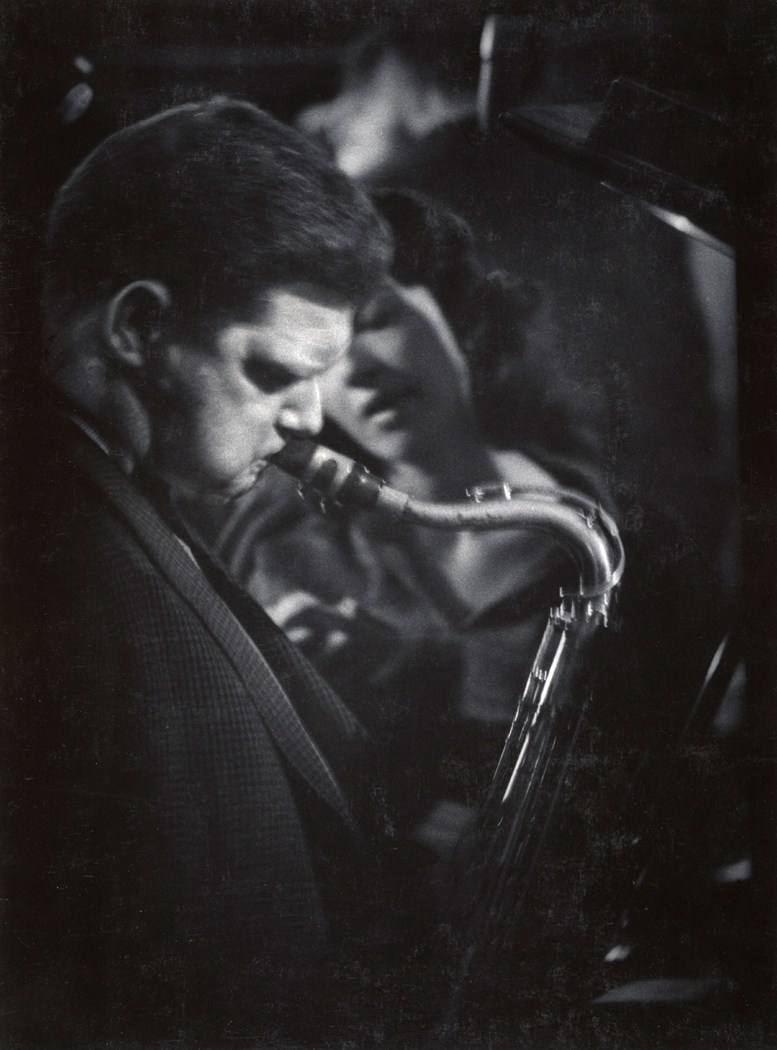
Zoot Sims

Zoot Sims

Time has come down on Smith’s side. No one remembers the editors’ names now.

(Smith couldn’t stand even to edit himself. When he gave his archives to the Center for Creative Photography in Tucson, Ariz., before his death in 1978, the negatives, prints, letters and notes weighed 22 tons. He could never bring himself to throw anything away — included in the archives is laundry.)

There are other great photojournalists, but there is no one like Smith.

His images from World War II were so uncompromising, half the pictures he made were censored by the government as too grisly and not heroic enough for public consumption.

“I would that my photographs might be, not the coverage of a news event, but an indictment of war,” he wrote, “the brutal corrupting viciousness of its doing to the minds and bodies of men.”

But what distinguishes his work is quite apart from journalism. Now that we have the perspective of time, we can see that Smith wasn’t really a journalist at all; he was an artist. His success is not that of showing us events, but of showing us his own mental and emotional insides. They were not bright and happy insides. schweitzer with lamp

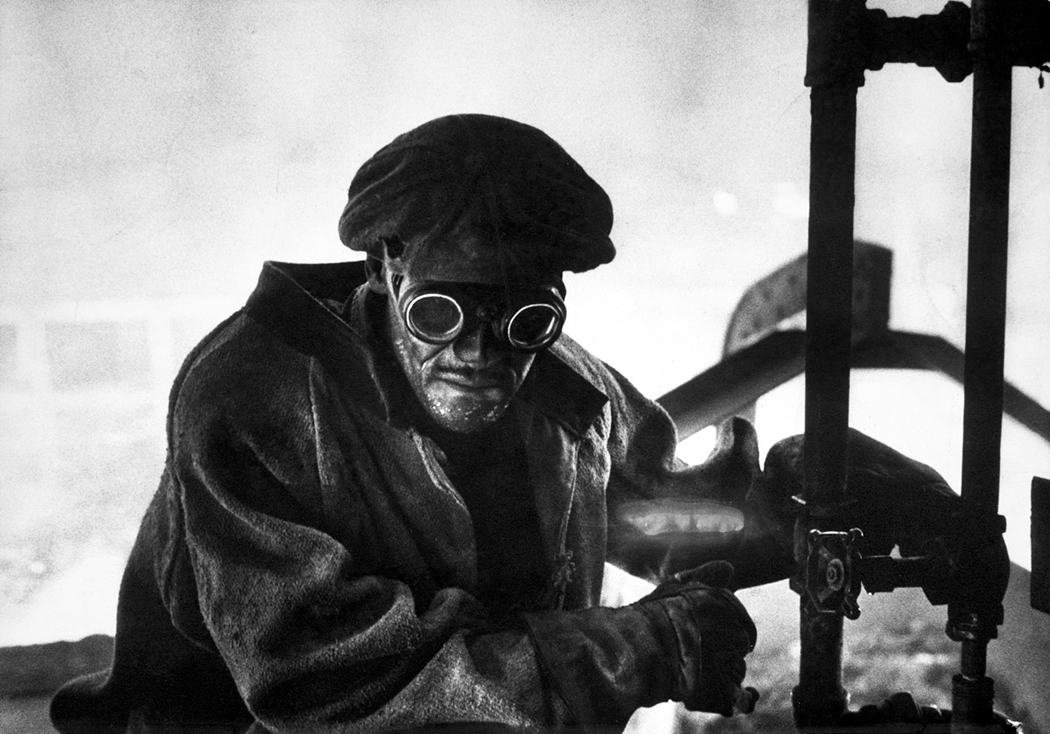
The first thing you notice about the mass of Smith’s work is its darkness. Almost all the photographs are predominantly black. The standard Smith photograph shows a working face lighted in the darkness.

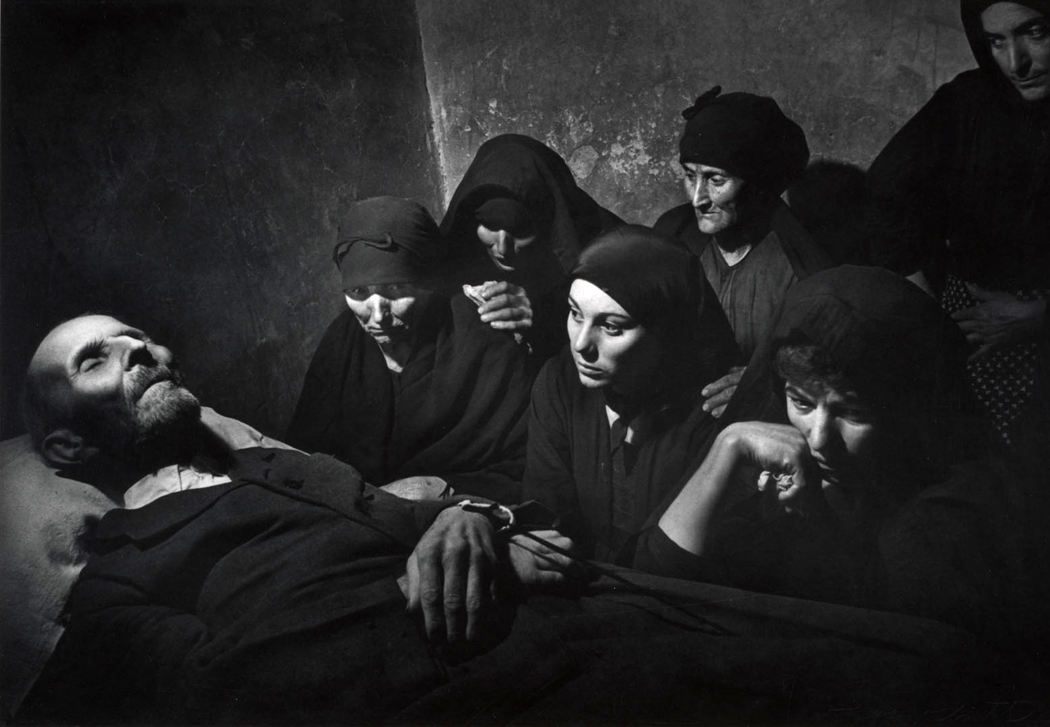
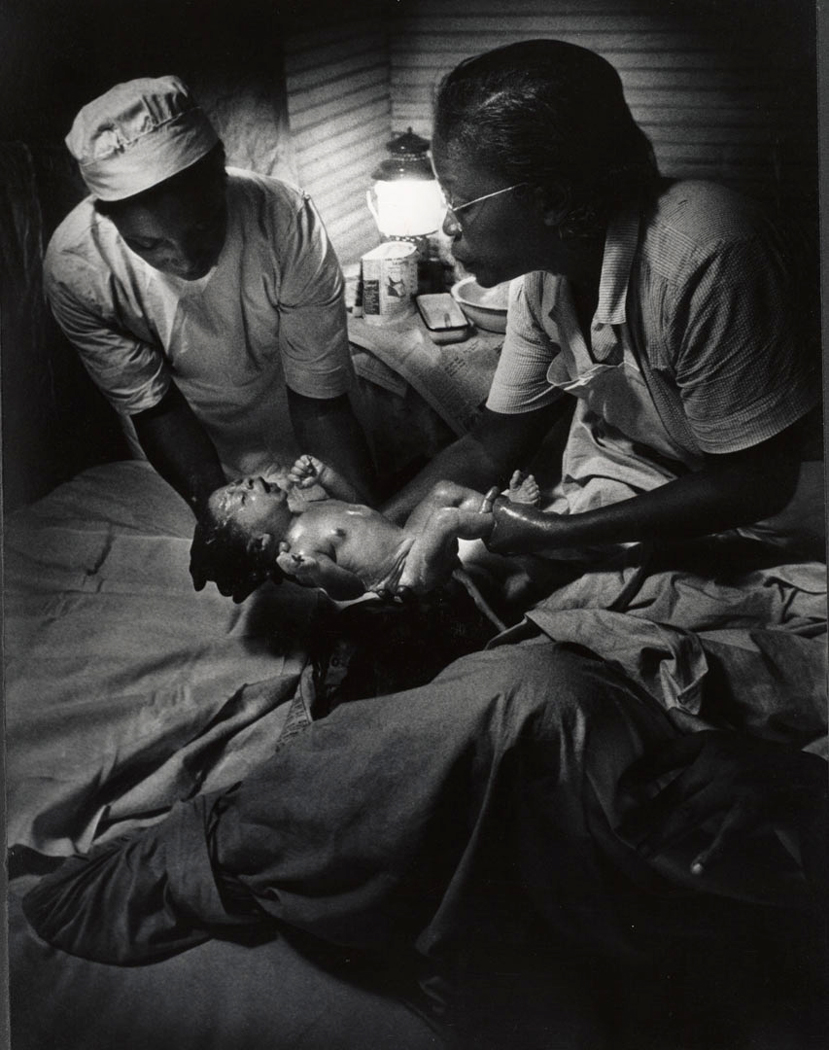
The darkness is universal and threatening, and against it, Smith pits his hero, always a working man. It matters not what else the man may be, Smith pictures him at work and at work with an intensity that shows the hero’s effort alone holding back the perimeters of darkness, whether he is a surgeon saving a baby or a mourner at work watching a corpse. country doctor

The blacks and whites of the photos take on symbolic meaning.

Smith’s world was one of alienation, darkness, maimed and diseased people, back-busting labor, sweat, hardship and fear — but against it Smith put heroism of the common man trying to make a difference. Volare Digital Capture

For Smith, every man was a working man, and the working man became Everyman. Smith could give a symphony musician a blue collar. In one photo, soloist Gregor Piatagorsky takes a drag on a cigarette and looks like Edward R. Murrow holding a cello. In another, Igor Stravinsky in short sleeves and pullover works out a point of interpretation with a violinist. This preoccupation with labor may reflect the influence of the WPA photographers of the Depression.

There are machines, tools and human flesh, often mangled by disease or accident. His subjects are constantly ”fronting the essential facts of life,” as Thoreau put it. Never are any of the people in a Smith photograph relaxed. They are always in rapt contemplation or action. Intensity beams from their faces — the kind of blade-edged intensity most people feel uncomfortable with and cannot live with. It is a grim but heroic world.

One wonders how Smith ever survived at Life, with its celebration of middle-class optimism. Smith’s mythology is more Nordic. One is sure the darkness eventually will win.

People are apt to be alone in his photos. When they are not alone, they don’t interact with each other, instead staring in different directions. And when they do interact, they do not do so with each other, but through a common task, a dying patient, a dead relative. The task is the unifying element of Smith’s world. spanish funeral

One is struck by the extent to which Smith’s own neuroses and anxieties turned the world into darkness. Smith was a great artist, not merely a photojournalist, because of the myth he made of the world. In the guise of presenting fact, he presented a version of truth.

Smith had a powerful if idiosyncratic style. He was not a stylish photographer in the ordinary sense — there is little that is self-consciously visual or artistic in Smith. Irving Penn and Richard Avedon are stylish photographers. Smith was interested in truth, not style.

Yet his design is striking, beautiful, considering how uninvolved Smith was in making things look good.

walk to paradise gardenThe “truth” was his passion, a truth he never understood as subjective. Like a good Calvinist, he was utterly convinced that his vision presented the world as it is. And it is that unwavering belief that makes his photos so compelling. They convince us that Smith’s personal vision was, and is, the truth.

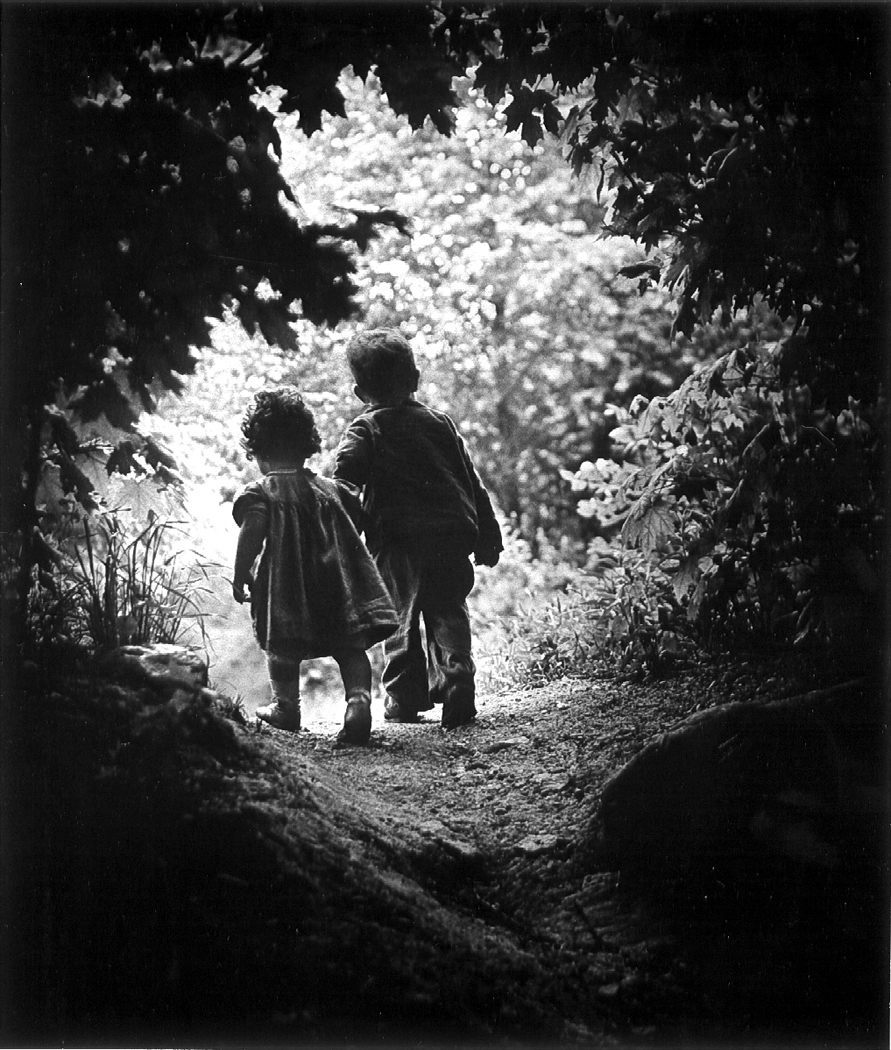
There is no humor in Smith; saints rarely crack jokes. No wit, no irony. He believed in the world he created. He could not have irony about that. That is why when he tried to create a purposely optimistic photo, as in Walking to Paradise Garden, a picture of his two children walking into the light of a break in the woods, the result was mawkish and sentimental.

Smith’s strengths are not found in such uncharacteristic photographs. Smith’s strengths are found in his illumination of darkness.

The darkness is all enveloping and irreducible. It is no surprise then, that he saw his work rather like that of Sisyphus, doomed to failure.

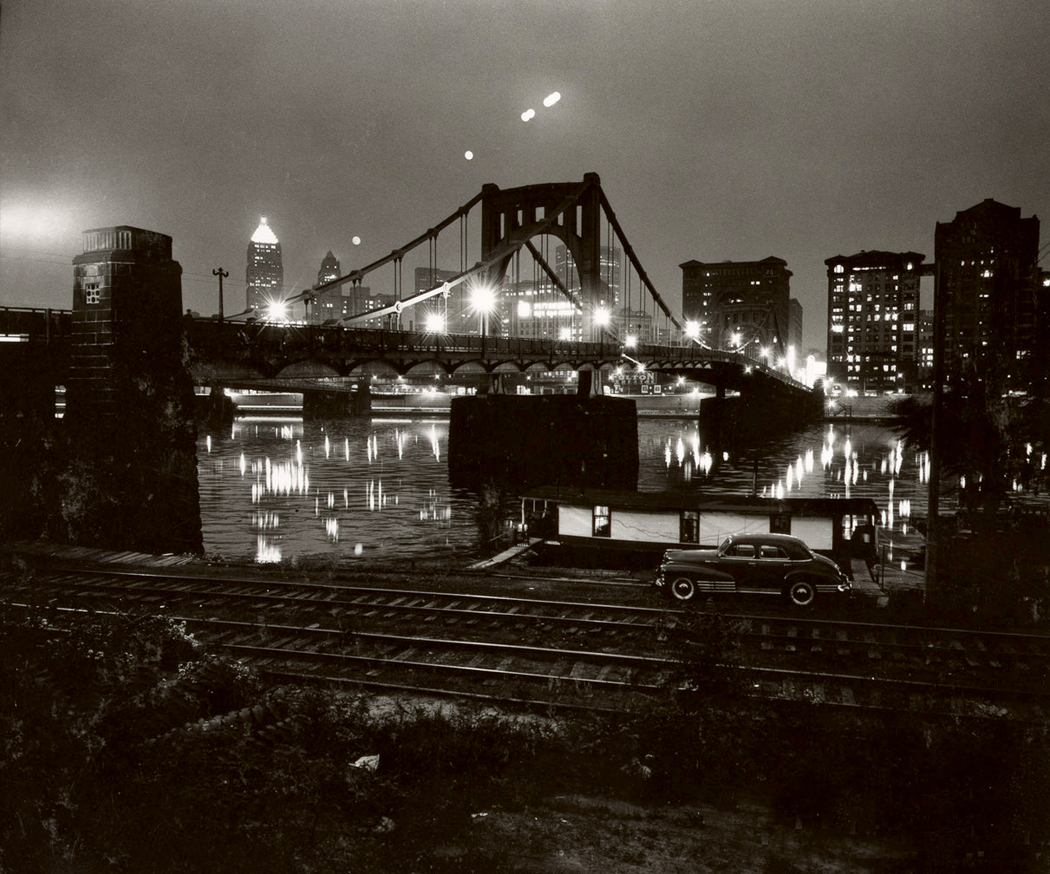
Therefore, his greatest failure is also his greatest success: The images he made as a “portrait” of Pittsburgh in 1955-57. The photographs make a kind of composite picture of place, an attempt to present the complexities and contradictions of the Iron City, leaving nothing out.steel worker flaming coke

The series has seldom been shown separately as a group since Smith threw his hands up on the project 55 years ago, having failed to finish it to his strict satisfaction.

The story of the Pittsburgh failure — and its ultimate success — parallels almost everything in Smith’s life.

He was nearly killed on Okinawa in 1945 when a shell tore through his skull. It took two years of rehabilitation and plastic surgery before he could resume his existence.nurse midwife

Then, he produced some of the signature photo-essays in Life, including stories on Schweitzer, a country doctor, a black midwife and a Spanish village under the Franco regime.

But each photo essay was a failure in Smith’s mind, because photo-editors altered his conception of the pictures.

No doubt, Smith was a difficult man to work with, and no doubt, he was his own worst enemy. He knew no motivation except truthtelling — and that meant the truth as he knew it, told the way he envisioned it being told.

“I cannot accept many of the conditions common within journalism without tremendous self-dishonesty and without it being a grave breach of the responsibilities, the moral obligations within journalism, as I have determined them for myself,” he wrote about his Life magazine resignation.

Yet, he needed to work. He had a wife and family to support. Even so, the inner demons refused to let him take a simple assignment and complete it simply. He was incapable of being a hack.pittsburgh at night

In 1955, he was hired to illustrate a book about Pittsburgh’s bicentennial. He was supposed to provide the 50 or so pictures that would accompany the text. It was an assignment that should have lasted less than two weeks. He wound up working more than three years and taking something like 17,000 negatives.

No wonder, when he taught a course at the New School for Social Research in New York, it was called “Photography Made Difficult.”

His marriage did not survive his obsessive drive to tell truth.

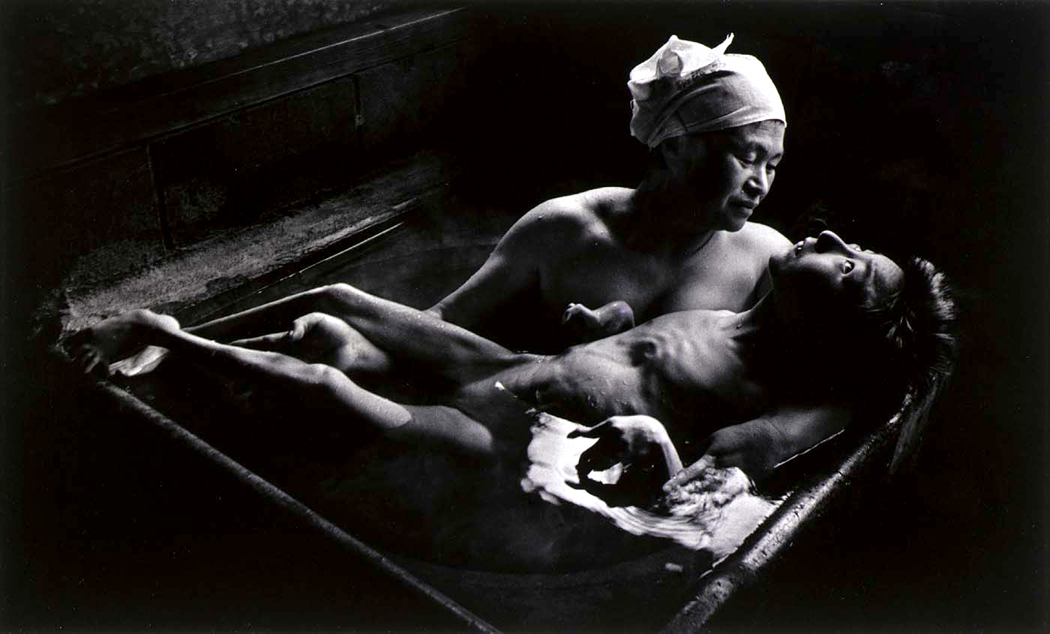
The Pittsburgh photographs are the perfect introduction to Smith’s work. Instead of objective reportage, they are profoundly metaphorical. Smith felt the world a dark, cold, even malevolent place, softened only briefly and minutely by the warmth and light of human love and caring.Tamoko

The pictures obsessively show a small point of light in a dark, obscure background. Whether it is the brilliantly lit face of an millworker in a black universe, or the small touch of a bride’s hands spot-lit in a dark room, they pound home Smith’s personal world view.steel worker

When he died, in Tucson, in 1978, he was the closest thing photojournalists had to a saint, and his work is a constant reminder of what the highest goals of the profession should be.

He may have been a pain in the ass to work with, but he created a deeply moving body of work, one it is nearly impossible to be indifferent to.

turn here 1

A reader once asked me what I thought were the major turning points of art – by which he meant the Euro-American tradition in art from the Renaissance to the 20th century. Of course, he had his own list already prepared to share with me. On it were 20 items. He wanted to know what would be on my list. He had the enthusiasm of a puppy dog, and it would have felt churlish to refuse him.

Making it a list of 20 is, of course, arbitrary: There are hundreds, maybe thousands of “turning points” in art history.

Also, we must confess this is a parochial list, when you have the rest of the world and antiquity — to say nothing of prehistory — to consider. But that bobsled ride from the Renaissance to Postmodernism can be seen as a single unit, and that is what my reader wanted me to consider.

Off the top of my head, then, are the 20 most pivotal pieces of art, each of which could be a chapter heading in an art history text.

Admittedly, they function as epitomes. It is rare a single piece of art can change the course of art history; instead, they are stand-ins for whole movements in art, entire changes of esthetic outlook and purpose that propel the eras they helped codify or inaugurate.

But even given my guidelines, I had to start a bit earlier, because the reawakening of Europe after the Dark Ages doesn’t happen in Renaissance Italy, but in Gothic northern Europe.

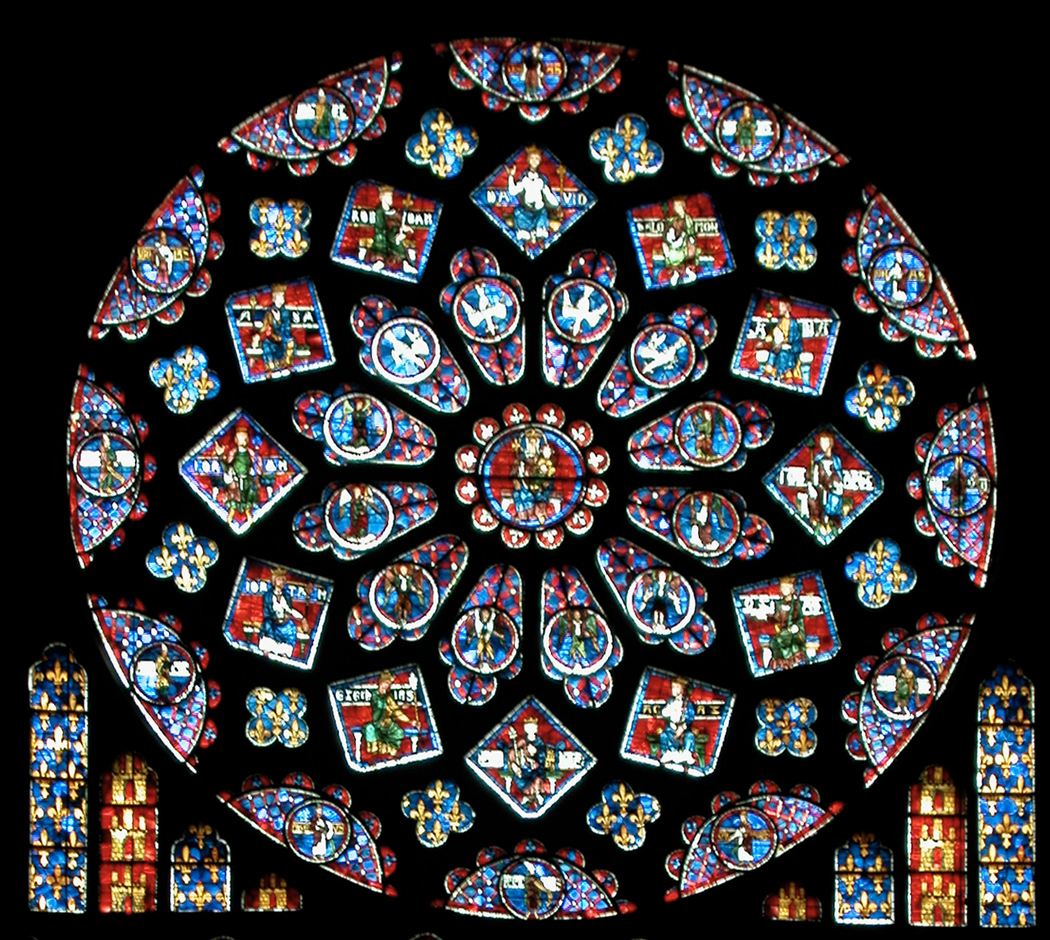
Chartres north rose window

My list begins with the north rose window at Chartres – the single most beautiful thing I’ve ever seen from the hand of humankind. Actually, the list should begin with the basilica of St. Denis in Paris, the first truly Gothic church, and the inspired conception of Abbot Suger, one of the most important clerics of the 11th century. His Neoplatonist idea was that God was light and that a church, to capture the spirit of divinity, must be opened up with windows and color. The engineering was a breakthrough: He realized that you don’t need walls – the heavy stone walls of the Romanesque – to hold up a roof, but you could put the roof on pillars and fill in the space between the pillars with curtains of colored glass. It was a huge step forward esthetically and technologically. But St. Denis was a first draft: It is in Chartres that the ideal finds its apotheosis.

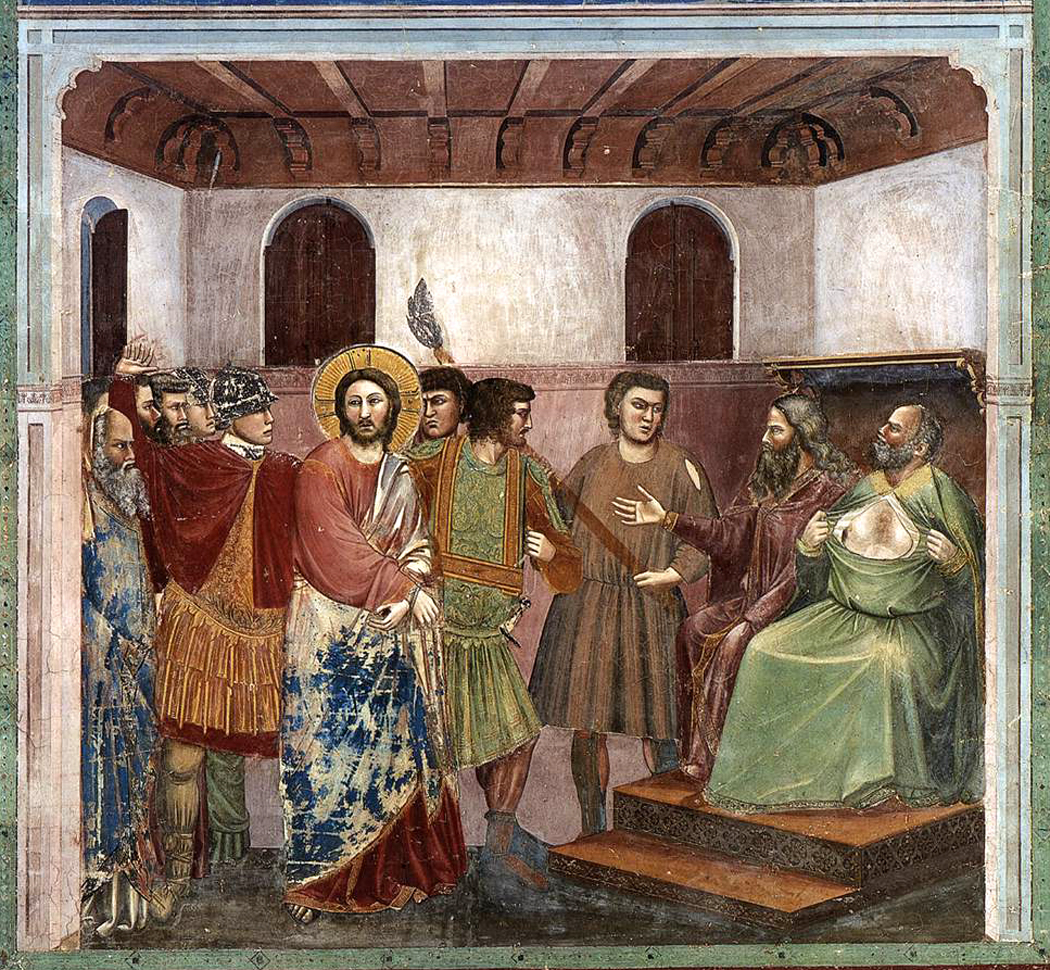
Giotto

Second, Giotto’s interior frescoes for the Arena Chapel in Padua, for waking up to the idea that painting not only could, but should try to capture something of the feel of reality.

Masaccio trinità

Third, the Trinity of Masaccio at the Sta. Maria Novella in Florence. It’s impossible to choose the single image that represents the triumph of Renaissance perspective over the Gothic style, but Masaccio is as good a choice as anyone.

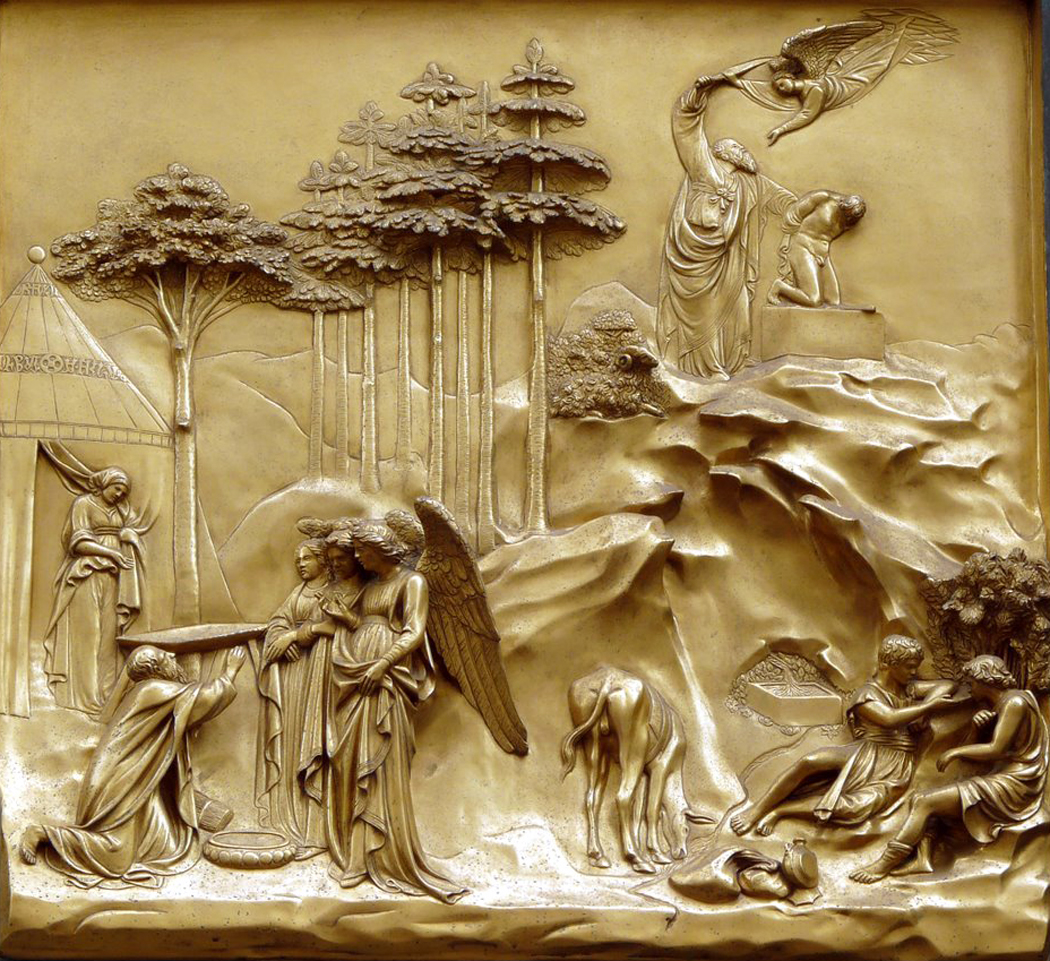
ghiberti abraham 2

Fourth: The bronze doors of Ghiberti to the Baptistry in Florence, an astonishing display of inventiveness and naturalistic imagery.

three davids

Fifth: The David of Donatello, and the final destruction of the Gothic schema in Western art.

Sixth: The David of Michelangelo Buonarroti, and

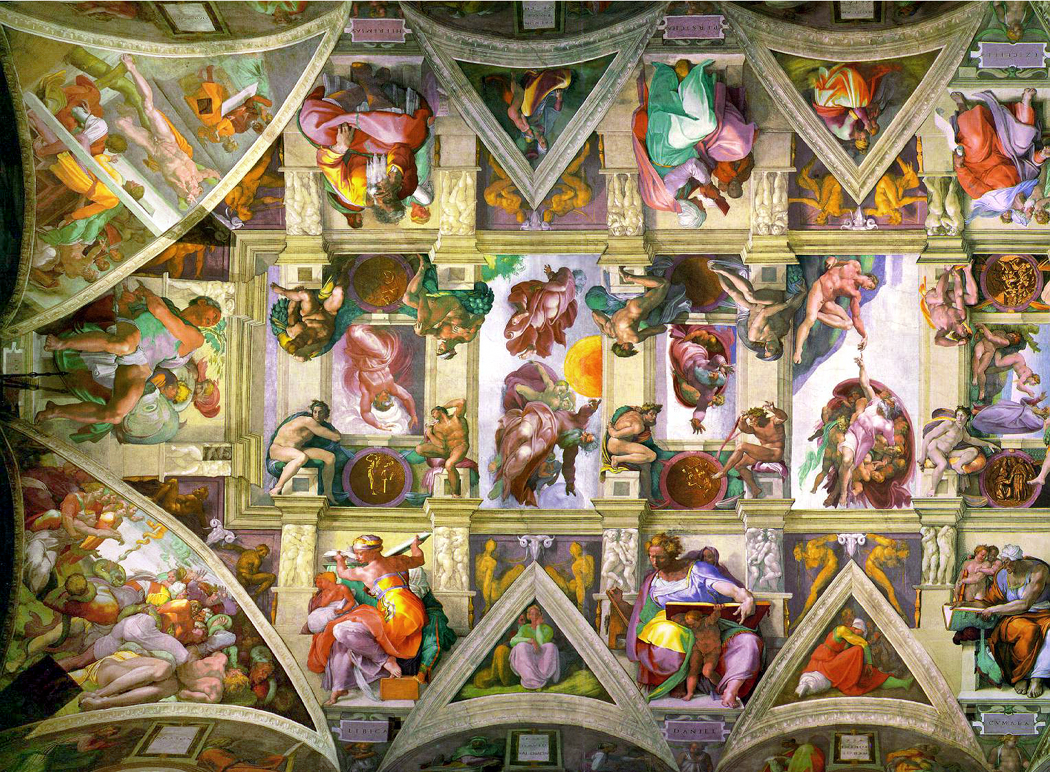
Sistine ceiling detail

Seven: The Sistine ceiling. No artist so defined his age and the two hundred years after him more than Michelangelo, the single most influential artist in history.

caravaggio

Eight: Caravaggio: The Calling of St. Matthew, although most of the crazy guy’s central paintings would do: The Invention of the Baroque. “Energy is eternal delight,” as Blake says.

Nine: The David (above) of Gianlorenzo Bernini (although I actually prefer the Apollo and Daphne), and the perfection of the Baroque, and the most proficiently perfect sculptor in history. I choose the David only for the symmetry with Donatello and Michelangelo. Look at the three Davids together and see the direction of the 15th and 16th centuries.

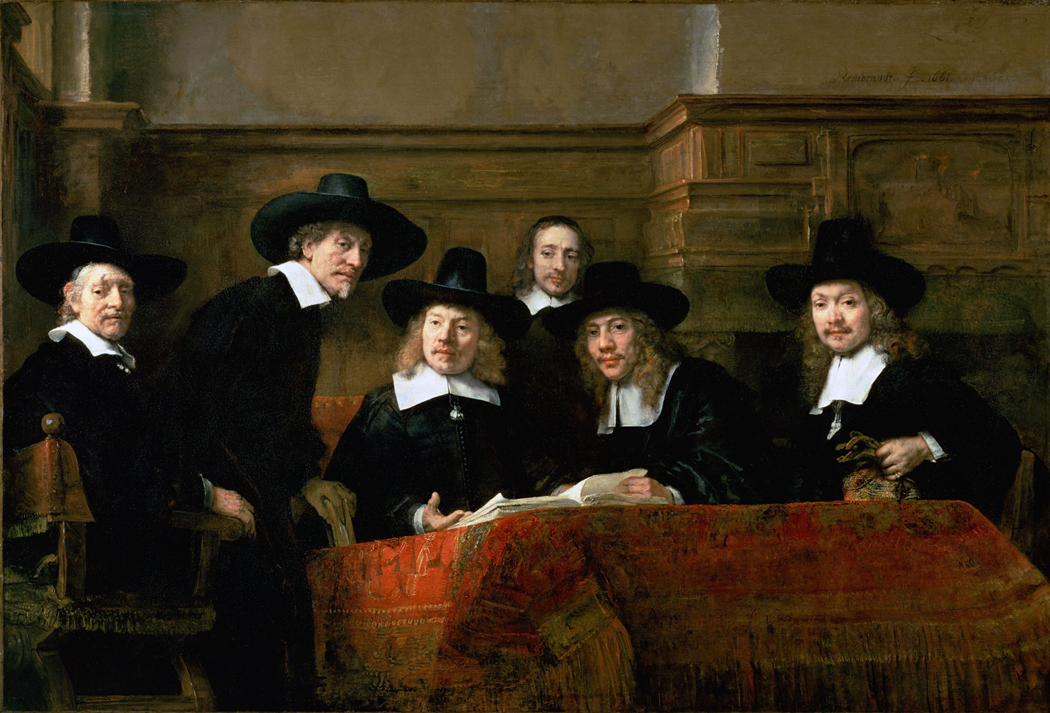
rembrandt

10: Rembrandt Portrait of the Syndics of the Cloth-maker’s Guild, (chosen over the more flamboyant Night Watch) to show how the psychological acumen of the Dutchman could bring life to an otherwise utterly conventional group portrait. This sense of psychology, that there is a real person behind the eyes, is what Rembrandt brought to painting, as Shakespeare brought it to the stage.

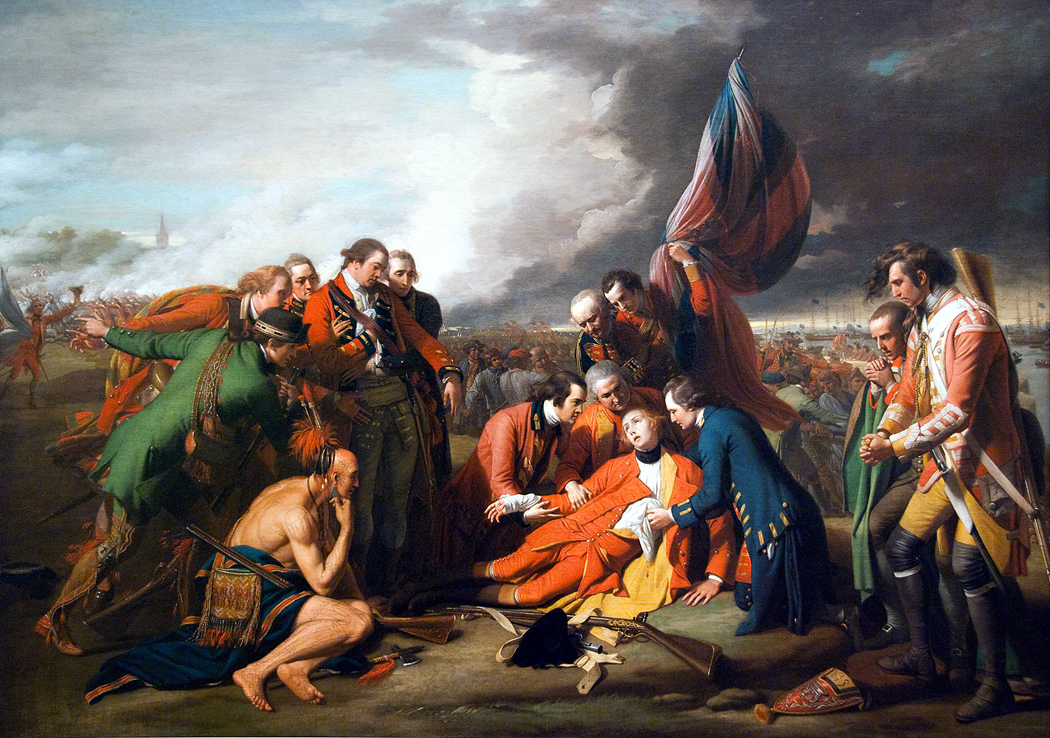
benjamin west

11: The Death of General Wolfe by Benjamin West, which manages to turn the conventions of the mythological painting onto not merely the historical event, but the current event. In a way, each of these choices is a step on a road from stylization and convention to a more aware and awake attempt to engage with the experience of being alive, with what we might call a more “real” vision of the world.

delacroix

12: Liberty on the Barricades by Eugene Delacroix, although you could also use Greece Expiring on the Ruins of Missolonghi, as the symbolic use of politics and the rise of the democratic spirit in the world.

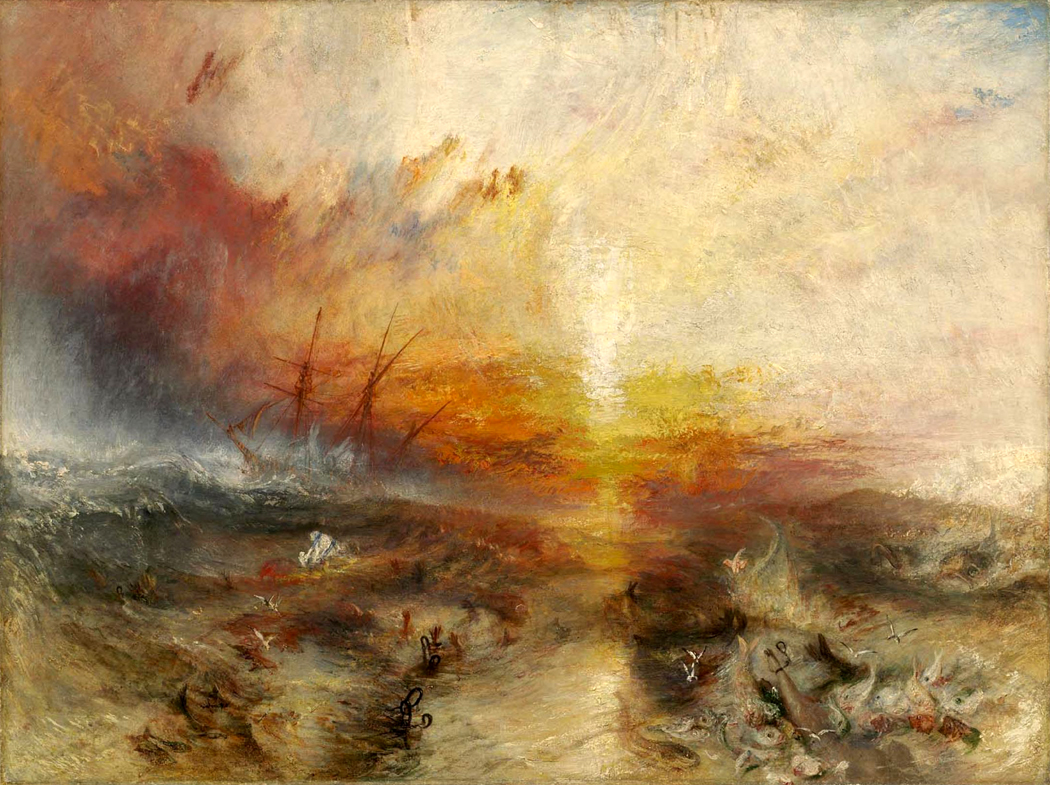
Turner

13. Joseph Mallord William Turner’s The Slave Ship as another political comment, but more important as the first glimmerings of a kind of Impressionism in paint, and the turning point where what we now call Modernism has not its birth, but at least its conception.

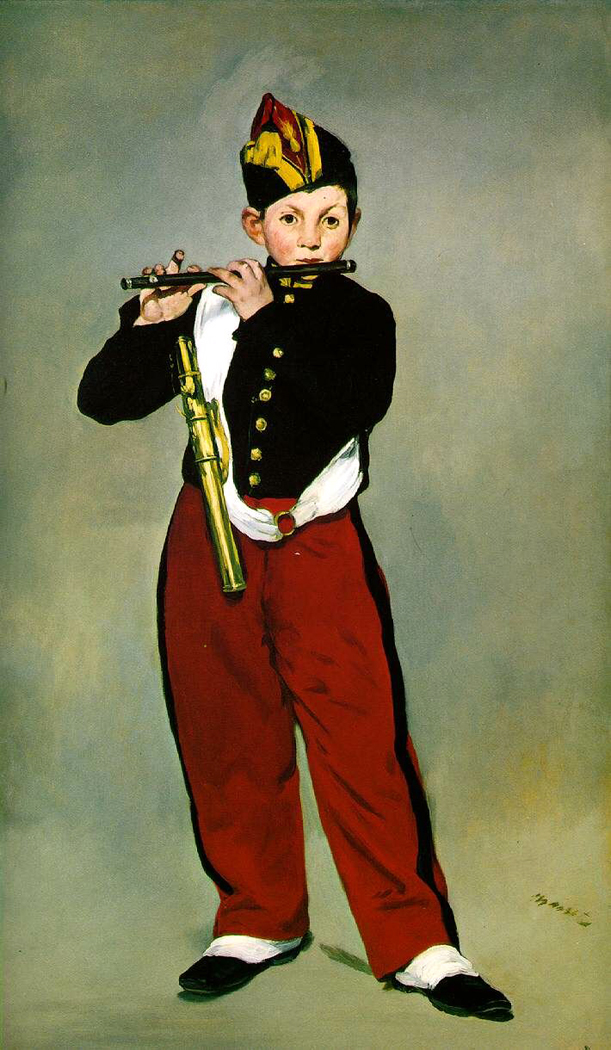
Manet

14. Edouard Manet, The Fife Player, as the birth of that Modernism, flat, ironic, oblique.

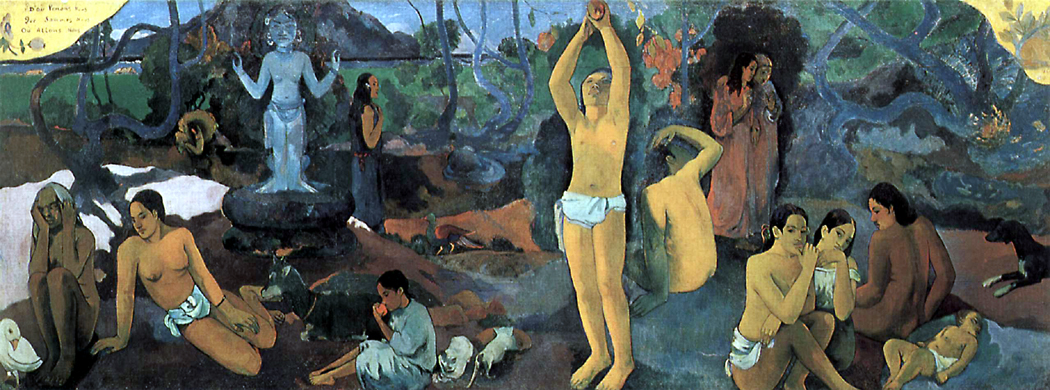
Gauguin

15. Paul Gauguin, Where Do We Come From? What Are We? Where Are We Going? and the continuing flattening of picture space, at the same time as opening up to non-Western pictorial influences — to say nothing of questioning the values of European civilization, and it’s about time.

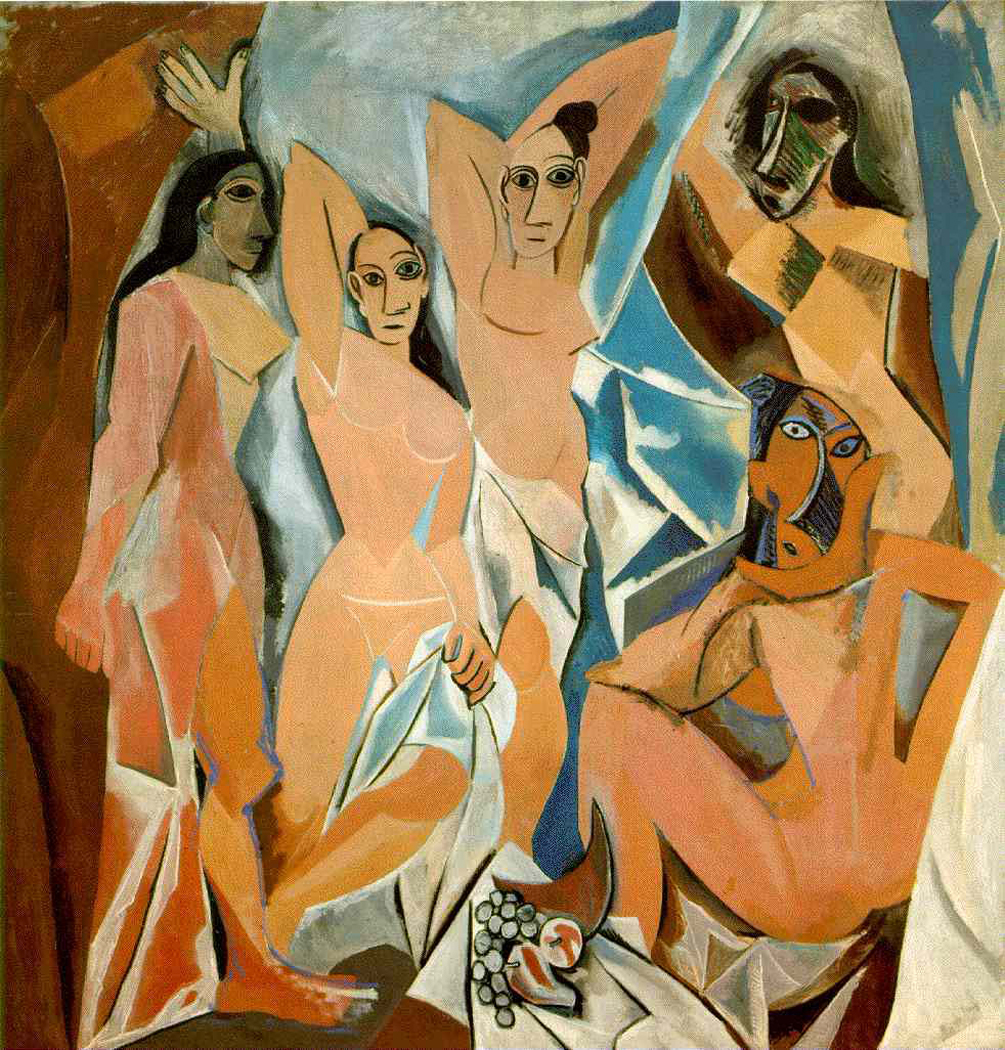
picasso demoiselles

16. Pablo Picasso, Demoiselles d’Avignon as the source of Cubism, and the sense that the picture is a canvas and not a window. It was the single most revolutionary painting of the 20th century, although in retrospect, not Picasso’s best.

duchamp

17. Fountain by Marcel Duchamp – the “found object” urinal – and the single most influential sculpture of the 20th century, and an influence that is still oppressive today. Now, everyone thinks he’s Duchamp.

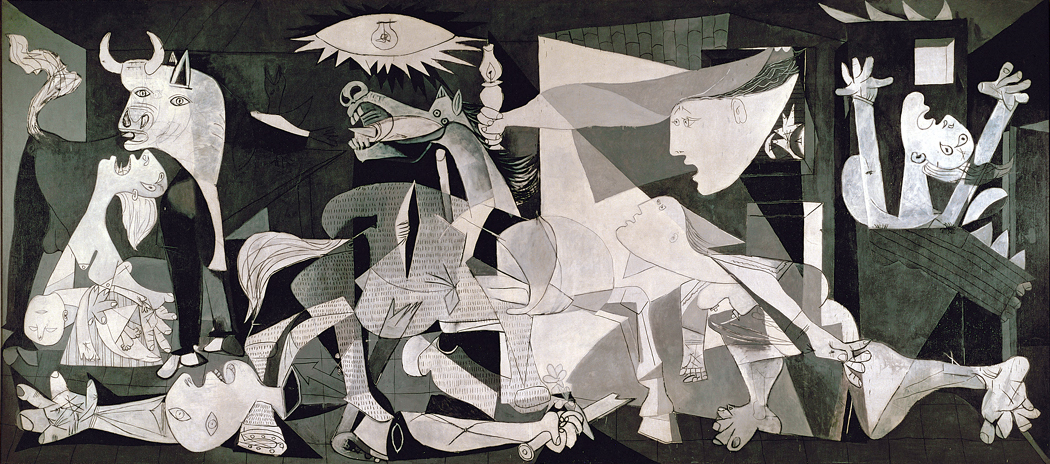
40-12-17/35

18. I would also include Picasso’s Guernica in this list, as his most ambitious work and the single most powerful image of the 20th century. I grew up with this mural size scream, when it was at MOMA in New York and I was a kid. It is the perfect meld of technique, imagery, symbol and “message.”

warhol soup can multiples

19. Andy Warhol’s Campbell Soup Can and the rise of Pop. Warhol is the most serious postwar American artist, despite his public antics. Art is about the world we live in; Warhol reminds us that the world we currently inhabit is the one of commercial signage and media imagery.

beuys

20. Finally, Joseph Beuys How to Explain Pictures to a Dead Hare, or any of a dozen other Beuys pieces, angry yet detached, symbolic yet utterly there physically as a presence. The most influential European artist of the postwar years.

This list is, of course, just off the top of my head. I’m sure if I gave it deeper thought, I’d switch out some of these choices. But this is a good enough start.

I’m sure you can think of things I’ve missed.

Buster Keaton "The General"

Buster Keaton “The General”

When it comes to movies, everyone has a Top Ten list, or a top 100, or top 500. Tastes differ, of course, and no two persons’ lists should be the same. But when you gaze through so many of these lists online, it is appalling to see just how many of these not only include so many mediocre films, but how many of them fail to include anything older than a decade or so, or anything from anywhere but Hollywood.

Here’s one such online list:

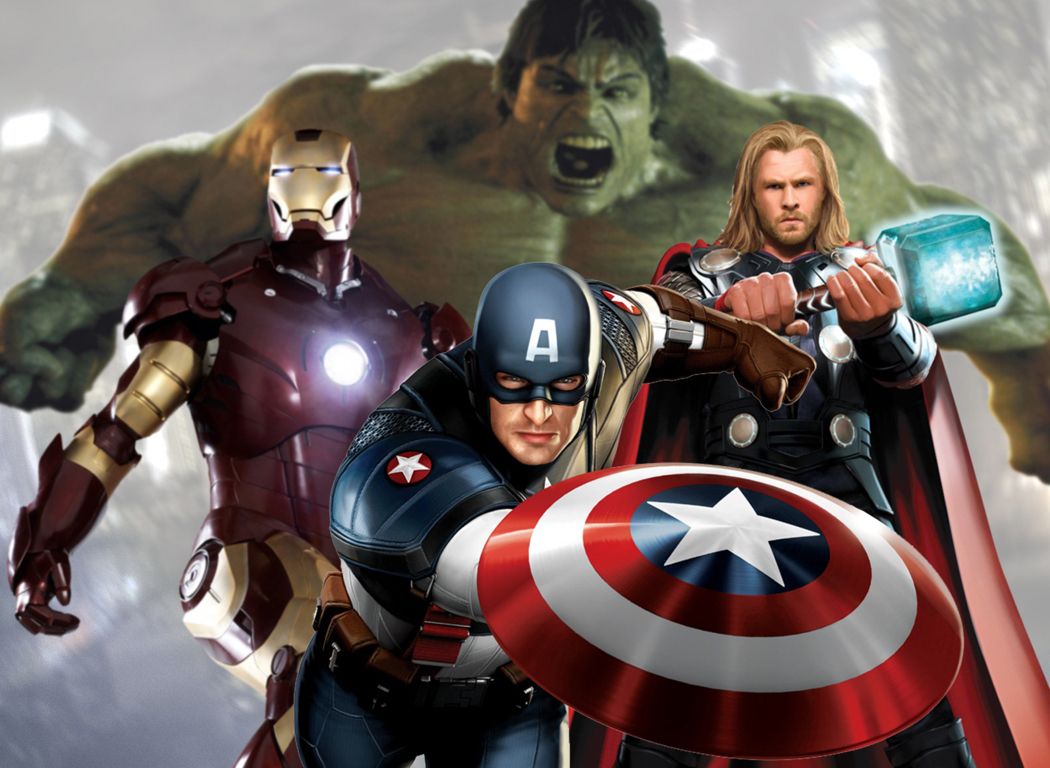
Avengers

Avengers

1. Star Wars Episode VI Return of the Jedi
2. Teenage Mutant Ninja Turtles: the Movie
3. Avengers (2012), just so no one thinks of that god-awful film with Sean Connery, Ralph Fiennes, and Uma Thurman
4. Courageous
5. Rudy
6. Dumb and Dumber
7. Independence Day
8. We Were Soldiers
9. Tomorrow Never Dies (Brosnan is my 3rd favorite Bond but this is my favorite Bond film)
10. Indiana Jones Raiders of the Lost Ark

If someone thinks Avengers is one of the greatest films ever created, someone doesn’t get out much.

Another, responding on the same website complains:

“These lists have a hole in them without Blade Runner on them. Also, R Scott’s original Alien.

“And no Peter Jackson LOTR (Lord of the Rings) flicks? That’s surprising. I felt they were a bit too long and I prefer the Tolkien books but Jackson’s The Two Towers is epic and on my list ( despite my ambivalence to hobbits lol.)

“And what about Donner’s first Superman?”

It’s easy to think Superman is a great movie if you have never been out of the house, but Sonny, there is a great big world out there, and in it, Superman isn’t even a blip.

This isn’t just about “movies I like,” in which it’s fine to enjoy anything. There are bad or indifferent films I love to watch, too. No, it’s about movies that, if you care about film, you should have seen. At least, should have seen if you want to express an opinion that has some authority to it, and not just the mewlings of an esthetic infant.

Just as there are books you should have read, if you want to consider yourself literate, and music you should be familiar with, and art that should be part of your inner life, there are movies you should have seen.

No one can have seen them all, of course. It is a lifetime’s work to expand one’s horizons and learning never ends.

It isn’t that the movies on these online lists are not good movies, even great movies. They mostly were all worth seeing. It is that the scope of the lists was so narrow, and most of the films mentioned were made in the past 10 or 15 years. One wonders what a modern moviegoer thinks constitutes a great film. It would seem: lots of action, clever dialog, color film, and a whipped cream topping of CGI. Car chases, things blowing up and wizards or werewolves.

Kill Bill

Kill Bill

If you think having seen Kill Bill parts 1 and 2 on a double bill has taught you anything about the potential of film, you are greatly mistaken. And this is not a slight on Tarantino, who is a wonderful filmmaker: It is a slight on your supposed erudition.

The films you should have seen are not necessarily the best films, either (although most are). They are the films that created the course of film development, and changed that course. They are the films that opened up the possibilities.

Some have done so through discovering new potential in the medium itself, like D.W. Griffith or Jean Cocteau. But others have discovered ways of giving the popular medium the depth of the greatest literature. If you think Batman Begins has depth, you are still wading in the shallow end of the swimming pool.

The Great Train Robbery

The Great Train Robbery

I am not talking simply about Postmodern referencing: that Martin Scorsese references The Great Train Robbery when Joe Pesci points his gun straight into the camera and fires. Such cleverness permeates current cinema, where you can hardly make a film without some witty reference to a famous film of the past. That’s nothing more than an in-joke.

Rather, I’m talking about the larger film culture that has grown and continues to grow as a living tradition — cinema as a single body of work, seen as a single, long-growing vine with thousands of leaves, stems, flowers and fruit, grown from the seeds planted by the Lumiere brothers, raised through silence, sound and Cinemascope and Technicolor.

I’m talking about movies as a humanistic art: One that can tell us about the experience of being alive. The lists I came across mostly concern film as a theme-park ride — fun, but of little consequence. As if a list of great novels were proposed starting with John Grisham, passing through Jackie Collins and ending with Dan Brown. Again, no slight on any of them: Their books can be fun to read, but they ain’t Proust.

So, Mr. Big-Shot Critic, what would your list be? What movies should anyone have seen before they can consider themselves cinematically literate?

Well, there isn’t anything so simple as a list. Rather, there is a constellation of films you should have sampled from. In other words, you can’t really say you know anything if you haven’t seen a film by Robert Bresson. Can I list Mouchette, or Diary of a Country Priest, or Au Hasard Balthasar as the one film you need to have seen? Not really, but you should have seen at least one Bresson film, and if you do, you will almost certainly then want to go on and see more of them, maybe all of them.

Au Hasard Balthasar

Au Hasard Balthasar

You will find a deeply moral core to all of them, and told in an odd, quiet, straightforward manner, usually with no professional actors, to keep the films from seeming too “theatrical.”

Or, you need to see a few screwball comedies from the 1930s. Is there one to put on a list? My Man Godfrey? It Happened One Night? Bringing Up Baby? If You Could Only Cook? Again, no, but if you watch a couple of them, you’ll want to see more of them, and you’ll never again think of American Pie as a witty movie.

My Man Godfrey

My Man Godfrey

You need to see great silent films, too. Not just old Charlie Chaplin shorts, but the movies that created the great lexicon of cinematic grammar and vocabulary. Murnau’s Sunrise or Stroheim’s Greed. Again, your interest will likely be piqued and you may become a convert to silent movies.

How can you be cinematically literate unless you’ve seen films by Godard, Tarkovsky, Bergman, Fellini, Ozu, Bunuel or Satyajit Ray? You can’t. Or German Expressionist films? Or American underground films? Or Busby Berkeley musicals? Ernst Lubitsch? Or The Big Trail — the first American widescreen film? Or Abel Gance’s Napoleon? Max Ophuls’ liquid camera?

Andrei Rublev

Andrei Rublev

Becoming literate doesn’t happen casually: You have to seek out and study. You have to pay attention. Some of these films, such as Tarkovsky’s Andrei Rublev, make serious demands on viewers; they don’t make it easy — it’s like doing homework. But you will feel exhilarated by the time you have ingested them.

So, I’m giving you homework: Here’s my list of a dozen films you need to have seen. Are they all of them? No. You need to see hundreds of them before you can have a meaningful opinion, but these are a good start. None is recent, and only two are American, because most of you have already seen Dr. Strangelove, Pulp Fiction and The Godfather, to say nothing of Apocalypse Now, which would be on my list of Top Ten (which, of course, has at least 40 films on it).

Let’s take a few chronologically:

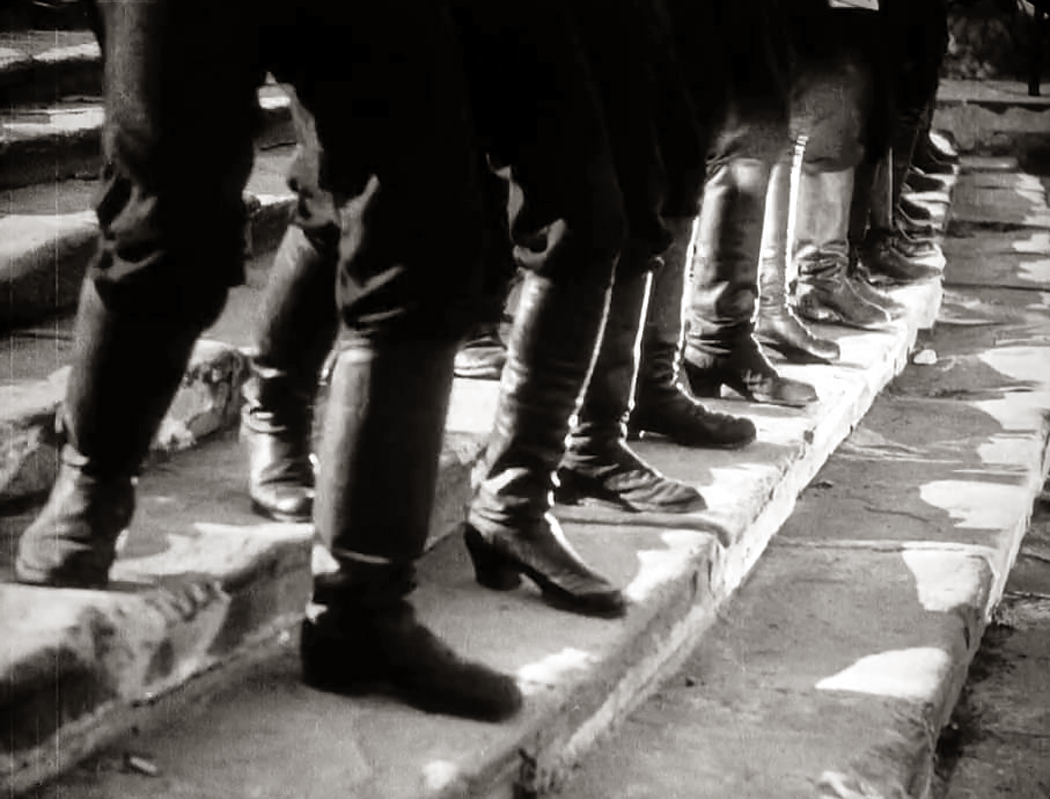
Battleship Potemkin

Battleship Potemkin

There is hardly a more influential film in history than Serge Eisenstein’s Battleship Potemkin (1925), in which the Russian director inventoried the power and magic of film editing to create meaning. It remains a powerful film, even when you recognize it for Soviet propaganda.

Metropolis

Metropolis

If Sunrise is too much to take at first, you could try Buster Keaton’s The General (1926) to see how silent film can tell a compelling story. It has several “special effects” in it, too. And as for special effects, you can only be amazed at the oneiric surrealism of Fritz Lang’s Metropolis (1927) — now available in something like its original version.

The studio system in Hollywood produced some of the most perfect craftsmanship during the 1930s. They had pros, who really knew how to light, edit, write dialog, and record sound. They produced many genre films, such as Westerns, gangster films, melodramas and musicals, but one thing they did that has never been matched is comedy, the so-called “screwball comedies.” If you have not seen My Man Godfrey (1936), then you don’t really know how sophisticated comedy can be. Or sexy: Try Ernst Lubitsch’s Trouble in Paradise (1932) and see how frank they could be about sex before the Production Code was enforced.

Rules of the Game

Rules of the Game

But this is still American film. The Thirties also gave us Jean Renoir’s Rules of the Game (1939), which many critics have called the best movie ever made. It is certainly the most human, humane and forgiving while at the same time satirical and biting about human foible and hypocrisy. Yes, it’s in French, with subtitles.

The Fifties and early Sixties gave us the Golden Age of foreign films, the age of the “art film,” and exposed Americans for the first time in any meaningful degree with movies from around the world.

Sweden gave us Ingmar Bergman, whose Seventh Seal (1957) is still the prototype of the Foreign Film, with its Medieval knight returning from the Crusades and playing chess with Death.

Seventh Seal

Seventh Seal

Italian Michelangelo Antonioni compressed angst, dissociation and anomie into a single intensely beautiful film in L’Avventura (1960), about a woman who disappears on a Mediterranean island and the vague search to find her. It is the apotheosis of existentialism in cinema.

Jules and Jim

Jules and Jim

The French gave us the New Wave, which rethought old American films with a fresh spontaneity. A whole busload of directors came to the fore in the Sixties. The warmest and most engaging is probably Francois Truffaut’s Jules and Jim (1962) about the Parisian demimonde just before and after World War I. It is the kind of movie that makes you not merely enjoy it, but fall headfirst in love with film.

Two gritty films present two poles of movie realism. Gillo Pontecorvo’s 1966 Battle of Algiers is so realistic that you swear you are watching newsreel footage from the front. It shows an anti-colonialist uprising that doesn’t demonize either side, but shows the miseries and sins of both. In contrast, Andrei Tarkovsky’s Andrei Rublev is so stylized you might as well be looking at a motion-picture version of a Russian religious ikon. And many of its fans feel as though they have had something like a cinematic religious experience after the “meditation” of seeing the slow-moving film.

The missing element of too many Hollywood films is any sense that they mirror real life, that they consider the moral and ethical questions of existence in favor of pumping adrenaline and presenting a black-and-white, good-and-evil, superhero and archenemy vision of existence. Great films, however, look at the complexities in ways that can be profoundly moving. Fantasy is fine for adolescents, but grown-ups demand something more.

Vagabond

Vagabond

Agnes Varda’s Vagabond (1984) follows a damaged, lost young woman as she wanders aimlessly toward a solitary death. We cannot just watch her decline as observers, but feel we share it, so deeply does Varda make us care about this woman.

A Short Film about Killing

A Short Film about Killing

And Polish director, Krzysztof Kieślowski, takes an unsparing look at a murder and its punishment in A Short Film about Killing (1988), an acrid look at Communist-era Poland and a young man’s pointless beating death of an unpleasant cab driver, and and equally cold-eyed look at the brutal and legal hanging of the young man after he is caught and convicted. Kieslowski expanded this film from an hour-long segment he made for Polish television for a 10-episode series called The Decalogue, in which each episode illustrates one of the Ten Commandments, although never in a simple or obvious way.

See these films, or their many brothers and sisters, and then talk to me about Avengers.

Conclusion: In which the mountains dip into the sea

St. Georges de Malbaie Gaspe

St. Georges de Malbaie Gaspe

The Gaspe Peninsula in southern Quebec sticks out beneath the mouth of the St. Lawrence Seaway like a pouting lower lip.

It juts into the Gulf of St. Lawrence, protected from the open Atlantic by Nova Scotia and Newfoundland. There it sits, home to cod fisherman and farmers and an increasing number of vacationers. gaspesie 5

The peninsula’s interior is wild and mountainous — the last hurrah for the Appalachian chain — but its perimeter is bucolic, with small, quiet villages, each with a church steeple at its center.

Between Matane, where the peninsula begins, and Cape Gaspe, where it ends 200 miles later, there are only two roads that cross the interior.

Chic-Choc mountains

Chic-Choc mountains

From north to south, the roads leave the St. Lawrence, climb the Notre Dame and Shickshock mountains (aka Chic-Choc, in the bilingual nation) and wander down the deep river valleys lined with pine, fir and birch, only to come out on the prairie-lined towns along the Baie des Chaleurs.

The spine of the Appalachians runs the length of the Gaspe and it finally dives under the salt water at Forillon National Park, only to churn up the water beyond land’s end in a series of offshore shoals before sinking down into the sea bottom.

That last flowering of the ancient mountain chain is a splendid one, as the rock hangs over the water in a scalloped series of cliffs, each with a small semicircle of beach under it. The beach is made up, though, not of sand, but of small, smooth lozenges of stone that hiss and rattle as the breakers foam through them.

Cap Bon Ami, Forillon National Park

Cap Bon Ami, Forillon National Park

Nor does the shore slope smoothly into the water. All along the water’s edge, there are upended strata of rock that make for good clambering. At Cap Bon Ami — named for an old sea captain who spelled his own name Bonamy, and not for the scouring powder — the park road ends and you begin to hike.

A short way downhill from the parking lot, there is an observation deck and a set of several hundred stairs down to the beach. From that point, you can see the whitish cliffs spreading out in both directions. Cormorants and sea gulls swoop around you. Behind you rises Mont St. Alban, the last high peak of the Appalachians, which isn’t even 1,000 feet above the sea.

And in front of you, the sea itself spreads out like a gleaming satin tablecloth, flat and rippling with the sheen of daylight.

This is the sea that Jacques Cartier saw in 1534 when he made his first voyage to the New World. The French explorer discovered the native peoples of the area and kidnapped two of them to take back to show off to the king. On his second voyage, Cartier did not stop at Gaspe. Perhaps he knew his welcome no longer would be warm.

Gaspesie

Gaspesie

The few hardy French pioneers who took to living in the ”Gaspesie,” as the area is called by Francophones, found their towns burned down in the first half of the 18th century, when the English attempted a takeover of the whole New World. The Acadians, as the local French were known, were arrested, deported or forgotten.

In the following years, wars in Europe and North America sent migrants to Gaspe. Among them were American Loyalists fleeing the American Revolution, Irish fleeing potato famine, and merchants and fishermen from the islands of Guernsey and Jersey.

They settled in a patchwork across the peninsula, leaving towns along the coast as ethnic enclaves. That is why, in this corner of the French-chauvinist province of Quebec, you find towns named New Carlisle, Chandler and Newport, where English is the predominant language.

Mont Louis

Mont Louis

The interaction of languages produced a few oddities: What originally had been ”Hunger Point” in French, or Pointe a la Faim, was translated by the English as Point Fame, which later was retranslated into French as the current Pointe a la Renommee.

What was once ”Grande Grave” — named for the type of pebble beach called grave in French — was pronounced ”Grand Grave” in English, like a burial plot. This then later was spelled in French as Grand Greve, to match the sound of the English.

Most who lived in the region became fishermen. In the 19th century, large fishing corporations set up and ran ”company towns” that abused their workers in the same manner as mine owners in West Virginia. The families always owed money to the company store. There was no money; debts were paid in dried codfish, which the companies shipped out and resold at good profit.

Those who were lucky enough to avoid the codfish treadmill turned to subsistence farming. A few became whalers.

Peggy's Cove

Peggy’s Cove

Such a life continued unchanged until the 1920s, when roads were built, a railroad came through, and mail-order catalogs appeared. Electricity showed up after World War II, and the area, once as remote as anything in North America, began joining the 20th century.

Today, the southern and northern rims of the peninsula are very different.

Along the southern shore the towns collect around river mouths, surrounded by prairies of long grass blowing in the almost-constant wind. The land is flat, but you can look inland to the mountains.

The north shore, though, is right up against the hills, which break off into the water in bright bluffs and craggy cliffs. The one road that manages to squirrel from town to town is constantly climbing steep slopes and dropping down to the town in the next hollow.

And although the southern shore is ethnically varied, the north is almost entirely French.

There are two towns of note: Perce and Gaspe, both at the sea-end of the peninsula.

Perce

Perce

Perce is a tiny resort town parked near Perce Rock, an offshore seastack with a hole eroded through it like a giant stony donut. The town is the closest thing the Gaspe has to a tourist trap and the road through town will slow you down in summer with traffic stopping for souvenir shops and fancy restaurants.

There are also boat trips available to the large Ile de Bonaventure, sitting just offshore and one of the great bird-watching spots in the world.

Gaspe, on the other hand, is a working town and capital of the region. It is not particularly scenic, with its banks and gas stations, but it sits near the head of Gaspe Bay, the small inlet that separates the Forillon Park from the rest of the peninsula. It is at Gaspe that Cartier first landed. A museum commemorates the event.

Forillon Nationa Park

Forillon Nationa Park

And it is at Gaspe that we met the woman who runs the bookstore called the Librairie Alpha on the town’s hillside among the narrow, gray streets. She lamented the passing of the old days, and more, the old winters.

”It snows quite a lot in Gaspe,” she said in heavily accented English. ”But it doesn’t snow like it used to 20 years ago.

”I don’t know what has happened, but it isn’t so deep as it was in my childhood.”

In the winter, the bay ices over. It freezes ”as far out as the horizon,” she said. It stays frozen from December to April and people go out on the ice and fish.

”But they aren’t really there for fish,” she said. ”They bring beer and have parties on the ice.

”It freezes down two meters.”

In the winter, an icebreaker sails up into town as far as the bridge, breaking up the ice, but in a week, it is solid again, she told us.

But it doesn’t snow like it used to.

”I remember my father telling us about the really deep snows and how the snow would be so deep that everyone in the village would slide down their own rooftops into the snow.”

She said she remembered doing that when she was a child, but except once, the snow doesn’t pile up to the eaves anymore.

”Two years ago, it snowed so much, I took my children up to the roof to slide down. They may never have that chance again.”


L’ENVOI

 house montage

Gaspe is the ”roof of the Appalachians.” It is the final glory of the mountain range that begins in Alabama and rises like a spine through the East.

It is also a place of roofs. The old houses with their clapboard siding and double-insulated windows sport shingles of many bright colors. There are some that are royal blue, others Kelly green. If there are no shingles, but a tin roof, it is painted. I saw one that was the color of lilacs. Orange and red are also popular. house 5

But it isn’t only the roofs. The houses themselves are often quite garish. One two-story house we passed in Grande Vallee was green on the bottom and pink on the top, with corner accents of opposing hues. house 1

There was a green barn in Perce that was the color of mint. Its owner must have had a little left over, because he painted only one face of his house, sitting next to the barn, with the same breath-mint shade. The other three sides of the house were a peeling white. house 8

There were yellow houses, purple houses, pink houses and orange ones. The shades of green were staggering, sometimes two shades on the same building. house 10

Not all houses were oddly colored; the majority remained white and their roofs remained black or gray. Yet enough houses were tarted up to prove that it is a folkway on the Gaspe. house 2

It is true, however, that the majority of garish houses were on the south shore of the peninsula. Once we hit the northern shore, the strange colors nearly disappeared. Only once or twice in each village would you find a tin roof painted sky blue or vermilion.

Part 5: In which we consider living in Maine

front door

Maine is poor and that makes it rich.

Compare it with suburban Massachusetts and you see the difference. In the hills around Boston, the old homes have added jalousie windows — large panes of plate glass — and behind them you can see a collection of things bought in antiques shops. Out front is a Volvo or a Beemer.

But in backwoods Maine, the same antiques have gathered dust in the old farmhouse since they were new. Out front is a rusted Chevrolet or a Ford pickup. Barn

The New England homes, with their thin clapboards, are thickly painted and repainted their chalky white, and the paint nevertheless peels back on the window trim, showing gray, weathered wood underneath. The foundations are wavy with age and the lines of clapboard match them, looking like uneven topographic lines of a map. Screen doors have holes; barn doors sag on their hinges. But it is the sagging of use, not of neglect. In Rumford Point, for instance, many homes proudly tell the date they were built. You see ”1762” on one door, ”1780” on another. On one small building, you see ”1964,” which is a joke. Lubec hillside

Along the Androscoggin River are tall-steepled churches left over from the middle of the past century, still with their signs out front: Services held 10:30 a.m. Sunday. House side

One of the characteristics you notice is that the farmhouses are connected to the barns by a covered series of adjacent outbuildings. The winters are so severe that no one wants to go outside to tend the livestock, so you pass from the kitchen to the garage to the toolshed to the barn, all in toasty comfort. Well, as toasty as you can be when the siding boards are as loose as lattice and don’t always come down to the dirt, leaving an ankle-high draft. Yellow house

There are scrollwork on the eaves, wide fans over the door transoms, white fences along the sidewalks and, even in midsummer, storm windows. For even in July, on a wet, rainy day, it can be a raw, humid 70 degrees and it gets into your joints, so you feel arthritic. Or perhaps they are needed for protection against mosquitoes as big as hailstones that gather in swarms in cool, muggy air. Maine Schoodic door

But the countryside is poor, or if not poor — because that brings to mind inner-city malnourishment and anomie — certainly not well-off. As in much of southern Appalachia, the poverty is misleading. The people own their homes, grow their own food, know their own land. There is a Yankee self-sufficiency that grows with the spartan winters, lack of amenities and isolation.

NEXT: The Appalachians enter Canada

Part 4: In which we enter the landscape of the mind

Sorrento dock

Each of the United States has its own flavor, its own existence as myth. It is the sense one has, if one does not live in that state, but imagines what it would be like to visit.

One imagines what Arizona must be like, with its cowboys and cactus, but the reality of Phoenix — “Cleveland in the Desert” — negates that myth. That is the nature of myth.

Some states have bigger personae. California, for instance, which existed as myth both for “Forty-Niners” and for Okies. Montana offers big skies and clean air. Oregon had its trail and Mississippi has its Yoknapatawpha County.

Texas claims for itself the largest myth, although it is hard to warrant such big ideas if you have actually been to Midland or Odessa. Texas is only big in hectares. Otherwise, it is the state of large hats as substitutes for small manhood.

Each state has its mythic presence, although it is hard to make the case for Delaware as anything but the “gateway to New Jersey,” and the Garden State gains any resonance it has only from Tony Soprano and Bruce Springsteen.

But one state led all the rest historically in this landscape of the mind, as a special place in the American imagination, a place you dream about when you think your daily life is too mundane.

Lubec

Lubec

Historically, the state that has had the longest claim on the American spirit is Maine, with its deep woods and rocky coast, its taciturn, independent people and its echoing loons. Maine is the original great escape, the place to go to return to nature and feel what it is like canoeing across a backwoods lake with a mist rising from the water.

Maine is the place Henry David Thoreau went when his Walden Pond seemed too citified. Maine is the place that dozens of American artists went to find some glimmer of inspiring wilderness.

It’s also the place the 19th-century robber barons went for summer vacations.

As America has expanded westward, Maine has lost some of its magic, but it is still a mythical place, drawing millions of visitors every year.

But there isn’t a single Maine. Regionally, there are at least four Maines.

The first is the southern coast, which first attracted a wealthy clientele a hundred years ago. This is where old money came for the summer. It is where former President George H.W. Bush had his place in Kennebunkport. It is also home to the new Yuppie tourism centers on Penobscot Bay, where you can always get a good brioche: Camden and Rockport. They are not much different, in their way, from Carmel, Calif., or Sedona, Ariz. — all trendy shops and new museums. You visit L.L. Bean in Freeport, and see a hundred other factory outlet stores.

Mooselookmeguntic Lake

Mooselookmeguntic Lake

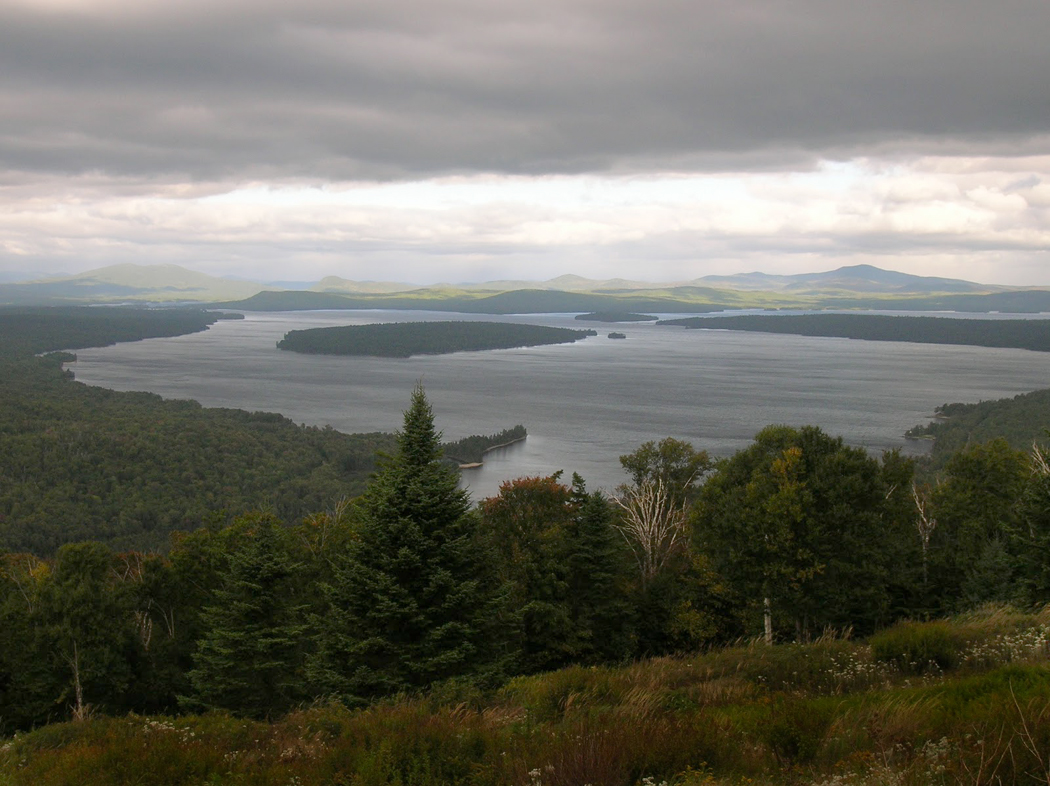
Then, there is the mountainous Maine of the western part of the state with its thousand lakes, from Rangeley Lake to Mooselookmegunticook. This is the part of Maine famous for its out-of-place town names: Mexico, Norway, Paris. It is a place to go for fishing and camping or renting a cabin for a week.

The large northern part of the state is especially impressive. Vast tracts of woodland crisscrossed by narrow logging roads down which rumble the most frightening, earthshaking pulpwood trucks, piled high and tenuously with rattling bundles of spruce trunks. It is the north of Baxter State Park and Mount Katahdin. This is the Maine that Thoreau wrote about in his book, The Maine Woods. It is also the part of the state, on its eastern side, where they grow potatoes.Maine tree

But it is the fourth Maine that I love the most: the upper coast, from Mount Desert Island to the Canadian border.

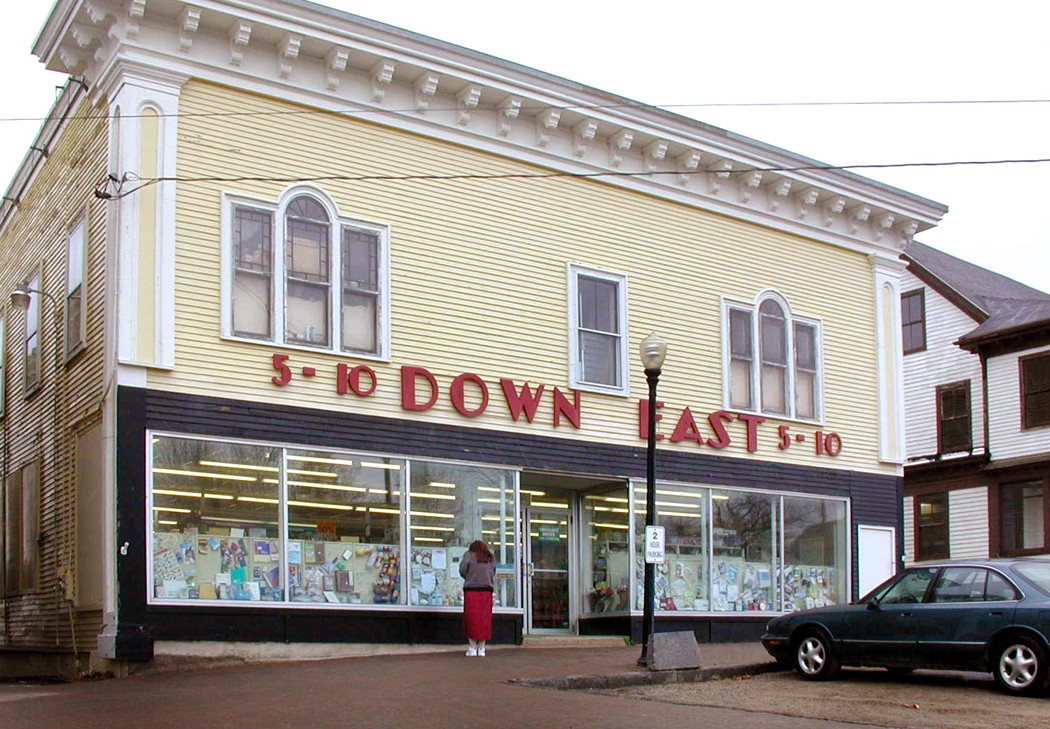
This is Down East. It is the least touched by commercialism. It is still composed of blue-collar working towns where men go out to fish or pull lobsters from the rocky-bottomed sea. It is old wooden houses on granite foundations and cars rusted out from wet, salty winters.

Otter Cove, Acadia NP

Otter Cove, Acadia NP

It is called Down East because when 19th-century sailing packets traveled up the coast from Boston, they sailed downwind, with the prevailing breezes abaft. Back then, Maine was still part of Massachusetts. Maine owes its statehood to slavery: The Missouri Compromise of 1820 let the slave state Missouri enter the union, but separated Maine from Massachusetts and entered it as a state at the same time to keep a balance of free and slave states in Congress.

The coast of Maine is about 250 miles long, as the crow flies, but it must have been a very drunken crow that first flew the distance. With all the bays and headlands, the actual distance of that zig-zag coastline is closer to 3,000 miles. And that’s not counting the islands, thousands of them.

Mount Desert Island is the largest of them. It is properly pronounced Mount “Dessert,” as if it were filled with chocolate moose, but most people just call it MDI and be done with it. MDI is the home of Acadia National Park, one of the most beautiful in America.

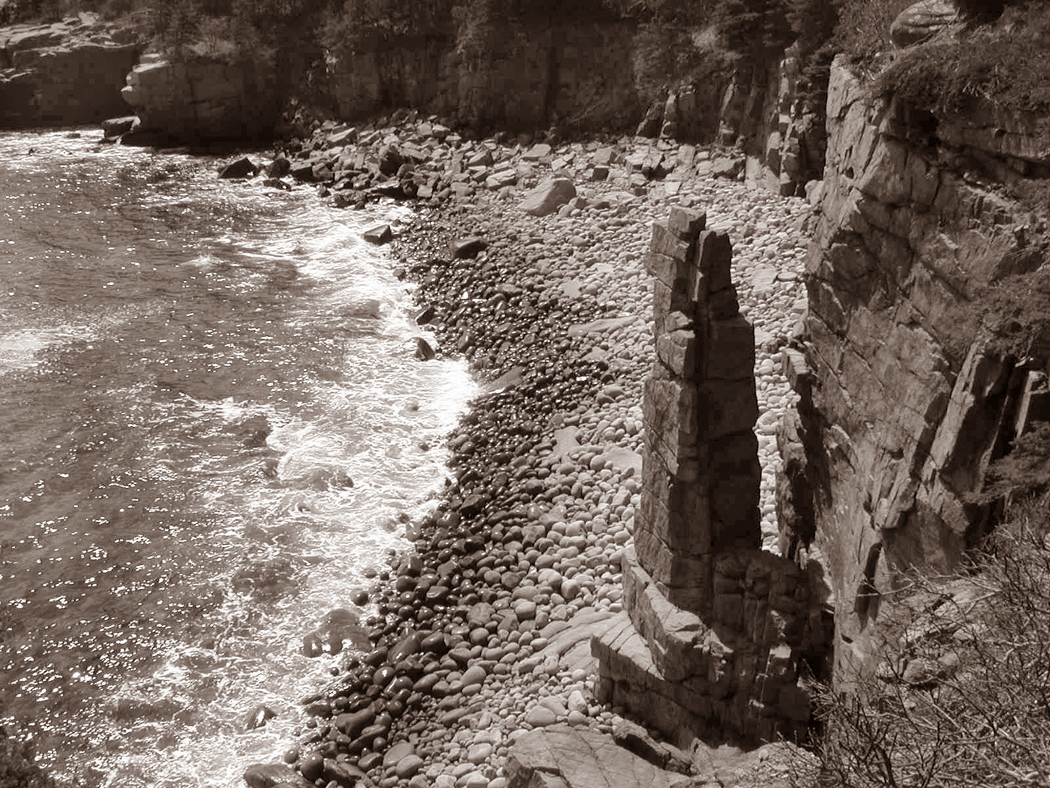
Monument Cove, Acadia NP

Monument Cove, Acadia NP

It is also the home of Bar Harbor, one of the most congested towns. In the summer, Bar Harbor is a vacation nightmare, with no parking, crowded restaurants and no room at the inn.

Acadia National Park covers about half the island and includes Cadillac Mountain, the tallest mountain on the East Coast north of Rio de Janeiro. At 1,530 feet, it catches the first rays of sunlight to hit the U.S. each day.

A road to the top provides splendid views.

But it is the view of Cadillac Mountain, rather than the view from it that is best. And the best views are from the coast roads that continue farther down east.

The real Down East begins beyond MDI. From Ellsworth — which may look like one unending K mart and KFC — you drive east and north on U.S. 1 and you leave all the tourists and development behind.

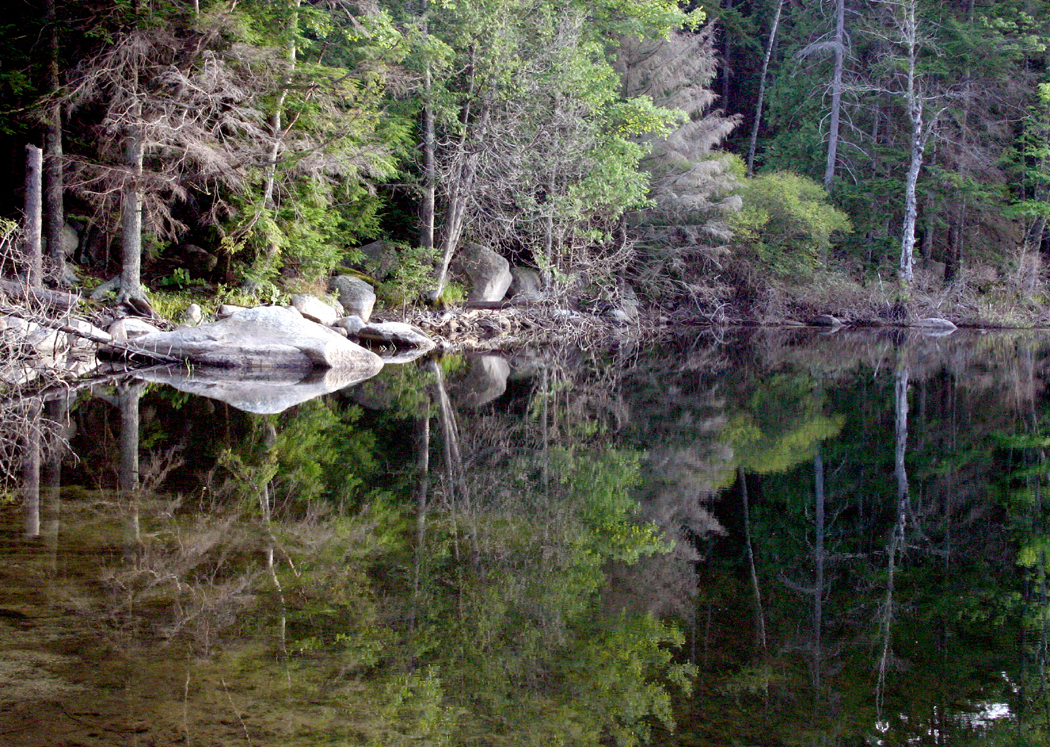
Fox Lake

Fox Lake

The towns you pass are small and picturesque: Sullivan, Gouldsboro, Sorrento, Winter Harbor, Jonesport. You see tall church steeples and town squares with bronze statues of World War I soldiers.

This is Maine for the traveler rather than the tourist. You won’t find many fancy restaurants, and the motels are all low-dollar. Look instead for breakfast in the local lunch counter with the lobstermen. There are no “destination locations.” You have to be interested in the place for itself, and not for an amusement park.

If you are looking to get away from it all, Down East is the definition of the phrase.

Machias

Machias

There are mountains to be climbed, woods to be hiked, lakes to be canoed. There are heaths to be gleaned of their blueberries and birds to scout out and listen to.

Blueberry heath

Blueberry heath

If you hike in the woods behind Sullivan, off Taunton Bay, you will find the abandoned granite quarries that used to provide curbstones for the cities of the East Coast.

Climb 1,069-foot Schoodic Mountain for the panoramic view. Or if that is too high, try 397-foot Tucker Mountain. A walk through the birches and alders will bring you to a splendid view of Frenchman Bay and Cadillac Mountain.

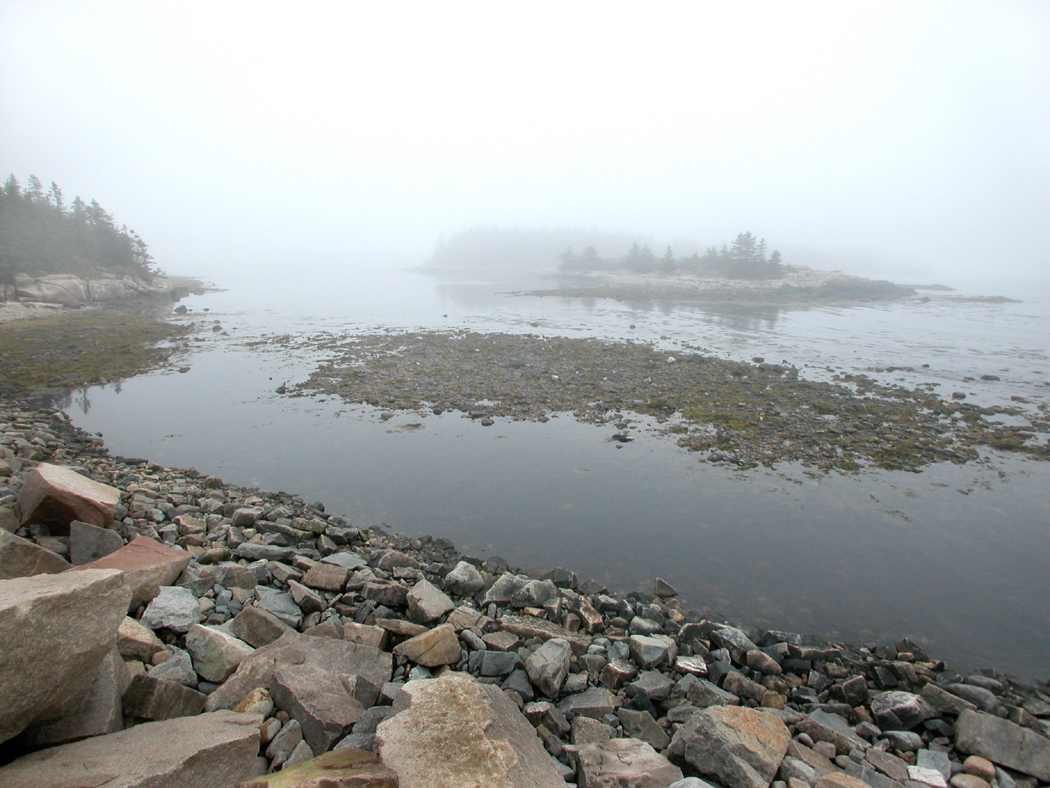
Schoodic Point, Acadia NP

Schoodic Point, Acadia NP

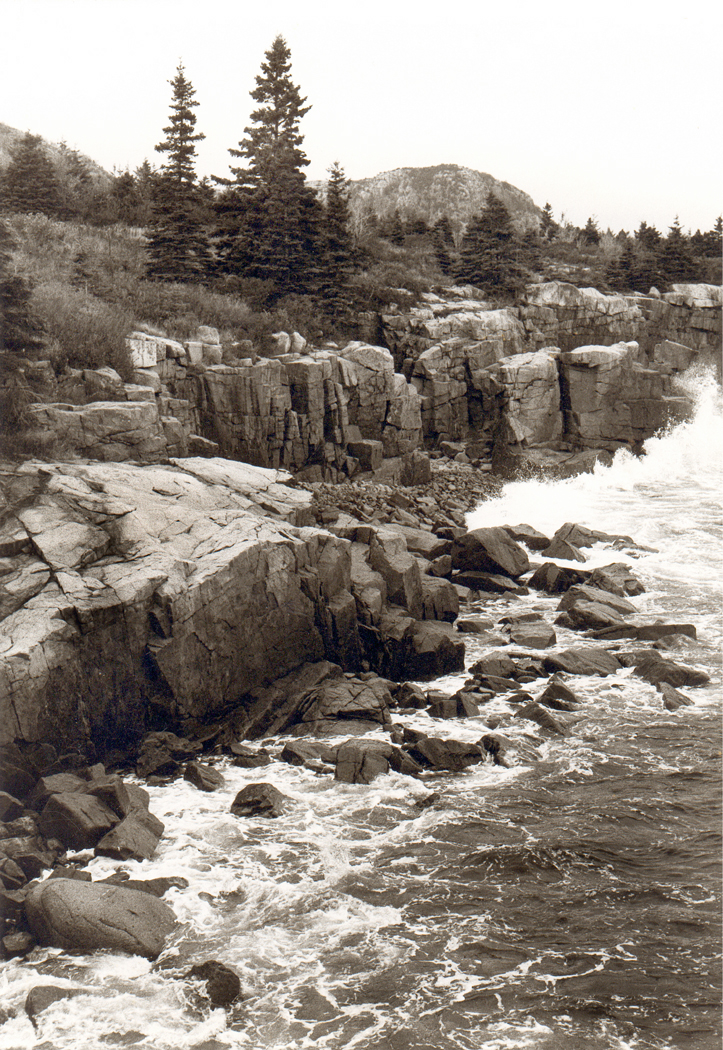
From Gouldsboro, head south to Schoodic Point, which is part of Acadia, but without the crowds. The waves boom on the rocks and a cold ocean separates you from Cadillac in the west. If there is one perfect place to visit Down East, Schoodic Point is it.

Quoddy Head Lighthouse

Quoddy Head Lighthouse

Or take the narrow road south of Lubec and you will come to the West Quoddy Head lighthouse, the easternmost point in the U.S. Out on the horizon you will see Canada’s Grand Manan Island. It might as well be China.

Take a look at any map of the eastern bump of Maine and see how the web of roads thin out. Hancock and Washington counties are nearly unpaved. It is empty. It is beautiful. It is the real Maine.

NEXT: Maine redux

Part 3: In which a previous president gets some work done

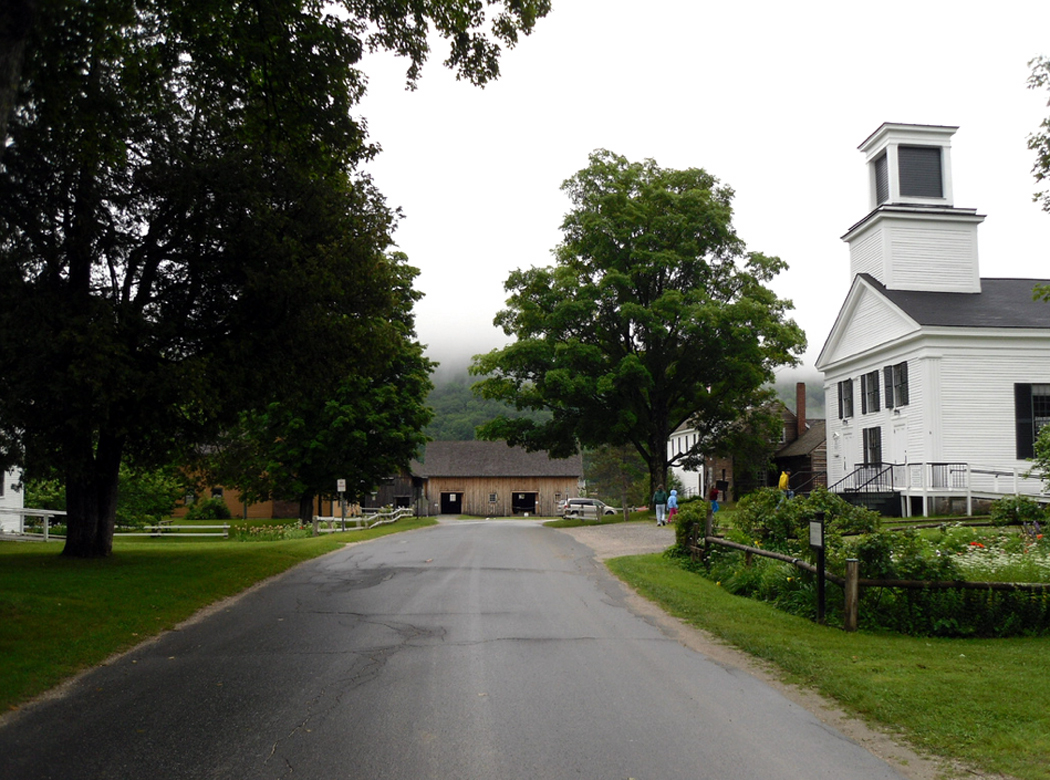
plymouth notch

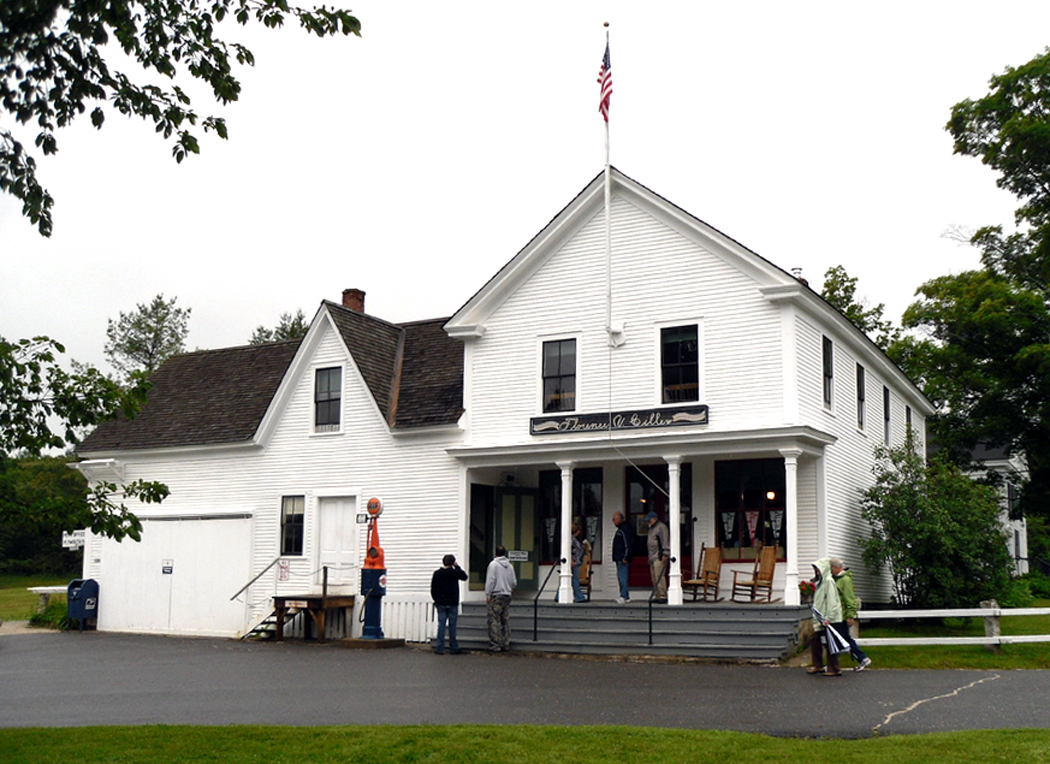
As in the rest of the country, the modern world of CVS pharmacies, Burger Kings and Pep Boys has superseded the old neighborhood stores and previous ways of life in New England. Vermont has pushed back more than other states, but life is modernizing there, too.

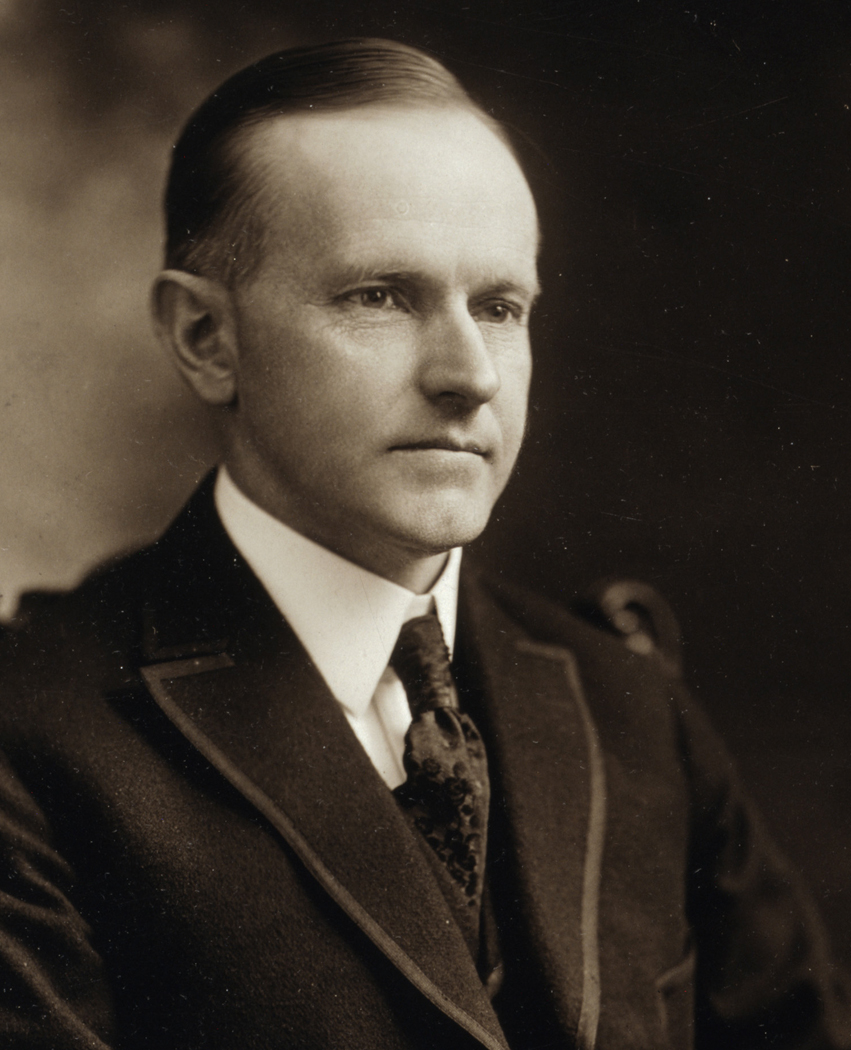
Silent Cal

Silent Cal

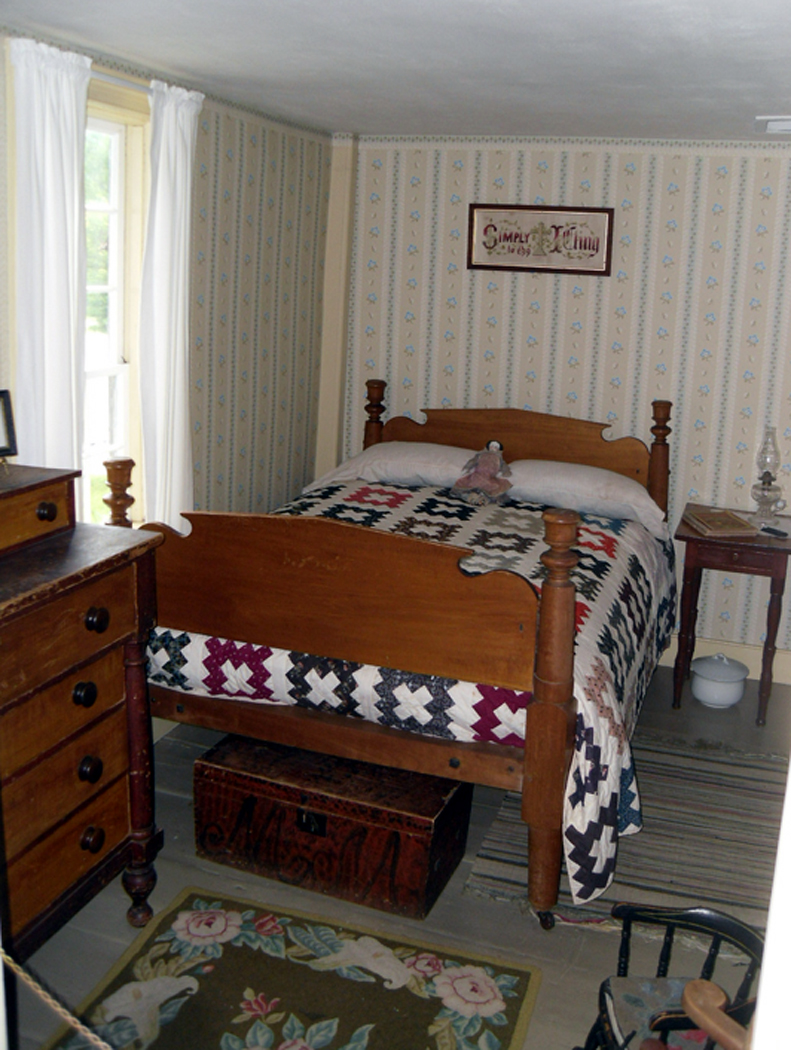
But if you want to find out what old country life was really like, the best place to get a hint is at the Calvin Coolidge State Historic Site in Plymouth Notch. There, you can see the house where the taciturn and much-maligned 30th president was born, and a second where he grew up. You also can see the giant woodshed needed to keep the house marginally above freezing in the winter; you can see the two-hole privy and the smelly kerosene lanterns.

For Calvin Coolidge grew up in old country Vermont. It was hard work, and there were no potpourris nestled in the corner with the perfumed smell of herbs and spices. The smell of the house must have been a little closer to horse manure, which was collected in the stable — attached to the house like a modern-day garage — and was shoveled through a trapdoor to a collection pit under the house. coolidge 14

His quilt didn’t have cute children printed on it. In fact, when he was 10 years old, Coolidge made a quilt for himself. It is a very good quilt, too. Old Cal was pretty good with his hands. In his house, there is a chest of drawers he made when he was a little older. He would have been a right good carpenter if he had chosen that line of work.

”After the winter work of laying in a supply of wood had been done,” Coolidge wrote in his autobiography, ”the farm year began about the first of April with the opening of the maple-sugar season. This was the most interesting of all the farm operations to me.”

In a good season, they processed as much as a ton of maple syrup. But that is not all. ”After that, the fences had to be repaired where they had been broken down by the snow, the cattle turned out to pasture, and the spring planting done. Then came sheep-shearing time, which was followed by getting in the hay, harvesting and threshing of the grain, cutting and husking the corn, digging the potatoes and picking the apples. Just before Thanksgiving, the poultry had to be dressed for market, and a little later, the fattened hogs were butchered and the meat salted down. Early in the winter, a beef creature was slaughtered.

Coolidge works the horses

Coolidge works the horses

”The work of the farm was done by the oxen, except running the mowing machine and horse rake. I early learned to drive oxen and used to plow with them alone when I was 12 years old. Of course, there was the constant care of the domestic animals, the milking of the cows and taking them to and from pasture, which was especially my responsibility.”

And all around the village of Plymouth Notch, maintained as a state park, you can see the results of that self-reliance, which is the hallmark of the mountain population. coolidge 6

You can see the dark room where Coolidge, then vice president, learned of Warren Harding’s death. Coolidge’s father, a notary public, swore his son in as president using the oath Calvin had typed out on the family typewriter.

Asked how he knew he could swear in his son, old Col. Coolidge said, ”I didn’t know I couldn’t.”

NEXT: Remembering Maine