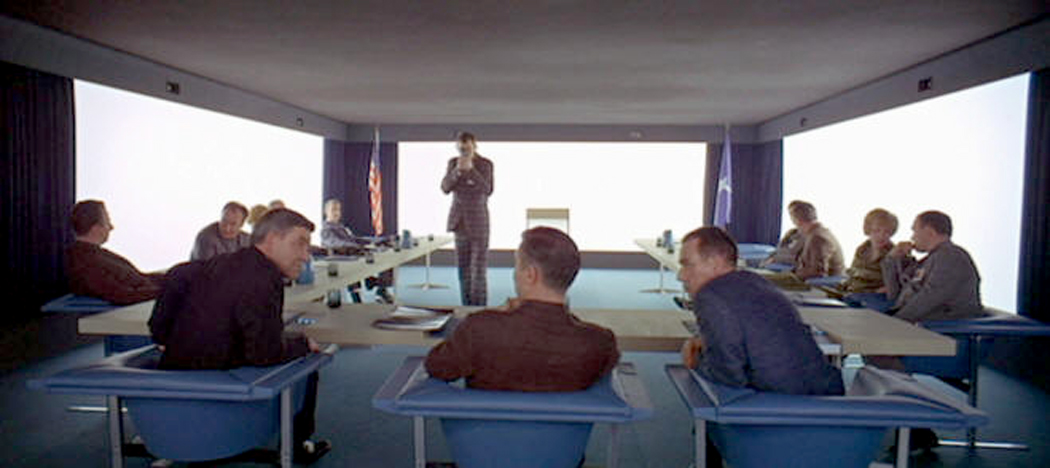
"Michael Jackson and Bubbles" by Jeff Koons, and Elgin Marbles figure

“Michael Jackson and Bubbles” by Jeff Koons, and Elgin Marbles figure

In 1632, the young English poet John Milton, just out of college, took up residence at his father’s country estate at Horton, near Windsor. And for the next six years he managed to read everything that had ever been written and was extant, in all languages living and dead, that a European scholar of the time might have heard of. That included literature, history, biography, philosophy, science, mathematics — the whole throatful of it. milton cigar

Everything that had ever been written.

It boggles the mind. Today, we cannot even keep up with the magazines we subscribe to; most of human knowledge falls off the edge of the Earth, where the map of our erudition shows nothing but serpents. reading the oed
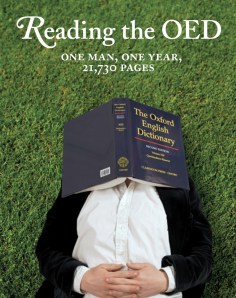
We can never achieve what Milton did; it’s foolish to even try. But shouldn’t we attempt at least some sketch of what was fully painted for the poet? There have been recent books by writers who have read every article in the Encyclopedia Britannica (The Know-It-All, One Man’s Humble Quest to Become the Smartest Person in the World, A.J. Jacobs, 2004), The Oxford English Dictionary (Reading the OED: One Man, One Year, 21,730 Pages, Ammon Shea, 2008), or the equivalent of the Harvard Five-Foot Shelf (Great Books, David Denby, 1996), but such ventures are little more than stunts.

To absorb 5,000 years of human culture requires more than memorizing almanacs or dictionaries. It means to have a grounding in the art, literature, theater, music and architecture of our ancestors.

Of course, most of human knowledge, at least in ordinary life, in mass or pop culture and in our individual autobiographies is utterly trivial, and it would be a crime to stuff our brains with it.

But not all knowledge in this information age is trivial. There is still a core of useful literature — and I use the word in the broadest possible sense — that it behooves us to be acquainted with.

It is unfortunate that there is an argument over this. In the imbecilic culture wars that currently ravage the intellectual countryside, the lines are drawn between ignorant armies.

On one side, you find right-wing reactionary fossils fighting to maintain the canon of mainly European classics. On the other side, there is a cadre of victimization that wants to eliminate anything written by dead white males.

A pox on both their houses.

Milton didn’t have to worry about the canon. For him, the canon encompassed everything he could possible encounter.

Since that time, though, we have had to become more selective. Those items we have, as a culture, thought worth perpetuating we have called ”classics” and added them to the list — the canon — of ”required reading.”

But we misunderstand the very idea of culture if we believe the world froze solid with the publication of the Harvard Five Foot Shelf.

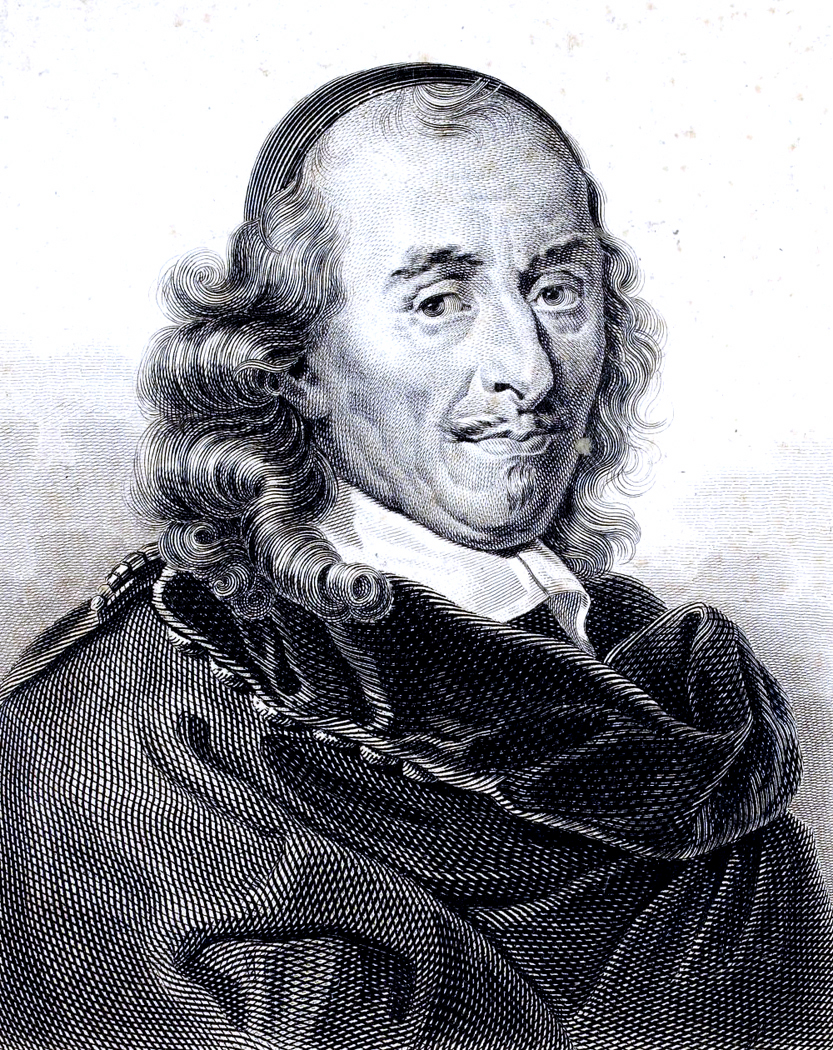
Corneille

Corneille

The canon is a garden that must be weeded and tended, and each season may call forth a different harvest.

The problem with the conservative view is that it values a former ”golden age” that our own time never measures up to. It is a sentimental view of life and history, and deaf to the fact that we live now, not in the imaginary ”then.” It is the voice of Cato, of Corneille, of William Bennett — a man of whom it is said he cannot sleep a-nights if he suspects someone, somewhere is having fun.

It is a view of an idealized perfection that we have disastrously fallen short of. It is one form of imbecility.

The problem from the other side is an egalitarianism that is just as moronic. According to them, nothing is better than anything else. Either it is merely a question of personal taste, or it is one of cultural identity.

By their standards, it is elitist to prefer Pablo Neruda to Rod McKuen. Let them, I say, let them renew their subscriptions to Us magazine.

They can deconstruct its gossip to death and find the parallels with Plutarch — if they only knew who Plutarch was.

To consider one “text” more important than another, for them, is to promote colonialism and the subjugation of the downtrodden.

Hence, they judge not by esthetic considerations — it’s all just personal taste to them — but rather by politics.

For them, politics overwhelms aesthetics — overwhelms reason, emotion, common sense and experience. For them, everything has a party line. Ah, but they forget, politics answers no question worth asking.

It also worries me that behind the masks of intellectual argument, I sense a fascism on each side — at the very least a certain priggishness to both sides that any reasonable human finds dangerous.

At bottom, the problem is that both sides make the mistake of believing the canon immutable and fixed. They see the canon as an end, one side blindly despising it and the other defending it like Texans at the Alamo.

But the canon, properly seen, is a beginning, not an end; a foundation, not a roof.

It is the ABC of cultural literacy, the cardinal numbers of thought.

One used to hear the warning that when you have sex, you are having sex with everyone your partner has ever slept with. Well, when you read a book, you are also reading everything that the author read. When you hear music, you also hear everything that composer heard.

Culture is the slow accumulation of thoughts and habits. To read Melville is to hear the diapason of King James under the rich melody of the prose. Every author is the product of multiplier and multiplicand: the writer’s imagination and the long road of history leading to his standing on the curb with his thumb out.

The fact is, we cannot read everything, the way Milton did. We must be more selective. Suggestions for that selective offering is what we call the canon. But it changes constantly: It now includes James Baldwin and Toni Morrison; it includes Derek Wolcott and Yukio Mishima;  The Beatles and Duke Ellington.

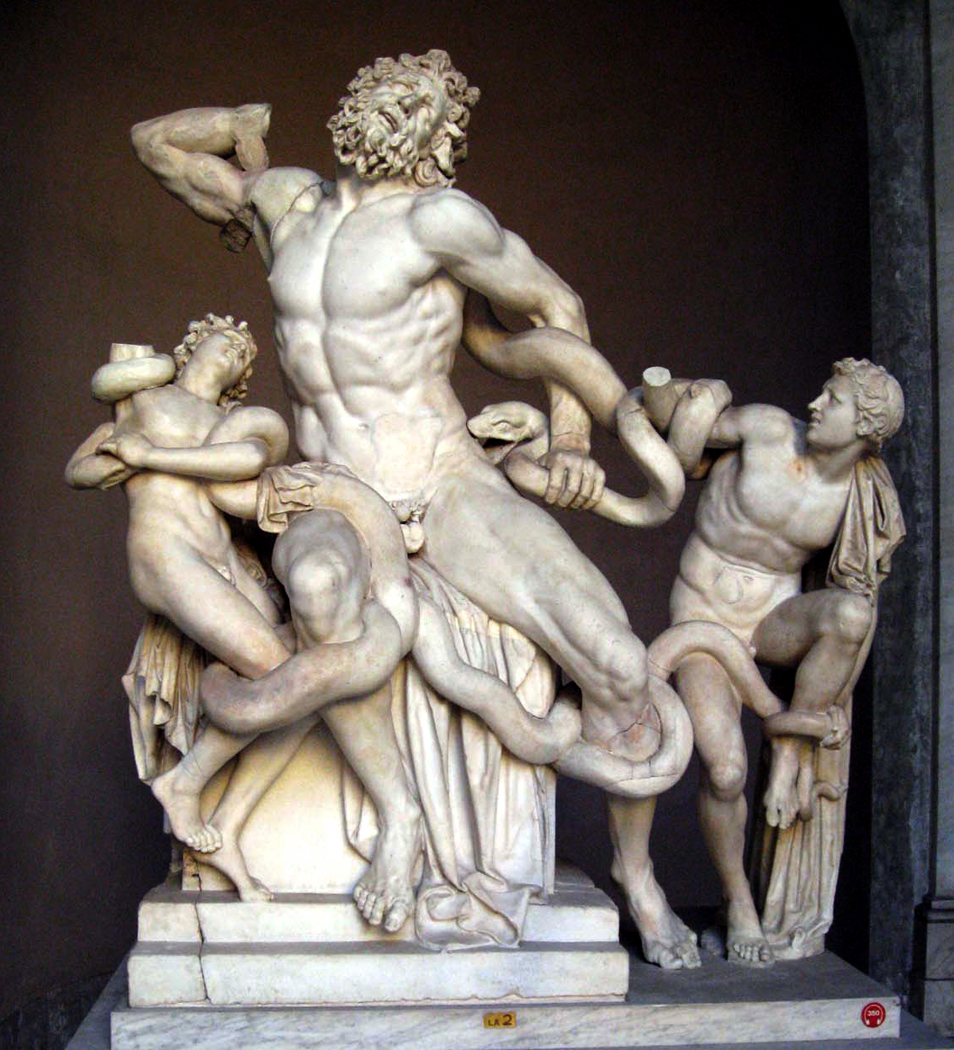
The Laocoon

The Laocoon

How can you understand Jacques Derrida without standing firmly on the firm ground of Kant’s a priori? How can you read Isabel Allende without sensing the spirituality of Calderon behind her words?

How can you understand Jeff Koons’ Michael Jackson and Bubbles if you don’t already have the Elgin Marbles in your system? You can’t. How can you get the joke on the back of countless Yellow Pages if you don’t know the Laocoon?

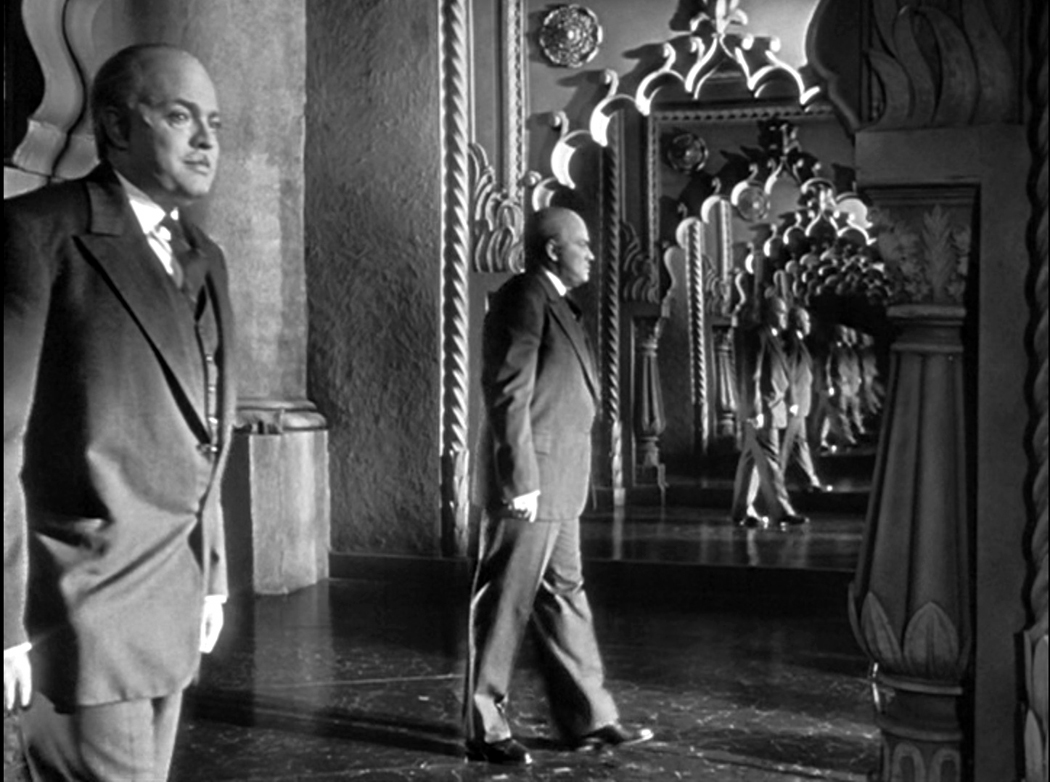
Certainly, the old rationale for learnedness remains: These are great writers, profound thinkers and brilliant painters and sculptors and we cannot consider ourselves educated without their acquaintance. Knowing them is its own excuse. But even more important is that when you hear the echoes in a piece of art, see its ancestry, the piece resonates. Resonance is what gives art and literature is power. kane

Like the mirror scene in Citizen Kane, one man is multiplied into an army. Like Isaac Newton said, if we see further, it is because we stand on the shoulders of giants. It is a wise man who knows his parents.

carmen death

Opera has an ABC. They are Aida, Boheme and Carmen. No regional opera company ever went broke programming these blockbusters. They are all extremely popular and well-known.

Georges Bizet

Georges Bizet

Carmen, especially. Perhaps too well known.

We all know that the gypsy Carmen seduces the not-too-bright army corporal, Don Jose, and then dumps him for the flashy matador Escamillo. Death ensues while crowds cheer in the bull ring.

We hum along with the tunes: the habanera, the toreador song, the boys mocking the soldiers and their tune. The suite from the score was once one of the most programmed pieces of light classical music, rivaling Tchaikovsky’s Nutcracker Suite and Grieg’s Peer Gynt. One of Sir Thomas Beecham’s “lollipops.”

The opera comes from a novella written in 1845 by the French Romantic author Prosper Merimee. And like a movie made from a book, a few things are changed for the sake of drama.carmen conductor

Here are some things you probably don’t know about Georges Bizet’s Carmen:

1. Bizet’s librettists, Henri Meilhac and Ludovic Halevy, gave their bullfighter a major promotion. In Merimee’s book, he is not the noble matador, but a mere picador, a stripling named Lucas.habanera score

2. The famous Habanera (“L’amour est un oiseau rebelle“) was an afterthought.carmen painting

The mezzo hired to sing the part of Carmen didn’t like the aria Bizet had first written. He tried 10 times to come up with something, eventually writing the single most famous tune from the opera. Or did he? Turns out, he stole the melody from an earlier tune, called El Arreglito, by Sebastian Yradier who had only recently died. Yes, Bizet plagiarized the melody. When the score to Carmen was published, Bizet had to add a note acknowledging his source.

3. The first recording of Carmen (1908) was sung in German. “Liebe ist wie ein wilder Vogel.” Oy.

4. More than 60 films have been made of the story. Oddly, the first 17 were silent films. Silent opera is rather like dancing on the radio. That list of silent films includes one by Cecil B. DeMille, from 1915, which was based on the original novel because the producers didn’t want to pay the rights to the opera and chose the public-domain novel instead. They then changed the book’s plot to match the opera’s. Among the silent Carmens were Theda Bara (1915, directed by Raoul Walsh), Pola Negri (1918, directed by Ernst Lubitsch) and Delores Del Rio (1927, also directed by Walsh).carmen saura

5. Recent Carmens tend to stretch the story or the music. Like Beyonce in Carmen: A Hip Hopera (2001), or the 1983 Carlos Saura masterpiece, which turns it into a flamenco dance. Also on the list: Carmen on Ice (1990); Karmen Gei (2001), which sets the story in Senegal; Carmen Jones (1954), with Dorothy Dandridge and Harry Belafonte; and most recently the powerful South African township version, U-Carmen eKhayalitsha. Check it out on DVD.

Johannes and Piotr

“I have played over the music of that scoundrel Brahms,” wrote Tchaikovsky in his diary in 1886. “What a giftless bastard!”

Russian composer Pyotr Tchaikovsky had a lot to say about Brahms’ music — all bad.

Johannes Brahms, for his part, didn’t seem to much enjoy Tchaikovsky’s music, either. He attended a rehearsal for Tchaikovsky’s Fifth Symphony and fell asleep.

Although the two composers share a birthday — May 7, with Brahms, born in 1833, being seven years older — they illustrate opposite poles of the composing spectrum. Brahms was the great classicist, building vast symphonies and concertos with intricate musical logic; Tchaikovsky was the heart-on-sleeve emotionalist, as colorful as Brahms was sober.

“It angers me that this conceited mediocrity is regarded as a genius,” Tchaikovsky continued in his diary.

The quotes could fill a book. Some of his dislike seems to be envy of Brahms’ success.

“Brahms is a celebrity; I’m a nobody. And yet, without false modesty, I tell you that I consider myself superior to Brahms. So what would I say to him: If I’m an honest and truthful person, then I would have to tell him this: ‘Herr Brahms! I consider you to be a very untalented person, full of pretensions but utterly devoid of creative inspiration. I rate you very poorly and indeed I simply look down upon you.’ “

But it was really the Germanic music style he hated. About Wagner, the Russian wrote, “After the last notes of Gotterdammerung I felt as though I had been let out of prison.”

Tchaikovsky’s idea of music was simply different: color, melody, grace, direct, simple emotion. Brahms was interested in something else.

“Brahms, as a musical personality, is simply antipathetic to me — I can’t stand him. No matter how much he tries, I always remain cold and hostile. This is purely instinctive reaction,” Tchaikovsky wrote in a letter.

Of course, Tchaikovsky wasn’t the only one who failed to appreciate the charms of the German.

One writer said, “Art is long and life is short; here is evidently the explanation of a Brahms symphony.”

And composer Benjamin Britten complained, “It’s not bad Brahms I mind, it’s good Brahms I can’t stand.”

Needless to say, this is no longer the majority opinion, as Brahms and his music are almost universally loved by those who care about classical music.

One critic explained: “Tchaikovsky’s music sounds better than it is; Brahms’ music is better than it sounds.”

But Brahms’ violin concerto was a particular target for Tchaikovsky, perhaps because he had written his own concerto, which had been very poorly received (it is also now accepted as a masterpiece).

“Brahms’ concerto appealed to me as little as everything else he has written,” Tchaikovsky wrote in 1880 to his patron, Nadezhda von Meck. “Lots of preparations as it were for something, lots of hints that something is going to appear very soon and enchant you, but nothing does come out of it all, except for boredom.”

Later in the letter comes the most famous quote about Brahms.

“It is like a splendid pedestal for a column, but the actual column is missing, and instead, what comes immediately after one pedestal is simply another pedestal.”

So, it comes as a surprise that when the two composers actually met each other, they got along very well.

Adolph Brodsky

Adolph Brodsky

They met on New Year’s Day, 1888, when violinist Adolph Brodsky was rehearsing a Brahms trio. Brodsky had premiered Tchaikovsky’s Violin Concerto, and both composers were invited to dinner after the rehearsal.

Tchaikovsky entered the room while the music was still playing, and after dinner, they drank together and got along famously.

Brahms was doing his best to be friendly, Tchaikovsky noted, and the Russian composer found he actually liked the German, who was so different in character. Tchaikovsky was elegant and smoked fine cigarettes; Brahms was a German burger, smelled of old man and tweed, and smoked cigars, with the ash falling in his beard.

Brahms was known for his tart tongue. Once when he attended a rehearsal of one of his string quartets, he afterwards told the violist, “I liked the tempos, especially yours.”

But Brahms was genial that night at Brodsky’s home, and they drank rather a lot.

They met at least one more time and spent that night drinking as well.

“Brahms is quite a tippler,” Tchaikovsky wrote back to Russia.

Yet, the fact they could get on well together never changed his opinion of Brahms’ music.

As he left the house that night after the dinner with the Brodskys, Anna Brodsky asked him if he liked what he had heard during the rehearsal.

“Don’t be angry with me, my dear friend,” he answered, “but I did not like it.”

Do you think you know the title of this painting?

Do you think you know the title of this painting?

In T.S. Eliot’s Old Possum’s Book of Practical Cats, he writes, “The naming of cats is a difficult matter,/ it isn’t just one of your holiday games.old possum

“You may think at first that I’m mad as a hatter/ when I tell you a cat must have three different names.”

Of course, that book of poems went on to become the beloved and behated Broadway musical Cats, with people who should know better running around onstage dressed up in Halloween costumes as felines. The high-church Eliot probably rolled over in his grave.

But in the real world, it isn’t just cats. It’s a problem that comes up in the art world all the time: What’s the real and true name of a painting, a symphony or a poem?

When I was a working journalist, this would sometimes present a problem: Copy editors would demand the precise title of a work mentioned in a story, and they could be quite the sticklers. The Beatles’ “White Album” (by which name the entire world recognizes the double-disc album put out in 1968) is not “really” the title. So, we would have to call it The Beatles, which for most people is unhelpfully indistinct.

The world of the arts is filled with such issues over titles. It makes it sometimes quite chaotic. Of course, to live in the world of the arts requires a significant ability to endure the vague, but many people, especially engineers and editors, are as uncomfortable with the vague as Indiana Jones is uncomfortable with a snakepit.

And if engineers or biologists lived with such a level of unclarity, bridges would fall and the contents of petri dishes would infect the world.

But it is true. Titles are a frustratingly messy bogeyman.

We think of titles as being a simple issue: The painter or writer or composer gives his or her work a title, and it somehow gets registered somewhere — maybe the Library of Congress — and that’s that.

But that’s not the reality.

Consider Antonin Dvorak’s New World Symphony. Or is it the Symphony No. 9 in E-minor, op. 95, or is it Symphony No. 9, “From the New World.” Must a symphony have three different names?

Your grandparents knew it as Dvorak’s Symphony No. 5. So, where is reality?

(Before recent scholarship and a fetish for completism, Dvorak’s first four symphonies were not much played, being considered “student work”; therefore, his final symphony was his fifth. We now count the early ones and have bumped the “New World” up to No. 9.)

The problem, in part, is caused by history. History causes many problems.mona lisa

What we take today to be a hard-and-fast category — titles — turns out to be a fluid concept. When Leonardo da Vinci and Rembrandt were working, they never titled their works.

Da Vinci’s The Mona Lisa also is called La Gioconda. One of Rembrandt’s most famous paintings, The Night Watch, also is called The Shooting Company of Franz Banning Cocq and The Company of Frans Banning Cocq and Willem van Ruytenburch. So, what are their “real” titles?

Well, there aren’t any.

Such titles originally were descriptions of the paintings written for sales catalogs, most often for estate sales after the artists’ deaths. The widow pulls together all the unsold work, and someone writes down “Summer Evening” or “Young Woman With a Milk Pail.” Not titles, just short descriptions to help potential buyers tell one painting from another.

And they often have multiple titles, from subsequent sales.

It wasn’t until the 19th century that paintings or sculptures were given anything like what we now would call an official title. And even then, the artists tended to make their titles descriptive, to help gallery-goers explain to gallery representatives which paintings they were interested in buying.

The music world is even more byzantine, because there is no consensus at all on what to call a given work.

Take Beethoven’s Eroica.

When we call it that, pretty much everyone knows what we’re referring to: the symphony in E-flat, or the Third Symphony, or the Symphony No. 3 in E-flat, “Eroica.” There are a dozen other names in common usage.

What did Beethoven call it? Well, the title page of the manuscript, in Beethoven’s hand, calls it: Sinfonia eroica, composta per festeggiare il sovvenire d’un grand’uomo (“Heroic symphony, composed to celebrate the memory of a great man.” But then when it was first published, the cover page called it Symphony for Grand Orchestra in E-flat, op. 55, and the title page read something like: Symphony in E-flat for 2 flutes, 2 oboes, 2 clarinets in B flat, 2 bassoons, 3 horns in E flat, 2 trumpets in E flat and C, timpani in E flat and B flat and strings, op. 55.

It also is ascribed to “Luigi van Beethoven.” The French version calls him Louis van Beethoven.

So, what is its title?

As with the paintings, Beethoven’s original audience was comfortable with descriptions rather than titles. Any of the above sufficiently describes the symphony so it won’t be confused with anything else.

There are other problems.

Even in works that have real, official titles, we don’t always use the full version.

Brahms’ German Requiem is more properly A German Requiem, to Words of the Holy Scriptures.

This is pretty common. After all, Shakespeare’s Merchant of Venice was given the fuller title in the First Folio, The Most Excellent History of the Merchant of Venice. With the extreme cruelty of Shylock the Jew towards the said Merchant, in cutting a just pound of his flesh: and the obtaining of Portia by the choice of three chests.

Quite a mouthful.

Mozart’s Marriage of Figaro is actually titled The Marriage of Figaro, or One Crazy Day.

Which raises another problem: The title, really, is Le nozze di Figaro, ossia la folle giornata, but we commonly translate the title into English for the sake of being understood. So, Die Walkure becomes The Valkyrie, and Mondscheinsonate becomes the Moonlight Sonata, which, of course, is really the Sonata quasi una fantasia, in C-sharp minor, op. 27, No. 2, or, by another convention, Beethoven’s Sonata No. 14. Confusing enough?

Titles in translation are often changed if their original meaning might be misunderstood in the new language’s idiom, or if it comes across unidiomatically, so that Proust’s A la Recherche du temps perdu was known for years in America as “Remembrance of Things Past.” Presumably “About the Search for Lost Time” falls considerably flatter in English than in French.

Discussing such things with copy editors may or may not go anywhere: We are stuck with the whole idea that an art work or poem or piece of music could no more not have one final true title than a person could have no name on a birth certificate.

And one final thought: By far, the most popular title in art galleries is  “Untitled.”

Is that its title?

ny title

A cityscape is also a timescape.ny schist

And a visit to New York City is time travel. Roll the tape forward and back, and see the time-lapse version of the city, from the hard antediluvian schist that crops up in Central Park to the latest high-rise office complex.

We tend to think of America as a place that eats up its past, tearing down the old and erecting the new with no regard for history. And New York certainly has an energy that feeds on tomorrow.

But it is surprising how much of the past is still there, just left alone, standing in a multi-era crowd, with a brownstone wedged between a modern glass tower and a Beaux Arts library.

I suppose all of us who love the city have our defining frames in the time-lapse film. There is the fedora-topped bustle of New York in the 1940s, the World’s Fair gleam fighting the decay of the 1960s, the rhinestone Trumpification of the 1990s.

The city you remember best depends on how old you are and which version you first came to love.

But all of the versions are still there.

I first knew the city in the 1950s, and my memories are of Con Ed steam erupting from the streets in winter, diesel fumes filling the Port Authority Bus Terminal at 42nd Street like color fills a Titian, the squeal of the AA train (now the C train) as it fought the big curve between 168th and 175th streets. When I was a boy, we ice-skated at Rockefeller Center and window-shopped at Macy’s.ny in the subway

When I go back now, the subway still squeals, and the fumes are still the glorious aroma of the city, the garlic in its stew.

My city is still there, a little buried maybe, its face turned away.

That is not to say there aren’t chunks missing: Penn Station is gone; the Horn & Hardart Automat is gone; the current Madison Square Garden is a generic shadow of the old one; the Coliseum has been replaced by the gaudy Time Warner Center. Others, such as the Edward Durrell Stone Gallery of Modern Art, at Columbus Circle, have been given a new set of clothes.

Even Yankee Stadium has been torn down — Yankee Stadium, which I expected to last as long as the Roman Colosseum. (No such longing for Shea Stadium.)ny hudson river

Although some of the carcasses still exist along the Hudson River, the great ocean-liner piers are dusty, sagging, hollow or demolished.

And these don’t include the most obvious loss.

When I flew cross-country in 2005, the plane passed over Manhattan, and, from 30,000 feet, the missing place of the World Trade Center looked like nothing so much as the empty socket of a pulled tooth.

Yet, much of what I knew of New York when I grew up is still there.ny camilles

Four decades ago, I stopped at a coffeehouse just outside Columbia University. It was when coffeehouses, not Starbucks, were the natural accoutrements of student life. You had to step down from the sidewalk to the below-grade tables. Someone was playing folk songs on guitar. It was called Cafe Ole. Two years ago, I accidentally found the same spot when I stopped for breakfast. It’s now Camille’s, but the uneven brick floor was still there, and the steps. Forty years squeezed together like an accordion.

You didn’t have to be born there: New York has a historical presence for most of us. We saw it in the movies and newsreels, in gallery photographs and paintings.

The New York of the mind comes from seeing King Kong, Breakfast at Tiffany’s and The French Connection.

Not to mention the best evocation of the city ever transmuted to celluloid: Woody Allen’s Manhattan, that cinematic mash note:ny dusk

“He adored New York City. He idolized it all out of proportion — er, no, make that: He romanticized it all out of proportion. Yes. To him, no matter what the season was, this was still a town that existed in black and white and pulsated to the great tunes of George Gershwin.”

That New York of the mind is largely black and white. Or shades of gray. Even the snow in winter is gray. Like statuary, New York expresses form more than color.

Times Square sits in the mind like the black and white of Alfred Eisenstaedt, who photographed the famous V-J Day kiss there in 1945. The Staten Island Ferry does, too, and the crowds of people you pass on Sixth Avenue. (It will always be Sixth Avenue.)ny pizza

Enough people fill a block there, as lunch hour begins, to populate a ballpark, but most of them might as well be alone in the wilderness that Manhattan once was. People avoid colliding but never seem to make an effort to miss each other. There’s a subliminal awareness of the crowd, but you can see in their eyes that they aren’t primarily aware of the here and now: They are thinking of the meetings they are required to attend today or whether their husband has remembered to buy the potato salad for dinner tonight. Pairs or trios walk along talking, but they are leaves floating together downstream in a current.

In his tiny 1949 book, Here Is New York, E.B. White wrote, “New York blends the gift of privacy with the excitement of participation; and better than most dense communities, it succeeds in insulating the individual (if he wants it, and almost everybody wants and needs it) against all enormous and violent and wonderful events that are taking place every minute.”NY McDonalds

Stop at a storefront McDonald’s on a rainy November day and see the hordes lined up, warm against the cold outside, rubbing their hands as 40 people wait in ill-defined lines to be served. It’s noisy, yet quiet: The heat is steamy, the floor is worn. The bustle is enough to keep your ears electrified, but there is not much language to be heard outside the giving of food orders. The din is a roar of accelerating buses on the street, car horns, subways below the sidewalk grates and the incoherent susurrus of private conversation at tables.ny the met

It’s surprising how well people get on in New York, given the wide variety of types, ethnicities, politics and interests. The city makes room for all of them. Or, more precisely, the city takes equal lack of notice of all, so there is a kind of equality built in, an equality of negligibility.

It hasn’t always been that way. In the 1960s, the city seemed to be coming apart at the seams. The tourism slogan was “New York Is a Summer Festival,” but everyone in the city remembers it as “New York Is a Summer Fistfight.”

But now, allowing for the fact that you have 8 million people squeezed onto 300 square miles of land, the city is notably amicable: It has the lowest crime rate of the 25 largest U.S. cities, according to FBI statistics.ny grocery boxes

It is a city of diversity, and one that enjoys that about itself.

The last time I left the city, the hotel concierge phoned for a cab to take me to the airport. The cabbie was a large, bearded man with a black suit and an Eastern Europe accent; he drove a shiny black limo. Two blocks from the hotel, he pulled over. Another cab pulled over in front of us.

“If you please, my brother take you rest of way,” he said in a thick Boris Badenov voice. We emptied my bags into a second black limo.

The “brother,” who spoke with a Spanish, not Russian accent, explained as we drove that only one car in their fleet of cabs was authorized to pick up customers at the hotel, and so the first cab spent his day going from hotel to hotel, picking up customers and then redistributing them like a kindergarten teacher handing out cookies.

You come to expect such things in the city. It has always been this way.ny water tanks

What single image can catch the essential persistence of New York? The subways, the cabbies, Mott Street? For me, it is the wooden water tanks on the roofs of high rises. One would think they would have been replaced by something modern, something in stainless steel, perhaps. But they haven’t: All over the city, roofs are defined by their wood-slat water tanks, sitting on the tops of buildings like the acroteria on Greek temples.

A tourist will never run out of things to catch his attention, or his dollar. But the Statue of Liberty, the Guggenheim and The Lion King are not the images that boil up in memory for me. It is the water tanks.ny alleyway

My essential New York is built of alleys between apartments on the upper West Side, their trash cans waiting to be emptied.ny 172nd st elevated station

It is the elevated train station at 125th Street, looking like some obsolete, alien spacecraft landed on stilts in the gully called Manhattan Valley.ny gwb

It is the George Washington Bridge, which my grandfather worked on as an engineer in the 1930s.

There is no better way to enter the city than to walk across the GWB. You get the sense of crossing some large space that defines the difference between the comfortable world you know and the beehive world of the city. The bridge is a behemoth, covered in a putty of silver paint, with leopard spots of rust. The noise of the traffic as it passes blots out awareness; it is a constant ear-splitting surf.

But you arrive at 178th Street, and the neighborhoods begin. It is important to recognize that New York isn’t a single city; it is hundreds of individual communities, each with their life-support drugstores, groceries, shoe stores, churches and pizzerias. The city may not be as medievally immobile as it used to be, when most New Yorkers rarely left their two- or three-block turf except to go to work, but those neighborhoods are still the hearts of local patriotisms, each an axis mundi.ny apartment building

The two-story 1920s frame houses that line the streets of Queens, the brownstones of Brooklyn, the awning-beaked apartments of 59th Street in Manhattan — each neighborhood has its flavor, its architecture, its private history.

I look at my life and I know that although I am a grayhair 6 decades old, the 10-year-old kid who watched the Macy’s Thanksgiving Day Parade is still there somewhere, and so is the college graduate who came back to the city, and the married man who vacationed there, and now the senex who encompasses them all. And just as my whole life is a single long memory — a single speck of meaning — the city is the same: Everything that ever happened there is still there.

huck finn modern book cover

“All modern American literature comes from one book by Mark Twain called Huckleberry Finn,” Ernest Hemingway wrote. mark twain

In that book, nearly every theme that identifies our art as American is established and explored: migration, race, individualism, anti-intellectualism, optimism, religion, social climbing, moneygrubbing and the comfortable informality that marks us as a people.

It’s as if Huck Finn were the instruction manual for how to be American. In that, Twain is just as clearly American as Debussy is French or Basho is Japanese. john smith We often look to our art for clues to national identity. But although Twain gives us Americanness in concentrated form, most of the arts made on this continent, from Capt. John Smith’s General History of Virginia (1624) and Anne Bradstreet’s poetry, all the way up to this week’s latest rap song, partake in certain common traits.

What are they? First, we need to eliminate some of the things we like to think are particularly American, such as patriotism or respect for family. Every culture feels these qualities are particularly their own, but in fact, they are universal.

Even such negatives as bigotry and racism have their American coloration, but they are evils found in every culture.

It needs to be noted, too, that what we admire in ourselves is not necessarily admired elsewhere. Americans are direct, which others often see as rude. We are informal, which others translate as slobbishness. We are optimistic, which can be taken as arrogance. We believe in individualism, which others see as selfishness. But there are six things that we can see as particularly American: migration, individualism, optimism, religiosity, informality and expansiveness. source_28

Migration

The one thing all Americans share is that we are immigrants.

Even Native Americans, although they hate to think so, came here from somewhere else, whether it is across an Arctic land bridge or up through a sipapu.

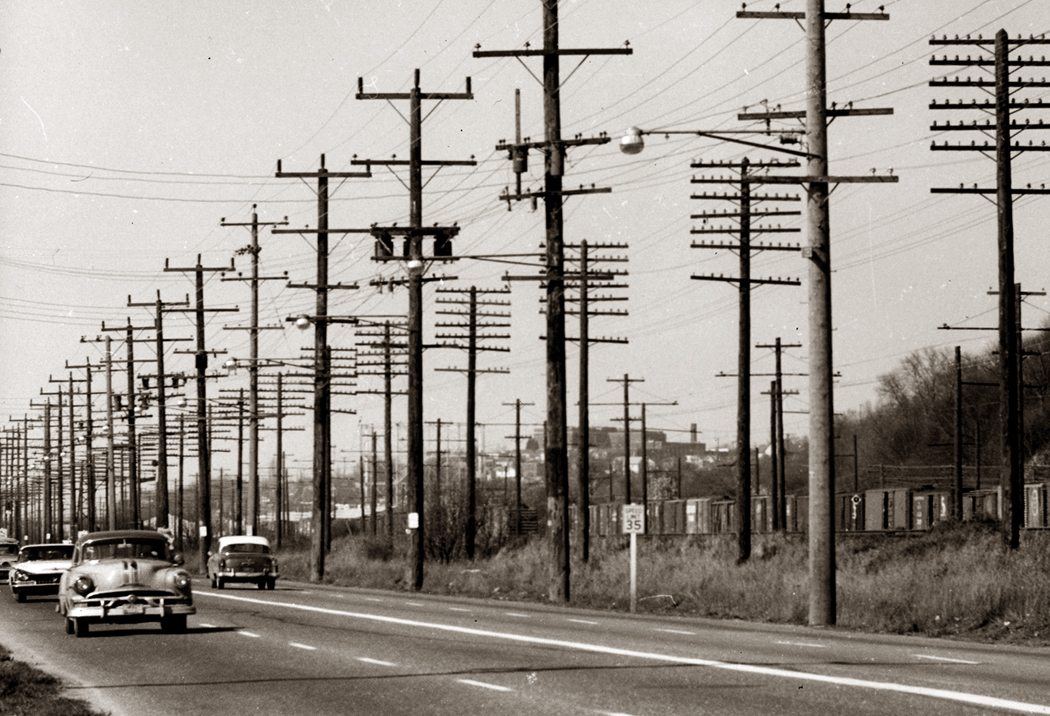
It is the parent fact that gives birth to all our other traits. jumping a freight Even after our ancestors came here from far shores, we have never ceased from peregrinating. First we moved West, populating the great wilderness.
Now, we move away from home to college or career, and find our parents retired to Florida and our siblings spread across four time zones.

To Europeans or Asians whose families have lived in the same villages for centuries, we must seem utterly rootless.

So it can hardly be surprising that the central metaphor of Huck Finn is a journey: The book is many things, from its hero’s double negatives and “ain’ts” to his climactic choice to follow his instinct instead of his schooling about runaway slave Jim, but first and foremost, it’s a “road book,” marking the peripatetic nature of American life.

Much of our art reflects this continuous travel. From the moment we arrived on the Atlantic Coast we began moving west. As art, The Godfather speaks of the immigrant experience, but so does every B Western ever filmed.

All the other traits we think of as American ultimately owe their birth to this constant moving: It gives birth to our self-reliance, our willingness to risk tomorrow on faith, and our freedom from many of the cultural straitjackets found back in the Old Country. It’s all there in the art. All either necessary for immigration or fostered by it. high noon

Individualism

Make that “rugged individualism.”

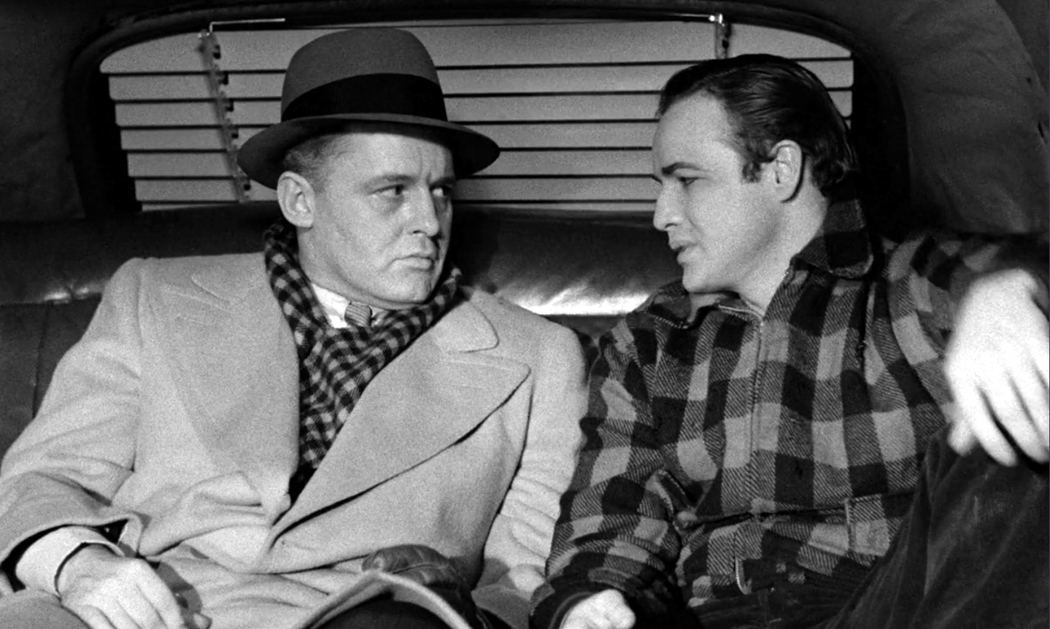
We trust our own instincts, like Huck Finn, rather then the wisdom of the group. We are Mr. Smith in Washington, Gary Cooper at high noon, Ellen Ripley blasting aliens.

The single most potent distillation of this individualism can be found in John Wayne, love him or despise him. But Wayne didn’t spring up ex nihilo; rather, he grew from the soil: He was originally Natty Bumppo, or Hawkeye, from James Fenimore Cooper’s Leatherstocking Tales: self-reliant, unschooled but wise and practical, with an unshaken faith in his own code of behavior. He’s Walt Disney’s Davey Crockett saying, “Make sure you’re right, then go ahead,” which is just a pop culture simplification of Henry Thoreau’s Civil Disobedience.

Sometimes it’s shocking to realize how of a piece our cultural heritage is. davy crockett march

The flip side of individualism is our tendency to isolationism: “Good fences make good neighbors,” as Robert Frost ironically wrote. Going it alone is usually seen as a virtue.

The downside of this self-reliance is our anti-intellectualism. We trust our own ignorance more than someone else’s knowledge. This is nothing new: It’s why Andrew Jackson was elected president. It’s Huck Finn fearing to be “sivilized” by his Aunt Sally. It’s why one of the most powerful political factions of the 19th century was called the “Know-Nothings.”

It’s a trait of national identity that we should never misunderestimate. oklahoma!

Optimism

Against all reason and the evidence of history, Americans believe they can do anything. It is our “can-do” attitude, and you find it in the barking joy of Walt Whitman’s poetry and the songs of Oklahoma!Doris Day

To others in the world, this makes us look naive and foolish; fatalism is not part of our makeup.

Which is why America is home to pop psychology and Doris Day. As a corollary, for Americans, the future only holds a better world. “Tomorrow, tomorrow,” Annie sings. “Make it new,” said poet Ezra Pound, and although he was speaking of literature, he could just as well have been speaking of Thomas Edison, the Chrysler Building or Elvis Presley.

Take what you’re given and do something new with it. Never accept the past as the final word. billy sunday preaching

Religion

Many peoples are religious, but in America, religion is something else.

From the utopian religious communities of the 19th century to today’s fundamentalism, there is a glint of zealotry in American spirituality. Elmer Gantry would not be thinkable in France.

We have gone through at least four “Great Awakenings,” in which we rediscover the old-time religion and the narrow virtues of belief. rev whitefield

It was, after all, religion that founded this country, whether it is Congregationalists in New England, Quakers in Pennsylvania, Roman Catholics in Maryland. Each of them came here for religious freedom, although they were perfectly willing to oppress any religion not their own.

The separation of church and state in our Constitution is there not because we were an agnostic nation, but because everyone was so nuts on the subject and we wanted to keep from each others’ throats.

You hear the religion in the symphonic music of Charles Ives and in Negro spirituals. It echoes in Moby-Dick, and even the window behind the dour couple in Grant Wood’s American Gothic. leaves of grass frontispiece

Informality

“I lean and loaf at my ease, observing a spear of summer grass,” Whitman writes in a poem of expansive informality, turning his back on the formal expression of European art: No villanelles for Americans, no Rime Royal.

In Europe, you have Oedipus, in America, Stanley Kowalski.stanley kowalski Mark Twain wrote Huckleberry Finn in colloquial American English and even put a note about it at the beginning of the book. Take that, Henry James!

“Whatever is not of the street,” wrote novelist Henry Miller, “is false, derived, that is to say, literature.” And he wasn’t using the word as a compliment.

You can see it in the portrait of Whitman at the front of his book, Leaves of Grass: There he is, sleeves rolled back, collar unbuttoned, hips shifted comfortably, hat at a rakish angle. You could never imagine Tennyson like that. manifest destiny gast

Expansiveness

Everything in America is supersized, whether it’s fast food or our landscape.

In America, bigger is better: We drive SUVs and watch blockbuster movies. It’s a Texas mentality. Star Wars isn’t big enough; we need a director’s cut, added scenes, a DVD packed with extras. A movie isn’t a success unless it makes $200 million. And the TVs on which we watch those DVDs continue to grow; soon they’ll cover our living room walls. larry hagman with cash

One Marilyn Monroe isn’t enough; Warhol must print her by the dozens, just as Babe Ruth must eat hot dogs by the score.

The tall tale is our national mythology, from Paul Bunyan to Jim Carrey’s face.

Of course, how could it be otherwise with the Rocky Mountains, the Grand Canyon and the Great Plains? Our very landscape calls out for grandiosity and grandiloquence. Over the top is America’s starting line, and the next frontier is our constant goal.

OH, AND AMERICANS LOVE LISTS:

Most-American Americans

John_Wayne - overland stage raidersJohn Wayne: Love him or hate him, we can’t think of him as merely an actor. He has become an icon, the movie roles and the man bound into one, indivisible: the lone, laconic hero, man of action rather than words, graceful and bullying in turns.

4 more:

Louis Armstrong: American as soul.

Eleanor Roosevelt: American as do-gooder.

Babe Ruth: American as appetite.

Thomas Edison: American as inventor.

Most American Movies godfather

The Godfather Saga, Francis Ford Coppola, 1977: The conflated version of the first two Godfather films tells the immigrant experience writ large: family, business, love, loyalty, betrayal and the move west, told with the force and mythology of opera.

4 more:

The Man Who Shot Liberty Valance, John Ford, 1962: “When the legend becomes fact, print the legend.”

Star Wars, George Lucas, 1977: Good vs. evil supersized.

Gone With the Wind, David O. Selznick, 1939: History whitewashed.

Do the Right Thing, Spike Lee, 1989: Race will not go away.

American Contributions to global culture constitution go

The Constitution: Our “governmental instruction manual” has become a model for the world, and its first 10 amendments have become the guiding principles of many an emerging nation. It’s more than merely political, it’s at the center of our culture, and the one thing the world really does want from us.

4 more:

Jazz: From which all popular music ultimately derives.

Hollywood: America’s secret plan for world domination.

Technology: The physical evidence of the can-do spirit.

Coca-Cola: Las aguas negras del imperialismo.

Most American Novels

huck finn book coverHuckleberry Finn, Mark Twain: The Great American Novel, filled with everything, good and bad, about ourselves: race, individualism, anti-intellectualism, optimism, religion, social climbing, moneygrubbing and our comfortable informality.

4 more:

On the Road, Jack Kerouac: An essential national theme takes center stage.

Beloved, Toni Morrison: The evils of slavery haunt even the freed.

The Leatherstocking Tales, James Fenimore Cooper: The invention of John Wayne.

The Great Gatsby, F. Scott Fitzgerald: Money, glamour, celebrity and loss.

Most American Plays angels in america

Angels in America, Tony Kushner: The hugely ambitious “Gay Fantasia on National Themes,” takes on more American themes than anything since Huck Finn: politics, sex, generations, religious revelation, Reaganism, bigotry and forgiveness; so expansive a single night can’t hold it.

4 more:

Death of a Salesman, Arthur Miller: The underside of the American dream.

Oklahoma!, Rodgers and Hammerstein: Gushy, American cornpone classic.

Streetcar Named Desire, Tennessee Williams: Torn T-shirts and sweaty thighs.

Fences, August Wilson: Black view from Pisgah.

American Classical-music compositions

ives album coverThree Places in New England, Charles Ives: The crusty New England composer reinvents classical music to make it more American: loud, brash, nostalgic and patriotic at turns, and finds its subject in landscape and history.

4 more:

Rhapsody in Blue, George Gershwin: Jazz, Tin Pan Alley, Chopin and Carnegie Hall.

Appalachian Spring, Aaron Copland: Shaker hymn goes mainstream.

Symphony No. 3, Roy Harris: The type of the American symphony.

New World Symphony, Antonin Dvorak: Is the Most American Symphony written by a Czech?

American Architecture

monticello stampMonticello, Thomas Jefferson: Just as equivocal as its owner and designer, this icon from the back of the common nickel is both paean to Europe’s classical past and the American’s love of invention, gimmickry and nature: Palladian windows and a moose head.

4 more:

Chrysler Building: American industrial dynamism with grace.

Sleeping Beauty Castle at Disneyland: Architecture as play-pretend.

Fenway Park: So cranky we actually love it.

Falling Water, Frank Lloyd Wright: Built over a waterfall like a diving board.

American Poems

Whitman at 50Song of Myself, Walt Whitman: The “good gray poet” could not have arisen anywhere else; he is completely American, from his deification of democracy to his catalogs of diversity to his “I sound my barbaric yawp over the roofs of the world.”

4 more:

Song of Hiawatha, Henry Wadsworth Longfellow: Closest thing we have to a national epic poem.

Poems, Emily Dickenson: Nothing more American than her quirky New England eccentricity.

Howl, Allen Ginsberg: “Visions! omens! hallucinations! miracles! ecstasies! gone down the American river!”

Mending Wall, Robert Frost: “Good fences make good neighbors.”

American Visual arts

American gothicAmerican Gothic, Grant Wood: This iconic painting is more enigmatic than the Mona Lisa: encomium of hardcore American values or satire of Midwestern provincialism? Conservative or avant-garde? He’s not telling.

4 more:

Watson and the Shark, John Singleton Copley: Art ripped from the headlines, circa 1777.

Marilyn Monroe multiple, Andy Warhol: If one is good, a dozen must be better.

Dogs Playing Poker series, Cassius Marcellus Coolidge: Now, that’s OTT!

Freedom From Want, Norman Rockwell: Turkey, potatoes and lots of corn.

American Popular music

shenandoahShenandoah: A folk song of undetermined origin, this is the quintessential song about migration and loss; with its odd strophic form and 19th-century sentiment, it borrows elements from Irish shanties and African-American blues.

4 more:

One O’Clock Jump: Count Basie and swing.

Born to Run: Rebels on wheels, a la the Boss.

Hound Dog: Elvis frees America all over again.

Swing Low, Sweet Chariot: The suffering of a people, caught in the throat.

gojira over the sea

Who knew Godzilla was an art film?

Those of us who grew up on the American re-edit with Raymond Burr jimmied in remember it most fondly as one of the campier entries in the 1950s-era giant mutant monster genre: Godzilla: King of the Monsters. A man in a rubber dinosaur suit stomps on a model-train layout, crushing cardboard buildings.

That version, released in 1956 and badly — even comically — dubbed, was aimed at kiddies and the drive-in market. The basic story is familiar, recycled not merely from The Beast From 20,000 Fathoms (1953), but from older classics such as King Kong (1933) and the 1925 silent film Lost World. In all of these, a dinosaur or other prehistoric monster is found alive in modern times, wreaking havoc on a major city until it is subdued by modern science or a well-equipped military. gojira with bridges

Godzilla, played over and over on TV, became a classic of its genre, but we all sensed that underneath, there was a Japanese original that we never knew. It was rumored to be a quite different film, and now that is available on DVD and Blu-Ray, and cleaned up by the people at Criterion, with a new transcription of its title — Gojira — we can see for ourselves.

The real models for Gojira were Hiroshima, Nagasaki and the more recent (at the time) case of the Japanese tuna fishing boat Lucky Dragon Five, which was caught downwind of the U.S. Castle Bravo nuclear test at the Bikini Atoll.

It is a revelation: Ishiro Honda’s original film (in Japanese and subtitled) is a moving anti-war and anti-nuclear parable, and its intended audience is adult, not juvenile.

The film is still a victim of its minuscule budget, and some special effects are laughable — hardly more sophisticated than in a Gumby cartoon — and not all the acting passes muster. But these faults can also be found in the rarefied art films of both Pier Paolo Pasolini and the fountainhead of Italian Neorealism, Roberto Rossellini.

In fact, Honda’s film shares a visual aesthetic with Rossellini — the style is meant to be almost documentary. And the style serves the subject well: This isn’t a monster film, but a film about the devastation and suffering of war. mothers and children duo

Made only eight years after the end of World War II, the effects of the incendiary bombing of Tokyo and the nuclear bombing of Hiroshima and Nagasaki were even fresher in Japanese minds than the World Trade Center is now in American minds. When the Japanese audience saw Gojira in 1954, they saw a vision of cities flattened and burning, with hundreds, thousands of maimed people on stretchers in bandages, waiting for care and moaning in pain. It must have raised the hair on their necks.gojira burning city

The scenes in the movie are lingered over — and largely trimmed out of the American version — and they are accompanied not by the rapid pulse of a Hollywood sound score to pump up our energy level, but by the elegiac strains of funeral music. The score, by composer Akira Ifukube, is one of the great film scores of all times, deeply affecting; it’s hard to hear it, even without the visual, without a profound sadness welling up from inside.

In Hollywood thrillers, people may die by the boatload, but there are seldom corpses to clear away. They are somehow forgotten about. Not in Gojira. They are in our face.two colossuses

Gojira winds up being a metaphor of war and its horror, much like Picasso’s Guernica. And the first time we see Gojira, looming over a hillside, he looks uncannily like Francisco Goya’s late dark painting, Colossus, in which a giant stalks the war-torn countryside.

A break in filming

A break in filming

The original film was 98 minutes long. The American version chopped out nearly half of it and reinserted the refilmed Burr footage, usually talking to a stand-in for one of the Japanese stars, seen only from the back. Even with the new footage, the American version is only 79 minutes long.

The DVD includes both versions and fascinating extras, like a description of the “Godzilla suit” used to create the monster.

The original film should be seen by anyone who cares deeply about cinema. It isn’t the joke we thought it was. It is art.

janissary 1

East is east and west is west. But the twain have met many times before the current unpleasantness.

The West and Islam go way back.

On the serious side, there were the Crusades, the Moorish conquest of Spain and Charlemagne. On the more trivial side, there was the Dutch craze for Asian tulips in the 17th century.

And one of the more interesting collisions between the West and Islam occurred in Europe in the 18th century with a craze for all things Turkish. It gave us coffee, croissants, Angora sweaters and Mozart’s Rondo “alla Turca.”

It also finally gave us Rossini’s Italian Girl in Algiers (L’Italiana in Algeri), and its sequel, The Turk in Italy (Il Turco in Italia).

Europe had been under the gun from the Ottoman Empire for centuries, but when the Treaty of Karlowitz was signed in 1699, it ushered in not only an era of peace but a fad in fashion. For the next century and a half, all things Turkish, Moorish and Islamic became the source of the culturally exotic in European minds.

Eugene Delacroix "Women of Algiers" 1834

Eugene Delacroix “Women of Algiers” 1834

It’s really quite stunning to see it all: Turkish cigarettes, Turkish baths, Turkish carpets, harem pants, slippers with upturned toes. There were harem girls painted by Ingres and Delacroix. The turkey named for the color of its wattles, which matched a popular fabric dye of the time, called “Turkey red.”

And one of the most pervasive effects was the popularity of “Turkish music.” Haydn, Mozart and Beethoven all wrote versions of Turkish music.

When the Ottoman Turks sent janissary bands — their military bands — to Vienna as a kind of cultural-exchange program, the European ears were perked by the exotic sounds of their drums, cymbals and chimes. It was a clattery music with an insistent rhythmic drive.

You hear the European orchestra expanded with new percussion instruments at just this time, when Haydn wrote his Military Symphony and Mozart his Turkish concerto for violin.

The characteristic rhythm of Turkish music was the march beat of “Left… left … left, right, left,” and you can hear it in Mozart’s Turkish rondo as well as in the concerto.

rondo boom

And Beethoven even included a segment of Turkish music in his sublime Ninth Symphony, the “Ode to Joy,” when the whole thing comes to a momentary halt, interrupted by the burps of a contrabassoon, followed by the Turkish marching music that sounds remarkably like the theme song to Hogan’s Heroes.

In fact, German military music made such pervasive use of the Turkish rhythm that it soon lost all sense of being exotic and became the drumbeat of Germanic militarism: If you watch the Leni Riefenstahl film, Triumph of the Will, about the Nazi Party rallies in Nuremberg before the war, you are nearly oppressed with that “boom … boom … boom-boom-boom” rhythm. Nürnberg, Reichsparteitag, Marsch der Wehrmacht

That is a baleful end to what began as pure fluff. Operas about Turkish pashas and European women were a regular occurrence.

Mozart wrote his Abduction From the Serail, filled with Turkish effects, and Rossini, decades later, imitated that sound — and pretty well stole the plot — from the Mozart, for his Italian Girl in Algiers. In it, a crafty Italian woman outwits a foolish Turkish bey and saves herself and her fiance from a fate worse than Wagner.

It’s a wonderful opera, full of Rossini’s best tunes and imbroglios.

"The Death of Marat," by Jean-Louis David, 1793

“The Death of Marat,” by Jacques-Louis David, 1793

It was called, simply, “the Terror.”

the last death no one leftIt was probably the closest Western Europe ever came to the horrors of Rwanda — not just in body count, but as mere anarchy loosed upon the world.

It was the French Revolution, and from September 1793 to July 1794, nearly 2,000 people a month were beheaded in Paris, many for nothing more than being too tepid in support of the Revolution.

And in the middle of this bloody storm was painter Jacques-Louis David, who created the most famous painting of the Revolution, The Death of Marat, in 1793. It was a masterpiece of political propaganda.

But that is not all David did for the Revolution: That is not red paint on the artist’s hands. The painter personally signed at least 300 death warrants as a member of the Jacobin government’s Committee for General Security.

The painting, originally called Marat at His Last Breath, created a martyr of the revolution from a man who is more properly a war criminal. And it again raises the question of art’s moral responsibility.

Marat

Marat

The dead man in the painting, Jean-Paul Marat, was a journalist who called for thousands of heads to roll. “No, hundreds of thousands,” he wrote.

And on July 13, 1793 — the day before what is now Bastille Day — this greatest, most bloodthirsty exponent of the Terror was stabbed to death by a young woman.

“I killed one man to save a hundred thousand others,” she said.

She miscalculated. She had killed Jean-Paul Marat, but his death unleashed the worst of the Terror.

Jean-Paul Marat was not the kind of person you would think of if you wanted to create a hero.

He was a peculiar man, formerly a physician — some called him a quack — and at turns vicious and paranoid. He cut an unpossessing figure: Ugly, short, he suffered from a skin disease, likely a psoriatic arthritis, that left his face scarred: He called it “leprous.” To salve his discomfort, he conducted his daily business from a bathtub filled with cool water. On his head he wore a towel soaked in vinegar for relief. A board across the tub provided a desk.

Marat published a newspaper called Friend of the People, which harangued and incited. He lauded what he considered republican virtue and selflessness, and called for the death of anyone he considered a traitor: that is, anyone who didn’t agree with him. Patriotism and selfless devotion to the cause drove Marat.

James Gilray on The Terror

James Gilray on The Terror

It went well beyond a call for the beheading of the aristocracy.

In fact, during the Terror, 70 percent of those killed were from the lower classes. People settled grudges by informing on their neighbors. An accusation was enough.

But for painter Jacques-Louis David, Marat became the perfect subject to deify when he was assassinated in the early months of the “Reign of Terror.”

"Charlotte Corday" by Paul Jacques Aime Baudry, 1860

“Charlotte Corday” by Paul Jacques Aime Baudry, 1860

His assassin, Charlotte Corday, then just 23, felt just as keen a patriotism as Marat. But for her, patriotic duty meant she must kill “the monster, Marat,” even if it meant her own death.

She came to Paris, bought a 6-inch kitchen knife, wrote a note explaining her actions and pinned it to the inside of her dress. In it she called Marat “the savage beast fattened on the blood of Frenchmen.” She also bought a new hat, a green one.

On the morning of July 13, 1793, she went to Marat’s apartment, armed and determined. She couldn’t get past Marat’s bodyguards. But she came back in the evening, slipped in behind some delivery men, flashed a phony list of the names of “traitors.” Marat showed interest, calling her to his tub.

Marat looked the list over and told her, “Don’t worry, in a few days I will have them all guillotined at Paris.”

She then pulled out the knife and stabbed him in the chest once, severing his aorta and puncturing a lung. A jet of blood sprayed the room. He died calling for help from his friends.

Four days later Corday was beheaded for her crime, and Marat was transformed into a patriotic martyr.

And David was just the man to do it. He had been the artist of the Revolution, creating images of republican virtue and the glorious past.

When the news of Marat’s death reached the National Convention, one delegate yelled out, “David, where are you? Take up your brush — there is yet one more painting for you to make.”

Cartoon of Marat as defender of the People and the Peoples' rights

Cartoon of Marat as defender of the People and the Peoples’ rights

The propaganda machine went into high gear. A great public funeral was held — organized by David — streets were renamed for Marat, poems and songs were written. At least one new restaurant opened in the rue Saint-Honore called the Grand Marat.

“Indeed, Marat dead was perhaps more useful to the Jacobins than the unpredictable, choleric live politician,” wrote Simon Schama in Citizens, his history of the French Revolution.

A commission for a painting was voted and David began three months’ work on what would be seen as his masterpiece.

When it was finished, it was paraded around Paris like a Mexican santo, rallying the people to redouble their republican ardor and sharpen the cleansing edge of the guillotine’s blade.

Marat's death mask

Marat’s death mask

Thousands of cheap engravings were distributed, made from a death-mask portrait drawn by David. Marat’s eyes closed, his head tilted in death.

Copies of the painting were ordered from David and his atelier, to be sent to the other cities of France.

Instead of stopping the violence, as Corday had hoped, her act only worsened the Terror. The assassination now became a cause.

As for David, when the Terror ultimately collapsed and its architect, Maximilien Robespierre, was guillotined, the painter went to prison. At least he kept his head.

He was released after about a year in a general amnesty.

When Napoleon came to power, David became the imperial artist, glamorizing the First Consul as he had glamorized the Revolution. David was a political chameleon, a slippery eel. The artist was always looking for a “great man” to glorify, whether it was Marat or Napoleon.

"Napoleon in his study"

“Napoleon in his study”

When Napoleon fell, David went into exile in Belgium, where he died in 1825.

His great painting had a similar fate: It was withdrawn from the public shortly after the fall of Robespierre and sent back to the artist’s studio, where it remained, unexhibited till well after David’s death.

Finally, in 1848, republican sentiment arose once more in France and Marat came out of storage. The poet Charles Baudelaire saw it and wrote a famous encomium, which raised public awareness of the masterpiece once more. The painting became canonized.

Today, the most recognized souvenir of Marat’s life and death is the painting David made to immortalize the journalist.

It is powerful: “David weaponizes art,” said one museum curator.

David’s painting is hugely original, mixing an almost journalistic sense of the here and now with familiar iconographic symbols, like the hanging arm of Michelangelo’s Pieta, turning the dying journalist into a Christ figure.pieta arm

That isn’t just a conceit: The subconscious reading of the painting can’t help seeing the echoes of earlier, religious paintings. David was able to mythologize current events and give them depth and power.

“If there’s ever a picture that would make you want to die for a cause, it is Jacques-Louis David’s Death of Marat,” historian Simon Schama says in his TV series The Power of Art. “That’s what makes it so dangerous — hidden from view for so many years. I’m not sure how I feel about this painting, except deeply conflicted. You can’t doubt that it’s a solid-gold masterpiece, but that’s to separate it from the appalling moment of its creation, the French Revolution.

“If ever a work of art says that beauty can be lethal, it’s Jacques-Louis David’s Marat.”

David has turned the paranoid fanatic into a saint of the revolution. He had also made what some have called the first “modern” painting: spare, direct, almost abstract in its design.

But the image raises a question: Can great art be made for evil reasons?

The question is not merely academic. These questions have come up many times in the past: Can Leni Riefenstahl be a great filmmaker if the films she made glorify Hitler? Can D.W. Griffith’s Birth of a Nation really be one of the most important films ever made if its heroes are the Ku Klux Klan?

And what about Westerns? Are our heroes cowboys? Or do we acknowledge our own genocide? What was once the patriotic foundation myth of our nation now embarrasses any thoughtful American. The once-famous Battle of Wounded Knee has now become the Massacre at Wounded Knee.

So, what do we make of art when we question the artist’s motives?

There are some who believe composer Aaron Copland’s music can’t be any good because of his lefty political leanings. And the take people have on Shostakovich often depends on whether they see him as a Soviet apologist or a secret dissident.

The art of Englishman Damien Hirst horrifies some people, because he may use dead animals, pickled in formaldehyde, as part of his art. His shows bring out the picketers.

Wagner cannot be played in Israel because of his anti-Semitism and because Wagner was Hitler’s favorite composer. Where can we draw the line on this?

Do we ban politically injurious art, the way many would ban the use of Nazi medical research?

"Execution of Robespierre" detail

“Execution of Robespierre” detail

“I can appreciate pure ‘art for art’s sake,’ ” says artist Anne Coe, whose paintings are never politically neutral.

Coe is an ardent environmentalist and lover of animals, and her paintings promote her views.

“But to me, the really knock-your-socks-off art has a little more,” she says. “It has ideas behind it. I think art is insipid without some sort of idea in it.”

And David’s art is all about ideas.

“David is the artiste engage par exellence,” says Mary Morton, associate curator of paintings at the J. Paul Getty Museum. “He gave himself completely to politics.”

The subject of the painting, she points out, is not so much Marat the man but the virtues of republican self-sacrifice.

“David’s art is very didactic,” Morton says. “It is about civic responsibility.”

And perhaps we are removed enough from the events of 1793 that we can see in David’s painting the idea rather than the man — the spirit of democracy instead of the call for blood.

“What is that line between propaganda posters, like ‘Uncle Sam Wants You,’ and the David painting, or the paintings of religious martyrs?” Coe asks.

“Does some art lead to evil things? That is the risk you take in a society that says everything is relative.”

There is no single answer to the question; you have to take each case individually and weigh it in your own conscience.

“I listen to Wagner. I love Wagner,” Coe says. “You can’t have an answer.”

Orangerie Paris

What is culture, and why should we care?

These are questions that don’t get asked often enough when we discuss such inflammatory issues as government funding of the arts and humanities.

To many people, culture simply means a lot of wealthy people going to the opera and sitting through a hare-brained story in a language they don’t understand while listening to a soprano shriek so loud their elbows go numb.

Or it means drinking bad white wine from a plastic champagne glass at an art gallery opening or long, dense scholarly papers deconstructing Little Red Riding Hood as a text about the patriarchal hegemony.

We too often talk about culture as if it meant only evenings in the theater and long Russian novels.

But what would happen if all these so-called ”high” arts suddenly disappeared? Do we actually need them?

To understand the answer, we need to understand what culture is. Culture is broader than just the arts.

It’s what you eat for breakfast and whether your trousers have cuffs. It is who you are allowed to marry and what happens to your body when you die.

Culture is the set of rules — mostly in the form of traditions — by which society runs.

It is the software for our social lives.

In fact, far from being a luxury, culture is something you cannot live without. It is religion, art, laws, ethics, history and even our clothing.

Culture is who we are.

And who we are at this moment: No culture is static. It is an evolving thing — to keep up with the computer metaphor, there are constant upgrades. Culture 2.7 gives way to Culture 3.0, as the circumstances of our lives and our cultural needs change. The culture of the clipper ship means little on a jumbo jet.

Yet, although culture changes, it is inherently conservative. It changes very slowly. Nobody wants to get caught with a beta version of untested software.

Patterns from our ancestors persist in our lives. We enter the jumbo jet from the left side because our great-grandfathers wore their swords on their left sides and consequently mounted their horses from the left, to avoid entangling their swords.

You can see the history of aviation change from the stirrup on the left side of a World War I biplane to the door on a 747.

And how many children today play with ”choo-choo trains,” although not even their parents ever lived in a world with steam locomotives?

The patterns stick with us even when they no longer make sense.

But culture does change. The three-minute song remains the cultural pattern, although Dinah Shore has given way to Taylor Swift.

Songs from our agricultural past, lauding springtime and the moon, make little sense to our urban present, where nocturnal lighting is more likely neon. So we change. Slowly.

And where does cultural change come from? More often than not, from the arts.

The arts try out possible ideas onstage to see if they might make sense. Sometimes they do, sometimes they don’t. But the best minds and imaginations give it their best.

That is why we think of theater as ”culture.” Or literature, or painting.

Yes, there are some people who want to keep their old software version, and some who want to return to earlier versions. But culture cannot stand still.

Therefore, we need to be on the lookout for meaningful directions to go in. Art is our investigation of our values, testing them and throwing out some and reinforcing others.

Without art, culture ossifies and the people become emotionally and spiritually dead. So, if we mean to maintain a vital culture, we must support the best in the arts.

There is another computer saying: GIGO — garbage in, garbage out. In other words, if we don’t care for the changes in our culture, we are likely to wind up with the lowest common denominator. We are likely to wind up with nothing more than Duck Dynasty and microwave pizza.