It takes someone really whip-cracking smart to be so dumb.

I remember the first time I lived in the Blue Ridge Mountains of North Carolina, and spring morphed into summer and there was the kind of glory only a Dante could describe, and a friend of mine came to visit to see the spring wildflowers.

He was one of the smartest people I’ve ever known.

The wildflowers in Ashe County are lush, blinding, thick — the planet in rut.

But he went from patch to patch in an abandoned apple orchard with a Peterson’s guide in hand, checking the flowers off as he named them – Claytonia virginiana, Rhododendron nudiflorum, Trillium erectum. The quicker he identified them, the quicker he could get on to the next specimen.

We ID’d more than a hundred flowers in one morning, but didn’t see any of them.

I notice the same phenomenon every time I visit an art museum. People walk from picture to picture, identify what the picture is and move on to the next one.

First-timers name the pictures by subject – ”That’s a horse, that’s a tree.” More sophisticated types name the artists – ”That’s a Degas, that’s a Borofsky.” The really educated may name the style or era. But whatever level of education they bring to the work, the result is the same.

They have not seen the art.

‘Only a sunfish’ 

I remember the anecdote about the Swiss-American scientist Louis Agassiz and his hotshot graduate student.

One day, Agassiz put a fish down in front of the student and asked him to describe it. The student said, ”That’s only a sunfish.”

Agassiz said, ”I know that. Write a description of it.”

So the student came back with the scientific name for a sunfish. The scientist told him, no, describe it.

So the student wrote a four-page essay, covering everything that could possibly be known about the fish. Agassiz told him again to look at the fish.

As Ezra Pound relates the story, at the end of three weeks, the fish was putrid, but the student finally knew something about it.

Learning to see is hard work. We are not trained to see in this culture, but to make decisions and solve problems. When just enough information has been gained to make a good — yet quick — decision, we move on to the next problem, like the next painting. It is the mark of a good executive.

But seeing is much more than that. And it requires more time and effort. And it requires that the result of the process never be made more important than the process itself.

Imagine telling a corporate VP that the point of being in business is not making a profit, but the pleasure of committee meetings and phone calls. He will look at you like you’re an idiot.

But this is art, not business. In art, the profit is in the process.

When you go to the museum, don’t check paintings off on your ”life list,” but rather, spend an hour — a full hour — looking at just one painting. Come back another time to see a second painting. The museum’s not going anywhere.

Time to really see 

Here’s good practice: Stare at an apple for an hour. I dare you.

An apple is simple, available and familiar. But have you ever looked at one?

Put it down on the table in front of you when you are alone, and without any music or the TV on. Concentrate.

”I see it,” you say. ”It’s an apple.”

Bingo, you have named it, and you are immediately bored by this whole exercise. You want to get back to your e-mail or iPhone. Keep it moving, you say. “I don’t want to be bored.”

Good. You are supposed to be bored. Boredom is your friend. It is life’s great teacher, perhaps its only real teacher.

You have bottomed out with boredom.

Keep staring. Your brain won’t let you remain bored for long. You will break through the boredom and will begin seeing things you hadn’t noticed: An apple isn’t red, for instance. It is purple, yellow, green, blue, white and red. The colors are not on the surface of the apple but at different depths. The red seems to lie on top of the yellow. And all colors are under the thin layer of shiny cuticle. The surface of the apple is a pool your eye can dive into.

The ‘discovery’ level

The colors tend to run in streaks from top to bottom. The streaks break up into spatters of tiny dots of color, like airbrushing.

Hundreds of yellow dots cover the darker red like nighttime stars. In this case, the yellow seems to lie on top of the red.

The apple isn’t smooth and shiny, but has a lot of tiny flat spots on it, and the dimples at top and bottom are matte rather than glossy — actually seem to be covered with dust.

There is a navel at the bottom, amongst the four or five bumps that the apple sits on. It is filled with the remains of the sepals that originally protected the flower bud.

If you tap the apple, it thumps with a particular pulpy resonance that only an apple can make. And there is that multilayered apple smell.

This ”discovery” level is good for several minutes, as you get past the verbal level and pay attention to the apple.

But you reach boredom again. Good. You’re supposed to — again.

Keep staring. There are many more levels to reach. They needn’t follow the order I’m giving here. Everyone’s reactions will be different. But you have to trust your own boredom.

At one level your brain begins to wander, even as you concentrate. It will glue associations to your apple. You may remember Eve and Adam, New York City, the Beatles, apple bobbing, William Tell, Snow White, Atalanta, selling apples in the Depression, Isaac Newton, worms, an apple for the teacher, Alar, keeping doctors away, waxed fruit on top of the TV, the Osmonds singing “One Bad Apple.”

Or you will create constellations from the star-dots. Or count the number of lights in the room by the number of specular reflections on the apple.

You may start writing your own story about an apple.

But eventually, boredom returns. There is surely nothing else to see.

Keep at it. At one point the apple will disappear. Literally. The process of retinal fatigue will make the apple invisible. Twitch your eye just a hair, and the apple pops back into view. Stare and it fades, twitch and it pops back.

This eventually becomes only a party trick and you are bored once more.

A verb, not a noun

At another level, you will recognize that the apple is only a freeze-frame in a continuous process. Looking backward, you see the sepals at the apple base turn back into a blossom, back into a bud. In the other direction, the fruit browns, rots and frees the seeds inside.

Those seeds grow into sprouts, the sprouts to saplings, the saplings to trees. The trees flower, the flowers fruit, the fruit ripens and falls. Humans are born, they grow up, they have children, grow old and die, leaving the children to have children.

You recognize that nature is not a noun, but a verb.

An apple is not a Platonic “thing,” but a Heraclitan flux, always changing from one thing to another. Staring at the apple, you see the whole thing spread out like time-lapse photography.

Near the end of this exercise, when all your normal conscious functions have bugged out, unable to take the boredom, the apple may begin to glow from inside. Every electron in every atom vibrates.

This is the Blakean level, the mystical level. It is at this level that revelation occurs. If you can hold on to it, the entire world alters, not just the apple.

It is this level Dylan Thomas means when he writes, ”fire green as grass.”

This is the level of the art we as a culture most admire: Beethoven’s Ninth, Van Gogh’s sunflowers, Dante’s Paradiso, the second part of Goethe’s Faust.

”If the doors of perception were cleansed every thing would appear to man as it is, infinite,” wrote William Blake.

It is the point you realize that every bush is the burning bush.

Whether it is mystical revelation or merely hallucination hardly matters. It changes the way you see an apple.

And is there a boredom beyond that — a mystic’s boredom?

If there is, I suspect it is broken through also, and probably by the Zen state: The apple turns back into an apple.

But a very different apple.


I watched a filthy video the other day. It was made by my twin 12-year-old granddaughters. They made a video with their iPhones, a giant doll house and a bunch of their dolls. The scenario was not unusual, but the dialog was filled with four- and 12-letter words, often tangentially referencing the sacred institution of motherhood, and it was hilarious.

I doubt they understood most of the words they studded their screenplay with, and sometimes the words were used in ways that didn’t actually make sense. But they are words they have heard and words they understand are not used in polite company. Their mother has given them permission to use such words once a week on “Cussing Day.” It gets it out of their system. We hope.

At any rate, they reveled in them, spitting them out in the voice-over dialog like tobacco shots into a cuspidor. It was simultaneously shocking and cute. Mostly, it was funny.

But it made me worry about the state of cussing in America.

From bumper stickers to sitcoms, America is suffering an epidemic of nasty language. It is on TV, on ”shock” radio, in every best-selling novel. Stand-up comics make their reputations with it. From Nixon transcripts to Dick Cheney on the Senate floor, you can hardly escape a herd of discouraging words.

What is discouraging is not the words themselves, which are wonderfully functional, but the dilution of overuse.

Four-letter words are a treasure of the English language. They have the abrupt, plosive power of Anglo-Saxon, the redolent, atavistic force of Stone Age life breaking out of the grave to horrify the faint-eared. They are ruddy survivors of that time before the Latin invasion of the language in 1066.

Our language needs the ability to shock, and our four-letter heritage has done an admirable job until recently. Now they are endangered.

No, they are not dying out, like some verbal snail darter; they are everywhere, but they are enfeebled. When mothers show up at K mart trailing a half-dozen kids all in T-shirts with four-letter slogans printed on them, those slogans no longer mean anything. They might as well say ”Drink Coca-Cola.”

In their way, four-letter words are sacred. They need to have the awe of taboo around them. If a good, punchy epithet doesn’t make the ears of a schoolteacher turn red and heat up in embarrassment, what good is it?

Historically, it’s the difference between Lenny Bruce and Andrew Dice Clay. Bruce meant to shock you with his four-letter punch lines. He was making a point with them.

For Clay, the expletives were little more than shibboleths, letting you in his ”club.” And they don’t shock, they glut. After five minutes, you no longer hear them; they disappear like so many ”uhs,” ”likes” and ”y’knows” — the background noise of not-very-articulate conversation.

When George Carlin used those words, they had bite.

In this, the fate of the rougher language of our mother tongue has become much like that of organized religion: What once engendered the fear of eternal damnation now has become for some a Sunday social club and for others a 12-step program for ‘getting in harmony with the universe.”

When the deity begins to sound like Andrew Weil and an undeleted expletive cannot scare even little children, what power is left in the universe?

Yet, we will always have expletives: There is a primal need for them. But if we lose our Anglo-Saxon linguistic heritage, we will be forced to use Latinized, bureaucratic curses.

To forestall that, we need to conserve what juice is left in our swear words.

As for me, I would like to see less obscenity in American culture, not because I want to offend less, but because I want to offend more.

Some people collect stamps; others collect coins. I collect place names.

There are some odd ones out there, such as Odd, West Virginia, and some normal ones, like Normal, Illinois.

In my retirement from the newspaper business, my wife and I moved to North Carolina, which is a bonanza for the goofy gazetteer.

When we lived in the Blue Ridge for the first time, many years ago, we lived in Meat Camp, just north of Boone, so, I’m not casting stones here. This is just my hobby.

But North Carolina can claim: Bloat Springs Landing; Chuckle; Lizard Lick; Canal Gut; Sandy Mush. There is Whynot, Stumpy Point, Frying Pan Landing and the ever-popular Forks of the Pigeon.

Among the state’s watery ways are Greasy Creek, Cuckold’s Creek, Bawdy Swamp, Stinking Quarter Creek and Pinchgut Creek. Cudda Bum is a stream named for an old geezer nicknamed Cudda whose favorite expletive was “Bum.”

There is Bachelor’s Delight Swamp, Heartsease, Honeypot Swamp.

Short names that come spitting out of the mouth are among my favorites. North Carolina has Brief, Emit, Few, Alert, Askew, Aho, and Duck.

If you are a nervous sort, you can take your vacation at Boring Creek. If money is a problem, you can go to Budget Falls.

The state offers, too, Easy Street, Frog Level, Hairy Bear, Hanging Dog, Graphiteville, Airbellows, Cane Bottom, Brittle Ordinary (and its cousin, Burnt Ordinary). There is Cash Corner No. 2, but not No. 1. There is Radical, Gobble Creek and Kill Quick.

But names all across the country speak eloquently for the spirit of America: Accident, Md.; Bivalve, N.J.; Coupon, Pa.; Dwarf, Ky.; Oblong, Ill.; and Waterproof, La.

Then, there’s Looneyville, Mud, and Sod, W.Va.; Oiltrough, Ark.; Peculiar, Mo.; Bad Axe, Mich. Can you imagine what the good ol’ boys are like in Cat Mash, Miss.? Or in Frogmore, La.?

Texas has a few, like Cut and Shoot, X-Ray and Goodnight, but isn’t Damsite better?

Texas is big enough for both a Frog and a Frognot.

Numbers are surprisingly popular: Eighty-Eight, Ky.; Eighty-Four, Pa.; Ninety-Six, S.C. But Arkansas wins with both Fifty-Six and Forty-Four. A high-school sportscaster’s nightmare: “And here is a late score, Forty-Four over Fifty- Six, 75 to 68.”

The numbers can add up, too. Starting with Zero, Miss., and climbing the ladder through One Horse Store, Ark., and Double Run, Ga.

Three Lakes and The Four Seasons are both in Washington; Five Corners and Sixes are in Oregon. There are Seven Devils in North Carolina and Octavia in Nebraska. Nine Mile Corner in Colorado and Tenville, Iowa.

Leavenworth, Kan., comes next, followed by Twelve Corners, Wis.

But the inflation gets going after that, with Centennial, Wyo., Gross, Neb., Thousand Oaks, Calif., Four K’s Estate, N.D., and Million, Ky.

Somewhat more modest is the ambiguous Many, La.

You can plot these names thematically. Start with food, for instance: Spuds, Fla.; Cookietown, Okla.; Noodle, Texas; Celeryville, Ohio. There are dozens more.

A whole subsection can be given over to our favorite steaming beverage: There are Coffee counties in three states. Also: Coffeeville, Miss.; Coffeyville, Kan.; and Java, S.D. If you can’t get enough of the Hot Coffee, Miss., go to Coffee Springs, Ala., where it must flow from the ground. And if you have problems sleeping after all that Coffeen, Ill., try a little soothing Cocoa, Fla., instead.

There are towns out of place. Manhattan shouldn’t be in Kansas; Philadelphia shouldn’t be in Mississippi; Madrid shouldn’t be in New Mexico. And what is Mexico doing in Maine? Probably the same thing that Jersey Shore is doing in the middle of the Pennsylvania mountains.

Miami is in at least six states; Dallas in eight, not counting Dallastown, Pa., and Dallas City, Ill.

You can drive from Saginaw to Reno to Omaha to Nome, and take side trips to Detroit and Barstow and never leave Texas.

There are Minneapolis, Kan.; Atlanta, Mich.; Duluth, Ga.; Boston, Pa.; Baltimore, Ohio; and Taos, Mo. Phoenix shows up in Phoenixville, Pa., Phenix City, Ala., Phenix Mountain, N.C., and Phoenix, Ill., N.Y., and Ore.

Even whole states get misplaced.

There are Florida, N.Y.; Vermont, Ill.; Ohio, Ky.; Mississippi, Mo.; Dakota, Neb.; and Wisconsin, Pa. Nevada and California each show up in four states; Delaware shows up in six. The champ is Wyoming, which you can find in 10 states and the Canadian province of Ontario.

There are Nevada, Ohio, and Ohio, W.Va. There are Wyoming, Del.; Delaware, Ind.; and Indiana, Pa. There are Colorado County, Texas; Texas, Okla.; and Oklahoma, Pa.

To say nothing of Owyhee, Idaho.

Before I get down to unveiling my Top 10 list, I want to say a few words about some very special places. I haven’t been to all of them, but I have at least passed through a good many of them.

They all have names that make you sit up and take notice. Places such as Whynot, N.C.; Humptulips, Wash.; Box Springs, Calif.; Nameless, Tenn.; and Scarce Grease, Ala.

Americans have shown an amazing inventiveness for naming the places where they live. You wonder just how much civic pride there can be in Bummerville, Calif., or Worstville, Ohio, but you have to wonder even more why such names were chosen.

I’m sure each name has an interesting history, if you have the time and inclination for the research.

Take Toad Suck. Please.

There are people who don’t believe Toad Suck, Ark., is real.

Well, I’ve been to Toad Suck. It is a lovely little place, stuck on the tree-lined sides of the Arkansas River about 8 miles west of Conway.

There isn’t much there, it is true, but there is a state park, a convenience store and gas station, the Toad Suck Embroidery Shop and a big sign on the local real estate office that says, in big, friendly letters, ”Welcome to Toad Suck.”

The reason the town is there is also the reason it was named: There was a ferry here that was once the only way across the river between Memphis, Tenn., and Hot Springs, Ark. The mail had to go through, so in 1823, the Toad Suck Ferry started operation. It was a skiff just large enough for the ferryman and a horse and rider. It was poled from shore to shore.

Among the notable people we have records of crossing the Toad Suck Ferry are Sam Houston, Washington Irving, Zachary Taylor and Jefferson Davis.

The location also became a wood stop for the steamboats that ran up and down the river, and sometime before 1850, a tavern opened up to irrigate the steamboat crews.

There is no certifiable explanation for the name of the ferry and the town that grew around it, but the official version goes thus:

The drinking was so heavy at the tavern that a traveler remarked on seeing it that ”those fellows suck at a bottle till they swell up like toads!” And the name stuck.

Well, I’ve been reading place-name origins long enough to recognize a folk etymology when I see it. I don’t believe it at all, but I have no alternative.

There is also the Toad Suck One-Stop, a convenience store and gas station where you can buy a T-shirt emblazoned with the town name for $14.99 or a ballcap with the same for $8.95.

The most I can tell you about the people who live there comes from Glenn Peters, who was selling watermelons off the back of his pickup truck. It was nearly 100 degrees in July, with humidity nearly 100 percent. Peters sat in the shade of the One-Stop sign behind the truck.

He’s a meatcutter by trade. I know because that was one of the first things he told me. He also said he keeps his hand in a little farming. He’s not from Toad Suck, he said, but from about 40 miles north. This year, he thought he’d try some pumpkins and watermelons. He had hoped to have them ripe in time for the Fourth of July, but the wet season slowed their maturity, so he is hawking them instead two weeks later.

And why did he drive his watermelons all the way to Toad Suck to sit in the awful heat of midday?

”There’s a lot of melon-eating people around here.”

But it isn’t the perfectly reasonable explanations for the names that interest me, rather, it is the names themselves. Correctionville, Iowa. Jot ‘Em Down, Texas. Yelling Settlement, Ala.

All of which brings us to the list:


My Top 10 most peculiar place names in the United States (not counting Peculiar, Mo.)

10. Waterproof, La.

9. Cheesequake, N.J.

8. Oblong, Ill.

7. Humansville, Mo.

6. Odd, W.Va.

5. Imalone, Wis.

4. Monkeys Eyebrow, Ky.

3. Toad Suck, Ark.

2. Chicken Bristle, Ill.

And the No. 1 Most Peculiar Place name: Brittle Ordinary, N.C.

There is no question but that women and men want different things out of life.

If you need proof, just spend a night with your wife at any bed-and-breakfast and watch her coo.

They’re all over the country now, old houses that have been gussied up and turned into estrogen fantasies for weary travelers to spend the night. There are bunnies on the wallpaper, hearts on the bathroom mirrors, antique family photographs — bought at thrift stores — on the hallway walls. Every corner of every room is taken over by doilies.

The four-poster beds are so soft they engulf your sleeping body the way a bowl of whipped cream swallows a stone dropped into it. Under your head is a goose-down pillow with frilled edges and over your torso is a flowered quilt. None of this seems to have any weight at all.

And beside the bed is a comment book with a pen so you can enter your own purred murmurings of contentment.

A whole magazine industry is supported by the retro-Victorian tastes of middle-class women; Country Living, Victoria and Martha Stewart Living are the samizdat that spreads the word.

It’s the kind of thing women — my wife included — seem to enjoy, but I squirm when I see it. I feel like Jiggs at the opera.

It’s just like the fragrance-larded soap gel in the shower. It left me feeling like I was covered in fish slime.

“It moisturizes,” my wife assures me.

“It grease-turizes,” I reply. I needed a bar of soap to rinse myself clean, but there is none.

I spent a very pleasant night at the Goose and Turrets, a bed-and-breakfast in Montara, Calif., south of San Francisco. It was run by a quirky, quiet, little woman named Emily and her never-to-be-seen husband.

The parlor was drenched in crystal and oak-framed art. Mozart played subliminally, perfuming the air with sweet harmony.

The front yard was crowded shut with flowers, which Miss Emily watered every morning after breakfast as the geese ran free. It was a scene from a Tasha Tudor book, only Miss Emily was no longer a little girl.

The building was built in 1908 as a post office. It later became a guildhall for the local Sons of the Spanish-American War. It also served for a time for illegal things although Miss Emily wasn’t specific. I inferred she meant it had been a bawdyhouse.

Breakfast was a four-course vegetarian affair, with a fruit course of perfectly ripe cantaloupe, a second course of Scottish oatmeal sprinkled with cinnamon, a third course of Yorkshire pudding topped with banana slices and strawberries and a final cheese course, with homemade mozzarella and Cheddar served with toast and crackers. Earl Grey tea and cranberry juice filled out the menu.

Such breakfasts thrill most of the women I know. But it is not a man’s breakfast: Where’s the sausage? Where’s the gravy?

So what would a man’s bed-and-breakfast be? What would it take to make the husband happy?

A bed, some breakfast — that about covers it. Everything else is indulgence.

Except possibly for a fridge full of beer.

If we have to have decor, let’s put a moose head over the fireplace and some dark pine paneling on the walls and a stainless-steel basin in the bathroom.

And forget the push-nozzle cleansing gel and drop down a square of Lava soap next to it.

I made my living with words, and whenever my corporate overlords sent us mere workers a memo, I cringed. Because, if I wrote the way they do, I’d have been out of a job.

Recently, as newspapers face doom, and their CEOs try to figure out how to stay afloat, the memos they have sent have become increasingly divorced from reality. We hear a lot about “content monetization” and “content platforms,” but precious little about “content.”

It has probably always been true, but the fact is, the corporate world has a language all its own. It is a kind of “management English” that I call “Manglish.” The implied fragrance of “mangle” is not a coincidence.

This hit me profoundly once as I sat in on a meeting of business people who volunteer in the arts.

According to Manglish, one never plans anything, but rather ”sets in motion the long-range planning process.” I heard one panel member say she wanted to ”micro into the epicenter.”  Another mentioned ”infrastructures in different configurations partnering with organizations to improve our base of communication.”

There was ”the question of an inheritor is a second-tier question” and ”I just want to expand on that follow-up.”

It ”interfaces” and ”synergizes” and generally obscures the agent in favor of the passive voice – ”mistakes were made” is the most infamous example.

It can stretch simple words into rococo phrases – or rather, phraseologies – and it absolutely Osterizes metaphors. Somehow an ”umbrella organization” can have ”legs,” but ideally it should ”sunset” itself.

One explanation for the wordiness of Manglish that I like posits that it allows the speaker to fill the ether with words while giving him time to figure out what he wants to say.

But most plausibly, in the corporate world — where these volunteers spend most of their lives — if you are going to give a million dollars to someone, you want to know you can trust them, that they will know what to do with the money and won’t blow it all, like an artist might, on tinfoil and licorice.

So, the Manglish speaker actually uses his lingo as a shibboleth, letting others in his business-government circle know that he can be trusted for he ”is one of us.”

Artists do that too with their own bizarre lingo. Rock musicians do it, carpenters do it. Lord knows, journalists do it.

There is a particular place in Hell for purveyors of academic art criticism.

Reading most art criticism is like eating an old mattress.

A case in point is the impenetrable mush written by the author of the one exhibit catalog. I don’t wish to name her, because she may have recovered the use of her tongue.

One prime section reads: ”It shared minimalism’s insistence on easily graspable gestalts that were reductive in their geometric simplicity and total non-referentiality.”

Talk about total non-referentiality!

The next sentence is almost as funny: ”But, paradoxically, minimalism shifted the emphasis from the autonomous artwork to the environmental context and the act of visual apprehension.”

Anyone have a shovel? Surely this can be said in plain English.

But the fact is, whether it is academic mush or corporate Manglish, it is language that businessmen, bureaucrats and academics understand and is mutually intelligible to them. But to the rest of us, it might as well be Finnish.

I say this not to make fun of Manglish, although it is often a hoot, but to point out that the corporate people who provide the money for arts organizations and the artists on the receiving end tend not to speak the same language. Artists have their own dialect, and it is just as opaque to the non-artist and often just as full of hot air.

Thank God the managing directors of theater companies and symphonies are bilingual. After years of talking with museum directors and artistic directors, I have come to have a deeper appreciation for their ability to listen with one ear to the jargon of the artist and with the other to the lingo of the banker and meld them together to create an organization that makes good art and survives doing it.

This is just a game.

A word game.

Do not take it too seriously; it is not profound.

But it hinges on a pattern I have noticed in the way we think about things.

It has long been noted that humans have a tendency to create pairs of things: We tend to understand the world in opposites — up, down; good, evil; male, female. Asian philosophies talk about yin and yang arising from the void.

And our sense of this is so strong that we actually think of a number of casual pairs as opposites, especially when we are children. It seems oddly appropriate that chocolate and vanilla are understood as opposites, or salt and pepper.

It is a tenet of many of those Eastern philosophies that the dualities are merely illusion. And some Western philosophers have recognized that most, if not all the opposites we commonly accept are merely linguistic tricks.

After all, one end of the cigar is lit, the other is where we draw smoke. We call the two ends opposites, but there is only one cigar.

Pairs, dualities, opposites. They are natural pathways through the neurons of our brains, the binary system of computers, the underpinnings of our mythologies.

But then, there’s the “third thing.”

That is, as the pairs of opposites arise from the void, they are often accompanied by a third thing, lesser and not thought of as participating in the dualities, but naturally occurring with them nevertheless.

So that, if we think of General Motors and Ford as being in opposition, Chrysler sits next to them as the “third thing.”

When we oppose Gene Autry and Roy Rogers, as almost all boys did when they both had television shows in the ’50s — choosing to prefer Roy to Gene or vice versa — there was always Hopalong Cassidy as the third thing.

Even with vanilla and chocolate: You cannot make a Neapolitan without the third thing: Strawberry.

Or salt and pepper, which share their table space with the sugar bowl.

The pairs must feel like they are complete in themselves, and then the third thing must appear as naturally as a baby nine months after a wedding.

The third thing has to have a “bingo” feeling when you think of it.

Like when we oppose Charlie Chaplin and Buster Keaton and then, bingo, we remember Harold Lloyd.

Or when we think of wines divided into red and white, but then bingo, recall the rose, or what is now called a “blush” wine.

It has to seem natural.

Sometimes, a pair doesn’t have a clear third thing. We pair off hamburgers and hot dogs, for instance, but what is the single third thing? Pizza? Tacos? There are too many contenders.

The game is to find your own pairs of opposites, and their “third thing.”

Play it on long drives instead of counting cows or linking geographical names by their first and last letters.

Want to play? It’s easy. Think of something we often cast as “opposites” – dog and cat, win and lose, North Pole and South Pole – and then search for the “bingo” your brain kicks out as the tagalong third: mouse, tie, the Equator.

I’d be interested in your discoveries. Send your pairs of opposites and your “third thing” to nilsenology@gmail.com.

Here are some of the trios that come to mind:

Coke – Pepsi – RC Cola

The Beatles – The Rolling Stones – The Who

Ketchup – Mustard – Mayonnaise

Tea – Coffee – Hot Chocolate

Freud – Jung – Adler

Superman – Batman – Spiderman

Hitler – Mussolini – Franco

New York – LA – Chicago

Haydn – Mozart – Boccherini

Harvard – Yale – Princeton

Theravada – Mahayana – Zen

AP – UPI – Reuters

Frankenstein – Dracula – Wolfman

“Time” – “Newsweek” – “US News and World Report”

Lions – Tigers – Bears

Old Testament – New Testament – Apocrypha

The Sun – The Moon – The Stars

McDonald’s – Burger King – Hardees

Confucius – Lao Tse – Mencius

The Good – The Bad – The Ugly

What you know prevents learning. It’s a simple fact of life.

Those who “know” a lot of stuff, whether it is the batting averages of every Yankee from 1929 to now, or whether it is the history of the Civil War or the lexicon of art history, are all more or less comfortable in their comfort zones and if you ask them a question, they will answer from their store of knowledge. Hence, new knowledge is short-circuited.

If you want to be really smart, you have to learn to be stupid.

Now, I don’t consider myself to be particularly intelligent, but I have noticed when other people are, there are a few things they have in common. One of them is the ability to be blunt pig-iron stupid when they need to be.

What I mean is that intelligence can best be found in what I call “volitional ignorance,” or a willed erasure of everything you know.

People create for themselves a model of reality, or more accurately, many models. These models derive from experience. When anything new makes itself felt, it is immediately tested against the model most appropriate.

If no model is right, the new fact can be dealt with in one of two ways. More commonly, it is squeezed into the model like a square peg hammered into a round hole. The new is shaved and jiggered until it conforms with what we already know. In the end, we have learned nothing; we may only have renamed what we already knew.

But intelligence is what makes us throw out the old category rather than mangle the nonconforming fact.

Science is very good at this and the history of science is filled with people, like Einstein, willing to be completely ignorant. To start from zero and begin counting all over again.

And those who are genuinely brilliant throw out the categories before even considering the new fact. This is what I mean by “volitional ignorance.” It forces us to reinvent the wheel every single time and is the only way to discover anything genuine about the problem of wheels.

It means that you accept the experience fresh and start for your self rather than relying on the culturally accepted model.

I was talking of this with someone recently and he said, “You mean, like coloring outside the lines,” and because I am not particularly quick of mind, I agreed.

This worried me later.

For it is not like coloring outside the lines, not at all.

When he said that, he was in fact squeezing my square peg into his mental round hole, translating what I was saying into something he  already understood.

We all do this constantly, and I am not criticizing him for it. I am frequently guilty of the same thing. In fact, we cannot do otherwise without becoming yammering idiots. A certain amount of structure is needed to function in our daily lives: We cannot question the egg at every breakfast.

But still, intelligence is the ability to get past the quotidian. I call the ignorance “volitional” because it is something I make a choice about. Those who have no choice and are forced to see everything fresh at every second of their lives are called schizophrenic; they cannot edit the information coming into their brains.

Yet, we need to be able to allow ourselves to enter that state on cue if we are ever to learn anything new and genuine.

Coloring  outside  the lines implies a disregard of the structure of the drawing we are coloring. Intelligence doesn’t mean the mere disregard of structure, but the discovery of yet another structure, as if, looking up at the night sky, we were able to ignore all the constellations and create new ones, entirely our own and what is more, that the ones we create are better and truer than the old ones, just as the Big Dipper is easier to see than the Great Bear.

There are also several other aspects of intelligence that need mentioning, I think, although they are all related.

First is that intelligence can apprehend the similarities of disparate things. It recognizes in what way the horse is the same as the fork.  It makes us transcend the accepted categories of things and redefine the categories. Perhaps, instead of thinking of the categories “mammal” and “silverware,” we might discover that through human history, both horse and fork have been used as parts of the common category “tool.”

Or we might compare four legs with four tines.

I remember a segment on Sesame Street where they played the game, “Three of these things are kind of the same,” where they show us four items and ask which doesn’t belong, and which three do belong.

In this case, they had a red ball, a tomato, a green apple and a ruddy pear. Well, there are four different answers: The ball is different because it is inorganic; the pear is different because it is not round; the apple is different because it is not red; the tomato is different because it is soft.

The ability to see multiple answers is another sign of intelligence. Intelligence is not afraid of ambiguity.

And finally, intelligence understands things metaphorically, that is, it thinks in images and discovers in them reductions of complex thoughts in small, understandable packages that resonate emotionally.

Einstein first discovered his theory of relativity not in a mathematical equation, but in a mental picture. It gave him the insight he needed to later forge the math proving his insight. But the picture came first.

Speaking of one thing  while meaning another is the heart of intelligence. This is not a game, merely substituting one thing for another as in a rebus, but rather it is the recognition that our vocabulary is limited by what we know already. When we confront something genuinely new, we cannot speak of it in language we already have, we must speak of what it is “like.”

If we are awake in the world, we are constantly thinking, feeling and experiencing new things. If we speak of them in conventional language, they not only lose their newness, they become defanged.

In each case, we are trying to convey something of the complexity and subtlety of what we feel, not allowing it to die the death of the normal, the bland, the  banal. We are insisting that the particular emotion be understood and felt by the stranger to whom we are talking. We want exactness in our language and we can only reach it through inexactness. Metaphor is the means of doing it.

All our highest and best thoughts are metaphorical. All the most banal come straight from the dictionary.

The more precise a word is, the less it describes. Meaning depends on ambiguity.

Intelligence is the lightning bolt that arcs from one thought to another, fusing them together like glass.

All intelligence is a form of recognition.


I stood in the class like William Yeats among school children, old and grey-headed among all that well-scrubbed freshness. I had been asked to come and speak.

It was a history class and the bright young men and women in their seats were talking about American government and the genius of the American constitution for providing practical compromises for knotty problems.

I was gratified by the intelligence and interest of the students, but what struck me the most was the palpable glow of their idealism. It radiated from their faces like heat; it broke my heart.

That sort of idealism — the concern for justice and fairness in the world, and the belief in the ability of government to ameliorate wrongs, and in the essential goodness of humankind — is essential to have at that age, just as it is essential to cast it off as you grow older.

It doesn’t take too much living to wear the luster off that kind of naïve idealism. The more you are exposed to the world, the more cynicism seems like a measured response. Certainly the self-righteousness of both sides in the current presidential debacle draws from the world-weary a sigh of recognition.

Yet, it isn’t just experience that sandpapers away that shine from their faces.

As they get older, they will come — if they have brains — to mistrust that idealism for other reasons, too.

For idealism in adults is a dangerous thing. It leads to a great deal of blood and human suffering. It is Robespierre ordering those who did not measure up, to the guillotine and it is Robespierre in the tumbrel himself.

When people are motivated by ideas rather than things, by their idea of how the world should be instead of how it is, they do reprehensible things.

In fact, most of the misery humankind has inflicted on itself, from slavery through the Inquisition were driven by ideals. McCarthyism — though not Joe McCarthy — was idealism in action. Jingoistic nationalism, colonial imperialism, wars and starvation have been fueled by self-righteous idealism.

There has been no segment of the American population so idealistic as the Southern White slaveholder. Read what they wrote: They were proud of their idealism and their civilization. They really and truly thought of themselves as good, moral people.

Let us not forget that both sides in the abortion debate are driven by ideals.

The acrimony is intense, and compromise is impossible. It always is with committed idealists.

And let us not forget that Hitler was an idealist. It may be odd to think of him that way, but that is what drove him: wretched, perverted and seriously misinformed ideals.

Any thoughtful, observant adult must be suspicious of idealism carried into adulthood.

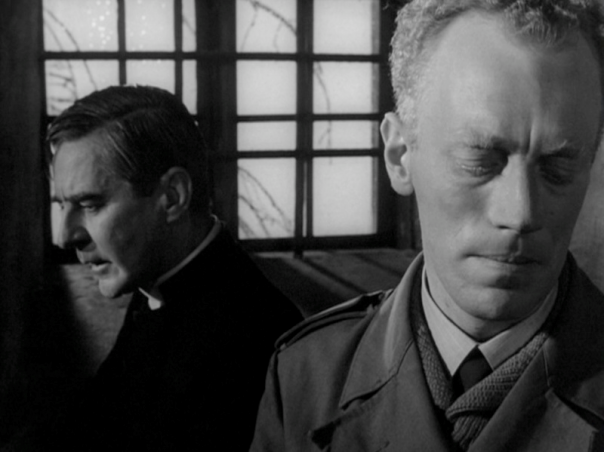
I am reminded of Jons, the squire, in Ingmar Bergman’s film, “The Seventh Seal,” who comes back to Europe with his knight from the crusades, having wasted 20 years of their lives.

“The crusades were so stupid and wasteful, only an idealist could have invented it,” he says.

Yet, my heart breaks when I see such students, because it is my own idealism I mourn for. Without ideals, you no longer have anything to strive for. You give up. That is not good.

Ultimately, you have to come to a compromise, just like our founding fathers.

Idealism turned outward upon the world is a horror. It must be blocked by reasonable people if we are to avoid throwing people into dungeons, chopping their heads off or gassing them.

But idealism turned inwards on ourselves — forgetting the world, but holding ourselves to the highest possible standards — is as necessary as air. Anything less is an abdication.

I don’t like Bill Bennett. I think he is a very unpleasant man. In fact, every time I saw the former education secretary and ”drug czar” on “Face the Nation” or “Larry King Live,” his smug, unctuous face made my blood boil. It still does

There are few faces that scream out louder: sanctimonious prig.

He makes his pronouncements about cultural values with an insulting certainty, speaking as if he had personally been up on Mount Sinai getting the tablets from Jehovah. His dictums are as irritating as those of any name dropper. And if the name he drops belongs to God, it is all the more obnoxious.

It is his certainty that bugs me more than anything else. It is a quality that inhabits a certain kind of male: A certainty that whatever position he takes is the true one, simply by virtue of his taking it. It is a very male thing, and it reminds me once again that testosterone is a hallucinogen.

One of the reasons he makes me so angry is that the cause he has latched onto is an important one. Our values need to be discussed.

But his version of them is deeply distorted by that inflexible certainty.

Bennett knows what the virtues are that we should maintain: He has made a list. In his “Book of Virtues,” he includes self discipline, compassion, responsibility, friendship, work, courage, perseverance, honesty, loyalty and faith.

It seems a measure of Bennett that humility is not among these virtues.

Some of these seem obvious and inarguable. Others less so. And in reality, such categorical expectations cannot be convincingly maintained. There are times when loyalty conflicts with honesty, times when faith conflicts with compassion. If you are a Sufi mystic, self discipline may be just the opposite of what you require. Perseverance is sometimes merely stupidity. Sometimes diplomacy outranks honesty, for the good of all.

And work, as Bennett outlines it, smells suspiciously of the Victorian principle espoused by such moralists as Andrew Carnegie and Henry Ford, who made millions because other people worked long, virtuous hours.

Perhaps the opposite is truly the virtue. At least Henry Thoreau made a convincing case in “Walden.”

”We are made to exaggerate the importance of what work we do,” he wrote. ”But men labor under a mistake. The better part of the man is soon plowed into the soil for compost.”

Americans already work like dogs. It is the quality of their leisure that needs improving.

But it is not the individual virtues on Bennett’s list that I take exception to, but the list itself.

For too often, we think of virtues as being something as simple as a list: A series of words.

Virtue, for Bennett in his book, ”involves rules and precepts – the do’s and don’ts of life with others.” In other words, we are good because we do what we are told.

He reiterates his position in his follow-up book, “The Moral Compass,” by asserting, ”Moral education must involve following rules of good behavior.”

In other words, virtue is etiquette.

Personally, I find this view trivializing, and worse, I suspect it is propounded merely to perpetuate an economic and governing system that makes it possible for Bennett and people of his economic and educational advantage to live comfortable lives.

There are other possible lists of virtues.

The Roman Catholic Church lists the theological virtues of faith, hope and charity; the cardinal virtues of prudence, justice, temperance and fortitude; and the evangelical counsels of poverty, chastity and obedience.

I doubt Bennett considers poverty a virtue.

But whichever list we observe is ultimately forced upon our lives in the style of Procrustes. We are not meant to think about them, but to obey them.

Yet, rules are always insufficient. There are always circumstances that require our disobeying.

William Blake, for instance, wrote in his “Marriage of Heaven and Hell” how Jesus of Nazareth broke each of the 10 Commandments, enumerating them, one by one. Jesus was good, Blake says, because ”Jesus was all virtue, and acted from impulse, not from rules.”

The meaning of the word ”virtue” has changed over time. If it now means righteous behavior, it once meant something less rigid.

For the Greeks, and later the Romans – who gave us the word – virtue meant to be yourself in the utmost. ”Virtue” didn’t take on its acrid sanctimoniousness until the Victorian age, when it was used to approve of behavior that furthered the goals of colonialism and jingoism.

For the Victorians, virtue meant not having sex.

The word ”values” that is bandied about so glibly by politicians now has also undergone such a change.

Our values are those things we take as the rock-bottom basic truths that experience gives us, that we can count on and therefore can act in the world with the expectancy that particular behaviors will result in particular outcomes.

In other words, our values are not written down on paper somewhere, but found in the world around us, the world we experience, the lives we live. And instead of turning out to be as vaporous as the words of a list, values are as solid as the oak tree that grows in the yard. Indeed, they may be the oak tree. Or the birds roosting in it.

If a so-called value handed down to us is proven false by experience, we must either forsake the value or live an inauthentic life. Many of the values Bennett would foist on us no longer ring true. Perhaps some still do. But we must find them out for ourselves. It is one of our life’s tasks.


It is a commonplace that America is materialistic, that it grasps after money and wealth and lacks the spiritual values it used to have.
Of course, that nostalgic view ignores that Americans have always chased wealth: It’s built into the Constitution.
But more importantly, it ignores the fact that America isn’t really materialistic at all, and in fact, is largely indifferent to the material world.
If we were really materialistic, we would never tolerate walnut-woodgrain plastic.
No, the physical composition of their existence is simply not a high priority for most Americans. Yes, they are after wealth, but wealth isn’t a material value, but a spiritual one.
When we say Americans “worship the almighty dollar,” we aren’t saying that they value material objects over spiritual ones, but rather that they place worth on one set of spiritual values instead of another, more worthy set.
Money, after all, isn’t a physical object. It isn’t material. It is no more physical than an inch or a pound. It is a measuring item, to measure wealth.
Real wealth is the possession of useful or meaningful things. To own land, or to grow 40 acres of artichokes is to possess wealth. You can eat artichokes; you can’t eat money.
Money cannot be worn, it cannot be used to build with. It must be translated back from its symbolic existence to a material existence by spending it.
I’m not saying that money isn’t nice to have around. But that it is a mental construct, not a physical reality. If we want money, it isn’t because sewn together, dollar bills make a nice quilt.
Even the things Americans spend their money on tend to be owned for spiritual rather than physical reasons. If we want to own a BMW or a Lexus, it isn’t because these are better cars than a Honda or an Ford — though they may be (I’m not convinced) — but because they are status symbols that let other Americans know where we rank on the totem pole. Armani suits and Gucci bags are not something most Americans really enjoy on a physical level. They are the civilized equivalent of the eagle feathers the chief wears, or the lion-ruff anklets worn by the Zulu leader: They confer prestige and denote status.
These are spiritual values.

As a matter of fact, America would be a whole lot better off if it were more materialistic. The planet is bursting with stuff: It all has a texture, a feel, a smell, a taste, a sound. If we were materialistic, we would be aware of how much richness the material existence affords, and we would revel in it. We would be mad — as Walt Whitman says — for us to be in contact with it.
And what is more, the deeper we involve ourselves in the physical world, the more spiritualized we will become — that worthy spirituality. It is because we are so unmaterialistic that our environment suffers so. We don’t value the physical world we live in. It doesn’t bother us that there are fewer birds singing in the morning, or that codfish are disappearing.
In part, this is a remnant of the contempus mundi that was fostered under Medieval Christianity. It is that suspicion of the physical world that the Old World monks felt would seduce them from the righteousness of prayer and ritual.
We have inherited the contempt, but without the prayer. It leaves us in a hollow place.
As an adult I have come not to trust anyone who doesn’t love the physical world.
I don’t trust him to make policy choices about oil drilling or lawn seeding. I cannot imagine how it is possible not to fall in love with the things of this world, but I see just that happening all the time.
I pick up the lump of spring earth and squeeze it in my fist to judge whether it is time to plant my potatoes. I listen for the birds globing and twisting as they rise from the trees in the morning. I look for the light caught in the cholla spines and the twill in my gabardine. There is velvet in heavy cream and scratchiness in wool blankets.
The physical sensations make us more aware, more awake. The love of the physical world keeps us from becoming dullards. Living in a world of symbol and status dulls us. At its worst, it leads to ideology.
Would that America really were a materialistic society.