Kitao Shigemasa “Birds in Yellow Plum”

Recently I posted a piece about the history of naturalist illustration. It was a subject so huge — and with so many gorgeous images, that I could not begin to include some of my favorite things from the thousands of images I collected. 

For instance, I had to rule out all of the non-Western art, and some of my favorite non-scientific animal art. And so, I felt I should write a follow-up piece for a few of the leftovers. 

Most of the art I covered was meant to illustrate botanical collections in an era when new plants were constantly being added to the list of recognized species, and were meant to accompany scientific books written by specialists.


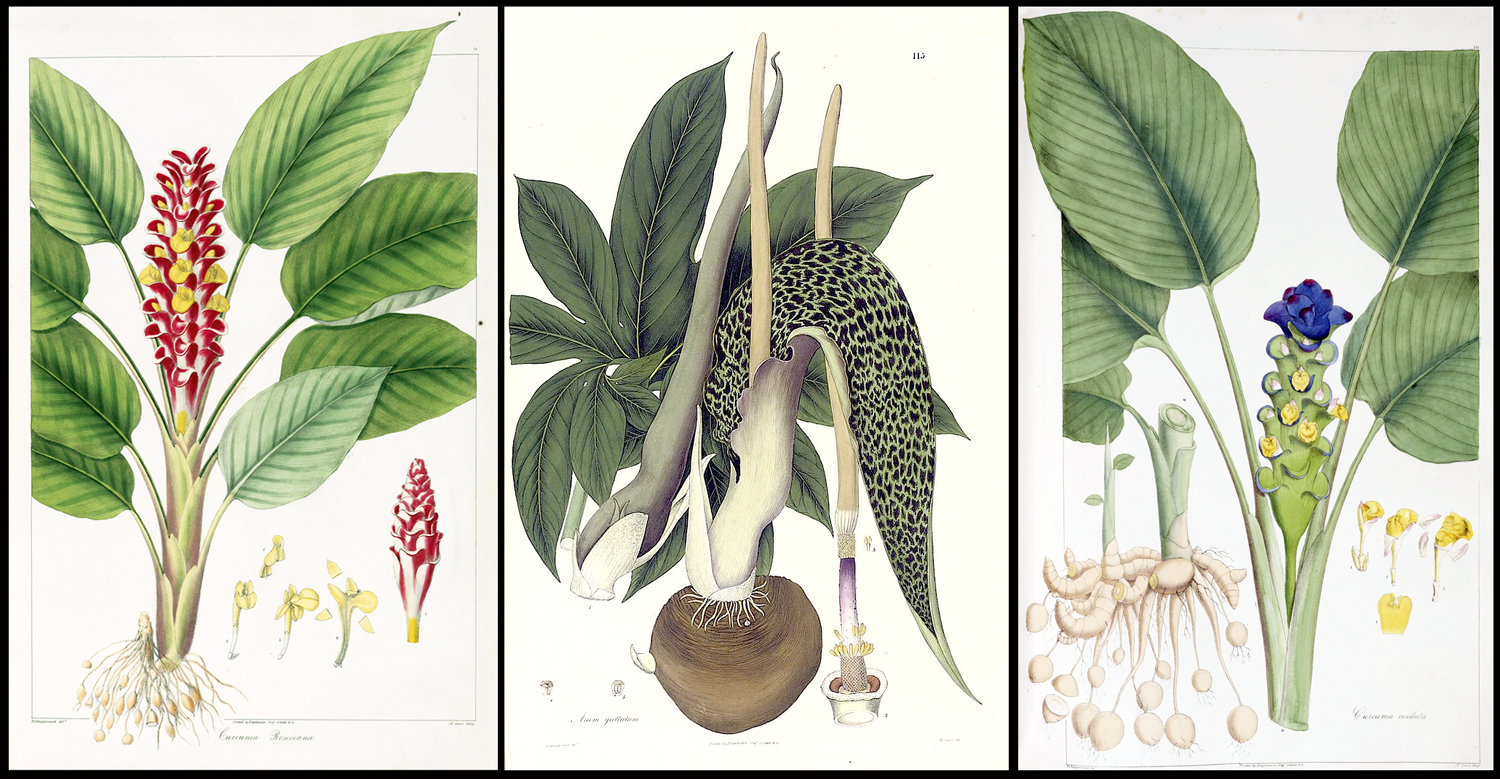
From “Plantae Asiaticae Rariores” of Nathaniel Wallich

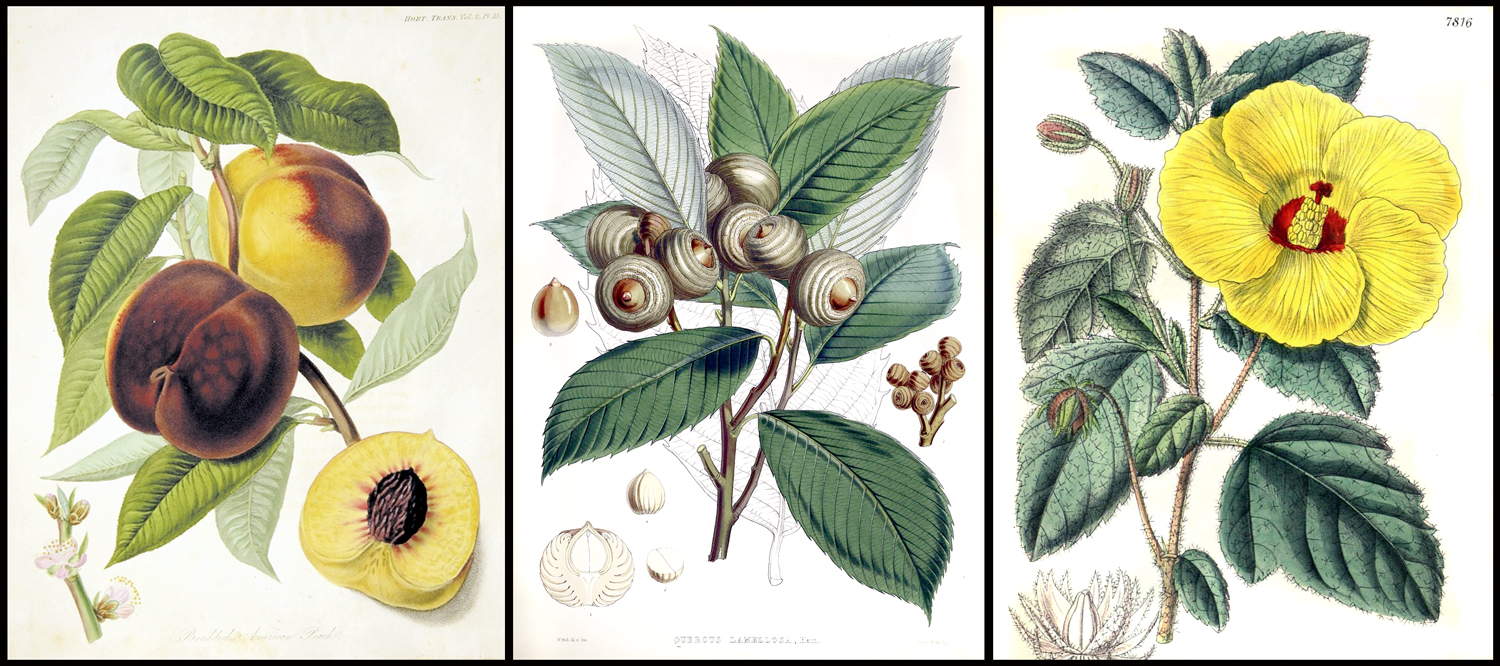
For instance, there was Nathaniel Wallich, the Danish-born botanist who collected plants in India and published his Plantae Asiaticae Rariores in three volumes from 1830 to 1833, with illustrations by a half-dozen artists, both Indian and European. 

From “Treasury of Nature,” Albertus Seba

The collection I missed most in the earlier essay was Albertus Seba (1665-1736). His interest was less scientific and more one of abject curiosity. He collected tons of oddities from around the world in his “curiosity cabinet,” and in 1734 published his Locupletissimi Rerum Naturalium Thesauri Accurata Descriptio et Iconibus Artificiosissimus Expressio per Universam Physices Historiam (“A Careful Description and Exceedingly Artistic Expression in Pictures of the Exceedingly Rich Treasury of Nature Throughout the Entire History of Natural Science,” illustrated from beginning to end with engraved plates. 

Crab from Albertus Seba

The original 4-volume publication included 445 illustrations and Seba’s collecting helped Carl von Linne in his binomial classification system. 

But, there are tons of bird, plant, and animal pictures meant for the general public, mostly throughout the 19th century. 
Wood engravings of plants

Unfortunately, most of those artists worked anonymously, pumping out pictures for books, magazines and posters. Animals, especially those of exotic locales, were always popular pictures with the public. And most of those were made in the process called wood engraving — a bit like woodcuts, but made with a burin on the end-grain of dense hardwoods and printed very like a copper plate engraving. 

Wood engravings of animals

The best-known wood engravings were probably the book illustrations of Gustave Doré. But the technique was nearly ubiquitous in the Victorian era. 

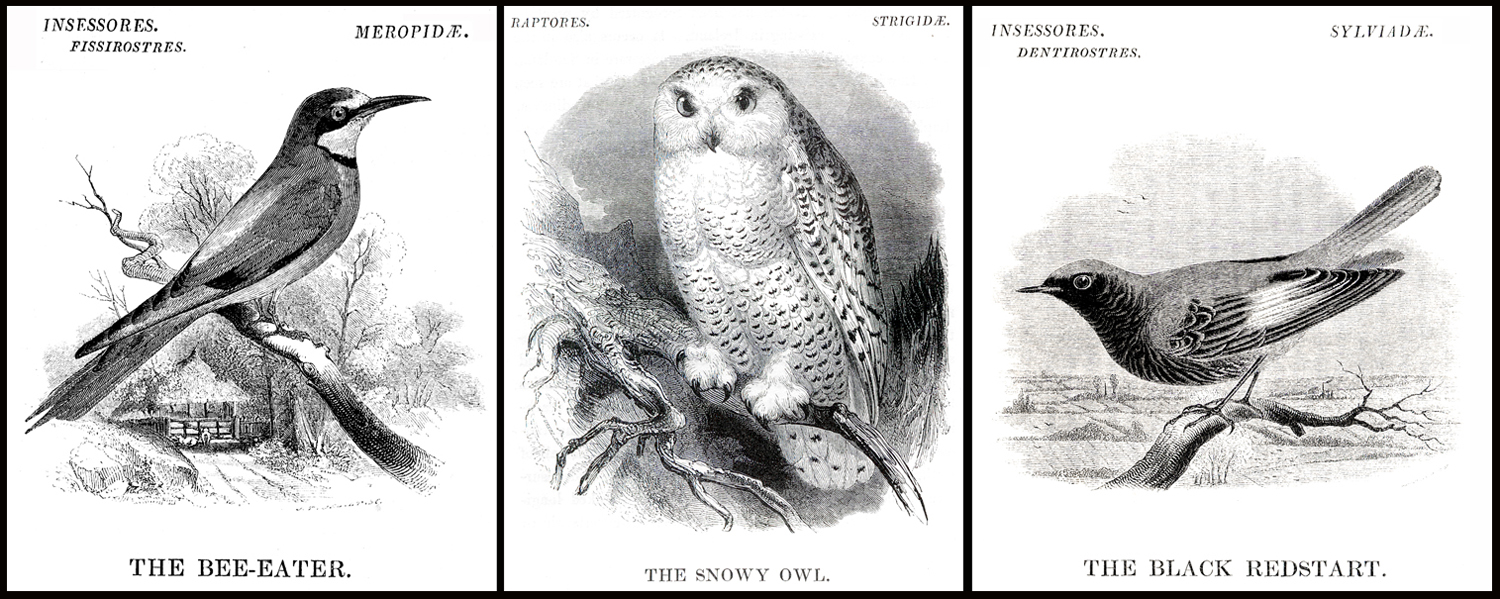
From “A History of British Birds” by William Yarrell

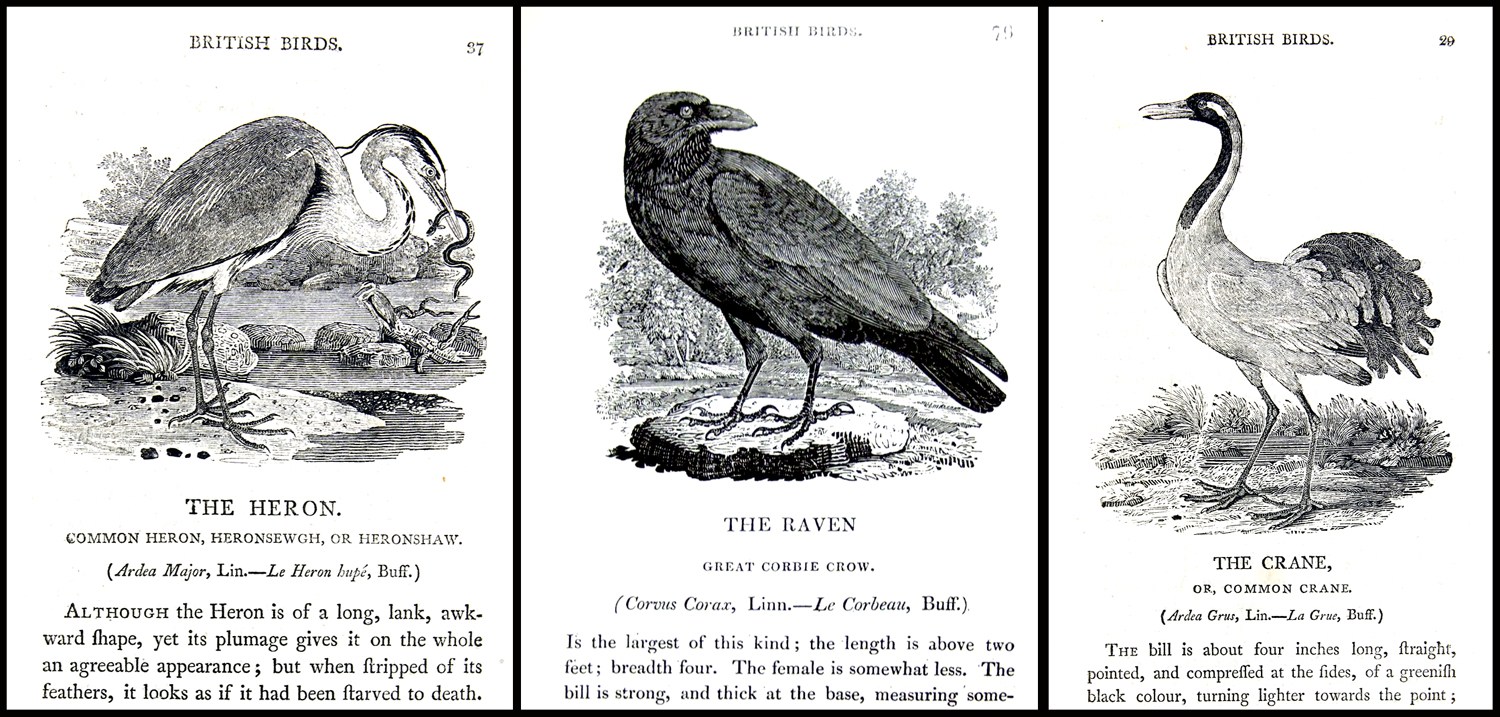
Wood engravings occasionally accompanied serious scientific work, also, such as those in A History of British Birds, published in 1843 by William Yarrell (1784-1856). Its wood-engraving illustrations were carried out by two artists, Alexander Fussell and John Thompson. 

Such art is meant primarily to identify plants and animals, but sometimes an artist’s intent is merely to look closely at and study his subject. And, as with the botanical illustration, to separate the subject from its context to better see it on its own. 

Drawings by Leonardo da Vinci

Artists have always done this, often in sketches, sometimes as studies for larger, more serious and integrated paintings, sometimes purely for its own sake. Leonardo drew lots of them. 

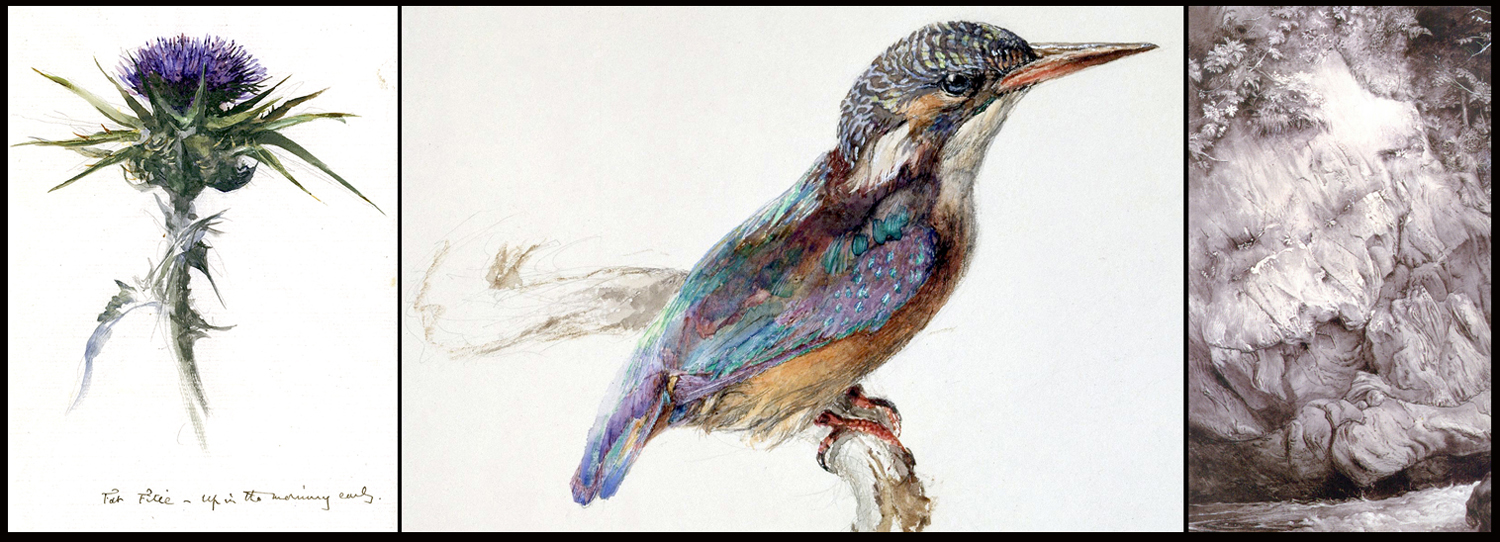
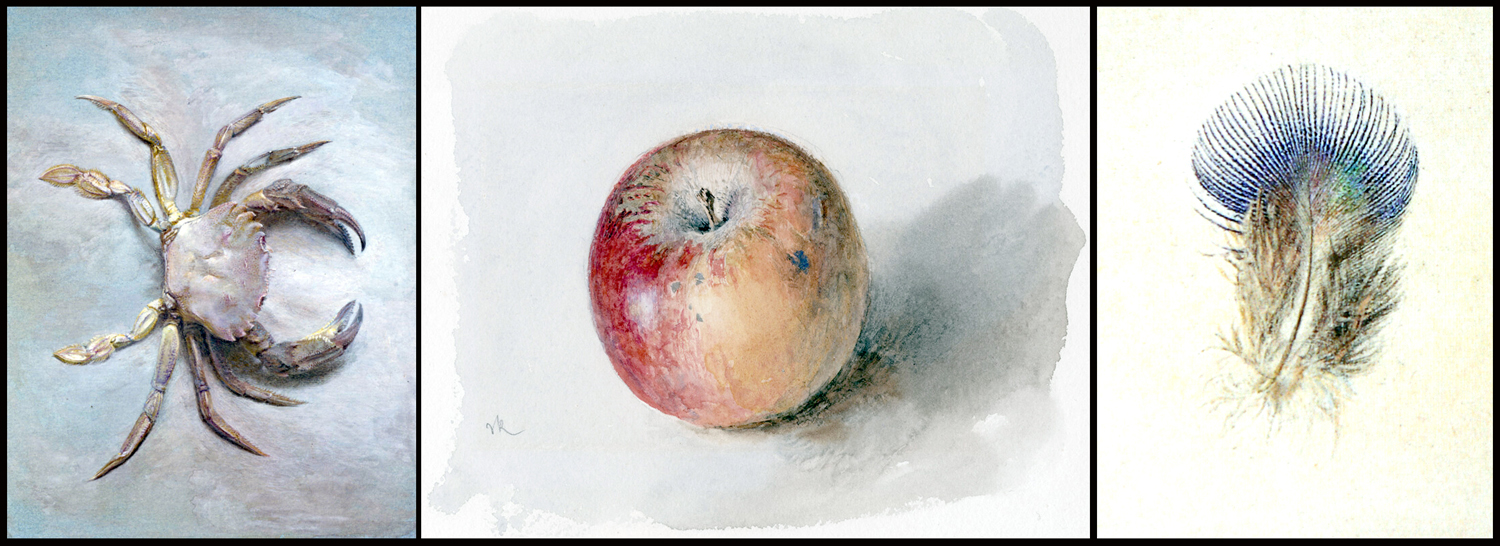
Drawings by John Ruskin

And it was the very point that critic John Ruskin made in Victorian times for the art of drawing: He felt that sketching forced close observation and that essence was found in detail. He aimed his eye at plants, birds, even rock formations, to come to know them better. 

Drawings by Ruskin

The most significant class of nature art left out of my original essay are the many kachō-e prints and paintings by Japanese artists, ranging from the 17th century to the 20th. I was sorry to leave them out. 

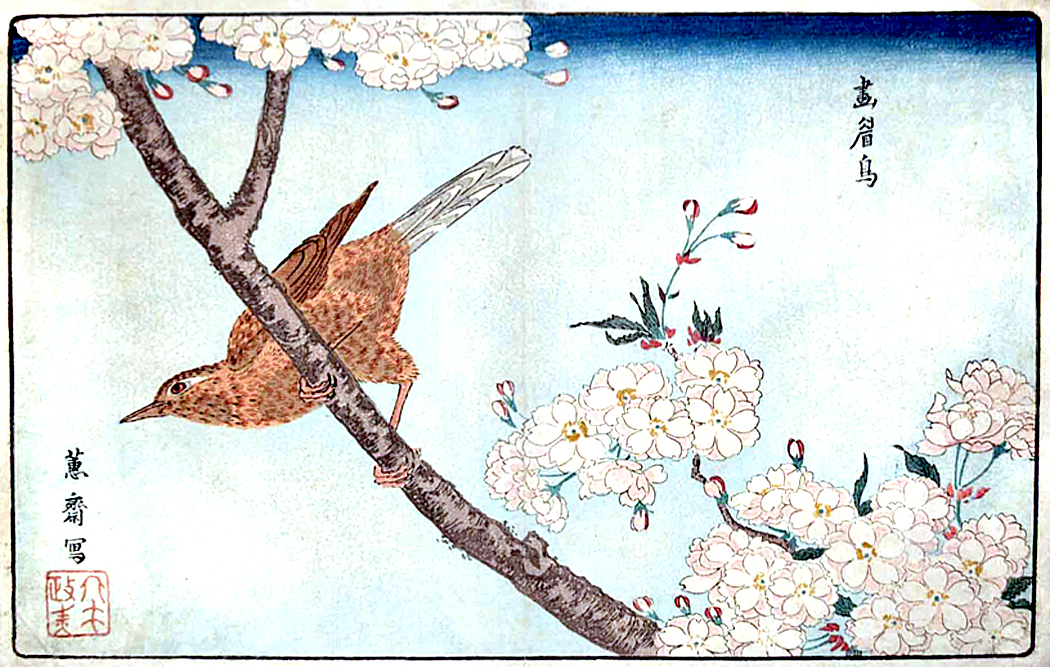
Masayoshi, “Gray Thrush” 

Kachō-e are so-called “bird and flower” pictures, although the subjects include fish and insects, too. Their ancestry runs back to huaniaochua (“bird and flower” paintings) popular in Chinese beginning in the Tang dynasty (AD 618-907). 

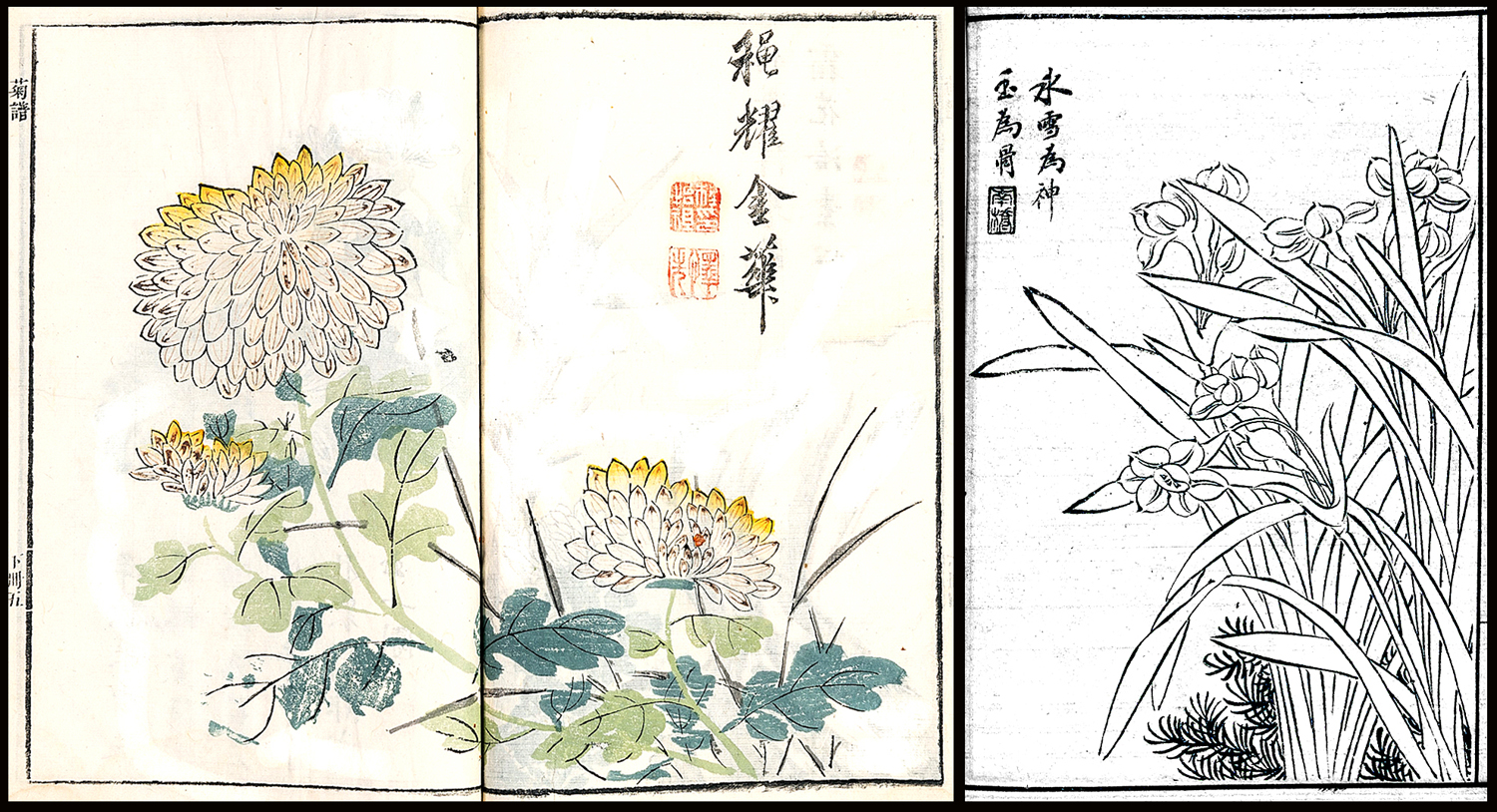
The work influenced much of art throughout Asia, and came to Japan, popularized by translations of the Chinese classic instruction book, Manual of the Mustard Seed Garden, published in parts from 1679 to 1701. The final chapters instruct how to best paint huaniaochua-style art. 

Pages from “Manual of the Mustard Seed Garden” 

The Chinese influence was felt all through the continent, not only in Japan and Korea, but as far west as Persia, where it inspired the golomorgh (“Bird and Tree”) paintings popular in the Safavid period (1501-1736).

Golomorgh art

 In Islamic art, the paintings take on an allegorical bent, with the birds (sometimes butterflies) standing in for the lover and the flower for the beloved.

But by far the biggest influence was in Japanese art, and the popular ukiyo-e style, mostly woodblock prints made from the 18th through the early 20th century. Ukiyo-e (“Pictures of the floating world”) were popular images of famous actors, courtesans, historical figures, landscapes, genre scenes — and nature. The nature genre was called kachō-e, or “bird and flower pictures.” 
One of the early masters of the form was Kitagawa Utamaro (1753-1806). He published a Book of Birds ca. 1790 (the dating is often uncertain, as records were not always kept, and popular books were published and republished, often with new plates, or new cuttings of old designs — precise dating can be guesswork). 

Each image was matched to poetry, written in elegant calligraphy on the empty parts of the image. For this one, named for the mejiro, or Japanese White-Eye (on the left) and the enaga or Long-Tailed Tit (on the right) has two poems. The first: “Pushed out of his honey-filled nest following a fight, the white-eyes bird seems not to mind at all,” while the other says “Come and let yourself be mine; For us the nights will be as long as the tit’s tail.”

Utamaro followed with a Picture Book of Selected Insects, about the same time, which showed dragonflies, beetles, bees, grasshoppers and other buggy life on beautifully drawn leaves and flowers. When Viking Press published a beautiful facsimile edition of the book in 1984, they must have worried about the title, so they renamed it Songs of the Garden. Much more attractive. 

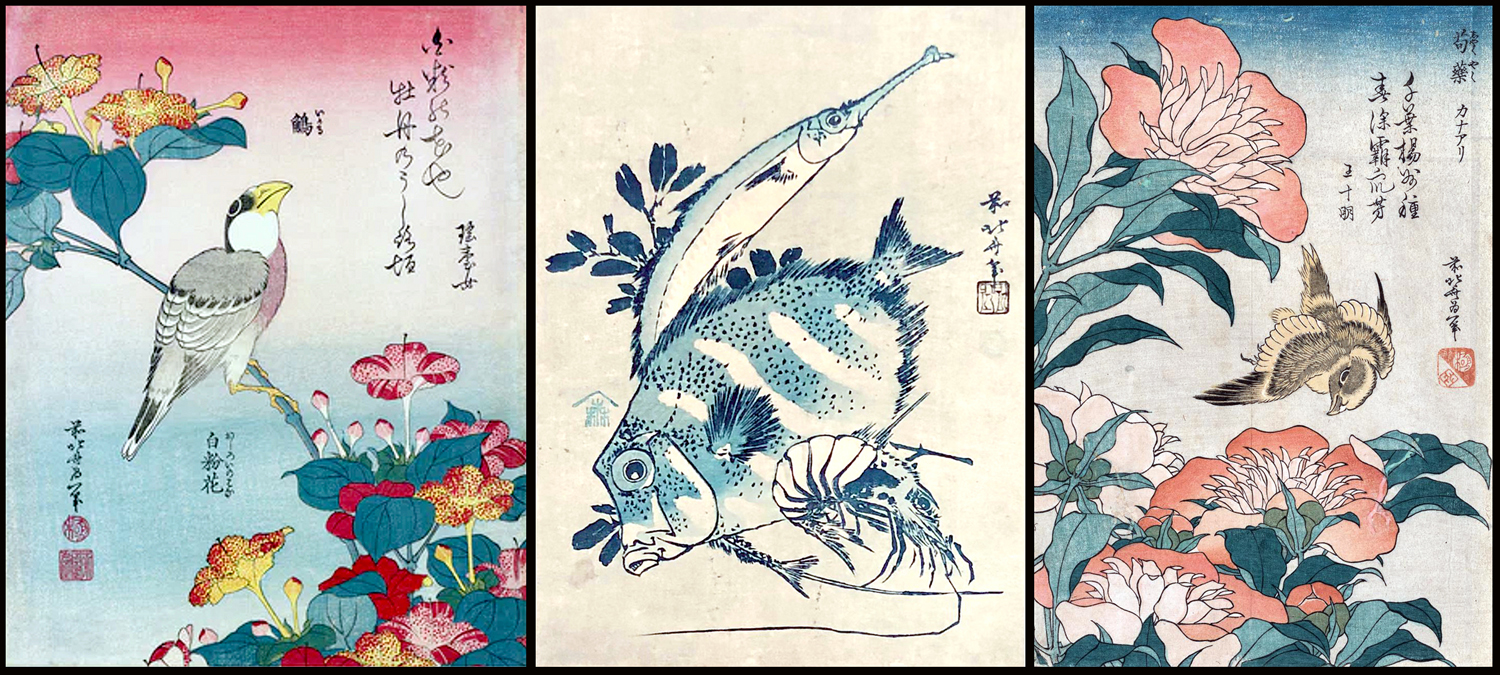
In the west, the two most famous ukiyo-e artists are Hokusai and Hiroshige, near contemporaries. They both made kachō-e prints. 

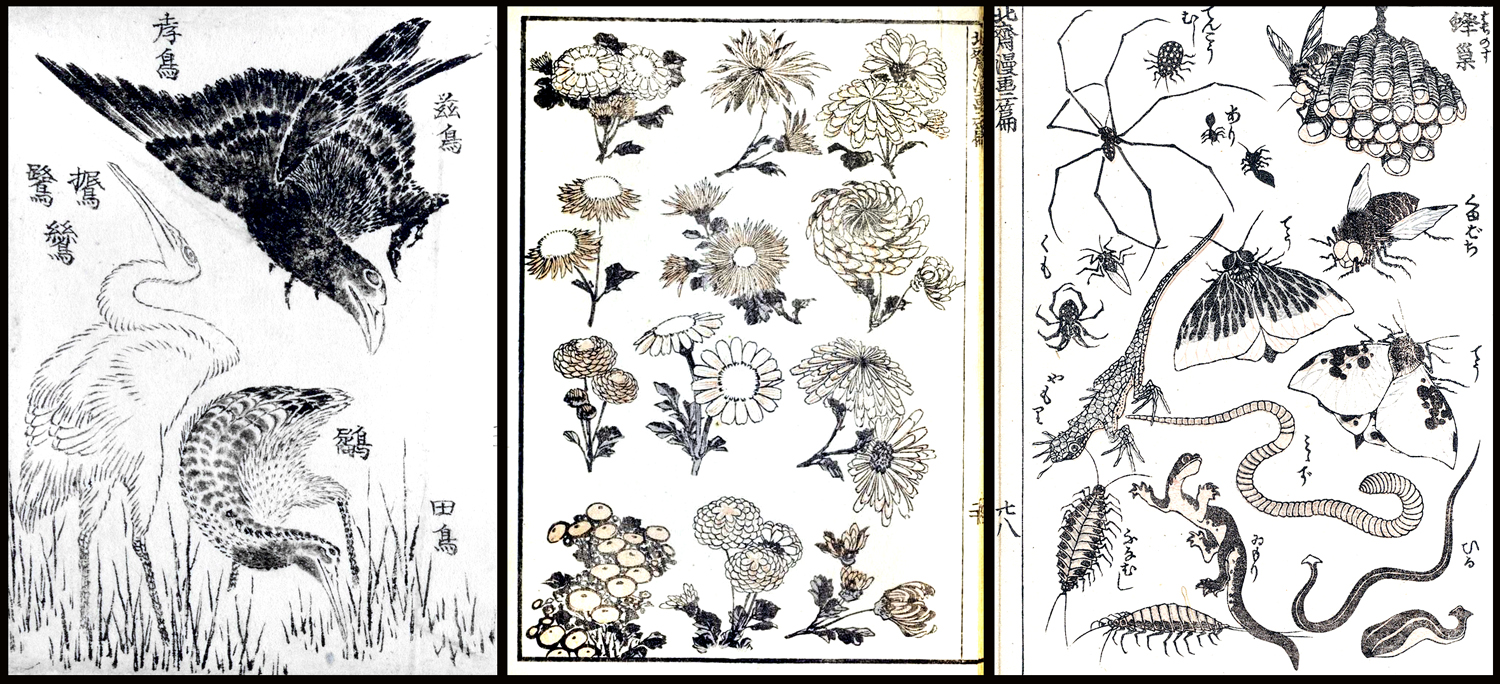
 Katsushika Hokusai (1760-1849) called himself “Old Man Mad with Painting,” and worked in every conceivable genre. He was a one-man image factory. His curiosity spanned everything he could come in contact with. He even experimented with linear perspective after coming in contact with European art. 

Hokusai manga

In his sketchbook, or manga, he made pictures of everything he saw. The black-and-white drawings were made into woodblock prints. He tried just about everything. (Most famous, of course, for his “Great Wave off Kanagawa,” which has been reproduced endlessly.)

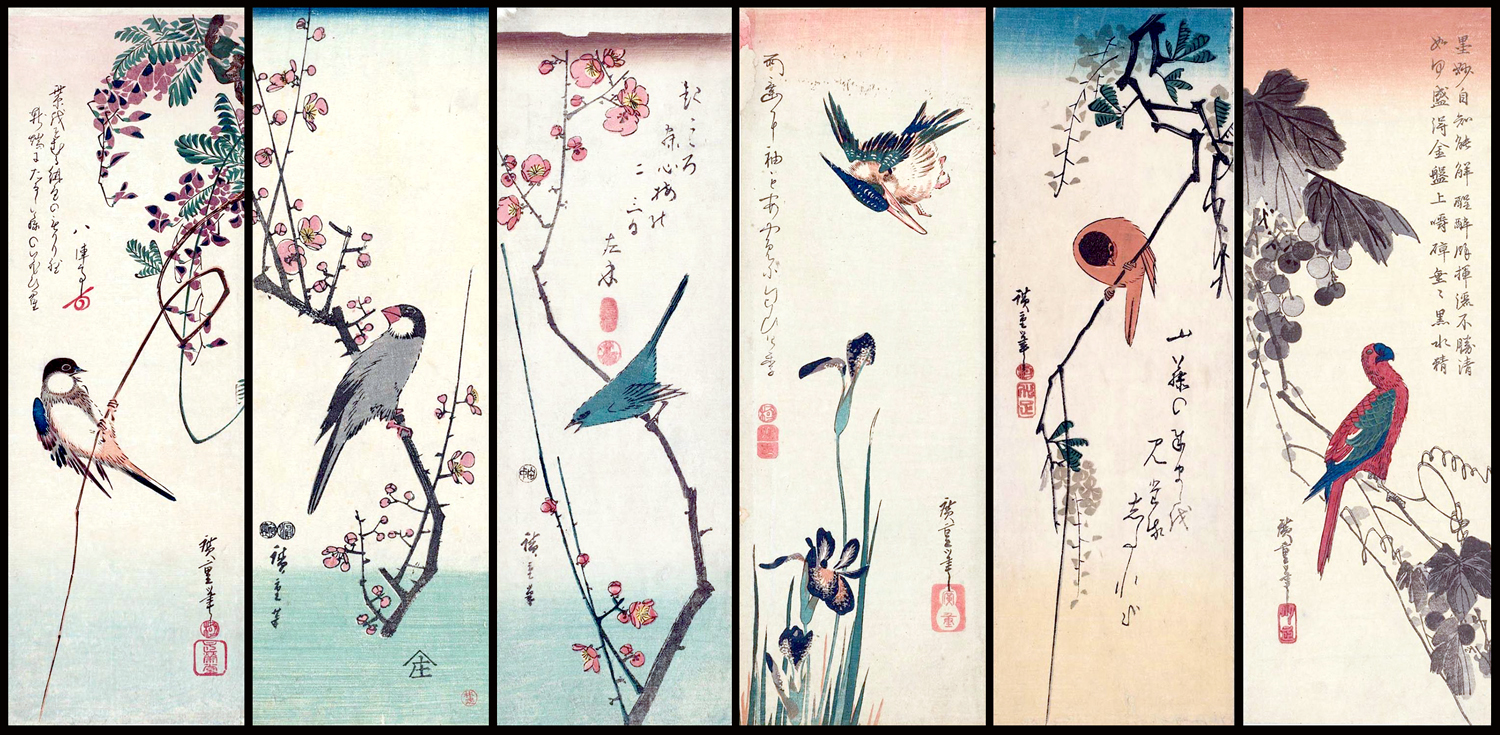
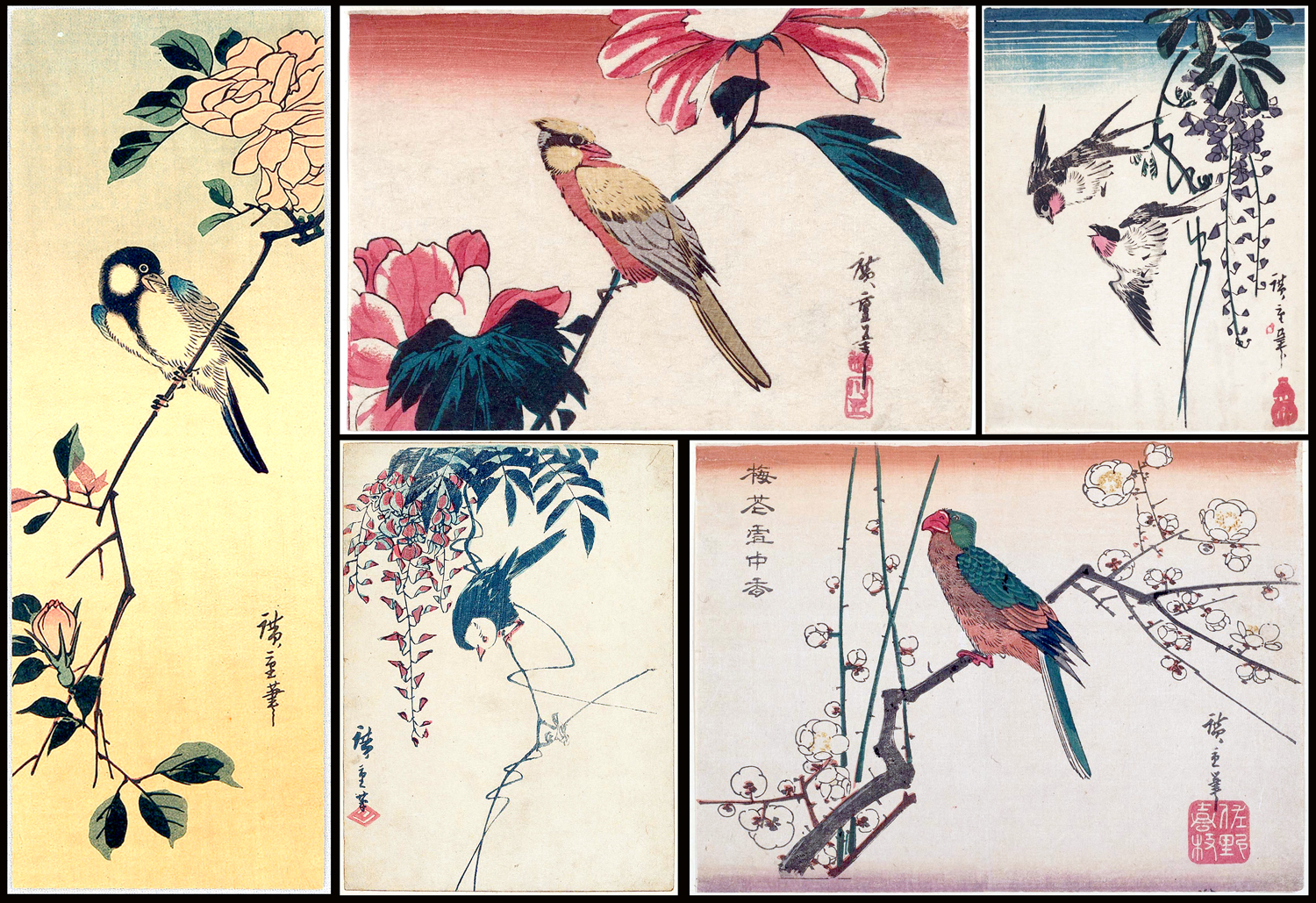
There is a proverbial saying in Japan: “Hokusai is the greater artist, but I love Hiroshige more.” It is hard not to be entranced by the atmospheric and almost Impressionistic work of Utagawa Hiroshige (1797-1858). Known for his landscape images, he also made a pile of bird-and-flower prints. Most often in the elongated vertical format known as hosoban

There are so many of them, it is hard to choose just a few examples. 

But he also published several books of fish and sea creatures, a “small” book of fish and a “large” book, each titled as such. I cannot help but post as many of Hiroshige’s images as I can. They are so seductive and beautiful.

It is usually said — by snooty connoisseurs — that ukiyo-e standards began to decline in the 19th century and the genre ended by the 20th. But instead, I believe it simply changed with the exposure of Japanese artists to the rest of the world with the Meiji Restoration (1868). Where once Japan’s culture was insulated from the outside, it now opened its arms to new influences. 

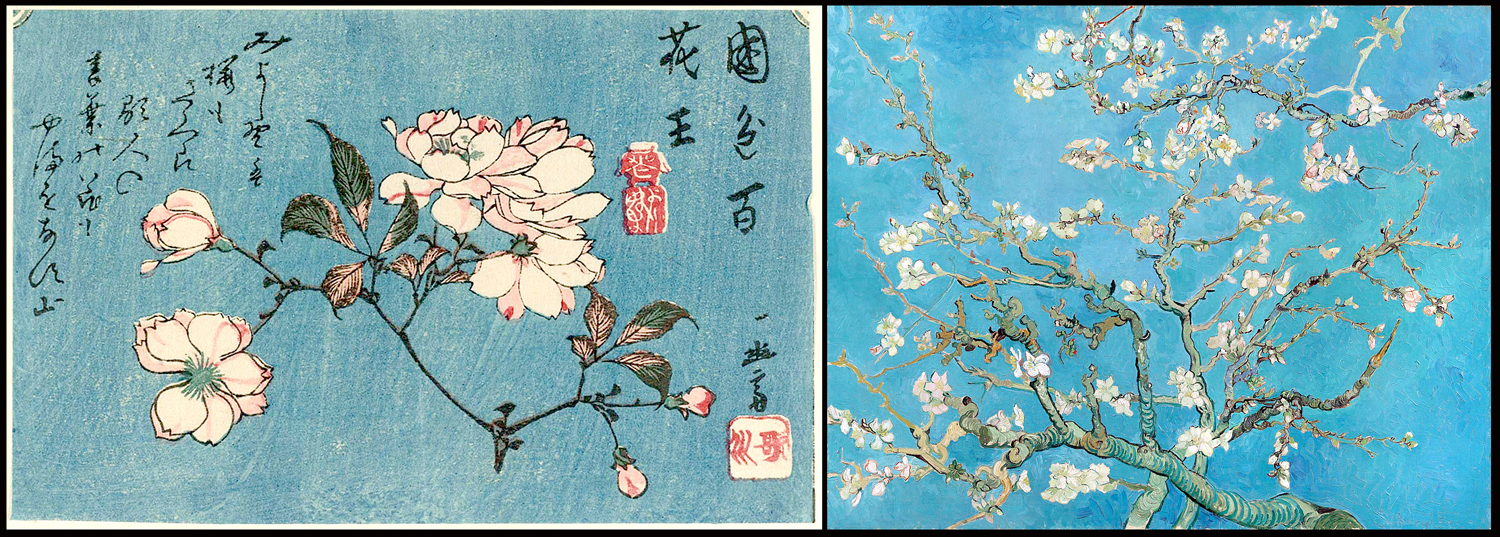
Hiroshige and Van Gogh

(The artistic fertilization went in both directions, as ukiyo-e art began arriving in Europe and artists such as Van Gogh were blown away by the freshness and style of the Japanese prints.) 

And kachō-e changed from a popular and demotic art form to one created by new designers who saw themselves less as craftsmen and more as western-style “artists.” The esthetic, called shinsaku-hanga,  became more refined, if less adventurous. It was a retrospective art, honoring the masters and styles of the past. 

Birds by Kono Bairei

And artists such as Kono Bairei (1844-1895) continued the birds-and-flowers tradition, but with a turn to more naturalistic drawing, albeit in a stylized setting.

Bairei fish

He also took on fish. 

The work of Imao Kainen (1845-1924) maintains that almost-western realism in highly decorative compositions.

By Imao Kainen

The most famous of the shinsaku-hanga artists was probably Ohara Koson (1877-1945). He was a teacher at the Tokyo School of Fine Arts, and met American scholar Ernest Fenollosa, who encouraged him to export his bird prints to America. His work now sits in most American art museum collections. 

By Ohara Koson

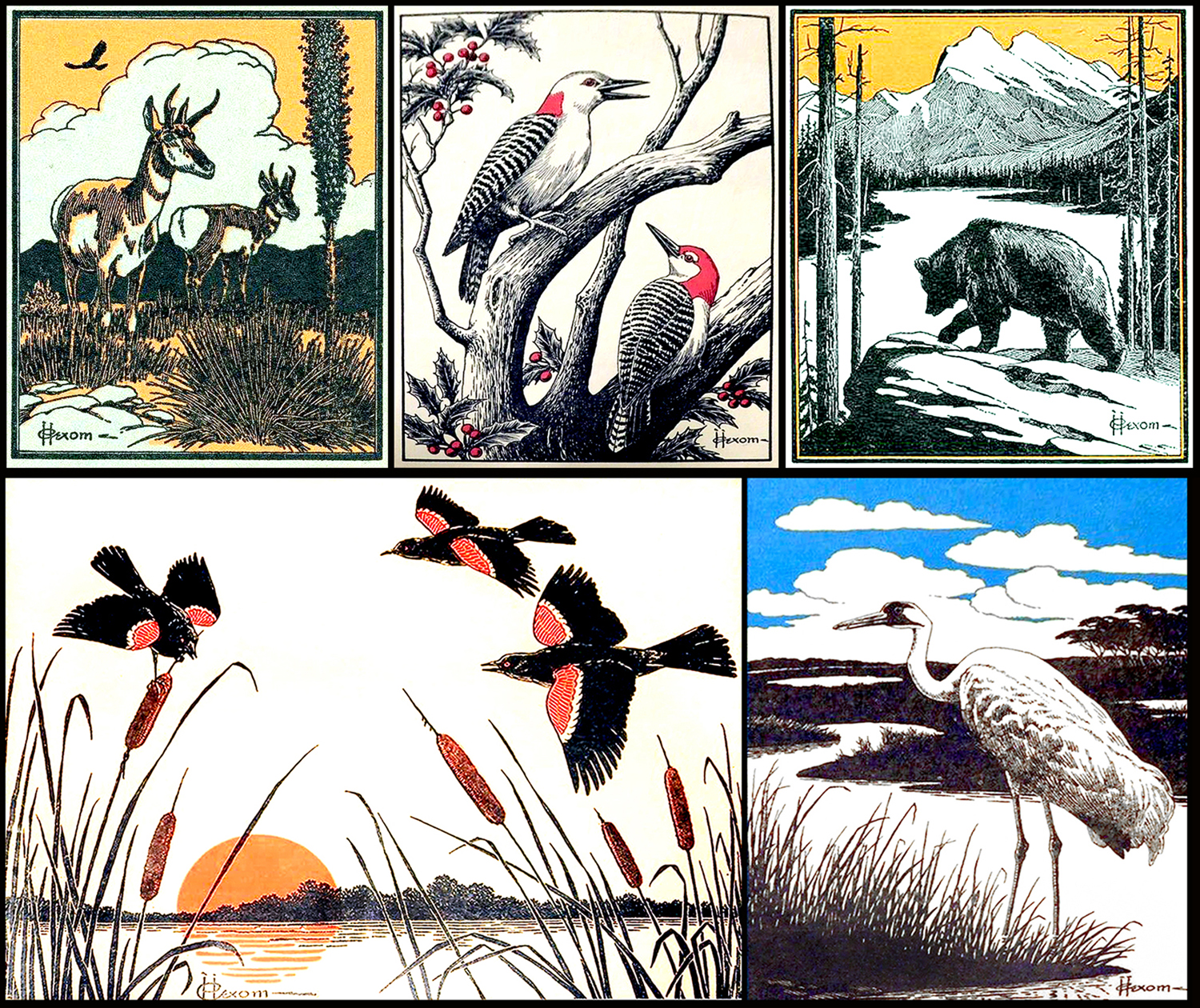
It wasn’t only Van Gogh who responded to the Japanese style. One of my favorite and largely unknown illustrators of natural history was Charles Philip Hexom (1884-1959). He was a teacher at Luther College in Dacorah, Iowa, and made many cover illustrations for Nature Magazine from the 1920s into the early ’50s. 

The use of flat outlining and spot-color were common to both ukiyo-e and Hexom’s covers. 

I don’t know why the work of Charles Hexom hasn’t been collected and published in a book. He seems to have been forgotten. He deserves to be remembered.

Beatrix Potter watercolors

Nature art may be a sub-genre in the world of fine art, but it is a fertile one. One finds captivating and beautiful illustration everywhere. Beatrix Potter (1866-1943) before she became a children’s author, used her drawing talent to study nature. She became an expert on mushrooms and fungi. One of her admirers was the Pre-Raphaelite artist Sir John Everett Millais, who told her: “Plenty of people can draw, but you have observation.”

Again, I have left out so much. So, just as a little P.S. to this tiny essay, I want to mention the early paintings of my brother-in-law Mel Steele, who could paint rings around anyone even as a boy and moved on to bigger things and a long career.

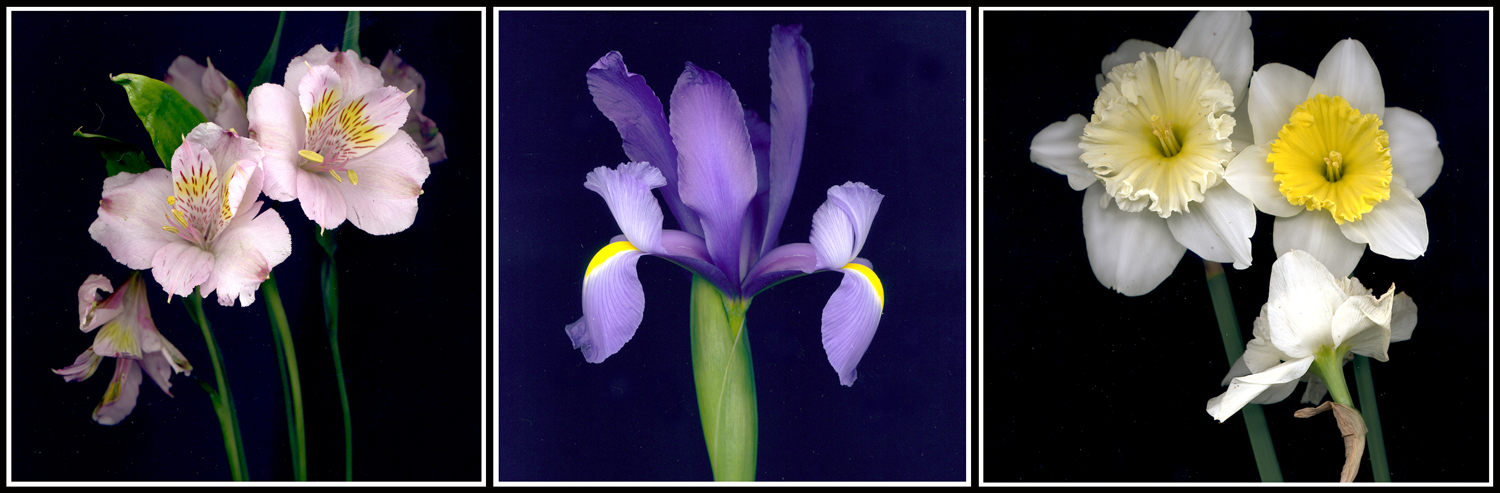
And my own minor essay into the field as a photographer. I found that I could put live flowers on my flatbed scanner and get beautiful prints that could be reproduced in fine detail at almost any size. 

Friesia, iris and daffodils 

I have made many photographs of flowers, birds and insects, not so much to create art as to focus my attention on the world around me. Paying attention is, I believe, the prime directive for life.

Click on any image to enlarge

Nature is messy. I mean that in a good way. But it is all over the place, hugger-mugger, one thing on top of another and with the edges of one thing blending into that of the next. 

And humans have tried their best to regularize and organize all that mess since the beginning of time, naming plants and animals, setting up categories, deciding which bits might be edible, which poisonous, which to take when you have aches or fevers. 

One of the primary means of accomplishing this is visual. Certainly the main method is verbal: the naming and sorting. But a mere word description of a plant can be so convoluted as to be confusing on its own. Take this description of the black oak, from E. Lawrence Palmer’s Fieldbook of Natural History:

Quercus velutina: Tree to height of 125 ft; trunk diameter, 4.5 feet. Upper branches ascending, lower, horizontal. Bark dark, deep-fissured between thick ridges that are cross-fissured. Inner bark yellow, bitter. Twigs stout, angular with sharp-tipped angled buds with dirty-white to yellow fuzz. Leaves to 6 in. long and 4 in. wide, highly variable, thick.  Flowers staminate, in hairy catkins, to 6 in. long. Pistillate, on short, hairy stalks. Fruit and acorn maturing in second season.” Etc. And even that is written in simplified language for the lay person. The scientific literature is close to unreadable. And would this help you find a black oak in the woods? 

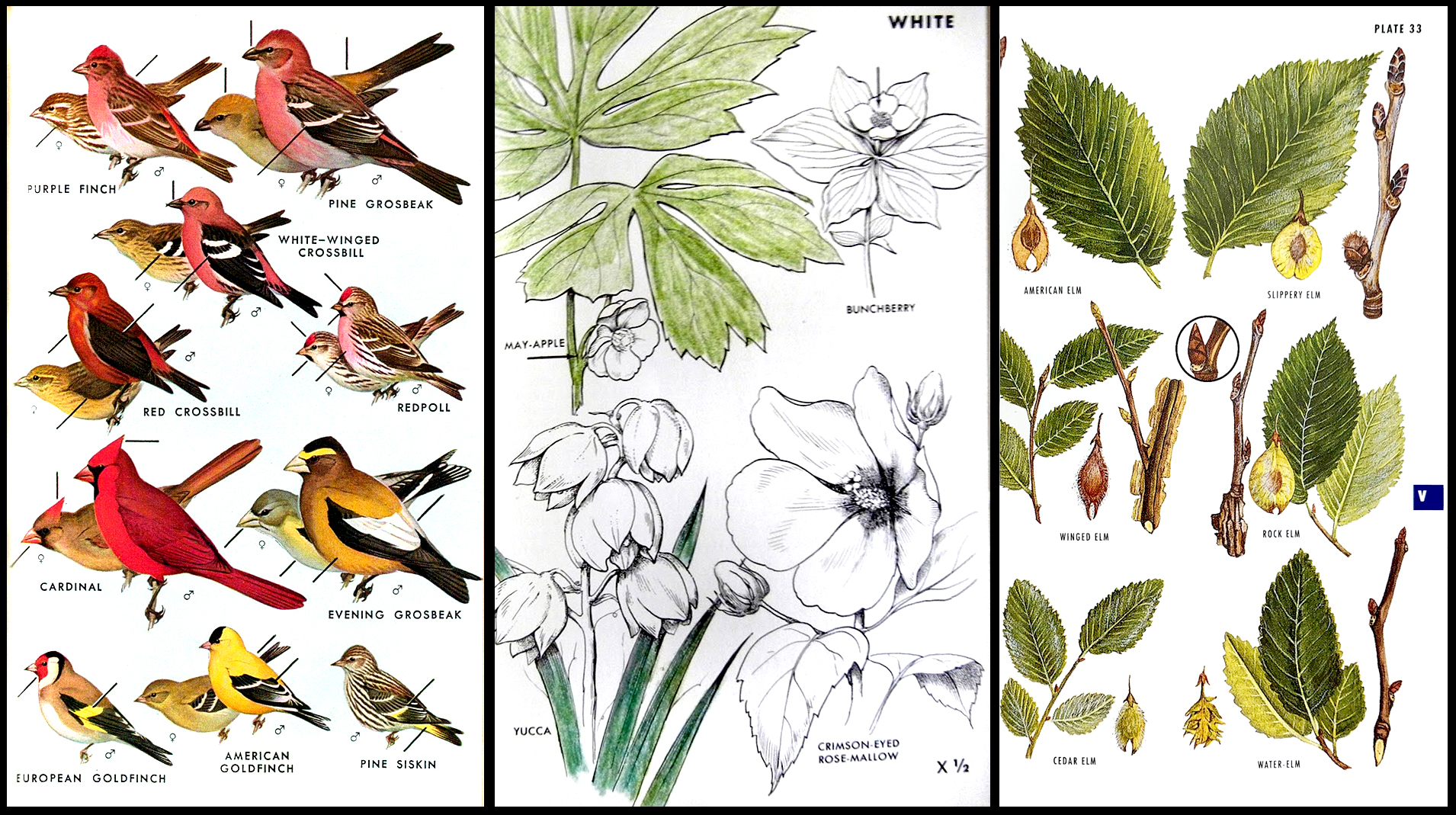
Wouldn’t it be easier, quicker, better, just to have a picture? Roger Tory Peterson thought so when he came up with the idea for his now-ubiquitous field guides. “There are at least 60 ways to say that a plant is not smooth, that it has fuzz, hair, prickles or roughness of some sorts,” he wrote in the introduction to his Field Guide to Wildflowers. And he lists them, including such arcane words as bullate, canescent, coriacious, echinate, flocculent, glanduliferous, hispidulous, lepidote, verrucose, and villosulous. It takes a lexicographer rather than a botanist to navigate such things. 

“That is why the best of keys often fail. … But, I am afraid, most of us belong to the picture-matching school.” Peterson began in 1934 with his A Field Guide to the Birds of Eastern and Central North America, which he updated with new editions — and new illustrations — until his death in 1996. The book has been immensely popular and remains so. Peterson branched out with a series of such field guides, covering wildflowers, trees, seashells, insects, fish, mammals — now more than 50 such guides, most written by specialists, while Peterson remained general editor until his death in 1996. 

Each book relies on drawings of the animals or plants in question. 

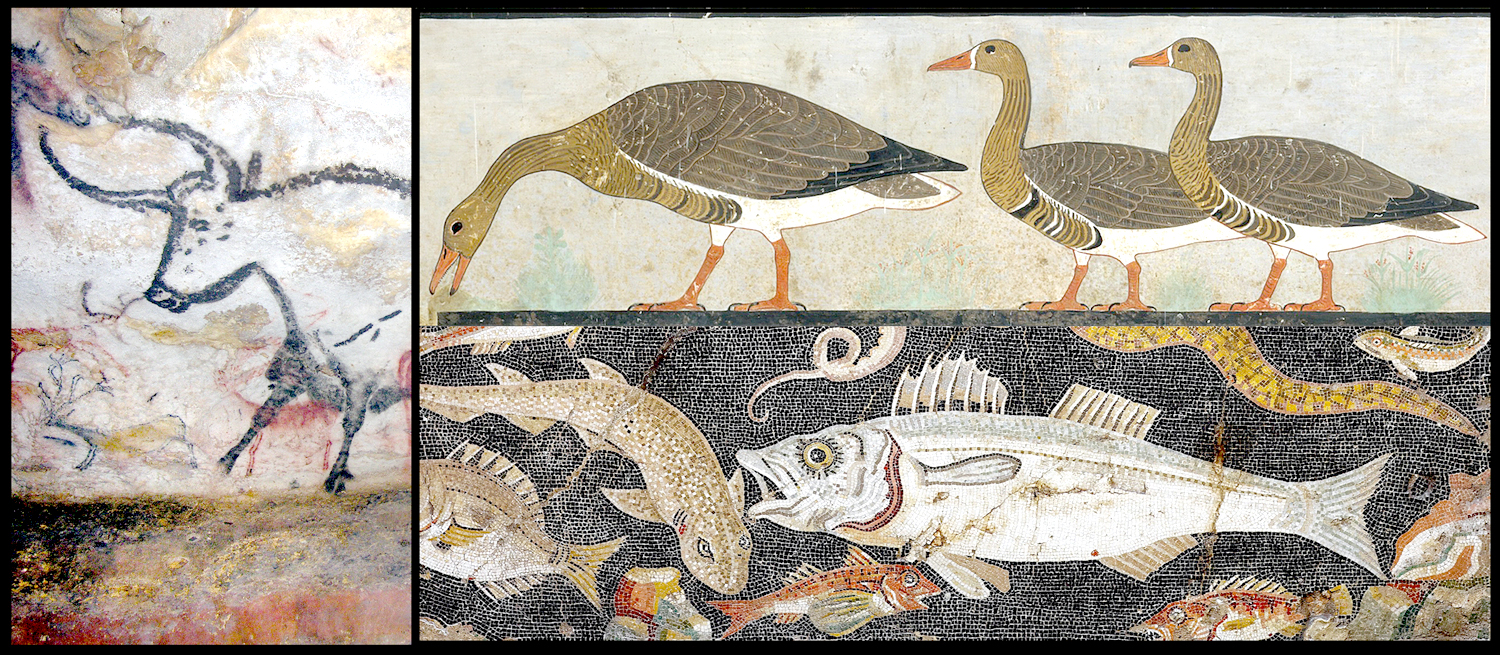
Of course, humans have been making pictures of the natural world since the beginning. The animals drawn the the caves of Lascaux date back something like 30,000 years. Egyptians painted notably realistic animals, such as the famous geese from the Chapel of Itet at Meidum from about 2590 B.C. Romans were fond of animal mosaic floors in the villas, and some are so accurate you can identify species. 

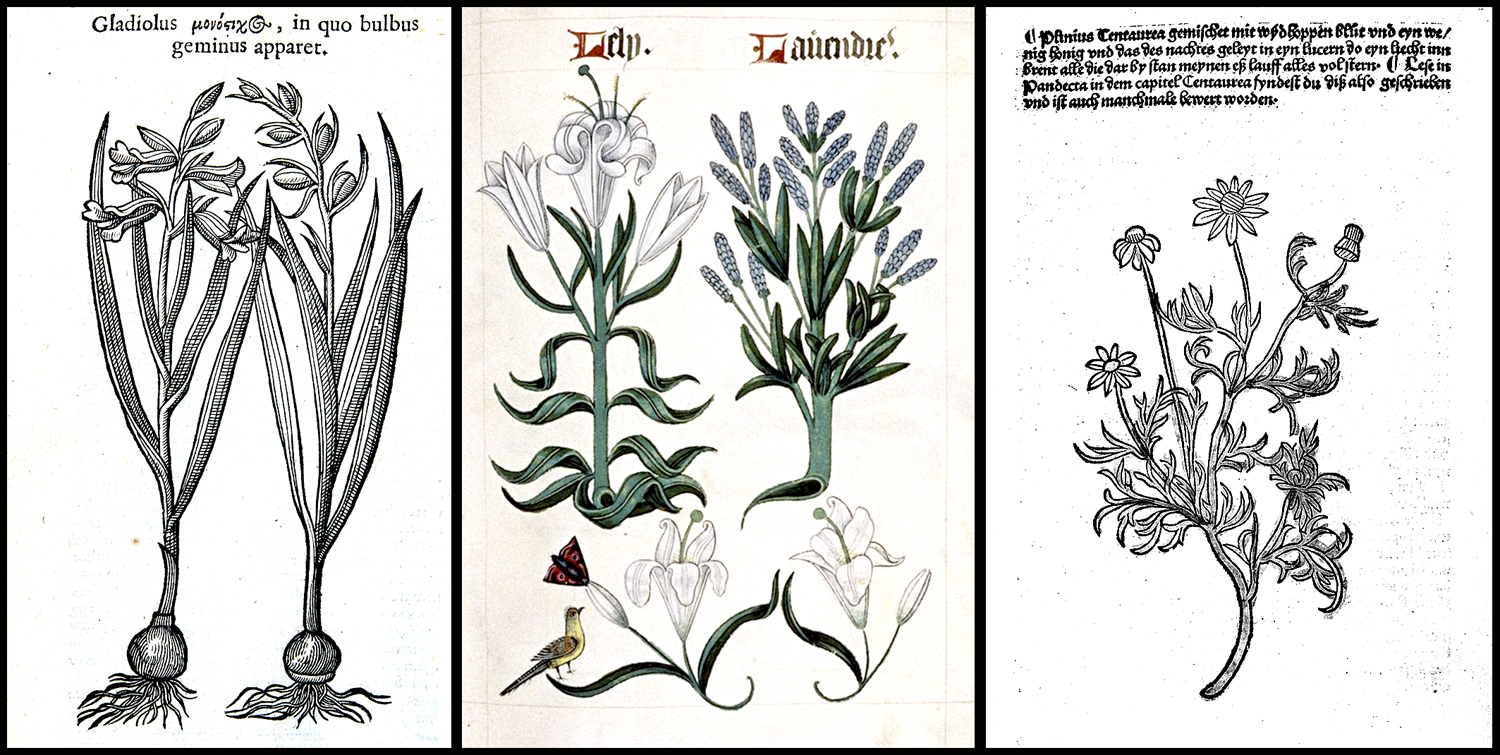
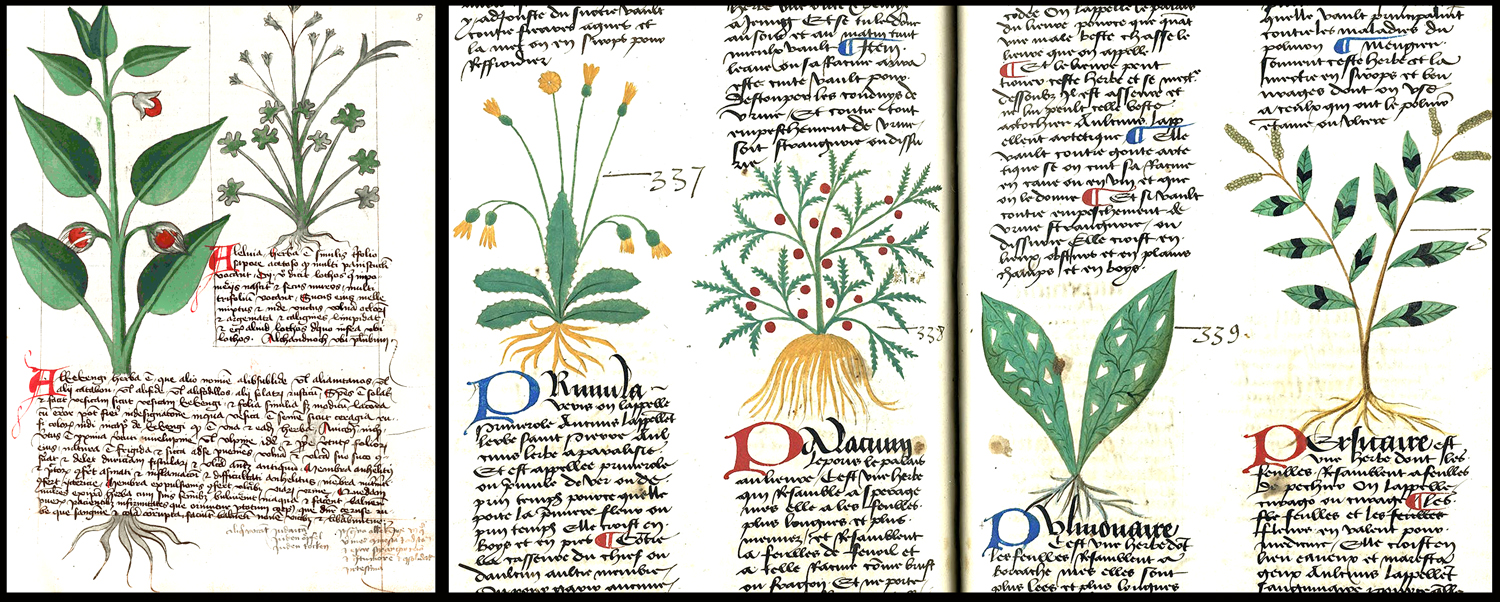
But the use of drawings for identifying plants or animals reached a new level of importance in the Middle Ages, when plants were used medicinally and books of drawings helped physicians identify the proper plant for the proper malady. 

Originally, these were manuscript books. But after Gutenberg, many were printed in quantity, offering advice on the best plants for the worst illnesses.  

Often these herbals or “medicinals” were at best diagrammatic. There purpose was simply to sort out which plants would be useful. But as the Renaissance flowered, and a more realistic style of image-making took over, many artists were attracted to the natural world, looking with ever sharper detail at the plants and animals around them. There are drawings and paintings by Leonardo, Raphael and others. But it would be hard to best the small naturalistic pictures by German artist Albrecht Dürer. 

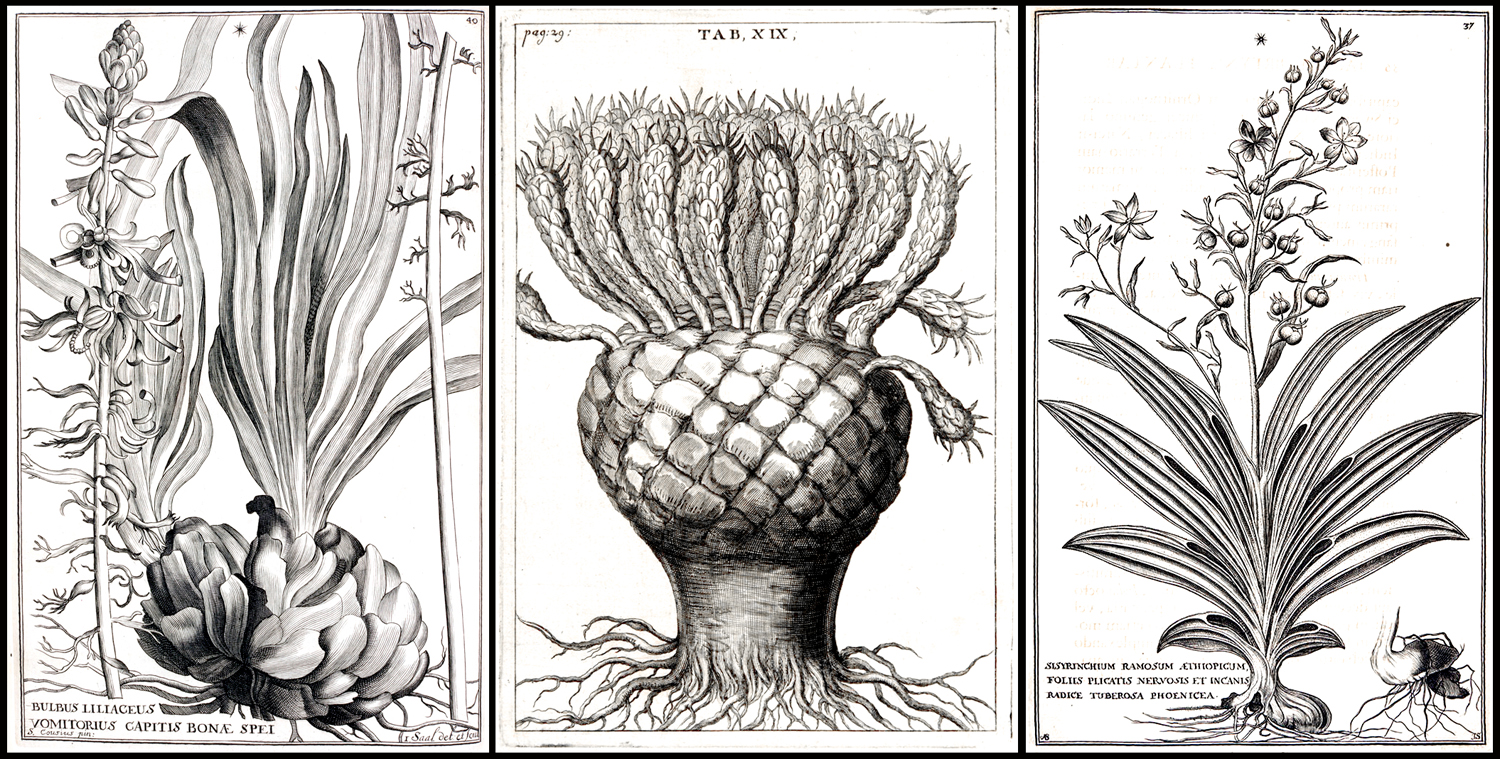
But Dürer’s paintings are one-offs. As the 17th century progressed, a more systematic approach took hold, wherein artists as botanists attempted to catalog the plant life around them. 

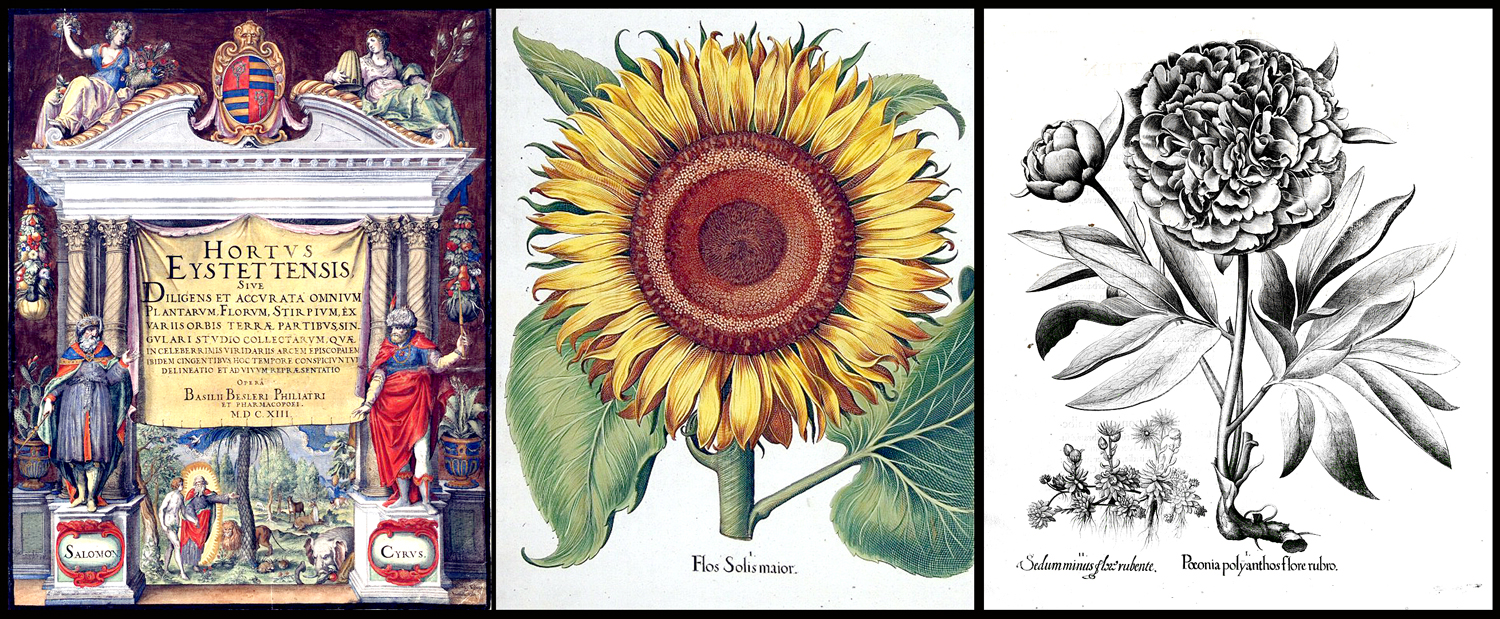
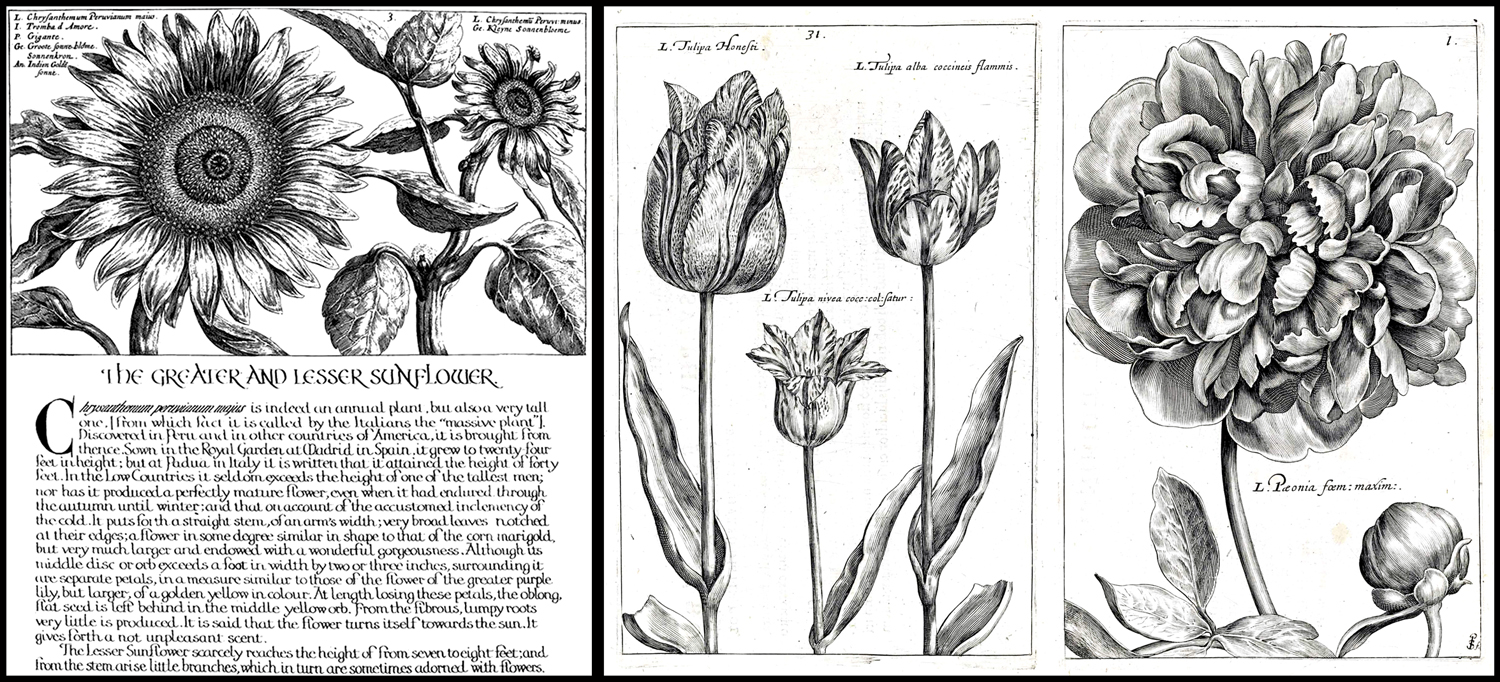
One of the first such attempts was the Hortus Eystettensis, edited by Basilius Besler (1561-1629) beginning in 1613 and spread over several years. It was a collection of copper-plate engravings of the plants collected by the prince-bishop of Eichstätt in Bavaria for his palace garden, which contained examples of all the shrubs and flowering plants known at the time, from around the world. 

The book contained images of 1,084 species, divided into 357 plates. A cheaper black and white version was supplemented by a luxury edition in which the images where hand-colored. The book changed botanical illustration overnight. What had been crude and diagrammatic became works of art. 

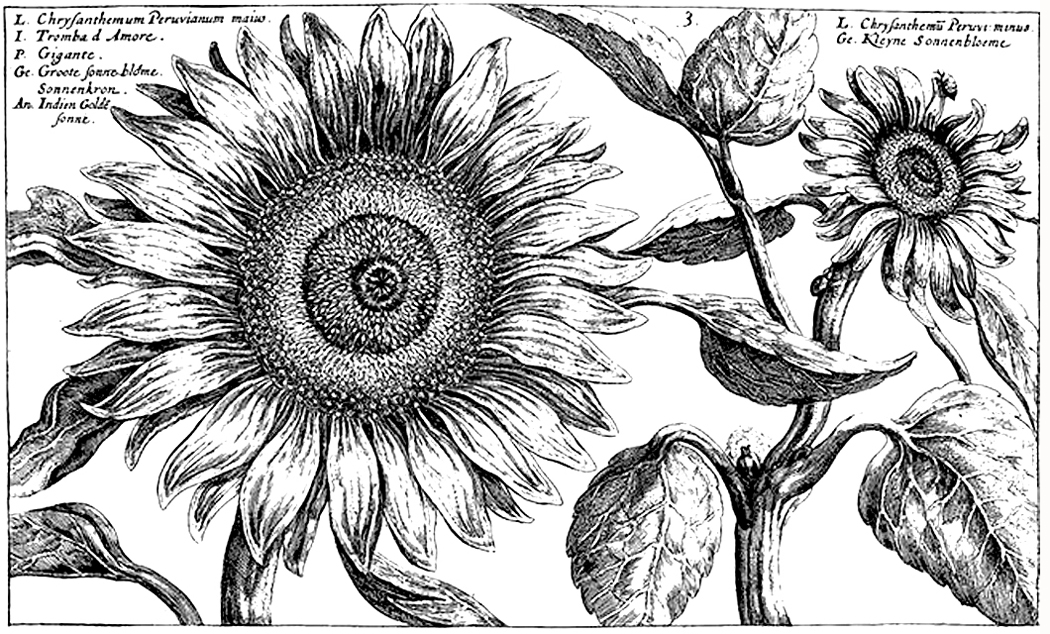
Soon in its heals came Hortus Floridus, a collection of 160 engravings of flowering plants published in 1616, which became so popular its Latin text was soon translated into Dutch, French, and English editions. The book, in modern editions is still available today. It was created by Dutch engraver Crispijn van de Passe the Younger (1595-1670), a popular and prolific engraver of the Dutch Golden Age. 

Such books of engravings, colored or not, appeared throughout the century, with Louis XIV’s official painter, Nicolas Robert (1614-1685), producing illustrations in 1640, 1660, and entries in the giant compendium  Recueil des Plantes published in 1676. 

His drawings and paintings, as well as the engravings made, were of a new freshness and delicacy and presaged a surge in flower pictures made not simply for identification purposes, but as esthetic objects — as art. 

As the 18th century began, these two strains of botanical illustration developed. On one hand, there was a rise in scientific exploration, with botanists traveling the world collecting new species of plant and animal previously unknown to European science. On the other, there was a growing market for books and images of pretty flowers. The two traditions flourished side by side, but also cross-pollenated. 

That market for flower pictures was given a jump start by the Dutch tulip craze of the 1630s, when speculation in the market for rare tulips created a financial bubble that burst in 1637. But the Dutch economy was expansive and a growing middle class had money to spend on luxury items such as art. The actual tulip mania was confined to a small but important few speculators, the public at large wanted their part and so prompted the production of pictures of the fanciest tulips. If you couldn’t afford a tulip bulb that cost as much as a house, you could afford a colored engraving of the same flower. And so, pictures of flowers became a thing.

There had always been still-life paintings: pictures of flowers in vases; even kitchen scenes with food on the table and game hanging above. But what I am interested in here are those images of singular plants, birds, or animals, usually devoid of background context, meant to show off the specimen to best advantage. Where still life is meant to elicit warm feelings of comfort and beauty, the botanical illustration is meant to focus attention on a particular item, to see it for itself alone. 

The 17th and 18th centuries were the great era of cataloguing the world, and it led to a plethora of illustration of new and exotic species as scientists accompanied military explorers around the globe, gathering natural history data and both collecting specimens and illustrating them, usually in books. 

Dutch-born Nikolaus Joseph von Jacquin (1727-1817), for instance, travelled to the West Indies, Central and South America, publishing prolifically throughout the 18th century. 
Sometimes, they went on their own, like the Polish Jacob Breyne (1637-1697), who travelled to South Africa and catalogued plants. 

Austrian Franz Bauer (1760-1826) went to Australia, collecting and painting what he found.

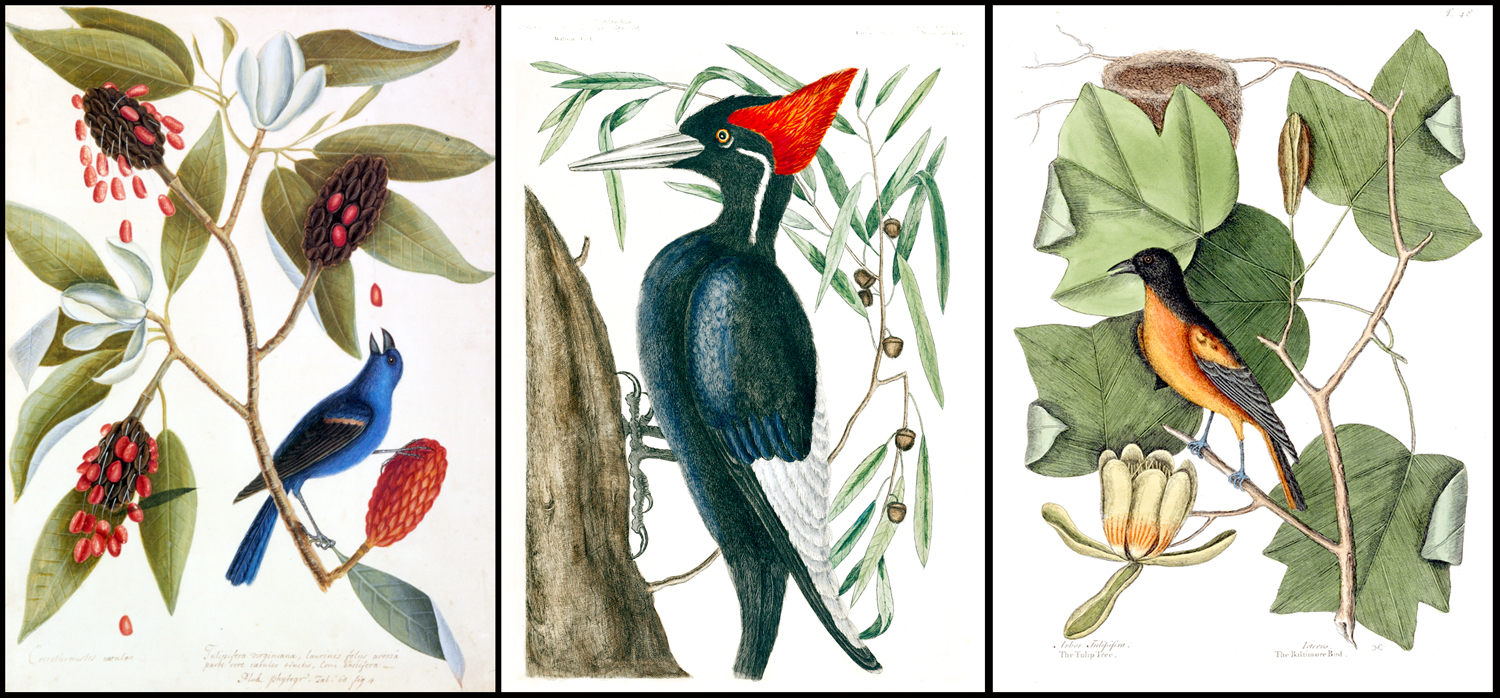
Englishman Mark Catesby (1683-1749) sailed to the New World, publishing his Natural History of Carolina, Florida and the Bahama Islands in volumes between 1729 and 1747.

Henri-Lois Duhamel de Monceau (1700-1782) was a French  Encyclopedist, writing on many subjects, but catalogued the flora of his native France over his long lifetime, including his 1768 Treatise on Trees and Shrubs

Likewise, Englishman Thomas Bewick (1753-1828) stayed at home and made wood engravings of his native animals and birds. 

Grub Street writer Oliver Goldsmith neither drew nor painted, but his enormously popular Natural History of the Earth and Animated Nature, first published in 8 volumes in 1774, went through many subsequent editions, each time copiously illustrated by an army of anonymous engravers. 

As the 18th crossed over into the 19th century, two men characterized the two thrusts of botanical illustration. 

William Bartram (1739-1823) traveled through the New World exploring for flora and fauna. His book, Travels through North and South Carolina, Georgia, East and West Florida, the Cherokee Country (1791), is still in print, usually known just as “Bartram’s Travels,” and covers his travels through Georgia, Florida and western North Carolina and is a readable a travel book as it is important as a naturalist survey. 

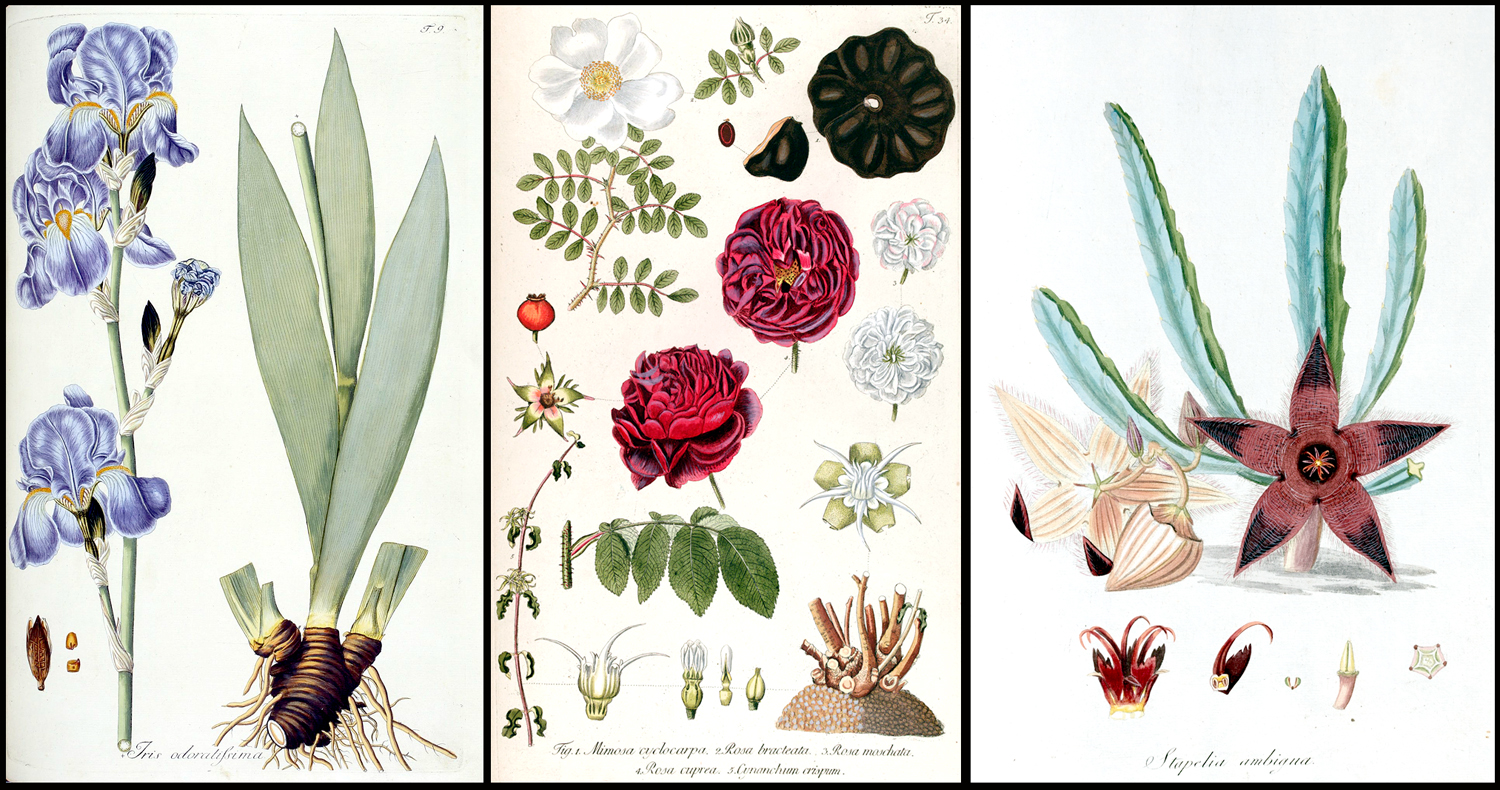
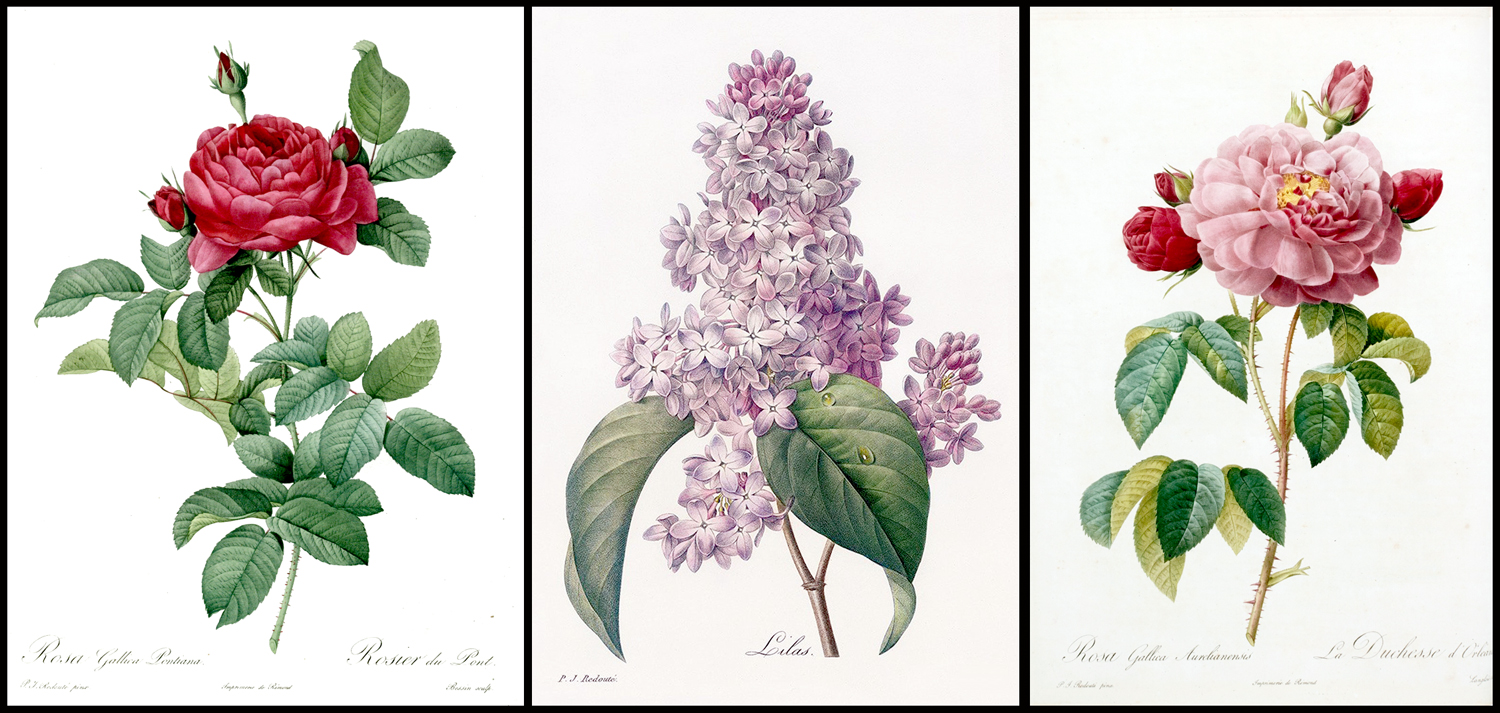
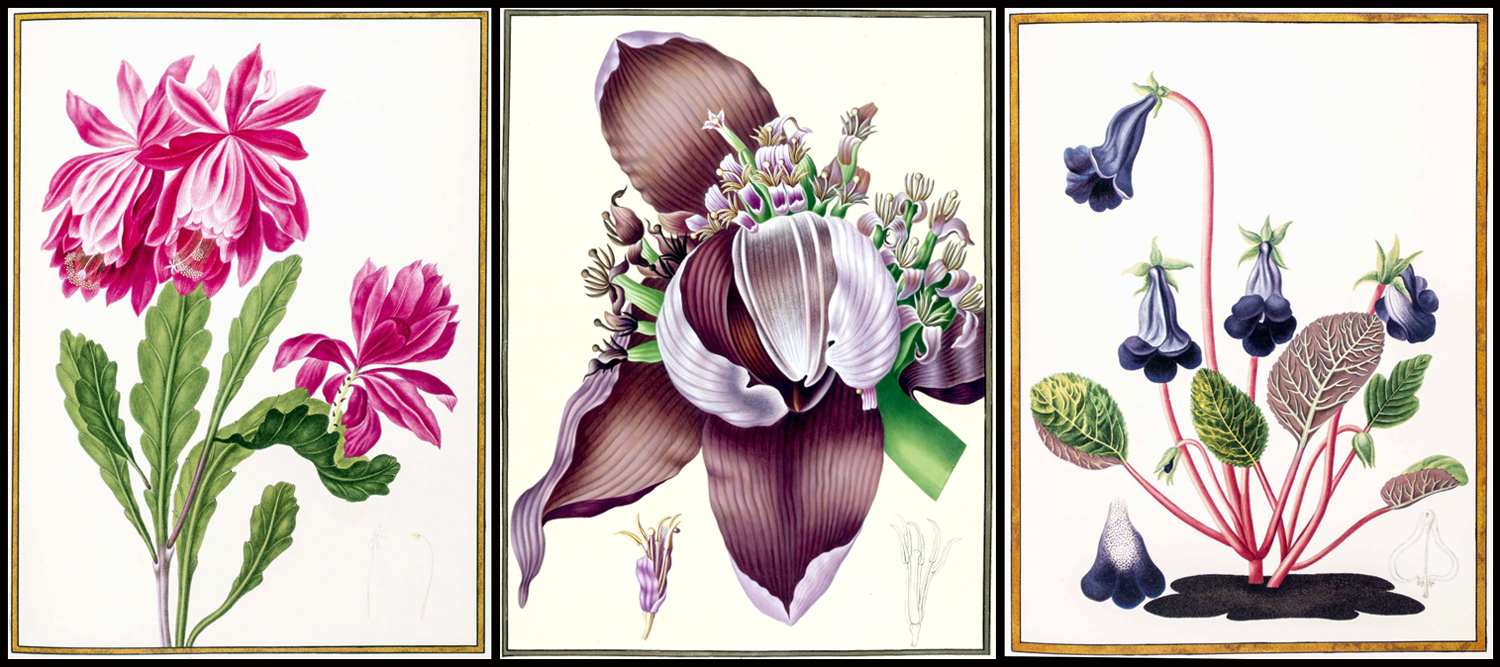
The other impulse for botanical illustration is the creation of art for the beauty of it. And no one did more for that than Pierre-Joseph Redouté, whose images of roses and lilies are still popular in framed prints to hang in tasteful middle class homes. As Wikipedia puts it: “Reproductions of his prints are available from virtually all print and poster shops.”

Redoute’s life was fascinating. He was official illustrator to Queen Marie Antoinette, and somehow survived with his head after the French Revolution and the Terror, despite his aristocratic credentials, and lived to become official artist for Empress Joséphine de Beauharnais and then survived her divorce from Napoleon Bonaparte, only later to be made Chevalier de Legion d’Honeur, France’s highest honor, and his work bought by Charles X. 

His early work was watercolor, but later in life, much of his art was engraved and hand-colored or turned into chromolithographs. And now, there are boatloads of books featuring Redouté’s art. 

Two developments affected the publication of prints of the natural world as the 19th century overtook the 18th. One was the mainstreaming of colonialism, and the number of biologists and artists who traveled to the new lands to catalog the flora and fauna. 

In the 18th century, much of the exploration was just to find out what was out there, to discover new Pacific islands or what was going on in the polar regions. But in the next century, the drive was to exploit what the colonies offered, and to do that meant to catalog all the new things these colonial toyboxes had to offer. 

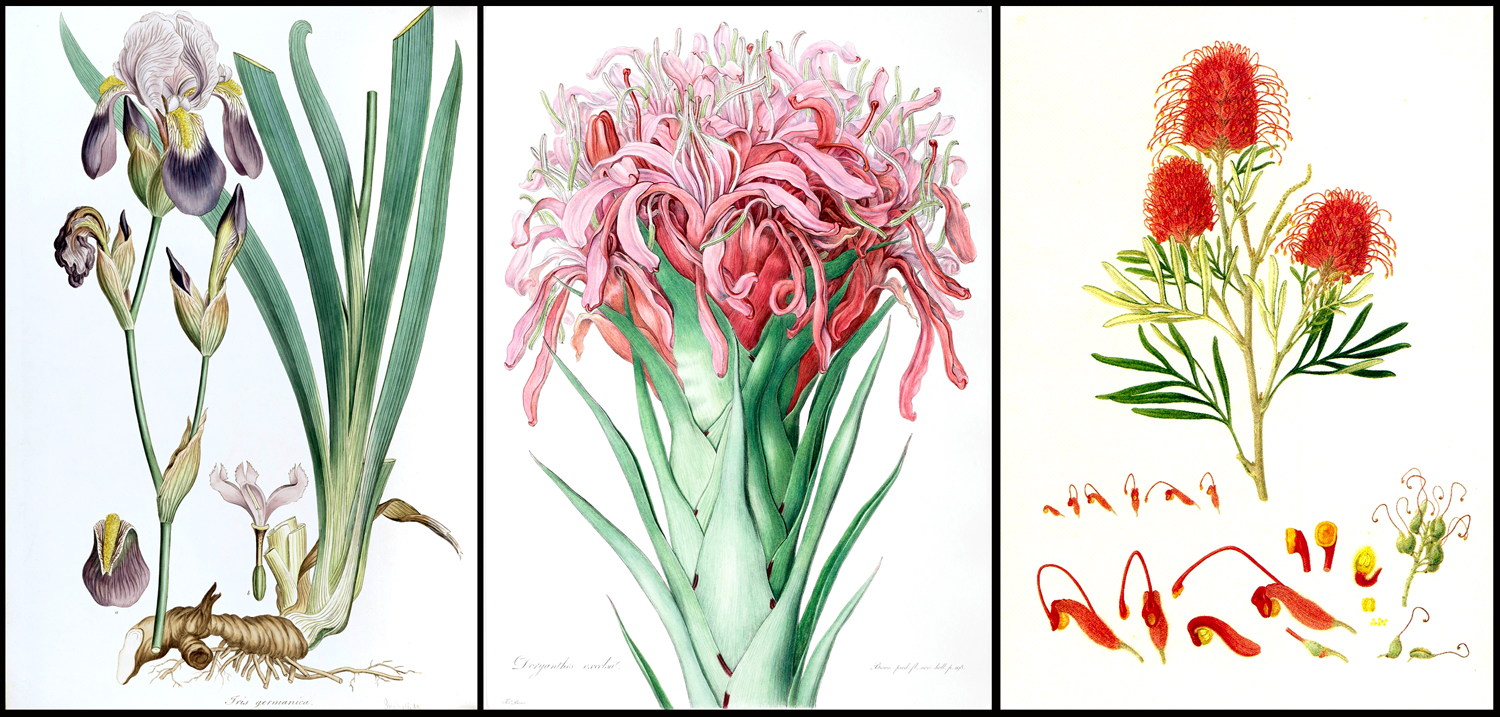
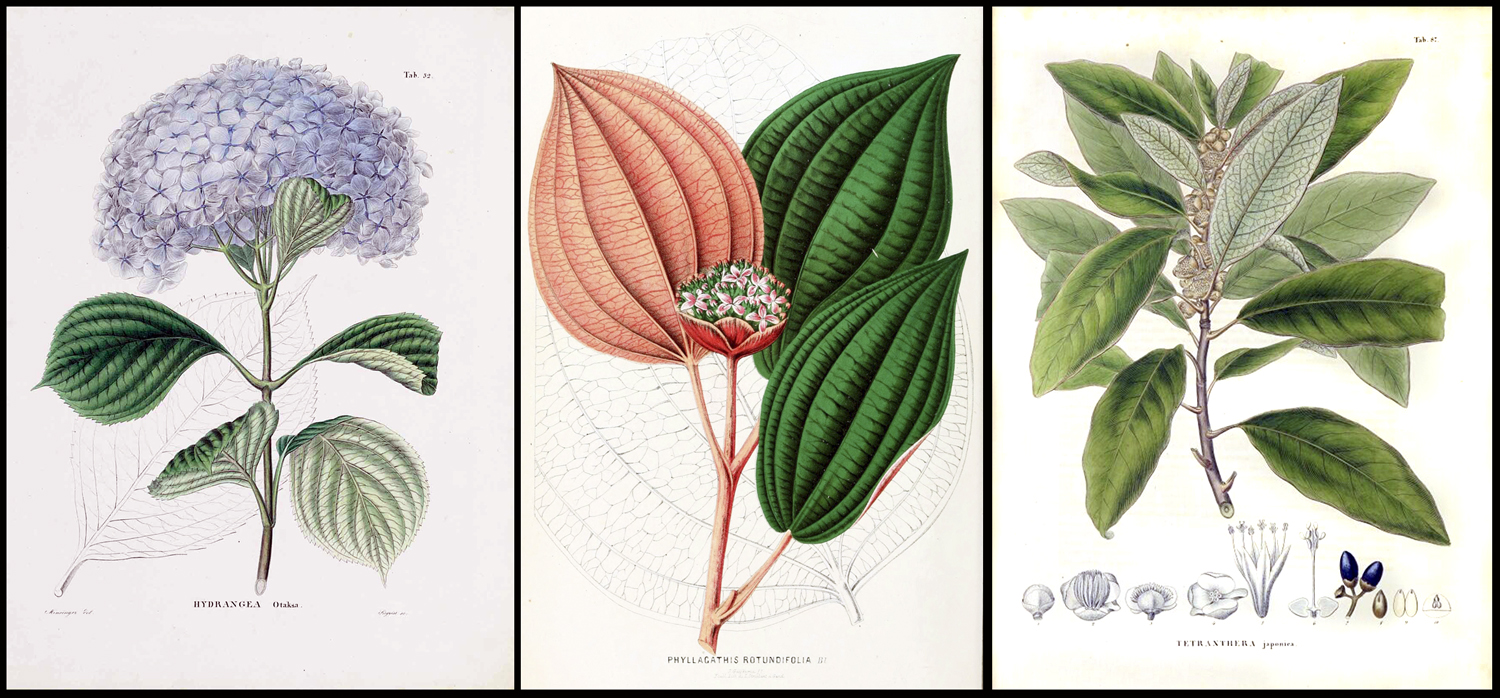
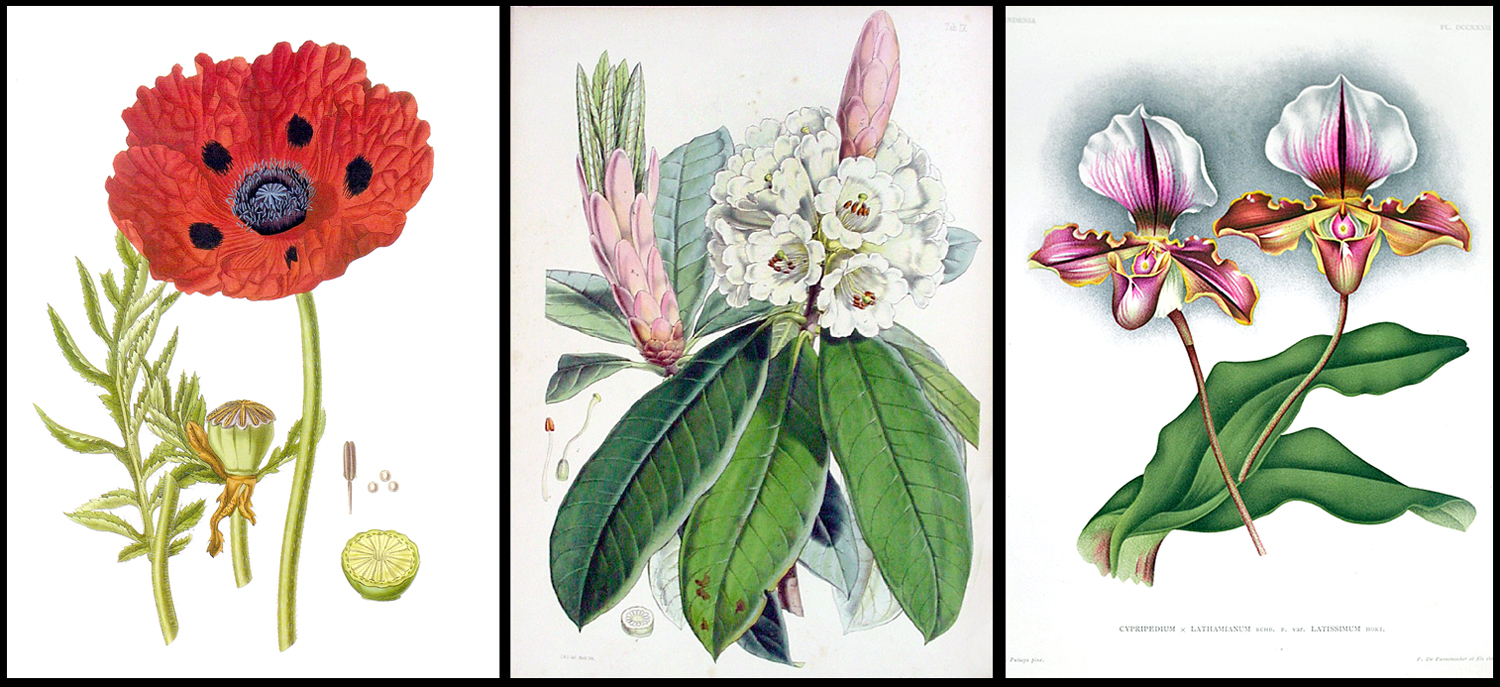
And so, scientists such as Philipp Frans van Siebold (1796-1855) went to Japan; Nathaniel Wallich (1786-1854) went to India; Johann Joseph Peyritsch (1835-1889) went to Sudan. They collected specimens and wrote books illustrated by a host of artists who made illustrations from the specimens they brought back. 

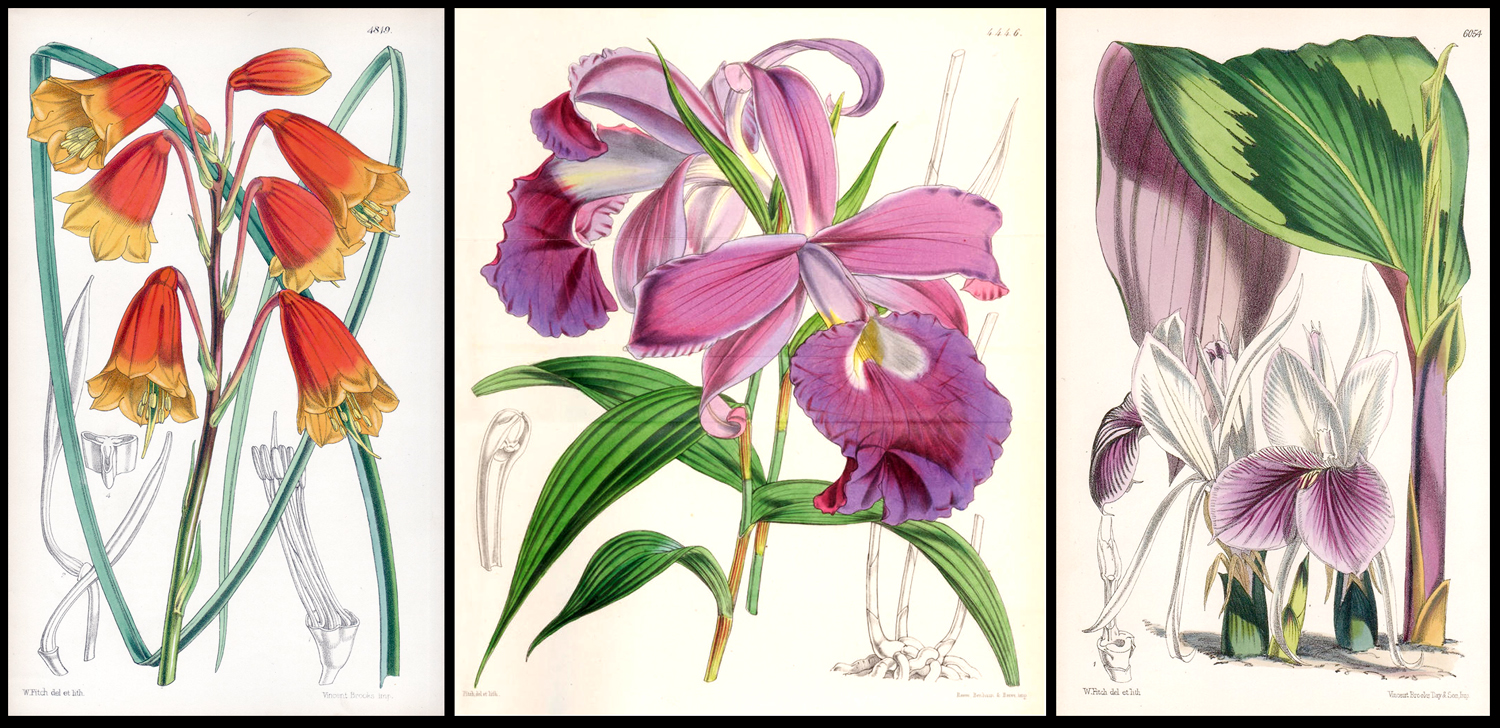
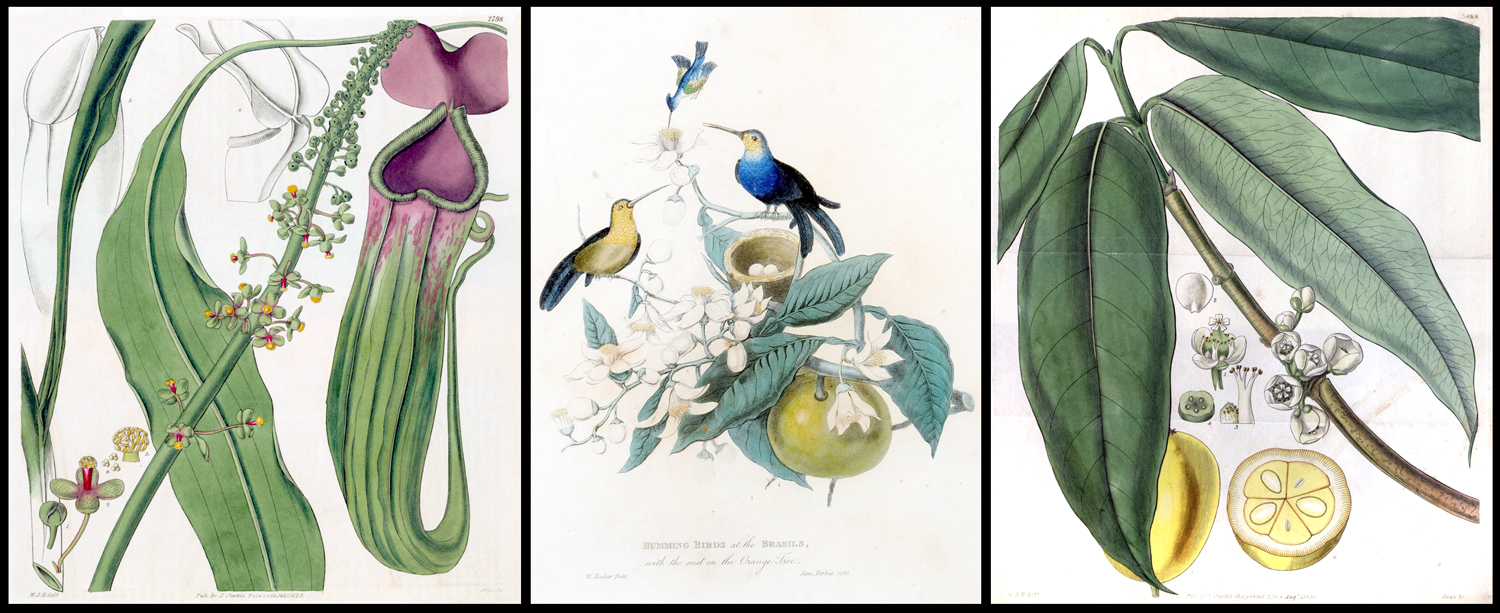
One of the artists employed by the botanists was Walter Hood Fitch (1813-1892). Fitch supplied many of the illustrations for John Dalton Hooker’s 1855 Flora Indica, a survey of plants of India and the Himalaya mountains. 

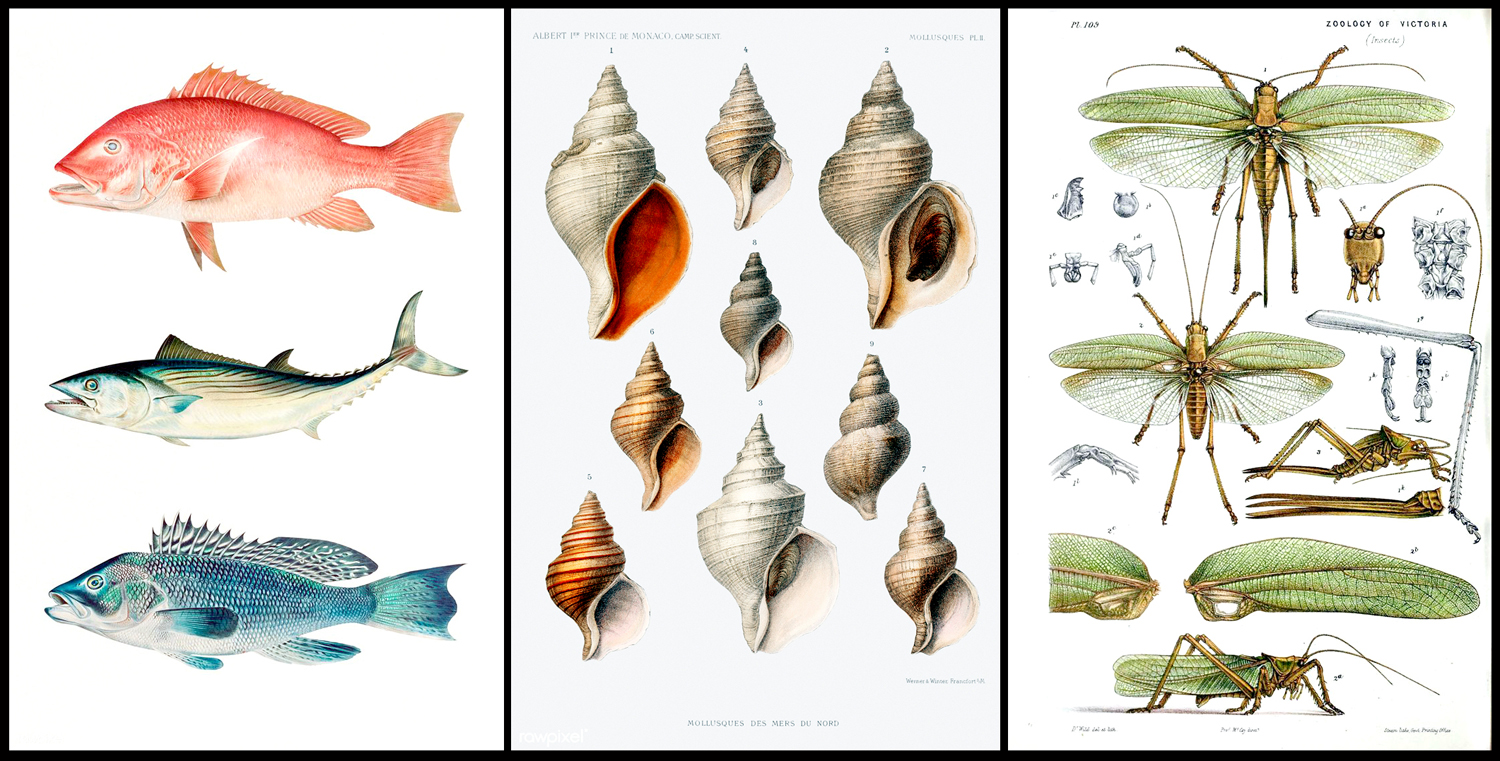
While botanical illustration comprised maybe 80 percent of all natural history artwork, much was done with animals, too, and even such things as seashells, rock types, and landforms. 

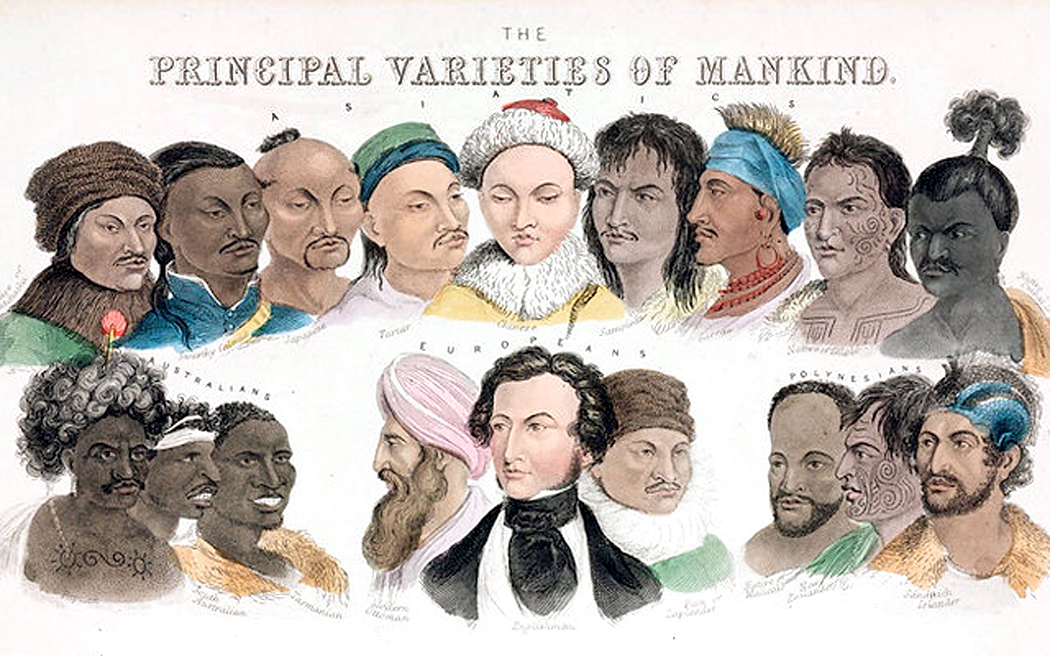
Colonialism brought in an infection called “scientific racism,” and natural history illustration looked not only at flora and fauna, but at human beings, typing them just as they did genus and species of orchid. 

There was almost a mania to classify and name everything. 

The second development was the invention of lithography, in 1796, which gave both scientists and artists a better means of mass producing images. 

The first botanical illustrations were either drawings or paintings, and the first reproductions were by woodcut. But copper-plate engraving supplanted the coarse woodcut and those engravings were often hand-colored, an expensive and time-consuming process for publication. 

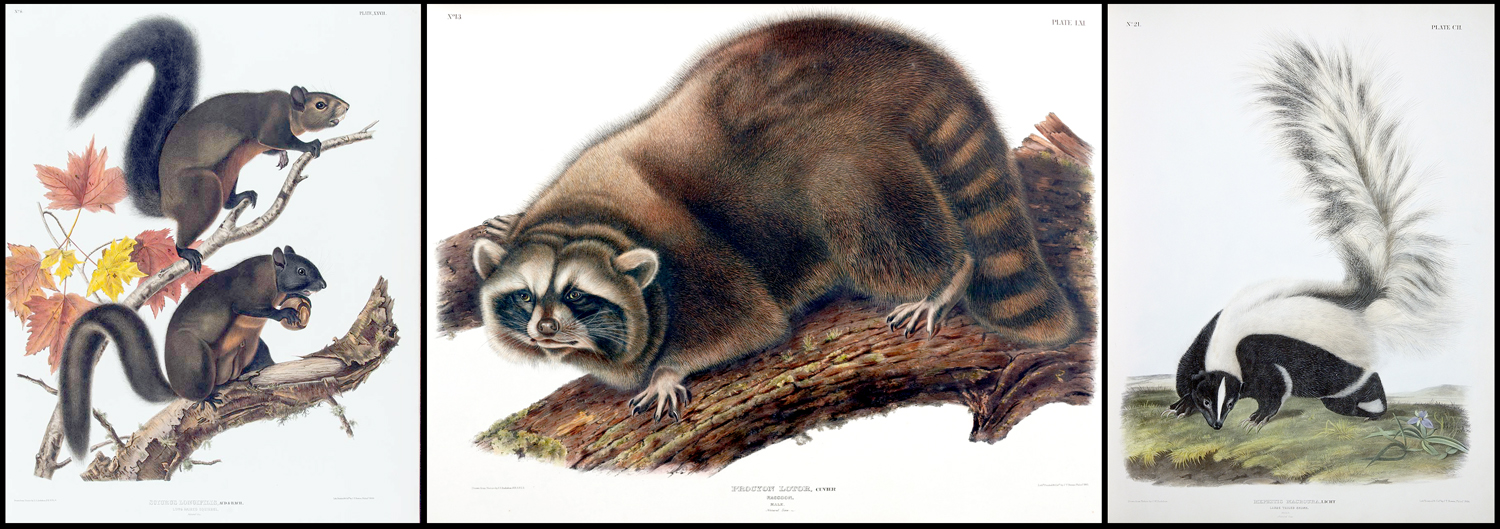
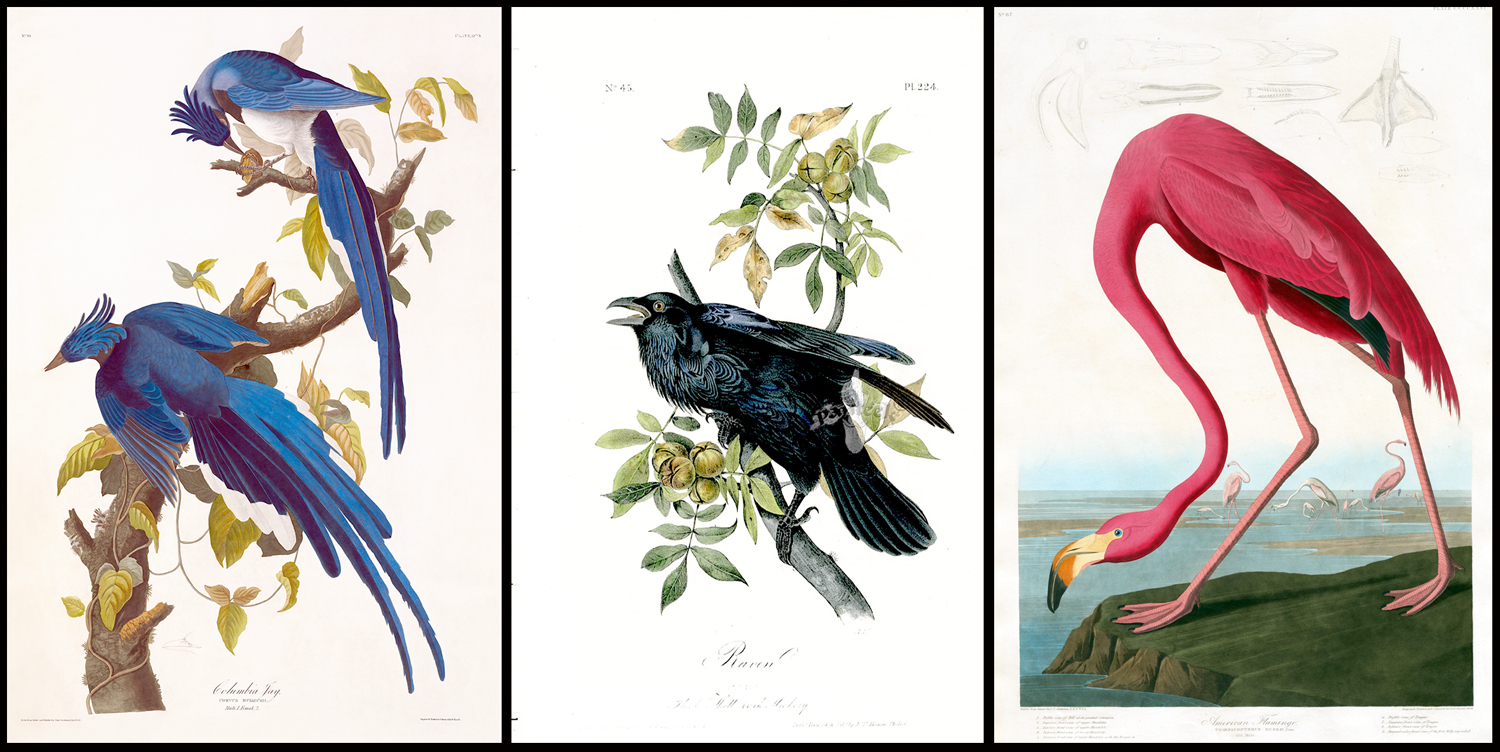
For instance, when John James Audubon (1785-1851) published his original edition of Birds of America in England, in sets from 1827 to 1838, at least 50 colorists were employed and no more than about 200 full sets were printed. 

But lithography, and later chromolithography, allowed much larger editions of prints and mass production of images. The later work of Redouté was made with the new process. And when Audubon came to work on his later Viviparous Quadrupeds of North America (published in 1851, after his death) the images were lithographs. 

Of course, the most famous natural history art has to be Audubon’s Birds of America. He initially produced 435 large-scale plates, each with life-size images of the birds he drew and painted in his travels through America. The plates were engraved and etched and hand colored. The pages were called “double elephant” size — roughly 28 inches by 40 inches — and you can see he had to contort some of the larger birds, such as the flamingo, to fit those pages and still have them life size. 

Later editions came in smaller pages. 

The market for natural history imagery was immense during Victorian times and the number of artists working in the field from the late 18th- through the 19th-century was to great for me to cover them all. But I wanted to show off a few of them. 

Such as Matthias Schmutzer (1752-1824), who produced 1433 plates for Das Florilegium Kaiser Franz I, a compendium of plants from the garden of Emperor Francis I, the final emperor of the Holy Roman Empire and first of the Austrian Empire.

And I should mention the father-son pair of William Jackson Hooker (1785-1865), a botanist and illustrator and first director of Kew Garden in London. Hooker published more than 20 major botanical works over a period of 50 years. 

His son, Joseph Dalton Hooker (1817-1911), who succeeded his father as director of Kew, and was Charles Darwin’s friend. He joined expeditions to the Antarctic, Palestine, Morocco, the Himalayas, and the western United States, collecting specimens along the way, and publishing books on what he found, illustrated by many familiar botanical illustrators of the time, including Fitch. 

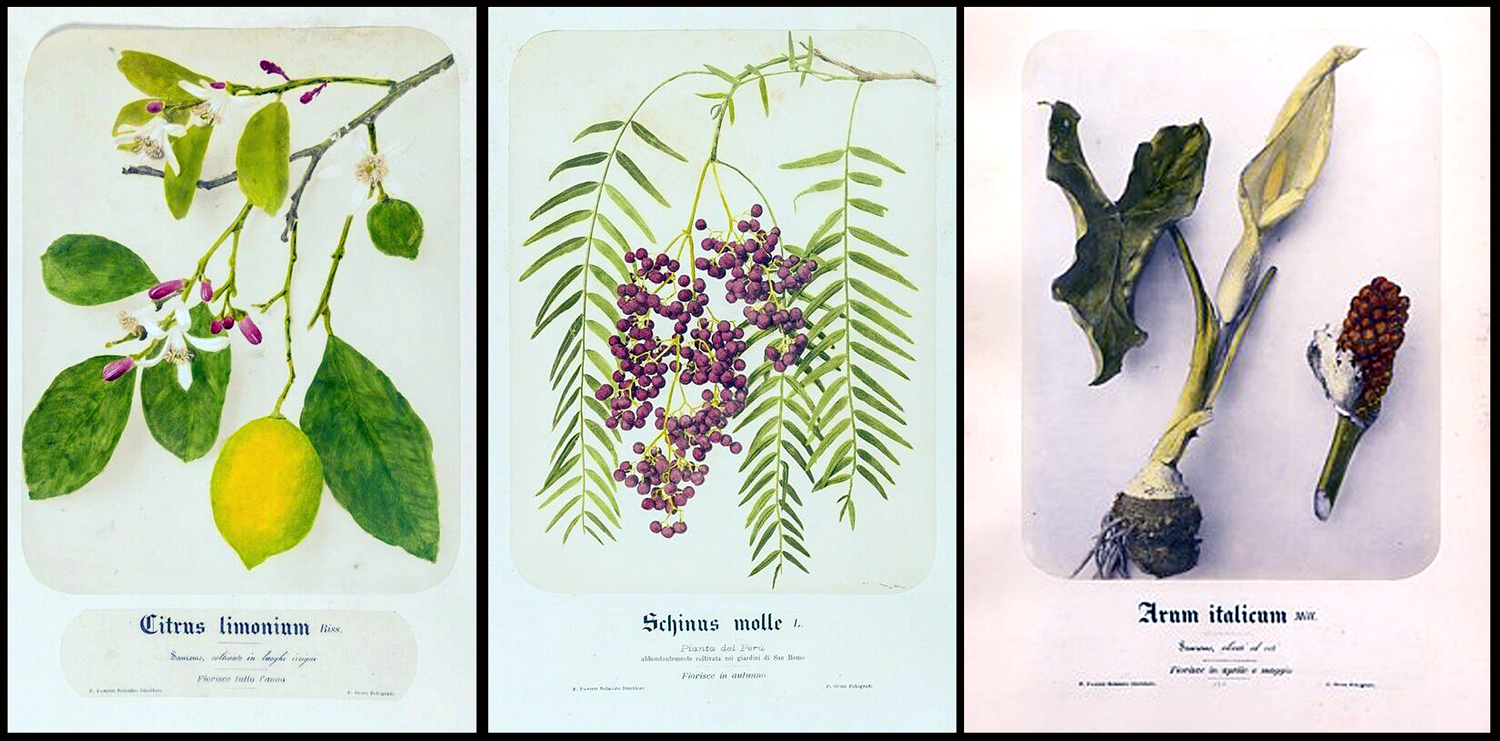
By the late 19th century, photography began to take over. The earliest I can find is an 1879 set of botanical photographs by Pietro Guidi. The black and white images still had to be hand-colored, just as the old engravings had to be. 

And by the fin-de-siecle, as art nouveau gathered steam, the link between nature and art became important. Nature motifs played out in furniture, architecture, book design and painting. Several artists and scientists became immersed in the subject.

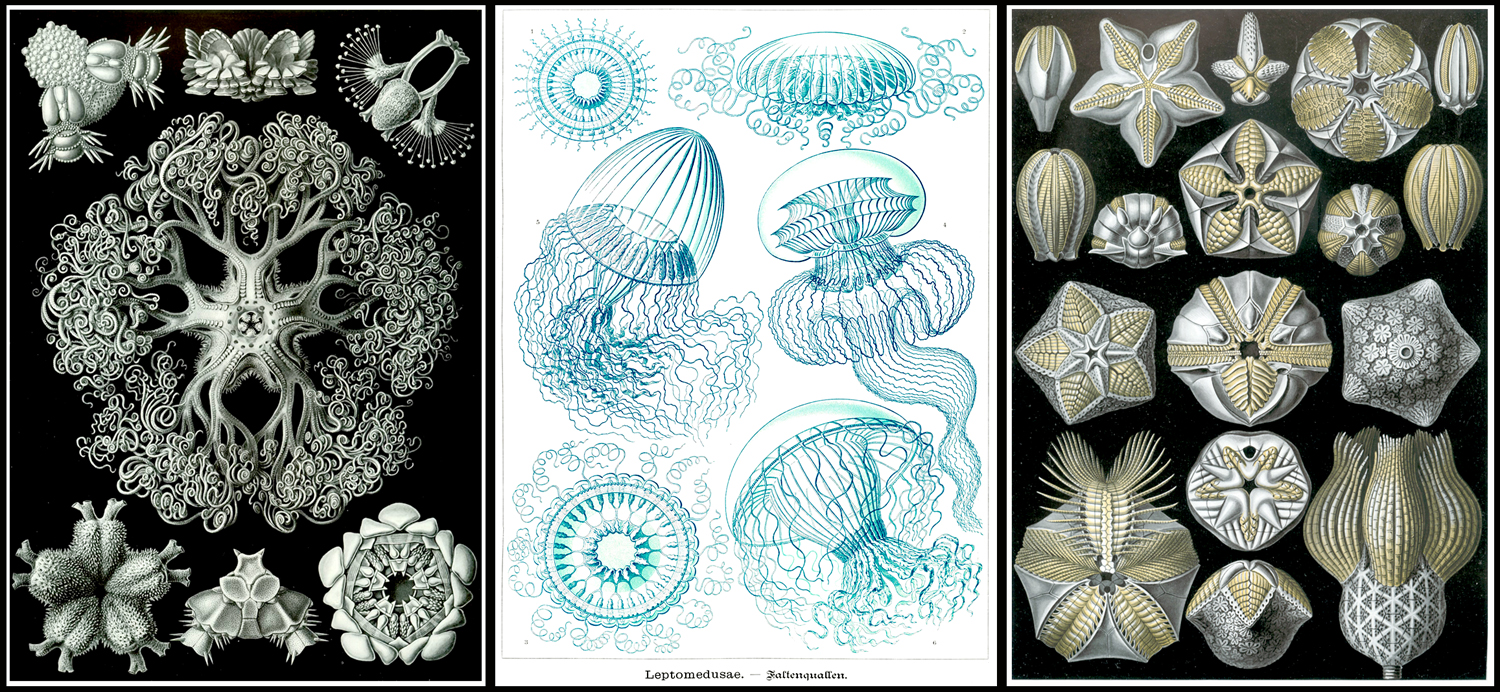
Ernst Haeckel (1834-1919) was a biologist obsessed with Darwin and symmetry. His Kunstformen der Natur (“Art Forms in Nature”), published in 1904. It consists of 100 prints of various organisms, many of which were first described by Haeckel himself. Haeckel’s intricate drawings were transferred to print by lithographer Adolf Giltsch. 

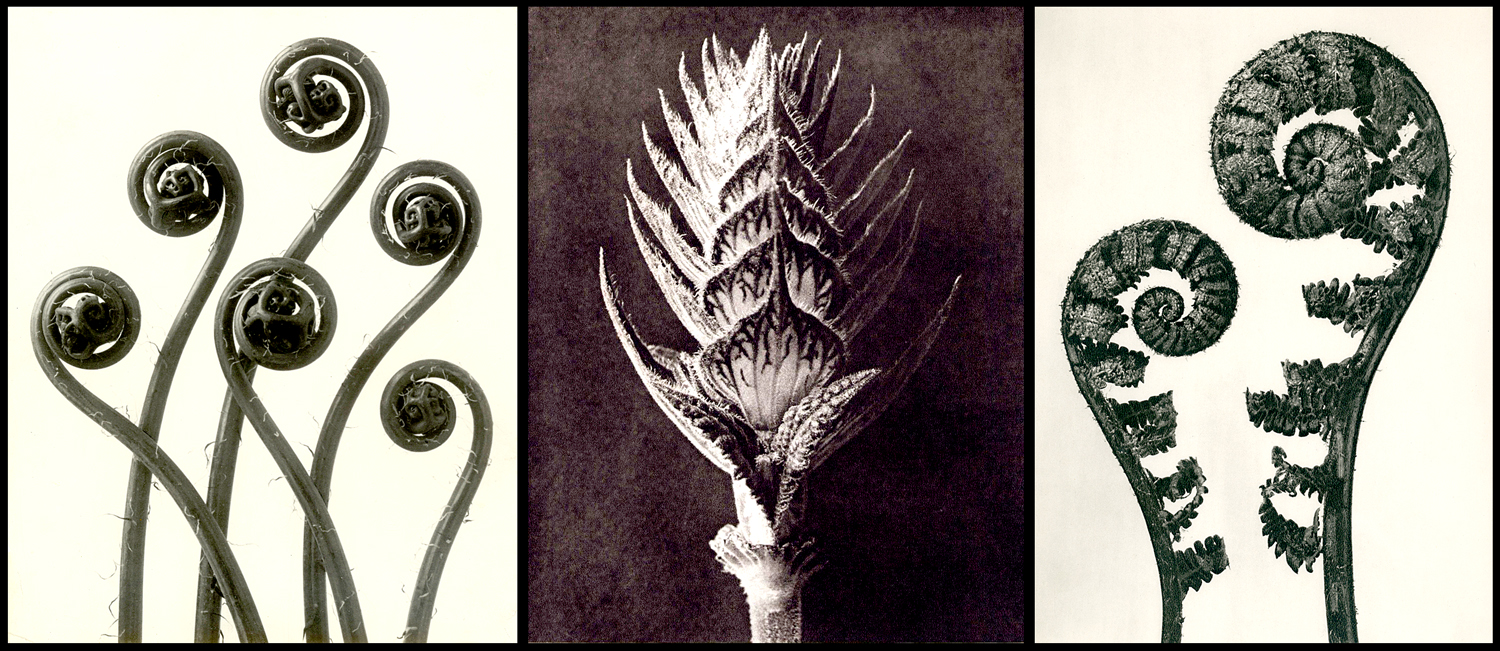
In 1929, professor Karl Blossfeldt (1865-1932) used photography to express the relationship between nature and modern art in his Urformen der Kunst (“Original forms in Art” or “Art Forms in Nature”). His purpose was pedagogical, teaching his art students to seek for inspiration in natural forms.

This cataloguing and regularizing tendency in German art extended beyond botany and zoology. In the 1920s and ’30s, photographer August Sander attempted to photograph all the jobs and professions in Weimar Germany, and later, Bernd and Hilla Becher made multiple images of German water towers, mining tipples, cooling towers, grain elevators, coke ovens, and blast furnaces, among other things. Those images, made mostly from the 1960s through the 1990s were part of a movement dubbed the “New Objectivity.” 

But back to nature: It is hard to overemphasize the attractiveness and popularity of natural images, especially birds and flowers. 

Charles Philip Hexom (1884-1959) executed a series of covers for Nature Magazine in the 1930s and ’40s. I have collected several of these. They are simple but elegant. 

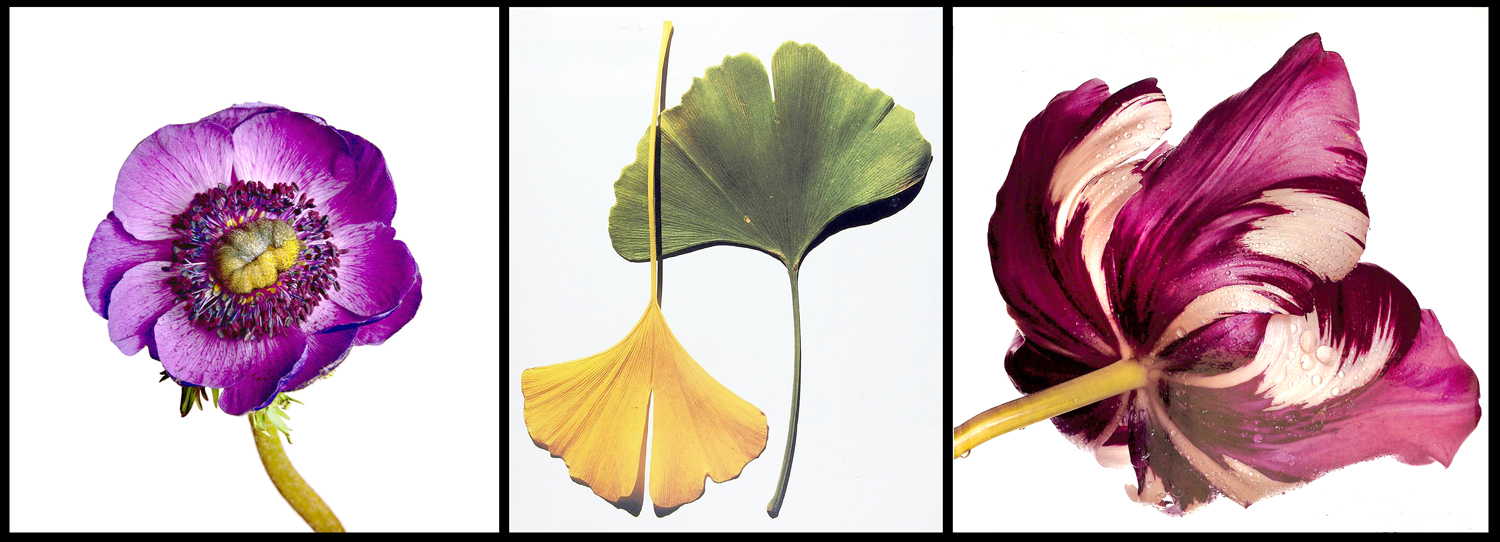
Irving Penn (1917-2009) published Flowers in 1980 and the perfection and simplicity of the photographs remind one of Redouté.

And finally, for our purposes, Robert Mapplethorpe photographed flowers over his whole career, with his book, Flowers, coming out posthumously in 1990. 

This has been a short, embarrassingly incomplete survey of botanical and natural history illustrations from the late Roman Empire until the Post-Modern age. Whole books have been written on the subject and more will likely be published in the future. 

I consulted about 20 books for this essay, among them are: The Art of Natural History by S. Peter Dance; The Painter as Naturalist: from Dürer to Redouté, by Madeleine Pinault; Un Jardin d’Eden by H. Walter Lack; and Flora: An Illustrated History of the Garden Flower, by Brent Elliott. 

Click on any image to enlarge

The most distinctive feature of Shamrock, Texas, in 1980 was the old Conoco gas station downtown. I don’t know if it is still there. But that is not what I remember best about the tiny town in the Texas Panhandle. 

My wife and I were driving across country for the first time. Neither of us had ever been west of the Appalachian Mountains and we had romantic ideas about the West. We dreamed of mesas and buttes, of cactus and coyotes, Navajos and the Pacific Ocean. And so we had set off in our old Chevy Citation during Carole’s summer school vacation planning to make the grand circuit. We were camping most of the way as our budget was economy size. 

It was perhaps the third night we were out, and we found a KOA campground in Shamrock. The sites each had a concrete picnic table under a tin awning. In the center of the camp was a low brick building with the office and camp store. 

As we were pitching our tent, a neighbor camper came over and told us that two days before a tornado had struck a few miles away. “No real damage,” he said. “There’s not much out there to hurt.” But he wanted to let us know, he said, because the weather forecast was iffy. 

We had driven that day through some rough weather already, with dark, louring clouds, a heavy rain — the kind the windshield wipers only made mad. At one point, we had to pull off the road and wait for the heavens to calm. 

But by the time we got to Shamrock, the skies were clear again. And we tucked in for the night in our sleeping bags, with the tent zipped tight and cozy. 

Then, about 1 a.m., we woke to find ourselves, tent and all, floating on several inches of water. It felt very like a waterbed, except that the rain made such a racket on the tent-sides. The wind luffed the fabric and lightning grew almost constant. We both began to worry. 

The only sane course of action was to leave the tent and head for the brick office. Carole went ahead of me, while I attempted to strike the tent against a howling wind. But the wind yanked it from my grip and I had to chase it until it caught on the picnic table. The tent had a tubular frame, which kept it in full shape. I grabbed the top crease and the wind took umbrage at my effrontery and tried to lift me airborne, with the tent as a kite and me as the kite tail. I fought it over my head, holding on for dear life. Finally the tent caught in the tin awning and held steady enough for me to de-tentpole the thing and collapse the kite into a smart bundle, soggy and dripping, which I put into the car before heading to the office and Carole. 

The office was not very big for the 30 or 40 people herded into it. There were crying babies, frightened grown-ups. One man explained that the weather service had confirmed a tornado in the vicinity. A husband and wife were yelling at each other, each blaming the storm on the other. The wind blew outside, hurling detritus past the door. It all finally calmed down after 20 minutes or so and the wind subsided and the rain gave up its anger and turned into a normal rainshower. 

But there was no way we could set the tent back up. Our campsite was a pond and the tent itself was a crumpled mess. We got into the car and thought perhaps we could make through the night sitting up.

I remembered, though, we had passed a motel in town. Maybe we should drive back into Shamrock and see if we could get a room. And so we did. 

When I entered the motel office — now it was well past 2 a.m. — the office was dark, but a woman came out and got us a room. 

I got back in the car and told Carole, “I’m not sure about this.” The office was choked with the aroma of curry — something I normally love, but this felt more like chemical warfare. We found our room at the back of the motel complex. It had that musty smell of old cigarettes, this time mixed with the vestige of curry. The window looked out into the tool shed.

But the prize was the carpet. It was a sickly blue-green shag rug and it ran up the walls like wainscotting, and around the bottom of the bed as a kind of dust ruffle. 

This would have been the worst motel experience we had, except that we had already spent a night in Forrest City, Ark., in a motel where we were bitten all night by fleas, and the toilet had a “sanitized for your protection paper band under which was a floating cigarette butt. 

Still, our Shamrock motel gave us a chance to sleep and calm our nerves from the storm. 

The next day, we set off west again, and finally reached Glen Rio, on the border between Texas and New Mexico, where the bottom dropped out of the flat Panhandle and we drove down into a new landscape filled with the mesas and buttes we had imagined. 

We had to laugh at ourselves years later, after living in Arizona for 25 years, at the naive glee we felt at seeing the tiny, unprepossessing hills we first passed in New Mexico, which would hardly merit the notice of anyone used to such things. But they were the first hintings of the sense that the American West was entirely alien to anything we had known in tidewater Virginia, where we were living back then. 

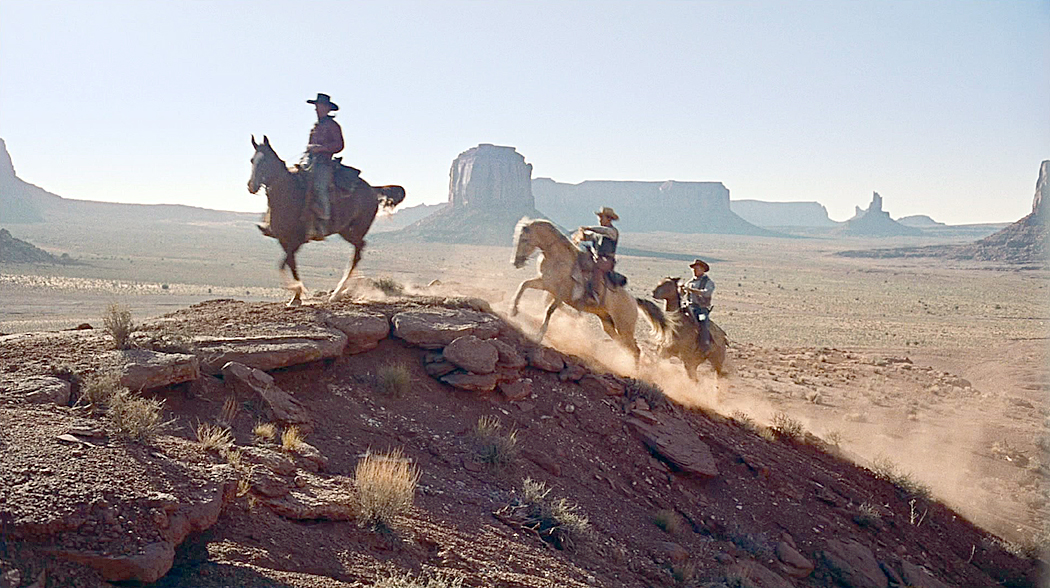
It was as if the Western movies I grew up with in New Jersey had come to life. We gawked at everything for the remainder of that first trip West, through Arizona, up California, through Oregon, Wyoming, Montana and all the states in between. We put 10,000 miles on the odometer that summer. 

I recently discovered Glazunov. 

Discoveries are what keeps life interesting. Some are life-changing, like when you first discover the opposite sex, or late in life encounter the music of Bruckner. Others are just a pleasure you hadn’t known the universe afforded, such as chipotle chiles or books by David Sedaris. 

Glazunov is one of the latter. I don’t want to make too big a case for him, but his music is effortless enjoyment. 

Alexander Glazunov was a Russian composer, born in 1865, the same year as Sibelius and five years after Mahler. He grew up in a Russian musical world split between nationalists and internationalists. On one side, you had “the Mighty Handful,” of largely self-taught composers, such as Glinka, Borodin, Balakirev, Mussorgsky and Rimsky-Korsakov (the last distinctly well-trained), all of whom wanted to create a genuinely Russian brand of music. On the other side were Tchaikovsky, Anton Rubinstein and others, who looked to Germany and western Europe for their influence. It was isolationism vs. assimilation. 

Glazunov, born into this world, was a prodigy and he was taken on as a student by Rimsky-Korsakov when little Alexander was still a high school student. “His musical development progressed not by the day, but literally by the hour,” Rimsky-Korsakov wrote. Young Glazunov excelled in counterpoint, harmony, orchestration and large-scale form. It seemed he could do anything. 

His first symphony was performed when he was just 16, and was a huge success — the audience was astonished when the composer came onstage to accept their applause and turned out to be a kid in his school uniform. It was unofficially titled, “The Slavic Symphony,” for its use of Russian and Russian-style melodies, and it would have seemed as if the young composer was going to launch a new generation of nationalist composers. (To put the symphony in context, when it was written, Tchaikovsky had only written four of his six symphonies.) It joins Bizet’s Symphony in C and Shostakovich’s First Symphony as prodigies of teenage composers. 

Glazunov as student, young man, middle aged and old

But Glazunov’s second symphony, written only five years later, was “dedicated to Franz Liszt,” and clearly showed Glazunov gazing westward to more modern musical influences. 

In all, Glazunov wrote eight symphonies and part of a ninth. Every one of them is a joy to hear, full of great tunes, rich harmonies, fresh orchestration. His style is seen now as conservative and old fashioned, but while it is always familiar, it is never clichéd. He finds new ways of using the old composing tools. 

His music also never attempts to move heaven and earth, like Bruckner or later, Mahler, but rather attempts to please, to keep his listeners entertained. For this, he has sometimes been belittled and, as the 20th century progressed, largely forgotten. 

But you need to remember that most of Mozart’s output was simply meant to entertain, also, and it is a worthy goal. Glazunov’s music is a delight. Beethoven may churn our souls, but Glazzy just wanted to show us something of beauty and craftsmanship. 

That doesn’t mean all his music is major-key bouncy and empty. There is plenty of introspective substance, and the occasional disruption to remind us that the world isn’t always placid. But it is all to the end of keeping our ears interested. 

St. Petersburg Conservatory, ca. 1900

As his career developed, he became a respected member of the Russian art establishment, and eventually became head of the St. Petersburg Conservatory, where he trained many younger musicians, most importantly, Dimitri Shostakovich. His tenure was marked by a great improvement in the conservatory’s reputation and the quality of its instruction. Glazunov took his directorship seriously. 

He ran the school from 1905 to 1930, and while the instruction remained rather conservative, built on the principles of 19th century romanticism, its students entered the new century with other ideas. 

“Glazunov was ‘born in the middle,’ so to speak,” wrote critic Leo Eylar.  “He was born a generation later than the initial great Russian composers such as Tchaikovsky and Rimsky-Korsakov, and was born a generation before the modernist revolutionaries such as Stravinsky, Prokofiev, and Shostakovich.  As such, he was destined to occupy a rather difficult position in Russian music history.”

Glazunov continued writing music into the 1930s, and by then seemed like some musical dinosaur. But it is important to remember that he was 32 before Brahms died. His taste was formed before Modernism was even thought of. 

St. Petersburg

He was born in czarist Russia and lived through the Communist revolution and into the Stalinist era. He held the conservatory together during some tumultuous years, and with considerable integrity. When he was offered honors (and extra pay) by the regime, he replied asking for some firewood instead, so the students could heat their classrooms. During the privations of the Revolution and civil war, many students were near starvation and would have died but that Glazunov ensured they were given scholarships and the food allowance that came with them. 

“This was a period of terrible famine,” said Shostakovich. “The gist of the scholarship was that its possessor was able to receive some groceries. In a word, it was a question of life and death. If you’re on the list, you live. If you’re crossed off, it’s quite possible that you may die.” 

Shostakovich was on the list. 

And when an increasingly anti-Semitic government required he list the names of all the Jewish students, he sent back a message: “We don’t keep track of such things.” 

He listened carefully to his students’ music, even if he was sometimes shocked by it. He attended all of the school’s recitals. If he didn’t like something, he would listen over and over until he understood what was being attempted. This quality made the young Shostakovich love his schoolmaster. 

“After the Revolution, everything around Glazunov changed and he lived in a terrible world that he didn’t understand,” Shostakovich said. “But he thought that if he died, important work would perish. He felt responsible for the lives of hundreds of musicians, so he didn’t die himself.”

Shostakovich describes his perfect pitch, his ability to spot any mistakes in a student’s composition, like hidden “parallel fifths,” and his astounding memory. When Borodin died, leaving his opera, Prince Igor, unfinished, Glazunov reconstructed parts from memory, having heard Borodin play them on the piano years earlier. 

He understood the instruments of the orchestra. He learned to play the violin well so he could write his violin concerto. Once, visiting London, a french horn player complained that a note in the score was “unplayable.” Glazunov picked up the horn and played the note for him. 

“And Glazunov played the piano well,” said Shostakovich. “He didn’t have a real piano technique and he often played without removing his famous cigar from his right hand. Glazunov held the cigar between his third and fourth fingers. I’ve seen it myself. And yet he managed to play every note, absolutely everything, including the most difficult passages. It looked as though Glazunov’s fat fingers were melting in the keys, drowning in them.”  

On the minus side, though, Glazunov was a lifelong alcoholic, who kept a hidden bottle of hooch in his office desk, with a tube running from the desk drawer to his mouth, so he could sip while discussing music with his students. His alcoholism is sometimes blamed for the disastrous premiere of Rachmaninov’s First Symphony, which Glazunov conducted in 1887. The performance was so disastrous that Rachmaninov stopped composing for three years. 

During his life, Glazunov’s music was held in high esteem, especially in Russia. But as the 20th century began, his music was seen as more and more out-of-date. His efforts at the conservatory slowed his musical production, and by the time of his death in 1936, only his violin concerto remained in the active repertoire, helped mainly by the fact that virtuoso Jascha Heifetz played it frequently. 

Glazunov gave up active directorship of the conservatory in 1928 and left Russia. He never expressed any political concern, but it was clear that Stalinism was not going to put up with Glazunov’s independence of spirit, and so the composer moved to France, where he remained until his death. 

In all, Glazunov composed eight symphonies, with a fragment of a ninth. He also wrote several multi-movement orchestral suites, which might as well be counted among his symphonies including From the Middle Ages and The Kremlin. He composed several successful ballets that continue to be staged even in the 21st century, most famously, Raymonda and The Seasons

He was a master of orchestral color and orchestration, and handled the large forms admirably. Especially his inner movements — the slow movements and the scherzi — are memorable and moving. He was fond of unequal phrase lengths, which kept the melodies from being predictable or monotonous (a problem that often beset Robert Schumann, who too often fell into 8- or 16-bar patterns). 

Glazunov wrote a handful of concertos, among them the popular violin concerto and, as his last major composition, a concerto for alto saxophone, which is quite forward-looking for the old master. There are a pair of piano concertos and some concertante works for cello. 

But for me, his real masterpieces are his quartets. He wrote seven numbered quartets, a Suite for string quartet, and his Five Novelettes, a full-length Elegy, and a Quintet for strings. These works highlight what Glazunov was best at.  

Quartet writing after Beethoven became a problem for many subsequent composers. The importance and depth of Beethoven’s quartets, especially the dense late quartets, tended to lead later composers to approach the form with such utter seriousness that they become clogged with polyphony (ahem: Reger) and the need to keep each string player occupied all the time. There are exceptions, like the quartets of Dvorak, but even Brahms gummed up his string quartets with thickness. 

Glazunov, however, could write counterpoint with clarity and grace. Many of his quartets start with a fugal introduction, but you never get the feeling that he is writing an obligatory chunk of polyphony to prove his seriousness. Rather, his fugues flow like real music, charming and direct. 

The quartets have almost orchestral color, as Glazunov alternates timbre with changes in register, double stops, muting, harmonics, and pizzicati. You never tire of the string tone, it is always varied. 

He splits the melodic material among his players so that everyone gets a turn with the big tunes. Glazunov wrote his quartets primarily for his friends to play among themselves, and I think they must have been a joy to perform, even more than to listen to. It’s a mystery to me why they don’t show up more often on recital programs. Audiences would love them.

For his symphonies and concertos, there is an inexpensive box set on Warner Classics, conducted by Jose Serebrier that is, I think, the best currently available set. There are other versions with Vladimir Fedoseyev and the Tchaikovsky Symphony Orchestra of Moscow Radio, in somewhat lesser sound engineering; and Naxos has its series of Glazunov’s music, with the symphonies conducted by Alexander Anissimov and the Moscow Symphony Orchestra. Serebrier beats them all with sound, performance and price. 

As for the quartets, there is a complete set box with the Utrecht String Quartet that is beautifully played and recorded, on MDG. You can get them individually played by the St. Petersburg String Quartet and several by the Shostakovich Quartet. 

And, since everything — and I mean everything — is available on YouTube, you can find multiple versions of almost everything Glazunov wrote, often with the musical scores to read as the music plays. 

I am not making the case that Glazunov should be seen as some forgotten Brahms or Dvorak. His music lacks the emotional and philosophical ambition to take on the deepest meanings you find in Beethoven, Wagner or Mahler, but none of the big names can claim supremacy in terms of technical proficiency or tunefulness. Glazunov wrote music, and seen in purely musical terms, he was a great master. 

Much art and music from before the First World War fell out of favor with the rise of Modernism. Glazunov fell with them. But now that Modernism is old-fashioned, we can reappraise a good deal of work that was denigrated in the 20th century. Rachmaninov no longer has noses turned up at his music. Even academic painting from the second half of the 19th century is finding new audiences. Glazunov deserves to be among the rediscovered.
Now that it is well into spring, I like to sit in the back yard and just soak up the experience. On a chair on the patio, I can sit for a half-hour or so and just listen to what is going on around me. Often, I just close my eyes and enjoy the bird calls, the distant lawnmower, the occasional and distant roar of a passing jet high in the air. It is my form of meditation. 

It affords me great pleasure to hear all the sounds, and more, to hear them all at once, piled up in counterpoint, like so many voices in a Bach fugue. Indeed, I try with the same effort to be able to hear all the parts simultaneously. It is great training to hear the more traditional music of the concert hall. 

For, in any decent music, there are many things going on at the same time. Not only in dense Baroque counterpoint, but in all music. There is melody, harmony, rhythm, timbre, texture — to say nothing about a bass line. If you listen only for the tune, you miss so much else. 

And so, in the concert hall, I often close my eyes and concentrate on taking in all the bits. It takes some practice, but it is possible to hear multiple lines of melody at the same time. At the very basic, to hear the tune on top and the bass line at the bottom playing off one another. 

In my back yard, I enjoy the stereo effects of a cardinal squawking to my right, while a chickadee yawps to the left, while the mower sounds two blocks away and a dog barks somewhere behind me, down the hill. There is always traffic on the main road, about a quarter-mile up the hill, and the breeze shuffles the leaves on the trees that ring my yard in an aleatory rhythm that serves as bass line to the rest. The mockingbird has his repetitive medley of greatest hits. You can’t fool me. I know it is you. 

Listening to it all tells me the world is alive. It is animated and bustling, and it sings an earthy chant. 

I am reminded of John Cage’s infamous 4’33’’ — the piece where the pianist sits in front of his keyboard for that amount of time and plays nothing at all. Often seen as a hoax by those unwilling to take Cage at his word, and feeling they are being cheated, such a listener misses the point. The composer intends for his audience to actually hear the sounds of the hall — the rustling of programs, the passing truck outside, the AC unit clicking on, the throat clearing and feet shuffling — and appreciate them as a kind of music of their own.

It is one of the primary functions of art, and music included, to wake you up to the world, to see what is usually ignored, to hear what surrounds you, to feel what is churning inside. It all boils down to paying attention. 

The world is full of miraculous sound. I remember Kathy Elks, from eastern North Carolina, telling us of when she was an infant, just after World War II, and would hear the propeller sounds of an airplane too high in the sky to see, and how she always thought that buzz was “just the sound the sky makes.” 

Or Emily Dickinson’s “I heard a fly buzz when I died.” Or the “good grey poet,” Walt Whitman: “Now I will do nothing but listen,/ To accrue what I hear into this song, to let sounds contribute toward it./ I hear bravuras of birds, bustle of growing wheat, gossip of flames, clack of sticks cooking my meals…” 

Samuel Taylor Coleridge, in the Ancient Mariner: “A noise like of a hidden brook/ In the leafy month of June,/ That to the sleeping woods all night/ Singeth a quiet tune.” 

“Listen to them. Children of the night. What myoosik they make,” says Bela Lugosi in Dracula (1931). 

Beethoven included a quail, nightingale and cuckoo in the slow movement of his Pastoral symphony. Messiaen wrote whole symphonies built from transcribed birdcalls. Charles Ives built the sounds of his Connecticut village into his music. Rautavaara’s Concerto for birdsong and orchestra. Vivaldi imitates birds in his Spring concerto. Alan Hovhaness And God Created Great Whales, with its whalesong sounds buried in orchestral texture. 

Gustav Mahler said the symphony must embrace the world, and he included cowbells, hammer blows, distant military bands, bird calls, the memory of the postillion’s watery horn call, and even begins his first symphony with seven-octaves of unison A-naturals, almost a tinnitus of the universe — the music of the spheres — interrupted by a cuckoo in the woods. His own defective heartbeat was the opening of his final completed symphony. 

Bedrich Smetana wrote his tinnitus into his first string quartet, “From My Life,” in the form of a long-held high “E.” 

 The same world of sound that fills all this music waits outside my back door, waiting to be organized into coherence. The first step is paying attention. Engagement is the secret to unlocking the world. The ear is a gate to paradise. 

Some years ago, when I was still regularly penning verse, I wrote about this:

The Arizona Republic newsroom, ca. 1988 

For 25 years, working at the newspaper, I had a holy scripture. It was  my bible. And it was just as strict and just as puzzling as Leviticus or Deuteronomy. It told me how to spell certain words, how to punctuate, how to think. It told me, for instance, that “baby sitter” is two words, but that “baby-sitting” requires a hyphen. It told me that third-graders were not students, but instead, they were “pupils.” And that in street addresses, it was required to abbreviate “Street” as “St.” but ordered me never to shorten “Road” to “Rd.” Never. 

It was the Associated Press Stylebook, and the version that first guided my work was the 1988 edition. In it were many notable proscriptions and admonitions. I was not to spell “gray” as “grey.” Unless it was in “greyhound.” That the past tense of “dive” should be “dived” and not “dove.” That donuts didn’t exist; they were “doughnuts.” 

There could be no 12 a.m. or 12 p.m. They were “midnight” and “noon,” although which was which was entirely the problem with the “a.m.-p.m.” formulations. (Is 12 a.m. noon or midnight?) Noon is technically neither morning nor afternoon, but the non-existent mini-instant between the two. 

 “Last Tuesday” should be the “past Tuesday,” unless, of course, time ended and it really was the last one. 

These and many other formulations became second-nature to anyone working in journalism. Some of these may have changed since 1988 — usage changes and the AP takes that into account, even if ever so slowly: They are always playing catch-up. (“Ketchup,” by the way should never be “catchup” or “catsup.”)

Even a decade after retiring, I still have lodged in the noggin all these rules and prescriptions and when writing this blog, I tend naturally to notice whether I’ve put my period inside or outside the close-parenthesis, depending on whether the parenthetical remarks are inside a longer sentence, or in a separate sentence of its own. Anyone who has written for a newspaper will likely have the same grammatical Jiminy Cricket whispering in his ear to get it right. 

Yet, I grew up spelling “grey” with an “e.” And some of the rules in the stylebook seemed so arbitrary. With my Norwegian background and its Germanic language, I always favored butting words into each other rather than separating them as two words, or with a hyphen. What could be wrong with “babysitter?” It seemed natural. 
But I was disabused by my copy desk chief, who explained to me — the way a patient adult has to explain to a toddler having a tantrum — that the point of AP style was never to enforce a “correct” English style, but merely to make sure that we didn’t see on the same page one column with a “grey” and another with a “gray.” “It’s so we don’t look like idiots,” he said. It was not to choose the “right” style, but to choose a consistent one. And AP style was what newspapers everywhere agreed would be the version to provide that. 

Still, there were times that the Stylebook asked us to do patently dumb things that would, indeed, make us look like idiots. In Arizona, where I was working, Mexican food was really good — and really Mexican (not just Taco Bell) — remember this was 1988 before Mexican supplanted Italian or Chinese as the foreign cuisine of choice — and we knew the differences among the many types of chile peppers — jalapeño, chipotle, anchos, etc. — but the Associated Press was telling us we should spell the word as “chili.” We would have looked like fools to our readers, who knew better. So, our management slyly gave us permission to overrule the stylebook and spell the word as it should be. “Chile.” The AP Stylebook eventually caught up with us, and now allows “chile” to describe the capsicum peppers. 

Most recently, AP relented on “pupil” and “student,” so first-graders are permitted to be students. It is a slow process. 

Much of the stylebook does concern itself with correct grammar and proper spelling, just to make sure we writers didn’t accidentally write “discrete” when we meant “discreet,” or forget how many double letters you have in “accommodate.” But most of the important issues concern just how our newspaper would deal with the fuzziness of certain locutions. Is a minister “Rev. So-and-So” or “the Rev. So-and-So?” Can we use “CIA” in a story without having to first explain it as the Central Intelligence Agency? 

I thought that non-journalist readers might enjoy a little peek into the old stylebook for a few of my favorite choice entries, starting with the letter “A.” These are all directly from the 1988 edition of the AP Stylebook. 

A

A.D. Acceptable in all references for anno Domini: in the year of the Lord. Because the full phrase would read in the year of the Lord 96, the abbreviation A.D. goes before the figure for the year: A.D. 96. Do not write: The fourth century A.D. The fourth century is sufficient. If A.D. is not specified with a year, the year is presumed to be A.D. 

From addresses Spell out and capitalize First through Ninth when used as street names; use figures with two letters for 10th and above 7 Fifth Ave., 100 21st St., 600 K St. N.W. Do not abbreviate if the number is omitted: East 42nd Street, K Street Northwest.

all right (adv.) Never alright. Hyphenate only if used colloquially as a compound modifier: He is an all-right guy

ampersand (&) Use the ampersand when it is part of a company’s formal name: Baltimore & Ohio Railroad, Newport News Shipbuilding & Dry Dock Co. The ampersand should not otherwise be used in place of and

ax Not axe. The verb forms: ax, axed, axing

B

baloney Foolish or exaggerated talk. The sausage or luncheon meat is bologna.

barbecue Not barbeque or Bar-B-Q.

brussels sprouts

C

collide, collision Two objects must be in motion before they can collide. An automobile cannot collide with a utility pole, for example. 

Comprise Comprise means to contain, to include all or embrace. It is best used only in the active voice, followed by a direct object: The United States comprises 50 states. The jury comprises five men and seven women. Never use comprised of

controversial An overused word; avoid it. 

crawfish Not crayfish. An exception to the Webster’s New World based on the dominant spelling in Louisiana, where it is a popular delicacy. 

cupful, cupfuls Not cupsful

D

decades Use Arabic figures to indicate decades of history. Use an apostrophe to indicate numerals that are left out; show plural by adding the letter s: the 1890s, the ’90s, the Gay ’90s, the 1920s, the mid-1930s
demolish, destroy Both mean to do away with something completely. Something cannot be partially demolished or destroyed. It is redundant to say totally demolished or totally destroyed

different Takes the preposition from, not than

doughnut Not donut.

E

engine, motor An engine develops its own power, usually through internal combustion or the pressure of air, steam or water passing over vanes attached to a wheel: an airplane engine, an automobile engine, a jet engine, a missile engine, a steam engine, a turbine engine. A motor receives power from an outside source: an electric motor, a hydraulic motor

en route Always two words. 

ensure, insure Use ensure to mean guarantee: Steps were taken to ensure accuracy. Use insure for references to insurance: The policy insures his life

even-steven Not even-stephen.

F

Fannie Mae See Federal National Mortgage Association.

Fannie May A trademark for a brand of candy. 

farther, further Farther refers to physical distance: He walked farther into the woods. Further refers to an extension of time or degree: She will look further into the mystery

fulsome It means disgustingly excessive. Do not use to mean lavish, profuse. 

[“F” is also home to a host of confused pairs and the stylebook makes sure we understand the usage difference between “fewer” and “less;” “figuratively” and “literally;” and “flaunt” and “flout;” and “flounder” and “founder;” and “forgo” and “forego.” It is a minefield of potential oopses.]


G

gamut, gantlet, gauntlet A gamut is a scale or notes of any complete range or extent. A gantlet is a flogging ordeal, literally or figuratively. A gauntlet is a glove. To throw down the gauntlet means to issue a challenge. To take up the gauntlet means to accept a challenge. 

ghetto, ghettos Do not use indiscriminately as a synonym for the sections of cities inhabited by minorities or the poor. Ghetto has a connotation that government decree has forced people to live in a certain area. In most cases, section, district, slum, area or quarter is the more accurate word. Sometimes a place name alone has connotations that make it best: Harlem, Watts.

girl Applicable until 18th birthday is reached. Use woman or young woman afterward. 

glamour One of the few our endings still used in American writing. But the adjective is glamorous.

go-go [This was the 1988 edition, after all.]

grisly, grizzly Grisly is horrifying, repugnant. Grizzly means grayish or is a short for for grizzly bear

gypsy, gypsies Capitalize references to the wandering Caucasoid people found throughout the world. Lowercase when used generically to mean one who is constantly on the move: I plan to become a gypsy. She hailed a gypsy cab.

H

half-mast, half-staff On ships and at naval stations ashore, flags are flown at half-mast. Elsewhere ashore, flags are flown at half-staff

hang, hanged, hung One hangs a picture, a criminal or oneself. For the past tense or the passive, use hanged when referring to executions or suicides, hung for other actions.

hangar, hanger A hangar is a building. A hanger is used for clothes. 

hurricane Capitalize hurricane when it is part of the name that weather forecasters assign to a storm: Hurricane Hazel. But use it and its — not she, her or hers — in pronoun references. And do not use the presence of a woman’s name as an excuse to attribute sexist images of women’s behavior to a storm, for example such sentences as: The fickle Hazel teased the Louisiana coast

I

imply, infer Writers or speakers imply in the words they use. A listener or reader infers something from the words. 

injuries They are suffered or sustained, not received

innocent Use innocent, rather than not guilty, in describing a defendant’s plea or a jury’s verdict, to guard against the word not being dropped inadvertently. 

J

jargon The special vocabulary and idioms of a particular class or occupational group. In general, avoid jargon. When it is appropriate in a special context, include an explanation of any words likely to be unfamiliar to most readers. See dialect

junior, senior Abbreviate as Jr. and Sr. only with full names of persons or animals. Do not precede by a comma: Joseph P. Kennedy Jr. The notation II or 2nd may be used if it is the individual’s preference. Note, however, that II and 2nd are not necessarily the equivalent of junior — they often are used by a grandson or nephew. If necessary to distinguish between father and son in second reference, use the elder Smith or the younger Smith

K

ketchup Not catchup or catsup

K mart No hyphen, lowercase m. Headquarters is in Troy, Mich.

L

lady Do not use as a synonym for woman. Lady may be used when it is a courtesy title or when a specific reference to fine manners is appropriate without patronizing overtones. 

late Do not use it to describe someone’s actions while alive. Wrong: Only the late senator opposed this bill. (He was not dead at that time.)

lectern, podium, pulpit, rostrum A speaker stands behind a lectern, on a podium or rostrum, or in the pulpit

M

malarkey Not malarky

May Day, mayday May Day is May 1, often observed as a festive or political holiday. Mayday is the international distress signal, from the French m’aidez, meaning “help me.”

milquetoast Not milk toast when referring to a shrinking, apologetic person. Derived from Caspar Milquetoast, a character in a comic strip by H.T. Webster. 

minus sign Use a hyphen not a dash, but use the word minus if there is any danger of confusion. Use a word, not a minus sign to indicate temperatures below zero: minus 10 or 5 below zero

mishap A minor misfortune. People are not killed in mishaps.

N

Negro Use black or Negro, as appropriate in the context, for both men and women. Do not use Negress

No. Use as the abbreviation for number in conjunction with a figure to indicate position or rank. No. 1 man, No. 3 choice. Do not use in street addresses, with this exception: No. 10 Downing St., the residence of Britain’s prime minister. Do not use in the names of schools: Public School 19.

non-controversial All issues are controversial. A non-controversial issue is impossible. A controversial issue is redundant. 

O

From obscenities, profanities, vulgarities Do not use them in stories unless they are part of direct quotations and there is a compelling reason for them. … In reporting profanity that normally would use the words damn or god, lowercase god and use the following forms: damn, damn it, goddamn it. No not, however, change the offending words to euphemisms. Do not, for example change damn it to darn it. … If a full quote that contains profanity, obscenity or vulgarity cannot be dropped but there is no compelling reason for the offensive language, replace letters of an offensive word with a hyphen. The word damn, for example, would become d – – – or – – – –

OK, OK’s, OK’ing, OKs Do not use okay

opossum The only North American marsupial. No apostrophe is needed to indicate missing letters in a phrase such as playing possum.

P

palate, palette, pallet Palate is the roof of the mouth. A palette is an artist’s paint board. A pallet is a bed. 

pantsuit Not pants suit

poetic license It is valid for poetry, not news or feature stories.

pom-pom, pompon Pom-pom is sometimes used to describe a rapid-firing automatic weapon. Define the word if it must be used. A pompon is a large ball of crepe paper or fluffed cloth, often waved by cheerleaders or used atop a hat. It is also a flower that appears on some varieties of chrysanthemums. 


From Prison, jail Do not use the two words interchangeably. … Prison is a generic term that may be applied to the maximum security institutions often known as penitentiaries and to the medium security facilities often called correctional institutions or reformatories. All such facilities confine people serving sentences for felonies. A jail is a facility normally used to confine people serving sentences for misdemeanors, people awaiting trial or sentencing on either felony or misdemeanor charges, and people confined for civil matters such as failure to pay alimony and other types of contempt of court. 

punctuation Think of it as a courtesy to your readers, designed to help them understand a story. Inevitably, a mandate of this scope involves gray areas. For this reason, the punctuation entries in this book refer to guidelines rather than rules. Guidelines should not be treated casually, however. 

R

raised, reared Only humans may be reared. Any living thing, including humans may be raised

ranges The form: $12 million to $14 million. Not: $12 to $14 million

ravage, ravish To ravage is to wreak great destruction or devastation: Union troops ravaged Atlanta. To ravish is to abduct, rape or carry away with emotion: Soldiers ravished the women. Although both words connote an element of violence, they are not interchangeable. Buildings and towns cannot be ravished

reluctant, reticent Reluctant means unwilling to act: He is reluctant to enter the primary. Reticent means unwilling to speak: The candidate’s husband is reticent

restaurateur No n. Not restauranteur

S

Saint John The spelling for the city in New Brunswick. To distinguish it from St. John’s, Newfoundland

San‘a It’s NOT an apostrophe in the Yemen capital’s name. It’s a reverse apostrophe, or a single opening quotation mark. 

Satan But lowercase devil and satanic

sex changes Follow these guidelines in using proper names or personal pronouns when referring to an individual who has had a sex-change operation: If the reference is to an action before the operation, use the proper name and gender of the individual at that time. If the reference is to an action after the operation, use the new proper name and gender. For example: Dr. Richard Raskind was a first-rate amateur tennis player. He won several tournaments. Ten years later, when Dr. Renee Richards applied to play in tournaments, many women players objected on the ground that she was the former Richard Raskind, who had undergone a sex-change operation. Miss Richards said she was entitled to compete as a woman

Solid South Those Southern states traditionally regarded as supporters of the Democratic Party. 

SOS The distress signal. S.O.S (no final period) is a trademark for a brand of soap pad. 

St. John’s The city in the Canadian province of Newfoundland. Not to be confused with Saint John, New Brunswick

straight-laced, strait-laced Use straight-laced for someone strict or severe in behavior or moral views. Reserve strait-laced for the notion of confinement, as in a corset. 

straitjacket Not straight-jacket.

T

teen, teen-ager (n.) teen-age (adj.) Do not use teen-aged

that, which, who, whom (pronouns) Use who and whom in referring to people and to animals with a  name. John Jones is the man who helped me. See the who, whom entry. Use that and which in referring to inanimate objects and to animals without a name. 

Truman, Harry S. With a period after the initial. Truman once said there was no need for the period because the S did not stand for a name. Asked in the early 1960s about his preference, he replied, “It makes no difference to me.” AP style has called for the period since that time. 

tsar Use czar

U

UFO, UFOs Acceptable in all references for unidentified flying object(s)

Uncle Tom A term of contempt applied to a black person, taken from the main character in Harriet Beecher Stowe’s novel “Uncle Tom’s Cabin.” It describes the practice of kowtowing to whites to curry favor. Do not apply it to an individual. It carries potentially libelous connotations of having sold one’s convictions for money, prestige or political influence.

unique It means one of a kind. Do not describe something as rather unique or most unique

United Rubber, Cork, Linoleum and Plastic Workers of America The shortened forms of United Rubber Workers and United Rubber Workers union are acceptable in all references. Capitalize Rubber Workers in references to the union or its members. Use rubber workers, lowercase, in generic references to workers in the rubber industry. Headquarters is in Akron, Ohio. 

United States Spell out when used as a noun. Use U.S. (no space) only as an adjective.

V

versus Abbreviate as vs. in all uses. 

Vietnam Not Viet Nam

volatile Something which evaporates rapidly. It may or may not be explosive. 

W

war horse, warhorse Two words for a horse used in battle. One word for a veteran of many battles: He is a political warhorse

whereabouts Takes a singular verb: His whereabouts is a mystery.

whiskey, whiskeys Use the spelling whisky only in conjunction with Scotch

X Y Z

X-ray (n., v. and adj.) Use for both the photographic process and the radiation particles themselves. 

yam Botanically, yams and sweet potatoes are not related, although several varieties of moist-fleshed sweet potatoes are popularly called yams in some parts of the United States. 

youth Applicable to boys and girls from age 13 until 18th birthday. Use man or woman for individuals 18 and older. 

ZIP codes Use all-caps ZIP for Zone Improvement Program, but always lowercase the word code. Run the five digits together without a comma, and do not pt a comma between the state name and the ZIP code: New York, N.Y. 10020.

“Nature’s first green is gold, her hardest hue to hold.”

I am seeing my seventy-sixth spring. The first, I don’t remember, because I was only four months old. And most of the rest tend to blur into clumps — the springs of my New Jersey childhood; the springs of my adolescence; those from my college years; those from just after — each clump has its own resonance and emotion. 

Now that I am 75, the spring is more poignant for the fact I have so few left to experience. 

When I was a child, springs were so far separated from each other, they were wholly new each time. They augured the end of the school year and the beginning of an eternal summer vacation. Now, they come thrusting upon each other like jostling ticket-holders in a queue, pushing toward the head of the line. Through that door, though, is an end.

Through my twenties and into my thirties, I was living in North Carolina, and spring brought what was called “mud season,” when the ground thawed and turned into muck, which caught your shoes as you walked. The air was still crisp and the trees just budding, but it was clear winter was over and daffodils were already yellow. Next step, the redbuds and then the dogwoods. I’m afraid winters just aren’t as cold anymore, and the ground never really freezes. Climate change is obvious for anyone with enough years to remember. 

It is often said that spring is a rebirth, as the seasons circle around and the grey and brown of naked winter trees turn first yellow-green (nature’s “first gold”) and then leaf subsides to leaf, darkening to the deep forest green that augurs summer. Animals rise from burrows; bees begin circling gardens; birds squawk and chatter; the sun rises higher in the sky each day. 

But that is not spring for me. Instead, at my age, the changing seasons are like mile-markers on a highway, and each passing one means there are fewer in front of me. It is a straight line rather than a cycle. 

As the years are squeezed, so the pressure increases to take it all in, to pay attention to each small detail, to garner pleasure from the tiniest bits. What once was simple pleasure is now joy — an increase in appreciation for what I am going to have to leave behind. 

I sit on the deck behind the house I’m visiting in the North Carolina Piedmont, in the scant shade that the freshest, newest leafs make before fully fledging their trees, and listen to the wrens and nuthatch, the rattle of the woodpecker. I feel the warming air and look up to the clouds shifting against the blue. 

It is a sensuous recognition of the variety the planet holds. The many greens of the newest foliage. The varied textures of the leaves, smooth, dentate, glabrous or slick. 

The fullness in my chest as I take all this in, is a form of love. I watch the new spring. It is now Earth Day once again. The world is ticking on. This blue planet — this green planet — and the parent will outlive its child.

One of these springs, perhaps even this one, will be my last. My hand is always at my lips bidding adieu. 

When I was a young man, each loss, however devastating, was temporary, an emptied pool to be refilled by a gushing spring. But now that  has changed, and I know that the final loss will bring only oblivion. I hold on to what I love with tighter grasp. A bumble bee hovers; the cat yawns; a breeze teases the upper tree branches; a cardinal yawps. 

I want to hold it all tight in my arms.

If you want to see the mountains surrounding Houston, Texas, you can do no better than watch Irwin Allen’s 1978 disaster epic, The Swarm. You also get to see a train run over the cliffs into the Gulf of Mexico. 

Mountains of Houston? Cliffs on the Gulf of Mexico? That’s just a start. Let’s add ludicrous dialog and cheesy special effects and a plot that tries to pull every heartstring but only manages to milk ever cliche. 

Richard Velt in the Wilmington Morning Star stated “The Swarm may not be the worst movie ever made. I’d have to see them all to be sure. It’s certainly as bad as any I’ve seen.” Velt also stated “All the actors involved in this fiasco should be ashamed.” The film has a score of 9 percent on Rotten Tomatoes. 

The film is credited with killing off the whole genre of disaster movies. 

I had the occasion of seeing the film recently on cable and could hardly believe my ears at some of the tin dialog. 

“That’s a complicated story. It begins a year ago. But let’s skip that.”

And don’t call me Shirley. 

The plot involves an invasion of killer bees who, at the start of the movie have attacked a military base in Houston. 

“So, the occupation of Houston has begun — and I am the first general in history to get is butt kicked by a mess of bugs!”

These are not your ordinary honeybees, but the Africanized variety, dubbed “killer bees,” and they are swarming by the billions. The American Bee Association was considering legal action against the filmmakers, claiming defamation. The film then ran a disclaimer at the end credits that read: “The African killer bee portrayed in this film bears absolutely no relationship to the industrious, hardworking American honey bee to which we are indebted for pollinating vital crops that feed our nation.”

Or as Michael Caine’s character says, “We’ve been fighting a losing battle against the insects for fifteen years …  I never dreamed that it would turn out to be the bees. They’ve always  been our friend.”

Yes, Michael Caine, who signed onto the film without even reading the script, persuaded by the all-star cast that had already been corralled. You would think that a movie featuring Caine, Katharine Ross, Richard Widmark, Richard Chamberlain, Olivia de Havilland, Ben Johnson, Lee Grant, José Ferrer, Patty Duke, Slim Pickens, Bradford Dillman, Henry Fonda and Fred MacMurray (in his last screen appearance) and costing somewhere between $12 million and $22 million (in 1978 dollars) would show some class on the screen. But you forget Irwin Allen, who was to film in the ’70s what Michael Bay is now: The ultimate in fromage. Allen’s most famous and successful films included The Towering Inferno and The Poseidon Adventure. Disasters R Us. 

Commenting on this film being one of the worst films he had ever made in an interview, Michael Caine said, “It wasn’t just me, Henry Fonda was in it, too, but I got the blame for it!” The cast featured seven Oscar winners: Caine, Dame Olivia de Havilland, Ben Johnson, José Ferrer, Patty Duke, Lee Grant, and Fonda; and two Oscar nominees: Richard Widmark and Katharine Ross. Caine has claimed in interviews that he used his fee from this film to buy his mother a house in Los Angeles.

(Caine is famous for taking some roles just for the paycheck, and quite candid about doing so, for such films as Ashanti (1979), Beyond the Poseidon Adventure (1979), Jaws: The Revenge (1987), The Island (1980), The Hand (1981), and 1984’s Blame It on Rio. A working class boy takes whatever job he can get. Work is work.)


When the bees threaten a nuclear power plant, Jose Ferrer’s Dr. Andrews says, “Billions of dollars have been spent to make these nuclear plants safe. Fail-safe! The odds against anything going wrong are astronomical, Doctor!”

And Richard Chamberlain, as Dr. Hubbard asks, “I appreciate that, Doctor. But let me ask you. In all your fail-safe techniques, is there a provision for an attack by killer bees?”

Apparently not. 

One general (Richard Widmark) wants to blast them with insecticide, but our hero, Caine, warns him about the ecological disaster that would follow. “Can explain to me, how you air drop chemicals, without killing the native insect life! If your chemical will kill the African bee, it will also kill the American bee, right?”

Widmark: “Right! And better a few American bees than a lot of AMERICAN PEOPLE!”

Caine: “That is the point, General! The honey bee is vital to the environment! Every year in America, they pollinate six billion dollars worth of crops! If you kill the bee, you’re gonna kill the crops! If you kill the plants, you’ll kill the people! No! No, General! There will be no air drop, until we know exactly, what we are dropping, and where, and how! Excuse me!”

You will notice there are quite a few exclamation points in this script. You might call them a swarm of exclamation points. 

The bees attack not only the nuclear plant, a missile silo and the military base, they go after a small town in Texas named Maryville. There is a real Maryville in the state, up on the border with Oklahoma. According to Wikipedia, it has a population of 15 people. Yet, in the movie, they are planning a flower festival. One young man, attacked by the bees has escaped and hallucinates a giant bee. 

As the bees destroy Houston, Widmark, as General Slater, worries, “Houston on fire. Will history blame me … or the bees?” 

Then, there’s the business with the army helicopter. “We have visual contact. … A black mass, sir. A moving black mass. Zero altitude. Dead ahead. They’re hitting us! Oh my God! We’re out … we’re out of control! Ahhhhhh!”

The copter spins wildly and as it tumbles in circles on the movie screen, the horizon, seen through the windows, tumbles in synch, making it crystal clear that the spinning is done by the camera, not the copter. Cheesy special effects are an Irwin Allen hallmark, as when the actors on the ship in The Poseidon Adventure all lean to one side and back on cue as the boat rocks — or doesn’t — and the camera alone lurches back and forth. 

Then, there’s the issue of scenes that cannot make up their minds whether it’s daytime or night, as they switch in the editing. One cannot but remember the same issue in Ed Wood’s Plan 9 From Outer Space, which gets its own votes for “worst film of all time.” 

There are some oddly racist lines in the film, although probably through sloppiness and neglect rather than intent. The General repeatedly drops the words “Killer Bee” when referring to the African killer bees, so we get uncomfortable moments of him informing Caine they have been “Rounding up Africans“ and stating that, “By tomorrow there will be no more Africans … at least not in the Houston sector.”

Sloppiness seems to be the modus operandi for Allen and his crew. Henry Fonda plays a paraplegic doctor in a wheelchair who nevertheless manages to kick open a door when needed. 

Chamberlain to Fonda about the bees: “They’re brighter than we thought.” Fonda: “They always are.” 

Caine: “It’s damn hard to believe that insects have accomplished what nothing in the world could have done, except germ warfare or a neutron bomb: neutralize a ICBM site.”

Widmark, as General, to Chamberlain: “Well, you dropped your poison pellets and the Africans spit at it. Now they’re moving towards Houston faster than expected.” Chamberlain: “General, you should know that the enemy’s always expected to do the unexpected.”

It was claimed that something like 20 million bees were used in the making of the film. Managing them was a huge challenge. About 800,000 of them were individually “de-stung,” by having their stingers removed so they could be used interacting with the actors. The film’s production went through several beekeepers before finding one who hired people to remove the bees’ stingers. Cold weather incapacitates bees, so it was done in a refrigerated trailer. A few stingers were missed, and some lingering venom did get into the air on the sound stages, causing allergic reactions. 

The bees in the film were housed in various countryside enclosures, and were moved every night to give them new forage and prevent “bee rustling” (i.e., theft of the bees or their honey). The bees on the film’s set were controlled by releasing queen bees, which beekeepers kept inside their protective bee suits. In addition, everyone had little yellow dots on their clothing, which were actually bee feces. Caine stated in an interview that during filming he thought the little yellow spots left by the bees on his clothing was honey so he began to eat it, unaware he was eating bee poop.

Killer bees were a hot topic in the news in the 1970s, with a fear that the Africanized honeybees would take over and present a real danger to humans. Of course, that led to quite a few killer bee movies, including Invasion of the Bee Girls (1973), Killer Bees (1974), The Savage Bees (1976), The Bees (1978), and Terror Out of the Sky (1978). The last film on this list is the sequel to the third one on it. Lucky for all of us, The Swarm did so poorly at the box office, a planned sequel was never made

Of course, the final lines of any horror or disaster film ends with setting up the potential sequel, and The Swarm is no exception, as Katherine Ross says, “Did we finally beat them? Or is this just a temporary victory?”

And Michael Caine replies: “I — I don’t know. But we did gain time. If we use it wisely, and if we’re lucky, the world might just survive.”

Click any image to enlarge

Upon this wintry night it is so still, that listening to the intense silence is like looking at intense darkness.

—Charles Dickens, Bleak House, chapter 58, “A Wintry Day and Night”

When I was a boy, maybe eight or nine, I could wake up early on a winter morning and know instantly that there would be no school that day — it was quiet. Overnight snow had left the landscape eerily silent and I could hear that silence even before I looked out the window. It was a palpable silence. A silence that filled up the air. 

Later in the morning, there would be the scrape of the snowplow on the street pavement, the glee-screaming of kids on their sleds and, if a sunny day, perhaps the sound of dripping meltwater from the eaves. But for that first moment, a signal from the natural world that the day was different. 

We may think of silence as an absence of sound, but when paid attention to, silence is a presence. As “there” as the sunlight or the children. 

Silence is something we largely miss in the busy world. When I wake up now, normally I hear distant traffic noise or the sound of an industrious neighbor on her mower shaving her lawn. This morning I opened the front door to hear the rattle of a woodpecker and a crow’s caw-caw. The world is noisy. And that’s not even counting the TV that fills the air with its constant carnival barker reminding us of the world’s clattering presence. 

Silence lets us hear our own thoughts. It is the reason Jesus went into the wilderness for 40 days, and Moses and Elijah both sought solitude on Mt. Horeb, the Buddha spent five years alone in the forest, and Nietzsche’s Zarathustra shunned human contact in his cave. In several Native American cultures, a part of growing up was to leave the community and spend time quiet and alone until you had your vision. 

Silence is the midwife of spiritual or intellectual awakening. It needn’t be the desert or woods; it might be a library, that other source of quiet. 

The quietest I ever remember was a press tour to the Karchner Caverns in Arizona when they were first opened to the public. A group of a dozen or so journalists, both print and TV, were taken into the cave and shown the wonders. And at one point our guide asked us all to stand several feet apart and be quiet. She had all the lights turned off and we were a hundred feet underground with no light and no sound. 

Even in the nighttime, there is light from the moon and the stars. City lights, no matter how distant are reflected back off the clouds and make nighttime at least a dull glow. If I wake up at night, my eyes adjust to the darkness and I can still make out the shadowy shapes in the room. 

But in the cave, there was no light at all. Utter and complete blackness, so that you had to trust your vestibular system and proprioception just to remain standing upright. And in that blankness, no sound intruded. The black nothingness was the visual equivalent of the utter silence.  It was as if you could have a memory of your own death — or your existence before you were conceived.

The Buddha said the only response to the “14 unanswerable questions” is a “Noble Silence.” 

Twentieth Century philosopher Ludwig Wittgenstein famously said (breaking his own admonition): “Wovon man nicht sprechen kann, darüber muß man schweigen.” “Whereof one cannot speak, thereof one must be silent.”

And the Hindu sage, Ramana Maharshi, said, “The only language able to express the whole truth is silence.”

John Cage wrote in his book, Silence, “There is no such thing as an empty space or an empty time.” It is the thought behind his most famous or infamous composition, 4’33”, in which the pianist sits in front of a piano and doesn’t play anything for the designated amount of time.  

For the unthinking, this is a stunt, and further, proof that modern art is a fraud perpetrated on its audience by slick snake-oil salesmen. But for those who understand what is being offered — like the lotus the Buddha gives his student — it is an offer to hear the genuine music of the world — a direct connection with the now. No concert hall is completely silent, but we ignore the extraneous sounds while the piano is playing. If the piano remains tacet, we can — if we are aware — hear all the buzz of reality that is actually filling our ears. 

“Wherever we are, what we hear is mostly noise,” he wrote in Silence. “When we ignore it, it disturbs us. When we listen to it, we find it fascinating. The sound of a truck at fifty miles per hour. Static between the stations. Rain. We want to capture and control these sounds, to use them not as sound effects but as musical instruments.”

(Cage was not alone. Several serious composers have written silent music, including Georgy Ligeti and Irwin Schulhoff, although most of these were written at least a bit with tongue against the cheek. And in popular music, Wikipedia list more than 70 songs made of empty air, including by John Lennon and Yoko Ono, but also Wilco, Soundgarden, Brian Eno and John Denver. There have been whole albums, too, including the 10-track Sleepify by Wulfpeck and a 1980 “spoken word” album called The Wit and Wisdom of Ronald Reagan — Side 1 is “The Wit” and Side 2 is “The Wisdom;” both sides completely blank. But none of this has the serious and meaningful intent of Cage’s 4’33”.)

When we think of silence, it is usually of the soundless variety. But there is also a very noisy silence, made up of an unconsidered attempt to fill emptiness with meaninglessness. When I listen to most TV news, I hear very little news and a great deal of jabber about the news, a chewing of the cud, so to speak — this is noise to fill space and time and is, in essence, another manifestation of silence, or at least a filling of time and space with nothingness. 

I make a distinction between a silence of avoidance and a silence of engagement. Distracting noise — much of modern culture — is really an avoidance technique so we don’t have to deal with the often uncomfortable realities around us. But the silence of the monks and zen masters is a silence that engages directly with the most meaningful portions of existence. It is a silence to be sought after. 

Such silences are not identical. There is the silence of paying attention rather than speaking; the silence of the pause in the business of living; the silence of spiritual seeking; and silence of finding the center of one’s self. The idea comes up often enough: There’s the silence of God; the Silence of the Lambs; Omertà, or the silence of the made man; there’s the Blue Wall of Silence on the other side; the Silent Majority; the Sound of Silence; a deafening silence; an embarrassing silence; a moment of silence; the right to silence; radio silence; the silence of the grave. 

In some forms of meditation, the purpose is to quiet the mind so one isn’t thinking of anything: silence of thought. Our minds tend to idle at 2000 rpms, with ideas, images, tunes or emotions running random through the braincase, like so many maenads dancing in the woods. It can be hard to get them all to shut up. But the silence achieved is revelatory. 

Debussy said that music was the silence between the notes. And music is certainly what is found in the silence: It grows from out of the silence into what can express what words cannot. 

I remember a late-fall camping trip to the Kittatinny Mountain ridge near the Delaware Water Gap and waking up in the morning to find the tent sagging under the weight of the night’s heavy, wet snow, and the familiar silence of the woods. The snow makes an anechoic landscape very like an empty recording studio: The quiet muffles the ears. 

Now, in my senescence, silence is especially hard to come by, not only for societal reasons, but because there is always a slight tinnitus ringing in my ear, and even when that quiets down and it is otherwise silent, I can hear my own heartbeat. 

Silence is a great seasoner of thought. When it is quiet, you can hear yourself think, and the thoughts flow uninterrupted by extraneous disruption. Silence is worth a great deal, all the more for its scarcity.

____________________________________________________

This is an expanded and rewritten version of a posting that first appeared Nov. 1, 2021 on the Spirit of the Senses website. 

Happiness is the most innocuous of emotions; it is plain and uninflected. Compared with its brawny cousins, such as hatred, passion, grief or joy, it is rather simple and nondescript. It is to those as water is to wine. 

Happiness is what you see on the faces of children playing outdoors. It is for them, who don’t yet have the burdens of adulthood or the cares of life. They can innocently play with happy abandon. Heaven lies about us in our infancy! 

Yet, in those cares of life, who doesn’t wish for a few seconds freedom to experience once again the simple happiness of when we were young and didn’t know any better.

Most of our art and music concerns the bigger things. The emotions you get from Mahler are big, complex emotions, piled Pelion on Ossa, building overpowering climaxes that leave us hollowed and purged. 

Think about Bach’s B-minor mass, Wagner’s Tristan, Stravinsky’s Oedipus Rex and you find the complexity of life threaded around itself. Of the big emotions, none is uninflected, but includes a tincture of its opposite.   “Our sweetest songs are those that tell of saddest thought. Our sincerest laughter with some pain is fraught.” 

Happiness, as I’m using the term here, is unalloyed. And while most of the greater emotions are felt as “happening” to yourself, happiness takes you out of yourself. You are unaware of your self when experiencing it. It is a grace.

In that sense, there is ego invested in the transcendence of Mahler or the Ode to Joy of Beethoven, but when you are happy, you barely exist: Only the happiness exists. You are only really aware of it when you wake from it and realize what you have been gifted. 

Of course, such a state can only last a comparatively short time. When the philosopher asks if you have had a happy life, the only accurate answer is that life is not happy, but only moments are. 

Art can rouse in us a huge range of emotions, and classical music is designed to explore the subtleties of them, and we are overwhelmed by the passions in Mahler, the transcendence in Bruckner, the joy in Beethoven’s Ninth, the angst in Berg’s violin concerto. All huge, complex emotions. 

But surely, there must be some music completely devoid of such cares, and can arouse in us those feelings of abandon and freedom we had as little children. Is there music that is simply happy? This is music I put in the CD player when I just want to rock back and enjoy the simple tunes and unfettered sounds of being happy. Bouncy, tune-filled, catchy feel-good music. 

The place to start, where most of the habits of classical music start, is Joseph Haydn. He seems to have invented everything: the symphony, the string quartet, the sonata form — they all descend from Haydn. And Haydn was perhaps the sanest person ever to write music, burdened by no metaphysical agonies. But even his music expresses a variety of thoughts and emotions, movement by movement, from the depth of the Seven Last Words of Christ to the finale of Symphony No. 88, which bounces with unfettered happiness. (Link here). 

That kind of ebullience is hard to sustain, but here are five examples from classical music that bounce from beginning to end, along with some suggestions for recordings. (Not “the best” for I have not heard all of the recordings, but these are my favorites). 

Franz Schubert Piano Quintet in A “The Trout”

The Trout Quintet is unusual in that it includes a double bass, which provides a solid bottom for the music, which allows the tunes to float along like rafters down a river. It is a sunny quintet, with hardly the whisper of a shadow in its five bright movements. Even the minor-key variation in the fourth movement is dispelled with a major chord — “I was just playing,” its composer seems to be saying.

It was written in 1819, when Schubert was 22, for piano, violin, viola, cello and bass. Through most of his best music — the late piano sonatas, late quartets and the great C-major string quintet — there is a strain of despair that is heartbreaking. Even in his short piano pieces, beloved of amateurs for a century and a half, there runs a vein of deep melancholy that shades even his happiest moments.

But none of this in the Trout. It spreads sunshine from beginning to end.

Almost any performance of The Trout will leave you giddy, but the one essential element of any recording is that you can hear — even feel — the string bass at the bottom. It is the foundation for the edifice. 

I’ve always loved two performances. The first is Alexander Schneider with Peter Serkin on piano, Michael Tree on viola, David Soyer on cello and the indomitable Julius Levine on bass. It was on the Vanguard label. And Peter’s father, Rudolf Serkin anchors the Marlboro Festival musicians on Sony (then, Columbia). With Serkin is Jaime Laredo on fiddle, Philipp Naegele on viola, Leslie Parnas on cello and Levine, again, on bass. A classic performance, much loved by many, features Clifford Curzon on piano, with musicians from the Vienna Philharmonic. Originally on Decca (classical music labels are in constant flux, as mega-corporations gobble up older established labels; you never know where a classic performance will show up. Just check Amazon and you’ll find it.)

YouTube video at this link

Gioacchino Rossini String Sonata No. 1 in G

It shouldn’t be surprising that most of the music that expresses mere happiness should have been written by very young composers. The six sonatas for strings were written by Rossini when he was 12 years old, arranged for four string parts: two violin parts, one for cello and one for double bass — again providing that delightful solid bottom for the tunes. 

The bass is there because Rossini wrote them while visiting the home of bass player Agostini Triossi in Ravenna, Italy, in 1804, and tossed all six sonatas out in the space of three days to be played by members of the household, with Rossini himself on second violin. 

Although written for a quartet of players, they are usually performed by a full ensemble. Versions have been adapted for normal string quartet and for wind band, but the string ensemble has that fresh appeal that matches the music. 

I could have chosen any of the six sonatas. They are each in three movements, fast-slow-fast, and in major keys. But I mention the first because I particularly love its jaunty finale, with a tune I can’t get out of my head. 

I’ve never heard a bad performance on disc, but mostly I listen to the Naxos recording of the Rossini Ensemble, Budapest. They almost always come in a pack of all six sonatas, so you are likely to love them all. Neville Marriner has a smooth set with the Academy of St. Martin’s in the Field, and Brilliant Classics has the version with four solo players. 

YouTube video at this link


 Georges Bizet Symphony in C

Another prodigy, Bizet wrote his symphony when he was 17 years old and a student at the Paris Conservatoire. It was never performed in the composer’s lifetime and indeed was lost and forgotten until 1933, when it was found in the composer’s papers, and was given a first performance by Felix Weingartner in 1935. Since then, its infectious tunes and untroubled elan have found it a place in the repertoire. 

I have always thought of it as a 19th century version of a Haydn symphony — perfectly proportioned, tuneful, and with no dead spots. Others may have stormed the heavens with Wagnerian thunder and Blitzen, but this symphony contents itself with pleasing its listener with melody, rhythm and smooth harmony. 

It has also been lucky on disc, when three of the most lively conductors have taken it on. Leonard Bernstein with the NY Phil, and Leopold Stokowski with the National Philharmonic (a pickup orchestra), and Thomas Beecham with the Royal Philharmonic. You can’t go wrong. 

YouTube video at this link

Serge Prokofiev Classical Symphony in D major, Op. 25

Another student work, in 1917 Serge Prokofiev wrote his first symphony in a kind of parodistic style of Haydn or Mozart, but with modern piquant dissonances — what has been derisively called “wrong-note romanticism.” 

But the four-movement symphony has proved enormously popular. It bounces from first to last, with memorable tunes and sharp wit. 

The composer Boris Asafyev, according to Prokofiev, “put into my mind an idea he was developing, that there is no true joyfulness to be found in Russian music. Thinking about this, I composed a new finale, lively and blithe enough for there to be a complete absence of minor triads in the whole movement, only major ones.” 

The energy in this music is propulsive. If anyone is feeling down, with the feeling of systematically knocking the hats off anyone you meet on the streets, a listen to the Classical Symphony will cure you and leave you with a goofy grin on your face. 

Many have recorded the symphony. The only failures are when the conductor takes the music too seriously or lacks any sense of humor. There are several dry versions. But I have three that I have loved. Leonard Bernstein and the NY Phil have all the elan and vigor you could ask for, if the ensemble is a tad scruffy. Eugene Ormandy and Philadelphia cannot be topped. It is a perfect recording of the music, bright and witty with gorgeous string playing. And I remember an old Odyssey LP I once owned with Max Goberman and the Vienna New Symphony. Perhaps one day a CD version will be offered. 

YouTube video at this link


Darius Milhaud Le Boeuf sur le Toit, Op. 58

Imagine you are in a Brazilian dance hall and the crowd, sloppy with  drink and dance, are bouncing to the music of an exuberant band — not all of whom are playing the the same key. And you cannot help but tap your toe, then jiggle your leg, and then get up and dance and sweat with the crowd. That is Milhaud’s Le Boeuf sur le Toit (“The Bull on the Roof”). 

It is a string of mostly Brazilian tunes, some borrowed, some invented by Milhaud, all of which are infectious and life-affirming. It is the most single-mindedly happy music I have ever encountered, completely unselfconscious and joyful. Milhaud himself called it, “15 minutes of music, rapid and gay, as a background to any Charlie Chaplin silent movie.” 

 You can get a recording of Milhaud himself conducting the Orchestre du Théâtre des Champs-Elysées from 1958, perhaps a bit ragged, but with all the spirit. A standard for decades has been Louis de Froment and the Orchestra of Radio Luxumbourg. But for me the perfect embodiment of this happy music is the Orchestra National de France under Leonard Bernstein; he is the perfect vehicle for the life-spirit of this music. 

YouTube video at this link

Those are my five suggestions. There are others: Benjamin Britten’s 1834 Simple Symphony, made up of tunes he wrote when he was 10 years old; or  perhaps Shostakovich’s Three Fantastic Dances from 1920, which he wrote between the ages of 14 and 16 — before the specter of Joseph Stalin darkened his art. Perhaps you have other suggestions to leave in the comments.