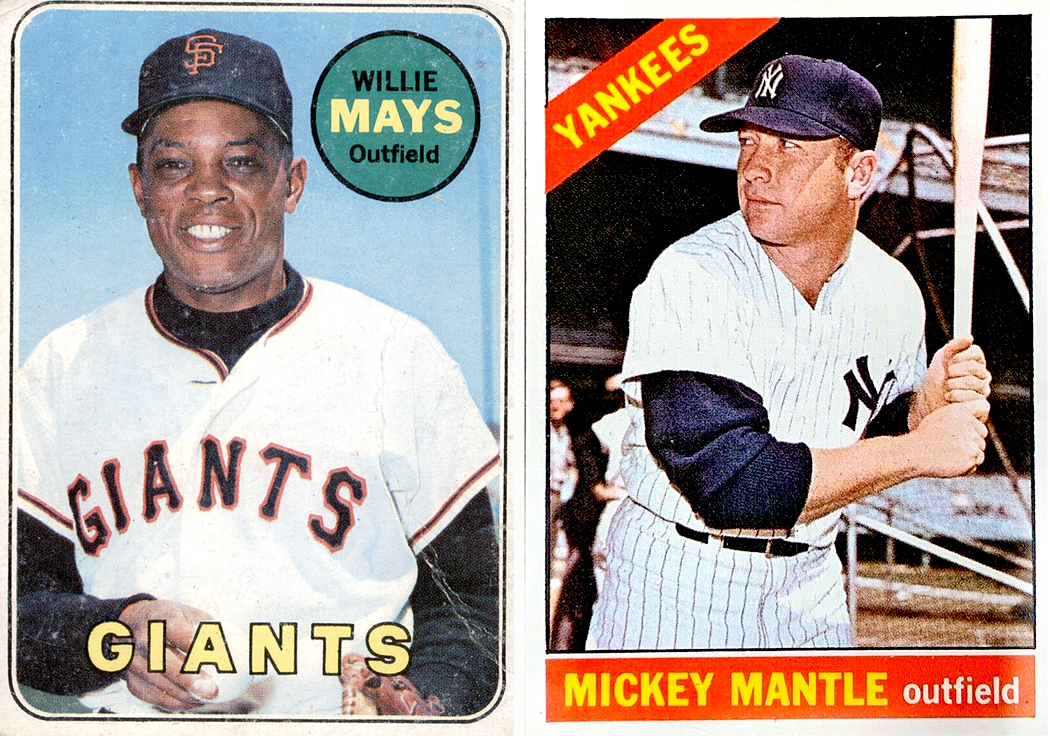
When I was a boy, one thing divided us into tribes: Was Willie Mays the greatest baseball player, or was Mickey Mantle? (This was before Mantle’s legs gave out). 

And of course, this was a silly argument, first because there were many other great ballplayers at the time, but mostly because choosing the “greatest” anything is a meaningless endeavor. (Just in the 1950s, we’re counting Stan Musial, Duke Snider, Hank Aaron, Ernie Banks, Yogi Berra, Ted Williams, Gil Hodges, Jackie Robinson, Ken Boyer.) 

But for us kids on the sandlot, it was a clear choice between Mays and Mantle. Was Mays the better hitter? Was Mantle as good a fielder? And are we comparing each player at the height of his abilities? Are we comparing lifetime batting averages, number of home runs, percentage of votes to enter the Hall of Fame? In the era of sabermetrics, there are so many obscure statistics to weigh, it all becomes bogged down and pointless. (Who is best at hitting with a 2-and-1 count, on an overcast day with men on second and third — it can get quite specific, i.e. quite anal). 

By the way, I was a Mays guy. Perhaps I was swayed by the fact that my father hated the Yankees. He was National League all the way. 

It’s all really quite silly. Above a certain level, players just count as exceptional and comparisons are meaningless. I mean, who was the greatest pitcher? Sandy Koufax? Bob Gibson? Nolan Ryan? Greg Maddux? They were all so different, with different strengths, and playing for widely different teams and different eras. (I remember when Roger Craig lost 20 games for the NY Mets, but was still considered the team’s pitching ace — how can you measure his quality when playing for one of the worst teams ever? How many games could Gibson have won playing for the 1962 Mets? They went 40-120.)

Ranking is a game, but one that is ultimately meaningless. Let’s face it, the most mediocre ballplayer in the major leagues is still hugely talented. We’re talking gradients of excellence. 

All this comes to mind when I remember how classical music listeners talk similar nonsense over the “greatest” conductor or orchestra, or recording of the Mahler Second. 

I was guilty of such silliness earlier in my life. When I was in high school, there was no question in my mind that Arturo Toscanini was the greatest. I had all his Beethoven symphonies on LP. Later, having listened to a wider range of recordings, it was clear that Toscanini had his limitations. And not the least of these were the lousy quality of his recordings — they were hardly hi-fi. 

Open any Gramophone book of recording ratings and you will find a “top ten” and the “best” recording of any particular work. Top 10 lists are immensely popular as clickbait on YouTube. Critics argue endlessly about why this Mahler Ninth is the greatest and that one is just awful. 

But the truth is, that pretty much any recording you buy will give you the music you want, in a performance that is generally very good. Even a middling performance of Beethoven’s Fifth will give you 80 or 90 percent of what’s in the music. 

The arguing usually comes over trivial details that the critic considers essential: Was the tam-tam audible in the finale? Was the oboe in the second movement a bit squeaky? Was the tempo in the finale too fast, or too slow? We all have these benchmarks that define what we demand from a performance of a particular piece. But should that disqualify an entire performance? 

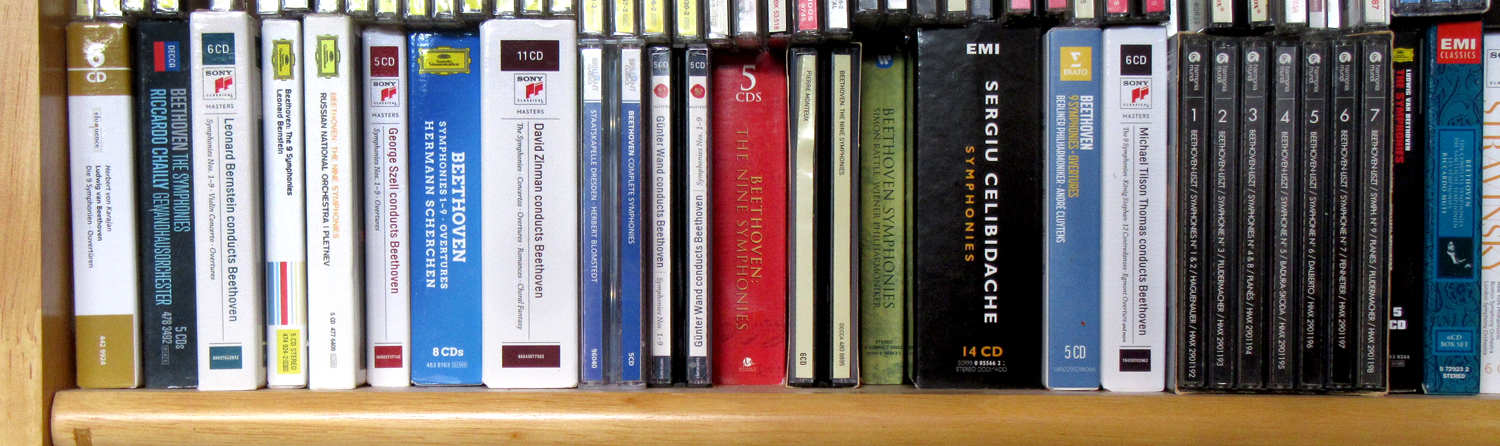
I have to fess up to a level of insanity here — I have 30 complete Beethoven symphony cycles (I used to own more, but have since divested of some). It was a decades-long quest for the ultimate set, the perfect lineup of Beethoven symphonies. Which is best? 

Well, now, I see them lined up on the shelf, and I realize they are all fine. They all deliver the goods. They are quite different, from Karajan’s smooth unctuousness to Hermann Scherchen’s outright weirdness. Toscanini (which I still own, now on CD) is quick, abrupt and rhythmic; Bruno Walter is gentle, humane, and warm. And so, at different times, in different moods, I will choose one over the other for the moment. But they are all perfectly good. Why rank them? 

Yes, there are some outliers, badly played or outrageously conducted — Listen to Sergiu Celibidache doing the Eroica and you wonder if you are playing the disc at the wrong speed — it’s the speed a novice orchestra might play for an initial sight reading. Glacial in a way that is just nuts. Or Roger Norrington, who conducts as if his bladder is bursting and he needs to get it all over with fast. (Norrington races through the adagio of Beethoven’s Ninth in 10 minutes; Bernstein in Berlin takes 20 minutes for the same music. You pays your money and you takes your choice.)

But the mainstream recordings, from George Szell to Andre Cluytens to Pierre Monteux to Joseph Krips, all give perfectly fine, reputable, performances, whether Beethoven, Brahms, Sibelius, Stravinsky or Shostakovich. They are excellent musicians with excellent orchestras (some, such as Maurice Abravenel, had less than excellent orchestras, but made them play on a level you can hardly credit). 

So, we search endlessly for that one performance that will send us into paroxysms of ecstasy, that single transcendental recording, and each CD we buy we hope will be that one. Wilhelm Furtwängler recorded Beethoven’s Fifth 13 times from 1929 to 1954 (most of them miserably low-fi, even amateur recordings), and the Furtwängler cult will search endlessly for a 14th, hoping it will finally fulfill their hunger for the ultimate, the one after which they will gladly give up life with a satisfied smile on their faces. 

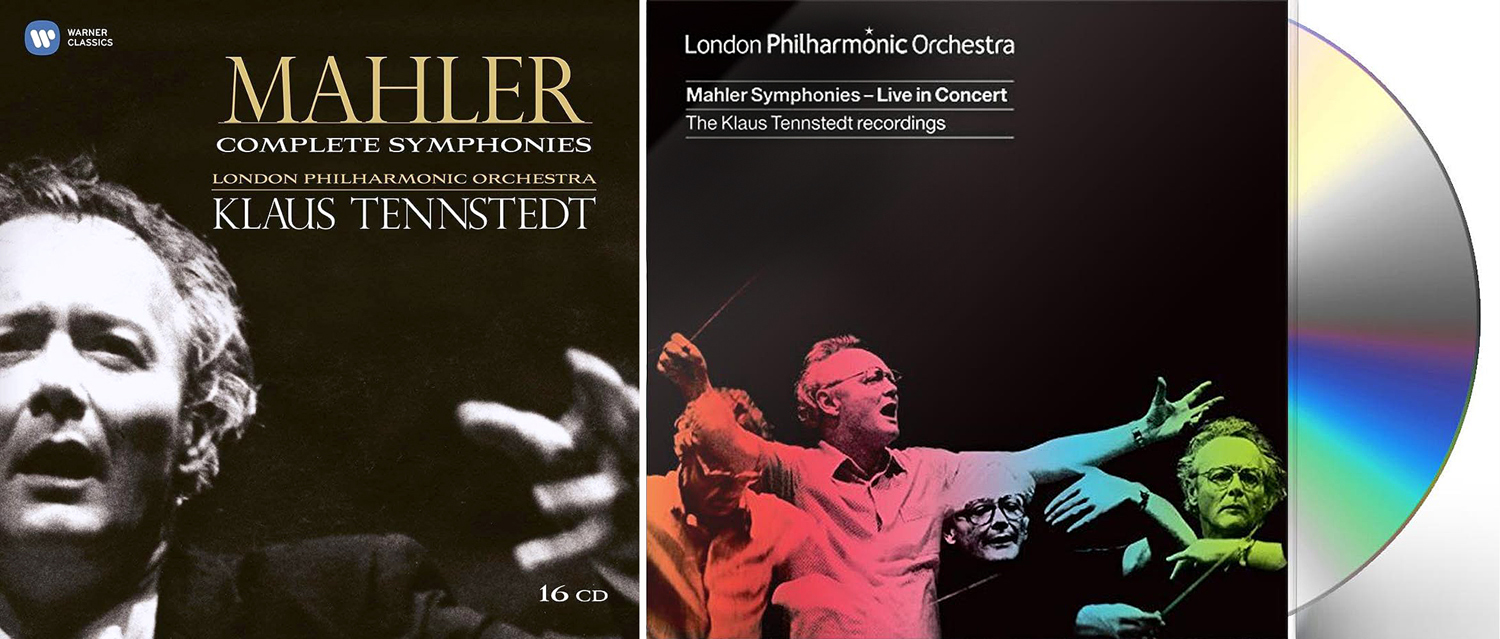
It is widely opined that Klaus Tennstedt’s live 1991 recording of Mahler’s Sixth Symphony is more emotional, more tragic, more vital than his earlier 1983 studio recording with the London Philharmonic. And that’s probably true. But if you only heard the earlier version, you would not be aware of anything missing or lesser in urgency or power. 

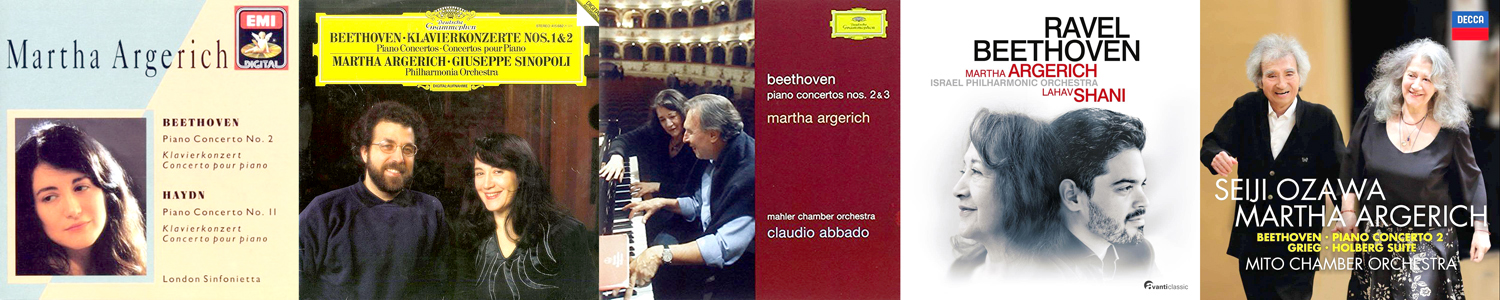
Martha Argerich has a habit of recording the same few concertos over and over again (how many Beethoven second piano concertos do we need from her? She has recorded it at least 13 times, and I may have missed a few.) And some people swear one or another is “the best,” but they are all excellent, and whether you prefer her with Abbado or Dutoit or Sinopoli is nothing more than a matter or taste. If you own one and you like it, there is no reason to buy the others, unless you are part of the Argerich cult, and if so, there’s nothing we can do for you. (Classical music does tend to generate cults: Maria Callas, Celibidache, Arturo Michelangeli, Jascha Horenstein, Toscanini, and, above all, Furtwängler. Cult members will search world over for the one missing 1949 partial recording from a radio broadcast from Rio de Janeiro. The heart goes pitter-pat.)

(Just for the record, Argerich has recorded once with herself conducting the London Sinfonietta; and also with Vladimir Ashkenazy; Gabor Takacs-Nacy; Gabriel Chmura; Lorin Maazel, Charles Dutoit; Neeme Jarvi; Giuseppe Sinopoli; Claudio Abbado; Riccardo Chailly; Seiji Ozawa; Lahav Shani; and again with Takacs-Nagy Please make her stop. She’s wonderful, but she needs to branch out.)

Yes, you will undoubtedly develop favorites, conductors who play more to your tastes. I know I have mine. But I cannot in honesty say that the ones I like best are demonstrably better than the ones I have less affection for. Taste is a different issue from quality. Basically, with a few unfortunate exceptions, if a performance was good enough to justify the expense of being recorded, produced, distributed and promoted, it will be perfectly fine. You don’t need 30 complete sets of Beethoven symphonies. 

So, one should not worry about what performance, what orchestra or conductor you get. Chances are, it will give you what you need. Bernstein or Walter; Mays or Mantle — they were each great players and picking one over the other is just silly.

Over the past dozen years, since my retirement, I have written and posted some 730 blog entries. But I have started many more than that. Some just get forgotten when something more urgent appears; some end short because nothing longer needs to be said. Some just led nowhere. Others began as lists, but ended as lists, unfilled by full sentences. And still more still wait to be written. 

The odd thing, to me, is that there is always something new to write about. With 75 years of life packed into this aging piece of meat, there are endless stories, bits, adventures, ideas, experiences, disappointments and discoveries to draw upon. The well keeps refilling. 

But here are a few fragments that never filled out beyond their early inspiration. Maybe I will get around to it, sometime. 

What is it that women see in men? Because I am a man, I know what men see in women, but I have a hard time reversing the equation. 

I am not here talking of sex or the ardor of the loins — understanding is not required for that; it is simple, direct action — but the desire of women to share company with men. What is the reward for that? Women are so much more interesting, and interested in such a variety of vital issues. Men seem interested only in sports and politics, neither of which carry much import in the lives we live. As I used to say, “Politics answers no question worth asking.” 

____________

2. I was a writer for many years, making my living from putting words against words, hoping to find the best way to express something I hoped would be genuine. 

Recently, my old employer, Gannett, made a new hire, and announced it in such a clot of management-buzz that I got a bad case of hiccups. Newspapers used to have editors, now, with middle management bloated beyond belief, while laying off reporters, photographers and copy editors, what they have is a “Chief Content Officer.” 

The announcement came with a gnat-swarm of buzz words, which may mean something to other management types, but not anything penetrable by actual human beings:

“ ‘We are thrilled to welcome Kristin to Team Gannett to champion innovative storytelling opportunities and develop strategic content initiatives to expand our audience and drive growth,’ Reed said in a Monday news release.”

“Strategic content initiatives?” You would think that those people who run a newspaper would have some sensitivity to language. If I had written prose like that, I would have been out of a job. 

3. The glory that was Greece and the grandeur that was Rome. Or maybe not so much. 

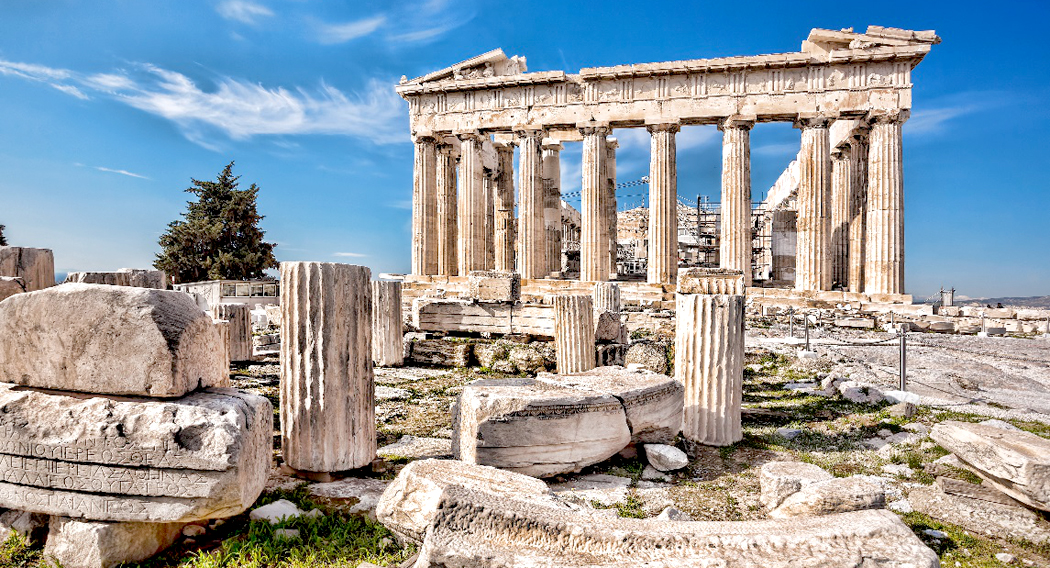
We owe a great deal to ancient Greece. At least, we pay lip service to our debt of democracy, philosophy, literature, science and not least, saving European culture from being overrun by that of Persia. But there are a host of words that describe the part of ancient Greece we would rather forget: Misogyny, xenophobia, pedophilia — come to us dressed in Greek etymology, and descend to us from Greek ideas and practice. We need to address some of the less attractive legacies of that Golden Age. 

Such as patriarchy, idealism, imperialism, colonialism, religious intolerance, cults, ethnocentrism, slavery. To say nothing of understanding sex as an exercise in dominance. And while we may think of Plato as the source of all philosophy, remember that he despised democracy and was an ardent believer in totalitarianism. 

____________

4. Columbus Day is a month away. I expect more anti-Columbus newspaper columns, art, a few tracts and manifestoes and perhaps a new opera. Much current art that tries to be political is really just polemical. To espouse any ideology is to strip life of its complexity. Yes, Columbus was a bad man and the evils he brought with him are real. But instead of preaching to us self-righteously, there are real problems to be discussed, such questions as, “What is in the nature of humans that causes territorial expansion, that causes them to make invisible the people they subjugate, that causes them to divide the world into Them and Us? Why does the boundary of ‘us’ expand and shrink periodically? Why is a world once headed in the direction of one-world nationhood, where the ‘tribe’ is humanity — why is that world now constricting so that nationhood is more tightly defined by blood, so that Serb kills Croat, Azerbaijani kills Armenian? The ethnic separatism that is emerging worldwide is, I believe, a source of exactly the same intolerance that the European West has for so many centuries visited on the rest of the world. Will it devolve to the point that Chiricahua despises Mescalero, or Venetian rises to kill Neopolitan? At what point does a coalition of interests grow from our recognition of our shared humanity?”

Questions such as these are avoided by nearly all political diatribes, whose authors prefer to point fingers and whine like grade-school tattle-tales. If a short perusal of the history of the world teaches us anything, it teaches us that war, inhumanity, violence, intolerance are universal. It isn’t only the Hebrews with their God-ordained genocide of Moabites and Amonites; it isn’t only the Pol Pot regime in Cambodia; it isn’t only Hitler killing Jews and homosexuals; it isn’t only Japan subjugating Manchuria; it isn’t only Custer at Sand Creek; it isn’t only the Hopi at Awatovi.

No one gets off the hook. Native Americans are no more righteous in this than anyone else, from Inca to Aztec to Lakota. If artists and writers chose to look a little closer, they could use Columbus as a metaphor for something richer, profounder, truer. They could have seen that Columbus was not sui generis, but rather representative of the species.

As it is, they came off sounding self-righteous. And no one self-righteous ever has much self-knowledge.

____________

5. Stasis is the enemy. Or rather, because stasis is utterly impossible, the idea of stasis is the enemy. It is the fatal stumbling block of every religion, political philosophy and marriage that has ever existed. Over and over, hundreds, thousands, millions of people die because someone promised them that if we only do things my way, everything will be forever hunky peachy. 

It is the lie behind the “original intent” argument espoused by some Supreme Court justices, and behind the infantile promises of politicians — most on the right, these days — that their policies will “finally” fix things and make them good forever. (In the past, it was the left and Marxism that promised a final end of historical change. It is not the sides one takes, but the phantom of permanence). 

The problem is that stasis is always temporary, which makes it not stasis. I.e., stasis is a pipe dream. 

____________

6. In America, “no” has become a dirty word. Americans like the positive attitude, the gung-ho approach to things. We feel actual moral disapproval of the word “no.” 

It can make your life easier and simpler. It can shake a load of guilt off your back. Although people talk of simplifying their lives, you can never simplify by doing something, you can simplify only by not doing something.  Just say no. It is the yang to “yes’s” yin, and the universe cannot function without both. 

“Yes” is kind of namby-pamby. “Yes” doesn’t want to hurt anyone’s feelings. “Yes” is go-along to get along. 

“No” is emphatic, direct, take-no-prisoners. “No” means no. Every change and improvement in life, every revolution begins with a “no.” 

In some way, every important historical development starts with somebody or some group saying no. Dissatisfaction, after all, is the great inspirer of humanity. If we were all duck happy all the time, nothing would ever get done.

7. I am 75 and am near death (Oh, I’m generally fine, but old and weak) and I think about non-being quite a lot, but not with fear, but a kind of objective interest in the whole idea of no longer hearing birds or feeling the breeze on my skin. Death seems to me a natural “rounding off” of a life and not something that I need to hold in my mouth like a tough crust of bread. 

I saw Carole take her last breath. I felt her turn instantly cool to my touch, like I was touching unfired clay. She ceased being. It was uncanny. My grief was incalculable — and it still is, although worn down — but it felt as inevitable or as natural as the coming of winter. I know the same awaits me — “To die — to sleep no more.” No dreams. Nothing. 

I didn’t sense a spirit or soul leaving her body, just her body ceasing to produce her being, like a light bulb blown out. We don’t ask a burnt-out lightbulb “where did the light go?” It ceases being generated. 

____________

8. One of my problems with Rilke is that I have no use for categorizing angels and animals. Angels don’t exist — not even as metaphors for me — and I accept that I, as a human being, am an animal. I am not so fast to accept that no animals know they are going to die. We have no evidence for that assumption. Perhaps they do; perhaps they don’t. I suspect that some, such as porpoises or whales, may very well have some concept of death. I remember when we human beings were so sure that what separated us from the beasts was tool-making. Ah, but then we discovered how many other animals forge tools.

9. It has seemed to me that part of the German soul is to speak in general and categorical terms, in ideas, rather than in things. It leads to mistaking words for reality. Logic has its own logic, but it is not the logic of the world. (Whole rafts of philosophy, including my hated Plato, only seem to work in words. You can prove with logic that Achilles can never catch the tortoise, but that ain’t how it works in reality.)

But I fear that they are much more about language than about experience. And that is my problem in a nutshell. I made my living with language, and I love words to distraction, but the older I get the more I am convinced that language is merely a parallel universe, with an order and meaning of its own, roughly mirroring the world, but never actually connecting, never touching the pulse of reality. I know, it’s all we have, but I still counsel wariness. 

10. “These fragments I have shored against my ruins.” Why write at all? It is a question I have wrestled with all my life. Do I have anything worth saying to be value to anyone else? Dr. Johnson said that “nobody but a blockhead ever wrote except for money.” Well, I’m a blockhead: I no longer get paid to string words together. But it doesn’t seem to come as a choice. Some may choose to write; I write with the same volition as I breathe. 

Early in my life, words were thin and sparse; it seemed as if there were a lack of hydrostatic pressure from within: I needed to fill myself first. But after living a certain time, the inside pressure grew and it had to come out. It became a fountain I could not stop if I had wanted to. And the well was constantly recharged. 

Now I am old, and travel becomes difficult, habits become settled, reading more and more becomes re-reading. In retirement I can no longer afford to attend concerts, plays and dance the way I used to. The incoming has slowed, and I suppose the outflow has dwindled in response, but the backpressure is still there. Hoping to cease not till death.

“What do humans sound like?” That was a question that my late wife, Carole, used to ask. She meant something quite specific by it. Carole was the smartest person I ever knew, but her intelligence was not contained within the usual structures of thought. Not so much that she thought “outside the box,” as that there was no box to begin with. 

She used to ask if it were possible to “fall into blue.” When she was a little girl, she used to bend over to see the world behind her, upside down, as she looked at it through her legs. “I wanted to see what it really looked like, and not just what I had grown to know it looked like,” she said. She wondered, as a girl, if the night’s darkness could leak into her bedroom from under the window sill. She was awake to all the input the world offered. 

When she asked about the sound of the human voice, she meant, what it sounds like aside from its meaning. We know what a dog sounds like, for instance, or a bird or a cat. But what is the pitch, rhythm, tempo and tune of a person speaking? We know a bird’s song in part because we don’t know what the song means, only its music — but not even music is the right comparison, since music comes with a syntax and structure of its own. We know the raw sound of the birdcall, but we cannot normally know the same for human speech because our brains process the language instantly into content. We bypass the awareness of the sound for the sense. 

I got some inkling of the sound this morning while sitting in my back yard. Normally, I hear birds and maybe the chatter of squirrels. But there is a house just beyond the trees that border my yard where the family runs a little day-care operation. And I can hear the children talking and yelling, but not well enough to hear what they are saying. I hear only the pitch and rhythm, the overlap, the space left between utterances, the rise in volume with excitement. I hear the adult voices, too, and their pitch and rhythm, all without knowing what they are saying. I am hearing the sound that humans make.

Yes, I know it is being filtered through the English language. I’m sure if I heard little Mexican children playing, their rhythm would be a variant, or French kids behind the walls of their school in Paris (which I once heard and listened to). French has a less percussive sound. Spanish has a rapid-fire rattle to it. And Chinese comes with a melody that imparts its own meaning. But the basic sound was there. 

And so, I hear, in my back yard, the combined sounds of distant dogs barking, the “kweet… kweet” of a towhee, the “shshsh” of the breeze rustling the tree leaves, and the vocalizations of those dozen or so children. And it is all of a piece. It is an experience of the world before knowing. 

One of the problems is that the human mind is a pattern-recognition machine. It seeks and spots them, even without our willing to do so. Understanding speech is an example. The sounds become words involuntarily and the words get in the way of hearing the sounds as sounds. Of course, the words are the point of speech and the desire to hear the sounds without the words is a peculiarity of mind that Carole had. For most of us, the actual sounds are irrelevant, as long as our brains recognize them as phonemes, morphemes, words, phrases, sentences and thoughts. 

Yet, the patterns we recognize — not just in speech, but throughout our lives and culture — are, in some sense, second hand, a gloss on the primary experience. They are a colored glass through which we see the world. The patterns, like so many mullions in a large window, force us to see, hear, taste, smell, the world in the patterns that our brains force on it. 

A frame separates the subject of a picture and points it out to us, but it also cuts away everything not in the picture — the wider context. 

You might laugh, because functioning in the world requires us to make sense of it and our brains do that. But that pattern-making and pattern-finding aspect of our consciousness can also prevent us from experiencing existence directly. Really, only artists, visionaries and crazy people get to lift that veil. Artists want to; visionaries get to; and the insane have no choice. 

Some of those patterns are the cultural baggage we carry. We have the expectation of a certain pattern for governments, for marriages, for friendships, for gender, for tribal affinities. These patterns may merely be inherited habits, but they are buried deeply in us. An attempt to escape them is one of the things that artists do. Entrenched interests often become agitated by the art and fight back. Eventually, the art becomes classic and everyone more or less agrees that the artists had it right in the first place. But by then, the art has become the pattern and is itself entrenched. 

Trying to escape not only the patterns, but the incessant pattern-finding and pattern-making of the brain is difficult. Sometimes that brain outweighs the rest of our bodies. Getting rid of the “middle man” and experiencing things directly can be a revelation. 

It is, I believe, what Walt Whitman was getting at in his Song of Myself: “The atmosphere is not a perfume, it has no taste of the distillation, it is odorless,/ It is for my mouth forever, I am in love with it,/ I will go to the bank by the wood and become undisguised and naked,/ I am mad for it to be in contact with me.” 

 To smell the new-mown grass without knowing it is new-mown grass; to feel the radiant heat on your skin and not know it is caused by the summer sun; to taste the sweetness of spring water without knowing what you are drinking; to hear the sound of children playing without hearing mere words; to feel the earth under your toes and the air against your skin and never parse their meanings. 

“You shall no longer take things at second or third hand, nor/ look through the eyes of the dead, nor feed on the spectres in books,/ You shall not look through my eyes either, nor take things from me,/ You shall listen to all sides and filter them from your self.”

I’m not recommending that we all turn into gibbering idiots; our minds’ ability to forge sense of it all makes life possible. We couldn’t give that up even if we wanted to. What I am trying to do is supplement its meaning-making drive with the ability to let that go for the sake of pure experience, non-judging, non-deciding experience. It would be a kind of return to roots, before all the layering of culture and idea, where we might discover some of those ideas have no foundation. 

Meaning is important, and we all want meaning in our lives. But perhaps we are missing something more primary, more direct. 

A wise person once said, “What we seek is not the meaning of life, but the experience of life.” The experience has precedence. We can hardly make meaning without it. 

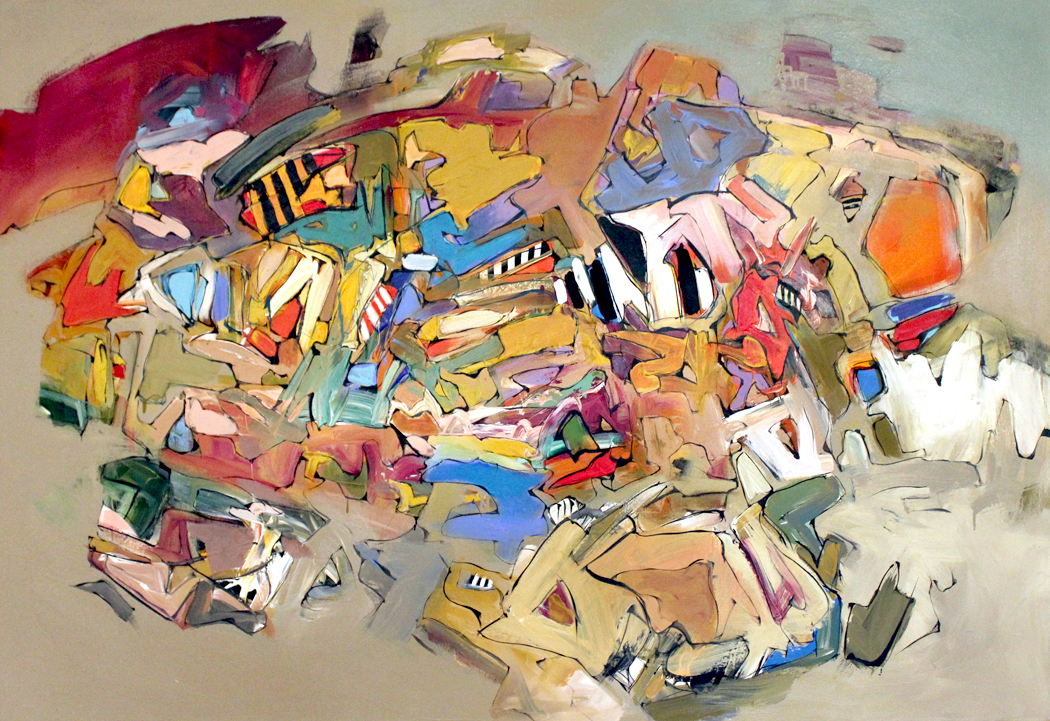
My brother-in-law, Mel Steele, is a painter whose work I not only admire, but truly enjoy. They give my eyes great pleasure. 

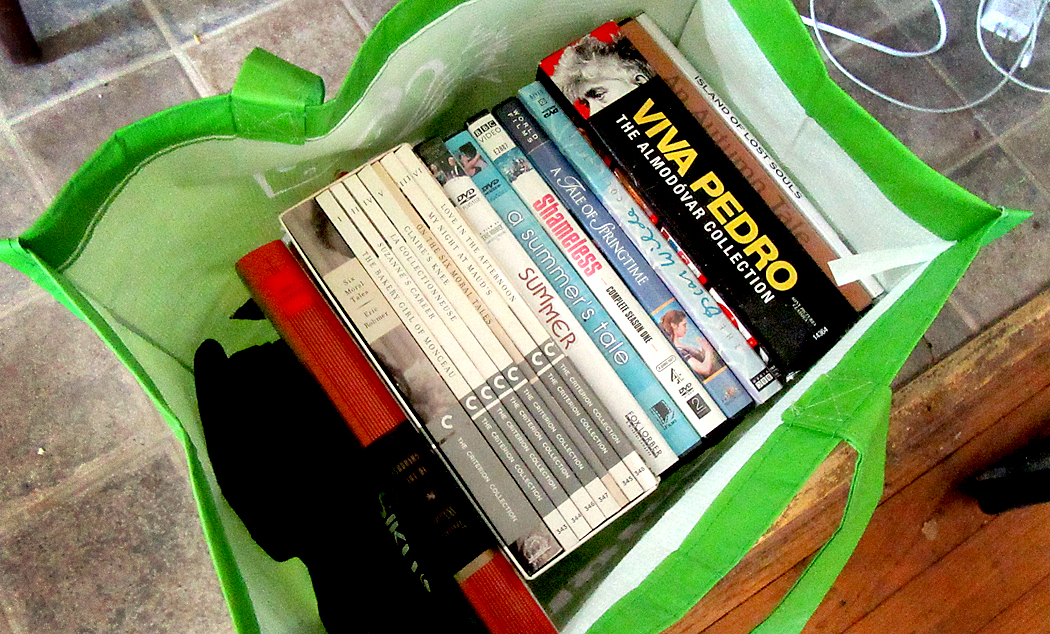
We visit Mel and his wife, Deborah, a few times each year and usually I bring along a big bag of DVDs, mostly art or foreign films. Mel and I share a common taste for such things.

Indeed, our tastes match up surprisingly well, not only in movies, but in music and art as well. We love the more difficult music, like Bartok quartets or 20th century operas, and for all that we get along admirably. 

But there is a sticking point, a point of contention that we have never been able to resolve. There is a movie he hates and I love; and one I cannot stand that he adores. And I see no way of settling the dispute. 

Mel grew up in Madison, N.C., in the 1940s and ’50s and only a block from his house was the local movie theater. He and his sister went to the movies at least once a week growing up. They saw all the usual Hollywood offerings, with Burt Lancaster, Greer Garson, Veronica Lake, Dorothy Lamour, Kirk Douglas — you get the picture. 

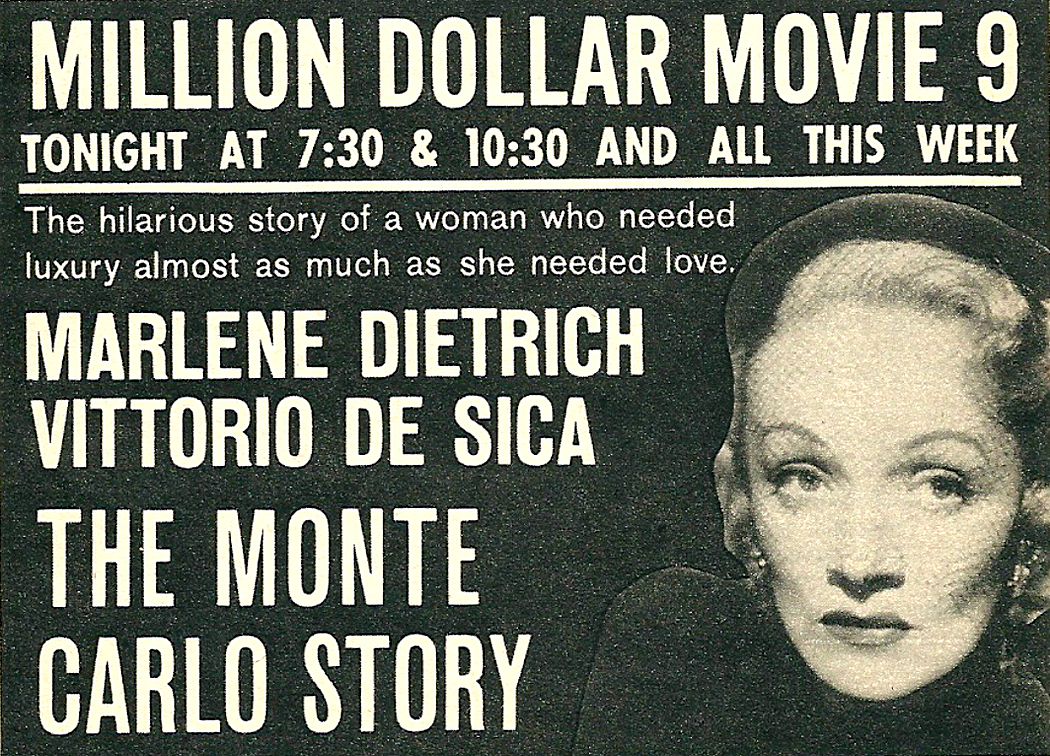
I am a few years younger than Mel and since there was no movie house where I grew up, my film education came via television — old movies packaged by studios for rebroadcast on fledgling TV channels, such as WOR-TV from New York and its Million Dollar Movie. I was fed a lot of films from the 1930s, and, of course, all those marvelous-awful sci-fi films made for a pittance with Richard Carlson or Sonny Tufts. 

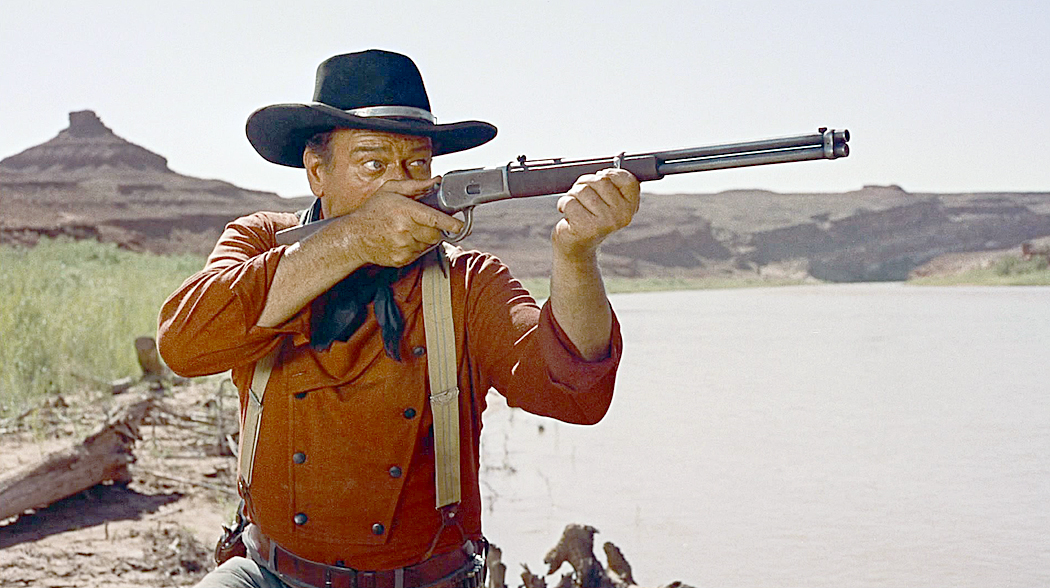
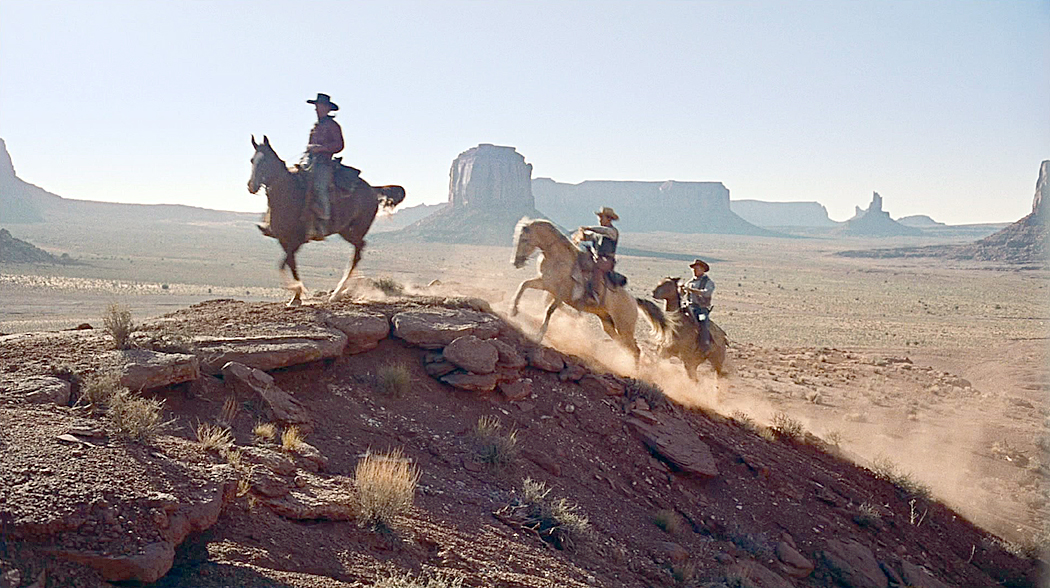
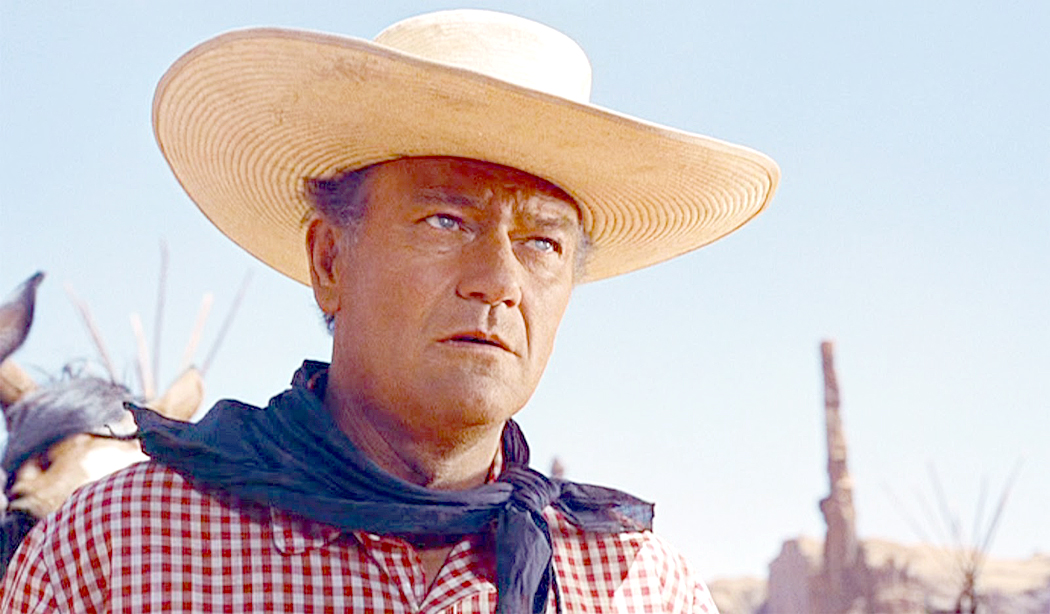
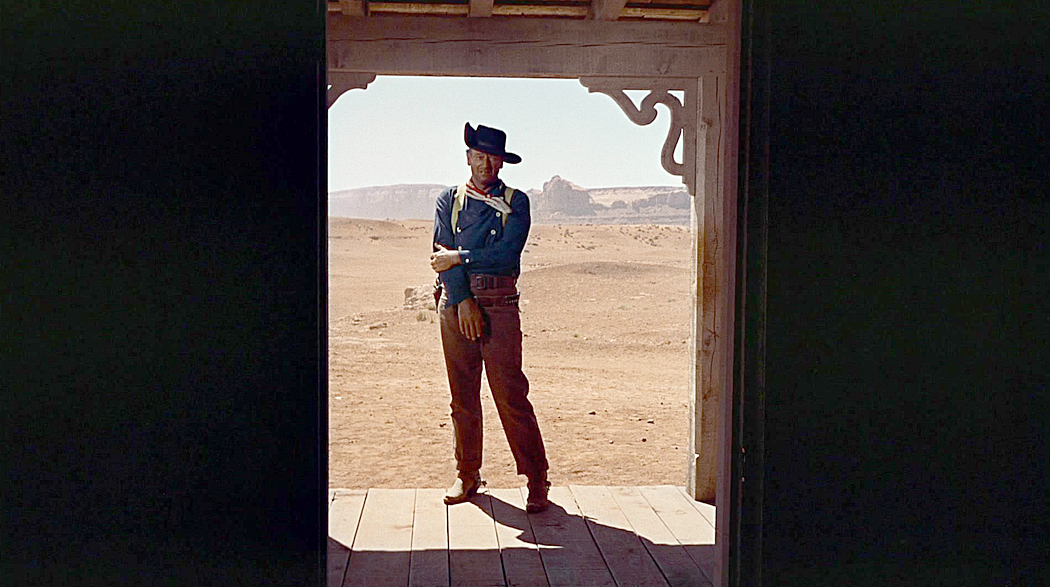
I don’t know if our different childhoods made the difference, or what, but that sticking point revolves around the best Western (not the motel chain). I mentioned once that I love The Searchers from 1956, a film in which John Wayne shows that he can actually act. It is a tough film, in which Wayne is an unsympathetic character, a bigot returned from the Civil War, having fought for the Confederacy. For my money, it is the best Western ever made, highlighting the shadings of culture clash and personality. 

“Can’t stand the thing,” says Mel. “Can’t stand John Wayne.” 

Indeed, it seems as if the presence of Wayne is the primary objection Mel has to the film. And I suspect that Mel’s dislike of Wayne has more to do with Wayne’s later right-wing politics — and the number of undistinguished star vehicles he made as an ever-paunchier alpha male — than with Wayne’s actual performance in The Searchers

It is clear that Wayne didn’t always have to act, and could rely on nothing more than his screen persona in lesser films, such as North to Alaska, The Comancheros, McLintock!, Hatari, or The War Wagon. He seemed always to be playing a caricature of himself. 

And then, there are those absolutely embarrassing moments in The Alamo or The Green Berets. Wayne’s shallow jingoism does not wear well. Nor does his support of the Vietnam War or Richard Nixon. 

I used to share Mel’s disdain for John Wayne. The actor was pretty much a punchline. Really? Genghis Khan in The Conqueror? Gimme a break. 

I first became acquainted with Wayne when I was a little kid, watching ancient Westerns on TV, where he was Stony Brook in the Three Mesquiteers films, or as “Singing Sandy” in a bunch of old Republic or Monogram Westerns. Compared with some of the old cowboys, Wayne had a graceful presence on screen, if no great acting chops. 

Only as an adult, did I come across films in which Wayne played a character not merely himself. After seeing Howard Hawks’ Red River, director John Ford famously said, “Who knew the big lug could actually act?” Well, he could, even if he didn’t always feel the need to. 

Then there are such films as The Man Who Shot Liberty Valance and She Wore a Yellow Ribbon, where he convincingly played a part 20 years older than he was at the time. And most of all, perhaps, his role as John Books in The Shootist, his final film, in when he seems to want to prove once and for all he can be an actor and not just a star. 

Mel, of course, was having none of it. “Can’t stand the guy.” 

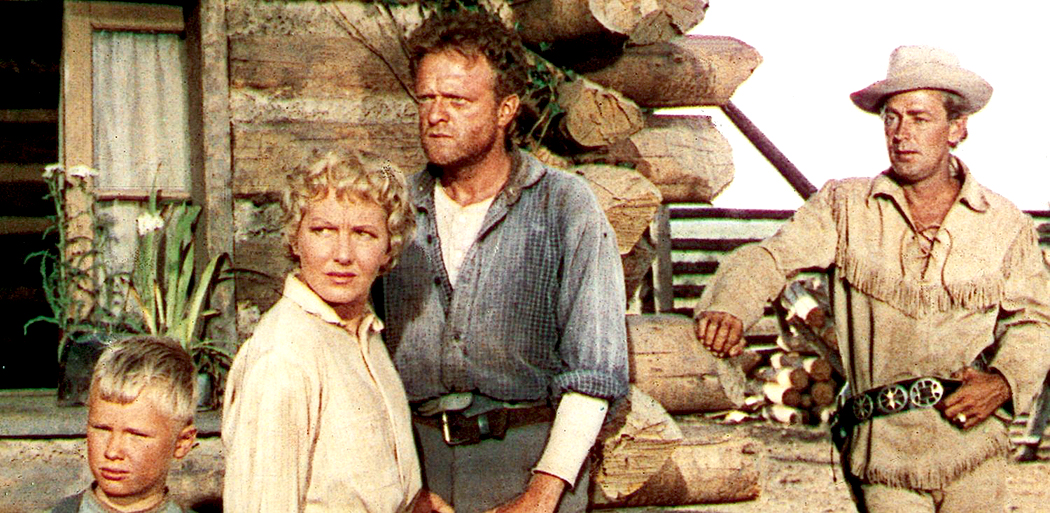
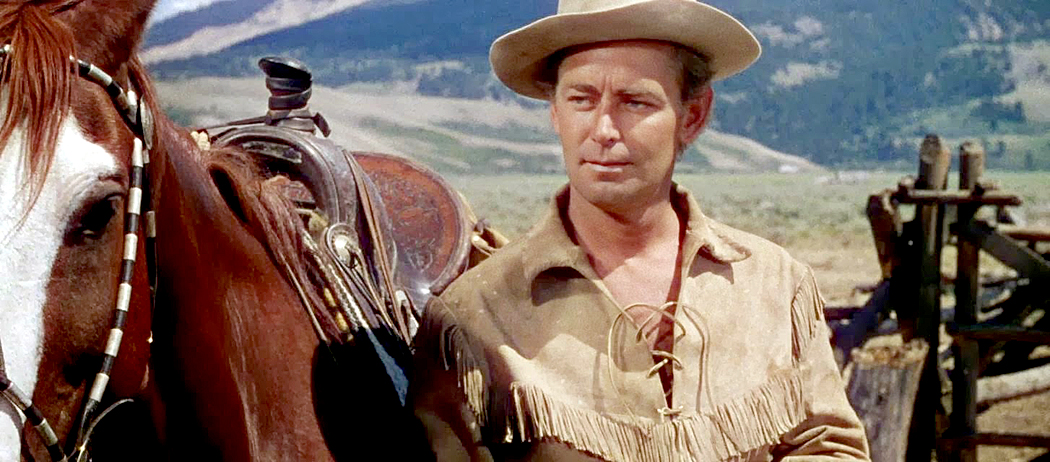
In contrast, Mel proclaimed that the greatest Western ever is Shane, a movie I cannot abide. For me, it is the epitome of Hollywood phoniness. It is pure artifice, with not a believable moment in it. 

Even its widescreen projection on release was fake: Paramount wanted something to compete with the then-new Cinemascope and Panavision — both anamorphic widescreen formats — and so they cropped the original Academy Ratio Shane at top and bottom to make a phony widescreen version. 

“But it’s so beautiful,” Mel says. “Look at that landscape.” Yeah, I feel, a rip-off of Ansel Adams, with the Teton Mountains prominent in the background. It seems so self-consciously meaningful, so arty, so pretentiously “mythic,” that I cannot take it seriously. There is not a second in it that feels real — apart from the acting of Jean Arthur, who is the only fully human character in the film. These are not people but ideas moving around in the plot, as if they each wore a sign telling us what they signify. Again, only Arthur feels like a real person. 

Allegory, for me, is always a tough sell. 

I’ve never been able to warm to Alan Ladd. He is one of those movie stars from that era of Hollywood movie in which the dying studios made turkey after turkey. 

Van Heflin always feels to me like someone the studios felt they could turn into a major star, but never managed to. 

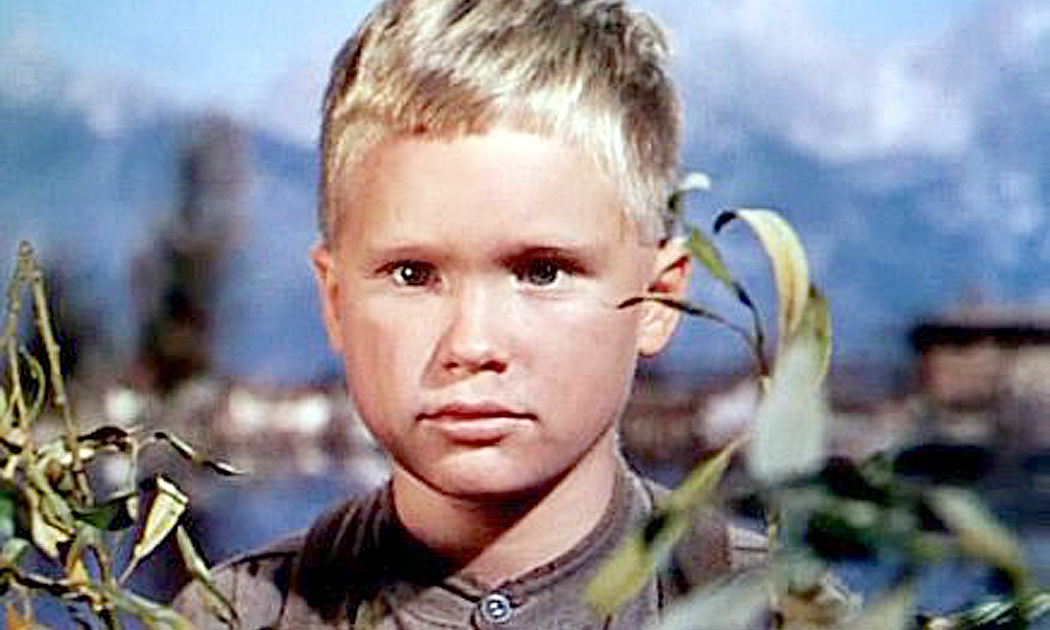
And Brandon deWilde is a blank-faced homunculus, as if that look of animal stupidity  should be taken as the face of innocence. Actually the kid gives me the creeps. 

The Searchers, in contrast, is filled with all the great character actors that John Ford used over and over. They are people, not cardboard cutouts.

Perhaps I have overstated my case. There are other great Westerns that may be as good as The Searchers. Ford probably made them. Modern Westerns tend to be more period-aware and historically better informed. And perhaps Shane isn’t the worst Western. There are plenty of hack Westerns with much less ambition than George Stevens brought to his work. 

But the fact is, the comic disagreement Mel and I had was about these two films in particular. I was not able to persuade him; he was not able to persuade me. Let’s leave it at that. 

Sometimes, while driving through a neighborhood, I will see an old person, a retiree, sitting in a chair on the front porch, or in the driveway, just watching the traffic go by. It’s become a meme, much like the “Get off my lawn,” thing that shows up in single-panel cartoons. 

I have to admit, I am of that age, although I don’t find traffic that interesting. 

But after several years of being partially house-bound by the Covid virus, and at times suffering from cabin fever — to say nothing of the fatigue that comes with hours staring into an iPad screen checking out the news or watching cat videos — I have discovered the pleasures of sitting quietly in my back yard. It gets me out of the house and it reacquaints me with what I jokingly call “reality.” That is, the sense that there is a world without electromagnetic signals commandeering my attention, a world that has been there always, before my greatest-grandparent was born, and will be there when all the power grids in the world are rusting back into the soil. 

I can sit there for half-an-hour at a time, maybe 40 minutes, without thinking about anything and just watching this tiny bit of the world as it moves in the breeze, as the cardinals and mockingbirds swoop across it into the low tree branches, as a white butterfly flits over the irises and a rabbit lopes across the bit of lawn. 

Occasionally, there is a groundhog who will waddle into the yard, get about halfway across before noticing me sitting there; stare at me for two or three seconds before turning back and returning to where he came from. 

This morning a bumble-bee dive-bombed me briefly. I don’t think he was attacking me; more likely he didn’t even recognize I was there. 

After a morning of staring at a computer screen, or watching an iPad, it is important to move to somewhere so my eyes can refocus at a distance, perhaps to infinity. I watch the clouds and notice which direction they travel. I listen to the birds nattering, or hear the neighbor on the next block mowing the lawn. An airplane may cut across the blankness leaving a contrail, and dropping a rumbling jet sound that always seems to be coming from some distance behind where you see the plane. 

It may seem to some, in the rush of civilization, that nothing is happening, that sitting quietly and watching is the very definition of boring. But for me, it is not. Something is always happening. It may be subtle, but it is happening. The leaves wiggle, the sky shifts from sunlight to shadow as the clouds pass, a mockingbird lights on the top of the shed and repeats his mantra over and over; he seems to notice that I’m there, but perhaps I am no different to him from the patio furniture. 

But I have noticed, over the weeks I have been doing this, at least three psychological states I have found myself in. 

First, if I am distracted by other thoughts, or if I am not really paying attention, my relationship with the yard is that I am looking at nature, almost as if I was still staring at my computer screen. I may notice things, may enjoy what I see, but it is quite separate from me and is, as I look, clearly something in front of me. 

There is nothing wrong with this, but it isn’t why I go out each day and sit there. I consider it a failure when I can’t get to the second state. 

That second state is when I feel not that I am looking at nature, but rather I am in nature. That is, it is all around me, and what is more it exists behind as well as in front. It extends into the air and to the clouds; I become aware of the soil under me, the weeds to the right and the undergrowth beneath the tree branches. 

To be in Nature is to be taken away from the self and redeposited into the wider world. I can easily lose myself in this state and that is when the watching becomes something more. I can feel the space around me expanding to the rest of the earth and sky and my bit in it, however tiny, is plugged in. I feel alive in a live world. 

These two states of mind depend primarily on my mood. If I am tired or distracted, I cannot reach the higher state; it just doesn’t come. But when I can silence my brain for a bit, it is like the coupling of a locomotive to a train. There is a click and it all becomes connected. 

It is the same state you enter when you are absorbed in a book and the room you are in disappears because you are so focused. 

But I said there is a third state, and that comes only with something like grace. It is when I neither look at nature nor feel in nature, but rather am nature. 

The barriers between me and the rest of the world, even the universe, vanish and I realize that I am part of it all. No. I don’t realize it. It just is. The very idea of realizing, or thinking, ceases to have meaning. If I look at the rabbit, I know he looks at me, too. No, again. It isn’t a question of knowing. We look at each other. A recognition. The metabolism that takes place in the cells of my meat is the same as that in the green iris leaf. The motion of the clouds across the blue is the motion of my blood through my arteries and veins. “For every atom belonging to me as good belongs to you.”

I disappear, except that I don’t. In fact, I am more present. It becomes one thing, and it is not that I am a part of the one thing, but that it is just one thing. 

That is, of course, a truism. Even Miss America might say the same thing through a Pepsodent smile. But just saying, or knowing it is not what I’m talking about. It is not knowledge I mean; it is the experience. I sit there in the back yard and it just is.

This cannot happen every time I sit in the back yard. And it isn’t necessary to have a back yard. It is just, as I say, a kind of state of grace, psychologically. 

What is required is receptivity, an openness without expectation. Paying attention. 

As I get closer and closer to the point when every atom belonging to me will belong again to the soil, I remember the lines in Thomas, that “it will not come by expectation, but it is all around us and we do not see it.” 

But once in a while, the veil is lifted and we can see. It is not what we see but that we see.

Until relatively recently, 20th century concert music was a tough sell. It had the reputation of being dissonant, noisy, difficult, and unpleasant. It was a century that began with Arnold Schoenberg dispensing with harmony and Igor Stravinsky upending rhythm, followed by a World War that knocked the complaisance out of any rational being and told us that the coming century was going to be anything but calm and easy. 

A number of composers felt that music needed to reflect the mood of the angst-ridden age. 

But even Schoenberg admitted “There is still plenty of music left to be written in C-major.” He didn’t believe his 12-tone revolution would destroy all tunes to come, but was simply a logical conclusion to music history from Bach through Wagner, from tonality through chromaticism to atonality. And we shouldn’t blame poor Arnold for all the dreary ruckus that followed: His own music is quite emotional and beautiful, even if it often requires some serious commitment from his listeners. 

He was right about one thing certainly: There was plenty of music written in C-major, throughout the century. And F-major and D-minor. In fact, most of the music written in that century was based on familiar scales, albeit with plenty of playing around and trying new ways to use them. 

 It’s just that the music-industrial complex, so to speak, was hijacked around mid-century by a clutch of academically-minded composers — the “Darmstadt Mafia” — insisting that serialism was the only music to take seriously, and that the more unlistenable it was, the greater it must therefore be. (Some of these composers did write interesting music in that style — it wasn’t a complete loss — but they looked down their noses at anything that might stink of a tune.) 

And so, contemporary music turned its back on the concert audiences and those composers wrote only for other composers of their ilk, and audiences shrunk from any concert program that insisted they listen to the stuff. Modern music acquired a very bad reputation. 

But I find that after 60 years of concert-going and music absorption, I listen to 20th century music more than that of any other era. It is music that speaks directly to me. Oh, I listen to bunches of Haydn, Mozart, Beethoven, Brahms and Tchaikovsky, but the plurality of my music listening edges to the century in which I grew up. 

So, I wanted to create a list of representative compositions from the century in question and present them as a course in great music that anyone can listen to and enjoy. 

I went through my collection of thousands of CDs and chose 30 pieces to offer. I listened to each one, in order, to refresh my memory — and to flat out enjoy them all over again. 

The roughly chronological list begins with a surprising entry. Most people think of Ives’ music (if they think of it at all) as noisy, crashing, impish tomfoolery. But Ives was a well-trained musician, with a degree from Yale University. His Symphony No. 2 is pretty tame, except for his borrowing of familiar popular tunes, and a raspberry at the end. 

Here is my list:

1900-1920

Charles Ives (1874-1954) — Symphony No. 2 (1902; premiered in 1951) (42 minutes long). Performance listened to: Eugene Ormandy, Philadelphia Orchestra, recorded 1973.

Ives studied under the respectable, if stuffy Yale professor Horatio Parker, and after graduating in 1898, began working on his second symphony (the first was his senior thesis composition for Parker) and included bits from Camptown Races, Turkey in the Straw and Columbia the Gem of the Ocean run through a kitchen blender. He finished Symphony No. 2 in 1902, although, with Ives, he was never completely finished and continued tinkering until his death in 1952. The symphony wasn’t premiered until Leonard Bernstein and the New York Philharmonic played it in a radio performance in 1951. The house-bound but still cantankerous Ives heard it on his radio in Connecticut and his response was that he spit. 

I listened to Ormandy’s version from 1973. The recordings listed here are not my choices as “best” — although they are all good — but merely the ones I had to hand when I started this project. 

Frederick Delius (1862-1934) — On Hearing the First Cuckoo of Spring (1912) (7 minutes long). Performance: Thomas Beecham and Royal Philharmonic, recorded 1958.

Delius’ score instructs, “With easy flowing movement,” and the quiet, peaceful evocation of the countryside (presumably English) and its birdcalls, it is a calming balm for a tussled soul. Originally, it was one of Two Pieces for Small Orchestra, the other half being Summer Night on the River. Beecham championed the composer’s music and his performances of the music are definitive.

Manuel de Falla (1876-1946) — Nights in the Gardens of Spain (1916) (21 minutes long). Performance: Arthur Rubinstein, piano, Ormandy, Philadelphia Orch., recorded 1969.

Falla was an Andalusian composer and the quasi-Impressionist Nights in the Gardens of Spain functions as a kind of piano concerto, with three movements, each describing a different Andalusian garden. Rubinstein heard it first soon after its premiere in 1916 and performed it regularly after that.   

Serge Prokofiev (1891-1953) — Classical Symphony (1918) (13 minutes long) Performance: Ormandy, Philadelphia Orchestra, recorded 1961.

Prokofiev’s Symphony No. 1 is the Sara Lee of symphonies: No one doesn’t love it. It is a jaunty, energetic gloss on the Classical-era symphonies of Haydn, seen through the “wrong-note Romanticism” of the composer’s style.  

Gustav Holst (1874-1934) — The Planets (1918) (50 minutes long)

 Performance: Ormandy, Philadelphia, recorded 1975.

Marketed as “space-age music,” the intent of Holst’s seven-movement suite is astrological, not astronomical, and each movement is a musical description of a psychological type. It has become enormously popular, and it has been recorded more than 80 times, first in 1926 with the composer conducting.  

Igor Stravinsky (1882-1971) — Pulcinella (1920) (39 minutes long) Performance: Claudio Abbado, London Symphony Orchestra, recorded 1979.

Stravinsky took some old compositions by 18th century composers and reworked them into bright, colorful Stravinskian cogs in what Leonard Bernstein once called “Uncle Igor’s Asymmetry Machine,” giving them new life as a ballet score, complete with voices. 

1920s

Ralph Vaughan Williams (1872-1958) — The Lark Ascending (1921) (16 minutes long) Performance: Zina Schiff, violin, Dalia Atlas, Israel Philharmonic, recorded 1989.

Poet George Meredith wrote of the lark in his poem from 1881, “He rises and begins to round, He drops the silver chain of sound…” and Vaughan Williams gives us the violin and orchestra version, with the British pastoral, And whose primary intent seems to be the creation of simple beauty.

Darius Milhaud (1892-1974) — La Création du Monde (1923) (17 minutes long) Performance: Simon Rattle, London Sinfonietta, recorded 1986.

European composers began hearing jazz and they loved it. Milhaud even moved to Harlem for a while, to soak it all up. One of the best translations of jazz to the classical idiom is his Création du Monde, with its resonant  saxophone solo at the beginning. 

Arthur Honegger (1892-1955) — Pacific 231 (1923) (6 minutes long) Performance: Charles Dutoit, Bavarian Radio Symphony, recorded 1985.

A steam locomotive begins to move, gathers speed, churns along and comes slowly to a stop, in this propulsive tone poem to modernity. Trains have been a theme in 20th century music, from Duke Ellington’s Happy-Go-Lucky Local to Villa-Lobos’ Little Train of the Caipira. Chug-chug. 

Ottorino Respighi (1879-1936) — The Pines of Rome (1924) (20 minutes long) Performance: Ormandy, Philadelphia, recorded 1958.

There were no flying humpback whales in Respighi’s original score; blame Disney for that. But what you do get are rousing tunes and some spooky catacomb music, with a grand finish, the kind that gets you out of your chair cheering. 

Jean Sibelius (1865-1957) — Symphony No. 7 (1924) (22 minutes long) Performance: John Barbirolli, Halle Orchestra, recorded 1966.

Sibelius’ final symphony is also his shortest, being in one movement, but by some accounts his best. My old teacher said when he was young, he wanted to play the French horn, because it had all the great solos. But he wound up with the trombone, which “only plays supporting material,” he said. But in this symphony, the trombones get the big tune, the one you will most likely remember and hum after it’s over. 

George Gershwin (1898-1937) — Piano Concerto in F (1925) (32 minutes long) Performance: Andre Previn, piano and conductor, Pittsburgh Symphony, recorded 1998.

Who was Arnold Schoenberg’s favorite composer in America? His frequent tennis partner, George Gershwin, who was much more than a Tin-Pan Alley songster. At the time, there was a big rush to figure out how to incorporate jazz into concert music. Well, here’s how. 

Leos Janacek (1854-1928) — Sinfonietta (1926) (23 minutes long) Performance: Claudio Abbado, Berlin Philharmonic, recorded 1989

What grabs you at first are the 14 trumpets, four horns, trombones, tuba and euphoniums. But the rest of the music pops with chunks of memorable tunes, piled like crabs in a bucket, and the way Janacek uses musical “jump cuts” to go from one to the next. 

1930s

Howard Hanson (1896-1981) — Symphony No. 2 “Romantic” (1930) (29 minutes long) Performance: Gerard Schwarz, Seattle Symphony, recorded 1989.

All those American symphonies written in the 1930s and ’40s have been largely forgotten, despite their quality, but when Ridley Scott used Hanson’s music during the closing credits of his 1979 film Alien, it resurrected this “Romantic” symphony, which developed a second life. Scott did it without Hanson’s permission, which pissed off the composer, but Hanson never sued, probably because of the boost it gave his music with audiences. 

Maurice Ravel (1875-1937) — Piano Concerto in G (1932) (21 minutes long)

Performance: Samson François, piano, André Cluyten, Orchestre de la Société des Concerts du Conservatoire, recorded 1959.

The French were just as taken with jazz as Americans were, in the 1930s. Lots of composers attempted to weave the syncopations and blues notes into their work. Ravel did it twice, with each of his piano concertos. But this one has a slow movement of such hypnotic ethereal peaceful beauty that you feel in a trance, broken by the explosion of the finale. 

Alexander Glazunov (1865-1936) — Saxophone Concerto (1934) (14 minutes long) Performance: Marc Chisson, saxophone, José Serebrier, Russian National Orchestra, recorded 2010.

Glazunov was exiled to Paris when he wrote his own jazz-influenced concerto for alto saxophone, which is perhaps less jazzy than Russian, but is nevertheless probably the best concerto ever written for the instrument. 

Samuel Barber (1910-1981) — Adagio for Strings (1936) (8 minutes long) Performance: Ormandy, Philadelphia, recorded 1957.

Canadian filmmaker Guy Maddin made a movie in 2003 titled The Saddest Music in the World, about a contest to find such music. Well, he needn’t have worried: Hands down, the winner (ignored by the film) is Sam Barber’s orchestral transcription of the slow movement of his string quartet. Unbearably beautiful, it is near impossible to hear it without weeping. 

Colin McPhee (1900-1964) — Tabuh-Tabuhan: A Toccata for Orchestra (1936) (17 minutes long) Performance: Howard Hanson, Eastman-Rochester Orchestra, recorded 1956.

McPhee heard Javanese gamelan music on a visit to Bali and then moved there. He became an ethnomusicologist as well as composer and wrote his own gamelan-influenced music full of the percussive tintinnabulation that is so catchy. Tabuh-Tabuhan is his most popular work, meaning it’s pretty much the only piece most people know, McPhee having otherwise fallen into undeserved oblivion.

Heitor Villa-Lobos (1887-1959) — Bachianas Brasileiras No. 5 (1938) (7 minutes long) Performance: Bidú Sayão, soprano, orchestra of cellos, conducted by Leonard Rose, recorded 1949.

The composer was fascinated by the long-line melodies that Bach sometimes wrote and came up with his own. Originally a single movement for soprano and eight cellos, it was recorded that way in 1949 by Bidú Sayão in a recording of singular beauty and power. It is very difficult, as the final third of the movement is required to be hummed through the nose, with the mouth closed, and ending on a nearly impossible octave leap. He later wrote a second movement, but this recording of just the first is so exceptional, it has to be heard. 

1940s

Sergei Rachmaninoff (1873-1943) — Symphonic Dances (1940) (35 minutes long) Performance: Leonard Slatkin, Detroit Symphony, recorded 2002.

It is sometimes hard to realize that Rachmaninoff is essentially a 20th century composer. And all his later music (the Paganini Rhapsody, Third Symphony and this, the Symphonic Dances) is rife with irony and astringency. Heart no-longer on sleeve, but with unforgettable tunes and absolutely brilliant orchestration. These Dances were his final composition, and for my money, his best. 

Aram Khachaturian (1903-1978) — Violin Concerto (39 minutes long) Performance: Ruggiero Ricci, violin, Anatole Fistoulari, London Philharmonic Orch., recorded 1956.

Khachaturian doesn’t get much love. His music is catchy, tuneful, and never very deep. And so, the Music-Industrial Complex (i.e. German musicographers) turn their noses up. But what is music if not melody? And bright arresting orchestrations. At some point, the world will catch up with Khachaturian and realize there’s room for music that is simply enjoyable, with no philosophical baggage attached. 

Bela Bartok (1881-1945) — Concerto for Orchestra (1943) (47 minutes long) Performance: Fritz Reiner, Chicago Symphony Orchestra, recorded 1958.

Bartok was ill and in hospital when Serge Koussevitzky visited him in 1943 and presented him with the commission for this orchestral masterpiece. Bartok had fled Hungary because of the war and was dying of leukemia, but he got out of bed, left the hospital and wrote what became his most popular work, essentially his symphony, a five movement piece featuring brilliant solo work for pretty much everyone member of the orchestra. He died two years later. 

Paul Hindemith (1895-1963) — Symphonic Metamorphosis on a Theme by Weber (1943) (22 minutes long) Performance: Wolfgang Sawallisch, Philadelphia Orchestra, recorded 1994.

So much of the century’s music seems to have been written as gloss on music of the past: Stravinsky’s Pulcinella, Rachmaninoff’s Paganini Rhapsody; Prokofiev’s Classical Symphony — even Ives’ symphonies constantly quote old tunes. Hindemith’s most popular piece (popularity not having followed the composer into the 21st century) is his recasting of melodies written by Carl Maria von Weber. It is brilliant. Hindemith should be played more. 

Aaron Copland (1900-1990) — Appalachian Spring (1944) (24 minutes long) Performance: Leonard Bernstein, New York Phil, recorded 1961.

When the century’s music seemed to becoming more intellectualized and abstruse, Aaron Copland developed a simpler, more audience-friendly style, best captured in this hugely popular ballet score. Copland became the American composer. Originally for a chamber group, the orchestral version is now a standard concert piece. 

Erich Wolfgang Korngold (1897-1957) — Violin Concerto in D (1945) (24 minutes long) Performance: Jascha Heifetz, Alfred Wallenstein, LA Philharmonic, recorded 1953.

Korngold was a prodigy once compared to Mozart, came to America and became the Ur-film composer (three Oscar nominations). But after WWII, he tried to reestablish his bona fides as a serious composer, with this most beautiful of 20th century violin concertos, now in the standard repertoire. It begins with a startling two-octave run in just five notes. Championed by Jascha Heifetz, it is now in every serious violinists repertoire. 

Benjamin Britten (1913-1976) — Variations and Fugue on a Theme by Purcell (“Young People’s Guide to the Orchestra”) (1946) (17 minutes long) Performance: Ormandy, Philadelphia, recorded 1974-1978.

Another gloss on old music, Britten wrote his “Young People’s Guide to the Orchestra” as a means to teach about the instruments, along with narration.  But much better without the sometimes condescending talking, it is a brilliant showpiece for the orchestra. 

1950s

Joaquin Rodrigo (1901-1999) — Fantasia para un Gentilhombre (1954) ( 22 minutes long) Performance: Manuel Barrueco, guitar, Philharmonia Orchestra, Placido Domingo, conductor, recorded 1996. 

Rodrigo reworked the music of 17th-century Spanish composer Gaspar Sanz, in another retro work, mixing the old dance music with eminently listenable modern orchestra colors.  

Alan Hovhaness (1911-2000) — Mysterious Mountain (Symphony No. 2) (1955) (19 minutes long) Performance: Fritz Reiner, Chicago, recorded 1958. 

Hovhaness wrote 67 symphonies and sometimes it is hard to tell them apart: His style was his style and he stuck to it. But his second symphony, called Mysterious Mountain, is his most popular and a perfect introduction into what you get with this Armenian-American stalwart. 

Leonard Bernstein (1918-1990) — Candide Overture (1956) (4 minutes long)  Performance: Leonard Bernstein, London Symphony Orchestra, recorded 1989. 

The best overtures are bouncy, tuneful, catchy and bright. It is almost as if Bernstein had absorbed all of the best overtures of the past and wrapped them up in his ultra-brilliant Candide overture, certainly the composer’s most-often programmed work. 

Dimitri Shostakovich (1906-1975) — Piano Concerto No. 2 (1957) (20 minutes long) Performance: Christina Ortiz, piano, Royal Philharmonic Orchestra, Vladimir Ashkenazy, cond., recorded 1989.  

The composer write this late concerto for his son, Maxim, to perform. He didn’t have a very high opinion of the work, thinking it a throw-away piece, but it is his most accessible concerto, with a second movement nearly as hypnotic as the Ravel. It may be lightweight Shostie, but it is nothing to sneeze at. 

In going through these recordings, some of which had to be dug up out of the lower shelves of my collection, I have redoubled my admiration for the music of the previous century. 
“You’ve gone all mellow,” Annie said, teasing me. 

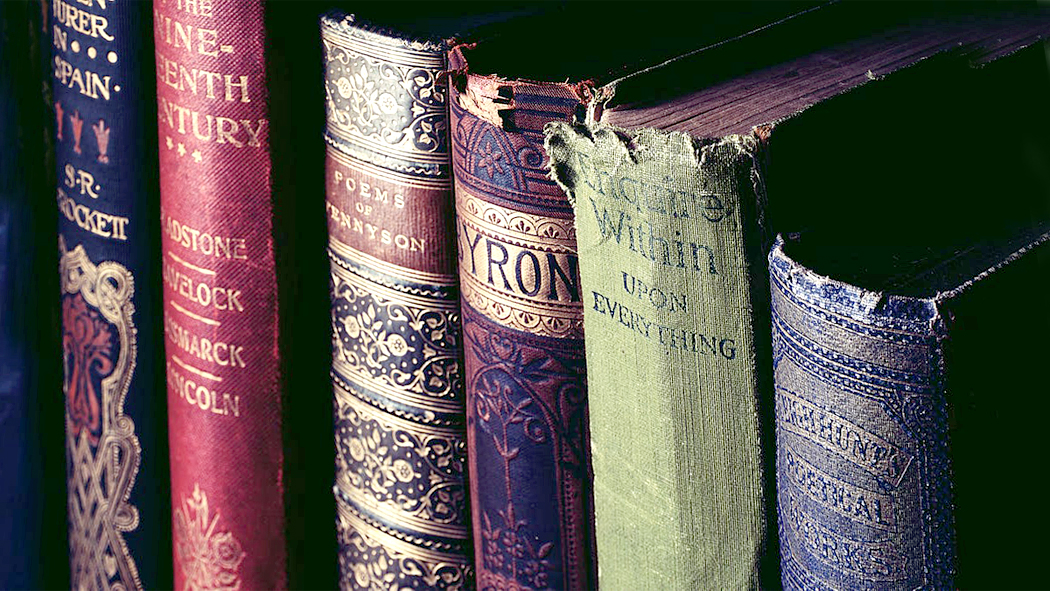
In the past, I have had some rather unforgiving opinions about the poetry I was force-fed as a youngster — you know, the Victorian stuff about the light brigade, or Barbara Frietchie. And now, I was reading it again. On purpose. 

At college, I foolishly took a Victorian Lit course and hated every second-hand tick of the classroom clock. Turgid, sentimental, maudlin, and unbearably prolix. (I had been primed to hate the stuff since the time I was  forced to read Oliver Twist in eighth grade and hated every word of that — I still can’t read Dickens. I know: My loss. But you shouldn’t be forced to read stuff before you are ready for it.) 

In that Vic Lit course, I found Browning asphyxiating, Tennyson hollow, Christina Rossetti cloying. I could see no difference in the verse of these hallowed poets from the mewlings of Ella Wheeler Wilcox or Edgar Guest. It was all a smear of treacle and oh-so-earnest goo. 

“I am the master of my fate, I am the captain of my soul.” Who came up with this stuff? 

Now, Anne is reminding me, I am waxing enthusiastic about the selfsame verse to her, quoting lines and rhymes with affection. I have gone mellow. But what has changed? 

I grew up in a time of ascending Modernism, an era of “less is more,” of irony sidelining sentiment and of skepticism in place of belief. When I was just on the cusp of turning adolescent, Modern art was still widely dismissed as something “my kid could do.” And in the eternal wheel of generations, I was signing on to the new version and leaving the old to such fuddy-duddies as my parents and teachers. 

(At least, I saw it that way. In reality, my parents were as much a product of Modernism as I was — my father was born the same year that the Bauhaus was founded and that Marcel Duchamp painted a mustache on the Mona Lisa. But the Modernism that affected his life was one of wars, electrification, washing machines and radio. Artistic matters mattered not at all to the solid, middle-class parental units.)

  And, like all such newly-awakened youths, I saw through the lies and hypocrisies of the elder generations while surpassingly blind to my own. My generation was going to fix all the botches those fools had made of the past. 

I read all the most current novels, ate up contemporary poetry (and all that written after Prufrock), regularly made my pilgrimage to the Museum of Modern Art in New York, and preached to all near and far the supremacy of the new.

In short, the modern was true; the old was a lie. A pretty lie, perhaps, but a lie nonetheless. As H.L. Mencken put it, “it’s essential character lies in its bold flouting of what every reflective adult knows to be the truth.” 

And all that verse: Mencken really had it in for poetry. He said, roundly including everything written from Chaucer to e.e. cummings, “Poetry represents imagination’s bold effort to escape from the cold and clammy facts that hedge us in — too soothe the wrinkled and fevered brow with beautiful balderdash.” 

That certainly summed up my take on Tennyson: “balderdash.” 

H.L. was not one to hedge his opinions. He went on to call poetry, “a series of ideas, false in themselves, that offer a means of emotional and imaginative escape from the harsh realities of everyday. In brief, poetry is a comforting piece of fiction set to more or less lascivious music.”

But it is that “lascivious music” that caught me short. No doubt Mencken rather misses the point, but it is the music of the old poetry, the poetry I so despised, that has brought me back to it. Let me explain — and apologize. 

It started when I recently came across a set of McGuffey’s Eclectic Readers, compiled beginning in the 1830s by William Holmes McGuffey. The books were the most common grade-school texts for nearly a century, and are still the preferred books for many current home-schoolers. 

They are popular now because of the unrelenting Victorian religiosity of them for Christian home-schoolers. Every lesson seems to have some biblical homily to teach, training youngsters to be pious, faithful, honest, loyal, earnest, frugal and industrious. McGuffey, himself, was a preacher, in addition to being an educator and college president. 

But what is often lost in the haze of piety, is just how progressive McGuffey was for his time. Most education was then mere rote memorization enforced with the rod; McGuffey thought that instead of just giving kids lists of words to master, it would work better if the words were embedded in stories, and that new words in one story would crop up again for reinforcement in later stories. He taught an early version of phonics, to parse out the sounds of written words, and followed each story-lesson with a short set of questions to test comprehension. 

Really, aside from the heavy Jesus-ness of it all, it was really very forward-looking. 

I valued the reprints I own for their classic typography, for the quaint illustrations that go with the stories, and for the insight the whole gives me into that formidable century. 

And in amongst the stories of boot-blacks making good, mothers dying, little orphans learning the virtues of truthfulness and the importance of being generous to the poor, McGuffey included many old poems. Some are just versifications of Bible passages, but others are the old standards that I once made fun of. 

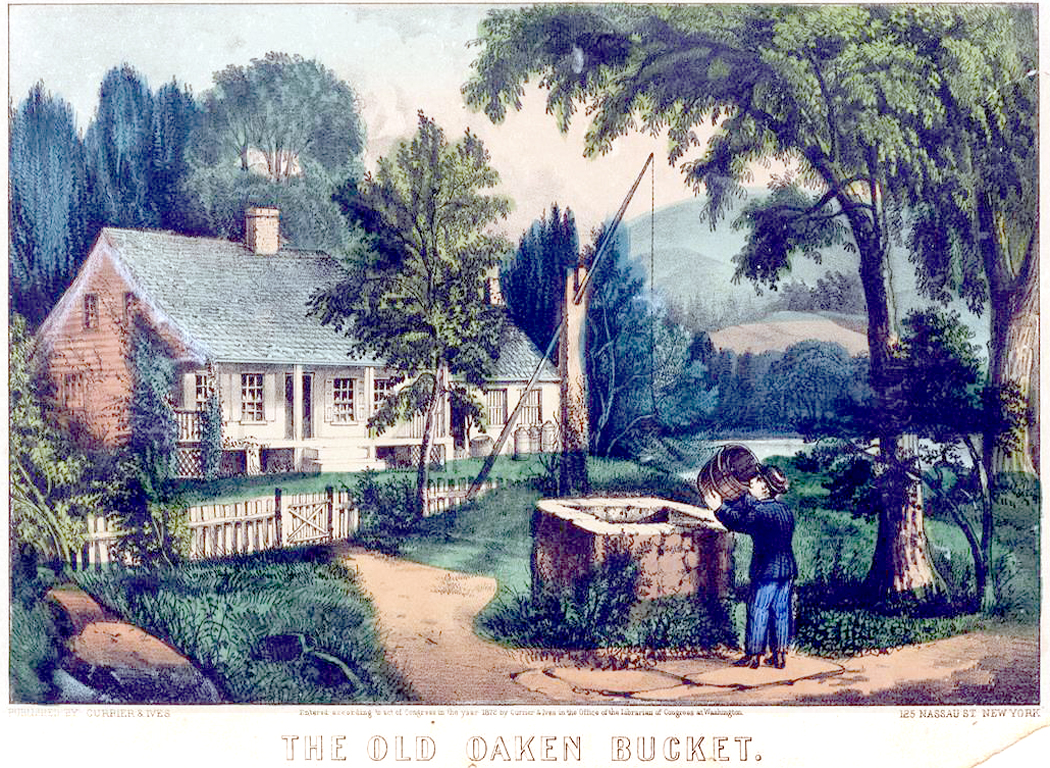
For instance, in McGuffey’s Eclectic Third Reader, I came across an old chestnut I had not encountered since I was a boy: The Moss Covered Bucket, by Samuel Woodworth. It’s one of those that most people have some vague recollection of, but perhaps not where the lines come from or what they mean. 

“The old oaken bucket, the iron-bound bucket, the moss-covered bucket, which hung in the well.” 

But as I began reading it, I found two very surprising virtues. The first was how much sense-memory there was in the poem — the noticing of small physical things that connect us with the world and that readers can almost feel, taste, or smell as they read the lines. 

It is a poem about remembering the things of youth, and there is a scent of sentimentality to it, but the memories evoked feel genuine. Sometimes, reading a pile of “O thou art…” poetry you wonder if a poet has ever actually seen a nightingale, let alone a “knight with burning brand,” but have merely read about such things in other poems. But here, I believe Woodworth really knew “the orchard, the meadow, the deep tangled wild wood…  the wide spreading pond, and the mill which stood by it; the bridge and the rock where the cataract fell; the cot of my father, the dairy house nigh it, and even the rude bucket which hung in the well.”  

Noticing — as I have often repeated — is essential to art. To life. 

But the second thing I found in the poem was the “lascivious melody.” Woodworth’s prosody was finished and refined, the meter and rhyme made the lines sing. Maybe not quite the level of Milton, but a danged good ditty. 

He describes coming in from working in the field and dropping the bucket down into the well “to the white pebbled bottom it fell,” and then how “dripping with coolness,” it rose from the well. “How sweet from the green mossy brim to receive it, and posed on the curb it inclined to my  lips! Not a full blushing goblet could tempt me to leave it, though filled with the nectar that Jupiter sips.” 

It moves with a forward-thrusting momentum hied on by the meter. 

I’m not trying to make too great a case for the old oaken bucket. It is not earth-shaking poetry. But it does afford a moment of pleasure as you read it, the way you get pleasure from a memorable tune. 

There were other poems in the Reader that now sang to me in ways I had formerly ignored. Byron’s “The Assyrian came down like the wolf on the fold, and his cohorts were gleaming with purple and gold…” 

In the Eclectic Fifth Reader, compiled some years later by McGuffey’s brother, Alexander Hamilton McGuffey, you find the familiar, “Under the spreading chestnut tree the village smithy stands; the smith, a mighty man is he, with large and sinewy hands; and the muscles of his brawny arms are strong as iron bands.”  

There is through all of the Readers a level of maudlin sentimentality that cannot be overlooked, but if you can wade through that, there are some true gems to enjoy, if primarily for their lascivious music. 

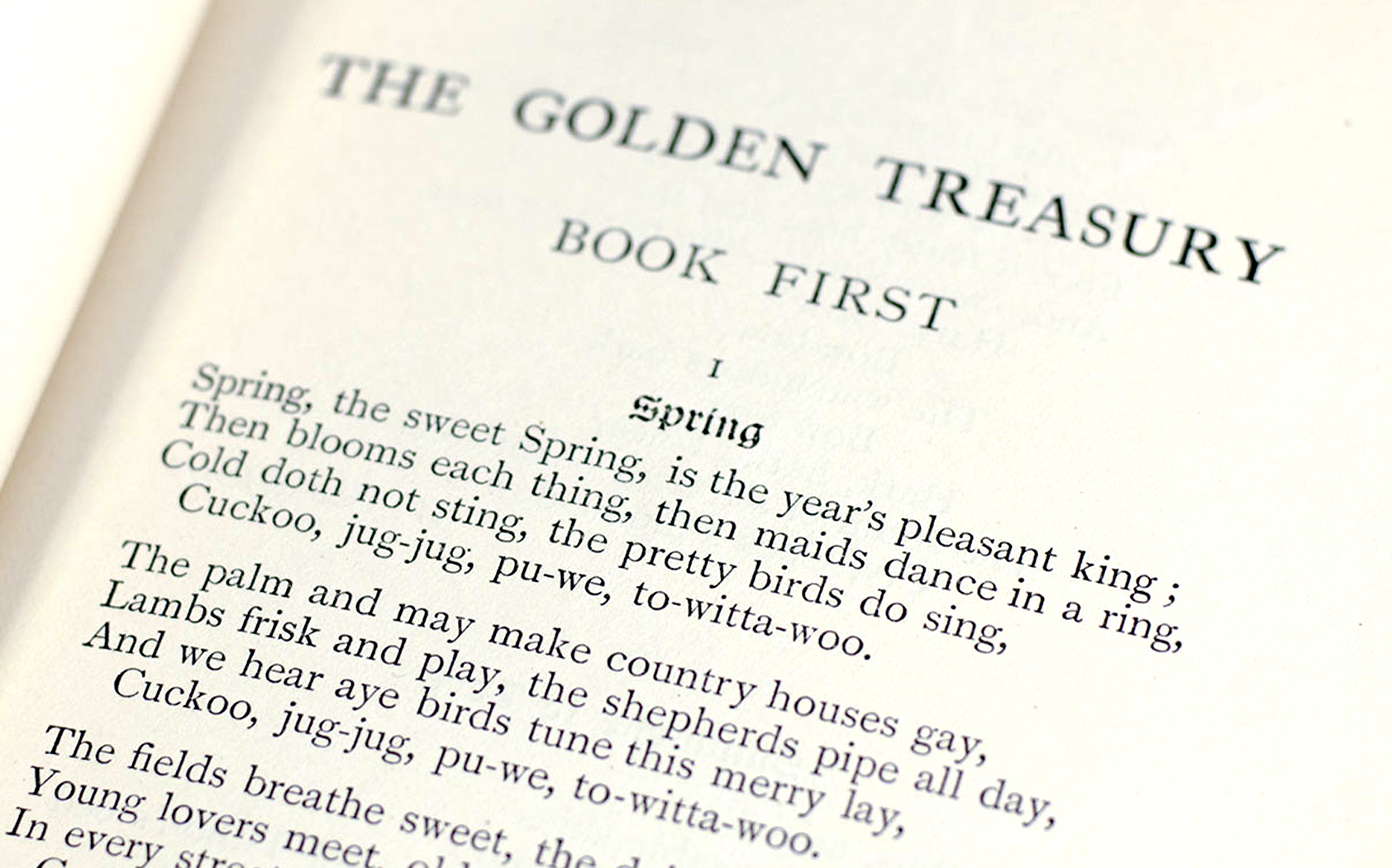
This discovery led me to another old book, one I have owned since I was a boy, but had hardly looked at in 60 years: Francis Turner Palgrave’s Golden Treasury of English Verse. First published in 1861, the book was an anthology of “the best English songs and lyrics,” and included Palgrave’s selection of verse written by poets of the past — his past; Palgrave made the decision not to include any poetry written by living poets, so, no Tennyson, no Browning. 

The book was originally divided into four “books,” one each per century from the Elizabethan era to the 19th century. There is a good deal of Shakespeare and an equal measure of Wordsworth, but all the usual names are included, and some that have largely been forgotten. Thomas Grey, William Cowper, Thomas Wyatt, Josuah Sylvester (no, that’s not misspelled). 
Having put aside my McGuffeys, I took up my Palgrave and read it from cover to cover. I found myself enjoying page after page, for the music of it more than for the sense. A good deal of the early verse is highly conventional in sentiment. Everyone had a version of “carpe diem,” many birds are extolled — I haven’t counted the skylarks, but there be many — many women described with coral lips and alabaster skin. It all gets a bit thick.

But listen to the music instead. “Whenas in silks my Julia goes Then, then (methinks) how sweetly flows That liquifaction of her clothes.

“Next, when I cast mine eyes and see That brave vibration each way free; O how that glittering taketh me!”

There is a perfection in the meter, rhythm and rhyme to Herrick’s little stanzas. Felix Mendelssohn wrote “Songs Without Words,” but Herrick has turned that around and written a song without the sheet music. 

Throughout my Palgrave, I came across piece after piece like that, with a flow of words as natural in metrical expression as a stream rushing over its rocky bed. 

“The curfew tolls the knell of parting day, The lowing herd winds slowly o’er the lea, The plowman homeward plods his weary way, And leaves the world to darkness and to me.” 

“A chieftain to the Highlands bound Cries, ‘Boatman, do not tarry! And I’ll give thee a silver pound To row us o’er the ferry!’ ‘Now who be ye, would cross Lochgyle, This dark and stormy water?’ O I’m the chief of Ulva’s isle, And this, Lord Ullin’s daughter.” 

The marriage of word and rhythm, with the fulfilled expectation of rhyme make these verses trot along like a tune sung well in time. 

It is the pleasure of tennis being played with a net. 

One listens to music for the pleasure it brings. Yes, there are mighty symphonies and Wagnerian music dramas meant to express deep emotional and philosophical things, but most, like a Mozart serenade or a Cole Porter tune, are meant to delight, devoid of any extra-musical sense. And that is what I am finding in this old verse I once so roundly denounced. 

If you don’t need to have profound thoughts as you read the words, then you can find the melody for its own sake and revel in the ear and craftsmanship of the poet. 

Yes, I’ve gone mellow in my senescence, and there is a touch of sentimental remembrance for the poetry I was fed when a boy. I guess I share that with those horrible Victorians. That is my apology.

Click on any image to enlarge

Kitao Shigemasa “Birds in Yellow Plum”

Recently I posted a piece about the history of naturalist illustration. It was a subject so huge — and with so many gorgeous images, that I could not begin to include some of my favorite things from the thousands of images I collected. 

For instance, I had to rule out all of the non-Western art, and some of my favorite non-scientific animal art. And so, I felt I should write a follow-up piece for a few of the leftovers. 

Most of the art I covered was meant to illustrate botanical collections in an era when new plants were constantly being added to the list of recognized species, and were meant to accompany scientific books written by specialists.


From “Plantae Asiaticae Rariores” of Nathaniel Wallich

For instance, there was Nathaniel Wallich, the Danish-born botanist who collected plants in India and published his Plantae Asiaticae Rariores in three volumes from 1830 to 1833, with illustrations by a half-dozen artists, both Indian and European. 

From “Treasury of Nature,” Albertus Seba

The collection I missed most in the earlier essay was Albertus Seba (1665-1736). His interest was less scientific and more one of abject curiosity. He collected tons of oddities from around the world in his “curiosity cabinet,” and in 1734 published his Locupletissimi Rerum Naturalium Thesauri Accurata Descriptio et Iconibus Artificiosissimus Expressio per Universam Physices Historiam (“A Careful Description and Exceedingly Artistic Expression in Pictures of the Exceedingly Rich Treasury of Nature Throughout the Entire History of Natural Science,” illustrated from beginning to end with engraved plates. 

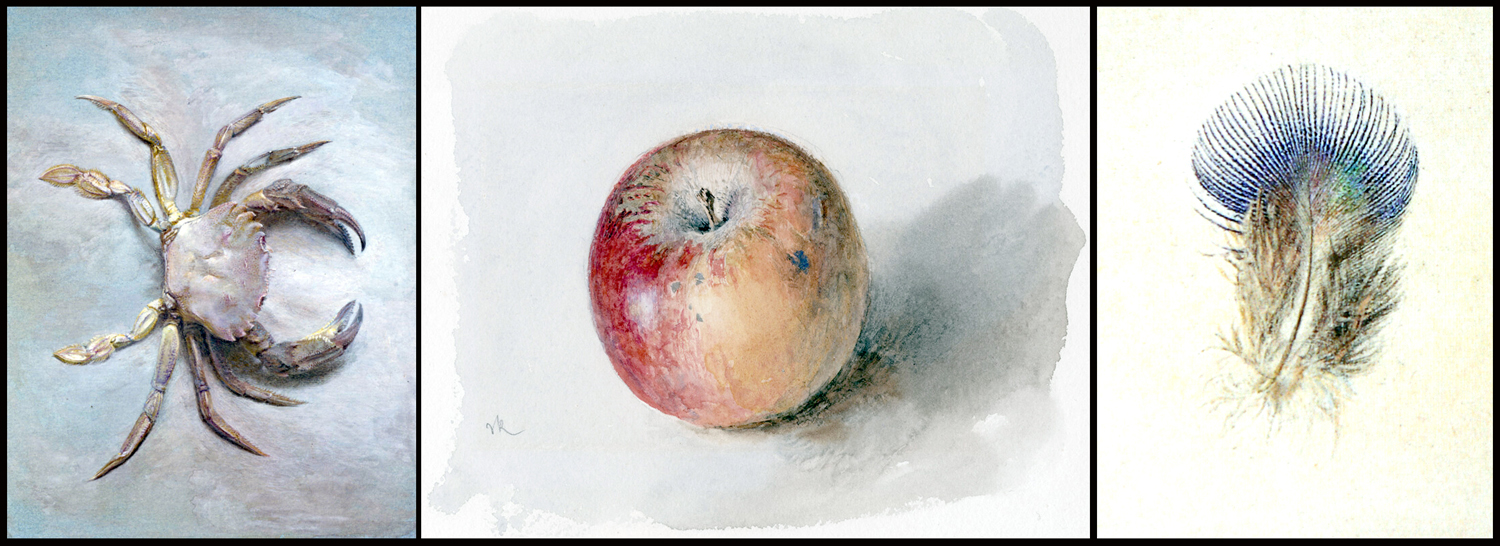
Crab from Albertus Seba

The original 4-volume publication included 445 illustrations and Seba’s collecting helped Carl von Linne in his binomial classification system. 

But, there are tons of bird, plant, and animal pictures meant for the general public, mostly throughout the 19th century. 

Wood engravings of plants

Unfortunately, most of those artists worked anonymously, pumping out pictures for books, magazines and posters. Animals, especially those of exotic locales, were always popular pictures with the public. And most of those were made in the process called wood engraving — a bit like woodcuts, but made with a burin on the end-grain of dense hardwoods and printed very like a copper plate engraving. 

Wood engravings of animals

The best-known wood engravings were probably the book illustrations of Gustave Doré. But the technique was nearly ubiquitous in the Victorian era. 

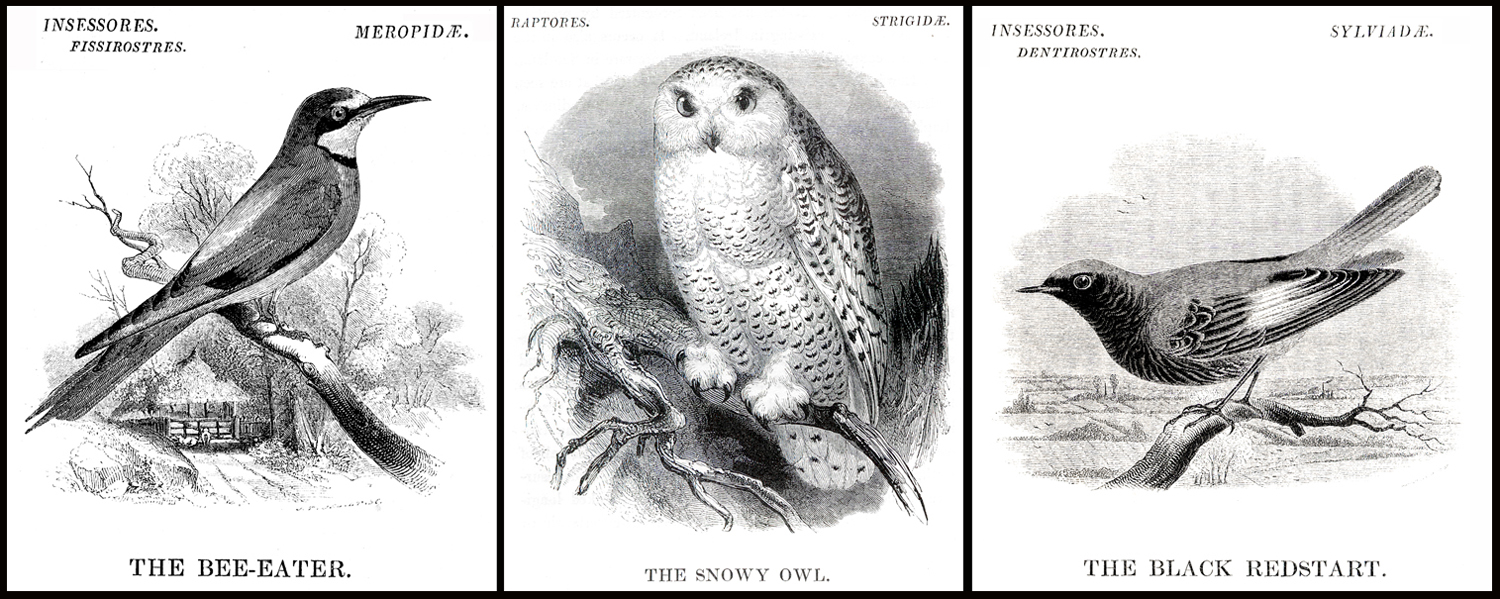
From “A History of British Birds” by William Yarrell

Wood engravings occasionally accompanied serious scientific work, also, such as those in A History of British Birds, published in 1843 by William Yarrell (1784-1856). Its wood-engraving illustrations were carried out by two artists, Alexander Fussell and John Thompson. 

Such art is meant primarily to identify plants and animals, but sometimes an artist’s intent is merely to look closely at and study his subject. And, as with the botanical illustration, to separate the subject from its context to better see it on its own. 

Drawings by Leonardo da Vinci

Artists have always done this, often in sketches, sometimes as studies for larger, more serious and integrated paintings, sometimes purely for its own sake. Leonardo drew lots of them. 

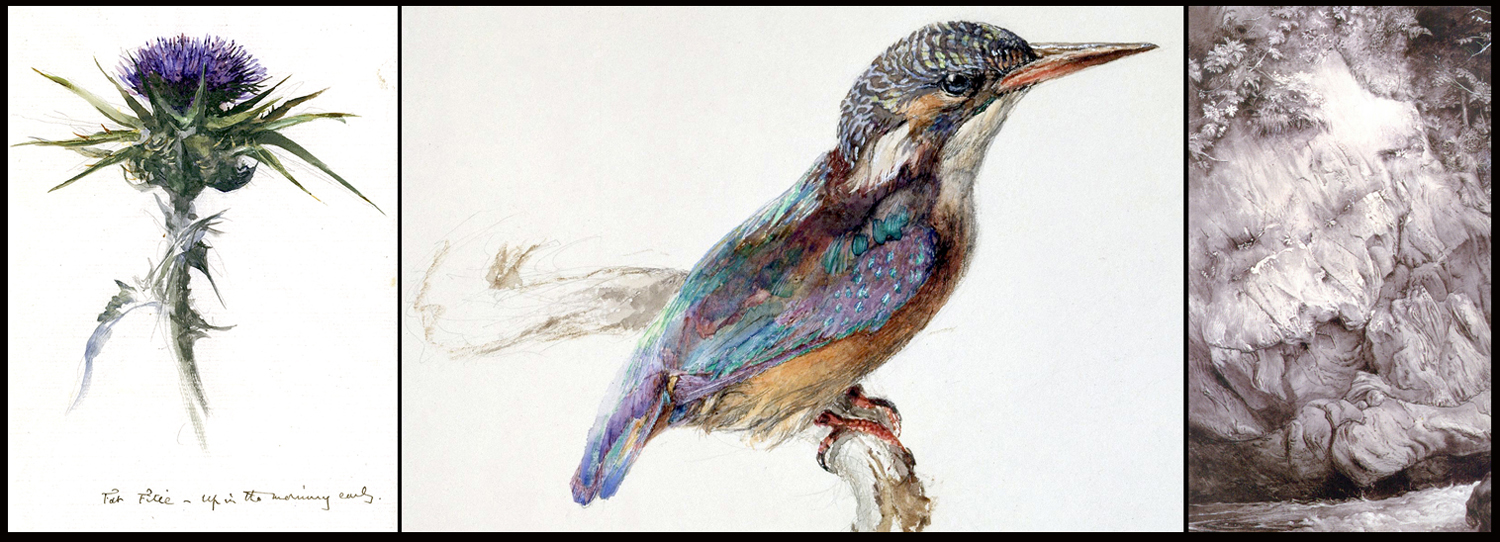
Drawings by John Ruskin

And it was the very point that critic John Ruskin made in Victorian times for the art of drawing: He felt that sketching forced close observation and that essence was found in detail. He aimed his eye at plants, birds, even rock formations, to come to know them better. 

Drawings by Ruskin

The most significant class of nature art left out of my original essay are the many kachō-e prints and paintings by Japanese artists, ranging from the 17th century to the 20th. I was sorry to leave them out. 

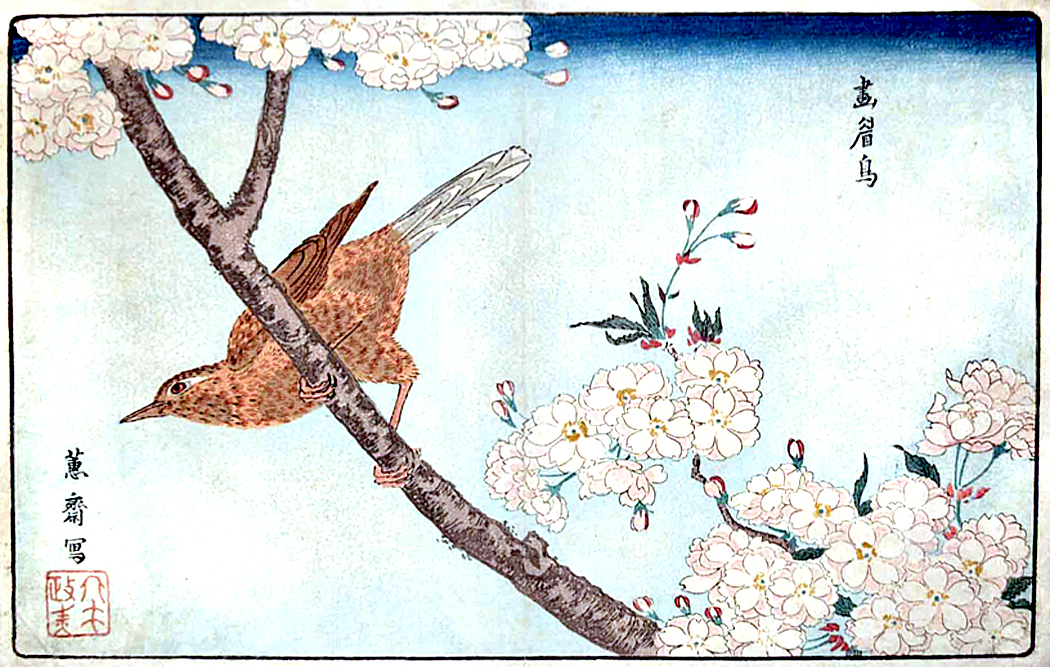
Masayoshi, “Gray Thrush” 

Kachō-e are so-called “bird and flower” pictures, although the subjects include fish and insects, too. Their ancestry runs back to huaniaochua (“bird and flower” paintings) popular in Chinese beginning in the Tang dynasty (AD 618-907). 

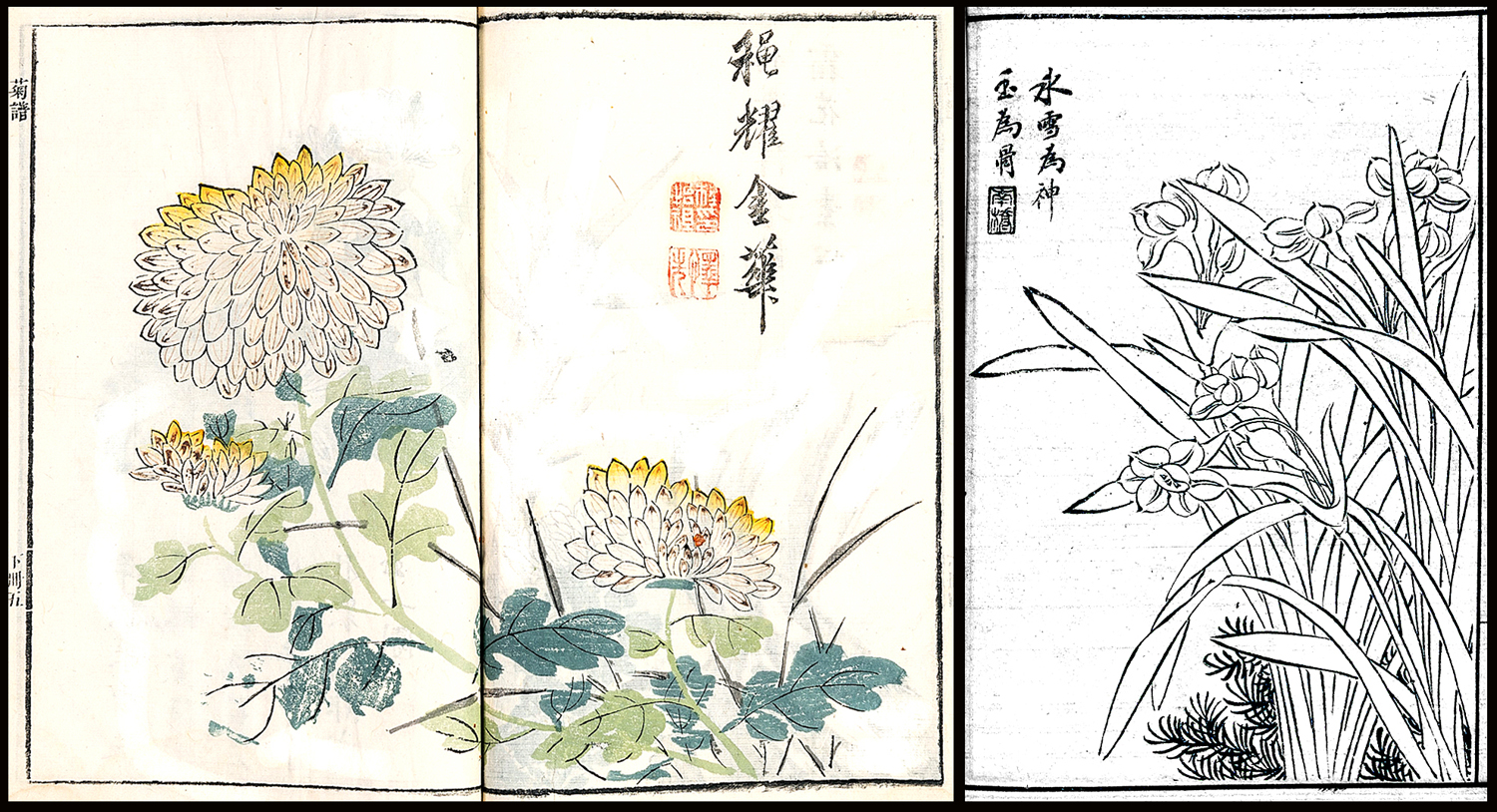
The work influenced much of art throughout Asia, and came to Japan, popularized by translations of the Chinese classic instruction book, Manual of the Mustard Seed Garden, published in parts from 1679 to 1701. The final chapters instruct how to best paint huaniaochua-style art. 

Pages from “Manual of the Mustard Seed Garden” 

The Chinese influence was felt all through the continent, not only in Japan and Korea, but as far west as Persia, where it inspired the golomorgh (“Bird and Tree”) paintings popular in the Safavid period (1501-1736).

Golomorgh art

 In Islamic art, the paintings take on an allegorical bent, with the birds (sometimes butterflies) standing in for the lover and the flower for the beloved.

But by far the biggest influence was in Japanese art, and the popular ukiyo-e style, mostly woodblock prints made from the 18th through the early 20th century. Ukiyo-e (“Pictures of the floating world”) were popular images of famous actors, courtesans, historical figures, landscapes, genre scenes — and nature. The nature genre was called kachō-e, or “bird and flower pictures.” 
One of the early masters of the form was Kitagawa Utamaro (1753-1806). He published a Book of Birds ca. 1790 (the dating is often uncertain, as records were not always kept, and popular books were published and republished, often with new plates, or new cuttings of old designs — precise dating can be guesswork). 

Each image was matched to poetry, written in elegant calligraphy on the empty parts of the image. For this one, named for the mejiro, or Japanese White-Eye (on the left) and the enaga or Long-Tailed Tit (on the right) has two poems. The first: “Pushed out of his honey-filled nest following a fight, the white-eyes bird seems not to mind at all,” while the other says “Come and let yourself be mine; For us the nights will be as long as the tit’s tail.”

Utamaro followed with a Picture Book of Selected Insects, about the same time, which showed dragonflies, beetles, bees, grasshoppers and other buggy life on beautifully drawn leaves and flowers. When Viking Press published a beautiful facsimile edition of the book in 1984, they must have worried about the title, so they renamed it Songs of the Garden. Much more attractive. 

In the west, the two most famous ukiyo-e artists are Hokusai and Hiroshige, near contemporaries. They both made kachō-e prints. 

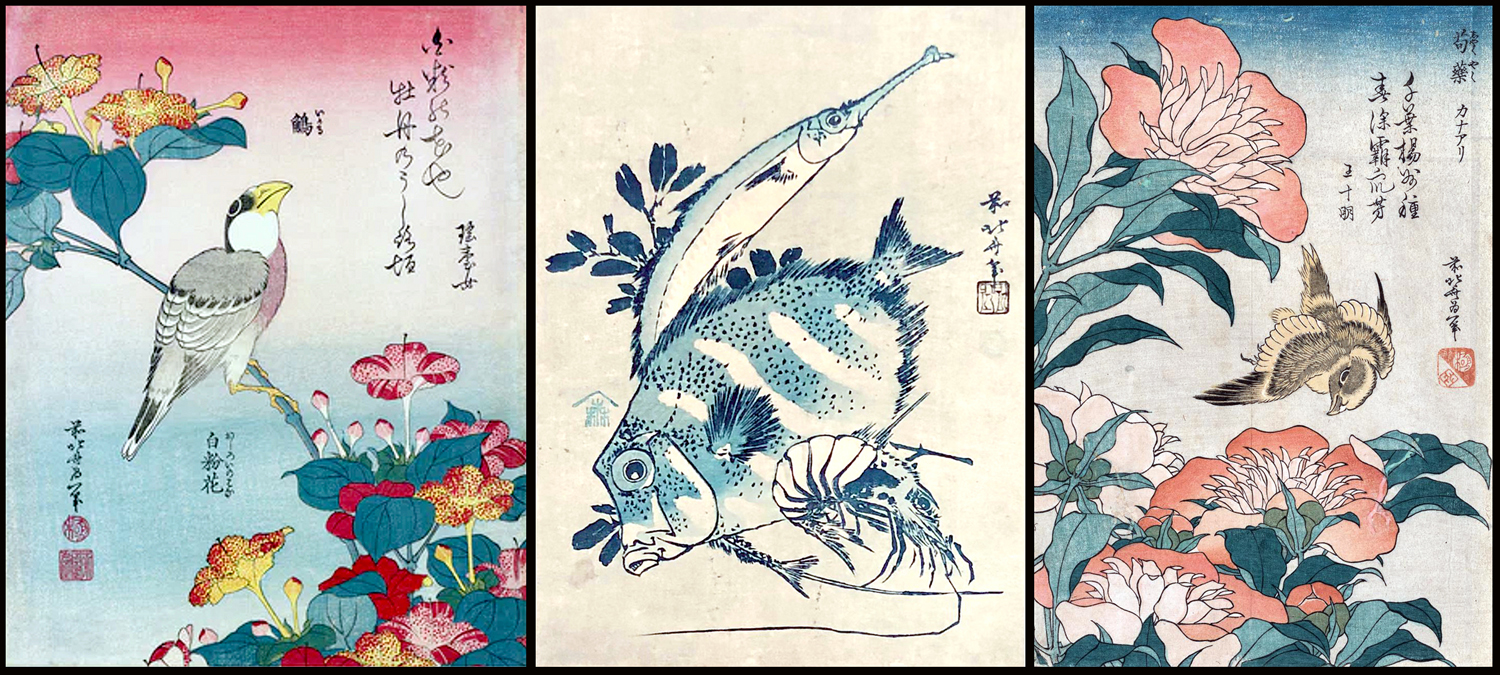
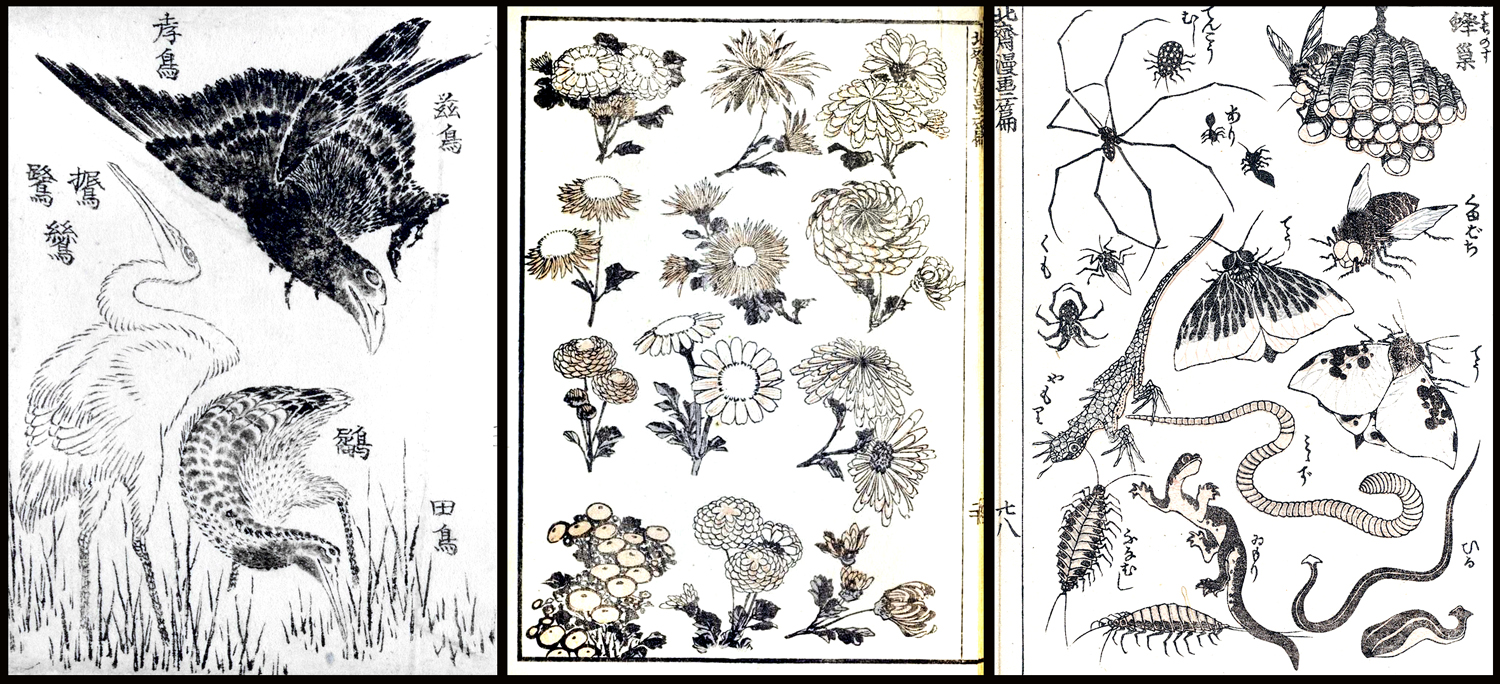
 Katsushika Hokusai (1760-1849) called himself “Old Man Mad with Painting,” and worked in every conceivable genre. He was a one-man image factory. His curiosity spanned everything he could come in contact with. He even experimented with linear perspective after coming in contact with European art. 

Hokusai manga

In his sketchbook, or manga, he made pictures of everything he saw. The black-and-white drawings were made into woodblock prints. He tried just about everything. (Most famous, of course, for his “Great Wave off Kanagawa,” which has been reproduced endlessly.)

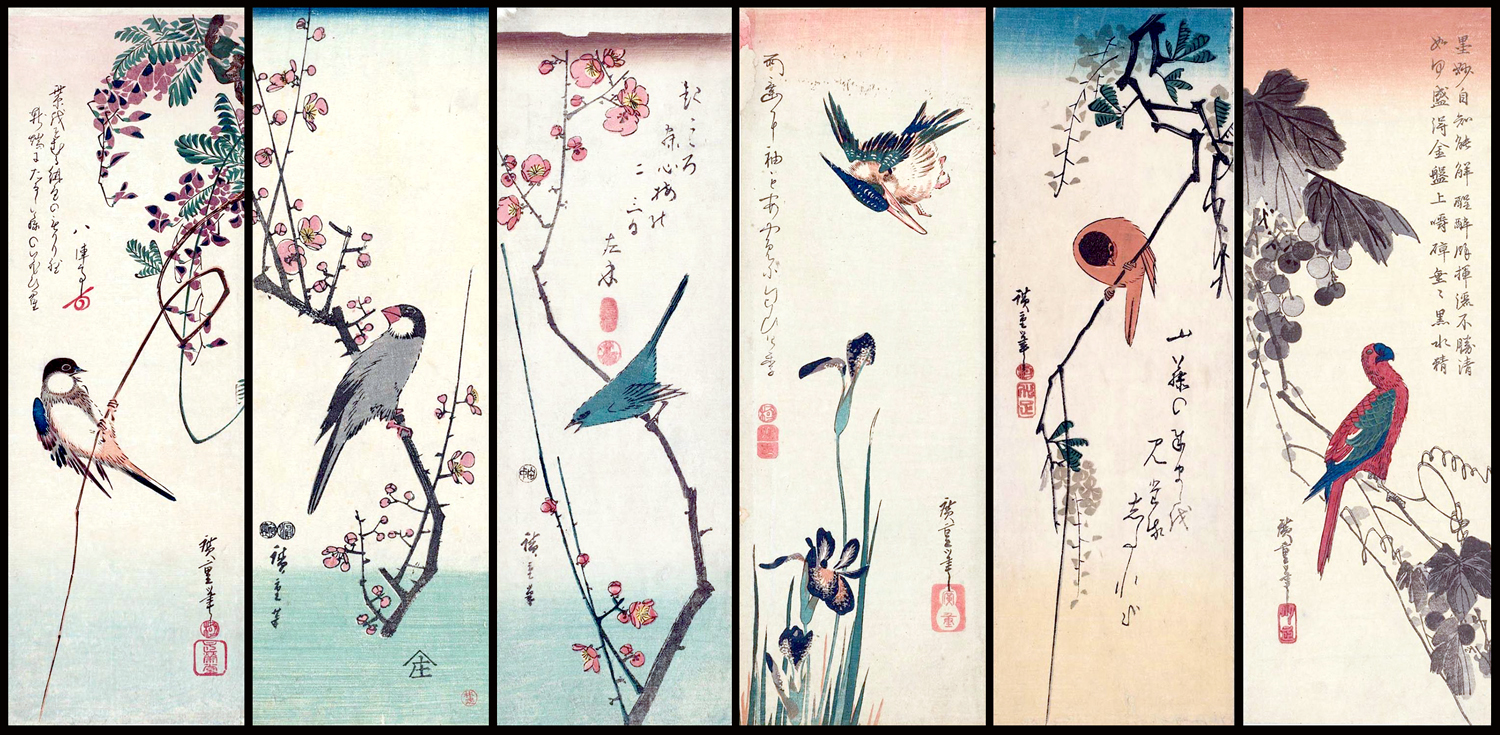
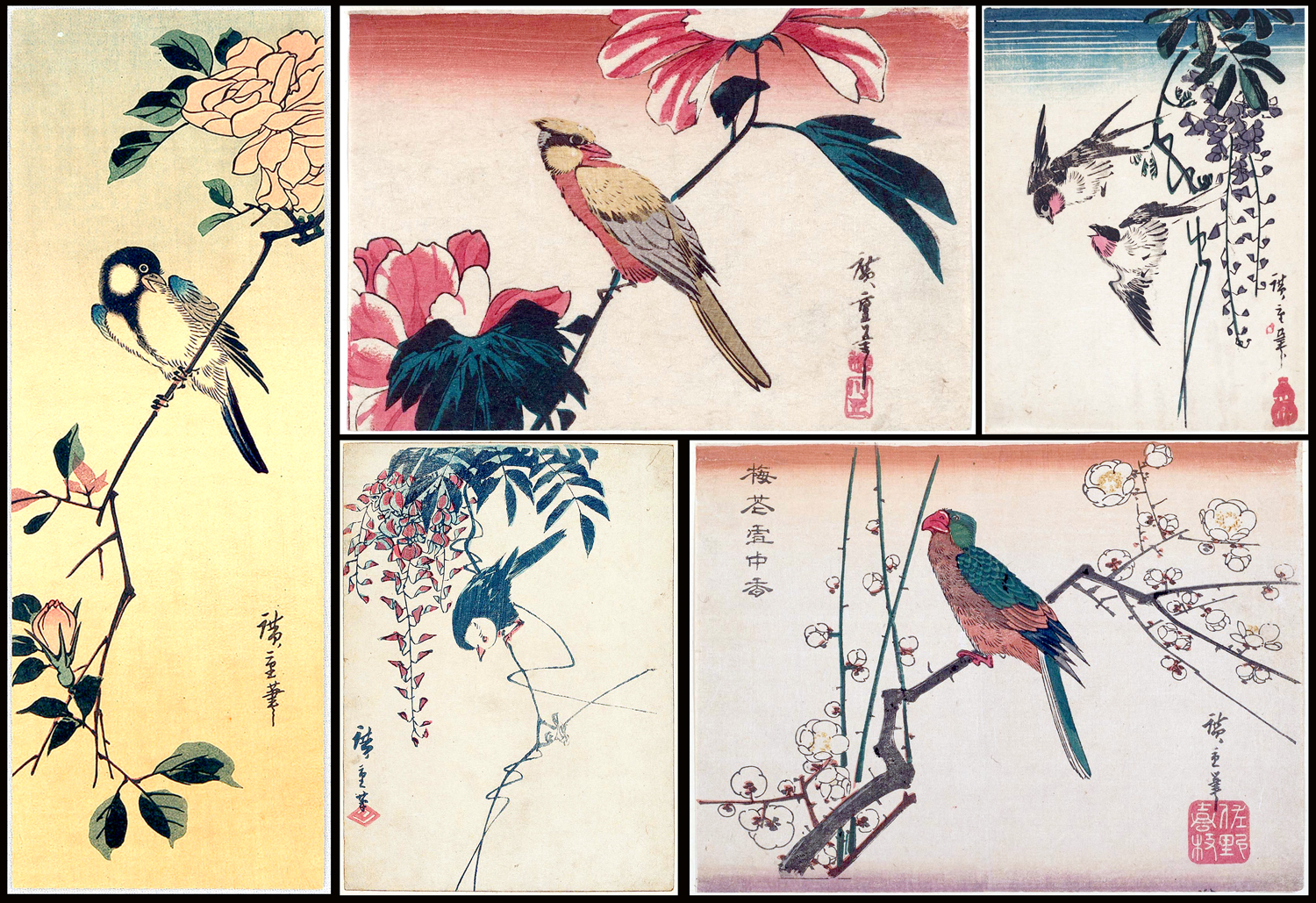
There is a proverbial saying in Japan: “Hokusai is the greater artist, but I love Hiroshige more.” It is hard not to be entranced by the atmospheric and almost Impressionistic work of Utagawa Hiroshige (1797-1858). Known for his landscape images, he also made a pile of bird-and-flower prints. Most often in the elongated vertical format known as hosoban

There are so many of them, it is hard to choose just a few examples. 

But he also published several books of fish and sea creatures, a “small” book of fish and a “large” book, each titled as such. I cannot help but post as many of Hiroshige’s images as I can. They are so seductive and beautiful.

It is usually said — by snooty connoisseurs — that ukiyo-e standards began to decline in the 19th century and the genre ended by the 20th. But instead, I believe it simply changed with the exposure of Japanese artists to the rest of the world with the Meiji Restoration (1868). Where once Japan’s culture was insulated from the outside, it now opened its arms to new influences. 

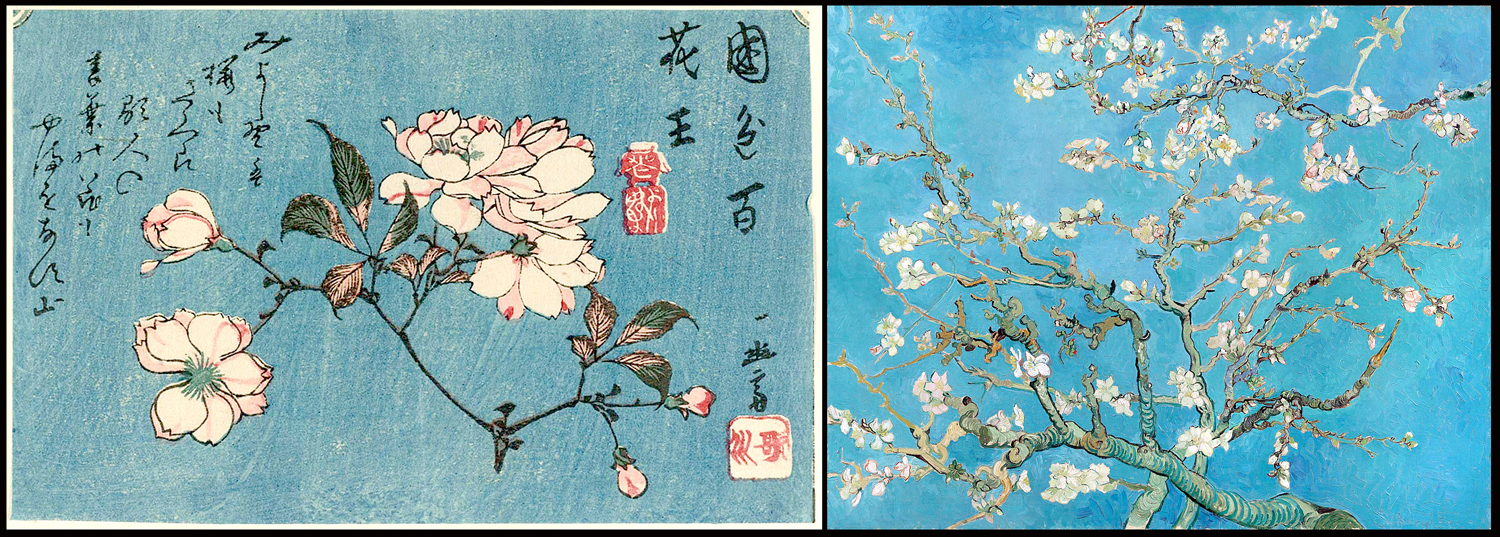
Hiroshige and Van Gogh

(The artistic fertilization went in both directions, as ukiyo-e art began arriving in Europe and artists such as Van Gogh were blown away by the freshness and style of the Japanese prints.) 

And kachō-e changed from a popular and demotic art form to one created by new designers who saw themselves less as craftsmen and more as western-style “artists.” The esthetic, called shinsaku-hanga,  became more refined, if less adventurous. It was a retrospective art, honoring the masters and styles of the past. 

Birds by Kono Bairei

And artists such as Kono Bairei (1844-1895) continued the birds-and-flowers tradition, but with a turn to more naturalistic drawing, albeit in a stylized setting.

Bairei fish

He also took on fish. 

The work of Imao Kainen (1845-1924) maintains that almost-western realism in highly decorative compositions.

By Imao Kainen

The most famous of the shinsaku-hanga artists was probably Ohara Koson (1877-1945). He was a teacher at the Tokyo School of Fine Arts, and met American scholar Ernest Fenollosa, who encouraged him to export his bird prints to America. His work now sits in most American art museum collections. 

By Ohara Koson

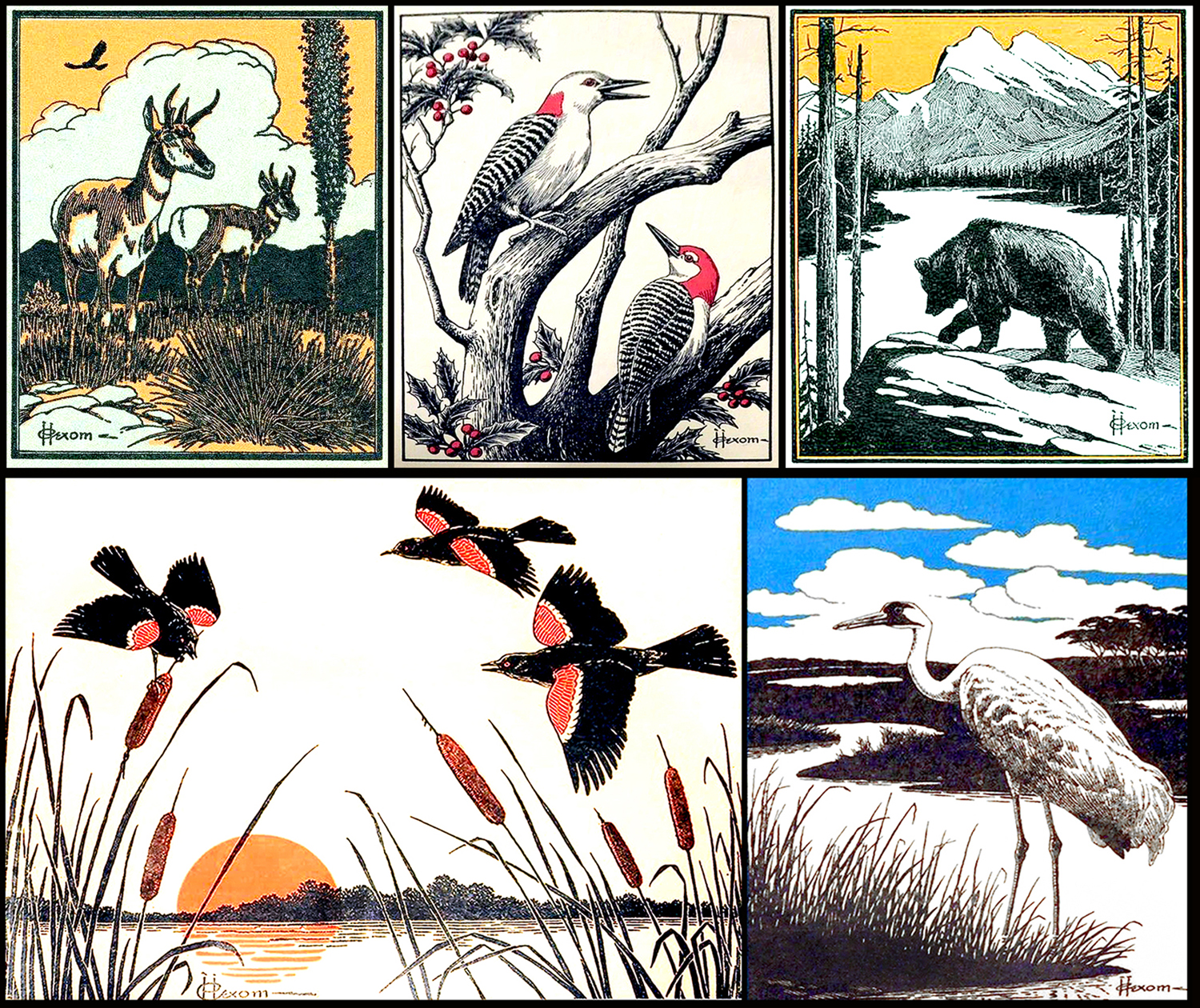
It wasn’t only Van Gogh who responded to the Japanese style. One of my favorite and largely unknown illustrators of natural history was Charles Philip Hexom (1884-1959). He was a teacher at Luther College in Dacorah, Iowa, and made many cover illustrations for Nature Magazine from the 1920s into the early ’50s. 

The use of flat outlining and spot-color were common to both ukiyo-e and Hexom’s covers. 

I don’t know why the work of Charles Hexom hasn’t been collected and published in a book. He seems to have been forgotten. He deserves to be remembered.

Beatrix Potter watercolors

Nature art may be a sub-genre in the world of fine art, but it is a fertile one. One finds captivating and beautiful illustration everywhere. Beatrix Potter (1866-1943) before she became a children’s author, used her drawing talent to study nature. She became an expert on mushrooms and fungi. One of her admirers was the Pre-Raphaelite artist Sir John Everett Millais, who told her: “Plenty of people can draw, but you have observation.”

Again, I have left out so much. So, just as a little P.S. to this tiny essay, I want to mention the early paintings of my brother-in-law Mel Steele, who could paint rings around anyone even as a boy and moved on to bigger things and a long career.

And my own minor essay into the field as a photographer. I found that I could put live flowers on my flatbed scanner and get beautiful prints that could be reproduced in fine detail at almost any size. 

Friesia, iris and daffodils 

I have made many photographs of flowers, birds and insects, not so much to create art as to focus my attention on the world around me. Paying attention is, I believe, the prime directive for life.

Click on any image to enlarge

Nature is messy. I mean that in a good way. But it is all over the place, hugger-mugger, one thing on top of another and with the edges of one thing blending into that of the next. 

And humans have tried their best to regularize and organize all that mess since the beginning of time, naming plants and animals, setting up categories, deciding which bits might be edible, which poisonous, which to take when you have aches or fevers. 

One of the primary means of accomplishing this is visual. Certainly the main method is verbal: the naming and sorting. But a mere word description of a plant can be so convoluted as to be confusing on its own. Take this description of the black oak, from E. Lawrence Palmer’s Fieldbook of Natural History:

Quercus velutina: Tree to height of 125 ft; trunk diameter, 4.5 feet. Upper branches ascending, lower, horizontal. Bark dark, deep-fissured between thick ridges that are cross-fissured. Inner bark yellow, bitter. Twigs stout, angular with sharp-tipped angled buds with dirty-white to yellow fuzz. Leaves to 6 in. long and 4 in. wide, highly variable, thick.  Flowers staminate, in hairy catkins, to 6 in. long. Pistillate, on short, hairy stalks. Fruit and acorn maturing in second season.” Etc. And even that is written in simplified language for the lay person. The scientific literature is close to unreadable. And would this help you find a black oak in the woods? 

Wouldn’t it be easier, quicker, better, just to have a picture? Roger Tory Peterson thought so when he came up with the idea for his now-ubiquitous field guides. “There are at least 60 ways to say that a plant is not smooth, that it has fuzz, hair, prickles or roughness of some sorts,” he wrote in the introduction to his Field Guide to Wildflowers. And he lists them, including such arcane words as bullate, canescent, coriacious, echinate, flocculent, glanduliferous, hispidulous, lepidote, verrucose, and villosulous. It takes a lexicographer rather than a botanist to navigate such things. 

“That is why the best of keys often fail. … But, I am afraid, most of us belong to the picture-matching school.” Peterson began in 1934 with his A Field Guide to the Birds of Eastern and Central North America, which he updated with new editions — and new illustrations — until his death in 1996. The book has been immensely popular and remains so. Peterson branched out with a series of such field guides, covering wildflowers, trees, seashells, insects, fish, mammals — now more than 50 such guides, most written by specialists, while Peterson remained general editor until his death in 1996. 

Each book relies on drawings of the animals or plants in question. 

Of course, humans have been making pictures of the natural world since the beginning. The animals drawn the the caves of Lascaux date back something like 30,000 years. Egyptians painted notably realistic animals, such as the famous geese from the Chapel of Itet at Meidum from about 2590 B.C. Romans were fond of animal mosaic floors in the villas, and some are so accurate you can identify species. 

But the use of drawings for identifying plants or animals reached a new level of importance in the Middle Ages, when plants were used medicinally and books of drawings helped physicians identify the proper plant for the proper malady. 

Originally, these were manuscript books. But after Gutenberg, many were printed in quantity, offering advice on the best plants for the worst illnesses.  

Often these herbals or “medicinals” were at best diagrammatic. There purpose was simply to sort out which plants would be useful. But as the Renaissance flowered, and a more realistic style of image-making took over, many artists were attracted to the natural world, looking with ever sharper detail at the plants and animals around them. There are drawings and paintings by Leonardo, Raphael and others. But it would be hard to best the small naturalistic pictures by German artist Albrecht Dürer. 

But Dürer’s paintings are one-offs. As the 17th century progressed, a more systematic approach took hold, wherein artists as botanists attempted to catalog the plant life around them. 

One of the first such attempts was the Hortus Eystettensis, edited by Basilius Besler (1561-1629) beginning in 1613 and spread over several years. It was a collection of copper-plate engravings of the plants collected by the prince-bishop of Eichstätt in Bavaria for his palace garden, which contained examples of all the shrubs and flowering plants known at the time, from around the world. 

The book contained images of 1,084 species, divided into 357 plates. A cheaper black and white version was supplemented by a luxury edition in which the images where hand-colored. The book changed botanical illustration overnight. What had been crude and diagrammatic became works of art. 

Soon in its heals came Hortus Floridus, a collection of 160 engravings of flowering plants published in 1616, which became so popular its Latin text was soon translated into Dutch, French, and English editions. The book, in modern editions is still available today. It was created by Dutch engraver Crispijn van de Passe the Younger (1595-1670), a popular and prolific engraver of the Dutch Golden Age. 

Such books of engravings, colored or not, appeared throughout the century, with Louis XIV’s official painter, Nicolas Robert (1614-1685), producing illustrations in 1640, 1660, and entries in the giant compendium  Recueil des Plantes published in 1676. 

His drawings and paintings, as well as the engravings made, were of a new freshness and delicacy and presaged a surge in flower pictures made not simply for identification purposes, but as esthetic objects — as art. 

As the 18th century began, these two strains of botanical illustration developed. On one hand, there was a rise in scientific exploration, with botanists traveling the world collecting new species of plant and animal previously unknown to European science. On the other, there was a growing market for books and images of pretty flowers. The two traditions flourished side by side, but also cross-pollenated. 

That market for flower pictures was given a jump start by the Dutch tulip craze of the 1630s, when speculation in the market for rare tulips created a financial bubble that burst in 1637. But the Dutch economy was expansive and a growing middle class had money to spend on luxury items such as art. The actual tulip mania was confined to a small but important few speculators, the public at large wanted their part and so prompted the production of pictures of the fanciest tulips. If you couldn’t afford a tulip bulb that cost as much as a house, you could afford a colored engraving of the same flower. And so, pictures of flowers became a thing.

There had always been still-life paintings: pictures of flowers in vases; even kitchen scenes with food on the table and game hanging above. But what I am interested in here are those images of singular plants, birds, or animals, usually devoid of background context, meant to show off the specimen to best advantage. Where still life is meant to elicit warm feelings of comfort and beauty, the botanical illustration is meant to focus attention on a particular item, to see it for itself alone. 

The 17th and 18th centuries were the great era of cataloguing the world, and it led to a plethora of illustration of new and exotic species as scientists accompanied military explorers around the globe, gathering natural history data and both collecting specimens and illustrating them, usually in books. 

Dutch-born Nikolaus Joseph von Jacquin (1727-1817), for instance, travelled to the West Indies, Central and South America, publishing prolifically throughout the 18th century. 
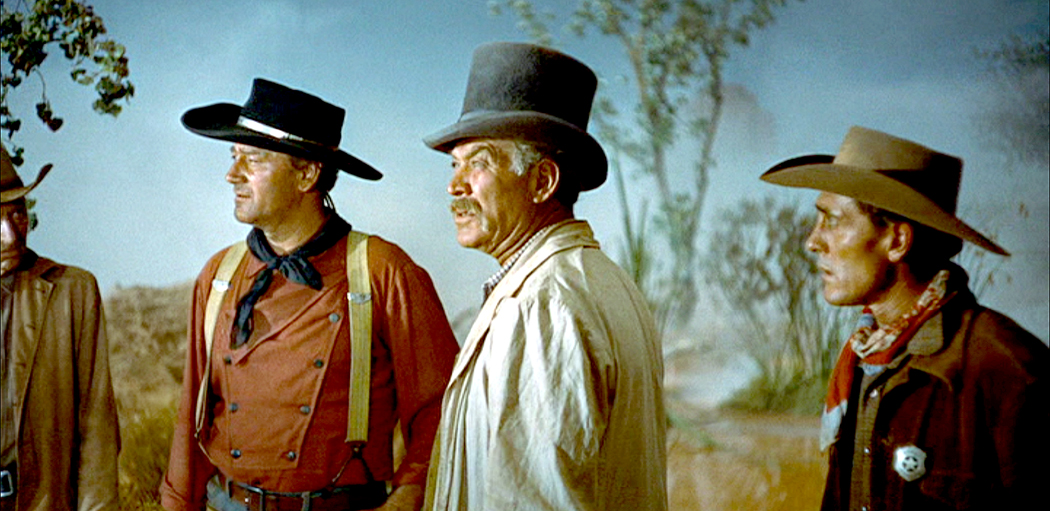
Sometimes, they went on their own, like the Polish Jacob Breyne (1637-1697), who travelled to South Africa and catalogued plants. 

Austrian Franz Bauer (1760-1826) went to Australia, collecting and painting what he found.

Englishman Mark Catesby (1683-1749) sailed to the New World, publishing his Natural History of Carolina, Florida and the Bahama Islands in volumes between 1729 and 1747.

Henri-Lois Duhamel de Monceau (1700-1782) was a French  Encyclopedist, writing on many subjects, but catalogued the flora of his native France over his long lifetime, including his 1768 Treatise on Trees and Shrubs

Likewise, Englishman Thomas Bewick (1753-1828) stayed at home and made wood engravings of his native animals and birds. 

Grub Street writer Oliver Goldsmith neither drew nor painted, but his enormously popular Natural History of the Earth and Animated Nature, first published in 8 volumes in 1774, went through many subsequent editions, each time copiously illustrated by an army of anonymous engravers. 

As the 18th crossed over into the 19th century, two men characterized the two thrusts of botanical illustration. 

William Bartram (1739-1823) traveled through the New World exploring for flora and fauna. His book, Travels through North and South Carolina, Georgia, East and West Florida, the Cherokee Country (1791), is still in print, usually known just as “Bartram’s Travels,” and covers his travels through Georgia, Florida and western North Carolina and is a readable a travel book as it is important as a naturalist survey. 

The other impulse for botanical illustration is the creation of art for the beauty of it. And no one did more for that than Pierre-Joseph Redouté, whose images of roses and lilies are still popular in framed prints to hang in tasteful middle class homes. As Wikipedia puts it: “Reproductions of his prints are available from virtually all print and poster shops.”

Redoute’s life was fascinating. He was official illustrator to Queen Marie Antoinette, and somehow survived with his head after the French Revolution and the Terror, despite his aristocratic credentials, and lived to become official artist for Empress Joséphine de Beauharnais and then survived her divorce from Napoleon Bonaparte, only later to be made Chevalier de Legion d’Honeur, France’s highest honor, and his work bought by Charles X. 

His early work was watercolor, but later in life, much of his art was engraved and hand-colored or turned into chromolithographs. And now, there are boatloads of books featuring Redouté’s art. 

Two developments affected the publication of prints of the natural world as the 19th century overtook the 18th. One was the mainstreaming of colonialism, and the number of biologists and artists who traveled to the new lands to catalog the flora and fauna. 

In the 18th century, much of the exploration was just to find out what was out there, to discover new Pacific islands or what was going on in the polar regions. But in the next century, the drive was to exploit what the colonies offered, and to do that meant to catalog all the new things these colonial toyboxes had to offer. 

And so, scientists such as Philipp Frans van Siebold (1796-1855) went to Japan; Nathaniel Wallich (1786-1854) went to India; Johann Joseph Peyritsch (1835-1889) went to Sudan. They collected specimens and wrote books illustrated by a host of artists who made illustrations from the specimens they brought back. 

One of the artists employed by the botanists was Walter Hood Fitch (1813-1892). Fitch supplied many of the illustrations for John Dalton Hooker’s 1855 Flora Indica, a survey of plants of India and the Himalaya mountains. 

While botanical illustration comprised maybe 80 percent of all natural history artwork, much was done with animals, too, and even such things as seashells, rock types, and landforms. 

Colonialism brought in an infection called “scientific racism,” and natural history illustration looked not only at flora and fauna, but at human beings, typing them just as they did genus and species of orchid. 

There was almost a mania to classify and name everything. 

The second development was the invention of lithography, in 1796, which gave both scientists and artists a better means of mass producing images. 

The first botanical illustrations were either drawings or paintings, and the first reproductions were by woodcut. But copper-plate engraving supplanted the coarse woodcut and those engravings were often hand-colored, an expensive and time-consuming process for publication. 

For instance, when John James Audubon (1785-1851) published his original edition of Birds of America in England, in sets from 1827 to 1838, at least 50 colorists were employed and no more than about 200 full sets were printed. 

But lithography, and later chromolithography, allowed much larger editions of prints and mass production of images. The later work of Redouté was made with the new process. And when Audubon came to work on his later Viviparous Quadrupeds of North America (published in 1851, after his death) the images were lithographs. 

Of course, the most famous natural history art has to be Audubon’s Birds of America. He initially produced 435 large-scale plates, each with life-size images of the birds he drew and painted in his travels through America. The plates were engraved and etched and hand colored. The pages were called “double elephant” size — roughly 28 inches by 40 inches — and you can see he had to contort some of the larger birds, such as the flamingo, to fit those pages and still have them life size. 

Later editions came in smaller pages. 

The market for natural history imagery was immense during Victorian times and the number of artists working in the field from the late 18th- through the 19th-century was to great for me to cover them all. But I wanted to show off a few of them. 

Such as Matthias Schmutzer (1752-1824), who produced 1433 plates for Das Florilegium Kaiser Franz I, a compendium of plants from the garden of Emperor Francis I, the final emperor of the Holy Roman Empire and first of the Austrian Empire.

And I should mention the father-son pair of William Jackson Hooker (1785-1865), a botanist and illustrator and first director of Kew Garden in London. Hooker published more than 20 major botanical works over a period of 50 years. 

His son, Joseph Dalton Hooker (1817-1911), who succeeded his father as director of Kew, and was Charles Darwin’s friend. He joined expeditions to the Antarctic, Palestine, Morocco, the Himalayas, and the western United States, collecting specimens along the way, and publishing books on what he found, illustrated by many familiar botanical illustrators of the time, including Fitch. 

By the late 19th century, photography began to take over. The earliest I can find is an 1879 set of botanical photographs by Pietro Guidi. The black and white images still had to be hand-colored, just as the old engravings had to be. 

And by the fin-de-siecle, as art nouveau gathered steam, the link between nature and art became important. Nature motifs played out in furniture, architecture, book design and painting. Several artists and scientists became immersed in the subject.

Ernst Haeckel (1834-1919) was a biologist obsessed with Darwin and symmetry. His Kunstformen der Natur (“Art Forms in Nature”), published in 1904. It consists of 100 prints of various organisms, many of which were first described by Haeckel himself. Haeckel’s intricate drawings were transferred to print by lithographer Adolf Giltsch. 

In 1929, professor Karl Blossfeldt (1865-1932) used photography to express the relationship between nature and modern art in his Urformen der Kunst (“Original forms in Art” or “Art Forms in Nature”). His purpose was pedagogical, teaching his art students to seek for inspiration in natural forms.

This cataloguing and regularizing tendency in German art extended beyond botany and zoology. In the 1920s and ’30s, photographer August Sander attempted to photograph all the jobs and professions in Weimar Germany, and later, Bernd and Hilla Becher made multiple images of German water towers, mining tipples, cooling towers, grain elevators, coke ovens, and blast furnaces, among other things. Those images, made mostly from the 1960s through the 1990s were part of a movement dubbed the “New Objectivity.” 

But back to nature: It is hard to overemphasize the attractiveness and popularity of natural images, especially birds and flowers. 

Charles Philip Hexom (1884-1959) executed a series of covers for Nature Magazine in the 1930s and ’40s. I have collected several of these. They are simple but elegant. 

Irving Penn (1917-2009) published Flowers in 1980 and the perfection and simplicity of the photographs remind one of Redouté.

And finally, for our purposes, Robert Mapplethorpe photographed flowers over his whole career, with his book, Flowers, coming out posthumously in 1990. 

This has been a short, embarrassingly incomplete survey of botanical and natural history illustrations from the late Roman Empire until the Post-Modern age. Whole books have been written on the subject and more will likely be published in the future. 

I consulted about 20 books for this essay, among them are: The Art of Natural History by S. Peter Dance; The Painter as Naturalist: from Dürer to Redouté, by Madeleine Pinault; Un Jardin d’Eden by H. Walter Lack; and Flora: An Illustrated History of the Garden Flower, by Brent Elliott. 

Click on any image to enlarge

The most distinctive feature of Shamrock, Texas, in 1980 was the old Conoco gas station downtown. I don’t know if it is still there. But that is not what I remember best about the tiny town in the Texas Panhandle. 

My wife and I were driving across country for the first time. Neither of us had ever been west of the Appalachian Mountains and we had romantic ideas about the West. We dreamed of mesas and buttes, of cactus and coyotes, Navajos and the Pacific Ocean. And so we had set off in our old Chevy Citation during Carole’s summer school vacation planning to make the grand circuit. We were camping most of the way as our budget was economy size. 

It was perhaps the third night we were out, and we found a KOA campground in Shamrock. The sites each had a concrete picnic table under a tin awning. In the center of the camp was a low brick building with the office and camp store. 

As we were pitching our tent, a neighbor camper came over and told us that two days before a tornado had struck a few miles away. “No real damage,” he said. “There’s not much out there to hurt.” But he wanted to let us know, he said, because the weather forecast was iffy. 

We had driven that day through some rough weather already, with dark, louring clouds, a heavy rain — the kind the windshield wipers only made mad. At one point, we had to pull off the road and wait for the heavens to calm. 

But by the time we got to Shamrock, the skies were clear again. And we tucked in for the night in our sleeping bags, with the tent zipped tight and cozy. 

Then, about 1 a.m., we woke to find ourselves, tent and all, floating on several inches of water. It felt very like a waterbed, except that the rain made such a racket on the tent-sides. The wind luffed the fabric and lightning grew almost constant. We both began to worry. 
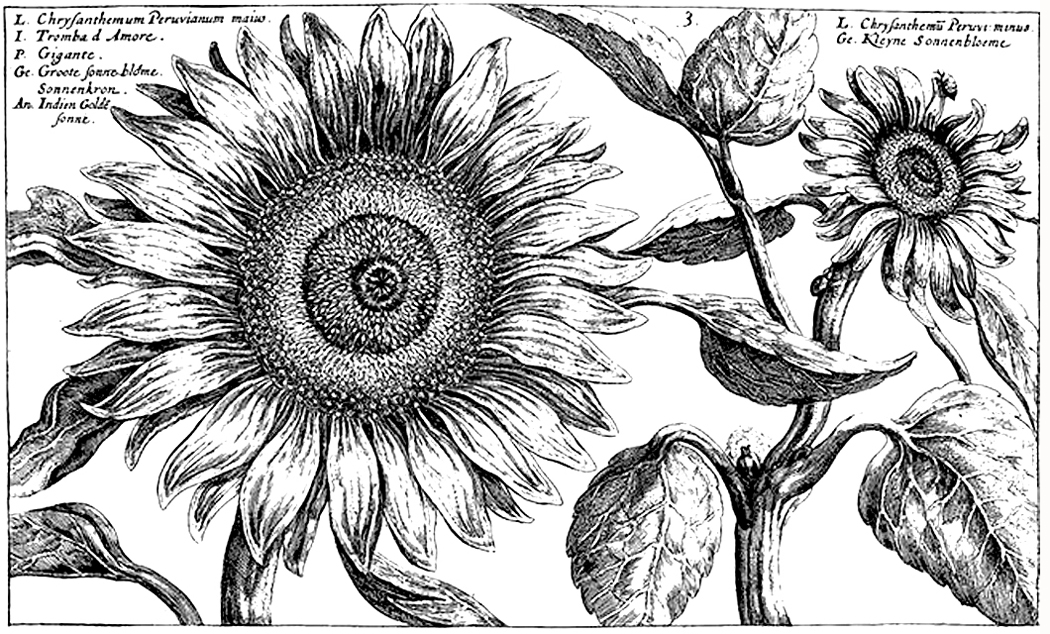
The only sane course of action was to leave the tent and head for the brick office. Carole went ahead of me, while I attempted to strike the tent against a howling wind. But the wind yanked it from my grip and I had to chase it until it caught on the picnic table. The tent had a tubular frame, which kept it in full shape. I grabbed the top crease and the wind took umbrage at my effrontery and tried to lift me airborne, with the tent as a kite and me as the kite tail. I fought it over my head, holding on for dear life. Finally the tent caught in the tin awning and held steady enough for me to de-tentpole the thing and collapse the kite into a smart bundle, soggy and dripping, which I put into the car before heading to the office and Carole. 

The office was not very big for the 30 or 40 people herded into it. There were crying babies, frightened grown-ups. One man explained that the weather service had confirmed a tornado in the vicinity. A husband and wife were yelling at each other, each blaming the storm on the other. The wind blew outside, hurling detritus past the door. It all finally calmed down after 20 minutes or so and the wind subsided and the rain gave up its anger and turned into a normal rainshower. 
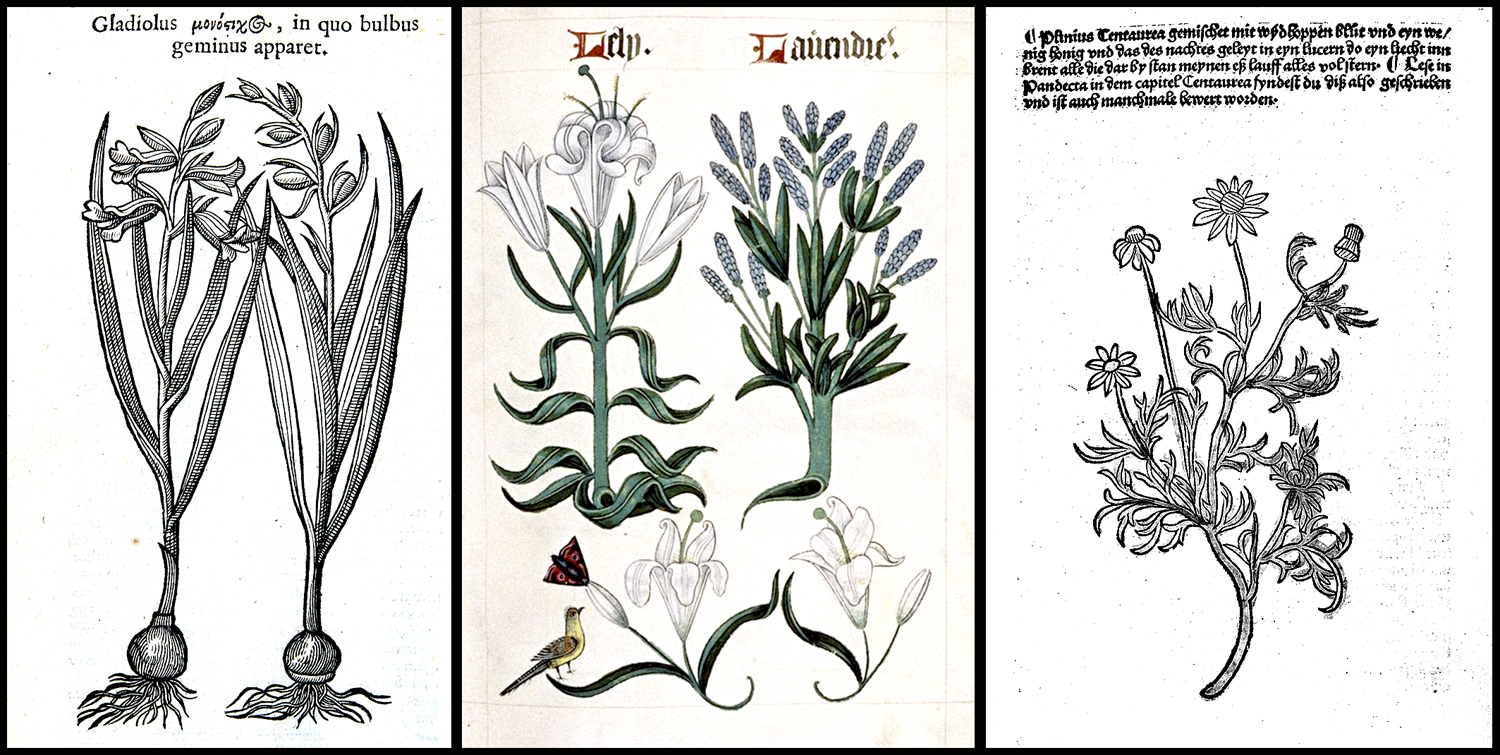
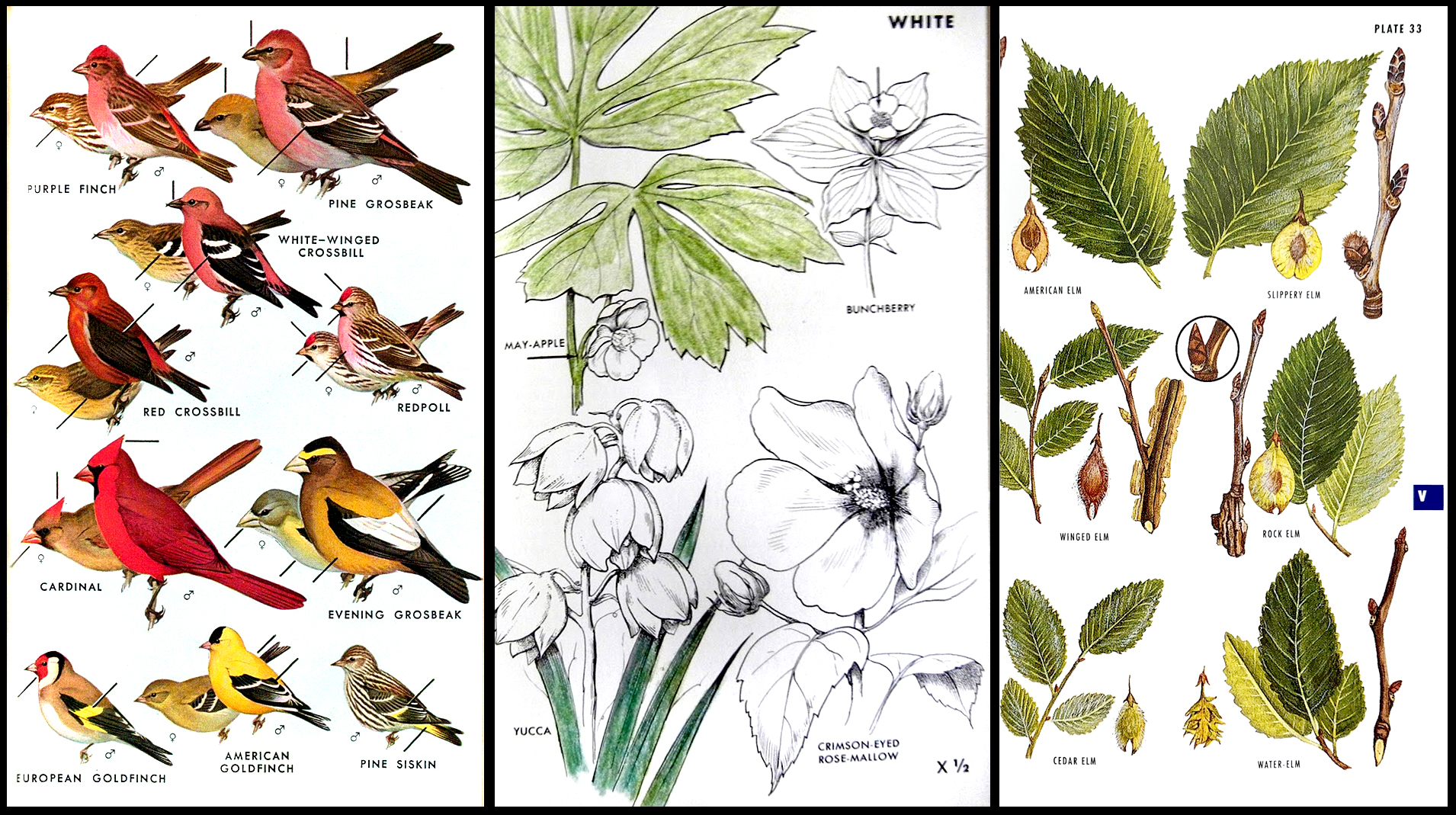
But there was no way we could set the tent back up. Our campsite was a pond and the tent itself was a crumpled mess. We got into the car and thought perhaps we could make through the night sitting up.

I remembered, though, we had passed a motel in town. Maybe we should drive back into Shamrock and see if we could get a room. And so we did. 

When I entered the motel office — now it was well past 2 a.m. — the office was dark, but a woman came out and got us a room. 

I got back in the car and told Carole, “I’m not sure about this.” The office was choked with the aroma of curry — something I normally love, but this felt more like chemical warfare. We found our room at the back of the motel complex. It had that musty smell of old cigarettes, this time mixed with the vestige of curry. The window looked out into the tool shed.

But the prize was the carpet. It was a sickly blue-green shag rug and it ran up the walls like wainscotting, and around the bottom of the bed as a kind of dust ruffle. 

This would have been the worst motel experience we had, except that we had already spent a night in Forrest City, Ark., in a motel where we were bitten all night by fleas, and the toilet had a “sanitized for your protection paper band under which was a floating cigarette butt. 

Still, our Shamrock motel gave us a chance to sleep and calm our nerves from the storm. 

The next day, we set off west again, and finally reached Glen Rio, on the border between Texas and New Mexico, where the bottom dropped out of the flat Panhandle and we drove down into a new landscape filled with the mesas and buttes we had imagined. 

We had to laugh at ourselves years later, after living in Arizona for 25 years, at the naive glee we felt at seeing the tiny, unprepossessing hills we first passed in New Mexico, which would hardly merit the notice of anyone used to such things. But they were the first hintings of the sense that the American West was entirely alien to anything we had known in tidewater Virginia, where we were living back then. 

It was as if the Western movies I grew up with in New Jersey had come to life. We gawked at everything for the remainder of that first trip West, through Arizona, up California, through Oregon, Wyoming, Montana and all the states in between. We put 10,000 miles on the odometer that summer.