Archive

Tag Archives: Arizona

Miami, Arizona

Miami, Arizona

Many decades ago, when I first came through Arizona, I passed through a landscape so surreal that after I got home, I could not be sure, when I went back to my job in Virginia, that I had actually seen what I had seen: mountains and mountains of grayish-tan gravel, in a town so beaten down, so weathered, so spavined and dried out, that could not be sure that I had not dreamed the whole thing during a nap after an ill-advised meal of rarebit.

When we finally moved to Arizona, I rediscovered Miami-Claypool and it lost nothing of its Twilight Zone weirdness. To those of us not familiar with copper mining, the thought that humans could build cordilleras of utter waste — post-apocalyptic poetry — was hard to credit. Part of me wanted to live there. Nothing could possibly feel day-to-day, ordinary, or boring in such a nerve-frayed landscape.

Superior

Superior

If you drive east from Phoenix, out past Mesa, past Apache Junction, into the desert past Florence Junction and climb up into the hills, you will find a string of mining towns, mostly abandoned or dying, or hanging on by their fingernails, beginning with Superior. It was one of the locations for the 1997 Oliver Stone film, U Turn, and it feels like it could have been dreamed up by a Hollywood set designer. In 2005, a sci-fi film called Alien Invasion Arizona was filmed there. It isn’t quite a ghost town, but you could easily place a season of The Walking Dead there.

Superior Kellner Ave

Superior’s biography is like so many copper towns in Arizona part of a history that almost no one thinks about. It is an industrial history, full of smokestacks and labor disputes, and fills in the space between the six-gun Old West of popular mythology and the modern and often banal state of tourism and retirees.

Superior AZ Mission Cola

Unfortunately, it is an industry that cycles with the international market price of copper: The price plummets and Arizona mines lay off workers and shut down. If the price recovers sufficiently, the mines start up once more. Mine-worker families face an uncertain life.

Superior cliffs

Superior cliffs

The history of Arizona’s mining towns is generic. Whether it is Bisbee or Bagdad, Morenci or Globe, there is a familiar tale, altered only with variations on the tune.

For each, it begins in the 1860s or ’70s, when an army officer or a prospector picks up a rock and smiles, recognizing it as ore. Usually, they were looking for gold. Often what they got was copper. Then there is a period of individual prospecting, usually ending in bankruptcy all around. Then, financiers from New York or San Francisco add capital and mining picks up on an industrial basis. Towns spring up, usually shanty towns precariously perched on gravelly hillsides near the mines. During boom years, the towns grow. Wood is replaced by brick; large hotels are built and streets are paved.

One company buys out another until huge corporations are formed with names like Phelps Dodge  and Magma.  Ultimately they become multinationals with many interests beyond copper.

Between the wars, the underground mines are largely replaced by the great pit mines, man-made miniature Grand Canyons of ore-dig.

Morenci

Morenci

But then, after boom years and some bust years, the mines play out or are flooded or copper prices fall and the towns surrounding the mines die out.

Or, in a few cases, they persist, either as mining persists, as at Morenci, or as the towns find new purpose as tourist destinations, such as Bisbee, or county seats such as Globe.

But the past also persists, and those interested in this forgotten past of Arizona can still visit many of the best locations.

Mining hit Superior in 1870  when silver was discovered and the Silver King Mine  became one of the richest silver mines in Arizona history. But in 1912,  Boyce Thompson  bought the mine, formed Magma Copper and the area became one of the great copper mines. The smelter closed in 1971;  the mine remained in operation until 1982.  The mine has sporadically been worked since, depending on copper prices. But Superior, taking a cue from Bisbee and Jerome has tried to position itself as a tourist location. The wooing of Hollywood has been part of that resuscitation and the town has its own film board.

Hayden

Hayden

South of Superior, are mines at Mammoth and Kearny and Hayden, home to the ASARCO  smelter complex, which services several of that company’s state mines. It is rich in mining history, and union grumbling is still part of the town: One abandoned building has “Union Yes! Forever” painted on it, with one of the “Ns” in “Union” painted backward. The first parts of the plant were opened in 1912,  and now it covers 200 acres  with a smelter smokestack 1,000 feet  tall. Nearby Winkelman  and Kearny  are worth seeing, also, and the now-closed San Manuel  mine is several miles south near Mammoth.  The tell-tale tailings ridges run for miles.

ASARCO’s big open pit Ray Mine is 22 miles  south of Superior on Arizona 177.  The Ray Complex  covers 53,000 acres  and is the second largest copper mine in Arizona. There is an overlook off the highway that affords an unofficial peek at the mine.

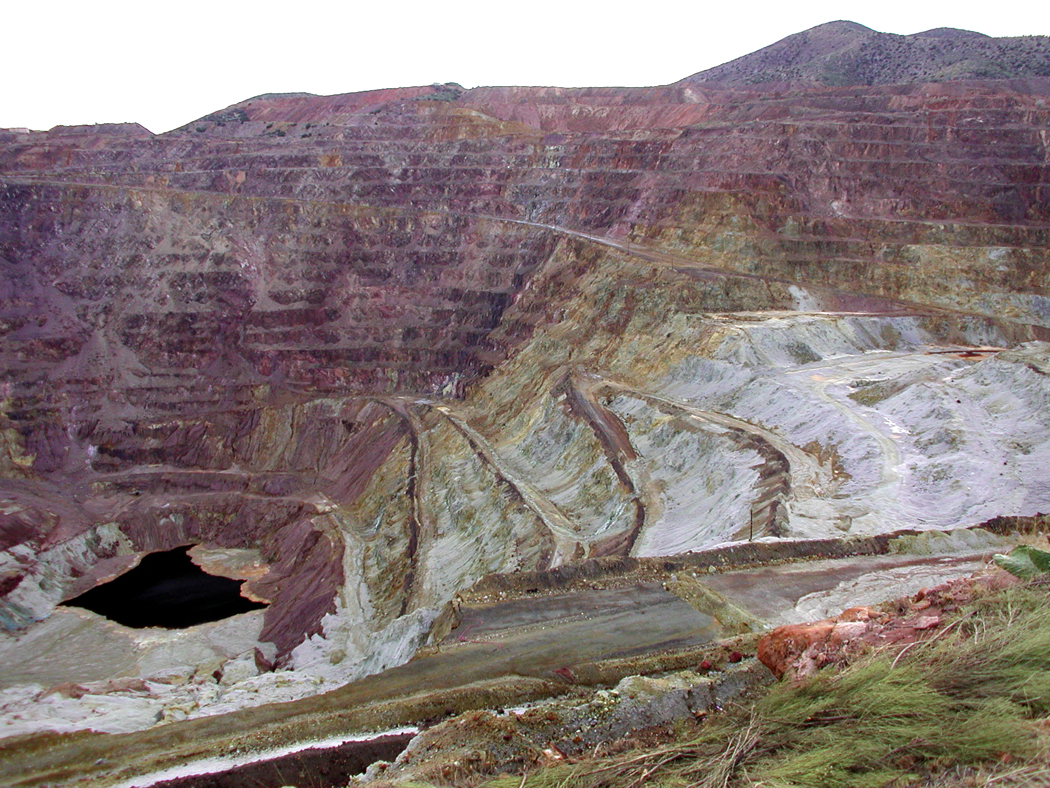
But this is a detour. Back to Superior, and driving east up into Queen Creek Canyon and beyond to Miami-Claypool and its veritable Himalayas of detritus, where you will see what will be, depending on your esthetic sensibility, either a great warning of industrial environmental depredation, or an awesome visual wonderland, an eruption of surrealism in the middle of the quotidian.

Miami

Miami

The town looks like it was dropped as litter from some passing god’s chariot, scattered on the hillsides to either side of U.S. 60.  The smelter smokestack rises to the north, over the black drapings of slag across one tan tailings hill.

Bloody Tank Wash, Miami

Bloody Tank Wash, Miami

The town is younger than most of the mining towns in the state. In 1909  the Miami Copper Company  began operations on the hills beside Bloody Tanks Wash.  For a while, it was a rival to Globe, where the Old Dominion Mine  was one of the biggest producers. But Globe ceased being a mining power in 1931  when the mine flooded, and Miami became the center, not just of mining – several mines are nearby, including the Pinto Creek open pit – but the major smelting location for Phelps Dodge.

Now, the townsite, with its bridges over the wash looking like Venetian canal bridges gone terribly wrong, is home to many antiques stores. Unlike many old mining towns, the industry is in full swing, and the mines and processing plant prosper and wane with the price of copper.

San Carlos Lake

San Carlos Lake

Past Globe you enter the San Carlos Indian Reservation. Take a right down to Coolidge Dam and San Carlos Lake. Monuments to civilization are always so much more compelling when they are stuck in the middle of nowhere, like Shelley’s Ozymandias or Catherwood’s Palenque.

At least, that’s what comes to mind when you finally come upon Coolidge Dam, standing like a sentinel in the grass and hills of the Apache reservation.

Gila River from Coolidge Dam

Gila River from Coolidge Dam

Built in the late 1920s, it comes from that great era of dam building and dam architecture. Although it is much smaller than Hoover Dam on the Colorado, it shares an obvious family relationship, with its Art Deco details and horseshoe curvature. It looks like one of the great, archetypal dams.

It reaches a climax in two giant Deco eagle heads near its lip that watch over the downstream Gila River as it enters the Needles Eye Wilderness. They are eagles that pronounce the word “federal” with authority.

It was the Bureau of Indian Affairs that built the dam, to allow the San Carlos tribe to make use of the fluctuating water supply of the Gila. In 1994, the dam overflowed, with water released in such quantities through its spillways, that they had to be repaired. On the other hand, the lake has shrunk to practically nothing at least 20 times in its four-score years of life. In 1977, the lake got so low, there was a major fish kill, with an estimated 5 million fish going belly up. It took five years for the lake to recover.

At low water, the lake must look the way it did when the dam was dedicated in 1930, when humorist Will Rogers looked out at it during the ceremony and joked that, “If this were my lake, I’d mow it.”

By 2015, it could have used another good mowing, because the lake was down to about 5 percent of capacity, leaving most of the dam high and dry, exposing what is supposed to be under water. The current El Niño has raised the level once more.

Coolidge Dam

Coolidge Dam

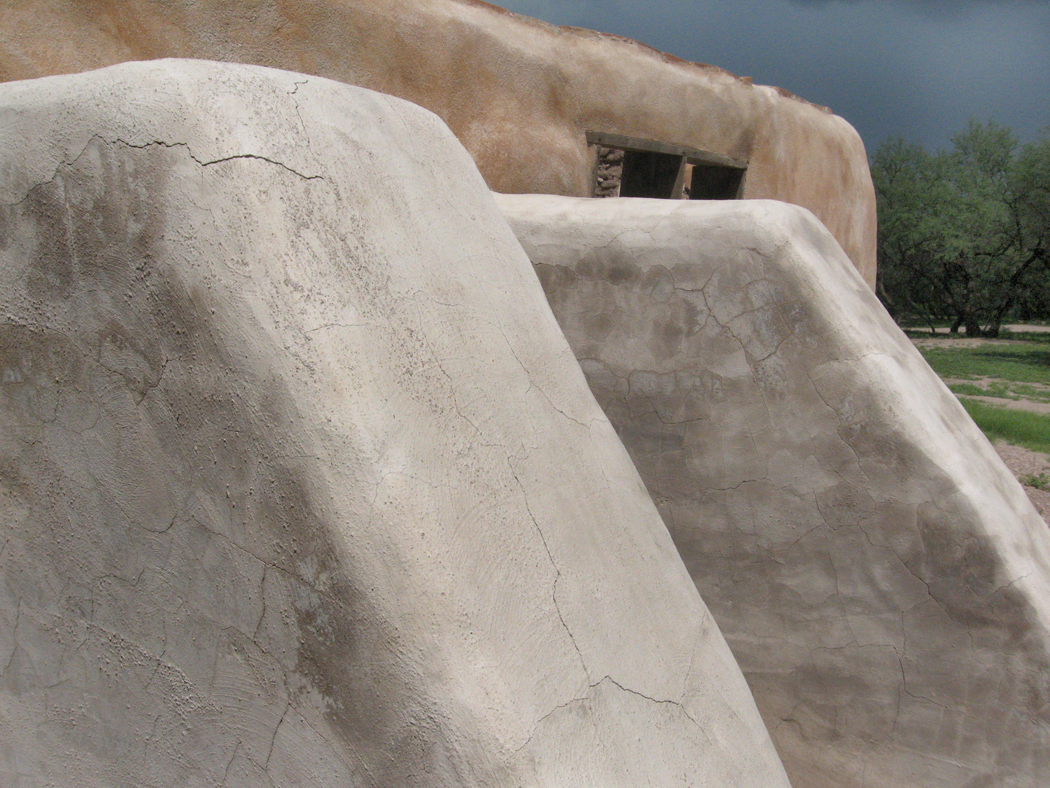
Three great bulbous rounds of concrete make up the upstream part of the dam, and they are exfoliating sheets of concrete as they age, and looking more and more like a ruins in the making.

If you take the pilgrimage to see the dam, you might as well continue along Reservation Route 500 for 30 miles until it reunites with U.S. 70 at Bylas. Few drives in Arizona are as peaceful and solitary. Just watch out for the potholes.

Black Hills Back Country Byway

Black Hills Back Country Byway

Continue down U.S. 70 along the Gila River and farmland to Mt. Graham and Safford. From there you head toward Clifton and Morenci, up in the hills. There is a “short cut” — the 21-mile Black Hills Back Country Byway, which takes you through wilderness on a gravel road. This is what Arizona looked like when Geronimo hid in these canyons and arroyos. After you cross the Gila River on its Depression-era concrete bridge, you can see a parody “shining city on the hill,” Clifton, like a mirage.

"Shining city on the hill"

“Shining city on the hill”

If you really want to see the industrial power of Arizona, you can do no better than to visit Clifton-Morenci in Greenlee County.  The largest open pit copper mine in the nation has spread so many miles across, it actually ate up the original town of Morenci.

The Phelps Dodge mine can be viewed from an overlook on U.S. 191,  11 miles north of Clifton. It is a humbling experience: like looking at a manmade Grand Canyon, covered with trucks the size of five-story buildings busting dust up along the miles and miles of mine roads in the pit.

Morenci pit and road

One truck can haul 270 tons  of ore on tires 12 feet in diameter.  The biggest trucks carry 320 tons.

Morenci mine truck

Morenci is still a company town, the last in the state, where all the housing is company owned, and all the workers and families shop at the company store.

The mining potential of the area was discovered in 1865  by passing soldiers. The first mine opened in 1872,  but things took off when Phelps Dodge entered the picture in 1881.  The open pit was begun in 1937,  since then, 4.1 billion tons  of ore and rock have been dug out, leaving behind a hole big enough to see from outer space.

Morenci S-curve

The industrial complex is impressive. Miles of corrugated-metal processing plants and piles and piles of tailings and slag.

Morenci mine industry

Clifton, a few miles south, is practically a ghost town, but filled with the same kind of buildings that give Bisbee its period charm. Only in Clifton, they are rather more like Roman ruins.

Clifton

Clifton

Seeing these old mining towns, like Clifton, Miami or Winkelman, can leave you feeling quite conflicted. They are clearly evidence of monumental environmental destruction. Poison waters run off the tailings piles and nowadays have to be captured and treated, but in the past, just filtered down to the streams and water table. Whole mountains have been turned into holes in the ground. Ash heaps make new mountains. Lives are burned up, too. Miners attempting to find better conditions could find themselves dumped off a train in the emptiness of New Mexico and told not to return. Huge corporations buy up the hard work of the original prospectors and squeeze the profits out of the land, like water from a dishcloth. The land has been turned gray and dusty, and tire tracks the size of riverbeds gouge out the roadways. The air is heavy with dust and fumes, and men swarm over the desiccated heaps like ants on an ant hill.

Clifton

Clifton

"Picturesque"

“Picturesque”

Yet, it is hard not to be awed by the sublimity of such hugeness, vastness, even if vast destruction. One is left with two hearts.

In the 18th century, there was a fad for paintings of Classical ruins. Such paintings were called “picturesque,” and they depicted not merely the architecture of Rome and Greece, but the vines growing up the stones, and the peasants building cooking fires below the aqueducts. The cracked masonry, fallen blocks, glowing in a beautiful sunset, set 18th century sensibilities into a dither, fanning themselves in admiration of the beauty — a beauty that told of death and decay, of the falling of empires, and the persistence of life below the arches and gables. There is a sense of grandeur, even if we only live in reflection of it.

Clifton AZ bathtub

And while I cannot avoid seeing the landscape as some sort of movie set for a new Mad Max film, neither can I deny the grandeur of the landscape, the sense of loss that fuels the emotions, the sense of something larger, older, and more significant than myself alone.

Clifton

Clifton

Much of the mythology of Arizona revolves around cowboys and Indians, some fantasy version of the “Old West.” (Somehow, Scottsdale gets to call itself “the West’s most Western town,” while in reality being a commercial real-estate empire filled with shopping malls and freeways). The mythology is a commodity. Yet, there is real myth — the feeling in your psyche of the expansiveness of history and the world — in the union battles, corporate dealings, dying towns and Dante-esque pits into the earth.

Route 191 north of Morenci

Route 191 north of Morenci

As you head north out of Morenci, you enter the mountains and head to a completely different Arizona.

Patagonia

Patagonia

The area in Arizona west of Interstate 19 and south of Interstate 10 is a forgotten quadrant of the state, perhaps because it is so lightly populated, perhaps because it is so heterogeneous, and perhaps because it chooses to be. It is a place where retirees and the remnant of hippiedom are often the same people, where irrigated farms fill the flatter areas and the hills are riddled like Swiss cheese with tunnels, more often abandoned than not.

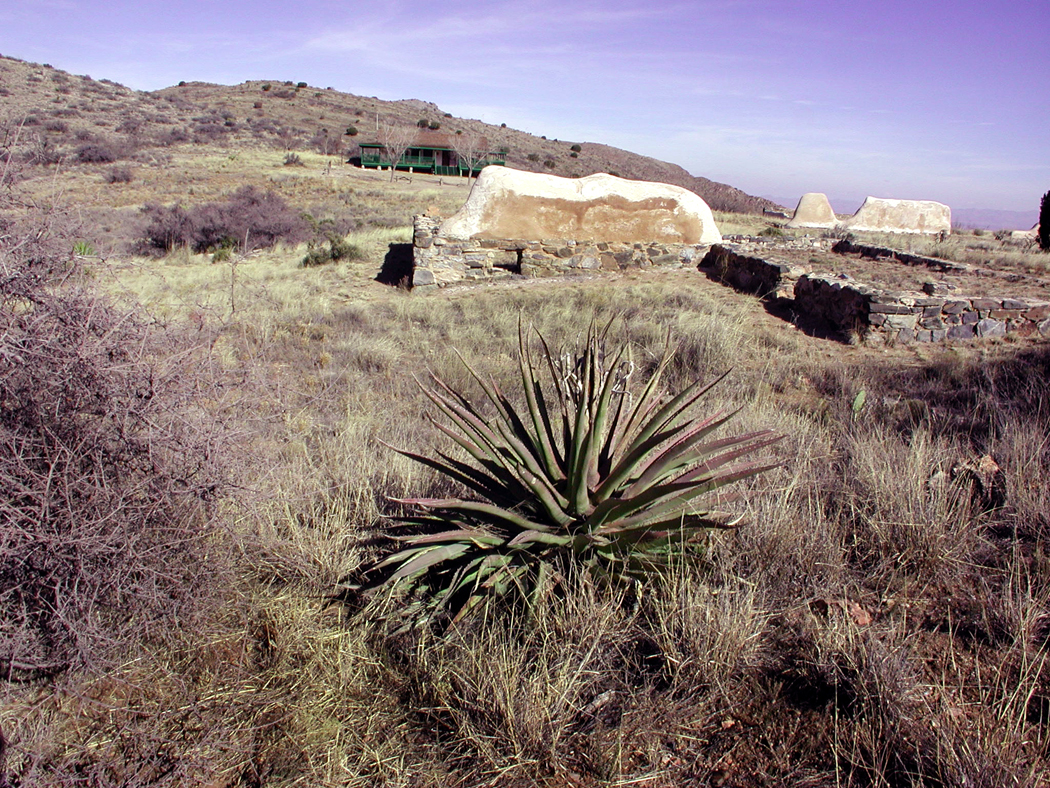
I went there often, partly because I like the less formalized regions in general, and in part because I had so many newspaper assignments there: wine country, the opening of Kartchner Caverns, the anniversary of filming Oklahoma! in the grassy fields of Patagonia, the Amerind Foundation in Dragoon, historic Fort Bowie, birding in Ramsey Canyon, a tour of copper mining in the state, a travel piece about the Chiricahua Mountains.

Fort Bowie

Fort Bowie

It is home to some of the most picturesque desert and mountain landscape in Arizona, and it is also home to the army-base squalor and mini-mall-and-tattoo-parlor congestion of Sierra Vista.

This part of southern Arizona is defined, more than anything else, by what is no longer there.

Kartchner Caverns

Kartchner Caverns

Dozens of townsites are now only blowing grass; whole mountains have been turned into empty, terraced holes in the ground.

Geronimo’s been captured; the ores are largely played out; and the railroad doesn’t stop here anymore.

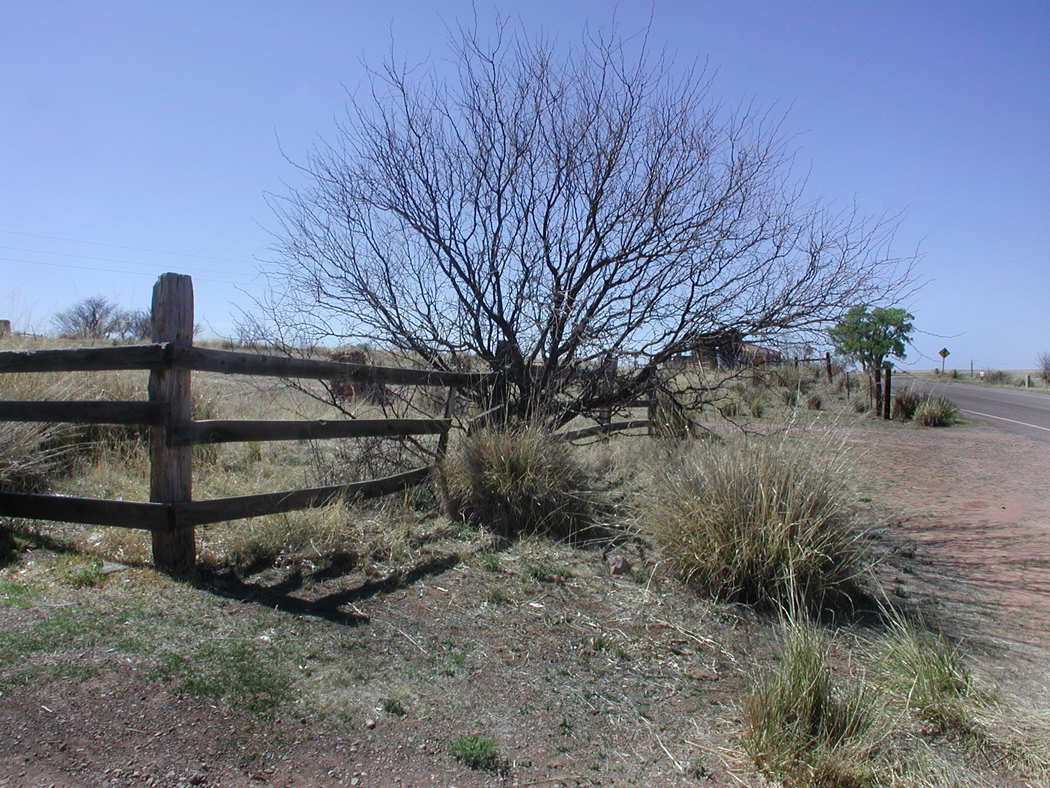
Elgin, Arizona

Elgin, Arizona

Yet, everywhere you turn are reminders of how things used to be. Old land grants show up on maps along with mountain ranges named after Indians. Abandoned mines perforate the hills and tell of short but acute prosperity. Former railroad rights-of-way cut across river bottoms that used to be littered with bustling towns.

Ruby, Gleeson, Charleston and a score more towns like them are now only crumbling adobe, gray weathered boards and unhinged tin roofs banging in the wind.

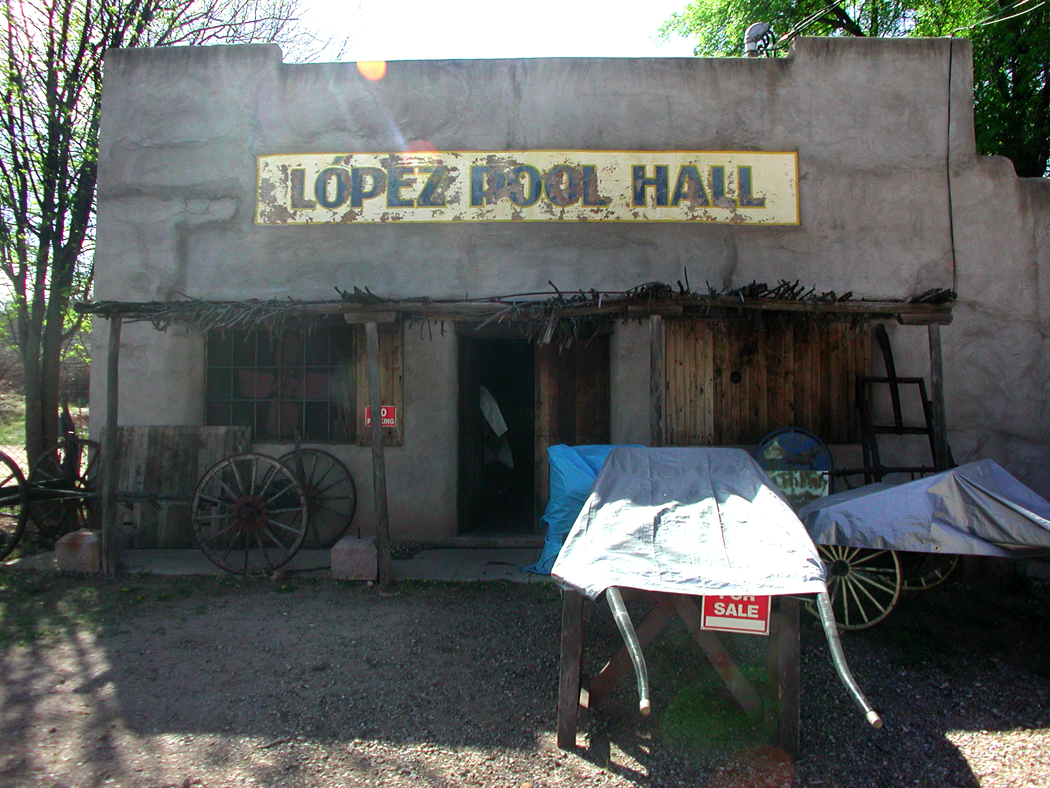
Lopez Pool Hall, Patagonia

Lopez Pool Hall, Patagonia

The area south of Interstate 10 is a gigantic history museum, and that history is based largely on copper, cattle and crops and the water needed to exploit them.

Drive to Bisbee and see the Copper Queen Mine, or drive east of Douglas and see the John Slaughter ranch, or drive north in the Sulphur Springs Valley to the farming community of Kansas Settlement where the irrigation still coaxes green out of the brown dirt.

It is a history of hard-working people wrestling an existence out of the ground beneath them.

Adobe Patagonia

You can see it in the drawn faces that stare out of century-old photographs: the Cornish miners, the Mexican vaqueros and the Mormon farmers. They lived hard lives and when the mines played out, or the ranch lost out to urban encroachment, they moved on.

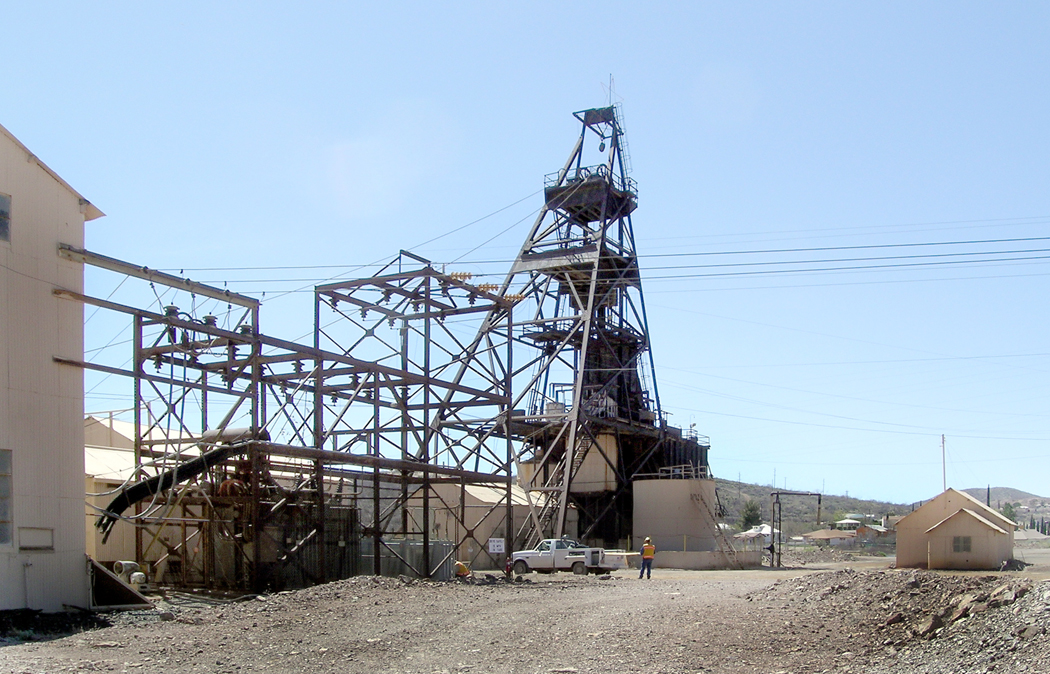
Warren pit head, Bisbee

Warren pit head, Bisbee

What they left behind more often than not, was the weathered bones of their existence, the frame houses, mine-shaft timbers and empty general stores.

The boom of the late 1800s died down. In 1882, Tombstone had an estimated 10,000 people and was the largest town in Arizona. By 1940, that number was just over 800. There were fewer people in Cochise County in 1950 than there were in 1910.

The first big wave of prospectors came to southern Arizona in the 1860s after the California gold rush. They came for gold and silver and found found what they were looking for.

In Tombstone, 5.8 million ounces of silver was mined in 1882 alone.

Dragoon

Dragoon

Dragoon cactusBut because the water needed to process the silver ore wasn’t to be had in Tombstone, a series of satellite communities were built along the San Pedro River, some 10 miles or so west of Tombstone, where Millville and Contention City gave rise to stamp mills that processed the ore that was hauled in in wagons.

Charleston and Fairbank arose to provide food and dry goods to the miners and mill workers. Fairbank became something of a shopping mall.

Built beside the railroad that followed the San Pedro, the town supplied Tombstone with its food and goods until well into this century. There were no groceries in Tombstone; residents had to ride the 10 miles down to the depot and the Fairbank Commercial Company. The town never had more than about 100 people, but it did have a hotel, and for a while, a Goldwater-owned store.

Texas Canyon

Texas Canyon

That all changed in 1884 when the Tombstone mines began flooding out. By 1888, the Contention City post office closed; other communities followed.

Fairbank lasted into the 1970s, with a population of 3 in 1971. Now there is only the volunteer site host for the San Pedro Riparian National Conservation Area, living in a trailer near the back of the “town.” The store and post office — built in 1883 — are still standing, as is the schoolhouse built in 1920 and a couple of homes and outbuildings.

Where the Montezuma Hotel used to stand, there is now the asphalt of Arizona Route 82, which runs past the site.

The pattern of boom and bust played out all through the region. Claims were filed, mines opened, saloons opened, mines played out, people left to move on to the next new ore pit.

Bisbee

Bisbee

One town that has lasted longer than most is Bisbee. It owes its existence to copper, which was discovered in the surrounding Mule Mountains in 1875. Three years later, it was profitable enough to haul ore to the railhead in Benson and send it on to Pennsylvania for smelting. By 1901, smelting operations were moved to Douglas, only 25 miles to the east, when a railroad was built.

The Bisbee mines successfully produced copper and its related metals for 90 years. Over that time, miners extracted more than 8 billion pounds of copper, worth about $2 billion. The mines also yielded 3.9 million pounds of lead, 3.8 million pounds of zinc, 2.7 million ounces of gold and more than 1 million ounces of silver. In the process, some 2,000 miles of tunnels were drilled through the mountains.

Dragoon Spanish sword

By the turn of the century, it was the largest city between St. Louis and San Francisco, with 20,000 residents.  With Brewery Gulch and a red-light district, it had all the color you could as for, and after a major fire in 1908, the city rebuilt largely in brick.

Those buildings still survive, largely unchanged, giving visitors a peek at what life was like back then.

The mines thrived, copper prices went bust, the mines suffered. There was union activity. In 1917,  there were strikes at most of Arizona’s major mines; Bisbee’s answer was to round up 1,200 strikers, herd them into railroad cars and ship them east to New Mexico where they were dumped unceremoniously. This was the infamous Bisbee Deportation.

Lavender Pit, Bisbee

Lavender Pit, Bisbee

By then, new technology allowed the introduction of open pit mining and the face of Bisbee began changing forever. The most famous of these pits opened in 1951: The giant Lavender Pit mine operated by Phelps Dodge dug a monster hole into the ground just south of town. It eventually wound up some 900 feet deep by the time it closed in 1974.Dragoon tree

Bisbee itself might have closed down soon after, but its residents liked living on the mountainside and a host of retirees and later, artists and lingering hippies, now long of beard and wide of girth, joined in to keep the town alive.

Where once you would find a miner tossing down rotgut whisky, you are now more likely to find microbrew or a hazelnut latte.

My favorite vista in the quadrant is the Willcox Playa, a huge dry lakebed that functions as a landmark along I-10. You can see it from dozens of miles away, and when you are traveling west on the interstate, it is when you know you are back home in Arizona. In the summer, dust devils whip the white dust into mini-tornadoes of grit and sand. Sandhill Cranes roost in the area. The giant white circle in the flatness of the desert is so dry you know you have to find something to drink.

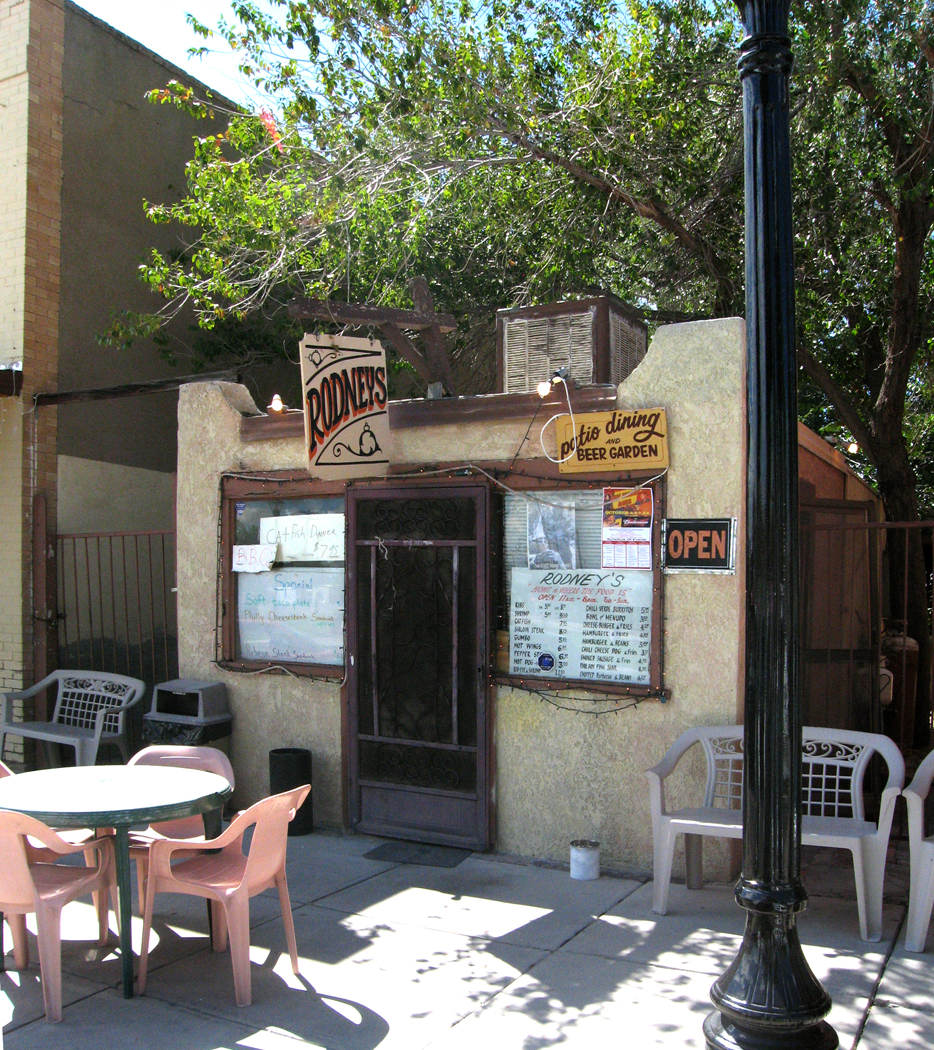
In Willcox, you can grab a soda at Rodney’s.

Wilcox Rodney's BBQRodney Brown has run his tiny eatery in Willcox for 20 years. It has a kitchen the size of a closet and no dining room at all — you find a seat out back at a picnic table.

“If you want an interesting place to eat, you should try Rodney’s,” says John Ware, director of the Amerind Foundation in Dragoon, about 20 miles to the west. “But it is kind of funky.”

It may be a measure of a traveler’s adventurousness to eat at Rodney’s. The building on Railroad Avenue, two doors down from the Rex Allen Museum, is barely large enough to qualify as real estate, and its walls are cracking.

“This crack in the concrete started only yesterday,” he says, pointing at the wall just outside the screen door to his backyard refectory.

Things are informal. If you want a drink, grab one from the ice-filled sports cooler on the floor.

There’s nary a vertical or perpendicular line in the building, which leans a bit, and the floor is wobbly at best. The screen door to the backyard doesn’t open all the way; it catches on the uneven ground.

Rodney stands behind the counter, taking your order, then spooning the dark, gooey barbecue into a tin pot to heat it up.

Wilcox Rodney fixing BBQ

The food is good. Lots of customers back up in the street at lunchtime, waiting for a chance to get inside and order.

Like a barber on caffeine, he keeps the conversation going, stirring your food, pointing to the signed picture on the wall: “To Rodney, all the best, Lorenzo Lamas,” it says.

Next to it is another celebrity photo that looks like Willie Nelson, but, says Rodney, “It’s not really. It’s a Willie Nelson impersonator. But he’s really good.”

Rodney moved to Willcox 20 years ago after working in Sierra Vista for 10 years. In Sierra Vista, he ran Rodney’s Southside BBQ.

Asked why he moved to Willcox, he says only, “We don’t know yet.”

Another freight train rumbles by across the street, rattling everything in the joint and drowning conversation. Rodney stops in midsentence, only to pick up again as the train passes and the dishes stop jumping.

“Ambience,” he says.

Sonoita vinyard

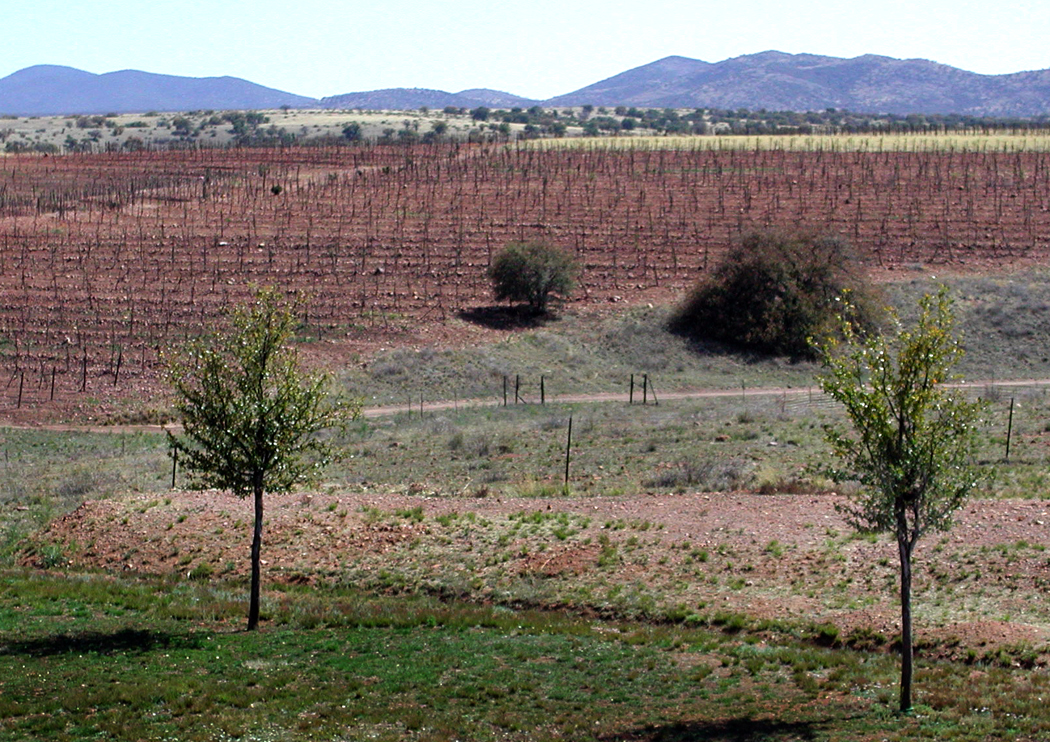
On the eastern side of the quadrant, you find the vinyards of Patagonia and Sonoita.

Sonoita wine barrel

East of Sonoita, the road weaves through more yellow grasslands, with the torso hills getting closer and closer to the road, finally coming together at a pass between the Mustang and Whetstone mountains and dipping then into the wishfully named Rain Valley.

Sonoita Creek

Sonoita Creek

The same road then continues down to the wooly bottomlands, thick with willow, along the San Pedro River. That’s San Peedro, if you want to fit in. All among the trees, the birds are thick as thieves and noisy as conventioneers. Looking down from the aging iron bridge into the water’s flow, you can see the green waterweeds individually pulled in direction of the current.

On a cold windy morning in spring, the blow twists the riverbank grasses the same way.

Patagonia Lake State Park

Patagonia Lake State Park

From there, the road goes south to Coronado National Memorial in the Huachuca Mountains. You gain altitude constantly from the river lowlands until you are under the mountain peaks. The pine trees are greenish black and burning in the late afternoon sun. When the pavement gives out, the switchbacks take you up Montezuma Canyon to the pass, where to the east you can see most of the San Pedro Valley and down into Mexico and to the west, you can see as far as Baboquivari and Nogales.

When the air is clear — and it is so more often than it is in Phoenix — the valleys below are straw yellow, lined with denim-blue mountain ranges.

On Ariz. 80 out of Douglas, you pass a misplaced corner of the Chihuahuan Desert in the San Bernardino Valley, a broad saucer of tawny grass and spiky lechuguilla and yucca. The sky near the horizon is the color of a robin’s egg; just below it, the distant mountains are dusky purple and below them, the grays and greens dotted with black trees. Nearer still are the chocolate brown hills and the bottomlands of yellow. It is all spread out like a geological rainbow.

The road is long, straight and smooth and you look at  the speedometer and are startled that you are doing 80. The horizon is always your destination.

The highway will take you, briefly into New Mexico, where you can turn back toward the Chiricahua Mountains.

Chiricahua Mountains

Chiricahua Mountains

Few Arizonans, I suspect, have ever crossed the backbone of the Chiricahuas from the east, but the drive through Portal into Cave Creek Canyon is a drive through a rocky portal into Paradise. The broad green canyon is lined with cliffs and pinnacles and could easily be mistaken for a scaled down Yosemite Valley.

Chiricahua National Monument

Chiricahua National Monument

Along the roadsides, the spring wildflowers dot the shoulders like stars in sparse constellations. They are not so thick this dry year as they have been, but the flowers are still there, lupine and brittlebush, penstemmon and globemallow. Each flowerhead pokes into the passerby’s awareness as individually beautiful and separately tenacious.

Benson

Benson

Perhaps that is why the desert attracts a certain kind of human, demanding their quirky individuality, no matter how bizarre or paranoid.

Click to enlarge any image

Mobile AZ graffiti

It is a truth universally acknowledged, that the drive from Phoenix to Tucson along Interstate 10, is the most boring stretch of road anywhere in American experience, outside of the state of Texas.

After you pass the stucco hell of Chandler, you must endure the endless greasewood flats of the Gila Indian Reservation, passing the bridge over the Gila River — although I doubt many drivers note the fact, because the dry riverbed is nearly indistinguishable from the non-river that surrounds it: just more greasewood and a pulverous dust-and-gravel mix that can get whipped up into the air by dust devils during the sun-baked summer months, by which we mean any month except December and maybe the early weeks of January.

Mission church on Gila Reservation

Mission church on Gila Reservation

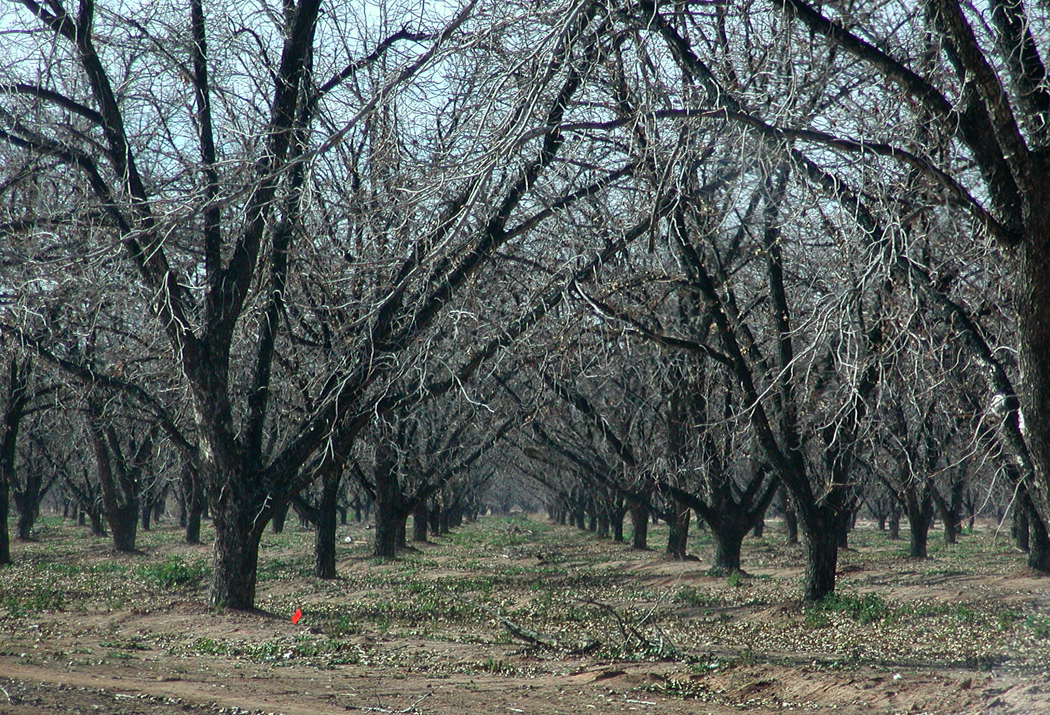
Past the reservation, you hit the sprawl of Casa Grande and the junction with Interstate 8, where, as your rise up on the overpass, you can spot on the distant horizon the spire of Picacho Peak, which is your beacon for the next 45 miles. There are the pecan forests of Eloy, and, as you drone past Picacho, the ostrich farm, which is about the only meaningful punctuation in your journey until you hit the Ina Road exit, which marks the slow relief you feel as you finally approach your destination. Tucson! That outpost of civilization in the desert.Irrigated farmland

When my job took me to Tucson, I tried to find alternate routes whenever I could. The interstate is tedious, but usually, you had to find the fastest way between cities — it may surprise denizens of America’s eastern climes that in Arizona, it was not considered unusual or beyond the call of duty to drive to Tucson for an opera or a concert and afterwards, drive home to Phoenix the same night — each way a distance of some 125 miles.

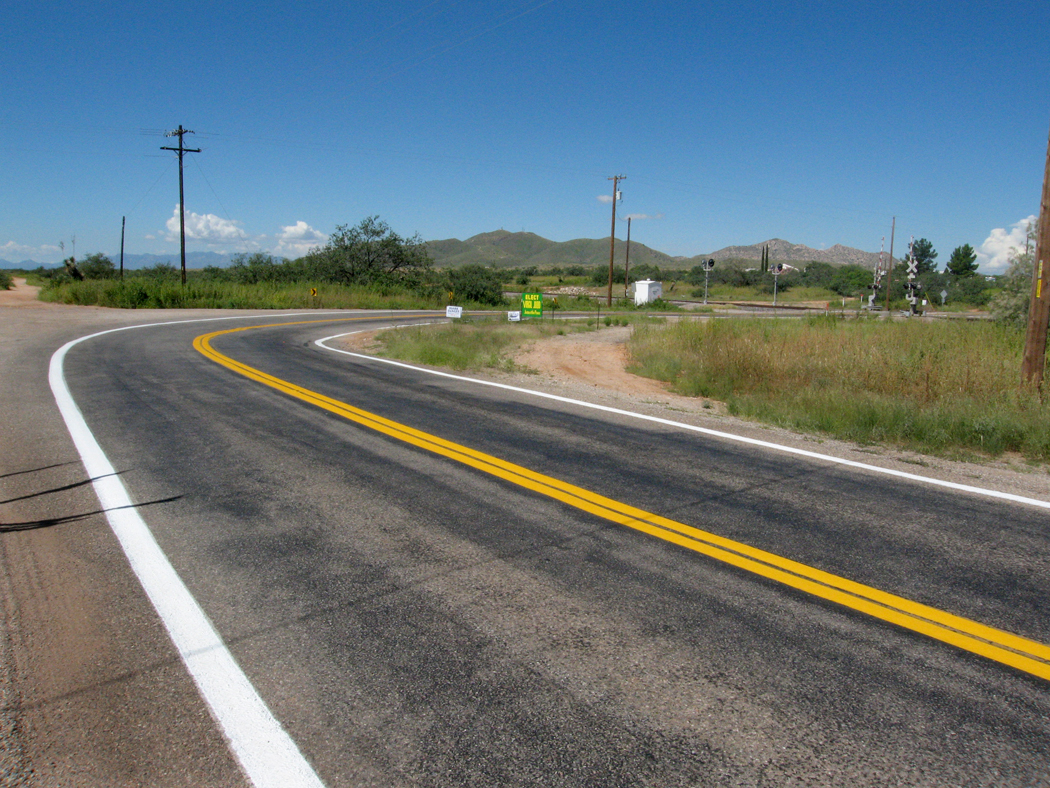
Mobile, Arizona

Mobile, Arizona

But when I could — when it was still daytime, or when I had already spent the night in a Tucson motel — I would find some other road. If I had the whole day, I would drive up the foothills of the Santa Catalina Mountains, through Oracle Junction and along the Pima Pioneer Highway to Florence and then west through Apache Junction and back to Phoenix. It is a much more interesting drive, though considerably out of the way.

North Kinney Road, near Tucson

North Kinney Road, near Tucson

More often, in such circumstances, I would attempt to drive roads that paralleled Interstate 10, but entered the towns that the interstate bypassed, and looped widely through farm country and desert, giving a drive time to enjoy the exceptional Arizona landscape. The problem is that there are a couple of places where there is no alternative to the freeway, and for a few miles you have to hop back onto the mindless buzz and exhaust of the expressway before you can find an exit that lets you back into the reality of the land.Mobile Az train

I recommend the extra time it takes to take such a route. You see more of the state, partly because you are driving more slowly, but mostly because all the knobs and bosses on your map are wide of the I-10 right of way.

Casa Grande National Monument

Casa Grande National Monument

You can take 51st Avenue around the west end of South Mountain in Phoenix, and head into the Gila Reservation, and you can pass through Maricopa and Mobile — which began as an enclave for African-Americans when they were less than welcome in other towns — and you can see Sacaton.

I once committed a crime in Sacaton — breaking and entering. My wife and I culled our overwhelming book collection and came up with five or six boxes of books we decided to donate to the library in Sacaton. But when we got there, the old wooden library was closed. I broke into the building, picking the lock with my jackknife and leaving the boxes on the floor of the library with a note announcing “the midnight skulker” had left the books for the residents.

Several years later, we did the same thing again, except that the library had new deadbolt locks, increased security and a fence around the property. This time, we left the books on the front stoop, assuming that they would not be rained on as long as they were discovered before five months had passed.

Red Mesa

Red Mesa

You can drive through the pecans of Eloy, not past them.

Eloy pecans

Eloy pecans

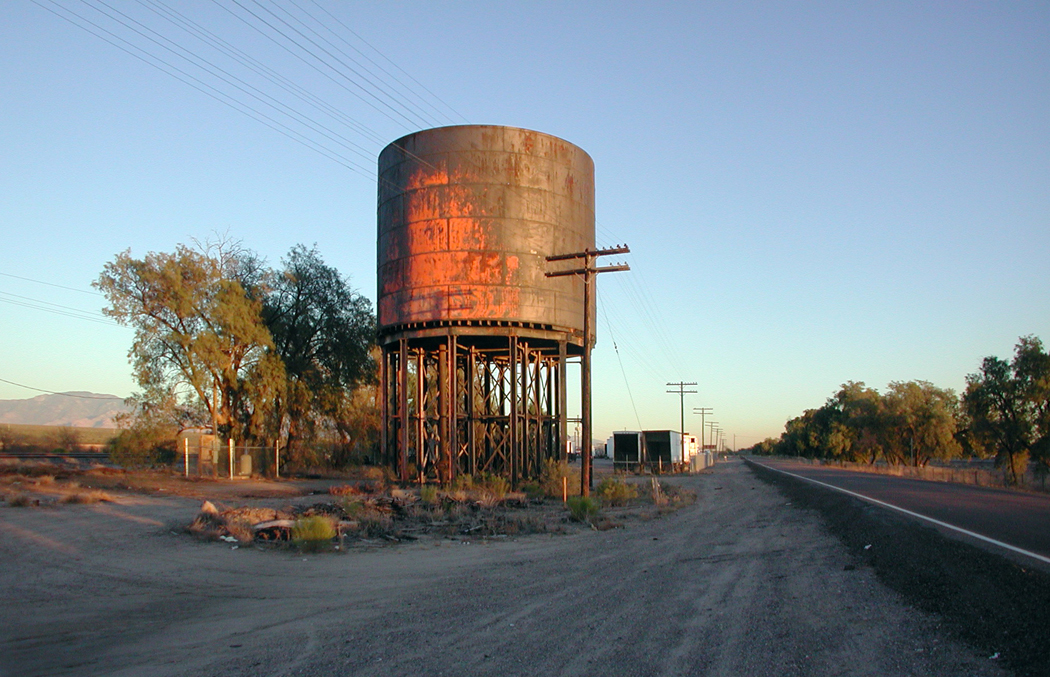
And when you get to the land just north of Tucson, there is farmland and the old railroad, including the abandoned water tower of Red Mesa, just north of Marana. From Marana, you can drive through the east section of Saguaro National Park (nee Monument), and past the Sonoran Desert Museum, past the Old Tucson movie set, up over Gates Pass Road and down onto Speedway Boulevard and Tucson.

Pima Air Museum, Tucson

Pima Air Museum, Tucson

Saguaros TucsonIt used to be that Phoenix was the crass commercial center of the state, and Tucson was the cultural center, where you found the arts and the educated people. But as Phoenix grew, such institutions as the Arizona Theater Company and Arizona Opera migrated north to the bigger city and Tucson has its past to cling to. It is still a more livable city than Phoenix, though traffic on Speedway is getting to be as bad as that on Camelback Road.

But it is south of Tucson that things get interesting again. The corridor down Green Valley takes us past mission churches, artist colonies, copper mines and nuclear destruction.

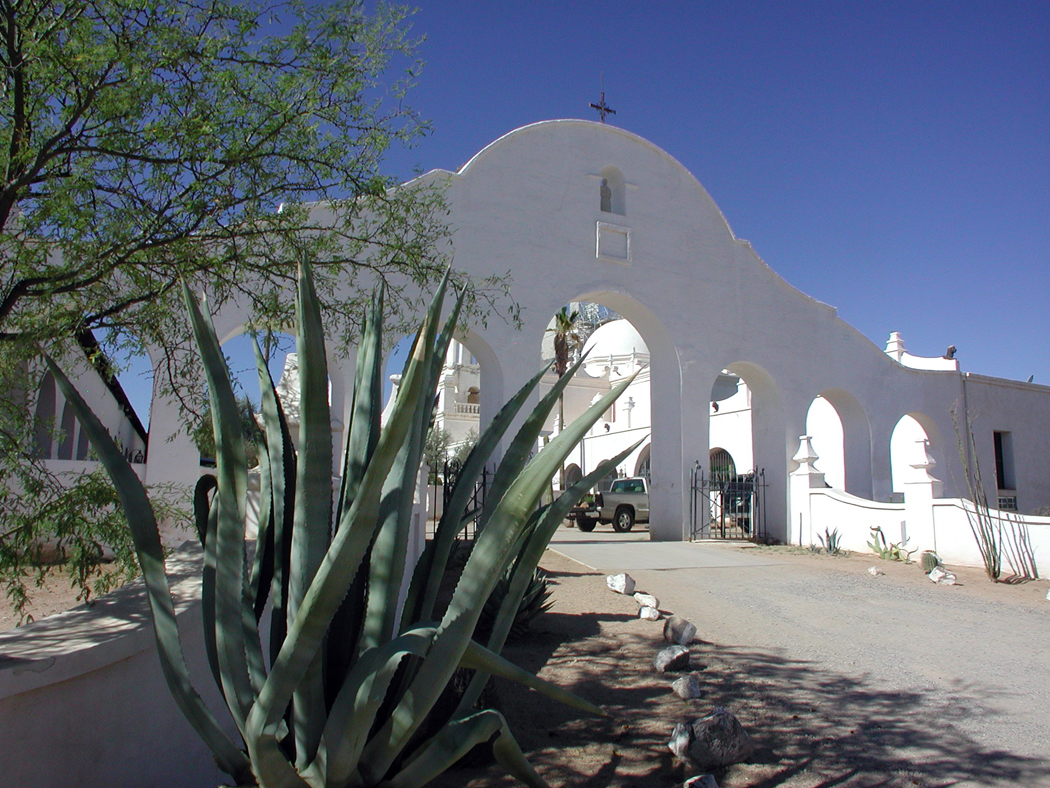
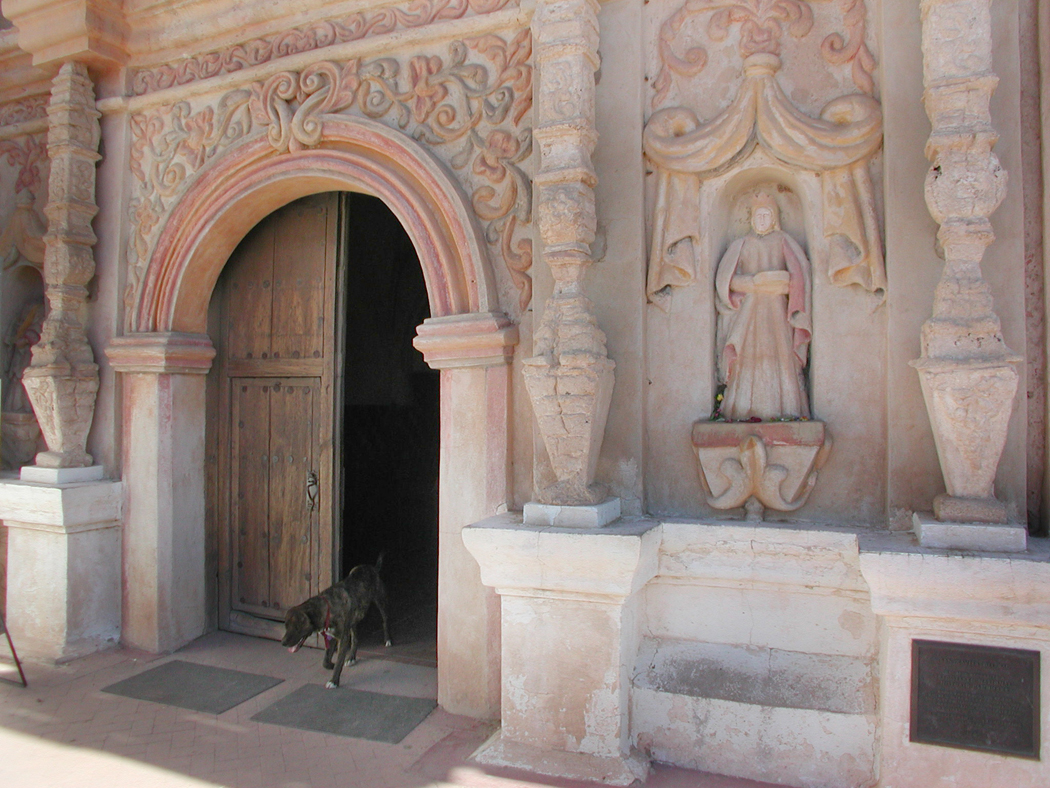
The highlight is the church of San Xavier del Bac, built in the late 18th century and recently restored. Services are still held, and while tourists run through the nave on weekdays, it is best seen in action during Mass.

San Xavier del Bac

San Xavier del Bac


San Xavier del bac dog at door


San Xavier del bac interior dome


San Xavier del Bac interior man sittingOn tourist days, the plaza in front is often filled with crafts and jewelry for sale, and a food truck.

Asarco mine tailings

Asarco mine tailings

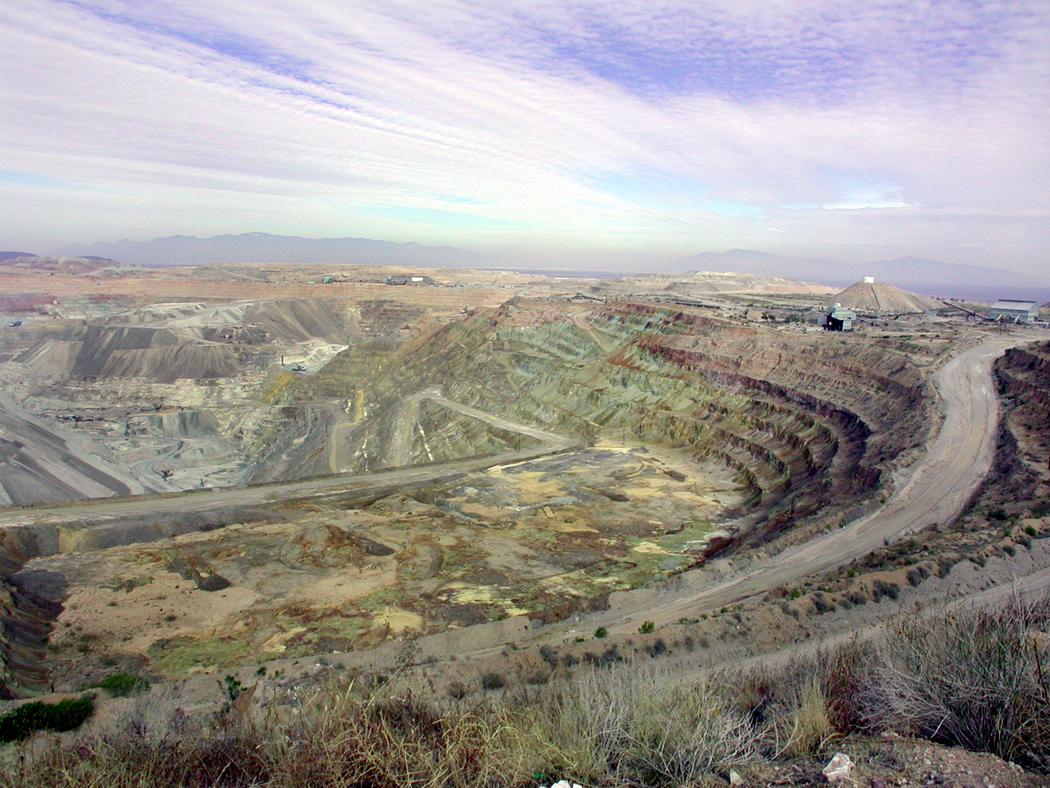
One thing that struck me, even the first time we drove through Arizona in 1980, was the prevalence of mountain ranges created by copper mines — the tailings piles that grew as large as the mountain ranges of New Jersey. They reach their Rocky Mountain stage further north, in the Miami-Claypool area, but you pass slightly newer and neater beside the roads as you head south from Tucson. The giant Asarco mines welcome visitors, and you can see a hole in the ground that makes you think someone is searching for Dante’s Inferno, having dug at least to the Malebolge. There are rings around the copper pit, just as Dante has his rings of Hell.Asarco mine 3

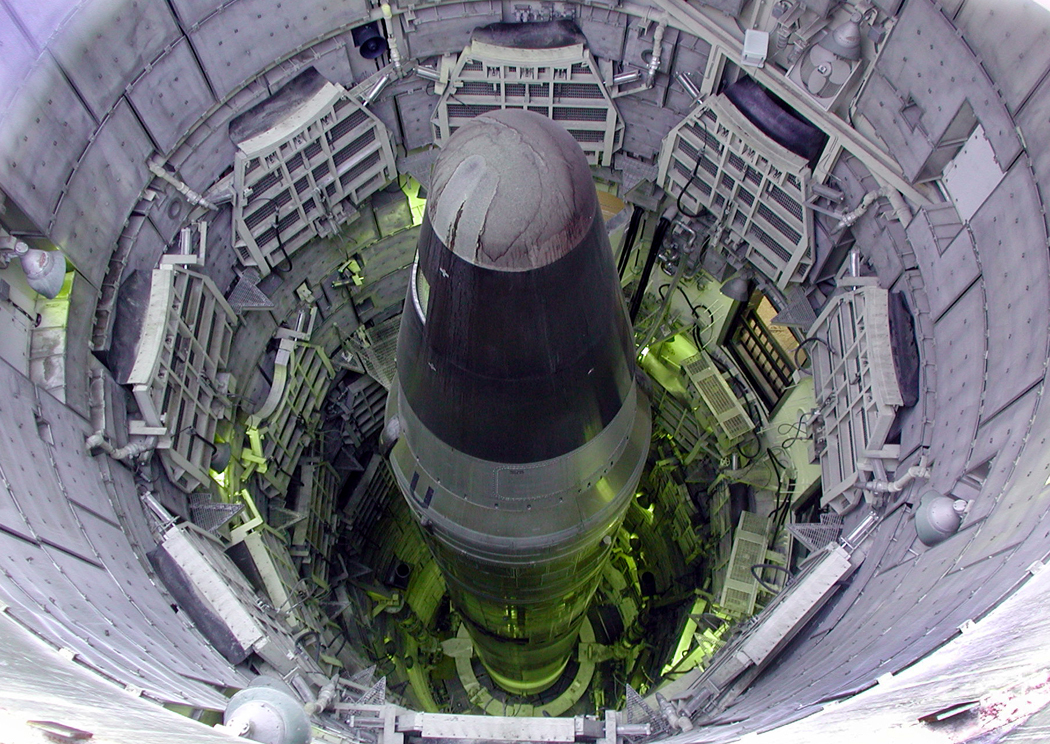
Perhaps a more literal hell is implied by the Titan Missile Museum next door, where you can see the implements of world destruction set out for you like a Disney attraction. Titan missile ArizFor those of us who grew up in the “duck-and-cover” 1950s, when nuclear annihilation seemed a palpable and immediate threat, the nose cone of the rocket seems a round pyramid of doom. Perhaps the mines are currently more immediate harbinger of doom, as the nuclear threat has stood down. For the moment.

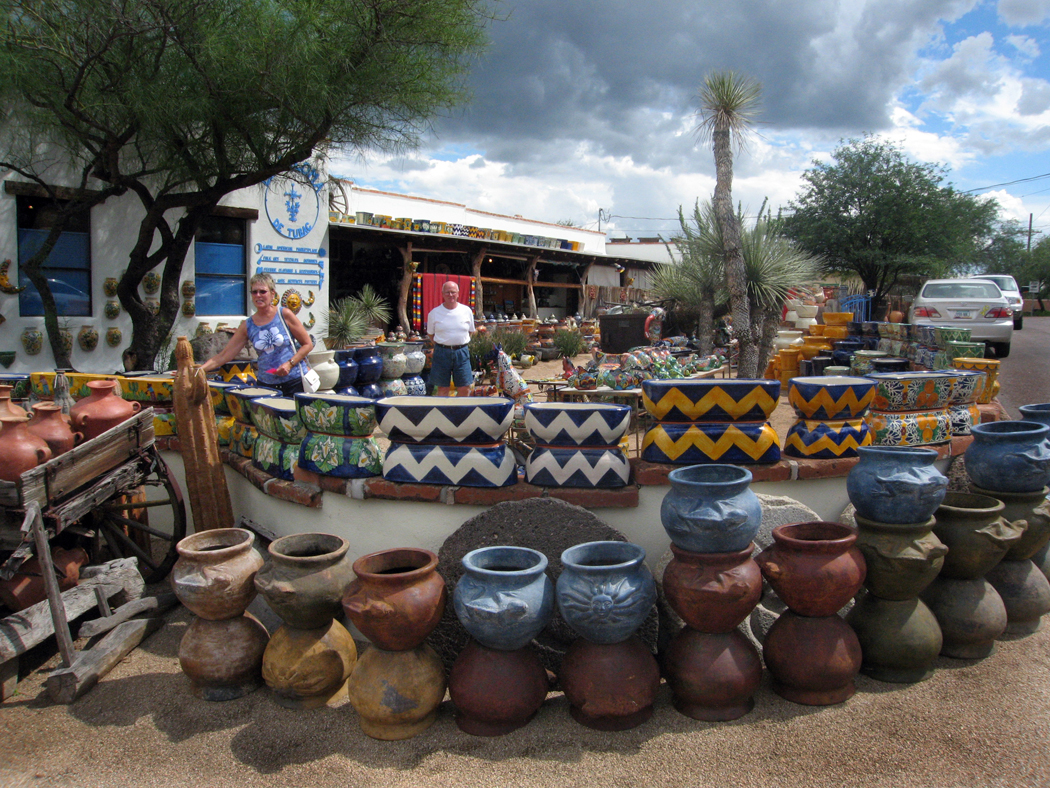
Tubac

Tubac

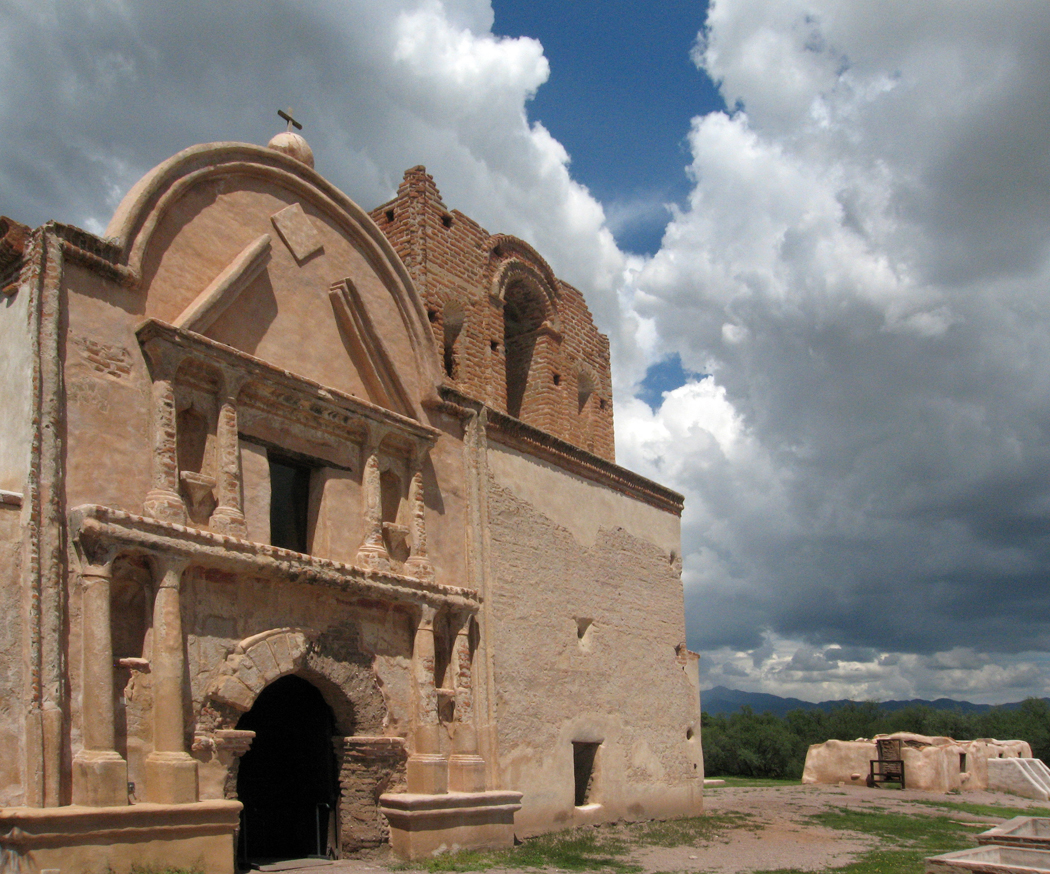
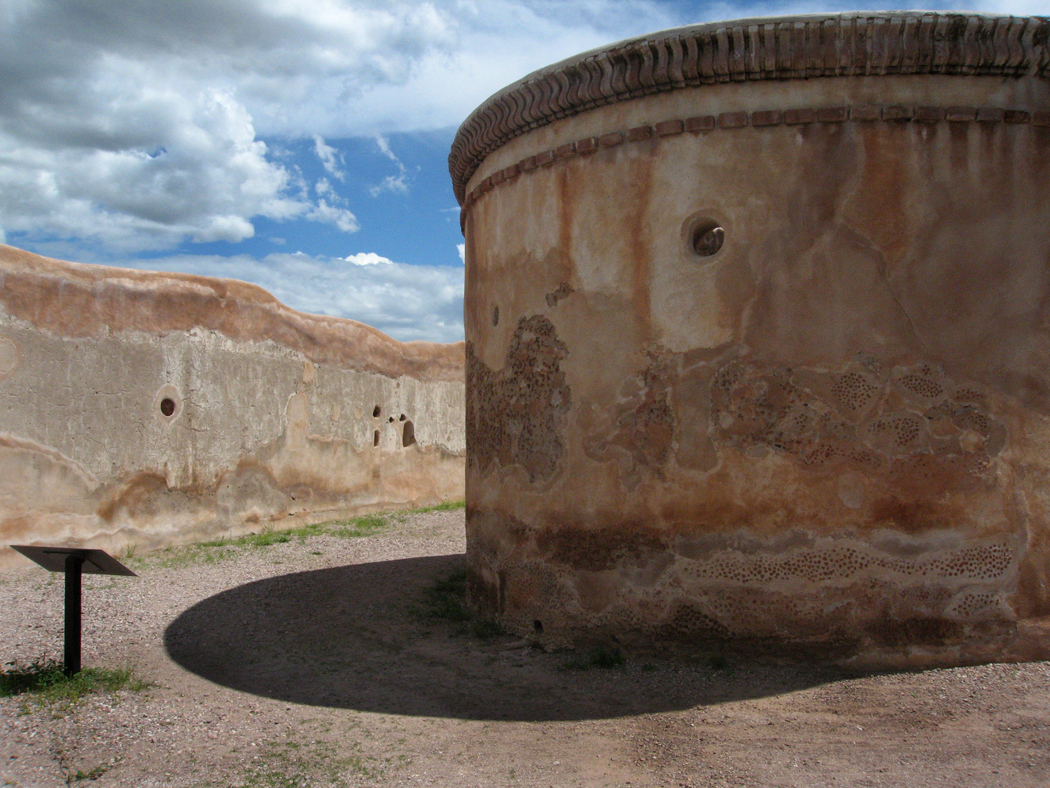
South of that, the traffic really dwindles, and you find the isolated and happy community of Tubac, an artists colony, and beyond that, the ruins of the Tumacacori Mission Church, with its adobe outbuildings and its recollection of the conversion of heathen Indios, whether they wanted it or not.

Tumacacori

Tumacacori

At Tumacacori, an ancient woman demonstrated the making of flour tortillas. At Mexican restaurants, I always specify corn tortillas, because the flour version seems insipid and pointless. But at her side, my wife tried patting out the masa triga and made a mess. The old lady made perfect circles and plopped them down on her comal, flipped them once and offered them for us to eat. The mission church has not lost its touch: I was converted. A fresh flour tortilla, hot off the griddle, is a joy and a wonder. It is the commercial flour tortillas that are tasteless wads of paste. This version was a gustatory revelation and I will never think poorly of the flour tortilla any more — although unless it is made for me immediately off the tin-plate stove over a fire of wood ash, I will continue to avoid the store-bought variety.Tumacacori baptistry

Down the road from Tumacacori, you used to be able to drive along back roads, dirt roads, through old farms and river beds. The drug wars have ended that. So many roads are blockaded now. Freedom of movement in Southern Arizona is severely curtailed. So, you might as well just drive on to Nogales and get a meal there.

Click any photo to enlarge

Click any photo to enlarge

Camelback from air

I have a love-hate relationship with Phoenix, Arizona. No, that’s too strong. I have a like-frown relationship. Living in its ever-expanding confines for an entire quarter of Arizona’s statehood, I never truly warmed up to it, the way one comes to love San Francisco, Seattle, New Orleans or Manhattan. There is a kind of numbing neutrality to Phoenix. It isn’t as bad as all that, but neither is there much to get excited about. It is a city with little personality.

Click any photograph to enlarge

Click any photograph to enlarge

I don’t mean that to sound too negative. There is much I miss. I loved my job; I can’t imagine being happier in employment than I was for most of my time at The Arizona Republic, or having better colleagues. When I retired, I didn’t so much leave the newspaper, as instead, the newspaper left me. It was going in directions that had less and less use for what I provided. It was time to go. But what happened to The Republic is true of newspapers all across the nation. It is journalism that left me.

Phoenix skyscraper

There are things I miss, besides the occasional meal at the Golden Greek or El Bravo.

OLYMPUS DIGITAL CAMERA

I sorely regretted leaving Ballet Arizona. By the time I left, ballet had become the art form I most loved. Ib Andersen had raised the local company up to a level that competed with the major troupes around the country, and even around the world. I miss the art museum and its staff (now, most of them are gone, too), I miss the symphony and the chamber music. I miss the lunches I shared with Phoenix Chorale’s Charles Bruffy. (Congratulations on yet another Emmy).
Phoenix Double sign

My wife and I have friends in the city and we miss them dearly.

Papago Buttes

But the city itself? Not so much. And here, I mean the whole metro area. It is hard to make any distinction between Phoenix, Glendale, Mesa, Scottsdale and Tempe, Chandler, Gilbert, Fountain Hills: It all turned into endless suburbia, 60 miles from east to west and 45 miles from north to south, and it continues to metastasize. The last time I drove south to Maricopa, it seemed like more of the same.

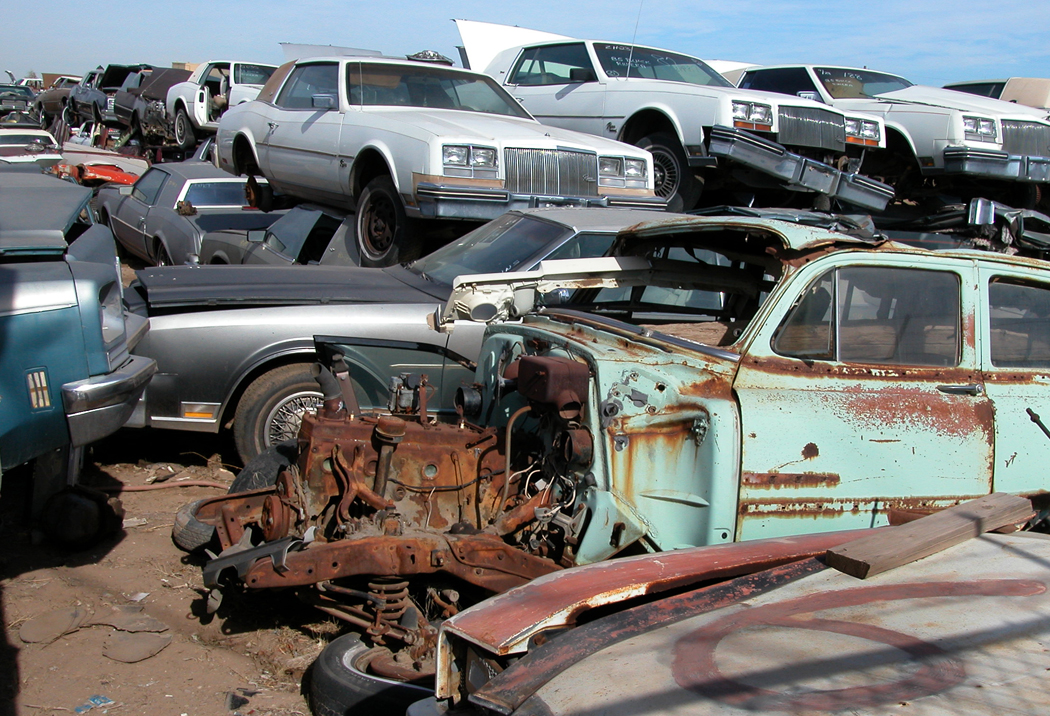
Phoenix car junkyard

The weather was brutal, the traffic brutish, the city politics banal (and state politics worse: delusional). New gated subdivisions gobbled up huge spreads of desert. Have you driven down Dynamite Road lately? Shopping malls, freeways, mobile-phone towers, endless Circle Ks and 7-Elevens, red-tile roofs, and stucco, stucco, stucco.

Phoenix washingtonia

But there were places I could retreat and find some character. South Phoenix, with its poor neighborhoods, houses with sun-warped wood and flaking paint, with its panaderias and tiendas. The gravel roads before they were chewed and digested into Macmansions; the old canals, not yet channelized and rinded with concrete; the farther expanses of the city limit where there are still working farms; and the old warehouses south of the railroad tracks. I like seeing the older stores painted garish colors, and the black-painted bars on windows and doors. My favorite Mexican food found at the hole-in-the-wall storefronts where the clients are all Hispanic and they still serve tongue and tripe, and where the frying is still done in lard. It isn’t so much that these things are old and I feel nostalgia, but rather that these things still have character, personality; they are not whitewashed into the great Osterized American culture. They battle the blandness of television and the chamber of commerce.

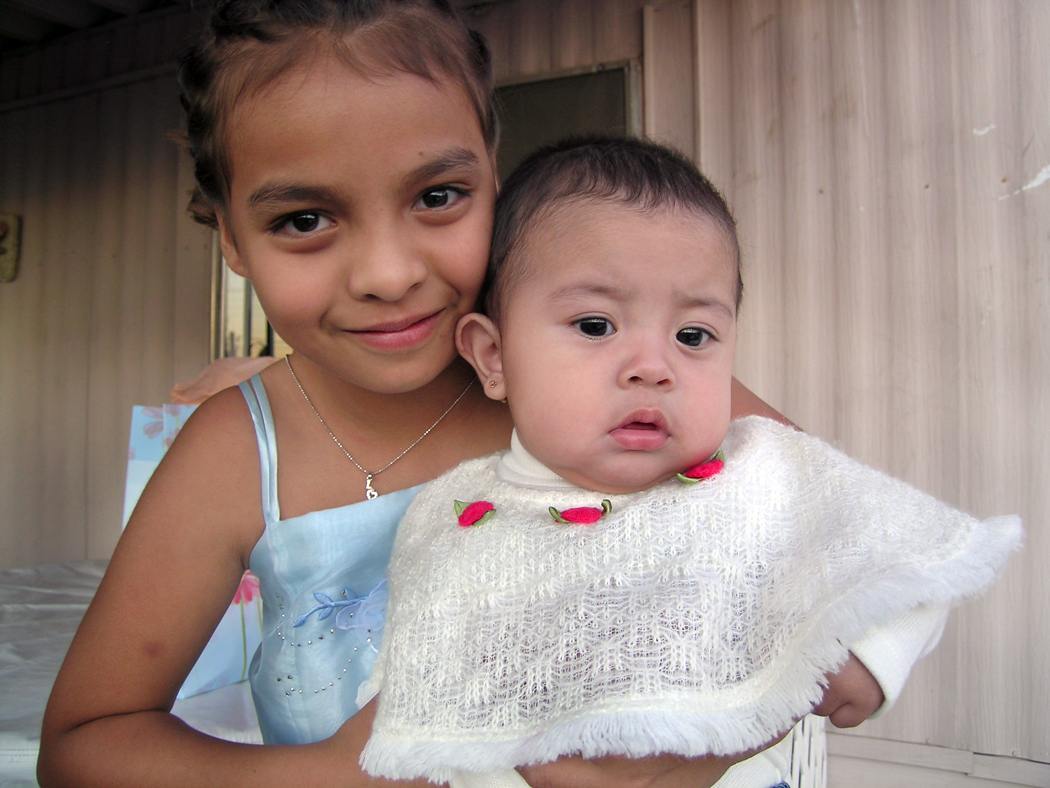
Maria's children

Maria’s children


In the next several blog entries, I plan to take a trip around the state, beginning in the Valley of the Sun, to see how much I can turn up of the lost and forgotten, the real flavor of the state, the part of it that I miss and wish I could experience all over again. I’ll move south through Tucson then west and north, traveling counter-clockwise around the state. Most of this virtual trip will be in photographs, with a few words stuck in here and there. They are the parts that to me feel alive and wriggling, even when abandoned or forgotten — the played out mines, the baked arroyos, the Native American ruins, the dusty places just outside of towns. This is the Arizona I miss when I remember my years there.

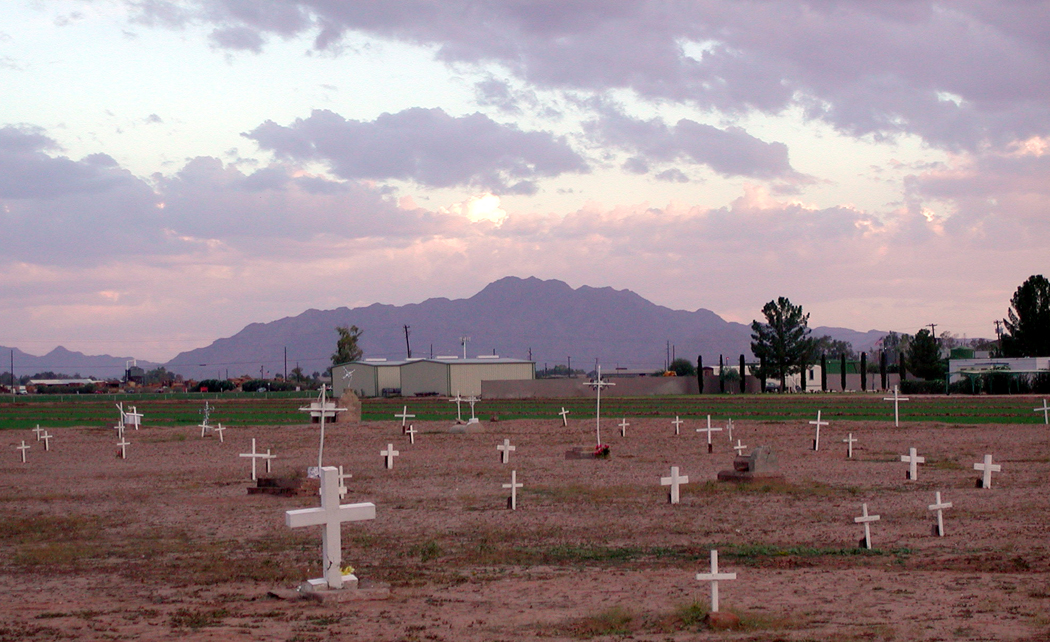
Goodyear Cemetery in Chandler

Goodyear Cemetery in Chandler


This Arizona is completely personal and subjective. But I suspect many of you harbor similar feelings, similar places in your psyches, whether it be in Ohio, Quebec, Idaho or Mazatlan. This is the Arizona that remains alive to me.

Here are some of those things and places:


South Phoenix

South Phoenix


Canal and farmland

Canal and farmland


Gila River south of Phoenix

Gila River south of Phoenix


Abandoned racetrack

Abandoned racetrack


Agricultural buildings west of Phoenix

Agricultural buildings west of Phoenix


Pueblo Grande

Pueblo Grande


Hiking around North Mountain

Hiking around North Mountain


Phoenix Santa Fe close up


Near Fredonia

Near Fredonia

During the 25 years I lived in Arizona, I saw pretty much every dusty corner of the state, either on assignment for my newspaper, or on my own. I came to love the state — warts and all. And it has warts: Arizona politics is dismaying, its inhabitants sometimes astonishingly parochial, its sense of itself as “special” endearing; I’ve lived in enough different places to know that they each think of themselves as special: You can outright choke on Seattle; North Carolina Public Television crowds out PBS programming with self-congratulatory programs on local history, local events, restaurants, the cult of barbecue, its exceptionally progressive foresight, and its sports heroes. The self-regard is truly cloying. Arizona hasn’t a patch on that, even counting Arizona Highways magazine.

Brewery Gulch, Bisbee

Brewery Gulch, Bisbee

And speaking of warts, the city of Phoenix is essentially Cleveland in the Desert: ugly with traffic, convenience stores and real-estate deals. But in Arizona, the land is essential: The desert is like nothing else.

Red Mesa, Navajo Reservation

Red Mesa, Navajo Reservation

Arizona has a particular difficulty because its image of itself is incredibly beautiful. It is the Grand Canyon State, and its landscape has filled more calendars and books than horsehair has filled sofa cushions. The Arizona Highways effect prettifies the state so to anyone with clear eyes, it is no longer recognizable. Arizona for most people is a fictional Arizona, a fantasy landscape drawn by John Ford’s Monument Valley, Ansel Adams’ Grand Canyon, or the “Tonto Rim” of Zane Grey. The landscape we mail out to the rest of the world is one of pristine wilderness and vast vistas. This is not, however, the Arizona I came to love. Quartzsite in the middle of winter is not part of this picture, neither is Apache Junction or Sacaton.

Morenci

Morenci

My Arizona has been worked over pretty thoroughly, by mining companies, by ranching conglomerates, by real-estate developers, by tract housing, road-building, tourist traps, warehouses and farm tractors. It is canals, cotton gins, interstates, gas stations and Circle-Ks. And since leaving the state four years ago for retirement in North Carolina, I have often grown homesick for my Arizona.Washingtonias gone to beard

I actually love the forgotten places, the abandoned garages on the abandoned Route 66 that parallels Interstate 40. I love the grade crossings by the trash dumps near Mobile; the painted concrete dinosaurs that advertise eateries and tourist spots; the gravel roads across dry washes; the busted-out Gillespie Dam, choked with willows; the mountains of junked cars in South Phoenix wrecking yards; the eroded bentonite hills north of Cameron; the worked-out copper pits in Ajo and Bisbee — great gaping holes in the earth. I’ve been everywhere from San Luis to the Four Corners, from Hoover Dam to the Slaughter Ranch. How can you not love seeing the white expanse of the Wilcox Playa from a distance, knowing that when you get there, you can visit the statue of Rex Allen and have some great barbecue from Rodney’s hole-in-the-wall?

Yuma

Yuma

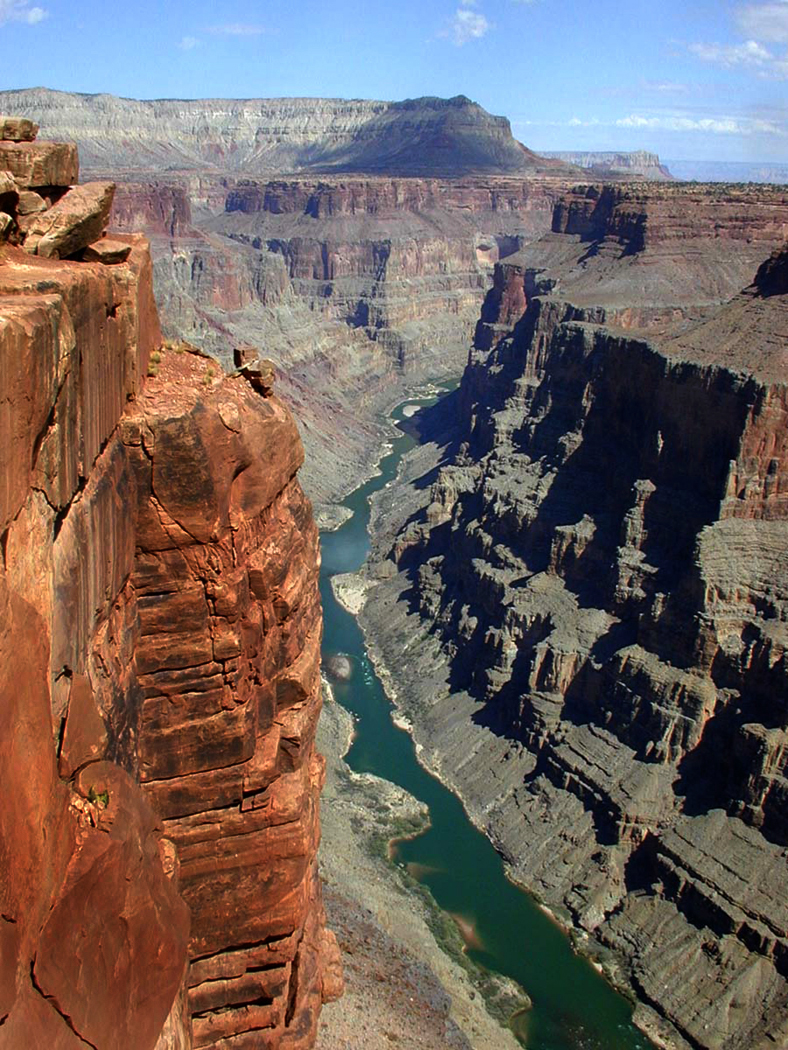
It isn’t that I don’t like the Grand Canyon. How can you not? But I love the North Rim, the 60-mile dirt road down to Toroweap, the beginning of the whole thing at Lees Ferry. Old apple trees and weathered wood buildings tell you about when old John Lee lived there and supervised the crossing of the Colorado River.

Coyote melons

Coyote melons

I began a few weeks ago collecting material for a potential book about this Arizona, as a kind of counterbalance to all the pretty-face calendar art that oozes from that quarter of the Southwest. Whether it ever actually turns into a book or not, I thought I might share a few of my images with my readers on the blog.

Roper Lake, Mt. Graham in storm

Roper Lake, Mt. Graham in storm

I have some 320 pictures filed for use in the book. I will post maybe 10 or 15 at a time for the blog. I hope they spark some of the same love for the real Arizona that I continue to feel from afar.

Tumacacori

Tumacacori

Click on any image to enlarge.

Morenci pit

Morenci pit

MapI have lived in the four corners of the U.S. I was born in the Northeast, lived in the South, the Southwest and the Pacific Northwest. And yet it is somehow the vast middle of the nation that most draws me to it.

In the Northeast, there are cities and woods, the Hudson River slicing up New York State, the “bare and bended arm” of Massachusetts jutting out into the cod-waters of the cold Atlantic. There are the great curved ridges of the Alleghenies forcing highways into what look like Golgi bodies on the gas-station maps. This is the land of salt-rust on the undercarriage of family cars; Of hillside cemeteries bordered by brick apartment buildings. Warehouse districts and tract housing; turnpikes and wharves; glacial till and the stone walls the till makes both possible and necessary — and the fallen ruins of those walls making forgotten property boundaries in second- and third-growth forests. Swimming holes from abandoned quarries and the ever-present nose dust of bus fumes.New York 3

I look back on these things and a wave of nostalgia warms me. Manhattan in the winter, with the Con-Ed grates pouring steam into the air; the periodic burst of warm air blowing up from the sidewalk as the subway train rumbles in the Stygian underground. People in vast tides walking with purpose up Fifth Avenue. The smell of coffee and pie at the Horn and Hardart.

But I left the Northeast at just about the same time as the Horn and Hardart began fading away. I moved to the South, where I became accustomed to slower talking, slower walking and human interactions that were not based on efficiency and gain. It was a land of pine trees grown for paper pulp, a coastline of sea oats and dunes on barrier islands, cities of fewer restaurants, and what there were served meatloaf and fried chicken. When I moved there, the single Chinese restaurant in Greensboro, N.C. pretty much restricted its menu to chop suey and egg foo yung with pot roast gravy.red maple

I have lived in the South now longer than I have lived anywhere else, although I have not been faithful, and have moved elsewhere, yet I seem always to return. There are pinxter flowers dripping with rain along the Appalachian Trail; there are bass-filled man-made lakes where small towns used to be; there are old lawyers in worn suits who meet every morning in the coffee shop to talk about the day’s events while sipping hot coffee cooled by pouring it out into its saucer slurp by slurp. When I moved to the South, the Klan was still common — in both senses of the word — and otherwise perfectly decent white folk made a sincere case for not changing things too precipitously. Every town had its black community, usually on the other side of the railroad tracks that had once provided the reason for the town’s existence and formed the terminator as clearly as if there were the lit and dark sides of the moon.

There were cotton warehouses and tobacco barns; men actually used spitoons — and if they didn’t have one, they might have an empty tin can into which to spit the brown excess saliva from their chaw. I know of one old reprobate who actually died when he passed out drunk and rolled off his couch, cutting his throat on the jagged edge of his spit can.

If, in the North, people had little time for each other, always in a rush to get somewhere and do something, in the South, everything revolved around relationships, around talking and with that talk establishing social rank and responsibility and anyone you knew, you also knew who their daddy was. People talked endlessly, about weather, business, politics, gossip, taxes, planting, hunting, dogs and church meetings. Even now, so many decades later, when I made my first visit to the local barber, one of the things he asked, making small talk, was what church did I go to. He wasn’t being nosy nor was he proselytizing, he was merely establishing a relationship.nc church jesus saves

A good deal has changed in the South since I first got there four decades ago. Accents that used to define hierarchy have begun flattening out: You can walk through whole blocks of Atlanta and hear the same language you might hear in Allentown, Pennsylvania. Fine dining is now possible if your city or town is now large enough. Your mayor has at least a 50-50 chance of being African-American. When I got there, every white Southerner was a Democrat; now, they are all Republicans.barista

I moved to Seattle in the late ’70s, before half of California swept north, and before every streetcorner had baristas pouring white swirls into the foam of a latte. The railroad switchers shunted cars from dock to dock along Alaskan Way where homeless men in dirty coats and black watchcaps clutched brown paper bags while sleeping in industrial doorways. The ferry moved out of its pier in the morning light to make its way to Winslow on Bainbridge Island or to Bremerton. Although it rained most days during the three non-summer seasons, it was mostly a drizzle and few people even thought it counted as rain and no one I saw ever carried an umbrella.

From my house on Phinney Ridge, across from the Woodland Park Zoo, you could see the snow-capped Olympic Mountains to the west and the snow-capped Cascade Mountains to the east. To the south was the biggest permanent, unmoving white cloud you ever saw — on those days you could actually see it for the weather — and it was called Mt. Rainier, which was pronounced, unlike the sovereign of Monaco, as if it described the precipitation in the Puget Sound: rainier. Certainly rainier than Arizona, where I moved later.Seattle docks

There was Olympia beer and Rainier beer, and I could hardly believe it to see pedestrians stop at the “don’t walk” lights, even at 2 in the morning when there were no cars on the road. No New Yorker would do that; I had friends who otherwise had a cavalier attitude toward authority who would stop me from jaywalking, as if the Stasi were keeping files.

When I got out of the city, the forests were populated with douglas fir and western redcedar. Nothing else. Endless miles of the stuff, climbing up the sides of mountain ranges and with downed logs greened over with moss, and the path a spongy loam under your feet.Hurricane Ridge, Olympic NP, Wash

I think that is what finally drove me to move back to the South: The sense of homesickness for a forest with scores, even hundreds of varieties of tree. The sameness of the Northwestern forest seemed unnatural to me, as if I shouldn’t be there.

There is much I loved in the Northwest. The moist air, the cool summer, the planked salmon and Ivar’s Acres of Clams. I knew a bunch of bicycle messengers, known as “Buckies,” and enjoyed the friendship they provided. There was a political progressiveness that was nearly universal; one could shop at the co-op grocery, the Public Market at Pike Place. Stop off at a bar and have a beer like a real person.Badger Creek Ariz

Finally, there is the American Southwest, as dry as Seattle was moist. One can see for 20 miles at a glance, taking in a meaningful quadrant of the earth circumference. The Southwest mean space. At least outside the city of Phoenix, where we settled — and we got out of the city as often as we could — the desert was intense, sharp and beautiful. Before a rain, the humidity made the creosote bushes smell like spicy cologne. The saguaro cactus stood vertical above the thorny undergrowth. Jack rabbits, roadrunners, the occasional javalina or rattlesnake darted in and out of view. The air was dry; sweat evaporated before you even knew it had escaped your pores. The sun bleached the landscape and radiated heat like an open oven door.

There were three different experiences of Arizona. The most common one was the urban experience of Phoenix.
My wife and I moved there because we had traveled summers across the country and thought it might be pleasant to live in the West for a few short years. I’m sure we were thinking of Flagstaff or Santa Fe. We wound up in Phoenix. We were thinking of having a little adobe house with a white picket fence and perhaps a butte in the background and a few pinto horses grazing in the pasture.  We wound up on Seventh Street, the busiest thoroughfare in the city, with traffic noise like endless surf crashing outside the house, and exhaust soot collecting in the cooling ducts of the house.

The street grid was punctuated by Circle Ks and 7-Elevens. The right-angle network of streets were broken in places by the eruption of mountains: Camelback, Squaw Peak, South Mountain. Enthusiasts climbed them to get a view of the city below, which spread out like a plaid tablecloth, divided into square patches. You could hardly get lost in this checkerboard of roads; you were either driving north-south or east-west, and the city’s mountains provided easy landmarks. You always knew where you were.camelback mountainSaguaro NP Ariz

Outside the city, the land was split between northern and southern Arizona. To the south, there were greasewood flats, saguaro cactus and stony mountains catching the sun late in the day to demarcate the rosy lit areas from the bluish shadows. Dry lake beds hovered in the distance, white salt pans, and the taller mountains caught snow in the winter.
To the north was the Colorado Plateau, Flagstaff, the Navajo and Hopi reservations and the Grand Canyon. The air was noticeably thinner and cleaner — no Phoenix, no Tucson to fill the valleys up with yellow smog. Roads unrolled in long ribbon streams ahead of you heading to the horizon bounded by mesas and buttes. The landscape painted tawny, ruddy, sooty, whitish and blue by streaks, the sky larger than you have seen it anywhere, and most likely uniform blue, only darker toward the zenith.

At First Mesa on the Hopi reservation, you can hardly tell the blocks of stone making up the hillside from the stone houses built atop. You drive endless miles across grassy plains to the next habitation. Streams are marked by slight empty depressions that only fill up in the rare rains that come, mainly in late summer as thunderstorms and mid-winter as constant frontal drizzles. They can become roiling mud rivers almost instantly. Cars will be washed away in the flow. You can always tell the newbies in the desert; they think they can drive through the flooded washes. They fill the nightly news and we see the cars floating downstream, their owners on the roof waiting for rescue.

We spent one Christmas day with friends in Walpi. We brought apples and oranges, coffee and sugar. They gave us cookies they were baking. It snowed on First Mesa; the fire in the stove heated the low stone house.

What you are never quite prepared for is the sense that the canyons are not, like mountains, something that rise from the level, but rather are gigantic holes in the ground you don’t see until you are right on top of them. The stratigraphy is a geological story that is told, part by part, as you move from one part of the state to another. The same layers, in the same order hundred of miles apart, although they might be covered by yet more layers in one place, and rest on the surface elsewhere. You could, like a good geologist, anthologize the landscape to tell a continuous saga.

When we left Arizona, we immediately became homesick for the Plateau and the desert. I cannot say, however, that we missed the city. I used to call it “Cleveland in the desert.” I loved my job there, and my colleagues and friends, and my wife loved her job and her colleagues and friends, but the city itself is rather charmless. The South called us back.

And so, we returned — for me it was my third homecoming. Now we live in the Blue Ridge Mountains of North Carolina and I am constantly amazed, as a Yankee, at just how open and friendly the people are — so much so, it sometimes creeps me out.

But as I was saying at the head of this periplus, I have lived and absorbed the people and land in the four corners of the country, but somehow, there is a gravitational pull to the middle I have always felt, to the place I have never managed to live, the vast gut of the continent.Chicago, Ill

For me, there are two emotionally resonant attractions to the middle. First, there is the rustbelt city, the factories, the immigrant populations, the train yards and highway junctions that all spoke of the industrious rise of the nation from the late 19th century through the Second World War. It is where so many of our great writers came from. It is the home of pirogis and deep fried ravioli, sausages and red cabbage. I have loved taking the train across the lower shores of the Great Lakes past Cleveland and Toledo to Chicago. There is a Midwest that is populated. What is not industry is farm. And there is corn and wheat, silos and tractors. The land tends to lie flat. You could play billiards on the ground in places in western Indiana.Joes Colo haystacks

But there is the second middle of the country that calls to me even more insistently: It is further west than the prairies; it is the Great Plains. Driving through North Dakota or Nebraska, eastern Colorado or eastern Montana — there you feel more than anyplace else in the 48 states that you live on a planet. On the coasts, it used to be proof of the roundness of the earth that you could see the ships and their masts slowly dip below the horizon; on the plains, you see the next grain elevator rise from the same horizon in front of you as you drive and later drop again behind you. You are always on the high point of a dome; the earth falls away from you in all directions. And on this dome, the grasses curl like whitecaps on the ocean.

It is this sense that Melville captures so well in his late story and poem (or is it poem and prose prologue) John Marr. “Blank stillness would for hours reign unbroken on this prairie. ‘It is the bed of a dried-up sea,’ said the companionless sailor — no geologist — to himself, musing at twilight upon the fixed undulations of that immense alluvial expanse bounded only by the horizon, and missing there the stir that, to alert eyes and ears, animates at all times the apparent solitudes of the deep.” The landscape between the Mississippi River and the Rocky Mountains  was “hooped round by a level rim, the prairie was to John Marr a reminder of ocean.”

There is little in this expanse that can count as a city. Much that seems uninhabited. Moving across the Dakotas and into Montana, you find that neighbors count their separation not by fences but by miles. The land rises and falls like sea swell, and from the top of any ridge, you can see the land spread off in grassy waves.

Why this landscape should call to me so seductively is a mystery, even to me. I have wondered if it is some atavistic genetic memory of the Indo-European origins in the Caucasus, the Trans-Oxiana, where the grass continues unabated for a thousand miles, that Scythian homeland of my peoples, or at least of my language.Pawnee Buttes 5

Or perhaps, even further back, it is the imprinted memory of the African savannah where even before the global diaspora, we hairless monkeys were born. Why should I feel a homesickness for the grasslands that I have never actually lived in, unless there be some tick in my chromosomes that was molded there?

Whatever the cause, I feel it strongly. I feel it also in Manitoba and Saskatchewan, and eastern Alberta. The grasses swirl in the breeze, like animated hair whorls on an infant’s head; you can see the breeze moving through the grass in waves, the way a man in a sailboat sees the fretting of the lake surface as the gust approaches.

I am old now, and it is unlikely that I will dot the center of a quincunx of habitations by finally moving to the continental center. I will stay fixed in the North Carolina mountains. The Northeast, Southeast, Southwest and Northwest are part of my past. The spindle around which they all turn will remain a psychic locus, not an actual one for me. And the gust that frets the water a hundred yards off is the final one.

goode mapWhen I was growing up — in the Antediluvian Age when everyone smoked Lucky Strikes and cars all had clutches and carburetors — the maps in my grade school rooms had 48 states on them.

Those classroom roll-down maps were beautiful to my young eyes — all that green, yellow and ruddy brown in wood engraving density. They are maps that have never been equalled, and I knew, looking at the map, pulled down in front of the black chalkboard, that I wanted to go to every one of those states and see if Colorado were really the color of chestnuts, if Florida were really Kelly green. It seemed so lush.

Over the years, I’ve gone to — and written about — all 48 contiguous United States, seven Canadian provinces, a couple of edgings into Mexico and a few places in Europe and Africa.

In each of the places I’ve been, there is a top sight to see, like the Grand Canyon in Arizona or Yellowstone in Wyoming. And I’ve loved them all.

But there are also smaller, less well-known places that have quietly become some of my favorites. I’m sure everyone has the same: places where something special happened, or that sum up the qualities of a state or region, or that just seem so relaxed and beautiful that they draw you back over and over.

For me, such places are often remote from normal tourism attractions. I am a sucker for unspoiled grasslands in the Great Plains, for alligator-filled swampland in the South, for backcountry roads in the Appalachians. Others may look for happy crowds to join, for music and dancing or roller coasters. My favorites, however, tend to be empty of people, silent and to provide long views over a significant arc of the planet.

So, here are a few of those places, listed state by state.

edmund pettus bridge

Alabama

If you want to learn about the Deep South and how much it has changed, you should visit Selma. It is where the great Civil Rights march of 1965 began, crossing the Edmund Pettus Bridge and heading on to the state capitol at Montgomery. If you think the battle is over, you should visit Selma and see, despite how far we have come, how distant is the horizon.

Badger Springs Road 1Arizona

Of course, the Grand Canyon is on our license plates, but almost any other square foot of the state is nearly as wonderful, from Hoover Dam to Douglas, from Four Corners to Yuma. But I have a special place in my heart for an obscure exit ramp from I-17 north of Phoenix. Badger Springs Road is a bit of largely undisturbed desert, with trails and cactus, and I can always pull off the highway and find a bit of peace and quiet.

Arkansas


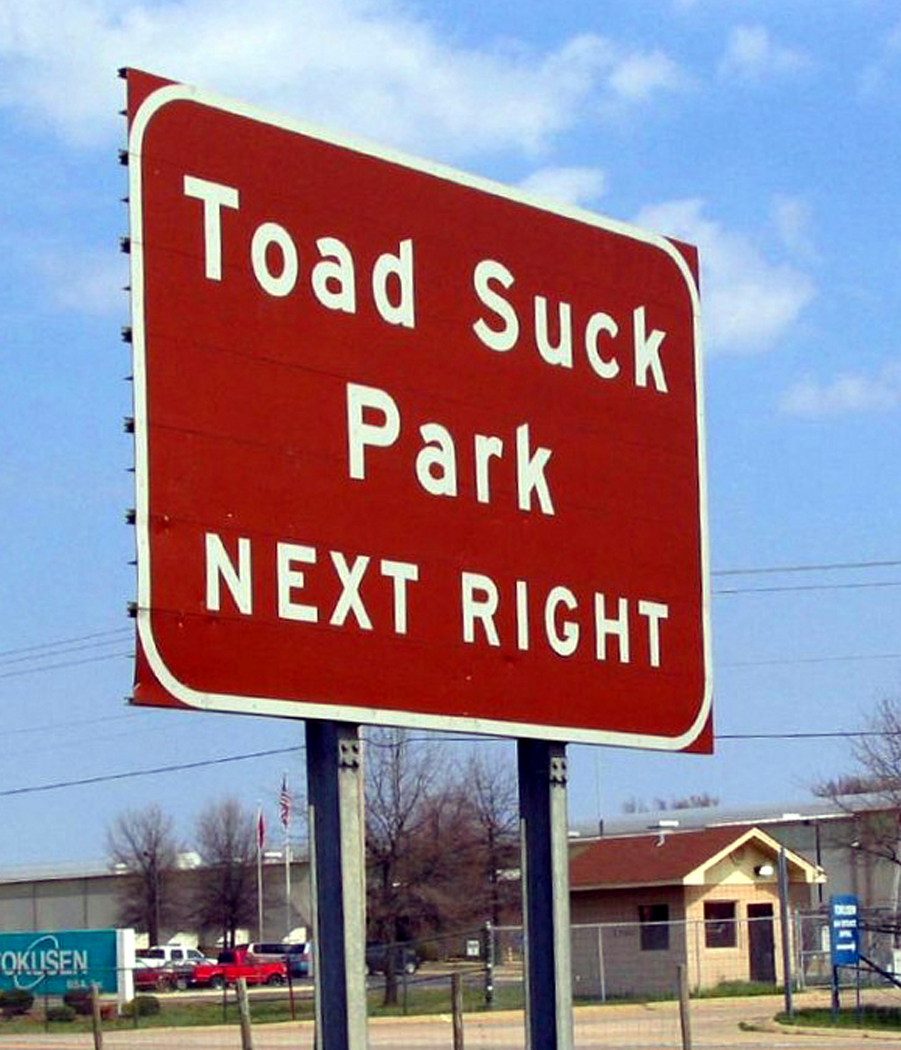
The state is rich in rural areas, craggy in the north, flat and muddy in the east through the Mississippi flood plain, steamy with hot springs toward the south. But the little town of Toad Suck in the center of the state seems even a little quieter, a little more remote than most, and is graced with a state park as well, along the Arkansas River. No hotels, but friendly people.

manzanar

Northern California

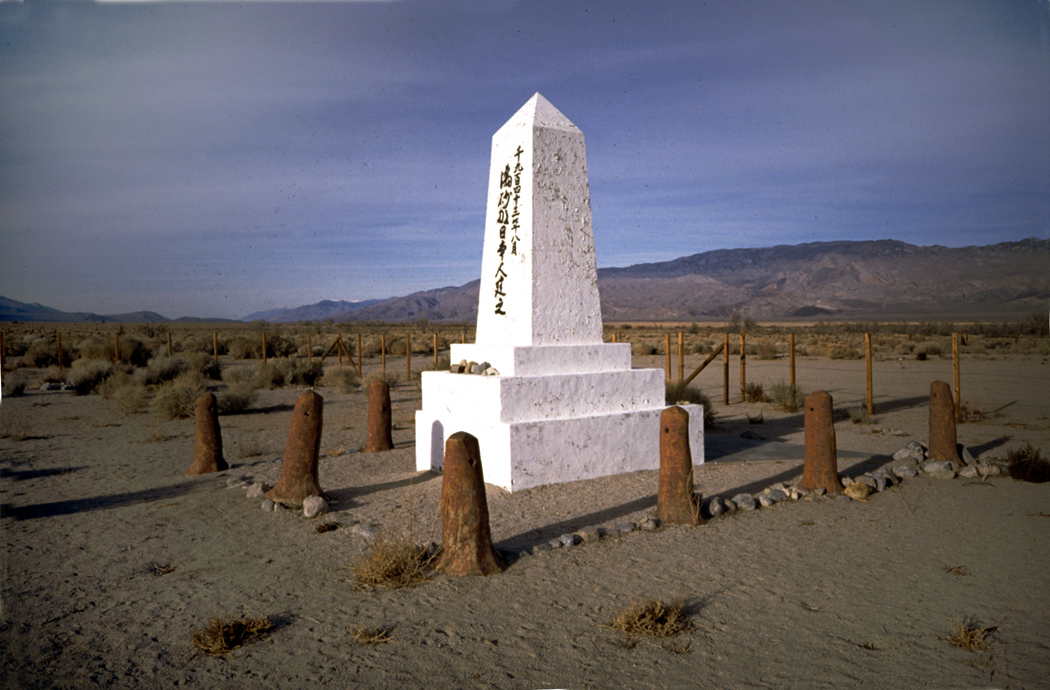
California is too rich; I have to split it in two. Even then, I could name a dozen places in each half: In the north — Tule Lake National Wildlife Reserve, Mono Lake on the eastern side of the Sierras, Lassen National Park, the Humboldt Redwoods, the tule marshes along the Sacramento River. But I keep coming back to Owens Valley, just below Mt. Whitney. From the soda-flat Owens Lake north to the ruins of the Manzanar Relocation Center — where Japanese-Americans were interned during World War II — the valley is both picturesque — the Alabama Hills where so many Western films were shot among the wonderland of rocks — and historic — in addition to the concentration camp, there is the sorry and violent tale of how a thirsty Los Angeles stole the valley’s water earlier in the century.

Southern California

East of San Diego is one of California’s most pristine deserts. It is called Anza-Borrego Desert State Park and it is the primordial home of all those Washington palm trees that line the streets of Phoenix. Borrego Springs is a surprisingly kempt little town in the middle of it, but the rest of the park usually seems as empty as a college campus during spring break.

Pawnee Buttes 5 copy

Colorado

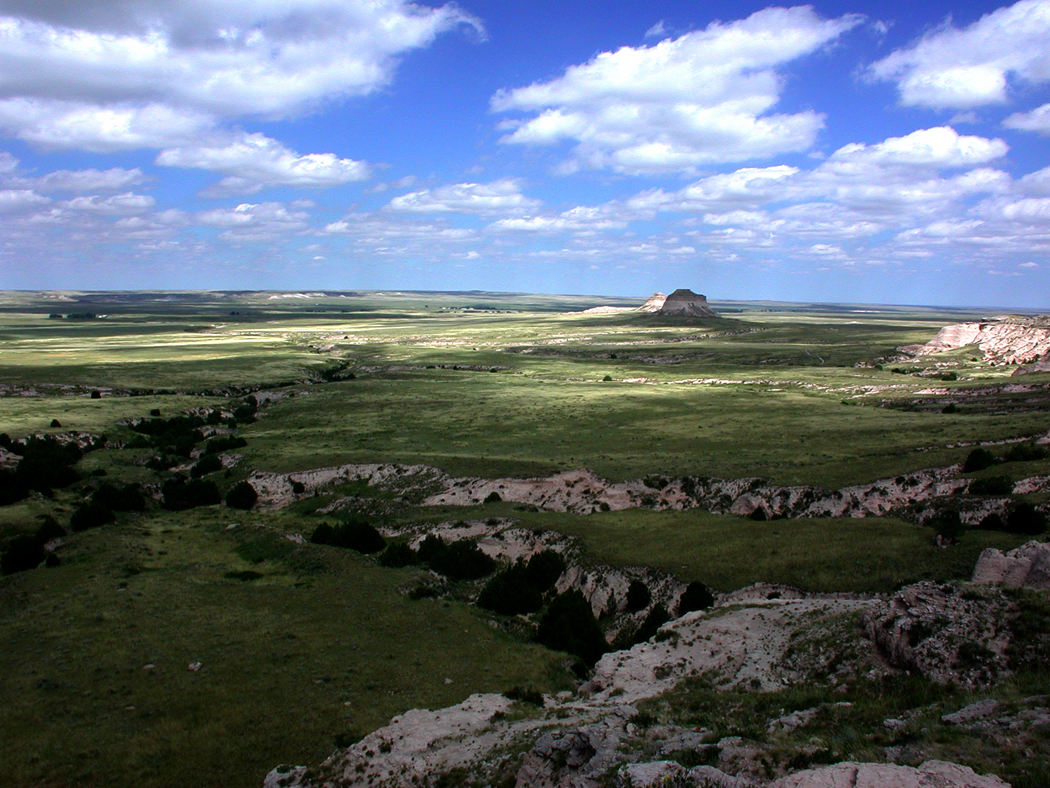
For most people, the state probably brings to mind skiing or expansion baseball, or an over-hyped beer, and certainly Colorado is best remembered for post-card mountains — all those “fourteeners” — but I love the Pawnee National Grasslands, one of the best places to get a sense of what the West was really about, what the Great American Desert was — not desert, but the Great Plains, vast, sweeping and grassy.

Connecticut

There is no more peaceful a river valley in the nation than the Housatonic north of New Milford. The Appalachian Trail winds along a portion of its banks. There are covered bridges, meadows and not too far away, near Cornwall, there is a large stand of virgin white pine, called the Cathedral Pines. U.S. 7 parallels the river most of the way.

Delaware

Delaware is a tiny state, and most people notice it, if at all, for the chemical plants and refineries that stick their bellowing smokestacks into the air, and the highways that pass through it on their way elsewhere, up over the twin Delaware Memorial Bridge. But there are the “Hooks” — Prime Hook and Bombay Hook national wildlife refuges, swampy and woodsy on the broad mouth of Delaware Bay.

Florida

If you cannot get enough of the Everglades, or if the national park is too crowded, head north off U.S. 41 on any of a dozen gravel roads into Big Cypress National Preserve. Or take the loop road to the south, through incredible cypress wetlands, with sagging Spanish moss and blackwater swamps.

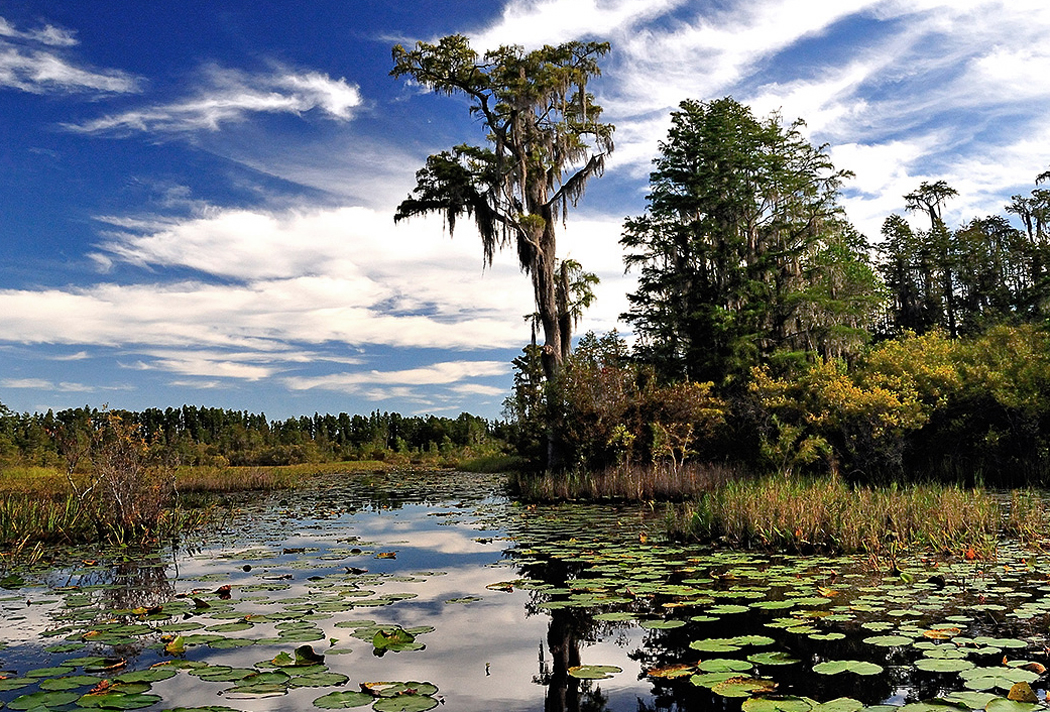
Okefenokee

Georgia

The Okefenokee is my favorite swamp. That’s saying a lot. I’ve seen more wildlife in it than in any other. Drive up Georgia 177 from Edith into the Stephen C. Foster State Park and rent a canoe. Paddle within inches of swimming alligators. Look into the trees for the snake birds — anhingas — with their darting necks and their wings spread out in the sun to dry.

Idaho

With its camas prairies, steep mountains and gaping canyons, the Nez Perce Indian Reservation is one of the most beautiful parts of this beautiful state. You can see the valley where Chief Joseph began his tragic 1,500-mile unsuccessful flight to freedom for his people in 1877.

Mississippi barge

Illinois

Chicago has big shoulders in the north, but down at the very bottom are the forlorn toes of Cairo, one of the most memorable of Mississippi River towns. It is aging, with peeling paint and boarded up storefronts, but you can feel in the humid air the history behind it. And you can see the conjoining of the muddy Mississippi water with the clearer, faster moving Ohio River. Boats and barges move past in the misty mornings like iron dreams.

Indiana

If you want to find the prototype of Disney’s “Main Street U.S.A.,” you couldn’t do better than to see Paoli, in the southern part of the state. No more perfect quiet little Middle-American village can be found. There are no tourists and nothing to do, but imagine what it must be like to live there, under the spreading chestnut trees just off the town square.

Iowa

Iowa is sometimes surreal: At the bottom of the bluffs of the Mississippi are cities filled with Victorian architecture. There are trees and vines. On top of the bluffs, there are endless rolling farms, with silos instead of trees, like some Grant Wood painting. The best of the cities is Dubuque, one of the greatest surprises of my travels. It is one of America’s most beautiful cities.

Kansas

If you want to get away from civilization, you can hardly do better than the middle of Kansas. Just north of Lebanon is the “Geographical Center of the Conterminous U.S.,” which is a highly qualified title to be proud of. But    you stand there, looking out over the grass and wonder, if they dropped the Big One here, would anyone hear it?

harlan county ky

Kentucky

   The state is mud in the west, limestone in the center and coal in the east. Among the stumpy, round-bumped mountains of coal-mining Harlan County and neighboring Letcher County, are some of the poorest homes and interesting people of the country.

atchafalaya thicket

Louisiana

It surprises even me, but one of my favorite places is along the Interstate. For 20 miles, I-10 rises on piers over the Atchafalaya Swamp. Take an exit into the dark woods and drive along the river into old, mossy river towns, built where the terra is not so firma. Even the pavement seems squishy beneath your feet.

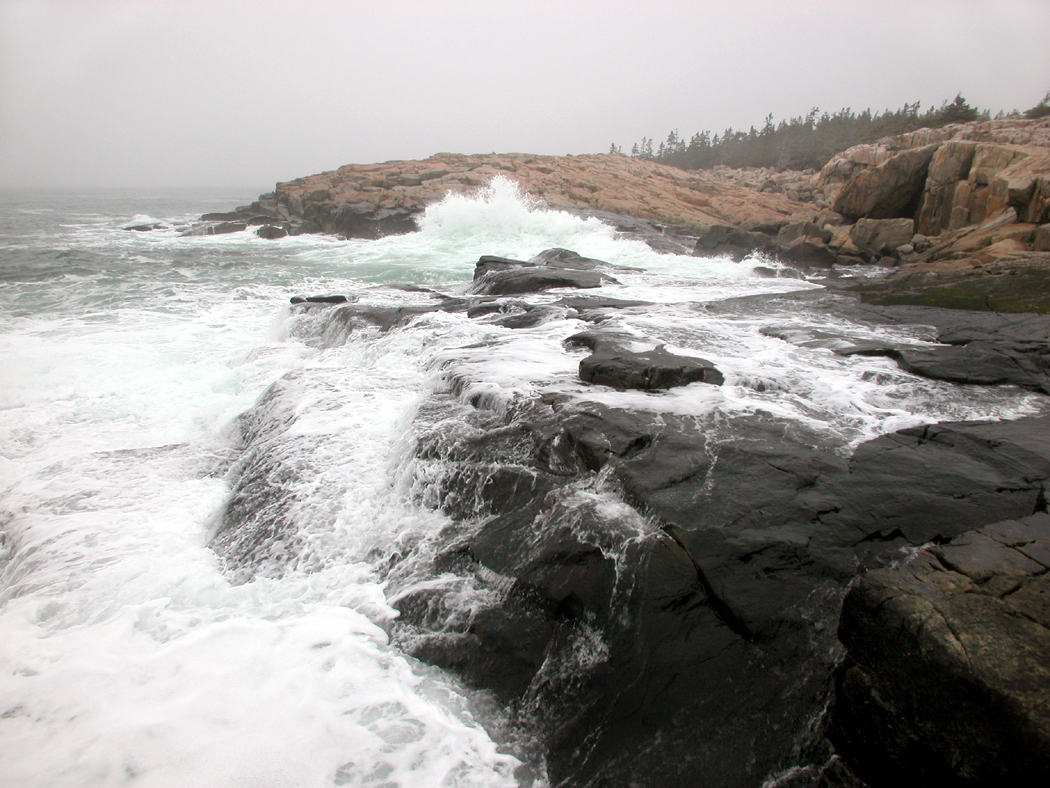
Schoodicwaves2x

Maine

Everybody heads to Bar Harbor, where the T-shirt shops and frozen yogurt stores are chock-a-block. Pass on that and head to Schoodic Point further north. Also part of Acadia National Park, it is one of the ruggedest, rockiest parts of the rocky Maine coast.

Maryland

Antietam National Battlefield, near Sharpsburg, is the most emotional Civil War site I have visited. Every aspect of the fight, and all the blood and bullet-holes, seem spread out graphically, and the spirits of the dead and suffering seem almost palpable at the sunken road called Bloody Lane.

Greylock Mt from Melville home Mass

Massachusetts

Arrowhead is the one-time home of Herman Melville in Pittsfield. The house is actually a character in many of his stories, and you can look out the second-floor window of his study, where he wrote Moby Dick, and see the saddle-back peak of Mt. Greylock to the north, “Charlemagne among his peers.”

Michigan

The Upper Peninsula is a big place, but everywhere you turn, there are forests, lakes and rivers, including Papa Hemingway’s Big Two-Hearted River. It’s hard to pick a single place, but there is always the drive on U.S. 2 along the southern shore of the peninsula along Lake Michigan.

Minnesota

A river doesn’t really start from a single source, but the agreed fiction is that the Mississippi begins at Lake Itasca, southwest of Bemidji. The lake is not that large, by Minnesota standards, and seems quite placid. The “father of waters” begins at a reedy little outlet that you can step across and brag you crossed the Mississippi on foot.

Mississippi

The blues began in the Mississippi Delta, and they are still played in the shabby juke joints of Clarksdale, one of those old, cracked-concrete, grass-in-the-railroad-ties, dying-downtown Deep South county seats. Everybody you see, sitting on their porch fronts, seems more human, more profound. Maybe it’s the blues.

Missouri

The Ozark Mountains can be beautiful, with lichen-covered limestone and rivers that disappear underground. Like at Big Spring State Park on the Current River, where the river comes gushing back out of the rock like a fountain.

bear paw surrender site

Montana

Chief Joseph began his three-and-a-half month trek in 1877 in Idaho, he ended it on the flat, grassy, empty plains of northern Montana, at a place called the Chief Joseph Battlefield near the Bears Paw Mountains, only 40 miles from the safety his Nez Perce Indians sought in Canada. He was captured by the U.S. Army, and promised “From where the sun now stands, I will fight no more forever.”

bailey yard nebraska

Nebraska

People look at me funny when I tell them that Nebraska is probably my favorite state to visit. The sand hills, the puny “national forest,” the Platte River and Scotts Bluff — they all seem unbearably windblown and lonesome. I love them all, but in North Platte, you cannot feel alone at the biggest railroad freight yard in the country. You can watch trains all day.

Nevada

If Nebraska is my favorite state, Nevada is probably my least favorite. It is empty, true, but its emptiness seems hard and thoughtless, like a biker at a roadside bar and casino. But I cannot deny the beauty of such places as Big Smoke Valley, between the Toiyabe and Toquima mountains, and the wide sagebrush plains where you don’t see a car for hours, but maybe a dozen dusty pickups.

New Hampshire

The Kancamagus Highway is one of the most beautiful drives in the country, winding through the White Mountains along the Swift River. It goes from Lincoln to Passaconaway and passes some stunning stony waterfalls.

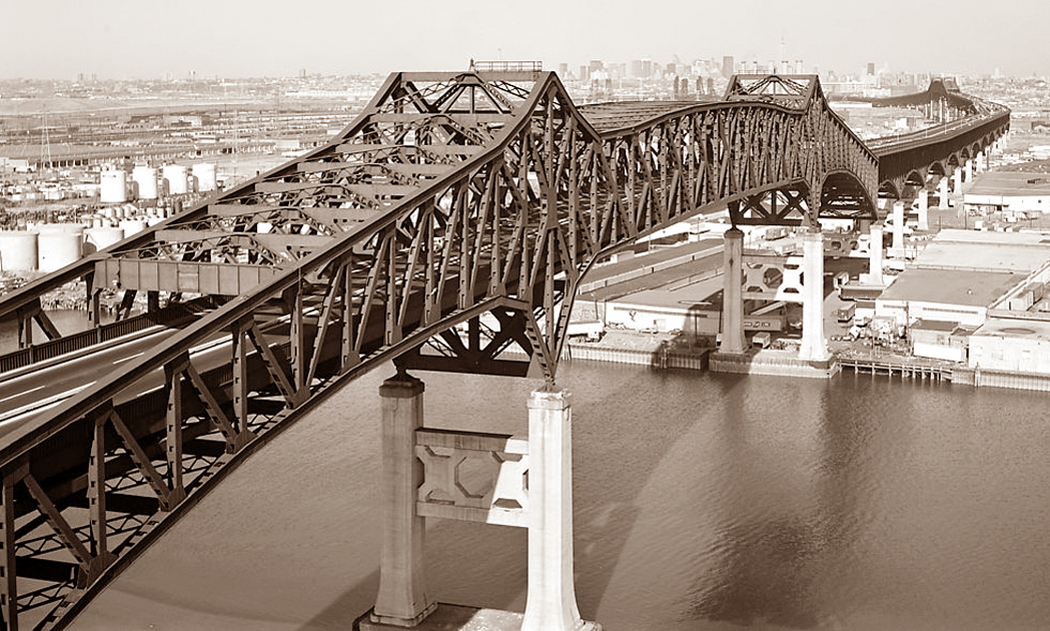
pulaski skyway copy

New Jersey

This is the state where I grew up. I came to despise the suburban banality of most of the state, but I loved two things: the northwest corner, with its minuscule mountains and bucolic forests; and most of all, the industrial corridor of the Jersey Turnpike, with its refineries, chemical plants and the always-beautiful Pulaski Skyway.

New Mexico

At the top of the Sacramento Mountains, in the Lincoln National Forest is a place called Cloudcroft. There is great camping, wild animals and — usually — clean air that is so clear, it could cut diamonds.

Bear Mtn Bridge

New York

New York offers more than any other single state except California. There are dozens of favorite sites, from Montauk Point to Niagara Falls. But I will always have a special affection for Harriman State Park, along the Hudson River, and Bear Mountain, that looks down at the gorge, just south of West Point and its military academy. Seven Lakes Drive, through the park, is what nature in the East is all about.

Ashe County road, creek &dogwoo

North Carolina

No question here: Ashe County, tucked up in the northwest part of the state, above the Blue Ridge, is away from the normal tourist loop, but more beautiful than any other place north of the Smoky Mountains. Any gravelly back road will take you to something surprising and there is the New River to canoe down.

Sunflowers Zap North Dakota

North Dakota

It hardly counts for anything, and there is no real reason to visit, but I cannot get enough of Zap, a tiny crossroads, where the roads don’t go anywhere. Between Beulah and Golden Valley, Zap sits among the rising and dropping swell of the grasslands, with the occasional pond for cattle to drink from.

Virginia Kendall SP, Ohio 3 copy

Ohio

Just south of Cleveland, there is a small bit of woods and rock called Virginia Kendall Park. It is right next to the larger Cuyahoga Valley National Recreation Area, and benefits from more people going there than here. There is a rocky bluff in the middle of the park and echoing voices in the forest among the leaf litter.

Oklahoma

One of the worst massacres of the so-called Indian Wars took place just outside of Cheyenne, along the Washita River. The site is now nothing but grass, a line of trees along the water, and some outcroppings of rock. But the surrounding Black Kettle National Grasslands can give you a real sense of what the land looked like 121 years ago.

Columbia River Gorge Oregon-Washington

Oregon

The Columbia River Gorge is one of the scenic wonders of America, and one of the most scenic drives is along the old, outmoded Columbia River Gorge Scenic Highway, which rises up the mountainside above the interstate highway, and takes you through more waterfalls than any comparable stretch of road outside Hawaii.

falling water

Pennsylvania

The second most famous house in America — after the White House — is probably Frank Lloyd Wright’s Fallingwater, a vacation home he designed for Pittsburgh’s wealthy Kaufman family beginning in 1934. It is also one of the most beautiful buildings in the country, sitting literally atop a waterfall and jutting out over the small forest glen.

Rhode Island

If you’re on the A-list, you’ll naturally gravitate to Newport and its extravagant mansions. I’m not on that list; I prefer the more humble Conanicut Island, where real people live. It sits in the middle of Narragansett Bay and gives you a good sense of what life on the bay is like.

South Carolina

Myrtle Beach gets all the traffic and spring-breakers, but Huntington Beach, 10 miles further south along Murrell’s Inlet, is the better place to be. With Huntington Gardens just across the street, with all those animal sculptures of Anna Hyatt Huntington, and a fresh-water alligator pond next to the salt marsh, Huntington Beach is a great — a great — place for seeing birds.

pine ridge rez

South Dakota

The Pine Ridge Indian Reservation may be poor, but it is beautiful. And as with many places noted for its poverty, it is very real. The people take the time to talk to you and there is history at every turn in the road — not all of it very comfortable for an Anglo to remember.

Tennessee

Most of the crowds at Great Smoky Mountains National Park gather along U.S. 441 across the crest of the range, or in Cades Cove in the southwest of the park. But one of the great drives, and less crowded, is up the Little River Road through the back side of the park. It follows the cascading Little River most of the way, and finds its way back to the visitors center at Sugarlands.

lbj ranch grandparentshouse

Texas

Even Texans will tell you the center of their state is the best part: The Texas Hill Country is an oasis in the middle of a state that sometimes seems like nothing more than the world’s largest vacant lot. And the best part of the Hill Country is found at the LBJ Ranch near Johnson City. It is no wonder that our 36th president loved his ranch so much. It is a jewel in a perfect setting.

Utah

Is there a square inch of the state that doesn’t deserve to be a national park? I haven’t found it. But one of the most overlooked gems is the ride along Utah 128 from Moab to Cisco. Through most of its route, the road seems to be the one you would imagine at the bottom of the Grand Canyon. Well, perhaps that exaggerates it a wee bit. But it is special.

coolidge plymouth

Vermont

Near Plymouth is the birthplace and homestead of Calvin Coolidge, who has recently lost his title as the president we made the most jokes about. In fact, Silent Cal was a smart cookie and not at all the buffoon stand-up comics make him out to be. He was raised in a tiny Yankee village that is preserved as a state park.

Monticello Entrance Hall copy

Virginia

Virginia is another state that seems to have more than its fair share of special places. Perhaps it’s history, perhaps geography, but almost anywhere you turn, there is something that will draw you back over and over. Still, there is something special about Thomas Jefferson’s mountaintop home, Monticello, a monument to just how profoundly beautiful a little nuttiness can be. The Age of Reason meets Henry Thoreau.

Washington

Eastern Washington is largely a blank spot in America’s consciousness. Seattle, the Olympics, the Cascades, Mt. Rainier — they are all in the west. But there is hardly an odder or more peculiar and spooky landscape on Earth than what is called the Channeled Scablands east of the Cascades. The Grand Coulee Dam blocks the Columbia River there, where a prehistoric flood scraped the earth clean for hundreds of miles.

West Virginia

The Hawks Nest, on U.S. 60 between Gauley Bridge and Ansted, looks out over the deep declivity of the New River Gorge and is one of the great scenic views of the eastern U.S.

Frosty dawn Wisconsin

Wisconsin

Southern Wisconsin has many treasures, including the Mustard Museum in Mt. Horeb, and the world’s largest six-pack of beer at La Crosse, but nothing can beat the genuine zaniness of the Dickeyville Grotto, a religious site in Dickeyville created out of broken bottles, seashells, stones and broken crockery. It is one of the great “outsider art” sites, and don’t miss the tribute to Columbus.

Wyoming

What’s the highest, most alpine road in America that actually goes somewhere? Undoubtedly, it is the Bear Tooth Highway, U.S. 212 from Red Lodge, Mont., to Yellowstone National Park. It climbs up over Bear Tooth Pass at 10,940 feet and provides more long Rocky Mountain views than any other road. Look out for the marmots.


toroweap 6I’ve been to the Grand Canyon enough times that I couldn’t accurately count.

But sometimes familiarity makes us lose the magic. If I’ve been to Mather Point once, I’ve been a dozen times, at all hours of the day. And while it is still beautiful, still breathtaking, there is something missing — that virgin sense of seeing it for the first time.arizona highways magazine cover

This is replaced by the proxy pleasure of watching someone else see it for the first time, but now I’ve had even that vicarious fun often enough that I know what to expect.

But there are other places to see the canyon besides the official viewpoints of the National Park Service.

One of my first images of the Grand Canyon came when I was a child in the Christmas edition of Arizona Highways magazine, which was once a year available on the magazine racks in New Jersey. One of the pictures in it was a stunning photograph of the Canyon from Toroweap Overlook. I never forgot that name, it seemed so odd — although I don’t know why an Indian name should seem exotic to a Jersey boy living between Hackensack and Ho-Ho-Kus.toroweap 15

Nevertheless, I always wanted to go to Toroweap, to see that vertical panorama, the 3,000-foot drop to the river.

The overlook is reached by 61 miles of dirt road. And those miles start from a point 9 miles west of Fredonia, Arizona, which is already as remote as it is possible to be in the state. On the Arizona Strip between the Canyon and Utah, Fredonia is a little town you pass through on the way to Kanab, which is no Chicago either.

Fredonia is 120 miles from the nearest Arizona town of any significance, Flagstaff, through the Navajo Indian Reservation and across the northern margin of the state skirting the Vermilion Cliffs. It is so remote that when you pass the turn off for the Grand Canyon North Rim, you still have to press on into the wilderness to get to Fredonia.toroweap 9

How remote is it? Well, it is technically considered frontier. Any place with fewer than two people per square mile is officially called frontier, said the ranger at Pipe Spring National Monument, which is also in this neck of the woods.

The Arizona Strip easily qualifies. Arizona, for instance, has a population density of about 50 people per square mile. When you subtract the population center of Fredonia, with its 2100 people, the rest of the Strip checks in with .014 people per square mile. That’s fewer than 3 people per 20 square miles.

That is the official definition of empty.toroweap 7

toroweap 17Well, a little past the sign that reads “Six Mile Village, 3 miles” you find a dirt-road turn off with a sign to Toroweap Overlook. It says, “Toroweap Overlook, 61 miles.”

At first, you feel rather confident. Anyone who regularly drives the dirt and gravel back roads in this state will be lulled into a false sense of security.

The first 20 miles or so are pretty flat, pretty well kept up and surprisingly civilized. You can do a comfortable 50 miles an hour if you don’t mind kicking up a few stones and hearing them clatter against your undercarriage.toroweap 10

But then, after crossing the Antelope Valley, you have to climb the first small plateau and the road begins to wind and narrow. Patches of sand appear in the hollows of the land and you have to slow down or risk losing control of your car.

Yes, I said car. Every guide book I checked out said the trip can be made in a passenger car. And since I am an intrepid risker of my car, I thought that this sounds like a piece of cake. I have driven my car through mountainside cow pastures, through North Carolina woods with no roads, twisting between the trees like a Daniel Boone in a Chevy. I have taken my car on the 30 miles of washboard someone jokingly called a road on the far side of Death Valley from the highway.

I can go anywhere.toroweap 8

But the road to Toroweap became hinkier. About 45 miles in, just after the turn-off for the road to Mt. Trumbull, the road gets questionable. And I mean, like I question that it deserves the name road at all.

Since I was two-thirds of the way to my longed for magic dream, I pushed on.

After all, I am the man who drove my car across Thompson Wash to the north of Canyonlands National Park in Utah. I am the man who keeps an entrenching tool and a Hudson Bay ax in the trunk at all times in case I need to dig out of the sand and chop down brush to thrust under the tires for some purchase.toroweap 13

There were some sand pans along the way, where your tires no longer go where you point them and your careen through the powder like a raft going downstream. The steering wheel becomes a tiller and you just try to keep pointed forward. But if you get up a head of steam going into the sand, you can more or less bull your way through.toroweap 14

But after the Tuweep Ranger Station, where you enter the national park lands, it started getting tricky. I had had some touchy moments in the sand, but nothing I didn’t think I could handle in my Pontiac Grand Am. But in the final eight miles from there to the overlook, the road gets positively grim. The sand — I call it sand, but it is really a fine, pulverized powder that sits axle-deep in the roadway — had previously been in recognizable pans, small patches of up to 100 feet in extent. But along the Toroweap Valley, there is a stretch of about a quarter mile of unrelieved sand.toroweap 4

As I was driving along — careening, really — I came upon the ranger in a road grader smoothing the roadbed. He should have saved his effort. The grader was smoothing off the top of the sand, but that didn’t make it any easier to plow through. In fact, the ruts provided better traction for the tires, as long as the high sand in between didn’t contain any large rocks waiting to score the bottom metal of the car.

With the sand passed, the road got narrower and rockier. The rocks were bumpy and you had to take them slowly, especially around the tight curves up and down the canyon, but they were negotiable. The final three miles slowed me down to a pace of between 5 and 10 mph, but I didn’t mind so much, since at least I knew the road wouldn’t swallow my tires.

At the end, Toroweap Overlook was a small rocky parking lot with a port-o-let to one side and a giant hole in the ground to the other.toroweap 2

They view was spectacular and the rawness of the experience made the South Rim look positively urban. There are no guard rails, no interpretive signs, no ranger walks, just an edge of rock with a vertical drop down to the river of three-fifths of a mile. The canyon at Toroweap is very narrow — it is about a mile to the southern rim across the gorge, and directly below, you can hear the roar of the rapids.toroweap 11

Two German couples were there looking down the hole and taking pictures of each other on the ledge. One of the men, seeing my once-bright red sedan now a uniform dun of dust — and comparing it with their two high-water SUVs, came over to me and asked me which route I had taken. When I told him, the looked at me like I was crazy, laughed and said, “In that car? How did you do it?”toroweap 3

And, you know, I’m not completely sure myself. But I knew that ahead of my was another 61 miles of the same thing just to get out again.toroweap 1

So, this is a warning to you. Don’t believe everything you read in a guidebook.

Yes, it is possible to get to Toroweap in your car, if you have the gumption.

But don’t expect any yellow brick road.toroweap 16


01 Cholla Organ Pipe Cactus NP Ariz
I miss the desert.

02 Ocotillo Organ Pipe Cactus NP ArizThe gravel, the dust, the prickles, the skin-shriveling heat, the raking shadows, the beige mountains turned pinkish in the afternoon, the buzzards hanging overhead, the greasewood smelling like aftershave in the rain.03 Organ Pipe Cactus Diana pair 3

When I lived in Arizona, I lived in the city; I don’t miss the city. I used to call Phoenix “Cleveland in the desert,” but aside from the scorch and desiccation, the desert doesn’t make itself much known in the cities of Arizona. For that, you have to leave the gridlock of reticulated and decussated streets and get out to where the dust devils spin and the owls burrow. 04 Cholla close Organ Pipe Cactus NP Ariz
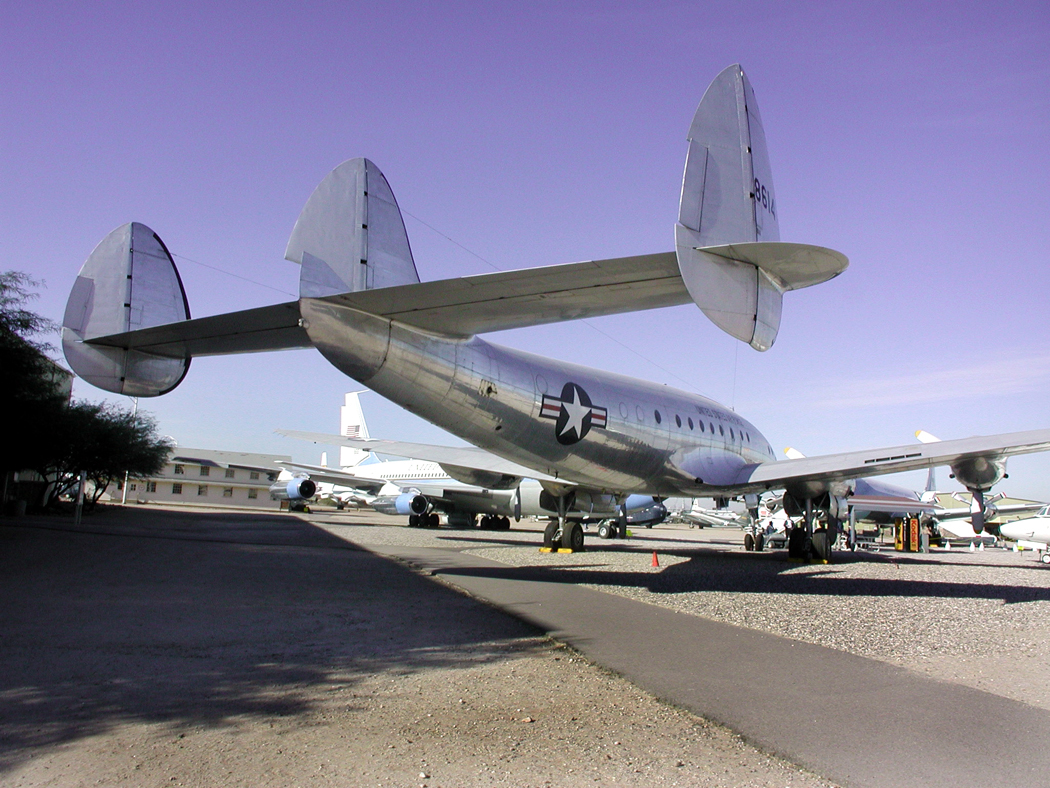
Many years ago, I took a toy camera out to Organ Pipe Cactus National Monument, south of Why, and drove the loop road past Bates Well and Quitobaquito Spring. 07 Pond Organ Pipe Cactus NP ArizThere was no sight of another anthropoid anywhere. The only hint of human occupation was an abandoned ranch, the gravel roads and an occasional descanso commemorating someone’s unfortunate death under the oven dome. The horno cósmico13 nicho trio

Click to enlarge

The Diana camera cost something like $1.99 and had a plastic lens and used old roll film. It had the solid polystyrene worksmanship you might expect from Mattel or Ron Popeil.05 Butte Organ Pipe Cactus NP Ariz After a lifetime of Nikons, Canons and Hasselblads, and having moved up to a 4X5 camera with a Super-Angulon lens, it was a kind of mortification of the flesh to bust out the Diana. A means to get away from the high-resolution, Zone-System rut. 06 Saguaro Organ Pipe Cactus NP Ariz

And now, looking at the results 20 years later, the fuzz and blur of the photos seems more like the nostalgia I feel: less like being there, more like remembering, even half-remembering.16 Organ Pipe Cactus Diana pair 4

08 dark vista Organ Pipe Cactus NP Ariz12 Wire fence Organ Pipe Cactus NP Ariz

10 Ranch fence Organ Pipe Cactus NP Ariz

 
 17 Carole as Flora in the desertCarole as Flora


wordsworth

In the early 1800s, the population of England was roughly 8 million, and they produced Wordsworth, Coleridge, Blake, Byron, Keats and Shelley — not to mention Robert Southey, Leigh Hunt, Walter Savage Landor, Thomas Campbell, Thomas Moore, John Clare and Thomas Lovell Beddoes.

It is an astonishing flowering of poetry in a single era. Six major poets and a handful of others still read with pleasure by millions of people.
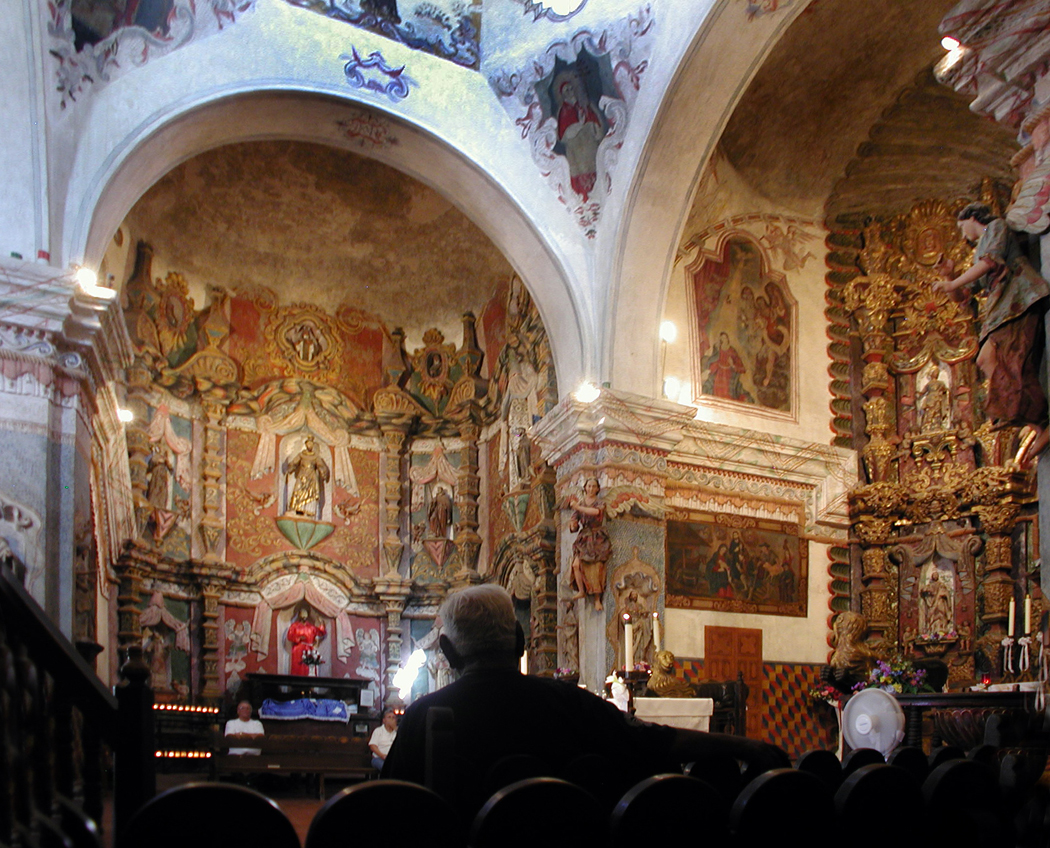
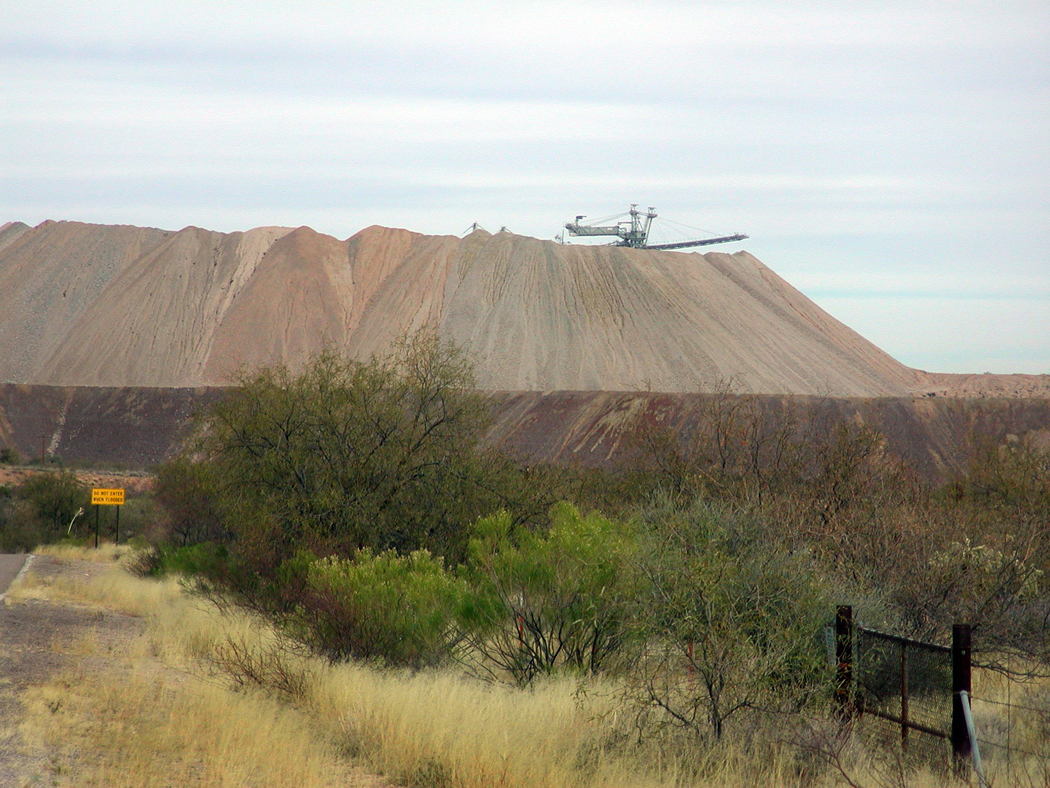
One might average them out very inaccurately as one great poet per 1 million in population.

Even in the 17th century, when the population of England was half that of the early 19th century, we have Thomas Carew, George Chapman, Richard Crashaw, John Donne, Michael Drayton, William Drummond, John Dryden, George Herbert, Robert Herrick, Ben Jonson, Richard Lovelace, Andrew Marvell, John Milton and John Wilmot (Earl of Rochester).

Of these, we can easily confer “major poet” status on Milton, Donne, Marvell and Dryden, making our ratio again 1-in-a-million.

By these numbers, we should easily expect, living in the United States at this moment, roughly 300 major poets. One scratches one’s head, because these numbers obviously are not true.

Just one state, North Carolina, is roughly equivalent in land area and in population to England in 1800. There should be at least six poets writing between Asheville and the Outer Banks of equivalent worth to Keats and Shelley, Wordsworth and Coleridge.

(Obviously, there are eras in which poetry features more importantly in a nation’s culture, and other times when the palm, the oak or bay goes to the novel or the stage, and times — and places — where emphasis is given to painting, sculpture, music or even philosophy. This equation is only meant in general terms — in any art, there should be more well-known and influential practitioners than one might generally count among the population at present).

I reckon that the problem should be understood much as a bicameral legislature. If we count a poetic house of representatives, there should, indeed, be 300 major poets writing at this moment. But instead, we have a senate, and we have a limited number of spots per nation reserved for “major” status. Perhaps we should never expect more than four at any given moment in any given nation.

That means we must look to the reading public (or art-going audience) as a conferring body that says there is only so much room in our culture model for the role of major poet, like only so many slots for general in an army.

It may be part of our cultural umwelt. We have a fixed and number-limited idea of what it means to rise to the top. Perhaps there really are 300 people writing poetry in American now that, if they had been published 200 years ago, would have been considered important, but now are merely the residue of a niche publishing market.

But I mean to present my case in much wider terms: the many arts as they manifest in the culture.

There is a top tier, and we treat these artists — currently the Damien Hirsts, the Jeff Koonses, the Richard Serras — as if they are the “major” artists, whose work is our answer to the Raphaels, Rembrandts and Monets of the past. Their work is deemed somehow more important than the work of thousands of other artists working away, often outside the beehives of New York and LA.

Of course, any critic with an ounce of humility will grant that these are only our “guesses.” That history has a way of choosing different names for the art history textbooks of the future. But as the art world is currently constituted, there is a great divide between art that is considered important and influential — art at the cutting edge of a presumed history — and all the lesser lights, the wannabes. And this doesn’t even make marginal room for all the weekend painters and watercolor society members and their pretty irises and tablecloths.

But who is art for? This is the crucial question. Is art made for the critic, curator, collector and gallery owner? Is the measure of its worth that it fulfill the expectations of narrow and self-specified interest group? If that were so, the rest of us might as well give up and turn on the TV.

This is not to disparage those critics (of which I am one), curators, collectors and gallery owners, many of whom I know and admire, and whose gifts are considerable. But it is like saying that a book is best judged by a librarian: There may be some insight there, but we choose our books by our own lights, our own interests and tastes. To the librarian, we entrust the Dewey Decimal System.

So, who is the art for? The poetry? The dance, the theater, the opera, the string quartet? They are all for all of us who love them.

The search for the “historically significant” artist is a question of history, not of art. We should all be free to enjoy whatever art speaks to us. And as artists, free to make the art that speaks for us.

The “big-boys” (and girls) of art are not disincluded: They really are making wonderful things. But so are the lesser lights, the regional artists, the undiscovered, the shy. The names you see over and over in the art magazines are there on their merit, for sure, but they are also there because of their naked ambition to climb the art-world hierarchy and because of luck. Some were just lucky enough to be spotted by some curator making the rounds for another museum biennial, or to work in a university program noted for graduating elite artists.

I worked in the fields for 25 years in Arizona, which is not usually thought of as a fertile ground for the world’s great art. And it does have its unfortunate share of blue coyote paintings and noble Indian chief portraits.

But I knew a dozen, maybe a score of artists whose work, given the proper exposure to the right people with open minds and open eyes, might stand equally before the impasto of Lucien Freud or the imposture of Jeff Koons.

kratzThe work was forceful, imaginative, idiosyncratic and intellectually rigorous. There should be no shame in being thought an “Arizona artist” if the state could produce a Marie Navarre, a Jim Waid, a Mayme Kratz, a Bailey Doogan, an Anne Coe, a Matthew Moore, an Annie Lopez. I could name a dozen more that you’ve likely never heard of, but that you could well have, if things had gone differently.

Each of these artists had given me great pleasure and spurred my intellectual growth and widened my world for me.

And every state in the union — indeed, every nation on the globe — can put forth its own slate of names of the artists, poets, dramatists, filmmakers, architects, authors, musicians and composers whose value is underrated or ignored, whose work has made a local difference, even if not a national ripple. Who’s to say they are not important? Who’s to say their work is not the equal of the headline artists at the Whitney Biennial?

If we include these excellent but unheralded artists and poets, we probably begin to match the ratio of poets to population of 17th- or 19th-century England.

But I don’t want to stop there, either. It isn’t merely regional art I am defending. I would make a case even for such maligned art as the academic art of university teachers, the irises and tablecloths of the watercolorists — even the paint-by-numbers amateurs and the selfie-posters of Instagram.

Every person who makes an image — and especially those rare and brave people who take up a pencil and attempt to draw something on paper — makes a contribution. They learn something about the world, and about art, even if they don’t have that name for it.

Art is not merely what hangs on gallery walls. Its primary purpose is an interaction with the world, and when anyone makes that connection, with pen, brush, camera, clay or word processor, filtering through their sensibility their ideas, feelings and reactions to the world around them, they have made art.

And ultimately, it is the making of art, not its consumption that has value. Everyone should try it, everyone would benefit from it.