Archive

Tag Archives: art history

At the climax of Fritz Lang’s 1925 classic, Metropolis, the mad scientist villain kidnaps the heroine and climbs to the top of the city’s cathedral, dangling precipitously over the narrow walkway at the edge of the roof. From the first time I saw the movie, I wanted to join him.

Not, obviously, as a kidnapper, but rather to experience the hidden acroscape of the cathedral — the skin over the vast interior space that defines such a cathedral. It is akin to the thrill of walking along the catwalks above a stage, among the ropes and dropscenes. You have the charge of being somewhere illicit, somewhere ordinary mortals never get to see.

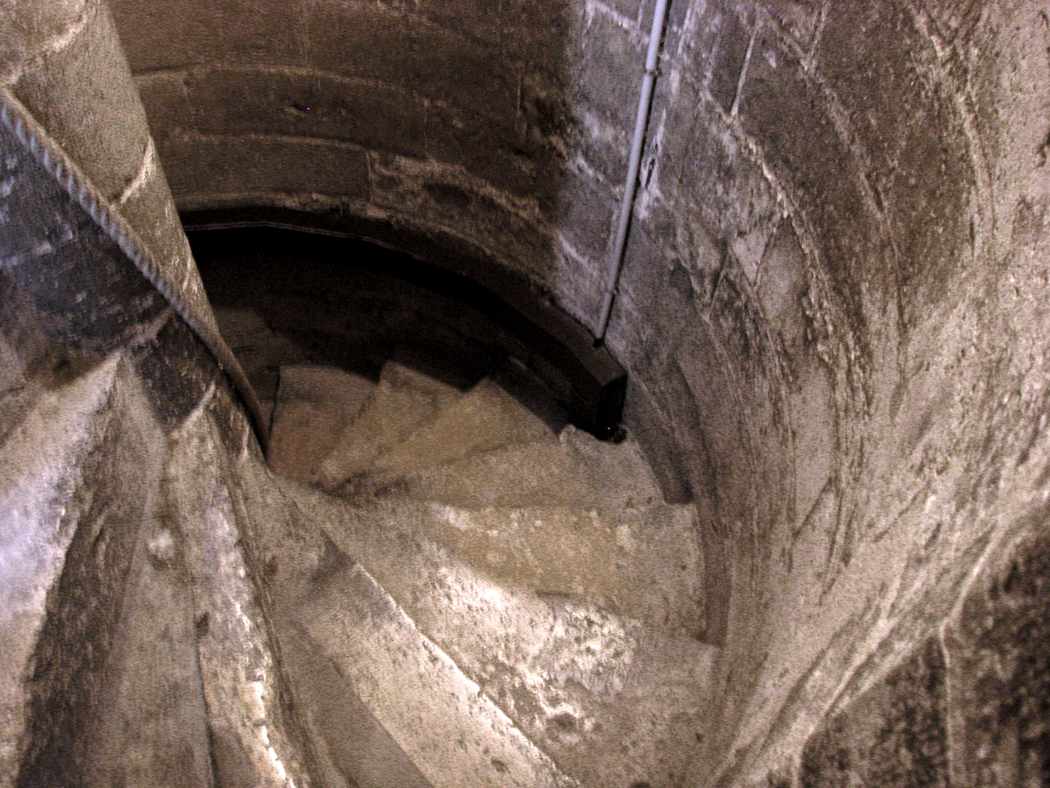
If you are willing to climb the stony steps inside the northern tower of Chartres cathedral in France, you can break out into the air high above the town and look down not only at the houses but on the gargoyles arrayed below you. You have something of the point of view of the angels Cassiel and Damiel from Wim Wenders’ film, Wings of Desire. It is almost like flying.

It is a long way up and a lot of stairs narrow inside a tube of rock and no one with serious claustrophobia should attempt it. But you can climb to the bell tower rooms and then to the roof of the cathedral and walk on the narrow stone walkway, with the low stone balustrade preventing you from a headlong five-second, wind-rushed appointment with your inevitable end.

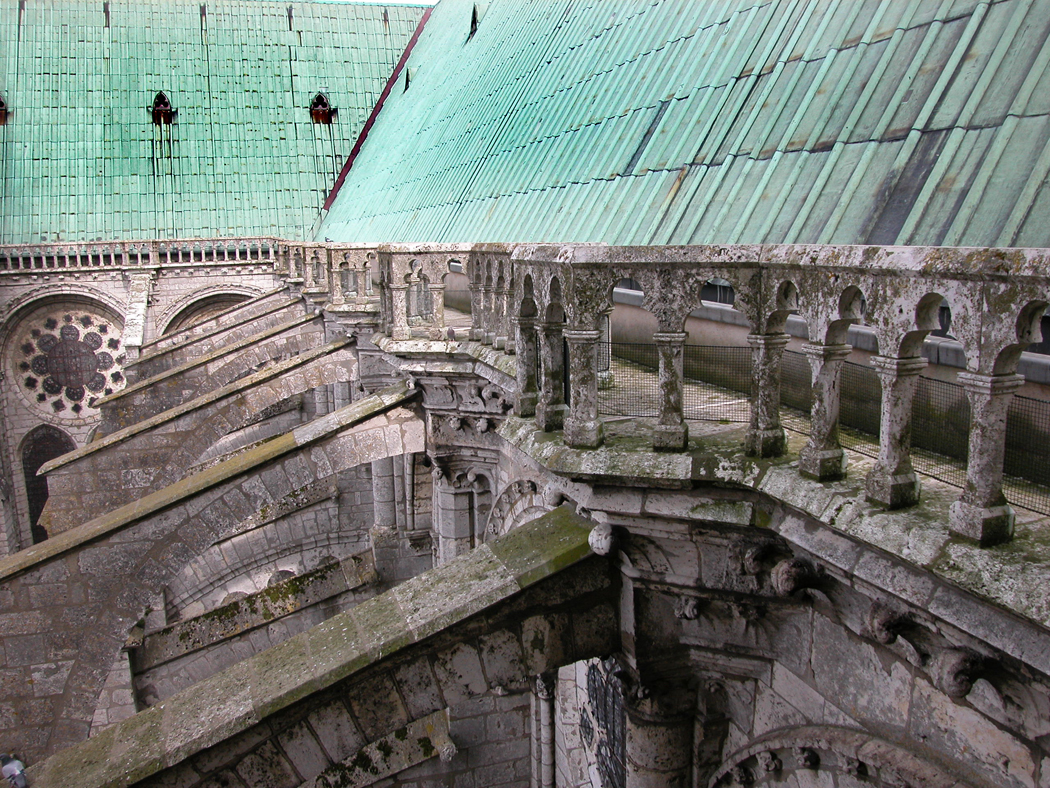
You look down at the flying buttresses and notice architectural details you cannot see from the ground. You see the moss and lichen that has been slowly eating at the stone for centuries. You see the vivid green of the roof and beyond that, the distant round horizon.

What is more, and perhaps the most surprising, is the incredible amount of ornamental detail put into the structure at a level that no normal human would ever get a chance to see. There are finials and floral scrollwork, there is tracery and statuary, all placed there, as far as anyone can tell, for the sole amusement of gods and angels — for who else will get to appreciate the work put in to such places that have no public access, no meaningful purpose for the clergy or staff, no liturgical function. The old stone carvers who made such beasts must have had a grand time unlocking the cage doors of their ids.

Indeed, much of the carving along the roofline of Chartres seems positively pagan rather than Christian. There are demons and lizards, chimeras and gargoyles. The building is positively animated with this menagerie of odd animalia.

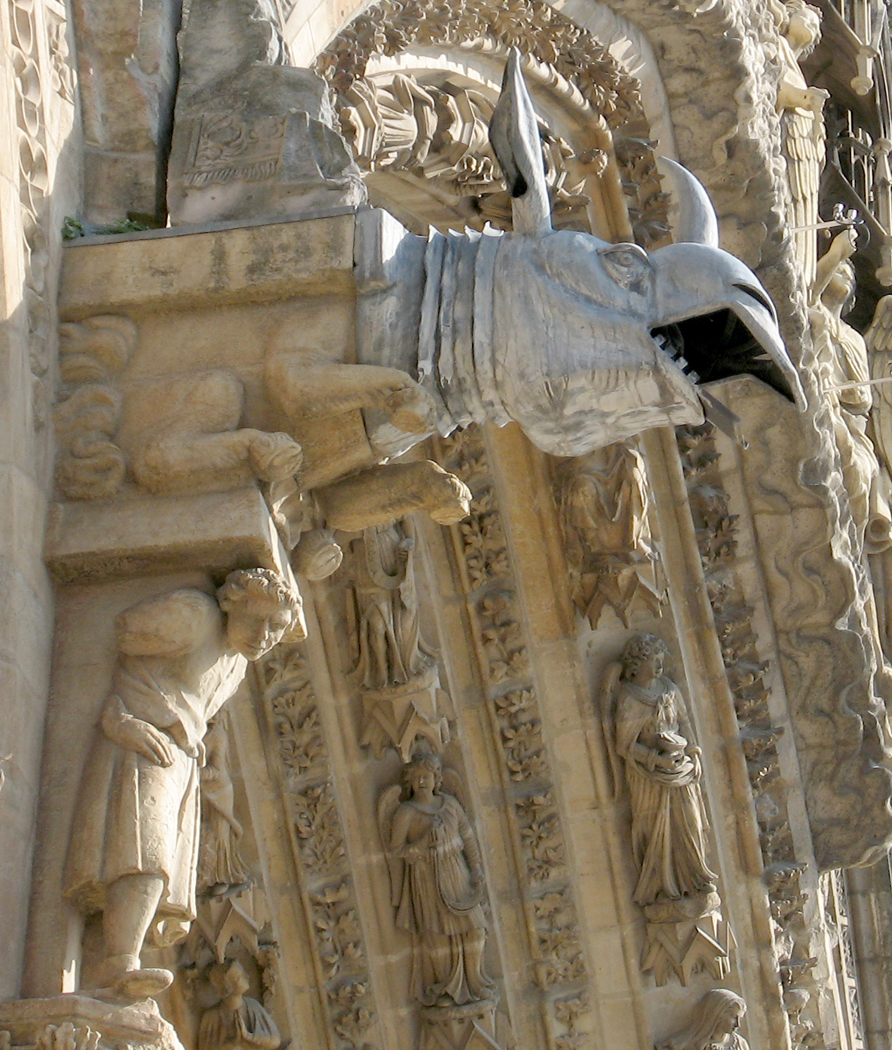
And up this high, you can see the gargoyles from above, and see the grooves down their backs and the holes through the skulls that guide the rainwater out into the streets, away from the foundations of the church. Gargoyles are drainspouts; the others are chimera — the odd animals that decorate corners, niches and summits. In the Middle Ages, they were all called “babewyn,” which was Italian for “baboon.”

It is one of the touchstones of Gothic thinking that a building should match the fecundity and variety of the world. We who have grown up in the age of Mies van der Rohe have come to think that the hallmark of elegance is simplicity, that “less is more.” But the Medieval artist looked around him and saw oak leaves and irises, chipmunks and rooks, gullies and precipices, and all in an abundance of color and shape — and he strived to match that earthly brilliance with a corresponding abundance in his work.

Cultural history shows us a constant pendulum swing between epochs in which unity and simplicity were elevated, and those eras in which complexity and extravagance were valued. The Romanesque that preceded the Gothic, and the Renaissance that followed both were times of constricted unity. A few shapes served as template for an entire building.

Ernest Hemingway characterized the contrasting impulses when he said there were “putter-inners and taker-outers” among writers — he being the ultimate taker-outer. The Gothic age in history is the key putter-inner. Everything is dumped into the esthetic hopper and the plenitude is gloried in.

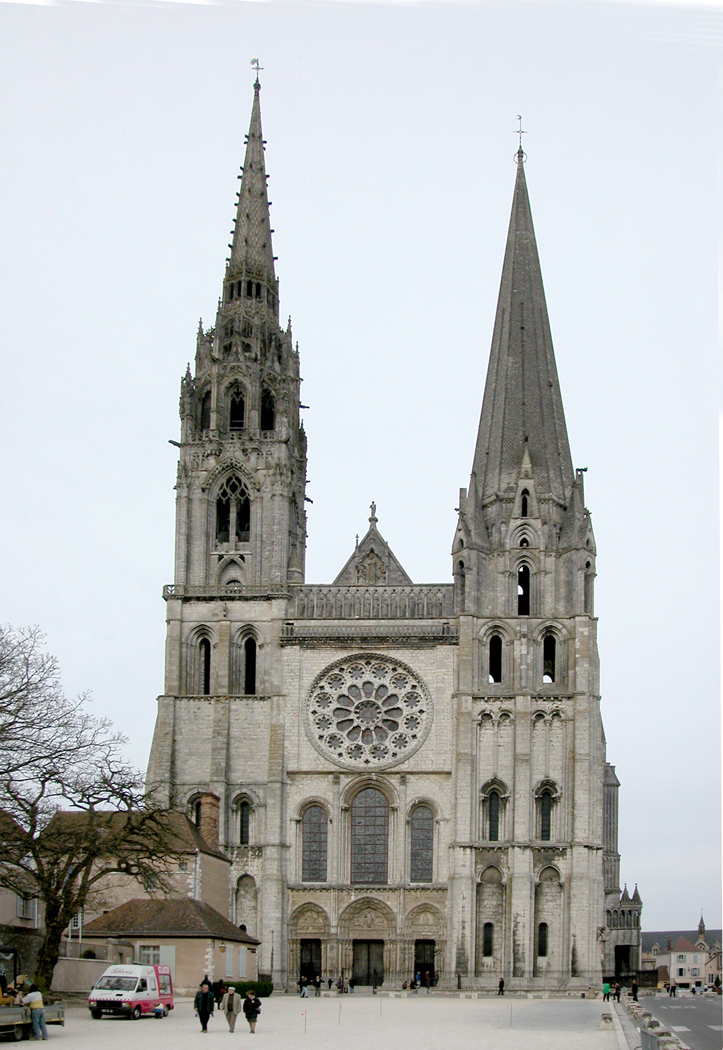
Take for example the great neo-classic St. Paul’s Cathedral in London, which is a marvel of studied simplicity and symmetry. Each column and capital is uniform in design, each window matches for an overall sense of unity and simplicity. Then take Chartres and realize that each column is different, each capital a unique design. And because the cathedrals were built over such a long time scale, the style at the beginning of the build may vary greatly with that at the completion. At Chartres, the west facade is nearly Romanesque in its austerity, while the north porch is extravagant in its Gothicism.

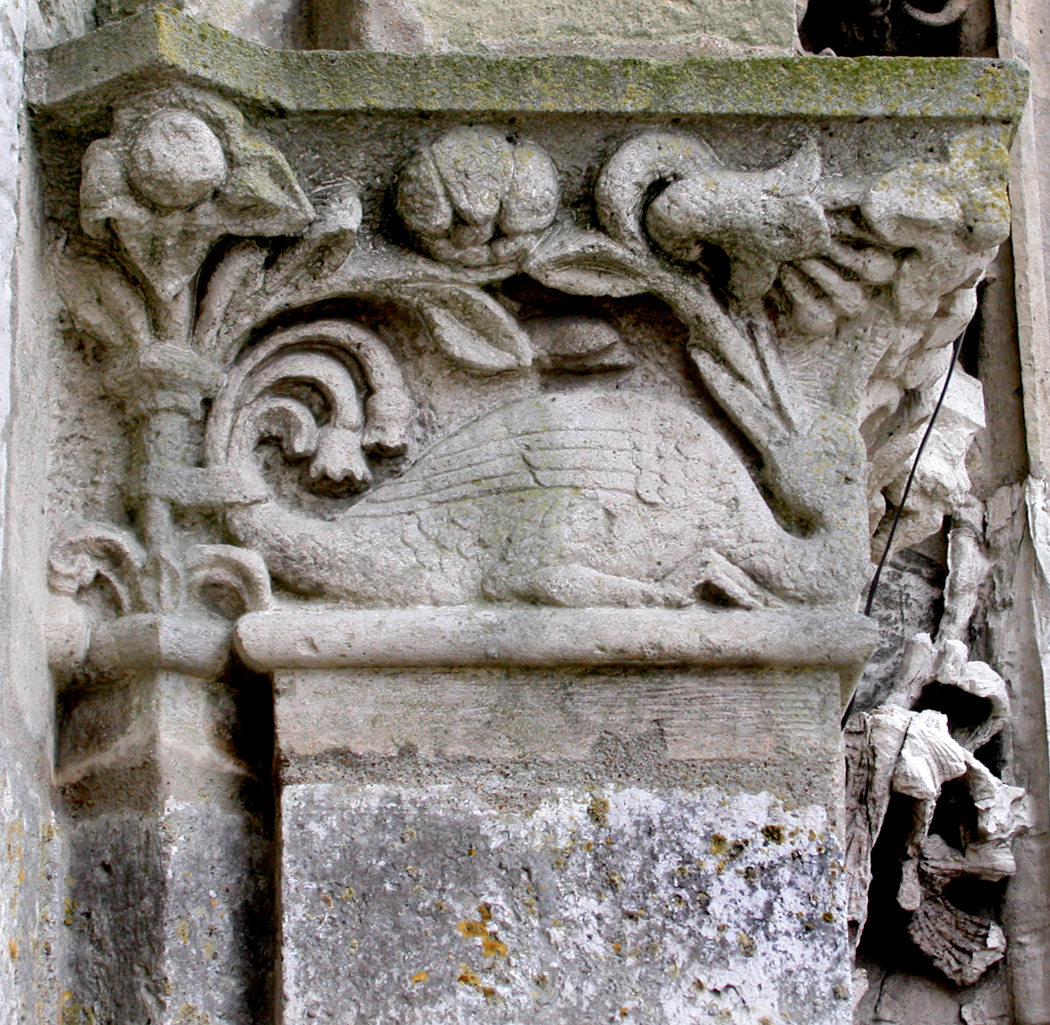
You can see this tendency not only in the columns (often called pillars when discussing Gothic cathedrals) and capitals, but in the column bases. Just in the north porch alone, I photographed a series of them. Here are six.

They vary from foliage to flowers, to star shapes and scrollwork. And even when they depict the same variety of leaf, they are designed differently. You can enjoy the image of the world in seeing them, just as one patch of ivy in a garden mimics but still varies another patch.

Unity or diversity, it is still a tension we feel these days, as the gravitational pull of unified Modernism gives way to the stunning diversity and lack of unity in the Postmodern world. Throw it all in together and see what happens.

The elders among us, brought up in the orthodoxy of the 20th century sees this trend as a decline, but in reality, it is really just another pendulum swing, back to a moment when motion, complexity, diversity, light and shade can triumph once again over stasis, simplicity, coherence and uniformity.

You walk around Chartres and you can see the glory in such a world view, such a vivifying afflatus, a joy in living, and in the world we inhabit; and less of a mechanized drive to control and regularize our lives.

As William Blake wrote, “Energy is eternal delight.”

Click any image to enlarge

Next: The chimera of Paris

You can never know what an experience will be like until you have it. You can read about Chartres and see the photos. And you can visit other cathedrals, as we have on this trip. But you have to be there, at Chartres to see how it is different.

This is not a panegyric to Chartres. Others have written them. My reaction is a bit different. I was surprised to see how sparse the cathedral is. After Notre Dame de Paris, I was expecting something a little more crenelated, more decked out, more flamboyant.

After all, Notre Dame de Paris was an early example of Gothic architecture. Chartres is considered High Gothic. It was followed by Rayonnant and Flamboyant styles, each increasingly geegawed up.

But Chartres is a veritable Spartan of cathedrals. Her west facade, for instance, is spare in the extreme, with only a few decorations, not counting the portals and their sculpture. But those portals are rather small and restrained, unlike their cousins in Paris. You almost get the idea of a facade that isn’t finished, that is waiting for someone to come along and add the finials, Hebrew kings, garlands of trefoils and quatrefoils.

Instead, it almost looks like the Gothic cathedral equivalent of plywood.

Because this was our first acquaintance with Chartres, we took a rather methodical approach to the building. We walked first around the building, from the facade to the south porch, around the apse and treasury, along the north porch and back to the front, making the full circuit.

North porch

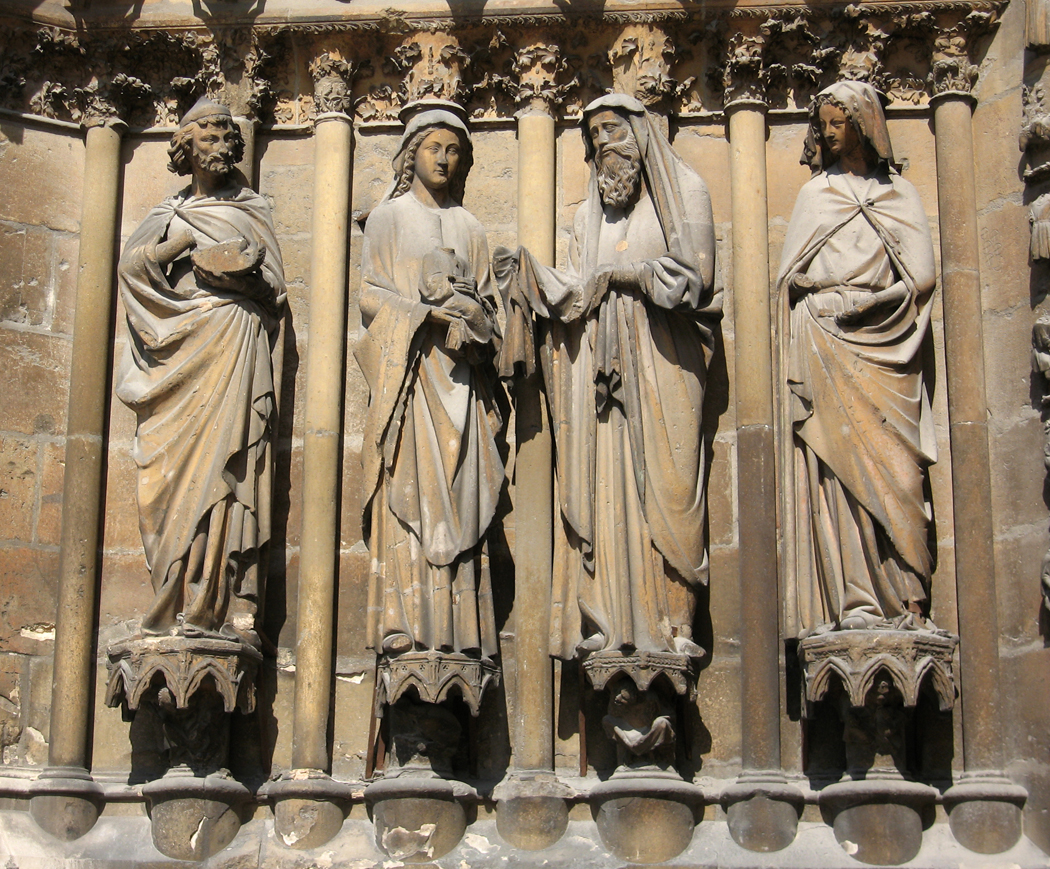
Yes, the portals of the transepts are splendid, rich with sculpture. The bulk of the statuary can be found on the transept porches, and some of it is extravagant. But otherwise, the walls of the building are generally plain.

And when we went inside, we were blinded by the dark. It is a dimly lit nave — again contrasting with the brightness of Paris, to say nothing of Sainte-Chapelle.

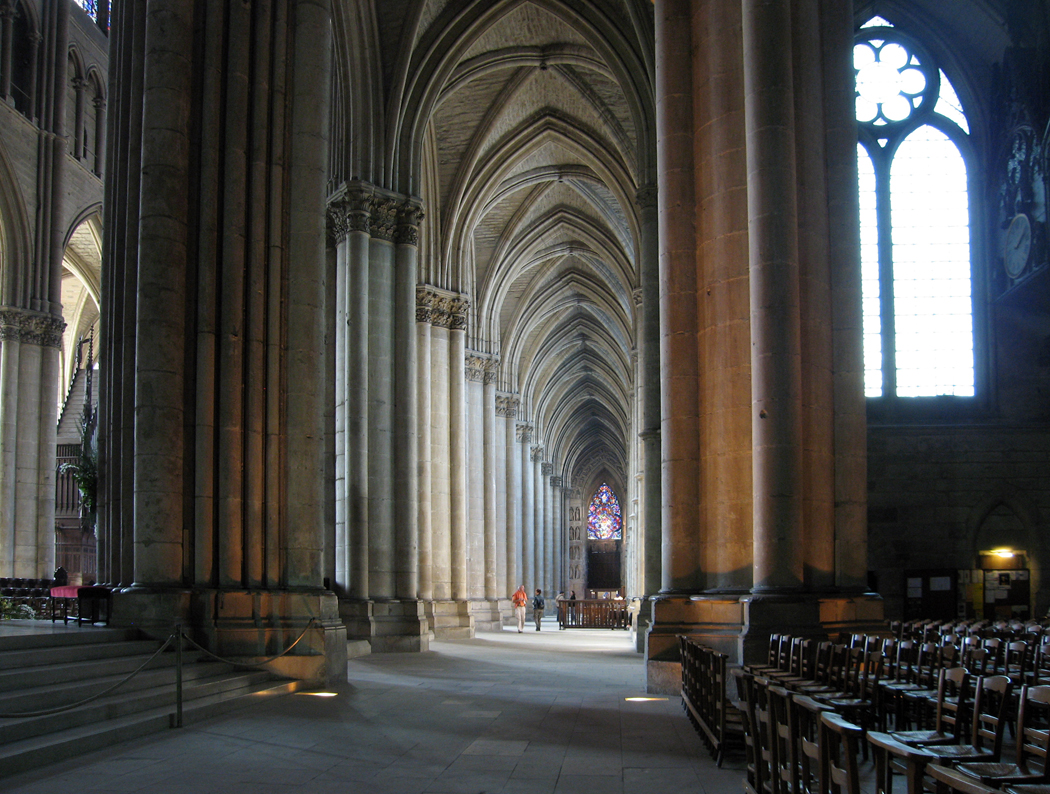
The proportions of the nave seem almost primitive. The classic Gothic nave walls consist of three layers: an arcade between the nave and the aisles on either side of it; a second-story, called the triforium, which is another arcade piled on top of the first; and finally a wall of windows, called the clerestory, which lets the light into the building. At Chartres, the proportions are different from in most of the other cathedrals we visited. The large aisle arcades take up almost half the height of the nave. The small triforium leaves room for a rather scaled down clerestory. The result of these odd proportions is that not much light drifts down to the nave floor. It takes quite a while for your eyes to adjust.

West rose window

When they do, there is a good deal of wear to be seen. Not only is the stone floor worn wobbly from centuries of traffic, but the vaulting in places is peeled or exfoliated, showing some brickwork behind the stone. In far corners, walking through Chartres feels almost like spelunking.

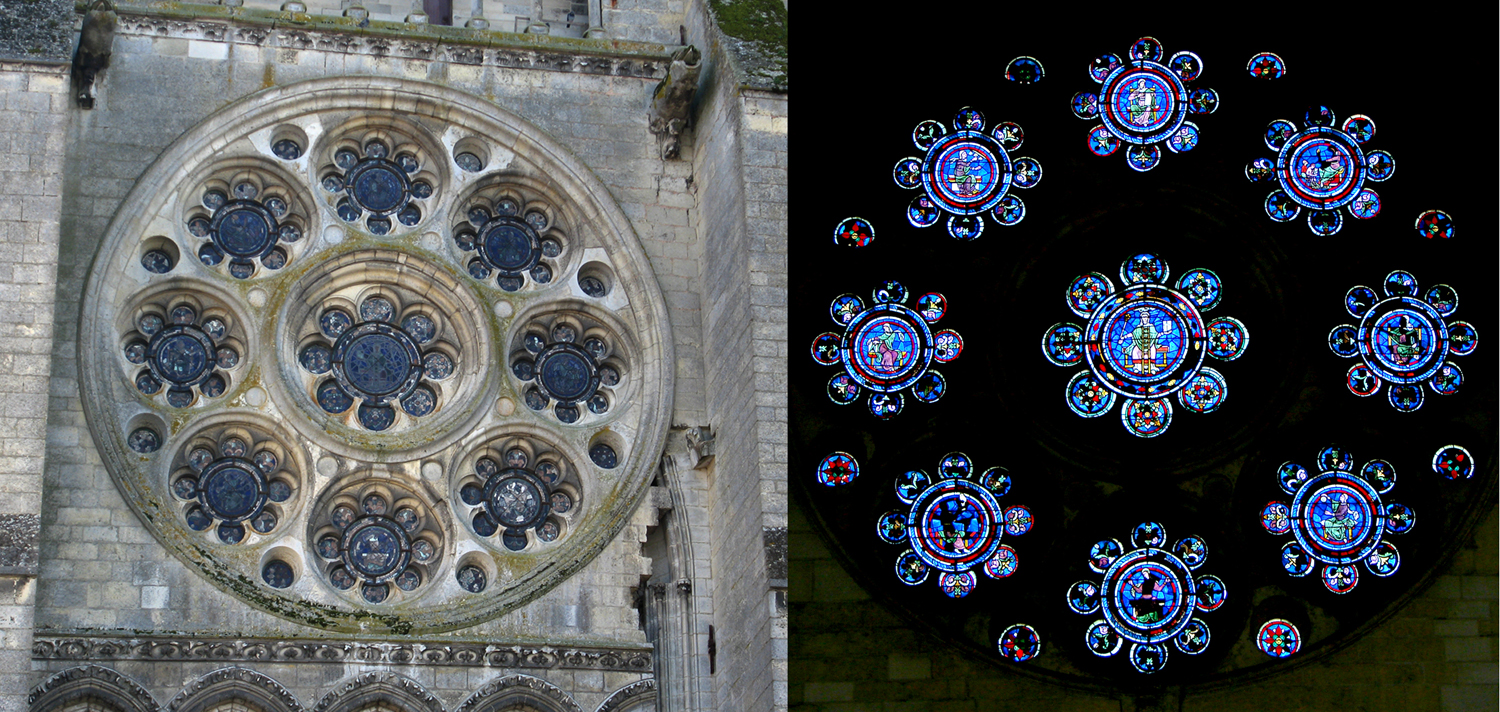
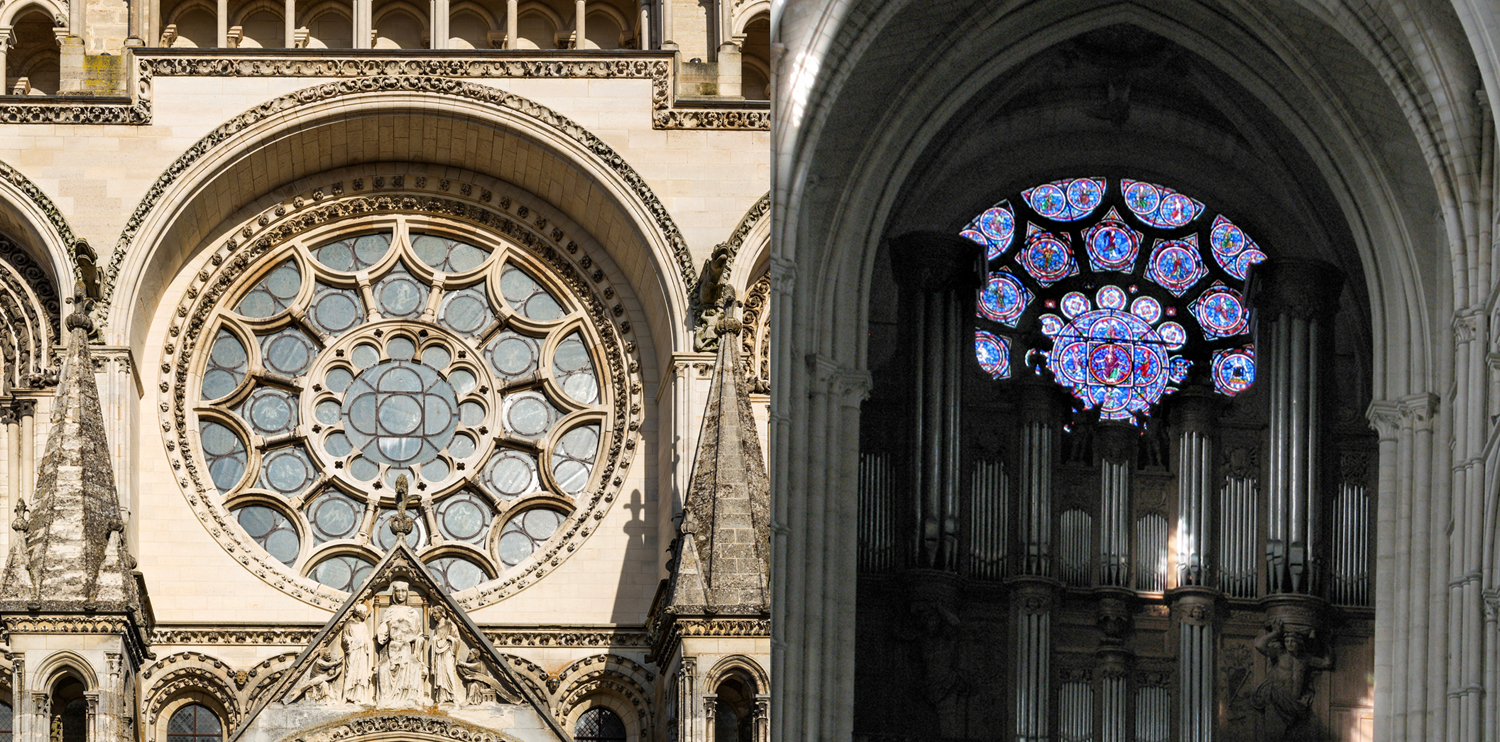
The rose windows are also smaller in proportion to their settings than those of Paris.

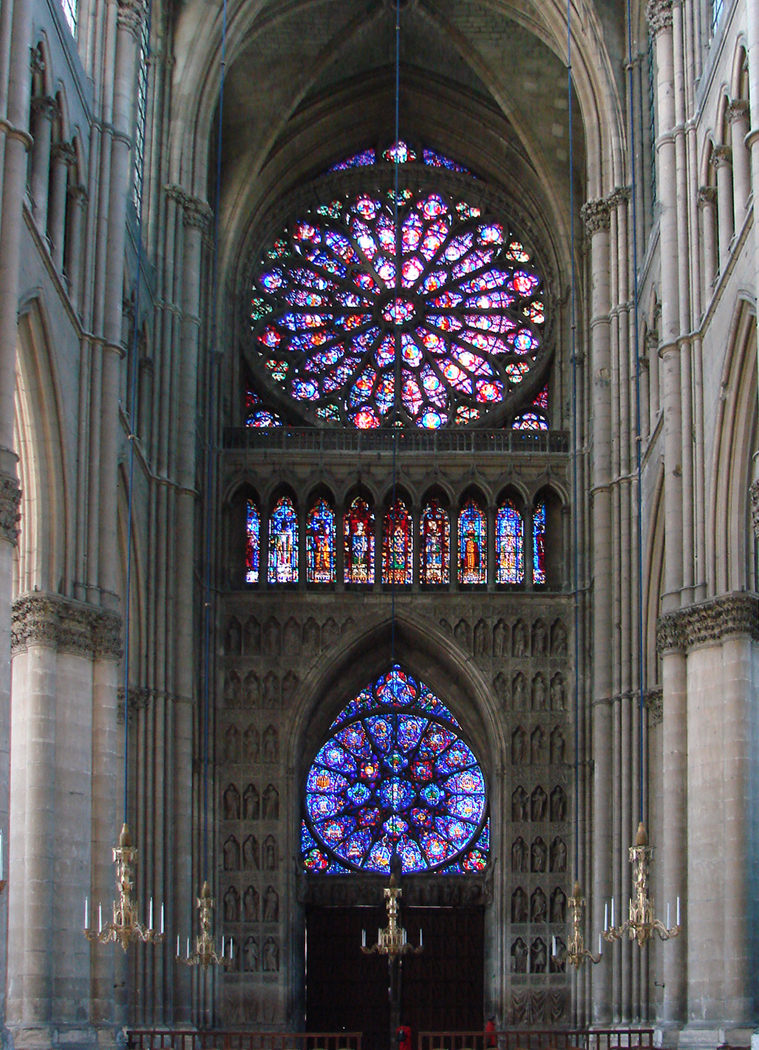
The west rose window, in particular, is at least half stone. The tracery is heavy and dense, leaving only small patches of glass to shine. Unlike the Paris rose windows, this one seems almost a crude, early attempt at constructing one.

The north and south rose windows are more elaborate, but even they are small in comparison with the space of the transept walls. They could easily have been made 20 percent or 30 percent larger without overwhelming their setting.

The interior almost gives you the feeling of an empty apartment, after someone has moved out. Where are the paintings, the furniture, the curtains? In Chartres, where are the windows, the interior carving, the elaborate bosses in the vaulting?

Of course, we didn’t see Chartres in operation, as we did Paris. Perhaps it has the same awe inspiring grandeur when a mass is being said.

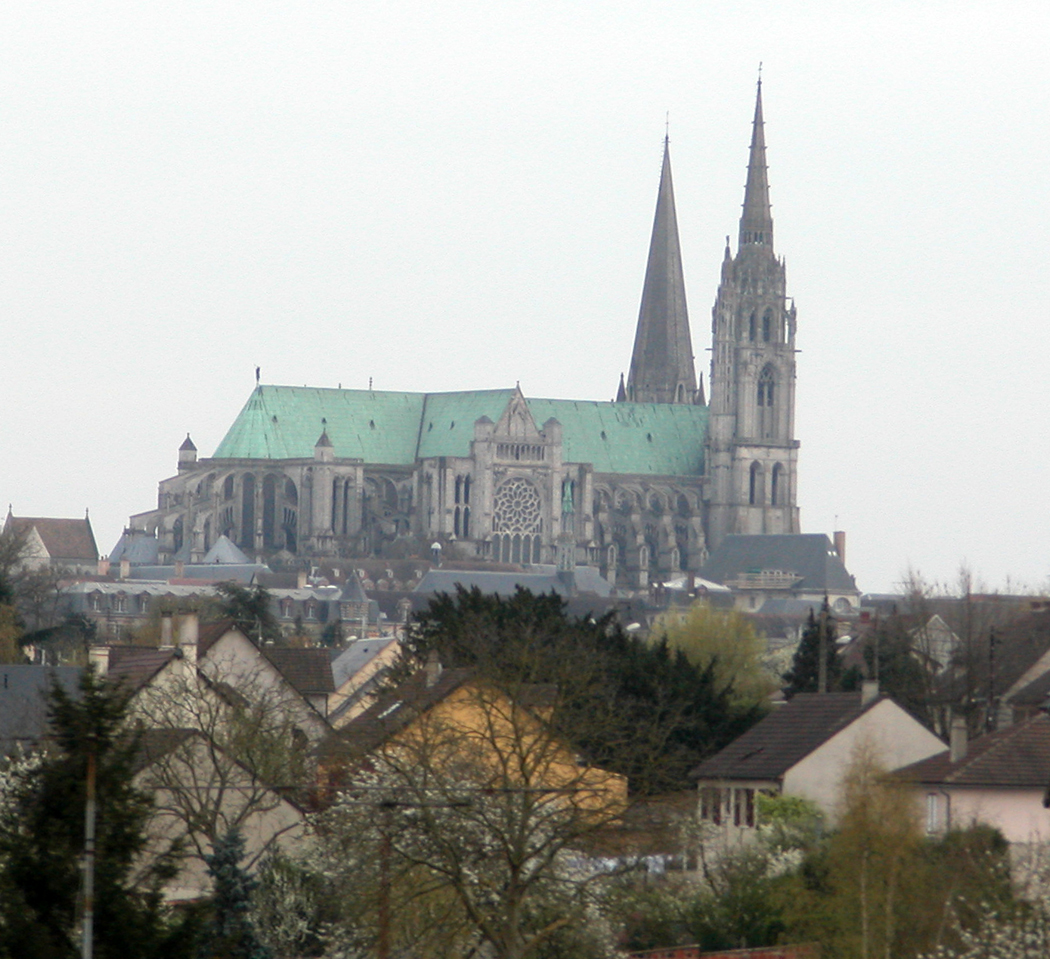
And you cannot fault its setting, on the hill above the town. From miles around, you can see the twin towers looming. It was the first thing we could see from the train arriving in the morning: Those towers poking up out of the countryside.

I walked the eleventy-hundred stairs up the north tower and dangled acrophobically over the roof, the bell and the south tower, taking photos of gargoyles, tracery and stone foliage. Liability laws must be quite different in France. In the U.S., they would never allow anyone to climb up those stairs, let alone hang out over the precipitous drop, with its low balustrades and that steady breeze that must often become a wind.

One of the reasons Chartres is so highly prized is because so much of it is original. The statuary at Paris is cleaner and more neatly featured. But then, it is only 150 years old, having been restored by Viollet-le-Duc in the 19th century. Viollet-le-Duc was a magnificent man, and his restoration work at Paris is convincingly original looking. You don’t sense much of the 19th century in it.

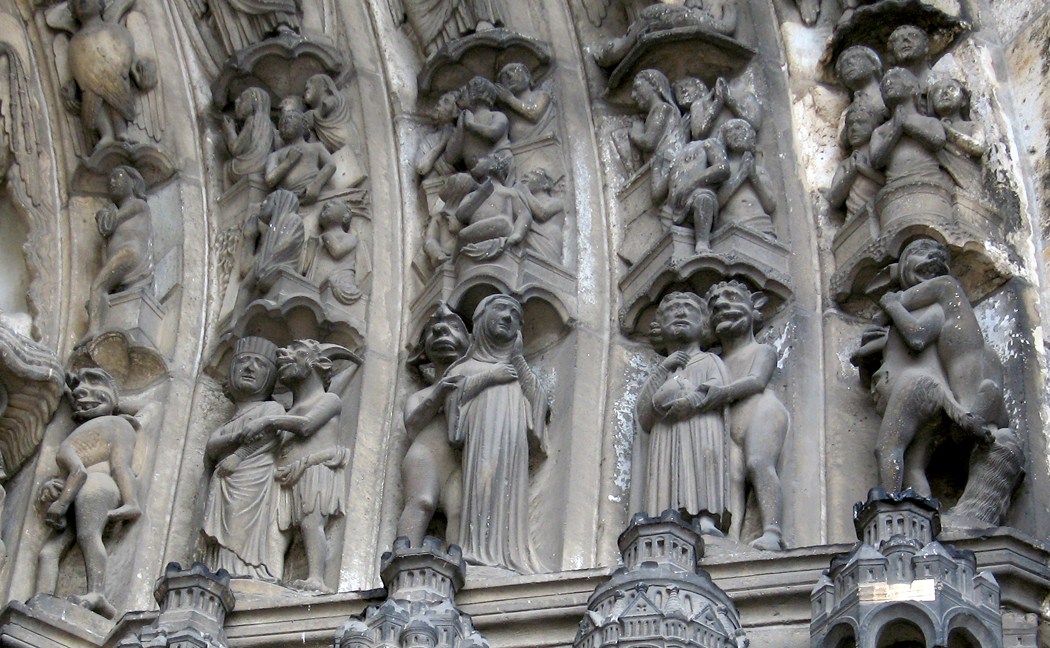
The damned

But it is still pristine. At Chartres, the statuary is weathered. You can see the lichen growing on the stone.

Even the walls of the cathedral sport tufts of daisies high up, in unlikely places, growing straight out of the masonry.

The limestone is mossy, lichened and eroded. Paris has only recently been sandblasted. Its stone seems newer — although there is plenty of erosion to go around there, too.

But Viollet-le-Duc’s restoration has made Paris look fresher than her matronly cousin in Chartres.

Don’t get me wrong. I don’t mean to pooh-pooh Chartres. It has its glories. And it is the very prototype of the high Gothic. But there was a certain musty odor in the nave; Paris smelled more urban, more used.

South porch

If I sound disappointed, I don’t mean to. We spent a good 9 hours with Our Lady of Chartres. We spent that time feverishly. I photographed every one of the main sculptures of the portals, and a good deal else beside.

If Chartres seemed dimmer than we had expected, the problem was with our expectations. Chartres has since drawn us back several times, and each time, it has revealed more and more of itself, and now I see it as the archetype of the cathedral, the mother building, the pure form. Other churches may be more tarted up, but there is a dignity at Chartres, a refusal to take on the shallow and transient, that makes it more classic. I have come to love Chartres, and especially its glorious rose windows, those burning embers glowing through the walls.

We have gone to Notre Dame de Paris more often — because it is in Paris, and therefore available each time we visit France — and we love the cathedral in Paris very dearly, but there is in me, at least, a special reverence for Chartres, that draws us back, no matter how far out of the way we must go as we drive around the hexagon that is France. From every corner of the country, we somehow are pulled by the gravity of Chartres back to absorb its special aura, power and spirit yet one more time. And I say that as a committed atheist.

I can remember the art history courses from college, and the long, boring lectures about the Romanesque and the Gothic, and taking it all in, looking at many fuzzy slides of Chartres projected on the screen at the front of the lecture hall. And the many photographs from books, including the great Mont-Saint-Michel and Chartres by Henry Adams. Pictures in picture books are one thing. The palpable feeling on the skin of the humidity in the vast interior space of Chartres, the light hitting the floor, the smell of centuries of stone — the reality grabs you by the hair on the back of your neck and has not let go yet. Now we have experienced it, have it in our blood.

This is a panegyric to Chartres.

Next: Climbing Chartres

Click on any image to enlarge

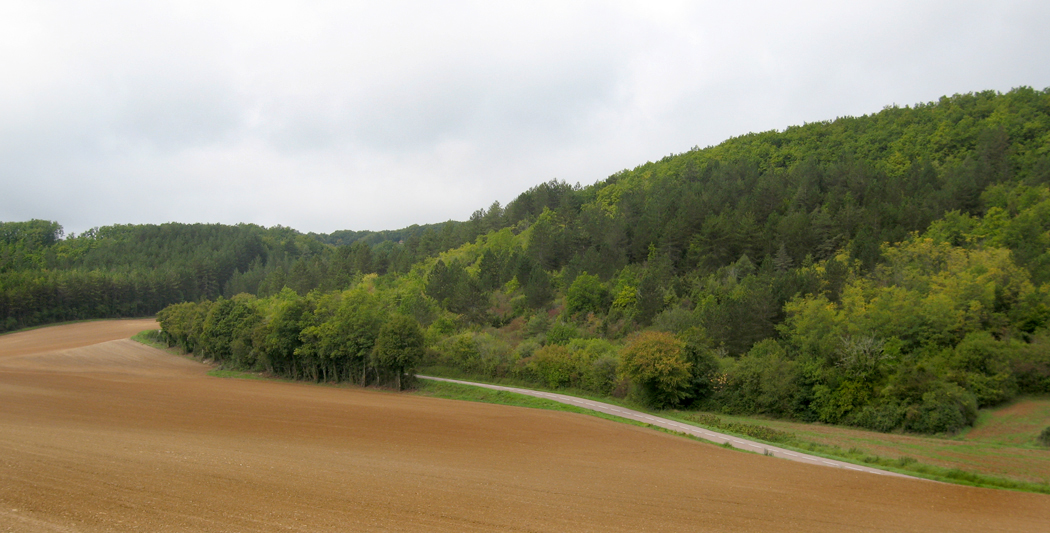
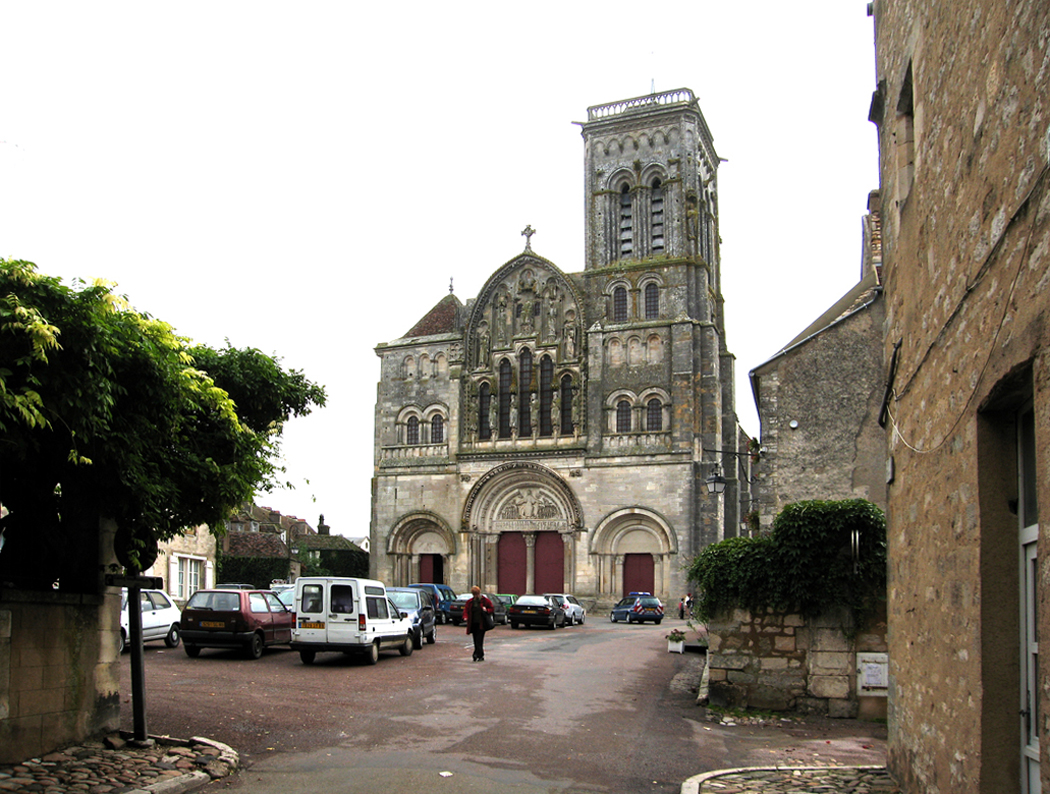
There is a small hill about 140 miles southeast of Paris, surrounded by fields and forests. On its southwest slope is a small town, barely a village, population 480 people, with a hotel near the bottom and the basilica of St. Mary Magdalene at the top, an abbey church dating to the 10th century. On the slope to the opposite side of the town are simply more woods.

At this hill, in 1146, the renowned cleric, Bernard of Clairvaux, later Saint Bernard, called for a second crusade to the Holy Land. Now, it seems a remote spot to initiate such an epic enterprise, but on March 31 of that year, with King Louis VII present, the influential abbot preached to a crowd in a field. A platform was built just outside the town and Bernard called for the masses to “hasten to appease the anger of heaven,” in retribution for the losses suffered after the First Crusade.

“Hasten then to expiate your sins by victories over the Infidels, and let the deliverance of the holy places be the reward of your repentance,” he said. “Cursed be he who does not stain his sword with blood.”

Bernard wrote to the pope a few days later, “Cities and castles are now empty. There is not left one man to seven women, and everywhere there are widows to still-living husbands.”

The Second Crusade was eventually a bust, failing to achieve its goals, but as you stand now in Vezelay, where the call went out, you can feel both the weight of the endeavor, and the astonishment that such a sleepy community could ever have been the site of anything so momentous.

But back then, Vezelay was the center of a thriving abbey, and its church is now visited each year by many times the number of the village’s permanent inhabitants.

Compared to the famous cathedrals further north, Vezelay’s basilica is small and simple. But it is exceptionally beautiful.

It had rained all our way to Vezelay, and it was dusk when we got to the town and could see the tower of the church high on the hill through the mist, like something from a Hiroshige print.


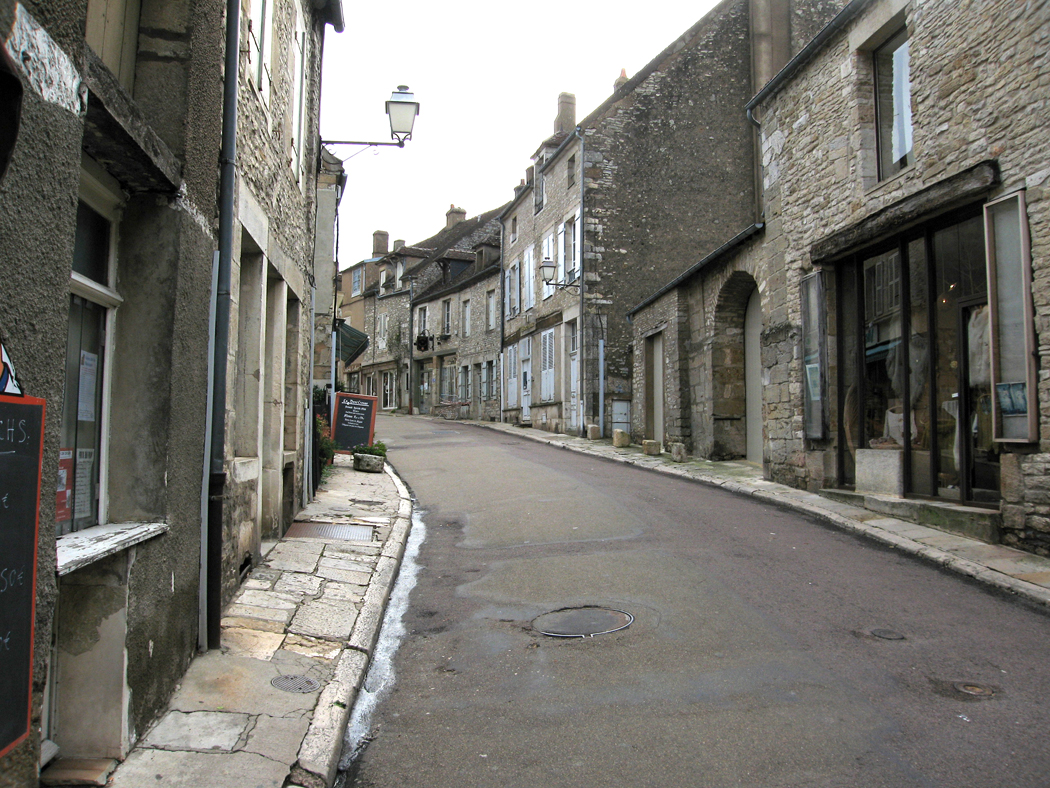
In the morning, with the sun come out and the waters subsiding, we started up the hill toward the abbey church. At the hotel, a sign said, “Pas voiture; pietons seulement” — “no cars, pedestrians only.” So we walked, up the hill, rather higher and more difficult on foot than it appeared, past souvenir shops, brasseries, a book store, the mairie (or city hall), past home with bright flowers outside and past gated house with BMWs in the yard.

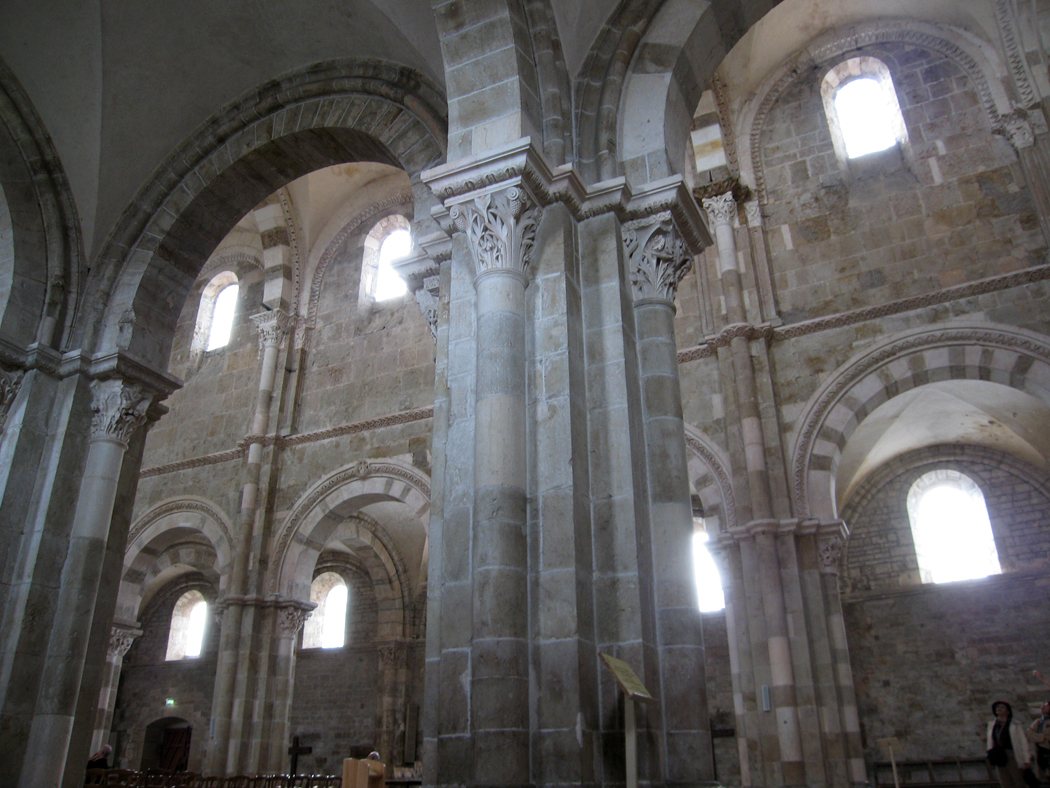
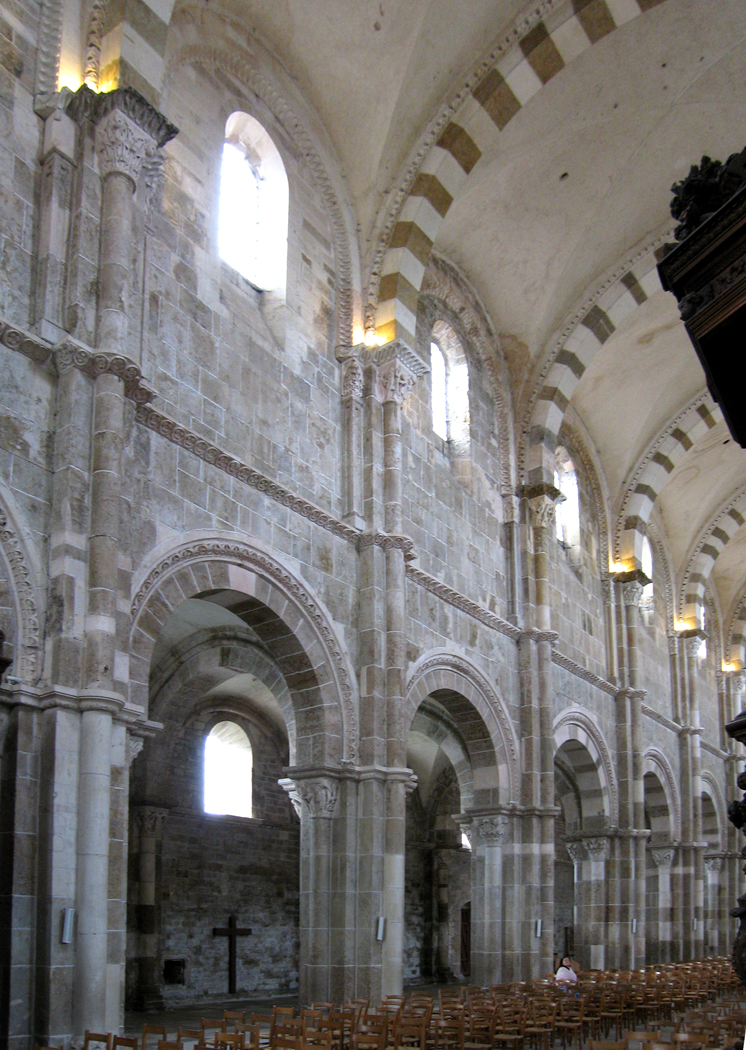
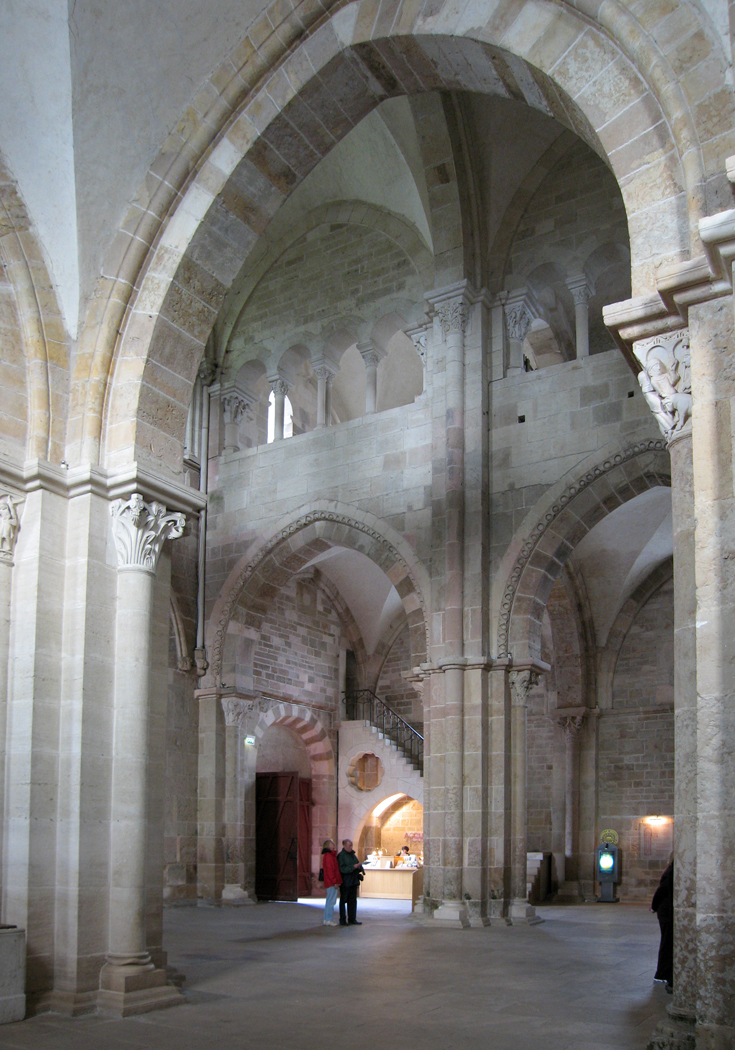
Huffing and puffing, we made the summit and the west facade of the church, looking quite Romanesque. Most of what we had seen had been Gothic, but the buildings constructed before the 12th century were designed to a different principle, one heavier with stone and parsimonious with windows.

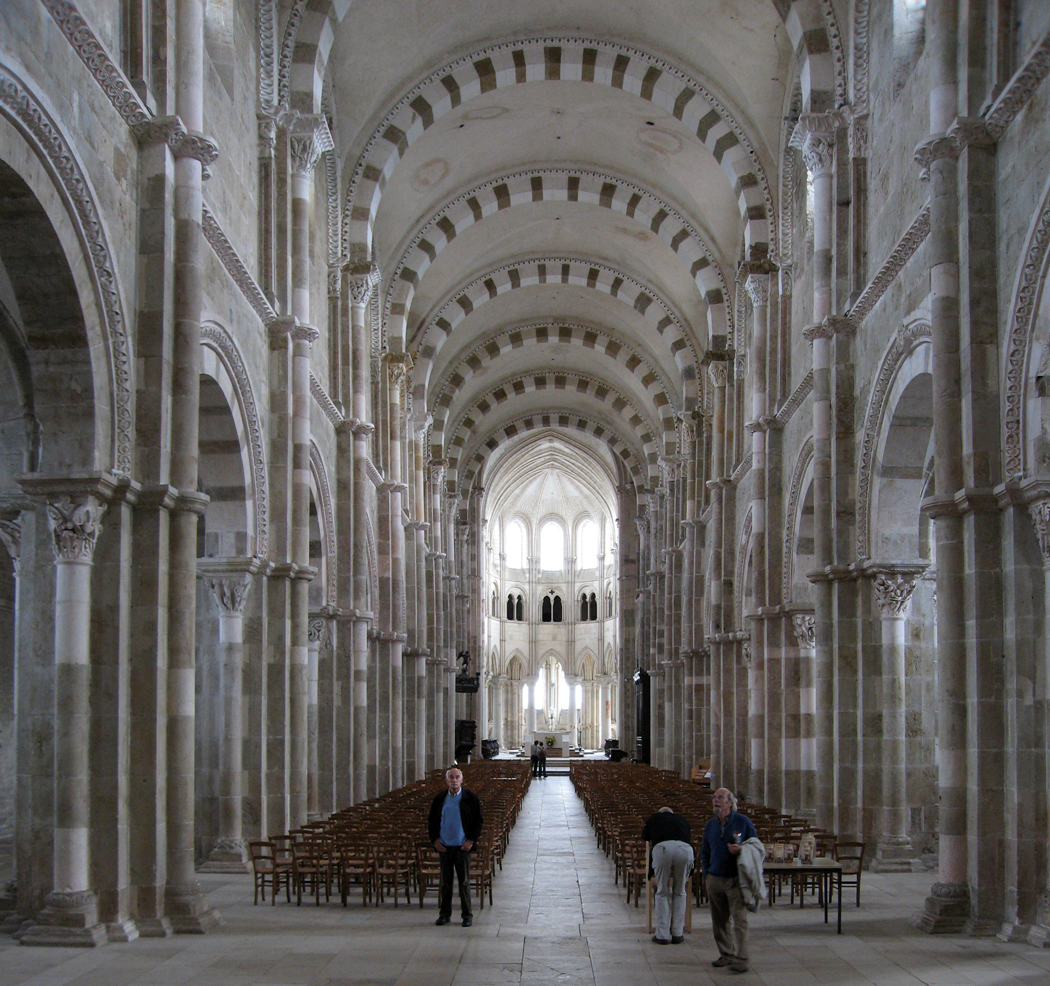
Almost all of them, however, were begun in the earlier style and later added on to with the later style, often obliterating the Romanesque underneath or replacing it entirely. At Vezelay, you have a Romanesque facade and nave, but a Gothic choir and apse at the far end. Whether by design or accident, it makes a visit to the church a sacred metaphor, from the darker interior of the Romanesque to the illumination of the Gothic.


This metaphor is amplified by the unusual narthex of the church. In most cathedrals, the narthex is the junction between the west facade of the church and the beginning of the nave. It functions both as an architectural joint, and as a kind of foyer. In Vezelay, the narthex is blown out to fully three bays, with a second portal inside. This three-doored portal, with its own tympanums, used to be the exterior of the church, before the narthex was added, making the narthex a kind of overture to the main event. This first experience of the church interior is notably dark, with few windows.

Enter through the second set of portals and the nave is much more brightly lit. It is a long nave, 10 bays long, and with barrel vaults painted in striking dark and light checks.

The choir is Gothic, and so, brighter still. The path is from dark to light as you reach the “holier” end of the basilica.

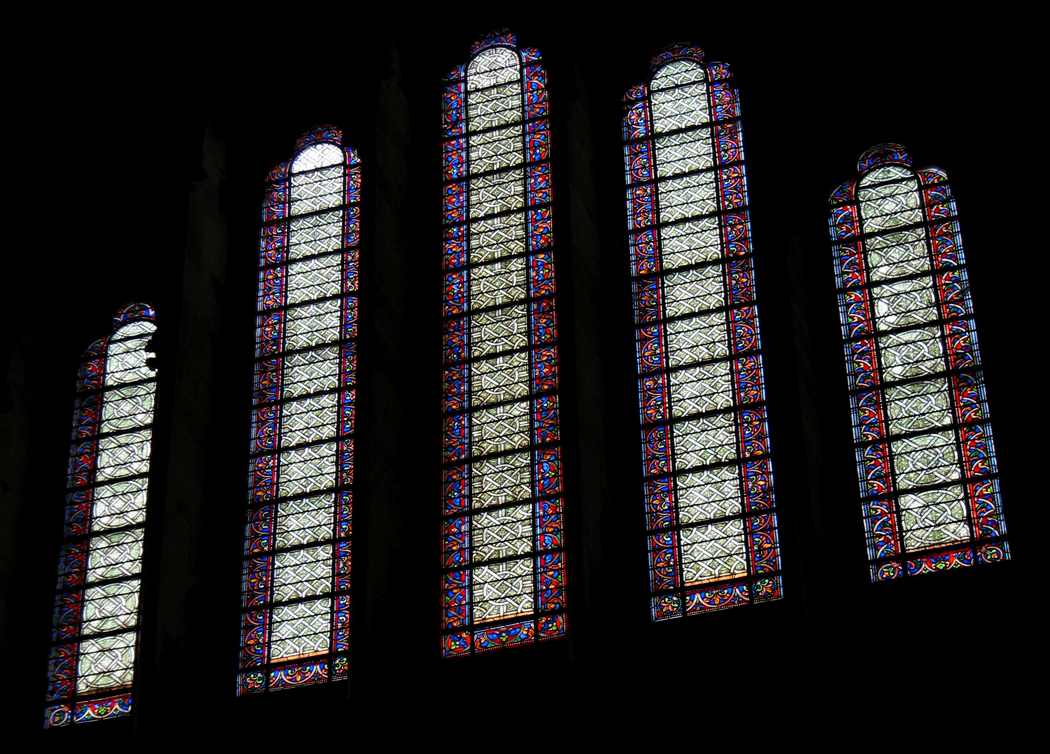
The glory of the big churches and cathedrals can be found in the glass, with the rose windows and the lancets. The outside of the buildings are gaudy with Gothic statuary, tall, gaunt and and stately, but with distinct and individual faces. Vezelay has little glass to note, and its sculpture is Romanesque, not Gothic.

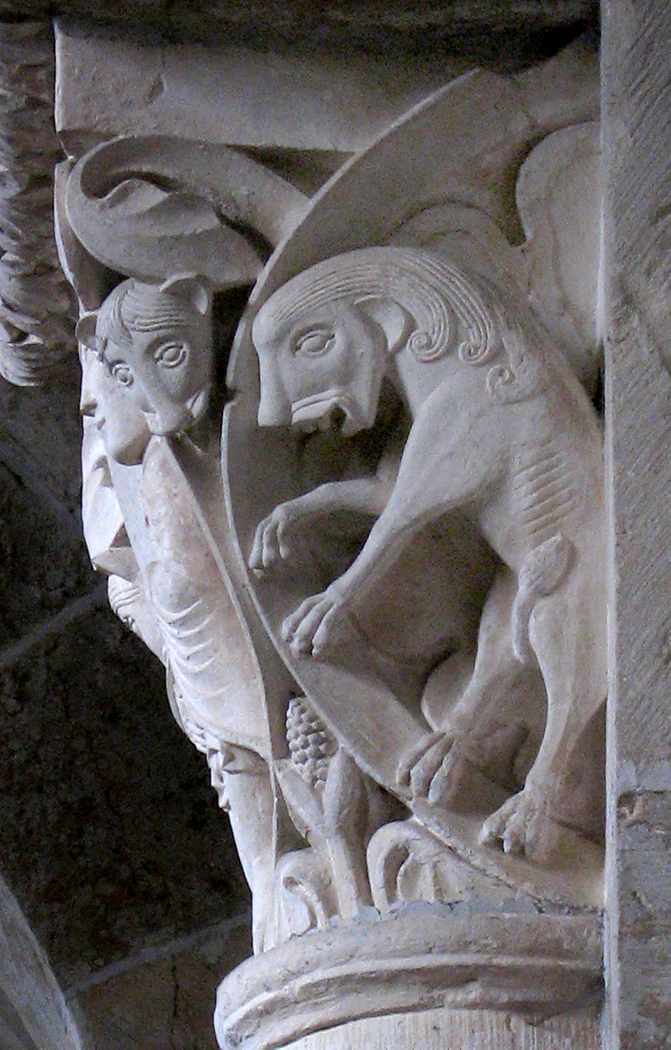
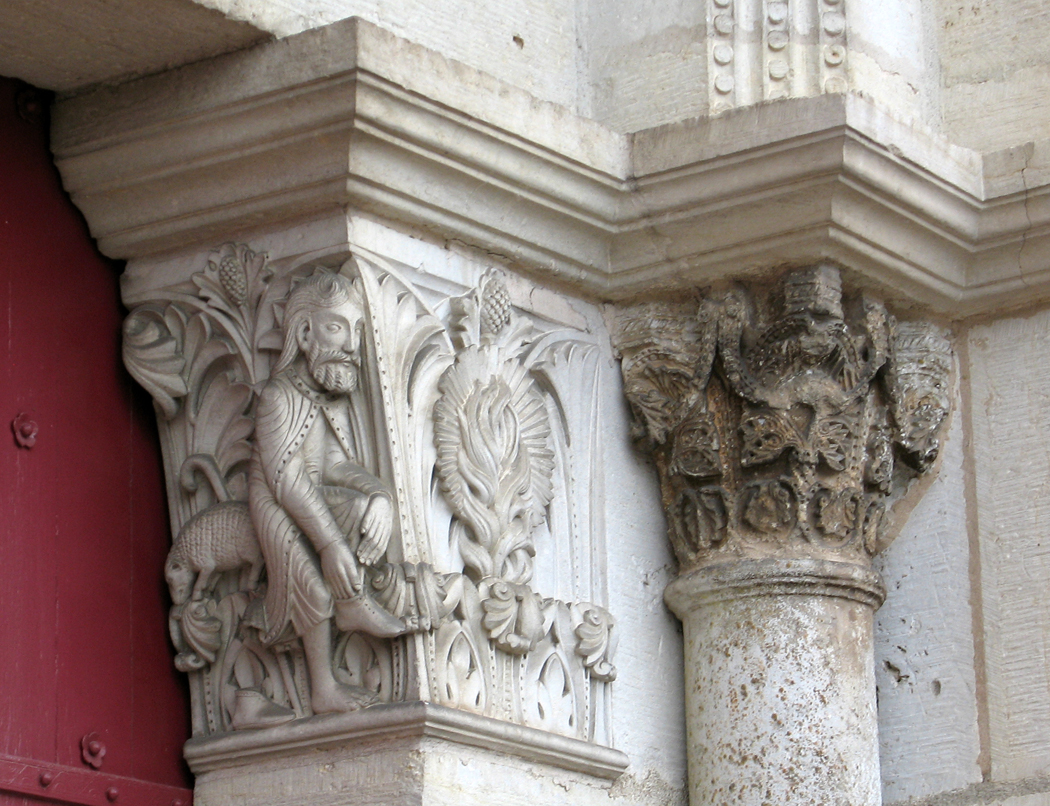
In ages past, the Romanesque style seemed primitive and childish, with large heads and hands, poor proportions and sometimes goggling eyes. But fresher, 21st century perspectives can see them through the abstraction and distortion of Modern Art and they seem not primitive at all, but profoundly expressive.

Alas, much of the sculpture is not original, but replaced in the original style by — guess who — Viollet-le-Duc in the 19th century. Yet, many of the originals remain. You can sort out the difference between the more weathered look of the originals and the smooth surface of the replacements.

Looking at the many column heads in the nave of the abbey church at Vezelay, you can see the narrative drive of the Romanesque artists. Many tell Old Testament stories, such as David and Goliath, or the slaying of Absalom by Joab, or even the rather comical Noah and his wife.

One of the weirdest is the depiction of the sin of lust, a naked woman tearing at her distorted dug while, on the back side of the capital, a demon delights in the torment he causes her.

In another, Moses grinds the Old Testament through a flour mill to form the New Testament, received by St. Paul.

And on another, Ever receives the apple from the serpent in her right hand, while serving up the fruit to Adam with her left hand.

At so many other churches, you spend your time being absorbed up into the cosmos — into the great spaces defined by the nave and vaulting, almost being sucked up into the heavens. But in Romanesque churches, the heaviness of the stone cannot give you the escape velocity you need. Yet, replacing the marvel of the spaciousness, you find yourself standing before column after column, looking up to the top and gasping at the expressiveness of the sculpture.

We are often told that the Gothic cathedral was meant to be scripture in pictures for the illiterate public. But when you stand at the bottom of the well in such buildings, it is nearly impossible to read the imagery of the stained glass, so high above. Surely the mass of the population, either nearsighted or astigmatic, could never read the Bible stories there.

But in the smaller Romanesque, the stories told in the sculpture couldn’t be clearer. You can make out the stories very well.

Vezelay is a palate cleansing change of pace before moving on the the queen of Gothic cathedrals, Chartres.

Click on any image to enlarge

Next: Chartres


The names of the towns and cathedrals of northern France can be a challenge for American English speakers. They all seem to require vowels and consonants not only strange to American ears, but downright taunting.

 
We started this trip at Notre Dame de Paris. That “tre” in “Notre” is something not available in English, outside the clearing of one’s throat. We tend to just go with the name of the Indiana university and say “Noter Daim.” But to approximate the French, you have to give it a “Notra,” ending at the back of the soft palate and “Dom.”

Then we went to Rouen, which is easier, except for that non-rhotic “R” at the start, but we can get by with “Roo-on.”

The drive took us to Amiens, with is a little like saying “Onion,” but with an “M” instead of an “N.” Beauvais is the easiest one: “Bo-vay.”

It’s a little trickier at Noyon, which we might offer “Nwa-yone,” especially if you can say it while losing the “n” in “yone” somewhere in your nasal cavity.

After that, we climbed the hill to Laon, which looks easier than it is to say. Try “loud,” but without the “d” on the end, but with that nasal sound that the French like to use for an “n.” Or, give up and just say “Lao,” as if you were naming the “Seven Faces of Dr. Lao.”

Yet, none of these challenges the English speaker as much as the next cathedral town. In English, we spell its name Rheims, although in France, they spell it Reims. If you think that should be “Rems” in the mouth, well, foolish you. The closest you might get is to say “Rance,” as if it were a gunslinger in a Western movie. Why this should be? Well, if you want to give it the Gallic good-old-try, you might speak the initial “R” at the back of your throat, as if you were clearing it of phlegm, follow that with the “ei” spoken both through your mouth and your nose at the same time, and then attempt to elide into an “m” completely nasal, but more like an “n” than an “m.” Round it all off with a sibilance and you’re good to go. It should come out, perhaps a leaning a little toward “Rass,” as if it were attempting to clean out your sinuses at the same time.

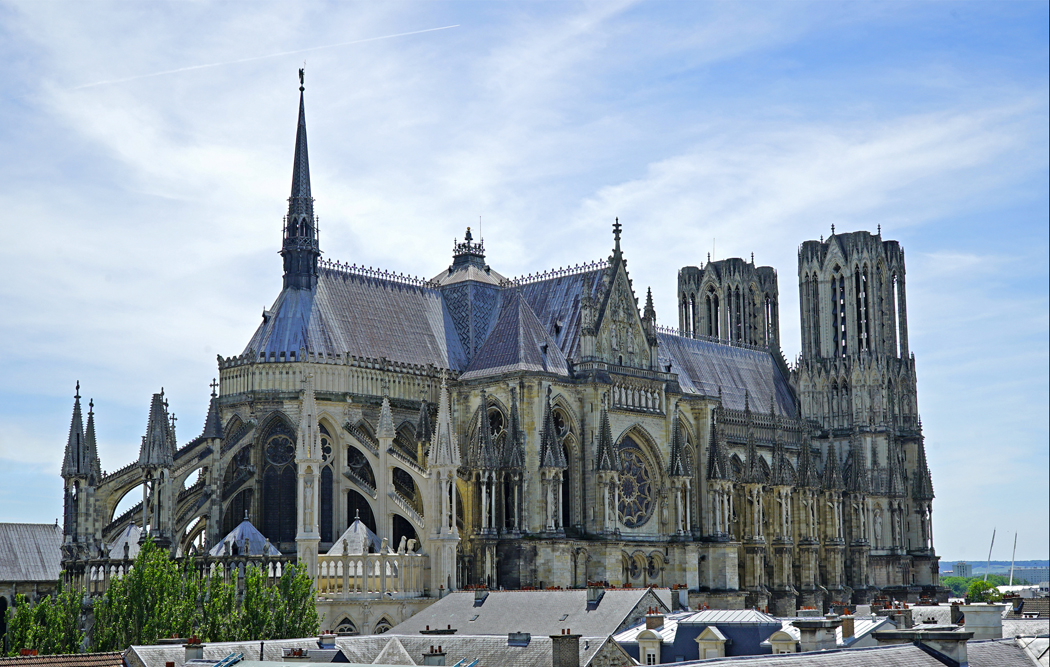
All that aside, the cathedral in Reims is from central casting; it is the handsomest, most perfect, with good bone structure and a set of capped teeth to rival the glossiest Hollywood star. If you were to invent the perfect Gothic cathedral, you would have invented Reims.

Yet, something seems just a little off, like the Hollywood star you suspect of being hollow behind the glittering eyes.

Unlike the buildings in Amiens, Beauvais, Noyon or Laon, which seem too large for the towns or villages they dominate, the cathedral in Reims sits at the center of a sizable city. Traffic is congested and parking is hard to find. When you confront it, walking into the parvis, you see an edifice that shines large, the hub of a great urban wheel.

Also unlike the other cathedrals, it is symmetrical, with two identical towers on either side of the central three portals. Other cathedrals seem hotch-potch, assembled from spare parts, almost, Reims was put together from a kit straight out of the box, all parts included.

Which is all the more surprising, considering that it has been worked over and rebuilt, redesigned and rejiggered for some 800 years. If it looks all of a piece, that is because its many restorers and rebuilders made the conscious decision to keep the essential plan unchanged.

So, the first impression of Reims is of a sturdy, beautiful, archetypal Gothic church, three great arches on its western front lined with rings of sculpture, a great rose window in the center, a line of kings above that and the twin towers rising to the height of a 26-story skyscraper. It is jutting jaw and piercing eyes, all perfectly tanned.

I’m afraid I may be sounding a little too snarky about what is a very impressive bundle of awesome. If you had never seen Chartres or Paris or Amiens, then Reims would satisfy all your spiritual hunger for a Gothic cathedral.

The problem is one that you face in almost every Gothic survivor. One recalls the problem of Theseus’ ship, in which, over the years, every board, every nail, every rope has been replaced, one by one. And one asks, is this the same ship that carried Theseus home from Crete?

Or, more aptly, the Japanese temple, whose wood is replaced every 20 years. The grand shrine in the city of Ise has been replaced this way more than 60 times, yet is considered the same temple that was built in AD 692.

(It is widely believed — though not exactly true — that all the cells in a human body are replaced every seven years, yet we think of ourselves now as the same person we were when we popped out of the dark into this bright world.)

Reims has undergone something of the same constant renewal, like the goddess Aphrodite.

The modern cathedral was begun in about 1220 and was finally roofed in 1299, but work continued, adding details through the 14th century. A fire in 1481 required major reworking, finished in 1516, keeping to the Medieval style.

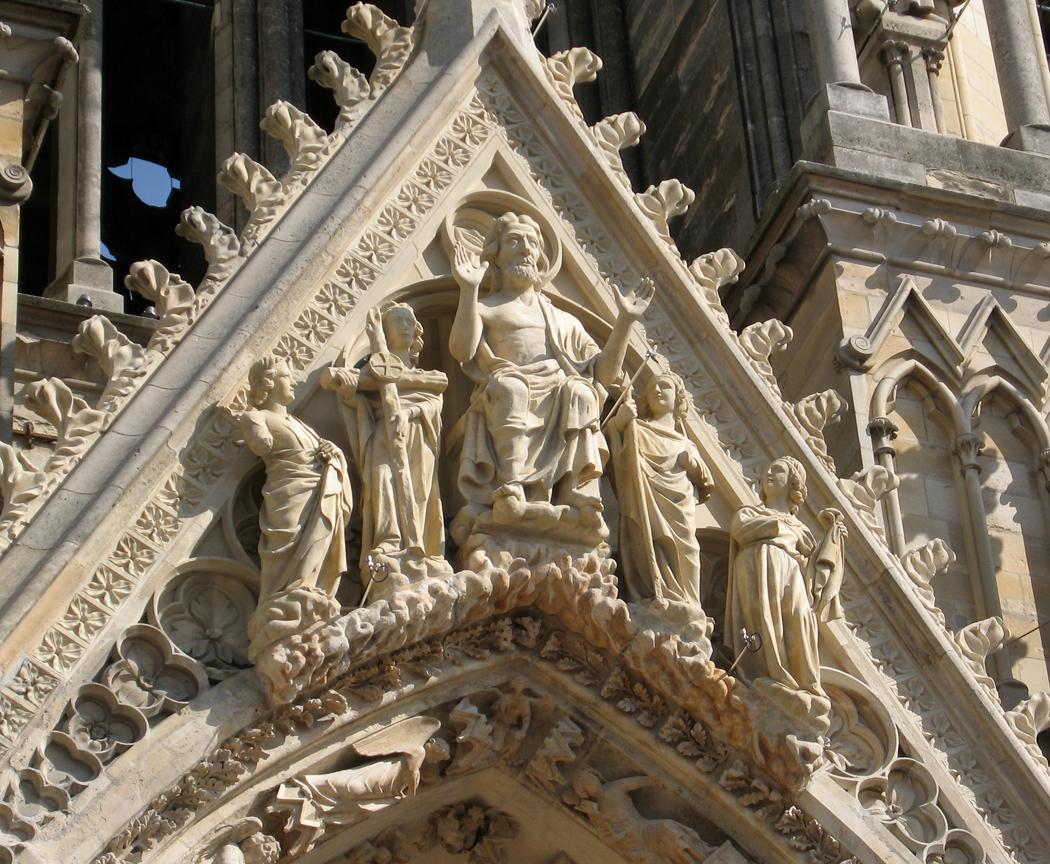
The continuous renewal of Reims began in 1610 with gussying up the central portal of the west facade. Nineteen statues of the central portal archivolts were replaced.

Later reworkings took place from 1727 to 1742 and from 1755 to 1760 to repair the deterioration caused by rain leakage and freezing. Many of the sculptures were repaired or replaced.

But the real overhauls began in the 19th century, as France began looking at its great cultural monuments and deciding to upgrade them. The Romantic movement in art and literature idealized the Middle Ages, and books such as Chateaubriand’s “The Spirit of Christianity,” and Victor Hugo’s “Hunchback of Notre Dame” (to give it its popular title) revived interest in buildings that had been allowed to deteriorate or had been desecrated during the violently anti-clerical French Revolution.

In 1818, a catalog of “Romantic and Picturesque Sites of Ancient France was begun, not finished, in 20 volumes, until 1878. And in 1830, the government created an post of Inspector of Historical Monuments.

Hugo wrote a pamphlet called “War on Demolishers,” to “stop the hammer that is mutilating the face of the country” by destroying historic edifices. He denounced “ignoble speculators,” who “vandalized” the great monuments to build cheap get-rich-quick developments. He called for a national law to protect the old treasures.

He also explained “There are two things in an edifice: its use and its beauty. Its use belongs to its owner, its beauty to everyone. Thus, the owner exceeds his rights in destroying it.”

Between 1826 and 1837, the first major interventions of the 19th century were carried out, replacing sculptures on the western facade. One after another, from then on, a series of restorers and architects tried to bring Reims back to what they considered the authentic and original designs of the cathedral. First diocesan architect Arveuf, then Eugene Viollet-le-Duc, the restorer of Notre Dame of Paris, who undid the modifications of 1481-1516 and replaced them with his own design.

After Viollet-le-Duc, Eugene Millet did the same thing to the south side of the nave. From 1879 to 1886, Victor Ruprich-Robert did the same thing to the north side. After him, Denis Darcy jumped in, working to 1904. From 1904 to 1915, Paul Gout reworked the western facade and parts of the chevet. The work was not quite finished when World War I broke out. The war did not treat Reims kindly. It was bombed and a good portion left in rubble.

It took another 20 years to fix what the German artillery shells had broken. Restorer Henri Deneux, began in 1919, clearing away debris and cataloging the fragments and installing a temporary roof. The glass was a particular victim of the war. Deneux had the guide of drawings made of the stained glass made before the war and had many of the windows rebuilt, sometimes from the shards of the originals.

By 1938, most of the restoration was complete,  but World War II was in the offing. This time, the windows were removed for safe storage and reinstalled after the war.

The rose windows at Reims are beautiful and unusual. Each of the four roses has an “eyebrow,” an arc of stained glass over the oculus. There are roses on the transept facades and two, one large, one smaller, on the western facade. Outside the roses at Chartres and Paris, these are among the most stunning in Christendom.

The large window dates originally from 1240s, and was restored in 1872; because of war damage, it currently contains only about a quarter of its original glass. The rest, like the lower rose, dating from 1255, now has replacement glass from 1937.

The south rose was destroyed in a storm in 1580 and replaced a year later, then destroyed again in WWI and recreated in 1937; the north rose dates from before 1241, but now contains only a couple of original panes, also having been replaced after The Great War.

Finally, there are modern admixtures, like the great trio of lancet windows designed by artist Marc Chagall and installed in 1974.

So, like Theseus’ ship or the Shinto temple, the question of how much can the current cathedral be called Gothic is problematical.


Reims was clearly one of the big boys, as far as cathedrals go, but it is hard, sometimes to really appreciate how much restoration has gone on at these buildings. The older, plainer looking churches, such as Noyon, tend to be more authentic, however you want to define that. The better looking churches are usually the ones restored by Viollet-le-Duc or one of the other enthusiastic restorers of the 19th century. You have to choose between effectiveness or authenticity. Are you willing to accept the slightly “Disneyesque” interpretations of the restorers, to get a feeling for what the buildings must once have been like, or do you approach it with a scholar’s eye, and want to see nothing but the actual evidence of the era, uninterpreted by later centuries, no matter how well-meaning.

This is why Chartres is so well admired by those who know: Most of it is original, and most of it wasn’t destroyed during the Revolution. It is the best example of the style, without the admixture of good intentions. We will be visiting Chartres soon.

Click on any image to enlarge
Next: Vezelay

It’s easy to think of Gothic cathedrals as a single thing. The way we think of high-rise office buildings all being glass and steel towers, totally interchangeable. But each Gothic church is distinct. As you visit them, you find something completely outside the generic “plan.”

The cathedral at Laon, for instance, is sometimes called a “barn cathedral.” That seems insulting, at first, but when you visit, you realize what is meant.

The “standard” Gothic church is built on a floorplan based on the Christian cross, with the long part of the cross stretching to the west, with a main entrance in the western facade. There is a cross-piece, called the transept, which cuts across the primary axis at 90 degrees, and at the eastern end, a shorter part of the cross: the choir, ending in a rounded apse. The choir and apse together are known as the chevet.

You also expect a great round rose window cut into the western wall, and perhaps two other roses in the north and south ends of the transept.

The central corridor of the axis is called a nave, and it is usually paralleled to either side by an aisle. Above the aisles is a second story gallery known as the triforium, and above that a row of windows called the clerestory.

The nave is tall and narrow and topped with a series of ribbed vaults, holding up the ceiling.

Outside, the west facade is usually bounded by two towers, one to the north and one to the south.

The problem is, that no single example follows all these descriptions. Each church is unique. This one has tall spires instead of blunt towers; that one has apsidiol (rounded) transepts instead of flat-ended transepts; another has two aisles on each side of the nave; yet another (like Rouen) has a tower above the crossing of the transept — that point where the nave and choir transect the transept. (Is all that confusing enough, and enough specialized vocabulary to bog things down?)

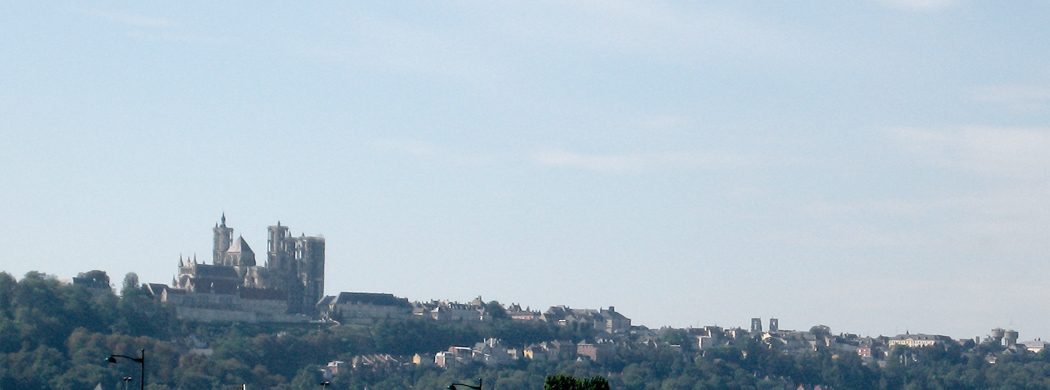
Laon is a town built on a mesa in northern France. In some ways it is reminiscent of the Hopi mesas in Arizona. At the top of the mesa the cathedral rises above the surrounding plain. Like the Hopi mesas, the oldest part of the city is on the summit, and the more modern parts below in the shadow of the mesa. You can see the cathedral from many miles away as you approach.

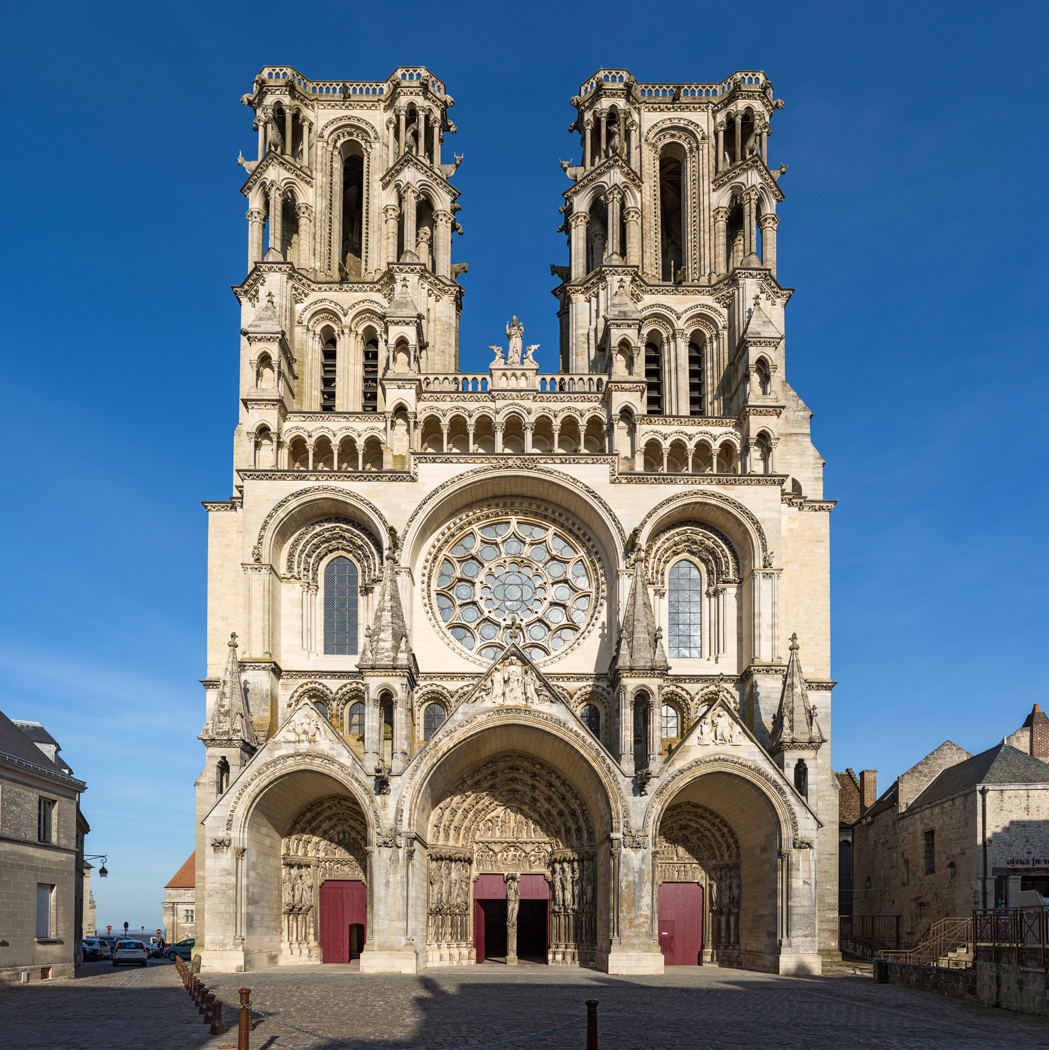
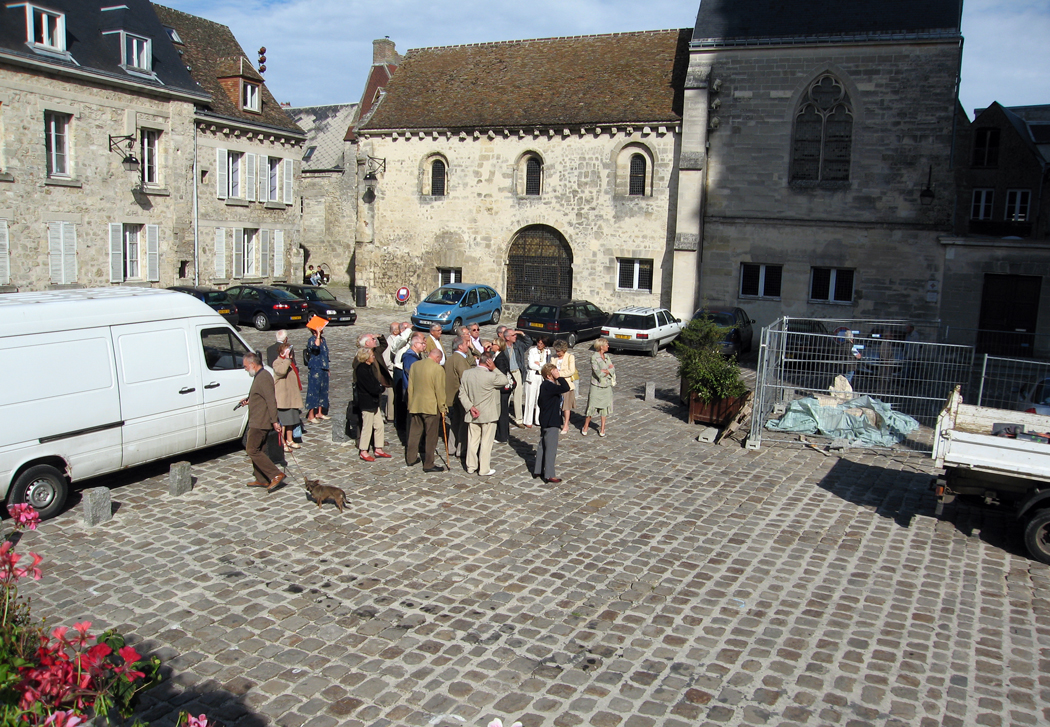
If you drive to the top of the mesa, the streets are narrow and convoluted; parking is at a premium, and while most other cathedrals have a broad parvis, or plaza, in front of them, the parvis at Laon is a shrunken little wide spot in the narrow road not much bigger than a Burger King parking lot. It makes getting a suitable photo of the cathedral facade nearly impossible; you simply cannot get back far enough to get it all in, unless you use an extremely wide-angle lens, in which case, the perspective goes all askew. The central tower allows for a great open lantern at the heart of the cathedral, which thrusts upward beyond the vaulting, adding an extra level of windows, making the highest part of the church the brightest.

The first idiosyncrasy you notice (after the parvis) is that the church has five towers instead of two. There are the usual towers at the north and south edges of the west facade, but there is a single tower at the face of each of the transepts and a fifth tower over the crossing, in the center of the church. That’s a lot of towers for a church — you hardly know which to pay the most attention to. The western towers are the traditional high points, but at Laon, the transept towers are much taller. (The central tower is a dwarf, truncated and hardly to account).

Then, there is the interior elevation. Instead of a nave arcade on the ground floor, a triforium and clerestory above that, there is a fourth layer in the cake: a blind arcade above the triforium. The triforium itself is distinctive, because it has windows behind its arches, helping to light up the interior of the building.

But what makes Laon a barn, if you want to use that word for something so spiritually uplifting, is that at the far end of the nave, the eastern end of the cathedral, you do not have the usual curved, graceful apse, but rather a squared off butt end, graced with an extra rose window.

The nave is wide and the effect is to give the sensation of a large warehouse or barn, rather than the more usual gracefulness of curves and lancet stained glass you find elsewhere.

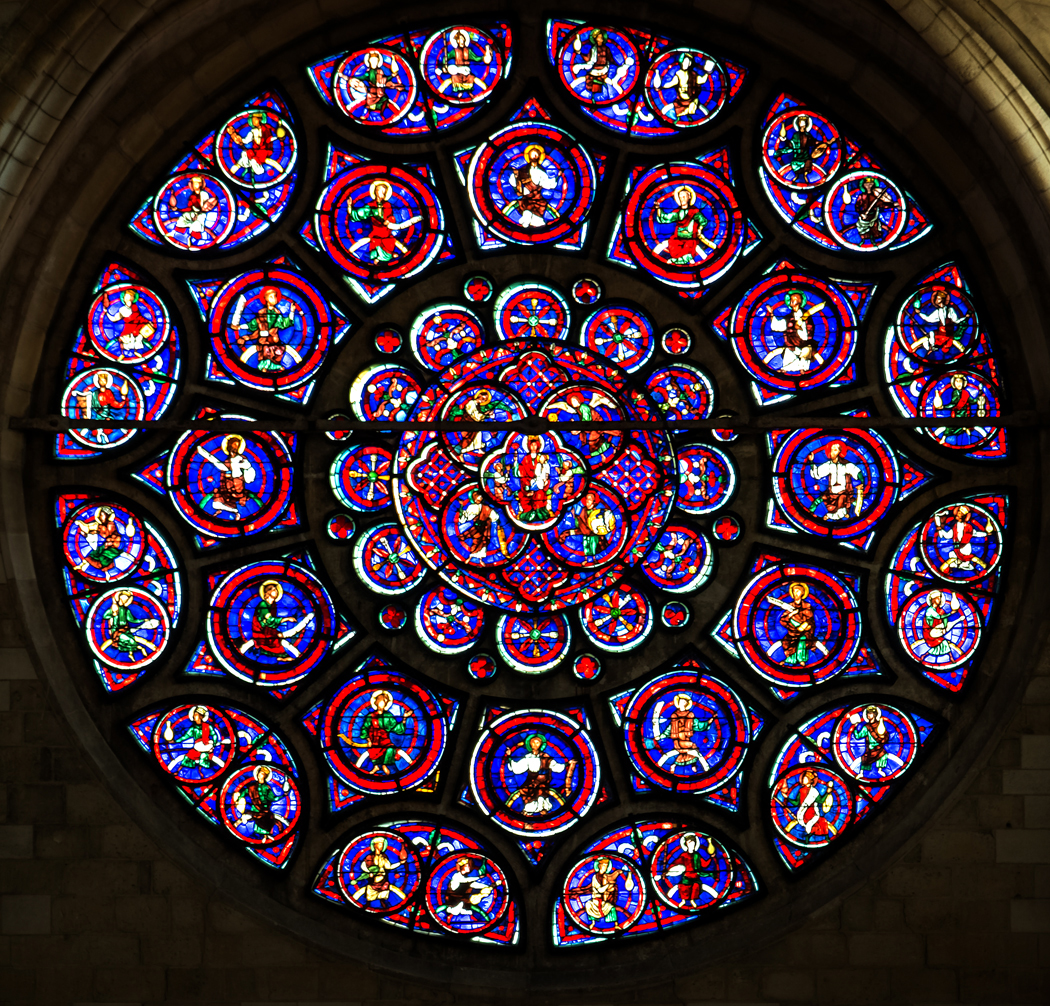
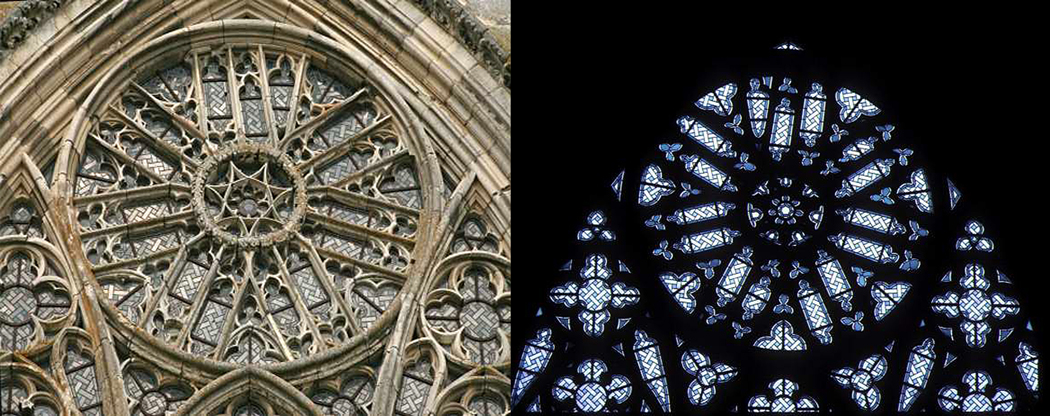
With its barn-end long-stretch, Laon manages four rose windows instead of the usual three. The one in the north, like the western rose at Chartres, is simple and heavy with stone.

The western rose, while glorious as far you can see it, is mostly blocked by the church organ.

The southern rose is mostly clear glass, with simple radial stonework tracery.

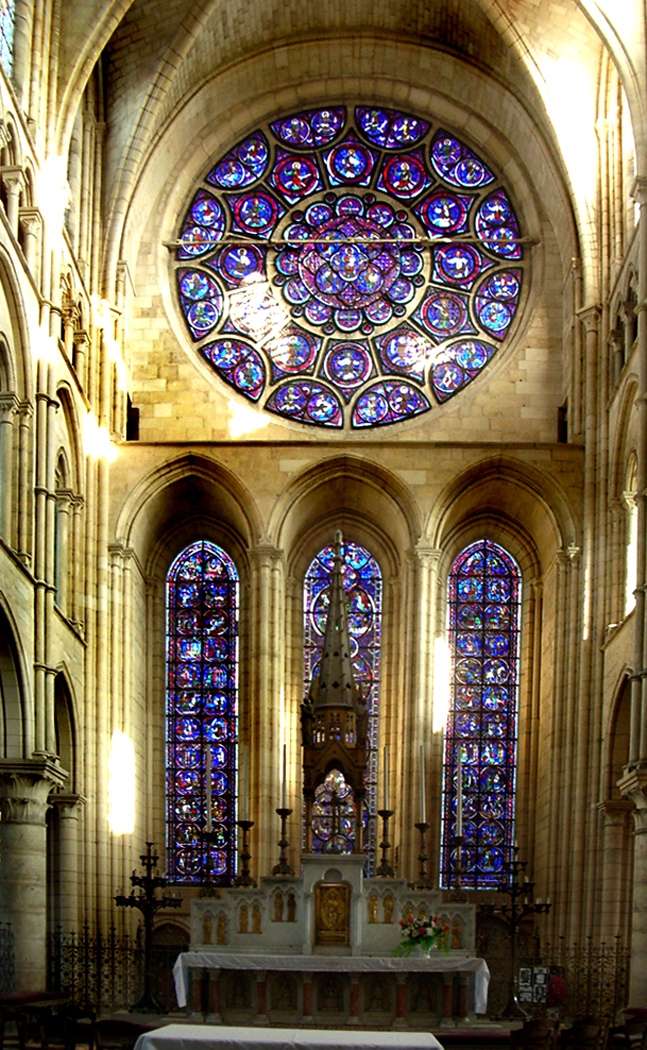
Leaving the east rose as the prize. It is mostly replacement glass, but with some original glass in it. With three lancets, it makes a stunning bit of stained glass as you look past the altar into the choir.

Laon also had towers on the sides of each of the transepts — towers that were actually taller than the west facade towers, giving the whole a rather different proportion than any cathedral we had seen before.

And there was a giant rhinoceros on the facade, with a man under him holding a noose around its neck. Actually, it was a flying rhinoceros, because it had wings.

But also on the front of the cathedral was a giant hippopotamus, also with wings, and with a man under it poking it with a sword.

We thought this singularly odd. When we asked, we got a reply in French pidgin English that implied — although we aren’t confident we understood properly — that one of each was “sacrificed” at the opening of the cathedral.

This seemed odd enough, but when we got to Rheims, it had a rhino, too, between the north and central portals, and a bull’s head between the central and south portals.

There are lots of animals on the cathedrals. They are one of the surest joys of cathedral going. But Laon was special. It’s two western towers were ringed, two-thirds of the way up, with pairs of giant animals at the corners — eight animals per tower, in pairs of four. Two unicorns, two horses, two bulls (or cows), two goats, all giant enough to be the villains in 1950s Hollywood sci-fi monster films.

Yet, what most people probably remember most from Laon are the oxen. Strange as it may seem, it looks as if the cathedral is dedicated to cattle. The two west towers are filled with animal sculpture, it is a stone menagerie, a carved zoo.

“When we looked up high at Laon at the stone animals and identified them together, I had the feeling, yes, this is the world I live in,” wrote Carole in her diary. “There is a goat, there is a horse, here’s an angel, devil, saint, monster, son of god. But here is a donkey, and a bear. This is about my world.

“And these little animals were elevated to the towers of the cathedral where they looked out on all the countryside. I know ancient children really loved those animals. And probably tried to make them out of clay.”

Click any image to enlarge

Next: Reims

Size matters, at least in the case of Medieval churches vying with each other for bragging rights. The two tallest Gothic cathedrals in France are only a few miles apart, but they tell very different stories.

In the high Middle Ages, towns built churches the way American cities build sports stadiums, striving for the biggest, best and most impressive. They also advertised the best saintly relics, to draw pilgrims and their money to town. Some 70 miles north of Paris is the city of Amiens, which has the cathedral with the highest vaulted ceiling of any completed church and some 30 miles from that is the incomplete Beauvais, with a ceiling even higher, but an unfinished nave, leaving the church truncated and mutilated.

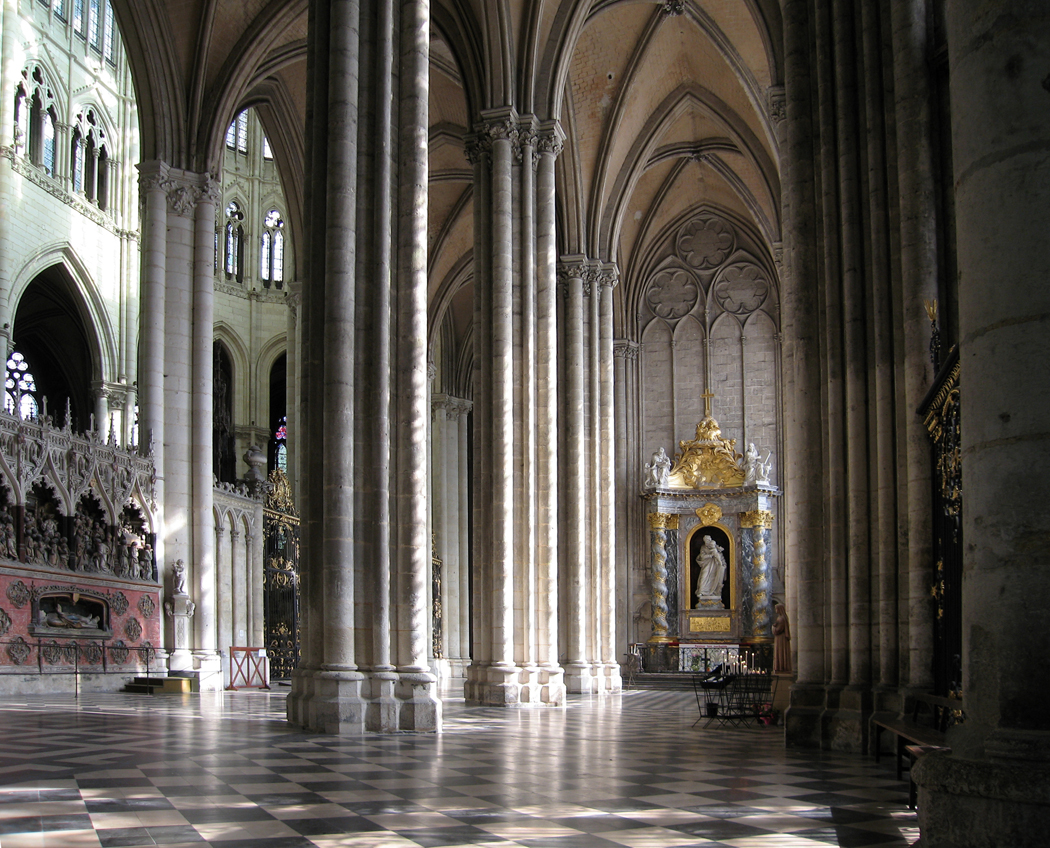
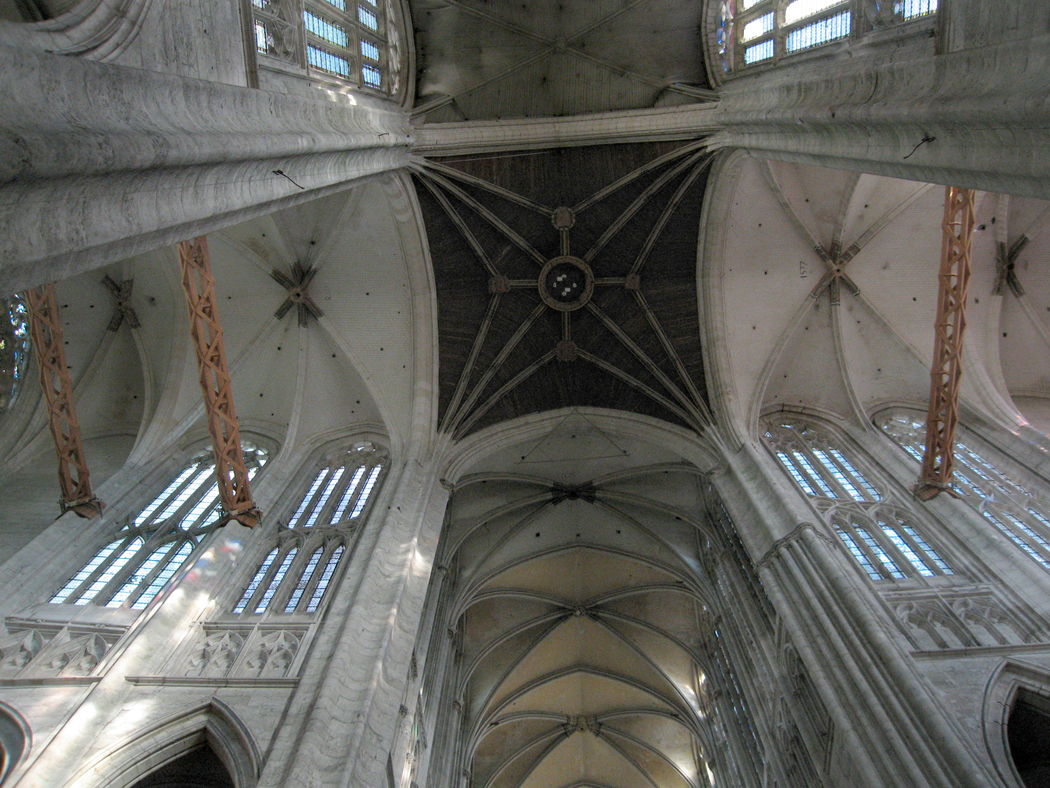
Amiens is a nearly perfect relict of the architecture of those years (and I shorthand the city’s name for the cathedral, otherwise I must write Notre Dame d’Amiens — or more precisely “The cathedral basilica of Our Lady of Amiens” to give it its official name — and almost all of these churches, cathedrals and basilicas are called Notre Dame or “Our Lady,” after the Marian cult that figured so prominently in Roman Catholicism in the area and at that time) It is the largest by volume and the tallest from floor to ceiling (save only the unfinished Beauvais, about which more later) with 13 stories of emptiness above the visitor.

It sits in the center of the town with a small by handsome parvis, or plaza, at its front. Three portals punctuate the western facade, which is covered with statues of saints and biblical figures. The north tower is slightly taller than the south, and because the building sits on a slight incline, there are more steps to climb at the north end of the facade than in the south.

Inside is brightly lit. Like the cathedral at Rouen, most of its stained glass is gone and the clear or frosted glass lets sunlight stream in.

The odd effect of the church’s regularity, its brightness and its isolation from other buildings nearby, Amiens doesn’t seem as big as it is, with ceiling 138 feet above the floor, and encompassing 260,000 cubic yards of air inside — three times the volume of Notre Dame of Paris. It is, however, the perfect model of the Gothic cathedral and the one I would suggest be the first to see, so as to gauge all the other you find in the northern half of the hexagon that is France.

There are a whole series of such cathedrals and basilicas in northern France, usually not more than 50 miles between each, and in 2006, my wife and I took a trip through the area, visiting 11 of these monuments. From Paris, we took the train to Rouen, where we rented a car and drove to Amiens and Beauvais. Then to Noyon, Laon, Reims, Vezelay, Chartres and back to Paris and Sainte-Chapelle, ending at the earliest Gothic architecture at St. Denis.

Of all of them, Amiens is perhaps the most classical, the ur-cathedral, and certainly the most unified, having been built rather quickly, by Medieval standards, from 1220 to 1260, with additions made in following centuries. Where some other churches are still rather grimy from the exhaust of the Industrial Revolution, Amiens has been cleaned up and is bright and presentable.

If anything is true of these prodigies of architecture, it is that there is no such thing as a Gothic cathedral — at least no such thing as a “pure” Gothic cathedral. Each has been built over decades, even centuries, and each has add-ons in different styles, rebuilds made more “modern,” and restorations by well-meaning finaglers such as the 19th-century Eugene-Emmanuel Viollet-le-Duc, who replaced damaged statuary, added grotesques and redesigned finials and gargoyles according to his Victorian sense of what Gothic style should be.

Viollet-le-Duc was put in charge of restoring Amiens in the late 19th century, and he added a whole new line of statues at the top of the west facade, called the “Galerie des Sonneurs,” or “Gallery of Bell Ringers,” a passageway arcade between the two towers. He redid a good deal of the statuary and had the cathedral floor redone to smooth out the cobbling of centuries of foot traffic. Modern standards for restoration were not part of his procedure. “To restore an edifice”, he observed in his Dictionnaire raisonné, “is not to maintain it, repair or rebuild it, but to re-establish it in a complete state that may never have existed at a particular moment.” In other words, as he might imagine it

But such rejiggering is hardly unusual for these cathedrals.

Amiens was originally built in what is called “high Gothic” style, but all kinds of stylistic incongruities have been patched on. Although the building was essentially complete by 1280, in the 16th century, the mayor of  the city of Amiens decided it should have a spiffy new rose window in the then-current “flamboyant” style, highly sinuous and curvy, so the front window of Amiens doesn’t match the rest of the facade.

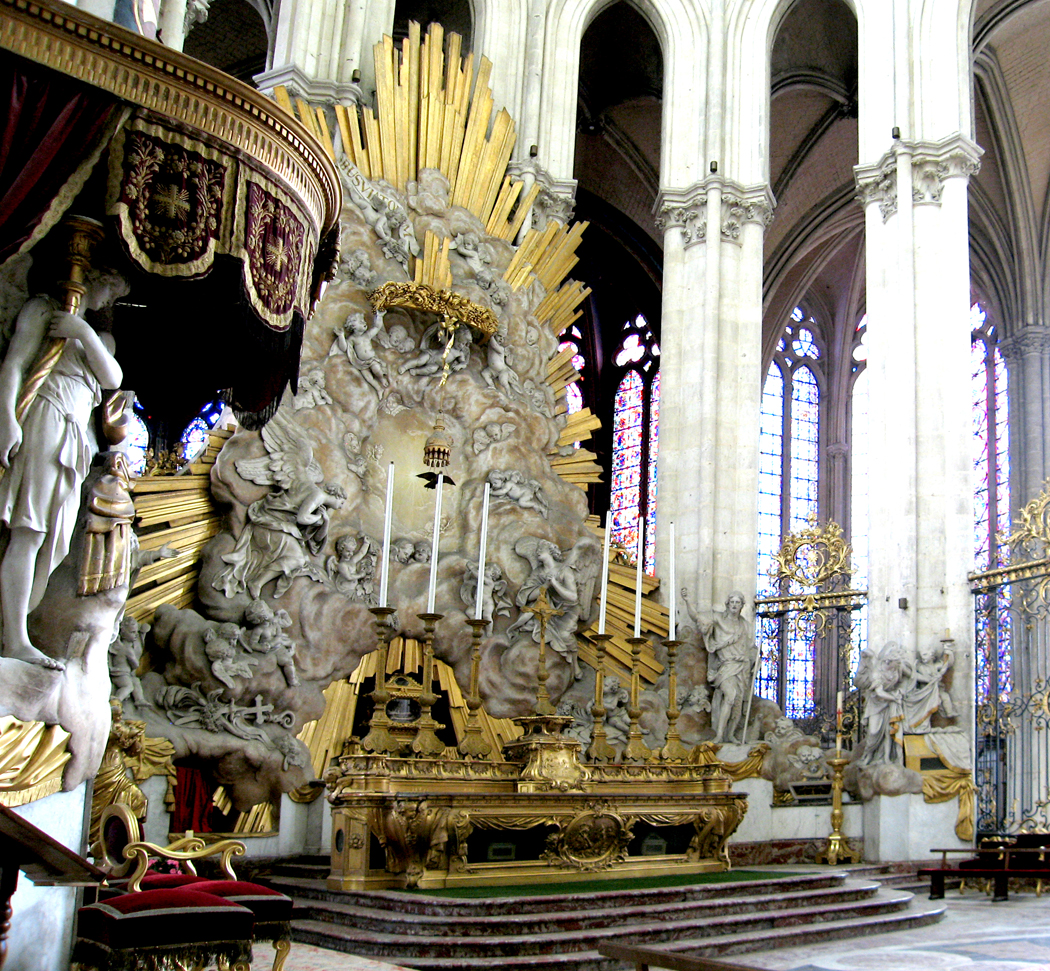
Not that one can complain. Inside, there are altars added in the Renaissance and the Baroque eras, so completely out of sympathy with the more rigorous taste of the Gothic. In some cathedrals, there are even Modernist stained glass windows.

It is the genius of the Gothic style that it can absorb almost anything and still seem perfectly harmonious. Some historical styles that strive for unity require any additions to be matched stylistically or the new parts seem like carbuncles grown where they are least desired. (Can  you imagine an addition to London’s Saint Paul’s Cathedral designed by, say, Louis Kahn?) But Gothic is an accepting style. There is not much you can do to it and not have it welcomed into the family.

The 19th century gave us a pervasive sense of the Middle Ages. Whether it was Victor Hugo in his hunchback novel, or Sir Walter Scott in his Waverly novels, Alfred Tennyson in his Idylls of the King, or Mark Twain (who tried to take the whole thing down a peg or two) in his Connecticut Yankee in King Arthur’s Court, there are knights in shining armor, kings and their courtiers, castles and cathedrals. Those artists and authors gave us an era of dour religion and grey stone monuments. And when we look at the front of Amiens, with its ranks of saints standing like an army between the portals, we tend to have a purist vision of the stern asceticism of that era. Yet, we now know, from recent restoration work, that those grey statues guarding the church were originally brightly colored with paint. Traces of that paint is found in the stone, and in recent years, a fancy computer program has managed to create a light show that projects the original colors back onto the neutral stone. We can see what the front of the cathedral was meant to look like. It comes as a shock. One is reminded of certain Arab sheikhs painting the statues in their gaudy Los Angeles mansions.


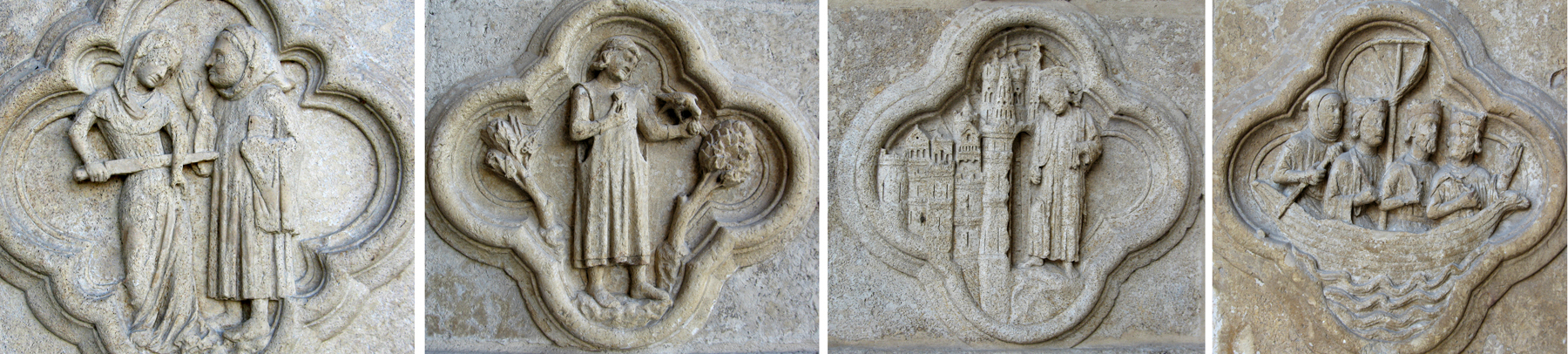
There are ranks of small bas reliefs at eye-height along the front of the cathedral that depict the zodiac signs, the works of the seasons, and the stories of local saints. They are now monochrome, but inside, you can find similar quatrefoil reliefs that are still painted.

The past as we imagine it is always a shaky construct. History is always being revised, and those scholars who do the work are initially derided as “revisionist,” when, of course, that is their job. To quote the revered Firesign Theatre, “Everything you know is wrong.”

Click any image to enlarge


Beauvais

Some 35 miles from Amiens, the cathedral at Beauvais is a testament to overreach. One cannot avoid thinking of the Tower of Babel, where cultural hubris outstrips engineering acumen and it all comes tumbling down.

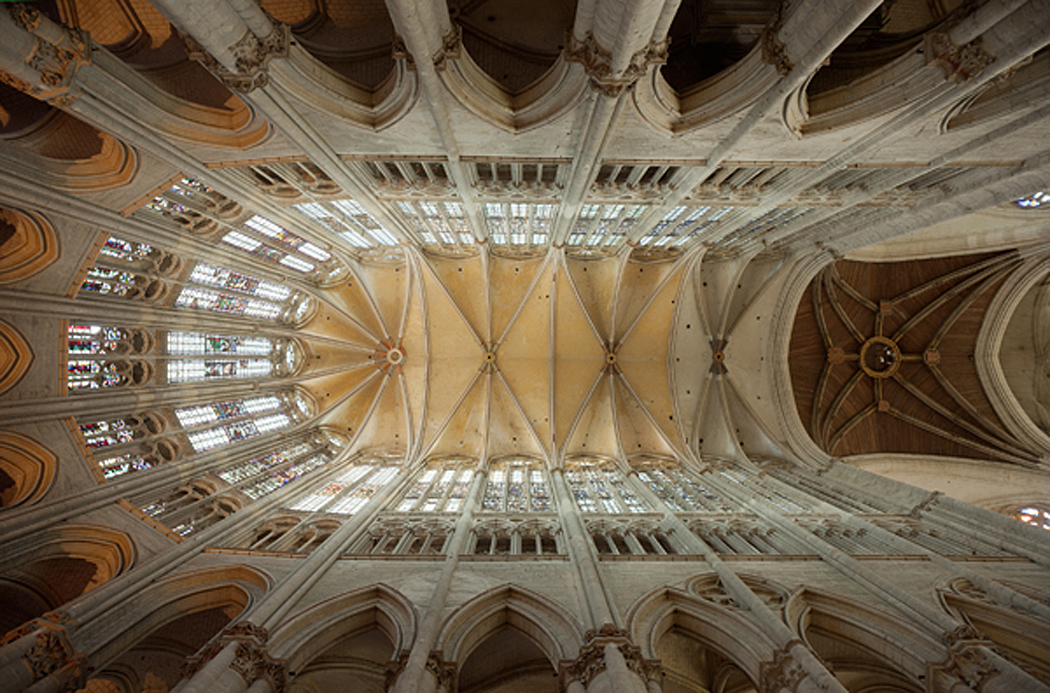
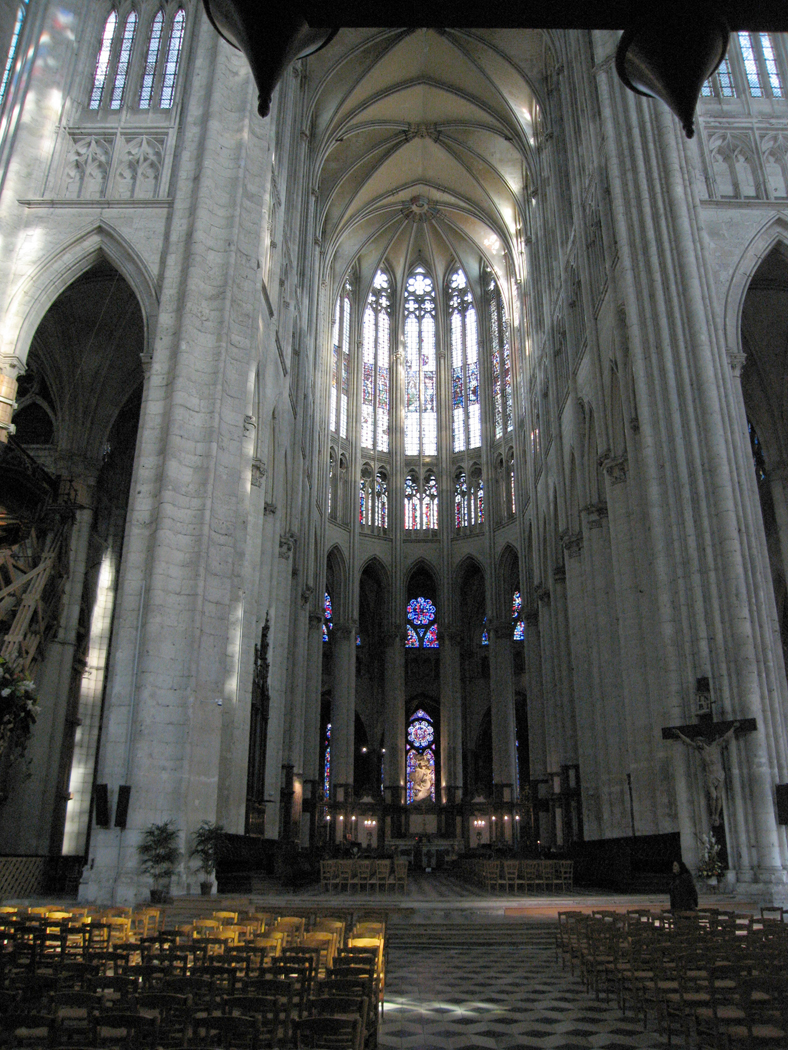
The central metaphor of all these Gothic cathedrals is altitude, the sense inside them, that they reach to the heavens — or rather, to heaven. Their naves and choirs get taller and taller as the years move along, and when you are inside, it is nearly impossible not to be drawn upward, craning your neck into the vast space above your head. The light in a Gothic church also comes from above, reinforcing the metaphor: Above your head is divine.

This spiritual metaphor exists alongside the more earthly desire of city fathers to brag that they have the biggest and best, and so, a kind of competition existed in the 13th and 14th centuries to see who could build the most vertiginous vaulting. The winner of this inter-city battle was Beauvais, although its victory was Pyrrhic.

In AD 1225, the city authorities decided to replace an older church with one in the new Gothic style. The ambitions of the church and the local barons coincided in a plan to make this church the tallest and best in the world. The barons were in in  struggle with the French throne of Louis VIII and wished to assert their supremacy with the building, and the bishop wanted to assert his own primacy in this grand construction.

They finished the choir of the new church in 1272, with a ceiling vault that was 157 feet above the floor. An empty space the size of a 15 story building.

A Gothic church is usually built with a floorplan in the shape of a cross. The top part is called the choir, at the east end nearest the sunrise, the cross pieces are called the transept and the long side of the cross is the nave. Such churches were usually constructed with the choir made first, because that is where the Mass is celebrated and where the altar is located. (Amiens was unusual, in that the nave was built first and the whole constructed from west to east). So, in Beauvais, the choir was up and church services begun before the whole was finished.’’

It makers were proud, certainly, not only of the tallest church, but the finest, slenderest flying buttresses supporting the roof. But 12 years after it was finished, the roof collapsed. It seems to modern engineering studies, that a gale wind off the English Channel caused sympathetic vibrations in the structure and it shook apart. They rebuilt.

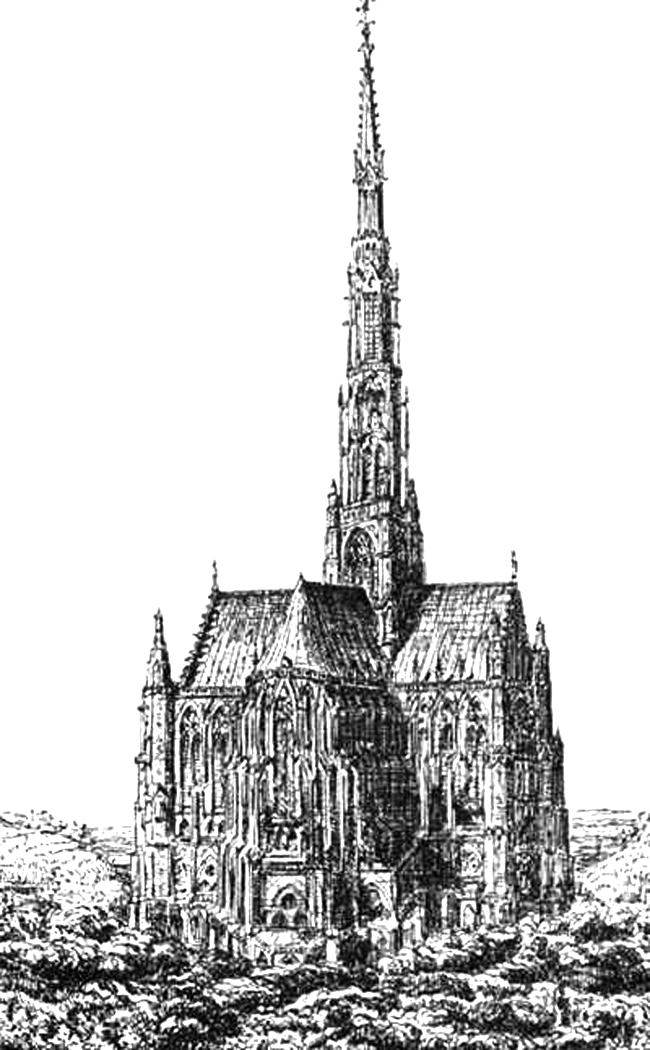
But the collapse, which caused concern about the engineering, and trouble fund raising to complete the whole left the church with only the choir and transept. At some point, it was decided that instead of using the money they had to finish the nave, they would use it to top the whole with a giant spire, which was finished in 1569 and left the church — at 502 feet high — the tallest building in the world at the time.

“We will construct a spire so high that once finished those who see it will think that we were crazy.”

Perhaps they were. Unfortunately, on April 30, 1573, it, too, came crashing down, along with three levels of the bell tower.

As described by author Elise Whitlock Rose, “On the eve of Ascension Day, 1573, a few small stones began to fall from its heights. The next morning, a mason, who had been sent to test it, cried out in alarm; the bearers of the reliquaries, about to join the Procession of the people and the clergy who were waiting outside, fled; — there was a violent cracking, — and in an instant, the vault crashed amidst a storm of dust and wind. Then, before the eyes of the terrified worshippers, the triple stories of the lantern sank, the needle fell, and a shower of stones rained into the church and on the roofs.”

The choir was rebuilt once more, but without the spire. But the nave (except for one bay) was never completed, leaving Beauvais as the trunk of a cathedral, a mutilated fragment.

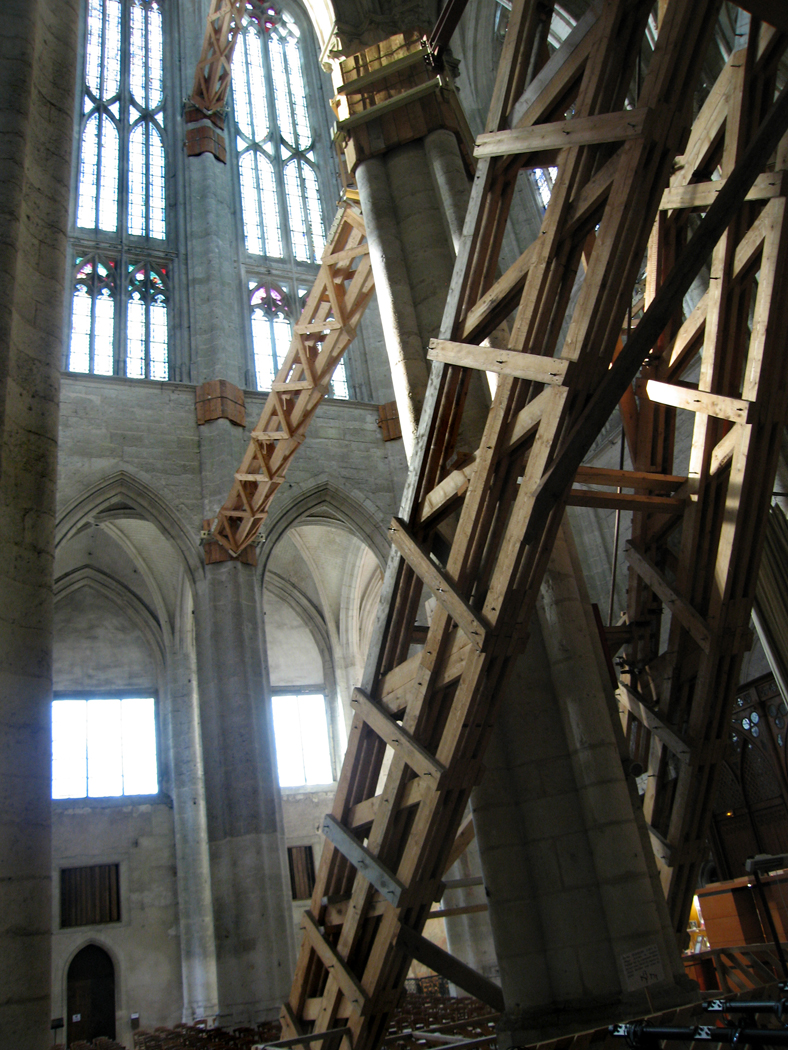
The shakiness of its construction continues to threaten the building even today. The inside, meant to be an awe inspiring sublime holy space, is filled with trusses and braces, attempting to keep the whole from final catastrophe.

“I can remember Beauvais, because it didn’t have figurative sculpture on the outside and it didn’t have a nave” wrote Carole in our journal, “and inside I was frightened because so much of it was supported by wooden beams and screws. I wondered if it could fall.”

The lack of nave makes another point about the architecture: Despite Beauvais having the highest vaulting, its spiritual effect is diminished by the lack of nave. When you first enter Notre Dame de Paris, or Amiens, through the west portal, the view down the long stretch of nave gives you perspective on the height, making it all the more effective. You can see the height because of the length. At Beauvais, despite the height, there is something of a claustrophobic feel to it, squeezed into the heights instead of expanding to them.

Next: Noyons and Reims

rouen-facade-sunny

Visiting the churches, basilicas and cathedrals of Gothic northern Europe can be an intoxicating experience, and one can find oneself drugged into excessive panegyric. One recalls the excessive gushing of early 19th century writers and artists over the Romantic Middle Ages, with their knights in shining armor, courteous chivalry, and ladies in distress: Strawberry Hill, La Belle Dame sans Merci, Ivanhoe, et al.

rouen-chandelier

Certainly, a visit to Chartres or Sainte-Chapelle leaves one almost breathless in the sublimity of the interior space, the vaulting of heaven, the light through the stained glass. It is easy to become drunk with love for such buildings. But you should be careful not to fall into idolatry. They were, after all, built by human beings, and like their makers, can be imperfect.

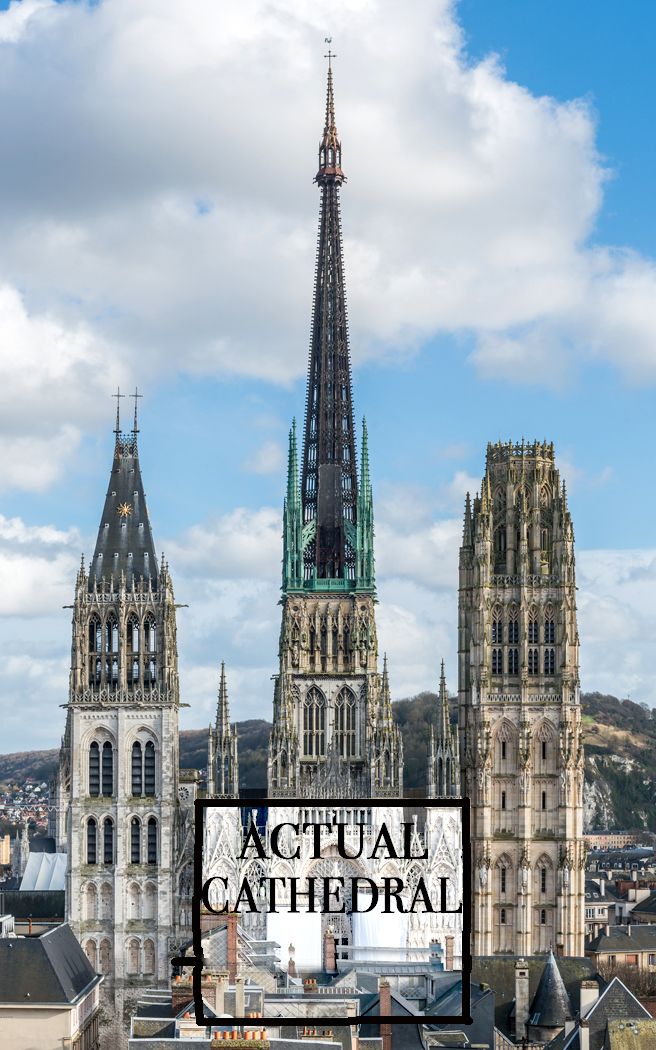
Rouen Cathedral as seen from Gros HorlogeThe antidote to such architectural genuflection can be a visit to a Gothic cathedral that fails to rise completely to such admiration. For me, that moment came on seeing the monster at the heart of Rouen in Normandy. Rouen cathedral bullies the town, dominating the city with its giant spire, so out of proportion.

There is a perfectly good cathedral in the middle of it all, but it is buttressed on both shoulders by giant towers so out of scale as to seem like prison guards hectoring the poor dwarf between them, and then topped with a Victorian-era cast-iron steeple that is twice the height of the church itself. It is this Gothic designed taffy-pulled into parody.

Inside, the cathedral is spare. It was badly damaged by bombs during World War II, and most of the stained glass has been replaced by clear frosted glass. This makes the interior brighter than in most cathedrals, but also makes it look, as Rick Steves says, “like the largest mens’ room ever.”

rouen-nave-toward-apse

It is hard to recognize just what the Victorian critic John Ruskin was thinking when he wrote of Rouen, “It is the most exquisite piece of pure Flamboyant work existing. There is not one cusp, one finial, that is useless, not a stroke of the chisel is in vain; the grace and luxuriance of it all are visible — sensible, rather, even to the un-inquiring eye; and all its minuteness does not diminish the majesty, while it increases the mystery of the noble and unbroken vault.” Ruskin may have been smoking something.

That is the kind of gushing I believe a modern visitor to Rouen will find quelled by simply looking at what is in front of him. Ruskin, it seems, was still blotto on the overkill of breathy Victorian enthusiasm.

rouen-angled-facade

Historians like to divide the Gothic idea into subsets, early, high, rayonnant and flamboyant styles. Rouen, as it exists now, is primarily the last, gauded up with all kinds of filigree and tracery. Its west facade (aka, its front), is so detailed as to make it impossible to take it all in as a single entity. This is made worse by the twin towers muscling the central building into a cowering detainee. The older tower, the Tour St. Romain, sits to the left (to the south), and rises on decaying brick and stone. The newer one, the so-called Butter Tower, was added much later to balance the earlier one, and re-establish symmetry. The result is that the building’s footprint is wider than it is tall (not counting the spire, but just the actual nave and aisles huddled below) and therefore negating the whole upthrusting heavenward leap most characteristic of Gothic church architecture. Instead of reaching for the heavens, it seems as wide as a warehouse.

Most of the Medieval churches were constructed piecemeal over centuries, and in almost every case, styles changed over that time, and so Gothic architecture is an especially heterogeneous one: unity out of difference. Rouen takes that idea and runs with it. It was begun in 1035 on the ruins of a previous Romanesque site that had burnt down. Since then, the history of Rouen is one of calamity and rebuild. This constant reboot has made it a less harmonious jumble than one finds elsewhere, of ad hoc fixes, misguided redesigns and megalomaniac civic striving.

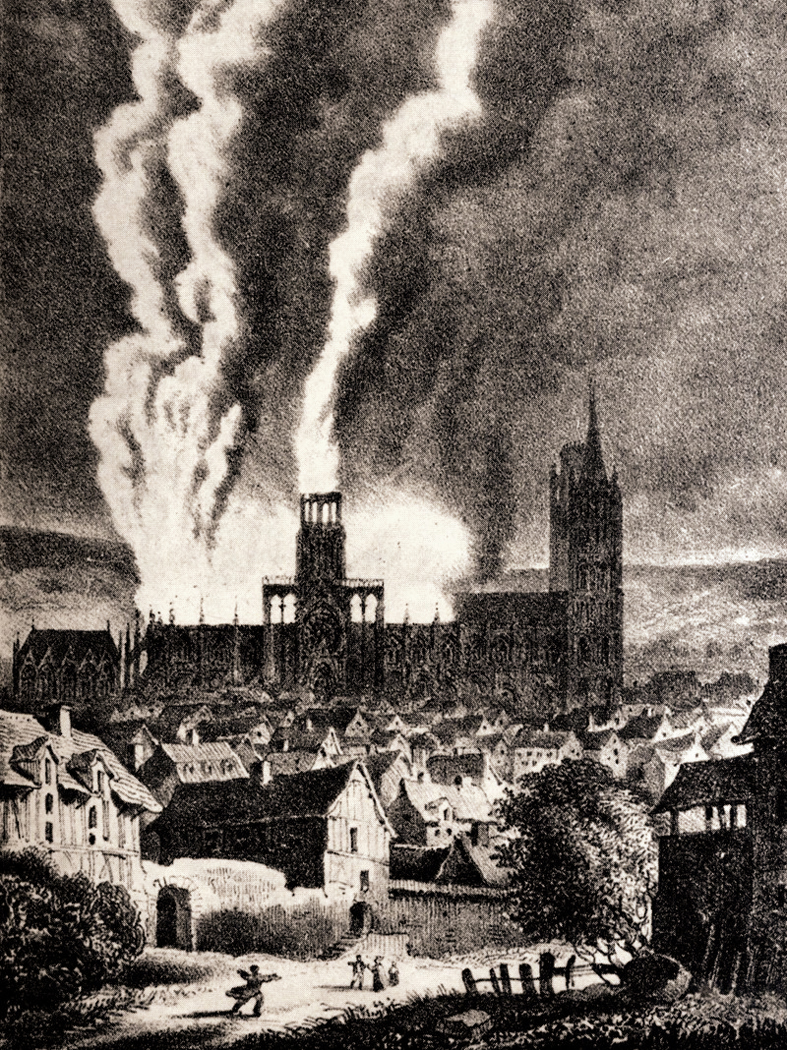
spire-destroyed-by-fire-in-1822It is the Peter Abelard of cathedrals, and a book could be written on the history of its misfortunes. The previous cathedral was struck by lightning in 1110, and construction began on the current building. The new one burnt again in 1200, destroying all but the nave arcades, the Saint-Romain tower and the left portal, with work ending in 1250. It was struck again by lightning in 1284, was partially taken down and rebuilt in 1302, the spire was blown down in a wind storm in 1353. The construction of the Butter Tower in the 16th century led to disturbances in the facade, which had to be reinforced (finished 1530). The original Gothic spire had burned down in 1514 and was finally replaced by a wooden spire covered in gold-plated lead in 1580, paid for, in part, by the selling of indulgences. In 1562, it was damaged by rebelling Calvinists  during the Wars of Religion, when much of the statuary and windows were destroyed. The cathedral was struck again by lightning in 1625 and 1642, damaged by a hurricane in 1683. The choir burnt in 1727 and a bell broke in 1786. During the French Revolution, the church, like many in France, was deconsecrated and turned into a civic building and metal parts of the church were melted down to make cannons and cannonballs. The spire was again blasted by lightning in 1822 and a new one made from cast iron added in 1876 (making it the tallest building in the world until displaced from atop the list four years later by the cathedral at Cologne. (Then to the Eiffel Tower in 1889).

rouen-wwii-2The misfortunes continued. In 1940, a fire damaged the building’s structure and burned that part of the city from the church to the Seine river, and later during World War II, the cathedral was bombed twice, first by the British, then by the Americans, just before D-Day. Parts of the south aisle were destroyed and the south tower burned. Much of the remaining stained glass was blown out, leading to the current situation with frosted glass in many of the windows.

Then, in 1999, a cyclone named Lothar destroyed one of the four wooden turrets surrounding the central lantern tower was blasted and fell crashing into the choir. The history of Rouen’s cathedral is one of constant upkeep and rebuilding, like trying to sustain a sand castle against the tide.

Yet, if the building seems a disappointment after Notre Dame de Paris, after Chartres or St. Denis, perhaps I am being too hard on it. It still has many redeeming details, and some very ancient survivors, like the north portal, or St. John the Baptist Portal. In its tympanum one sees the story of the prophet, Salome’s dance (more an gymnastics exhibition), the beheading of John and the presentation of his head on a platter. It was created in the 12th century and has survived fire, storm and the ravages of war.

rouen-tympanum

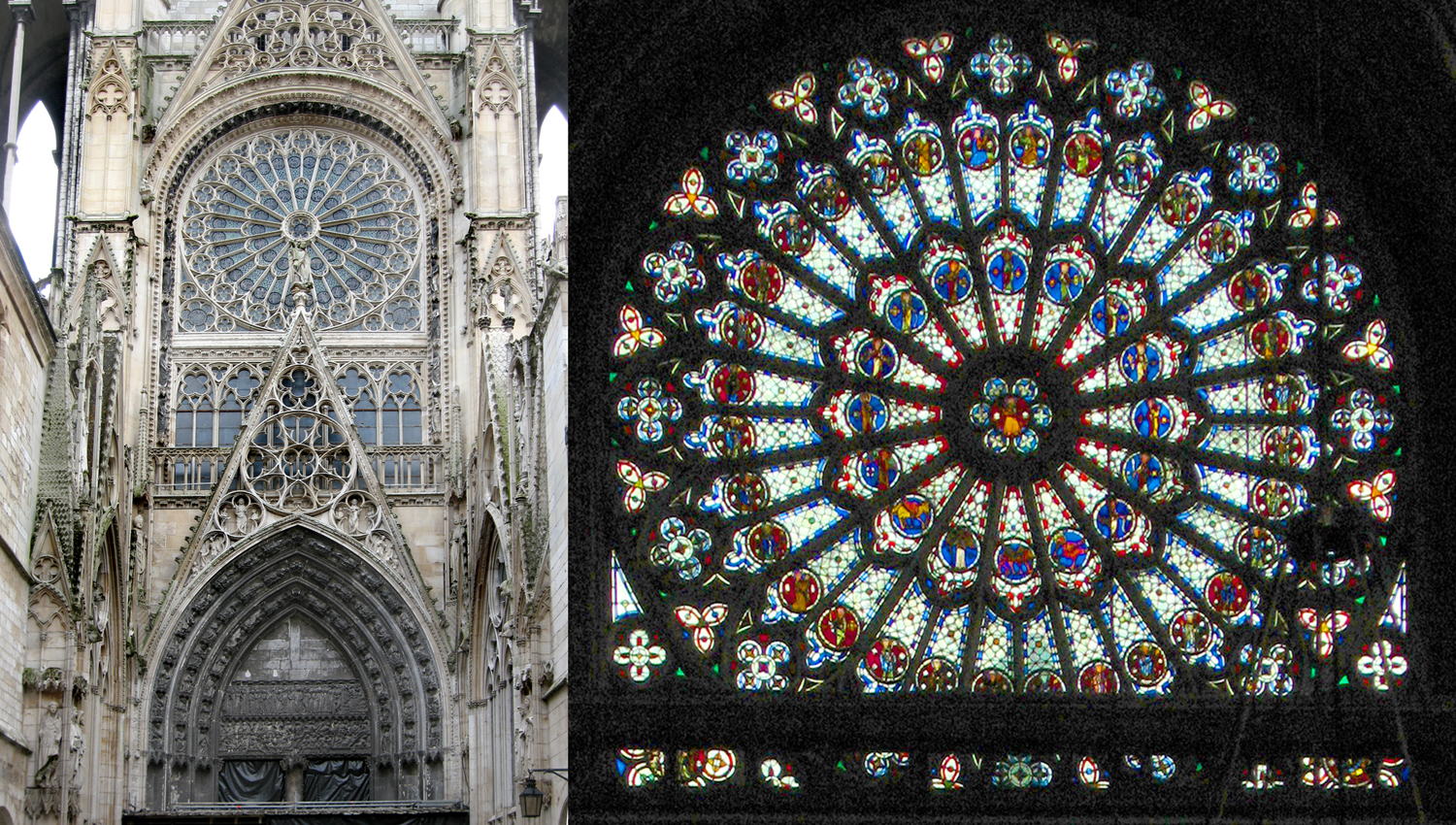
Then, there is the Booksellers’ Stairway (Escalier de la Librairie), which once led to the archives of the chapter, begun in 1479 and completed in 1788. And also on the north side is the only rose window that retains its stained glass, over the Portail des Libraires, created in the late 14th century by the artist Guillaume Nouel. The rose is partially blocked, but still can be seen. (The opposite rose window, above the Calende Portal in the south transept, is clear glass).

rouen-booksellers-rose-window-pair

There are some delightful tapestries hanging in the arcade between nave and aisle.

rouen-tapestry-1

Also, there is the Lady Chapel, growing out of the apse, like an elongated caterpillar, are some excellent windows and a huge 17th century altarpiece dedicated to the Virgin. The Lady Chapel (that is Our Lady — the Virgin Mary) was built in rayonnant style beginning in 1302 to replace an earlier, smaller chapel.

rouen-chapel

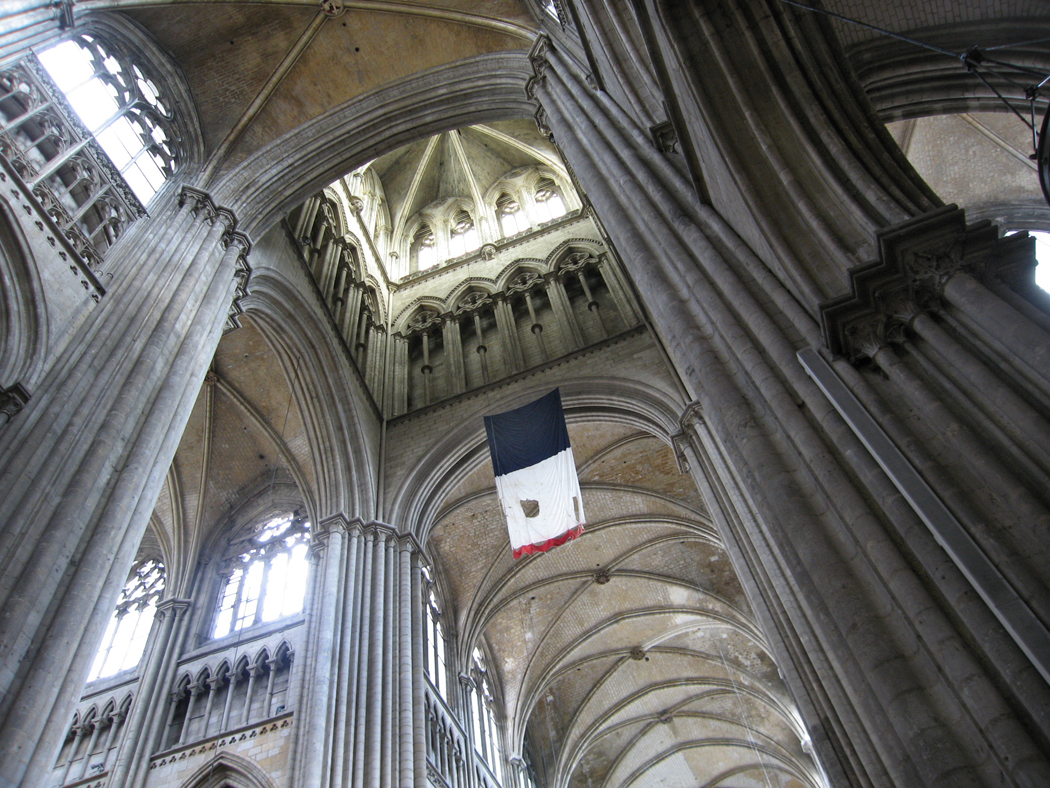
And rising from the crossing of the transept is the opening in the ceiling that leads upward to the spire. While the vaulting is impressive enough, it is ever more striking to see the empty space defined by the interior of the nave opened up even higher, as if the incense and prayers could escape heavenward through it, like smoke through a chimney hole in Medieval dwelling. The vast spire tower and the godawful cast-iron spire are supported by four grand pillars marking the crossing of nave and transept, but even with those giant supports, the ceiling and the hole in it inspire an exceptional sense of what you could call “spiritual uplift,” as if the chimney had an efficient updraft.

rouen-tricolor

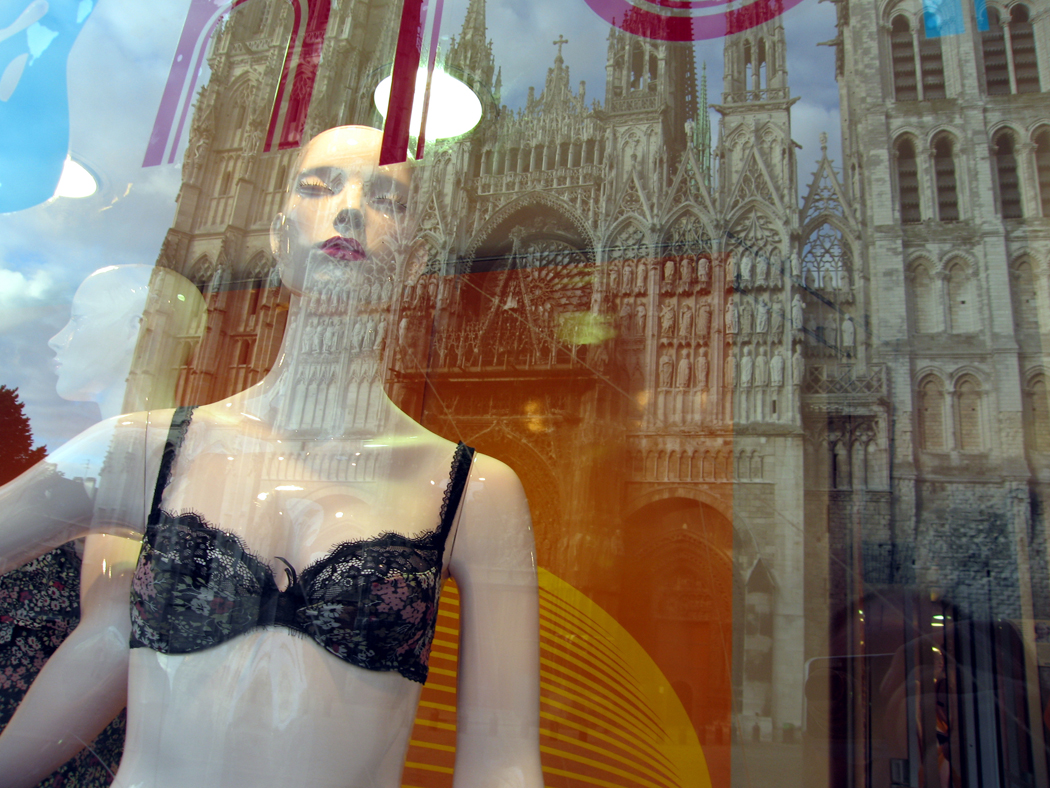
Nowadays, the parvis (plaza in front of the cathedral) is notably commercial, with an underwear store across from the triple portals —

rouen-lingerie-shop-window

the western exterior of the church has nevertheless inspired one of the great painting series of the Impressionist era. Claude Monet painted that cathedral front something like 30 times, in sun, shade, rain, moonlight and in morning, afternoon, and night. The paintings are now spread around the world in various museums.

The painter would set up his easel — sometimes easels — across from the church and paint on one canvas in the morning to catch the first glow of light, then switch to another canvas later on to paint the afternoon light. He might switch canvases many times, over days and weeks, to catch the various effects.

I couldn’t do that in my short visit to Rouen, but I did photograph the cathedral throughout the day to make my own mini-Monet spread.

rouen-poster-2


Click on any image to enlarge

nd-from-the-seine

Some years ago, we knew we wanted to see Europe. But we weren’t sure where we wanted to go. This was at the beginning of our new century. Friends had just visited Rome and brought back exciting video, photographs, watercolors they had made, and most of all, stories. It whetted our appetite.

But once we made the decision to go to Europe, we stopped to wonder if Rome was our only option. Perhaps we should think carefully if there might be some other destination that might call us.

We thought of Prague, Paris, London, Florence, Budapest.

London we ruled out because we wanted the experience of being somewhere that doesn’t speak English. We agonized for some months, fantasizing this place or that. We finally narrowed it down to Paris or Rome.

Rome — Baroque palaces, Classical ruins. Paris — Gothic cathedrals.  Do we want the classical experience, or the Medieval?

Yes, that’s what it came down to. Ultimately, the gray stone of the 11th century was more appealing to us than the sunnier marble of the Mediterranean.

nd-fruiting-branch-sculptureWe decided on Paris, with the plan to avoid all standard tourist fare and attempt to feel what it might be like to live in the city. We would eat in the neighborhood, shop in the neighborhood and walk up and down its streets. In addition, we would try to see as many Gothic churches as possible. In each subsequent visit to France, we managed to add to our life list of important architectural sites, and we developed a growing appreciation for both their beauty and their ability to inspire a profound inward-looking sense of the infinite.

I hope the reason for all this will be clear as I write about them. We kept a journal of our visits, over the years, and alternated portions written by me and often more personal portions written by my wife, Carole. There is an immediacy to these journals that cannot be recaptured in a more finished ready-for-print version and I hope you can enjoy them.

Over the years I have visited Notre Dame de Paris maybe a dozen times — multiple occasions each time we ventured to France. It was a lodestone that drew us back over and over for that glimpse into eternity that only an 800-year-old empty space can provide. The first time I went, was in 1964 and I was a teen ager, barely able to grasp what I had seen. It was before the cathedral was cleaned, and was a giant sooty briquette on the Île de la Cité. The second time was our first trip together in 2002, which was covered in an earlier series of blog entries (see: Paris 2002 Part 1). That included accidentally participating in an Easter Mass; we did not realize it was Easter. (See: Paris 2002 Part 5).

This new series of entries begins two years later when we went back. The photographs for each of these entries were taken at the time we wrote the journals.

Here is our return to Notre Dame in 2004, first my entry, then Carole’s (she puts me to shame).

nd-transept-and-north-rose-window

Richard’s entry:

We walked to the river and down the quai to the cathedral.

“This is why we came here,” said Carole.

And we walked in and the building did not disappoint us: The space remains magic. The rose windows remain the most beautiful art I have ever seen.

“Most buildings are constructed to contain something,” she said. “Most contain furniture, or people, or warehouses that contain lumber or dry goods. This building is constructed to contain the space itself.”

nd-vaulting-diagonalShe is certainly right about that. The space itself, the negative, if it were turned positive, is the shape of — what — infinity. The shape of the interior of our “souls.” The shape of the inner dome of our skulls projected out into space.

It was early in the morning and the rising sun poured directly in through the apse windows. A small mass was being said in the choir and the light shone down on them.

I went around making photographs, mostly of the sculpture at the west portals. Carole sat still inside and soaked up the ambiance.

We stayed most of the morning. We will go back.

Notre Dame is the reason we visit: There is nothing in the U.S. that gives quite this same spiritual sense. One begins to understand the appeal of Christianity to the Medieval mind. There is something mythological rather than ethical to the religion engendered by such a building, something theatrical rather than pious.

nd-carole-sitting-2

Carole’s entry:

Oh. Notre Dame was just the place, just the room, just the building.

nd-chandelier-2This time, I spent most of my time looking at the windows from the center of the cathedral. And I especially loved the trees around Notre Dame, because they have grown in a special environment. They haven’t been treated like ordinary trees and they’re just a short distance from trees of their same species, but they’ve been treated like sacred statues because they’re part of Notre Dame.

Something else I loved, was the wood in Notre Dame. It reminded very much of the logs in Aunt Donie’s house in Wilkes County (North Carolina). Aunt Donie’s cabin was very old and there is something about the wood in both places that is the same.

nd-nave-and-clerestory-2

This time, the part of Notre Dame that became very real for me is the empty space above my head and it was like the empty space around a still life that I drew a long time ago on the day I realized that the empty space was not empty.

nd-stained-glass-panel

Today I thought the most beautiful window was the one at floor level behind the altar because the sun was coming in and the leading in that window looked like a tree with branches and it gave me the very human feeling of sun behind trees in the evening.

nd-saints

Oh, the sculpture outside Notre Dame is a different color now and it is so smooth it looks like modeled clay.

I think maybe Notre Dame is the most important art that I’ve ever seen. I wanted to sit so I could line up the top of my head with the part of the ceiling that had a curve most like the top of my head.

I truly felt in a human attitude that I share with people who lived centuries ago, or maybe thousands of years ago. I was frustrated by knowing anything that I do know about architecture or art or history or Christianity and I kept trying to clear my mind so that I could put myself in the right relationship with the room that I was in and the same with the outside of the building.

nd-scenes-of-hellI almost got to the point where the demons on the outside of the cathedral were comprehended by me on a completely visual level. I wanted very much to have the experience of an ordinary person who was seeing Notre Dame for the very first time centuries ago and would have been able to read the building visually. Today the cathedral worked on me profoundly in a visual and spacial way, but I regret that I am not one of those who participated with that architecture with innocence and terror and devotion.

nd-rood-screen-2

And all of that is the part of today I don’t ever want to forget.

nd-ambulatory-vaulting-2
I feel like I don’t understand the windows yet, even though I did sit there and look, not at the side windows, but the three rose windows and they were beautiful, but I couldn’t make them work on me the way the window behind the altar began to work. I want that kind of thing to happen with the rose windows. But I do understand the rose windows at a level now that is not just intellectual and I think they’re very mysterious and that they must work but that I haven’t been able to get them turned on yet.

The sculptures of the actual humans and the idealized humans — the saints and the kings — and the symbolic humans suffering in hell, and the other worldly figures of angels and little grinning devils affect me in a way that is really beyond language except that if I try to describe it it would be like going on one of our trips out West and seeing really massive places of stone that nature had created naturally, and seeing how it was made completely by the mighty forces of time and weight and heat and wind and water, but especially time, and that those big outcroppings of rock, faces of rock, are completely indifferent to being perceived by any kind of intelligence, but are profound and affecting faces of rock and the statues affect me in almost the very same way, amazing and profound to me, and because they have been affected through time, they seem mighty to me.

nd-rood-screen-slaughter-of-innocents-2

Not just that they show the evidence of time, but most of all that they testify to the mystery that is inside our minds. I love the silence of Notre Dame, the silence of the architecture.

When we go to sleep at night here knowing that Notre Dame is there, it is a lot like going to sleep in the Blue Ridge knowing the mountains are there.
Click on any picture to enlarge

carnac-alignment

We went to see the stones. They stretched for miles, each stone like an  upright soldier in a formation. They are called “menhirs,” and they populate the area around the seaside town of Carnac in Brittany.

When we drove up to the first formation, the sun was low in the sky and shadows stretching long. We stopped by a field filled with menhir and dolmen, the ancient stones erected some 7,000 years ago for god knows what purpose. Thousands of the stones in stripes across fields, and made of a type of granite that is not local. No one knows how they were made nor why. Carole was especially worried about why.

“Maybe they were religious,” she said. That is the most common supposition. But that didn’t really satisfy her.

“I know,” she said, “they must have been used for some sport. If something was important enough for men to exert this much communal effort to transport tons of stones over miles and miles, there must be a stick and a ball involved.”

We’d drive for a few more miles and she’d pop out with, “Or maybe they were the foundation for some kind of building,” and then, after not saying anything for a long while, “Maybe they were meant to line up like soldiers; maybe they scared off an enemy.” She seemed obsessed with the stones.

tourists-at-the-menhir

Click on any photo to enlarge


The next day, we went out to explore. Some 4,000 menhirs, or upright granite stones, from about three feet high to almost 20 feet, are striped across the landscape in three or four major “alignments,” as they are called.

Erected some 5 thousand years ago, or maybe 7 thousand — it all seems lost in the haze of prehistory — the Celtic forebears of the Bretons hauled these logs of granite from their origin, miles away, and lined them up over the rolling meadows just north of town.

No one knows that they were erected for. The usual theories of religious meaning are trotted out, but no one really knows. Carole persists for a while that they must have been used for some sort of sport or game, going on the theory that only a Superbowl or the Olympics can bring that much commitment out of a guy, let alone a lot of guys.

menhir-3

We talked about it at lunch, in Locmariaquer, the site of some other megaliths.

Over the oysters, I said, “I think that it is just as likely that someone in the old days went crazy, heard voices in his head telling him to to this, and he then, through the intensity of his insanity, persuaded the community to erect the menhirs. Like a sachem in an Indian tribe. ”

Carole dislike the idea that this might reflect badly on shamans. She maintains there is a difference between visions and psychosis. She has her own reasons for holding this distinction.

“That’s not quite what I mean,” I said. “I mean that someone genuinely nutso hears voices, like Son of Sam — ‘My dog told me to do it’ — and because to ordinary people a shaman and a nutjob are very hard to tell apart, they might have signed on to follow him, the way the Germans signed on to follow Hitler to Valhalla.”

“But the shaman’s vision is always one to help the people, never to harm them,” Carole said.

“Well, Hitler certainly thought he was helping Germany, but we’re getting off on a tangent,” I said. “I just mean that, well, like Moses in the desert, perhaps touched by the sun and heat, came up with a lot of crazy ideas, maybe some prehistoric Celt went off the deep end and the voices in his head told him they needed to build a field of giant upright granite stones.

“It makes as much sense as any of the other ideas,” I said.

Of course, we’ll never know. Carole is obsessed with them right now, wanting to have an answer.

“Don’t you want to know?” She asked.

“But I can’t know.”

“But doesn’t it eat at you?”

“No, I can’t say so,” I said.

“It’s driving me nuts,” she said.

menhir-6

Later, in the evening, after supper, sitting in the hotel room, she started up once more.

“I thought they might be made as a display to the stars, or a sighting device to line up with stars or the sun or the moon seasonally,” she said. She sat for a moment and then began a litany of possible explanations.

“Maybe people stood on them and covered their bodies and the rocks with some sort of long garment that made them look like thousands of extremely tall and powerful people.

“Maybe they were set up to baffle a stampeding herd of animals.

“Maybe they were set up to make it difficult for an enemy to advance.”

I imagined them like some prefiguration of pachinko, used as a military tactic. Ingenious, I thought.

“Maybe,” she went on, “they were put in the ground so that if one were far, far from home, one could climb up into the mountains and look down and find these stones as a marker for home.”

The only problem with that: No mountains here.

menhhir-7

“Maybe they were part of corrals and used for the beginning domestication of animals.

“Maybe they were racetrack lanes for racing animals.

“Maybe they used to be part of another kind of a structure that included wood and animal hides.

“Maybe they were part of ancient stalls filled with trade goods.

“Maybe they were an arduous maze a person had to thread through like the meditation mazes in cathedrals.

“Maybe they had something to do with cognitive development — a step between concrete thinking and abstract thinking. Maybe they used them to learn to count from one to a thousand.”

After worrying about this for two days, she continued as we drove out of town, on to Concarneau.

“I need to know what they were for,” she said. “I still think my best guess is that they were for some sort of ball game. You know men are fascinated by a combination of sticks and balls and counting. The counting is important.”

menhir-7

A woman we met, who was from Great Britain, said that she read that the rocks at Stonehenge were transported from far away, also, and that there is a theory that they came from a site powerfully effective in healing.

“But I don’t think that is what these stones were for,” Carole said after we drove on. “They must have been for something massive, because there were thousands of them. They must have been very important for the people who arranged them, because the second group we looked at were actually stone paths, completely straight, leading toward the horizon for many many many miles. So I thought maybe this part of the stone arrangement is a runway for souls. Souls taking off to their journey to the afterlife on foot, that is.

“Maybe they were foundation stones upon which wooden logs were placed for some type of a floor and another structure made of wood came up higher. If they were used as foundation, the equidistant placing of them makes sense, because they are about as far apart as an ordinary tree trunk.

“Or maybe creatures with immense strength arrived from outer space and used some sort of anti-gravity device to pick the rocks up and put them down again in this part of France.

“Maybe they are thousands of monoliths like the black rectangle in 2001: A Space Odyssey.

“Maybe they were a huge dentist office and each person had his own stone to come to and bang his head against until he was senseless and no longer could feel the toothache.”

She was beginning to get a little punchy.

“I also think my first impression of them might be worth something —  that was that they were the earth’s teeth.”

cairn-frontispiece

Part 2

I am a reasonable man and my goals are reasonable. Some burn for the challenge of climbing great peaks; my more modest goals involve the less famous ones. They can have their Everest, their K-2, their Matterhorn or Aconcagua. I have Tucker Mountain.

It sits in Hancock County, on the coast of Maine, north of where any tourists go. From its summit, there is a great view to the south and Cadillac Mountain and Mt. Desert Isle. Its summit, by the way, tops out at 394 feet above sea level. More my style. Still, in places, it is a rugged enough hike.

My friend Alexander wanted to show me the view, and we walked through the mossy woods up past rocky outcrops and on to the goal. Along the way, we kept passing cairns — piles of rock set up by hikers. Some were simply rock-piles, but others showed more ambition, and could easily have passed for sculpture in any trendy art gallery. The more of them we passed, the more it seemed as if something cultural were going on — that there must be some compulsion to make these stony reminders that Kilroy was here.

cairn-quad-01

I photographed them as we walked, and by the end of the day, I had something like 50 or 60 images of them, and that counts having given up on cataloging every single instance; I did not photograph many of the more mundane piles.

I don’t know if such things litter the tops of all the local mountains. I don’t remember seeing so many cairns when Alexander and I climbed the summit of the more daunting Schoodic Mountain nearby (summit: 1,069 feet). Perhaps the cairns on Tucker Mountain (I should call it Tucker Hill) are the work of a single artist, or a single obsessive personality, or a small group of people wanting to make a statement. Usually cairns are left either to mark the trail, or to commemorate some important event. These seemed to exist for their own sake.

But they certainly brought to mind the dolmens, cromlechs and menhirs of Celtic Europe. They don’t have the permanence of those menhirs, which have survived thousands of years; these cairns are just rock set on rock, so the first hard frost could topple them. But I had to wonder if the impulse might have been the same: Make my mark — the X on the dotted line — the proof that someone was here.

cairn-quad-02

There is a resistance to cairns; many dedicated hikers despise them for being unnatural, and for being the equivalent of vandalism. I can’t join their ranks. The best of these cairns are genuine works of art and should be appreciated for such. Their artifice can hardly be a valid source of complaint when the hikers are marching along equally artificial trails through the woods, marked with paint blazes or diamond-shaped route markers stapled to tree trunks.

The cairn-makers may well think of themselves as being clever, postmodern, or snarky, but the bottom line, on which their “X” resides, is that the cairns are the universal cry of the one among the many, like the opening wail of the newborn baby: I am here.

purple rose 2

Most people, when they go to the movies, go to see aliens blow up the world, or they go to see the lovers win out over odds, or to see the superheroes beat out the supervillains.

end of ricoThat is not much different from why they went to see the movies 80 years ago, except then they might have gone to see the chorus girl become a star, Fred and Ginger glide over the dance floor, or the end of Rico.

In other words, the initial satisfaction of moviegoing is the story, setting up characters and then seeing what happens next. And next after that. We think of them as having happy endings, but such endings are not necessary; some movies end in tragedy.

One is reminded of director Sam Fuller, when asked “what makes a good movie?”

sam fuller“A story,” he said.

“And what makes a good story?”

“A story!”

There is, however, another level of satisfaction that comes from watching a film, and that is an awareness of how the film is made. Not everyone understands the process by which the story is told, and not everyone cares. If a story is well-told, it is enough that the story is appreciated.

But there is a separate class of film buff who are moment-by-moment aware of how the pieces of film are put together to tell that story. They are aware of the lighting, the editing, the camera angles, the camera movement, the point of view — and are aware of how all these things are used to manipulate the story and the emotions of the filmgoer. An entire critical apparatus is brought to bear on a film, and especially if it is a film made by a director known to be innovative or astute at using these elements of film. For these people, watching a film is always a dual-track affair, as if they were reading a book in translation, seeing not only the story, but how it has been constructed at the same time.stagecoach

One can look at the studio films of Hollywood’s golden age and dissect them and notice how well made they are, and one can catalog the special habits of some of the better movie directors of the time — William Wellman’s overlapping dialog, Hitchcock’s time distortion, John Ford’s landscapes — and, indeed, whole books have been written (to say nothing about doctoral dissertations, and worse: books made from doctoral dissertations) about what makes Woody Van Dyke different from Gregory La Cava, but this is film-school subculture grist. The people who paid their pennies and dimes to watch those films in the grand movie palaces of the 1930s seldom considered the problems of reverse shots in editing dialog. They just wanted to know what happens next.
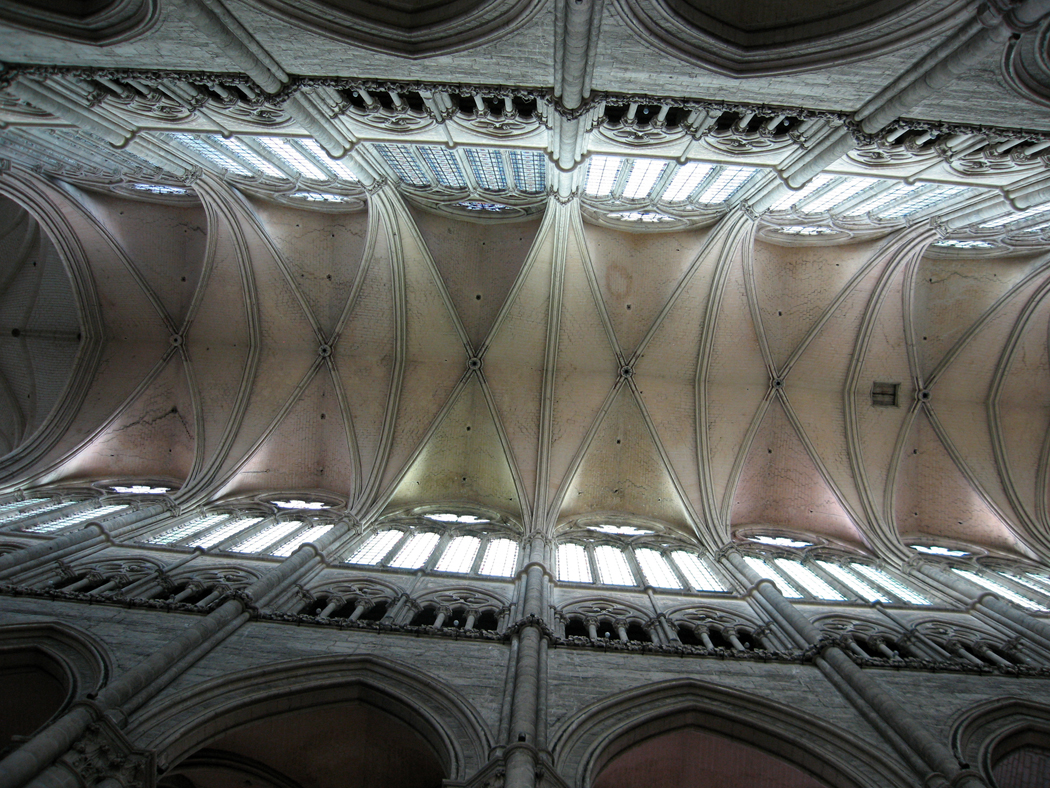
citizen kane low angleNowadays, one can hardly turn over a stone and not find someone spotting the use of camera angle in Citizen Kane or yanking our lapels to point out the amazing tracking shot that begins A Touch of Evil.

There is a subset of this sensibility that brings to bear the whole history of cinema — especially genre film — when viewing a film. I call this the Tarantino effect; it is that if we want to truly appreciate what is going on in, say, Kill Bill, one needs to know who Sonny Chiba is, what are the differences between Hong Kong martial arts films and those made in mainland China, and what is more, individual scenes from individual movies that are quoted or referenced in Tarantino’s opus.sonny chiba

This is the foundation of the current bumper crop of superhero movies, too. Fans know the backstory of each character, and the full weight of the “Marvel universe,” or the “DC universe.” The fact that all comic-book superhero movies are basically the same hardly matters if fans argue minutia of the worlds inhabited by these cliches.

The problem with all this is that it becomes a form of in-joke, or worse, a shibboleth separating those who “get it,” from those who don’t. And in this eddy of thought, the references become the subject of the film and the plot becomes incidental. One of the results is that it fosters cliche, with a wink and a nod, and negates original ideas, or at least glibly assumes that original thought is no longer possible. In this it buys into the Postmodern mentality, wherein it is held everything worth saying has been said, and now our job is just to rearrange the game pieces in clever ways. This conveniently forgets the fact that it has always been hard to be original, even for Raphael or Goya.

So, in our film culture now we have two strata of movie appreciation. There are still those who go the movie theater to enjoy a good story, but there is another class that blogs endlessly about the subtext, meta-theory and the film-school techniques of their favorite movies.

However there is a third level to be considered when assessing a film.  If most films don’t aspire to more than story and technique, in the greatest films both story and technique are just tools for for a further end: Expressing something real about life. These are films made by people who have something important to say, something to tell us. They are films that investigate our humanity.

Stories alone can be entertaining, and the meta-view can be engrossing to those whose minds are attuned to “what’s really happening underneath,” but when I make a list of the best movies ever made, it is neither of these levels I care about. Or rather, I assume them as given. No, what I look for is whether the movies have something to say about human existence, that I can weigh against my experience and decide if it is true or not, whether it has something to say about the experience of being alive.

battle of algiers

That is why my Top 10 list does not feature The Dark Knight or Star Trek II: The Wrath of Khan. Such films may be diverting, but they don’t say much about the real world. Instead, my list contains films such as Rules of the Game, The Battle of Algiers, and La Dolce Vita. I learn more about love and sex from My Night at Maud’s than from all the Wedding Crashers and Knocked Ups combined. It is this third dimension that is missing from most popular movies. Content to be clever or scary or thrilling, they forget to be human.

Such films put me in touch with the deepest well of my being, remind me that such depth is shared by all of humanity, and that all our lives are complex and what is most important to us is not our jobs or our automobiles, but the emotional connection we have with the earth. One leaves such films profoundly moved and deeply shaken.

uma pulp fiction

Pulp Fiction, to take one example, is certainly a cleverly told story, beautifully written and just scrambled enough to keep us attentive. Yet, unlike Tarantino’s more recent films, it has a third dimension. In Pulp Fiction, death has human meaning and aftermath. There are consequences. When Mia overdoses and Vincent rushes her to Lance’s house for an antidote, her immanent death is something felt by the audience and when Marvin is blown away in the back seat of the car, there is blood everywhere. Yes, it’s a joke, but it’s also very real. In Pulp Fiction, each of the characters is a believable human being. Compare those episodes with the fight scene in Kill Bill where a comic-book Uma Thurman slices and dices her way through “The Crazy 88.” Nowhere is anyone mourning the death of a father or brother. They are tin ducks in a shooting gallery.

Most truly great films have these three dimensions. I don’t want to denigrate a good story, and surely a badly made film won’t move us, no matter how profound the content. But of these three levels, the only one that can elevate a film to classic status is its humanity. Stories and film technique create patterns we recognize and respond to, but what we really need from patterns is more than mere recognition; what we need is meaning.

Of course, it isn’t only in film we need meaning, but in all of art. And so, we search paintings or poetry not just for pretty pictures or clever rhymes, but for what answers that need in us to understand, to find or create meaning.

cassattNone of this is to deny you the pleasure you may get from Captain America or from paintings of pretty flowers. There’s room for that, too. Such things are fine on days when your ambition is cooling out, but the real satisfactions of art come when you are challenged by something more substantive, where you find your life reflected back at you, and you are forced to confront moral dilemmas, the inevitability of death and loss, the complexities of ideas, and the ultimate interconnectedness of all life on the planet. More ambition is good.

So, when we look to justify art in a world increasingly dominated by technology and STEM disciplines on one hand, and an increasing reaction into superstition and tribalism on the other (nativism, fundamentalism, bigotry and its retinue), it is important to make a case for looking inward with a piercing eye to find what is there, at the bottom of the human well.