Archive

Tag Archives: art music

No, classical music doesn’t all sound the same. In fact, sometimes it’s hard to find any relationship at all between the far corners of the field. What do Gregorian Chant and Karlheinz Stockhausen have in common? 

When someone complains that “it all sounds the same,” you can be pretty sure that the reason is simply lack of exposure. A sample group too small to generalize from. So, I thought, as a followup to my previous blog entry about classical music, I should try to stretch the boundaries of the subject, to stretch out the definition tightly from end to end to see how far it spreads. 

If you listen to the items on this catalog, you will find music so different as to be hard to assign a common category. 

In the previous blog entry, I attempted to move from one suggestion to the next in the most contrasting way, from, say, Renaissance polyphony to Stravinsky’s Rite of Spring — a clear jerk from one mode of hearing to the other. 

This time, I hope to provide some framework to see how what we call classical music, or art music, developed over time. You may object that about half of the music comes from the 20th- and 21st-centuries, but that is only being fair: You should remember that the Rite of Spring — which is the traditional mark for the beginning of Modernism in music — is actually closer in time to the death of Haydn than it is to us today. Twentieth Century music is no longer new — it is classical. 

(I’ve chosen a single piece from each of the large clumps of music history, varying both style and genre, including keyboard, chamber, vocal, choral and symphonic. From each period, I have supplemented the examples with two contrasting pieces for further listening.) Beginning with: 
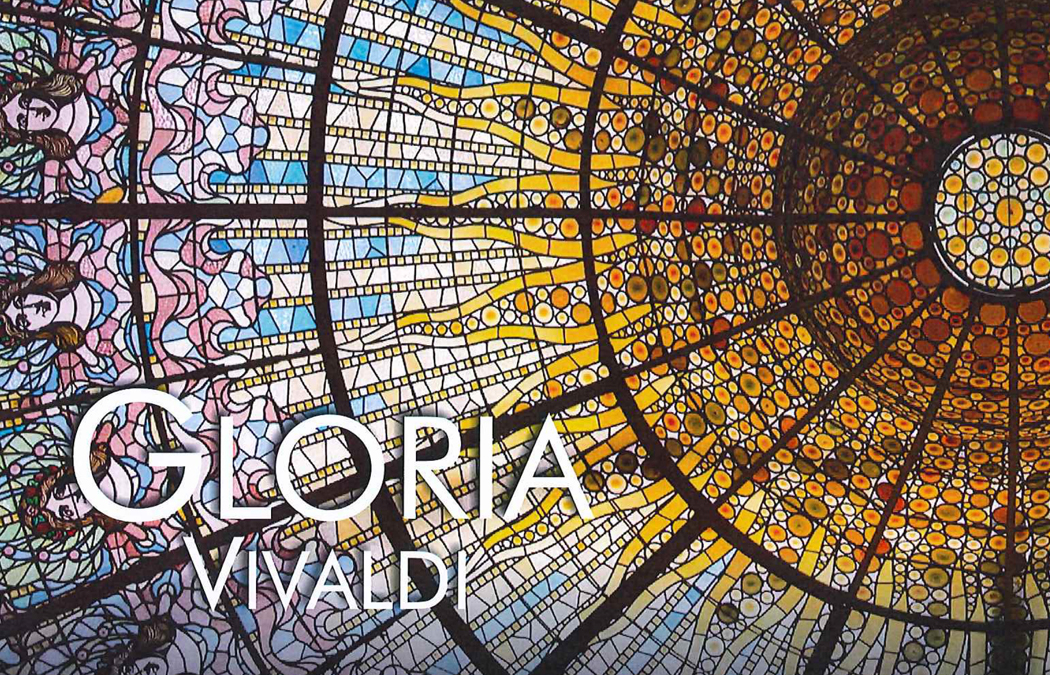
Vivaldi: Gloria in D Major, RV 589

Antonio Vivaldi (1678-1741) wrote at least three settings for the Gloria, but this one is the version everyone remembers, with its chugging motoric drive and its brassy fanfares. It is built from 12 short movements split between choral numbers, solos and a duet for soprano and contralto. 

Its catchy opening “one-TWO-three-four, one-TWO-three-four” with its octave leaps, returns later to unify the work. The Baroque era ran from roughly 1600 to 1750, although styles evolve slowly and overlap. It’s not like everyone stops writing one way and begins writing the new way. This piece, from 1715 lasts about 30 minutes and exemplifies the energetic forward motion of the Baroque. 

Alternates:
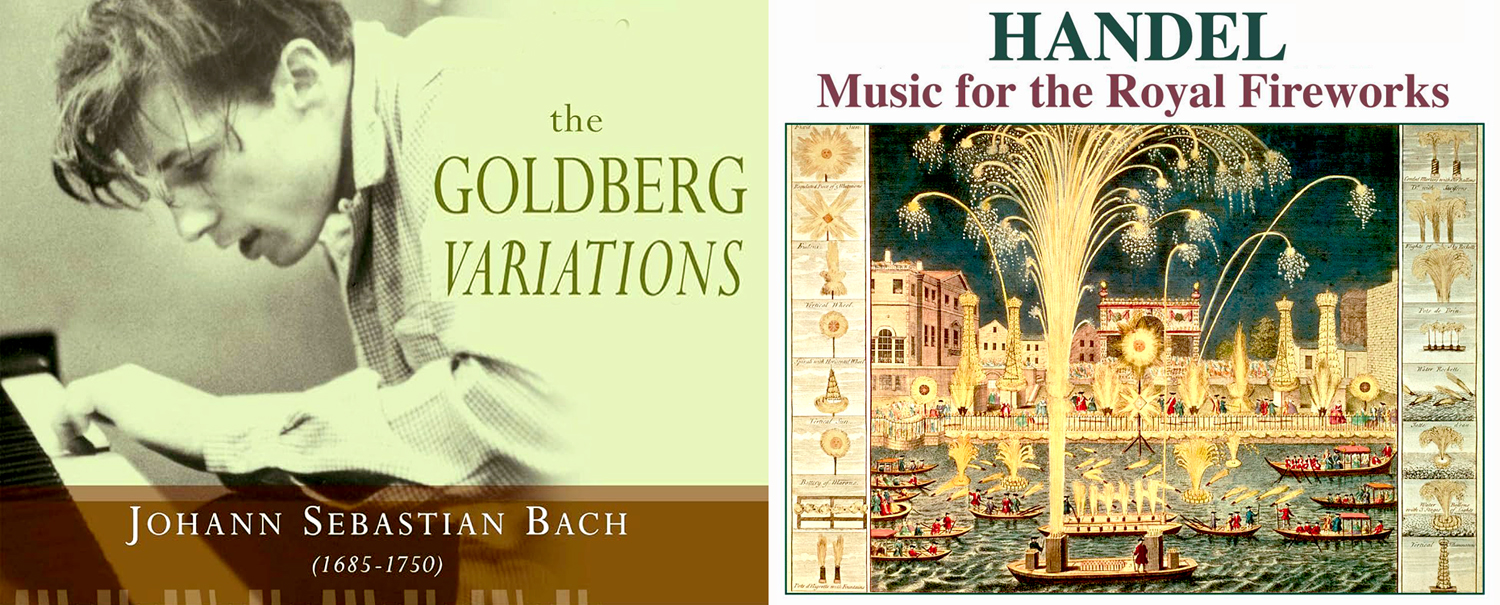
J.S. Bach (1685-1750), The Goldberg Variations (1714), a set of 30 variations on a repeating bass line, for keyboard; and George Friedrich Handel (1685-1759), Musick for the Royal Fireworks (1749), a suite for a large band of wind instruments, for outdoor performance during a famous fireworks display meant to celebrate the end of the War of Austrian Succession. The crowd loved the music, but the fireworks caused a building to burn down, blinded a soldier and injured several others. Later performances often added strings to the wind band, with no further reported injuries. 

Haydn: Quartet in D major, op. 64, no. 5 “The Lark”

It is often said that Joseph Haydn and Mozart wrote music in the classical style (roughly 1750-1828), but in fact, they created the classical style. If Haydn didn’t singlehandedly invent the symphony, he made it what we think of today; and he did the same for the string quartet — music for two violins, viola and cello. 

This is music generally less cluttered or fussy than the earlier Baroque, and seeks a kind of modest tastefulness, along with, in Haydn’s case, a witty sense of humor, as in the imitation bird calls at the start of this quartet, which was written in 1790 and has the usual four movements: an opening allegro, a dance movement, a slow movement and a jaunty finale. 

Alternates:

W.A. Mozart (1756-1791) Serenade No. 10 for 13 Winds in B-Flat, known as the Gran Partita (1781), which, in Peter Shaffer’s play, Amadeus, he has Antonio Salieri react by saying, “It seemed to me that I was hearing the voice of God.” Or Franz Schubert’s (1797-1828) Symphony No. 5 in B-Flat (1816), which is a really tuneful symphony built on Haydn’s model. 

Liszt: Piano Concerto No. 1 in E-Flat 

Franz Liszt (1811-1886) is the perfect Romantic composer, the greatest piano virtuoso of his time, and a matinee idol that all the ladies were in love with — something of which he took great advantage. His music, as in this 1855 concerto, is filled with all the wild emotion that the classical era avoided: over the top, loud, brash, and with a solo part for the triangle — it scandalized its first audiences. The jangle of the triangle was considered bad taste — but bad taste is the goal of much Romanticism. Audiences loved being scandalized. 

Alternates:

Robert Schumann (1810-1856) wrote a cycle of songs, telling a sad love story, called the Dichterliebe, or “A Poet’s Love,” in 1840, and includes a song claiming over and over, “I’m not angry,” to some of the angriest music ever. Clever. Or Bedrich Smetana’s (1824-1884) Moldau, an orchestral portrait of the Czech river (now usually called the Vlatva or Voltava), which is a perfect example of the Romantic Nationalism that swept over Europe. Great tunes. 

Debussy: Images for Piano, Book II

In the late 19th century and the 20th century before the First World War, music went through several changes. One of them is a rejection of Romantic excess, and the French composer Claude Debussy (1862-1918) came up with his own style — usually called Impressionism — of ambiguous tonality, exotic scales, and an approach to the piano that was soft and non-percussive. 

He wrote a great deal of piano music, including the famous Clair de Lune, but I’m offering the three pieces in his Images, second series (1907): Cloches à travers les feuilles (“Bells through the leaves”); Et la lune descend sur le temple qui fut (“And the moon descends on the temple that was”); and Poissons d’or (“Golden fish”).

Alternates:

Some composers went in the opposite direction, with larger orchestras, more chromatic harmonies of profound longing, in what is often called Late Romanticism, or Post-Romanticism. Gustav Mahler (1860-1911) often added voices to his orchestral music, or wrote orchestral song cycles, such as his Songs of a Wayfarer (1885). Richard Strauss (1864-1949) used huge orchestras and explodes out of the gate with Don Juan (1889), a musical version of a Don Juan more idealistic than lecherous. It is an avalanche of sound, with a huge six-horn signature that, in live performance, you feel through you fundament as much as hear with your ear. 

Janáček: Sinfonietta 

Now we are ripe in the 20th Century, and Leos Janáček’s Sinfonietta (1926), a five-movement piece for huge orchestra, including 25 brass instruments. The first movement has 10 trumpets alone, playing a hair-raising fanfare. 

All five movements are built from catchy tune-bits, extended and repeated. And although the music is clearly modernist, I’ve never come across anyone who didn’t instantly love the Sinfonietta

Alternates:

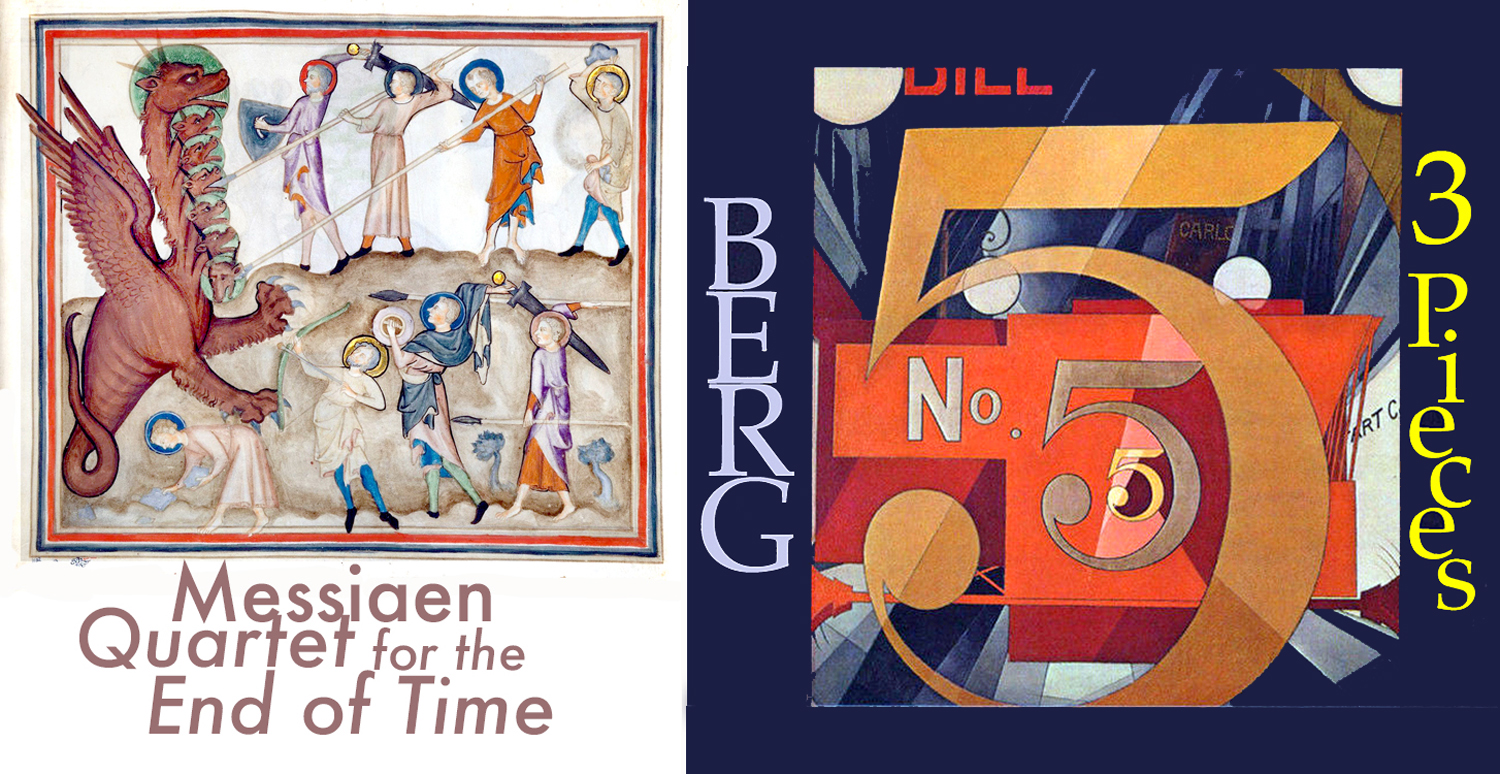
French composer Olivier Messiaen (1908-1992) was imprisoned by Nazis during World War II, and in prison camp, wrote his Quartet for the End of Time, for piano, clarinet, violin and cello (the instruments available in the camp). It is a hugely idiosyncratic piece, written to Messiaen’s own music theories, but can be overwhelmingly emotional in a good performance. And for the double-dip experience of atonal music, try Alban Berg’s (1885-1935) Three Pieces for Orchestra (1914), for something like what people used to call “modern music.” 

Penderecki: Threnody to the Victims of Hiroshima

Classical music, or art music, is still being written, and responds to life in the current world. We live in a post-Hiroshima age, and Polish composer Krzysztof Penderecki (1933-2020) summarized the feeling in his 1961 string-orchestra piece, Threnody to the Victims of Hiroshima, although you may have some difficulty recognizing it as string music made by violins, violas, cellos and double basses. It shrieks of the horror. 

It masses its 52 string players in tone clusters and dissonances, various vibratos and odd bowings, for 8 and a half minutes, that is not meant to be beautiful, but to evoke intense emotions. It is, nevertheless, beautiful. (Remembering Tom Robbins notion: “The ugly may be beautiful; the pretty, never.”)

Alternates:
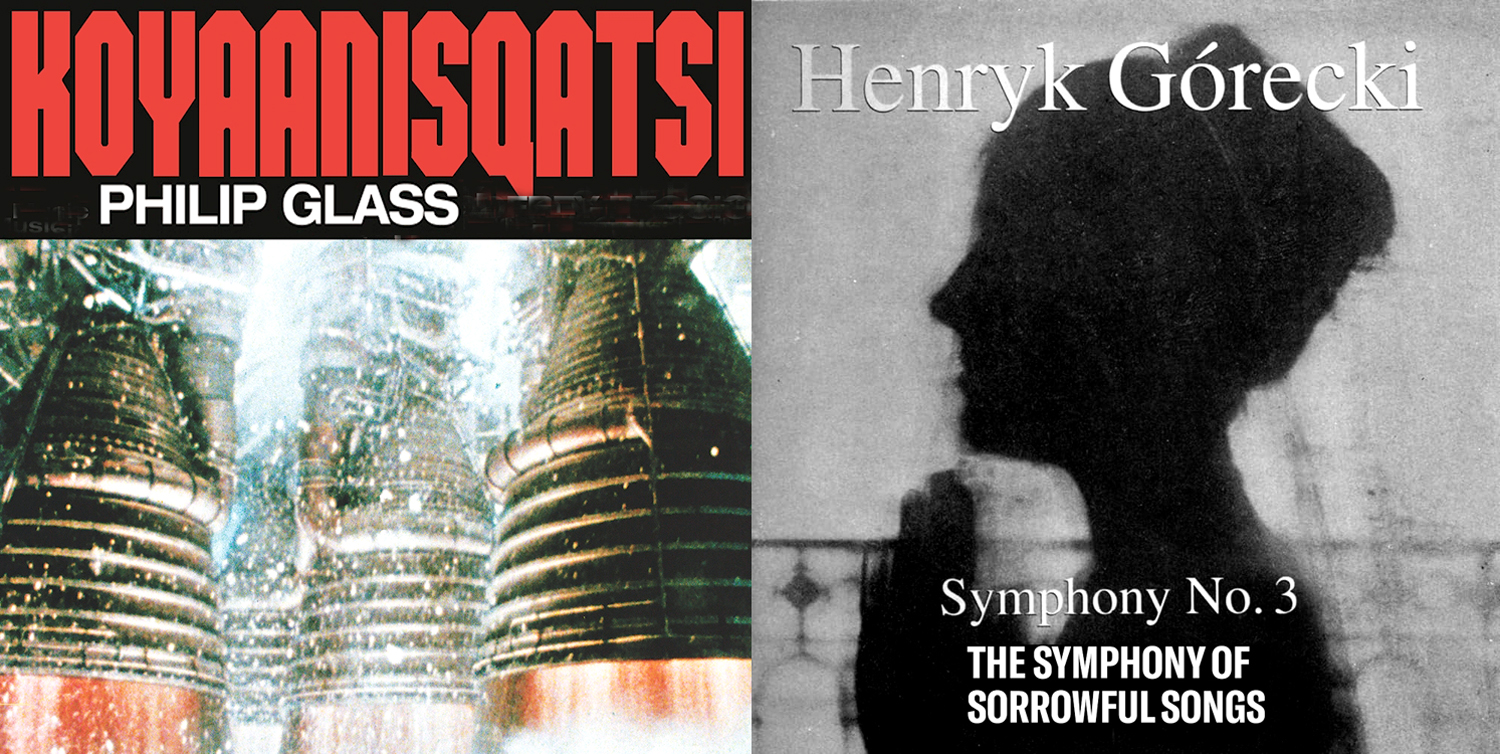
Minimalist composer Philip Glass (b. 1937) also reacts to the modern world in his film score for the Godfrey Reggio film, Koyaanisqatsi (1982). The modern world is a crazy world, as the film and music underline, but with quite a variety of minimalist techniques. The horrors of war fill Henryk Gorecki’s (1933-2010) Third Symphony (The Symphony of Sorrowful Songs) (1976), in which a soprano sings Catholic laments and words by victims of the Nazis, all to music so slow and so inexorable as to be almost a force of nature. Its 1991 recording by the London Sinfonietta sold more than a million copies. Gorecki, surprised at the popularity of such a sorrowful piece of music said, “perhaps people find something they need in this piece of music…. something they were missing. Something, somewhere had been lost to them.”

Epilogue

Of course, this diversity is among the European tradition of art or concert music. Most cultures have their own classical musics, such as the sitar or sarod music of India, the Chinese opera music, and Japanese flute music. Each is a tradition handed down from master to student and carried forth, with development and variation. That is what makes it classical. 

If I were to think of a purely American classical music, it would be jazz. It, likewise, has a wide range of styles and sounds, from Louis Armstrong through Duke Ellington and down through Ornette Coleman. 

But it is what we call classical music in the West that I am best familiar with and love. And writing this has given me the chance to listen once more to each of the pieces I’ve written about, and more joy me. 

Occasionally I get asked (OK, once) where should I start listening to classical music. Classical music is something that a few people as they age past Top 40 songs, come to believe they should begin to know, the way they should read Proust or watch foreign films. 

Philip Larkin mentions the drive in his poem Church Going: “Much never can be obsolete,/ Since someone will forever be surprising/ a hunger in himself to be more serious.” 

I have been listening to what is called classical music for 60 years, and my first thought is that classical music does not exist. Not really. 

What is called classical is a combination of old church music; popular music that has been around so long, it no longer sounds like the pop music we know; and music meant to entertain, first, a class of aristocrats who could afford to pay for it, and then an aspirational middle class that took up the buying of tickets. 

It wasn’t until late in the 19th century that anyone really considered such music “classical.” And only in the 20th century that most symphony orchestras were organized to play what in the past had just been music, but was now given this new label. 

Until then, most concerts consisted of new music mixed with a few old favorites (much like modern pop music — they wanted to hear the hits). And so, old standards became classics. 

Not all of the old standards were heavy and serious. Mozart wrote tons of divertimenti to be played as the count and countess ate lunch. It was only meant to sound nice, with catchy tunes. Yes, some classical music is meant to evoke deeper thoughts and emotions, some even meant to change lives. 

But there is pop music that is serious, too. Consider the Beatles’ A Day in the Life, or Queen’s Bohemian Rhapsody. They aren’t always short. 

And so, when you ask about classical music, you aren’t asking about a single thing. If you were to open up that can of worms and try to learn what classical music has to offer, you will have to recognize that no one thing can suffice. Nor any one style; nor any one century. 

If there is anything that marks music as classical, it is its length. Most tunes last three or four minutes, while a symphony can run anywhere from a half-hour to 90 minutes. The popular music is meant to put a tune in your head and you like it (or not) and may sing it to yourself as you wash the dishes. Such music is usually meant to be absorbed passively. 

What is called classical tends to be more like a story, even a novel, with multiple characters and changing moods, so where you start is not where you end up. It is music you pay active attention to. It goes somewhere and you have to pay attention to notice the plot. 

The story told in music, though, is not one that can be translated into words. It is one you listen to as it unfolds in musical terms: the melody changes, sometimes broken into pieces, the harmony turns grim or lilting, sometimes the melody might be played half-speed, or faster, or even upside down. These are all part of the musical story-telling. 

So, what do I say to my friend asking advice on how to start listening to classical music? 

The complaint I hear often is that classical music all sounds the same. It doesn’t. And so, I want to offer examples both of the stories and of the diversity. And I want to start off with a symphony with the clearest, most direct “story” to tell.

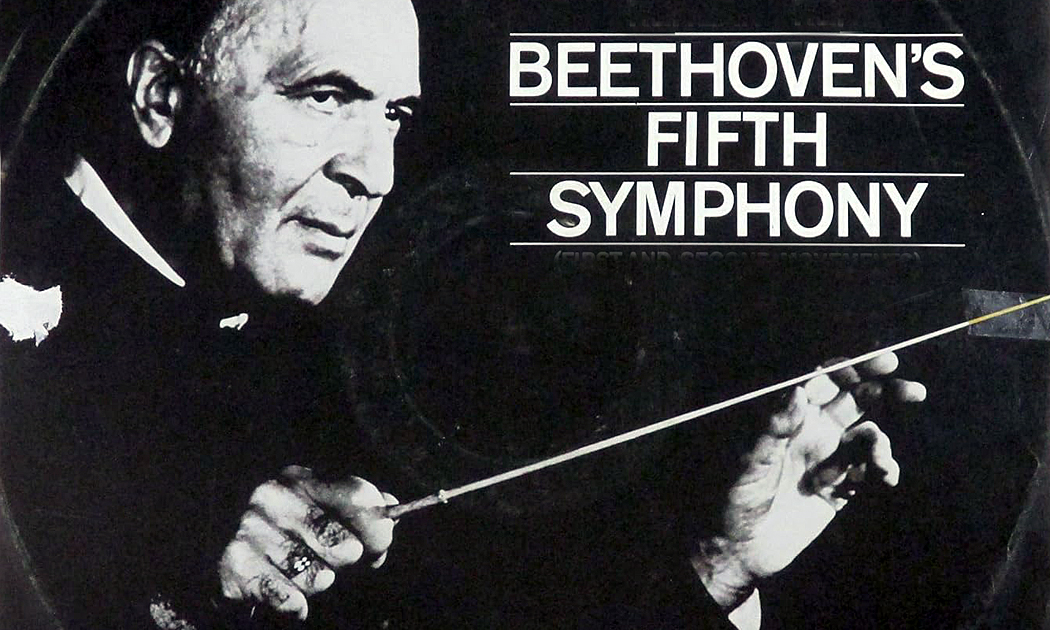
If there is any single place to begin, it is with Beethoven’s Fifth Symphony, or, more formally, Symphony in C-minor, op. 67, first performed in December, 1808, in a freezing cold concert hall in Vienna, along with a host of other new works by the composer, making for a concert lasting more than four hours. For all that music, the orchestra — a pickup ensemble paid for by Beethoven himself — had only a single rehearsal to work out the kinks. In one of the pieces played that evening, the orchestra got lost and had to stop and begin the whole piece all over again. 

But that Fifth Symphony eventually became iconic — the single stand-in for all of symphonic music. 

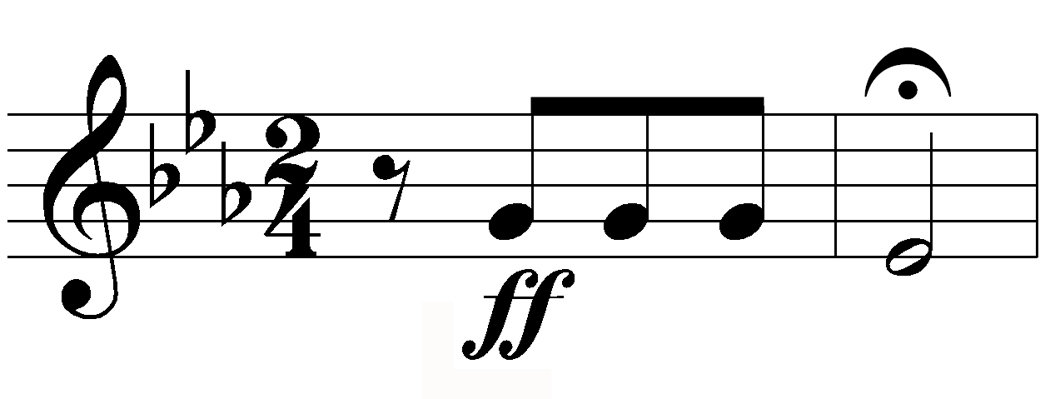
It begins, as almost everyone knows with the heavy tread of the dah-dah-dah-DUMM. Those four notes are played over and over through all four movements of the symphony, sometimes straight, sometimes altered, sometimes as a drumbeat underneath another tune. I once counted in the symphony score more than 700 repetitions of dah-dah-dah-dumm. That works out to once every three seconds of music from start to finish. It’s almost OCD. It’s no wonder the notes are often compared with hammer blows. 

The symphony is in the minor key, a key of angst, anger, uncertainty, which Beethoven underlines by having the music stop outright several times after we hear the four-note motif. As Peter Schickele said, in his comic sportscast of the symphony, “I can’t tell if it’s fast or slow, because it keeps stopping.” 

But it picks up steam to an intense, driving rhythmic motor, all in that relentless C-minor. It blasts you over the head with it. The first movement (of four) lasts, in most performances, only about five minutes, but you may very well be worn out by all that hammering and minor-keying. 

The second movement is a relief from the drive of the first, but the dah-dah-dah-dumm is often there, heard beating away in the bass line. The third movement starts with an ambiguous arpeggiated melody in the basses, but then brings back dah-dah-dah-dumm as a main theme, with the drive of a forced march. The movement doesn’t really end, but rather morphs into a chaotic repeated note pattern that doesn’t seem to be going anywhere, until … until… it does — and it explodes into a big, brassy blast of C-major — the major key the entire symphony has been trudging toward for all its length. The feeling is absolutely triumphant. The spirit soars. 

And yet, if you listen carefully, you will recognize that those happy, brilliant tunes are actually a metamorphosis of the dah-dah-dah-dumm, buried in a longer, rising optimistic melody. And at the very end, Beethoven drives home that C-major with 25 bars of pounding C-major chords in the full orchestra. You know you have reached the finish line with the last long-held chord. Having won it, he’s not going to let go. 

The story the symphony tells is from anger and angst into triumph and joy. It is this long development of an idea that marks what is called classical music as different from popular music. 

And even in classical music that doesn’t have the symphony-long coherent story to tell, each movement has its own plot and narrative. The most common narrative in classical music is presenting a theme or two, or three, in order, then mixing it all up, taking them apart, replaying them in foreign keys and disruptive orchestration, and then, finally, bringing them back in something like their original form so that you have a satisfying feeling of having returned home after a journey. Roughly half of all classical music is built on this pattern — with infinite variations. 

It is the surprise variations from the standard pattern that often delights music listeners. But to get the variants, you have to have become familiar with the expectations. It is hardly different from knowing the general plan of a TV sitcom, and being delighted when the show gives you a turn on your expectations. In a modern sitcom, you almost always have a main plot, a secondary plot, and a third, smaller background action, and they alternate in your attention, but are all wrapped up by the end. Same with a symphony or sonata. 

Next, about classical music all sounding the same (I have my own ignorance, too: For me, all pop music sounds the same). I have come up with a list of five classical pieces to spread the parameters. Each of these pieces can be found on YouTube to be listened to for free. 

Orchestral music is what most people think of as classical music. But there is so much more. 

Let’s start with some choral music. Before the late 17th century, most art music was vocal, and most often for the church. What instrumental music there was was usually improvised, rather like jazz. 

So, first, listen to Spem in Alium by English composer Thomas Tallis (1505-1585). It is a 40-part motet setting the Latin text “I have never put my hope in any other but in thee, God of Israel.” (Spem in alium — “Hope in other”). It was written about 1570 for a combined eight choirs of five voices each. 

It starts with a single soprano voice, adding others until, about three minutes into the piece, the entire five choirs all burst forth in a glorious racket. It is quite sublime. 

Then, let’s go the other direction. In 1913, Igor Stravinsky’s Le Sacre du Printemps (“The Rite of Spring”) was premiered as the score to Vaslav Nijinsky’s choreography for the Ballets Russes in Paris. That premiere famously caused a riot. Stravinsky fled the theater in fear for his life. Or so he claimed — one never knows just what to believe in a self-mythologizing artist. 

The music is rhythm torn apart, pounded home as part of what Leonard Bernstein called “Uncle Igor’s Asymmetry Machine.” It tells the ballet story of primitive Russian society and its ritual sacrifice of a young woman who dances herself to death. With its riotous dissonance, pounding percussion, and extreme orchestration, it remains perpetually modern. 

But we should not forget chamber music — music for a small group of players, often just two, such as violin and piano. César Franck’s Violin Sonata in A-major is about the most tuneful sonata ever written. He wrote it in 1888 as a wedding present for the famous violinist Eugene Ysaye. 

Its four movements borrow tunes from each other, and so although the movements are quite distinct emotionally, they are all tied together by the memorable melodies. 

And I cannot forget song. Most of the great composers also wrote songs, though they are nowadays called lieder, which is just the German word for “song,” but gives a higher-toned, more prestigious ring to the name. But they are songs nonetheless. 

The greatest of these classical song-writers is undoubtedly Franz Schubert (1797-1828). Poor all his life, and hardly recognized as a great composer by any but his closest friends, he was a gushing fountain of melody. His song Erlkönig tells the story of a father and son riding through the night on a horse, stalked by the evil elf-king who wants to take the boy. The child screams in fear, the father tries to protect him, and the goblin tries to seduce the kid away. It is a frightening song, but full of tremendous melody. 

This should give you some sense of the incredible range of the art music of Western culture. And a start in classical music. 

Next: A look at the changing eras of classical music

casals
What is classical music?

It can be hard to pin down. Many have tried to define it; certainly, they believe they can know it when they hear it. But the outlines of what we define as classical music are unhelpfully squishy.

Is it merely European aristocratic music from the 18th through the 20th centuries? Certainly the audience for Mozart’s Magic Flute wasn’t aristocratic. And Italy’s appetite for opera is wider than the upper crust.

Is it orchestral music? Not if we count Bach’s suites for unaccompanied cello. Is it instrumental? Not if we count the masses of Palestrina.

It is often called “art music,” as if music in other forms could not aspire to the condition of art. Tell that to Frank Zappa. And frankly, much of the music played in concert halls was never intended to be more than entertainment, albeit of a refined order. Not everything is the St. Matthew Passion; some of it is just Skater’s Waltz.

To look at what we call classical music, we should consider: What is the central question of classical music? That is, what question does classical music answer?

And by that, I mean not only European classical music, but all those around the world, from Indian ragas to Chinese opera.

The question is so banal as almost never to be asked. What is the central question to all classical musics?

It is this:

“How do you make a piece of music last more than three minutes?”

Popular music consists of songs, and, in our culture at least, that means a 32-bar song that you can repeat over and over. But imagine listening to Memories repeated for half an hour and imagine the tedium. It would be my substitute for pistol and ball.

Whether it’s folk songs or rock and roll, the idea is to get in and out quickly, establish a mood and then finish it off.

Yes, there are exceptions in popular music, from In-a-Gadda-Da-Vida to Duke Ellington’s Reminiscing in Tempo, but a case can be made that they are “classical musics,” also.

When we ask the first question, a second question arises immediately:

“Why should a piece of music last more than three minutes?”

And it is here that we come to the difference between popular and classical musics: the difference between simple mood and complex emotional developments. Between a New Yorker cartoon and a Tolstoy novel. cartoonA song gives us a passing mood, seldom offering any narrative complexity (it may offer psychological complexity and even complexities of melody or key structure, and a great song usually has something of this). But a symphony, like a play or a movie, starts in one place and takes us on a journey, leaving us someplace else at the end.

The time spent allows for not just complex emotions, but a sequence of emotions that interact.

You can think of it this way: Classical music is movies for the ear. There are characters, there is development, there is a plot and plot twists. Fight scenes and love scenes, perhaps a mystery, perhaps a road trip.

It presents ideas in time in a way that makes sense to an audience listening for them.cellar 1

Most young filmgoers know the habits of filmmakers so well, for instance, that their expectations become part of the appreciation of the film: They know what to expect when the teenager opens the cellar door and goes down to the dark to investigate that funny noise, and they are delighted if the filmmaker does something fresh and new and upsets their expectation with a surprise.

Classical audiences also know what to expect and are delighted when a composer takes a left turn and expresses a new way to think about it.

It is often thought there is special, arcane knowledge required to enjoy classical music. And, of course, there is a lot of specialized language. There is with films, too — key grip, D.P., fade, dissolve, two-shot — but you don’t need to know any of them to enjoy a film. It is the same with symphonies or sonatas.

It isn’t the words that matter, but the sounds. You don’t need to know the words to enjoy the music.

These are words about wordless things.?????????????????????????????????????????????????????????????????????????????????????

When you see a gun being put in a desk drawer in the first half of a movie, you know instinctively that it will be used in the second half.

When Beethoven’s audience heard C-major sneak into the first three movements of his C-minor symphony, they knew it would come out blazing in the finale: They waited in suspense to hear how he would do it.

This is the appeal of classical music for its audiences.

This isn’t something technical only a musician would know. “Major” and “minor” are simply words: It is the emotional shift that matters, from the tight, constricted, frustrating feel of the opening of the symphony to the ecstatic release of the ending. It is an emotional journey, and one that you could not accomplish in a simple song.

It’s also part of what distinguishes classical music from its popular cousin. Popular music is like a commercial: short, punchy, memorable; classical music is like a novel: long, involved and with many characters and a slowly achieved resolution.

None of this is meant to denigrate popular music or songs. I love a good tune as much as the next person. But popular and classical musics are attempting very different things.

You couldn’t pack all of Indiana Jones into a three-minute trailier.