Archive

Tag Archives: art

Nature is messy. I mean that in a good way. But it is all over the place, hugger-mugger, one thing on top of another and with the edges of one thing blending into that of the next. 

And humans have tried their best to regularize and organize all that mess since the beginning of time, naming plants and animals, setting up categories, deciding which bits might be edible, which poisonous, which to take when you have aches or fevers. 

One of the primary means of accomplishing this is visual. Certainly the main method is verbal: the naming and sorting. But a mere word description of a plant can be so convoluted as to be confusing on its own. Take this description of the black oak, from E. Lawrence Palmer’s Fieldbook of Natural History:

Quercus velutina: Tree to height of 125 ft; trunk diameter, 4.5 feet. Upper branches ascending, lower, horizontal. Bark dark, deep-fissured between thick ridges that are cross-fissured. Inner bark yellow, bitter. Twigs stout, angular with sharp-tipped angled buds with dirty-white to yellow fuzz. Leaves to 6 in. long and 4 in. wide, highly variable, thick.  Flowers staminate, in hairy catkins, to 6 in. long. Pistillate, on short, hairy stalks. Fruit and acorn maturing in second season.” Etc. And even that is written in simplified language for the lay person. The scientific literature is close to unreadable. And would this help you find a black oak in the woods? 

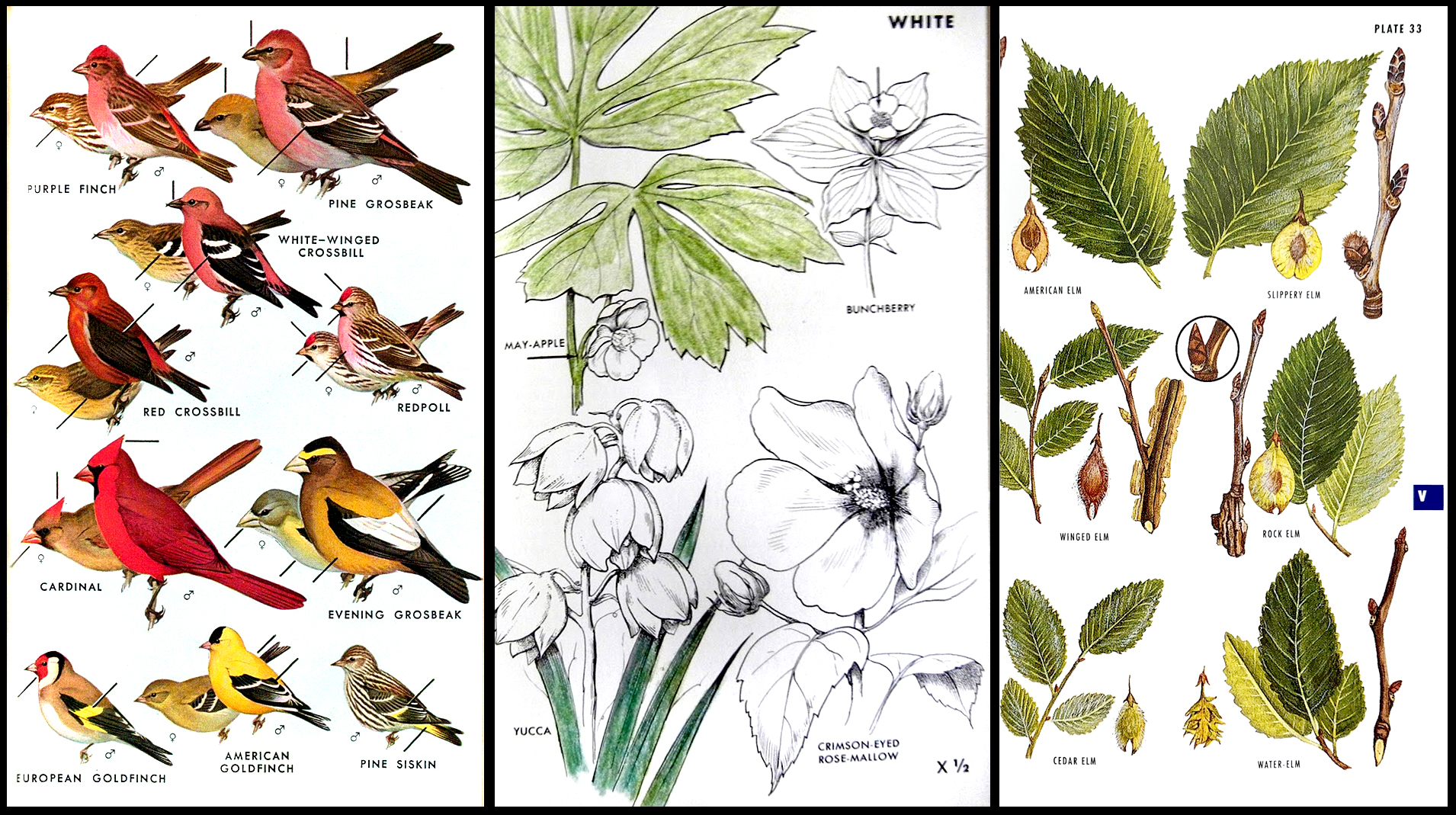
Wouldn’t it be easier, quicker, better, just to have a picture? Roger Tory Peterson thought so when he came up with the idea for his now-ubiquitous field guides. “There are at least 60 ways to say that a plant is not smooth, that it has fuzz, hair, prickles or roughness of some sorts,” he wrote in the introduction to his Field Guide to Wildflowers. And he lists them, including such arcane words as bullate, canescent, coriacious, echinate, flocculent, glanduliferous, hispidulous, lepidote, verrucose, and villosulous. It takes a lexicographer rather than a botanist to navigate such things. 

“That is why the best of keys often fail. … But, I am afraid, most of us belong to the picture-matching school.” Peterson began in 1934 with his A Field Guide to the Birds of Eastern and Central North America, which he updated with new editions — and new illustrations — until his death in 1996. The book has been immensely popular and remains so. Peterson branched out with a series of such field guides, covering wildflowers, trees, seashells, insects, fish, mammals — now more than 50 such guides, most written by specialists, while Peterson remained general editor until his death in 1996. 

Each book relies on drawings of the animals or plants in question. 

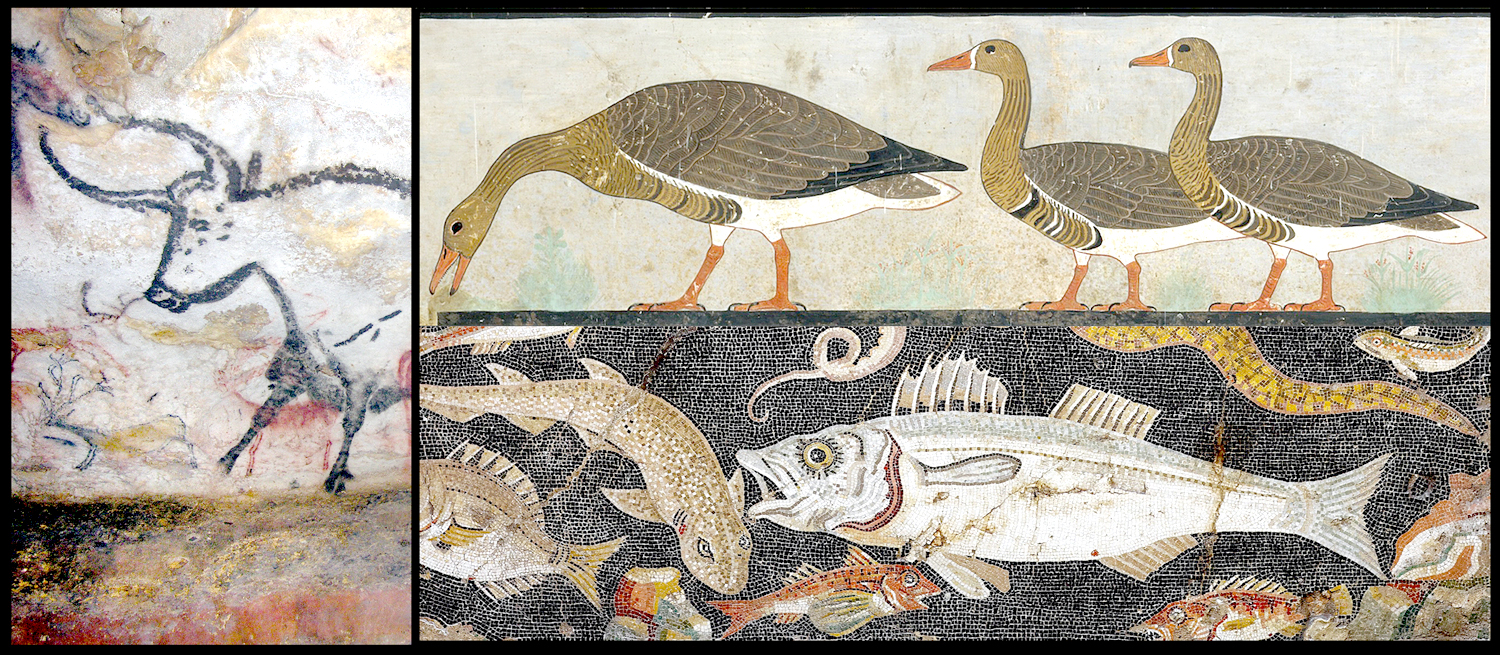
Of course, humans have been making pictures of the natural world since the beginning. The animals drawn the the caves of Lascaux date back something like 30,000 years. Egyptians painted notably realistic animals, such as the famous geese from the Chapel of Itet at Meidum from about 2590 B.C. Romans were fond of animal mosaic floors in the villas, and some are so accurate you can identify species. 

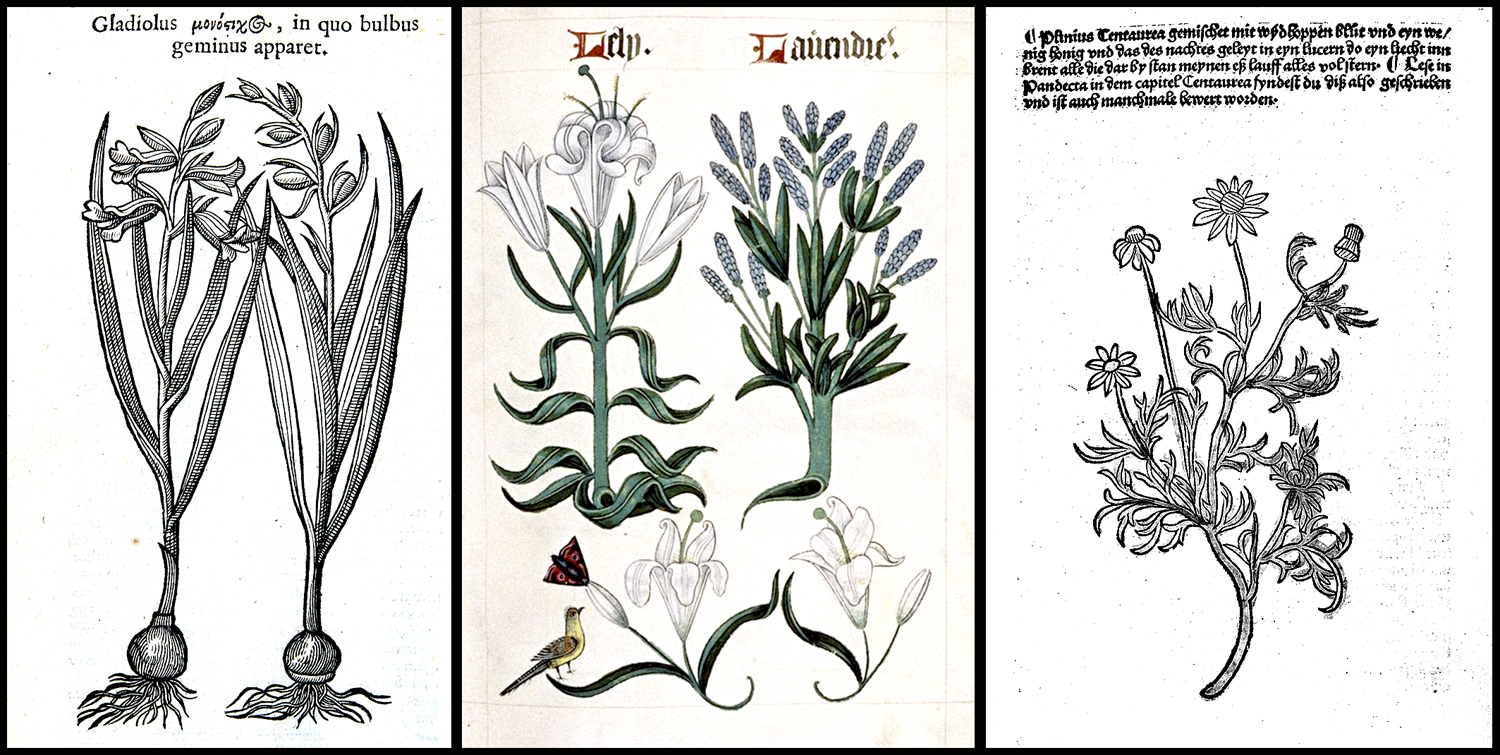
But the use of drawings for identifying plants or animals reached a new level of importance in the Middle Ages, when plants were used medicinally and books of drawings helped physicians identify the proper plant for the proper malady. 

Originally, these were manuscript books. But after Gutenberg, many were printed in quantity, offering advice on the best plants for the worst illnesses.  

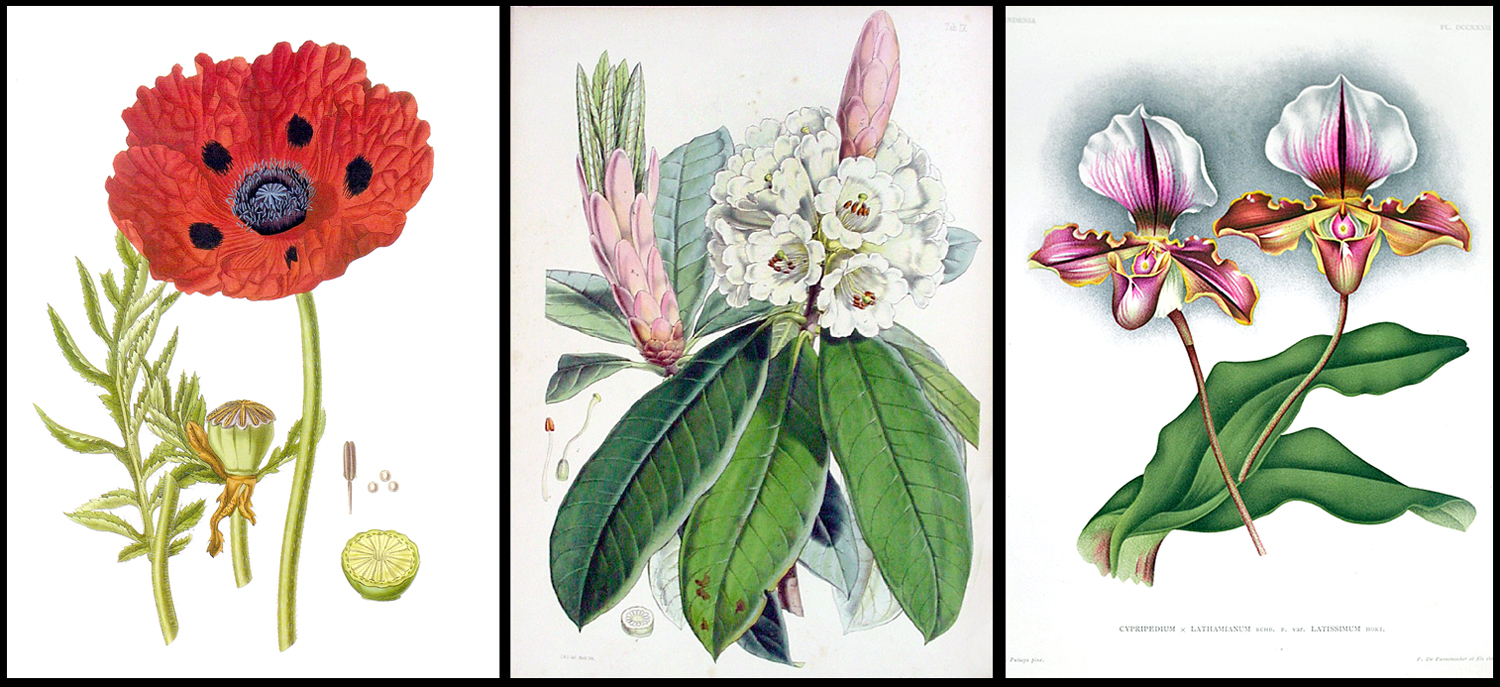
Often these herbals or “medicinals” were at best diagrammatic. There purpose was simply to sort out which plants would be useful. But as the Renaissance flowered, and a more realistic style of image-making took over, many artists were attracted to the natural world, looking with ever sharper detail at the plants and animals around them. There are drawings and paintings by Leonardo, Raphael and others. But it would be hard to best the small naturalistic pictures by German artist Albrecht Dürer. 

But Dürer’s paintings are one-offs. As the 17th century progressed, a more systematic approach took hold, wherein artists as botanists attempted to catalog the plant life around them. 

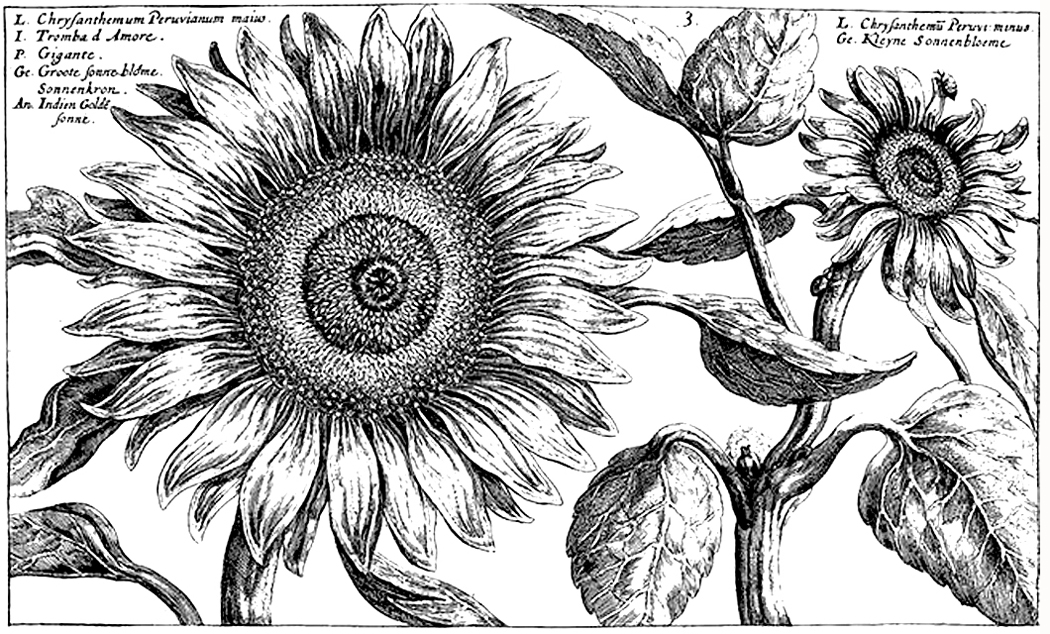
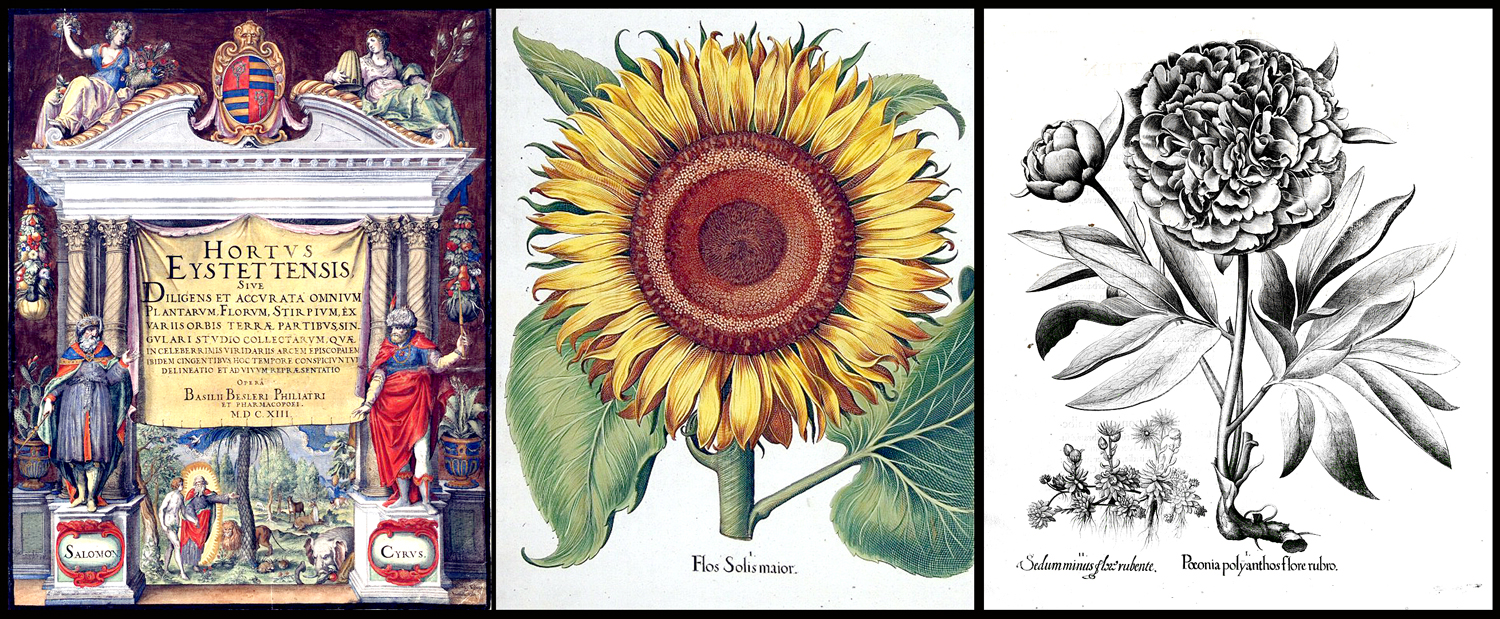
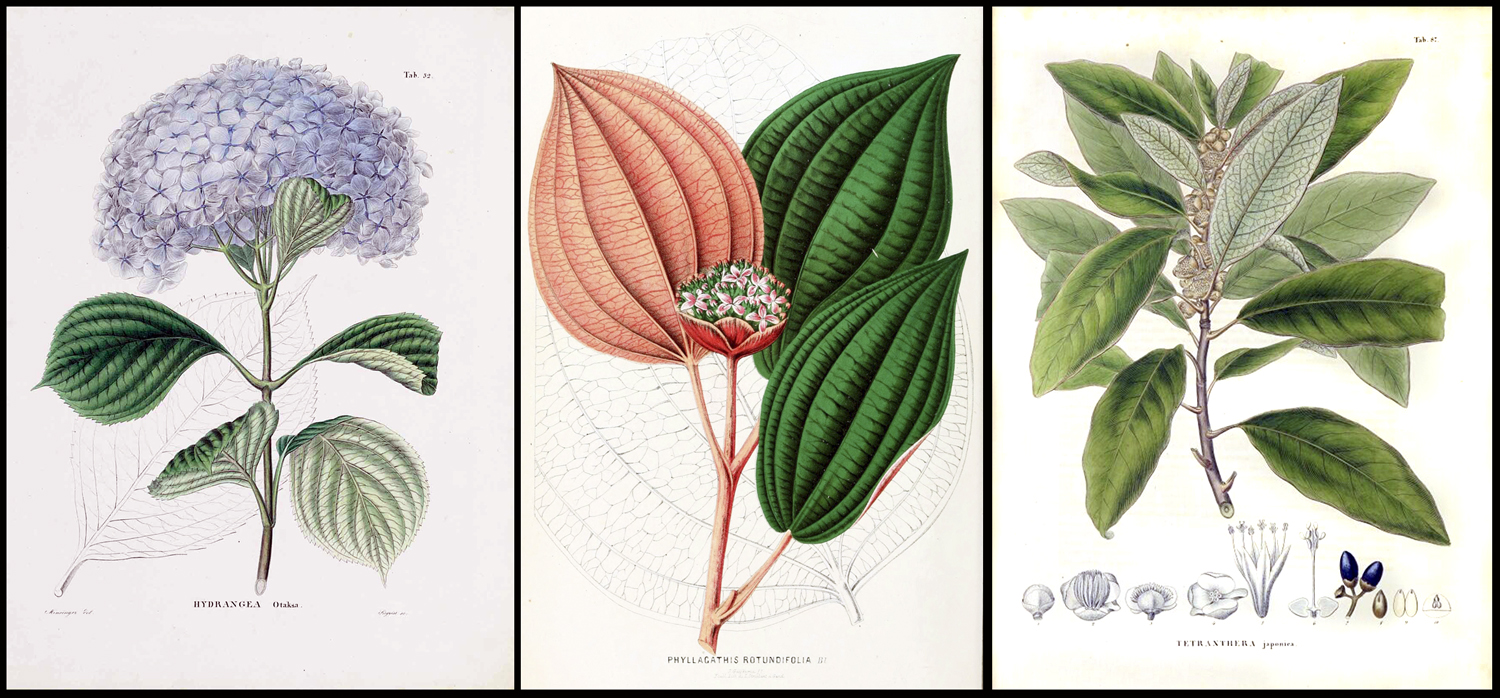
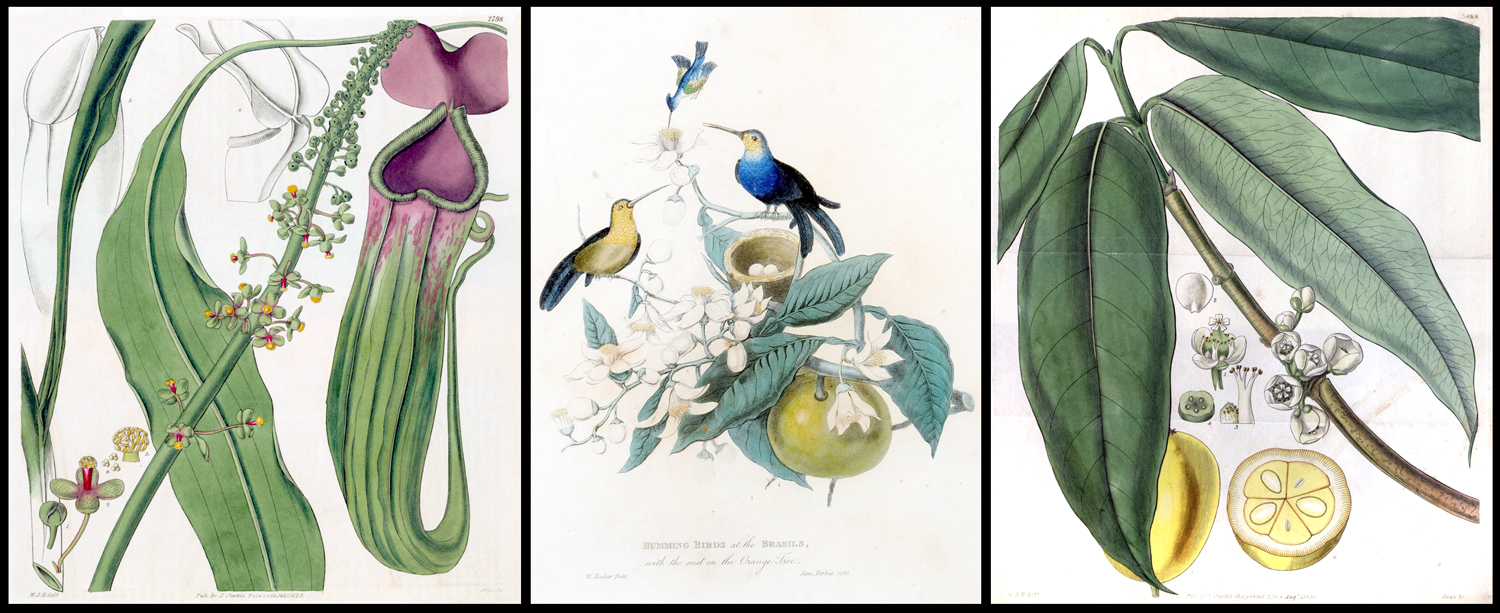
One of the first such attempts was the Hortus Eystettensis, edited by Basilius Besler (1561-1629) beginning in 1613 and spread over several years. It was a collection of copper-plate engravings of the plants collected by the prince-bishop of Eichstätt in Bavaria for his palace garden, which contained examples of all the shrubs and flowering plants known at the time, from around the world. 

The book contained images of 1,084 species, divided into 357 plates. A cheaper black and white version was supplemented by a luxury edition in which the images where hand-colored. The book changed botanical illustration overnight. What had been crude and diagrammatic became works of art. 

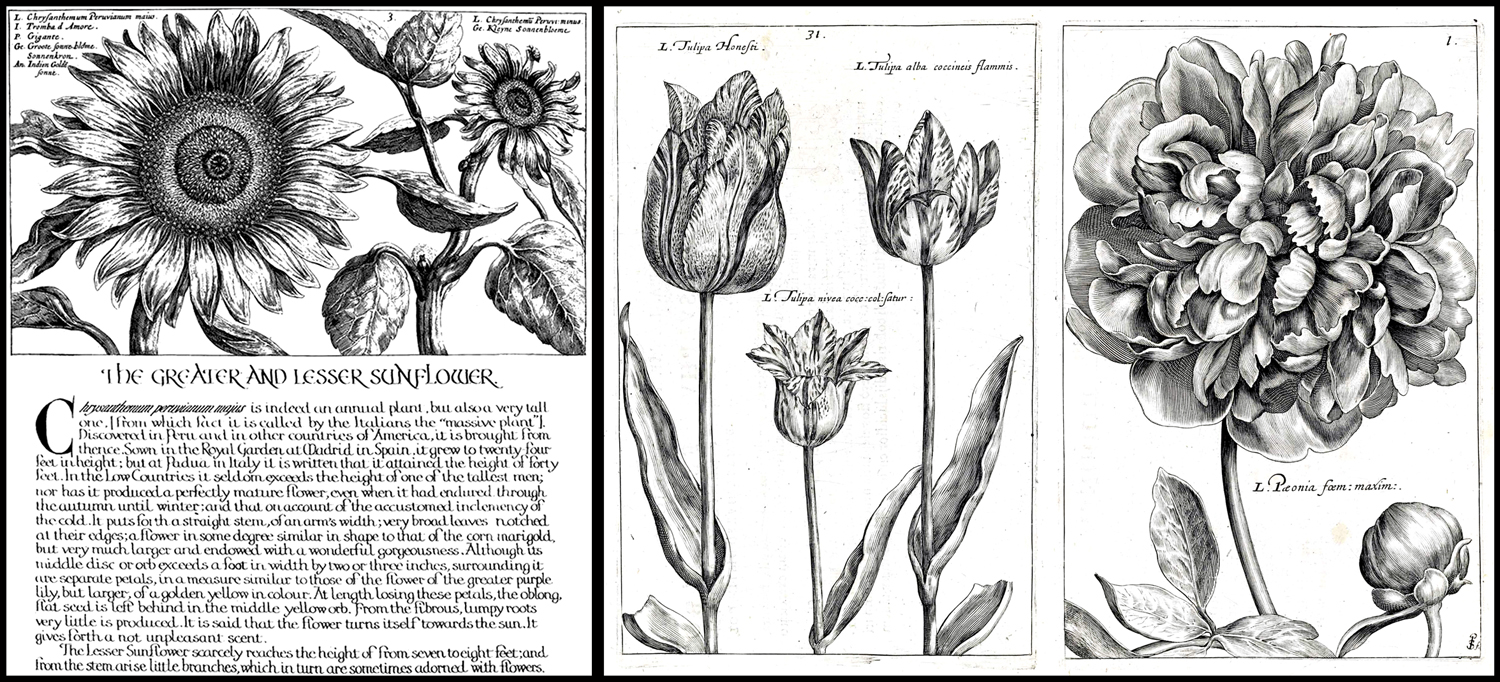
Soon in its heals came Hortus Floridus, a collection of 160 engravings of flowering plants published in 1616, which became so popular its Latin text was soon translated into Dutch, French, and English editions. The book, in modern editions is still available today. It was created by Dutch engraver Crispijn van de Passe the Younger (1595-1670), a popular and prolific engraver of the Dutch Golden Age. 

Such books of engravings, colored or not, appeared throughout the century, with Louis XIV’s official painter, Nicolas Robert (1614-1685), producing illustrations in 1640, 1660, and entries in the giant compendium  Recueil des Plantes published in 1676. 

His drawings and paintings, as well as the engravings made, were of a new freshness and delicacy and presaged a surge in flower pictures made not simply for identification purposes, but as esthetic objects — as art. 

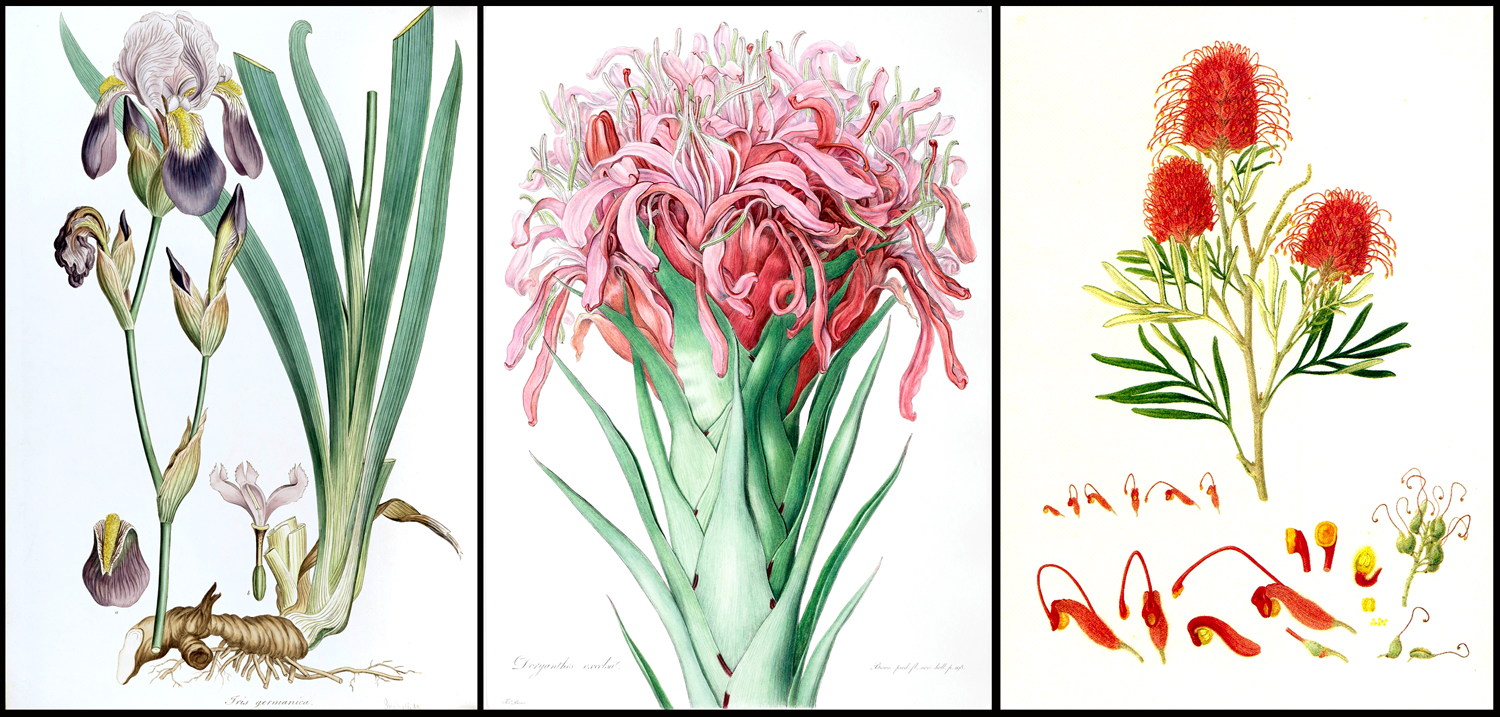
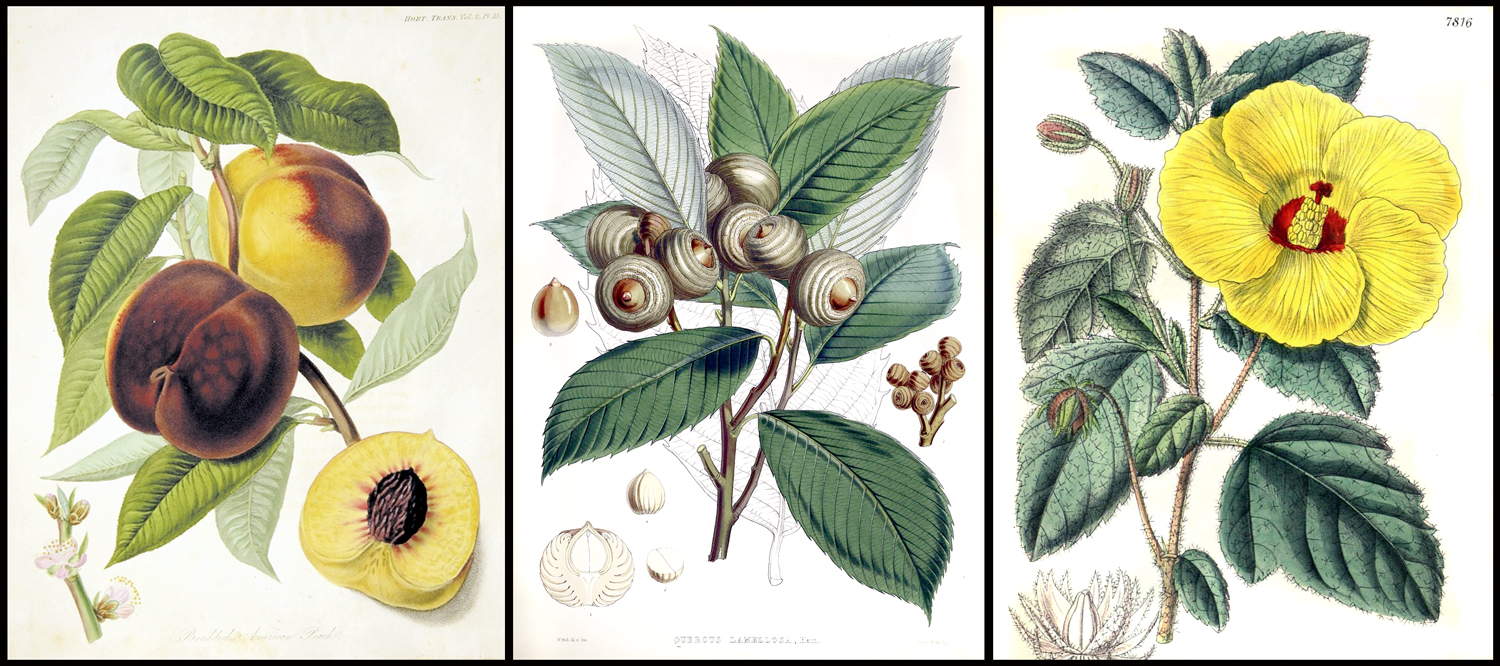
As the 18th century began, these two strains of botanical illustration developed. On one hand, there was a rise in scientific exploration, with botanists traveling the world collecting new species of plant and animal previously unknown to European science. On the other, there was a growing market for books and images of pretty flowers. The two traditions flourished side by side, but also cross-pollenated. 

That market for flower pictures was given a jump start by the Dutch tulip craze of the 1630s, when speculation in the market for rare tulips created a financial bubble that burst in 1637. But the Dutch economy was expansive and a growing middle class had money to spend on luxury items such as art. The actual tulip mania was confined to a small but important few speculators, the public at large wanted their part and so prompted the production of pictures of the fanciest tulips. If you couldn’t afford a tulip bulb that cost as much as a house, you could afford a colored engraving of the same flower. And so, pictures of flowers became a thing.

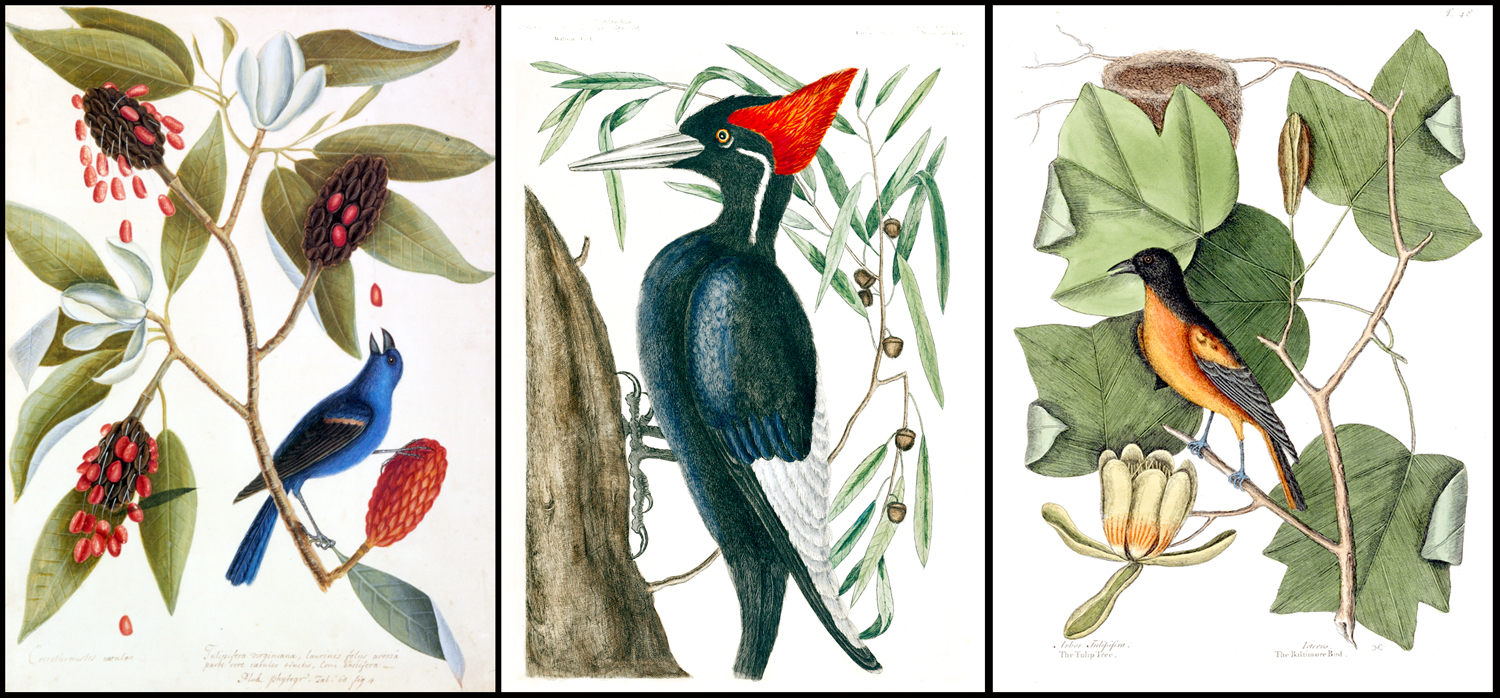
There had always been still-life paintings: pictures of flowers in vases; even kitchen scenes with food on the table and game hanging above. But what I am interested in here are those images of singular plants, birds, or animals, usually devoid of background context, meant to show off the specimen to best advantage. Where still life is meant to elicit warm feelings of comfort and beauty, the botanical illustration is meant to focus attention on a particular item, to see it for itself alone. 

The 17th and 18th centuries were the great era of cataloguing the world, and it led to a plethora of illustration of new and exotic species as scientists accompanied military explorers around the globe, gathering natural history data and both collecting specimens and illustrating them, usually in books. 

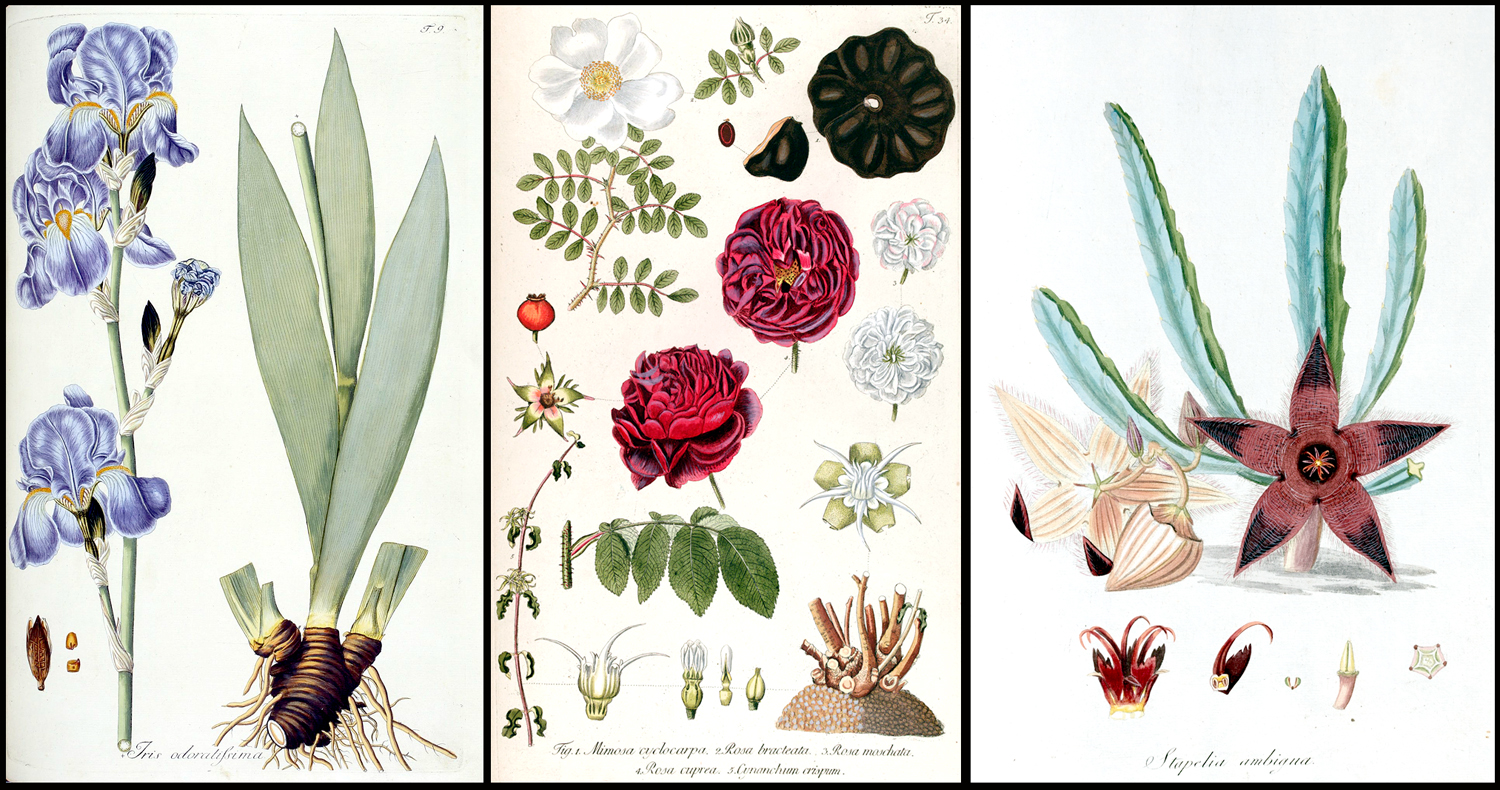
Dutch-born Nikolaus Joseph von Jacquin (1727-1817), for instance, travelled to the West Indies, Central and South America, publishing prolifically throughout the 18th century. 

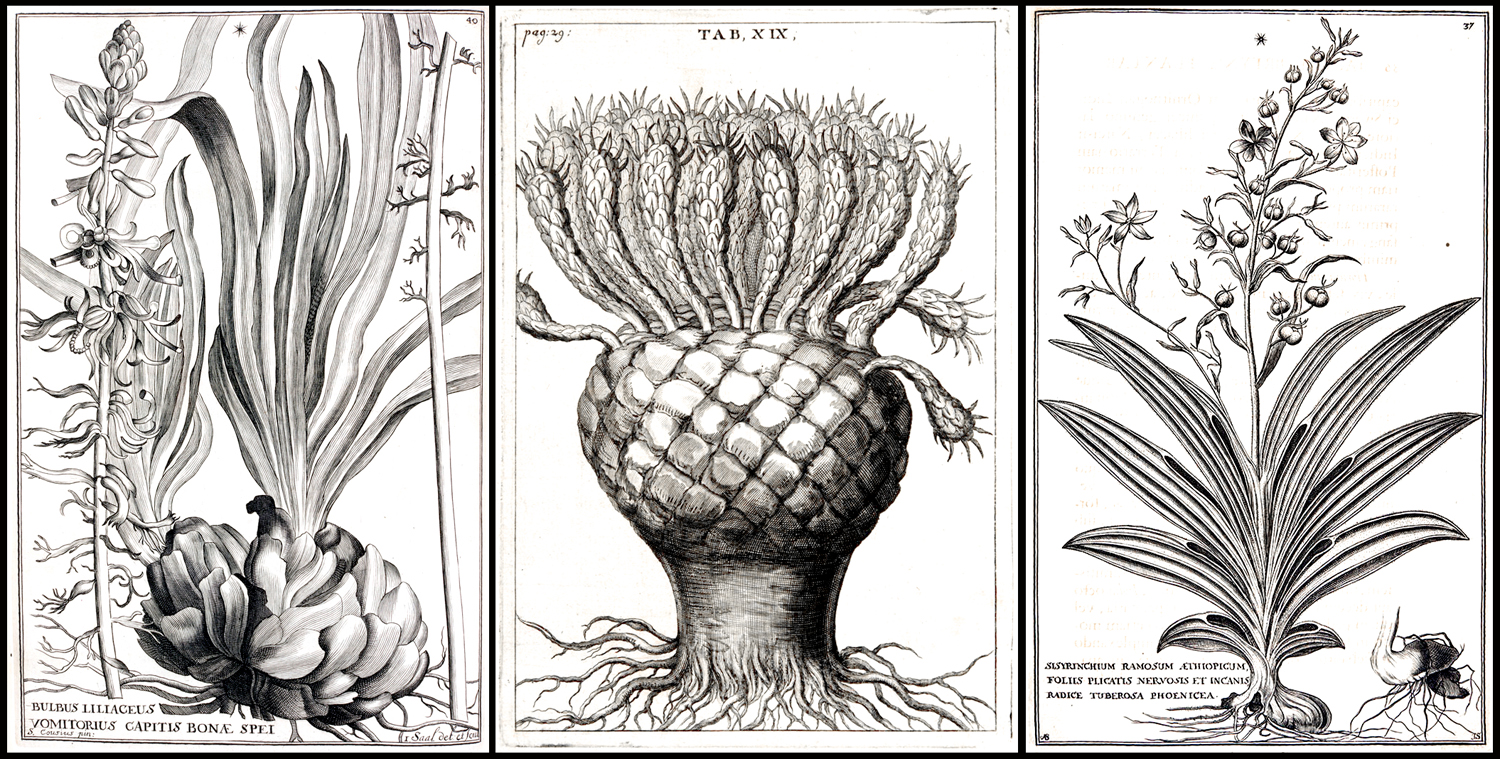
Sometimes, they went on their own, like the Polish Jacob Breyne (1637-1697), who travelled to South Africa and catalogued plants. 

Austrian Franz Bauer (1760-1826) went to Australia, collecting and painting what he found.

Englishman Mark Catesby (1683-1749) sailed to the New World, publishing his Natural History of Carolina, Florida and the Bahama Islands in volumes between 1729 and 1747.

Henri-Lois Duhamel de Monceau (1700-1782) was a French  Encyclopedist, writing on many subjects, but catalogued the flora of his native France over his long lifetime, including his 1768 Treatise on Trees and Shrubs

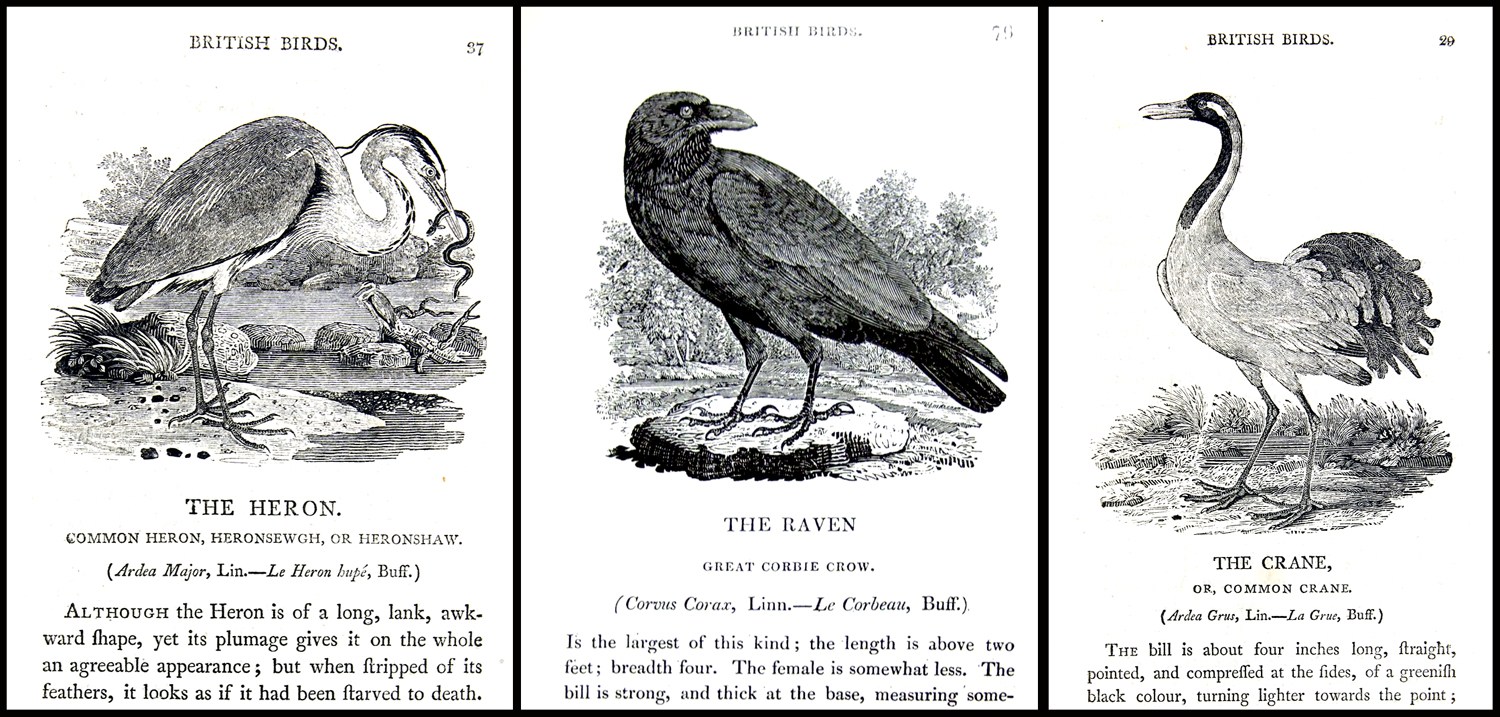
Likewise, Englishman Thomas Bewick (1753-1828) stayed at home and made wood engravings of his native animals and birds. 

Grub Street writer Oliver Goldsmith neither drew nor painted, but his enormously popular Natural History of the Earth and Animated Nature, first published in 8 volumes in 1774, went through many subsequent editions, each time copiously illustrated by an army of anonymous engravers. 

As the 18th crossed over into the 19th century, two men characterized the two thrusts of botanical illustration. 

William Bartram (1739-1823) traveled through the New World exploring for flora and fauna. His book, Travels through North and South Carolina, Georgia, East and West Florida, the Cherokee Country (1791), is still in print, usually known just as “Bartram’s Travels,” and covers his travels through Georgia, Florida and western North Carolina and is a readable a travel book as it is important as a naturalist survey. 

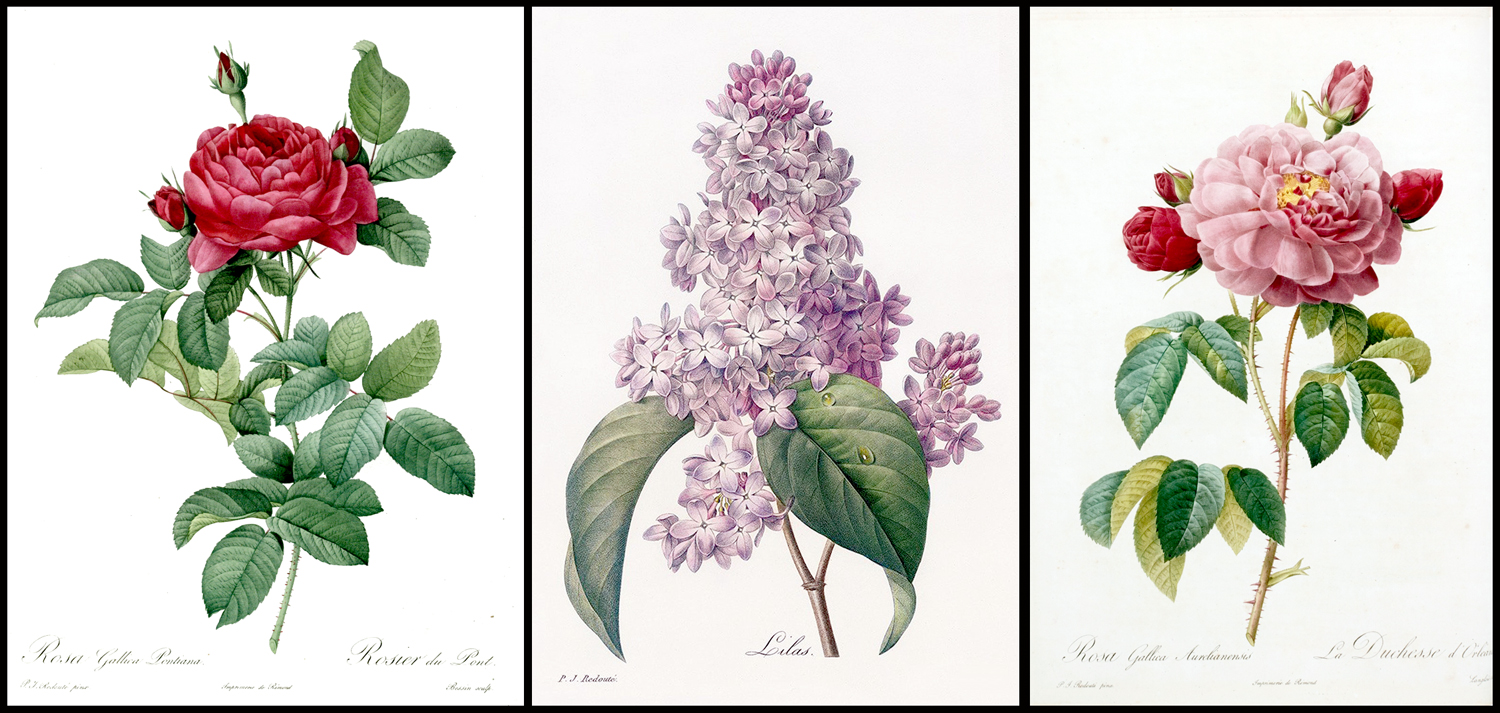
The other impulse for botanical illustration is the creation of art for the beauty of it. And no one did more for that than Pierre-Joseph Redouté, whose images of roses and lilies are still popular in framed prints to hang in tasteful middle class homes. As Wikipedia puts it: “Reproductions of his prints are available from virtually all print and poster shops.”

Redoute’s life was fascinating. He was official illustrator to Queen Marie Antoinette, and somehow survived with his head after the French Revolution and the Terror, despite his aristocratic credentials, and lived to become official artist for Empress Joséphine de Beauharnais and then survived her divorce from Napoleon Bonaparte, only later to be made Chevalier de Legion d’Honeur, France’s highest honor, and his work bought by Charles X. 

His early work was watercolor, but later in life, much of his art was engraved and hand-colored or turned into chromolithographs. And now, there are boatloads of books featuring Redouté’s art. 

Two developments affected the publication of prints of the natural world as the 19th century overtook the 18th. One was the mainstreaming of colonialism, and the number of biologists and artists who traveled to the new lands to catalog the flora and fauna. 

In the 18th century, much of the exploration was just to find out what was out there, to discover new Pacific islands or what was going on in the polar regions. But in the next century, the drive was to exploit what the colonies offered, and to do that meant to catalog all the new things these colonial toyboxes had to offer. 

And so, scientists such as Philipp Frans van Siebold (1796-1855) went to Japan; Nathaniel Wallich (1786-1854) went to India; Johann Joseph Peyritsch (1835-1889) went to Sudan. They collected specimens and wrote books illustrated by a host of artists who made illustrations from the specimens they brought back. 

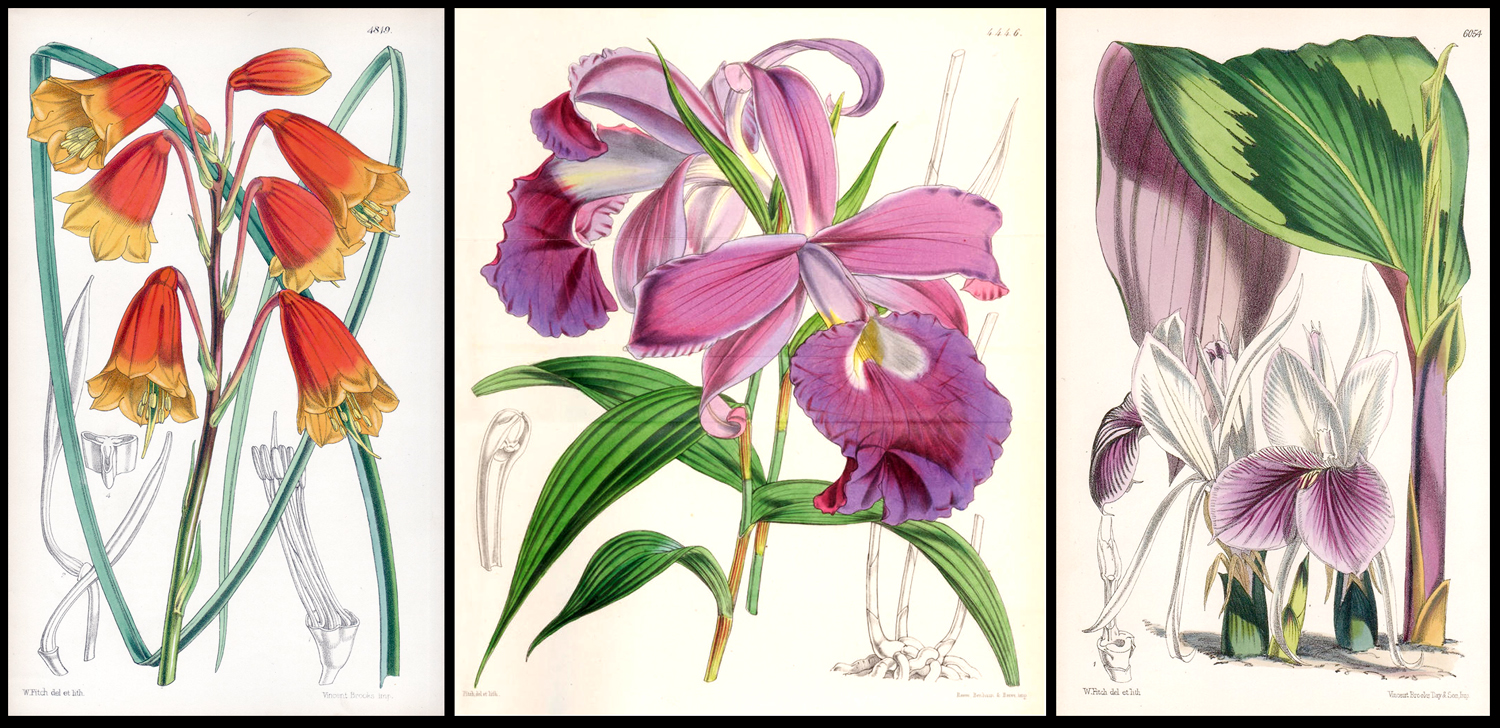
One of the artists employed by the botanists was Walter Hood Fitch (1813-1892). Fitch supplied many of the illustrations for John Dalton Hooker’s 1855 Flora Indica, a survey of plants of India and the Himalaya mountains. 

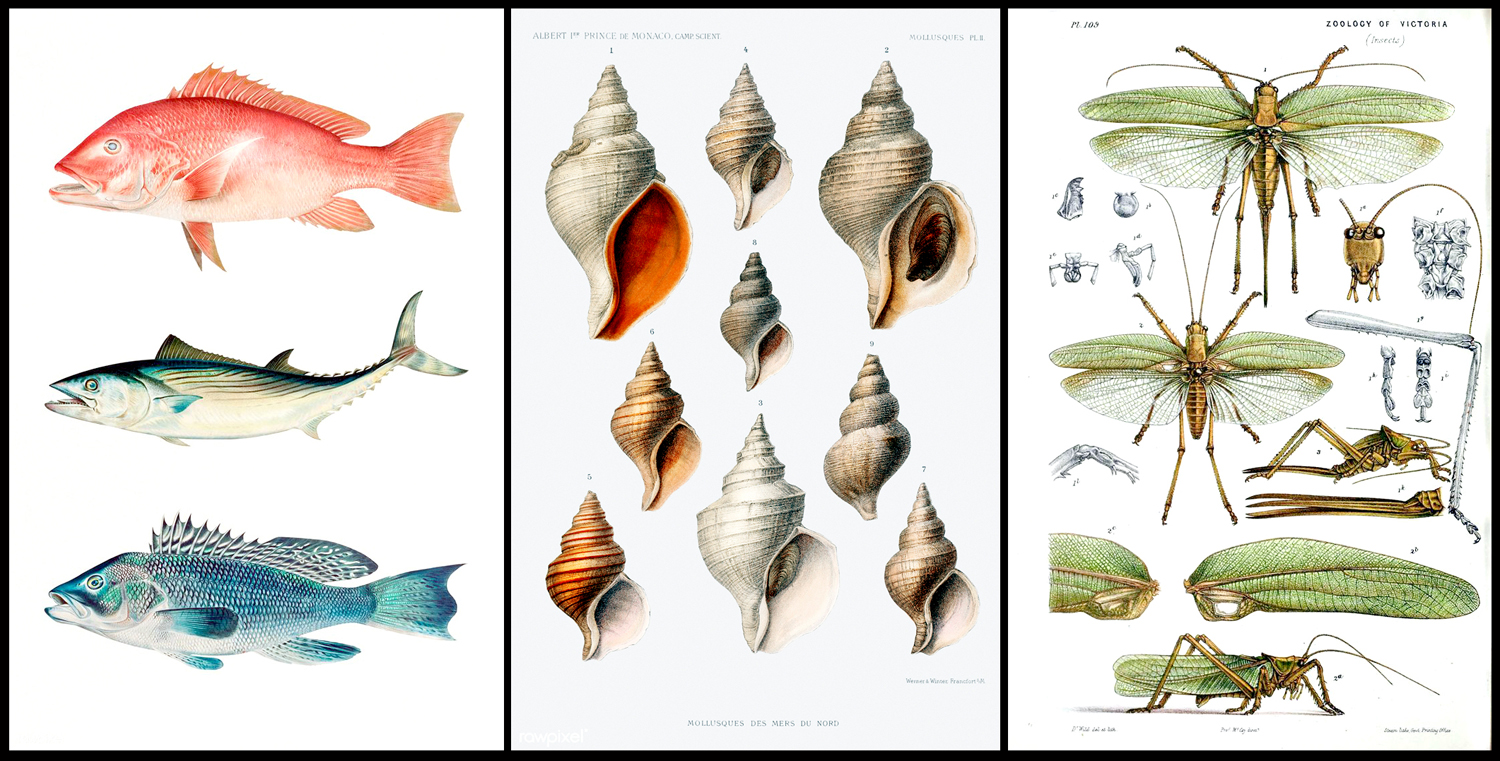
While botanical illustration comprised maybe 80 percent of all natural history artwork, much was done with animals, too, and even such things as seashells, rock types, and landforms. 

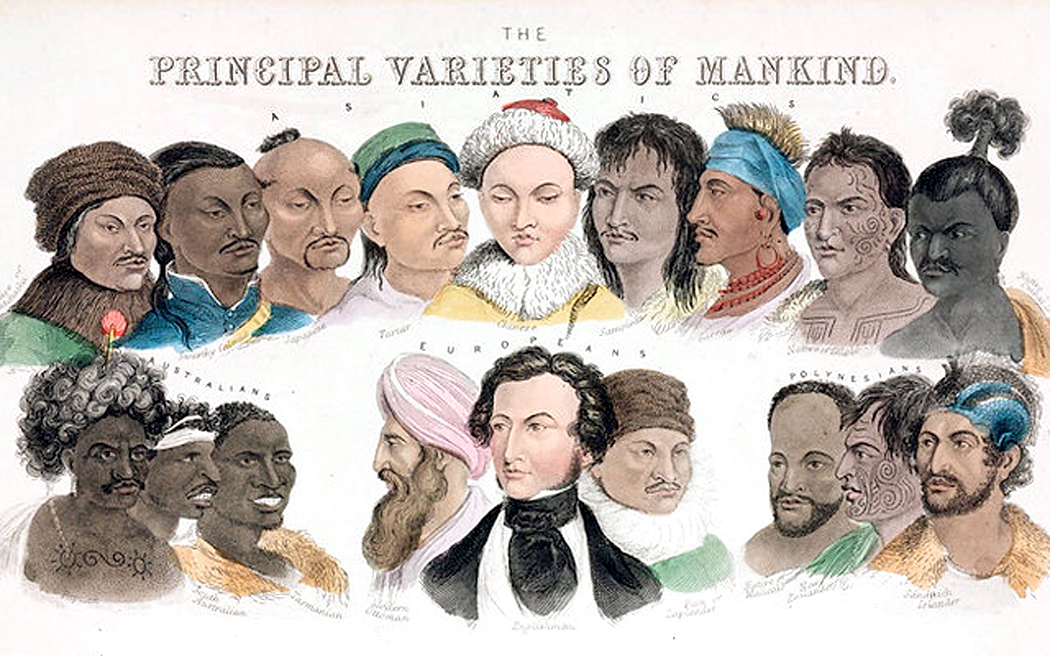
Colonialism brought in an infection called “scientific racism,” and natural history illustration looked not only at flora and fauna, but at human beings, typing them just as they did genus and species of orchid. 

There was almost a mania to classify and name everything. 

The second development was the invention of lithography, in 1796, which gave both scientists and artists a better means of mass producing images. 

The first botanical illustrations were either drawings or paintings, and the first reproductions were by woodcut. But copper-plate engraving supplanted the coarse woodcut and those engravings were often hand-colored, an expensive and time-consuming process for publication. 

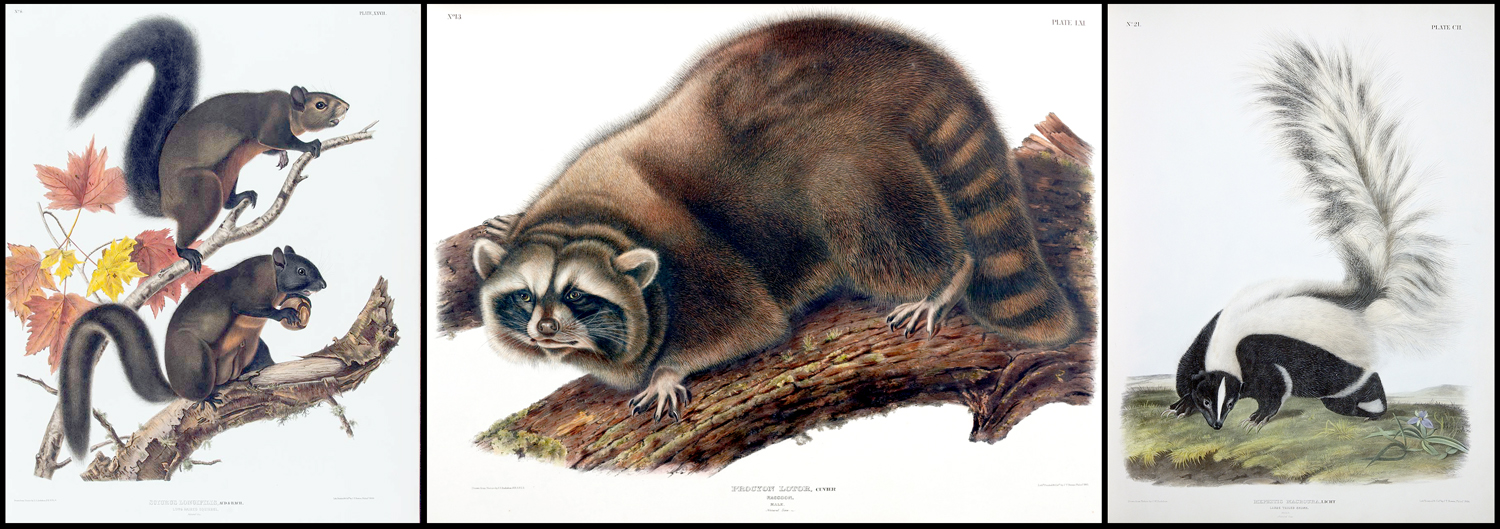
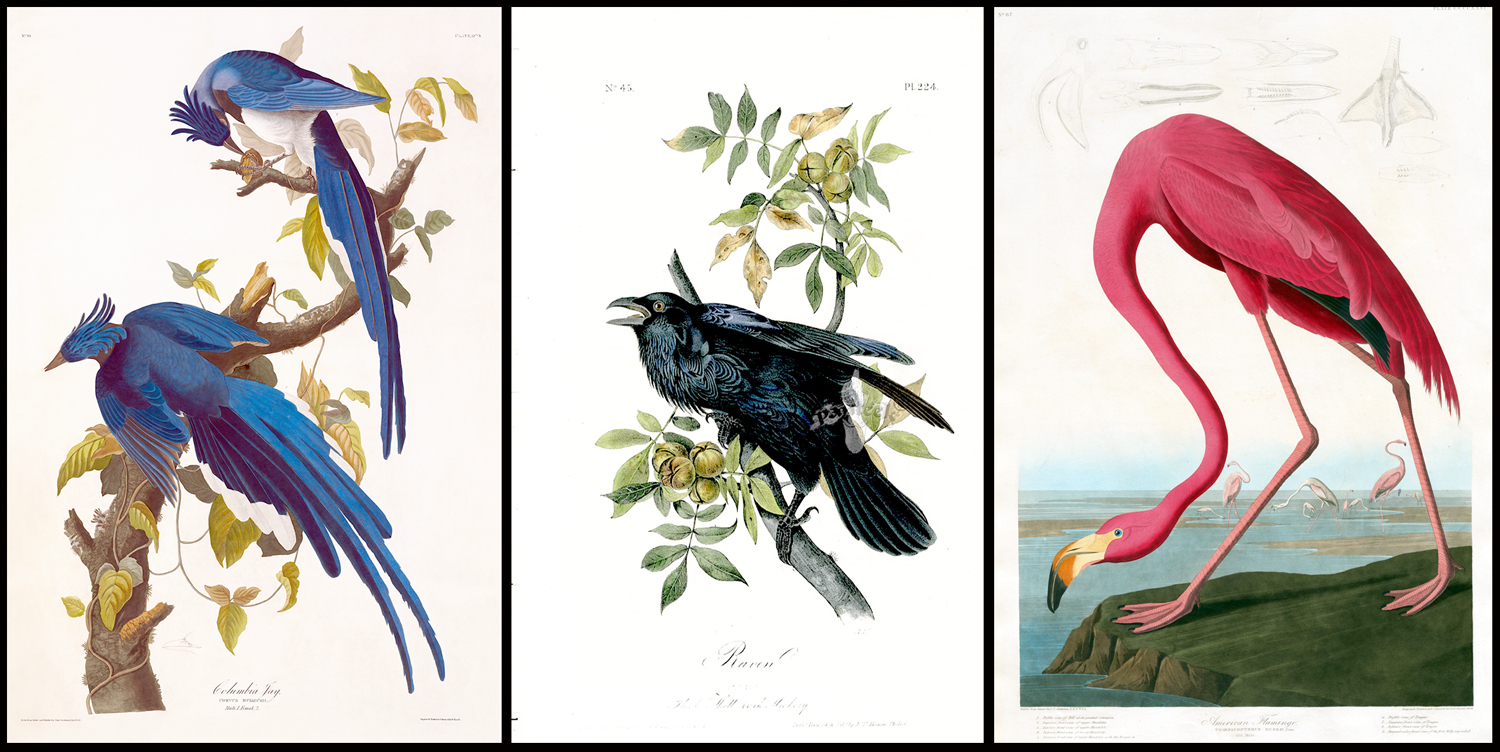
For instance, when John James Audubon (1785-1851) published his original edition of Birds of America in England, in sets from 1827 to 1838, at least 50 colorists were employed and no more than about 200 full sets were printed. 

But lithography, and later chromolithography, allowed much larger editions of prints and mass production of images. The later work of Redouté was made with the new process. And when Audubon came to work on his later Viviparous Quadrupeds of North America (published in 1851, after his death) the images were lithographs. 

Of course, the most famous natural history art has to be Audubon’s Birds of America. He initially produced 435 large-scale plates, each with life-size images of the birds he drew and painted in his travels through America. The plates were engraved and etched and hand colored. The pages were called “double elephant” size — roughly 28 inches by 40 inches — and you can see he had to contort some of the larger birds, such as the flamingo, to fit those pages and still have them life size. 

Later editions came in smaller pages. 

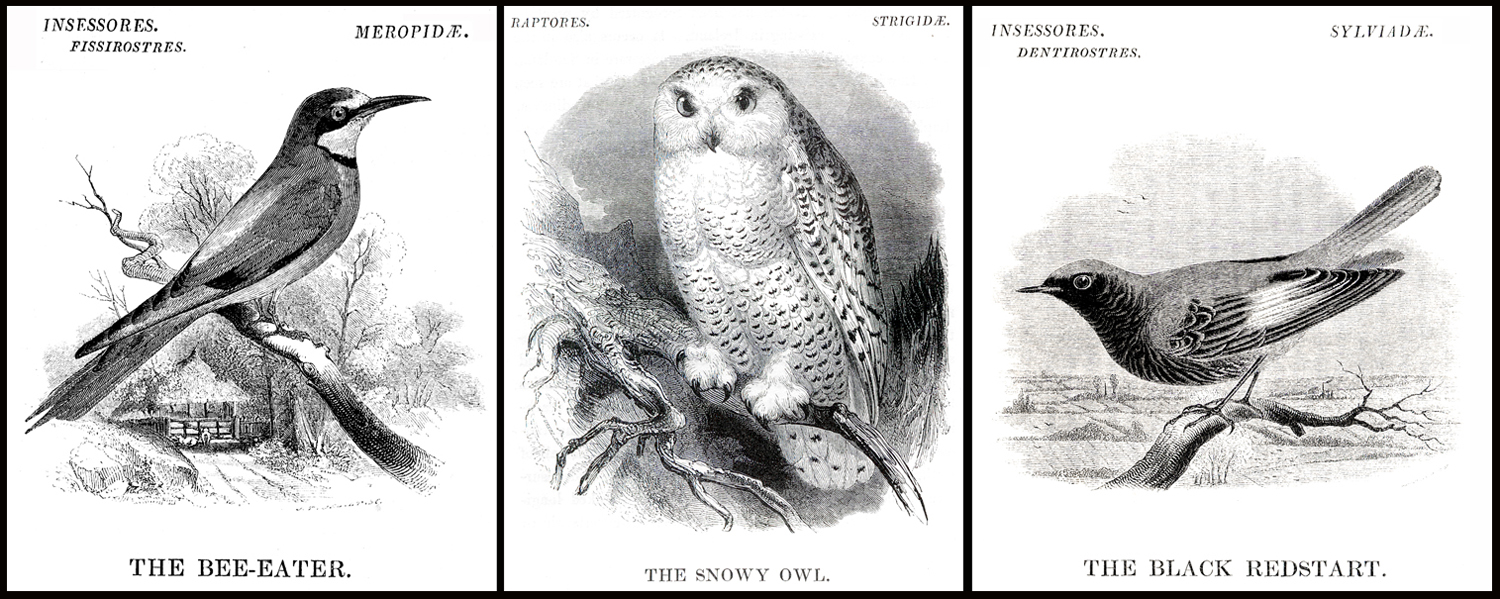
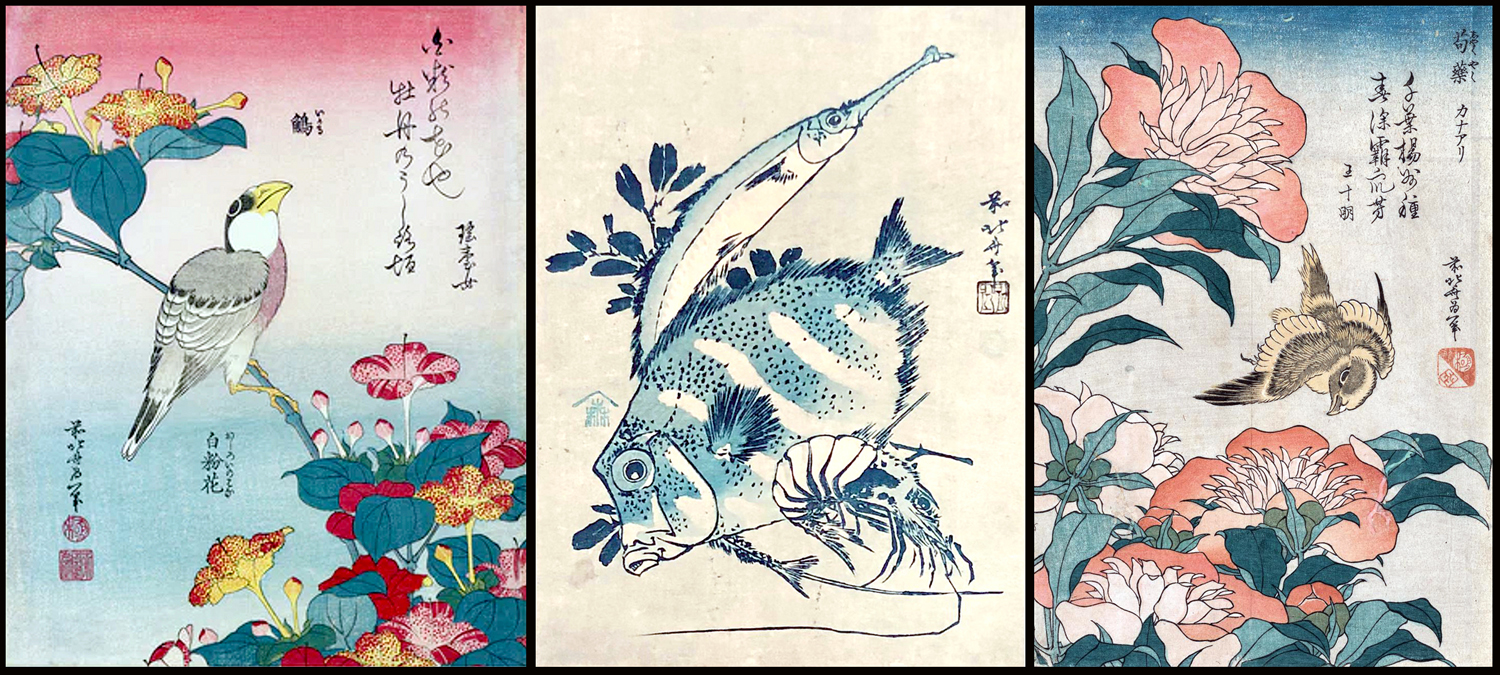
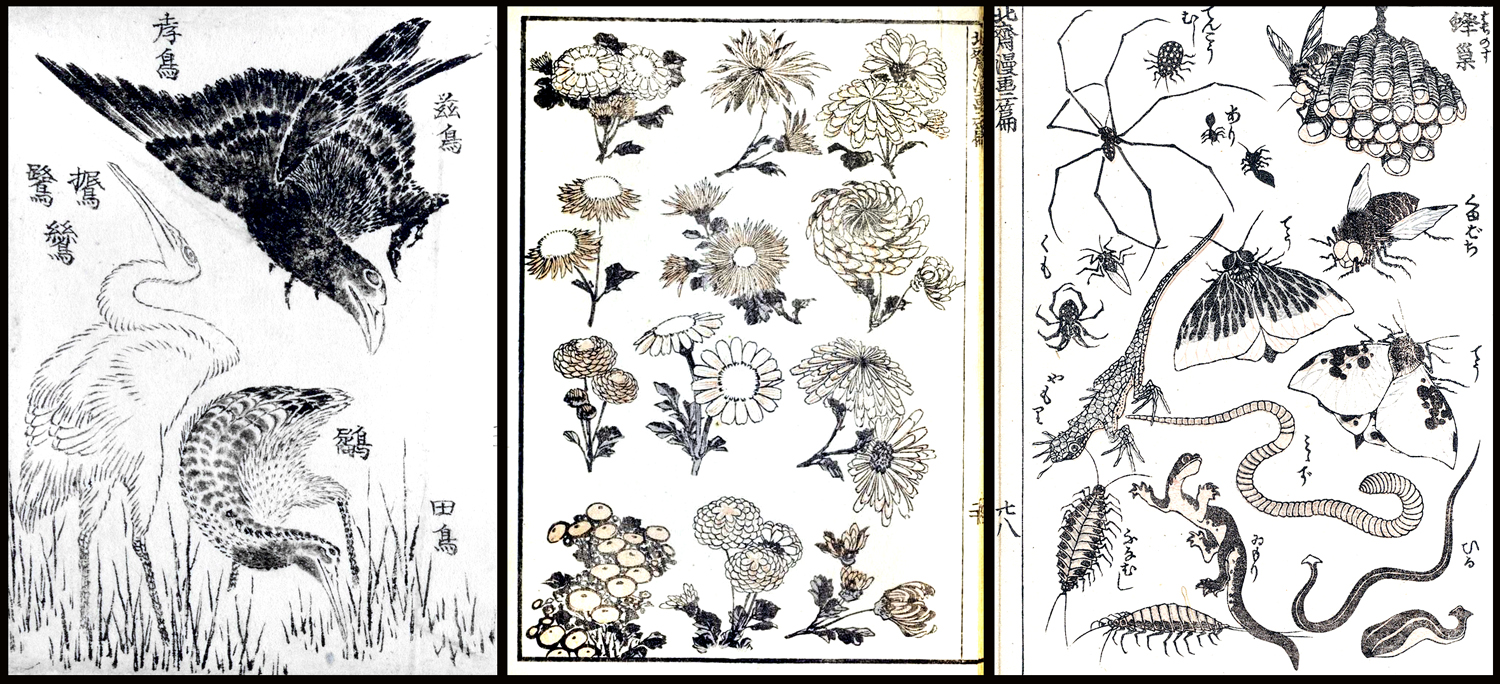
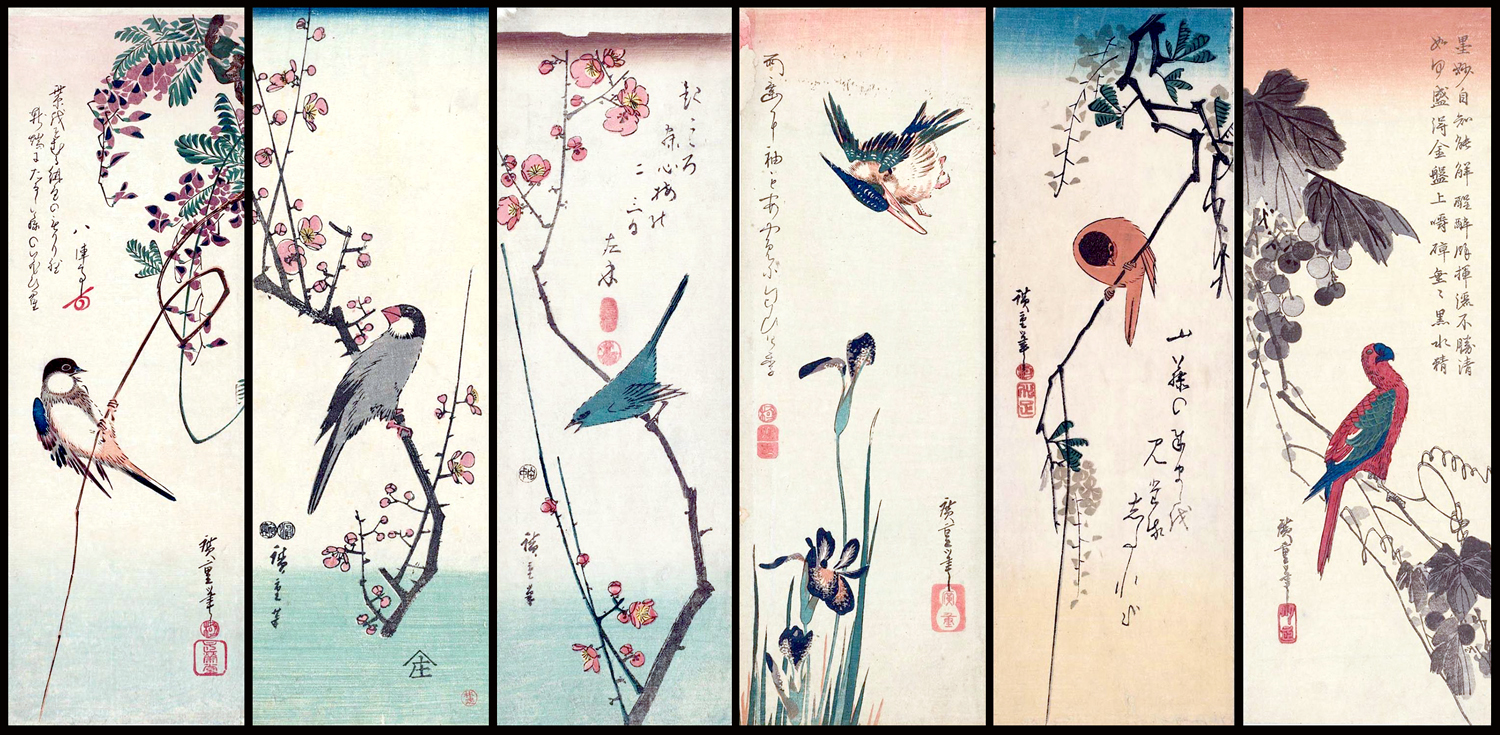
The market for natural history imagery was immense during Victorian times and the number of artists working in the field from the late 18th- through the 19th-century was to great for me to cover them all. But I wanted to show off a few of them. 

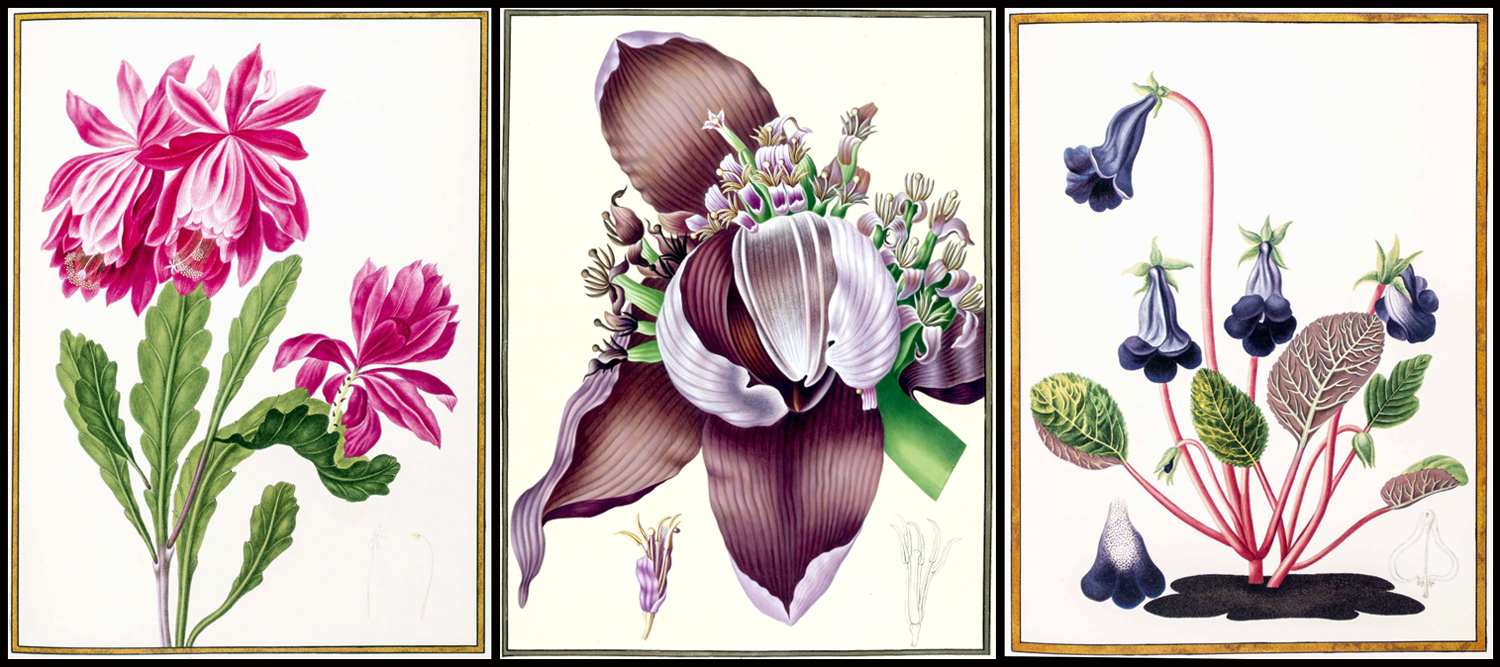
Such as Matthias Schmutzer (1752-1824), who produced 1433 plates for Das Florilegium Kaiser Franz I, a compendium of plants from the garden of Emperor Francis I, the final emperor of the Holy Roman Empire and first of the Austrian Empire.

And I should mention the father-son pair of William Jackson Hooker (1785-1865), a botanist and illustrator and first director of Kew Garden in London. Hooker published more than 20 major botanical works over a period of 50 years. 

His son, Joseph Dalton Hooker (1817-1911), who succeeded his father as director of Kew, and was Charles Darwin’s friend. He joined expeditions to the Antarctic, Palestine, Morocco, the Himalayas, and the western United States, collecting specimens along the way, and publishing books on what he found, illustrated by many familiar botanical illustrators of the time, including Fitch. 

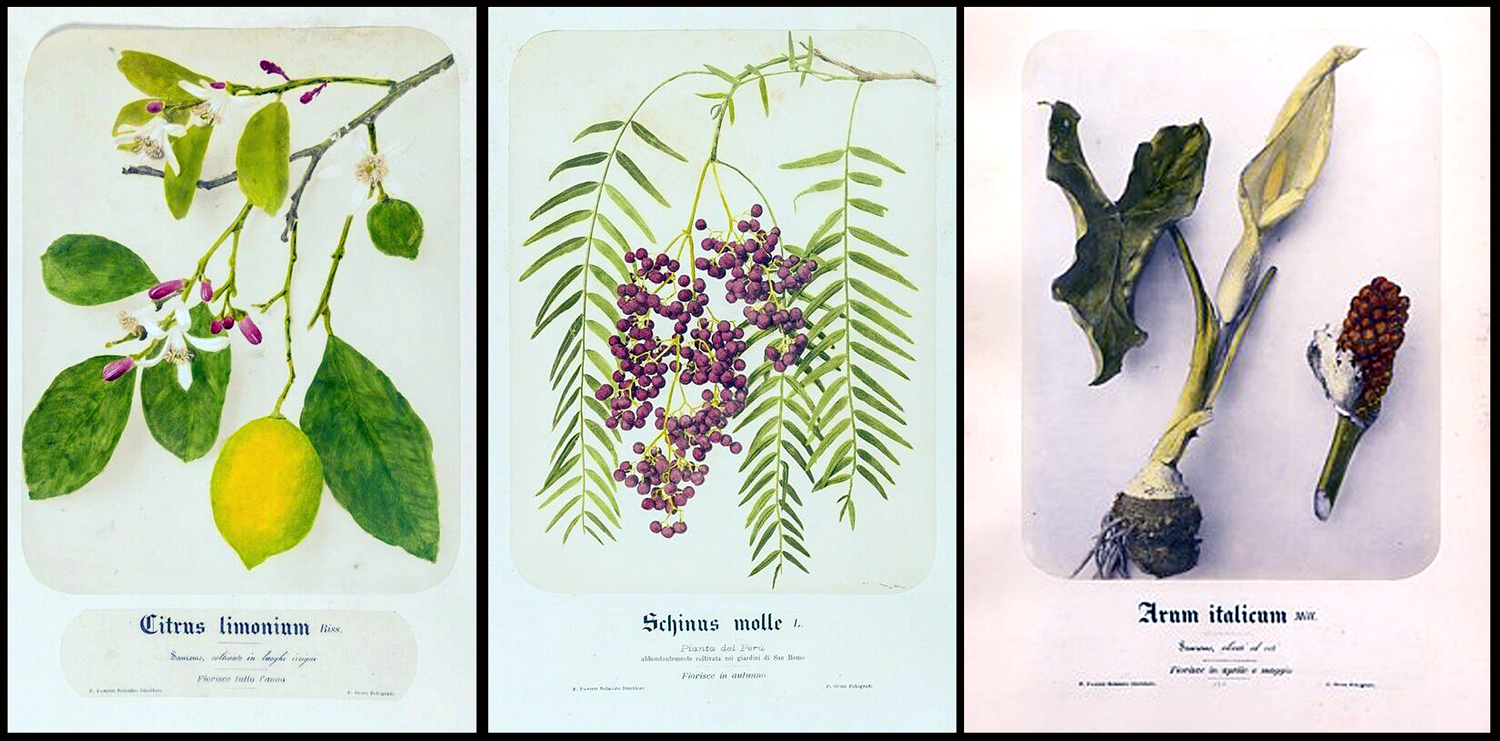
By the late 19th century, photography began to take over. The earliest I can find is an 1879 set of botanical photographs by Pietro Guidi. The black and white images still had to be hand-colored, just as the old engravings had to be. 

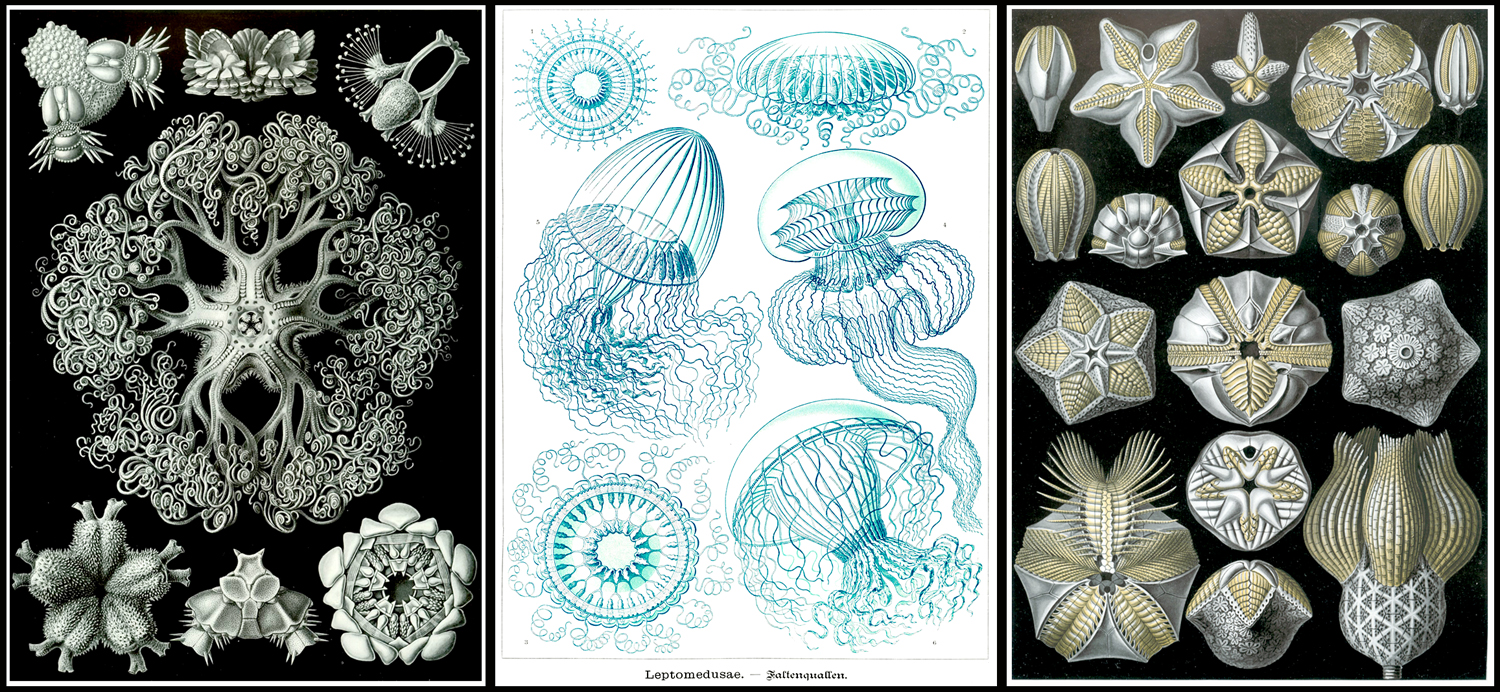
And by the fin-de-siecle, as art nouveau gathered steam, the link between nature and art became important. Nature motifs played out in furniture, architecture, book design and painting. Several artists and scientists became immersed in the subject.

Ernst Haeckel (1834-1919) was a biologist obsessed with Darwin and symmetry. His Kunstformen der Natur (“Art Forms in Nature”), published in 1904. It consists of 100 prints of various organisms, many of which were first described by Haeckel himself. Haeckel’s intricate drawings were transferred to print by lithographer Adolf Giltsch. 

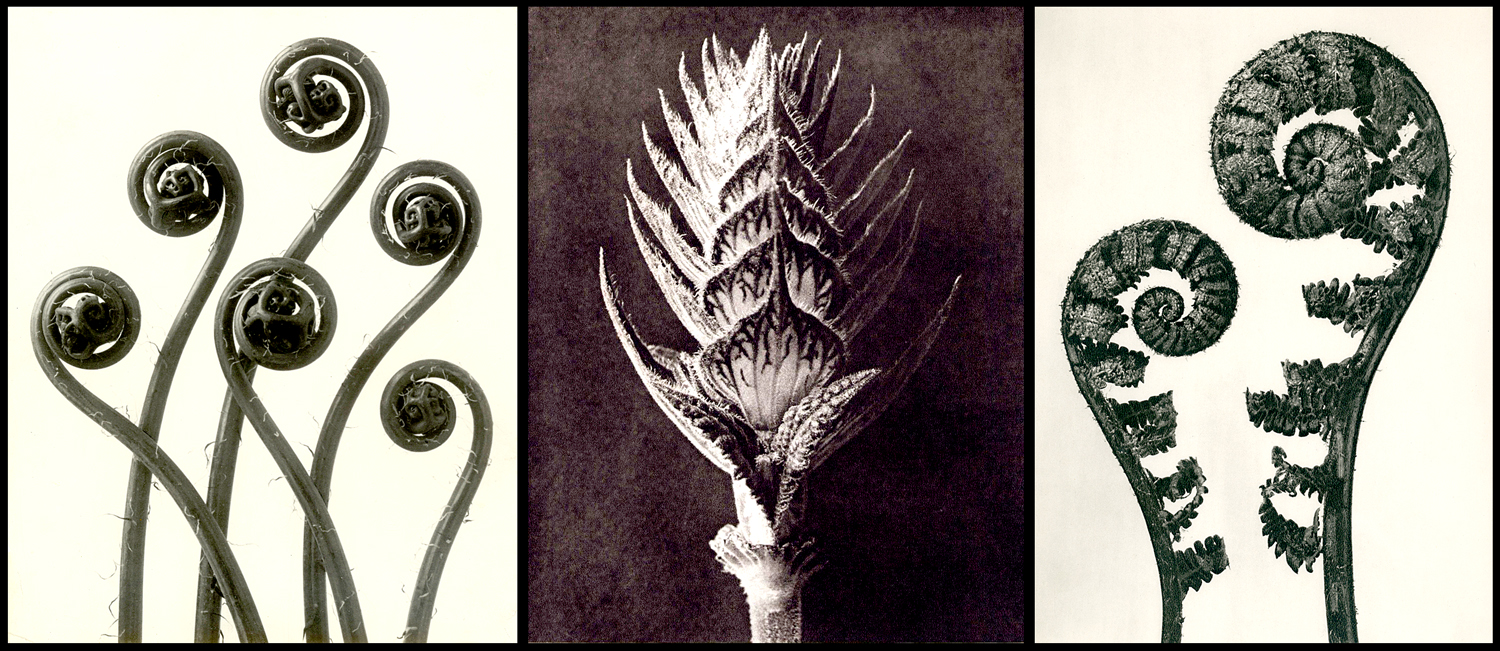
In 1929, professor Karl Blossfeldt (1865-1932) used photography to express the relationship between nature and modern art in his Urformen der Kunst (“Original forms in Art” or “Art Forms in Nature”). His purpose was pedagogical, teaching his art students to seek for inspiration in natural forms.

This cataloguing and regularizing tendency in German art extended beyond botany and zoology. In the 1920s and ’30s, photographer August Sander attempted to photograph all the jobs and professions in Weimar Germany, and later, Bernd and Hilla Becher made multiple images of German water towers, mining tipples, cooling towers, grain elevators, coke ovens, and blast furnaces, among other things. Those images, made mostly from the 1960s through the 1990s were part of a movement dubbed the “New Objectivity.” 

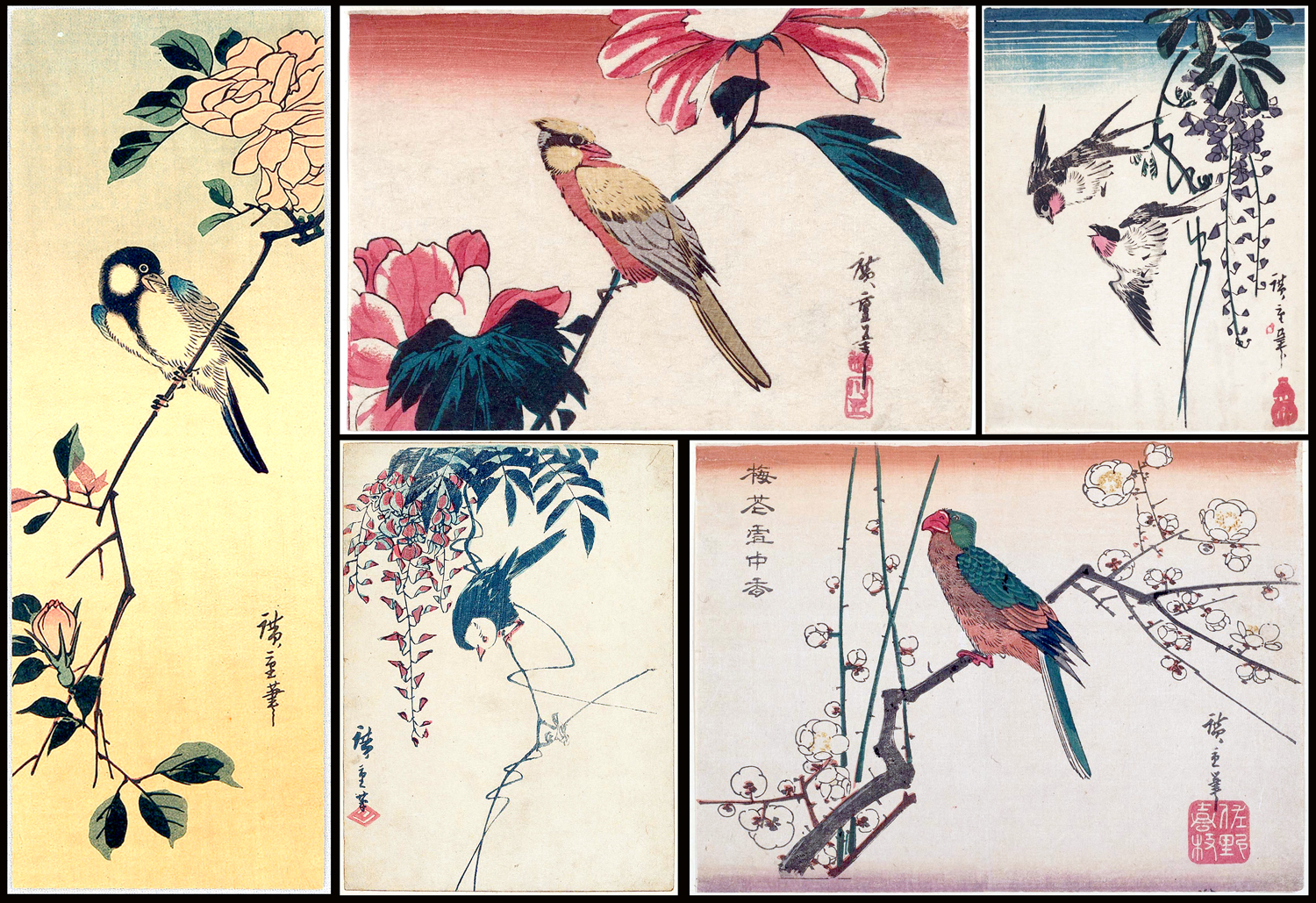
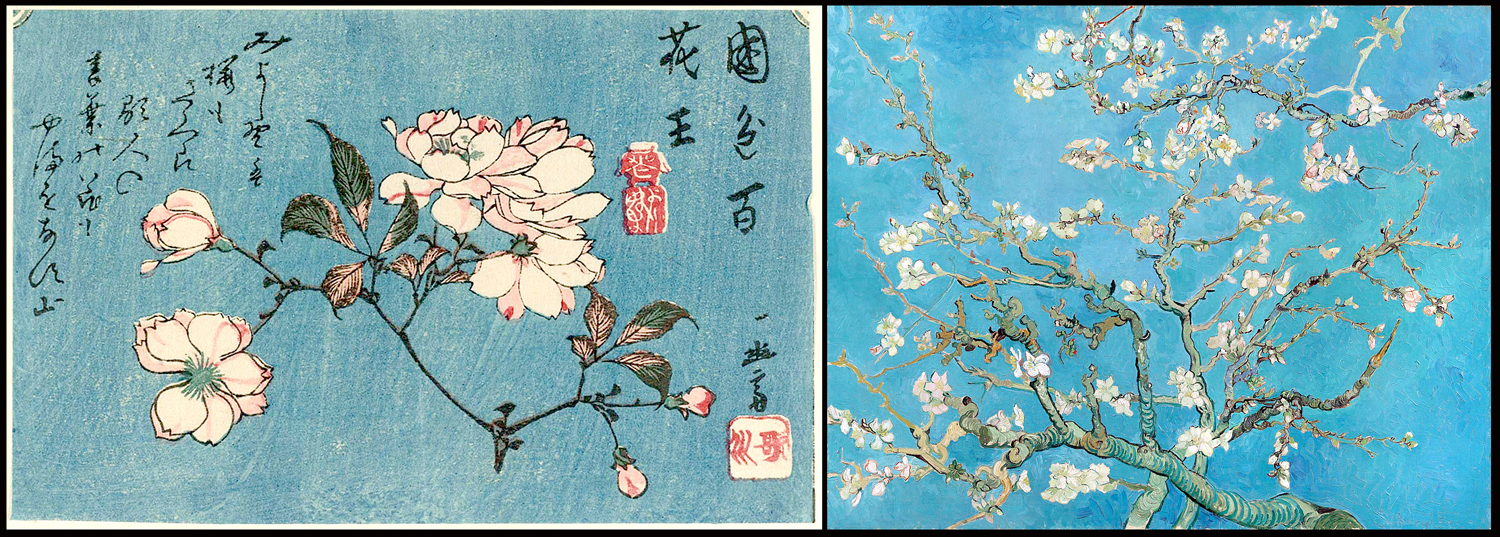
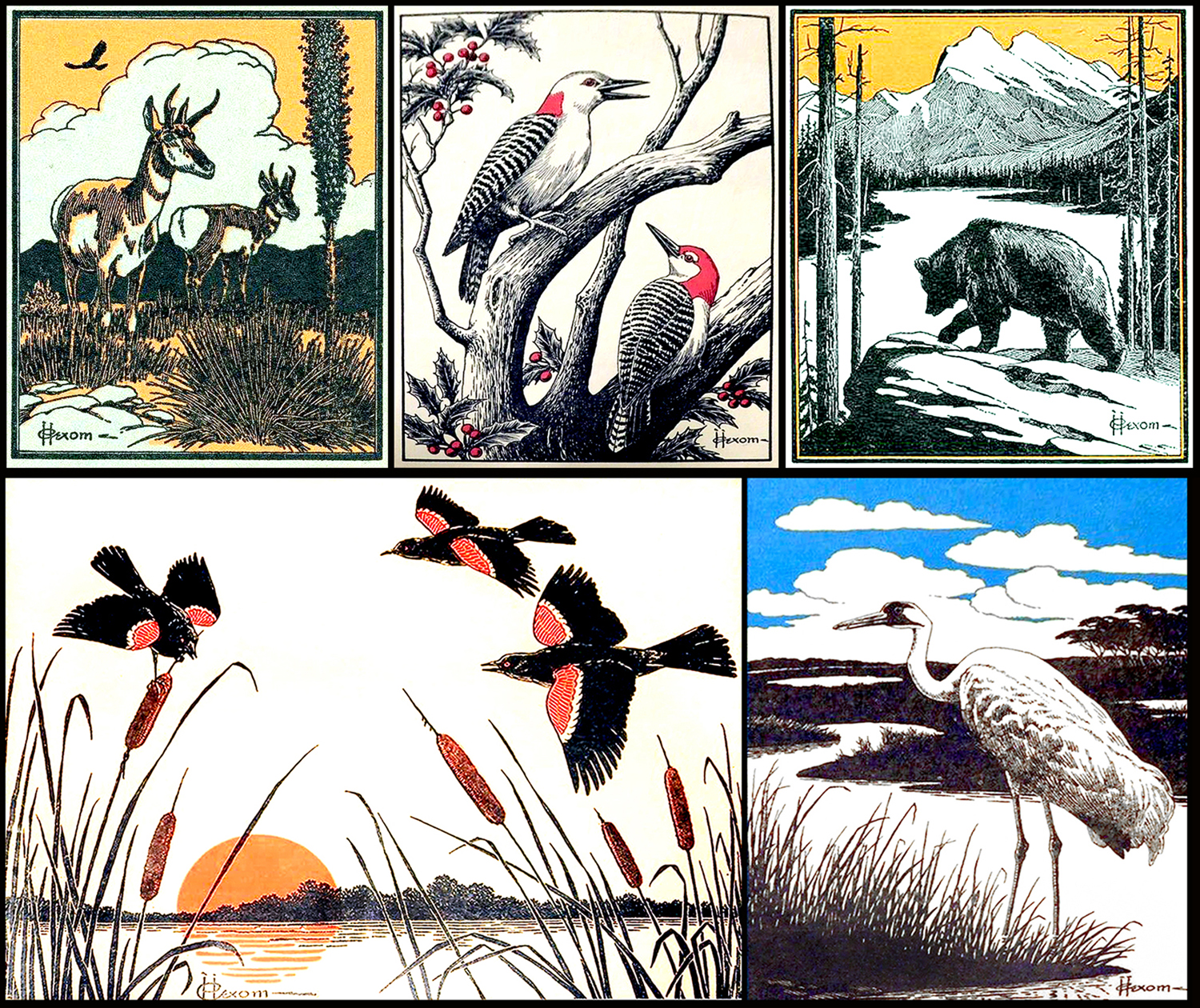
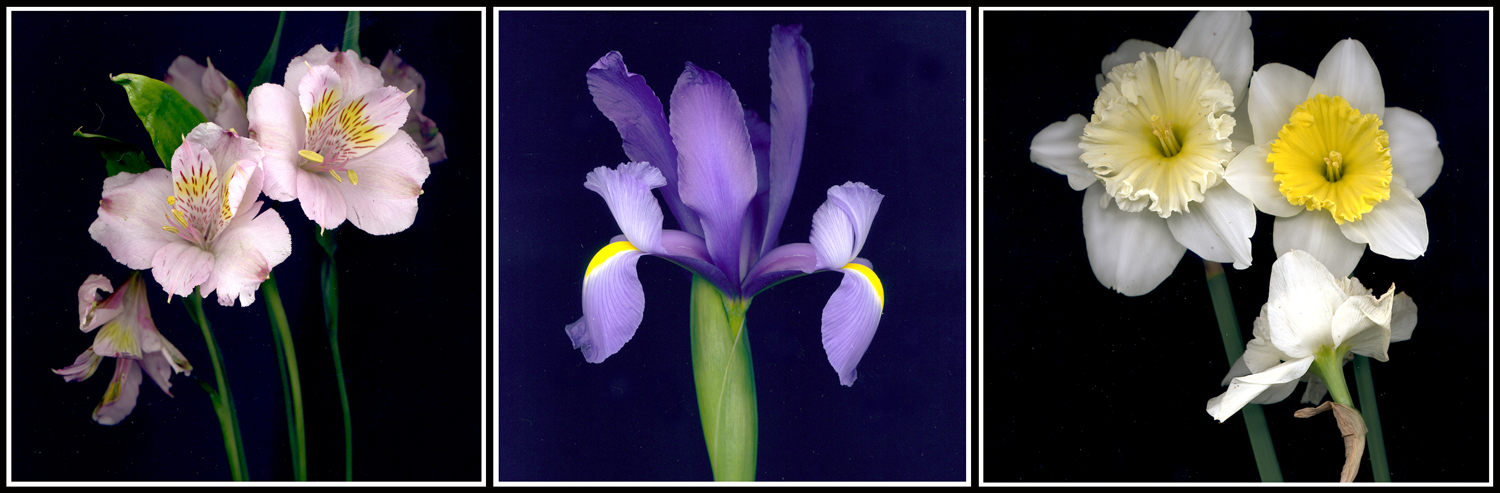
But back to nature: It is hard to overemphasize the attractiveness and popularity of natural images, especially birds and flowers. 

Charles Philip Hexom (1884-1959) executed a series of covers for Nature Magazine in the 1930s and ’40s. I have collected several of these. They are simple but elegant. 

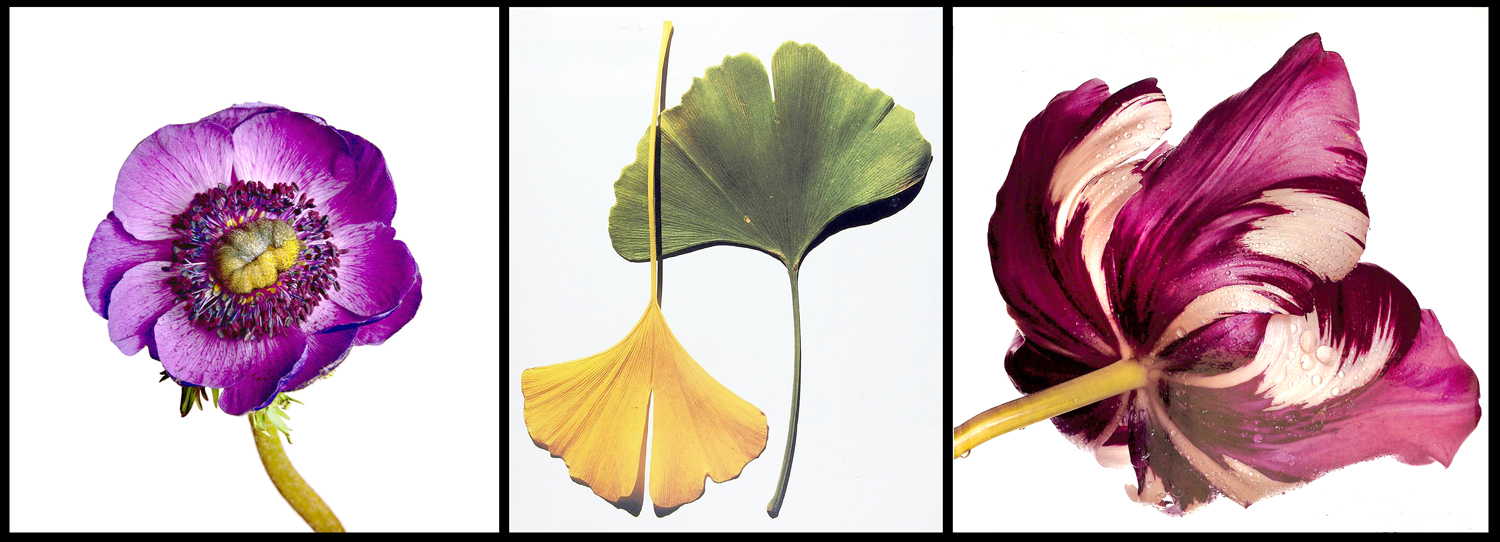
Irving Penn (1917-2009) published Flowers in 1980 and the perfection and simplicity of the photographs remind one of Redouté.

And finally, for our purposes, Robert Mapplethorpe photographed flowers over his whole career, with his book, Flowers, coming out posthumously in 1990. 

This has been a short, embarrassingly incomplete survey of botanical and natural history illustrations from the late Roman Empire until the Post-Modern age. Whole books have been written on the subject and more will likely be published in the future. 

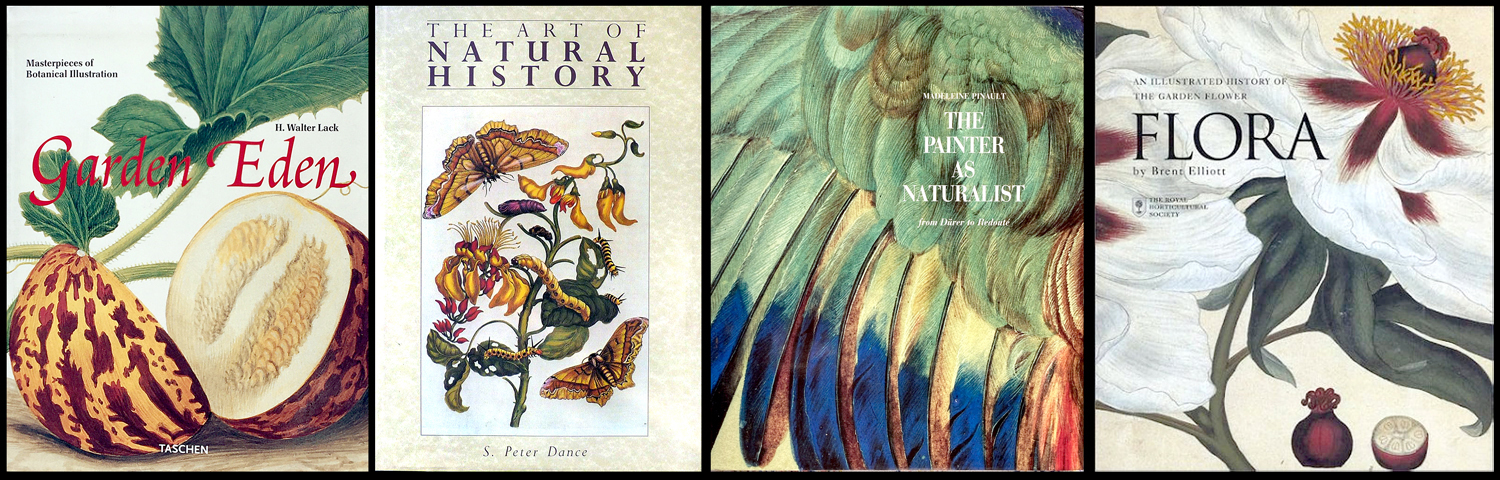
I consulted about 20 books for this essay, among them are: The Art of Natural History by S. Peter Dance; The Painter as Naturalist: from Dürer to Redouté, by Madeleine Pinault; Un Jardin d’Eden by H. Walter Lack; and Flora: An Illustrated History of the Garden Flower, by Brent Elliott. 

Click on any image to enlarge

This is a toaster. Something so banal that in our ordinary lives, we hardly notice or look at it. Actually this is a picture of a toaster, which is a remove from the real thing. But then, so is the word “toaster,” which is also not the real thing, but a remove from the reality. 

For most of us, most of the time, seeing something — like the toaster — means being able to name it and move on to something more interesting or more immediately useful. The image in the picture functions as a pictogram, or a different “spelling” of the word. We read the image as if it were the word. 

Pictogram to “read” as teapot; teapot image as “seen”

It is how we respond to most images that bombard our daily lives. We name the item seen. It has been categorized, filed and forgotten. Our lives are too busy to spend any time remarking that the toaster is yellow, or made of plastic, or has rounded corners. These details are of no particular use when fixing our morning bagel, and so, they might as well be invisible. 

Of course, being able to recognize things quickly is a survival skill, and humans have survived these hundreds of thousands of years precisely because they could point quickly and yell, “Tiger!” So, I’m not pooh-poohing that ability categorically. 

But life is about more than just survival. The things of this world are bursting with sense data that gets ignored by reading rather than seeing the visible world. The toaster was designed to have an esthetic impact; the yellow was chosen to be pleasing to the eye; the curves were worked in to make the shape more inviting than it would be if it were all pointy edges. 

We are embedded in a universe of things — a material world — and all of those things have physical and sensuous properties. They have shape, color, heft, texture, volume, solidity or softness, shine or roughness. And all of these properties make up the elements of art, and one of the jobs art does  is to remind us of these delights we normally pay no attention to. Art reminds us we are alive. 

Any life can be enriched simply by paying attention. To notice the yellow, the curve, the size and shape. In fact, to those awake to the world, it is all art — and the emotional richness that the awareness brings. 

It is one of the things artists were doing at the beginning of the last century when they began making abstract art: art about the color, shape, texture, without a nameable subject. 

Of course, artists have always paid attention to these visual qualities. Just because a painting is of a still life, and we can name the objects, doesn’t mean that the artist wasn’t obsessed with the sensuous truth. 

And so, it is a worthwhile exercise to occasionally attempt to forget what you know and see the things of your life freshly, as if you didn’t know the names, but saw only the qualities. 

Humanity is varied in its ability to see beyond the names. It takes an imagination — a way of turning off your rational mind to see only the vital facts and not their meaning or use. Some people have the hardest time: I remember one woman who was asked to close her eyes and describe what she could see in her mind’s eye, and her answer was “With my eyes closed, I see only black.” 

But attempting to see past the names of things is deeply rewarding. The pleasure of colors, shapes, designs, apprehended primally enriches our lives immeasurably. 

Certainly the natural world invites us with color and beauty. But it isn’t just the flowers and trees, the birds and the clouds. Everyday items can be appreciated for their roundness, plumpness, hardness, color, shape, even the feel under your fingertips. 

Many eons ago, when I was teaching photography at a two-year college, one of the assignments I gave my students was to photograph something in such a way I could not tell what it was. I made sure they understood that I didn’t mean just out-of-focus, or so badly lit it was murk. But to see something from a different angle, or to find a meaningful detail and separate it out. 

The purpose was to help them see without depending on what they already knew things looked like. To see directly. 

For example, here’s something most people see almost every day. 

Did you spot what it is? It is a view of your driver’s side rear view mirror as you approach the door to open it. A great big globular shape. 

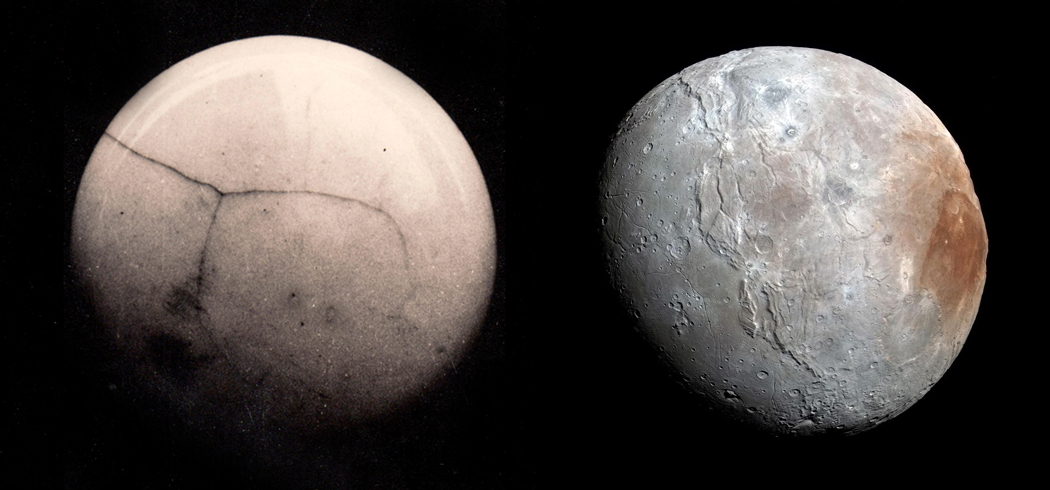
One of my favorite images is one taken by Voyager II in 1983 as it passed the (then) planet Pluto and snapped this image of its moon, Charon. And compare with the more recent, and clearer image taken by NASA’s New Horizons space probe on its flyby in 2015. 

Actually, that’s a lie. The image on the left is a doorknob. 

And so, here’s a little quiz. These photographs were taken to illustrate the shapes, colors and textures of ordinary objects, but seen in fresh ways. But they are still recognizable, if you can spot them. Can you tell what they are? The answers are at the end of the column. 

1

2

3

4

5

6

7

8


10

Even when you are not trying to be tricky, it is good to pay attention to the physical properties of the things of the world. Those shapes make images more memorable. And there are shapes all around.

A doorway turned into a check-mark

A paper tissue half out of a box

A kitchen strainer

We are alive on this planet for such a short time, and there is so much to take in. With our five senses we are privy to such delight and can never exhaust the riches around us. But we must be open to them, aware of them, awake to them. 

Learning to see is a part of art education. To see a picture of a giraffe and point, like a first-grader, and say, “Giraffe,” is not seeing. But take up a pencil and attempt to capture what you see on paper will teach you what things really look like. Paying attention is the great secret of life. 

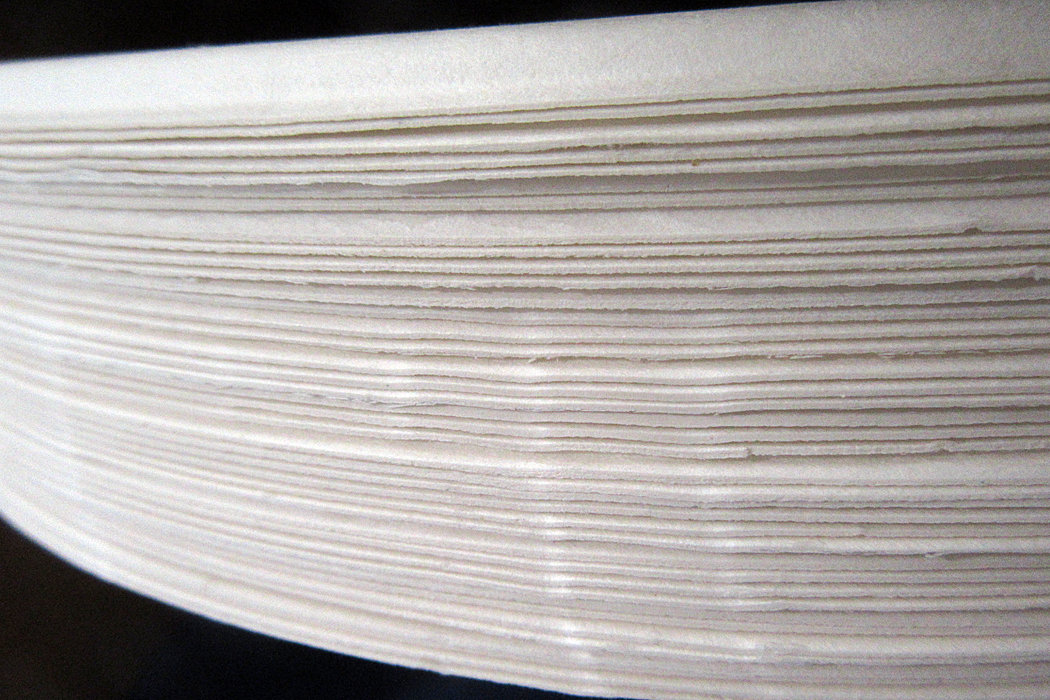
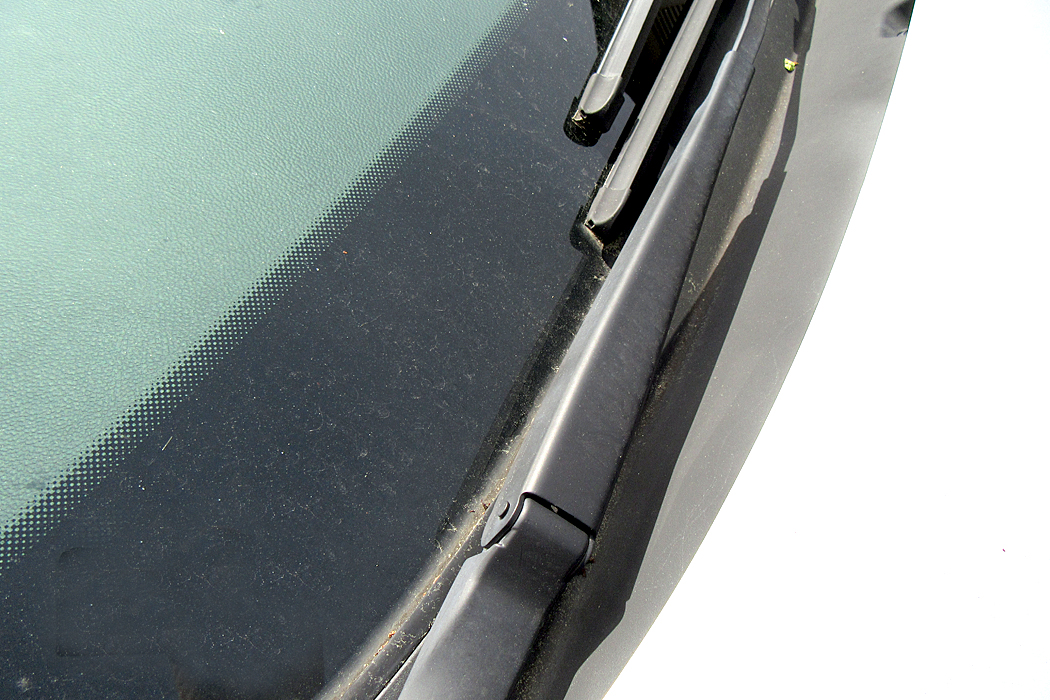
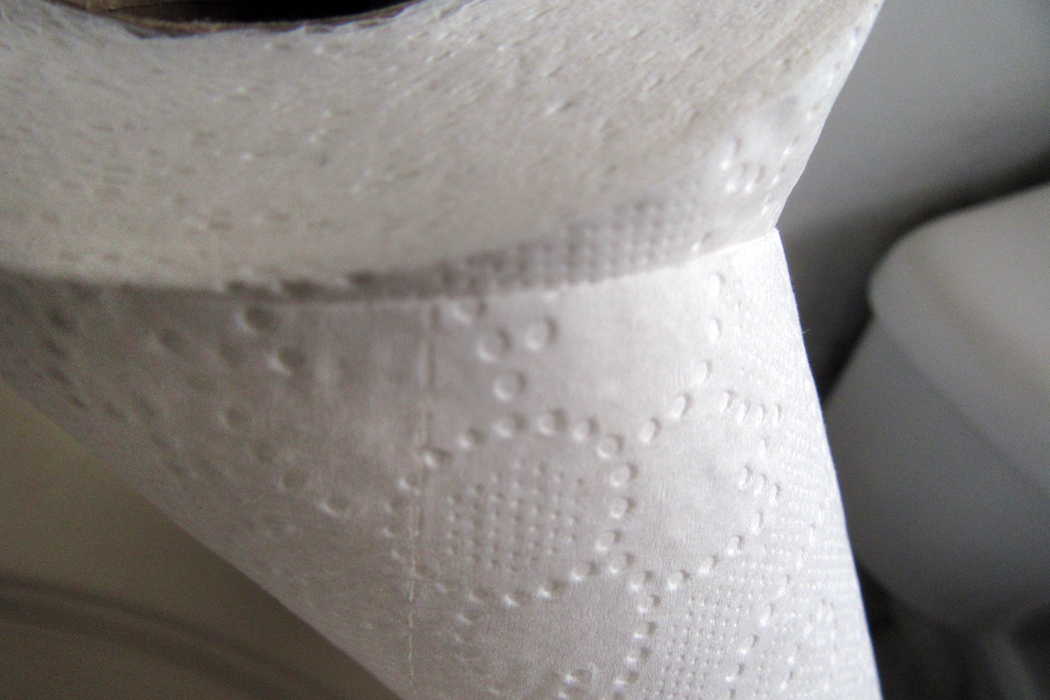
Quiz answers: 1. Paper plates; 2. Work glove; 3. Windshield wiper; 4. Measuring spoons and ceramic duck head towel hook; 5. Old Oxford cloth shirt; 6. Toilet paper; 7. Plastic mixing bowls; 8. Pop-open gas-cap cover for Buick; 9. Ceiling fan lamp fixture; 10. Assorted shopping bags. 

Click on any image to enlarge
I’m tired of hearing that we live in a visual culture. The fact is, we are generally very bad at seeing. I am constantly reminded of this by bad signage, bad book design, bad photographs, and bad TV. To say nothing of the horror that is TikTok. 

It may be true that we like to use images instead of text whenever we can, but we also tend to treat the images as if they were text: That is, we turn them into the equivalent of hieroglyphs or rebuses. Hence the popularity of emojis. 

But seeing a picture of a house and thinking “house,” is really just turning a picture into a word. Yes, no alphabetic letters need be used, but the information conveyed is basically the same. That is not seeing; it is translating. 

I am reminded of this because of a frequent problem I find on some back-channel TV stations when they broadcast a program in the wrong aspect ratio. It is a visual goof that bothers me no end, and yet, so many people, when I point it out, simply don’t notice it. Faces can be squeezed thin or stretched fat and the visual-verbal translation isn’t affected, and therefore, not noticed. 


Believe me, I’ve been laughed at for fussing over aspect ratio. But how can people not SEE? The visual information is distorted even if the verbal information is left unbothered. 

Aspect ratio is simply the ratio of the width of an image compared with its height. A square is the same in both measurements, and hence, its ratio — its aspect ratio — is one-to-one — 1:1. 

If a rectangle is twice as wide as it is tall, its aspect ratio is 2:1. 

When photographs are made, or films or TV is shot, they are created in a particular aspect ratio. For instance, for decades, the standard aspect ratio for Hollywood films was 1.375:1, which was adopted in 1932 for the entire industry. Before that, silent films were mostly shot in a 1.33:1 ratio, which can also be stated as a 4:3 ratio, which corresponded to four sprocket-holes on standard 35mm film. But when sound was added as an extra track alongside the image on the film, the picture had to be made a wee bit smaller to accommodate, and hence, the 1.375:1 ratio. 

That all sounds very technical and who cares? Well, what happens, then, when you display an old film on a new TV, which are now standardize at an aspect ratio of 16:9, a “widescreen” ratio? When done right, you get a “letterboxed” image, with black bars on either side of the picture. When done wrong, the squarer image is stretched out to fill the wider screen and you get a lot of fat people. 

This used to be a big problem in the early days of digital television, when many stations heard complaints about those letterboxed images. The response was to crop the movies down to fit the screen, losing a good bit of visual information in the process (a process dubbed “pan and scan”), or — too often — just stretch it all out to fit. To anyone sensitive to visuals, this was a nightmare. But again, many people — especially at the TV stations mutilating the images — just didn’t seem to think it important. 

The reverse also happens when a real widescreen movie (some films are made in aspect ratios wider than 16:9, such as the 2.4:1 of the most widely used widescreen movies. Then, shown on a standard TV screen, you get everything squished down. 

Many of these widescreen movies were shot with anamorphic lenses, which allowed for a wider image to fit onto a narrower piece of film. In essence, they squeezed the picture thin on purpose, and then when it was projected in a theater, a reverse anamorphic projection lens would spread the image back out to its natural dimensions. Tons of films were made (and are made) this way. 

The problem shows up with DVDs, too. Some are produced in a natural aspect ratio, usually 16:9, but others, mostly older ones, were created anamorphically, and so you may need to use your remote to find the proper aspect ratio (or “screen size”) for the disc. If not, you watch squeezed people. 

I remember when my college film series showed a version of Bad Day at Black Rock but didn’t correct the anamorphic images. We watched the whole movie distorted into a squished frame. It was nauseating, at least to me. The projectionist, when this was pointed out, said he didn’t see what I was talking about. (The same projectionist showed Birth of a Nation with the music track turned off because “it’s a silent film.” There is no accounting for how these people get in charge of things.) 

Most all of us have something like this, which bothers us no end. For some it is bad spelling or incorrect grammar. For others, it is making too much noise when eating soup. Others still cannot bear canned laughter on sitcoms, or the superfluous chyrons streaming across the bottoms of cable newscasts, telling us exactly what the speaker is saying. We can hear them, you know. You don’t need to spell it out. 

Anyway, one of those irritations that just drives me nuts is the inability of so many to actually notice when the picture has gone bad on their TV. The wider the original, the squishier the mistake. I remember seeing an early broadcast of The Good, The Bad and The Ugly scrunched into an old cathode-ray TV screen, like a closed accordion, and I thought, “How can poor Clint Eastwood even breathe?”

The aspect ratio problem, though, is really just a symptom of a wider issue: that too many of us are just bad at seeing, of not paying attention to what our eyes are telling us. It is the translation problem: We don’t see to see, we see to extract only so much information as we feel we need. If we can follow the plot with skinny people, then good enough. 

But seeing isn’t just about keeping track of the story. It is about being alive in the world, of noticing everything around you, of taking in what existence gifts you with. The green of a tree, the roundness of a tire, the texture of denim. To notice is to be alive; failure to notice is deadening. 

Art, and I include even popular art, is there to remind us of, and to interpret, the world we live in and the lives we lead. The best art slaps us awake, the way the slap of the doctor makes the newborn take its first breath. We can see what we had taken for granted, we can reinterpret what had become habitual. Failure to use your eyes is to refuse a gift being offered by existence. 

Click any image to enlarge

Many years ago, my late wife bought me a copy of A Book of Clouds, published in 1925 by author William A. Quayle. It is a hefty clothbound volume, primarily of old black-and-white photographs of clouds, layered with Quayle’s particular garish encomia and reminiscence about the glories of skywatching. 

Clouds seem to bring out the gooey and poeticizing cliches in a writer. “I was kinsman of the clouds,” Quayle writes. “And as I grew, the clouds still sailed their crafts of  snowy sail across the blue sea of my heart. Clouds, so to say, were indigenous to my soul. I did not begin to notice them: I always noticed them. I did not learn to love them: I always loved them.” 

The book is fervid with such expostulations: “When clouds give reports of portentous skies, of prepending tempests, when they are black as pools of midnight water, their eminences wrinkled as if zigzag lightnings had been the shears which cut their patterns, then as the sun lurches behind their darkness, the fine fire that rims them and seizes all their peaks gives a touch of delirium to the soul.”  

I love this book, for all its gushy writing, because Carole gave it to me, and because, in an era of irony and unbelief, there is something utterly sincere under the purple prose. 

A few years later, she gave me another book, The Cloud Collector’s Handbook by Gavin Pretor-Pinney, a small volume and kind of a field guide to cloud identification — almost a Peterson guide. In it, Pretor-Pinney gives genus and species names of various formations, implying that a taxonomy of anything as gaseous and impermanent as a cloud might be spoken of almost as if it were a wildflower or a bunting. 

And so, there are is a list of Latinate names, not just the familiar “cumulus” and “cirrus,” but also “lenticularis,” “castellanus,” “radiatus,” and “undulatus.” Carl von Linné would have been proud. Each page is devoted to another cloud form, or cloud-related or -adjacent subjects: “pileus,” “virga,” “nacreous,” “noctilucent,” etc. It’s lots of fun. 

Pretor-Pinney, it turns out, is a veritable cheerleader for cloud watching. His full name is Gavin Edmund Pretor-Pinney, son of Anthony Robert Edmund Pretor-Pinney and Laura Uppercu, daughter of George Winthrop Haight — in other words, he’s British and has the “twitcher’s” enthusiasm, but for clouds rather than finches. And in 2004, he founded the Cloud Appreciation Society and two years later, wrote both The Cloud Collector’s Handbook and The Cloudspotter’s Guide. In 2019, he wrote A Cloud A Day, which features 365 cloud images accompanied with a short piece of cloud science, an inspiring sky quotation or a detail of the sky depicted in a classic painting. 

The Society has its website (link here) and features galleries of cloud art by painter-members, collections of cloud poetry, and many, many photographs. The paintings are especially entertaining, and hugely varied in approach.

Artists L-R — Top: Peter Nisbet; Carol McCumber; Elizabeth Busey. Bottom: Judy Friesem; Jethro Buck; Barbara Miller. 

And there is a Cloud Appreciation Manifesto (of course, there is): 

“We believe that clouds are unjustly maligned and that life would be immeasurably poorer without them. We think that clouds are Nature’s poetry, and the most egalitarian of her displays, since everyone can have a fantastic view of them.

“We pledge to fight ‘blue-sky thinking’ wherever we find it. Life would be dull if we had to look up at cloudless monotony day after day. We seek to remind people that clouds are expressions of the atmosphere’s moods, and can be read like those of a person’s countenance. We believe that clouds are for dreamers and their contemplation benefits the soul. Indeed, all who consider the shapes they see in them will save money on psychoanalysis bills.

“And so we say to all who’ll listen: Look up, marvel at the ephemeral beauty, and always remember to live life with your head in the clouds!”

Of course, Pretor-Pinney isn’t alone. 

There are loads of books, including a raft of children’s books, all about clouds. 


The sky is a slate upon which we can project our sense of beauty, our sense of meaning, the expanse of creation, and the progress of time. We look up and always, it is new. Always it is moving. To rephrase Heraclitus, you can never look at the same sky twice. 

And the sky has been there in painting for centuries, but usually as a background for more important goings-on in the foreground. Then, in the late 18th- and early 19th-centuries several artists began studying the clouds and the sky for its own sake.

Most famously, a series of cloud studies by John Constable and sketches by Alexander Cozens. 

Cozens:

Constable:

“Clouds, for Constable, were a source of feeling and perception, an ‘Organ of sentiment’ (heart or lungs) as much as meteorological phenomena,” writes author Mary Jacobus in the book Romantic Things: A Tree, a Rock, a Cloud. “If painting is another name for feeling, and the sky an organ of sentiment, then his cloud sketches are less a notation of changing weather effects than a series of Romantic lyrics: exhalations and exclamations, meditations and reflections, attached to a specific location and moment in time.”

In other words, the clouds, either painted or merely watched, become a subject for contemplation, even meditation. Beginning in the 20th century, paintings became increasingly abstract and the point being not subject matter but the substance of paint — color, shape, line, form, design. To look at a Jackson Pollock painting, or one by Mark Rothko, you are asked not to name a subject matter, but to relate the canvas to human affect, i.e., what does the painting make you feel?

A number of artists and photographers have turned to clouds to make images that are both abstract and descriptive. The clouds themselves provide the abstraction. 

At the beginning of the 20th century, Modernist photographer Alfred Stieglitz made a tremendous series of images of clouds, which he titled, “Equivalents,” meaning that the visual was an equivalent of the emotion. 

He made more than 200 such images, with the intent that they could express emotions, much as music can, purely by abstraction. They are images of actual clouds, but they are also shapes on a piece of photographic paper. You can see them as photographs of the sky, or as pure abstractions. Either way, for Stieglitz, the important part was that an emotion be evoked. 


Another photographer, Edward Weston made pictures of clouds through his lifetime, less consciously manipulated than Stieglitz’s, but cloud abstractions nonetheless. 

The German painter Gerhard Richter made a series of cloud paintings in the 1970s. A Sotheby’s catalog said, “the clouds are caught in a moment of confrontation between the painterly and the photographic, the representative and the abstract, the natural and the supernatural.” Much of Richter’s art is political or otherwise Postmodern tricks about the nature of art itself. As for the clouds, Richter himself said, “I felt like painting something beautiful.”

He kept a notebook of images, which he called “Atlas,” in which he kept many sketches, photos and paintings of everyday items, and a whole section on nothing but clouds. 

I have made countless photographs of clouds. I step out of the house pretty much every day, just to look up and watch clouds. They keep my eyes fresh and my mind invigorated. I have two books I have made: one of images of landforms and clouds seen from my airplane window; and a second of clouds pictures made all on a single afternoon in Arizona during the rising and waning of a monsoon storm. They can be viewed online here and here

When we spend as much time indoors as most people have these past two pandemic years, it is a relief to refocus our eyes outward (and upward) to a distance beyond the four walls. The clouds are far enough that our stereoscopic vision interprets the distance as indistinguishable from infinity. That refocus is necessary to keep us in touch with the greater things. Too often our eyes are focused on electronic screens held less than arms distant. Stretch your eyes back out. Look up. Keep watching the skies. 

Click on any image to enlarge
It’s completely meaningless to rate art. Is Picasso greater than Rembrandt? Beethoven than Mozart? Is Beethoven’s Fifth better than Beethoven’s Eroica? Pointless.

But there is a different question: faves. It’s possible to have favorites without making claims to supremacy. We all have them. Yes, they shift over the years: The older me appreciates different art and appreciates it in different ways than the young me did. But even day-to-day the favorites may change. Often my favorite symphony is the one I’m listening to at the moment. 

Still, Top Ten lists will be made. Or Top Five, or Top 100. There’s no hope for it. It’s instinctive, built into our DNA. And so, I’ve put together my list of my Top Dozen  favorite works of art — a baker’s dozen. Your mileage may vary. (For the ultimate list of lists, link here). 

And so, here are my favorites, listed by genre. I’ve tried to narrow my choices to art I have experienced in person — paintings I have actually seen, dances I have attended, books I have read. Book reproductions or sound recordings don’t count. I have a lifetime of art-going and concert-attending, and so I may have access to more than the average bear. But I am well aware that there’s a whole lot more that I haven’t seen. 

And by favorite, I don’t just mean something I like, but rather, something that has wormed into my very being and become a part of who I am, so that encountering it can explain to others a bit of who I am. It has been grafted into my personality. 

This list is entirely personal, flexible and apologetically incomplete. Ask me again tomorrow and this could be a very different list. 

Painting: None of these choices changes more often than painting. today’s favorite fades with tomorrow’s. I’ve simply come to love too many paintings to have a single choice. But today, I will go with Jackson Pollock’s Blue Poles. It was a painting I had wanted to see for years, and then got my chance when the Museum of Modern Art held a Pollock retrospective in 1998 and the elusive work was borrowed back from Australia, where it had sat for decades, out of the reach of us Northern Hemisphere shut-ins. Its appeal came from its elusiveness, for sure, but also for its unique place in Pollock’s catalog — more than just paint squiggles, it had the structure of the bars across its surface. I loved it in reproduction, but it bowled me over in person. 

Alternate takes: Picasso’s Guernica; John Singleton Copley’s Watson and the Shark

Sculpture: I grew up visiting the American Museum of Natural History in New York City as often as I could. I loved the place — and I mean loved. And deep in its bowels resided the giant Olmec head, chiseled from basalt (actually, the one in New York is a plaster copy, but I didn’t know that when I was 10 years old and rapt in wonder). In the darkened hall of the museum, the head seemed immense and the original weighs 20 tons. It impressed me no end and to this day, it is my favorite sculpture. No doubt there is other, more important sculpture elsewhere, but I have not been to Rome or Egypt to see them. I have spent considerable time in the Louvre in Paris and have several faves there, such as the Three Graces or the Winged Victory, but none has stuck in my psyche with quite the force of the Olmec head. 

Alternate takes: Rodin’s Burghers of Calais; Louvre’s Three Graces

Architecture: As architecture critic for The Arizona Republic, I got to visit a lot of buildings, including most of the Frank Lloyd Wright sites in the U.S. (Wright was a longtime resident of Scottsdale, Ariz.) I was blown away by Taliesin in Wisconsin and his studio in Oak Park, Ill. But the building that struck me as most beautiful was Falling Water in Pennsylvania. Everything you have ever heard about it is true — about its siting in the woods over the waterfall; about how its interior is micromanaged by Wright’s designs; and (I’m one of the few who have been given access to this) the pathetic orphan of a bathroom hidden in the basement. Wright really didn’t like having to deal with kitchens or bathrooms. 

Alternate takes: Chartres cathedral; George Washington Bridge

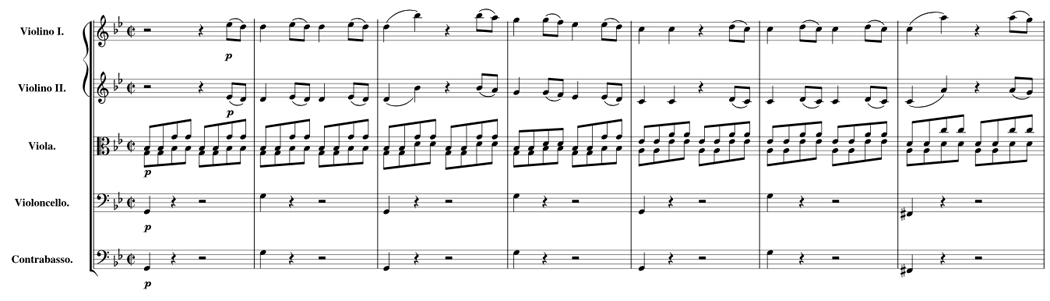
Orchestral music: this is the hardest category for me because I have so much music bottled up in the ol’ storage batteries, and faves change not only day to day, but hour to hour. But I studied Mozart’s Symphony in G-minor, K. 550, score in hand, for most of an entire semester in college and it is drilled into my memory so that I can hear the whole thing in my head, from beginning to end, even without the score. If ever a piece of music felt like home to me, it is Mozart’s 40th Symphony. Dissecting it has given me an approach to all other classical music. 

Alternate takes: Mahler’s Symphony No. 3; Stravinsky’s Rite of Spring

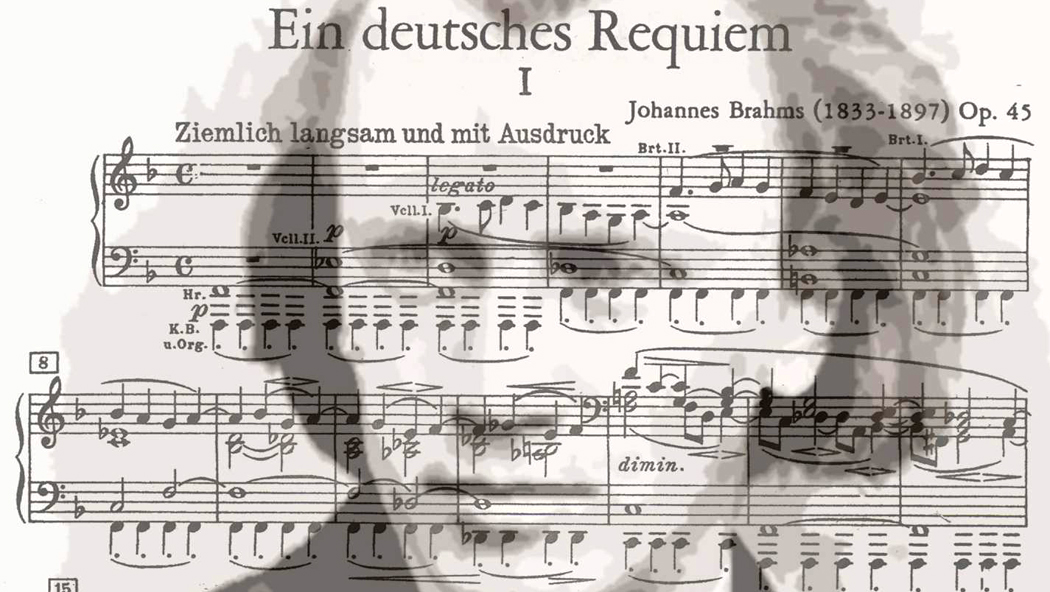
Choral music: I’m not a religious man, and neither was Johannes Brahms, so his German Requiem can console my most grief-stricken moments in a way more devout music cannot. More than any other music, I go to the Deutsches Requiem for consolation and peace. Each year, on the anniversary of the death of my wife, I drive up the Blue Ridge Parkway, find a quiet forest road and park and listen to my Brahms and weep for my loss and for the loss all humankind must suffer. 

Alternate takes: Haydn’s Creation; Rachmaninoff All-Night Vigil

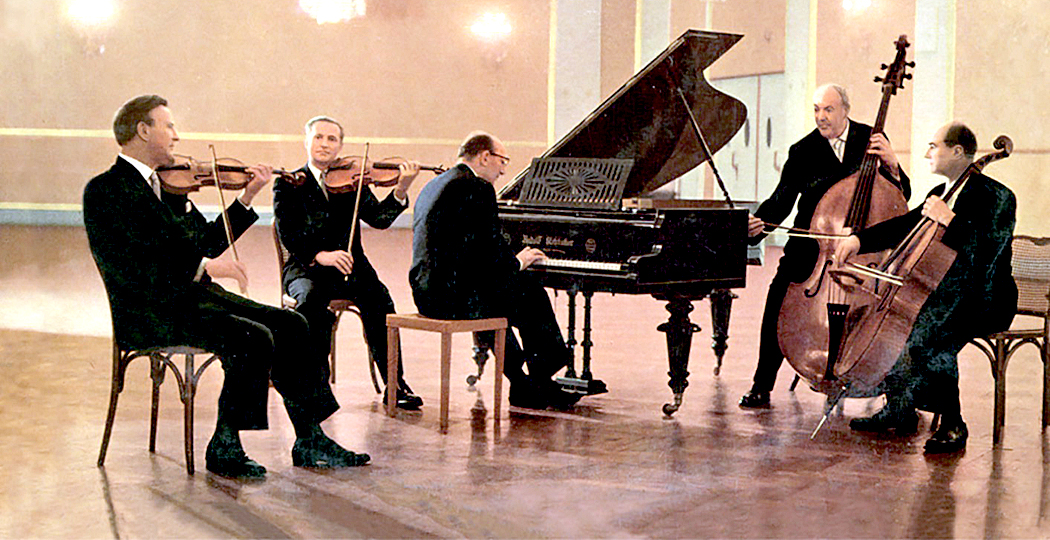
Chamber music: I want so much to claim Schubert’s C-major String Quintet, for it is the deepest, most emotionally moving piece of chamber music in the repertoire. Yet, I cannot, as long as there is Schubert’s competing “Trout” Quintet, which must be the most ebullient, life-affirming piece of music ever written. One cannot come away from it not feeling — despite all the sorrows of the world — that life is pure joy. It is no end of astonishment for me that Schubert wrote both. 

Alternate takes: Brahms Clarinet Quintet; Shostakovich Piano Trio No. 2 

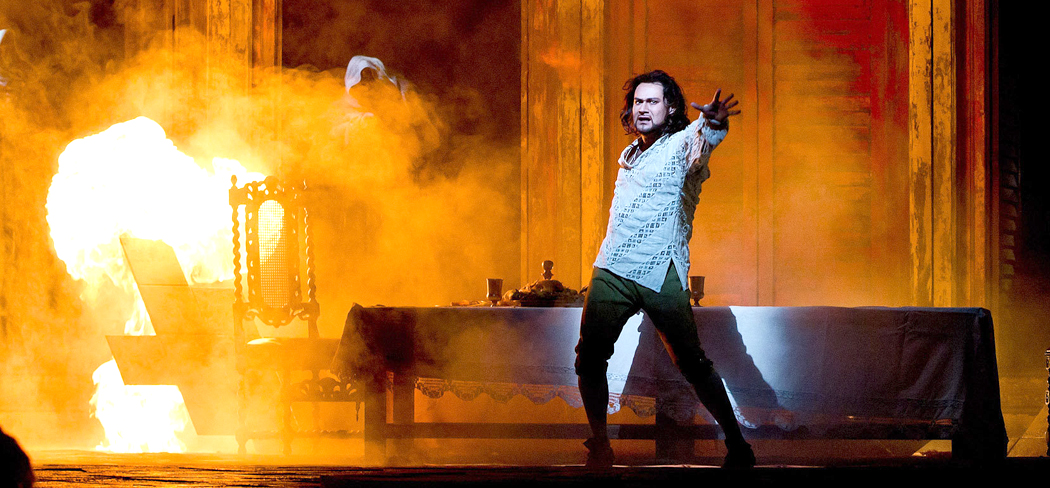
Opera: Mozart’s most subversive opera wasn’t The Marriage of Figaro, which was often banned for making fun of the aristocracy, but rather Don Giovanni, with its lusty chorus of “Viva la libertad” and its turning topsy-turvy the villain-hero model. The Don is the life force embodied, for good and bad, and when he is threatened with hell, he laughs and refuses to recant, choosing damnation over hypocrisy. Its first act is the most completely flawless in all of opera history and despite the phony ending usually tacked-on to the second act, a model of moral complexity. 

Alternate takes: Alban Berg’s Wozzeck; Richard Strauss’s Der Rosenkavalier 

Dance: Of all the artforms, dance moves me the most. And I was extremely lucky, because when I became dance critic, Ballet Arizona was taken over by Ib Andersen, former star dancer for George Balanchine and brilliant choreographer himself. He staged many Balanchine ballets and I was hooked. I have now seen Balanchine’s Apollo four times, once by the New York City Ballet in Paris, and I cannot watch it now without welling up with emotion. I love dance and Apollo stands in for all of it. 

Alternate takes: Ib Andersen’s choreography for Prokofiev’s Romeo and Juliet; Frances Smith Cohen’s choreography for Center Dance Ensemble’s Rite of Spring

Theater: Bad theater, or worse, mediocre theater can give the impression that live drama is hopelessly, well, theatrical. You know: dinner theater. But when it is done well, there is nothing that can match it, a lesson I learned by seeing the original Broadway production of Tony Kushner’s Angels in America. I’ve now seen it — both parts together — four times and it destroys me every time. In great theater, you soon forget all the artifice and everything becomes immediate and real. Movies are great, but they can’t match the breathing now-ness of live theater. 

Alternate takes: Eugene O’Neill’s Long Day’s Journey into Night; Peter Shaffer’s Amadeus

Film: There are films that are exciting, films that are visually beautiful, that are clever, that are cultural barometers, and there are films that are wise. Jean Renoir’s La Règle du Jeu has informed my own life more than any other film I’ve seen. How can you beat Octave’s observation: “The terrible thing about life is that everybody has their reasons.” I will watch Rules of the Game over and over for the rest of my life. It is cinematic comfort food. 

Alternative takes: Andrei Tarkovsky’s Andrei Rublev; Ingmar Bergman’s Seventh Seal

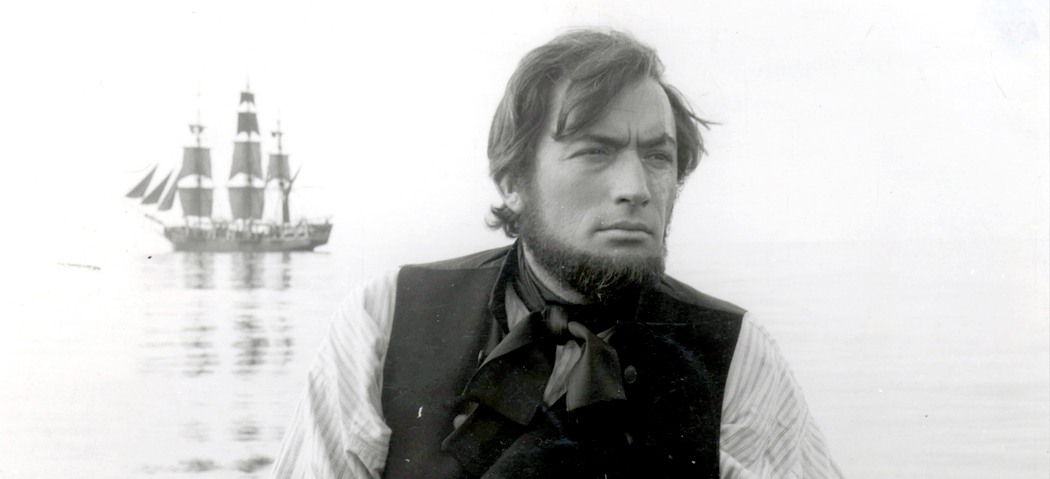
Novel: Most books, you read once. If it’s a mystery, you have the killer caught; if it’s a Victorian saga, you get the heroine married. But some books you can read over and over and get intense pleasure from the language used and the perspective offered. For me, that book is Herman Melville’s Moby Dick. I don’t always read the whole thing from beginning to end, but I bet I’ve read the first chapter, at least, a hundred times. Melville’s language has seeped into my own writing more than any other (for good or ill). 

Alternative takes: James Joyce’s Ulysses; Laurence Sterne’s Tristram Shandy

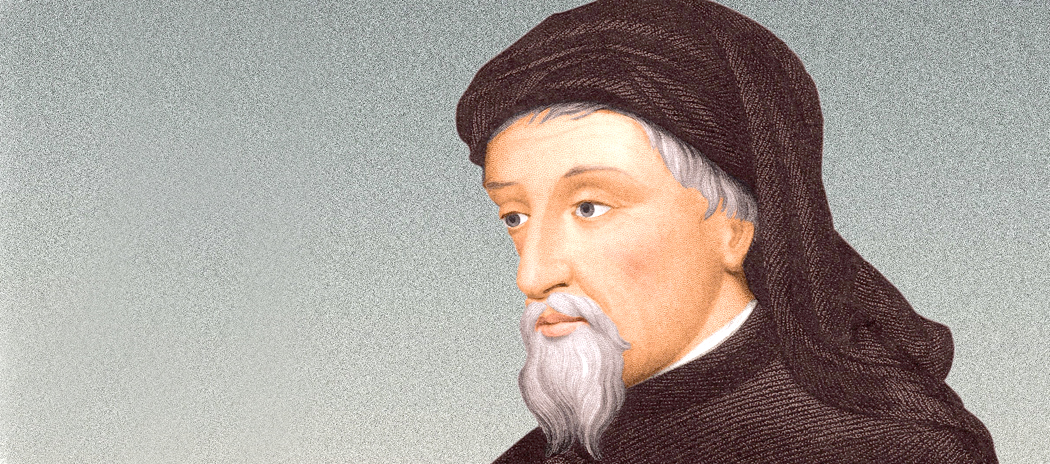
Poetry: I read a lot of poetry, mostly modern and contemporary, but the poem I go back to over and over, read out loud for the sound the words make in my mouth, proselytize to others and keep in my heart is Geoffrey Chaucer’s Trouthe. The antique language isn’t so hard, once you get used to it — sort of like listening to a working class Mancunian accent, or a Yorkshireman gabble — and once you’ve caught the knack of it, it’s like any other English. God, I love that poem. “The wrastling for the worlde axeth a fal.” 

Alternative takes: Eliot’s Four Quartets; Pablo Neruda’s Odas Elementales

And the Number One, hors compétition and sans genre, is: 

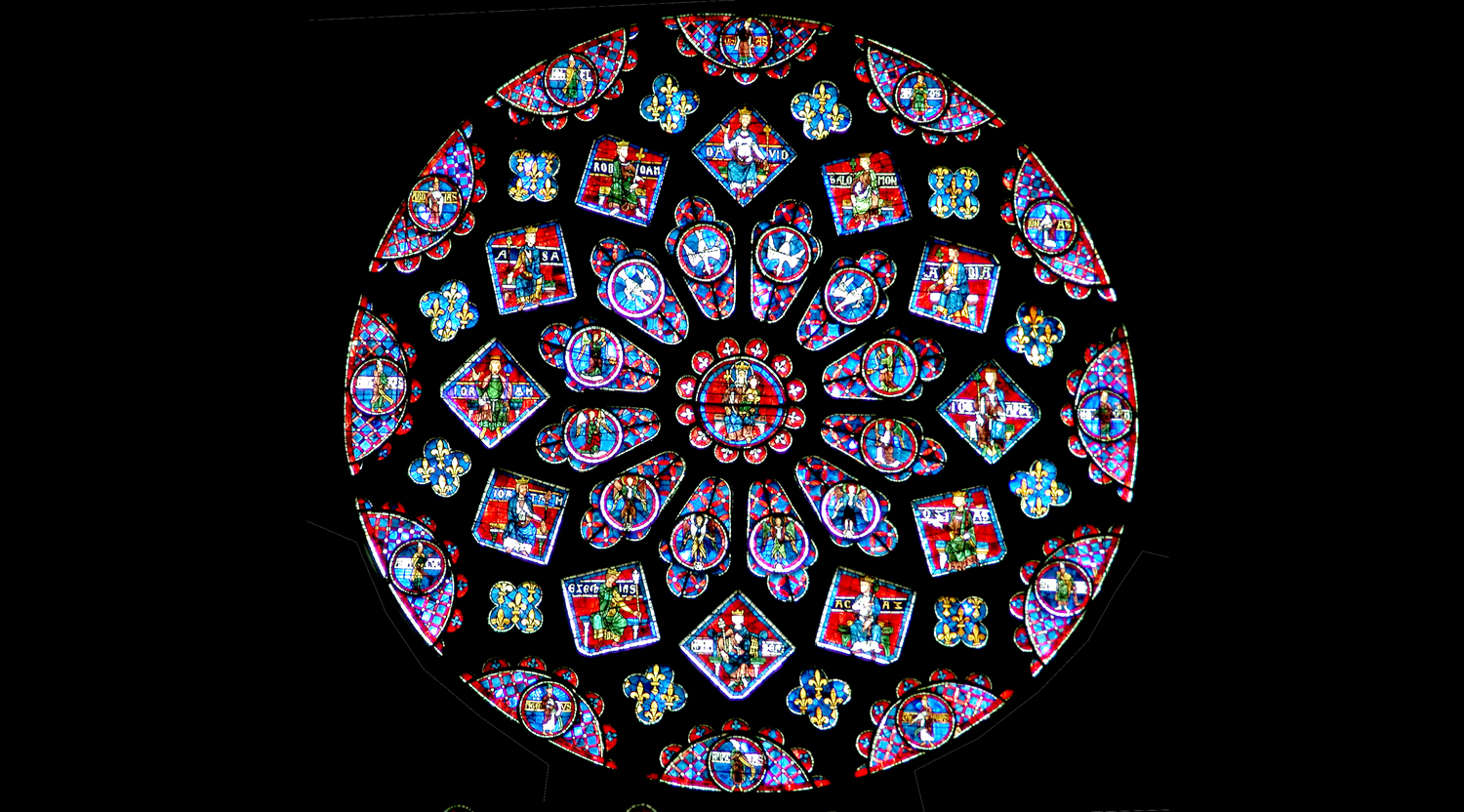
The north rose window, Chartres cathedral. As I have written many times, the north rose window is the single most beautiful human-made object I have ever seen. I am in awe of it. Reproduction cannot give you a sense of its glowing color and implied motion — it virtually spins (and I mean virtually literally). I can sit in its presence for an hour at a time. 

Again, I am not making the claim that these are all the greatest works, although they may be, but that they, more than their compeers, have buried their way into my innermost being, where they reside as a permanent part of my unconscious. They are who I am. 

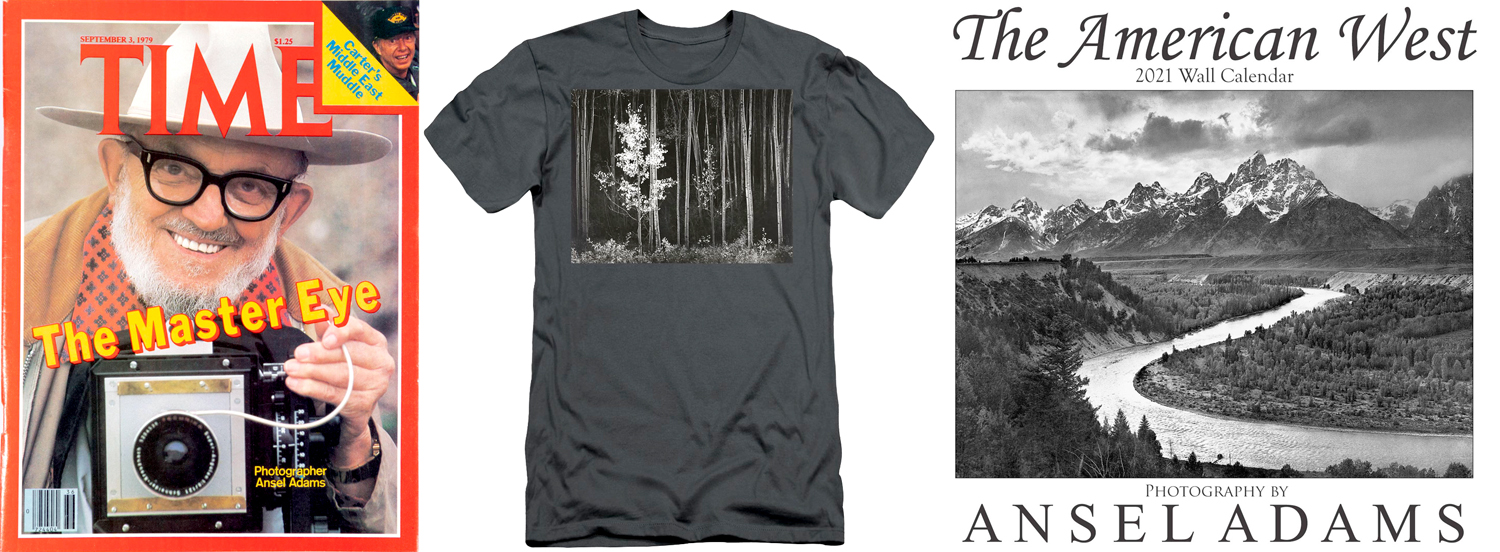
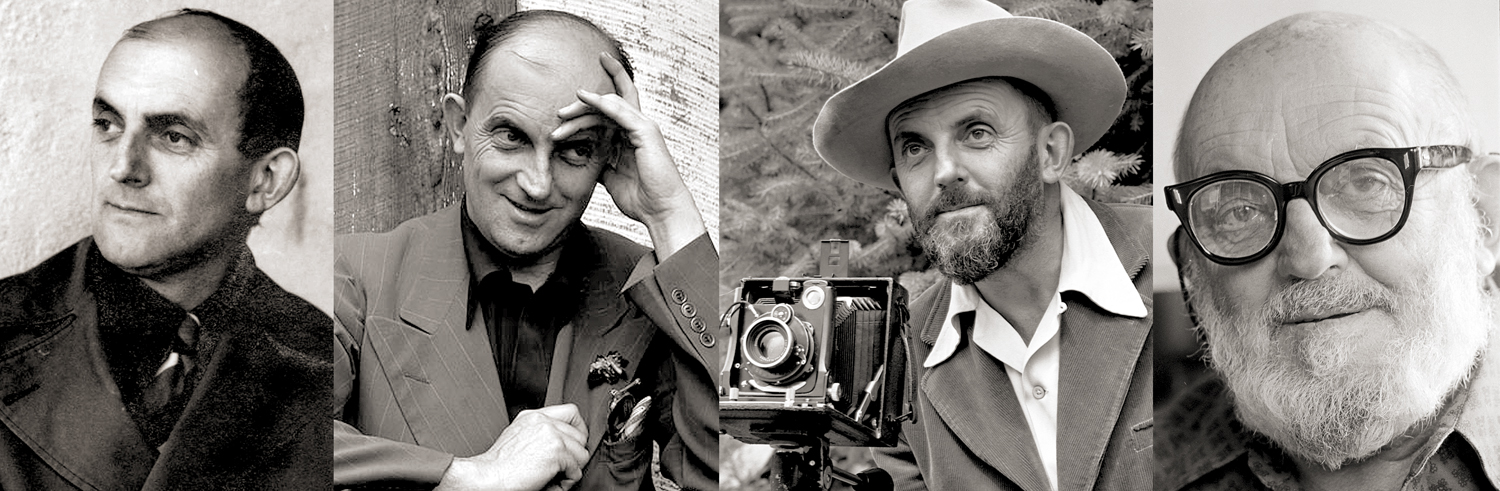
No photographer has had a higher profile in mass culture than Ansel Adams. He was the popular idea of the photographer as artist, and, I’m sure, the only one to have his images printed on beer cans with his name attached. 

His pictures graced not only Coors beer, but books, posters, calendars, aprons, hats and coffee mugs. He was the subject of a Playboy interview, and had his face on the cover of Time magazine.

 He had a mountain was named for him in California’s Sierra Nevada. That honor came to him less for his photographs and more for his constant advocacy for nature and the environment. 

His earliest photographs were made when Adams was still a teenager with a love for back-country hiking in Yosemite National Park, made with a snapshot camera and drugstore prints. Even those early images show a flair for the dramatic and the careful placement of darks and lights to make a balanced photograph.

Ansel Easton Adams was born in 1902 to a well-off family from San Francisco. As a child, he broke his nose when the 1906 San Francisco earthquake threw him against a garden wall. That bent nose became a trademark of sorts: It leaned left, and the man did, too. He joined the Sierra Club at 17 and was a board member from 1934 on. In later life, he railed against the environmental policies of Ronald Reagan.

His family vacationed in Yosemite Valley; he met his wife there and they ran a visitor center and gift shop, now called the Ansel Adams Gallery.

Early in life, he had planned to be a concert pianist, but eventually gave up keyboard for lens. But his ambition was still artistic: He wanted to be more than a recorder of vacation memories. This at a moment in art history when a number of like-minded photographers were arguing for photography as art when museums, galleries and collectors believed photography was a merely mechanical reproduction system. 

You can see that aesthetic vision in Adams’ early art prints, in platinum or other early processes, slightly fuzzy, with the popular Impressionistic love of sunlight and shadow. 

But in the 1930s, he converted to a Modernist vision of photography, with sharply focused images printed on glossy paper. His friends included other leading photographers, including Alfred Stieglitz and Edward Weston, all of whom were proving that a photographic print had earned a place on the gallery wall.

But while these other artists worked in many genres, in the 1940s, Adams turned ever more to the kind of Great American Landscape we know him for: the images of national parks and American wilderness. Publishing books of his photographs has become an industry.

When he ventured beyond his strength, sometimes the results were stiff and uncomfortable, like his portraits, which made their subjects as granitic as the cliffs of Yosemite. The lighting is perfect, the focus is sharp, the detail is precise, and yet, they are completely lifeless. His presidential portrait of Jimmy Carter may be the worst presidential portrait ever. 

On the other hand, when his purpose was to document the injustice to interned Japanese citizens at the Manzanar camp, his people could be warm and human. 

And so, it is the landscapes we remember, and they have become iconic. 

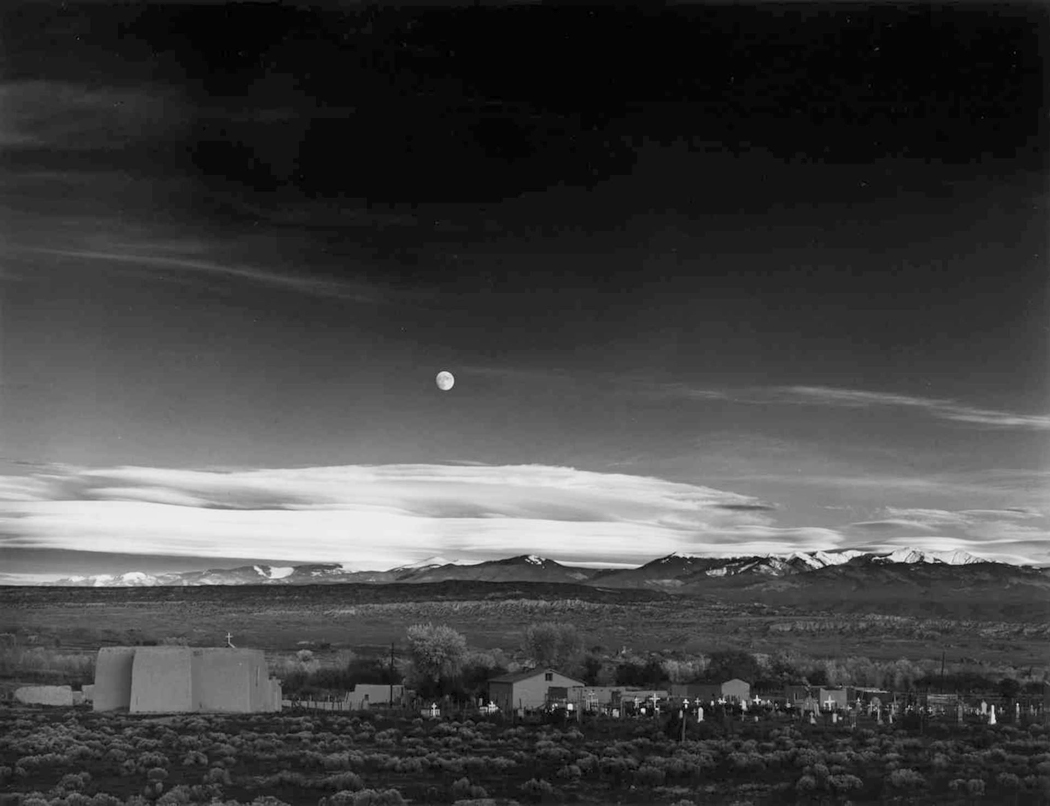
His 1942 image, Moonrise over Hernandez, N.M., sold at Sotheby’s in 2006 for $685,500. 

____________________________________

“You don’t take a photograph, you make it.”

– Ansel Adams

____________________________________

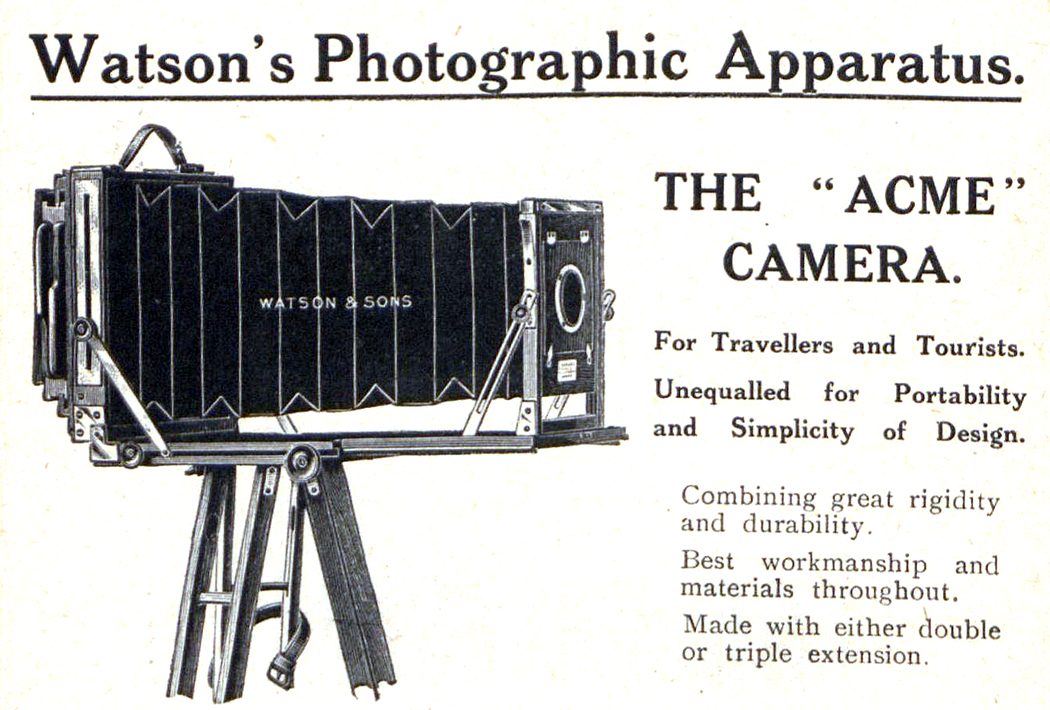
For its first century and a half, photography meant loading light-sensitive film into your camera, calculating focus, f/stop and shutter speed, making an exposure, processing the film in a series of chemical baths to make a negative and then re-exposing that negative onto light-sensitive paper and running it through a series of chemical baths to create a positive image of the subject. It was an intensely physical process, as anyone who remembers the smell of sodium thiosulphate on their fingers will know. 

Now, it means holding up your smart phone and clicking an image and then swiping left or right to go through the results, and maybe sending it out via Instagram or Twitter so others can share it. And the image exists only in virtual form on a screen of pixels, never becoming anything physical — or requiring any specialist knowledge. 

Not that there’s anything wrong with that. But it does mean that the subject of a photo has been separated from the object of the photo itself. For most people, looking at their family snapshots, it has never been otherwise, but for professional photographers and those making photos ostensibly as art, the physicality of photographs and their making is central. 

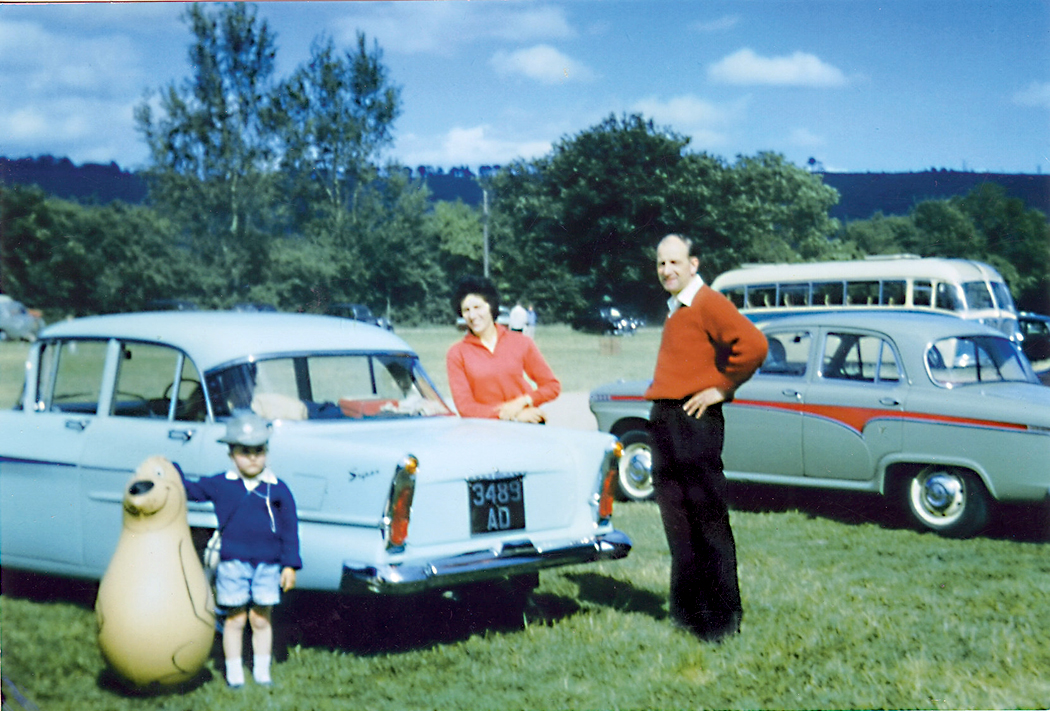
Before digital, a photograph was two things: The image and the substrate on which the image appears. Most of us, looking at the snapshots of our families, see the people in the image, but pay little attention to the paper or the layer of silver that makes up the image. But in photography looked at as art, a good deal of attention is paid to the process and technique. In fact, often so much care is paid to the technique that the subject can become ancillary. Who cares if it’s a still life or a portrait, if the gum bichromate print is gorgeous. The subject was just an excuse for the virtuosity of the technique. 

I remember, in the 1970s, long before digital photography, when the technique was actually fetishized: If you didn’t process archivally and make your mattes of acid-free board, you couldn’t be taken seriously as a photographer. It gave rise to a certain preciosity. 

That was for black-and-white. Color photography hardly counted. It wasn’t accepted, for the most part, because of the impermanence of the image (you’ve all seen old snapshots turned funny colors with age). The only color permitted was the dye-transfer print — an expensive and cumbersome process. In the 1920s, museums were unwilling to collect any photography because, they reasoned, it wasn’t really art; it was mechanical. Before the 1970s, few museums collected color photography. Black and white was for the serious artist. All this has changed. 

The middle years of the 20th century — roughly from World War I till the advent of Pop Art in the 1970s, give or take — were ruled by Modernism, which proclaimed that the medium was the message, that the paint mattered more than the image. Abstract paintings — with no subject matter at all — was king. When someone was confused by the jumble of scribble in one of Jackson Pollock’s works, he naively asked the artist what it was he was supposed to see on the canvass. Pollock answered curtly: “A painting.” 

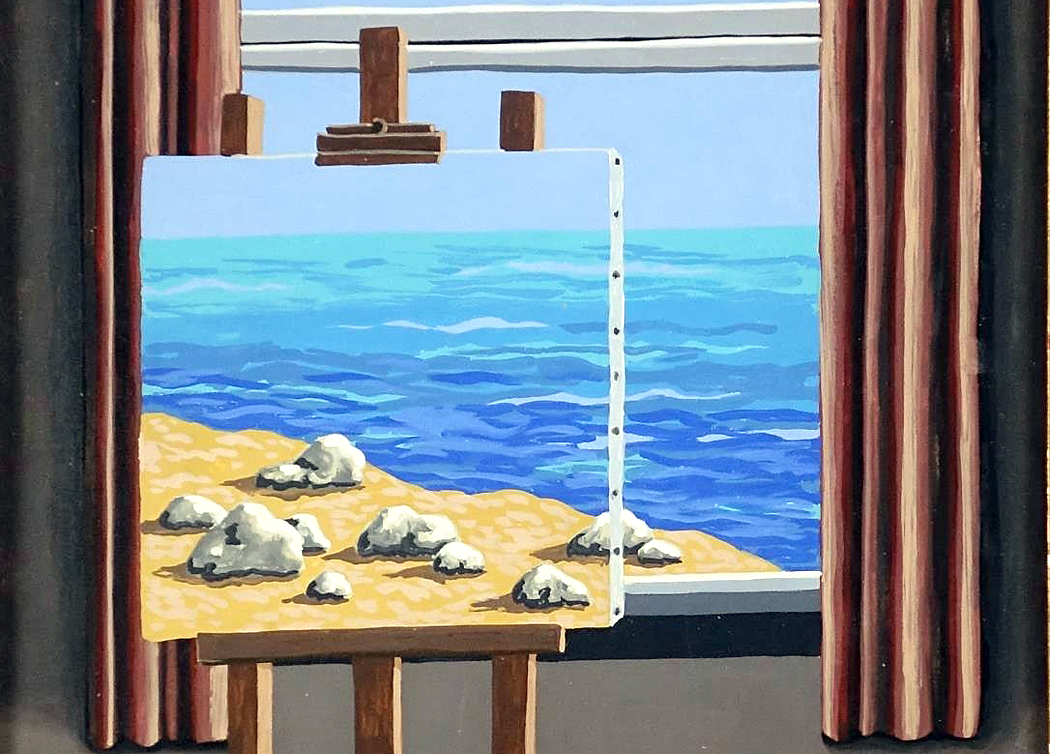
From the Renaissance to the middle of the 19th century, art was expected to picture reality. Looking at a picture frame mimicked looking through a window. Yes, there might be unreal things seen there: saints and angels. But portraits and landscapes were conventionally realistic, at least until the Impressionist revolution in the 1860s — and the invention and popularization of photography. 

When French painter Paul Delaroche saw his first daguerreotype, he famously proclaimed, “From today, painting is dead!” Of course painting didn’t roll over and expire; it went on to do other, newer things, and gave up the obligation to render visual reality the way a camera can. Because, although it wasn’t historically seen as such — at least by the masses — painting already was something different from simply an image of the world; it was a thing — an object, an artifact, a physical presence made of pigment and canvas. 

With the Impressionists, and later and more thoroughly with abstract painting, the thingness was the point. And when a few amateur photographers thought to elevate their camera imagery to the level of “art,” they at first imitated paintings, and especially Impressionist paintings. A whole movement of artist-photographers geared up with something they called Pictorialism — fuzzy imitations of fuzzy paintings. 

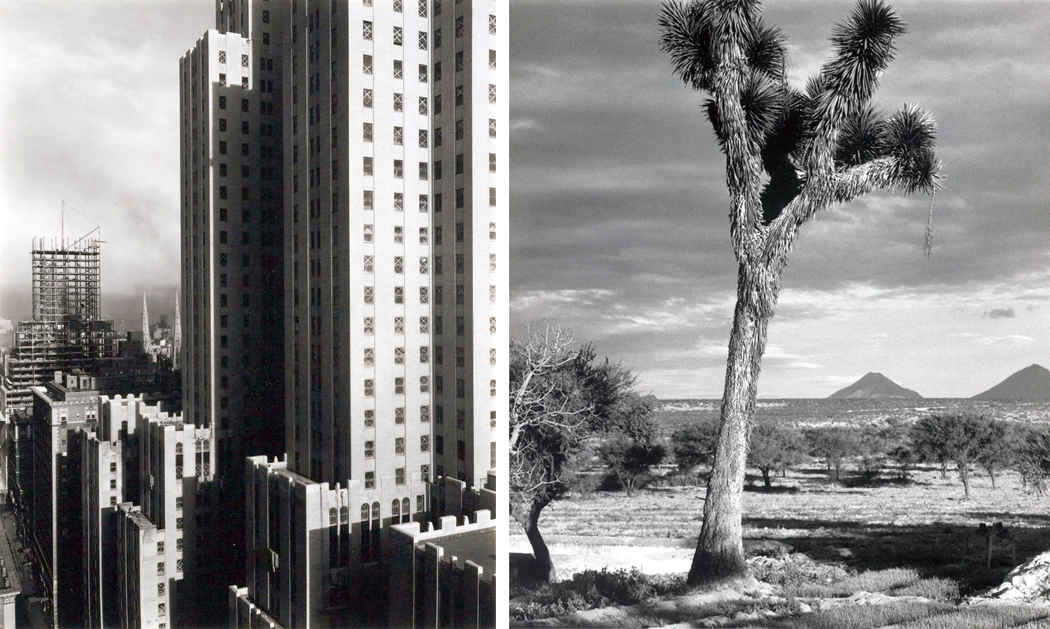
Then, in the 1920s, roughly, a group of exceptional photographers decided that photographs should not imitate paintings, but should look like photographs, and that photography had its own qualities and virtues. When American photographer Edward Weston was about to publish his first book of images, his publisher wanted to title it “Edward Weston: Artist,” but Weston objected and changed it to Edward Weston: Photographer. He was proud of his status as just that. 

In Europe, Modernist photography tended to be more political, but in the U.S., it became more interested in examining the physicality of the the visual world, which meant above all, landscape. The American tradition in painting had long featured landscape, and now, photographers thought they could make landscapes photographic rather than painterly. (They also produced a great number of exceptional portraits, and still lifes, but it is landscape that I’m concerned with here). And the landscapes they chose tended to be either industrial and urban, or the natural unpopulated sections of the American West. 

But while Edward Weston, Alfred Stieglitz, Paul Strand, Charles Scheeler, Edward Steichen — and Ansel Adams — were well aware of their prints being art objects, framed and hanging on gallery walls, the wider public, with their brownie cameras had a less sophisticated understanding of the medium: For them, the camera captured their reality, preserved their memories and became souvenirs of the past. For them, the photograph froze reality for them and held it still. 

Even today, there are many people who believe photographs pin down the visual truth of their world, not being aware of how a lens can distort things, what different types of film — or now, different microchips — can alter the final image. Lighting, focal length, depth-of-field, contrast, color temperature and a hundred different technical aspects of photography can govern the final image. For a professional photographer, all of these things are brought to bear on the final created image. For ordinary people a camera simply registers what they saw, or at least the part of what they saw that was important to them (not seeing, for instance, the tree in the background visually growing out of someone’s head). 

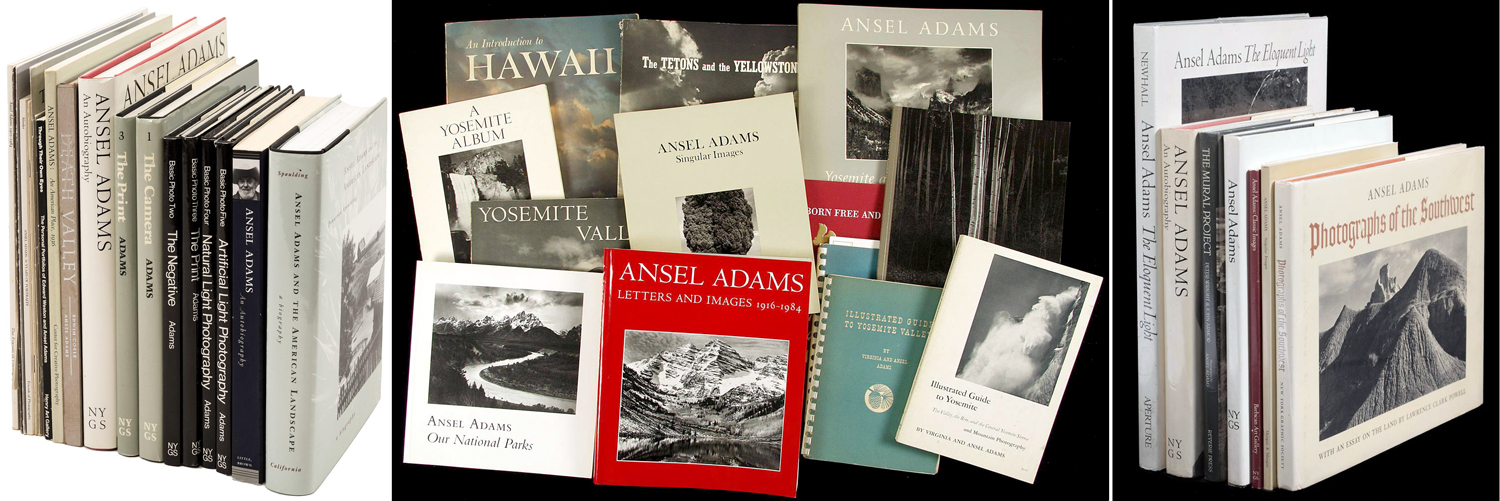
The person who most attempted to regularize the variables of photography was Ansel Adams. He wrote a series of five books (later recast as three) teaching the finer points of making photographs — how the lighting, focal length, depth of field, contrast, etc. affected the final picture. 

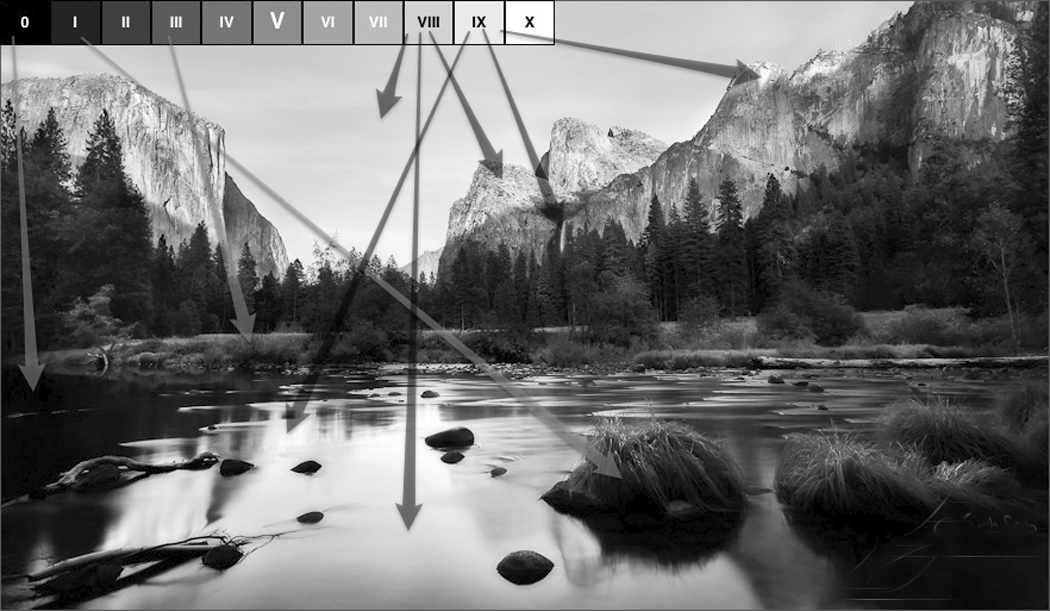
He perfected what he called the “Zone System” of exposure and processing to control the contrast and dynamic range of the final photographic print. Simplified, the problem faced was that black ink on white paper has a limited range: The white, under normal lighting conditions, is usually no more than 30 or, at best, 40 times brighter than the black. But when you look at the sunlit scene you want to photograph, the brightest part may be a thousand times brighter than the shadow. How do you squeeze all that into your 30:1 ratio? 

Most photographers and snapshooters just pick what they want to show up best and let the shadows go to solid black, or the highlights to bleach out in detailless white. Adams, instead, attempted to divide a scene into 10 (or 11, depending how you count) “zones” of brightness, from solid black to solid white, and then control your camera negative’s exposure to match your previsualized zones, knowing that you can alter the contrast in the developing process, to increase or decrease contrast to fit, Procrustes-style, the whole into the available printing surface. 

(A simplified version of this is the old photographers’ dictum: “Expose for the shadows, develop for the highlights.” Adams’ version is more precise.)

For the ordinary amateur, you point a camera and click the shutter to capture the image and you satisfy yourself with what you get. Adams and his fellow artists are hyper-aware of the end product. Adams preached what he called “previsualization,” in which you attempted to imagine what the final print should look like before you ever pressed the shutter button. The scene being photographed is just raw material for the final presentation.

 “In my mind’s eye, I visualize how a particular … sight and feeling will appear on a print. If it excites me, there is a good chance it will make a good photograph. It is an intuitive sense, an ability that comes from a lot of practice,” Adams said.

The result is a photographic negative, used to make the final print. 

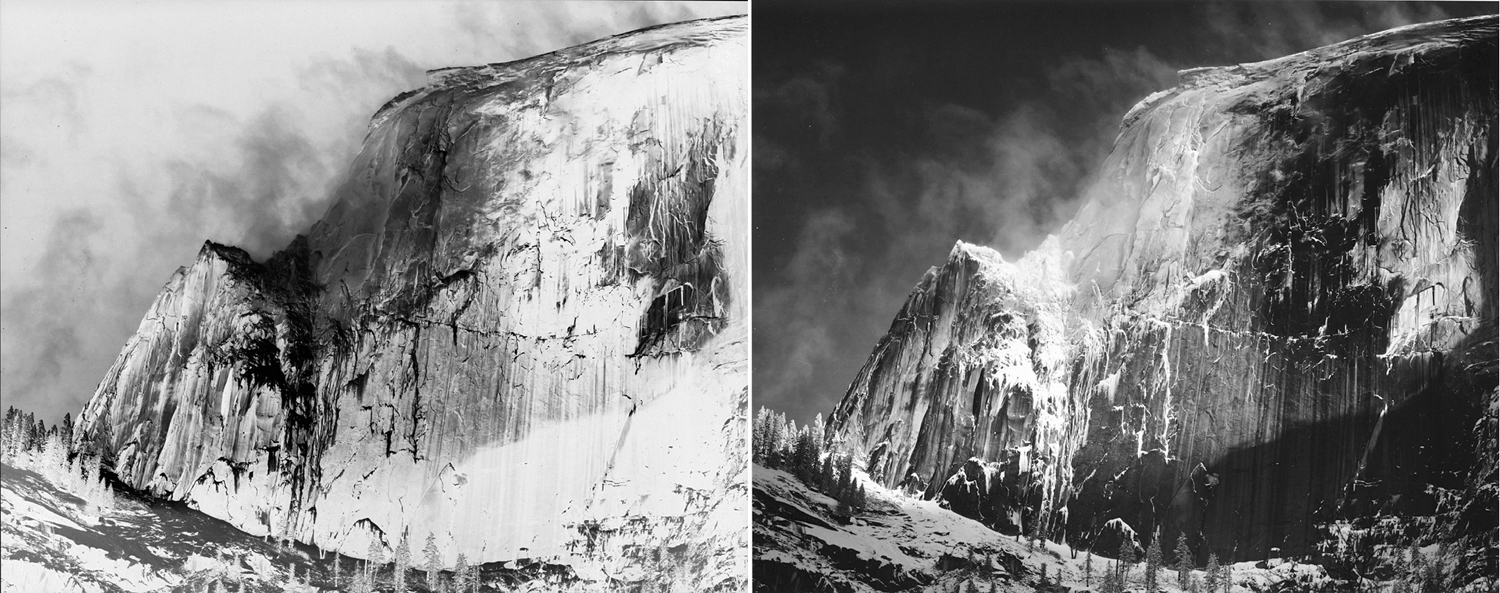
“The negative is comparable to the composer’s score and the print to its performance. Each performance differs in subtle ways.” Anyone who has followed Adams’ career knows that an earlier print may differ considerably from a later one, just as a young pianist’s performance may mellow and change as the pianist ages. In other words, there is not a “single” true print, but, like a musical performance, a range of them. 

The belief in the veracity of photographs is persistent, even in the face of computer-generated imagery, digital manipulation and fakery. Indeed, that faith has often caused trouble for, say, photojournalists, when a literal-minded editor insists that a photo be printed “unmanipulated.” I have known a photostaff that was forbidden even to alter the contrast of a digital photo in the credulous belief that the image first recorded in the camera is more “truthful” than the finished one. (That dictum didn’t last; it couldn’t). The digital file created in a digital camera is like the negative in silver-image photography and is only a first step in the process. To disallow the photographer to finish the process in some mistaken belief that the unmanipulated version is “truer,” is hooey. 

Certainly a photographer in bad faith can use the editing process to distort the end result, but this was true in silver-image photography as well. Digital may make it easier, but no more possible. You depend on the integrity of the photojournalist not to lie, at least not on purpose. 

As for art photography, since the final product is what is sought rather than a record of something else, there can be no lying, just as there is no lying in fiction. You want a journalist to be truthful, but a novelist is allowed to make it all up. 

In the end, you wind up with an artifact, a thing in itself — a photographic print, a range of black and white, or of colors, making a flat version of a three-dimensional world. The unconsidered understanding of a photograph is that it “captures reality,” but a more sophisticated view is that there are conventional distortions we choose to ignore (a photograph doesn’t move, reality does; a photograph is flat, reality is rounded; a photograph doesn’t make sound, reality won’t keep quiet; a person in a photograph is two inches tall, in reality is six feet — and so on, all mere conventions). 

And so, the artist accepts what he has made as a physical object on its own, with its own expectations and reality. Adams may make images of the Tetons or Yosemite, but, in his best work, it is the print itself that engenders awe. 

Click on any image to enlarge 
I was in bed, having trouble getting to sleep, and so making mental lists instead of counting sheep. I made a list of the CDs I would keep, if allowed only one per composer, then if allowed 1 boxed set for each of the dozen major composers, then… well, it went on and I still couldn’t fall asleep. I had made probably half a dozen lists when I began a list of the most beautiful human-made things, one visual, one musical, one verbal, etc. 

Filling in the list was surprisingly easy, considering how many nominees should be considered, but I had no trouble finding single primary answers, which surprised me. 

I’ve written numerous times that the single most beautiful thing I’ve seen, visually, is the north rose window at Chartres Cathedral. I’ve been there four times (five if you count multiple visits to the cathedral over a two-day visit to the town), and I never fail to fall spellbound by that tumbling wheel of light. Its beauty is not found in how pretty the colors are, but in something transcendent — the intent of the Gothic idea of architecture, that if God is light, then a building that celebrates light celebrates God. Even as a non-believer, I can appreciate that glimpse of eternity. The north window is singular in its design, with its set of 12 diamonds turning over and over as they circle the center, giving an illusion of motion — as of angels dancing around divinity. 

I love all the rose windows I’ve seen, but the north rose of Chartres is the dance of the cosmos. 

And if I had only one piece of music to listen to, it would be Der Abschied, the final half-hour song that finishes Gustav Mahler’s Das Lied von der Erde. Every time I listen to it, I dissolve into a puddle of helpless emotion, filled to the brim with the sense of eternity and the world. I have heard countless versions of Der Abschied — I own more than a dozen recordings — and I have my favorites, but even the least of them leaves me wrung dry. 

Das Lied von der Erde is a set of six songs, supposedly translated from Chinese into German and published, among other poems, in 1907 in a book titled Die chinesische Flöte (“The Chinese Flute”), by Hans Bethge. Mahler set his selection of six to orchestral music so rich as to be fattening. The final song, as long as the first five together, tells of the departure of a friend. The poet confronts the beauty of nature around him as he waits for the friend so they may make their farewells. Each stanza is alternated with long orchestral interludes of refined delicacy. 

The music ends — if it can be said to end at all — with lines Mahler wrote himself, perhaps sensing his own imminent death: “Die liebe Erde allüberall/ Blüht auf im Lenz und grünt aufs neu!/ Allüberall und ewig blauen licht die Fernen!” And then, repeated and repeated, ever more quietly and hesitantly, “Ewig … Ewig … … Ewig” — “Forever … Forever … … Forever” — until at last you can barely hear the word, and the music dies.

“The dear earth everywhere/ blooms in spring and grows green anew!/ Everywhere and forever blue lightens the horizon!” and “Ewig … Ewig…” 

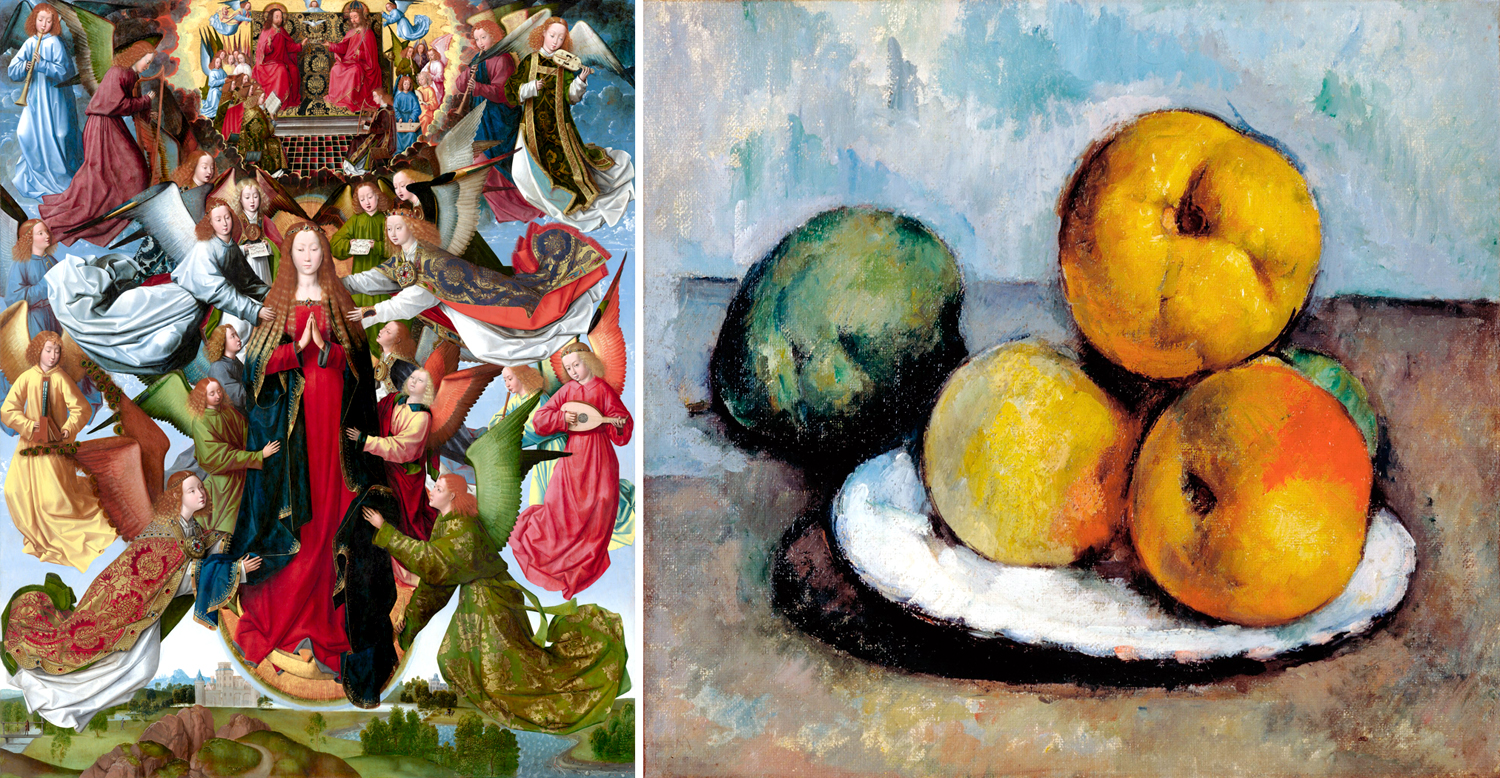
These choices came to me almost instantly, without having to think. There are other obvious choices that could be made. Other works of art that are profoundly beautiful, other music nearly as affecting. I have stood rapt in front of the Mary Queen of Heaven at the National Gallery in Washington DC, and been knocked silent by the pears and apples of Cezanne. And nearly as gut-slamming as Der Abschied is Richard Strauss’ Im Abendrot, the final of his Four Last Songs. Or a dozen other paintings and musics. 

As I lay there in the dark, unable to sleep, I rifled through my brain trying to remember a poem that moves me the same way, or any piece of literature: words that leave me drained each time. I went through all the major English poets — and there is plenty of poetry that moves me deeply — and even poems in translation. But the one poem that came back and slapped me upside the head isn’t by Yeats or Wordsworth, but by Carole Steele, my late wife. It is the first poem in her book, 42 Poems.

Carole was the genuine article. And that poem brings me to tears every time. Certainly part of my response comes from the 35 years we spent together, and the overwhelming sense of loss at her death five years ago. But I had the same response when she was alive: This is a poem that makes the connection between the inner and outer worlds; it responds to the physicality of the world in words that startle in their aptness, and combines the directness of childhood with a slant acknowledgement of death, and the awareness that others share in the knowledge of beauty. It isn’t the particular example that counts, but the shared awareness of its existence. 

We may all have different ideas of beauty, and you can each make your own list, but what must be common in all of them is the engagement. Beauty does not work as some passive prettiness outside the psyche. Pretty is not Beauty. Pretty is what is conventional. Beauty is the result of engagement and the creation of meaning. It is an awareness between you and the cosmos, each of the other. It is the recognition, sometimes startling in its suddenness, of the wholeness of it all, of its permanence and its evanescence. 

I have thought for more than 70 years about this. The world is many things, and it offers a share of misery, pain and loss, there is war and death, but it also affords moments of epiphany, the breakthrough of beauty, like the red glow in the black ashy cracks of a dying fire. 

This can easily devolve into “Raindrops on roses and whiskers on kittens,” but I mean something more difficult. Yes, I resonate to warm spring rain and the crisp, dry, cold and sunny October afternoon. These things are beautiful and they can fill up our emotions to bursting, but only if we actually pay attention. Just a plain rainy day spent polishing the silverware, or spending a fall Sunday watching football on TV don’t elicit the response. Paying attention does. 

And when the beauty hits, it is not something external or “out there,” and neither is it something merely subjective or “internal,” but rather it is the identification of them together as a single entity. My awareness of the spring rain brings the rain into my psyche, and my awareness also give the rain its actuality. It makes it real. Yes, the tree falling in the forest makes a sound, but it doesn’t have meaning unless it is heard. The spring rain may fall whether or not anyone notices, but its existence has meaning only when my awareness and its existence become a single thing. 

It has been said that human consciousness is the universe’s means of self-awareness, that our senses are the mirror for the cosmos. It is what Andrew Marvell meant in his poem, The Garden: “The mind, that ocean where each kind/ Does straight its own resemblance find,/ Yet it creates, transcending these,/ Far other worlds, and other seas…”

Beauty is the amour de soi of the cosmos. Our sense of beauty, in the physical world or in art, its mask and mimic, is our sense of identity with the cosmos. “I am he as you are he as you are me/ And we are all together.” This sense is lost when we act like crabs in a bucket, each out for himself and not recognizing our shared humanity, but also when we fail to recognize ourselves as the conscious portion of the universe. Beauty is the breakthrough. 

What we consider pretty is merely a matter of taste, but beauty is a breaking up of our singularity and an identification, however brief, with totality. 

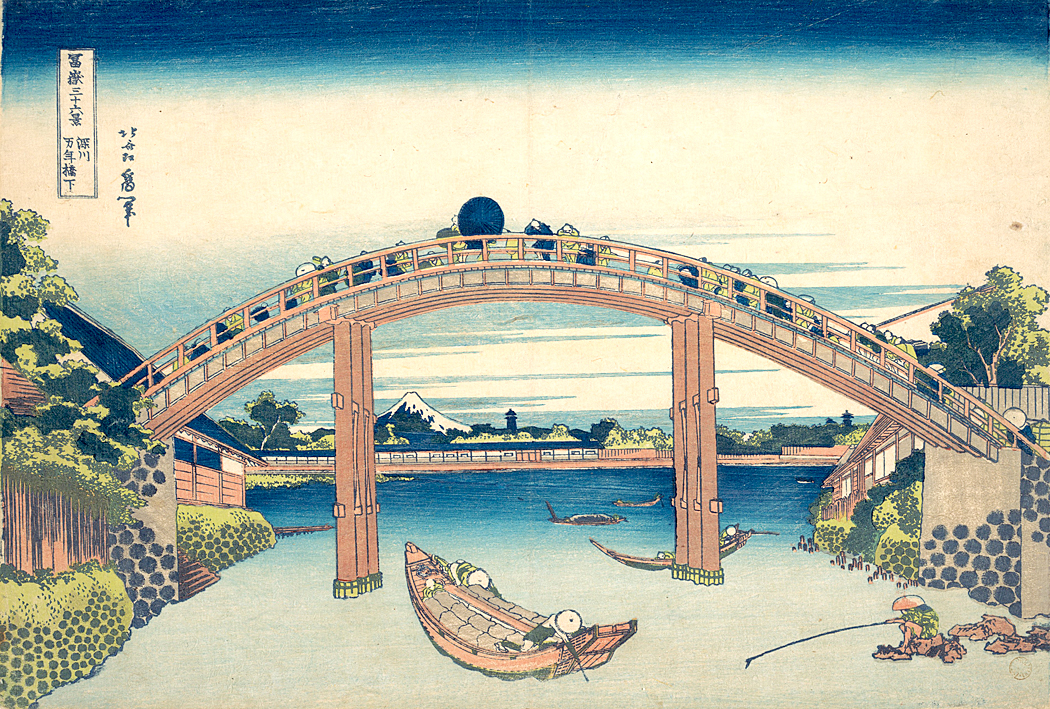
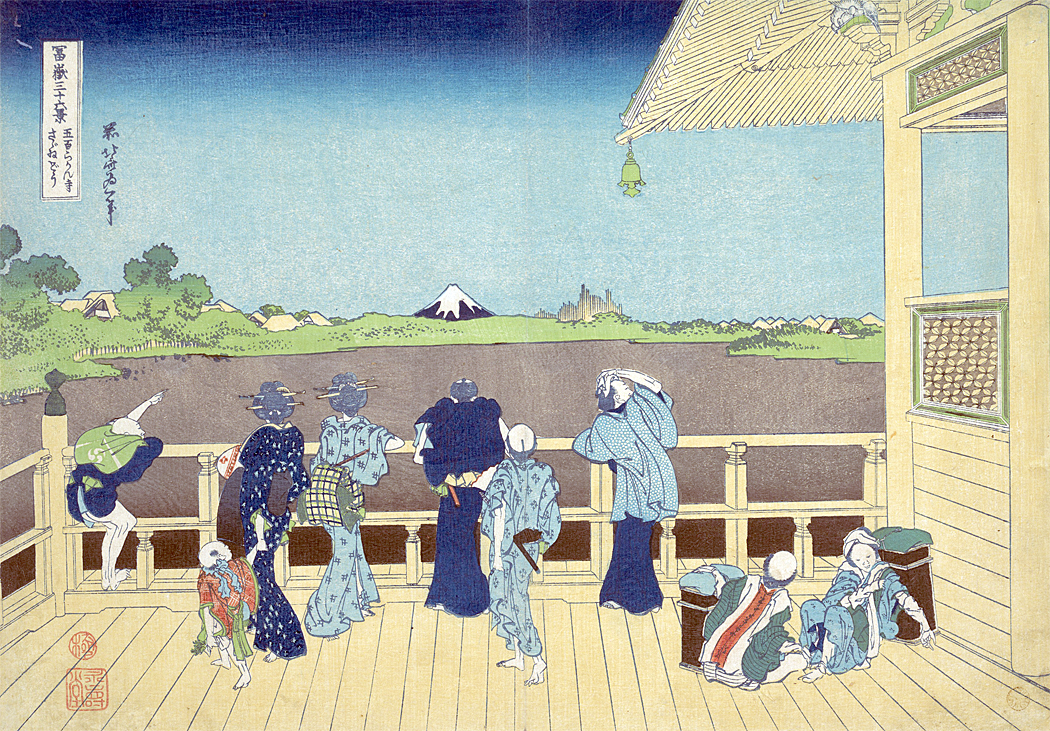
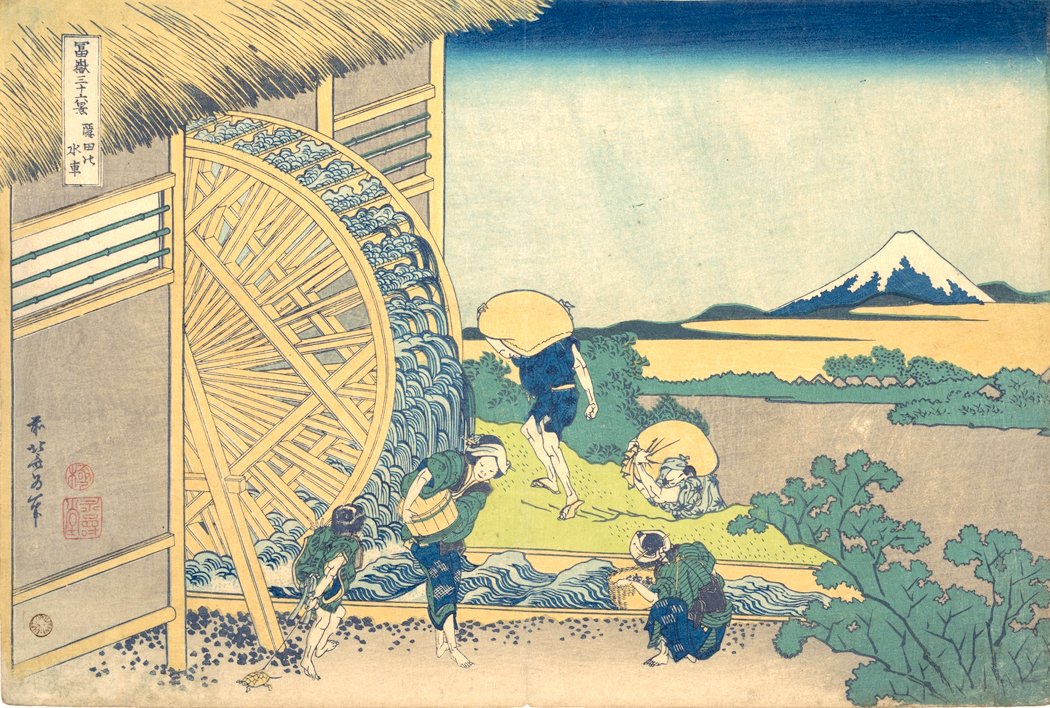
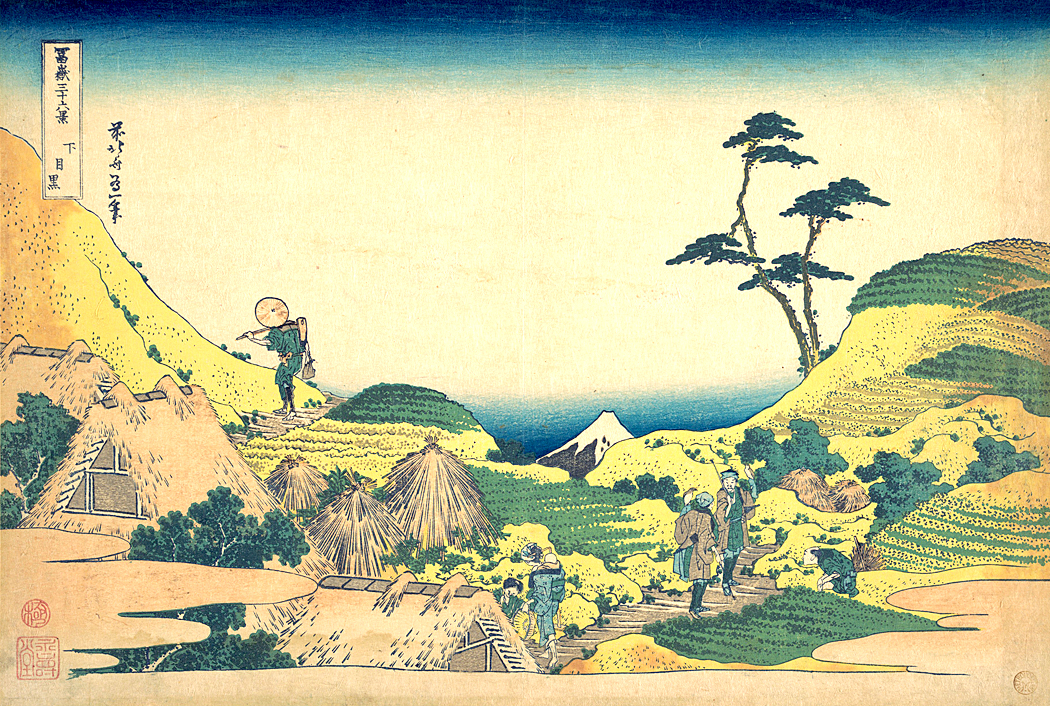
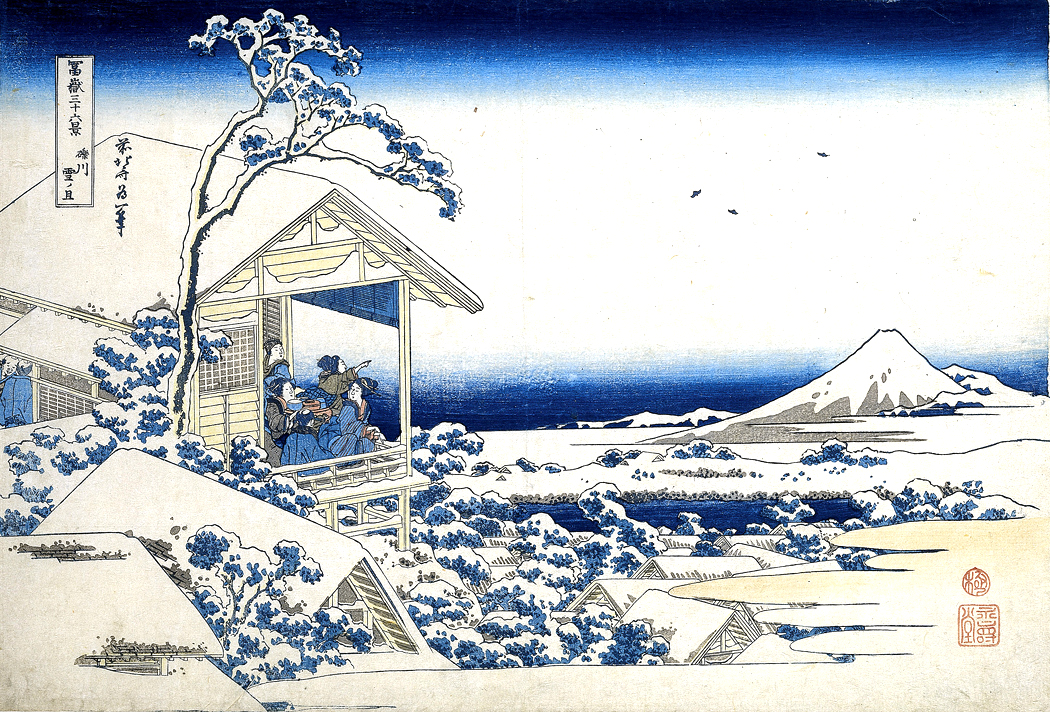
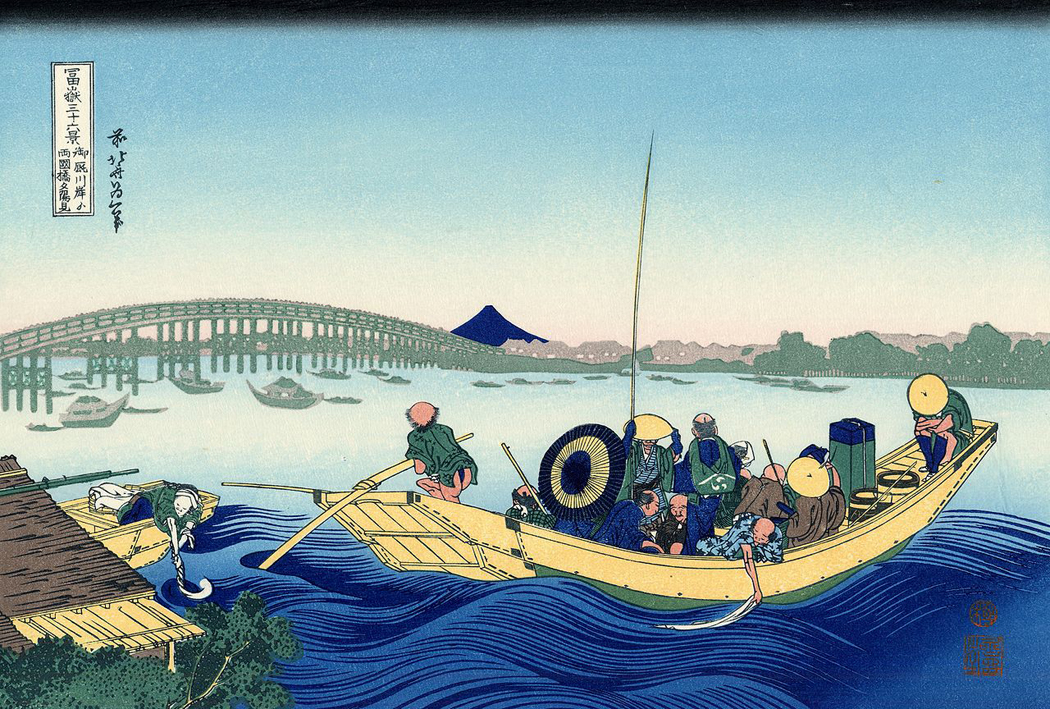
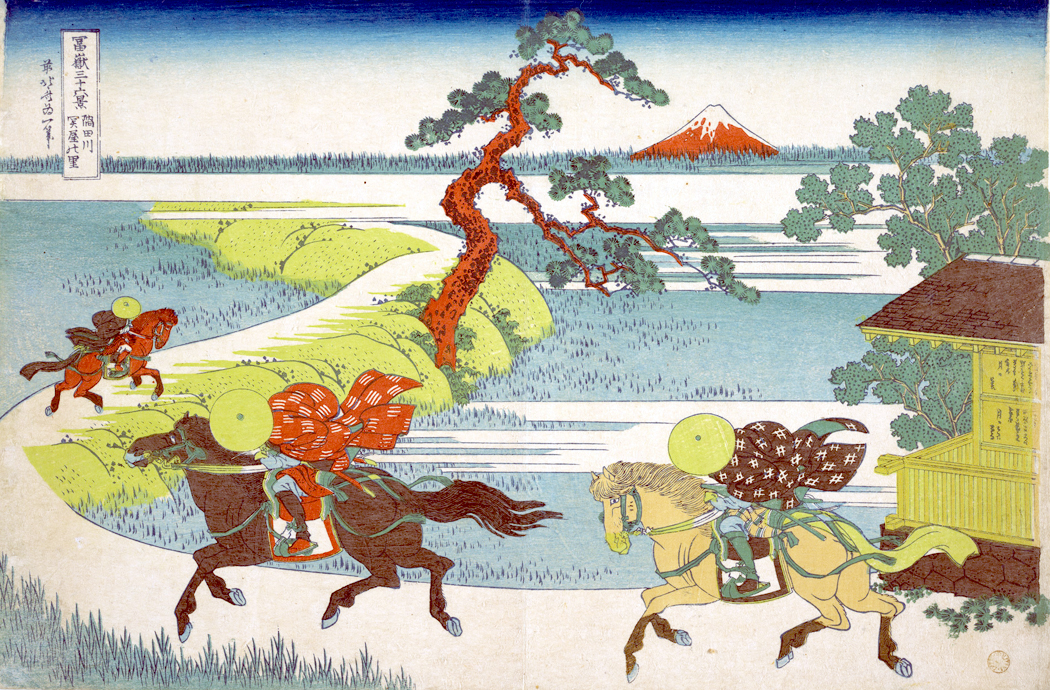
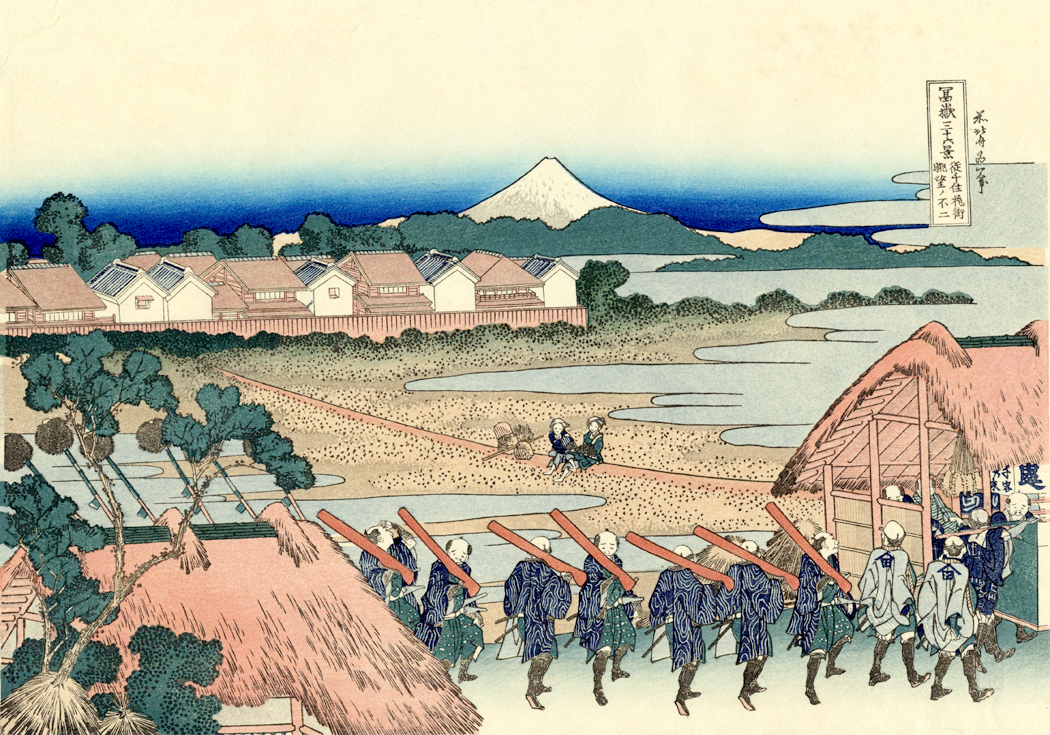
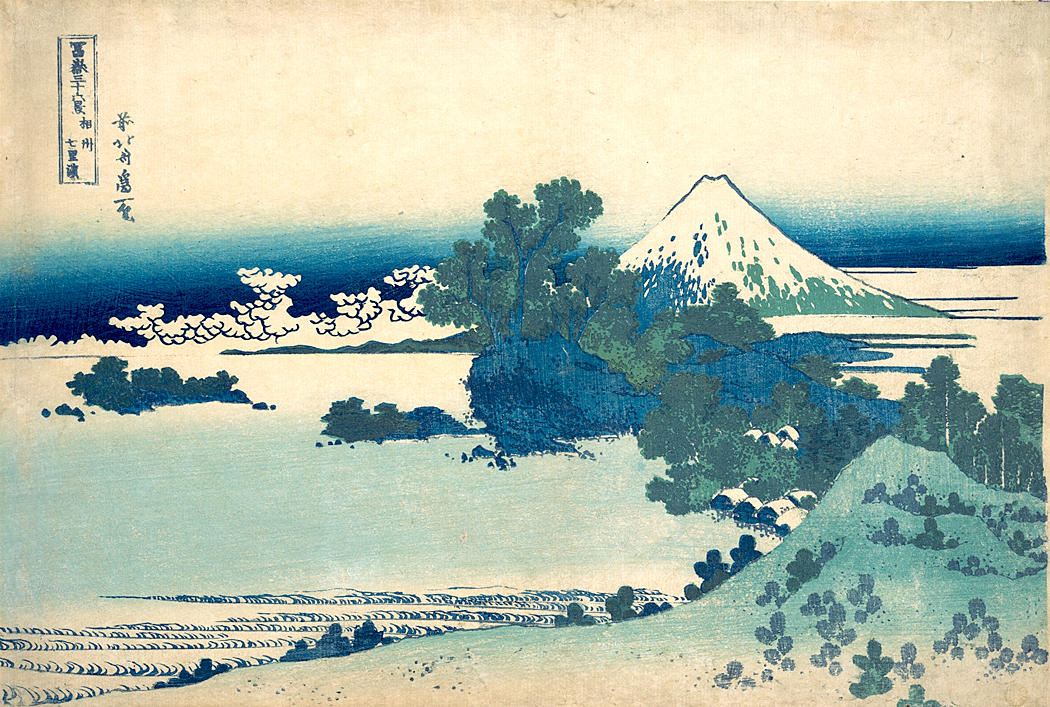
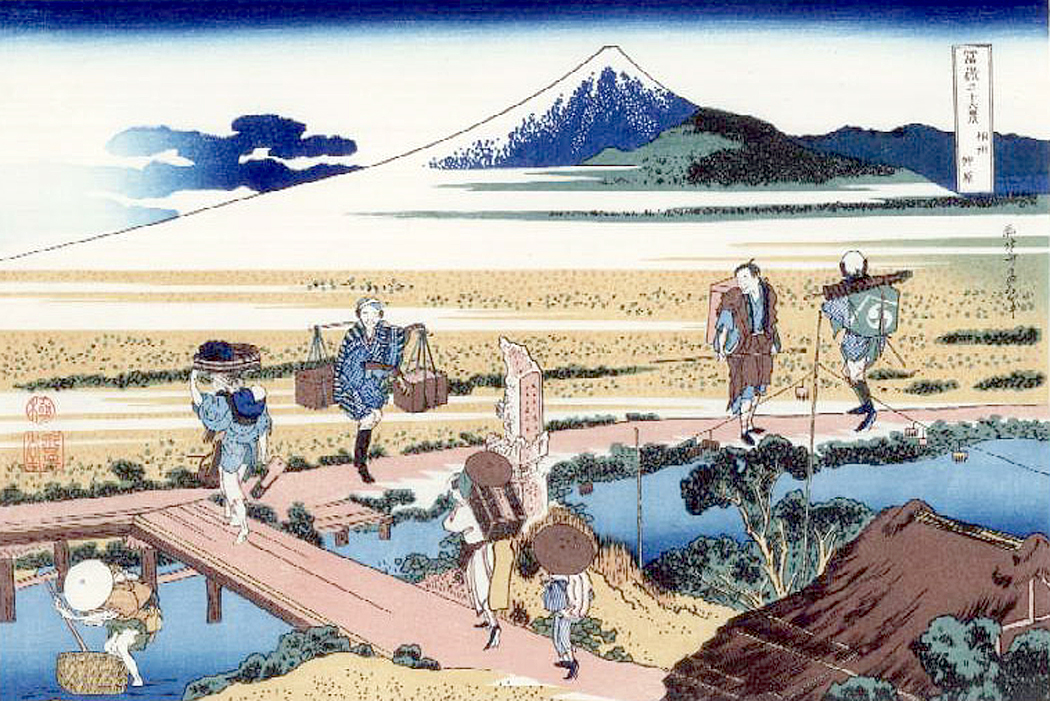
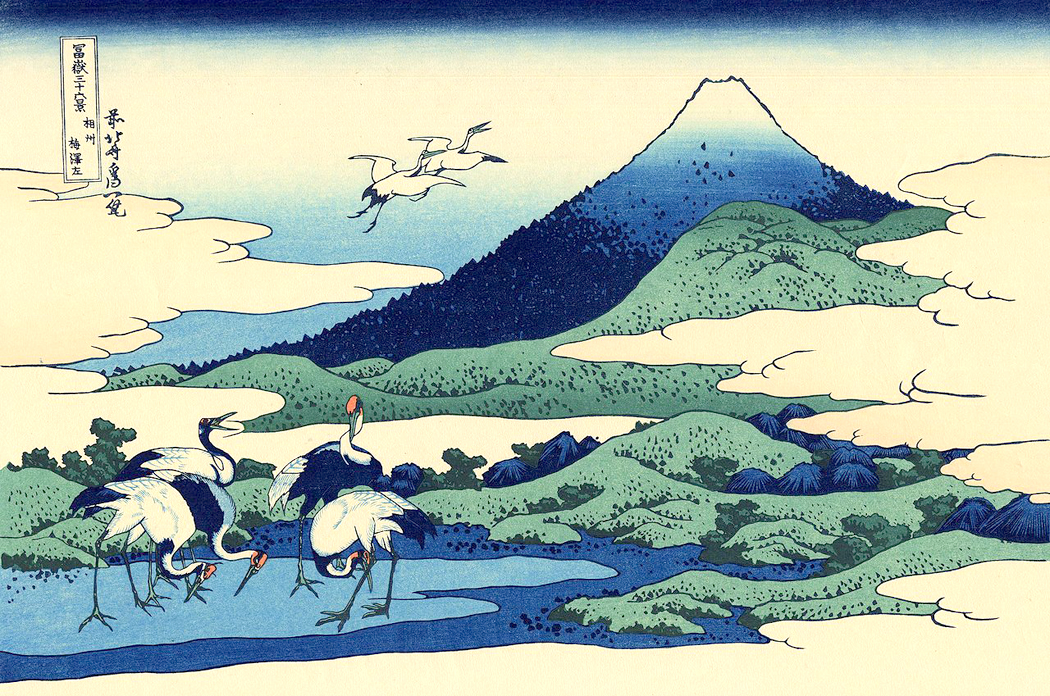
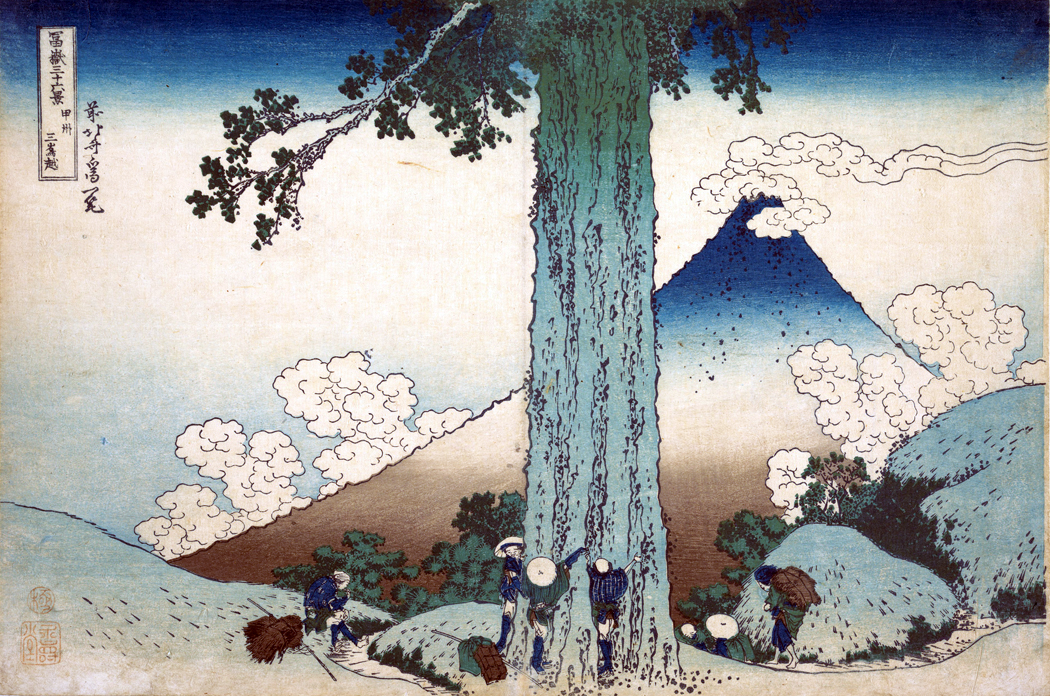
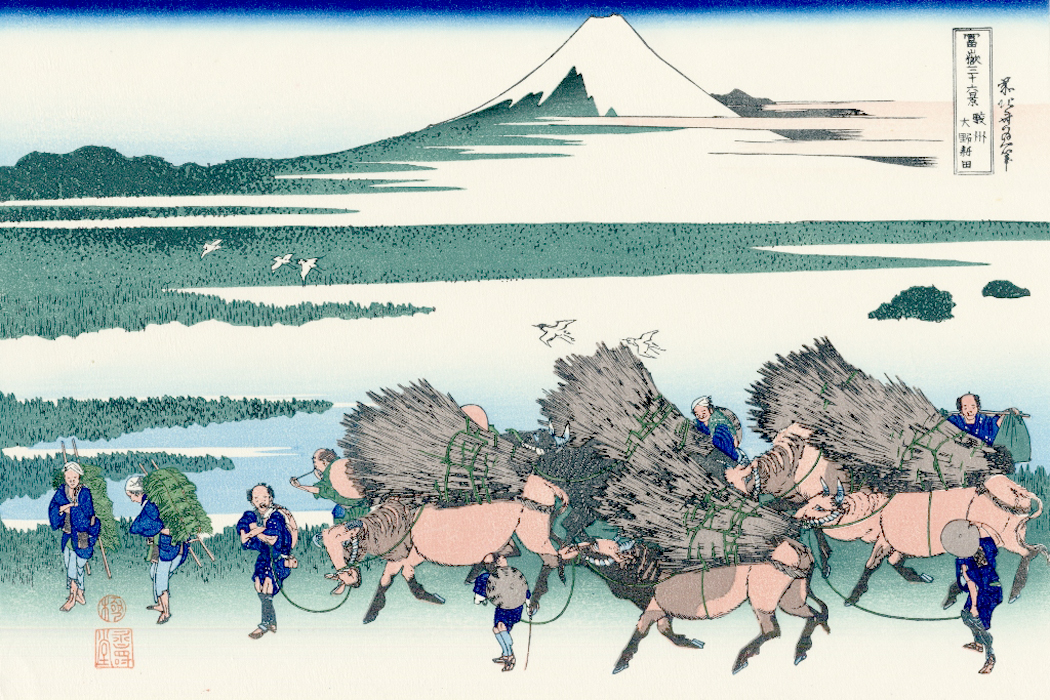
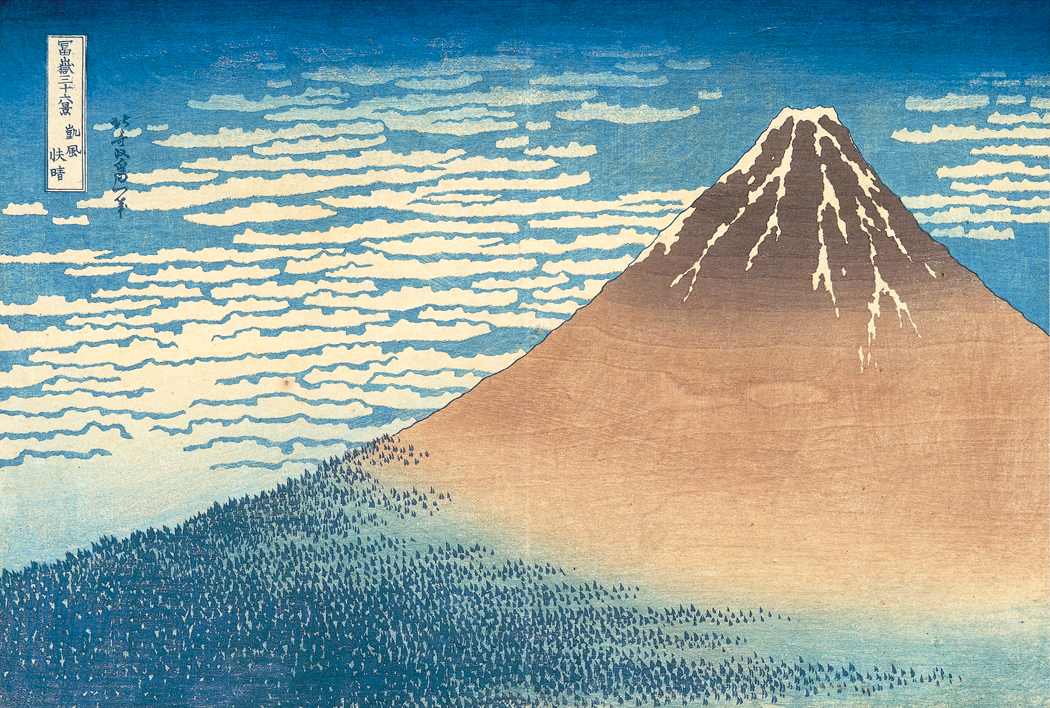
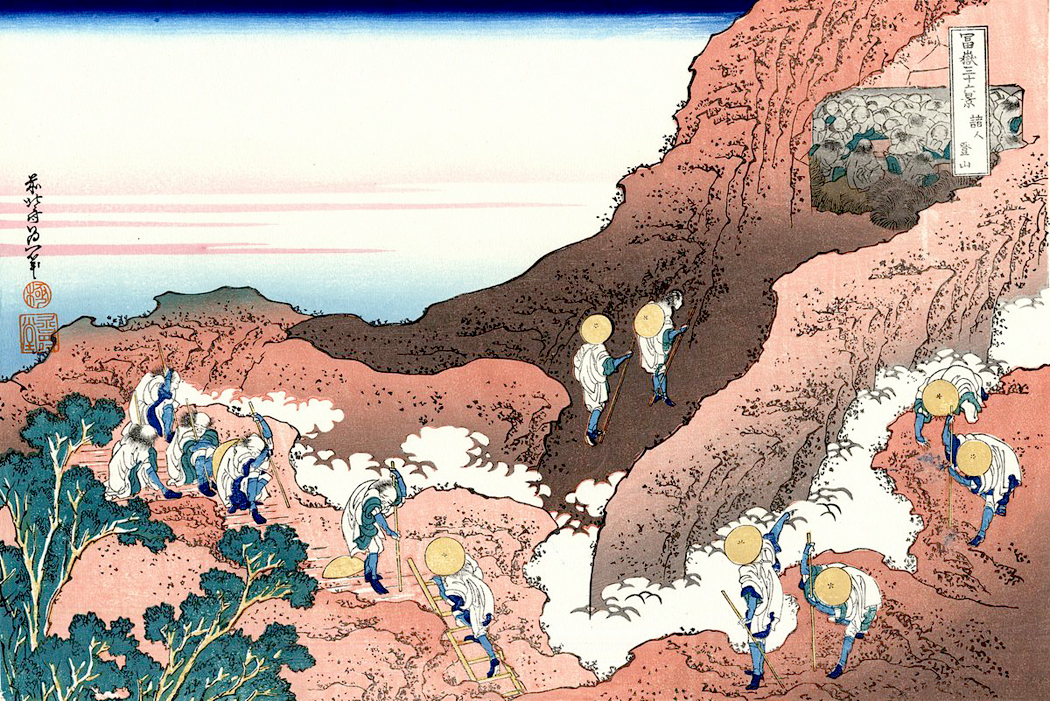
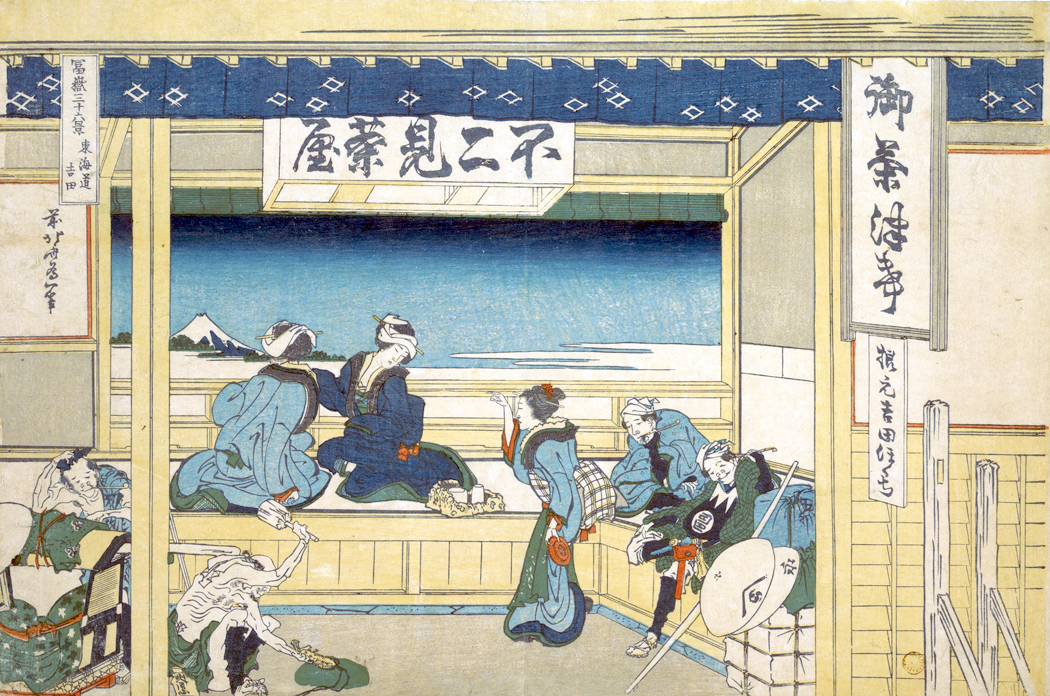
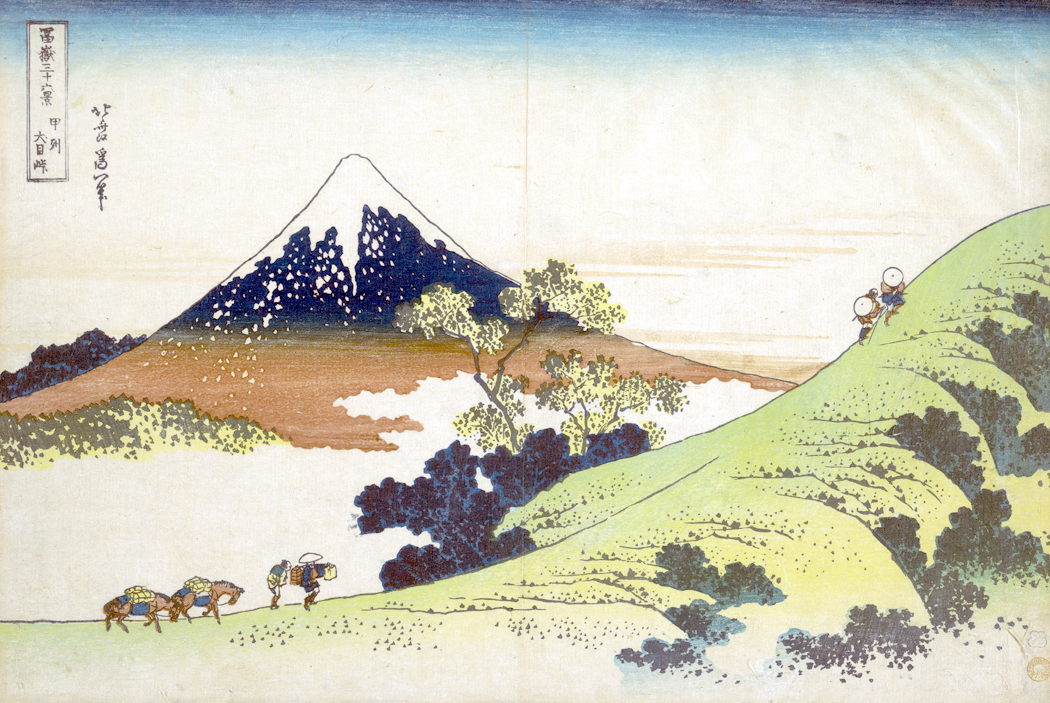
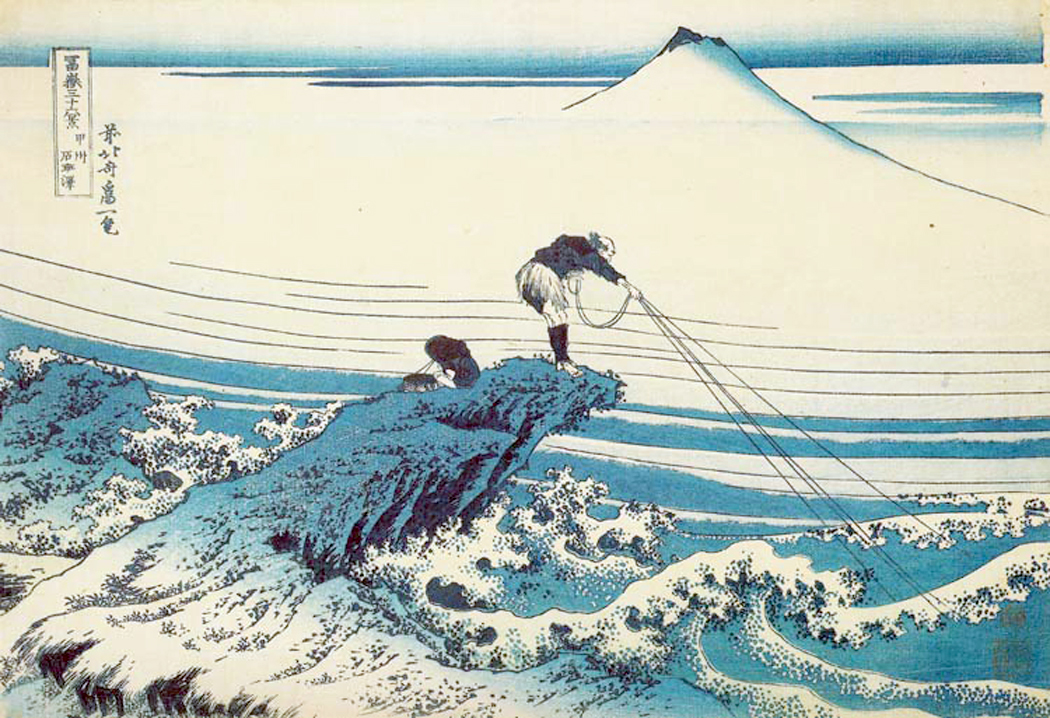
Surely the most famous piece of Japanese art is The Great Wave off Kanagawa, by Katsushira Hokusai. It has become iconic enough that, like Van Gogh’s Starry Night or Michelangelo’s Creation of Adam, it can be recognized by even those who know nothing about art and can be fodder for countless parodies. 

The Great Wave is part of a book, published in Japan in 1830 called 36 Views of Mount Fuji, one of the most famous books of the Ukiyo-e woodblock print style of popular art in Japan from the 17th century until World War I. They were cheap: A single Ukiyo-e image could be bought for roughly the price of a bowl of noodles.

Hokusai (1760-1849) was about 70 years old when he published 36 Views and had been working as an artist since the age of 14. In his 88-year lifetime, he drew, painted and carved something like 30,000 works. Three years after publishing 36 Views, he began signing his work as “Old Man Mad With Painting.” 

As early as 1805, he had begun making pictures with the theme of fishermen in a boat fighting great waves.

And even after the Great Wave, he kept working the theme, including in his black-and-white sketchbook 100 Views of Mount Fuji.

He seems to have begun making the images for 36 Views somewhere about 1826. And it was in the years after that a new European pigment, Prussian blue, made its way to Japan. And so, some of the 36 Views are in the old style and some with the new blue pigment, which Hokusai seemed to enjoy experimenting with. The Great Wave would not have been possible without Prussian blue. An advertisement for the book emphasized the new color. 

But it is important to pay attention to the other images in the series. It is called 36 Views, but Hokusai couldn’t stop and later added an additional 10 images, bringing the total up to 46. They were published and republished multiple times during Hokusai’s life, and each new printing differs slightly from the first, sometimes with different colors, sometimes with new details carved into the woodblock. 

There is no set order for the images, but the ones below are in one of the published sequences. I wanted to post them all for two reasons. First because they give context to the Great Wave, but also because the whole set is great and should be known to anyone who loves art. I have loved them since I first encountered them more than 50 years ago. 

1. Nihonbashi Bridge in Edo

2. The Mitsui Store in Suruga District

3. Suruga Hill, Sundai, in Edo

4. The Hongan-ji Temple in Asakusa

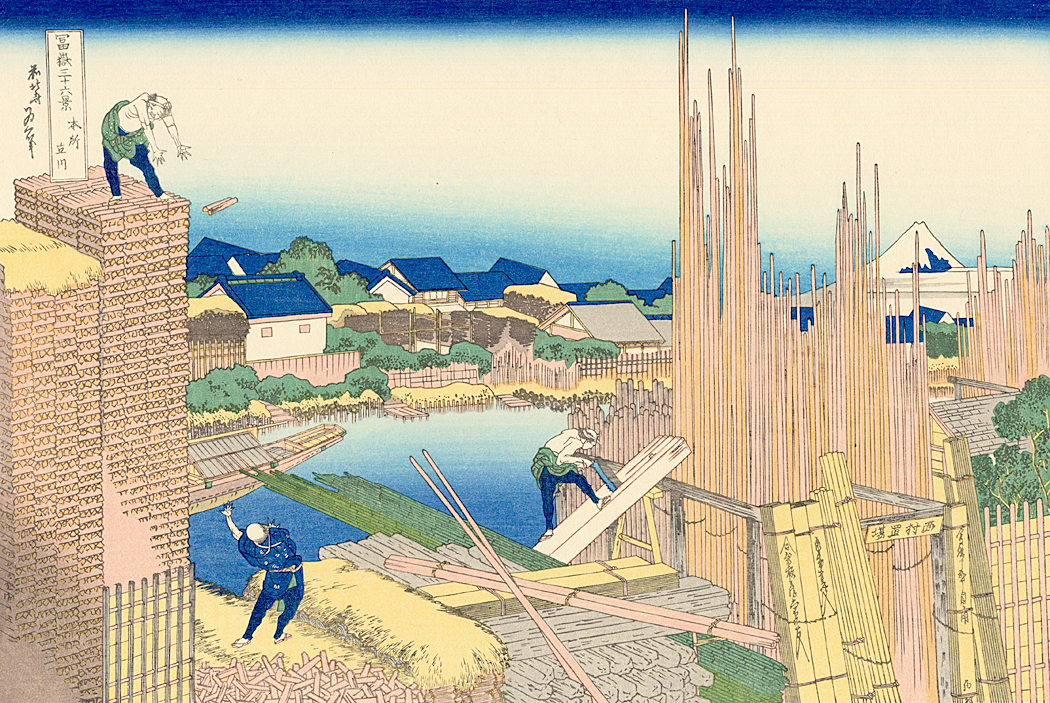
5. The Timber Yard at Honjo

6. Under Mannen Bridge in Fukagawa

7. The Sazai Hall of the Temple of the Five Hundred Arhats

8. The Round-Cushion Pine in Aoyama

9. The Waterwheel at Onden

10. Lower Meguro

11. Snowy Morning in Koishikawa

12. Sunset View of Ryogoku Bridge from Oumaya

13. The Village of Sekiya on the Sumida River

14. Senju in the Musashino Province

15. Distant  View of Fuji from the Gay Quarters in Senju

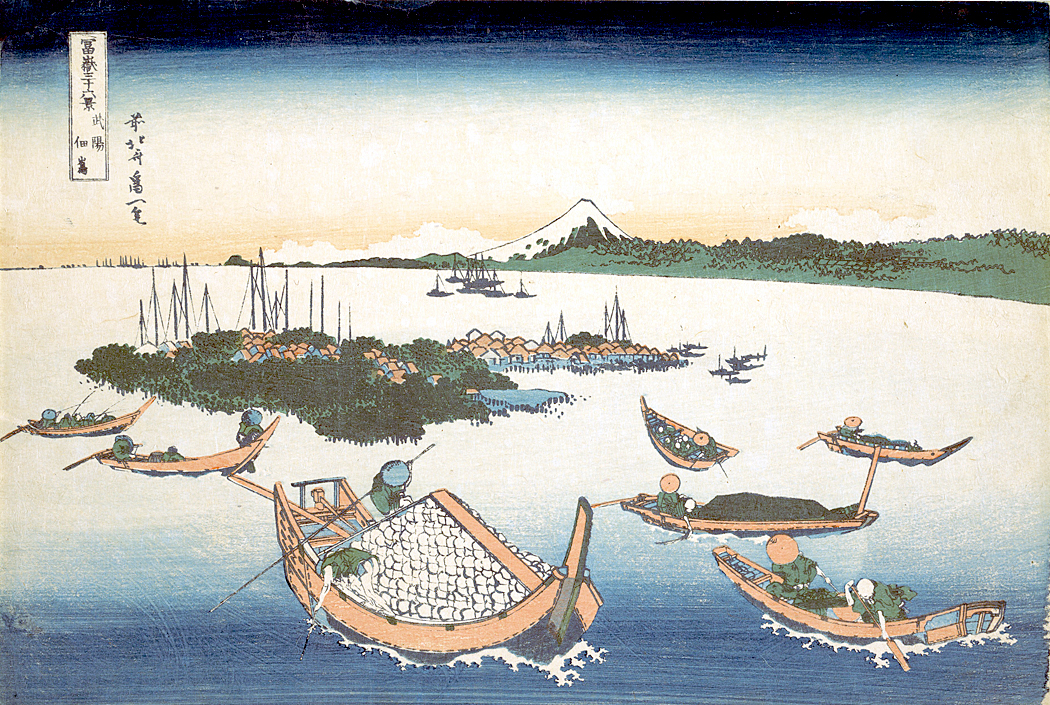
16. Tsukuda Island in Musashino Province

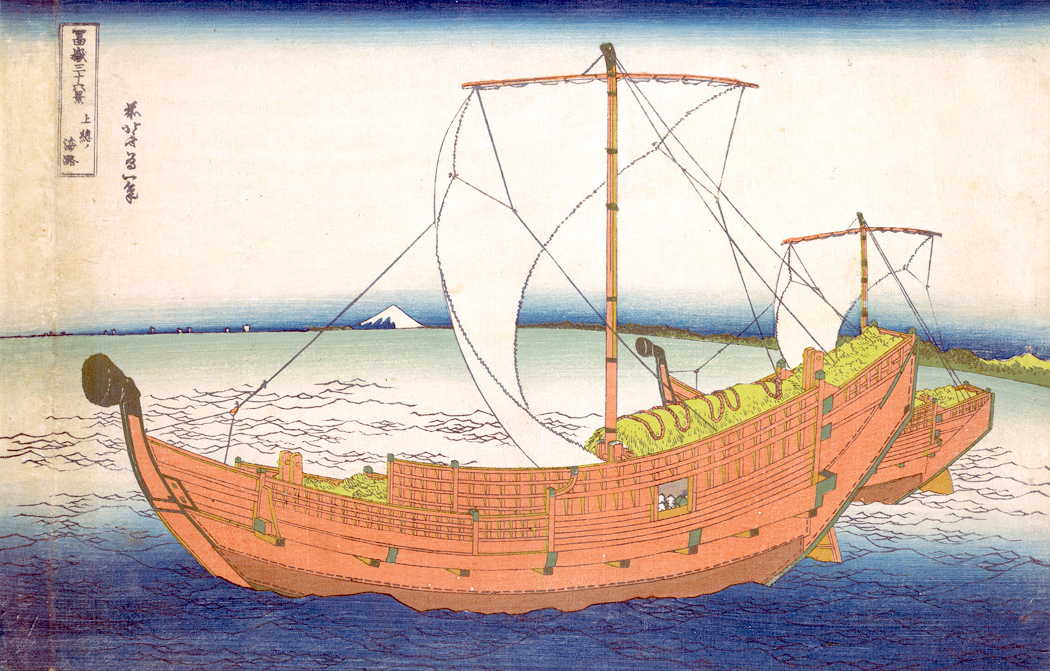
17. The Kazusa Sea Route

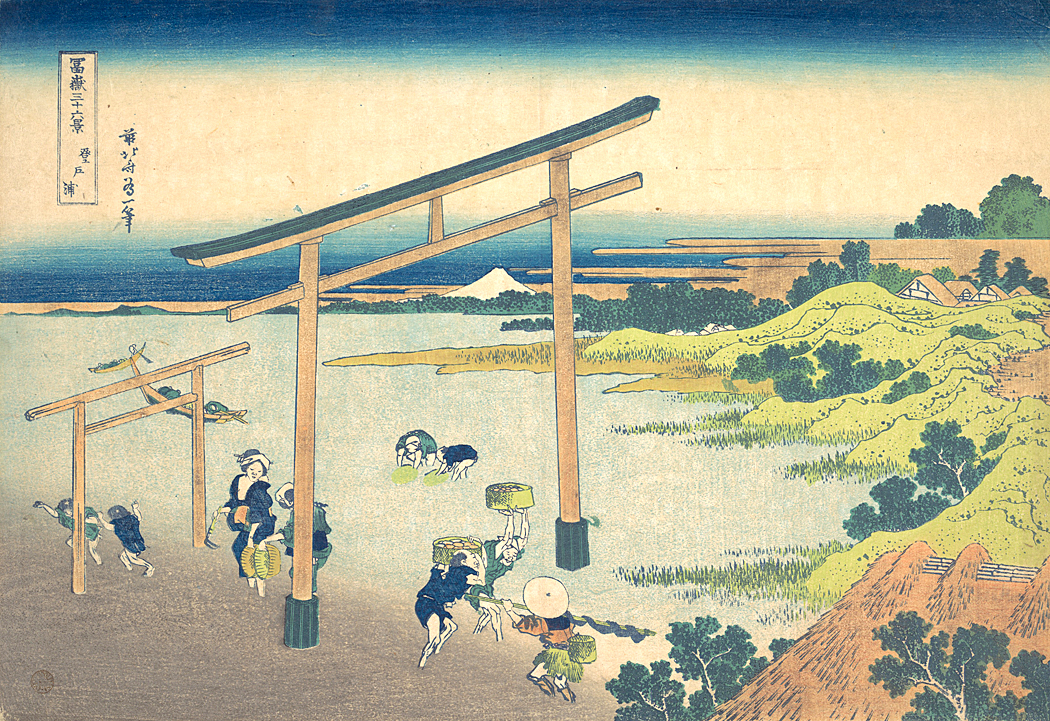
18. The Bay at Nobuto

19. Ushibori in Hitachi Province

20. Fuji from Goten-yama in Shinagawa on the Tokaido

21. Great Wave off the Coast of Kanagawa

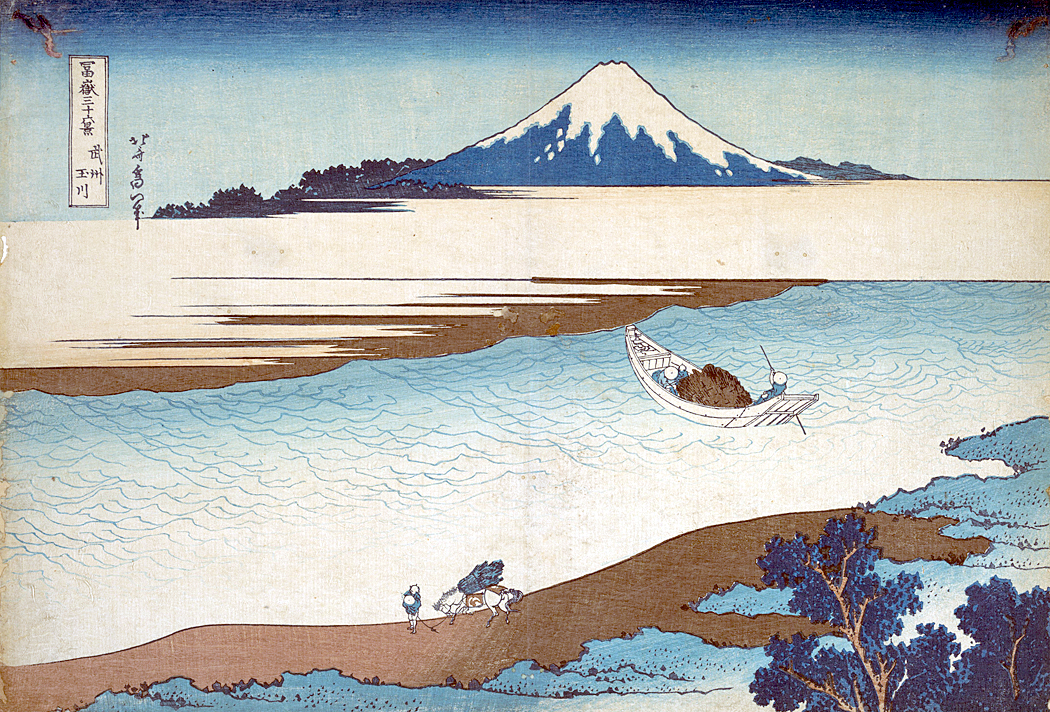
22. The Tama River in Musashino Province

23. Hodogaya on the Tokaido

24. The Beach of Seven-League in Sagami Province

25. Enoshima in Sagami Province

26. Nakahara in Sagami Province

27. To the Left of Umezawa in Sagami Province

28. The Lake at Hakone in Sagami Province

29. Mishima Pass in Kai Province

30. Fuji from a Tea Field in Katakura, Surugama Province

31. Ono Shindon in the Suraga Province

32. Fuji in a Storm

33. The Red Fuji (Fine Wind, Clear Morning)

34. People Climbing the Mountain

35. Ejiri in Suruga Province

36. The Coast of Tago Bay near Ejiri on the Tokaido

37. Fuji from Kanaya on the Tokaido

38. In the Mountains of Totomi Province

39. Yoshida on the Tokaido

40. Fujimigahara in Owari Province

41. Inume Pass in Kai Province

42. Fuji Reflected on Lake Kawaguchi at Misaka in Kai Province

43. Dawn at Isawa in Kai Province

44. Lake Suwa in Shinano Province

45. Kajikazawa in Kai Province

46. The Back of Fuji from Minobu River

Click on any image to enlarge
Over the years, it has amused me no end that Christians believe, in the face of all evidence, that their religion is monotheistic, when in fact, it features as many gods and godlets — divine spiritual beings — as Hinduism or the pantheon of Greek gods. Yes, Yaweh is the boss, but so was Zeus, or Indra, or Odin. Yet, Christians persist in calling the other religions pagan, and their own as monotheistic. It’s a hoot. 

And I am not here referring merely to the ineffable concept of the trinity — one god in three forms — which is no different, really from Shiva, Brahma and Vishnu, who are aspects of the Brahman — the Great Mystery. (The Holy Ghost can be seen as the creator, Christ as the preserver, and vengeful Jehovah as the destroyer making the comparison more apt.) 

No, while that by itself qualifies the Christian religion as polytheistic, what I am really interested in are all the other lesser divinities, the angels, saints and demons. A whole army of Thrones, Archangels, Dominions, Principalities and Seraphim. There are a lot of them. 

In the Bible’s book of Daniel, the prophet describes God and his attendees (Daniel 7:9-10). “His throne was a fiery flame, its wheels burning fire; a fiery stream issued and came forth from before him. A thousand thousands ministered to Him; ten thousand times ten thousand stood before Him.” 

Heaven seems traffic-bound with angels. Getting a parking spot must be like in Los Angeles. 

But it isn’t the crowded heavenly city of angels that I am interested in, but their opponents: the devils. And, more than all that, the one balancing deity in opposition to Yaweh —  Satan, aka Beelzebub, Belial, Samael, Old Nick, Lucifer, Apollyon, Old Scratch, Mephisto. Or a host of other names and circumlocutions. 

No agreement is reached among Christian theologians as to whether these are all just aliases of Satan, or whether Beelzebub, Samael or the others are henchmen — sidekicks to Old Nick. There is considerable ambiguity among the sources. 

Either way, there are enough spirits floating around in the spiritual ether to populate a Cecil B. DeMille movie. But the one that interests me particularly is Satan, or rather, how he, as the Devil, has been depicted over the centuries. This is about art history rather than about theology. 

Neither is there any clear picture of Satan’s role. In one version, he is God’s adversary, seemingly nearly co-equal; 

in another, he is cast into hell and suffers eternal punishment and bound in chains; 

in another, he is the presiding spirit of hell — its CEO, as it were — and rules the demons or the damned, like the Greek Hades or Roman Pluto; 

in another, he is the torturer of the damned and devours them; 

and in yet another, he walks the earth creating temptations and havoc. Is Satan to be found in heaven, in hell, or on the earth? 

Satan, after all, is really just a bit player in the Bible. He barely shows up. Yet, he is a major figure in the mythology and iconography of Christianity. In the Bible, the word “satan” is just the Hebrew word for “adversary,” or “advocate” (Yes, Satan is a lawyer). 

He is one of the bureaucracy of Heaven in the book of Job, where he seems to be the commissar who tests the love of humans for Jehovah, and is allowed by God to test his servant, Job. In other Bible verses, the word “satan” simply refers to a normal human who accuses or admonishes someone else. 

It isn’t until after the Second Temple Period, with its Persian influence, when Judaism was heavily colored by Zoroastrianism and its theology of the good Ahura Mazda, god of light, and the evil Angra Mainyu, the god of darkness, that a similar divine dichotomy becomes prevalent in Judaism. Over time, folklore and theology converge. Satan becomes part of the dramatis personae of the theater of beliefs. 

For Satan, devils — and much of saints and angels along with them — are much more the product of folklore than religion. And the stories, myths and legends vary from source to source, from country to country, and from denomination to denomination. (Very like Greek myth, there is no single canonic version of any of the stories.) 

In the early centuries of Christianity, church fathers faced popular paganism and had to deal with the old gods.  Tertullian states unequivocally that all the old gods were disguised demons (De spectaculis, xix).

Pan became one of the templates for our image of Satan, with goat feet and horns. The Germanic earth-sprites, elves, kobolds, fairies, hairy hobgoblins of the forest, water nymphs of the brookside, and dwarfs of the mountains were transformed by Medieval Christianity into devils, or into hellish imps, a sort of assistant or apprentice devils.

One common story involves the rebellion of Lucifer and his army against the angels siding with Jehovah. There are many folkloric versions of this war. In one, Satan’s ambition attempts a coup d’etat against God, in another, God demands Lucifer bow down to God’s newest creation, Man, and the rebellious angel refuses. 

Either way, in one version, a tenth of all angels rebelled, in another a third. No matter how you count, that’s a lot of them. 

“The number of the angels who participated in this movement of rebellion has never been fully ascertained,” wrote scholar Maximilian Rudwin in his exhaustive 1931 book, The Devil in Legend and Literature. “The belief current among the Catholic Schoolmen, based upon an interpretation of a biblical phrase (Rev. xii. 4), is that a third of the angels ranged themselves under Satan’s standard. The rebel leader’s armed force seems to have comprised nearly 2,400 legions (about 14,400,000), of which each demon of rank commanded a certain number. … Alfred de Vigny thinks that a thousand million followed Satan in his fall (Cinq Mars, 1826).”

Apparently, the population of devils and demons has grown since the rebellious angels were cast out of Heaven. Some Medieval theologians believed that devils can procreate just as humans do, and a population explosion has taken place since the Biblical times. Again, according to Rudwin:

“Johannes Wierus, a pupil of the famous Cornelius Agrippa and author of the learned treatise, De praestigiis daemonium (1563), went to the considerable trouble of counting the devils and found that their number was seven and odd millions. According to this German demonologist, the hierarch of hell commands an army of 1,111 legions, each composed of 6,666 devils, which brings the total of evil spirits to 7,405,926, ‘without any possibility of error in calculation.’ A professor of theology in Basle, Alartinus Barrhaus, is, as far as is known, the last man to take the census of the population of hell. According to this infernal statistician, the devils number exactly 2,665,866,746,664.” That’s more than 300 demons for every person currently alive on the planet. 

There have been several times in history when reformers have tried to free theology from myth, to come to an understanding of divinity in the  abstract. But the impulse to anthropomorphize is seemingly too strong to resist. Stories are easier to understand than exegeses. Islam began as a simple assertion of “one god,” and became layered with spirits, angels and their own version of Satan (“Shaitan” or “Iblis”). In the Upanishads in India there is an attempt to demythologize Hinduism, but the myriad devotional deities persist. Many Christian theologians have attempted to demythologize their religion, but it is the stories on the stained glass windows that persuaded the faithful. 

In the New Testament, Satan tempts Jesus in the desert, and then shows up in parable explanations given by him to his disciples. In the book of Revelations, what was obviously intended as an allegory of Roman hegemony turns Satan into a great red dragon with seven heads, ten horns, seven crowns, and a massive tail. 

In later midrash, commentaries and hadith, the stories multiply, and often diverge. And so, Satan has many forms, many motivations, many magical powers, many henchmen. And it is these later forms that are most familiar in art and literature, whether from Dante or Milton, or Salman Rushdie. And the many forms are what interest me, for they change with fashion, just as art does. There are Romanesque devils, Renaissance versions, Baroque Satans, Romantic Satans and modern ones, too. 

“The visuals of Satan have evolved over centuries to create the stereotypical Devil that has become familiar to modern viewers,” writes historian Genevieve Carlton. “Medieval artists borrowed from both the Greeks and Egyptians to depict Satan as a terrifying beast — he was often shown ruling over Hell, tormenting the souls of the damned. By the 16th century, artists began to depict Satan walking the Earth, harassing the living, and working with witches to wreak havoc on society. Satan has also appeared as a goat or a creature with enormous bat wings. This visual Satanic evolution continued in the 18th and 19th centuries, introducing the concept of Satan as a tragic figure or trickster.”

In the Middle Ages, Satan was mostly pictured as a monstrosity, with horns, misshapen face, cloven hooves, gnarly knuckles, and often extra faces where genitals should be, or perhaps a face on his rump. Several versions have faces for every bone joint. 

These are horrific, completely non-human depictions of the father of lies or lord of the flies. It was an image for an age that actually believed in devils and demons, and a hell for the damned. 

And the fear that Satan or his devils or demons could couple with wives or daughters was prevalent.

These were people who took their devils seriously. And they were everywhere, it seemed.

Later ages don’t take Satan so literally, but either as a metaphor for evil, or, if a “real” thing, then an angel fallen from grace. He becomes more literary. 

In Dante’s Inferno, Satan is prisoned at the very bottom of hell. He is portrayed as a giant demon, frozen mid-breast in ice. Satan has three faces and a pair of bat-like wings affixed under each chin. As Satan beats his wings, he creates a cold wind that continues to freeze the ice surrounding him and the other sinners in the Ninth Circle. The winds he creates are felt throughout the other circles of Hell. In his three mouths, he chews on three famous traitors: Judas, Brutus, and Cassius.

As seen by an anonymous artist of Dante’s time

As seen by John Flaxman in the late 18th century

As seen by poet William Blake

In Dante, as in many other mythographies, Satan was once the brightest and best angel of heaven (often called Lucifer), who either rose in rebellion to God Almighty, or refused to pay obeisance to God’s latest creation, Man. 

And so, in various versions, Satan is a once-noble being, whose external appearance maintains some of its former beauty and glory. 

That is certainly Milton’s version, in Paradise Lost

“ . . his form had yet not lost all her Original brightness, nor appear’d

less then arch angel ruind, and th’ excess Of Glory obscur’d . . . but his face deep scars of thunder had intrencht, and care Sat on his faded cheek . . . cruel his eye, but cast Signs of remorse and passion to behold the fellows of his crime. (book I, 591–94, 600–2, 604–6)”

These illustrations are from an early edition of the book

The heroic or anti-hero Satan became even more common in the 18th and 19th centuries. English artist John Martin illustrated Paradise Lost

And more famously, Gustave Dore illustrated the epic poem and made Satan even more heroic

But they weren’t alone. The heroic Satan was all over the 19th century

It is difficult to read Paradise Lost and not find Satan more interesting on the page than God or his angels — who come across as ideas, not as personalities. The 19th century tended to see Satan as the real hero of Paradise Lost

Poet William Blake famously expressed his opinion on why this should be in The Marriage of Heaven and Hell: “The reason Milton wrote in fetters when he wrote of Angels & God, and at liberty when of Devils & Hell, is because he was a true Poet and of the Devil’s party without knowing it.”

For Blake Satan was the symbol of creative energy, while God — or “Nobodaddy” — was the enforcer of stultifying rules. 

But Blake, who was also an artist, illustrated scenes from the book of Revelations where the biblical Satan was a “Great Red Dragon.” 

On the Continent, the devil takes on a dandified aspect, as in Goethe’s Faust, where he goes by the name Mephistopheles. In the Prologue in Heaven, Mephistopheles mimics the scene in Job, where he offers to tempt the scholar Faust. God lets him have his way. As he leaves the scene, Mephistopheles gives an aside:

“I like to see the Old Man now and then, And take good care I don’t fall out with him. How very decent of a Lord Celestial To talk man-to-man with the Devil, of all people.”

It’s hard to imagine anyone in the Middle Ages being so jocular about God and the devil. 

Mephistopheles was portrayed on stage often, in plays and operas, and a standard design developed. 

This devil is an urbane con man

And his stage costume is almost always red. It is from this theatrical version that our common red devil derives. 

You find him all over popular culture. 

In comic books

Tattoo designs

Sports mascots

And, of course, in movies, where there has been an evolution in our versions

In early films, the Mephistophelian model survives, as in the Swedish film Häxan (1922) and the Hollywood My Friend the Devil (1922, now lost)

Over the years, a more Medieval version of devil has been popular, too, with horned monsters, still often red

And, also in animated films, from Betty Boop to Disney’s Fantasia

More recently, Satan has become quite dapper, as in Ingmar Bergman’s The Devil’s Eye, or he’s become a hedge fund manager, such as Al Pacino in The Devil’s Advocate (etymologically redundant) or Tom Ellis as Lucifer Morningstar on TV. 

It isn’t just Western culture or Christianity that populates a spirit world with imps and demons. It seems to be a universal archetype, or part of the Jungian collective unconscious. 

Either that, or leprechauns, fairies, and trolls are real. 

Arabic countries have their djinn, or genies

China has its demons and Tibetan Buddhism has its guardian spirits

Japanese artists have an entire genre of demon paintings 

There are Pre-Columbian scary gods and demons

that survive today with Mexican festival masks — indeed with masks from many cultures 

More masks, just for fun

 Devils predate modern religions and continue to inspire artists and image makers. The Assyrian wind demon Pazuzu in a statuette from the 8th century BC; a sculpture of Satan by Jean-Jacques Feuchère from 1835; and two demons by Fritz Scholder

I could also go into devils in other artforms, such as Liszt’s Mephisto Waltz or the Witches’ Sabbath finale of Berlioz’s Symphonie Fantastique. Or Stravinsky’s A Soldiers Tale. Or Giuseppe Tartini’s Devil’s Trill Sonata, which the composer said came to him in a dream of the devil playing the violin. (Pictured here by French artist Louis-Léopold Boilly in 1824)

For this blog entry, I have collected hundreds of devil and demon imagery. I could not post all of them. But I will leave you with a detail from Albrecht Dürer’s 1513 engraving, Knight Death and the Devil

Click on any image to enlarge

“I’ve been thinking a lot about evil,” said Stuart. Stuart is now 74 and he’s been with Genevieve for a good seven years now. “Lucky seven,” he calls it. We met again on a visit to New York, and were walking down Ninth Avenue on our way to Lincoln Center. Genevieve was playing there in a pick-up orchestra in a program of all new music by Juilliard students. 

“Well, not evil so much as how we personify evil.”

I guessed he was talking about images of Satan and devils. 

“Yes, there’s Satan,” he said. “And how we picture him keeps changing. In the Middle Ages, he was a monster with goat horns and a second face where his genitals should be. 

“To Dante, he was a giant with bat wings. 

“To Milton, he was a glorious angel who had lost little of his heroic luster. In popular culture, he was an opera villain dressed in red. He had tiny pointed horns and a pitchfork. 

“To modern movie audiences, he’s now a slick hedge-fund manager. 

“The less visually imaginative have a non-personal sense of evil as a force in the cosmos something like gravity — pervasive but not individualized. They feel they have escaped the primitive urge to apostrophize nature. 
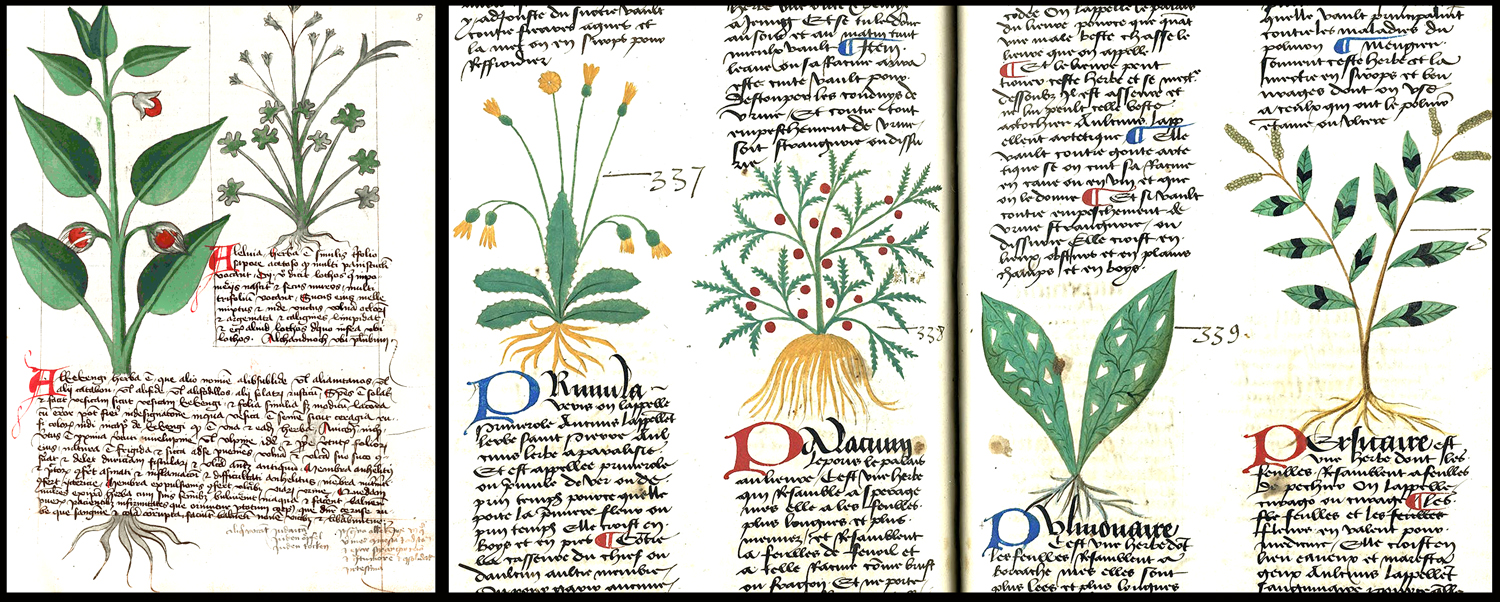
“But what interests me isn’t just his appearance, but his character. Satan isn’t a single person, but a range of fictional stereotypes — maybe archetypes. There are probably dozens of Satans, hundreds if you want to count the demons and djinn of other cultures. But they all boil down to what I think are five mega-types. I figure there are five possible motivations for Satan. First, he is a sociopath and has no concern for his effects on the world, no empathy, no compassion — hollow and empty. We’ve seen what happens when a malignant narcissist is given power. His only concern is for himself. 

“Then, he is often seen as a trickster, a Loki, who gets his kicks from knocking the hats off of policemen. His role in the universe is the revivifying power of chaos, without which the world would be a stale and boring place, where nothing interesting ever happens. The side-effect of this is necessarily going to impact some people rather badly. William Blake seems to have seen Satan as this sort of being: a creator through destruction.

“More popular is Satan the con man and seducer, the profferer of the Faustian bargain, the little voice that says, ‘give in to the desire,’ the tempter of Jesus, the snake-oil salesman who knows his potion is either useless or poison. His pleasure is in knowing he is more clever than you, and hence, this Satan is motivated, in part, by vanity. 

“A small portion of theologists envision Satan as the right hand of god, without whom god would not be possible. If there is no evil, there is no good to play against it. God and Satan are coeval, co-existent and co-dependent. This is the Gnostic Satan, as important as Jehovah.  

“Finally, there is evil as ignorance. If we knew better, we’d behave better. For this point of view, Satan does not actually exist, but only our own failure to understand. We do evil because we are blind, stumbling about in the moral darkness. 

“Of course, I don’t believe any of this,” Stuart says. “It’s all just mythology. But myth is interesting. We always seem to better understand through story than through logical argument.”

I couldn’t help but notice the irony. But Stuart went on.

“I had a dream the other night, which set me off into a different direction,” he said. “In it, evil was a machine, not a person. I figured that in a Cartesian universe, a mechanistic and scientific world, evil might well follow laws of nature very like something Isaac Newton might have formulated. Such a conception would require a mechanistic mythology. And so, I tried to imagine a Satan-machine. 

“Like all mythologies, it would have to be built on the things of daily life, what we come into contact with. These are the things that color our imaginations. And so the evil machine of the 18th century wold be all gears and pulleys, spritzing steam and clanking along. Blake’s “dark Satanic mills.” 

In the 1950s, the machine would be blinking lights and spinning magnetic-tape reels. 

In 2000, it would be read-out screens and buttons to press.”

“And now?” I asked.

“Now, I think Satan would be a visually inert silicon chip, perhaps the size of George Lucas’ Death Star, working silently and invisibly to our destruction. 

“There is an impersonality to our scientific conception of the cosmos and its creation, and so, my idea of evil should reflect that, and our Satan would be technological. The evil is still there, and it has an origin, but the origin is not shaped in any way like a human being, no arms, no legs, or eyes or tongue stuck out like Gene Simmons’ or the Hindu goddess Kali. No, I am ready for a machine to be the source of all bane and baleful action.”

“OK,” I said. “But machines are manufactured. Who made this Satan-machine? Are we not right back with the proof of god by design? Is there a God in a lab coat who tinkered with silicon until he came up with this machine?”

“Hmm.” Stuart looked thoughtful. “No, it would have to be a writer. I’m imagining Douglas Adams,” he said.